EP3021121A1 - Marqueur polypeptidique pour le diagnostic de l'artériosclérose, procédé de détection de l'artériosclérose à l'aide du marqueur ou similaire et trousse de diagnostic de l'artériosclérose - Google Patents
Marqueur polypeptidique pour le diagnostic de l'artériosclérose, procédé de détection de l'artériosclérose à l'aide du marqueur ou similaire et trousse de diagnostic de l'artériosclérose Download PDFInfo
- Publication number
- EP3021121A1 EP3021121A1 EP15199553.7A EP15199553A EP3021121A1 EP 3021121 A1 EP3021121 A1 EP 3021121A1 EP 15199553 A EP15199553 A EP 15199553A EP 3021121 A1 EP3021121 A1 EP 3021121A1
- Authority
- EP
- European Patent Office
- Prior art keywords
- arteriosclerosis
- marker
- gene
- detecting
- polypeptide
- Prior art date
- Legal status (The legal status is an assumption and is not a legal conclusion. Google has not performed a legal analysis and makes no representation as to the accuracy of the status listed.)
- Granted
Links
Images
Classifications
-
- G—PHYSICS
- G01—MEASURING; TESTING
- G01N—INVESTIGATING OR ANALYSING MATERIALS BY DETERMINING THEIR CHEMICAL OR PHYSICAL PROPERTIES
- G01N33/00—Investigating or analysing materials by specific methods not covered by groups G01N1/00 - G01N31/00
- G01N33/48—Biological material, e.g. blood, urine; Haemocytometers
- G01N33/50—Chemical analysis of biological material, e.g. blood, urine; Testing involving biospecific ligand binding methods; Immunological testing
- G01N33/68—Chemical analysis of biological material, e.g. blood, urine; Testing involving biospecific ligand binding methods; Immunological testing involving proteins, peptides or amino acids
- G01N33/6893—Chemical analysis of biological material, e.g. blood, urine; Testing involving biospecific ligand binding methods; Immunological testing involving proteins, peptides or amino acids related to diseases not provided for elsewhere
-
- C—CHEMISTRY; METALLURGY
- C07—ORGANIC CHEMISTRY
- C07K—PEPTIDES
- C07K14/00—Peptides having more than 20 amino acids; Gastrins; Somatostatins; Melanotropins; Derivatives thereof
- C07K14/435—Peptides having more than 20 amino acids; Gastrins; Somatostatins; Melanotropins; Derivatives thereof from animals; from humans
- C07K14/46—Peptides having more than 20 amino acids; Gastrins; Somatostatins; Melanotropins; Derivatives thereof from animals; from humans from vertebrates
- C07K14/47—Peptides having more than 20 amino acids; Gastrins; Somatostatins; Melanotropins; Derivatives thereof from animals; from humans from vertebrates from mammals
-
- C—CHEMISTRY; METALLURGY
- C12—BIOCHEMISTRY; BEER; SPIRITS; WINE; VINEGAR; MICROBIOLOGY; ENZYMOLOGY; MUTATION OR GENETIC ENGINEERING
- C12Q—MEASURING OR TESTING PROCESSES INVOLVING ENZYMES, NUCLEIC ACIDS OR MICROORGANISMS; COMPOSITIONS OR TEST PAPERS THEREFOR; PROCESSES OF PREPARING SUCH COMPOSITIONS; CONDITION-RESPONSIVE CONTROL IN MICROBIOLOGICAL OR ENZYMOLOGICAL PROCESSES
- C12Q1/00—Measuring or testing processes involving enzymes, nucleic acids or microorganisms; Compositions therefor; Processes of preparing such compositions
- C12Q1/68—Measuring or testing processes involving enzymes, nucleic acids or microorganisms; Compositions therefor; Processes of preparing such compositions involving nucleic acids
- C12Q1/6876—Nucleic acid products used in the analysis of nucleic acids, e.g. primers or probes
- C12Q1/6883—Nucleic acid products used in the analysis of nucleic acids, e.g. primers or probes for diseases caused by alterations of genetic material
-
- G—PHYSICS
- G01—MEASURING; TESTING
- G01N—INVESTIGATING OR ANALYSING MATERIALS BY DETERMINING THEIR CHEMICAL OR PHYSICAL PROPERTIES
- G01N33/00—Investigating or analysing materials by specific methods not covered by groups G01N1/00 - G01N31/00
- G01N33/48—Biological material, e.g. blood, urine; Haemocytometers
- G01N33/50—Chemical analysis of biological material, e.g. blood, urine; Testing involving biospecific ligand binding methods; Immunological testing
- G01N33/53—Immunoassay; Biospecific binding assay; Materials therefor
- G01N33/5302—Apparatus specially adapted for immunological test procedures
-
- C—CHEMISTRY; METALLURGY
- C12—BIOCHEMISTRY; BEER; SPIRITS; WINE; VINEGAR; MICROBIOLOGY; ENZYMOLOGY; MUTATION OR GENETIC ENGINEERING
- C12Q—MEASURING OR TESTING PROCESSES INVOLVING ENZYMES, NUCLEIC ACIDS OR MICROORGANISMS; COMPOSITIONS OR TEST PAPERS THEREFOR; PROCESSES OF PREPARING SUCH COMPOSITIONS; CONDITION-RESPONSIVE CONTROL IN MICROBIOLOGICAL OR ENZYMOLOGICAL PROCESSES
- C12Q2600/00—Oligonucleotides characterized by their use
- C12Q2600/158—Expression markers
-
- G—PHYSICS
- G01—MEASURING; TESTING
- G01N—INVESTIGATING OR ANALYSING MATERIALS BY DETERMINING THEIR CHEMICAL OR PHYSICAL PROPERTIES
- G01N2800/00—Detection or diagnosis of diseases
- G01N2800/32—Cardiovascular disorders
- G01N2800/323—Arteriosclerosis, Stenosis
Definitions
- the present invention relates to polypeptide markers for diagnosing arteriosclerosis, gene markers for diagnosing arteriosclerosis, antibodies, probes for detecting an arteriosclerosis marker gene, a DNA microarray or a DNA chip for detecting the arteriosclerosis marker genes, a method for detecting arteriosclerosis, and a kit for diagnosing arteriosclerosis.
- Arteriosclerosis is a disease frequently found in aorta, coronary arteries, cerebral arteries, and carotid arteries, being a main cause of myocardial infarction and cerebral infarction. At present, the presence of atherosclerosis is said to be crucial for the ground of the onset of ischemic organ diseases such as ischemic heart disease and cerebrovascular disorder, which are top leading causes of death.
- Arteriosclerotic lesions are pathomorphologically characterized by: fatty streaks which are subendothelial accumulations of cholesterol ester-storing cells (foam cells); and as an advanced stage thereof, invasions of smooth muscle cells, macrophages, T cells, and the like; as well as fibrous plaques showing cellular necrosis and fat accumulation.
- Non-Patent Document 1 The site with fat accumulation is structurally fragile, where plaques are ruptured, triggered by a hemodynamic force, and thereby a thrombus is rapidly formed by reactions of tissue factors and blood coagulation factors. It has been elucidated that the occurrence of thrombotic blockage by the rupture of plaques in a coronary artery is closely associated with the onset of so-called acute coronary syndromes such as acute myocardial infarction, unstable angina pectoris, and cardiac sudden death (Non-Patent Document 1)
- Arteriosclerosis is gradually developed without subjective symptoms, and all of the sudden, myocardial infarction, cerebral infarction, or angina pectoris occurs. Thus, early stage detection is required. So far, ultrasonography, angiography, imaging tests with MRI (magnetic resonance imaging devices) or such a device, electrocardiography, electroencephalography, and the like have been widely carried out for the diagnosis of arteriosclerotic lesions. However, methods by means of biochemical examination have been demanded so that diagnosis of an arteriosclerotic lesion can achieve an early detection.
- the diagnosis method of an arteriosclerotic lesion by means of such measurement of an arteriosclerosis-induced lipoprotein the following methods are known.
- the followings have been proposed: measurement of neutrophil, monocyte/ macrophage or like inflammatory cell-originated components such as lactoferrin, myeloperoxidase, granulocytic elastase in serum or plasma, forming a complex with the oxidized LDL existing in the serum or the plasma, by an immunological means (Patent Document 1); use of an immunoassay method with a fused polypeptide comprising the extracellular region of an oxidized LDL receptor and a part of the heavy chain constant region of an immunoglobulin (Patent Document 2); use of an anti-human aldehyde-modified ⁇ 1 antitrypsin monoclonal antibody capable of specifically recognizing oxidized LDL- ⁇ 1 antitrypsin complex (Patent Documents 3 and 4); measurement of the degree of
- an arteriosclerotic lesion by means of lipoprotein measurement, the followings have been disclosed: measurement of remnant lipoprotein (RLP) in denatured blood (Patent Document 6); diagnosis of rheumatoid or arteriosclerotic lesions through detection of the expression of the human cartilage GP39-L polypeptide gene (Patent Document 7); diagnosis of arteriosclerotic lesions through measurement of apoB100 lipoprotein in blood (Patent Document 8); measurement of human phospholipid transfer protein (PLTP) with use of a monoclonal antibody against PLTP (Patent Document 9); use of an apo lipoprotein A-I antibody as a marker for diagnosing arteriosclerosis (Patent Document 10); and the like.
- RLP remnant lipoprotein
- Patent Document 7 diagnosis of rheumatoid or arteriosclerotic lesions through detection of the expression of the human cartilage GP39-L polypeptide gene
- Patent Document 8 diagnosis of arteriosclerotic lesions through
- Patent Document 22 has proposed, as a marker for specifically detecting an arteriosclerotic lesion, a polypeptide marker for diagnosing arteriosclerosis, a gene marker for diagnosing arteriosclerosis, an antibody specifically bindable to the polypeptide marker for diagnosing arteriosclerosis, a probe for detecting the gene marker for diagnosing arteriosclerosis, and a method for detecting an arteriosclerotic lesion.
- an arteriosclerotic lesion can be detected with easy manipulation, and an early detection of arteriosclerosis can be expected. However, it does not satisfy an adequate level. There has been a demand for more accurate detection of an arteriosclerotic lesion with use of a greater number of polypeptide markers for diagnosing arteriosclerosis, gene markers for diagnosing arteriosclerosis, and the like.
- the inventors of the present invention have searched for proteins which are expressed in serum of a diseased patient with an arteriosclerotic lesion so as to find out more markers for diagnosing arteriosclerosis which can specifically detect an arteriosclerotic lesion. As a result, they found out novel polypeptide markers for diagnosing arteriosclerosis which can specifically detect an arteriosclerotic lesion, which has led to the completion of the present invention.
- the screening was conducted in the following manner by using serum of diseased patients with arteriosclerotic lesions who had been hospitalized in a hospital or cooperative institutes with the consent of patients or their families.
- the obtained cDNA clone was inserted in a plasmid pBluescript II to determine the nucleotide sequence. Thereafter, it was recombined in a pGEX plasmid and transfected in E. coli.
- the protein was abundantly expressed with IPTG (isopropyl ⁇ -D-thiogalactoside) to thereby prepare the protein extract.
- the protein extract was solid-phased in a 96-well plate. The antibody level in the serum was measured by the ELISA method.
- the present invention includes polypeptide markers for diagnosing arteriosclerosis, gene markers for diagnosing arteriosclerosis, antibodies, probes for detecting an arteriosclerosis marker gene, a DNA microarray or a DNA chip for detecting an arteriosclerosis marker gene, a method for detecting arteriosclerosis, and a kit for diagnosing arteriosclerosis, which are described below.
- An arteriosclerotic lesion can be detected with much higher accuracy by using the polypeptide marker for diagnosing arteriosclerosis, the gene marker for diagnosing arteriosclerosis, the antibody, the probe for detecting an arteriosclerosis marker gene, the DNA microarray or the DNA chip for detecting an arteriosclerosis marker gene, the method for detecting arteriosclerosis, and the kit for diagnosing arteriosclerosis of the present invention.
- polypeptide marker for diagnosing arteriosclerosis and the gene marker for diagnosing arteriosclerosis of the present invention can be used for the detection of arteriosclerosis as they are specifically expressed in arteriosclerotic lesions.
- Polypeptides serving as the polypeptide marker for diagnosing arteriosclerosis of the present invention are polypeptides having an amino acid sequence set forth in any one of SEQ ID NOs: 1, 3, 5, 7, 9, 11, 13, 15, 17, 19, 21, 23, 25, 27, and 29 of the Sequence Listing, or a partial amino acid sequence thereof.
- partial amino acid sequence refers to a sequence being a part of the amino acid sequence set forth in any one of SEQ ID NOs of the Sequence Listing mentioned above, consisting of four or more, preferably five or more, more preferably six or more, and yet more preferably seven or more amino acids.
- the gene marker for diagnosing arteriosclerosis of the present invention comprises a gene represented by a nucleotide sequence which encodes the above-mentioned polypeptide having the amino acid sequence or a partial amino acid sequence thereof.
- the gene marker for diagnosing arteriosclerosis may be a gene having a nucleotide sequence capable of expressing the above-mentioned polypeptide.
- the gene serving as the gene marker for diagnosing arteriosclerosis of the present invention can be exemplified by genes of the following clones, as well as being genes having a nucleotide sequence set forth in any one of SEQ ID NOs: 2, 4, 6, 8, 10, 12, 14, 16, 18, 20, 22, 24, 26, 28, 30, 32, 34, and 36 of the Sequence Listing, or a partial nucleotide sequence thereof.
- the information on these genes are respectively available from the NCBI GeneBank database, with the following accession numbers.
- the gene serving as the gene marker for diagnosing arteriosclerosis can be exemplified by [Clone Name: S19A3; SEQ ID NO: 2 of the Sequence Listing; Accession No. XM_001129783; Gene Name: (PREDICTED) similar to LIM and senescent domain 1 (LOC729260); Gene Description: similar to the LIMS1 gene.
- LIMS1 is an adaptor protein which contains five LIM domains, or double zinc fingers. LIMS1 may possibly play a role in integrin-mediated cell adhesion or spreading.] [Clone Name: TS27A2; SEQ ID NO: 4 of the Sequence Listing; Accession No.
- NM_006088 Gene Name: tubulin, beta 2C (TUBB2C); Gene Description: a component protein of microtubules], [Clone Name: S21B1; SEQ ID NO: 6 of the Sequence Listing; Accession No. NM_014878; Gene Name: KIAA0020 (KIAA0020); Gene Description; reportedly a minor histocompatibility antigen], [Clone Name: S25E1; SEQ ID NO: 8 of the Sequence Listing; Accession No. NM_207514; Gene Name: differentially expressed in FDCP 8 homolog (mouse) (DEF8); Gene Description: unknown function], [Clone Name: TS12D2; SEQ ID NO: 10 of the Sequence Listing; Accession No.
- NM_001128847 Gene Name: SWI/SNF related, matrix associated, actin dependent regulator of chromatin, subfamily a, member 4 (SMARCA4); Gene Description: unknown], [Clone Name: S36C3; SEQ ID NO: 12 of the Sequence Listing; Accession No. NM_001017408; Gene Name: golgi associated PDZ and coiled-coil motif containing (GOPC); Gene Description: bindable to Rhotekin, an effector of a low molecular weight GTP-binding protein Rho.
- elegans (FER1L3); Gene Description: a type II membrane protein similar to a skeletal muscle protein, dysferlin, this gene having a C2 domain is suggested to be possibly associated with regeneration and repair of cytoplasmic membrane and nuclear membrane], [Clone Name: TS27H1; SEQ ID NO: 18 of the Sequence Listing; Accession No. NM_022406; Gene Name: X-ray repair complementing defective repair in Chinese hamster cells 4 (XRCC4); Gene Description: a protein encoded by this gene acts to complete the repair of a DNA double strand through nonhomologous end-joining and V(D)J recombination, together with DNA ligase IV and DNA-dependent protein kinase.
- NM_005349 Gene Name: recombination signal binding protein for immunoglobulin kappa J region (RBPJ); Gene Description: unknown], [Clone Name: S27D3; SEQ ID NO: 24 of the Sequence Listing; Accession No. NM_005406; Gene Name: Rho-associated, coiled-coil containing protein kinase 1 (ROCK1); Gene Description: serine/threonine kinase activated by a low molecular weight GTP-binding protein Rho, and associated not only with cell contraction but also with morphological regulation, migration, regulation of gene expression, and like physiological functions.], [Clone Name: S36E1; SEQ ID NO: 26 of the Sequence Listing; Accession No.
- NM_016436 Gene Name: PHD finger protein 20 (PHF20); Gene Description: associated with DNA-dependent transcriptional regulation.], [Clone Name: S39D6; SEQ ID NO: 28 of the Sequence Listing; Accession No. NM_032408; Gene Name: bromodomain adjacent to zinc finger domain, 1B (BAZ1B); Gene Description: a member of the bromodomain protein family involved in chromatin-dependent regulation of transcription.], [Clone Name: TS27B2; SEQ ID NO: 30 of the Sequence Listing; Accession No.
- NM_006807 Gene Name: chromobox homolog 1 (HP1 beta homolog Drosophilia ) (CBX1); Gene Description: localized at heterochromatin sites, where it mediates gene silencing.], [Clone Name: PA234; SEQ ID NO: 36 of the Sequence Listing; Accession No. BC030642; Gene Name: PARK2 co-regulated (PACRG); Gene Description: Parkinson's disease-associated gene, and reportedly regulated by the ubiquitin-proteasome system.].
- partial nucleotide sequence refers to a sequence being a part of the nucleotide sequence set forth in any one of SEQ ID NOs of the Sequence Listing mentioned above, consisting of twelve or more, preferably fifteen or more, more preferably eighteen or more, and yet more preferably twenty or more nucleotides (hereunder, the same definition will be applied).
- the antibody of the present invention is an antibody specifically bindable to, as an antigen, a polypeptide serving as the above-mentioned polypeptide marker for diagnosing arteriosclerosis.
- the antibody may be either monoclonal or polyclonal. These antibodies can be produced by a usual method using the above-mentioned polypeptide as an antigen.
- the antibody of the present invention may be labeled with a labeling substance.
- a labeling substance it is possible to use an enzyme, a radioisotope, a fluorescent dye, biotin, digoxigenin, or the like.
- the enzyme is not specifically limited as long as it fulfills the requirements such as a large turnover number (number of revolution), stability in the antibody-binding state, and capability of rendering the substrate a specific color.
- peroxidases for use in usual EIA (enzyme immunoassay), ⁇ -galactosidase, alkaline phosphatase, glucose oxidase, acetylcholine esterase, glucose-6-phosphate dehydrogenase, malate dehydrogenase, or the like can be used.
- EIA enzyme immunoassay
- ⁇ -galactosidase alkaline phosphatase
- glucose oxidase acetylcholine esterase
- glucose-6-phosphate dehydrogenase malate dehydrogenase
- an enzyme inhibitory substance e inhibitory substance
- coenzyme or the like.
- the substrate it is possible to use a known substance according to the type of the enzyme to be used.
- 3,3',5,5'-tetramethylbenzidine can be used as a substrate when peroxidase is used as an enzyme, while paranitrophenol can be used as a substrate when alkaline phosphatase is used as an enzyme.
- radioisotope it is possible to use 125 I, 3 H, or such a substance for use in usual RIA (radioimmunoassay).
- fluorescent dye As for the fluorescent dye, it is possible to use fluorescein isothiocianate (FITC), tetramethylrhodamine isothiocyanate (TRITC), or such a substance for use in usual fluorescence antibody technique.
- FITC fluorescein isothiocianate
- TRITC tetramethylrhodamine isothiocyanate
- these labeled antibodies may be tagged with a metal such as manganese or iron.
- a metal such as manganese or iron.
- the probe for detecting an arteriosclerosis marker gene of the present invention is a probe which comprises all or a part of DNA that is hybridizable with the gene serving as the gene marker for diagnosing arteriosclerosis mentioned above under a stringent condition.
- stringent condition can be exemplified by: hybridization in a buffer solution containing 50% formamide, 5 ⁇ SSC, 5 ⁇ Denhardt's solution, 0.1M sodium dihydrogenphosphate (pH6.5), 0.5% SDS, and 100 ⁇ g/ml denatured salmon sperm DNA, at 42°C, followed by a washing treatment in a buffer solution containing 1 ⁇ SSC (0.15M NaCl and 0.015M sodium citrate) and 0.1% SDS (sodium dodecyl sulfate) at 42°C (Condition 1); or, hybridization in a buffer solution containing 5 ⁇ SSC, 5 ⁇ Denhardt's solution, 0.1M sodium dihydrogenphosphate (pH6.5),
- the probe for detecting an arteriosclerosis marker gene of the present invention can be exemplified by a probe which comprises all or a part of antisense DNA for the gene having a nucleotide sequence set forth in any one of SEQ ID NOs: 2, 4, 6, 8, 10, 12, 14, 16, 18, 20, 22, 24, 26, 28, 30, 32, 34, and 36 of the Sequence Listing. That is, it is a probe which comprises DNA having a nucleotide sequence complementary to the nucleotide sequence set forth in any one of SEQ ID NOs mentioned above, or a partial nucleotide sequence thereof.
- These probes for detecting an arteriosclerosis marker gene may be appropriately labeled with a fluorescent label or the like.
- the DNA microarray or the DNA chip for detecting an arteriosclerosis marker gene of the present invention is used for the detection of the expression of the gene serving as the gene marker for diagnosing arteriosclerosis mentioned above, and for the diagnosis of an arteriosclerotic lesion through the detection, wherein the above-mentioned probe for detecting an arteriosclerosis marker gene is immobilized on a base plate.
- the above-mentioned probe for detecting an arteriosclerosis marker gene to be immobilized it is either possible to use a single kind or a plurality of kinds thereof.
- the DNA microarray or the DNA chip can be produced by a usual method.
- the DNA microarray can be obtained by, for example, spotting a solution containing respective probe(s) for detecting an arteriosclerosis marker gene that has been prepared in advance on a base plate and drying this plate.
- the DNA chip can be obtained by, for example, synthesizing DNA having a desired nucleotide sequence on a base plate by photolithography.
- the method for detecting arteriosclerosis of the present invention is a method in which the above-mentioned polypeptide marker for diagnosing arteriosclerosis is used to detect the expression of an antibody (arteriosclerosis marker antibody) that is specifically bindable to the polypeptide marker for diagnosing arteriosclerosis, in a specimen blood (hereunder, referred to as the "detection method (1)").
- an antibody arteriosclerosis marker antibody
- the above-mentioned arteriosclerosis marker antibody is induced by the expression of the polypeptide serving as the polypeptide marker for diagnosing arteriosclerosis. So, it is possible to detect arteriosclerosis through detection of the arteriosclerosis marker antibody with use of the polypeptide marker for diagnosing arteriosclerosis.
- the detection method (1) can be specifically exemplified by a method in which: the solid-phased polypeptide marker for diagnosing arteriosclerosis is contacted with a serum collected from a test subject so that the marker can bind to antibodies in the serum; unbound proteins are removed; next a labeled antibody (secondary antibody) that is specifically bindable to the antibodies in the serum is added to allow a reaction therebetween; and the signal from the labeled antibody is detected.
- the labeling substance for the abovementioned labeled antibody it is possible to use an enzyme, a radioisotope, a fluorescent dye, biotin, digoxigenin, or the like, which has been enumerated as a substance to label the antibody of the present invention.
- the amount of the antibody can be calculated by: adding a substrate which is decomposed to take a color by an enzymatic action; optically measuring the amount of the decomposed substrate to thereby obtain the enzymatic activity; converting this value into the amount of the antibody bound; and making a comparison between the converted value and a reference value.
- the amount of the antibody can also be obtained with high sensitivity by: adding a substrate which emits light by an enzymatic action; and measuring with a weak luminescence analyzer (luminometer).
- the amount of the antibody can be calculated by measuring the level of radiation emitted from the radioisotope with a scintillation counter or such a device.
- the amount of the antibody can be calculated by measuring the quantity of fluorescence with a measurement device equipped with a fluorescence spectrometer or such a device.
- the western blotting method can be applied.
- a conjugate of the polypeptide marker for diagnosing arteriosclerosis, the antibody of the specimen blood, and the labeled antibody by a known isolation method (a chromatography method, a salting-out method, an alcohol precipitation method, an enzyme method, an in-phase method, or the like), followed by the detection of the signal from the labeled antibody.
- arteriosclerosis marker antibody(antibodies) it is also possible to examine whether or not the arteriosclerosis marker antibody(antibodies) is(are) present in the specimen blood collected from a test subject so as to determine that the test subject showing the presence of one or more types of arteriosclerosis marker antibodies is a diseased patient with an arteriosclerotic lesion, or a person with a high risk of an arteriosclerotic lesion.
- the method for detecting arteriosclerosis of the present invention is a method in which the above-mentioned probe for detecting an arteriosclerosis marker gene is used to detect the expression of a gene (arteriosclerosis marker gene) that is hybridizable with the probe for detecting an arteriosclerosis marker gene, in a specimen cell (hereunder, referred to as the "detection method (2)").
- the arteriosclerosis marker gene is expressed in the specimen cell collected from a diseased patient with an arteriosclerotic lesion. So, it is possible to detect arteriosclerosis through detection of the expression of the arteriosclerosis marker gene with use of the probe for detecting an arteriosclerosis marker gene.
- the detection method (2) can be specifically exemplified by a method in which: a probe for detecting an arteriosclerosis marker gene, which has a nucleotide sequence as mentioned above in a suitable length for hybridization is prepared; a fluorescence label or such a label is appropriately added thereto; this labeled probe is contacted with a sample collected from a specimen cell to perform a hybridization reaction; and the expression of the gene serving as the gene marker for diagnosing arteriosclerosis is detected.
- the detection method (2) it is possible to employ a known detection method except for using the probe for detecting an arteriosclerosis marker gene of the present invention. For example, a northern blotting method can be employed. Moreover, in the detection method (2), any one of the above-mentioned probes for detecting an arteriosclerosis marker gene can be used. It is either possible to use a single kind of probe for detecting an arteriosclerosis marker gene or a plurality of kinds of probes for detecting an arteriosclerosis marker gene.
- the detection method (2) may also use a DNA microarray or a DNA chip in which the probe(s) for detecting an arteriosclerosis marker gene is/are immobilized on a base plate.
- the detection method (2) it is also possible to employ quantitative or semi-quantitative PCR (Polymerase Chain Reaction) in order to amplify the arteriosclerosis marker gene in the sample collected from the specimen cell.
- the PCR may be either RT-PCR (reverse transcription PCR) or real-time RT-PCR.
- a primer set including a sense primer and an antisense primer for amplifying the arteriosclerosis marker gene is used. These primers can be appropriately constructed based on a nucleotide sequence set forth in any one of SEQ ID NOs: 2, 4, 6, 8, 10, 12, 14, 16, 18, 20, 22, 24, 26, 28, 30, 32, 34, and 36 of the Sequence Listing.
- the expression of the arteriosclerosis marker gene can be detected by using this sample. By so doing, the detection sensitivity can be improved.
- the detection method (2) it is possible to detect the arteriosclerosis marker gene in a test subject and compare the result with a result of a healthy subject detected by the same method to thereby determine that the test subject showing a large detection level is a diseased patient with an arteriosclerotic lesion, or a person with a high risk of an arteriosclerotic lesion.
- the method for detecting arteriosclerosis of the present invention is a method in which the antibody bindable to, as an antigen, a polypeptide serving as the polypeptide marker for diagnosing arteriosclerosis of present invention, is used to detect the expression of a polypeptide (arteriosclerosis marker polypeptide) that is specifically bindable to the antibody, in a specimen sample (hereunder, referred to as the "detection method (3)").
- a specimen sample hereunder, referred to as the "detection method (3)"
- the arteriosclerosis marker polypeptide is expressed in the specimen sample collected from a diseased patient with an arteriosclerotic lesion. So, it is possible to detect arteriosclerosis through detection of the arteriosclerosis marker polypeptide with use of the antibody of the present invention.
- the detection method (3) can be executed by a known immunoassay method except for using the antibody of the present invention.
- the immunoassay method can be exemplified by the western blotting method, the ELISA (Enzyme-Linked Immunosorbent Assay) method, a radioimmunoassay method, or a fluorescence antibody technique.
- the antibody for use in the detection method (3) may be either monoclonal or polyclonal.
- the fluorescence antibody technique is applied to the detection method (3), either a direct fluorescence antibody test or an indirect fluorescence antibody test may be used.
- the direct fluorescence antibody test is a method in which an antibody for use in the detection is labeled with fluorescence, and then the antibody is contacted to a sample cell as being the test sample to bind them to each other so that a cell expressing the arteriosclerosis marker polypeptide can be labeled.
- the indirect fluorescence antibody test is a method in which a non-labeled antibody of the present invention is contacted to a sample cell to bind them to each other, and then the antibody is further bound to a labeled secondary antibody (anti-immunoglobulin antibody) so that a cell expressing the arteriosclerosis marker polypeptide can be labeled.
- a labeled secondary antibody anti-immunoglobulin antibody
- the detection method (3) it is possible to examine whether or not the arteriosclerosis marker polypeptide(s) is(are) present in the specimen sample collected from a test subject so as to determine that the test subject showing the presence of one or more types of arteriosclerosis marker polypeptides is a diseased patient with an arteriosclerotic lesion, or a person with a high risk of an arteriosclerotic lesion.
- the probe for detecting an arteriosclerosis marker gene for use in the detection of an arteriosclerotic lesion of the present invention can be prepared as a product of a kit for diagnosing arteriosclerosis which comprises at least one of these items and with which arteriosclerosis can be detected and diagnosed as mentioned above.
- polypeptide marker for diagnosing arteriosclerosis of the present invention can also be prepared as a product of a kit for diagnosing arteriosclerosis with which arteriosclerosis can be detected and diagnosed as mentioned above.
- arteriosclerosis can be detected with much higher accuracy.
- the nucleotide sequences of the genes (gene markers for diagnosing arteriosclerosis) of the detected clones were determined by sequencing. The thus determined nucleotide sequences were cross-checked with nucleotide sequences in published gene databases. As a result, the genes of the obtained clones had consistent nucleotide sequences with those of the genes that encode the polypeptides for diagnosing arteriosclerosis mentioned above.
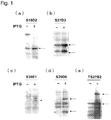
- FIG. 1(a) shows the results of Clone Name: S16D2 (SEQ ID NO: 22 of the Sequence Listing)
- FIG. 1(b) shows the results of Clone Name: S27D3 (SEQ ID NO: 24 of the Sequence Listing)
- FIG. 1(c) shows the results of Clone Name: S36E1 (SEQ ID NO: 26 of the Sequence Listing)
- FIG. 1(d) shows the results of Clone Name: S39D6 (SEQ ID NO: 28 of the Sequence Listing)
- FIG. 1(e) shows the results of Clone Name: TS27B2 (SEQ ID NO: 30 of the Sequence Listing).
- arteriosclerosis can be readily detected with high accuracy. These can be favorably used for the early stage diagnosis of arteriosclerosis.
Landscapes
- Life Sciences & Earth Sciences (AREA)
- Health & Medical Sciences (AREA)
- Chemical & Material Sciences (AREA)
- Engineering & Computer Science (AREA)
- Proteomics, Peptides & Aminoacids (AREA)
- Organic Chemistry (AREA)
- Molecular Biology (AREA)
- Immunology (AREA)
- Analytical Chemistry (AREA)
- General Health & Medical Sciences (AREA)
- Biochemistry (AREA)
- Genetics & Genomics (AREA)
- Zoology (AREA)
- Urology & Nephrology (AREA)
- Hematology (AREA)
- Biomedical Technology (AREA)
- Biotechnology (AREA)
- Medicinal Chemistry (AREA)
- Pathology (AREA)
- Physics & Mathematics (AREA)
- Microbiology (AREA)
- Wood Science & Technology (AREA)
- Biophysics (AREA)
- Cell Biology (AREA)
- Food Science & Technology (AREA)
- General Physics & Mathematics (AREA)
- General Engineering & Computer Science (AREA)
- Bioinformatics & Cheminformatics (AREA)
- Toxicology (AREA)
- Gastroenterology & Hepatology (AREA)
- Peptides Or Proteins (AREA)
- Measuring Or Testing Involving Enzymes Or Micro-Organisms (AREA)
- Apparatus Associated With Microorganisms And Enzymes (AREA)
Applications Claiming Priority (2)
| Application Number | Priority Date | Filing Date | Title |
|---|---|---|---|
| JP2008209210 | 2008-08-15 | ||
| EP09806761.4A EP2319924B1 (fr) | 2008-08-15 | 2009-08-14 | Marqueur polypeptidique pour le diagnostic de l'artériosclérose, procédé de détection de l'artériosclérose à l'aide du marqueur ou similaire, et trousse de diagnostic de l'artériosclérose |
Related Parent Applications (2)
| Application Number | Title | Priority Date | Filing Date |
|---|---|---|---|
| EP09806761.4A Division-Into EP2319924B1 (fr) | 2008-08-15 | 2009-08-14 | Marqueur polypeptidique pour le diagnostic de l'artériosclérose, procédé de détection de l'artériosclérose à l'aide du marqueur ou similaire, et trousse de diagnostic de l'artériosclérose |
| EP09806761.4A Division EP2319924B1 (fr) | 2008-08-15 | 2009-08-14 | Marqueur polypeptidique pour le diagnostic de l'artériosclérose, procédé de détection de l'artériosclérose à l'aide du marqueur ou similaire, et trousse de diagnostic de l'artériosclérose |
Publications (2)
| Publication Number | Publication Date |
|---|---|
| EP3021121A1 true EP3021121A1 (fr) | 2016-05-18 |
| EP3021121B1 EP3021121B1 (fr) | 2018-06-06 |
Family
ID=41669009
Family Applications (2)
| Application Number | Title | Priority Date | Filing Date |
|---|---|---|---|
| EP15199553.7A Active EP3021121B1 (fr) | 2008-08-15 | 2009-08-14 | Marqueur polypeptidique pour le diagnostic de l'artériosclérose, procédé de détection de l'artériosclérose à l'aide du marqueur ou similaire et trousse de diagnostic de l'artériosclérose |
| EP09806761.4A Active EP2319924B1 (fr) | 2008-08-15 | 2009-08-14 | Marqueur polypeptidique pour le diagnostic de l'artériosclérose, procédé de détection de l'artériosclérose à l'aide du marqueur ou similaire, et trousse de diagnostic de l'artériosclérose |
Family Applications After (1)
| Application Number | Title | Priority Date | Filing Date |
|---|---|---|---|
| EP09806761.4A Active EP2319924B1 (fr) | 2008-08-15 | 2009-08-14 | Marqueur polypeptidique pour le diagnostic de l'artériosclérose, procédé de détection de l'artériosclérose à l'aide du marqueur ou similaire, et trousse de diagnostic de l'artériosclérose |
Country Status (6)
| Country | Link |
|---|---|
| US (2) | US20110287955A1 (fr) |
| EP (2) | EP3021121B1 (fr) |
| JP (1) | JP5742002B2 (fr) |
| KR (1) | KR101506314B1 (fr) |
| CN (1) | CN102099470B (fr) |
| WO (1) | WO2010018870A1 (fr) |
Families Citing this family (12)
| Publication number | Priority date | Publication date | Assignee | Title |
|---|---|---|---|---|
| WO2015034282A1 (fr) * | 2013-09-04 | 2015-03-12 | 이화여자대학교 산학협력단 | Nouveau peptide permettant le diagnostic et le traitement de maladies cardiovasculaires |
| KR102441107B1 (ko) * | 2014-11-07 | 2022-09-13 | 후지쿠라 가세이 가부시키가이샤 | 데옥시하이푸신·신타제 유전자를 지표로서 사용하는 동맥 경화 및 암의 검출 방법 |
| KR101895767B1 (ko) * | 2016-06-16 | 2018-09-07 | 충남대학교 산학협력단 | 동맥경화증 진단용 바이오 마커 조성물 |
| CN106822869B (zh) * | 2017-03-16 | 2020-10-30 | 北京热休生物技术有限公司 | DEF8蛋白的多肽与热休克蛋白gp96的复合物在制备治疗与预防癌症药物中的应用 |
| US11223392B2 (en) | 2017-07-18 | 2022-01-11 | Hewlett-Packard Development Company, L.P. | Radio module configurations for antennas |
| CN111521821A (zh) * | 2020-05-09 | 2020-08-11 | 四川省人民医院 | 血管钙化的生物标志物及其应用 |
| KR102418017B1 (ko) | 2020-12-03 | 2022-07-05 | 충남대학교산학협력단 | 고지혈 환자의 죽상경화증 진단을 위한 정보 제공방법 |
| CN114594273B (zh) * | 2022-05-09 | 2024-02-27 | 上海众启生物科技有限公司 | 一种脑梗塞生物标记物及其应用 |
| CN115902221B (zh) * | 2022-10-21 | 2023-09-08 | 唐山市人民医院 | BAZ1B_K426hy及其多克隆抗体在制备检测肿瘤的产品中的应用 |
| JPWO2024190857A1 (fr) * | 2023-03-15 | 2024-09-19 | ||
| CN117384271B (zh) * | 2023-10-17 | 2024-08-16 | 青岛赛诺基因科技有限公司 | 与含赖氨酸甲基化修饰肽具有高亲和力的变体Chromo结构域 |
| ES3045065B2 (es) * | 2024-05-27 | 2026-04-29 | Univ De Cadiz | Biomarcadores para la predicción y diagnóstico de aterosclerosis severa |
Citations (30)
| Publication number | Priority date | Publication date | Assignee | Title |
|---|---|---|---|---|
| JPH08160042A (ja) | 1994-12-07 | 1996-06-21 | Chemo Sero Therapeut Res Inst | 動脈硬化診断用マーカー及び該マーカーを用いた動脈硬化の診断方法 |
| JPH09203736A (ja) | 1996-01-25 | 1997-08-05 | Suntory Ltd | 動脈硬化症診断薬 |
| JPH10142226A (ja) | 1996-11-12 | 1998-05-29 | Ikagaku:Kk | 動脈硬化症の測定用キット |
| JPH11346782A (ja) | 1998-06-10 | 1999-12-21 | Bml:Kk | ヒトpltpタンパク質に対するモノクローナル抗体、このモノクローナル抗体を用いたヒトpltpの測定方法、及びこの測定方法を行うための測定キット |
| JP2000503764A (ja) | 1995-12-18 | 2000-03-28 | スミスクライン・ビーチャム・コーポレイション | 増殖性動脈疾患の診断および治療におけるrc―9の使用 |
| JP2000184885A (ja) | 1998-12-21 | 2000-07-04 | Ikagaku:Kk | 酸化LDL−α▲1▼AT複合体を特異的に認識する抗体 |
| JP2000206113A (ja) | 1998-11-12 | 2000-07-28 | Bml Inc | 動脈硬化の検出方法 |
| JP2000333674A (ja) | 1999-05-24 | 2000-12-05 | Bml Inc | パラオキソナーゼに対するモノクローナル抗体及びこれを用いる動脈硬化の判定方法 |
| JP2001249128A (ja) | 2000-03-06 | 2001-09-14 | Ikagaku:Kk | 動脈硬化症またはアルツハイマー病の診断用キット |
| JP2002017353A (ja) | 1997-12-19 | 2002-01-22 | Japan Tobacco Inc | 変性ldlの定量方法 |
| JP2002048790A (ja) | 2000-08-03 | 2002-02-15 | Ikagaku:Kk | 動脈硬化性病変の診断用キット |
| JP2002055106A (ja) | 2000-08-10 | 2002-02-20 | Ikagaku:Kk | 動脈硬化性病変の診断用キット |
| JP2002131313A (ja) | 2000-08-18 | 2002-05-09 | Tosoh Corp | 血管内皮障害の診断マーカー |
| JP2002142781A (ja) | 1996-08-09 | 2002-05-21 | Smithkline Beecham Corp | ヒト軟骨gp−39様遺伝子 |
| JP2002181820A (ja) | 2000-12-14 | 2002-06-26 | Ikagaku:Kk | 動脈硬化性病変の診断用キット |
| JP2002238589A (ja) | 1997-08-01 | 2002-08-27 | Smithkline Beecham Corp | 慢性腎不全、アテローム性動脈硬化および繊維症の標的としての新規なsMAD3スプライス変異体 |
| JP2002277461A (ja) | 2000-08-18 | 2002-09-25 | Tosoh Corp | 血管内皮障害の診断マーカー |
| JP2002308900A (ja) | 2001-04-04 | 2002-10-23 | Dai Ichi Pure Chem Co Ltd | 抗ヒト肝性トリグリセリドリパーゼ抗体 |
| JP2003189872A (ja) | 2001-12-27 | 2003-07-08 | Ono Pharmaceut Co Ltd | 新規なポリペプチドESDN、その製造方法、ESDNをコードするcDNA、そのcDNAからなるベクター、そのベクターで形質転換された宿主細胞、ESDNの抗体、ESDNまたは抗体を含有する薬学的組成物、ESDNを用いたスクリーニング方法、および抗ESDN抗体を用いたESDNの免疫化学測定法 |
| JP2003304873A (ja) | 2002-03-19 | 2003-10-28 | Aventis Behring Gmbh | 動脈血栓症の危険因子としての第vii因子−活性プロテアーゼ(fsap)のマールブルクi突然変異体 |
| JP2003310281A (ja) | 2002-01-18 | 2003-11-05 | Takeda Chem Ind Ltd | 新規タンパク質およびそのdna |
| WO2003104395A2 (fr) * | 2002-05-22 | 2003-12-18 | Incyte Corporation | Recepteurs et proteines associees a une membrane- |
| US20040048286A1 (en) * | 2002-05-09 | 2004-03-11 | Lee Richard T. | IL1RL-1 as a cardiovascular disease marker and therapeutic target |
| JP2005168498A (ja) | 2003-11-21 | 2005-06-30 | Japan Science & Technology Agency | 動脈硬化診断用マーカー及びその使用 |
| US20060013813A1 (en) * | 2001-01-11 | 2006-01-19 | Mezes Peter S | Proteins and nucleic acids encoding same |
| WO2006048291A2 (fr) * | 2004-11-03 | 2006-05-11 | Almac Diagnostics Limited | Technologie de micro-reseaux de transcriptome et procedes d'utilisation de celle-ci |
| US20070015271A1 (en) * | 2002-04-04 | 2007-01-18 | Rosen Craig A | Human secreted proteins |
| US20070072175A1 (en) * | 2005-05-13 | 2007-03-29 | Biogen Idec Ma Inc. | Nucleotide array containing polynucleotide probes complementary to, or fragments of, cynomolgus monkey genes and the use thereof |
| US20070190586A1 (en) * | 1998-09-04 | 2007-08-16 | Leuven Research & Development Vzw | Detection and determination of the stages of coronary artery disease |
| JP2007278907A (ja) * | 2006-04-07 | 2007-10-25 | Takeda Chem Ind Ltd | 動脈硬化マーカー蛋白質及びその用途 |
Family Cites Families (8)
| Publication number | Priority date | Publication date | Assignee | Title |
|---|---|---|---|---|
| US6074839A (en) * | 1994-03-08 | 2000-06-13 | Human Genome Sciences, Inc. | Transforming growth factor αHI |
| US20020025553A1 (en) * | 1996-01-04 | 2002-02-28 | Ying-Fei Wei | Transforming growth factor alpha HIII |
| SE0103754L (sv) * | 2001-04-05 | 2002-10-06 | Forskarpatent I Syd Ab | Peptider från apolipoprotein B, användning därav immunisering, diagnosmetod eller terapeutisk behandling av ischemiska kardiovaskulära sjukdomar, samt farmaceutisk komposition och vaccin innehållande sådan peptid |
| WO2004064612A2 (fr) * | 2003-01-21 | 2004-08-05 | The Rockefeller University | Regulation de la signalisation du tgf-b par la tomoreguline |
| WO2006102979A2 (fr) * | 2005-03-31 | 2006-10-05 | Johannes Gutenberg-Universität Mainz | Marqueurs d'inflammation et combinaisons de ces marqueurs en tant que marqueurs biochimiques pour des maladies cardio-vasculaires |
| JP2007010567A (ja) * | 2005-07-01 | 2007-01-18 | Takeda Chem Ind Ltd | 動脈硬化マーカー蛋白質およびその用途 |
| JP4899927B2 (ja) | 2007-02-26 | 2012-03-21 | 富士通セミコンダクター株式会社 | テストパターン自動生成方法およびテストパターン自動生成プログラム |
| KR100870233B1 (ko) * | 2007-04-05 | 2008-11-24 | 경북대학교 산학협력단 | 동맥경화 진단, 예방 및 치료용 펩타이드 및 이의 용도 |
-
2009
- 2009-08-14 JP JP2010524759A patent/JP5742002B2/ja active Active
- 2009-08-14 EP EP15199553.7A patent/EP3021121B1/fr active Active
- 2009-08-14 EP EP09806761.4A patent/EP2319924B1/fr active Active
- 2009-08-14 WO PCT/JP2009/064363 patent/WO2010018870A1/fr not_active Ceased
- 2009-08-14 CN CN200980128162.0A patent/CN102099470B/zh active Active
- 2009-08-14 US US13/058,456 patent/US20110287955A1/en not_active Abandoned
- 2009-08-14 KR KR1020117001433A patent/KR101506314B1/ko active Active
-
2013
- 2013-03-04 US US13/783,892 patent/US9366681B2/en active Active
Patent Citations (30)
| Publication number | Priority date | Publication date | Assignee | Title |
|---|---|---|---|---|
| JPH08160042A (ja) | 1994-12-07 | 1996-06-21 | Chemo Sero Therapeut Res Inst | 動脈硬化診断用マーカー及び該マーカーを用いた動脈硬化の診断方法 |
| JP2000503764A (ja) | 1995-12-18 | 2000-03-28 | スミスクライン・ビーチャム・コーポレイション | 増殖性動脈疾患の診断および治療におけるrc―9の使用 |
| JPH09203736A (ja) | 1996-01-25 | 1997-08-05 | Suntory Ltd | 動脈硬化症診断薬 |
| JP2002142781A (ja) | 1996-08-09 | 2002-05-21 | Smithkline Beecham Corp | ヒト軟骨gp−39様遺伝子 |
| JPH10142226A (ja) | 1996-11-12 | 1998-05-29 | Ikagaku:Kk | 動脈硬化症の測定用キット |
| JP2002238589A (ja) | 1997-08-01 | 2002-08-27 | Smithkline Beecham Corp | 慢性腎不全、アテローム性動脈硬化および繊維症の標的としての新規なsMAD3スプライス変異体 |
| JP2002017353A (ja) | 1997-12-19 | 2002-01-22 | Japan Tobacco Inc | 変性ldlの定量方法 |
| JPH11346782A (ja) | 1998-06-10 | 1999-12-21 | Bml:Kk | ヒトpltpタンパク質に対するモノクローナル抗体、このモノクローナル抗体を用いたヒトpltpの測定方法、及びこの測定方法を行うための測定キット |
| US20070190586A1 (en) * | 1998-09-04 | 2007-08-16 | Leuven Research & Development Vzw | Detection and determination of the stages of coronary artery disease |
| JP2000206113A (ja) | 1998-11-12 | 2000-07-28 | Bml Inc | 動脈硬化の検出方法 |
| JP2000184885A (ja) | 1998-12-21 | 2000-07-04 | Ikagaku:Kk | 酸化LDL−α▲1▼AT複合体を特異的に認識する抗体 |
| JP2000333674A (ja) | 1999-05-24 | 2000-12-05 | Bml Inc | パラオキソナーゼに対するモノクローナル抗体及びこれを用いる動脈硬化の判定方法 |
| JP2001249128A (ja) | 2000-03-06 | 2001-09-14 | Ikagaku:Kk | 動脈硬化症またはアルツハイマー病の診断用キット |
| JP2002048790A (ja) | 2000-08-03 | 2002-02-15 | Ikagaku:Kk | 動脈硬化性病変の診断用キット |
| JP2002055106A (ja) | 2000-08-10 | 2002-02-20 | Ikagaku:Kk | 動脈硬化性病変の診断用キット |
| JP2002131313A (ja) | 2000-08-18 | 2002-05-09 | Tosoh Corp | 血管内皮障害の診断マーカー |
| JP2002277461A (ja) | 2000-08-18 | 2002-09-25 | Tosoh Corp | 血管内皮障害の診断マーカー |
| JP2002181820A (ja) | 2000-12-14 | 2002-06-26 | Ikagaku:Kk | 動脈硬化性病変の診断用キット |
| US20060013813A1 (en) * | 2001-01-11 | 2006-01-19 | Mezes Peter S | Proteins and nucleic acids encoding same |
| JP2002308900A (ja) | 2001-04-04 | 2002-10-23 | Dai Ichi Pure Chem Co Ltd | 抗ヒト肝性トリグリセリドリパーゼ抗体 |
| JP2003189872A (ja) | 2001-12-27 | 2003-07-08 | Ono Pharmaceut Co Ltd | 新規なポリペプチドESDN、その製造方法、ESDNをコードするcDNA、そのcDNAからなるベクター、そのベクターで形質転換された宿主細胞、ESDNの抗体、ESDNまたは抗体を含有する薬学的組成物、ESDNを用いたスクリーニング方法、および抗ESDN抗体を用いたESDNの免疫化学測定法 |
| JP2003310281A (ja) | 2002-01-18 | 2003-11-05 | Takeda Chem Ind Ltd | 新規タンパク質およびそのdna |
| JP2003304873A (ja) | 2002-03-19 | 2003-10-28 | Aventis Behring Gmbh | 動脈血栓症の危険因子としての第vii因子−活性プロテアーゼ(fsap)のマールブルクi突然変異体 |
| US20070015271A1 (en) * | 2002-04-04 | 2007-01-18 | Rosen Craig A | Human secreted proteins |
| US20040048286A1 (en) * | 2002-05-09 | 2004-03-11 | Lee Richard T. | IL1RL-1 as a cardiovascular disease marker and therapeutic target |
| WO2003104395A2 (fr) * | 2002-05-22 | 2003-12-18 | Incyte Corporation | Recepteurs et proteines associees a une membrane- |
| JP2005168498A (ja) | 2003-11-21 | 2005-06-30 | Japan Science & Technology Agency | 動脈硬化診断用マーカー及びその使用 |
| WO2006048291A2 (fr) * | 2004-11-03 | 2006-05-11 | Almac Diagnostics Limited | Technologie de micro-reseaux de transcriptome et procedes d'utilisation de celle-ci |
| US20070072175A1 (en) * | 2005-05-13 | 2007-03-29 | Biogen Idec Ma Inc. | Nucleotide array containing polynucleotide probes complementary to, or fragments of, cynomolgus monkey genes and the use thereof |
| JP2007278907A (ja) * | 2006-04-07 | 2007-10-25 | Takeda Chem Ind Ltd | 動脈硬化マーカー蛋白質及びその用途 |
Non-Patent Citations (3)
| Title |
|---|
| JOURNAL OF BIOLOGICAL CHEMISTRY, vol. 272, 1997, pages 556 |
| N. ENG. J. MED., vol. 326, 1992, pages 242 - 250 |
| ST JOHN, T, SCIENCE, vol. 231, 1986, pages 845 - 850 |
Also Published As
| Publication number | Publication date |
|---|---|
| US9366681B2 (en) | 2016-06-14 |
| EP2319924A1 (fr) | 2011-05-11 |
| EP2319924A4 (fr) | 2012-01-25 |
| KR20110027793A (ko) | 2011-03-16 |
| WO2010018870A1 (fr) | 2010-02-18 |
| EP2319924B1 (fr) | 2016-03-09 |
| JP5742002B2 (ja) | 2015-07-01 |
| US20110287955A1 (en) | 2011-11-24 |
| US20130183691A1 (en) | 2013-07-18 |
| CN102099470A (zh) | 2011-06-15 |
| KR101506314B1 (ko) | 2015-04-06 |
| EP3021121B1 (fr) | 2018-06-06 |
| JPWO2010018870A1 (ja) | 2012-01-26 |
| CN102099470B (zh) | 2014-11-12 |
Similar Documents
| Publication | Publication Date | Title |
|---|---|---|
| EP2319924B1 (fr) | Marqueur polypeptidique pour le diagnostic de l'artériosclérose, procédé de détection de l'artériosclérose à l'aide du marqueur ou similaire, et trousse de diagnostic de l'artériosclérose | |
| US20030003521A1 (en) | Marker for inflammatory conditions | |
| CN106460059B (zh) | 肺动脉高压生物标志物 | |
| US20230408520A1 (en) | Arteriosclerosis and cancer detection method using deoxyhypusine synthase gene as indicator | |
| JP2025518766A (ja) | 胃癌発病可能性の予測のためのバイオマーカー及びその用途 | |
| EP3775914B1 (fr) | Procédé de diagnostic de l'endommagement du muscle cardiaque | |
| KR101995189B1 (ko) | 비침습적 체외진단을 위한 간암 진단용 바이오마커 조성물 및 이를 포함하는 키트 | |
| US20100330554A1 (en) | Diagnostic kit for solid cancer and medicament for solid cancer therapy | |
| JP4274432B2 (ja) | 動脈硬化診断用マーカー及びその使用 | |
| JP5055543B2 (ja) | 新規癌検出方法、癌検出器具、および癌検出キット | |
| CA2468431C (fr) | Dosage sanguin permettant de deceler des dysferlinopathies | |
| JP2005151854A (ja) | ヒトくも膜下出血診断用マーカー及びその使用 | |
| US20200158732A1 (en) | Ghrelin o-acyltransferase (goat) and uses thereof | |
| US20090253138A1 (en) | Kif20a directed diagnostics for neoplastic disease | |
| US8158369B2 (en) | Cancer diagnostic kit and cancer diagnostic method | |
| KR101054951B1 (ko) | 간암을 진단 및 치료하기 위한 분자인 capn12, 그를 포함하는 키트 | |
| HK1108466A (en) | Urine markers for detection of bladder cancer | |
| HK1108466B (en) | Urine markers for detection of bladder cancer |
Legal Events
| Date | Code | Title | Description |
|---|---|---|---|
| PUAI | Public reference made under article 153(3) epc to a published international application that has entered the european phase |
Free format text: ORIGINAL CODE: 0009012 |
|
| 17P | Request for examination filed |
Effective date: 20151211 |
|
| AC | Divisional application: reference to earlier application |
Ref document number: 2319924 Country of ref document: EP Kind code of ref document: P |
|
| AK | Designated contracting states |
Kind code of ref document: A1 Designated state(s): AT BE BG CH CY CZ DE DK EE ES FI FR GB GR HR HU IE IS IT LI LT LU LV MC MK MT NL NO PL PT RO SE SI SK SM TR |
|
| STAA | Information on the status of an ep patent application or granted ep patent |
Free format text: STATUS: EXAMINATION IS IN PROGRESS |
|
| 17Q | First examination report despatched |
Effective date: 20170612 |
|
| GRAP | Despatch of communication of intention to grant a patent |
Free format text: ORIGINAL CODE: EPIDOSNIGR1 |
|
| STAA | Information on the status of an ep patent application or granted ep patent |
Free format text: STATUS: GRANT OF PATENT IS INTENDED |
|
| INTG | Intention to grant announced |
Effective date: 20171221 |
|
| GRAS | Grant fee paid |
Free format text: ORIGINAL CODE: EPIDOSNIGR3 |
|
| GRAA | (expected) grant |
Free format text: ORIGINAL CODE: 0009210 |
|
| STAA | Information on the status of an ep patent application or granted ep patent |
Free format text: STATUS: THE PATENT HAS BEEN GRANTED |
|
| RIN1 | Information on inventor provided before grant (corrected) |
Inventor name: KURODA, HIDEYUKI Inventor name: TAKIGUCHI, MASAKI Inventor name: MACHIDA, TOSHIO Inventor name: NAKAMURA, RIKA Inventor name: TOMIYOSHI, GO Inventor name: HIWASA, TAKAKI Inventor name: SAEKI, NAOKATSU |
|
| AC | Divisional application: reference to earlier application |
Ref document number: 2319924 Country of ref document: EP Kind code of ref document: P |
|
| AK | Designated contracting states |
Kind code of ref document: B1 Designated state(s): AT BE BG CH CY CZ DE DK EE ES FI FR GB GR HR HU IE IS IT LI LT LU LV MC MK MT NL NO PL PT RO SE SI SK SM TR |
|
| REG | Reference to a national code |
Ref country code: GB Ref legal event code: FG4D |
|
| REG | Reference to a national code |
Ref country code: CH Ref legal event code: EP Ref country code: AT Ref legal event code: REF Ref document number: 1006686 Country of ref document: AT Kind code of ref document: T Effective date: 20180615 |
|
| REG | Reference to a national code |
Ref country code: DE Ref legal event code: R082 Ref document number: 602009052718 Country of ref document: DE Representative=s name: HENKEL & PARTNER MBB PATENTANWALTSKANZLEI, REC, DE Ref country code: DE Ref legal event code: R082 Ref document number: 602009052718 Country of ref document: DE Representative=s name: PATENTANWAELTE HENKEL, BREUER & PARTNER MBB, DE Ref country code: DE Ref legal event code: R081 Ref document number: 602009052718 Country of ref document: DE Owner name: FUJIKURA KASEI CO., LTD., JP Free format text: FORMER OWNER: FUJIKURA KASEI CO., LTD., TOKIO/TOKYO, JP Ref country code: DE Ref legal event code: R081 Ref document number: 602009052718 Country of ref document: DE Owner name: NATIONAL UNIVERSITY CORPORATION CHIBA UNIVERSI, JP Free format text: FORMER OWNER: FUJIKURA KASEI CO., LTD., TOKIO/TOKYO, JP |
|
| REG | Reference to a national code |
Ref country code: IE Ref legal event code: FG4D |
|
| REG | Reference to a national code |
Ref country code: DE Ref legal event code: R096 Ref document number: 602009052718 Country of ref document: DE |
|
| REG | Reference to a national code |
Ref country code: FR Ref legal event code: PLFP Year of fee payment: 10 |
|
| REG | Reference to a national code |
Ref country code: NL Ref legal event code: MP Effective date: 20180606 |
|
| REG | Reference to a national code |
Ref country code: LT Ref legal event code: MG4D |
|
| PG25 | Lapsed in a contracting state [announced via postgrant information from national office to epo] |
Ref country code: BG Free format text: LAPSE BECAUSE OF FAILURE TO SUBMIT A TRANSLATION OF THE DESCRIPTION OR TO PAY THE FEE WITHIN THE PRESCRIBED TIME-LIMIT Effective date: 20180906 Ref country code: FI Free format text: LAPSE BECAUSE OF FAILURE TO SUBMIT A TRANSLATION OF THE DESCRIPTION OR TO PAY THE FEE WITHIN THE PRESCRIBED TIME-LIMIT Effective date: 20180606 Ref country code: NO Free format text: LAPSE BECAUSE OF FAILURE TO SUBMIT A TRANSLATION OF THE DESCRIPTION OR TO PAY THE FEE WITHIN THE PRESCRIBED TIME-LIMIT Effective date: 20180906 Ref country code: LT Free format text: LAPSE BECAUSE OF FAILURE TO SUBMIT A TRANSLATION OF THE DESCRIPTION OR TO PAY THE FEE WITHIN THE PRESCRIBED TIME-LIMIT Effective date: 20180606 Ref country code: ES Free format text: LAPSE BECAUSE OF FAILURE TO SUBMIT A TRANSLATION OF THE DESCRIPTION OR TO PAY THE FEE WITHIN THE PRESCRIBED TIME-LIMIT Effective date: 20180606 Ref country code: SE Free format text: LAPSE BECAUSE OF FAILURE TO SUBMIT A TRANSLATION OF THE DESCRIPTION OR TO PAY THE FEE WITHIN THE PRESCRIBED TIME-LIMIT Effective date: 20180606 Ref country code: CY Free format text: LAPSE BECAUSE OF FAILURE TO SUBMIT A TRANSLATION OF THE DESCRIPTION OR TO PAY THE FEE WITHIN THE PRESCRIBED TIME-LIMIT Effective date: 20180606 |
|
| PG25 | Lapsed in a contracting state [announced via postgrant information from national office to epo] |
Ref country code: LV Free format text: LAPSE BECAUSE OF FAILURE TO SUBMIT A TRANSLATION OF THE DESCRIPTION OR TO PAY THE FEE WITHIN THE PRESCRIBED TIME-LIMIT Effective date: 20180606 Ref country code: HR Free format text: LAPSE BECAUSE OF FAILURE TO SUBMIT A TRANSLATION OF THE DESCRIPTION OR TO PAY THE FEE WITHIN THE PRESCRIBED TIME-LIMIT Effective date: 20180606 Ref country code: GR Free format text: LAPSE BECAUSE OF FAILURE TO SUBMIT A TRANSLATION OF THE DESCRIPTION OR TO PAY THE FEE WITHIN THE PRESCRIBED TIME-LIMIT Effective date: 20180907 |
|
| REG | Reference to a national code |
Ref country code: AT Ref legal event code: MK05 Ref document number: 1006686 Country of ref document: AT Kind code of ref document: T Effective date: 20180606 |
|
| PG25 | Lapsed in a contracting state [announced via postgrant information from national office to epo] |
Ref country code: NL Free format text: LAPSE BECAUSE OF FAILURE TO SUBMIT A TRANSLATION OF THE DESCRIPTION OR TO PAY THE FEE WITHIN THE PRESCRIBED TIME-LIMIT Effective date: 20180606 |
|
| PG25 | Lapsed in a contracting state [announced via postgrant information from national office to epo] |
Ref country code: EE Free format text: LAPSE BECAUSE OF FAILURE TO SUBMIT A TRANSLATION OF THE DESCRIPTION OR TO PAY THE FEE WITHIN THE PRESCRIBED TIME-LIMIT Effective date: 20180606 Ref country code: PL Free format text: LAPSE BECAUSE OF FAILURE TO SUBMIT A TRANSLATION OF THE DESCRIPTION OR TO PAY THE FEE WITHIN THE PRESCRIBED TIME-LIMIT Effective date: 20180606 Ref country code: IS Free format text: LAPSE BECAUSE OF FAILURE TO SUBMIT A TRANSLATION OF THE DESCRIPTION OR TO PAY THE FEE WITHIN THE PRESCRIBED TIME-LIMIT Effective date: 20181006 Ref country code: AT Free format text: LAPSE BECAUSE OF FAILURE TO SUBMIT A TRANSLATION OF THE DESCRIPTION OR TO PAY THE FEE WITHIN THE PRESCRIBED TIME-LIMIT Effective date: 20180606 Ref country code: SK Free format text: LAPSE BECAUSE OF FAILURE TO SUBMIT A TRANSLATION OF THE DESCRIPTION OR TO PAY THE FEE WITHIN THE PRESCRIBED TIME-LIMIT Effective date: 20180606 Ref country code: RO Free format text: LAPSE BECAUSE OF FAILURE TO SUBMIT A TRANSLATION OF THE DESCRIPTION OR TO PAY THE FEE WITHIN THE PRESCRIBED TIME-LIMIT Effective date: 20180606 Ref country code: CZ Free format text: LAPSE BECAUSE OF FAILURE TO SUBMIT A TRANSLATION OF THE DESCRIPTION OR TO PAY THE FEE WITHIN THE PRESCRIBED TIME-LIMIT Effective date: 20180606 |
|
| PG25 | Lapsed in a contracting state [announced via postgrant information from national office to epo] |
Ref country code: SM Free format text: LAPSE BECAUSE OF FAILURE TO SUBMIT A TRANSLATION OF THE DESCRIPTION OR TO PAY THE FEE WITHIN THE PRESCRIBED TIME-LIMIT Effective date: 20180606 Ref country code: IT Free format text: LAPSE BECAUSE OF FAILURE TO SUBMIT A TRANSLATION OF THE DESCRIPTION OR TO PAY THE FEE WITHIN THE PRESCRIBED TIME-LIMIT Effective date: 20180606 |
|
| REG | Reference to a national code |
Ref country code: DE Ref legal event code: R097 Ref document number: 602009052718 Country of ref document: DE |
|
| PG25 | Lapsed in a contracting state [announced via postgrant information from national office to epo] |
Ref country code: MC Free format text: LAPSE BECAUSE OF FAILURE TO SUBMIT A TRANSLATION OF THE DESCRIPTION OR TO PAY THE FEE WITHIN THE PRESCRIBED TIME-LIMIT Effective date: 20180606 |
|
| REG | Reference to a national code |
Ref country code: CH Ref legal event code: PL |
|
| PLBE | No opposition filed within time limit |
Free format text: ORIGINAL CODE: 0009261 |
|
| STAA | Information on the status of an ep patent application or granted ep patent |
Free format text: STATUS: NO OPPOSITION FILED WITHIN TIME LIMIT |
|
| PG25 | Lapsed in a contracting state [announced via postgrant information from national office to epo] |
Ref country code: CH Free format text: LAPSE BECAUSE OF NON-PAYMENT OF DUE FEES Effective date: 20180831 Ref country code: LU Free format text: LAPSE BECAUSE OF NON-PAYMENT OF DUE FEES Effective date: 20180814 Ref country code: LI Free format text: LAPSE BECAUSE OF NON-PAYMENT OF DUE FEES Effective date: 20180831 |
|
| REG | Reference to a national code |
Ref country code: BE Ref legal event code: MM Effective date: 20180831 |
|
| 26N | No opposition filed |
Effective date: 20190307 |
|
| REG | Reference to a national code |
Ref country code: IE Ref legal event code: MM4A |
|
| PG25 | Lapsed in a contracting state [announced via postgrant information from national office to epo] |
Ref country code: DK Free format text: LAPSE BECAUSE OF FAILURE TO SUBMIT A TRANSLATION OF THE DESCRIPTION OR TO PAY THE FEE WITHIN THE PRESCRIBED TIME-LIMIT Effective date: 20180606 Ref country code: SI Free format text: LAPSE BECAUSE OF FAILURE TO SUBMIT A TRANSLATION OF THE DESCRIPTION OR TO PAY THE FEE WITHIN THE PRESCRIBED TIME-LIMIT Effective date: 20180606 |
|
| PG25 | Lapsed in a contracting state [announced via postgrant information from national office to epo] |
Ref country code: IE Free format text: LAPSE BECAUSE OF NON-PAYMENT OF DUE FEES Effective date: 20180814 |
|
| PG25 | Lapsed in a contracting state [announced via postgrant information from national office to epo] |
Ref country code: BE Free format text: LAPSE BECAUSE OF NON-PAYMENT OF DUE FEES Effective date: 20180831 |
|
| PG25 | Lapsed in a contracting state [announced via postgrant information from national office to epo] |
Ref country code: MT Free format text: LAPSE BECAUSE OF NON-PAYMENT OF DUE FEES Effective date: 20180814 |
|
| PG25 | Lapsed in a contracting state [announced via postgrant information from national office to epo] |
Ref country code: TR Free format text: LAPSE BECAUSE OF FAILURE TO SUBMIT A TRANSLATION OF THE DESCRIPTION OR TO PAY THE FEE WITHIN THE PRESCRIBED TIME-LIMIT Effective date: 20180606 |
|
| PG25 | Lapsed in a contracting state [announced via postgrant information from national office to epo] |
Ref country code: PT Free format text: LAPSE BECAUSE OF FAILURE TO SUBMIT A TRANSLATION OF THE DESCRIPTION OR TO PAY THE FEE WITHIN THE PRESCRIBED TIME-LIMIT Effective date: 20180606 |
|
| PG25 | Lapsed in a contracting state [announced via postgrant information from national office to epo] |
Ref country code: MK Free format text: LAPSE BECAUSE OF NON-PAYMENT OF DUE FEES Effective date: 20180606 Ref country code: HU Free format text: LAPSE BECAUSE OF FAILURE TO SUBMIT A TRANSLATION OF THE DESCRIPTION OR TO PAY THE FEE WITHIN THE PRESCRIBED TIME-LIMIT; INVALID AB INITIO Effective date: 20090814 |
|
| PGFP | Annual fee paid to national office [announced via postgrant information from national office to epo] |
Ref country code: GB Payment date: 20240620 Year of fee payment: 16 |
|
| PGFP | Annual fee paid to national office [announced via postgrant information from national office to epo] |
Ref country code: FR Payment date: 20240611 Year of fee payment: 16 |
|
| PGFP | Annual fee paid to national office [announced via postgrant information from national office to epo] |
Ref country code: DE Payment date: 20240618 Year of fee payment: 16 |
|
| REG | Reference to a national code |
Ref country code: DE Ref legal event code: R119 Ref document number: 602009052718 Country of ref document: DE |