EP3130384A1 - Reinigung biologischer moleküle - Google Patents
Reinigung biologischer moleküle Download PDFInfo
- Publication number
- EP3130384A1 EP3130384A1 EP16181909.9A EP16181909A EP3130384A1 EP 3130384 A1 EP3130384 A1 EP 3130384A1 EP 16181909 A EP16181909 A EP 16181909A EP 3130384 A1 EP3130384 A1 EP 3130384A1
- Authority
- EP
- European Patent Office
- Prior art keywords
- chromatography
- flow
- protein
- media
- sample
- Prior art date
- Legal status (The legal status is an assumption and is not a legal conclusion. Google has not performed a legal analysis and makes no representation as to the accuracy of the status listed.)
- Granted
Links
Images









Classifications
-
- C—CHEMISTRY; METALLURGY
- C07—ORGANIC CHEMISTRY
- C07K—PEPTIDES
- C07K1/00—General methods for the preparation of peptides, i.e. processes for the organic chemical preparation of peptides or proteins of any length
- C07K1/14—Extraction; Separation; Purification
- C07K1/36—Extraction; Separation; Purification by a combination of two or more processes of different types
-
- B—PERFORMING OPERATIONS; TRANSPORTING
- B01—PHYSICAL OR CHEMICAL PROCESSES OR APPARATUS IN GENERAL
- B01D—SEPARATION
- B01D15/00—Separating processes involving the treatment of liquids with solid sorbents; Apparatus therefor
- B01D15/08—Selective adsorption, e.g. chromatography
- B01D15/10—Selective adsorption, e.g. chromatography characterised by constructional or operational features
- B01D15/12—Selective adsorption, e.g. chromatography characterised by constructional or operational features relating to the preparation of the feed
- B01D15/125—Pre-filtration
-
- B—PERFORMING OPERATIONS; TRANSPORTING
- B01—PHYSICAL OR CHEMICAL PROCESSES OR APPARATUS IN GENERAL
- B01D—SEPARATION
- B01D15/00—Separating processes involving the treatment of liquids with solid sorbents; Apparatus therefor
- B01D15/08—Selective adsorption, e.g. chromatography
- B01D15/10—Selective adsorption, e.g. chromatography characterised by constructional or operational features
- B01D15/18—Selective adsorption, e.g. chromatography characterised by constructional or operational features relating to flow patterns
- B01D15/1864—Selective adsorption, e.g. chromatography characterised by constructional or operational features relating to flow patterns using two or more columns
- B01D15/1871—Selective adsorption, e.g. chromatography characterised by constructional or operational features relating to flow patterns using two or more columns placed in series
-
- B—PERFORMING OPERATIONS; TRANSPORTING
- B01—PHYSICAL OR CHEMICAL PROCESSES OR APPARATUS IN GENERAL
- B01D—SEPARATION
- B01D15/00—Separating processes involving the treatment of liquids with solid sorbents; Apparatus therefor
- B01D15/08—Selective adsorption, e.g. chromatography
- B01D15/26—Selective adsorption, e.g. chromatography characterised by the separation mechanism
- B01D15/36—Selective adsorption, e.g. chromatography characterised by the separation mechanism involving ionic interaction, e.g. ion-exchange, ion-pair, ion-suppression or ion-exclusion
- B01D15/361—Ion-exchange
- B01D15/362—Cation-exchange
-
- B—PERFORMING OPERATIONS; TRANSPORTING
- B01—PHYSICAL OR CHEMICAL PROCESSES OR APPARATUS IN GENERAL
- B01D—SEPARATION
- B01D15/00—Separating processes involving the treatment of liquids with solid sorbents; Apparatus therefor
- B01D15/08—Selective adsorption, e.g. chromatography
- B01D15/26—Selective adsorption, e.g. chromatography characterised by the separation mechanism
- B01D15/36—Selective adsorption, e.g. chromatography characterised by the separation mechanism involving ionic interaction, e.g. ion-exchange, ion-pair, ion-suppression or ion-exclusion
- B01D15/361—Ion-exchange
- B01D15/363—Anion-exchange
-
- C—CHEMISTRY; METALLURGY
- C07—ORGANIC CHEMISTRY
- C07K—PEPTIDES
- C07K1/00—General methods for the preparation of peptides, i.e. processes for the organic chemical preparation of peptides or proteins of any length
- C07K1/14—Extraction; Separation; Purification
- C07K1/16—Extraction; Separation; Purification by chromatography
-
- C—CHEMISTRY; METALLURGY
- C07—ORGANIC CHEMISTRY
- C07K—PEPTIDES
- C07K1/00—General methods for the preparation of peptides, i.e. processes for the organic chemical preparation of peptides or proteins of any length
- C07K1/14—Extraction; Separation; Purification
- C07K1/30—Extraction; Separation; Purification by precipitation
-
- C—CHEMISTRY; METALLURGY
- C07—ORGANIC CHEMISTRY
- C07K—PEPTIDES
- C07K16/00—Immunoglobulins [IG], e.g. monoclonal or polyclonal antibodies
-
- C—CHEMISTRY; METALLURGY
- C12—BIOCHEMISTRY; BEER; SPIRITS; WINE; VINEGAR; MICROBIOLOGY; ENZYMOLOGY; MUTATION OR GENETIC ENGINEERING
- C12M—APPARATUS FOR ENZYMOLOGY OR MICROBIOLOGY; APPARATUS FOR CULTURING MICROORGANISMS FOR PRODUCING BIOMASS, FOR GROWING CELLS OR FOR OBTAINING FERMENTATION OR METABOLIC PRODUCTS, i.e. BIOREACTORS OR FERMENTERS
- C12M29/00—Means for introduction, extraction or recirculation of materials, e.g. pumps
- C12M29/04—Filters; Permeable or porous membranes or plates, e.g. dialysis
-
- C—CHEMISTRY; METALLURGY
- C12—BIOCHEMISTRY; BEER; SPIRITS; WINE; VINEGAR; MICROBIOLOGY; ENZYMOLOGY; MUTATION OR GENETIC ENGINEERING
- C12M—APPARATUS FOR ENZYMOLOGY OR MICROBIOLOGY; APPARATUS FOR CULTURING MICROORGANISMS FOR PRODUCING BIOMASS, FOR GROWING CELLS OR FOR OBTAINING FERMENTATION OR METABOLIC PRODUCTS, i.e. BIOREACTORS OR FERMENTERS
- C12M43/00—Combinations of bioreactors or fermenters with other apparatus
-
- C—CHEMISTRY; METALLURGY
- C12—BIOCHEMISTRY; BEER; SPIRITS; WINE; VINEGAR; MICROBIOLOGY; ENZYMOLOGY; MUTATION OR GENETIC ENGINEERING
- C12M—APPARATUS FOR ENZYMOLOGY OR MICROBIOLOGY; APPARATUS FOR CULTURING MICROORGANISMS FOR PRODUCING BIOMASS, FOR GROWING CELLS OR FOR OBTAINING FERMENTATION OR METABOLIC PRODUCTS, i.e. BIOREACTORS OR FERMENTERS
- C12M47/00—Means for after-treatment of the produced biomass or of the fermentation or metabolic products, e.g. storage of biomass
- C12M47/12—Purification
-
- C—CHEMISTRY; METALLURGY
- C12—BIOCHEMISTRY; BEER; SPIRITS; WINE; VINEGAR; MICROBIOLOGY; ENZYMOLOGY; MUTATION OR GENETIC ENGINEERING
- C12N—MICROORGANISMS OR ENZYMES; COMPOSITIONS THEREOF; PROPAGATING, PRESERVING, OR MAINTAINING MICROORGANISMS; MUTATION OR GENETIC ENGINEERING; CULTURE MEDIA
- C12N7/00—Viruses; Bacteriophages; Compositions thereof; Preparation or purification thereof
-
- B—PERFORMING OPERATIONS; TRANSPORTING
- B01—PHYSICAL OR CHEMICAL PROCESSES OR APPARATUS IN GENERAL
- B01D—SEPARATION
- B01D15/00—Separating processes involving the treatment of liquids with solid sorbents; Apparatus therefor
- B01D15/08—Selective adsorption, e.g. chromatography
- B01D15/26—Selective adsorption, e.g. chromatography characterised by the separation mechanism
- B01D15/38—Selective adsorption, e.g. chromatography characterised by the separation mechanism involving specific interaction not covered by one or more of groups B01D15/265 and B01D15/30 - B01D15/36, e.g. affinity, ligand exchange or chiral chromatography
- B01D15/3804—Affinity chromatography
- B01D15/3809—Affinity chromatography of the antigen-antibody type, e.g. protein A, G or L chromatography
-
- B—PERFORMING OPERATIONS; TRANSPORTING
- B01—PHYSICAL OR CHEMICAL PROCESSES OR APPARATUS IN GENERAL
- B01D—SEPARATION
- B01D15/00—Separating processes involving the treatment of liquids with solid sorbents; Apparatus therefor
- B01D15/08—Selective adsorption, e.g. chromatography
- B01D15/26—Selective adsorption, e.g. chromatography characterised by the separation mechanism
- B01D15/38—Selective adsorption, e.g. chromatography characterised by the separation mechanism involving specific interaction not covered by one or more of groups B01D15/265 and B01D15/30 - B01D15/36, e.g. affinity, ligand exchange or chiral chromatography
- B01D15/3847—Multimodal interactions
-
- C—CHEMISTRY; METALLURGY
- C07—ORGANIC CHEMISTRY
- C07K—PEPTIDES
- C07K2317/00—Immunoglobulins specific features
- C07K2317/10—Immunoglobulins specific features characterized by their source of isolation or production
- C07K2317/14—Specific host cells or culture conditions, e.g. components, pH or temperature
Definitions
- the present invention provides inventive and efficient processes and systems for the purification of biological molecules including therapeutic antibodies and Fc-containing proteins.
- biomolecules e.g., therapeutic proteins including antibodies, peptides or hormones
- purification processes are quite elaborate and expensive and include many different steps.
- proteins are produced using cell culture methods, e.g., using either mammalian or bacterial cell lines recombinantly engineered to produce the protein of interest.
- cell culture methods e.g., using either mammalian or bacterial cell lines recombinantly engineered to produce the protein of interest.
- impurities such as, e.g., host cell proteins, media components and nucleic acids.
- FDA Food and Drug Administration
- the downstream purification processes are typically run as batch processes that are often even physically and logistically separated. Between each process step, the sample is typically stored in a holding or pool tank or reservoir in order to change solution conditions in order to render it suitable for the next process step. Consequently, large vessels are required to store the intermediate product. This leads to high costs and very limited manufacturing flexibility and mobility.
- the industry standard for purification processes typically involves a "templated” process, which includes several unit operations.
- One of the unit operations is a purification step which employs an affinity ligand called Protein A, isolated from Staphylococcus aureus , and which binds the Fc-region of antibodies.
- Additional unit operations are usually used in conjunction with the Protein A unit operation and most biopharmaceutical companies employ process templates that are quite similar in their use of the unit operations, whereas there may be some variations in the order of the unit operations.
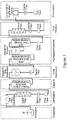
- FIG. 1 An exemplary templated process used in the industry today is shown in Figure 1 .
- a cell harvest step typically involves use of centrifugation to remove cell and cell debris from a cell culture broth, followed by depth filtration.
- the cell harvest step is usually followed by a Protein A affinity purification step, which is followed by virus inactivation.
- virus inactivation is typically followed by one or more chromatographic steps, also referred to as polishing steps, which usually include one or more of cation exchange chromatography and/or anion exchange chromatography and/or hydrophobic interaction chromatography and/or mixed mode chromatography and/or hydroxyapatite chromatography.
- polishing steps are followed by virus filtration and ultrafiltration/diafiltration, which completes the templated process. See, e.g., Shukla et al., J. Chromatography B., 848 (2007) 28-39 ; Liu et al., MAbs, 2010: Sep-Oct 2(5): 480-499 .
- the effluent of the filtration operations and the eluate of the chromatographic operations are collected in intermediate pool tanks and stored, often overnight, until the next unit operation.
- the time needed to complete this process may be as long as 4-7 days.
- the present invention provides improved templated processes which overcome several of the shortcomings of the templated processes currently being used by the industry.
- the present invention provides processes and systems which provide several advantages over the typical templated processes used in the industry today.
- the templated processes and systems described herein include unit operations that are connected in a continuous or semi-continuous manner and obviate the need for pool tanks (also called holding tanks) between certain unit operations, where holding tanks are typically used. Alternatively, only surge tanks are employed.
- processes for purifying a target molecule from a sample comprise the steps of: (a) providing a sample comprising the target molecule and one or more impurities; (b) adding at least one precipitant to the sample and removing one or more impurities, thereby to recover a clarified sample; (c) subjecting the clarified sample from step (b) to a bind and elute chromatography step comprising at least two separation units, with each separation unit comprising the same media, thereby to obtain an eluate comprising the target molecule; and (d) subjecting the eluate to flow-through purification comprising use of two or more media; where at least two steps are performed concurrently for at least a duration of their portion, and wherein the process comprises a single bind and elute chromatography step.
- the flow of liquid through the process is continuous, i.e., the process is a continuous process.
- the process comprises a virus inactivation step between steps (c) and (d) above.
- the virus inactivation step comprises use of a virus inactivation agent selected from an acid, a detergent, a solvent and temperature change.
- the virus inactivation step employs the use of one or more in-line static mixers. In other embodiments, the virus inactivation step comprises the use of one or more surge tanks.
- the target molecule is an antibody, e.g., a monoclonal antibody or a polyclonal antibody.
- the precipitant employed in the processes described herein is a stimulus responsive polymer.
- a preferred stimulus responsive polymer is a modified polyallylamine polymer, which is responsive to a phosphate stimulus.
- exemplary precipitants include, but are not limited to, e.g., an acid, caprylic acid, a flocculant and a salt.
- the removal of impurities following addition of a precipitant employs the use of one or more depth filter. In other embodiments, the removal of one or more impurities employs the use of centrifugation.
- the clarified sample is subjected to a single bind and elute chromatography step, e.g., step (c) mentioned above, which typically employs at least two separation units.
- the bind and elute chromatography step employs continuous multi-column chromatography (CMC).
- the bind and elute chromatography step is an affinity chromatography step (e.g., Protein A affinity chromatography).
- the bind and elute chromatography step comprises the use of a cation exchange (CEX) bind and elute chromatography step or a mixed mode chromatography step.
- CEX cation exchange
- the bind and elute chromatography step (e.g., Protein A affinity chromatography) employs the use of an additive in the loading step, thereby resulting in reducing or eliminating the number of intermediate wash steps that are used.
- an additive includes salts, detergents, surfactants and polymers.
- an additive is a salt (e.g., 0.5M NaCI)
- the starting sample is a cell culture.
- a sample may be provided in a bioreactor.
- the sample is provided in a vessel other than a bioreactor, e.g., it may be transferred to another vessel from a bioreactor before subjecting it to the purification process, as described herein.
- a precipitant used in step (b) above is added directly to a bioreactor containing a cell culture.
- the precipitant is added to a vessel other than a bioreactor, where the vessel contains a sample comprising a target molecule.
- the precipitant is added using a static mixer.
- the processes described herein include a flow-through purification process operation, which employs two or more media selected from activated carbon, anion exchange chromatography media and cation exchange chromatography media.
- a flow-through purification operation additionally includes a virus filtration step, which employs the use of a virus filtration membrane.
- a process according to the present invention comprises the use of one or more surge tanks.
- the processes described herein may additionally include a formulation step.
- a formulation step comprises diafiltration, concentration and sterile.
- a flow-through purification process operation used in the processes described herein comprises the following steps, where all steps are performed in a flow-through mode: (a) contacting the eluate from a Protein A chromatography column with activated carbon; (b) contacting the flow-through sample from step (a) with an anion exchange chromatography media; (c) contacting the flow-through sample from step (b) with a cation exchange chromatography media; and (d) obtaining the flow-through sample from step (c) comprising the target molecule, where the level of one or more impurities in the flow-through sample after step (d) is lower than the level in the eluate in step (a).
- the steps (a)-(c) described above may be performed in any order.
- the flow-through purification step further comprises a virus-filtration step, where the flow-through sample from step (c) directly flows into a virus filtration step.
- a solution change is required between steps (b) and steps (c), where the solution change employs the use of an in-line static mixer and/or a surge tank, to change the pH.
- the entire flow-through purification operation employs a single skid.
- the eluate from a Protein A chromatography step is subjected to a virus inactivation step prior to contacting the eluate with activated carbon.
- a process for purifying a target molecule from a sample comprises the steps of: (a) providing a bioreactor comprising a cell culture; (b) adding a precipitant to the bioreactor and removing one or more impurities, thereby resulting in a clarified sample; (c) subjecting the clarified sample to a Protein A affinity chromatography step, which employs at least two separation units, thereby to obtain an eluate; (d) subjecting the eluate from step (c) to a virus inactivating agent using an in-line static mixer or a surge tank; (e) contacting the eluate after virus inactivation to a flow-through purification operation comprising contacting the eluate in flow-through mode with activated carbon followed by an anion exchange chromatography media followed by an in-line static mixer and/or a surge tank to change pH followed by a cation exchange chromatography media followed by a virus filtration media; and (f) formulating the flow
- a process for purifying a target molecule from a sample comprises the steps of: (a) providing a bioreactor comprising a cell culture; (b) adding a precipitant to the bioreactor and removing one or more impurities, thereby resulting in a clarified sample; (c) adding one or more additives selected from the group consisting of a salt, a detergent, a surfactant and a polymer to the clarified sample; (d) subjecting the clarified sample to a Protein A affinity chromatography step, which employs at least two separation units, thereby to obtain an eluate; (e) subjecting the eluate from step (d) to a virus inactivating agent using an in-line static mixer or a surge tank; (f) contacting the eluate after virus inactivation to a flow-through purification operation comprising contacting the eluate in flow-through mode with activated carbon followed by an anion exchange chromatography media followed by an in-line static mixer
- the additive in step (c) is 0.5M NaCl.
- a system includes: (a) a bioreactor; (b) a filtration device comprising one or more depth filters; (c) one bind and elute chromatography apparatus; and (d) a flow-through purification system comprising at least a flow-through anion exchange device, where a liquid flows continuously through the devices in (a)-(d) during a process run, where the devices are connected to be in fluid communication with each other.
- each device in the system is in fluid communication with devices that precede and follow the device in the system.
- the bioreactor used in a system according to the present invention is a disposable or a single use bioreactor.
- the system is enclosed in a sterile environment.
- the bind and elute chromatography apparatus includes at least two separation units, with each unit comprising the same chromatography media, e.g., Protein A affinity media.
- the Protein A media comprises a Protein A ligand coupled to a rigid hydrophilic polyvinylether polymer matrix.
- the Protein A ligand is coupled to agarose or controlled pore glass.
- the Protein A ligand may be based on a naturally occurring domain of Protein A from Staphylococcus aureus or be a variant or a fragment of a naturally occurring domain.
- the Protein A ligand is derived from the C domain of Staphylococcus aureus Protein A.
- the bind and elute chromatography apparatus includes at least three separation units.
- the separation units are connected to be in fluid communication with each other, such that a liquid can flow from one separation unit to the next.
- the bind and elute chromatography step employs an additive in the clarified cell culture during the loading step where the inclusion of an additive reduces or eliminates the need for one or more wash steps before the elution step.
- a flow-through purification system additionally comprises an activated carbon device and a cation exchange (CEX) flow-through chromatography device.
- the flow-through purification system further comprises a virus filtration device.
- the entire flow-through purification system employs a single skid.
- the present invention provides processes and systems which overcome several shortcomings associated with the typical templated processes used in the industry for purification or biological molecules such as antibodies.
- typical templated processes for purification of biological molecules include many different steps, including one or more chromatographic steps, require use of holding or pool tanks between steps as well as take several hours to days to complete.
- PCT Patent Publication No. WO 2012/014183 discusses methods for protein purification in which two or more chromatographic separation modes are combined in tandem.
- U.S. Patent Publication No. 2008/0269468 discusses combining a continuous perfusion fermentation system with a continuous particle removal system and a continuous purification system, where the flow rate of the mixture through the whole process is kept substantially constant.
- PCT Publication No. WO2012/051147 discusses processes for protein purification but does not appear to describe a continuous or a semi-continuous process.
- PCT Publication No. WO2012/078677 describes a continuous process for manufacture of biological molecules; however, appears to rely on the utilization of multi-valve arrays. Further, the aforementioned PCT publication also does not teach or suggest use of all the process steps described herein. For example, there appears to be no teaching or suggestion of a flow-through purification operation which includes multiple flow-through steps including, e.g., use of a flow-through activated carbon device, a flow-through AEX media, a flow-through CEX media and a flow-through virus filter. In fact, PCT Publication No. WO2012/078677 does not teach or suggest a cation exchange chromatography step performed in a flow-through mode. Lastly, the aforementioned PCT also fails to describe a continuous process that uses a single bind and elute chromatography step and can be performed successfully with minimum interventions, as per the processes described herein.
- the present invention also provides other advantages over conventional processes used in the industry today, e.g., reducing the number of process steps as well as obviating the need to use large pool tanks between process steps for solution adjustments.
- it is not required to perform large volume dilutions in order to change conductivity, thereby obviating the need to use large pool tanks between process steps.
- the processes and systems described herein employ fewer control/monitoring equipments (also called "skids”), which are typically associated with every single process step, compared to conventional processes used in the art.
- the present invention also provides processes which employ the inclusion of an additive during the loading step of Protein A chromatography, resulting in the reduction in or elimintation of one or more intermediate wash steps by going straight from the loading step to the elution step or by reducing the number of wash steps between the loading step and the elution step, without sacrificing product purity.
- U.S. Patent Publication No. 20130096284 discusses inclusion of an amino acid or salt in the sample being loaded onto a Protein A chromatography column
- the foregoing publication does not appear to teach or suggest the use of such a Protein A chromatography step in a multi-column continuous or a semi-continuous mode, as described herein. Instead, it discusses the Protien A step to be performed in a batch, single column mode.
- the present invention demonstrates that even upon the elimination of or reduction in the number of wash steps performed during the Protein A chromatography step, a reduction in the level of impurities, e.g., HCPs, is observed, without sacrificing product purity.
- impurities e.g., HCPs
- target molecule or “target compound” refers to any molecule, substance or compound or mixtures thereof that is isolated, separated or purified from one or more impurities in a sample using processes and systems described herein.
- the target molecule is a biological molecule such as, e.g., a protein or a mixture of two or more proteins.
- the target molecule is an Fc-region containing protein such as an antibody.
- antibody refers to a protein which has the ability to specifically bind to an antigen.
- antibodies typically have a basic four-polypeptide chain structure consisting of two heavy and two light chains, said chains being stabilized, for example, by interchain disulfide bonds.
- Antibodies may be monoclonal or polyclonal and may exist in monomeric or polymeric form, for example, IgM antibodies which exist in pentameric form and/or IgA antibodies which exist in monomeric, dimeric or multimeric form.
- Antibodies may also include multispecific antibodies (e.g., bispecific antibodies), and antibody fragments so long as they retain, or are modified to comprise, a ligand-specific binding domain.
- fragment refers to a part or portion of an antibody or antibody chain comprising fewer amino acid residues than an intact or complete antibody or antibody chain. Fragments can be obtained via chemical or enzymatic treatment of an intact or complete antibody or antibody chain. Fragments can also be obtained by recombinant means. When produced recombinantly, fragments may be expressed alone or as part of a larger protein called a fusion protein. Exemplary fragments include Fab, Fab', F(ab')2, Fc and/or Fv fragments.
- an Fc-region containing protein is a recombinant protein which includes the Fc region of an immunoglobulin fused to another polypeptide or a fragment thereof.
- Exemplary polypeptides include, e.g., renin; a growth hormone, including human growth hormone and bovine growth hormone; growth hormone releasing factor; parathyroid hormone; thyroid stimulating hormone; lipoproteins; ⁇ -1 -antitrypsin; insulin ⁇ -chain; insulin ⁇ -chain; proinsulin; follicle stimulating hormone; calcitonin; luteinizing hormone; glucagon; clotting factors such as factor VIIIC, factor IX, tissue factor, and von Willebrands factor; anti-clotting factors such as Protein C; atrial natriuretic factor; lung surfactant; a plasminogen activator, such as urokinase or human urine or tissue-type plasminogen activator (t-PA); bombesin; thrombin; hemopoietic growth factor;
- sample refers to any composition or mixture that contains a target molecule.
- Samples may be derived from biological or other sources.
- Biological sources include eukaryotic and prokaryotic sources, such as plant and animal cells, tissues and organs.
- the sample may also include diluents, buffers, detergents, and contaminating species, debris and the like that are found mixed with the target molecule.
- the sample may be "partially purified” (i.e., having been subjected to one or more purification steps, such as filtration steps) or may be obtained directly from a host cell or organism producing the target molecule (e.g., the sample may comprise harvested cell culture fluid).
- a sample is a cell culture feed.
- impurity refers to any foreign or objectionable molecule, including a biological macromolecule such as DNA, RNA, one or more host cell proteins, endotoxins, lipids and one or more additives which may be present in a sample containing the target molecule that is being separated from one or more of the foreign or objectionable molecules using a process of the present invention. Additionally, such impurity may include any reagent which is used in a step which may occur prior to the method of the invention. An impurity may be soluble or insoluble in nature.
- insoluble impurity refers to any undesirable or objectionable entity present in a sample containing a target molecule, where the entity is a suspended particle or a solid.
- exemplary insoluble impurities include whole cells, cell fragments and cell debris.
- soluble impurity refers to any undesirable or objectionable entity present in a sample containing a target molecule, where the entity is not an insoluble impurity.
- soluble impurities include host cell proteins (HCPs), DNA, RNA, viruses, endotoxins, cell culture media components, lipids etc.
- CHOP Choinese hamster ovary cell protein
- HCP host cell proteins
- CHOP is generally present as an impurity in a cell culture medium or lysate (e.g ., a harvested cell culture fluid ("HCCF”)) comprising a target molecule such as an antibody or immunoadhesin expressed in a CHO cell).
- HCCF harvested cell culture fluid
- the amount of CHOP present in a mixture comprising a target molecule provides a measure of the degree of purity for the target molecule.
- HCP or CHOP includes, but is not limited to, a protein of interest expressed by the host cell, such as a CHO host cell.
- the amount of CHOP in a protein mixture is expressed in parts per million relative to the amount of the target molecule in the mixture.
- HCP refers to the proteins, other than target protein, found in a lysate of that host cell.
- ppm parts per million
- the units ppm refer to the amount of HCP or CHOP in nanograms/milligram per target molecule in milligrams/milliliter (i.e., (CHOP ng/mL)/(target molecule mg/mL), where the target molecule and the HCPs are in solution).
- purifying refers to increasing the degree of purity of a target molecule from a sample comprising the target molecule and one or more impurities. Typically, the degree of purity of the target molecule is increased by removing (completely or partially) at least one impurity from the sample.
- binding and elute mode and "bind and elute process,” as used herein, refer to a separation technique in which at least one target molecule contained in a sample (e.g., an Fc region containing protein) binds to a suitable resin or media (e.g., an affinity chromatography media or a cation exchange chromatography media) and is subsequently eluted.
- a suitable resin or media e.g., an affinity chromatography media or a cation exchange chromatography media
- flow-through process refers to a separation technique in which at least one target molecule (e.g., an Fc-region containing protein or an antibody) contained in a biopharmaceutical preparation along with one or more impurities is intended to flow through a material, which usually binds the one or more impurities, where the target molecule usually does not bind (i.e., flows through).
- target molecule e.g., an Fc-region containing protein or an antibody
- process step refers to the use of one or more methods or devices to achieve a certain result in a purification process.
- process steps or unit operations which may be employed in the processes and systems described herein include, but are not limited to, clarification, bind and elute chromatography, virus inactivation, flow-through purification (including use of two or more media selected from activated carbon, anion exchange and cation exchange in a flow-through mode) and formulation. It is understood that each of the process steps or unit operations may employ more than one step or method or device to achieve the intended result of that process step or unit operation.
- the clarification step and/or the flow-through purification operation may employ more than one step or method or device to achieve that process step or unit operation.
- one or more devices which are used to perform a process step or unit operation are single-use devices and can be removed and/or replaced without having to replace any other devices in the process or even having to stop a process run.
- system generally refers to the physical form of the whole purification process, which includes two or more devices to perform the process steps or unit operations, as described herein.
- the system is enclosed in a sterile environment.
- a separation unit refers to an equipment or apparatus, which can be used in a bind and elute chromatographic separation or a flow-through step or a filtration step.
- a separation unit can be a chromatography column or a chromatography cartridge which is filled with a sorbent matrix or a chromatographic device that contains a media that has appropriate functionality.
- a single bind and elute chromatography step is used in the purification process which employs two or more separation units.
- the two or more separation units include the same media.
- the processes and systems described herein obviate the need to necessarily use pool tanks, thereby significantly reducing the overall time to run a purification process as well as the overall physical footprint occupied by the system. Accordingly, in various embodiments according to the present invention, the output from one process step (or unit operation) is the input for the next step (or unit operation) in the process and flows directly and continuously into the next process step (or unit operation), without the need for collecting the entire output from a process step.
- pool tank refers to any container, vessel, reservoir, tank or bag, which is generally used between process steps and has a size/volume to enable collection of the entire volume of output from a process step.
- Pool tanks may be used for holding or storing or manipulating solution conditions of the entire volume of output from a process step.
- the processes and systems described herein obviate the need to use one or more pool tanks.
- the processes and systems described herein may use one or more surge tanks throughout a purification process.
- surge tank refers to any container or vessel or bag, which is used between process steps or within a process step (e.g., when a single process operation comprises more than one step); where the output from one step flows through the surge tank onto the next step.
- a surge tank is different from a pool tank, in that it is not intended to hold or collect the entire volume of output from a step; but instead enables continuous flow of output from one step to the next.
- the volume of a surge tank used between two process steps or within a process operation (e.g., flow-through purification operation) described herein is no more than 25% of the entire volume of the output from the process step.
- the volume of a surge tank is no more than 10% of the entire volume of the output from a process step. In some other embodiments, the volume of a surge tank is less than 35%, or less than 30%, or less than 25%, or less than 20%, or less than 15%, or less than 10% of the entire volume of a cell culture in a bioreactor, which constitutes the starting material from which a target molecule is purified.
- continuous process refers to a process for purifying a target molecule, which includes two or more process steps (or unit operations), such that the output from one process step flows directly into the next process step in the process, without interruption and/or without the need to collect the entire volume of the output from a process step before performing the next process step.
- two or more process steps can be performed concurrently for at least a portion of their duration.
- continuous process also applies to steps within a process operation, in which case, during the performance of a process operation including multiple steps, the sample flows continuously through the multiple steps that are necessary to perform the process operation.
- a process operation described herein is the flow through purification operation which includes multiple steps that are performed in a continuous manner and employs two or more of flow-through activated carbon, flow-through AEX media, flow-through CEX media, and flow-through virus filtration.
- the flow through purification operation is carried out in the order: activated carbon followed by AEX media followed by CEX media followed by virus filtration.
- activated carbon, AEX media and CEX media may be used in any order.
- AEX is followed by activated carbon followed by CEX media; or alternatively, CEX is followed by activated carbon followed by AEX media.
- activated carbon is followed by CEX media followed by AEX media.
- AEX media is followed by CEX media followed by activated carbon; or alternatively, CEX media is followed by AEX media followed by activated carbon.
- Continuous processes also include processes where the input of the fluid material in any single process step or the output is discontinuous or intermittent. Such processes may also be referred to as "semi-continuous" processes.
- the input in a process step e.g., a bind and elute chromatography step
- the output may be collected intermittently, where the other process steps in the purification process are continuous.
- the processes and systems described herein include at least one unit operation which is operated in an intermittent matter, whereas the other unit operations in the process or system may be operated in a continuous manner.
- connected process refers to a process for purifying a target molecule, where the process comprises two or more process steps (or unit operations), which are connected to be in direct fluid communication with each other, such that fluid material continuously flows through the process steps in the process and is in simultaneous contact with two or more process steps during the normal operation of the process. It is understood that at times, at least one process step in the process may be temporarily isolated from the other process steps by a barrier such as a valve in the closed position. This temporary isolation of individual process steps may be necessary, for example, during start up or shut down of the process or during removal/replacement of individual unit operations.
- connected process also applies to steps within a process operation which are connected to be in fluid communication with each other, e.g., when a process operation requires several steps to be performed in order to achieve the intended result of the operation (e.g., the flow-through purification operation used in the methods described herein).
- fluid communication refers to the flow of fluid material between two process steps or flow of fluid material between process steps of a process operation, where the process steps are connected by any suitable means (e.g., a connecting line or surge tank), thereby to enable the flow of fluid from one process step to another process step.
- a connecting line between two unit operations may be interrupted by one or more valves to control the flow of fluid through the connecting line.
- a connecting line may be in the form of a tube, a hose, a pipe, a channel or some other means that enables flow of liquid between two process steps.
- the terms "clarify,” “clarification,” and “clarification step,” as used herein, refers to a process step for removing suspended particles and or colloids, thereby to reduce turbidity, of a target molecule containing solution, as measured in NTU (nephelometric turbidity units). Clarification can be achieved by a variety of means, including centrifugation or filtration. Centrifugation could be done in a batch or continuous mode, while filtration could be done in a normal flow (e.g. depth filtration) or tangential flow mode. In processes used in the industry today, centrifugation is typically followed by depth filtration intended to remove insoluble impurities, which may not have been removed by centrifugation.
- clarification involves any combinations of two or more of centrifugation, filtration, depth filtration and precipitation. In some embodiments, the processes and systems described herein obviate the need for centrifugation.
- precipitate refers to process used in clarification, in which the properties of the undesirable impurities are modified such that they can be more easily separated from the soluble target molecule. This is typically accomplished by forming large aggregate particles and/or insoluble complexes containing the undesirable impurities. These particles have properties (e.g. density or size) such that they can be more easily separated from the liquid phase that contains the soluble target molecule, such as by filtration or centrifugation. In some cases, a phase change is caused, such that the undesirable impurities can be more easily separated from the soluble target molecule.
- Precipitation by phase change can be achieved by the addition of a precipitating agent, such as a polymer or a small molecule.
- the precipitant is a stimulus responsive polymer, also referred to as a smart polymer.
- the precipitant or precipitating agent is a flocculant.
- Flocculation as used herein, is one way of performing precipitation where the performance typically depends on the flocculant concentration used ("dose dependent").
- Typical flocculating agents are polyelectrolytes, such as polycations, that complex with oppositely charged impurities.
- clarification employs the addition of a precipitant to a sample containing a target molecule and one or more impurities.
- a change in solution conditions such as temperature, pH, salinity
- the precipitated material which contains the one or more impurities as well as the precipitating agent is subsequently removed thereby recovering the target molecule in the liquid phase, where the liquid is then typically subjected to further process steps in order to further purify the target molecule.
- Precipitation may be performed directly in a bioreactor containing a cell culture expressing a target molecule to be purified, where a precipitant is added directly to the bioreactor.
- the precipitant may be added to the cell culture, which typically contains the target molecule, in a separate vessel.
- the precipitant is added using a static mixer.
- the precipitant is a stimulus responsive polymer
- both the polymer and the stimulus to which it is responsive may be added using a static mixer.
- settling refers to a sedimentation process in which the precipitated material migrates to the bottom of a vessel under the influence of gravitational forces. Settling can be followed by decanting or filtering of the liquid phase or supernatant.
- a stimulus or “stimuli,” as used interchangeably herein, is meant to refer to a physical or chemical change in the environment which results in a response by a stimulus responsive polymer. Accordingly, such polymers are responsive to a stimulus and the stimulus results in a change in the solubility of the polymer.
- Examples of stimuli to which one or more polymers used herein are responsive include, but are not limited to, e.g., changes in temperature, changes in conductivity and/or changes in pH.
- a stimulus comprises addition of a complexing agent or a complex forming salt to a sample.
- a stimulus is generally added after the addition of a polymer to a sample. Although, the stimulus may also be added during or before addition of a polymer to a sample.
- a stimulus responsive polymer refers to a polymer or copolymer which exhibits a change in a physical and/or chemical property after the addition of a stimulus.
- a typical stimulus response is a change in the polymer's solubility.
- the polymer poly(N-isopropylacrylamide) is water soluble at temperatures below about 35° C, but become insoluble in water at temperatures of about 35° C.
- a stimulus responsive polymer is a modified polyallylamine (PAA) polymer which is responsive to a multivalent ion stimulus (e.g, phosphate stimulus). Further details regarding this polymer can be found, e.g., in U.S. Publication No. 20110313066 , incorporated by reference herein in its entirety.
- PAA modified polyallylamine
- a cell culture is subjected to a depth filter to remove one or more impurities.
- depth filter or “depth filtration” as used herein refer to a filter that is capable of retaining particulate matter throughout the filter medium, rather than just on the filter surface. In some embodiments described herein, one or more depth filters are used in the clarification process step.
- clarification results in the removal of soluble and/or insoluble impurities in a sample which may later on result in the fouling of a filter or device used in a process step in a purification process, thereby making the overall purification process more economical.
- one or more chromatography steps are included in a protein purification process.
- chromatography refers to any kind of technique which separates an analyte of interest (e.g. a target molecule) from other molecules present in a mixture through differential adsorption onto a media.
- analyte of interest e.g. a target molecule
- the target molecule is separated from other molecules as a result of differences in rates at which the individual molecules of the mixture migrate through a stationary medium under the influence of a moving phase, or in bind and elute processes.
- matrix refers to any kind of particulate sorbent, bead, resin or other solid phase (e.g., a membrane, non-woven, monolith, etc.) which usually has a functional group or ligand attached to it.
- a matrix having a ligand or functional group attached to it is referred to as "media,” which in a separation process, acts as the adsorbent to separate a target molecule (e.g., an Fc region containing protein such as an immunoglobulin) from other molecules present in a mixture (e.g., one or more impurities), or alternatively, acts as a sieve to separate molecules based on size (e.g., in case of a virus filtration membrane).
- Examples of materials for forming the matrix include polysaccharides (such as agarose and cellulose); and other mechanically stable substances such as silica (e.g. controlled pore glass), poly(styrenedivinyl)benzene, polyacrylamide, ceramic particles and derivatives of any of the above.
- a rigid hydrophilic polyvinylether polymer is used as a matrix.
- Certain media may not contain ligands.
- Examples of media that may be used in the processes described herein that do not contain a ligand include, but are not limited to, activated carbon, hydroxyapatite, silica, etc.
- ligand refers to a functional group that is attached to a matrix and that determines the binding properties of the media.
- ligands include, but are not limited to, ion exchange groups, hydrophobic interaction groups, hydrophilic interaction groups, thiophilic interactions groups, metal affinity groups, affinity groups, bioaffinity groups, and mixed mode groups (combinations of the aforementioned).
- exemplary ligands which may be used include, but are not limited to, strong cation exchange groups, such as sulphopropyl, sulfonic acid; strong anion exchange groups, such as trimethylammonium chloride; weak cation exchange groups, such as carboxylic acid; weak anion exchange groups, such as N 5 N diethylamino or DEAE; hydrophobic interaction groups, such as phenyl, butyl, propyl, hexyl; and affinity groups, such as Protein A, Protein G, and Protein L.
- the ligand that is used in the processes and systems described herein includes one or more Protein A domains or a functional variant or fragment thereof, as described in U.S. Patent Publication Nos.
- 201002218442 and 20130046056 both incorporated by reference herein, which relate to ligands based either on wild-type multimeric forms of B, Z or C domains or on multimeric variants of Protein A domains (e.g., B, Z or C domain pentamers).
- the ligands described therein also exhibit reduced Fab binding.
- affinity chromatography refers to a protein separation technique in which a target molecule (e.g., an Fc region containing protein of interest or antibody) specifically binds to a ligand which is specific for the target molecule.
- a target molecule e.g., an Fc region containing protein of interest or antibody
- a ligand is generally covalently attached to a suitable chromatography matrix material and is accessible to the target molecule in solution as the solution contacts the chromatography media.
- the ligand is Protein A or a functional variant thereof, immobilized onto a rigid hydrophilic polyvinylether polymer matrix.
- the target molecule generally retains its specific binding affinity for the ligand during the chromatographic steps, while other solutes and/or proteins in the mixture do not bind appreciably or specifically to the ligand.
- Binding of the target molecule to the immobilized ligand allows contaminating proteins and impurities to be passed through the chromatography matrix while the target molecule remains specifically bound to the immobilized ligand on the solid phase material.
- the specifically bound target molecule is then removed in its active form from the immobilized ligand under suitable conditions (e.g., low pH, high pH, high salt, competing ligand etc.), and passed through the chromatographic column with the elution buffer, substantially free of the contaminating proteins and impurities that were earlier allowed to pass through the column.
- suitable conditions e.g., low pH, high pH, high salt, competing ligand etc.
- any suitable ligand may be used for purifying its respective specific binding protein, e.g. an antibody.
- Protein A is used as a ligand for purifying an Fc region containing target protein.
- the conditions for elution from the ligand (e.g., based on Protein A) of the target molecule (e.g., an Fc- region containing protein) can be readily determined by one of ordinary skill in the art.
- Protein G or Protein L or a functional variant thereof may be used as a ligand.
- a process which employs a ligand such as Protein A uses a pH range of 5-9 for binding to an Fc-region containing protein, followed by washing or re-equilibrating the ligand / target molecule conjugate, which is then followed by elution with a buffer having pH about or below 4 which contains at least one salt.
- Protein A and “Prot A” are used interchangeably herein and encompasses Protein A recovered from a native source thereof, Protein A produced synthetically (e.g., by peptide synthesis or by recombinant techniques), and variants thereof which retain the ability to bind proteins which have a CH 2 /CH 3 region, such as an Fc region.
- Protein A can be purchased commercially from Repligen, GE or Fermatech. Protein A is generally immobilized on a chromatography matrix.
- An interaction compliant with such value for the binding constant is termed "high affinity binding" in the present context.
- such functional derivatives or variants of Protein A comprise at least part of a functional IgG binding domain of wild-type Protein A, selected from the natural domains E, D, A, B, C or engineered mutants thereof, which have retained IgG binding functionality.
- Protein A derivatives or variants engineered to allow a single-point attachment to a solid support may also be used in the affinity chromatography step in the claimed methods.
- Single point attachment generally means that the protein moiety is attached via a single covalent bond to a chromatographic support material of the Protein A affinity chromatography. Such single-point attachment may also occur by use of suitably reactive residues which are placed at an exposed amino acid position, namely in a loop, close to the N- or C-terminus or elsewhere on the outer circumference of the protein fold. Suitable reactive groups are e.g. sulfhydryl or amino functions.
- Protein A derivatives of variants are attached via multipoint attachment to suitable a chromatography matrix.
- affinity chromatography matrix refers to a chromatography matrix which carries ligands suitable for affinity chromatography.
- the ligand e.g., Protein A or a functional variant or fragment thereof
- an affinity chromatography media is a Protein A media.
- An affinity chromatography media typically binds the target molecules with high specificity based on a lock/key mechanism such as antigen/antibody or enzyme/receptor binding.
- affinity media carrying Protein A ligands include Protein A SEPHAROSETM and PROSEP ® -A.
- an affinity chromatography step may be used as the single bind and elute chromatography step in the entire purification process.
- a Protein A based ligand is attached to a rigid hydrophilic polyvinylether polymer matrix.
- such a ligand is attached to agarose or to controlled pore glass.
- ion-exchange and ion-exchange chromatography refer to the chromatographic process in which a solute or analyte of interest (e.g., a target molecule being purified) in a mixture, interacts with a charged compound linked (such as by covalent attachment) to a solid phase ion exchange material, such that the solute or analyte of interest interacts non-specifically with the charged compound more or less than solute impurities or contaminants in the mixture.
- contaminating solutes in the mixture elute from a column of the ion exchange material faster or slower than the solute of interest or are bound to or excluded from the resin relative to the solute of interest.
- Ion-exchange chromatography specifically includes cation exchange, anion exchange, and mixed mode ion exchange chromatography.
- cation exchange chromatography can bind the target molecule (e.g., an Fc region containing target protein) followed by elution (e.g., using cation exchange bind and elute chromatography or "CEX”) or can predominately bind the impurities while the target molecule "flows through” the column (cation exchange flow through chromatography FT- CEX).
- Anion exchange chromatography can bind the target molecule (e.g., an Fc region containing target protein) followed by elution or can predominately bind the impurities while the target molecule "flows through” the column, also referred to as negative chromatography.
- the anion exchange chromatography step is performed in a flow through mode.
- ion exchange media refers to a media that is negatively charged (i.e., a cation exchange media) or positively charged (i.e., an anion exchange media).
- the charge may be provided by attaching one or more charged ligands to a matrix, e.g., by covalent linkage.
- the charge may be an inherent property of the matrix (e.g., as is the case of silica, which has an overall negative charge).
- anion exchange media is used herein to refer to a media which is positively charged, e.g. having one or more positively charged ligands, such as quaternary amino groups, attached to a matrix.
- commercially available anion exchange media include DEAE cellulose, QAE SEPHADEXTM and FAST Q SEPHAROSETM (GE Healthcare).
- Other exemplary materials that may be used in the processes and systems described herein are Fractogel ® EMD TMAE, Fractogel ® EMD TMAE highcap, Eshmuno ® Q and Fractogel ® EMD DEAE (EMD Millipore).
- cation exchange media refers to a media which is negatively charged, and which has free cations for exchange with cations in an aqueous solution contacted with the solid phase of the media.
- a negatively charged ligand attached to the solid phase to form the cation exchange media may, for example, be a carboxylate or sulfonate.
- Commercially available cation exchange media include carboxy-methyl-cellulose, sulphopropyl (SP) immobilized on agarose (e.g., SP-SEPHAROSE FAST FLOWTM or SP-SEPHAROSE HIGH PERFORMANCETM, from GE Healthcare) and sulphonyl immobilized on agarose (e.g. S-SEPHAROSE FAST FLOWTM from GE Healthcare).
- SP sulphopropyl
- SP sulphopropyl
- sulphonyl immobilized on agarose e.g. S-SEPHAROSE FAST FLOWTM from GE Healthcare
- mixed-mode chromatography or “multi-modal chromatography,” as used herein, refers to a process employing a chromatography stationary phase that carries at least two distinct types of functional groups, each capable of interacting with a molecule of interest.
- Mixed-mode chromatography generally employs a ligand with more than one mode of interaction with a target protein and/or impurities.
- the ligand typically includes at least two different but co-operative sites which interact with the substance to be bound. For example, one of these sites may have a charge-charge type interaction with the substance of interest, whereas the other site may have an electron acceptor-donor type interaction and/or hydrophobic and/or hydrophilic interactions with the substance of interest.
- Electron donor-acceptor interaction types include hydrogen-bonding, ⁇ - ⁇ , cation- ⁇ , charge transfer, dipole-dipole and induced dipole interactions. Generally, based on the differences of the sum of interactions, a target protein and one or more impurities may be separated under a range of conditions.
- mixed mode ion exchange media or “mixed mode media” refers to a media which is covalently modified with cationic and/or anionic and hydrophobic moieties.
- a commercially available mixed mode ion exchange media is BAKERBOND ABXTM (J. T. Baker, Phillipsburg, N.J.) containing weak cation exchange groups, a low concentration of anion exchange groups, and hydrophobic ligands attached to a silica gel solid phase support matrix.
- Mixed mode cation exchange materials typically have cation exchange and hydrophobic moieties. Suitable mixed mode cation exchange materials are Capto ® MMC (GE Healthcare) and Eshmuno ® HCX (EMD Millipore).
- Mixed mode anion exchange materials typically have anion exchange and hydrophobic moieties. Suitable mixed mode anion exchange materials are Capto ® Adhere (GE Healthcare).
- hydrophobic interaction chromatography refers to a process for separating molecules based on their hydrophobicity, i.e., their ability to adsorb to hydrophobic surfaces from aqueous solutions.
- HIC is usually differentiated from the Reverse Phase (RP) chromatography by specially designed HIC resins that typically have a lower hydrophobicity, or density of hydrophobic ligands compared to RP resins.
- HIC chromatography typically relies on the differences in hydrophobic groups on the surface of solute molecules. These hydrophobic groups tend to bind to hydrophobic groups on the surface of an insoluble matrix. Because HIC employs a more polar, less denaturing environment than reversed phase liquid chromatography, it is becoming increasing popular for protein purification, often in combination with ion exchange or gel filtration chromatography.
- break-through refers to the point of time during the loading of a sample containing a target molecule onto a packed chromatography column or separation unit, when the target molecule first appears in the output from the column or separation unit.
- break-through is the point of time when loss of target molecule begins.
- a “buffer” is a solution that resists changes in pH by the action of its acid-base conjugate components.
- Various buffers which can be employed depending, for example, on the desired pH of the buffer, are described in: Buffers. A Guide for the Preparation and Use of Buffers in Biological Systems, Gueffroy, D., ed. Calbiochem Corporation (1975 ).
- Non- limiting examples of buffers include MES, MOPS, MOPSO, Tris, HEPES, phosphate, acetate, citrate, succinate, and ammonium buffers, as well as combinations of these.
- a buffer When "loading" a sample onto a device or a column or a separation unit containing a suitable media, a buffer is used to load the sample comprising the target molecule and one or more impurities onto the device or column or separation unit.
- the buffer In the bind and elute mode, the buffer has a conductivity and/or pH such that the target molecule is bound to media, while ideally all the impurities are not bound and flow through the column.
- a buffer in a flow-through mode, is used to load the sample comprising the target molecule and one or more impurities onto a column or device or separation unit, wherein the buffer has a conductivity and/or pH such that the target molecule is not bound to the media and flows through while ideally all or most of the impurities bind to the media.
- additive refers to any agent which is added to a sample containing a target protein prior to loading of the sample onto a chromatography matrix or during the loading step, where the addition of the agent eliminates one or more wash steps or reduces the number of wash step which are otherwise designed for impurity removal, to be used subsequent to the loading step and before the elution of the target protein.
- a single agent may be added to a sample prior to or during the loading or the number of agents may be more than one.
- Exemplary additives include, but are not limited to, salts, polymers, surfactants or detergents, solvents, chaotropic agents and any combinations thereof. In a particular embodiment, such an additive is sodium chloride salt.
- a static mixer is used for contacting the output from the clarification step with an additive, where the use of a static mixer significantly reduces the time, thus allowing for a simplified connection of the clarification step to the protein A chromatography step.
- re-equilibrating refers to the use of a buffer to re-condition the media prior to loading the target molecule.
- the same buffer used for loading may be used for re-equilibrating.
- wash or “washing” a chromatography media refers to passing an appropriate liquid, e.g., a buffer, through or over the media. Typically washing is used to remove weakly bound contaminants from the media prior to eluting the target molecule and/or to remove non-bound or weakly bound target molecule after loading.
- the wash buffer is different from the loading buffer.
- the wash buffer and the loading buffer are the same.
- a wash step is eliminated or the number of wash steps is reduced in a purification process by altering the conditions of the sample load.
- the wash steps that are used in the processes described herein employ a buffer having a conductivity of 20 mS/cm or less, and accordingly, are different from the buffers that are typically used for impurity removal, as those typically have a conductivity greater than 20 mS/cm.
- conductivity refers to the ability of an aqueous solution to conduct an electric current between two electrodes. In solution, the current flows by ion transport. Therefore, with an increasing amount of ions present in the aqueous solution, the solution will have a higher conductivity.
- the unit of measurement for conductivity is milliSeimens per centimeter (mS/cm or mS), and can be measured using a commercially available conductivity meter (e.g., sold by Orion).
- the conductivity of a solution may be altered by changing the concentration of ions therein. For example, the concentration of a buffering agent and/or concentration of a salt (e.g. NaCl or KCI) in the solution may be altered in order to achieve the desired conductivity.
- the salt concentration of the various buffers is modified to achieve the desired conductivity.
- such wash steps employ a buffer with a conductivity of about 20 mS/cm or less.
- elute or “eluting” or “elution” refers to removal of a molecule (e.g., a polypeptide of interest or an impurity) from a chromatography media by using or altering certain solution conditions, whereby the buffer (referred to as an “elution buffer”) competes with the molecule of interest for the ligand sites on the chromatography resin.
- elution buffer a buffer that competes with the molecule of interest for the ligand sites on the chromatography resin.
- a non-limiting example is to elute a molecule from an ion exchange resin by altering the ionic strength of the buffer surrounding the ion exchange material such that the buffer competes with the molecule for the charged sites on the ion exchange material.
- the elution buffer has a low pH (e.g., having a pH in the range of about 2 to about 5, or from about 3 to about 4) and which disrupts the interactions between ligand (e.g., Protein A) and the target protein.
- ligand e.g., Protein A
- Exemplary elution buffers include phosphate, acetate, citrate and ammonium buffers, as well as combinations of these.
- an elution buffer may be used which has a high pH (e.g., pH of about 9 or higher).
- Elution buffers may also contain additional compounds, e.g., MgCl 2 (2 mM) for facilitating elution.
- virus inactivation buffer may be used to inactivate certain viruses prior to eluting the target molecule.
- the virus inactivation buffer differs from loading buffer since it may contain detergent/detergents or have different properties (pH/conductivity/salts and their amounts).
- virus inactivation is performed before the bind and elute chromatography step.
- virus inactivation is performed after during or after elution from a bind and elute chromatography step.
- virus inactivation is performed in-line using a static mixer.
- virus inactivation employs use of one or more surge tanks.
- bioreactor refers to any manufactured or engineered device or system that supports a biologically active environment.
- a bioreactor is a vessel in which a cell culture process is carried out. Such a process may either be aerobic or anaerobic.
- Commonly used bioreactors are typically cylindrical, ranging in size from liters to cubic meters, and are often made of stainless steel.
- a bioreactor is made of a material other than steel and is disposable or single-use. It is contemplated that the total volume of a bioreactor may be any volume ranging from 100 mL to up to 10,000 Liters or more, depending on a particular process.
- the bioreactor is connected to a unit operation such as a depth filter.
- a bioreactor is used for both cell culturing as well as for precipitation, where a precipitant may be added directly to a bioreactor, thereby to precipitate one or more impurities.
- active carbon refers to a carbonaceous material which has been subjected to a process to enhance its pore structure.
- Activated carbons are porous solids with very high surface areas. They can be derived from a variety of sources including coal, wood, coconut husk, nutshells, and peat. Activated carbon can be produced from these materials using physical activation involving heating under a controlled atmosphere or chemical activation using strong acids, bases, or oxidants. The activation processes produce a porous structure with high surface areas that give activated carbon high capacities for impurity removal. Activation processes can be modified to control the acidity of the surface.
- activated carbon is used in a flow through purification step, which typically follows a bind and elute chromatography step or a virus inactivation step which in turn follows the bind and elute chromatography step.
- activated carbon is incorporated within a cellulose media, e.g., in a column or some other suitable device.
- static mixer refers to a device for mixing two fluid materials, typically liquids.
- the device generally consists of mixer elements contained in a cylindrical (tube) housing.
- the overall system design incorporates a method for delivering two streams of fluids into the static mixer. As the streams move through the mixer, the non-moving elements continuously blend the materials. Complete mixing depends on many variables including the properties of the fluids, inner diameter of the tube, number of mixer elements and their design etc.
- one or more static mixers are used throughout the purification process or system.
- a static mixer is used for contacting the output from the bind and elute chromatography step with a virus inactivating agent (e.g., an acid or any other suitable virus inactivating agent), where the use of a static mixer significantly reduces the time, which would otherwise be needed to accomplish effective virus inactivation.
- a virus inactivating agent e.g., an acid or any other suitable virus inactivating agent
- the present invention provides novel and improved processes for purification of target molecules from a sample (e.g., a cell culture feed) containing a target molecule and one or more impurities.
- a sample e.g., a cell culture feed
- the processes described herein are a vast improvement over existing methods used in the art, in that they reduce the overall time frame required for a process run (12-24 hours relative to several days); include fewer steps relative to most conventional processes; reduce the overall physical footprint of a process by virtue of having fewer unit operations and are easier to execute than a conventional process. Additionally, in some embodiments, processes according to the present invention employ devices that may be disposable.
- the processes according to the present invention include several process steps or unit operations which are intended to achieve a desired result and where the process steps (or unit operations) are connected such that to be in fluid communication with each other and further that two or more process steps can be performed concurrently for at least a part of the duration of each process step.
- a user does not have to wait for a process step to be completed before executing the next process step in the process, but a user can start a process run such that the liquid sample containing the target molecule flows through the process steps continuously or semi-continuously, resulting in a purified target molecule.
- the sample containing the target molecule is typically in contact with more than one process step or unit operation in the process at any given time.
- Each process step may involve the use of one or more devices or methods to accomplish the process step.
- processes described herein are different from conventional processes used in the industry, in that they obviate the need to use pool tanks for holding, diluting, manipulating and sometimes storing the output from a process step before the output is subjected to the next process step.
- the processes described herein enable any manipulation of the sample in-line (e.g., using a static mixer) or employ the use of surge tanks (which are usually not more than 10% or 20% or 25% of total volume of the output from a process step) between process steps or sometimes within a process operation (e.g., when a process operation employs more than one method or device), thereby significantly reducing the overall time to perform the process as well as the physical footprint of the overall system for performing the process.
- processes described herein use no pool tanks but only surge tanks having a volume of less than 25%, preferably less than 10% of the volume of the output from the preceding step.
- the processes described herein include at least three process steps-clarification, bind and elute chromatography and flow-through purification. Typically, clarification is the first step followed by bind and elute chromatography followed by flow-through purification operation.
- the processes may include additional process steps including, but not limited to, virus inactivation and formulation.
- An important aspect of the processes described herein is that regardless of the number of steps, the process includes only one bind and elute chromatography step.
- the starting material for the purification process is usually a sample containing a target molecule being purified.
- a cell culture producing the target molecule is used.
- samples other than cell cultures may also be used.
- Exemplary samples include, but are not limited to, transgenic mammalian cell cultures, non-transgenic mammalian cell cultures, bacterial cell cultures, tissue cultures, microbial fermentation batches, plant extracts, biofuels, seawater cultures, freshwater cultures, wastewater cultures, treated sewage, untreated sewage, milk, blood, and combinations thereof.
- the samples contain various impurities in addition to the target molecule.
- impurities include media components, cells, cell debris, nucleic acids, host cell proteins, viruses, endotoxins, etc.
- Clarification is intended to separate one or more soluble and/or insoluble impurities from the target molecule.
- insoluble impurities like cells and cellular debris are removed from the sample resulting in a clarified fluid containing the target molecule in solution as well as other soluble impurities.
- Clarification is typically performed prior to a step involving capture of the desired target molecule.
- Another key aspect of clarification is the removal of soluble and/or insoluble impurities in a sample which may later on result in the fouling of a sterile filter in a purification process, thereby making the overall purification process more economical.
- clarification generally comprises removal of cells and/or cellular debris and typically involves centrifugation as the first step, followed by depth filtration. See, e.g., Shukla et al., J. Chromatography B, 848 (2007): 28-39 ; Liu et al., MAbs, 2(5): 480-499 (2010 ).
- clarification obviates the need to use centrifugation.
- the cell culture sample in a bioreactor may be subjected to depth filtration alone or to settling and depth filtration, without the need for centrifugation.
- use of precipitation before depth filtration increases throughput and therefore, the amount of sample volume which may be processed without the need for centrifugation is also increased. In other words, in some instances, if 1000 liters of a sample can be processed by depth filtration alone, by combining that with precipitation, a user may be able to process almost twice that amount, i.e., 2000 liters.
- Depth filters are typically used to remove one or more insoluble impurities. Depth filters are filters that use a porous filtration medium to retain particles throughout the medium, rather than just on the surface of the medium.
- a depth filter is used for clarification, which is capable of filtering cellular debris and particulate matter having a particle size distribution of about 0.5 ⁇ m to about 200 ⁇ m at a flow rate of about 10 liters/m 2 /hr to about 100 liters/m 2 /hr.
- the porous depth filter is anisotropic (i.e. with a gradual reduction in pore size).
- the pores have a nominal pore size rating > about 25 ⁇ m.
- the depth filter comprises at least 2 graded layers of non-woven fibers, wherein the graded layers have a total thickness of about 0.3 cm to about 3 cm.
- the depth filters are configured in a device which is able to filter high solid feeds containing particles having a particle size distribution of approximately 0.5 ⁇ m to 200 ⁇ m at a flow rate of about 10 liters/m 2 /hr to about 100 liters/m 2 /hr until the transmembrane pressure (TMP) reaches 20 psi.
- TMP transmembrane pressure
- depth filters comprise a composite of graded layers of non-woven fibers, cellulose, and diatomaceous earth.
- the non-woven fibers comprise polypropylene, polyethylene, polyester, nylon or mixtures thereof.
- depth filters used in the clarification step include open graded layers, allowing the larger particles in the feed stream to penetrate into the depth of the filter, and become captured within the pores of the filter rather than collect on the surface.
- the open top layers of the graded depth filters enable capturing of larger particles, while the bottom layers enable capturing the smaller residual aggregated particles.
- Various advantages of the graded depth filters include a higher throughput, retention of larger solids and eliminating the problem of cake formation.
- clarification includes the use of depth filtration following precipitation.
- Precipitation may employ acid precipitation, use of a stimulus responsive polymer, flocculation or settling and any other suitable means/agent for achieving precipitation.
- a precipitant e.g., a stimulus responsive polymer
- a sample is precipitated with soluble and/or insoluble impurities prior to depth filtration.
- Flocculation is one way of performing precipitation where the precipitation typically depends on the flocculant concentration used (i.e., is "dose dependent").
- Typical flocculating agents are polyelectrolytes, such as polycations, that complex with oppositely charged impurities.
- Flocculants generally precipitate cells, cell debris and proteins because of the interaction between the charges on the cells/proteins and charges on the polymer (e.g. polyelectrolytes), thereby creating insoluble complexes.
- the polymer e.g. polyelectrolytes
- polyelectrolyte polymers in flocculation to purify proteins is well established in the art (see, e.g., International PCT Patent Application No. WO2008/091740 , incorporated by reference herein).
- Precipitation by flocculants can be accomplished with a wide range of polymers, with the only required general characteristic being the polymer must have some level of interaction with a species of interest (e.g., a target molecule or an impurity).
- exemplary flocculants include polymers such as chitosan and polysaccharides.
- Flocculation may also be achieved by chemical treatment resulting in changes in pH or by addition of a surfactant.
- stimulus responsive polymers are used for precipitating one or more impurities.
- Examples of such stimulus responsive polymers can be found, e.g., in U.S. Publication Nos., 20090036651 , 20100267933 and 20110313066 ; each of which is incorporated by reference herein in its entirety.
- Stimulus responsive polymers are generally soluble in an aqueous based solvent under a certain set of process conditions such as pH, temperature and/or salt concentration and are rendered insoluble upon a change in one or more of such conditions and subsequently precipitate out.
- Exemplary stimulus responsive polymers include, but are not limited to, polyallylamine, polyallylamine modified with a benzyl group or polyvinylamine and polyvinylamine modified with a benzyl group, where the stimulus is phosphate or citrate.
- a stimulus responsive polymer is continuously added using a static mixer.
- both the polymer as well as the stimulus to which it is responsive are added using a static mixer.
- small molecules are used for precipitating one or more impurities, especially insoluble impurities.
- small molecules used in the processes described herein are non-polar and cationic, e.g., as described in PCT Publication No. WO2013028334 , incorporated by reference herein.
- Exemplary small molecules that may be used for clarification include, but are not limited to, monoalkyltrimethyl ammonium salt (non-limiting examples include cetyltrimethylammonium bromide or chloride, tetradecyltrimethylammonium bromide or chloride, alkyltrimethyl ammonium chloride, alkylaryltrimethyl ammonium chloride, dodecyltrimethylammonium bromide or chloride, dodecyldimethyl-2-phenoxyethylammonium bromide, hexadecylamine chloride or bromide, dodecyl amine or chloride, and cetyldimethylethyl ammonium bromide or chloride), a monoalkyldimethylbenzyl ammonium salt (non-limiting examples
- the small molecule is benzethonium chloride (BZC).
- clarification is performed directly in a bioreactor.
- a precipitant e.g., a stimulus responsive polymer
- a bioreactor containing a culture of cells expressing a target molecule, thereby precipitating the cells and cell debris, and where the target molecule remains in the liquid phase obtained as a result of the precipitation.
- the liquid phase is further subjected to depth filtration.
- the liquid phase may also be subjected to centrifugation, filtration, settling, or combinations thereof.
- a stimulus responsive polymer is added to a vessel which contains the cell culture and is separate from a bioreactor. Therefore, as used herein, the term “vessel,” refers to a container separate from a bioreactor which is used for culturing cells.
- a stimulus responsive polymer is added to a sample before centrifugation, and centrifugation is followed by depth filtration.
- the size/volume of the depth filter which may be required following centrifugation is smaller than what is required in the absence of stimulus responsive polymer.
- a clarified cell culture feed is further subjected to a charged fluorocarbon composition (CFC), to further remove host cell proteins (HCPs), as described in PCT Application No. PCT/US2013/32768 (internal ref. no. MCA-1303PCT), filed March 18, 2013, which describes a CFC-modified membrane for removal of HCPs.
- CFC-modified membranes can also be used after other process steps in the purification process, e.g., following Protein A bind and elute chromatography step or following flow-through purification process step or following the anion-exchange chromatography step, which is part of the flow-through purification process step.
- the clarified sample is typically subjected to a bind and elute chromatography step.
- the processes and systems include only a single bind and elute chromatography process step for capture, which typically follows clarification. Bind and elute chromatography is intended to bind the target molecule, whereas the one or more impurities flow through (also referred to as the "capture step"). The bound target molecule is subsequently eluted and the eluate or output from the bind and elute chromatography step may be subjected to further purification steps.
- Bind and elute chromatography may employ a single separation unit or two or three or more separation units.
- bind and elute chromatography that is used is affinity bind and elute chromatography or cation exchange bind and elute chromatography or mixed mode bind and elute chromatography.
- bind and elute chromatography employs the use of a media which is intended to bind the target molecule.
- the bind and elute chromatography is an affinity chromatography.
- Suitable chromatography media that may be used for affinity chromatography include, but are not limited to, media having Protein A, Protein G or Protein L functional groups (e.g., ProSep ® High Capacity (EMD Millipore), ProSep ® Ultra Plus (EMD Millipore), Poros ® MabCaptureTM A (Life Technologies), Absolute ® (NovaSep), Protein A Ceramic HyperD ® (Pall Corporation), Toyopearl AF-rProtein A-650F (Tosoh), MabSelect ® Sure (GE Healthcare)).
- Suitable media are usually packed in a chromatography column or device.
- the affinity chromatography media includes a Protein A based ligand coupled to a hydrophilic rigid polyvinylether polymer matrix.
- the bind and elute chromatography process employs continuous multi-column chromatography, also referred to as CMC.
- continuous chromatography In continuous chromatography, several identical columns are typically connected in an arrangement that allows columns to be operated in series and/or in parallel, depending on the method requirements. Thus, all columns can be run simultaneously or may overlap intermittently in their operation. Each column is typically loaded, eluted, and regenerated several times during a process run. Compared to conventional chromatography, where a single chromatography cycle is based on several consecutive steps, such as loading, washing, elution and regeneration, in case of continuous chromatography based on multiple identical columns, all these steps may occur on different columns. Accordingly, continuous chromatography operation may result in a better utilization of chromatography resin and reduced buffer requirements, which benefits process economy.
- Continuous bind and elute chromatography also includes simulated moving bed (SMB) chromatography.
- SMB simulated moving bed
- bind and elute chromatography employs CMC which uses two separation units. In some other preferred embodiments, bind and elute chromatography employs CMC which uses two or three or more units. In case of CMC, the loading of a sample is usually continuous; however, the elution is intermittent or discontinuous (i.e., CMC is semi-continuous in nature).
- CMC employs three separation units, each containing the same chromatography media, and where the separation units are connected such that liquid can flow from one separation unit to the next separation unit and from the last to the first separation unit, where the sample is loaded onto the first separation unit at a pH and conductivity which enables binding of the target molecule to the separation unit and where at least part of duration of loading time overlaps with the loading of the consecutive separation unit, where the two separation units are in fluid communication, such that to enable any target molecules that do not bind to the first separation unit being loaded to bind to the next separation unit.
- Different separation units can be at different stages of the process at any given time; i.e., while one separation unit is being loaded, the next separation unit could be subjected to washing, eluting, re-equilibration etc. Also, while the first separation unit is being subjected to the washing, eluting, re-equilibrating steps, the consecutive separation unit is subjected to the loading step and so forth, such that the sample flows continuously through the separation units and has a velocity above 800 cm/h and that the chromatography media of the separation units comprises particles with a diameter between 40 and 200 ⁇ m and with pore diameters in the range between 50 nm and 200 nm.
- each separation unit includes an affinity chromatography media such as, e.g., Protein A based media.
- each separation unit includes an ion exchange media (e.g., a cation exchange chromatography media) or a mixed-mode chromatography media.
- Exemplary continuous chromatography processes which may be used in the bind and elute chromatography process step, as described herein, can be found, e.g., in European Patent Application Nos. EP11008021.5 and EP12002828.7 , both incorporated by reference herein.
- the separation units are connected in a circular manner, also referred to as a simulated moving bed.
- a circular manner also referred to as a simulated moving bed.
- at least three separation units are connected in a circle and the loading of the sample is shifted sequentially from one separation unit to the next, e.g., as described in European Patent No. 2040811 , incorporated by reference herein.
- a separation unit that is being loaded with a sample is in fluid communication with another separation unit over the entire duration of the loading time.
- the separation unit that is being loaded is in fluid communication with another separation unit for only part of the duration of the loading time. In some embodiments, two separation units are in fluid communication only for a second half of the duration of the loading time.
- a separation unit e.g., a chromatography column
- the loading of a separation unit does not have to be stopped as target molecules that do not bind to one separation unit move on to the next separation unit because of fluid communication between the two separation units, where the outlet of one separation unit is connected with the inlet of a second separation unit and so forth.
- the outlet of the separation unit or the separation units that are being washed is in a fluid communication with the previous separation unit so that target molecules removed by said washing are not lost but loaded onto the previous separation unit.
- the level of impurities e.g., HCPs
- the level of impurities e.g., HCPs
- addition of certain additives to the sample prior to loading or during the loading of the sample may obviate the need to use specific wash steps typically designed to enhance impurity clearance.
- the number of wash steps that are typically used is reduced by inclusion of certain additives prior to loading or during the loading of the sample.
- a Protein A column that has completed the loading step and is moved to subsequent zones is required to complete all necessary steps within a time frame expected such that the column will be ready to accept fresh loading solution, e.g., as described herein, can be found, e.g., in European Patent Application Nos. EP11008021.5 and EP12002828.7 , both incorporated by reference herein.
- the time that is required to complete all necessary steps depends on the number of steps or zones that the column must go through to be ready for loading again.
- steps such as intermediate washing
- the application of continuous chromatography for higher titers (target protein concentrations) is enabled where the loading phase is expected to be shorter as well as simplifies the timing required for all titer conditions during continuous chromatography.
- Exemplary additives which may be employed to reduce or eliminate one or more intermediate wash steps include, but are not limited to, salts, polymers, surfactants or detergents, solvents, chaotropic agents and any combinations thereof.
- a "salt" is a compound formed by the interaction of an acid and a base.
- Examples of salts include any and all chloride salts, sulfate salts, phosphate salts, acetate and/or citrate salts, e.g., sodium chloride, ammonium sulfate, ammonium chloride, potassium chloride, sodium acetate.
- the salt is NaCl (e.g., added to a final concentration of 0.5 M NaCl).
- hydrophobic salt refers to a specific salt type with a hydrophobic component such as, alkylamines; tetramethylammonium chloride (TMAC), tetraethylammonium chloride (TEAC), tetrapropylammonium chloride and tetrabutylammonium chloride.
- a "polymer” is a molecule formed by covalent linkage of two or more monomers, where the monomers are not amino acid residues. Examples of polymers include polyethylene glycol (PEG), propylene glycol, and copolymers of ethylene and propylene glycol (e.g., Pluronics, PF68, etc.). In a particular embodiment, the polymer is PEG.
- detergent refers to surfactants, both ionic and nonionic, such as polysorbates (e.g., polysorbates 20 or 80); poloxamers, (e.g., poloxamer 188); Triton; sodium dodecyl sulfate (SDS); sodium lauryl sulfate; sodium octyl glycoside; lauryl-, myristyl-, linoleyl-, or stearyl-sulfobetaine; (see US6870034B2 for more detergents).
- the detergent is a polysorbate, such as polysorbate 20 (Tween 20).
- solvent refers to a liquid substance capable of dissolving or dispensing one or more other substances to provide a solution.
- the solvent is an organic, non-polar solvent such as ethanol, methanol, isopropanol, acetonitrile, hexylene glycol, propylene glycol and 2,2-thiodiglycol.
- chaotropic salt refers to a salts that is known to disrupt the intermolecular water structure. An example of such a salt is urea and guanidinium HCl.
- the one or more additives are mixed continuously with a clarified cell culture using one or more static mixers. Accordingly, in some embodiments, a clarified cell culture sample continuously flows to the Protein A chromatography step in a protein purification process, where one or more additives, as described herein, are continuously mixed with the clarified cell culture prior to loading onto a Protein A chromatography matrix.
- bind and elute chromatography is followed by virus inactivation (VI). It is understood that virus inactivation may not necessarily be performed but is considered optional.
- the output or eluate from bind and elute chromatography is subjected to virus inactivation.
- virus inactivation renders viruses inactive, or unable to infect, which is important, especially in case the target molecule is intended for therapeutic use.
- viruses contain lipid or protein coats that can be inactivated by chemical alteration. Rather than simply rendering the virus inactive, some viral inactivation processes are able to denature the virus completely. Methods to inactivate viruses are well known to a person skilled in the art. Some of the more widely used virus inactivation processes include, e.g., use of one or more of the following: solvent/detergent inactivation (e.g. with Triton X 100); pasteurization (heating); acidic pH inactivation; and ultraviolet (UV) inactivation. It is possible to combine two or more of these processes; e.g., perform acidic pH inactivation at elevated temperature.
- virus inactivation is often performed over an extended period of time with constant agitation to ensure proper mixing of a virus inactivation agent with the sample.
- an output or eluate from a capture step is collected in a pool tank and subjected to virus inactivation over an extended period of time (e.g., >1 to 2 hours, often followed by overnight storage).
- the time required for virus inactivation is significantly reduced by performing virus inactivation in-line or by employing a surge tank instead of a pool tank for this step.
- virus inactivation techniques that can be used in the processes described herein can be found, e.g., in PCT Patent Application No PCT/US2013/45677 (internal ref. no. P12/098PCT).
- virus inactivation employs use of acidic pH, where the output from the bind and elute chromatography step is subjected to in-line exposure to acidic pH for virus inactivation.
- the pH used for virus inactivation is typically less than 5.0, or preferably between 3.0 and 4.0. In some embodiments, the pH is about 3.6 or lower.
- the duration of time used for virus inactivation using an in-line method can range from 10 minutes or less, 5 minutes or less, 3 minutes or less, 2 minutes or less, to about 1 minute or less. In case of a surge tank, the time required for inactivation is typically less than 1 hour, or preferably less than 30 minutes.
- a suitable virus inactivation agent is introduced in-line into a tube or connecting line between bind and elute chromatography and the next unit operation in the process (e.g., flow through purification), where preferably, the tube or connecting line contains a static mixer which ensures proper mixing of the output from the bind and elute chromatography process step with the virus inactivation agent, before the output goes on to the next unit operation.
- the output from the bind and elute chromatography flows through the static mixer at a certain flow rate, which ensures a minimum contact time with the virus inactivation agent.
- the contact time can be adjusted by using static mixers of a certain length and/or diameter.
- a base or a suitable buffer is additionally introduced into the tube or connecting line after exposure to an acid for a duration of time, thereby to bring the pH of the sample to a suitable pH for the next step, where the pH is not detrimental to the target molecule. Accordingly, in some preferred embodiments, both exposure to a low pH as well as that to a basic buffer is achieved in-line with mixing via a static mixer.
- a surge tank is used for treating the output from bind and elute chromatography with a virus inactivation agent, where the volume of the surge tank is not more than 25% of the total volume of the output from bind and elute chromatography or not more than 15% or not more than 10% of volume of the output from bind and elute chromatography. Because the volume of the surge tank is significantly less than the volume of a typical pool tank, more efficient mixing of the sample with the virus inactivation agent can be achieved.
- virus inactivation can be achieved by changing the pH of the elution buffer during bind and elute chromatography, rather than having to change pH of the output from bind and elute chromatography.
- the sample is subjected to a flow-through purification process, following virus inactivation.
- a filtration step may be included after virus inactivation and before flow-through purification. Such a step may be desirable, especially in cases where turbidity of the sample is observed following virus inactivation.
- a filtration step may employ a microporous filter or a depth filter.
- the output from bind and elute chromatography may be directly subjected to flow-through purification.
- the output from bind and elute chromatography is subjected to a flow-through purification operation either directly, or following virus inactivation.
- flow-through purification operation used in the processes and systems described herein employs two or more process steps or devices or methods for achieving flow-through purification, which is intended to remove one or more impurities present in the output from bind and elute chromatography, with or without virus inactivation.
- flow through purification operation includes one or more of the following steps performed in a flow-through mode: activated carbon; anion exchange chromatography; cation exchange chromatography, mixed mode chromatography, hydrophobic interaction chromatography and virus filtration, or combinations thereof.
- activated carbon anion exchange chromatography
- cation exchange chromatography mixed mode chromatography
- hydrophobic interaction chromatography hydrophobic interaction chromatography and virus filtration, or combinations thereof.
- one or more valves, in-line static mixers and/or surge tanks may be used between two or more of these steps, in order to change solution conditions.
- flow-through purification employs at least one flow-through anion exchange chromatography (AEX) step, where one or more impurities still remaining in the sample containing the target molecule bind the anion exchange chromatography media, whereas the target molecule flows through.
- AEX anion exchange chromatography
- flow-through mixed-mode chromatography or flow-through hydrophobic interaction chromatography may be used instead, or in addition to flow-through anion-exchange chromatography.
- anion exchange media which may be employed for AEX chromatography, include, but are not limited to, such as those based on quaternary ammonium ions, as well as weak anion exchangers, such as those based on primary, secondary, and tertiary amine.
- suitable anion exchange media are Q Sepharose ® available from GE Healthcare Bio-Sciences AB, Fractogel TMAE and Eshmuno Q available from EMD Chemicals, Mustang ® Q available from Pall Corp., Sartobind ® Q available from Sartorius Stedim, and ChromaSorbTM devices available from EMD Millipore.
- the media can be in the form of particles, membranes, porous materials or monolithic materials.
- media are membrane based matrices, also called membrane adsorbers.
- the membrane adsorber is preferably a porous membrane sheet made by phase separation methods well known in the art. See, for example, Zeman L J, Zydney A L, Microfiltration and Ultrafiltration: Principles and Applications, New York: Marcel Dekker, 1996 . Hollow fiber and tubular membranes are also acceptable matrices.
- the membrane adsorbers typically have a bed height of 0.5 to 5 mm.
- Membranes can be manufactured from a broad range of polymeric materials known in the art, including polyolefins, such as polyethylene and polypropylene, polyvinylidene fluoride, polyamide, polytetrafluoroethylene, cellulosics, polysulfone, polyacrylonitrile, etc.
- polyolefins such as polyethylene and polypropylene, polyvinylidene fluoride, polyamide, polytetrafluoroethylene, cellulosics, polysulfone, polyacrylonitrile, etc.
- the surface of the membranes is usually modified by coating, grafting, adsorption, and plasma-initiated modification with suitable monomers and/or polymers.
- the anion exchange media that is used for flow-through anion exchange is a membrane based media having a surface coated with a crosslinked polymer having attached primary amine groups such as a polyallylamine or a protonated polyallylamine.
- porous chromatographic or adsorptive media having a porous, polymeric coating formed on a porous, self-supporting substrate and anionic exchangers including such media as well as use methods of purifying a target molecule using such media
- Such media are particularly suited for the robust removal of low-level impurities from manufactured target molecules, such as monoclonal antibodies, in a manner that integrates well into existing downstream purification processes.
- Typical impurities include DNA, endotoxin, HCP and viruses. Such media function well at high salt concentration and high conductivity (high affinity), effectively removing viruses even under such conditions.
- nucleic acid binding capacities of greater than about 5 mg/mL, or greater than about 25 mg/mL, or greater than about 35-40 mg/mL, may be achieved.
- the amount of the anion exchange adsorber is much less than that used for a comparable bead-based process.
- the membranes having an anion exchange functionality are encapsulated in a suitable multi-layer device providing uniform flow through the entire stack of the membrane.
- the devices can be disposable or reusable, and can either be preassembled by the membrane manufacturer or assembled by the end user.
- Device housing materials include thermoplastic resins, such as polypropylene, polyethylene, polysulfone, polyvinylidene fluoride, and the like; thermoset resins such as acrylics, silicones and epoxy resins; and metals such as stainless steel.
- the membrane can either be permanently bonded to the device housing, such as by using an adhesive or thermal bonding, or held in place by compression and carefully placed gaskets.
- the anion-exchange adsorber device is used at the solution pH value that is at least 0.5-1.0 units below the isoelectric point of the target protein.
- the preferred pH range of anion-exchange adsorber device is from about 6 to about 8.
- Suitable range of salt concentration is between 0 and 500 mM, more preferably between 10 and 200 mM.
- flow-through purification may employ additional steps.
- one or more additional flow-through steps are used in addition to anion-exchange chromatography (AEX).
- AEX anion-exchange chromatography
- the additional flow-through steps include, e.g., mixed-mode chromatography, cation exchange chromatography, hydrophobic interaction chromatography, activated carbon, size exclusion or combinations thereof.
- activated carbon is incorporated into a cellulose media, e.g., in a column or a device.
- activated carbon can be combined with an anion-exchange media (e.g., in a column or a cartridge), thereby to further remove one or more impurities from a sample containing a target molecule.
- the column or cartridge may also be disposable, e.g., Millistak ® Pod.
- the media can be in the form of particles, membranes, fibrous porous materials or monolithic materials. In case of activated carbon, it can be impregnated into a porous material, e.g., a porous fibrous material.
- a flow through activated carbon step prior to the flow-through anion exchange chromatography is especially suitable for the removal of host cell proteins and leached Protein A. It is also capable of removing a significant amount of potential impurities from cell culture media, such as hormones, surfactants, antibiotics, and antifoam compounds.
- an activated carbon containing device reduces the level of turbidity in the sample, for example generated during pH increase of Protein A elution fractions.
- the flow-through purification operation used in the processes and systems described herein may include more than one flow-through step.
- flow-through purification further includes one or more additional flow-through steps, e.g., for aggregate removal and virus filtration.
- the sample is passed through an adsorptive depth filter, or a charged or modified microporous layer or layers in a normal flow filtration mode of operation, for aggregate removal.
- flow-through steps which may be used for aggregate removal can be found in, e.g., U.S. Patent Nos. 7,118,675 and 7,465,397 , incorporated by reference herein.
- a two-step filtration process for removing protein aggregates and viral particles may be used, wherein a sample is first filtered through one or more layers of adsorptive depth filters, charged or surface modified porous membranes, or a small bed of chromatography media to produce a protein aggregate-free sample. This may be followed by the use of an ultrafiltration membrane for virus filtration, as described in more detail below. Ultrafiltration membranes used for virus filtration are typically referred to as nanofiltration membranes.
- an additional flow-through step employs a cation exchange chromatography (CEX) media.
- CX cation exchange chromatography
- a cation exchange chromatography media that is used after the anion exchange chromatography step employs a solid support containing one or more cation exchange binding groups at a density of 1 to 30 mM. Such solid supports are able to bind protein aggregates relative to monomers at a selectively greater than about 10.
- a negatively charged filtration medium may be used for removal of protein aggregates, e.g., comprising a porous substrate coated with a negatively charged polymerized cross-linked acrylamidoalkyl coating, polymerized in situ on the surface of the substrate upon exposure to an electron beam and in the absence of a chemical polymerization free-radical initiator, where the coating is formed from a polymerizable acrylamidoalkyl monomer having one or more negatively charged pendant groups and an acrylamido cross-linking agent. Additional details concerning such filtration media can be found, e.g., in PCT Publication No. WO2010/098867 , incorporated by reference herein.
- a flow-through cation-exchange step may necessitate a reduction of solution pH to increase affinity and capacity for impurities, such as antibody aggregates.
- pH reduction can be performed by a simple in-line addition of suitable solution containing acid, via a three-way valve, a T-style connector, a static mixer, or other suitable devices well known in the art.
- a small surge vessel can be employed to provide additional mixing and access for sampling.
- the volume of the surge vessel which can be in the form of a bag, a container, or a tank, is usually considerably smaller that the volume of the fluid processed with flow-through setup, for example not more than 10% of the volume of the fluid.
- the cation exchange media removes protein aggregates and/or acts as a pre-filter for a virus-filtration membrane, typically used after cation exchange chromatography.
- protein aggregates can be removed using a composite filter material that comprises a calcium phosphate salt.
- Suitable calcium phosphate salts are dicalcium phosphate anhydrous, dicalcium phosphate dehydrate, tricalcium phosphate and tetracalcium phosphate.
- the calcium phosphate salt is hydroxyapatite. The solution conditions are typically adjusted prior to loading the sample on such device, in particular concentrations of phosphate ion and the ionic strength. Further details about the removal of protein aggregates using a composite filter material that comprises a calcium phosphate salt in flow-through mode can be found in WO2011156073 A1 , which is incorporated by reference herein.
- the entire flow-through purification operation (including the anion exchange chromatography step and one or more additional steps, as described herein), are performed continuously without the use of a pool tank between flow-through process steps.
- the flow-through purification process additionally includes virus filtration.
- virus filtration is optional and may not necessarily always be used
- virus filtration involves filtration based on size exclusion, also referred to as sieving.
- ultrafiltration is a "pressure-driven membrane-based separation process in which particles and dissolved macromolecules smaller than 0.1 ⁇ m and larger than about 2 nm are rejected.”
- IUPAC "Terminology for membranes and membrane processes” published in Pure Appl. Chem., 1996, 68, 1479 ).
- the ultrafiltration membranes used in this step are usually specifically designed to remove viruses.
- these membranes are usually not characterized by the molecular weight cut-offs, but rather by typical retention of viral particles.
- Viral retention is expressed in log reduction value (LRV), which is simply a Log 10 of the ratio of viral particles in feed and filtrate in a standardized test.
- LBV log reduction value
- Use of viral filtration in purification processes can be found in, e.g., Meltzer, T., and Jornitz, M., eds., "Filtration and Purification in the Biopharmaceutical Industry", 2nd ed., Informa Healthcare, 2008, Chapter 20.
- Virus-retentive membranes can be manufactured in the form of a flat sheet, such as Viresolve ® Pro from EMD Millipore Corporation, Ultipor ® VF Grade DV20 from Pall Corporation, Virosart ® CPV from Sartorius Stedim Biotech, or in the form of hollow fiber, such as PlanovaTM 20N from Asahi Kasei Medical Co. They can be single-layer or multi-layer products, and can be manufactured by one of many membrane production processes known in the art. A particularly beneficial combination of throughput retention can be achieved for an asymmetric, composite virus-retentive membrane, as described in U.S. Publication No. 20120076934 A1 , incorporated by reference herein.
- the flow-through purification operation involves at least an activated carbon step, an anion exchange chromatography step, a cation exchange chromatography step and a virus filtration step.
- the sample containing the target molecule may be subjected to one or more additional formulation/concentration steps.
- the sample is subjected to one or more additional process steps following virus filtration.
- the one or more additional steps include formulation, which may employ diafiltration/concentration followed by sterile filtration.
- the sample containing target molecule is subjected to diafiltration, which typically employs the use of an ultrafiltration membrane in a Tangential Flow Filtration (TFF) mode.
- TMF Tangential Flow Filtration
- the fluid is pumped tangentially along the surface of the filter medium. An applied pressure serves to force a portion of the fluid through the filter medium to the filtrate side.
- Diafiltration results in the replacement of the fluid which contains the target molecule with the desired buffer for formulation of the target molecule. Diafiltration is typically followed by a step to concentrate the target molecule, performed using the same membrane.
- single-pass tangential flow filtration can be used for concentration/diafiltration.
- a SPTFF module includes multiple ultrafiltration devices connected in series. The target protein is sufficiently concentrated/diafiltered after a single pass through the SPTFF module without the need for a retentate loop and pump, enabling continuous operation. More information can be found in the presentation entitled " Single pass TFF" by Herb Lutz et al., presented at the American Chemical Society conference in the spring of 2011 .
- the sample is subjected to a sterile filtration step for storage or any other use.
- Sterile filtration is typically carried out using Normal Flow Filtration (NFF), where the direction of the fluid stream is perpendicular to the filter medium (e.g. a membrane) under an applied pressure.
- NPF Normal Flow Filtration
- the present invention also provides systems for purifying a target molecule, wherein the systems include two or more unit operations connected to be in fluid communication with each other, such that to perform a process for purifying a target molecule in a continuous or semi-continuous manner.
- Each unit operation may employ one or more devices to achieve the intended purpose of that unit operation.
- the systems described herein include several devices which are connected to enable the purification process to be run in a continuous or semi-continuous manner.
- a system can be enclosed in a closed sterile environment, thereby to perform the whole purification process in a sterile manner.
- the very first device in a system is a bioreactor containing the starting material, e.g., culturing cells expressing a protein to be purified.
- the bioreactor can be any type of bioreactor like a batch or a fed batch bioreactor or a continuous bioreactor like a continuous perfusion fermentation bioreactor.
- the bioreactor can be made of any suitable material and can be of any size. Typical materials are stainless steel or plastic.
- the bioreactor is a disposable bioreactor, e.g. in form of a flexible, collapsible bag, designed for single-use.
- Clarification may be performed directly in the bioreactor, or alternatively, the bioreactor can simply be used for culturing the cells, and clarification is performed in a different vessel.
- the cell culture is simply flowed through a depth filtration device in order to remove one or more impurities.
- the bioreactor is in fluid communication with a device for performing depth filtration.
- the device for performing clarification (e.g., a depth filtration device) is generally connected to be in fluid communication with a device for performing capture using a bind and elute chromatography (e.g., a continuous multi-column chromatography device comprising two or more separation units).
- a device for performing capture using a bind and elute chromatography e.g., a continuous multi-column chromatography device comprising two or more separation units.
- the device for bind and elute chromatography is connected to be in fluid communication with a unit operation for performing flow-through purification, which may include more than one device/step.
- an in-line static mixer or a surge tank is included between the device for bind and elute chromatography and the first device used for flow-through purification.
- the flow-through purification operation includes more than one device, e.g., an activated carbon device followed by a AEX chromatography device followed by an in-line static mixer and/or a surge tank for changing pH, followed by a CEX chromatography device followed by a virus filtration device.
- the devices could generally be in any suitable format, e.g., a column or a cartridge.
- the last unit operations in the system may include one or more devices for achieving formulation, which includes diafiltration/concentration and sterile filtration.
- each device includes at least one inlet and at least one outlet, thereby to enable the output from one device to be in fluid communication with the inlet of a consecutive device in the system.
- each device used in a purification process employs a process equipment unit, also referred to as a "skid," which typically includes the necessary pumps, valves, sensors and device holders.
- a skid typically includes the necessary pumps, valves, sensors and device holders.
- at least one skid is associated with each device.
- the number of skids used throughout the purification process is reduced.
- only one skid is used to perform the entire flow-through purification operation, which may include multiple devices, e.g., activated carbon device, anion exchange chromatography device, cation exchange chromatography device and virus filtration device, along with any equipment needed for solution condition changes.
- a single skid may be used for all of the foregoing steps in flow-through purification.
- fluid communication between the various devices is continuous; in that the fluid flows directly through all the devices without interruptions.
- one or more valves, sensors, detectors, surge tanks and equipment for any in-line solution changes may be included between the various devices, thereby to temporarily interrupt the flow of fluid through the system, if necessary, for example, to replace/remove a particular device.
- one or more surge tanks are included between the various devices. In some embodiments, not more than 3 and not more than 2 surge tanks are present in the entire system. The surge tanks located between different devices have no more than 25%, and preferably no more than 10% of the entire volume of the output from the first of the two devices.
- the systems described herein include one or more static mixers for buffer exchange and/or in-line dilution.
- a system further includes one or more sensors and/or probes for controlling and/or monitoring one or more process parameters inside the system, for example, temperature, pressure, pH, conductivity, dissolved oxygen (DO), dissolved carbon dioxide (DCO 2 ), mixing rate, flow rate, product parameters.
- the sensor may also be an optical sensor in some cases.
- process control may be achieved in ways which do not compromise the sterility of the system.
- sensors and/or probes may be connected to a sensor electronics module, the output of which can be sent to a terminal board and/or a relay box.
- the results of the sensing operations may be input into a computer-implemented control system (e.g., a computer) for calculation and control of various parameters (e.g., temperature and weight/volume measurements, purity) and for display and user interface.
- a control system may also include a combination of electronic, mechanical, and/or pneumatic systems to control process parameters. It should be appreciated that the control system may perform other functions and the invention is not limited to having any particular function or set of functions.
- Example 1 Process for Purifying a Monoclonal Antibody
- the purification of a monoclocal antibody is achieved using a purification process in a continuous manner, where various unit operations are connected in a manner to operate continuously.
- An exemplary process is depicted in Figure 2 .
- the representative example described below includes the following steps performed in the sequence listed: clarification using depth filtration; use of one or more in-line static mixers to change solution conditions; Protein A bind and elute chromatography using continuous multicolumn chromatography which employs two separation units; pH adjustment of the output using one or more static mixers; and flow-through purification which employs depth filtration followed by activated carbon followed by anion exchange chromatography followed by pH adjustment using a static mixer followed by cation exchange chromatography followed by virus filtration.
- a CHO-based monoclonal antibody (MAb05) is produced in a fed batch bioreactor. Approximately 5.5 L of cell culture processed with a 0.054 m 2 D0HC (EMD Millipore) primary depth filter then further clarified with a 0.054 m 2 X0HC (EMD Millipore) secondary depth filter where both are processed at a 10 LMH flux making the loading approximately 100 L/m 2 .
- the effluent from the depth filtration is contacted with a 5 M NaCl solution at a 1:10 ratio that is then mixed through a static mixer followed by a sterile filter.
- the pressure is monitored prior to each depth filter and after the sterile filter ( Figure 3 ).
- the solution is passed through a SHC sterile filter (EMD Millipore) to a final loading of 3200 L/m2.
- EMD Millipore SHC sterile filter
- the effluent from the sterile filter is directed to a surge tank that is monitored with a load cell to determine the amount filtered.
- One mL samples are collected just prior to each load cycle on Protein A continuous multi-column chromatography (CMC) ( Figure 4 ). After approximately 70 mL of cell culture is processed and collected in a surge tank, the clarified solution is simultaneously loaded into the next step for Protein A capture.
- CMC Protein A continuous multi-column chromatography
- Protein A capture consists of two Protein A columns running on a modified Akta Explorer 100.
- the Protein A columns have 10 mL of ProSep Ultra Plus Protein A media packed into 1.6 cm ID Vantage-L (EMD Millipore) chromatography columns to bed heights of 10.25 and 10.85 cm.
- the columns are equilibrated with 1X PBS, 0.5 M NaCl for 5 column volumes (all column volumes are based on the smallest column).
- the loading flow rate is set so as to have a loading residence time of ⁇ 1 minute.
- both columns are placed in series, where the effluent of the primary column is loaded directly onto the secondary column until a specific load volume is reached.
- the feed is stopped and 2 column volumes (CVs) of the equilibration buffer is passed through the primary column to the secondary column.
- the primary column is then positioned to undergo washing, elution, cleaning and reequilibration, while the secondary column is loaded as the primary column.
- the column is then moved to the secondary position to reside in series with the now primary column. This series of events is repeated with each column taking the primary position after the original primary position column is loaded to a set volume.
- the first column is loaded a total of three times and the second column is loaded twice.
- the elutions from each column are collected into a beaker with mixing, using a UV trigger to control the start and end time of the elution.
- the solution is pumped out into a surge tank and mixed with a 2 M solution of tris and processed through two static mixers to increase the pH to pH 8.0, where the pH of the resulting solution is measured immediately after the static mixers.
- the pH adjusted solution is then processed through an A1HC depth filter (EMD Millipore) followed by a 1 cm ID Omnifit column packed with activated carbon.
- the effluent from the activated carbon column is then continuously flowed through an anion exchange chromatography device (e.g., ChromaSorbTM) (EMD Millipore) to a loading of 4 kg of MAb/L of ChromaSorbTM.
- the effluent from the ChromaSorbTM anion exchanger is then mixed with 1 M acetic acid, then processed through a static mixer to lower the pH to pH 5.5.
- the pH-adjusted solution from the static mixer is then flowed through a cation exchange chromatography device used as a prefilter, followed by virus filtration using the Viresolve ® Pro membrane (EMD Millipore).
- the effluent from the virus filter is directed to a pool tank and sampled.
- This purification process provides final solution that meets all purification targets, specifically HCP ⁇ 1 ppm, aggregates ⁇ 1 % with a mAb05 recovery > 60 % for the overall process.
- Example 2 Process for Purifying a Monoclonal Antibody
- the purification of a monoclocal antibody is achieved using a purification process, where various unit operations are connected in the sequence described below.
- the representative example described below includes the following steps performed in the sequence listed: clarification using stimulus responsive polymer following centrifugation; contacting the supernatent with salt; Protein A bind and elute chromatography using continuous multicolumn chromatography which employs two separation units; pH adjustment of the output using one or more static mixers; and flow-through purification which employs depth filtration followed by activated carbon followed by anion exchange chromatography followed by pH adjustment using a static mixer followed by cation exchange chromatography followed by virus filtration.
- a CHO-based monoclonal antibody (MAb05) is produced in a fed-batch bioreactor.
- a total of 7 liters of cell culture is contacted with a solution of a stimulus responsive polymer (modified polyallylamine; responsive to salt addition) to a final polymer concentration of 0.2 % v/v.
- the cell culture is mixed with the stimulus responsive polymer solution for approximately 10 minutes.
- About 175 mL of of 2 M K 2 HPO 4 solution is added and the cell culture is mixed for an additional 10 minutes.
- the pH is then raised to 7.0 by adding 2 M tris base and mixing for 15 minutes.
- the solution is then centrifuged in 2 L aliquots at 4,500 x g for 10 minutes and the supernatant is decanted and retained. The solids are disposed off.
- the cell culture supernatant is pooled and then mixed with 5 M NaCl at a 1:10 ratio in a batch mode with continuous stirring. The final conductivity of the solution is measured at this point and is at 55 ⁇ 5 mS/cm.
- the resulting solution is sterile filtered through a 0.22 ⁇ m Express SHC filter (EMD Millipore). The sterile filtered solution is the loading material for the Protein A chromatography.
- the Protein A capture step consists of two Protein A columns running on a modified Akta Explorer 100.
- the Protein A columns have 10 mL of ProSep Ultra Plus Protein A media packed into 1.6 cm ID Vantage-L (EMD Millipore) chromatography column to bed heights of 10.25 and 10.85 cm.
- the columns are equilibrated with 1X TBS, 0.5 M NaCl for 5 column volumes, CVs (all column volumes are based on the smallest column).
- the loading flow rate is set so as to have a loading residence time of about one minute.
- both columns are placed in series, where the effluent of the primary column is loaded directly onto the secondary column until a specific load volume is reached.
- the feed is stopped and two CVs of the equilibration buffer is passed through the primary column to the secondary column.
- the primary column is then positioned to undergo washing, elution, cleaning and reequilibration, while the secondary column is loaded as the primary column.
- that column is then moved to the secondary position to reside in series with the now primary column.
- This series of events is repeated with each column taking the primary position after the original primary position column is loaded to a set volume.
- Each column is loaded a total of seven times.
- the elutions from each column are collected with a fraction collector, using a UV trigger to control the start time of the elution and collected to a constant volume of approximately 3.5 CVs.
- Flow-through purification comprises of six main steps: depth filter; activated carbon;anion exchange chromatography; in-line pH adjustment; cation exchange chromatography; and virus filtration.
- Figure 5 illustrates the order in which these steps are connected.
- the necessary pumps and sensors e.g., sensors for pressure, conductivity and UV are also shown in the schematic.
- All devices are individually wetted at a different station, and then assembled as shown in Figure 5 .
- the devices are wetted and pre-treated according to the manufacturer's protocol or as described herein. Briefly, the depth filter (A1HC) is flushed with 100 L/m 2 of water followed by 5 volumes of equilibration buffer 1 (EB1: Protein A elution buffer adjusted to pH 7.5 with 1 M Tris-base, pH 11). 10 mL of activated carbon is packed into a 2.5 cm ID Omnifit column. The column is flushed with 10 CVs water, and then equilibrated with EB1 until the pH is stabilized to pH 7.5. 1.2 mL of anion exchange membrane (7 layers) is stacked into a 47 mm diameter Swinex device.
- A1HC equilibration buffer 1
- EB1 Protein A elution buffer adjusted to pH 7.5 with 1 M Tris-base, pH 11
- 10 mL of activated carbon is packed into a 2.5 cm ID Omnifit column. The
- the device is wetted with water at 12.5 CV/min for at least 10 min, followed by 5 device volumes (DVs) of EB1.
- a disposable helical static mixer (Koflo Corporation, Cary, IL) with 12 elements is used to perform in-line pH adjustments.
- a 3-layer cation-exchange chromatography device (0.12 mL membrane volume) is wetted with 10 DVs water, followed by 5 DVs of equilibration buffer 2 (EB2: EB1 adjusted to pH 5.0 using 1 M acetic acid).
- the device is further treated with 5 DVs of EB2 + 1 M NaCl, and then equilibrated with 5 DV EB2.
- a 3.1 cm 2 Viresolve ® Pro virus filtration device is wetted with water pressurized at 30 psi for at least 10 minutes. The flow rate is then monitored every minute until the flow rate remains constant for 3 consecutive minutes. After all the devices are wetted and equilibrated, they are connected as shown in Figure 5 .
- EB1 is run through the entire system until all pressure readings and pH readings are stabilized. Following equilibration, the feed (i.e., Protein A eluate adjusted to pH 7.5) is subjected to flow-through purification. During the run, samples are collected before the surge tank and after Viresolve ® Pro to monitor MAb concentration and impurity levels (e.g., HCP, DNA, leached Protein A and aggregates). After the feed is processed, the system is flushed with 3 device volumes of EB1 to recover any MAb still remaining in the various devices as well as the connecting lines between devices.
- MAb concentration and impurity levels e.g., HCP, DNA, leached Protein A and aggregates
- Figure 6 depicts the pressure readings after depth filter, activated carbon, and Viresolve ® Pro in flow-through purification.
- an increase in pressure denotes fouling of filter columns.
- the activated carbon column remains fairly protected from any precipitate due the depth filter used before the activated carbon.
- the Viresolve ® Pro pressure rises slowly with time, but is well below the operating maximum limit (50 psi).
- the HCP breakthrough as a function of time, as measured after the anion exchange chromatography device is below the target of 10 ppm.
- the final HCP in the Viresolve ® Pro pool is ⁇ 1 ppm (Table 1).
- the average leached Protein A in the elution fractions is 32 ppm.
- the leached Protein A in the Viresolve ® Pro pool is 4 ppm.
- the aggregates are reduced from 1% to 0.4%.
- Table II Property measured Results MAb Yield (%) following flow-through purification, where the baseline of 100% is amount after Protein A CMC 97.8% Average HCP measured after Protein A CMC elution relative to that measured after virus filtration (ppm) 172 ⁇ 1.75 Average aggregates after Protein A CMC elution relative to aggregates after virus filtration (%) 1 ⁇ 0.4% Average leached Protein A after Protein A CMC elution relative to leached Protein A after virus filtration (ppm) 32 ⁇ 4 Virus Filtration throughput (kg/m 2 ) > 6.1 Dilution factor of MAb as measured by ratio of MAb concentration after Protein A CMC and after virus filtration 1.15x
- a monoclonal antibody solution previously purified by batch protein A is further purified using flow-through purification to meet final purity and yield targets. This is done by performing the following steps in a flow-through manner: activated carbon; anion exchange chromatography; in-line pH change; cation exchange chromatography and virus filtration..
- the set-up, equilibration and run is similar to Example 2 except for some minor modifications.
- the starting material is a protein A eluate from a batch protein A process.
- the MAb feed processed for this run is 102 mL of 13.5 mg/mL MAb05 at a flow rate of 0.6 mL/min.
- a depth filter is not used in this study as the feed is filtered through a sterile 0.22 ⁇ m filter prior to performing the flow-through purification.
- a 2.5 mL activated carbon column is used which corresponds to a loading of 0.55 kg/L.
- Two anion exchange chromatography devices (0.2 and 0.12 mL) are connected in series to get a loading of 4.3 kg/L.
- Two 1.2 mL cation exchange chromatography devices (7 layers of the membrane on each device) are connected in parallel to handle aggregates.
- the MAb loading on the cation exchange chromatography devices is about 570 mg/mL.
- a 3.1 cm 2 Viresolve ® Pro device is used for virus filtration.
- the HCP breakthrough as a function of loading after anion exchange chromatography device is below the target of 10 ppm ( Figure 7 ).
- the final HCP in the Viresolve ® Pro pool is ⁇ 1 ppm (Table 2).
- the aggregates are reduced from 5% to 1.1% by the cation exchange chromatography device ( Figure 8 ).
- Table III Property measured Results MAb Yield (%) following flow-through purification, where the baseline of 100% is amount after Protein A batch chromatography 92% Average HCP measured after Protein A batch chromatography elution relative to that measured after virus filtration (ppm) 591 ⁇ 0.61 Average aggregates after Protein A batch chromatography elution relative to aggregates after virus filtration (%) ⁇ 5 ⁇ 1.1% Virus Filtration throughput (kg/m 2 ) > 3.7 Dilution factor of MAb as measured by ratio of MAb concentration after Protein A batch chromatography and after virus filtration 1.25x
- Figure 9 shows the pressure readings before activated carbon and Viresolve ® Pro.
- increased pressure implies the filters are getting fouled.
- the Viresolve ® Pro pressure rises slowly with time, but is well below the operating maximum limit (50 psi).
- the pH after adjustment remains at the target set-point of pH 4.9 except during start-up.
- the pH spikes can be dampened by using a surge tank after the in-line pH adjustment and before pumping to the cation exchange chromatography device.
- clarification is connected to Protein A chromatography in a continuous manner.
- the flow-rate that is used for depth filtration is determined by the residence time used for Protein A chromatography, which follows depth filtration.
- the flow-rate used in this representative example is slower than that used in conventional depth filtration, resulting in a higher HCP removal in the output recovered after Protein A chromatography.
- a monoclonal antobody (MAb04) cell culture feed is obtained and split into three equal portions.
- the first portion (sample #1 in Table IV) is clarified using D0HC and X0HC Millistak+ ® primary and secondary depth filters (EMD Millipore) at a filter area ratio of 1:1 and a flow rate of 100 Liters/m 2 /hour (LMH), which is a typical flux used in standard clarification processes.
- the effluent is tested for MAb concentration and HCP amount.
- the second portion of the cell culture feed (sample #2) is also clarified with the same type and ratio of filters but at a flow rate of 10 LMH. This flow rate is based on a six minute residence time of the Protein A chromatography column, which follows clarification. In both cases, the same amount of material is processed, corresponding to a throughput of about 100L/m 2 , and the two samples are treated in the same manner.
- the third portion of cell culture feed (sample #5) is processed through an assembly that has the effluent of the two depth filters continuously loaded onto a Protein A chromatography column (i.e., where clarification and Protein A chromatography are connected). Same chromatographic conditions as above are used. All protein A eluates are tested for MAb concentration and HCP amount. In case of sample #5, the six minute residence time of the Protein A chromatography determines the flow-rate for clarification of about 10LMH.
- a stimulus responsive polymer is added directly to a bioreactor (which may be a single use or disposable bioreactor) containing a cell culture expressing a target molecule.
- a cell culture is pumped out of a bioreactor and contacted with a stimulus responsive polymer using one or more in-line static mixers.
- cell culture is pumped out of bioreactor at a rate of 93.5 LMH to a valve or connector where it is contacted with a stimulus responsive polymer stream flowing at a rate of 1.9 LMH.
- the combined stream then flows into an inline static mixer sized appropriately to provide efficient mixing.
- the stream then flows into a second valve or connector where it is contacted with a stimulus for the polymer flowing at a rate of 2.3 LMH.
- the combined stream flows into a second static mixer sized appropriately to provide efficient mixing.
- the stream then flows into a third valve or connector where it is contacted with a 2 M Tris base stream flowing at an approximate rate of 2.3 LMH (flow of tris is adjusted to maintain a pH of 7-7.3 of the combined stream).
- the combined stream flows into a third static mixer that is sized appropriately to provide efficient mixing. This stream then is loaded directly on one or more depth filters in order to remove the precipitate.
- feeds may be more sensitive to pH or may interact with a stimulus responsive polymer differently. Yields can be maximized by having the ability to treat feeds either in bioreactor, inline or a combination of the two may be used.
- a stimulus responsive polymer results in a better performance in the bind and elute chromatography process step (e.g., Protein A chromatography step), which follows the clarification step. Additionally, it is observed that the method described in this representative example results in an increase number of chromatographic cycles of the next bind and elute chromatography step, relative to clarification schemes that do not involve use of a stimulus responsive polymer. Lastly, the eulate obtained subsequent to the bind and elute chromatographic step appears to exhibit less turbidity generation upon pH change, when a stimulus responsive polymer is used upstream of the bind and elute chromatography step.
- a single batch of cell culture is split evenly into three aliquots.
- One aliquot is subjected to clarification using caprylic acid; another aliquot is subjected to clarification using a stimulus responsive polymer (i.e., modified polyallylamine); and the third aliquot is left untreated.
- a stimulus responsive polymer i.e., modified polyallylamine
- the solids are removed using centrifugation.
- the untreated cell culture is also centrifuged after mixing for the same amount of time as the two treated cultures. All are sterile filtered prior to use.
- the conductivity of the solutions is measured and adjusted with 5 M NaCl until the conductivity reaches about 54 mS/cm.
- the average concentration of added NaCl is approximately 0.5 M for all solutions.
- the higher conductivity cell culture solutions are sterile filtered prior to loading on to separate Protein A chromatography columns.
- the product (MAb04) is eluted from the column with 5 CVs of 25 mM glycine HCl, 25 mM acetic acid pH 2.5.
- the elution is collected using the system's fraction collector with collection starting using a UV trigger and collected for a constant volume of 4 CVs.
- the column is cleaned with 4 CVs of 0.15 M phosphoric acid followed by a reequilibration step of 10 CVs with equilibration buffer.
- the Protein A purification of the different clarified samples is performed for twelve (untreated) and nine (capryilic acid and stimulus responsive polymer treated) successive cycles.
- Figures 11 , 12 and 13 depict the overlaid chromatograms for all experiments, in each case displaying the load, elution and cleaning peaks in sequence. It is evident that the elution peak without stimulus responsive polymer treatment has visible and significant trailing as compared to the elution peaks from the stimulus responsive polymer treated cell culture, suggesting a less efficient elution when stimulus responsive polymer was not used.
- the absorbance of the loading solution is noticeably lower for the stimulus responsive polymer treated cell culture compared to the untreated cell culture, where the absorbance is reduced by 0.4 - 0.5 absorbance units (AU), suggesting a lower impurity challenge to the column.
- the pH is raised to 5.0 for both sets of samples, then further raised to pH 7.5.
- pH 5.0 there is no visible turbidity of the solutions.
- pH 7.5 all elution samples exhibit increased levels of turbidity with significantly higher levels (99 - 644 NTU) for the untreated samples, while the stimulus responsive polymer treated elution pool turbidity ranges from 69.5 to 151 NTU, which is significantly lower relative to the untreated samples.
- Example 7 Simultaneous Removal of Soluble and Insoluble Impurities from Affinity Capture Eluate Using Activated Carbon
- activated carbon when packed with cellulose media, was capable of removing both insoluble (i.e., particulates) as well as soluble impurities from an eluate from the Protein A bind and elute chromatography step (i.e., capture step).
- a depth filter is often used following the Protein A affinity capture step to remove insoluble impurities (i.e., particulates) before the next step, which typically is a cation exchange bind and elute chromatography step.
- the use of a depth filter following the Protein A bind and elute chromatography is obviated.
- activated carbon following the Protein A bind and elute chromatography step not only is the need for the cation exchange bind and elute chromatography step obviated, but also is the need to use a depth filter.
- This offers many advantages including, e.g., reducing the overall cost, process time as well as the overall physical footprint due to elimination of steps that are typically used.
- soluble impurities e.g., HCPs
- insoluble impurities e.g., particulates
- a cell culture of monoclonal antibody MAb04 is subjected to Protein A affinity chromatography, and the pH of the elution pool is adjusted from pH 4.8 to pH 7.5, with dropwise addition of 1.0 M Tris base, in order to change solution conditions suitable for the next step in the process.
- raising the pH of the solution increases the turbidity, which in this case is measured to be 28.7 NTU.
- This solution is referred to below as the MAb04 Protein A eluate.
- a circular section of a sheet of activated carbon-cellulose media 5/8 inch in diameter and 5 mm in thickness is cut and carefully loaded into 15 mm diameter Omnifit ® Chromatography Columns (SKU: 006BCC-25-15-AF, Diba Industries, Inc, Danbury, CT 06810 USA) to result in a column volume of 0.89 mL.
- the column is flushed with 25 mM Tris pH 7.
- About 40 mL of the turbid MAb04 Protein A eluate is passed through the column at a flow rate of 0.20 mL/min, resulting in a residence time of 4.5 minutes. Four 10 mL fractions are collected.
- HCP analysis is performed using a commercially available ELISA kit from Cygnus Technologies, Southport, NC, USA, catalog number F550, following kit manufacturer's protocol.
- the MAb concentration is measured using an Agilent HPLC system equipped with a Poros ® A Protein A analytical column. The results are summarized in Table V.
- Protein A-purified MAb04 eluate is further subjected to a flow-through purification step which employs activated carbon (AC) and an anion exchange chromatography membrane device (e.g., a ChromaSorbTM device) configured in series, at four different flow rates.
- AC activated carbon
- an anion exchange chromatography membrane device e.g., a ChromaSorbTM device
- Antibody concentration in the feed is determined to be 7.5 g/L
- HCP concentration is determined to be 296 ppm.
- the experiment is performed at pH 7.0.
- Activated Carbon, grade Nuchar HD is obtained from MeadWestVaco. It is packed in a glass Omnifit column to bed volume of 0.8 mL.
- An anion exchange chromatography device with membrane volume 0.08 mL is connected in series to the AC column.
- the flow rates are chosen such that the residence time (RT) on AC is 1, 2, 4 or 10 mins.
- the MAb loading on AC and the anion exchange chromatography device is held constant at 0.5 kg/L and 5 kg/L, respectively, for the 4 different runs (i.e., having the four different residence times stated above).
- cation exchange flow-through chromatography requires the sample to be at a pH of about 5. Accordingly, the pH of the sample has to be changed from about neutral pH to about pH 5.0, as it flows from the anion exchange chromatography step to the cation exchange chromatography step, when performing flow-through purification.
- the flow of the sample is as follows: anion exchange chromatography step to an in-line static mixer to a surge tank to the cation exchange chromatography step.
- Example 10 Running the Flow-Through Purification Process Step in a Continuous Manner is not Detrimental to Product Purity
- This example demonstrates that by connecting activated carbon and an anion exchange chromatography device (e.g., ChromaSorbTM) in series to a cation exchange chromatography device, which acts as a virus prefilter,and a virus filtration device, and operating the entire flow-through purification process step continuously results in similar capacity of the virus filter, compared to when the activated carbon and the anion exchange chromatography device are decoupled from the cation exchange chromatography device and the virus filtration device.
- an anion exchange chromatography device e.g., ChromaSorbTM
- Option 1 in Figure 16 refers to the continuous process, where the sample from the surge tank (present after anion exchange chromatography device) is fed directly into a cation-exchange chromatography device followed by a virus filtration device.
- Option 2 in Figure 16 refers to a batch process where sample is pooled after activated carbon and the anion exchange chromatography device, and after a duration of time, it is processed through through a cation exchange chromatography device and the virus filtration device.
- the starting sample is the Protein A bind and elute chromatography eluate, which has an HCP concentration of 250 ppm. It is observed that after activated carbon and anion exchange chromatography device, the HCP levels is reduced to about 4 ppm.
- a three-layer cation exchange chromatography device as described in U.S. Patent Application No. 13/783,941 (internal ref. no. MCA-1423), having membrane area 3.1 cm 2 and membrane volume 0.12 mL, is connected in a series to a virus filtration device, having a membrane area of 3.1 cm 2 .
- a 0.22 ⁇ m sterile filter is placed between cation exchange chromatography device and the virus filtration device.
- a pressure sensor is used for measuring the pressure across the assembly at the different flow rates. Normally, a pressure of about 50 psi is an indication of fouling or plugging of the virus filtration membrane.
- a pressure of about 50 psi is an indication of fouling or plugging of the virus filtration membrane.
- FIG 18 when the experiment is performed at a lower flow-rate (i.e., 100 LMH), more sample volume can be processed through the virus filtration membrane (i.e., higher throughput) relative to when the sample is processed at a higher flow-rate (i,e., 200 LMH). This could be attributed to longer residence time of the sample in the cation exchange chromatography device, which may result in an improvement in binding of high molecular weight IgG aggregates, thereby preventing early plugging of the virus filter.
- Example 12 Removal of Aggregates at Various Residence times from a MAb Feed using a Strong Cation-exchange (CEX) Resin Modified with an AMPS /DMAM Grafted Copolymer
- the resin labeled as Lot # 1712, was packed in an Omnifit ® Chromatography Column with an internal diameter of 6.6 mm to a bed height of 3 cm resulting in about 1 mL packed resin bed.
- An AKTA Explorer 100 (chromatography system) was equipped and equilibrated with buffers appropriate to screen these columns for flow-through chromatography.
- the chromatography columns containing the resin sample were loaded onto the chromatography system with equilibration buffer.
- the feedstock was an IgG1 (MAb5) feedstock that was purified using ProSep ® Ultra Plus Affinity Chromatography Media, and was adjusted to pH 5.0 with 2 M Tris Base.
- the final concentration of the Protein A pool was diluted to 4 mg/mL,contained 5.5 % aggregated product, and a conductivity of about 3.2 mS/cm.
- the resin was loaded at a residence time of 1, 3, or 6 minutes and to a load density of 144 mg/mL.
- Table VI depicts retention of monomer and aggregates for Lot # 1712 with MAb5 at pH 5.0 at 6, 3, or 1 minute residence time. As shown in Table VI, on average, the monomeric species can be collected at concentrations close to the feed concentration relatively early compared to the aggregated species for all residence times tested, which suggests that selectivity is relatively insensitive to flow rates.
- the majority of the product is collected in the flow-through and this is indicated by the relatively quick breakthrough of protein UV trace.
- the strip peak size generally varies based on the conditions and total mass loaded but it is relatively enriched with aggregate species at 95.6 %, compared to the load material which had only 5.5 % aggregates.
- Example 13 Removal of Aggregates from a MAb Feed Using Cation-Exchange (CEX) Winged Fibers Modified with an AMPS /DMAM Grafted Copolymer.
- CEX Cation-Exchange
- Sample #1635. In three separate glass vials, 2 grams dry cake of Sample # 1635, AGE activated fibers, were weighed out and added to a glass vial for additional modification by grafting. To the glass vial, ammonium persulfate, AMPS, DMAM, and deionized water were added in amounts specified in Table VII and the vial was heated to 60°C for 16 hours with continuous rotation. The following day, the fiber samples were filtered in a sintered glass filter assembly and the wet cake was washed with a solution of deionized water. The vials containing the fibers were labeled as Lot # 1635-1, 1635-2, and 1635-5.
- Lot #1635-5 was titrated for small ion capacity, which was found to be about 28 ⁇ mol/mL. It was then assumed that samples #1635-1 and #1635-2 also had small ion capacity less than 28 ⁇ mol/mL.
- Table VII Ingredients #1635-1 #1635-2 #1635-5 Fibers (g) 2.0 2.0 2.0 Ammonium persulfate (g) 0.18 0.18 0.18 AMPS (g) 0.48 0.60 0.72 DMAM (g) 0.48 0.60 0.72 Water (g) 28.86 28.62 28.38
- the resulting modified winged fibers, Lot # 1635-1, #1635-2, #1635-5 were packed in an Omnifit ® Chromatography Column with an internal diameter of 6.6 mm to a bed height of 3 cm resulting in about 1 mL packed fiber bed.
- An AKTA Explorer 100 (chromatography system) was equipped and equilibrated with buffers appropriate to screen these columns for flow-through chromatography.
- the chromatography columns containing the winged fiber samples were loaded onto the chromatography system with equilibration buffer.
- the feedstock was an IgG1 (MAb5) feedstock that was purified using protein A affinity chromatography, and was adjusted to pH 5.0 with 2 M Tris Base.
- the final concentration of the protein A pool was 4 mg/mL and contained 5.5 % aggregated or HMW product. This is the same feedstock as used in Example 12.
- the columns packed with fiber Lot # 1635-1 and Lot # 1635-2 were loaded to a mass loading of 64 mg/mL and the column packed with fiber Lot 1635-5 was loaded to a mass loading of 80 mg/mL.
- Table VIII The results are depicted in Table VIII below.
- a MAb04 cell culture fluid is clarified using either depth filtration or a precipitation step, specifically using a stimulus responsive polymer (i.e., modified polyallylamine).
- the resulting clarified solutions are either loaded on to a column containing ProSep ® Ultra Plus resin or have NaCl added to a final concentration of 0.5 M NaCl prior to loading onto the column.
- the column is equilibrated with 1X TBS prior to loading, whereas with NaCl, the equilibration buffer is 1X TBS, 0.5 M NaCl.
- Figure 20 displays an overlay of the elution and cleaning peaks, where the elution peak generated from the stimulus responsive polymer treated cell culture displays a sharper tail and a reduced cleaning peak.
- the cleaning peak is further reduced, thereby indicating a lower level of strongly bound impurities on the resin.
- a 5 mL column of ProSep ® Ultra Plus Protein A media is acquired as a pre-packed column. All chromatography runs are performed using an ⁇ kta Explorer chromatography system with a flow rate of 1.7 mL/min ( ⁇ 3 minute residence time) for all steps. The same column is used for all experiments.
- the chromatography step employed a 5 column volume equilibration with 1 X TBS followed by loading of 300 mL of clarified cell culture containing a target protein (referred to as MAb05) at a concentration of approximately 0.57 g/L.
- the column is flushed with 10 mL of equilibration buffer to remove any unbound product, impurities and other cell culture components.
- the column is then washed with 5 column volumes of 25 mM tris, pH 7.0 that also includes 0.5 M NaCl.
- the column is subsequently washed with 5 column volumes of 25 mM Tris, pH 7.0 without NaCl.
- the product protein (MAb05) is eluted from the column over 5 column volumes using a buffer containing 25 mM Acetic acid and 25 mM Glycine HCl at pH 2.5.
- the column is subsequently cleaned with 5 column volumes of 0.15 M Phosphoric acid followed by a 10 column volume regeneration step using the equilibration buffer. Equivalent runs are performed where the NaCl concentration during the first wash is varied between 0,1.5 and 2 M.
- the next experiment is performed using the same column with the following changes to the protocol.
- the cell culture sample being loaded is mixed with a volume of 5 M NaCl such that the final NaCl concentration in the clarified cell culture is 0.5 M NaCl.
- the equilibration buffer is modified to include 0.5 M NaCl in the 1 X TBS solution.
- the column is loaded with 333 mL of clarified cell culture with 0.5 M NaCl present to maintain a constant mass loading of the target protein (MAb05).
- Intermediate washing is performed as previously described where a total of 10 column volumes of 25 mM Tris, pH 7.0 is used throughout. The elution and cleaning steps and buffers remain identical as described above.
- Table IX provides an abbreviated summary of the steps performed for each experiment, identifying the buffers and volumes used for each step where a potential change is made.
- Table IX Sample number Equilibration buffer (25 mL) Loading volume Intermediate wash buffer 1 (25 mL) Intermediate wash buffer 2 (25 mL) 1 1 X TBS 300 mL 25 mM Tris pH 7 25 mM Tris pH 7 2 1 X TBS 300 mL 25 mM Tris, 0.5 M NaCl pH 7 25 mM Tris pH 7 3 1 X TBS 300 mL 25 mM Tris, 1.5 M NaCl pH 7 25 mM Tris pH 7 4 1 X TBS 300 mL 25 mM Tris, 2 M NaCl pH 7 25 mM Tris pH 7 5 1 X TBS, 0.5 M NaCl 333 mL 25 mM Tris pH 7 25 mM Tris pH 7 25 mM Tris pH 7
- FIG. 21 shows the HCP LRV as a function of the NaCl concentration used in the intermediate wash or used in the loading step.
- the Figure illustrates the improved level of HCP removal (purification) when 0.5 M NaCl is present in the equilibration buffer and clarified cell culture during the loading phase compared to the addition of NaCl to the intermediate washing steps, at varying concentrations.
- the results also provide the measured HCP concentrations in parts per million (ppm) based on the ng of HCP per mg of MAb05, shown as number within the corresponding bar.
- Figure 22 shows the % MAb05 recovered in the elution pool as compared to the mass loaded, where it is clearly observed that with 2 M NaCl present during the intermediate wash step, a significant loss of product is realized.
- Example 16 Comparison of the product purification achieved based on the Protein A purification step during which an additive is included
- Figure 23 shows the concentration of HCP remaining in the product elution pool for each additive used whether it is present in the first intermediate wash step or in the equilibration buffer and cell culture sample.
- the addition of different salts shows the lowest HCP levels, when the salts are present in the loading phase.
- Figure 24 shows the LRV of HCP (relative to the loading HCP concentration) as a function of the additive used and the purification step during which the additive is used. This figure illustrates, again, that salts are most effective at reducing the HCP concentrations, i.e., increasing the HCP LRV. As demonstrated, the presence of the additive in the loading solutions shows improved impurity clearance when compared to the same additive present only in the intermediate wash.
- Tables XI and XII summarize the numerical results illustrated in Figures 23 and 24 with Table XI showing data when the additive is present in the loading step and Table XII showing data when the additive is present only during the intermediate wash.
- Figure 25 illustrates an example of the relative elution pool volume depending on the additive identity and the chromatography step during which the additive is included.
- the Figure shows that when the ratio of the additive elution pool volume to the control elution pool volume (i.e., where no additives are present) is greater than 100 %, the additive elution pool volume exceeds the control elution volume. Conversely, the values less than 100 % indicate a decrease in the additive elution pool volume relative to the control elution pool volume.
- This Figure further demonstrates the impact of the additives on the elution pool volume. A value less than 100 % is preferred.
- the order of the best performing conditions are TMAC in load > TMAC in wash > Ammonium Sulfate in load > NaCl in load > Ammonium sulfate in wash.
- the order provided here is based on the HCP LRV as of primary importance followed by product recovery. If HCP concentration in ppm is of primary importance, the order changes slightly to TMAC in load > TMAC in wash > NaCl in load > Ammonium Sulfate in load > Ammonium sulfate in wash.
- Embodiments of the invention may include the features of the following enumerated paragraphs ("paras”):
Landscapes
- Chemical & Material Sciences (AREA)
- Organic Chemistry (AREA)
- Health & Medical Sciences (AREA)
- Life Sciences & Earth Sciences (AREA)
- Analytical Chemistry (AREA)
- Genetics & Genomics (AREA)
- Biochemistry (AREA)
- General Health & Medical Sciences (AREA)
- Engineering & Computer Science (AREA)
- Zoology (AREA)
- Wood Science & Technology (AREA)
- Bioinformatics & Cheminformatics (AREA)
- Chemical Kinetics & Catalysis (AREA)
- Medicinal Chemistry (AREA)
- Molecular Biology (AREA)
- Biophysics (AREA)
- Proteomics, Peptides & Aminoacids (AREA)
- Biotechnology (AREA)
- Biomedical Technology (AREA)
- General Engineering & Computer Science (AREA)
- Microbiology (AREA)
- Sustainable Development (AREA)
- Immunology (AREA)
- Virology (AREA)
- Peptides Or Proteins (AREA)
- Treatment Of Liquids With Adsorbents In General (AREA)
- Micro-Organisms Or Cultivation Processes Thereof (AREA)
- Apparatus Associated With Microorganisms And Enzymes (AREA)
- Medicines Containing Material From Animals Or Micro-Organisms (AREA)
- Epoxy Compounds (AREA)
Applications Claiming Priority (6)
| Application Number | Priority Date | Filing Date | Title |
|---|---|---|---|
| US201261666561P | 2012-06-29 | 2012-06-29 | |
| US201261666521P | 2012-06-29 | 2012-06-29 | |
| US201261666329P | 2012-06-29 | 2012-06-29 | |
| EP12004909.3A EP2682168A1 (de) | 2012-07-02 | 2012-07-02 | Reinigung biologischer Moleküle |
| PCT/US2013/046995 WO2014004281A1 (en) | 2012-06-29 | 2013-06-21 | Purification of biological molecules |
| EP13808723.4A EP2867256B1 (de) | 2012-06-29 | 2013-06-21 | Reinigung biologischer moleküle |
Related Parent Applications (2)
| Application Number | Title | Priority Date | Filing Date |
|---|---|---|---|
| EP13808723.4A Division-Into EP2867256B1 (de) | 2012-06-29 | 2013-06-21 | Reinigung biologischer moleküle |
| EP13808723.4A Division EP2867256B1 (de) | 2012-06-29 | 2013-06-21 | Reinigung biologischer moleküle |
Publications (2)
| Publication Number | Publication Date |
|---|---|
| EP3130384A1 true EP3130384A1 (de) | 2017-02-15 |
| EP3130384B1 EP3130384B1 (de) | 2022-12-21 |
Family
ID=46458134
Family Applications (3)
| Application Number | Title | Priority Date | Filing Date |
|---|---|---|---|
| EP12004909.3A Ceased EP2682168A1 (de) | 2012-06-29 | 2012-07-02 | Reinigung biologischer Moleküle |
| EP13808723.4A Active EP2867256B1 (de) | 2012-06-29 | 2013-06-21 | Reinigung biologischer moleküle |
| EP16181909.9A Active EP3130384B1 (de) | 2012-06-29 | 2013-06-21 | Reinigung biologischer moleküle |
Family Applications Before (2)
| Application Number | Title | Priority Date | Filing Date |
|---|---|---|---|
| EP12004909.3A Ceased EP2682168A1 (de) | 2012-06-29 | 2012-07-02 | Reinigung biologischer Moleküle |
| EP13808723.4A Active EP2867256B1 (de) | 2012-06-29 | 2013-06-21 | Reinigung biologischer moleküle |
Country Status (8)
| Country | Link |
|---|---|
| US (2) | US20150133636A1 (de) |
| EP (3) | EP2682168A1 (de) |
| JP (2) | JP6484169B2 (de) |
| CN (2) | CN107383161B (de) |
| CA (1) | CA2882552C (de) |
| ES (1) | ES2936084T3 (de) |
| SG (2) | SG10201804869UA (de) |
| WO (1) | WO2014004281A1 (de) |
Cited By (3)
| Publication number | Priority date | Publication date | Assignee | Title |
|---|---|---|---|---|
| FR3099066A1 (fr) | 2019-07-26 | 2021-01-29 | Novasep Process | Procédé de purification d’une substance cible avec inactivation virale |
| TWI753216B (zh) * | 2017-11-13 | 2022-01-21 | 美商Emd密理博公司 | 使用槽內循環的連續滲濾之程序及系統 |
| US11253578B2 (en) | 2018-08-02 | 2022-02-22 | Grifols Worldwide Operations Limited | Composition comprising highly-concentrated ALPHA1 proteinase inhibitor and method for obtaining thereof |
Families Citing this family (113)
| Publication number | Priority date | Publication date | Assignee | Title |
|---|---|---|---|---|
| US9249407B2 (en) | 2006-02-03 | 2016-02-02 | Opko Biologics Ltd. | Long-acting coagulation factors and methods of producing same |
| US20150038413A1 (en) | 2006-02-03 | 2015-02-05 | Opko Biologics Ltd. | Long-acting polypeptides and methods of producing and administering same |
| FR2902799B1 (fr) | 2006-06-27 | 2012-10-26 | Millipore Corp | Procede et unite de preparation d'un echantillon pour l'analyse microbiologique d'un liquide |
| US8569464B2 (en) | 2006-12-21 | 2013-10-29 | Emd Millipore Corporation | Purification of proteins |
| US8362217B2 (en) | 2006-12-21 | 2013-01-29 | Emd Millipore Corporation | Purification of proteins |
| WO2008079280A1 (en) | 2006-12-21 | 2008-07-03 | Millipore Corporation | Purification of proteins |
| US20100190963A1 (en) | 2008-12-16 | 2010-07-29 | Millipore Corporation | Stirred Tank Reactor And Method |
| US12203113B2 (en) | 2009-07-09 | 2025-01-21 | Opko Biologics Ltd. | Long-acting coagulation factors and methods of producing same |
| EP2571903B1 (de) | 2010-05-17 | 2019-09-04 | EMD Millipore Corporation | Stimulusreaktive polymere zur aufreinigung von biomolekülen |
| US9096648B2 (en) * | 2011-08-19 | 2015-08-04 | Emd Millipore Corporation | Methods of reducing level of one or more impurities in a sample during protein purification |
| CN104411820B (zh) * | 2012-06-29 | 2017-05-03 | Emd密理博公司 | 在蛋白纯化过程中灭活病毒的方法 |
| WO2014061411A1 (ja) * | 2012-10-18 | 2014-04-24 | Jnc株式会社 | 抗体精製用陽イオン交換クロマトグラフィー担体および抗体医薬の製造過程で生産される抗体単量体とその重合体の分離方法 |
| JP6067889B2 (ja) * | 2013-02-26 | 2017-01-25 | イー・エム・デイー・ミリポア・コーポレイシヨン | 溶液条件を調整することによる活性化炭素を使用したタンパク質混合物からの1種のタンパク質の選択的除去 |
| CN118388581A (zh) * | 2013-03-08 | 2024-07-26 | 建新公司 | 治疗性蛋白药物物质的整合连续制造 |
| CN105324166B (zh) * | 2013-07-12 | 2018-01-19 | 默克专利股份有限公司 | 利用活性炭从包含靶蛋白的样品去除片段 |
| TWI671312B (zh) | 2014-01-17 | 2019-09-11 | 美商健臻公司 | 無菌層析法及製法 |
| TWI709569B (zh) | 2014-01-17 | 2020-11-11 | 美商健臻公司 | 無菌層析樹脂及其用於製造方法的用途 |
| CN105980847B (zh) * | 2014-02-14 | 2018-12-04 | 通用电气健康护理生物科学股份公司 | 自动多步纯化系统 |
| EP4234569A3 (de) * | 2014-04-15 | 2023-10-18 | Boehringer Ingelheim International GmbH | Verfahren und gebrauch zur kontinuierlichen inaktivierung eines virus bei der herstellung eines biologischen produktes |
| JP6661547B2 (ja) * | 2014-05-13 | 2020-03-11 | アムジエン・インコーポレーテツド | フィルタ及び濾過プロセスで用いるためのプロセス制御システム及び方法 |
| US10550148B2 (en) | 2014-06-16 | 2020-02-04 | Emd Millipore Corporation | Methods for increasing the capacity of flow-through processes |
| WO2015195452A2 (en) | 2014-06-16 | 2015-12-23 | Emd Millipore Corporation | Single-pass filtration systems and processes |
| US11357857B2 (en) | 2014-06-20 | 2022-06-14 | Comera Life Sciences, Inc. | Excipient compounds for protein processing |
| US20160074515A1 (en) | 2014-06-20 | 2016-03-17 | Reform Biologics, Llc | Viscosity-reducing excipient compounds for protein formulations |
| US10478498B2 (en) | 2014-06-20 | 2019-11-19 | Reform Biologics, Llc | Excipient compounds for biopolymer formulations |
| CN115463546A (zh) | 2014-06-25 | 2022-12-13 | Emd 密理博公司 | 过滤器元件、切向流过滤系统、产生进料筛网的方法 |
| CN105745009B (zh) | 2014-08-29 | 2018-09-28 | Emd 密理博公司 | 单程切向流过滤系统和具有渗余物的再循环的切向流过滤系统 |
| ES2935333T3 (es) | 2014-08-29 | 2023-03-06 | Emd Millipore Corp | Procesos para filtrar líquidos utilizando sistemas de filtración de flujo tangencial de paso único y sistemas de filtración de flujo tangencial con recirculación de retenido |
| US20160097073A1 (en) * | 2014-10-06 | 2016-04-07 | Therapeutic Proteins International, LLC | Purification and separation treatment assembly (pasta) for biological products |
| WO2016064846A1 (en) | 2014-10-24 | 2016-04-28 | Genzyme Corporation | Integrated continuous isolation of fluid streams from sterile process vessels |
| JP6716557B2 (ja) | 2014-11-06 | 2020-07-01 | メルク パテント ゲゼルシャフト ミット ベシュレンクテル ハフツングMerck Patent Gesellschaft mit beschraenkter Haftung | 浸出物および/または抽出物の除去のための活性炭 |
| US11566082B2 (en) | 2014-11-17 | 2023-01-31 | Cytiva Bioprocess R&D Ab | Mutated immunoglobulin-binding polypeptides |
| EA201791275A1 (ru) | 2014-12-10 | 2017-12-29 | Опко Байолоджикс Лтд. | Способы получения ctp-модифицированных полипептидов длительного действия |
| FR3035799B1 (fr) * | 2015-05-06 | 2017-05-05 | Elicityl | Support pour la purification de liquides biologiques |
| FR3035794B1 (fr) * | 2015-05-06 | 2017-05-05 | Elicityl | Procede pour la purification du sang total ou d'un produit issu du sang |
| EP3015542A1 (de) * | 2015-05-07 | 2016-05-04 | Bayer Technology Services GmbH | Modulare anlage und verfahren zur kontinuierlichen, keimreduzierten produktion und/oder aufbereitung eines produktes |
| EP3037513A1 (de) * | 2015-05-13 | 2016-06-29 | Bayer Technology Services GmbH | Verfahren zur kontinuierlichen elution eines produktes von chromatographiesäulen |
| EP3093335A1 (de) * | 2015-05-13 | 2016-11-16 | Bayer Technology Services GmbH | Prozessleitsystem zur regelung und steuerung einer modular aufgebauten anlage zur produktion von biopharmazeutischen und biologischen makromolekularen produkten |
| MA42613A (fr) * | 2015-08-13 | 2018-06-20 | Amgen Inc | Filtration en profondeur chargée de protéines de liaison à un antigène |
| DE102015114766B4 (de) * | 2015-09-03 | 2019-04-25 | Sartorius Stedim Biotech Gmbh | Vorrichtung und Verfahren zur Herstellung einer Lösung |
| US20170066839A1 (en) | 2015-09-08 | 2017-03-09 | Merck Patent Gmbh | Novel affinity chromatography media for removal of anti-a and/or anti-b antibodies |
| WO2017081700A1 (en) | 2015-11-09 | 2017-05-18 | Biological E Limited | Industrially scalableprocess for recovering biologically active recombinant carrier proteins |
| JP7032046B2 (ja) * | 2016-01-22 | 2022-03-08 | 旭化成メディカル株式会社 | 生理活性物質の連続的な定流速精製方法 |
| RU2737539C2 (ru) * | 2016-04-01 | 2020-12-01 | Юсб Биофарма Спрл | Способ очистки белка |
| SG10202009671UA (en) * | 2016-04-04 | 2020-11-27 | Boehringer Ingelheim Rcv Gmbh | Real time monitoring of product purification |
| US10730908B2 (en) | 2016-05-11 | 2020-08-04 | Ge Healthcare Bioprocess R&D Ab | Separation method |
| ES2874974T3 (es) | 2016-05-11 | 2021-11-05 | Cytiva Bioprocess R & D Ab | Matriz de separación |
| US10654887B2 (en) | 2016-05-11 | 2020-05-19 | Ge Healthcare Bio-Process R&D Ab | Separation matrix |
| US10703774B2 (en) | 2016-09-30 | 2020-07-07 | Ge Healthcare Bioprocess R&D Ab | Separation method |
| JP7031934B2 (ja) | 2016-05-11 | 2022-03-08 | サイティバ・バイオプロセス・アールアンドディ・アクチボラグ | 分離マトリックス |
| JP7106187B2 (ja) | 2016-05-11 | 2022-07-26 | サイティバ・バイオプロセス・アールアンドディ・アクチボラグ | 分離マトリックスを保存する方法 |
| US10889615B2 (en) | 2016-05-11 | 2021-01-12 | Cytiva Bioprocess R&D Ab | Mutated immunoglobulin-binding polypeptides |
| ES2909833T3 (es) | 2016-05-11 | 2022-05-10 | Cytiva Bioprocess R & D Ab | Método de limpieza y/o desinfección de una matriz de separación |
| CA3023486C (en) | 2016-06-09 | 2022-03-29 | Emd Millipore Corporation | Radial-path filter elements, systems and methods of using same |
| EP3504544B1 (de) | 2016-08-26 | 2025-07-16 | Cytiva BioProcess R&D AB | Chromatografiesystem |
| US11446613B2 (en) | 2016-09-09 | 2022-09-20 | 3M Innovative Properties Company | Functionalized copolymers and use thereof |
| US12448411B2 (en) | 2016-09-30 | 2025-10-21 | Cytiva Bioprocess R&D Ab | Separation method |
| EP3141594A3 (de) * | 2016-11-11 | 2017-06-14 | Bayer Pharma Aktiengesellschaft | Verfahren zur probennahme von fluidströmen zur überwachung von schadstoffen in einem kontinuierlichen strom |
| KR20190079662A (ko) * | 2016-11-11 | 2019-07-05 | 바이엘 악티엔게젤샤프트 | 연속적 유동 내의 오염물을 모니터링하기 위한 유체 스트림의 샘플링 방법 |
| JP7078952B2 (ja) * | 2017-02-08 | 2022-06-01 | 信和化工株式会社 | 液体クロマトグラフィー用分離剤ならびに分離カラム、及びこれらを用いた生体高分子の分離精製方法 |
| CA3053909A1 (en) * | 2017-02-16 | 2018-08-23 | Reform Biologics, Llc | Excipient compounds for protein processing |
| BE1025089B1 (fr) | 2017-03-30 | 2018-10-29 | Univercells Sa | Clarification de culture cellulaire |
| CA3069593A1 (en) * | 2017-07-10 | 2019-01-17 | Baxalta Incorporated | Method for incubating liquids and inactivating viruses |
| EP3431173A1 (de) * | 2017-07-19 | 2019-01-23 | Bayer Pharma Aktiengesellschaft | Kontinuierliche herstellung von führungsmolekül-arzneimittelkonjugaten |
| WO2019036683A1 (en) | 2017-08-18 | 2019-02-21 | Modernatx, Inc. | ANALYTICAL METHODS BY HPLC |
| WO2019183334A1 (en) | 2018-03-21 | 2019-09-26 | Waters Technologies Corporation | Non-antibody high-affinity-based sample preparation, sorbents, devices and methods |
| EP3546475A1 (de) | 2018-03-27 | 2019-10-02 | Sanofi | Volldurchflussverfahren zur reinigung rekombinanter proteine |
| CN110317832B (zh) | 2018-03-28 | 2022-07-05 | 西比曼生物科技(香港)有限公司 | Gmp级规模化制备重组慢病毒载体的纯化制剂的方法 |
| CN110317791A (zh) | 2018-03-29 | 2019-10-11 | 西比曼生物科技(香港)有限公司 | Gmp级无血清悬浮细胞大规模生产慢病毒的方法 |
| TWI846694B (zh) | 2018-05-04 | 2024-07-01 | 美商健臻公司 | 具有過濾系統的灌注式生物反應器 |
| US10792618B2 (en) | 2018-06-19 | 2020-10-06 | Sartorius Stedim Biotech Gmbh | Particle separation and/or purification of a fluid |
| EP3599275A1 (de) | 2018-07-27 | 2020-01-29 | EMD Millipore Corporation | Anlage zur behandlung einer biologischen flüssigkeit |
| BR112021003420A2 (pt) | 2018-08-31 | 2021-05-18 | Genzyme Corporation | resina cromatográfica estéril e uso da mesma em processos de manufatura |
| CN109336970A (zh) * | 2018-11-09 | 2019-02-15 | 杭州奕安济世生物药业有限公司 | 阳离子交换层析法纯化抗体的方法 |
| CN109336967A (zh) * | 2018-11-09 | 2019-02-15 | 杭州奕安济世生物药业有限公司 | 基于混合填料的抗体纯化方法 |
| CN109320603A (zh) * | 2018-12-17 | 2019-02-12 | 杭州奕安济世生物药业有限公司 | 一种连续化提纯抗体的系统及方法 |
| US20210355159A1 (en) * | 2018-12-20 | 2021-11-18 | Emd Millipore Corporation | In-line product concentration to reduce volumetric load flow rate and increase productivity of a bind and elute chromatography purification |
| SG11202107192VA (en) * | 2019-01-23 | 2021-07-29 | Daiichi Sankyo Co Ltd | Methods for purifying antibodies comprising of a process by using activated carbon materials |
| US10981950B2 (en) | 2019-01-31 | 2021-04-20 | Joanna Pezzini | Therapeutic protein flow kit for a continuous purification system |
| WO2020172354A1 (en) | 2019-02-20 | 2020-08-27 | Emd Millipore Corporation | Device for bind and elute chromatography using membranes, and method of manufacture |
| US20220135619A1 (en) | 2019-02-24 | 2022-05-05 | Bristol-Myers Squibb Company | Methods of isolating a protein |
| SG11202109015TA (en) * | 2019-04-01 | 2021-09-29 | Boehringer Ingelheim Int | Integrated and continuous recombinant protein manufacturing |
| HU231498B1 (hu) | 2019-04-04 | 2024-05-28 | Richter Gedeon Nyrt | Immunglobulinok affinitás kromatográfiájának fejlesztése kötést megelőző flokkulálás alkalmazásával |
| CN114981286B (zh) | 2019-05-03 | 2026-02-13 | 豪夫迈·罗氏有限公司 | 降低从纯化平台获得的组合物中酶水解活性速率的方法 |
| MY208163A (en) * | 2019-07-11 | 2025-04-21 | Plantible Foods Inc | Process for isolating a high purity protein preparation from plant material and products thereof |
| US20220259261A1 (en) * | 2019-08-01 | 2022-08-18 | Regeneron Pharmaceuticals, Inc. | Method for viral inactivation |
| GB201911687D0 (en) | 2019-08-15 | 2019-10-02 | Fujifilm Diosynth Biotechnologies Uk Ltd | Apparatus for purifying a liquid comprising a target substance |
| US20220348608A1 (en) | 2019-10-04 | 2022-11-03 | Merck Patent Gmbh | Purification of proteins and viral inactivation |
| JP7737374B2 (ja) * | 2019-12-12 | 2025-09-10 | イー・エム・デイー・ミリポア・コーポレイシヨン | 透析濾過緩衝液を用いて増強したウイルス濾過 |
| EP4090666A1 (de) | 2020-01-15 | 2022-11-23 | F. Hoffmann-La Roche AG | Verfahren zur verringerung von verunreinigungen aus herstellungsverfahren für rekombinante proteine |
| WO2021163696A1 (en) * | 2020-02-14 | 2021-08-19 | The General Hospital Corporation | Integrated dual-mode chromatography to enrich extracellular vesicles from plasma |
| WO2021197249A1 (zh) * | 2020-03-30 | 2021-10-07 | 上海复宏汉霖生物技术股份有限公司 | 一种用于靶分子连续纯化的系统和方法 |
| US20230227496A1 (en) * | 2020-04-13 | 2023-07-20 | 3M Innovative Properties Company | Flow-through processes and devices for purifying a target molecule |
| WO2021222120A1 (en) * | 2020-04-27 | 2021-11-04 | Alexion Pharmaceuticals, Inc. | Protein a chromatography purification of an antibody |
| JP2023528776A (ja) * | 2020-06-11 | 2023-07-06 | 2セブンティ バイオ インコーポレイテッド | ウイルスベクターの製造方法 |
| US20230129707A1 (en) * | 2020-06-29 | 2023-04-27 | Bristol-Myers Squibb Company | Automated system and method for analyzing samples from a bioreactor |
| US12061182B2 (en) | 2020-07-29 | 2024-08-13 | Saudi Arabian Oil Company | Ion conductivity filter and measurement system |
| EP4221858A1 (de) * | 2020-10-02 | 2023-08-09 | Regeneron Pharmaceuticals, Inc. | Kontinuierliche virusrückhaltende filtration |
| AU2021371309A1 (en) * | 2020-10-30 | 2023-05-18 | Genentech, Inc. | Purification platforms for obtaining pharmaceutical compositions having a reduced hydrolytic enzyme activity rate |
| US12458908B2 (en) * | 2020-11-30 | 2025-11-04 | PAK Biosolutions Inc. | End-to-end continuous purification system |
| US12050448B2 (en) | 2021-01-29 | 2024-07-30 | Tata Consultancy Services Limited | Method and system to control a continuous bioprocessing |
| US20240368580A1 (en) * | 2021-08-13 | 2024-11-07 | Modernatx, Inc. | Multicolumn chromatography mrna purification |
| WO2023039419A2 (en) | 2021-09-08 | 2023-03-16 | Plantible Foods Inc. | Systems and methods for measuring mat density of aquatic biomass |
| GB202117844D0 (en) * | 2021-12-09 | 2022-01-26 | Oxford Biomedica Ltd | Purification method |
| US12529047B1 (en) | 2021-12-21 | 2026-01-20 | Modernatx, Inc. | mRNA quantification methods |
| WO2023165947A1 (en) | 2022-03-03 | 2023-09-07 | Chromacon Ag | Chromatographic purification method and uses thereof |
| CN118891279A (zh) | 2022-03-07 | 2024-11-01 | 武田药品工业株式会社 | 临床人IgG产品的亲和色谱生产 |
| US20230331773A1 (en) * | 2022-04-15 | 2023-10-19 | Pall Corporation | Chromatography device and method of use |
| WO2023247798A1 (de) * | 2022-06-24 | 2023-12-28 | Bilfinger Life Science Gmbh | Modulare vorrichtung und verfahren zur kontinuierlichen herstellung von biotechnologischen produkten |
| IL321731A (en) * | 2023-01-03 | 2025-08-01 | Kamada Ltd | System and method for purification of immunoglobulins from a biological sample |
| KR20250172636A (ko) * | 2023-04-12 | 2025-12-09 | 씨티바 바이오프로세스 알&디 에이비 | 크로마토그래피 시스템, 이의 용도, 및 아데노-연관 캡시드를 분리하는 방법 |
| KR20250172638A (ko) * | 2023-04-12 | 2025-12-09 | 씨티바 바이오프로세스 알&디 에이비 | 크로마토그래피 시스템, 그의 용도, 및 외피보유 또는 멤브레인성 생물학적 입자를 분리하는 방법 |
| WO2026070092A1 (ja) * | 2024-09-27 | 2026-04-02 | 富士フイルム株式会社 | 粉体溶解装置及び粉体溶解方法 |
Citations (24)
| Publication number | Priority date | Publication date | Assignee | Title |
|---|---|---|---|---|
| US6870034B2 (en) | 2002-02-05 | 2005-03-22 | Genentech, Inc. | Protein purification |
| US7118675B2 (en) | 2002-02-04 | 2006-10-10 | Millipore Corporation | Process for removing protein aggregates and virus from a protein solution |
| WO2008091740A2 (en) | 2007-01-22 | 2008-07-31 | Genentech, Inc. | Polyelectrolyte precipitation and purification of antibodies |
| US20080269468A1 (en) | 2004-09-30 | 2008-10-30 | Bayer Healthcare Llc | Devices and Methods for Integrated Continuous Manufacturing of Biological Molecules |
| WO2008145351A1 (en) * | 2007-06-01 | 2008-12-04 | F. Hoffmann-La Roche Ag | Immunoglobulin purification |
| US20090036651A1 (en) | 2006-12-21 | 2009-02-05 | Wilson Moya | Purification of proteins |
| EP2040811A2 (de) | 2006-06-16 | 2009-04-01 | Groupe Novasep | Verfahren zur sequentiellen mehrfachkolonnentrennung |
| WO2010098867A1 (en) | 2009-02-27 | 2010-09-02 | Millipore Corporation | Membrane with sulfonic groups for removing protein aggregates |
| US20100221844A1 (en) | 2008-12-24 | 2010-09-02 | Millipore Corporation | Caustic stable chromatography ligands |
| WO2011090720A2 (en) * | 2009-12-29 | 2011-07-28 | Dr. Reddy's Laboratories Ltd | Purification of proteins |
| WO2011156073A1 (en) | 2010-06-08 | 2011-12-15 | Millipore Corporation | Removal of protein aggregates from biopharmaceutical preparations using calcium phosphate salts |
| US20110313066A1 (en) | 2010-05-17 | 2011-12-22 | Millipore Corporation | Stimulus responsive polymers for the purification of biomolecules |
| WO2012014183A1 (en) | 2010-07-30 | 2012-02-02 | Pfizer Inc. | Tandem purification of proteins |
| US8137561B2 (en) | 2007-08-14 | 2012-03-20 | Emd Millipore Corporation | Media for membrane ion exchange chromatography based on polymeric primary amines, sorption device containing that media, and chromatography scheme and purification method using the same |
| US20120076934A1 (en) | 2004-06-25 | 2012-03-29 | Millipore Corporation | Ultrafiltration membranes and methods of making |
| WO2012051147A1 (en) | 2010-10-11 | 2012-04-19 | Abbott Laboratories | Processes for purification of proteins |
| WO2012078677A2 (en) | 2010-12-06 | 2012-06-14 | Tarpon Biosystems, Inc. | Continuous processing methods for biological products |
| US20130012689A1 (en) | 2011-07-08 | 2013-01-10 | Emd Millipore Corporation | Depth Filters For Disposable Biotechnological Processes |
| US20130046056A1 (en) | 2011-06-08 | 2013-02-21 | Emd Millipore Corporation | Chromatography matrices including novel staphylococcus aureus protein a based ligands |
| WO2013028330A2 (en) | 2011-08-19 | 2013-02-28 | Emd Millipore Corporation | Methods of reducing level of one of more impurities in a sample during protein purification |
| WO2013028334A2 (en) | 2011-08-19 | 2013-02-28 | Emd Millipore Corporation | Use of small molecules in methods for purification of biomolecules |
| US20130096284A1 (en) | 2010-06-21 | 2013-04-18 | Kyowa Hakko Kirin Co., Ltd. | Method for purifying protein using amino acid |
| EP2639239A2 (de) * | 2012-03-12 | 2013-09-18 | EMD Millipore Corporation | Beseitigung von Proteinaggregaten aus biopharmazeutischen Präparaten in einem Durchflussmodus |
| WO2013148389A1 (en) * | 2012-03-26 | 2013-10-03 | Emd Millipore Corporation | Use of charged fluorocarbon compositions in methods for purification of biomolecules |
Family Cites Families (127)
| Publication number | Priority date | Publication date | Assignee | Title |
|---|---|---|---|---|
| US1007849A (en) | 1905-11-20 | 1911-11-07 | Nat Sewing Machine Co | Lubricator. |
| US1419177A (en) | 1920-06-28 | 1922-06-13 | Firm Luftschiffbau Zeppelin Gm | Safety valve |
| US4434157A (en) | 1979-12-18 | 1984-02-28 | The Ohio State University Research Foundation | Method of recovering cell antigen and preparation of feline leukemia vaccine therefrom |
| US4490937A (en) | 1981-12-07 | 1985-01-01 | Amcor Ltd. | Insect electrocution device |
| US4480034A (en) | 1982-06-10 | 1984-10-30 | Celanese Corporation | Continuous fermentation process and bioconversion-product recovery |
| US4816567A (en) | 1983-04-08 | 1989-03-28 | Genentech, Inc. | Recombinant immunoglobin preparations |
| DE3570866D1 (en) | 1984-02-03 | 1989-07-13 | Ladenburg Biochemie | Process for the isolation of citric acid |
| US5256694A (en) | 1984-09-22 | 1993-10-26 | Basf Aktiengesellschaft | Diarylacetylenes, their preparation and their use |
| US4808523A (en) | 1984-11-07 | 1989-02-28 | Yeda Research And Development Co., Ltd. | Constitutive production of human IFN-β1 by mammalian cells transformed by the IFN-β1 gene fused to an SV40 early promoter |
| US4699718A (en) | 1986-01-21 | 1987-10-13 | Millipore Corporation | Ion chromatography method and apparatus |
| US5091178A (en) | 1986-02-21 | 1992-02-25 | Oncogen | Tumor therapy with biologically active anti-tumor antibodies |
| JPH0648990B2 (ja) * | 1987-01-14 | 1994-06-29 | 味の素株式会社 | トリプトフアンの精製方法 |
| US4765903A (en) | 1987-10-06 | 1988-08-23 | Interferon Sciences, Inc. | Purification of monomeric interferon |
| US4921792A (en) | 1987-11-27 | 1990-05-01 | Miles Inc. | Continuous cell dispersion, cultivation and substance recovery process |
| WO1991002049A1 (en) | 1989-08-04 | 1991-02-21 | Peter Grandics | An integrated cell culture-protein purification system for the automated production and purification of cell culture products |
| JPH0778025B2 (ja) * | 1990-03-20 | 1995-08-23 | 日本赤十字社 | 免疫グロブリンgの製造方法 |
| US5173164A (en) | 1990-09-11 | 1992-12-22 | Bioseparations, Inc. | Multi-modality electrical separator apparatus and method |
| US6663780B2 (en) | 1993-01-26 | 2003-12-16 | Danisco Finland Oy | Method for the fractionation of molasses |
| JPH08512336A (ja) | 1993-04-29 | 1996-12-24 | ノルスク・ヒドロ・アクシェセルスカープ | 脂肪酸およびその誘導体のクロマトグラフィーによる分画方法 |
| JPH09500015A (ja) * | 1993-06-23 | 1997-01-07 | ニューヨーク ブラッド センター,インコーポレイティド | 血液のウィルス不活性化のためのシステム |
| SE9304246L (sv) | 1993-12-22 | 1995-06-23 | Asea Brown Boveri | Förfarande vid övervakning av multivariata processer |
| US6197553B1 (en) | 1994-07-15 | 2001-03-06 | Merck & Co., Inc. | Method for large scale plasmid purification |
| US6359114B1 (en) | 1995-06-07 | 2002-03-19 | Aphton Corp. | System for method for the modification and purification of proteins |
| US6054051A (en) | 1996-01-17 | 2000-04-25 | Genentech, Inc. | Tangential-flow filtration system |
| US6171638B1 (en) | 1996-03-13 | 2001-01-09 | Archer Daniels Midland Company | Production of isoflavone enriched fractions from soy protein extracts |
| GB9611698D0 (en) * | 1996-06-05 | 1996-08-07 | Iatros Ltd | Fluid processing |
| IL127155A (en) | 1996-06-07 | 2007-05-15 | Lepetit Spa | Process for the purification of human interleukin-1 receptor antagonist from recombinant e. coli |
| US6573366B1 (en) | 1996-06-07 | 2003-06-03 | Gruppo Lepetit S.P.A. | Process for the purification of human interleukin-1 receptor antagonist from recombinant E. coli |
| US7807822B2 (en) | 1996-08-01 | 2010-10-05 | Robert Bridenbaugh | Methods for purifying nucleic acids |
| ES2236930T3 (es) | 1997-08-08 | 2005-07-16 | THE PROCTER & GAMBLE COMPANY | Procesos mejorados para fabricar tensioactivos mediante separacion adsortiva. |
| US6989264B2 (en) | 1997-09-05 | 2006-01-24 | Targeted Genetics Corporation | Methods for generating high titer helper-free preparations of released recombinant AAV vectors |
| AU2241799A (en) | 1998-01-26 | 1999-08-09 | Pharm-Eco Laboratories, Inc. | Enzyme activated supports for enantiomeric separations |
| US6906172B2 (en) | 1998-03-10 | 2005-06-14 | Large Scale Biology Corporation | Flexible processing apparatus for isolating and purifying viruses, soluble proteins and peptides from plant sources |
| US6315900B1 (en) | 1998-06-03 | 2001-11-13 | Accurate Polymers | Static separation method using non-porous cellulose beads |
| JP4685238B2 (ja) | 1998-06-09 | 2011-05-18 | ツエー・エス・エル・ベーリング・アクチエンゲゼルシヤフト | 静脈投与用免疫グロブリン及び他の免疫グロブリン生成物の製造法 |
| IL140155A (en) | 1998-06-09 | 2005-12-18 | Statens Seruminstitut | Process for producing immunoglobulins for intravenous administration and other immunoglobulin products |
| FR2781388B1 (fr) | 1998-07-24 | 2000-08-25 | Inst Francais Du Petrole | Dispositif de regulation en continu de la composition d'un melange de composants et systeme de separation de constituants incorporant ce dispositif d'analyse |
| GB9821342D0 (en) * | 1998-10-02 | 1998-11-25 | Common Services Agency | Device for treatment of biological fluids |
| DE19858892A1 (de) | 1998-12-19 | 2000-06-21 | Merck Patent Gmbh | Kontinuierliches Verfahren zur Trennung von Stoffen nach Molekülgröße |
| US6214221B1 (en) | 1999-02-22 | 2001-04-10 | Henry B. Kopf | Method and apparatus for purification of biological substances |
| AU756832B2 (en) | 1999-02-22 | 2003-01-23 | Ncsrt, Inc. | Purification of biological substances |
| AU781362B2 (en) | 1999-04-07 | 2005-05-19 | Ufion (Proprietary) Limited | Treatment of sugar juice |
| US6372494B1 (en) | 1999-05-14 | 2002-04-16 | Advanced Tissue Sciences, Inc. | Methods of making conditioned cell culture medium compositions |
| EP1175931A1 (de) | 2000-07-25 | 2002-01-30 | Computer Cell Culture Center S.A. | Betriebsintegration eines Hochzelldichtebioreaktors mit ultra-schnelle on-line Weiterverarbeiting |
| FI20002792A0 (fi) | 2000-12-20 | 2000-12-20 | Hydrios Biotechnology Oy | Menetelmä D-mannitolin tuottamiseksi |
| JP2004516318A (ja) | 2000-12-22 | 2004-06-03 | イーストマン ケミカル カンパニー | L−アスコルビン酸の連続製造方法 |
| US6864376B2 (en) | 2000-12-22 | 2005-03-08 | Eastman Chemical Company | Process for producing ascorbic acid |
| US8414774B2 (en) | 2001-04-25 | 2013-04-09 | Agilent Technologies, Inc. | Systems and methods for high-throughput screening of fluidic samples |
| US6806355B2 (en) | 2001-08-14 | 2004-10-19 | Statens Serum Institut | Purification process for large scale production of Gc-globulin, the Gc-globulin produced hereby, a use of Gc.globulin and a Gc-globulin medicinal product |
| ES2305272T3 (es) | 2001-08-14 | 2008-11-01 | Statens Serum Institut | Procedimiento de purificacion a gran escala de globulina gc, producto obtenido por el mismo y su uso en medicina. |
| US6875459B2 (en) | 2001-09-10 | 2005-04-05 | Henry B. Kopf | Method and apparatus for separation of milk, colostrum, and whey |
| ATE381963T1 (de) | 2001-10-26 | 2008-01-15 | Octoplus Technologies B V | Verfahren zur herstellung von gereinigten partikeln |
| US6802967B2 (en) | 2002-03-06 | 2004-10-12 | Shimadzu Corporation | Multi-dimension liquid chromatography separation system |
| DK1501369T3 (en) | 2002-04-26 | 2015-09-28 | Genentech Inc | Non-affinity purification of proteins |
| ES2323571T3 (es) * | 2002-06-11 | 2009-07-21 | Good Biotech Corporation | Proceso para aislar selectivamente an ticuerpos igy de yema de huevo de un ave anseriforme. |
| DE10237082B4 (de) | 2002-08-09 | 2014-12-31 | Sartorius Stedim Biotech Gmbh | Verfahren und Vorrichtung zur biotechnologischen Herstellung von Wertstoffen |
| ES2626268T3 (es) | 2002-09-11 | 2017-07-24 | Chugai Seiyaku Kabushiki Kaisha | Método de purificación de proteínas |
| JP2005538717A (ja) | 2002-09-13 | 2005-12-22 | ヴァレンティス,インコーポレイテッド | 核酸のプレパラティブスケールの精製のための装置および方法 |
| WO2004072292A1 (fr) | 2003-02-11 | 2004-08-26 | Centre National En Electrochimie Et En Technologies Environnementales Inc. | Procede et dispositif pour la production de biomolecules en continu |
| GB0304576D0 (en) * | 2003-02-28 | 2003-04-02 | Lonza Biologics Plc | Protein a chromatography |
| WO2005000226A2 (en) | 2003-06-06 | 2005-01-06 | Diversa Corporation | Mixed bed multi-dimensional chromatography systems and methods of making and using them |
| JP2006527642A (ja) | 2003-06-17 | 2006-12-07 | セントカー・インコーポレーテツド | バイオリアクターの組換えタンパク質の濾過のための方法及び装置 |
| EP1649068B1 (de) | 2003-07-16 | 2012-09-26 | Amalgamated Research, Inc. | Verfahren zur aufreinigung von hochreinem saccharosematerial |
| CA2528171C (en) | 2003-07-16 | 2011-12-06 | Amalgamated Research Llc | Method for the recovery of acids from hydrometallurgy process solutions |
| CA2536931A1 (en) | 2003-09-17 | 2005-03-24 | Centelion | Method of preparation of pharmaceutically grade plasmid dna |
| JP4076978B2 (ja) | 2003-11-20 | 2008-04-16 | ミリポア・コーポレイション | プラスミドdna清浄化 |
| US7396519B2 (en) | 2004-01-26 | 2008-07-08 | San Fu Chemical Company, Ltd. | Preparation of a high purity and high concentration hydroxylamine free base |
| EP1719025B1 (de) | 2004-02-03 | 2019-10-23 | GE Healthcare Bio-Sciences Corp. | System und verfahren zur herstellung |
| US7390403B2 (en) | 2004-03-19 | 2008-06-24 | Millipore Corporation | Prefilter system for biological systems |
| US7875162B2 (en) | 2004-03-26 | 2011-01-25 | Board Of Regents, University Of Houston | Monitored separation device |
| SE0400886D0 (sv) | 2004-04-02 | 2004-04-02 | Amersham Biosciences Ab | Process of purification |
| BRPI0509490A (pt) | 2004-04-19 | 2007-09-11 | Centelion | método de purificação de plasmìdeo dna |
| WO2005113119A1 (en) | 2004-05-21 | 2005-12-01 | Wisconsin Alumni Research Foundation | Membrane cascade-based separation |
| US8152999B2 (en) | 2004-05-21 | 2012-04-10 | Wisconsin Alumni Research Foundation | Membrane cascade-based separation |
| US8003352B2 (en) | 2004-07-16 | 2011-08-23 | Iogen Energy Corporation | Method of obtaining a product sugar stream from cellulosic biomass |
| AU2005279347A1 (en) | 2004-08-30 | 2006-03-09 | Lonza Biologics Plc. | Affinity- plus ion exchange- chromatography for purifying antibodies |
| WO2006063041A2 (en) | 2004-12-08 | 2006-06-15 | Chia-Hui Shieh | Integrated column, related system and method for liquid chromatography |
| CN100429233C (zh) * | 2005-02-03 | 2008-10-29 | 上海长海医院 | 一种重组融合蛋白及其制备方法及用途 |
| US7875464B2 (en) | 2005-08-25 | 2011-01-25 | The University Of Wyoming Research Corporation | Processing and analysis techniques involving in-vessel material generation |
| FI120590B (fi) | 2005-10-28 | 2009-12-15 | Danisco Sweeteners Oy | Erotusmenetelmä |
| US7966227B2 (en) | 2005-11-21 | 2011-06-21 | Ge Healthcare Bio-Sciences Ab | System for configuring a chemical separation system |
| WO2007075283A2 (en) * | 2005-12-06 | 2007-07-05 | Amgen Inc. | Polishing steps used in multi-step protein purification processes |
| WO2007071072A1 (en) | 2005-12-22 | 2007-06-28 | Corporation De L'ecole Polytechnique De Montreal | High-rate perfusion bioreactor |
| US9198984B2 (en) | 2006-04-28 | 2015-12-01 | The Trustees Of The University Of Pennsylvania | Scalable production method for AAV |
| FI20065363A0 (fi) | 2006-05-30 | 2006-05-30 | Danisco Sweeteners Oy | Erotusmenetelmä |
| US20070281349A1 (en) | 2006-06-06 | 2007-12-06 | West Virginia University | Industrial bioreactor and method of use in continuous protein and lipid recovery system |
| JP2010510963A (ja) | 2006-06-14 | 2010-04-08 | グラクソスミスクライン・リミテッド・ライアビリティ・カンパニー | セラミックヒドロキシアパタイトを使用する抗体の精製方法 |
| US8513393B2 (en) | 2006-08-28 | 2013-08-20 | Ares Trading S.A. | Process for the purification of Fc-containing proteins |
| BRPI0716139A2 (pt) | 2006-08-28 | 2013-09-17 | Ares Trading Sa | processo para purificaÇço de proteÍnas de fusço fc |
| US20080207487A1 (en) | 2006-11-02 | 2008-08-28 | Neose Technologies, Inc. | Manufacturing process for the production of polypeptides expressed in insect cell-lines |
| US8569464B2 (en) | 2006-12-21 | 2013-10-29 | Emd Millipore Corporation | Purification of proteins |
| US8362217B2 (en) | 2006-12-21 | 2013-01-29 | Emd Millipore Corporation | Purification of proteins |
| WO2008085988A1 (en) * | 2007-01-05 | 2008-07-17 | Amgen Inc. | Methods of purifying proteins |
| JP2010516651A (ja) | 2007-01-17 | 2010-05-20 | メルク セローノ ソシエテ アノニム | Fc含有タンパク質の精製のための方法 |
| US8247200B2 (en) | 2007-01-25 | 2012-08-21 | Iogen Energy Corporation | Method of obtaining inorganic salt and acetate salt from cellulosic biomass |
| CN101029077B (zh) * | 2007-02-02 | 2010-09-29 | 广东东阳光药业有限公司 | 基因重组胰岛素前体纯化方法 |
| PL212099B1 (pl) | 2007-02-09 | 2012-08-31 | Inst Immunologii I Terapii Doświadczalnej Pan | Oczyszczony preparat bakteriofagowy, sposób jego otrzymywania i zastosowanie |
| CA2682333C (en) | 2007-03-28 | 2015-05-05 | Upfront Chromatography A/S | Expanded bed column and disposable chromatography |
| US7674073B2 (en) | 2007-04-19 | 2010-03-09 | Conocophillips Company | Modular concrete substructures |
| EP2014760A1 (de) | 2007-06-13 | 2009-01-14 | CMC Biopharmaceuticals A/S | Methode zur Produktion eines Biopolymers (z.B. eines Polypeptides) in einem kontinuierlichen Fermentationsprozess |
| WO2008153472A1 (en) * | 2007-06-15 | 2008-12-18 | Ge Healthcare Bio-Sciences Ab | Chromatography method |
| US9109193B2 (en) | 2007-07-30 | 2015-08-18 | Ge Healthcare Bio-Sciences Corp. | Continuous perfusion bioreactor system |
| JP2010540924A (ja) | 2007-09-28 | 2010-12-24 | コーニンクレッカ フィリップス エレクトロニクス エヌ ヴィ | 目標成分の検出に対するセンサ装置 |
| WO2009045897A1 (en) | 2007-10-03 | 2009-04-09 | Dyax Corp. | Systems and methods for purifying proteins |
| JP2011509685A (ja) | 2008-01-25 | 2011-03-31 | エクセレレックス インク. | バイオリアクタシステムと製造施設における情報取得、管理システム及び方法 |
| US20090198088A1 (en) | 2008-02-01 | 2009-08-06 | Lanxess Sybron Chemicals Inc. | Process for the purification of crude glycerin utilizing ion exclusion chromatorgraphy and glycerin concentration |
| US7622308B2 (en) | 2008-03-07 | 2009-11-24 | Mks Instruments, Inc. | Process control using process data and yield data |
| EP2281000A2 (de) | 2008-05-15 | 2011-02-09 | Novo Nordisk A/S | Antikörperreinigungsverfahren |
| US8137361B2 (en) | 2008-10-16 | 2012-03-20 | Biomet Manufacturing Corp. | Method and apparatus for constant force tensor/ligament balancer |
| SG195577A1 (en) | 2008-10-20 | 2013-12-30 | Abbott Lab | Viral inactivation during purification of antibodies |
| WO2010053636A1 (en) | 2008-11-06 | 2010-05-14 | Tate & Lyle Technology Ltd | Enhanced production and purification of a natural high intensity sweetener |
| SG171764A1 (en) | 2008-12-16 | 2011-07-28 | Millipore Corp | Purification of proteins |
| JP5785098B2 (ja) | 2009-01-08 | 2015-09-24 | ジーイー・ヘルスケア・バイオサイエンス・アクチボラグ | 単一ポリマー相系を用いる分離方法 |
| US9069345B2 (en) | 2009-01-23 | 2015-06-30 | Mks Instruments, Inc. | Controlling a manufacturing process with a multivariate model |
| DK2401048T3 (da) | 2009-02-25 | 2019-09-23 | Dupont Nutrition Biosci Aps | Separationsfremgangsmåde |
| WO2010124159A1 (en) | 2009-04-23 | 2010-10-28 | Xcellerex, Inc. | System and method for variable speed feedback control chromatography loading |
| ES2817802T3 (es) * | 2009-08-07 | 2021-04-08 | Emd Millipore Corp | Métodos para purificar una proteína objetivo de una o más impurezas en una muestra |
| WO2011035282A1 (en) | 2009-09-21 | 2011-03-24 | Ge Healthcare Bio-Sciences Ab | Dual capture separation |
| AU2011214361C1 (en) | 2010-02-12 | 2016-01-14 | Dpx Holdings B.V. | Single unit antibody purification |
| WO2011130809A2 (en) | 2010-04-21 | 2011-10-27 | Katholieke Universifeit Leuven | Fractionation of ions from aqueous solutions by electrodialysis using monovalent selective membranes |
| WO2011161086A2 (en) | 2010-06-23 | 2011-12-29 | Stobbe Tech. A/S | Device and method for industrial cultivation of cells |
| US8785376B2 (en) | 2010-12-20 | 2014-07-22 | Virginia Tech Intellectual Properties | Isolation, identification, and uses of antifungal compounds |
| WO2013002831A1 (en) | 2011-06-30 | 2013-01-03 | Ofs Fitel, Llc | Fiber stretcher module for use in the 1550 nm wavelength range |
| EP2578286A1 (de) | 2011-10-04 | 2013-04-10 | Merck Patent GmbH | Verfahren und Vorrichtung zur chromatographischen Aufreinigung |
| CA2853112C (en) * | 2011-10-25 | 2018-08-21 | Onclave Therapeutics Limited | Antibody formulations and methods |
| EP2656892A1 (de) * | 2012-04-23 | 2013-10-30 | Merck Patent GmbH | Chromatographieverfahren |
| CN104411820B (zh) | 2012-06-29 | 2017-05-03 | Emd密理博公司 | 在蛋白纯化过程中灭活病毒的方法 |
-
2012
- 2012-07-02 EP EP12004909.3A patent/EP2682168A1/de not_active Ceased
-
2013
- 2013-06-21 SG SG10201804869UA patent/SG10201804869UA/en unknown
- 2013-06-21 ES ES16181909T patent/ES2936084T3/es active Active
- 2013-06-21 CN CN201710636612.3A patent/CN107383161B/zh active Active
- 2013-06-21 JP JP2015520324A patent/JP6484169B2/ja active Active
- 2013-06-21 SG SG11201406408RA patent/SG11201406408RA/en unknown
- 2013-06-21 CN CN201380034774.XA patent/CN104395341B/zh active Active
- 2013-06-21 WO PCT/US2013/046995 patent/WO2014004281A1/en not_active Ceased
- 2013-06-21 CA CA2882552A patent/CA2882552C/en active Active
- 2013-06-21 EP EP13808723.4A patent/EP2867256B1/de active Active
- 2013-06-21 US US14/400,389 patent/US20150133636A1/en not_active Abandoned
- 2013-06-21 EP EP16181909.9A patent/EP3130384B1/de active Active
-
2017
- 2017-01-20 JP JP2017008140A patent/JP6471183B2/ja active Active
- 2017-07-20 US US15/654,876 patent/US10865224B2/en active Active
Patent Citations (27)
| Publication number | Priority date | Publication date | Assignee | Title |
|---|---|---|---|---|
| US7118675B2 (en) | 2002-02-04 | 2006-10-10 | Millipore Corporation | Process for removing protein aggregates and virus from a protein solution |
| US7465397B2 (en) | 2002-02-04 | 2008-12-16 | Millipore Corporation | Process for removing protein aggregates and virus from a protein solution |
| US6870034B2 (en) | 2002-02-05 | 2005-03-22 | Genentech, Inc. | Protein purification |
| US20120076934A1 (en) | 2004-06-25 | 2012-03-29 | Millipore Corporation | Ultrafiltration membranes and methods of making |
| US20080269468A1 (en) | 2004-09-30 | 2008-10-30 | Bayer Healthcare Llc | Devices and Methods for Integrated Continuous Manufacturing of Biological Molecules |
| EP2040811A2 (de) | 2006-06-16 | 2009-04-01 | Groupe Novasep | Verfahren zur sequentiellen mehrfachkolonnentrennung |
| US20090036651A1 (en) | 2006-12-21 | 2009-02-05 | Wilson Moya | Purification of proteins |
| US20100267933A1 (en) | 2006-12-21 | 2010-10-21 | Moya Wilson | Purification of proteins |
| WO2008091740A2 (en) | 2007-01-22 | 2008-07-31 | Genentech, Inc. | Polyelectrolyte precipitation and purification of antibodies |
| WO2008145351A1 (en) * | 2007-06-01 | 2008-12-04 | F. Hoffmann-La Roche Ag | Immunoglobulin purification |
| US8137561B2 (en) | 2007-08-14 | 2012-03-20 | Emd Millipore Corporation | Media for membrane ion exchange chromatography based on polymeric primary amines, sorption device containing that media, and chromatography scheme and purification method using the same |
| US20100221844A1 (en) | 2008-12-24 | 2010-09-02 | Millipore Corporation | Caustic stable chromatography ligands |
| WO2010098867A1 (en) | 2009-02-27 | 2010-09-02 | Millipore Corporation | Membrane with sulfonic groups for removing protein aggregates |
| WO2011090720A2 (en) * | 2009-12-29 | 2011-07-28 | Dr. Reddy's Laboratories Ltd | Purification of proteins |
| US20110313066A1 (en) | 2010-05-17 | 2011-12-22 | Millipore Corporation | Stimulus responsive polymers for the purification of biomolecules |
| WO2011156073A1 (en) | 2010-06-08 | 2011-12-15 | Millipore Corporation | Removal of protein aggregates from biopharmaceutical preparations using calcium phosphate salts |
| US20130096284A1 (en) | 2010-06-21 | 2013-04-18 | Kyowa Hakko Kirin Co., Ltd. | Method for purifying protein using amino acid |
| WO2012014183A1 (en) | 2010-07-30 | 2012-02-02 | Pfizer Inc. | Tandem purification of proteins |
| WO2012051147A1 (en) | 2010-10-11 | 2012-04-19 | Abbott Laboratories | Processes for purification of proteins |
| WO2012078677A2 (en) | 2010-12-06 | 2012-06-14 | Tarpon Biosystems, Inc. | Continuous processing methods for biological products |
| US20130046056A1 (en) | 2011-06-08 | 2013-02-21 | Emd Millipore Corporation | Chromatography matrices including novel staphylococcus aureus protein a based ligands |
| US20130012689A1 (en) | 2011-07-08 | 2013-01-10 | Emd Millipore Corporation | Depth Filters For Disposable Biotechnological Processes |
| WO2013028330A2 (en) | 2011-08-19 | 2013-02-28 | Emd Millipore Corporation | Methods of reducing level of one of more impurities in a sample during protein purification |
| WO2013028334A2 (en) | 2011-08-19 | 2013-02-28 | Emd Millipore Corporation | Use of small molecules in methods for purification of biomolecules |
| EP2942353A1 (de) * | 2011-08-19 | 2015-11-11 | EMD Millipore Corporation | Verfahren zur verringerung des niveaus von einer oder mehreren verunreinigungen in einer probe während proteinreinigung |
| EP2639239A2 (de) * | 2012-03-12 | 2013-09-18 | EMD Millipore Corporation | Beseitigung von Proteinaggregaten aus biopharmazeutischen Präparaten in einem Durchflussmodus |
| WO2013148389A1 (en) * | 2012-03-26 | 2013-10-03 | Emd Millipore Corporation | Use of charged fluorocarbon compositions in methods for purification of biomolecules |
Non-Patent Citations (9)
| Title |
|---|
| "Terminology for membranes and membrane processes", PURE APPL. CHEM., vol. 68, 1996, pages 1479 |
| BUFFERS: "A Guide for the Preparation and Use of Buffers in Biological Systems", 1975, CALBIOCHEM CORPORATION |
| HERB LUTZ ET AL.: "Single pass TFF", 2011, AMERICAN CHEMICAL SOCIETY CONFERENCE |
| LIU ET AL., MABS, vol. 2, no. 5, 2010, pages 480 - 499 |
| LIU ET AL., MABS, vol. 2, no. 5, September 2010 (2010-09-01), pages 480 - 499 |
| MELTZER, T., AND JORNITZ, M.: "Filtration and Purification in the Biopharmaceutical Industry, 2ND ED.", 2008, INFORMA HEALTHCARE, article "Chapter 20" |
| SHUKLA ET AL., J. CHROMATOGRAPHY B, vol. 848, 2007, pages 28 - 39 |
| SHUKLA ET AL., J. CHROMATOGRAPHY B., vol. 848, 2007, pages 28 - 39 |
| ZEMAN L J; ZYDNEY A L: "Microfiltration and Ultrafiltration: Principles and Applications", 1996, MARCEL DEKKER |
Cited By (8)
| Publication number | Priority date | Publication date | Assignee | Title |
|---|---|---|---|---|
| TWI753216B (zh) * | 2017-11-13 | 2022-01-21 | 美商Emd密理博公司 | 使用槽內循環的連續滲濾之程序及系統 |
| TWI788212B (zh) * | 2017-11-13 | 2022-12-21 | 美商Emd密理博公司 | 使用槽內循環的連續滲濾之程序及系統 |
| US11253578B2 (en) | 2018-08-02 | 2022-02-22 | Grifols Worldwide Operations Limited | Composition comprising highly-concentrated ALPHA1 proteinase inhibitor and method for obtaining thereof |
| US11701412B2 (en) | 2018-08-02 | 2023-07-18 | Grifols Worldwide Operations Limited | Composition comprising highly-concentrated α1 proteinase inhibitor and method for obtaining thereof |
| US12144849B2 (en) | 2018-08-02 | 2024-11-19 | Grifols Worldwide Operations Limited | Composition comprising highly-concentrated Alpha1 proteinase inhibitor and method for obtaining thereof |
| FR3099066A1 (fr) | 2019-07-26 | 2021-01-29 | Novasep Process | Procédé de purification d’une substance cible avec inactivation virale |
| WO2021019167A1 (fr) | 2019-07-26 | 2021-02-04 | Novasep Process | Procédé de purification d'une substance cible avec inactivation virale |
| US12521647B2 (en) | 2019-07-26 | 2026-01-13 | Sartorius Chromatography Equipment | Method for purifying a target substance with viral inactivation |
Also Published As
| Publication number | Publication date |
|---|---|
| JP2017110017A (ja) | 2017-06-22 |
| US20150133636A1 (en) | 2015-05-14 |
| US20170320909A1 (en) | 2017-11-09 |
| US10865224B2 (en) | 2020-12-15 |
| EP2867256C0 (de) | 2025-09-10 |
| CN104395341B (zh) | 2018-06-26 |
| CN107383161B (zh) | 2021-08-17 |
| CA2882552C (en) | 2023-01-24 |
| ES2936084T3 (es) | 2023-03-14 |
| JP6484169B2 (ja) | 2019-03-13 |
| EP2867256B1 (de) | 2025-09-10 |
| SG10201804869UA (en) | 2018-07-30 |
| EP2682168A1 (de) | 2014-01-08 |
| WO2014004281A1 (en) | 2014-01-03 |
| EP2867256A4 (de) | 2016-09-21 |
| EP2867256A1 (de) | 2015-05-06 |
| CA2882552A1 (en) | 2014-01-03 |
| CN104395341A (zh) | 2015-03-04 |
| EP3130384B1 (de) | 2022-12-21 |
| JP6471183B2 (ja) | 2019-02-13 |
| JP2015522019A (ja) | 2015-08-03 |
| SG11201406408RA (en) | 2014-11-27 |
| CN107383161A (zh) | 2017-11-24 |
Similar Documents
| Publication | Publication Date | Title |
|---|---|---|
| US10865224B2 (en) | Purification of biological molecules | |
| US11590434B2 (en) | Method and apparatus for chromatographic purification | |
| EP2841176B1 (de) | Chromatographieverfahren | |
| EP2574618B1 (de) | Verfahren zur Verringerung des Niveaus von einer oder mehreren Verunreinigungen in einer Probe während Proteinreinigung | |
| KR101415660B1 (ko) | 샘플 중의 1 이상의 불순물로부터 표적 단백질을 정제하는 방법 | |
| CA2583578A1 (en) | Chromatography ligand |
Legal Events
| Date | Code | Title | Description |
|---|---|---|---|
| PUAI | Public reference made under article 153(3) epc to a published international application that has entered the european phase |
Free format text: ORIGINAL CODE: 0009012 |
|
| STAA | Information on the status of an ep patent application or granted ep patent |
Free format text: STATUS: THE APPLICATION HAS BEEN PUBLISHED |
|
| AC | Divisional application: reference to earlier application |
Ref document number: 2867256 Country of ref document: EP Kind code of ref document: P |
|
| AK | Designated contracting states |
Kind code of ref document: A1 Designated state(s): AL AT BE BG CH CY CZ DE DK EE ES FI FR GB GR HR HU IE IS IT LI LT LU LV MC MK MT NL NO PL PT RO RS SE SI SK SM TR |
|
| STAA | Information on the status of an ep patent application or granted ep patent |
Free format text: STATUS: REQUEST FOR EXAMINATION WAS MADE |
|
| 17P | Request for examination filed |
Effective date: 20170720 |
|
| RBV | Designated contracting states (corrected) |
Designated state(s): AL AT BE BG CH CY CZ DE DK EE ES FI FR GB GR HR HU IE IS IT LI LT LU LV MC MK MT NL NO PL PT RO RS SE SI SK SM TR |
|
| RAP1 | Party data changed (applicant data changed or rights of an application transferred) |
Owner name: EMD MILLIPORE CORPORATION |
|
| STAA | Information on the status of an ep patent application or granted ep patent |
Free format text: STATUS: EXAMINATION IS IN PROGRESS |
|
| 17Q | First examination report despatched |
Effective date: 20200221 |
|
| GRAP | Despatch of communication of intention to grant a patent |
Free format text: ORIGINAL CODE: EPIDOSNIGR1 |
|
| STAA | Information on the status of an ep patent application or granted ep patent |
Free format text: STATUS: GRANT OF PATENT IS INTENDED |
|
| INTG | Intention to grant announced |
Effective date: 20220718 |
|
| GRAS | Grant fee paid |
Free format text: ORIGINAL CODE: EPIDOSNIGR3 |
|
| GRAA | (expected) grant |
Free format text: ORIGINAL CODE: 0009210 |
|
| STAA | Information on the status of an ep patent application or granted ep patent |
Free format text: STATUS: THE PATENT HAS BEEN GRANTED |
|
| AC | Divisional application: reference to earlier application |
Ref document number: 2867256 Country of ref document: EP Kind code of ref document: P |
|
| AK | Designated contracting states |
Kind code of ref document: B1 Designated state(s): AL AT BE BG CH CY CZ DE DK EE ES FI FR GB GR HR HU IE IS IT LI LT LU LV MC MK MT NL NO PL PT RO RS SE SI SK SM TR |
|
| REG | Reference to a national code |
Ref country code: GB Ref legal event code: FG4D |
|
| REG | Reference to a national code |
Ref country code: DE Ref legal event code: R096 Ref document number: 602013083129 Country of ref document: DE |
|
| REG | Reference to a national code |
Ref country code: CH Ref legal event code: EP |
|
| REG | Reference to a national code |
Ref country code: AT Ref legal event code: REF Ref document number: 1538698 Country of ref document: AT Kind code of ref document: T Effective date: 20230115 |
|
| REG | Reference to a national code |
Ref country code: NL Ref legal event code: FP Ref country code: IE Ref legal event code: FG4D |
|
| REG | Reference to a national code |
Ref country code: ES Ref legal event code: FG2A Ref document number: 2936084 Country of ref document: ES Kind code of ref document: T3 Effective date: 20230314 |
|
| REG | Reference to a national code |
Ref country code: LT Ref legal event code: MG9D |
|
| PG25 | Lapsed in a contracting state [announced via postgrant information from national office to epo] |
Ref country code: SE Free format text: LAPSE BECAUSE OF FAILURE TO SUBMIT A TRANSLATION OF THE DESCRIPTION OR TO PAY THE FEE WITHIN THE PRESCRIBED TIME-LIMIT Effective date: 20221221 Ref country code: NO Free format text: LAPSE BECAUSE OF FAILURE TO SUBMIT A TRANSLATION OF THE DESCRIPTION OR TO PAY THE FEE WITHIN THE PRESCRIBED TIME-LIMIT Effective date: 20230321 Ref country code: LT Free format text: LAPSE BECAUSE OF FAILURE TO SUBMIT A TRANSLATION OF THE DESCRIPTION OR TO PAY THE FEE WITHIN THE PRESCRIBED TIME-LIMIT Effective date: 20221221 Ref country code: FI Free format text: LAPSE BECAUSE OF FAILURE TO SUBMIT A TRANSLATION OF THE DESCRIPTION OR TO PAY THE FEE WITHIN THE PRESCRIBED TIME-LIMIT Effective date: 20221221 |
|
| REG | Reference to a national code |
Ref country code: AT Ref legal event code: MK05 Ref document number: 1538698 Country of ref document: AT Kind code of ref document: T Effective date: 20221221 |
|
| PG25 | Lapsed in a contracting state [announced via postgrant information from national office to epo] |
Ref country code: RS Free format text: LAPSE BECAUSE OF FAILURE TO SUBMIT A TRANSLATION OF THE DESCRIPTION OR TO PAY THE FEE WITHIN THE PRESCRIBED TIME-LIMIT Effective date: 20221221 Ref country code: LV Free format text: LAPSE BECAUSE OF FAILURE TO SUBMIT A TRANSLATION OF THE DESCRIPTION OR TO PAY THE FEE WITHIN THE PRESCRIBED TIME-LIMIT Effective date: 20221221 Ref country code: HR Free format text: LAPSE BECAUSE OF FAILURE TO SUBMIT A TRANSLATION OF THE DESCRIPTION OR TO PAY THE FEE WITHIN THE PRESCRIBED TIME-LIMIT Effective date: 20221221 Ref country code: GR Free format text: LAPSE BECAUSE OF FAILURE TO SUBMIT A TRANSLATION OF THE DESCRIPTION OR TO PAY THE FEE WITHIN THE PRESCRIBED TIME-LIMIT Effective date: 20230322 |
|
| P01 | Opt-out of the competence of the unified patent court (upc) registered |
Effective date: 20230602 |
|
| PG25 | Lapsed in a contracting state [announced via postgrant information from national office to epo] |
Ref country code: SM Free format text: LAPSE BECAUSE OF FAILURE TO SUBMIT A TRANSLATION OF THE DESCRIPTION OR TO PAY THE FEE WITHIN THE PRESCRIBED TIME-LIMIT Effective date: 20221221 Ref country code: RO Free format text: LAPSE BECAUSE OF FAILURE TO SUBMIT A TRANSLATION OF THE DESCRIPTION OR TO PAY THE FEE WITHIN THE PRESCRIBED TIME-LIMIT Effective date: 20221221 Ref country code: PT Free format text: LAPSE BECAUSE OF FAILURE TO SUBMIT A TRANSLATION OF THE DESCRIPTION OR TO PAY THE FEE WITHIN THE PRESCRIBED TIME-LIMIT Effective date: 20230421 Ref country code: EE Free format text: LAPSE BECAUSE OF FAILURE TO SUBMIT A TRANSLATION OF THE DESCRIPTION OR TO PAY THE FEE WITHIN THE PRESCRIBED TIME-LIMIT Effective date: 20221221 Ref country code: CZ Free format text: LAPSE BECAUSE OF FAILURE TO SUBMIT A TRANSLATION OF THE DESCRIPTION OR TO PAY THE FEE WITHIN THE PRESCRIBED TIME-LIMIT Effective date: 20221221 Ref country code: AT Free format text: LAPSE BECAUSE OF FAILURE TO SUBMIT A TRANSLATION OF THE DESCRIPTION OR TO PAY THE FEE WITHIN THE PRESCRIBED TIME-LIMIT Effective date: 20221221 |
|
| PG25 | Lapsed in a contracting state [announced via postgrant information from national office to epo] |
Ref country code: SK Free format text: LAPSE BECAUSE OF FAILURE TO SUBMIT A TRANSLATION OF THE DESCRIPTION OR TO PAY THE FEE WITHIN THE PRESCRIBED TIME-LIMIT Effective date: 20221221 Ref country code: PL Free format text: LAPSE BECAUSE OF FAILURE TO SUBMIT A TRANSLATION OF THE DESCRIPTION OR TO PAY THE FEE WITHIN THE PRESCRIBED TIME-LIMIT Effective date: 20221221 Ref country code: IS Free format text: LAPSE BECAUSE OF FAILURE TO SUBMIT A TRANSLATION OF THE DESCRIPTION OR TO PAY THE FEE WITHIN THE PRESCRIBED TIME-LIMIT Effective date: 20230421 Ref country code: AL Free format text: LAPSE BECAUSE OF FAILURE TO SUBMIT A TRANSLATION OF THE DESCRIPTION OR TO PAY THE FEE WITHIN THE PRESCRIBED TIME-LIMIT Effective date: 20221221 |
|
| REG | Reference to a national code |
Ref country code: DE Ref legal event code: R097 Ref document number: 602013083129 Country of ref document: DE |
|
| PLBE | No opposition filed within time limit |
Free format text: ORIGINAL CODE: 0009261 |
|
| STAA | Information on the status of an ep patent application or granted ep patent |
Free format text: STATUS: NO OPPOSITION FILED WITHIN TIME LIMIT |
|
| PG25 | Lapsed in a contracting state [announced via postgrant information from national office to epo] |
Ref country code: DK Free format text: LAPSE BECAUSE OF FAILURE TO SUBMIT A TRANSLATION OF THE DESCRIPTION OR TO PAY THE FEE WITHIN THE PRESCRIBED TIME-LIMIT Effective date: 20221221 |
|
| 26N | No opposition filed |
Effective date: 20230922 |
|
| PG25 | Lapsed in a contracting state [announced via postgrant information from national office to epo] |
Ref country code: MC Free format text: LAPSE BECAUSE OF FAILURE TO SUBMIT A TRANSLATION OF THE DESCRIPTION OR TO PAY THE FEE WITHIN THE PRESCRIBED TIME-LIMIT Effective date: 20221221 |
|
| PG25 | Lapsed in a contracting state [announced via postgrant information from national office to epo] |
Ref country code: SI Free format text: LAPSE BECAUSE OF FAILURE TO SUBMIT A TRANSLATION OF THE DESCRIPTION OR TO PAY THE FEE WITHIN THE PRESCRIBED TIME-LIMIT Effective date: 20221221 Ref country code: MC Free format text: LAPSE BECAUSE OF FAILURE TO SUBMIT A TRANSLATION OF THE DESCRIPTION OR TO PAY THE FEE WITHIN THE PRESCRIBED TIME-LIMIT Effective date: 20221221 |
|
| PG25 | Lapsed in a contracting state [announced via postgrant information from national office to epo] |
Ref country code: LU Free format text: LAPSE BECAUSE OF NON-PAYMENT OF DUE FEES Effective date: 20230621 |
|
| PG25 | Lapsed in a contracting state [announced via postgrant information from national office to epo] |
Ref country code: LU Free format text: LAPSE BECAUSE OF NON-PAYMENT OF DUE FEES Effective date: 20230621 |
|
| PG25 | Lapsed in a contracting state [announced via postgrant information from national office to epo] |
Ref country code: BG Free format text: LAPSE BECAUSE OF FAILURE TO SUBMIT A TRANSLATION OF THE DESCRIPTION OR TO PAY THE FEE WITHIN THE PRESCRIBED TIME-LIMIT Effective date: 20221221 |
|
| PG25 | Lapsed in a contracting state [announced via postgrant information from national office to epo] |
Ref country code: BG Free format text: LAPSE BECAUSE OF FAILURE TO SUBMIT A TRANSLATION OF THE DESCRIPTION OR TO PAY THE FEE WITHIN THE PRESCRIBED TIME-LIMIT Effective date: 20221221 |
|
| PGFP | Annual fee paid to national office [announced via postgrant information from national office to epo] |
Ref country code: NL Payment date: 20250520 Year of fee payment: 13 |
|
| PGFP | Annual fee paid to national office [announced via postgrant information from national office to epo] |
Ref country code: DE Payment date: 20250520 Year of fee payment: 13 |
|
| PGFP | Annual fee paid to national office [announced via postgrant information from national office to epo] |
Ref country code: GB Payment date: 20250520 Year of fee payment: 13 |
|
| PGFP | Annual fee paid to national office [announced via postgrant information from national office to epo] |
Ref country code: IT Payment date: 20250520 Year of fee payment: 13 Ref country code: BE Payment date: 20250520 Year of fee payment: 13 |
|
| PGFP | Annual fee paid to national office [announced via postgrant information from national office to epo] |
Ref country code: FR Payment date: 20250521 Year of fee payment: 13 |
|
| PG25 | Lapsed in a contracting state [announced via postgrant information from national office to epo] |
Ref country code: CY Free format text: LAPSE BECAUSE OF FAILURE TO SUBMIT A TRANSLATION OF THE DESCRIPTION OR TO PAY THE FEE WITHIN THE PRESCRIBED TIME-LIMIT; INVALID AB INITIO Effective date: 20130621 |
|
| PGFP | Annual fee paid to national office [announced via postgrant information from national office to epo] |
Ref country code: IE Payment date: 20250522 Year of fee payment: 13 |
|
| PG25 | Lapsed in a contracting state [announced via postgrant information from national office to epo] |
Ref country code: HU Free format text: LAPSE BECAUSE OF FAILURE TO SUBMIT A TRANSLATION OF THE DESCRIPTION OR TO PAY THE FEE WITHIN THE PRESCRIBED TIME-LIMIT; INVALID AB INITIO Effective date: 20130621 |
|
| PGFP | Annual fee paid to national office [announced via postgrant information from national office to epo] |
Ref country code: ES Payment date: 20250701 Year of fee payment: 13 |
|
| PGFP | Annual fee paid to national office [announced via postgrant information from national office to epo] |
Ref country code: CH Payment date: 20250701 Year of fee payment: 13 |
|
| PG25 | Lapsed in a contracting state [announced via postgrant information from national office to epo] |
Ref country code: TR Free format text: LAPSE BECAUSE OF FAILURE TO SUBMIT A TRANSLATION OF THE DESCRIPTION OR TO PAY THE FEE WITHIN THE PRESCRIBED TIME-LIMIT Effective date: 20221221 |