EP3254703A1 - Adenoassoziierte virusvirionen mit veränderlichem kapsid und verwendungsverfahren dafür - Google Patents
Adenoassoziierte virusvirionen mit veränderlichem kapsid und verwendungsverfahren dafür Download PDFInfo
- Publication number
- EP3254703A1 EP3254703A1 EP17168534.0A EP17168534A EP3254703A1 EP 3254703 A1 EP3254703 A1 EP 3254703A1 EP 17168534 A EP17168534 A EP 17168534A EP 3254703 A1 EP3254703 A1 EP 3254703A1
- Authority
- EP
- European Patent Office
- Prior art keywords
- aav
- amino acids
- capsid protein
- variant
- cell
- Prior art date
- Legal status (The legal status is an assumption and is not a legal conclusion. Google has not performed a legal analysis and makes no representation as to the accuracy of the status listed.)
- Granted
Links
Images








Classifications
-
- C—CHEMISTRY; METALLURGY
- C12—BIOCHEMISTRY; BEER; SPIRITS; WINE; VINEGAR; MICROBIOLOGY; ENZYMOLOGY; MUTATION OR GENETIC ENGINEERING
- C12N—MICROORGANISMS OR ENZYMES; COMPOSITIONS THEREOF; PROPAGATING, PRESERVING, OR MAINTAINING MICROORGANISMS; MUTATION OR GENETIC ENGINEERING; CULTURE MEDIA
- C12N15/00—Mutation or genetic engineering; DNA or RNA concerning genetic engineering, vectors, e.g. plasmids, or their isolation, preparation or purification; Use of hosts therefor
- C12N15/09—Recombinant DNA-technology
- C12N15/63—Introduction of foreign genetic material using vectors; Vectors; Use of hosts therefor; Regulation of expression
- C12N15/79—Vectors or expression systems specially adapted for eukaryotic hosts
- C12N15/85—Vectors or expression systems specially adapted for eukaryotic hosts for animal cells
- C12N15/86—Viral vectors
-
- A—HUMAN NECESSITIES
- A61—MEDICAL OR VETERINARY SCIENCE; HYGIENE
- A61K—PREPARATIONS FOR MEDICAL, DENTAL OR TOILETRY PURPOSES
- A61K48/00—Medicinal preparations containing genetic material which is inserted into cells of the living body to treat genetic diseases; Gene therapy
-
- C—CHEMISTRY; METALLURGY
- C12—BIOCHEMISTRY; BEER; SPIRITS; WINE; VINEGAR; MICROBIOLOGY; ENZYMOLOGY; MUTATION OR GENETIC ENGINEERING
- C12N—MICROORGANISMS OR ENZYMES; COMPOSITIONS THEREOF; PROPAGATING, PRESERVING, OR MAINTAINING MICROORGANISMS; MUTATION OR GENETIC ENGINEERING; CULTURE MEDIA
- C12N15/00—Mutation or genetic engineering; DNA or RNA concerning genetic engineering, vectors, e.g. plasmids, or their isolation, preparation or purification; Use of hosts therefor
- C12N15/09—Recombinant DNA-technology
- C12N15/63—Introduction of foreign genetic material using vectors; Vectors; Use of hosts therefor; Regulation of expression
- C12N15/79—Vectors or expression systems specially adapted for eukaryotic hosts
- C12N15/85—Vectors or expression systems specially adapted for eukaryotic hosts for animal cells
- C12N15/86—Viral vectors
- C12N15/861—Adenoviral vectors
-
- C—CHEMISTRY; METALLURGY
- C12—BIOCHEMISTRY; BEER; SPIRITS; WINE; VINEGAR; MICROBIOLOGY; ENZYMOLOGY; MUTATION OR GENETIC ENGINEERING
- C12Q—MEASURING OR TESTING PROCESSES INVOLVING ENZYMES, NUCLEIC ACIDS OR MICROORGANISMS; COMPOSITIONS OR TEST PAPERS THEREFOR; PROCESSES OF PREPARING SUCH COMPOSITIONS; CONDITION-RESPONSIVE CONTROL IN MICROBIOLOGICAL OR ENZYMOLOGICAL PROCESSES
- C12Q1/00—Measuring or testing processes involving enzymes, nucleic acids or microorganisms; Compositions therefor; Processes of preparing such compositions
- C12Q1/70—Measuring or testing processes involving enzymes, nucleic acids or microorganisms; Compositions therefor; Processes of preparing such compositions involving virus or bacteriophage
- C12Q1/701—Specific hybridization probes
-
- A—HUMAN NECESSITIES
- A61—MEDICAL OR VETERINARY SCIENCE; HYGIENE
- A61K—PREPARATIONS FOR MEDICAL, DENTAL OR TOILETRY PURPOSES
- A61K38/00—Medicinal preparations containing peptides
- A61K38/16—Peptides having more than 20 amino acids; Gastrins; Somatostatins; Melanotropins; Derivatives thereof
- A61K38/17—Peptides having more than 20 amino acids; Gastrins; Somatostatins; Melanotropins; Derivatives thereof from animals; from humans
- A61K38/1703—Peptides having more than 20 amino acids; Gastrins; Somatostatins; Melanotropins; Derivatives thereof from animals; from humans from vertebrates
- A61K38/1709—Peptides having more than 20 amino acids; Gastrins; Somatostatins; Melanotropins; Derivatives thereof from animals; from humans from vertebrates from mammals
-
- A—HUMAN NECESSITIES
- A61—MEDICAL OR VETERINARY SCIENCE; HYGIENE
- A61K—PREPARATIONS FOR MEDICAL, DENTAL OR TOILETRY PURPOSES
- A61K48/00—Medicinal preparations containing genetic material which is inserted into cells of the living body to treat genetic diseases; Gene therapy
- A61K48/0008—Medicinal preparations containing genetic material which is inserted into cells of the living body to treat genetic diseases; Gene therapy characterised by an aspect of the 'non-active' part of the composition delivered, e.g. wherein such 'non-active' part is not delivered simultaneously with the 'active' part of the composition
-
- A—HUMAN NECESSITIES
- A61—MEDICAL OR VETERINARY SCIENCE; HYGIENE
- A61K—PREPARATIONS FOR MEDICAL, DENTAL OR TOILETRY PURPOSES
- A61K48/00—Medicinal preparations containing genetic material which is inserted into cells of the living body to treat genetic diseases; Gene therapy
- A61K48/0008—Medicinal preparations containing genetic material which is inserted into cells of the living body to treat genetic diseases; Gene therapy characterised by an aspect of the 'non-active' part of the composition delivered, e.g. wherein such 'non-active' part is not delivered simultaneously with the 'active' part of the composition
- A61K48/0025—Medicinal preparations containing genetic material which is inserted into cells of the living body to treat genetic diseases; Gene therapy characterised by an aspect of the 'non-active' part of the composition delivered, e.g. wherein such 'non-active' part is not delivered simultaneously with the 'active' part of the composition wherein the non-active part clearly interacts with the delivered nucleic acid
-
- A—HUMAN NECESSITIES
- A61—MEDICAL OR VETERINARY SCIENCE; HYGIENE
- A61K—PREPARATIONS FOR MEDICAL, DENTAL OR TOILETRY PURPOSES
- A61K48/00—Medicinal preparations containing genetic material which is inserted into cells of the living body to treat genetic diseases; Gene therapy
- A61K48/0008—Medicinal preparations containing genetic material which is inserted into cells of the living body to treat genetic diseases; Gene therapy characterised by an aspect of the 'non-active' part of the composition delivered, e.g. wherein such 'non-active' part is not delivered simultaneously with the 'active' part of the composition
- A61K48/0025—Medicinal preparations containing genetic material which is inserted into cells of the living body to treat genetic diseases; Gene therapy characterised by an aspect of the 'non-active' part of the composition delivered, e.g. wherein such 'non-active' part is not delivered simultaneously with the 'active' part of the composition wherein the non-active part clearly interacts with the delivered nucleic acid
- A61K48/0041—Medicinal preparations containing genetic material which is inserted into cells of the living body to treat genetic diseases; Gene therapy characterised by an aspect of the 'non-active' part of the composition delivered, e.g. wherein such 'non-active' part is not delivered simultaneously with the 'active' part of the composition wherein the non-active part clearly interacts with the delivered nucleic acid the non-active part being polymeric
-
- A—HUMAN NECESSITIES
- A61—MEDICAL OR VETERINARY SCIENCE; HYGIENE
- A61K—PREPARATIONS FOR MEDICAL, DENTAL OR TOILETRY PURPOSES
- A61K48/00—Medicinal preparations containing genetic material which is inserted into cells of the living body to treat genetic diseases; Gene therapy
- A61K48/0075—Medicinal preparations containing genetic material which is inserted into cells of the living body to treat genetic diseases; Gene therapy characterised by an aspect of the delivery route, e.g. oral, subcutaneous
-
- A—HUMAN NECESSITIES
- A61—MEDICAL OR VETERINARY SCIENCE; HYGIENE
- A61K—PREPARATIONS FOR MEDICAL, DENTAL OR TOILETRY PURPOSES
- A61K9/00—Medicinal preparations characterised by special physical form
- A61K9/0012—Galenical forms characterised by the site of application
- A61K9/0019—Injectable compositions; Intramuscular, intravenous, arterial, subcutaneous administration; Compositions to be administered through the skin in an invasive manner
-
- A—HUMAN NECESSITIES
- A61—MEDICAL OR VETERINARY SCIENCE; HYGIENE
- A61K—PREPARATIONS FOR MEDICAL, DENTAL OR TOILETRY PURPOSES
- A61K9/00—Medicinal preparations characterised by special physical form
- A61K9/0012—Galenical forms characterised by the site of application
- A61K9/0048—Eye, e.g. artificial tears
-
- A—HUMAN NECESSITIES
- A61—MEDICAL OR VETERINARY SCIENCE; HYGIENE
- A61P—SPECIFIC THERAPEUTIC ACTIVITY OF CHEMICAL COMPOUNDS OR MEDICINAL PREPARATIONS
- A61P27/00—Drugs for disorders of the senses
-
- A—HUMAN NECESSITIES
- A61—MEDICAL OR VETERINARY SCIENCE; HYGIENE
- A61P—SPECIFIC THERAPEUTIC ACTIVITY OF CHEMICAL COMPOUNDS OR MEDICINAL PREPARATIONS
- A61P27/00—Drugs for disorders of the senses
- A61P27/02—Ophthalmic agents
-
- A—HUMAN NECESSITIES
- A61—MEDICAL OR VETERINARY SCIENCE; HYGIENE
- A61P—SPECIFIC THERAPEUTIC ACTIVITY OF CHEMICAL COMPOUNDS OR MEDICINAL PREPARATIONS
- A61P27/00—Drugs for disorders of the senses
- A61P27/02—Ophthalmic agents
- A61P27/06—Antiglaucoma agents or miotics
-
- A—HUMAN NECESSITIES
- A61—MEDICAL OR VETERINARY SCIENCE; HYGIENE
- A61P—SPECIFIC THERAPEUTIC ACTIVITY OF CHEMICAL COMPOUNDS OR MEDICINAL PREPARATIONS
- A61P3/00—Drugs for disorders of the metabolism
- A61P3/08—Drugs for disorders of the metabolism for glucose homeostasis
- A61P3/10—Drugs for disorders of the metabolism for glucose homeostasis for hyperglycaemia, e.g. antidiabetics
-
- A—HUMAN NECESSITIES
- A61—MEDICAL OR VETERINARY SCIENCE; HYGIENE
- A61P—SPECIFIC THERAPEUTIC ACTIVITY OF CHEMICAL COMPOUNDS OR MEDICINAL PREPARATIONS
- A61P43/00—Drugs for specific purposes, not provided for in groups A61P1/00-A61P41/00
-
- A—HUMAN NECESSITIES
- A61—MEDICAL OR VETERINARY SCIENCE; HYGIENE
- A61P—SPECIFIC THERAPEUTIC ACTIVITY OF CHEMICAL COMPOUNDS OR MEDICINAL PREPARATIONS
- A61P9/00—Drugs for disorders of the cardiovascular system
-
- A—HUMAN NECESSITIES
- A61—MEDICAL OR VETERINARY SCIENCE; HYGIENE
- A61P—SPECIFIC THERAPEUTIC ACTIVITY OF CHEMICAL COMPOUNDS OR MEDICINAL PREPARATIONS
- A61P9/00—Drugs for disorders of the cardiovascular system
- A61P9/10—Drugs for disorders of the cardiovascular system for treating ischaemic or atherosclerotic diseases, e.g. antianginal drugs, coronary vasodilators, drugs for myocardial infarction, retinopathy, cerebrovascula insufficiency, renal arteriosclerosis
-
- C—CHEMISTRY; METALLURGY
- C07—ORGANIC CHEMISTRY
- C07K—PEPTIDES
- C07K14/00—Peptides having more than 20 amino acids; Gastrins; Somatostatins; Melanotropins; Derivatives thereof
- C07K14/005—Peptides having more than 20 amino acids; Gastrins; Somatostatins; Melanotropins; Derivatives thereof from viruses
-
- C—CHEMISTRY; METALLURGY
- C12—BIOCHEMISTRY; BEER; SPIRITS; WINE; VINEGAR; MICROBIOLOGY; ENZYMOLOGY; MUTATION OR GENETIC ENGINEERING
- C12N—MICROORGANISMS OR ENZYMES; COMPOSITIONS THEREOF; PROPAGATING, PRESERVING, OR MAINTAINING MICROORGANISMS; MUTATION OR GENETIC ENGINEERING; CULTURE MEDIA
- C12N15/00—Mutation or genetic engineering; DNA or RNA concerning genetic engineering, vectors, e.g. plasmids, or their isolation, preparation or purification; Use of hosts therefor
- C12N15/09—Recombinant DNA-technology
- C12N15/11—DNA or RNA fragments; Modified forms thereof; Non-coding nucleic acids having a biological activity
- C12N15/113—Non-coding nucleic acids modulating the expression of genes, e.g. antisense oligonucleotides; Antisense DNA or RNA; Triplex- forming oligonucleotides; Catalytic nucleic acids, e.g. ribozymes; Nucleic acids used in co-suppression or gene silencing
-
- C—CHEMISTRY; METALLURGY
- C12—BIOCHEMISTRY; BEER; SPIRITS; WINE; VINEGAR; MICROBIOLOGY; ENZYMOLOGY; MUTATION OR GENETIC ENGINEERING
- C12N—MICROORGANISMS OR ENZYMES; COMPOSITIONS THEREOF; PROPAGATING, PRESERVING, OR MAINTAINING MICROORGANISMS; MUTATION OR GENETIC ENGINEERING; CULTURE MEDIA
- C12N15/00—Mutation or genetic engineering; DNA or RNA concerning genetic engineering, vectors, e.g. plasmids, or their isolation, preparation or purification; Use of hosts therefor
- C12N15/09—Recombinant DNA-technology
- C12N15/11—DNA or RNA fragments; Modified forms thereof; Non-coding nucleic acids having a biological activity
- C12N15/115—Aptamers, i.e. nucleic acids binding a target molecule specifically and with high affinity without hybridising therewith ; Nucleic acids binding to non-nucleic acids, e.g. aptamers
-
- C—CHEMISTRY; METALLURGY
- C12—BIOCHEMISTRY; BEER; SPIRITS; WINE; VINEGAR; MICROBIOLOGY; ENZYMOLOGY; MUTATION OR GENETIC ENGINEERING
- C12N—MICROORGANISMS OR ENZYMES; COMPOSITIONS THEREOF; PROPAGATING, PRESERVING, OR MAINTAINING MICROORGANISMS; MUTATION OR GENETIC ENGINEERING; CULTURE MEDIA
- C12N15/00—Mutation or genetic engineering; DNA or RNA concerning genetic engineering, vectors, e.g. plasmids, or their isolation, preparation or purification; Use of hosts therefor
- C12N15/09—Recombinant DNA-technology
- C12N15/63—Introduction of foreign genetic material using vectors; Vectors; Use of hosts therefor; Regulation of expression
- C12N15/79—Vectors or expression systems specially adapted for eukaryotic hosts
- C12N15/85—Vectors or expression systems specially adapted for eukaryotic hosts for animal cells
- C12N15/86—Viral vectors
- C12N15/864—Parvoviral vectors, e.g. parvovirus, densovirus
-
- C—CHEMISTRY; METALLURGY
- C12—BIOCHEMISTRY; BEER; SPIRITS; WINE; VINEGAR; MICROBIOLOGY; ENZYMOLOGY; MUTATION OR GENETIC ENGINEERING
- C12N—MICROORGANISMS OR ENZYMES; COMPOSITIONS THEREOF; PROPAGATING, PRESERVING, OR MAINTAINING MICROORGANISMS; MUTATION OR GENETIC ENGINEERING; CULTURE MEDIA
- C12N7/00—Viruses; Bacteriophages; Compositions thereof; Preparation or purification thereof
-
- C—CHEMISTRY; METALLURGY
- C12—BIOCHEMISTRY; BEER; SPIRITS; WINE; VINEGAR; MICROBIOLOGY; ENZYMOLOGY; MUTATION OR GENETIC ENGINEERING
- C12Q—MEASURING OR TESTING PROCESSES INVOLVING ENZYMES, NUCLEIC ACIDS OR MICROORGANISMS; COMPOSITIONS OR TEST PAPERS THEREFOR; PROCESSES OF PREPARING SUCH COMPOSITIONS; CONDITION-RESPONSIVE CONTROL IN MICROBIOLOGICAL OR ENZYMOLOGICAL PROCESSES
- C12Q1/00—Measuring or testing processes involving enzymes, nucleic acids or microorganisms; Compositions therefor; Processes of preparing such compositions
- C12Q1/70—Measuring or testing processes involving enzymes, nucleic acids or microorganisms; Compositions therefor; Processes of preparing such compositions involving virus or bacteriophage
-
- G—PHYSICS
- G01—MEASURING; TESTING
- G01N—INVESTIGATING OR ANALYSING MATERIALS BY DETERMINING THEIR CHEMICAL OR PHYSICAL PROPERTIES
- G01N33/00—Investigating or analysing materials by specific methods not covered by groups G01N1/00 - G01N31/00
- G01N33/48—Biological material, e.g. blood, urine; Haemocytometers
- G01N33/50—Chemical analysis of biological material, e.g. blood, urine; Testing involving biospecific ligand binding methods; Immunological testing
- G01N33/5005—Chemical analysis of biological material, e.g. blood, urine; Testing involving biospecific ligand binding methods; Immunological testing involving human or animal cells
- G01N33/5008—Chemical analysis of biological material, e.g. blood, urine; Testing involving biospecific ligand binding methods; Immunological testing involving human or animal cells for testing or evaluating the effect of chemical or biological compounds, e.g. drugs, cosmetics
-
- G—PHYSICS
- G01—MEASURING; TESTING
- G01N—INVESTIGATING OR ANALYSING MATERIALS BY DETERMINING THEIR CHEMICAL OR PHYSICAL PROPERTIES
- G01N33/00—Investigating or analysing materials by specific methods not covered by groups G01N1/00 - G01N31/00
- G01N33/48—Biological material, e.g. blood, urine; Haemocytometers
- G01N33/50—Chemical analysis of biological material, e.g. blood, urine; Testing involving biospecific ligand binding methods; Immunological testing
- G01N33/5005—Chemical analysis of biological material, e.g. blood, urine; Testing involving biospecific ligand binding methods; Immunological testing involving human or animal cells
- G01N33/5008—Chemical analysis of biological material, e.g. blood, urine; Testing involving biospecific ligand binding methods; Immunological testing involving human or animal cells for testing or evaluating the effect of chemical or biological compounds, e.g. drugs, cosmetics
- G01N33/5044—Chemical analysis of biological material, e.g. blood, urine; Testing involving biospecific ligand binding methods; Immunological testing involving human or animal cells for testing or evaluating the effect of chemical or biological compounds, e.g. drugs, cosmetics involving specific cell types
- G01N33/5058—Neurological cells
-
- C—CHEMISTRY; METALLURGY
- C07—ORGANIC CHEMISTRY
- C07K—PEPTIDES
- C07K2319/00—Fusion polypeptide
- C07K2319/33—Fusion polypeptide fusions for targeting to specific cell types, e.g. tissue specific targeting, targeting of a bacterial subspecies
-
- C—CHEMISTRY; METALLURGY
- C12—BIOCHEMISTRY; BEER; SPIRITS; WINE; VINEGAR; MICROBIOLOGY; ENZYMOLOGY; MUTATION OR GENETIC ENGINEERING
- C12N—MICROORGANISMS OR ENZYMES; COMPOSITIONS THEREOF; PROPAGATING, PRESERVING, OR MAINTAINING MICROORGANISMS; MUTATION OR GENETIC ENGINEERING; CULTURE MEDIA
- C12N2310/00—Structure or type of the nucleic acid
- C12N2310/10—Type of nucleic acid
- C12N2310/14—Type of nucleic acid interfering nucleic acids [NA]
-
- C—CHEMISTRY; METALLURGY
- C12—BIOCHEMISTRY; BEER; SPIRITS; WINE; VINEGAR; MICROBIOLOGY; ENZYMOLOGY; MUTATION OR GENETIC ENGINEERING
- C12N—MICROORGANISMS OR ENZYMES; COMPOSITIONS THEREOF; PROPAGATING, PRESERVING, OR MAINTAINING MICROORGANISMS; MUTATION OR GENETIC ENGINEERING; CULTURE MEDIA
- C12N2310/00—Structure or type of the nucleic acid
- C12N2310/10—Type of nucleic acid
- C12N2310/16—Aptamers
-
- C—CHEMISTRY; METALLURGY
- C12—BIOCHEMISTRY; BEER; SPIRITS; WINE; VINEGAR; MICROBIOLOGY; ENZYMOLOGY; MUTATION OR GENETIC ENGINEERING
- C12N—MICROORGANISMS OR ENZYMES; COMPOSITIONS THEREOF; PROPAGATING, PRESERVING, OR MAINTAINING MICROORGANISMS; MUTATION OR GENETIC ENGINEERING; CULTURE MEDIA
- C12N2320/00—Applications; Uses
- C12N2320/30—Special therapeutic applications
- C12N2320/32—Special delivery means, e.g. tissue-specific
-
- C—CHEMISTRY; METALLURGY
- C12—BIOCHEMISTRY; BEER; SPIRITS; WINE; VINEGAR; MICROBIOLOGY; ENZYMOLOGY; MUTATION OR GENETIC ENGINEERING
- C12N—MICROORGANISMS OR ENZYMES; COMPOSITIONS THEREOF; PROPAGATING, PRESERVING, OR MAINTAINING MICROORGANISMS; MUTATION OR GENETIC ENGINEERING; CULTURE MEDIA
- C12N2750/00—MICROORGANISMS OR ENZYMES; COMPOSITIONS THEREOF; PROPAGATING, PRESERVING, OR MAINTAINING MICROORGANISMS; MUTATION OR GENETIC ENGINEERING; CULTURE MEDIA ssDNA viruses
- C12N2750/00011—Details
- C12N2750/14011—Parvoviridae
- C12N2750/14021—Viruses as such, e.g. new isolates, mutants or their genomic sequences
-
- C—CHEMISTRY; METALLURGY
- C12—BIOCHEMISTRY; BEER; SPIRITS; WINE; VINEGAR; MICROBIOLOGY; ENZYMOLOGY; MUTATION OR GENETIC ENGINEERING
- C12N—MICROORGANISMS OR ENZYMES; COMPOSITIONS THEREOF; PROPAGATING, PRESERVING, OR MAINTAINING MICROORGANISMS; MUTATION OR GENETIC ENGINEERING; CULTURE MEDIA
- C12N2750/00—MICROORGANISMS OR ENZYMES; COMPOSITIONS THEREOF; PROPAGATING, PRESERVING, OR MAINTAINING MICROORGANISMS; MUTATION OR GENETIC ENGINEERING; CULTURE MEDIA ssDNA viruses
- C12N2750/00011—Details
- C12N2750/14011—Parvoviridae
- C12N2750/14111—Dependovirus, e.g. adenoassociated viruses
- C12N2750/14121—Viruses as such, e.g. new isolates, mutants or their genomic sequences
-
- C—CHEMISTRY; METALLURGY
- C12—BIOCHEMISTRY; BEER; SPIRITS; WINE; VINEGAR; MICROBIOLOGY; ENZYMOLOGY; MUTATION OR GENETIC ENGINEERING
- C12N—MICROORGANISMS OR ENZYMES; COMPOSITIONS THEREOF; PROPAGATING, PRESERVING, OR MAINTAINING MICROORGANISMS; MUTATION OR GENETIC ENGINEERING; CULTURE MEDIA
- C12N2750/00—MICROORGANISMS OR ENZYMES; COMPOSITIONS THEREOF; PROPAGATING, PRESERVING, OR MAINTAINING MICROORGANISMS; MUTATION OR GENETIC ENGINEERING; CULTURE MEDIA ssDNA viruses
- C12N2750/00011—Details
- C12N2750/14011—Parvoviridae
- C12N2750/14111—Dependovirus, e.g. adenoassociated viruses
- C12N2750/14122—New viral proteins or individual genes, new structural or functional aspects of known viral proteins or genes
-
- C—CHEMISTRY; METALLURGY
- C12—BIOCHEMISTRY; BEER; SPIRITS; WINE; VINEGAR; MICROBIOLOGY; ENZYMOLOGY; MUTATION OR GENETIC ENGINEERING
- C12N—MICROORGANISMS OR ENZYMES; COMPOSITIONS THEREOF; PROPAGATING, PRESERVING, OR MAINTAINING MICROORGANISMS; MUTATION OR GENETIC ENGINEERING; CULTURE MEDIA
- C12N2750/00—MICROORGANISMS OR ENZYMES; COMPOSITIONS THEREOF; PROPAGATING, PRESERVING, OR MAINTAINING MICROORGANISMS; MUTATION OR GENETIC ENGINEERING; CULTURE MEDIA ssDNA viruses
- C12N2750/00011—Details
- C12N2750/14011—Parvoviridae
- C12N2750/14111—Dependovirus, e.g. adenoassociated viruses
- C12N2750/14141—Use of virus, viral particle or viral elements as a vector
- C12N2750/14142—Use of virus, viral particle or viral elements as a vector virus or viral particle as vehicle, e.g. encapsulating small organic molecule
-
- C—CHEMISTRY; METALLURGY
- C12—BIOCHEMISTRY; BEER; SPIRITS; WINE; VINEGAR; MICROBIOLOGY; ENZYMOLOGY; MUTATION OR GENETIC ENGINEERING
- C12N—MICROORGANISMS OR ENZYMES; COMPOSITIONS THEREOF; PROPAGATING, PRESERVING, OR MAINTAINING MICROORGANISMS; MUTATION OR GENETIC ENGINEERING; CULTURE MEDIA
- C12N2750/00—MICROORGANISMS OR ENZYMES; COMPOSITIONS THEREOF; PROPAGATING, PRESERVING, OR MAINTAINING MICROORGANISMS; MUTATION OR GENETIC ENGINEERING; CULTURE MEDIA ssDNA viruses
- C12N2750/00011—Details
- C12N2750/14011—Parvoviridae
- C12N2750/14111—Dependovirus, e.g. adenoassociated viruses
- C12N2750/14141—Use of virus, viral particle or viral elements as a vector
- C12N2750/14143—Use of virus, viral particle or viral elements as a vector viral genome or elements thereof as genetic vector
-
- C—CHEMISTRY; METALLURGY
- C12—BIOCHEMISTRY; BEER; SPIRITS; WINE; VINEGAR; MICROBIOLOGY; ENZYMOLOGY; MUTATION OR GENETIC ENGINEERING
- C12N—MICROORGANISMS OR ENZYMES; COMPOSITIONS THEREOF; PROPAGATING, PRESERVING, OR MAINTAINING MICROORGANISMS; MUTATION OR GENETIC ENGINEERING; CULTURE MEDIA
- C12N2750/00—MICROORGANISMS OR ENZYMES; COMPOSITIONS THEREOF; PROPAGATING, PRESERVING, OR MAINTAINING MICROORGANISMS; MUTATION OR GENETIC ENGINEERING; CULTURE MEDIA ssDNA viruses
- C12N2750/00011—Details
- C12N2750/14011—Parvoviridae
- C12N2750/14111—Dependovirus, e.g. adenoassociated viruses
- C12N2750/14141—Use of virus, viral particle or viral elements as a vector
- C12N2750/14145—Special targeting system for viral vectors
-
- C—CHEMISTRY; METALLURGY
- C12—BIOCHEMISTRY; BEER; SPIRITS; WINE; VINEGAR; MICROBIOLOGY; ENZYMOLOGY; MUTATION OR GENETIC ENGINEERING
- C12N—MICROORGANISMS OR ENZYMES; COMPOSITIONS THEREOF; PROPAGATING, PRESERVING, OR MAINTAINING MICROORGANISMS; MUTATION OR GENETIC ENGINEERING; CULTURE MEDIA
- C12N2750/00—MICROORGANISMS OR ENZYMES; COMPOSITIONS THEREOF; PROPAGATING, PRESERVING, OR MAINTAINING MICROORGANISMS; MUTATION OR GENETIC ENGINEERING; CULTURE MEDIA ssDNA viruses
- C12N2750/00011—Details
- C12N2750/14011—Parvoviridae
- C12N2750/14111—Dependovirus, e.g. adenoassociated viruses
- C12N2750/14151—Methods of production or purification of viral material
- C12N2750/14152—Methods of production or purification of viral material relating to complementing cells and packaging systems for producing virus or viral particles
-
- C—CHEMISTRY; METALLURGY
- C12—BIOCHEMISTRY; BEER; SPIRITS; WINE; VINEGAR; MICROBIOLOGY; ENZYMOLOGY; MUTATION OR GENETIC ENGINEERING
- C12N—MICROORGANISMS OR ENZYMES; COMPOSITIONS THEREOF; PROPAGATING, PRESERVING, OR MAINTAINING MICROORGANISMS; MUTATION OR GENETIC ENGINEERING; CULTURE MEDIA
- C12N2810/00—Vectors comprising a targeting moiety
- C12N2810/40—Vectors comprising a peptide as targeting moiety, e.g. a synthetic peptide, from undefined source
-
- C—CHEMISTRY; METALLURGY
- C12—BIOCHEMISTRY; BEER; SPIRITS; WINE; VINEGAR; MICROBIOLOGY; ENZYMOLOGY; MUTATION OR GENETIC ENGINEERING
- C12Q—MEASURING OR TESTING PROCESSES INVOLVING ENZYMES, NUCLEIC ACIDS OR MICROORGANISMS; COMPOSITIONS OR TEST PAPERS THEREFOR; PROCESSES OF PREPARING SUCH COMPOSITIONS; CONDITION-RESPONSIVE CONTROL IN MICROBIOLOGICAL OR ENZYMOLOGICAL PROCESSES
- C12Q2600/00—Oligonucleotides characterized by their use
- C12Q2600/158—Expression markers
-
- C—CHEMISTRY; METALLURGY
- C12—BIOCHEMISTRY; BEER; SPIRITS; WINE; VINEGAR; MICROBIOLOGY; ENZYMOLOGY; MUTATION OR GENETIC ENGINEERING
- C12Q—MEASURING OR TESTING PROCESSES INVOLVING ENZYMES, NUCLEIC ACIDS OR MICROORGANISMS; COMPOSITIONS OR TEST PAPERS THEREFOR; PROCESSES OF PREPARING SUCH COMPOSITIONS; CONDITION-RESPONSIVE CONTROL IN MICROBIOLOGICAL OR ENZYMOLOGICAL PROCESSES
- C12Q2600/00—Oligonucleotides characterized by their use
- C12Q2600/16—Primer sets for multiplex assays
Definitions
- Photoreceptors are the first neurons in the retina to receive and process visual information, converting visible electromagnetic radiation into hyperpolarized responses through phototransduction.
- the overwhelming majority of inherited retinal diseases result in the loss of these cells, either directly, such as in dominant mutations that affect rhodopsin protein folding, or indirectly, such as in recessive mutations that affect retinal recycling pathways in the retinal pigment epithelium (RPE).
- RPE retinal pigment epithelium
- AAV belongs to the Parvoviridae family and Dependovirus genus, whose members require co-infection with a helper virus such as adenovirus to promote replication, and AAV establishes a latent infection in the absence of a helper.
- Virions are composed of a 25 nm icosahedral capsid encompassing a 4.9 kb single-stranded DNA genome with two open reading frames: rep and cap.
- the non-structural rep gene encodes four regulatory proteins essential for viral replication, whereas cap encodes three structural proteins (VP1-3) that assemble into a 60-mer capsid shell.
- This viral capsid mediates the ability of AAV vectors to overcome many of the biological barriers of viral transduction-including cell surface receptor binding, endocytosis, intracellular trafficking, and unpackaging in the nucleus.
- the present disclosure provides adeno-associated virus (AAV) virions with altered capsid protein, where the AAV virions exhibit greater infectivity of a retinal cell, when administered via intravitreal injection, compared to wild-type AAV.
- AAV adeno-associated virus
- the present disclosure further provides methods of delivering a gene product to a retinal cell in an individual, and methods of treating ocular disease.
- retinal cell can refer herein to any of the cell types that comprise the retina, such as retinal ganglion cells, amacrine cells, horizontal cells, bipolar cells, and photoreceptor cells including rods and cones, Müller glial cells, and retinal pigmented epithelium.
- AAV is an abbreviation for adeno-associated virus, and may be used to refer to the virus itself or derivatives thereof. The term covers all subtypes and both naturally occurring and recombinant forms, except where required otherwise.
- the abbreviation “rAAV” refers to recombinant adeno-associated virus, also referred to as a recombinant AAV vector (or "rAAV vector”).
- AAV includes AAV type 1 (AAV-1), AAV type 2 (AAV-2), AAV type 3 (AAV-3), AAV type 4 (AAV-4), AAV type 5 (AAV-5), AAV type 6 (AAV-6), AAV type 7 (AAV-7), AAV type 8 (AAV-8), avian AAV, bovine AAV, canine AAV, equine AAV, primate AAV, non-primate AAV, and ovine AAV.
- Primary AAV refers to AAV that infect primates
- non-primate AAV refers to AAV that infect non-primate mammals
- bovine AAV refers to AAV that infect bovine mammals, etc.
- rAAV vector refers to an AAV vector comprising a polynucleotide sequence not of AAV origin (i.e., a polynucleotide heterologous to AAV), typically a sequence of interest for the genetic transformation of a cell.
- the heterologous polynucleotide is flanked by at least one, and generally by two, AAV inverted terminal repeat sequences (ITRs).
- ITRs AAV inverted terminal repeat sequences
- the term rAAV vector encompasses both rAAV vector particles and rAAV vector plasmids.
- An rAAV vector may either be single-stranded (ssAAV) or self-complementary (scAAV).
- An "AAV virus” or “AAV viral particle” or “rAAV vector particle” refers to a viral particle composed of at least one AAV capsid protein (typically by all of the capsid proteins of a wild-type AAV) and an encapsidated polynucleotide rAAV vector. If the particle comprises a heterologous polynucleotide (i.e. a polynucleotide other than a wild-type AAV genome such as a transgene to be delivered to a mammalian cell), it is typically referred to as an "rAAV vector particle” or simply an "rAAV vector". Thus, production of rAAV particle necessarily includes production of rAAV vector, as such a vector is contained within an rAAV particle.
- Packaging refers to a series of intracellular events that result in the assembly and encapsidation of an AAV particle.
- AAV "rep” and “cap” genes refer to polynucleotide sequences encoding replication and encapsidation proteins of adeno-associated virus. AAV rep and cap are referred to herein as AAV "packaging genes.”
- helper virus for AAV refers to a virus that allows AAV (e.g. wild-type AAV) to be replicated and packaged by a mammalian cell.
- helper viruses for AAV are known in the art, including adenoviruses, herpesviruses and poxviruses such as vaccinia.
- the adenoviruses encompass a number of different subgroups, although Adenovirus type 5 of subgroup C is most commonly used.
- Numerous adenoviruses of human, non-human mammalian and avian origin are known and available from depositories such as the ATCC.
- Viruses of the herpes family include, for example, herpes simplex viruses (HSV) and Epstein-Barr viruses (EBV), as well as cytomegaloviruses (CMV) and pseudorabies viruses (PRV); which are also available from depositories such as ATCC.
- HSV herpes simplex viruses
- EBV Epstein-Barr viruses
- CMV cytomegaloviruses
- PRV pseudorabies viruses
- Helper virus function(s) refers to function(s) encoded in a helper virus genome which allow AAV replication and packaging (in conjunction with other requirements for replication and packaging described herein).
- helper virus function may be provided in a number of ways, including by providing helper virus or providing, for example, polynucleotide sequences encoding the requisite function(s) to a producer cell in trans.
- a plasmid or other expression vector comprising nucleotide sequences encoding one or more adenoviral proteins is transfected into a producer cell along with an rAAV vector.
- infectious virus or viral particle is one that comprises a competently assembled viral capsid and is capable of delivering a polynucleotide component into a cell for which the viral species is tropic.
- the term does not necessarily imply any replication capacity of the virus.
- Assays for counting infectious viral particles are described elsewhere in this disclosure and in the art.
- Viral infectivity can be expressed as the ratio of infectious viral particles to total viral particles. Methods of determining the ratio of infectious viral particle to total viral particle are known in the art. See, e.g., Grainger et al. (2005) Mol. Ther. 11:S337 (describing a TCID50 infectious titer assay); and Zolotukhin et al. (1999) Gene Ther. 6:973 . See also the Examples.
- a “replication-competent” virus refers to a phenotypically wild-type virus that is infectious, and is also capable of being replicated in an infected cell (i.e. in the presence of a helper virus or helper virus functions).
- replication competence generally requires the presence of functional AAV packaging genes.
- rAAV vectors as described herein are replication-incompetent in mammalian cells (especially in human cells) by virtue of the lack of one or more AAV packaging genes.
- rAAV vector preparations as described herein are those which contain few if any replication competent AAV (rcAAV, also referred to as RCA) (e.g., less than about 1 rcAAV per 10 2 rAAV particles, less than about 1 rcAAV per 10 4 rAAV particles, less than about 1 rcAAV per 10 8 rAAV particles, less than about 1 rcAAV per 10 12 rAAV particles, or no rcAAV).
- rcAAV also referred to as RCA
- polynucleotide refers to a polymeric form of nucleotides of any length, including deoxyribonucleotides or ribonucleotides, or analogs thereof.
- a polynucleotide may comprise modified nucleotides, such as methylated nucleotides and nucleotide analogs, and may be interrupted by non-nucleotide components. If present, modifications to the nucleotide structure may be imparted before or after assembly of the polymer.
- polynucleotide refers interchangeably to double- and single-stranded molecules. Unless otherwise specified or required, any embodiment of the invention described herein that is a polynucleotide encompasses both the double-stranded form and each of two complementary single-stranded forms known or predicted to make up the double-stranded form.
- Nucleic acid hybridization reactions can be performed under conditions of different "stringency”. Conditions that increase stringency of a hybridization reaction of widely known and published in the art. See, e.g., Sambrook et al. Molecular Cloning, A Laboratory Manual, 2nd Ed., Cold Spring Harbor Laboratory Press, Cold Spring Harbor, N.Y., 1989 , herein incorporated by reference. For example, see page 7.52 of Sambrook et al.
- Examples of relevant conditions include (in order of increasing stringency): incubation temperatures of 25°C, 37°C, 50°C and 68°C; buffer concentrations of 10 x SSC, 6 x SSC, 1 x SSC, 0.1 x SSC (where 1 x SSC is 0.15 M NaCl and 15 mM citrate buffer) and their equivalents using other buffer systems; formamide concentrations of 0%, 25%, 50%, and 75%; incubation times from 5 minutes to 24 hours; 1, 2, or more washing steps; wash incubation times of 1, 2, or 15 minutes; and wash solutions of 6 x SSC, 1 x SSC, 0.1 x SSC, or deionized water.
- stringent hybridization conditions hybridization at 50°C or higher and 0.1 ⁇ SSC (15 mM sodium chloride/1.5 mM sodium citrate). Another example of stringent hybridization conditions is overnight incubation at 42°C in a solution: 50% formamide, 1 ⁇ SSC (150 mM NaCl, 15 mM sodium citrate), 50 mM sodium phosphate (pH 7.6), 5 ⁇ Denhardt's solution, 10% dextran sulfate, and 20 ⁇ g/ml denatured, sheared salmon sperm DNA, followed by washing the filters in 0.1 ⁇ SSC at about 65°C.
- stringent hybridization conditions comprise: prehybridization for 8 hours to overnight at 65° C in a solution comprising 6X single strength citrate (SSC) (IX SSC is 0.15 M NaCl, 0.015 M Na citrate; pH 7.0), 5X Denhardt's solution, 0.05% sodium pyrophosphate and 100 ⁇ g/ml herring sperm DNA; hybridization for 18-20 hours at 65° C in a solution containing 6X SSC, 1X Denhardt's solution, 100 ⁇ g/ml yeast tRNA and 0.05% sodium pyrophosphate; and washing of filters at 65° C for 1 h in a solution containing 0.2X SSC and 0.1% SDS (sodium dodecyl sulfate).
- SSC single strength citrate
- Stringent hybridization conditions are hybridization conditions that are at least as stringent as the above representative conditions. Other stringent hybridization conditions are known in the art and may also be employed to identify nucleic acids of this particular embodiment of the invention.
- T m is the temperature in degrees Celsius at which 50% of a polynucleotide duplex made of complementary strands hydrogen bonded in anti-parallel direction by Watson-Crick base pairing dissociates into single strands under conditions of the experiment.
- [X + ] is the cation concentration (usually sodium ion, Na + ) in mol/L
- (%G/C) is the number of G and C residues as a percentage of total residues in the duplex
- (%F) is the percent formamide in solution (wt/vol); and L is the number of nucleotides in each strand of the duplex.
- a polynucleotide or polypeptide has a certain percent "sequence identity" to another polynucleotide or polypeptide, meaning that, when aligned, that percentage of bases or amino acids are the same when comparing the two sequences. Sequence similarity can be determined in a number of different manners. To determine sequence identity, sequences can be aligned using the methods and computer programs, including BLAST, available over the world wide web at ncbi.nlm.nih.gov/BLAST/. Another alignment algorithm is FASTA, available in the Genetics Computing Group (GCG) package, from Madison, Wisconsin, USA, a wholly owned subsidiary of Oxford Molecular Group, Inc. Other techniques for alignment are described in Methods in Enzymology, vol.
- GCG Genetics Computing Group
- the program has default parameters determined by the sequences inputted to be compared.
- the sequence identity is determined using the default parameters determined by the program. This program is available also from Genetics Computing Group (GCG) package, from Madison, Wisconsin, USA.
- GCG Genetics Computing Group
- FastDB is described in Current Methods in Sequence Comparison and Analysis, Macromolecule Sequencing and Synthesis, Selected Methods and Applications, pp. 127-149, 1988, Alan R. Liss, Inc. Percent sequence identity is calculated by FastDB based upon the following parameters: Mismatch Penalty: 1.00; Gap Penalty: 1.00; Gap Size Penalty: 0.33; and Joining Penalty: 30.0.
- a “gene” refers to a polynucleotide containing at least one open reading frame that is capable of encoding a particular protein after being transcribed and translated.
- a “gene product” is a molecule resulting from expression of a particular gene.
- Gene products include, e.g., a polypeptide, an aptamer, an interfering RNA, an mRNA, and the like.
- a “small interfering” or “short interfering RNA” or siRNA is a RNA duplex of nucleotides that is targeted to a gene interest (a "target gene”).
- An “RNA duplex” refers to the structure formed by the complementary pairing between two regions of a RNA molecule.
- siRNA is "targeted” to a gene in that the nucleotide sequence of the duplex portion of the siRNA is complementary to a nucleotide sequence of the targeted gene.
- the length of the duplex of siRNAs is less than 30 nucleotides.
- the duplex can be 29, 28, 27, 26, 25, 24, 23, 22, 21, 20, 19, 18, 17, 16, 15, 14, 13, 12, 11 or 10 nucleotides in length.
- the length of the duplex is 19-25 nucleotides in length.
- the RNA duplex portion of the siRNA can be part of a hairpin structure.
- the hairpin structure may contain a loop portion positioned between the two sequences that form the duplex.
- the loop can vary in length. In some embodiments the loop is 5, 6, 7, 8, 9, 10, 11, 12 or 13 nucleotides in length.
- the hairpin structure can also contain 3' or 5' overhang portions. In some embodiments, the overhang is a 3' or a 5' overhang 0, 1, 2, 3, 4 or 5 nucleotides in length.
- shRNA is a polynucleotide construct that can be made to express an interfering RNA such as siRNA.
- Recombinant as applied to a polynucleotide means that the polynucleotide is the product of various combinations of cloning, restriction or ligation steps, and other procedures that result in a construct that is distinct from a polynucleotide found in nature.
- a recombinant virus is a viral particle comprising a recombinant polynucleotide. The terms respectively include replicates of the original polynucleotide construct and progeny of the original virus construct.
- control element or "control sequence” is a nucleotide sequence involved in an interaction of molecules that contributes to the functional regulation of a polynucleotide, including replication, duplication, transcription, splicing, translation, or degradation of the polynucleotide. The regulation may affect the frequency, speed, or specificity of the process, and may be enhancing or inhibitory in nature.
- Control elements known in the art include, for example, transcriptional regulatory sequences such as promoters and enhancers.
- a promoter is a DNA region capable under certain conditions of binding RNA polymerase and initiating transcription of a coding region usually located downstream (in the 3' direction) from the promoter.
- “Operatively linked” or “operably linked” refers to a juxtaposition of genetic elements, wherein the elements are in a relationship permitting them to operate in the expected manner. For instance, a promoter is operatively linked to a coding region if the promoter helps initiate transcription of the coding sequence. There may be intervening residues between the promoter and coding region so long as this functional relationship is maintained.
- An "expression vector” is a vector comprising a region which encodes a polypeptide of interest, and is used for effecting the expression of the protein in an intended target cell.
- An expression vector also comprises control elements operatively linked to the encoding region to facilitate expression of the protein in the target.
- the combination of control elements and a gene or genes to which they are operably linked for expression is sometimes referred to as an "expression cassette,” a large number of which are known and available in the art or can be readily constructed from components that are available in the art.
- Heterologous means derived from a genotypically distinct entity from that of the rest of the entity to which it is being compared.
- a polynucleotide introduced by genetic engineering techniques into a plasmid or vector derived from a different species is a heterologous polynucleotide.
- a promoter removed from its native coding sequence and operatively linked to a coding sequence with which it is not naturally found linked is a heterologous promoter.
- an rAAV that includes a heterologous nucleic acid encoding a heterologous gene product is an rAAV that includes a nucleic acid not normally included in a naturally-occurring, wild-type AAV, and the encoded heterologous gene product is a gene product not normally encoded by a naturally-occurring, wild-type AAV.
- genetic alteration and “genetic modification” (and grammatical variants thereof), are used interchangeably herein to refer to a process wherein a genetic element (e.g., a polynucleotide) is introduced into a cell other than by mitosis or meiosis.
- the element may be heterologous to the cell, or it may be an additional copy or improved version of an element already present in the cell.
- Genetic alteration may be effected, for example, by transfecting a cell with a recombinant plasmid or other polynucleotide through any process known in the art, such as electroporation, calcium phosphate precipitation, or contacting with a polynucleotide-liposome complex.
- Genetic alteration may also be effected, for example, by transduction or infection with a DNA or RNA virus or viral vector.
- the genetic element is introduced into a chromosome or mini-chromosome in the cell; but any alteration that changes the phenotype and/or genotype of the cell and its progeny is included in this term.
- a cell is said to be “stably” altered, transduced, genetically modified, or transformed with a genetic sequence if the sequence is available to perform its function during extended culture of the cell in vitro.
- a cell is "heritably” altered (genetically modified) in that a genetic alteration is introduced which is also inheritable by progeny of the altered cell.
- polypeptide refers to polymers of amino acids of any length.
- the terms also encompass an amino acid polymer that has been modified; for example, disulfide bond formation, glycosylation, lipidation, phosphorylation, or conjugation with a labeling component.
- Polypeptides such as anti-angiogenic polypeptides, neuroprotective polypeptides, and the like, when discussed in the context of delivering a gene product to a mammalian subject, and compositions therefor, refer to the respective intact polypeptide, or any fragment or genetically engineered derivative thereof, which retains the desired biochemical function of the intact protein.
- references to nucleic acids encoding anti-angiogenic polypeptides, nucleic acids encoding neuroprotective polypeptides, and other such nucleic acids for use in delivery of a gene product to a mammalian subject include polynucleotides encoding the intact polypeptide or any fragment or genetically engineered derivative possessing the desired biochemical function.
- an "isolated" plasmid, nucleic acid, vector, virus, virion, host cell, or other substance refers to a preparation of the substance devoid of at least some of the other components that may also be present where the substance or a similar substance naturally occurs or is initially prepared from.
- an isolated substance may be prepared by using a purification technique to enrich it from a source mixture. Enrichment can be measured on an absolute basis, such as weight per volume of solution, or it can be measured in relation to a second, potentially interfering substance present in the source mixture. Increasing enrichments of the embodiments of this disclosure are increasingly more isolated.
- An isolated plasmid, nucleic acid, vector, virus, host cell, or other substance is in some embodiments purified, e.g., from about 80% to about 90% pure, at least about 90% pure, at least about 95% pure, at least about 98% pure, or at least about 99%, or more, pure.
- treatment refers to obtaining a desired pharmacologic and/or physiologic effect.
- the effect may be prophylactic in terms of completely or partially preventing a disease or symptom thereof and/or may be therapeutic in terms of a partial or complete cure for a disease and/or adverse effect attributable to the disease.
- Treatment covers any treatment of a disease in a mammal, particularly in a human, and includes: (a) preventing the disease from occurring in a subject which may be predisposed to the disease or at risk of acquiring the disease but has not yet been diagnosed as having it; (b) inhibiting the disease, i.e., arresting its development; and (c) relieving the disease, i.e., causing regression of the disease.
- the terms “individual,” “host,” “subject,” and “patient” are used interchangeably herein, and refer to a mammal, including, but not limited to, human and non-human primates, including simians and humans; mammalian sport animals (e.g., horses); mammalian farm animals (e.g., sheep, goats, etc.); mammalian pets (dogs, cats, etc.); and rodents (e.g., mice, rats, etc.).
- mammalian sport animals e.g., horses
- mammalian farm animals e.g., sheep, goats, etc.
- mammalian pets dogs, cats, etc.
- rodents e.g., mice, rats, etc.
- the present disclosure provides adeno-associated virus (AAV) virions with altered capsid protein, where the AAV virions exhibit greater infectivity of a retinal cell, when administered via intravitreal injection, compared to wild-type AAV when administered via intravitreal injection.
- AAV adeno-associated virus
- the present disclosure further provides methods of delivering a gene product to a retinal cell in an individual, and methods of treating ocular disease.
- the retinal cell can be a photoreceptor (e.g., rods; cones), a retinal ganglion cell (RGC), a Muller cell (a Muller glial cell), a bipolar cell, an amacrine cell, a horizontal cell, or a retinal pigmented epithelium (RPE) cell.
- a photoreceptor e.g., rods; cones
- RRC retinal ganglion cell
- Muller cell a Muller glial cell
- bipolar cell e.g., an amacrine cell
- amacrine cell e.g., a human glial cell
- horizontal cell e.g., a horizontal cell
- RPE retinal pigmented epithelium
- the present disclosure provides a variant AAV capsid protein, where the variant AAV capsid protein comprises an insertion of from about 5 amino acids to about 11 amino acids in an insertion site in the capsid protein GH loop or loop IV, relative to a corresponding parental AAV capsid protein, and where the variant capsid protein, when present in an AAV virion, confers increased infectivity of a retinal cell compared to the infectivity of the retinal cell by an AAV virion comprising the corresponding parental AAV capsid protein.
- the retinal cell is a photoreceptor cell (e.g., rods; cones).
- the retinal cell is an RGC.
- the retinal cell is an RPE cell.
- the retinal cell is a Muller cell.
- Other retinal cells include amacrine cells, bipolar cells, and horizontal cells.
- An "insertion of from about 5 amino acids to about 11 amino acids” is also referred to herein as a "peptide insertion” (e.g., a heterologous peptide insertion).
- a "corresponding parental AAV capsid protein” refers to an AAV capsid protein of the same AAV serotype, without the peptide insertion.
- the insertion site is in the GH loop, or loop IV, of the AAV capsid protein, e.g., in a solvent-accessible portion of the GH loop, or loop IV, of the AAV capsid protein.
- the insertion site can be within amino acids 411-650 of an AAV capsid protein, as depicted in Figures 17A and 17B .
- the insertion site can be within amino acids 570-611 of AAV2, within amino acids 571-612 of AAV1, within amino acids 560-601 of AAV5, within amino acids 571 to 612 of AAV6, within amino acids 572 to 613 of AAV7, within amino acids 573 to 614 of AAV8, within amino acids 571 to 612 of AAV9, or within amino acids 573 to 614 of AAV10, as depicted in Figure 6 .
- the insertion site can be between amino acids 587 and 588 of AAV2, or the corresponding positions of the capsid subunit of another AAV serotype. It should be noted that the insertion site 587/588 is based on an AAV2 capsid protein. From about 5 amino acids to about 11 amino acids can be inserted in a corresponding site in an AAV serotype other than AAV2 (e.g., AAV8, AAV9, etc.).
- the insertion site is a single insertion site between two adjacent amino acids located between amino acids 570-614 of VP1 of any AAV serotype, e.g., the insertion site is between two adjacent amino acids located in amino acids 570-610, amino acids 580-600, amino acids 570-575, amino acids 575-580, amino acids 580-585, amino acids 585-590, amino acids 590-600, or amino acids 600-614, of VP1 of any AAV serotype or variant.
- the insertion site can be between amino acids 580 and 581, amino acids 581 and 582, amino acids 583 and 584, amino acids 584 and 585, amino acids 585 and 586, amino acids 586 and 587, amino acids 587 and 588, amino acids 588 and 589, or amino acids 589 and 590.
- the insertion site can be between amino acids 575 and 576, amino acids 576 and 577, amino acids 577 and 578, amino acids 578 and 579, or amino acids 579 and 580.
- the insertion site can be between amino acids 590 and 591, amino acids 591 and 592, amino acids 592 and 593, amino acids 593 and 594, amino acids 594 and 595, amino acids 595 and 596, amino acids 596 and 597, amino acids 597 and 598, amino acids 598 and 599, or amino acids 599 and 600.
- the insertion site can be between amino acids 587 and 588 of AAV2, between amino acids 590 and 591 of AAV1, between amino acids 575 and 576 of AAV5, between amino acids 590 and 591 of AAV6, between amino acids 589 and 590 of AAV7, between amino acids 590 and 591 of AAV8, between amino acids 588 and 589 of AAV9, or between amino acids 588 and 589 of AAV10.
- the insertion site can be between amino acids 450 and 460 of an AAV capsid protein, as shown in Figure 17A .
- the insertion site can be at (e.g., immediately N-terminal to) amino acid 453 of AAV2, at amino acid 454 of AAV1, at amino acid 454 of AAV6, at amino acid 456 of AAV7, at amino acid 456 of AAV8, at amino acid 454 of AAV9, or at amino acid 456 of AAV10, as shown in Figure 17A .
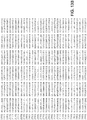
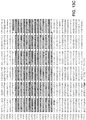
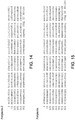
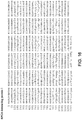
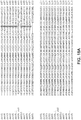
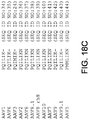
- a subject capsid protein includes a GH loop comprising an amino acid sequence having at least about 85%, at least about 90%, at least about 95%, at least about 98%, at least about 99%, or 100%, amino acid sequence identity to an amino acid sequence set forth in Figure 18A-C .
- a peptide of from about 5 amino acids to about 11 amino acids in length is inserted into the GH loop of an AAV capsid.
- the insertion peptide has a length of 5 amino acids, 6 amino acids, 7 amino acids, 8 amino acids, 9 amino acids, 10 amino acids, or 11 amino acids.
- the insertion peptide can comprise an amino acid sequence of any one of the formulas set forth below.
- an insertion peptide can be a peptide of from 5 to 11 amino acids in length, where the insertion peptide is of Formula I: Y 1 Y 2 X 1 X 2 X 3 X 4 X 5 X 6 X 7 Y 3 Y 4 where:
- an insertion peptide can be a peptide of from 5 to 11 amino acids in length, where the insertion peptide is of Formula IIa: Y 1 Y 2 X 1 X 2 X 3 X 4 X 5 X 6 X 7 Y 3 Y 4 where:
- an insertion peptide can be a peptide of from 5 to 11 amino acids in length, where the insertion peptide is of Formula IIb: Y 1 Y 2 X 1 X 2 X 3 X 4 X 5 X 6 X 7 Y 3 Y 4 where:
- an insertion peptide can be a peptide of from 5 to 11 amino acids in length, where the insertion peptide is of Formula III: Y 1 Y 2 X 1 X 2 X 3 X 4 X 5 X 6 X 7 Y 3 Y 4 where:
- an insertion peptide can be a peptide of from 5 to 11 amino acids in length, where the insertion peptide is of Formula IV: Y 1 Y 2 X 1 X 2 X 3 X 4 X 5 X 6 X 7 Y 3 Y 4 where:
- the insertion peptide can comprise an amino acid sequence selected from LGETTRP (SEQ ID NO:13), NETITRP (SEQ ID NO:14), KAGQANN (SEQ ID NO:15), KDPKTTN (SEQ ID NO:16), KDTDTTR (SEQ ID NO:57), RAGGSVG (SEQ ID NO:58), AVDTTKF (SEQ ID NO:59), and STGKVPN (SEQ ID NO:60).
- LGETTRP SEQ ID NO:13
- NETITRP SEQ ID NO:14
- KAGQANN SEQ ID NO:15
- KDPKTTN SEQ ID NO:16
- KDTDTTR SEQ ID NO:57
- RAGGSVG SEQ ID NO:58
- AVDTTKF SEQ ID NO:59
- STGKVPN STGKVPN
- the insertion peptide has from 1 to 4 spacer amino acids (Y 1 -Y 4 ) at the amino terminus and/or at the carboxyl terminus of any one of LGETTRP (SEQ ID NO:13), NETITRP (SEQ ID NO:14), KAGQANN (SEQ ID NO:15), KDPKTTN (SEQ ID NO:16), KDTDTTR (SEQ ID NO:57), RAGGSVG (SEQ ID NO:58), AVDTTKF (SEQ ID NO:59), and STGKVPN (SEQ ID NO:60).
- Suitable spacer amino acids include, but are not limited to, leucine, alanine, glycine, and serine.
- an insertion peptide has one of the following amino acid sequences: LALGETTRPA (SEQ ID NO:45); LANETITRPA (SEQ ID NO:46), LAKAGQANNA (SEQ ID NO:47), LAKDPKTTNA (SEQ ID NO:48), LAKDTDTTRA (SEQ ID NO:61), LARAGGSVGA (SEQ ID NO:62), LAAVDTTKFA (SEQ ID NO:63), and LASTGKVPNA (SEQ ID NO:64).
- an insertion peptide has one of the following amino acid sequences: AALGETTRPA (SEQ ID NO:49); AANETITRPA (SEQ ID NO:50), AAKAGQANNA (SEQ ID NO:51), and AAKDPKTTNA (SEQ ID NO:52).
- an insertion peptide has one of the following amino acid sequences: GLGETTRPA (SEQ ID NO:53); GNETITRPA (SEQ ID NO:54), GKAGQANNA (SEQ ID NO:55), and GKDPKTTNA (SEQ ID NO:56).
- an insertion peptide comprises one of KDTDTTR (SEQ ID NO:57), RAGGSVG (SEQ ID NO:58), AVDTTKF (SEQ ID NO:59), and STGKVPN (SEQ ID NO:60), flanked on the C-terminus by AA and on the N-terminus by A; or comprises one of KDTDTTR (SEQ ID NO:57), RAGGSVG (SEQ ID NO:58), AVDTTKF (SEQ ID NO:59), and STGKVPN (SEQ ID NO:60) flanked on the C-terminus by G and on the N-terminus by A.
- a subject variant AAV capsid does not include any other amino acid substitutions, insertions, or deletions, other than an insertion of from about 5 amino acids to about 11 amino acids in the GH loop or loop IV relative to a corresponding parental AAV capsid protein.
- a subject variant AAV capsid includes from 1 to about 25 amino acid insertions, deletions, or substitutions, compared to the parental AAV capsid protein, in addition to an insertion of from about 5 amino acids to about 11 amino acids in the GH loop or loop IV relative to a corresponding parental AAV capsid protein.
- a subject variant AAV capsid includes from 1 to about 5, from about 5 to about 10, from about 10 to about 15, from about 15 to about 20, or from about 20 to about 25 amino acid insertions, deletions, or substitutions, compared to the parental AAV capsid protein, in addition to an insertion of from about 5 amino acids to about 11 amino acids in the GH loop or loop IV relative to a corresponding parental AAV capsid protein.
- a subject variant capsid polypeptide does not include one, two, three, or four, of the following amino acid substitutions: Y273F, Y444F, Y500F, and Y730F.
- a subject variant capsid polypeptide comprises, in addition to an insertion peptide as described above, one, two, three, or four, of the following amino acid substitutions: Y273F, Y444F, Y500F, and Y730F.
- a variant AAV capsid polypeptide is a chimeric capsid, e.g., the capsid comprises a portion of an AAV capsid of a first AAV serotype and a portion of an AAV capsid of a second serotype; and comprises an insertion of from about 5 amino acids to about 11 amino acids in the GH loop or loop IV relative to a corresponding parental AAV capsid protein.
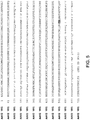
- a subject variant capsid protein comprises an amino acid sequence having at least about 85%, at least about 90%, at least about 95%, at least about 98%, or at least about 99%, amino acid sequence identity to the amino acid sequence provided in Figure 5 ; and an insertion of from about 5 amino acids to about 11 amino acids in the GH loop or loop IV relative to a corresponding parental AAV capsid protein.
- a subject variant capsid protein is isolated, e.g., purified.
- a subject variant capsid protein is included in an AAV vector, which is also provided.
- a subject variant capsid protein can be included in a recombinant AAV virion.
- the present disclosure provides a recombinant adeno-associated virus (rAAV) virion comprising: a) a variant AAV capsid protein, where the variant AAV capsid protein comprises an insertion of from about 5 amino acids to about 11 amino acids in an insertion site in the capsid protein GH loop or loop IV, relative to a corresponding parental AAV capsid protein, and where the variant capsid protein confers increased infectivity of a retinal cell compared to the infectivity of the retinal cell by an AAV virion comprising the corresponding parental AAV capsid protein; and b) a heterologous nucleic acid comprising a nucleotide sequence encoding a gene product.
- rAAV adeno-associated virus
- the retinal cell is a photoreceptor cell (e.g., rods and/or cones). In other cases, the retinal cell is an RGC cell. In other cases, the retinal cell is an RPE cell. In other cases, the retinal cell is a Muller cell. In other cases, retinal cells may include amacrine cells, bipolar cells, and horizontal cells.
- An "insertion of from about 5 amino acids to about 11 amino acids” is also referred to herein as a "peptide insertion" (e.g., a heterologous peptide insertion).
- a "corresponding parental AAV capsid protein” refers to an AAV capsid protein of the same AAV serotype, without the peptide insertion.
- the insertion site is in the GH loop, or loop IV, of the AAV capsid protein, e.g., in a solvent-accessible portion of the GH loop, or loop IV, of the AAV capsid protein.
- GH loop see, e.g., van Vliet et al. (2006) Mol. Ther. 14:809 ; Padron et al. (2005) J. Virol. 79:5047 ; and Shen et al. (2007) Mol. Ther. 15:1955 .
- the insertion site is within amino acids 570-611 of AAV2, within amino acids 571-612 of AAV1, within amino acids 560-601 of AAV5, within amino acids 571 to 612 of AAV6, within amino acids 572 to 613 of AAV7, within amino acids 573 to 614 of AAV8, within amino acids 571 to 612 of AAV9, or within amino acids 573 to 614 of AAV10.
- From about 5 amino acids to about 11 amino acids are inserted in an insertion site in the GH loop or loop IV of the capsid protein relative to a corresponding parental AAV capsid protein.
- the insertion site can be between amino acids 587 and 588 of AAV2, or the corresponding positions of the capsid subunit of another AAV serotype. It should be noted that the insertion site 587/588 is based on an AAV2 capsid protein. From about 5 amino acids to about 11 amino acids can be inserted in a corresponding site in an AAV serotype other than AAV2 (e.g., AAV8, AAV9, etc.).
- the insertion site is a single insertion site between two adjacent amino acids located between amino acids 570-614 of VP1 of any AAV serotype, e.g., the insertion site is between two adjacent amino acids located in amino acids 570-614, amino acids 580-600, amino acids 570-575, amino acids 575-580, amino acids 580-585, amino acids 585-590, amino acids 590-600, or amino acids 600-610, of VP1 of any AAV serotype or variant.
- the insertion site can be between amino acids 580 and 581, amino acids 581 and 582, amino acids 583 and 584, amino acids 584 and 585, amino acids 585 and 586, amino acids 586 and 587, amino acids 587 and 588, amino acids 588 and 589, or amino acids 589 and 590.
- the insertion site can be between amino acids 575 and 576, amino acids 576 and 577, amino acids 577 and 578, amino acids 578 and 579, or amino acids 579 and 580.
- the insertion site can be between amino acids 590 and 591, amino acids 591 and 592, amino acids 592 and 593, amino acids 593 and 594, amino acids 594 and 595, amino acids 595 and 596, amino acids 596 and 597, amino acids 597 and 598, amino acids 598 and 599, or amino acids 599 and 600.
- the insertion site can be between amino acids 587 and 588 of AAV2, between amino acids 590 and 591 of AAV1, between amino acids 575 and 576 of AAV5, between amino acids 590 and 591 of AAV6, between amino acids 589 and 590 of AAV7, between amino acids 590 and 591 of AAV8, between amino acids 588 and 589 of AAV9, or between amino acids 589 and 590 of AAV10.
- a subject rAAV virion comprises a peptide of from about 5 amino acids to about 11 amino acids in length inserted into the GH loop of the AAV capsid.
- the insertion peptide has a length of 5 amino acids, 6 amino acids, 7 amino acids, 8 amino acids, 9 amino acids, 10 amino acids, or 11 amino acids.
- the insertion peptide can comprise an amino acid sequence of any one of the formulas set forth below.
- an insertion peptide can be a peptide of from 5 to 11 amino acids in length, where the insertion peptide is of Formula I: Y 1 Y 2 X 1 X 2 X 3 X 4 X 5 X 6 X 7 Y 3 Y 4 where:
- an insertion peptide can be a peptide of from 5 to 11 amino acids in length, where the insertion peptide is of Formula IIa: Y 1 Y 2 X 1 X 2 X 3 X 4 X 5 X 6 X 7 Y 3 Y 4 where:
- an insertion peptide can be a peptide of from 5 to 11 amino acids in length, where the insertion peptide is of Formula IIb: Y 1 Y 2 X 1 X 2 X 3 X 4 X 5 X 6 X 7 Y 3 Y 4 where:
- an insertion peptide can be a peptide of from 5 to 11 amino acids in length, where the insertion peptide is of Formula III: Y 1 Y 2 X 1 X 2 X 3 X 4 X 5 X 6 X 7 Y 3 Y 4 where:
- an insertion peptide can be a peptide of from 5 to 11 amino acids in length, where the insertion peptide is of Formula IV: Y 1 Y 2 X 1 X 2 X 3 X 4 X 5 X 6 X 7 Y 3 Y 4 where:
- the insertion peptide can comprise an amino acid sequence selected from LGETTRP (SEQ ID NO:13), NETITRP (SEQ ID NO:14), KAGQANN (SEQ ID NO:15), KDPKTTN (SEQ ID NO:16), KDTDTTR (SEQ ID NO:57), RAGGSVG (SEQ ID NO:58), AVDTTKF (SEQ ID NO:59), and STGKVPN (SEQ ID NO:60).
- LGETTRP SEQ ID NO:13
- NETITRP SEQ ID NO:14
- KAGQANN SEQ ID NO:15
- KDPKTTN SEQ ID NO:16
- KDTDTTR SEQ ID NO:57
- RAGGSVG SEQ ID NO:58
- AVDTTKF SEQ ID NO:59
- STGKVPN STGKVPN
- the insertion peptide has from 1 to 4 spacer amino acids (Y 1 -Y 4 ) at the amino terminus and/or at the carboxyl terminus of any one of LGETTRP (SEQ ID NO:13), NETITRP (SEQ ID NO:14), KAGQANN (SEQ ID NO:15), KDPKTTN (SEQ ID NO:16), KDTDTTR (SEQ ID NO:57), RAGGSVG (SEQ ID NO:58), AVDTTKF (SEQ ID NO:59), and STGKVPN (SEQ ID NO:60).
- Suitable spacer amino acids include, but are not limited to, leucine, alanine, glycine, and serine.
- an insertion peptide has one of the following amino acid sequences: LALGETTRPA (SEQ ID NO:45); LANETITRPA (SEQ ID NO:46), LAKAGQANNA (SEQ ID NO:47), LAKDPKTTNA (SEQ ID NO:48), LAKDTDTTRA (SEQ ID NO:61), LARAGGSVGA (SEQ ID NO:62), LAAVDTTKFA (SEQ ID NO:63), and LASTGKVPNA (SEQ ID NO:64).
- an insertion peptide has one of the following amino acid sequences: AALGETTRPA (SEQ ID NO:49); AANETITRPA (SEQ ID NO:50), AAKAGQANNA (SEQ ID NO:51), and AAKDPKTTNA (SEQ ID NO:52).
- an insertion peptide has one of the following amino acid sequences: GLGETTRPA (SEQ ID NO:53); GNETITRPA (SEQ ID NO:54), GKAGQANNA (SEQ ID NO:55), and GKDPKTTNA (SEQ ID NO:56).
- an insertion peptide comprises one of KDTDTTR (SEQ ID NO:57), RAGGSVG (SEQ ID NO:58), AVDTTKF (SEQ ID NO:59), and STGKVPN (SEQ ID NO:60), flanked on the C-terminus by AA and on the N-terminus by A; or comprises one of KDTDTTR (SEQ ID NO:57), RAGGSVG (SEQ ID NO:58), AVDTTKF (SEQ ID NO:59), and STGKVPN (SEQ ID NO:60) flanked on the C-terminus by G and on the N-terminus by A.
- a subject rAAV virion capsid does not include any other amino acid substitutions, insertions, or deletions, other than an insertion of from about 7 amino acids to about 10 amino acids in the GH loop or loop IV relative to a corresponding parental AAV capsid protein.
- a subject rAAV virion capsid includes from 1 to about 25 amino acid insertions, deletions, or substitutions, compared to the parental AAV capsid protein, in addition to an insertion of from about 7 amino acids to about 10 amino acids in the GH loop or loop IV relative to a corresponding parental AAV capsid protein.
- a subject rAAV virion capsid includes from 1 to about 5, from about 5 to about 10, from about 10 to about 15, from about 15 to about 20, or from about 20 to about 25 amino acid insertions, deletions, or substitutions, compared to the parental AAV capsid protein, in addition to an insertion of from about 7 amino acids to about 10 amino acids in the GH loop or loop IV relative to a corresponding parental AAV capsid protein.
- a subject rAAV virion capsid does not include one, two, three, or four, of the following amino acid substitutions: Y273F, Y444F, Y500F, and Y730F.
- a subject variant capsid polypeptide comprises, in addition to an insertion peptide as described above, one, two, three, or four, of the following amino acid substitutions: Y273F, Y444F, Y500F, and Y730F.
- a subject rAAV virion capsid is a chimeric capsid, e.g., the capsid comprises a portion of an AAV capsid of a first AAV serotype and a portion of an AAV capsid of a second serotype; and comprises an insertion of from about 5 amino acids to about 11 amino acids in the GH loop or loop IV relative to a corresponding parental AAV capsid protein.
- a subject rAAV virion comprises a capsid protein comprising an amino acid sequence having at least about 85%, at least about 90%, at least about 95%, at least about 98%, or at least about 99%, amino acid sequence identity to the amino acid sequence provided in Figure 5 ; and an insertion of from about 5 amino acids to about 11 amino acids in the GH loop or loop IV relative to a corresponding parental AAV capsid protein.
- a subject rAAV virion comprises a capsid protein that includes a GH loop comprising an amino acid sequence having at least about 85%, at least about 90%, at least about 95%, at least about 98%, at least about 99%, or 100%, amino acid sequence identity to an amino acid sequence set forth in Figure 18A-C .
- a subject rAAV virion exhibits at least 10-fold, at least 15-fold, at least 20-fold, at least 25-fold, at least 50-fold, or more than 50-fold, increased infectivity of a retinal cell, compared to the infectivity of the retinal cell by an AAV virion comprising the corresponding parental AAV capsid protein.
- a subject rAAV virion exhibits at least 10-fold, at least 15-fold, at least 20-fold, at least 25-fold, at least 50-fold, or more than 50-fold, increased infectivity of a retinal cell, when administered via intravitreal injection, compared to the infectivity of the retinal cell by an AAV virion comprising the corresponding parental AAV capsid protein, when administered via intravitreal injection.
- a subject rAAV virion exhibits at least 10-fold, at least 15-fold, at least 20-fold, at least 25-fold, at least 50-fold, or more than 50-fold, increased infectivity of a photoreceptor (rod or cone) cell, compared to the infectivity of the photoreceptor cell by an AAV virion comprising the corresponding parental AAV capsid protein.
- a subject rAAV virion exhibits at least 10-fold, at least 15-fold, at least 20-fold, at least 25-fold, at least 50-fold, or more than 50-fold, increased infectivity of a photoreceptor (rod or cone) cell, when administered via intravitreal injection, compared to the infectivity of the photoreceptor cell by an AAV virion comprising the corresponding parental AAV capsid protein, when administered via intravitreal injection.
- a subject rAAV virion exhibits at least 10-fold, at least 15-fold, at least 20-fold, at least 25-fold, at least 50-fold, or more than 50-fold, increased infectivity of an RGC, compared to the infectivity of the RGC by an AAV virion comprising the corresponding parental AAV capsid protein.
- a subject rAAV virion exhibits at least 10-fold, at least 15-fold, at least 20-fold, at least 25-fold, at least 50-fold, or more than 50-fold, increased infectivity of an RGC, when administered via intravitreal injection, compared to the infectivity of the RGC by an AAV virion comprising the corresponding parental AAV capsid protein, when administered via intravitreal injection.
- a subject rAAV virion exhibits at least 10-fold, at least 15-fold, at least 20-fold, at least 25-fold, at least 50-fold, or more than 50-fold, increased infectivity of an RPE cell, compared to the infectivity of the RPE cell by an AAV virion comprising the corresponding parental AAV capsid protein.
- a subject rAAV virion exhibits at least 10-fold, at least 15-fold, at least 20-fold, at least 25-fold, at least 50-fold, or more than 50-fold, increased infectivity of an RPE cell, when administered via intravitreal injection, compared to the infectivity of the RPE cell by an AAV virion comprising the corresponding parental AAV capsid protein, when administered via intravitreal injection.
- a subject rAAV virion exhibits at least 10-fold, at least 15-fold, at least 20-fold, at least 25-fold, at least 50-fold, or more than 50-fold, increased infectivity of a Muller cell, compared to the infectivity of the Muller cell by an AAV virion comprising the corresponding parental AAV capsid protein.
- a subject rAAV virion exhibits at least 10-fold, at least 15-fold, at least 20-fold, at least 25-fold, at least 50-fold, or more than 50-fold, increased infectivity of a Muller cell, when administered via intravitreal injection, compared to the infectivity of the Muller cell by an AAV virion comprising the corresponding parental AAV capsid protein, when administered via intravitreal injection.
- a subject rAAV virion exhibits at least 10-fold, at least 15-fold, at least 20-fold, at least 25-fold, at least 50-fold, or more than 50-fold, increased infectivity of a bipolar cell, compared to the infectivity of the bipolar cell by an AAV virion comprising the corresponding parental AAV capsid protein.
- a subject rAAV virion exhibits at least 10-fold, at least 15-fold, at least 20-fold, at least 25-fold, at least 50-fold, or more than 50-fold, increased infectivity of a bipolar cell, when administered via intravitreal injection, compared to the infectivity of the bipolar cell by an AAV virion comprising the corresponding parental AAV capsid protein, when administered via intravitreal injection.
- a subject rAAV virion exhibits at least 10-fold, at least 15-fold, at least 20-fold, at least 25-fold, at least 50-fold, or more than 50-fold, increased infectivity of an amacrine cell, compared to the infectivity of the amacrine cell by an AAV virion comprising the corresponding parental AAV capsid protein.
- a subject rAAV virion exhibits at least 10-fold, at least 15-fold, at least 20-fold, at least 25-fold, at least 50-fold, or more than 50-fold, increased infectivity of an amacrine cell, when administered via intravitreal injection, compared to the infectivity of the amacrine cell by an AAV virion comprising the corresponding parental AAV capsid protein, when administered via intravitreal injection.
- a subject rAAV virion exhibits at least 10-fold, at least 15-fold, at least 20-fold, at least 25-fold, at least 50-fold, or more than 50-fold, increased infectivity of a horizontal cell, compared to the infectivity of the horizontal cell by an AAV virion comprising the corresponding parental AAV capsid protein.
- a subject rAAV virion exhibits at least 10-fold, at least 15-fold, at least 20-fold, at least 25-fold, at least 50-fold, or more than 50-fold, increased infectivity of a horizontal cell, when administered via intravitreal injection, compared to the infectivity of the horizontal cell by an AAV virion comprising the corresponding parental AAV capsid protein, when administered via intravitreal injection.
- a subject rAAV virion exhibits at least 10-fold, at least 15-fold, at least 20-fold, at least 25-fold, at least 50-fold, or more than 50-fold, increased ability to cross the internal limiting membrane (ILM), compared to the ability of an AAV virion comprising the corresponding parental AAV capsid protein to cross the ILM.
- ILM internal limiting membrane
- a subject rAAV virion exhibits at least 10-fold, at least 15-fold, at least 20-fold, at least 25-fold, at least 50-fold, or more than 50-fold, increased ability, when administered via intravitreal injection, to cross the internal limiting membrane (ILM), compared to the ability of an AAV virion comprising the corresponding parental AAV capsid protein to cross the ILM when administered via intravitreal injection.
- ILM internal limiting membrane
- a subject rAAV virion can cross the ILM, and can also traverse cell layers, including Muller cells, amacrine cells, etc., to reach the photoreceptor cells and or RPE cells.
- a subject rAAV virion when administered via intravitreal injection, can cross the ILM, and can also traverse cell layers, including Muller cells, amacrine cells, etc., to reach the photoreceptor cells and or RPE cells.
- a subject rAAV virion selectively infects a retinal cell, e.g., a subject rAAV virion infects a retinal cell with 10-fold, 15-fold, 20-fold, 25-fold, 50-fold, or more than 50-fold, specificity than a non-retinal cell, e.g., a cell outside the eye.
- a subject rAAV virion selectively infects a retinal cell, e.g., a subject rAAV virion infects a photoreceptor cell with 10-fold, 15-fold, 20-fold, 25-fold, 50-fold, or more than 50-fold, specificity than a non-retinal cell, e.g., a cell outside the eye.
- a retinal cell e.g., a subject rAAV virion infects a photoreceptor cell with 10-fold, 15-fold, 20-fold, 25-fold, 50-fold, or more than 50-fold, specificity than a non-retinal cell, e.g., a cell outside the eye.
- a subject rAAV virion selectively infects a photoreceptor cell, e.g., a subject rAAV virion infects a photoreceptor cell with 10-fold, 15-fold, 20-fold, 25-fold, 50-fold, or more than 50-fold, specificity than a non-photoreceptor cell present in the eye, e.g., a retinal ganglion cell, a Müller cell, etc.
- a subject rAAV virion exhibits at least 10-fold, at least 15-fold, at least 20-fold, at least 25-fold, at least 50-fold, or more than 50-fold, increased infectivity of a photoreceptor cell, when administered via intravitreal injection, compared to the infectivity of the photoreceptor cell by an AAV virion comprising the corresponding parental AAV capsid protein, when administered via intravitreal injection.
- a subject rAAV virion comprises a heterologous nucleic acid comprising a nucleotide sequence encoding a gene product.
- the gene product is an interfering RNA.
- the gene product is an aptamer.
- the gene product is a polypeptide.
- the gene product is a site-specific nuclease that provide for site-specific knock-down of gene function.
- RNAi interfering RNA
- suitable RNAi include RNAi that decrease the level of an apoptotic or angiogenic factor in a cell.
- an RNAi can be an shRNA or siRNA that reduces the level of a gene product that induces or promotes apoptosis in a cell.
- Genes whose gene products induce or promote apoptosis are referred to herein as "pro-apoptotic genes" and the products of those genes (mRNA; protein) are referred to as "pro-apoptotic gene products.”
- Pro-apoptotic gene products include, e.g., Bax, Bid, Bak, and Bad gene products. See, e.g., U.S. Patent No. 7,846,730 .
- Interfering RNAs could also be against an angiogenic product, for example VEGF (e.g., Cand5; see, e.g., U.S. Patent Publication No. 2011/0143400 ; U.S. Patent Publication No. 2008/0188437 ; and Reich et al. (2003) Mol. Vis. 9:210 ), VEGFR1 (e.g., Sirna-027; see, e.g., Kaiser et al. (2010) Am. J. Ophthalmol. 150:33 ; and Shen et al. (2006) Gene Ther. 13:225 ), or VEGFR2 ( Kou et al. (2005) Biochem. 44:15064 ). See also, U.S. Patent Nos.
- VEGF e.g., Cand5; see, e.g., U.S. Patent Publication No. 2011/0143400 ; U.S. Patent Publication No. 2008/0188437 ; and Reich et al. (2003) Mol.
- exemplary aptamers of interest include an aptamer against vascular endothelial growth factor (VEGF).
- VEGF vascular endothelial growth factor
- a VEGF aptamer can comprise the nucleotide sequence 5'-cgcaaucagugaaugcuuauacauccg-3' (SEQ ID NO:17).
- a PDGF-specific aptamer e.g., E10030; see, e.g., Ni and Hui (2009) Ophthalmologica 223:401 ; and Akiyama et al. (2006) J. Cell Physiol. 207:407 ).
- the polypeptide is generally a polypeptide that enhances function of a retinal cell, e.g., the function of a rod or cone photoreceptor cell, a retinal ganglion cell, a Muller cell, a bipolar cell, an amacrine cell, a horizontal cell, or a retinal pigmented epithelial cell.
- polypeptides include neuroprotective polypeptides (e.g., GDNF, CNTF, NT4, NGF, and NTN); anti-angiogenic polypeptides (e.g., a soluble vascular endothelial growth factor (VEGF) receptor; a VEGF-binding antibody; a VEGF-binding antibody fragment (e.g., a single chain anti-VEGF antibody); endostatin; tumstatin; angiostatin; a soluble Flt polypeptide ( Lai et al. (2005) Mol. Ther. 12:659 ); an Fc fusion protein comprising a soluble Flt polypeptide (see, e.g., Pechan et al.
- VEGF vascular endothelial growth factor
- PEDF pigment epithelium-derived factor
- TMP-3 tissue inhibitor of metalloproteinases-3
- opsin e.g., a rhodopsin
- anti-apoptotic polypeptides e.g., Bcl-2, Bcl-Xl
- Suitable polypeptides include, but are not limited to, glial derived neurotrophic factor (GDNF); fibroblast growth factor 2; neurturin (NTN); ciliary neurotrophic factor (CNTF); nerve growth factor (NGF); neurotrophin-4 (NT4); brain derived neurotrophic factor (BDNF; e.g., a polypeptide comprising an amino acid sequence having at least about 90%, at least about 95%, at least about 98%, at least about 99%, or 100%, amino acid sequence identity to a contiguous stretch of from about 200 amino acids to 247 amino acids of the amino acid sequence depicted in Figure 11 (SEQ ID NO:11)); epidermal growth factor; rhodopsin; X-linked inhibitor of apoptosis; and Sonic hedgehog.
- GDNF glial derived neurotrophic factor
- NTN neurturin
- CNTF ciliary neurotrophic factor
- NEF nerve growth factor
- NT4 neurotrophin-4
- BDNF
- Suitable light-responsive opsins include, e.g., a light-responsive opsin as described in U.S. Patent Publication No. 2007/0261127 (e.g., ChR2; Chop2); U.S. Patent Publication No. 2001/0086421 ; U.S. Patent Publication No. 2010/0015095 ; and Diester et al. (2011) Nat. Neurosci. 14:387 .
- Suitable polypeptides also include retinoschisin (e.g., a polypeptide comprising an amino acid sequence having at least about 90%, at least about 95%, at least about 98%, at least about 99%, or 100%, amino acid sequence identity to a contiguous stretch of from about 200 amino acids to 224 amino acids of the amino acid sequence depicted in Figure 10 (SEQ ID NO:10).
- Suitable polypeptides include, e.g., retinitis pigmentosa GTPase regulator (RGPR)-interacting protein-1 (see, e.g., GenBank Accession Nos.
- Q96KN7, Q9EPQ2, and Q9GLM3 e.g., a polypeptide comprising an amino acid sequence having at least about 90%, at least about 95%, at least about 98%, at least about 99%, or 100%, amino acid sequence identity to a contiguous stretch of from about 1150 amino acids to about 1200 amino acids, or from about 1200 amino acids to 1286 amino acids, of the amino acid sequence depicted in Figure 16 (SEQ ID NO:21); peripherin-2 (Prph2) (see, e.g., GenBank Accession No.
- NP_000313 e.g., a polypeptide comprising an amino acid sequence having at least about 90%, at least about 95%, at least about 98%, at least about 99%, or 100%, amino acid sequence identity to a contiguous stretch of from about 300 amino acids to 346 amino acids of the amino acid sequence depicted in Figure 14 (SEQ ID NO:19); and Travis et al.
- peripherin e.g., a polypeptide comprising an amino acid sequence having at least about 90%, at least about 95%, at least about 98%, at least about 99%, or 100%, amino acid sequence identity to a contiguous stretch of from about 400 amino acids to about 470 amino acids of the amino acid sequence depicted in Figure 15 (SEQ ID NO:20); a retinal pigment epithelium-specific protein (RPE65), (e.g., a polypeptide comprising an amino acid sequence having at least about 90%, at least about 95%, at least about 98%, at least about 99%, or 100%, amino acid sequence identity to a contiguous stretch of from about 200 amino acids to 247 amino acids of the amino acid sequence depicted in Figure 12 (SEQ ID NO:12)) (see, e.g., GenBank AAC39660; and Morimura et al. (1998) Proc. Natl. Acad. Sci. USA 95:3088 ); and the like.
- RPE65 retinal pigment epithel
- Suitable polypeptides also include: CHM (choroidermia (Rab escort protein 1)), a polypeptide that, when defective or missing, causes choroideremia (see, e.g., Donnelly et al. (1994) Hum. Mol. Genet. 3:1017 ; and van Bokhoven et al. (1994) Hum. Mol. Genet. 3:1041 ); and Crumbs homolog 1 (CRB1), a polypeptide that, when defective or missing, causes Leber congenital amaurosis and retinitis pigmentosa (see, e.g., den Hollander et al. (1999) Nat. Genet. 23:217 ; and GenBank Accession No. CAM23328).
- CHM choroidermia (Rab escort protein 1)
- a polypeptide that, when defective or missing, causes choroideremia see, e.g., Donnelly et al. (1994) Hum
- Suitable polypeptides also include polypeptides that, when defective or missing, lead to achromotopsia, where such polypeptides include, e.g., cone photoreceptor cGMP-gated channel subunit alpha (CNGA3) (see, e.g., GenBank Accession No. NP_001289; and Booij et al. (2011) Ophthalmology 118:160-167 ); cone photoreceptor cGMP-gated cation channel beta-subunit (CNGB3) (see, e.g., Kohl et al.(2005) Eur J Hum Genet.
- CNGA3 cone photoreceptor cGMP-gated channel subunit alpha
- CNGB3 cone photoreceptor cGMP-gated cation channel beta-subunit
- G protein guanine nucleotide binding protein
- GNAT2 alpha transducing activity polypeptide 2
- ACHM5 alpha transducing activity polypeptide 5
- polypeptides that, when defective or lacking, lead to various forms of color blindness e.g., L-opsin, M-opsin, and S-opsin. See Mancuso et al. (2009) Nature 461(7265):784-787 .
- a gene product of interest is a site-specific endonuclease that provide for site-specific knock-down of gene function, e.g., where the endonuclease knocks out an allele associated with a retinal disease.
- a site-specific endonuclease can be targeted to the defective allele and knock out the defective allele.
- a site-specific nuclease can also be used to stimulate homologous recombination with a donor DNA that encodes a functional copy of the protein encoded by the defective allele.
- a subject rAAV virion can be used to deliver both a site-specific endonuclease that knocks out a defective allele, and can be used to deliver a functional copy of the defective allele, resulting in repair of the defective allele, thereby providing for production of a functional retinal protein (e.g., functional retinoschisin, functional RPE65, functional peripherin, etc.). See, e.g., Li et al.
- a subject rAAV virion comprises a heterologous nucleotide sequence that encodes a site-specific endonuclease; and a heterologous nucleotide sequence that encodes a functional copy of a defective allele, where the functional copy encodes a functional retinal protein.
- Functional retinal proteins include, e.g., retinoschisin, RPE65, retinitis pigmentosa GTPase regulator (RGPR)-interacting protein-1, peripherin, peripherin-2, and the like.
- Site-specific endonucleases that are suitable for use include, e.g., zinc finger nucleases (ZFNs); and transcription activator-like effector nucleases (TALENs), where such site-specific endonucleases are non-naturally occurring and are modified to target a specific gene.
- ZFNs zinc finger nucleases
- TALENs transcription activator-like effector nucleases
- site-specific endonucleases can be engineered to cut specific locations within a genome, and non-homologous end joining can then repair the break while inserting or deleting several nucleotides.
- site-specific endonucleases also referred to as "INDELs” then throw the protein out of frame and effectively knock out the gene. See, e.g., U.S. Patent Publication No. 2011/0301073 .
- a nucleotide sequence encoding a gene product of interest is operably linked to a constitutive promoter. In other embodiments, a nucleotide sequence encoding a gene product of interest is operably linked to an inducible promoter. In some instances, a nucleotide sequence encoding a gene product of interest is operably linked to a tissue-specific or cell type-specific regulatory element.
- a nucleotide sequence encoding a gene product of interest is operably linked to a photoreceptor-specific regulatory element (e.g., a photoreceptor-specific promoter), e.g., a regulatory element that confers selective expression of the operably linked gene in a photoreceptor cell.
- a photoreceptor-specific regulatory element e.g., a photoreceptor-specific promoter
- Suitable photoreceptor-specific regulatory elements include, e.g., a rhodopsin promoter; a rhodopsin kinase promoter ( Young et al. (2003) Ophthalmol. Vis. Sci. 44:4076 ); a beta phosphodiesterase gene promoter ( Nicoud et al. (2007) J. Gene Med.
- a retinitis pigmentosa gene promoter (Nicoud et al. (2007) supra ); an interphotoreceptor retinoid-binding protein (IRBP) gene enhancer (Nicoud et al. (2007) supra ); an IRBP gene promoter ( Yokoyama et al. (1992) Exp Eye Res. 55:225 ).
- IRBP interphotoreceptor retinoid-binding protein
- the present disclosure provides a pharmaceutical composition
- a pharmaceutical composition comprising: a) a subject rAAV virion, as described above; and b) a pharmaceutically acceptable carrier, diluent, excipient, or buffer.
- the pharmaceutically acceptable carrier, diluent, excipient, or buffer is suitable for use in a human.
- excipients include any pharmaceutical agent that can be administered without undue toxicity.
- Pharmaceutically acceptable excipients include, but are not limited to, liquids such as water, saline, glycerol and ethanol.
- Pharmaceutically acceptable salts can be included therein, for example, mineral acid salts such as hydrochlorides, hydrobromides, phosphates, sulfates, and the like; and the salts of organic acids such as acetates, propionates, malonates, benzoates, and the like.
- auxiliary substances such as wetting or emulsifying agents, pH buffering substances, and the like, may be present in such vehicles.
- the present disclosure provides a method of delivering a gene product to a retinal cell in an individual, the method comprising administering to the individual a subject rAAV virion as described above.
- the gene product can be a polypeptide or an interfering RNA (e.g., an shRNA, an siRNA, and the like), an aptamer, or a site-specific endonuclease, as described above.
- Delivering a gene product to a retinal cell can provide for treatment of a retinal disease.
- the retinal cell can be a photoreceptor, a retinal ganglion cell, a Muller cell, a bipolar cell, an amacrine cell, a horizontal cell, or a retinal pigmented epithelial cell.
- the retinal cell is a photoreceptor cell, e.g., a rod or cone cell.
- the present disclosure provides a method of treating a retinal disease, the method comprising administering to an individual in need thereof an effective amount of a subject rAAV virion as described above.
- a subject rAAV virion can be administered via intraocular injection, by intravitreal injection, or by any other convenient mode or route of administration.
- Other convenient modes or routes of administration include, e.g., intravenous, intranasal, etc.
- a “therapeutically effective amount” will fall in a relatively broad range that can be determined through experimentation and/or clinical trials.
- a therapeutically effective dose will be on the order of from about 10 6 to about 10 15 of the rAAV virions, e.g., from about 10 8 to 10 12 rAAV virions.
- an effective amount of rAAV virions to be delivered to cells will be on the order of from about 10 8 to about 10 13 of the rAAV virions.
- Other effective dosages can be readily established by one of ordinary skill in the art through routine trials establishing dose response curves.
- more than one administration may be employed to achieve the desired level of gene expression over a period of various intervals, e.g., daily, weekly, monthly, yearly, etc.
- Ocular diseases that can be treated using a subject method include, but are not limited to, acute macular neuroretinopathy; Behcet's disease; choroidal neovascularization; diabetic uveitis; histoplasmosis; macular degeneration, such as acute macular degeneration, non-exudative age related macular degeneration and exudative age related macular degeneration; edema, such as macular edema, cystoid macular edema and diabetic macular edema; multifocal choroiditis; ocular trauma which affects a posterior ocular site or location; ocular tumors; retinal disorders, such as central retinal vein occlusion, diabetic retinopathy (including proliferative diabetic retinopathy), proliferative vitreoretinopathy (PVR), retinal arterial occlusive disease, retinal detachment, uveitic retinal disease; sympathetic opthalmia; Vogt Koyanagi-Ha
- the present disclosure provides an isolated nucleic acid comprising a nucleotide sequence that encodes a subject variant adeno-associated virus (AAV) capsid protein as described above, where the variant AAV capsid protein comprises an insertion of from about 5 amino acids to about 11 amino acids in the GH loop or loop IV relative to a corresponding parental AAV capsid protein, and where the variant capsid protein, when present in an AAV virion, provides for increased infectivity of a retinal cell compared to the infectivity of the retinal cell by an AAV virion comprising the corresponding parental AAV capsid protein.
- a subject isolated nucleic acid can be an AAV vector, e.g., a recombinant AAV vector.
- a variant AAV capsid protein encoded by a subject nucleic acid has an insertion peptide of from about 5 amino acids to about 11 amino acids in length is inserted into the GH loop of an AAV capsid.
- the insertion peptide has a length of 5 amino acids, 6 amino acids, 7 amino acids, 8 amino acids, 9 amino acids, 10 amino acids, or 11 amino acids.
- the insertion peptide can comprise an amino acid sequence of any one of the formulas set forth below.
- an insertion peptide can be a peptide of from 5 to 11 amino acids in length, where the insertion peptide is of Formula I: Y 1 Y 2 X 1 X 2 X 3 X 4 X 5 X 6 X 7 Y 3 Y 4 where:
- an insertion peptide can be a peptide of from 5 to 11 amino acids in length, where the insertion peptide is of Formula IIa: Y 1 Y 2 X 1 X 2 X 3 X 4 X 5 X 6 X 7 Y 3 Y 4 where:
- an insertion peptide can be a peptide of from 5 to 11 amino acids in length, where the insertion peptide is of Formula IIb: Y 1 Y 2 X 1 X 2 X 3 X 4 X 5 X 6 X 7 Y 3 Y 4 where:
- an insertion peptide can be a peptide of from 5 to 11 amino acids in length, where the insertion peptide is of Formula III: Y 1 Y 2 X 1 X 2 X 3 X 4 X 5 X 6 X 7 Y 3 Y 4 where:
- an insertion peptide can be a peptide of from 5 to 11 amino acids in length, where the insertion peptide is of Formula IV: Y 1 Y 2 X 1 X 2 X 3 X 4 X 5 X 6 X 7 Y 3 Y 4 where:
- the insertion peptide can comprise an amino acid sequence selected from LGETTRP (SEQ ID NO:13), NETITRP (SEQ ID NO:14), KAGQANN (SEQ ID NO:15), KDPKTTN (SEQ ID NO:16), KDTDTTR (SEQ ID NO:57), RAGGSVG (SEQ ID NO:58), AVDTTKF (SEQ ID NO:59), and STGKVPN (SEQ ID NO:60).
- LGETTRP SEQ ID NO:13
- NETITRP SEQ ID NO:14
- KAGQANN SEQ ID NO:15
- KDPKTTN SEQ ID NO:16
- KDTDTTR SEQ ID NO:57
- RAGGSVG SEQ ID NO:58
- AVDTTKF SEQ ID NO:59
- STGKVPN STGKVPN
- the insertion peptide has from 1 to 4 spacer amino acids (Y 1 -Y 4 ) at the amino terminus and/or at the carboxyl terminus of any one of LGETTRP (SEQ ID NO:13), NETITRP (SEQ ID NO:14), KAGQANN (SEQ ID NO:15), KDPKTTN (SEQ ID NO:16), KDTDTTR (SEQ ID NO:57), RAGGSVG (SEQ ID NO:58), AVDTTKF (SEQ ID NO:59), and STGKVPN (SEQ ID NO:60).
- Suitable spacer amino acids include, but are not limited to, leucine, alanine, glycine, and serine.
- an insertion peptide has one of the following amino acid sequences: LALGETTRPA (SEQ ID NO:45); LANETITRPA (SEQ ID NO:46), LAKAGQANNA (SEQ ID NO:47), LAKDPKTTNA (SEQ ID NO:48), LAKDTDTTRA (SEQ ID NO:61), LARAGGSVGA (SEQ ID NO:62), LAAVDTTKFA (SEQ ID NO:63), and LASTGKVPNA (SEQ ID NO:64).
- an insertion peptide has one of the following amino acid sequences: AALGETTRPA (SEQ ID NO:49); AANETITRPA (SEQ ID NO:50), AAKAGQANNA (SEQ ID NO:51), and AAKDPKTTNA (SEQ ID NO:52).
- an insertion peptide has one of the following amino acid sequences: GLGETTRPA (SEQ ID NO:53); GNETITRPA (SEQ ID NO:54), GKAGQANNA (SEQ ID NO:55), and GKDPKTTNA (SEQ ID NO:56).
- an insertion peptide comprises one of KDTDTTR (SEQ ID NO:57), RAGGSVG (SEQ ID NO:58), AVDTTKF (SEQ ID NO:59), and STGKVPN (SEQ ID NO:60), flanked on the C-terminus by AA and on the N-terminus by A; or comprises one of KDTDTTR (SEQ ID NO:57), RAGGSVG (SEQ ID NO:58), AVDTTKF (SEQ ID NO:59), and STGKVPN (SEQ ID NO:60) flanked on the C-terminus by G and on the N-terminus by A.
- a subject recombinant AAV vector can be used to generate a subject recombinant AAV virion, as described above.
- the present disclosure provides a recombinant AAV vector that, when introduced into a suitable cell, can provide for production of a subject recombinant AAV virion.
- the present invention further provides host cells, e.g., isolated (genetically modified) host cells, comprising a subject nucleic acid.
- a subject host cell can be an isolated cell, e.g., a cell in in vitro culture.
- a subject host cell is useful for producing a subject rAAV virion, as described below. Where a subject host cell is used to produce a subject rAAV virion, it is referred to as a "packaging cell.”
- a subject host cell is stably genetically modified with a subject nucleic acid.
- a subject host cell is transiently genetically modified with a subject nucleic acid.
- a subject nucleic acid is introduced stably or transiently into a host cell, using established techniques, including, but not limited to, electroporation, calcium phosphate precipitation, liposome-mediated transfection, and the like.
- a subject nucleic acid will generally further include a selectable marker, e.g., any of several well-known selectable markers such as neomycin resistance, and the like.
- a subject host cell is generated by introducing a subject nucleic acid into any of a variety of cells, e.g., mammalian cells, including, e.g., murine cells, and primate cells (e.g., human cells).
- Suitable mammalian cells include, but are not limited to, primary cells and cell lines, where suitable cell lines include, but are not limited to, 293 cells, COS cells, HeLa cells, Vero cells, 3T3 mouse fibroblasts, C3H10T1/2 fibroblasts, CHO cells, and the like.
- suitable host cells include, e.g., HeLa cells (e.g., American Type Culture Collection (ATCC) No. CCL-2), CHO cells (e.g., ATCC Nos.
- CRL9618, CCL61, CRL9096 293 cells (e.g., ATCC No. CRL-1573), Vero cells, NIH 3T3 cells (e.g., ATCC No. CRL-1658), Huh-7 cells, BHK cells (e.g., ATCC No. CCL10), PC12 cells (ATCC No. CRL1721), COS cells, COS-7 cells (ATCC No. CRL1651), RAT1 cells, mouse L cells (ATCC No. CCLI.3), human embryonic kidney (HEK) cells (ATCC No. CRL1573), HLHepG2 cells, and the like.
- a subject host cell can also be made using a baculovirus to infect insect cells such as Sf9 cells, which produce AAV (see, e.g., U.S. Patent No. 7,271,002 ; US patent application 12/297,958 )
- a subject genetically modified host cell includes, in addition to a nucleic acid comprising a nucleotide sequence encoding a variant AAV capsid protein, as described above, a nucleic acid that comprises a nucleotide sequence encoding one or more AAV rep proteins.
- a subject host cell further comprises an rAAV vector.
- An rAAV virion can be generated using a subject host cell. Methods of generating an rAAV virion are described in, e.g., U.S. Patent Publication No. 2005/0053922 and U.S. Patent Publication No. 2009/0202490 .
- Standard abbreviations may be used, e.g., bp, base pair(s); kb, kilobase(s); pl, picoliter(s); s or sec, second(s); min, minute(s); h or hr, hour(s); aa, amino acid(s); kb, kilobase(s); bp, base pair(s); nt, nucleotide(s); i.m., intramuscular(ly); i.p., intraperitoneal(ly); s.c., subcutaneous(ly); and the like.
- Example 1 AAV variant with enhanced transduction of retinal cells
- the approach used was to create a peptide display library by introducing a unique Avr II site into the wild type AAV2 genome between amino acid 587 and 588 by polymerase chain reaction (PCR) mutagenesis.
- a random 21 nucleotide insert, 7mer For was used to synthesize dsDNA inserts, along with the antisense primer 7mer Rev.
- the resulting dsDNA inserts were cloned into the Avr II site of the genome after digestion with Nhe I , producing a diverse 7mer display library which was then packaged (Perabo et al., 2003; Muller et al., 2003).
- the virus was generated such that each viral genome was packaged or encapsidated within the capsid protein variant that that genome encoded. In this respect, functional improvements identified through selection can be linked to the genome sequence encoding this improved function contained within the viral capsid.
- This library was subjected to positive selection within rho-GFP mice ( Wensel et al. (2005) Vision Res. 45:3445 ). Briefly, in one round of selection, adult rho-GFP mice were intravitreally injected with 2 ⁇ L of phosphate buffered saline (PBS)-dialyzed, iodixanol-purified library with a genomic titer of approximately 1x10 12 viral genomes (vg)/mL. An ultrafine 30 1/2-gauge disposable needle was passed through the sclera of the animal's eye, at the equator and next to the limbus, into the vitreous cavity.
- PBS phosphate buffered saline
- Injection of 2 ⁇ l of virus was made with direct observation of the needle in the center of the vitreous cavity.
- One week post-injection eyes were enucleated and retinas dissociated using a light, papain protease treatment, followed by fluorescence activated cell sorter (FACS) isolation of photoreceptor populations.
- FACS fluorescence activated cell sorter
- cap genes of fifty variants were sequenced to determine the most prominent and successful variants to have permissive mutations for intravitreal photoreceptor transduction.
- 46 gave readable sequences of a 7mer insert.
- nearly two thirds of clones contained the same distinct 7mer motif ( ⁇ 588 LGETTRP ⁇ ; SEQ ID NO:13).
- the next most prominent variant ⁇ 588 NETITRP ⁇ ; SEQ ID NO:14
- TRP nonpolar proline residue
- Frequency (%) Frequency ⁇ 588 LGETTRP ⁇ (SEQ ID NO:13) 64 31 ⁇ 588 NETITRP ⁇ (SEQ ID NO:14) 12 5 ⁇ 588 KAGQANN ⁇ (SEQ ID NO:15) 6 3 ⁇ 588 KDPKTTN ⁇ (SEQ ID NO:16) 4 2 ⁇ 588 KDTDTTR (SEQ ID NO:57) 2 ⁇ 588 RAGGSVG (SEQ ID NO:58) 1 ⁇ 588 AVDTTKF (SEQ ID NO:59) 1 ⁇ 588 STGKVPN (SEQ ID NO:60) 1
- FIG. 1 Representative three-dimensional capsid model of AAV2 containing a random heptamer (shown in orange) following amino acid 587. This area of the AAV2 capsid likely participates in cell-surface receptor binding.
- AAV2 ⁇ 588 LGETTRP ⁇ (SEQ ID NO:13; nick named 7M8) was cloned and packaged the vector with a scCAG-GFP transgene to visualize its transduction profile.
- RRCs retinal ganglion cells
- FIG. 2 AAV2 7M8 variant (right) demonstrates greater levels of intravitreal photoreceptor transduction relative to AAV2 (left). Confocal microscopy of transverse retinal sections three weeks after intravitreal injection of 2 ⁇ L of 1x10 12 vg/mL of AAV2 7M8 and AAV2 scCAG GFP in adult mice. Red arrows (top) denote photoreceptor nuclei and blue arrow (top) denote photoreceptor outer segments.
- FIG. 3 Representative fluorescence images of retinal cryoslices showing GFP expression resulting from 7m8 carrying the GFP gene under the control of the ubiquitous CAG promoter (left) or a photoreceptor specific Rho promoter (right).
- FIG. 4 GFP(+) photoreceptor cells per million retinal cells as counted by flow cytometry. 7m8 transduces more than 2x the amount of photoreceptors compared 7m8 bearing 4 tyrosine mutations (top).
- a functional retinoschisin (RS1) protein was delivered to retinoschisin-deficient mice (Rs1h-deficient mice; Rs1h is the mouse homolog of human RS1).
- the vector comprises a nucleotide sequence encoding a functional retinoschisin protein under transcriptional control of a rhodopsin promoter. See Figures 13A-C , where the bold and underlined nucleotide sequence (nucleotides 4013-4851) are the rhodopsin promoter; and nucleotides 4866-5540 (with the start atg and stop tga sequences shown in bold) encode a human RS 1 protein.
- the 7m8-rho-RS1 construct was administered intravitreally to Rs1h-/- mice at P15.
- Rs1h-/- mice were generated through targeted disruption of exon 3 of the Rs1h gene, as described ( Weber et al. (2002) Proc. Natl. Acad. Sci. USA 99:6222 ).
- the Rs1h-/- mice are deficient in the Rs1h protein product, have an electronegative ERG (e.g., a reduced b-wave with relative preservation of the a-wave) and splitting of the layers of the retina, similar to what is seen in human retinoschisis patients.
- ERG electronegative ERG
- FIGS 7A-I Representative high-resolution SD-OCT images of retinas injected with 7m8-rho-GFP (left column), 7m8-rho-RS1 (middle column), or uninjected WT animals (right column). Fundus images were taken through the inner nuclear layer of the superior retina and exclude other layers (a-c). Transverse images of the superior (d-f) and inferior (g-i) retina were taken using the optic nerve head as a landmark.
- the untreated RS 1 retina increases in overall thickness when measured from the inner limiting membrane (ILM) to the photoreceptors, as the pathology progresses due to the schisis splitting the inner retina. This process is distinct from that observed in most retinal degenerative diseases (RDD) which do not form schisis, but exhibit progressive photoreceptor cell death in the INL and concomitant retinal thinning and loss of ERG amplitude.
- RDD retinal degenerative diseases
- the ONL thins as photoreceptors die from the disease, but this is distinct from the overall retinal thickness change. It is generally thought that a successful therapy for RS1 would return the overall retinal thickness to the wildtype and ameliorate the photoreceptor loss in the ONL.
- RS1 is one of the very few examples of a retinal disease in which the pathology increases the retinal thickness with concomitant erg amplitude loss.
- an extracellular retinal "glue; - thins the retina back to the wildtype thickness and the erg amplitude returns to near normal levels as the schisis resolves.
- Figure 8a shows a comparison of functional rescue of untreated Rs1-/- eyes to AAV2-rho-RS1, 7m8-rho-GFP, and 7m8-rho-RS1 injected eyes both one month (left) and 4 months (right) after injection.
- 7m8-rho-RS1 led to considerable rescue of the ERG b-wave amplitude, whereas AAV2-rho.RS1 was statistically indistinguishable from untreated eyes.
- Figure 8b shows representative ERG traces from 7m8-rho-RS1-injected eyes show improved amplitude of the ⁇ -wave and b-wave and a waveform closer to wild-type eyes, compared to 7m8-rho-GFP-injected eyes.
- Figure 8c shows the amplitude of the full-field scotopic b-wave resulting from a high intensity (1 log cd x s/m2) stimulus was recorded on a monthly basis beginning one month after injection at P15 for each condition. Three responses were recorded and averaged for each eye at each time point.
- Figures 9A-E Sustained improvements in retinal thickness measured at 10 months post 7m8-rho-RS1 treatment.
- Measurements of c) retinal thickness, d) ONL thickness, and e) and inner and outer segment thickness are plotted as a function of distance from the optic nerve head.
- Example 3 AAV variant used to deliver a protein to retinal cells in the macaque
- a recombinant AAV2 virion (7m8 carrying GFP under the control of a connexin36 promoter) was generated.
- the recombinant AAV2 virion included an AAV2 capsid variant with an insertion of LALGETTRPA peptide between amino acids 587 and 588 of AAV2 capsid, and GFP under transcriptional control of a connexin36 promoter, which is expressed in interneurons.
- the rAAV2 virion was injected intravitreally into the eye of a macaque. The data are shown in Figure 18 .
- Figure 18 provides a fluorescence fundus image showing GFP expression at the back of the retina 9 weeks after administration of 7m8 carrying GFP under the control of a connexin36 promoter. Compared to the parental AAV2 serotype ( Yin et al, IOVS 52(5); 2775 ), a higher level of expression was seen in the foveal ring, and visible fluorescence was seen in the central retina outside the fovea.
Landscapes
- Health & Medical Sciences (AREA)
- Life Sciences & Earth Sciences (AREA)
- Chemical & Material Sciences (AREA)
- Engineering & Computer Science (AREA)
- Genetics & Genomics (AREA)
- Organic Chemistry (AREA)
- General Health & Medical Sciences (AREA)
- Bioinformatics & Cheminformatics (AREA)
- Biotechnology (AREA)
- Zoology (AREA)
- Medicinal Chemistry (AREA)
- Molecular Biology (AREA)
- Wood Science & Technology (AREA)
- Biomedical Technology (AREA)
- General Engineering & Computer Science (AREA)
- Pharmacology & Pharmacy (AREA)
- Veterinary Medicine (AREA)
- Public Health (AREA)
- Animal Behavior & Ethology (AREA)
- Biochemistry (AREA)
- Immunology (AREA)
- Microbiology (AREA)
- Virology (AREA)
- Biophysics (AREA)
- Epidemiology (AREA)
- Proteomics, Peptides & Aminoacids (AREA)
- Physics & Mathematics (AREA)
- Plant Pathology (AREA)
- Nuclear Medicine, Radiotherapy & Molecular Imaging (AREA)
- Chemical Kinetics & Catalysis (AREA)
- General Chemical & Material Sciences (AREA)
- Ophthalmology & Optometry (AREA)
- Gastroenterology & Hepatology (AREA)
- Analytical Chemistry (AREA)
- Urology & Nephrology (AREA)
- Hematology (AREA)
- Cell Biology (AREA)
- Dermatology (AREA)
- Marine Sciences & Fisheries (AREA)
- Diabetes (AREA)
Priority Applications (10)
| Application Number | Priority Date | Filing Date | Title |
|---|---|---|---|
| SM20200386T SMT202000386T1 (it) | 2011-04-22 | 2012-04-20 | Virioni di virus adeno-associato con capside variante e relativi metodi di utilizzo |
| EP21201945.9A EP4005603B1 (de) | 2011-04-22 | 2012-04-20 | Adenoassoziierte virus-virionen mit veränderlichem kapsid und verwendungsverfahren dafür |
| EP20151479.1A EP3693025B1 (de) | 2011-04-22 | 2012-04-20 | Adenoassoziierte virus-virionen mit veränderlichem kapsid und verwendungsverfahren dafür |
| SI201231780T SI3254703T1 (sl) | 2011-04-22 | 2012-04-20 | Virioni adeno povezanega virusa z variantnim kapsidom in postopek njihove uporabe |
| PL17168534T PL3254703T3 (pl) | 2011-04-22 | 2012-04-20 | Wiriony wirusa towarzyszącego adenowirusom z różnymi kapsydami i sposoby ich zastosowania |
| PL20151479T PL3693025T3 (pl) | 2011-04-22 | 2012-04-20 | Wiriony wirusa towarzyszącego adenowirusom z różnymi kapsydami i sposoby ich zastosowania |
| DK20151479.1T DK3693025T3 (da) | 2011-04-22 | 2012-04-20 | Adenoassocierede virus-virioner med variant capsid og fremgangsmåder til anvendelse heraf |
| EP24200481.0A EP4471424B1 (de) | 2011-04-22 | 2012-04-20 | Adenoassoziierte virus-virionen mit veränderlichem kapsid und verwendungsverfahren dafür |
| RS20200498A RS60207B1 (sr) | 2011-04-22 | 2012-04-20 | Adeno-povezani virioni virusa sa varijantama kapsida i postupci za njihovu primenu |
| HRP20200762TT HRP20200762T1 (hr) | 2011-04-22 | 2020-05-11 | Virioni rekombinantnog adeno-povezanog virusa s varijantom kapsida i postupci njihove upotrebe |
Applications Claiming Priority (3)
| Application Number | Priority Date | Filing Date | Title |
|---|---|---|---|
| US201161478355P | 2011-04-22 | 2011-04-22 | |
| EP12774323.5A EP2699270B1 (de) | 2011-04-22 | 2012-04-20 | Adenoassoziierte virus-virionen mit veränderlichem kapsid und verwendungsverfahren dafür |
| PCT/US2012/034413 WO2012145601A2 (en) | 2011-04-22 | 2012-04-20 | Adeno-associated virus virions with variant capsid and methods of use thereof |
Related Parent Applications (2)
| Application Number | Title | Priority Date | Filing Date |
|---|---|---|---|
| EP12774323.5A Division EP2699270B1 (de) | 2011-04-22 | 2012-04-20 | Adenoassoziierte virus-virionen mit veränderlichem kapsid und verwendungsverfahren dafür |
| EP12774323.5A Division-Into EP2699270B1 (de) | 2011-04-22 | 2012-04-20 | Adenoassoziierte virus-virionen mit veränderlichem kapsid und verwendungsverfahren dafür |
Related Child Applications (4)
| Application Number | Title | Priority Date | Filing Date |
|---|---|---|---|
| EP24200481.0A Division EP4471424B1 (de) | 2011-04-22 | 2012-04-20 | Adenoassoziierte virus-virionen mit veränderlichem kapsid und verwendungsverfahren dafür |
| EP20151479.1A Division-Into EP3693025B1 (de) | 2011-04-22 | 2012-04-20 | Adenoassoziierte virus-virionen mit veränderlichem kapsid und verwendungsverfahren dafür |
| EP20151479.1A Division EP3693025B1 (de) | 2011-04-22 | 2012-04-20 | Adenoassoziierte virus-virionen mit veränderlichem kapsid und verwendungsverfahren dafür |
| EP21201945.9A Division EP4005603B1 (de) | 2011-04-22 | 2012-04-20 | Adenoassoziierte virus-virionen mit veränderlichem kapsid und verwendungsverfahren dafür |
Publications (2)
| Publication Number | Publication Date |
|---|---|
| EP3254703A1 true EP3254703A1 (de) | 2017-12-13 |
| EP3254703B1 EP3254703B1 (de) | 2020-02-19 |
Family
ID=47042176
Family Applications (5)
| Application Number | Title | Priority Date | Filing Date |
|---|---|---|---|
| EP21201945.9A Active EP4005603B1 (de) | 2011-04-22 | 2012-04-20 | Adenoassoziierte virus-virionen mit veränderlichem kapsid und verwendungsverfahren dafür |
| EP17168534.0A Active EP3254703B1 (de) | 2011-04-22 | 2012-04-20 | Adenoassoziierte virusvirionen mit veränderlichem kapsid und verwendungsverfahren dafür |
| EP24200481.0A Active EP4471424B1 (de) | 2011-04-22 | 2012-04-20 | Adenoassoziierte virus-virionen mit veränderlichem kapsid und verwendungsverfahren dafür |
| EP20151479.1A Active EP3693025B1 (de) | 2011-04-22 | 2012-04-20 | Adenoassoziierte virus-virionen mit veränderlichem kapsid und verwendungsverfahren dafür |
| EP12774323.5A Active EP2699270B1 (de) | 2011-04-22 | 2012-04-20 | Adenoassoziierte virus-virionen mit veränderlichem kapsid und verwendungsverfahren dafür |
Family Applications Before (1)
| Application Number | Title | Priority Date | Filing Date |
|---|---|---|---|
| EP21201945.9A Active EP4005603B1 (de) | 2011-04-22 | 2012-04-20 | Adenoassoziierte virus-virionen mit veränderlichem kapsid und verwendungsverfahren dafür |
Family Applications After (3)
| Application Number | Title | Priority Date | Filing Date |
|---|---|---|---|
| EP24200481.0A Active EP4471424B1 (de) | 2011-04-22 | 2012-04-20 | Adenoassoziierte virus-virionen mit veränderlichem kapsid und verwendungsverfahren dafür |
| EP20151479.1A Active EP3693025B1 (de) | 2011-04-22 | 2012-04-20 | Adenoassoziierte virus-virionen mit veränderlichem kapsid und verwendungsverfahren dafür |
| EP12774323.5A Active EP2699270B1 (de) | 2011-04-22 | 2012-04-20 | Adenoassoziierte virus-virionen mit veränderlichem kapsid und verwendungsverfahren dafür |
Country Status (26)
| Country | Link |
|---|---|
| US (9) | US9193956B2 (de) |
| EP (5) | EP4005603B1 (de) |
| JP (6) | JP6072772B2 (de) |
| KR (4) | KR102391725B1 (de) |
| CN (3) | CN105755044A (de) |
| AU (4) | AU2012245328B2 (de) |
| BR (1) | BR112013027120B1 (de) |
| CA (2) | CA2833870C (de) |
| CY (3) | CY1119765T1 (de) |
| DK (4) | DK3693025T3 (de) |
| ES (4) | ES2904638T3 (de) |
| FI (1) | FI4005603T3 (de) |
| HR (4) | HRP20171334T1 (de) |
| HU (4) | HUE034510T2 (de) |
| IL (2) | IL280819B2 (de) |
| LT (4) | LT2699270T (de) |
| MX (1) | MX349138B (de) |
| PL (4) | PL4005603T3 (de) |
| PT (4) | PT2699270T (de) |
| RS (4) | RS60207B1 (de) |
| RU (2) | RU2611202C2 (de) |
| SG (3) | SG10202110919YA (de) |
| SI (4) | SI3693025T1 (de) |
| SM (4) | SMT202200036T1 (de) |
| WO (1) | WO2012145601A2 (de) |
| ZA (2) | ZA201307968B (de) |
Families Citing this family (318)
| Publication number | Priority date | Publication date | Assignee | Title |
|---|---|---|---|---|
| US9441244B2 (en) | 2003-06-30 | 2016-09-13 | The Regents Of The University Of California | Mutant adeno-associated virus virions and methods of use thereof |
| US9233131B2 (en) | 2003-06-30 | 2016-01-12 | The Regents Of The University Of California | Mutant adeno-associated virus virions and methods of use thereof |
| US8663624B2 (en) | 2010-10-06 | 2014-03-04 | The Regents Of The University Of California | Adeno-associated virus virions with variant capsid and methods of use thereof |
| DK3693025T3 (da) | 2011-04-22 | 2022-01-10 | Univ California | Adenoassocierede virus-virioner med variant capsid og fremgangsmåder til anvendelse heraf |
| TWI698240B (zh) | 2012-05-15 | 2020-07-11 | 澳大利亞商艾佛蘭屈澳洲私營有限公司 | 使用腺相關病毒(aav)sflt-1治療老年性黃斑部退化(amd) |
| WO2014093709A1 (en) | 2012-12-12 | 2014-06-19 | The Broad Institute, Inc. | Methods, models, systems, and apparatus for identifying target sequences for cas enzymes or crispr-cas systems for target sequences and conveying results thereof |
| EP2931899A1 (de) | 2012-12-12 | 2015-10-21 | The Broad Institute, Inc. | Funktionale genomik unter verwendung von crispr-cas systemen, zusammensetzungen, verfahren, knockout-bibliotheken und anwendungen davon |
| SG10201707569YA (en) | 2012-12-12 | 2017-10-30 | Broad Inst Inc | Delivery, Engineering and Optimization of Systems, Methods and Compositions for Sequence Manipulation and Therapeutic Applications |
| WO2014124282A1 (en) | 2013-02-08 | 2014-08-14 | The Trustees Of The University Of Pennsylvania | Enhanced aav-mediated gene transfer for retinal therapies |
| US10266845B2 (en) * | 2013-02-08 | 2019-04-23 | The Trustees Of The University Of Pennsylvania | Enhanced AAV-mediated gene transfer for retinal therapies |
| BR112015021036A2 (pt) | 2013-03-15 | 2017-10-10 | Univ Pennsylvania | composições e métodos para tratar mps1 |
| EP2996725A4 (de) * | 2013-05-16 | 2016-12-28 | Applied Genetic Tech Corp | Promotoren, expressionskassetten, vektoren, kits und verfahren zur behandlung von farbenblindheit und anderen störungen |
| US11136557B2 (en) | 2013-05-31 | 2021-10-05 | The Regents Of The University Of California | Adeno-associated virus variants and methods of use thereof |
| WO2014204725A1 (en) | 2013-06-17 | 2014-12-24 | The Broad Institute Inc. | Optimized crispr-cas double nickase systems, methods and compositions for sequence manipulation |
| KR20250012194A (ko) | 2013-06-17 | 2025-01-23 | 더 브로드 인스티튜트, 인코퍼레이티드 | 바이러스 구성성분을 사용하여 장애 및 질환을 표적화하기 위한 crispr-cas 시스템 및 조성물의 전달, 용도 및 치료 적용 |
| JP6738728B2 (ja) | 2013-06-17 | 2020-08-19 | ザ・ブロード・インスティテュート・インコーポレイテッド | 肝臓ターゲティングおよび治療のためのCRISPR−Cas系、ベクターおよび組成物の送達および使用 |
| ES2777217T3 (es) | 2013-06-17 | 2020-08-04 | Broad Inst Inc | Suministro, modificación y optimización de sistemas de guía en tándem, métodos y composiciones para la manipulación de secuencias |
| EP3011033B1 (de) | 2013-06-17 | 2020-02-19 | The Broad Institute, Inc. | Funktionale genomik unter verwendung von crispr-cas-systemen, zusammensetzungen, verfahren, schirme und anwendungen davon |
| WO2014207190A1 (en) * | 2013-06-28 | 2014-12-31 | INSERM (Institut National de la Santé et de la Recherche Médicale) | Methods for expressing a polynucleotide of interest in the retina of a subject |
| EP3702461A1 (de) | 2013-07-08 | 2020-09-02 | Institut National De La Sante Et De La Recherche Medicale - Inserm | Verfahren zur durchführung von oligonucleotidvermitteltem antisense-exon-skipping in der netzhaut einer darauf angewiesenen person |
| EP3564379A1 (de) | 2013-09-13 | 2019-11-06 | California Institute of Technology | Selektive rückgewinnung |
| WO2015089473A1 (en) | 2013-12-12 | 2015-06-18 | The Broad Institute Inc. | Engineering of systems, methods and optimized guide compositions with new architectures for sequence manipulation |
| WO2015089364A1 (en) | 2013-12-12 | 2015-06-18 | The Broad Institute Inc. | Crystal structure of a crispr-cas system, and uses thereof |
| JP6793547B2 (ja) | 2013-12-12 | 2020-12-02 | ザ・ブロード・インスティテュート・インコーポレイテッド | 最適化機能CRISPR−Cas系による配列操作のための系、方法および組成物 |
| CN105899658B (zh) | 2013-12-12 | 2020-02-18 | 布罗德研究所有限公司 | 针对hbv和病毒性疾病以及障碍的crispr-cas系统和组合物的递送、用途和治疗应用 |
| KR20160097338A (ko) | 2013-12-12 | 2016-08-17 | 더 브로드 인스티튜트, 인코퍼레이티드 | 뉴클레오티드 반복 장애에서의 crispr-cas 시스템의 조성물 및 방법 및 용도 |
| CN111206032B (zh) * | 2013-12-12 | 2024-07-19 | 布罗德研究所有限公司 | 用于基因组编辑的crispr-cas系统和组合物的递送、用途和治疗应用 |
| GB201403684D0 (en) * | 2014-03-03 | 2014-04-16 | King S College London | Vector |
| WO2015126972A1 (en) * | 2014-02-21 | 2015-08-27 | University Of Florida Research Foundation, Inc. | Methods and compositions for gene delivery to on bipolar cells |
| EP3113787B1 (de) * | 2014-03-04 | 2019-12-04 | University of Florida Research Foundation, Inc. | Verbesserte raav-vektoren und verfahren zur transduktion von fotorezeptoren und rpe-zellen |
| US11028388B2 (en) | 2014-03-05 | 2021-06-08 | Editas Medicine, Inc. | CRISPR/Cas-related methods and compositions for treating Usher syndrome and retinitis pigmentosa |
| US11141493B2 (en) | 2014-03-10 | 2021-10-12 | Editas Medicine, Inc. | Compositions and methods for treating CEP290-associated disease |
| US9938521B2 (en) | 2014-03-10 | 2018-04-10 | Editas Medicine, Inc. | CRISPR/CAS-related methods and compositions for treating leber's congenital amaurosis 10 (LCA10) |
| US11339437B2 (en) | 2014-03-10 | 2022-05-24 | Editas Medicine, Inc. | Compositions and methods for treating CEP290-associated disease |
| US10307492B2 (en) * | 2014-03-11 | 2019-06-04 | Wayne State University | Modified MGLUR6 promoter and methods of use |
| ES2822551T3 (es) | 2014-03-17 | 2021-05-04 | Adverum Biotechnologies Inc | Composiciones y métodos para la expresión génica mejorada en células de los conos |
| EP3981876A1 (de) | 2014-03-26 | 2022-04-13 | Editas Medicine, Inc. | Verfahren und zusammensetzungen in zusammenhang mit crispr/cas zur behandlung von sichelzellanämie |
| EP3540061A1 (de) | 2014-04-02 | 2019-09-18 | Editas Medicine, Inc. | Verfahren und zusammensetzungen in zusammenhang mit crispr/cas zur behandlung eines primären offenwinkelglaukoms |
| LT3137497T (lt) | 2014-05-02 | 2021-07-26 | Genzyme Corporation | Aav vektoriai, skirti tinklainės ir cns genų terapijai |
| US10577627B2 (en) | 2014-06-09 | 2020-03-03 | Voyager Therapeutics, Inc. | Chimeric capsids |
| JP2017522895A (ja) * | 2014-07-31 | 2017-08-17 | ザ ボード オブ リージェンツ オブ ザ ユニヴァーシティ オブ オクラホマ | 哺乳類rpe65の高イソメロヒドロラーゼ活性突然変異体 |
| IL251178B (en) * | 2014-09-16 | 2022-07-01 | Genzyme Corp | Adeno-associated viral vector for the treatment of glaucoma myocilin (myoc) |
| EP3215191B1 (de) | 2014-11-05 | 2024-08-14 | Voyager Therapeutics, Inc. | Aadc-polynukleotide zur behandlung von morbus parkinson |
| KR20230145206A (ko) | 2014-11-14 | 2023-10-17 | 보이저 테라퓨틱스, 인크. | 조절성 폴리뉴클레오티드 |
| CN114717264A (zh) | 2014-11-14 | 2022-07-08 | 沃雅戈治疗公司 | 治疗肌萎缩性侧索硬化(als)的组合物和方法 |
| US11697825B2 (en) | 2014-12-12 | 2023-07-11 | Voyager Therapeutics, Inc. | Compositions and methods for the production of scAAV |
| EP3985115A1 (de) | 2014-12-12 | 2022-04-20 | The Broad Institute, Inc. | Geschützte guide-rnas (pgrnas) |
| WO2016106244A1 (en) | 2014-12-24 | 2016-06-30 | The Broad Institute Inc. | Crispr having or associated with destabilization domains |
| EP3256170B1 (de) * | 2015-02-13 | 2020-09-23 | University of Massachusetts | Zusammensetzungen und verfahren zur transitorischen freisetzung von polypeptiden |
| US10648000B2 (en) | 2015-02-16 | 2020-05-12 | University Of Florida Research Foundation, Incorporated | rAAV vector compositions, methods for targeting vascular endothelial cells and use in treatment of type I diabetes |
| CA2977355A1 (en) * | 2015-02-20 | 2016-08-25 | University Of Iowa Research Foundation | Methods and compositions for treating genetic eye diseases |
| FI3265178T3 (fi) * | 2015-03-02 | 2026-08-03 | Adverum Biotechnologies Inc | Koostumuksia ja menetelmiä polynukleotidien viemiseksi intravitreaalisesti retinaalisiin tappisoluihin |
| JP6836999B2 (ja) * | 2015-03-24 | 2021-03-03 | ザ リージェンツ オブ ザ ユニバーシティ オブ カリフォルニアThe Regents Of The University Of California | アデノ随伴ウイルス変異体及びその使用方法 |
| US10081659B2 (en) | 2015-04-06 | 2018-09-25 | The United States Of America, As Represented By The Secretary, Dept. Of Health And Human Services | Adeno-associated vectors for enhanced transduction and reduced immunogenicity |
| EP4019975A1 (de) | 2015-04-24 | 2022-06-29 | Editas Medicine, Inc. | Auswertung von cas9/guide rna komplexen |
| US20180140626A1 (en) * | 2015-05-14 | 2018-05-24 | Joslin Diabetes Center, Inc. | Retinol-binding protein 3 (rbp3) as a protective factor in non-diabetic retinal degeneration |
| EP3929287A3 (de) | 2015-06-18 | 2022-04-13 | The Broad Institute, Inc. | Crispr-enzym-mutationen zur reduzierung von off-target-effekten |
| WO2016205759A1 (en) | 2015-06-18 | 2016-12-22 | The Broad Institute Inc. | Engineering and optimization of systems, methods, enzymes and guide scaffolds of cas9 orthologs and variants for sequence manipulation |
| JP6966442B2 (ja) * | 2015-12-04 | 2021-11-17 | ソルボンヌ・ユニヴェルシテSorbonne Universite | プロモーター及びその使用 |
| EP3387434A1 (de) | 2015-12-11 | 2018-10-17 | The U.S.A. As Represented By The Secretary, Department Of Health And Human Services | Gentherapie für kombinierte methylmalonazidämie/azidurie und hyperhomocysteinämie/homocystinurie, cobalamin vom typ c und mmachc-mangel |
| AU2016366549B2 (en) * | 2015-12-11 | 2022-11-10 | California Institute Of Technology | Targeting peptides for directing adeno-associated viruses (AAVs) |
| GB2545763A (en) | 2015-12-23 | 2017-06-28 | Adverum Biotechnologies Inc | Mutant viral capsid libraries and related systems and methods |
| MA43968A (fr) | 2016-02-03 | 2018-12-12 | Univ Pennsylvania | Thérapie génique pour traiter la mucopolysaccharidose de type i |
| EP3433364A1 (de) | 2016-03-25 | 2019-01-30 | Editas Medicine, Inc. | Systeme und verfahren zur behandlung von alpha-1-antitrypsin(a1at)-mangel |
| IL262207B2 (en) | 2016-04-15 | 2026-01-01 | Univ Pennsylvania | Preparations for the treatment of wet age-related macular degeneration |
| EP3448987A4 (de) | 2016-04-29 | 2020-05-27 | Voyager Therapeutics, Inc. | Zusammensetzungen zur behandlung einer erkrankung |
| ES2908467T3 (es) | 2016-04-29 | 2022-04-29 | Adverum Biotechnologies Inc | Evasión de anticuerpos neutralizantes por un virus adenoasociado recombinante |
| EP3448411A1 (de) | 2016-04-29 | 2019-03-06 | Gensight Biologics SA | Optogenetische visuelle wiederherstellung mithilfe von chrimson |
| EP3448874A4 (de) | 2016-04-29 | 2020-04-22 | Voyager Therapeutics, Inc. | Zusammensetzungen zur behandlung einer erkrankung |
| WO2017192750A1 (en) * | 2016-05-04 | 2017-11-09 | Oregon Health & Science University | Recombinant adeno-associated viral vectors |
| WO2017197355A2 (en) | 2016-05-13 | 2017-11-16 | 4D Molecular Therapeutics Inc. | Adeno-associated virus variant capsids and methods of use thereof |
| IL297576B2 (en) | 2016-05-18 | 2024-02-01 | Voyager Therapeutics Inc | Compositions and methods of treating huntington's disease |
| US10584337B2 (en) | 2016-05-18 | 2020-03-10 | Voyager Therapeutics, Inc. | Modulatory polynucleotides |
| MA44546B1 (fr) * | 2016-06-15 | 2021-03-31 | Univ California | Virus adéno-associés variants et procédés d'utilisation |
| CN117531025A (zh) * | 2016-06-16 | 2024-02-09 | 阿德夫拉姆生物技术股份有限公司 | 使用aav2变体和阿柏西普治疗amd |
| PL3472317T3 (pl) * | 2016-06-16 | 2022-08-08 | Adverum Biotechnologies, Inc. | Kompozycje i sposoby zmniejszania neowaskularyzacji oka |
| CN109640949B (zh) * | 2016-07-29 | 2022-11-25 | 加利福尼亚大学董事会 | 具有变异衣壳的腺相关病毒病毒体和其使用方法 |
| US11566263B2 (en) | 2016-08-02 | 2023-01-31 | Editas Medicine, Inc. | Compositions and methods for treating CEP290 associated disease |
| WO2018044912A1 (en) | 2016-08-29 | 2018-03-08 | Wayne State University | Identification of mutations in channelopsin variants having improved light sensitivity and methods of use thereof |
| EP3831281B1 (de) | 2016-08-30 | 2026-02-25 | The Regents of The University of California | Vorrichtungen und systeme für biomedizinische zielführung und verabreichung |
| AU2017345470B2 (en) | 2016-10-19 | 2023-08-03 | Adverum Biotechnologies, Inc. | Modified AAV capsids and uses thereof |
| EP3535282A4 (de) * | 2016-11-06 | 2020-04-08 | Nanoscope Technologies LLC | Optogenetische modulation durch opsine mit mehreren eigenschaften zur wiederherstellung der sehkraft und andere anwendungen davon |
| US11236360B2 (en) | 2016-12-09 | 2022-02-01 | Regents Of The University Of Minnesota | Adeno-associated viruses engineered for selectable tropism |
| JP2020508289A (ja) | 2017-01-31 | 2020-03-19 | レジェンクスバイオ インコーポレーテッド | 完全ヒトグリコシル化ヒトα−L−イズロニダーゼ(IDUA)を用いたムコ多糖症I型の治療 |
| JP2020510424A (ja) * | 2017-02-28 | 2020-04-09 | アドヴェラム バイオテクノロジーズ, インコーポレイテッド | 改変aavカプシドおよびその使用 |
| EP3596217A1 (de) | 2017-03-14 | 2020-01-22 | Editas Medicine, Inc. | Systeme und verfahren zur behandlung von hämoglobinopathien |
| KR102616820B1 (ko) | 2017-03-17 | 2023-12-21 | 애드베룸 바이오테크놀로지스, 인코포레이티드 | 향상된 유전자 발현을 위한 조성물 및 방법 |
| EP4219806A3 (de) * | 2017-04-11 | 2023-09-27 | Ruprecht-Karls-Universität Heidelberg | Adeno-assoziierte virusbibliothek |
| KR20240093919A (ko) | 2017-04-14 | 2024-06-24 | 리젠엑스바이오 인크. | 인간 뉴런 또는 신경교 세포에 의해 생성된 재조합 인간 이두로네이트-2 설파타제(ids)를 이용한 뮤코다당증 ii형의 치료 |
| MX2019013172A (es) | 2017-05-05 | 2020-09-07 | Voyager Therapeutics Inc | Composiciones y metodos para tratar la enfermedad de huntington. |
| EP3618839A4 (de) | 2017-05-05 | 2021-06-09 | Voyager Therapeutics, Inc. | Zusammensetzungen und verfahren zur behandlung von amyotropher lateralsklerose (als) |
| EP3622070A2 (de) | 2017-05-10 | 2020-03-18 | Editas Medicine, Inc. | Crispr/rna-geführte nukleasesysteme und -verfahren |
| JOP20190269A1 (ar) | 2017-06-15 | 2019-11-20 | Voyager Therapeutics Inc | بولي نوكليوتيدات aadc لعلاج مرض باركنسون |
| KR20250023600A (ko) * | 2017-06-30 | 2025-02-18 | 더 리젠츠 오브 더 유니버시티 오브 캘리포니아 | 변이체 캡시드를 보유한 아데노-부속 바이러스 비리온 및 이의 사용 방법 |
| CA3068328A1 (en) | 2017-07-06 | 2019-01-10 | The Trustees Of The University Of Pennsylvania | Aav9-mediated gene therapy for treating mucopolysaccharidosis type i |
| CA3070087A1 (en) | 2017-07-17 | 2019-01-24 | Voyager Therapeutics, Inc. | Trajectory array guide system |
| MX2020001997A (es) | 2017-08-28 | 2020-07-20 | Univ California | Variantes de capside de virus adenoasociado y metodos de uso de estas. |
| DK3684423T5 (da) | 2017-09-20 | 2024-08-26 | 4D Molecular Therapeutics Inc | Adeno-associerede virusvariantcapsider og fremgangsmåder til anvendelse deraf |
| MX2020003042A (es) | 2017-09-29 | 2020-11-18 | Voyager Therapeutics Inc | Rescate del fenotipo neurológico central y periférico de la ataxia de friedreich mediante administración intravenosa. |
| AU2018350700B2 (en) * | 2017-10-16 | 2025-04-24 | VeonGen Therapeutics GmbH | AAV vectors |
| WO2019079242A1 (en) | 2017-10-16 | 2019-04-25 | Voyager Therapeutics, Inc. | TREATMENT OF AMYOTROPHIC LATERAL SCLEROSIS (ALS) |
| TW202413649A (zh) | 2017-10-16 | 2024-04-01 | 美商航海家醫療公司 | 肌萎縮性脊髓側索硬化症(als)之治療 |
| MX2020003945A (es) | 2017-10-18 | 2020-11-09 | Regenxbio Inc | Tratamiento de enfermedades oculares y cancer de colon metastasico con vegf-trap humano modificado post-traduccionalmente . |
| KR20200067195A (ko) | 2017-10-18 | 2020-06-11 | 리젠엑스바이오 인크. | 완전-인간 번역후 변형된 항체 치료제 |
| KR102763312B1 (ko) * | 2017-10-20 | 2025-02-07 | 인쎄름 (엥스띠뛰 나씨오날 드 라 쌍떼 에 드 라 흐쉐르슈 메디깔) | 치료적으로 유효한 양의 재조합 aav9- 유도 벡터의 망막하 전달을 포함하는 대상체의 원추 광수용체 내 관심의 폴리뉴클레오티드를 발현하는 방법 |
| WO2019084015A1 (en) * | 2017-10-23 | 2019-05-02 | Daniel Schmidt | PROGRAMMABLE SET OF VIRUS COMPOSITES FOR ADMINISTRATION OF GENES TARGETING A RECEPTOR |
| US11766489B2 (en) | 2017-11-27 | 2023-09-26 | 4D Molecular Therapeutics, Inc. | Adeno-associated virus variant capsids and use for inhibiting angiogenesis |
| WO2019152841A1 (en) | 2018-02-01 | 2019-08-08 | Homology Medicines, Inc. | Adeno-associated virus compositions for pah gene transfer and methods of use thereof |
| AU2019215152A1 (en) | 2018-02-01 | 2020-08-20 | Homology Medicines, Inc. | Adeno-associated virus compositions for restoring PAH gene function and methods of use thereof |
| EP3749754A4 (de) * | 2018-02-08 | 2021-10-20 | Applied Stemcell, Inc. | Verfahren für das screening von varianten eines zielgens |
| US11306329B2 (en) | 2018-02-19 | 2022-04-19 | City Of Hope | Adeno-associated virus compositions for restoring F8 gene function and methods of use thereof |
| US12558434B2 (en) | 2018-02-20 | 2026-02-24 | The Trustees Of The University Of Pennsylvania | Compositions for treatment of wet age-related macular degeneration |
| IL277234B2 (en) | 2018-03-14 | 2026-03-01 | Editas Medicine Inc | Systems and methods for treating hemoglobin diseases |
| MX2020010465A (es) * | 2018-04-03 | 2021-01-08 | Vectores de virus para direccionamiento a tejidos oftalmicos. | |
| CA3098566A1 (en) | 2018-04-29 | 2019-11-07 | Zhuchun WU | Systems and methods of spectrophotometry for the determination of genome content, capsid content and full/empty ratios of adeno-associated virus particles |
| CA3098565A1 (en) | 2018-04-29 | 2019-11-07 | Claire G. ZHANG | Scalable clarification process for recombinant aav production |
| IL278598B2 (en) * | 2018-05-11 | 2025-11-01 | Massachusetts Eye & Ear Infirmary | Altering tissue tropism of adeno-associated viruses |
| US11821009B2 (en) | 2018-05-15 | 2023-11-21 | Cornell University | Genetic modification of the AAV capsid resulting in altered tropism and enhanced vector delivery |
| CN112424359A (zh) | 2018-05-15 | 2021-02-26 | 沃雅戈治疗公司 | 用于治疗帕金森氏病的组合物和方法 |
| IL319002A (en) | 2018-06-14 | 2025-04-01 | Regenxbio Inc | Anion exchange chromatography for recombinant AAV production |
| EP3808840A4 (de) * | 2018-06-14 | 2022-03-23 | Avixgen Inc. | Pharmazeutische zusammensetzung enthaltend ein fusionsprotein aus einem zellpenetrierenden peptid und rpe65 zur behandlung von genitalamaurosis |
| JP2021530218A (ja) | 2018-07-11 | 2021-11-11 | ザ ブリガム アンド ウィメンズ ホスピタル インコーポレイテッドThe Brigham and Women’s Hospital, Inc. | 血液脳関門を超える薬剤の送達のための方法および組成物 |
| WO2020033842A1 (en) | 2018-08-10 | 2020-02-13 | Regenxbio Inc. | Scalable method for recombinant aav production |
| US11149256B2 (en) | 2018-09-26 | 2021-10-19 | California Institute Of Technology | Adeno-associated virus compositions for targeted gene therapy |
| US12281321B2 (en) | 2018-09-28 | 2025-04-22 | Voyager Therapeutics, Inc. | Frataxin expression constructs having engineered promoters and methods of use thereof |
| AU2019354296A1 (en) | 2018-10-01 | 2021-04-29 | Ultragenyx Pharmaceutical Inc. | Gene therapy for treating propionic acidemia |
| CN113166208B (zh) | 2018-10-02 | 2024-11-22 | 沃雅戈治疗公司 | 重新定向aav衣壳的嗜性 |
| JP2022514112A (ja) | 2018-10-15 | 2022-02-09 | リジェネクスバイオ インコーポレイテッド | 複製欠損型ウイルスベクター及びウイルスの感染性を測定するための方法 |
| BR112021009913A2 (pt) * | 2018-12-05 | 2021-08-17 | Abeona Therapeutics, Inc. | vetor viral adeno-associado recombinante para inserção gênica |
| CA3122272A1 (en) | 2018-12-12 | 2020-06-18 | Tesseract Health, Inc. | Optical apparatus and associated devices for biometric identification and health status determination |
| CN113825521A (zh) | 2018-12-21 | 2021-12-21 | 美利坚合众国由健康及人类服务部部长代表 | 腺相关病毒及其用于内耳疗法的用途 |
| CN110437317B (zh) * | 2019-01-30 | 2023-05-02 | 上海科技大学 | 具有变异衣壳蛋白的腺相关病毒及其用途 |
| KR20210126096A (ko) | 2019-02-15 | 2021-10-19 | 상가모 테라퓨틱스, 인코포레이티드 | 재조합 aav를 제조하기 위한 조성물 및 방법 |
| EP3931335A2 (de) | 2019-02-25 | 2022-01-05 | Novartis AG | Zusammensetzungen und verfahren zur behandlung von bietti-kristall-dystrophie |
| US20220154210A1 (en) | 2019-02-25 | 2022-05-19 | Novartis Ag | Compositions and methods to treat bietti crystalline dystrophy |
| CN111621502B (zh) * | 2019-02-28 | 2023-05-02 | 武汉纽福斯生物科技有限公司 | 视网膜劈裂蛋白的编码序列、其表达载体构建及其应用 |
| EP3930694A1 (de) | 2019-02-28 | 2022-01-05 | Regeneron Pharmaceuticals, Inc. | Adeno-assoziierte virusvektoren zur abgabe von therapeutika |
| WO2020180951A1 (en) | 2019-03-04 | 2020-09-10 | Adverum Biotechnologies, Inc. | Sequential intravitreal administration of aav gene therapy to contralateral eyes |
| EP3715358A1 (de) * | 2019-03-28 | 2020-09-30 | Universität zu Köln | Mutierte adeno-assoziierte virus-capsidproteine, aav-partikel, die diese enthalten und lebergerichtete aav-vektor-gentherapie |
| CN114450411A (zh) | 2019-04-01 | 2022-05-06 | 特纳亚治疗股份有限公司 | 具有工程化衣壳的腺相关病毒 |
| EP4667578A3 (de) | 2019-04-03 | 2026-04-01 | REGENXBIO Inc. | Gentherapie für augenerkrankungen |
| TW202102526A (zh) * | 2019-04-04 | 2021-01-16 | 美商銳進科斯生物股份有限公司 | 重組腺相關病毒及其用途 |
| ES2965341T3 (es) | 2019-04-11 | 2024-04-12 | Regenxbio Inc | Métodos de cromatografía de exclusión por tamaño para la caracterización de composiciones de virus adenoasociados recombinantes |
| JP7630443B2 (ja) | 2019-04-19 | 2025-02-17 | レジェンクスバイオ インコーポレーテッド | アデノ随伴ウイルスベクター製剤及び方法 |
| US20220195462A1 (en) | 2019-04-24 | 2022-06-23 | Regenxbio Inc. | Fully-human post-translationally modified antibody therapeutics |
| CA3132447A1 (en) | 2019-04-24 | 2020-10-29 | Takara Bio Inc. | Aav mutant having brain-targeting property |
| TWI862583B (zh) * | 2019-04-26 | 2024-11-21 | 美商愛德維仁生物科技公司 | 用於玻璃體內遞送之變異體aav蛋白殼 |
| JP2022530845A (ja) * | 2019-04-27 | 2022-07-04 | オクジェン アイエヌシー. | 眼疾患に対するadeno随伴ウイルス連ウイルスベクター媒介遺伝子治療 |
| US11737665B2 (en) | 2019-06-21 | 2023-08-29 | Tesseract Health, Inc. | Multi-modal eye imaging with shared optical path |
| CN114269352A (zh) * | 2019-06-27 | 2022-04-01 | 佛罗里达大学研究基金会 | 用透明质酸增强aav介导的眼组织转导 |
| US20220251567A1 (en) | 2019-07-10 | 2022-08-11 | Inserm (Institut National De La Santè Et De La Recherche Médicale) | Methods for the treatment of epilepsy |
| EP3997214B1 (de) * | 2019-07-11 | 2023-08-02 | Centre National de la Recherche Scientifique | Chemisch modifizierter adeno-assoziierter virus |
| US10653731B1 (en) | 2019-07-15 | 2020-05-19 | Vigene Biosciences Inc. | Recombinantly-modified adeno-associated virus (rAAV) having improved packaging efficiency |
| US10557149B1 (en) | 2019-07-15 | 2020-02-11 | Vigene Biosciences, Inc. | Recombinantly-modified adeno-associated virus helper vectors and their use to improve the packaging efficiency of recombinantly-modified adeno-associated virus |
| US10801042B1 (en) | 2019-07-15 | 2020-10-13 | Vigene Biosciences, Inc. | Use of ion concentrations to increase the packaging efficiency of recombinant adeno-associated virus |
| EP4004214A1 (de) | 2019-07-26 | 2022-06-01 | RegenxBio Inc. | Gentechnisch hergestelltes nukleinsäureregulationselement und verwendungsverfahren dafür |
| RU2751592C2 (ru) | 2019-08-22 | 2021-07-15 | Общество С Ограниченной Ответственностью "Анабион" | Выделенный модифицированный белок VP1 капсида аденоассоциированного вируса 5 серотипа (AAV5), капсид и вектор на его основе |
| CA3149401A1 (en) | 2019-08-26 | 2021-03-04 | Stephen Joseph Pakola | Treatment of diabetic retinopathy with fully-human post-translationally modified anti-vegf fab |
| CA3153972A1 (en) | 2019-09-09 | 2021-03-18 | Massachusetts Eye And Ear Infirmary | Methods and compositions for modulating the interaction between adeno-associated virus (aav) and the aav receptor (aavr) for altered bio-distribution of aav |
| FI4027983T3 (fi) | 2019-09-11 | 2026-02-03 | Adverum Biotechnologies Inc | Silmän neovaskulaaristen sairauksien hoito afliberseptiä koodaavilla aav2-varianteilla |
| CN114375195A (zh) | 2019-09-11 | 2022-04-19 | 阿德夫拉姆生物技术股份有限公司 | 使用编码阿柏西普的aav2变体治疗眼新血管疾病的方法 |
| US20220325296A1 (en) * | 2019-09-12 | 2022-10-13 | The Broad Institute, Inc. | Engineered adeno-associated virus capsids |
| GB201913974D0 (en) | 2019-09-27 | 2019-11-13 | King S College London | Vector |
| WO2021067598A1 (en) | 2019-10-04 | 2021-04-08 | Ultragenyx Pharmaceutical Inc. | Methods for improved therapeutic use of recombinant aav |
| WO2021071835A1 (en) | 2019-10-07 | 2021-04-15 | Regenxbio Inc. | Adeno-associated virus vector pharmaceutical composition and methods |
| WO2021073568A1 (en) * | 2019-10-16 | 2021-04-22 | Wuxi Apptec (Shanghai) Co., Ltd. | A novel aav variant |
| JP2022551986A (ja) | 2019-10-16 | 2022-12-14 | ザ・ブロード・インスティテュート・インコーポレイテッド | 修飾筋肉標的化組成物 |
| CN114729009A (zh) * | 2019-10-31 | 2022-07-08 | 伯尔尼大学 | 用于眼部基因递送的aav载体变体 |
| US12521451B2 (en) * | 2019-11-08 | 2026-01-13 | Regeneron Pharmaceuticals, Inc. | CRISPR and AAV strategies for x-linked juvenile retinoschisis therapy |
| WO2021099394A1 (en) | 2019-11-19 | 2021-05-27 | INSERM (Institut National de la Santé et de la Recherche Médicale) | Antisense oligonucleotides and their use for the treatment of cancer |
| CN115335529B (zh) * | 2019-11-26 | 2026-07-03 | 马萨诸塞大学 | 用于递送kh902(康柏西普)的重组腺相关病毒及其用途 |
| AU2020392243A1 (en) | 2019-11-28 | 2022-06-16 | Regenxbio Inc. | Microdystrophin gene therapy constructs and uses thereof |
| CA3167290A1 (en) * | 2020-01-10 | 2021-07-15 | The Brigham And Women's Hospital, Inc. | Methods and compositions for delivery of immunotherapy agents across the blood-brain barrier to treat brain cancer |
| TW202140791A (zh) | 2020-01-13 | 2021-11-01 | 美商霍蒙拉奇醫藥公司 | 治療苯酮尿症之方法 |
| KR20220131522A (ko) | 2020-01-22 | 2022-09-28 | 리젠엑스바이오 인크. | 완전-인간 글리코실화된 인간 알파-l-이두로니다아제 (idua)를 사용한 점액다당류증 i의 치료 |
| BR112022015036A2 (pt) | 2020-01-29 | 2022-10-11 | Regenxbio Inc | Vírus adenoassociado recombinante (raav), composição farmacêutica, polinucleotídeo, plasmídeo de raav, célula ex vivo, método de produção de um raav, método para tratar um sujeito humano diagnosticado com mucopolissacaridose tipo iva (mps iva) |
| US20230088992A1 (en) | 2020-01-29 | 2023-03-23 | Regenxbio Inc. | Treatment of mucopolysaccharidosis ii with recombinant human iduronate-2-sulfatase (ids) produced by human neural or glial cells |
| AU2021218703A1 (en) | 2020-02-14 | 2022-07-28 | Ultragenyx Pharmaceutical Inc. | Gene therapy for treating CDKL5 deficiency disorder |
| US20230235353A1 (en) | 2020-03-19 | 2023-07-27 | Ultragenyx Pharmaceutical Inc. | Compositions and methods for reducing reverse packaging of cap and rep sequences in recombinant aav |
| US12686874B2 (en) | 2020-03-31 | 2026-07-21 | Ultragenyx Pharmaceutical Inc. | Gene therapy for treating propionic acidemia |
| WO2021204407A1 (en) | 2020-04-10 | 2021-10-14 | Sorbonne Université | G-protein-gated-k+ channel-mediated enhancements in light sensitivity in rod-cone dystrophy (rcd) |
| AU2021259422A1 (en) | 2020-04-20 | 2022-12-08 | Tenaya Therapeutics, Inc. | Adeno-associated virus with engineered capsid |
| EP4138929A1 (de) | 2020-04-24 | 2023-03-01 | Institut National de la Santé et de la Recherche Médicale (INSERM) | Verfahren zur verhinderung der induktion von immunreaktionen auf transduzierte zellen, die ein transgenprodukt nach einer augengentherapie exprimieren |
| CA3175905A1 (en) | 2020-04-27 | 2021-11-04 | David H. Kirn | Codon optimized gla genes and uses thereof |
| US12630842B2 (en) | 2020-05-13 | 2026-05-19 | Voyager Therapeutics, Inc. | Redirection of tropism of AAV capsids |
| TW202208632A (zh) | 2020-05-27 | 2022-03-01 | 美商同源醫藥公司 | 用於恢復pah基因功能的腺相關病毒組成物及其使用方法 |
| WO2021243085A2 (en) | 2020-05-29 | 2021-12-02 | The Regents Of The University Of California | Adeno-associated virus virions with variant capsids and methods of use thereof |
| KR20230050336A (ko) | 2020-07-10 | 2023-04-14 | 인스티튜트 내셔널 드 라 싼테 에 드 라 리셰르셰 메디칼르 (인 썸) | 뇌전증을 치료하기 위한 방법과 조성물 |
| US12668814B2 (en) | 2020-07-22 | 2026-06-30 | The Broad Institute, Inc. | Engineered muscle targeting compositions |
| EP4199972A4 (de) * | 2020-08-21 | 2025-01-15 | Capsida, Inc. | Adeno-assoziierte viruszusammensetzungen mit bevorzugten expressionsniveaus |
| CN112226461B (zh) * | 2020-08-21 | 2022-04-22 | 华侨大学 | Cd4阳性细胞特异性基因传递载体及其应用 |
| US12129287B2 (en) | 2020-09-14 | 2024-10-29 | President And Fellows Of Harvard College | Recombinant adeno associated virus encoding clarin-1 and uses thereof |
| US20250326861A1 (en) | 2020-09-15 | 2025-10-23 | Regenxbio Inc. | Vectorized lanadelumab and administration thereof |
| EP4214242A1 (de) | 2020-09-15 | 2023-07-26 | RegenxBio Inc. | Vektorisierte antikörper für antivirale therapie |
| CN112194706B (zh) * | 2020-09-30 | 2022-03-08 | 广州派真生物技术有限公司 | 腺相关病毒突变体及其应用 |
| WO2022076750A2 (en) | 2020-10-07 | 2022-04-14 | Regenxbio Inc. | Recombinant adeno-associated viruses for cns or muscle delivery |
| EP4225777A2 (de) | 2020-10-07 | 2023-08-16 | RegenxBio Inc. | Adeno-assoziierte viren zur okularen verabreichung einer gentherapie |
| TW202228648A (zh) | 2020-10-07 | 2022-08-01 | 美商銳進科斯生物股份有限公司 | 諸如高黏度調配物之用於脈絡膜上投與之調配物 |
| TW202228646A (zh) | 2020-10-07 | 2022-08-01 | 美商銳進科斯生物股份有限公司 | 諸如凝膠調配物之用於脈絡膜上投與之調配物 |
| EP4225381A1 (de) | 2020-10-07 | 2023-08-16 | RegenxBio Inc. | Formulierungen zur suprachoroidalen verabreichung wie formulierungen mit aggregatbildung |
| JP7415042B2 (ja) | 2020-10-09 | 2024-01-16 | テナヤ セラピューティクス, インコーポレイテッド | プラコフィリン2遺伝子治療の方法および組成物 |
| WO2022094157A1 (en) | 2020-10-28 | 2022-05-05 | Regenxbio Inc. | Vectorized anti-cgrp and anti-cgrpr antibodies and administration thereof |
| AU2021371307A1 (en) | 2020-10-28 | 2023-06-01 | Regenxbio, Inc. | VECTORIZED ANTI-TNF-α ANTIBODIES FOR OCULAR INDICATIONS |
| KR20230098176A (ko) | 2020-10-29 | 2023-07-03 | 리젠엑스바이오 인크. | 안구 적응증을 위한 벡터화된 tnf-알파 길항제 |
| US20230390418A1 (en) | 2020-10-29 | 2023-12-07 | Regenxbio Inc. | Vectorized factor xii antibodies and administration thereof |
| AU2021378270A1 (en) * | 2020-11-10 | 2023-06-15 | Avirmax Biopharma Inc. | Engineered viral capsids and methods of use |
| US20240002839A1 (en) | 2020-12-02 | 2024-01-04 | Decibel Therapeutics, Inc. | Crispr sam biosensor cell lines and methods of use thereof |
| EP4263841A1 (de) | 2020-12-16 | 2023-10-25 | REGENXBIO Inc. | Verfahren zur herstellung eines rekombinanten adeno-assoziierten viruspartikels |
| US20240067678A1 (en) * | 2020-12-16 | 2024-02-29 | Children's Medical Research Institute | Adeno-associated virus capsids and vectors |
| US20240309076A1 (en) | 2020-12-29 | 2024-09-19 | Regenxbio Inc. | Tau-specific antibody gene therapy compositions, methods and uses thereof |
| AU2022210592A1 (en) | 2021-01-21 | 2023-07-13 | Regenxbio Inc. | Improved production of recombinant polypeptides and viruses |
| AU2022221284A1 (en) | 2021-02-10 | 2023-08-17 | Regenxbio Inc. | Treatment of mucopolysaccharidosis ii with recombinant human iduronate-2-sulfatase (ids) |
| CN113121651B (zh) * | 2021-04-19 | 2023-11-17 | 信念医药科技(上海)有限公司 | 低中和抗体腺相关病毒衣壳蛋白 |
| CN113121652B (zh) * | 2021-04-19 | 2022-10-11 | 上海信致医药科技有限公司 | 视网膜和肌肉高亲和性腺相关病毒衣壳蛋白及相关应用 |
| ES3034370T3 (en) | 2021-04-20 | 2025-08-18 | Inst Nat Sante Rech Med | Compositions and methods for treating retinal degenerative disorders |
| IL307902A (en) | 2021-04-26 | 2023-12-01 | Regenxbio Inc | Microdystrophin gene therapy administration for treatment of dystrophinopathies |
| CN117222400A (zh) | 2021-04-27 | 2023-12-12 | 阿德夫拉姆生物技术股份有限公司 | 使用编码阿柏西普的aav2变体治疗眼部疾病的方法 |
| EP4334454A2 (de) | 2021-05-04 | 2024-03-13 | RegenxBio Inc. | Neue aav-vektoren sowie verfahren und verwendungen davon |
| US20240358857A1 (en) | 2021-05-11 | 2024-10-31 | Regenxbio Inc. | Treatment of duchenne muscular dystrophy and combinations thereof |
| WO2022248634A1 (en) | 2021-05-26 | 2022-12-01 | Sparingvision | G-protein-gated-k+ channel-mediated enhancements in light sensitivity in rod-cone dystrophy (rcd) |
| EP4349852A4 (de) * | 2021-05-28 | 2025-09-03 | Shanghai Regenelead Therapies Co Ltd | Rekombinantes adeno-assoziiertes virus mit veränderlichem kapsid und anwendung davon |
| AU2022283898A1 (en) * | 2021-06-03 | 2024-01-04 | Dyno Therapeutics, Inc. | Capsid variants and methods of using the same |
| EP4366757A1 (de) | 2021-07-07 | 2024-05-15 | INSERM (Institut National de la Santé et de la Recherche Médicale) | Synergistische kombination von rdcfv2 und rdcvf2l zur behandlung von tauopathien |
| CR20240004A (es) | 2021-07-08 | 2024-06-11 | Biocad Joint Stock Co | Composición farmacéutica de virus no encapsulado |
| TW202317768A (zh) | 2021-07-08 | 2023-05-01 | 美商特納亞治療股份有限公司 | 用於基因療法的優化表現卡匣 |
| AU2022313258A1 (en) | 2021-07-19 | 2024-02-08 | New York University | Auf1 combination therapies for treatment of muscle degenerative disease |
| JP2024531138A (ja) | 2021-08-11 | 2024-08-29 | ウルトラジェニックス ファーマシューティカル インコーポレイテッド | 筋ジストロフィーを処置するための組成物および方法 |
| AR126840A1 (es) | 2021-08-20 | 2023-11-22 | Llc «Anabion» | Proteína de la cápside vp1 modificada aislada del virus adeno-asociado de serotipo 5 (aav5), cápside y vector basado en esta |
| CA3229580A1 (en) | 2021-08-20 | 2023-02-23 | Anna Nikolaevna STRELKOVA | Method for producing modified adeno-associated virus capsid |
| AR126839A1 (es) | 2021-08-20 | 2023-11-22 | Llc «Anabion» | Proteína de la cápside vp1 modificada aislada del virus adeno-asociado de serotipo 9 (aav9), cápside y vector basado en esta |
| WO2023060113A1 (en) | 2021-10-05 | 2023-04-13 | Regenxbio Inc. | Compositions and methods for recombinant aav production |
| CN118202060A (zh) | 2021-10-05 | 2024-06-14 | 再生生物股份有限公司 | 用于重组aav生产的组合物和方法 |
| EP4413019A2 (de) | 2021-10-07 | 2024-08-14 | RegenxBio Inc. | Rekombinante adeno-assoziierte viren zur zns-tropen verabreichung |
| EP4413018A1 (de) | 2021-10-07 | 2024-08-14 | RegenxBio Inc. | Rekombinante adeno-assoziierte viren zur gezielten abgabe |
| KR20240095539A (ko) | 2021-10-08 | 2024-06-25 | 디노 테라퓨틱스, 인코포레이티드 | 캡시드 변이체 및 이의 사용 방법 |
| US20230338581A1 (en) | 2021-10-11 | 2023-10-26 | Sparingvision | G-protein-gated-k+ channel-mediated enhancements in light sensitivity in rod-cone dystrophy (rcd) |
| EP4423285A1 (de) | 2021-10-28 | 2024-09-04 | RegenxBio Inc. | Manipulierte regulatorische nukleinsäureelemente sowie verfahren und verwendungen davon |
| EP4426716A1 (de) | 2021-11-02 | 2024-09-11 | Voyager Therapeutics, Inc. | Aav-kapsidvarianten und verwendungen davon |
| CN120187407A (zh) * | 2021-12-15 | 2025-06-20 | 健达九州(北京)生物科技有限公司 | 重组aav载体及其用途 |
| JP2025506383A (ja) | 2022-02-02 | 2025-03-11 | アドヴェラム バイオテクノロジーズ, インコーポレイテッド | アフリベルセプトをコードするaav2バリアントを使用して眼内血管新生疾患を処置する方法 |
| KR20240161978A (ko) | 2022-02-16 | 2024-11-13 | 애드베룸 바이오테크놀로지스, 인코포레이티드 | 재조합 아데노 관련 바이러스에 의한 신혈관성 amd의 cst 변동을 감소시키는 방법 |
| KR20240152351A (ko) | 2022-02-17 | 2024-10-21 | 스카이라인 테라퓨틱스 리미티드 | 변형된 aav 캡시드 폴리펩티드를 갖는 재조합 아데노-연관 바이러스 |
| CA3245327A1 (en) | 2022-03-07 | 2023-09-14 | Ultragenyx Pharmaceutical Inc. | MODIFIED BATCH-BASED AAV PRODUCTION SYSTEMS AND PROCESSES |
| EP4493226A1 (de) | 2022-03-13 | 2025-01-22 | RegenxBio Inc. | Modifizierte muskelspezifische promotoren |
| US20250213727A1 (en) | 2022-03-25 | 2025-07-03 | Regenxbio Inc. | Dominant-negative tumor necrosis factor alpha adeno-associated virus gene therapy |
| CA3255242A1 (en) * | 2022-03-30 | 2023-10-05 | University Of Pittsburgh - Of The Commonwealth System Of Higher Education | Adeno-associated viral vectors for the delivery of nucleic acids across retinal regions |
| TW202346600A (zh) * | 2022-03-30 | 2023-12-01 | 高等教育聯邦系統 匹茲堡大學 | 用於將核酸遞送至視網膜神經節細胞和/或視網膜色素上皮細胞的腺相關病毒載體 |
| US20250327092A1 (en) * | 2022-03-30 | 2025-10-23 | University Of Pittsburgh - Of The Commonwealth System Of Higher Education | Adeno-associated virus vectors for nucleic acid delivery to retinal cells |
| EP4499669A4 (de) * | 2022-03-30 | 2026-06-24 | Univ Pittsburgh Commonwealth Sys Higher Education | Adeno-assoziierte virusvektoren |
| AU2023250660A1 (en) | 2022-04-06 | 2024-10-24 | Regenxbio Inc. | Pharmaceutical composition comprising a recombinant adenoassociated virus vector with an expression cassette encoding a transgene for suprachoroidal administration |
| TW202404651A (zh) | 2022-04-06 | 2024-02-01 | 美商銳進科斯生物股份有限公司 | 用於脈絡膜上投與之調配物諸如形成聚集體之調配物 |
| TW202345913A (zh) | 2022-04-06 | 2023-12-01 | 美商銳進科斯生物股份有限公司 | 用於脈絡膜上投與之調配物諸如凝膠調配物 |
| WO2023201207A1 (en) | 2022-04-11 | 2023-10-19 | Tenaya Therapeutics, Inc. | Adeno-associated virus with engineered capsid |
| CN120590489A (zh) * | 2022-04-12 | 2025-09-05 | 合肥星眸生物科技有限公司 | 一种融合型腺相关病毒及其应用 |
| US20250249127A1 (en) | 2022-04-14 | 2025-08-07 | Regenxbio Inc. | Gene therapy for treating an ocular disease |
| WO2023201277A1 (en) | 2022-04-14 | 2023-10-19 | Regenxbio Inc. | Recombinant adeno-associated viruses for cns tropic delivery |
| CN116970648A (zh) * | 2022-04-24 | 2023-10-31 | 上海朗昇生物科技有限公司 | 新型aav衣壳改造株及其用途 |
| TW202417633A (zh) | 2022-05-03 | 2024-05-01 | 美商銳進科斯生物股份有限公司 | 用於眼適應症之載體化抗TNF-α抑制劑 |
| TW202400803A (zh) | 2022-05-03 | 2024-01-01 | 美商銳進科斯生物股份有限公司 | 載體化抗補體抗體與補體劑及其投與 |
| CA3252767A1 (en) | 2022-06-07 | 2023-12-14 | Adverum Biotechnologies, Inc. | VARIANTS OF MELANOPSINE FOR VISION RESTORATION |
| WO2023239627A2 (en) | 2022-06-08 | 2023-12-14 | Regenxbio Inc. | Methods for recombinant aav production |
| WO2024017990A1 (en) | 2022-07-21 | 2024-01-25 | Institut National de la Santé et de la Recherche Médicale | Methods and compositions for treating chronic pain disorders |
| JP2025528188A (ja) | 2022-08-11 | 2025-08-26 | インスティテュート オブ モレキュラー アンド クリニカル オフサルモロジー バーゼル (アイオービー) | ヒト錐体光受容体オプトジェネティクス構築物 |
| WO2024044725A2 (en) | 2022-08-24 | 2024-02-29 | Regenxbio Inc. | Recombinant adeno-associated viruses and uses thereof |
| EP4593955A1 (de) | 2022-09-30 | 2025-08-06 | RegenxBio Inc. | Behandlung von augenerkrankungen mit rekombinanten viralen vektoren, die für anti-vegf fab kodieren |
| JP2025534666A (ja) | 2022-10-11 | 2025-10-17 | リジェネックスバイオ インコーポレイテッド | 操作された核酸調節エレメントならびにその使用方法 |
| KR20250115381A (ko) | 2022-10-20 | 2025-07-30 | 스페어링비젼 | 망막 변성 질환 치료를 위한 조성물 및 방법 |
| EP4357359A1 (de) | 2022-10-20 | 2024-04-24 | Sparingvision | Durch g-protein-gated-k+-kanal vermittelte verbesserungen der lichtempfindlichkeit bei der rod-cone-dystrophie (rcd) |
| JP2025538387A (ja) | 2022-11-16 | 2025-11-28 | リジェネロン・ファーマシューティカルズ・インコーポレイテッド | プロテアーゼ切断可能なリンカーを有する膜結合il-12を含むキメラタンパク質 |
| WO2024146935A1 (en) | 2023-01-06 | 2024-07-11 | Institut National de la Santé et de la Recherche Médicale | Intravenous administration of antisense oligonucleotides for the treatment of pain |
| CN118359687A (zh) * | 2023-01-18 | 2024-07-19 | 上海朗昇生物科技有限公司 | 一种新衣壳蛋白变体以及其用途 |
| KR20250142340A (ko) | 2023-02-02 | 2025-09-30 | 퀘세라 리미티드 | 재조합 아데노-부속 바이러스 벡터 |
| JP2026509271A (ja) | 2023-03-10 | 2026-03-17 | ダイノ セラピューティクス,インコーポレーテッド | カプシドポリペプチドおよびその使用方法 |
| WO2024192281A2 (en) | 2023-03-15 | 2024-09-19 | Regenxbio Inc. | Exon skipping gene therapy constructs, vectors and uses thereof |
| WO2024211831A1 (en) | 2023-04-05 | 2024-10-10 | Adverum Biotechnologies, Inc. | Immune landscape signatures for ocular inflammation |
| JP2026513932A (ja) | 2023-04-07 | 2026-05-01 | リジェネクスバイオ インコーポレイテッド | 組換えaav生成のための組成物及び方法 |
| WO2024215655A1 (en) | 2023-04-10 | 2024-10-17 | Tenaya Therapeutics, Inc. | Cardioprotective bag3 therapies |
| EP4695396A1 (de) | 2023-04-10 | 2026-02-18 | Tenaya Therapeutics, Inc. | Guide-rnas, vektoren und virionen zum targeting von mutationen im pln-gen |
| EP4694904A2 (de) | 2023-04-13 | 2026-02-18 | REGENXBIO Inc. | Targeting von aav-kapsiden, verfahren zur herstellung und verwendung davon |
| WO2024229389A1 (en) * | 2023-05-03 | 2024-11-07 | Voyager Therapeutics, Inc. | Compositions and methods for the treatment of tau-related disorders |
| JP2026515970A (ja) * | 2023-05-04 | 2026-05-19 | ボイジャー セラピューティクス インコーポレイテッド | Aavカプシドバリアント及びその使用 |
| EP4709866A2 (de) | 2023-05-07 | 2026-03-18 | REGENXBIO Inc. | Zusammensetzungen und verfahren zur herstellung von rekombinantem aav |
| WO2024238859A1 (en) | 2023-05-16 | 2024-11-21 | Regenxbio Inc. | Vectorized c5 inhibitor agents and administration thereof |
| WO2024238853A1 (en) | 2023-05-16 | 2024-11-21 | Regenxbio Inc. | Adeno-associated viruses for ocular delivery of gene therapy |
| WO2024238867A1 (en) | 2023-05-16 | 2024-11-21 | Regenxbio Inc. | Vectorized anti-complement antibodies and administration thereof |
| CN121219325A (zh) * | 2023-05-23 | 2025-12-26 | 北京因诺惟康医药科技有限公司 | 一种腺相关病毒衣壳蛋白、包含其的腺相关病毒、载体及应用 |
| WO2025008406A1 (en) | 2023-07-04 | 2025-01-09 | Institut National de la Santé et de la Recherche Médicale | Antisense oligonucleotides and their use for the treatment of cancer |
| KR20260039752A (ko) | 2023-07-13 | 2026-03-20 | 크리야 테라퓨틱스, 인크. | 보체 경로 억제제 융합체 및 그의 사용 방법 |
| CN117230117A (zh) * | 2023-08-04 | 2023-12-15 | 中国科学院深圳先进技术研究院 | 重组腺相关病毒包装质粒、突变体及其制备方法和应用 |
| TW202508610A (zh) | 2023-08-23 | 2025-03-01 | 大陸商上海瑞宏迪醫藥有限公司 | 醫藥組成物及其用途 |
| KR20260082361A (ko) | 2023-08-31 | 2026-06-04 | 디노 테라퓨틱스, 인코포레이티드 | 캡시드 폴리펩타이드 및 이의 사용 방법 |
| CN117143203B (zh) * | 2023-09-06 | 2026-03-03 | 广州译码基因科技有限公司 | 可提高aav病毒全眼感染能力的衣壳蛋白突变体及其应用 |
| WO2025075963A1 (en) | 2023-10-02 | 2025-04-10 | Regenxbio Inc. | Methods and formulations for treating mucopolysaccharidosis ii-associated hearing loss with recombinant human iduronate-2-sulfatase |
| WO2025090962A1 (en) | 2023-10-25 | 2025-05-01 | Regenxbio Inc. | Compositions and methods for recombinant aav production |
| CN117247434B (zh) * | 2023-11-10 | 2024-02-02 | 上海朗昇生物科技有限公司 | 衣壳修饰型病毒载体及其制备和用途 |
| WO2025106374A1 (en) | 2023-11-13 | 2025-05-22 | Juno Therapeutics, Inc. | Aav production method |
| AU2024386366A1 (en) | 2023-11-23 | 2026-06-04 | Neuexcell Therapeutics (Suzhou) Co., Ltd. | Gene therapy compositions and methods for treating glioma |
| WO2025113676A1 (en) | 2023-11-29 | 2025-06-05 | Neuexcell Therapeutics (Suzhou) Co., Ltd. | Compositions and methods for treating stroke in primates |
| WO2025129085A1 (en) | 2023-12-15 | 2025-06-19 | Port Therapeutics, Inc. | Use of thermal bioswitches in aav-based gene therapy |
| CN119080889B (zh) * | 2024-09-18 | 2025-06-24 | 广州译码基因科技有限公司 | 提高aav对眼组织感染能力的衣壳蛋白突变体及应用 |
| TW202545971A (zh) | 2024-02-08 | 2025-12-01 | 美商戴諾治療公司 | 殼體多肽及其使用方法 |
| WO2025217214A2 (en) | 2024-04-08 | 2025-10-16 | Regenxbio Inc. | Recombinant adeno-associated viruses and uses thereof |
| WO2025217230A1 (en) * | 2024-04-08 | 2025-10-16 | Regenxbio Inc. | Vectorized anti-complement antibodies and complement agents and administration thereof |
| WO2025214408A1 (en) | 2024-04-10 | 2025-10-16 | Skyline Therapeutics (Shanghai) Co., Ltd. | Optogenetic modulation for vision restoration |
| WO2025214404A1 (en) | 2024-04-10 | 2025-10-16 | Skyline Therapeutics (Shanghai) Co., Ltd. | Optogenetic modulation for vision restoration |
| WO2025237990A1 (en) | 2024-05-14 | 2025-11-20 | Institut National de la Santé et de la Recherche Médicale | Antisense oligonucleotides and their use for the treatment of pulmonary fibrosis |
| CN121046460A (zh) * | 2024-05-31 | 2025-12-02 | 上海朗昇生物科技有限公司 | 用于治疗Prom1相关视网膜疾病的新型治疗药物 |
| WO2026006341A1 (en) | 2024-06-24 | 2026-01-02 | Regenxbio Inc. | Microdystrophin gene therapy administration for treatment of dystrophinopathies |
| TW202607144A (zh) | 2024-07-16 | 2026-02-16 | 美商愛德維仁生物科技公司 | 使用編碼阿柏西普(aflibercept)之aav2變異體治療眼部新生血管性疾病的方法 |
| WO2026064442A2 (en) | 2024-09-18 | 2026-03-26 | Dyno Therapeutics, Inc. | Capsid polypeptides and methods of use thereof |
| WO2026080515A2 (en) | 2024-10-08 | 2026-04-16 | Regeneron Pharmaceuticals, Inc. | Crispr sam biosensor cells and cell lines and methods of use thereof |
| CN118955654B (zh) * | 2024-10-15 | 2025-05-16 | 朗信启昇(苏州)生物制药有限公司 | 具有变异衣壳的腺相关病毒病毒体及其用途 |
| WO2026102076A1 (en) | 2024-11-07 | 2026-05-15 | Juno Therapeutics, Inc. | Aav production method |
| WO2026114267A1 (en) | 2024-11-29 | 2026-06-04 | Neuexcell Therapeutics (Suzhou) Co., Ltd. | Compositions and methods for treating alzheimer's disease in primates |
| WO2026122963A1 (en) | 2024-12-06 | 2026-06-11 | Dyno Therapeutics, Inc. | Capsid polypeptides and methods of use thereof |
| EP4763209A1 (de) | 2024-12-17 | 2026-06-24 | Institut National de la Santé et de la Recherche Médicale | Verwendung von (alpha)s-semar-agonisten zur vorbeugung oder behandlung von glioblastom |
| WO2026137014A1 (en) | 2024-12-20 | 2026-06-25 | Samsung Bioepis Co., Ltd. | Methods of purifying recombinant adeno-associated viruses |
| CN122255230A (zh) * | 2026-05-12 | 2026-06-23 | 沈阳兴齐眼药股份有限公司 | Aav衣壳蛋白变体及其应用 |
Citations (18)
| Publication number | Priority date | Publication date | Assignee | Title |
|---|---|---|---|---|
| US5639736A (en) | 1993-07-27 | 1997-06-17 | Hybridon, Inc. | Human VEGF-specific oligonucleotides |
| WO1998011244A2 (en) | 1996-09-11 | 1998-03-19 | The Government Of The United States Of America, Represented By The Secretary, Department Of Health And Human Services | Aav4 vector and uses thereof |
| WO1999061601A2 (en) | 1998-05-28 | 1999-12-02 | The Government Of The United States Of America, As Represented By The Secretary, Department Of Health And Human Services | Aav5 vector and uses thereof |
| WO2000028061A2 (en) | 1998-11-05 | 2000-05-18 | The Trustees Of The University Of Pennsylvania | Adeno-associated virus serotype 1 nucleic acid sequences, vectors and host cells containing same |
| US6156303A (en) | 1997-06-11 | 2000-12-05 | University Of Washington | Adeno-associated virus (AAV) isolates and AAV vectors derived therefrom |
| US6399586B1 (en) | 1993-07-27 | 2002-06-04 | Hybridon, Inc. | Modified VEGF oligonucleotides |
| US20050053922A1 (en) | 2003-06-30 | 2005-03-10 | Schaffer David V. | Mutant adeno-associated virus virions and methods of use thereof |
| US7271002B2 (en) | 2001-11-09 | 2007-09-18 | United States Of America, Represented By The Secretary, Department Of Health And Human Services | Production of adeno-associated virus in insect cells |
| US20070261127A1 (en) | 2005-07-22 | 2007-11-08 | Boyden Edward S | Light-activated cation channel and uses thereof |
| US20080188437A1 (en) | 2002-07-24 | 2008-08-07 | The Trustees Of The University Of Pennsylvania | Compositions and Methods for siRNA Inhibition of Angiogenesis |
| US20090202490A1 (en) | 2003-06-30 | 2009-08-13 | Schaffer David V | Mutant adeno-associated virus virions and methods of use thereof |
| US20100015095A1 (en) | 2006-05-04 | 2010-01-21 | Wayne State University | Restoration of visual responses by in vivo delivery of rhodopsin nucleic acids |
| WO2010093784A2 (en) * | 2009-02-11 | 2010-08-19 | The University Of North Carolina At Chapel Hill | Modified virus vectors and methods of making and using the same |
| US7846730B2 (en) | 2001-07-17 | 2010-12-07 | Isis Pharmaceuticals, Inc. | Antisense modulation of BCL2-associated X protein expression |
| US7919473B2 (en) | 2004-03-12 | 2011-04-05 | Alnylam Pharmaceuticals, Inc. | IRNA agents targeting VEGF |
| US20110086421A1 (en) | 2002-04-11 | 2011-04-14 | Max-Planck-Gesel.Zur Foerderung Der Wissen. E.V. | Use of biological photoreceptors as directly light-activated ion channels |
| US20110143400A1 (en) | 2006-09-08 | 2011-06-16 | Opko Ophthalmics, Llc | Sirna and methods of manufacture |
| US20110301073A1 (en) | 2010-05-17 | 2011-12-08 | Sangamo Biosciences, Inc. | Novel DNA-binding proteins and uses thereof |
Family Cites Families (85)
| Publication number | Priority date | Publication date | Assignee | Title |
|---|---|---|---|---|
| GB9206016D0 (en) | 1992-03-19 | 1992-04-29 | Sandoz Ltd | Improvements in or relating to organic compounds |
| US6440425B1 (en) | 1995-05-01 | 2002-08-27 | Aventis Pasteur Limited | High molecular weight major outer membrane protein of moraxella |
| US6001650A (en) * | 1995-08-03 | 1999-12-14 | Avigen, Inc. | High-efficiency wild-type-free AAV helper functions |
| US6096548A (en) | 1996-03-25 | 2000-08-01 | Maxygen, Inc. | Method for directing evolution of a virus |
| WO1997038723A1 (en) | 1996-04-16 | 1997-10-23 | Immusol Incorporated | Targeted viral vectors |
| US6710036B2 (en) | 1997-07-25 | 2004-03-23 | Avigen, Inc. | Induction of immune response to antigens expressed by recombinant adeno-associated virus |
| WO1999014354A1 (en) | 1997-09-19 | 1999-03-25 | The Trustees Of The University Of The Pennsylvania | Methods and vector constructs useful for production of recombinant aav |
| AU1449499A (en) | 1997-10-31 | 1999-05-24 | Maxygen, Incorporated | Modification of virus tropism and host range by viral genome shuffling |
| US6410300B1 (en) | 1998-01-12 | 2002-06-25 | The University Of North Carolina At Chapel Hill | Methods and formulations for mediating adeno-associated virus (AAV) attachment and infection and methods for purifying AAV |
| US6551795B1 (en) * | 1998-02-18 | 2003-04-22 | Genome Therapeutics Corporation | Nucleic acid and amino acid sequences relating to pseudomonas aeruginosa for diagnostics and therapeutics |
| DE19827457C1 (de) | 1998-06-19 | 2000-03-02 | Medigene Ag | Strukturprotein von AAV, seine Herstellung und Verwendung |
| CN1159445C (zh) * | 1998-09-11 | 2004-07-28 | 加利福尼亚大学董事会 | 能在心脏中组织特异性表达的重组腺病毒 |
| EP1135468B1 (de) | 1998-11-10 | 2010-01-06 | University Of North Carolina At Chapel Hill | Virusvektoren und verfahren für ihre herstellung und verabreichung. |
| US6943153B1 (en) | 1999-03-15 | 2005-09-13 | The Regents Of The University Of California | Use of recombinant gene delivery vectors for treating or preventing diseases of the eye |
| US6498244B1 (en) | 1999-05-28 | 2002-12-24 | Cell Genesys, Inc. | Adeno-associated virus capsid immunologic determinants |
| US7314912B1 (en) | 1999-06-21 | 2008-01-01 | Medigene Aktiengesellschaft | AAv scleroprotein, production and use thereof |
| DE19933288A1 (de) | 1999-07-15 | 2001-01-18 | Medigene Ag | Strukturprotein von Adeno-assoziiertem Virus mit veränderter Antigenität, seine Herstellung und Verwendung |
| DE19933719A1 (de) | 1999-07-19 | 2001-01-25 | Medigene Ag | Strukturprotein in Adeno-assoziiertem Virus mit veränderten chromatographischen Eigenschaften, seine Herstellung und Verwendung |
| US8232081B2 (en) | 1999-09-21 | 2012-07-31 | Basf Se | Methods and microorganisms for production of panto-compounds |
| DE10001363A1 (de) | 2000-01-14 | 2001-07-26 | Windmoeller & Hoelscher | Extruderdüsenkopf |
| US6855314B1 (en) | 2000-03-22 | 2005-02-15 | The United States Of America As Represented By The Department Of Health And Human Services | AAV5 vector for transducing brain cells and lung cells |
| WO2002024897A2 (en) * | 2000-09-22 | 2002-03-28 | Virxsys | Conditionally replicating viral vectors and their use |
| WO2002053703A2 (en) * | 2001-01-05 | 2002-07-11 | Children's Hospital, Inc. | Aav2 vectors and methods |
| US7749492B2 (en) * | 2001-01-05 | 2010-07-06 | Nationwide Children's Hospital, Inc. | AAV vectors and methods |
| EP1386004A4 (de) | 2001-04-05 | 2005-02-16 | Ribozyme Pharm Inc | Modulation der mit der entzündungsausbreitung und dem neuritenauswuchs assoziierten genexpression unter verwendung von technologien auf nukleinsäurebasis |
| US7647184B2 (en) | 2001-08-27 | 2010-01-12 | Hanall Pharmaceuticals, Co. Ltd | High throughput directed evolution by rational mutagenesis |
| US20030129203A1 (en) * | 2001-08-27 | 2003-07-10 | Nautilus Biotech S.A. | Mutant recombinant adeno-associated viruses |
| CN103589692B (zh) | 2001-11-13 | 2018-07-24 | 宾夕法尼亚大学托管会 | 检测和/或鉴定腺伴随病毒(aav)序列以及分离所鉴定的新型序列的方法 |
| US20050106558A1 (en) | 2001-12-21 | 2005-05-19 | Luca Perabo | Library of modified structural genes or capsid modified particles useful for the identification of viral clones with desired cell tropism |
| AU2003221733A1 (en) | 2002-04-17 | 2003-11-03 | University Of Florida Research Foundation, Inc. | Improved raav vectors |
| WO2003093436A2 (en) | 2002-04-30 | 2003-11-13 | University Of Florida | Treatment for phenylketonuria |
| US7858367B2 (en) | 2002-04-30 | 2010-12-28 | Duke University | Viral vectors and methods for producing and using the same |
| US7254489B2 (en) | 2002-05-31 | 2007-08-07 | Microsoft Corporation | Systems, methods and apparatus for reconstructing phylogentic trees |
| US7220577B2 (en) | 2002-08-28 | 2007-05-22 | University Of Florida Research Foundation, Inc. | Modified AAV |
| WO2004056080A1 (en) * | 2002-12-18 | 2004-07-01 | Novartis Ag | Endothelial cell specifically binding peptides |
| US20070172460A1 (en) | 2003-03-19 | 2007-07-26 | Jurgen Kleinschmidt | Random peptide library displayed on aav vectors |
| WO2004108922A2 (en) | 2003-04-25 | 2004-12-16 | The Trustees Of The University Of Pennsylvania | Use of aav comprising a capsid protein from aav7 or aav8 for the delivery of genes encoding apoprotein a or e genes to the liver |
| CA2524499A1 (en) * | 2003-05-14 | 2004-11-25 | Istituto Di Ricerche Di Biologia Molecolare P. Angeletti Spa | Broadening adenovirus tropism |
| EP1486567A1 (de) | 2003-06-11 | 2004-12-15 | Deutsches Krebsforschungszentrum Stiftung des öffentlichen Rechts | Verbesserter Adeno-assoziierter Virus (AAV)-Vektor für Gentherapie |
| PL2657248T3 (pl) | 2003-06-19 | 2017-09-29 | Genzyme Corporation | Wiriony AAV o zmniejszonej immunoreaktywności i ich zastosowanie |
| US7368428B2 (en) | 2003-06-23 | 2008-05-06 | A&G Pharmaceutical, Inc. | Compositions and methods for restoring sensitivity of tumor cells to antitumor therapy and inducing apoptosis |
| AU2004276316A1 (en) | 2003-09-24 | 2005-04-07 | The Board Of Trustees Of The Leland Stanford Junior University | IGF-1 instructs multipotent adult CNS neural stem cells to an oligodendroglial lineage |
| EP1668143B1 (de) | 2003-09-30 | 2013-03-20 | The Trustees of The University of Pennsylvania | Claden und sequenzen von adeno-assoziiertem virus (aav), diese enthaltende vektoren sowie verwendungen dafür |
| KR100550967B1 (ko) | 2003-12-03 | 2006-02-13 | 주식회사 엘지생활건강 | 유중수형 화장료 조성물 |
| US7427396B2 (en) | 2004-06-03 | 2008-09-23 | Genzyme Corporation | AAV vectors for gene delivery to the lung |
| EP1828390B1 (de) | 2004-12-15 | 2012-06-13 | The University Of North Carolina At Chapel Hill | Chimäre vektoren |
| US20060211650A1 (en) | 2004-12-16 | 2006-09-21 | Forest Laboratories, Inc. | Reducing carbohydrate derivatives of adamantane amines, and synthesis and methods of use thereof |
| WO2006101634A1 (en) | 2005-02-17 | 2006-09-28 | The Regents Of The University Of California | Müller cell specific gene therapy |
| DE23193606T1 (de) | 2005-04-07 | 2024-02-15 | The Trustees Of The University Of Pennsylvania | Verfahren zur erhöhung der funktion eines aav-vektors |
| CN1834255A (zh) * | 2005-12-23 | 2006-09-20 | 上海交通大学附属第一人民医院 | 加快并提高腺相关病毒介导的基因在视网膜细胞内表达的方法 |
| US7867484B2 (en) | 2006-01-27 | 2011-01-11 | University Of North Carolina At Chapel Hill | Heparin and heparan sulfate binding chimeric vectors |
| US7588772B2 (en) | 2006-03-30 | 2009-09-15 | Board Of Trustees Of The Leland Stamford Junior University | AAV capsid library and AAV capsid proteins |
| WO2007148971A2 (en) * | 2006-06-21 | 2007-12-27 | Amsterdam Molecular Therapeutics B.V. | Vectors with modified initiation codon for the translation of aav-rep78 useful for production of aav in insect cells |
| CN1966082B (zh) * | 2006-11-03 | 2010-06-30 | 许瑞安 | 一种防治结直肠癌的基因药物及其制备方法和用途 |
| US9725485B2 (en) | 2012-05-15 | 2017-08-08 | University Of Florida Research Foundation, Inc. | AAV vectors with high transduction efficiency and uses thereof for gene therapy |
| RU2571931C2 (ru) | 2007-04-13 | 2015-12-27 | Каталист Биосайенсис, Инк. | Полипептиды на основе модифицированного фактора vii и их применение |
| EP1985708B1 (de) * | 2007-04-27 | 2015-04-15 | Universität Rostock | Selektives Targeting von Viren in neurale Vorläuferzellen |
| US8632764B2 (en) * | 2008-04-30 | 2014-01-21 | University Of North Carolina At Chapel Hill | Directed evolution and in vivo panning of virus vectors |
| EP2910637A1 (de) | 2008-05-20 | 2015-08-26 | University of Florida Research Foundation, Inc. | Vektoren für die übertragung licht-empfindlicher proteine und deren verwendung |
| US20110171262A1 (en) | 2008-06-17 | 2011-07-14 | Andrew Christian Bakker | Parvoviral capsid with incorporated gly-ala repeat region |
| CN101532024A (zh) * | 2009-04-30 | 2009-09-16 | 许瑞安 | 一种用于基因治疗的新型细胞特异性内含microRNA结合序列的基因HAAVmir |
| US8734809B2 (en) | 2009-05-28 | 2014-05-27 | University Of Massachusetts | AAV's and uses thereof |
| US9546112B2 (en) | 2010-03-22 | 2017-01-17 | Association Institut De Myologie | Methods of increasing efficiency of vector penetration of target tissue |
| US8663624B2 (en) * | 2010-10-06 | 2014-03-04 | The Regents Of The University Of California | Adeno-associated virus virions with variant capsid and methods of use thereof |
| CA2826273C (en) * | 2011-02-10 | 2021-11-02 | The University Of North Carolina At Chapel Hill | Viral vectors with modified transduction profiles and methods of making and using the same |
| DK3693025T3 (da) * | 2011-04-22 | 2022-01-10 | Univ California | Adenoassocierede virus-virioner med variant capsid og fremgangsmåder til anvendelse heraf |
| EP3795581A3 (de) | 2011-08-24 | 2021-06-09 | The Board of Trustees of the Leland Stanford Junior University | Neue aav-capsid-proteine zum transport von nukleinsäuren |
| EP3470523A1 (de) | 2012-05-09 | 2019-04-17 | Oregon Health & Science University | Adeno-assoziierte virenplasmide und vektoren |
| TWI698240B (zh) | 2012-05-15 | 2020-07-11 | 澳大利亞商艾佛蘭屈澳洲私營有限公司 | 使用腺相關病毒(aav)sflt-1治療老年性黃斑部退化(amd) |
| EP2940131B1 (de) | 2012-12-25 | 2019-02-20 | Takara Bio Inc. | Aav-variante |
| WO2014124282A1 (en) | 2013-02-08 | 2014-08-14 | The Trustees Of The University Of Pennsylvania | Enhanced aav-mediated gene transfer for retinal therapies |
| EP3004339B1 (de) | 2013-05-29 | 2021-07-07 | Cellectis | Neues kompaktes gerüst von cas9 im typ-ii-crispr-system |
| US11136557B2 (en) | 2013-05-31 | 2021-10-05 | The Regents Of The University Of California | Adeno-associated virus variants and methods of use thereof |
| EP3049527A4 (de) | 2013-09-26 | 2017-08-16 | University of Florida Research Foundation, Inc. | Kombinatorische synthetische aav-capsid-bibliothek für zielgerichtete gentherapie |
| HUE052676T2 (hu) | 2013-10-11 | 2021-05-28 | Massachusetts Eye & Ear Infirmary | Eljárások õsi vírusszekvenciák elõrejelzésére és alkalmazásaik |
| ES2822551T3 (es) | 2014-03-17 | 2021-05-04 | Adverum Biotechnologies Inc | Composiciones y métodos para la expresión génica mejorada en células de los conos |
| LT3137497T (lt) | 2014-05-02 | 2021-07-26 | Genzyme Corporation | Aav vektoriai, skirti tinklainės ir cns genų terapijai |
| WO2015191693A2 (en) | 2014-06-10 | 2015-12-17 | Massachusetts Institute Of Technology | Method for gene editing |
| FI3265178T3 (fi) | 2015-03-02 | 2026-08-03 | Adverum Biotechnologies Inc | Koostumuksia ja menetelmiä polynukleotidien viemiseksi intravitreaalisesti retinaalisiin tappisoluihin |
| US20180043034A1 (en) | 2015-03-06 | 2018-02-15 | Massachusetts Eye And Ear Infirmary | Gene augmentation therapies for inherited retinal degeneration caused by mutations in the prpf31 gene |
| WO2017023724A1 (en) | 2015-07-31 | 2017-02-09 | Voyager Therapeutics, Inc. | Compositions and methods for the treatment of aadc deficiency |
| WO2017197355A2 (en) | 2016-05-13 | 2017-11-16 | 4D Molecular Therapeutics Inc. | Adeno-associated virus variant capsids and methods of use thereof |
| MA44546B1 (fr) * | 2016-06-15 | 2021-03-31 | Univ California | Virus adéno-associés variants et procédés d'utilisation |
| KR20250023600A (ko) * | 2017-06-30 | 2025-02-18 | 더 리젠츠 오브 더 유니버시티 오브 캘리포니아 | 변이체 캡시드를 보유한 아데노-부속 바이러스 비리온 및 이의 사용 방법 |
| MX2020001997A (es) | 2017-08-28 | 2020-07-20 | Univ California | Variantes de capside de virus adenoasociado y metodos de uso de estas. |
-
2012
- 2012-04-20 DK DK20151479.1T patent/DK3693025T3/da active
- 2012-04-20 LT LTEP12774323.5T patent/LT2699270T/lt unknown
- 2012-04-20 RS RS20200498A patent/RS60207B1/sr unknown
- 2012-04-20 PL PL21201945.9T patent/PL4005603T3/pl unknown
- 2012-04-20 HU HUE12774323A patent/HUE034510T2/en unknown
- 2012-04-20 SM SM20220036T patent/SMT202200036T1/it unknown
- 2012-04-20 PL PL20151479T patent/PL3693025T3/pl unknown
- 2012-04-20 EP EP21201945.9A patent/EP4005603B1/de active Active
- 2012-04-20 MX MX2013012384A patent/MX349138B/es active IP Right Grant
- 2012-04-20 AU AU2012245328A patent/AU2012245328B2/en active Active
- 2012-04-20 SG SG10202110919YA patent/SG10202110919YA/en unknown
- 2012-04-20 SI SI201231974T patent/SI3693025T1/sl unknown
- 2012-04-20 LT LTEP21201945.9T patent/LT4005603T/lt unknown
- 2012-04-20 DK DK12774323.5T patent/DK2699270T3/en active
- 2012-04-20 KR KR1020217000600A patent/KR102391725B1/ko active Active
- 2012-04-20 SM SM20200386T patent/SMT202000386T1/it unknown
- 2012-04-20 WO PCT/US2012/034413 patent/WO2012145601A2/en not_active Ceased
- 2012-04-20 RU RU2013151885A patent/RU2611202C2/ru active
- 2012-04-20 DK DK17168534.0T patent/DK3254703T3/da active
- 2012-04-20 ES ES20151479T patent/ES2904638T3/es active Active
- 2012-04-20 SM SM20240520T patent/SMT202400520T1/it unknown
- 2012-04-20 US US14/113,205 patent/US9193956B2/en active Active
- 2012-04-20 KR KR1020137030816A patent/KR102121355B1/ko active Active
- 2012-04-20 HU HUE21201945A patent/HUE069642T2/hu unknown
- 2012-04-20 PT PT127743235T patent/PT2699270T/pt unknown
- 2012-04-20 EP EP17168534.0A patent/EP3254703B1/de active Active
- 2012-04-20 PL PL17168534T patent/PL3254703T3/pl unknown
- 2012-04-20 SI SI201232080T patent/SI4005603T1/sl unknown
- 2012-04-20 HR HRP20171334TT patent/HRP20171334T1/hr unknown
- 2012-04-20 CN CN201610137255.1A patent/CN105755044A/zh active Pending
- 2012-04-20 CA CA2833870A patent/CA2833870C/en active Active
- 2012-04-20 SI SI201231053T patent/SI2699270T1/sl unknown
- 2012-04-20 RS RS20170855A patent/RS56246B1/sr unknown
- 2012-04-20 PL PL12774323T patent/PL2699270T3/pl unknown
- 2012-04-20 PT PT171685340T patent/PT3254703T/pt unknown
- 2012-04-20 LT LTEP20151479.1T patent/LT3693025T/lt unknown
- 2012-04-20 ES ES12774323.5T patent/ES2638342T3/es active Active
- 2012-04-20 CN CN201280024852.3A patent/CN103561774B/zh active Active
- 2012-04-20 SM SM20170443T patent/SMT201700443T1/it unknown
- 2012-04-20 HR HRP20241577TT patent/HRP20241577T1/hr unknown
- 2012-04-20 KR KR1020207002952A patent/KR102202908B1/ko active Active
- 2012-04-20 EP EP24200481.0A patent/EP4471424B1/de active Active
- 2012-04-20 SG SG2013078597A patent/SG194583A1/en unknown
- 2012-04-20 SI SI201231780T patent/SI3254703T1/sl unknown
- 2012-04-20 KR KR1020227013781A patent/KR20220056884A/ko not_active Abandoned
- 2012-04-20 HR HRP20220036TT patent/HRP20220036T1/hr unknown
- 2012-04-20 RS RS20220014A patent/RS62795B1/sr unknown
- 2012-04-20 EP EP20151479.1A patent/EP3693025B1/de active Active
- 2012-04-20 EP EP12774323.5A patent/EP2699270B1/de active Active
- 2012-04-20 HU HUE17168534A patent/HUE049629T2/hu unknown
- 2012-04-20 ES ES21201945T patent/ES2994914T3/es active Active
- 2012-04-20 PT PT201514791T patent/PT3693025T/pt unknown
- 2012-04-20 FI FIEP21201945.9T patent/FI4005603T3/fi active
- 2012-04-20 CN CN201611072467.2A patent/CN107012171B/zh active Active
- 2012-04-20 ES ES17168534T patent/ES2791499T3/es active Active
- 2012-04-20 CA CA3069946A patent/CA3069946C/en active Active
- 2012-04-20 HU HUE20151479A patent/HUE057102T2/hu unknown
- 2012-04-20 LT LTEP17168534.0T patent/LT3254703T/lt unknown
- 2012-04-20 JP JP2014506568A patent/JP6072772B2/ja active Active
- 2012-04-20 BR BR112013027120-5A patent/BR112013027120B1/pt active IP Right Grant
- 2012-04-20 IL IL280819A patent/IL280819B2/en unknown
- 2012-04-20 RS RS20241274A patent/RS66184B1/sr unknown
- 2012-04-20 PT PT212019459T patent/PT4005603T/pt unknown
- 2012-04-20 DK DK21201945.9T patent/DK4005603T3/da active
- 2012-04-20 SG SG10201800873WA patent/SG10201800873WA/en unknown
-
2013
- 2013-10-20 IL IL228976A patent/IL228976B/en active IP Right Grant
- 2013-10-24 ZA ZA2013/07968A patent/ZA201307968B/en unknown
-
2014
- 2014-07-28 US US14/444,375 patent/US20140364338A1/en not_active Abandoned
- 2014-12-11 ZA ZA2014/09129A patent/ZA201409129B/en unknown
-
2015
- 2015-01-27 US US14/606,543 patent/US9856539B2/en active Active
- 2015-04-30 US US14/701,063 patent/US9458517B2/en active Active
- 2015-11-11 US US14/938,154 patent/US9587282B2/en active Active
-
2016
- 2016-08-23 US US15/244,892 patent/US10214785B2/en active Active
- 2016-08-23 US US15/244,884 patent/US10202657B2/en active Active
- 2016-12-13 AU AU2016273850A patent/AU2016273850B2/en active Active
- 2016-12-28 JP JP2016254766A patent/JP2017113002A/ja active Pending
-
2017
- 2017-02-08 RU RU2017104094A patent/RU2742724C9/ru active
- 2017-09-20 CY CY20171100993T patent/CY1119765T1/el unknown
-
2018
- 2018-09-25 AU AU2018236725A patent/AU2018236725B2/en active Active
- 2018-12-21 US US16/230,080 patent/US11236402B2/en active Active
-
2019
- 2019-12-02 JP JP2019217747A patent/JP2020028308A/ja not_active Withdrawn
-
2020
- 2020-05-11 HR HRP20200762TT patent/HRP20200762T1/hr unknown
- 2020-05-12 CY CY20201100437T patent/CY1122902T1/el unknown
- 2020-09-28 AU AU2020244399A patent/AU2020244399B2/en active Active
-
2021
- 2021-05-28 JP JP2021090666A patent/JP2021121638A/ja active Pending
- 2021-12-14 US US17/551,030 patent/US20220243291A1/en not_active Abandoned
-
2022
- 2022-01-12 CY CY20221100029T patent/CY1124905T1/el unknown
- 2022-07-05 JP JP2022108206A patent/JP2022125201A/ja active Pending
-
2024
- 2024-12-27 JP JP2024232069A patent/JP2025039615A/ja active Pending
Patent Citations (22)
| Publication number | Priority date | Publication date | Assignee | Title |
|---|---|---|---|---|
| US5639736A (en) | 1993-07-27 | 1997-06-17 | Hybridon, Inc. | Human VEGF-specific oligonucleotides |
| US5639872A (en) | 1993-07-27 | 1997-06-17 | Hybridon, Inc. | Human VEGF-specific oligonucleotides |
| US5661135A (en) | 1993-07-27 | 1997-08-26 | Hybridon, Inc. | Human VEGF-specific oligonucleotides |
| US6399586B1 (en) | 1993-07-27 | 2002-06-04 | Hybridon, Inc. | Modified VEGF oligonucleotides |
| US6649596B1 (en) | 1995-12-08 | 2003-11-18 | Hybridon, Inc. | Modified VEGF Oligonucleotides for Inhibition of tumor growth |
| WO1998011244A2 (en) | 1996-09-11 | 1998-03-19 | The Government Of The United States Of America, Represented By The Secretary, Department Of Health And Human Services | Aav4 vector and uses thereof |
| US6156303A (en) | 1997-06-11 | 2000-12-05 | University Of Washington | Adeno-associated virus (AAV) isolates and AAV vectors derived therefrom |
| WO1999061601A2 (en) | 1998-05-28 | 1999-12-02 | The Government Of The United States Of America, As Represented By The Secretary, Department Of Health And Human Services | Aav5 vector and uses thereof |
| WO2000028061A2 (en) | 1998-11-05 | 2000-05-18 | The Trustees Of The University Of Pennsylvania | Adeno-associated virus serotype 1 nucleic acid sequences, vectors and host cells containing same |
| US7846730B2 (en) | 2001-07-17 | 2010-12-07 | Isis Pharmaceuticals, Inc. | Antisense modulation of BCL2-associated X protein expression |
| US7271002B2 (en) | 2001-11-09 | 2007-09-18 | United States Of America, Represented By The Secretary, Department Of Health And Human Services | Production of adeno-associated virus in insect cells |
| US20110086421A1 (en) | 2002-04-11 | 2011-04-14 | Max-Planck-Gesel.Zur Foerderung Der Wissen. E.V. | Use of biological photoreceptors as directly light-activated ion channels |
| US20080188437A1 (en) | 2002-07-24 | 2008-08-07 | The Trustees Of The University Of Pennsylvania | Compositions and Methods for siRNA Inhibition of Angiogenesis |
| US20090202490A1 (en) | 2003-06-30 | 2009-08-13 | Schaffer David V | Mutant adeno-associated virus virions and methods of use thereof |
| US20050053922A1 (en) | 2003-06-30 | 2005-03-10 | Schaffer David V. | Mutant adeno-associated virus virions and methods of use thereof |
| US7919473B2 (en) | 2004-03-12 | 2011-04-05 | Alnylam Pharmaceuticals, Inc. | IRNA agents targeting VEGF |
| US7947659B2 (en) | 2004-03-12 | 2011-05-24 | Alnylam Pharmaceuticals, Inc. | iRNA agents targeting VEGF |
| US20070261127A1 (en) | 2005-07-22 | 2007-11-08 | Boyden Edward S | Light-activated cation channel and uses thereof |
| US20100015095A1 (en) | 2006-05-04 | 2010-01-21 | Wayne State University | Restoration of visual responses by in vivo delivery of rhodopsin nucleic acids |
| US20110143400A1 (en) | 2006-09-08 | 2011-06-16 | Opko Ophthalmics, Llc | Sirna and methods of manufacture |
| WO2010093784A2 (en) * | 2009-02-11 | 2010-08-19 | The University Of North Carolina At Chapel Hill | Modified virus vectors and methods of making and using the same |
| US20110301073A1 (en) | 2010-05-17 | 2011-12-08 | Sangamo Biosciences, Inc. | Novel DNA-binding proteins and uses thereof |
Non-Patent Citations (77)
| Title |
|---|
| "Current Methods in Sequence Comparison and Analysis, Macromolecule Sequencing and Synthesis, Selected Methods and Applications", 1988, ALAN R. LISS, INC, pages: 127 - 149 |
| A. GENNARO: "Remington: The Science and Practice of Pharmacy, 20th ed.", 2000, LIPPINCOTT, WILLIAMS, & WILKINS |
| A.H. KIBBE ET AL.: "Handbook of Pharmaceutical Excipients, 3rd ed.", 2000, AMER. PHARMACEUTICAL ASSOC |
| AKIYAMA ET AL., J. CELL PHYSIOL., vol. 207, 2006, pages 407 |
| ALI R R ET AL: "Restoration of photoreceptor ultrastructure and function in retinal degeneration slow mice by gene therapy", NATURE GENETICS, NATURE PUBLISHING GROUP, NEW YORK, US, vol. 25, July 2000 (2000-07-01), pages 306 - 310, XP002954668, ISSN: 1061-4036, DOI: 10.1038/77068 * |
| ALLOCCA ET AL., J. VIROL., vol. 81, 2007, pages 11372 |
| ARAVIND ASOKAN ET AL: "Reengineering a receptor footprint of adeno-associated virus enables selective and systemic gene transfer to muscle", NATURE BIOTECHNOLOGY, vol. 28, no. 1, January 2010 (2010-01-01), pages 79 - 82, XP055062283, ISSN: 1087-0156, DOI: 10.1038/nbt.1599 * |
| BANTEL-SCHAAL ET AL., J. VIROLOGY, vol. 73, 1999, pages 939 |
| BOOIJ ET AL., OPHTHALMOLOGY, vol. 118, 2011, pages 160 - 167 |
| BOUCAS ET AL., J. GENE MED., vol. 11, 2009, pages 1103 |
| CHIORINI ET AL., J. VIROLOGY, vol. 71, 1998, pages 6823 |
| CHIORINI ET AL., J. VIROLOGY, vol. 73, 1999, pages 1309 |
| DAIGER SP; BOWNE SJ; SULLIVAN LS: "Perspective on genes and mutations causing retinitis pigmentosa", ARCH OPHTHALMOL, vol. 125, 2007, pages 151 - 158 |
| DALKARA D; KOLSTAD KD; CAPORALE N; VISEL M; KLIMCZAK RR ET AL.: "Inner Limiting Membrane Barriers to AAV Mediated Retinal Transduction from the Vitreous", MOL THER, 2009 |
| DEN HOLLANDER AL; ROEPMAN R; KOENEKOOP RK; CREMERS FP: "Leber congenital amaurosis: genes, proteins and disease mechanisms", PROG RETIN EYE RES, vol. 27, 2008, pages 391 - 419 |
| DEN HOLLANDER ET AL., NAT. GENET., vol. 23, 1999, pages 217 |
| DIESTER ET AL., NAT. NEUROSCI., vol. 14, 2011, pages 387 |
| DONNELLY ET AL., HUM. MOL. GENET., vol. 3, 1994, pages 1017 |
| DOOLITTLE: "Computer Methods for Macromolecular Sequence Analysis", vol. 266, 1996, ACADEMIC PRESS, INC., A DIVISION OF HARCOURT BRACE & CO., article "Methods in Enzymology" |
| GAO ET AL., PROC. NAT. ACAD. SCI. USA, vol. 99, 2002, pages 11854 |
| GRAINGER ET AL., MOL. THER., vol. 11, 2005, pages S337 |
| GRUTER O; KOSTIC C; CRIPPA SV; PEREZ MT; ZOGRAFOS L ET AL.: "Lentiviral vector-mediated gene transfer in adult mouse photoreceptors is impaired by the presence of a physical barrier", GENE THER, vol. 12, 2005, pages 942 - 947 |
| H.C. ANSEL ET AL.: "Pharmaceutical Dosage Forms and Drug Delivery Systems, 7th ed.", 1999, LIPPINCOTT, WILLIAMS, & WILKINS |
| HILDA PETRS-SILVA ET AL: "High-efficiency Transduction of the Mouse Retina by Tyrosine-mutant AAV Serotype Vectors", MOLECULAR THERAPY, vol. 17, no. 3, March 2009 (2009-03-01), pages 463 - 471, XP055076954, ISSN: 1525-0016, DOI: 10.1038/mt.2008.269 * |
| J. MOL. BIOL., vol. 48, 1970, pages 443 - 453 |
| KAISER ET AL., AM. J. OPHTHALMOL., vol. 150, 2010, pages 33 |
| KOHL ET AL., EUR J HUM GENET., vol. 13, no. 3, 2005, pages 302 |
| KOU ET AL., BIOCHEM., vol. 44, 2005, pages 15064 |
| L. YANG ET AL: "A myocardium tropic adeno-associated virus (AAV) evolved by DNA shuffling and in vivo selection", PROCEEDINGS OF THE NATIONAL ACADEMY OF SCIENCES, vol. 106, no. 10, 10 March 2009 (2009-03-10), pages 3946 - 3951, XP055165570, ISSN: 0027-8424, DOI: 10.1073/pnas.0813207106 * |
| LAI ET AL., MOL. THER., vol. 12, 2005, pages 659 |
| LEE ET AL., PROC. NATL. ACAD. SCI. USA, vol. 102, 2005, pages 18902 |
| LI ET AL., NATURE, vol. 475, 2011, pages 217 |
| MAGUIRE AM; SIMONELLI F; PIERCE EA; PUGH EN, JR.; MINGOZZI F ET AL.: "Safety and efficacy of gene transfer for Leber's congenital amaurosis", N ENGL J MED, vol. 358, 2008, pages 2240 - 2248 |
| MANCUSO ET AL., NATURE, vol. 461, no. 7265, 2009, pages 784 - 787 |
| MANCUSO K; HAUSWIRTH WW; LI Q; CONNOR TB; KUCHENBECKER JA ET AL.: "Gene therapy for red-green colour blindness in adult primates", NATURE, vol. 461, 2009, pages 784 - 787 |
| MCGEE SANFTNER LH; ABEL H; HAUSWIRTH WW; FLANNERY JG: "Glial cell line derived neurotrophic factor delays photoreceptor degeneration in a transgenic rat model of retinitis pigmentosa", MOL THER, vol. 4, 2001, pages 622 - 629 |
| METH. MOL. BIOL., vol. 70, 1997, pages 173 - 187 |
| MORIMURA ET AL., PROC. NATL. ACAD. SCI. USA, vol. 95, 1998, pages 3088 |
| MORIS ET AL., VIROLOGY, vol. 33, 2004, pages 375 - 383 |
| MULLER OJ; KAUL F; WEITZMAN MD; PASQUALINI R; ARAP W ET AL.: "Random peptide libraries displayed on adeno-associated virus to select for targeted gene therapy vectors", NAT BIOTECHNOL, vol. 21, 2003, pages 1040 - 1046 |
| MURAMATSU ET AL., VIROLOGY, vol. 221, 1996, pages 208 |
| NAKAZAWA T. ET AL.: "Attenuated glial reactions and photoreceptor degeneration after retinal detachment in mice deficient in glial fibrillary acidic protein and vimentin", INVEST OPHTHAMOL VIS SCI, vol. 48, 2007, pages 2760 - 8 |
| NAKAZAWA T. ET AL.: "Characterization of cytokine responses to retinal detachment in rats", MOL VIS, vol. 12, 2006, pages 867 - 78 |
| NAOMI CHADDERTON ET AL: "Improved Retinal Function in a Mouse Model of Dominant Retinitis Pigmentosa Following AAV-delivered Gene Therapy", MOLECULAR THERAPY, vol. 17, no. 4, April 2009 (2009-04-01), US, pages 593 - 599, XP055413149, ISSN: 1525-0016, DOI: 10.1038/mt.2008.301 * |
| NG ET AL., NAT. REV. DRUG DISCOVERY, vol. 5, 2006, pages 123 |
| NI; HUI, OPHTHALMOLOGICA, vol. 223, 2009, pages 401 |
| NICOUD ET AL., J. GENE MED., vol. 9, 2007, pages 1015 |
| PADRON ET AL., J. VIROL., vol. 79, 2005, pages 5047 |
| PECHAN ET AL., GENE THER., vol. 16, 2009, pages 10 |
| PERABO L ET AL: "In Vitro Selection of Viral Vectors with Modified Tropism: The Adeno-associated Virus Display", MOLECULAR THERAPY, ACADEMIC PRESS, US, vol. 8, no. 1, July 2003 (2003-07-01), pages 151 - 157, XP003000206, ISSN: 1525-0016, DOI: 10.1016/S1525-0016(03)00123-0 * |
| PERABO L; BUNING H; KOFLER DM; RIED MU; GIROD A ET AL.: "In vitro selection of viral vectors with modified tropism: the adeno-associated virus display", MOL THER, vol. 8, 2003, pages 151 - 157 |
| PETRS-SILVA H; DINCULESCU A; LI Q; MIN SH; CHIODO V ET AL.: "High-efficiency transduction of the mouse retina by tyrosine-mutant AAV serotype vectors", MOL THER, vol. 17, 2009, pages 463 - 471 |
| REICH ET AL., MOL. VIS., vol. 9, 2003, pages 210 |
| REME CE; GRIMM C; HAFEZI F; WENZEL A; WILLIAMS TP: "Apoptosis in the Retina: The Silent Death of Vision", NEWS PHYSIOL SCI, vol. 15, 2000, pages 120 - 124 |
| ROLLING F: "Recombinant AAV-mediated gene transfer to the retina: gene therapy perspectives", GENE THER, vol. 11, no. 1, 2004, pages 26 - 32 |
| RYAN RAYMOND KLIMCZAK: "Molecular evolution of adeno-associated virus for improved retinal gene therapies", 2010, XP055413082, ISBN: 978-1-124-14105-3, Retrieved from the Internet <URL:http://digitalassets.lib.berkeley.edu/etd/ucb/text/Klimczak_berkeley_0028E_10444.pdf> [retrieved on 20171005] * |
| SAMBROOK ET AL.: "Molecular Cloning, A Laboratory Manual, 2nd ed.", 1989, COLD SPRING HARBOR LABORATORY PRESS |
| SHADE ET AL., J. VIROL., vol. 58, 1986, pages 921 |
| SHAHROKH C. KHANI ET AL: "AAV-Mediated Expression Targeting of Rod and Cone Photoreceptors with a Human Rhodopsin Kinase Promoter", INVESTIGATIVE OPTHALMOLOGY & VISUAL SCIENCE, vol. 48, no. 9, September 2007 (2007-09-01), US, pages 3954 - 3961, XP055312990, ISSN: 1552-5783, DOI: 10.1167/iovs.07-0257 * |
| SHEN ET AL., GENE THER., vol. 13, 2006, pages 225 |
| SHEN ET AL., MOL. THER., vol. 15, 2007, pages 1955 |
| SMITH; WATERMAN, ADVANCES IN APPLIED MATHEMATICS, vol. 2, 1981, pages 482 - 489 |
| SRIVISTAVA ET AL., J. VIROLOGY, vol. 45, 1983, pages 555 |
| T K PARK ET AL: "Intravitreal delivery of AAV8 retinoschisin results in cell type-specific gene expression and retinal rescue in the Rs1-KO mouse", GENE THERAPY, vol. 16, no. 7, July 2009 (2009-07-01), pages 916 - 926, XP055113217, ISSN: 0969-7128, DOI: 10.1038/gt.2009.61 * |
| TRAVIS ET AL., GENOMICS, vol. 10, 1991, pages 733 |
| VAN BOKHOVEN ET AL., HUM. MOL. GENET, vol. 3, 1994, pages 1041 |
| VAN VLIET ET AL., MOL. THER., vol. 14, 2006, pages 809 |
| WEBER ET AL., PROC. NATL. ACAD. SCI. USA, vol. 99, 2002, pages 6222 |
| WENSEL ET AL., VISION RES., vol. 45, 2005, pages 3445 |
| WENSEL TG; GROSS AK; CHAN F; SYKOUDIS K; WILSON JH: "Rhodopsin-EGFP knock-ins for imaging quantal gene alterations", VISION RES, vol. 45, 2005, pages 3445 - 3453 |
| XIAO ET AL., J. VIROLOGY, vol. 73, 1999, pages 3994 |
| YANG LIN ET AL: "Directed Evolution of Adeno-Associated Virus (AAV) as Vector for Muscle Gene Therapy", 1 January 2011, MUSCLE GENE THERAPY: METHODS AND PROTOCOLS IN: METHODS IN MOLECULAR BIOLOGY; ISSN 1064-3745; VOL, SPRINGER, US, PAGE(S) 127 - 139, ISBN: 978-1-61737-981-9, XP008183486 * |
| YIN ET AL., IOVS, vol. 52, no. 5, pages 2775 |
| YOKOYAMA ET AL., EXP EYE RES., vol. 55, 1992, pages 225 |
| YOUNG ET AL., OPHTHALMOL. VIS. SCI., vol. 44, 2003, pages 4076 |
| ZHONG L; LI B; MAH CS; GOVINDASAMY L; AGBANDJE-MCKENNA M ET AL.: "Next generation of adeno-associated virus 2 vectors: point mutations in tyrosines lead to high-efficiency transduction at lower doses", PROC NATL ACAD SCI U S A, vol. 105, 2008, pages 7827 - 7832 |
| ZOLOTUKHIN ET AL., GENE THER., vol. 6, 1999, pages 973 |
Also Published As
Similar Documents
| Publication | Publication Date | Title |
|---|---|---|
| US11236402B2 (en) | Adeno-associated virus virions with variant capsid | |
| HK40119673A (en) | Adeno-associated virus virions with variant capsid and methods of use thereof | |
| HK40035863B (en) | Adeno-associated virus virions with variant capsid and methods of use thereof | |
| HK40035863A (en) | Adeno-associated virus virions with variant capsid and methods of use thereof | |
| HK1247855B (en) | Adeno-associated virus virions with variant capsid and methods of use thereof | |
| HK1194982A (en) | Adeno-associated virus virions with variant capsid and methods of use thereof | |
| HK1194982B (en) | Adeno-associated virus virions with variant capsid and methods of use thereof |
Legal Events
| Date | Code | Title | Description |
|---|---|---|---|
| PUAI | Public reference made under article 153(3) epc to a published international application that has entered the european phase |
Free format text: ORIGINAL CODE: 0009012 |
|
| STAA | Information on the status of an ep patent application or granted ep patent |
Free format text: STATUS: THE APPLICATION HAS BEEN PUBLISHED |
|
| AC | Divisional application: reference to earlier application |
Ref document number: 2699270 Country of ref document: EP Kind code of ref document: P |
|
| AK | Designated contracting states |
Kind code of ref document: A1 Designated state(s): AL AT BE BG CH CY CZ DE DK EE ES FI FR GB GR HR HU IE IS IT LI LT LU LV MC MK MT NL NO PL PT RO RS SE SI SK SM TR |
|
| STAA | Information on the status of an ep patent application or granted ep patent |
Free format text: STATUS: REQUEST FOR EXAMINATION WAS MADE |
|
| 17P | Request for examination filed |
Effective date: 20180612 |
|
| RBV | Designated contracting states (corrected) |
Designated state(s): AL AT BE BG CH CY CZ DE DK EE ES FI FR GB GR HR HU IE IS IT LI LT LU LV MC MK MT NL NO PL PT RO RS SE SI SK SM TR |
|
| REG | Reference to a national code |
Ref country code: HK Ref legal event code: DE Ref document number: 1247855 Country of ref document: HK |
|
| STAA | Information on the status of an ep patent application or granted ep patent |
Free format text: STATUS: EXAMINATION IS IN PROGRESS |
|
| 17Q | First examination report despatched |
Effective date: 20190128 |
|
| 17Q | First examination report despatched |
Effective date: 20190201 |
|
| GRAP | Despatch of communication of intention to grant a patent |
Free format text: ORIGINAL CODE: EPIDOSNIGR1 |
|
| STAA | Information on the status of an ep patent application or granted ep patent |
Free format text: STATUS: GRANT OF PATENT IS INTENDED |
|
| INTG | Intention to grant announced |
Effective date: 20190912 |
|
| GRAS | Grant fee paid |
Free format text: ORIGINAL CODE: EPIDOSNIGR3 |
|
| GRAA | (expected) grant |
Free format text: ORIGINAL CODE: 0009210 |
|
| STAA | Information on the status of an ep patent application or granted ep patent |
Free format text: STATUS: THE PATENT HAS BEEN GRANTED |
|
| AC | Divisional application: reference to earlier application |
Ref document number: 2699270 Country of ref document: EP Kind code of ref document: P |
|
| AK | Designated contracting states |
Kind code of ref document: B1 Designated state(s): AL AT BE BG CH CY CZ DE DK EE ES FI FR GB GR HR HU IE IS IT LI LT LU LV MC MK MT NL NO PL PT RO RS SE SI SK SM TR |
|
| REG | Reference to a national code |
Ref country code: CH Ref legal event code: EP |
|
| REG | Reference to a national code |
Ref country code: DE Ref legal event code: R096 Ref document number: 602012067989 Country of ref document: DE |
|
| REG | Reference to a national code |
Ref country code: AT Ref legal event code: REF Ref document number: 1234198 Country of ref document: AT Kind code of ref document: T Effective date: 20200315 |
|
| REG | Reference to a national code |
Ref country code: IE Ref legal event code: FG4D |
|
| REG | Reference to a national code |
Ref country code: HR Ref legal event code: TUEP Ref document number: P20200762T Country of ref document: HR Ref country code: DK Ref legal event code: T3 Effective date: 20200505 |
|
| REG | Reference to a national code |
Ref country code: FI Ref legal event code: FGE |
|
| REG | Reference to a national code |
Ref country code: PT Ref legal event code: SC4A Ref document number: 3254703 Country of ref document: PT Date of ref document: 20200520 Kind code of ref document: T Free format text: AVAILABILITY OF NATIONAL TRANSLATION Effective date: 20200513 |
|
| REG | Reference to a national code |
Ref country code: CH Ref legal event code: NV Representative=s name: ING. MARCO ZARDI C/O M. ZARDI AND CO. S.A., CH |
|
| REG | Reference to a national code |
Ref country code: NL Ref legal event code: FP |
|
| REG | Reference to a national code |
Ref country code: SE Ref legal event code: TRGR |
|
| REG | Reference to a national code |
Ref country code: HR Ref legal event code: ODRP Ref document number: P20200762T Country of ref document: HR Payment date: 20200511 Year of fee payment: 9 |
|
| REG | Reference to a national code |
Ref country code: NO Ref legal event code: T2 Effective date: 20200219 |
|
| REG | Reference to a national code |
Ref country code: EE Ref legal event code: FG4A Ref document number: E019082 Country of ref document: EE Effective date: 20200430 |
|
| REG | Reference to a national code |
Ref country code: GR Ref legal event code: EP Ref document number: 20200401289 Country of ref document: GR Effective date: 20200716 |
|
| REG | Reference to a national code |
Ref country code: HR Ref legal event code: T1PR Ref document number: P20200762 Country of ref document: HR |
|
| REG | Reference to a national code |
Ref country code: SK Ref legal event code: T3 Ref document number: E 34226 Country of ref document: SK |
|
| REG | Reference to a national code |
Ref country code: EE Ref legal event code: HC1A Ref document number: E019082 Country of ref document: EE |
|
| REG | Reference to a national code |
Ref country code: HU Ref legal event code: AG4A Ref document number: E049629 Country of ref document: HU |
|
| REG | Reference to a national code |
Ref country code: ES Ref legal event code: FG2A Ref document number: 2791499 Country of ref document: ES Kind code of ref document: T3 Effective date: 20201104 |
|
| REG | Reference to a national code |
Ref country code: DE Ref legal event code: R097 Ref document number: 602012067989 Country of ref document: DE |
|
| PLBE | No opposition filed within time limit |
Free format text: ORIGINAL CODE: 0009261 |
|
| STAA | Information on the status of an ep patent application or granted ep patent |
Free format text: STATUS: NO OPPOSITION FILED WITHIN TIME LIMIT |
|
| 26N | No opposition filed |
Effective date: 20201120 |
|
| REG | Reference to a national code |
Ref country code: HR Ref legal event code: ODRP Ref document number: P20200762 Country of ref document: HR Payment date: 20210406 Year of fee payment: 10 |
|
| REG | Reference to a national code |
Ref country code: AT Ref legal event code: UEP Ref document number: 1234198 Country of ref document: AT Kind code of ref document: T Effective date: 20200219 |
|
| REG | Reference to a national code |
Ref country code: HR Ref legal event code: ODRP Ref document number: P20200762 Country of ref document: HR Payment date: 20220406 Year of fee payment: 11 |
|
| REG | Reference to a national code |
Ref country code: HR Ref legal event code: ODRP Ref document number: P20200762 Country of ref document: HR Payment date: 20230404 Year of fee payment: 12 |
|
| P01 | Opt-out of the competence of the unified patent court (upc) registered |
Effective date: 20230523 |
|
| REG | Reference to a national code |
Ref country code: HR Ref legal event code: ODRP Ref document number: P20200762 Country of ref document: HR Payment date: 20240405 Year of fee payment: 13 |
|
| REG | Reference to a national code |
Ref country code: HR Ref legal event code: ODRP Ref document number: P20200762 Country of ref document: HR Payment date: 20250414 Year of fee payment: 14 |
|
| PGFP | Annual fee paid to national office [announced via postgrant information from national office to epo] |
Ref country code: MT Payment date: 20250408 Year of fee payment: 14 |
|
| PGFP | Annual fee paid to national office [announced via postgrant information from national office to epo] |
Ref country code: MK Payment date: 20250402 Year of fee payment: 14 |
|
| PGFP | Annual fee paid to national office [announced via postgrant information from national office to epo] |
Ref country code: SK Payment date: 20260331 Year of fee payment: 15 Ref country code: LV Payment date: 20260331 Year of fee payment: 15 |
|
| PGFP | Annual fee paid to national office [announced via postgrant information from national office to epo] |
Ref country code: SI Payment date: 20260330 Year of fee payment: 15 |
|
| REG | Reference to a national code |
Ref country code: CH Ref legal event code: U11 Free format text: ST27 STATUS EVENT CODE: U-0-0-U10-U11 (AS PROVIDED BY THE NATIONAL OFFICE) Effective date: 20260501 |
|
| PGFP | Annual fee paid to national office [announced via postgrant information from national office to epo] |
Ref country code: NL Payment date: 20260426 Year of fee payment: 15 Ref country code: LU Payment date: 20260427 Year of fee payment: 15 |
|
| REG | Reference to a national code |
Ref country code: HR Ref legal event code: ODRP Ref document number: P20200762 Country of ref document: HR Payment date: 20260420 Year of fee payment: 15 |
|
| PGFP | Annual fee paid to national office [announced via postgrant information from national office to epo] |
Ref country code: HU Payment date: 20260402 Year of fee payment: 15 |
|
| PGFP | Annual fee paid to national office [announced via postgrant information from national office to epo] |
Ref country code: SM Payment date: 20260413 Year of fee payment: 15 |
|
| PGFP | Annual fee paid to national office [announced via postgrant information from national office to epo] |
Ref country code: ES Payment date: 20260504 Year of fee payment: 15 |
|
| PGFP | Annual fee paid to national office [announced via postgrant information from national office to epo] |
Ref country code: GB Payment date: 20260427 Year of fee payment: 15 Ref country code: RS Payment date: 20260401 Year of fee payment: 15 Ref country code: DK Payment date: 20260427 Year of fee payment: 15 Ref country code: PL Payment date: 20260402 Year of fee payment: 15 |
|
| PGFP | Annual fee paid to national office [announced via postgrant information from national office to epo] |
Ref country code: IT Payment date: 20260421 Year of fee payment: 15 Ref country code: GR Payment date: 20260430 Year of fee payment: 15 Ref country code: MC Payment date: 20260413 Year of fee payment: 15 |
|
| PGFP | Annual fee paid to national office [announced via postgrant information from national office to epo] |
Ref country code: LT Payment date: 20260331 Year of fee payment: 15 Ref country code: DE Payment date: 20260429 Year of fee payment: 15 |
|
| PGFP | Annual fee paid to national office [announced via postgrant information from national office to epo] |
Ref country code: NO Payment date: 20260429 Year of fee payment: 15 |
|
| PGFP | Annual fee paid to national office [announced via postgrant information from national office to epo] |
Ref country code: FI Payment date: 20260427 Year of fee payment: 15 Ref country code: AT Payment date: 20260429 Year of fee payment: 15 Ref country code: SE Payment date: 20260427 Year of fee payment: 15 |
|
| PGFP | Annual fee paid to national office [announced via postgrant information from national office to epo] |
Ref country code: RO Payment date: 20260407 Year of fee payment: 15 Ref country code: IE Payment date: 20260427 Year of fee payment: 15 Ref country code: CH Payment date: 20260501 Year of fee payment: 15 Ref country code: BE Payment date: 20260427 Year of fee payment: 15 |
|
| PGFP | Annual fee paid to national office [announced via postgrant information from national office to epo] |
Ref country code: EE Payment date: 20260402 Year of fee payment: 15 Ref country code: HR Payment date: 20260420 Year of fee payment: 15 Ref country code: CY Payment date: 20260407 Year of fee payment: 15 |
|
| PGFP | Annual fee paid to national office [announced via postgrant information from national office to epo] |
Ref country code: PT Payment date: 20260408 Year of fee payment: 15 Ref country code: IS Payment date: 20260421 Year of fee payment: 15 |
|
| PGFP | Annual fee paid to national office [announced via postgrant information from national office to epo] |
Ref country code: CZ Payment date: 20260408 Year of fee payment: 15 Ref country code: TR Payment date: 20260406 Year of fee payment: 15 |
|
| PGFP | Annual fee paid to national office [announced via postgrant information from national office to epo] |
Ref country code: FR Payment date: 20260427 Year of fee payment: 15 |
|
| PGFP | Annual fee paid to national office [announced via postgrant information from national office to epo] |
Ref country code: AL Payment date: 20260404 Year of fee payment: 15 |
|
| PGFP | Annual fee paid to national office [announced via postgrant information from national office to epo] |
Ref country code: BG Payment date: 20260422 Year of fee payment: 15 |