EP3283476B1 - Fungicides de n-cycloalkyl-n- (bihétérocyclyéthylène) - (thio) carboxamide - Google Patents
Fungicides de n-cycloalkyl-n- (bihétérocyclyéthylène) - (thio) carboxamide Download PDFInfo
- Publication number
- EP3283476B1 EP3283476B1 EP16717873.0A EP16717873A EP3283476B1 EP 3283476 B1 EP3283476 B1 EP 3283476B1 EP 16717873 A EP16717873 A EP 16717873A EP 3283476 B1 EP3283476 B1 EP 3283476B1
- Authority
- EP
- European Patent Office
- Prior art keywords
- substituted
- different
- same
- halogen atoms
- alkyl
- Prior art date
- Legal status (The legal status is an assumption and is not a legal conclusion. Google has not performed a legal analysis and makes no representation as to the accuracy of the status listed.)
- Active
Links
- 0 CC(*)(C=C=C)N(*)C(c1c(*)[n](*)nc1C(*)*)=* Chemical compound CC(*)(C=C=C)N(*)C(c1c(*)[n](*)nc1C(*)*)=* 0.000 description 7
- KVUVWJFUMNVPFV-UHFFFAOYSA-N CC(C)C1SN=C(C)C1C Chemical compound CC(C)C1SN=C(C)C1C KVUVWJFUMNVPFV-UHFFFAOYSA-N 0.000 description 1
- HYHPPGBJHXKDLU-UHFFFAOYSA-N CC(C)c1n[nH]c(C)c1C Chemical compound CC(C)c1n[nH]c(C)c1C HYHPPGBJHXKDLU-UHFFFAOYSA-N 0.000 description 1
Classifications
-
- C—CHEMISTRY; METALLURGY
- C07—ORGANIC CHEMISTRY
- C07D—HETEROCYCLIC COMPOUNDS
- C07D401/00—Heterocyclic compounds containing two or more hetero rings, having nitrogen atoms as the only ring hetero atoms, at least one ring being a six-membered ring with only one nitrogen atom
- C07D401/14—Heterocyclic compounds containing two or more hetero rings, having nitrogen atoms as the only ring hetero atoms, at least one ring being a six-membered ring with only one nitrogen atom containing three or more hetero rings
-
- A—HUMAN NECESSITIES
- A01—AGRICULTURE; FORESTRY; ANIMAL HUSBANDRY; HUNTING; TRAPPING; FISHING
- A01N—PRESERVATION OF BODIES OF HUMANS OR ANIMALS OR PLANTS OR PARTS THEREOF; BIOCIDES, e.g. AS DISINFECTANTS, AS PESTICIDES OR AS HERBICIDES; PEST REPELLANTS OR ATTRACTANTS; PLANT GROWTH REGULATORS
- A01N43/00—Biocides, pest repellants or attractants, or plant growth regulators containing heterocyclic compounds
- A01N43/48—Biocides, pest repellants or attractants, or plant growth regulators containing heterocyclic compounds having rings with two nitrogen atoms as the only ring hetero atoms
- A01N43/56—1,2-Diazoles; Hydrogenated 1,2-diazoles
-
- A—HUMAN NECESSITIES
- A01—AGRICULTURE; FORESTRY; ANIMAL HUSBANDRY; HUNTING; TRAPPING; FISHING
- A01N—PRESERVATION OF BODIES OF HUMANS OR ANIMALS OR PLANTS OR PARTS THEREOF; BIOCIDES, e.g. AS DISINFECTANTS, AS PESTICIDES OR AS HERBICIDES; PEST REPELLANTS OR ATTRACTANTS; PLANT GROWTH REGULATORS
- A01N43/00—Biocides, pest repellants or attractants, or plant growth regulators containing heterocyclic compounds
- A01N43/90—Biocides, pest repellants or attractants, or plant growth regulators containing heterocyclic compounds having two or more relevant hetero rings, condensed among themselves or with a common carbocyclic ring system
-
- C—CHEMISTRY; METALLURGY
- C07—ORGANIC CHEMISTRY
- C07D—HETEROCYCLIC COMPOUNDS
- C07D405/00—Heterocyclic compounds containing both one or more hetero rings having oxygen atoms as the only ring hetero atoms, and one or more rings having nitrogen as the only ring hetero atom
- C07D405/14—Heterocyclic compounds containing both one or more hetero rings having oxygen atoms as the only ring hetero atoms, and one or more rings having nitrogen as the only ring hetero atom containing three or more hetero rings
-
- C—CHEMISTRY; METALLURGY
- C07—ORGANIC CHEMISTRY
- C07D—HETEROCYCLIC COMPOUNDS
- C07D409/00—Heterocyclic compounds containing two or more hetero rings, at least one ring having sulfur atoms as the only ring hetero atoms
- C07D409/14—Heterocyclic compounds containing two or more hetero rings, at least one ring having sulfur atoms as the only ring hetero atoms containing three or more hetero rings
-
- C—CHEMISTRY; METALLURGY
- C07—ORGANIC CHEMISTRY
- C07D—HETEROCYCLIC COMPOUNDS
- C07D417/00—Heterocyclic compounds containing two or more hetero rings, at least one ring having nitrogen and sulfur atoms as the only ring hetero atoms, not provided for by group C07D415/00
- C07D417/14—Heterocyclic compounds containing two or more hetero rings, at least one ring having nitrogen and sulfur atoms as the only ring hetero atoms, not provided for by group C07D415/00 containing three or more hetero rings
-
- C—CHEMISTRY; METALLURGY
- C07—ORGANIC CHEMISTRY
- C07D—HETEROCYCLIC COMPOUNDS
- C07D471/00—Heterocyclic compounds containing nitrogen atoms as the only ring hetero atoms in the condensed system, at least one ring being a six-membered ring with one nitrogen atom, not provided for by groups C07D451/00 - C07D463/00
- C07D471/02—Heterocyclic compounds containing nitrogen atoms as the only ring hetero atoms in the condensed system, at least one ring being a six-membered ring with one nitrogen atom, not provided for by groups C07D451/00 - C07D463/00 in which the condensed system contains two hetero rings
- C07D471/04—Ortho-condensed systems
Definitions
- the present invention relates to fungicidal N-cycloalkyl-N-(biheterocyclylethylene)carboxamide derivatives and their thiocarbonyl derivatives, their process of preparation and intermediate compounds for their preparation, their use as fungicides, particularly in the form of fungicidal compositions and methods for the control of phytopathogenic fungi of plants using these compounds or their compositions.
- N-(2-pyridylpropyl)carboxamides are generically embraced in a broad disclosure of numerous compounds of the following formula: wherein A represents a carbo-linked, partially saturated or unsaturated, 5-membered heterocyclyl group, T represents O or S, Z 7 represents a substituted or non-substituted C 3 -C 7 -cycloalkyl group, W represents among other groups, an an optionally substituted methylene group and X represents among other groups, an hetero-aryl or aryloxy group such as pyridinyl or pyridinyloxy.
- the present invention provides a N-cycloalkyl-N-(biheterocyclylethylene)(thio)carboxamide of formula (I) wherein
- a group or a substituent that is substituted according to the invention can be substituted by one or more of the following groups or atoms: a halogen atom ; nitro ; hydroxyl ; cyano ; isonitrile ; amino ; sulfanyl ; a pentafluoro- ⁇ 6 -sulfanyl group ; formyl; formyloxy ; formylamino ; carbamoyl; N-hydroxycarbamoyl ; carbamate ; (hydroxyimino)-C 1 -C 6 -alkyl ; C 1 -C 8 -alkyl ; a tri(C 1 -C 8 -alkyl)silyl ; C 3 -C 8 -cycloalkyl ; C 1 -C 8 -halogenoalkyl having 1 to 5 halogen atoms ; a C 3 -C 8 -halogenocycloalkyl having 1 to 5
- any of the compounds of the present invention can exist in one or more optical or chiral isomer forms depending on the number of asymmetric centres in the compound.
- the invention thus relates equally to all the optical isomers and to their racemic or scalemic mixtures (the term "scalemic” denotes a mixture of enantiomers in different proportions) and to the mixtures of all the possible stereoisomers, in all proportions.
- the diastereoisomers and/or the optical isomers can be separated according to the methods which are known per se by the man ordinary skilled in the art.
- any of the compounds of the present invention can also exist in one or more geometric isomer forms depending on the number of double bonds in the compound.
- the invention thus relates equally to all geometric isomers and to all possible mixtures, in all proportions.
- the geometric isomers can be separated according to general methods, which are known per se by the man ordinary skilled in the art.
- any of the compounds of the present invention can also exist in one or more geometric isomer forms depending on the relative position (syn/anti or cis/trans) of the substituents of the chain or ring.
- the invention thus relates equally to all syn/anti (or cis/trans) isomers and to all possible syn/anti (or cis/trans) mixtures, in all proportions.
- the syn/anti (or cis/trans) isomers can be separated according to general methods, which are known per se by the man ordinary skilled in the art.
- Preferred compounds according to the invention are compounds of formula (I) wherein A is selected in the list consisting of:
- More preferred compounds according to the invention are compounds of formula (I) wherein A is selected in the list consisting of A 2 ; A 3 ; A 5 ; A 6 ; A 10 and A 13 as herein-defined.
- Even more preferred compounds according to the invention are compounds of formula (I) wherein A represents A 13 wherein R 34 represents a substituted or non-substituted C 1 -C 5 -alkyl, C 1 -C 8 -halogenoalkyl comprising up to 9 halogen atoms that can be the same or different; substituted or non-substituted C 1 -C 5 -alkoxy ; R 35 represents a hydrogen atom or a halogen atom and R 36 represents a substituted or non-substituted C 1 -C 5 -alkyl.
- A represents A 13 wherein R 34 represents C 1 -C 5 -alkyl, C 1 -C 5 -halogenoalkyl comprising up to 3 halogen atoms that can be the same or different; R 35 represents a hydrogen atom ; a chlorine atom ; or a fluorine atom ; and R 36 represents a methyl.
- Z 1 represents a non-substituted cyclopropyl or a 2-C 1 -C 5 -alkylcyclopropyl.
- Z 2 , Z 3 , Z 4 and Z 5 independently represent a hydrogen atom or C 1 -C 8 -alkyl, preferably a hydrogen atom or a methyl.
- More preferred compounds according to the invention are compounds of formula (I) wherein Z 2 represents a methyl and Z 3 , Z 4 and Z 5 independently represent a hydrogen atom or a methyl.
- n 0, 1 or 2.
- B 2 represents a substituted or non-substituted thienyl ring; a substituted or non-substituted benzothiophenyl ring; a substituted or non-substituted pyridine ring; a substituted or non-substituted quinolinyl ring; a substituted or non-substituted furyl ring; or a substituted or non-substituted benzofuranyl ring; or a substituted or non-substituted pyrimidinyl ring.
- B 2 represents a thienyl ring; a benzothiophenyl ring; a pyridine ring; a quinolinyl ring; a furyl ring; a benzofuranyl ring; or a pyrimidinyl ring, wherein each of these rings can be non-substituted or substituted by one or more groups or atoms selected among C 1 -C 8 -alkyl, a halogen atom, C 1 -C 8 -halogenoalkyl having 1 to 5 halogen atoms, C 1 -C 8 -alkoxy and C 1 -C 8 -halogenoalkoxy having 1 to 5 halogen atoms.
- B 2 represents a non-substituted thienyl ring or thienyl ring substituted by C 1 -C 8 -al
- B 2 represents a non-substituted furyl ring or furyl ring substituted by C 1 -C 8 -alkyl.
- B 2 represents a non-substituted benzothiophenyl ring or benzothiophenyl ring substituted by C 1 -C 8 -alkyl.
- B 2 represents a non-substituted quinolinyl ring or quinolinyl ring substituted by C 1 -C 8 -alkyl or halogen atom.
- B 2 represents a non-substituted benzofuranyl ring or benzofuranyl ring substituted by C 1 -C 8 -alkyl.
- B 2 represents a non-substituted pyrimidinyl ring or pyrimidinyl ring substituted by C 1 -C 8 -alkyl or C 1 -C 8 -alkoxy.
- Y independently, represents a halogen atom ; substituted or non-substituted C 1 -C 8 -alkyl ; C 1 -C 8 -halogenoalkyl comprising up to 9 halogen atoms which can be the same or different ; substituted or non-substituted C 1 -C 8 -alkoxy ; C 1 -C 8 -halogenoalkoxy comprising up to 9 halogen atoms which can be the same or different.
- the said preferred features can also be selected among the more preferred features of each of A, T, Z 1 to Z 5 , n, X, L, B 1 , B 2 and Y so as to form most preferred subclasses of compounds according to the invention.
- the present invention also relates to a process for the preparation of the compound of formula (I).
- a process P1 for the preparation of a compound of formula (I) as herein-defined and wherein T represents O and that comprises reaction of an amine of formula (II) or one of its salts: wherein Z 1 , Z 2 , Z 3 , Z 4 , Z 5 , n, X, L, B 1 and B 2 are as herein-defined; with a carboxylic acid derivative of formula (III): wherein A is as herein-defined and U 1 represents a leaving group selected in the list consisting of a halogen atom, a hydroxyl group, -OR a , -OC( O)R a , R a being a substituted or non-substituted C 1 -C 6 -alkyl, a substituted or non-substituted C 1 -C 6 -haloalkyl, a
- N-substituted amine derivatives of formula (II) are known or can be prepared by known processes such as reductive amination of aldehydes or ketones ( Bioorganics and Medicinal Chemistry Letters (2006), 16, 2014 ), or reduction of imines ( Tetrahedron (2005), 61, 11689 ), or nucleophilic substitution of a halogen, mesylate or tosylate ( Journal of Medicinal Chemistry (2002), 45, 3887 ).
- Carboxylic acid derivatives of formula (III) are known or can be prepared by known processes.
- Suitable condensing agent may be selected in the non limited list consisting of acid halide former, such as phosgene, phosphorous tribromide, phosphorous trichloride, phosphorous pentachloride, phosphorous trichloride oxide or thionyl chloride; anhydride former, such as ethyl chloroformate, methyl chloroformate, isopropyl chloroformate, isobutyl chloroformate or methanesulfonyl chloride; carbodiimides, such as N,N'-dicyclohexylcarbodiimide (DCC) or other customary condensing agents, such as phosphorous pentoxide, polyphosphoric acid, N,N'-carbonyl-diimidazole, 2-ethoxy-N-ethoxycarbonyl-1,2-dihydroquinoline
- acid halide former such as phosgene, phosphorous tribromide, phosphorous trichlor
- Process P1 according to the present invention may be conducted in the presence of a catalyst.
- Suitable catalyst may be selected in the list consisting of N,N-dimethylpyridin-4-amine, 1-hydroxy-benzotriazole or N, N-dimethylformamide.
- process P1 according to the present invention is conducted in the presence of an acid binder.
- Suitable acid binders for carrying out process P1 according to the invention are in each case all inorganic and organic bases that are customary for such reactions.
- alkaline earth metal alkali metal hydride, alkali metal hydroxides or alkali metal alkoxides, such as sodium hydroxide, sodium hydride, calcium hydroxide, potassium hydroxide, potassium tert-butoxide or other ammonium hydroxide
- alkali metal carbonates such as caesium carbonate, sodium carbonate, potassium carbonate, potassium bicarbonate, sodium bicarbonate, alkali metal or alkaline earth metal acetates, such as sodium acetate, potassium acetate, calcium acetate and also tertiary amines, such as trimethylamine, triethylamine, diisopropylethylamine, tributylamine, N,N-dimethylaniline, pyridine, N-methylpiperidine, N,N-dimethylpyridin-4-amine, diazabicyclooctane (DABCO), diazabicyclo-nonene (DBN) or diazabicyclound
- Suitable solvents for carrying out process P1 according to the invention can be customary inert organic solvents. Preference is given to using optionally halogenated aliphatic, alicyclic or aromatic hydrocarbons, such as petroleum ether, hexane, heptane, cyclohexane, methylcyclohexane, benzene, toluene, xylene or decalin; chlorobenzene, dichlorobenzene, dichloromethane, chloroform, carbon tetrachloride, dichlorethane or trichlorethane; ethers, such as diethyl ether, diisopropyl ether, methyl t -butyl ether, methyl t -amyl ether, dioxane, tetrahydrofuran, 1,2-dimethoxyethane, 1,2-diethoxyethane or anisole; nitriles, such as acetonitrile, propionit
- the amine derivative of formula (II) can be employed as its salt, such as chlorhydrate or any other convenient salt.
- reaction components in other ratios. Work-up is carried out by known methods.
- a second process P2 for the preparation of a compound of formula (I) wherein L represents a direct bond or a methylene group as illustrated by the following reaction scheme: wherein A, T, Z 1 , Z 2 , Z 3 , Z 4 , Z 5 , n, X, B 1 and B 2 are as herein-defined, L represents a direct bond or a methylene group, U 2 represents a halogen atom such as chlorine, bromine or iodine, or a triflate group and W 1 represents a boron derivative such as a boronic acid, a boronic ester or a potassium trifluoroborate derivative.
- Process P2 can be performed in the presence of a transition metal catalyst such as palladium and if appropriate in the presence of a phosphine ligand or a N-heterocyclic carbene ligand and in the presence of a base and if appropriate in the presence of a solvent.
- a transition metal catalyst such as palladium and if appropriate in the presence of a phosphine ligand or a N-heterocyclic carbene ligand and in the presence of a base and if appropriate in the presence of a solvent.
- Process P2 according to the invention can be carried out in the presence of a catalyst, such as a metal salt or complex.
- a catalyst such as a metal salt or complex.
- Suitable metal derivatives for this purpose are transition metal catalysts such as palladium.
- Suitable metal salts or complexes for this purpose are for example, palladium chloride, palladium acetate, tetrakis(triphenylphosphine) palladium, bis(dibenzylideneacetone) palladium, bis(triphenylphosphine)palladium dichloride, 1,1'-bis(diphenylphosphino)ferrocene palladium(II) chloride or 1,10-bis(di-tert-butylphosphino)ferrocene palladium(II) dichloride.
- a palladium complex in the reaction mixture by separate addition to the reaction of a palladium salt and a ligand or salt, such as triethylphosphine, tri-tert-butylphosphine, tri-tert-butylphosphonium tetrafluoroborate, tricyclohexylphosphine, 2-(dicyclohexylphosphine)biphenyl, 2-(di-tert-butylphosphine)biphenyl, 2-(dicyclohexylphosphine)-2'-(N,N-dimethylamino)biphenyl, triphenyl-phosphine, tris-(o-tolyl)phosphine, sodium 3-(diphenylphosphino)benzenesulfonate, tris-2-(methoxyphenyl)phosphine, 2,2'-bis(diphenylphosphine)-1,1'-
- catalyst and/or ligand from commercial catalogues such as "Metal Catalysts for Organic Synthesis” by Strem Chemicals or "Phosphorous Ligands and Compounds” by Strem Chemicals.
- Suitable bases for carrying out process P2 according to the invention can be inorganic and organic bases which are customary for such reactions.
- Suitable solvents for carrying out process P2 according to the invention can be customary inert organic solvents. Preference is given to using optionally halogen atomated aliphatic, alicyclic or aromatic hydrocarbons, such as petroleum ether, hexane, heptane, cyclohexane, methylcyclohexane, benzene, toluene, xylene or decalin ; chlorobenzene, dichlorobenzene, dichloromethane, chloroform, carbon tetrachloride, dichlorethane or trichlorethane ; ethers, such as diethyl ether, diisopropyl ether, methyl t -butyl ether, methyl t -amyl ether, dioxane, tetrahydrofuran, 1,2-dimethoxyethane, 1,2-diethoxyethane or anisole ; nitriles, such as acetonit
- reaction components in other ratios. Work-up is carried out by known methods.
- a third process P3 for the preparation of a compound of formula (I) wherein L represents a heteroatom as illustrated by the following reaction scheme: wherein A, T, Z 1 , Z 2 , Z 3 , Z 4 , Z 5 , n, X, B 1 and B 2 are as herein-defined, U 3 represents a halogen atom and L represents an oxygen atom, a sulfur atom or a mono-substituted or non-substituted nitrogen atom,
- Process P3 according to the invention is performed in the presence of a base.
- Suitable bases for carrying out process P3 according to the invention can be inorganic and organic bases which are customary for such reactions.
- alkaline earth metal or alkali metal hydroxides such as sodium hydroxide, calcium hydroxide, potassium hydroxide or other ammonium hydroxide derivatives ;
- alkaline earth metal, alkali metal or ammonium fluorides such as potassium fluoride, caesium fluoride or tetrabutylammonium fluoride ;
- alkaline earth metal or alkali metal carbonates such as sodium carbonate, potassium carbonate, potassium bicarbonate, sodium bicarbonate or caesium carbonate ;
- alkali metal or alkaline earth metal acetates such as sodium acetate, potassium acetate or calcium acetate ;
- alkali metal alcoholates such as potassium ter-butoxide or sodium tert -butoxide ;
- alkali metal phosphates such as tri-potassium phosphate ; tertiary
- Suitable bases for carrying out process P3 according to the invention can be amides or organometallic derivatives.
- alkali metal amides such as sodium amide or potassium amide
- organic amides such as lithium diisopropylamine (LDA), lithium hexamethyldisilazane (LiHMDS), potassium hexamethyldisilazane (KHMDS) or sodium hexamethyldisilazane (NaHMDS)
- organolithium derivatives such as methyllithium, phenyllithium, butyllithium, sec-butyllithium, iso -butyllithium or tert -butyllithium.
- Suitable solvents for carrying out process P3 according to the invention can be customary inert organic solvents. Preference is given to using optionally halogen atomated aliphatic, alicyclic or aromatic hydrocarbons, such as petroleum ether, hexane, heptane, cyclohexane, methylcyclohexane, benzene, toluene, xylene or decalin ; chlorobenzene, dichlorobenzene, dichloromethane, chloroform, carbon tetrachloride, dichlorethane or trichlorethane ; ethers, such as diethyl ether, diisopropyl ether, methyl t -butyl ether, methyl t -amyl ether, dioxane, tetrahydrofuran, 1,2-dimethoxyethane, 1,2-diethoxyethane or anisole ; nitriles, such as acetonit
- reaction components in other ratios. Work-up is carried out by known methods.
- a fourth process P4 for the preparation of a compound of formula (I) wherein T represents S starting from a compound of formula (I) wherein T represents O and illustrated according to the following reaction scheme : wherein A, Z 1 , Z 2 , Z 3 , Z 4 , Z 5 , n, X, L, B 1 and B 2 are as herein-defined.
- Process P4 according to the invention is performed in the presence of a thionating agent.
- Suitable thionating agents for carrying out process P4 according to the invention can be sulfur (S), sulfhydric acid (H 2 S), sodium sulfide (Na 2 S), sodium hydrosulfide (NaHS), boron trisulfide (B 2 S 3 ), bis(diethylaluminium) sulfide ((AlEt 2 ) 2 S), ammonium sulfide ((NH 4 ) 2 S), phosphorous pentasulfide (P 2 S 5 ), Lawesson's reagent (2,4-bis(4-methoxyphenyl)-1,2,3,4-dithiadiphosphetane 2,4-disulfide) or a polymer-supported thionating reagent such as described in Journal of the Chemical Society, Perkin 1 (2001), 358 , in the optionally presence of a catalytic or stoichiometric or excess amount, quantity of a base such as an inorganic and organic
- alkali metal carbonates such as sodium carbonate, potassium carbonate, potassium bicarbonate, sodium bicarbonate
- heterocyclic aromatic bases such as pyridine, picoline, lutidine, collidine
- tertiary amines such as trimethylamine, triethylamine, tributylamine, N,N-dimethylaniline, N,N-dimethylpyridin-4-amine or N-methyl-piperidine.
- Suitable solvents for carrying out process P4 according to the invention can be customary inert organic solvents. Preference is given to using optionally halogenated aliphatic, alicyclic or aromatic hydrocarbons, such as petroleum ether, hexane, heptane, cyclohexane, methylcyclohexane, benzene, toluene, xylene or decalin, chlorobenzene, dichlorobenzene, dichloromethane, chloroform, carbon tetrachloride, dichlorethane or trichlorethane, ethers, such as diethyl ether, diisopropyl ether, methyl t -butyl ether, methyl t -amyl ether, dioxane, tetrahydrofuran, 1,2-dimethoxyethane or 1,2-diethoxyethane, nitriles, such as acetonitrile, propionitrile,
- Processes P1, P2, P3 and P4 according to the invention are generally carried out under atmospheric pressure. It is also possible to operate under elevated or reduced pressure.
- reaction temperatures can be varied within a relatively wide range. In general, these processes are carried out at temperatures from - 75 °C to 200 °C, preferably from 10 °C to 150 °C.
- a way to control the temperature for the processes according to the invention is to use microwave technology.
- reaction mixture is concentrated under reduced pressure.
- residue that remains can be freed by known methods, such as chromatography or crystallization, from any impurities that can still be present.
- reaction mixture is treated with water and the organic phase is separated off and, after drying, concentrated under reduced pressure. If appropriate, the remaining residue can, be freed by customary methods, such as chromatography, crystallization or distillation, from any impurities that may still be present.
- the compound according to the present invention can be prepared according to the general processes of preparation described above. It will nevertheless be understood that, on the basis of his general knowledge and of available publications, the skilled worker will be able to adapt this method according to the specifics of each of the compounds, which it is desired to synthesize.
- the present invention thus provides compounds of formula (IIa) as well as their acceptable salts: wherein n represents 0, 1, 2 or 3, L is a direct bond, and Z 2 , Z 3 , Z 4 , Z 5 , Z 6 , Z 7 , B 2 and X are as herein-defined.
- the present invention also relates to a fungicide composition
- a fungicide composition comprising an effective and non-phytotoxic amount of an active compound of formula (I).
- effective and non-phytotoxic amount means an amount of composition according to the invention that is sufficient to control or destroy the fungi present or liable to appear on the crops and that does not entail any appreciable symptom of phytotoxicity for the said crops.
- Such an amount can vary within a wide range depending on the fungus to be controlled, the type of crop, the climatic conditions and the compounds included in the fungicide composition according to the invention. This amount can be determined by systematic field trials that are within the capabilities of a person skilled in the art.
- fungicide composition comprising, as an active ingredient, an effective amount of a compound of formula (I) as herein defined and an agriculturally acceptable support, carrier or filler.
- the term "support” denotes a natural or synthetic, organic or inorganic compound with that the active compound of formula (I) is combined or associated to make it easier to apply, notably to the parts of the plant.
- This support is thus generally inert and should be agriculturally acceptable.
- the support can be a solid or a liquid.
- suitable supports include clays, natural or synthetic silicates, silica, resins, waxes, solid fertilisers, water, alcohols, in particular butanol, organic solvents, mineral and plant oils and derivatives thereof. Mixtures of such supports can also be used.
- composition according to the invention can also comprise additional components.
- the composition can further comprise a surfactant.
- the surfactant can be an emulsifier, a dispersing agent or a wetting agent of ionic or non-ionic type or a mixture of such surfactants.
- the presence of at least one surfactant is generally essential when the active compound and/or the inert support are water-insoluble and when the vector agent for the application is water.
- surfactant content can be comprised from 5% to 40% by weight of the composition.
- additional components can also be included, e.g. protective colloids, adhesives, thickeners, thixotropic agents, penetration agents, stabilisers, sequestering agents.
- the active compounds can be combined with any solid or liquid additive, that complies with the usual formulation techniques.
- composition according to the invention can contain from 0.05 to 99% by weight of active compound, preferably 10 to 70% by weight.
- compositions according to the invention can be used in various forms and formulations such as aerosol dispenser, capsule suspension, cold fogging concentrate, dustable powder, emulsifiable concentrate, emulsion oil in water, emulsion water in oil, encapsulated granule, fine granule, flowable concentrate for seed treatment, gas (under pressure),gas generating product, granule, hot fogging concentrate, macrogranule, microgranule, oil dispersible powder, oil miscible flowable concentrate, oil miscible liquid, paste, plant rodlet, powder for dry seed treatment, seed coated with a pesticide, soluble concentrate, soluble powder, solution for seed treatment, suspension concentrate (flowable concentrate), ultra low volume (ULV) liquid, ultra low volume (ULV) suspension, water dispersible granules or tablets, water dispersible powder for slurry treatment, water soluble granules or tablets, water soluble powder for seed treatment and wettable powder.
- These compositions include not only compositions that are ready to be applied to the plant
- the formulations can be prepared in a manner known per se, for example by mixing the active ingredients with at least one customary extender, solvent or diluent, adjuvant, emulsifier, dispersant, and/or binder or fixative, wetting agent, water repellent, if appropriate desiccants and UV stabilizers and, if appropriate, dyes and pigments, antifoams, preservatives, inorganic and organic thickeners, adhesives, gibberellins and also further processing auxiliaries and also water.
- further processing steps are necessary, e.g. wet grinding, dry grinding and granulation.
- inventive active ingredients may be present as such or in their (commercial) formulations and in the use forms prepared from these formulations as a mixture with other (known) active ingredients, such as insecticides, attractants, sterilants, bactericides, acaricides, nematicides, fungicides, growth regulators, herbicides, fertilizers, safeners and/or semiochemicals.
- active ingredients such as insecticides, attractants, sterilants, bactericides, acaricides, nematicides, fungicides, growth regulators, herbicides, fertilizers, safeners and/or semiochemicals.
- the compounds of formula (I) and the fungicide composition according to the invention can be used to curatively or preventively control the phytopathogenic fungi of plants or crops.
- a method for curatively or preventively controlling the phytopathogenic fungi of plants or crops characterised in that a compound of formula (I) or a fungicide composition according to the invention is applied to the seed, the plant or to the fruit of the plant or to the soil wherein the plant is growing or wherein it is desired to grow.
- the method of treatment according to the invention can also be useful to treat propagation material such as tubers or rhizomes, but also seeds, seedlings or seedlings pricking out and plants or plants pricking out. This method of treatment can also be useful to treat roots.
- the method of treatment according to the invention can also be useful to treat the overground parts of the plant such as trunks, stems or stalks, leaves, flowers and fruit of the concerned plant.
- plants and plant parts can be treated.
- plants are meant all plants and plant populations such as desirable and undesirable wild plants, cultivars and plant varieties (whether or not protectable by plant variety or plant breeder's rights).
- Cultivars and plant varieties can be plants obtained by conventional propagation and breeding methods which can be assisted or supplemented by one or more biotechnological methods such as by use of double haploids, protoplast fusion, random and directed mutagenesis, molecular or genetic markers or by bioengineering and genetic engineering methods.
- plant parts are meant all above ground and below ground parts and organs of plants such as shoot, leaf, blossom and root, whereby for example leaves, needles, stems, branches, blossoms, fruiting bodies, fruits and seed as well as roots, corms and rhizomes are listed.
- Crops and vegetative and generative propagating material for example cuttings, corms, rhizomes, runners and seeds also belong to plant parts.
- major field crops like corn, soybean, cotton, Brassica oilseeds such as Brassica napus (e.g. canola), Brassica rapa, B. juncea (e.g.
- Ribesioidae sp. for instance pip fruit such as apples and pears, but also stone fruit such as apricots, cherries, almonds and peaches, berry fruits such as strawberries
- Ribesioidae sp. Juglandaceae sp.
- Betulaceae sp. Anacardiaceae sp., Fagaceae sp., Moraceae sp., Oleaceae sp., Actinidaceae sp., Lauraceae sp., Musaceae sp. (for instance banana trees and plantings), Rubiaceae sp.
- Theaceae sp. for instance coffee
- Theaceae sp. Sterculiceae sp.
- Rutaceae sp. for instance lemons, oranges and grapefruit
- Solanaceae sp. for instance tomatoes, potatoes, peppers, eggplant
- Liliaceae sp. Compositiae sp.
- lettuce, artichoke and chicory - including root chicory, endive or common chicory for instance Umbelliferae sp. (for instance carrot, parsley, celery and celeriac)
- Cucurbitaceae sp. for instance cucumber - including pickling cucumber, squash, watermelon, gourds and melons
- Cruciferae sp. for instance white cabbage, red cabbage, broccoli, cauliflower, brussel sprouts, pak choi, kohlrabi, radish, horseradish, cress, Chinese cabbage
- Leguminosae sp. for instance peanuts, peas and beans beans - such as climbing beans and broad beans
- Chenopodiaceae sp. for instance mangold, spinach beet, spinach, beetroots
- Malvaceae for instance okra
- Asparagaceae for instance asparagus
- horticultural and forest crops ornamental plants; as well as genetically modified homologues of these crops.
- the method of treatment according to the invention can be used in the treatment of genetically modified organisms (GMOs), e.g. plants or seeds.
- GMOs genetically modified organisms
- Genetically modified plants are plants of which a heterologous gene has been stably integrated into genome.
- the expression "heterologous gene” essentially means a gene which is provided or assembled outside the plant and when introduced in the nuclear, chloroplastic or mitochondrial genome gives the transformed plant new or improved agronomic or other properties by expressing a protein or polypeptide of interest or by downregulating or silencing other gene(s) which are present in the plant (using for example, antisense technology, cosuppression technology or RNA interference - RNAi - technology).
- a heterologous gene that is located in the genome is also called a transgene.
- a transgene that is defined by its particular location in the plant genome is called a transformation or transgenic event.
- the treatment according to the invention may also result in superadditive (“synergistic") effects.
- superadditive for example, reduced application rates and/or a widening of the activity spectrum and/or an increase in the activity of the active compounds and compositions which can be used according to the invention, better plant growth, increased tolerance to high or low temperatures, increased tolerance to drought or to water or soil salt content, increased flowering performance, easier harvesting, accelerated maturation, higher harvest yields, bigger fruits, larger plant height, greener leaf color, earlier flowering, higher quality and/or a higher nutritional value of the harvested products, higher sugar concentration within the fruits, better storage stability and/or processability of the harvested products are possible, which exceed the effects which were actually to be expected.
- the active compound combinations according to the invention may also have a strengthening effect in plants. Accordingly, they are also suitable for mobilizing the defense system of the plant against attack by unwanted microorganisms. This may, if appropriate, be one of the reasons of the enhanced activity of the combinations according to the invention, for example against fungi.
- Plant-strengthening (resistance-inducing) substances are to be understood as meaning, in the present context, those substances or combinations of substances which are capable of stimulating the defense system of plants in such a way that, when subsequently inoculated with unwanted microorganisms, the treated plants display a substantial degree of resistance to these microorganisms.
- the substances according to the invention can be employed for protecting plants against attack by the abovementioned pathogens within a certain period of time after the treatment.
- the period of time within which protection is effected generally extends from 1 to 10 days, preferably 1 to 7 days, after the treatment of the plants with the active compounds.
- Plants and plant cultivars which are preferably to be treated according to the invention include all plants which have genetic material which impart particularly advantageous, useful traits to these plants (whether obtained by breeding and/or biotechnological means).
- Plants and plant cultivars which are also preferably to be treated according to the invention are resistant against one or more biotic stresses, i.e. said plants show a better defense against animal and microbial pests, such as against nematodes, insects, mites, phytopathogenic fungi, bacteria, viruses and/or viroids.
- nematode resistant plants are described in e.g. US Patent Application Nos 11/765,491 , 11/765,494 , 10/926,819 , 10/782,020 , 12/032,479 , 10/783,417 , 10/782,096 , 11/657,964 , 12/192,904 , 11/396,808 , 12/166,253 , 12/166,239 , 12/166,124 , 12/166,209 , 11/762,886 , 12/364,335 , 11/763,947 , 12/252,453 , 12/209,354 , 12/491,396 or 12/497,221 .
- Plants and plant cultivars which may also be treated according to the invention are those plants which are resistant to one or more abiotic stresses.
- Abiotic stress conditions may include, for example, drought, cold temperature exposure, heat exposure, osmotic stress, flooding, increased soil salinity, increased mineral exposure, ozone exposure, high light exposure, limited availability of nitrogen nutrients, limited availability of phosphorus nutrients, shade avoidance.
- Plants and plant cultivars which may also be treated according to the invention are those plants characterized by enhanced yield characteristics. Increased yield in said plants can be the result of, for example, improved plant physiology, growth and development, such as water use efficiency, water retention efficiency, improved nitrogen use, enhanced carbon assimilation, improved photosynthesis, increased germination efficiency and accelerated maturation.
- Yield can furthermore be affected by improved plant architecture (under stress and non-stress conditions), including but not limited to, early flowering, flowering control for hybrid seed production, seedling vigor, plant size, internode number and distance, root growth, seed size, fruit size, pod size, pod or ear number, seed number per pod or ear, seed mass, enhanced seed filling, reduced seed dispersal, reduced pod dehiscence and lodging resistance.
- Further yield traits include seed composition, such as carbohydrate content, protein content, oil content and composition, nutritional value, reduction in anti-nutritional compounds, improved processability and better storage stability.
- Plants that may be treated according to the invention are hybrid plants that already express the characteristic of heterosis or hybrid vigor which results in generally higher yield, vigor, health and resistance towards biotic and abiotic stresses). Such plants are typically made by crossing an inbred male-sterile parent line (the female parent) with another inbred male-fertile parent line (the male parent). Hybrid seed is typically harvested from the male sterile plants and sold to growers. Male sterile plants can sometimes (e.g. in corn) be produced by detasseling, i.e. the mechanical removal of the male reproductive organs (or males flowers) but, more typically, male sterility is the result of genetic determinants in the plant genome.
- cytoplasmic male sterility were for instance described in Brassica species ( WO 92/05251 , WO 95/09910 , WO 98/27806 , WO 05/002324 , WO 06/021972 and US 6,229,072 ).
- male sterile plants can also be obtained by plant biotechnology methods such as genetic engineering.
- a particularly useful means of obtaining male-sterile plants is described in WO 89/10396 in which, for example, a ribonuclease such as barnase is selectively expressed in the tapetum cells in the stamens. Fertility can then be restored by expression in the tapetum cells of a ribonuclease inhibitor such as barstar (e.g. WO 91/02069 ).
- Plants or plant cultivars obtained by plant biotechnology methods such as genetic engineering which may be treated according to the invention are herbicide-tolerant plants, i.e. plants made tolerant to one or more given herbicides. Such plants can be obtained either by genetic transformation, or by selection of plants containing a mutation imparting such herbicide tolerance.
- Herbicide-resistant plants are for example glyphosate-tolerant plants, i.e. plants made tolerant to the herbicide glyphosate or salts thereof. Plants can be made tolerant to glyphosate through different means.
- glyphosate-tolerant plants can be obtained by transforming the plant with a gene encoding the enzyme 5-enolpyruvylshikimate-3-phosphate synthase (EPSPS).
- EPSPS 5-enolpyruvylshikimate-3-phosphate synthase
- EPSPS 5-enolpyruvylshikimate-3-phosphate synthase
- Glyphosate-tolerant plants can also be obtained by expressing a gene that encodes a glyphosate oxido-reductase enzyme as described in U.S. Patent Nos. 5,776,760 and 5,463,175 .
- Glyphosate-tolerant plants can also be obtained by expressing a gene that encodes a glyphosate acetyl transferase enzyme as described in for example WO 02/36782 , WO 03/092360 , WO 05/012515 and WO 07/024782 .
- Glyphosate-tolerant plants can also be obtained by selecting plants containing naturally-occurring mutations of the above-mentioned genes, as described in for example WO 01/024615 or WO 03/013226 . Plants expressing EPSPS genes that confer glyphosate tolerance are described in e.g.
- herbicide resistant plants are for example plants that are made tolerant to herbicides inhibiting the enzyme glutamine synthase, such as bialaphos, phosphinothricin or glufosinate.
- Such plants can be obtained by expressing an enzyme detoxifying the herbicide or a mutant glutamine synthase enzyme that is resistant to inhibition, e.g. described in US Patent Application No 11/760,602 .
- One such efficient detoxifying enzyme is an enzyme encoding a phosphinothricin acetyltransferase (such as the bar or pat protein from Streptomyces species). Plants expressing an exogenous phosphinothricin acetyltransferase are for example described in U.S. Patent Nos.
- hydroxyphenylpyruvatedioxygenase HPPD
- Hydroxyphenylpyruvatedioxygenases are enzymes that catalyze the reaction in which para-hydroxyphenylpyruvate (HPP) is transformed into homogentisate.
- Plants tolerant to HPPD-inhibitors can be transformed with a gene encoding a naturally-occurring resistant HPPD enzyme, or a gene encoding a mutated or chimeric HPPD enzyme as described in WO 96/38567 , WO 99/24585 , WO 99/24586 , WO 2009/144079 , WO 2002/046387 , or US 6,768,044 .
- Tolerance to HPPD-inhibitors can also be obtained by transforming plants with genes encoding certain enzymes enabling the formation of homogentisate despite the inhibition of the native HPPD enzyme by the HPPD-inhibitor. Such plants and genes are described in WO 99/34008 and WO 02/36787 .
- Tolerance of plants to HPPD inhibitors can also be improved by transforming plants with a gene encoding an enzyme having prephenate deshydrogenase (PDH) activity in addition to a gene encoding an HPPD-tolerant enzyme, as described in WO 2004/024928 . Further, plants can be made more tolerant to HPPD-inhibitor herbicides by adding into their genome a gene encoding an enzyme capable of metabolizing or degrading HPPD inhibitors, such as the CYP450 enzymes shown in WO 2007/103567 and WO 2008/150473 .
- PDH prephenate deshydrogenase
- Still further herbicide resistant plants are plants that are made tolerant to acetolactate synthase (ALS) inhibitors.
- ALS-inhibitors include, for example, sulfonylurea, imidazolinone, triazolopyrimidines, pryimidinyoxy(thio)benzoates, and/or sulfonylaminocarbonyltriazolinone herbicides.
- Different mutations in the ALS enzyme also known as acetohydroxyacid synthase, AHAS
- AHAS acetohydroxyacid synthase
- imidazolinone-tolerant plants are also described in for example WO 2004/040012 , WO 2004/106529 , WO 2005/020673 , WO 2005/093093 , WO 2006/007373 , WO 2006/015376 , WO 2006/024351 , and WO 2006/060634 .
- Further sulfonylurea- and imidazolinone-tolerant plants are also described in for example WO 07/024782 and US Patent Application No 61/288958 .
- plants tolerant to imidazolinone and/or sulfonylurea can be obtained by induced mutagenesis, selection in cell cultures in the presence of the herbicide or mutation breeding as described for example for soybeans in U.S. Patent 5,084,082 , for rice in WO 97/41218 , for sugar beet in U.S. Patent 5,773,702 and WO 99/057965 , for lettuce in U.S. Patent 5,198,599 , or for sunflower in WO 01/065922 .
- Plants or plant cultivars obtained by plant biotechnology methods such as genetic engineering which may also be treated according to the invention are insect-resistant transgenic plants, i.e. plants made resistant to attack by certain target insects. Such plants can be obtained by genetic transformation, or by selection of plants containing a mutation imparting such insect resistance.
- An "insect-resistant transgenic plant”, as used herein, includes any plant containing at least one transgene comprising a coding sequence encoding:
- an insect-resistant transgenic plant also includes any plant comprising a combination of genes encoding the proteins of any one of the above classes 1 to 10.
- an insect-resistant plant contains more than one transgene encoding a protein of any one of the above classes 1 to 10, to expand the range of target insect species affected when using different proteins directed at different target insect species, or to delay insect resistance development to the plants by using different proteins insecticidal to the same target insect species but having a different mode of action, such as binding to different receptor binding sites in the insect.
- An "insect-resistant transgenic plant”, as used herein, further includes any plant containing at least one transgene comprising a sequence producing upon expression a double-stranded RNA which upon ingestion by a plant insect pest inhibits the growth of this insect pest, as described e.g. in WO 2007/080126 , WO 2006/129204 , WO 2007/074405 , WO 2007/080127 and WO 2007/035650 .
- Plants or plant cultivars obtained by plant biotechnology methods such as genetic engineering which may also be treated according to the invention are tolerant to abiotic stresses. Such plants can be obtained by genetic transformation, or by selection of plants containing a mutation imparting such stress resistance. Particularly useful stress tolerance plants include:
- Plants or plant cultivars obtained by plant biotechnology methods such as genetic engineering which may also be treated according to the invention show altered quantity, quality and/or storage-stability of the harvested product and/or altered properties of specific ingredients of the harvested product such as :
- Plants or plant cultivars which may also be treated according to the invention are plants, such as cotton plants, with altered fiber characteristics.
- plants can be obtained by genetic transformation, or by selection of plants contain a mutation imparting such altered fiber characteristics and include:
- Plants or plant cultivars which may also be treated according to the invention are plants, such as oilseed rape or related Brassica plants, with altered oil profile characteristics.
- plants can be obtained by genetic transformation, or by selection of plants contain a mutation imparting such altered oil profile characteristics and include:
- Plants or plant cultivars which may also be treated according to the invention are plants, such as oilseed rape or related Brassica plants, with altered seed shattering characteristics.
- Such plants can be obtained by genetic transformation, or by selection of plants contain a mutation imparting such altered seed shattering characteristics and include plants such as oilseed rape plants with delayed or reduced seed shattering as described in US Patent Appl. No. 61/135,230 WO09/068313 and WO10/006732 .
- Particularly useful transgenic plants which may be treated according to the invention are plants containing transformation events, or combination of transformation events, that are the subject of petitions for nonregulated status, in the United States of America, to the Animal and Plant Health Inspection Service (APHIS) of the United States Department of Agriculture (USDA) whether such petitions are granted or are still pending.
- APHIS Animal and Plant Health Inspection Service
- USA United States Department of Agriculture
- Particularly useful transgenic plants which may be treated according to the invention are plants containing transformation events, or a combination of transformation events, and that are listed for example in the databases for various national or regional regulatory agencies including Event 1143-14A (cotton, insect control, not deposited, described in WO 2006/128569 ); Event 1143-51B (cotton, insect control, not deposited, described in WO 2006/128570 ); Event 1445 (cotton, herbicide tolerance, not deposited, described in US-A 2002-120964 or WO 02/034946 ); Event 17053 (rice, herbicide tolerance, deposited as PTA-9843, described in WO 2010/117737 ); Event 17314 (rice, herbicide tolerance, deposited as PTA-9844, described in WO 2010/117735 ); Event 281-24-236 (cotton, insect control - herbicide tolerance, deposited as PTA-6233, described in WO 2005/103266 or US-A 2005-216969 ); Event 3006-210-23 (cotton, insect control - herbicide tolerance
- Event CE43-67B (cotton, insect control, deposited as DSM ACC2724, described in US-A 2009-217423 or WO2006/128573 ); Event CE44-69D (cotton, insect control, not deposited, described in US-A 2010-0024077 ); Event CE44-69D (cotton, insect control, not deposited, described in WO 2006/128571 ); Event CE46-02A (cotton, insect control, not deposited, described in WO 2006/128572 ); Event COT102 (cotton, insect control, not deposited, described in US-A 2006-130175 or WO 2004/039986 ); Event COT202 (cotton, insect control, not deposited, described in US-A 2007-067868 or WO 2005/054479 ); Event COT203 (cotton, insect control, not deposited, described in WO 2005/054480 ); Event DAS40278 (corn, herbicide tolerance, deposited as ATCC PTA-102
- the composition according to the invention may also be used against fungal diseases liable to grow on or inside timber.
- the term "timber" means all types of species of wood, and all types of working of this wood intended for construction, for example solid wood, high-density wood, laminated wood, and plywood.
- the method for treating timber according to the invention mainly consists in contacting one or more compounds according to the invention or a composition according to the invention; this includes for example direct application, spraying, dipping, injection or any other suitable means.
- the dose of active compound usually applied in the method of treatment according to the invention is generally and advantageously from 10 to 800 g/ha, preferably from 50 to 300 g/ha for applications in foliar treatment.
- the dose of active substance applied is generally and advantageously from 2 to 200 g per 100 kg of seed, preferably from 3 to 150 g per 100 kg of seed in the case of seed treatment.
- the compounds or mixtures according to the invention can also be used for the preparation of composition useful to curatively or preventively treat human or animal fungal diseases such as, for example, mycoses, dermatoses, trichophyton diseases and candidiases or diseases caused by Aspergillus spp., for example Aspergillus fumigatus.
- fungal diseases such as, for example, mycoses, dermatoses, trichophyton diseases and candidiases or diseases caused by Aspergillus spp., for example Aspergillus fumigatus.
- the present invention further relates to the use of compounds of the formula (I) as herein defined for the control of phytopathogenic fungi.
- the present invention further relates to the use of compounds of the formula (I) as herein defined for the treatment of transgenic plants.
- the present invention further relates to the use of compounds of the formula (I) as herein defined for the treatment of seed and of seed of transgenic plants.
- the present invention further relates to a process for producing compositions for controlling phytopathogenic harmful fungi, characterized in that derivatives of the formula (I) as herein defined are mixed with extenders and/or surfactants.
- Table 1 illustrates in a non-limiting manner examples of compounds of formula (I) according to the invention : wherein A can be selected in the list consisting of the following groups : A-G1, A-G2, A-G3, A-G4, A-G5 and A-G6 : wherein the broken bound denotes the point of attachment of the group A to the (thio)carbonyl moiety.
- position denotes the point of attachment of the -L-B 2 residue to the B 1 heterocyclyl ring based on the IUPAC numbering of heterocyclic rings.
- M+H (Apcl+) means the molecular ion peak plus 1 a.m.u. (atomic mass unit) as observed in mass spectroscopy via positive atmospheric pressure chemical ionisation.
- logP values were determined in accordance with EEC Directive 79/831 Annex V.A8 by HPLC (High Performance Liquid Chromatography) on a reversed-phase column (C 18), using the method described below : Temperature: 40 °C ; Mobile phases : 0.1% aqueous formic acid and acetonitrile ; linear gradient from 10% acetonitrile to 90% acetonitrile.
- Calibration was carried out using unbranched alkan-2-ones (comprising 3 to 16 carbon atoms) with known logP values (determination of the logP values by the retention times using linear interpolation between two successive alkanones). lambda-max-values were determined using UV-spectra from 200 nm to 400 nm and the peak values of the chromatographic signals.
- Table 2 provides the NMR data ( 1 H) of a selected number of compounds from table 1.
- the 1 H-NMR data of selected examples are stated in the form of 1 H-NMR peak lists. For each signal peak, the ⁇ value in ppm and the signal intensity in brackets are listed.
- Intensity of sharp signals correlates with the height of the signals in a printed example of a NMR spectrum in cm and shows the real relations of signal intensities. From broad signals several peaks or the middle of the signal and their relative intensity in comparison to the most intensive signal in the spectrum can be shown.
- the 1 H-NMR peak lists are similar to classical 1 H-NMR prints and contain therefore usually all peaks, which are listed at classical NMR-interpretation. Additionally they can show like classical 1 H-NMR prints signals of solvents, stereoisomers of the target compounds, which are also object of the invention, and/or peaks of impurities.
- peaks of stereoisomers of the target compounds and/or peaks of impurities have usually on average a lower intensity than the peaks of target compounds (for example with a purity >90%).
- Such stereoisomers and/or impurities can be typical for the specific preparation process. Therefore their peaks can help to recognize the reproduction of our preparation process via "side-products-fingerprints".
- An expert who calculates the peaks of the target compounds with known methods (MestreC, ACD-simulation, but also with empirically evaluated expectation values), can isolate the peaks of the target compounds as needed optionally using additional intensity filters. This isolation would be similar to relevant peak picking at classical 1 H-NMR interpretation.
- Example A in vivo preventive test on Alternaria brassicae (leaf spot on radish) Solvent: 5% by volume of Dimethyl sulfoxide 10% by volume of Acetone Emulsifier: 1 ⁇ L of Tween® 80 per mg of active ingredient
- the active ingredients are made soluble and homogenized in a mixture of Dimethyl sulfoxide/Acetone/ /Tween® 80 and then diluted in water to the desired concentration.
- the young plants of radish are treated by spraying the active ingredient prepared as described above.
- Control plants are treated only with an aqueous solution of Acetone/Dimethyl sulfoxide/ Tween® 80.
- the plants are contaminated by spraying the leaves with an aqueous suspension of Alternaria brassicae spores.
- the contaminated radish plants are incubated for 6 days at 20 °C and at 100% relative humidity.
- the test is evaluated 6 days after the inoculation. 0% means an efficacy which corresponds to that of the control plants while an efficacy of 100% means that no disease is observed.
- Example B in vivo preventive test on Puccinia recondita (brown rust on wheat) Solvent: 5% by volume of Dimethyl sulfoxide 10% by volume of Acetone Emulsifier: 1 ⁇ L of Tween® 80 per mg of active ingredient
- the active ingredients are made soluble and homogenized in a mixture of Dimethyl sulfoxide/Acetone/ /Tween® 80 and then diluted in water to the desired concentration.
- the young plants of wheat are treated by spraying the active ingredient prepared as described above.
- Control plants are treated only with an aqueous solution of Acetone/Dimethyl sulfoxide/ Tween® 80.
- the plants are contaminated by spraying the leaves with an aqueous suspension of Puccinia recondita spores.
- the contaminated wheat plants are incubated for 24 hours at 20 °C and at 100% relative humidity and then for 10 days at 20 °C and at 70-80 % relative humidity.
- the test is evaluated 11 days after the inoculation. 0% means an efficacy which corresponds to that of the control plants while an efficacy of 100% means that no disease is observed.
- Example CMP1 disclosed in international patent WO-2011/0151369 corresponds to N-cyclopropyl-3-(difluoromethyl)-5-fluoro-1-methyl-N- ⁇ 1-[3-(pyridin-3-yl)-6-(trifluoromethyl)imidazo[1,2-a]pyridin-2-yl]propan-2-yl ⁇ -1H-pyrazole-4-carboxamide.
- Example CMP2 disclosed in international patent WO-2011/0151369 corresponds to N-cyclopropyl-3-(difluoromethyl)-5-fluoro-1-methyl-N- ⁇ 1-[5-(trifluoromethyl)-3,3'-bipyridin-2-yl]propan-2-yl ⁇ -1H-pyrazole-4-carboxamide.
- Example C in vivo preventive test on Pyrenophora teres (net blotch on barley) Solvent: 5% by volume of Dimethyl sulfoxide 10% by volume of Acetone Emulsifier: 1 ⁇ L of Tween® 80 per mg of active ingredient
- the active ingredients are made soluble and homogenized in a mixture of Dimethyl sulfoxide/Acetone/ /Tween® 80 and then diluted in water to the desired concentration.
- the young plants of barley are treated by spraying the active ingredient prepared as described above.
- Control plants are treated only with an aqueous solution of Acetone/Dimethyl sulfoxide/ Tween® 80.
- the plants are contaminated by spraying the leaves with an aqueous suspension of Pyrenophora teres spores.
- the contaminated barley plants are incubated for 48 hours at 20 °C and at 100% relative humidity and then for 12 days at 20 °C and at 70-80% relative humidity.
- the test is evaluated 14 days after the inoculation. 0% means an efficacy which corresponds to that of the control plants while an efficacy of 100% means that no disease is observed.
- Example D in vivo preventive test on Seotoria tritici (wheat) Solvent: 5% by volume of Dimethyl sulfoxide 10% by volume of Acetone Emulsifier: 1 ⁇ L of Tween® 80 per mg of active ingredient
- the active ingredients are made soluble and homogenized in a mixture of Dimethyl sulfoxide/Acetone/ /Tween® 80 and then diluted in water to the desired concentration.
- the young plants of wheat are treated by spraying the active ingredient prepared as described above.
- Control plants are treated only with an aqueous solution of Acetone/Dimethyl sulfoxide/ Tween® 80.
- the plants are contaminated by spraying the leaves with an aqueous suspension of Septoria tritici spores.
- the contaminated wheat plants are incubated for 72 hours at 18 °C and at 100% relative humidity and then for 21 days at 20 °C and at 90% r elative humidity.
- the test is evaluated 24 days after the inoculation. 0% means an efficacy which corresponds to that of the control plants while an efficacy of 100% means that no disease is observed.
- Example E in vivo preventive test on Sphaerotheca fuliginea (powdery mildew on cucurbits) Solvent: 5% by volume of Dimethyl sulfoxide 10% by volume of Acetone Emulsifier: 1 ⁇ L of Tween® 80 per mg of active ingredient
- the active ingredients are made soluble and homogenized in a mixture of Dimethyl sulfoxide/Acetone/ /Tween® 80 and then diluted in water to the desired concentration.
- the young plants of gherkin are treated by spraying the active ingredient prepared as described above.
- Control plants are treated only with an aqueous solution of Acetone/Dimethyl sulfoxide/ Tween® 80.
- the plants are contaminated by spraying the leaves with an aqueous suspension of Sphaerotheca fuliginea spores.
- the contaminated gherkin plants are incubated for 72 hours at 18 °C and at 100% relative humidity and then for 12 days at 20 °C and at 70-80% relative humidity.
- the test is evaluated 15 days after the inoculation. 0% means an efficacy which corresponds to that of the control plants while an efficacy of 100% means that no disease is observed.
- Example F in vivo preventive test on Uromyces appendiculatus (bean rust) Solvent: 5% by volume of Dimethyl sulfoxide 10% by volume of Acetone Emulsifier: 1 ⁇ L of Tween® 80 per mg of active ingredient
- the active ingredients are made soluble and homogenized in a mixture of Dimethyl sulfoxide/Acetone/ /Tween® 80 and then diluted in water to the desired concentration.
- the young plants of bean are treated by spraying the active ingredient prepared as described above.
- Control plants are treated only with an aqueous solution of Acetone/Dimethyl sulfoxide/ Tween® 80.
- the plants are contaminated by spraying the leaves with an aqueous suspension of Uromyces appendiculatus spores.
- the contaminated bean plants are incubated for 24 hours at 20 °C and at 100% relative humidity and then for 10 days at 20 °C and at 70-80% relative humidity.
- the test is evaluated 11 days after the inoculation. 0% means an efficacy which corresponds to that of the control plants while an efficacy of 100% means that no disease is observed.
Landscapes
- Chemical & Material Sciences (AREA)
- Organic Chemistry (AREA)
- Life Sciences & Earth Sciences (AREA)
- Agronomy & Crop Science (AREA)
- Pest Control & Pesticides (AREA)
- Plant Pathology (AREA)
- Health & Medical Sciences (AREA)
- Engineering & Computer Science (AREA)
- Dentistry (AREA)
- General Health & Medical Sciences (AREA)
- Wood Science & Technology (AREA)
- Zoology (AREA)
- Environmental Sciences (AREA)
- Plural Heterocyclic Compounds (AREA)
- Agricultural Chemicals And Associated Chemicals (AREA)
Claims (16)
- Composé de formule (I)
 • A représentant un groupe hétérocyclyle à liaison carbone, insaturé ou partiellement saturé, à 5 chaînons qui peut être substitué par jusqu'à quatre groupes R qui peuvent être identiques ou différents ;• T représentant O ou S ;• n représentant 0, 1, 2, 3 ou 4 ;• L représentant une liaison directe ;• B1 représentant un cycle pyridinyle ou un cycle imidazo[1,2-a]pyridin-2-yle ;• B2 représentant un cycle hétérocyclyle saturé, partiellement saturé ou insaturé, monocyclique ou bicyclique condensé, à 3, 4, 5, 6, 7, 8, 9 ou 10 chaînons comprenant 1 jusqu'à 4 hétéroatome(s) choisi(s) dans la liste constituée par N, O, S, qui peut être substitué par jusqu'à 6 groupe(s) Y qui peuvent être identiques ou différents ;
étant entendu que B2 ne représente pas un cycle pyridinyle lorsque L représente une liaison directe et que A représente un fragment 1-(C1-4-alkyl)-3-(difluoro ou dichloro)méthyl-5-(chloro ou fluoro)-4-pyrazolyle ;• Z1 représentant un cyclopropyle non substitué ou un cyclopropyle substitué par jusqu'à 10 atomes ou groupes qui peuvent être identiques ou différents et qui peuvent être choisis dans la liste constituée par C1-8-alkyle ; étant entendu que Z1 ne représente pas un cyclopropyle non substitué lorsque B1 représente un groupe pyridin-2-yle substitué (par B2) en position 5 ou un groupe pyridin-3-yle substitué (par B2) en position 6 et que B2 représente un groupe hétérocyclyle à 5 chaînons.• Z2, Z3, Z4 et Z5, qui peuvent être identiques ou différents, représentant un atome d'hydrogène ; C1-8-alkyle substitué ou non substitué ; C2-8-alcényle substitué ou non substitué ; C2-8-alcynyle substitué ou non substitué ; cyano ; isonitrile ; nitro ; un atome d'halogène ; C1-8-alcoxyle substitué ou non substitué ; C2-8-alcényloxyle substitué ou non substitué ; C2-8-alcynyloxyle substitué ou non substitué ; C3-7-cycloalkyle substitué ou non substitué ; C1-8-alkylsulfanyle substitué ou non substitué ; C1-8-alkylsulfonyle substitué ou non substitué ; C1-8-alkylsulfinyle substitué ou non substitué ; amino ; C1-8-alkylamino substitué ou non substitué ; di-C1-8-alkylamino substitué ou non substitué ; C1-8-alcoxycarbonyle substitué ou non substitué ; C1-8-alkylcarbamoyle substitué ou non substitué ; di-C1-8-alkylcarbamoyle substitué ou non substitué ; ou N-(C1-8-alkyl)-(C1-8-alcoxycarbamoyle) substitué ou non substitué ; ou• Z1 et Zi+1, i étant un entier de 2 jusqu'à 4, pouvant former, conjointement avec l'atome de carbone auquel ils sont liés, un C3-7-cycloalkyle substitué ou non substitué ; ou• Z5 et le substituant X adjacent au point de liaison du cycle hétérocyclique B1, pouvant former, conjointement avec les atomes de carbone consécutifs auxquels ils sont liés, un carbo- ou un hétérocycle substitué ou non substitué à 5, 6 ou 7 chaînons, partiellement saturé comprenant jusqu'à 3 hétéroatomes et Z4 est pareillement décrit ;• Z6 et Z7 représentant indépendamment un atome d'hydrogène ; un atome d'halogène ; cyano ; C1-8-alkyle substitué ou non substitué ; C1-8-halogénoalkyle possédant 1 jusqu'à 5 atome(s) d'halogène ; C1-8-alcoxyle substitué ou non substitué ; C1-8-alkylsulfanyle substitué ou non substitué ; ou C1-8-alcoxycarbonyle substitué ou non substitué ; ou• Z6 et Z7 conjointement avec l'atome de carbone auquel ils sont liés, pouvant former un groupe carbonyle C(=O) ;• Z8 représentant un atome d'hydrogène ; C1-8-alkyle substitué ou non substitué ; C1-8-halogénoalkyle comprenant jusqu'à 9 atomes d'halogène qui peuvent être identiques ou différents ; C2-8-alcényle substitué ou non substitué ; C2-8-halogénoalcényle comprenant jusqu'à 9 atomes d'halogène qui peuvent être identiques ou différents ; C3-8-alcynyle substitué ou non substitué ; C3-8-halogénoalcynyle comprenant jusqu'à 9 atomes d'halogène qui peuvent être identiques ou différents ; C3-7-cycloalkyle substitué ou non substitué ; C3-7-halogénocycloalkyle comprenant jusqu'à 9 atomes d'halogène qui peuvent être identiques ou différents ; (C3-7-cycloalkyl) - (C1-8-alkyle) substitué ou non substitué ; formyle ; C1-8-alkylcarbonyle substitué ou non substitué ; C1-8-halogénoalkylcarbonyle comprenant jusqu'à 9 atomes d'halogène qui peuvent être identiques ou différents ; C1-8-alcoxycarbonyle substitué ou non substitué ; C1-8-halogénoalcoxycarbonyle comprenant jusqu'à 9 atomes d'halogène qui peuvent être identiques ou différents ; C1-8-alkylsulfonyle substitué ou non substitué ; C1-8-halogénoalkylsulfonyle comprenant jusqu'à 9 atomes d'halogène qui peuvent être identiques ou différents ; benzyle substitué ou non substitué ; ou phénylsulfonyle substitué ou non substitué ; X, indépendamment, représentant un atome d'halogène ; C1-8-alkyle substitué ou non substitué ; C1-8-halogénoalkyle comprenant jusqu'à 9 atomes d'halogène qui peuvent être identiques ou différents ; C3-7-cycloalkyle substitué ou non substitué ; tri(C1-8-alkyl) silyle ; C1-8-alcoxyle substitué ou non substitué ; ou C1-8-alkylsulfanyle substitué ou non substitué ;• Y représentant indépendamment un atome d'halogène ; cyano ; hydroxyle ; amino ; sulfanyle ; C1-8-alkyle substitué ou non substitué ; C1-8-halogénoalkyle comprenant 1 jusqu'à 9 atome (s) d'halogène ; C1-8-alcoxyle substitué ou non substitué ; C1-8-halogénoalcoxyle comprenant 1 jusqu'à 9 atome (s) d'halogène ; C1-8-alkylsulfanyle substitué ou non substitué ; C1-8-halogénoalkylsulfanyle comprenant 1 jusqu'à 9 atome (s) d'halogène ; C1-8-alkylsulfinyle substitué ou non substitué ; C1-8-halogénoalkylsulfinyle comprenant 1 jusqu'à 9 atome (s) d'halogène ; C1-8-alkylsulfonyle substitué ou non substitué ; C1-8-halogénoalkylsulfonyle comprenant 1 jusqu'à 9 atome (s) d'halogène ; C1-8-alkylamino substitué ou non substitué ; di-C1-8-alkylamino substitué ou non substitué ; C1-8-alkylcarbonyle substitué ou non substitué ; C1-8-halogénoalkylcarbonyle comprenant 1 jusqu'à 9 atome (s) d'halogène ; C1-8-alcoxycarbonyle substitué ou non substitué ; C1-8-halogénoalcoxycarbonyle comprenant 1 jusqu'à 9 atome(s) d'halogène ; aryle qui peut être substitué par jusqu'à 6 groupes Q qui peuvent être identiques ou différents ;• Q représentant indépendamment un atome d'halogène, cyano, nitro, C1-8-alkyle substitué ou non substitué, C1-8-halogénoalkyle comprenant jusqu'à 9 atomes d'halogène qui peuvent être identiques ou différents, C1-8-alcoxyle substitué ou non substitué, C1-8-halogénoalcoxyle comprenant jusqu'à 9 atomes d'halogène qui peuvent être identiques ou différents, C1-8-alkylsulfanyle substitué ou non substitué, C1-8-halogénoalkylsulfanyle comprenant jusqu'à 9 atomes d'halogène qui peuvent être identiques ou différents, tri-C1-8-alkylsilyle substitué ou non substitué, (tri-C1-8-alkylsilyl)-(C1-8-alkyle) substitué ou non substitué, (C1-8-alcoxyimino)-(C1-8-alkyle) substitué ou non substitué ou (C1-8-benzyloxyimino)-(C1-8-alkyle) substitué ou non substitué ;• R représentant indépendamment un atome d'hydrogène ; un atome d'halogène ; nitro ; cyano ; hydroxyle ; amino ; sulfanyle ; pentafluoro-λ6-sulfanyle ; (C1-8-alcoxyimino)-(C1-8-alkyle) substitué ou non substitué ; (C1-8-benzyloxyimino)-(C1-8-alkyle) substitué ou non substitué ; C1-8-alkyle substitué ou non substitué ; C1-8-halogénoalkyle comprenant 1 jusqu'à 9 atome (s) d'halogène ; C2-8-alcényle substitué ou non substitué ; C2-8-halogénoalcényle comprenant 1 jusqu'à 9 atome (s) d'halogène ; C2-8-alcynyle substitué ou non substitué ; C2-8-halogénoalcynyle comprenant 1 jusqu'à 9 atome (s) d'halogène ; C1-8-alcoxyle substitué ou non substitué ; C1-8-halogénoalcoxyle comprenant 1 jusqu'à 9 atome (s) d'halogène ; C1-8-alkylsulfanyle substitué ou non substitué ; C1-8-halogénoalkylsulfanyle comprenant 1 jusqu'à 9 atome (s) d'halogène ; C1-8-alkylsulfinyle substitué ou non substitué ; C1-8-halogénoalkylsulfinyle comprenant 1 jusqu'à 9 atome (s) d'halogène ; C1-8-alkylsulfonyle substitué ou non substitué ; C1-8-halogénoalkylsulfonyle comprenant 1 jusqu'à 9 atome (s) d'halogène ; C1-8-alkylamino substitué ou non substitué ; di-C1-8-alkylamino substitué ou non substitué ; C2-8-alcényloxyle substitué ou non substitué ; C3-8-alcynyloxyle substitué ou non substitué ; C3-7-cycloalkyle substitué ou non substitué ; C3-7-halogénocycloalkyle comprenant 1 jusqu'à 9 atome (s) d'halogène ; tri-C1-8-alkylsilyle substitué ou non substitué ; C1-8-alkylcarbonyle substitué ou non substitué ; C1-8-halogénoalkylcarbonyle comprenant 1 jusqu'à 9 atome (s) d'halogène ; C1-8-alcoxycarbonyle substitué ou non substitué ; C1-8-halogénoalcoxycarbonyle comprenant 1 jusqu'à 9 atome (s) d'halogène ; C1-8-alkylcarbamoyle substitué ou non substitué ; di-C1-8-alkylcarbamoyle substitué ou non substitué ; phénoxyle ; phénylsulfanyle ; phénylamino ; benzyloxyle ; benzylsulfanyle ; ou benzylamino ;
ainsi que ses sels, N-oxydes, complexes métalliques, complexes métalloïdiques et isomères optiquement actifs ou isomères géométriques. - Composé selon la revendication 1, A étant choisi dans la liste constituée par :- un hétérocycle de formule (A1)
 - un hétérocycle de formule (A2)
 - un hétérocycle de formule (A3)
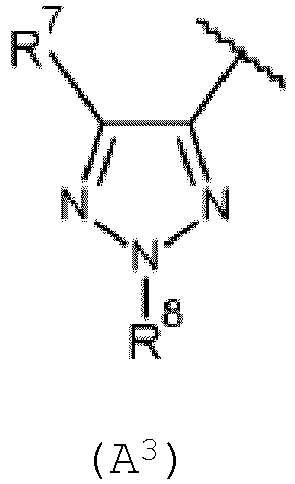 R7 représentant un atome d'hydrogène ; un atome d'halogène ; C1-5-alkyle substitué ou non substitué ; C1-5-halogénoalkyle comprenant jusqu'à 9 atomes d'halogène qui peuvent être identiques ou différents ; C1-5-alcoxyle substitué ou non substitué ou C1-5-halogénoalcoxyle comprenant jusqu'à 9 atomes d'halogène qui peuvent être identiques ou différents ;R8 représentant un atome d'hydrogène ou C1-5-alkyle substitué ou non substitué ;- un hétérocycle de formule (A4)
 - un hétérocycle de formule (A5)
 R12 et R13, qui peuvent être identiques ou différents, représentant un atome d'hydrogène ; un atome d'halogène ; C1-5-alkyle substitué ou non substitué ; C1-5-alcoxyle substitué ou non substitué ; amino ; C1-5-halogénoalkyle comprenant jusqu'à 9 atomes d'halogène qui peuvent être identiques ou différents ou C1-5-halogénoalcoxyle comprenant jusqu'à 9 atomes d'halogène qui peuvent être identiques ou différents ;R14 représentant un atome d'hydrogène ; un atome d'halogène ; C1-5-alkyle substitué ou non substitué ; C1-5-alcoxyle substitué ou non substitué ; amino ; C1-5-halogénoalkyle comprenant jusqu'à 9 atomes d'halogène qui peuvent être identiques ou différents ou C1-5-halogénoalcoxyle comprenant jusqu'à 9 atomes d'halogène qui peuvent être identiques ou différents ;- un hétérocycle de formule (A6)
 R15 représentant un atome d'hydrogène ; un atome d'halogène ; un cyano ; C1-5-alkyle substitué ou non substitué ; C1-5-alcoxyle substitué ou non substitué ; C1-5-halogénoalcoxyle comprenant jusqu'à 9 atomes d'halogène qui peuvent être identiques ou différents ou C1-5-halogénoalkyle comprenant jusqu'à 9 atomes d'halogène qui peuvent être identiques ou différents ;R16 et R18, qui peuvent être identiques ou différents, représentant un atome d'hydrogène ; un atome d'halogène ; C1-5-alcoxycarbonyle substitué ou non substitué ; C1-5-alkyle substitué ou non substitué ; C1-5-halogénoalcoxyle comprenant jusqu'à 9 atomes d'halogène qui peuvent être identiques ou différents ou C1-5-halogénoalkyle comprenant jusqu'à 9 atomes d'halogène qui peuvent être identiques ou différents ;R17 représentant un atome d'hydrogène ou C1-5-alkyle substitué ou non substitué ;- un hétérocycle de formule (A7)
 R19 représentant un atome d'hydrogène ou un C1-5-alkyleR20 jusqu'à R22, qui peuvent être identiques ou différents, représentant un atome d'hydrogène ; un atome d'halogène ; C1-5-alkyle substitué ou non substitué ou C1-5-halogénoalkyle comprenant jusqu'à 9 atomes d'halogène qui peuvent être identiques ou différents ;- un hétérocycle de formule (A8)
 R23 représentant un atome d'hydrogène ; un atome d'halogène ; C1-5-alkyle substitué ou non substitué ou C1-5-halogénoalkyle comprenant jusqu'à 9 atomes d'halogène qui peuvent être identiques ou différents ;R24 représentant un atome d'hydrogène ou C1-5-alkyle substitué ou non substitué ou C1-5-halogénoalkyle comprenant jusqu'à 9 atomes d'halogène qui peuvent être identiques ou différents ;- un hétérocycle de formule (A9)
 R25 représentant un atome d'hydrogène ; un atome d'halogène ; C1-5-alkyle substitué ou non substitué ou C1-5-halogénoalkyle comprenant jusqu'à 9 atomes d'halogène qui peuvent être identiques ou différents ;R26 représentant un atome d'hydrogène ; C1-5-alkyle substitué ou non substitué ou C1-5-halogénoalkyle comprenant jusqu'à 9 atomes d'halogène qui peuvent être identiques ou différents ;- un hétérocycle de formule (A10)
 R27 représentant un atome d'hydrogène ; un atome d'halogène ; C1-5-alkyle substitué ou non substitué ou C1-5-halogénoalkyle comprenant jusqu'à 9 atomes d'halogène qui peuvent être identiques ou différents ;R28 représentant un atome d'hydrogène ; un atome d'halogène ; C1-5-alkyle substitué ou non substitué ; C1-5-halogénoalkyle comprenant jusqu'à 9 atomes d'halogène qui peuvent être identiques ou différents ; C1-5-halogénoalcoxyle comprenant jusqu'à 9 atomes d'halogène qui peuvent être identiques ou différents ; amino ; C1-5-alkylamino substitué ou non substitué ou di-C1-5-alkylamino substitué ou non substitué ;- un hétérocycle de formule (A11)
 R29 représentant un atome d'hydrogène ; un atome d'halogène ; C1-5-alkyle substitué ou non substitué ; C1-5-alcoxyle substitué ou non substitué ; C1-5-halogénoalcoxyle comprenant jusqu'à 9 atomes d'halogène qui peuvent être identiques ou différents ou C1-5-halogénoalkyle comprenant jusqu'à 9 atomes d'halogène qui peuvent être identiques ou différents ;R30 représentant un atome d'hydrogène ; un atome d'halogène ; C1-5-alkyle substitué ou non substitué ; C1-5-halogénoalkyle comprenant jusqu'à 9 atomes d'halogène qui peuvent être identiques ou différents ; C1-5-halogénoalcoxyle comprenant jusqu'à 9 atomes d'halogène qui peuvent être identiques ou différents ; amino ; C1-5-alkylamino substitué ou non substitué ou di-C1-5-alkylamino substitué ou non substitué ;- un hétérocycle de formule (A12)
 R31 représentant un atome d'hydrogène ou un C1-5-alkyle substitué ou non substitué R32 représentant un atome d'hydrogène ; un atome d'halogène ; C1-5-alkyle substitué ou non substitué ou C1-5-halogénoalkyle comprenant jusqu'à 9 atomes d'halogène qui peuvent être identiques ou différents ;R33 représentant un atome d'hydrogène ; un atome d'halogène ; un nitro ; C1-5-alkyle substitué ou non substitué ; C1-5-alcoxyle substitué ou non substitué ; C1-5-halogénoalcoxyle comprenant jusqu'à 9 atomes d'halogène qui peuvent être identiques ou différents ou C1-5-halogénoalkyle comprenant jusqu'à 9 atomes d'halogène qui peuvent être identiques ou différents ;- un hétérocycle de formule (A13)
 R34 représentant un atome d'hydrogène ; un atome d'halogène ; C1-5-alkyle substitué ou non substitué ; C3-5-cycloalkyle substitué ou non substitué ; C1-5-halogénoalkyle comprenant jusqu'à 9 atomes d'halogène qui peuvent être identiques ou différents ; C1-5-alcoxyle substitué ou non substitué ; C2-5-alcynyloxyle substitué ou non substitué ou C1-5-halogénoalcoxyle comprenant jusqu'à 9 atomes d'halogène qui peuvent être identiques ou différents ;R35 représentant un atome d'hydrogène ; un atome d'halogène ; C1-5-alkyle substitué ou non substitué ; un cyano ; C1-5-alcoxyle substitué ou non substitué ; C1-5-alkylsulfanyle substitué ou non substitué ; C1-5-halogénoalkyle comprenant jusqu'à 9 atomes d'halogène qui peuvent être identiques ou différents ; C1-5-halogénoalcoxyle comprenant jusqu'à 9 atomes d'halogène qui peuvent être identiques ou différents ; amino ; C1-5-alkylamino substitué ou non substitué ou di-C1-5-alkylamino substitué ou non substitué ;R36 représentant un atome d'hydrogène ou C1-5-alkyle substitué ou non substitué ;- un hétérocycle de formule (A14)
 - un hétérocycle de formule (A15)
 - un hétérocycle de formule (A16)
 - un hétérocycle de formule (A17)
 - un hétérocycle de formule (A18)
 R47 représentant un atome d'hydrogène ; un atome d'halogène ; C1-5-alkyle substitué ou non substitué ou C1-5-halogénoalkyle comprenant jusqu'à 9 atomes d'halogène qui peuvent être identiques ou différents ;R46 représentant un atome d'hydrogène ; un atome d'halogène ; C1-5-alkyle substitué ou non substitué ; C1-5-halogénoalkyle comprenant jusqu'à 9 atomes d'halogène qui peuvent être identiques ou différents ou C1-5-alkylsulfanyle substitué ou non substitué ;- un hétérocycle de formule (A19)
 - un hétérocycle de formule (A20)
 - un hétérocycle de formule (A21)
 - un hétérocycle de formule (A22)
 - un hétérocycle de formule (A23)
 R54 et R56, qui peuvent être identiques ou différents, représentant un atome d'hydrogène ; un atome d'halogène ; C1-5-alkyle substitué ou non substitué ou C1-5-halogénoalkyle comprenant jusqu'à 9 atomes d'halogène qui peuvent être identiques ou différents ;R55 représentant un atome d'hydrogène ou C1-5-alkyle substitué ou non substitué ;- un hétérocycle de formule (A24)
 R57 et R59, qui peuvent être identiques ou différents, représentant un atome d'hydrogène ; un atome d'halogène ; C1-5-alkyle substitué ou non substitué ou C1-5-halogénoalkyle comprenant jusqu'à 9 atomes d'halogène qui peuvent être identiques ou différents ;R58 représentant un atome d'hydrogène ou C1-5-alkyle substitué ou non substitué ;- un hétérocycle de formule (A25)
 R60 et R61, qui peuvent être identiques ou différents, représentant un atome d'hydrogène ; un atome d'halogène ; C1-5-alkyle substitué ou non substitué ou C1-5-halogénoalkyle comprenant jusqu'à 9 atomes d'halogène qui peuvent être identiques ou différents ;R62 représentant un atome d'hydrogène ou C1-5-alkyle substitué ou non substitué ;- un hétérocycle de formule (A26)
 R65 représentant un atome d'hydrogène ; un atome d'halogène ; C1-5-alkyle substitué ou non substitué ; C3-5-cycloalkyle substitué ou non substitué ; C1-5-halogénoalkyle comprenant jusqu'à 9 atomes d'halogène qui peuvent être identiques ou différents ; C1-5-alcoxyle substitué ou non substitué ; C2-5-alcynyloxyle substitué ou non substitué ou C1-5-halogénoalcoxyle comprenant jusqu'à 9 atomes d'halogène qui peuvent être identiques ou différents ;R63 représentant un atome d'hydrogène ; un atome d'halogène ; C1-5-alkyle substitué ou non substitué ; un cyano ; C1-5-alcoxyle substitué ou non substitué ; C1-5-alkylsulfanyle substitué ou non substitué ; C1-5-halogénoalkyle comprenant jusqu'à 9 atomes d'halogène qui peuvent être identiques ou différents ; C1-5-halogénoalcoxyle comprenant jusqu'à 9 atomes d'halogène qui peuvent être identiques ou différents ; amino ; C1-5-alkylamino substitué ou non substitué ou di-C1-5-alkylamino substitué ou non substitué ;R64 représentant un atome d'hydrogène ou C1-5-alkyle substitué ou non substitué.
 - Composé selon la revendication 2, A étant choisi dans la liste constituée par A2 ; A3 ; A5 ; A6 ; A10 et A13.
- Composé selon la revendication 3, A représentant A13, R34 représentant un C1-5-alkyle substitué ou non substitué ; C1-5-halogénoalkyle comprenant jusqu'à 9 atomes d'halogène qui peuvent être identiques ou différents ; C1-5-alcoxyle substitué ou non substitué ; R35 représentant un atome d'hydrogène ou un atome d'halogène et R36 représentant un C1-5-alkyle substitué ou non substitué.
- Composé selon l'une quelconque des revendications 1 à 4, T représentant O.
- Composé selon l'une quelconque des revendications 1 à 5, Z1 représentant un cyclopropyle non substitué ou un 2-C1-5-alkylcyclopropyle.
- Composé selon l'une quelconque des revendications 1 à 6, Z2, Z3, Z4 et Z5 représentant indépendamment un atome d'hydrogène ou C1-8-alkyle.
- Composé selon l'une quelconque des revendications 1 à 7, B1 représentant un cycle pyridinyle.
- Composé selon l'une quelconque des revendications 1 à 8, B2 représentant un cycle thiényle substitué ou non substitué ; un cycle benzothiophényle substitué ou non substitué ; un cycle pyridine substitué ou non substitué ; un cycle quinoléinyle substitué ou non substitué ; un cycle furyle substitué ou non substitué ; ou un cycle benzofurannyle substitué ou non substitué ou un cycle pyrimidinyle substitué ou non substitué.
- Composé selon l'une quelconque des revendications 1 à 9, Y représentant, indépendamment, un atome d'halogène ; C1-8-alkyle substitué ou non substitué ; C1-8-halogénoalkyle comprenant jusqu'à 9 atomes d'halogène qui peuvent être identiques ou différents ; C1-8-alcoxyle substitué ou non substitué ; C1-8-halogénoalcoxyle comprenant jusqu'à 9 atomes d'halogène qui peuvent être identiques ou différents.
- Composé de formule (IIa)

- Composition fongicide comprenant, en tant qu'ingrédient actif, une quantité efficace d'un composé de formule (I) selon les revendications 1 à 10 et un support, un véhicule ou une charge acceptable sur le plan agricole.
- Procédé pour le contrôle de champignons phytopathogènes des cultures, caractérisé en ce qu'une quantité efficace sur le plan agronomique et sensiblement non phytotoxique d'un composé selon l'une quelconque des revendications 1 à 10 ou d'une composition selon la revendication 12 est appliquée au sol où les plantes croissent ou sont capables de croître, aux feuilles et/ou aux fruits des plantes ou aux semences des plantes.
- Utilisation de composés de formule (I) selon l'une quelconque des revendications 1 à 10 ou d'une composition selon la revendication 12 pour le contrôle de champignons nuisibles phytopathogènes.
- Procédé pour la production de compositions pour le contrôle de champignons nuisibles phytopathogènes, caractérisé en ce que des dérivés de formule (I) selon l'une quelconque des revendications 1 à 10 sont mélangés avec des diluants et/ou des tensioactifs.
- Utilisation de composés de formule (I) selon l'une quelconque des revendications 1 à 10 ou d'une composition selon la revendication 12 pour le traitement de plantes, de semences, de plantes transgéniques ou de semences transgéniques.
Applications Claiming Priority (2)
| Application Number | Priority Date | Filing Date | Title |
|---|---|---|---|
| EP15290099 | 2015-04-13 | ||
| PCT/EP2016/057960 WO2016166077A1 (fr) | 2015-04-13 | 2016-04-12 | Dérivés de n-cycloalkyle-n-(bihétérocyclyléthylène)-(thio)carboxamide |
Publications (2)
| Publication Number | Publication Date |
|---|---|
| EP3283476A1 EP3283476A1 (fr) | 2018-02-21 |
| EP3283476B1 true EP3283476B1 (fr) | 2019-08-14 |
Family
ID=53002634
Family Applications (1)
| Application Number | Title | Priority Date | Filing Date |
|---|---|---|---|
| EP16717873.0A Active EP3283476B1 (fr) | 2015-04-13 | 2016-04-12 | Fungicides de n-cycloalkyl-n- (bihétérocyclyéthylène) - (thio) carboxamide |
Country Status (5)
| Country | Link |
|---|---|
| US (1) | US10214510B2 (fr) |
| EP (1) | EP3283476B1 (fr) |
| CN (1) | CN107531676A (fr) |
| BR (1) | BR112017022000A2 (fr) |
| WO (1) | WO2016166077A1 (fr) |
Family Cites Families (289)
| Publication number | Priority date | Publication date | Assignee | Title |
|---|---|---|---|---|
| US2036008A (en) | 1934-11-07 | 1936-03-31 | White Martin Henry | Plug fuse |
| US3247908A (en) | 1962-08-27 | 1966-04-26 | Robook Nicolay Nikolaevich | Adjustable blades hydraulic turbine runner |
| US4761373A (en) | 1984-03-06 | 1988-08-02 | Molecular Genetics, Inc. | Herbicide resistance in plants |
| US5304732A (en) | 1984-03-06 | 1994-04-19 | Mgi Pharma, Inc. | Herbicide resistance in plants |
| US5331107A (en) | 1984-03-06 | 1994-07-19 | Mgi Pharma, Inc. | Herbicide resistance in plants |
| DE3765449D1 (de) | 1986-03-11 | 1990-11-15 | Plant Genetic Systems Nv | Durch gentechnologie erhaltene und gegen glutaminsynthetase-inhibitoren resistente pflanzenzellen. |
| US5637489A (en) | 1986-08-23 | 1997-06-10 | Hoechst Aktiengesellschaft | Phosphinothricin-resistance gene, and its use |
| US5273894A (en) | 1986-08-23 | 1993-12-28 | Hoechst Aktiengesellschaft | Phosphinothricin-resistance gene, and its use |
| US5276268A (en) | 1986-08-23 | 1994-01-04 | Hoechst Aktiengesellschaft | Phosphinothricin-resistance gene, and its use |
| US5378824A (en) | 1986-08-26 | 1995-01-03 | E. I. Du Pont De Nemours And Company | Nucleic acid fragment encoding herbicide resistant plant acetolactate synthase |
| US5013659A (en) | 1987-07-27 | 1991-05-07 | E. I. Du Pont De Nemours And Company | Nucleic acid fragment encoding herbicide resistant plant acetolactate synthase |
| US5605011A (en) | 1986-08-26 | 1997-02-25 | E. I. Du Pont De Nemours And Company | Nucleic acid fragment encoding herbicide resistant plant acetolactate synthase |
| US5638637A (en) | 1987-12-31 | 1997-06-17 | Pioneer Hi-Bred International, Inc. | Production of improved rapeseed exhibiting an enhanced oleic acid content |
| GB8810120D0 (en) | 1988-04-28 | 1988-06-02 | Plant Genetic Systems Nv | Transgenic nuclear male sterile plants |
| US5084082A (en) | 1988-09-22 | 1992-01-28 | E. I. Du Pont De Nemours And Company | Soybean plants with dominant selectable trait for herbicide resistance |
| US6013861A (en) | 1989-05-26 | 2000-01-11 | Zeneca Limited | Plants and processes for obtaining them |
| WO1991002069A1 (fr) | 1989-08-10 | 1991-02-21 | Plant Genetic Systems N.V. | Plantes avec fleurs modifiees |
| US5908810A (en) | 1990-02-02 | 1999-06-01 | Hoechst Schering Agrevo Gmbh | Method of improving the growth of crop plants which are resistant to glutamine synthetase inhibitors |
| US5739082A (en) | 1990-02-02 | 1998-04-14 | Hoechst Schering Agrevo Gmbh | Method of improving the yield of herbicide-resistant crop plants |
| EP0476093B1 (fr) | 1990-04-04 | 1997-05-07 | Pioneer Hi-Bred International, Inc. | Production de graines de colza ameliorees presentant une teneur reduite en acides gras satures |
| US5198599A (en) | 1990-06-05 | 1993-03-30 | Idaho Resarch Foundation, Inc. | Sulfonylurea herbicide resistance in plants |
| EP0536330B1 (fr) | 1990-06-25 | 2002-02-27 | Monsanto Technology LLC | Plantes tolerant le glyphosate |
| US6395966B1 (en) | 1990-08-09 | 2002-05-28 | Dekalb Genetics Corp. | Fertile transgenic maize plants containing a gene encoding the pat protein |
| FR2667078B1 (fr) | 1990-09-21 | 1994-09-16 | Agronomique Inst Nat Rech | Sequence d'adn conferant une sterilite male cytoplasmique, genome mitochondrial, mitochondrie et plante contenant cette sequence, et procede de preparation d'hybrides. |
| DE4104782B4 (de) | 1991-02-13 | 2006-05-11 | Bayer Cropscience Gmbh | Neue Plasmide, enthaltend DNA-Sequenzen, die Veränderungen der Karbohydratkonzentration und Karbohydratzusammensetzung in Pflanzen hervorrufen, sowie Pflanzen und Pflanzenzellen enthaltend dieses Plasmide |
| US5731180A (en) | 1991-07-31 | 1998-03-24 | American Cyanamid Company | Imidazolinone resistant AHAS mutants |
| US6270828B1 (en) | 1993-11-12 | 2001-08-07 | Cargrill Incorporated | Canola variety producing a seed with reduced glucosinolates and linolenic acid yielding an oil with low sulfur, improved sensory characteristics and increased oxidative stability |
| DE4227061A1 (de) | 1992-08-12 | 1994-02-17 | Inst Genbiologische Forschung | DNA-Sequenzen, die in der Pflanze die Bildung von Polyfructanen (Lävanen) hervorrufen, Plasmide enthaltend diese Sequenzen sowie Verfahren zur Herstellung transgener Pflanzen |
| GB9218185D0 (en) | 1992-08-26 | 1992-10-14 | Ici Plc | Novel plants and processes for obtaining them |
| EP0664835B1 (fr) | 1992-10-14 | 2004-05-19 | Syngenta Limited | Nouvelles plantes et leurs procedes d'obtention |
| GB9223454D0 (en) | 1992-11-09 | 1992-12-23 | Ici Plc | Novel plants and processes for obtaining them |
| RO117111B1 (ro) | 1993-03-25 | 2001-10-30 | Ciba Geigy Ag | Proteina pesticida si secventa de nucleotide, care o codifica |
| AU695940B2 (en) | 1993-04-27 | 1998-08-27 | Cargill Incorporated | Non-hydrogenated canola oil for food applications |
| WO1995004826A1 (fr) | 1993-08-09 | 1995-02-16 | Institut Für Genbiologische Forschung Berlin Gmbh | Enzymes de deramification et sequences d'adn les codant, utilisables dans la modification du degre de ramification de l'amidon amylopectinique dans des plantes |
| DE4330960C2 (de) | 1993-09-09 | 2002-06-20 | Aventis Cropscience Gmbh | Kombination von DNA-Sequenzen, die in Pflanzenzellen und Pflanzen die Bildung hochgradig amylosehaltiger Stärke ermöglichen, Verfahren zur Herstellung dieser Pflanzen und die daraus erhaltbare modifizierte Stärke |
| EP0675198A4 (fr) | 1993-10-01 | 1996-01-10 | Mitsubishi Chem Ind | Gene identifiant un cytoplasme vegetal sterile et procede pour preparer un vegetal hybride a l'aide de celui-ci. |
| AU692791B2 (en) | 1993-10-12 | 1998-06-18 | Agrigenetics, Inc. | Brassica napus variety AG019 |
| US5908975A (en) | 1993-11-09 | 1999-06-01 | E. I. Du Pont De Nemours And Company | Accumulation of fructans in plants by targeted expression of bacterial levansucrase |
| CA2186399C (fr) | 1994-03-25 | 2001-09-04 | David Cooke | Procede pour produire une fecule modifiee a partir de plants de pommes de terre |
| CA2190149C (fr) | 1994-05-18 | 2011-01-04 | Jens Kossmann | Sequences d'adn codant des enzymes susceptibles de faciliter la synthese d'.alpha.-1,4 glycannes lineaires chez les vegetaux, les champignons et les micro-organismes |
| AU706849B2 (en) | 1994-06-21 | 1999-06-24 | Cerestar Usa, Inc. | Novel plants and processes for obtaining them |
| US5824790A (en) | 1994-06-21 | 1998-10-20 | Zeneca Limited | Modification of starch synthesis in plants |
| NL1000064C1 (nl) | 1994-07-08 | 1996-01-08 | Stichting Scheikundig Onderzoe | Produktie van oligosacchariden in transgene planten. |
| DE4441408A1 (de) | 1994-11-10 | 1996-05-15 | Inst Genbiologische Forschung | DNA-Sequenzen aus Solanum tuberosum kodierend Enzyme, die an der Stärkesynthese beteiligt sind, Plasmide, Bakterien, Pflanzenzellen und transgene Pflanzen enhaltend diese Sequenzen |
| DE4447387A1 (de) | 1994-12-22 | 1996-06-27 | Inst Genbiologische Forschung | Debranching-Enzyme aus Pflanzen und DNA-Sequenzen kodierend diese Enzyme |
| ES2294786T3 (es) | 1995-01-06 | 2008-04-01 | Plant Research International B.V. | Secuencias de adn que codifican enzimas que sintetizan polimeros carbohidratos y metodo para producir plantas transgenicas. |
| DE19509695A1 (de) | 1995-03-08 | 1996-09-12 | Inst Genbiologische Forschung | Verfahren zur Herstellung einer modifizieren Stärke in Pflanzen, sowie die aus den Pflanzen isolierbare modifizierte Stärke |
| US5853973A (en) | 1995-04-20 | 1998-12-29 | American Cyanamid Company | Structure based designed herbicide resistant products |
| DE69636637T2 (de) | 1995-04-20 | 2007-08-23 | Basf Ag | Auf basis ihrer struktur entworfene herbizid-resistente produkte |
| DK0826061T3 (da) | 1995-05-05 | 2007-09-24 | Nat Starch Chem Invest | Forbedringer af eller relaterede til plantestivelsessammensætninger |
| FR2734842B1 (fr) | 1995-06-02 | 1998-02-27 | Rhone Poulenc Agrochimie | Sequence adn d'un gene de l'hydroxy-phenyl pyruvate dioxygenase et obtention de plantes contenant un gene de l'hydroxy-phenyl pyruvate dioxygenase, tolerantes a certains herbicides |
| US6284479B1 (en) | 1995-06-07 | 2001-09-04 | Pioneer Hi-Bred International, Inc. | Substitutes for modified starch and latexes in paper manufacture |
| US5712107A (en) | 1995-06-07 | 1998-01-27 | Pioneer Hi-Bred International, Inc. | Substitutes for modified starch and latexes in paper manufacture |
| GB9513881D0 (en) | 1995-07-07 | 1995-09-06 | Zeneca Ltd | Improved plants |
| FR2736926B1 (fr) | 1995-07-19 | 1997-08-22 | Rhone Poulenc Agrochimie | 5-enol pyruvylshikimate-3-phosphate synthase mutee, gene codant pour cette proteine et plantes transformees contenant ce gene |
| PT1435205E (pt) | 1995-09-19 | 2010-02-04 | Bayer Bioscience Gmbh | Plantas que sintetizam um amido modificado, processo para a sua produção e amido modificado |
| GB9524938D0 (en) | 1995-12-06 | 1996-02-07 | Zeneca Ltd | Modification of starch synthesis in plants |
| DE19601365A1 (de) | 1996-01-16 | 1997-07-17 | Planttec Biotechnologie Gmbh | Nucleinsäuremoleküle aus Pflanzen codierend Enzyme, die an der Stärkesynthese beteiligt sind |
| DE19608918A1 (de) | 1996-03-07 | 1997-09-11 | Planttec Biotechnologie Gmbh | Nucleinsäuremoleküle, die neue Debranching-Enzyme aus Mais codieren |
| US5773704A (en) | 1996-04-29 | 1998-06-30 | Board Of Supervisors Of Louisiana State University And Agricultural And Mechanical College | Herbicide resistant rice |
| DE19618125A1 (de) | 1996-05-06 | 1997-11-13 | Planttec Biotechnologie Gmbh | Nucleinsäuremoleküle, die neue Debranching-Enzyme aus Kartoffel codieren |
| DE19619918A1 (de) | 1996-05-17 | 1997-11-20 | Planttec Biotechnologie Gmbh | Nucleinsäuremoleküle codierend lösliche Stärkesynthasen aus Mais |
| CN1257978C (zh) | 1996-05-29 | 2006-05-31 | 赫彻斯特-舍林农业发展有限公司 | 编码小麦中参与淀粉合成的酶的核酸分子 |
| EP0904454A1 (fr) | 1996-06-12 | 1999-03-31 | Pioneer Hi-Bred International, Inc. | Substituts de l'amidon modifie utilises dans la fabrication du papier |
| EP0904453B1 (fr) | 1996-06-12 | 2001-12-19 | Pioneer Hi-Bred International, Inc. | Substituts de l'amidon modifie utilises dans la fabrication du papier |
| JP2001503607A (ja) | 1996-06-12 | 2001-03-21 | パイオニア ハイ―ブレッド インターナショナル,インコーポレイテッド | 製紙における改変澱粉の代用品 |
| AUPO069996A0 (en) | 1996-06-27 | 1996-07-18 | Australian National University, The | Manipulation of plant cellulose |
| US5850026A (en) | 1996-07-03 | 1998-12-15 | Cargill, Incorporated | Canola oil having increased oleic acid and decreased linolenic acid content |
| US5773702A (en) | 1996-07-17 | 1998-06-30 | Board Of Trustees Operating Michigan State University | Imidazolinone herbicide resistant sugar beet plants |
| GB9623095D0 (en) | 1996-11-05 | 1997-01-08 | Nat Starch Chem Invest | Improvements in or relating to starch content of plants |
| US6232529B1 (en) | 1996-11-20 | 2001-05-15 | Pioneer Hi-Bred International, Inc. | Methods of producing high-oil seed by modification of starch levels |
| DE19653176A1 (de) | 1996-12-19 | 1998-06-25 | Planttec Biotechnologie Gmbh | Neue Nucleinsäuremoleküle aus Mais und ihre Verwendung zur Herstellung einer modifizierten Stärke |
| CA2193938A1 (fr) | 1996-12-24 | 1998-06-24 | David G. Charne | Oleagineux du genre brassica renfermant un gene restaurateur de la fertilite ameliore encodant la sterilite male cytoplasmique ogura |
| US5981840A (en) | 1997-01-24 | 1999-11-09 | Pioneer Hi-Bred International, Inc. | Methods for agrobacterium-mediated transformation |
| DE19708774A1 (de) | 1997-03-04 | 1998-09-17 | Max Planck Gesellschaft | Nucleinsäuremoleküle codierend Enzyme die Fructosylpolymeraseaktivität besitzen |
| DE19709775A1 (de) | 1997-03-10 | 1998-09-17 | Planttec Biotechnologie Gmbh | Nucleinsäuremoleküle codierend Stärkephosphorylase aus Mais |
| AU6882298A (en) | 1997-04-03 | 1998-10-22 | Dekalb Genetics Corporation | Glyphosate resistant maize lines |
| GB9718863D0 (en) | 1997-09-06 | 1997-11-12 | Nat Starch Chem Invest | Improvements in or relating to stability of plant starches |
| DE19749122A1 (de) | 1997-11-06 | 1999-06-10 | Max Planck Gesellschaft | Nucleinsäuremoleküle codierend Enzyme, die Fructosyltransferaseaktivität besitzen |
| FR2770854B1 (fr) | 1997-11-07 | 2001-11-30 | Rhone Poulenc Agrochimie | Sequence adn d'un gene de l'hydroxy-phenyl pyruvate dioxygenase et obtention de plantes contenant un tel gene, tolerantes aux herbicides |
| FR2772789B1 (fr) | 1997-12-24 | 2000-11-24 | Rhone Poulenc Agrochimie | Procede de preparation enzymatique d'homogentisate |
| WO1999053072A1 (fr) | 1998-04-09 | 1999-10-21 | E.I. Du Pont De Nemours And Company | Homologues de la proteine r1 de phosphorylation de l'amidon |
| DE19820607A1 (de) | 1998-05-08 | 1999-11-11 | Hoechst Schering Agrevo Gmbh | Nucleinsäuremoleküle codierend Enzyme aus Weizen, die an der Stärkesynthese beteiligt sind |
| DE19820608A1 (de) | 1998-05-08 | 1999-11-11 | Hoechst Schering Agrevo Gmbh | Nucleinsäuremoleküle codierend Enzyme aus Weizen, die an der Stärkesynthese beteiligt sind |
| AU4261099A (en) | 1998-05-13 | 1999-11-29 | Planttec Biotechnologie Gmbh | Transgenic plants with a modified activity of a plastidial adp/atp translocator |
| DE19821614A1 (de) | 1998-05-14 | 1999-11-18 | Hoechst Schering Agrevo Gmbh | Sulfonylharnstoff-tolerante Zuckerrübenmutanten |
| US6635756B1 (en) | 1998-06-15 | 2003-10-21 | National Starch And Chemical Investment Holding Corporation | Starch obtainable from modified plants |
| US6693185B2 (en) | 1998-07-17 | 2004-02-17 | Bayer Bioscience N.V. | Methods and means to modulate programmed cell death in eukaryotic cells |
| DE19836099A1 (de) | 1998-07-31 | 2000-02-03 | Hoechst Schering Agrevo Gmbh | Nukleinsäuremoleküle kodierend für eine ß-Amylase, Pflanzen, die eine modifizierte Stärke synthetisieren, Verfahren zur Herstellung der Pflanzen, ihre Verwendung sowie die modifizierte Stärke |
| DE19836097A1 (de) | 1998-07-31 | 2000-02-03 | Hoechst Schering Agrevo Gmbh | Nukleinsäuremoleküle kodierend für eine alpha-Glukosidase, Pflanzen, die eine modifizierte Stärke synthetisieren, Verfahren zur Herstellung der Pflanzen, ihre Verwendung sowie die modifizierte Stärke |
| DE19836098A1 (de) | 1998-07-31 | 2000-02-03 | Hoechst Schering Agrevo Gmbh | Pflanzen, die eine modifizierte Stärke synthetisieren, Verfahren zur Herstellung der Pflanzen, ihre Verwendung sowie die modifizierte Stärke |
| CA2341078A1 (fr) | 1998-08-25 | 2000-03-02 | Pioneer Hi-Bred International, Inc. | Acides nucleiques de glutamine vegetale: fructose-6-phosphate amidotransferase |
| HUP0103414A3 (en) | 1998-09-02 | 2005-12-28 | Bayer Bioscience Gmbh | Nucleic acid molecules encoding an amylosucrase |
| DE19924342A1 (de) | 1999-05-27 | 2000-11-30 | Planttec Biotechnologie Gmbh | Genetisch modifizierte Pflanzenzellen und Pflanzen mit erhöhter Aktivität eines Amylosucraseproteins und eines Verzweigungsenzyms |
| US6699694B1 (en) | 1998-10-09 | 2004-03-02 | Planttec Biotechnologie Gmbh | Method for producing α-1,6-branched α-1,4-glucans from sucrose |
| AU1336200A (en) | 1998-11-03 | 2000-05-22 | Aventis Cropscience N.V. | Glufosinate tolerant rice |
| US6333449B1 (en) | 1998-11-03 | 2001-12-25 | Plant Genetic Systems, N.V. | Glufosinate tolerant rice |
| CN100408687C (zh) | 1998-11-09 | 2008-08-06 | 拜尔生物科学有限公司 | 来自稻米的核酸分子及其用于生产改性淀粉的用途 |
| US6531648B1 (en) | 1998-12-17 | 2003-03-11 | Syngenta Participations Ag | Grain processing method and transgenic plants useful therein |
| DE19905069A1 (de) | 1999-02-08 | 2000-08-10 | Planttec Biotechnologie Gmbh | Nucleinsäuremoleküle codierend Alternansucrase |
| US6323392B1 (en) | 1999-03-01 | 2001-11-27 | Pioneer Hi-Bred International, Inc. | Formation of brassica napus F1 hybrid seeds which exhibit a highly elevated oleic acid content and a reduced linolenic acid content in the endogenously formed oil of the seeds |
| JP2003523173A (ja) | 1999-04-29 | 2003-08-05 | シンジェンタ リミテッド | 除草剤耐性植物 |
| WO2000066746A1 (fr) | 1999-04-29 | 2000-11-09 | Syngenta Limited | Plantes resistant aux herbicides |
| DE19926771A1 (de) | 1999-06-11 | 2000-12-14 | Aventis Cropscience Gmbh | Nukleinsäuremoleküle aus Weizen, transgene Pflanzenzellen und Pflanzen und deren Verwendung für die Herstellung modifizierter Stärke |
| DE19937348A1 (de) | 1999-08-11 | 2001-02-22 | Aventis Cropscience Gmbh | Nukleinsäuremoleküle aus Pflanzen codierend Enzyme, die an der Stärkesynthese beteiligt sind |
| DE19937643A1 (de) | 1999-08-12 | 2001-02-22 | Aventis Cropscience Gmbh | Transgene Zellen und Pflanzen mit veränderter Aktivität des GBSSI- und des BE-Proteins |
| AU7647000A (en) | 1999-08-20 | 2001-03-19 | Basf Plant Science Gmbh | Increasing the polysaccharide content in plants |
| US6423886B1 (en) | 1999-09-02 | 2002-07-23 | Pioneer Hi-Bred International, Inc. | Starch synthase polynucleotides and their use in the production of new starches |
| US6472588B1 (en) | 1999-09-10 | 2002-10-29 | Texas Tech University | Transgenic cotton plants with altered fiber characteristics transformed with a sucrose phosphate synthase nucleic acid |
| GB9921830D0 (en) | 1999-09-15 | 1999-11-17 | Nat Starch Chem Invest | Plants having reduced activity in two or more starch-modifying enzymes |
| AR025996A1 (es) | 1999-10-07 | 2002-12-26 | Valigen Us Inc | Plantas no transgenicas resistentes a los herbicidas. |
| US6509516B1 (en) | 1999-10-29 | 2003-01-21 | Plant Genetic Systems N.V. | Male-sterile brassica plants and methods for producing same |
| US6506963B1 (en) | 1999-12-08 | 2003-01-14 | Plant Genetic Systems, N.V. | Hybrid winter oilseed rape and methods for producing same |
| US6395485B1 (en) | 2000-01-11 | 2002-05-28 | Aventis Cropscience N.V. | Methods and kits for identifying elite event GAT-ZM1 in biological samples |
| EP2266390A3 (fr) | 2000-03-09 | 2011-04-20 | E. I. du Pont de Nemours and Company | Tournesols tolérants à la sulfonylurée |
| CA2401093A1 (fr) | 2000-03-09 | 2001-09-13 | Monsanto Technology Llc | Procedes permettant de rendre des plantes tolerantes au glyphosate et compositions associees |
| US6768044B1 (en) | 2000-05-10 | 2004-07-27 | Bayer Cropscience Sa | Chimeric hydroxyl-phenyl pyruvate dioxygenase, DNA sequence and method for obtaining plants containing such a gene, with herbicide tolerance |
| BR122013026754B1 (pt) | 2000-06-22 | 2018-02-27 | Monsanto Company | Molécula de dna e processos para produzir uma planta de milho tolerante à aplicação do herbicida glifosato |
| US6713259B2 (en) | 2000-09-13 | 2004-03-30 | Monsanto Technology Llc | Corn event MON810 and compositions and methods for detection thereof |
| CN100558897C (zh) | 2000-09-29 | 2009-11-11 | 辛根塔有限公司 | 抗除草剂植物 |
| US6734340B2 (en) | 2000-10-23 | 2004-05-11 | Bayer Cropscience Gmbh | Monocotyledon plant cells and plants which synthesise modified starch |
| AU2002215363B2 (en) | 2000-10-25 | 2006-10-12 | Monsanto Technology Llc | Cotton event PV-GHGT07(1445) and compositions and methods for detection thereof |
| CA2425349C (fr) | 2000-10-30 | 2011-08-02 | Monsanto Technology Llc | Colza canola pv-bngt(rt73), compositions et procedes de detection correspondants |
| FR2815969B1 (fr) | 2000-10-30 | 2004-12-10 | Aventis Cropscience Sa | Plantes tolerantes aux herbicides par contournement de voie metabolique |
| IL155599A0 (en) | 2000-10-30 | 2003-11-23 | Maxygen Inc | Polynucleotides encoding proteins which catalyze acetylation of glyphosate |
| AU2002218413A1 (en) | 2000-11-30 | 2002-06-11 | Ses Europe N.V. | Glyphosate resistant transgenic sugar beet characterised by a specific transgene insertion (t227-1), methods and primers for the detection of said insertion |
| JP2004528821A (ja) | 2000-12-07 | 2004-09-24 | シンジェンタ リミテッド | 除草剤抵抗性植物 |
| AU2036302A (en) | 2000-12-08 | 2002-06-18 | Commw Scient Ind Res Org | Modification of sucrose synthase gene expression in plant tissue and uses therefor |
| WO2002079410A2 (fr) | 2001-03-30 | 2002-10-10 | Basf Plant Science Gmbh | Domaines de longueur de la chaine de glucan |
| EG26529A (en) | 2001-06-11 | 2014-01-27 | مونسانتو تكنولوجى ل ل سى | Prefixes for detection of DNA molecule in cotton plant MON15985 which gives resistance to damage caused by insect of squamous lepidoptera |
| ATE394497T1 (de) | 2001-06-12 | 2008-05-15 | Bayer Cropscience Ag | Transgene pflanzen die stärke mit hohem amylosegehalt herstellen |
| US6818807B2 (en) | 2001-08-06 | 2004-11-16 | Bayer Bioscience N.V. | Herbicide tolerant cotton plants having event EE-GH1 |
| US20030084473A1 (en) | 2001-08-09 | 2003-05-01 | Valigen | Non-transgenic herbicide resistant plants |
| EP1448605A4 (fr) | 2001-10-17 | 2006-07-12 | Basf Plant Science Gmbh | Amidon |
| AU2002361696A1 (en) | 2001-12-17 | 2003-06-30 | Syngenta Participations Ag | Novel corn event |
| DE10208132A1 (de) | 2002-02-26 | 2003-09-11 | Planttec Biotechnologie Gmbh | Verfahren zur Herstellung von Maispflanzen mit erhöhtem Blattstärkegehalt und deren Verwendung zur Herstellung von Maissilage |
| AU2003234328A1 (en) | 2002-04-30 | 2003-11-17 | Pioneer Hi-Bred International, Inc. | Novel glyphosate-n-acetyltransferase (gat) genes |
| PL374995A1 (en) | 2002-07-29 | 2005-11-14 | Monsanto Technology, Llc | Corn event pv-zmir13 (mon863) plants and compositions and methods for detection thereof |
| FR2844142B1 (fr) | 2002-09-11 | 2007-08-17 | Bayer Cropscience Sa | Plantes transformees a biosynthese de prenylquinones amelioree |
| GB0225129D0 (en) | 2002-10-29 | 2002-12-11 | Syngenta Participations Ag | Improvements in or relating to organic compounds |
| WO2004040012A2 (fr) | 2002-10-29 | 2004-05-13 | Basf Plant Science Gmbh | Compositions et procedes permettant d'identifier des plantes presentant une meilleure tolerance aux herbicides imidazolinones |
| AU2003299579B2 (en) | 2002-12-05 | 2008-09-04 | Monsanto Technology Llc | Bentgrass event ASR-368 and compositions and methods for detection thereof |
| US20040110443A1 (en) | 2002-12-05 | 2004-06-10 | Pelham Matthew C. | Abrasive webs and methods of making the same |
| CN1745173B (zh) | 2002-12-18 | 2012-11-28 | 阿则耐克斯公司 | 能赋予除草剂抗性的基因 |
| DE60323149D1 (de) | 2002-12-19 | 2008-10-02 | Bayer Cropscience Gmbh | Pflanzenzellen und pflanzen, die eine stärke mit erhöhter endviskosität synthetisieren |
| ATE553203T1 (de) | 2003-02-12 | 2012-04-15 | Monsanto Technology Llc | Baumwolle ereignis mon 88913 und verbindungen und methoden zur detektion davon |
| PL214713B1 (pl) | 2003-02-20 | 2013-09-30 | Kws Saat Ag | Burak cukrowy odporny na glifosat, nasiono, komórka, tkanka lub czesc takiego buraka cukrowego, sposób identyfikacji buraka cukrowego odpornego na glifosat oraz zestaw testowy do identyfikacji transgenicznego buraka cukrowego odpornego na glifosat |
| US7335816B2 (en) | 2003-02-28 | 2008-02-26 | Kws Saat Ag | Glyphosate tolerant sugar beet |
| JP2006521099A (ja) | 2003-03-07 | 2006-09-21 | ビーエーエスエフ プラント サイエンス ゲーエムベーハー | 植物におけるアミロース産生の促進 |
| US7807881B2 (en) | 2003-03-10 | 2010-10-05 | Athenix Corp. | Methods to confer herbicide resistance |
| WO2004111245A2 (fr) | 2003-03-10 | 2004-12-23 | Athenix Corporation | Genes gdc-2 conferant une resistance aux herbicides |
| US7504561B2 (en) | 2003-03-10 | 2009-03-17 | Athenix Corporation | GDC-1 genes conferring herbicide resistance |
| MXPA05010823A (es) | 2003-04-09 | 2005-12-05 | Bayer Bioscience Nv | Metodos y medios para incrementar la tolerancia de plantas a condiciones de fatiga. |
| CA2521284C (fr) | 2003-04-29 | 2014-07-08 | Pioneer Hi-Bred International, Inc. | Genes de la glyphosate-n-acetyltransferase (gat) |
| KR101152465B1 (ko) | 2003-05-02 | 2012-07-04 | 다우 아그로사이언시즈 엘엘씨 | 옥수수 이벤트 tc1507 및 그의 검출 방법 |
| CA2526480A1 (fr) | 2003-05-22 | 2005-01-13 | Syngenta Participations Ag | Amidon modifie, ses utilisations, ses procedes de production |
| RS20050889A (sr) | 2003-05-28 | 2008-04-04 | Basf Aktiengesellschaft, | Pšenične biljke sa povećanom otpornošću prema imidazolinonskim herbicidima |
| EP1493328A1 (fr) | 2003-07-04 | 2005-01-05 | Institut National De La Recherche Agronomique | Production des lignées B. napus double zéro restauratrices avec une bonne qualité agronomique |
| WO2005012529A1 (fr) | 2003-07-31 | 2005-02-10 | Toyo Boseki Kabushiki Kaisha | Plantes produisant de l'acide hyaluronique |
| EP1692285B1 (fr) | 2003-08-15 | 2012-04-11 | Commonwealth Scientific and Industrial Research Organisation | Procedes et moyens d'alteration des caracteristiques des fibres dans des plantes produisant des fibres |
| ES2379553T3 (es) | 2003-08-29 | 2012-04-27 | Instituto Nacional De Tecnologia Agropecuaria | Plantas de arroz que tienen tolerancia aumentada a herbicidas de imidazolinona |
| WO2005030941A1 (fr) | 2003-09-30 | 2005-04-07 | Bayer Cropscience Gmbh | Plantes presentant une activite augmentee d'une enzyme de ramification de classe 3 |
| US7626080B2 (en) | 2003-09-30 | 2009-12-01 | Bayer Cropscience Ag | Plants with reduced activity of a class 3 branching enzyme |
| WO2005054480A2 (fr) | 2003-12-01 | 2005-06-16 | Syngenta Participations Ag | Plants de coton resistant aux insectes et procedes de detection de ces derniers |
| AU2004295386A1 (en) | 2003-12-01 | 2005-06-16 | Syngenta Participations Ag | Insect resistant cotton plants and methods of detecting the same |
| US7157281B2 (en) | 2003-12-11 | 2007-01-02 | Monsanto Technology Llc | High lysine maize compositions and event LY038 maize plants |
| US8212113B2 (en) | 2003-12-15 | 2012-07-03 | Monsanto Technology Llc | Corn plant Mon88017 and compositions and methods for detection thereof |
| AR048025A1 (es) | 2004-03-05 | 2006-03-22 | Bayer Cropscience Gmbh | Plantas con actividad aumentada de una enzima fosforilante del almidon |
| DK1725666T3 (da) | 2004-03-05 | 2012-05-07 | Bayer Cropscience Ag | Planter med reduceret aktivitet for stivelsesphosphoryleringsenzymet phosphoglucan-vand-dikinase |
| AR048026A1 (es) | 2004-03-05 | 2006-03-22 | Bayer Cropscience Gmbh | Procedimientos para la identificacion de proteinas con actividad enzimatica fosforiladora de almidon |
| AR048024A1 (es) | 2004-03-05 | 2006-03-22 | Bayer Cropscience Gmbh | Plantas con actividad aumentada de distintas enzimas fosforilantes del almidon |
| US7432082B2 (en) | 2004-03-22 | 2008-10-07 | Basf Ag | Methods and compositions for analyzing AHASL genes |
| EP2281447B1 (fr) | 2004-03-25 | 2016-07-27 | Syngenta Participations AG | Événement de maïs MIR604 |
| ES2531980T3 (es) | 2004-03-26 | 2015-03-23 | Dow Agrosciences Llc | Líneas de algodón transgénico Cry1F y Cry1Ac y su identificación específica de evento |
| KR101276929B1 (ko) | 2004-04-26 | 2013-06-19 | 바이엘 크롭사이언스 아게 | 살진균제로서 유용한 2-피리디닐시클로알킬카르복사미드유도체 |
| CA2570298A1 (fr) | 2004-06-16 | 2006-01-19 | Basf Plant Science Gmbh | Polynucleotides codant des proteines ahasl matures aux fins de creation de vegetaux tolerants a l'imidazolinone |
| DE102004029763A1 (de) | 2004-06-21 | 2006-01-05 | Bayer Cropscience Gmbh | Pflanzen, die Amylopektin-Stärke mit neuen Eigenschaften herstellen |
| CN101031646B (zh) | 2004-07-30 | 2013-09-25 | 巴斯夫农业化学产品公司 | 抗除草剂的向日葵植物、编码抗除草剂的乙酰羟酸合酶大亚基蛋白的多核苷酸和使用方法 |
| WO2006015376A2 (fr) | 2004-08-04 | 2006-02-09 | Basf Plant Science Gmbh | Sequences ahass de monocotyledone et leurs methodes d'utilisation |
| PT1786908E (pt) | 2004-08-18 | 2010-04-29 | Bayer Cropscience Ag | Plantas com um aumento da actividade da enzima de fosforilação do amido r3 nos plastídeos |
| AU2005276075B2 (en) | 2004-08-26 | 2010-08-26 | National Dairy Development Board | A novel cytoplasmic male sterility system for Brassica species and its use for hybrid seed production in Indian oilseed mustard Brassica juncea |
| ES2327944T3 (es) | 2004-09-23 | 2009-11-05 | Bayer Cropscience Ag | Metodos y medios para producir hialuronano. |
| US7323556B2 (en) | 2004-09-29 | 2008-01-29 | Pioneer Hi-Bred International, Inc. | Corn event DAS-59122-7 and methods for detection thereof |
| CN101090971B (zh) | 2004-10-29 | 2013-01-02 | 拜尔作物科学公司 | 耐受胁迫的棉花植物 |
| AR051690A1 (es) | 2004-12-01 | 2007-01-31 | Basf Agrochemical Products Bv | Mutacion implicada en el aumento de la tolerancia a los herbicidas imidazolinona en las plantas |
| EP1672075A1 (fr) | 2004-12-17 | 2006-06-21 | Bayer CropScience GmbH | Plantes transformées exprimant un dextrane sucrase et synthétisant un amidon modifie |
| US7488866B2 (en) | 2004-12-22 | 2009-02-10 | Athenix Corporation | gro-1 Herbicide resistance gene and methods for its use |
| US7534937B2 (en) | 2004-12-29 | 2009-05-19 | Athenix Corporation | Genes conferring herbicide resistance |
| EP1679374A1 (fr) | 2005-01-10 | 2006-07-12 | Bayer CropScience GmbH | Plantes transformées exprimant un mutane sucrase et synthétisant un amidon modifie |
| WO2006098952A2 (fr) | 2005-03-16 | 2006-09-21 | Syngenta Participations Ag | Mais 3272 et procedes pour le detecter |
| JP2006304779A (ja) | 2005-03-30 | 2006-11-09 | Toyobo Co Ltd | ヘキソサミン高生産植物 |
| EP1707632A1 (fr) | 2005-04-01 | 2006-10-04 | Bayer CropScience GmbH | Amidon de pomme de terre cireux phosphorylé |
| EP1710315A1 (fr) | 2005-04-08 | 2006-10-11 | Bayer CropScience GmbH | Amidon à forte teneur en phosphate |
| WO2006108674A2 (fr) | 2005-04-08 | 2006-10-19 | Bayer Bioscience N.V. | Evenement elite a2704-12 et procedes et trousses permettant d'identifier cet evenement dans des prelevements biologiques |
| AU2006235263B2 (en) | 2005-04-08 | 2012-05-24 | BASF Agricultural Solutions Seed US LLC | Identification of a new class of EPSP synthases |
| SI1871901T1 (sl) | 2005-04-11 | 2011-10-28 | Bayer Bioscience Nv | Elitni dogodek A5547-127 ter postopki in kompleti za identificiranje takega dogodka v bioloških vzorcih |
| EP1885712B1 (fr) | 2005-05-18 | 2011-02-23 | Bayer CropScience AG | Nouveaux derives 2-pyridinylcycloalkylcarboxamide utiles en tant que fongicides. |
| AP2693A (en) | 2005-05-27 | 2013-07-16 | Monsanto Technology Llc | Soybean event MON89788 and methods for detection thereof |
| CA2610644A1 (fr) | 2005-05-31 | 2006-12-07 | Devgen Nv | Arni pour la lutte contre les insectes et les arachnides |
| WO2006128568A2 (fr) | 2005-06-02 | 2006-12-07 | Syngenta Participations Ag | Coton insecticide t342-142 |
| WO2006128569A2 (fr) | 2005-06-02 | 2006-12-07 | Syngenta Participations Ag | Coton insecticide 1143-14a |
| WO2006128572A1 (fr) | 2005-06-02 | 2006-12-07 | Syngenta Participations Ag | Coton insecticide ce46-02a |
| WO2006128570A1 (fr) | 2005-06-02 | 2006-12-07 | Syngenta Participations Ag | Coton insecticide 1143-51b |
| CN101184847B (zh) | 2005-06-02 | 2015-02-25 | 先正达参股股份有限公司 | 表达cry1ab的杀昆虫转基因棉ce43-67b |
| AU2006254491A1 (en) | 2005-06-02 | 2006-12-07 | Syngenta Participations Ag | CE44-69D , insecticidal transgenic cotton expressing CRY1AB |
| PL1893759T3 (pl) | 2005-06-15 | 2010-01-29 | Bayer Bioscience Nv | Sposób zwiększania odporności roślin na warunki niedotlenienia |
| KR101468830B1 (ko) | 2005-06-24 | 2014-12-03 | 바이엘 크롭사이언스 엔.브이. | 식물 세포벽의 반응성을 변경하는 방법 |
| KR20080033298A (ko) | 2005-07-12 | 2008-04-16 | 바이엘 크롭사이언스 소시에떼아노님 | 벤조헤테로시클릴에틸카르복사미드 유도체 |
| AR054174A1 (es) | 2005-07-22 | 2007-06-06 | Bayer Cropscience Gmbh | Sobreexpresion de sintasa de almidon en vegetales |
| BRPI0614338B1 (pt) | 2005-08-08 | 2018-01-02 | Bayer Cropscience Nv | Processos para a identificação de um evento elite em amostras biológicas, para a confirmação da pureza das sementes, para a seleção de sementes em relação à presença do dito evento elite, para a determinação do status de zigosidade de uma planta, material de planta ou semente que compreende o dito evento elite, para detecção da presença do dito evento elite, e para a produção de uma planta ou de uma semente de algodão que compreende o dito evento elite, bem como kits para a identificação do dito evento elite, par de iniciadores adequado para uso na detecção específica do mesmo, e sonda específica para a identificação do dito evento elite |
| EP1917360A2 (fr) | 2005-08-24 | 2008-05-07 | Pioneer Hi-Bred International Inc. | Compositions assurant une tolerance a de multiples herbicides et methodes d'utilisation |
| PL1919935T3 (pl) | 2005-08-31 | 2013-05-31 | Monsanto Technology Llc | Sekwencje nukleotydowe kodujące białka owadobójcze |
| ES2614943T3 (es) | 2005-09-16 | 2017-06-02 | Monsanto Technology Llc | Procedimientos para el control genético de infestaciones de insectos en plantas y composiciones de los mismos |
| PT2275562E (pt) | 2005-09-16 | 2016-01-26 | Devgen Nv | Métodos com base em plantas transgénicas para infestações em plantas utilizando arn de interferência¿ |
| US20080250533A1 (en) | 2005-10-05 | 2008-10-09 | Claus Frohberg | Plants With an Increased Production of Hyaluronan II |
| WO2007039314A2 (fr) | 2005-10-05 | 2007-04-12 | Bayer Cropscience Ag | Vegetaux a production d'hyaluronan accrue |
| US8106256B2 (en) | 2005-10-05 | 2012-01-31 | Bayer Cropscience Ag | Methods and means for producing hyaluronan |
| WO2011066360A1 (fr) | 2009-11-24 | 2011-06-03 | Dow Agrosciences Llc | Détection de l'événement 416 du soja aad-12 |
| WO2011066384A1 (fr) | 2009-11-24 | 2011-06-03 | Dow Agrosciences Llc | Événement 416 de la transformation aad-12, lignées de soja transgéniques associées, et leur identification spécifique à l'événement |
| US7674958B2 (en) | 2005-12-01 | 2010-03-09 | Athenix Corporation | GRG23 and GRG51 genes conferring herbicide resistance |
| WO2007080127A2 (fr) | 2006-01-12 | 2007-07-19 | Devgen N.V. | Procedes destines a lutter contre des parasites au moyen d'arni |
| US20080313769A9 (en) | 2006-01-12 | 2008-12-18 | Athenix Corporation | EPSP synthase domains conferring glyphosate resistance |
| BRPI0706227A8 (pt) | 2006-01-12 | 2019-01-02 | Devgen Nv | métodos baseados em plantas trangênicas para pragas de plantas utilizando rnai |
| EP1989313B1 (fr) | 2006-02-10 | 2016-01-13 | Maharashtra Hybrid Seeds Company Limited (MAHYCO) | Aubergine (solanum melongena) transgenique exprimant le gene cryiac |
| AR059724A1 (es) | 2006-03-02 | 2008-04-23 | Athenix Corp | Metodos y composiciones para mejorar la actividad enzimatica en plantas transgenicas |
| US20070214515A1 (en) | 2006-03-09 | 2007-09-13 | E.I.Du Pont De Nemours And Company | Polynucleotide encoding a maize herbicide resistance gene and methods for use |
| CA2646476A1 (fr) | 2006-03-21 | 2007-09-27 | Bayer Bioscience N.V. | Vegetaux resistant au stress |
| US20100235951A1 (en) | 2006-03-21 | 2010-09-16 | Bayer Bioscience N.V. | Novel genes encoding insecticidal proteins |
| AU2007267586B2 (en) | 2006-05-26 | 2012-04-05 | Monsanto Technology, Llc | Corn plant and seed corresponding to transgenic event MON89034 and methods for detection and use thereof |
| US8232456B2 (en) | 2006-06-03 | 2012-07-31 | Syngenta Participations Ag | Corn event MIR162 |
| BRPI0711953A2 (pt) | 2006-06-08 | 2012-01-17 | Athenix Corp | polinucleotìdeo isolado e polipeptìdeo conferindo resistência a glutamina sintetase e métodos para produzir plantas e células vegetais transgênicas apresentando produção e utilização de nitrogênio melhoradas |
| US9045765B2 (en) | 2006-06-09 | 2015-06-02 | Athenix Corporation | EPSP synthase genes conferring herbicide resistance |
| RU2008152187A (ru) | 2006-06-13 | 2010-07-20 | Атеникс Корпорейшн (Us) | Улучшенные epsp синтазы: композиции и способы применения |
| WO2008002962A2 (fr) | 2006-06-27 | 2008-01-03 | Athenix Corporation | Grg32 : gène inédit de l'epsp synthétase conférant une résistance aux herbicides |
| BRPI0713039A2 (pt) | 2006-06-27 | 2012-07-17 | Athenix Corp | molécula de ácido nucléico e polipeptìdeo isolados, vetor, célula hospedeira, planta e semente transgênicas e métodos para produzir um polipeptìdeo com atividade de resistência a herbicidas, para conferir resistência a um herbicida em uma planta e para gerar um polinucleotìdeo variante de um polinucleotìdeo parental grg33, grg35, grg37, grg38, grg39, ou grgr50. |
| US7951995B2 (en) | 2006-06-28 | 2011-05-31 | Pioneer Hi-Bred International, Inc. | Soybean event 3560.4.3.5 and compositions and methods for the identification and detection thereof |
| US7928295B2 (en) | 2006-08-24 | 2011-04-19 | Bayer Bioscience N.V. | Herbicide tolerant rice plants and methods for identifying same |
| US20080064032A1 (en) | 2006-09-13 | 2008-03-13 | Syngenta Participations Ag | Polynucleotides and uses thereof |
| US7928296B2 (en) | 2006-10-30 | 2011-04-19 | Pioneer Hi-Bred International, Inc. | Maize event DP-098140-6 and compositions and methods for the identification and/or detection thereof |
| US7897846B2 (en) | 2006-10-30 | 2011-03-01 | Pioneer Hi-Bred Int'l, Inc. | Maize event DP-098140-6 and compositions and methods for the identification and/or detection thereof |
| EP2078089B1 (fr) | 2006-10-31 | 2016-05-04 | E. I. du Pont de Nemours and Company | Événement de soja dp-305423-1, leurs compositions et leurs procédés d'identification et/ou de détection |
| AU2007347119B2 (en) | 2006-11-29 | 2012-02-02 | BASF Agricultural Solutions Seed US LLC | Improved GRG23 EPSP synthases: compositions and methods of use |
| WO2008114282A2 (fr) | 2007-03-19 | 2008-09-25 | Maharashtra Hybrid Seeds Company Limited | Riz transgénique (oryza sativa) comprenant l'événement pe-7 et son procédé de détection |
| AU2008235035B2 (en) | 2007-04-05 | 2013-10-10 | BASF Agricultural Solutions Seed US LLC | Insect resistant cotton plants and methods for identifying same |
| CA2688682A1 (fr) | 2007-05-30 | 2008-12-11 | Syngenta Participations Ag | Genes de cytochrome p450 conferant une resistance aux herbicides |
| CN101680000B (zh) | 2007-06-11 | 2014-06-11 | 拜尔作物科学公司 | 包含优良事件ee-gh6的抗虫棉花植物及其鉴定方法 |
| EP2167486A2 (fr) * | 2007-06-15 | 2010-03-31 | Syngeta Participations AG | Nouveaux microbiocides |
| US8202894B2 (en) * | 2007-07-02 | 2012-06-19 | Syngenta Crop Protection Llc | Microbiocides |
| EP2728006B1 (fr) | 2007-10-10 | 2017-11-22 | Athenix Corporation | Gènes synthétiques codant le CRY1AC |
| AU2008321220A1 (en) | 2007-11-15 | 2009-05-22 | Monsanto Technology Llc | Soybean plant and seed corresponding to transgenic event MON87701 and methods for detection thereof |
| DK2220239T3 (en) | 2007-11-28 | 2015-07-20 | Bayer Cropscience Nv | BRASSICA PLANT COMPRISING A MUTANT INDEHISCENT allele |
| CN101932701A (zh) | 2008-02-01 | 2010-12-29 | 阿森尼克斯公司 | Grg31和grg36 epsp合酶的定向进化 |
| WO2009100188A2 (fr) | 2008-02-08 | 2009-08-13 | Dow Agrosciences Llc | Procédés de détection de l’événement de maïs das-59132 |
| WO2009103049A2 (fr) | 2008-02-14 | 2009-08-20 | Pioneer Hi-Bred International, Inc. | Evénement spt flanquant l'adn génomique végétal et procédés d'identification de l'événement spt |
| KR101597376B1 (ko) | 2008-02-15 | 2016-02-26 | 몬산토 테크놀로지 엘엘씨 | 트랜스제닉 계통 mon87769에 상응하는 대두 식물 및 종자, 및 그의 검출 방법 |
| CL2009000440A1 (es) | 2008-02-29 | 2010-11-12 | Monsanto Technology Llc | Polinucleotidos que comprende un promotor de actina de arroz truncado ligado operativamente al gen cspb, cromosoma de maiz que comprende dicho policleotido, procedimiemto para la generacion de especies vegetales resisentes a la sequia, y alimento basado en semillas de dichas especies vegetales. |
| CN105368799A (zh) | 2008-04-14 | 2016-03-02 | 拜耳作物科学公司 | 新的突变羟基苯基丙酮酸双加氧酶,dna序列和耐受hppd抑制剂除草剂的植物分离 |
| US20090313717A1 (en) | 2008-06-16 | 2009-12-17 | Carmen Sara Hernandez | Bollworm insect resistance management in transgenic plants |
| CA3288083A1 (en) | 2008-07-17 | 2025-11-29 | BASF Agricultural Solutions Seed US LLC | Brassica partial knockout mutant indehiscent alleles |
| EP2324011B1 (fr) | 2008-08-07 | 2017-03-22 | Bayer Intellectual Property GmbH | Dérivés fongicides de n-(2-pyridylpropyl) carboxamide et leur analogues oxa, aza et thia |
| US9078406B2 (en) | 2008-08-29 | 2015-07-14 | Monsanto Technology Llc | Soybean plant and seed corresponding to transgenic event MON87754 and methods for detection thereof |
| WO2010037016A1 (fr) | 2008-09-29 | 2010-04-01 | Monsanto Technology Llc | Événement transgénique de soja t mon87705 et procédés pour la détection de celui-ci |
| EA029891B1 (ru) | 2008-12-16 | 2018-05-31 | Зингента Партисипейшнс Аг | Кукурузный хромосомный сайт-мишень и способ получения трансгенного растения кукурузы |
| EA201100945A1 (ru) | 2008-12-19 | 2012-01-30 | Зингента Партисипейшнс Аг | Трансгенный вариант сахарной свеклы gm rz13 |
| SG173437A1 (en) | 2009-01-07 | 2011-09-29 | Basf Agrochemical Products Bv | Soybean event 127 and methods related thereto |
| EP2391608B8 (fr) * | 2009-01-28 | 2013-04-10 | Bayer Intellectual Property GmbH | Dérivés fongicides du n-cycloalkyl-n-bicyclicméthylène -carboxamide |
| EP2218717A1 (fr) * | 2009-02-17 | 2010-08-18 | Bayer CropScience AG | Dérivés de N-((HET)aryléthyl)thiocarboxamide fongicides |
| JP5769698B2 (ja) | 2009-03-30 | 2015-08-26 | モンサント テクノロジー エルエルシー | 遺伝子組換えイネ事象17314およびその使用方法 |
| KR101818775B1 (ko) | 2009-03-30 | 2018-01-15 | 몬산토 테크놀로지 엘엘씨 | 벼의 17053 트랜스제닉 사건 및 이의 이용 방법 |
| TWI501580B (zh) | 2009-08-07 | 2015-09-21 | Dolby Int Ab | 資料串流的鑑別 |
| AU2010284284B2 (en) | 2009-08-19 | 2015-09-17 | Corteva Agriscience Llc | AAD-1 event DAS-40278-9, related transgenic corn lines, and event-specific identification thereof |
| AR077976A1 (es) | 2009-09-17 | 2011-10-05 | Monsanto Technology Llc | Evento transgenico de soja mon 87708 y metodos de uso del mismo |
| RU2764586C2 (ru) | 2009-11-23 | 2022-01-18 | Монсанто Текнолоджи Ллс | Трансгенное событие mon 87427 маиса и относительная шкала развития |
| WO2011084621A1 (fr) | 2009-12-17 | 2011-07-14 | Pioneer Hi-Bred International, Inc. | Evénement de transformation dp-004114-3 du maïs et son procédé de détection |
| US20110154525A1 (en) | 2009-12-17 | 2011-06-23 | Pioneer Hi-Bred International, Inc. | Maize event DP-040416-8 and methods for detection thereof |
| WO2011075595A1 (fr) | 2009-12-17 | 2011-06-23 | Pioneer Hi-Bred International, Inc. | Maïs dp-043a47-3 et procédés de détection associés |
| US20110154524A1 (en) | 2009-12-17 | 2011-06-23 | Pioneer Hi-Bred International, Inc. | Maize event DP-032316-8 and methods for detection thereof |
| ES2533026T3 (es) * | 2010-06-03 | 2015-04-07 | Bayer Intellectual Property Gmbh | N-[(het)arilalquil)]pirazol (tio)carboxamidas y sus análogos heterosustituidos |
| BR112014010713A2 (pt) * | 2011-11-02 | 2017-04-18 | Bayer Ip Gmbh | compostos com atividade nematicida |
| CA2857438A1 (fr) * | 2011-11-30 | 2013-06-06 | Bayer Intellectual Property Gmbh | Derives (n-bicycloakyl et n-tricycloalkyl)(thio)carboxamides fongicides |
| US9468211B2 (en) * | 2012-03-26 | 2016-10-18 | Bayer Intellectual Property Gmbh | Fungicide N-cycloalkyl-N-bicyclicmethylene-carboxamide derivatives |
| JP6109295B2 (ja) * | 2012-04-20 | 2017-04-05 | バイエル・クロップサイエンス・アクチェンゲゼルシャフト | N−シクロアルキル−n−[(ヘテロシクリルフェニル)メチレン]−(チオ)カルボキサミド誘導体 |
| US8815772B2 (en) | 2012-06-29 | 2014-08-26 | E I Du Pont De Nemours And Company | Fungicidal heterocyclic carboxamides |
| TWI654180B (zh) | 2012-06-29 | 2019-03-21 | 美商艾佛艾姆希公司 | 殺真菌之雜環羧醯胺 |
| BR112015025686B1 (pt) | 2013-04-15 | 2020-10-27 | Fmc Corporation | composto, composições fungicidas e método para o controle das doenças dos vegetais |
| US9770022B2 (en) * | 2013-06-26 | 2017-09-26 | Bayer Cropscience Ag | N-cycloalkyl-N-[(bicyclylphenyl)methylene]-(thio)carboxamide derivatives |
| EP3055296B1 (fr) * | 2013-10-08 | 2018-11-28 | Bayer CropScience Aktiengesellschaft | N-hétaryl(thio)carbonyl-2-(benzocycloalkén-1-yl)cyclamines et leur utilisation en tant que fongicides |
| CN105722393B (zh) * | 2013-10-16 | 2018-11-20 | 拜耳作物科学股份公司 | N-环烷基-n-(双杂环基亚甲基)-(硫代)甲酰胺衍生物 |
| AU2016263474A1 (en) * | 2015-05-21 | 2017-10-19 | Bayer Cropscience Aktiengesellschaft | Fungicidal N-cycloalkyl-N-{[ortho-(1-substituted-cycloalkyl)heteroaryl]methyl}pyrazole(thio)carboxamids |
-
2016
- 2016-04-12 US US15/566,159 patent/US10214510B2/en not_active Expired - Fee Related
- 2016-04-12 EP EP16717873.0A patent/EP3283476B1/fr active Active
- 2016-04-12 WO PCT/EP2016/057960 patent/WO2016166077A1/fr not_active Ceased
- 2016-04-12 CN CN201680021792.8A patent/CN107531676A/zh active Pending
- 2016-04-12 BR BR112017022000A patent/BR112017022000A2/pt not_active Application Discontinuation
Non-Patent Citations (1)
| Title |
|---|
| None * |
Also Published As
| Publication number | Publication date |
|---|---|
| US20180086735A1 (en) | 2018-03-29 |
| EP3283476A1 (fr) | 2018-02-21 |
| CN107531676A (zh) | 2018-01-02 |
| US10214510B2 (en) | 2019-02-26 |
| WO2016166077A1 (fr) | 2016-10-20 |
| BR112017022000A2 (pt) | 2018-07-03 |
Similar Documents
| Publication | Publication Date | Title |
|---|---|---|
| EP3013802B1 (fr) | Dérivés de n-cycloalkyl-n-[(bicyclylphenyl)méthylène]-(thio)carboxamide | |
| US10076116B2 (en) | N-cycloalkyl-N-(biheterocyclymethylene)-(thio)carboxamide derivatives | |
| US20190092765A1 (en) | N-cycloalkyl-n-[(heterocyclylphenyl)methylene]-(thio)carboxamide derivatives | |
| EP3055296B1 (fr) | N-hétaryl(thio)carbonyl-2-(benzocycloalkén-1-yl)cyclamines et leur utilisation en tant que fongicides | |
| EP3077377B1 (fr) | Dérivés de n-cycloalkyl-n-{[2-(1-cycloalkyl substitué)phényl]méthylène}-(thio)carboxamide | |
| EP2831048B1 (fr) | Dérivés fongicides du n-cycloalkyl-n-bicyclicméthylène-carboxamide | |
| EP3013803B1 (fr) | Dérivés de n-cycloalkyl-n-[(phényl condensé)-méthylènyl]-(thio)carboxamide | |
| EP3077378B1 (fr) | Dérivés de n-cyclopropyl-n-{[2- (cyclopropyl-1-substitué)phényl]méthylène}-(thio)carboxamide | |
| US9540314B2 (en) | N-cycloalkyl-N-[(cycloalkenylphenyl)methylene]-(thio) carboxamide derivatives | |
| EP2836489B1 (fr) | N-acyl-2-(cyclo) alkylpyrrolidines et piperidines utilisés comme fongicides | |
| EP2782920B1 (fr) | Dérivés fongicides de n-[(trisubstitué silyl)méthyl]-carboxamide | |
| US10214510B2 (en) | N-cycloalkyl-N-(biheterocyclylethylene)-(thio)carboxamide derivatives | |
| US20150080337A1 (en) | N-cycloalkyl-n-[(trisubstitutedsilylphenyl)methylene]-(thio)carboxamide derivatives |
Legal Events
| Date | Code | Title | Description |
|---|---|---|---|
| STAA | Information on the status of an ep patent application or granted ep patent |
Free format text: STATUS: THE INTERNATIONAL PUBLICATION HAS BEEN MADE |
|
| PUAI | Public reference made under article 153(3) epc to a published international application that has entered the european phase |
Free format text: ORIGINAL CODE: 0009012 |
|
| STAA | Information on the status of an ep patent application or granted ep patent |
Free format text: STATUS: REQUEST FOR EXAMINATION WAS MADE |
|
| 17P | Request for examination filed |
Effective date: 20171113 |
|
| AK | Designated contracting states |
Kind code of ref document: A1 Designated state(s): AL AT BE BG CH CY CZ DE DK EE ES FI FR GB GR HR HU IE IS IT LI LT LU LV MC MK MT NL NO PL PT RO RS SE SI SK SM TR |
|
| AX | Request for extension of the european patent |
Extension state: BA ME |
|
| DAV | Request for validation of the european patent (deleted) | ||
| DAX | Request for extension of the european patent (deleted) | ||
| STAA | Information on the status of an ep patent application or granted ep patent |
Free format text: STATUS: EXAMINATION IS IN PROGRESS |
|
| 17Q | First examination report despatched |
Effective date: 20180926 |
|
| GRAP | Despatch of communication of intention to grant a patent |
Free format text: ORIGINAL CODE: EPIDOSNIGR1 |
|
| STAA | Information on the status of an ep patent application or granted ep patent |
Free format text: STATUS: GRANT OF PATENT IS INTENDED |
|
| INTG | Intention to grant announced |
Effective date: 20190403 |
|
| GRAS | Grant fee paid |
Free format text: ORIGINAL CODE: EPIDOSNIGR3 |
|
| GRAA | (expected) grant |
Free format text: ORIGINAL CODE: 0009210 |
|
| STAA | Information on the status of an ep patent application or granted ep patent |
Free format text: STATUS: THE PATENT HAS BEEN GRANTED |
|
| AK | Designated contracting states |
Kind code of ref document: B1 Designated state(s): AL AT BE BG CH CY CZ DE DK EE ES FI FR GB GR HR HU IE IS IT LI LT LU LV MC MK MT NL NO PL PT RO RS SE SI SK SM TR |
|
| REG | Reference to a national code |
Ref country code: GB Ref legal event code: FG4D |
|
| REG | Reference to a national code |
Ref country code: CH Ref legal event code: EP Ref country code: AT Ref legal event code: REF Ref document number: 1166861 Country of ref document: AT Kind code of ref document: T Effective date: 20190815 |
|
| REG | Reference to a national code |
Ref country code: IE Ref legal event code: FG4D |
|
| REG | Reference to a national code |
Ref country code: DE Ref legal event code: R096 Ref document number: 602016018584 Country of ref document: DE |
|
| REG | Reference to a national code |
Ref country code: NL Ref legal event code: MP Effective date: 20190814 |
|
| REG | Reference to a national code |
Ref country code: LT Ref legal event code: MG4D |
|
| PG25 | Lapsed in a contracting state [announced via postgrant information from national office to epo] |
Ref country code: SE Free format text: LAPSE BECAUSE OF FAILURE TO SUBMIT A TRANSLATION OF THE DESCRIPTION OR TO PAY THE FEE WITHIN THE PRESCRIBED TIME-LIMIT Effective date: 20190814 Ref country code: BG Free format text: LAPSE BECAUSE OF FAILURE TO SUBMIT A TRANSLATION OF THE DESCRIPTION OR TO PAY THE FEE WITHIN THE PRESCRIBED TIME-LIMIT Effective date: 20191114 Ref country code: NL Free format text: LAPSE BECAUSE OF FAILURE TO SUBMIT A TRANSLATION OF THE DESCRIPTION OR TO PAY THE FEE WITHIN THE PRESCRIBED TIME-LIMIT Effective date: 20190814 Ref country code: NO Free format text: LAPSE BECAUSE OF FAILURE TO SUBMIT A TRANSLATION OF THE DESCRIPTION OR TO PAY THE FEE WITHIN THE PRESCRIBED TIME-LIMIT Effective date: 20191114 Ref country code: HR Free format text: LAPSE BECAUSE OF FAILURE TO SUBMIT A TRANSLATION OF THE DESCRIPTION OR TO PAY THE FEE WITHIN THE PRESCRIBED TIME-LIMIT Effective date: 20190814 Ref country code: PT Free format text: LAPSE BECAUSE OF FAILURE TO SUBMIT A TRANSLATION OF THE DESCRIPTION OR TO PAY THE FEE WITHIN THE PRESCRIBED TIME-LIMIT Effective date: 20191216 Ref country code: LT Free format text: LAPSE BECAUSE OF FAILURE TO SUBMIT A TRANSLATION OF THE DESCRIPTION OR TO PAY THE FEE WITHIN THE PRESCRIBED TIME-LIMIT Effective date: 20190814 Ref country code: FI Free format text: LAPSE BECAUSE OF FAILURE TO SUBMIT A TRANSLATION OF THE DESCRIPTION OR TO PAY THE FEE WITHIN THE PRESCRIBED TIME-LIMIT Effective date: 20190814 |
|
| REG | Reference to a national code |
Ref country code: AT Ref legal event code: MK05 Ref document number: 1166861 Country of ref document: AT Kind code of ref document: T Effective date: 20190814 |
|
| PG25 | Lapsed in a contracting state [announced via postgrant information from national office to epo] |
Ref country code: GR Free format text: LAPSE BECAUSE OF FAILURE TO SUBMIT A TRANSLATION OF THE DESCRIPTION OR TO PAY THE FEE WITHIN THE PRESCRIBED TIME-LIMIT Effective date: 20191115 Ref country code: ES Free format text: LAPSE BECAUSE OF FAILURE TO SUBMIT A TRANSLATION OF THE DESCRIPTION OR TO PAY THE FEE WITHIN THE PRESCRIBED TIME-LIMIT Effective date: 20190814 Ref country code: IS Free format text: LAPSE BECAUSE OF FAILURE TO SUBMIT A TRANSLATION OF THE DESCRIPTION OR TO PAY THE FEE WITHIN THE PRESCRIBED TIME-LIMIT Effective date: 20191214 Ref country code: RS Free format text: LAPSE BECAUSE OF FAILURE TO SUBMIT A TRANSLATION OF THE DESCRIPTION OR TO PAY THE FEE WITHIN THE PRESCRIBED TIME-LIMIT Effective date: 20190814 Ref country code: AL Free format text: LAPSE BECAUSE OF FAILURE TO SUBMIT A TRANSLATION OF THE DESCRIPTION OR TO PAY THE FEE WITHIN THE PRESCRIBED TIME-LIMIT Effective date: 20190814 Ref country code: LV Free format text: LAPSE BECAUSE OF FAILURE TO SUBMIT A TRANSLATION OF THE DESCRIPTION OR TO PAY THE FEE WITHIN THE PRESCRIBED TIME-LIMIT Effective date: 20190814 |
|
| PG25 | Lapsed in a contracting state [announced via postgrant information from national office to epo] |
Ref country code: TR Free format text: LAPSE BECAUSE OF FAILURE TO SUBMIT A TRANSLATION OF THE DESCRIPTION OR TO PAY THE FEE WITHIN THE PRESCRIBED TIME-LIMIT Effective date: 20190814 |
|
| PG25 | Lapsed in a contracting state [announced via postgrant information from national office to epo] |
Ref country code: DK Free format text: LAPSE BECAUSE OF FAILURE TO SUBMIT A TRANSLATION OF THE DESCRIPTION OR TO PAY THE FEE WITHIN THE PRESCRIBED TIME-LIMIT Effective date: 20190814 Ref country code: IT Free format text: LAPSE BECAUSE OF FAILURE TO SUBMIT A TRANSLATION OF THE DESCRIPTION OR TO PAY THE FEE WITHIN THE PRESCRIBED TIME-LIMIT Effective date: 20190814 Ref country code: AT Free format text: LAPSE BECAUSE OF FAILURE TO SUBMIT A TRANSLATION OF THE DESCRIPTION OR TO PAY THE FEE WITHIN THE PRESCRIBED TIME-LIMIT Effective date: 20190814 Ref country code: EE Free format text: LAPSE BECAUSE OF FAILURE TO SUBMIT A TRANSLATION OF THE DESCRIPTION OR TO PAY THE FEE WITHIN THE PRESCRIBED TIME-LIMIT Effective date: 20190814 Ref country code: RO Free format text: LAPSE BECAUSE OF FAILURE TO SUBMIT A TRANSLATION OF THE DESCRIPTION OR TO PAY THE FEE WITHIN THE PRESCRIBED TIME-LIMIT Effective date: 20190814 Ref country code: PL Free format text: LAPSE BECAUSE OF FAILURE TO SUBMIT A TRANSLATION OF THE DESCRIPTION OR TO PAY THE FEE WITHIN THE PRESCRIBED TIME-LIMIT Effective date: 20190814 |
|
| PG25 | Lapsed in a contracting state [announced via postgrant information from national office to epo] |
Ref country code: IS Free format text: LAPSE BECAUSE OF FAILURE TO SUBMIT A TRANSLATION OF THE DESCRIPTION OR TO PAY THE FEE WITHIN THE PRESCRIBED TIME-LIMIT Effective date: 20200224 Ref country code: SK Free format text: LAPSE BECAUSE OF FAILURE TO SUBMIT A TRANSLATION OF THE DESCRIPTION OR TO PAY THE FEE WITHIN THE PRESCRIBED TIME-LIMIT Effective date: 20190814 Ref country code: SM Free format text: LAPSE BECAUSE OF FAILURE TO SUBMIT A TRANSLATION OF THE DESCRIPTION OR TO PAY THE FEE WITHIN THE PRESCRIBED TIME-LIMIT Effective date: 20190814 Ref country code: CZ Free format text: LAPSE BECAUSE OF FAILURE TO SUBMIT A TRANSLATION OF THE DESCRIPTION OR TO PAY THE FEE WITHIN THE PRESCRIBED TIME-LIMIT Effective date: 20190814 |
|
| REG | Reference to a national code |
Ref country code: DE Ref legal event code: R097 Ref document number: 602016018584 Country of ref document: DE |
|
| PGFP | Annual fee paid to national office [announced via postgrant information from national office to epo] |
Ref country code: FR Payment date: 20200326 Year of fee payment: 5 |
|
| PLBE | No opposition filed within time limit |
Free format text: ORIGINAL CODE: 0009261 |
|
| STAA | Information on the status of an ep patent application or granted ep patent |
Free format text: STATUS: NO OPPOSITION FILED WITHIN TIME LIMIT |
|
| PG2D | Information on lapse in contracting state deleted |
Ref country code: IS |
|
| 26N | No opposition filed |
Effective date: 20200603 |
|
| PG25 | Lapsed in a contracting state [announced via postgrant information from national office to epo] |
Ref country code: SI Free format text: LAPSE BECAUSE OF FAILURE TO SUBMIT A TRANSLATION OF THE DESCRIPTION OR TO PAY THE FEE WITHIN THE PRESCRIBED TIME-LIMIT Effective date: 20190814 |
|
| REG | Reference to a national code |
Ref country code: DE Ref legal event code: R119 Ref document number: 602016018584 Country of ref document: DE |
|
| PG25 | Lapsed in a contracting state [announced via postgrant information from national office to epo] |
Ref country code: MC Free format text: LAPSE BECAUSE OF FAILURE TO SUBMIT A TRANSLATION OF THE DESCRIPTION OR TO PAY THE FEE WITHIN THE PRESCRIBED TIME-LIMIT Effective date: 20190814 |
|
| REG | Reference to a national code |
Ref country code: CH Ref legal event code: PL |
|
| PG25 | Lapsed in a contracting state [announced via postgrant information from national office to epo] |
Ref country code: CH Free format text: LAPSE BECAUSE OF NON-PAYMENT OF DUE FEES Effective date: 20200430 Ref country code: LU Free format text: LAPSE BECAUSE OF NON-PAYMENT OF DUE FEES Effective date: 20200412 Ref country code: DE Free format text: LAPSE BECAUSE OF NON-PAYMENT OF DUE FEES Effective date: 20201103 Ref country code: LI Free format text: LAPSE BECAUSE OF NON-PAYMENT OF DUE FEES Effective date: 20200430 |
|
| REG | Reference to a national code |
Ref country code: BE Ref legal event code: MM Effective date: 20200430 |
|
| PG25 | Lapsed in a contracting state [announced via postgrant information from national office to epo] |
Ref country code: BE Free format text: LAPSE BECAUSE OF NON-PAYMENT OF DUE FEES Effective date: 20200430 |
|
| GBPC | Gb: european patent ceased through non-payment of renewal fee |
Effective date: 20200412 |
|
| PG25 | Lapsed in a contracting state [announced via postgrant information from national office to epo] |
Ref country code: IE Free format text: LAPSE BECAUSE OF NON-PAYMENT OF DUE FEES Effective date: 20200412 Ref country code: GB Free format text: LAPSE BECAUSE OF NON-PAYMENT OF DUE FEES Effective date: 20200412 |
|
| PG25 | Lapsed in a contracting state [announced via postgrant information from national office to epo] |
Ref country code: FR Free format text: LAPSE BECAUSE OF NON-PAYMENT OF DUE FEES Effective date: 20210430 |
|
| PG25 | Lapsed in a contracting state [announced via postgrant information from national office to epo] |
Ref country code: MT Free format text: LAPSE BECAUSE OF FAILURE TO SUBMIT A TRANSLATION OF THE DESCRIPTION OR TO PAY THE FEE WITHIN THE PRESCRIBED TIME-LIMIT Effective date: 20190814 Ref country code: CY Free format text: LAPSE BECAUSE OF FAILURE TO SUBMIT A TRANSLATION OF THE DESCRIPTION OR TO PAY THE FEE WITHIN THE PRESCRIBED TIME-LIMIT Effective date: 20190814 |
|
| PG25 | Lapsed in a contracting state [announced via postgrant information from national office to epo] |
Ref country code: MK Free format text: LAPSE BECAUSE OF FAILURE TO SUBMIT A TRANSLATION OF THE DESCRIPTION OR TO PAY THE FEE WITHIN THE PRESCRIBED TIME-LIMIT Effective date: 20190814 |