EP3431177A1 - Résine de vinylpyridine pour supports de catalyseur, son procédé de production, et catalyseur pour réaction de carbonylation de méthanol - Google Patents
Résine de vinylpyridine pour supports de catalyseur, son procédé de production, et catalyseur pour réaction de carbonylation de méthanol Download PDFInfo
- Publication number
- EP3431177A1 EP3431177A1 EP17766467.9A EP17766467A EP3431177A1 EP 3431177 A1 EP3431177 A1 EP 3431177A1 EP 17766467 A EP17766467 A EP 17766467A EP 3431177 A1 EP3431177 A1 EP 3431177A1
- Authority
- EP
- European Patent Office
- Prior art keywords
- less
- catalyst
- vinylpyridine
- mass
- vinylpyridine resin
- Prior art date
- Legal status (The legal status is an assumption and is not a legal conclusion. Google has not performed a legal analysis and makes no representation as to the accuracy of the status listed.)
- Granted
Links
Images

Classifications
-
- B—PERFORMING OPERATIONS; TRANSPORTING
- B01—PHYSICAL OR CHEMICAL PROCESSES OR APPARATUS IN GENERAL
- B01J—CHEMICAL OR PHYSICAL PROCESSES, e.g. CATALYSIS OR COLLOID CHEMISTRY; THEIR RELEVANT APPARATUS
- B01J23/00—Catalysts comprising metals or metal oxides or hydroxides, not provided for in group B01J21/00
- B01J23/38—Catalysts comprising metals or metal oxides or hydroxides, not provided for in group B01J21/00 of noble metals
- B01J23/40—Catalysts comprising metals or metal oxides or hydroxides, not provided for in group B01J21/00 of noble metals of the platinum group metals
- B01J23/46—Ruthenium, rhodium, osmium or iridium
- B01J23/464—Rhodium
-
- B—PERFORMING OPERATIONS; TRANSPORTING
- B01—PHYSICAL OR CHEMICAL PROCESSES OR APPARATUS IN GENERAL
- B01J—CHEMICAL OR PHYSICAL PROCESSES, e.g. CATALYSIS OR COLLOID CHEMISTRY; THEIR RELEVANT APPARATUS
- B01J23/00—Catalysts comprising metals or metal oxides or hydroxides, not provided for in group B01J21/00
- B01J23/38—Catalysts comprising metals or metal oxides or hydroxides, not provided for in group B01J21/00 of noble metals
- B01J23/40—Catalysts comprising metals or metal oxides or hydroxides, not provided for in group B01J21/00 of noble metals of the platinum group metals
- B01J23/46—Ruthenium, rhodium, osmium or iridium
-
- B—PERFORMING OPERATIONS; TRANSPORTING
- B01—PHYSICAL OR CHEMICAL PROCESSES OR APPARATUS IN GENERAL
- B01J—CHEMICAL OR PHYSICAL PROCESSES, e.g. CATALYSIS OR COLLOID CHEMISTRY; THEIR RELEVANT APPARATUS
- B01J31/00—Catalysts comprising hydrides, coordination complexes or organic compounds
- B01J31/02—Catalysts comprising hydrides, coordination complexes or organic compounds containing organic compounds or metal hydrides
- B01J31/06—Catalysts comprising hydrides, coordination complexes or organic compounds containing organic compounds or metal hydrides containing polymers
-
- B—PERFORMING OPERATIONS; TRANSPORTING
- B01—PHYSICAL OR CHEMICAL PROCESSES OR APPARATUS IN GENERAL
- B01J—CHEMICAL OR PHYSICAL PROCESSES, e.g. CATALYSIS OR COLLOID CHEMISTRY; THEIR RELEVANT APPARATUS
- B01J31/00—Catalysts comprising hydrides, coordination complexes or organic compounds
- B01J31/02—Catalysts comprising hydrides, coordination complexes or organic compounds containing organic compounds or metal hydrides
- B01J31/06—Catalysts comprising hydrides, coordination complexes or organic compounds containing organic compounds or metal hydrides containing polymers
- B01J31/08—Ion-exchange resins
-
- B—PERFORMING OPERATIONS; TRANSPORTING
- B01—PHYSICAL OR CHEMICAL PROCESSES OR APPARATUS IN GENERAL
- B01J—CHEMICAL OR PHYSICAL PROCESSES, e.g. CATALYSIS OR COLLOID CHEMISTRY; THEIR RELEVANT APPARATUS
- B01J31/00—Catalysts comprising hydrides, coordination complexes or organic compounds
- B01J31/26—Catalysts comprising hydrides, coordination complexes or organic compounds containing in addition, inorganic metal compounds not provided for in groups B01J31/02 - B01J31/24
- B01J31/28—Catalysts comprising hydrides, coordination complexes or organic compounds containing in addition, inorganic metal compounds not provided for in groups B01J31/02 - B01J31/24 of the platinum group metals, iron group metals or copper
-
- B—PERFORMING OPERATIONS; TRANSPORTING
- B01—PHYSICAL OR CHEMICAL PROCESSES OR APPARATUS IN GENERAL
- B01J—CHEMICAL OR PHYSICAL PROCESSES, e.g. CATALYSIS OR COLLOID CHEMISTRY; THEIR RELEVANT APPARATUS
- B01J35/00—Catalysts, in general, characterised by their form or physical properties
- B01J35/50—Catalysts, in general, characterised by their form or physical properties characterised by their shape or configuration
- B01J35/58—Fabrics or filaments
- B01J35/59—Membranes
-
- B—PERFORMING OPERATIONS; TRANSPORTING
- B01—PHYSICAL OR CHEMICAL PROCESSES OR APPARATUS IN GENERAL
- B01J—CHEMICAL OR PHYSICAL PROCESSES, e.g. CATALYSIS OR COLLOID CHEMISTRY; THEIR RELEVANT APPARATUS
- B01J35/00—Catalysts, in general, characterised by their form or physical properties
- B01J35/60—Catalysts, in general, characterised by their form or physical properties characterised by their surface properties or porosity
- B01J35/61—Surface area
- B01J35/613—10-100 m2/g
-
- B—PERFORMING OPERATIONS; TRANSPORTING
- B01—PHYSICAL OR CHEMICAL PROCESSES OR APPARATUS IN GENERAL
- B01J—CHEMICAL OR PHYSICAL PROCESSES, e.g. CATALYSIS OR COLLOID CHEMISTRY; THEIR RELEVANT APPARATUS
- B01J35/00—Catalysts, in general, characterised by their form or physical properties
- B01J35/60—Catalysts, in general, characterised by their form or physical properties characterised by their surface properties or porosity
- B01J35/61—Surface area
- B01J35/615—100-500 m2/g
-
- B—PERFORMING OPERATIONS; TRANSPORTING
- B01—PHYSICAL OR CHEMICAL PROCESSES OR APPARATUS IN GENERAL
- B01J—CHEMICAL OR PHYSICAL PROCESSES, e.g. CATALYSIS OR COLLOID CHEMISTRY; THEIR RELEVANT APPARATUS
- B01J35/00—Catalysts, in general, characterised by their form or physical properties
- B01J35/60—Catalysts, in general, characterised by their form or physical properties characterised by their surface properties or porosity
- B01J35/63—Pore volume
- B01J35/633—Pore volume less than 0.5 ml/g
-
- B—PERFORMING OPERATIONS; TRANSPORTING
- B01—PHYSICAL OR CHEMICAL PROCESSES OR APPARATUS IN GENERAL
- B01J—CHEMICAL OR PHYSICAL PROCESSES, e.g. CATALYSIS OR COLLOID CHEMISTRY; THEIR RELEVANT APPARATUS
- B01J35/00—Catalysts, in general, characterised by their form or physical properties
- B01J35/60—Catalysts, in general, characterised by their form or physical properties characterised by their surface properties or porosity
- B01J35/64—Pore diameter
- B01J35/647—2-50 nm
-
- B—PERFORMING OPERATIONS; TRANSPORTING
- B01—PHYSICAL OR CHEMICAL PROCESSES OR APPARATUS IN GENERAL
- B01J—CHEMICAL OR PHYSICAL PROCESSES, e.g. CATALYSIS OR COLLOID CHEMISTRY; THEIR RELEVANT APPARATUS
- B01J37/00—Processes, in general, for preparing catalysts; Processes, in general, for activation of catalysts
- B01J37/04—Mixing
-
- C—CHEMISTRY; METALLURGY
- C07—ORGANIC CHEMISTRY
- C07C—ACYCLIC OR CARBOCYCLIC COMPOUNDS
- C07C51/00—Preparation of carboxylic acids or their salts, halides or anhydrides
- C07C51/10—Preparation of carboxylic acids or their salts, halides or anhydrides by reaction with carbon monoxide
- C07C51/12—Preparation of carboxylic acids or their salts, halides or anhydrides by reaction with carbon monoxide on an oxygen-containing group in organic compounds, e.g. alcohols
-
- C—CHEMISTRY; METALLURGY
- C07—ORGANIC CHEMISTRY
- C07C—ACYCLIC OR CARBOCYCLIC COMPOUNDS
- C07C51/00—Preparation of carboxylic acids or their salts, halides or anhydrides
- C07C51/16—Preparation of carboxylic acids or their salts, halides or anhydrides by oxidation
-
- C—CHEMISTRY; METALLURGY
- C08—ORGANIC MACROMOLECULAR COMPOUNDS; THEIR PREPARATION OR CHEMICAL WORKING-UP; COMPOSITIONS BASED THEREON
- C08F—MACROMOLECULAR COMPOUNDS OBTAINED BY REACTIONS ONLY INVOLVING CARBON-TO-CARBON UNSATURATED BONDS
- C08F126/00—Homopolymers of compounds having one or more unsaturated aliphatic radicals, each having only one carbon-to-carbon double bond, and at least one being terminated by a single or double bond to nitrogen or by a heterocyclic ring containing nitrogen
- C08F126/06—Homopolymers of compounds having one or more unsaturated aliphatic radicals, each having only one carbon-to-carbon double bond, and at least one being terminated by a single or double bond to nitrogen or by a heterocyclic ring containing nitrogen by a heterocyclic ring containing nitrogen
-
- C—CHEMISTRY; METALLURGY
- C08—ORGANIC MACROMOLECULAR COMPOUNDS; THEIR PREPARATION OR CHEMICAL WORKING-UP; COMPOSITIONS BASED THEREON
- C08F—MACROMOLECULAR COMPOUNDS OBTAINED BY REACTIONS ONLY INVOLVING CARBON-TO-CARBON UNSATURATED BONDS
- C08F226/00—Copolymers of compounds having one or more unsaturated aliphatic radicals, each having only one carbon-to-carbon double bond, and at least one being terminated by a single or double bond to nitrogen or by a heterocyclic ring containing nitrogen
- C08F226/06—Copolymers of compounds having one or more unsaturated aliphatic radicals, each having only one carbon-to-carbon double bond, and at least one being terminated by a single or double bond to nitrogen or by a heterocyclic ring containing nitrogen by a heterocyclic ring containing nitrogen
-
- C—CHEMISTRY; METALLURGY
- C08—ORGANIC MACROMOLECULAR COMPOUNDS; THEIR PREPARATION OR CHEMICAL WORKING-UP; COMPOSITIONS BASED THEREON
- C08J—WORKING-UP; GENERAL PROCESSES OF COMPOUNDING; AFTER-TREATMENT NOT COVERED BY SUBCLASSES C08B, C08C, C08F, C08G or C08H
- C08J9/00—Working-up of macromolecular substances to porous or cellular articles or materials; After-treatment thereof
- C08J9/04—Working-up of macromolecular substances to porous or cellular articles or materials; After-treatment thereof using blowing gases generated by a previously added blowing agent
- C08J9/12—Working-up of macromolecular substances to porous or cellular articles or materials; After-treatment thereof using blowing gases generated by a previously added blowing agent by a physical blowing agent
- C08J9/14—Working-up of macromolecular substances to porous or cellular articles or materials; After-treatment thereof using blowing gases generated by a previously added blowing agent by a physical blowing agent organic
- C08J9/141—Hydrocarbons
-
- C—CHEMISTRY; METALLURGY
- C08—ORGANIC MACROMOLECULAR COMPOUNDS; THEIR PREPARATION OR CHEMICAL WORKING-UP; COMPOSITIONS BASED THEREON
- C08J—WORKING-UP; GENERAL PROCESSES OF COMPOUNDING; AFTER-TREATMENT NOT COVERED BY SUBCLASSES C08B, C08C, C08F, C08G or C08H
- C08J9/00—Working-up of macromolecular substances to porous or cellular articles or materials; After-treatment thereof
- C08J9/26—Working-up of macromolecular substances to porous or cellular articles or materials; After-treatment thereof by elimination of a solid phase from a macromolecular composition or article, e.g. leaching out
-
- C—CHEMISTRY; METALLURGY
- C08—ORGANIC MACROMOLECULAR COMPOUNDS; THEIR PREPARATION OR CHEMICAL WORKING-UP; COMPOSITIONS BASED THEREON
- C08J—WORKING-UP; GENERAL PROCESSES OF COMPOUNDING; AFTER-TREATMENT NOT COVERED BY SUBCLASSES C08B, C08C, C08F, C08G or C08H
- C08J9/00—Working-up of macromolecular substances to porous or cellular articles or materials; After-treatment thereof
- C08J9/28—Working-up of macromolecular substances to porous or cellular articles or materials; After-treatment thereof by elimination of a liquid phase from a macromolecular composition or article, e.g. drying of coagulum
-
- B—PERFORMING OPERATIONS; TRANSPORTING
- B01—PHYSICAL OR CHEMICAL PROCESSES OR APPARATUS IN GENERAL
- B01J—CHEMICAL OR PHYSICAL PROCESSES, e.g. CATALYSIS OR COLLOID CHEMISTRY; THEIR RELEVANT APPARATUS
- B01J2231/00—Catalytic reactions performed with catalysts classified in B01J31/00
- B01J2231/30—Addition reactions at carbon centres, i.e. to either C-C or C-X multiple bonds
- B01J2231/32—Addition reactions to C=C or C-C triple bonds
- B01J2231/321—Hydroformylation, metalformylation, carbonylation or hydroaminomethylation
-
- B—PERFORMING OPERATIONS; TRANSPORTING
- B01—PHYSICAL OR CHEMICAL PROCESSES OR APPARATUS IN GENERAL
- B01J—CHEMICAL OR PHYSICAL PROCESSES, e.g. CATALYSIS OR COLLOID CHEMISTRY; THEIR RELEVANT APPARATUS
- B01J2531/00—Additional information regarding catalytic systems classified in B01J31/00
- B01J2531/001—General concepts, e.g. reviews, relating to catalyst systems and methods of making them, the concept being defined by a common material or method/theory
- B01J2531/002—Materials
- B01J2531/005—Catalytic metals
-
- B—PERFORMING OPERATIONS; TRANSPORTING
- B01—PHYSICAL OR CHEMICAL PROCESSES OR APPARATUS IN GENERAL
- B01J—CHEMICAL OR PHYSICAL PROCESSES, e.g. CATALYSIS OR COLLOID CHEMISTRY; THEIR RELEVANT APPARATUS
- B01J2531/00—Additional information regarding catalytic systems classified in B01J31/00
- B01J2531/80—Complexes comprising metals of Group VIII as the central metal
- B01J2531/82—Metals of the platinum group
- B01J2531/822—Rhodium
-
- B—PERFORMING OPERATIONS; TRANSPORTING
- B01—PHYSICAL OR CHEMICAL PROCESSES OR APPARATUS IN GENERAL
- B01J—CHEMICAL OR PHYSICAL PROCESSES, e.g. CATALYSIS OR COLLOID CHEMISTRY; THEIR RELEVANT APPARATUS
- B01J31/00—Catalysts comprising hydrides, coordination complexes or organic compounds
- B01J31/16—Catalysts comprising hydrides, coordination complexes or organic compounds containing coordination complexes
- B01J31/22—Organic complexes
- B01J31/2204—Organic complexes the ligands containing oxygen or sulfur as complexing atoms
- B01J31/2208—Oxygen, e.g. acetylacetonates
- B01J31/2226—Anionic ligands, i.e. the overall ligand carries at least one formal negative charge
- B01J31/223—At least two oxygen atoms present in one at least bidentate or bridging ligand
- B01J31/2239—Bridging ligands, e.g. OAc in Cr2(OAc)4, Pt4(OAc)8 or dicarboxylate ligands
-
- C—CHEMISTRY; METALLURGY
- C07—ORGANIC CHEMISTRY
- C07B—GENERAL METHODS OF ORGANIC CHEMISTRY; APPARATUS THEREFOR
- C07B61/00—Other general methods
-
- C—CHEMISTRY; METALLURGY
- C07—ORGANIC CHEMISTRY
- C07D—HETEROCYCLIC COMPOUNDS
- C07D213/00—Heterocyclic compounds containing six-membered rings, not condensed with other rings, with one nitrogen atom as the only ring hetero atom and three or more double bonds between ring members or between ring members and non-ring members
- C07D213/02—Heterocyclic compounds containing six-membered rings, not condensed with other rings, with one nitrogen atom as the only ring hetero atom and three or more double bonds between ring members or between ring members and non-ring members having three double bonds between ring members or between ring members and non-ring members
- C07D213/04—Heterocyclic compounds containing six-membered rings, not condensed with other rings, with one nitrogen atom as the only ring hetero atom and three or more double bonds between ring members or between ring members and non-ring members having three double bonds between ring members or between ring members and non-ring members having no bond between the ring nitrogen atom and a non-ring member or having only hydrogen or carbon atoms directly attached to the ring nitrogen atom
- C07D213/06—Heterocyclic compounds containing six-membered rings, not condensed with other rings, with one nitrogen atom as the only ring hetero atom and three or more double bonds between ring members or between ring members and non-ring members having three double bonds between ring members or between ring members and non-ring members having no bond between the ring nitrogen atom and a non-ring member or having only hydrogen or carbon atoms directly attached to the ring nitrogen atom containing only hydrogen and carbon atoms in addition to the ring nitrogen atom
- C07D213/16—Heterocyclic compounds containing six-membered rings, not condensed with other rings, with one nitrogen atom as the only ring hetero atom and three or more double bonds between ring members or between ring members and non-ring members having three double bonds between ring members or between ring members and non-ring members having no bond between the ring nitrogen atom and a non-ring member or having only hydrogen or carbon atoms directly attached to the ring nitrogen atom containing only hydrogen and carbon atoms in addition to the ring nitrogen atom containing only one pyridine ring
-
- C—CHEMISTRY; METALLURGY
- C08—ORGANIC MACROMOLECULAR COMPOUNDS; THEIR PREPARATION OR CHEMICAL WORKING-UP; COMPOSITIONS BASED THEREON
- C08F—MACROMOLECULAR COMPOUNDS OBTAINED BY REACTIONS ONLY INVOLVING CARBON-TO-CARBON UNSATURATED BONDS
- C08F2810/00—Chemical modification of a polymer
- C08F2810/20—Chemical modification of a polymer leading to a crosslinking, either explicitly or inherently
-
- C—CHEMISTRY; METALLURGY
- C08—ORGANIC MACROMOLECULAR COMPOUNDS; THEIR PREPARATION OR CHEMICAL WORKING-UP; COMPOSITIONS BASED THEREON
- C08J—WORKING-UP; GENERAL PROCESSES OF COMPOUNDING; AFTER-TREATMENT NOT COVERED BY SUBCLASSES C08B, C08C, C08F, C08G or C08H
- C08J2203/00—Foams characterized by the expanding agent
- C08J2203/16—Unsaturated hydrocarbons
-
- C—CHEMISTRY; METALLURGY
- C08—ORGANIC MACROMOLECULAR COMPOUNDS; THEIR PREPARATION OR CHEMICAL WORKING-UP; COMPOSITIONS BASED THEREON
- C08J—WORKING-UP; GENERAL PROCESSES OF COMPOUNDING; AFTER-TREATMENT NOT COVERED BY SUBCLASSES C08B, C08C, C08F, C08G or C08H
- C08J2339/00—Characterised by the use of homopolymers or copolymers of compounds having one or more unsaturated aliphatic radicals, each having only one carbon-to-carbon double bond, and at least one being terminated by a single or double bond to nitrogen or by a heterocyclic ring containing nitrogen; Derivatives of such polymers
- C08J2339/04—Homopolymers or copolymers of monomers containing heterocyclic rings having nitrogen as ring member
- C08J2339/08—Homopolymers or copolymers of vinyl-pyridine
Definitions
- the present invention relates to a vinylpyridine resin for a catalyst support, which can be used as a catalyst support for production of acetic acid by carbonylation reaction of methanol.
- Acetic acid is a basic chemical having a wide range of applications of: a raw material for polyvinyl acetate, acetyl cellulose and acetate esters; a solvent for a terephthalic acid production plant; and the like.
- acetic acid As a method for producing acetic acid to be used in chemical industry, a method by, for example, carbonylation of methanol, partial oxidation of acetaldehyde, or oxidation of butane, propane or the like has been known, and at present, most of acetic acid is produced by carbonylation of methanol.
- Patent Literature 1 As a method for producing acetic acid by carbonylation of methanol, a "Monsanto process" by reacting methanol with carbon monoxide in a water-containing acetic acid solvent in which a rhodium compound and methyl iodide are homogeneously dissolved (Patent Literature 1) has been well known. Further, in recent years, as a method by the improvement of the Monsanto process, a technique for allowing a reaction to proceed in a heterogeneous system using a catalyst in which rhodium is supported on a porous vinylpyridine resin (Patent Literatures 2 to 5) has been proposed, and has also been put into practical use.
- Patent Literature 6 a vinylpyridine resin, which is produced by mixing an oil phase containing divinylbenzene as a crosslinking agent, isooctane as a pore forming agent, and benzoyl peroxide as a polymerization initiator in addition to vinylpyridine monomer, with an aqueous phase containing sodium chloride for adjusting the specific gravity and preventing vinylpyridine from being dissolved into an aqueous phase, sodium nitrite for preventing polymerization of the vinylpyridine monomer dissolved in the aqueous phase, and a cellulosic suspension stabilizer for uniformly dispersing the oil phase in the aqueous phase in a polymerization reactor, then polymerizing the resultant mixture at 80°C for 2 hours, and performing heat treatment at 95°C for 5 hours, has been disclosed.
- a stirred tank type reactor, a bubble column type reactor or the like in which a solid catalyst is fluidized in a reaction solvent to bring the solid catalyst into contact with carbon monoxide, is used.
- the abrasion (for example, powderizing) of a solid catalyst which is caused by fluidization movement, and contact with a stirrer, a wall surface or the like of a reactor, is expected to have an influence on the catalyst life and the equipment trouble, therefore, it is required to reduce the abrasion as small as possible.
- Patent Literature 7 a vinylpyridine resin for a catalyst support, in which powderizing is suppressed with the improvement of the abrasion resistance by controlling the volume ratio of pores having a size of 3 to 5 nm, or the like, and a method for producing thereof have been disclosed.
- the vinylpyridine resin disclosed in Patent Literature 7 has sufficient specific surface area, pore volume, average pore diameter, heat resistance, and abrasion resistance, for being able to be used as a catalyst support for carbonylation of methanol.
- an object of the present invention is to provide a vinylpyridine resin for a catalyst support, which is excellent in the heat resistance, the abrasion resistance, and the activity of a catalyst in which rhodium is supported; a method for producing thereof; and a catalyst for carbonylation of methanol.
- the present inventors found that the above object can be achieved by a vinylpyridine resin that satisfies a content of nitrogen derived from a vinylpyridine group of 3.00% by mass or more and 8.00% by mass or less; a degree of crosslinking of 35% by mole or more and 70% by mole or less; a molar ratio C/N of carbon atoms to nitrogen atoms of 12.00 or more and 36.00 or less; a total pore volume of 0.20 cc/g or more and 0.45 cc/g or less; a specific surface area of 70.0 m 2 /g or more and 280.0 m 2 /g or less; an average pore diameter of 5.0 nm or more and 25.0 nm or less; and a proportion of a volume of pores having a pore diameter of 10 nm or more to a volume of the whole pores of 4.0% or more and 90.0% or less, and thus completed the present invention.
- the vinylpyridine resin for a catalyst support according to the present invention has: a content of nitrogen derived from a pyridine group of 3.00% by mass or more and 8.00% by mass or less; a degree of crosslinking of 35% by mole or more and 70% by mole or less; a molar ratio C/N of carbon atoms to nitrogen atoms of 12.00 or more and 36.00 or less; a total pore volume of 0.20 cc/g or more and 0.45 cc/g or less; a specific surface area of 70.0 m 2 /g or more and 280.0 m 2 /g or less; an average pore diameter of 5.0 nm or more and 25.0 nm or less; and a proportion of a volume of pores having a pore diameter of 10 nm or more to a volume of the whole pores of 4.0% or more and 90.0% or less.
- the above-described vinylpyridine resin for a catalyst support is preferably a copolymer of vinylpyridine and divinylbenzene.
- the method for producing a vinylpyridine resin for a catalyst support includes: mixing an oil medium containing vinylpyridine, a crosslinking agent, a pore forming agent and a polymerization initiator, and an aqueous medium; and subjecting the resultant mixture to suspension polymerization, wherein the polymerization initiator contains a main polymerization initiator, and an auxiliary polymerization initiator having a half-life temperature lower than a half-life temperature of the main polymerization initiator, the auxiliary polymerization initiator is 0.25% by mass or less relative to the total amount of monomers, and the pore forming agent contains two or more kinds of organic solvents, and an absolute value of difference between a SP value of the vinylpyridine resin for a catalyst support and a SP value of the pore forming agent is 1.80 or more and 2.80 or less.
- the above-described main polymerization initiator is 1.50% by mass or less relative to the total amount of monomers.
- the pore forming agent preferably contains an organic solvent having a benzene ring.
- the auxiliary polymerization initiator has a half-life temperature lower than the temperature of the suspension polymerization, and the main polymerization initiator has a half-life temperature higher than the temperature of the suspension polymerization.
- the catalyst for carbonylation of methanol according to the present invention is characterized by supporting rhodium on the above-described vinylpyridine resin as a catalyst support.
- the thermal decomposition rate in a mixture of 86.5% by mass of acetic acid, 8.0% by mass of methyl iodide, and 5.5% by mass of water under the condition of 220°C in a nitrogen atmosphere is preferably 0.25% by mole or less per hour.
- a vinylpyridine resin for a catalyst support which is excellent in the heat resistance, the abrasion resistance, and the catalytic activity, can be provided.
- the catalyst in which rhodium is supported on this vinylpyridine resin as a catalyst support is excellent in the heat resistance, the abrasion resistance, and the catalytic activity, and therefore can be suitably used for producing acetic acid.
- the vinylpyridine resin for a catalyst support according to the present invention is a vinylpyridine resin having a content of the nitrogen derived from vinylpyridine groups of 3.00% by mass or more and 8.00% by mass or less, a degree of crosslinking of 35% by mole or more and 70% by mole or less, a molar ratio C/N of carbon atoms to nitrogen atoms of 12.00 or more and 36.00 or less, a total pore volume of 0.20 cc/g or more and 0.45 cc/g or less, a specific surface area of 70.0 m 2 /g or more and 280.0 m 2 /g or less, an average pore diameter of 5.0 nm or more and 25.0 nm or less, and a proportion of the volume of pores having a pore diameter of 10 nm or more to the volume of the whole pores of 4.0% or more and 90.0% or less.
- the vinylpyridine resin for a catalyst support according to the present invention as described above (hereinafter, also simply referred to as "vinylpyridine resin”) is, as shown in Examples described later, excellent in the heat resistance and the abrasion resistance, and further the catalyst in which rhodium is supported is excellent in the catalytic activity in carbonylation reaction of methanol.
- the catalyst using the vinylpyridine resin according to the present invention as a support has high abrasion resistance, and the abrasion resistance is hardly decreased until the decomposition ratio (nitrogen reduction ratio) reaches around 25%, therefore, a stirred tank type reactor or a bubble column type reactor, in which a catalyst is fluidized to bring the catalyst into contact with carbon monoxide, can also be used even at the decomposition ratio of around 25%.
- the catalyst tends to abrade due to the collision with the stirrer, the bubbles and the wall surface of the reactor, or due to the fluidization movement of the reaction mixture, however, since the vinylpyridine resin according to the present invention is excellent in the abrasion resistance, the stirred tank type reactor or the bubble column type reactor can be suitably used.
- a catalyst using the vinylpyridine resin according to the present invention as a support is excellent in the heat resistance, and therefore can be used under high temperature.
- the catalyst is also excellent in the activity in carbonylation reaction of methanol, and therefore can allow the reaction to proceed efficiently to obtain acetic acid.
- the catalytic activity is hardly decreased until the decomposition ratio reaches around 25%.
- the effect of the present invention which is excellent in all of the above heat resistance, the abrasion resistance and the catalytic activity, cannot be obtained.
- the use ratio of a crosslinking agent is increased in order to increase the degree of crosslinking, for example, in a case where a crosslinking agent having no pyridine group is used, the content of the pyridine groups in the vinylpyridine resin is decreased, and the molar ratio of iodine (quaternized pyridine group) / rhodium becomes small, therefore, the rhodium complex becomes unstable, and which also causes a problem of lowering the catalytic activity.
- a vinylpyridine resin satisfying all of the above-described specific requirements a vinylpyridine resin in which the heat resistance and the abrasion resistance are improved, and the catalytic activity can also be improved can be provided.
- a vinylpyridine resin is produced by subjecting raw material monomers (that is, vinylpyridine, a crosslinking agent and the like) to suspension polymerization reaction in the presence of a pore forming agent, by setting the amount of an auxiliary polymerization initiator to a small amount of 0.25% by mass or less relative to the total amount of the monomers, the monomers are polymerized so as not to increase the rate of polymerization.
- raw material monomers that is, vinylpyridine, a crosslinking agent and the like
- a vinylpyridine resin which has, while maintaining the high degree of crosslinking of 35% by mole or more and 70% by mole or less, a content of the nitrogen derived from pyridine groups of 3.00% by mass or more and 8.00% by mass or less, a molar ratio C/N of carbon atoms to nitrogen atoms of 12.00 or more and 36.00 or less, a total pore volume of 0.20 cc/g or more and 0.45 cc/g or less, a specific surface area of 70.0 m 2 /g or more and 280.0 m 2 /g or less, an average pore diameter of 5.0 nm or more and 25.0 nm or less, and a proportion of the volume of pores having a pore diameter of 10 nm or more to the volume of the whole pores of 4.0% or more and 90.0% or less, and in which the heat resistance and the abrasion resistance are improved
- specific surface area is a specific surface area calculated from the amount of adsorption of nitrogen gas by using Brunauer-Emmett-Teller (BET) adsorption isotherm equation, and is measured by a three-point method using liquid nitrogen with the use of "AUTOSORB-1” manufactured by Yuasa Ionics Co., Ltd.
- BET Brunauer-Emmett-Teller
- average pore diameter is measured by a three-point method using liquid nitrogen with the use of "AUTOSORB-1” manufactured by Yuasa Ionics Co., Ltd.
- average pore diameter (D) means a representative diameter when all of the pores are represented by one cylindrical pore.
- total pore volume is the sum of all of the pore volumes, and is measured by a three-point method using liquid nitrogen with the use of "AUTOSORB-1” manufactured by Yuasa Ionics Co., Ltd.
- proportion of the volume of pores having a pore diameter of 10 nm or more to the volume of the whole pores is a value obtained by dividing the expression “total volume of pores having a pore diameter of 10 nm or more” by the expression “total pore volume”.
- total volume of pores having a pore diameter of 10 nm or more is also measured by a three-point method using liquid nitrogen with the use of "AUTOSORB-1" manufactured by Yuasa Ionics Co., Ltd.
- the expression "content of the nitrogen derived from vinylpyridine groups” is a proportion of the total amount of the nitrogen atoms derived from the vinylpyridine groups in the vinylpyridine resin according to the present invention, and is a value obtained by determining the total mass of the nitrogen derived from the vinylpyridine groups in the vinylpyridine resin by elemental analysis and by dividing the total mass of the nitrogen by the mass of the vinylpyridine resin.
- the content of the nitrogen derived from vinylpyridine groups is measured by a CHN corder.
- the expression "molar ratio C/N of carbon atoms to nitrogen atoms” is a value obtained by determining the total number of moles C of carbon atoms and the total number of moles N of nitrogen atoms in the vinylpyridine resin by elemental analysis and by dividing the C by the N, and measured by a CHN corder.
- the content of the nitrogen derived from vinylpyridine groups is preferably 3.00% by mass or more and 8.00% by mass or less.
- the degree of crosslinking is preferably 40% by mole or more and 70% by mole or less.
- the molar ratio C/N of carbon atoms to nitrogen atoms is preferably 14.00 or more and 30.00 or less.
- the total pore volume is preferably 0.20 cc/g or more and 0.40 cc/g or less.
- the vinylpyridine resin according to the present invention with respect to the pore diameter, it is preferred that the requirement that the proportion of the volume of the pores having an average pore diameter of 5.0 nm or more and 25.0 nm or less and a pore diameter of 10 nm or more to the volume of the whole pores is 4.0% or more and 90.0% or less is satisfied, and further the vinylpyridine resin is a resin containing an appropriate amount of pores having a pore diameter of 2.0 nm or less.
- the proportion of the specific surface area of only the pores having a pore diameter of 2.0 nm or less to the specific surface area of the vinylpyridine resin is 10% or more and 70% or less, and preferably 12% or more and 60% or less.
- the diffusion of substances in pores is required to be easy.
- the proportion of the volume of the pores having a large pore size to some extent specifically, having an average pore diameter of 5.0 nm or more and 25.0 nm or less and a pore diameter of 10 nm or more to the volume of the whole pores is 4.0% or more and 90.0% or less.
- the rhodium carbonyl complex that is an active species of carbonylation reaction is observed as a dimer (diameter 1 nm x height 1 nm or so).
- the pore diameter effective for the reaction is considered to be 2 to 3 times or less of the molecule, that is, roughly 2.0 nm or less. Further, when the pore diameter is 2 to 3 times larger than the molecule, the potential becomes the most stable due to the wall effect, therefore, the pores having a pore diameter of 2.0 nm or less are considered to contribute largely to the activity.
- the vinylpyridine resin according to the present invention has an average pore diameter of 5.0 nm or more and 25.0 nm or less, a proportion of the volume of pores having a pore diameter of 10 nm or more to the volume of the whole pores of 4.0% or more and 90.0% or less, and a proportion of the specific surface area of only the above-described pores having a pore diameter of 2.0 nm or less of 10% or more and 70% or less.
- the vinylpyridine resin for a catalyst support according to the present invention is preferably spherical, and the particle diameter is preferably 50 to 1000 ⁇ m, and more preferably 150 to 750 ⁇ m.
- the particle diameter can be determined by a laser diffraction method.
- any vinylpyridine resin may be used as long as it satisfies the above-described requirements, and each value may be set to a desired value depending on the characteristics required within the range of the requirements. For example, in a case where the long service life of the catalyst is particularly required, the content of the nitrogen derived from pyridine groups is lowered to around 3.00% by mass, and the C/N is increased as much as possible. Further, in a case where a higher catalytic activity is required even if the catalyst life is relatively shortened, the C/N is set to be around 12.00, and the content of the nitrogen derived from pyridine groups is set to be around 8.00% by mass.
- the vinylpyridine resin for a catalyst support according to the present invention can be produced, for example, by a method for producing a vinylpyridine resin for a catalyst support including: mixing an oil medium containing vinylpyridine, a crosslinking agent, a pore forming agent and a polymerization initiator, and an aqueous medium to disperse droplets of the oil medium in the aqueous medium; and performing the suspension polymerization, in which the polymerization initiator contains a main polymerization initiator and an auxiliary polymerization initiator having a half-life temperature lower than that of the main polymerization initiator, the auxiliary polymerization initiator is 0.25% by mass or less relative to the total amount of monomers, the pore forming agent contains two or more kinds of organic solvents, and an absolute value of difference between the solubility parameter (SP) value of the vinylpyridine resin for a catalyst support to be obtained and the SP value of the pore forming agent is 1.80 or more and 2.80 or less.
- SP solubility parameter
- the monomers to be subjected to suspension polymerization are vinylpyridine and a crosslinking agent (crosslinkable monomer). As long as the above-described physical properties are satisfied, other monomers may be copolymerized in addition to the vinylpyridine and the crosslinking agent.
- vinylpyridine although it is not limited to the following, 2-vinylpyridine; 3-vinylpyridine; 4-vinylpyridine; a 4-vinylpyridine derivative, a 2-vinylpyridine derivative or the like, which has a lower alkyl group such as a methyl group or an ethyl group on the pyridine ring; 2-methyl-5-vinylpyridine; 2-ethyl-5-vinylpyridine; 3-methyl-5-vinylpyridine; 2,3-dimethyl-5-vinylpyridine; 2-methyl-3-ethyl-5-vinylpyridine;or the like can be used. These monomers may be used alone, or two or more kinds thereof may be used.
- the amount of the vinylpyridine is preferably 20% by mole or more and 65% by mole or less relative to the total amount of the monomers. This is because there is a tendency that when the vinylpyridine is less than 20% by mole, the molar ratio of iodine (by quaternized pyridine group) / rhodium becomes small in a catalyst, the rhodium complex becomes unstable, and the catalytic activity is decreased, and when the vinylpyridine is higher than 65% by mole, the crosslinking structure required for obtaining physical stability such as heat resistance becomes insufficient.
- the crosslinking agent is a compound having two or more reactive sites of a vinyl group or the like, and a compound having two or more vinyl groups is preferred.
- the compound having two or more vinyl groups include a compound containing no nitrogen, for example, an aromatic polyvinyl compound such as divinylbenzene, divinyltoluene, divinylnaphthalene, or trivinylbenzene, or an aliphatic polyvinyl compound such as butadiene, diallyl phthalate, ethylene glycol diacrylate, or ethylene glycol dimethacrylate; divinylpyridine; and trivinylpyridine.
- the amount of the crosslinking agent to be used is 35% by mole or more and 70% by mole or less, and preferably 40% by mole or more and 70% by mole or less relative to the total amount of monomers.
- the crosslinking agent for example, divinylbenzene
- the crosslinking agent is a compound having two or more reactive sites of a vinyl group or the like, and a compound having only one crosslinking site generated as an impurity during synthesis (for example, other monomers such as ethylvinylbenzene) also generally coexists with the crosslinking agent.
- the degree of crosslinking can be increased, however, the content of the vinylpyridine groups is lowered as compared with that in a case where the degree of crosslinking is increased by using a crosslinking agent in which the amount of impurities is reduced and of which the purity is high.
- a crosslinking agent in which the amount of impurities is reduced and of which the purity is high is used, that is, by setting the amount of other monomers to be 3.0% by mole or less relative to the total amount of monomers, while maintaining the high degree of crosslinking of 35% by mole or less and 70% by mole or more, the content of the nitrogen derived from pyridine groups is 3.00% by mass or more and 8.00% by mass or less to obtain also high catalytic activity.
- a vinylpyridine resin to be produced has a content of the nitrogen derived from vinylpyridine groups of 3.00% by mass or more and 8.00% by mass or less, a degree of crosslinking of 35% by mole or more and 70% by mole or less, and a molar ratio C/N of carbon atoms to nitrogen atoms of 12.00 or more and 36.00 or less.
- a pore forming agent porous agent
- a polymerization initiator are added to obtain an oil medium.
- pore forming agent means a solvent that dissolves monomers but hardly dissolves a polymer formed by polymerizing monomers.
- the vinylpyridine resin When the vinylpyridine resin is synthesized by a suspension polymerization method, the pore forming agent charged together with monomers and the produced polymer are phase-separated in droplets of the oil medium, and numerous microgels having crosslinked network structure are generated. By removing the pore forming agent existing in gaps between the microgels after the suspension polymerization, the vinylpyridine resin to be obtained has pores.
- the size of the microgels, the adhesion between the microgels, or the distribution of an organic solvent in gaps of the microgels, that can affect the pore size or the like of the pores possessed in the vinylpyridine resin to be obtained, are remarkably affected by the compatibility between the microgels and the pore forming agent.
- the compatibility between the polymer (vinylpyridine resin) and the pore forming agent is affected by both of the polarities, and the closer the polarities are to each other, the higher the compatibility is.
- a pore forming agent in the present invention, two or more kinds of organic solvents are used. Further, one in which an absolute value of difference (hereinafter, also referred to as "SP absolute difference") between the SP value of the vinylpyridine resin for a catalyst support (polymer) and the SP value of the pore forming agent, which is indicated by the following equation, is 1.80 or more and 2.80 or less is used as the pore forming agent.
- SP absolute difference an absolute value of difference between the SP value of the vinylpyridine resin for a catalyst support (polymer) and the SP value of the pore forming agent, which is indicated by the following equation, is 1.80 or more and 2.80 or less is used as the pore forming agent.
- the SP value is a solubility parameter indicated by the square root of the cohesive energy density representing the intermolecular force, and is determined by a Fedors method.
- the SP value of the pore forming agent is a value obtained by multiplying the SP value of each organic solvent constituting the pore forming agent by the content of the organic solvent to the pore forming agent on a volume basis, and summing the value obtained for each organic solvent.
- the SP value can be determined by the following equation in general.
- SP absolute difference
- SP value of pore forming agent ( SP value of first organic solvent ⁇ ( volume of first organic solvent / volume of pore forming agent ) ) + ( SP value of second organic solvent ⁇ ( volume of second organic solvent / volume of pore forming agent ) ) + ( SP value of third organic solvent ⁇ ( volume of third organic solvent / volume of pore forming agent ) )
- the organic solvent constituting the pore forming agent for example, an organic solvent having a property of swelling a crosslinked copolymer (that is, the vinylpyridine resin according to the present invention), a non-swelling organic solvent, or the like can be used.
- the organic solvent include trimethylbenzene, toluene, xylene, 2-ethylhexanol, dioctyl phthalate, octane, nonane, and n-dodecane.
- the pore forming agent preferably contains an organic solvent having a benzene ring such as trimethylbenzene, toluene, or xylene.
- the organic solvent having the benzene ring is uniformly distributed in the network structure of a microgel and in the gaps between microgels, therefore, the nonuniformity of a structure of the vinylpyridine resin to be obtained is prevented, and the powderizing or thermal decomposition can be suppressed.
- the total amount of the pore forming agent is preferably 5% by mass or more and 50% by mass or less, and more preferably 10% by mass or more and 30% by mass or less relative to the oil medium.
- the pore forming agent is removed by heating, distillation, solvent extraction, or the like after the suspension polymerization reaction.
- the polymerization initiator is required to use both of a main polymerization initiator, and an auxiliary polymerization initiator having a half-life temperature lower than that of the main polymerization initiator.
- auxiliary polymerization initiator used in the present invention has, for example, a 10-hour half-life temperature lower by around 10 to 35°C than that of the main polymerization initiator, and the 10-hour half-life temperature is 40 to 65°C.
- the amount of the auxiliary polymerization initiator to be used is required to be 0.25% by mass or less relative to the total amount of monomers.
- the suspension polymerization reaction performed in the presence of a pore forming agent starts and progresses relatively moderately. That is, the monomers can be polymerized so as not to increase the rate of polymerization. For this reason, the decrease in the pore diameter is suppressed in spite of high degree of crosslinking, and a vinylpyridine resin having the pores having a large pore size to some extent, which contributes to the diffusion in the pores, specifically, a vinylpyridine resin having a proportion of the volume of pores having a pore diameter of 10 nm or more to the volume of the whole pores of 4.0% or more and 90.0% or less can be produced.
- the main polymerization initiator to be used in the present invention is not particularly limited, and any of those that have been conventionally used for initiating the reaction of a vinyl compound, such as benzoyl peroxide and lauroyl peroxide, can be used. These may be used alone, or in combination of two or more kinds thereof.
- the amount of the main polymerization initiator to be used is not also particularly limited, but if the main polymerization initiator remains, there is a possibility that the catalytic activity and the catalyst lifetime are adversely affected, therefore, it is preferred to set the amount to be a minimized amount only needed to complete the polymerization. In addition, since the rate of polymerization is increased, the pore diameter tends to be decreased. Accordingly, the amount of the main polymerization initiator to be used is suitably 0.10% by mass or more and 1.50% by mass or less relative to the total amount of monomers.
- the auxiliary polymerization initiator used in the present invention is a polymerization initiator having a half-life temperature lower than that of the main polymerization initiator.
- an azo-based polymerization initiator for example, an azonitrile compound such as 2,2'-azobis(4-methoxy-2,4-dimethylvaleronitrile), 2,2'-azobis(2,4-dimethylvaleronitrile), 2,2'-azobis(isobutyronitrile), and 2,2'-azobis(2-methylbutyronitrile); or an organic peroxide, for example, peroxydicarbonates such as diisopropyl peroxycarbonate, and di-n-propyl peroxycarbonate, or peroxy esters such as t-hexyl peroxypivalate, and t-butyl peroxyneodecanoate can be used.
- peroxydicarbonates such as diisopropyl peroxycarbonate, and di-n-propyl peroxycarbonate
- the amount of the auxiliary polymerization initiator to be used is 0.25% by mass or less, and preferably 0.05% by mass or more and 0.15% by mass or less relative to the total amount of monomers.
- auxiliary polymerization initiator one having a half-life temperature lower than the temperature of suspension polymerization
- main polymerization initiator one having a half-life temperature higher than the temperature of suspension polymerization.
- two or more kinds of pore forming agents or polymerization initiators which has been prepared by mixing the agents or the initiators in advance, may be used, or may be mixed by stirring or the like in a reactor.
- the vinylpyridine resin to be obtained can be made to have a content of the nitrogen derived from vinylpyridine groups of 3.00% by mass or more and 8.00% by mass or less, a degree of crosslinking of 35% by mole or more and 70% by mole or less, a molar ratio C/N of carbon atoms to nitrogen atoms of 12.00 or more and 36.00 or less, a total pore volume of 0.20 cc/g or more and 0.45 cc/g or less, a specific surface area of 70.0 m 2 /g or more and 280.0 m 2 /g or less, an average pore diameter of 5.0 nm or more and 25.0 nm or less, and a proportion of the volume of pores having a pore diameter of 10 nm or more to the volume of the whole pores of 4.0% or more and 90.0% or less.
- a vinylpyridine resin having a desired content of the nitrogen derived from vinylpyridine groups, a desired degree of crosslinking, a desired molar ratio C/N of carbon atoms to nitrogen atoms, a desired total pore volume, a desired proportion of pores having a size of 10 nm or more, a desired specific surface area, and a desired average pore diameter can be produced.
- the average pore diameter can be adjusted, and further by changing the molar ratio C/N of carbon atoms to nitrogen atoms and the amount of the auxiliary polymerization initiator, the heat resistance can be adjusted.
- the aqueous medium used in the present invention is not particularly limited as long as it can be used in combination with an oil medium and perform suspension polymerization of monomers in the oil medium, and for example, the aqueous medium is a liquid in which a dispersion stabilizer (suspension stabilizer), a surfactant, a radical scavenger, a specific gravity adjuster, a pH adjusting agent and the like are dissolved or dispersed in water.
- a dispersion stabilizer that can be used in the present invention is not also particularly limited, and a water-soluble polymer such as polyvinyl alcohol, hydroxyethyl cellulose, carboxymethyl cellulose, sodium polymethacrylate, sodium polyacrylate, starch, gelatin, and an ammonium salt of a styrene/maleic anhydride copolymer, and an inorganic salt such as calcium carbonate, calcium sulfate, bentonite, and magnesium silicate, which have been conventionally used, can be used.
- a water-soluble polymer such as polyvinyl alcohol, hydroxyethyl cellulose, carboxymethyl cellulose, sodium polymethacrylate, sodium polyacrylate, starch, gelatin, and an ammonium salt of a styrene/maleic anhydride copolymer, and an inorganic salt such as calcium carbonate, calcium sulfate, bentonite, and magnesium silicate, which have been conventionally used, can be used.
- a surfactant, a radical scavenger, a specific gravity adjuster, and a pH adjusting agent, which can be used in the present invention are not also particularly limited, and any of those that have been conventionally used can be used.
- dodecylbenzenesulfonic acid or the like as the surfactant, sodium nitrite or the like as the radical scavenger, sodium chloride, sodium carbonate, sodium sulfate or the like as the specific gravity adjuster, and sodium hydroxide or the like as the pH adjusting agent can be used.
- the temperature at which suspension polymerization is performed may be a temperature at which polymerization reaction proceeds, and if the temperature is extremely low, dissolution of the specific gravity adjuster or dispersion stabilizer to be added to an aqueous medium becomes insufficient. Further, it is conceivable that when the temperature exceeds 80°C, the temperature is partially increased due to heat of polymerization, boiling is caused, and dispersion of the oil medium becomes unstable. For example, in a case where an azo-based polymerization initiator (10-hour half-life temperature of 30 to 67°C) is used, the temperature of 25 to 80°C is suitably used.
- the temperature is slowly raised to polymerize the polymer at a temperature of 50 to 80°C, and then further raised to apply a heat treatment at 85°C to 95°C, and the vinylpyridine resin according to the present invention can be produced.
- the reaction time for suspension polymerization is, for example, 2 to 6 hours, and the heat treatment time is 3 to 20 hours.
- the generated heat of polymerization is removed as much as possible to keep the reaction temperature constant. This is because there is a risk that the liquid temperature is increased due to the heat of polymerization reaction and the dispersion of the oil medium becomes unstable, further the generation of radicals are increased due to the temperature rise, resulting in increase in the number of the generated oligomers that become cores, and the molecular weight of the polymer to form a resin becomes small.
- the vinylpyridine resin for a catalyst support according to the present invention described above is excellent in the heat resistance and the abrasion resistance as compared with those of conventional products, and further has the pores with which the diffusion of substances is easy and the active species are stabilized, therefore, the rhodium catalyst supported on the vinylpyridine resin has high activity. Accordingly, the rate of methanol carbonylation reaction can be improved, and further the lifetime of the catalyst is prolonged, therefore, the economic efficiency of the processes can be improved.
- the catalyst for carbonylation of methanol according to the present invention can be obtained.
- the vinylpyridine resin for a catalyst support according to the present invention is excellent in the heat resistance and the abrasion resistance, and further is excellent in the catalytic activity. Accordingly, a catalyst in which rhodium is supported on the vinylpyridine resin is also excellent in the heat resistance, the abrasion resistance, and the catalytic activity.
- a thermal decomposition rate in a mixture of 86.5% by mass of acetic acid, 8.0% by mass of methyl iodide, and 5.5% by mass of water under the condition of 220°C in a nitrogen atmosphere can be set to 0.25% by mole or less per hour.
- the method for supporting rhodium on the vinylpyridine resin is not particularly limited, and for example, by bringing a vinylpyridine resin into contact with a rhodium halide or a rhodium salt such as rhodium acetate under a carbon monoxide pressure (0.7 to 3 MPa) in a solution containing methyl iodide, the rhodium can be supported on the vinylpyridine resin.
- the nitrogen atoms of the vinylpyridine groups in the vinylpyridine resin are quaternized, and rhodium complex ions formed by the reaction among the rhodium halide, methyl iodide and carbon monoxide, that is, ions of rhodium carbonyl complex [Rh(CO) 2 I 2 ] - are adsorbed to the quaternized vinylpyridine resin in an ion-exchange manner, and a solid catalyst for carbonylation of methanol according to the present invention can be obtained.
- the amount of the rhodium to be supported is not particularly limited, and can be set to around 0.2 to 5.0% by mass relative to the amount of the vinylpyridine resin.
- Such a method for producing acetic acid includes, for example, a reaction step of reacting methanol (carbonylation raw material) with carbon monoxide to produce acetic acid (carbonyl compound) in a reaction mixture containing the catalyst for carbonylation of methanol according to the present invention, and a distillation step of distilling the reaction product solution from the reaction step to recover a gas (vapor) phase fraction containing acetic acid (carbonyl compound).
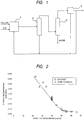
- Fig. 1 is a schematic diagram showing an equipment system for producing acetic acid in which production of acetic acid by carbonylation of methanol can be performed.
- the equipment system for producing acetic acid is mainly provided with a carbonylation reactor 1 as a reaction step, a flasher 2 performing a flash evaporation process and a light end distillation column 4 performing a light end separation process as a distillation step, and a decanter 5 as a standing step.
- Methanol and carbon monoxide as the carbonylation raw materials are introduced into a carbonylation reactor 1.
- Acetic acid as a reaction solvent circulates between the carbonylation reactor 1 and a flasher 2.
- a bottom liquid of the flasher 2 mainly including acetic acid returns to the carbonylation reactor 1.
- a vapor phase fraction from the flasher 2 flows into a light end distillation column 4, and separation is performed inside the light end distillation column 4.
- the acetic acid is separated and recovered from the lower part of the light end distillation column 4, and components other than the acetic acid, and the acetic acid part that has not been recovered, are distilled off from the top part.
- the catalyst for carbonylation of methanol according to the present invention is dispersed and exists in the reaction solvent.
- Methanol reacts with carbon monoxide to produce acetic acid.
- a reaction accelerator such as an alkyl iodide (for example, methyl iodide) is suitably added.
- This reaction is usually performed by using acetic acid as a reaction solvent, and in this case, the acetic acid is a reaction product and also serves as a reaction solvent.
- carbon monoxide gas is blown into the reaction mixture in the carbonylation reactor 1 in which the catalyst for carbonylation of methanol according to the present invention has been dispersed, and in the presence of the catalyst for carbonylation of methanol according to the present invention under the conditions of a reaction temperature of 100 to 200°C and a reaction pressure of around 1 to 5 MPa, methanol reacts with carbon monoxide to produce acetic acid.
- the reaction by-products methyl acetate, dimethyl ether, water and the like are produced, these by-products are returned to the reaction step together with the solvent, the reaction accelerator and unreacted raw materials as a residual liquid after the acetic acid has been separated and recovered as a product, therefore, the liquid phase in the reaction step includes a mixture of all of these components.
- the reaction product solution produced in the reaction step is subjected to separation operation in the following distillation step, the produced acetic acid is separated and recovered as a product, a part of the residual liquid other than the recovered acetic acid is returned to the reaction step, and the rest is transferred to the standing step.
- the reaction mixture is taken out from a carbonylation reactor 1 as the reaction step through a screen or the like and flows into a flasher 2.
- a technique in which at first, a part of the reaction mixture is vaporized in the flasher 2 to separate into a vapor phase and a liquid phase flash evaporation step, and then the vapor phase fraction is guided from the upper part of the flasher 2 to a light end distillation column 4, and the acetic acid is separated and recovered from the lower part (light end separation step) is adopted.
- flash evaporation step a technique in which at first, a part of the reaction mixture is vaporized in the flasher 2 to separate into a vapor phase and a liquid phase
- the acetic acid is separated and recovered from the lower part
- the flasher 2 and the light end distillation column 4 may be configured separately as separate towers as shown in Fig. 1 , or may be integrally arranged in the bottom part and upper part of a single tower.
- the carbonylation reaction is generally an exothermic reaction
- the flasher 2 can function as an evaporator for the light end distillation column 4.
- a gas phase fraction is separated.
- the acetic acid is taken out from the lower part of the light end distillation column 4, subjected to a necessary purification treatment, and then separated and recovered as a product.
- the effluent from the overhead is introduced into a decanter 5.
- methyl iodide contained in the effluent is separated as a heavy oil phase, and an aqueous phase is obtained.
- the separated methyl iodide is returned to the carbonylation reactor 1.
- the part not vaporized in the flasher 2 is accumulated as a liquid phase fraction in the bottom part of the flasher 2, and is returned as a bottom liquid from the distillation step (that is, a liquid phase fraction from the flasher 2) to the carbonylation reactor 1 in which a reaction step is performed.
- the catalyst for carbonylation of methanol according to the present invention has high activity, acetic acid can be efficiently produced in the above-described method for producing acetic acid.
- the catalyst for carbonylation of methanol according to the present invention is excellent in the abrasion resistance
- a stirred tank type reactor or a bubble column type reactor which fluidizes a catalyst
- the catalyst for carbonylation of methanol according to the present invention can be reacted with carbon monoxide by bringing the catalyst into contact with the carbon monoxide while flowing with the reaction mixture in a reactor, and a stirring-type reactor or a bubble-type reactor can be used as the reactor.
- the catalyst for carbonylation of methanol according to the present invention is also excellent in the heat resistance, the reaction temperature of the carbonylation reaction can be increased. Therefore, acetic acid can be produced in a stable amount by changing the reaction temperature in accordance with the state of the reaction, and the catalyst life can be prolonged.
- the water concentration of the reaction mixture may be increased.
- the water concentration is increased, the solid-liquid equilibrium of rhodium in a catalyst is changed, so that rhodium is easily eluted into the reaction mixture, the catalytic activity is lowered, the production quantity of acetic acid is decreased, further, methyl acetate as a by-product is increased, the decomposition rate of the catalyst is increased, and the catalyst life is shortened.
- methyl acetate is produced by a side reaction of CH 3 COOH + CH 3 OH ⁇ CH 3 COOCH 3 + H 2 O.
- the reaction temperature can be increased. Specifically, when the water concentration of a reaction mixture is increased, the temperature of the reaction mixture is temporarily increased by a heat exchanger or the like installed in a reactor or outside the reactor. If the reaction temperature is increased when the water concentration of the reaction mixture is increased in this way, the catalytic activity is increased. Therefore, the decrease in the production quantity of acetic acid is suppressed, and acetic acid can be produced in a stable amount.
- a step of increasing the temperature of a reaction mixture when the water concentration of the reaction mixture is increased may be included, and after the step of increasing the temperature of the reaction mixture when the water concentration of the reaction mixture is increased, a step of decreasing the temperature of the reaction mixture when the water concentration is decreased may be included.
- Example 1 Into ion exchanged water, 10% by mass of NaCl (specific gravity adjusting agent), 0.3% by mass of NaNO 2 (radical scavenger), 0.064% by mass of gelatin (dispersion stabilizer), and 0.009% by mass of sodium dodecylbenzenesulfonate (surfactant) were dissolved to prepare 625 g of an aqueous medium.
- NaCl specific gravity adjusting agent
- NaNO 2 radical scavenger
- gelatin dispersion stabilizer
- surfactant sodium dodecylbenzenesulfonate
- the temperature of the warm water flowing in the jacket of the reactor was set to 25°C to cool the mixture in the reactor to room temperature, and then the mixture was subjected to solid-liquid separation by filtration to recover the produced resin.
- the produced resin was washed with warm water, further methanol was added to the washed resin to perform extraction and washing at 65°C, and toluene, dioctyl phthalate and n-dodecane, which are pore forming agents, were removed. After that the resultant mixture was sieved, and finally a 4-vinylpyridine resin for a catalyst support was obtained.
- the obtained 4-vinylpyridine resin for a catalyst support was spherical.
- a 4-vinylpyridine resin for a catalyst support was obtained in a similar manner as in Example 1 except that the divinylbenzene (crosslinking agent), the kind and ratio of the pore forming agent, the polymerization temperature, and the amount of the polymerization initiator to be added were set as shown in Table 1.
- Table 1 the degree of crosslinking, and the absolute value (SP absolute difference) of the difference between the SP value of the vinylpyridine resin for a catalyst support and the SP value of the pore forming agent are also described.
- the vinylpyridine resin for a catalyst support of Comparative Example 1 corresponds to the vinylpyridine resin described in Patent Literature 7.
- the 4-vinylpyridine resins for a catalyst support obtained in respective Examples 2 to 14 and Comparative Examples 1 to 7 were spherical, respectively.
- the physical properties of the obtained 4-vinylpyridine resin for a catalyst support were measured by the following method.
- the quaternized 4-vinylpyridine resin for a catalyst support was placed into a 300 ml cylindrical separable flask (with 4 baffles), and stirred with a 40 mm disk turbine stirring blade at a stirring speed of 1000 rpm for 18, 72, and 144 hours.
- the resultant mixture was subjected to solid-liquid separation by a sieve with a mesh size of 90 ⁇ m, the passed liquid was received in a 300-ml beaker with a known mass, evaporated and dried at 90°C, and the mass was measured to be taken as a powdered substance.
- the powdering ratio was determined by the ratio of the mass of the obtained powdered substance to the mass of the charged 4-vinylpyridine resin for a catalyst support.
- the powdering rate was determined from the powdering ratios (%) after the lapse of 72 hours and 144 hours and the stirring time, and the average value thereof was taken as the respective powdering rates.
- the obtained 4-vinylpyridine resin for a catalyst support in an amount of 8.5 g (dry basis), 79.7 g of a reaction mixture (31.3% by mass of methanol, 21.6% by mass of methyl iodide, and 47.1% by mass of acetic acid), and an appropriate amount of rhodium acetate were charged into a 200-ml zirconium autoclave, and the catalyst was prepared by the reaction at a temperature of 180°C and a CO pressure of 5.0 MPaG for one hour.
- the ratio of the rhodium remaining in the reaction mixture was 0.2% by mole or less (supporting ratio of 99.8% by mole or more).
- the total amount of the above-described catalyst, 80 g of a reaction mixture (25% by mass of methanol, 62.5% by mass of acetic acid, and 12.5% by mass of methyl iodide) were charged into a 200-ml zirconium autoclave, the carbonylation reaction was performed at a reaction temperature of 180°C and a CO pressure of 5.0 MPaG for one hour, and the CO consumption rate at the time point when 60% by mole of the charged methanol had reacted was taken as the carbonylation reaction rate (STY: mol/L/h). Further, by setting the STY of Comparative Example 1 as 1.00, the ratio of carbonylation reaction rate was determined as the value for the STY of Comparative Example 1.
- the 4-vinylpyridine resins for a catalyst support obtained in Example 1 and Comparative Example 1 were subjected to the following operation and evaluation.
- the obtained 4-vinylpyridine resin for a catalyst support in an amount of 25.5 g (dry basis), 1000 g of a reaction mixture (31.3% by mass of methanol, 21.6% by mass of methyl iodide, and 47.1% by mass of acetic acid), and an appropriate amount of rhodium acetate were charged into a 2000-ml zirconium autoclave, and the reaction was performed at a reaction temperature of 180°C and a CO pressure of 5.0 MPaG for one hour for the catalyst preparation.
- the obtained catalyst was charged into a 2000-ml zirconium autoclave together with 1000 ml of a solution of 8.0% by mass of methyl iodide, 5.5% by mass of water, and 86.5% by mass of acetic acid, and after replacing the air in the autoclave with nitrogen, the resultant mixture was heated to 220°C while stirring.
- a catalyst at the target decomposition ratio was obtained by maintaining the state at 220°C for the time to reach the target decomposition ratio (10 to 30%) while stirring in the autoclave (described in the column of "Time (hr)" in Tables).
- the nitrogen concentration of the mixture was measured to determine the amount of released pyridine groups, and the decomposition ratio was confirmed.
- a catalyst having a different decomposition ratio obtained by the above-described method was collected in an amount corresponding to 17 g (dry basis) of the 4-vinylpyridine resin, placed into a 300 ml cylindrical separable flask (with 4 baffles), and stirred with a 40 mm disk turbine stirring blade at a stirring speed of 250 rpm for 18, 72, and 144 hours. After completion of the stirring, the resultant mixture was subjected to solid-liquid separation by a sieve with a mesh size of 90 ⁇ m, the passed liquid was received in a 300-ml beaker with a known mass, evaporated and dried at 90°C, and the mass was measured to be taken as a powdered substance.
- the powdering ratio was determined by the ratio of the mass of the obtained powdered substance to the mass of the charged catalyst.
- the powdering rate was determined from the powdering ratios (%) after the lapse of 72 hours and 144 hours and the stirring time, the average value thereof was taken as the respective powdering rates, and the relationship with the catalyst decomposition ratio was determined.
- Table 3 Example 1
- Table 4 Comparative Example 1
- a catalyst having a different decomposition ratio obtained by the above-described method was collected in an amount corresponding to 8.5 g (dry basis) of the 4-vinylpyridine resin, and the activity was determined by a reaction test described above and the relationship between the catalyst decomposition ratio and the catalytic activity was determined.
- the results are shown in Table 5 (Example 1) and Table 6 (Comparative Example 1), and Fig. 4 .
Landscapes
- Chemical & Material Sciences (AREA)
- Organic Chemistry (AREA)
- Chemical Kinetics & Catalysis (AREA)
- Engineering & Computer Science (AREA)
- Materials Engineering (AREA)
- Polymers & Plastics (AREA)
- Health & Medical Sciences (AREA)
- Medicinal Chemistry (AREA)
- Oil, Petroleum & Natural Gas (AREA)
- Inorganic Chemistry (AREA)
- Catalysts (AREA)
- Addition Polymer Or Copolymer, Post-Treatments, Or Chemical Modifications (AREA)
- Organic Low-Molecular-Weight Compounds And Preparation Thereof (AREA)
- Low-Molecular Organic Synthesis Reactions Using Catalysts (AREA)
Applications Claiming Priority (2)
| Application Number | Priority Date | Filing Date | Title |
|---|---|---|---|
| JP2016054644 | 2016-03-18 | ||
| PCT/JP2017/009057 WO2017159466A1 (fr) | 2016-03-18 | 2017-03-07 | Résine de vinylpyridine pour supports de catalyseur, son procédé de production, et catalyseur pour réaction de carbonylation de méthanol |
Publications (3)
| Publication Number | Publication Date |
|---|---|
| EP3431177A1 true EP3431177A1 (fr) | 2019-01-23 |
| EP3431177A4 EP3431177A4 (fr) | 2019-11-13 |
| EP3431177B1 EP3431177B1 (fr) | 2020-10-28 |
Family
ID=59850352
Family Applications (1)
| Application Number | Title | Priority Date | Filing Date |
|---|---|---|---|
| EP17766467.9A Active EP3431177B1 (fr) | 2016-03-18 | 2017-03-07 | Résine de vinylpyridine pour supports de catalyseur, son procédé de production, et catalyseur pour réaction de carbonylation de méthanol |
Country Status (8)
| Country | Link |
|---|---|
| US (1) | US11065607B2 (fr) |
| EP (1) | EP3431177B1 (fr) |
| JP (1) | JP6957449B2 (fr) |
| CN (1) | CN108778496B (fr) |
| BR (1) | BR112018068819B1 (fr) |
| RU (1) | RU2706610C1 (fr) |
| TW (1) | TWI642480B (fr) |
| WO (1) | WO2017159466A1 (fr) |
Families Citing this family (3)
| Publication number | Priority date | Publication date | Assignee | Title |
|---|---|---|---|---|
| CN115569669B (zh) * | 2021-06-21 | 2024-03-08 | 惠生工程(中国)有限公司 | 用于环氧乙烷氢甲酯化反应的固体多相催化剂及制备方法和应用 |
| JPWO2023167325A1 (fr) * | 2022-03-03 | 2023-09-07 | ||
| CN115093325B (zh) * | 2022-08-02 | 2025-01-24 | 兰州交通大学 | 一种二异丁烯氢酯基化反应制备异壬酸酯的方法 |
Family Cites Families (21)
| Publication number | Priority date | Publication date | Assignee | Title |
|---|---|---|---|---|
| JPS5310680A (en) | 1976-07-16 | 1978-01-31 | Sumitomo Chem Co Ltd | Preparation of hig-molecular weight compound comprising vinyl pyridine |
| JPS6125731A (ja) | 1984-07-10 | 1986-02-04 | Mitsubishi Heavy Ind Ltd | 熱交換器水室ノズル口部仮蓋取付装置 |
| EP0277824B1 (fr) | 1987-02-05 | 1994-04-27 | Reilly Industries, Inc. | Procédé pour la fabrication de l'acide acétique et catalyseur hétérogène pour cela |
| JP3035641B2 (ja) | 1992-04-24 | 2000-04-24 | 千代田化工建設株式会社 | メタノールのカルボニル化による酢酸の製造方法 |
| JP3035642B2 (ja) | 1992-04-24 | 2000-04-24 | 千代田化工建設株式会社 | メタノールのカルボニル化による酢酸の製造方法 |
| JP2662683B2 (ja) | 1993-04-30 | 1997-10-15 | 千代田化工建設株式会社 | カルボニル化反応用固体触媒及びそれを用いる酢酸の製造方法 |
| JPH07309800A (ja) * | 1994-03-25 | 1995-11-28 | Chiyoda Corp | 有機カルボン酸の製造方法 |
| JPH0892322A (ja) * | 1994-07-28 | 1996-04-09 | Nippon Steel Chem Co Ltd | 樹脂架橋体 |
| SG65716A1 (en) * | 1996-12-30 | 1999-06-22 | Chiyoda Chem Eng Construct Co | Process for the production of carbonyl compound |
| CN1117620C (zh) * | 2000-10-24 | 2003-08-13 | 中国科学院化学研究所 | 甲醇羰基化反应铑锂双金属多相催化剂及其制法 |
| MY141209A (en) | 2003-03-13 | 2010-03-31 | Chiyoda Corp | Method of manufacturing acetic acid |
| RU2319689C2 (ru) * | 2003-03-13 | 2008-03-20 | Тийода Корпорейшн | Способ получения уксусной кислоты (варианты), барботажная колонна для осуществления способа |
| ES2363041T3 (es) | 2006-08-03 | 2011-07-19 | Shell Internationale Research Maatschappij B.V. | Proceso para la preparación de carbonato de alquileno. |
| EP2327474B1 (fr) * | 2008-04-29 | 2018-01-10 | Celanese International Corporation | Système de carbonylation de méthanol disposant d'un absorbeur à plusieurs options de solvants |
| JP5592225B2 (ja) | 2010-10-14 | 2014-09-17 | 千代田化工建設株式会社 | 触媒担体用ビニルピリジン樹脂及びその製造方法 |
| US9916619B2 (en) * | 2011-02-14 | 2018-03-13 | Paypal, Inc. | Payment system with location restrictions |
| JP2013035805A (ja) | 2011-08-10 | 2013-02-21 | National Institute Of Advanced Industrial Science & Technology | グリセリンの液相酸化反応用触媒及びその触媒を用いたグリセリンの酸化反応方法 |
| EP2631010B1 (fr) | 2012-02-27 | 2020-08-05 | Chiyoda Corporation | Résine de vinylpyridine pour supports de catalyseur et son procédé de fabrication |
| CN102794198A (zh) * | 2012-07-16 | 2012-11-28 | 江苏索普(集团)有限公司 | 用于乙醇羰基化合成丙酸的催化剂的制备方法及其应用 |
| CN103071469B (zh) * | 2013-02-06 | 2015-02-18 | 江苏南大金山环保科技有限公司 | 一种含吡啶基团中极性骨架吸附树脂及其制备方法 |
| RU2553273C1 (ru) * | 2014-05-15 | 2015-06-10 | Открытое акционерное общество "Приокский завод цветных металлов" | Способ извлечения платины и/или палладия из отработанных катализаторов на носителях из оксида алюминия |
-
2017
- 2017-03-07 EP EP17766467.9A patent/EP3431177B1/fr active Active
- 2017-03-07 JP JP2018505840A patent/JP6957449B2/ja active Active
- 2017-03-07 WO PCT/JP2017/009057 patent/WO2017159466A1/fr not_active Ceased
- 2017-03-07 US US16/084,023 patent/US11065607B2/en active Active
- 2017-03-07 RU RU2018136346A patent/RU2706610C1/ru active
- 2017-03-07 CN CN201780018539.1A patent/CN108778496B/zh active Active
- 2017-03-07 BR BR112018068819-3A patent/BR112018068819B1/pt active IP Right Grant
- 2017-03-15 TW TW106108575A patent/TWI642480B/zh active
Also Published As
| Publication number | Publication date |
|---|---|
| US20200290028A1 (en) | 2020-09-17 |
| US11065607B2 (en) | 2021-07-20 |
| TW201808450A (zh) | 2018-03-16 |
| TWI642480B (zh) | 2018-12-01 |
| WO2017159466A1 (fr) | 2017-09-21 |
| BR112018068819A2 (pt) | 2019-01-22 |
| EP3431177A4 (fr) | 2019-11-13 |
| EP3431177B1 (fr) | 2020-10-28 |
| CN108778496B (zh) | 2021-05-28 |
| JP6957449B2 (ja) | 2021-11-02 |
| CN108778496A (zh) | 2018-11-09 |
| RU2706610C1 (ru) | 2019-11-19 |
| BR112018068819B1 (pt) | 2022-02-15 |
| JPWO2017159466A1 (ja) | 2019-01-24 |
Similar Documents
| Publication | Publication Date | Title |
|---|---|---|
| JP4150531B2 (ja) | 改良された固体媒体 | |
| EP3431177B1 (fr) | Résine de vinylpyridine pour supports de catalyseur, son procédé de production, et catalyseur pour réaction de carbonylation de méthanol | |
| JP5840460B2 (ja) | カーボンナノ材料担持触媒及びその環状炭酸エステル合成への応用 | |
| JP5592225B2 (ja) | 触媒担体用ビニルピリジン樹脂及びその製造方法 | |
| JP2662683B2 (ja) | カルボニル化反応用固体触媒及びそれを用いる酢酸の製造方法 | |
| KR101134659B1 (ko) | 프로필렌 글리콜 모노메틸 에테르 아세테이트의 제조방법 | |
| CN102343282B (zh) | 多重反应双官能聚合物催化剂 | |
| JPH07309800A (ja) | 有機カルボン酸の製造方法 | |
| JP7061798B2 (ja) | 陰イオン交換体を触媒とする糖脂肪酸エステルの製造方法 | |
| Ivko et al. | Heterogenisation of a carbonylation catalyst on dispersible microporous polymer nanoparticles | |
| JPH09235250A (ja) | 酢酸の製造方法 | |
| EP2631010B1 (fr) | Résine de vinylpyridine pour supports de catalyseur et son procédé de fabrication | |
| JP2004277297A (ja) | 不均一系触媒を用いた酢酸の製造方法 | |
| US20130209768A1 (en) | Vinylpyridine resin for catalyst carriers and method of manufacturing the same | |
| JP5808674B2 (ja) | メタノールのカルボニル化反応速度の向上方法 | |
| CN102066308B (zh) | 使乙酸脱水的方法 | |
| JP2018118919A (ja) | 無水酢酸の製造方法 | |
| JP6371918B2 (ja) | アミノメチル化粒状重合体を製造するための方法 | |
| JP3541234B2 (ja) | 触媒担体 | |
| CN1370096A (zh) | 第4族金属改进的铱羰基化催化剂 | |
| JPH10245360A (ja) | カルボニル化合物の製造方法 | |
| CN104549503B (zh) | 一种负载型有机锡类催化剂及其制备方法和应用 | |
| CN107715917B (zh) | 含磷酸性交联聚合物负载钯纳米催化剂及制备和应用 | |
| CN105085187A (zh) | 碳酸乙烯酯水解制备乙二醇的方法 | |
| JP4362003B2 (ja) | 触媒用樹脂担体及びカルボニル化反応用固体触媒、並びにカルボン酸およびカルボン酸無水物の製造方法 |
Legal Events
| Date | Code | Title | Description |
|---|---|---|---|
| STAA | Information on the status of an ep patent application or granted ep patent |
Free format text: STATUS: THE INTERNATIONAL PUBLICATION HAS BEEN MADE |
|
| PUAI | Public reference made under article 153(3) epc to a published international application that has entered the european phase |
Free format text: ORIGINAL CODE: 0009012 |
|
| STAA | Information on the status of an ep patent application or granted ep patent |
Free format text: STATUS: REQUEST FOR EXAMINATION WAS MADE |
|
| 17P | Request for examination filed |
Effective date: 20180917 |
|
| AK | Designated contracting states |
Kind code of ref document: A1 Designated state(s): AL AT BE BG CH CY CZ DE DK EE ES FI FR GB GR HR HU IE IS IT LI LT LU LV MC MK MT NL NO PL PT RO RS SE SI SK SM TR |
|
| AX | Request for extension of the european patent |
Extension state: BA ME |
|
| DAV | Request for validation of the european patent (deleted) | ||
| DAX | Request for extension of the european patent (deleted) | ||
| A4 | Supplementary search report drawn up and despatched |
Effective date: 20191014 |
|
| RIC1 | Information provided on ipc code assigned before grant |
Ipc: B01J 31/22 20060101ALI20191008BHEP Ipc: C08J 9/28 20060101ALI20191008BHEP Ipc: C07D 213/16 20060101ALI20191008BHEP Ipc: C07C 51/12 20060101ALI20191008BHEP Ipc: C08F 226/06 20060101ALI20191008BHEP Ipc: B01J 35/06 20060101ALI20191008BHEP Ipc: B01J 23/46 20060101ALI20191008BHEP Ipc: B01J 32/00 20060101ALI20191008BHEP Ipc: C07C 53/08 20060101ALI20191008BHEP Ipc: B01J 31/06 20060101AFI20191008BHEP Ipc: B01J 35/10 20060101ALI20191008BHEP Ipc: B01J 31/08 20060101ALI20191008BHEP Ipc: B01J 31/16 20060101ALI20191008BHEP Ipc: B01J 37/04 20060101ALI20191008BHEP Ipc: C07B 61/00 20060101ALI20191008BHEP |
|
| GRAP | Despatch of communication of intention to grant a patent |
Free format text: ORIGINAL CODE: EPIDOSNIGR1 |
|
| STAA | Information on the status of an ep patent application or granted ep patent |
Free format text: STATUS: GRANT OF PATENT IS INTENDED |
|
| INTG | Intention to grant announced |
Effective date: 20200528 |
|
| GRAS | Grant fee paid |
Free format text: ORIGINAL CODE: EPIDOSNIGR3 |
|
| GRAA | (expected) grant |
Free format text: ORIGINAL CODE: 0009210 |
|
| STAA | Information on the status of an ep patent application or granted ep patent |
Free format text: STATUS: THE PATENT HAS BEEN GRANTED |
|
| AK | Designated contracting states |
Kind code of ref document: B1 Designated state(s): AL AT BE BG CH CY CZ DE DK EE ES FI FR GB GR HR HU IE IS IT LI LT LU LV MC MK MT NL NO PL PT RO RS SE SI SK SM TR |
|
| RAP1 | Party data changed (applicant data changed or rights of an application transferred) |
Owner name: CHIYODA CORPORATION |
|
| REG | Reference to a national code |
Ref country code: GB Ref legal event code: FG4D |
|
| RIN1 | Information on inventor provided before grant (corrected) |
Inventor name: YOU ZHIXIONG Inventor name: HASHIMOTO CHIKAKO Inventor name: KANAI RYUICHI Inventor name: MATSUMURA TETSURO Inventor name: UMEHARA YOICHI |
|
| REG | Reference to a national code |
Ref country code: CH Ref legal event code: EP |
|
| REG | Reference to a national code |
Ref country code: AT Ref legal event code: REF Ref document number: 1327662 Country of ref document: AT Kind code of ref document: T Effective date: 20201115 |
|
| REG | Reference to a national code |
Ref country code: DE Ref legal event code: R096 Ref document number: 602017026422 Country of ref document: DE |
|
| REG | Reference to a national code |
Ref country code: IE Ref legal event code: FG4D |
|
| REG | Reference to a national code |
Ref country code: AT Ref legal event code: MK05 Ref document number: 1327662 Country of ref document: AT Kind code of ref document: T Effective date: 20201028 |
|
| REG | Reference to a national code |
Ref country code: NL Ref legal event code: MP Effective date: 20201028 |
|
| PG25 | Lapsed in a contracting state [announced via postgrant information from national office to epo] |
Ref country code: RS Free format text: LAPSE BECAUSE OF FAILURE TO SUBMIT A TRANSLATION OF THE DESCRIPTION OR TO PAY THE FEE WITHIN THE PRESCRIBED TIME-LIMIT Effective date: 20201028 Ref country code: PT Free format text: LAPSE BECAUSE OF FAILURE TO SUBMIT A TRANSLATION OF THE DESCRIPTION OR TO PAY THE FEE WITHIN THE PRESCRIBED TIME-LIMIT Effective date: 20210301 Ref country code: NO Free format text: LAPSE BECAUSE OF FAILURE TO SUBMIT A TRANSLATION OF THE DESCRIPTION OR TO PAY THE FEE WITHIN THE PRESCRIBED TIME-LIMIT Effective date: 20210128 Ref country code: FI Free format text: LAPSE BECAUSE OF FAILURE TO SUBMIT A TRANSLATION OF THE DESCRIPTION OR TO PAY THE FEE WITHIN THE PRESCRIBED TIME-LIMIT Effective date: 20201028 Ref country code: GR Free format text: LAPSE BECAUSE OF FAILURE TO SUBMIT A TRANSLATION OF THE DESCRIPTION OR TO PAY THE FEE WITHIN THE PRESCRIBED TIME-LIMIT Effective date: 20210129 |
|
| REG | Reference to a national code |
Ref country code: LT Ref legal event code: MG4D |
|
| PG25 | Lapsed in a contracting state [announced via postgrant information from national office to epo] |
Ref country code: PL Free format text: LAPSE BECAUSE OF FAILURE TO SUBMIT A TRANSLATION OF THE DESCRIPTION OR TO PAY THE FEE WITHIN THE PRESCRIBED TIME-LIMIT Effective date: 20201028 Ref country code: LV Free format text: LAPSE BECAUSE OF FAILURE TO SUBMIT A TRANSLATION OF THE DESCRIPTION OR TO PAY THE FEE WITHIN THE PRESCRIBED TIME-LIMIT Effective date: 20201028 Ref country code: IS Free format text: LAPSE BECAUSE OF FAILURE TO SUBMIT A TRANSLATION OF THE DESCRIPTION OR TO PAY THE FEE WITHIN THE PRESCRIBED TIME-LIMIT Effective date: 20210228 Ref country code: SE Free format text: LAPSE BECAUSE OF FAILURE TO SUBMIT A TRANSLATION OF THE DESCRIPTION OR TO PAY THE FEE WITHIN THE PRESCRIBED TIME-LIMIT Effective date: 20201028 Ref country code: BG Free format text: LAPSE BECAUSE OF FAILURE TO SUBMIT A TRANSLATION OF THE DESCRIPTION OR TO PAY THE FEE WITHIN THE PRESCRIBED TIME-LIMIT Effective date: 20210128 Ref country code: AT Free format text: LAPSE BECAUSE OF FAILURE TO SUBMIT A TRANSLATION OF THE DESCRIPTION OR TO PAY THE FEE WITHIN THE PRESCRIBED TIME-LIMIT Effective date: 20201028 Ref country code: ES Free format text: LAPSE BECAUSE OF FAILURE TO SUBMIT A TRANSLATION OF THE DESCRIPTION OR TO PAY THE FEE WITHIN THE PRESCRIBED TIME-LIMIT Effective date: 20201028 |
|
| PG25 | Lapsed in a contracting state [announced via postgrant information from national office to epo] |
Ref country code: NL Free format text: LAPSE BECAUSE OF FAILURE TO SUBMIT A TRANSLATION OF THE DESCRIPTION OR TO PAY THE FEE WITHIN THE PRESCRIBED TIME-LIMIT Effective date: 20201028 Ref country code: HR Free format text: LAPSE BECAUSE OF FAILURE TO SUBMIT A TRANSLATION OF THE DESCRIPTION OR TO PAY THE FEE WITHIN THE PRESCRIBED TIME-LIMIT Effective date: 20201028 |
|
| REG | Reference to a national code |
Ref country code: DE Ref legal event code: R097 Ref document number: 602017026422 Country of ref document: DE |
|
| PG25 | Lapsed in a contracting state [announced via postgrant information from national office to epo] |
Ref country code: SK Free format text: LAPSE BECAUSE OF FAILURE TO SUBMIT A TRANSLATION OF THE DESCRIPTION OR TO PAY THE FEE WITHIN THE PRESCRIBED TIME-LIMIT Effective date: 20201028 Ref country code: RO Free format text: LAPSE BECAUSE OF FAILURE TO SUBMIT A TRANSLATION OF THE DESCRIPTION OR TO PAY THE FEE WITHIN THE PRESCRIBED TIME-LIMIT Effective date: 20201028 Ref country code: SM Free format text: LAPSE BECAUSE OF FAILURE TO SUBMIT A TRANSLATION OF THE DESCRIPTION OR TO PAY THE FEE WITHIN THE PRESCRIBED TIME-LIMIT Effective date: 20201028 Ref country code: LT Free format text: LAPSE BECAUSE OF FAILURE TO SUBMIT A TRANSLATION OF THE DESCRIPTION OR TO PAY THE FEE WITHIN THE PRESCRIBED TIME-LIMIT Effective date: 20201028 Ref country code: EE Free format text: LAPSE BECAUSE OF FAILURE TO SUBMIT A TRANSLATION OF THE DESCRIPTION OR TO PAY THE FEE WITHIN THE PRESCRIBED TIME-LIMIT Effective date: 20201028 Ref country code: CZ Free format text: LAPSE BECAUSE OF FAILURE TO SUBMIT A TRANSLATION OF THE DESCRIPTION OR TO PAY THE FEE WITHIN THE PRESCRIBED TIME-LIMIT Effective date: 20201028 |
|
| PG25 | Lapsed in a contracting state [announced via postgrant information from national office to epo] |
Ref country code: DK Free format text: LAPSE BECAUSE OF FAILURE TO SUBMIT A TRANSLATION OF THE DESCRIPTION OR TO PAY THE FEE WITHIN THE PRESCRIBED TIME-LIMIT Effective date: 20201028 |
|
| PLBE | No opposition filed within time limit |
Free format text: ORIGINAL CODE: 0009261 |
|
| STAA | Information on the status of an ep patent application or granted ep patent |
Free format text: STATUS: NO OPPOSITION FILED WITHIN TIME LIMIT |
|
| 26N | No opposition filed |
Effective date: 20210729 |
|
| PG25 | Lapsed in a contracting state [announced via postgrant information from national office to epo] |
Ref country code: AL Free format text: LAPSE BECAUSE OF FAILURE TO SUBMIT A TRANSLATION OF THE DESCRIPTION OR TO PAY THE FEE WITHIN THE PRESCRIBED TIME-LIMIT Effective date: 20201028 Ref country code: MC Free format text: LAPSE BECAUSE OF FAILURE TO SUBMIT A TRANSLATION OF THE DESCRIPTION OR TO PAY THE FEE WITHIN THE PRESCRIBED TIME-LIMIT Effective date: 20201028 Ref country code: IT Free format text: LAPSE BECAUSE OF FAILURE TO SUBMIT A TRANSLATION OF THE DESCRIPTION OR TO PAY THE FEE WITHIN THE PRESCRIBED TIME-LIMIT Effective date: 20201028 |
|
| REG | Reference to a national code |
Ref country code: CH Ref legal event code: PL |
|
| GBPC | Gb: european patent ceased through non-payment of renewal fee |
Effective date: 20210307 |
|
| PG25 | Lapsed in a contracting state [announced via postgrant information from national office to epo] |
Ref country code: SI Free format text: LAPSE BECAUSE OF FAILURE TO SUBMIT A TRANSLATION OF THE DESCRIPTION OR TO PAY THE FEE WITHIN THE PRESCRIBED TIME-LIMIT Effective date: 20201028 |
|
| REG | Reference to a national code |
Ref country code: BE Ref legal event code: MM Effective date: 20210331 |
|
| PG25 | Lapsed in a contracting state [announced via postgrant information from national office to epo] |
Ref country code: CH Free format text: LAPSE BECAUSE OF NON-PAYMENT OF DUE FEES Effective date: 20210331 Ref country code: LU Free format text: LAPSE BECAUSE OF NON-PAYMENT OF DUE FEES Effective date: 20210307 Ref country code: IE Free format text: LAPSE BECAUSE OF NON-PAYMENT OF DUE FEES Effective date: 20210307 Ref country code: FR Free format text: LAPSE BECAUSE OF NON-PAYMENT OF DUE FEES Effective date: 20210331 Ref country code: LI Free format text: LAPSE BECAUSE OF NON-PAYMENT OF DUE FEES Effective date: 20210331 Ref country code: GB Free format text: LAPSE BECAUSE OF NON-PAYMENT OF DUE FEES Effective date: 20210307 |
|
| PG25 | Lapsed in a contracting state [announced via postgrant information from national office to epo] |
Ref country code: IS Free format text: LAPSE BECAUSE OF FAILURE TO SUBMIT A TRANSLATION OF THE DESCRIPTION OR TO PAY THE FEE WITHIN THE PRESCRIBED TIME-LIMIT Effective date: 20210228 |
|
| PG25 | Lapsed in a contracting state [announced via postgrant information from national office to epo] |
Ref country code: BE Free format text: LAPSE BECAUSE OF NON-PAYMENT OF DUE FEES Effective date: 20210331 |
|
| PG25 | Lapsed in a contracting state [announced via postgrant information from national office to epo] |
Ref country code: CY Free format text: LAPSE BECAUSE OF FAILURE TO SUBMIT A TRANSLATION OF THE DESCRIPTION OR TO PAY THE FEE WITHIN THE PRESCRIBED TIME-LIMIT Effective date: 20201028 |
|
| REG | Reference to a national code |
Ref country code: DE Ref legal event code: R082 Ref document number: 602017026422 Country of ref document: DE Representative=s name: WEICKMANN & WEICKMANN PATENT- UND RECHTSANWAEL, DE |
|
| PG25 | Lapsed in a contracting state [announced via postgrant information from national office to epo] |
Ref country code: HU Free format text: LAPSE BECAUSE OF FAILURE TO SUBMIT A TRANSLATION OF THE DESCRIPTION OR TO PAY THE FEE WITHIN THE PRESCRIBED TIME-LIMIT; INVALID AB INITIO Effective date: 20170307 |
|
| REG | Reference to a national code |
Ref country code: DE Ref legal event code: R081 Ref document number: 602017026422 Country of ref document: DE Owner name: KELLOGG BROWN & ROOT LLC, HOUSTON, US Free format text: FORMER OWNER: CHIYODA CORPORATION, YOKOHAMA-SHI, KANAGAWA, JP |
|
| PG25 | Lapsed in a contracting state [announced via postgrant information from national office to epo] |
Ref country code: MK Free format text: LAPSE BECAUSE OF FAILURE TO SUBMIT A TRANSLATION OF THE DESCRIPTION OR TO PAY THE FEE WITHIN THE PRESCRIBED TIME-LIMIT Effective date: 20201028 |
|
| PG25 | Lapsed in a contracting state [announced via postgrant information from national office to epo] |
Ref country code: TR Free format text: LAPSE BECAUSE OF FAILURE TO SUBMIT A TRANSLATION OF THE DESCRIPTION OR TO PAY THE FEE WITHIN THE PRESCRIBED TIME-LIMIT Effective date: 20201028 |
|
| PG25 | Lapsed in a contracting state [announced via postgrant information from national office to epo] |
Ref country code: MT Free format text: LAPSE BECAUSE OF FAILURE TO SUBMIT A TRANSLATION OF THE DESCRIPTION OR TO PAY THE FEE WITHIN THE PRESCRIBED TIME-LIMIT Effective date: 20201028 |
|
| PGFP | Annual fee paid to national office [announced via postgrant information from national office to epo] |
Ref country code: DE Payment date: 20260327 Year of fee payment: 10 |