EP3573381A1 - Procédé et dispositif de communication - Google Patents
Procédé et dispositif de communication Download PDFInfo
- Publication number
- EP3573381A1 EP3573381A1 EP18900463.3A EP18900463A EP3573381A1 EP 3573381 A1 EP3573381 A1 EP 3573381A1 EP 18900463 A EP18900463 A EP 18900463A EP 3573381 A1 EP3573381 A1 EP 3573381A1
- Authority
- EP
- European Patent Office
- Prior art keywords
- random access
- access preamble
- subcarrier spacing
- power
- offset
- Prior art date
- Legal status (The legal status is an assumption and is not a legal conclusion. Google has not performed a legal analysis and makes no representation as to the accuracy of the status listed.)
- Granted
Links
Images

Classifications
-
- H—ELECTRICITY
- H04—ELECTRIC COMMUNICATION TECHNIQUE
- H04L—TRANSMISSION OF DIGITAL INFORMATION, e.g. TELEGRAPHIC COMMUNICATION
- H04L5/00—Arrangements affording multiple use of the transmission path
- H04L5/0091—Signalling for the administration of the divided path, e.g. signalling of configuration information
- H04L5/0094—Indication of how sub-channels of the path are allocated
-
- H—ELECTRICITY
- H04—ELECTRIC COMMUNICATION TECHNIQUE
- H04W—WIRELESS COMMUNICATION NETWORKS
- H04W52/00—Power management, e.g. Transmission Power Control [TPC] or power classes
- H04W52/04—Transmission power control [TPC]
- H04W52/30—Transmission power control [TPC] using constraints in the total amount of available transmission power
- H04W52/32—TPC of broadcast or control channels
- H04W52/325—Power control of control or pilot channels
-
- H—ELECTRICITY
- H04—ELECTRIC COMMUNICATION TECHNIQUE
- H04W—WIRELESS COMMUNICATION NETWORKS
- H04W52/00—Power management, e.g. Transmission Power Control [TPC] or power classes
- H04W52/04—Transmission power control [TPC]
- H04W52/06—TPC algorithms
- H04W52/16—Deriving transmission power values from another channel
-
- H—ELECTRICITY
- H04—ELECTRIC COMMUNICATION TECHNIQUE
- H04W—WIRELESS COMMUNICATION NETWORKS
- H04W52/00—Power management, e.g. Transmission Power Control [TPC] or power classes
- H04W52/04—Transmission power control [TPC]
- H04W52/30—Transmission power control [TPC] using constraints in the total amount of available transmission power
- H04W52/36—Transmission power control [TPC] using constraints in the total amount of available transmission power with a discrete range or set of values, e.g. step size, ramping or offsets
-
- H—ELECTRICITY
- H04—ELECTRIC COMMUNICATION TECHNIQUE
- H04W—WIRELESS COMMUNICATION NETWORKS
- H04W52/00—Power management, e.g. Transmission Power Control [TPC] or power classes
- H04W52/04—Transmission power control [TPC]
- H04W52/30—Transmission power control [TPC] using constraints in the total amount of available transmission power
- H04W52/36—Transmission power control [TPC] using constraints in the total amount of available transmission power with a discrete range or set of values, e.g. step size, ramping or offsets
- H04W52/362—Aspects of the step size
-
- H—ELECTRICITY
- H04—ELECTRIC COMMUNICATION TECHNIQUE
- H04W—WIRELESS COMMUNICATION NETWORKS
- H04W52/00—Power management, e.g. Transmission Power Control [TPC] or power classes
- H04W52/04—Transmission power control [TPC]
- H04W52/38—TPC being performed in particular situations
- H04W52/48—TPC being performed in particular situations during retransmission after error or non-acknowledgment
-
- H—ELECTRICITY
- H04—ELECTRIC COMMUNICATION TECHNIQUE
- H04W—WIRELESS COMMUNICATION NETWORKS
- H04W52/00—Power management, e.g. Transmission Power Control [TPC] or power classes
- H04W52/04—Transmission power control [TPC]
- H04W52/38—TPC being performed in particular situations
- H04W52/50—TPC being performed in particular situations at the moment of starting communication in a multiple access environment
-
- H—ELECTRICITY
- H04—ELECTRIC COMMUNICATION TECHNIQUE
- H04W—WIRELESS COMMUNICATION NETWORKS
- H04W52/00—Power management, e.g. Transmission Power Control [TPC] or power classes
- H04W52/04—Transmission power control [TPC]
- H04W52/54—Signalisation aspects of the TPC commands, e.g. frame structure
-
- H—ELECTRICITY
- H04—ELECTRIC COMMUNICATION TECHNIQUE
- H04W—WIRELESS COMMUNICATION NETWORKS
- H04W72/00—Local resource management
- H04W72/20—Control channels or signalling for resource management
- H04W72/23—Control channels or signalling for resource management in the downlink direction of a wireless link, i.e. towards a terminal
-
- H—ELECTRICITY
- H04—ELECTRIC COMMUNICATION TECHNIQUE
- H04W—WIRELESS COMMUNICATION NETWORKS
- H04W74/00—Wireless channel access
- H04W74/002—Transmission of channel access control information
- H04W74/004—Transmission of channel access control information in the uplink, i.e. towards network
-
- H—ELECTRICITY
- H04—ELECTRIC COMMUNICATION TECHNIQUE
- H04W—WIRELESS COMMUNICATION NETWORKS
- H04W74/00—Wireless channel access
- H04W74/08—Non-scheduled access, e.g. ALOHA
- H04W74/0866—Non-scheduled access, e.g. ALOHA using a dedicated channel for access
-
- H—ELECTRICITY
- H04—ELECTRIC COMMUNICATION TECHNIQUE
- H04W—WIRELESS COMMUNICATION NETWORKS
- H04W52/00—Power management, e.g. Transmission Power Control [TPC] or power classes
- H04W52/04—Transmission power control [TPC]
- H04W52/18—TPC being performed according to specific parameters
- H04W52/24—TPC being performed according to specific parameters using SIR [Signal to Interference Ratio] or other wireless path parameters
- H04W52/242—TPC being performed according to specific parameters using SIR [Signal to Interference Ratio] or other wireless path parameters taking into account path loss
-
- H—ELECTRICITY
- H04—ELECTRIC COMMUNICATION TECHNIQUE
- H04W—WIRELESS COMMUNICATION NETWORKS
- H04W52/00—Power management, e.g. Transmission Power Control [TPC] or power classes
- H04W52/04—Transmission power control [TPC]
- H04W52/30—Transmission power control [TPC] using constraints in the total amount of available transmission power
- H04W52/36—Transmission power control [TPC] using constraints in the total amount of available transmission power with a discrete range or set of values, e.g. step size, ramping or offsets
- H04W52/367—Power values between minimum and maximum limits, e.g. dynamic range
-
- H—ELECTRICITY
- H04—ELECTRIC COMMUNICATION TECHNIQUE
- H04W—WIRELESS COMMUNICATION NETWORKS
- H04W72/00—Local resource management
- H04W72/04—Wireless resource allocation
- H04W72/044—Wireless resource allocation based on the type of the allocated resource
- H04W72/0453—Resources in frequency domain, e.g. a carrier in FDMA
-
- H—ELECTRICITY
- H04—ELECTRIC COMMUNICATION TECHNIQUE
- H04W—WIRELESS COMMUNICATION NETWORKS
- H04W72/00—Local resource management
- H04W72/04—Wireless resource allocation
- H04W72/044—Wireless resource allocation based on the type of the allocated resource
- H04W72/046—Wireless resource allocation based on the type of the allocated resource the resource being in the space domain, e.g. beams
-
- H—ELECTRICITY
- H04—ELECTRIC COMMUNICATION TECHNIQUE
- H04W—WIRELESS COMMUNICATION NETWORKS
- H04W72/00—Local resource management
- H04W72/04—Wireless resource allocation
- H04W72/044—Wireless resource allocation based on the type of the allocated resource
- H04W72/0473—Wireless resource allocation based on the type of the allocated resource the resource being transmission power
-
- H—ELECTRICITY
- H04—ELECTRIC COMMUNICATION TECHNIQUE
- H04W—WIRELESS COMMUNICATION NETWORKS
- H04W74/00—Wireless channel access
- H04W74/08—Non-scheduled access, e.g. ALOHA
- H04W74/0833—Random access procedures, e.g. with 4-step access
Definitions
- This application relates to the field of communications technologies, and in particular, to a communication method and a communications apparatus.
- a new random access preamble format is defined.
- an offset based on the random access preamble format and how to determine transmission power of a random access preamble are not defined. Therefore, there is an urgent need to define the offset based on the random access preamble format in the next-generation mobile communications system and to determine the transmission power of the random access preamble.
- This application provides a communication method and a communications apparatus, to define an offset that is based on a random access preamble format in a next-generation mobile communications system and properly determine transmission power of a random access preamble.
- a communication method includes: determining, by a terminal device, transmission power for sending a random access preamble, where the transmission power is related to a random access preamble format and an offset based on the random access preamble format; and sending, by the terminal device, the random access preamble at the determined transmission power.
- offsets corresponding to a plurality of random access preamble formats in a next-generation mobile communications system are provided, so that the transmission power of the random access preamble can be properly determined.
- the determining, by the terminal device, transmission power for sending a random access preamble specifically includes: determining that the transmission power is a smaller value in the following two values: maximum transmission power allowed by the terminal device, and a sum of random access preamble target received power and a path loss PL c that is estimated by the terminal device; or determining that the transmission power is a smaller value in the following two values: maximum transmission power allowed by the terminal device, and a sum of random access preamble target received power, a subcarrier spacing power offset, PL c , and a value of at least one parameter in the following parameters, where the at least one parameter includes: the subcarrier spacing power offset, a random access preamble sequence offset, and a beam-related offset of a network device and/or the terminal device, where the random access preamble target received power is a sum of the following three parameters: random access preamble initial received target power, the offset based on the random access preamble format, and a product of a quantity of power ramping
- an offset based on the random access preamble format 2 is -6 decibels dB; or when a random access preamble format 3 is used, an offset based on the random access preamble format 3 is 0 dB.
- the offsets that are based on the random access formats 2 and 3 and that are different from those in LTE are separately provided.
- an offset based on the random access preamble format A1 is X-3 dB; or when a random access preamble format A2 is used, an offset based on the random access preamble format A2 is X-6 dB; or when a random access preamble format A3 is used, an offset based on the random access preamble format A3 is X-8 dB; or when a random access preamble format B1 is used, an offset based on the random access preamble format B1 is X-3 dB; or when a random access preamble format B2 is used, an offset based on the random access preamble format B2 is X-6 dB; or when a random access preamble format B3 is used, an offset based on the random access preamble format B3 is X-8 dB; or when a random access preamble format B4 is used, an offset based on the random access preamble format B
- a value of X is related to a carrier frequency or a subcarrier spacing.
- values of X include 0, 3, 8, 11, 14, 17, 18, 19, and 20.
- the value of X is received from the network device.
- the offset is related to the subcarrier spacing, and specific offsets corresponding to a plurality of random access preamble formats are provided.
- the network device and the terminal device may pre-store this correspondence table.
- the terminal device determines a corresponding offset based on a format of a sent random access preamble and the correspondence table.
- the offset is related to the subcarrier spacing, and specific offsets corresponding to a plurality of random access preamble formats are provided.
- the network device and the terminal device may pre-store this correspondence table.
- the terminal device determines a corresponding offset based on a format of a sent random access preamble and the correspondence table.
- the offset is related to the subcarrier spacing, and specific offsets corresponding to a plurality of random access preamble formats are provided.
- the network device and the terminal device may pre-store this correspondence table.
- the terminal device determines a corresponding offset based on a format of a sent random access preamble and the correspondence table.
- the offset is related to the subcarrier spacing, and specific offsets corresponding to a plurality of random access preamble formats are provided.
- the network device and the terminal device may pre-store this correspondence table.
- the terminal device determines a corresponding offset based on a format of a sent random access preamble and the correspondence table.
- the communications apparatus may be a chip (such as a baseband chip or a communications chip) or a terminal device, and the foregoing method may be implemented by software or hardware, or by executing corresponding software by hardware.
- a structure of the communications apparatus includes a processor and a memory.
- the processor is configured to support the apparatus in executing corresponding functions in the foregoing communication method.
- the memory is configured to be coupled to the processor, and stores a program (an instruction) and data that are necessary to the apparatus.
- the communications apparatus may further include a communications interface, configured to support the apparatus in communicating with another network element.
- the communications apparatus may include a processing unit and a sending unit.
- the processing unit is configured to implement a determining function in the foregoing method
- the sending unit is configured to implement a sending function in the foregoing method.
- the processing unit is configured to determine transmission power for sending a random access preamble, where the transmission power is related to a random access preamble format and an offset based on the random access preamble format; and the sending unit is configured to send the random access preamble at the transmission power determined by the processing unit.
- the receiving unit may be an input unit such as an input circuit or a communications interface
- the sending unit may be an output unit such as an output circuit or a communications interface.
- the communications apparatus is a terminal device
- the receiving unit may be a receiver (or may be referred to as a receiver)
- the sending unit may be a transmitter (or may be referred to as a transmitter).
- a communication method includes: receiving, by a terminal device from a network device, information indicating a random access preamble format; receiving, by the terminal device from the network device, information used to indicate an offset based on the random access preamble format; determining, by the terminal device, transmission power for sending a random access preamble, where the transmission power is related to the information indicating the random access preamble format and the information indicating the offset based on the random access preamble format; and sending, by the terminal device, the random access preamble at the determined transmission power.
- the determining, by the terminal device, transmission power for sending a random access preamble specifically includes: determining that the transmission power is a smaller value in the following two values: maximum transmission power allowed by the terminal device, and a sum of random access preamble target received power and a path loss PL c that is estimated by the terminal device; or determining that the transmission power is a smaller value in the following two values: maximum transmission power allowed by the terminal device, and a sum of random access preamble target received power, a subcarrier spacing power offset, and a value of at least one parameter in the following parameters, where the at least one parameter includes: the subcarrier spacing power offset, a random access preamble sequence offset, and a beam-related offset of the network device and/or the terminal device, where the random access preamble target received power is a sum of the following three parameters: random access preamble initial received target power, the offset based on the random access preamble format, and a product of a quantity of power ramping times minus 1 and a
- the information used to indicate the offset based on the random access preamble format includes an index number of the offset based on the random access preamble format or a value of the offset based on the random access preamble format.
- values of the offset based on the random access preamble format include N elements, values of the N elements are distributed in equal difference, and N is a positive integer.
- values of the offset based on the random access preamble format include: ⁇ 0 dB, -2 dB, -4 dB, -6 dB, -8 dB, -10 dB, -12 dB, -14 dB ⁇ , ⁇ 8 dB, 6 dB, 4 dB, 2 dB, 0 dB, -2 dB, -4 dB, -6 dB ⁇ , or ⁇ 19 dB, 17 dB, 15 dB, 13 dB, 11 dB, 9 dB, 7 dB, 5 dB ⁇ .
- values of the offset based on the random access preamble format include M elements, values of the M elements are distributed in ascending or descending order, and M is a positive integer.
- values of the offset based on the random access preamble format include: ⁇ 0 dB, -3 dB, -4.5 dB, -6 dB, -8 dB, -11 dB, -14 dB ⁇ , ⁇ 8 dB, 5 dB, 3.5 dB, 2 dB, 0 dB, -3 dB, -6 dB ⁇ , or ⁇ 19 dB, 16 dB, 14.5 dB, 13 dB, 11 dB, 8 dB, 5 dB ⁇ .
- yet another aspect of this application further provides a communications apparatus that can implement the foregoing communication method.
- the communications apparatus may be a chip (such as a baseband chip or a communications chip) or a terminal device, and the foregoing method may be implemented by software or hardware, or by executing corresponding software by hardware.
- a structure of the communications apparatus includes a processor and a memory.
- the processor is configured to support the apparatus in executing corresponding functions in the foregoing communication method.
- the memory is configured to be coupled to the processor, and stores a program (an instruction) and data that are necessary to the apparatus.
- the communications apparatus may further include a communications interface, configured to support the apparatus in communicating with another network element.
- the communications apparatus may include a receiving unit, a processing unit, and a sending unit.
- the processing unit is configured to implement a determining function in the foregoing method
- the receiving unit and the sending unit are respectively configured to implement a receiving function and a sending function in the foregoing method.
- the receiving unit is configured to receive, from a network device, information indicating a random access preamble format; the receiving unit is further configured to receive, from the network device, information used to indicate an offset based on the random access preamble format; the processing unit is configured to determine transmission power for sending a random access preamble, where the transmission power is related to the information indicating the random access preamble format and the information indicating the offset based on the random access preamble format; and the sending unit is configured to send the random access preamble at the determined transmission power.
- the receiving unit may be an input unit such as an input circuit or a communications interface
- the sending unit may be an output unit such as an output circuit or a communications interface.
- the communications apparatus is a terminal device
- the receiving unit may be a receiver (or may be referred to as a receiver)
- the sending unit may be a transmitter (or may be referred to as a transmitter).
- a communication method includes: sending, by a network device to a terminal device, information indicating a random access preamble format; and receiving, by the network device, a random access preamble sent by the terminal device at determined transmission power, where the transmission power is related to the random access preamble format and an offset based on the random access preamble format.
- the method further includes: sending, by the network device to the terminal device, information indicating the offset based on the random access preamble format.
- the information used to indicate the offset based on the random access preamble format includes an index number of the offset based on the random access preamble format or a value of the offset based on the random access preamble format.
- this application further provides a communications apparatus that can implement the foregoing communication method.
- the communications apparatus may be a chip (for example, a baseband chip or a communications chip) or a network device.
- the foregoing method may be implemented by software or hardware, or by executing corresponding software by hardware.
- a structure of the communications apparatus includes a processor and a memory.
- the processor is configured to support the apparatus in executing corresponding functions in the foregoing communication method.
- the memory is configured to be coupled to the processor, and stores a program (an instruction) and/or data that are/is necessary to the apparatus.
- the communications apparatus may further include a communications interface, configured to support the apparatus in communicating with another network element.
- the communications apparatus may include a sending unit and a receiving unit.
- the sending unit is configured to send, to a terminal device, information indicating a random access preamble format
- the receiving unit is configured to receive a random access preamble sent by the terminal device at determined transmission power, where the transmission power is related to the random access preamble format and an offset based on the random access preamble format.
- the sending unit may be an output unit such as an output circuit or a communications interface
- the receiving unit may be an input unit such as an input circuit or a communications interface.
- the sending unit may be a transmitter or a transmitter
- the receiving unit may be a receiver or a receiver.
- a still further aspect provides a computer readable storage medium.
- the computer readable storage medium stores an instruction, and when the instruction is run on a computer, the computer performs the methods in the foregoing aspects.
- a yet further aspect provides a computer program product that includes an instruction.
- the instruction When the instruction is run on a computer, the computer performs the methods in the foregoing aspects.
- power at which a terminal sends a random access preamble is related to at least one of the following parameters: preamble initial received target power (preamble initial received target power), an offset based on the random access preamble format (the offset based on the random access preamble format may also be referred to as DELTA_PREAMBLE), a quantity of preamble transmission times (preamble transmission counter) that may also be referred to as a quantity of preamble power ramping times (preamble power ramping counter), a power ramping step (power ramping step), a path loss (PL c ) that is estimated by the terminal, and maximum transmission power (P CMAX,c (i)) allowed by the terminal.
- preamble initial received target power preamble initial received target power
- an offset based on the random access preamble format may also be referred to as DELTA_PREAMBLE
- preamble transmission counter that may also be referred to as a quantity of preamble power ramping times (preamble power ramping
- the offset based on the random access preamble format DELTA_PREAMBLE is related to a random access preamble format (random access preamble format).
- a random access preamble format random access preamble format
- DELTA_PREAMBLE corresponding to each random access preamble format is shown in the following Table 2: Table 2: DELTA_PREAMBLE corresponding to each random access preamble format in LTE Random access preamble format DELTA_PREAMBLE 0 0 dB 1 0 dB 2 -3 dB 3 -3 dB 4 8 dB
- Random access preamble format defined in the NR is shown in Table 3-1 and includes four random access preamble formats: formats 0 to 3.
- Table 3-1 One type of random access preamble format defined in NR Preamble format Sequence length L Subcarrier spacing ⁇ f RA Absolute time length N u Cyclic prefix time length N CP RA 0 839 1.25 kHz 24576 ⁇ 3168 ⁇ 1 839 1.25 kHz 2 ⁇ 24576 ⁇ 21024 ⁇ 2 839 1.25 kHz 4 ⁇ 24576 ⁇ 4688 ⁇ 3 839 5 kHz 24576 ⁇ 3168 ⁇
- a random access preamble sequence length L corresponding to a random access preamble format is 839.
- the time lengths N u of the formats 0 to 3 implicitly include a guard time, and u is a subcarrier spacing index of current uplink/downlink data, and is fixed to 0 in Table 3-1.
- a time length of a preamble format includes three parts: a cyclic prefix, a preamble sequence, and a guard time (this time period is implicitly included).
- Time lengths of the format 0 and the format 3 are approximately 1 ms (which is the same as a time length of a preamble format 1 in the LTE), but subcarrier spacings of the format 0 and the format 3 are 4 times different (correspondingly, frequency domain bandwidth is respectively 1.25 ⁇ 864 kHz and 5 ⁇ 864 kHz that are 4 times different).
- a time length of the format 1 is approximately 3 ms (which is the same as a time length of a preamble format 3 in the LTE).
- a time length of the format 2 is approximately 3.5 ms.
- the other type of random access preamble format defined in the NR is shown in Table 3-2, and includes 10 random access preamble formats that are separately obtained through repeating different quantities of preamble orthogonal frequency division multiplexing (orthogonal frequency division multiplexing, OFDM) symbols (that is, a second column in Table 3-2).
- preamble orthogonal frequency division multiplexing orthogonal frequency division multiplexing, OFDM
- Table 3-2 The other type of random access preamble format defined in NR Preamble format Quantity of OFDM symbols Sequence length L Subcarrier spacing ⁇ f RA Absolute time length N u Cyclic prefix time length N CP RA A0 1 [127 or 139] 15 ⁇ 2 ⁇ kHz 2048 ⁇ ⁇ 2 - ⁇ 144 ⁇ ⁇ 2 - ⁇ A1 2 [127 or 139] 15 ⁇ 2 ⁇ kHz 2 ⁇ 2048 ⁇ ⁇ 2 - ⁇ 288 ⁇ ⁇ 2 - ⁇ A2 4 [127 or 139] 15 ⁇ 2 ⁇ kHz 4 ⁇ 2048 ⁇ ⁇ 2 - ⁇ 576 ⁇ ⁇ 2 - ⁇ A3 6 [127 or 139] 15 ⁇ 2 ⁇ kHz 6 ⁇ 2048 ⁇ ⁇ 2 - ⁇ 864 ⁇ ⁇ 2 - ⁇ B1 2 [127 or 139] 15 ⁇ 2 ⁇ kHz 2 ⁇ 2048 ⁇
- a random access preamble sequence length L corresponding to a random access preamble format is 127 or 139.
- the absolute time lengths N u of the formats A1, A2, and A3 are respectively the same as the absolute time lengths N u of the formats B1, B2, and B3, but the cyclic prefix (cyclic prefix, CP) time lengths ( N CP RA ) of the formats A1, A2, and A3 are different from the cyclic prefix time lengths of the formats B1, B2, and B3.
- the formats B1, B2, and B3 implicitly include a guard time.
- CP lengths of the three random access preamble formats B1, B2, and B3 are respectively shorter than CPs of A1, A2, and A3, and this implicitly indicates that the guard time is implemented through reducing the CP length in these formats.
- B1, B2, and B3 respectively have a slight difference from A1, A2, and A3 in terms of a coverage range or a coverage capability.
- time units of the cyclic prefix N CP RA and the absolute time length N u are Tc, and ⁇ is a multiple factor of a relative reference time unit.
- the reference time unit Ts 1/(15 ⁇ 1000 ⁇ 2048) seconds
- Tc 1/(480 ⁇ 1000 ⁇ 4096) seconds
- Table 3-2 provides 10 random access formats included in the 3rd Generation Partnership Project (3rd Generation Partnership Project, 3GPP) release 15 (release 15, R15). In other releases, the foregoing random access formats may be decreased or increased, and this is not limited herein. For example, Table 3-3 includes nine preamble formats.
- Table 3-3 The other type of random access preamble format defined in NR Preamble format Quantity of OFDM symbols Sequence length L Subcarrier spacing ⁇ f RA Absolute time length N u Cyclic prefix time length N CP RA A1 2 [127 or 139] 15 ⁇ 2 ⁇ kHz 2 ⁇ 2048 ⁇ ⁇ 2 - ⁇ 288 ⁇ ⁇ 2 - ⁇ A2 4 [127 or 139] 15 ⁇ 2 ⁇ kHz 4 ⁇ 2048 ⁇ ⁇ 2 - ⁇ 576 ⁇ ⁇ 2 - ⁇ A3 6 [127 or 139] 15 ⁇ 2 ⁇ kHz 6 ⁇ 2048 ⁇ ⁇ 2 - ⁇ 864 ⁇ ⁇ 2 - ⁇ B1 2 [127 or 139] 15 ⁇ 2 ⁇ kHz 2 ⁇ 2048 ⁇ ⁇ 2 - ⁇ 216 ⁇ ⁇ 2 - ⁇ B2 4 [127 or 139] 15 ⁇ 2 ⁇ kHz 4 ⁇ 20
- the transmission power is also referred to as output power, and can be defined as output power measured on all or some supported frequencies, frequency bands, or bandwidth in a given time length and/or period.
- a measurement time is at least 1 ms.
- a measurement time is at least one timeslot corresponding to a subcarrier spacing.
- power obtained in a measurement time of at least 1 ms is used.
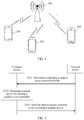
- FIG. 1 is a schematic diagram of a communications system.
- the communications system may include at least one network device 100 (only one is shown) and one or more terminal devices 200 connected to the network device 100.
- the network device 100 may be any device with a wireless sending/receiving function.
- the device includes but is not limited to a base station (for example, a NodeB NodeB, an evolved NodeB eNodeB, a base station in a 5th Generation (the fifth generation, 5G) communications system, and a base station or a network device in a future communications system) and the like.
- the network device 100 may be alternatively a radio controller in a cloud radio access network (cloud radio access network, CRAN) scenario.
- the network device 100 may be alternatively a wearable device, an in-vehicle device, or the like.
- the network device 100 may be alternatively a small cell, a transmit-receive node (transmission reference point, TRP), or the like. Certainly, this application is not limited thereto.
- the terminal device 200 is a device with a wireless sending/receiving function, and may be deployed on land and includes an indoor or outdoor device, a hand-held device, a wearable device, or an in-vehicle device, or may be deployed on a water surface (for example, a ship), or may be deployed in the air (for example, an airplane, a balloon, or a satellite).
- the terminal device may be a mobile phone (mobile phone), a tablet computer (Pad), a computer with a wireless sending/receiving function, a virtual reality (Virtual Reality, VR) terminal device, an augmented reality (Augmented Reality, AR) terminal device, a wireless terminal in industrial control (industrial control), a wireless terminal in self driving (self driving), a wireless terminal in telemedicine (remote medical), a wireless terminal in a smart grid (smart grid), a wireless terminal in transportation safety (transportation safety), a wireless terminal in a smart city (smart city), a wireless terminal in a smart home (smart home), or the like.
- An application scenario is not limited in the embodiments of this application.
- the terminal device may sometimes be referred to as user equipment (user equipment, UE), a terminal, an access terminal device, a UE unit, a UE station, a mobile station, a remote station, a remote terminal device, a mobile device, a UE terminal device, a terminal device, a wireless communications device, a UE agent, a UE apparatus, or the like.
- user equipment user equipment
- UE user equipment
- system and “network” may be used interchangeably in the embodiments of this application.
- a plurality of means two or more than two. In view of this, the term “a plurality of” may also be understood as “at least two” in the embodiments of this application.
- the term “and/or” describes an association relationship for describing associated objects and represents that three relationships may exist. For example, A and/or B may represent the following three cases: Only A exists, both A and B exist, and only B exists. In addition, the character “/" usually represents an “or” relationship between the associated objects unless specified otherwise.
- the SCS may be any one of the following: 15 kHz, 30 kHz, 60 kHz, 120 kHz, 240 kHz, 480 kHz, 960 kHz, 1920 kHz, 3840 kHz, ....
- u may be any real number or integer, for example, 0, 1, 2, 3, 4, 5, 6, 7, 8, 9, 10, 11, 12, 13, 14, 15, 16, ....
- the solution in this application may also be applied to another subcarrier spacing value, and this is not limited herein.
- an offset that is based on a random access preamble format may also be referred to as a power offset based on the random access preamble format, a power offset, or an offset.
- a random access resource may be a random access time and frequency resource, or may be a random access preamble set on a random access time and frequency resource, or may be a random access occasion (RACH occasion, RO).
- the RO is a time and frequency resource required for sending a random access preamble.
- P PRACH is transmission power of a random access preamble, or may be transmission power that is determined by a terminal and that corresponds to a carrier of a serving cell (namely, transmission power for a physical random access channel (PRACH) for carrier f of serving cell c in transmission period i ).
- P CMAX,c (i) is maximum transmission power allowed by the terminal or maximum transmission power configured for the terminal, or may be configured terminal transmission power corresponding to the carrier of the serving cell (namely, configured UE transmission power for carrier f of serving cell c within transmission period i ) .
- PREAMBLE_RECEIVED_TARGET_POWER is random access preamble target received power, and represents received power that can be obtained by a network device side when a terminal device correctly estimates a path loss.
- PL c is the path loss estimated by the terminal device, and the terminal device may obtain PL c based on power at which a network device sends a reference signal and received signal quality (for example, reference signal received power (Reference signal received power, RSRP)) of the terminal device.
- RSRP reference signal received power
- PL c referenceSignalPower- higher layer filtered RSRP, where referenceSignalPower is transmission power of the reference signal (for example, a synchronization signal SS/PBCH block) sent by the network device, and higher layer filtered RSRP is the received signal quality of the terminal device.
- PreambleInitialReceivedTargetPower is preamble initial received target power, and indicates power of a random access preamble that is expected to be received by the network device in initial preamble transmission or an initial quantity of power ramping times of the terminal device.
- DELTA_PREAMBLE is an offset that is based on a random access preamble format.
- PREAMBLE_POWER_RAMPING_COUNTER is a quantity of power ramping times
- powerRampingStep is a power ramping step. Based on this value, different performance of a base station in random access preamble detection can be achieved when different quantities of preamble transmission times or different quantities of power ramping times are used.
- the network device may configure a relatively large power ramping step, to improve a correctness probability of preamble retransmission and reduce a random access latency.
- the network device may configure relatively small power ramping compensation, to reduce mutual interference between terminal devices.
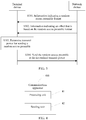
- FIG. 2 is a schematic diagram of an interaction procedure of a communication method according to an embodiment of this application. The method may include the following steps:
- the network device sends a random access configuration parameter by using a message.
- the message may be a Radio Resource Control (radio resource control, RRC) message, system information (system information, SI), remaining minimum system information (remaining minimum system information, RMSI), an NR system information block 0 (new radio system information block type 0, NR SIB 0), an NR system information block 1 (new radio system information block type 1, NR SIB 1), a Medium Access Control-control element (Medium access control-control element, MAC CE) message, downlink control information (downlink control information, DCI), a physical broadcast channel (physical broadcast channel, PBCH), a physical downlink control channel order (physical downlink control channel order, PDCCH order), or the like.
- RRC Radio Resource Control
- the random access configuration parameter may include the information indicating the random access preamble format.
- a base station configures a random access configuration index (PRACH configuration index) in the RRC message or the system message (system information, SI), and the terminal device may obtain information such as the random access preamble format and time and/or a frequency of a random access resource based on a preset/preconfigured random access configuration table and the random access configuration index configured by the base station.
- PRACH configuration index random access configuration index
- SI system information
- random access preamble formats include 0 to 3, A0 to A3, B1 to B4, C0, and C2. It should be noted that, the random access preamble formats may be increased or decreased based on a requirement. To be specific, the terminal device sends random access preambles corresponding to random access preamble formats obtained after the random access preamble formats are increased or decreased, for example, deletes the preamble format A0 or adds a new preamble format. This is not limited in this application.
- That the terminal device determines transmission power for sending a random access preamble in S202 specifically includes:
- the terminal device may determine the transmission power of the random access preamble based on a formula (1).
- At least one of the following parameters is a preset/default/initially-set value: P CMAX,c (i), the preamble initial received target power, DELTA_PREAMBLE, a quantity of preamble transmission times, the quantity of power ramping times, and the power ramping step.
- P CMAX,c (i) is 23 dBm by default or is preset to 23 dBm.
- the preamble initial received target power is -90 dBm by default or is preset to -90 dBm.
- the power ramping step is 2 dB by default or is preset to 2 dB.
- DELTA_PREAMBLE is 2 dB by default or is preset to 2 dB.
- the quantity of preamble transmission times is initialized to 1.
- the quantity of power ramping times is initialized to 1.
- the quantity of power ramping times is related to the quantity of preamble transmission times.
- the quantity of power ramping times is the quantity of preamble transmission times.
- the quantity of power ramping times is less than or equal to the quantity of preamble transmission times.
- Quantity of power ramping times floor(Quantity of preamble transmission times/K), where K is a preset or preconfigured constant.
- the transmission power may further be related to the subcarrier-spacing-based power offset f(SCS). For example, a larger subcarrier spacing leads to a shorter time length of a random access preamble corresponding to a same random access preamble format, and to implement same detection performance, a larger corresponding transmission power offset needs to be used.
- the terminal device may determine the transmission power of the random access preamble based on a formula (2).
- P PRACH min P CMAX , c i , PREAMBLE _ RECEIVED _ TARGET _ POWER + f SCS + PL c _ dBm , where PREAMBLE_RECEIVED_TARGET_POWER is the same as PREAMBLE_RECEIVED_TARGET_POWER in the formula (1).
- SCS is a subcarrier spacing
- f(SCS) is the subcarrier-spacing-based power offset.
- f(SCS) round(10 ⁇ log 10 (SCS/SCS0)), where SCS0 is a reference subcarrier spacing.
- the power offset f(SCS) 8 dB.
- the power offset f(SCS) 11 dB.
- the power offset f(SCS) 17 dB.
- the power offset f(SCS) 20 dB.
- the power offset f(SCS) 3 dB.
- the power offset f(SCS) 6 dB.
- the terminal device After determining the transmission power, the terminal device sends the random access preamble based on the transmission power. For a specific implementation process, refer to the prior art. After the network device receives the random access preamble sent by the terminal device at the determined transmission power, the network device determines power of an obtained random access preamble receive signal based on the formula (2). Specifically, when the path loss is correctly estimated, power of a random access preamble receive signal that can be obtained by the network device is a sum of the random access preamble target received power and f(SCS).
- the transmission power may further be related to an offset h(L) that is based on a random access preamble sequence.
- the offset h(L) that is based on the random access preamble sequence is an offset corresponding to a random access preamble sequence length.
- the terminal device may determine the transmission power of the random access preamble based on a formula (3).
- L is the random access preamble sequence length
- L0 839
- L 139
- h(L) -8 dB.
- L0 139
- L 839
- h(L) 8 dB.
- L0 127
- L 839
- h(L) 8 dB.
- L0 71
- L 139
- h(L) 3 dB.
- the terminal device After determining the transmission power, the terminal device sends the random access preamble based on the transmission power. For a specific implementation process, refer to the prior art. After the network device receives the random access preamble sent by the terminal device at the determined transmission power, the network device determines power of an obtained random access preamble receive signal based on the formula (3). Specifically, when the path loss is correctly estimated, power of a random access preamble receive signal that can be obtained by the network device is a sum of the random access preamble target received power and h(L).
- the transmission power is further related to the beam-related offset G of the network device and/or the terminal device.
- the terminal device may determine the transmission power of the random access preamble based on a formula (4).
- G is a difference between a downlink signal transmit beam gain of the network device and a random access preamble signal receive beam gain of the network device.
- G Transmit beam gain - Receive beam gain.
- N b 1
- G 0 dB
- N b 2
- G 3 dB
- N b 3
- G 5 dB
- G is a difference between a downlink signal receive beam gain of the terminal device and a random access preamble signal transmit beam gain of the terminal device.
- G includes at least two of the following parameters: a difference between a downlink signal transmit beam gain of the network device and a random access preamble signal receive beam gain of the network device, a difference between a downlink signal receive beam gain of the terminal device and a random access preamble signal transmit beam gain of the terminal device, and a quantity of receive beams of the network device in the random access preamble.
- the difference between the downlink signal transmit beam gain of the network device and the random access preamble signal receive beam gain of the network device may be configured by the network device, or may be obtained according to a preset rule and/or based on a parameter configured by the network device.
- the terminal device After determining the transmission power, the terminal device sends the random access preamble based on the transmission power. For a specific implementation process, refer to the prior art. After the network device receives the random access preamble sent by the terminal device at the determined transmission power, the network device determines power of an obtained random access preamble receive signal based on the formula (4). Specifically, when the path loss is correctly estimated, power of a random access preamble receive signal that can be obtained by the network device is a sum of the random access preamble target received power and G.
- the transmission power may be further related to both f(SCS) and h(L), and the transmission power may be determined based on a formula (5):
- P PRACH min P CMAX , c i , PREAMBLE _ RECEIVED _ TARGET _ POWER + f SCS + h L + PL c _ dBm , where PREAMBLE_RECEIVED_TARGET_POWER is the same as PREAMBLE_RECEIVED_TARGET_POWER in the formula (1).
- the terminal device After determining the transmission power, the terminal device sends the random access preamble based on the transmission power. For a specific implementation process, refer to the prior art. After the network device receives the random access preamble sent by the terminal device at the determined transmission power, the network device determines power of an obtained random access preamble receive signal based on the formula (5). Specifically, when the path loss is correctly estimated, power of a random access preamble receive signal that can be obtained by the network device is a sum of the random access preamble target received power, f(SCS), and h(L).
- the transmission power may be further related to both f(SCS) and G, and the transmission power may be determined based on a formula (6):
- P PRACH min P CMAX , c i , PREAMBLE _ RECEIVED _ TARGET _ POWER + f SCS + G + PL c _ dBm , where PREAMBLE_RECEIVED_TARGET_POWER is the same as PREAMBLE_RECEIVED_TARGET_POWER in the formula (1).
- the terminal device After determining the transmission power, the terminal device sends the random access preamble based on the transmission power. For a specific implementation process, refer to the prior art. After the network device receives the random access preamble sent by the terminal device at the determined transmission power, the network device determines power of an obtained random access preamble receive signal based on the formula (6). Specifically, when the path loss is correctly estimated, power of a random access preamble receive signal that can be obtained by the network device is a sum of the random access preamble target received power, f(SCS), and G.
- the transmission power may be further related to both G and h(L), and the transmission power may be determined based on a formula (7):
- P PRACH min P CMAX , c i , PREAMBLE _ RECEIVED _ TARGET _ POWER + G + h L + PL c _ dBm , where PREAMBLE_RECEIVED_TARGET_POWER is the same as PREAMBLE_RECEIVED_TARGET_POWER in the formula (1).
- the terminal device After determining the transmission power, the terminal device sends the random access preamble based on the transmission power. For a specific implementation process, refer to the prior art. After the network device receives the random access preamble sent by the terminal device at the determined transmission power, the network device determines power of an obtained random access preamble receive signal based on the formula (7). Specifically, when the path loss is correctly estimated, power of a random access preamble receive signal that can be obtained by the network device is a sum of the random access preamble target received power, G, and h(L).
- the transmission power may be further related to all of f(SCS), G, and h(L), and the transmission power may be determined based on a formula (8):
- P PRACH min P CMAX , c i , PREAMBLE _ RECEIVED _ TARGET _ POWER + f SCS + h L + G + PL c _ dBm , where PREAMBLE_RECEIVED_TARGET_POWER is the same as PREAMBLE_RECEIVED_TARGET_POWER in the formula (1).
- any one or more of the following parameters in the formula (1) to the formula (8): f(SCS), h(L), and G may also be placed in a formula corresponding to PREAMBLE_RECEIVED_TARGET_POWER. In other words, same transmission power P PRACH is finally obtained in both manners.
- the terminal device After determining the transmission power, the terminal device sends the random access preamble based on the transmission power. For a specific implementation process, refer to the prior art. After the network device receives the random access preamble sent by the terminal device at the determined transmission power, the network device determines power of an obtained random access preamble receive signal based on the formula (8). Specifically, when the path loss is correctly estimated, power of a random access preamble receive signal that can be obtained by the network device is a sum of the random access preamble target received power, f(SCS), G, and h(L).
- the random access preamble target received power is a sum of the following two parameters: the random access preamble initial received target power and the product of the quantity of power ramping times (PREAMBLE_POWER_RAMPING_COUNTER, for example, initialized to 1) minus 1 and the power ramping step.
- PREAMBLE_POWER_RAMPING_COUNTER the product of the quantity of power ramping times
- implementation flexibility of the network device can be implemented by using a relatively large selection range of preambleInitialReceivedTargetPower.
- Preamble detection performance for example, a preamble receive signal-to-noise ratio or receive power
- a selection range provided by each preamble format is large enough or relatively large.
- At least one of the following parameters in the foregoing formula 1 to formula 8 is configured by the network device or is obtained based on network device configuration information: P CMAX,c (i), the preamble initial received target power, DELTA_PREAMBLE, and the power ramping step.
- each random access preamble format has corresponding DELTA_PREAMBLE, and different preamble formats may correspond to a same offset or different offsets.
- the terminal device may store the following Table 4a, obtain DELTA_PREAMBLE based on Table 4a, and then calculate the transmission power based on any one of the foregoing formula 1 to formula 8.
- DELTA_PREAMBLE corresponding to all or some random access preamble formats may be related to a preset value X.
- Table 4a shows DELTA_PREAMBLE corresponding to a random access preamble format.
- Table 4a Random access preamble format DELTA_PREAMBLE(dB) 0 0 dB 1 -3 dB 2 -6 dB 3 0 dB A0 X+0 dB A1 X-3 dB A2 X-6 dB A3 X-8 dB B1 X-3 dB B2 X-6 dB B3 X-8 dB B4 X-11 dB C0 X+0 dB C2 X-6 dB
- X is an integer or a decimal.
- a value of X may be received from the network device.
- a value range of X may be -100 to 100.
- random access preamble formats in Table 4a may be decreased or increased.
- A0 is deleted, or a new preamble format C3 is added. This is not limited herein.
- the value of X may be 0, 3, 8, 11, 14, 17, 18, 19, or 20.
- X is configured by the network device as follows: DeltaPreamblePowerOffset ENUMERATED ⁇ dB 11, dB 14, dB 17, dB 20 ⁇ OPTIONAL
- X2 is configured by a network as follows: DeltaPreamblePowerOffset ENUMERATED ⁇ dB0, dB3 ⁇ OPTIONAL, where dB n represents n decibels.
- the terminal device pre-stores the following Table 4b, obtains DELTA_PREAMBLE based on Table 4b, and then calculates the transmission power based on any one of the foregoing formula 1 to formula 8.
- W(0), W(1, ..., and W(9) in Table 4b are preset or configured constants, and values of W(0), W(1, ..., and W(9) are [-100, 100] that indicates any number from -100 to 100.
- W(1) W(0) + F(1)
- W(2) W(0) + F(2)
- W(3) W(0) + F(3)
- W(4) W(0) + F(4)
- W(5) W(0) + F(5)
- W(6) W(0) + F(6)
- W(7) W(0) + F(7)
- W(8) W(0) + F(8)
- W(9) W(0) + F(9).
- W(1) W(4)
- F(1) F(4)
- W(3) W(6)
- F(3) F(6)
- a value range of F(1) is [-3, 0] and/or a value range of F(2) is [-6, 0], and/or a value range of F(3) is [-8, 0], and/or a value range of F(4) is [-3, 0], and/or a value range of F(5) is [-6, 0], and/or a value range of F(6) is [-8, 0], and/or a value range of F(7) is [-11, 0], and/or a value range of F(9) is [-6, 0].
- W(1) W(0) - 1.5
- W(2) W(0) - 3
- W(3) W(0) - 4
- W(4) W(0) - 1.5
- W(5) W(0) - 3
- W(6) W(0) - 4
- W(7) W(0) - 5
- W(8) W(0)
- W(9) W(0) - 3.
- the random access preamble formats A0, A1, A2, A3, B1, B2, B3, B4, C0, and C2 correspond to a same power offset.
- a same W value is used for all preamble formats, so that it can be ensured that same performance is obtained in some implementations (for example, only one preamble sequence OFDM symbol is received in one base station beam), in other words, receive performance (for example, a receive signal-to-noise ratio, for example, a preamble sequence detection correctness probability in a receive beam) obtained by the network device for all the preamble formats is consistent.
- W 0 dB.
- this embodiment supports a plurality of manners in which the base station receives the random access preamble. For example, the base station performs receive beam scanning in the random access preamble, and the terminal does not need to obtain a receiving manner of the base station.
- a value of at least one of W(0), W(1, ... , Y(9), W, F(1), ..., and F(9) is related to a subcarrier spacing and/or a carrier frequency.
- the subcarrier spacing may be at least one of the following: a subcarrier spacing of a random access preamble, a subcarrier spacing of an uplink bandwidth part, a subcarrier spacing of a random access message 3, a subcarrier spacing of a downlink signal, and a subcarrier spacing of a downlink access bandwidth part.
- W(0) 11.
- W(0) 14.
- W(0) 60 kHz
- W(0) 17.
- W(0) 120 kHz
- W(0) 20.
- Table 4c a specific case is shown in Table 4c. It should be understood that W(1), ..., Y(9), W, F(1), ..., and F(9) may also have a similar value setting manner, and details are not described herein again.
- DELTA_PREAMBLE corresponding to different preamble formats is related to at least one of the following: a carrier frequency range of a random access resource, a subcarrier spacing (subcarrier spacing, SCS) of a random access preamble, a time length of a random access preamble, a random access preamble length N u , random access resource bandwidth, an initial uplink access bandwidth part (initial active uplink bandwidth part, IAU BWP), uplink bandwidth, and a quantity of OFDM symbols occupied by a random access preamble.
- SCS subcarrier spacing
- the terminal device pre-stores the following Table 5, obtains DELTA_PREAMBLE based on Table 5, and then calculates the transmission power based on any one of the foregoing formula 1 to formula 8.
- DELTA_PREAMBLE corresponding to the random access preamble format is as follows: Table 5 Random access preamble format DELTA_PREAMBLE (dB) 0 0 dB 1 -3 dB 2 -6 dB 3 0 dB A0 0 dB A1 -3 dB A2 -6 dB A3 -8 dB B1 -3 dB B2 -6 dB B3 -8 dB B4 -11 dB C0 +0 dB C2 -6 dB
- the terminal device stores the following Table 6, obtains DELTA_PREAMBLE based on Table 6, and then calculates the transmission power based on any one of the foregoing formula 1 to formula 8.
- DELTA_PREAMBLE corresponding to the random access preamble format is as follows: Table 6 Random access preamble format DELTA_PREAMBLE (dB) 0 0 dB 1 -3 dB 2 -6 dB 3 0 dB A0 8 dB A1 5 dB A2 2 dB A3 0 dB B1 5 dB B2 2 dB B3 0 dB B4 -3 dB C0 8 dB C2 2 dB
- the terminal device stores the following Table 7, obtains DELTA_PREAMBLE based on Table 7, and then calculates the transmission power based on any one of the foregoing formula 1 to formula 8.
- DELTA_PREAMBLE corresponding to the random access preamble format is as follows: Table 7 Random access preamble format DELTA_PREAMBLE (dB) 0 0 dB 1 -3 dB 2 -6 dB 3 0 dB A0 19 dB A1 16 dB A2 13 dB A3 11 dB B1 16 dB B2 13 dB B3 11 dB B4 8 dB C0 19 dB C2 13 dB
- the preamble formats 0 to 3 may be alternatively values related to X, and are not limited to the foregoing examples.
- offsets reflect differences between random access preamble formats, such as a time length, a sequence length, a subcarrier spacing, and a quantity of repetition times of a preamble symbol in a random access preamble format.
- different offsets reflect a difference between methods used by the terminal to send or used by the base station to receive the random access preamble format: for example, a beam parameter used to receive the random access preamble when the base station receives the random access preamble format, for another example, a beam parameter used when the base station sends a downlink signal, for another example, a beam parameter used when the terminal receives a downlink signal, and for another example, a beam parameter used when the terminal sends the random access preamble.
- the beam parameter is related to at least one of the following: a quantity of beams, a beam gain, a beam width, and a beam direction.
- a correspondence between a random access preamble format and DELTA_PREAMBLE in any schematic diagram in Table 5 to Table 7 may be alternatively a correspondence between a random access preamble format and a specific value of DELTA_PREAMBLE.
- the correspondence may be pre-stored on the network device and the terminal device.
- the terminal device may find a specific value of DELTA_PREAMBLE based on the correspondence.
- the preset value X may be not defined herein.
- Configuration is performed above in a form of a table.
- DELTA_PREAMBLE may be calculated based on a formula in addition to a table.
- DELTA_PREAMBLE is related to a quantity N OS of OFDM symbols occupied (or repeated) by the random access preamble, and is specifically round (-10 ⁇ 10g 10 N OS ) .
- DELTA_PREAMBLE is related to a subcarrier spacing SCS (or an index u corresponding to the subcarrier spacing) of the random access preamble and a quantity N OS of OFDM symbols occupied (or repeated) by the random access preamble, and is specifically round(-10 ⁇ log 10 ( N OS ⁇ SCS Ref / SCS )) , where round means round off.
- the offset DELTA_PREAMBLE is related to a specific parameter
- another function may be used, for example, floor, for example, round off, or for example, ceiling.
- the foregoing implementations do not include an approximation operation. This is not limited in practice.
- DELTA_PREAMBLE is related to a subcarrier spacing.
- the subcarrier spacing may be at least one of the following: a subcarrier spacing of a random access preamble, a subcarrier spacing of an uplink bandwidth part, a subcarrier spacing of a random access message 3, a subcarrier spacing of a downlink signal, and a subcarrier spacing of a downlink access bandwidth part.
- DELTA_PREAMBLE corresponding to the random access formats A0 to C2 is related to the subcarrier spacing
- DELTA_PREAMBLE corresponding to the random access formats 0 to 3 may be unrelated to the subcarrier spacing.
- the terminal device determines DELTA_PREAMBLE and receives the preamble initial received target power and the power ramping step, the terminal device determines the transmission power of the random access preamble.
- offsets corresponding to a plurality of random access preamble formats in a next-generation mobile communications system are provided, so that the transmission power of the random access preamble can be properly determined.
- FIG. 3 is a schematic diagram of an interaction procedure of another communication method according to an embodiment of this application.
- the method may include the following steps:
- the network device further needs to send, to the terminal device, the information indicating the offset based on the random access preamble format, in other words, the terminal device determines the offset based on a configuration value of the network device.
- That the terminal device determines transmission power for sending a random access preamble in S303 specifically includes:
- the information used to indicate the offset based on the random access preamble format includes an index number of the offset based on the random access preamble format or a value of the offset based on the random access preamble format. Details are provided below.
- the information used to indicate the offset based on the random access preamble format includes the index number of the offset based on the random access preamble format.
- offsets that are based on random access preamble formats 0 to 3 may be fixed values. For the values, refer to the offsets that are based on the random access preamble formats 0 to 3 in the foregoing embodiment.
- Offsets that are based on random access preamble formats A0 to C2 are determined based on index numbers of configured offsets. As shown in Table 9, offsets corresponding to N index numbers are configured. Table 9 DELTA_PREAMBLE_INDEX DELTA_PREAMBLE(dB) 0 Y(0) dB 1 Y(1) dB 2 Y(2) dB ... ... N-1 Y(N-1) dB
- An offset corresponding to the index number 0 is Y(0) dB
- an offset corresponding to the index number 1 is Y(1) dB
- an offset corresponding to the index number 2 is Y(2) dB, and the like.
- the network device and the terminal device pre-store a correspondence between an index number of an offset and the offset shown in Table 9.
- the network device may send any index number to the terminal device, and the terminal device finds a corresponding offset based on the index number.
- offsets corresponding to indexes of different offsets in Table 9 are related to at least one of the following parameters: a carrier frequency range of a random access resource, a subcarrier spacing of a random access preamble, a time length of a random access preamble, a random access preamble length N u , a quantity of OFDM symbols occupied by a random access preamble, a quantity N b of base station receive beams in a random access preamble format, and a terminal transmit beam and/or a base station receive beam of a random access preamble.
- DELTA_PREAMBLE is related to the quantity N OS of OFDM symbols occupied by the random access preamble, and is specifically round (-10 ⁇ 10g 10 N os ).
- the offset DELTA_PREAMBLE is related to the quantity N b of base station receive beams in the random access preamble format, and is specifically round(-10 ⁇ log 10 N b ).
- DELTA_PREAMBLE is related to the subcarrier spacing SCS (or an index u corresponding to the subcarrier spacing) of the random access preamble and the quantity N OS of OFDM symbols occupied (or repeated) by the random access preamble, and is specifically round(-10 ⁇ log 10 ( N OS ⁇ SCS Ref / SCS )) .
- DELTA_PREAMBLE is related to the subcarrier spacing SCS (or an index u corresponding to the subcarrier spacing) of a random access preamble and the quantity N OS of OFDM symbols occupied (or repeated) by the random access preamble, and is specifically round(-10 ⁇ log10( N OS ⁇ SCS Ref / SCS )) .
- DELTA_PREAMBLE is related to the quantity N b of base station receive beams and the quantity N OS of OFDM symbols occupied (or repeated) by the random access preamble, and is specifically round(-10 ⁇ log 10 ( N os ⁇ N b )) .
- DELTA_PREAMBLE is related to the subcarrier spacing SCS (or an index u corresponding to the subcarrier spacing) of the random access preamble and the quantity N b of base station receive beams, and is specifically round(-10 ⁇ log 10 ( N b ⁇ SCS Ref / SCS )) .
- DELTA_PREAMBLE is related to the subcarrier spacing SCS (or an index u corresponding to the subcarrier spacing) of the random access preamble, the quantity N OS of OFDM symbols occupied (or repeated) by the random access preamble, and the quantity N b of base station receive beams, and is specifically round(-10 ⁇ log 10 ( N OS ⁇ N b ⁇ SCS Ref / SCS )), where round means round off.
- the offset DELTA_PREAMBLE is related to a specific parameter
- another function may be used, for example, floor, for example, round off, or for example, ceiling.
- the foregoing implementations do not include an approximation operation. This is not limited in practice.
- values of the offset based on the random access preamble format include N elements, values of the N elements are distributed in equal difference, and N is a positive integer.
- Y(i) Y(i-1) + D, where a difference value D may be any constant, and Y(0) or Y(N-1) may be any constant.
- values of the offset based on the random access preamble format that correspond to the index numbers 0 to 7 are respectively: ⁇ 0 dB, -2 dB, -4 dB, -6 dB, -8 dB, -10 dB, -12 dB, -14 dB ⁇ .
- values of the offset based on the random access preamble format that correspond to the index numbers 0 to 7 are respectively: ⁇ 8 dB, 6 dB, 4 dB, 2 dB, 0 dB, -2 dB, -4 dB, -6 dB ⁇ .
- values of the offset based on the random access preamble format that correspond to the index numbers 0 to 7 are respectively: ⁇ 19 dB, 17 dB, 15 dB, 13 dB, 11 dB, 9 dB, 7 dB, 5 dB ⁇ .
- Y(0), ..., Y(N-1), N, and D are related to a subcarrier spacing.
- the subcarrier spacing may be at least one of the following: a subcarrier spacing of a random access preamble, a subcarrier spacing of an uplink bandwidth part, a subcarrier spacing of a random access message 3, a subcarrier spacing of a downlink signal, and a subcarrier spacing of a downlink access bandwidth part.
- Y(0) 14
- offsets corresponding to the index numbers 0 to 7 are respectively ⁇ 14 dB, 12 dB, 10 dB, 8 dB, 6 dB, 4 dB, 2 dB, 0 dB ⁇ .
- Y(0) 17
- offsets corresponding to the index numbers 0 to 7 are respectively ⁇ 17 dB, 15 dB, 13 dB, 11 dB, 9 dB, 7 dB, 5 dB, 3 dB ⁇ .
- Y(0) 20
- offsets corresponding to the index numbers 0 to 7 are respectively ⁇ 20 dB, 18 dB, 16 dB, 14 dB, 12dB, 10 dB, 8 dB, 6 dB ⁇ .
- values of the offset based on the random access preamble format include M elements, values of the M elements are distributed in ascending or descending order, and M is a positive integer.
- Y(0) or Y(N-1) may be any constant, for example, as shown in Table 14.
- Y(i) Y(0) + E(i) is used for representation, and E(i) corresponding to the index numbers 0 to 6 is respectively 0, -3, -4.5, -6, -8, -11, and -14.
- Table 15 DELTA_PREAMBLE_INDEX DELTA_PREAMBLE(dB) 0 -0 dB 1 -3 dB 2 -4.5 dB 3 -6 dB 4 -8 dB 5 -11 dB 6 -14 dB Reserved Reserved
- values of the offset based on the random access preamble format that correspond to the index numbers 0 to 6 are respectively: ⁇ 0 dB, -3 dB, -4.5 dB, -6 dB, -8 dB, -11 dB, -14 dB ⁇ .
- Table 16 DELTA_PREAMBLE_INDEX DELTA_PREAMBLE(dB) 0 8 dB 1 5 dB 2 3.5 dB 3 2 dB 4 0 dB 5 -3 dB 6 -6 dB Reserved Reserved
- values of the offset based on the random access preamble format that correspond to the index numbers 0 to 6 are respectively: ⁇ 8 dB, 5 dB, 3.5 dB, 2 dB, 0 dB, -3 dB, -6 dB ⁇ .
- Table 17 DELTA_PREAMBLE_INDEX DELTA_PREAMBLE(dB) 0 19 dB 1 16 dB 2 14.5 dB 3 13 dB 4 11 dB 5 8 dB 6 5 dB Reserved Reserved
- values of the offset based on the random access preamble format that correspond to the index numbers 0 to 6 are respectively: ⁇ 19 dB, 16 dB, 14.5 dB, 13 dB, 11 dB, 8 dB, 5 dB ⁇ . It should be noted that, this is not limited in practice, and the foregoing is merely examples.
- At least one of Y(0), ..., Y(N-1), D, D(1), ... , D(N-1), E(1), ..., and E(N-1) is related to a carrier frequency range and/or a subcarrier spacing.
- the carrier frequency at which the random access resource is located is greater than C1 GHz
- Y(0) 14.
- C1 6 GHz.
- Y(1), ... , Y(N-1), D, D(1), ..., D(N-1), E(1), ..., and E(N-1) may also have a similar value setting manner, and details are not described herein again.
- At least one of Y(0), ..., Y(N-1), D, D(1), ... , D(N-1), E(1), ..., and E(N-1) is related to a subcarrier spacing.
- the subcarrier spacing may be at least one of the following: a subcarrier spacing of a random access preamble, a subcarrier spacing of an uplink bandwidth part, a subcarrier spacing of a random access message 3, a subcarrier spacing of a downlink signal, and a subcarrier spacing of a downlink access bandwidth part.
- At least one of the foregoing different Y(0), Y(1), ..., Y(N-1), N, D, D(1), D(2), ..., D(N-1), E(1), E(2), ..., and E(N-1) may directly or implicitly reflect/indicate at least one of the following: a subcarrier spacing of a random access preamble, a random access preamble sequence length, a corresponding beam gain obtained when the network device receives a random access preamble, a quantity of beams used when the network device receives a random access preamble, a difference between a beam gain obtained when the network device sends a downlink signal and a beam gain obtained when the network device receives a random access preamble, a carrier frequency range, and a quantity of receive beams of the network device within a time length of a random access preamble.
- the network device receives a same random access preamble by using N receive beams, to obtain a higher processing gain or obtain a receive beam that is more suitable for the terminal device.
- N may be greater than/equal to/less than a quantity of preamble sequences in one random access preamble or a quantity of repetition times of a preamble sequence.
- the network device may use a beam in a digital domain, to be specific, in a same antenna transceiver unit, use a plurality of groups of digital domain beam coefficients to form a plurality of receive beams.
- the information used to indicate the offset based on the random access preamble format includes a value of the offset based on the random access preamble format.
- the offsets in Table 9 may be represented as ⁇ Y(0), Y(1), Y(2), ..., Y(N-1) ⁇ , and a rank of an offset in the set represents an index of the offset.
- the network device sends the set of the offsets to the terminal device.
- the terminal device selects, by default, a specific offset in the set as an offset used for calculating transmission power of the terminal device.
- a form of an offset set may also be used for Table 10 to Table 17.
- ranks of rows in the table may be randomly exchanged/replaced/changed.
- offsets corresponding to a plurality of random access preamble formats in a next-generation mobile communications system are provided.
- the information indicating the offset based on the random access preamble format includes the index number of the offset based on the random access preamble format or the value of the offset based on the random access preamble format. In this way, the transmission power of the random access preamble can be properly determined based on the offset.
- an embodiment of this application further provides a schematic structural diagram of a communications apparatus, and the communications apparatus may be applied to the foregoing communication methods.
- the communications apparatus 400 includes a processing unit 41 and a sending unit 42.
- the processing unit 41 is configured to determine transmission power for sending a random access preamble, where the transmission power is related to a random access preamble format and an offset DELTA_PREAMBLE that is based on the random access preamble format.
- the sending unit 42 is configured to send the random access preamble at the transmission power determined by the processing unit.
- processing unit 41 is specifically configured to:
- an offset DELTA_PREAMBLE based on the random access preamble format 2 is -6 decibels dB;
- an offset DELTA_PREAMBLE based on the random access preamble format 3 is 0 dB.
- an offset based on the random access preamble format A1 is X-3 dB; or when a random access preamble format A2 is used, an offset based on the random access preamble format A2 is X-6 dB; or when a random access preamble format A3 is used, an offset based on the random access preamble format A3 is X-8 dB; or when a random access preamble format B1 is used, an offset based on the random access preamble format B 1 is X-3 dB; or when a random access preamble format B2 is used, an offset based on the random access preamble format B2 is X-6 dB; or when a random access preamble format B3 is used, an offset based on the random access preamble format B3 is X-8 dB; or when a random access preamble format B4 is used, an offset based on the random access preamble format B4
- offsets corresponding to a plurality of random access preamble formats in a next-generation mobile communications system are provided, so that the transmission power of the random access preamble can be properly determined.
- an embodiment of this application further provides a schematic structural diagram of another communications apparatus.
- the communications apparatus may be applied to the foregoing communication methods.
- the communications apparatus 500 includes a receiving unit 51, a processing unit 52, and a sending unit 53.
- the receiving unit 51 is configured to receive, from a network device, information indicating a random access preamble format.
- the receiving unit 51 is further configured to receive, from the network device, information used to indicate an offset DELTA_PREAMBLE that is based on the random access preamble format.
- the processing unit 52 is configured to determine transmission power for sending a random access preamble, where the transmission power is related to the information indicating the random access preamble format and the information indicating the offset DELTA_PREAMBLE that is based on the random access preamble format.
- the sending unit 53 is configured to send the random access preamble at the determined transmission power.
- processing unit 52 is specifically configured to:
- the information used to indicate the offset based on the random access preamble format includes: an index number of the offset based on the random access preamble format or a value of the offset based on the random access preamble format.
- values of the offset DELTA_PREAMBLE based on the random access preamble format include N elements, values of the N elements are distributed in equal difference, and N is a positive integer.
- values of the offset based on the random access preamble format include: ⁇ 0 dB, -2 dB, -4 dB, -6 dB, -8 dB, -10 dB, -12 dB, -14 dB ⁇ , ⁇ 8 dB, 6 dB, 4 dB, 2 dB, 0 dB, -2 dB, -4 dB, -6 dB ⁇ , or ⁇ 19 dB, 17 dB, 15 dB, 13 dB, 11 dB, 9 dB, 7 dB, 5 dB ⁇ .
- values of the offset based on the random access preamble format include M elements, values of the M elements are distributed in ascending or descending order, and M is a positive integer.
- values of the offset based on the random access preamble format include: ⁇ 0 dB, -3 dB, -4.5 dB, -6 dB, -8 dB, -11 dB, -14 dB ⁇ , ⁇ 8 dB, 5 dB, 3.5 dB, 2 dB, 0 dB, -3 dB, -6 dB ⁇ , or ⁇ 19 dB, 16 dB, 14.5 dB, 13 dB, 11 dB, 8 dB, 5 dB ⁇ .
- offsets corresponding to a plurality of random access preamble formats in a next-generation mobile communications system are provided.
- the information indicating the offset based on the random access preamble format includes the index number of the offset based on the random access preamble format or the value of the offset based on the random access preamble format. In this way, the transmission power of the random access preamble can be properly determined based on the offset.
- an embodiment of this application further provides a schematic structural diagram of still another communications apparatus.
- the communications apparatus 600 includes a sending unit 61 and a receiving unit 62.
- the sending unit 61 is configured to send, to a terminal device, information indicating a random access preamble format.
- the receiving unit 62 is configured to receive a random access preamble sent by the terminal device at determined transmission power, where the transmission power is related to the random access preamble format and an offset based on the random access preamble format.
- the sending unit is further configured to send, to the terminal device, information indicating the offset based on the random access preamble format.
- offsets corresponding to a plurality of random access preamble formats in a next-generation mobile communications system are provided, so that the transmission power of the random access preamble can be properly determined.
- the communications apparatus in this application may be a terminal device, or may be a chip or an integrated circuit installed on the terminal device.
- the communications apparatus is a terminal device.
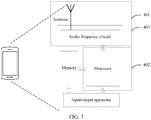
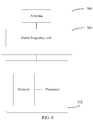
- FIG. 7 is a schematic structural diagram of a simplified terminal device.
- a mobile phone is used as an example of the terminal device.
- the terminal device includes a processor, a memory, a radio frequency circuit, an antenna, and an input/output apparatus.
- the processor is mainly configured to: process a communications protocol and communication data, and control the terminal device to execute a software program, process data of the software program, and the like.
- the memory is mainly configured to store a software program and data.
- the radio frequency circuit is mainly used for conversion between a baseband signal and a radio frequency signal and processing of the radio frequency signal.
- the antenna is mainly configured to receive and transmit a radio frequency signal in a form of an electromagnetic wave.
- the input/output apparatus such as, a touchscreen, a display, or a keyboard, is mainly configured to receive data input by a user and output data to the user. It should be noted that some types of terminal devices may not have the input/output apparatus.
- the processor When data needs to be sent, the processor performs baseband processing on the to-be-sent data, and then outputs a baseband signal to the radio frequency circuit. After performing radio frequency processing on the baseband signal, the radio frequency circuit sends the radio frequency signal in a form of an electromagnetic wave by using the antenna.
- the radio frequency circuit receives a radio frequency signal by using the antenna, converts the radio frequency signal into a baseband signal, and outputs the baseband signal to the processor, and the processor converts the baseband signal into data and processes the data.
- FIG. 7 shows only one memory and one processor. In an actual terminal device product, there may be one or more processors and one or more memories.
- the memory may also be referred to as a storage medium, a storage device, or the like.
- the memory may be disposed independent of the processor, or may be integrated into the processor. This is not limited in this embodiment of this application.
- the antenna and the radio frequency circuit that have a transmitting/receiving function may be considered as a receiving unit and a sending unit (or may be collectively referred to as a transceiver unit) of the terminal device, and a processor that has a processing function may be considered as the processing unit of the terminal device.
- the terminal device includes a receiving unit 401, a processing unit 402, and a sending unit 403.
- the receiving unit 401 may also be referred to as a receiver, a receiver circuit, or the like
- the sending unit 403 may also be referred to as a transmitter, a transmitter circuit, or the like.
- the processing unit may also be referred to as a processor, a processing board, a processing module, a processing apparatus, or the like.
- the receiving unit 401 is configured to perform step S201 in the embodiment shown in FIG. 2
- the processing unit 402 is configured to perform step S202 in the embodiment shown in FIG. 2
- the sending unit 403 is configured to perform step S203 in the embodiment shown in FIG. 2 .
- the receiving unit 401 is configured to perform step S301 and S302 in the embodiment shown in FIG. 3
- the processing unit 402 is configured to perform step S303 in the embodiment shown in FIG. 3
- the sending unit 403 is configured to perform step S304 in the embodiment shown in FIG. 3 .
- An embodiment of this application further provides a communications apparatus, and the communications apparatus is configured to perform the foregoing communication methods.
- Some or all of the foregoing communication methods may be implemented by using hardware, or may be implemented by using software.
- the communication apparatus includes: a receiver, configured to receive information, for example, receive, from a network device, information indicating a random access preamble format, and further configured to receive, from the network device, information indicating an offset DELTA_PREAMBLE that is based on the random access preamble format; a processing circuit, configured to perform the foregoing communication methods, for example, determine transmission power for sending a random access preamble; and a transmitter, configured to output the random access preamble.
- the communications apparatus may be a chip or an integrated circuit in specific implementation.
- the communications apparatus when some or all of the communication methods in the foregoing embodiments are implemented by using software, the communications apparatus includes: a memory, configured to store a program; and a processor, configured to execute the program stored in the memory. When the program is executed, the communications apparatus may implement the communication methods provided in the foregoing embodiments.
- the memory may be a physically independent unit, or may be integrated into the processor.
- the communications apparatus may alternatively include only a processor.
- a memory configured to store a program is located outside the communications apparatus, and the processor is connected to the memory by using a circuit/wire, and is configured to read and execute the program stored in the memory.
- the processor may be a central processing unit (central processing unit, CPU), a network processor (network processor, NP), or a combination of a CPU and an NP.
- CPU central processing unit
- NP network processor
- the processor may further include a hardware chip.
- the hardware chip may be an application-specific integrated circuit (application-specific integrated circuit, ASIC), a programmable logic device (programmable logic device, PLD), or a combination thereof.
- the PLD may be a complex programmable logic device (complex programmable logic device, CPLD), a field-programmable gate array (field-programmable gate array, FPGA), generic array logic (generic array logic, GAL), or any combination thereof.
- the memory may include a volatile memory (volatile memory), for example, a random access memory (random-access memory, RAM); or the memory may include a non-volatile memory (non-volatile memory), for example, a flash memory (flash memory), a hard disk (hard disk drive, HDD), or a solid-state drive (solid-state drive, SSD); or the memory may include a combination of the foregoing types of memories.
- volatile memory volatile memory
- RAM random access memory
- non-volatile memory non-volatile memory
- flash memory flash memory
- HDD hard disk drive
- solid-state drive solid-state drive
- the communications apparatus in this application may be a network device, or may be a chip or an integrated circuit installed on the network device.
- the communications apparatus is a network device.
- FIG. 8 is a schematic structural diagram of a simplified network device.
- the network device includes a radio frequency signal receiving/transmitting and conversion part and a part 502.
- the radio frequency signal receiving/transmitting and conversion part further includes a receiving unit part 501 and a sending unit part 503 (which may also be collectively referred to as a transceiver unit).
- the radio frequency signal receiving/transmitting and conversion part is mainly used for receiving/receiving of a radio frequency signal and conversion between a radio frequency signal and a baseband signal.
- the part 502 is mainly used for baseband processing, network device control, and the like.
- the receiving unit 501 may also be referred to as a receiver, a receiver circuit, or the like
- the sending unit 503 may also be referred to as a transmitter, a transmitter circuit, or the like.
- the part 502 is usually a control center of the network device, and may be usually referred to as a processing unit, and is configured to control the network device to perform the steps performed by the network device in FIG. 2 or FIG. 3 .
- a processing unit is usually referred to as a processing unit, and is configured to control the network device to perform the steps performed by the network device in FIG. 2 or FIG. 3 .
- the part 502 may include one or more boards, and each board may include one or more processors and one or more memories.
- the processor is configured to read and execute a program in the memory to implement a baseband processing function and control the network device. If there are a plurality of boards, the boards may be interconnected to increase a processing capability.
- a plurality of boards may share one or more processors, or a plurality of boards share one or more memories, or a plurality of boards share one or more processors at the same time.
- the sending unit 503 is configured to perform step S201 in the embodiment shown in FIG. 2
- the receiving unit 501 is configured to perform step S203 in the embodiment shown in FIG. 2 .
- the sending unit 503 is configured to perform step S301 and S302 in the embodiment shown in FIG. 3
- the receiving unit 501 is configured to perform step S304 in the embodiment shown in FIG. 3 .
- An embodiment of this application further provides a communications apparatus, and the communications apparatus is configured to perform the foregoing communication methods.
- Some or all of the foregoing communication methods may be implemented by using hardware, or may be implemented by using software.
- the communications apparatus includes: a transmitter, configured to output information, for example, configured to send, to a terminal device, information indicating a random access preamble format; and a receiver, configured to input information, for example, configured to receive a random access preamble sent by the terminal device at determined transmission power.
- the communications apparatus may be a chip or an integrated circuit in specific implementation.
- the communications apparatus when some or all of the communication methods in the foregoing embodiments are implemented by using software, the communications apparatus includes: a memory, configured to store a program; and a processor, configured to execute the program stored in the memory. When the program is executed, the communications apparatus may implement the communication methods provided in the foregoing embodiments.
- the memory may be a physically independent unit, or may be integrated into the processor.
- the communications apparatus may alternatively include only a processor.
- a memory configured to store a program is located outside the communications apparatus, and the processor is connected to the memory by using a circuit/wire, and is configured to read and execute the program stored in the memory.
- the processor may be a CPU, an NP, or a combination of a CPU and an NP.
- the processor may further include a hardware chip.
- the hardware chip may be an ASIC, a PLD, or a combination thereof.
- the PLD may be a CPLD, an FPGA, GAL, or any combination thereof.
- the memory may include a volatile memory, such as a RAM; or the memory may include a nonvolatile memory, such as a flash memory, a hard disk, or a solid-state drive; or the memory may include a combination of the foregoing types of memories.
- a volatile memory such as a RAM
- a nonvolatile memory such as a flash memory, a hard disk, or a solid-state drive
- the memory may include a combination of the foregoing types of memories.
- the disclosed system, apparatus, and method may be implemented in other manners.
- the described apparatus embodiment is merely an example.
- the unit division is merely logical function division and may be other division in actual implementation.
- a plurality of units or components may be combined or integrated into another system, or some features may be ignored or not performed.
- the displayed or discussed mutual couplings or direct couplings or communication connections may be implemented by using some interfaces.
- the indirect couplings or communication connections between the apparatuses or units may be implemented in electronic, mechanical, or other forms.
- the units described as separate parts may or may not be physically separate, and parts displayed as units may or may not be physical units, may be located in one position, or may be distributed on a plurality of network units. Some or all of the units may be selected based on actual requirements to achieve the objectives of the solutions of the embodiments.
- All or some of the foregoing embodiments may be implemented by using software, hardware, firmware, or any combination thereof.
- software is used to implement the embodiments, all or some of the embodiments may be implemented in a form of a computer program product.
- the computer program product includes one or more computer instructions.
- the computer may be a general-purpose computer, a dedicated computer, a computer network, or another programmable apparatus.
- the computer instructions may be stored in a computer-readable storage medium, or may be transmitted by using the computer-readable storage medium.
- the computer instruction may be transmitted from a website, computer, server, or data center to another website, computer, server, or data center in a wired (for example, a coaxial cable, an optical fiber, or a digital subscriber line (Digital Subscriber Line, DSL)) or wireless (for example, infrared, radio, or microwave) manner.
- the computer-readable storage medium may be any usable medium accessible by a computer, or a data storage device, such as a server or a data center, integrating one or more usable media.
- the usable medium may be a magnetic medium (for example, a floppy disk, a hard disk, or a magnetic tape), an optical medium (for example, a digital versatile disc (digital versatile disc, DVD)), a semiconductor medium (for example, a solid state drive (solid state disk, SSD)), or the like.
- a magnetic medium for example, a floppy disk, a hard disk, or a magnetic tape
- an optical medium for example, a digital versatile disc (digital versatile disc, DVD)
- a semiconductor medium for example, a solid state drive (solid state disk, SSD)
- the foregoing storage medium includes: any medium that can store program code, such as a read-only memory (read-only memory, ROM), a random access memory (random access memory, RAM), a magnetic disk, or an optical disc.
Landscapes
- Engineering & Computer Science (AREA)
- Signal Processing (AREA)
- Computer Networks & Wireless Communication (AREA)
- Mobile Radio Communication Systems (AREA)
- Synchronisation In Digital Transmission Systems (AREA)
Applications Claiming Priority (2)
| Application Number | Priority Date | Filing Date | Title |
|---|---|---|---|
| CN201810029540.0A CN110035488B (zh) | 2018-01-12 | 2018-01-12 | 通信方法及装置 |
| PCT/CN2018/119420 WO2019137119A1 (fr) | 2018-01-12 | 2018-12-05 | Procédé et dispositif de communication |
Publications (3)
| Publication Number | Publication Date |
|---|---|
| EP3573381A1 true EP3573381A1 (fr) | 2019-11-27 |
| EP3573381A4 EP3573381A4 (fr) | 2020-04-15 |
| EP3573381B1 EP3573381B1 (fr) | 2022-05-11 |
Family
ID=65930175
Family Applications (1)
| Application Number | Title | Priority Date | Filing Date |
|---|---|---|---|
| EP18900463.3A Active EP3573381B1 (fr) | 2018-01-12 | 2018-12-05 | Procédé et dispositif de communication |
Country Status (8)
| Country | Link |
|---|---|
| US (1) | US11160116B2 (fr) |
| EP (1) | EP3573381B1 (fr) |
| JP (1) | JP7030832B2 (fr) |
| CN (2) | CN110035488B (fr) |
| AU (1) | AU2018401905B9 (fr) |
| BR (1) | BR112019019742A2 (fr) |
| RU (1) | RU2771171C2 (fr) |
| WO (1) | WO2019137119A1 (fr) |
Cited By (1)
| Publication number | Priority date | Publication date | Assignee | Title |
|---|---|---|---|---|
| WO2021173517A1 (fr) * | 2020-02-25 | 2021-09-02 | Qualcomm Incorporated | Transmission de canal d'accès aléatoire physique (prach) dans une nouvelle radio (nr) |
Families Citing this family (4)
| Publication number | Priority date | Publication date | Assignee | Title |
|---|---|---|---|---|
| US11212761B2 (en) * | 2017-07-04 | 2021-12-28 | Samsung Electronics Co., Ltd. | Method and apparatus for communication based on frame structure |
| WO2020082215A1 (fr) * | 2018-10-22 | 2020-04-30 | Oppo广东移动通信有限公司 | Procédé de détermination d'une puissance de transmission destinée à une séquence de préambule et dispositif de communication |
| CN112584507B (zh) * | 2019-09-30 | 2022-05-17 | 华为技术有限公司 | 一种数据处理方法、装置及存储介质 |
| WO2026040026A1 (fr) * | 2024-08-21 | 2026-02-26 | Oppo广东移动通信有限公司 | Procédés de communication sans fil, dispositifs terminaux et dispositifs de réseau |
Family Cites Families (22)
| Publication number | Priority date | Publication date | Assignee | Title |
|---|---|---|---|---|
| TR201810929T4 (tr) | 2008-01-11 | 2018-08-27 | Ericsson Telefon Ab L M | Bir iletişim ağında yöntemler ve cihazlar. |
| CN103687009A (zh) * | 2008-04-29 | 2014-03-26 | 华为技术有限公司 | 随机接入中资源选择方法和终端设备 |
| EP2283680B1 (fr) * | 2008-05-05 | 2011-12-28 | Nokia Siemens Networks OY | Procédé, appareil et programme informatique pour contrôler la puissance en lien avec des procédures d'accès aléatoire |
| US8130667B2 (en) * | 2008-09-19 | 2012-03-06 | Texas Instruments Incorporated | Preamble group selection in random access of wireless networks |
| CN102724746A (zh) * | 2011-03-29 | 2012-10-10 | 中兴通讯股份有限公司 | 随机接入过程中前导码发送功率的控制、确定方法及系统 |
| CN103037491B (zh) * | 2011-09-30 | 2015-08-19 | 华为技术有限公司 | 功率控制方法、基站及装置 |
| CN104025671A (zh) * | 2011-11-29 | 2014-09-03 | 富士通株式会社 | Prach的发送功率的控制方法和装置 |
| CN103179654B (zh) * | 2011-12-26 | 2017-07-18 | 中兴通讯股份有限公司 | Prach的发射功率的确定方法及装置 |
| JP5418648B2 (ja) | 2012-09-06 | 2014-02-19 | 日本電気株式会社 | 無線通信方法及びシステム |
| KR102008467B1 (ko) * | 2012-12-27 | 2019-08-07 | 삼성전자주식회사 | 빔포밍 기반 무선 통신시스템의 상향링크 전력 제어 방법 및 장치 |
| KR101994386B1 (ko) * | 2013-08-13 | 2019-06-28 | 후아웨이 테크놀러지 컴퍼니 리미티드 | 프리앰블 시퀀스를 전송하기 위한 방법 및 사용자 장비 |
| ES2667805T3 (es) | 2014-01-28 | 2018-05-14 | Huawei Technologies Co., Ltd. | Método y aparato para determinar potencia de transmisión en escenario de aumento de cobertura |
| RU2641666C1 (ru) * | 2014-01-28 | 2018-01-19 | Хуавэй Текнолоджиз Ко., Лтд. | Способ расширенной передачи физического канала произвольного доступа, сетевое устройство и терминал |
| WO2016121252A1 (fr) | 2015-01-29 | 2016-08-04 | ソニー株式会社 | Dispositif et procédé |
| CN105992328B (zh) * | 2015-01-30 | 2019-07-09 | 华为技术有限公司 | 一种前导序列的发送方法及装置 |
| CN107925605B (zh) * | 2015-09-10 | 2021-01-15 | 苹果公司 | 针对5g rat中的基于波束的无小区操作的随机接入过程 |
| WO2017121408A1 (fr) * | 2016-01-11 | 2017-07-20 | 中兴通讯股份有限公司 | Procédé destiné à la mise en œuvre d'une commande de puissance de liaison montante et terminal |
| CN106961721B (zh) | 2016-01-11 | 2020-05-15 | 中兴通讯股份有限公司 | 一种实现上行功率控制的方法及终端 |
| EP3577793A1 (fr) * | 2017-02-03 | 2019-12-11 | IDAC Holdings, Inc. | Gestion de faisceau de liaison montante |
| EP3527009B1 (fr) * | 2017-05-04 | 2020-04-29 | Ofinno, LLC | Décalage de puissance de rach |
| WO2019028881A1 (fr) * | 2017-08-11 | 2019-02-14 | 富士通株式会社 | Procédé et appareil de commande de puissance d'accès aléatoire, et système de communication |
| EP3681236B1 (fr) * | 2017-09-08 | 2024-11-06 | NTT DoCoMo, Inc. | Station de base et dispositif utilisateur |
-
2018
- 2018-01-12 CN CN201810029540.0A patent/CN110035488B/zh active Active
- 2018-01-12 CN CN201811482731.9A patent/CN109587780B/zh active Active
- 2018-12-05 BR BR112019019742-7A patent/BR112019019742A2/pt unknown
- 2018-12-05 AU AU2018401905A patent/AU2018401905B9/en active Active
- 2018-12-05 JP JP2019548586A patent/JP7030832B2/ja active Active
- 2018-12-05 RU RU2019129498A patent/RU2771171C2/ru active
- 2018-12-05 WO PCT/CN2018/119420 patent/WO2019137119A1/fr not_active Ceased
- 2018-12-05 EP EP18900463.3A patent/EP3573381B1/fr active Active
-
2019
- 2019-07-26 US US16/523,668 patent/US11160116B2/en active Active
Cited By (2)
| Publication number | Priority date | Publication date | Assignee | Title |
|---|---|---|---|---|
| WO2021173517A1 (fr) * | 2020-02-25 | 2021-09-02 | Qualcomm Incorporated | Transmission de canal d'accès aléatoire physique (prach) dans une nouvelle radio (nr) |
| US11678379B2 (en) | 2020-02-25 | 2023-06-13 | Qualcomm Incorporated | Physical random access channel (PRACH) transmission in new radio (NR) |
Also Published As
| Publication number | Publication date |
|---|---|
| CN110035488B (zh) | 2024-05-17 |
| EP3573381A4 (fr) | 2020-04-15 |
| WO2019137119A1 (fr) | 2019-07-18 |
| US11160116B2 (en) | 2021-10-26 |
| JP2020509713A (ja) | 2020-03-26 |
| BR112019019742A2 (pt) | 2020-07-21 |
| US20190350009A1 (en) | 2019-11-14 |
| RU2019129498A3 (fr) | 2022-02-14 |
| CN110035488A (zh) | 2019-07-19 |
| AU2018401905A1 (en) | 2019-08-29 |
| RU2019129498A (ru) | 2022-02-14 |
| CN109587780A (zh) | 2019-04-05 |
| AU2018401905B9 (en) | 2021-02-11 |
| CN109587780B (zh) | 2019-11-19 |
| AU2018401905B2 (en) | 2021-01-21 |
| JP7030832B2 (ja) | 2022-03-07 |
| RU2771171C2 (ru) | 2022-04-28 |
| EP3573381B1 (fr) | 2022-05-11 |
Similar Documents
| Publication | Publication Date | Title |
|---|---|---|
| EP3573381B1 (fr) | Procédé et dispositif de communication | |
| US20250220453A1 (en) | Method and apparatus for signal transmission and reception in wireless communication system | |
| US11382135B2 (en) | Configuring different types of random resources | |
| US20200245373A1 (en) | Two-step random access channel (rach) in new radio (nr) networks and systems | |
| KR102353168B1 (ko) | 통신 시스템에서 단말 파워 헤드룸 정보의 전송 방법 및 장치 | |
| EP3637934B1 (fr) | Procédé et appareil à utiliser dans une configuration de ressources | |
| EP3550894B1 (fr) | Procédé et dispositif de régulation de puissance en liaison montante | |
| EP2787672B1 (fr) | Communication de liaison descendante avec répétition de transmissions | |
| EP3883323B1 (fr) | Procédé et appareil de transmission | |
| EP4188026A1 (fr) | Procédé d'accès aléatoire, procédé de configuration et dispositif associé | |
| EP3429281A1 (fr) | Procédé et dispositif de commande de puissance | |
| EP3691393A2 (fr) | Procédé et dispositif de détermination de paramètres d'accès aléatoire | |
| US20230047985A1 (en) | Uplink power control method and apparatus | |
| CN116782354B (zh) | 功率控制参数指示 | |
| CN114223227B (zh) | 终端以及通信方法 | |
| US20260020069A1 (en) | Controlling physical random access channel (prach) transmission power | |
| HK40004791A (en) | Communication method and device | |
| HK40004791B (zh) | 通信方法及装置 | |
| EP4513987A1 (fr) | Procédé de commande de puissance et dispositif relais | |
| US20260095934A1 (en) | Random access resource configuration for message 1 transmission | |
| US20260095949A1 (en) | Using physical uplink shared channel (pusch) repetition for message 3 transmission | |
| US20260019956A1 (en) | Controlling physical random access channel (prach) transmission power | |
| CN120677659A (zh) | 装置、方法和计算机程序 | |
| CN118019137A (zh) | 一种通信方法和装置 | |
| CN120693805A (zh) | 用于prach重复次数的选择的ue输出功率条件的方法和装置 |
Legal Events
| Date | Code | Title | Description |
|---|---|---|---|
| STAA | Information on the status of an ep patent application or granted ep patent |
Free format text: STATUS: THE INTERNATIONAL PUBLICATION HAS BEEN MADE |
|
| PUAI | Public reference made under article 153(3) epc to a published international application that has entered the european phase |
Free format text: ORIGINAL CODE: 0009012 |
|
| STAA | Information on the status of an ep patent application or granted ep patent |
Free format text: STATUS: REQUEST FOR EXAMINATION WAS MADE |
|
| 17P | Request for examination filed |
Effective date: 20190820 |
|
| AK | Designated contracting states |
Kind code of ref document: A1 Designated state(s): AL AT BE BG CH CY CZ DE DK EE ES FI FR GB GR HR HU IE IS IT LI LT LU LV MC MK MT NL NO PL PT RO RS SE SI SK SM TR |
|
| AX | Request for extension of the european patent |
Extension state: BA ME |
|
| A4 | Supplementary search report drawn up and despatched |
Effective date: 20200317 |
|
| RIC1 | Information provided on ipc code assigned before grant |
Ipc: H04W 52/32 20090101AFI20200311BHEP |
|
| STAA | Information on the status of an ep patent application or granted ep patent |
Free format text: STATUS: EXAMINATION IS IN PROGRESS |
|
| 17Q | First examination report despatched |
Effective date: 20201027 |
|
| DAV | Request for validation of the european patent (deleted) | ||
| DAX | Request for extension of the european patent (deleted) | ||
| GRAP | Despatch of communication of intention to grant a patent |
Free format text: ORIGINAL CODE: EPIDOSNIGR1 |
|
| STAA | Information on the status of an ep patent application or granted ep patent |
Free format text: STATUS: GRANT OF PATENT IS INTENDED |
|
| INTG | Intention to grant announced |
Effective date: 20211213 |
|
| GRAS | Grant fee paid |
Free format text: ORIGINAL CODE: EPIDOSNIGR3 |
|
| GRAA | (expected) grant |
Free format text: ORIGINAL CODE: 0009210 |
|
| STAA | Information on the status of an ep patent application or granted ep patent |
Free format text: STATUS: THE PATENT HAS BEEN GRANTED |
|
| AK | Designated contracting states |
Kind code of ref document: B1 Designated state(s): AL AT BE BG CH CY CZ DE DK EE ES FI FR GB GR HR HU IE IS IT LI LT LU LV MC MK MT NL NO PL PT RO RS SE SI SK SM TR |
|
| REG | Reference to a national code |
Ref country code: GB Ref legal event code: FG4D |
|
| REG | Reference to a national code |
Ref country code: CH Ref legal event code: EP |
|
| REG | Reference to a national code |
Ref country code: AT Ref legal event code: REF Ref document number: 1492570 Country of ref document: AT Kind code of ref document: T Effective date: 20220515 |
|
| REG | Reference to a national code |
Ref country code: DE Ref legal event code: R096 Ref document number: 602018035622 Country of ref document: DE |
|
| REG | Reference to a national code |
Ref country code: IE Ref legal event code: FG4D |
|
| REG | Reference to a national code |
Ref country code: LT Ref legal event code: MG9D |
|
| REG | Reference to a national code |
Ref country code: NL Ref legal event code: MP Effective date: 20220511 |
|
| REG | Reference to a national code |
Ref country code: AT Ref legal event code: MK05 Ref document number: 1492570 Country of ref document: AT Kind code of ref document: T Effective date: 20220511 |
|
| PG25 | Lapsed in a contracting state [announced via postgrant information from national office to epo] |
Ref country code: SE Free format text: LAPSE BECAUSE OF FAILURE TO SUBMIT A TRANSLATION OF THE DESCRIPTION OR TO PAY THE FEE WITHIN THE PRESCRIBED TIME-LIMIT Effective date: 20220511 Ref country code: PT Free format text: LAPSE BECAUSE OF FAILURE TO SUBMIT A TRANSLATION OF THE DESCRIPTION OR TO PAY THE FEE WITHIN THE PRESCRIBED TIME-LIMIT Effective date: 20220912 Ref country code: NO Free format text: LAPSE BECAUSE OF FAILURE TO SUBMIT A TRANSLATION OF THE DESCRIPTION OR TO PAY THE FEE WITHIN THE PRESCRIBED TIME-LIMIT Effective date: 20220811 Ref country code: NL Free format text: LAPSE BECAUSE OF FAILURE TO SUBMIT A TRANSLATION OF THE DESCRIPTION OR TO PAY THE FEE WITHIN THE PRESCRIBED TIME-LIMIT Effective date: 20220511 Ref country code: LT Free format text: LAPSE BECAUSE OF FAILURE TO SUBMIT A TRANSLATION OF THE DESCRIPTION OR TO PAY THE FEE WITHIN THE PRESCRIBED TIME-LIMIT Effective date: 20220511 Ref country code: HR Free format text: LAPSE BECAUSE OF FAILURE TO SUBMIT A TRANSLATION OF THE DESCRIPTION OR TO PAY THE FEE WITHIN THE PRESCRIBED TIME-LIMIT Effective date: 20220511 Ref country code: GR Free format text: LAPSE BECAUSE OF FAILURE TO SUBMIT A TRANSLATION OF THE DESCRIPTION OR TO PAY THE FEE WITHIN THE PRESCRIBED TIME-LIMIT Effective date: 20220812 Ref country code: FI Free format text: LAPSE BECAUSE OF FAILURE TO SUBMIT A TRANSLATION OF THE DESCRIPTION OR TO PAY THE FEE WITHIN THE PRESCRIBED TIME-LIMIT Effective date: 20220511 Ref country code: ES Free format text: LAPSE BECAUSE OF FAILURE TO SUBMIT A TRANSLATION OF THE DESCRIPTION OR TO PAY THE FEE WITHIN THE PRESCRIBED TIME-LIMIT Effective date: 20220511 Ref country code: BG Free format text: LAPSE BECAUSE OF FAILURE TO SUBMIT A TRANSLATION OF THE DESCRIPTION OR TO PAY THE FEE WITHIN THE PRESCRIBED TIME-LIMIT Effective date: 20220811 Ref country code: AT Free format text: LAPSE BECAUSE OF FAILURE TO SUBMIT A TRANSLATION OF THE DESCRIPTION OR TO PAY THE FEE WITHIN THE PRESCRIBED TIME-LIMIT Effective date: 20220511 |
|
| PG25 | Lapsed in a contracting state [announced via postgrant information from national office to epo] |
Ref country code: RS Free format text: LAPSE BECAUSE OF FAILURE TO SUBMIT A TRANSLATION OF THE DESCRIPTION OR TO PAY THE FEE WITHIN THE PRESCRIBED TIME-LIMIT Effective date: 20220511 Ref country code: PL Free format text: LAPSE BECAUSE OF FAILURE TO SUBMIT A TRANSLATION OF THE DESCRIPTION OR TO PAY THE FEE WITHIN THE PRESCRIBED TIME-LIMIT Effective date: 20220511 Ref country code: LV Free format text: LAPSE BECAUSE OF FAILURE TO SUBMIT A TRANSLATION OF THE DESCRIPTION OR TO PAY THE FEE WITHIN THE PRESCRIBED TIME-LIMIT Effective date: 20220511 Ref country code: IS Free format text: LAPSE BECAUSE OF FAILURE TO SUBMIT A TRANSLATION OF THE DESCRIPTION OR TO PAY THE FEE WITHIN THE PRESCRIBED TIME-LIMIT Effective date: 20220911 |
|
| PG25 | Lapsed in a contracting state [announced via postgrant information from national office to epo] |
Ref country code: SM Free format text: LAPSE BECAUSE OF FAILURE TO SUBMIT A TRANSLATION OF THE DESCRIPTION OR TO PAY THE FEE WITHIN THE PRESCRIBED TIME-LIMIT Effective date: 20220511 Ref country code: SK Free format text: LAPSE BECAUSE OF FAILURE TO SUBMIT A TRANSLATION OF THE DESCRIPTION OR TO PAY THE FEE WITHIN THE PRESCRIBED TIME-LIMIT Effective date: 20220511 Ref country code: RO Free format text: LAPSE BECAUSE OF FAILURE TO SUBMIT A TRANSLATION OF THE DESCRIPTION OR TO PAY THE FEE WITHIN THE PRESCRIBED TIME-LIMIT Effective date: 20220511 Ref country code: EE Free format text: LAPSE BECAUSE OF FAILURE TO SUBMIT A TRANSLATION OF THE DESCRIPTION OR TO PAY THE FEE WITHIN THE PRESCRIBED TIME-LIMIT Effective date: 20220511 Ref country code: DK Free format text: LAPSE BECAUSE OF FAILURE TO SUBMIT A TRANSLATION OF THE DESCRIPTION OR TO PAY THE FEE WITHIN THE PRESCRIBED TIME-LIMIT Effective date: 20220511 Ref country code: CZ Free format text: LAPSE BECAUSE OF FAILURE TO SUBMIT A TRANSLATION OF THE DESCRIPTION OR TO PAY THE FEE WITHIN THE PRESCRIBED TIME-LIMIT Effective date: 20220511 |
|
| REG | Reference to a national code |
Ref country code: DE Ref legal event code: R097 Ref document number: 602018035622 Country of ref document: DE |
|
| PLBE | No opposition filed within time limit |
Free format text: ORIGINAL CODE: 0009261 |
|
| STAA | Information on the status of an ep patent application or granted ep patent |
Free format text: STATUS: NO OPPOSITION FILED WITHIN TIME LIMIT |
|
| PG25 | Lapsed in a contracting state [announced via postgrant information from national office to epo] |
Ref country code: AL Free format text: LAPSE BECAUSE OF FAILURE TO SUBMIT A TRANSLATION OF THE DESCRIPTION OR TO PAY THE FEE WITHIN THE PRESCRIBED TIME-LIMIT Effective date: 20220511 |
|
| 26N | No opposition filed |
Effective date: 20230214 |
|
| PG25 | Lapsed in a contracting state [announced via postgrant information from national office to epo] |
Ref country code: SI Free format text: LAPSE BECAUSE OF FAILURE TO SUBMIT A TRANSLATION OF THE DESCRIPTION OR TO PAY THE FEE WITHIN THE PRESCRIBED TIME-LIMIT Effective date: 20220511 |
|
| P01 | Opt-out of the competence of the unified patent court (upc) registered |
Effective date: 20230524 |
|
| REG | Reference to a national code |
Ref country code: CH Ref legal event code: PL |
|
| GBPC | Gb: european patent ceased through non-payment of renewal fee |
Effective date: 20221205 |
|
| REG | Reference to a national code |
Ref country code: BE Ref legal event code: MM Effective date: 20221231 |
|
| PG25 | Lapsed in a contracting state [announced via postgrant information from national office to epo] |
Ref country code: LU Free format text: LAPSE BECAUSE OF NON-PAYMENT OF DUE FEES Effective date: 20221205 |
|
| PG25 | Lapsed in a contracting state [announced via postgrant information from national office to epo] |
Ref country code: LI Free format text: LAPSE BECAUSE OF NON-PAYMENT OF DUE FEES Effective date: 20221231 Ref country code: IE Free format text: LAPSE BECAUSE OF NON-PAYMENT OF DUE FEES Effective date: 20221205 Ref country code: GB Free format text: LAPSE BECAUSE OF NON-PAYMENT OF DUE FEES Effective date: 20221205 Ref country code: CH Free format text: LAPSE BECAUSE OF NON-PAYMENT OF DUE FEES Effective date: 20221231 |
|
| PG25 | Lapsed in a contracting state [announced via postgrant information from national office to epo] |
Ref country code: FR Free format text: LAPSE BECAUSE OF NON-PAYMENT OF DUE FEES Effective date: 20221231 Ref country code: BE Free format text: LAPSE BECAUSE OF NON-PAYMENT OF DUE FEES Effective date: 20221231 |
|
| PG25 | Lapsed in a contracting state [announced via postgrant information from national office to epo] |
Ref country code: IT Free format text: LAPSE BECAUSE OF FAILURE TO SUBMIT A TRANSLATION OF THE DESCRIPTION OR TO PAY THE FEE WITHIN THE PRESCRIBED TIME-LIMIT Effective date: 20220511 |
|
| PG25 | Lapsed in a contracting state [announced via postgrant information from national office to epo] |
Ref country code: HU Free format text: LAPSE BECAUSE OF FAILURE TO SUBMIT A TRANSLATION OF THE DESCRIPTION OR TO PAY THE FEE WITHIN THE PRESCRIBED TIME-LIMIT; INVALID AB INITIO Effective date: 20181205 |
|
| PG25 | Lapsed in a contracting state [announced via postgrant information from national office to epo] |
Ref country code: CY Free format text: LAPSE BECAUSE OF FAILURE TO SUBMIT A TRANSLATION OF THE DESCRIPTION OR TO PAY THE FEE WITHIN THE PRESCRIBED TIME-LIMIT Effective date: 20220511 |
|
| PG25 | Lapsed in a contracting state [announced via postgrant information from national office to epo] |
Ref country code: MK Free format text: LAPSE BECAUSE OF FAILURE TO SUBMIT A TRANSLATION OF THE DESCRIPTION OR TO PAY THE FEE WITHIN THE PRESCRIBED TIME-LIMIT Effective date: 20220511 |
|
| PG25 | Lapsed in a contracting state [announced via postgrant information from national office to epo] |
Ref country code: MC Free format text: LAPSE BECAUSE OF FAILURE TO SUBMIT A TRANSLATION OF THE DESCRIPTION OR TO PAY THE FEE WITHIN THE PRESCRIBED TIME-LIMIT Effective date: 20220511 |
|
| PG25 | Lapsed in a contracting state [announced via postgrant information from national office to epo] |
Ref country code: MC Free format text: LAPSE BECAUSE OF FAILURE TO SUBMIT A TRANSLATION OF THE DESCRIPTION OR TO PAY THE FEE WITHIN THE PRESCRIBED TIME-LIMIT Effective date: 20220511 |
|
| PG25 | Lapsed in a contracting state [announced via postgrant information from national office to epo] |
Ref country code: MT Free format text: LAPSE BECAUSE OF FAILURE TO SUBMIT A TRANSLATION OF THE DESCRIPTION OR TO PAY THE FEE WITHIN THE PRESCRIBED TIME-LIMIT Effective date: 20220511 |
|
| PG25 | Lapsed in a contracting state [announced via postgrant information from national office to epo] |
Ref country code: BG Free format text: LAPSE BECAUSE OF FAILURE TO SUBMIT A TRANSLATION OF THE DESCRIPTION OR TO PAY THE FEE WITHIN THE PRESCRIBED TIME-LIMIT Effective date: 20220511 |
|
| PG25 | Lapsed in a contracting state [announced via postgrant information from national office to epo] |
Ref country code: BG Free format text: LAPSE BECAUSE OF FAILURE TO SUBMIT A TRANSLATION OF THE DESCRIPTION OR TO PAY THE FEE WITHIN THE PRESCRIBED TIME-LIMIT Effective date: 20220511 |
|
| PG25 | Lapsed in a contracting state [announced via postgrant information from national office to epo] |
Ref country code: TR Free format text: LAPSE BECAUSE OF FAILURE TO SUBMIT A TRANSLATION OF THE DESCRIPTION OR TO PAY THE FEE WITHIN THE PRESCRIBED TIME-LIMIT Effective date: 20220511 |
|
| PGFP | Annual fee paid to national office [announced via postgrant information from national office to epo] |
Ref country code: DE Payment date: 20251104 Year of fee payment: 8 |