EP3638643B1 - Verfahren zur herstellung von semifluorierten alkanen unter verwendung von grignard-reagenzien - Google Patents
Verfahren zur herstellung von semifluorierten alkanen unter verwendung von grignard-reagenzien Download PDFInfo
- Publication number
- EP3638643B1 EP3638643B1 EP18729133.1A EP18729133A EP3638643B1 EP 3638643 B1 EP3638643 B1 EP 3638643B1 EP 18729133 A EP18729133 A EP 18729133A EP 3638643 B1 EP3638643 B1 EP 3638643B1
- Authority
- EP
- European Patent Office
- Prior art keywords
- compound
- formula
- integer
- preferred
- iii
- Prior art date
- Legal status (The legal status is an assumption and is not a legal conclusion. Google has not performed a legal analysis and makes no representation as to the accuracy of the status listed.)
- Active
Links
Images
Classifications
-
- C—CHEMISTRY; METALLURGY
- C07—ORGANIC CHEMISTRY
- C07C—ACYCLIC OR CARBOCYCLIC COMPOUNDS
- C07C17/00—Preparation of halogenated hydrocarbons
- C07C17/26—Preparation of halogenated hydrocarbons by reactions involving an increase in the number of carbon atoms in the skeleton
- C07C17/263—Preparation of halogenated hydrocarbons by reactions involving an increase in the number of carbon atoms in the skeleton by condensation reactions
- C07C17/2632—Preparation of halogenated hydrocarbons by reactions involving an increase in the number of carbon atoms in the skeleton by condensation reactions involving an organo-magnesium compound, e.g. Grignard synthesis
-
- A—HUMAN NECESSITIES
- A61—MEDICAL OR VETERINARY SCIENCE; HYGIENE
- A61P—SPECIFIC THERAPEUTIC ACTIVITY OF CHEMICAL COMPOUNDS OR MEDICINAL PREPARATIONS
- A61P17/00—Drugs for dermatological disorders
-
- A—HUMAN NECESSITIES
- A61—MEDICAL OR VETERINARY SCIENCE; HYGIENE
- A61P—SPECIFIC THERAPEUTIC ACTIVITY OF CHEMICAL COMPOUNDS OR MEDICINAL PREPARATIONS
- A61P27/00—Drugs for disorders of the senses
-
- B—PERFORMING OPERATIONS; TRANSPORTING
- B01—PHYSICAL OR CHEMICAL PROCESSES OR APPARATUS IN GENERAL
- B01J—CHEMICAL OR PHYSICAL PROCESSES, e.g. CATALYSIS OR COLLOID CHEMISTRY; THEIR RELEVANT APPARATUS
- B01J23/00—Catalysts comprising metals or metal oxides or hydroxides, not provided for in group B01J21/00
- B01J23/70—Catalysts comprising metals or metal oxides or hydroxides, not provided for in group B01J21/00 of the iron group metals or copper
- B01J23/72—Copper
-
- C—CHEMISTRY; METALLURGY
- C07—ORGANIC CHEMISTRY
- C07C—ACYCLIC OR CARBOCYCLIC COMPOUNDS
- C07C19/00—Acyclic saturated compounds containing halogen atoms
- C07C19/08—Acyclic saturated compounds containing halogen atoms containing fluorine
Definitions
- the present invention relates to a process for the synthesis of semifluorinated alkanes.
- Semifluorinated alkanes are physically, chemically and physiologically inert compounds, which find application in medicine, in particular in the ophthalmic and dermatological field.
- a process commonly used for the production of semifluorinated alkanes such as, for example, semifluorinated alkanes of the type C n F 2n+1 C m H 2m+1 is a process comprising the free radical addition of F-alkyl iodides, C n F 2n+1 I, to a double bond of an alkene compound, followed by reductive dehalogenation of the resulting iodinated adduct.
- Subsequent reductive dehalogenation of the iodo intermediate CnF 2n+1 CH 2 CHIC m-2 H 2m-3 is commonly performed with zinc/HCl or on an industrial scale by catalytic hydrogenation utilizing palladium on charcoal.
- Thorough purification of the iodo intermediate and/or the dehalogenated crude products is indispensable, especially when physicochemical investigation or biomedical applications are intended. It is usually achieved by one or more subsequent distillations, due to the formation of isomeric and olefinic by-products with highly comparable physicochemical characteristics.
- the synthesis of semifluorinated alkanes with branched hydrocarbon chains comprises the free radical addition of F-alkyl iodides C n F 2n+1 I to a multiple bond, followed by reductive dehalogenation of the resulting iodinated adduct.
- F-alkyl iodides C n F 2n+1 I F-alkyl iodides
- reductive dehalogenation of a semifluorinated alkaneiodinated compound with branched hydrocarbon chain has been reported as follows:
- DE 392552 A1 discloses a process for the preparation of symmetric alpha, omega-bis-perfluoroalkyl alkanes by dimerization of perfluoroalkyl alkane bromides or iodides in the presence of magnesium chips.
- the yield of the dimerization products can be raised by addition of catalytic amounts of a perfluoroalkylalkene or by addition of a transition metal complex of group 6, 7 or 8 of the PSE.
- DE 195 36 504 A1 discloses an alternative 2-step route to semifluorinated alkanes by reaction of a perfluoroalkylalkyl-halogenide with an alkene in the presence of azo-isobutyronitrile and subsequent reduction of the halogenated intermediate with zinc in the presence of acetic acid.
- WO 2005/074593 A2 discloses coupling reactions of branched secondary alkyl iodides which are partially perfluorinated with allyl magnesium bromide to yield olefinic products with a branched fluorinated alkyl portion.
- Symmetrical "triblock" semifluorinated alkanes can be prepared by dimerization of the corresponding perfluoralkyl alkylene halides.
- Unsymmetrical semifluorinated alkanes can only be synthesized by multistep synthesis comprising an addition reaction and further synthetic steps such as dehydration or hydrogenation.
- a further problem which has not been addressed and solved in the prior art is the formation of unwanted isomeric or olefinic reaction by-products, especially in the preparation of linear semifluorinated alkanes starting from unbranched building blocks.
- the present invention provides a method for preparing a compound of formula (I) F-(CF 2 ) n -(CH 2 ) m -R o (I), wherein
- composition comprising a compound of formula (I), wherein the compound of formula (I) is obtained or obtainable by a method according to the invention, preferably as a crude reaction product.
- the present invention provides a method for preparing a compound of formula (I) F-(CF 2 ) n -(CH 2 ) m -R o (I), wherein
- the method according to this first aspect of the invention relates to the synthesis of semifluorinated alkanes of the general formula F-(CF 2 ) n -(CH 2 ) m -R o (I), wherein index n is an integer from 2 to 12 and index m is 2.
- the substituent R o in formula (I) is a linear or branched saturated alkyl group and o depicts the number of carbon atoms and o is an integer from 1 to 12.
- the substituent R o may be a linear or branched saturated alkyl group with 1 to 12 carbon atoms such as, for example, methyl, ethyl, n-propyl, iso-propyl, n-butyl, sec-butyl, isobutyl, tert-butyl, n-pentyl, isopentyl, neopentyl, n-hexyl, n-heptyl, n-nonyl, n-decyl, n-undecyl and n-dodecyl.
- the group R o is a linear saturated alkyl group with 1 to 12 carbon atoms, namely methyl, ethyl, n-propyl, n-butyl, n-pentyl, n-hexyl, n-heptyl, n- octyl, n-nonyl, n-decyl, n-undecyl and n-dodecyl.
- the group R o is a linear or branched saturated alkyl group with 3 to 12 carbon atoms corresponding to the index o being an integer from 3 to 12.
- R o is a linear saturated alkyl group with 3 to 12 carbon atoms, namely n-propyl, n-butyl, n-pentyl, n-hexyl, n-heptyl, n-octyl, n-nonyl, n-decyl, n-undecyl or n-dodecyl.
- index o is an integer from 1 to 9, more preferably 1 to 8.
- the group R o is a linear saturated alkyl group with 1 to 9, preferably 1 to 8, carbon atoms.
- R o is a linear or branched alkyl group with 1 to 5 carbon atoms.
- index o is an integer in the range from 3 to 8, more preferably in the range of 3 to 5, corresponding to a saturated alkyl group with 3 to 8 or preferably 3 to 5 carbon atoms as described above.
- Index m depicts the number of methylene or CH 2 -groups directly attached to the fluorinated part of the products of general formula (I). Index m is 2.
- the sum of indexes m and o is an integer from 3 to 12, namely 3, 4, 5, 6, 7, 8, 9, 10, 11 or 12.
- the sum of indexes m and o (m+o) in general formula (I) depicts the total number of carbon atoms in the non-fluorinated alkyl part of the products of formula (I) according to the present invention.
- m+o is an integer from 4 to 10.
- m+o is an integer from 3 to 9.
- the sum of m and o is 5 to 8.
- m+o is 5, 6 or 8.
- index n in the products of formula (I) of the method according to the present invention may be an integer from 2 to 12, namely 2, 3, 4, 5, 6, 7, 8, 9, 10, 11 or 12.
- Index n depicts the number of carbon atoms in the fluorinated part of the products of general formula (I).
- the index n is an integer from 2 to 7.
- index n is an integer from 4 to 8
- index n in the products according to general formula (I) is one from 4 to 6.
- the semifluorinated alkanes according to formula (I) of the present invention may comprise, but are not limited to, for example: F(CF 2 ) 4 -(CH 2 ) 5 H (F4H5), F(CF 2 ) 4 -(CH 2 ) 6 H (F4H6), F(CF 2 ) 4 -(CH 2 ) 7 H (F4H7), F(CF 2 ) 4 -(CH 2 ) 8 H (F4H8), F(CF 2 ) 5 -(CH 2 ) 5 H (F5H5), F(CF 2 ) 5 -(CH 2 ) 6 H (F5H6), F(CF 2 ) 5 -(CH 2 ) 7 H (F5H7), F(CF 2 ) 5 -(CH 2 ) 8 H (F5H8), F(CF 2 ) 6 -(CH 2 ) 5 H (F6H5), F(CF 2 ) 6 -(CH 2 ) 6 H (F6H6), F(
- said semifluorinated alkane according to formula (I) may be selected from F(CF 2 ) 4 -(CH 2 ) 5 H (F4H5), F(CF 2 ) 4 -(CH 2 ) 6 H (F4H6), F(CF 2 ) 6 -(CH 2 ) 6 H (F6H6), F(CF 2 ) 5 -(CH 2 ) 8 H (F6H8) and F(CF 2 ) 8 -(CH 2 ) 8 H (F8H8).
- the method according to this aspect of the invention comprises reacting a fluorinated compound of formula (II) F-(CF 2 ) n -(CH 2 ) m -X (II), with a non-fluorinated compound of formula (III) R o -Y (III), wherein n and m are as defined in formula (I), and wherein R o is as defined in formula (I).
- the substituent X is a magnesium halide selected from MgCl, MgBr or MgI.
- the starting material is an organometallic, or more specifically, organomagnesium compound with the substituent MgCl, MgBr or MgI attached as the substituent X.
- Grignard compounds or reagents are known to those of skill in the art as Grignard compounds or reagents and may be prepared by standard techniques starting from the corresponding halogenated precursors (the compounds of formula (I) with X being either Cl, Br or I) and, for example, reaction with metallic magnesium or by transmetallation with another readily available Grignard reagent such as ethyl magnesium chloride or iso-propyl magnesium chloride.
- the compounds of formula (II) as described above are reacted with a non-fluorinated compound of general formula (III) R o -Y (III), wherein the group R o has the same meaning as defined above for the products according to general formula (I) with the index o depicting the number of carbon atoms in this non-fluorinated starting material.
- the substituent Y is a halogen selected from Cl, Br or I
- the non-fluorinated starting material according to formula (III) is be a halogenide, having a halogen atom other than fluorine attached to one end of the molecule.
- the starting material of formula (II) comprises the organomagnesium halide.
- the substituent Y of formula (III) is Cl, Br, or I
- the substituent X is selected from the group consisting of MgCl, MgBr and MgI.
- the substituent X of the starting material according to formula (II) is MgCl.
- the substituent Y in formula (III) is MgCl, MgBr or MgI
- the substituent Y in formula (III) is I.
- X in formula (II) and Y in formula (III) are suitable, as long as either X in formula (II) or Y in formula (III) is a magnesium halide and the other is a halogenide. Only combinations wherein X in formula (II) is a magnesium halide are part of the invention. The following table lists all combinations.
- the starting materials of formula (II) and formula (III) may be used either in equimolar amounts or in a broad range of amounts relative to each other, in which either one of the two selected starting materials may be used in a molar excess relative to the other.
- the organomagnesium compound of either formula (II) is used in molar excess relative to halide of formula (III), respectively.
- the fluorinated compound of formula (II), wherein X is MgCl, MgBr or MgI is used in an amount of 1.0 to 10.0, preferably of 1.0 to 4.0, and more preferably of 1 to 2 mol-equivalents with regard to amount of compound of formula (III), wherein Y is Cl, Br or I.
- the organomagnesium halide compound of either formula (II) is used in an amount of 1.0, 1.3, 1.5, 1.6 or 2 mol-equivalents compared to the other compound. Accordingly, in a preferred embodiment of the invention, the compound of formula (II), wherein X is MgCl, MgBr or MgI, is used in an amount of 1, 1.3, 1.5, 1.6 or 2 mol-equivalents with regard to amount of compound of formula (III), wherein Y is Cl, Br or I.
- X is MgCl and Y is iodine, respectively in the compounds of formula (II) and (III). In a more preferred embodiment of the present invention, X is MgCl and Y is iodine. In a most preferred embodiment of the present invention, in the compounds of formula (II) and (III), X is MgCl and Y is iodine, respectively, and the compound of formula (II) is used in an amount of 1 to 2 mol-equivalents with regard to the amount of compound of formula (III).
- index n depicting the number of carbon atoms in the fluorinated part of the starting material of formula (II) or of the products of formula (I) is an integer from 2 to 8. In some embodiments n is 2 to 7. In a more preferred embodiment n is an integer from 4 to 6. In a specific embodiment n is 4, 5 or 6. In particular preferred embodiments n is 4 or 6.
- n 2
- the index o depicting the number of carbon atoms in the linear or branched, preferably linear saturated rest R o according to formula (I) or (III) is an integer from 2 to 10. In some embodiments o is an integer from 1 to 9. In a more preferred embodiment of the invention, o is an integer from 3 to 8. In one more preferable embodiment of the invention, index o is an integer of 3 to 5. In an alternative preferred embodiment of the invention, index o is an integer of 6 to 8. In one most preferred embodiment o is 3. In an alternative most preferred embodiment, o is 6.
- R o is a linear saturated alkyl group.
- the sum of indexes m and o (m+o) in general formula (I) depicts the total number of carbon atoms in the non-fluorinated alkyl part of the products of formula (I) according to the present invention.
- m + o is an integer from 3 to 9.
- m+o is an integer of 3 to 10.
- m+o is an integer of 4 to 8.
- m+o is an integer of 5 to 8.
- the sum of indexes m+o is 5.
- the sum of indexes m+o is 8.
- index n is an integer from 4 to 6
- m is 2
- o is an integer from 1 to 8
- m+o is an integer of 4 to 8.
- n is 4, m is an integer from 0 to 4, o is an integer from 1 to 5 and m + o is 5.
- n is 4, m is 2 and o is 3.
- n is 6, m is 2, o is an integer of 1 to 8 and m+o is 8. In a most preferred specific embodiment of the present invention, n is 6, m is 2 and o is 6.
- the method of the invention may be carried out in the presence of a transition metal compound.
- the transition metal compound according to the present invention may be a catalyst to catalyze the reaction of the starting material of formula (II) with the other starting material of formula (III) to form the semifluorinated alkane of formula (I).
- the reaction is carried out in presence of a transition metal compound, wherein said transition metal compound is present in a catalytic amount.
- Suitable transition metal catalysts are known to those of skill in the art.
- suitable transition metal compounds are preferably compounds comprising a transition metal atom of group 8, 9, 10 or 11, preferably of group 9, 10 or 11, more preferably of group 11 of the periodic table of the elements.
- the transition metal compound comprises the transition metal in ionic or salt form.
- the transition metal compound comprises at least one, preferably one transition metal atom which is selected from the group consisting of Cu, Ni, Co, Pd and Fe.
- the transition metal compound is a copper (Cu) compound, preferably a Cu(I) or Cu(II) comprising compound.
- the transition metal compound according to the present invention may preferably be a transition metal halide or a transition metal triflate or a transition metal acetylacetonate.
- the transition metal compound is selected from the group consisting of CuCl 2 , CuBr 2 , Cu(OTf) 2 , CuI, NiCl 2 , Ni(acac) 2 , CoCl 2 , PdCl 2 .
- the transition metal compound is CuCl 2 .
- the transition metal compound may be used either in stochiometric or equimolar amounts to either one of the starting materials of formulas (II) or (III) or preferably in less than stochiometric amounts relative to the starting materials.
- a catalytic amount is a substoichiometric amount. Accordingly, the transition metal compound is preferably present in substoichiometric amounts compared to the compounds of either formula (II) and/or (III) .
- the transition metal compound is present in an amount of 0.01 to 0.2, preferably in an amount of 0.02 to 0.1, more preferably in an amount of 0.03 to 0.05 mol-equivalents with regard to the amount of compound of formula (III), wherein X in formula (II) is MgCl, MgBr or MgI and Y in formula (III) is Cl, Br or I.
- the method of the invention is carried out in the presence of a 1,3-diene compound.
- a 1,3-diene compound is present in the reaction in addition to the transition metal compound.
- the present invention refers to a method for preparing a compound of formula (I) a described above, comprising reacting a fluorinated compound of formula (II) as described above with a non-fluorinated compound of formula (III) as described above in the presence of a transition metal compound and in the presence of a 1,3-diene compound.
- 1,3-diene compound as used in here is to be understood broadly and may be any organic compound with two conjugated olefinic double bonds that is suitable to be used in the method of the present invention.
- Suitable 1,3-diene compounds are known to the person skilled in the art.
- Preferred non-limiting examples for 1,3-diene compounds include 1,3-butadiene, isoprene, 1,3-pentadiene, 1,3-cyclohexadiene, 1,5-cyclooctatetraene, cis/trans-stilbene, styrol, 2,3-dimethylbutadiene, benzonitrile, phenylacetylene and derivatives thereof.
- the 1,3-diene compound is selected from the group consisting of 1,3-butadiene, isoprene, 1,3-pentadiene, 1,3-cyclohexadiene, 1,5-cyclooctatetraene, cis/trans-stilbene, styrol, 2,3-dimethylbutadiene, benzonitrile, phenylacetylene and derivatives thereof.
- the 1,3-diene compound is selected from the group consisting of 1,3-butadiene, isoprene, 1,3-pentadiene, 1,3-cyclohexadiene, 1,5-cyclooctatetraene and 2,3-dimethylbutadiene.
- a nonconjugated diene compound such as, for example, 1,4-cyclohexadiene can be used.
- the 1,3-diene compound is 1,3-butadiene or isoprene. In a most preferred embodiment of the invention the 1,3-diene compound is isoprene.
- the 1,3-diene compound might be present in any suitable amount.
- the 1,3-diene compound is used in equimolar amounts, in excess or in substochiometric amounts with regard the compound of formula (II) or (III).
- the 1,3-diene compound is present in an equimolar amount or in excess with regard to the halogenide compound.
- the 1,3-diene compound is used in an amount of 0.5 to 10 molar equivalents, preferably in an amount of 1.0. to 5.0 molar equivalents and even more preferably in an amount of 1.0 to 2.0 molar equivalents with regard to the amount of compound of formula (III).
- the reaction is carried out in the presence of a transition metal compound and a 1,3-diene compound.
- the transition metal compound is a copper (Cu) compound, preferably a Cu(I) or Cu(II) comprising compound and the 1,3-diene compound is selected from the group comprising 1,3-butadiene, isoprene, 1,3-pentadiene, 1,3-cyclohexadiene, 1,5-cyclooctatetraene, cis/trans-stilbene, styrol, 2,3-dimethylbutadiene, benzonitrile, phenylacetylene and derivatives thereof.
- the reaction is carried out in the presence of a transition metal compound selected from the group consisting of CuCl 2 , CuBr 2 , Cu(OTf) 2 , CuI, NiCl 2 , Ni(acac) 2 , CoCl 2 , PdCl 2 .
- a transition metal compound selected from the group consisting of CuCl 2 , CuBr 2 , Cu(OTf) 2 , CuI, NiCl 2 , Ni(acac) 2 , CoCl 2 , PdCl 2 .
- FeCl 3 AgNO 3 , AuCl 3 , CuBr, Cu(OTf), Rh(acac)(C 2 H 4 ) 2 , [RhCl(C 2 H 4 ) 2 ] and RhCl 3 , preferably selected from the group consisting of CuCl 2 , CuBr 2 , Cu(OTf) 2 , CuI, NiCl 2 , Ni(acac) 2 , CoCl 2 , PdCl 2 and FeCl and the 1,3-compound is selected from the group consisting of 1,3-butadiene, isoprene, 1,3-pentadiene, 1,3-cyclohexadiene, 1,5-cyclooctatetraene, cis/trans-stilbene, styrol, 2,3-dimethylbutadiene, benzonitrile, phenylacetylene and derivatives thereof.
- the reaction is carried out in the presence of a transition metal compound selected from the group consisting of CuCl 2 , CuBr 2 Cu(OTf) 2 , Ni(acac) 2 , NiCl 2 , CoCl 2 , PdCl 2 .
- FeCl 3 and the 1,3-diene compound is selected from the group consisting of 1,3-butadiene or isoprene.
- the transition metal compound is CuCl 2 and the 1,3-diene compound is isoprene.
- the fluorinated starting material of formula (II) is reacted with the non-fluorinated compound of formula (III) in the presence of an alkali halide or alkaline earth metal halide.
- the compound of formula (II) is reacted with the compound of formula (III) in the presence of a lithium or magnesium halide such as, for example MgCl 2 .
- the compound of formula (II) is reacted with the compound of formula (III) in the presence of a lithium halide selected from the group consisting of LiCl, LiBr and LiI.
- the lithium halide is lithium iodide (LiI).
- the alkali or alkaline earth metal halide preferably the alkali metal halide, might be used in any suitable concentration.
- the alkaline or alkaline earth metal halide is a lithium or magnesium halide, wherein the lithium or magnesium halide is used in an amount of up to 0.1 molar equivalents, preferably in an amount of up to 0.04 molar equivalents with regard to the amount of compound of formula (II).
- the method of the invention is suitable for the synthesis of several different compounds of formula (I).
- the method of the invention is particularly suitable for the synthesis of the following preferred compounds: F-(CF 2 ) 4 -(CH 2 ) 4 -CH 3 (F4H5) (compound (Ia)) F-(CF 2 ) 4 -(CH 2 ) 5 -CH 3 (F4H6) F-(CF 2 ) 6 -(CH 2 ) 5 -CH 3 (F6H6) F-(CF 2 )6-(CH 2 ) 7 -CH 3 (F6H8) (compound (Ib))
- the invention relates to a method for preparing a compound of formula (I), wherein the product compound according to formula (I) is selected from the group consisting of F-(CF 2 ) 4 -(CH 2 ) 4 -CH 3 (compound (Ia), F4H5), F-(CF 2 ) 4 -(CH 2 ) 5 -CH 3 (F4H6), F-(CF 2 ) 6 -(CH 2 ) 5 -CH 3 (F6H6) and F-(CF 2 )6-(CH 2 ) 7 -CH 3 (compound (Ib), F6H8).
- the invention relates to a method for preparing a compound of formula (I), wherein the compound of formula (I) is F(CF 2 ) 4 -(CH 2 ) 4 -CH 3 (compound (Ia)), F4H5) prepared by reacting CF 3 (CF 2 ) 3 -(CH 2 ) m -X as the compound of formula (II) with R o -Y as the compound of formula (III), wherein
- the compound of formula (I) is F(CF 2 ) 4 -(CH 2 ) 4 -CH 3 (compound (Ia), F4H5) and is prepared by reacting F(CF 2 ) 4 -(CH 2 ) 2 -Mg-Cl, F(CF 2 ) 4 -(CH 2 ) 2 -Mg-Br or F(CF 2 ) 4 -MgI as the compound of formula (II) with Cl-(CH 2 ) 2 -CH 3 , Br-(CH 2 ) 2 -CH 3 or I-(CH 2 ) 2 -CH 3 as the compound of formula (III), optionally in the presence of a 1,3-diene compound and/or a transition metal compound.
- the compound of formula (I) is F(CF 2 ) 4 -(CH 2 ) 4 -CH 3 (compound (Ia), F4H5) and is prepared by reacting F(CF 2 ) 4 -(CH 2 ) 2 -Mg-Cl as the compound of formula (II) with I-(CH 2 ) 2 -CH 3 as the compound of formula (III).
- the compound of formula (I) is F(CF 2 ) 4 -(CH 2 ) 4 -CH 3 (compound (Ia), F4H5) and is prepared by reacting F(CF 2 ) 4 -(CH 2 ) 2 -Mg-Cl as the compound of formula (II) with I-(CH 2 ) 2 -CH 3 as the compound of formula (III) in the presence of a 1,3-diene compound and/or a transition metal compound.
- the compound of formula (I) is F(CF 2 ) 4 -(CH 2 ) 4 -CH 3 (compound (Ia), F4H5) and is prepared by reacting F(CF 2 ) 4 -(CH 2 ) 2 -Mg-Cl as the compound of formula (II) with I-(CH 2 ) 2 -CH 3 as the compound of formula (III) in the presence of isoprene or 1,3-butadiene and/or a copper compound, preferably CuCl 2 .
- the compound of formula (I) is F(CF 2 ) 4 -(CH 2 ) 4 -CH 3 (compound (Ia), F4H5) and is prepared by reacting F(CF 2 ) 4 -(CH 2 ) 2 -Mg-Cl as the compound of formula (II) with I-(CH 2 ) 2 -CH 3 as the compound of formula (III) in the presence of isoprene and CuCl 2 .
- compound (Ia), F4H5 is prepared by reacting F(CF 2 ) 4 -(CH 2 ) 2 -Mg-Cl as the compound of formula (II) with I-(CH 2 ) 2 -CH 3 as the compound of formula (III) in the presence of isoprene and CuCl 2 .
- the compound of formula (I) is F(CF 2 ) 4 -(CH 2 ) 4 -CH 3 (compound (Ia), F4H5) and is prepared by reacting F(CF 2 ) 4 -(CH 2 ) 2 -Mg-Cl as the compound of formula (II) with I-(CH 2 ) 2 -CH 3 as the compound of formula (III) in the presence of 1,3-butadiene and CuCl 2 .
- the invention relates to a method for preparing a compound of formula (I), wherein the compound of formula (I) is F(CF 2 ) 6 -(CH 2 ) 7 -CH 3 (compound (Ib), F6H8) prepared by reacting CF 3 (CF 2 ) 6 -(CH 2 ) m -X as the compound of formula (II) with R o -Y as the compound of formula (III), wherein
- the compound of formula (I) is F(CF 2 ) 6 -(CH 2 ) 7 -CH 3 (compound (Ib), F6H8) and is prepared by reacting F(CF 2 ) 6 -(CH 2 ) 2 -Mg-Cl, F(CF 2 ) 6 -(CH 2 ) 2 -Mg-Br or F(CF 2 ) 6 -(CH 2 ) 2 -Mg-I as the compound of formula (II) with Cl-(CH 2 ) 5 -CH 3 , Br-(CH 2 ) 5 -CH 3 or I-(CH 2 ) 5 -CH 3 as the compound of formula (III), optionally in the presence of a 1,3-diene compound and/or a transition metal compound.
- the compound of formula (I) is F(CF 2 ) 6 -(CH 2 ) 7 -CH 3 (compound (Ib), F6H8) and is prepared by reacting F(CF 2 ) 6 -(CH 2 ) 2 -Mg-Cl as the compound of formula (II) with I-(CH 2 ) 5 -CH 3 as the compound of formula (III).
- the compound of formula (I) is F(CF 2 ) 6 -(CH 2 ) 7 -CH 3 (compound (Ib), F6H8) and is prepared by reacting F(CF 2 ) 6 -(CH 2 ) 2 -Mg-Cl as the compound of formula (II) with I-(CH 2 ) 5 -CH 3 as the compound of formula (III) in the presence of a 1,3-diene compound and/or a transition metal compound.
- the compound of formula (I) is F(CF 2 ) 6 -(CH 2 ) 7 -CH 3 (compound (Ib), F6H8) and is prepared by reacting F(CF 2 ) 6 -(CH 2 ) 2 -Mg-Cl as the compound of formula (II) with I-(CH 2 ) 5 -CH 3 as the compound of formula (III) in the presence of isoprene or 1,3-butadiene and/or a copper compound, preferably CuCl 2 .
- the compound of formula (I) is F(CF 2 ) 6 -(CH 2 ) 7 -CH 3 (compound (Ib), F6H8) and is prepared by reacting F(CF 2 ) 6 -(CH 2 ) 2 -Mg-Cl as the compound of formula (II) with I-(CH 2 ) 5 -CH 3 as the compound of formula (III) in the presence of isoprene and CuCl 2 .
- the compound of formula (I) is F(CF 2 ) 6 -(CH 2 ) 7 -CH 3 (compound (Ib), F6H8) and is prepared by reacting F(CF 2 ) 6 -(CH 2 ) 2 -Mg-Cl as the compound of formula (II) with I-(CH 2 ) 5 -CH 3 as the compound of formula (III) in the presence of 1,3-butadiene and CuCl 2 .
- the method of the invention might be performed in any suitable reaction vessel.
- a suitable reaction vessel allows to hold the liquid or at least partly liquid or dissolved starting materials and reagents present in the reaction and may be used, for example, in form of a vessel, bottle flask or reactor which allows the starting materials and reagents to be brought in contact with each other and, preferably, to control the temperature of the reaction mixture.
- the reaction according to the present invention may be performed in a single reaction vessel or in a plurality of reaction vessel in parallel or consecutive manner.
- the reaction is performed in a single reaction vessel, preferably in a single reaction vessel, into which all starting materials, reagents and/or solvents present in the reaction are added (herein also referred to as a "one pot synthesis").
- the method according to the present invention comprises the step of:
- the method according to the present invention for producing semifluorinated alkanes of the general formula (I) as described above comprises the step of:
- the chosen starting materials of formula (III) having a halogen atom selected from the group consisting of Cl, Br and I as the substituent Y are added to the reaction vessel.
- the method of the present invention comprises the step of:
- the selected starting material of compounds (II) having a magnesium halide selected from the group consisting of MgCl, MgBr and MgI are added to the reaction vessel.
- the selected magnesium halide may be added to the reaction vessel as the first component of the reaction mixture or, in other words may be added before the corresponding chosen halogenated compound of formula (III) wherein Y is either Cl, Br or I.
- the compound of formula (II) and the compound of formula (III) may be added at least partly simultaneously.
- the chosen starting materials of formulas (II) and (III), one being the magnesium halide and one being the halogenated starting material are not added to reaction vessel in an entirely subsequent order. Accordingly, it is possible to add one of the two starting materials first, and then to start adding the other starting material before the addition of the first starting material has been completed.
- the order of addition of the reagents of formulas (II) or (III) is not critical and may be selected according to the specific compounds to react with each other.
- the compounds of formulas (II) and (III), as well as all other liquid compounds or reagents to be added to the reaction vessel or the reaction mixture ay be added at any rate suitable to realize controlled reaction conditions, especially controlled temperature of the reaction mixture.
- the reagents and starting materials may be added at once or over a prolonged period of time.
- the liquid reagents and starting materials or solutions thereof are added dropwise to the reaction vessel or reaction mixture.
- the compound of formula (II), wherein X is MgCl, MgBr, or MgI is prepared in situ.
- in situ means that the magnesium halide of formula (II) is formed in an additional step prior to the reaction with or addition of the corresponding second starting material which is the starting material with X selected from Cl, Br and I.
- the in situ formation of the magnesium halogenide of formula (II) with X being MgCl, MgBr or MgI is performed in the same reaction vessel in which the reaction with the corresponding other starting material of formula (III) in which Y is Cl, Br or I is conducted.
- the compound of formula (II), wherein X is MgCl, MgBr or MgI are added to the reaction vessel in form of their halogenated precursors followed by treatment with a further Grignard reagent.
- a further Grignard reagent as used herein means a Grignard reagent which is used to prepare the magnesium halide of formula (II) or formula (III) to be used as one of the starting materials in the method of the present invention by transmetallation or, in other words, transfer of the magnesium halide substituent of the further Grignard reagent to the halogenated precursor of the chosen starting material of formula (II) or (III) .
- a starting material of formula (II) in which X is MgCl can be prepared by treatment of the corresponding halogenated starting material of the same formula (II) in which X is Cl, Br, or I, preferably Br or I, and more preferably I, with a further Grignard reagent having a MgCl-substituent.
- a starting material of formula (II) in which X is MgBr can be prepared by treatment of the corresponding halogenated starting material of the same formula (II) in which X or Y is Cl, Br, or I, preferably Br or I, and more preferably I, with a further Grignard reagent having a MgBr-substituent.
- the further Grignard reagent as used in this in situ preparation of the magnesium halide starting material of either formula (II), preferably is chosen from readily available Grignard reagents which, preferably, are commercially available in form of solutions in suitable solvents such as hexanes or THF.
- Examples of readily available further Grignard reagents comprise but are not limited to isopropylmagnesium chloride, isopropylmagnesium bromide, ethylmagnesium chloride, ethylmagnesium bromide, phenylmagnesium chloride and phenylmagnesium bromide, preferably isopropylmagnesium chloride, isopropylmagnesium bromide, ethylmagnesium chloride, ethylmagnesium bromide.
- the compound of formula (II), wherein X is MgCl, MgBr or MgI is added in form of their halogenated precursors followed by treatment with a further Grignard reagent selected from the group consisting of isopropylmagnesium chloride, isopropylmagnesium bromide, ethylmagnesium chloride, ethylmagnesium bromide, phenylmagnesium chloride, phenylmagnesium bromide, preferably selected from the group consisting of isopropylmagnesium chloride, isopropylmagnesium bromide, ethylmagnesium chloride, ethylmagnesium bromide, thereby generating the compound of formula (II), wherein X is MgCl, MgBr or MgI, in situ.
- a further Grignard reagent selected from the group consisting of isopropylmagnesium chloride, isopropylmagnesium bromide
- the method of the present invention comprises as further steps:
- both steps can be performed independently of each other and in any suitable order.
- the transition metal compound can be added to the reaction vessel or the reaction mixture first, followed by addition of the chosen 1,3-diene compound as described above, or vice versa.
- both reagents can be added simultaneously, either before, during or after the addition of the starting materials of formulas (II) or (III) or further reagents.
- the present method for the preparation of semifluorinated alkanes of formula (I) optionally comprises the step of
- the lithium or magnesium halide as described above, preferably the lithium halide and more preferably LiI (lithium iodide) may also be added to the reaction vessel or reaction mixture at any suitable time either together with or before or after the other chosen starting material and reagents.
- the method according to the present invention comprises the steps of
- the method according to the present invention comprises the steps of
- the method according to the present invention comprises the steps of
- the method according to the present invention comprises the steps of
- the method for the preparation of semifluorinated alkanes of formula (I) as described above further comprises the step of
- the semifluorinated alkanes of formula (I) are usually formed as the main reaction product of the reaction of a compound of formula (II) with a compound of formula (III), often as the dominating reaction product among minor amounts of side-products, as described further below, as well as among further reagents present in the reaction mixture.
- the reaction mixture is usually subjected to standard workup procedures, such as extractive workup procedures, during which all or the majority of inorganic side-products can be removed.
- the crude reaction product is isolated after extractive workup and removal of solvents and low-boiling by-products.
- the temperature of the reaction mixture may be controlled over a broad temperature range, preferably at temperatures in the range of from about -72°C to about 70°C, preferably in the range of from about -20°C to about 25°C and more preferably at temperatures around about 0°C, depending on the kind and reactivity of the specific starting materials and reagents chosen.
- the addition of the compounds of formula (II) and/or (III), and/or optionally the addition of the transition metal compound and the 1,3-diene compound and/or optionally the addition of a lithium or magnesium halide is carried out with cooling of the reaction mixture, preferably at a temperature in the range of about -72°C to about 0°C, more preferably in the range of -20°C to about 0°C, more preferably at a temperature of about 0°C. It should be understood that the temperature or temperature range chosen during the addition of the above-mentioned reagents has to be kept constant during the reaction.
- the reagents as mentioned above are added at a certain temperature, usually in the range of from about -72°C to about 0°C and is then allowed to raise gradually to temperatures in the range of about 0° to about 70°C, often to about 23°C, 50°C or 70°C, if necessary under heating of the reaction mixture.
- the method according to the present invention may be preferably performed in the presence of a solvent or a mixture of two or more different solvents.
- the solvent or solvents may be chosen from aprotic organic solvents which are compatible to organometallic compound such as the magnesium halides of formulas (II) with X being MgCl, MgBr or MgI or the further Grignard-reagents as described above.
- the reaction of the compound of formula (II) with the compound of formula (III), optionally in the presence of a 1,3-diene compound and in the presence of a transition metal compound is conducted in the presence of a solvent selected from the group consisting of THF, dioxane, diethylether, monoglyme, diglyme, pentane, n-hexane, heptane, petrolether, 2-methyltetrahydrofuran and hexanes, preferably the reaction is performed in the presence of n-hexane or hexanes.
- a solvent selected from the group consisting of THF, dioxane, diethylether, monoglyme, diglyme, pentane, n-hexane, heptane, petrolether, 2-methyltetrahydrofuran and hexanes
- the compound of formula (II), wherein X is MgCl, MgBr or MgI, may be used in form of a solution, preferably in form of a solution in one or more of the above-listed solvents.
- the solvent used to form the solution is the only solvent present during the reaction of the compound of formula (II) with the compound of formula (III), optionally in the presence of a 1,3-diene compound and in the presence of a transition metal compound.
- the compound of formula (II), wherein X is MgCl, MgB, or MgI may be prepared by a transmetallation reaction. In these cases, however, it is preferred that the compound of formula (II), wherein X is MgCl, MgBr or MgI, is provided or generated in situ in the presence of solvent preferably selected from the group consisting of THF, diethylether, dioxane.
- the semifluorinated alkanes of formula (I) F(CF 2 ) n -(CH 2 ) m -R o (I), wherein
- the compounds of formula (I) as described above are essentially free of the compound of formula (IV) F(CF 2 ) n -(CH 2 ) m -CH(CH 3 )-R o-2 (IV), wherein
- the compound is free of any of the compounds above.
- the invention relates to a method of the preparation of a compound of formula (I), wherein the compound is F(CF 2 ) 4 -(CH 2 ) 4 -CH 3 (compound (Ia), F4H5), preferably as a crude reaction product and wherein the compound is essentially free of: F(CF 2 ) 4 -CH(CH 3 )-(CH 2 ) 2 -CH 3 ; Compound (IVa).
- the invention relates to a method of the preparation of a compound of formula (I), wherein the compound is F(CF 2 ) 6 -(CH 2 ) 7 -CH 3 (compound (Ib), F6H8), preferably as a crude reaction product, and wherein the compound is essentially free of: F(CF 2 ) 6 -CH(CH 3 )-(CH 2 ) 5 -CH 3 ; and/or F(CF 2 ) 6 -CH 2 -CH(CH 3 )-(CH 2 ) 4 -CH 3 ; and/or F(CF 2 ) 6 -(CH 2 ) 2 -CH(CH 3 )-(CH 2 ) 3 -CH 3 ; and/or F(CF 2 ) 6 -(CH 2 ) 3 -CH(CH 3 )-(CH 2 ) 2 -CH 3 ; and/or F(CF 2 ) 6 -(CH 2 ) 3 -CH(CH 3 )-(CH 2 ) 2 -CH 3
- the compound is essentially free of any compound above.
- the invention relates to a method of the preparation of a compound of formula (I), wherein the compound is F(CF 2 ) 6 -(CH 2 ) 7 -CH 3 (compound (Ib), F6H8), preferably as a crude reaction product and wherein the compound is essentially free of: F(CF 2 ) 6 -CH(CH 3 )-(CH 2 ) 5 -CH 3 Compound (IVb).
- the present disclosure relates to compounds obtainable and obtained by the invention.
- the present disclosure relates to compounds of formula (I), obtained or obtainable by a method according to the invention, as described above.
- the compound of formula (I) is obtained or obtainable as crude reaction product of the method as described above, preferably the compound of formula (I) is obtained as crude reaction product of the method of the invention.
- the disclosure (not part of the invention) relates to a compound of formula (I), F(CF 2 ) n -(CH 2 ) m -R o (I), wherein
- an advantage of the method of the invention is the absence of undesired side products, in particular undesired branched compounds or olefinic compounds.
- the disclosure relates to a compound of formula (I) as defined above obtainable or obtained by the method of the invention, wherein
- the disclosure relates to a compound of formula (I) as defined above obtainable or obtained by the method of the invention, wherein
- the disclosure relates to a compound as defined above obtainable or obtained by the method of the invention, wherein
- the disclosure relates to a compound of formula (I) as defined above obtainable or obtained by the method of the invention, wherein the compound is essentially free of the compound of formula (IV) as defined above and essentially free of the compound of formula (V) as defined above.
- the disclosure relates in particular to compounds (Ia) and (Ib) as defined above, wherein the compounds are essentially free of branched or olefinic compounds.
- the compound is free of any the above compounds.
- the disclosure relates to a compound of formula (I), wherein the compound is F(CF 2 ) 4 -(CH 2 ) 4 -CH 3 (compound (Ia), F4H5), wherein the compound is obtained or obtainable by the method of the invention, preferably as a crude reaction product and wherein the compound is essentially free of: F(CF 2 ) 4 -CH(CH 3 )-(CH 2 ) 2 -CH 3 Compound (IVa).
- the disclosure relates to a compound of formula (I), wherein the compound is F(CF 2 ) 6 -(CH 2 ) 7 -CH 3 (compound (Ib), F6H8), wherein the compound is obtained or obtainable by the method of the invention, preferably as a crude reaction product and wherein the compound is essentially free of: F(CF 2 ) 6 -CH(CH 3 )-(CH 2 ) 5 -CH 3 ; and/or F(CF 2 ) 6 -CH 2 -CH(CH 3 )-(CH 2 ) 4 -CH 3 ; and/or F(CF 2 ) 6 -(CH 2 ) 2 -CH(CH 3 )-(CH 2 ) 3 -CH 3 ; and/or F(CF 2 ) 6 -(CH 2 ) 3 -CH(CH 3 )-(CH 2 ) 2 -CH 3 ; and/or F(CF 2 ) 6 -(CH 2 ) 3 -CH(CH 3 )-(CH
- the compound is free of any compound above.
- the disclosure relates to a compound of formula (I), wherein the compound is F(CF 2 ) 6 -(CH 2 ) 7 -CH 3 (compound (Ib), F6H8), wherein the compound is obtained or obtainable by the method of the invention, preferably as a crude reaction product and wherein the compound is essentially free of: F(CF 2 ) 6 -CH(CH 3 )-(CH 2 ) 5 -CH 3 ; Compound (IVb).
- the compounds (Ia) and (Ib) are obtained as crude reaction products by the method of the invention and essentially free of the compounds as defined above.
- composition comprising a compound of formula (I), wherein the compound of formula (I) is obtained or obtainable by a method according to the invention, preferably as a crude reaction product.
- the disclosure relates to a composition
- a composition comprising a compound of formula (I) F(CF 2 ) n -(CH 2 ) m -R o (I), wherein
- composition comprising a compound of formula (I) F(CF 2 ) n -(CH 2 ) m -R o (I), wherein
- the disclosure relates to a composition
- a composition comprising a compound of formula (I), F(CF 2 ) n -(CH 2 ) m -R o (I), wherein
- the composition comprises a compound of formula (I) as defined above and is substantially free of the compound of formula (IV) as defined above, wherein
- the disclosure relates to a composition
- a composition comprising a compound of formula (I), F(CF 2 ) n -(CH 2 ) m -R o (I), wherein
- the composition comprises a compound of formula (I) as defined above and is substantially free of the compound of formula (V) as defined above, wherein
- the disclosure relates to a composition
- a composition comprising a compound of formula (I), F(CF 2 ) n -(CH 2 ) m -R o (I), wherein
- the disclosure relates to a composition
- a composition comprising a compound of formula (I), wherein the compound of formula (I) is F(CF 2 ) 4 -(CH 2 ) 4 -CH 3 (compound (Ia)), F4H5), wherein compound (Ia) is obtainable or obtained by the method according to the invention, optionally as a crude reaction product.
- the compound (Ia) F(CF 2 ) 4 -(CH 2 ) 4 -CH 3 is obtained by the method of the invention, more preferably, the compound F(CF 2 ) 4 -(CH 2 ) 4 -CH 3 is obtained by the method of the invention as a crude reaction product.
- the disclosure relates to a composition
- the composition is free of any of said compounds.
- the disclosure relates to a composition
- a composition comprising a compound of formula (I), wherein the compound of formula (I) is F(CF 2 ) 4 -(CH 2 ) 4 -CH 3 (compound (Ia), F4H5), wherein compound (Ia) is obtainable or obtained by the method according to the invention, preferably as a crude reaction product and wherein the composition is essentially free of F(CF 2 ) 4 -CH(CH 3 )-(CH 2 ) 2 -CH 3 Compound (IVa).
- the disclosure relates to a composition
- the disclosure relates to a composition
- a composition comprising a compound of formula (I), wherein the compound of formula (I) is F(CF 2 ) 6 -(CH 2 ) 7 -CH 3 (compound (Ib), F6H8), wherein compound (Ib) is obtainable or obtained by the method according to the invention, optionally as a crude reaction product.
- the compound (Ib) F(CF 2 ) 6 -(CH 2 ) 7 -CH 3 is obtained by the method of the invention, more preferably, the compound F(CF 2 ) 6 -(CH 2 ) 7 -CH 3 is obtained by the method of the invention as a crude reaction product.
- the disclosure relates to a composition
- a composition comprising a compound of formula (I), wherein the compound of formula (I) is F(CF 2 ) 6 -(CH 2 ) 7 -CH 3 (compound (Ib), F6H8), wherein compound (Ib) is obtainable or obtained by the method according to the invention, preferably as a crude reaction product and wherein the composition is essentially free of F(CF 2 ) 6 -CH(CH 3 )-(CH 2 ) 5 -CH 3 ; and/or F(CF 2 ) 6 -CH 2 -CH(CH 3 )-(CH 2 ) 4 -CH 3 ; and/or F(CF 2 ) 6 -(CH 2 ) 2 -CH(CH 3 )-(CH 2 ) 3 -CH 3 ; and/or F(CF 2 ) 6 -(CH 2 ) 3 -CH(CH 3 )-(CH 2 ) 2 -CH 3 ; and/or F(CF 2 ) 6
- the composition is free of any compound noted above.
- the disclosure relates to a composition
- a composition comprising a compound of formula (I), wherein the compound of formula (I) is F(CF 2 ) 6 -(CH 2 ) 7 -CH 3 (compound (Ib), F6H8), wherein compound (Ib) is obtainable or obtained by the method according to the invention, preferably as a crude reaction product and wherein the composition is essentially free of F(CF 2 ) 6 -CH(CH 3 )-(CH 2 ) 5 -CH 3 Compound (IVb).
- the disclosure relates to a composition
- the disclosure relates to a composition
- a composition comprising a compound of formula (I) obtainable or obtained by the method of the invention preferably as a crude reaction product, wherein the compound is compound (Ia) F(CF 2 ) 4 -(CH 2 ) 4 -CH 3 (Ia) or the compound (Ib) F(CF 2 ) 6 -(CH 2 ) 7 -CH 3 (Ib); wherein the composition substantially consists of the compound (Ia) or (Ib).
- the composition comprising a compound of formula (I) obtained or obtainable by the method of the invention additionally comprises a pharmaceutically active compound.
- composition comprising a compound according to formula (I), obtained or obtainable by the method of the present invention might be any suitable composition.
- the composition is formulated as a liquid composition, more preferably as a clear liquid composition.
- composition comprising a compound of formula (I) obtained or obtainable by the method of the invention is further comprising an active pharmaceutical ingredient.
- clear means the absence of dispersed solid or liquid particles which cause turbidity.
- clear solution is a purely monophasic liquid system, except that minor and technically irrelevant amounts of particulate impurities may be present.
- compositions when comprising an active pharmaceutical ingredient or any excipients, may be formulated to be administered as a gel, suspension, microemulsion, emulsion or a spray.
- said composition is in form of a solution, suspension or emulsion.
- the compositions are provided in sterile form.
- the pharmaceutical composition comprising a compound of formula (I) obtainable or obtained by the method of the invention may be provided in form of a suspension.
- a suspension may be defined as a type of a dispersion, a dispersion being a system having at least one continuous (or coherent) phase and at least one discontinuous (or inner) phase which is dispersed in the continuous phase. In a suspension, the dispersed phase is in the solid state.
- the suspensions useful for practising the present disclosure are liquids, at least at physiological temperature, which means that the continuous phase is a liquid. Typically, the suspensions are also liquid at room temperature.
- compositions comprising a compound of formula (I) obtainable or obtained by the method of the invention is in a liquid form and comprises at least 80 wt.-% or even 90 wt.-% of the compound, in particular from 90 wt.-% to 99.9 wt.-% or even 100 wt.-%, based on the total weight of the composition.
- the composition may comprise from about 95 wt.-% to about 99.95 wt.-%, or from about 97 wt.-% to about 99.9 wt.-%, or from about 98 wt.-% to about 99.5 wt.-% of the compound based on the total weight of the composition.
- compositions as defined above may also comprise further excipients as required or as useful, such as one or more acids, bases, electrolytes, buffers, solutes, antioxidants, stabilizers, and if required, preservatives.
- the compositions as defined above are substantially free of water and/or substantially free of a preservative.
- the composition of the present disclosure additionally may comprise one or more lipophilic liquid constituents.
- the optional lipophilic liquid constituents are preferably substantially non-water soluble and/or non-water miscible excipients, for example oily excipient such as lipids, triglyceride oils and any other oils that are physiologically tolerated, preferably physiologically tolerated by the eye.
- the present compositions comprising a compound of formula (I) obtained or obtainable by the method of the invention comprises a surfactant.
- the surfactant may be ionic or non-ionic.
- the composition comprises an ionic surfactant preferably selected from the class of phospholipids.
- Phospholipids are surfactants composed of a phosphate group (imparting a negative charge) which is, on one side, linked to a small basic residue (usually imparting a positive charge) such as choline or ethanolamine, and on the other side to glycerol or sphingosine.
- the glycerol residue is esterified with two fatty acid residues which represent the lipophilic part of most of the phospholipid molecules.
- phospholipids are native, hydrated and/or purified lecithins, such as lecithin derived from eggs or soy beans, typically comprising high amounts of phosphatidylcholines.
- native, purified, synthetic or semisynthetic phosphatidylcholines either having mixed fatty acid residues as found in their native sources or generated by hydration; or specific fatty acid compositions as in the case of e.g. dimyristoyl phosphatidylcholine, dipalmitoyl phosphatidylcholine, and distearoyl phosphatidylcholine.
- phospholipid extracted from animal organs such as lungs may be used, for example pulmonary phospholipids from pigs, as comprised in the product, Curosurf ® .
- Particularly preferred surfactants are purified and optionally hydrated lecithins extracted from eggs or soy beans.
- the surfactant is selected from the class of physiologically acceptable nonionic surfactants.
- examples for such surfactants include in particular:
- composition comprising a compound of formula (I) obtained or obtainable by the method of the invention.
- an ionic surfactant such as a lecithin
- a nonionic surfactant such as a polysorbate or poloxamer
- the combination of an ionic surfactant such as a lecithin and a nonionic surfactant may be useful for stabilising the emulsion in case that the continuous phase comprises substantial amounts of salts or other electrolytes.
- composition comprising a compound of formula (I) obtained or obtainable by the method of the invention may further comprise excipients in range of up to about 10% (w/v), more preferably up to about 5% (w/v), even more preferably up to about 2% (w/v). Accordingly, in a preferred embodiment the composition comprises a pharmaceutically acceptable excipient.
- excipients refers to any pharmaceutically acceptable natural or synthetic substance that may be added to the pharmaceutical compositions of the present disclosure to enhance or otherwise modify its physical or chemical constitution or stability or therapeutic properties.
- compositions comprising a compound of formula (I) obtained or obtainable by the method of the invention may optionally comprise one or more excipients such as, for example, an antioxidant, a preservative, a lipid or oily excipient, a surfactant or a lubricant or a combination of at least 2 excipients thereof.
- Suitable antioxidants for use in the compositions comprising a compound of formula (I) obtained or obtainable by the method of the invention comprise, for example: butylated hydroxytoluene (BHT), butylated hydroxyanisole (BHA), tertiary butylhydroquinone (TBHQ), vitamin E, vitamin E derivatives (i.e. alpha-tocopherol acetate) and/or ascorbic acid.
- BHT butylated hydroxytoluene
- BHA butylated hydroxyanisole
- TBHQ tertiary butylhydroquinone
- vitamin E i.e. alpha-tocopherol acetate
- ascorbic acid i.e. alpha-tocopherol acetate
- excipients include, but are not limited to, oil selected from glyceride oils, liquid waxes, and liquid paraffin, or an organic solvent exhibiting a high degree of biocompatibility, or a mixture of more than one liquid excipients.
- Examples of potentially useful oily excipients which may be used in combination with one or more SFA's as described above may include triglyceride oils (i.e. soybean oil, olive oil, sesame oil, cotton seed oil, castor oil, sweet almond oil), mineral oil (i.e. petrolatum and liquid paraffin), medium chain triglycerides (MCT), oily fatty acids, isopropyl myristate, oily fatty alcohols, esters of sorbitol and fatty acids, oily sucrose esters, or any other oily substance which is physiologically tolerated, preferably physiologically tolerated by the eye.
- triglyceride oils i.e. soybean oil, olive oil, sesame oil, cotton seed oil, castor oil, sweet almond oil
- mineral oil i.e. petrolatum and liquid paraffin
- MCT medium chain triglycerides
- oily fatty acids isopropyl myristate
- oily fatty alcohols esters of sorbitol and
- Suitable lubricants for use in the present disclosure comprise, for example, carboxymethylcellulose and its sodium salt (CMC, carmellose), polyvinyl alcohol, hydroxypropyl methylcellulose (HPMC, hypromellose), hyaluronic acid and its sodium salt, and hydroxypropyl guar gum.
- CMC carboxymethylcellulose and its sodium salt
- HPMC hydroxypropyl methylcellulose
- HPMC hypromellose
- hyaluronic acid and its sodium salt hydroxypropyl guar gum
- the concentration of the cosolvent should preferably be low relative to that of the SFA or SFA mixture. If an organic solvent such as ethanol is used, it is recommendable to keep it below a level of approx. 5 wt.-%. More preferably, the content of ethanol is from about 0.1 to about 2 wt.-%, and most preferably not more than about 1 wt.-%.
- the suspension compositions according to the disclosure are free of an organic liquid or solvent. In a particularly preferred embodiment, the suspensions are free of ethanol.
- compositions comprising a compound of formula (I) obtainable or obtained by the method of the invention may comprise further pharmaceutical excipients as required or useful.
- Potentially useful excipients include acids, bases, antioxidants, stabilisers, synergists, coloring agents and thickening agents.
- the liquid vehicle of the pharmaceutical composition according to the present disclosure is free of any (further) excipients.
- compositions comprising a compound of formula (I) obtainable or obtained by the method of the present invention may comprise a pharmaceutically acceptable preservative, in a preferred embodiment, the pharmaceutical compositions of the present embodiment are free of a preservative.
- water can also be present in the composition comprising a compound of formula (I) obtainable or obtained by the method of the present invention, however, preferably in small amounts of up 1.0 wt.-% or even up to 0.1 wt.-% or less, based on the final composition (final dosage form).
- the composition comprising a compound of formula (I) obtainable or obtained by the method of the present invention is essentially free of water.
- the composition comprising a compound of formula (I) obtainable or obtained by the method of the invention is formulated as an ophthalmic composition.
- the present disclosure relates to compounds of formula (I), obtained or obtainable by a method according to the invention, as described above, for use as a medicine.
- the disclosure provides compounds of formula (I) F(CF 2 ) n -(CH 2 ) m -R o (I), wherein
- the disclosure provides a composition comprising a compound of formula (I) F(CF 2 ) n -(CH 2 ) m -R o (I), wherein
- the compounds of formula (I) as well as the compositions comprising a compound of formula (I) including all embodiments thereof as described above for the first aspect of the invention are especially useful for the prevention and/or treatment of a disease or condition affecting a tissue related to the eye and/or the skin and/or the ear and/or the lung and/or the nose of a subject, preferably of a human subject.
- the present disclosure relates to the compounds of formula (I) as described for the second aspect of the disclosure and/or to the compositions comprising a compound of formula (I) as described for the third aspect of the disclosure for use in the prevention and/or treatment of a disease or condition affecting a tissue related to the eye and/or the skin and/or the ear and/or the lung and/or the nose of a subject, preferably a human subject.
- the compounds and/or compositions of the present disclosure are useful as pharmaceutical compounds and/or compositions.
- the compounds of formula (I) as described above or the composition comprising a compound of formula (I) are especially useful as an ophthalmic compound or composition, and may preferably be administered topically to the eye, eye lid, eye sac, eye surface and/or to an ophthalmic tissue of a patient.
- the pharmaceutical compound or composition of this aspect of the present disclosure may be topically administered to an outer surface of an eye of a patient or to an ophthalmic tissue which is readily accessible by the patient or by another person administering the pharmaceutical compound or composition to the eye of the patient in need thereof.
- the compounds of formula (I) or the compositions comprising such compounds may be useful for the prevention and/or treatment of a disease or condition affecting a tissue related to the skin, to the ear and/or to the nose of a patient.
- the compound or compositions may be applied to the affected tissue topically and/or by injection, preferably, however, by topical application.
- the compounds of formula (I) or the compositions comprising such compounds may be useful for the prevention and/or treatment of a disease or condition affecting a tissue related to the lung of a subject or patient.
- the compound or compositions may, for example, be applied to the affected tissue by inhalation.
- the compounds or composition for use according to this aspect of the disclosure may be used for the treatment of subjects, preferably human subjects or patients of any age including infants, children, adults and elderly adults. Accordingly, in some embodiments, the compounds or compositions according to this aspect of the disclosure may be used in pediatric or adult treatment.
- the present compounds of formula (I) or the corresponding pharmaceutical compositions comprising a compound of formula (I), especially when used as liquid of either low or higher viscosity (usually in the range of 1 to 3.5 mPa s) may advantageously be administered in form of drops or by spraying or by injection. Most preferably, however, the liquid pharmaceutical composition of the present disclosure may be administered as drops, more specifically as eyedrops to be administered topically to the eye.
- the drops or eyedrops of the present ophthalmic pharmaceutical compounds or compositions may be administered to only one eye or to both eyes of the patient.
- the present pharmaceutical compounds or compositions provides droplet sizes when administered from conventional droppers, with a volume usually in the range from about 5 to about 15 ⁇ l. This small droplet size usually facilitates the dropwise administration and, moreover, facilitates precise dosage of the pharmaceutical composition of the present disclosure.
- the ophthalmic pharmaceutical composition of the present disclosure is administered as single drops with a volume of about 5 to 15 ⁇ l per dose per eye, preferably with a volume of about 8 to 13 ⁇ l per dose per eye, more preferably with a volume of about 9 to 12 ⁇ l per dose per eye and most preferably with a volume of about 10 to 11 ⁇ l per dose per eye.
- the compounds of formula (I) obtained or obtainable by a method according to the first aspect of the invention or the compositions comprising such a compound may be useful in the treatment for the treatments of ophthalmic disease or conditions such as, for example, keratoconjunctivitis sicca (dye eye disease), meibomian gland dysfunction and/or blepharitis.
- the compounds of formula (I) obtained or obtainable by a method according to the first aspect of the invention or the compositions comprising such a compound may be useful in the treatment for the treatments of diseases or conditions affecting the skin, such as, for example psoriasis, dermatitis, erythema, eczema, allergy, acne, actinic keratosis, fungal infections, bacterial infections, viral infections, verrucae, or rosacea.
- diseases or conditions affecting the skin such as, for example psoriasis, dermatitis, erythema, eczema, allergy, acne, actinic keratosis, fungal infections, bacterial infections, viral infections, verrucae, or rosacea.
- kits comprising a compound of formula (I) obtained or obtainable by a method according to the first aspect of the invention or the compositions comprising such a compound and a container for holding said compound or composition.
- the kit according to this aspect of the disclosure may further comprise means for administering and/or dispensing the compound or composition to the affected tissue related to the eye and/or the skin and/or the nose and/or the ear and/or the lung of the subject.
- the kit according to this aspect of the disclosure may further comprise instructions for use of the container, for example, for dropwise topical administration of the compound or composition to a tissue, specifically to the surface of the eye and/or the skin of a patient or for inhalation.
- the instructions or directions for use preferably comprised by the kit according to this aspect of the disclosure may be in in any form suited to instruct the user how to perform the administration to the affected tissue of the patient or subject. It may be in any readable or tangible form, preferably in printed form or in any machine- or computer-readable form, for example in form of a machine-readable optical label such as, for example, a barcode or a QR-code.
- the directions for use are provided in form of an instruction leaflet, product or package insert or as an enclosed label.
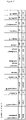
- Fig. 1 shows the results of further experiments conducted according to the General Reaction Procedure A as described in example 1A in summarized form.
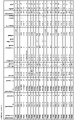
- Fig. 2 shows the results of further experiments conducted according to the General Reaction Procedure B as described in example 1B in summarized form.
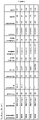
- Fig. 3 shows the results of further experiments conducted according to the General Reaction Procedure C as described in example 1C in summarized form.
- Example 1A Reference Example, not according to the invention:
- conversion refers to the ratio of the compound produced (product) to the starting material (educt) and it is a measure for the extent to which the educt has reacted. In other words, conversion refers to how much reactant was used up as a fraction or percentage of the theoretical amount;
- purity refers to the purity, in the form of the fraction of product compared to other compounds, as measured by gas chromatography analysis.
- the ideal value is 100%;
- yield refers to the amount of product obtained from the chemical reaction.
- the yields as given here are to be understood as theoretical maximum yields under the assumption that during purification no product is lost.
- the yields as summarized here are calculated by multiplication of the amount of crude product obtained with the purity as determined by gas chromatography (GC-Yield). The amount of product received divided by the maximum yield multiplied with 100 is the yield in %.
- Example 1B Reference Example, not according to the invention:
- reaction mixture was quenched by the addition of aqueous HCl (1 M, 50 ml) at 0 °C.
- the phases were separated and the aqueous layer extracted with Et 2 O (3 x 50 ml).
- the combined organic phases were dried over MgSO 4 , filtered and evaporated to dryness to give 17.15 g of yellow liquid containing 1-(perfluorohexyl)octane and dodecane.
- the GC analysis showed 68.5% 1-(perfluorohexyl)octane (yield: 11.75 g, 54.4%).
- Example 1D Performed according to General Reaction Procedure A: Addition of a Grignard compound Ro-Y (III) to a (perfluoro) alkyl halogenide CF 3 (CF 2 ) n (CH 2 ) m -X (II) as exemplified by the reaction of n-propyl magnesium chloride (nPrMgCl (IIIc)) to a mixture of F4H2I (F(CF 2 ) 4 (CH 2 ) 2 -I) of formula (IIc) in the presence of isoprene and CuCl 2 :
- the purities of F4H5 (compound la, perfluoro-butyl-pentane) obtained as the crude product when synthesized according to the method of present invention (Grignard route; reaction of 1-iodo-2-(perfluorobutyl)-ethane with n-propylmagnesium chloride or alternatively by reaction of 2-(perfluorobutyl)ethylmagnesium chloride with 1-iodo-propane) was compared to conventional 2-step synthesis starting with a radical addition followed reductive dehalogenation by zinc/gaseous HCl (Zn/HCl) or catalytic hydrogenation employing a palladium on charcoal (Pd/C) as the catalyst.
- Zn/HCl zinc/gaseous HCl
- Pd/C palladium on charcoal
Landscapes
- Chemical & Material Sciences (AREA)
- Organic Chemistry (AREA)
- Chemical Kinetics & Catalysis (AREA)
- Health & Medical Sciences (AREA)
- Engineering & Computer Science (AREA)
- Pharmacology & Pharmacy (AREA)
- Medicinal Chemistry (AREA)
- Nuclear Medicine, Radiotherapy & Molecular Imaging (AREA)
- Bioinformatics & Cheminformatics (AREA)
- General Chemical & Material Sciences (AREA)
- Life Sciences & Earth Sciences (AREA)
- Animal Behavior & Ethology (AREA)
- General Health & Medical Sciences (AREA)
- Public Health (AREA)
- Veterinary Medicine (AREA)
- Materials Engineering (AREA)
- Dermatology (AREA)
- Organic Low-Molecular-Weight Compounds And Preparation Thereof (AREA)
Claims (14)
- Verfahren zur Herstellung einer Verbindung der Formel (I)
F-(CF2)n-(CH2)m-Ro (I),
wobein für eine ganze Zahl von 2 bis 12 steht,m für 2 steht,Ro für ein lineares oder verzweigtes gesättigtes Alkyl steht und o für die Zahl von Kohlenstoffatomen steht,o für eine ganze Zahl von 1 bis 12 steht und wobeim + o für eine ganze Zahl von 3 bis 12 steht;umfassend das Umsetzen einer fluorierten Verbindung der Formel (II)
F-(CF2)n-(CH2)m-X (II),
wobeiX für MgCl, MgBr oder MgI steht undn und m wie in Formel (I) definiert sind,mit einer nichtfluorierten Verbindung der Formel (III)
Ro-Y (III),
wobeiY für Cl, Br oder I steht undRo wie in Formel (I) definiert ist. - Verfahren nach Anspruch 1, wobei die Verbindung der Formel (II) in situ hergestellt wird.
- Verfahren nach Anspruch 1 oder 2, wobei die Verbindung der Formel (II) durch Übertragung des Magnesiumhalogenid-Substituenten eines weiteren Grignard-Reagenzes auf die halogenierte Vorstufe der Verbindung der Formel (II) mit X = Cl, Br oder I gebildet wird.
- Verfahren nach einem der vorhergehenden Ansprüche, wobei die Verbindung der Formel (II) in Form ihrer halogenierten Vorstufen zugegeben wird und anschließend mit einem weiteren Grignard-Reagenz, das aus der Gruppe bestehend aus Isopropylmagnesiumchlorid, Isopropylmagnesiumbromid, Ethylmagnesiumchlorid, Ethylmagnesiumbromid, Phenylmagnesiumchlorid und Phenylmagnesiumbromid ausgewählt wird und vorzugsweise aus der Gruppe bestehend aus Isopropylmagnesiumchlorid, Isopropylmagnesiumbromid, Ethylmagnesiumchlorid und Ethylmagnesiumbromid ausgewählt wird, behandelt wird, wodurch die Verbindung der Formel (II) in situ gebildet wird.
- Verfahren nach Anspruch 4, wobei das weitere Grignard-Reagenz aus der Gruppe bestehend aus Isopropylmagnesiumchlorid, Isopropylmagnesiumbromid, Ethylmagnesiumchlorid und Ethylmagnesiumbromid ausgewählt wird.
- Verfahren nach den Ansprüchen 1 bis 5, wobei die Umsetzung in Gegenwart einer Übergangsmetallverbindung durchgeführt wird.
- Verfahren nach Anspruch 6, wobei es sich bei der Übergangsmetallverbindung um eine Kupferverbindung handelt.
- Verfahren nach einem der Ansprüche 1 bis 7, wobei die Umsetzung in Gegenwart einer 1,3-Dienverbindung durchgeführt wird.
- Verfahren nach Anspruch 8, wobei es sich bei der 1,3-Dienverbindung um Isopren handelt.
- Verfahren nach einem der Ansprüche 1 bis 9, wobeiRo für eine lineare gesättigte Alkylgruppe steht.
- Verfahren nach einem der Ansprüche 1 bis 10, wobein für 4, 5 oder 6 steht,m für 2 steht,o für eine ganze Zahl von 1 bis 8 steht undm + o für eine ganze Zahl von 4 bis 8 steht.
- Verfahren nach einem der Ansprüche 1 bis 10, wobein für 4 steht,m für 2 steht undo für 3 steht.
- Verfahren nach einem der Ansprüche 1 bis 10, wobein für 6 steht,m für 2 steht undo für 6 steht.
- Verfahren nach einem der vorhergehenden Ansprüche, wobeiX für MgCl, MgBr oder MgI steht undY für I steht.
Applications Claiming Priority (2)
| Application Number | Priority Date | Filing Date | Title |
|---|---|---|---|
| EP17175493 | 2017-06-12 | ||
| PCT/EP2018/065312 WO2018228975A1 (en) | 2017-06-12 | 2018-06-11 | Process for the preparation of semifluorinated alkanes using grignard reagents |
Publications (2)
| Publication Number | Publication Date |
|---|---|
| EP3638643A1 EP3638643A1 (de) | 2020-04-22 |
| EP3638643B1 true EP3638643B1 (de) | 2023-01-18 |
Family
ID=59257956
Family Applications (1)
| Application Number | Title | Priority Date | Filing Date |
|---|---|---|---|
| EP18729133.1A Active EP3638643B1 (de) | 2017-06-12 | 2018-06-11 | Verfahren zur herstellung von semifluorierten alkanen unter verwendung von grignard-reagenzien |
Country Status (3)
| Country | Link |
|---|---|
| US (1) | US20200339492A1 (de) |
| EP (1) | EP3638643B1 (de) |
| WO (1) | WO2018228975A1 (de) |
Families Citing this family (6)
| Publication number | Priority date | Publication date | Assignee | Title |
|---|---|---|---|---|
| JP7468536B2 (ja) * | 2019-09-20 | 2024-04-16 | Agc株式会社 | 含フッ素化合物の製造方法 |
| EP4288151A4 (de) | 2021-02-03 | 2025-01-01 | ADS Therapeutics LLC | Topische ophthalmologische zusammensetzungen |
| KR20230154905A (ko) | 2021-03-05 | 2023-11-09 | 에이지씨 가부시키가이샤 | 함불소 화합물의 제조 방법 및 함불소 화합물 |
| CN116940580A (zh) * | 2021-03-05 | 2023-10-24 | Agc株式会社 | 化合物、化合物的制造方法及表面处理剂的制造方法 |
| CN116964129A (zh) | 2021-03-05 | 2023-10-27 | Agc株式会社 | 含氟化合物的制造方法及表面处理剂的制造方法 |
| CN117603005B (zh) * | 2023-10-20 | 2025-12-26 | 上海应用技术大学 | 一种用于清除乳化硅油填充物的半氟烷烃及其制备方法和应用 |
Family Cites Families (7)
| Publication number | Priority date | Publication date | Assignee | Title |
|---|---|---|---|---|
| DE392552C (de) | 1922-07-04 | 1924-03-22 | Dietrich Pannen | Durch Hitzdraht gesteuerter, infolge eines Kraftschlusses sich selbsttaetig oeffnender UEberstromschalter |
| DE19536504C2 (de) | 1995-09-29 | 1999-09-23 | H Meinert | Verwendung fluorierter Alkane |
| DE19719280C1 (de) * | 1997-05-07 | 1998-09-24 | Pharm Pur Gmbh | Fluorierte Alkane und ihre Verwendungen |
| US6656446B1 (en) | 1999-04-29 | 2003-12-02 | University Of Pittsburgh | Synthesis of hydrogen peroxide |
| JP2007526360A (ja) | 2004-01-30 | 2007-09-13 | グレート・レークス・ケミカル・コーポレーション | 製造方法並びにシステム、組成物、界面活性剤、モノマー単位、金属錯体、燐酸エステル、グリコール、水性皮膜形成フォーム、及びフォーム安定剤 |
| DE102010022567A1 (de) * | 2010-06-02 | 2011-12-08 | Fluoron Gmbh | Zubereitung |
| CN106316777B (zh) * | 2016-08-17 | 2019-01-08 | 巨化集团技术中心 | 一种2,3,3,3-四氟丙烯的制备方法 |
-
2018
- 2018-06-11 EP EP18729133.1A patent/EP3638643B1/de active Active
- 2018-06-11 US US16/622,226 patent/US20200339492A1/en not_active Abandoned
- 2018-06-11 WO PCT/EP2018/065312 patent/WO2018228975A1/en not_active Ceased
Also Published As
| Publication number | Publication date |
|---|---|
| EP3638643A1 (de) | 2020-04-22 |
| WO2018228975A1 (en) | 2018-12-20 |
| US20200339492A1 (en) | 2020-10-29 |
Similar Documents
| Publication | Publication Date | Title |
|---|---|---|
| US20200339492A1 (en) | Process for the preparation of semifluorinated alkanes using grignard reagents | |
| US6262126B1 (en) | Semi-fluorinated alkanes and their use | |
| EP0759742B1 (de) | Fluorcarbonetherhybriden enthaltende physiologich akzeptabele emulsionen und verwendungsverfahren | |
| DE69105981T2 (de) | Neue vitamin d derivate. | |
| DE69308852T2 (de) | Vitamin d derivate | |
| EP2803657A1 (de) | Kristallform von prostaglandinanaloga sowie herstellungsverfahren dafür und verwendung davon | |
| JP3553591B2 (ja) | 新規ビタミンd類似体 | |
| JP2021073173A (ja) | カンタリジンおよび生理活性カンタリジン誘導体の商業的に実現可能な合成 | |
| US10758483B2 (en) | Fluoropolymer emulsions with perhalogenated stabilizer for the delivery of hydrophobic drugs | |
| CN109562186A (zh) | 与炎症的专门促消退介质的盐有关的组合物和方法 | |
| JPH03204853A (ja) | プロスタグランジン類縁体およびその脂肪乳剤 | |
| EP2730559A1 (de) | Deuteriertes phenylpropionsäurederivat | |
| DE69008518T2 (de) | Vitamin d analoge. | |
| JPH10502940A (ja) | ビタミンd誘導体の皮膚科学的使用 | |
| AU776258B2 (en) | Heteroatom-interrupted analogs of 15-hydroxyeicosatetraenoic acid and methods of use | |
| JP2006503880A (ja) | ビタミンd類似体、該類似体を含んで成る組成物およびその使用 | |
| US20170112804A1 (en) | Lipoic acid and derivatives thereof for the treatment of cystinuria | |
| EP4056555A1 (de) | Verfahren zur reinigung von tafluprost | |
| JPS632988A (ja) | 1,3−ジチオ−ル−2−イリデン スルホニル酢酸誘導体 | |
| WO2001056982A1 (en) | Vitamin d-derivatives and their use in treating osteoporosis and related bone disorders | |
| WO2026006439A1 (en) | Method for preparing compounds containing fluorine | |
| JPS61267571A (ja) | 2−(4−クロルフエノキシ)−2−メチルプロピオン酸エステル及びこれを有効成分とする血中脂質低下剤 | |
| JPH07277983A (ja) | プロスタグランジンe1関連化合物含有坐剤およびその医薬用途 | |
| JPH05105625A (ja) | 酸素運搬輸液 | |
| JP2004522715A (ja) | レチフェロール誘導体、及び皮膚疾患又は光損傷と関連した状態の処置におけるそれらの使用 |
Legal Events
| Date | Code | Title | Description |
|---|---|---|---|
| STAA | Information on the status of an ep patent application or granted ep patent |
Free format text: STATUS: UNKNOWN |
|
| STAA | Information on the status of an ep patent application or granted ep patent |
Free format text: STATUS: THE INTERNATIONAL PUBLICATION HAS BEEN MADE |
|
| PUAI | Public reference made under article 153(3) epc to a published international application that has entered the european phase |
Free format text: ORIGINAL CODE: 0009012 |
|
| STAA | Information on the status of an ep patent application or granted ep patent |
Free format text: STATUS: REQUEST FOR EXAMINATION WAS MADE |
|
| 17P | Request for examination filed |
Effective date: 20200113 |
|
| AK | Designated contracting states |
Kind code of ref document: A1 Designated state(s): AL AT BE BG CH CY CZ DE DK EE ES FI FR GB GR HR HU IE IS IT LI LT LU LV MC MK MT NL NO PL PT RO RS SE SI SK SM TR |
|
| AX | Request for extension of the european patent |
Extension state: BA ME |
|
| DAV | Request for validation of the european patent (deleted) | ||
| DAX | Request for extension of the european patent (deleted) | ||
| STAA | Information on the status of an ep patent application or granted ep patent |
Free format text: STATUS: EXAMINATION IS IN PROGRESS |
|
| 17Q | First examination report despatched |
Effective date: 20201203 |
|
| GRAP | Despatch of communication of intention to grant a patent |
Free format text: ORIGINAL CODE: EPIDOSNIGR1 |
|
| STAA | Information on the status of an ep patent application or granted ep patent |
Free format text: STATUS: GRANT OF PATENT IS INTENDED |
|
| INTG | Intention to grant announced |
Effective date: 20220316 |
|
| GRAJ | Information related to disapproval of communication of intention to grant by the applicant or resumption of examination proceedings by the epo deleted |
Free format text: ORIGINAL CODE: EPIDOSDIGR1 |
|
| STAA | Information on the status of an ep patent application or granted ep patent |
Free format text: STATUS: EXAMINATION IS IN PROGRESS |
|
| GRAP | Despatch of communication of intention to grant a patent |
Free format text: ORIGINAL CODE: EPIDOSNIGR1 |
|
| INTC | Intention to grant announced (deleted) | ||
| STAA | Information on the status of an ep patent application or granted ep patent |
Free format text: STATUS: GRANT OF PATENT IS INTENDED |
|
| INTG | Intention to grant announced |
Effective date: 20220811 |
|
| GRAS | Grant fee paid |
Free format text: ORIGINAL CODE: EPIDOSNIGR3 |
|
| GRAA | (expected) grant |
Free format text: ORIGINAL CODE: 0009210 |
|
| STAA | Information on the status of an ep patent application or granted ep patent |
Free format text: STATUS: THE PATENT HAS BEEN GRANTED |
|
| AK | Designated contracting states |
Kind code of ref document: B1 Designated state(s): AL AT BE BG CH CY CZ DE DK EE ES FI FR GB GR HR HU IE IS IT LI LT LU LV MC MK MT NL NO PL PT RO RS SE SI SK SM TR |
|
| REG | Reference to a national code |
Ref country code: GB Ref legal event code: FG4D |
|
| REG | Reference to a national code |
Ref country code: DE Ref legal event code: R096 Ref document number: 602018045510 Country of ref document: DE |
|
| REG | Reference to a national code |
Ref country code: CH Ref legal event code: EP |
|
| REG | Reference to a national code |
Ref country code: AT Ref legal event code: REF Ref document number: 1544618 Country of ref document: AT Kind code of ref document: T Effective date: 20230215 Ref country code: IE Ref legal event code: FG4D |
|
| REG | Reference to a national code |
Ref country code: NL Ref legal event code: FP |
|
| REG | Reference to a national code |
Ref country code: LT Ref legal event code: MG9D |
|
| REG | Reference to a national code |
Ref country code: AT Ref legal event code: MK05 Ref document number: 1544618 Country of ref document: AT Kind code of ref document: T Effective date: 20230118 |
|
| P01 | Opt-out of the competence of the unified patent court (upc) registered |
Effective date: 20230527 |
|
| PG25 | Lapsed in a contracting state [announced via postgrant information from national office to epo] |
Ref country code: RS Free format text: LAPSE BECAUSE OF FAILURE TO SUBMIT A TRANSLATION OF THE DESCRIPTION OR TO PAY THE FEE WITHIN THE PRESCRIBED TIME-LIMIT Effective date: 20230118 Ref country code: PT Free format text: LAPSE BECAUSE OF FAILURE TO SUBMIT A TRANSLATION OF THE DESCRIPTION OR TO PAY THE FEE WITHIN THE PRESCRIBED TIME-LIMIT Effective date: 20230518 Ref country code: NO Free format text: LAPSE BECAUSE OF FAILURE TO SUBMIT A TRANSLATION OF THE DESCRIPTION OR TO PAY THE FEE WITHIN THE PRESCRIBED TIME-LIMIT Effective date: 20230418 Ref country code: LV Free format text: LAPSE BECAUSE OF FAILURE TO SUBMIT A TRANSLATION OF THE DESCRIPTION OR TO PAY THE FEE WITHIN THE PRESCRIBED TIME-LIMIT Effective date: 20230118 Ref country code: LT Free format text: LAPSE BECAUSE OF FAILURE TO SUBMIT A TRANSLATION OF THE DESCRIPTION OR TO PAY THE FEE WITHIN THE PRESCRIBED TIME-LIMIT Effective date: 20230118 Ref country code: HR Free format text: LAPSE BECAUSE OF FAILURE TO SUBMIT A TRANSLATION OF THE DESCRIPTION OR TO PAY THE FEE WITHIN THE PRESCRIBED TIME-LIMIT Effective date: 20230118 Ref country code: ES Free format text: LAPSE BECAUSE OF FAILURE TO SUBMIT A TRANSLATION OF THE DESCRIPTION OR TO PAY THE FEE WITHIN THE PRESCRIBED TIME-LIMIT Effective date: 20230118 Ref country code: AT Free format text: LAPSE BECAUSE OF FAILURE TO SUBMIT A TRANSLATION OF THE DESCRIPTION OR TO PAY THE FEE WITHIN THE PRESCRIBED TIME-LIMIT Effective date: 20230118 |
|
| PG25 | Lapsed in a contracting state [announced via postgrant information from national office to epo] |
Ref country code: SE Free format text: LAPSE BECAUSE OF FAILURE TO SUBMIT A TRANSLATION OF THE DESCRIPTION OR TO PAY THE FEE WITHIN THE PRESCRIBED TIME-LIMIT Effective date: 20230118 Ref country code: PL Free format text: LAPSE BECAUSE OF FAILURE TO SUBMIT A TRANSLATION OF THE DESCRIPTION OR TO PAY THE FEE WITHIN THE PRESCRIBED TIME-LIMIT Effective date: 20230118 Ref country code: IS Free format text: LAPSE BECAUSE OF FAILURE TO SUBMIT A TRANSLATION OF THE DESCRIPTION OR TO PAY THE FEE WITHIN THE PRESCRIBED TIME-LIMIT Effective date: 20230518 Ref country code: GR Free format text: LAPSE BECAUSE OF FAILURE TO SUBMIT A TRANSLATION OF THE DESCRIPTION OR TO PAY THE FEE WITHIN THE PRESCRIBED TIME-LIMIT Effective date: 20230419 Ref country code: FI Free format text: LAPSE BECAUSE OF FAILURE TO SUBMIT A TRANSLATION OF THE DESCRIPTION OR TO PAY THE FEE WITHIN THE PRESCRIBED TIME-LIMIT Effective date: 20230118 |
|
| REG | Reference to a national code |
Ref country code: DE Ref legal event code: R097 Ref document number: 602018045510 Country of ref document: DE |
|
| PG25 | Lapsed in a contracting state [announced via postgrant information from national office to epo] |
Ref country code: SM Free format text: LAPSE BECAUSE OF FAILURE TO SUBMIT A TRANSLATION OF THE DESCRIPTION OR TO PAY THE FEE WITHIN THE PRESCRIBED TIME-LIMIT Effective date: 20230118 Ref country code: RO Free format text: LAPSE BECAUSE OF FAILURE TO SUBMIT A TRANSLATION OF THE DESCRIPTION OR TO PAY THE FEE WITHIN THE PRESCRIBED TIME-LIMIT Effective date: 20230118 Ref country code: EE Free format text: LAPSE BECAUSE OF FAILURE TO SUBMIT A TRANSLATION OF THE DESCRIPTION OR TO PAY THE FEE WITHIN THE PRESCRIBED TIME-LIMIT Effective date: 20230118 Ref country code: DK Free format text: LAPSE BECAUSE OF FAILURE TO SUBMIT A TRANSLATION OF THE DESCRIPTION OR TO PAY THE FEE WITHIN THE PRESCRIBED TIME-LIMIT Effective date: 20230118 Ref country code: CZ Free format text: LAPSE BECAUSE OF FAILURE TO SUBMIT A TRANSLATION OF THE DESCRIPTION OR TO PAY THE FEE WITHIN THE PRESCRIBED TIME-LIMIT Effective date: 20230118 |
|
| PLBE | No opposition filed within time limit |
Free format text: ORIGINAL CODE: 0009261 |
|
| STAA | Information on the status of an ep patent application or granted ep patent |
Free format text: STATUS: NO OPPOSITION FILED WITHIN TIME LIMIT |
|
| PG25 | Lapsed in a contracting state [announced via postgrant information from national office to epo] |
Ref country code: SK Free format text: LAPSE BECAUSE OF FAILURE TO SUBMIT A TRANSLATION OF THE DESCRIPTION OR TO PAY THE FEE WITHIN THE PRESCRIBED TIME-LIMIT Effective date: 20230118 |
|
| 26N | No opposition filed |
Effective date: 20231019 |
|
| PG25 | Lapsed in a contracting state [announced via postgrant information from national office to epo] |
Ref country code: MC Free format text: LAPSE BECAUSE OF FAILURE TO SUBMIT A TRANSLATION OF THE DESCRIPTION OR TO PAY THE FEE WITHIN THE PRESCRIBED TIME-LIMIT Effective date: 20230118 |
|
| PG25 | Lapsed in a contracting state [announced via postgrant information from national office to epo] |
Ref country code: SI Free format text: LAPSE BECAUSE OF FAILURE TO SUBMIT A TRANSLATION OF THE DESCRIPTION OR TO PAY THE FEE WITHIN THE PRESCRIBED TIME-LIMIT Effective date: 20230118 Ref country code: MC Free format text: LAPSE BECAUSE OF FAILURE TO SUBMIT A TRANSLATION OF THE DESCRIPTION OR TO PAY THE FEE WITHIN THE PRESCRIBED TIME-LIMIT Effective date: 20230118 |
|
| REG | Reference to a national code |
Ref country code: BE Ref legal event code: MM Effective date: 20230630 |
|
| PG25 | Lapsed in a contracting state [announced via postgrant information from national office to epo] |
Ref country code: LU Free format text: LAPSE BECAUSE OF NON-PAYMENT OF DUE FEES Effective date: 20230611 |
|
| REG | Reference to a national code |
Ref country code: IE Ref legal event code: MM4A |
|
| PG25 | Lapsed in a contracting state [announced via postgrant information from national office to epo] |
Ref country code: LU Free format text: LAPSE BECAUSE OF NON-PAYMENT OF DUE FEES Effective date: 20230611 |
|
| PG25 | Lapsed in a contracting state [announced via postgrant information from national office to epo] |
Ref country code: IE Free format text: LAPSE BECAUSE OF NON-PAYMENT OF DUE FEES Effective date: 20230611 |
|
| PG25 | Lapsed in a contracting state [announced via postgrant information from national office to epo] |
Ref country code: IE Free format text: LAPSE BECAUSE OF NON-PAYMENT OF DUE FEES Effective date: 20230611 |
|
| PG25 | Lapsed in a contracting state [announced via postgrant information from national office to epo] |
Ref country code: IT Free format text: LAPSE BECAUSE OF FAILURE TO SUBMIT A TRANSLATION OF THE DESCRIPTION OR TO PAY THE FEE WITHIN THE PRESCRIBED TIME-LIMIT Effective date: 20230118 Ref country code: BE Free format text: LAPSE BECAUSE OF NON-PAYMENT OF DUE FEES Effective date: 20230630 |
|
| PG25 | Lapsed in a contracting state [announced via postgrant information from national office to epo] |
Ref country code: BG Free format text: LAPSE BECAUSE OF FAILURE TO SUBMIT A TRANSLATION OF THE DESCRIPTION OR TO PAY THE FEE WITHIN THE PRESCRIBED TIME-LIMIT Effective date: 20230118 |
|
| PG25 | Lapsed in a contracting state [announced via postgrant information from national office to epo] |
Ref country code: BG Free format text: LAPSE BECAUSE OF FAILURE TO SUBMIT A TRANSLATION OF THE DESCRIPTION OR TO PAY THE FEE WITHIN THE PRESCRIBED TIME-LIMIT Effective date: 20230118 |
|
| PG25 | Lapsed in a contracting state [announced via postgrant information from national office to epo] |
Ref country code: CY Free format text: LAPSE BECAUSE OF FAILURE TO SUBMIT A TRANSLATION OF THE DESCRIPTION OR TO PAY THE FEE WITHIN THE PRESCRIBED TIME-LIMIT; INVALID AB INITIO Effective date: 20180611 |
|
| PG25 | Lapsed in a contracting state [announced via postgrant information from national office to epo] |
Ref country code: HU Free format text: LAPSE BECAUSE OF FAILURE TO SUBMIT A TRANSLATION OF THE DESCRIPTION OR TO PAY THE FEE WITHIN THE PRESCRIBED TIME-LIMIT; INVALID AB INITIO Effective date: 20180611 |
|
| PGFP | Annual fee paid to national office [announced via postgrant information from national office to epo] |
Ref country code: CH Payment date: 20250701 Year of fee payment: 8 |
|
| PG25 | Lapsed in a contracting state [announced via postgrant information from national office to epo] |
Ref country code: TR Free format text: LAPSE BECAUSE OF FAILURE TO SUBMIT A TRANSLATION OF THE DESCRIPTION OR TO PAY THE FEE WITHIN THE PRESCRIBED TIME-LIMIT Effective date: 20230118 |
|
| REG | Reference to a national code |
Ref country code: CH Ref legal event code: R18 Free format text: ST27 STATUS EVENT CODE: U-0-0-R10-R18 (AS PROVIDED BY THE NATIONAL OFFICE) Effective date: 20260521 |
|
| REG | Reference to a national code |
Ref country code: CH Ref legal event code: U11 Free format text: ST27 STATUS EVENT CODE: U-0-0-U10-U11 (AS PROVIDED BY THE NATIONAL OFFICE) Effective date: 20260701 |
|
| PGFP | Annual fee paid to national office [announced via postgrant information from national office to epo] |
Ref country code: GB Payment date: 20260626 Year of fee payment: 9 |
|
| PGFP | Annual fee paid to national office [announced via postgrant information from national office to epo] |
Ref country code: DE Payment date: 20260622 Year of fee payment: 9 |
|
| PGFP | Annual fee paid to national office [announced via postgrant information from national office to epo] |
Ref country code: NL Payment date: 20260618 Year of fee payment: 9 |
|
| PGFP | Annual fee paid to national office [announced via postgrant information from national office to epo] |
Ref country code: FR Payment date: 20260626 Year of fee payment: 9 |