EP3661720B2 - Procédé de thermorégulation variothermique d'outils de moulage par injection - Google Patents
Procédé de thermorégulation variothermique d'outils de moulage par injection Download PDFInfo
- Publication number
- EP3661720B2 EP3661720B2 EP18739510.8A EP18739510A EP3661720B2 EP 3661720 B2 EP3661720 B2 EP 3661720B2 EP 18739510 A EP18739510 A EP 18739510A EP 3661720 B2 EP3661720 B2 EP 3661720B2
- Authority
- EP
- European Patent Office
- Prior art keywords
- temperature
- heating
- cooling
- time
- temperature control
- Prior art date
- Legal status (The legal status is an assumption and is not a legal conclusion. Google has not performed a legal analysis and makes no representation as to the accuracy of the status listed.)
- Active
Links
Images


Classifications
-
- B—PERFORMING OPERATIONS; TRANSPORTING
- B29—WORKING OF PLASTICS; WORKING OF SUBSTANCES IN A PLASTIC STATE IN GENERAL
- B29C—SHAPING OR JOINING OF PLASTICS; SHAPING OF MATERIAL IN A PLASTIC STATE, NOT OTHERWISE PROVIDED FOR; AFTER-TREATMENT OF THE SHAPED PRODUCTS, e.g. REPAIRING
- B29C45/00—Injection moulding, i.e. forcing the required volume of moulding material through a nozzle into a closed mould; Apparatus therefor
- B29C45/17—Component parts, details or accessories; Auxiliary operations
- B29C45/76—Measuring, controlling or regulating
- B29C45/78—Measuring, controlling or regulating of temperature
-
- B—PERFORMING OPERATIONS; TRANSPORTING
- B29—WORKING OF PLASTICS; WORKING OF SUBSTANCES IN A PLASTIC STATE IN GENERAL
- B29C—SHAPING OR JOINING OF PLASTICS; SHAPING OF MATERIAL IN A PLASTIC STATE, NOT OTHERWISE PROVIDED FOR; AFTER-TREATMENT OF THE SHAPED PRODUCTS, e.g. REPAIRING
- B29C35/00—Heating, cooling or curing, e.g. crosslinking or vulcanising; Apparatus therefor
- B29C35/007—Tempering units for temperature control of moulds or cores, e.g. comprising heat exchangers, controlled valves, temperature-controlled circuits for fluids
-
- B—PERFORMING OPERATIONS; TRANSPORTING
- B29—WORKING OF PLASTICS; WORKING OF SUBSTANCES IN A PLASTIC STATE IN GENERAL
- B29C—SHAPING OR JOINING OF PLASTICS; SHAPING OF MATERIAL IN A PLASTIC STATE, NOT OTHERWISE PROVIDED FOR; AFTER-TREATMENT OF THE SHAPED PRODUCTS, e.g. REPAIRING
- B29C45/00—Injection moulding, i.e. forcing the required volume of moulding material through a nozzle into a closed mould; Apparatus therefor
- B29C45/17—Component parts, details or accessories; Auxiliary operations
- B29C45/72—Heating or cooling
- B29C45/73—Heating or cooling of the mould
-
- B—PERFORMING OPERATIONS; TRANSPORTING
- B29—WORKING OF PLASTICS; WORKING OF SUBSTANCES IN A PLASTIC STATE IN GENERAL
- B29C—SHAPING OR JOINING OF PLASTICS; SHAPING OF MATERIAL IN A PLASTIC STATE, NOT OTHERWISE PROVIDED FOR; AFTER-TREATMENT OF THE SHAPED PRODUCTS, e.g. REPAIRING
- B29C45/00—Injection moulding, i.e. forcing the required volume of moulding material through a nozzle into a closed mould; Apparatus therefor
- B29C45/17—Component parts, details or accessories; Auxiliary operations
- B29C45/72—Heating or cooling
- B29C45/73—Heating or cooling of the mould
- B29C2045/7393—Heating or cooling of the mould alternately heating and cooling
-
- B—PERFORMING OPERATIONS; TRANSPORTING
- B29—WORKING OF PLASTICS; WORKING OF SUBSTANCES IN A PLASTIC STATE IN GENERAL
- B29C—SHAPING OR JOINING OF PLASTICS; SHAPING OF MATERIAL IN A PLASTIC STATE, NOT OTHERWISE PROVIDED FOR; AFTER-TREATMENT OF THE SHAPED PRODUCTS, e.g. REPAIRING
- B29C2945/00—Indexing scheme relating to injection moulding, i.e. forcing the required volume of moulding material through a nozzle into a closed mould
- B29C2945/76—Measuring, controlling or regulating
- B29C2945/76003—Measured parameter
- B29C2945/7604—Temperature
-
- B—PERFORMING OPERATIONS; TRANSPORTING
- B29—WORKING OF PLASTICS; WORKING OF SUBSTANCES IN A PLASTIC STATE IN GENERAL
- B29C—SHAPING OR JOINING OF PLASTICS; SHAPING OF MATERIAL IN A PLASTIC STATE, NOT OTHERWISE PROVIDED FOR; AFTER-TREATMENT OF THE SHAPED PRODUCTS, e.g. REPAIRING
- B29C2945/00—Indexing scheme relating to injection moulding, i.e. forcing the required volume of moulding material through a nozzle into a closed mould
- B29C2945/76—Measuring, controlling or regulating
- B29C2945/76177—Location of measurement
- B29C2945/76254—Mould
- B29C2945/76257—Mould cavity
-
- B—PERFORMING OPERATIONS; TRANSPORTING
- B29—WORKING OF PLASTICS; WORKING OF SUBSTANCES IN A PLASTIC STATE IN GENERAL
- B29C—SHAPING OR JOINING OF PLASTICS; SHAPING OF MATERIAL IN A PLASTIC STATE, NOT OTHERWISE PROVIDED FOR; AFTER-TREATMENT OF THE SHAPED PRODUCTS, e.g. REPAIRING
- B29C2945/00—Indexing scheme relating to injection moulding, i.e. forcing the required volume of moulding material through a nozzle into a closed mould
- B29C2945/76—Measuring, controlling or regulating
- B29C2945/76177—Location of measurement
- B29C2945/76254—Mould
- B29C2945/76257—Mould cavity
- B29C2945/7626—Mould cavity cavity walls
-
- B—PERFORMING OPERATIONS; TRANSPORTING
- B29—WORKING OF PLASTICS; WORKING OF SUBSTANCES IN A PLASTIC STATE IN GENERAL
- B29C—SHAPING OR JOINING OF PLASTICS; SHAPING OF MATERIAL IN A PLASTIC STATE, NOT OTHERWISE PROVIDED FOR; AFTER-TREATMENT OF THE SHAPED PRODUCTS, e.g. REPAIRING
- B29C2945/00—Indexing scheme relating to injection moulding, i.e. forcing the required volume of moulding material through a nozzle into a closed mould
- B29C2945/76—Measuring, controlling or regulating
- B29C2945/76494—Controlled parameter
- B29C2945/76531—Temperature
-
- B—PERFORMING OPERATIONS; TRANSPORTING
- B29—WORKING OF PLASTICS; WORKING OF SUBSTANCES IN A PLASTIC STATE IN GENERAL
- B29C—SHAPING OR JOINING OF PLASTICS; SHAPING OF MATERIAL IN A PLASTIC STATE, NOT OTHERWISE PROVIDED FOR; AFTER-TREATMENT OF THE SHAPED PRODUCTS, e.g. REPAIRING
- B29C2945/00—Indexing scheme relating to injection moulding, i.e. forcing the required volume of moulding material through a nozzle into a closed mould
- B29C2945/76—Measuring, controlling or regulating
- B29C2945/76655—Location of control
- B29C2945/76732—Mould
- B29C2945/76735—Mould cavity
-
- B—PERFORMING OPERATIONS; TRANSPORTING
- B29—WORKING OF PLASTICS; WORKING OF SUBSTANCES IN A PLASTIC STATE IN GENERAL
- B29C—SHAPING OR JOINING OF PLASTICS; SHAPING OF MATERIAL IN A PLASTIC STATE, NOT OTHERWISE PROVIDED FOR; AFTER-TREATMENT OF THE SHAPED PRODUCTS, e.g. REPAIRING
- B29C2945/00—Indexing scheme relating to injection moulding, i.e. forcing the required volume of moulding material through a nozzle into a closed mould
- B29C2945/76—Measuring, controlling or regulating
- B29C2945/76655—Location of control
- B29C2945/76732—Mould
- B29C2945/76735—Mould cavity
- B29C2945/76739—Mould cavity cavity walls
-
- B—PERFORMING OPERATIONS; TRANSPORTING
- B29—WORKING OF PLASTICS; WORKING OF SUBSTANCES IN A PLASTIC STATE IN GENERAL
- B29C—SHAPING OR JOINING OF PLASTICS; SHAPING OF MATERIAL IN A PLASTIC STATE, NOT OTHERWISE PROVIDED FOR; AFTER-TREATMENT OF THE SHAPED PRODUCTS, e.g. REPAIRING
- B29C2945/00—Indexing scheme relating to injection moulding, i.e. forcing the required volume of moulding material through a nozzle into a closed mould
- B29C2945/76—Measuring, controlling or regulating
- B29C2945/76929—Controlling method
- B29C2945/76936—The operating conditions are corrected in the next phase or cycle
-
- B—PERFORMING OPERATIONS; TRANSPORTING
- B29—WORKING OF PLASTICS; WORKING OF SUBSTANCES IN A PLASTIC STATE IN GENERAL
- B29C—SHAPING OR JOINING OF PLASTICS; SHAPING OF MATERIAL IN A PLASTIC STATE, NOT OTHERWISE PROVIDED FOR; AFTER-TREATMENT OF THE SHAPED PRODUCTS, e.g. REPAIRING
- B29C2945/00—Indexing scheme relating to injection moulding, i.e. forcing the required volume of moulding material through a nozzle into a closed mould
- B29C2945/76—Measuring, controlling or regulating
- B29C2945/76929—Controlling method
- B29C2945/76939—Using stored or historical data sets
- B29C2945/76949—Using stored or historical data sets using a learning system, i.e. the system accumulates experience from previous occurrences, e.g. adaptive control
Definitions
- the invention relates to a method and a device for the variothermal temperature control of injection molds.
- a mold temperature control system which, by mixing two heat media within a mold temperature control device, is able to provide heat media of different temperatures for the injection mold in a short time.
- a method and device for the variothermal temperature control of injection molds is known, in which two temperature media with different temperatures are kept ready and alternately pumped through a consumer, e.g., a mold.
- the warmer temperature control medium and the colder temperature control medium are kept ready directly at or in the consumer and meet there, either directly or with the interposition of a check valve, so that they are in direct or indirect contact with each other.
- the device disclosed for this purpose provides the apparatus required to carry out the method.
- variothermal temperature control This is achieved by utilizing an additional temperature control circuit at a lower temperature level to actively cool the cavity and/or parts of it and thus accelerate heat dissipation from the molded part. In addition, it may be necessary to cool the component to a lower temperature level for better demoldability.
- variothermal-tempered mold inserts are ideally designed with a contour-following, cavity-near temperature control system to reduce the variothermal mass as much as possible. It is therefore desirable to arrange heating channels or cooling channels, for example, very close to the cavity in the wall so that high dynamics can be achieved due to thin mold walls.
- an intermediate storage tank is used in water-water and oil-oil systems to hydraulically separate the tempering medium in the closed heating and cooling circuits and to avoid mixing of hot and cold medium wherever possible. What they have in common is that energy must be cyclically supplied to the tool and then removed from the tool again.
- the dynamics of a mold operated variothermally are essentially determined by the flow temperature, the flow rate per unit time, the pressure of the medium, the arrangement of the temperature control channels and the heating output of the temperature control devices, as well as the mass of the mold to be variothermally controlled. None of the water-water variotherm systems mentioned offers the option of regulating the mold wall temperature. A hot or cold medium is simply sent into the mold circuit at a specific, predetermined time. The change in the mold wall temperature is therefore merely controlled. However, it makes sense for every mold for variotherm operation to have a temperature sensor on the mold wall. Temperature control at this location is crucial from a process engineering perspective.
- a device and a method for user-specific monitoring and control of a production process namely an injection molding production process, are known.
- the method teaches specifying a target value of at least one processing control variable in an input step within an extrusion or injection molding process.
- a predetermined processing monitoring variable is determined from the at least one predetermined processing control variable.
- a value of at least one processing monitoring variable in particular the actual, target, or average value, the value integrated since the start of the process and/or its history and/or its trend, is output.
- the injection molding tool has means for storing parameters, means for evaluating the parameters, means for generating a message based on the evaluation of the parameters, and means for transmitting the message.
- the object of the invention is to provide a method for the variothermal temperature control of injection molds, which allows a significantly improved process control with significantly improved component qualities, even when boundary conditions, such as fluctuations in the melt temperature and ambient parameters such as the hall temperature or the like, fluctuate.
- the process should be able to independently adapt the temperature control of the injection molds to changing parameters during the production process in order to ensure improved quality consistency of the molded parts.
- the system to be temperature-controlled is characterized on a system-specific basis, depending on the temperature control device used and the component-specific injection mold.
- a target temperature profile of the injection mold is controlled. This target temperature profile is reflected in system-specific control values, which are used to control actuators of the temperature control device in order to achieve the target temperature profile.
- the temperature of the injection mold is then controlled during a production phase in which molded parts are manufactured using the injection mold. This usually results in deviations between the actual temperature profile of the injection mold and the target temperature profile of the injection mold. These deviations are determined during the production phase, starting with the first cycle of the production phase. With knowledge of the temperature control characteristics of the system to be temperature controlled, which were determined in the learning phase, corrected control values can be calculated to a good approximation from the deviations between the actual temperature profile of the injection mold and the target temperature profile of the injection mold. The subsequent production process, e.g. the second production process following the first production process, is then carried out using these corrected control values.
- An injection molding machine operating according to the method according to the invention can thus independently, i.e. fully automatically, ensure optimal variothermal temperature control even over a longer period of time during a production phase.
- the method according to the invention can be advantageously used regardless of the type of heating and/or cooling devices. This also allows for a great deal of variability in the applicability of the method according to the invention in different injection mold types or injection mold concepts.
- control times for heating and/or cooling devices are determined as control values and used later on, it is of course possible to use parameters other than the control time depending on the heating and/or cooling devices used.
- parameters other than the control time depending on the heating and/or cooling devices used.
- electrical heating and/or cooling devices it is entirely possible to use the current strengths or other parameters that influence the heating/cooling output of the heating/cooling device used instead of the control times.
- heating and/or cooling devices that use a heating and/or cooling medium it is also possible to provide measures that influence the flow rate of the medium instead of the control time, which is usually used to influence the flow duration of the heating and/or cooling medium. This can, if necessary, result in control values in the form of control signals for corresponding pumps or other equipment that influences the volume flow of the medium.
- step A) of the method according to the invention or the sequence of steps A1) to A3), during the learning phase without filling the injection mold with molding compound. This ensures that only the temperature control characteristics of the system to be temperature-controlled can be determined, without the influence of the melt being able to impair this determination.
- Another advantage is that such a determination of the temperature control characteristics can be carried out in a standardized test setup, for example. Mounting the system to be temperature-controlled on an injection molding machine is not required. Thus, the temperature control characteristics of the system to be temperature-controlled can be determined under laboratory conditions, for example, without potentially adverse and fluctuating external conditions.
- control values determined in such a standardized test setup for the system to be tempered during the learning process as temperature-control-system-specific control values to the system to be tempered and, if necessary, to store them appropriately.
- the system to be tempered i.e., at least the injection mold and the temperature control device, can then be easily operated to a good approximation, for example, during initial commissioning on an injection molding machine, and the production process can begin immediately.
- a further iterative approximation to the specified ideal temperature profile in the injection mold then takes place - as described above.
- a minimum achievable wall temperature (T min ) of a cavity of the injection mold is also determined and stored.
- This measure represents a first step toward limiting the temperature control characteristics of the system to be tempered with regard to the minimum achievable temperatures.
- T min and T max variothermal temperature control of the system to be tempered, in particular the injection mold, can thus be achieved.
- This measure and in particular depending on the resulting delay time tu heat, allows the temperature control dynamics of the system to be temperature-controlled to be determined, which represents, among other things, a key aspect of the overall temperature control characteristics.
- a specific time period for the operation of the heating device is calculated in order to get from the minimum temperature (T min ) to the average temperature (T Basis ), whereby the delay time (tu heat ) is already taken into account and thus the determined control time already takes into account temperature dynamic aspects of the system to be tempered.
- a time period is measured until no further significant temperature change occurs at the tool wall sensor, whereby a temperature (T basisheat ) and a post-oscillation time (dead time) (t Basisheatdead ) are measured and stored.
- T Basisheaterror T Basisheat ⁇ T Basis
- T Basiscool error T Basis ⁇ T Basiscool
- time t process1 For a more precise determination of the time calculation of time t process1 , it is recommended to perform additional processes analogously and obtain a large number of iteratively improved times t process1 . In particular, multiple executions have proven advantageous for determining the time t process1 for a pulse heating process or a pulse cooling process.
- This measure allows a modified starting temperature to be determined, whether higher or lower than a corresponding target starting reference temperature.
- Such an initial temperature at the beginning or end of the process has a direct influence on the activation times of the heating and/or cooling device for the next, subsequent production process.
- the sum of the control time of the previous process (t process(x-1) ), the time (t startoffset ) of the current process and the time (t endOffsetx-1 ) of the previous process is expediently determined.
- a device suitable for carrying out the method according to the invention is a device which has at least one temperature control device with a heating device, at least one temperature control device with a cooling device as well as an injection molding tool, actuators and a control unit which can have a controlling effect on the actuators, wherein the control unit provides signals as a function of a cavity wall temperature of a cavity of an injection molding tool for controlling the actuators.
- the method according to the invention can be carried out in an advantageous and simple manner.
- no unusual components are required for the method according to the invention, so that the method according to the invention can also be retrofitted to existing plastic injection molding machines without significant additional equipment expenditure or can be implemented by retrofitting a few components.
- heating and/or cooling device types also in combination with each other - can be used to carry out the method according to the invention.
- the device additionally has a buffer which is set up and designed to provide cold temperature control medium and/or hot temperature control medium and, if required, to feed additional warm or cold temperature control medium into the temperature control circuits of the system to be temperature controlled.
- a buffer can be particularly useful if a particularly high heating and/or cooling output is required at certain points or times in the process.
- the performance of the cooling device can be kept low by providing a buffer, since, for example, only a storage of warm temperature control medium or cold temperature control medium in the buffer is sufficient for short heating and/or cooling phases. This therefore contributes to saving energy and reduces the costs of the system, since smaller temperature control devices can be used if necessary.
- the device expediently has a control device which is or comprises a data processing device which can carry out the method steps according to the method according to the invention.
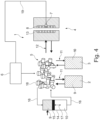
- a device 1 for carrying out the method according to the invention is shown in Figure 4 shown schematically and comprises a temperature control device 2 with a heating device, at least one temperature control device 3 with a cooling device as well as an injection molding tool 4, actuators 5 and a control unit 6.
- the control unit 6 can have a controlling effect on the actuators 5, wherein the control unit 6 processes signals depending on a cavity wall temperature, which is determined, for example, by a temperature sensor 7 located in a cavity 8 of the injection molding tool 4.
- the temperature control device 2 with a heating device provides a relatively hot temperature control medium 9 in comparison to the temperature control device with a cooling device 3, which provides a relatively cold temperature control medium 10.
- the temperature control devices 2, 3 are connected to the actuators 5 via suitable pipelines (schematically represented by arrows 11).
- the actuators 5 are connected to the injection mold 4 via suitable piping or hoses (arrows 12).
- the injection mold 4 has at least one temperature control circuit 13, through which hot temperature control medium 9 or cold temperature control medium 10 can be alternately passed.
- the injection mold 4 it is also possible for the injection mold 4 to have two temperature control circuits 13 that are hydraulically separated from one another. One of the two temperature control circuits 13 serves to pass the cold temperature control medium 10, the other temperature control circuit serves to pass the hot temperature control medium 9 through the injection mold 4 or one injection mold half.
- the device 1 comprises a buffer 14, which holds a certain supply of hot tempering medium 9 and a supply of cold tempering medium 10.
- the buffer 14 is equipped with a movable piston element 15, which divides a buffer chamber into a sub-chamber for hot tempering medium 9 and a sub-chamber for cold tempering medium 10.
- the sub-chamber containing hot tempering medium 9 as well as the sub-chamber containing cold tempering medium 10 are each connected via suitable pipes 16 to corresponding inputs of the actuators 5.
- the actuators 5 are, for example, an arrangement of various valves 18, which are only indicated schematically.
- the valves 18 are, for example, electrically controllable valves, which are connected to the control unit 6 and can be controlled by it.
- either cold temperature control medium 10 or warm temperature control medium 9 can be fed into the temperature control circuits 13, whereby, if necessary, additional cold temperature control medium 10 or hot temperature control medium 9 can be fed through the buffer 14, for example to achieve high cooling or heating gradients.
- the provision of a buffer 14 makes it possible to use relatively small heating/cooling and/or pumping units for the temperature control devices 2, 3, and nevertheless to absorb syringe loads that occur during a learning and/or production cycle by means of the buffer 14. This contributes to saving energy and reduces system costs.
- the temperature sensor 7 is connected to the control unit 6 via a suitable signal line 19.
- a plurality of temperature sensors 7 may be distributed across the cavity wall of the cavity 8 and to send or provide separate signals representing a local cavity wall temperature to the control unit 6.
- heating/cooling are also conceivable.
- electrical heating and/or cooling elements or gases can be used as a temperature control medium.
- hot temperature control medium 9 is pumped through the cooling circuits 13 when the temperature control device 3 with cool temperature control medium is switched off or disconnected, the cavity wall of the cavity 8 will heat up.
- a method according to the invention for variothermal temperature control of the injection molding tool 4 is carried out in two phases: a learning phase A and a production phase B.
- the learning phase A the temperature control characteristics of the system to be temperature controlled are determined, which system comprises at least the injection molding tool 4, the temperature control devices 2, 3, the corresponding (pipe) line connections, the actuators 5, and the control unit 6.
- a temperature sensor 7 should be provided in the cavity 8 of the injection molding tool 4.
- This entire system which is to be temperature-controlled (the injection mold 4) or is to ensure temperature control (temperature control devices 2, 3, actuators 5 and the corresponding connections to the injection mold 4), has a specific temperature control characteristic, which is influenced, for example, by the cavity shape of the cavity 8 in the injection mold 4. Further influencing variables can be the performance of the temperature control devices 2, 3 and the maximum possible flow rate of cold temperature control medium 10 and/or hot temperature control medium 9.
- Such a system comprising the above-mentioned components has a specific temperature control characteristic, i.e. a specific activity of the temperature control devices 2 or 3 results in a specific temperature reaction of the cavity wall of the cavity 8 in the injection mold 4. This must be determined in the learning phase A.
- a specific temperature control characteristic i.e. a specific activity of the temperature control devices 2 or 3 results in a specific temperature reaction of the cavity wall of the cavity 8 in the injection mold 4. This must be determined in the learning phase A.
- Figure 1 shows a first partial step of this.
- temperature control unit 2 with heating device is switched on.
- the heating temperature control is switched on according to Figure 1 at time t 1 .
- the graph VH (valve heating) is in Figure 1 and indicates a period of time during which the device 1 heats the injection mold.
- the graph TW indicates the temperature reaction at the cavity wall of the cavity 8, which is measured by the temperature sensor 7.
- the graph TW has an inflection point W in its course. To determine a characteristic value for the temperature control characteristics of the system, it has proven useful to draw a tangent T to the graph TW at the inflection point W.
- the maximum gradient of the heating curve (graph TW) occurs at the inflection point W.
- the tangent forms an intersection point S with the abscissa.
- the period between the start of heating (time t 1 ) and the intersection point S is defined as the delay time tu heat .
- the maximum gradient of the tangent T is defined by a quotient of temperature and heating time, which is given in "Kelvin per heating time (K/s heat )".
- the cooling characteristics of the injection mold 4 are determined starting from a maximum achievable temperature T max (compare Figure 2 ).
- a cooling curve (graph TK) is determined as part of determining the cooling characteristics, which can be reduced from the maximum injection mold temperature T max to a minimum achievable temperature T min .
- temperature control unit 2 warm temperature control unit
- temperature control unit 3 is switched on with cool temperature control medium 10.
- the switched-on cooling is shown by graph VK.
- a tangent T is also placed at the inflection point W, the gradient of which reflects the maximum cooling gradient. This cooling gradient can be specified in the unit Kelvin per cooling time (K/s cool ).
- This tangent also intersects the abscissa at the intersection point S, resulting in a cooling delay time tu cool , which runs from time t 1 (switching on of the cooling unit) to the intersection point S of the tangent T with the abscissa.
- This characterization of the system's heating and cooling behavior is preferably carried out with an empty injection mold, i.e., completely without melt. This eliminates the need to conduct the learning phase with an injection mold mounted on a plastic injection molding machine.
- a further advantage is that the use of plastic melt does not affect the mold temperature control characteristics or the system temperature control characteristics.
- the determined tempering characteristics of the system are preferably stored in the form of tool-specific, in particular system-specific, control values for actuators or otherwise assigned to the tool/system.
- an average temperature T base can be calculated, for example, by calculating the difference between the maximum achievable temperature T max and the minimum achievable temperature T min .
- T Basisheaterror T Basisheat ⁇ T Basis calculated.
- the process times t Process1 for the heating case and the cooling case can be determined more precisely, taking into account the overshoot/undershoot phenomena during heating/cooling, in order to achieve a target temperature T Soll1 as accurately as possible based on a current injection mold temperature (cavity wall temperature T actMld ).
- the process time t process(x) for the current process can be calculated from the process time t process(x -1) of the previous process, the start offset time t startoffset(x) of the current process, and the end offset time t endoffset (x-1) of the previous process. This time applies to the current heating/cooling scenario. This enables learning for the current process from the ambient conditions and the sequence of the previous process.
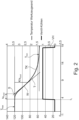
- a targeted running of a target temperature profile in particular by achieving explicit target temperatures T Soll1 , T Soll2 , T Soll3 , is possible very precisely and adaptably to varying ambient conditions (cf. Figure 3 ).
- the graph TW which shows the tool temperature over time t, is shown in Figure 3
- Target temperatures T Soll1 and T Soll2 as well as T Soll3 are also shown.
- the switching-on times for the operation of the temperature control unit 2 with a heating device and the temperature control unit 3 with a cooling device are shown.
- the temperature control unit 2 with the heating device is switched on at a time t of approximately 10 seconds, so that the graph TW rises from this time onwards (taking into account the time tu heat ) up to a target temperature T 1 , which in the exemplary embodiment is approximately 109°.
- the temperature of the injection molding tool 4 is kept approximately constant for a while.
- cooling begins when the temperature control unit 3 with the cooling device is switched on, so that the tool cools down from T Soll1 to a lower temperature T Soll2 .
- T Soll3 a further target temperature
- pulse heating occurs to reach temperature T target1 .
- pulse cooling occurs to reach temperature T target2 , whereas reaching temperature T target3 from temperature T target2 occurs via pulse heating.
- temperature control unit 2 It has proven expedient to achieve temperature control exclusively by switching on either temperature control unit 2 with heating device or temperature control unit 3 with cooling device. Mixing of the temperature control media preferably does not occur.
- a system with separate cold temperature control medium 10 and hot temperature control medium 9 is, overall, significantly more dynamic than a system that attempts to achieve a specific temperature by mixing cold and warm temperature control media.
- the separate temperature control circuits enable more dynamic pulse heating and pulse cooling processes.
Landscapes
- Engineering & Computer Science (AREA)
- Manufacturing & Machinery (AREA)
- Mechanical Engineering (AREA)
- Physics & Mathematics (AREA)
- Health & Medical Sciences (AREA)
- Oral & Maxillofacial Surgery (AREA)
- Thermal Sciences (AREA)
- Injection Moulding Of Plastics Or The Like (AREA)
- Moulds For Moulding Plastics Or The Like (AREA)
Claims (20)
- Procédé de thermorégulation variothermique d'un outil de moulage par injection par utilisation d'un dispositif de mise en température présentant au moins les étapes suivantes :A) dans une phase d'apprentissage :- détermination d'une caractéristique de mise en température du système à mettre en température comprenant au moins l'outil de moulage par injection et le dispositif de mise en température pour obtenir des valeurs de réglage individuelles au système avec lesquelles des membres de réglage du dispositif de mise en température peuvent être commandés pour obtenir un profil de température de consigne etB) dans une phase de production :- mise en température de l'outil de moulage par injection avec les valeurs de réglage déterminées dans la phase d'apprentissage ;- détermination d'écarts d'un profil de température réelle de l'outil de moulage par injection par rapport au profil de température de consigne pendant le cycle de production et calcul de valeurs de réglage corrigées pour les membres de réglage à partir de ces écarts ;- exécution d'un processus de production suivant avec les valeurs de réglage corrigées,- dans lequel pour déterminer la caractéristique de mise en température du système à mettre en température composé au moins d'un dispositif de chauffage, d'un dispositif de refroidissement, de membres de réglage et d'un outil de moulage par injection, une température de paroi maximale (Tmax) pouvant être atteinte d'une cavité de l'outil de moulage par injection est déterminée et enregistrée et dans lequel- en partant de la température (Tmax), le refroidissement est démarré chauffage éteint, dans lequel une pente maximale négative (K/scool) est déterminée en Kelvin par seconde sur le point d'inflexion (W) de la courbe de refroidissement (TK) et une tangente (T) est appliquée au point d'inflexion (W) de la courbe de refroidissement (TK), dans lequel un point d'intersection de la tangente (T) avec l'abscisse est déterminé et un temps de retard (tucool) est défini en tant qu'écart temporel entre le début du refroidissement et le point d'intersection de la tangente (T) avec l'abscisse.
- Procédé selon la revendication 1, dans lequelA) dans la phase d'apprentissage :A1) pour déterminer une caractéristique de mise en température du système à mettre en température ;
un calcul de temps de commande est effectué pour des dispositifs de chauffage et/ou de refroidissement du dispositif de mise en température pour obtenir un profil de température de consigne temporel de l'outil de moulage par injection pour une pièce moulée à fabriquer ;A2) une évaluation du profil de température de consigne dans au moins un cycle d'évaluation est effectuée, et si besoin, correction des temps de commande etA3) un enregistrement au moins des temps de commande corrigés de l'étape A3) en tant que valeurs de réglage est effectué pour le système à mettre en température, en particulier de ses membres de réglage, etB) dans la phase de production :B1) pendant un premier cycle de production, un arrêt du profil de température est effectué avec les valeurs de réglage de l'étape A3),B2) une détermination des valeurs réelles et une comparaison avec des températures de consigne correspondantes du profil de température de consigne de l'outil de moulage par injection sont effectuées ;B3) un calcul de valeurs de réglage corrigées, à savoir des temps de réglage pour les membres de réglage du cycle de production suivant, est effectué à partir d'écarts calculés à l'étape B2) etB4) une exécution du cycle de production suivant avec les valeurs de réglage corrigées de l'étape B3) est effectuée etB5) les étapes B2) à B5) sont répétées pendant d'autres cycles de production. - Procédé selon la revendication 1 ou 2,
caractérisé en ce que
en tant que dispositifs de chauffage et/ou de refroidissement du dispositif de mise en température sont utilisés au moins un ou une combinaison du groupe :- dispositif de chauffage d'eau et/ou de refroidissement d'eau ;- dispositif de chauffage de fioul et/ou de refroidissement de fioul .- dispositif de chauffage électrique et/ou de refroidissement électrique ;- cartouches de chauffage et/ou de refroidissement ;- dispositifs de chauffage basés sur induction ou par laser ainsi que chauffages céramique ;- dispositifs de refroidissement par réfrigérants et/ou dispositifs de refroidissement au CO2 et/ou un refroidissement par un gaz, par ex. de l'air ;- dispositif de chauffage et/ou de refroidissement à base d'une huile caloporteuse et/ou de vapeur chaude. - Procédé selon l'une des revendications précédentes, caractérisé en ce que l'étape A est effectuée sans remplissage de l'outil de moulage par injection avec une matière à mouler.
- Procédé selon l'une des revendications précédentes, caractérisé en ce que pour déterminer la caractéristique de mise en température, une température de paroi minimale (Tmin) pouvant être atteinte d'une cavité de l'outil de moulage par injection est en outre déterminée et enregistrée.
- Procédé selon l'une des revendications précédentes, caractérisé en ce que pendant une opération de chauffage, la pente maximale d'une courbe de chauffage est déterminée en Kelvin par seconde (K/Sheat) à son point d' inflexion (W) .
- Procédé selon l'une des revendications précédentes, caractérisé en ce qu'au point d'inflexion de la courbe de chauffage, une tangente (T) est appliquée à la courbe de chauffage et un point d'intersection de la tangente (T) est formé avec l'abscisse, dans lequel l'écart temporel entre le début du chauffage et le point d'intersection de la tangente (T) avec l'abscisse est défini en tant que temps de retard (tuheat).
- Procédé selon la revendication 5, caractérisé en ce qu'une température moyenne (TBasis) est calculée entre la température minimale (Tmin) et la température maximale (Tmax).
- Procédé selon la revendication 8, caractérisé en ce qu'en partant de la formule

- Procédé selon la revendication 9, caractérisé en ce qu'après l'arrêt du chauffage, c'est-à-dire une fois le temps (tbasisheat) écoulé, une période temporelle est mesurée jusqu'à ce qu'il ne se produise plus aucun autre changement de température significatif sur le capteur de température (7), dans lequel une température (Tbasisheat) et un temps de postoscillation (temps de retard) (tBasisheatdead) sont mesurés et enregistrés.
- Procédé selon la revendication 10, caractérisé en ce qu'un écart entre la température moyenne (TBasis) et la température (TBasisheat) est calculé selon la formule

- Procédé selon la revendication 8, caractérisé en ce que le refroidissement est commandé pendant que le chauffage est à l'arrêt, jusqu'à ce que la température maximale (Tmax) soit atteinte sur le capteur de température (7), et à partir de la formule

- Procédé la revendication 12, caractérisé en ce qu'en partant de la température maximale (Tmax) d'une étape d'apprentissage précédente, le refroidissement est commandé et coupé après le temps (tbasiscool), dans lequel le temps jusqu'à ce que plus aucun changement de température significatif ne puisse être mesuré sur le capteur de température (7) dans la cavité (8) est ensuite mesuré, dans lequel la température (Tbasiscool) et le temps de postoscillation (temps de retard) (tBasiscooldead) sont mesurés et enregistrés et l'écart de (TBasis) à (TBasiscool) est calculé selon la formule

- Procédé selon la revendication 13, caractérisé en ce que dans un déroulement de procédé pour au moins une étape de chauffage pulsé ou au moins une étape de refroidissement pulsé, des temps de commande du dispositif de chauffage et/ou du dispositif de refroidissement sont mesurés et enregistrés en partant d'une température actuelle de la paroi de cavité (TactMld), dans lequel une température de consigne (TSoll1) est déterminée à partir de l'étape actuelle et lorsque la température de consigne (TSoll1) est supérieure à la température (TactMld), un temps (tProzess1) est calculé dans une première passe d'optimisation, selon la formule
tProzess1 = ((TSoll1 - TactMld) / K/Sheat) + tuheat + TBasisheaterror / K/Sheat. - Procédé selon la revendication 13, caractérisé en ce que dans le cas où la température de consigne (TSoll1) est inférieure à la température actuelle (TactMld), le temps (tProzess1) est calculé selon la formule
tProzess1 = ((TSoll1 - TactMld) / K/Scool) + tucool + TBasiscollerror / K/Scool. - Procédé selon l'une des revendications 14 ou 15, caractérisé en ce que le calcul du temps (tProzess1) est effectué de manière analogue pour d'autres étapes de procédé.
- Procédé selon l'une des revendications 13 à 16, caractérisé en ce que le calcul du temps (tProzess1) est effectué de manière répétée pour un procédé de chauffage pulsé ou pour un procédé de refroidissement pulsé.
- Procédé selon l'une des revendications 13 à 17, caractérisé en ce que pendant d'autres passes, les temps de commande du dispositif de chauffage et/ou du dispositif de refroidissement sont corrigés d'un écart de température de départ (TstartOffset) et/ou d'un écart de température de fin (TendOffset), dans lequel les formules listées ci-après sont utilisées


(n-1) est la température correspondante de la passe précédente. - Procédé selon la revendication 18, caractérisé en ce que qu'un temps (tstartOffset) et (tendOffset) correspondant à l'écart de température de départ (TstartOffset) et/ou à l'écart de température de fin (TendOffset), est calculé en fonction du chauffage pulsé (K/sheat) ou du refroidissement pulsé (K/scool), sachant que :pour le chauffage pulsé :

 pour le refroidissement pulsé :

- Procédé selon la revendication 19, caractérisé en ce qu'un temps de commande (tProzess(x)) pour un procédé de chauffage et/ou un procédé de refroidissement est déterminé à partir du temps de commande (tProzess(x-1)) venant du procédé précédent plus le temps (tstartOffset) à partir du procédé actuel plus le temps (tendOffset) venant du procédé précédent, ce qui peut être représenté sous forme de formule par :

Applications Claiming Priority (2)
| Application Number | Priority Date | Filing Date | Title |
|---|---|---|---|
| DE102017117587.3A DE102017117587A1 (de) | 2017-08-03 | 2017-08-03 | Verfahren und Vorrichtung zur variothermen Temperierung von Spritzgießwerkzeugen |
| PCT/EP2018/068465 WO2019025122A1 (fr) | 2017-08-03 | 2018-07-09 | Procédé et dispositif de thermorégulation variothermique d'outils de moulage par injection |
Publications (3)
| Publication Number | Publication Date |
|---|---|
| EP3661720A1 EP3661720A1 (fr) | 2020-06-10 |
| EP3661720B1 EP3661720B1 (fr) | 2021-09-08 |
| EP3661720B2 true EP3661720B2 (fr) | 2025-05-21 |
Family
ID=62873339
Family Applications (1)
| Application Number | Title | Priority Date | Filing Date |
|---|---|---|---|
| EP18739510.8A Active EP3661720B2 (fr) | 2017-08-03 | 2018-07-09 | Procédé de thermorégulation variothermique d'outils de moulage par injection |
Country Status (6)
| Country | Link |
|---|---|
| US (1) | US11433588B2 (fr) |
| EP (1) | EP3661720B2 (fr) |
| KR (1) | KR20200035422A (fr) |
| CN (1) | CN110997274B (fr) |
| DE (1) | DE102017117587A1 (fr) |
| WO (1) | WO2019025122A1 (fr) |
Families Citing this family (14)
| Publication number | Priority date | Publication date | Assignee | Title |
|---|---|---|---|---|
| WO2019111117A1 (fr) * | 2017-12-07 | 2019-06-13 | Green Box Srl | Dispositif ou circuit de régulation de température pour moules ou systèmes de moulage |
| FR3096293B1 (fr) | 2019-05-23 | 2024-02-02 | Inst De Rech Tech Jules Verne | Dispositif et procédé de fabrication d’une pièce en matériau composite |
| CN112622217B (zh) * | 2021-01-18 | 2022-10-04 | 苏州星诺奇科技股份有限公司 | 缩短带卡扣筒形注塑件成型周期的生产方法 |
| CN113059773B (zh) * | 2021-03-15 | 2022-12-13 | 伯乐智能装备股份有限公司 | 一种保证注塑制品重量稳定的注射方法 |
| CN113601806A (zh) * | 2021-06-29 | 2021-11-05 | 无锡有孚精工科技有限公司 | 一种模具生产用气液冷却装置、系统及方法 |
| KR102504881B1 (ko) * | 2022-03-07 | 2023-02-28 | 주식회사 제이시스 | 반응기의 온도제어방법 |
| CN114734604B (zh) * | 2022-03-28 | 2023-08-29 | 浙江凯华模具有限公司 | 一种注塑过程的模具温度在线控制方法 |
| TWI871608B (zh) * | 2023-04-06 | 2025-02-01 | 瑞皇精密工業股份有限公司 | 具可變模溫結構之模具 |
| KR102611604B1 (ko) * | 2023-08-24 | 2023-12-07 | 한경희 | 사출 성형기의 금형 온도 조절장치 |
| CN117400502B (zh) * | 2023-10-31 | 2024-06-14 | 惠州市信友实业有限公司 | 一种注塑机节能控制系统及控制方法 |
| CN118288512B (zh) * | 2024-06-06 | 2024-10-11 | 张家港市品杰模塑科技有限公司 | 一种塑料注塑模具的冷却控制方法及系统 |
| CN118849365B (zh) * | 2024-07-04 | 2025-04-04 | 广州市旭匠精密科技有限公司 | 一种基于精密注塑的模具温度控制系统及控制方法 |
| CN120620598B (zh) * | 2025-06-06 | 2025-12-12 | 东莞市润荣精密五金塑胶有限公司 | 用于注塑模具的温度控制优化方法及系统 |
| CN120985892B (zh) * | 2025-09-17 | 2026-04-10 | 武汉兴亿盛精密模具有限公司 | 一种汽车零部件模具区域温度控制方法 |
Family Cites Families (12)
| Publication number | Priority date | Publication date | Assignee | Title |
|---|---|---|---|---|
| AT396575B (de) | 1985-09-16 | 1993-10-25 | Engel Kg L | Verfahren zur werkzeugtemperierung für die formwerkzeuge von spritzgiessmaschinen |
| JPH04119814A (ja) | 1990-09-10 | 1992-04-21 | Nissei Plastics Ind Co | 射出成形機の温度制御方法 |
| GB9025015D0 (en) | 1990-11-16 | 1991-01-02 | Evans Rowland F | Cyclic processor temperature control system |
| US5376317A (en) * | 1992-12-08 | 1994-12-27 | Galic Maus Ventures | Precision surface-replicating thermoplastic injection molding method and apparatus, using a heating phase and a cooling phase in each molding cycle |
| DE4307347C2 (de) * | 1993-03-09 | 1996-09-26 | Werner Kotzab | Verfahren zum Temperieren einer Spritzgießform |
| DE4436117C2 (de) * | 1994-09-27 | 1997-10-02 | Riesselmann F & H Kunststoff | Verfahren zur Temperierung von Spritzgießmaschineneinheiten und Formwerkzeugeinheiten für die Kunststoffverarbeitung |
| TWI248863B (en) * | 2004-02-12 | 2006-02-11 | Mitsubishi Heavy Ind Ltd | Apparatus and method for mold temperature adjustment, and mold temperature control unit |
| DE102004052499B4 (de) * | 2004-10-28 | 2007-01-11 | Faurecia Innenraum Systeme Gmbh | Spritzgusswerkzeug und Elektronikmodul |
| DE102006031268A1 (de) | 2006-07-06 | 2008-01-10 | Krauss Maffei Gmbh | Vorrichtung und Verfahren zur benutzerspezifischen Überwachung und Regelung der Produktion |
| DE102007019389B4 (de) | 2007-04-23 | 2015-01-22 | Single Temperiertechnik Gmbh | Formwerkzeugtemperiersystem, Vorrichtung mit Formwerkzeugtemperiersystem und Verfahren zum Temperieren einer Vorrichtung sowie zur Herstellung der Vorrichtung |
| DE102008045006A1 (de) | 2008-08-29 | 2010-03-04 | Kraussmaffei Technologies Gmbh | Verfahren und Vorrichtung zur variothermen Temperierung von Spritzgießwerkzeugen |
| GB0918362D0 (en) | 2009-10-20 | 2009-12-02 | Surface Generation Ltd | Zone control of tool temperature |
-
2017
- 2017-08-03 DE DE102017117587.3A patent/DE102017117587A1/de active Pending
-
2018
- 2018-07-09 EP EP18739510.8A patent/EP3661720B2/fr active Active
- 2018-07-09 CN CN201880048428.XA patent/CN110997274B/zh active Active
- 2018-07-09 WO PCT/EP2018/068465 patent/WO2019025122A1/fr not_active Ceased
- 2018-07-09 KR KR1020207005078A patent/KR20200035422A/ko not_active Abandoned
- 2018-07-09 US US16/632,959 patent/US11433588B2/en active Active
Also Published As
| Publication number | Publication date |
|---|---|
| EP3661720B1 (fr) | 2021-09-08 |
| DE102017117587A1 (de) | 2019-02-07 |
| US11433588B2 (en) | 2022-09-06 |
| CN110997274B (zh) | 2022-04-05 |
| KR20200035422A (ko) | 2020-04-03 |
| CN110997274A (zh) | 2020-04-10 |
| WO2019025122A1 (fr) | 2019-02-07 |
| EP3661720A1 (fr) | 2020-06-10 |
| WO2019025122A9 (fr) | 2020-03-12 |
| US20200156301A1 (en) | 2020-05-21 |
Similar Documents
| Publication | Publication Date | Title |
|---|---|---|
| EP3661720B1 (fr) | Procédé de thermorégulation variothermique d'outils de moulage par injection | |
| DE69936385T2 (de) | Automatische formtechnik für thermoplastisches spritzgiessen | |
| EP2208606B1 (fr) | Machine de soufflage-étirage dotée d'un moule de soufflage pouvant être chauffé et son procédé de régulation de température | |
| EP2583811B2 (fr) | Procédé de quantification de basculements de procédés dans le cadre d'un processus d'injection d'une machine de moulage par injection | |
| DE112011100051T5 (de) | Gießverfahren einer Spritzgießmaschine | |
| EP0704293A2 (fr) | Procédé de régulation en température d'unités d'injection et de moules d'injection de matières plastiques | |
| DE102014014525A1 (de) | Spritzgiesssystem, das Druckabnormalitäten erkennen kann | |
| DE102011076041A1 (de) | Spritzgussverfahren und Spritzgusseinrichtung | |
| AT516167B1 (de) | Temperiervorrichtung zum variothermen oder konventionellen Temperieren von Formwerkzeugen | |
| EP2427319B1 (fr) | Unité de commande pour presse à injecter | |
| EP0690778A1 (fr) | Procede et installation d'adaptation de la temperature d'outils de moulage pour matieres plastiques | |
| EP3309402A1 (fr) | Procédé de détermination d'un débit cible d'un système de pompage | |
| DE102016101523A1 (de) | System und Verfahren zum Spritzgießen von Kunststoffen | |
| DE102010024267A1 (de) | Verfahren zur Herstellung von Kunststoff-Formteilen | |
| AT515948A4 (de) | Verfahren und Vorrichtung zur Temperierung eines Formwerkzeugs | |
| EP1888316B1 (fr) | Procede de regulation du processus de moulage par injection d'une machine de moulage par injection | |
| DE4436117C2 (de) | Verfahren zur Temperierung von Spritzgießmaschineneinheiten und Formwerkzeugeinheiten für die Kunststoffverarbeitung | |
| DE102018122693B4 (de) | Formgebungsmaschine mit einer Plastifiziereinheit | |
| WO2025021804A1 (fr) | Procédé de réglage et de fonctionnement de machines de traitement de matières plastiques, et machine associée | |
| EP2298530B1 (fr) | Dispositif et procédé destinés à tempérer un outil de moulage par injection | |
| EP3808531B1 (fr) | Procédé de conduite d'une buse de vanne à pointeau | |
| DE10160903B4 (de) | Verfahren zur Kühlung von Formwerkzeugen bei der Herstellung von Kunststoff-Spritzgussteilen | |
| EP4112268A1 (fr) | Procédé de fonctionnement d'une machine de moulage par injection et machine de moulage par injection | |
| DE102020117665A1 (de) | Phasenvereinende, modellbasierte, prädiktive Regelung einer Spritzgießmaschine sowie Spritzgießmaschine mit einer derartigen Regelung | |
| DE102012103304B4 (de) | Verfahren und Vorrichtung zur temperaturabhängigen Steuerung des Spritzgießprozesses bei der Herstellung von Kunststoffbauteilen |
Legal Events
| Date | Code | Title | Description |
|---|---|---|---|
| STAA | Information on the status of an ep patent application or granted ep patent |
Free format text: STATUS: UNKNOWN |
|
| STAA | Information on the status of an ep patent application or granted ep patent |
Free format text: STATUS: THE INTERNATIONAL PUBLICATION HAS BEEN MADE |
|
| PUAI | Public reference made under article 153(3) epc to a published international application that has entered the european phase |
Free format text: ORIGINAL CODE: 0009012 |
|
| STAA | Information on the status of an ep patent application or granted ep patent |
Free format text: STATUS: REQUEST FOR EXAMINATION WAS MADE |
|
| 17P | Request for examination filed |
Effective date: 20200303 |
|
| AK | Designated contracting states |
Kind code of ref document: A1 Designated state(s): AL AT BE BG CH CY CZ DE DK EE ES FI FR GB GR HR HU IE IS IT LI LT LU LV MC MK MT NL NO PL PT RO RS SE SI SK SM TR |
|
| AX | Request for extension of the european patent |
Extension state: BA ME |
|
| DAV | Request for validation of the european patent (deleted) | ||
| DAX | Request for extension of the european patent (deleted) | ||
| TPAC | Observations filed by third parties |
Free format text: ORIGINAL CODE: EPIDOSNTIPA |
|
| GRAP | Despatch of communication of intention to grant a patent |
Free format text: ORIGINAL CODE: EPIDOSNIGR1 |
|
| STAA | Information on the status of an ep patent application or granted ep patent |
Free format text: STATUS: GRANT OF PATENT IS INTENDED |
|
| INTG | Intention to grant announced |
Effective date: 20210316 |
|
| GRAS | Grant fee paid |
Free format text: ORIGINAL CODE: EPIDOSNIGR3 |
|
| GRAA | (expected) grant |
Free format text: ORIGINAL CODE: 0009210 |
|
| STAA | Information on the status of an ep patent application or granted ep patent |
Free format text: STATUS: THE PATENT HAS BEEN GRANTED |
|
| AK | Designated contracting states |
Kind code of ref document: B1 Designated state(s): AL AT BE BG CH CY CZ DE DK EE ES FI FR GB GR HR HU IE IS IT LI LT LU LV MC MK MT NL NO PL PT RO RS SE SI SK SM TR |
|
| REG | Reference to a national code |
Ref country code: GB Ref legal event code: FG4D Free format text: NOT ENGLISH |
|
| REG | Reference to a national code |
Ref country code: AT Ref legal event code: REF Ref document number: 1428190 Country of ref document: AT Kind code of ref document: T Effective date: 20210915 Ref country code: CH Ref legal event code: EP |
|
| REG | Reference to a national code |
Ref country code: IE Ref legal event code: FG4D Free format text: LANGUAGE OF EP DOCUMENT: GERMAN |
|
| REG | Reference to a national code |
Ref country code: DE Ref legal event code: R096 Ref document number: 502018006987 Country of ref document: DE |
|
| REG | Reference to a national code |
Ref country code: LT Ref legal event code: MG9D |
|
| REG | Reference to a national code |
Ref country code: NL Ref legal event code: MP Effective date: 20210908 |
|
| PG25 | Lapsed in a contracting state [announced via postgrant information from national office to epo] |
Ref country code: NO Free format text: LAPSE BECAUSE OF FAILURE TO SUBMIT A TRANSLATION OF THE DESCRIPTION OR TO PAY THE FEE WITHIN THE PRESCRIBED TIME-LIMIT Effective date: 20211208 Ref country code: LT Free format text: LAPSE BECAUSE OF FAILURE TO SUBMIT A TRANSLATION OF THE DESCRIPTION OR TO PAY THE FEE WITHIN THE PRESCRIBED TIME-LIMIT Effective date: 20210908 Ref country code: BG Free format text: LAPSE BECAUSE OF FAILURE TO SUBMIT A TRANSLATION OF THE DESCRIPTION OR TO PAY THE FEE WITHIN THE PRESCRIBED TIME-LIMIT Effective date: 20211208 Ref country code: SE Free format text: LAPSE BECAUSE OF FAILURE TO SUBMIT A TRANSLATION OF THE DESCRIPTION OR TO PAY THE FEE WITHIN THE PRESCRIBED TIME-LIMIT Effective date: 20210908 Ref country code: RS Free format text: LAPSE BECAUSE OF FAILURE TO SUBMIT A TRANSLATION OF THE DESCRIPTION OR TO PAY THE FEE WITHIN THE PRESCRIBED TIME-LIMIT Effective date: 20210908 Ref country code: HR Free format text: LAPSE BECAUSE OF FAILURE TO SUBMIT A TRANSLATION OF THE DESCRIPTION OR TO PAY THE FEE WITHIN THE PRESCRIBED TIME-LIMIT Effective date: 20210908 Ref country code: FI Free format text: LAPSE BECAUSE OF FAILURE TO SUBMIT A TRANSLATION OF THE DESCRIPTION OR TO PAY THE FEE WITHIN THE PRESCRIBED TIME-LIMIT Effective date: 20210908 Ref country code: ES Free format text: LAPSE BECAUSE OF FAILURE TO SUBMIT A TRANSLATION OF THE DESCRIPTION OR TO PAY THE FEE WITHIN THE PRESCRIBED TIME-LIMIT Effective date: 20210908 |
|
| PG25 | Lapsed in a contracting state [announced via postgrant information from national office to epo] |
Ref country code: LV Free format text: LAPSE BECAUSE OF FAILURE TO SUBMIT A TRANSLATION OF THE DESCRIPTION OR TO PAY THE FEE WITHIN THE PRESCRIBED TIME-LIMIT Effective date: 20210908 Ref country code: GR Free format text: LAPSE BECAUSE OF FAILURE TO SUBMIT A TRANSLATION OF THE DESCRIPTION OR TO PAY THE FEE WITHIN THE PRESCRIBED TIME-LIMIT Effective date: 20211209 |
|
| PG25 | Lapsed in a contracting state [announced via postgrant information from national office to epo] |
Ref country code: IS Free format text: LAPSE BECAUSE OF FAILURE TO SUBMIT A TRANSLATION OF THE DESCRIPTION OR TO PAY THE FEE WITHIN THE PRESCRIBED TIME-LIMIT Effective date: 20220108 Ref country code: SM Free format text: LAPSE BECAUSE OF FAILURE TO SUBMIT A TRANSLATION OF THE DESCRIPTION OR TO PAY THE FEE WITHIN THE PRESCRIBED TIME-LIMIT Effective date: 20210908 Ref country code: SK Free format text: LAPSE BECAUSE OF FAILURE TO SUBMIT A TRANSLATION OF THE DESCRIPTION OR TO PAY THE FEE WITHIN THE PRESCRIBED TIME-LIMIT Effective date: 20210908 Ref country code: RO Free format text: LAPSE BECAUSE OF FAILURE TO SUBMIT A TRANSLATION OF THE DESCRIPTION OR TO PAY THE FEE WITHIN THE PRESCRIBED TIME-LIMIT Effective date: 20210908 Ref country code: PT Free format text: LAPSE BECAUSE OF FAILURE TO SUBMIT A TRANSLATION OF THE DESCRIPTION OR TO PAY THE FEE WITHIN THE PRESCRIBED TIME-LIMIT Effective date: 20220110 Ref country code: PL Free format text: LAPSE BECAUSE OF FAILURE TO SUBMIT A TRANSLATION OF THE DESCRIPTION OR TO PAY THE FEE WITHIN THE PRESCRIBED TIME-LIMIT Effective date: 20210908 Ref country code: NL Free format text: LAPSE BECAUSE OF FAILURE TO SUBMIT A TRANSLATION OF THE DESCRIPTION OR TO PAY THE FEE WITHIN THE PRESCRIBED TIME-LIMIT Effective date: 20210908 Ref country code: EE Free format text: LAPSE BECAUSE OF FAILURE TO SUBMIT A TRANSLATION OF THE DESCRIPTION OR TO PAY THE FEE WITHIN THE PRESCRIBED TIME-LIMIT Effective date: 20210908 Ref country code: CZ Free format text: LAPSE BECAUSE OF FAILURE TO SUBMIT A TRANSLATION OF THE DESCRIPTION OR TO PAY THE FEE WITHIN THE PRESCRIBED TIME-LIMIT Effective date: 20210908 Ref country code: AL Free format text: LAPSE BECAUSE OF FAILURE TO SUBMIT A TRANSLATION OF THE DESCRIPTION OR TO PAY THE FEE WITHIN THE PRESCRIBED TIME-LIMIT Effective date: 20210908 |
|
| REG | Reference to a national code |
Ref country code: DE Ref legal event code: R026 Ref document number: 502018006987 Country of ref document: DE |
|
| PLBI | Opposition filed |
Free format text: ORIGINAL CODE: 0009260 |
|
| PLAX | Notice of opposition and request to file observation + time limit sent |
Free format text: ORIGINAL CODE: EPIDOSNOBS2 |
|
| 26 | Opposition filed |
Opponent name: SURFACE GENERATION LIMITED Effective date: 20220607 |
|
| PG25 | Lapsed in a contracting state [announced via postgrant information from national office to epo] |
Ref country code: DK Free format text: LAPSE BECAUSE OF FAILURE TO SUBMIT A TRANSLATION OF THE DESCRIPTION OR TO PAY THE FEE WITHIN THE PRESCRIBED TIME-LIMIT Effective date: 20210908 |
|
| PG25 | Lapsed in a contracting state [announced via postgrant information from national office to epo] |
Ref country code: SI Free format text: LAPSE BECAUSE OF FAILURE TO SUBMIT A TRANSLATION OF THE DESCRIPTION OR TO PAY THE FEE WITHIN THE PRESCRIBED TIME-LIMIT Effective date: 20210908 |
|
| PLBB | Reply of patent proprietor to notice(s) of opposition received |
Free format text: ORIGINAL CODE: EPIDOSNOBS3 |
|
| PG25 | Lapsed in a contracting state [announced via postgrant information from national office to epo] |
Ref country code: MC Free format text: LAPSE BECAUSE OF FAILURE TO SUBMIT A TRANSLATION OF THE DESCRIPTION OR TO PAY THE FEE WITHIN THE PRESCRIBED TIME-LIMIT Effective date: 20210908 |
|
| GBPC | Gb: european patent ceased through non-payment of renewal fee |
Effective date: 20220709 |
|
| REG | Reference to a national code |
Ref country code: BE Ref legal event code: MM Effective date: 20220731 |
|
| PG25 | Lapsed in a contracting state [announced via postgrant information from national office to epo] |
Ref country code: LU Free format text: LAPSE BECAUSE OF NON-PAYMENT OF DUE FEES Effective date: 20220709 |
|
| PG25 | Lapsed in a contracting state [announced via postgrant information from national office to epo] |
Ref country code: GB Free format text: LAPSE BECAUSE OF NON-PAYMENT OF DUE FEES Effective date: 20220709 Ref country code: BE Free format text: LAPSE BECAUSE OF NON-PAYMENT OF DUE FEES Effective date: 20220731 |
|
| PG25 | Lapsed in a contracting state [announced via postgrant information from national office to epo] |
Ref country code: IE Free format text: LAPSE BECAUSE OF NON-PAYMENT OF DUE FEES Effective date: 20220709 |
|
| PG25 | Lapsed in a contracting state [announced via postgrant information from national office to epo] |
Ref country code: MK Free format text: LAPSE BECAUSE OF FAILURE TO SUBMIT A TRANSLATION OF THE DESCRIPTION OR TO PAY THE FEE WITHIN THE PRESCRIBED TIME-LIMIT Effective date: 20210908 Ref country code: CY Free format text: LAPSE BECAUSE OF FAILURE TO SUBMIT A TRANSLATION OF THE DESCRIPTION OR TO PAY THE FEE WITHIN THE PRESCRIBED TIME-LIMIT Effective date: 20210908 |
|
| PG25 | Lapsed in a contracting state [announced via postgrant information from national office to epo] |
Ref country code: HU Free format text: LAPSE BECAUSE OF FAILURE TO SUBMIT A TRANSLATION OF THE DESCRIPTION OR TO PAY THE FEE WITHIN THE PRESCRIBED TIME-LIMIT; INVALID AB INITIO Effective date: 20180709 |
|
| PG25 | Lapsed in a contracting state [announced via postgrant information from national office to epo] |
Ref country code: MT Free format text: LAPSE BECAUSE OF FAILURE TO SUBMIT A TRANSLATION OF THE DESCRIPTION OR TO PAY THE FEE WITHIN THE PRESCRIBED TIME-LIMIT Effective date: 20210908 |
|
| PUAH | Patent maintained in amended form |
Free format text: ORIGINAL CODE: 0009272 |
|
| STAA | Information on the status of an ep patent application or granted ep patent |
Free format text: STATUS: PATENT MAINTAINED AS AMENDED |
|
| 27A | Patent maintained in amended form |
Effective date: 20250521 |
|
| AK | Designated contracting states |
Kind code of ref document: B2 Designated state(s): AL AT BE BG CH CY CZ DE DK EE ES FI FR GB GR HR HU IE IS IT LI LT LU LV MC MK MT NL NO PL PT RO RS SE SI SK SM TR |
|
| REG | Reference to a national code |
Ref country code: DE Ref legal event code: R102 Ref document number: 502018006987 Country of ref document: DE |
|
| PGFP | Annual fee paid to national office [announced via postgrant information from national office to epo] |
Ref country code: DE Payment date: 20250722 Year of fee payment: 8 |
|
| PGFP | Annual fee paid to national office [announced via postgrant information from national office to epo] |
Ref country code: IT Payment date: 20250724 Year of fee payment: 8 |
|
| PGFP | Annual fee paid to national office [announced via postgrant information from national office to epo] |
Ref country code: FR Payment date: 20250725 Year of fee payment: 8 Ref country code: AT Payment date: 20250722 Year of fee payment: 8 |
|
| PGFP | Annual fee paid to national office [announced via postgrant information from national office to epo] |
Ref country code: CH Payment date: 20250801 Year of fee payment: 8 |
|
| PG25 | Lapsed in a contracting state [announced via postgrant information from national office to epo] |
Ref country code: TR Free format text: LAPSE BECAUSE OF FAILURE TO SUBMIT A TRANSLATION OF THE DESCRIPTION OR TO PAY THE FEE WITHIN THE PRESCRIBED TIME-LIMIT Effective date: 20210908 |