EP3674415B1 - Détermination de lymphocytes t et de lymphocytes b spécifiques aux antigènes - Google Patents
Détermination de lymphocytes t et de lymphocytes b spécifiques aux antigènes Download PDFInfo
- Publication number
- EP3674415B1 EP3674415B1 EP20157220.3A EP20157220A EP3674415B1 EP 3674415 B1 EP3674415 B1 EP 3674415B1 EP 20157220 A EP20157220 A EP 20157220A EP 3674415 B1 EP3674415 B1 EP 3674415B1
- Authority
- EP
- European Patent Office
- Prior art keywords
- cells
- antigen
- clonotypes
- sequence
- sample
- Prior art date
- Legal status (The legal status is an assumption and is not a legal conclusion. Google has not performed a legal analysis and makes no representation as to the accuracy of the status listed.)
- Active
Links
Images








Classifications
-
- C—CHEMISTRY; METALLURGY
- C12—BIOCHEMISTRY; BEER; SPIRITS; WINE; VINEGAR; MICROBIOLOGY; ENZYMOLOGY; MUTATION OR GENETIC ENGINEERING
- C12Q—MEASURING OR TESTING PROCESSES INVOLVING ENZYMES, NUCLEIC ACIDS OR MICROORGANISMS; COMPOSITIONS OR TEST PAPERS THEREFOR; PROCESSES OF PREPARING SUCH COMPOSITIONS; CONDITION-RESPONSIVE CONTROL IN MICROBIOLOGICAL OR ENZYMOLOGICAL PROCESSES
- C12Q1/00—Measuring or testing processes involving enzymes, nucleic acids or microorganisms; Compositions therefor; Processes of preparing such compositions
- C12Q1/68—Measuring or testing processes involving enzymes, nucleic acids or microorganisms; Compositions therefor; Processes of preparing such compositions involving nucleic acids
- C12Q1/6876—Nucleic acid products used in the analysis of nucleic acids, e.g. primers or probes
- C12Q1/6881—Nucleic acid products used in the analysis of nucleic acids, e.g. primers or probes for tissue or cell typing, e.g. human leukocyte antigen [HLA] probes
-
- C—CHEMISTRY; METALLURGY
- C12—BIOCHEMISTRY; BEER; SPIRITS; WINE; VINEGAR; MICROBIOLOGY; ENZYMOLOGY; MUTATION OR GENETIC ENGINEERING
- C12Q—MEASURING OR TESTING PROCESSES INVOLVING ENZYMES, NUCLEIC ACIDS OR MICROORGANISMS; COMPOSITIONS OR TEST PAPERS THEREFOR; PROCESSES OF PREPARING SUCH COMPOSITIONS; CONDITION-RESPONSIVE CONTROL IN MICROBIOLOGICAL OR ENZYMOLOGICAL PROCESSES
- C12Q2600/00—Oligonucleotides characterized by their use
- C12Q2600/106—Pharmacogenomics, i.e. genetic variability in individual responses to drugs and drug metabolism
-
- C—CHEMISTRY; METALLURGY
- C12—BIOCHEMISTRY; BEER; SPIRITS; WINE; VINEGAR; MICROBIOLOGY; ENZYMOLOGY; MUTATION OR GENETIC ENGINEERING
- C12Q—MEASURING OR TESTING PROCESSES INVOLVING ENZYMES, NUCLEIC ACIDS OR MICROORGANISMS; COMPOSITIONS OR TEST PAPERS THEREFOR; PROCESSES OF PREPARING SUCH COMPOSITIONS; CONDITION-RESPONSIVE CONTROL IN MICROBIOLOGICAL OR ENZYMOLOGICAL PROCESSES
- C12Q2600/00—Oligonucleotides characterized by their use
- C12Q2600/158—Expression markers
-
- C—CHEMISTRY; METALLURGY
- C12—BIOCHEMISTRY; BEER; SPIRITS; WINE; VINEGAR; MICROBIOLOGY; ENZYMOLOGY; MUTATION OR GENETIC ENGINEERING
- C12Q—MEASURING OR TESTING PROCESSES INVOLVING ENZYMES, NUCLEIC ACIDS OR MICROORGANISMS; COMPOSITIONS OR TEST PAPERS THEREFOR; PROCESSES OF PREPARING SUCH COMPOSITIONS; CONDITION-RESPONSIVE CONTROL IN MICROBIOLOGICAL OR ENZYMOLOGICAL PROCESSES
- C12Q2600/00—Oligonucleotides characterized by their use
- C12Q2600/16—Primer sets for multiplex assays
Definitions
- TCRs T cell receptors
- MHC major histocompatibility complex
- T cell of interest typically a T cell of interest is identified and clonally expanded to enable isolation and analysis of nucleic acids encoding each subunit. Even for a common disease antigen, such as MART-1 in melanoma, the process of single cell analysis, cloning and receptor isolation must be repeated for each patient.
- a common disease antigen such as MART-1 in melanoma
- profiles of nucleic acids encoding immune molecules contain a wealth of information on the state of health or disease of an organism, so that diagnostic and prognostic indicators based on the use of such profiles are being developed for a wide variety of conditions, Faham and Willis (cited above); Freeman et al, Genome Research, 19: 1817-1824 (2009 ); Boyd et al, Sci. Transl. Med., 1(12): 12ra23 (2009 ); He et al, Oncotarget (March 8, 2011 ).
- Current sequence-based profiles of immune repertoires consist of nucleic acids encoding only single receptor chains; thus, potentially useful information from correctly paired TCR ⁇ and TCR ⁇ chains chains is not available.
- the invention provides a method for identifying clonotypes of antigen-specific T cells in a sample comprising T cells, wherein each clonotype comprises the nucleotide sequences of a TCR ⁇ segment and a TCR ⁇ segment that are a pair of sequences specific to a T cell, the method comprising the steps of:
- the invention provides a method of producing a patient-specific immunotherapeutic reagent comprising:
- methods of the invention may be used to identify patient-specific cancer antigens from a library of cancer antigens, wherein the library may be based on patient-specific measurements, e.g. whole-genome sequencing or whole exome sequencing, SEREX measurements (e..g., Pfreundschuh, U.S.
- the practice of the present invention may employ, unless otherwise indicated, conventional techniques and descriptions of molecular biology (including recombinant techniques), bioinformatics, cell biology, and biochemistry, which are within the skill of the art.
- conventional techniques include, but are not limited to, sampling and analysis of blood cells, nucleic acid sequencing and analysis, and the like. Specific illustrations of suitable techniques can be had by reference to the example herein below. However, other equivalent conventional procedures can, of course, also be used.
- Such conventional techniques and descriptions can be found in standard laboratory manuals. In particular, International application publication numbers WO2013/188831 and WO2014/145992 .
- nucleic acid populations encoding repertoires of heavy chain variable regions and light chain variable regions are sequenced so that two separate lists of sequences are formed without any correspondence between members of each list. This may be achieved by carrying out separate sequencing operations, or runs, for each chain, or it may be accomplished by carrying out a single sequence run with the nucleic acids tagged according to the identity of the type of chain it encodes.
- nucleic acid populations encoding repertoires of T cell receptor alpha (TCR ⁇ ) chains and T cell receptor beta (TCR ⁇ ) chains are sequenced, so that two separate lists of sequences are formed without any correspondence between members of each list.
- nucleic acid populations encoding repertoires of T cell receptor gamma (TCR ⁇ ) chains and T cell receptor delta (TCR ⁇ ) chains are sequenced, so that two separate lists of sequences are formed without any correspondence between members of each list.
- this may be achieved by carrying out separate sequencing runs for each chain, or it may be accomplished by carrying out a single sequence run with the nucleic acids tagged according to the identity of the type of chain it encodes (that is, either TCR ⁇ and TCR ⁇ , or TCR ⁇ and TCR ⁇ , respectively).
- two approaches may be followed for matching or pairing TCR ⁇ and TCR ⁇ (or TCR ⁇ and TCR ⁇ ) chains into chains that are functional, for example, because they originate from the same T cell.
- the frequencies of each encoding nucleic acid are determined and TCR ⁇ chains and TCR ⁇ chains whose encoding nucleotide sequences have the same frequencies are paired to form a functional, or reconstituted, TCR.
- TCR ⁇ and TCR ⁇ chains may be matched by the same process.
- a lymphocyte population is repeatedly divided into a plurality of subsets. Such subsets may be obtained by aliquoting a tissue sample into separate reaction vessels or chambers. Separately from each of a portion, or subpopulation, of the subsets, nucleic acids encoding the two different immune receptor chains are extracted and sequenced, so that two separate lists of sequences are formed without any correspondence between members of each list. As described above, this may be achieved by carrying out separate sequencing runs for each chain, or it may be accomplished by carrying out a single sequence run with the nucleic acids tagged according to the identity of the type of chain it encodes.
- a sample containing T cells or B cells is aliquotted into 100 sub-samples, so that on average each aliquot contains a subset consisting of about 1/100 th of the total number of T cells or B cells in the original sample, then 20 such subsets may be randomly selected as a portion of the total number of subsets. (Such portion could be any number greater than one and less than 100, although as described more fully below, a number in the range of from 10 to 20 is a good trade off between amount of sequencing required and likelihood of identifying receptor pairs present at a frequency of interest).
- a plurality of subsets is in the range of from 20 to 2000 and a portion of subsets thereof is in the range of from 10 to 50.
- a portion of subsets is in the range of from 10 to 20. Examples of the above are illustrated in Figs. 1A and 1B .
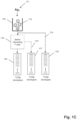
- nucleic acid (which may be DNA or RNA) is extracted from a sample containing T cells (100), after which in separate reaction volumes, primers (102) specific for a nucleic acids encoding TCR ⁇ 's (or a portion thereof) and primers (104) specific for nucleic acids encoding TCR ⁇ 's (or a portion thereof) are combined under conditions that allow the respective nucleic acid populations to be amplified, e.g. by a two-stage polymerase chain reaction (PCR), such as disclosed by Faham and Willis (cited above).
- PCR polymerase chain reaction
- amplicons (106) and (108) produced by a two-stage PCR are ready for sequence analysis using a commercially available next generation sequencer, such as MiSeq Personal Sequencer (Illumina, San Diego, CA). After nucleotide sequences have been determined (107) and (109), databases or tables (110 and 112, respectively) are obtained. Like sequences may be counted and frequency versus sequence plots (114 and 116) are constructed.
- Reconstituted TCRs may be determined by matching (118) TCR ⁇ 's and TCR ⁇ 's with identical frequencies or with frequencies having the same rank ordering. Clearly, this embodiment of the method works most efficiently when frequencies of different TCR ⁇ 's and TCR ⁇ 's are not too close together, i.e. are distinct, even taking into account experimental error.
- full length sequences encoding each chain may be reconstructed from the known constant and variable regions using conventional techniques for genetic manipulation and expression, e.g. Walchli et al, PLosOne, 6(11): e27930 (2011 ); or the like.
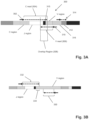
- RNA encoding TCR ⁇ is amplified in a two-staged PCR.
- primer (202) and primer set (212) are used in a first stage amplification to attach common primer binding site (214) to all the nucleic acids encoding TCR ⁇ s.
- Fig. 2B illustrates the components of a second stage amplification for generating more material and for attaching primer binding sites P5 (222) and P7 (220) which are used in cluster formation (via bridge PCR) in the Solexa-based sequencing protocol.
- Primer P7 (220) may also include sample tag (221) for multiplexing up to 96 samples for concurrent sequencing in the same run, e.g. Illumina application note 770- 2008-011 (2008). A different type of tag in the same primer may be used to increase the accuracy of the determination of receptor chain frequencies.
- primer P7 is modified to include a highly diverse tag set, so that instead of 96 tags, primer P7 is engineered to have 10,000 distinct tags, or more.
- primer P7 is a mixture of 10,000 or more distinct oligonucleotides each having an identical template binding region, a distinct tag sequence, and an identical 5' tail portion (e.g., (223) in Fig. 2B ).
- any subset of nucleic acids encoding the same receptor chain (e.g. less than 100) will receive a different tag with high probability.
- Such a process of pairing members of a small set of nucleic acids with a much larger set of tags for counting, labeling, sorting purposes is well known and is disclosed in various forms in the following references, Brenner, U.S. patent 6,172,214 ; Brenner et al, U.S. patent 7,537,897 ; and Macevicz, Internation patent publication WO US2005/111242 ; Brenner et al, Proc. Natl. Acad.
- the tag set should be at least 100 times (or more) the size of the set of nucleic acids to be labeled if all nucleic acids are to receive a unique tag with high probability.
- the number of distinct tags is in the range of from 10,000 to 100,000; in another embodiment, the number of distinct tags is in the range of from 10,000 to 50,000; and in another embodiment, the number of distinct tags is in the range of from 10,000 to 20,000. As disclosed in Brenner, U.S.
- the above method may be carried out by the following steps: (a) obtaining a sample containing T cells; (b) determining nucleotide sequences of TCR ⁇ chains of T cells from the sample, each TCR ⁇ chain having a frequency of occurrence in the sample; (c) determining nucleotide sequences of TCR ⁇ chains of T cells from the sample, each TCR ⁇ chain having a frequency of occurrence in the sample; and (d) identifying paired TCR ⁇ chains and TCR ⁇ chains as those having the same frequency within the sample. Frequencies of the respective TCR ⁇ chains and TCR ⁇ chains may be determined from the tabulations of encoding nucleic acids, or clonotypes.
- frequencies of the respective TCR ⁇ chains and TCR ⁇ chains may be determined from the tabulations of polypeptides encoded by the clonotypes.
- clonotype frequencies may be determined by counting clonotypes directly or indirectly by using a tagging scheme as described above.
- Fig. 1B illustrates identifying matching receptor subunits which may be applied to either TCRs or BCRs and which may be used even when receptor frequencies among subunit chains are close or indistinguishable, whether because of experimental error or otherwise.
- a sample containing lymphocytes (149), which may be either T cells or B cells
- subsets are formed by separating or partitioning the sample into a plurality of subsets (152), 1 through K (in the figure).
- subsets are formed by separating or partitioning the sample into a plurality of subsets (152), 1 through K (in the figure).
- only a portion of the K subset are analyzed; thus, it is not necessary to actually form all K subsets.
- One may form subsets of only the portion that are actually analyzed.
- each subset (152) nucleic acids encoding each different immune receptor chain (TCR ⁇ and TCR ⁇ being shown under subset 1) are sequenced, thereby forming pairs of lists, for example, (162), (164), (166) and (168) for subsets 1, 2 ... K-1, K, respectively.
- Each pair of such lists contains a first list of nucleotide sequences of a first immune receptor chain, e.g.
- the number of subsets, K is a number in the range of from 5 to 500; in another embodiment, K is a number in the range of from 10 to 100; in another embodiment, K is a number in the range of from 20 to 50.
- the above method of determining receptors of antigen-specific T cells in a tissue sample may comprise the following steps: (a) partitioning a tissue sample containing T cells into a plurality of subsets; (b) exposing the T cells of each of a portion of subsets to an antigen so that T cells specific for the antigen are activated; (c) isolating the activated T cells of each subset of the portion; (d) sequencing recombined nucleic acids encoding T-cell receptor ⁇ chains in each subset of the portion to provide sequence reads from which ⁇ chain clonotypes are determined; (e) sequencing recombined nucleic acids encoding T-cell receptor ⁇ chains in each subset of the portion to provide sequence reads from which ⁇ chain clonotypes are determined; and (f) identifying as antigen-specific T cell receptors with those pairs of ⁇ chain clonotypes and ⁇ chain clonotypes that for every subset of the portion (i)
- the above method of determining receptors of antigen-specific B cells in a tissue sample may comprise the following steps: (a) forming a plurality of subsets from a tissue sample containing B cells; (b) reacting under antigen-binding conditions the B cells of each subset to an antigen; (c) isolating the antigen-specific B cells of each subset (i.e.
- the a plurality of subsets formed may correspond to a portion of the plurality into which a tissue sample is partitioned in the former instances.
- the step of forming a plurality of subsets may comprise aliquoting portions of a tissue sample into separate reaction vessels. In some instances, such portions are equal portions.
- 5A-5B as 1-8) are formed from a tissue sample.
- the number of different antigens employed may vary widely and in some embodiments the number depends on the nature of the antigens.
- a plurality of protein antigens may be employed; in further embodiments, a plurality of protein antigens may be in the range of from 2 to 100 protein antigens; in other embodiments, a plurality may be in the range of from 2 to 50 protein antigens; in other embodiments, a plurality may be in the range of from 2 to 10 protein antigens; in still other embodiments, a plurality may be in the range of from 2 to 1000 protein antigens.
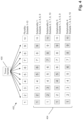
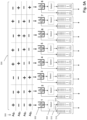
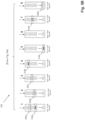
- clonotype (518a, 518b, 518c and 518d) is observed to have increased in frequency within reaction mixtures 1, 4, 5 and 7 which corresponds to the unique subplurality of subsets into which antigen 1 was added, but not to have increased in the other reaction mixtures where antigen 1 was absent; therefore, clonotype (518) identifies a T cell with a TCR specific for antigen 1.
- the method for determining clonotypes of antigen-specific T cells in a tissue sample may be carried out with the following steps: (a) forming a plurality of subsets from a tissue sample containing T cells; (b) exposing under interaction conditions T cells in a subplurality of subsets to one or more antigens so that T cells specific for any of the one or more antigens are capable of interacting therewith, and wherein each different antigen is exposed to T cells in a different subplurality; (c) enriching the antigen-interacting T cells of each subset of a subplurality; (d) sequencing recombined nucleic acids encoding a T-cell receptor chain or a portion thereof from said enriched T cells in each subset of the subplurality to provide sequence reads from which clonotypes are determined; (e) sequencing recombined nucleic acids encoding T-cell receptor chain or a portion thereof from said T cells in each subset of the subplurality
- such clonotypes are identified by observing the clonotypes in all reaction mixtures that increase in frequency (520 in Fig. 5B ) and identifying clonotypes that appear in each of the subsets of the subplurality corresponding to a given antigen and that is absent in all of the other subsets.
- a clonotype of a T cell specific for an antigen increases in frequency only in the subsets or reaction mixtures to which the antigen was added and not in the others.
- such clonotypes are identified by observing the clonotypes in all reaction mixtures that increase in frequency and identifying clonotypes that appear in each of the subsets of the subplurality corresponding to a given antigen and that is absent in all of the other subsets.
- a clonotype of a B cell specific for an antigen increases in frequency only in the subsets or reaction mixtures to which the antigen was added and not in the others.
- FIG. 4 illustrates the process of selecting subpluralities of a plurality of subset in accordance with the invention.
- Tissue sample (400) is separated into a plurality of subsets (402), for example, 10 as shown in Fig. 4 .
- Tissue sample (400) may also be aliquoted into a plurality of subsets, or a plurality of subsets may be formed from it, which may or may not use the entire amount of tissue sample (400).
- a subplurality of plurality (402) is a selection of from two to nine subsets of plurality (402). In some embodiments, several subpluralities are selected that each have the same number of subsets, such as illustrated in Fig.
- antigen-specific lymphocyte clonotypes may be identified using single cell techniques, such as disclosed in Faham and Willis, U.S. patents 8,236,503 and 8,507,205 . Although illustrated in terms of T cell receptor chains, the instances illustrated herein would be understood by those skilled in the art to be applicable to B cell receptor chains.
- the step of selecting T cells that interact with antigen is carried out by disposing T cells exposed to antigen(s) into reactors so that a substantial fraction of reactors contain a single T cell and a single labeled antigen reagent, usually bound to a TCR of the T cell.
- An objective of these methods is to carry out a polymerase cycling assembly (PCA) reaction (also sometimes referred to as a “linking PCR”) on individual cells in the reactors to link their recombined nucleic acid sequences (e.g., encoding a portion of a TCR) to a sequence tag that is associated with, or labels, an antigen reagent present in the reactor with the single T cell
- PCA polymerase cycling assembly
- fusion products can be sequenced to identify both the clonotype of the TCR and the sequence tag which, in turn, identifies the antigen reagent.
- Fig. 1E gives an overview on one method.
- Antigen reagent (1000) may also include sequence tag labels (such as, 1003), which may be produced as taught by Kwong et al, U.S. patent 8,394,590 .
- sequence tag labels such as, 1003
- the MHC and peptide portion determines the specificity of the reagent for a TCR and vice versa.
- Antigen reagents (1000) are produced so that substantially every different antigen reagent (e.g. every different multimer) has a different sequence tag.
- sequence tags and MHC-peptide portions are selected so that with the knowledge of a tag's sequence, the identity of the MHC-peptide portion can be uniquely determined.
- a sequence tag "X” indicates the presence of recombined nucleic acid "C 1 "
- a sequence tag "Y” indicates the presence of recombined nucleic acid “C 2 "
- a sequence tag "Z” indicates the presence of recombined nucleic acid "C 3 ".
- Antigen reagents (1000) are combined (1008) with T cells (1010) in a reaction mixture and are incubated under antigen-interaction conditions which permit the formation of T cell-reagent complexes whenever a TCR is specific for an antigen reagent.
- single cell reactors which may vary widely and may include, but not be limited to, plates with arrays of nanoliter-volume wells, microfluidic devices, and the like, as described more fully below.
- single cell reactors are aqueous micelles in an emulsion, such as illustrated (1017) in Fig. 1E , where a substantial fraction of micelles in the emulsion contain a single T cell together with a single antigen reagent.
- single-cell emulsion (126) is generated using a microfluidic emulsion generator, such as disclosed by Zeng et al, Anal. Chem., 82: 3183-3190 (2010 ), or the like.
- Reactors (1018) contain a PCA reaction mixture that, for example, may comprise a nucleic acid polymerase, outer primers and linking primers (described more fully below), nucleoside triphosphates, a buffer solution, and the like.
- a PCA reaction mixture may also include one or more cell lysing reagents, to give the foregoing reagents access to intracellular recombined nucleic acids, such as mRNAs.
- PCA reaction (1020) For each reactor (1018) containing a cell, PCA reaction (1020) generates fusion products (1022) that may comprise one or more pairs of sequences, such that one member of the pair is a sequence tag and the other member is a predetermined recombined nucleic acid.
- fusion products may comprise triplets of sequences, or higher order concatenations, for example, as taught by Faham and Willis, U.S. patent 8,507,205 .
- a single kind of fusion product may be generated for each cell (or per reactor) or a plurality of different kinds of fusion products may be generated for each cell (or per reactor).
- Such plurality may be at least 2, or it may be in the range of from 2 to 500, or from 2 to 200, or from 2 to 100, or from 2 to 20. In one embodiment, such plurality may be in the range of from 2 to 10. In some embodiments, such plurality is two.
- Fusion products (1026) are represented in Fig. 1E as conjugates of sequence tags (X, Y or Z) and recombined nucleic acids (e.g. clonotypes) (C 1 , C 2 and C 3 ).
- a variety of conventional methods may be used to isolate fusion products (1026) from the reaction mixture, including, but not limited to, column chromatography, ethanol precipitation, affinity purification after use of biotinylated primers, gel electrophoresis, or the like.
- additional sequences may be added to fusion products (1026) as necessary for sequencing (1028). Sequencing may be carried out using a conventional high-throughput instrument, e.g. Genome Analyzer IIx (Illumina, Inc., San Diego), or the like.
- PCA reactions permit a plurality of nucleic acid fragments to be fused together to form a single fusion product in one or more cycles of fragment annealing and polymerase extension, e.g. Xiong et al, FEBS Micro biol. Rev., 32: 522-540 (2008 ).
- PCA reactions come in many formats. In one format of interest, PCA follows a plurality of polymerase chain reactions (PCRs) taking place in a common reaction volume, wherein each component PCR includes at least one linking primer that permits strands from the resulting amplicon to anneal to strands from another amplicon in the reaction and to be extended to form a fusion product or a precursor of a fusion product.
- PCRs polymerase chain reactions
- PCA in its various formats is a well-known method for fragment assembly and gene synthesis, several forms of which are disclosed in the following references: Yon et al, Nucleic Acids Research, 17: 4895 (1989 ); Chen et al, J.Am.Chem.Soc., 116: 8799-8800 (1994 ); Stemmer et al, Gene, 164: 49-53 (1995 ); Hoover et al, Nucleic Acids Research, 30: e43 (2002 ); Xiong et al, Biotechnology Advances, 26: 121-134 (2008 ); Xiong et al, FEBS Microbiol. Rev., 32: 522-540 (2008 ); and the like.
- FIG. 1F An exemplary (but not limiting) PCA format useful in the present methods is described in Fig. 1F , which illustrates a PCA scheme for joining two separate fragments A' (1208) and B' (1210) into a single fusion product (1222).
- Fragment A' (1208) is amplified with primers (1200) and (1202) and fragment B' (1210) is amplified with primers (1206) and (1204) in the same PCR mixture.
- Primers (1200) and (1206) are "outer” primers of the PCA reaction and primers (1202) and (1204) are the "inner” primers of the PCA reaction.
- Inner primers (1202) and (1204) each have a tail (1203 and 1205, respectively) that are not complementary to A' or B' (or adjacent sequences if A' and B' are segments imbedded in a longer sequence).
- Tails (1203) and (1205) are complementary to one another.
- such inner primer tails are selected for selective hybridization to its corresponding inner primer (and not elsewhere); but otherwise such tails may vary widely in length and sequence. In one instance, such tails have a length in the range of from 8 to 30 nucleotides; or a length in the range of from 14 to 24 nucleotides.
- the region of fusion product (1222) formed from tails (1203) and (1205) may include one or more primer binding sites for use in later analysis, such as high-throughput sequencing.
- concentrations of outer primers are greater than the concentrations of inner primers so that amplification of the fusion product continues after initial formation.
- outer primer concentration may be from about 10 to 100 times that of the inner primers, e.g. 1 ⁇ M for outer primers and 0.01 ⁇ M for inner primers.
- a PCA reaction may comprise the components of a PCR.
- cells from a population are disposed in reactors each containing a single cell. This may be accomplished by a variety of large-scale single-cell reactor platforms known in the art, e.g. Clarke et al, U.S. patent publication 2010/0255471 ; Mathies et al, U.S. patent publication 2010/0285975 ; Edd et al, U.S. patent publication 2010/0021984 ; Colston et al, U.S. patent publication 2010/0173394 ; Love et al, International patent publication WO2009/145925 ; Muraguchi et al, U.S.
- cells are disposed in wells of a microwell array where reactions, such as PCA reactions, take place; in another instance, cells are disposed in micelles of a water-in-oil emulsion, where micelles serve as reactors.
- Micelle reactors generated by microfluidics devices e.g.
- compositions and techniques for emulsifications, including carrying out amplification reactions, such as PCRs, in micelles is found in the following references: Becher, "Emulsions: Theory and Practice," (Oxford University Press, 2001 ); Griffiths and Tawfik, U.S. patent 6,489,103 ; Tawfik and Griffiths, Nature Biotechnology, 16: 652-656 (1998 ); Nakano et al, J. Biotechnology, 102: 117-124 (2003 ); Dressman et al, Proc.
- biocompatible oil e.g., light mineral oil, Sigma
- homogeneous sequence tags and reaction mixture are added dropwise into a cross-flow of biocompatible oil.
- the oil used may be supplemented with one or more biocompatible emulsion stabilizers. These emulsion stabilizers may include Atlox 4912, Span 80, and other recognized and commercially available suitable stabilizers.
- the emulsion is heat stable to allow thermal cycling, e.g., to at least 94° C., at least 95° C., or at least 96° C.
- the droplets formed range in size from about 5 microns to about 500 microns, more preferably from about 10 microns to about 350 microns, even more preferably from about 50 to 250 microns, and most preferably from about 100 microns to about 200 microns.
- cross-flow fluid mixing allows for control of the droplet formation, and uniformity of droplet size.
- micelles are produced having a uniform distribution of volumes so that reagents available in such reactors result in similarly amplified target nucleic acids and sequence tags. That is, widely varying reactor volumes, e.g. micelle volumes, may lead to amplification failures and/or widely varying degrees of amplification. Such failures and variation would preclude or increase the difficulty of making quantitative comparisons of target nucleic acids in individual cells of a population, e.g. differences in gene expression.
- micelles are produced that have a distribution of volumes with a coefficient of variation (CV) of thirty percent or less. In some instances, micelles have a distribution of volumes with a CV of twenty percent of less.
- CV coefficient of variation
- a reaction mixture is a PCA reaction mixture and is substantially the same as a PCR reaction mixture with at least one pair of inner (or linking) primers and at least one pair of outer primers.
- a step of lysing cells may be accomplished by heating cells to a temperature of 95°C or above in the presence of a nonionic detergent, e.g. 0.1% Triton X-100 or Tween-20, for a period prior to carrying out an amplification reaction. In one instance, such period of elevated temperature may be from 10-20 minutes.
- a step of lysing cells may be accomplished by one or more cycles of heating and cooling, e.g. 96°C for 15 min followed by 10°C for 10 min, in the presence of a nonionic detergent, e.g. 0.1% Triton X-100 or Tween-20.
- a nonionic detergent e.g. 0.1% Triton X-100 or Tween-20.
- Guidance for carrying out a lysing step is disclosed in Brown et al, J.R.Soc. Interface 5: S131-S138 (2008 ).
- microfluidics device configurations may be employed to generate micelles containing single cells, e.g. Zagoni et al, chapter 2, Methods of Cell Biology, 102: 25-48 (2011 ); Brouzes, chapter 10, Methods of Cell Biology, 102: 105-139 (2011 ); Wiklund et al, chapter 14, Methods of Cell Biology, 102: 177-196 (2011 ); Le Gac et al, chapter 7, Methods of Molecular Biology, 853: 65-82 (2012 ); and the like.
- determining antigen-specific T cells may be implemented with the following steps: (a) exposing under interaction conditions a tissue sample containing T cells to antigen reagents labeled with sequence tags; (b) disposing in multiple reactors single T cells specifically bound to at least one antigen reagent, each reactor containing a polymerase cycling assembly (PCA) reaction mixture comprising a pair of outer primers and one or more pairs of linking primers, at least one pair of such outer and linking primers being specific for a recombined nucleic acid encoding a segment of a TCR chain of the T cell and one or more pairs of such outer and linking primers being specific for a sequence tag attached to the antigen reagent; (c) performing a PCA reaction in the reactors to form fusion products comprising said recombined nucleic acids and said sequence tag; (d) spatially isolating individual molecules of fusion products from the reactors; (e) sequencing the spatially
- PCA polymerase cycling assembly
- the reactors are aqueous micelles of a water-in-oil emulsion. In some instances, aqueous micelles are generated by a microfluidics device. In some instances, the reactors are nanoliter wells in a planar substrate. In some instances, a further step of lysing the single T cells in the reactors is carried out prior to performing the PCA reaction.
- An antigen may be any compound or composition capable of eliciting a cell-mediated immune response (that is, an adaptive immune response), particularly in a mammal, such as a human.
- an antigen may be any compound that can be recognized by a T cell in the context of the MHC molecule. More particularly, antigens include, but is not limited to, cells, tissue extracts, tissue or cell lysates, proteins, individually or as a mixture, a plurality of proteins, peptides, mixtures of peptides, lipids, carbohydrates, sugars, and the like.
- An antigen may be an antigen-presenting cell (APC) transfected with antigen-encoding nucleic acids, e.g.
- APC antigen-presenting cell
- An antigen can be characteristic of a disease, such as an infectious disease, an autoimmune disease, or a cancer.
- the antigen can be, for example, a viral antigen, a bacterial antigen, a cancer antigen, etc.
- an antigen is a cancer antigen or a viral antigen.
- cancer antigen is meant any molecule (e.g., protein, peptide, lipid, carbohydrate, etc.) solely or predominantly expressed or over-expressed by a tumor cell or cancer cell, such that the antigen is associated with the tumor or cancer.
- a cancer antigen may be a cancer antigen of only one type of cancer or tumor, such that the cancer antigen is associated with or characteristic of only one type of cancer or tumor.
- a cancer antigen may be a cancer antigen (e.g., may be characteristic) of more than one type of cancer or tumor.
- a cancer antigen may be expressed by both breast and prostate cancer cells and not expressed at all by normal, non-tumor, or non-cancer cells, or expressed only minimally.
- a cancer antigen may a melanoma cancer antigen or a breast cancer antigen.
- Exemplary cancer antigens include those of the group consisting of gp100, MART-1, NY-ESO-1, a member of the MAGE family of proteins, e.g., MAGE-A1, mesothelin, Tyrosinase, TRP-1, TRP-2, PMSA, Her-2, and p53.
- An antigen may be a viral antigen.
- viral antigen means those antigens encoded by a part of a viral genome which can be detected by a specific immunological response.
- Viral antigens include, for example, a viral coat protein, an influenza viral antigen, an HIV antigen, a Hepatitis B antigen, or a Hepatitis C antigen.
- an antigen can be naturally, artificially, synthetically, or recombinantly produced.
- an antigen can be a synthetic, recombinant, isolated, and/or purified protein, polypeptide, or peptide.
- Methods of making or obtaining such antigens are known in the art. For example, suitable methods of de novo synthesizing polypeptides and proteins (e.g., antigenic polypeptides and proteins) are described in Chan et al., Fmoc Solid Phase Peptide Synthesis, Oxford University Press, Oxford, United Kingdom, 2005 ; Peptide and Protein Drug Analysis, ed. Reid, R., Marcel Dekker, Inc., 2000 ; Epitope Mapping, ed.
- polypeptides and proteins can be recombinantly produced using nucleic acids which encode the polypeptide or protein using standard recombinant methods. See, for instance, Sambrook et al., Molecular Cloning: A Laboratory Manual, 3rd ed., Cold Spring Harbor Press, Cold Spring Harbor, N.Y. 2001 ; and Ausubel et al., Current Protocols in Molecular Biology, Greene Publishing Associates and John Wiley & Sons, NY, 1994 .
- an antigen can be isolated and/or purified from a source, such as a plant, a bacterium, an insect, a mammal, e.g., a rat, a human, etc. Methods of isolation and purification are well-known in the art.
- An antigen can be a free antigen, e.g., unbound antigenic peptide (e.g., a free peptide), or can be a bound antigen, e.g., an MHC-peptide tetramer or an antigenic peptide presented by a carrier cell which was pulsed with the peptide, or an antigen can be an APC transfected with antigen-encoding nucleic acids (as mentioned above).
- peripheral blood mononuclear cells (for example, which may be obtained from blood, for example, as a leukapheris product) from a subject may be cultured directly in the presence of antigen, to load antigen presenting cells (APCs) among the PBMCs with the antigen and to activate/stimulate antigen-specific T cells present in the PBMC.
- APCs antigen presenting cells
- PBMC may be collected from an individual, contacted with an antigen of interest, such as a tumor antigen, or a viral lysate, etc. In this manner, the APCs present in the PBMCs are loaded with the antigen, which is then presented to the T cells present in the sample.
- antigen-specific T cells may be activated with peptide-MHC tetramers, see for example Altman, et al., Science 1998 Jun. 19; 280(5371):1821 .
- a protein antigen may be exposed to T cells indirectly by generating a set of peptides for binding to MHC molecules, where the sequences of the peptides are based on the amino acid sequence of the protein, e.g. Stickler et al, Toxicol. Sci., 77(2): 280-289 (2004 ).
- peptides are overlapping peptides covering the protein.
- peptides each have a size of from 10 to 20 amino acids.
- Antigens may include APCs transfected with nucleic acids, such as in vitro transcribed RNA encoding peptides ("peptide RNA"), for example, as taught by Coughlin et al, Blood, 103(6): 2046-2054 (2004 ); or APCs transfected with plasmids, for example, as taught by Siewert et al, Nature Medicine, 18(5): 824-828 (2012 ); and Dornmair et al, U.S. patent publication 2013/0195900 .
- nucleic acids such as in vitro transcribed RNA encoding peptides (“peptide RNA”), for example, as taught by Coughlin et al, Blood, 103(6): 2046-2054 (2004 ); or APCs transfected with plasmids, for example, as taught by Siewert et al, Nature Medicine, 18(5): 824-828 (2012 ); and Dornmair et al, U.S. patent publication 2013/0195
- peptide RNA may be generated by inserting peptide-encoding DNA into a conventional in vitro transcription vector, such as pGEM4Z, or the like; generating messenger RNA by in vitro transcription; purifying the transcribed RNA by conventional techniques, e.g. phenol/chloroform extraction and/or column purification (RNAeasy, Qiagen); and electroporating the mRNA into the APCs.
- the peptide-encoding DNA may be DNA that encodes an entire antigen.
- the electroporated, transcribed and translated nucleic acid is then processed by the APCs into peptides which are presented to T cells.
- Lymphocytes include T cells or B cells.
- T cells can be obtained from a number of sources, including peripheral blood mononuclear cells, bone marrow, thymus, tissue biopsy, tumor, lymph node tissue, gut associated lymphoid tissue, mucosa associated lymphoid tissue, spleen tissue, or any other lymphoid tissue, and tumors.
- T cells can be obtained from T cell lines and from autologous or allogeneic sources.
- T cells may be obtained from a single individual or a population of individuals, for example, a population of individual who all suffer from the same disease, such as, a cancer or an infectious disease.
- cells from the circulating blood of an individual are obtained by apheresis or leukapheresis.
- the apheresis product typically contains lymphocytes, including T cells, monocytes, granulocytes, B cells, other nucleated white blood cells, red blood cells, and platelets.
- the cells collected by apheresis or leukapheresis may be washed to remove the plasma fraction and to place the cells in an appropriate buffer or media for subsequent processing steps.
- the cells are washed with phosphate buffered saline (PBS).
- PBS phosphate buffered saline
- the wash solution lacks calcium and may lack magnesium or may lack many if not all divalent cations.
- T cells are isolated from peripheral blood lymphocytes by lysing the red blood cells and by centrifugation through a PERCOLL TM gradient.
- a specific subpopulation of T cells such as CD28+, CD4+, CD8+, CD45RA+, and CD45RO+T cells, can be further isolated by positive or negative selection techniques.
- CD3+, CD28+ T cells can be positively selected using CD3/CD28 conjugated magnetic beads (e.g., DYNABEADS ® M-450 CD3/CD28 T Cell Expander).
- enrichment of a T cell population by negative selection can be accomplished with a combination of antibodies directed to surface markers unique to the negatively selected cells.
- a monoclonal antibody cocktail typically includes antibodies to CD14, CD20, CD11b, CD16, HLA-DR, and CD8.
- Another method for preparing T cells for stimulation is to freeze the cells after the washing step, which does not require the monocyte-removal step.
- the freeze and subsequent thaw step provides a more uniform product by removing granulocytes and, to some extent, monocytes in the cell population.
- the cells may be suspended in a freezing solution. While many freezing solutions and parameters are known in the art and will be useful in this context, one method involves using PBS containing 20% DMSO and 8% human serum albumin (HSA), or other suitable cell freezing media. This is then diluted 1:1 with media so that the final concentration of DMSO and HSA are 10% and 4%, respectively. The cells are then frozen to -80° C. at a rate of 1° per minute and stored in the vapor phase of a liquid nitrogen storage tank.
- HSA human serum albumin
- B cells can be obtained from a number of sources, including peripheral blood mononuclear cells, bone marrow, thymus, tissue biopsy, tumor, lymph node tissue, gut associated lymphoid tissue, mucosa associated lymphoid tissue, spleen tissue, or any other lymphoid tissue, and tumors.
- B cells can be obtained from B cell lines and from autologous or allogeneic sources.
- B cells may be obtained from a single individual or a population of individuals, for example, a population of individual who all suffer from the same disease, such as, a cancer or an infectious disease.
- cells from the circulating blood of an individual are obtained by apheresis or leukapheresis.
- the apheresis product typically contains lymphocytes, including T cells, monocytes, granulocytes, B cells, other nucleated white blood cells, red blood cells, and platelets.
- the cells collected by apheresis or leukapheresis may be washed to remove the plasma fraction and to place the cells in an appropriate buffer or media for subsequent processing steps.
- the cells are washed with phosphate buffered saline (PBS).
- PBS phosphate buffered saline
- the wash solution lacks calcium and may lack magnesium or may lack many if not all divalent cations.
- a washing step may be accomplished by methods known to those in the art, such as by using a semi-automated "flow-through” centrifuge (for example, the Cobe 2991 cell processor, Baxter) according to the manufacturer's instructions.
- a semi-automated "flow-through” centrifuge for example, the Cobe 2991 cell processor, Baxter
- the cells may be resuspended in a variety of biocompatible buffers, such as, for example, Ca++/Mg++ free PBS.
- the undesirable components of the apheresis sample may be removed and the cells directly resuspended in culture media.
- B cells may also be isolated using magnetic beads linked to antibodies specific for common B cell surface markers, e.g. CD19 Dynabeads (Life Technologies, Carlsbad, CA).
- tissue-infiltrating lymphocytes TILs
- Cytotoxic T lymphocytes for use in methods of the invention may be obtained by a variety of techniques known in the art, particularly the art of adoptive cell therapy, e.g. as described in Dudley et al, J. Immunotherapy, 26(4): 332-342 (2003 ); Dudley et al, Semin. Oncol., 34(6): 524-531 (2007 ).
- Reconstituted T cell receptors specific for a given antigen or set of antigens have a variety of uses both individually and as a group, including, but not limited to, as binding compounds for immunotherapy, as components of transfected T cells for adoptive immunotherapy, as antigen sources in vaccines, and as indicators of immune status.
- Matched TCR chains in soluble format may be used as high affinity binding compounds linked to T cell capturing agents for unique anti-cancer therapeutics, e.g. as taught by Jakobsen et al, U.S. patents 7,329,731 and 7,666,604 .
- Matched TCR chains may be used to construct vectors which may, in turn, be used to transfect autologous T cells for adoptive immunotherapy of a patient.
- samples from which TCRs are analyzed may be taken before and after a patient has been immunized with a cancer antigen, so that elevated anti-cancer TCR chains are readily matched and selected.
- References disclosing such applications include Turcotte et al, Adv. Surg., 45: 341-360 (2011 ); Morgan et al, Science, 314: 126-129 (2006 ); Walchli et al, PlosOne, 6: e27930 (2011 ); Robbins et al, U.S. patent publication 2010/0034834 ; and the like.
- a population of matched or reconstituted TCRs from a sample comprises a unique profile of an individual's immune system, which contains much more information than profiles of single-sequence clonotypes. That is, a population of matched TCR chains or matched heavy and light chain immunoglobulins comprises a clonotype profile where the clonotypes are pairs of nucleotide sequences that encode pairs of TCR chains expressed in the same T cell or pairs of heavy and light chain immunoglobulins expressed in the same B cell. In both cases, such pairs may be related directly to T cell function, for example, by interaction with sets of MHC tetramer-peptide complexes, e.g. Palmowski et al, Immunol.
- clonotype profiles of matched immune receptor chains comprise at least 100 clonotype pairs, wherein each clonotype of the pair comprises a sequence of from 30 to 300 nucleotides. In another embodiment, clonotype profiles of matched immune receptor chains comprise at least 500 clonotype pairs, wherein each clonotype of the pair comprises a sequence of from 30 to 300 nucleotides.
- clonotype profiles of matched immune receptor chains comprise at least 1000 clonotype pairs, wherein each clonotype of the pair comprises a sequence of from 30 to 300 nucleotides.
- such clonotype profiles of matched immune receptor chains comprise pairs of TCR ⁇ and TCR ⁇ clonotypes.
- such clonotype profiles of matched immune receptor chains comprise pairs of TCR ⁇ and TCR ⁇ clonotypes.
- reconstituted B cell receptors specific for a given antigen or set of antigens have a variety of uses both individually and as a group, including, but not limited to, as indicators of immune status, as components of transfected T cells for adoptive immunotherapy (e.g., as chimeric antigen receptors, Barrett et al, Ann. Rev. Med., 65: 333-347 (2014 )) , as binding compounds for either passive antibody therapeutics for infectious disease ( Casadevall et al, Nat. Rev. Microbiol., 2(9): 695-702 (2004 ), or active or passive therapeutics for cancer or autoimmune treatment, or the like.
- the method of Figs. 5A-5C may be used to identify from a library of cancer antigens patient-specific antigens for which the patient has reactive T cells and/or B cells.
- a library of cancer antigens may be derived from the patient or it may be a collection of antigens commonly occurring in many patients suffering from the particular type of cancer.
- T cells and/or B cells from each of a population of patients suffering from the same cancer may be examined with the method of Figs. 5A-5C to determine the antigens to which cancer-resistant patients have responsive T cells and/or B cells and to which cancer-non-resistant patients have (or lack) responsive T cells and/or B cells. From this information, antigens may be selected that are suitable targets for anti-cancer compounds, such as therapeutic antibodies and/or CAR-based adoptive cell therapy.
- T lymphocytes may include, for example, helper T cells (effector T cells or Th cells), cytotoxic T cells (CTLs), memory T cells, and regulatory T cells, as well as other cell types normally found in a tissue sample.
- a sample of T cells includes at least 1,000 T cells; but more typically, a sample includes at least 10,000 T cells, and more typically, at least 100,000 T cells.
- a sample includes at least 10 6 T cells.
- Samples of B-cells (B lymphocytes) may include, B cells, as well as other cell types normally found in a tissue sample.
- a sample of B cells includes at least 1,000 B cells; but more typically, a sample includes at least 10,000 B cells, and more typically, at least 100,000 B cells.
- a sample includes at least 10 6 B cells.
- Samples used in the methods of the invention can come from a variety of tissues as noted above, including, for example, tumor tissue, blood and blood plasma, lymph fluid, cerebrospinal fluid surrounding the brain and the spinal cord, synovial fluid surrounding bone joints, and the like.
- the sample is a blood sample.
- the blood sample can be about 0.1, 0.2, 0.3, 0.4, 0.5, 0.6, 0.7, 0.8, 0.9, 1.0, 1.5, 2.0, 2.5, 3.0, 3.5, 4.0, 4.5, or 5.0 mL.
- the sample can be a tumor biopsy.
- the biopsy can be from, for example, from a tumor of the brain, liver, lung, heart, colon, kidney, or bone marrow.
- a biopsy can be an open biopsy, in which general anesthesia is used.
- the biopsy can be a closed biopsy, in which a smaller cut is made than in an open biopsy.
- the biopsy can be a core or incisional biopsy, in which part of the tissue is removed.
- the biopsy can be an excisional biopsy, in which attempts to remove an entire lesion are made.
- the biopsy can be a fine needle aspiration biopsy, in which a sample of tissue or fluid is removed with a needle.
- the sample can be a biopsy, e.g., a skin biopsy.
- the biopsy can be from, for example, brain, liver, lung, heart, colon, kidney, or bone marrow. Any biopsy technique used by those skilled in the art can be used for isolating a sample from a subject.
- a biopsy can be an open biopsy, in which general anesthesia is used.
- the biopsy can be a closed biopsy, in which a smaller cut is made than in an open biopsy.
- the biopsy can be a core or incisional biopsy, in which part of the tissue is removed.
- the biopsy can be an excisional biopsy, in which attempts to remove an entire lesion are made.
- the biopsy can be a fine needle aspiration biopsy, in which a sample of tissue or fluid is removed with a needle.
- a sample of lymphocytes is sufficiently large so that substantially every T cell with a distinct clonotype is represented therein, thereby forming a repertoire (as the term is used herein).
- a sample is taken that contains with a probability of ninety-nine percent every clonotype of a population present at a frequency of .001 percent or greater.
- a sample is taken that contains with a probability of ninety-nine percent every clonotype of a population present at a frequency of .0001 percent or greater.
- a sample of T cells includes at least a half million cells, and in another embodiment such sample includes at least one million cells.
- Blood samples are of particular interest and may be obtained using conventional techniques, e.g. Innis et al, editors, PCR Protocols (Academic Press, 1990 ); or the like.
- white blood cells may be separated from blood samples using convention techniques, e.g. RosetteSep kit (Stem Cell Technologies, Vancouver, Canada). Blood samples may range in volume from 100 ⁇ L to 10 mL; in one aspect, blood sample volumes are in the range of from 100 ⁇ L to 2 mL.
- subsets of white blood cells e.g. lymphocytes, may be further isolated using conventional techniques, e.g. fluorescently activated cell sorting (FACS)(Becton Dickinson, San Jose, CA), magnetically activated cell sorting (MACS)(Miltenyi Biotec, Auburn, CA), or the like.
- FACS fluorescently activated cell sorting
- MCS magnetically activated cell sorting
- RNA or DNA can be sequenced in the methods of the invention.
- a recombined sequence from a T-cell encoding a chain of a T cell receptor molecule, or a portion thereof, is referred to as a clonotype.
- a recombined sequence from a B-cell encoding a chain of an immunoglobulin molecule, or a portion thereof may also be referred to as a clonotype.
- the DNA or RNA can correspond to sequences from T-cell receptor (TCR) genes or from immunoglobulin genes.
- TCR T-cell receptor
- the DNA and RNA can correspond to sequences encoding ⁇ , ⁇ , ⁇ , or ⁇ chains of a TCR.
- Amplicons of target populations of nucleic acids may be generated by a variety of amplification techniques.
- multiplex PCR is used to amplify members of a mixture of nucleic acids, particularly mixtures comprising recombined immune molecules such as T cell receptors, or portions thereof.
- Guidance for carrying out multiplex PCRs of such immune molecules is found in the following references: Faham and Willis, U.S. patent 8,236,503 and U.S. patent 8,628,927 ; Morley, U.S. patent 5,296,351 ; Gorski, U.S. patent 5,837,447 ; Dau, U.S. patent 6,087,096 ; Von Dongen et al, U.S. patent publication 2006/0234234 ; European patent publication EP 1544308B1 ; and the like.
- the individual nucleic acid molecules can be isolated, optionally re-amplified, and then sequenced individually.
- Exemplary amplification protocols may be found in van Dongen et al, Leukemia, 17: 2257-2317 (2003 ) or van Dongen et al, U.S. patent publication 2006/0234234 .
- an exemplary protocol is as follows: Reaction buffer: ABI Buffer II or ABI Gold Buffer (Life Technologies, San Diego, CA); 50 ⁇ L final reaction volume; 100 ng sample DNA; 10 pmol of each primer (subject to adjustments to balance amplification as described below); dNTPs at 200 ⁇ M final concentration; MgCl 2 at 1.5 mM final concentration (subject to optimization depending on target sequences and polymerase); Taq polymerase (1-2 U/tube); cycling conditions: preactivation 7 min at 95°C; annealing at 60°C; cycling times: 30s denaturation; 30s annealing; 30s extension.
- Reaction buffer ABI Buffer II or ABI Gold Buffer (Life Technologies, San Diego, CA); 50 ⁇ L final reaction volume; 100 ng sample DNA; 10 pmol of each primer (subject to adjustments to balance amplification as described below); dNTPs at 200 ⁇ M final concentration; MgCl 2 at 1.5 mM final concentration (subject to optimization depending on target sequence
- Polymerases that can be used for amplification in the methods of the invention are commercially available and include, for example, Taq polymerase, AccuPrime polymerase, or Pfu.
- the choice of polymerase to use can be based on whether fidelity or efficiency is preferred.
- Real time PCR, picogreen staining, nanofluidic electrophoresis (e.g. LabChip) or UV absorption measurements can be used in an initial step to judge the functional amount of amplifiable material.
- multiplex amplifications are carried out so that relative amounts of sequences in a starting population are substantially the same as those in the amplified population, or amplicon. That is, multiplex amplifications are carried out with minimal amplification bias among member sequences of a sample population. In one embodiment, such relative amounts are substantially the same if each relative amount in an amplicon is within five fold of its value in the starting sample. In another embodiment, such relative amounts are substantially the same if each relative amount in an amplicon is within two fold of its value in the starting sample. As discussed more fully below, amplification bias in PCR may be detected and corrected using conventional techniques so that a set of PCR primers may be selected for a predetermined repertoire that provide unbiased amplification of any sample.
- amplification bias may be avoided by carrying out a two-stage amplification (as described in Faham and Willis, cited above) wherein a small number of amplification cycles are implemented in a first, or primary, stage using primers having tails non-complementary with the target sequences.
- the tails include primer binding sites that are added to the ends of the sequences of the primary amplicon so that such sites are used in a second stage amplification using only a single forward primer and a single reverse primer, thereby eliminating a primary cause of amplification bias.
- the primary PCR will have a small enough number of cycles (e.g. 5-10) to minimize the differential amplification by the different primers.
- the secondary amplification is done with one pair of primers and hence the issue of differential amplification is minimal.
- One percent of the primary PCR is taken directly to the secondary PCR. Thirty-five cycles (equivalent to ⁇ 28 cycles without the 100 fold dilution step) used between the two amplifications were sufficient to show a robust amplification irrespective of whether the breakdown of cycles were: one cycle primary and 34 secondary or 25 primary and 10 secondary. Even though ideally doing only 1 cycle in the primary PCR may decrease the amplification bias, there are other considerations.
- One aspect of this is representation. This plays a role when the starting input amount is not in excess to the number of reads ultimately obtained.
- the 100 fold dilution between the 2 steps means that the representation is reduced unless the primary PCR amplification generated significantly more than 100 molecules. This indicates that a minimum 8 cycles (256 fold), but more comfortably 10 cycle ( ⁇ 1,000 fold), may be used.
- the alternative to that is to take more than 1% of the primary PCR into the secondary but because of the high concentration of primer used in the primary PCR, a big dilution factor is can be used to ensure these primers do not interfere in the amplification and worsen the amplification bias between sequences.
- Another alternative is to add a purification or enzymatic step to eliminate the primers from the primary PCR to allow a smaller dilution of it. In this example, the primary PCR was 10 cycles and the second 25 cycles.
- any high-throughput technique for sequencing nucleic acids can be used in the method of the invention.
- such technique has a capability of generating in a cost-effective manner a volume of sequence data from which at least 1000 clonotypes can be determined, and preferably, from which at least 10,000 to 1,000,000 clonotypes can be determined.
- DNA sequencing techniques include classic dideoxy sequencing reactions (Sanger method) using labeled terminators or primers and gel separation in slab or capillary, sequencing by synthesis using reversibly terminated labeled nucleotides, pyrosequencing, 454 sequencing, allele specific hybridization to a library of labeled oligonucleotide probes, sequencing by synthesis using allele specific hybridization to a library of labeled clones that is followed by ligation, real time monitoring of the incorporation of labeled nucleotides during a polymerization step, polony sequencing, and SOLiD sequencing.
- Sequencing of the separated molecules has been carried out by sequential or single extension reactions using polymerases or ligases as well as by single or sequential differential hybridizations with libraries of probes. These reactions have been performed on many clonal sequences in parallel including demonstrations in current commercial applications of over 100 million sequences in parallel. These sequencing approaches can thus be used to study the repertoire of T-cell receptor (TCR) and/or B-cell receptor (BCR).
- high-throughput methods of sequencing are employed that comprise a step of spatially isolating individual molecules on a solid surface where they are sequenced in parallel.
- Such solid surfaces may include nonporous surfaces (such as in Solexa sequencing, e.g.
- Such methods comprise amplifying the isolated molecules either before or after they are spatially isolated on a solid surface.
- Prior amplification may comprise emulsion-based amplification, such as emulsion PCR, or rolling circle amplification.
- individual molecules disposed and amplified on a solid surface form clusters in a density of at least 10 5 clusters per cm 2 ; or in a density of at least 5 ⁇ 10 5 per cm 2 ; or in a density of at least 10 6 clusters per cm 2 .
- sequencing chemistries are employed having relatively high error rates. In such embodiments, the average quality scores produced by such chemistries are monotonically declining functions of sequence read lengths.
- Solexa-based sequencing also provides the capability of generating two sequence reads from the same target sequence (or template) in a cluster, one sequence read each from opposite ends of a target sequence.
- a sequence-based clonotype profile of an individual is obtained using the following steps: (a) obtaining a nucleic acid sample, for example, a sample containing T-cells of the individual; (b) spatially isolating individual molecules derived from such nucleic acid sample, the individual molecules comprising at least one template generated from a nucleic acid in the sample, which template comprises a somatically rearranged region or a portion thereof, each individual molecule being capable of producing at least one sequence read; (c) sequencing said spatially isolated individual molecules to provide sequence reads; and (d) determining abundances of different sequences of the nucleic acid molecules from the nucleic acid sample to generate the clonotype profile.
- each of the somatically rearranged regions comprise a V region and a J region.
- the step of sequencing includes generating a plurality of sequence reads for each clonotype determined.
- the step of sequencing includes combining information or data from a plurality of sequence reads to form each clonotype. In some embodiments, such step of combining may be carried out by coalescing sequence reads as described in Faham and Willis, U.S. patent 8,628,927 or by using sequence tags as described in Faham et al, U.S. patent publication 2013/0236895A1 .
- the step of sequencing comprises bidirectionally sequencing each of the spatially isolated individual molecules to produce at least one forward sequence read and at least one reverse sequence read.
- the step of sequencing includes coalescing at least a plurality of sequence reads to form each clonotype.
- a step of coalescing is a process of combining sequence reads with error rates (for example, from sequencing and/or amplification errors) to produce clonotypes that are correct with a high degree of likelihood, such as with a 99% confidence level.
- the sequencing technique used in the methods of the invention generates sequences of least 1000 sequence reads per run; in another aspect, such technique generates sequences of at least 10,000 sequence reads per run; in another aspect, such technique generates sequences of at least 100,000 sequence reads per run; in another aspect, such technique generates sequences of at least 500,000 ssequence reads per run; and in another aspect, such technique generates sequences of at least 1,000,000 sequence reads per run. From such sequence reads clonotypes are determined, for example, as described below, or as disclosed in Faham and Willis (described above).
- the sequencing techniques used in the methods generate sequence reads having lengths of at least 30 nucleotides. In some embodiments, a step of sequencing generates sequence reads having lengths of at least 50 nucleotides; and in some embodiments, a step of sequencing generates sequence reads having lengths of at least 100 nucleotides.
- each of the somatically rearranged regions comprise a V region and a J region and the step of sequencing further includes determining a sequence of each of the individual nucleic acid molecules from one or more of its forward sequence reads and at least one reverse sequence read starting from a position in a J region and extending in the direction of its associated V region.
- individual molecules comprise nucleic acids selected from the group consisting of complete IgH molecules, incomplete IgH molecules, complete IgK complete, IgK inactive molecules, TCR ⁇ molecules, TCR ⁇ molecules, complete TCR ⁇ molecules, and incomplete TCR ⁇ molecules.
- the step of sequencing comprises generating the sequence reads having monotonically decreasing quality scores.
- the above method comprises the following steps: (a) obtaining a nucleic acid sample from T-cells and/or B-cells of the individual; (b) spatially isolating individual molecules derived from such nucleic acid sample, the individual molecules comprising nested sets of templates each generated from a nucleic acid in the sample and each containing a somatically rearranged region or a portion thereof, each nested set being capable of producing a plurality of sequence reads each extending in the same direction and each starting from a different position on the nucleic acid from which the nested set was generated; (c) sequencing said spatially isolated individual molecules; and (d) determining abundances of different sequences of the nucleic acid molecules from the nucleic acid sample to generate the clonotype profile.
- Constructing clonotypes from sequence read data depends in part on the sequencing method used to generate such data, as the different methods have different expected read lengths and data quality.
- a variety of approaches may be used to determine clonotypes from sequence read data, for example, as disclosed in Faham et al, U.S. patent publication 2013/0236895 , Asbury et al, International patent publication WO/US2015/002908 ; and like references.
- a Solexa sequencer is employed to generate sequence read data for analysis.
- Sequences of clonotypes may be determined by combining information from a plurality of sequence reads, for example, along the V(D)J regions of the selected chains.
- Such pluralities of sequence reads may include one or more sequence reads along a sense strand (i.e. "forward" sequence reads) and one or more sequence reads along its complementary strand (i.e. "reverse” sequence reads).
- 2 to 1000 sequence reads are generated for determining the sequence of each clonotype; in another embodiment, 2 to 100 sequence reads are generated for determining the sequence of each clonotype; and in another embodiment, 2 to 10 sequence reads are generated for determining the sequence of each clonotype; and in still another embodiment, at least 10 sequence reads are generated for determining the sequence of each clonotype.
- the numbers given are exclusive of sequence reads used to identify samples from different individuals.
- the lengths of the various sequence reads used in the embodiments described below may also vary based on the information that is sought to be captured by the read; for example, the starting location and length of a sequence read may be designed to provide the length of an NDN region as well as its nucleotide sequence; thus, sequence reads spanning the entire NDN region are selected. In other aspects, one or more sequence reads that in combination (but not separately) encompass a D and /or NDN region are sufficient.
- sequences of clonotypes are determined in part by aligning sequence reads to one or more V region reference sequences and one or more J region reference sequences, and in part by base determination without alignment to reference sequences, such as in the highly variable NDN region.
- a variety of alignment algorithms may be applied to the sequence reads and reference sequences. For example, guidance for selecting alignment methods is available in Batzoglou, Briefings in Bioinformatics, 6: 6-22 (2005 ).
- a tree search algorithm may be employed, e.g. as described generally in Gusfield (cited above) and Cormen et al, Introduction to Algorithms, Third Edition (The MIT Press, 2009 ).
- an end of at least one forward read and an end of at least one reverse read overlap in an overlap region (e.g. 308 in Fig. 3B ), so that the bases of the reads are in a reverse complementary relationship with one another.
- an overlap region e.g. 308 in Fig. 3B
- bases within such an overlap region are determined, at least in part, from such a reverse complementary relationship.
- Overlap region (308) may be entirely in the J region, entirely in the NDN region, entirely in the V region, or it may encompass a J region-NDN region boundary or a V region-NDN region boundary, or both such boundaries (as illustrated in Fig. 3B ).
- sequence reads are generated by extending sequencing primers, e.g. (302) and (310) in Fig. 3B , with a polymerase in a sequencing-by-synthesis reaction, e.g. Metzger, Nature Reviews Genetics, 11: 31-46 (2010 ); Fuller et al, Nature Biotechnology, 27: 1013-1023 (2009 ).
- Sequence read (330) is used to identify a V region, with or without overlapping another sequence read, and another sequence read (332) traverses the NDN region and is used to determine the sequence thereof. Portion (334) of sequence read (332) that extends into the V region is used to associate the sequence information of sequence read (332) with that of sequence read (330) to determine a clonotype. For some sequencing methods, such as base-by-base approaches like the Solexa sequencing method, sequencing run time and reagent costs are reduced by minimizing the number of sequencing cycles in an analysis. Optionally, as illustrated in Fig.
- a step of coalescing sequence reads may be carried out for determining clonotypes. Reducing a set of sequence reads for a given sample to a set of distinct clonotypes and recording the number of reads for each clonotype would be a trivial if sequencing technology was error free. However, in the presence of sequencing errors, each genuine clonotype is surrounded by a 'cloud' of sequence reads with varying numbers of errors with respect to the its sequence. The "cloud" of sequencing errors drops off in density as the distance increases from the clonotype in sequence space.
- sequence reads are first converted into candidate clonotypes. Such a conversion depends on the sequencing platform employed. For platforms that generate high Q score long sequence reads, the sequence read or a portion thereof may be taken directly as a candidate clonotype.
- candidate clonotypes may be plotted in sequence space, as illustrated in Fig. 10A , where such space is reduced to one dimension (the horizontal axis) for sake of illustration.
- the vertical axis gives the magnitude of each candidate clonotype's frequency, log(read count), or some like measure.
- candidate clonotypes are represented by the various symbols (1530).
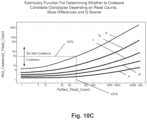
- whether two candidate clonotypes are coalesced depends on their respective frequencies or read counts (as noted above), the number of base differences between them (the more differences, the less likely is coalescence), and the quality scores of the bases at the locations where the respective sequences differ (higher quality scores makes coalescence less likely).
- Candidate clonotypes may be considered in the order of their respective frequencies.
- Fig. 10A shows candidate clonotype 1 (1532), candidate clonotype 7 (1534) and candidate clonotype 11 (1536) as the three candidates with the highest three frequencies.
- each such candidate clonotype is other candidate clonotypes that are close in sequence, but with lesser frequencies, such as (i) for candidate clonotype 1 (1532) there are candidate clonotype 2 (1538) and the candidate clonotypes 3, 4, 5 and 6 enclosed by cone (1540); for candidate clonotype 7 (1534) there are candidate clonotypes 8, 9 and 10 enclosed by cone (1542); and (iii) for candidate clonotype 11, there is candidate clonotype 12 enclosed by cone (1544).
- the cones represent likelihood boundaries within which a lesser frequency candidate clonotype would be coalesced with one of the higher frequency candidate clonotypes 1, 7 or 11.
- Such likelihood boundaries are functions of the frequency of the nearby candidate clonotypes (3, 4, 5 and 6 for 1; 8, 9 and 10 for 7; and 12 for 11) and their distances in sequence space from the respective higher frequency candidate clonotypes.
- Candidate clonotype 2 (1538) is outside cone (1540); thus, it would not be coalesced with candidate clonotype 1 (1532).
- the likelihood (of coalesce) boundaries are shown as cones because candidate clones with higher frequencies are more likely to be genuinely different clonotypes than those of lower frequencies and multiple differences at lower frequencies are more likely to be errors than multiple differences at higher frequencies.
- the cloud of sequence reads surrounding each candidate clonotype can be modeled using the binomial distribution and a simple model for the probability of a single base error.
- This latter error model can be inferred from mapping V and J segments or from the clonotype finding algorithm itself, via selfconsistency and convergence.
- a model is constructed for the probability of a given 'cloud' sequence Y with read count C2 and E errors (with respect to sequence X) being part of a true clonotype sequence X with perfect read count C1 under the null model that X is the only true clonotype in this region of sequence space.
- a decision is made whether or not to coalesce sequence Y into the clonotype X according the parameters C1, C2, and E.
- a max value C2 is pre-calculated for deciding to coalesce the sequence Y.
- the max values for C2 are chosen so that the probability of failing to coalesce Y under the null hypothesis that Y is part of clonotype X is less than some value P after integrating over all possible sequences Y with error E in the neighborhood of sequence X.
- the value P is controls the behavior of the algorithm and makes the coalescing more or less permissive.
- a sequence Y is not coalesced into clonotype X because its read count is above the threshold C2 for coalescing into clonotype X then it becomes a candidate for seeding separate clonotypes (such as with candidate clonotype 2 (1538) in Fig. 10A ).
- An algorithm implementing such principles would also make sure that any other sequences Y2, Y3, etc. which are 'nearer' to this sequence Y (that had been deemed independent of X) are not aggregated into X.
- This concept of 'nearness' includes both error counts with respect to Y and X and the absolute read count of X and Y, i.e.
- an algorithm proceeds in a top down fashion by starting with the sequence X with the highest read count. This sequence seeds the first clonotype. Neighboring sequences are either coalesced into this clonotype if their counts are below the precalculated thresholds (see above), or left alone if they are above the threshold or 'closer' to another sequence that was not coalesced. After searching all neighboring sequences within a maximum error count, the process of coalescing reads into clonotype X is finished. Its reads and all reads that have been coalesced into it are accounted for and removed from the list of reads available for making other clonotypes. The next sequence is then moved on to with the highest read count.
- Neighboring reads are coalesced into this clonotype as above and this process is continued until there are no more sequences with read counts above a given threshold, e.g. until all sequences with more than 1 count have been used as seeds for clonotypes.
- a further test may be added for determining whether to coalesce a candidate sequence Y into an existing clonotype X, which takes into account quality score of the relevant sequence reads.
- the average quality score(s) are determined for sequence(s) Y (averaged across all reads with sequence Y) were sequences Y and X differ. If the average score is above a predetermined value then it is more likely that the difference indicates a truly different clonotype that should not be coalesced and if the average score is below such predetermined value then it is more likely that sequence Y is caused by sequencing errors and therefore should be coalesced into X.
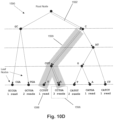
- All of the reads of a given sample are placed into the sequence tree. Each leaf nodes holds pointers to its associated reads.
- a unique sequence of a candidate clonotype is retrieved by traversing backwards in the tree from the leaf to the root node. The first sequence is placed into a simple tree with one root node and one leaf node that contains the full sequence of the read. Sequences are next added one by one. For each added sequence either a new branch is formed at the last point of common sequence between the read and the existing tree or add the read to an existing leaf node if the tree already contains the sequence.
- Finding the highest read count sorting leaf nodes by read count allows one to find the leaf node (i.e. sequence) with the most reads, and successively lower numbers of reads; 2) Finding neighboring leafs: for any sequence all paths through the tree which have less than X errors with respect to this sequence are searchable.
- a path is started at the root and branch this path into separate paths proceeding along the tree. The current error count of each path as proceeding along the tree is noted. When the error count exceeds the max allowed errors the given path is terminated. In this way large parts of the tree are pruned as early as possible. This is an efficient way of finding all paths (i.e. all leafs) within X errors from any given sequence.
- a set of candidate clonotypes is obtained from sequence data obtained by sequencing recombined nucleic acids extracted from a sample of T cells or B cells.
- candidate clonotypes each include an NDN region and portions of V and J regions. These sequences are organized into a data structure (1550), which may be a sequence tree.
- sequence trees may also be constructed for known V regions and known J regions.
- Sequence reads making up a candidate clonotype may then be mapped, or aligned, to these known sequences via the sequence trees to efficiently determine the most likely known V and J sequences of the candidate clonotypes.
- a data structure such as a sequence tree, is constructed for use in a method for distinguishing genuine clonotypes from candidate clonotypes that contain experimental or measurement errors, such as sequencing errors.
- the candidate clonotype that has the highest frequency of occurrence among the current candidate clonotypes is selected (1552) from the data structure, for example a sequence tree; in other words, HFCC k is the candidate clonotype with the highest number of copies, or read counts in cycle k.
- HFCC k is the candidate clonotype with the highest number of copies, or read counts in cycle k.
- LFCCs neighboring lesser frequency candidate clonotypes
- this identification is carried out using a sequence tree, which allows efficient sequence comparisons of relatively short ( ⁇ 300 bp) sequences.
- the comparisons, or sequence alignments are carried out using dynamic programming, e.g. as disclosed by Gusfield (cited above).
- dynamic programming is banded dynamic programming where sequences that differ from the selected HFCC by more than a predetermined distance are not considered, which speeds the computation.
- the candidates HFCC k and LFCC j may be compared on the basis of many different criteria or properties.
- candidate clonotypes are compared on the basis of at least two properties: (i) frequency or read counts and (ii) sequence differences.
- candidate clonotypes are compared on the basis of at least three properties: (i) frequency or read counts, (ii) sequence differences, and (iii) quality scores or measures of the bases where differences occur.
- sequence differences include base substitutions; in another embodiment, sequence differences include base substitutions, deletions and insertions. The latter embodiment is especially applicable whenever sequence data is generated by sequencing-by-synthesis chemistries that do not employ terminators, such as 454 sequencers and Ion Torrent sequencers.
- comparisons of HFCCs and LFCCs may be implemented using a function (referred to herein as a "coalescence likelihood function"), such as P(HFCC k , LFCC j , D, Q) shown in decision box (1558), which depends on the quantities (i) through (iii) described above.
- a coalescence likelihood function such as P(HFCC k , LFCC j , D, Q
- Such a function may take many different forms, but generally the value of P changes with changes in (i), (ii) and (iii) as follows:
- the value of P preferably increases monotonically with the frequency of HFCC and the ratio of the frequency of HFCC to that of LFCC, such that the higher the ratio of the frequency of HFCC to that of LFCC, the higher the likelihood LFCC will be coalesced into HFCC.
- the value of P preferably decreases monotonically with degree to which the sequences of HFCC and LFCC differ, so that the greater the difference between HFCC and LFCC (e.g.
- the value of P preferably decreases monotonically with increasing quality scores of the locations where the sequences of HFCC and LFCC differ, so that for higher quality scores, the lower the likelihood LFCC will be coalesced with HFCC.
- the quality scores at the different locations may be combined in a variety of differ ways.
- the plurality of quality scores is expressed as an average value, which may be either an unweighted average or a weighted average.
- Fig. 10C shows an exemplary function, P, computed for different quality values (curves a through e) for a given sequence difference. As illustrated in Fig. 10C , whenever HFCC is at a level of about 200 read counts (1570), then if the quality scores are determined by curve (a), any LFCC with less than about 50 read counts (1572) are coalesced into HFCC.
- D The argument, D, of function P is a measure of the distance between the sequences HFCC k and LFCC j and its value may vary from cycle to cycle as an analysis progresses.
- the indices "k” indicates that the values of constants with a "k” subscript may depend on the computational cycle, k.
- D D(HFCC frequency), so that its value is a function of the frequency of HFCC, independent of cycle number. For example, as the frequency of HFCC decreases, then distance, D, of candidates to be compared decreases.
- D is a Hamming distance between HFCC k and LFCC j ; however, other distance measures may be used.
- D k is a non-increasing function of k; and in another embodiment, D k is a decreasing function of k. Decreasing the magnitude of D with increasing cycle number, or with decreasing frequency of HFCC, is advantageous in some embodiments because as a computation progresses to lower and lower frequency candidate clonotypes most such candidates are singletons, so that sequence distance (rather than frequency difference) becomes the predominant comparison. By lowering D as the computation progresses, unproductive comparisons to distant low frequency candidate clonotypes are reduced, thereby speeding up the computation.
- Function P may be a complicated expression depending on the number of factors being considered.
- Fig. 10C illustrates computed values for one embodiment of P which relates read count thresholds for coalescing an LFCC given a read count of an HFCC for different quality scores, as described above. Curves "a” through “e” represent the relationships for different quality scores (with curve “a” corresponding to the highest quality score).
- LFCC j is not coalesced with HFCC k and another LFCC is selected (1560). If P>P k , then LFCC j is coalesced with HFCC k (1562), in which case another LFCC is selected (1566), unless there are no more LFCC left to evaluate (1564). If there are no more LFCC to evaluate (1564), then the current HFCC k (including all of the LFCC's coalesced into it) is removed (1568) from the data structure, such as the sequence tree. Such removal is illustrated in the simple sequence tree (1590) of Figs. 10D-10E .
- path (1592) (indicated by dashed line) in sequence tree (1590) corresponds to HFCC (1596), which is coalesced with LFCC (1598).
- segment of path (1592) in shaded area (1599) is removed from sequence tree (1590) to give reduced sequence tree (1597) shown in Fig. 10E , which is used in subsequent computations to find neighboring LFCC (1554).
- clonotype determination is finished if a stopping criterion (1570) is met.
- stopping criterion (1570) is whether the last non-singleton candidate clonotype has been processed (1552).
- stopping criterion is whether the frequency or the read counts of the selected HFCC is below that corresponding to a single lymphocyte.
- an amplification step may result in each lymphocyte in a sample being represented by multiple copies of the same clonotype; thus, in one embodiment, whatever HFCC has a number of read counts below the number corresponding to a single lymphocyte, then the computation is stopped.
- such a number of read counts is at least 10; in another embodiment, such number is at least 20; in another embodiment, such a number is at least 30; in another embodiment, such a number is at least 40.
- HFCC next HFCC is selected (1572).
- the analytical steps summarized in the flow chart of Fig. 10B may be implemented in any suitable programming language, such as C, C++. Java, C#, Fortran, Pascal or the like.
- the above method for determining clonotypes and/or clonotype profiles may be used in the methods of the invention.
- the above method may comprise the steps of (a) forming a data structure of recombined immune molecules from sequence reads obtained by high throughput nucleic acid sequencing, (b) coalescing with a highest frequency candidate clonotype any lesser frequency candidate clonotypes whenever such lesser frequency is below a predetermined frequency value and a sequence difference therebetween is below a predetermined difference value to form a clonotype, (c) removing the coalesced candidate clonotype from the data structure, and (d) repeating steps (b) and (c) until a clonotype profile is formed.
- the data structure is a sequence tree.
- the above method of determining clonotypes may be carried out by steps comprising: (a) providing a set of sequence reads from a repertoire of recombined immune molecules each having a V region, an NDN region and a J region wherein for each such molecule at least one sequence read encompasses at least a portion of the NDN region of such molecule; (b) forming from sequence reads encompassing at least a portion of an NDN region a sequence tree having leaves representing candidate clonotypes, each leaf and its corresponding candidate clonotype having a frequency; (c) coalescing with a highest frequency candidate clonotype any lesser frequency candidate clonotypes whenever such lesser frequency is below a predetermined frequency value and a sequence difference therebetween is below a predetermined difference value to form a clonotype having a sequence of the highest frequency candidate clonotype; (d) removing leaves corresponding to the coalesced candidate clonotypes from the sequence tree; and (e) repeating steps
- the step of forming further includes selecting a highest frequency candidate clonotype and identifying all said lesser frequency candidate clonotypes having a sequence difference therewith less than a predetermined difference value to form a coalescence subset.
- a predetermined difference value For example, one may limit the total number of LFCCs that must be compared for the coalescing operation (only ones within the predetermined difference value are considered).
- Such value is a process input depending on the application, e.g. the size of the repertoire, how much computing time is used, and so on.
- the function used for deciding whether to coalesce an HFCC with a LFCC can have a variety of forms.
- such a function may have the following properties: It depends on frequencies of HFCC, LFCC, the sequence difference therebetween (which may be expressed as a conventional string difference measure, such as a Hamming distance) and quality scores of the one or more nucleotide locations where the HFCC and LFCC differ; such that the function (i) monotonically increases with increasing ratio of frequency of HFCC and frequency of LFCC, (ii) monotonically decreases with increasing sequence difference between HFCC and LFCC, and (iii) monotonically decreases with increasing quality scores of the one or more nucleotide locations. That is, in regard to property (iii), the surer one is that HFCC and LFCC are different (e.g., because there is a high level of confidence in the base calls), then the less likely they will be coalescenced.
- a coalescence likelihood function is selected so that sequence reads are coalesced into different clonotypes (or target polynucleotides, such as, recombined nucleic acids) whenever such sequence reads are distinct with a likelihood of at least 95 percent; in other embodiments, a coalescence likelihood function is selected so that sequence reads are coalesced into different clonotypes whenever such sequence reads are distinct with a likelihood of at least 99 percent; in other embodiments, a coalescence likelihood function is selected so that sequence reads are coalesced into different clonotypes whenever such sequence reads are distinct with a likelihood of at least 99.9 percent.
- a coalescence likelihood function depends on an error rate of a sequencing chemistry used, the number of discrepant nucleotides in sequence reads being compared, and the relative frequencies of the sequence reads being compared; in another embodiment, a coalescence likelihood function depends on an error rate of a sequencing chemistry used, the number of discrepant nucleotides in sequence reads being compared, the relative frequencies of the sequence reads being compared, and the quality scores of the discrepant nucleotides.
- selection of a predetermined frequency value and a predetermined difference value is a design choice that depend on particular applications. Factors affecting such choices may include details of the biology, speed of implementation, and the like.
- Primers of set (212) also contain a non-complementary tail (214) that produces amplicon (216) having primer binding site (218) specific for P7 primers (220).
- amplicon (216) is formed that contains the highly diverse portion of the J(D)V region (206, 208, and 210) of the mRNA transcripts and common primer binding sites (203 and 218) for a secondary amplification to add a sample tag (221) and primers (220 and 222) for cluster formation by bridge PCR.
- a primer 222 in Fig.
Landscapes
- Life Sciences & Earth Sciences (AREA)
- Chemical & Material Sciences (AREA)
- Proteomics, Peptides & Aminoacids (AREA)
- Health & Medical Sciences (AREA)
- Organic Chemistry (AREA)
- Zoology (AREA)
- Analytical Chemistry (AREA)
- Wood Science & Technology (AREA)
- Immunology (AREA)
- Engineering & Computer Science (AREA)
- Biotechnology (AREA)
- Microbiology (AREA)
- Molecular Biology (AREA)
- Biophysics (AREA)
- Physics & Mathematics (AREA)
- Cell Biology (AREA)
- Biochemistry (AREA)
- Bioinformatics & Cheminformatics (AREA)
- General Engineering & Computer Science (AREA)
- General Health & Medical Sciences (AREA)
- Genetics & Genomics (AREA)
- Measuring Or Testing Involving Enzymes Or Micro-Organisms (AREA)
- Investigating Or Analysing Biological Materials (AREA)
Claims (13)
- Procédé d'identification de clonotypes de lymphocytes T spécifiques à un antigène dans un échantillon comprenant des lymphocytes T, dans lequel chaque clonotype comprend les séquences nucléotidiques d'un segment TCRα et d'un segment TCRβ qui sont une paire de séquences spécifiques d'un lymphocyte T, le procédé comprenant les étapes consistant à :(a) exposer l'échantillon à une pluralité d'antigènes dans une pluralité de mélanges réactionnels différents, dans lequel chaque antigène de ladite pluralité d'antigènes est présent dans une sous-pluralité unique prédéterminée de la pluralité de mélanges réactionnels ;(b) sélectionner des lymphocytes T spécifiques à un antigène à partir de chacun de la pluralité de mélanges réactionnels ;(c) séquencer des acides nucléiques recombinés codant pour le segment TCRα et le segment TCRβ à partir :(i) des lymphocytes T spécifiques à un antigène sélectionnés à l'étape (b) à partir de chacun de la pluralité de mélanges réactionnels, dans lequel le séquençage produit une pluralité de lectures de séquence pour chaque mélange réactionnel à partir desquelles des clonotypes et des fréquences de clonotype sont déterminés, et(ii) de lymphocytes T obtenus à partir de l'échantillon avant l'étape (a), dans lequel le séquençage produit une pluralité de lectures de séquence à partir desquelles des clonotypes et des fréquences de clonotype sont déterminés ;(d) pour chaque mélange réactionnel, comparer les fréquences de clonotype déterminées à l'étape (c) (i) avec les fréquences de clonotype déterminées à l'étape (c) (ii) ; et(e) pour chacun de la pluralité d'antigènes, identifier un clonotype d'un lymphocyte T spécifique à un antigène qui présente une fréquence accrue dans chacun des mélanges réactionnels dans lesquels l'antigène était présent et qui ne présente pas une fréquence accrue dans chacun des mélanges réactionnels dans lesquels l'antigène était absent.
- Procédé selon la revendication 1, dans lequel l'échantillon comprend au moins 1 000 lymphocytes T.
- Procédé selon la revendication 1 ou la revendication 2, dans lequel le séquençage est effectué par séquençage à haut débit.
- Procédé selon la revendication 3, dans lequel le séquençage à haut débit comprend une étape consistant à isoler spatialement des molécules individuelles des acides nucléiques recombinés sur une surface solide et à séquencer les molécules individuelles isolées en parallèle pour fournir les lectures de séquence.
- Procédé selon l'une quelconque des revendications 1 à 4, dans lequel la pluralité d'antigènes comprend une pluralité de protéines ou une pluralité de peptides.
- Procédé selon l'une quelconque des revendications 1 à 5, dans lequel les lymphocytes T spécifiques à un antigène sont sélectionnés sur la base d'une interaction avec un antigène dans le mélange réactionnel.
- Procédé selon l'une quelconque des revendications 1 à 6, dans lequel les lymphocytes T dans l'échantillon proviennent d'une population d'individus.
- Procédé selon l'une quelconque des revendications 1 à 7, dans lequel l'échantillon est un échantillon de tissu.
- Procédé selon la revendication 8, dans lequel l'échantillon de tissu est un échantillon de sang ou un échantillon de cellules mononucléées de sang périphérique dérivées de sang périphérique.
- Procédé selon la revendication 8 ou la revendication 9, dans lequel la pluralité d'antigènes sont présentés par des cellules modifiées par un gène exprimant les antigènes.
- Procédé de production d'un réactif immunothérapeutique spécifique à un patient, comprenant les étapes consistant à :(a) identifier des clonotypes de lymphocytes T spécifiques à un antigène dans un échantillon comprenant des lymphocytes T, dans lequel chaque clonotype comprend les séquences nucléotidiques d'un segment TCRα et d'un segment TCRβ qui sont une paire de séquences spécifiques d'un lymphocytes T, et dans lequel le procédé comprend les étapes de l'une quelconque des revendications 1 à 10 ; et(b) produire un réactif immunothérapeutique spécifique à un patient comprenant un segment TCRα et un segment TCRβ qui sont codés par l'un des clonotypes identifiés à l'étape (a).
- Procédé selon la revendication 11, dans lequel le réactif immunothérapeutique spécifique à un patient est un lymphocyte T reconstitué.
- Procédé selon la revendication 11 ou la revendication 12, dans lequel le patient présente un cancer et dans lequel les lymphocytes T spécifiques à un antigène sont des lymphocytes T spécifiques à un antigène de cancer.
Applications Claiming Priority (3)
| Application Number | Priority Date | Filing Date | Title |
|---|---|---|---|
| US14/242,520 US10066265B2 (en) | 2014-04-01 | 2014-04-01 | Determining antigen-specific t-cells |
| EP15772627.4A EP3126522B1 (fr) | 2014-04-01 | 2015-04-01 | Détermination de lymphocytes t et de lymphocytes b spécifiques à un antigène |
| PCT/US2015/023915 WO2015153788A1 (fr) | 2014-04-01 | 2015-04-01 | Détermination de lymphocytes t et de lymphocytes b spécifiques à un antigène |
Related Parent Applications (1)
| Application Number | Title | Priority Date | Filing Date |
|---|---|---|---|
| EP15772627.4A Division EP3126522B1 (fr) | 2014-04-01 | 2015-04-01 | Détermination de lymphocytes t et de lymphocytes b spécifiques à un antigène |
Publications (2)
| Publication Number | Publication Date |
|---|---|
| EP3674415A1 EP3674415A1 (fr) | 2020-07-01 |
| EP3674415B1 true EP3674415B1 (fr) | 2025-06-25 |
Family
ID=54189484
Family Applications (2)
| Application Number | Title | Priority Date | Filing Date |
|---|---|---|---|
| EP15772627.4A Active EP3126522B1 (fr) | 2014-04-01 | 2015-04-01 | Détermination de lymphocytes t et de lymphocytes b spécifiques à un antigène |
| EP20157220.3A Active EP3674415B1 (fr) | 2014-04-01 | 2015-04-01 | Détermination de lymphocytes t et de lymphocytes b spécifiques aux antigènes |
Family Applications Before (1)
| Application Number | Title | Priority Date | Filing Date |
|---|---|---|---|
| EP15772627.4A Active EP3126522B1 (fr) | 2014-04-01 | 2015-04-01 | Détermination de lymphocytes t et de lymphocytes b spécifiques à un antigène |
Country Status (5)
| Country | Link |
|---|---|
| US (4) | US10066265B2 (fr) |
| EP (2) | EP3126522B1 (fr) |
| AU (1) | AU2015240749B2 (fr) |
| ES (2) | ES3039661T3 (fr) |
| WO (1) | WO2015153788A1 (fr) |
Families Citing this family (43)
| Publication number | Priority date | Publication date | Assignee | Title |
|---|---|---|---|---|
| US9506119B2 (en) | 2008-11-07 | 2016-11-29 | Adaptive Biotechnologies Corp. | Method of sequence determination using sequence tags |
| US8628927B2 (en) | 2008-11-07 | 2014-01-14 | Sequenta, Inc. | Monitoring health and disease status using clonotype profiles |
| US9365901B2 (en) | 2008-11-07 | 2016-06-14 | Adaptive Biotechnologies Corp. | Monitoring immunoglobulin heavy chain evolution in B-cell acute lymphoblastic leukemia |
| EP2364368B1 (fr) | 2008-11-07 | 2014-01-15 | Sequenta, Inc. | Procédés de surveillance de maladies par analyse de séquence |
| US9528160B2 (en) | 2008-11-07 | 2016-12-27 | Adaptive Biotechnolgies Corp. | Rare clonotypes and uses thereof |
| ES2726702T3 (es) | 2009-01-15 | 2019-10-08 | Adaptive Biotechnologies Corp | Perfilado de la inmunidad adaptativa y métodos para la generación de anticuerpos monoclonales |
| US10385475B2 (en) | 2011-09-12 | 2019-08-20 | Adaptive Biotechnologies Corp. | Random array sequencing of low-complexity libraries |
| US9824179B2 (en) | 2011-12-09 | 2017-11-21 | Adaptive Biotechnologies Corp. | Diagnosis of lymphoid malignancies and minimal residual disease detection |
| US9499865B2 (en) | 2011-12-13 | 2016-11-22 | Adaptive Biotechnologies Corp. | Detection and measurement of tissue-infiltrating lymphocytes |
| EP3372694A1 (fr) | 2012-03-05 | 2018-09-12 | Adaptive Biotechnologies Corporation | Détermination de chaînes de récepteur immunitaire appariées de sous-unités à adaptation de fréquence |
| HUE029357T2 (en) | 2012-05-08 | 2017-02-28 | Adaptive Biotechnologies Corp | Preparations and devices for measuring and calibrating amplification distortion in multiplex PCR reactions |
| EP3330384B1 (fr) | 2012-10-01 | 2019-09-25 | Adaptive Biotechnologies Corporation | Évaluation de l'immunocompétence par la diversité adaptative du récepteur immunitaire et la caractérisation de la clonalité |
| WO2015160439A2 (fr) | 2014-04-17 | 2015-10-22 | Adaptive Biotechnologies Corporation | Quantification de génomes de cellules de l'immunité acquise dans un mélange complexe de cellules |
| US9708657B2 (en) | 2013-07-01 | 2017-07-18 | Adaptive Biotechnologies Corp. | Method for generating clonotype profiles using sequence tags |
| WO2015134787A2 (fr) | 2014-03-05 | 2015-09-11 | Adaptive Biotechnologies Corporation | Procédés dans lesquels on utilise des molécules synthétiques contenant des randomères |
| US10066265B2 (en) * | 2014-04-01 | 2018-09-04 | Adaptive Biotechnologies Corp. | Determining antigen-specific t-cells |
| US11390921B2 (en) | 2014-04-01 | 2022-07-19 | Adaptive Biotechnologies Corporation | Determining WT-1 specific T cells and WT-1 specific T cell receptors (TCRs) |
| CA2966201A1 (fr) | 2014-10-29 | 2016-05-06 | Adaptive Biotechnologies Corp. | Detection simultanee hautement multiplexee d'acides nucleiques codant pour des heterodimeres de recepteurs de l'immunite adaptative apparies a partir de nombreux echantillons |
| US10246701B2 (en) | 2014-11-14 | 2019-04-02 | Adaptive Biotechnologies Corp. | Multiplexed digital quantitation of rearranged lymphoid receptors in a complex mixture |
| CA2976580A1 (fr) | 2015-02-24 | 2016-09-01 | Adaptive Biotechnologies Corp. | Methodes pour le diagnostic d'une maladie infectieuse et la determination du statut hla a l'aide du sequencage du repertoire immunitaire |
| EP3277294B1 (fr) | 2015-04-01 | 2024-05-15 | Adaptive Biotechnologies Corp. | Procédé d'identification des récepteurs de lymphocytes t spécifiques à compatibilité humaine pour une cible antigénique |
| MX2018003532A (es) | 2015-09-24 | 2019-04-25 | Abvitro Llc | Conjugados de afinidad-oligonucleotido y usos de los mismos. |
| JP7016098B2 (ja) * | 2016-03-16 | 2022-02-21 | ネクシミューン インコーポレイテッド | 抗原特異的t細胞の生成 |
| WO2017193097A1 (fr) * | 2016-05-06 | 2017-11-09 | Girihlet Inc. | Procédés et compositions permettant de déterminer des appariements de chaînes tcr et bcr spécifiques |
| US10428325B1 (en) | 2016-09-21 | 2019-10-01 | Adaptive Biotechnologies Corporation | Identification of antigen-specific B cell receptors |
| US10739351B2 (en) * | 2016-10-10 | 2020-08-11 | California Institute Of Technology | Functional characterization of immune repertoires |
| WO2018071796A2 (fr) * | 2016-10-13 | 2018-04-19 | The Johns Hopkins University | Compositions et méthodes pour l'identification de réponses fonctionnelles de lymphocytes t anticancéreux |
| US10815525B2 (en) | 2016-12-22 | 2020-10-27 | 10X Genomics, Inc. | Methods and systems for processing polynucleotides |
| US10550429B2 (en) | 2016-12-22 | 2020-02-04 | 10X Genomics, Inc. | Methods and systems for processing polynucleotides |
| KR102702552B1 (ko) | 2016-12-23 | 2024-09-03 | 비스테라, 인크. | 결합 폴리펩타이드 및 이의 제조 방법 |
| WO2018231958A1 (fr) * | 2017-06-13 | 2018-12-20 | Adaptive Biotechnologies Corp. | Détermination de lymphocytes t spécifiques à wt-1 et de récepteurs de lymphocytes t (tcr) spécifiques à wt-1 |
| US11254980B1 (en) | 2017-11-29 | 2022-02-22 | Adaptive Biotechnologies Corporation | Methods of profiling targeted polynucleotides while mitigating sequencing depth requirements |
| SG11202007686VA (en) | 2018-02-12 | 2020-09-29 | 10X Genomics Inc | Methods characterizing multiple analytes from individual cells or cell populations |
| WO2019217758A1 (fr) | 2018-05-10 | 2019-11-14 | 10X Genomics, Inc. | Procédés et systèmes de génération de banque moléculaire |
| TW202031888A (zh) * | 2018-08-24 | 2020-09-01 | 日商組庫創世紀股份有限公司 | T細胞受體及b細胞受體之功能性次單元成對基因之解析方法 |
| SG11202104611YA (en) | 2018-11-08 | 2021-06-29 | Neximmune Inc | T cell compositions with improved phenotypic properties |
| WO2020146740A1 (fr) | 2019-01-10 | 2020-07-16 | Iovance Biotherapeutics, Inc. | Système et procédés de surveillance de la clonalité et de la persistance d'une thérapie cellulaire adoptive |
| WO2020180648A1 (fr) * | 2019-03-01 | 2020-09-10 | Gritstone Oncology, Inc. | Sélection de récepteurs de lymphocytes t |
| US12449419B1 (en) | 2020-02-12 | 2025-10-21 | 10X Genomics, Inc. | Methods for detecting binding of peptide-MHC monomers to T cells |
| WO2022150354A1 (fr) * | 2021-01-06 | 2022-07-14 | Think Therapeutics, Inc. | Essai multiplexé de lymphocytes pour une spécificité antigénique |
| US11111489B1 (en) | 2021-01-06 | 2021-09-07 | Think Therapeutics, Inc. | Multiplexed testing of lymphocytes for antigen specificity |
| JP2024512608A (ja) | 2021-03-24 | 2024-03-19 | ジェネンテック, インコーポレイテッド | Tリンパ球における効率的なtcr遺伝子編集 |
| AU2024228388A1 (en) | 2023-02-27 | 2025-10-02 | Adaptive Biotechnologies Corp. | Therapeutic t cell receptors targeting kras g12d |
Family Cites Families (379)
| Publication number | Priority date | Publication date | Assignee | Title |
|---|---|---|---|---|
| US3270960A (en) | 1964-09-11 | 1966-09-06 | Sperry Rand Corp | Fluid sensor |
| US3773919A (en) | 1969-10-23 | 1973-11-20 | Du Pont | Polylactide-drug mixtures |
| DE3211263A1 (de) | 1981-03-31 | 1983-01-27 | Otsuka Pharmaceutical Co. Ltd., Tokyo | Human-interferon verwandte peptide, antigene und antikoerper, sowie verfahren zu deren herstellung |
| DE3238353A1 (de) | 1982-10-15 | 1984-04-19 | Max Planck Gesellschaft zur Förderung der Wissenschaften e.V., 3400 Göttingen | Verfahren zur simultanen quantitativen bestimmung der blutzellen und reagenz hierfuer |
| US5189147A (en) | 1984-06-13 | 1993-02-23 | Massachusetts Institute Of Technology | Meterodimeric T lymphocyte receptor antibody |
| US4683202A (en) | 1985-03-28 | 1987-07-28 | Cetus Corporation | Process for amplifying nucleic acid sequences |
| US4683195A (en) | 1986-01-30 | 1987-07-28 | Cetus Corporation | Process for amplifying, detecting, and/or-cloning nucleic acid sequences |
| US4965188A (en) | 1986-08-22 | 1990-10-23 | Cetus Corporation | Process for amplifying, detecting, and/or cloning nucleic acid sequences using a thermostable enzyme |
| DE3541033A1 (de) | 1985-11-19 | 1987-05-21 | Boehringer Mannheim Gmbh | Verfahren zur quantifizierung von zellpopulationen bzw. subpopulationen sowie hierfuer geeignetes reagenz |
| US4800159A (en) | 1986-02-07 | 1989-01-24 | Cetus Corporation | Process for amplifying, detecting, and/or cloning nucleic acid sequences |
| US4942124A (en) | 1987-08-11 | 1990-07-17 | President And Fellows Of Harvard College | Multiplex sequencing |
| US5149625A (en) | 1987-08-11 | 1992-09-22 | President And Fellows Of Harvard College | Multiplex analysis of DNA |
| US5667967A (en) | 1990-05-01 | 1997-09-16 | The Board Of Trustees Of The Leland Stanford Junior University | T-cell receptor varible transcripts as disease related markers |
| US5506126A (en) | 1988-02-25 | 1996-04-09 | The General Hospital Corporation | Rapid immunoselection cloning method |
| US5168038A (en) | 1988-06-17 | 1992-12-01 | The Board Of Trustees Of The Leland Stanford Junior University | In situ transcription in cells and tissues |
| WO1990004648A1 (fr) | 1988-10-20 | 1990-05-03 | Alexander Alan Morley | Methode pour le diagnostic de la monoclonalite dans la leucemie et le lymphome |
| US5075217A (en) | 1989-04-21 | 1991-12-24 | Marshfield Clinic | Length polymorphisms in (dC-dA)n ·(dG-dT)n sequences |
| US5143854A (en) | 1989-06-07 | 1992-09-01 | Affymax Technologies N.V. | Large scale photolithographic solid phase synthesis of polypeptides and receptor binding screening thereof |
| US5231012A (en) | 1989-06-28 | 1993-07-27 | Schering Corporation | Nucleic acids encoding cytokine synthesis inhibitory factor (interleukin-10) |
| CA2020958C (fr) | 1989-07-11 | 2005-01-11 | Daniel L. Kacian | Methodes d'amplification de sequences d'acide nucleique |
| US5298396A (en) | 1989-11-15 | 1994-03-29 | National Jewish Center For Immunology And Respiratory Medicine | Method for identifying T cells disease involved in autoimmune disease |
| US5336598A (en) | 1989-11-15 | 1994-08-09 | National Jewish Center For Immunology And Respiratory Medicine | Method for diagnosing a superantigen caused pathologial condition via assay of T-cells |
| US5126022A (en) | 1990-02-28 | 1992-06-30 | Soane Tecnologies, Inc. | Method and device for moving molecules by the application of a plurality of electrical fields |
| US6054034A (en) | 1990-02-28 | 2000-04-25 | Aclara Biosciences, Inc. | Acrylic microchannels and their use in electrophoretic applications |
| GB9015198D0 (en) | 1990-07-10 | 1990-08-29 | Brien Caroline J O | Binding substance |
| US6916605B1 (en) | 1990-07-10 | 2005-07-12 | Medical Research Council | Methods for producing members of specific binding pairs |
| CA2090126C (fr) | 1990-08-02 | 2002-10-22 | John W. Schrader | Methodes de production de proteines dotees d'une fonction desiree |
| US5210015A (en) | 1990-08-06 | 1993-05-11 | Hoffman-La Roche Inc. | Homogeneous assay system using the nuclease activity of a nucleic acid polymerase |
| IE76732B1 (en) | 1990-08-07 | 1997-11-05 | Becton Dickinson Co | One step test for absolute counts |
| US5699798A (en) | 1990-08-10 | 1997-12-23 | University Of Washington | Method for optically imaging solid tumor tissue |
| US5635354A (en) | 1991-01-09 | 1997-06-03 | Institut National De La Sante Et De La Recherche Medicale (Inserm) | Method for describing the repertoires of antibodies (Ab) and of T-cell receptors (TcR) of an individual's immune system |
| US5364759B2 (en) | 1991-01-31 | 1999-07-20 | Baylor College Medicine | Dna typing with short tandem repeat polymorphisms and identification of polymorphic short tandem repeats |
| WO1992013950A2 (fr) | 1991-02-12 | 1992-08-20 | Roussel-Uclaf | SEQUENCES NUCLEOTIDIQUES CODANT POUR DES REGIONS VARIABLES DE CHAINES β DES RECEPTEURS DES LYMPHOCYTES T HUMAINS, SEGMENTS PEPTIDIQUES CORRESPONDANTS ET LES APPLICATIONS DIAGNOSTIQUES ET THERAPEUTIQUES |
| JP3080178B2 (ja) | 1991-02-18 | 2000-08-21 | 東洋紡績株式会社 | 核酸配列の増幅方法およびそのための試薬キット |
| US6091000A (en) | 1991-03-15 | 2000-07-18 | Duke University | SCID mouse engrafted with human synovium tissue |
| JP3266311B2 (ja) | 1991-05-02 | 2002-03-18 | 生化学工業株式会社 | 新規ポリペプチドおよびこれを用いる抗hiv剤 |
| US20040018489A1 (en) | 1991-09-09 | 2004-01-29 | Ma Wupo | Detection of RNA |
| US5674679A (en) | 1991-09-27 | 1997-10-07 | Amersham Life Science, Inc. | DNA cycle sequencing |
| US5981179A (en) | 1991-11-14 | 1999-11-09 | Digene Diagnostics, Inc. | Continuous amplification reaction |
| US5213960A (en) | 1992-03-09 | 1993-05-25 | Tanox Biosystems, Inc. | Methods for selecting low frequency antigen-specific single B lymphocytes |
| US5256542A (en) | 1992-03-09 | 1993-10-26 | Tanox Biosystems, Inc. | Selecting low frequency antigen-specific single B lymphocytes with correction for background noise |
| US5837447A (en) | 1992-04-15 | 1998-11-17 | Blood Center Research Foundation, Inc., The | Monitoring an immune response by analysis of amplified immunoglobulin or T-cell-receptor nucleic acid |
| US5587128A (en) | 1992-05-01 | 1996-12-24 | The Trustees Of The University Of Pennsylvania | Mesoscale polynucleotide amplification devices |
| US5498392A (en) | 1992-05-01 | 1996-03-12 | Trustees Of The University Of Pennsylvania | Mesoscale polynucleotide amplification device and method |
| US5981176A (en) | 1992-06-17 | 1999-11-09 | City Of Hope | Method of detecting and discriminating between nucleic acid sequences |
| US5925517A (en) | 1993-11-12 | 1999-07-20 | The Public Health Research Institute Of The City Of New York, Inc. | Detectably labeled dual conformation oligonucleotide probes, assays and kits |
| WO1995015393A1 (fr) | 1993-12-03 | 1995-06-08 | Asahi Kasei Kogyo Kabushiki Kaisha | Nouveau vecteur de detection d'expression |
| JPH10504181A (ja) | 1994-04-18 | 1998-04-28 | ニューヨーク ソサエティ フォー ザ リリーフ オブ ザ ラプチャード アンド クリップルド メインティニング ザ ホスピタル フォー スペシャル サージェリー | 保存されたt細胞レセプター配列 |
| US6001229A (en) | 1994-08-01 | 1999-12-14 | Lockheed Martin Energy Systems, Inc. | Apparatus and method for performing microfluidic manipulations for chemical analysis |
| US6090592A (en) | 1994-08-03 | 2000-07-18 | Mosaic Technologies, Inc. | Method for performing amplification of nucleic acid on supports |
| US5827642A (en) | 1994-08-31 | 1998-10-27 | Fred Hutchinson Cancer Research Center | Rapid expansion method ("REM") for in vitro propagation of T lymphocytes |
| FR2724182B1 (fr) | 1994-09-02 | 1996-12-13 | Pasteur Institut | Obtention d'un anticorps monoclonal recombinant a partir d'un anticorps monoclonal humain anti-rhesus d, sa production en cellules d'insecte, et ses utilisations |
| US5846719A (en) | 1994-10-13 | 1998-12-08 | Lynx Therapeutics, Inc. | Oligonucleotide tags for sorting and identification |
| US5604097A (en) | 1994-10-13 | 1997-02-18 | Spectragen, Inc. | Methods for sorting polynucleotides using oligonucleotide tags |
| US5776737A (en) | 1994-12-22 | 1998-07-07 | Visible Genetics Inc. | Method and composition for internal identification of samples |
| US6919434B1 (en) | 1995-02-20 | 2005-07-19 | Sankyo Co., Ltd. | Monoclonal antibodies that bind OCIF |
| US5698396A (en) | 1995-06-07 | 1997-12-16 | Ludwig Institute For Cancer Research | Method for identifying auto-immunoreactive substances from a subject |
| AU7437996A (en) | 1995-10-11 | 1997-04-30 | Leonard Adleman | Large scale dna sequencing by position sensitive hybridization |
| WO1997013877A1 (fr) | 1995-10-12 | 1997-04-17 | Lynx Therapeutics, Inc. | Mesure de profils d'expression genique pour evaluer la toxicite |
| US6087096A (en) | 1995-11-13 | 2000-07-11 | Dau; Peter C. | Method of intrafamily fragment analysis of the T cell receptor α and β chain CDR3 regions |
| US5854033A (en) | 1995-11-21 | 1998-12-29 | Yale University | Rolling circle replication reporter systems |
| KR19990087749A (ko) | 1996-03-13 | 1999-12-27 | 시오노 요시히코 | 류마티스성 관절염에 특이적인 인간 티 세포 클론 |
| US6458530B1 (en) | 1996-04-04 | 2002-10-01 | Affymetrix Inc. | Selecting tag nucleic acids |
| US6300065B1 (en) | 1996-05-31 | 2001-10-09 | Board Of Trustees Of The University Of Illinois | Yeast cell surface display of proteins and uses thereof |
| US6699658B1 (en) | 1996-05-31 | 2004-03-02 | Board Of Trustees Of The University Of Illinois | Yeast cell surface display of proteins and uses thereof |
| US6416948B1 (en) | 1996-06-03 | 2002-07-09 | The Governors Of The University Of Alberta | Methods for detection of rearranged DNA |
| JP4540754B2 (ja) | 1996-06-04 | 2010-09-08 | ユニバーシティ オブ ユタ リサーチ ファウンデーション | Pcr中のハイブリダイゼーションのモニタリング |
| WO1998001738A2 (fr) | 1996-06-20 | 1998-01-15 | Cornell Research Foundation, Inc. | Identification d'anomalies dans l'expression de recepteurs de reconnaissance de l'antigene des lymphocytes t et b en tant qu'indicateurs de diagnostic et de pronostic de maladies et predicteurs therapeutiques |
| US6074827A (en) | 1996-07-30 | 2000-06-13 | Aclara Biosciences, Inc. | Microfluidic method for nucleic acid purification and processing |
| DE69737028T2 (de) | 1996-09-06 | 2007-06-28 | Ortho-Mcneil Pharmaceutical, Inc. | Reinigung von antigenspezifischen t-zellen |
| US6255071B1 (en) | 1996-09-20 | 2001-07-03 | Cold Spring Harbor Laboratory | Mammalian viral vectors and their uses |
| US5935793A (en) | 1996-09-27 | 1999-08-10 | The Chinese University Of Hong Kong | Parallel polynucleotide sequencing method using tagged primers |
| US6136566A (en) | 1996-10-04 | 2000-10-24 | Lexicon Graphics Incorporated | Indexed library of cells containing genomic modifications and methods of making and utilizing the same |
| US6207371B1 (en) | 1996-10-04 | 2001-03-27 | Lexicon Genetics Incorporated | Indexed library of cells containing genomic modifications and methods of making and utilizing the same |
| US6228589B1 (en) | 1996-10-11 | 2001-05-08 | Lynx Therapeutics, Inc. | Measurement of gene expression profiles in toxicity determination |
| GB9626815D0 (en) | 1996-12-23 | 1997-02-12 | Cemu Bioteknik Ab | Method of sequencing DNA |
| GB9704444D0 (en) | 1997-03-04 | 1997-04-23 | Isis Innovation | Non-invasive prenatal diagnosis |
| JP2002503954A (ja) | 1997-04-01 | 2002-02-05 | グラクソ、グループ、リミテッド | 核酸増幅法 |
| US6143496A (en) | 1997-04-17 | 2000-11-07 | Cytonix Corporation | Method of sampling, amplifying and quantifying segment of nucleic acid, polymerase chain reaction assembly having nanoliter-sized sample chambers, and method of filling assembly |
| ES2230701T3 (es) | 1997-07-07 | 2005-05-01 | Medical Research Council | Procedimiento de seleccion in vitro. |
| US6794499B2 (en) | 1997-09-12 | 2004-09-21 | Exiqon A/S | Oligonucleotide analogues |
| US7572582B2 (en) | 1997-09-12 | 2009-08-11 | Exiqon A/S | Oligonucleotide analogues |
| AU1517999A (en) | 1997-10-15 | 1999-05-03 | Aclara Biosciences, Inc. | Laminate microstructure device and method for making same |
| JP2001520054A (ja) | 1997-10-23 | 2001-10-30 | エグザクト サイエンシーズ コーポレイション | Pcrを用いる分子診断におけるコンタミネーションを検出するための方法 |
| US7351578B2 (en) | 1999-12-10 | 2008-04-01 | Invitrogen Corp. | Use of multiple recombination sites with unique specificity in recombinational cloning |
| US6210910B1 (en) | 1998-03-02 | 2001-04-03 | Trustees Of Tufts College | Optical fiber biosensor array comprising cell populations confined to microcavities |
| DE19833738A1 (de) | 1998-07-27 | 2000-02-03 | Michael Giesing | Verfahren zur Isolierung von Krebszellen aus zellhaltigen Körperflüssigkeiten sowie Sets zur Durchführung dieses Verfahrens |
| US6787308B2 (en) | 1998-07-30 | 2004-09-07 | Solexa Ltd. | Arrayed biomolecules and their use in sequencing |
| DE19844931C1 (de) | 1998-09-30 | 2000-06-15 | Stefan Seeger | Verfahren zur DNS- oder RNS-Sequenzierung |
| AR021833A1 (es) | 1998-09-30 | 2002-08-07 | Applied Research Systems | Metodos de amplificacion y secuenciacion de acido nucleico |
| US6541608B1 (en) | 1999-02-23 | 2003-04-01 | Baylor College Of Medicine | T cell receptor Vβ-Dβ-Jβ sequence and methods for its detection |
| US6307024B1 (en) | 1999-03-09 | 2001-10-23 | Zymogenetics, Inc. | Cytokine zalpha11 Ligand |
| JP3815969B2 (ja) | 1999-05-12 | 2006-08-30 | アクララ バイオサイエンシーズ, インコーポレイテッド | 微量流体デバイスにおける多重方式蛍光検出 |
| US6300070B1 (en) | 1999-06-04 | 2001-10-09 | Mosaic Technologies, Inc. | Solid phase methods for amplifying multiple nucleic acids |
| US6440706B1 (en) | 1999-08-02 | 2002-08-27 | Johns Hopkins University | Digital amplification |
| EP1212422B1 (fr) | 1999-08-24 | 2007-02-21 | Medarex, Inc. | Anticorps contre l'antigene ctla-4 humain et utilisation |
| US20040209314A1 (en) | 1999-09-06 | 2004-10-21 | Institut National De La Sante Et De La Recherche Medicale France | Means for detection and purification of CD8+ T lymphocyte populations specific to peptides presented in the context of HLA |
| US6235483B1 (en) | 2000-01-31 | 2001-05-22 | Agilent Technologies, Inc. | Methods and kits for indirect labeling of nucleic acids |
| US7955794B2 (en) | 2000-09-21 | 2011-06-07 | Illumina, Inc. | Multiplex nucleic acid reactions |
| US20040121364A1 (en) | 2000-02-07 | 2004-06-24 | Mark Chee | Multiplex nucleic acid reactions |
| US20040033490A1 (en) | 2000-03-31 | 2004-02-19 | Laird Peter W. | Epigenetic sequences for esophageal adenocarcinoma |
| AUPQ687600A0 (en) | 2000-04-13 | 2000-05-11 | Flinders Technologies Pty Ltd | A method of detection |
| US20030207300A1 (en) | 2000-04-28 | 2003-11-06 | Matray Tracy J. | Multiplex analytical platform using molecular tags |
| US6596492B2 (en) | 2000-07-11 | 2003-07-22 | Colorado State University Research Foundation | PCR materials and methods useful to detect canine and feline lymphoid malignancies |
| US7567870B1 (en) | 2000-07-31 | 2009-07-28 | Institute For Systems Biology | Multiparameter analysis for predictive medicine |
| EA013564B1 (ru) | 2000-08-03 | 2010-06-30 | Терапеутик Хьюман Поликлоналз Инк. | Гуманизированный иммуноглобулин и содержащая его фармацевтическая композиция |
| US6939451B2 (en) | 2000-09-19 | 2005-09-06 | Aclara Biosciences, Inc. | Microfluidic chip having integrated electrodes |
| DE60131903T2 (de) | 2000-10-24 | 2008-11-27 | The Board of Trustees of the Leland S. Stanford Junior University, Palo Alto | Direkte multiplex charakterisierung von genomischer dna |
| US6778724B2 (en) | 2000-11-28 | 2004-08-17 | The Regents Of The University Of California | Optical switching and sorting of biological samples and microparticles transported in a micro-fluidic device, including integrated bio-chip devices |
| US6947748B2 (en) | 2000-12-15 | 2005-09-20 | Adaptix, Inc. | OFDMA with adaptive subcarrier-cluster configuration and selective loading |
| WO2002066618A1 (fr) | 2001-02-20 | 2002-08-29 | University Of Georgia Research Foundation, Inc. | Production rapide d'anticorps monoclonaux |
| US6969597B2 (en) | 2001-02-21 | 2005-11-29 | Clontech Laboratories, Inc. | Nucleic acids encoding non aggregating fluorescent proteins and methods for using the same |
| US7265208B2 (en) | 2001-05-01 | 2007-09-04 | The Regents Of The University Of California | Fusion molecules and treatment of IgE-mediated allergic diseases |
| EP1395114A2 (fr) | 2001-05-24 | 2004-03-10 | Guard Inc., | Procedes de selection et de production d'animaux presentant un niveau calcule de reponse immunitaire |
| US20050260570A1 (en) | 2001-05-29 | 2005-11-24 | Mao Jen-I | Sequencing by proxy |
| US7026121B1 (en) | 2001-06-08 | 2006-04-11 | Expression Diagnostics, Inc. | Methods and compositions for diagnosing and monitoring transplant rejection |
| US6720144B1 (en) | 2001-06-21 | 2004-04-13 | Quest Diagnostics | Detection of clonal T-cell receptor-γ gene rearrangement by PCR/temporal temperature gradient gel electrophoresis (TTGE) |
| WO2003008624A2 (fr) | 2001-07-15 | 2003-01-30 | Keck Graduate Institute | Amplification d'acides nucleiques a l'aide d'agents de synchronisation |
| WO2003020983A1 (fr) | 2001-08-30 | 2003-03-13 | Virginia Commonwealth University | Pcr allele specifique pour genotypage |
| IL160359A0 (en) | 2001-08-31 | 2004-07-25 | Avidex Ltd | Soluble t cell receptor |
| WO2003020979A1 (fr) | 2001-08-31 | 2003-03-13 | Rosetta Inpharmactis Llc. | Procedes de preparation d'echantillons d'acide nucleique utiles pour cribler des reseaux d'adn |
| CA2460639C (fr) | 2001-09-19 | 2013-07-16 | Alexion Pharmaceuticals, Inc. | Matrices transgeniques et leurs utilisations dans l'amplification d'amorce unique |
| US6964850B2 (en) | 2001-11-09 | 2005-11-15 | Source Precision Medicine, Inc. | Identification, monitoring and treatment of disease and characterization of biological condition using gene expression profiles |
| GB2382137A (en) | 2001-11-20 | 2003-05-21 | Mats Gullberg | Nucleic acid enrichment |
| GB0128153D0 (en) | 2001-11-23 | 2002-01-16 | Bayer Ag | Profiling of the immune gene repertoire |
| WO2003052101A1 (fr) | 2001-12-14 | 2003-06-26 | Rosetta Inpharmatics, Inc. | Suivi des echantillons au moyen du code barres moleculaire |
| GB0130267D0 (en) | 2001-12-19 | 2002-02-06 | Neutec Pharma Plc | Focussed antibody technology |
| AU2003207528A1 (en) | 2002-01-09 | 2003-07-30 | Maxx Genetech Co. Ltd | Method of detecting t-cell proliferation for diagnosis of diseases by gene array |
| AUPS028002A0 (en) | 2002-02-01 | 2002-02-28 | Ausman Engineering And Associates Pty Ltd | A bearing assembly |
| US7323306B2 (en) | 2002-04-01 | 2008-01-29 | Brookhaven Science Associates, Llc | Genome signature tags |
| US7157274B2 (en) | 2002-06-24 | 2007-01-02 | Cytonome, Inc. | Method and apparatus for sorting particles |
| JP2006503587A (ja) | 2002-05-16 | 2006-02-02 | バンダービルト・ユニバーシティ | 自己免疫疾患の予測方法 |
| JP4665119B2 (ja) | 2002-07-01 | 2011-04-06 | アンスティテュ・パストゥール | オートシーケンサーからピーク・データを抽出、収集、操作、そして分析するためのシステム、方法、装置およびコンピュータ・プログラム製品 |
| CA2490903A1 (fr) | 2002-07-03 | 2004-01-15 | Institute For Scientific Research, Inc. | Compositions et procedes de detection de l'expression de genes d'une famille variable de recepteurs de lymphocytes t humains |
| DE60334474D1 (de) | 2002-07-12 | 2010-11-18 | Univ Johns Hopkins | Reagenzien und verfahren zum eingriff in einzigartige klonotype lymphozyten-rezeptoren |
| ATE470722T1 (de) | 2002-07-19 | 2010-06-15 | Althea Technologies Inc | Strategien zur genexpressionsanalyse |
| US7157228B2 (en) | 2002-09-09 | 2007-01-02 | Bioarray Solutions Ltd. | Genetic analysis and authentication |
| US7459273B2 (en) | 2002-10-04 | 2008-12-02 | Affymetrix, Inc. | Methods for genotyping selected polymorphism |
| WO2004034031A2 (fr) | 2002-10-11 | 2004-04-22 | The Regents Of The University Of California | Methode permettant de diagnostiquer et de pronostiquer la sclerose en plaques |
| EP2418287B1 (fr) | 2002-10-11 | 2013-09-18 | Erasmus Universiteit Rotterdam | Amorces pour des études de la clonalité du gène TCR-beta basées sur PCR |
| US20060147925A1 (en) | 2002-11-13 | 2006-07-06 | Morley Alexander A | Method of detection |
| AU2003266712A1 (en) | 2002-11-14 | 2004-06-23 | Hiroyuki Kishi | Microwell array chip for detecting antigen-specific lymphocyte, method of detecting antigen-specific lymphocyte and method of cloning antigen-specific lymphocyte antigen receptor gene |
| CA2502015A1 (fr) | 2002-12-11 | 2004-06-24 | Coley Pharmaceutical Group, Inc. | Acides nucleiques 5'cpg et leurs methodes d'utilisation |
| WO2004063706A2 (fr) | 2003-01-08 | 2004-07-29 | Maxx Genetech Co., Ltd. | Procede permettant de detecter la surexpression des genes du recepteur des lymphocytes t par pcr en temps reel |
| CA2513899C (fr) | 2003-01-29 | 2013-03-26 | 454 Corporation | Procede d'amplification et de sequencage d'acides nucleiques |
| GB0304068D0 (en) | 2003-02-22 | 2003-03-26 | Avidex Ltd | Substances |
| US20070042349A1 (en) | 2003-04-24 | 2007-02-22 | Ogle Brenda M | Methods for assessing biologic diversity |
| AU2003902299A0 (en) | 2003-05-13 | 2003-05-29 | Flinders Medical Centre | A method of analysing a marker nucleic acid molecule |
| WO2005020784A2 (fr) | 2003-05-23 | 2005-03-10 | Mount Sinai School Of Medicine Of New York University | Signatures d'expression genique de cellules de substitution permettant d'evaluer l'etat physique d'un patient |
| US20050010030A1 (en) | 2003-07-02 | 2005-01-13 | Zang Jingwu Z. | T cell receptor CDR3 sequence and methods for detecting and treating rheumatoid arthritis |
| US8048627B2 (en) | 2003-07-05 | 2011-11-01 | The Johns Hopkins University | Method and compositions for detection and enumeration of genetic variations |
| US7574305B2 (en) | 2003-07-15 | 2009-08-11 | Bioarray Solutions Ltd. | Concurrent optimization in selection of primer and capture probe sets for nucleic acid analysis |
| US20060228350A1 (en) | 2003-08-18 | 2006-10-12 | Medimmune, Inc. | Framework-shuffling of antibodies |
| US20050048498A1 (en) | 2003-08-29 | 2005-03-03 | Applera Corporation | Compositions, methods, and kits for assembling probes |
| EP2824190A1 (fr) | 2003-09-09 | 2015-01-14 | Integrigen, Inc. | Procédés et compositions pour la génération de gènes d'anticorps humains de lignée germinale |
| WO2005026686A2 (fr) | 2003-09-09 | 2005-03-24 | Compass Genetics, Llc | Plate-forme analytique multiplexee |
| TWI333977B (en) | 2003-09-18 | 2010-12-01 | Symphogen As | Method for linking sequences of interest |
| US7057907B2 (en) | 2003-11-21 | 2006-06-06 | Fairchild Semiconductor Corporation | Power converter having improved control |
| FR2863274B1 (fr) | 2003-12-05 | 2012-11-16 | Commissariat Energie Atomique | Procede d'evaluation quantitative d'un rearrangement ou d'une recombinaison genetique ciblee d'un individu et ses applications. |
| US20070238099A1 (en) | 2003-12-08 | 2007-10-11 | Cohen Irun R | Antigen Receptor Variable Region Typing |
| WO2005059176A1 (fr) | 2003-12-15 | 2005-06-30 | Institut Pasteur | Determination du repertoire d'une population de lymphocytes b |
| US20080166718A1 (en) | 2003-12-15 | 2008-07-10 | Institut Pasteur | Repertoire determination of a lymphocyte B population |
| DE60326052D1 (de) | 2003-12-15 | 2009-03-19 | Pasteur Institut | Ermittlung des Repertoires von B-Lymphozyten Populationen |
| US7709262B2 (en) | 2004-02-18 | 2010-05-04 | Trustees Of Boston University | Method for detecting and quantifying rare mutations/polymorphisms |
| US20060046258A1 (en) | 2004-02-27 | 2006-03-02 | Lapidus Stanley N | Applications of single molecule sequencing |
| WO2005084134A2 (fr) | 2004-03-04 | 2005-09-15 | Dena Leshkowitz | Quantification et etablissement de profil de genes exprimes de type anticorps et recepteurs des lymphocytes t |
| JP4480423B2 (ja) | 2004-03-08 | 2010-06-16 | 独立行政法人科学技術振興機構 | 免疫細胞クローンの拡大の有無の判定方法 |
| DE102004016437A1 (de) | 2004-04-04 | 2005-10-20 | Oligene Gmbh | Verfahren zur Erkennung von Signaturen in komplexen Genexpressionsprofilen |
| WO2005111242A2 (fr) | 2004-05-10 | 2005-11-24 | Parallele Bioscience, Inc. | Etablissement numerique de profils pour des populations de polynucleotides |
| WO2006076025A2 (fr) | 2004-05-14 | 2006-07-20 | Amaox, Inc. | Biocapteurs de cellule immune et procede d'utilisation de ceux-ci |
| EP1598429A1 (fr) | 2004-05-19 | 2005-11-23 | Amplion Ltd. | Détection des contaminations par des amplicons lors de PCR présentant deux températures différentes d'appariement |
| GB0412973D0 (en) | 2004-06-10 | 2004-07-14 | Celltech R&D Ltd | Identification of antibody producing cells |
| US20060020397A1 (en) | 2004-07-21 | 2006-01-26 | Kermani Bahram G | Methods for nucleic acid and polypeptide similarity search employing content addressable memories |
| US20060019304A1 (en) | 2004-07-26 | 2006-01-26 | Paul Hardenbol | Simultaneous analysis of multiple genomes |
| US7820382B2 (en) | 2004-08-03 | 2010-10-26 | Bauer A Robert | Method for the early detection of breast cancer, lung cancer, pancreatic cancer and colon polyps, growths and cancers as well as other gastrointestinal disease conditions and the preoperative and postoperative monitoring of transplanted organs from the donor and in the recipient and their associated conditions related and unrelated to the organ transplantation |
| US20060094018A1 (en) | 2004-08-03 | 2006-05-04 | Bauer A R Jr | Discovery and a method for the early detection of pancreatic cancer and other disease conditions |
| CA2575402A1 (fr) | 2004-08-05 | 2006-02-09 | Genentech, Inc. | Antagonistes anti-cmet humanises |
| WO2006031221A1 (fr) | 2004-09-13 | 2006-03-23 | Government Of The United States Of America, Represented By The Secretary, Department Of Health And Human Services | Préparations comprenant des récepteurs cellulaires t et méthodes d'utilisation de ces préparations |
| US7170050B2 (en) | 2004-09-17 | 2007-01-30 | Pacific Biosciences Of California, Inc. | Apparatus and methods for optical analysis of molecules |
| AU2005302425A1 (en) | 2004-10-29 | 2006-05-11 | Benaroya Research Institute At Virginia Mason | Methods of generating antigen-specific CD4+CD25+ regulatory T cells, compositions and methods of use |
| US7966988B2 (en) | 2005-01-11 | 2011-06-28 | Exxonmobil Research And Engineering Company | Method for controlling soot induced lubricant viscosity increase |
| US8029783B2 (en) | 2005-02-02 | 2011-10-04 | Genentech, Inc. | DR5 antibodies and articles of manufacture containing same |
| FR2881436B1 (fr) | 2005-02-03 | 2007-04-27 | Commissariat Energie Atomique | Procede de determination de la diversite des lymphocytes t dans un echantillon biologique |
| US7393665B2 (en) | 2005-02-10 | 2008-07-01 | Population Genetics Technologies Ltd | Methods and compositions for tagging and identifying polynucleotides |
| EP1848994A2 (fr) | 2005-02-16 | 2007-10-31 | Wyeth | Methodes et systemes de diagnostic, de pronostic et de selection du traitement d'une leucemie |
| US7537894B2 (en) | 2005-03-02 | 2009-05-26 | The University Of Chicago | Methods and kits for monitoring Barrett's metaplasia |
| WO2006099164A2 (fr) | 2005-03-10 | 2006-09-21 | Applera Corporation | Methodes d'amplification multiplex |
| WO2006099604A2 (fr) | 2005-03-16 | 2006-09-21 | Compass Genetics, Llc | Procedes et compositions pour releves de mesures sur de multiples plate-formes analytiques |
| ES2404311T3 (es) | 2005-04-12 | 2013-05-27 | 454 Life Sciences Corporation | Métodos para determinar variantes de secuencias usando secuenciación ultraprofunda |
| WO2006116155A2 (fr) | 2005-04-21 | 2006-11-02 | The Regents Of The University Of California | Methode de diagnostic et de pronostic de sous-types de sclerose en plaques |
| US20060263789A1 (en) | 2005-05-19 | 2006-11-23 | Robert Kincaid | Unique identifiers for indicating properties associated with entities to which they are attached, and methods for using |
| US7208795B2 (en) | 2005-05-24 | 2007-04-24 | Atmel Corporation | Low-cost, low-voltage single-layer polycrystalline EEPROM memory cell integration into BiCMOS technology |
| US8426146B2 (en) | 2005-06-03 | 2013-04-23 | University of Pittsburgh—of the Commonwealth System of Higher Education | Multiparameteric method for assessing immune system status |
| EP3257949A1 (fr) | 2005-06-15 | 2017-12-20 | Complete Genomics Inc. | Analyse d'acide nucléique par des mélanges aléatoires de fragments non chevauchants |
| US20070020670A1 (en) | 2005-07-07 | 2007-01-25 | Hematologics, Inc. | Methods for detecting and confirming minimal disease |
| US20070020640A1 (en) | 2005-07-21 | 2007-01-25 | Mccloskey Megan L | Molecular encoding of nucleic acid templates for PCR and other forms of sequence analysis |
| GB0521521D0 (en) | 2005-10-21 | 2005-11-30 | Medical Res Council | Diagnostic methods and kits |
| GB0522310D0 (en) | 2005-11-01 | 2005-12-07 | Solexa Ltd | Methods of preparing libraries of template polynucleotides |
| US20070105165A1 (en) | 2005-11-04 | 2007-05-10 | Charles Goolsby | Composite profiles of cell antigens and target signal transduction proteins for analysis and clinical management of hematologic cancers |
| US7375211B2 (en) | 2005-11-18 | 2008-05-20 | Kou Zhong C | Method for detection and quantification of T-cell receptor Vβ repertoire |
| US8137936B2 (en) | 2005-11-29 | 2012-03-20 | Macevicz Stephen C | Selected amplification of polynucleotides |
| WO2007087312A2 (fr) | 2006-01-23 | 2007-08-02 | Population Genetics Technologies Ltd. | Décompte moléculaire |
| WO2007087310A2 (fr) | 2006-01-23 | 2007-08-02 | Population Genetics Technologies Ltd. | Analyses d'acides nucléiques au moyen de marques de séquences |
| SG170028A1 (en) | 2006-02-24 | 2011-04-29 | Callida Genomics Inc | High throughput genome sequencing on dna arrays |
| WO2007101441A1 (fr) | 2006-03-06 | 2007-09-13 | Symphogen A/S | Anticorps polyclonal de recombinaison pour le traitement d'infections par le virus respiratoire syncytial |
| ES2546848T3 (es) | 2006-03-10 | 2015-09-29 | Epigenomics Ag | Un método para identificar una muestra biológica para el análisis de la metilación |
| EP3239304B1 (fr) | 2006-04-04 | 2020-08-19 | Keygene N.V. | Détection à haut débit de marqueurs moléculaires sur la base d'aflp et de séquençage à haut débit |
| EP2021460A4 (fr) | 2006-05-11 | 2010-11-17 | Univ Maryland Biotech Inst | Procédé général permettant de générer in vitro des réponses d'anticorps humains |
| WO2007136518A2 (fr) | 2006-05-17 | 2007-11-29 | Torrey Pines Institute For Molecular Studies | Traitement de troubles auto-immunitaires |
| AU2006345511B2 (en) | 2006-05-25 | 2013-03-21 | Institute For Advanced Study | Methods for identifying sequence motifs, and applications thereof |
| US7833716B2 (en) | 2006-06-06 | 2010-11-16 | Gen-Probe Incorporated | Tagged oligonucleotides and their use in nucleic acid amplification methods |
| CN101915957B (zh) | 2006-06-12 | 2012-12-12 | 加利福尼亚太平洋生物科学公司 | 实施分析反应的基材 |
| EP2589668A1 (fr) | 2006-06-14 | 2013-05-08 | Verinata Health, Inc | Analyse de cellules rares utilisant la division d'échantillons et les marqueurs d'ADN |
| US20100027896A1 (en) | 2006-06-28 | 2010-02-04 | Amir Geva | Automated application interaction using a virtual operator |
| CA2656525A1 (fr) | 2006-06-30 | 2008-01-10 | Applera Corporation | Nucleotides de sequences de terminaison reversibles et procedes d'utilisation |
| WO2008108803A2 (fr) | 2006-07-13 | 2008-09-12 | Amaox, Ltd. | Biocapteurs de cellules immunitaires et méthodes d'utilisation correspondantes |
| US8394590B2 (en) * | 2006-08-02 | 2013-03-12 | California Institute Of Technology | Capture agents and related methods and systems for detecting and/or sorting targets |
| US20080274904A1 (en) | 2006-08-10 | 2008-11-06 | Niall Anthony Gormley | Method of target enrichment |
| WO2008026927A2 (fr) | 2006-08-30 | 2008-03-06 | Academisch Medisch Centrum | Procédé d'affichage des répertoires des récepteurs des lymphocytes t et b |
| US8088379B2 (en) | 2006-09-26 | 2012-01-03 | The United States Of America As Represented By The Department Of Health And Human Services | Modified T cell receptors and related materials and methods |
| WO2008039694A2 (fr) | 2006-09-26 | 2008-04-03 | St. Jude Children's Research Hospital | Procédés et compositions de surveillance de la diversité des récepteurs des lymphocytes t |
| JP5026047B2 (ja) | 2006-10-18 | 2012-09-12 | 株式会社膠原病研究所 | 自己免疫疾患の発症に関わる自己応答性t細胞またはt細胞受容体の同定方法、およびその利用 |
| EP2102367A2 (fr) | 2006-11-09 | 2009-09-23 | XDX, Inc. | Procedes pour diagnostiquer et surveiller l'etat d'un lupus erythemateux systemique |
| US8262900B2 (en) | 2006-12-14 | 2012-09-11 | Life Technologies Corporation | Methods and apparatus for measuring analytes using large scale FET arrays |
| US7862999B2 (en) | 2007-01-17 | 2011-01-04 | Affymetrix, Inc. | Multiplex targeted amplification using flap nuclease |
| WO2008093098A2 (fr) | 2007-02-02 | 2008-08-07 | Illumina Cambridge Limited | Procedes pour indexer des echantillons et sequencer de multiples matrices nucleotidiques |
| DK2121920T3 (da) | 2007-03-01 | 2011-11-21 | Symphogen As | Fremgangsmåde til kloning af sammenhørende antistoffer |
| WO2008147879A1 (fr) | 2007-05-22 | 2008-12-04 | Ryan Golhar | Procede et dispositif automatises d'identification et d'isolement d'adn et de definition de sequences |
| JP2010528608A (ja) | 2007-06-01 | 2010-08-26 | 454 ライフ サイエンシーズ コーポレイション | 複合的な混合物から個々の試料を特定するためのシステムおよび方法 |
| US8454906B2 (en) | 2007-07-24 | 2013-06-04 | The Regents Of The University Of California | Microfabricated droplet generator for single molecule/cell genetic analysis in engineered monodispersed emulsions |
| JP2010534474A (ja) | 2007-07-26 | 2010-11-11 | パシフィック バイオサイエンシーズ オブ カリフォルニア, インコーポレイテッド | 分子冗長配列決定 |
| ITRM20070429A1 (it) | 2007-08-06 | 2009-02-07 | Uni Cattolica Del Sacro Cuor E | Mezzi per la diagnosi la prevenzione e la cura dell'artrite reumatoide. |
| CN101842159B (zh) | 2007-08-09 | 2014-09-24 | 赛路拉公司 | 关联的多参数单细胞测定及残余生物材料回收的方法和装置 |
| US8268564B2 (en) | 2007-09-26 | 2012-09-18 | President And Fellows Of Harvard College | Methods and applications for stitched DNA barcodes |
| US7960116B2 (en) | 2007-09-28 | 2011-06-14 | Pacific Biosciences Of California, Inc. | Nucleic acid sequencing methods and systems |
| WO2009045898A2 (fr) | 2007-09-28 | 2009-04-09 | Mayo Foundation For Medical Education And Research | Évaluation de répertoires de lymphocytes t |
| CN101910414B (zh) | 2007-11-07 | 2016-01-13 | 健泰科生物技术公司 | 用于评估b细胞淋巴瘤对抗cd40抗体治疗的响应性的方法和组合物 |
| EP2060637A1 (fr) | 2007-11-14 | 2009-05-20 | Koninklijke Philips Electronics N.V. | Supports et procédé de détection d'acides nucléiques |
| WO2009070767A2 (fr) | 2007-11-28 | 2009-06-04 | Whitehead Institute For Biomedical Research | Systèmes de promotion systémique pour étudier la croissance ou métastase d'une tumeur |
| EP2062982A1 (fr) | 2007-11-26 | 2009-05-27 | ImmunID | Procédé d'étude de la diversité combinatoire V(D)J |
| CN101225441B (zh) | 2007-12-05 | 2010-12-01 | 浙江大学 | 一种检测克隆特异性t淋巴细胞tcr bv cdr3基因组成的方法 |
| US20100021894A1 (en) | 2007-12-20 | 2010-01-28 | Northwestern University | Nanoparticle-Based Colorimetric Detection Of Cysteine |
| US8621502B2 (en) | 2007-12-21 | 2013-12-31 | Microsoft Corporation | Obtaining user reactions to video |
| US7767400B2 (en) | 2008-02-03 | 2010-08-03 | Helicos Biosciences Corporation | Paired-end reads in sequencing by synthesis |
| EP2088205A1 (fr) | 2008-02-11 | 2009-08-12 | Institut National De La Sante Et De La Recherche Medicale (Inserm) | PSMB10 : marqueur de diagnostic et cible thérapeutique de rejet chronique |
| EP2088432A1 (fr) | 2008-02-11 | 2009-08-12 | MorphoSys AG | Procédés pour l'identification d'un anticorps ou d'une cible |
| CN102027129B (zh) | 2008-02-28 | 2014-03-12 | 俄亥俄州立大学研究基金会 | 用于前列腺相关病症的诊断、预后和治疗的基于微rna的方法和组合物 |
| CN102007408A (zh) | 2008-02-28 | 2011-04-06 | 俄亥俄州立大学研究基金会 | 与急性髓性白血病(aml)中的细胞遗传学和预后相关的微rna特征及其用途 |
| US20090226975A1 (en) | 2008-03-10 | 2009-09-10 | Illumina, Inc. | Constant cluster seeding |
| TW200938840A (en) | 2008-03-12 | 2009-09-16 | Emo Biomedicine Corp | A method for in vitro study of immune modulation using pig blood cell |
| EP2100970B1 (fr) | 2008-03-13 | 2017-05-10 | National Institute of Immunology | Oligonucléotides spécifiques aux gènes Ig et leurs utilisations |
| EP4230747A3 (fr) | 2008-03-28 | 2023-11-15 | Pacific Biosciences Of California, Inc. | Compositions et procédés de séquençage d'acide nucléique |
| EP2107040B1 (fr) | 2008-03-31 | 2011-10-26 | Sony Deutschland Gmbh | Procédé de fabrication d'une membrane disposant d'un pore conique |
| AU2009244634B2 (en) | 2008-04-16 | 2014-12-18 | iRepertoire, Inc. | Method for evaluating and comparing immunorepertoires |
| US8911948B2 (en) | 2008-04-30 | 2014-12-16 | Integrated Dna Technologies, Inc. | RNase H-based assays utilizing modified RNA monomers |
| CA2725548A1 (fr) | 2008-05-09 | 2009-11-12 | Duke University | Auto-anticorps dans la detection et le traitement du cancer |
| US9068181B2 (en) | 2008-05-23 | 2015-06-30 | The General Hospital Corporation | Microfluidic droplet encapsulation |
| DE102008025656B4 (de) | 2008-05-28 | 2016-07-28 | Genxpro Gmbh | Verfahren zur quantitativen Analyse von Nukleinsäuren, Marker dafür und deren Verwendung |
| US20110124520A1 (en) | 2008-05-30 | 2011-05-26 | Massachuesetts Institute Of Technology | Compositions and Methods for Spatial Separation and Screening of Cells |
| WO2009151628A2 (fr) | 2008-06-12 | 2009-12-17 | Gov't Of The Usa, As Represented By The Secretary, Department Of Health Human Services | Surveillance de tcr-b en vue de déterminer une thérapie de vih et l'évolution d'une maladie |
| WO2009158521A2 (fr) | 2008-06-25 | 2009-12-30 | Baylor Research Institute | Signature transcriptionnelle du sang lors d'une infection par le mycobacterium tuberculosis |
| WO2010011894A1 (fr) | 2008-07-24 | 2010-01-28 | The Board Of Regents Of The University Of Texas System | Signature de codon de vh4 pour sclérose multiple |
| EP2316030B1 (fr) | 2008-07-25 | 2019-08-21 | Wagner, Richard W. | Procédés de criblage de protéines |
| US8586310B2 (en) | 2008-09-05 | 2013-11-19 | Washington University | Method for multiplexed nucleic acid patch polymerase chain reaction |
| US9156010B2 (en) | 2008-09-23 | 2015-10-13 | Bio-Rad Laboratories, Inc. | Droplet-based assay system |
| EP4512526A3 (fr) | 2008-09-23 | 2025-06-04 | Bio-Rad Laboratories, Inc. | Système de dosage à base de gouttelettes |
| US8699361B2 (en) | 2008-09-30 | 2014-04-15 | Qualcomm Incorporated | Out-of-synchronization handling method and apparatus |
| US8546128B2 (en) | 2008-10-22 | 2013-10-01 | Life Technologies Corporation | Fluidics system for sequential delivery of reagents |
| US20100137143A1 (en) | 2008-10-22 | 2010-06-03 | Ion Torrent Systems Incorporated | Methods and apparatus for measuring analytes |
| US8628927B2 (en) | 2008-11-07 | 2014-01-14 | Sequenta, Inc. | Monitoring health and disease status using clonotype profiles |
| US8748103B2 (en) | 2008-11-07 | 2014-06-10 | Sequenta, Inc. | Monitoring health and disease status using clonotype profiles |
| EP2364368B1 (fr) | 2008-11-07 | 2014-01-15 | Sequenta, Inc. | Procédés de surveillance de maladies par analyse de séquence |
| US8691510B2 (en) * | 2008-11-07 | 2014-04-08 | Sequenta, Inc. | Sequence analysis of complex amplicons |
| US9394567B2 (en) * | 2008-11-07 | 2016-07-19 | Adaptive Biotechnologies Corporation | Detection and quantification of sample contamination in immune repertoire analysis |
| US20140234835A1 (en) * | 2008-11-07 | 2014-08-21 | Sequenta, Inc. | Rare clonotypes and uses thereof |
| US9365901B2 (en) * | 2008-11-07 | 2016-06-14 | Adaptive Biotechnologies Corp. | Monitoring immunoglobulin heavy chain evolution in B-cell acute lymphoblastic leukemia |
| US9506119B2 (en) * | 2008-11-07 | 2016-11-29 | Adaptive Biotechnologies Corp. | Method of sequence determination using sequence tags |
| US9528160B2 (en) * | 2008-11-07 | 2016-12-27 | Adaptive Biotechnolgies Corp. | Rare clonotypes and uses thereof |
| WO2010060051A2 (fr) | 2008-11-21 | 2010-05-27 | Emory University | Approche de biologie des systèmes prédisant l'immunogénicité de vaccins |
| US8367330B2 (en) | 2008-12-22 | 2013-02-05 | Quest Diagnostics Investments Incorporated | Methods for detecting TCR-gamma gene rearrangement |
| US20110251099A1 (en) | 2008-12-30 | 2011-10-13 | Sudha Visvanathan | SERUM MARKERS PREDICTING CLINICAL RESPONSE TO ANTI-TNFa ANTIBODIES IN PATIENTS WITH ANKYLOSING SPONDYLITIS |
| ES2726702T3 (es) | 2009-01-15 | 2019-10-08 | Adaptive Biotechnologies Corp | Perfilado de la inmunidad adaptativa y métodos para la generación de anticuerpos monoclonales |
| AU2010206843B2 (en) | 2009-01-20 | 2015-01-29 | The Board Of Trustees Of The Leland Stanford Junior University | Single cell gene expression for diagnosis, prognosis and identification of drug targets |
| US20100323348A1 (en) | 2009-01-31 | 2010-12-23 | The Regents Of The University Of Colorado, A Body Corporate | Methods and Compositions for Using Error-Detecting and/or Error-Correcting Barcodes in Nucleic Acid Amplification Process |
| US8673627B2 (en) | 2009-05-29 | 2014-03-18 | Life Technologies Corporation | Apparatus and methods for performing electrochemical reactions |
| US8574835B2 (en) | 2009-05-29 | 2013-11-05 | Life Technologies Corporation | Scaffolded nucleic acid polymer particles and methods of making and using |
| WO2010151416A1 (fr) | 2009-06-25 | 2010-12-29 | Fred Hutchinson Cancer Research Center | Procédé de mesure de l'immunité adaptative |
| US20120058902A1 (en) | 2009-06-25 | 2012-03-08 | Livingston Robert J | Method of measuring adaptive immunity |
| US8497071B2 (en) | 2009-06-29 | 2013-07-30 | California Institute Of Technology | Isolation of unknown rearranged T-cell receptors from single cells |
| US20120308999A1 (en) | 2009-07-17 | 2012-12-06 | Aartik Sarma | Detection of short rna sequences |
| US8467973B2 (en) | 2009-07-28 | 2013-06-18 | Promising Future, Llc | Pairing processes for preparing alloreactive cytotoxic T cells |
| ES2661055T3 (es) | 2009-09-22 | 2018-03-27 | Roche Diagniostics Gmbh | Determinación de haplotipos de KIR por amplificación de exones |
| GB0917094D0 (en) | 2009-09-29 | 2009-11-11 | Ucl Biomedica Plc | T-cell receptor |
| US9043160B1 (en) * | 2009-11-09 | 2015-05-26 | Sequenta, Inc. | Method of determining clonotypes and clonotype profiles |
| US9315857B2 (en) | 2009-12-15 | 2016-04-19 | Cellular Research, Inc. | Digital counting of individual molecules by stochastic attachment of diverse label-tags |
| US8835358B2 (en) | 2009-12-15 | 2014-09-16 | Cellular Research, Inc. | Digital counting of individual molecules by stochastic attachment of diverse labels |
| US8545248B2 (en) | 2010-01-07 | 2013-10-01 | Life Technologies Corporation | System to control fluid flow based on a leak detected by a sensor |
| KR101323827B1 (ko) | 2010-01-08 | 2013-10-31 | 키스트 유럽 에프게엠베하 | 강직성척추염 진단용 프라이머 및 이를 이용한 강직성 척추염 진단 방법 |
| GB201000375D0 (en) | 2010-01-09 | 2010-02-24 | Univ Cardiff | T Cell clonotypes |
| WO2011106738A2 (fr) | 2010-02-25 | 2011-09-01 | Fred Hutchinson Cancer Research Center | Utilisation de clonotypes tcr en tant que biomarqueurs de maladie |
| EP2367000A1 (fr) | 2010-03-04 | 2011-09-21 | Charité Universitätsmedizin Berlin | Analyse à haut rendement des répertoires de récepteur de lymphocyte T |
| EP2567226B1 (fr) | 2010-05-06 | 2016-08-10 | Adaptive Biotechnologies Corporation | Surveillance de l'état de santé et du stade d'une maladie à l'aide de profils de clonotype |
| WO2011140433A2 (fr) | 2010-05-07 | 2011-11-10 | The Board Of Trustees Of The Leland Stanford Junior University | Mesure et comparaison de diversité immunitaire par séquençage à haut débit |
| US20130123120A1 (en) | 2010-05-18 | 2013-05-16 | Natera, Inc. | Highly Multiplex PCR Methods and Compositions |
| AU2011226792A1 (en) | 2010-06-11 | 2012-01-12 | Life Technologies Corporation | Alternative nucleotide flows in sequencing-by-synthesis methods |
| WO2012012703A2 (fr) | 2010-07-23 | 2012-01-26 | Esoterix Genetic Laboratories, Llc | Identification de régions génomiques fœtales ou maternelles différentiellement représentées et ses utilisations |
| EP2601521B1 (fr) | 2010-08-06 | 2018-05-02 | Ludwig-Maximilians-Universität München | Identification d'antigènes cibles de lymphocytes t |
| HRP20171164T1 (hr) | 2010-09-20 | 2017-10-20 | Biontech Cell & Gene Therapies Gmbh | Antigen-specifični t stanični receptori i t stanični epitopi |
| ES2523140T3 (es) | 2010-09-21 | 2014-11-21 | Population Genetics Technologies Ltd. | Aumento de la confianza en las identificaciones de alelos con el recuento molecular |
| US9562897B2 (en) | 2010-09-30 | 2017-02-07 | Raindance Technologies, Inc. | Sandwich assays in droplets |
| CA2814047C (fr) | 2010-10-08 | 2017-11-14 | President And Fellows Of Harvard College | Sequencage immunitaire a haut debit |
| GB2497912B (en) | 2010-10-08 | 2014-06-04 | Harvard College | High-throughput single cell barcoding |
| EP2633069B1 (fr) | 2010-10-26 | 2015-07-01 | Illumina, Inc. | Procédés de séquençage |
| WO2012061832A1 (fr) | 2010-11-05 | 2012-05-10 | Illumina, Inc. | Liaison entre des lectures de séquences à l'aide de codes marqueurs appariés |
| US9193997B2 (en) | 2010-12-15 | 2015-11-24 | The Board Of Trustees Of The Leland Stanford Junior University | Measuring and monitoring of cell clonality |
| WO2012083225A2 (fr) | 2010-12-16 | 2012-06-21 | Gigagen, Inc. | Système et procédés pour l'analyse parallèle massive des acides nucléiques contenus dans des cellules individuelles |
| EP2659408B1 (fr) | 2010-12-29 | 2019-03-27 | Life Technologies Corporation | Signal de fond aligné dans le temps pour opérations de séquençage par synthèse |
| EP3582224B1 (fr) | 2010-12-30 | 2026-04-29 | Life Technologies Corporation | Modèles pour analyser des données issues d'opérations de séquençage par synthèse |
| WO2012112804A1 (fr) | 2011-02-18 | 2012-08-23 | Raindance Technoligies, Inc. | Compositions et méthodes de marquage moléculaire |
| JP6211931B2 (ja) | 2011-03-09 | 2017-10-11 | セル・シグナリング・テクノロジー・インコーポレイテツド | モノクローナル抗体を作製するための方法および試薬 |
| US8759036B2 (en) | 2011-03-21 | 2014-06-24 | Affymetrix, Inc. | Methods for synthesizing pools of probes |
| ES2986436T3 (es) | 2011-04-15 | 2024-11-11 | Univ Johns Hopkins | Sistema de secuenciación segura |
| CN103732738A (zh) | 2011-04-28 | 2014-04-16 | 小利兰斯坦福大学托管委员会 | 与样品相关的多核苷酸的鉴定 |
| PL3892295T3 (pl) | 2011-05-24 | 2023-07-24 | BioNTech SE | Zindywidualizowane szczepionki przeciwnowotworowe |
| WO2013033721A1 (fr) | 2011-09-02 | 2013-03-07 | Atreca, Inc. | Code-barres adn pour le séquençage multiplex |
| US20140356339A1 (en) * | 2011-09-09 | 2014-12-04 | Sequenta Inc. | Sequence-based measures of immune response |
| US10385475B2 (en) | 2011-09-12 | 2019-08-20 | Adaptive Biotechnologies Corp. | Random array sequencing of low-complexity libraries |
| US20140256592A1 (en) | 2011-10-11 | 2014-09-11 | Sequenta, Inc. | Determining responsiveness of autoimmune patients to dmard treatment |
| EP2768982A4 (fr) | 2011-10-21 | 2015-06-03 | Adaptive Biotechnologies Corp | Quantification de génomes de cellules immunitaires adaptatives dans un mélange complexe de cellules |
| US20130137108A1 (en) | 2011-10-25 | 2013-05-30 | Anubhav Tripathi | Magnetic bead separation apparatus and method |
| US20150252422A1 (en) | 2011-11-04 | 2015-09-10 | Sequenta Llc | T-cell receptor clonotypes shared among ankylosing spondylitis patients |
| US20140336059A1 (en) * | 2011-12-05 | 2014-11-13 | Sequenta, Inc. | Clonotypes as biometric specimen tags |
| US9824179B2 (en) | 2011-12-09 | 2017-11-21 | Adaptive Biotechnologies Corp. | Diagnosis of lymphoid malignancies and minimal residual disease detection |
| JP2015501644A (ja) | 2011-12-09 | 2015-01-19 | シーケンタ インコーポレイテッド | 免疫活性化を測定する方法 |
| US20150031553A1 (en) * | 2011-12-13 | 2015-01-29 | Sequenta, Inc. | Method of measuring immune activation |
| US9499865B2 (en) * | 2011-12-13 | 2016-11-22 | Adaptive Biotechnologies Corp. | Detection and measurement of tissue-infiltrating lymphocytes |
| WO2013096480A2 (fr) | 2011-12-20 | 2013-06-27 | Sequenta, Inc. | Suivi de la transformation du lymphome folliculaire en lymphome diffus à grandes cellules b par analyse du répertoire immunitaire |
| WO2013112655A1 (fr) | 2012-01-24 | 2013-08-01 | Gigagen, Inc. | Procédé de correction de biais dans l'amplification multiplexée |
| CN108802385B (zh) | 2012-02-09 | 2022-02-08 | 米密德诊断学有限公司 | 用于诊断感染的标记和决定因素和其使用方法 |
| WO2013123442A1 (fr) | 2012-02-17 | 2013-08-22 | Fred Hutchinson Cancer Research Center | Compositions et procédés permettant d'identifier de manière précise des mutations |
| EP2820174B1 (fr) | 2012-02-27 | 2019-12-25 | The University of North Carolina at Chapel Hill | Procédés et utilisations d'étiquettes moléculaires |
| WO2013131074A1 (fr) | 2012-03-02 | 2013-09-06 | Diogenix, Inc. | Procédés et réactifs pour évaluer une maladie auto-immune et déterminer un répertoire d'anticorps |
| EP3372694A1 (fr) | 2012-03-05 | 2018-09-12 | Adaptive Biotechnologies Corporation | Détermination de chaînes de récepteur immunitaire appariées de sous-unités à adaptation de fréquence |
| WO2013134302A1 (fr) | 2012-03-05 | 2013-09-12 | Sequenta, Inc. | Contrôle de la réponse immunitaire à la vaccination contre le cancer |
| US20150038346A1 (en) * | 2012-03-05 | 2015-02-05 | Sequenta, Inc. | Monitoring immune responsiveness to cancer vaccination |
| WO2013138510A1 (fr) | 2012-03-13 | 2013-09-19 | Patel Abhijit Ajit | Mesure des variants d'acide nucléique au moyen du séquençage hautement multiplexé, à très haut débit et à suppression d'erreur |
| EP2836611A4 (fr) | 2012-04-13 | 2015-12-30 | Sequenta Inc | Détection et quantification de la contamination d'échantillons dans une analyse de répertoire immunologique |
| WO2013158936A1 (fr) | 2012-04-20 | 2013-10-24 | Sequenta, Inc | Surveillance de l'évolution des chaînes lourdes d'immunoglobuline dans le cas d'une leucémie lymphoblastique aiguë dans le lymphocyte b |
| CA2871505C (fr) | 2012-04-24 | 2021-10-12 | Gen9, Inc. | Procedes de tri d'acides nucleiques et de clonage in vitro multiplex preparatoire |
| HUE029357T2 (en) | 2012-05-08 | 2017-02-28 | Adaptive Biotechnologies Corp | Preparations and devices for measuring and calibrating amplification distortion in multiplex PCR reactions |
| WO2013181428A2 (fr) | 2012-05-31 | 2013-12-05 | Sequenta, Inc. | Prédiction de rechute de patients atteints de leucémie lymphocytaire chronique traités par transplantation de cellules souches allogéniques |
| US20130324422A1 (en) | 2012-06-04 | 2013-12-05 | Sequenta, Inc. | Detecting disease-correlated clonotypes from fixed samples |
| JP2015519081A (ja) | 2012-06-11 | 2015-07-09 | シーケンタ インコーポレイテッド | 配列タグを用いた配列決定法 |
| SG11201408128WA (en) | 2012-06-15 | 2015-01-29 | Adaptive Biotechnologies Corp | Uniquely tagged rearranged adaptive immune receptor genes in a complex gene set |
| WO2013192570A1 (fr) | 2012-06-21 | 2013-12-27 | Gigagen, Inc. | Système et procédés d'analyse génétique de populations cellulaires mixtes |
| EP2877604A1 (fr) | 2012-07-24 | 2015-06-03 | Sequenta, Inc. | Analyse d'organismes unicellulaires au moyen d'étiquettes de séquence |
| WO2014026031A1 (fr) | 2012-08-10 | 2014-02-13 | Sequenta, Inc. | Détection de mutation à haute sensibilité à l'aide d'étiquettes de séquence |
| US20140065629A1 (en) | 2012-08-29 | 2014-03-06 | Israel Barken | Methods of treating diseases |
| JP2015530096A (ja) | 2012-09-24 | 2015-10-15 | シービー バイオテクノロジーズ インコーポレイテッド | 非干渉性、ノイズキャンセル性のポリヌクレオチド識別タグを用いたマルチプレックスパイロシーケンシング |
| CA2888514A1 (fr) * | 2012-10-19 | 2014-04-24 | Sequenta, Inc. | Surveillance de clonotypes dans des troubles proliferatifs des plasmocytes dans le sang peripherique |
| WO2015160439A2 (fr) | 2014-04-17 | 2015-10-22 | Adaptive Biotechnologies Corporation | Quantification de génomes de cellules de l'immunité acquise dans un mélange complexe de cellules |
| CA2888520A1 (fr) | 2012-10-19 | 2014-04-24 | Sequenta, Inc. | Surveillance du lymphome diffus a grandes cellules b a partir d'echantillons de sang peripherique |
| US20150299800A1 (en) * | 2012-10-22 | 2015-10-22 | Sequenta, Inc. | Monitoring mantle cell lymphoma clonotypes in peripheral blood after immunotransplant |
| JP6513035B2 (ja) | 2013-02-22 | 2019-05-15 | アダプティヴ バイオテクノロジーズ コーポレーション | 希少クロノタイプおよびその用途 |
| US20140255944A1 (en) * | 2013-03-08 | 2014-09-11 | Sequenta, Inc. | Monitoring treatment-resistant clones in lymphoid and myeloid neoplasms by relative levels of evolved clonotypes |
| US20140255929A1 (en) | 2013-03-11 | 2014-09-11 | Sequenta, Inc. | Mosaic tags for labeling templates in large-scale amplifications |
| KR20150132479A (ko) | 2013-03-15 | 2015-11-25 | 어댑티브 바이오테크놀로지스 코포레이션 | 복합 유전자 세트에서의 독특하게 태그되고 재배열된 적응 면역 수용체 유전자 |
| CN104253923B (zh) | 2013-06-28 | 2017-12-22 | 京瓷办公信息系统株式会社 | 图像读取装置和图像形成装置 |
| US9708657B2 (en) | 2013-07-01 | 2017-07-18 | Adaptive Biotechnologies Corp. | Method for generating clonotype profiles using sequence tags |
| US20160186260A1 (en) * | 2013-07-26 | 2016-06-30 | Sequenta, Llc | Cancer vaccination with antigen evolution |
| AU2014337063A1 (en) * | 2013-10-18 | 2016-05-19 | Adaptive Biotechnologies Corp. | Predicting patient responsiveness to immune checkpoint inhibitors |
| US20160340729A1 (en) | 2014-01-10 | 2016-11-24 | Adaptive Biotechnologies Corp. | Methods for defining and predicting immune response to allograft |
| US20150218656A1 (en) | 2014-02-03 | 2015-08-06 | Adaptive Biotechnologies Corp. | Methods for detection and diagnosis of a lymphoid malignancy using high throughput sequencing |
| WO2015134787A2 (fr) | 2014-03-05 | 2015-09-11 | Adaptive Biotechnologies Corporation | Procédés dans lesquels on utilise des molécules synthétiques contenant des randomères |
| US10066265B2 (en) * | 2014-04-01 | 2018-09-04 | Adaptive Biotechnologies Corp. | Determining antigen-specific t-cells |
| CA2966201A1 (fr) | 2014-10-29 | 2016-05-06 | Adaptive Biotechnologies Corp. | Detection simultanee hautement multiplexee d'acides nucleiques codant pour des heterodimeres de recepteurs de l'immunite adaptative apparies a partir de nombreux echantillons |
| US10246701B2 (en) | 2014-11-14 | 2019-04-02 | Adaptive Biotechnologies Corp. | Multiplexed digital quantitation of rearranged lymphoid receptors in a complex mixture |
| CA2976580A1 (fr) | 2015-02-24 | 2016-09-01 | Adaptive Biotechnologies Corp. | Methodes pour le diagnostic d'une maladie infectieuse et la determination du statut hla a l'aide du sequencage du repertoire immunitaire |
| EP3277294B1 (fr) | 2015-04-01 | 2024-05-15 | Adaptive Biotechnologies Corp. | Procédé d'identification des récepteurs de lymphocytes t spécifiques à compatibilité humaine pour une cible antigénique |
-
2014
- 2014-04-01 US US14/242,520 patent/US10066265B2/en active Active
-
2015
- 2015-04-01 EP EP15772627.4A patent/EP3126522B1/fr active Active
- 2015-04-01 AU AU2015240749A patent/AU2015240749B2/en active Active
- 2015-04-01 WO PCT/US2015/023915 patent/WO2015153788A1/fr not_active Ceased
- 2015-04-01 EP EP20157220.3A patent/EP3674415B1/fr active Active
- 2015-04-01 ES ES20157220T patent/ES3039661T3/es active Active
- 2015-04-01 ES ES15772627T patent/ES2774065T3/es active Active
-
2017
- 2017-11-30 US US15/827,639 patent/US10435745B2/en active Active
-
2018
- 2018-08-21 US US16/106,867 patent/US11261490B2/en active Active
-
2022
- 2022-01-20 US US17/579,900 patent/US12351872B2/en active Active
Also Published As
| Publication number | Publication date |
|---|---|
| US12351872B2 (en) | 2025-07-08 |
| US10435745B2 (en) | 2019-10-08 |
| EP3126522A1 (fr) | 2017-02-08 |
| ES2774065T3 (es) | 2020-07-16 |
| US20220251653A1 (en) | 2022-08-11 |
| ES3039661T3 (en) | 2025-10-23 |
| AU2015240749A1 (en) | 2016-10-20 |
| CA2944653A1 (fr) | 2015-10-08 |
| US10066265B2 (en) | 2018-09-04 |
| US11261490B2 (en) | 2022-03-01 |
| EP3126522B1 (fr) | 2020-02-19 |
| EP3126522A4 (fr) | 2017-08-16 |
| US20150275296A1 (en) | 2015-10-01 |
| US20180355429A1 (en) | 2018-12-13 |
| US20180087109A1 (en) | 2018-03-29 |
| AU2015240749B2 (en) | 2021-05-27 |
| EP3674415A1 (fr) | 2020-07-01 |
| WO2015153788A1 (fr) | 2015-10-08 |
Similar Documents
| Publication | Publication Date | Title |
|---|---|---|
| US12351872B2 (en) | Determining antigen-specific T-cells | |
| US20230042101A1 (en) | Determining WT-1-Specific T Cells and WT-1 Specific T Cell Receptors (TCRS) | |
| JP6343563B2 (ja) | 組織浸潤リンパ球の検出および測定方法 | |
| JP6302847B2 (ja) | 頻度が一致したサブユニットからの、対をなす免疫受容体鎖の決定 | |
| US20140356339A1 (en) | Sequence-based measures of immune response | |
| JP6085249B2 (ja) | 複雑なアンプリコンの配列解析 | |
| JP2015532123A (ja) | 免疫移植後の末梢血におけるマントル細胞リンパ腫のクローン型のモニタリング | |
| JP2015535178A (ja) | 末梢血における形質細胞増殖障害のクロノタイプのモニタリング | |
| JP2015501644A (ja) | 免疫活性化を測定する方法 | |
| WO2018231958A1 (fr) | Détermination de lymphocytes t spécifiques à wt-1 et de récepteurs de lymphocytes t (tcr) spécifiques à wt-1 | |
| CA2944653C (fr) | Determination de lymphocytes t et de lymphocytes b specifiques a un antigene |
Legal Events
| Date | Code | Title | Description |
|---|---|---|---|
| PUAI | Public reference made under article 153(3) epc to a published international application that has entered the european phase |
Free format text: ORIGINAL CODE: 0009012 |
|
| STAA | Information on the status of an ep patent application or granted ep patent |
Free format text: STATUS: REQUEST FOR EXAMINATION WAS MADE |
|
| 17P | Request for examination filed |
Effective date: 20200213 |
|
| AC | Divisional application: reference to earlier application |
Ref document number: 3126522 Country of ref document: EP Kind code of ref document: P |
|
| AK | Designated contracting states |
Kind code of ref document: A1 Designated state(s): AL AT BE BG CH CY CZ DE DK EE ES FI FR GB GR HR HU IE IS IT LI LT LU LV MC MK MT NL NO PL PT RO RS SE SI SK SM TR |
|
| AX | Request for extension of the european patent |
Extension state: BA ME |
|
| STAA | Information on the status of an ep patent application or granted ep patent |
Free format text: STATUS: EXAMINATION IS IN PROGRESS |
|
| 17Q | First examination report despatched |
Effective date: 20210913 |
|
| GRAP | Despatch of communication of intention to grant a patent |
Free format text: ORIGINAL CODE: EPIDOSNIGR1 |
|
| STAA | Information on the status of an ep patent application or granted ep patent |
Free format text: STATUS: GRANT OF PATENT IS INTENDED |
|
| INTG | Intention to grant announced |
Effective date: 20250204 |
|
| GRAS | Grant fee paid |
Free format text: ORIGINAL CODE: EPIDOSNIGR3 |
|
| GRAA | (expected) grant |
Free format text: ORIGINAL CODE: 0009210 |
|
| STAA | Information on the status of an ep patent application or granted ep patent |
Free format text: STATUS: THE PATENT HAS BEEN GRANTED |
|
| P01 | Opt-out of the competence of the unified patent court (upc) registered |
Free format text: CASE NUMBER: APP_21913/2025 Effective date: 20250508 |
|
| AC | Divisional application: reference to earlier application |
Ref document number: 3126522 Country of ref document: EP Kind code of ref document: P |
|
| AK | Designated contracting states |
Kind code of ref document: B1 Designated state(s): AL AT BE BG CH CY CZ DE DK EE ES FI FR GB GR HR HU IE IS IT LI LT LU LV MC MK MT NL NO PL PT RO RS SE SI SK SM TR |
|
| REG | Reference to a national code |
Ref country code: GB Ref legal event code: FG4D |
|
| REG | Reference to a national code |
Ref country code: CH Ref legal event code: EP |
|
| REG | Reference to a national code |
Ref country code: CH Ref legal event code: EP |
|
| REG | Reference to a national code |
Ref country code: IE Ref legal event code: FG4D |
|
| REG | Reference to a national code |
Ref country code: DE Ref legal event code: R096 Ref document number: 602015091910 Country of ref document: DE |
|
| REG | Reference to a national code |
Ref country code: SE Ref legal event code: TRGR |
|
| REG | Reference to a national code |
Ref country code: NL Ref legal event code: FP |
|
| PG25 | Lapsed in a contracting state [announced via postgrant information from national office to epo] |
Ref country code: FI Free format text: LAPSE BECAUSE OF FAILURE TO SUBMIT A TRANSLATION OF THE DESCRIPTION OR TO PAY THE FEE WITHIN THE PRESCRIBED TIME-LIMIT Effective date: 20250625 |
|
| REG | Reference to a national code |
Ref country code: LT Ref legal event code: MG9D |
|
| PG25 | Lapsed in a contracting state [announced via postgrant information from national office to epo] |
Ref country code: GR Free format text: LAPSE BECAUSE OF FAILURE TO SUBMIT A TRANSLATION OF THE DESCRIPTION OR TO PAY THE FEE WITHIN THE PRESCRIBED TIME-LIMIT Effective date: 20250926 |
|
| PG25 | Lapsed in a contracting state [announced via postgrant information from national office to epo] |
Ref country code: BG Free format text: LAPSE BECAUSE OF FAILURE TO SUBMIT A TRANSLATION OF THE DESCRIPTION OR TO PAY THE FEE WITHIN THE PRESCRIBED TIME-LIMIT Effective date: 20250625 |
|
| PG25 | Lapsed in a contracting state [announced via postgrant information from national office to epo] |
Ref country code: HR Free format text: LAPSE BECAUSE OF FAILURE TO SUBMIT A TRANSLATION OF THE DESCRIPTION OR TO PAY THE FEE WITHIN THE PRESCRIBED TIME-LIMIT Effective date: 20250625 |
|
| PG25 | Lapsed in a contracting state [announced via postgrant information from national office to epo] |
Ref country code: RS Free format text: LAPSE BECAUSE OF FAILURE TO SUBMIT A TRANSLATION OF THE DESCRIPTION OR TO PAY THE FEE WITHIN THE PRESCRIBED TIME-LIMIT Effective date: 20250925 |
|
| REG | Reference to a national code |
Ref country code: ES Ref legal event code: FG2A Ref document number: 3039661 Country of ref document: ES Kind code of ref document: T3 Effective date: 20251023 |
|
| PG25 | Lapsed in a contracting state [announced via postgrant information from national office to epo] |
Ref country code: LV Free format text: LAPSE BECAUSE OF FAILURE TO SUBMIT A TRANSLATION OF THE DESCRIPTION OR TO PAY THE FEE WITHIN THE PRESCRIBED TIME-LIMIT Effective date: 20250625 |
|
| PG25 | Lapsed in a contracting state [announced via postgrant information from national office to epo] |
Ref country code: PT Free format text: LAPSE BECAUSE OF FAILURE TO SUBMIT A TRANSLATION OF THE DESCRIPTION OR TO PAY THE FEE WITHIN THE PRESCRIBED TIME-LIMIT Effective date: 20251027 |
|
| REG | Reference to a national code |
Ref country code: AT Ref legal event code: MK05 Ref document number: 1806477 Country of ref document: AT Kind code of ref document: T Effective date: 20250625 |
|
| PG25 | Lapsed in a contracting state [announced via postgrant information from national office to epo] |
Ref country code: IS Free format text: LAPSE BECAUSE OF FAILURE TO SUBMIT A TRANSLATION OF THE DESCRIPTION OR TO PAY THE FEE WITHIN THE PRESCRIBED TIME-LIMIT Effective date: 20251025 |
|
| PG25 | Lapsed in a contracting state [announced via postgrant information from national office to epo] |
Ref country code: AT Free format text: LAPSE BECAUSE OF FAILURE TO SUBMIT A TRANSLATION OF THE DESCRIPTION OR TO PAY THE FEE WITHIN THE PRESCRIBED TIME-LIMIT Effective date: 20250625 Ref country code: SM Free format text: LAPSE BECAUSE OF FAILURE TO SUBMIT A TRANSLATION OF THE DESCRIPTION OR TO PAY THE FEE WITHIN THE PRESCRIBED TIME-LIMIT Effective date: 20250625 |
|
| PG25 | Lapsed in a contracting state [announced via postgrant information from national office to epo] |
Ref country code: CZ Free format text: LAPSE BECAUSE OF FAILURE TO SUBMIT A TRANSLATION OF THE DESCRIPTION OR TO PAY THE FEE WITHIN THE PRESCRIBED TIME-LIMIT Effective date: 20250625 |
|
| PG25 | Lapsed in a contracting state [announced via postgrant information from national office to epo] |
Ref country code: PL Free format text: LAPSE BECAUSE OF FAILURE TO SUBMIT A TRANSLATION OF THE DESCRIPTION OR TO PAY THE FEE WITHIN THE PRESCRIBED TIME-LIMIT Effective date: 20250625 |
|
| PG25 | Lapsed in a contracting state [announced via postgrant information from national office to epo] |
Ref country code: EE Free format text: LAPSE BECAUSE OF FAILURE TO SUBMIT A TRANSLATION OF THE DESCRIPTION OR TO PAY THE FEE WITHIN THE PRESCRIBED TIME-LIMIT Effective date: 20250625 |
|
| PG25 | Lapsed in a contracting state [announced via postgrant information from national office to epo] |
Ref country code: SK Free format text: LAPSE BECAUSE OF FAILURE TO SUBMIT A TRANSLATION OF THE DESCRIPTION OR TO PAY THE FEE WITHIN THE PRESCRIBED TIME-LIMIT Effective date: 20250625 |
|
| PGFP | Annual fee paid to national office [announced via postgrant information from national office to epo] |
Ref country code: SE Payment date: 20260312 Year of fee payment: 12 |
|
| PGFP | Annual fee paid to national office [announced via postgrant information from national office to epo] |
Ref country code: GB Payment date: 20260324 Year of fee payment: 12 |
|
| PG25 | Lapsed in a contracting state [announced via postgrant information from national office to epo] |
Ref country code: DK Free format text: LAPSE BECAUSE OF FAILURE TO SUBMIT A TRANSLATION OF THE DESCRIPTION OR TO PAY THE FEE WITHIN THE PRESCRIBED TIME-LIMIT Effective date: 20250625 |
|
| PGFP | Annual fee paid to national office [announced via postgrant information from national office to epo] |
Ref country code: IE Payment date: 20260310 Year of fee payment: 12 |
|
| PGFP | Annual fee paid to national office [announced via postgrant information from national office to epo] |
Ref country code: IT Payment date: 20260320 Year of fee payment: 12 |
|
| PGFP | Annual fee paid to national office [announced via postgrant information from national office to epo] |
Ref country code: NL Payment date: 20260317 Year of fee payment: 12 |
|
| PGFP | Annual fee paid to national office [announced via postgrant information from national office to epo] |
Ref country code: FR Payment date: 20260310 Year of fee payment: 12 |
|
| PLBE | No opposition filed within time limit |
Free format text: ORIGINAL CODE: 0009261 |
|
| STAA | Information on the status of an ep patent application or granted ep patent |
Free format text: STATUS: NO OPPOSITION FILED WITHIN TIME LIMIT |