EP4135636B1 - Dispositif de surveillance pour un système de soins personnels - Google Patents
Dispositif de surveillance pour un système de soins personnels Download PDFInfo
- Publication number
- EP4135636B1 EP4135636B1 EP21720990.7A EP21720990A EP4135636B1 EP 4135636 B1 EP4135636 B1 EP 4135636B1 EP 21720990 A EP21720990 A EP 21720990A EP 4135636 B1 EP4135636 B1 EP 4135636B1
- Authority
- EP
- European Patent Office
- Prior art keywords
- primary
- monitor
- connection
- storing
- personal care
- Prior art date
- Legal status (The legal status is an assumption and is not a legal conclusion. Google has not performed a legal analysis and makes no representation as to the accuracy of the status listed.)
- Active
Links
Images




Classifications
-
- G—PHYSICS
- G06—COMPUTING OR CALCULATING; COUNTING
- G06F—ELECTRIC DIGITAL DATA PROCESSING
- G06F13/00—Interconnection of, or transfer of information or other signals between, memories, input/output devices or central processing units
- G06F13/14—Handling requests for interconnection or transfer
- G06F13/16—Handling requests for interconnection or transfer for access to memory bus
- G06F13/1668—Details of memory controller
-
- A—HUMAN NECESSITIES
- A61—MEDICAL OR VETERINARY SCIENCE; HYGIENE
- A61F—FILTERS IMPLANTABLE INTO BLOOD VESSELS; PROSTHESES; DEVICES PROVIDING PATENCY TO, OR PREVENTING COLLAPSING OF, TUBULAR STRUCTURES OF THE BODY, e.g. STENTS; ORTHOPAEDIC, NURSING OR CONTRACEPTIVE DEVICES; FOMENTATION; TREATMENT OR PROTECTION OF EYES OR EARS; BANDAGES, DRESSINGS OR ABSORBENT PADS; FIRST-AID KITS
- A61F13/00—Bandages or dressings; Absorbent pads
- A61F13/00051—Accessories for dressings
-
- A—HUMAN NECESSITIES
- A61—MEDICAL OR VETERINARY SCIENCE; HYGIENE
- A61F—FILTERS IMPLANTABLE INTO BLOOD VESSELS; PROSTHESES; DEVICES PROVIDING PATENCY TO, OR PREVENTING COLLAPSING OF, TUBULAR STRUCTURES OF THE BODY, e.g. STENTS; ORTHOPAEDIC, NURSING OR CONTRACEPTIVE DEVICES; FOMENTATION; TREATMENT OR PROTECTION OF EYES OR EARS; BANDAGES, DRESSINGS OR ABSORBENT PADS; FIRST-AID KITS
- A61F13/00—Bandages or dressings; Absorbent pads
- A61F13/02—Adhesive bandages or dressings
- A61F13/0203—Adhesive bandages or dressings with fluid retention members
- A61F13/0206—Adhesive bandages or dressings with fluid retention members with absorbent fibrous layers, e.g. woven or non-woven absorbent pads or island dressings
-
- A—HUMAN NECESSITIES
- A61—MEDICAL OR VETERINARY SCIENCE; HYGIENE
- A61F—FILTERS IMPLANTABLE INTO BLOOD VESSELS; PROSTHESES; DEVICES PROVIDING PATENCY TO, OR PREVENTING COLLAPSING OF, TUBULAR STRUCTURES OF THE BODY, e.g. STENTS; ORTHOPAEDIC, NURSING OR CONTRACEPTIVE DEVICES; FOMENTATION; TREATMENT OR PROTECTION OF EYES OR EARS; BANDAGES, DRESSINGS OR ABSORBENT PADS; FIRST-AID KITS
- A61F5/00—Orthopaedic methods or devices for non-surgical treatment of bones or joints; Nursing devices ; Anti-rape devices
- A61F5/44—Devices worn by the patient for reception of urine, faeces, catamenial or other discharge; Colostomy devices
- A61F5/4404—Details or parts
-
- A—HUMAN NECESSITIES
- A61—MEDICAL OR VETERINARY SCIENCE; HYGIENE
- A61F—FILTERS IMPLANTABLE INTO BLOOD VESSELS; PROSTHESES; DEVICES PROVIDING PATENCY TO, OR PREVENTING COLLAPSING OF, TUBULAR STRUCTURES OF THE BODY, e.g. STENTS; ORTHOPAEDIC, NURSING OR CONTRACEPTIVE DEVICES; FOMENTATION; TREATMENT OR PROTECTION OF EYES OR EARS; BANDAGES, DRESSINGS OR ABSORBENT PADS; FIRST-AID KITS
- A61F5/00—Orthopaedic methods or devices for non-surgical treatment of bones or joints; Nursing devices ; Anti-rape devices
- A61F5/44—Devices worn by the patient for reception of urine, faeces, catamenial or other discharge; Colostomy devices
- A61F5/445—Colostomy, ileostomy or urethrostomy devices
-
- G—PHYSICS
- G06—COMPUTING OR CALCULATING; COUNTING
- G06F—ELECTRIC DIGITAL DATA PROCESSING
- G06F13/00—Interconnection of, or transfer of information or other signals between, memories, input/output devices or central processing units
- G06F13/38—Information transfer, e.g. on bus
- G06F13/42—Bus transfer protocol, e.g. handshake; Synchronisation
Definitions
- the present disclosure relates to a personal care system and devices thereof.
- the personal care system comprises a personal care appliance, such as an ostomy appliance or a wound dressing, and a monitor device.
- a personal care appliance such as an ostomy appliance or a wound dressing
- a monitor device such as an ostomy appliance or a wound dressing
- the present disclosure relates to operation of a monitor device and accessory device in scenarios where a connection is lost or degraded, including storing schemes of a monitor device for a personal care appliance.
- WO 2019/120432 A1 relates to a method, performed in an accessory device, for communicating the operating state of an ostomy appliance, wherein the operating state is indicative of adhesive performance of the ostomy appliance.
- stoma and ostomy are used to denote a surgically created opening bypassing the intestines or urinary tract system of a person.
- the words are used interchangeably, and no differentiated meaning is intended. The same applies for any words or phrases derived from these, e.g. “stomal”, “ostomies” etc.
- solid and liquid wastes emanating from the stoma may be referred to as both stomal "output,” “waste(s),” and “fluids” interchangeably.
- a subject having undergone ostomy surgery may be referred to as “ostomist” or “ostomate” - moreover, also as “patient” or "user”.
- HCP health care professional
- the referral is to the skin-facing side or surface, when a user wears the ostomy appliance.
- the referral is to the side or surface facing away from the skin, when a user wears the ostomy appliance/wound dressing appliance.
- the proximal side or surface is the side or surface closest to the user, when the appliance is fitted on a user and the distal side is the opposite side or surface - the side or surface furthest away from the user in use.
- the axial direction is defined as the direction of the stoma, when a user wears the appliance.
- the axial direction is generally perpendicular to the skin or abdominal surface of the user.
- the radial direction is defined as perpendicular to the axial direction.
- the words “inner” and “outer” may be used. These qualifiers should generally be perceived with respect to the radial direction, such that a reference to an “outer” element means that the element is farther away from a centre portion of the ostomy appliance or wound dressing than an element referenced as “inner”.
- “innermost” should be interpreted as the portion of a component forming a centre of the component and/or being adjacent to the centre of the component.
- “outermost” should be interpreted as a portion of a component forming an outer edge or outer contour of a component and/or being adjacent to that outer edge or outer contour.
- the present disclosure relates to a personal care system and devices thereof, such as a personal care appliance, a electrode assembly, a monitor device, and optionally one or more accessory devices, such as a primary accessory device and/or a secondary accessory device. Further, methods related to the personal care system and devices thereof are disclosed.
- An accessory device also referred to as an external device
- such as the primary accessory device and/or the secondary accessory device may be a mobile phone or other handheld device, such as a tablet computer.
- An accessory device, such as the primary accessory device and/or the secondary accessory device may be a personal electronic device, e.g. a wearable, such as a watch or other wrist-worn electronic device.
- An accessory device may be a docking station.
- the docking station may be configured to electrically and/or mechanically couple the monitor device to the docking station.
- the docking station may be configured for charging the monitor device and/or configured for transferring data between the monitor device and the docking station.
- the personal care system may comprise a server device.
- the server device may be operated and/or controlled by the personal care appliance manufacturer and/or a service centre.
- the present disclosure provides a personal care system and devices thereof, such as a personal care appliance, e.g. an ostomy appliance or a wound dressing, a monitor device, and optionally one or more accessory devices which either alone or together facilitate reliable determination and monitoring of the nature, severity and rapidness of moisture propagation in the personal appliance, such as in an adhesive material provided for attaching a base plate of an ostomy appliance to the skin surface of a user or in an absorbent core of the wound dressing.
- a personal care appliance e.g. an ostomy appliance or a wound dressing
- monitor device e.g. an ostomy appliance or a wound dressing
- accessory devices which either alone or together facilitate reliable determination and monitoring of the nature, severity and rapidness of moisture propagation in the personal appliance, such as in an adhesive material provided for attaching a base plate of an ostomy appliance to the skin surface of a user or in an absorbent core of the wound dressing.
- the personal care system may be an ostomy system.
- the personal care appliance may be an ostomy appliance.
- the personal care system may be a wound dressing system.
- the personal care appliance may be a wound dressing appliance also denoted wound dressing.
- a wound dressing system and devices thereof are provided, such as a wound dressing, a monitor device, and optionally one or more accessory devices which either alone or together facilitate reliable monitoring of the wound dressing and operating state thereof. Accordingly, the wound dressing system and devices thereof enable providing information to the user about the operating state of the wound dressing, and in turn optionally enable providing an indication to the user or a caretaker of the remaining time frame for replacing the wound dressing without experiencing leakage and/or to provide optimum wound healing conditions.
- the personal care system may be a catheter system.
- the personal care appliance may be a catheter appliance.
- the personal care system comprises one or more of a personal care appliance, a monitor device, and one or more accessory devices as described herein.
- the personal care system and devices thereof enable providing information to the user about the status and/or a type of failure, and in turn enable providing an indication to the user of the severity and thus the remaining time frame for replacing the personal care appliance without experiencing severe leakage and/or skin damage and/or to improve wound healing.
- the present disclosure ensures or facilitates that essential data related to the monitoring of the personal care appliance are not lost or at least maintained in the personal care system during connection loss. Further, the present disclosure provides that information to the user about the status and/or a type of failure in the personal care appliance is provided even in case of connection loss in the system.
- the present disclosure allows higher flexibility to a user, e.g. in scenarios where the user does not have access to the primary accessory device, e.g. during work-out, shopping, work, etc.
- the ostomy appliance comprises a base plate and an ostomy pouch (also referred to as an ostomy bag).
- the ostomy appliance may be a colostomy appliance, an ileostomy appliance or a urostomy appliance.
- the ostomy appliance may be a two-part ostomy appliance, i.e. the base plate and the ostomy pouch may be releasably coupled e.g. with a mechanical and/or an adhesive coupling, e.g. to allow that a plurality of ostomy pouches can be utilized (exchanged) with one base plate. Further, a two-part ostomy appliance may facilitate correct application of the base plate to skin, e.g.
- the ostomy appliance may be a one-part ostomy appliance, i.e. the base plate and the ostomy pouch may be fixedly attached to each other.
- the base plate is configured for coupling to a user's stoma and/or skin surrounding the stoma, such as a peristomal skin area.
- the ostomy appliance may comprise an electrode assembly or the ostomy system optionally comprises an electrode assembly mountable on a proximal side of the base plate of the ostomy appliance.
- the electrode assembly also denoted sensor assembly or sensor patch, comprises a plurality of electrodes optionally arranged on a distal side of a first adhesive layer of the ostomy appliance or on a distal side of a first adhesive layer of the electrode assembly, the plurality of electrodes forming a plurality of sensors (electrode pairs).
- the ostomy appliance/electrode assembly may comprise a monitor interface for connecting electrodes of the electrode assembly to terminals of the first interface of the monitor device.
- the wound dressing appliance comprises a top layer, a first adhesive layer with a proximal surface configured for attachment of the wound dressing to the skin surface of a user; an absorbent core layer; and an electrode assembly comprising a plurality of electrodes optionally arranged on a distal side of the absorbent core layer, the plurality of electrodes forming a plurality of sensors (electrode pairs).
- the top layer is optionally on a distal side of the electrode assembly.
- the wound dressing may comprise a monitor interface for connecting electrodes of the electrode assembly to terminals of the first interface of the monitor device.
- a monitor device for a personal care system comprising a personal care appliance, the monitor device, and one or more accessory devices
- the monitor device comprising a processor; a memory connected to the processor; a first interface connected to the processor, the first interface configured for connecting the monitor device to the personal care appliance; and a second interface comprising a transceiver module connected to the processor and configured for connecting the monitor device to the one or more accessory devices of the personal care system.
- the monitor device is configured to establish a connection between the monitor device and at least one of the one or more accessory devices; determine whether a primary storing criterion, e.g. based on a quality of the connection, is satisfied; and in accordance with a determination that the primary storing criterion is satisfied, store primary monitor data in the memory according to a primary storing scheme.
- a storing scheme optionally defines one or more storing parameters, such as a storing frequency and/or a data size of monitor data stored in a storing operation, for storing monitor data in the memory.
- a storing scheme optionally defines one or more parts of monitor data to be stored in accordance with the storing scheme.
- the primary storing scheme may define a primary storing frequency for storing monitor data in the memory according to the primary storing scheme.
- the primary storing scheme may define a primary data size of monitor data stored in a storing operation in the memory according to the primary storing scheme.
- the monitor data may comprise appliance data (also denoted a first part of monitor data) optionally indicative of a physical condition of the personal care appliance.
- the appliance data may be ostomy data indicative of a physical condition of the ostomy appliance, such as a physical condition of a base plate of the ostomy appliance and/or an electrode assembly.
- the appliance data may be wound dressing data indicative of a physical condition of the wound dressing appliance, such as a physical condition of an absorbent core layer of the wound dressing appliance.
- the primary monitor data may comprise primary appliance data and/or the secondary monitor data may comprise secondary appliance data. The primary appliance data may be different from the secondary monitor data.
- the appliance data may comprise first appliance sensor data obtained from or derived from a first sensor (e.g. a first electrode pair) of the personal care appliance.
- the first sensor may be an outer or outermost sensor of an ostomy appliance/electrode assembly.
- the first sensor may be a sensor arranged at or near a periphery of an absorbent core of a wound dressing appliance.
- the appliance data such as the primary appliance data and/or the secondary appliance data, may comprise second appliance sensor data obtained from or derived from a second sensor (e.g. a second electrode pair) of the personal care appliance.
- the second sensor may be an inner or innermost sensor of an ostomy appliance/electrode assembly.
- the second sensor may be a sensor centrally located on an absorbent core of a wound dressing appliance.
- the appliance data such as the primary appliance data and/or the secondary appliance data, may comprise third appliance sensor data obtained from or derived from a third sensor (e.g. a third electrode pair) of the personal care appliance.
- the third sensor may be an inner or innermost sensor of an ostomy appliance/electrode assembly.
- the appliance data such as the primary appliance data and/or the secondary appliance data, may comprise fourth appliance sensor data obtained from or derived from a fourth sensor (e.g. a fourth electrode pair) of the personal care appliance.
- the fourth sensor may be an inner or innermost sensor of an ostomy appliance/electrode assembly.
- the appliance data may comprise fifth appliance sensor data obtained from or derived from a fifth sensor (e.g. a fifth electrode pair) of the personal care appliance.
- the fifth sensor may be a sensor of an ostomy appliance/electrode assembly arranged between an inner sensor and an outermost sensor.
- the primary storing criterion based on a quality of the connection is satisfied when it is determined that the quality of the connection is below a threshold.
- the primary storing criterion being satisfied may indicate that the connection is lost or that the connection has a low quality or does not have a satisfactory quality to transmit monitor data to the accessory device.
- the monitor device is optionally configured to store the monitor data in the memory upon determination of no or low-quality connection to the accessory device.
- the primary storing criterion also denoted SC_1
- SC_1 may be based on a primary connection parameter, CP_1, associated with the connection and being indicative of a quality of the connection.
- the primary storing criterion SC_1 may be given as: SC_1 : CP_1 ⁇ TH_S_1 , wherein CP_1 is the primary connection parameter and TH_S_1 is a primary storing threshold.
- the primary connection parameter CP_1 may be a signal strength indicator, such as a received signal strength indicator (RSSI) or a received channel power indicator (RCPI).
- the primary connection parameter CP_1 may be a signal-to-noise ratio.
- the primary storing criterion SC_1 may be given as: SC_1 : CP_1 > TH_S_1 , wherein CP_1 is the primary connection parameter indicative of errors in the connection (large number of errors indicating no or poor connection), such as an error rate (such as a bit error rate or a frame error rate), a number of non-acknowledgements (NACKs), and/or a number of retransmissions, and TH_S_1 is a primary storing threshold.
- SC_1 is the primary connection parameter indicative of errors in the connection (large number of errors indicating no or poor connection), such as an error rate (such as a bit error rate or a frame error rate), a number of non-acknowledgements (NACKs), and/or a number of retransmissions
- TH_S_1 is a primary storing threshold.
- to determine whether a primary storing criterion, e.g. based on a quality of the connection, is satisfied may comprise to determine or obtain a primary connection parameter, CP_1, based on one or more connection parameters, and to compare the primary connection parameter with a primary storing threshold TH_S_1.
- the primary connection parameter may be based on one or more connection parameters, such as signal-to-noise ratio, an error rate (such as a bit error rate, and/or a frame error rate), a number of non-acknowledgements (NACKs), and/or a number of retransmissions.
- the monitor device in accordance with a determination that the primary storing criterion is satisfied, the monitor device does not transmit monitor data any longer or forgo to transmit monitor data to the accessory device.
- the monitor device may be configured to determine whether the connection to the accessory device is lost by determining whether the primary storing criterion based on the quality of the connection is satisfied.
- the primary storing criterion based on a quality of the connection is satisfied when it is determined that the quality of the connection is degraded (e.g. poor) and/or reduced, leading to a loss of connection to the accessory device.
- the monitor device is configured to store monitor data in the memory in case the connection to the accessory device is of low quality, e.g. lost or degraded.
- the monitor device may be configured to, in accordance with a determination that the primary storing criterion is satisfied, determine the primary storing scheme.
- the monitor device is configured to, in accordance with a determination that the primary storing criterion is satisfied, select or determine the primary storing scheme from a plurality of storing schemes.
- the plurality of storing schemes may comprise two, three, four, or more storing schemes, such as at least five storing schemes.
- the plurality of storing schemes comprises a first storing scheme and a second storing scheme.
- the monitor device is configured to transmit monitor data to the accessory device, wherein to transmit monitor data to the accessory device comprises to store monitor data in the memory according to a transmit storing scheme, e.g. as a part of buffering the monitor data (real-time monitor data) to be transmitted.
- the primary storing scheme is different from the transmit storing scheme.
- the primary storing scheme may have a primary storing frequency smaller than a transmit storing frequency of the transmit storing scheme and/or the primary storing scheme may have a first data size larger than a transmit data size of the transmit storing scheme.
- the monitor data transmitted to the accessory device may comprise appliance data that are not stored in the memory according to the primary storing scheme and/or a secondary storing scheme.
- appliance sensor data obtained from or derived from one or more appliance sensors being part of monitor data transmitted to the accessory device may not be stored in the memory according to the primary storing scheme and/or secondary storing scheme.
- the primary monitor data may be a reduced data set compared to the real-time monitor data that are transmitted to the accessory device during normal connection and optionally stored according to the transmit storing scheme. Thereby, optimum or improved usage of the limited memory capacity in the monitor device is provided.
- the primary monitor data may comprise compressed appliance sensor data, such as compressed appliance sensor data for one or more sensors that are not regarded as critical, such as an inner sensor of an ostomy appliance or wound dressing. Appliance sensor data for one or more sensors that are not regarded as critical may be omitted in the primary monitor data.
- the primary monitor data may comprise monitor data different from the monitor data transmitted when the connection is ok/satisfactory (also denoted real-time monitor data).
- the real-time monitor data may comprise appliance sensor data, such as one or more of second appliance sensor data, third appliance sensor data, fourth appliance sensor data, and fifth appliance sensor, that are not included in the primary monitor data.
- the primary monitor data may comprise appliance sensor data that are not included in the real-time monitor data.
- the processor of the monitor device may be configured to determine one or more parameters based on the appliance data and include the parameters in the primary monitor data in accordance with a determination that the first storing criterion is satisfied.
- to store primary monitor data may comprise compressing and/or deleting monitor data stored in accordance with the transmit storing scheme.
- to select the primary storing scheme is based on a first parameter indicative of time since a quality of the connection is less than a threshold. In one or more exemplary monitor devices, to select the primary storing scheme is based on a first parameter indicative of time since a determination that the primary storing scheme was satisfied. In one or more exemplary monitor devices, to select the primary storing scheme comprises to select a first storing scheme as the primary storing scheme if the first parameter indicative of time since a determination that the primary storing scheme was satisfied is indicative of a small time, e.g.
- the first parameter is less than a first time threshold, and/or to select a second storing scheme as the primary storing scheme if the first parameter indicative of time since a determination that the primary storing scheme was satisfied is indicative of a long time, e.g. if the first parameter is larger than a second time threshold.
- the first time threshold may be different from the second time threshold.
- to select the primary storing scheme is based on a second parameter indicative of available memory capacity of the memory.
- to select the primary storing scheme comprises to select a first storing scheme as the primary storing scheme if the second parameter indicative of available memory capacity is indicative of a large memory capacity, e.g. if the second parameter is larger than a first memory threshold, and/or to select a second storing scheme as the primary storing scheme if the second parameter indicative of available memory capacity is indicative of a small or reduced memory capacity, e.g. if the second parameter is less than a second memory threshold.
- to select the primary storing scheme is based on both the first parameter and the second parameter. Thereby improved storing of monitor data may be provided.
- to select the primary storing scheme is based on an operating state of the personal care appliance. For example, a first operating state of the personal care appliance, e.g. requiring high attention, may trigger selection of a first storing scheme as the primary storing scheme, while a second operating state, e.g. requiring no or little attention, may trigger selection of a second storing scheme as the primary storing scheme, wherein the first storing scheme has a first storing frequency larger than a second storing frequency of the second storing scheme and/or wherein the first storing scheme has a first data size larger than a second data size of the second storing scheme.
- the monitor device is configured to determine whether a secondary storing criterion, e.g. based on an available memory capacity of the memory, is satisfied; and in accordance with a determination that the secondary storing criterion is satisfied, store secondary monitor data in the memory according to a secondary storing scheme.
- the secondary storing scheme may define a secondary storing frequency for storing monitor data in the memory according to the secondary storing scheme.
- the secondary storing scheme may define a secondary data size of monitor data stored in a storing operation in the memory according to the secondary storing scheme.
- the primary storing scheme may be different from the secondary storing scheme.
- the secondary storing frequency of the secondary storing scheme may be less than the primary storing frequency of the primary storing scheme and/or the secondary data size may be smaller than the primary data size.
- the amount of data stored during the primary storing scheme may be larger than the amount of data stored during the secondary storing scheme (over the same time).
- the primary monitor data stored per time unit may be more than the secondary monitor data stored per time unit.
- the primary monitor data may comprise appliance data that are not included in the secondary monitor data.
- appliance sensor data obtained from or derived from one or more appliance sensors being part of the primary monitor data may not be included in the secondary monitor data.
- the secondary monitor data may be a reduced data set compared to the primary monitor data.
- the secondary monitor data may comprise compressed appliance sensor data, such as compressed appliance sensor data for one or more sensors that are not regarded as critical, such as an inner sensor of an ostomy appliance or wound dressing. Appliance sensor data for one or more sensors that are not regarded as critical may be omitted in the secondary monitor data.
- the primary monitor data may comprise appliance sensor data, such as one or more of second appliance sensor data, third appliance sensor data, fourth appliance sensor data, and fifth appliance sensor, that are not included in the secondary monitor data stored in the memory.
- the monitor device is configured to determine whether a tertiary storing criterion, e.g. based on an operating state of the personal care appliance, is satisfied; and in accordance with a determination that the tertiary storing criterion is satisfied, store tertiary monitor data in the memory according to a tertiary storing scheme.
- the tertiary storing scheme may define a tertiary storing frequency for storing monitor data in the memory according to the tertiary storing scheme.
- the tertiary storing scheme may define a tertiary data size of monitor data stored in a storing operation in the memory according to the tertiary storing scheme.
- the tertiary storing scheme may be different from the secondary storing scheme and/or different from the primary storing scheme.
- the tertiary storing frequency of the secondary storing scheme may be larger than the primary storing frequency of the primary storing scheme and/or the tertiary data size may be larger than the primary data size.
- the amount of data stored during the primary storing scheme may be less than the amount of data stored during the tertiary storing scheme (over the same time), e.g. in case the operating state of the personal care appliance changes from a first operating state, e.g. requiring no or little attention, to a second operating state, e.g. requiring high attention.
- the primary monitor data stored per time unit may be less than the tertiary monitor data stored per time unit.
- the tertiary storing criterion being satisfied may indicate that the operating state of the personal care appliance indicates that high attention is required by the user or that operating state of the personal care appliance indicates an increase in the level of required attention by the user.
- the secondary storing criterion being satisfied may indicate that the available memory capacity of the memory is low.
- the monitor device is optionally configured to dynamically adapt storing of the monitor data in the memory in turn resulting in improved utilisation of the memory resources in the monitor device.
- the secondary storing criterion also denoted SC_2
- SC_2 may be based on a secondary storage parameter, SP_2, associated with memory and being indicative of available memory capacity of the memory.
- the secondary storing criterion SC_2 may be given as: SC_2 : CP_2 ⁇ TH_M_2 , wherein SP_2 is the secondary storage parameter and TH_M_2 is a secondary memory threshold.
- to determine whether a secondary primary storing criterion is satisfied may comprise to determine or obtain a secondary storage parameter, SP_2, e.g. based on a size of the memory and/or the amount of data stored in the memory since a determination that the primary storing criterion was satisfied, and to compare the secondary storage parameter with a secondary memory threshold TH_M_2.
- to store secondary monitor data comprises compressing primary monitor data in the memory.
- the monitor device may be configured to free up memory by compressing the primary monitor data stored during application of the primary storing scheme and store the compressed primary monitor data in the memory.
- the compressed primary monitor data may be over-written on a part of the primary monitor data.
- to store secondary monitor data comprises deleting, e.g. by over-writing, primary monitor data from the memory.
- To store secondary monitor data may comprise selecting a part of the primary monitor data, e.g. the oldest primary monitor data and/or primary monitor data of less importance/low priority, and overwriting the selected part of the primary monitor data with the secondary monitor data.
- to store secondary monitor data may comprise compressing and/or deleting monitor data stored in accordance with the transmit storing scheme.
- the monitor device is configured to, in accordance with a determination that the secondary storing criterion is satisfied, select the secondary storing scheme from the plurality of storing schemes or determine the secondary storing scheme.
- to select the secondary storing scheme is based on a first parameter indicative of time since a quality of the connection is less than a threshold. In one or more exemplary monitor devices, to select the secondary storing scheme is based on a first parameter indicative of time since a determination that the primary storing scheme was satisfied.
- to select the secondary storing scheme is based on a second parameter indicative of available memory capacity of the memory.
- to select the secondary storing scheme comprises to select a first storing scheme as the secondary storing scheme if the second parameter indicative of available memory capacity is indicative of a large memory capacity, e.g. if the second parameter is larger than a first memory threshold, and/or to select a second storing scheme as the primary storing scheme if the second parameter indicative of available memory capacity is indicative of a small or reduced memory capacity, e.g. if the second parameter is less than a second memory threshold.
- to select the secondary storing scheme is based on both the first parameter and the second parameter.
- to select the secondary storing scheme is based on an operating state of the personal care appliance.
- the monitor device is configured to determine whether a transmission criterion based on the quality of the connection is satisfied; and in accordance with a determination that the transmission criterion is satisfied, transmit monitor data in the memory to the accessory device.
- the transmission criterion being satisfied may indicate that the connection is resumed and/or returns to a satisfactory quality.
- the monitor device is optionally configured to transmit the monitor data in the memory stored during a time period of no or low-quality connection to the accessory device upon determination of reestablishment of the connection.
- the transmission criterion also denoted TC, may be based on a connection parameter, CP, associated with the connection and being indicative of a quality of the connection.
- the transmission criterion may be given as: TC : CP > TH_T , wherein CP is the connection parameter and TH_T is a transmission threshold.
- the connection parameter CP may be a signal strength indicator, such as a received signal strength indicator (RSSI) or a received channel power indicator (RCPI).
- the connection parameter CP may be a signal-to-noise ratio.
- the transmission criterion may be given as: TC : CP > TH_T , wherein CP is the connection parameter indicative of errors in the connection (large number of errors indicating no or poor connection), such as an error rate (such as a bit error rate or a frame error rate), a number of non-acknowledgements (NACKs), and/or a number of retransmissions, and TH_T is a transmission threshold.
- CP is the connection parameter indicative of errors in the connection (large number of errors indicating no or poor connection), such as an error rate (such as a bit error rate or a frame error rate), a number of non-acknowledgements (NACKs), and/or a number of retransmissions
- NACKs non-acknowledgements
- to transmit monitor data in the memory to the accessory device comprises to transmit the secondary monitor data, and after transmitting the secondary monitor data, to transmit the primary monitor data.
- the accessory device receiving the stored monitor data is able to determine and communicate a current operating state fast, as the secondary monitor data may comprise the most recent and/or most critical data.
- the memory is a flash memory of the transceiver module, and wherein to store primary monitor data in the memory according to a primary storing scheme is based on one or more control parameters output from the processor to the transceiver module.
- To store secondary monitor data in the memory according to a secondary storing scheme may be based on one or more control parameters output from the processor to the transceiver module.
- the primary monitor data comprises primary ostomy data obtained from an ostomy appliance being the personal care appliance via the first interface or primary wound dressing data obtained from a wound dressing being the personal care appliance via the first interface.
- the secondary monitor data comprises secondary ostomy data obtained from an ostomy appliance being the personal care appliance via the first interface or secondary wound dressing data obtained from a wound dressing being the personal care appliance via the first interface.
- a method of operating a monitor device for a personal care system comprising a personal care appliance, the monitor device, and one or more accessory devices
- the monitor device comprising a processor; a memory connected to the processor; a first interface connected to the processor, the first interface configured for connecting the monitor device to the personal care appliance; and a second interface comprising a transceiver module connected to the processor and configured for connecting the monitor device to one or more accessory devices of the personal care system.
- the method comprises establishing a connection between the monitor device and at least one of the one or more accessory devices; determining whether a primary storing criterion, e.g. based on a quality of the connection, is satisfied; and in accordance with a determination that the primary storing criterion is satisfied, storing primary monitor data in the memory according to a primary storing scheme.
- determining whether the primary storing criterion based on a quality of the connection is satisfied comprises determining whether the quality of the connection is below a threshold.
- the method comprises transmitting monitor data to the accessory device, wherein transmitting monitor data to the accessory device optionally comprises storing monitor data in the memory according to a transmit storing scheme.
- the primary storing scheme is different from and optionally requires less memory than the transmit storing scheme.
- the primary storing scheme may have a primary storing frequency smaller than a transmit storing frequency of the transmit storing scheme and/or the primary storing scheme may have a first data size larger or smaller than a transmit data size of the transmit storing scheme.
- storing primary monitor data may comprise compressing and/or deleting monitor data stored in accordance with the transmit storing scheme.
- the method comprising, in accordance with a determination that the primary storing criterion is satisfied, selecting the primary storing scheme from a plurality of storing schemes.
- selecting the primary storing scheme is based on a first parameter indicative of time since a quality of the connection is less than a threshold.
- selecting the primary storing scheme is based on a second parameter indicative of available memory capacity of the memory.
- selecting the primary storing scheme is based on an operating state of the personal care appliance.
- the method comprises determining whether a secondary storing criterion, e.g. based on an available memory capacity of the memory, is satisfied; and in accordance with a determination that the secondary storing criterion is satisfied, storing secondary monitor data in the memory according to a secondary storing scheme.
- storing secondary monitor data comprises compressing primary monitor data in the memory.
- storing secondary monitor data comprises deleting primary monitor data from the memory.
- storing secondary monitor data may comprise compressing and/or deleting monitor data stored in accordance with the transmit storing scheme.
- the method comprises determining whether a tertiary storing criterion, also denoted SC_3, e.g. based on an operating state of the personal care appliance, is satisfied; and in accordance with a determination that the tertiary storing criterion is satisfied, storing tertiary monitor data in the memory according to a tertiary storing scheme.
- SC_3 tertiary storing criterion
- the method comprises determining whether a transmission criterion based on the quality of the connection is satisfied; and in accordance with a determination that the transmission criterion is satisfied, transmitting monitor data in the memory to the accessory device.
- transmitting monitor data in the memory to the accessory device comprises to transmit the secondary monitor data, and after transmitting the secondary monitor data, to transmit the primary monitor data.
- the memory is a flash memory of the transceiver module
- storing primary monitor data in the memory according to a primary storing scheme is based on one or more control parameters from the processor to the transceiver module.
- Storing secondary monitor data in the memory according to a secondary storing scheme may be based on one or more control parameters from the processor to the transceiver module.
- the personal care appliance is an ostomy appliance, and the method comprising obtaining primary ostomy data from the ostomy appliance and including the primary ostomy data in the primary monitor data; or the personal care appliance is a wound dressing, and the method comprising obtaining primary wound dressing data from the wound dressing and including the primary wound dressing data in the primary monitor data.
- monitor device being configured to perform acts also apply to the corresponding acts in the method of operating a monitor device and vice versa.
- a computer readable storage medium storing one or more programs, the one or more programs comprising instructions, which when executed by a monitor device with an interface, a memory and a processor cause the monitor device to be configured to operate in accordance with methods of operating a monitor device as described herein.
- the present disclosure provides an accessory device for a personal care system.
- the personal care system comprises a personal care appliance, a monitor device, and the accessory device.
- the accessory device comprises a processor; a memory connected to the processor; and an interface configured to connect the accessory device to the monitor device of the personal care system, the interface comprising a transceiver module connected to the processor.
- the accessory device is configured to establish a connection between the monitor device and the accessory device.
- the accessory device is configured to receive monitor data from the monitor device.
- the accessory device is configured to determine an operating state of the personal care appliance based on the monitor data.
- the accessory device is configured to determine whether a primary criterion, e.g. based on a quality of the connection, is satisfied.
- the accessory device is configured to, in accordance with a determination that the primary criterion is not satisfied, communicate a first indication indicative of the quality of the connection.
- the disclosed accessory device is capable of communicating a first indication indicative of a quality of connection to the monitor device.
- the present disclosure improves the reliability of the monitoring performed by the personal care system, by communicating the first indication indicative of the quality of connection when a quality of the connection is not satisfactory. This permits to notify appropriately the user and to start potentially estimating the operating state without real-time current monitor data.
- communication of the first indication indicative of a quality of connection to the monitor device helps reducing the risk of a user experiencing a leakage (e.g. output leakage between a user's skin and the baseplate of the ostomy appliance) from an ostomy appliance in a planned activity.
- a leakage e.g. output leakage between a user's skin and the baseplate of the ostomy appliance
- communication of the first indication indicative of a quality of connection to the monitor device helps reducing the risk of a user experiencing a wet wound due to saturated fluid in an absorbent core layer of a wound dressing appliance.
- determination and communication the first indication indicative of an estimated operating state, and possibly with a latest operating state, according to the present disclosure is performed based on monitor data indicative of a condition of the ostomy appliance which may not be visible to the user.
- the accessory device is configured to, in accordance with a determination that the primary criterion is not satisfied, communicate the first indication, e.g. to the user, e.g. via an output device (such as a display and/or a loudspeaker).
- the first indication may be communicated by sound.
- the accessory device is configured to, in accordance with a determination that the primary criterion is not satisfied, communicate the first indication, e.g. to another device, e.g. an external device (such as wearable device and/or a server device).
- another device e.g. an external device (such as wearable device and/or a server device).
- the primary criterion based on a quality of the connection is not satisfied when it is determined that the quality of the connection is not above a primary connection threshold.
- the primary criterion based on a quality of the connection is not satisfied when it is determined that the quality of the connection is below a primary connection threshold.
- the primary criterion not being satisfied may indicate that the connection is lost or that the connection has a low quality or does not have a satisfactory quality to receive monitor data from the monitor device.
- the monitor device is optionally configured to communicate the first indication upon determination of no or low-quality connection to the monitor device.
- the primary criterion also denoted C_1
- the primary criterion may be based on one or more connection parameters associated with the connection and being indicative of a quality of the connection, such as a signal strength indicator, e.g.
- the accessory device may be configured to determine whether the connection to the monitor device is lost by determining whether the primary criterion based on the quality of the connection is satisfied. Stated differently, the primary criterion based on a quality of the connection is not satisfied when it is determined that the quality of the connection is degraded (e.g. poor) and/or reduced, leading to a loss of connection to the monitor device. Thus, the accessory device is configured to communicate the first indication in case the connection to the monitor device is of low quality, e.g. lost or degraded.
- RSSI received signal strength indicator
- RCPI received channel power indicator
- NACKs non-acknowledgements
- the primary criterion C_1 may be given as: C_1 : CP > TH_C_1 , wherein CP is the connection parameter and TH_C_1 is a primary connection threshold.
- the connection parameter CP may be a signal strength indicator, such as a received signal strength indicator (RSSI) or a received channel power indicator (RCPI).
- the connection parameter CP may be a signal-to-noise ratio.
- the primary criterion C_1 may be given as: C_1 : CP ⁇ TH_C_1 , wherein CP is the connection parameter indicative of errors in the connection (large number of errors indicating no or poor connection), such as an error rate (such as a bit error rate or a frame error rate), a number of non-acknowledgements (NACKs), and/or a number of retransmissions, and TH_C_1 is a primary connection threshold.
- to determine whether a primary criterion, e.g. based on a quality of the connection, is satisfied may comprise to determine or obtain one or more connection parameters, and to compare the connection parameter with a primary connection threshold TH_C_1.
- the connection parameter may be based on one or more of a signal strength indicator, e.g. a received signal strength indicator (RSSI) or a received channel power indicator (RCPI), signal-to-noise ratio, an error rate, e.g. a bit error rate, and/or a frame error rate, a number of non-acknowledgements (NACKs), and/or a number of retransmissions.
- a signal strength indicator e.g. a received signal strength indicator (RSSI) or a received channel power indicator (RCPI)
- RSSI received signal strength indicator
- RCPI received channel power indicator
- NACKs non-acknowledgements
- the primary criterion based on a quality of the connection is not satisfied when it is determined that the quality of the connection is equal or below the primary connection threshold.
- the primary connection threshold may be associated with or based on one or more connection parameters, such as signal to noise ratio, an error rate (such as a bit error rate, and/or a frame error rate), a number of non-acknowledgements (NACKs), and/or a number of retransmissions.
- the accessory device in accordance with a determination that the primary criterion is not satisfied, the accessory device does not receive monitor data any longer or forgo to receive the monitor data.
- the accessory device may be configured to determine whether the connection to the monitor device is lost by determining whether the primary criterion based on the quality of the connection is satisfied. Stated differently, the primary criterion based on a quality of the connection is not satisfied when it is determined that the quality of the connection is degraded (e.g. poor) and/or reduced, leading to a loss of connection to the monitor device.
- the accessory device is configured to, in accordance with a determination that the primary criterion is not satisfied, select, from a plurality of indications, the first indication indicative of the quality of the connection.
- the first indication is indicative of the operating state at a time where the primary criterion based on the quality of the connection is not satisfied. For example, the first indication is indicative of the operating state at a time where the connection is lost and/or degraded and/or interrupted.
- the accessory device is optionally configured to, in accordance with a determination that the primary criterion is not satisfied, determine, such as select, obtain, and/or generate, the first indication indicative of the quality of the connection.
- the first indication is indicative of the operating state at a time where the connection is lost and/or degraded and/or interrupted.
- the first indication may be indicative of a time passed since a determination that the primary criterion was not satisfied, e.g. a time passed since the connection was lost and/or degraded and/or interrupted.
- the first indication may be selected from the plurality of indications comprising an indication indicative of the connection lost and/or degraded, and an indication indicative of the operating state at a time where the primary criterion based on the quality of the connection is not satisfied.
- to select the first indication indicative of the quality of the connection comprises to determine an estimated operating state of the personal care appliance based on one or more previous operating states of the personal care appliance.
- the one or more previous operating states of the personal care appliance are determined by the accessory device before the time where the primary criterion based on the quality of the connection is not satisfied (e.g. before the time where the connection is lost).
- to determine the estimated operating state of the personal care appliance based on one or more previous operating states of the personal care appliance comprises to predict the estimated operating state of the personal care appliance based on one or more previous operating states of the personal care appliance.
- the first indication is indicative of the estimated operating state.
- the processor may be configured to determine the estimated operating state based on one or more previous operating states, such as based on one or more operating states previously determined by the accessory device (i.e. prior to loss/degradation of connection).
- the one or more operating states previously determined by the accessory device may relate the similar personal care appliances as the one currently used by the user.
- one or more operating states previously determined by the accessory device may relate the different personal care appliances as the one currently used by the user, which have the characteristics and/or components which are the same as the one currently used by the user.
- the processor of the accessory device may be configured to determine the estimated operating state as a future operating state of the personal care appliance based on one or more previous operating states, such as based on one or more (future and/or current) operating states previously determined by the accessory device.
- the processor of the accessory device may be configured to predict the estimated operating state of the personal care appliance by deriving a trend or a function of an operating state and/or the monitor data over the time period, e.g. for the similar personal care appliances as the one currently used by the user, or for similar base plates as the currently used one.
- the time period may include a time period up to and possibly including a current time.
- the time period may include a time period from a start time of use of any personal care appliances, to the current time of determination of the estimated operating state.
- the time period may include a time period from a start time of the loss of connection to the current time.
- the time period may include a time window that periodically occurs, such as a morning time period, an afternoon time period, a night time period, a daily time period, a weekly time period, etc.
- the processor of the accessory device may be configured to predict the estimated operating state based on a parameter characterizing a product type of the personal care appliance.
- the processor of the accessory device may be configured to predict (such as to determine) the estimated operating state based on monitor data obtained for similar product types of personal care appliances previously used by the user.
- the accessory device is configured to, in accordance with a determination that the primary criterion is not satisfied, communicate the first indication indicative of the quality of the connection, by displaying, on a display of the accessory device, a first user interface object representative of the first indication.
- the first user interface object may be displayed as one or more media, such as text, graphic and/or video.
- the accessory device may comprise the display configured to display a user interface.
- the display may comprise a touch sensitive surface.
- a user interface comprises one or more user interface objects.
- a user interface may be referred to as a user interface screen.
- a user interface object refers herein to a graphical representation of an object that is displayed on the display of the accessory device.
- the user interface object may be user-interactive, or selectable by a user input.
- an image e.g., icon
- a button e.g., button
- text e.g., hyperlink
- the user interface object may form part of a widget.
- a widget may be seen as a mini-application that may be used by the user and created by the user.
- a user interface object may comprise a prompt, application launch icon, and/or an action menu.
- An input, such as first input and/or second input may comprise a touch (e.g. a tap, a force touch, a long press), a and/or movement of contact (e.g.
- a swipe gesture e.g. for toggling
- the movement on contact may be detected by a touch sensitive surface, e.g. on a display of an accessory device.
- the display may be a touch sensitive display.
- An input, such as first input and/or second input may comprise a lift off.
- An input, such as first input and/or second input may comprise a touch and a movement followed by a lift off.
- the display of the accessory device may be configured to detect touch (e.g. the display is a touch-sensitive display), the input comprises a contact on the touch sensitive display.
- a touch-sensitive display provides an input interface and an output interface between the accessory device and a user.
- a processor of the accessory device may be configured to receive and/or send electrical signals from/to touch-sensitive display.
- a touch-sensitive display is configured to display visual output to the user.
- the visual output optionally includes graphics, text, icons, video, and any combination thereof (collectively termed "graphics"). For example, some or all of the visual output may be seen as corresponding to user interface objects.
- the processor of the accessory device may be configured to display, on the display, one or more user interfaces, such as user interface screens, including a first user interface and/or a second user interface.
- a user interface may comprise one or more, such as a plurality of user interface objects.
- the first user interface may comprise a first primary user interface object and/or a first secondary user interface object.
- a second user interface may comprise a second primary user interface object and/or a second secondary user interface object.
- a user interface object, such as the first primary user interface object and/or the second primary user interface object may represent an operating state of the personal care appliance.
- to communicate the first indication comprises to display, on a visual interface (e.g. a display) of the accessory device, a user interface comprising a user interface object representative of the first indication, such as a first user interface object representative of the first indication indicative of the quality of the connection and/or representative of a first operating state of the personal care appliance, and/or representative of a second operating state of the personal care appliance.
- a visual interface e.g. a display
- a user interface comprising a user interface object representative of the first indication, such as a first user interface object representative of the first indication indicative of the quality of the connection and/or representative of a first operating state of the personal care appliance, and/or representative of a second operating state of the personal care appliance.
- the first user interface object representative of the first indication comprises a first primary user interface object representative of the first indication, and/or a first primary user interface object representative one or more operating states.
- the first user interface object may comprise one or more visual indicators representative of the first indication, such as a first visual indicator, a second visual indicator, a third visual indicator.
- the visual indicator may be in a shape characterizing the personal care appliance.
- the visual change may be performed by a change of one or more of: colour, shape, blurring, and animation.
- the visual indicators may be a text prompt indicating to the user the dynamic internal operating state of the personal care appliance.
- to communicate the first indication comprises to notify the user via the interface, such as by displaying a notification on a display of the accessory device.
- the notification may comprise the first user interface object representative of the first indication.
- the notification may comprise a notification indicator to open an application related to the personal care appliance.
- the accessory device may be configured to detect an input on the notification indicator.
- the accessory device may be configured to, in response to the input, opening the application related to the personal care appliance.
- the accessory device may be configured to, in response to the opening of the application, to display a user interface object representative of an operating state (such as a latest operating state and/or an estimated operating state).
- the accessory device is configured to determine whether a secondary criterion based on the quality of the connection is satisfied. For example, the secondary criterion based on a quality of the connection may be satisfied when it is determined that the quality of the connection is above a secondary connection threshold.
- the primary connection threshold is the same as the secondary connection threshold.
- the primary connection threshold is different from the secondary connection threshold. It may be appreciated that having the primary connection threshold different from the secondary connection threshold may lead to a reduction of a ping pong effect between connection lost and connection re-established, thus reducing the number of indications to the user by avoiding ping pong between the communication of the first indication and the communication of the second indication.
- the secondary criterion being satisfied may indicate that the connection is resumed and/or returns to a satisfactory quality.
- the secondary criterion also denoted C_2
- C_2 may be based on a connection parameter, CP, associated with the connection and being indicative of a quality of the connection.
- the secondary criterion C_2 may be given as: C_2 : CP > TH_C_2 , wherein CP is the connection parameter and TH_C_2 is a secondary connection threshold.
- the connection parameter CP may be a signal strength indicator, such as a received signal strength indicator (RSSI) or a received channel power indicator (RCPI).
- the connection parameter CP may be a signal-to-noise ratio.
- the secondary criterion C_2 may be given as: C_2 : CP ⁇ TH_C_2 , wherein CP is the connection parameter indicative of errors in the connection (large number of errors indicating no or poor connection), such as an error rate (such as a bit error rate or a frame error rate), a number of non-acknowledgements (NACKs), and/or a number of retransmissions, and TH_C_2 is a secondary connection threshold.
- to determine whether a secondary criterion, e.g. based on a quality of the connection, is satisfied may comprise to determine or obtain one or more connection parameters, and to compare the connection parameter with a secondary connection threshold TH_C_2.
- the connection parameter of the secondary criterion may be based on one or more of a signal strength indicator, e.g. a received signal strength indicator (RSSI) or a received channel power indicator (RCPI), signal-to-noise ratio, an error rate, e.g. a bit error rate, and/or a frame error rate, a number of non-acknowledgements (NACKs), and/or a number of retransmissions.
- a signal strength indicator e.g. a received signal strength indicator (RSSI) or a received channel power indicator (RCPI)
- signal-to-noise ratio e.g. a bit error rate, and/or a frame error rate
- NACKs non-acknowledgements
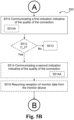
- the accessory device is configured to in accordance with a determination that the secondary criterion is satisfied (connection resumed or has increased quality), communicate a second indication indicative of the quality of the connection. In one or more exemplary accessory devices, the accessory device is configured to in accordance with a determination that the secondary criterion is satisfied, determine the second indication.
- the accessory device is optionally configured to, in accordance with a determination that the secondary criterion is satisfied, determine, such as select, obtain, and/or generate, the second indication indicative of the quality of the connection.
- the second indication may be indicative of an operating state based on monitor data received from the monitor device after the connection has been resumed (secondary criterion is satisfied), such as based on primary monitor data and/or secondary monitor data stored in the monitor device during loss of connection and received by the accessory device after the connection has been resumed (secondary criterion is satisfied).
- the second indication is indicative of the operating state at a time where the secondary criterion based on a quality of the connection is satisfied.
- the second indication is indicative of the operating state at a time where the connection is resumed, such as re-established.
- the accessory device is configured to, in accordance with a determination that the secondary criterion is satisfied, resume reception of the monitor data from the monitor device.
- the monitor data comprises one or more of: monitor data accumulated during a period of lost connection until resumption of connection (primary monitor data and/or secondary monitor data stored in the monitor device during lost connection), and real-time monitor data (e.g. "live" monitor data, e.g. monitor data received with little or no delay after resumption of connection).
- the monitor data comprises primary ostomy data obtained from an ostomy appliance being the personal care appliance via the interface or primary wound dressing data obtained from a wound dressing being the personal care appliance via the interface.
- the accessory device is configured to, in accordance with a determination that the secondary criterion is satisfied, communicate the second indication indicative of the quality of the connection, by displaying, on the display of the accessory device, a second user interface object representative of the second indication.
- the second user interface objection may convey: "something happened" or "everything is still good” (etc.) during the period of lost connection.
- to communicate the second indication may comprise to notify the user via the interface, such as by displaying a notification indicative of the second indication on a display of the accessory device.
- the present disclosure provides a method of operating an accessory device for a personal care system.
- the personal care system comprises a personal care appliance, a monitor device, and the accessory device.
- the method comprises establishing a connection between the monitor device and the accessory device.
- the method comprises receiving monitor data from the monitor device.
- the method comprises determining an operating state of the personal care appliance based on the monitor data.
- the method comprises determining whether a primary criterion based on a quality of the connection is satisfied.
- the method comprises, in accordance with a determination that the primary criterion is not satisfied, communicating a first indication indicative of the quality of the connection.
- the primary criterion based on a quality of the connection is not satisfied when it is determined that the quality of the connection is not above a primary connection threshold.
- the method comprises, in accordance with a determination that the primary criterion is not satisfied, selecting, from a plurality of indications, the first indication indicative of the quality of the connection.
- communicating the first indication indicative of the quality of the connection in accordance with a determination that the primary criterion is not satisfied comprises displaying, on a display of the accessory device, a first user interface object representative of the first indication.
- selecting the first indication indicative of the quality of the connection comprises determining an estimated operating state of the personal care appliance based on one or more previous operating states of the personal care appliance.
- determining the estimated operating state of the personal care appliance based on the one or more previous operating states of the personal care appliance comprises predicting the estimated operating state of the personal care appliance based on the one or more previous operating states of the personal care appliance.
- the first indication is indicative of the operating state at a time where the primary criterion based on a quality of the connection is not satisfied.
- the first indication is indicative of the estimated operating state.
- the method comprises determining that a secondary criterion based on the quality of the connection is satisfied.
- the method comprises, in accordance with a determination that the secondary criterion is satisfied, communicating a second indication indicative of the quality of the connection.
- the second indication is indicative of the operating state at a time where the secondary criterion based on the quality of the connection is satisfied.
- the second indication is optionally indicative of the operating state at a time where the connection is resumed, such as re-established.
- the method comprises resuming reception of the monitor data from the monitor device in accordance with a determination that the secondary criterion is satisfied.
- the monitor data comprises primary ostomy data obtained from an ostomy appliance being the personal care appliance via the interface or wound dressing data obtained from a wound dressing being the personal care appliance via the interface.
- communicating the second indication indicative of the quality of the connection comprises displaying, on the display of the accessory device, a second user interface object representative of the second indication.
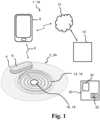
- Fig. 1 illustrates an exemplary personal care system 1 embodied as an ostomy system 1A.
- the personal care system 1 (ostomy system 1A) comprises a personal care appliance 2 embodied as an ostomy appliance 2A including a base plate 4 and an ostomy pouch (not shown).
- the personal care system 1 comprises a monitor device 6 and an accessory device 8 (mobile telephone, smartphone).
- the monitor device 6 is connectable to the personal care appliance 2, such as to base plate 4 and/or to an electrode assembly of or mounted to the personal care appliance, via respective first connectors of the monitor device 6 and base plate 4/electrode assembly.
- the monitor device 6 is configured for wireless communication via connection 9 with the accessory device 8.
- the accessory device 8 is configured to communicate with a server device 10 of the personal care system 1, e.g. via network 12.
- the server device 10 may be operated and/or controlled by the ostomy appliance manufacturer and/or a service centre.
- Appliance data (ostomy data in the shown ostomy system) or parameter data based on the appliance data (ostomy data in the shown ostomy system) are obtained from electrodes/sensors of electrode assembly embedded in or mounted to the personal care appliance 2 with the monitor device 6.
- the monitor device 6 processes the appliance data and/or parameter data based on the appliance data to determine monitor data that are transmitted to the accessory device 8 via connection 9.
- the accessory device 8 is a mobile phone, however the accessory device 8 may be embodied as another handheld device, such as a tablet device, or a wearable, such as a watch or other wrist-worn electronic device. Accordingly, the monitor device 6 is configured to determine monitor data and transmit the monitor data to the accessory device 8.
- the base plate 4 comprises a coupling member 14 in the form of a coupling ring 16 for coupling an ostomy pouch (not shown) to the base plate (two-part ostomy appliance).
- the base plate 4 has a stomal opening 18 with a center point 19. The size and/or shape of the stomal opening 18 is typically adjusted by the user or nurse before application of the ostomy appliance to accommodate the user's stoma.
- the personal care system 1 optionally comprises a docking station 20 forming an accessory device of the personal care system 1.
- the docking station 20 comprises a docking monitor interface including a first connector 22 configured for electrically and/or mechanically connecting the monitor device 6 to the docking station 20.
- the docking monitor interface may be configured for wirelessly connecting the monitor device 6 to the docking station 20.
- the docking station 20 comprises a user interface 24 for receiving user input and/or providing feedback to the user on the operational state of the docking station 20.
- the user interface 24 may comprise a touch-screen.
- the user interface 24 may comprise one or more physical buttons and/or one or more visual indicators, such as light emitting diodes.
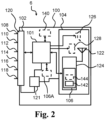
- Fig. 2 is a schematic block diagram of an exemplary monitor device.
- the monitor device 6 comprises a monitor device housing 100, a processor 101, and one or more interfaces, the one or more interfaces including a first interface 102 (appliance interface) and a second interface 104 (accessory interface).
- the monitor device 6 comprises a memory 106/106A for storing monitor data based on appliance data and/or parameter data based on the monitor data.
- the memory 106/106A is optionally connected to the processor 101.
- the memory 106 is embedded optionally as flash memory in the second interface 104
- the first interface 102 is configured as an appliance interface for electrically and/or mechanically connecting the monitor device 6 to the personal care appliance, e.g. ostomy appliance 2A or a wound dressing appliance.
- the first interface 102 comprises a plurality of terminals for forming electrical connections with respective terminals of the personal care appliance 2 (electrode assembly).
- the first interface 102 optionally comprises between four and 20 terminals, such as between six and twelve terminals, including a ground terminal 108, a first terminal 110, a second terminal 112 and a third terminal 114.
- the first interface 102 optionally comprises a fourth terminal 116 and a fifth terminal 118.
- the first interface 102 optionally comprises a sixth terminal and/or a seventh terminal.
- the first interface 102 of the monitor device 6 comprises a coupling part 120 for forming a mechanical connection, such as a releasable coupling between the monitor device and the personal care appliance, e.g. with a base plate of an ostomy appliance and/or a electrode assembly of ostomy system/wound dressing system.
- the coupling part 120 and the terminals 108, 110, 112, 114, 116, and 118 of the first interface 102 form (at least part of) a first connector of the monitor device 6.
- the monitor device 6 comprises a power unit 121 for powering the monitor device and active components thereof, i.e. the power unit 121 is connected to the processor 101, the first interface 102, and the second interface 104.
- the power unit comprises a battery and charging circuitry.
- the charging circuitry is connected to the battery and optionally to terminals of the first interface 102 for charging the battery via terminals of the first interface, e.g. terminals of the first connector.
- the charging circuitry may be configured for wireless charging of the battery.
- the second interface 104 of monitor device is configured as an accessory interface for connecting the monitor device 6 to one or more accessory devices such as accessory device 8.
- the second interface 104 comprises an antenna 122 and a wireless transceiver 124 also denoted transceiver module, the wireless transceiver 124 connected to the processor 101 and configured for wireless communication with accessory device(s), such as configured for connecting the monitor device to the one or more accessory devices of the personal care system.
- the second interface 104 comprises a loudspeaker 126 and/or a haptic feedback element 128 for provision of respective audio signal and/or haptic feedback to the user.
- the memory 106 may be an internal memory, such as flash memory of the wireless transceiver 124. Thereby, a separate memory module can be omitted which provides a simpler and lighter/smaller monitor device.
- the monitor device 6 optionally comprises a sensor unit 140 connected to the processor 101.
- the sensor unit 140 may comprise a temperature sensor for feeding temperature data to the processor 101 and/or a G-sensor or accelerometer for feeding acceleration data to the processor 101.
- the monitor device/processor 101/transceiver module 124 is configured to establish a connection between the monitor device and at least one of the one or more accessory devices, such as connection 9 to accessory device 8, determine whether a primary storing criterion based on a quality of the connection is satisfied; and in accordance with a determination that the primary storing criterion is satisfied, store primary monitor data 142 in the memory 106 according to a primary storing scheme SS_1.
- the monitor device/processor 101/transceiver module 124 is configured to transmit monitor data to the accessory device, wherein to transmit monitor data to the accessory device optionally comprises to store monitor data in the memory according to a transmit storing scheme, e.g. use the memory as a buffer for transmission.
- the primary storing scheme is different from the transmit storing scheme.
- the primary storing scheme may have a primary storing frequency smaller than a transmit storing frequency of the transmit storing scheme and/or the primary storing scheme may have a first data size larger than a transmit data size of the transmit storing scheme.
- the primary storing criterion SC_1 is optionally given as: SC_1: CP_1 ⁇ TH_S_1, wherein CP_1 is a primary connection parameter being a received channel power indicator (RCPI) indicative of a quality of the connection and obtained from the transceiver module 124 and TH_S_1 is a primary storing threshold.
- RCPI received channel power indicator
- the monitor device/processor 101 is optionally configured to, in accordance with a determination that the primary storing criterion is satisfied, select or determine the primary storing scheme SS_1 from a plurality of storing schemes.
- the primary storing scheme may be selected from a set of storing schemes comprising a plurality of storing schemes.
- To select the primary storing scheme is optionally based on a first parameter indicative of time since a quality of the connection is less than a threshold (i.e. a time since the primary storing criterion was satisfied).
- To select the primary storing scheme is optionally based on a second parameter indicative of available memory capacity of the memory.
- To select the primary storing scheme is optionally based on an operating state of the personal care appliance and/or appliance data, such as one or more of first appliance sensor data, second appliance sensor data, third appliance sensor data, fourth appliance sensor data, fifth appliance sensor data, and sixth appliance sensor data obtained from respective sensors/electrode pairs of the personal care appliance via the first interface 102.
- To store primary monitor data 142 in the memory 106 according to a primary storing scheme SS_1 may comprise to store less monitor data than is transmitted during normal transmission.
- the monitor device/processor 101 is optionally configured to store secondary monitor data 144 in the memory 106 according to a secondary storing scheme as described below.
- the monitor device/processor 101 is optionally configured to determine whether a secondary storing criterion SC_2, e.g. based on an available memory capacity of the memory is satisfied; and in accordance with a determination that the secondary storing criterion is satisfied, store secondary monitor data 144 in the memory 106 according to a secondary storing scheme SS_2.
- a secondary storing scheme SS_2 may comprise to store less monitor data and/or to store monitor data with reduced frequency and/or data size than is stored with the primary storing scheme.
- the secondary storing criterion SC_2 being satisfied may indicate that the available memory capacity of the memory is low.
- the monitor device is optionally configured to dynamically adapt storing of the monitor data in the memory in turn resulting in improved utilisation of the memory resources in the monitor device.
- the secondary storing criterion also denoted SC_2
- SC_2 may be based on a secondary storage parameter, SP_2, associated with memory and being indicative of available memory capacity of the memory.
- the secondary storing criterion SC_2 may be given as: SC_2: SP_2 ⁇ TH_M_2, wherein SP_2 is the secondary storage parameter and TH_M_2 is a secondary memory threshold.
- monitor device 6 to store secondary monitor data 144 optionally comprises compressing primary monitor data 142 or at least a part thereof in the memory.
- the monitor device 6 may be configured to free up memory in memory 106 by compressing the primary monitor data 144 stored during application of the primary storing scheme SS_1 and store the compressed primary monitor data in the memory.
- the compressed primary monitor data may be over-written on a part of the primary monitor data. In this way, primary monitor data of high importance may be kept in the memory, while less important primary monitor data may be deleted,
- to store secondary monitor data optionally comprises deleting, e.g. by over-writing, primary monitor data from the memory.
- To store secondary monitor data may comprise selecting a part of the primary monitor data, e.g. the oldest primary monitor data and/or primary monitor data of less importance/low priority, and overwriting the selected part of the primary monitor data with the secondary monitor data.
- the monitor device is optionally configured to, in accordance with a determination that the secondary storing criterion is satisfied, select the secondary storing scheme from the plurality of storing schemes or determine the secondary storing scheme.
- monitor device 6 to select the secondary storing scheme is optionally based on a first parameter indicative of time since a quality of the connection is less than a threshold. In monitor device 6, to select the secondary storing scheme is optionally based on a first parameter indicative of time since a determination that the primary storing scheme was satisfied.
- to select the secondary storing scheme is optionally based on a second parameter indicative of available memory capacity of the memory.
- to select the secondary storing scheme optionally comprises to select a first storing scheme as the secondary storing scheme if the second parameter indicative of available memory capacity is indicative of a large memory capacity, e.g. if the second parameter is larger than a first memory threshold, and/or to select a second storing scheme as the primary storing scheme if the second parameter indicative of available memory capacity is indicative of a small or reduced memory capacity, e.g. if the second parameter is less than a second memory threshold.
- the act to select the secondary storing scheme may be based on both the first parameter and the second parameter.
- monitor device 6 to select the secondary storing scheme is optionally based on an operating state of the personal care appliance and/or appliance data, such as one or more of first appliance sensor data, second appliance sensor data, third appliance sensor data, fourth appliance sensor data, fifth appliance sensor data, and sixth appliance sensor data obtained from respective sensors/electrode pairs of the personal care appliance via the first interface 102.
- appliance data such as one or more of first appliance sensor data, second appliance sensor data, third appliance sensor data, fourth appliance sensor data, fifth appliance sensor data, and sixth appliance sensor data obtained from respective sensors/electrode pairs of the personal care appliance via the first interface 102.
- the monitor device 6 is optionally configured to determine whether a transmission criterion TC based on the quality of the connection is satisfied; and in accordance with a determination that the transmission criterion is satisfied, transmit monitor data, including primary monitor data 142 and/or secondary monitor data 144, in the memory 106 to the accessory device.
- the transmission criterion being satisfied may indicate that the connection is resumed and/or returns to a satisfactory quality.
- the monitor device is optionally configured to transmit the monitor data in the memory stored during a time period of no or low-quality connection to the accessory device upon determination of reestablishment of the connection.
- the transmission criterion may be based on a connection parameter, CP, associated with the connection and being indicative of a quality of the connection.
- the transmission criterion is optionally given as: TC: CP > TH_T, wherein CP is the connection parameter being a received channel power indicator (RCPI) from the transceiver module 124 and TH_T is a transmission threshold.
- RCPI received channel power indicator
- to transmit monitor data in the memory to the accessory device optionally comprises to transmit the secondary monitor data 144, and after transmitting the secondary monitor data 144, to transmit the primary monitor data 146.
- the accessory device receiving the stored monitor data is able to determine and communicate a current operating state fast after resuming connection.
- the primary monitor data comprises primary appliance data e.g. primary ostomy data obtained from an ostomy appliance being the personal care appliance via the first interface or primary wound dressing data obtained from a wound dressing being the personal care appliance via the first interface.
- the secondary monitor data comprises secondary appliance data, e.g. secondary ostomy data obtained from an ostomy appliance being the personal care appliance via the first interface or secondary wound dressing data obtained from a wound dressing being the personal care appliance via the first interface.
- the processor 101 is configured to obtain appliance data based on appliance measurements via the terminals of the first interface 102.
- the processor 101 is configured to determine monitor data such as primary monitor data and/or secondary monitor data, based on the appliance data and optionally in accordance with a respective storing scheme.
- the processor 101 may be optionally configured to perform any of the operations disclosed in Fig. 3 (such as any one or more of S308, S310, S312, S314, S316, S316A, S316B, S317, S318, S320).
- the operations of the monitor device 100 may be embodied in the form of executable logic routines (such as, lines of code, software programs, etc.) that are stored on a non-transitory computer readable medium (such as, internal memory in the processor 101 or external memory) and are executed by the processor 101).
- the operations of the monitor device 100 may be considered a method that the monitor device 100 is configured to carry out. Also, while the described functions and operations may be implemented in software, such functionality may as well be carried out via dedicated hardware or firmware, or some combination of hardware, firmware and/or software.
- the memory 106 and/or 106A may be one or more of a buffer, a flash memory, a hard drive, a removable media, a volatile memory, a non-volatile memory, a random access memory (RAM), or other suitable device.
- the memory 106 may include a non-volatile memory for long term data storage and a volatile memory that functions as system memory for the processor 106.
- the memory 106, 106A may exchange data with the processor 101 over a data bus. Control lines and an address bus between the memory 101 and the processor 402 also may be present (not shown in Fig. 2 ).
- the memory 106, 106A is considered a non-transitory computer readable medium.
- Fig. 3 shows a flow diagram of an example method 300 of operating a monitor device for a personal care system, such as monitor device 6 of Fig. 2 .
- the method 300 comprises establishing S302 a connection between the monitor device and at least one of the one or more accessory devices; optionally transmitting S304 monitor data MD to the accessory device via the connection, determining S308 whether a primary storing criterion SC_1 based on a quality of the connection is satisfied; and in accordance with a determination that the primary storing criterion SC_1 is satisfied, storing S310 primary monitor data MD_1 in the memory according to a primary storing scheme SS_1.
- the act of determining S308 whether the primary storing criterion SC_1 based on a quality of the connection is satisfied optionally comprises determining whether the quality of the connection is below a threshold, e.g. wherein the primary storing criterion SC_1 may be given as: SC_1: CP_1 ⁇ TH_S_1,wherein CP_1 is the primary connection parameter being a received channel power indicator (RCPI) and TH_S_1 is a primary storing threshold.
- SC_1 may be given as: SC_1: CP_1 ⁇ TH_S_1,wherein CP_1 is the primary connection parameter being a received channel power indicator (RCPI) and TH_S_1 is a primary storing threshold.
- RCPI received channel power indicator
- the method 300 optionally comprises, in accordance with a determination that the primary storing criterion SC_1 is satisfied, selecting S312 the primary storing scheme SS_1 from a plurality of storing schemes. Selecting S312 the primary storing scheme SS_1 is optionally based on one or more of a first parameter indicative of time since a quality of the connection is less than a threshold, a second parameter indicative of available memory capacity of the memory, and an operating state of the personal care appliance.
- the method 300 optionally comprises, in accordance with a determination that the primary storing criterion SC_1 is not satisfied proceed to transmitting S304 monitor data MD to the accessory device via the connection.
- transmitting S304 monitor data to the accessory device optionally comprises storing S304B monitor data in the memory according to a transmit storing scheme.
- the primary storing scheme SS_1 is different from and optionally requires less memory than the transmit storing scheme SS_T.
- the primary storing scheme SS_1 may have a primary storing frequency SF_1 smaller than a transmit storing frequency SF_T of the transmit storing scheme SS_T and/or the primary storing scheme SS_1 may have a first data size DS_1 smaller than a transmit data size DS_T of the transmit storing scheme SS_T.
- the method 300 optionally comprises determining S314 whether a secondary storing criterion, e.g. based on an available memory capacity of the memory, is satisfied; and in accordance with a determination that the secondary storing criterion is satisfied, storing S316 secondary monitor data MD_2 in the memory according to a secondary storing scheme SS_2 different from the primary storing scheme SS_1.
- Storing S316 secondary monitor data MD_2 may comprise compressing S316A primary monitor data MD_1 in the memory optionally in accordance with a determination that the available memory capacity of the memory is less than a threshold, e.g. zero.
- Storing S316 secondary monitor data MD_2 may comprise deleting 316B primary monitor data MD_1 or at least a part thereof from the memory.
- the method 300 optionally comprises, in accordance with a determination that the secondary storing criterion SC_2 is satisfied, selecting S317 the secondary storing scheme SS_2 from a plurality of storing schemes. Selecting S317 the secondary storing scheme SS_2 is optionally based on one or more of a first parameter indicative of time since a quality of the connection is less than a threshold, a second parameter indicative of available memory capacity of the memory, and an operating state of the personal care appliance
- the method 300 optionally comprises determining S318, e.g. in accordance with a determination that the secondary storing criterion is not satisfied, whether a transmission criterion TC based on the quality of the connection is satisfied; and in accordance with a determination that the transmission criterion is satisfied, transmitting S304A monitor data, such as primary monitor data and/or secondary monitor data, in the memory to the accessory device.
- S304A monitor data such as primary monitor data and/or secondary monitor data
- the method 300 may in accordance with a determination that the transmission criterion is not satisfied in S318, proceed to storing S310 primary monitor data in the memory or selecting S312 the primary storing scheme.
- Transmitting S304A monitor data in the memory to the accessory device optionally comprises to transmit the secondary monitor data, and after transmitting the secondary monitor data, to transmit the primary monitor data.
- the method 300 optionally comprises determining S320, e.g. after storing S316 secondary monitor data in the memory, whether a transmission criterion TC based on the quality of the connection is satisfied; and in accordance with a determination that the transmission criterion is satisfied, transmitting S304A monitor data, such as primary monitor data and/or secondary monitor data, in the memory to the accessory device.
- the method 300 may in accordance with a determination that the transmission criterion is not satisfied in S320, proceed to storing S316 secondary monitor data in the memory or selecting S317 the secondary storing scheme.
- Fig. 4 is a block diagram illustrating an exemplary accessory device 400 according to the present disclosure.
- the accessory device 400 forms part of a personal care system, such as an ostomy system or a wound dressing system and is capable of supporting the monitoring of the operating state of an ostomy appliance or a wound dressing appliance to be placed on a user' s skin.
- the accessory device 400 comprises a memory 401; a processor 402 coupled to the memory 401; and an interface 403, coupled to the processor 402.
- Peripheral devices such as memory 401 and/or interface 403 can be operatively and communicably coupled to the processor 402 via a bus for communicating data.
- the processor 402 can be a central processing unit (CPU), but other suitable microprocessors are also contemplated.
- the interface 403 is configured to connect the accessory device to the monitor device of the personal care system, the interface comprising a transceiver module 403A connected to the processor 402.
- the interface 403 may be configured to communicate with one or more devices of the personal care system.
- the one or more devices comprising a monitor device, and/or a personal care appliance configured to be placed on a skin surface of a user or on any additional seals.
- the interface 403 may comprise a display 403B as a visual interface to the user.
- the interface 403 is configured to establish a connection between the monitor device and the accessory device.
- the interface 403 is configured to receive monitor data from the monitor device, such as to receive or retrieve the monitor data from the one or more devices.
- the monitor data may be indicative of a condition of the personal care appliance, such as a condition of a proximal side of a layer of the personal care appliance that is directed towards the skin surface or a condition of an absorbent core layer of the personal care appliance.
- the monitor data comprises appliance data, e.g. ostomy data or wound dressing data, obtained via the interface 403 from an ostomy appliance being the personal care appliance or from a wound dressing being the personal care appliance, respectively.
- the processor 402 may be configured to determine an operating state of the personal care appliance based on the monitor data.
- the processor 402 may be configured to determine whether a primary criterion based on a quality of the connection is satisfied.
- the primary criterion based on a quality of the connection is not satisfied when it is determined that the quality of the connection is not above a primary connection threshold.
- the primary criterion based on a quality of the connection is not satisfied when it is determined that the quality of the connection is equal or below the primary connection threshold.
- the primary criterion may be based on one or more connection parameters associated with the connection and being indicative of a quality of the connection, such as a signal strength indicator, e.g. a received signal strength indicator (RSSI) or a received channel power indicator (RCPI), signal-to-noise ratio, an error rate, e.g. a bit error rate, and/or a frame error rate, a number of non-acknowledgements (NACKs), and/or a number of retransmissions.
- the accessory device may be configured to determine whether the connection to the monitor device is lost by determining whether the primary criterion based on the quality of the connection is satisfied.
- the primary criterion based on a quality of the connection is not satisfied when it is determined that the quality of the connection is degraded (e.g. poor) and/or reduced, leading to a loss of connection to the monitor device.
- the accessory device is configured to communicate the first indication in case the connection to the monitor device is of low quality, e.g. lost or degraded.
- the processor 402 may be configured to in accordance with a determination that the primary criterion is not satisfied, communicate, e.g. via the interface 403, a first indication indicative of the quality of the connection to the user.
- the processor 402 may be configured to, in accordance with a determination that the primary criterion is not satisfied, communicate the first indication, e.g. to the user, e.g. via an output device (such as a display 403B and/or a loudspeaker).
- the first indication may be communicated by sound.
- the processor 402 is configured to, in accordance with a determination that the primary criterion is not satisfied, communicate, via the interface 403 (e.g. a transceiver module 403A), the first indication, e.g. to another device, e.g. an external device (such as wearable device, a smartphone, and/or a server device).
- the personal care system comprises one or more of: an ostomy system, and a wound care system.
- the accessory device 400 is capable of communicating a first indication indicative of a quality of the connection.
- the present disclosure improves the reliability of the monitoring performed by the personal care system, by communicating the first indication indicative of the quality of connection when a quality of the connection is not satisfactory.
- the accessory device 400 can notify appropriately the user and to start potentially estimating the operating state without real-time current monitor data.
- communication of the first indication indicative of a quality of connection to the monitor device helps reducing the risk of a user experiencing a leakage (e.g. output leakage between a user's skin and the baseplate of the ostomy appliance) from an ostomy appliance in a planned activity and/or wet wound from a saturated wound dressing appliance.
- determination and communication the first indication indicative of an estimated operating state, and possibly with a latest operating state, according to the present disclosure is performed based on monitor data indicative of a condition of the ostomy appliance which may not be visible to the user.
- the processor 402 is configured to, in accordance with a determination that the primary criterion is not satisfied, select, from a plurality of indications, the first indication indicative of the quality of the connection.
- the first indication is indicative of the operating state at a time where the primary criterion based on the quality of the connection is not satisfied. For example, the first indication is indicative of the operating state at a time where the connection is lost and/or degraded and/or interrupted.
- the first indication may be selected from the plurality of indications comprising an indication indicative of the connection lost and/or degraded, and an indication is indicative of the operating state at a time where the primary criterion based on the quality of the connection is not satisfied.
- to select the first indication indicative of the quality of the connection comprises to determine an estimated operating state of the personal care appliance based on one or more previous operating states of the personal care appliance.
- the processor 402 determines the estimated operating state of the personal care appliance based on one or more previous operating states and selects the first indication amongst a plurality of indications including an indication indicative of the estimated operating state.
- the one or more previous operating states of the personal care appliance are determined by the accessory device before the time where the primary criterion based on the quality of the connection is not satisfied (e.g. before the time where the connection is lost).
- the first indication is indicative of the estimated operating state.
- to determine the estimated operating state of the personal care appliance based on one or more previous operating states of the personal care appliance comprises to predict the estimated operating state of the personal care appliance based on the one or more previous operating states of the personal care appliance.
- the processor 402 predicts the estimated operating state based on one or more previous operating states, such as based on one or more operating states previously determined by the accessory device (i.e. prior to loss of connection).
- the one or more operating states previously determined by the accessory device may relate the similar personal care appliances as the one currently used by the user.
- one or more operating states previously determined by the accessory device may relate the different personal care appliances as the one currently used by the user, which have the characteristics and/or components which are the same as the one currently used by the user.
- the processor 402 may be configured to determine the estimated operating state as a future operating state of the personal care appliance based on one or more previous operating states, such as based on one or more (future and/or current) operating states previously determined by the accessory device.
- the processor 402 may comprise a predictor.
- the predictor may be configured to predict operating state(s) based on a prediction function. It may be envisaged that the processor 402 may be configured to predict the estimated operating state of the personal care appliance by deriving a trend or a function of an operating state and/or the monitor data over the time period, e.g. for the similar personal care appliances as the one currently used by the user, or for similar base plates as the currently used one.
- the time period may include a time period up to and possibly including a current time.
- the time period may include a time period from a start time of use of any personal care appliances, to the current time of determination of the estimated operating state.
- the time period may include a time period from a start time of the loss of connection to the current time.
- the time period may include a time window that periodically occurs, such as a morning time period, an afternoon time period, a night time period, a daily time period, a weekly time period etc.
- the processor 402 may be configured to predict the estimated operating state based on a parameter characterizing a product type of the personal care appliance.
- the processor may be configured to predict (such as to determine) the estimated operating state based on monitor data obtained for similar product types of personal care appliances previously used by the user.
- the processor 402 is configured to, in accordance with a determination that the primary criterion is not satisfied, communicate, e.g. via the interface 403, the first indication indicative of the quality of the connection, by displaying, on a display 403B, a first user interface object representative of the first indication.
- the first user interface object may be displayed as one or more media, such as text, graphic and/or video.
- the interface 403 may comprise the display 403B configured to display a user interface.
- the display 403B may comprise a touch sensitive surface.
- a user interface comprises one or more user interface objects.
- a user interface may be referred to as a user interface screen.
- the display 403B may be configured to detect touch (e.g. the display is a touch-sensitive display), the input comprises a contact on the touch sensitive display.
- a touch-sensitive display provides an input interface and an output interface between the accessory device and a user.
- the processor 402 of the accessory device may be configured to receive and/or send electrical signals from/to touch-sensitive display.
- a touch-sensitive display is configured to display visual output to the user.
- the visual output optionally includes graphics, text, icons, video, and any combination thereof (collectively termed "graphics"). For example, some or all of the visual output may be seen as corresponding to user interface objects.
- to communicate the first indication comprises to display, on a visual interface (e.g. a display 403B) of the accessory device, a user interface comprising a user interface object representative of the first indication, such as a first user interface object representative of the first indication indicative of the quality of the connection and/or representative of a first operating state of the personal care appliance, and/or representative of a second operating state of the personal care appliance.
- a user interface object representative of the first indication comprises a first user interface object representative of the first indication, and/or of one or more operating states.
- to communicate the first indication comprises to notify the user via the interface, such as by displaying a notification on a display of the accessory device.
- the notification may comprise the first user interface object representative of the first indication.
- the notification may comprise a notification indicator to open an application related to the personal care appliance.
- the accessory device 400 may be configured to detect an input on the notification indicator.
- the accessory device 400 may be configured to, in response to the input, opening the application related to the ostomy appliance.
- the accessory device 400 may be configured to, in response to the opening of the application, to display a user interface object representative of an operating state (such as a latest operating state and/or an estimated operating state).
- the processor 402 is configured to determine that a secondary criterion based on the quality of the connection is satisfied. For example, the secondary criterion based on a quality of the connection is satisfied when it is determined that the quality of the connection is above a secondary connection threshold.
- the primary connection threshold is the same as the secondary connection threshold. In one or more embodiments, the primary connection threshold is different from the secondary connection threshold. It may be appreciated that having the primary connection threshold different from the secondary connection threshold may lead to a reduction of the hysteresis effect between the communication of the first indication and the communication of the second indication.
- the processor 402 is configured to in accordance with a determination that the secondary criterion is satisfied, communicate (e.g. via the interface 403) a second indication indicative of the quality of the connection. In one or more exemplary accessory devices, the processor 402 is configured to in accordance with a determination that the secondary criterion is satisfied, determine the second indication. In one or more exemplary accessory devices, the second indication is indicative of the operating state at a time where the secondary criterion based on a quality of the connection is satisfied. For example, the first indication is indicative of the operating state at a time where the connection is lost and/or degraded and/or interrupted.
- the processor 402 is configured to, in accordance with a determination that the secondary criterion is satisfied, resume (e.g. using the interface 403, such as using the transceiver 403A) reception of the monitor data from the monitor device.
- the monitor data comprises one or more of: monitor data accumulated during a period of lost connection, e.g. primary monitor data and/or secondary monitor data, until resumption of connection, and real-time monitor data (e.g. "live" monitor data, e.g. monitor data received from resumption of connection).
- the processor 402 is configured to, in accordance with a determination that the secondary criterion is satisfied, communicate the second indication indicative of the quality of the connection, by displaying, on the display of the accessory device, a second user interface object representative of the second indication.
- the second user interface objection may convey: "something happened" or "everything is still good” (etc.) during the period of lost connection.
- the processor 402 is configured to notify the user via the interface 403, such as by displaying a notification indicative of the second indication on the display 403B.
- the memory 401 may be configured to store the monitor data and/or the operating state and/or the first indication(s) and/or second indication(s).
- the processor 402 is optionally configured to perform any of the operations disclosed in Figs. 5A and 5B .
- the processor 402 may be optionally configured to perform any of the operations disclosed in Fig. 5 (such as any one or more of S509, S509A, A509AA, S511, S510A, S512, S513, S514, S516, S518, S518A).
- the operations of the accessory device 400 may be embodied in the form of executable logic routines (such as, lines of code, software programs, etc.) that are stored on a non-transitory computer readable medium (such as, the memory 401) and are executed by the processor 402).
- the operations of the accessory device 400 may be considered a method that the accessory device 400 is configured to carry out. Also, while the described functions and operations may be implemented in software, such functionality may as well be carried out via dedicated hardware or firmware, or some combination of hardware, firmware and/or software.
- the memory 401 may be one or more of a buffer, a flash memory, a hard drive, a removable media, a volatile memory, a non-volatile memory, a random access memory (RAM), or other suitable device.
- the memory 401 may include a non-volatile memory for long term data storage and a volatile memory that functions as system memory for the processor 402.
- the memory 401 may exchange data with the processor 402 over a data bus. Control lines and an address bus between the memory 401 and the processor 402 also may be present (not shown in Fig. 4 ).
- the memory 401 is considered a non-transitory computer readable medium.
- Figs. 5A and 5B shows a flow diagram of an example method 500 of operating an accessory device for a personal care system.
- the personal care system comprises a personal care appliance, a monitor device, and the accessory device.
- the method 500 comprises establishing S502 a connection between the monitor device and the accessory device.
- the method 500 comprises receiving S504 monitor data from the monitor device.
- the method 500 optionally comprises determining S506 an operating state of the personal care appliance based on the monitor data.
- the method 500 comprises determining S508 whether a primary criterion C_1 based on a quality of the connection, such as based on a signal strength indicator e.g. a received signal strength indicator (RSSI) or a received channel power indicator (RCPI), is satisfied. Determining S506 an operating state of the personal care appliance based on the monitor data may be performed in accordance a determination that the primary criterion is satisfied.
- a signal strength indicator e.g. a received signal strength indicator (RSSI) or a received channel power indicator (RCPI)
- the method 500 comprises, in accordance with a determination that the primary criterion is not satisfied, communicating S510 a first indication indicative of the quality of the connection.
- the method 500 may comprise, in accordance with a determination that the primary criterion is satisfied, refraining S511 from communicating the first indication indicative of the quality of the connection.
- the primary criterion based on a quality of the connection is not satisfied when it is determined that the quality of the connection is not above a primary connection threshold.
- the primary criterion based on a quality of the connection is not satisfied when it is determined that the quality of the connection is equal or below the primary connection threshold.
- the primary criterion may be based on one or more connection parameters associated with the connection and being indicative of a quality of the connection, such as a signal strength indicator, e.g. a received signal strength indicator (RSSI) or a received channel power indicator (RCPI), signal-to-noise ratio, an error rate, e.g. a bit error rate, and/or a frame error rate, a number of non-acknowledgements (NACKs), and/or a number of retransmissions.
- the accessory device may be configured to determine whether the connection to the monitor device is lost by determining whether the primary criterion based on the quality of the connection is satisfied.
- the primary criterion based on a quality of the connection is not satisfied when it is determined that the quality of the connection is degraded (e.g. poor) and/or reduced, leading to a loss of connection to the monitor device.
- the accessory device is configured to communicate the first indication in case the connection to the monitor device is of low quality, e.g. lost or degraded.
- the method 500 comprises, in accordance with a determination that the primary criterion is not satisfied, selecting S509, from a plurality of indications, the first indication indicative of the quality of the connection.
- the first indication may be selected from the plurality of indications comprising an indication indicative of the connection lost and/or degraded, and an indication is indicative of the operating state at a time where the primary criterion based on the quality of the connection is not satisfied.
- the method 500 comprises communicating S510 the first indication indicative of the quality of the connection in accordance with a determination that the primary criterion is not satisfied comprises displaying S510A, on a display of the accessory device, a first user interface object representative of the first indication.
- selecting S509 the first indication indicative of the quality of the connection comprises determining S509A an estimated operating state of the personal care appliance based on one or more previous operating states of the personal care appliance.
- determining S509A the estimated operating state of the personal care appliance based on the one or more previous operating states of the personal care appliance comprises predicting S509AA the estimated operating state of the personal care appliance based on the one or more previous operating states of the personal care appliance.
- the first indication is indicative of the estimated operating state.
- the first indication is indicative of the operating state at a time where the primary criterion based on a quality of the connection is not satisfied.
- the first indication is indicative of the estimated operating state.
- the first indication is indicative of a time since the primary criterion based on a quality of the connection was not satisfied and/or a time where the primary criterion based on a quality of the connection was not satisfied.
- the method comprises determining S512 whether a secondary criterion C_2 based on the quality of the connection is satisfied.
- the secondary criterion being satisfied may indicate that the connection is resumed and/or returns to a satisfactory quality.
- the secondary criterion also denoted C_2
- the secondary criterion C_2 may be given as: C_2: CP > TH_C_2, wherein CP is the connection parameter being a signal strength indicator, such as a received signal strength indicator (RSSI) or a received channel power indicator (RCPI), and TH_C_2 is a secondary connection threshold.
- RSSI received signal strength indicator
- RCPI received channel power indicator
- the method comprises, in accordance with a determination that the secondary criterion is satisfied, communicating S514 a second indication indicative of the quality of the connection.
- the method 500 may comprise, in accordance with a determination that the primary criterion is satisfied, refraining S513 from communicating the second indication indicative of the quality of the connection.
- the second indication is indicative of the operating state at a time where the secondary criterion based on the quality of the connection is satisfied.
- the method comprises resuming reception S516 of the monitor data from the monitor device in accordance with a determination that the secondary criterion is satisfied.
- the method proceeds to S504A receiving primary monitor data and/or secondary monitor data from the monitor device.
- communicating S514 the second indication indicative of the quality of the connection comprises displaying S514A, on the display of the accessory device, a second user interface object representative of the second indication.
- Fig. 6 illustrates one or more exemplary user interfaces for communicating the first indication according to the present disclosure.
- Fig. 6 shows an exemplary user interface 600 for communicating the first indication via a visual interface of the accessory device, such as a display of the accessory device.
- the user interface 600 comprises a first user interface object 610 representative of the first indication indicative of the quality of connection between the monitor device and the accessory device.
- the first user interface object 610 may be displayed as one or more media, such as text, graphic and/or video.
- the first user interface object 610 may be user-interactive, or selectable by a user input. For example, an image (e.g., icon), a button, and text (e.g., hyperlink) each optionally constitute the first user interface object 610.
- the first user interface object 610 may form part of a widget.
- the user interface 600 may comprise one or more, such as a plurality of user interface objects.
- the user interface may comprise a first primary user interface object 612 representative of the first indication indicative of an operating state at the time of connection loss.
- the user interface may comprise a first secondary user interface object 614 representative of the first indication indicative of an estimated operating state
- the accessory device is optionally configured to change dynamically the visual appearance of any of the user interface objects 610, 612, 614 based on the operating state. e.g. in terms of text, colour, shape, form, contrast, brightness, animation and/or blurring to indicate the operating state (latest or estimated for current time).
- the severity of the operating state may be displayed, by the accessory device, by varying in colour: e.g. blue, yellow, red for indicating low, medium, high severity respectively.
- the severity of the operating state may be displayed, by the accessory device, by varying shades within a colour from a lighter shade to a darker shade for indicating low to high severity respectively.
- the severity of the operating state may be displayed, by the accessory device, by varying a magnitude of the visual effect (e.g., less blurring, sharper contrast) as severity increases.
- the user interface object 610 and/or 612, and/or 614 may be representative of an operating state indicating to change NOW the personal care by adopting e.g. the colour red, in a dark shade, in sharp contrast.
- the user interface 600 comprises user interface objects 610, 612, 614 which separately or together, display a text prompt indicating to the user the first indication.
- a text prompt may for example indicate: "Monitor connection lost - Everything is fine”, “Monitor connection lost - Good”, “Monitor connection lost - Check”, “Monitor connection lost - Change”.
- the user interface object 610 and/or 612, and/or 614 may be displayed as one or more notifications, such as in a notification centre displayed on the display.
- the accessory device may be configured to provide the user interface 600 in a user application running on the processor.
- the user application may be a dedicated personal care application that assist the user in monitoring the internal operating state of the personal care appliance.
- the accessory device may be configured to provide the user interface 600 on a lock screen displayed by the accessory device.
- the accessory device may be configured to provide the user interface 600 on a home screen displayed by the accessory device.
- Fig. 7 shows an exemplary user interface 700 for communicating the second indication via a visual interface of the accessory device, such as a display of the accessory device.
- the user interface 700 comprises a second user interface object 710 representative of the second indication indicative of the quality of connection between the monitor device and the accessory device.
- the second user interface object 710 may be displayed as one or more media, such as text, graphic and/or video.
- the second user interface object 710 may be user-interactive, or selectable by a user input.
- an image e.g., icon
- a button e.g., button
- text e.g., hyperlink
- the user interface 700 may comprise one or more, such as a plurality of user interface objects.
- the user interface may comprise a second primary user interface object 712 representative of the second indication indicative of an operating state at the time of connection resumed (at a time where the secondary criterion based on a quality of the connection is satisfied).
- the accessory device is configured to change dynamically the visual appearance of any of the user interface object 712 based on the operating state. e.g. in terms of colour, shape, form, contrast, brightness, animation and/or blurring to indicate the operating state (latest or estimated for current time).
- the severity of the operating state may be displayed, by the accessory device, by varying in colour: e.g. blue, yellow, red for indicating low, medium, high severity respectively.
- the severity of the operating state may be displayed, by the accessory device, by varying shades within a colour from a lighter shade to a darker shade for indicating low to high severity respectively.
- the severity of the operating state may be displayed, by the accessory device, by varying a magnitude of the visual effect (e.g., less blurring, sharper contrast) as severity increases.
- the user interface object 710 and/or 712 may be representative of an operating state indicating to change NOW the personal care by adopting e.g. the colour red, in a dark shade, in sharp contrast.
- the user interface 700 comprises user interface objects 710, 712 which separately or together, display a text prompt indicating to the user the second indication.
- a text prompt may for example indicate: "Monitor connection resumed - Everything is fine”, “Monitor connection resumed - Good”, “Monitor connection resumed - Check”, “Monitor connection resumed - Change”.
- the user interface object 710 and/or 712 may be displayed as one or more notifications, such as in a notification centre displayed on the display.
- the accessory device may be configured to provide the user interface 700 in the user application running on the processor dedicated to personal care.
- the accessory device may be configured to provide the user interface 700 on a lock screen displayed by the accessory device.
- Fig. 8 illustrates an exemplary personal care system 1 embodied as a wound dressing system 1B.
- the personal care system 1 (wound dressing system 1B) comprises a personal care appliance 2 embodied as a wound dressing 2B.
- the personal care system 1 comprises a monitor device 6 and an accessory device 8 (mobile telephone, smartphone).
- the monitor device 6 is connectable to the personal care appliance 2, such as to wound dressing 2B and/or to an electrode assembly of or mounted to the wound dressing, via respective first connectors of the monitor device 6 and wound dressing 2B/electrode assembly.
- first”, “second”, “third” and “fourth”, “primary”, “secondary”, “tertiary” etc. does not denote any order or importance, but rather the terms “first”, “second”, “third” and “fourth”, “primary”, “secondary”, “tertiary” etc. are used to distinguish one element from another. Note that the words “first”, “second”, “third” and “fourth”, “primary”, “secondary”, “tertiary” etc. are used here and elsewhere for labelling purposes only and are not intended to denote any specific spatial or temporal ordering.
- Figs. 1-8 comprise some modules or operations which are illustrated with a solid line and some modules or operations which are illustrated with a dashed line.
- the modules or operations which are comprised in a solid line are modules or operations which are comprised in the broadest example embodiment.
- the modules or operations which are comprised in a dashed line are example embodiments which may be comprised in, or a part of, or are further modules or operations which may be taken in addition to the modules or operations of the solid line example embodiments. It should be appreciated that these operations need not be performed in order presented. Furthermore, it should be appreciated that not all of the operations need to be performed.
- the exemplary operations may be performed in any order and in any combination.
- a computer-readable medium may include removable and non-removable storage devices including, but not limited to, Read Only Memory (ROM), Random Access Memory (RAM), compact discs (CDs), digital versatile discs (DVD), etc.
- program modules may include routines, programs, objects, components, data structures, etc. that perform specified tasks or implement specific abstract data types.
- Computer-executable instructions, associated data structures, and program modules represent examples of program code for executing steps of the methods disclosed herein. The particular sequence of such executable instructions or associated data structures represents examples of corresponding acts for implementing the functions described in such steps or processes.
Landscapes
- Health & Medical Sciences (AREA)
- Engineering & Computer Science (AREA)
- Public Health (AREA)
- General Health & Medical Sciences (AREA)
- Veterinary Medicine (AREA)
- Animal Behavior & Ethology (AREA)
- Biomedical Technology (AREA)
- Heart & Thoracic Surgery (AREA)
- Vascular Medicine (AREA)
- Life Sciences & Earth Sciences (AREA)
- Theoretical Computer Science (AREA)
- Epidemiology (AREA)
- Nursing (AREA)
- Orthopedic Medicine & Surgery (AREA)
- General Engineering & Computer Science (AREA)
- General Physics & Mathematics (AREA)
- Physics & Mathematics (AREA)
- Orthopedics, Nursing, And Contraception (AREA)
- Measuring And Recording Apparatus For Diagnosis (AREA)
Claims (14)
- Dispositif de surveillance (6) pour un système de soins personnels (1) comprenant un appareil de soins personnels (2), le dispositif de surveillance (6), et un ou plusieurs dispositifs accessoires (8, 400), le dispositif de surveillance (8) comprenant :un processeur (101) ;une mémoire (106, 106A) connectée au processeur ;une première interface (102) connectée au processeur, la première interface étant configurée pour connecter le dispositif de surveillance (6) à l'appareil de soins personnels (2) ; etune seconde interface (104) comprenant un module émetteur-récepteur (124) connecté au processeur (101) et configuré pour connecter le dispositif de surveillance (6) aux un ou plusieurs dispositifs accessoires (8, 400) du système de soins personnels (1),dans lequel le dispositif de surveillance (6) est configuré pour :
établir une connexion (9) entre le dispositif de surveillance (6) et au moins un des un ou plusieurs dispositifs accessoires (8, 400) ;caractérisé en ce que le dispositif de surveillance est configuré pour :déterminer si un critère de stockage primaire basé sur une qualité de la connexion (9) est satisfait ; etconformément à une détermination que le critère de stockage primaire est satisfait, stocker des données de surveillance primaires dans la mémoire (106, 106A) selon un schéma de stockage primaire ;et en ce que le dispositif de surveillance (6) est en outre configuré pour, conformément à une détermination selon laquelle le critère de stockage primaire est satisfait, sélectionner le schéma de stockage primaire dans une pluralité de schémas de stockage. - Dispositif de surveillance selon la revendication 1, dans lequel le critère de stockage primaire basé sur une qualité de la connexion est satisfait lorsqu'il est déterminé que la qualité de la connexion est inférieure à un seuil.
- Dispositif de surveillance selon l'une quelconque des revendications 1 à 2, dans lequel la sélection du schéma de stockage primaire est basée sur un premier paramètre indiquant le temps écoulé depuis qu'une qualité de la connexion est inférieure à un seuil.
- Dispositif de surveillance selon l'une quelconque des revendications 1 à 3, dans lequel la sélection du schéma de stockage primaire est basée sur un second paramètre indiquant la capacité de mémoire disponible de la mémoire.
- Dispositif de surveillance selon l'une quelconque des revendications 1 à 4, dans lequel la sélection du schéma de stockage primaire est basée sur un état de fonctionnement de l'appareil de soins personnels.
- Dispositif de surveillance selon l'une quelconque des revendications 1 à 5, dans lequel le dispositif de surveillance est configuré pour :déterminer si un critère de stockage secondaire basé sur une capacité de mémoire disponible de la mémoire est satisfait ; etconformément à une détermination que le critère de stockage secondaire est satisfait, stocker les données de surveillance secondaires dans la mémoire selon un schéma de stockage secondaire.
- Dispositif de surveillance selon la revendication 6, dans lequel le stockage de données de surveillance secondaires comprend la compression de données de surveillance primaires dans la mémoire.
- Dispositif de surveillance selon la revendication 6, dans lequel le stockage de données de surveillance secondaires comprend la suppression de données de surveillance primaires de la mémoire.
- Dispositif de surveillance selon l'une quelconque des revendications 1 à 8, dans lequel le dispositif de surveillance est configuré pour :déterminer si un critère de transmission basé sur la qualité de la connexion est satisfait ; etconformément à une détermination que le critère de transmission est satisfait, transmettre les données de surveillance dans la mémoire au dispositif accessoire.
- Dispositif de surveillance selon la revendication 9 dépendant de la revendication 6, dans lequel la transmission de données de surveillance dans la mémoire au dispositif accessoire comprend la transmission des données de surveillance secondaires, et après la transmission des données de surveillance secondaires, la transmission des données de surveillance primaires.
- Dispositif de surveillance selon l'une quelconque des revendications 1 à 10, dans lequel la mémoire est une mémoire flash du module émetteur-récepteur, et dans lequel le stockage de données de surveillance primaires dans la mémoire selon un schéma de stockage primaire est basé sur un ou plusieurs paramètres de commande sortis du processeur vers le module émetteur-récepteur.
- Dispositif de surveillance selon l'une quelconque des revendications 1 à 11, dans lequel les données de surveillance primaires comprennent des données de stomie primaires obtenues à partir d'un appareil pour stomie étant l'appareil de soins personnels par le biais de la première interface ou des données de pansement primaires obtenues à partir d'un pansement étant l'appareil de soins personnels par le biais de la première interface.
- Système de soins personnels (1) comprenant un appareil de soins personnels (2) et un dispositif de surveillance (6) selon l'une quelconque des revendications 1 à 12, l'appareil de soins personnels (2) étant un appareil pour stomie (2A).
- Système de soins personnels (1) comprenant un appareil de soins personnels (2) et un dispositif de surveillance (6) selon l'une quelconque des revendications 1 à 12, l'appareil de soins personnels (2) étant un pansement (2B).
Priority Applications (1)
| Application Number | Priority Date | Filing Date | Title |
|---|---|---|---|
| EP24217167.6A EP4512377A3 (fr) | 2020-04-14 | 2021-04-14 | Procédé pour un dispositif de surveillance pour un système de soins personnels |
Applications Claiming Priority (2)
| Application Number | Priority Date | Filing Date | Title |
|---|---|---|---|
| DKPA202070225 | 2020-04-14 | ||
| PCT/DK2021/050105 WO2021209105A1 (fr) | 2020-04-14 | 2021-04-14 | Dispositif de surveillance pour un système de soins personnels, et procédés associés |
Related Child Applications (1)
| Application Number | Title | Priority Date | Filing Date |
|---|---|---|---|
| EP24217167.6A Division EP4512377A3 (fr) | 2020-04-14 | 2021-04-14 | Procédé pour un dispositif de surveillance pour un système de soins personnels |
Publications (3)
| Publication Number | Publication Date |
|---|---|
| EP4135636A1 EP4135636A1 (fr) | 2023-02-22 |
| EP4135636C0 EP4135636C0 (fr) | 2024-12-04 |
| EP4135636B1 true EP4135636B1 (fr) | 2024-12-04 |
Family
ID=75659749
Family Applications (2)
| Application Number | Title | Priority Date | Filing Date |
|---|---|---|---|
| EP21720990.7A Active EP4135636B1 (fr) | 2020-04-14 | 2021-04-14 | Dispositif de surveillance pour un système de soins personnels |
| EP24217167.6A Pending EP4512377A3 (fr) | 2020-04-14 | 2021-04-14 | Procédé pour un dispositif de surveillance pour un système de soins personnels |
Family Applications After (1)
| Application Number | Title | Priority Date | Filing Date |
|---|---|---|---|
| EP24217167.6A Pending EP4512377A3 (fr) | 2020-04-14 | 2021-04-14 | Procédé pour un dispositif de surveillance pour un système de soins personnels |
Country Status (3)
| Country | Link |
|---|---|
| US (1) | US12147357B2 (fr) |
| EP (2) | EP4135636B1 (fr) |
| WO (1) | WO2021209105A1 (fr) |
Families Citing this family (11)
| Publication number | Priority date | Publication date | Assignee | Title |
|---|---|---|---|---|
| US12521269B2 (en) | 2017-12-22 | 2026-01-13 | Coloplast A/S | Base plate and sensor assembly part of a medical system having a moisture sensor |
| LT3727234T (lt) | 2017-12-22 | 2022-04-25 | Coloplast A/S | Ostomijos prietaisas su kampinio nuotekio aptikimu |
| CN111465372B (zh) | 2017-12-22 | 2022-09-06 | 科洛普拉斯特公司 | 用于造口术底板和传感器组件部的具有铰链的联接部 |
| EP3764955B1 (fr) * | 2018-03-15 | 2024-01-10 | Coloplast A/S | Procédés de configuration de notifications de stomie et dispositifs accessoires associés |
| CN111885984B (zh) | 2018-03-15 | 2023-08-04 | 科洛普拉斯特公司 | 基于传感器数据来确定造口术器具穿戴时间的设备和方法 |
| AU2020214098B2 (en) | 2019-01-31 | 2025-01-02 | Coloplast A/S | A stomal sensor patch |
| JP7525500B2 (ja) | 2019-01-31 | 2024-07-30 | コロプラスト アクティーゼルスカブ | オストミー装具のためのセンサパッチ |
| EP3917465A1 (fr) | 2019-01-31 | 2021-12-08 | Coloplast A/S | Application d'un timbre à capteur pour stomie |
| US12257172B2 (en) | 2019-02-28 | 2025-03-25 | Coloplast A/S | Sensor patch for attachment to a base plate |
| USD1101142S1 (en) | 2023-11-10 | 2025-11-04 | Avery Dennison Corporation | Ostomy flange with leakage detecting sensors |
| US12440130B1 (en) | 2025-01-13 | 2025-10-14 | University of Central Oklahoma | Ostomy wafer and method |
Family Cites Families (327)
| Publication number | Priority date | Publication date | Assignee | Title |
|---|---|---|---|---|
| US2327514A (en) | 1942-08-21 | 1943-08-24 | Ivy D Fenwick | Colostomy protector |
| US2542233A (en) | 1949-03-03 | 1951-02-20 | Harry F Carroll | Colostomy closure or guard |
| US2544579A (en) | 1949-06-20 | 1951-03-06 | Frank J Ardner | Colostomy protector |
| US3214502A (en) | 1960-08-08 | 1965-10-26 | Kendall & Co | Method and apparatus for making adhesive tapes |
| US3832510A (en) | 1972-06-16 | 1974-08-27 | Charmilles Sa Ateliers | Pulse generator for edm machine |
| US3915171A (en) | 1974-06-06 | 1975-10-28 | Dennis William Shermeta | Gastrostomy tube |
| US3941133A (en) | 1974-10-04 | 1976-03-02 | E. R. Squibb & Sons, Inc. | Stomal devices having controlled release |
| GB1576522A (en) | 1977-05-24 | 1980-10-08 | Colorplast International A S | Sealing material for ostomy devices |
| US4372308A (en) | 1978-07-10 | 1983-02-08 | Kingsdown Medical Consultants Ltd. | Ostomy bag including filter means |
| GB2083760B (en) | 1980-09-09 | 1984-05-10 | Downs Surgical Ltd | Flatus filter |
| US4775374A (en) | 1981-11-27 | 1988-10-04 | E. R. Squibb & Sons, Inc. | Skin barrier for use by ostomates |
| EP0168967A1 (fr) | 1984-06-15 | 1986-01-22 | Waters Instruments, Inc. | Prothèse d'ostomie |
| DE3437950A1 (de) | 1984-10-17 | 1985-04-18 | Arno H. Dipl.-Ing. 7141 Beilstein Taruttis | Einrichtung zum bestimmen des feuchtigkeitsgehalts in babyhoeschenwindeln waehrend des tragens |
| US4668227A (en) | 1985-05-08 | 1987-05-26 | Kay Dennis M | Stoma hygiene system and process therefor |
| CA1273822A (fr) | 1985-06-03 | 1990-09-11 | Katsutoshi Rokuta | Dispositif pour mesurer le degre d'humidite des couches |
| US5016645A (en) | 1987-06-18 | 1991-05-21 | Terrell Williams | Medical electrode lead |
| US4834731A (en) | 1987-11-19 | 1989-05-30 | Hollister Incorporated | Ostomy appliance and convex pressure ring assembly therefor |
| DK157899C (da) | 1987-12-15 | 1990-09-03 | Coloplast As | Hudpladeprodukt |
| NZ227995A (en) | 1988-03-07 | 1991-12-23 | Squibb & Sons Inc | Ostomy bag with filter: intervening wall has scattered holes |
| GB2219679A (en) | 1988-06-13 | 1989-12-13 | Easeup Industry Ltd | Detector for use in connection with a nappy |
| DE3836590A1 (de) | 1988-10-27 | 1990-05-03 | Bernd Stankowitz | Vorrichtung zur stoma-versorgung |
| GB2225951B (en) | 1988-12-13 | 1992-06-24 | Squibb & Sons Inc | Ostomy coupling |
| US4982742A (en) | 1989-02-22 | 1991-01-08 | C&Y Technology, Inc. | Apparatus and method to facilitate healing of soft tissue wounds |
| US5013307A (en) | 1989-08-02 | 1991-05-07 | Marna Broida | Absorbent pad for an ostomy appliance |
| US5004464A (en) | 1989-08-28 | 1991-04-02 | E.R. Squibb & Sons | Convex adapter for ostomy device |
| US4973323A (en) | 1989-09-01 | 1990-11-27 | Hollister Incorporated | Ostomy appliance |
| US5111812A (en) | 1990-01-23 | 1992-05-12 | Cardiac Pacemakers, Inc. | Defilbrillation electrode having smooth current distribution |
| JPH0474882A (ja) | 1990-07-12 | 1992-03-10 | Nec Corp | 電鋳装置 |
| US5237995A (en) | 1991-03-26 | 1993-08-24 | Allegheny-Singer Research Institute | Concentric electrode for use in detecting low level bioelectric signals |
| DK122791D0 (da) | 1991-06-24 | 1991-06-24 | Coloplast As | Saarbandage |
| US5790036A (en) | 1992-07-22 | 1998-08-04 | Health Sense International, Inc. | Sensor material for use in detection of electrically conductive fluids |
| US5318543A (en) | 1992-10-08 | 1994-06-07 | Abbott Laboratories | Laparoscopic jejunostomy instrumentation kit |
| JPH06152077A (ja) | 1992-11-13 | 1994-05-31 | Sony Corp | フレキシブル回路基板 |
| DK169711B1 (da) | 1993-01-15 | 1995-01-23 | Coloplast As | Hudpladeprodukt |
| US5358488A (en) | 1993-11-16 | 1994-10-25 | Chinda Suriyapa | Device to control gastrostomy leakage |
| US5626135A (en) | 1995-04-12 | 1997-05-06 | R.S. Supplies, Inc. | Medical electrode |
| DK60795A (da) | 1995-05-29 | 1996-11-30 | Coloplast As | Stomiopsamlingssystem |
| US5593397A (en) | 1995-07-13 | 1997-01-14 | Hollister Incorporated | Fecal collector with elastic attachment patch |
| US6861570B1 (en) | 1997-09-22 | 2005-03-01 | A. Bart Flick | Multilayer conductive appliance having wound healing and analgesic properties |
| EP0850076B1 (fr) | 1995-09-11 | 2005-04-06 | Elan Corporation Plc | Dispositif d'administration de medicaments |
| US5704905A (en) | 1995-10-10 | 1998-01-06 | Jensen; Ole R. | Wound dressing having film-backed hydrocolloid-containing adhesive layer with linear depressions |
| US5570082A (en) | 1995-10-13 | 1996-10-29 | Mahgerefteh; Nasser | Remote wetness sensor for diapers |
| GB2308306B (en) | 1995-12-22 | 1999-09-08 | Alcare Co Ltd | Adhesive plate with indicator function |
| US6015399A (en) | 1996-04-03 | 2000-01-18 | Mracna; Kellie | Ostomy patient equipment |
| US5672163A (en) | 1996-04-26 | 1997-09-30 | Bristol-Myers Squibb Company | Ostomy pouch with intervening membrane and superabsorbent |
| US5730736A (en) | 1996-04-30 | 1998-03-24 | Dansac A/S | Ostomy appliance and contoured adhesive wafer therefor |
| US5677221A (en) | 1996-06-19 | 1997-10-14 | Vanguard International Semiconductor Corp. | Method of manufacture DRAM capacitor with reduced layout area |
| NL1003904C2 (nl) | 1996-08-28 | 1998-03-04 | Lamers Beheer Bv | Pleisterlaminaat |
| CA2269575C (fr) | 1996-10-22 | 2007-02-20 | Coloplast A/S | Dispositif d'ostomie |
| US6025725A (en) | 1996-12-05 | 2000-02-15 | Massachusetts Institute Of Technology | Electrically active resonant structures for wireless monitoring and control |
| US6812624B1 (en) | 1999-07-20 | 2004-11-02 | Sri International | Electroactive polymers |
| DK0981311T3 (da) | 1997-04-08 | 2004-12-20 | Coloplast As | Stomiindretning |
| US5816252A (en) | 1997-04-29 | 1998-10-06 | O.R. Solutions, Inc. | Surgical drape leak detection method and apparatus |
| US6057689A (en) | 1997-08-04 | 2000-05-02 | Gynecare, Inc. | Apparatus and method for leak detection in a fluid-filled balloon useful to treat body tissue |
| US5879292A (en) | 1997-10-09 | 1999-03-09 | Edward A. Sternberg | Bandage including data acquisition components |
| US6617488B1 (en) | 1997-10-14 | 2003-09-09 | Indicator Technologies, Inc. | Method and apparatus for indicating the conditions in an absorbent article |
| US6149636A (en) | 1998-06-29 | 2000-11-21 | The Procter & Gamble Company | Disposable article having proactive sensors |
| DK1057150T3 (da) | 1997-12-22 | 2003-02-10 | Bent Thorning Bensen As | Fremgangsmåde og indretning til detektering af et fluidum |
| AU2046799A (en) | 1998-01-15 | 1999-08-02 | Coloplast A/S | A dressing |
| EP1051451B1 (fr) | 1998-01-30 | 2004-03-31 | Coloplast A/S | Article ayant une surface presentant des proprietes adhesives |
| US6485476B1 (en) | 1998-02-25 | 2002-11-26 | Zassi Medical Evolutions, Inc. | Continent ostomy port |
| US6103033A (en) | 1998-03-04 | 2000-08-15 | Therasense, Inc. | Process for producing an electrochemical biosensor |
| US6071268A (en) | 1998-05-29 | 2000-06-06 | Wagner; Neldon C. | Ostomy skin barrier assembly, stoma seal assembly and materials for use in stoma seals |
| EP1091688B1 (fr) | 1998-06-29 | 2006-04-12 | The Procter & Gamble Company | Article jetable pourvu d'un capteur proactif |
| US6433244B1 (en) | 1998-06-29 | 2002-08-13 | The Procter & Gamble Company | Disposable treatment article having a responsive system |
| JP2000093448A (ja) | 1998-09-18 | 2000-04-04 | Panetto:Kk | おむつ用センサおよびこれを内蔵したおむつ |
| FR2785526B1 (fr) | 1998-11-06 | 2001-03-30 | Plasto Sa | Dispositif de securite pour colostomie |
| DE19900611C1 (de) | 1999-01-11 | 2000-07-06 | Hartmut Biesenbach | Vorrichtung zur Abdeckung eines künstlichen Darmausgangs, insbesondere für Darmausgangsträger mit Prolaps-Problemen |
| AU5390700A (en) | 1999-06-21 | 2001-01-09 | Bent Thorning Bensen A/S | Radiofrequency resonant circuit sensing device, method of its production, and uses |
| SE514753C2 (sv) | 1999-08-24 | 2001-04-09 | Crafcare Ab | Anordning för övervakning av fyllningen av en påse |
| JP2001087299A (ja) | 1999-09-24 | 2001-04-03 | Alcare Co Ltd | 排泄物収容装具用面板 |
| US6206864B1 (en) | 1999-11-16 | 2001-03-27 | Hollister Incorporated | Ostomy appliance with inverted triangular faceplate and non-protruding pull tabs |
| JP3274130B2 (ja) | 2000-05-29 | 2002-04-15 | 滿 藤原 | 尿検知スイッチ、及び、尿検知装置 |
| US6759110B1 (en) | 2000-08-15 | 2004-07-06 | 3M Innovative Properties Company | Structured release liners with improved adhesion to adhesive articles |
| JPWO2002039936A1 (ja) | 2000-11-18 | 2004-03-18 | 坂本 篤信 | ストーマ用袋及び処理法 |
| DK1354224T3 (da) | 2000-12-22 | 2013-05-21 | Bent Thorning Bensen As | Sensorindretning, fremgangsmåde til dens fremstilling og anvendelse |
| JP2002224093A (ja) | 2001-02-05 | 2002-08-13 | Kao Corp | 排泄センサ及び排泄検知装置 |
| DK174796B1 (da) | 2001-05-10 | 2003-11-24 | Coloplast As | Opsamlingspose med en udluftningsåbning |
| DK174925B1 (da) | 2001-05-21 | 2004-02-23 | Coloplast As | Stomiindretning |
| WO2002099765A1 (fr) | 2001-06-01 | 2002-12-12 | Joergensen Poul Richter | Circuit de resonance |
| DK174693B1 (da) | 2001-06-15 | 2003-09-15 | Coloplast As | Stormiindretning |
| US6825655B2 (en) | 2001-08-31 | 2004-11-30 | Imego Ab | Method and arrangement for detecting changes of a magnetic response in magnetic particles |
| DK175870B1 (da) | 2001-09-05 | 2005-05-02 | Coloplast As | Stomiindretning |
| US7959860B2 (en) | 2001-10-22 | 2011-06-14 | Faries Jr Durward I | System and method of detecting fluid and leaks in thermal treatment system basins |
| US20050101841A9 (en) | 2001-12-04 | 2005-05-12 | Kimberly-Clark Worldwide, Inc. | Healthcare networks with biosensors |
| US20030132763A1 (en) | 2002-01-11 | 2003-07-17 | Ellenz John David | Capacitance-based sensing device for detecting presence of body part |
| DK175563B1 (da) | 2002-02-05 | 2004-12-06 | Coloplast As | Stomiindretning |
| DK175356B1 (da) | 2002-02-28 | 2004-09-06 | Coloplast As | Stomiindretning |
| US20030171737A1 (en) | 2002-03-11 | 2003-09-11 | Leise, Walter F. | Soft convex adhesive wafer |
| US6723079B2 (en) | 2002-03-27 | 2004-04-20 | Bristol-Myers Squibb Company | Controlled evacuation ostomy device with external seal |
| SE0201907D0 (sv) | 2002-06-19 | 2002-06-19 | Atos Medical Ab | Plaster for tracheostoma valves |
| US6840924B2 (en) | 2002-07-03 | 2005-01-11 | Bristol-Myers Squibb Company | Ostomy appliance |
| JP3717068B2 (ja) | 2002-08-23 | 2005-11-16 | 松下電器産業株式会社 | 液体検知センサおよび液体検知装置 |
| US7625362B2 (en) | 2003-09-16 | 2009-12-01 | Boehringer Technologies, L.P. | Apparatus and method for suction-assisted wound healing |
| US20040100376A1 (en) | 2002-11-26 | 2004-05-27 | Kimberly-Clark Worldwide, Inc. | Healthcare monitoring system |
| DK176790B1 (da) | 2003-03-31 | 2009-09-07 | Coloplast As | Klubende plaster |
| US7029464B2 (en) | 2003-03-31 | 2006-04-18 | Marlen Manufacturing & Development Co. | Ostomy pouch with stretch-to-fit stoma opening |
| DK176027B1 (da) | 2003-12-22 | 2005-12-19 | Hollister Inc | Stomiindretning med forfilter |
| US7737321B2 (en) | 2003-09-23 | 2010-06-15 | Elliott Nyle S | colostomy alert device and method |
| US7194301B2 (en) | 2003-10-06 | 2007-03-20 | Transneuronic, Inc. | Method for screening and treating patients at risk of medical disorders |
| DK176243B1 (da) | 2003-10-24 | 2007-04-16 | Coloplast As | En stomipåsætningsplade og en fremgangsmåde til frembringelse heraf |
| US7166091B1 (en) | 2003-12-11 | 2007-01-23 | Keith Zeltner | Recreational belt for supporting and housing an ostomy appliance |
| PL1711147T3 (pl) | 2004-01-27 | 2011-06-30 | Coloplast As | Produkt absorbujący ze strefami o różnych właściwościach powierzchni |
| WO2005082271A2 (fr) | 2004-03-01 | 2005-09-09 | Coloplast A/S | Accessoire de stomie |
| JP2005323981A (ja) | 2004-05-14 | 2005-11-24 | Shogo Igarashi | 使い捨て紙おむつの濡れ検知装置 |
| CA2467413A1 (fr) | 2004-05-18 | 2005-11-18 | Wayne Conrad | Accessoire ameliore pour stomie |
| JP3813969B2 (ja) | 2004-07-15 | 2006-08-23 | ユニ・チャーム株式会社 | 尿レシーバおよびこれを用いた収尿処理システム |
| WO2006008866A1 (fr) | 2004-07-16 | 2006-01-26 | Kabushiki Kaisha Awajitec | Capteur d’humidité |
| US7582072B2 (en) | 2004-09-09 | 2009-09-01 | Kimberly-Clark Worldwide, Inc. | Artificial stoma and method of use |
| CA2584545C (fr) | 2004-11-03 | 2011-08-02 | Coloplast A/S | Filtre nettoyable pour accessoire de stomie |
| US20080275327A1 (en) | 2005-03-09 | 2008-11-06 | Susanne Holm Faarbaek | Three-Dimensional Adhesive Device Having a Microelectronic System Embedded Therein |
| US7066919B1 (en) | 2005-05-09 | 2006-06-27 | Sauerland Keith A | Alarm for a fluid-dispensing/receiving receptacle |
| US7326190B2 (en) | 2005-05-25 | 2008-02-05 | Hollister Incorporated | Ostomy pouch and high performance deodorizing gas filter assembly therefor |
| EP1904005B1 (fr) | 2005-06-28 | 2010-11-10 | Coloplast A/S | Filtre pour poche de stomie dote de surfaces interactives |
| JP4979999B2 (ja) | 2005-07-13 | 2012-07-18 | ユニ・チャーム株式会社 | 尿センサ |
| US7733224B2 (en) | 2006-06-30 | 2010-06-08 | Bao Tran | Mesh network personal emergency response appliance |
| WO2007089322A2 (fr) | 2005-11-23 | 2007-08-09 | William Marsh Rice University | Préparation de transistors en minces films (tft) ou d'étiquettes d'identification par radiofréquence (rfid) ou autres électroniques imprimables à l'aide d'une imprimante à jet d'encre et encres pour nanotubes de carbone |
| US7951125B2 (en) | 2005-11-24 | 2011-05-31 | Coloplast A/S | Set of coupling parts |
| EP1959901B1 (fr) | 2005-12-12 | 2015-02-25 | SCA Hygiene Products AB | Article absorbant comprenant des moyens de détection d'humidité |
| US8304598B2 (en) | 2005-12-15 | 2012-11-06 | Kimberly-Clark Worldwide, Inc. | Garments with easy-to-use signaling device |
| CA2634975A1 (fr) | 2005-12-30 | 2007-07-12 | Coloplast A/S | Construction adhesive en couches presentant une couche pouvant etre moulee au titre de surface de contact avec la peau |
| US7641612B1 (en) | 2006-01-17 | 2010-01-05 | Mccall Kenneth Shawn | Blood loss detection for hemodialysis system |
| US20070185464A1 (en) | 2006-02-03 | 2007-08-09 | Bristol-Myers Squibb Company | Ostomy appliance with recovery resistant moldable adhesive |
| RU2008138529A (ru) | 2006-02-28 | 2010-04-10 | Колопласт А/С (Dk) | Датчик утечки |
| US20080140057A1 (en) | 2006-03-09 | 2008-06-12 | Searete Llc, A Limited Liability Corporation Of State Of The Delaware | Injectable controlled release fluid delivery system |
| EP2012718B1 (fr) | 2006-04-25 | 2011-11-16 | Coloplast A/S | Plaquette adhésive |
| US20070276309A1 (en) | 2006-05-12 | 2007-11-29 | Kci Licensing, Inc. | Systems and methods for wound area management |
| US7558622B2 (en) | 2006-05-24 | 2009-07-07 | Bao Tran | Mesh network stroke monitoring appliance |
| JP4636330B2 (ja) | 2006-06-02 | 2011-02-23 | 株式会社マイ・ケアー | 入浴用患部カバー |
| MX2009001265A (es) | 2006-08-07 | 2009-03-09 | Pliant Corp | Peliculas, sistemas y metodos de deteccion en caso de alteracion. |
| US7771320B2 (en) | 2006-09-07 | 2010-08-10 | Nike, Inc. | Athletic performance sensing and/or tracking systems and methods |
| US8061360B2 (en) | 2006-09-19 | 2011-11-22 | Kci Licensing, Inc. | System and method for locating fluid leaks at a drape of a reduced pressure delivery system |
| US8000777B2 (en) | 2006-09-19 | 2011-08-16 | Kci Licensing, Inc. | System and method for tracking healing progress of tissue |
| US8214007B2 (en) | 2006-11-01 | 2012-07-03 | Welch Allyn, Inc. | Body worn physiological sensor device having a disposable electrode module |
| US11389171B2 (en) | 2006-11-21 | 2022-07-19 | David S. Goldsmith | Integrated system for the infixion and retrieval of implants |
| US7902810B2 (en) | 2006-12-21 | 2011-03-08 | Draeger Medical Systems, Inc. | Cable detection system |
| EP2974754B1 (fr) | 2007-02-09 | 2018-11-21 | KCI Licensing, Inc. | Système pour gérer une pression réduite sur un site tissulaire |
| EP2156222B1 (fr) | 2007-04-20 | 2015-08-26 | Sca Hygiene Products AB | Procédé et système permettant d'associer un article absorbant à un utilisateur |
| TWI327063B (en) | 2007-05-10 | 2010-07-11 | Ind Tech Res Inst | A urine detection system and method |
| JP5642539B2 (ja) | 2007-05-24 | 2014-12-17 | アプライド ティッシュ テクノロジーズ リミテッド ライアビリティ カンパニー | 負圧を使用する創傷治療デバイス |
| US20090040028A1 (en) * | 2007-05-31 | 2009-02-12 | Cms Products Inc | System and method for communicating data via a wireless high speed link between mobile computers and archival storage devices |
| FI20075426A0 (fi) * | 2007-06-08 | 2007-06-08 | Polar Electro Oy | Suoritemittari, lähetysmenetelmä ja tietokoneohjelmatuote |
| CA2692753A1 (fr) | 2007-07-06 | 2009-01-15 | Coloplast A/S | Compose adhesif pour dispositifs d'ostomie |
| CN101778610B (zh) | 2007-08-10 | 2012-10-24 | 科洛普拉斯特公司 | 排泄物管理装置 |
| WO2009052496A1 (fr) | 2007-10-18 | 2009-04-23 | Convatec Inc. | Système d'aspiration permettant d'éliminer un liquide évacué par le corps humain, et capteur de liquide pour celui-ci |
| US9577934B2 (en) | 2008-02-29 | 2017-02-21 | Koninklijke Philips N.V. | Optimizing physiologic monitoring based on available but variable signal quality |
| WO2009111655A2 (fr) | 2008-03-05 | 2009-09-11 | Kcl Licensing Inc. | Pansement et procédé permettant d’exercer une pression réduite sur un site tissulaire et de recueillir et de stocker un fluide qui en provient |
| FR2928550A1 (fr) | 2008-03-14 | 2009-09-18 | Gambro Lundia Ab | Sonde pour la detection de fuite de fluide a partie distale specifique |
| US10646370B2 (en) | 2008-04-01 | 2020-05-12 | Donaldson Company, Inc. | Enclosure ventilation filter and assembly method |
| US8979811B2 (en) | 2008-04-01 | 2015-03-17 | Donaldson Company, Inc. | Enclosure ventilation filter and assembly method |
| EP2108345A1 (fr) | 2008-04-11 | 2009-10-14 | Eurotec Beheer B.V. | Système de stomie à pièce unique avec une ouverture de stomie extensible et souple |
| AU2008355015A1 (en) | 2008-04-17 | 2009-10-22 | Coloplast A/S | A collecting device for body fluids |
| CN102065751B (zh) | 2008-05-01 | 2015-06-17 | 3M创新有限公司 | 生物医学传感器系统 |
| EP2300094B1 (fr) | 2008-06-02 | 2013-07-24 | Loma Vista Medical, Inc., | Dispositifs médicaux gonflables |
| US7981099B2 (en) | 2008-07-10 | 2011-07-19 | Hollister Incorporated | Deodorizing gas filter assembly for a body waste collection pouch, and method of making |
| US20100076275A1 (en) | 2008-07-24 | 2010-03-25 | Edmond Chu | System and Method for Remote Healthcare Monitoring |
| GB2465742B (en) | 2008-09-23 | 2012-07-11 | Salts Healthcare Ltd | Device for use with an ostomy appliance |
| US9795442B2 (en) | 2008-11-11 | 2017-10-24 | Shifamed Holdings, Llc | Ablation catheters |
| US9439566B2 (en) | 2008-12-15 | 2016-09-13 | Proteus Digital Health, Inc. | Re-wearable wireless device |
| US8409158B2 (en) | 2009-07-07 | 2013-04-02 | Coloplast A/S | Ostomy appliance with a leakage indicator |
| US9066812B2 (en) | 2009-07-07 | 2015-06-30 | Coloplast A/S | Ostomy appliance with a leakage indicator |
| GB0912009D0 (en) | 2009-07-10 | 2009-08-19 | Univ Strathclyde | Sensor |
| US8821464B2 (en) | 2009-07-14 | 2014-09-02 | Stimatix Gi Ltd. | Disposable ostomy assemblies |
| GB0920345D0 (en) | 2009-11-20 | 2010-01-06 | Rtc North Ltd | Device for providing an indication of when the volume of liquid in a bag reaches a predetermined value |
| JP5844281B2 (ja) | 2010-02-01 | 2016-01-13 | サイード サベティSaied Sabeti | オストミー器具、医療器具の流体流制御弁及びオストミー挿入機構 |
| KR200451671Y1 (ko) | 2010-02-26 | 2011-01-05 | (주)휴먼전자엔씨 | 터치 센서 |
| US9770359B2 (en) | 2010-03-19 | 2017-09-26 | Coloplast A/S | Ostomy base plate with mouldable inner adhesive |
| DE102010012545A1 (de) | 2010-03-23 | 2011-09-29 | Fresenius Medical Care Deutschland Gmbh | Vorrichtung zum Detektieren von Feuchtigkeit zur Verwendung mit einer Vorrichtung zur Überwachung eines Zugangs zu einem Patienten, insbesondere zur Überwachung des Gefäßzugangs bei einer extrakorporalen Blutbehandlung |
| WO2011123018A1 (fr) | 2010-03-29 | 2011-10-06 | Mölnlycke Health Care Ab | Procédé de fabrication de plaquettes de fixation au corps pour dispositifs de stomie |
| US20110246983A1 (en) * | 2010-04-01 | 2011-10-06 | Storage Appliance Corporation | Wireless Network Backup Device and Method |
| WO2011139499A1 (fr) | 2010-05-03 | 2011-11-10 | Convatec Technologies Inc. | Dispositif de drainage à demeure pour les déchets corporels |
| ES2552770T3 (es) | 2010-06-04 | 2015-12-02 | Coloplast A/S | Un aparato de ostomía con una construcción de filtro |
| DK2582341T3 (en) | 2010-06-16 | 2016-06-06 | Fred Bergman Healthcare Pty Ltd | A method of analyzing events from the sensor data by optimizing |
| DE102010024654A1 (de) | 2010-06-22 | 2011-12-22 | Fresenius Medical Care Deutschland Gmbh | Vorrichtung zum Detektieren von Feuchtigkeit zur Verwendung mit einer Vorrichtung zur Überwachung eines Zugangs zu einem Patienten, insbesondere zur Überwachung des Gefäßzugangs bei einer extrakorporalen Blutbehandlung |
| DE102010030504A1 (de) | 2010-06-24 | 2011-12-29 | HSG-IMIT-Institut für Mikro- und Informationstechnologie | Quellstoffaktor mit elektrisch angetriebener fluidischer Transportvorrichtung |
| KR101445575B1 (ko) | 2010-07-06 | 2014-10-01 | 김경훈 | 인체용 대변 수집기 |
| US8432049B2 (en) | 2010-07-15 | 2013-04-30 | Sukho JUNG | Electrical generator |
| US8795257B2 (en) | 2010-07-19 | 2014-08-05 | Kci Licensing, Inc. | Systems and methods for electrically detecting the presence of exudate in dressings |
| PL2605733T3 (pl) | 2010-08-16 | 2015-12-31 | Coloplast As | Urządzenie stomijne |
| US8684982B2 (en) | 2010-10-29 | 2014-04-01 | Convatec Technologies Inc. | Controlled evacuation ostomy appliance |
| US9655787B2 (en) | 2010-11-19 | 2017-05-23 | Covenant Ministries Of Benevolence | Stacked moisture sensing device |
| JP2012125266A (ja) | 2010-12-10 | 2012-07-05 | Coloplast As | ストーマ装具の面板の開口形成方法、この方法において用いられる型シート及びシール、並びに面板及びストーマ装具 |
| GB201022029D0 (en) | 2010-12-23 | 2011-02-02 | Sca Hygiene Prod Ab | Absorbent article comprising a liquid discharge sensor |
| GB201022028D0 (en) | 2010-12-23 | 2011-02-02 | Sca Hygiene Prod Ab | Tool for analysing liquid discharge data in an absorbent article, an absorbent article adapted for liquid dicharge data collection and a control unit |
| GB201100610D0 (en) | 2011-01-14 | 2011-03-02 | Welland Medical Ltd | Improvements in ostomy bags |
| US8632492B2 (en) | 2011-01-31 | 2014-01-21 | Rebecca DeLegge | Enteral feeding tube and housing |
| BE1019831A3 (nl) | 2011-02-18 | 2013-01-08 | Sioen Ind | Dekzeil met beveiliging. |
| CN102650608B (zh) | 2011-02-24 | 2014-04-02 | 徐菲 | 基于电化学电容器的液体检测装置、方法及纸尿裤 |
| DE102011014321A1 (de) | 2011-03-18 | 2012-09-20 | Karl Georg Stitz | Integrierung eines Stuhlerkenners in die Stomagrundversorgung |
| US9278856B2 (en) | 2011-04-08 | 2016-03-08 | Covestro Llc | Flexible sensing material containing carbon nanotubes |
| US9267906B2 (en) | 2011-04-12 | 2016-02-23 | The Boeing Company | Bondline embedded current sensor |
| DE102011076219A1 (de) | 2011-05-20 | 2012-11-22 | TU Chemnitz | Gestickter Feuchtesensor |
| TWI459933B (zh) | 2011-07-15 | 2014-11-11 | Ind Tech Res Inst | 具尿布濕度檢測裝置之尿布、系統及尿布濕度檢測方法 |
| WO2013013197A1 (fr) | 2011-07-20 | 2013-01-24 | Etect, Llc | Capteurs d'humidité, système de surveillance d'humidité et procédés associés |
| US20130030167A1 (en) | 2011-07-26 | 2013-01-31 | Grain Processing Corporation | Production of Resistant Dextrins |
| CN104053419B (zh) | 2011-09-14 | 2015-11-25 | 凯希特许有限公司 | 采用检漏构件的减压系统和方法 |
| US9033930B2 (en) | 2011-12-22 | 2015-05-19 | Avent, Inc. | Base for an enteral feeding device |
| CA2863440C (fr) | 2012-01-09 | 2016-09-20 | Kyoung-Hun Kim | Collecteur de selles humaines |
| US9046085B2 (en) | 2012-03-14 | 2015-06-02 | Eden Medical, Inc. | Miniature pumps |
| US8740865B2 (en) | 2012-05-31 | 2014-06-03 | International Business Machines Corporation | Ostomy appliance wear time prediction |
| US9005129B2 (en) | 2012-06-22 | 2015-04-14 | Fitbit, Inc. | Wearable heart rate monitor |
| US10245420B2 (en) | 2012-06-26 | 2019-04-02 | PicoLife Technologies | Medicament distribution systems and related methods of use |
| DE102012013471A1 (de) | 2012-07-09 | 2014-01-09 | Fresenius Medical Care Deutschland Gmbh | Feuchtigkeitssensor zur Überwachung eines Zugangs zu einem Patienten und Verfahren zur Herstellung des Feuchtigkeitssensors |
| JP2014033745A (ja) | 2012-08-07 | 2014-02-24 | Hitoshi Mifuji | 排泄検出センサ及び排泄検出装置 |
| JP5928817B2 (ja) | 2012-09-12 | 2016-06-01 | カシオ計算機株式会社 | 生体情報測定装置及びその操作方法 |
| TW201436311A (zh) | 2012-10-16 | 2014-09-16 | 拜耳智慧財產有限公司 | 金屬化介電膜之方法 |
| WO2014086369A1 (fr) | 2012-12-06 | 2014-06-12 | Coloplast A/S | Plaque de base de stomie adaptable |
| GB201223353D0 (en) | 2012-12-24 | 2013-02-06 | Seres Healthcare Ltd | Portable level sensor |
| US10028857B2 (en) | 2013-02-15 | 2018-07-24 | Convatec Technologies Inc | Methods and systems for ostomy care |
| US20140276501A1 (en) | 2013-03-14 | 2014-09-18 | Hollister Incorporated | Three-Dimensional Adhesive Patch |
| EP2994041B1 (fr) | 2013-05-09 | 2019-10-23 | Garmin Switzerland GmbH | Appareil pour surveiller la fréquence cardiaque pendant la nage |
| BR112015032821B1 (pt) | 2013-07-18 | 2021-12-14 | Coloplast A/S | Método para monitoramento de pressão, e, utensílio de ostomia |
| GB201313721D0 (en) | 2013-07-31 | 2013-09-11 | Univ Ulster | Leak detection sensor for a stoma pouch and a process for making same |
| EP3077956B1 (fr) | 2013-12-03 | 2023-10-11 | Children's National Medical Center | Procédé et système d'évaluation et de gestion de plaie |
| WO2015094064A1 (fr) | 2013-12-20 | 2015-06-25 | Sca Hygiene Products Ab | Procédés et systèmes pour surveiller des données d'excréments |
| CN105873525A (zh) | 2014-01-05 | 2016-08-17 | 奇普林医药公司 | 仪表化伤口闭合装置 |
| US10531977B2 (en) | 2014-04-17 | 2020-01-14 | Coloplast A/S | Thermoresponsive skin barrier appliances |
| CN203786580U (zh) | 2014-04-29 | 2014-08-20 | 曼瑞德集团有限公司 | 模块化温控器 |
| US9322797B1 (en) | 2014-04-30 | 2016-04-26 | Helvetia Wireless Llc | Systems and methods for detecting a liquid |
| CN115349856A (zh) | 2014-06-06 | 2022-11-18 | 德克斯康公司 | 基于数据和背景的故障判别和响应处理 |
| EP2957268A1 (fr) | 2014-06-17 | 2015-12-23 | University of Limerick | Système de poche d'ostomie |
| TWI569845B (zh) | 2014-06-25 | 2017-02-11 | 南臺科技大學 | 脫針與漏血偵測裝置 |
| JP5712446B1 (ja) | 2014-07-03 | 2015-05-07 | 務 細野 | ストーマ装具用補助収容袋、ストーマ装具及びストーマ装具の面板 |
| US9410979B2 (en) | 2014-09-23 | 2016-08-09 | Fitbit, Inc. | Hybrid angular motion sensors |
| CN105588856A (zh) | 2014-10-19 | 2016-05-18 | 吴振武 | 柔性印刷粪尿传感器 |
| WO2016094589A1 (fr) | 2014-12-09 | 2016-06-16 | The Regents Of The University Of California | Fabrication évolutive de structures superhydrophobes en plastique |
| EP3034054B1 (fr) | 2014-12-16 | 2021-01-20 | Absorbest AB | Pansement pourvu d'un capteur et son procédé de fabrication |
| PL3232997T3 (pl) | 2014-12-19 | 2019-10-31 | Coloplast As | System do irygacji odbytniczej i/lub stomijnej i sposób sterowania takim systemem |
| US9673662B2 (en) | 2015-01-23 | 2017-06-06 | Motorola Mobility Llc | Battery disconnect safeguard |
| US20170360592A1 (en) | 2015-02-09 | 2017-12-21 | Tencar Inc. | Ostomy appliance |
| WO2016132738A1 (fr) | 2015-02-19 | 2016-08-25 | パナソニックIpマネジメント株式会社 | Cellule de détection et dispositif de détection l'utilisant |
| DE102015003254A1 (de) | 2015-03-16 | 2016-09-22 | Fresenius Medical Care Deutschland Gmbh | Textiles Flächengebilde zur Auflage auf die Haut und/oder eine Wunde eines Patienten sowie transdermales Pflaster und Anordnung aus einem transdermalen Pflaster und einer Auswerteinheit |
| US9937082B2 (en) | 2015-03-26 | 2018-04-10 | I-Ding Medical Equipment Co., Ltd. | Wetness notification system |
| US10605595B2 (en) | 2015-04-14 | 2020-03-31 | Sony Corporation | Biking activity recognition through combination of electric field sensing and accelerometer |
| EP3283029A1 (fr) | 2015-04-15 | 2018-02-21 | King Abdullah University Of Science And Technology | Pansement comprenant des éléments électroniques réutilisables pour surveillance sans fil |
| US9918884B2 (en) | 2015-04-22 | 2018-03-20 | Kpr U.S., Llc | Remote monitoring of absorbent article |
| CN107708622B (zh) | 2015-06-04 | 2019-10-11 | 科洛普拉斯特公司 | 造口术装置和包装物的组件以及取出造口术装置的方法 |
| JP6570329B2 (ja) | 2015-06-12 | 2019-09-04 | スリーエム イノベイティブ プロパティズ カンパニー | 粘着層と剥離層とを備えた物品 |
| EP3307535A4 (fr) | 2015-06-15 | 2019-01-30 | Mc10, Inc. | Adhésifs à évacuation de l'humidité pour dispositifs montés sur la peau |
| CN104902399A (zh) | 2015-06-16 | 2015-09-09 | 武汉大学 | 一种印刷型柔性薄膜扬声器 |
| CN104980878A (zh) | 2015-06-16 | 2015-10-14 | 武汉大学 | 一种印刷型柔性薄膜扬声器的制造方法 |
| CA2993992A1 (fr) | 2015-07-31 | 2017-02-09 | Medivance Incorporated | Systeme de collecte et de surveillance du debit urinaire |
| AU2016315947B2 (en) | 2015-08-31 | 2021-02-18 | Masimo Corporation | Wireless patient monitoring systems and methods |
| WO2017062042A1 (fr) | 2015-10-07 | 2017-04-13 | Smith & Nephew, Inc. | Systèmes et procédés d'application de traitement à pression réduite |
| EP4397286A3 (fr) | 2015-10-20 | 2024-10-02 | Coloplast A/S | Appareil de stomie |
| BR112018007792A2 (pt) | 2015-10-20 | 2018-10-30 | Coloplast As | membro lateral de corpo de um aparelho de estomia, aparelho de estomia, e, método de aplicação de um aparelho de estomia |
| KR102634161B1 (ko) | 2015-10-28 | 2024-02-05 | 스펙트랄 엠디, 인크. | 조직 분류를 위한 반사 모드 멀티스펙트럴 시간 분해된 광학 이미징 방법들 및 장치들 |
| US9928341B2 (en) | 2015-11-12 | 2018-03-27 | Vivante Health, Inc. | Systems and methods for providing comprehensive care for stoma patients |
| CN108348675B (zh) | 2015-11-26 | 2020-12-22 | 深圳市泽智知识产权有限公司 | 用于医疗器械的漏液检测装置 |
| US11141100B2 (en) | 2015-12-23 | 2021-10-12 | Coloplast A/S | Moisture assessment system and method for wound care |
| WO2017136696A1 (fr) | 2016-02-05 | 2017-08-10 | Murali Archana | Procédés et appareil destinés au traitement de biomarqueurs ophtalmiques |
| US10285871B2 (en) | 2016-03-03 | 2019-05-14 | The Procter & Gamble Company | Absorbent article with sensor |
| HUE055926T2 (hu) | 2016-05-04 | 2022-01-28 | Coloplast As | Ragasztólap egy semlegesítõ mátrixszal |
| GB201609954D0 (en) | 2016-06-07 | 2016-07-20 | Monty Stephanie | A dressing |
| CN107661167A (zh) | 2016-07-29 | 2018-02-06 | 四川英奈德医疗科技有限公司 | 智能造口袋 |
| BR112019001357A2 (pt) | 2016-08-12 | 2019-04-30 | Coloplast As | aparelho de ostomia |
| CN206271160U (zh) | 2016-09-14 | 2017-06-20 | 武汉市思泰利医疗器械发展有限公司 | 一种智能尿路造口袋 |
| CN109845006B (zh) | 2016-11-16 | 2022-03-11 | 日本电信电话株式会社 | 一次电池和水分传感器 |
| USD826740S1 (en) | 2016-11-23 | 2018-08-28 | G2I, Inc. | Incontinence sensor pad |
| CN206450708U (zh) | 2016-12-23 | 2017-08-29 | 北京汽车研究总院有限公司 | 一种加速度传感器底座及加速度测量装置 |
| US11883262B2 (en) | 2017-04-11 | 2024-01-30 | Smith & Nephew Plc | Component positioning and stress relief for sensor enabled wound dressings |
| ES2981086T3 (es) | 2017-09-22 | 2024-10-07 | Munoz Herencia Alberto | Dispositivo para detección de orina con cinta adhesiva y sensor emisor |
| MX2020004744A (es) | 2017-11-09 | 2020-08-13 | 11 Health And Tech Limited | Sistema y metodo de monitoreo de ostomia. |
| US10500084B2 (en) | 2017-12-22 | 2019-12-10 | Coloplast A/S | Accessory devices of an ostomy system, and related methods for communicating leakage state |
| WO2019120458A1 (fr) | 2017-12-22 | 2019-06-27 | Coloplast A/S | Plaque de base pour un appareil de stomie, dispositif de surveillance et système pour un appareil de stomie |
| EP3729453A1 (fr) | 2017-12-22 | 2020-10-28 | Coloplast A/S | Procédés d'étalonnage pour outils d'appareillage stomique |
| US11819443B2 (en) | 2017-12-22 | 2023-11-21 | Coloplast A/S | Moisture detecting base plate for a medical appliance and a system for determining moisture propagation in a base plate and/or a sensor assembly part |
| CN111465372B (zh) | 2017-12-22 | 2022-09-06 | 科洛普拉斯特公司 | 用于造口术底板和传感器组件部的具有铰链的联接部 |
| EP3727247B1 (fr) | 2017-12-22 | 2022-04-20 | Coloplast A/S | Outils et procédés pour placer un appareil de stomie sur un utilisateur |
| WO2019120451A1 (fr) | 2017-12-22 | 2019-06-27 | Coloplast A/S | Plaque de base et partie d'ensemble capteur pour un appareil de stomie et procédé de fabrication d'une plaque de base et d'une partie d'ensemble capteur |
| EP3727220B1 (fr) | 2017-12-22 | 2023-07-12 | Coloplast A/S | Système d'appareillage stomique, dispositif de surveillance et méthode de surveillance d'un appareillage stomique |
| EP3727231B2 (fr) | 2017-12-22 | 2025-03-12 | Coloplast A/S | Schémas de traitement destinés à un système de stomie, dispositif de surveillance destiné à un appareil de stomie et procédés associés |
| WO2019120450A1 (fr) | 2017-12-22 | 2019-06-27 | Coloplast A/S | Plaque de base pour un appareil de stomie et partie d'ensemble capteur pour une plaque de base et procédé de fabrication d'une plaque de base et d'une partie d'ensemble capteur |
| US11559426B2 (en) | 2017-12-22 | 2023-01-24 | Coloplast A/S | System including a skin-engageable element of a medical appliance |
| LT3727234T (lt) | 2017-12-22 | 2022-04-25 | Coloplast A/S | Ostomijos prietaisas su kampinio nuotekio aptikimu |
| WO2019120442A1 (fr) | 2017-12-22 | 2019-06-27 | Coloplast A/S | Partie d'ensemble capteur et plaque de base pour un appareil de stomie et dispositif de connexion à une plaque de base ou à une partie d'ensemble capteur |
| LT3727242T (lt) | 2017-12-22 | 2022-04-11 | Coloplast A/S | Ostomijos sistemos monitoriaus prietaisas, turintis jungtį, skirtą prijungimui tiek prie pagrindinės plokštės tiek prie pagalbinio įtaiso |
| US11986418B2 (en) | 2017-12-22 | 2024-05-21 | Coloplast A/S | Medical system and monitor device with angular leakage detection |
| EP3727246B1 (fr) | 2017-12-22 | 2024-07-10 | Coloplast A/S | Outils et procédés pour découper des trous dans un appareil de stomie |
| EP3727236B1 (fr) | 2017-12-22 | 2025-03-19 | Coloplast A/S | Une plaque de base pour un appareil d'ostomie et un procédé de fabrication associé |
| US11654043B2 (en) | 2017-12-22 | 2023-05-23 | Coloplast A/S | Sensor assembly part and a base plate for a medical appliance and a method for manufacturing a base plate or a sensor assembly part |
| US11471318B2 (en) | 2017-12-22 | 2022-10-18 | Coloplast A/S | Data collection schemes for a medical appliance and related methods |
| US12521269B2 (en) | 2017-12-22 | 2026-01-13 | Coloplast A/S | Base plate and sensor assembly part of a medical system having a moisture sensor |
| WO2019120427A1 (fr) | 2017-12-22 | 2019-06-27 | Coloplast A/S | Module ensemble capteurs pour appareil de stomie, et procédé de fabrication d'un module ensemble capteurs |
| US11589811B2 (en) | 2017-12-22 | 2023-02-28 | Coloplast A/S | Monitor device of a medical system and associated method for operating a monitor device |
| US10799385B2 (en) | 2017-12-22 | 2020-10-13 | Coloplast A/S | Ostomy appliance with layered base plate |
| US11540937B2 (en) | 2017-12-22 | 2023-01-03 | Coloplast A/S | Base plate and sensor assembly of a medical system having a leakage sensor |
| WO2019120428A1 (fr) | 2017-12-22 | 2019-06-27 | Coloplast A/S | Appareil de stomie avec multiplexage par électrode et procédés associés |
| US10849781B2 (en) | 2017-12-22 | 2020-12-01 | Coloplast A/S | Base plate for an ostomy appliance |
| CN111465374B (zh) * | 2017-12-22 | 2022-07-29 | 科洛普拉斯特公司 | 造口术系统的附属装置以及用于传达操作状态的相关方法 |
| EP3727245B1 (fr) | 2017-12-22 | 2025-04-30 | Coloplast A/S | Schémas de transmission de données à partir d'un système de stomie, dispositif de surveillance pour appareil de stomie et procédés associés |
| US11918506B2 (en) | 2017-12-22 | 2024-03-05 | Coloplast A/S | Medical appliance with selective sensor points and related methods |
| US11291577B2 (en) | 2018-02-02 | 2022-04-05 | 11 Health And Technologies Limited | Ostomy patient care system and method |
| EP3749259B1 (fr) | 2018-02-05 | 2025-04-09 | Coloplast A/S | Système de stomie et dispositif de surveillance comprenant une unité de capteur |
| EP3755282B1 (fr) | 2018-02-20 | 2024-05-08 | Coloplast A/S | Partie d'ensemble capteur et plaque de base pour un appareil de stomie et dispositif de connexion à une plaque de base ou à une partie d'ensemble capteur |
| US20200390587A1 (en) | 2018-02-20 | 2020-12-17 | Coloplast A/S | Accessory devices of a medical system, medical systems and related methods for future operating state |
| WO2019161863A1 (fr) | 2018-02-20 | 2019-08-29 | Coloplast A/S | Dispositifs accessoires d'un système de stomie et procédés associés pour changer un appareil de stomie sur la base d'un état de fonctionnement futur |
| EP3755281B1 (fr) | 2018-02-20 | 2024-06-26 | Coloplast A/S | Procédés de changement d'appareil de stomie et dispositifs accessoires associés d'un système de stomie |
| EP3755283B1 (fr) | 2018-02-20 | 2024-05-01 | Coloplast A/S | Partie d'un ensemble capteur, plaque de base et poche de stomie pour appareil de stomie, et dispositif destiné à être relié à la plaque de base et/ou à la partie de l'ensemble capteur |
| EP3764961B1 (fr) | 2018-03-15 | 2024-02-21 | Coloplast A/S | Appareil et méthodes de navigation d'un utilisateur de l'appareillage de stomie vers un vestiaire |
| US20210000414A1 (en) | 2018-03-15 | 2021-01-07 | Coloplast A/S | Medical system, server device, and accessory device for medical appliance base plate monitoring |
| EP3764955B1 (fr) | 2018-03-15 | 2024-01-10 | Coloplast A/S | Procédés de configuration de notifications de stomie et dispositifs accessoires associés |
| DK3764956T3 (da) | 2018-03-15 | 2022-08-01 | Coloplast As | Fremgangsmåder til styring af resterende slitagetid for en stomianordning og tilhørende tilbehørsanordning |
| DK3764960T3 (da) | 2018-03-15 | 2024-02-26 | Coloplast As | Apparat og fremgangsmåder til bestemmelse af et stomiapparats slidtid ud fra placeringsdata |
| EP3764958B1 (fr) | 2018-03-15 | 2026-05-06 | Coloplast A/S | Système de stomie, dispositif serveur et dispositif accessoire pour surveillance de plaque de base d'appareil de stomie en fonction des types d'utilisateur |
| EP4728972A3 (fr) | 2018-03-15 | 2026-05-06 | Coloplast A/S | Système d'ostomie, dispositif accessoire, et procédés associés |
| EP3764954B1 (fr) | 2018-03-15 | 2024-06-05 | Coloplast A/S | Procédés pour l'état de fonctionnement futur et dispositifs accessoires associés d'un système de stomie, et systèmes de stomie |
| CN111885984B (zh) | 2018-03-15 | 2023-08-04 | 科洛普拉斯特公司 | 基于传感器数据来确定造口术器具穿戴时间的设备和方法 |
| EP3787505B1 (fr) | 2018-05-04 | 2025-12-03 | Dexcom, Inc. | Systèmes et procédés se rapportant à un système capteur d'analyte ayant une batterie située à l'intérieur d'une base jetable |
| US12232997B2 (en) | 2018-08-15 | 2025-02-25 | Coloplast A/S | Accessory device of a medical system and related methods for issue identification |
| WO2020076607A1 (fr) | 2018-10-09 | 2020-04-16 | Hollister Incorporated | Appareil de stomie doté d'un circuit d'encre conductrice pour détection de fuite |
| HUE066878T2 (hu) | 2018-10-09 | 2024-09-28 | Hollister Inc | Osztómiás készülék hõérzékelõkkel |
| EP3893822B1 (fr) | 2018-12-13 | 2025-10-22 | ConvaTec Technologies Inc. | Système et procédé de surveillance de stomie |
| US11612512B2 (en) | 2019-01-31 | 2023-03-28 | Coloplast A/S | Moisture detecting base plate for an ostomy appliance and a system for determining moisture propagation in a base plate and/or a sensor assembly part |
| US11529253B2 (en) | 2019-01-31 | 2022-12-20 | Coloplast A/S | Base plate for an ostomy appliance and a sensor assembly part for a base plate and a method for manufacturing a base plate and sensor assembly part |
| US12558250B2 (en) | 2019-01-31 | 2026-02-24 | Coloplast A/S | Base plate and a sensor assembly part for an ostomy appliance |
| EP3917465A1 (fr) | 2019-01-31 | 2021-12-08 | Coloplast A/S | Application d'un timbre à capteur pour stomie |
| JP7525500B2 (ja) | 2019-01-31 | 2024-07-30 | コロプラスト アクティーゼルスカブ | オストミー装具のためのセンサパッチ |
| AU2020214098B2 (en) | 2019-01-31 | 2025-01-02 | Coloplast A/S | A stomal sensor patch |
| US11517469B2 (en) | 2019-01-31 | 2022-12-06 | Coloplast A/S | Base plate and sensor assembly part of an ostomy system having a moisture sensor |
| WO2020169162A1 (fr) | 2019-02-21 | 2020-08-27 | Coloplast A/S | Dispositif de surveillance destiné à un appareil pour stomie |
| US12257172B2 (en) | 2019-02-28 | 2025-03-25 | Coloplast A/S | Sensor patch for attachment to a base plate |
| US12329673B2 (en) | 2019-04-26 | 2025-06-17 | Coloplast A/S | Accelerometer in monitor device |
| EP4041062A1 (fr) | 2019-10-08 | 2022-08-17 | 11 Health and Technologies Limited | Systèmes et procédés d'analyse d'urine et de matières fécales |
| EP4084698A4 (fr) | 2020-01-24 | 2024-02-07 | Patchclamp Medtech, Inc. | Dispositifs de réparation et de scellement de tissu ayant un ensemble greffon et attache détachable et leurs procédés d'utilisation |
| LT3968910T (lt) | 2020-07-15 | 2023-04-11 | Hollister Incorporated | Pasipriešinimo jutiklis, skirtas identifikuoti nutekėjimo vietas ostomijos sistemoje |
| AU2021361238A1 (en) | 2020-10-15 | 2023-05-25 | Convatec Technologies Inc. | Ostomy systems and methods |
-
2021
- 2021-04-14 EP EP21720990.7A patent/EP4135636B1/fr active Active
- 2021-04-14 WO PCT/DK2021/050105 patent/WO2021209105A1/fr not_active Ceased
- 2021-04-14 US US17/918,622 patent/US12147357B2/en active Active
- 2021-04-14 EP EP24217167.6A patent/EP4512377A3/fr active Pending
Also Published As
| Publication number | Publication date |
|---|---|
| US12147357B2 (en) | 2024-11-19 |
| EP4135636C0 (fr) | 2024-12-04 |
| EP4512377A3 (fr) | 2025-04-30 |
| EP4512377A2 (fr) | 2025-02-26 |
| WO2021209105A1 (fr) | 2021-10-21 |
| US20230141719A1 (en) | 2023-05-11 |
| EP4135636A1 (fr) | 2023-02-22 |
Similar Documents
| Publication | Publication Date | Title |
|---|---|---|
| EP4135636B1 (fr) | Dispositif de surveillance pour un système de soins personnels | |
| EP4135638B1 (fr) | Dispositif accessoire pour un système de soins personnels | |
| EP4135563B1 (fr) | Système de soins personnels doté d'un dispositif de surveillance et d'une pluralité de dispositifs accessoires | |
| US12290466B2 (en) | Accessory devices of an ostomy system, and related methods for communicating leakage state | |
| US20250064394A1 (en) | Accessory devices of a medical system, and related methods for communicating operating state | |
| US20230414397A1 (en) | Data collection schemes for an ostomy appliance and related methods | |
| US12544252B2 (en) | Monitor device with sensor classifier for a personal care system, and related methods | |
| EP4477193A2 (fr) | Procédés de changement d'appareil de stomie et dispositifs accessoires associés d'un système de stomie | |
| US20210000414A1 (en) | Medical system, server device, and accessory device for medical appliance base plate monitoring | |
| JP7062687B2 (ja) | 提示方法、提示装置および記録媒体 | |
| WO2021209103A1 (fr) | Dispositif accessoire d'un système de stomie et procédés associés pour surveiller un système de stomie |
Legal Events
| Date | Code | Title | Description |
|---|---|---|---|
| STAA | Information on the status of an ep patent application or granted ep patent |
Free format text: STATUS: UNKNOWN |
|
| STAA | Information on the status of an ep patent application or granted ep patent |
Free format text: STATUS: THE INTERNATIONAL PUBLICATION HAS BEEN MADE |
|
| PUAI | Public reference made under article 153(3) epc to a published international application that has entered the european phase |
Free format text: ORIGINAL CODE: 0009012 |
|
| STAA | Information on the status of an ep patent application or granted ep patent |
Free format text: STATUS: REQUEST FOR EXAMINATION WAS MADE |
|
| 17P | Request for examination filed |
Effective date: 20221114 |
|
| AK | Designated contracting states |
Kind code of ref document: A1 Designated state(s): AL AT BE BG CH CY CZ DE DK EE ES FI FR GB GR HR HU IE IS IT LI LT LU LV MC MK MT NL NO PL PT RO RS SE SI SK SM TR |
|
| DAV | Request for validation of the european patent (deleted) | ||
| DAX | Request for extension of the european patent (deleted) | ||
| GRAP | Despatch of communication of intention to grant a patent |
Free format text: ORIGINAL CODE: EPIDOSNIGR1 |
|
| STAA | Information on the status of an ep patent application or granted ep patent |
Free format text: STATUS: GRANT OF PATENT IS INTENDED |
|
| INTG | Intention to grant announced |
Effective date: 20240426 |
|
| GRAJ | Information related to disapproval of communication of intention to grant by the applicant or resumption of examination proceedings by the epo deleted |
Free format text: ORIGINAL CODE: EPIDOSDIGR1 |
|
| STAA | Information on the status of an ep patent application or granted ep patent |
Free format text: STATUS: REQUEST FOR EXAMINATION WAS MADE |
|
| GRAP | Despatch of communication of intention to grant a patent |
Free format text: ORIGINAL CODE: EPIDOSNIGR1 |
|
| STAA | Information on the status of an ep patent application or granted ep patent |
Free format text: STATUS: GRANT OF PATENT IS INTENDED |
|
| INTC | Intention to grant announced (deleted) | ||
| INTG | Intention to grant announced |
Effective date: 20240902 |
|
| GRAS | Grant fee paid |
Free format text: ORIGINAL CODE: EPIDOSNIGR3 |
|
| GRAA | (expected) grant |
Free format text: ORIGINAL CODE: 0009210 |
|
| STAA | Information on the status of an ep patent application or granted ep patent |
Free format text: STATUS: THE PATENT HAS BEEN GRANTED |
|
| AK | Designated contracting states |
Kind code of ref document: B1 Designated state(s): AL AT BE BG CH CY CZ DE DK EE ES FI FR GB GR HR HU IE IS IT LI LT LU LV MC MK MT NL NO PL PT RO RS SE SI SK SM TR |
|
| REG | Reference to a national code |
Ref country code: CH Ref legal event code: EP |
|
| REG | Reference to a national code |
Ref country code: DE Ref legal event code: R096 Ref document number: 602021022862 Country of ref document: DE |
|
| REG | Reference to a national code |
Ref country code: IE Ref legal event code: FG4D |
|
| U01 | Request for unitary effect filed |
Effective date: 20241213 |
|
| U07 | Unitary effect registered |
Designated state(s): AT BE BG DE DK EE FI FR IT LT LU LV MT NL PT RO SE SI Effective date: 20250103 |
|
| PG25 | Lapsed in a contracting state [announced via postgrant information from national office to epo] |
Ref country code: HR Free format text: LAPSE BECAUSE OF FAILURE TO SUBMIT A TRANSLATION OF THE DESCRIPTION OR TO PAY THE FEE WITHIN THE PRESCRIBED TIME-LIMIT Effective date: 20241204 |
|
| PG25 | Lapsed in a contracting state [announced via postgrant information from national office to epo] |
Ref country code: ES Free format text: LAPSE BECAUSE OF FAILURE TO SUBMIT A TRANSLATION OF THE DESCRIPTION OR TO PAY THE FEE WITHIN THE PRESCRIBED TIME-LIMIT Effective date: 20241204 |
|
| PG25 | Lapsed in a contracting state [announced via postgrant information from national office to epo] |
Ref country code: NO Free format text: LAPSE BECAUSE OF FAILURE TO SUBMIT A TRANSLATION OF THE DESCRIPTION OR TO PAY THE FEE WITHIN THE PRESCRIBED TIME-LIMIT Effective date: 20250304 |
|
| PG25 | Lapsed in a contracting state [announced via postgrant information from national office to epo] |
Ref country code: GR Free format text: LAPSE BECAUSE OF FAILURE TO SUBMIT A TRANSLATION OF THE DESCRIPTION OR TO PAY THE FEE WITHIN THE PRESCRIBED TIME-LIMIT Effective date: 20250305 |
|
| PG25 | Lapsed in a contracting state [announced via postgrant information from national office to epo] |
Ref country code: RS Free format text: LAPSE BECAUSE OF FAILURE TO SUBMIT A TRANSLATION OF THE DESCRIPTION OR TO PAY THE FEE WITHIN THE PRESCRIBED TIME-LIMIT Effective date: 20250304 |
|
| U20 | Renewal fee for the european patent with unitary effect paid |
Year of fee payment: 5 Effective date: 20250430 |
|
| PG25 | Lapsed in a contracting state [announced via postgrant information from national office to epo] |
Ref country code: SM Free format text: LAPSE BECAUSE OF FAILURE TO SUBMIT A TRANSLATION OF THE DESCRIPTION OR TO PAY THE FEE WITHIN THE PRESCRIBED TIME-LIMIT Effective date: 20241204 |
|
| PG25 | Lapsed in a contracting state [announced via postgrant information from national office to epo] |
Ref country code: PL Free format text: LAPSE BECAUSE OF FAILURE TO SUBMIT A TRANSLATION OF THE DESCRIPTION OR TO PAY THE FEE WITHIN THE PRESCRIBED TIME-LIMIT Effective date: 20241204 |
|
| PGFP | Annual fee paid to national office [announced via postgrant information from national office to epo] |
Ref country code: GB Payment date: 20250428 Year of fee payment: 5 |
|
| PG25 | Lapsed in a contracting state [announced via postgrant information from national office to epo] |
Ref country code: IS Free format text: LAPSE BECAUSE OF FAILURE TO SUBMIT A TRANSLATION OF THE DESCRIPTION OR TO PAY THE FEE WITHIN THE PRESCRIBED TIME-LIMIT Effective date: 20250404 |
|
| PG25 | Lapsed in a contracting state [announced via postgrant information from national office to epo] |
Ref country code: SK Free format text: LAPSE BECAUSE OF FAILURE TO SUBMIT A TRANSLATION OF THE DESCRIPTION OR TO PAY THE FEE WITHIN THE PRESCRIBED TIME-LIMIT Effective date: 20241204 |
|
| PG25 | Lapsed in a contracting state [announced via postgrant information from national office to epo] |
Ref country code: CZ Free format text: LAPSE BECAUSE OF FAILURE TO SUBMIT A TRANSLATION OF THE DESCRIPTION OR TO PAY THE FEE WITHIN THE PRESCRIBED TIME-LIMIT Effective date: 20241204 |
|
| PLBE | No opposition filed within time limit |
Free format text: ORIGINAL CODE: 0009261 |
|
| STAA | Information on the status of an ep patent application or granted ep patent |
Free format text: STATUS: NO OPPOSITION FILED WITHIN TIME LIMIT |
|
| REG | Reference to a national code |
Ref country code: CH Ref legal event code: L10 Free format text: ST27 STATUS EVENT CODE: U-0-0-L10-L00 (AS PROVIDED BY THE NATIONAL OFFICE) Effective date: 20251015 |
|
| 26N | No opposition filed |
Effective date: 20250905 |
|
| REG | Reference to a national code |
Ref country code: CH Ref legal event code: H13 Free format text: ST27 STATUS EVENT CODE: U-0-0-H10-H13 (AS PROVIDED BY THE NATIONAL OFFICE) Effective date: 20251125 |
|
| PG25 | Lapsed in a contracting state [announced via postgrant information from national office to epo] |
Ref country code: MC Free format text: LAPSE BECAUSE OF FAILURE TO SUBMIT A TRANSLATION OF THE DESCRIPTION OR TO PAY THE FEE WITHIN THE PRESCRIBED TIME-LIMIT Effective date: 20241204 |
|
| PG25 | Lapsed in a contracting state [announced via postgrant information from national office to epo] |
Ref country code: CH Free format text: LAPSE BECAUSE OF NON-PAYMENT OF DUE FEES Effective date: 20250430 |
|
| PG25 | Lapsed in a contracting state [announced via postgrant information from national office to epo] |
Ref country code: IE Free format text: LAPSE BECAUSE OF NON-PAYMENT OF DUE FEES Effective date: 20250414 |
|
| U20 | Renewal fee for the european patent with unitary effect paid |
Year of fee payment: 6 Effective date: 20260325 |