EP4509183A2 - Kristalline form von (s)-7-(1-acryloylpiperidin-4-yl)-2-(4-phenoxyphenyl)-4,5,6,7-tetra-hydropyrazolo[1,5-a!pyrimidin-3-carboxamid, herstellung und verwendungen davon - Google Patents
Kristalline form von (s)-7-(1-acryloylpiperidin-4-yl)-2-(4-phenoxyphenyl)-4,5,6,7-tetra-hydropyrazolo[1,5-a!pyrimidin-3-carboxamid, herstellung und verwendungen davon Download PDFInfo
- Publication number
- EP4509183A2 EP4509183A2 EP24217178.3A EP24217178A EP4509183A2 EP 4509183 A2 EP4509183 A2 EP 4509183A2 EP 24217178 A EP24217178 A EP 24217178A EP 4509183 A2 EP4509183 A2 EP 4509183A2
- Authority
- EP
- European Patent Office
- Prior art keywords
- acid
- compound
- crystalline form
- formula
- chiral
- Prior art date
- Legal status (The legal status is an assumption and is not a legal conclusion. Google has not performed a legal analysis and makes no representation as to the accuracy of the status listed.)
- Pending
Links
Images





Classifications
-
- C—CHEMISTRY; METALLURGY
- C07—ORGANIC CHEMISTRY
- C07D—HETEROCYCLIC COMPOUNDS
- C07D487/00—Heterocyclic compounds containing nitrogen atoms as the only ring hetero atoms in the condensed system, not provided for by groups C07D451/00 - C07D477/00
- C07D487/02—Heterocyclic compounds containing nitrogen atoms as the only ring hetero atoms in the condensed system, not provided for by groups C07D451/00 - C07D477/00 in which the condensed system contains two hetero rings
- C07D487/04—Ortho-condensed systems
-
- A—HUMAN NECESSITIES
- A61—MEDICAL OR VETERINARY SCIENCE; HYGIENE
- A61K—PREPARATIONS FOR MEDICAL, DENTAL OR TOILETRY PURPOSES
- A61K31/00—Medicinal preparations containing organic active ingredients
- A61K31/33—Heterocyclic compounds
- A61K31/395—Heterocyclic compounds having nitrogen as a ring hetero atom, e.g. guanethidine or rifamycins
- A61K31/495—Heterocyclic compounds having nitrogen as a ring hetero atom, e.g. guanethidine or rifamycins having six-membered rings with two or more nitrogen atoms as the only ring heteroatoms, e.g. piperazine or tetrazines
- A61K31/505—Pyrimidines; Hydrogenated pyrimidines, e.g. trimethoprim
- A61K31/519—Pyrimidines; Hydrogenated pyrimidines, e.g. trimethoprim ortho- or peri-condensed with heterocyclic rings
-
- A—HUMAN NECESSITIES
- A61—MEDICAL OR VETERINARY SCIENCE; HYGIENE
- A61P—SPECIFIC THERAPEUTIC ACTIVITY OF CHEMICAL COMPOUNDS OR MEDICINAL PREPARATIONS
- A61P29/00—Non-central analgesic, antipyretic or antiinflammatory agents, e.g. antirheumatic agents; Non-steroidal antiinflammatory drugs [NSAID]
-
- A—HUMAN NECESSITIES
- A61—MEDICAL OR VETERINARY SCIENCE; HYGIENE
- A61P—SPECIFIC THERAPEUTIC ACTIVITY OF CHEMICAL COMPOUNDS OR MEDICINAL PREPARATIONS
- A61P35/00—Antineoplastic agents
-
- A—HUMAN NECESSITIES
- A61—MEDICAL OR VETERINARY SCIENCE; HYGIENE
- A61P—SPECIFIC THERAPEUTIC ACTIVITY OF CHEMICAL COMPOUNDS OR MEDICINAL PREPARATIONS
- A61P35/00—Antineoplastic agents
- A61P35/02—Antineoplastic agents specific for leukemia
-
- A—HUMAN NECESSITIES
- A61—MEDICAL OR VETERINARY SCIENCE; HYGIENE
- A61P—SPECIFIC THERAPEUTIC ACTIVITY OF CHEMICAL COMPOUNDS OR MEDICINAL PREPARATIONS
- A61P35/00—Antineoplastic agents
- A61P35/04—Antineoplastic agents specific for metastasis
-
- A—HUMAN NECESSITIES
- A61—MEDICAL OR VETERINARY SCIENCE; HYGIENE
- A61P—SPECIFIC THERAPEUTIC ACTIVITY OF CHEMICAL COMPOUNDS OR MEDICINAL PREPARATIONS
- A61P37/00—Drugs for immunological or allergic disorders
-
- A—HUMAN NECESSITIES
- A61—MEDICAL OR VETERINARY SCIENCE; HYGIENE
- A61P—SPECIFIC THERAPEUTIC ACTIVITY OF CHEMICAL COMPOUNDS OR MEDICINAL PREPARATIONS
- A61P37/00—Drugs for immunological or allergic disorders
- A61P37/02—Immunomodulators
-
- A—HUMAN NECESSITIES
- A61—MEDICAL OR VETERINARY SCIENCE; HYGIENE
- A61P—SPECIFIC THERAPEUTIC ACTIVITY OF CHEMICAL COMPOUNDS OR MEDICINAL PREPARATIONS
- A61P37/00—Drugs for immunological or allergic disorders
- A61P37/08—Antiallergic agents
-
- C—CHEMISTRY; METALLURGY
- C07—ORGANIC CHEMISTRY
- C07B—GENERAL METHODS OF ORGANIC CHEMISTRY; APPARATUS THEREFOR
- C07B2200/00—Indexing scheme relating to specific properties of organic compounds
- C07B2200/05—Isotopically modified compounds, e.g. labelled
-
- C—CHEMISTRY; METALLURGY
- C07—ORGANIC CHEMISTRY
- C07B—GENERAL METHODS OF ORGANIC CHEMISTRY; APPARATUS THEREFOR
- C07B2200/00—Indexing scheme relating to specific properties of organic compounds
- C07B2200/07—Optical isomers
-
- C—CHEMISTRY; METALLURGY
- C07—ORGANIC CHEMISTRY
- C07B—GENERAL METHODS OF ORGANIC CHEMISTRY; APPARATUS THEREFOR
- C07B2200/00—Indexing scheme relating to specific properties of organic compounds
- C07B2200/13—Crystalline forms, e.g. polymorphs
-
- Y—GENERAL TAGGING OF NEW TECHNOLOGICAL DEVELOPMENTS; GENERAL TAGGING OF CROSS-SECTIONAL TECHNOLOGIES SPANNING OVER SEVERAL SECTIONS OF THE IPC; TECHNICAL SUBJECTS COVERED BY FORMER USPC CROSS-REFERENCE ART COLLECTIONS [XRACs] AND DIGESTS
- Y02—TECHNOLOGIES OR APPLICATIONS FOR MITIGATION OR ADAPTATION AGAINST CLIMATE CHANGE
- Y02P—CLIMATE CHANGE MITIGATION TECHNOLOGIES IN THE PRODUCTION OR PROCESSING OF GOODS
- Y02P20/00—Technologies relating to chemical industry
- Y02P20/50—Improvements relating to the production of bulk chemicals
- Y02P20/55—Design of synthesis routes, e.g. reducing the use of auxiliary or protecting groups
Definitions
- the present invention relates to a crystalline form of (S)-7-(1-acryloylpiperidin-4-yl)-2-(4-phenoxyphenyl)-4,5,6,7-tetra-hydropyrazolo[1,5-a]pyrimi dine-3-carboxamide.
- the present invention also relates to methods of preparing the crystalline form and methods of using the crystalline form as a Btk inhibitor.
- Btk Bruton's tyrosine kinase belongs to the Tec tyrosine kinase family ( Vetrie et al., Nature 361: 226-233, 1993 ; Bradshaw, Cell Signal. 22: 1175-84, 2010 ). Btk is primarily expressed in most hematopoietic cells such as B cells, mast cells and macrophages ( Smith et al., J. Immunol. 152: 557-565, 1994 ) and is localized in bone marrow, spleen and lymph node tissue. Btk plays important roles in B-cell receptor (BCR) and FcR signaling pathways, which involve in B-cell development, differentiation ( Khan, Immunol. Res.
- BCR B-cell receptor
- Btk is activated by upstream Src-family kinases. Once activated, Btk in turn phosphorylates PLC gamma, leading to effects on B-cell function and survival ( Humphries et al., J. Biol.Chem. 279: 37651, 2004 ).
- Btk inhibitors can be used to treat autoimmune and/or inflammatory diseases.
- Btk inhibitor PCI-32765 was effective in treatment of several types of B-cell lymphoma (for example, 54thAmerican Society of Hematology (ASH) annual meeting abstract, Dec.
- Btk Bruton's Tyrosine Kinase Inhibitor
- Ibrutinib PCI- 32765
- DLBCL ABC Subtype of Relapsed/Refractory De Novo Diffuse Large B-Cell Lymphoma
- WO2014173289A disclosed a series of fused heterocyclic compounds as Btk inhibitors.
- WO2014173289A disclosed (S)-7-(1-acryloylpiperidin-4-yl)-2-(4-phenoxyphenyl)-4,5,6,7-tetra-hydropyrazolo[1,5-a]pyrimi dine-3-carboxamide (hereinafter Compound 1 )
- Compound 1 is a potent, specific and irreversible BTK kinase inhibitor.
- the data generated in preclinical studies using biochemical, cell based and animal studies suggested that Compound 1 could offer significant benefit in inhibiting tumor growth in B-cell malignancies.
- Compound 1 was shown to be more selective than ibrutinib for inhibition of BTK vs. EGFR, FGR, FRK, HER2, HER4, ITK, JAK3, LCK, and TEC, it is expected to give rise to less side-effects than ibrutinib in clinic.
- Compound 1 showed significantly less inhibition of rituximab-induced antigen-dependent cell-mediated cytotoxicity (ADCC) than ibrutinib due to weaker ITK inhibition, and therefore may provide better efficacy when combined with rituximab or other ADCC-dependent antibody in treating B-cell malignancies.
- ADCC rituximab-induced antigen-dependent cell-mediated cytotoxicity
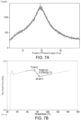
- Compound 1 was found to be an amorphous form according to the preparation method for Compound 27 in WO 2014173289A , which was further confirmed by the X-Ray Powder Diffraction pattern of FIG. 7A .
- the amorphous form was shown to have a low glass transition temperature as shown in FIG. 7B , indicating some difficulties in the drug formulation with the amorphous form, such as low stability and hard to purify. Therefore, it's necessary to develop a new form of Compound 1 which possesses characteristics such as high melting point and better stability, suitable for drug formulation.
- the inventors have unexpectedly found a crystalline form of Compound 1, which possesses a high melting point and shows an extremely stable profile even when stored at 25°C/60%RH for up to 24 months or stored at 40°C/75%RH condition for up to 6 months.
- the crystalline form of Compound 1 is a crystalline anhydrate (herein referred to as "Crystalline Form A").
- a crystalline form of Compound BG-13 which has an X-ray powder diffraction pattern substantially in accordance with FIG. 11 .
- a method of preparing Crystalline Form A disclosed herein is a method of preparing Crystalline Form A disclosed herein.
- a pharmaceutical composition comprising a therapeutically effective amount of Crystalline Form A disclosed herein.
- a method of treating a disease associated with undesirable Btk activity in a subject by administering to a subject Crystalline Form A disclosed herein.
- a seventh aspect disclosed herein is a method of treating a disease selected from an allergic disease, an autoimmune disease, an inflammatory disease, a cancer, or a combination of two or more thereof, in a subject by administering to the subject Crystalline Form A disclosed herein.
- a method of treating a B-cell proliferative disease selected from chronic lymphocytic, non-Hodgkin's lymphoma, diffuse large B cell lymphoma, mantle cell lymphoma, follicular lymphoma, chronic lymphocytic leukemia, small lymphocytic lymphoma, waldenstrom macroglobulinemia, marginal zone lymphoma, Hairy cell leukemia, Burkitt's-like leukemia or a combination of two or more thereof, in a subject by administering to the subject Crystalline Form A disclosed herein.
- a use of Crystalline Form A disclosed herein in manufacturing a medicament for treatment of a B-cell proliferative disease selected from B-cell malignancies, or relapsed / refractory B-cell malignancies, in a subject.
- a B-cell proliferative disease selected from chronic lymphocytic, non-Hodgkin's lymphoma, diffuse large B cell lymphoma, mantle cell lymphoma, follicular lymphoma, chronic lymphocytic leukemia, small lymphocytic lymphoma, waldenstrom macroglobulinemia, marginal zone lymphoma, Hairy cell leukemia,
- a process for preparing a crystalline form A of Compound 1, comprising mixing amorphous form of compound 1 with the following solvent system to form a clear solution; keeping the solution at room temperature or heat with or without stirring for a certain period of time to precipitate the crystalline form A, wherein the solvent system is:
- the amorphous form of compound 1 has an ee value more than 90%. In other embodiment, the amorphous form of compound 1 has an ee value of 97%.
- Crystalline Form A Compound 1 in a crystalline form, named as Crystalline Form A, can only be obtained at a particular conditions, depending on the ee value of the starting materials, and the ratio of the co-solvents and so on.
- a polymorph study was also performed through methods of slow evaporation, anti-solvent addition, slow cooling, vapor diffusion and polymer-induced crystallization. Most of experiments failed to get crystalline form, which indicates the obtaining of Crystalline Form A is not straight forward.
- Crystalline Form A is an anhydrate with a melting point of 139.4 ⁇ 2°C (onset temperature).
- the sample of Crystalline Form A was stored at 80 °C for 2 days, 25°C/60%RH for up to 24 months or 40°C/75%RH condition for up to 6 months, and characterized by XRPD before, during and after the stability test. Results showed no crystal form change was observed for all the above periods, indicating good physical stability of Crystalline Form A at 80 °C or stored at 25°C/60%RH for up to 24 months and at 40°C/75%RH condition for up to 6 months.
- Crystalline Form A has an X-ray powder diffraction pattern comprising diffraction peaks having 20 angle values independently selected from: approximately 14.8 ⁇ 0.2°, 16.4 ⁇ 0.2° and 21.4 ⁇ 0.2°.
- Crystalline Form A has an X-ray powder diffraction pattern comprising diffraction peaks having 20 angle values independently selected from: approximately 14.8 ⁇ 0.2°, 15.6 ⁇ 0.2°, 16.4 ⁇ 0.2° and 21.4 ⁇ 0.2°.
- Crystalline Form A has an X-ray powder diffraction pattern comprising diffraction peaks having 20 angle values independently selected from: approximately 12.2 ⁇ 0.2°, 12.9 ⁇ 0.2°, 14.8 ⁇ 0.2°, 15.6 ⁇ 0.2°, 16.4 ⁇ 0.2° and 21.4 ⁇ 0.2°.
- Crystalline Form A has an X-ray powder diffraction pattern comprising diffraction peaks having 20 angle values independently selected from: approximately 12.2 ⁇ 0.2°, 12.9 ⁇ 0.2°, 14.8 ⁇ 0.2°, 15.6 ⁇ 0.2°, 16.4 ⁇ 0.2°, 17.7 ⁇ 0.2°, 18.5 ⁇ 0.2°, 20.7 ⁇ 0.2° and 21.4 ⁇ 0.2°.
- Crystalline Form A has an X-ray powder diffraction pattern substantially in accordance with FIG. 1 .
- Crystalline Form A has an X-ray powder diffraction pattern summarized in Table 1 .
- Table 1 X-ray Diffraction Pattern of Crystalline Form A Peak# Diffraction angle (2-theta) Spacing Relative intensity 1 5.432 16.26908 7.37 2 10.799 8.19295 2.40 3 12.188 7.26191 13.19 4 12.942 6.84040 13.51 5 14.820 5.97780 28.09 6 15.587 5.68534 19.63 7 16.350 5.42177 29.30 8 17.662 5.02158 13.62 9 18.452 4.80853 11.39 10 18.689 4.74791 8.26 11 20.729 4.28515 11.07 12 21.420 4.14847 100.00 13 22.035 4.03409 7.59 14 22.864 3.88958 6.70 15 23.684 3.75673 5.24 16 25.111 3.54646 2.43 17 26.525 3.36044 5.13 18 26.906 3.31381 6.41 19 27.126 3.28741 6.92 20 29.641 3.013
- Crystalline Form A has a melting point of 139 ⁇ 2°C (onset temperature).
- Crystalline Form A has a DSC substantially in accordance with FIG. 2 .
- Crystalline Form A has a TGA substantially in accordance with FIG. 3 .
- the crystalline Form A is slightly hygroscopic. In some embodiments, the crystalline Form A is unsolvated.
- the crystalline Form A has substantially the same X-ray powder diffraction (XRPD) pattern post storage at 40°C and 75% RH for up to 6 months. In some embodiments, the crystalline Form A has substantially the same X-ray powder diffraction (XRPD) pattern post storage at 25°C and 60% RH for up to 24 months.
- XRPD X-ray powder diffraction
- Compound BG-13 which has an X-ray powder diffraction pattern substantially in accordance with FIG. 11 ,
- the inventors have deduced the absolute configurations of Compound 1 to be S from the single crystal X-ray structural analysis of intermediate BG-13.
- Also disclosed herein is a method for preparing Compound 1 and deuterium-labeled Compound 1, such as the procedures depicted in Scheme 1.
- the new synthetic methods and the crystallization/recrystallization procedures of Compound 1 via crystalline Form A disclosed herein overcome many issues associated with the processes reported previously, such as preparation of the key chiral intermediate with >98% optical purity, improve the purity of Compound 1 to reach the acceptance criteria in the specification, control the impurities in Compound 1 and provide many advantages over the existing processes.
- the methods disclosed herein are especially suitable for reproducible, commercial-scale manufacture of Compound 1 in high quality and good yields.
- BG-9 or its analogs in Scheme 1 could be asymmetrically reduced with low to excellent enantioselectivities (5% ee. to 95% ee).
- the process of other steps are similar to those listed in Scheme 1.
- Also disclosed herein is a method for preparing the compound of Formula Ia, comprising asymmetrically reducing the compound of Formula I in the presence of the catalyst and/or reductant to produce the compound of Formula Ia, wherein R 1 is hydrogen or an amino protecting group.
- the amino protecting group includes, but not limit to, acetyl, propionyl, butyryl, phenylacetyl, benzoyl, toluyl, Phenoxyacetyl (POA), methoxycarbonyl, ethoxycarbonyl, 2,2,2-trichloroethoxycarbonyl, tert-butyloxycarbonyl (BOC), 2-iodoethoxycarbonyl, carbobenzoxy (CBZ), 4-methoxybenzyloxycarbonyl, (Fluoren-9-ylmethoxy)carbonyl (Fmoc), 4-methoxy-2,3,6-trimethylbenzenesulphonyl (Mtr), benzyl, methyl or 4-methoxybenzyl.
- POA Phenoxyacetyl
- POA Phenoxyacetyl
- methoxycarbonyl methoxycarbonyl
- ethoxycarbonyl 2,2,2-trichloroethoxycarbonyl
- the catalyst is a neutral catalyst system or a cationic catalyst system.
- the catalyst is a iridium catalyst system including, but not limited to, [Ir(COD)Cl] 2 /(R or S)-MeO-Biphep, [Ir(COD)Cl] 2 /(R or S)-Binap, [Ir(COD)Cl] 2 /(R or S)-Tol-Binap, [Ir(COD)Cl] 2 /(R or S)-xyl-Binap, [Ir(COD)Cl] 2 /(S,S or R,R)-Diop, [Ir(COD)Cl] 2 /(R or S)-P-Phos, [Ir(COD)Cl] 2 /(R or S)-Tol-P-Phos, [Ir(COD)Cl] 2 /(R or S)-X
- a rhodium catalyst system including, but not limited to, [Rh(COD) 2 ]BF 4 plus ligands described above ( Xiang-Ping et al.,Top Organomet Chem 36, 313-354,2011 ); or, a ruthenium catalyst system including, but not limited to, RuCl 2 (R or S)-BINAP/(R or S)-DAIPEN, RuCl 2 (R or S)-BINAP/(R,R or S,S)-DPEN, RuCl 2 (S or R)-BINAP (S,S or R,R)-DACH, RuCl 2 [(R or S)-Tol-BINAP][(S,S or R,R)-DPEN], RuCl 2 (R,R or S,S)-Me-DuPHOS/(R,R or S,S)-DPEN, RuCl 2 (R,R or S,S)-Et-DuPHOS
- the above method was found to produce excellent enantioselectivities up to 95% ee by using the above catalyst, especially the neutral or cationic iridium catalyst system.
- Also disclosed herein is a method for resolving the compound of Formula IIa to produce the compound of Formula IIb, or improving the chiral purity of the compound of Formula lib, comprising treating the racemic compound of Formula IIa with a chiral acid, wherein R 1 is hydrogen, methyl, benzyl, 4-methoxybenzyl or the other conventional amino protecting groups as mentioned above.
- the chiral acid includes, but not limited to, L-malic acid, D-malic acid, L-Mandelic acid, D-Mandelic acid, L-camphorsulfonic acid, D-camphorsulfonic acid, L-tartaric acid, D-tartaric acid, L-DBTA, D-DBTA, L-DTTA, or D-DTTA.
- Also disclosed herein is a method for resolving a compound of Formula Ic to produce a compound of Formula Id or improving the chiral purity of formula Id, comprising treating the racemic compound of Formula Ic with a chiral acid, wherein R 1 is hydrogen, methyl, benzyl, 4-methoxybenzyl or the other conventional amino protecting groups as mentioned above.
- the chiral acid includes, but not limited to, L-malic acid, D-malic acid, L-Mandelic acid, D-Mandelic acid, L-camphorsulfonic acid, D-camphorsulfonic acid, L-tartaric acid, D-tartaric acid, L-DBTA, D-DBTA, L-DTTA, or D-DTTA.
- the present also provides methods of preparing Crystalline Form A.
- the crystalline form disclosed herein can be prepared by crystallizing the compound disclosed herein from a suitable solvent system comprising at least one solvent, which can be achieved by methods of spontaneous precipitation (evaporation), cooling, and/or adding anti-solvent (in which the compound disclosed herein has relatively lower solubility), in order to achieve oversaturation in a solvent system. Crystallization can also be achieved by using or not using crystal seeds which is suitable for crystallizing the crystalline forms disclosed herein.
- the method of preparing Crystalline Form A comprises the steps of dissolving (S)-7-(1-acryloylpiperidin-4-yl)-2-(4-phenoxyphenyl)-4,5,6,7-tetrahydropyrazolo[1,5-a]pyrimi dine-3-carboxamide (Compound 1) in DCM, swapping to solvent EA, recrystallizing from EA/MTBE, to obtain the target crystalline form.
- the method of preparing Crystalline Form A comprises the steps of dissolving Compound 1 in EA, adding hexane, to obtain the target crystalline form.
- the method of preparing Crystalline Form A is achieved by adding an anti-solvent into the solution of the solid Compound 1 or crude Form A in a solvent for dissolving the solid, wherein the anti-solvent including, but not limited to, H 2 O and n-heptane, and the solvent for dissolving the solid including, but not limited to, acetone, DMAc, EtOAc, DCM, Toluene, and 2-MeTHF.
- the anti-solvent including, but not limited to, H 2 O and n-heptane
- the solvent for dissolving the solid including, but not limited to, acetone, DMAc, EtOAc, DCM, Toluene, and 2-MeTHF.
- the method of preparing Crystalline Form A is achieved by adding the solution of the solid Compound 1 or crude Form A in a solvent into an anti-solvent, and allow sufficient time for organic vapor to interact with the solution in a sealed reactor, wherein the solvent including, but not limited to, acetone, and EtOAc, and the anti-solvent including, but not limited to, n-heptane.
- a pharmaceutical composition comprises a therapeutically effective amount of Crystalline Form A, and a pharmaceutically acceptable excipient.
- the pharmaceutical composition is used in an oral administration.
- the pharmaceutical composition comprises 1 wt% to 99 wt% of Crystalline Form A.
- the pharmaceutical composition comprises 1 wt% to 70 wt% of Crystalline Form A.
- the pharmaceutical composition comprises 10 wt% to 30 wt% of Crystalline Form A.
- the present invention also provide a method of treating or preventing a disease associated with undesirable Btk activity in a subject by administering to a subject Crystalline Form A.
- the present invention also provide a method of treating or preventing a disease selected from an allergic disease, an autoimmune disease, an inflammatory disease, a cancer, or a combination of two or more thereof in a subject by administering to the subject Crystalline Form A.
- the present invention also provide a method of treating or preventing a B-cell proliferative disease in a subject by administering Crystalline Form A to the subject.
- the B-cell proliferative disease is B-cell malignancies including but not limited to, lymphoma, non-Hodgkin's lymphoma (NHL), diffuse large B cell lymphoma (DLBCL), mantle cell lymphoma (MCL), follicular lymphoma (FL), chronic lymphocytic leukemia (CLL), small lymphocytic lymphoma (SLL), Waldenstrom macroglobulinemia (WM), marginal zone lymphoma (MZL), Hairy cell leukemia (HCL), Burkitt's-like leukemia (BL).
- NHL non-Hodgkin's lymphoma
- DLBCL diffuse large B cell lymphoma
- MCL mantle cell lymphoma
- FL follicular lymphoma
- CLL chronic lymphocytic leukemia
- SLL small lymphocytic lymphoma
- W marginal zone lymphoma
- HCL Burkitt's-like leukemia
- the B-cell proliferative disease is relapsed / refractory (R/R) B-cell malignancies including, but limited to, R/ R MCL, R/R CLL, R/R SLL, R/R WM.
- the Crystalline Form A disclosed herein can be used in manufacturing a medicament for treatment of at least one disease associated with undesirable Btk activity, in a subject.
- the Crystalline Form A disclosed herein can be used in manufacturing a medicament for the treatment of a disease selected from an allergic disease, an autoimmune disease, an inflammatory disease, a cancer, or a combination of two or more thereof, in a subject.
- the Crystalline Form A disclosed herein can be used in manufacturing a medicament for the treatment of a B-cell proliferative disease selected from B-cell malignancies, or relapsed / refractory B-cell malignancies, in a subject.
- the crystalline form is an approximately pure crystalline.
- approximately pure refers to at least 85 wt%, preferably at least 95 wt%, more preferably at least 99 wt% of Crystalline Form A disclosed herein.
- main peaks i.e, the most characteristic, significant, unique and/or reproducible peaks
- additional peaks may be obtained from the diffraction spectra by conventional methods.
- the main peaks described above can be reproduced within the margin of error ( ⁇ 2 at the last given decimal place, or ⁇ 0.2 at the stated value).
- an X-ray powder diffraction pattern substantially in accordance with FIG. 1 refers to the X-ray powder diffraction pattern that show major peaks as in FIG. 1 , wherein major peaks refer to those with the relative intensity greater than 10%, preferably greater than 20%, relative to the highest peak (with its relative intensity designated to be 100%) in FIG. 1 .
- terapéuticaally effective amount refers to the amount of a compound that, when administered to a subject for treating a disease, or at least one of the clinical symptoms of a disease or disorder, is sufficient to affect such treatment for the disease, disorder, or symptom.
- the "therapeutically effective amount” can vary with the compound, the disease, disorder, and/or symptoms of the disease or disorder, severity of the disease, disorder, and/or symptoms of the disease or disorder, the age of the subject to be treated, and/or the weight of the subject to be treated. An appropriate amount in any given instance can be apparent to those skilled in the art or can be determined by routine experiments.
- the "therapeutically effective amount” refers to the total amount of the combination objects for the effective treatment of a disease, a disorder or a condition.
- the pharmaceutical composition comprising the compound disclosed herein can be administrated via oral, inhalation, rectal, parenteral or topical administration to a subject in need thereof.
- the pharmaceutical composition may be a regular solid formulation such as tablets, powder, granule, capsules and the like, a liquid formulation such as water or oil suspension or other liquid formulation such as syrup, solution, suspension or the like; for parenteral administration, the pharmaceutical composition may be solution, water solution, oil suspension concentrate, lyophilized powder or the like.
- the formulation of the pharmaceutical composition is selected from tablet, coated tablet, capsule, suppository, nasal spray or injection, more preferably tablet or capsule.
- the pharmaceutical composition can be a single unit administration with an accurate dosage.
- the pharmaceutical composition may further comprise additional active ingredients.
- compositions disclosed herein can be produced by the conventional methods in the pharmaceutical field.
- the active ingredient can be mixed with one or more excipients, then to make the desired formulation.
- the "pharmaceutically acceptable excipient” refers to conventional pharmaceutical carriers suitable for the desired pharmaceutical formulation, for example: a diluent, a vehicle such as water, various organic solvents, etc, a filler such as starch, sucrose, etc a binder such as cellulose derivatives, alginates, gelatin and polyvinylpyrrolidone (PVP); a wetting agent such as glycerol; a disintegrating agent such as agar, calcium carbonate and sodium bicarbonate; an absorption enhancer such as quaternary ammonium compound; a surfactant such as hexadecanol; an absorption carrier such as Kaolin and soap clay; a lubricant such as talc, calcium stearate, magnesium stearate, polyethylene glycol, etc.
- the pharmaceutical composition further comprises other pharmaceutically acceptable excipients such as a decentralized agent, a stabilizer, a thickener, a complexing agent, a buffering agent, a permeation enhancer, a polymer, aromatics, a sweetener, and a dye.
- other pharmaceutically acceptable excipients such as a decentralized agent, a stabilizer, a thickener, a complexing agent, a buffering agent, a permeation enhancer, a polymer, aromatics, a sweetener, and a dye.
- disease refers to any disease, discomfort, illness, symptoms or indications, and can be interchangeable with the term “disorder” or "condition”.
- the reaction mixture was cooled, concentrated and then DCM was added. The final mixture was washed with saturated aqueous NH 4 Cl. The organic layer was cconcentrated and precipitated by charging hexane. The mixture was ccentrifuged and the cake was collected. The cake was dried under vacuum. This gave 82.2 Kg of the desired product.
- the cake was slurried in the mixed solvent of ethanol/water/AcOH (7:3:1, 20 v) for 16 hrs at 55 °C and cooled to RT. The solid was collected by centrifugation, washed with ethanol (2.0 v). The cake was dried under vacuum (Yield: 37.9%).
- ACN (5.0 v), soft water (10.0 v), KOH (5.0 eq) was charged to a reactor and stirred for at least 15 min.
- BG-11B (1.0 eq) was charge to the reactor in portion-wise. The mixture was stirred until the reaction was completed. The cake was collected by centrifugation, slurried in ACN (1.0 v) and soft water (5.0 v), and dried under vacuum to give the product.
- Step 15 Synthesis of (S)-7-(1-acryloylpiperidin-4-yl)-2-(4-phenoxyphenyl)-4,5,6,7-tetrahydropyrazolo[1,5-a]pyrimi dine-3-carboxamide (Compound 1)
- the residue was purified by silica gel (2 wt) column, eluted with 3% w/w methanol in DCM (21.0 v).
- the Compound 1 solution was collected and concentrated under vacuum.
- the residue was precipitated from EA/MTBE (2.0 v).
- the cake was collected by centrifugation as the product.
- Step 15 Synthesis of (S)-7-(1-acryloylpiperidin-4-yl)-2-(4-phenoxyphenyl) -4,5,6,7-tetrahydropyrazolo[1,5-a]pyrimidine-3-carboxamide ( Compound 1 , alternative method
- the product was then characterized by X-ray powder diffraction (XRPD) pattern method, which was generated on a PANalytical Empyrean X-ray powder diffractometer with the XRPD parameters as follows: X-Ray wavelength (Cu, k ⁇ , K ⁇ 1 ( ⁇ ): 1.540598, K ⁇ 2( ⁇ ): 1.544426; K ⁇ 2/K ⁇ 1 intensity ratio: 0.50); X-Ray tube setting (45 Kv, 40mA); divergence slit (automatic); scan mode (Continuous); scan range (°2TH) (3°-40); step size (°2TH) (0.0131); scan speed (°/min) (about 10).
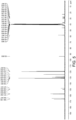
- the XRPD result found the resultant product as a crystalline shown in FIG. 1 .
- the differential scanning calorimetry (DSC) curves shown as in FIG. 2 was generated on a TA Q2000 DSC from TA Instruments.
- the DSC parameters used includes: temperature (25°C-desired temperature); heating rate (10°C/min) ; method (ramp); sample pan (aluminum, crimped); purge gas (N 2 ). DSC result showed a sharp melting point at 139.4°C (onset temperature).
- thermo-gravimetric analysis (TGA) curves shown as in FIG. 3 was generated on a TA Q5000 TGA from TA Instruments.
- the TGA parameters used includes: temperature (RT-desired temperature); heating rate (10°C/min); method (ramp); sample pan (platinum, open); purge gas (N 2 ). TGA result showed is anhydrous with no weight loss even up to 110 °C.
- the Crystalline Form A of Compound 1 was stored at 80 °C for two days as a thermo-stability test, and the XRPD patterns before and after the test showed no crystal form change.
- the dynamic vapor sorption (DVS) plots shown as in FIG. 6 was collected a SMS (Surface Measurement Systems) DVS Intrinsic.
- the DVS parameters used includes: temperature (25°C); dm/dt (0.002%/min); Min. dm/dt stability duration (10 min); Max. equilibrium time (180 min); RH range (0%RH to 95%RH); RH step size(10%RH from 0%RH to 90%RH, 5%RH from 90%RH to 95%RH).
- temperature 25°C
- dm/dt 0.002%/min
- Min. dm/dt stability duration 10 min
- Max. equilibrium time 180 min
- RH range 0%RH to 95%RH
- RH step size 10%RH from 0%RH to 90%RH, 5%RH from 90%RH to 95%RH.
- FIG. 6 there is a very slight increase of mass at 80%RH, which was about 0.8% for Crystalline Form A of Compoun
- Crystallization/Recrystallization via Form A is an efficient way to improve the purity of Compound 1 and control the impurities in Compound 1 to reach the acceptance criteria in the specification. See an example as shown in Table 3.
- Table 3 Purity Changing after Crystallization/Recrystallization via Form A Conditions Purity of Compound 1 After Silica Gel Chromatography Purification 98.5% area After First Recrystallization 99.3% area After Second Recrystallization 99.5% area
- the formation of the crystalline solid may vary depending on the specific solvents, the ratio of the solvents, and so on.
- BG-13 was confirmed to be a (2R, 3R)-dibenzoyl tartaric acid (L-DBTA) salt and the molar ratio of freebase to L-DBTA is 2:1.
- Configuration of both carbons (C32 and C32') in L-DBTA was confirmed to be R.
- Configuration of C6 in freebase was determined to be S, as shown in FIG. 8 to FIG. 10 .
- a powder X-ray diffraction pattern method was also used to characterize the structure of the single crystals, as shown in FIG. 11 .
- Test 1 Inhibition and Selectivity of the Kinases
- Crystalline Form A of Compound 1 was tested for inhibition of BTK kinase (aa2-659, Carna Biosciences) in assays based on the time-resolved fluorescence-resonance energy transfer (TR-FRET) methodology.
- the assays were carried out in 384-well low volume black plates in a reaction mixture containing BTK kinase, 5 ⁇ M ATP, 2 ⁇ M peptide substrate and 0-10 ⁇ M compound in buffer containing 50 mM Tris pH7.4, 10 mM MgCl 2 , 2 mM MnCl 2 , 0.1 mM EDTA, 1 mM DTT, 0.005% Tween-20, 20 nM SEB and 0.01% BSA.
- the kinase was incubated with compound for 60 minutes at room temperature and the reaction was initiated by the addition of ATP and peptide substrate. After reaction at room temperature for 60 minutes, an equal volume of stop/detection solution was added according to the manufacture's instruction (CisBio Bioassays).
- the stop/detection solution contained Eu 3+ cryptate-conjugated mouse monoclonal antibody (PT66) anti-phosphotyrosine and XL665-conjugated streptavidin in buffer containing 50 mM HEPES pHn7.0, 800 mM KF, 20 mM EDTA, and 0.1% BSA.
- TR-FRET signals ratio of fluorescence emission at 665 nm over emission at 620 nm with excitation at 337 nm wavelength
- TR-FRET signals ratio of fluorescence emission at 665 nm over emission at 620 nm with excitation at 337 nm wavelength
- Phosphorylation of peptide substrate led to the binding of anti-phosphotyrosine antibody to the biotinylated peptide substrate, which places fluorescent donor (Eu 3+ crypate) in close proximity to the accepter (Streptavidin-XL665), thus resulting in a high degree of fluorescence resonance energy transfer from the donor fluorophore (at 620 nm) to the acceptor fluorophore (at 665 nm).
- Inhibition of BTK kinase activity resulted in decrease of the TR-FRET signal.
- the IC 50 for Compound 1 was derived from fitting the data to the four-parameter logistic equation by Graphpad Prism software.
- Crystalline Form A was profiled against a panel of 342 kinases at 1 M at Reaction Biology Corp.. Crystalline Form A displayed less than 70% inhibition against 329 kinases, and greater than 70% inhibition against 13 kinases including BTK. IC 50s of Crystalline Form A (see Table 13), including ITK, TEC, JAK3 and EGFR assays carried out in-house at BeiGene by using a TR-FRET assay and corresponding peptides as the substrate.
- ITK assay The protocol of ITK assay is similar to BTK assay except for the following modification: 3 ⁇ M ATP and 2 ⁇ M TK substrate were used in the kinase reaction.
- IC 50 determination of TEC The protocol of Tec assay is similar to BTK assay except for the following modifications: 1) 280 ⁇ M ATP and 2nM Poly-GT substrate were used in the kinase reaction; 2) the reaction buffer doesn't contain SEB.
- JAK3 assay The protocol of JAK3 assay is similar to BTK assay except for the following modifications: 1) 3.4 ⁇ M ATP and 3 ⁇ M peptide substrate (B-EE-15, Biotin-EQEDEPEGDYFEWLE) were used in the kinase reaction; 2) the reaction buffer contains 50 mM Tris pH7.8, 10 mM MgCh, 5 mM DTT, 0.01% Triton X-100 and 0.01% BSA.
- IC 50 determination of EGFR The protocol of EGFR assay is similar to BTK assay except for the following modifications: 1) 20 ⁇ M ATP, 1.44 ⁇ M TK substrate-biotin (one universal substrate for tyrosine kinases) and 0-1000 nM compound (the final concentration of 1% DMSO) were used in the kinase reaction; 2) the reaction buffer contains 50 mM HEPES pH7.5, 10 mM MgCh, 1 mM EGTA, 0.01% Brij-35, 2.5 mM DTT and 0.1% BSA; 3) the stop/detection solution buffer contains 25 mM HEPES pH7.5, 400 mM KF, 50 mM EDTA, 0.01%Triton-X100 and 0.1% BSA.
- Crystalline Form A was shown to be a potent, specific and irreversible BTK kinase inhibitor. In terms of its selectivity, Crystalline Form A inhibited only 13 other kinases more than 70% when profiled against a panel of 342 human kinases at 1 ⁇ M.
- HER4, BMX, TXK, BLK FGR, LCK, FRK/PTK5 assays were carried out at Reaction Biology Corp. using 33 P-ATP and filter-binding assay. ICsos of Crystalline Form A were measured at 1 M ATP and with 1-hour pre-incubation.
- Test 2 BTKpY223 cellular assay by Crystalline Form A
- BTKpY223 cellular assay is a HTRF based assay intended to quantitatively determine the endogenous levels of phosphorylationat BTK Tyr223. Phosphorylated Tyr223 is necessary for full activation of BTK.
- the assay was performed in Ramos cells (CRL-1596, ATCC) with a BTKpY223 assay kit (63IDC000, Cisbio).
- Ramos cells were serum starved in 0.5% FBS-containing RPMI1640 for 2 hours. Following starvation, the cells were incubated with Crystalline Form A to be detected at various concentrations in a CO 2 incubator for 1 hour. After incubation, cells were stimulated with 1mM pervanadate (PV) or Na 3 VO 4 (OV) for 20 min. Then, the cells were spun down and lysed with 1x lysis buffer at RT for 10 min (4x lysis buffer supplied in the kit). During incubation, 1x antibody mix was prepared by diluting anti-BTK-d2 and anti-pBTK-K in detection buffer (supplied in the kit).
- PV pervanadate
- OV Na 3 VO 4
- 3 MCL cell lines (Rec-1, Mino and JEKO-1) and an ABC type diffuse large B-cell lymphoma cell line (TMD8) were used in this study.
- Cell lines were maintained in RPMI-1640 supplemented with 10% fetal bovine serum/FBS (Thermo Scientific); 100 units/ml penicillin (Gibco) and 0.1mg/ml streptomycin (Gibco) and kept at 37°C in a humidified atmosphere of 5% CO 2 in air. Cell lines were reinstated from frozen stocks that were laid down within 30 passages from the original cells purchased.
- the growth-inhibitory activity of compounds in Rec-1, Mino, JEKO-1 and TMD-8 cells was determined using CellTiter-Glo luminescent cell viability assay (Promega). The number of cells seeded per well of a 96-well plate was optimized for each cell line to ensure logarithmic growth over 6 days treatment period. Cells were treated in triplicate with a 10-point dilution series. Following a 6-day exposure to the compound, a volume of CellTiter-Glo reagent equal to the volume of cell culture medium present in each well was added.
- Luminescent signal was measured using PHERAstar FS reader (BMG Labtech). IC 50 values for cell viability were determined with GraphPad Prism software and were the mean of 3 independent assays.
- Crystalline Form A of Compound 1 exhibited specific and potent inhibitory effect on cellular proliferation in 3 MCL cell lines and an ABC type diffuse large B-cell lymphoma cell line (TMD8) ( Table 17 ).
- Table 17 Inhibition of Crystalline Form A on hematic tumor cell proliferation Cell line Cell Type Potency IC50(nM) Standard deviation(nM) Rec-1 MCL 0.36 0.03 Mino MCL 3.8 1.8 JEKO-1 MCL 20.0 NA TMD-8 DLBCL(ABC) 0.54 0.3
- mice were randomly assigned into 7 groups with 4 mice per group. Mice were treated with single dose of Crystalline Form A of Compound 1 and euthanized using carbon dioxide at different time points (30 minutes, 1, 2, 4, 12, 24 hrs) after dosing.
- mice were randomly assigned into 9 groups with 4 mice per group. Mice were treated with different dose levels of Crystalline Form A of Compound 1 and euthanized using carbon dioxide at 4 hrs after dosing. Treatments were administered by oral gavage (p.o.) in a volume of 10 ml/kg body weight. Body weight was assessed immediately before dosing and volume dosed was adjusted accordingly.
- PK SAMPLE PREPARATION For time course study, blood samples (50 ⁇ L per mouse) were collected from the retro-orbital sinus under isoflurane/oxygen anesthesia at 15 min after dosing (this group of mice were also used for 24 hr time point) or heart puncture after euthanization for the other time points. For dose dependency study, blood samples were collected from the retro-orbital sinus under isoflurane/oxygen anesthesia at 30 minutes after dosing. Plasma was collected by centrifugation at 3,000 g for 10 minutes and was kept frozen in -80 °C until analysis.
- Cmax maximum plasma concentration
- Tmax time to reach Cmax
- Crystalline Form A was quickly absorbed and eliminated in ICR mice.
- Test 5 Efficacy study of Crystalline Form A for in TMD-8 xenograft model
- cyclophosphamide prepared in saline, 150 mg/kg i.p.
- disulfiram prepared in 0.8% Tween 80 in saline, 125 mg/kg p.o., one hour after each dose of cyclophosphamide
- Animals were then inoculated with TMD-8 cells 24 hours after the second dose of cyclophosphamide.
- TMD-8 cells On the day of implantation, cell culture medium was replaced with fresh medium. Four hours later, media was removed and cells were collected as described above.
- mice were randomly assigned into desired number of groups with 10 mice per group. Mice were treated twice daily (BID) with vehicle (0.5% carboxymethylcellulose (CMC) + 0.2% Tween 80), and different dose levels of Crystalline Form A of Compound 1 for 39 days. Treatments were administered by oral gavage (p.o.) in a volume of 10 ml/kg body weight. Body weight was assessed immediately before dosing and volume dosed was adjusted accordingly. Tumor volume was measured twice weekly in two dimensions using a calliper (measureable from day 11 post inoculation in this study).
- Statistical analysis was conducted using the student T-test. P ⁇ 0.05 was considered statistically significant.
- One individual was responsible for tumor measurement for the entire duration of the study. Body weights were also recorded twice weekly. Mice were also being monitored daily for clinical signs of toxicity for the duration of the study.
- Crystalline Form A In vivo efficacy of Crystalline Form A was examined in TMD-8 DLBCL xenografts grown subcutaneously in NOD/SCID mice. Following daily oral administration at well tolerated at different dose levels twice daily (BID), Crystalline Form A of Compound 1 induced dose-dependent anti-tumor effects. Crystalline Form A of Compound 1 at lowest dose tested already showed strong anti-tumor activity. All treatment groups had no significant impact on animal body weight throughout the study.
- Test 6 Efficacy study of Crystalline Form A in systemic REC-1 xenograft model Tumor implantation Methods:
- cyclophosphamide prepared in saline, 150 mpk i.p.
- disulfiram prepared in 0.8% TW-80 in saline, 125 mpk p.o., one hour after each dose of cyclophosphamide
- Animals were then inoculated with REC-1 cells 24 hours after the second dose of cyclophosphamide.
- cell culture medium was replaced with fresh medium.
- media was removed and cells were collected as described above.
- Cells were re-suspended in cold (4 °C) PBS to give a final concentration of 1 ⁇ 10 8 cells/ml. Resuspended cells were placed on ice prior to implantation. Each animal was injected intravenously via tail vein with 1 ⁇ 10 7 cells in 100 1 of cell suspension.
- mice were randomly assigned into desired number of groups with 10 mice per group. Mice were treated either twice daily (BID) with vehicle (0.5% carboxymethylcellulose (CMC) + 0.2% Tween 80), different dose levels of Crystalline Form A of Compound 1 for 71 days. All dosing was stopped on day 78 after inoculation. Treatments were administered by oral gavage (p.o.) in a volume of 10 ml/kg body weight. Body weight was assessed immediately before dosing and volume dosed was adjusted accordingly. Body weight was recorded twice weekly (changed to three times per week from day 33). Mice were also watched daily for clinical signs of sickness for the duration of the study. The endpoint of the study is overall survival. In the case of severe toxic effect, such as loss of movement, mice were euthanized and scored as death.
- BID vehicle
- CMC carboxymethylcellulose
- survival analysis was performed by Kaplan-Meier method.
- the survival time was defined as the time from the day of tumor cell inoculation to the date of animal death or being euthanized.
- MST median survival time
- RST range of survival time
- ILS increase in life-span
- Median survival is defined as the time when 50% of mice have died.
- Statistical analysis was conducted between each group using Gehan-Breslow-Wilcoxon Test. P ⁇ 0.05 was considered as statistically significant.
- Crystalline Form A of Compound 1 demonstrated dose-dependent anti-tumor activity against systemic REC-1 MCL engrafts in NOD/SCID mice. Crystalline Form A of Compound 1 was significantly effective in this xenograft model.
- Crystalline Form A of Compound 1 has good oral bioavailability in rats. It was quickly absorbed and exhibited high plasma clearance (CL) in rats. The kinetics was linear over the dose range in female rats. The linearity in male rats was not as good. There was no statistically significant accumulation of Compound 1 following multiple oral dosing in both male and female rats. Crystalline Form A of Compound 1 exhibited moderate clearance (CL), reasonably good bioavailability (F%), linear PK over the dose range and no accumulation of Compound 1 following multiple oral dosing in dogs.
- Compound 1 was widely distributed to various tissues, but was low in brain tissue, indicating the drug does not easily cross the blood-brain barrier.
- CYP3A is the major CYP isoform responsible for the metabolism in human liver microsomes.
- the first-in-human multi-center, open-label phase 1 trial of Compound 1 is being conducted in Australia and New Zealand and is comprised of two parts - a dose-escalation phase involving 25 patients and a dose-expansion phase, in which we plan to enroll a total of 100 patients.
- Based on the pharmacokinetics, pharmacodynamics, safety and efficacy of Compound 1 in the dose-escalation phase 320mg once daily (QD) and 160 mg twice daily (BID) are being further explored in the ongoing dose-expansion trial.
- GI hemorrhage in a mantle cell lymphoma patient with lymphomatous involvement of the GI tract; this bleeding event occurred during drug hold, and resolved rapidly with re-initiation of Compound 1 treatment, and therefore is not considered to be drug-related.
- AF atrial fibrillation/flutter
- the multi-center, open-label Phase 1 trial of Compound 1 in B-cell malignancies is being conducted in Australia, New Zealand, South Korea, and the United States and consists of a dose-escalation phase and a dose-expansion phase in disease-specific cohorts, which include treatment naive and relapsed/refractory waldenström's macroglobulinemia (R/R WM).
- the dose-escalation component of the trail tested total daily doses ranging from 40 mg to 320 mg, and the ongoing dose-expansion phase is testing doses of 160 mg twice a day (BID) or 320 mg once a day (QD).
- BID twice a day
- QD Quality of a day
- AEs Five serious AEs were assessed to be possibly related to Compound 1; these included one case each of hemothorax, atrial fibrillation, colitis, febrile neutropenia, and headache.
- atrial fibrillation all grade 1 or 2
- hemothorax one case of serious hemorrhage (hemothorax), defined as grade 3 or higher hemorrhage or central nervous system hemorrhage of any grade.
- hemothorax hemothorax
- the multi-center, open-label Phase 1 trial of Compound 1 in patients with B-cell malignancies is being conducted in Australia, New Zealand, South Korea, and the United States and consists of a dose-escalation phase and a dose-expansion phase in disease-specific cohorts, which include treatment naive (TN) and relapsed/refractory (R/R) CLL/SLL.
- the dose-escalation component of the trail tested total daily doses between 40 mg and 320 mg, and the ongoing dose-expansion component is testing doses of 160 mg twice a day (BID) or 320 mg once a day (QD).
- BID twice a day
- QD Quality of 69 patients with CLL or SLL (18 TN, 51 R/R) were enrolled in the study.
Landscapes
- Health & Medical Sciences (AREA)
- Chemical & Material Sciences (AREA)
- Organic Chemistry (AREA)
- Public Health (AREA)
- Medicinal Chemistry (AREA)
- Pharmacology & Pharmacy (AREA)
- Life Sciences & Earth Sciences (AREA)
- Animal Behavior & Ethology (AREA)
- General Health & Medical Sciences (AREA)
- Veterinary Medicine (AREA)
- Chemical Kinetics & Catalysis (AREA)
- General Chemical & Material Sciences (AREA)
- Nuclear Medicine, Radiotherapy & Molecular Imaging (AREA)
- Oncology (AREA)
- Hematology (AREA)
- Immunology (AREA)
- Engineering & Computer Science (AREA)
- Bioinformatics & Cheminformatics (AREA)
- Epidemiology (AREA)
- Pain & Pain Management (AREA)
- Rheumatology (AREA)
- Pulmonology (AREA)
- Pharmaceuticals Containing Other Organic And Inorganic Compounds (AREA)
- Nitrogen Condensed Heterocyclic Rings (AREA)
Applications Claiming Priority (3)
| Application Number | Priority Date | Filing Date | Title |
|---|---|---|---|
| CN2016095510 | 2016-08-16 | ||
| PCT/IB2017/054955 WO2018033853A2 (en) | 2016-08-16 | 2017-08-15 | Crystalline form of (s)-7-(1-acryloylpiperidin-4-yl)-2-(4-phenoxyphenyl)-4,5,6,7-tetra-hydropyrazolo[1,5-a]pyrimidine-3-carboxamide, preparation, and uses thereof |
| EP17841172.4A EP3500575B8 (de) | 2016-08-16 | 2017-08-15 | Kristalline form von ((s)-7-(1-acryloylpiperidin-4-yl)-2-(4-phenoxyphenyl)-4,5,6,7-tetra-hydropyrazolo[1,5-a]pyrimidin-3-carboxamid, herstellung und verwendungen davon |
Related Parent Applications (2)
| Application Number | Title | Priority Date | Filing Date |
|---|---|---|---|
| EP17841172.4A Division EP3500575B8 (de) | 2016-08-16 | 2017-08-15 | Kristalline form von ((s)-7-(1-acryloylpiperidin-4-yl)-2-(4-phenoxyphenyl)-4,5,6,7-tetra-hydropyrazolo[1,5-a]pyrimidin-3-carboxamid, herstellung und verwendungen davon |
| EP17841172.4A Division-Into EP3500575B8 (de) | 2016-08-16 | 2017-08-15 | Kristalline form von ((s)-7-(1-acryloylpiperidin-4-yl)-2-(4-phenoxyphenyl)-4,5,6,7-tetra-hydropyrazolo[1,5-a]pyrimidin-3-carboxamid, herstellung und verwendungen davon |
Publications (2)
| Publication Number | Publication Date |
|---|---|
| EP4509183A2 true EP4509183A2 (de) | 2025-02-19 |
| EP4509183A3 EP4509183A3 (de) | 2025-05-21 |
Family
ID=61197220
Family Applications (3)
| Application Number | Title | Priority Date | Filing Date |
|---|---|---|---|
| EP24217178.3A Pending EP4509183A3 (de) | 2016-08-16 | 2017-08-15 | Kristalline form von (s)-7-(1-acryloylpiperidin-4-yl)-2-(4-phenoxyphenyl)-4,5,6,7-tetra-hydropyrazolo[1,5-a!pyrimidin-3-carboxamid, herstellung und verwendungen davon |
| EP17841172.4A Active EP3500575B8 (de) | 2016-08-16 | 2017-08-15 | Kristalline form von ((s)-7-(1-acryloylpiperidin-4-yl)-2-(4-phenoxyphenyl)-4,5,6,7-tetra-hydropyrazolo[1,5-a]pyrimidin-3-carboxamid, herstellung und verwendungen davon |
| EP24160079.0A Pending EP4353322A3 (de) | 2016-08-16 | 2017-08-15 | Kristalline form von (s)-7-(1-acryloylpiperidin-4-yl)-2-(4-phenoxyphenyl)-4,5,6,7-tetra-hydropyrazolo[1,5-a!pyrimidin-3-carboxamid, herstellung und verwendungen davon |
Family Applications After (2)
| Application Number | Title | Priority Date | Filing Date |
|---|---|---|---|
| EP17841172.4A Active EP3500575B8 (de) | 2016-08-16 | 2017-08-15 | Kristalline form von ((s)-7-(1-acryloylpiperidin-4-yl)-2-(4-phenoxyphenyl)-4,5,6,7-tetra-hydropyrazolo[1,5-a]pyrimidin-3-carboxamid, herstellung und verwendungen davon |
| EP24160079.0A Pending EP4353322A3 (de) | 2016-08-16 | 2017-08-15 | Kristalline form von (s)-7-(1-acryloylpiperidin-4-yl)-2-(4-phenoxyphenyl)-4,5,6,7-tetra-hydropyrazolo[1,5-a!pyrimidin-3-carboxamid, herstellung und verwendungen davon |
Country Status (17)
| Country | Link |
|---|---|
| US (12) | US10927117B2 (de) |
| EP (3) | EP4509183A3 (de) |
| JP (6) | JP7402685B2 (de) |
| KR (3) | KR102604975B1 (de) |
| CN (3) | CN116478166A (de) |
| AU (4) | AU2017314178B2 (de) |
| CA (3) | CA3258471A1 (de) |
| EA (1) | EA201990519A1 (de) |
| ES (1) | ES3060138T3 (de) |
| IL (3) | IL293319B1 (de) |
| MX (1) | MX384627B (de) |
| NZ (1) | NZ751418A (de) |
| PL (1) | PL3500575T3 (de) |
| SG (1) | SG11201901141WA (de) |
| TW (3) | TWI865873B (de) |
| WO (1) | WO2018033853A2 (de) |
| ZA (1) | ZA201900919B (de) |
Families Citing this family (37)
| Publication number | Priority date | Publication date | Assignee | Title |
|---|---|---|---|---|
| SI2989106T1 (sl) | 2013-04-25 | 2017-07-31 | Beigene, Ltd. | Zlite heterociklične spojine kot inhibitorji beljakovinske kinaze |
| LT3702373T (lt) | 2013-09-13 | 2022-11-10 | Beigene Switzerland Gmbh | Anti-pd1 antikūnai ir jų naudojimas terapijai ir diagnostikai |
| TWI726608B (zh) | 2014-07-03 | 2021-05-01 | 英屬開曼群島商百濟神州有限公司 | 抗pd-l1抗體及其作為治療及診斷之用途 |
| WO2018007885A1 (en) | 2016-07-05 | 2018-01-11 | Beigene, Ltd. | COMBINATION OF A PD-l ANTAGONIST AND A RAF INHIBITOR FOR TREATING CANCER |
| EP4509183A3 (de) | 2016-08-16 | 2025-05-21 | BeiGene Switzerland GmbH | Kristalline form von (s)-7-(1-acryloylpiperidin-4-yl)-2-(4-phenoxyphenyl)-4,5,6,7-tetra-hydropyrazolo[1,5-a!pyrimidin-3-carboxamid, herstellung und verwendungen davon |
| AU2017313085B2 (en) | 2016-08-19 | 2024-06-20 | Beone Medicines I Gmbh | Use of a combination comprising a Btk inhibitor for treating cancers |
| WO2018137681A1 (en) | 2017-01-25 | 2018-08-02 | Beigene, Ltd. | Crystalline forms of (s) -7- (1- (but-2-ynoyl) piperidin-4-yl) -2- (4-phenoxyphenyl) -4, 5, 6, 7-tetrahy dropyrazolo [1, 5-a] pyrimidine-3-carboxamide, preparation, and uses thereof |
| KR102757960B1 (ko) | 2017-06-26 | 2025-01-22 | 베이진 엘티디 | 간세포암(hepatocellular carcinoma: HCC)에 대한 면역 치료 |
| US11377449B2 (en) | 2017-08-12 | 2022-07-05 | Beigene, Ltd. | BTK inhibitors with improved dual selectivity |
| CN111801334B (zh) | 2017-11-29 | 2023-06-09 | 百济神州瑞士有限责任公司 | 使用包含btk抑制剂的组合治疗惰性或侵袭性b-细胞淋巴瘤 |
| CA3095460A1 (en) * | 2018-03-29 | 2019-10-03 | Mati Therapeutics, Inc. | Ophthalmic drug sustained release formulation and uses for dry eye syndrome treatment |
| CN111675711A (zh) * | 2019-03-11 | 2020-09-18 | 百济神州(苏州)生物科技有限公司 | Btk抑制剂化合物的单晶及其制备方法 |
| CN111909152B (zh) * | 2019-05-08 | 2023-12-15 | 百济神州(苏州)生物科技有限公司 | Btk抑制剂及其中间体的制备方法 |
| CN113544130B (zh) * | 2019-05-31 | 2024-01-09 | 西藏海思科制药有限公司 | 一种btk抑制剂环衍生物及其制备方法和药学上的应用 |
| CN112057427B (zh) * | 2019-06-10 | 2024-09-03 | 百济神州(苏州)生物科技有限公司 | 一种含有布鲁顿氏酪氨酸激酶抑制剂的口服固体片剂及其制备方法 |
| WO2020249001A1 (zh) | 2019-06-10 | 2020-12-17 | 百济神州瑞士有限责任公司 | 一种含有布鲁顿氏酪氨酸激酶抑制剂的口服固体片剂及其制备方法 |
| CN112057432A (zh) * | 2019-06-10 | 2020-12-11 | 百济神州(苏州)生物科技有限公司 | 口服胶囊剂及其制备方法 |
| CN113950327A (zh) * | 2019-06-10 | 2022-01-18 | 百济神州瑞士有限责任公司 | 口服胶囊剂及其制备方法 |
| CN110563733A (zh) * | 2019-09-12 | 2019-12-13 | 安帝康(无锡)生物科技有限公司 | 作为选择性btk抑制剂的咪唑并吡嗪类化合物 |
| KR102801205B1 (ko) * | 2019-12-04 | 2025-04-29 | 허난 즈웨이 바이오메디슨 씨오., 엘티디. | 브루톤 티로신 키나제 억제제인 이미다졸 카복사마이드 유도체 |
| CN110845504A (zh) * | 2019-12-19 | 2020-02-28 | 武汉九州钰民医药科技有限公司 | 合成赞布替尼的新方法 |
| CN110922409A (zh) * | 2019-12-19 | 2020-03-27 | 武汉九州钰民医药科技有限公司 | 制备btk抑制剂泽布替尼的方法 |
| CN110938077B (zh) * | 2019-12-25 | 2021-04-27 | 武汉九州钰民医药科技有限公司 | 合成Avapritinib的方法 |
| US20230089557A1 (en) * | 2020-02-27 | 2023-03-23 | Beigene Switzerland Gmbh | Methods of treating dlbcl using btk inhibitors and combinations thereof |
| WO2021259732A1 (en) | 2020-06-24 | 2021-12-30 | Sandoz Ag | Multi-component compounds comprising zanubrutinib and a benzoic acid derivative |
| TW202216715A (zh) | 2020-07-07 | 2022-05-01 | 大陸商四川海思科製藥有限公司 | 降解btk激酶的化合物、製造方法及其應用 |
| WO2022101939A1 (en) * | 2020-11-13 | 2022-05-19 | Msn Laboratories Private Limited, R&D Center | Novel process for the preparation of (s)-7-(1-acryloylpiperidin-4-yl)-2-(4-phenoxyphenyl)-4,5,6,7-tetrahydropyrazolo[1,5-a]pyrimidine-3-carboxamide or its salts thereof |
| KR20230107866A (ko) * | 2020-11-20 | 2023-07-18 | 베이진 스위찰랜드 게엠베하 | Btk 억제제를 사용한 전신성 홍반성 루푸스의 치료 방법 |
| EP4259633A1 (de) * | 2020-12-11 | 2023-10-18 | Teva Pharmaceuticals International GmbH | Verfahren zur herstellung von zanubrutinib und zwischenprodukten davon |
| US20240100172A1 (en) | 2020-12-21 | 2024-03-28 | Hangzhou Jijing Pharmaceutical Technology Limited | Methods and compounds for targeted autophagy |
| WO2023014817A1 (en) | 2021-08-03 | 2023-02-09 | Syros Pharmaceuticals, Inc. | Compositions and methods for treating lymphomas with a cdk7 inhibitor in combination with a btk inhibitor |
| IT202100025997A1 (it) | 2021-10-11 | 2023-04-11 | Olon Spa | Processo per la preparazione di zanubrutinib |
| IT202200009872A1 (it) * | 2022-05-12 | 2023-11-12 | Olon Spa | Processo di preparazione di Zanubrutinib in forma amorfa. |
| IT202200024192A1 (it) * | 2022-11-24 | 2024-05-24 | Olon Spa | Processo per la preparazione di Zanubrutinib. |
| CN118307541A (zh) * | 2023-01-09 | 2024-07-09 | 天津济坤医药科技有限公司 | 氘代吡唑并嘧啶衍生物及其制备方法和药物组合物、结合物及应用 |
| CN117430610A (zh) * | 2023-10-11 | 2024-01-23 | 宁夏医科大学 | 一种氘代稠合杂环化合物及其制备方法和应用 |
| CN117886822A (zh) * | 2023-12-24 | 2024-04-16 | 神隆医药(常熟)有限公司 | 一种高收率且适于工业化推广的泽布替尼中间体的制备方法 |
Citations (1)
| Publication number | Priority date | Publication date | Assignee | Title |
|---|---|---|---|---|
| WO2014173289A1 (en) | 2013-04-25 | 2014-10-30 | Beigene, Ltd. | Fused heterocyclic compounds as protein kinase inhibitors |
Family Cites Families (117)
| Publication number | Priority date | Publication date | Assignee | Title |
|---|---|---|---|---|
| BE792533A (fr) | 1971-12-09 | 1973-06-08 | Int Chem & Nuclear Corp | Nouvelles pyrazolo (1,5a) pyrimidines et leur procede de preparation |
| JP2778921B2 (ja) | 1994-11-18 | 1998-07-23 | 三共株式会社 | イミダゾピラゾール誘導体 |
| ES2222919T3 (es) | 1999-08-27 | 2005-02-16 | Abbott Laboratories | Compuestos sulfonilfenilpirazoles utiles como inhibidores de cox-2. |
| KR20020088406A (ko) * | 1999-09-17 | 2002-11-27 | 애보트 게엠베하 운트 콤파니 카게 | 치료제로서의 피라졸로피리미딘 |
| EP1322750A4 (de) | 2000-09-08 | 2004-09-29 | California Inst Of Techn | Auf proteolyse gerichtetes chimäres pharmazeutikum |
| US20020094989A1 (en) * | 2000-10-11 | 2002-07-18 | Hale Jeffrey J. | Pyrrolidine modulators of CCR5 chemokine receptor activity |
| AU2002223968A1 (en) * | 2000-12-21 | 2002-07-01 | Warner Lambert Company Llc | Piperidine derivatives as subtype selective n-methyl-d-aspartate antagonists |
| AU3113902A (en) | 2000-12-21 | 2002-07-01 | Bristol Myers Squibb Co | Thiazolyl inhibitors of tec family tyrosine kinases |
| EP1370557B1 (de) | 2001-03-09 | 2005-11-16 | Pfizer Products Inc. | Entzündungshemmende benzimidazolverbindungen |
| WO2003004497A1 (en) | 2001-07-05 | 2003-01-16 | Sumitomo Pharmaceuticals Company, Limited | Novel heterocyclic compound |
| US20040132101A1 (en) | 2002-09-27 | 2004-07-08 | Xencor | Optimized Fc variants and methods for their generation |
| KR101050700B1 (ko) | 2002-08-26 | 2011-07-20 | 다케다 야쿠힌 고교 가부시키가이샤 | 칼슘 수용체 조절 화합물 및 이의 용도 |
| ZA200500782B (en) | 2002-08-26 | 2007-10-31 | Takeda Pharmaceutical | Calcium receptor modulating compound and use thereof |
| WO2005014599A1 (en) | 2003-06-04 | 2005-02-17 | Cellular Genomics, Inc. | Imidazo[1,2-a]pyrazin-8-ylamines and method of inhibition of bruton’s tyrosine kinase by such compounds |
| US20060183746A1 (en) | 2003-06-04 | 2006-08-17 | Currie Kevin S | Certain imidazo[1,2-a]pyrazin-8-ylamines and method of inhibition of Bruton's tyrosine kinase by such compounds |
| WO2005005429A1 (en) | 2003-06-30 | 2005-01-20 | Cellular Genomics, Inc. | Certain heterocyclic substituted imidazo[1,2-a]pyrazin-8-ylamines and methods of inhibition of bruton’s tyrosine kinase by such compounds |
| WO2005011597A2 (en) | 2003-07-29 | 2005-02-10 | Irm Llc | Compounds and compositions as protein kinase inhibitors |
| WO2005047290A2 (en) | 2003-11-11 | 2005-05-26 | Cellular Genomics Inc. | Imidazo[1,2-a] pyrazin-8-ylamines as kinase inhibitors |
| EP1812442A2 (de) | 2004-11-10 | 2007-08-01 | CGI Pharmaceuticals, Inc. | Imidazo[1,2-a]pyrazin-8-ylamin-derivate verwendbar als kinase modulatoren |
| AU2005316540A1 (en) | 2004-12-16 | 2006-06-22 | Vertex Pharmaceuticals Incorporated | Pyrid-2-ones useful as inhibitors of Tec family protein kinases for the treatment of inflammatory, proliferative and immunologically-mediated diseases |
| WO2006099075A2 (en) | 2005-03-10 | 2006-09-21 | Cgi Pharmaceuticals, Inc. | Certain substituted amides, method of making, and method of use thereof |
| ATE548363T1 (de) | 2005-08-29 | 2012-03-15 | Vertex Pharma | 3,5-disubstituierte pyrid-2-one, die sich als inhibitoren der tec-familie von nicht-rezeptor- tyrosinkinasen eignen |
| ATE528302T1 (de) | 2005-08-29 | 2011-10-15 | Vertex Pharma | 3,5-disubstituierte pyrid-2-one, die als hemmer der tec-familie von nicht-rezeptor tyrosin- kinasen nützlich sind |
| WO2007026720A1 (ja) * | 2005-08-31 | 2007-03-08 | Taisho Pharmaceutical Co., Ltd. | 縮環ピラゾール誘導体 |
| KR20080049758A (ko) | 2005-09-01 | 2008-06-04 | 아스텔라스세이야쿠 가부시키가이샤 | 통증 치료용으로 사용되는 피리다지논 유도체 |
| BRPI0621027A2 (pt) | 2006-01-13 | 2011-11-29 | Pharmacyclics Inc | composto, composição farmacêutica |
| AU2007254179B2 (en) | 2006-05-18 | 2013-03-21 | Pharmacyclics Llc | Intracellular kinase inhibitors |
| JO3235B1 (ar) | 2006-05-26 | 2018-03-08 | Astex Therapeutics Ltd | مركبات بيررولوبيريميدين و استعمالاتها |
| AR063946A1 (es) | 2006-09-11 | 2009-03-04 | Cgi Pharmaceuticals Inc | Determinadas pirimidinas sustituidas, el uso de las mismas para el tratamiento de enfermedades mediadas por la inhibicion de la actividad de btk y composiciones farmaceuticas que las comprenden. |
| PE20081370A1 (es) | 2006-09-11 | 2008-11-28 | Cgi Pharmaceuticals Inc | Determinadas amidas sustituidas, metodo de elaboracion y metodo de uso de las mismas |
| PE20080839A1 (es) | 2006-09-11 | 2008-08-23 | Cgi Pharmaceuticals Inc | Determinadas amidas sustituidas, metodo de elaboracion y metodo de uso de las mismas |
| JP2010502751A (ja) | 2006-09-11 | 2010-01-28 | シージーアイ ファーマシューティカルズ,インコーポレイティド | キナーゼ阻害物質、およびキナーゼ阻害物質の使用および同定方法 |
| PL2526933T3 (pl) | 2006-09-22 | 2015-08-31 | Pharmacyclics Llc | Inhibitory kinazy tyrozynowej Brutona |
| CN101522026A (zh) | 2006-10-06 | 2009-09-02 | Irm责任有限公司 | 蛋白激酶抑制剂及其应用方法 |
| ES2403546T3 (es) | 2006-11-03 | 2013-05-20 | Pharmacyclics, Inc. | Sonda de actividad de la tirosina-cinasa de Bruton y procedimiento de utilización |
| JP2010522241A (ja) | 2007-03-21 | 2010-07-01 | ブリストル−マイヤーズ スクイブ カンパニー | 増殖性疾患、アレルギー性疾患、自己免疫疾患または炎症性疾患として有用な縮合ヘテロ環化合物 |
| WO2008144253A1 (en) | 2007-05-14 | 2008-11-27 | Irm Llc | Protein kinase inhibitors and methods for using thereof |
| CL2008002793A1 (es) | 2007-09-20 | 2009-09-04 | Cgi Pharmaceuticals Inc | Compuestos derivados de amidas sustituidas, inhibidores de la actividad de btk; composicion farmaceutica que los comprende; utiles en el tratamiento del cancer, trastornos oseos, enfermedades autoinmunes, entre otras |
| US7982036B2 (en) | 2007-10-19 | 2011-07-19 | Avila Therapeutics, Inc. | 4,6-disubstitued pyrimidines useful as kinase inhibitors |
| US7989465B2 (en) | 2007-10-19 | 2011-08-02 | Avila Therapeutics, Inc. | 4,6-disubstituted pyrimidines useful as kinase inhibitors |
| JP5587193B2 (ja) | 2007-10-23 | 2014-09-10 | エフ.ホフマン−ラ ロシュ アーゲー | 新規なキナーゼ阻害剤 |
| CN101952283B (zh) | 2007-12-14 | 2013-04-17 | 霍夫曼-拉罗奇有限公司 | 咪唑并[1,2-a]吡啶和咪唑并[1,2-b]哒嗪衍生物 |
| DK2242749T3 (da) | 2008-02-05 | 2013-06-17 | Hoffmann La Roche | Nye pyridinoner og pyridazinoner |
| JP5529852B2 (ja) | 2008-05-06 | 2014-06-25 | ジリード コネティカット,インコーポレイティド | 置換アミド、その製造法及びBtkインヒビターとしての使用 |
| US8338439B2 (en) | 2008-06-27 | 2012-12-25 | Celgene Avilomics Research, Inc. | 2,4-disubstituted pyrimidines useful as kinase inhibitors |
| NZ603525A (en) | 2008-06-27 | 2015-02-27 | Celgene Avilomics Res Inc | Pyrimidine based compound and uses thereof |
| CA2728683C (en) | 2008-07-02 | 2017-05-02 | F.Hoffmann-La Roche Ag | Novel phenylpyrazinones as kinase inhibitors |
| CA2726460C (en) | 2008-07-15 | 2017-02-21 | F. Hoffmann-La Roche Ag | Novel phenyl-imidazopyridines and pyridazines |
| CA2730930C (en) | 2008-07-16 | 2015-01-13 | Pharmacyclics, Inc. | Inhibitors of bruton's tyrosine kinase for the treatment of solid tumors |
| EP2307418B1 (de) | 2008-07-18 | 2014-03-12 | F.Hoffmann-La Roche Ag | Neue phenylimidazopyrazine |
| CN102164604A (zh) | 2008-07-24 | 2011-08-24 | 百时美施贵宝公司 | 用作激酶调节剂的稠合杂环化合物 |
| KR101341876B1 (ko) | 2008-09-05 | 2013-12-20 | 셀진 아빌로믹스 리서치, 인코포레이티드 | 비가역 인히비터 디자인을 위한 알고리즘 |
| CN102271515B (zh) | 2008-10-31 | 2014-07-02 | 健泰科生物技术公司 | 吡唑并嘧啶jak抑制剂化合物和方法 |
| US20120028981A1 (en) | 2008-11-05 | 2012-02-02 | Principia Biopharma Inc. | Kinase Knockdown Via Electrophilically Enhanced Inhibitors |
| US8598174B2 (en) | 2008-11-12 | 2013-12-03 | Genetech, Inc. | Pyridazinones, method of making, and method of use thereof |
| US8426428B2 (en) | 2008-12-05 | 2013-04-23 | Principia Biopharma, Inc. | EGFR kinase knockdown via electrophilically enhanced inhibitors |
| WO2010068810A2 (en) | 2008-12-10 | 2010-06-17 | Cgi Pharmaceuticals, Inc. | Certain substituted amides, method of making, and method of use thereof |
| WO2010068788A1 (en) | 2008-12-10 | 2010-06-17 | Cgi Pharmaceuticals, Inc. | Heterocyclic amides as btk inhibitors |
| WO2010068806A1 (en) | 2008-12-10 | 2010-06-17 | Cgi Pharmaceuticals, Inc. | Amide derivatives as btk inhibitors in the treatment of allergic, autoimmune and inflammatory disorders as well as cancer |
| ES2443948T3 (es) | 2008-12-19 | 2014-02-21 | Bristol-Myers Squibb Company | Compuestos de carbazol carboxamida útiles como inhibidores de quinasas |
| CA2748181C (en) | 2009-01-06 | 2019-07-16 | Nathanael S. Gray | Pyrimido-diazepinone kinase scaffold compounds and methods of treating disorders |
| US8299077B2 (en) | 2009-03-02 | 2012-10-30 | Roche Palo Alto Llc | Inhibitors of Bruton's tyrosine kinase |
| EP2421854B1 (de) | 2009-04-24 | 2014-07-23 | F.Hoffmann-La Roche Ag | Brutons tyrosine kinase hemmer |
| WO2010126960A1 (en) | 2009-04-29 | 2010-11-04 | Locus Pharmaceuticals, Inc. | Pyrrolotriazine compounds |
| JP2012529535A (ja) | 2009-06-12 | 2012-11-22 | ブリストル−マイヤーズ スクイブ カンパニー | キナーゼモジュレーターとして有用なニコチンアミド化合物 |
| AR077468A1 (es) | 2009-07-09 | 2011-08-31 | Array Biopharma Inc | Compuestos de pirazolo (1,5 -a) pirimidina sustituidos como inhibidores de trk- quinasa |
| EP2789614B1 (de) | 2009-08-11 | 2017-04-26 | Bristol-Myers Squibb Company | Azaindazole als Btk-Kinasemodulatoren und Verwendung |
| CA2771822C (en) | 2009-09-04 | 2020-08-11 | Daniel A. Erlanson | Bruton's tyrosine kinase inhibitors |
| WO2011029043A1 (en) | 2009-09-04 | 2011-03-10 | Biogen Idec Ma Inc. | Heteroaryl btk inhibitors |
| US7741330B1 (en) | 2009-10-12 | 2010-06-22 | Pharmacyclics, Inc. | Pyrazolo-pyrimidine inhibitors of Bruton's tyrosine kinase |
| KR101862327B1 (ko) | 2010-05-07 | 2018-05-29 | 질레드 코네티컷 인코포레이티드 | 피리돈 및 아자-피리돈 화합물 및 사용 방법 |
| MX2012013622A (es) | 2010-05-31 | 2013-02-01 | Ono Pharmaceutical Co | Derivado de purinona. |
| NZ772688A (en) | 2010-06-03 | 2022-09-30 | Pharmacyclics Llc | The use of inhibitors of bruton’s tyrosine kinase (btk) |
| US8685969B2 (en) | 2010-06-16 | 2014-04-01 | Bristol-Myers Squibb Company | Carboline carboxamide compounds useful as kinase inhibitors |
| CA2803056C (en) | 2010-06-23 | 2017-05-16 | Hanmi Science Co., Ltd. | Fused pyrimidine derivatives for inhibition of tyrosine kinase activity |
| US20120053189A1 (en) | 2010-06-28 | 2012-03-01 | Pharmacyclics, Inc. | Btk inhibitors for the treatment of immune mediated conditions |
| CN105566229A (zh) | 2010-08-10 | 2016-05-11 | 西建阿维拉米斯研究公司 | Btk抑制剂的苯磺酸盐及其用途和制备方法 |
| AR082590A1 (es) | 2010-08-12 | 2012-12-19 | Hoffmann La Roche | Inhibidores de la tirosina-quinasa de bruton |
| WO2012031004A1 (en) | 2010-09-01 | 2012-03-08 | Gilead Connecticut, Inc. | Pyridinones/pyrazinones, method of making, and method of use thereof |
| WO2012030990A1 (en) | 2010-09-01 | 2012-03-08 | Gilead Connecticut, Inc. | Pyridazinones, method of making, and method of use thereof |
| US8703767B2 (en) | 2011-04-01 | 2014-04-22 | University Of Utah Research Foundation | Substituted N-(3-(pyrimidin-4-yl)phenyl)acrylamide analogs as tyrosine receptor kinase BTK inhibitors |
| CA2760174A1 (en) | 2011-12-01 | 2013-06-01 | Pharmascience Inc. | Protein kinase inhibitors and uses thereof |
| EA201391558A1 (ru) | 2011-04-20 | 2014-05-30 | Глэксо Груп Лимитед | Тетрагидропиразоло[1,5-а]пиримидины как противотуберкулезные соединения |
| EA025496B1 (ru) | 2011-05-17 | 2016-12-30 | Принсипиа Биофарма Инк. | Ингибиторы тирозинкиназы |
| WO2012158810A1 (en) | 2011-05-17 | 2012-11-22 | Principia Biopharma Inc. | Tyrosine kinase inhibitors |
| JP5859640B2 (ja) | 2011-05-17 | 2016-02-10 | エフ.ホフマン−ラ ロシュ アーゲーF. Hoffmann−La Roche Aktiengesellschaft | ブルトンチロシンキナーゼ阻害剤 |
| WO2012158795A1 (en) | 2011-05-17 | 2012-11-22 | Principia Biopharma Inc. | Pyrazolopyrimidine derivatives as tyrosine kinase inhibitors |
| EA031153B1 (ru) | 2011-06-10 | 2018-11-30 | Мерк Патент Гмбх | Применение пиримидиновых соединений с btk ингибирующей активностью |
| KR20140058543A (ko) | 2011-07-08 | 2014-05-14 | 노파르티스 아게 | 신규 피롤로 피리미딘 유도체 |
| LT3702373T (lt) | 2013-09-13 | 2022-11-10 | Beigene Switzerland Gmbh | Anti-pd1 antikūnai ir jų naudojimas terapijai ir diagnostikai |
| TWI617309B (zh) | 2013-10-25 | 2018-03-11 | 製藥公司 | 使用布魯頓氏酪胺酸激酶抑制劑之治療及免疫療法 |
| TWI726608B (zh) | 2014-07-03 | 2021-05-01 | 英屬開曼群島商百濟神州有限公司 | 抗pd-l1抗體及其作為治療及診斷之用途 |
| WO2016008411A1 (en) * | 2014-07-18 | 2016-01-21 | Beigene, Ltd. | 5-amino-4-carbamoyl-pyrazole compounds as selective and irreversible t790m over wt-egfr kinase inhibitors and use thereof |
| HRP20220738T1 (hr) | 2014-08-11 | 2022-08-19 | Acerta Pharma B.V. | Terapijske kombinacije inhibitora btk, inhibitora pd-1 i/ili inhibitora pd-l1 |
| EP3180343A1 (de) | 2014-08-14 | 2017-06-21 | Assia Chemical Industries Ltd. | Festkörperformen von ibrutinib |
| WO2016087994A1 (en) | 2014-12-05 | 2016-06-09 | Acerta Pharma B.V. | Btk inhibitors to treat solid tumors through modulation of the tumor microenvironment |
| US10485797B2 (en) * | 2014-12-18 | 2019-11-26 | Principia Biopharma Inc. | Treatment of pemphigus |
| FI3236943T3 (fi) * | 2014-12-24 | 2023-04-27 | Principia Biopharma Inc | Koostumuksia ileo-jejunaaliseen lääkkeenantoon |
| US9717745B2 (en) | 2015-03-19 | 2017-08-01 | Zhejiang DTRM Biopharma Co. Ltd. | Pharmaceutical compositions and their use for treatment of cancer and autoimmune diseases |
| US20190022092A1 (en) | 2015-09-15 | 2019-01-24 | Acerta Pharma B.V. | Therapeutic Combinations of a BTK Inhibitor and a GITR Binding Molecule, a 4-1BB Agonist, or an OX40 Agonist |
| EP3355875B1 (de) | 2015-10-01 | 2021-09-29 | Gilead Sciences, Inc. | Kombination aus einem btk-inhibitor und einem checkpoint-inhibitor zur behandlung von krebs |
| US10786507B2 (en) | 2016-02-19 | 2020-09-29 | Jiangsu Hengrui Medicine Co., Ltd. | Pharmaceutical composition containing JAK kinase inhibitor or pharmaceutically acceptable salt thereof |
| EP4509183A3 (de) | 2016-08-16 | 2025-05-21 | BeiGene Switzerland GmbH | Kristalline form von (s)-7-(1-acryloylpiperidin-4-yl)-2-(4-phenoxyphenyl)-4,5,6,7-tetra-hydropyrazolo[1,5-a!pyrimidin-3-carboxamid, herstellung und verwendungen davon |
| AU2017313085B2 (en) | 2016-08-19 | 2024-06-20 | Beone Medicines I Gmbh | Use of a combination comprising a Btk inhibitor for treating cancers |
| WO2018095403A1 (zh) | 2016-11-25 | 2018-05-31 | 江苏恒瑞医药股份有限公司 | 一种吡啶酮类衍生物药物组合物及其制备方法 |
| WO2018137681A1 (en) | 2017-01-25 | 2018-08-02 | Beigene, Ltd. | Crystalline forms of (s) -7- (1- (but-2-ynoyl) piperidin-4-yl) -2- (4-phenoxyphenyl) -4, 5, 6, 7-tetrahy dropyrazolo [1, 5-a] pyrimidine-3-carboxamide, preparation, and uses thereof |
| US20200405879A1 (en) | 2017-04-20 | 2020-12-31 | Adc Therapeutics Sa | Combination therapy |
| KR102757960B1 (ko) | 2017-06-26 | 2025-01-22 | 베이진 엘티디 | 간세포암(hepatocellular carcinoma: HCC)에 대한 면역 치료 |
| US11377449B2 (en) | 2017-08-12 | 2022-07-05 | Beigene, Ltd. | BTK inhibitors with improved dual selectivity |
| CN111801334B (zh) | 2017-11-29 | 2023-06-09 | 百济神州瑞士有限责任公司 | 使用包含btk抑制剂的组合治疗惰性或侵袭性b-细胞淋巴瘤 |
| AU2019238207A1 (en) | 2018-03-21 | 2020-10-01 | Mei Pharma, Inc. | Combination therapy |
| WO2020249001A1 (zh) | 2019-06-10 | 2020-12-17 | 百济神州瑞士有限责任公司 | 一种含有布鲁顿氏酪氨酸激酶抑制剂的口服固体片剂及其制备方法 |
| CN113950327A (zh) | 2019-06-10 | 2022-01-18 | 百济神州瑞士有限责任公司 | 口服胶囊剂及其制备方法 |
| CN114174299B (zh) | 2019-07-26 | 2024-10-25 | 百济神州有限公司 | 通过btk抑制剂与e3连接酶配体缀合对布鲁顿氏酪氨酸激酶(btk)的降解以及使用方法 |
| CA3150514A1 (en) | 2019-09-11 | 2021-03-18 | Beibei JIANG | Treatment of cancer using a combination comprising multi-tyrosine kinase inhibitor and immune checkpoint inhibitor |
| US20230011916A1 (en) | 2019-11-21 | 2023-01-12 | Beigene, Ltd. | Methods of cancer treatment using anti-ox40 antibodies in combination with pi3 kinase delta inhibitors |
| US20230089557A1 (en) | 2020-02-27 | 2023-03-23 | Beigene Switzerland Gmbh | Methods of treating dlbcl using btk inhibitors and combinations thereof |
-
2017
- 2017-08-15 EP EP24217178.3A patent/EP4509183A3/de active Pending
- 2017-08-15 WO PCT/IB2017/054955 patent/WO2018033853A2/en not_active Ceased
- 2017-08-15 CN CN202310119012.5A patent/CN116478166A/zh active Pending
- 2017-08-15 JP JP2019508889A patent/JP7402685B2/ja active Active
- 2017-08-15 PL PL17841172.4T patent/PL3500575T3/pl unknown
- 2017-08-15 CA CA3258471A patent/CA3258471A1/en active Pending
- 2017-08-15 KR KR1020197007529A patent/KR102604975B1/ko active Active
- 2017-08-15 EP EP17841172.4A patent/EP3500575B8/de active Active
- 2017-08-15 EP EP24160079.0A patent/EP4353322A3/de active Pending
- 2017-08-15 KR KR1020257011064A patent/KR20250052473A/ko not_active Ceased
- 2017-08-15 CA CA3033827A patent/CA3033827A1/en active Pending
- 2017-08-15 ES ES17841172T patent/ES3060138T3/es active Active
- 2017-08-15 IL IL293319A patent/IL293319B1/en unknown
- 2017-08-15 EA EA201990519A patent/EA201990519A1/ru unknown
- 2017-08-15 SG SG11201901141WA patent/SG11201901141WA/en unknown
- 2017-08-15 MX MX2019001900A patent/MX384627B/es unknown
- 2017-08-15 NZ NZ751418A patent/NZ751418A/en unknown
- 2017-08-15 US US16/325,447 patent/US10927117B2/en active Active
- 2017-08-15 TW TW111117667A patent/TWI865873B/zh active
- 2017-08-15 CN CN202310094009.2A patent/CN116478165A/zh active Pending
- 2017-08-15 TW TW113147712A patent/TWI884890B/zh active
- 2017-08-15 CA CA3258473A patent/CA3258473A1/en active Pending
- 2017-08-15 CN CN201780049930.8A patent/CN109563099B/zh active Active
- 2017-08-15 KR KR1020237039678A patent/KR102793825B1/ko active Active
- 2017-08-15 AU AU2017314178A patent/AU2017314178B2/en active Active
- 2017-08-15 TW TW106127682A patent/TWI760356B/zh active
- 2017-08-15 IL IL264784A patent/IL264784B/en unknown
-
2019
- 2019-02-13 ZA ZA2019/00919A patent/ZA201900919B/en unknown
-
2021
- 2021-01-12 US US17/146,855 patent/US20210130363A1/en not_active Abandoned
-
2022
- 2022-01-17 AU AU2022200278A patent/AU2022200278B2/en active Active
- 2022-03-01 JP JP2022030942A patent/JP7413419B2/ja active Active
- 2022-05-10 US US17/740,877 patent/US20220274994A1/en not_active Abandoned
- 2022-05-10 US US17/740,882 patent/US11591340B2/en active Active
- 2022-07-06 US US17/858,826 patent/US11884674B2/en active Active
- 2022-07-06 US US17/858,827 patent/US11814389B2/en active Active
- 2022-09-02 US US17/901,951 patent/US11851437B2/en active Active
-
2023
- 2023-03-07 US US18/118,555 patent/US20230242542A1/en not_active Abandoned
- 2023-10-19 US US18/381,767 patent/US11999743B2/en active Active
- 2023-11-03 US US18/386,777 patent/US12103931B2/en active Active
- 2023-12-01 US US18/526,535 patent/US11970500B1/en active Active
- 2023-12-27 JP JP2023220256A patent/JP7637459B2/ja active Active
-
2024
- 2024-01-03 AU AU2024200030A patent/AU2024200030B2/en active Active
- 2024-08-21 US US18/810,987 patent/US20240409546A1/en active Pending
-
2025
- 2025-02-13 JP JP2025021657A patent/JP2025081429A/ja active Pending
- 2025-12-19 JP JP2025266854A patent/JP2026048913A/ja active Pending
- 2025-12-23 IL IL325562A patent/IL325562A/en unknown
-
2026
- 2026-02-04 JP JP2026016865A patent/JP2026068011A/ja active Pending
- 2026-03-24 AU AU2026202253A patent/AU2026202253A1/en active Pending
Patent Citations (1)
| Publication number | Priority date | Publication date | Assignee | Title |
|---|---|---|---|---|
| WO2014173289A1 (en) | 2013-04-25 | 2014-10-30 | Beigene, Ltd. | Fused heterocyclic compounds as protein kinase inhibitors |
Non-Patent Citations (18)
| Title |
|---|
| BRADSHAW, CELL SIGNAL, vol. 22, 2010, pages 1175 - 84 |
| CHRISTOPHER ET AL., ADV. SYNTH. CATAL, vol. 345, 2003, pages 300 - 307 |
| CONLEY ET AL., ANNU. REV. IMMUNOL, vol. 27, 2009, pages 199 - 227 |
| DAMIEN ET AL., J. ORG. CHEM., vol. 77, 2012, pages 4544 - 4556 |
| DAVIS ET AL., NATURE, vol. 463, 2010, pages 88 - 92 |
| GURCAN ET AL., INT. IMMUNOPHARMACOL, vol. 9, 2009, pages 10 - 25 |
| HUMPHRIES ET AL., J. BIOL. CHEM., vol. 279, 2004, pages 37651 |
| KHAN, IMMUNOL. RES, vol. 23, 2001, pages 147 |
| LOU ET AL., J. MED. CHEM., vol. 55, no. 10, 2012, pages 4539 - 4550 |
| MILOS ET AL., ORG. PROCESS RES. DEV, vol. 16, 2012, pages 1293 - 1300 |
| MOHAMED ET AL., IMMUNOL. REV, vol. 228, 2009, pages 58 - 73 |
| PAN, DRUG NEWS PERSPECT, vol. 21, 2008, pages 357 - 362 |
| ROKOSZ ET AL., EXPERT OPIN. THER. TARGETS, vol. 12, 2008, pages 883 - 903 |
| SMITH ET AL., J. IMMUNOL., vol. 152, 1994, pages 557 - 565 |
| UCKUN ET AL., ANTI-CANCER AGENTS MED. CHEM, vol. 7, 2007, pages 624 - 632 |
| VETRIE ET AL., NATURE, vol. 361, 1993, pages 226 - 233 |
| WEN-BO ET AL., J. AM. CHEM. SOC., vol. 125, 2003, pages 10536 - 10537 |
| XIANG-PING ET AL., TOP ORGANOMET CHEM, vol. 36, no. 313-354, 2011 |
Also Published As
Similar Documents
| Publication | Publication Date | Title |
|---|---|---|
| US11851437B2 (en) | Crystalline form of (S)-7-(1-acryloylpiperidin-4-yl)-2-(4-phenoxyphenyl)-4,5,6,7-tetra-hydropyrazolo[1,5-a]pyrimidine-3-carboxamide, preparation, and uses thereof | |
| HK40109095A (en) | Crystalline form of (s)-7-(1-acryloylpiperidin-4-yl)-2-(4-phenoxyphenyl)-4,5,6,7-tetra-hydropyrazolo[1,5-a]pyrimidine-3-carboxamide,preparation, and uses thereof |
Legal Events
| Date | Code | Title | Description |
|---|---|---|---|
| PUAI | Public reference made under article 153(3) epc to a published international application that has entered the european phase |
Free format text: ORIGINAL CODE: 0009012 |
|
| STAA | Information on the status of an ep patent application or granted ep patent |
Free format text: STATUS: THE APPLICATION HAS BEEN PUBLISHED |
|
| AC | Divisional application: reference to earlier application |
Ref document number: 3500575 Country of ref document: EP Kind code of ref document: P |
|
| AK | Designated contracting states |
Kind code of ref document: A2 Designated state(s): AL AT BE BG CH CY CZ DE DK EE ES FI FR GB GR HR HU IE IS IT LI LT LU LV MC MK MT NL NO PL PT RO RS SE SI SK SM TR |
|
| REG | Reference to a national code |
Ref country code: DE Ref legal event code: R079 Free format text: PREVIOUS MAIN CLASS: A61P0035000000 Ipc: C07D0487040000 |
|
| PUAL | Search report despatched |
Free format text: ORIGINAL CODE: 0009013 |
|
| AK | Designated contracting states |
Kind code of ref document: A3 Designated state(s): AL AT BE BG CH CY CZ DE DK EE ES FI FR GB GR HR HU IE IS IT LI LT LU LV MC MK MT NL NO PL PT RO RS SE SI SK SM TR |
|
| RIC1 | Information provided on ipc code assigned before grant |
Ipc: C07D 487/04 20060101AFI20250411BHEP |
|
| STAA | Information on the status of an ep patent application or granted ep patent |
Free format text: STATUS: REQUEST FOR EXAMINATION WAS MADE |
|
| 17P | Request for examination filed |
Effective date: 20251120 |
|
| RAP3 | Party data changed (applicant data changed or rights of an application transferred) |
Owner name: BEONE MEDICINES I GMBH |