EP4545094A2 - Vecteur de virus orf recombiné - Google Patents
Vecteur de virus orf recombiné Download PDFInfo
- Publication number
- EP4545094A2 EP4545094A2 EP25156960.4A EP25156960A EP4545094A2 EP 4545094 A2 EP4545094 A2 EP 4545094A2 EP 25156960 A EP25156960 A EP 25156960A EP 4545094 A2 EP4545094 A2 EP 4545094A2
- Authority
- EP
- European Patent Office
- Prior art keywords
- orfv
- fragment
- recombinant
- promoter
- antigen
- Prior art date
- Legal status (The legal status is an assumption and is not a legal conclusion. Google has not performed a legal analysis and makes no representation as to the accuracy of the status listed.)
- Pending
Links
Images


Classifications
-
- A—HUMAN NECESSITIES
- A61—MEDICAL OR VETERINARY SCIENCE; HYGIENE
- A61K—PREPARATIONS FOR MEDICAL, DENTAL OR TOILETRY PURPOSES
- A61K39/00—Medicinal preparations containing antigens or antibodies
-
- A—HUMAN NECESSITIES
- A61—MEDICAL OR VETERINARY SCIENCE; HYGIENE
- A61P—SPECIFIC THERAPEUTIC ACTIVITY OF CHEMICAL COMPOUNDS OR MEDICINAL PREPARATIONS
- A61P37/00—Drugs for immunological or allergic disorders
- A61P37/02—Immunomodulators
- A61P37/04—Immunostimulants
-
- C—CHEMISTRY; METALLURGY
- C07—ORGANIC CHEMISTRY
- C07K—PEPTIDES
- C07K14/00—Peptides having more than 20 amino acids; Gastrins; Somatostatins; Melanotropins; Derivatives thereof
- C07K14/005—Peptides having more than 20 amino acids; Gastrins; Somatostatins; Melanotropins; Derivatives thereof from viruses
-
- C—CHEMISTRY; METALLURGY
- C12—BIOCHEMISTRY; BEER; SPIRITS; WINE; VINEGAR; MICROBIOLOGY; ENZYMOLOGY; MUTATION OR GENETIC ENGINEERING
- C12N—MICROORGANISMS OR ENZYMES; COMPOSITIONS THEREOF; PROPAGATING, PRESERVING, OR MAINTAINING MICROORGANISMS; MUTATION OR GENETIC ENGINEERING; CULTURE MEDIA
- C12N15/00—Mutation or genetic engineering; DNA or RNA concerning genetic engineering, vectors, e.g. plasmids, or their isolation, preparation or purification; Use of hosts therefor
- C12N15/09—Recombinant DNA-technology
- C12N15/63—Introduction of foreign genetic material using vectors; Vectors; Use of hosts therefor; Regulation of expression
- C12N15/79—Vectors or expression systems specially adapted for eukaryotic hosts
- C12N15/85—Vectors or expression systems specially adapted for eukaryotic hosts for animal cells
- C12N15/86—Viral vectors
-
- A—HUMAN NECESSITIES
- A61—MEDICAL OR VETERINARY SCIENCE; HYGIENE
- A61K—PREPARATIONS FOR MEDICAL, DENTAL OR TOILETRY PURPOSES
- A61K39/00—Medicinal preparations containing antigens or antibodies
- A61K2039/51—Medicinal preparations containing antigens or antibodies comprising whole cells, viruses or DNA/RNA
- A61K2039/515—Animal cells
- A61K2039/5154—Antigen presenting cells [APCs], e.g. dendritic cells or macrophages
-
- A—HUMAN NECESSITIES
- A61—MEDICAL OR VETERINARY SCIENCE; HYGIENE
- A61K—PREPARATIONS FOR MEDICAL, DENTAL OR TOILETRY PURPOSES
- A61K39/00—Medicinal preparations containing antigens or antibodies
- A61K2039/51—Medicinal preparations containing antigens or antibodies comprising whole cells, viruses or DNA/RNA
- A61K2039/53—DNA (RNA) vaccination
-
- C—CHEMISTRY; METALLURGY
- C12—BIOCHEMISTRY; BEER; SPIRITS; WINE; VINEGAR; MICROBIOLOGY; ENZYMOLOGY; MUTATION OR GENETIC ENGINEERING
- C12N—MICROORGANISMS OR ENZYMES; COMPOSITIONS THEREOF; PROPAGATING, PRESERVING, OR MAINTAINING MICROORGANISMS; MUTATION OR GENETIC ENGINEERING; CULTURE MEDIA
- C12N15/00—Mutation or genetic engineering; DNA or RNA concerning genetic engineering, vectors, e.g. plasmids, or their isolation, preparation or purification; Use of hosts therefor
- C12N15/09—Recombinant DNA-technology
- C12N15/63—Introduction of foreign genetic material using vectors; Vectors; Use of hosts therefor; Regulation of expression
- C12N15/79—Vectors or expression systems specially adapted for eukaryotic hosts
- C12N15/85—Vectors or expression systems specially adapted for eukaryotic hosts for animal cells
- C12N15/8509—Vectors or expression systems specially adapted for eukaryotic hosts for animal cells for producing genetically modified animals, e.g. transgenic
- C12N2015/8527—Vectors or expression systems specially adapted for eukaryotic hosts for animal cells for producing genetically modified animals, e.g. transgenic for producing animal models, e.g. for tests or diseases
- C12N2015/8572—Animal models for proliferative diseases, e.g. comprising an oncogene
-
- C—CHEMISTRY; METALLURGY
- C12—BIOCHEMISTRY; BEER; SPIRITS; WINE; VINEGAR; MICROBIOLOGY; ENZYMOLOGY; MUTATION OR GENETIC ENGINEERING
- C12N—MICROORGANISMS OR ENZYMES; COMPOSITIONS THEREOF; PROPAGATING, PRESERVING, OR MAINTAINING MICROORGANISMS; MUTATION OR GENETIC ENGINEERING; CULTURE MEDIA
- C12N15/00—Mutation or genetic engineering; DNA or RNA concerning genetic engineering, vectors, e.g. plasmids, or their isolation, preparation or purification; Use of hosts therefor
- C12N15/09—Recombinant DNA-technology
- C12N15/63—Introduction of foreign genetic material using vectors; Vectors; Use of hosts therefor; Regulation of expression
- C12N15/79—Vectors or expression systems specially adapted for eukaryotic hosts
- C12N15/85—Vectors or expression systems specially adapted for eukaryotic hosts for animal cells
- C12N15/8509—Vectors or expression systems specially adapted for eukaryotic hosts for animal cells for producing genetically modified animals, e.g. transgenic
- C12N2015/8527—Vectors or expression systems specially adapted for eukaryotic hosts for animal cells for producing genetically modified animals, e.g. transgenic for producing animal models, e.g. for tests or diseases
- C12N2015/8581—Animal models for infectious diseases, e.g. AIDS
-
- C—CHEMISTRY; METALLURGY
- C12—BIOCHEMISTRY; BEER; SPIRITS; WINE; VINEGAR; MICROBIOLOGY; ENZYMOLOGY; MUTATION OR GENETIC ENGINEERING
- C12N—MICROORGANISMS OR ENZYMES; COMPOSITIONS THEREOF; PROPAGATING, PRESERVING, OR MAINTAINING MICROORGANISMS; MUTATION OR GENETIC ENGINEERING; CULTURE MEDIA
- C12N2710/00—MICROORGANISMS OR ENZYMES; COMPOSITIONS THEREOF; PROPAGATING, PRESERVING, OR MAINTAINING MICROORGANISMS; MUTATION OR GENETIC ENGINEERING; CULTURE MEDIA dsDNA viruses
- C12N2710/00011—Details
- C12N2710/24011—Poxviridae
- C12N2710/24031—Uses of virus other than therapeutic or vaccine, e.g. disinfectant
-
- C—CHEMISTRY; METALLURGY
- C12—BIOCHEMISTRY; BEER; SPIRITS; WINE; VINEGAR; MICROBIOLOGY; ENZYMOLOGY; MUTATION OR GENETIC ENGINEERING
- C12N—MICROORGANISMS OR ENZYMES; COMPOSITIONS THEREOF; PROPAGATING, PRESERVING, OR MAINTAINING MICROORGANISMS; MUTATION OR GENETIC ENGINEERING; CULTURE MEDIA
- C12N2710/00—MICROORGANISMS OR ENZYMES; COMPOSITIONS THEREOF; PROPAGATING, PRESERVING, OR MAINTAINING MICROORGANISMS; MUTATION OR GENETIC ENGINEERING; CULTURE MEDIA dsDNA viruses
- C12N2710/00011—Details
- C12N2710/24011—Poxviridae
- C12N2710/24041—Use of virus, viral particle or viral elements as a vector
-
- C—CHEMISTRY; METALLURGY
- C12—BIOCHEMISTRY; BEER; SPIRITS; WINE; VINEGAR; MICROBIOLOGY; ENZYMOLOGY; MUTATION OR GENETIC ENGINEERING
- C12N—MICROORGANISMS OR ENZYMES; COMPOSITIONS THEREOF; PROPAGATING, PRESERVING, OR MAINTAINING MICROORGANISMS; MUTATION OR GENETIC ENGINEERING; CULTURE MEDIA
- C12N2710/00—MICROORGANISMS OR ENZYMES; COMPOSITIONS THEREOF; PROPAGATING, PRESERVING, OR MAINTAINING MICROORGANISMS; MUTATION OR GENETIC ENGINEERING; CULTURE MEDIA dsDNA viruses
- C12N2710/00011—Details
- C12N2710/24011—Poxviridae
- C12N2710/24211—Parapoxvirus, e.g. Orf virus
- C12N2710/24222—New viral proteins or individual genes, new structural or functional aspects of known viral proteins or genes
-
- C—CHEMISTRY; METALLURGY
- C12—BIOCHEMISTRY; BEER; SPIRITS; WINE; VINEGAR; MICROBIOLOGY; ENZYMOLOGY; MUTATION OR GENETIC ENGINEERING
- C12N—MICROORGANISMS OR ENZYMES; COMPOSITIONS THEREOF; PROPAGATING, PRESERVING, OR MAINTAINING MICROORGANISMS; MUTATION OR GENETIC ENGINEERING; CULTURE MEDIA
- C12N2710/00—MICROORGANISMS OR ENZYMES; COMPOSITIONS THEREOF; PROPAGATING, PRESERVING, OR MAINTAINING MICROORGANISMS; MUTATION OR GENETIC ENGINEERING; CULTURE MEDIA dsDNA viruses
- C12N2710/00011—Details
- C12N2710/24011—Poxviridae
- C12N2710/24211—Parapoxvirus, e.g. Orf virus
- C12N2710/24241—Use of virus, viral particle or viral elements as a vector
- C12N2710/24243—Use of virus, viral particle or viral elements as a vector viral genome or elements thereof as genetic vector
-
- C—CHEMISTRY; METALLURGY
- C12—BIOCHEMISTRY; BEER; SPIRITS; WINE; VINEGAR; MICROBIOLOGY; ENZYMOLOGY; MUTATION OR GENETIC ENGINEERING
- C12N—MICROORGANISMS OR ENZYMES; COMPOSITIONS THEREOF; PROPAGATING, PRESERVING, OR MAINTAINING MICROORGANISMS; MUTATION OR GENETIC ENGINEERING; CULTURE MEDIA
- C12N2800/00—Nucleic acids vectors
- C12N2800/10—Plasmid DNA
- C12N2800/106—Plasmid DNA for vertebrates
- C12N2800/107—Plasmid DNA for vertebrates for mammalian
-
- C—CHEMISTRY; METALLURGY
- C12—BIOCHEMISTRY; BEER; SPIRITS; WINE; VINEGAR; MICROBIOLOGY; ENZYMOLOGY; MUTATION OR GENETIC ENGINEERING
- C12N—MICROORGANISMS OR ENZYMES; COMPOSITIONS THEREOF; PROPAGATING, PRESERVING, OR MAINTAINING MICROORGANISMS; MUTATION OR GENETIC ENGINEERING; CULTURE MEDIA
- C12N2830/00—Vector systems having a special element relevant for transcription
- C12N2830/34—Vector systems having a special element relevant for transcription being a transcription initiation element
-
- C—CHEMISTRY; METALLURGY
- C12—BIOCHEMISTRY; BEER; SPIRITS; WINE; VINEGAR; MICROBIOLOGY; ENZYMOLOGY; MUTATION OR GENETIC ENGINEERING
- C12N—MICROORGANISMS OR ENZYMES; COMPOSITIONS THEREOF; PROPAGATING, PRESERVING, OR MAINTAINING MICROORGANISMS; MUTATION OR GENETIC ENGINEERING; CULTURE MEDIA
- C12N2830/00—Vector systems having a special element relevant for transcription
- C12N2830/60—Vector systems having a special element relevant for transcription from viruses
-
- C—CHEMISTRY; METALLURGY
- C12—BIOCHEMISTRY; BEER; SPIRITS; WINE; VINEGAR; MICROBIOLOGY; ENZYMOLOGY; MUTATION OR GENETIC ENGINEERING
- C12N—MICROORGANISMS OR ENZYMES; COMPOSITIONS THEREOF; PROPAGATING, PRESERVING, OR MAINTAINING MICROORGANISMS; MUTATION OR GENETIC ENGINEERING; CULTURE MEDIA
- C12N2840/00—Vectors comprising a special translation-regulating system
- C12N2840/10—Vectors comprising a special translation-regulating system regulates levels of translation
-
- Y—GENERAL TAGGING OF NEW TECHNOLOGICAL DEVELOPMENTS; GENERAL TAGGING OF CROSS-SECTIONAL TECHNOLOGIES SPANNING OVER SEVERAL SECTIONS OF THE IPC; TECHNICAL SUBJECTS COVERED BY FORMER USPC CROSS-REFERENCE ART COLLECTIONS [XRACs] AND DIGESTS
- Y02—TECHNOLOGIES OR APPLICATIONS FOR MITIGATION OR ADAPTATION AGAINST CLIMATE CHANGE
- Y02A—TECHNOLOGIES FOR ADAPTATION TO CLIMATE CHANGE
- Y02A50/00—TECHNOLOGIES FOR ADAPTATION TO CLIMATE CHANGE in human health protection, e.g. against extreme weather
- Y02A50/30—Against vector-borne diseases, e.g. mosquito-borne, fly-borne, tick-borne or waterborne diseases whose impact is exacerbated by climate change
Definitions
- the present invention relates to a recombinant Orf virus vector, a cell containing the recombinant Orf virus vector, a composition containing the recombinant Orf virus vector according to the invention and/or the cell according to the invention, the use of the recombinant Orf virus vector according to the invention for the expression of a foreign gene and a nucleic acid molecule encoding an Orf virus vector promoter.
- Viral vectors are used in biotechnology to deliver genetic material into target cells.
- the introduced genetic material often encodes foreign genes used to produce a recombinant protein.
- Viral vectors therefore represent an important platform technology, particularly for the production of recombinant vaccines, which, in addition to the traditional prevention of infectious diseases, are increasingly being used to develop new, innovative therapeutic concepts, such as therapeutic tumor immunization.
- ORFV The Orf virus
- ORFV belongs to the poxvirus family and possesses a variety of properties that make it attractive for the production of recombinant vaccines and preferable to other technologies. It represents the prototype of the parapoxvirus genus and belongs to the Poxviridae family.
- ORFVs are enveloped, complex dsDNA viruses with a ball-of-wool morphology and an average size of approximately 260 x 160 nm. They possess a linear, GC-rich, approximately 130 to 150 kbp DNA genome, the central region of which is bordered on both sides by ITR regions ("inverted terminal repeats") and terminates in a hairpin structure that covalently links both single DNA strands.
- the central region of the genome predominantly contains genes that are essential for viral replication and morphogenesis and are highly conserved within poxviruses.
- Viral replication in poxviruses is restricted to the cytoplasm and begins with the virus binding to the surface of the host cell. After fusion, the so-called viral core, a protein core containing the viral genome, early viral mRNA, and viral transcription factors (TFs), is released into the cytoplasm. Early viral gene expression then begins, in which viral mRNA is synthesized under the control of poxvirus-specific early promoters. After the core structure is broken down, viral DNA is released into the cytoplasm. In contrast to the transcription of early genes, which occurs exclusively under the control of viral TFs, the subsequent intermediate and late gene transcription depends on the assistance of cellular TFs. Thus, the poxviral expression of early genes, unlike the expression of intermediate and late genes, requires neither the replication of viral DNA nor virus production.
- ORFV is characterized by a very narrow natural host range, which includes sheep and goats. Infections occur via skin lesions that allow the virus to penetrate. Replication of the dermatotropic virus is subsequently limited to regenerative keratinocytes, causing contagious dermatitis or ecthyma contagiosum . This generally mild, self-limiting infection manifests as a localized skin or mucosal lesion, with pustules caused by massive infiltration of polymorphonuclear lymphocytes occurring primarily in the mouth and udder. The lesion heals after approximately 4 to 6 weeks without scarring. Despite the strong immune response, long-lasting immune protection is not developed, so reinfection is possible after just a few weeks, although clinical symptoms and virus production are significantly reduced. Systemic spread or viremia has not been observed for ORFV, even after experimental intravenous injection of high doses of infectious virus.
- ORFV is considered a zoonotic pathogen and, in rare cases, can be transmitted to humans through broken skin. After infection, localized modular swelling occurs, usually confined to the fingers and hands, as well as occasional swelling of the lymph nodes and fever. The course is usually harmless, free of complications, and heals completely within three to eight weeks without clinical sequelae. Severe cases have also been reported in immunocompromised individuals. Infections were observed, but they completely healed after treatment with antiviral drugs such as cidofovir or imiquimod.
- ORFV is of interest for the production of recombinant vaccines. Compared to orthopoxviruses, ORFV is characterized by a very narrow natural host tropism, encompassing sheep and goats. This virtually eliminates the possibility of inhibitory "preimmunity" against the vector caused by natural infection, as observed with the most common viral vectors of vaccinia and adenoviruses, in humans. Furthermore, the exceptionally weak and short-lived ORFV-specific vector immunity enables highly effective booster and/or booster vaccinations or immunizations with ORFV-based vaccines directed against additional pathogens.
- ORFV ORFV-induced immunostimulatory response in both permissive and non-permissive hosts, characterized by a pronounced induction of innate immune mechanisms and the release of interferons, cytokines, and chemokines.
- dendritic cells accumulate at the injection site and subsequently initiate a specific adaptive immune response by activating T and B cells.
- vaccines derived from inactivated viruses or live vectors which usually induce a humoral immune response
- the balanced induction of the cellular and humoral immune response following immunization with recombinant ORFV is a decisive advantage. At the same time, it eliminates the need for adjuvants, which can lead to undesirable side effects and inflammatory reactions. Further advantages include the possibility of standardized production of recombinant vaccines in permanent cell lines without the use of antibiotics, as well as the elimination of production in chicken eggs (increasing number of protein and antibiotic intolerances).
- An attenuated ORFV vaccine approved for veterinary use is designated D1701, corresponding to the ORFV strain of the same name.
- This vaccine known in inactivated form under the trade names Baypamun (Bayer) or Zylexis (Pfizer), was originally obtained by isolating a wild-type virus from sheep and subsequently adapting it through multiple passaging in bovine kidney culture cells. This was followed by further adaptation in Vero cells (African green monkey kidney cells), resulting in the ORFV vector D1701-V. D1701-V is further attenuated and causes only asymptotic infections, even in immunosuppressed sheep.
- Previous recombinant ORFV vectors select the VEGF locus as the insertion site. According to current knowledge, this offers the perceived advantage of further attenuation of the vector by eliminating the vegf-e gene, which is under the control of a poxvirus-specific "early" promoter and is considered a virulence factor.
- ORFV-based recombinant vaccines have now been produced and tested in animal models. Recombinant ORFV vaccines are currently being used against various infectious diseases, such as Aujeszky's disease, rabies, Borna disease, influenza, and classical swine fever.
- one of the objects underlying the invention is to provide a new recombinant ORFV vector which reduces or avoids the disadvantages of the known ORFV vectors and vector systems.
- an Orf virus is understood to mean all viruses and virus strains belonging to the species Parapoxvirus ovis , in particular strain D1701.
- a recombinant ORFV vector is understood to be a vector based on the ORFV genome which is designed for the transport and/or expression of a foreign gene in biological cells.
- a foreign gene is understood to be a gene or open reading frame (OLR) that does not originate from the ORFV genome.
- OLR open reading frame
- a promoter is understood to be a nucleic acid segment that enables the regulated expression of the foreign gene in the ORFV vector according to the invention. It is preferably an ORF promoter, i.e., a promoter present in the wild-type ORFV genome or a promoter derived therefrom and possibly artificial, such as a poxvirus promoter, CMV promoter, etc.
- the position of the insertion locus IL 1, 2 and 3 according to the invention in the ORFV genome can be determined in various ways: by means of restriction fragments, the ORFV genes or open reading frames (OLR) or nucleotide positions in the ORFV genome.
- the designation 006, 007 (dUTPase), 008 (G1L-Ank), 009 (G2L) for IL 1 means that the insertion locus extends from gene or OLR 006 to gene or OLR 009.
- the information in parentheses refers to the coding products or encoded enzymatic activities, as far as they are currently known.
- IL 1 lies in a range that begins at nucleotide 400 to 600 (500 ⁇ 100) and ends at nucleotide 1800 to 3000 (2,400 ⁇ 600).
- nt nucleotide positions
- the inventors were able to determine that foreign genes can be stably integrated into the ORFV genome at the newly identified insertion loci. This was surprising. Previously, it was assumed that the regions of the genome affected by the insertion loci were required for viral replication or unsuitable for the expression of foreign genes.
- a particular advantage of the ORFV vector according to the invention has been found to be that gene expression can be controlled by selecting the insertion locus.
- the expression of foreign genes in IL-2 is reduced by a factor of 2 compared to the previously used VEGF locus.
- the strength and timing of expression of the foreign gene can be specifically influenced by selecting the promoter.
- ORFV is one of the strain D1701.
- This measure has the advantage of using a vector that is attenuated and causes only asymptomatic infections in a host.
- all variants of D1701 are covered, including D1701-B and D1701-V.
- the promoter is an ORFV promoter, more preferably an early ORFV promoter, which more preferably has a nucleotide sequence selected from: SEQ ID No. 1 (P1), SEQ ID No. 2 (P2), SEQ ID No. 3 (VEGF), SEQ ID No. 4 (optimized “early”), SEQ ID No. 5 (7.5 kDa promoter) and SEQ ID No. 6 (consensus "early”).
- This measure has the advantage of using promoters that enable a high expression level of the foreign gene and targeted control of expression.
- the P1 and P2 promoters were newly developed by the inventors. The remaining promoters originate from the vaccinia virus and are used in other contexts. Davidson and Moss (1989), Structure of vaccinia virus late promoters, J. Mol. Biol., Vol. 210, pages 771 to 784 , and Yang et al. (2011), Genome-wide analysis of the 5' and 3' ends of Vaccinia Virus early mRNAs delineates regulatory sequences of annotated and anomalous transcripts, J. Virology, Vol. 85, No. 12, pp.
- P2 results in significantly higher expression levels than P1. This was surprising, since the P1 promoter corresponds 100% to the consensus sequence from the vaccinia virus, but not P2.
- the low expression of the "optimal" vaccinia virus promoter (Orthopox) in the ORFV (Parapox) is a contradiction and surprising. It is also surprising that the P2 promoter leads to very strong expression.
- the promoter is arranged at a position of nt 28 ⁇ 10 to nt - 13 ⁇ 10 upstream with respect to the nucleotide sequence coding for the foreign gene.
- This measure has the advantage that the promoter is located at a position that allows high expression strength and controlled expression of the foreign gene.
- nucleotide sequences coding for and expressing a foreign gene are used in at least one of the IL 1, 2 or 3.
- This measure has the advantage that multiple foreign genes can be expressed using a recombinant ORFV vector according to the invention.
- This configuration is particularly suitable for the production of polyvalent vaccines that simultaneously target multiple antigenic structures.
- Several foreign genes preferably 2, 3, 4, or more, can be expressed at each insertion locus.
- the recombinant ORFV vector has a further nucleotide sequence coding for and expressing a foreign gene, which is under the control of a preferably early ORFV promoter, and which is inserted into an insertion locus located in the vegf-E gene in the ORFV genome.
- This approach has the advantage of using a well-characterized insertion locus that has already been described in the state of the art.
- the use of the vegf locus can be used for targeted control of gene expression.
- the expression of the foreign gene can be increased in the vegf locus compared to one of the new expression locuses, e.g., IL-2.
- This measure has the advantage that particularly important antigens, in particular for the production of vaccines, can be expressed via the recombinant ORFV virus according to the invention.
- a further subject matter of the present invention relates to a biological cell, preferably a mammalian cell, more preferably a Vero cell, containing the ORFV vector according to the invention.
- the present invention further relates to a composition, preferably a pharmaceutical composition, containing the ORFV vector according to the invention and/or the cell according to the invention.
- the pharmaceutical composition can preferably be a vaccine, more preferably a polyvalent vaccine.
- a further object of the present invention relates to the use of the recombinant ORFV vector according to the invention for the expression of at least one foreign gene, more preferably for the expression of at least one vaccine containing a foreign gene product (monovalent vaccine), more preferably of a vaccine containing at least two foreign gene products (polyvalent vaccine).
- Another object of the present invention relates to a nucleic acid molecule encoding an ORFV promoter, preferably an early ORFV promoter, which has a nucleotide sequence selected from the nucleotide sequences SEQ ID No. 1 (P1) and SEQ ID No. 2 (P2).
- the nucleic acid molecule of the invention encodes novel ORFV promoters that are particularly suitable for the expression of foreign genes in the recombinant ORFV vector of the invention.
- the promoters result in very strong, early gene expression.
- the ORFV genome consists of linear double-stranded DNA and is approximately 138 kB long, has a GC content of approximately 64%, and contains 130–132 genes.
- the structure of the ORFV genome is similar to that of other poxviruses. It consists of a central region with essential genes that exhibit a high degree of conservation within the Poxviridae.
- the ORFV genome contains 88 genes that are conserved across all Chordopoxvirinae. Viral genes that are not essential for in vitro growth but are relevant for the pathogenicity and tropism of the virus are located in the terminal regions.
- the D1701 virus which has been adapted for cell culture propagation, shows a significant increase in the number of inverted terminal repeats (ITR). These changes led not only to the loss but also to the duplication of some genes, such as the vegf-e gene.
- ITR inverted terminal repeats
- Adaptation of D1701-B, propagated in bovine BK-KL3A cells, to growth in Vero cells generated three additional insertion loci, IL 1, IL 2, and IL 3, in the viral genome of the virus now designated D1701-V. These are shown in the Fig. 1 illustrated.
- the "early” promoter of VACV consists of a 16- or 15-nucleotide critical region, separated from a 7-nucleotide initiator region by an 11-nucleotide spacer region.
- the critical region is more adenine-rich, whereas the spacer region is more thymine-rich.
- transcription initiation always occurs at a purine.
- Nucleotide substitutions in the critical region can have a drastically negative effect on promoter activity; even a complete loss of activity is possible.
- the intermediate promoters consist of an AT-rich core sequence approximately 14 nucleotides long, followed by a 10-11 nucleotide spacer region, followed by a short initiator region.
- the structure of the "late" promoters consists of an upstream AT-rich region of approximately 20 nucleotides, which is separated by a spacer region of approximately 6 nucleotides before the transcription start site, which contains the highly conserved sequence -1 TAAAT +4.
- the inventors sought a new strategy for producing a recombinant polyvalent ORFV vector. During the adaptation of ORFV to Vero culture cells, several deletions in the viral genome occurred. It was investigated whether the deletion regions were suitable for the integration of foreign genes ( Fig. 1A ).
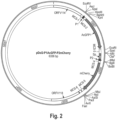
- the transfer plasmid pDel2 was designed, which includes the homologous regions of the IL 2 region ( Fig. 2 ).
- the cloning of foreign genes into the plasmid was enabled by the use of multiple MCS (multiple cloning sites).
- the plasmid was constructed to allow the simultaneous integration of several foreign genes, each under the control of artificial early ORFV promoters and delimited by poxvirus-specific T5NT early transcription stop motifs ( Fig. 2 ).
- Nucleotide sequences of the new artificial early ORFV promoters P1 and P2 were designed.
- the suitability of the IL-2 locus for the stable integration of foreign genes was investigated.
- the mCherry fluorescent marker gene was cloned into the pDel2 transfer plasmid under the control of the P2 promoter.
- the plasmid was then transfected into D1701-VrV-infected Vero cells.
- New recombinant viruses were visually selected after identifying red-glowing cells using fluorescence microscopy.
- the AcGFP gene under the control of the P1 promoter was cloned into the pDel2 transfer plasmid alongside the P2-controlled mCherry gene.
- the selection and purification of the homologous recombinants D1701-V-D1-GFP-D2-Cherry was carried out analogously to the previously described D1701-V-P2-Cherry selection.
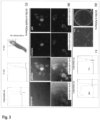
- PCR and Southern blot analyses demonstrated the correct integration of the two foreign genes into the IL 2 locus. Expression was detected by fluorescence microscopy and flow cytometry ( Fig. 3C ).
- Orf virus vector D1701-V is very well suited for the production of polyvalent recombinants.
- Several foreign genes could be stably integrated into the viral genome, for example, via the newly discovered insertion locus IL 1, 2, and 3, or the known insertion locus VEGF.
- the strength of foreign gene expression depends on both the promoter and the insertion locus. The strongest gene expression was achieved after integration of a P2-driven foreign gene into the VEGF locus.
- the table provides an overview of the fluorescent recombinant ORFV vectors produced during the work leading to the invention.
- the insertion site (locus) and the promoters used to control foreign gene expression (P vegf , P1, P2) are shown for the respective recombinants in the table.
Landscapes
- Health & Medical Sciences (AREA)
- Life Sciences & Earth Sciences (AREA)
- Genetics & Genomics (AREA)
- Chemical & Material Sciences (AREA)
- Engineering & Computer Science (AREA)
- Organic Chemistry (AREA)
- General Health & Medical Sciences (AREA)
- Immunology (AREA)
- Bioinformatics & Cheminformatics (AREA)
- General Engineering & Computer Science (AREA)
- Biomedical Technology (AREA)
- Zoology (AREA)
- Biotechnology (AREA)
- Wood Science & Technology (AREA)
- Microbiology (AREA)
- Medicinal Chemistry (AREA)
- Public Health (AREA)
- Pharmacology & Pharmacy (AREA)
- Veterinary Medicine (AREA)
- Animal Behavior & Ethology (AREA)
- Biophysics (AREA)
- Biochemistry (AREA)
- Virology (AREA)
- Molecular Biology (AREA)
- Plant Pathology (AREA)
- Physics & Mathematics (AREA)
- Mycology (AREA)
- Epidemiology (AREA)
- Chemical Kinetics & Catalysis (AREA)
- General Chemical & Material Sciences (AREA)
- Nuclear Medicine, Radiotherapy & Molecular Imaging (AREA)
- Gastroenterology & Hepatology (AREA)
- Proteomics, Peptides & Aminoacids (AREA)
- Micro-Organisms Or Cultivation Processes Thereof (AREA)
- Medicines Containing Antibodies Or Antigens For Use As Internal Diagnostic Agents (AREA)
- Medicines Containing Material From Animals Or Micro-Organisms (AREA)
- Medicines That Contain Protein Lipid Enzymes And Other Medicines (AREA)
Applications Claiming Priority (3)
| Application Number | Priority Date | Filing Date | Title |
|---|---|---|---|
| DE102015111756.8A DE102015111756A1 (de) | 2015-07-20 | 2015-07-20 | Rekombinanter Orf-Virus-Vektor |
| PCT/EP2016/066926 WO2017013023A1 (fr) | 2015-07-20 | 2016-07-15 | Vecteur de virus orf recombiné |
| EP16741595.9A EP3325631B1 (fr) | 2015-07-20 | 2016-07-15 | Vecteur de virus orf récombiné |
Related Parent Applications (2)
| Application Number | Title | Priority Date | Filing Date |
|---|---|---|---|
| EP16741595.9A Division EP3325631B1 (fr) | 2015-07-20 | 2016-07-15 | Vecteur de virus orf récombiné |
| EP16741595.9A Division-Into EP3325631B1 (fr) | 2015-07-20 | 2016-07-15 | Vecteur de virus orf récombiné |
Publications (2)
| Publication Number | Publication Date |
|---|---|
| EP4545094A2 true EP4545094A2 (fr) | 2025-04-30 |
| EP4545094A3 EP4545094A3 (fr) | 2025-11-19 |
Family
ID=56507584
Family Applications (2)
| Application Number | Title | Priority Date | Filing Date |
|---|---|---|---|
| EP16741595.9A Active EP3325631B1 (fr) | 2015-07-20 | 2016-07-15 | Vecteur de virus orf récombiné |
| EP25156960.4A Pending EP4545094A3 (fr) | 2015-07-20 | 2016-07-15 | Vecteur de virus orf recombiné |
Family Applications Before (1)
| Application Number | Title | Priority Date | Filing Date |
|---|---|---|---|
| EP16741595.9A Active EP3325631B1 (fr) | 2015-07-20 | 2016-07-15 | Vecteur de virus orf récombiné |
Country Status (20)
| Country | Link |
|---|---|
| US (2) | US11286500B2 (fr) |
| EP (2) | EP3325631B1 (fr) |
| JP (2) | JP7092663B2 (fr) |
| KR (2) | KR102433709B1 (fr) |
| CN (2) | CN116445547A (fr) |
| AU (2) | AU2016294855B2 (fr) |
| CA (1) | CA2993263A1 (fr) |
| CL (1) | CL2018000164A1 (fr) |
| DE (1) | DE102015111756A1 (fr) |
| DK (1) | DK3325631T3 (fr) |
| EA (1) | EA201890351A1 (fr) |
| ES (1) | ES3054068T3 (fr) |
| IL (1) | IL257025B2 (fr) |
| MX (1) | MX2018000845A (fr) |
| NZ (1) | NZ739286A (fr) |
| PH (1) | PH12018500155A1 (fr) |
| PL (1) | PL3325631T3 (fr) |
| PT (1) | PT3325631T (fr) |
| WO (1) | WO2017013023A1 (fr) |
| ZA (1) | ZA201801091B (fr) |
Families Citing this family (9)
| Publication number | Priority date | Publication date | Assignee | Title |
|---|---|---|---|---|
| DE102015111756A1 (de) * | 2015-07-20 | 2017-01-26 | Eberhard Karls Universität Tübingen Medizinische Fakultät | Rekombinanter Orf-Virus-Vektor |
| CA3093093A1 (fr) * | 2018-03-07 | 2019-09-12 | Transgene | Vecteurs de parapoxvirus |
| CN112522215B (zh) * | 2019-09-18 | 2023-06-02 | 重庆市畜牧科学院 | 一种缺失008基因的重组羊口疮病毒及其构建方法 |
| EP3871690A1 (fr) | 2020-02-27 | 2021-09-01 | Technische Hochschule Mittelhessen | Méthode de production de virus |
| CN116744952A (zh) * | 2020-08-13 | 2023-09-12 | 苏州般若生物科技有限公司 | 一种突变型羊传染性脓疱皮炎病毒及其用途 |
| EP3957322A1 (fr) * | 2020-08-19 | 2022-02-23 | Eberhard Karls Universität Tübingen Medizinische Fakultät | Vecteur de poxviridae recombinant exprimant des molécules co-stimulatrices |
| EP4014991A1 (fr) * | 2020-12-21 | 2022-06-22 | Eberhard Karls Universität Tübingen Medizinische Fakultät | Parapoxvirus modifié à immunogénicité accrue |
| EP4014990A1 (fr) * | 2020-12-21 | 2022-06-22 | Eberhard Karls Universität Tübingen Medizinische Fakultät | Parapoxvirus modifié à immunogénicité accrue |
| EP4014992A1 (fr) * | 2020-12-21 | 2022-06-22 | Eberhard Karls Universität Tübingen Medizinische Fakultät | Parapoxvirus modifié à immunogénicité accrue |
Family Cites Families (24)
| Publication number | Priority date | Publication date | Assignee | Title |
|---|---|---|---|---|
| ES2243937T3 (es) * | 1994-04-29 | 2005-12-01 | Baxter Healthcare S.A. | Poxvirus recombinados en regiones esenciales con la ayuda de polinucleotidos extraños. |
| DE19639601A1 (de) * | 1996-02-28 | 1997-09-04 | Bayer Ag | Parapockenviren, die Fremd-DNA enthalten, ihre Herstellung und ihre Verwendung in Impfstoffen |
| AU718141B2 (en) * | 1996-02-28 | 2000-04-06 | Bayer Healthcare Ag | Parapoxviruses which contain foreign DNA, their preparation and their use in vaccines |
| AU2182697A (en) * | 1996-03-29 | 1997-10-22 | University Of Otago | Parapoxvirus vectors |
| US20110014706A2 (en) * | 1998-12-14 | 2011-01-20 | Monsanto Technology Llc | Arabidopsis thaliana Genome Sequence and Uses Thereof |
| US7868149B2 (en) * | 1999-07-20 | 2011-01-11 | Monsanto Technology Llc | Plant genome sequence and uses thereof |
| US20130326723A1 (en) * | 1999-05-06 | 2013-12-05 | Thomas J. La Rosa | Soy nucleic acid molecules and other molecules associated with plants and uses thereof for plant improvement |
| JP2003533989A (ja) * | 2000-05-24 | 2003-11-18 | メリアル | ブタ生殖・呼吸症候群ウィルス(prrsv)の組換えポックスウィルスワクチン |
| CN1331196A (zh) * | 2000-06-30 | 2002-01-16 | 上海博德基因开发有限公司 | 一种新的多肽——妊娠特异性β1-糖蛋白9.02和编码这种多肽的多核苷酸 |
| DE10122233A1 (de) * | 2000-07-11 | 2002-01-24 | Bayer Ag | Verwendung von Stämmen des Parapoxvirus ovis gegen Organfibrosen |
| US6372455B1 (en) * | 2001-04-19 | 2002-04-16 | Arizona Board Of Regents | Recombinant vaccinia viral vectors |
| NZ512341A (en) * | 2001-06-13 | 2004-02-27 | Bayer Ag | Polynucleotides between 15 and 100 base pairs in length coding for parapoxvirus ovis (PPVO)/vaccinia virus recombinant (VVOV) viral genome fragments |
| DE10221411B4 (de) * | 2002-05-14 | 2004-07-08 | GSF-Forschungszentrum für Umwelt und Gesundheit GmbH | Rekombinantes Fowlpox-Virus |
| US7943373B2 (en) * | 2004-09-29 | 2011-05-17 | Oncolys Biopharma, Inc. | Telomelysin/GFP-expressing recombinant virus |
| EP1764107A1 (fr) * | 2005-09-14 | 2007-03-21 | Gunther Hartmann | Compositions comportant les oligonucléotides d'ARN immunostimulatoire et les méthodes pour produire lesdits oligonucléotides d'ARN |
| KR100794218B1 (ko) * | 2005-11-28 | 2008-01-11 | 재단법인서울대학교산학협력재단 | DNp63의 프로모터를 이용한 항암제 스크리닝 방법 |
| KR100985702B1 (ko) * | 2008-07-01 | 2010-10-06 | 주식회사 쎌바이오텍 | 페디오코커스 펜토사세우스에서 분리된 신규한 플라스미드및 그의 용도 |
| WO2011101696A1 (fr) * | 2010-02-18 | 2011-08-25 | Cellectis | Système de recombinaison de méganucléase amélioré |
| GB201006405D0 (en) * | 2010-04-16 | 2010-06-02 | Isis Innovation | Poxvirus expression system |
| BR112012029633A8 (pt) * | 2010-05-21 | 2017-12-05 | Ah Usa 42 Llc | Vetores do parapoxvírus contendo antígeno do vírus da raiva. |
| PH12013500122A1 (en) * | 2010-07-20 | 2017-08-23 | Zoetis Llc | Parapoxvirus vectors |
| NZ701949A (en) * | 2012-05-18 | 2016-07-29 | Otago Innovation Ltd | Combination treatments and compositions for wound healing |
| US20180363070A9 (en) * | 2014-08-12 | 2018-12-20 | Univ Wayne State | Systems and methods to detect stem cell stress and uses thereof |
| DE102015111756A1 (de) * | 2015-07-20 | 2017-01-26 | Eberhard Karls Universität Tübingen Medizinische Fakultät | Rekombinanter Orf-Virus-Vektor |
-
2015
- 2015-07-20 DE DE102015111756.8A patent/DE102015111756A1/de active Pending
-
2016
- 2016-07-15 EP EP16741595.9A patent/EP3325631B1/fr active Active
- 2016-07-15 MX MX2018000845A patent/MX2018000845A/es unknown
- 2016-07-15 EP EP25156960.4A patent/EP4545094A3/fr active Pending
- 2016-07-15 JP JP2018522854A patent/JP7092663B2/ja active Active
- 2016-07-15 AU AU2016294855A patent/AU2016294855B2/en active Active
- 2016-07-15 EA EA201890351A patent/EA201890351A1/ru unknown
- 2016-07-15 ES ES16741595T patent/ES3054068T3/es active Active
- 2016-07-15 NZ NZ73928616A patent/NZ739286A/en unknown
- 2016-07-15 IL IL257025A patent/IL257025B2/en unknown
- 2016-07-15 CN CN202211462316.3A patent/CN116445547A/zh active Pending
- 2016-07-15 CA CA2993263A patent/CA2993263A1/fr active Pending
- 2016-07-15 WO PCT/EP2016/066926 patent/WO2017013023A1/fr not_active Ceased
- 2016-07-15 KR KR1020217015985A patent/KR102433709B1/ko active Active
- 2016-07-15 DK DK16741595.9T patent/DK3325631T3/da active
- 2016-07-15 CN CN201680053548.XA patent/CN108026542B/zh active Active
- 2016-07-15 PL PL16741595.9T patent/PL3325631T3/pl unknown
- 2016-07-15 KR KR1020187004903A patent/KR102259277B1/ko active Active
- 2016-07-15 PT PT167415959T patent/PT3325631T/pt unknown
-
2018
- 2018-01-19 CL CL2018000164A patent/CL2018000164A1/es unknown
- 2018-01-19 PH PH12018500155A patent/PH12018500155A1/en unknown
- 2018-01-19 US US15/875,389 patent/US11286500B2/en active Active
- 2018-02-16 ZA ZA2018/01091A patent/ZA201801091B/en unknown
-
2020
- 2020-06-03 JP JP2020097200A patent/JP2020188776A/ja active Pending
- 2020-11-04 AU AU2020264302A patent/AU2020264302B2/en active Active
-
2022
- 2022-03-17 US US17/655,316 patent/US20220204992A1/en active Pending
Non-Patent Citations (6)
| Title |
|---|
| "Genome-wide analysis of the 5' and 3' ends of Vaccinia Virus early mRNAs delineates regulatory sequences of annotated and anomalous transcripts", J. VIROLOGY, vol. 85, no. 12, 2011, pages 5897 - 5909 |
| BROYLES: "Vaccinia virus transcription", J. GEN. VIROL., vol. 84, no. 9, 2003, pages 2293 - 2303 |
| BÜTTNERRZIHA: "Parapoxviruses: From the Lesion to the Viral Genome", J. VET. MED. B., vol. 49, 2002, pages 7 - 16, XP055300947, DOI: 10.1046/j.1439-0450.2002.00539.x |
| COTTONE ET AL.: "Analysis of genomic rearrangement and subsequent gene deletion of the attenuated Orf virus strain D1701", VIRUS RESEARCH, vol. 56, 1998, pages 53 - 67, XP093026020, DOI: 10.1016/S0168-1702(98)00056-2 |
| DAVIDSONMOSS: "Structure of vaccinia virus late promotors", J. MOL. BIOL., vol. 210, 1989, pages 771 - 784 |
| RZIHA ET AL.: "Generation of recombinant parapoxviruses: non-esssential genes suitable for insertion and expression of foreign genes", JOURNAL OR BIOTECHNOLOGY, vol. 83, 2000, pages 137 - 145 |
Also Published As
Similar Documents
| Publication | Publication Date | Title |
|---|---|---|
| EP3325631B1 (fr) | Vecteur de virus orf récombiné | |
| DE69232201T2 (de) | Für proteine des menschlichen papillomavirus kodierende rekombinante virusvektoren | |
| DE69810459T2 (de) | Reagenzien zur impfung, die eine cd8 t-zell-immunantwort erzeugen | |
| DE69518910T2 (de) | Verfahren zur herstellung von viralen vektoren von mindestens 20kb durch intermolekulare homologe rekombination in einer prokaryotischen zelle | |
| DE60116371T3 (de) | Variante des modifizierten vaccinia ankara virus | |
| JP6291467B2 (ja) | 組換えウイルス発現のためのプロモーター | |
| DE3882144T2 (de) | Geflügelpocken-virus-promotoren. | |
| DE60025701T2 (de) | Vektoren und virale impfstoffe basierend auf rekombinantem schweine-adenovirus | |
| DE60314541T2 (de) | Mindestens zwei ati promotoren enthaltendes rekombinantes pockenvirus | |
| EP0886679B1 (fr) | Parapoxvirus contenant de l'adn etranger, leur production et leur utilisation dans des vaccins | |
| DE60302848T2 (de) | Expression von genen im modifizierten vaccinia virus ankara durch verwendung eines cowpox ati promoter | |
| Li et al. | Generation of an attenuated Tiantan vaccinia virus strain by deletion of multiple genes | |
| WO2003095656A1 (fr) | Virus de variole aviaire recombinant | |
| DE69332393T2 (de) | Rekombinanter Katzen-Herpesvirus-Impfstoff | |
| DE19639601A1 (de) | Parapockenviren, die Fremd-DNA enthalten, ihre Herstellung und ihre Verwendung in Impfstoffen | |
| EP1181381B1 (fr) | Agent immuno-therapeutique specifique des organes, tissus et cellules des infections virales chroniques, des affections proliferatives, degeneratives et inflammatoires, en particulier du foie, et du cancer, a base de parapoxvirus recombine | |
| WO2004038024A1 (fr) | Souches de mva de recombinaison servant de vaccins potentiels contre le paludisme a p.falciparum | |
| DE10116594A1 (de) | Künstliche Chromosomen, die EHV-Sequenzen umfassen | |
| AU2006257065A1 (en) | Highly attenuated pox virus strains, method for the production thereof and the use thereof as paramunity inducers or for producing vector vaccines | |
| EA041611B1 (ru) | Рекомбинантный orf-вирусный вектор | |
| BR112018001121B1 (pt) | Vetor recombinante do vírus orf (orfv), composição, uso de um vetor recombinante de orfv, e, molécula de ácido nucleico |
Legal Events
| Date | Code | Title | Description |
|---|---|---|---|
| PUAI | Public reference made under article 153(3) epc to a published international application that has entered the european phase |
Free format text: ORIGINAL CODE: 0009012 |
|
| STAA | Information on the status of an ep patent application or granted ep patent |
Free format text: STATUS: REQUEST FOR EXAMINATION WAS MADE |
|
| 17P | Request for examination filed |
Effective date: 20250210 |
|
| AC | Divisional application: reference to earlier application |
Ref document number: 3325631 Country of ref document: EP Kind code of ref document: P |
|
| AK | Designated contracting states |
Kind code of ref document: A2 Designated state(s): AL AT BE BG CH CY CZ DE DK EE ES FI FR GB GR HR HU IE IS IT LI LT LU LV MC MK MT NL NO PL PT RO RS SE SI SK SM TR |
|
| REG | Reference to a national code |
Ref country code: DE Ref legal event code: R079 Free format text: PREVIOUS MAIN CLASS: A61K0039000000 Ipc: C12N0015863000 |
|
| RIC1 | Information provided on ipc code assigned before grant |
Ipc: C12N 15/863 20060101AFI20250617BHEP Ipc: A61K 39/00 20060101ALI20250617BHEP Ipc: A61P 37/04 20060101ALI20250617BHEP |
|
| PUAL | Search report despatched |
Free format text: ORIGINAL CODE: 0009013 |
|
| AK | Designated contracting states |
Kind code of ref document: A3 Designated state(s): AL AT BE BG CH CY CZ DE DK EE ES FI FR GB GR HR HU IE IS IT LI LT LU LV MC MK MT NL NO PL PT RO RS SE SI SK SM TR |
|
| RIC1 | Information provided on ipc code assigned before grant |
Ipc: C12N 15/863 20060101AFI20251016BHEP Ipc: A61K 39/00 20060101ALI20251016BHEP Ipc: A61P 37/04 20060101ALI20251016BHEP |
|
| REG | Reference to a national code |
Ref country code: HK Ref legal event code: DE Ref document number: 40127250 Country of ref document: HK |