EP4582526A2 - Dha-angereicherte mehrfach ungesättigte fettsäurezusammensetzungen - Google Patents
Dha-angereicherte mehrfach ungesättigte fettsäurezusammensetzungen Download PDFInfo
- Publication number
- EP4582526A2 EP4582526A2 EP25178607.5A EP25178607A EP4582526A2 EP 4582526 A2 EP4582526 A2 EP 4582526A2 EP 25178607 A EP25178607 A EP 25178607A EP 4582526 A2 EP4582526 A2 EP 4582526A2
- Authority
- EP
- European Patent Office
- Prior art keywords
- fatty acid
- polyunsaturated fatty
- oil
- process according
- composition
- Prior art date
- Legal status (The legal status is an assumption and is not a legal conclusion. Google has not performed a legal analysis and makes no representation as to the accuracy of the status listed.)
- Pending
Links
Images

Classifications
-
- A—HUMAN NECESSITIES
- A23—FOODS OR FOODSTUFFS; TREATMENT THEREOF, NOT COVERED BY OTHER CLASSES
- A23D—EDIBLE OILS OR FATS, e.g. MARGARINES, SHORTENINGS OR COOKING OILS
- A23D7/00—Edible oil or fat compositions containing an aqueous phase, e.g. margarines
- A23D7/005—Edible oil or fat compositions containing an aqueous phase, e.g. margarines characterised by ingredients other than fatty acid triglycerides
- A23D7/0053—Compositions other than spreads
-
- C—CHEMISTRY; METALLURGY
- C11—ANIMAL OR VEGETABLE OILS, FATS, FATTY SUBSTANCES OR WAXES; FATTY ACIDS THEREFROM; DETERGENTS; CANDLES
- C11C—FATTY ACIDS FROM FATS, OILS OR WAXES; CANDLES; FATS, OILS OR FATTY ACIDS BY CHEMICAL MODIFICATION OF FATS, OILS, OR FATTY ACIDS OBTAINED THEREFROM
- C11C3/00—Fats, oils, or fatty acids by chemical modification of fats, oils, or fatty acids obtained therefrom
- C11C3/02—Fats, oils, or fatty acids by chemical modification of fats, oils, or fatty acids obtained therefrom by esterification of fatty acids with glycerol
-
- A—HUMAN NECESSITIES
- A23—FOODS OR FOODSTUFFS; TREATMENT THEREOF, NOT COVERED BY OTHER CLASSES
- A23D—EDIBLE OILS OR FATS, e.g. MARGARINES, SHORTENINGS OR COOKING OILS
- A23D9/00—Other edible oils or fats, e.g. shortenings or cooking oils
-
- A—HUMAN NECESSITIES
- A23—FOODS OR FOODSTUFFS; TREATMENT THEREOF, NOT COVERED BY OTHER CLASSES
- A23D—EDIBLE OILS OR FATS, e.g. MARGARINES, SHORTENINGS OR COOKING OILS
- A23D7/00—Edible oil or fat compositions containing an aqueous phase, e.g. margarines
- A23D7/02—Edible oil or fat compositions containing an aqueous phase, e.g. margarines characterised by the production or working-up
- A23D7/04—Working-up
-
- A—HUMAN NECESSITIES
- A23—FOODS OR FOODSTUFFS; TREATMENT THEREOF, NOT COVERED BY OTHER CLASSES
- A23D—EDIBLE OILS OR FATS, e.g. MARGARINES, SHORTENINGS OR COOKING OILS
- A23D9/00—Other edible oils or fats, e.g. shortenings or cooking oils
- A23D9/007—Other edible oils or fats, e.g. shortenings or cooking oils characterised by ingredients other than fatty acid triglycerides
-
- A—HUMAN NECESSITIES
- A23—FOODS OR FOODSTUFFS; TREATMENT THEREOF, NOT COVERED BY OTHER CLASSES
- A23D—EDIBLE OILS OR FATS, e.g. MARGARINES, SHORTENINGS OR COOKING OILS
- A23D9/00—Other edible oils or fats, e.g. shortenings or cooking oils
- A23D9/02—Other edible oils or fats, e.g. shortenings or cooking oils characterised by the production or working-up
-
- A—HUMAN NECESSITIES
- A23—FOODS OR FOODSTUFFS; TREATMENT THEREOF, NOT COVERED BY OTHER CLASSES
- A23L—FOODS, FOODSTUFFS OR NON-ALCOHOLIC BEVERAGES, NOT OTHERWISE PROVIDED FOR; PREPARATION OR TREATMENT THEREOF
- A23L33/00—Modifying nutritive qualities of foods; Dietetic products; Preparation or treatment thereof
- A23L33/10—Modifying nutritive qualities of foods; Dietetic products; Preparation or treatment thereof using additives
- A23L33/115—Fatty acids or derivatives thereof; Fats or oils
- A23L33/12—Fatty acids or derivatives thereof
-
- A—HUMAN NECESSITIES
- A61—MEDICAL OR VETERINARY SCIENCE; HYGIENE
- A61K—PREPARATIONS FOR MEDICAL, DENTAL OR TOILETRY PURPOSES
- A61K31/00—Medicinal preparations containing organic active ingredients
- A61K31/185—Acids; Anhydrides, halides or salts thereof, e.g. sulfur acids, imidic, hydrazonic or hydroximic acids
- A61K31/19—Carboxylic acids, e.g. valproic acid
- A61K31/20—Carboxylic acids, e.g. valproic acid having a carboxyl group bound to a chain of seven or more carbon atoms, e.g. stearic, palmitic, arachidic acids
- A61K31/202—Carboxylic acids, e.g. valproic acid having a carboxyl group bound to a chain of seven or more carbon atoms, e.g. stearic, palmitic, arachidic acids having three or more double bonds, e.g. linolenic
-
- A—HUMAN NECESSITIES
- A61—MEDICAL OR VETERINARY SCIENCE; HYGIENE
- A61P—SPECIFIC THERAPEUTIC ACTIVITY OF CHEMICAL COMPOUNDS OR MEDICINAL PREPARATIONS
- A61P3/00—Drugs for disorders of the metabolism
- A61P3/06—Antihyperlipidemics
-
- A—HUMAN NECESSITIES
- A61—MEDICAL OR VETERINARY SCIENCE; HYGIENE
- A61P—SPECIFIC THERAPEUTIC ACTIVITY OF CHEMICAL COMPOUNDS OR MEDICINAL PREPARATIONS
- A61P9/00—Drugs for disorders of the cardiovascular system
-
- C—CHEMISTRY; METALLURGY
- C11—ANIMAL OR VEGETABLE OILS, FATS, FATTY SUBSTANCES OR WAXES; FATTY ACIDS THEREFROM; DETERGENTS; CANDLES
- C11B—PRODUCING, e.g. BY PRESSING RAW MATERIALS OR BY EXTRACTION FROM WASTE MATERIALS, REFINING OR PRESERVING FATS, FATTY SUBSTANCES, e.g. LANOLIN, FATTY OILS OR WAXES; ESSENTIAL OILS; PERFUMES
- C11B3/00—Refining fats or fatty oils
- C11B3/12—Refining fats or fatty oils by distillation
-
- C—CHEMISTRY; METALLURGY
- C11—ANIMAL OR VEGETABLE OILS, FATS, FATTY SUBSTANCES OR WAXES; FATTY ACIDS THEREFROM; DETERGENTS; CANDLES
- C11C—FATTY ACIDS FROM FATS, OILS OR WAXES; CANDLES; FATS, OILS OR FATTY ACIDS BY CHEMICAL MODIFICATION OF FATS, OILS, OR FATTY ACIDS OBTAINED THEREFROM
- C11C1/00—Preparation of fatty acids from fats, fatty oils, or waxes; Refining the fatty acids
- C11C1/002—Sources of fatty acids, e.g. natural glycerides, characterised by the nature, the quantities or the distribution of said acids
-
- C—CHEMISTRY; METALLURGY
- C11—ANIMAL OR VEGETABLE OILS, FATS, FATTY SUBSTANCES OR WAXES; FATTY ACIDS THEREFROM; DETERGENTS; CANDLES
- C11C—FATTY ACIDS FROM FATS, OILS OR WAXES; CANDLES; FATS, OILS OR FATTY ACIDS BY CHEMICAL MODIFICATION OF FATS, OILS, OR FATTY ACIDS OBTAINED THEREFROM
- C11C1/00—Preparation of fatty acids from fats, fatty oils, or waxes; Refining the fatty acids
- C11C1/02—Preparation of fatty acids from fats, fatty oils, or waxes; Refining the fatty acids from fats or fatty oils
- C11C1/04—Preparation of fatty acids from fats, fatty oils, or waxes; Refining the fatty acids from fats or fatty oils by hydrolysis
- C11C1/045—Preparation of fatty acids from fats, fatty oils, or waxes; Refining the fatty acids from fats or fatty oils by hydrolysis using enzymes or microorganisms, living or dead
-
- C—CHEMISTRY; METALLURGY
- C11—ANIMAL OR VEGETABLE OILS, FATS, FATTY SUBSTANCES OR WAXES; FATTY ACIDS THEREFROM; DETERGENTS; CANDLES
- C11C—FATTY ACIDS FROM FATS, OILS OR WAXES; CANDLES; FATS, OILS OR FATTY ACIDS BY CHEMICAL MODIFICATION OF FATS, OILS, OR FATTY ACIDS OBTAINED THEREFROM
- C11C1/00—Preparation of fatty acids from fats, fatty oils, or waxes; Refining the fatty acids
- C11C1/02—Preparation of fatty acids from fats, fatty oils, or waxes; Refining the fatty acids from fats or fatty oils
- C11C1/04—Preparation of fatty acids from fats, fatty oils, or waxes; Refining the fatty acids from fats or fatty oils by hydrolysis
- C11C1/06—Preparation of fatty acids from fats, fatty oils, or waxes; Refining the fatty acids from fats or fatty oils by hydrolysis using solid catalysts
-
- C—CHEMISTRY; METALLURGY
- C11—ANIMAL OR VEGETABLE OILS, FATS, FATTY SUBSTANCES OR WAXES; FATTY ACIDS THEREFROM; DETERGENTS; CANDLES
- C11C—FATTY ACIDS FROM FATS, OILS OR WAXES; CANDLES; FATS, OILS OR FATTY ACIDS BY CHEMICAL MODIFICATION OF FATS, OILS, OR FATTY ACIDS OBTAINED THEREFROM
- C11C1/00—Preparation of fatty acids from fats, fatty oils, or waxes; Refining the fatty acids
- C11C1/08—Refining
- C11C1/10—Refining by distillation
-
- A—HUMAN NECESSITIES
- A23—FOODS OR FOODSTUFFS; TREATMENT THEREOF, NOT COVERED BY OTHER CLASSES
- A23V—INDEXING SCHEME RELATING TO FOODS, FOODSTUFFS OR NON-ALCOHOLIC BEVERAGES AND LACTIC OR PROPIONIC ACID BACTERIA USED IN FOODSTUFFS OR FOOD PREPARATION
- A23V2250/00—Food ingredients
- A23V2250/18—Lipids
- A23V2250/186—Fatty acids
- A23V2250/1868—Docosahexaenoic acid
Definitions
- the embodiments disclosed herein relate to new lipid compositions that are enriched with multiple polyunsaturated fatty acids.
- the polyunsaturated fatty acid compositions have a number of health benefits, including nutritional benefits, and are potentially obtainable from a single source that is both scalable and sustainable. They also have an enhanced stability to oxidation.
- US 2015/223483 discloses canola oil-based blends which have improved oxidative stability.
- the stability is achieved by the addition of one or more additives.
- a vegetable-based lipid composition comprising:
- compositions of the invention Said lipid compositions are referred to herein as the "compositions of the invention”.
- the present invention relates to lipid compositions containing high levels of a first polyunsaturated fatty acid, together with at least two other polyunsaturated fatty acids, each of which may be in the form of a free fatty acid, a salt, an ester or a salt of an ester.
- These compositions have been found to be obtainable from sustainable sources, such as plant sources. They have also been found to have an improved storage stability profile which is evidenced by a reduction in degradation by oxidation during storage. Many polyunsaturated fatty acids, including DHA in particular, are recognised as important compounds for human and animal health.
- These compositions can be used in feedstuffs, nutraceuticals, cosmetics and other chemical compositions, and they may be useful as intermediates and active pharmaceutical ingredients.
- polyunsaturated fatty acid refers to a fatty acid which comprises at least two carbon-carbon double bonds.
- long-chain polyunsaturated fatty acid and “LC-PUFA” refer to a fatty acid which comprises at least 20 carbon atoms and at least two carbon-carbon double bonds in its carbon chain, and hence include VLC-PUFAs.
- very long-chain polyunsaturated fatty acid and “VLC- PUFA” refer to a fatty acid which comprises at least 22 carbon atoms and at least three carbon-carbon double bonds in its carbon chain.
- the number of carbon atoms in the carbon chain of the fatty acid refers to an unbranched carbon chain. If the carbon chain is branched, the number of carbon atoms excludes those in sidegroups.
- Long-chain polyunsaturated fatty acids may be ⁇ 3 ("omega-3") fatty acids, that is, fatty acids having a desaturation (carbon-carbon double bond) in the third carbon-carbon bond from the methyl end of the fatty acid. They may alternatively be ⁇ 6 ("omega-6") fatty acids, that is, fatty acids having a desaturation (carbon-carbon double bond) in the sixth carbon-carbon bond from the methyl end of the fatty acid. Whilst other unsaturation patterns may be present, the ⁇ 6 and particularly ⁇ 3 forms are particularly relevant in the context of the present invention.
- compositions of the invention comprise at least three different polyunsaturated fatty acids.
- the first polyunsaturated fatty acid is the most abundant fatty acid present in the composition (by weight relative to the total fatty acid content of the composition).
- ALA is the second most abundant fatty acid in the composition (by weight relative to the total fatty acid content of the composition).
- the ALA and the first and third PUFAs may each independently be present in the form of a fatty acid, a fatty acid salt, a fatty acid ester or a salt of a fatty acid ester.
- fatty acid refers to a carboxylic acid (or organic acid), often with a long aliphatic tail, either saturated or unsaturated.
- fatty acids typically have a carbon-carbon bonded chain of at least 8 carbon atoms in length, more particularly at least 12 carbons in length.
- Most naturally occurring fatty acids have an even number of carbon atoms because their biosynthesis involves acetate which has two carbon atoms.
- the fatty acids may be in a free state (non-esterified), referred to herein as a "free fatty acid", or in an esterified form such as an alkyl ester, part of a triglyceride, part of a diacylglyceride, part of a monoacylglyceride, acyl-CoA (thio-ester) bound or other bound form, or a mixture thereof.
- a free fatty acid or in an esterified form such as an alkyl ester, part of a triglyceride, part of a diacylglyceride, part of a monoacylglyceride, acyl-CoA (thio-ester) bound or other bound form, or a mixture thereof.
- the fatty acid may be esterified as a phospholipid such as a phosphatidylcholine, phosphatidylethanolamine, phosphatidylserine, phosphatidylglycerol, phosphatidylinositol or diphosphatidylglycerol forms, though preferably it is esterified as an alkyl ester, especially as an ethyl ester.
- a phospholipid such as a phosphatidylcholine, phosphatidylethanolamine, phosphatidylserine, phosphatidylglycerol, phosphatidylinositol or diphosphatidylglycerol forms, though preferably it is esterified as an alkyl ester, especially as an ethyl ester.
- the term "fatty acid” encompasses free fatty acids, fatty acid esters and salts of either of these.
- fatty acids Unless otherwise stated, quantitative values associated with particular fatty acids refer to the amount (calculated based on weight) of that fatty acid that is present, irrespective of the form (e.g. free acid or ester) in which it is present.
- the first PUFA may be present predominantly as an ethyl ester
- the ALA may be present predominantly as a calcium salt of a methyl ester
- the third PUFA may be present predominantly as a free fatty acid.
- saturated fatty acids do not contain any double bonds or other functional groups along the chain.
- saturated refers to hydrogen, in that all carbons (apart from the carboxylic acid [-COOH] group) contain as many hydrogens as possible.
- omega ( ⁇ ) end is attached to three hydrogen atoms (CH 3 -) and each carbon within the chain is attached to two hydrogen atoms (-CH 2 -).
- total fatty acid includes fatty acids in all forms, be they saturated or unsaturated, free acids, esters and/or salts.
- compositions of the invention include those that contain a high concentration of omega-3 fatty acids, many of which are so-called "essential fats” that are considered to be particularly important for human health.
- Omega-3 fatty acids can have beneficial effects on HDL cholesterol levels, support brain development in the young, and have been shown to benefit mental health.
- These fatty acids are generally considered to be precursors to eicosanoids with anti-inflammatory properties.
- Particular compositions of the invention that may be mentioned include those in which the total amount of omega-3 polyunsaturated fatty acids in the lipid composition is at least about 80%, such as at least about 85%, by weight of the total fatty acid content of the composition.
- Omega-6 fatty acids are also considered to be important for human health.
- certain omega-6 fatty acids are "essential fats" necessary for good health but the body is unable to synthesise them.
- omega-6 fats have been shown to be precursors to eicosanoids with more pro-inflammatory properties, and so when too many of these eicosanoids are produced, they can increase inflammation and inflammatory disease. Thus, it may be desirable to minimise the amount of such fatty acids in lipid compositions.
- the ratio of omega-6 to omega-3 fatty acids in the diet should be 4:1 or less.
- the normal western diet typically contains a higher proportion of omega-6 fatty acids.
- the lipid compositions of the present invention advantageously contain low amounts of omega-6 fatty acids, whilst simultaneously containing high amounts of the more beneficial omega-3 fatty acids.
- the total amount of omega-6 polyunsaturated fatty acids in the composition is at most about 10% by weight of the total fatty acid content of the composition.
- the ratio of the total weight of omega-3 polyunsaturated fatty acids to the total weight of omega-6 polyunsaturated fatty acids in the composition is at least about 10:1.
- the ratio of the total weight of omega-3 polyunsaturated fatty acids to the total weight of omega-6 polyunsaturated fatty acids in the composition is at least about 20:1.
- Lipid compositions containing long chain polyunsaturated fatty acids are typically obtained from marine sources (e.g. fish, crustacea), algal sources, or plant sources (e.g. flax or echium).
- the starting organic matter is first processed in order to extract the oil (generally referred to as the "crude” oil) contained therein.
- the crude oils often contain levels of polyunsaturated fatty acids which are too low to be useful (e.g. as nutritional products), so enrichment is required.
- enrichment may be achieved by processing the crude oil to remove unwanted components (e.g. components which deleteriously affect the product's colour, odour or stability, or unwanted fatty acids), whilst maximising the levels of the desired fatty acid components.
- unwanted components e.g. components which deleteriously affect the product's colour, odour or stability, or unwanted fatty acids
- compositions of the present invention are advantageously obtainable from a single source.
- the use of a single source facilitates efficient and economic processing of the crude oil and manufacture of the lipid compositions of the invention.
- a single source or “obtained from a single source”
- the lipid composition is obtainable from one or more organisms of a single taxonomic class.
- the lipid composition is not derived from multiple organisms across different taxonomic classes.
- the lipid compositions may not be blends of oils obtained from a combination of fish and algae, or a combination of fish and plants.
- the lipid compositions of the invention are obtainable from a single population of organisms, for example, a single source of plant matter or vegetation.
- the phrase "obtainable from a single source” does not exclude the use of multiple organisms of the same species as a source of the lipid composition or "crude” oil, i.e. the use of multiple fish, algal stocks, plants, or plant seeds that are of the same species.
- Said multiple organisms are preferably all of the same species, or from the same breeding line, or of the same plant variety, or of the same production stock or batch.
- the first polyunsaturated fatty acid is a PUFA that (i) has at least five unsaturations in its carbon chain, (ii) has at least 20 carbon atoms in its carbon chain, or (iii) is selected from the group consisting of DHA and EPA.
- the first polyunsaturated fatty acid has at least five unsaturations and at least 20 carbon atoms in its carbon chain.
- Particular fatty acids that may be mentioned in this respect include DHA, docosapentaenoic acid ("DPA"; 22:5n-3) and EPA.
- the first polyunsaturated fatty acid is DHA.
- references to docosahexaenoic acid and "DHA” and “EPA” in this context are, unless otherwise specified, references to the ⁇ 3 form of docosahexaenoic acid and eicosapentaenoic acid, respectively, that is docosahexaenoic acid eicosapentaenoic acid having a desaturation (carbon-carbon double bond) in the third carbon-carbon bond from the methyl end of the fatty acid.
- Shorthand forms that may be used interchangeably for DHA include “22:6n-3" and “22:6 ⁇ -3”.
- shorthand forms that may be used interchangeably for EPA include “20:5n-3" and "20:5 ⁇ -3".
- the first polyunsaturated fatty acid e.g. DHA
- the first polyunsaturated fatty acid is present in an amount of at least about 55% (such as at least about 60%) by weight of the total fatty acid content of the composition.
- the first polyunsaturated fatty acid is present in an amount of up to about 80% (such as up to about 75%) by weight of the total fatty acid content of the composition.
- the lipid compositions of the invention have advantageously been found to contain a high level of DHA relative to the amount of EPA present. Therefore, in one embodiment, the weight ratio of docosahexaenoic acid to eicosapentaenoic acid in the lipid compositions is at least about 10:1. In further embodiments, the weight ratio of docosahexaenoic acid to eicosapentaenoic acid in the lipid compositions may be at least about 20:1, such as greater than about 30:1.
- the amount of EPA in the compositions may be very low.
- the lipid compositions contain up to about 3%, more particularly up to about 2%, EPA by weight of the total fatty acid content of the composition.
- compositions of the invention contain ALA in an amount of from about 10% to about 90% by weight of the first polyunsaturated fatty acid.
- ALA is typically the second most abundant polyunsaturated fatty acid in the composition.
- the ALA is present in an amount of from about 10% to about 75% (e.g. from about 10% to about 60%) by weight of the first polyunsaturated fatty acid.
- the ALA may also be present in in an amount of from about 15% to about 55% by weight of the first polyunsaturated fatty acid (e.g. DHA).
- the third polyunsaturated fatty acid may be any polyunsaturated fatty acid disclosed herein, except that the first and third PUFAs are different and neither is ALA.
- said third polyunsaturated fatty acid is a C:18-24 omega-3 polyunsaturated fatty acid containing at least 3 (e.g. at least 4) unsaturations.
- Particular such PUFAs that may be mentioned include DHA, EPA, eicosatetraenoic acid ("ETA"; 20:4n-3), DPA, and stearadonic acid (“SDA”; 18:4n-3).
- the third polyunsaturated fatty acid is EPA or DPA.
- compositions of the invention contain a third polyunsaturated fatty acid in an amount of from about 10% to about 70% by weight of the ALA.
- said third polyunsaturated fatty acid is the third most abundant polyunsaturated fatty acid in the composition.
- the third polyunsaturated fatty acid is present in an amount of from about 10% to about 65% by weight of the ALA.
- compositions of the invention may also contain other polyunsaturated fatty acids (i.e. in addition to ALA and the first and third PUFAs).
- additional polyunsaturated fatty acids include those described above in respect of the third PUFA (e.g. DHA, EPA, ETA, DPA, and/or SDA), as well as others such as linoleic acid (“LA”; 18:2n-6) and ⁇ -linolenic acid (“GLA”; 18:3n-6).
- the total amount of all other fatty acids in the composition is up to about 20% by weight of the total fatty acid content of the composition.
- the total amount of all fatty acids in the composition is about 20% by weight of the total fatty acid content of the composition.
- the total amount of all other fatty acids in the composition is up to about 18% (e.g. up to about 16%) by weight of the total fatty acid content of the composition.
- compositions of the invention contain up to about 0.5% palmitic acid (16:0) by weight of the total fatty acid content of the composition.
- the compositions contain up to about 0.1%, more particularly up to about 0.05%, palmitic acid by weight of the total fatty acid content of the composition.
- a particular lipid composition that may therefore be mentioned is one which comprises:
- a further particular lipid composition that may be mentioned is one which comprises:
- the ALA and the first and third PUFAs are each independently provided in the form of a salt of a fatty acid ester or, most particularly, in the form of a fatty acid ester.
- Suitable fatty acid esters forms are known to the skilled person.
- fatty acid ester forms that are nutritionally acceptable and/or pharmaceutically acceptable include ethyl esters, methyl esters, phospholipids, monoglycerides, diglycerides and triglycerides of fatty acids. Different ester forms may be required depending on the intended use of the lipid composition.
- triglycerides are particularly suited for use in foods intended for human consumption, especially infant consumption, due in part to the taste and the stability of these ester forms to heat treatment (which may be necessary for such food products).
- a food product for human or animal consumption comprising a lipid composition of the invention wherein the ALA and the first and third polyunsaturated fatty acids are provided in the form of triglyceride esters.
- Ethyl esters are particularly suited for use in dietary supplements as these ester forms can be manufactured efficiently and easily, and conversion to a triglyceride form is not necessary.
- the ALA and the first and third PUFAs are each independently provided in the form of a fatty acid ethyl ester or as part of a triglyceride.
- Triglycerides are esters derived from glycerol and three fatty acids. As the present invention concerns blends of fatty acids, the fatty acid components in such triglycerides may be mixed in the corresponding ratios. That is, while a mixture of different triglycerides molecules may be present in a composition, the overall fatty acid profile in the composition is as defined in the claims.
- Fatty acid components may alternatively be present in the form of "free" fatty acids, i.e. the -COOH form of the fatty acid.
- the compositions contain relatively low levels of fatty acids in this form because they are associated with an unpleasant (often "soapy") taste, and are less stable than fatty acids that are in an esterified form.
- Free fatty acids are typically removed from oils and lipid compositions by way of alkali or physical refining, e.g. according to processes discussed elsewhere herein.
- the total free fatty acid content in the lipid compositions is less than 5% (such as less than 3%, particularly less than 2%) by weight of the total fatty acid content of the composition.
- the fatty acids in the lipid compositions of the invention are typically linear (i.e. not branched) chain fatty acids.
- Compositions of the invention that may be mentioned include those which contain very low levels of branched chain fatty acids and their esters such that the composition is essentially free of branched chain fatty acids and branched chain fatty acid esters.
- low levels we mean that the composition contains branched chain fatty acids and fatty acid esters in an amount of at most about 0.1% by weight of the total fatty acids of the composition.
- plant sterols and plant stanols present either as a free sterol or as a sterol ester (such as ⁇ -sitosterol, ⁇ -sitostanol, ⁇ 5-avenasterol, campesterol, ⁇ 5-stigmasterol, ⁇ 7-stigmasterol and ⁇ 7-avenasterol, cholesterol, brassicasterol, chalinasterol, campesterol, campestanol and eburicol).
- Other examples include antioxidants, such as tocopherols and tocotrienols.
- particular lipid compositions of the invention that may be mentioned include those which contain detectable quantities of one or more phytosterols (such as ⁇ -sitosterol). Such sterols may be present at at least about 0.01%, but typically not more than about 1%, by weight of the lipid composition.
- compositions of the present invention are advantageously obtainable from plant sources ("vegetable” sources).
- vegetable sources include plant sources, particularly crops such as cereals.
- lipids are obtained from a seed oil crop such as Brassica, for example Brassica napus or Brassica juncea.
- a proportion e.g. at most 30% by weight of the lipids in the compositions of the invention may be obtained from other sources, including marine (e.g.
- compositions of the invention essentially all (i.e. at least 95%, at least 99%, or about 100%) of the lipids are obtained from vegetable sources.
- compositions of the invention are not of animal (e.g. marine animal) origin. That is, in such embodiments the lipid compositions do not contain any components that are sourced from animals, such as fish and crustacea. Lipid compositions in which no components are obtained from an animal are believed to be advantageous in terms of lipid content, and a stability profile that can be achieved following standard refinement and/or enrichment procedures.
- animal e.g. marine animal
- plants as a lipid or fatty acid source offers a number of advantages.
- marine sources of oils are known to contain relatively high levels of contaminants (such as mercury, PCBs and fish allergens (e.g. parvalbumins)) which are not found in plant materials.
- contaminants such as mercury, PCBs and fish allergens (e.g. parvalbumins)
- Historic overfishing has also depleted the stocks of fish and crustacea (e.g. krill) such that they are no longer sustainable.
- the present invention therefore offers a sustainably-sourced polyunsaturated fatty acid oil composition containing relatively low levels of unwanted contaminants.
- the composition of the invention is derived from a plant.
- Plants from which the oils are obtained are typically oilseed crops, such as copra, cottonseed, flax, palm kernel, peanut, rapeseed, soybean and sunflower seed. Compositions obtained exclusively from plants therefore may be referred to as “vegetable” oils or “vegetable lipid compositions”.
- Suitable plants from which the lipid compositions of the invention may be obtained are known to the skilled person and include Brassica sp., Gossypium hirsutum, Linum usitatissimum, Helianthus sp., Carthamus tinctorius, Glycine max, Zea mays, Arabidopsis thaliana, Sorghum bicolor, Sorghum vulgare, Avena sativa, Trifolium sp., Elaesis guineenis, Nicotiana benthamiana, Hordeum vulgare, Lupinus angustifolius, Oryza sativa, Oryza glaberrima, Camelina sativa, or Crambe abyssinica.
- a particular plant source that may be mentioned in this respect is Brassica sp.
- Suitable sources may be naturally occurring, or may be genetically modified to enhance their ability to produce long chain polyunsaturated fatty acids.
- plant sources that have been genetically modified for this purpose, i.e. which originate from recombinant plant cells, are known to the skilled person and are disclosed in International patent application nos. PCT/AU2013/000639 (published as WO 2013/185184 ), PCT/AU2014/050433 (published as WO 2015/089587 ), and PCT/AU2015/050340 (published as WO 2015/196250 ).
- Genetically modified canola is described in WO 2017/218969 and WO 2017/219006 . The disclosures in all of the publications mentioned herein are incorporated by reference in their entirety.
- the lipid compositions of the invention may be obtained directly from a naturally occurring source (e.g. an animal, algae and/or a plant). However, it is typically necessary to processes the oils obtained from naturally occurring sources in order to enrich them. Suitable enrichment processes are exemplified in the Examples.
- Suitable sources of lipid compositions of the invention, or "crude” oils which may be blended or enriched to produce those compositions, include marine species, algae and plants. Processes for obtaining oils from marine sources are well-known in the art.
- Plant sources are particularly suited due to the low levels of certain contaminants and superior sustainability, as is discussed above. Plants such as Brassica sp. (e.g. canola) produce seeds which can be processed to obtain oil.
- Brassica sp. e.g. canola
- lipid composition is obtained from a seed oil that has been degummed, refined, bleached and/or deodorised.
- the oils it is not necessary for the oils to be processed in this way and adequate purification and enrichment may be achieved without these methods.
- oilseeds can be tempered by spraying them with water to raise the moisture content to, e.g., 8.5%, and flaked using a smooth roller with a gap setting of 0.23 mm to 0.27 mm.
- water may not be added prior to crushing.
- Extraction may also be achieved using an extrusion process. The extrusion process may or may not be used in place of flaking, and is sometimes used as an add-on process either before or after screw pressing.
- the majority of the seed oil is released by crushing using a screw press. Solid material expelled from the screw press is then extracted with a solvent, e.g. hexane, using a heat traced column, after which solvent is removed from the extracted oil.
- a solvent e.g. hexane
- crude oil produced by the pressing operation can be passed through a settling tank with a slotted wire drainage top to remove the solids that are expressed with the oil during the pressing operation.
- the clarified oil can be passed through a plate and frame filter to remove any remaining fine solid particles.
- the oil recovered from the extraction process can be combined with the clarified oil to produce a blended crude oil. Once the solvent is stripped from the crude oil, the pressed and extracted portions are combined and subjected to normal oil processing procedures.
- the term "purified" when used in connection with lipid or oil of the invention typically means that that the extracted lipid or oil has been subjected to one or more processing steps to increase the purity of the lipid/oil component.
- purification steps may comprise one or more of: degumming, deodorising, decolourising, or drying the extracted oil.
- the term "purified” does not include a transesterification process or another process that alters the fatty acid composition of the lipid or oil of the invention so as to increase the LC-PUFA content as a percentage of the total fatty acid content.
- the fatty acid composition of the purified lipid or oil is essentially the same as that of the unpurified lipid or oil.
- Plant oils may be refined (purified) once extracted from the plant source, using one or more of the following process, and particularly using a combination of degumming, alkali refining, bleaching and deodorisation. Suitable methods are known to those skilled in the art (e.g. those disclosed in WO 2013/185184 ).
- Degumming is an early step in the refining of oils and its primary purpose is the removal of most of the phospholipids from the oil. Addition of ca. 2% of water, typically containing phosphoric acid, at 70 to 80°C to the crude oil results in the separation of most of the phospholipids accompanied by trace metals and pigments. The insoluble material that is removed is mainly a mixture of phospholipids and triacylglycerols. Degumming can be performed by addition of concentrated phosphoric acid to the crude seedoil to convert non-hydratable phosphatides to a hydratable form, and to chelate minor metals that are present. Gum is separated from the seedoil by centrifugation.
- Alkali refining is one of the refining processes for treating crude oil, sometimes also referred to as neutralisation. It usually follows degumming and precedes bleaching. Following degumming, the seedoil can be treated by the addition of a sufficient amount of an alkali solution to titrate all of the free fatty acids and phosphoric acid, and removing the soaps thus formed. Suitable alkaline materials include sodium hydroxide, potassium hydroxide, sodium carbonate, lithium hydroxide, calcium hydroxide, calcium carbonate and ammonium hydroxide. Alkali refining is typically carried out at room temperature and removes the free fatty acid fraction. Soap is removed by centrifugation or by extraction into a solvent for the soap, and the neutralised oil is washed with water. If required, any excess alkali in the oil may be neutralised with a suitable acid such as hydrochloric acid or sulphuric acid.
- a suitable acid such as hydrochloric acid or sulphuric acid.
- Bleaching is a refining process in which oils are heated at 90 to 120°C for 10 to 30 minutes in the presence of a bleaching earth (0.2 to 2.0%) and in the absence of oxygen by operating with nitrogen or steam or in a vacuum. Bleaching is designed to remove unwanted pigments (carotenoids, chlorophyll, etc), and the process also removes oxidation products, trace metals, sulphur compounds and traces of soap.
- Deodorisation is a treatment of oils and fats at a high temperature (e.g. ca. 180 °C) and low pressure (0.1 to 1 mm Hg). This is typically achieved by introducing steam into the seedoil at a rate of about 0.1 ml/minute/100 ml of seedoil. After about 30 minutes of sparging, the seedoil is allowed to cool under vacuum. This treatment improves the colour of the seedoil and removes a majority of the volatile substances or odorous compounds, including any remaining free fatty acids, monoacylglycerols and oxidation products.
- Winterisation is a process sometimes used in commercial production of oils for the separation of oils and fats into solid (stearin) and liquid (olein) fractions by crystallization at sub-ambient temperatures. It was applied originally to cottonseed oil to produce a solid-free product. It is typically used to decrease the saturated fatty acid content of oils.
- Crude oils usually contain the desired fatty acids in the form of triacylglycerols (TAGs).
- TAGs triacylglycerols
- Transesterification is a process that can be used to exchange the fatty acids within and between TAGs or to transfer the fatty acids to another alcohol to form an ester (such as an ethyl ester or a methyl ester).
- transesterification is achieved using chemical means, typically involving a strong acid or base as a catalyst.
- Sodium ethoxide (in ethanol) is an example of a strong base that is used to form fatty acid ethyl esters through transesterification.
- the process may be performed at ambient temperature or at elevated temperature (e.g. up to about 80°C).
- transesterification is achieved using one or more enzymes, particularly lipases that are known to be useful for hydrolysing ester bonds, e.g. in glycerides.
- the enzyme may be a lipase that is position-specific (sn-1/3 or sn-2 specific) for the fatty acid on the triacylglyceride, or that has a preference for some fatty acids over others.
- Particular enzymes that may be mentioned include Lipozyme 435 (available from Novozymes A/S).
- the process is typically performed at ambient temperature.
- the process is typically performed in the presence of an excess quantity of the alcohol corresponding to the desired ester form (e.g. by using ethanol in order to form ethyl esters of the fatty acids).
- Molecular distillation is an effective method for removing significant quantities of the more volatile components, such as the saturated fatty acids, from crude oils. Distillation is typically performed under reduced pressure, e.g. below about 1 mbar. The temperature and time may then be chosen to achieve an approximately 50:50 split between the distillate and residue after a distillation time of a few (e.g. 1 to 10) hours. Typical distillation temperatures used in the production of the lipid compositions of the present invention are in the region of 120 °C to 180 °C, particularly between 145 °C and 160 °C.
- Chromatography is an effective method for separating the various components of LC-PUFA mixtures. It may be used to increase the concentration of one or more preferred LC-PUFAs within a mixture. Chromatographic separation can be achieved under a variety of conditions, but it typically involves using a stationary bed chromatographic system or a simulated moving bed system.
- the mobile phase is typically a highly polar solvent mixture, often containing one or more protic solvents, such as water, methanol, ethanol, and the like, as well as mixtures thereof.
- the eluent flow rate may be adjusted by the skilled person to optimise the efficiency of the separation process. For example, the products defined in the claims may be obtained using a relatively fast eluent flow rate. The use of slower flow rates may improve the degree of separation of the PUFAs contained in the initial mixture thus enabling higher concentrations of the first PUFA to be obtained.
- Detection methods for LC-PUFAs are known to those skilled in the art, and include UV-vis absorption methods as well as refractive index detection methods.
- a process for producing a lipid composition of the invention comprises providing a mixture of fatty acid ethyl esters; subjecting said mixture to a chromatographic separation process.
- the present invention also relates to lipid compositions that are obtainable by such processes. Suitable chromatographic separation conditions include those described herein.
- a particular mobile phase that may be used in the chromatographic separation is a mixture of methanol and water (e.g. 88% methanol / water), though this may be changed (e.g. to increase the methanol content) during the separation process to enhance the efficiency.
- a particular stationary phase that may be used is a silica-based stationary phase, such as a Deltaprep C18 column.
- Analytical HPLC, or any other suitable technique known to the person skilled in the art, may be performed on the fractions obtained to identify those that contain sufficiently high concentrations of the desired PUFAs, and thus contain the lipid compositions of the invention.
- the mixture of fatty acid ethyl esters is obtained by transesterification and distillation of a vegetable-based lipid oil, e.g. in accordance with any one of the processes hereinbefore described.
- the vegetable-based lipid oil may be obtained from any of the plants, particularly the oilseeds, disclosed herein or otherwise known in the art.
- refinement of the vegetable-based lipid oil using degumming, alkali refinement, bleaching and/or deodorisation may optionally be performed.
- compositions of the present invention are useful as active pharmaceutical ingredients (APIs) or as precursors (or “intermediates") to APIs which may be obtained therefrom by way of further enrichment.
- APIs active pharmaceutical ingredients
- Such compositions would be further enriched in the levels of beneficial PUFAs, such as DHA and/or ALA.
- the concentration of polyunsaturated fatty acids in an oil can be increased by a variety of methods known in the art, such as, for example, freezing crystallization, complex formation using urea, supercritical fluid extraction and silver ion complexing.
- Complex formation with urea is a simple and efficient method for reducing the level of saturated and monounsaturated fatty acids in the oil. Initially, the TAGs of the oil are split into their constituent fatty acids, often in the form of fatty acid esters. These free fatty acids or fatty acid esters, which are usually unaltered in fatty acid composition by the treatment, may then be mixed with an ethanolic solution of urea for complex formation. The saturated and monounsaturated fatty acids easily complex with urea and crystallise out on cooling and may subsequently be removed by filtration. The non-urea complexed fraction is thereby enriched with long chain polyunsaturated fatty acids.
- the lipid compositions of the present invention are bulk oils. That is, the lipid composition has been separated from the source matter (e.g. plant seeds) from which some or all of the lipid was obtained).
- source matter e.g. plant seeds
- compositions of the present invention can be used as feedstuffs. That is, the compositions of the invention may be provided in an orally available form.
- feedstuffs include any food or preparation for human consumption which when taken into the body serves to nourish or build up tissues or supply energy; and/or maintains, restores or supports adequate nutritional status or metabolic function.
- Feedstuffs include nutritional compositions for babies and/or young children such as, for example, infant formula.
- the fatty acids may be provided in the form of triglycerides in order to further minimise any unpleasant tastes and maximise stability.
- Feedstuffs comprise a lipid composition of the invention optionally together with a suitable carrier.
- carrier is used in its broadest sense to encompass any component which may or may not have nutritional value. As the skilled person will appreciate, the carrier must be suitable for use (or used in a sufficiently low concentration) in a feedstuff such that it does not have deleterious effect on an organism which consumes the feedstuff.
- the feedstuff composition may be in a solid or liquid form. Additionally, the composition may include edible macronutrients, protein, carbohydrate, vitamins, and/or minerals in amounts desired for a particular use as are well-known in the art. The amounts of these ingredients will vary depending on whether the composition is intended for use with normal individuals or for use with individuals having specialised needs, such as individuals suffering from metabolic disorders and the like.
- suitable carriers with nutritional value include macronutrients such as edible fats (e.g. coconut oil, borage oil, fungal oil, black current oil, soy oil, and mono- and diglycerides), carbohydrates (e.g. glucose, edible lactose, and hydrolysed starch) and proteins (e.g. soy proteins, electrodialysed whey, electrodialysed skim milk, milk whey, or the hydrolysates of these proteins).
- edible fats e.g. coconut oil, borage oil, fungal oil, black current oil, soy oil, and mono- and diglycerides
- carbohydrates e.g. glucose, edible lactose, and hydrolysed starch
- proteins e.g. soy proteins, electrodialysed whey, electrodialysed skim milk, milk whey, or the hydrolysates of these proteins.
- Vitamins and minerals that may be added to the feedstuff disclosed herein include, for example, calcium, phosphorus, potassium, sodium, chloride, magnesium, manganese, iron, copper, zinc, selenium, iodine, and Vitamins A, E, D, C, and the B complex.
- the lipid compositions of the present invention can be used in pharmaceutical compositions.
- Such pharmaceutical compositions comprise the lipid composition of the invention optionally together with one or more pharmaceutically-acceptable excipients, diluents or carriers, which are known to the skilled person.
- Suitable excipients, diluents or carriers include phosphate-buffered saline, water, ethanol, polyols, wetting agents or emulsions such as a water/oil emulsion.
- the composition may be in either a liquid or solid form, including as a solution, suspension, emulsion, oil or powder.
- the composition may be in the form of a tablet, capsule, encapsulated gel, ingestible liquid (including an oil or solution) or powder, emulsion, or topical ointment or cream.
- the pharmaceutical composition may also be provided as an intravenous preparation.
- Particular forms suitable for feedstuffs and for pharmaceutical compositions include liquid-containing capsules and encapsulated gels.
- the lipid compositions of the invention may be mixed with other lipids or lipid mixtures (particularly vegetable-based fatty acid esters and fatty acid ester mixtures) prior to use.
- the lipid compositions of the invention may be provided together with one or more additional components selected from the group consisting of an antioxidant (e.g. a tocopherol (such as alpha-tocopherol or gamma-tocopherol) or a tocotrienol), a stabiliser, and a surfactant.
- an antioxidant e.g. a tocopherol (such as alpha-tocopherol or gamma-tocopherol) or a tocotrienol)
- a stabiliser e.g. a tocopherol (such as alpha-tocopherol or gamma-tocopherol) or a tocotrienol)
- Alpha-tocopherol and gamma-tocopherol are both naturally occurring components in various plant seed oils, including canola oils.
- compositions can also include isotonic agents, for example, sugars, sodium chloride, and the like.
- the composition can also include adjuvants, such as wetting agents, emulsifying and suspending agents, sweetening agents, flavouring agents and perfuming agents.
- Suspensions in addition to the lipid compositions of the invention, may comprise suspending agents such as ethoxylated isostearyl alcohols, polyoxyethylene sorbitol and sorbitan esters, microcrystalline cellulose, aluminium metahydroxide, bentonite, agar-agar, and tragacanth or mixtures of these substances.
- Solid dosage forms such as tablets and capsules can be prepared using techniques well known in the art.
- fatty acids produced in accordance with the methods disclosed herein can be tableted with conventional tablet bases such as lactose, sucrose, and cornstarch in combination with binders such as acacia, cornstarch or gelatin, disintegrating agents such as potato starch or alginic acid, and a lubricant such as stearic acid or magnesium stearate.
- Capsules can be prepared by incorporating these excipients into a gelatin capsule along with the relevant lipid composition and optionally one or more antioxidants.
- Possible routes of administration of the pharmaceutical compositions of the present invention include, for example, enteral (e.g., oral and rectal) and parenteral.
- enteral e.g., oral and rectal
- parenteral e.g., a liquid preparation may be administered orally or rectally.
- a homogenous mixture can be completely dispersed in water, admixed under sterile conditions with physiologically acceptable diluents, preservatives, buffers or propellants to form a spray or inhalant.
- Lipid compositions of the invention may provide a number of benefits that are typically associated with long-chain polyunsaturated fatty acids.
- the lipid compositions of the invention, and the pharmaceutical compositions described hereinabove may be used in the treatment or prevention of cardiovascular disease, protection against death in patients with cardiovascular disease, reduction of overall serum cholesterol levels, reduction in high BP, increase in HDL:LDL ratio, reduction of triglycerides, or reduction of apolipoprotein-B levels, as may be determined using tests that are well-known to the skilled person. Accordingly, methods of treating (or preventing) the diseases and conditions listed above using the lipid compositions of the invention are also disclosed.
- treatment refers to reversing, alleviating, inhibiting the progress of a disease or disorder as described herein, or delaying, eliminating or reducing the incidence or onset of a disorder or disease as described herein, as compared to that which would occur in the absence of the measure taken.
- prevention refers to the reduction in the risk of acquiring or developing a given condition, or the reduction or inhibition of the recurrence or said condition in a subject who is not ill.
- a typical dosage of a particular fatty acid is from 0.1 mg to 20 g, taken from one to five times per day (up to 100 g daily) and is particularly in the range of from about 10 mg to about 1, 2, 5, or 10 g daily (taken in one or multiple doses).
- any amount of fatty acid will be beneficial to the subject.
- the dosage of the lipid composition to be administered to the patient may be determined by one of ordinary skill in the art and depends upon various factors such as weight of the patient, age of the patient, overall health of the patient, past history of the patient, immune status of the patient, etc.
- compositions of the invention are readily obtainable compositions which may have an improved stability profile and which may contain a mixture of fatty acids in which the relative proportions of omega-3 and omega-6 fatty acids are particularly beneficial for human health. Stability may be assessed using a variety of methods known to those skilled in the art. Such methods include the Rancimat method, the assessment of propanal formation (particularly appropriate for omega-3 fatty acids), the assessment of hexanal formation (particularly appropriate for omega-6 fatty acids), the "peroxide value” method (e.g. using AOCS official method Cd 8-53) and the "p-anisidine value” method (e.g. using AOCS official method Cd 18-90).
- compositions of the invention are obtainable from starting mixtures which do not show an enhanced stability profile in comparison to reference blends (the reference blends having a similar composition in terms of the key LC-PUFAs but containing a significant quantity of lipid of animal (fish) origin).
- compositions of the invention may also have the advantage that they may be more efficacious than, be less toxic than, be longer acting than, be more potent than, produce fewer side effects than, be more easily absorbed than, and/or have a better pharmacokinetic profile (e.g. higher oral bioavailability and/or lower clearance) than, and/or have other useful pharmacological, physical, or chemical properties over, lipid compositions known in the prior art.
- Example 1 DHA Canola oil extraction from seeds
- Canola of a variety disclosed in US patent publication no. US 2018/0016590 A1 was grown as a summer crop. The seed was harvested and then stored at room temperature prior to crushing.
- the speed of rotation of the auger, the temperature of the meal and expelled oil were monitored throughout the pressing.
- the crush time was 4 hours for 270 kg which is a throughput rate of 67.5 kg/hr.
- a yield of 87.2 kg (32%) crude oil was obtained. After filtering to remove fines, the yield was 77.2 kg (28%).
- a reference oil blend (referred to herein as the "crude triglyceride reference blend oil" or similar) was designed to be as similar as possible in composition to the filtered DHA Canola oil obtained in Example 1. This was done by (a) matching the total level of DHA to that in the DHA Canola oil and (b) matching the ratio of DHA / (ALA+EPA). This was achieved by blending a fish oil rich in DHA (tuna), an oil rich in ALA (flaxseed oil) and standard Canola oil. The resulting reference blend oil also has a similar total omega-3 content to the DHA Canola oil.
- Example 3 Fatty acid compositions of the crude DHA canola oil and reference blend
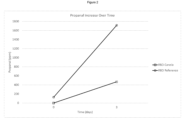
- a Rancimat stability study was performed using the crude DHA canola oil and reference blend described in Examples 1 and 2, respectively. The method involved testing about 2.5 g of test material using the standard procedures for a Metrohm 743 Rancimat at 90°C.
- the DHA canola oil showed consistently poorer stability than the reference oil.
- the distilled fatty acid ethyl esters (FAEE) of the reference blend (obtained in Example 8) were subjected to chromatographic separation under the same conditions as shown in the preceding Example.
- Example 11 Fatty acid composition analysis for the enriched oils
- Headspace analysis was conducted on the enriched products described above to assess the quantities of propanal that are released under specific conditional. Increased levels of propanal release demonstrate reduced stability for the test material.
- Refined oil was treated with adsorptive clay for the removal of peroxides, phosphatides, colour bodies and traces of soap.
- An acid pretreatment step was used to continue the hydration of the phosphatides.
- the Trisyl pretreated oil was mixed with 0.2% (w/w) of a 50% citric acid solution. After 15 minutes of mixing, 2% (w/w) of Tonsil Supreme 126 FF bleaching clay was added. The mixture was then heated to 90 ⁇ 2°C under vacuum and held for approximately 30 minutes. The oil was cooled to 60 ⁇ 2°C, vacuum broken with nitrogen, 1.0 kg of filter aid added and filtered.
- the bleached oil was subjected to sparging with steam at high temperature and low pressure to remove odoriferous components, flavour components, and additional free fatty acids. Colour is also reduced by heat bleaching at elevated temperatures.
- the half of the bleached oil was deodorised at 180 ⁇ 2 °C for 60 min with 1% sparge steam and Fatty Acid Composition (FAC) was monitored.
- Deodoriser Vessel (OD4) 400 L Coppersmithing vacuum rated vessel, steam or cooling water jacket, all 316 stainless construction. A slight decrease of DHA level was observed at 180 °C for 60 min hold. Then another trial was conducted at 180 °C for 30 min hold.
- the product was packaged under nitrogen in 20-L plastic HDPE pails and stored in a cooler at 4 °C.
- Example 15 Fatty acid compositions of the RBD crude DHA canola oil and reference blend
- RBD reference blend FAEE was distilled under these standard conditions with the heater bands initially set to 152°C to obtain a 50:50 split of distillate : residue. The residue from this distillation was again subjected to the removal of more volatile components by distillation under the standard conditions. The objective was to obtain a 50:50 split of distillate : residue. The distillation was mostly performed with the heater bands set to 152°C. The total time of distillation was approx. 200 minutes. Distillation Feed Distillate Residue First 1195.1 674.7 504.6 Second 496.4 297.2 197.4
- the fatty acid ethyl esters (FAEE) obtained in Example 18 were subjected to chromatographic separation under the following conditions.
- a preparative HPLC system comprising a Waters Prep 4000 system, Rheodyne injector with 10 ml loop, 300 x 40 mm Deltaprep C18 column, Waters 2487 dual wavelength detector and chart recorder was equilibrated with 88% methanol / water mobile phase at 70 mL / min. The detector was set to 215 nm and 2.0 absorbance units full scale and the chart run at 6 cm / hr.
Landscapes
- Chemical & Material Sciences (AREA)
- Life Sciences & Earth Sciences (AREA)
- Engineering & Computer Science (AREA)
- Oil, Petroleum & Natural Gas (AREA)
- Health & Medical Sciences (AREA)
- Organic Chemistry (AREA)
- Chemical Kinetics & Catalysis (AREA)
- General Chemical & Material Sciences (AREA)
- Polymers & Plastics (AREA)
- Food Science & Technology (AREA)
- Microbiology (AREA)
- Wood Science & Technology (AREA)
- Veterinary Medicine (AREA)
- Public Health (AREA)
- General Health & Medical Sciences (AREA)
- Medicinal Chemistry (AREA)
- Pharmacology & Pharmacy (AREA)
- Animal Behavior & Ethology (AREA)
- Bioinformatics & Cheminformatics (AREA)
- Nuclear Medicine, Radiotherapy & Molecular Imaging (AREA)
- Diabetes (AREA)
- Hematology (AREA)
- Cardiology (AREA)
- Heart & Thoracic Surgery (AREA)
- Epidemiology (AREA)
- Nutrition Science (AREA)
- Mycology (AREA)
- Biochemistry (AREA)
- Obesity (AREA)
- Fats And Perfumes (AREA)
- Acyclic And Carbocyclic Compounds In Medicinal Compositions (AREA)
- Coloring Foods And Improving Nutritive Qualities (AREA)
- Edible Oils And Fats (AREA)
- Medicines Containing Plant Substances (AREA)
- Preparation Of Compounds By Using Micro-Organisms (AREA)
- Medicinal Preparation (AREA)
- Fodder In General (AREA)
- Micro-Organisms Or Cultivation Processes Thereof (AREA)
- Seeds, Soups, And Other Foods (AREA)
- General Preparation And Processing Of Foods (AREA)
Applications Claiming Priority (3)
| Application Number | Priority Date | Filing Date | Title |
|---|---|---|---|
| EP18179072.6A EP3586641A1 (de) | 2018-06-21 | 2018-06-21 | Dha-angereicherte mehrfach ungesättigte fettsäurezusammensetzungen |
| EP18822375.4A EP3809858B1 (de) | 2018-06-21 | 2018-12-20 | Dha-angereicherte mehrfach ungesättigte fettsäurezusammensetzungen |
| PCT/EP2018/086368 WO2019242872A1 (en) | 2018-06-21 | 2018-12-20 | Dha enriched polyunsaturated fatty acid compositions |
Related Parent Applications (2)
| Application Number | Title | Priority Date | Filing Date |
|---|---|---|---|
| EP18822375.4A Division EP3809858B1 (de) | 2018-06-21 | 2018-12-20 | Dha-angereicherte mehrfach ungesättigte fettsäurezusammensetzungen |
| EP18822375.4A Division-Into EP3809858B1 (de) | 2018-06-21 | 2018-12-20 | Dha-angereicherte mehrfach ungesättigte fettsäurezusammensetzungen |
Publications (2)
| Publication Number | Publication Date |
|---|---|
| EP4582526A2 true EP4582526A2 (de) | 2025-07-09 |
| EP4582526A3 EP4582526A3 (de) | 2025-07-30 |
Family
ID=62841826
Family Applications (3)
| Application Number | Title | Priority Date | Filing Date |
|---|---|---|---|
| EP18179072.6A Withdrawn EP3586641A1 (de) | 2018-06-21 | 2018-06-21 | Dha-angereicherte mehrfach ungesättigte fettsäurezusammensetzungen |
| EP18822375.4A Active EP3809858B1 (de) | 2018-06-21 | 2018-12-20 | Dha-angereicherte mehrfach ungesättigte fettsäurezusammensetzungen |
| EP25178607.5A Pending EP4582526A3 (de) | 2018-06-21 | 2018-12-20 | Dha-angereicherte mehrfach ungesättigte fettsäurezusammensetzungen |
Family Applications Before (2)
| Application Number | Title | Priority Date | Filing Date |
|---|---|---|---|
| EP18179072.6A Withdrawn EP3586641A1 (de) | 2018-06-21 | 2018-06-21 | Dha-angereicherte mehrfach ungesättigte fettsäurezusammensetzungen |
| EP18822375.4A Active EP3809858B1 (de) | 2018-06-21 | 2018-12-20 | Dha-angereicherte mehrfach ungesättigte fettsäurezusammensetzungen |
Country Status (16)
| Country | Link |
|---|---|
| US (1) | US12582135B2 (de) |
| EP (3) | EP3586641A1 (de) |
| JP (3) | JP7818901B2 (de) |
| KR (2) | KR102905766B1 (de) |
| CN (1) | CN112533482A (de) |
| AR (1) | AR113673A1 (de) |
| AU (2) | AU2018428605B2 (de) |
| CA (1) | CA3104204A1 (de) |
| CL (1) | CL2020003280A1 (de) |
| CO (1) | CO2021000426A2 (de) |
| ES (1) | ES3039531T3 (de) |
| MX (1) | MX2020013988A (de) |
| PE (2) | PE20212375A1 (de) |
| PL (1) | PL3809858T3 (de) |
| TW (2) | TWI774896B (de) |
| WO (1) | WO2019242872A1 (de) |
Families Citing this family (5)
| Publication number | Priority date | Publication date | Assignee | Title |
|---|---|---|---|---|
| EP3586641A1 (de) | 2018-06-21 | 2020-01-01 | Nuseed Pty Ltd | Dha-angereicherte mehrfach ungesättigte fettsäurezusammensetzungen |
| EP3586642A1 (de) | 2018-06-21 | 2020-01-01 | Nuseed Pty Ltd | Ala-angereicherte mehrfach ungesättigte fettsäurezusammensetzungen |
| EP3586643A1 (de) | 2018-06-21 | 2020-01-01 | Nuseed Pty Ltd | Dha-angereicherte mehrfach ungesättigte fettsäurezusammensetzungen |
| EP3586640A1 (de) | 2018-06-21 | 2020-01-01 | Nuseed Pty Ltd | Dha-angereicherte mehrfach ungesättigte fettsäurezusammensetzungen |
| JP6536733B1 (ja) * | 2018-10-29 | 2019-07-03 | 不二製油株式会社 | アーモンド風味油脂の製造法 |
Citations (12)
| Publication number | Priority date | Publication date | Assignee | Title |
|---|---|---|---|---|
| US5130061A (en) | 1987-05-28 | 1992-07-14 | Innova Di Ridolfi Flora & C. S.A.S. | Process for the extraction of polyunsaturated fatty acid esters from fish oils |
| US20040209953A1 (en) | 2002-12-06 | 2004-10-21 | Wai Lee Theresa Siu-Ling | Glyceride compositions and methods of making and using same |
| US20110027443A1 (en) | 2003-07-09 | 2011-02-03 | Osamu Mori | Fat or oil composition containing oleic acid, linoleic acid, linolenic acid, and long-chain highly unsaturated fatty acid |
| WO2013185184A2 (en) | 2012-06-15 | 2013-12-19 | Commonwealth Scientific And Industrial Research Organisation | Production of long chain polyunsaturated fatty acids in plant cells |
| WO2014105576A1 (en) | 2012-12-24 | 2014-07-03 | Qualitas Health, Ltd. | Eicosapentaenoic acid (epa) formulations |
| US9040730B2 (en) | 2011-02-11 | 2015-05-26 | E I Du Pont De Nemours And Company | Purification of triglyceride oil from microbial sources using short path distillation |
| US20150166928A1 (en) | 2013-12-18 | 2015-06-18 | Commonwealth Scientific And Industrial Research Organisation | Lipid comprising long chain polyunsaturated fatty acids |
| US20150223483A1 (en) | 2012-09-11 | 2015-08-13 | Dow Agrosciences Llc | Omega-9 canola oil blended with dha |
| WO2015196250A1 (en) | 2014-06-27 | 2015-12-30 | Commonwealth Scientific And Industrial Research Organisation | Lipid comprising docosapentaenoic acid |
| WO2016182452A1 (en) | 2015-05-13 | 2016-11-17 | Epax Norway As | Very long chain polyunsaturated fatty acids from natural oils |
| WO2017218969A1 (en) | 2016-06-16 | 2017-12-21 | Nuseed Pty Ltd. | Inbred transgenic canola line ns-b50027-4 and seeds thereof |
| WO2017219006A1 (en) | 2016-06-16 | 2017-12-21 | Nuseed Pty Ltd. | Elite event canola ns-b50027-4 |
Family Cites Families (104)
| Publication number | Priority date | Publication date | Assignee | Title |
|---|---|---|---|---|
| EP0440267B1 (de) | 1983-05-13 | 1993-12-15 | Kabushiki Kaisha Toshiba | Paneel für freien Zugang zu Kabeln |
| US4589570A (en) | 1984-08-22 | 1986-05-20 | Auten Howard L | Rubbish container |
| JPH01207257A (ja) | 1988-02-15 | 1989-08-21 | Nippon Oil & Fats Co Ltd | α−リノレン酸の分離法 |
| GB2218984B (en) * | 1988-05-27 | 1992-09-23 | Renafield Limited | Process for preparing high-concentration mixtures of polyunsaturated fatty acids & their esters and their prophylactic or therapeutic uses |
| GB8819110D0 (en) | 1988-08-11 | 1988-09-14 | Norsk Hydro As | Antihypertensive drug & method for production |
| JPH02289692A (ja) | 1989-02-16 | 1990-11-29 | Shokuhin Sangyo Hai Separeeshiyon Syst Gijutsu Kenkyu Kumiai | α―リノレン酸高含有トリグリセライドの濃縮方法 |
| DE3923394A1 (de) * | 1989-07-14 | 1991-01-17 | Henkel Kgaa | Alkoxylierungsprodukte von oh-gruppenhaltigen carbonsaeurederivaten und/oder carbonsaeuren |
| DE9110689U1 (de) | 1991-08-29 | 1991-11-21 | Vauth-Sagel GmbH + Co, 3492 Brakel | Kleiderschrank-Einsatz |
| DE59307478D1 (de) | 1992-03-13 | 1997-11-13 | Siemens Ag | Verfahren zum Untersuchen des Ablaufs eines in einer Hardware-Beschreibungssprache geschriebenen Programms |
| US5719302A (en) | 1993-04-29 | 1998-02-17 | Pronova A.S | Processes for chromatographic fractionation of fatty acids and their derivatives |
| US5533205A (en) | 1994-03-30 | 1996-07-02 | International Business Machines Corporation | Method and system for efficient bus allocation in a multimedia computer system |
| WO1996010006A1 (en) | 1994-09-29 | 1996-04-04 | Idemitsu Petrochemical Co., Ltd. | Process for producing monocarboxylic and/or dicarboxylic acids |
| DE4443254C1 (de) | 1994-11-25 | 1995-12-21 | Francotyp Postalia Gmbh | Anordnung für einen Tintendruckkopf aus einzelnen Tintendruckmodulen |
| KR970002037B1 (ko) | 1994-12-09 | 1997-02-21 | 농촌진흥청 | 들깨유로부터 α-리놀렌산(ALA)을 분리, 정제하는 방법 |
| EP0739591B1 (de) | 1995-04-28 | 2001-06-13 | Loders Croklaan B.V. | An polyungesättigten Fettsäuren reiche Triglyceride |
| AU5898896A (en) | 1995-05-24 | 1996-12-11 | Loders Croklaan B.V. | Production method for fats with long chain polyunsaturated f atty acids |
| WO1996037587A1 (en) | 1995-05-24 | 1996-11-28 | Loders Croklaan B.V. | Production of materials high in long chain polyunsaturated fatty acids |
| JP2000104092A (ja) | 1998-09-29 | 2000-04-11 | Nof Corp | 血清脂質改善油脂組成物 |
| US7001610B2 (en) | 2001-04-23 | 2006-02-21 | Omeganutrel Inc. | Food supplement and use thereof for elevating levels of essential fatty acids in livestock and products therefrom |
| US20120214771A1 (en) | 2001-07-27 | 2012-08-23 | Fontini Sampalis | Compositions for treatment of cardiometabolic disorders |
| AU2015203218A1 (en) | 2001-07-27 | 2015-07-09 | Aker Biomarine Antarctic As | Natural marine source phospholipids comprising flavonoids polyunsaturated fatty acids and their applications |
| US7419596B2 (en) | 2001-12-12 | 2008-09-02 | Martek Biosciences Corporation | Extraction and winterization of lipids from oilseed and microbial sources |
| CN1166302C (zh) | 2002-02-28 | 2004-09-15 | 邵清福 | 亚麻酸组合植物调和油 |
| US7091369B2 (en) | 2003-07-15 | 2006-08-15 | Board Of Trustees Operating Michigan State University | Synthesis of polyconjugated fatty acids |
| CN1223664C (zh) | 2003-07-21 | 2005-10-19 | 天津市医药科学研究所 | 从鱼油中提纯高含量dha、epa的方法 |
| JP2007509213A (ja) | 2003-10-21 | 2007-04-12 | ディーエスエム アイピー アセッツ ビー.ブイ. | 多価不飽和脂肪酸(pufa)エステル濃縮物の安定化 |
| EP1529524B1 (de) | 2003-11-06 | 2006-02-01 | Meduna Arzneimittel GmbH | Gelatinekapsel mit fettlöslichen Vitaminen und essentiellen Fettsäuren |
| ITMI20040069A1 (it) | 2004-01-21 | 2004-04-21 | Tiberio Bruzzese | Uso di composizioni di acidi grassi n-3 ad elevata concentrazione per il trattamento di disturbi del sistema nervoso centrale |
| US7344747B2 (en) | 2004-04-29 | 2008-03-18 | Gfa Brands, Inc. | Oxidative stabilization of omega-3 fatty acids in low linoleic acid-containing peanut butter |
| US20060039992A1 (en) | 2004-06-02 | 2006-02-23 | Miller Bruce A Jr | Novel compositions and methods utilizing green-lipped mussel and fatty acids |
| JP2008509154A (ja) | 2004-08-06 | 2008-03-27 | トランスフオーム・フアーマシユーチカルズ・インコーポレーテツド | 新規なスタチン薬剤組成物および関連治療方法 |
| DE102005003625A1 (de) | 2005-01-26 | 2006-07-27 | Nutrinova Nutrition Specialties & Food Ingredients Gmbh | Verfahren zur Herstellung einer DHA-haltigen Fettsäure-Zusammensetzung |
| CN101252844A (zh) | 2005-07-01 | 2008-08-27 | 马泰克生物科学公司 | 包含多不饱和脂肪酸的油产品及其用途和制备方法 |
| AU2006265801B2 (en) | 2005-07-01 | 2011-07-14 | Martek Biosciences Corporation | Polyunsaturated fatty acid-containing oil product and uses and production thereof |
| US8202541B2 (en) | 2006-02-07 | 2012-06-19 | U.S. Nutraceuticals, LLC | Dietary supplement composition for blood lipid health |
| AR059376A1 (es) | 2006-02-21 | 2008-03-26 | Basf Plant Science Gmbh | Procedimiento para la produccion de acidos grasos poliinsaturados |
| US20090047378A1 (en) | 2006-02-28 | 2009-02-19 | Adjuvants Plus Inc. | Non marine or non algal sourced omega 3 feed/food supplement and process for stabilizing, enhancing the conversion efficiency, and enrichment of omega 3 fatty acids in livestock/humans and products therefrom |
| US8003813B2 (en) | 2006-06-27 | 2011-08-23 | Pos Pilot Plant Corporation | Process for separating saturated and unsaturated fatty acids |
| DK1884507T3 (da) * | 2006-07-27 | 2010-08-16 | Cognis Ip Man Gmbh | Fremgangsmåde til fremstilling af glycerol |
| CN100457707C (zh) | 2006-11-09 | 2009-02-04 | 四川大学 | 物理法离解油脂而富集α-亚麻酸的方法 |
| CA2567879C (en) | 2006-11-14 | 2013-03-26 | Thomas Greither | Nutritional food oil compositions and methods of making same |
| AU2008203870B2 (en) * | 2007-01-03 | 2013-08-22 | Monsanto Technology, Llc | Food compositions incorporating stearidonic acid. |
| JP2010532418A (ja) | 2007-06-29 | 2010-10-07 | マーテック バイオサイエンシーズ コーポレーション | 多価不飽和脂肪酸のエステルの製造方法および精製方法 |
| US9556401B2 (en) | 2007-07-30 | 2017-01-31 | Nippon Suisan Kaisha, Ltd. | Method for producing EPA-enriched oil and DHA-enriched oil |
| EA023523B1 (ru) * | 2007-08-31 | 2016-06-30 | Мартек Биосайнсиз Корпорейшн | Твердые жировые композиции, содержащие полиненасыщенные жирные кислоты, и способы их получения и использования |
| US7735770B2 (en) | 2007-08-31 | 2010-06-15 | Kimberly-Clark Worldwide, Inc. | Electric dispenser for dispensing sheets from a roll of perforated web material |
| US20110305811A1 (en) | 2008-03-03 | 2011-12-15 | Daniel Perlman | Stabilization of omega-3 fatty acids in milk |
| US8784904B2 (en) | 2008-04-10 | 2014-07-22 | U.S. Nutraceuticals, LLC | Plant derived seed extract rich in essential fatty acids derived from perilla seed: composition of matter, manufacturing process and use |
| WO2009130291A2 (de) | 2008-04-25 | 2009-10-29 | Basf Plant Science Gmbh | Pflanzensamenöl |
| EP2291499B1 (de) | 2008-05-15 | 2020-02-12 | Basf As | Krillölverfahren |
| CN101348807B (zh) | 2008-08-26 | 2011-07-27 | 江南大学 | 一种从鱼油中富集n-3多不饱和脂肪酸甘油酯的方法 |
| NO2358882T3 (de) | 2008-11-18 | 2017-12-23 | ||
| US8501251B2 (en) | 2009-01-15 | 2013-08-06 | Grand Valley Fortifiers, Ltd. | Premix for hog feed and a method of feeding a hog to produce DHA and EPA enriched pork |
| ES2894340T3 (es) | 2009-03-09 | 2022-02-14 | Basf As | Composiciones que comprenden una mezcla de aceites de ácidos grasos y un tensioactivo, y métodos y usos de las mismas |
| CL2009001343A1 (es) | 2009-06-02 | 2009-07-10 | Golden Omega S A | Proceso de obtencion concentrado de esteres de epa y dha a partir de aceite marino, que comprende agregar al aceite alcali y agua a menos de 100 grados celsius, agregar solvente, separar fase de refinado, agregar acido, separar la fase no acuosa y agregar alcohol y un catalizador a menos de 150 grados celsius, desolventilizar y destilar. |
| CN102459627B (zh) | 2009-06-16 | 2015-07-29 | 纳幕尔杜邦公司 | 通过酰基-辅酶A溶血磷脂酰基转移酶的表达对长链ω-3和ω-6多不饱和脂肪酸的生物合成的改善 |
| US20110033595A1 (en) | 2009-08-10 | 2011-02-10 | Rudolf Krumbholz | Fatty acid fractionation process, fatty acid products and use thereof |
| WO2011039776A1 (en) | 2009-09-17 | 2011-04-07 | V. B. Medicare Pvt. Ltd. | High purity concentrates of polyunsaturated fatty acid and ester by copper complexation. |
| WO2011071365A1 (en) | 2009-12-07 | 2011-06-16 | N.V. Nutricia | Balanced fat composition and use thereof in a liquid nutritional composition suitable for enteral feeding |
| PE20130491A1 (es) | 2009-12-30 | 2013-05-02 | Basf Pharma Callanish Ltd | Proceso simulado de separacion cromatografica de lecho movil para la purificacion de acidos grasos poliinsaturados |
| US9145533B2 (en) | 2010-09-24 | 2015-09-29 | Pronova Blopharm Norge AS | Process for concentrating omega-3 fatty acids |
| NO20101800A1 (no) | 2010-12-23 | 2012-06-25 | Marine Bioproducts As | Metode for anrikning av marin olje |
| CL2010001587A1 (es) | 2010-12-27 | 2013-01-11 | Golden Omega S A | Proceso de preparacion de un concentrado de etil esteres de acidos grasos omega-3 que comprende sobre el 80% en peso de dichos esteres en configuracion cis y sus dobles enlaces separados por una unidad metilenica. |
| CN103354839A (zh) | 2011-02-11 | 2013-10-16 | 纳幕尔杜邦公司 | 二十碳五烯酸浓缩物 |
| WO2012112531A1 (en) | 2011-02-16 | 2012-08-23 | Pivotal Therapeutics, Inc. | Statin and omega 3 fatty acids (epa, dha and dpa) for use in cardiovascular diseases |
| PL228401B1 (pl) | 2011-05-30 | 2018-03-30 | Leenlife Polska Spolka Akcyjna | Spożywczy środek prozdrowotny zawierający estry etylowe kwasów tłuszczowych zwłaszcza oleju lnianego i sposób jego otrzymywania |
| GB201111601D0 (en) | 2011-07-06 | 2011-08-24 | Equateq Ltd | New process |
| GB201111591D0 (en) | 2011-07-06 | 2011-08-24 | Equateq Ltd | Further new process |
| US20140323569A1 (en) | 2011-07-21 | 2014-10-30 | Krishna Raman | Microbial oils enriched in polyunsaturated fatty acids |
| US8846604B2 (en) * | 2011-09-02 | 2014-09-30 | Artic Nutrition AS | Lipid compositions with high DHA content |
| EP2797424B1 (de) | 2011-12-30 | 2019-07-10 | Dow AgroSciences LLC | Dha-rückhaltung in einer rapsverarbeitung |
| US8551551B2 (en) | 2012-01-06 | 2013-10-08 | Perlman Consulting, Llc | Stabilization of omega-3 fatty acids in saturated fat microparticles having low linoleic acid content |
| RS57777B1 (sr) | 2012-01-06 | 2018-12-31 | Omthera Pharmaceuticals Inc | Dpa-obogaćene kompozicije omega-3 polinezasićenih masnih kiselina u obliku slobodne kiseline |
| FR2991337B1 (fr) | 2012-05-29 | 2016-09-02 | Roquette Freres | Procede continu d'enrichissement en esters ethyliques de dha d'une huile produite par des microalgues |
| WO2014054435A1 (ja) | 2012-10-01 | 2014-04-10 | 日清ファルマ株式会社 | 高度不飽和脂肪酸アルキルエステル含有組成物の製造方法 |
| EP2928314A4 (de) | 2012-12-05 | 2016-07-27 | Cargill Inc | Oxidativ stabilisierte fette mit sehr langkettigen und mehrfach ungesättigten omega-3-fettsäuren und verwendungen davon |
| CA2894183A1 (en) | 2012-12-06 | 2014-06-12 | Matinas Biopharma, Inc. | Omega-3 pentaenoic acid compositions and methods of use |
| US10123986B2 (en) | 2012-12-24 | 2018-11-13 | Qualitas Health, Ltd. | Eicosapentaenoic acid (EPA) formulations |
| ITMI20130354A1 (it) | 2013-03-08 | 2014-09-09 | Again Life Italia Srl | Miscela di acidi grassi (f.a.g. fatty acids group) per uso nel trattamento di patologie infiammatorie. |
| JP6302310B2 (ja) | 2013-08-30 | 2018-03-28 | 備前化成株式会社 | 高純度オメガ3系脂肪酸エチルエステルの生産方法 |
| CN103962091B (zh) | 2013-11-28 | 2017-01-25 | 大连工业大学 | 一种银离子改性氨基硅胶分离epa和dha的方法 |
| EP3733857A3 (de) | 2013-12-04 | 2020-12-09 | Nippon Suisan Kaisha, Ltd. | Dihomo-gamma-linolensäure-haltiges mikrobielles öl und dihomo-gamma-linolensäure-haltige mikrobielle biomasse |
| FR3014435B1 (fr) | 2013-12-11 | 2016-10-21 | Novasep Process | Purification d'acides gras par un procede chromatographique |
| MX390909B (es) | 2013-12-19 | 2025-03-21 | Tassos Georgiou | Composiciones de acidos grasos omega 3 para tratar enfermedades que implican daños al sistema nervioso. |
| US20150237886A1 (en) | 2014-02-27 | 2015-08-27 | Martin Gregory CLUNIES | Premix for broiler feed and a method of feeding a broiler to produce dha and epa enriched chicken |
| CN103880672B (zh) | 2014-03-20 | 2016-05-04 | 江苏中邦制药有限公司 | 高纯度dha藻油乙酯及其转化为甘油酯的制备方法 |
| CN103937617B (zh) | 2014-03-31 | 2016-04-20 | 中海海洋无锡海洋工程装备有限公司 | 一种以脱酸副产物为原料制备富含epa和/或dha的鱼油乙酯产品的方法 |
| ES3042360T3 (en) | 2014-04-07 | 2025-11-20 | Epax Norway As | Long chain monounsaturated fatty acid composition and long chain polyunsaturated fatty acid and method for the production thereof |
| CN103951560B (zh) | 2014-05-15 | 2015-12-02 | 黑龙江八一农垦大学 | 一种制备色谱纯化α-亚麻酸乙酯的方法 |
| KR101781959B1 (ko) | 2014-08-22 | 2017-09-28 | 대한민국 | Sumo2를 이용한 경도인지장애 또는 알츠하이머 질환 진단용 키트 |
| WO2016075327A2 (en) | 2014-11-14 | 2016-05-19 | Basf Plant Science Company Gmbh | Production of pufas in plants |
| RU2706202C2 (ru) | 2014-12-23 | 2019-11-15 | Эвоник Дегусса Гмбх | Способ повышения устойчивости композиции, содержащей омега-3 полиненасыщенные жирные кислоты |
| US9546125B2 (en) | 2015-02-11 | 2017-01-17 | Orochem Technologies, Inc. | Continuous process for extraction of unsaturated triglycerides from fish oil |
| CN107666904B (zh) | 2015-03-26 | 2022-02-01 | 提贝托·布鲁泽塞 | 多不饱和脂肪酸的纯化组合物、其制备方法及其用途 |
| CN104982668B (zh) | 2015-07-21 | 2016-08-17 | 广州市优百特饲料科技有限公司 | 一种功能性脂肪粉及其制备方法 |
| JPWO2017094804A1 (ja) | 2015-12-01 | 2018-09-13 | 日本水産株式会社 | ドコサヘキサエン酸含有油及びその製造方法 |
| CN105821088B (zh) | 2016-05-26 | 2019-07-19 | 暨南大学 | 一种利用酶催化制备富含epa和dha甘油酯的方法 |
| CN109475141A (zh) | 2016-08-17 | 2019-03-15 | 酶学技术有限公司 | 油掺合物和其制备方法 |
| CN106966902A (zh) | 2017-03-30 | 2017-07-21 | 武汉藤欣生物工程有限公司 | 一种α‑亚麻酸乙酯的制备方法 |
| KR102747178B1 (ko) | 2018-04-25 | 2024-12-27 | 누시드 뉴트리셔널 유에스 아이엔씨. | Dha가 풍부한 다중불포화된 지방산 조성물 |
| EP3586641A1 (de) | 2018-06-21 | 2020-01-01 | Nuseed Pty Ltd | Dha-angereicherte mehrfach ungesättigte fettsäurezusammensetzungen |
| EP3586640A1 (de) | 2018-06-21 | 2020-01-01 | Nuseed Pty Ltd | Dha-angereicherte mehrfach ungesättigte fettsäurezusammensetzungen |
| EP3586643A1 (de) | 2018-06-21 | 2020-01-01 | Nuseed Pty Ltd | Dha-angereicherte mehrfach ungesättigte fettsäurezusammensetzungen |
| EP3586642A1 (de) | 2018-06-21 | 2020-01-01 | Nuseed Pty Ltd | Ala-angereicherte mehrfach ungesättigte fettsäurezusammensetzungen |
-
2018
- 2018-06-21 EP EP18179072.6A patent/EP3586641A1/de not_active Withdrawn
- 2018-12-20 US US17/253,568 patent/US12582135B2/en active Active
- 2018-12-20 PL PL18822375.4T patent/PL3809858T3/pl unknown
- 2018-12-20 JP JP2020571348A patent/JP7818901B2/ja active Active
- 2018-12-20 ES ES18822375T patent/ES3039531T3/es active Active
- 2018-12-20 AU AU2018428605A patent/AU2018428605B2/en active Active
- 2018-12-20 WO PCT/EP2018/086368 patent/WO2019242872A1/en not_active Ceased
- 2018-12-20 KR KR1020217002092A patent/KR102905766B1/ko active Active
- 2018-12-20 CA CA3104204A patent/CA3104204A1/en active Pending
- 2018-12-20 EP EP18822375.4A patent/EP3809858B1/de active Active
- 2018-12-20 PE PE2021001813A patent/PE20212375A1/es unknown
- 2018-12-20 MX MX2020013988A patent/MX2020013988A/es unknown
- 2018-12-20 CN CN201880094830.1A patent/CN112533482A/zh active Pending
- 2018-12-20 EP EP25178607.5A patent/EP4582526A3/de active Pending
- 2018-12-20 KR KR1020257043026A patent/KR20260012289A/ko active Pending
- 2018-12-20 PE PE2020002101A patent/PE20211481A1/es unknown
- 2018-12-21 AR ARP180103842A patent/AR113673A1/es active IP Right Grant
- 2018-12-21 TW TW107146464A patent/TWI774896B/zh active
- 2018-12-21 TW TW111113870A patent/TWI821982B/zh active
-
2020
- 2020-12-17 CL CL2020003280A patent/CL2020003280A1/es unknown
-
2021
- 2021-01-18 CO CONC2021/0000426A patent/CO2021000426A2/es unknown
-
2023
- 2023-11-10 JP JP2023192241A patent/JP7768952B2/ja active Active
-
2025
- 2025-03-03 AU AU2025201537A patent/AU2025201537A1/en active Pending
- 2025-10-30 JP JP2025183411A patent/JP2026012907A/ja active Pending
Patent Citations (14)
| Publication number | Priority date | Publication date | Assignee | Title |
|---|---|---|---|---|
| US5130061A (en) | 1987-05-28 | 1992-07-14 | Innova Di Ridolfi Flora & C. S.A.S. | Process for the extraction of polyunsaturated fatty acid esters from fish oils |
| US20040209953A1 (en) | 2002-12-06 | 2004-10-21 | Wai Lee Theresa Siu-Ling | Glyceride compositions and methods of making and using same |
| US20110027443A1 (en) | 2003-07-09 | 2011-02-03 | Osamu Mori | Fat or oil composition containing oleic acid, linoleic acid, linolenic acid, and long-chain highly unsaturated fatty acid |
| US9040730B2 (en) | 2011-02-11 | 2015-05-26 | E I Du Pont De Nemours And Company | Purification of triglyceride oil from microbial sources using short path distillation |
| WO2013185184A2 (en) | 2012-06-15 | 2013-12-19 | Commonwealth Scientific And Industrial Research Organisation | Production of long chain polyunsaturated fatty acids in plant cells |
| US20150223483A1 (en) | 2012-09-11 | 2015-08-13 | Dow Agrosciences Llc | Omega-9 canola oil blended with dha |
| WO2014105576A1 (en) | 2012-12-24 | 2014-07-03 | Qualitas Health, Ltd. | Eicosapentaenoic acid (epa) formulations |
| US20150166928A1 (en) | 2013-12-18 | 2015-06-18 | Commonwealth Scientific And Industrial Research Organisation | Lipid comprising long chain polyunsaturated fatty acids |
| WO2015089587A1 (en) | 2013-12-18 | 2015-06-25 | Commonwealth Scientific And Industrial Research Organisation | Lipid comprising long chain polyunsaturated fatty acids |
| WO2015196250A1 (en) | 2014-06-27 | 2015-12-30 | Commonwealth Scientific And Industrial Research Organisation | Lipid comprising docosapentaenoic acid |
| WO2016182452A1 (en) | 2015-05-13 | 2016-11-17 | Epax Norway As | Very long chain polyunsaturated fatty acids from natural oils |
| WO2017218969A1 (en) | 2016-06-16 | 2017-12-21 | Nuseed Pty Ltd. | Inbred transgenic canola line ns-b50027-4 and seeds thereof |
| WO2017219006A1 (en) | 2016-06-16 | 2017-12-21 | Nuseed Pty Ltd. | Elite event canola ns-b50027-4 |
| US20180016590A1 (en) | 2016-06-16 | 2018-01-18 | Nuseed Pty Ltd. | Inbred transgenic canola line ns-b50027-4 and seeds thereof |
Also Published As
Similar Documents
| Publication | Publication Date | Title |
|---|---|---|
| US20240130993A1 (en) | DHA Enriched Polyunsaturated Fatty Acid Compositions | |
| EP3809858B1 (de) | Dha-angereicherte mehrfach ungesättigte fettsäurezusammensetzungen | |
| EP3809859B1 (de) | Ala-angereicherte mehrfach ungesättigte fettsäurezusammensetzungen | |
| JP2024156003A (ja) | Dhaを濃縮した多価不飽和脂肪酸組成物 | |
| HK40128009A (en) | Dha enriched polyunsaturated fatty acid compositions | |
| HK40047677A (en) | Dha enriched polyunsaturated fatty acid compositions | |
| HK40047677B (en) | Dha enriched polyunsaturated fatty acid compositions | |
| HK40047678A (en) | Dha enriched polyunsaturated fatty acid compositions | |
| HK40047678B (en) | Dha enriched polyunsaturated fatty acid compositions | |
| HK40045724A (en) | Dha enriched polyunsaturated fatty acid compositions |
Legal Events
| Date | Code | Title | Description |
|---|---|---|---|
| PUAI | Public reference made under article 153(3) epc to a published international application that has entered the european phase |
Free format text: ORIGINAL CODE: 0009012 |
|
| STAA | Information on the status of an ep patent application or granted ep patent |
Free format text: STATUS: REQUEST FOR EXAMINATION WAS MADE |
|
| REG | Reference to a national code |
Ref country code: DE Ref legal event code: R079 Free format text: PREVIOUS MAIN CLASS: C11B0003120000 Ipc: A23D0009000000 |
|
| PUAL | Search report despatched |
Free format text: ORIGINAL CODE: 0009013 |
|
| 17P | Request for examination filed |
Effective date: 20250523 |
|
| AC | Divisional application: reference to earlier application |
Ref document number: 3809858 Country of ref document: EP Kind code of ref document: P |
|
| AK | Designated contracting states |
Kind code of ref document: A2 Designated state(s): AL AT BE BG CH CY CZ DE DK EE ES FI FR GB GR HR HU IE IS IT LI LT LU LV MC MK MT NL NO PL PT RO RS SE SI SK SM TR |
|
| AK | Designated contracting states |
Kind code of ref document: A3 Designated state(s): AL AT BE BG CH CY CZ DE DK EE ES FI FR GB GR HR HU IE IS IT LI LT LU LV MC MK MT NL NO PL PT RO RS SE SI SK SM TR |
|
| RIC1 | Information provided on ipc code assigned before grant |
Ipc: A23D 9/00 20060101AFI20250626BHEP Ipc: A23D 9/02 20060101ALI20250626BHEP Ipc: C11B 3/12 20060101ALI20250626BHEP |
|
| REG | Reference to a national code |
Ref country code: HK Ref legal event code: DE Ref document number: 40128009 Country of ref document: HK |