US6150539A - Triptolide prodrugs having high aqueous solubility - Google Patents
Triptolide prodrugs having high aqueous solubility Download PDFInfo
- Publication number
- US6150539A US6150539A US09/389,769 US38976999A US6150539A US 6150539 A US6150539 A US 6150539A US 38976999 A US38976999 A US 38976999A US 6150539 A US6150539 A US 6150539A
- Authority
- US
- United States
- Prior art keywords
- compound
- lower alkyl
- group
- alkyl
- triptolide
- Prior art date
- Legal status (The legal status is an assumption and is not a legal conclusion. Google has not performed a legal analysis and makes no representation as to the accuracy of the status listed.)
- Expired - Fee Related
Links
Images
Classifications
-
- C—CHEMISTRY; METALLURGY
- C07—ORGANIC CHEMISTRY
- C07D—HETEROCYCLIC COMPOUNDS
- C07D493/00—Heterocyclic compounds containing oxygen atoms as the only ring hetero atoms in the condensed system
- C07D493/12—Heterocyclic compounds containing oxygen atoms as the only ring hetero atoms in the condensed system in which the condensed system contains three hetero rings
- C07D493/14—Ortho-condensed systems
-
- A—HUMAN NECESSITIES
- A61—MEDICAL OR VETERINARY SCIENCE; HYGIENE
- A61P—SPECIFIC THERAPEUTIC ACTIVITY OF CHEMICAL COMPOUNDS OR MEDICINAL PREPARATIONS
- A61P29/00—Non-central analgesic, antipyretic or antiinflammatory agents, e.g. antirheumatic agents; Non-steroidal antiinflammatory drugs [NSAID]
-
- A—HUMAN NECESSITIES
- A61—MEDICAL OR VETERINARY SCIENCE; HYGIENE
- A61P—SPECIFIC THERAPEUTIC ACTIVITY OF CHEMICAL COMPOUNDS OR MEDICINAL PREPARATIONS
- A61P37/00—Drugs for immunological or allergic disorders
- A61P37/02—Immunomodulators
- A61P37/06—Immunosuppressants, e.g. drugs for graft rejection
Definitions
- the present invention relates to compounds useful as immunosuppressive and anti-inflammatory agents.
- the compounds have good aqueous solubility and convert to biologically active compounds in vivo.
- Immunosuppressive agents are widely used in the treatment of autoimmune disease and in treating or preventing transplantation rejection, including the treatment of graft-versus-host disease (GVHD), a condition in which transplanted marrow cells attack the recipient's cells.
- Common immunosuppressive agents include azathioprine, corticoste-roids, cyclophosphamide, methotrexate, 6-mercaptopurine, vincristine, and cyclosporin A.
- azathioprine corticoste-roids
- cyclophosphamide methotrexate
- 6-mercaptopurine vincristine
- cyclosporin A cyclosporin A
- cyclosporin A a widely used agent, is significantly toxic to the kidney.
- doses needed for effective treatment may increase the patient's susceptibility to infection by a variety of opportunistic invaders.
- TW Trigger wilfordii
- immunosuppressive compounds having comparatively low toxicity and improved water solubility. Ideally, such compounds would show immunosuppressive activity in their water soluble form, or would be convertible to an immunosuppressive form in vivo.
- the invention provides compounds which are useful as prodrugs for immunosuppressive and anti-inflammatory therapy.
- the compounds are derivatives of triptolide having hydrophilic substituents, represented by structures I-III, as shown and described below.
- the compounds possess greater water solubility than the non-derivatized parent compound, triptolide, and are effective to hydrolytically convert to the parent compound in vivo.
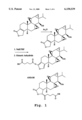
- FIG. 1 shows the preparation of triptolide derivatized at the lactone ring, in accordance with structure I;
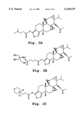
- FIGS. 2A-2C show examples of specific embodiments of structure I
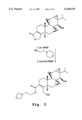
- FIG. 3 shows the preparation of a lactone ring-opened derivative of triptolide, in accordance with structure II
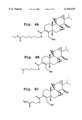
- FIGS. 4A-4C show examples of specific embodiments of structure II
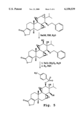
- FIG. 5 shows the preparation of an epoxy ring-opened derivative of triptolide, in accordance with structure III.
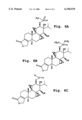
- FIGS. 6A-6C show examples of specific embodiments of structure III.
- Alkyl refers to a fully saturated acyclic monovalent radical containing carbon and hydrogen, which may be branched or a straight chain. Examples are methyl, ethyl, n-butyl, t-butyl, n-heptyl, and isopropyl.
- Cycloalkyl refers to a fully saturated cyclic monovalent radical containing carbon and hydrogen, which may be further substituted with alkyl. Examples are cyclopropyl, methyl cyclopropyl, cyclobutyl, cyclopentyl, and cyclohexyl.
- “Lower alkyl” refers to an alkyl radical of one to six carbon atoms, as exemplified by methyl, ethyl, n-butyl, i-butyl, t-butyl, isoamyl, n-pentyl, and isopentyl.
- Alkenyl refers to a monovalent or divalent unsaturated, preferably mono-unsaturated, radical containing carbon and hydrogen, and which may be cyclic, branched or a straight chain. "Lower alkenyl” refers to such a radical having one to four carbon atoms.
- triptolide derivative or “triptolide analog,” as described herein, refers to a compound based on triptolide, 16-hydroxytriptolide or tripdiolide (2-hydroxytriptolide) which is derivatized at the 12,13-epoxy group or at the lactone ring of the parent compound.
- the compounds of the invention may be prepared from triptolide, as obtained from the root xylem of the Chinese medicinal plant Tripterygium wilfordii (TW) or from other known sources.
- TW Chinese medicinal plant Tripterygium wilfordii
- the TW plant is found in the Fujiang province and other southern provinces of China; TW plant material can generally be obtained in China or through commercial sources in the United States.
- Methods for preparing triptolide and some of its derivatives are known in the art and are described, for example, in Kupchan et al. (1972, 1977); Lipsky et al. (1994); Pu et al. (1990); and Ma et al. (1992).
- OR 1 is a hydrolyzable, hydrophilic group, e.g. a carboxylic ester, an inorganic ester, or a mono-, di- or trisaccharide linked to the parent compound via an anomeric oxygen.
- the carboxylic or inorganic ester has a central atom selected from carbon, sulfur, phosphorus, and boron, and attached to the central atom, at least one oxygen atom, and at least one group of the form --O--Y--Z.
- Y represents a branched or unbranched C 1 -C 6 alkyl or alkenyl chain
- Z represents hydrogen, or, preferably, a polar group selected from keto, aldehyde, carboxylate, carboxylic ester, hydroxy, alkoxy, polyether, thiol, alkylthio, amino, alkylamino, cyano, nitro, sulfate, nitrate, phosphate, or a 5- to 7-membered heterocyclic ring whose ring atoms are selected from the group consisting of carbon, nitrogen, heterocycles include, for example, pyridine, pyrrolidine, piperazine, and morpholine.
- inorganic esters examples include sulfites (--O--S( ⁇ O)--OR), sulfinates (--O--S( ⁇ O)--R), sulfates (--O--S( ⁇ O) 2 --OR), sulfonates (--O--S( ⁇ O) 2 --R), phosphates (--O--P( ⁇ O)(OR) 2 ), phosphonates (--O--P( ⁇ O)R(OR)), and borates (--O--B(OR) 2 ).
- the positively charged counterion is preferably an inorganic metal, such as Na + , K + , or Mg +2 , or a protonated organic amine, e.g. tromethamine (tris(hydroxymethyl)aminomethane).
- Z is a basic amine
- the compound may take the form of a protonated salt, with a negatively charged counterion such as chloride, bromide, iodide, acetate, oxalate, maleate, fumarate, mesylate or tosylate.
- the substituent OR 3 is OH or O--(C ⁇ O)R, where R is lower alkyl.
- hydrophilic nature of the substituents increases the aqueous solubility of the compounds, and hydrolysis of OR 1 (e.g in vivo) regenerates the unsaturated lactone (butenolide) of triptolide.
- the compounds of structure I may be prepared by reaction of the unsaturated lactone (butenolide) with base, to generate the enolate, followed by alkylation with an electrophilic reagent such as R 1 --X, where X is a displacable leaving group, or an activated acyl reagent, such as an acid chloride, anhydride, or carbonyl imidazole (see Hormi et al. and Garver et al.). See, for example, FIG. 1, where the butenolide enolate, prepared by reaction with sodium hydride in dry THF, is acylated with glutaric anhydride, to give the carboxylic acid-terminated ester derivative. Note that acylation may also occur at carbon to give a keto side product. In such cases, the products may be separated by conventional methods, e.g. column chromatography on silica gel.
- Inorganic ester derivatives are prepared by similar base-catalyzed reaction of the butenolide with the appropriate activated inorganic acid derivative, such as a halide or an anhydride (e.g. SO 3 ).
- R 1 X is a glycosyl halide or other activated glycosyl derivative.
- One such type of derivative is an acetimidate activated glycoside, which may be prepared by reaction of a suitably protected glycosyl halide with a secondary amide in the presence of Ag 2 O and base (see e.g. Ferrier, in Kennedy, p. 352).
- OR 3 in these structures is hydroxyl or, preferably, --O(C ⁇ O)R, where R is lower alkyl.
- R is lower alkyl.
- a simple ester such as acetyl is typically employed.
- the triptolide analogs are of the structure II, as shown above.
- the group OR 3 is as defined above, and is preferably lower acyl, e.g. acetyl.
- the group OR 5 is preferably of the form --O--Y--Z or --O--(C ⁇ O)--Y--Z, where Y is a branched or unbranched C 1 -C 6 alkyl or alkenyl chain, and Z is hydrogen or a polar group selected from keto, aldehyde, carboxylate, carboxylic ester, amino, alkylamino, hydroxy, alkoxy, polyether, thiol, alkylthio, cyano, nitro, inorganic ester, or a 5- to 7-member heterocyclic ring whose ring atoms are selected from the group consisting of carbon, nitrogen, oxygen and sulfur, where the ring atoms include 3 to 6 carbon atoms.
- R 5 may also be a mono-, di- or tri
- the positively charged counterion is preferably an inorganic metal, such as Na + , K + , or Mg +2 , or a protonated organic amine, e.g. tromethamine.
- Z is a basic amine
- the compound may take the form of a protonated salt, with a negatively charged counterion such as chloride, bromide, iodide, acetate, oxalate, maleate, fumarate, mesylate or tosylate.
- These compounds are prepared by transesterification of the lactone ring of triptolide with a hydroxyl-containing compound.
- a hydrophilic alcohol e.g., a saccharide, or a substituted heterocycle as shown in FIG. 3
- the hydroxyl generated on ring opening of the lactone is reacted with, for example, an acid chloride, as shown, to give a hydrolyzable group, such as an ester, from which the alcohol may be regenerated hydrolytically in vivo.
- FIG. 3 A typical synthesis is shown in FIG. 3, in which triptolide is reacted with 1-(2-hydroxyethyl)-morpholine in the presence of a catalytic amount of DMAP. The free hydroxyl group which is generated, as well as the free 14-hydroxyl, are then acylated to give the final compound. Further examples are shown in FIGS. 4A-4C.
- the ester groups When such a compound is administered as a prodrug, the ester groups are hydrolytically cleaved in vivo, and the ester and alcohol at the 3 and 4 positions react to regenerate the lactone ring of triptolide.
- the triptolide analogs have the structure III, as shown above, where R 6 is a leaving group selected from the group consisting of alkyl sulfonate, fluoroalkyl sulfonate, aryl sulfonate, fluorosulfonate, nitrate, alkyl phosphate, alkyl borate, trialkylammonium, and dialkylsulfonium.
- Preferred leaving groups are tosylate, mesylate, fluorosulfonate, trifluoromethylsulfonate, nitrate, and alkyl phosphates or boronates, represented by --OP(O)(OR 4 ) 2 , and --OB(OR 4 ) 2 , where R 4 is hydrogen or lower alkyl.
- the group OR 3 is --OH or --O--(C ⁇ O)--R, where R is lower alkyl.
- the hydroxyl at C14 is first protected as a benzyl ether, which is later removed by hydrogenation.
- the nucleophile typically hydroxide ion, attacks at the less hindered 12-carbon of the epoxide.
- the resulting 12-hydroxyl group of the 1,2-diol is then converted to the leaving group R 6 , in this case a tosylate.
- FIGS. 6A-6C Other examples of compounds of structure III are shown in FIGS. 6A-6C.
- the 13-hydroxyl (and 14-hydroxyl) may be converted to a hydrolyzable group, so that the compound will be more stable upon storage, but will still convert (albeit more slowly) to the epoxide in vivo. Because the 13-hydroxyl is tertiary and thus slow to react, use of an unhindered, reactive acylating agent, e.g., acetyl chloride, is preferred.
- an unhindered, reactive acylating agent e.g., acetyl chloride
- Formulations containing the triptolide analogs of the invention may take the form of solid, semi-solid, lyophilized powder, or liquid dosage forms, such as tablets, capsules, powders, sustained-release formulations, solutions, suspensions, emulsions, ointments, lotions, or aerosols, preferably in unit dosage forms suitable for simple administration of precise dosages.
- the compositions typically include a conventional pharmaceutical carrier or excipient and may additionally include other medicinal agents, carriers, or adjuvants.
- the composition will be about 0.5% to 75% by weight of a compound or compounds of the invention, with the remainder consisting of suitable pharmaceutical excipients.
- excipients include pharmaceutical grades of mannitol, lactose, starch, magnesium stearate, sodium saccharine, talcum, cellulose, glucose, gelatin, sucrose, magnesium carbonate, and the like.
- the composition may also contain minor amounts of non-toxic auxiliary substances such as wetting agents, emulsifying agents, or buffers.
- the composition may be administered to a subject orally, transdermally or parenterally, e.g., by intravenous, subcutaneous, intraperitoneal, or intramuscular injection.
- the composition may be prepared as a solution, suspension, emulsion, or syrup, being supplied either in liquid form or a dried form suitable for hydration in water or normal saline.
- an injectable composition for parenteral administration will typically contain the triptolide analog in a suitable intravenous solution, such as sterile physiological salt solution.
- Liquid compositions can be prepared by dissolving or dispersing the triptolide analog (about 0.5% to about 20%) and optional pharmaceutical adjuvants in a carrier, such as, for example, aqueous saline, aqueous dextrose, glycerol, or ethanol, to form a solution or suspension.
- a carrier such as, for example, aqueous saline, aqueous dextrose, glycerol, or ethanol.
- a carrier such as, for example, aqueous saline, aqueous dextrose, glycerol, or ethanol.
- the high water solubility of the compounds of the invention make them particularly advantageous for administering in aqueous solution, e.g. by intraperitoneal injection.
- compositions in accordance with the invention may also be formulated as a suspension in a lipid (e.g., a triglyceride, a phospholipid, or a polyethoxylated castor oil such as "CREMOPHOR ELTM”), in a liposomal suspension, or in an aqueous emulsion.
- a lipid e.g., a triglyceride, a phospholipid, or a polyethoxylated castor oil such as "CREMOPHOR ELTM”
- the compound may also be administered by inhalation, in the form of aerosol particles, either solid or liquid, preferably of respirable size. Such particles are sufficiently small to pass through the mouth and larynx upon inhalation and into the bronchi and alveoli of the lungs. In general, particles ranging from about 1 to 10 microns in size, and preferably less than about 5 microns in size, are respirable.
- Liquid compositions for inhalation comprise the active agent dispersed in an aqueous carrier, such as sterile pyrogen free saline solution or sterile pyrogen free water. If desired, the composition may be mixed with a propellant to assist in spraying the composition and forming an aerosol.
- composition to be administered will contain a quantity of the selected compound in a pharmaceutically effective amount for effecting immunosuppression in a subject.
- compositions of the present invention are useful in applications for which triptolide has proven effective, particularly in immunosuppression therapy, as in treating an autoimmune disease, preventing transplantation rejection, or treating or preventing graft-versus-host disease (GVHD).
- Triptolide and the present analogs are also useful for treatment of other inflammatory conditions, such as traumatic inflammation, and in reducing male fertility.
- autoimmune diseases which are appropriate for immmunotherapy include asthma, atherosclerosis, Type I diabetes, multiple sclerosis, psoriasis, systemic lupus erythematosis (SLE), rheumatoid arthritis, and various allergies.
- the patient is given the composition on a periodic basis, e.g., 1-2 times per week, at a dosage level sufficient to reduce symptoms and improve patient comfort.
- the dose that is administered is preferably in the range of 1-25 mg/kg patient body weight per day, with lower amounts being preferred for parenteral administration, and higher amounts being preferred for oral administration. Optimum dosages can be determined by routine experimentation according to methods known in the art.
- Immunosuppressive activity of compounds in vivo can be evaluated by the use of established animal models known in the art. Such assays may be used to evaluate the relative effectiveness of immunosuppressive compounds and to estimate appropriate dosages for immunosuppressive treatment. These assays include, for example, a well-characterized rat model system for allografts, described by Ono and Lindsey (1969), in which a transplanted heart is attached to the abdominal great vessels of an allogeneic recipient animal, and the viability of the transplanted heart is gauged by the heart's ability to beat in the recipient animal. A xenograft model, in which the recipient animals are of a different species, is described by Wang (1991) and Murase (1993).
- a model for evaluating effectiveness against GVHD involves injection of normal F 1 mice with parental spleen cells; the mice develop a GVHD syndrome characterized by splenomegaly and immunosuppression (Korngold, 1978; Gleichmann, 1984). Single cell suspensions are prepared from individual spleens, and microwell cultures are established in the presence and absence of concanavalin A to assess the extent of mitogenic responsiveness.
- the method is intended particularly for the treatment of rejection of heart, kidney, liver, cellular, and bone marrow transplants, and may also be used in the treatment of GVHD.
- the treatment is typically initiated perioperatively, either soon before or soon after the surgical transplantation procedure, and is continued on a daily dosing regimen, for a period of at least several weeks, for treatment of acute transplantation rejection.
- the patient may be tested periodically for immunosuppression level, e.g., by a mixed lymphocyte reaction involving allogenic lymphocytes, or by taking a biopsy of the transplanted tissue.
- the composition may be administered chronically to prevent graft rejection, or in treating acute episodes of late graft rejection.
- the dose administered is preferably 1-25 mg/kg patient body weight per day, with lower amounts being preferred for parenteral administration, and higher amounts for oral administration.
- the dose may be increased or decreased appropriately, depending on the response of the patient, and over the period of treatment, the ability of the patient to resist infection.
- the composition may be administered by intravenous injection or by direct injection into the affected joint.
- the patient may be treated at repeated intervals of at least 24 hours, over a several week period following treated at repeated intervals of at least 24 hours, over a several week period following the onset of symptoms of the disease in the patient.
- the compounds are also useful as potentiators when administered concurrently with another immunosuppressive drug for immunosuppressive treatments as discussed above.
- a conventional immunosuppressant drug such as cyclosporin A, FK506, azathioprine, rapamycin, mycophenolic acid, or a glucocorticoid, may thus be administered in an amount substantially less (e.g. 20% to 50% of the standard dose) than when the compound is administered alone.
- the triptolide analog and immunosuppresive drug are administered in amounts such that the resultant immunosuppression is greater than what would be expected or obtained from the sum of the effects obtained with the drug and triptolide analog used alone.
- the immunosuppressive drug and potentiator are both administered at regular intervals over a time period of at least 2 weeks.
- Triptolide (1 eq.) in dry THF is added dropwise, under an inert atmosphere, to a stirred suspension of a slight excess of NaH in dry THF at -78° C.
- glutaric anhydride (1 eq. or slight excess) is added dropwise, and the stirred mixture is allowed to come to room temperature over approx. 1 hr.
- the mixture is concentrated, taken up in ether, washed with water and brine, dried over anhydrous MgSO 4 and concentrated. The residue is purified by chromatography on silica gel.
- the 14-hydroxyl group is first protected by conversion to a benzyl ether.
- the compound (1 eq) is reacted with BzBr (2.5 eq) in the presence of Ag 2 O (2 eq) in DMF under an inert atmosphere at 0° C. (see, for example, Mori et al.).
- the mixture is allowed to come to room temperature with stirring and stirred for about 24 h.
- the mixture is diluted with ether, washed with water and brine, dried over anhydrous MgSO 4 and concentrated.
- the residue is purified, if desired, by chromatography on silica gel.
- the resulting 14-O-benzyl triptolide is then heated with NaOH in aqueous THF to convert the 12,13 epoxide to the diol.
- the solution is concentrated and the residue taken up in ether and worked up as above.
- the diol (1 eq) is dissolved in CH 2 Cl 2 , and a solution of TsCl (1.5 eq) and triethylamine (1.5 eq) in the same solvent is added. After the reaction is complete by TLC, the mixture is washed with water and brine, dried over anhydrous MgSO 4 , and concentrated. The residue is purified by silica gel chromatography.
- benzyl ether-protected tosylate is dissolved in dry THF, 5% Pd/C (approx. 25 mg/meq of substrate) is added, and the mixture is purged with H 2 (atmospheric pressure) and stirred at room temperature until deprotection is complete, approx. 2-3 hrs. The solution is then filtered and concentrated to obtain the product.
Landscapes
- Organic Chemistry (AREA)
- Chemical & Material Sciences (AREA)
- Health & Medical Sciences (AREA)
- Immunology (AREA)
- Medicinal Chemistry (AREA)
- Animal Behavior & Ethology (AREA)
- Chemical Kinetics & Catalysis (AREA)
- Life Sciences & Earth Sciences (AREA)
- Pharmacology & Pharmacy (AREA)
- Nuclear Medicine, Radiotherapy & Molecular Imaging (AREA)
- Engineering & Computer Science (AREA)
- Bioinformatics & Cheminformatics (AREA)
- General Chemical & Material Sciences (AREA)
- Veterinary Medicine (AREA)
- General Health & Medical Sciences (AREA)
- Public Health (AREA)
- Transplantation (AREA)
- Pain & Pain Management (AREA)
- Rheumatology (AREA)
- Pharmaceuticals Containing Other Organic And Inorganic Compounds (AREA)
- Saccharide Compounds (AREA)
- Polysaccharides And Polysaccharide Derivatives (AREA)
- Heterocyclic Carbon Compounds Containing A Hetero Ring Having Oxygen Or Sulfur (AREA)
Priority Applications (1)
| Application Number | Priority Date | Filing Date | Title |
|---|---|---|---|
| US09/389,769 US6150539A (en) | 1998-09-02 | 1999-09-02 | Triptolide prodrugs having high aqueous solubility |
Applications Claiming Priority (2)
| Application Number | Priority Date | Filing Date | Title |
|---|---|---|---|
| US9880998P | 1998-09-02 | 1998-09-02 | |
| US09/389,769 US6150539A (en) | 1998-09-02 | 1999-09-02 | Triptolide prodrugs having high aqueous solubility |
Publications (1)
| Publication Number | Publication Date |
|---|---|
| US6150539A true US6150539A (en) | 2000-11-21 |
Family
ID=22270998
Family Applications (1)
| Application Number | Title | Priority Date | Filing Date |
|---|---|---|---|
| US09/389,769 Expired - Fee Related US6150539A (en) | 1998-09-02 | 1999-09-02 | Triptolide prodrugs having high aqueous solubility |
Country Status (9)
| Country | Link |
|---|---|
| US (1) | US6150539A (de) |
| EP (1) | EP1109789B1 (de) |
| JP (1) | JP2002523495A (de) |
| CN (1) | CN1316997A (de) |
| AT (2) | ATE334969T1 (de) |
| AU (1) | AU764123B2 (de) |
| CA (1) | CA2342901A1 (de) |
| DE (2) | DE69932649T2 (de) |
| WO (1) | WO2000012483A1 (de) |
Cited By (19)
| Publication number | Priority date | Publication date | Assignee | Title |
|---|---|---|---|---|
| WO2002070472A3 (en) * | 2001-03-02 | 2002-10-24 | Pharmagenesis Inc | Triptolide prodrugs having high aqueous solubility |
| WO2002056835A3 (en) * | 2001-01-19 | 2003-02-27 | Pharmagenesis Inc | Anticancer treatment using triptolide prodrugs |
| US6569893B2 (en) | 2001-03-15 | 2003-05-27 | Pharmagenesis, Inc. | Amino acid derivatives of triptolide compounds as immune modulators and anticancer agents |
| US20040152767A1 (en) * | 2002-12-17 | 2004-08-05 | Dongcheng Dai | Triptolide derivatives as immunomodulators and anticancer agents |
| US20040235943A1 (en) * | 2002-05-31 | 2004-11-25 | Dongcheng Dai | Triptolide derivatives for modulation of apoptosis and immunosuppression |
| WO2004075853A3 (en) * | 2003-02-25 | 2004-12-29 | Pharmagenesis Inc | Halogenated triptolide derivatives as immunomodulators and anticancer agents |
| WO2005000291A1 (en) * | 2003-06-27 | 2005-01-06 | Pharmagenesis, Inc. | Method for treatment of idiopathic pulmonary fibrosis using triptolide derivatives |
| US20060111327A1 (en) * | 2002-09-18 | 2006-05-25 | Dayuan Wang | Derivatives of triptolide having a high immunosuppressive effect and high water solubility, and uses thereof |
| US20070244080A1 (en) * | 2004-06-25 | 2007-10-18 | Pharmagenesis, Inc. | Method for Treatment of Inflammatory Disorders Using Triptolide Compounds |
| US20070249048A1 (en) * | 2003-12-24 | 2007-10-25 | Dongcheng Dai | Triptolide 5,6-Derivatives as Immunomodulators and Anticancer Agents |
| CN100408583C (zh) * | 2003-02-25 | 2008-08-06 | 美国泛华医药公司 | 用作免疫调节剂和抗癌药的卤代雷公藤内酯醇衍生物 |
| US20100331554A1 (en) * | 2004-03-02 | 2010-12-30 | Hongwei Yuan | Triptolide lactone ring derivatives as immunomodulators and anticancer agents |
| US8048914B2 (en) | 2004-02-09 | 2011-11-01 | Pharmagenesis, Inc. | Methods for isolation of triptolide compounds from Tripterygium wilfordii |
| US8268882B2 (en) | 2009-02-05 | 2012-09-18 | Pharmagenesis, Inc. | Triptolide C-ring derivatives as anticancer agents and immune modulators |
| US20120238529A1 (en) * | 2009-05-07 | 2012-09-20 | Regents Of The University Of Minnesota | Triptolide prodrugs |
| US8617906B2 (en) | 2004-10-13 | 2013-12-31 | Pharmagenesis, Inc. | Identification and screening of triptolide target molecules |
| US9150600B2 (en) | 2009-05-07 | 2015-10-06 | Regents Of The University Of Minnesota | Triptolide prodrugs |
| US9956235B2 (en) | 2012-08-23 | 2018-05-01 | Senestech, Inc. | Reducing the reproductive capacity of mammals |
| US9993458B2 (en) | 2014-02-21 | 2018-06-12 | Institute For Cancer Research | Method of treating MYC-amplified tumors with RNA-polymerase II inhibitors |
Families Citing this family (9)
| Publication number | Priority date | Publication date | Assignee | Title |
|---|---|---|---|---|
| CA2376008A1 (en) * | 1999-06-02 | 2000-12-14 | Oxford Natural Products Plc | Combination of glucosamine with herbal extracts of tripterygium, ligustrum and erycibe |
| WO2014167581A2 (en) * | 2013-04-01 | 2014-10-16 | Laurus Labs Private Limited | An improved process for the preparation of triptolide prodrugs |
| JP6738326B2 (ja) * | 2014-06-06 | 2020-08-12 | ザ スクリプス リサーチ インスティテュート | フッ化硫黄(vi)化合物およびそれの製造方法 |
| CN106883284B (zh) * | 2017-03-03 | 2018-10-16 | 广东省中医院 | 雷公藤内酯三醇的快速安全制备方法 |
| CN106995450B (zh) * | 2017-05-19 | 2019-04-02 | 湖北大学 | 一种雷公藤甲素衍生物及其制备方法和用途 |
| CN110759929B (zh) * | 2018-07-27 | 2022-05-03 | 上海医药集团股份有限公司 | (5r)-5-羟基雷公藤内酯醇的制备方法 |
| EP4086271B1 (de) * | 2019-12-30 | 2023-12-13 | Guangdong Provincial Hospital of TCM | Triptolidylacrylat, verfahren zu seiner herstellung und seine verwendung |
| US20230303618A1 (en) | 2020-08-21 | 2023-09-28 | Reyoung Corporation | Triptolide conjugates and uses thereof |
| WO2023143330A1 (zh) * | 2022-01-25 | 2023-08-03 | 杭州卫本医药科技有限公司 | 具有杀伤myc阳性细胞功能雷公藤二萜类环氧化合物、及其制备方法和应用 |
Citations (2)
| Publication number | Priority date | Publication date | Assignee | Title |
|---|---|---|---|---|
| JPH03178977A (ja) * | 1989-09-08 | 1991-08-02 | Chugoku Igaku Kagakuin Hifubyo Kenkyusho | ジテルペンラクトン化合物及びその製造方法 |
| US5972998A (en) * | 1997-05-23 | 1999-10-26 | Hoechst Marion Roussel, Inc. | Triptolide derivatives useful in the treatment of autoimmune diseases |
Family Cites Families (2)
| Publication number | Priority date | Publication date | Assignee | Title |
|---|---|---|---|---|
| US5663335A (en) * | 1996-03-01 | 1997-09-02 | Pharmagenesis, Inc. | Immunosuppressive compounds and methods |
| UA57757C2 (uk) * | 1996-12-20 | 2003-07-15 | Сос'Єте Де Консей Де Решерш Е Даплікасьон С'Єнтіфік (С.К.Р.А.С.) | Аналоги камптотецину, спосіб їх отримання (варіанти) і фармацевтична композиція |
-
1999
- 1999-09-02 CA CA002342901A patent/CA2342901A1/en not_active Abandoned
- 1999-09-02 US US09/389,769 patent/US6150539A/en not_active Expired - Fee Related
- 1999-09-02 AU AU62425/99A patent/AU764123B2/en not_active Ceased
- 1999-09-02 AT AT03016090T patent/ATE334969T1/de not_active IP Right Cessation
- 1999-09-02 AT AT99949582T patent/ATE245145T1/de not_active IP Right Cessation
- 1999-09-02 DE DE69932649T patent/DE69932649T2/de not_active Expired - Fee Related
- 1999-09-02 EP EP99949582A patent/EP1109789B1/de not_active Expired - Lifetime
- 1999-09-02 CN CN99810578A patent/CN1316997A/zh active Pending
- 1999-09-02 DE DE69909633T patent/DE69909633T2/de not_active Expired - Fee Related
- 1999-09-02 WO PCT/US1999/020150 patent/WO2000012483A1/en not_active Ceased
- 1999-09-02 JP JP2000567513A patent/JP2002523495A/ja active Pending
Patent Citations (2)
| Publication number | Priority date | Publication date | Assignee | Title |
|---|---|---|---|---|
| JPH03178977A (ja) * | 1989-09-08 | 1991-08-02 | Chugoku Igaku Kagakuin Hifubyo Kenkyusho | ジテルペンラクトン化合物及びその製造方法 |
| US5972998A (en) * | 1997-05-23 | 1999-10-26 | Hoechst Marion Roussel, Inc. | Triptolide derivatives useful in the treatment of autoimmune diseases |
Non-Patent Citations (1)
| Title |
|---|
| Yu, D Q et al Structure Modification of Triptolide CA 118: 182770 (1993). * |
Cited By (38)
| Publication number | Priority date | Publication date | Assignee | Title |
|---|---|---|---|---|
| US6548537B1 (en) | 1998-09-02 | 2003-04-15 | Pharmagenesis, Inc. | Triptolide prodrugs having high aqueous solubility |
| WO2002056835A3 (en) * | 2001-01-19 | 2003-02-27 | Pharmagenesis Inc | Anticancer treatment using triptolide prodrugs |
| US6620843B2 (en) | 2001-01-19 | 2003-09-16 | Pharmagenesis | Anticancer treatment using triptolide prodrugs |
| WO2002070472A3 (en) * | 2001-03-02 | 2002-10-24 | Pharmagenesis Inc | Triptolide prodrugs having high aqueous solubility |
| US6569893B2 (en) | 2001-03-15 | 2003-05-27 | Pharmagenesis, Inc. | Amino acid derivatives of triptolide compounds as immune modulators and anticancer agents |
| EP2468277A1 (de) | 2002-05-31 | 2012-06-27 | Pharmagenesis, Inc. | Triptolidderivate zur Modulierung der Apoptose und Immunsuppression |
| US20040235943A1 (en) * | 2002-05-31 | 2004-11-25 | Dongcheng Dai | Triptolide derivatives for modulation of apoptosis and immunosuppression |
| US7662976B2 (en) | 2002-05-31 | 2010-02-16 | Pharmagenesis, Inc. | Triptolide derivatives for modulation of apoptosis and immunosuppression |
| US20110076293A1 (en) * | 2002-05-31 | 2011-03-31 | Dongcheng Dai | Triptolide derivatives for modulation of apoptosis and immunosuppression |
| US7847109B2 (en) | 2002-05-31 | 2010-12-07 | Pharmagenesis, Inc. | Triptolide derivatives for modulation of apoptosis and immunosuppression |
| US20090171103A1 (en) * | 2002-05-31 | 2009-07-02 | Dongcheng Dai | Triptolide Derivatives for Modulation of Apoptosis and Immunosuppression |
| US20060111327A1 (en) * | 2002-09-18 | 2006-05-25 | Dayuan Wang | Derivatives of triptolide having a high immunosuppressive effect and high water solubility, and uses thereof |
| US20040152767A1 (en) * | 2002-12-17 | 2004-08-05 | Dongcheng Dai | Triptolide derivatives as immunomodulators and anticancer agents |
| US7019151B2 (en) | 2002-12-17 | 2006-03-28 | Pharmagenesis, Inc. | Triptolide derivatives as immunomodulators and anticancer agents |
| WO2004075853A3 (en) * | 2003-02-25 | 2004-12-29 | Pharmagenesis Inc | Halogenated triptolide derivatives as immunomodulators and anticancer agents |
| US20050288364A1 (en) * | 2003-02-25 | 2005-12-29 | Pharmagenesis, Inc. | Halogenated triptolide derivatives as immunomodulators and anticancer agents |
| CN100408583C (zh) * | 2003-02-25 | 2008-08-06 | 美国泛华医药公司 | 用作免疫调节剂和抗癌药的卤代雷公藤内酯醇衍生物 |
| US7417069B2 (en) * | 2003-02-25 | 2008-08-26 | Pharmagenesis, Inc. | Halogenated triptolide derivatives as immunomodulators and anticancer agents |
| WO2005020887A3 (en) * | 2003-06-27 | 2005-04-28 | Pharmagenesis Inc | Method for treatment of severe acute respiratory syndrome |
| WO2005000291A1 (en) * | 2003-06-27 | 2005-01-06 | Pharmagenesis, Inc. | Method for treatment of idiopathic pulmonary fibrosis using triptolide derivatives |
| US20070249048A1 (en) * | 2003-12-24 | 2007-10-25 | Dongcheng Dai | Triptolide 5,6-Derivatives as Immunomodulators and Anticancer Agents |
| US7820834B2 (en) | 2003-12-24 | 2010-10-26 | Pharmagenesis, Inc. | Triptolide 5,6-derivatives as immunomodulators and anticancer agents |
| US8048914B2 (en) | 2004-02-09 | 2011-11-01 | Pharmagenesis, Inc. | Methods for isolation of triptolide compounds from Tripterygium wilfordii |
| US20100331554A1 (en) * | 2004-03-02 | 2010-12-30 | Hongwei Yuan | Triptolide lactone ring derivatives as immunomodulators and anticancer agents |
| US7863464B2 (en) | 2004-03-02 | 2011-01-04 | Pharmagenesis, Inc. | Triptolide lactone ring derivatives as immunomodulators and anticancer agents |
| US8426616B2 (en) | 2004-03-02 | 2013-04-23 | Pharmagenesis, Inc. | Triptolide lactone ring derivatives as immunomodulators and anticancer agents |
| US20070244080A1 (en) * | 2004-06-25 | 2007-10-18 | Pharmagenesis, Inc. | Method for Treatment of Inflammatory Disorders Using Triptolide Compounds |
| US8617906B2 (en) | 2004-10-13 | 2013-12-31 | Pharmagenesis, Inc. | Identification and screening of triptolide target molecules |
| US8268882B2 (en) | 2009-02-05 | 2012-09-18 | Pharmagenesis, Inc. | Triptolide C-ring derivatives as anticancer agents and immune modulators |
| US20120238529A1 (en) * | 2009-05-07 | 2012-09-20 | Regents Of The University Of Minnesota | Triptolide prodrugs |
| US8507552B2 (en) * | 2009-05-07 | 2013-08-13 | Regents Of The University Of Minnesota | Triptolide prodrugs |
| US9150600B2 (en) | 2009-05-07 | 2015-10-06 | Regents Of The University Of Minnesota | Triptolide prodrugs |
| US9623035B2 (en) | 2009-05-07 | 2017-04-18 | Regents Of The University Of Minnesota | Triptolide prodrugs |
| US10183033B2 (en) | 2009-05-07 | 2019-01-22 | Regents Of The University Of Minnesota | Triptolide prodrugs |
| US9956235B2 (en) | 2012-08-23 | 2018-05-01 | Senestech, Inc. | Reducing the reproductive capacity of mammals |
| US10646501B2 (en) | 2012-08-23 | 2020-05-12 | Senestech, Inc. | Reducing the reproductive capacity of mammals |
| US9993458B2 (en) | 2014-02-21 | 2018-06-12 | Institute For Cancer Research | Method of treating MYC-amplified tumors with RNA-polymerase II inhibitors |
| US10328050B2 (en) | 2014-02-21 | 2019-06-25 | Institute For Cancer Research | C-Myc as a biomarker for tumor sensitivity to treatment with RNA polymerase II inhibition |
Also Published As
| Publication number | Publication date |
|---|---|
| JP2002523495A (ja) | 2002-07-30 |
| ATE334969T1 (de) | 2006-08-15 |
| DE69932649D1 (de) | 2006-09-14 |
| DE69909633T2 (de) | 2004-05-13 |
| EP1109789A4 (de) | 2002-01-02 |
| DE69932649T2 (de) | 2007-08-09 |
| ATE245145T1 (de) | 2003-08-15 |
| AU764123B2 (en) | 2003-08-07 |
| EP1109789B1 (de) | 2003-07-16 |
| EP1109789A1 (de) | 2001-06-27 |
| WO2000012483A1 (en) | 2000-03-09 |
| DE69909633D1 (de) | 2003-08-21 |
| CN1316997A (zh) | 2001-10-10 |
| CA2342901A1 (en) | 2000-03-09 |
| AU6242599A (en) | 2000-03-21 |
Similar Documents
| Publication | Publication Date | Title |
|---|---|---|
| US6150539A (en) | Triptolide prodrugs having high aqueous solubility | |
| US5663335A (en) | Immunosuppressive compounds and methods | |
| RU2134267C1 (ru) | Гидроксиэфиры рапамицина, способ их получения и способы лечения | |
| US6548537B1 (en) | Triptolide prodrugs having high aqueous solubility | |
| US5962516A (en) | Immunosuppressive compounds and methods | |
| KR100330799B1 (ko) | C-22환안정화된라파마이신유도체및이를함유하는약제학적조성물 | |
| JPH08503210A (ja) | 免疫抑制剤としてのラパマイシンの炭酸エステル | |
| CA2485794C (en) | Triptolide derivatives for modulation of apoptosis and immunosuppression | |
| US6569893B2 (en) | Amino acid derivatives of triptolide compounds as immune modulators and anticancer agents | |
| US7019151B2 (en) | Triptolide derivatives as immunomodulators and anticancer agents | |
| EP1375488A1 (de) | Gut wasserlöslische triptolid-prodrugs | |
| HK1019444B (en) | Immunosuppressive compounds and methods |
Legal Events
| Date | Code | Title | Description |
|---|---|---|---|
| AS | Assignment |
Owner name: PHARMAGENESIS, INC., CALIFORNIA Free format text: ASSIGNMENT OF ASSIGNORS INTEREST;ASSIGNOR:MUSSER, JOHN H.;REEL/FRAME:010424/0122 Effective date: 19990901 |
|
| FEPP | Fee payment procedure |
Free format text: PAYOR NUMBER ASSIGNED (ORIGINAL EVENT CODE: ASPN); ENTITY STATUS OF PATENT OWNER: SMALL ENTITY |
|
| FPAY | Fee payment |
Year of fee payment: 4 |
|
| FEPP | Fee payment procedure |
Free format text: PAYOR NUMBER ASSIGNED (ORIGINAL EVENT CODE: ASPN); ENTITY STATUS OF PATENT OWNER: SMALL ENTITY Free format text: PAYER NUMBER DE-ASSIGNED (ORIGINAL EVENT CODE: RMPN); ENTITY STATUS OF PATENT OWNER: SMALL ENTITY |
|
| REMI | Maintenance fee reminder mailed | ||
| LAPS | Lapse for failure to pay maintenance fees | ||
| STCH | Information on status: patent discontinuation |
Free format text: PATENT EXPIRED DUE TO NONPAYMENT OF MAINTENANCE FEES UNDER 37 CFR 1.362 |
|
| FP | Lapsed due to failure to pay maintenance fee |
Effective date: 20081121 |