WO2007132874A1 - ポリカーボネート樹脂およびそれを用いた光学用材料 - Google Patents
ポリカーボネート樹脂およびそれを用いた光学用材料 Download PDFInfo
- Publication number
- WO2007132874A1 WO2007132874A1 PCT/JP2007/060003 JP2007060003W WO2007132874A1 WO 2007132874 A1 WO2007132874 A1 WO 2007132874A1 JP 2007060003 W JP2007060003 W JP 2007060003W WO 2007132874 A1 WO2007132874 A1 WO 2007132874A1
- Authority
- WO
- WIPO (PCT)
- Prior art keywords
- carbon atoms
- group
- polycarbonate resin
- formula
- bonded
- Prior art date
- Legal status (The legal status is an assumption and is not a legal conclusion. Google has not performed a legal analysis and makes no representation as to the accuracy of the status listed.)
- Ceased
Links
Classifications
-
- C—CHEMISTRY; METALLURGY
- C08—ORGANIC MACROMOLECULAR COMPOUNDS; THEIR PREPARATION OR CHEMICAL WORKING-UP; COMPOSITIONS BASED THEREON
- C08G—MACROMOLECULAR COMPOUNDS OBTAINED OTHERWISE THAN BY REACTIONS ONLY INVOLVING UNSATURATED CARBON-TO-CARBON BONDS
- C08G64/00—Macromolecular compounds obtained by reactions forming a carbonic ester link in the main chain of the macromolecule
- C08G64/04—Aromatic polycarbonates
- C08G64/06—Aromatic polycarbonates not containing aliphatic unsaturation
- C08G64/14—Aromatic polycarbonates not containing aliphatic unsaturation containing a chain-terminating or -crosslinking agent
-
- C—CHEMISTRY; METALLURGY
- C08—ORGANIC MACROMOLECULAR COMPOUNDS; THEIR PREPARATION OR CHEMICAL WORKING-UP; COMPOSITIONS BASED THEREON
- C08G—MACROMOLECULAR COMPOUNDS OBTAINED OTHERWISE THAN BY REACTIONS ONLY INVOLVING UNSATURATED CARBON-TO-CARBON BONDS
- C08G64/00—Macromolecular compounds obtained by reactions forming a carbonic ester link in the main chain of the macromolecule
- C08G64/40—Post-polymerisation treatment
-
- C—CHEMISTRY; METALLURGY
- C08—ORGANIC MACROMOLECULAR COMPOUNDS; THEIR PREPARATION OR CHEMICAL WORKING-UP; COMPOSITIONS BASED THEREON
- C08L—COMPOSITIONS OF MACROMOLECULAR COMPOUNDS
- C08L69/00—Compositions of polycarbonates; Compositions of derivatives of polycarbonates
-
- G—PHYSICS
- G11—INFORMATION STORAGE
- G11B—INFORMATION STORAGE BASED ON RELATIVE MOVEMENT BETWEEN RECORD CARRIER AND TRANSDUCER
- G11B7/00—Recording or reproducing by optical means, e.g. recording using a thermal beam of optical radiation by modifying optical properties or the physical structure, reproducing using an optical beam at lower power by sensing optical properties; Record carriers therefor
- G11B7/24—Record carriers characterised by shape, structure or physical properties, or by the selection of the material
- G11B7/241—Record carriers characterised by shape, structure or physical properties, or by the selection of the material characterised by the selection of the material
- G11B7/252—Record carriers characterised by shape, structure or physical properties, or by the selection of the material characterised by the selection of the material of layers other than recording layers
- G11B7/253—Record carriers characterised by shape, structure or physical properties, or by the selection of the material characterised by the selection of the material of layers other than recording layers of substrates
- G11B7/2533—Record carriers characterised by shape, structure or physical properties, or by the selection of the material characterised by the selection of the material of layers other than recording layers of substrates comprising resins
- G11B7/2534—Record carriers characterised by shape, structure or physical properties, or by the selection of the material characterised by the selection of the material of layers other than recording layers of substrates comprising resins polycarbonates [PC]
-
- G—PHYSICS
- G11—INFORMATION STORAGE
- G11B—INFORMATION STORAGE BASED ON RELATIVE MOVEMENT BETWEEN RECORD CARRIER AND TRANSDUCER
- G11B7/00—Recording or reproducing by optical means, e.g. recording using a thermal beam of optical radiation by modifying optical properties or the physical structure, reproducing using an optical beam at lower power by sensing optical properties; Record carriers therefor
- G11B7/24—Record carriers characterised by shape, structure or physical properties, or by the selection of the material
Definitions
- the present invention is suitable for manufacturing an optical disc substrate such as a CD, LD, MO disc, DVD, Blu-ray disc (Blu-Ray Disc) and the like. It relates to polycarbonate resin.
- PC polycarbonate resin
- PMMA polymethyl metatalylate
- cyclic polyolefin and the like
- dimensional stability, impact strength, etc. PC is the most balanced material in terms of heat resistance and cost.
- bisphenol A type PC is the most popular material for optical disks because of its high cost performance.
- Bisphenol A-type PC has the feature of low water expansion coefficient and excellent dimensional stability compared to PMMA and other resins, so the minimum pit length is 0.4 microns or more, and the track pitch is 0.7 4 microns.
- the strength that has been adopted as the above-mentioned conventional recording density optical disc base material For high-density optical disc applications such as blu-ray discs, the warpage of the disc base due to water absorption expansion due to environmental humidity changes exceeds the allowable value, resulting in a focus error. There was also a problem that the signal could not be read due to tracking errors.
- Patent Document 2 For the purpose of improving adhesion to metals, a method for producing polycarbonate resin moldings using p-hydroxybenzoic acids having an alkyl group with 1 to 7 carbon atoms at the end of the molecule as a terminal terminator was developed.
- Patent Document 2 a method for producing polycarbonate resin moldings using p-hydroxybenzoic acids having an alkyl group with 1 to 7 carbon atoms at the end of the molecule as a terminal terminator was developed.
- the present inventors have made a trial production of a polycarbonate resin using p-hydroxybenzoic acid as a terminal terminator, and found that p-hydroxybenzoic acid having an alkyl group having 10 to 20 carbon atoms is used as a terminal terminator. It was found that only the polycarbonate resin had a low rate of change in water expansion coefficient due to environmental humidity changes.
- Patent Document 1 International Publication WO2004Z021343
- Patent Document 2 JP-A 63-182350
- An object of the present invention is to provide a material that has a small rate of change in water absorption expansion coefficient due to environmental humidity change, that is, a material that can suppress warping of polycarbonate resin accompanying environmental humidity change, as excellent as bisphenol A type PC. It is to provide by productivity.
- the present invention relates to the following polycarbonate resin, a method for producing the same, and an optical material using the same.
- R to R each independently represent a hydrogen atom, an alkyl group having 1 to 9 carbon atoms, carbon
- a group force such as an aryl group having 6 to 12 primes, an alkyl group having 2 to 5 carbon atoms, an alkoxy group having 1 to 5 carbon atoms, and an aralkyl group having 7 to 17 carbon atoms is also selected.
- X represents a divalent group selected from the structure represented by the following formula (III).
- R and R are each a hydrogen atom, an alkyl group having 1 to 9 carbon atoms, or 1 to 5 carbon atoms.
- a group selected from a group, an alkenyl group having 2 to 5 carbon atoms, and an alkoxy group having 1 to 5 carbon atoms may be bonded.
- a represents an integer of 0 to 20.
- R and R are each
- n an integer of 10 to 20
- n 1 0 to 2 0 ( ⁇ ).
- R to R each independently represent a hydrogen atom, an alkyl group having 1 to 9 carbon atoms,
- a group force such as an aryl group having 6 to 12 primes, an alkyl group having 2 to 5 carbon atoms, an alkoxy group having 1 to 5 carbon atoms, and an aralkyl group having 7 to 17 carbon atoms is also selected.
- X represents a divalent group selected from the structure represented by the following formula (III).
- R and R are each a hydrogen atom, an alkyl group having 1 to 9 carbon atoms, or 1 to 5 carbon atoms.
- R is a group containing carbon atoms
- these carbon atoms may be substituted with alkyl having 1 to 5 carbon atoms.
- a group selected from a group, a group having 2 to 5 carbon atoms, and a group having 1 to 5 carbon atoms may be bonded.
- a represents an integer of 0 to 20.
- R and R are each
- the polycarbonate resin of the present invention has a characteristic that the rate of change of the water absorption expansion coefficient due to environmental humidity changes is small, so that it manufactures optical disk substrates such as CD, LD, MO disk, DVD, and Blu-ray disk. It is suitable for doing.
- a polycarbonate resin having new characteristics can be produced only by changing a terminal terminator using a bisphenol A type polycarbonate resin currently distributed worldwide as a main raw material. Therefore, it is possible to manufacture using a conventional production line without the need for equipment change. Therefore, it is possible to provide a highly excellent polycarbonate optical disk substrate material with the same excellent productivity as the conventional bisphenol A type polycarbonate resin.
- the polycarbonate resin of the present invention is mainly composed of structural units represented by the following general formula (I).
- R to R are each independently a hydrogen atom or an alkyl having 1 to 9 carbon atoms.
- a group with 6 to 12 carbon atoms, an aryl group with 2 to 5 carbon atoms, an alkoxy group with 1 to 5 carbon atoms, and an aralkyl group with 7 to 17 carbon atoms. is there.
- ⁇ R is a group containing a carbon atom
- these carbon atoms are bonded to an alkyl group having 1 to 5 carbon atoms.
- a group consisting of a kill group, an alkyl group having 2 to 5 carbon atoms, and an alkoxy group having 1 to 5 carbon atoms-the selected substituent may be bonded.
- X represents a divalent group selected from the structural force represented by the following formula (III).
- R and R are each a hydrogen atom, an alkyl group having 1 to 9 carbon atoms, carbon
- R and R are groups containing carbon atoms, these carbon atoms may be bonded to an alkyl group having 1 to 5 carbon atoms.
- a substituent selected from the group consisting of a kill group, an alkyl group having 2 to 5 carbon atoms, and an alkoxy group having 1 to 5 carbon atoms may be bonded.
- a represents an integer of 0 to 20.
- R and R are each hydrogen, an alkyl group having 1 to 9 carbon atoms, or an alkoxy group having 1 to 9 carbon atoms.
- R 7 8 represents a group formed by bonding to each other to form a carbocyclic or heterocyclic ring.
- R and R are carbon atoms
- these carbon atoms are bonded with the group selected by the alkyl group having 1 to 5 carbon atoms, the alkenyl group having 2 to 5 carbon atoms, and the alkoxy group having 1 to 5 carbon atoms. You may do it.
- Preferred examples of the structural unit represented by the formula (I) include bis (4-hydroxyphenol) methane, bis (4-hydroxyphenol) ether, bis (4-hydroxyphenol). Sul Hong, bis (4 hydroxyphenol) sulphoxide, bis (4 hydroxyphenol) sulfide, bis (4 hydroxyphenol) ketone, 1, 1-bis (4 hydroxyphenol) ethane, 1, 1 —Bis (4 hydroxyphenyl) -1,2-hexylhexane, 2,2bis (4hydroxyphenyl) propane, 2,2bis (4hydroxyphenyl) butane, 1,1-bis (4hydroxyphene) -L) cyclohexane, 1,1-bis (4hydroxyphenyl) -1,3,4,5-trimethylcyclohexane, 2,2bis (4-hydroxy-1,3,5-dichlorophenyl) propane, 2, 2 bis (4 hydroxy-1,3,5 dibromophenol) propane, 2,2 bis (4-hydroxy-1,3,5 dimethylphenol) propane, 2,2 bis (4 hydroxy-1,3,3,5 di
- the polycarbonate resin of the present invention may be a homopolymer consisting of only one type of structural unit represented by the above formula (I) or a copolymer of two or more types. Particularly preferred is a bisphenol A type polycarbonate having a carbonate unit containing 2,2 bis (4 hydroxyphenol) propane residues.
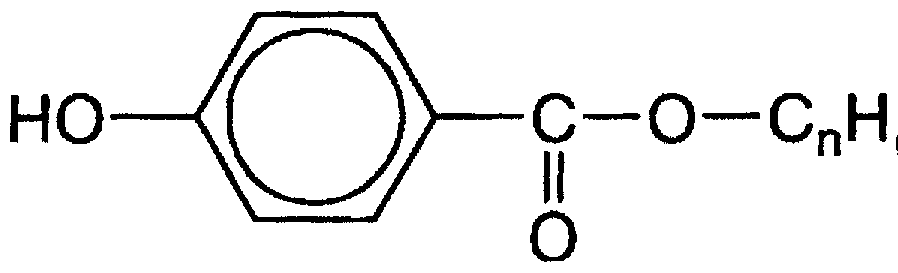
- the polycarbonate resin of the present invention is characterized by comprising the above structural unit and having a terminal structure represented by the following general formula (II).
- n in the formula (II) represents an integer of 10 to 20, preferably 12 to 18. That is, the polycarbonate resin of the present invention has a terminal structure containing a strong long-chain alkyl group. When n is less than 10 or exceeds 20, the rate of change in the water absorption expansion coefficient of polycarbonate resin is large. This is not preferable when an optical material is used.
- the molecular weight of the polycarbonate resin of the present invention is not particularly limited, but the intrinsic viscosity is preferably 0.2 to 0.6 dlZg.
- the polycarbonate resin of the present invention can be produced by reacting an aromatic divalent phenol, a carbonate-forming compound and a terminal terminator represented by the following general formula (A).
- n 1 0 to 2 0 (represents 7 «C).
- n represents an integer of 10 to 20, preferably an integer of 12 to 18. If n is less than 12 or more than 18, the rate of change in the water absorption expansion coefficient of the obtained polycarbonate resin increases, which is not preferable.
- carbonate ester-forming compounds are used in the phosgene method.
- Examples thereof include phosgene or bisaryl carbonate used in the transesterification method.
- Examples of the biaryl carbonate include diphenyl carbonate, di-p-tolyl carbonate, phenyl p-tolyl carbonate, dichloro-phenyl carbonate, and dinaphthyl carbonate.
- the aromatic divalent phenol includes a compound represented by the following general formula (B).
- X is selected from a divalent organic group represented by the following formula (III).
- R and R are each a hydrogen atom, an alkyl group having 1 to 9 carbon atoms, carbon
- R and R are a group containing a carbon atom, these carbon atoms are bonded to an alkyl group having 1 to 5 carbon atoms.
- a substituent selected from the group consisting of a kill group, an alkyl group having 2 to 5 carbon atoms, and an alkoxy group having 1 to 5 carbon atoms may be bonded.
- a represents an integer of 0 to 20.
- R and R are each hydrogen, an alkyl group having 1 to 9 carbon atoms, or an alkoxy group having 1 to 9 carbon atoms.
- R 7 8 represents a group formed by bonding to each other to form a carbocyclic or heterocyclic ring.
- R and R are carbon atoms
- these carbon atoms are bonded with the group selected by the alkyl group having 1 to 5 carbon atoms, the alkenyl group having 2 to 5 carbon atoms, and the alkoxy group having 1 to 5 carbon atoms. You may do it.
- aromatic divalent phenolic compound represented by the general formula (B) include bis
- the compound of the above general formula (A) used as the terminal terminator of the present invention includes dodecyl-4. -Hydroxybenzoate, tridecyl-4-hydroxybenzoate, tetradecyl-4-hydroxybenzoate, pentadecyl-4-hydroxybenzoate, heptadecyl 4-hydroxybenzoate, stearyl 4-hydroxybenzoate, etc. Dodecyl 4-hydroxybenzoate is preferred.
- the aromatic divalent phenol and phosgene in the present invention are usually reacted in the presence of an acid binder and a solvent.
- the acid binder include pyridine, sodium hydroxide, alkali metal hydroxide such as potassium hydroxide, and the like
- the solvent include methylene chloride, chloroform, chloroform, and the like.
- Oral benzene, xylene, etc. are used.
- tertiary amine catalysts such as triethylamine and catalysts such as quaternary ammonium salts are used to promote the condensation polymerization reaction.
- Anti-oxidation agents such as sodium sulfite and hydrosulfite, fluorodalosine, isatin bisphenol, 1, 1, 1-tris (4 hydroxyphenol) ethane, a, a ', A small amount of a branching agent such as ⁇ ,, tris (4 hydroxyphenol) 1,3,5 triisopropylbenzene may be added.
- the reaction is usually in the range of 0 to 25 ° C, preferably 5 to 15 ° C. While the reaction time depends on the reaction temperature, it is generally 0.5 min-10 hr, preferably 1 min-1 hr. During the reaction, it is desirable to maintain the pH of the reaction system at 10 or more.
- the compound of the above general formula (A) used as a terminal terminator of the present invention is preferably added in a state in which it is completely dissolved in a solvent after reacting aromatic divalent phenol with phosgene. Yes.
- the terminal terminator of the present invention When the terminal terminator of the present invention is added before reacting the aromatic divalent phenol and phosgene or added directly without dissolving in the solvent, the thermal decomposition temperature of the produced polycarbonate is lowered, and the optical disk substrate The amount of cracked gas generated when molding at high temperatures may increase significantly.
- the amount of added force of the end stopper is 0.5 to LOmol% with respect to the aromatic divalent phenol. If the amount of the terminal terminator added is too small, the molecular weight of the polycarbonate resin may be too high, and the moldability may deteriorate. If too much, the molecular weight of the polycarbonate resin is too low. In some cases, the mechanical properties may deteriorate.
- a tertiary amine such as triethylamine or a quaternary ammonium salt such as triethylbenzyl ammonium chloride is used.
- the amount of addition of these amines is 0.01-1. Omol% with respect to the aromatic divalent phenols.
- the transesterification method aromatic divalent phenols and biaryl carbonate are mixed and reacted at high temperature under reduced pressure.
- the compound of the general formula (A) is added as a terminal terminator.
- the reaction is usually carried out at a temperature in the range of 150 to 350 ° C, preferably 200 to 300 ° C, and the degree of vacuum is preferably at most ImmHg or less from the biaryl carbonate produced by the transesterification reaction.
- the derived phenols are distilled out of the system.
- the reaction time depends on the reaction temperature and the degree of vacuum, but is usually about 1 to 6 hours.
- the reaction is preferably carried out in an inert gas atmosphere such as nitrogen or argon. Moreover, you may react by adding antioxidant and a branching agent as desired.
- the polycarbonate produced by these reactions can be molded by a known molding method such as extrusion molding, injection molding, blow molding, compression molding, or wet molding.
- the molecular weight of the polycarbonate resin obtained by the method of the present invention is not particularly limited. However, particularly when it is used as an optical material, it is desirable that it can be easily injection-molded. Those in the range of 0.2 to 0.6 dlZg are preferred.
- the polycarbonate resin of the present invention is suitable as an optical material for producing optical disk substrates such as CD, LD, MO disk, DVD, and Blu-ray disk.
- the intrinsic viscosity is preferably in the range of 0.2 to 0.6 dlZg.
- the optical material of the present invention which is strong, has a problem in moldability when the fluidity is too large or too small.
- Koka type flow tester 280 ° C, 160k É1 ⁇ 2, in Honoré diameter Imm X 10 mm
- measurement preferably has a fluidity of 30 ⁇ 50 X 10- 2 ccZsec, range. If it is less than 30 X 10- 2 ccZsec, it may transfer the bad pit fluidity failure occurs, exceeding 50 X 10- 2 ccZsec, warping of the substrate immediately after molding raw It ’s good.
- the optical material of the present invention is preferably highly purified as in the case of general optical polycarbonate. Specifically, dust with a diameter of 50 m or more is practically not detected, dust with a diameter of 0.5 to 50 ⁇ m is 3 X 10⁴ or less, inorganic and organic residual chlorine is 2 ppm or less, and residual alkali metal is 2 ppm or less It is refined to meet the criteria of residual hydroxyl group 200ppm or less, residual nitrogen amount 5ppm or less, residual monomer 20ppm or less, etc. as much as possible. In some cases, post-treatment such as extraction is performed to remove low molecular weight substances or solvents.
- the optical material of the present invention has a hindered phenol-based or phosphite-based anti-oxidation agent; silico if necessary, in order to ensure stability and releasability required during extrusion molding and injection molding.
- Lubricants and mold release agents such as natural oils and fats such as styrene, fatty acid ester, fatty acid, fatty acid glyceride and beeswax; light stabilizers such as benzotriazole, benzophenone, dibenzoylmethane and salicylate; poly You may use together antistatic agents, such as alkylene glycol and fatty-acid glyceride, suitably.
- the molding temperatures when the optical material of the present invention is extrusion molded and injection molded are preferably 230 to 320 ° C and 240 to 380 ° C, respectively, from the viewpoint of fluidity.
- optical disk substrates such as CD, LD, MO disk, DVD, Blu-ray disk, and HD-DVD.
- the optical disc substrate of the present invention has a minimum pit length of 0.01 to 0.3 ⁇ m and a track pitch of 0.01 to 0.0.
- the polycarbonate resin of the present invention using the above-mentioned specific terminal terminator, light suitable for high-density optical disk applications in which the warpage of the disk substrate due to water absorption expansion due to environmental humidity change is extremely small. A disk base is obtained.
- Example 1 7.
- BPA 2-bis (4-hydroxyphenol) propane 7.
- BPA 2-bis (4-hydroxyphenol) propane 7.
- This polymer had an intrinsic viscosity [r?] Of 0.36 dlZg at a temperature of 25 ° C in a 0.5 gZdl solution containing methylene chloride as a solvent.
- this polycarbonate is a polycarbonate obtained by using a terminal terminator represented by the general formula (A) as a terminal terminator.
- the glass transition temperature and 1% weight loss temperature of the obtained polycarbonate powder were measured. Details of the measurement conditions and the results are shown in Table 1.
- 15 g of the obtained polycarbonate powder was dissolved in 100 ml of methylene chloride and coated on a glass plate to prepare a solution cast film having a thickness of 45 m. A test piece having a width of 5 mm and a length of 50 mm was cut out from the obtained solution cast film.
- the water absorption expansion coefficient at high humidity (80% RH) and low humidity (45% RH) at a temperature of 25 ° C of the obtained specimen is measured by ULVAC-RIKO's Thermomechanical Tester TM-9300 (with humidity control function) The rate of change in water expansion coefficient at high and low humidity was evaluated. Detailed measurement conditions and results are shown in Table 1.
- Example 1 and Example 2 have a rate of change in water expansion coefficient of 3.5 ppm /% RH or less at a temperature of 25 ° C and a relative humidity of 80% RH to 45% RH. It can be seen that the rate of change in the coefficient of water expansion associated with the change in degree is small.
- Example 1 The same procedure as in Example 1 was conducted except that 579 g of the end-stopper POB-C12 was changed to 304 g of p-tertiary monobutylphenol (hereinafter abbreviated as “PTBP”). This.
- the intrinsic viscosity [7?] Of the obtained polymer was 0.36 dlZg, and it was found from infrared absorption spectrum analysis etc. that this polymer had a polycarbonate polymer structure equivalent to that of Example 1 except for the terminal structure. It was.
- the evaluation results are shown in Table 1 in the same manner as in Example 1.
- Example 2 The same procedure as in Example 1 was conducted except that 579 g of the end-stopper POB-C12 was changed to 904 g of docosyl 4 hydroxybenzoate (hereinafter abbreviated as “POB-C22”).
- the intrinsic viscosity [7?] (DlZg) was determined from a 0.5 g / lOO CC methylene chloride resin solution at 20 ° C and a Huggins constant of 0.45.
- a film sample with a thickness of 45 m x width 5 mm x length 50 mm is fixed to a jig at a position 15 mm in length on a thermal mechanical testing machine “TM-9300” (with humidity control function) manufactured by ULVAC-RIKO.
- TM-9300 with humidity control function
- ULVAC-RIKO thermal mechanical testing machine
- P is a line after 3 hours under high humidity when the film fixing position after 12 hours in a dry nitrogen atmosphere (relative humidity 8% RH) is assumed to have a linear expansion coefficient of 0%.
- Q represents the coefficient of linear expansion after 3 hours under low humidity when the film expansion position after 12 hours in a dry nitrogen atmosphere (relative humidity 8% RH) is 0%.
- P represents the measured humidity after 3 hours under high humidity
- q represents the measured humidity after 3 hours under low humidity.
- the retardation was measured at a light source wavelength of 632.8 nm using a high-precision birefringence measuring device “ELP-200ADT” manufactured by Mizoji Optical Co., Ltd.
- the group depth was measured using an atomic force microscope “NV2100” manufactured by Olympus to determine the transfer rate.
- the polycarbonate resin of the present invention has a feature that the rate of change S of the water absorption expansion coefficient due to environmental humidity changes is small, so that it can be used to manufacture optical disk substrates such as CD, LD, MO disk, DVD, and Blu-ray disk. Is preferred. Further, according to the method for producing a polycarbonate resin of the present invention, a polycarbonate optical disk substrate material can be provided with excellent productivity similar to that of bisphenol A type PC.
Landscapes
- Chemical & Material Sciences (AREA)
- Health & Medical Sciences (AREA)
- Chemical Kinetics & Catalysis (AREA)
- Medicinal Chemistry (AREA)
- Polymers & Plastics (AREA)
- Organic Chemistry (AREA)
- Polyesters Or Polycarbonates (AREA)
- Optical Record Carriers And Manufacture Thereof (AREA)
Description


Claims




Priority Applications (3)
| Application Number | Priority Date | Filing Date | Title |
|---|---|---|---|
| JP2008515579A JPWO2007132874A1 (ja) | 2006-05-16 | 2007-05-16 | ポリカーボネート樹脂およびそれを用いた光学用材料 |
| EP07743438A EP2019121A4 (en) | 2006-05-16 | 2007-05-16 | POLYCARBONATE RESIN AND OPTICAL MATERIAL COMPRISING SAID RESIN |
| US12/227,355 US20090304977A1 (en) | 2006-05-16 | 2007-05-16 | Polycarbonate Resin and Optical Material Comprising the Same |
Applications Claiming Priority (2)
| Application Number | Priority Date | Filing Date | Title |
|---|---|---|---|
| JP2006-135937 | 2006-05-16 | ||
| JP2006135937 | 2006-05-16 |
Publications (1)
| Publication Number | Publication Date |
|---|---|
| WO2007132874A1 true WO2007132874A1 (ja) | 2007-11-22 |
Family
ID=38693963
Family Applications (1)
| Application Number | Title | Priority Date | Filing Date |
|---|---|---|---|
| PCT/JP2007/060003 Ceased WO2007132874A1 (ja) | 2006-05-16 | 2007-05-16 | ポリカーボネート樹脂およびそれを用いた光学用材料 |
Country Status (7)
| Country | Link |
|---|---|
| US (1) | US20090304977A1 (ja) |
| EP (1) | EP2019121A4 (ja) |
| JP (1) | JPWO2007132874A1 (ja) |
| KR (1) | KR20090057943A (ja) |
| CN (1) | CN101490132A (ja) |
| TW (1) | TW200813121A (ja) |
| WO (1) | WO2007132874A1 (ja) |
Cited By (6)
| Publication number | Priority date | Publication date | Assignee | Title |
|---|---|---|---|---|
| WO2015182700A1 (ja) * | 2014-05-30 | 2015-12-03 | 出光興産株式会社 | ポリカーボネートの製造方法 |
| WO2016060100A1 (ja) * | 2014-10-15 | 2016-04-21 | 三菱瓦斯化学株式会社 | 合成樹脂積層シート |
| WO2016158843A1 (ja) * | 2015-03-31 | 2016-10-06 | 三菱瓦斯化学株式会社 | 車載用射出成形体並びにそれを用いた自動車ライトガイド、自動車内装パネル及び自動車ランプレンズ |
| WO2016158844A1 (ja) * | 2015-03-31 | 2016-10-06 | 三菱瓦斯化学株式会社 | 導光板用成形体 |
| WO2017047560A1 (ja) * | 2015-09-18 | 2017-03-23 | 三菱瓦斯化学株式会社 | ポリカーボネート樹脂、及びその製造方法、及びそれを用いて形成された成形品、シート、フィルム、及びその製造方法 |
| WO2017104482A1 (ja) * | 2015-12-16 | 2017-06-22 | 三菱瓦斯化学株式会社 | 樹脂組成物およびそれを用いたフィルム並びにキャリアテープ |
Families Citing this family (1)
| Publication number | Priority date | Publication date | Assignee | Title |
|---|---|---|---|---|
| KR101620168B1 (ko) * | 2013-07-01 | 2016-05-12 | 주식회사 엘지화학 | 히드록시 캡핑 단량체, 이의 폴리카보네이트 및 이를 포함하는 물품 |
Citations (13)
| Publication number | Priority date | Publication date | Assignee | Title |
|---|---|---|---|---|
| JPS60203632A (ja) * | 1984-03-28 | 1985-10-15 | Mitsubishi Gas Chem Co Inc | ポリカ−ボネ−ト樹脂光学成形品 |
| JPS63182350A (ja) | 1987-01-26 | 1988-07-27 | Mitsubishi Gas Chem Co Inc | ポリカ−ボネ−ト樹脂成形品の製法 |
| JPH01156323A (ja) * | 1987-12-14 | 1989-06-19 | Idemitsu Kosan Co Ltd | 新規ポリカーボネート系重合体とその製法 |
| JPH01156322A (ja) * | 1987-12-14 | 1989-06-19 | Idemitsu Kosan Co Ltd | 新規ポリカーボネート系共重合体とその製造法 |
| JPH01155301A (ja) * | 1987-12-14 | 1989-06-19 | Idemitsu Kosan Co Ltd | 光学機器用素材 |
| JPH0218501A (ja) * | 1988-07-07 | 1990-01-22 | Mitsubishi Gas Chem Co Inc | 高屈折率の光学用レンズ |
| JPH0419667A (ja) * | 1990-05-15 | 1992-01-23 | Idemitsu Kosan Co Ltd | 電子写真感光体 |
| JPH06298926A (ja) * | 1993-04-15 | 1994-10-25 | Mitsui Toatsu Chem Inc | 芳香族ポリカーボネートの製造方法 |
| JPH09100348A (ja) * | 1995-08-01 | 1997-04-15 | Teijin Chem Ltd | ポリカーボネート樹脂の製造方法 |
| JP2003128906A (ja) * | 2001-10-29 | 2003-05-08 | Teijin Chem Ltd | 芳香族ポリカーボネート樹脂組成物および光学用成形品 |
| WO2004021343A1 (ja) | 2002-08-30 | 2004-03-11 | Sony Corporation | 光ディスク |
| JP2004526817A (ja) * | 2000-12-28 | 2004-09-02 | ゼネラル・エレクトリック・カンパニイ | ポリカーボネートの製造方法 |
| JP2005529995A (ja) * | 2002-06-12 | 2005-10-06 | ゼネラル・エレクトリック・カンパニイ | 芳香族ポリカーボネートの製造方法 |
Family Cites Families (3)
| Publication number | Priority date | Publication date | Assignee | Title |
|---|---|---|---|---|
| US4631334A (en) * | 1984-04-10 | 1986-12-23 | Mitsubishi Gas Chemical Company, Inc. | Optical articles of branched polycarbonate resin |
| JP2530324B2 (ja) * | 1986-09-20 | 1996-09-04 | ソニー株式会社 | 光学的情報記録媒体 |
| US7376896B2 (en) * | 2002-01-15 | 2008-05-20 | International Business Machines Corporation | System for recording world wide web browsing sessions navigation on a real-time basis and for subsequently displaying the recorded sessions as surrogate browsing sessions with user enabled real-time modification |
-
2007
- 2007-05-16 KR KR1020087030653A patent/KR20090057943A/ko not_active Withdrawn
- 2007-05-16 CN CNA200780021744XA patent/CN101490132A/zh active Pending
- 2007-05-16 EP EP07743438A patent/EP2019121A4/en not_active Withdrawn
- 2007-05-16 WO PCT/JP2007/060003 patent/WO2007132874A1/ja not_active Ceased
- 2007-05-16 TW TW096117395A patent/TW200813121A/zh unknown
- 2007-05-16 JP JP2008515579A patent/JPWO2007132874A1/ja active Pending
- 2007-05-16 US US12/227,355 patent/US20090304977A1/en not_active Abandoned
Patent Citations (13)
| Publication number | Priority date | Publication date | Assignee | Title |
|---|---|---|---|---|
| JPS60203632A (ja) * | 1984-03-28 | 1985-10-15 | Mitsubishi Gas Chem Co Inc | ポリカ−ボネ−ト樹脂光学成形品 |
| JPS63182350A (ja) | 1987-01-26 | 1988-07-27 | Mitsubishi Gas Chem Co Inc | ポリカ−ボネ−ト樹脂成形品の製法 |
| JPH01156323A (ja) * | 1987-12-14 | 1989-06-19 | Idemitsu Kosan Co Ltd | 新規ポリカーボネート系重合体とその製法 |
| JPH01156322A (ja) * | 1987-12-14 | 1989-06-19 | Idemitsu Kosan Co Ltd | 新規ポリカーボネート系共重合体とその製造法 |
| JPH01155301A (ja) * | 1987-12-14 | 1989-06-19 | Idemitsu Kosan Co Ltd | 光学機器用素材 |
| JPH0218501A (ja) * | 1988-07-07 | 1990-01-22 | Mitsubishi Gas Chem Co Inc | 高屈折率の光学用レンズ |
| JPH0419667A (ja) * | 1990-05-15 | 1992-01-23 | Idemitsu Kosan Co Ltd | 電子写真感光体 |
| JPH06298926A (ja) * | 1993-04-15 | 1994-10-25 | Mitsui Toatsu Chem Inc | 芳香族ポリカーボネートの製造方法 |
| JPH09100348A (ja) * | 1995-08-01 | 1997-04-15 | Teijin Chem Ltd | ポリカーボネート樹脂の製造方法 |
| JP2004526817A (ja) * | 2000-12-28 | 2004-09-02 | ゼネラル・エレクトリック・カンパニイ | ポリカーボネートの製造方法 |
| JP2003128906A (ja) * | 2001-10-29 | 2003-05-08 | Teijin Chem Ltd | 芳香族ポリカーボネート樹脂組成物および光学用成形品 |
| JP2005529995A (ja) * | 2002-06-12 | 2005-10-06 | ゼネラル・エレクトリック・カンパニイ | 芳香族ポリカーボネートの製造方法 |
| WO2004021343A1 (ja) | 2002-08-30 | 2004-03-11 | Sony Corporation | 光ディスク |
Cited By (17)
| Publication number | Priority date | Publication date | Assignee | Title |
|---|---|---|---|---|
| JP2015227416A (ja) * | 2014-05-30 | 2015-12-17 | 出光興産株式会社 | ポリカーボネートの製造方法 |
| WO2015182700A1 (ja) * | 2014-05-30 | 2015-12-03 | 出光興産株式会社 | ポリカーボネートの製造方法 |
| US9988490B2 (en) | 2014-05-30 | 2018-06-05 | Idemitsu Kosan Co., Ltd. | Method for producing polycarbonate |
| JPWO2016060100A1 (ja) * | 2014-10-15 | 2017-07-27 | 三菱瓦斯化学株式会社 | 合成樹脂積層シート |
| WO2016060100A1 (ja) * | 2014-10-15 | 2016-04-21 | 三菱瓦斯化学株式会社 | 合成樹脂積層シート |
| US10118988B2 (en) | 2014-10-15 | 2018-11-06 | Mitsubishi Gas Chemical Company, Inc. | Synthetic resin laminated sheet |
| WO2016158844A1 (ja) * | 2015-03-31 | 2016-10-06 | 三菱瓦斯化学株式会社 | 導光板用成形体 |
| KR20170132721A (ko) | 2015-03-31 | 2017-12-04 | 미츠비시 가스 가가쿠 가부시키가이샤 | 차재용 사출 성형체 그리고 그것을 사용한 자동차 라이트 가이드, 자동차 내장 패널 및 자동차 램프 렌즈 |
| KR20170134962A (ko) | 2015-03-31 | 2017-12-07 | 미츠비시 가스 가가쿠 가부시키가이샤 | 도광판용 성형체 |
| JPWO2016158844A1 (ja) * | 2015-03-31 | 2018-02-01 | 三菱瓦斯化学株式会社 | 導光板用成形体 |
| JPWO2016158843A1 (ja) * | 2015-03-31 | 2018-02-01 | 三菱瓦斯化学株式会社 | 車載用射出成形体並びにそれを用いた自動車ライトガイド、自動車内装パネル及び自動車ランプレンズ |
| WO2016158843A1 (ja) * | 2015-03-31 | 2016-10-06 | 三菱瓦斯化学株式会社 | 車載用射出成形体並びにそれを用いた自動車ライトガイド、自動車内装パネル及び自動車ランプレンズ |
| US10287394B2 (en) | 2015-03-31 | 2019-05-14 | Mitsubushu Gas Chemical Company, Inc. | Injection-molded body for vehicle, automobile light guide using same, automobile interior panel, and automobile lamp lens |
| WO2017047560A1 (ja) * | 2015-09-18 | 2017-03-23 | 三菱瓦斯化学株式会社 | ポリカーボネート樹脂、及びその製造方法、及びそれを用いて形成された成形品、シート、フィルム、及びその製造方法 |
| JPWO2017047560A1 (ja) * | 2015-09-18 | 2018-07-05 | 三菱瓦斯化学株式会社 | ポリカーボネート樹脂、及びその製造方法、及びそれを用いて形成された成形品、シート、フィルム、及びその製造方法 |
| WO2017104482A1 (ja) * | 2015-12-16 | 2017-06-22 | 三菱瓦斯化学株式会社 | 樹脂組成物およびそれを用いたフィルム並びにキャリアテープ |
| JPWO2017104482A1 (ja) * | 2015-12-16 | 2018-10-04 | 三菱瓦斯化学株式会社 | 樹脂組成物およびそれを用いたフィルム並びにキャリアテープ |
Also Published As
| Publication number | Publication date |
|---|---|
| CN101490132A (zh) | 2009-07-22 |
| EP2019121A1 (en) | 2009-01-28 |
| TW200813121A (en) | 2008-03-16 |
| JPWO2007132874A1 (ja) | 2009-09-24 |
| US20090304977A1 (en) | 2009-12-10 |
| EP2019121A4 (en) | 2010-02-10 |
| KR20090057943A (ko) | 2009-06-08 |
Similar Documents
| Publication | Publication Date | Title |
|---|---|---|
| JPWO2007132874A1 (ja) | ポリカーボネート樹脂およびそれを用いた光学用材料 | |
| KR101604156B1 (ko) | 고속 광학 디스크용 기판 물질 | |
| JP2010079975A (ja) | 光ディスク基板 | |
| WO2004005371A1 (ja) | 光学記録媒体 | |
| KR20040030726A (ko) | 진동 감쇠 단일체 중합체 | |
| JP4314695B2 (ja) | 光記録媒体用成形材料 | |
| JP4376104B2 (ja) | 芳香族ポリカーボネート共重合体、およびそれより形成された光ディスク基板 | |
| JP4366221B2 (ja) | 芳香族ポリカーボネート共重合体およびそれより形成された光ディスク基板 | |
| TW200401004A (en) | Disk substrate and light guide panel | |
| JP3727876B2 (ja) | 芳香族ポリカーボネート樹脂および該樹脂よりなる光ディスク基板 | |
| JP4861557B2 (ja) | 光学用成形材料の製造方法 | |
| JP2005272693A (ja) | 芳香族ポリカーボネート共重合体、およびそれより形成された光ディスク基板 | |
| JP3727875B2 (ja) | 芳香族ポリカーボネート樹脂および該樹脂よりなる光ディスク基板 | |
| JP2004118966A (ja) | 光ディスク | |
| JP4344636B2 (ja) | 芳香族ポリカーボネート共重合体、およびそれより形成された光ディスク基板 | |
| JP3790181B2 (ja) | 光ディスク基板 | |
| JP3727890B2 (ja) | 芳香族ポリカーボネート樹脂および該樹脂よりなる光ディスク基板 | |
| JP2000178431A (ja) | ポリカーボネート樹脂組成物、光学部品およびその製造方法 | |
| JP4332454B2 (ja) | 芳香族ポリカーボネート共重合体、及びそれより形成された光ディスク基板 | |
| US20030104234A1 (en) | Polyester carbonate and a data carrier therefrom | |
| JP4052444B2 (ja) | 光ディスク基板 | |
| JP2004043655A (ja) | ポリカーボネート共重合体、及びそれより形成された成形品 | |
| JP2002332400A (ja) | 高精密転写性ポリカ光学用成形材料、およびそれより形成された光ディスク基板 | |
| JP2003252978A (ja) | 光ディスク基板および光ディスク | |
| JP2005263886A (ja) | 芳香族ポリカーボネート共重合体およびそれより形成された光ディスク基板 |
Legal Events
| Date | Code | Title | Description |
|---|---|---|---|
| WWE | Wipo information: entry into national phase |
Ref document number: 200780021744.X Country of ref document: CN |
|
| 121 | Ep: the epo has been informed by wipo that ep was designated in this application |
Ref document number: 07743438 Country of ref document: EP Kind code of ref document: A1 |
|
| WWE | Wipo information: entry into national phase |
Ref document number: 2007743438 Country of ref document: EP |
|
| WWE | Wipo information: entry into national phase |
Ref document number: 2008515579 Country of ref document: JP |
|
| NENP | Non-entry into the national phase |
Ref country code: DE |
|
| WWE | Wipo information: entry into national phase |
Ref document number: 1020087030653 Country of ref document: KR |
|
| WWE | Wipo information: entry into national phase |
Ref document number: 12227355 Country of ref document: US |