WO2008016091A1 - Polymer compound and polymer light-emitting device using the same - Google Patents
Polymer compound and polymer light-emitting device using the same Download PDFInfo
- Publication number
- WO2008016091A1 WO2008016091A1 PCT/JP2007/065115 JP2007065115W WO2008016091A1 WO 2008016091 A1 WO2008016091 A1 WO 2008016091A1 JP 2007065115 W JP2007065115 W JP 2007065115W WO 2008016091 A1 WO2008016091 A1 WO 2008016091A1
- Authority
- WO
- WIPO (PCT)
- Prior art keywords
- group
- polymer compound
- polymer
- substituent
- formula
- Prior art date
- Legal status (The legal status is an assumption and is not a legal conclusion. Google has not performed a legal analysis and makes no representation as to the accuracy of the status listed.)
- Ceased
Links
Classifications
-
- C—CHEMISTRY; METALLURGY
- C08—ORGANIC MACROMOLECULAR COMPOUNDS; THEIR PREPARATION OR CHEMICAL WORKING-UP; COMPOSITIONS BASED THEREON
- C08G—MACROMOLECULAR COMPOUNDS OBTAINED OTHERWISE THAN BY REACTIONS ONLY INVOLVING UNSATURATED CARBON-TO-CARBON BONDS
- C08G61/00—Macromolecular compounds obtained by reactions forming a carbon-to-carbon link in the main chain of the macromolecule
- C08G61/12—Macromolecular compounds containing atoms other than carbon in the main chain of the macromolecule
- C08G61/122—Macromolecular compounds containing atoms other than carbon in the main chain of the macromolecule derived from five- or six-membered heterocyclic compounds, other than imides
- C08G61/123—Macromolecular compounds containing atoms other than carbon in the main chain of the macromolecule derived from five- or six-membered heterocyclic compounds, other than imides derived from five-membered heterocyclic compounds
-
- C—CHEMISTRY; METALLURGY
- C08—ORGANIC MACROMOLECULAR COMPOUNDS; THEIR PREPARATION OR CHEMICAL WORKING-UP; COMPOSITIONS BASED THEREON
- C08G—MACROMOLECULAR COMPOUNDS OBTAINED OTHERWISE THAN BY REACTIONS ONLY INVOLVING UNSATURATED CARBON-TO-CARBON BONDS
- C08G61/00—Macromolecular compounds obtained by reactions forming a carbon-to-carbon link in the main chain of the macromolecule
-
- C—CHEMISTRY; METALLURGY
- C08—ORGANIC MACROMOLECULAR COMPOUNDS; THEIR PREPARATION OR CHEMICAL WORKING-UP; COMPOSITIONS BASED THEREON
- C08G—MACROMOLECULAR COMPOUNDS OBTAINED OTHERWISE THAN BY REACTIONS ONLY INVOLVING UNSATURATED CARBON-TO-CARBON BONDS
- C08G61/00—Macromolecular compounds obtained by reactions forming a carbon-to-carbon link in the main chain of the macromolecule
- C08G61/12—Macromolecular compounds containing atoms other than carbon in the main chain of the macromolecule
-
- C—CHEMISTRY; METALLURGY
- C08—ORGANIC MACROMOLECULAR COMPOUNDS; THEIR PREPARATION OR CHEMICAL WORKING-UP; COMPOSITIONS BASED THEREON
- C08G—MACROMOLECULAR COMPOUNDS OBTAINED OTHERWISE THAN BY REACTIONS ONLY INVOLVING UNSATURATED CARBON-TO-CARBON BONDS
- C08G61/00—Macromolecular compounds obtained by reactions forming a carbon-to-carbon link in the main chain of the macromolecule
- C08G61/12—Macromolecular compounds containing atoms other than carbon in the main chain of the macromolecule
- C08G61/122—Macromolecular compounds containing atoms other than carbon in the main chain of the macromolecule derived from five- or six-membered heterocyclic compounds, other than imides
-
- C—CHEMISTRY; METALLURGY
- C08—ORGANIC MACROMOLECULAR COMPOUNDS; THEIR PREPARATION OR CHEMICAL WORKING-UP; COMPOSITIONS BASED THEREON
- C08L—COMPOSITIONS OF MACROMOLECULAR COMPOUNDS
- C08L65/00—Compositions of macromolecular compounds obtained by reactions forming a carbon-to-carbon link in the main chain; Compositions of derivatives of such polymers
-
- C—CHEMISTRY; METALLURGY
- C09—DYES; PAINTS; POLISHES; NATURAL RESINS; ADHESIVES; COMPOSITIONS NOT OTHERWISE PROVIDED FOR; APPLICATIONS OF MATERIALS NOT OTHERWISE PROVIDED FOR
- C09K—MATERIALS FOR MISCELLANEOUS APPLICATIONS, NOT PROVIDED FOR ELSEWHERE
- C09K11/00—Luminescent materials, e.g. electroluminescent or chemiluminescent
- C09K11/06—Luminescent materials, e.g. electroluminescent or chemiluminescent containing organic luminescent materials
-
- H—ELECTRICITY
- H05—ELECTRIC TECHNIQUES NOT OTHERWISE PROVIDED FOR
- H05B—ELECTRIC HEATING; ELECTRIC LIGHT SOURCES NOT OTHERWISE PROVIDED FOR; CIRCUIT ARRANGEMENTS FOR ELECTRIC LIGHT SOURCES, IN GENERAL
- H05B33/00—Electroluminescent light sources
- H05B33/12—Light sources with substantially two-dimensional [2D] radiating surfaces
- H05B33/14—Light sources with substantially two-dimensional [2D] radiating surfaces characterised by the chemical or physical composition or the arrangement of the electroluminescent material, or by the simultaneous addition of the electroluminescent material in or onto the light source
-
- H—ELECTRICITY
- H10—SEMICONDUCTOR DEVICES; ELECTRIC SOLID-STATE DEVICES NOT OTHERWISE PROVIDED FOR
- H10K—ORGANIC ELECTRIC SOLID-STATE DEVICES
- H10K10/00—Organic devices specially adapted for rectifying, amplifying, oscillating or switching; Organic capacitors or resistors having potential barriers
-
- H—ELECTRICITY
- H10—SEMICONDUCTOR DEVICES; ELECTRIC SOLID-STATE DEVICES NOT OTHERWISE PROVIDED FOR
- H10K—ORGANIC ELECTRIC SOLID-STATE DEVICES
- H10K85/00—Organic materials used in the body or electrodes of devices covered by this subclass
- H10K85/10—Organic polymers or oligomers
- H10K85/111—Organic polymers or oligomers comprising aromatic, heteroaromatic, or aryl chains, e.g. polyaniline, polyphenylene or polyphenylene vinylene
-
- H—ELECTRICITY
- H10—SEMICONDUCTOR DEVICES; ELECTRIC SOLID-STATE DEVICES NOT OTHERWISE PROVIDED FOR
- H10K—ORGANIC ELECTRIC SOLID-STATE DEVICES
- H10K85/00—Organic materials used in the body or electrodes of devices covered by this subclass
- H10K85/10—Organic polymers or oligomers
- H10K85/111—Organic polymers or oligomers comprising aromatic, heteroaromatic, or aryl chains, e.g. polyaniline, polyphenylene or polyphenylene vinylene
- H10K85/113—Heteroaromatic compounds comprising sulfur or selene, e.g. polythiophene
-
- H—ELECTRICITY
- H10—SEMICONDUCTOR DEVICES; ELECTRIC SOLID-STATE DEVICES NOT OTHERWISE PROVIDED FOR
- H10K—ORGANIC ELECTRIC SOLID-STATE DEVICES
- H10K85/00—Organic materials used in the body or electrodes of devices covered by this subclass
- H10K85/10—Organic polymers or oligomers
- H10K85/111—Organic polymers or oligomers comprising aromatic, heteroaromatic, or aryl chains, e.g. polyaniline, polyphenylene or polyphenylene vinylene
- H10K85/115—Polyfluorene; Derivatives thereof
-
- C—CHEMISTRY; METALLURGY
- C08—ORGANIC MACROMOLECULAR COMPOUNDS; THEIR PREPARATION OR CHEMICAL WORKING-UP; COMPOSITIONS BASED THEREON
- C08G—MACROMOLECULAR COMPOUNDS OBTAINED OTHERWISE THAN BY REACTIONS ONLY INVOLVING UNSATURATED CARBON-TO-CARBON BONDS
- C08G2261/00—Macromolecular compounds obtained by reactions forming a carbon-to-carbon link in the main chain of the macromolecule
- C08G2261/10—Definition of the polymer structure
- C08G2261/12—Copolymers
- C08G2261/122—Copolymers statistical
-
- C—CHEMISTRY; METALLURGY
- C08—ORGANIC MACROMOLECULAR COMPOUNDS; THEIR PREPARATION OR CHEMICAL WORKING-UP; COMPOSITIONS BASED THEREON
- C08G—MACROMOLECULAR COMPOUNDS OBTAINED OTHERWISE THAN BY REACTIONS ONLY INVOLVING UNSATURATED CARBON-TO-CARBON BONDS
- C08G2261/00—Macromolecular compounds obtained by reactions forming a carbon-to-carbon link in the main chain of the macromolecule
- C08G2261/30—Monomer units or repeat units incorporating structural elements in the main chain
- C08G2261/31—Monomer units or repeat units incorporating structural elements in the main chain incorporating aromatic structural elements in the main chain
-
- C—CHEMISTRY; METALLURGY
- C08—ORGANIC MACROMOLECULAR COMPOUNDS; THEIR PREPARATION OR CHEMICAL WORKING-UP; COMPOSITIONS BASED THEREON
- C08G—MACROMOLECULAR COMPOUNDS OBTAINED OTHERWISE THAN BY REACTIONS ONLY INVOLVING UNSATURATED CARBON-TO-CARBON BONDS
- C08G2261/00—Macromolecular compounds obtained by reactions forming a carbon-to-carbon link in the main chain of the macromolecule
- C08G2261/30—Monomer units or repeat units incorporating structural elements in the main chain
- C08G2261/32—Monomer units or repeat units incorporating structural elements in the main chain incorporating heteroaromatic structural elements in the main chain
-
- C—CHEMISTRY; METALLURGY
- C08—ORGANIC MACROMOLECULAR COMPOUNDS; THEIR PREPARATION OR CHEMICAL WORKING-UP; COMPOSITIONS BASED THEREON
- C08G—MACROMOLECULAR COMPOUNDS OBTAINED OTHERWISE THAN BY REACTIONS ONLY INVOLVING UNSATURATED CARBON-TO-CARBON BONDS
- C08G2261/00—Macromolecular compounds obtained by reactions forming a carbon-to-carbon link in the main chain of the macromolecule
- C08G2261/30—Monomer units or repeat units incorporating structural elements in the main chain
- C08G2261/32—Monomer units or repeat units incorporating structural elements in the main chain incorporating heteroaromatic structural elements in the main chain
- C08G2261/324—Monomer units or repeat units incorporating structural elements in the main chain incorporating heteroaromatic structural elements in the main chain condensed
- C08G2261/3246—Monomer units or repeat units incorporating structural elements in the main chain incorporating heteroaromatic structural elements in the main chain condensed containing nitrogen and sulfur as heteroatoms
-
- C—CHEMISTRY; METALLURGY
- C08—ORGANIC MACROMOLECULAR COMPOUNDS; THEIR PREPARATION OR CHEMICAL WORKING-UP; COMPOSITIONS BASED THEREON
- C08G—MACROMOLECULAR COMPOUNDS OBTAINED OTHERWISE THAN BY REACTIONS ONLY INVOLVING UNSATURATED CARBON-TO-CARBON BONDS
- C08G2261/00—Macromolecular compounds obtained by reactions forming a carbon-to-carbon link in the main chain of the macromolecule
- C08G2261/50—Physical properties
- C08G2261/52—Luminescence
- C08G2261/522—Luminescence fluorescent
- C08G2261/5222—Luminescence fluorescent electrofluorescent
-
- C—CHEMISTRY; METALLURGY
- C09—DYES; PAINTS; POLISHES; NATURAL RESINS; ADHESIVES; COMPOSITIONS NOT OTHERWISE PROVIDED FOR; APPLICATIONS OF MATERIALS NOT OTHERWISE PROVIDED FOR
- C09K—MATERIALS FOR MISCELLANEOUS APPLICATIONS, NOT PROVIDED FOR ELSEWHERE
- C09K2211/00—Chemical nature of organic luminescent or tenebrescent compounds
- C09K2211/14—Macromolecular compounds
- C09K2211/1441—Heterocyclic
- C09K2211/1483—Heterocyclic containing nitrogen and sulfur as heteroatoms
-
- H—ELECTRICITY
- H10—SEMICONDUCTOR DEVICES; ELECTRIC SOLID-STATE DEVICES NOT OTHERWISE PROVIDED FOR
- H10K—ORGANIC ELECTRIC SOLID-STATE DEVICES
- H10K50/00—Organic light-emitting devices
- H10K50/10—OLEDs or polymer light-emitting diodes [PLED]
- H10K50/11—OLEDs or polymer light-emitting diodes [PLED] characterised by the electroluminescent [EL] layers
-
- H—ELECTRICITY
- H10—SEMICONDUCTOR DEVICES; ELECTRIC SOLID-STATE DEVICES NOT OTHERWISE PROVIDED FOR
- H10K—ORGANIC ELECTRIC SOLID-STATE DEVICES
- H10K85/00—Organic materials used in the body or electrodes of devices covered by this subclass
- H10K85/10—Organic polymers or oligomers
- H10K85/151—Copolymers
-
- Y—GENERAL TAGGING OF NEW TECHNOLOGICAL DEVELOPMENTS; GENERAL TAGGING OF CROSS-SECTIONAL TECHNOLOGIES SPANNING OVER SEVERAL SECTIONS OF THE IPC; TECHNICAL SUBJECTS COVERED BY FORMER USPC CROSS-REFERENCE ART COLLECTIONS [XRACs] AND DIGESTS
- Y02—TECHNOLOGIES OR APPLICATIONS FOR MITIGATION OR ADAPTATION AGAINST CLIMATE CHANGE
- Y02E—REDUCTION OF GREENHOUSE GAS [GHG] EMISSIONS, RELATED TO ENERGY GENERATION, TRANSMISSION OR DISTRIBUTION
- Y02E10/00—Energy generation through renewable energy sources
- Y02E10/50—Photovoltaic [PV] energy
- Y02E10/549—Organic PV cells
Definitions
- Patent application title POLYMER COMPOUND AND POLYMER LIGHT EMITTING DEVICE USING SAME
- the present invention relates to a polymer compound and a polymer light emitting device using the polymer compound.
- High molecular weight light-emitting materials have been studied in various ways because they are useful as materials used in the light-emitting layer of light-emitting elements. Specifically: Polyarylene composed of benzothiadiazole derivative and spirofluorene (International Publication 0 3 Z 0 2 0 7 9 0 pamphlet), Polyarylene composed of benzothiadiazole derivative and fluorene (International publication 0 0/0 4 6 3 2 1 pamphlet, international publication 0 2 Z 0 5 9 1 2 1 pamphlet), however, these compounds are not sufficiently deeply colored as light emitting materials in the red region. There wasn't.
- An object of the present invention is to provide a novel polymer compound having excellent deep color and useful as a light emitting material in the red region, and a polymer light emitting device using the polymer compound.
- the present invention provides the following formula (1):
- R 2 are each independently a hydrogen atom, an alkyl group, an aryl group, a monovalent heterocyclic group or Represents a cyano group.
- m and n are each independently 1 or 2.
- Rs and Rt each independently represents a hydrogen atom, an alkyl group or an alkoxy group.
- the present invention will be described below.
- the moiety when a vinylene moiety is present in the structure, the moiety may be a cis or trans structure.
- the polymer compound of the present invention contains a repeating unit represented by the above formula (1), and has a polystyrene-reduced number average molecular weight of 1 X10³ to 1X10⁸, preferably 2X10³ to 10 ?.
- the repeating unit may be included only in one type or in two or more types.
- the group represented by Ar ⁇ Ar 2 may have a substituent.
- substituents include an alkyl group, an alkoxy group, an alkylthio group, an alkylsilyl group, an alkylamino group, an aryl group, an aryloxy group, an arylalkyl group, an arylalkoxy group, an arylalkenyl group, and an arylalkynyl group.
- Ar ⁇ Ar 2 is preferably an arylene group which may have a substituent or a divalent heterocyclic group which may have a substituent from the viewpoint of increasing the emission wavelength. From the viewpoint of increasing the solubility of the polymer compound of the present invention in the solvent, at least one of the groups represented by Ar ⁇ A r 2 in the formula (1) has a substituent. preferable.
- the arylene group is the remaining atomic group obtained by removing the hydrogen atom 2 ⁇ 1 from the aromatic hydrocarbon, and the carbon number is usually about 6 to 60. Carbon number does not include the carbon number of the substituent.
- the aromatic hydrocarbon has a condensed ring, independent benzene Also included are those in which two or more rings or fused rings are bonded directly or via a group such as pinylene.
- the arylene group may have a substituent.
- arylene group examples include a phenylene group (for example, the following formulas 1 to 3), a naphthalenedyl group (the following formulas 4 to 13), an anthracenylene group (the following formulas 14 to 19), a p-phenylene group (the following formula 20 -25) Triphenylene group (Formula 26-28) Condensed ring compound group (Formula 29-
- a benzofluorene monozyl group (the following formulas G, H, I, K) and the like.
- phenylene groups (following formulas 1 to 3), naphthalene diyl groups (following formulas 4 to 1.3), biphenylene groups (following formulas 20 to 25), fluorene-diyl groups (following formulas 36 to 38) ), Stilbene diyl group (following formulas A to D), distilbene-diyl group (following formulas E, F), benzofluorene
- each R independently represents a hydrogen atom, an alkyl group, an alkoxy group, an alkylthio group, an alkylsilyl group, an alkylamino group, an aryl group, an aryloxy group, Represents an arylalkyl group, an arylalkyl group, an arylalkylenyl group, an arylalkylinyl group, an arylamino group, a monovalent heterocyclic group, an acyl group, an acyloxy group, a substituted lpoxyl group or a cyano group.
- one structural formula has a plurality of Rs, but they may be the same or different. Two Rs may be bonded to each other to form a ring.
- the alkyl group may be linear, branched or cyclic, and may be a combination thereof, and usually has about 1 to 20 carbon atoms.
- Specific examples of the alkyl group include a methyl group, an ethyl group, a propyl group, an i-propyl group, a butyl group, an i-butyl group, a t-butyl group, a pentyl group, a hexyl group, a cyclohexyl group, and a heptyl group.
- alkoxy group may be linear, branched or cyclic, and usually has about 1 to 20 carbon atoms.
- alkoxy group examples include methoxy group, ethoxy group, propyloxy group, i-propyloxy group, butoxy group, i-butoxy group, t-butoxy group, pentyloxy group, hexyloxy group, cyclohexyloxy group, Heptyloxy group, octyloxy group, 2_ethylhexyloxy group, nonyloxy group, decyloxy group, 3,7-dimethyloctyloxy group, lauryloxy group, etc., pentyloxy group, hexyloxy group, octyloxy group, 2 —Ethylhexyloxy group, decyloxy group, and 3,7-dimethyloctyloxy group are preferable.
- the alkylthio group may be linear, branched or cyclic, and usually has about 1 to 20 carbon atoms.
- Specific examples of the alkylthio group include: methylthio group, ethylthio group, propylthio group, i-propylthio group, butylthio group, i-butylthio group, t_butylthio group, pentylthio group, hexylthio group, cyclohexylthio group, Heptylthio group, octylthio group, 2_ethylhexylthio group, nonylthio group, decylthio group, 3,7-dimethyloctylthio group, laurylthio group, and the like.
- Pentylthio group, hexylthio group, octylthio group, 2 —Ethylhexylthio group, decylthio group, and 3,7-dimethyloctylthio group are preferable.
- the alkylsilyl group may be linear, branched or cyclic, and usually has about 1 to 60 carbon atoms.
- Specific examples of the alkylsilyl group include a methylsilyl group, an ethylsilyl group, a propylsilyl group, an i-propylsilyl group, a butylsilyl group, an i-butylsilyl group, a t-butylsilyl group, a pentylsilyl group, a hexylsilyl group, a cyclohexylsilyl group.
- the alkylamino group may be linear, branched or cyclic, and may be a monoalkylamino group or a dialkylamino group, and usually has about 1 to 40 carbon atoms.
- Specific examples of the alkylamino group include a methylamino group, a dimethylamino group, an ethylamino group, a dimethylamino group, a propylamino group, an i-propylamino group, a ptylamino group, an i-butylmethylamino group, a t-butylamino group, a pentylamino group, Hexylamino group, cyclohexylamino group, heptylamino group, octylamino group, 2-ethylhexylamino group, nonylamino group, decylamino group, 3,7-dimethyloctylamino group, lauryla
- the aryl group usually has about 6 to 60 carbon atoms.
- Specific examples of the aryl group include a phenyl group which may have a substituent, a 1-naphthyl group which may have a substituent, a 2-naphthyl group which may have a substituent, and the like. Can be mentioned.
- Examples of the substituent of the phenyl group which may have the substituent include an alkyl group, an alkoxy group, an alkylthio group, an alkylsilyl group, an alkylamino group, an aryl group, an aryloxy group, an arylalkyl group, and an aryl.
- Examples thereof include an alkoxy group, an aryl alkenyl group, an aryl alkynyl group, an aryl lumino group, a monovalent heterocyclic group, an acyl group, an acyloxy group, a substitutional force oxyl group, and a cyano group.
- substituents there are a plurality of substituents, they may be the same or different.
- the phenyl group which may have a substituent has a substituent, the number of the substituent is preferably 1 to 5, more preferably 1 to 3, and particularly preferably 1.
- the phenyl group which may have the substituent has a substituent, and the substituent is an alkyl group
- the phenyl group having the substituent may have a carbon number of 1 to as a substituent on the phenyl ring.
- ji ⁇ ⁇ alkyl phenyl group A phenyl group into which an alkyl group of 2 has been introduced (hereinafter referred to as “ji ⁇ ⁇ alkyl phenyl group”.
- ⁇ ⁇ . ⁇ Alkyle has 1 to 12 carbon atoms in the alkyl part. Indicates. The same applies hereinafter. Is preferred.
- Ci Cu alkylphenyl group examples include a methyl-substituted phenyl group, an ethyl-substituted phenyl group, a propylyl-substituted phenyl group, an i-propyl-substituted phenyl group, a butyl-substituted phenyl group, an i-butyl-substituted phenyl group, t-butyl-substituted phenyl group, pentyl-substituted phenyl group, hexyl-substituted phenyl group, cyclohexyl-substituted phenyl group, heptyl-substituted phenyl group, octyl-substituted phenyl group, 2-ethylhexyl-substituted phenyl group, nonyl-substituted
- the phenyl group which may have the substituent has a substituent, and the substituent is an alkoxy group
- the phenyl group having the substituent may have 1 to carbon atoms as a substituent on the phenyl ring.
- 12 A phenyl group into which an alkoxy group of 2 has been introduced (hereinafter referred to as “ ⁇ ⁇ ⁇ alkoxyphenyl group”.
- RCi C alkoxy ” indicates that the alkoxy moiety has 1 to 12 carbon atoms. The same is preferred).
- Examples of the C i C alkoxyphenyl group include methoxy-substituted phenyl group, ethoxy-substituted phenyl group, propyloxy-substituted phenyl group, i-propyloxy-substituted phenyl group, butoxy-substituted phenyl group, i-butoxy-substituted phenyl group, t —Butoxy-substituted phenyl group, pentyloxy-substituted phenyl group, hexyloxy-substituted phenyl group, cyclohexyloxy-substituted phenyl group, heptyloxy-substituted phenyl group, octyloxy-substituted phenyl group, 2-ethylhexyloxy-substituted phenyl group, nonyloxy-substituted
- the substituted phenyl group has 2 to 30 carbon atoms, preferably examples include phenyl groups substituted with 2 to 15 acyl groups, specifically, acetyl substituted phenyl groups, propionyl substituted phenyl groups, petityl substituted phenyl groups, isoptyryl substituted phenyl groups, piperoyl substituted phenyl groups, trifluol. Examples include o-acetyl-substituted phenyl group.
- the substituted phenyl group has 2 to 30 carbon atoms, preferably 2 Specific examples include: acetoxy-substituted phenyl group, propionyloxy-substituted phenyl group, petityloxy-substituted phenyl group, isoptylyloxy ⁇ substituted phenyl group, piperoyloxy-substituted phenyl group, trifluoroacetyl group And xyl substituted phenyl groups.
- the phenyl group which may have the substituent has a substituent, and the substituent is a substituent power propyl group
- examples of the phenyl group having the substituent include an alkyl group, an aryl group, and an aryl group.
- a phenyl group having as a substituent a strong lpoxyl group substituted with an alkyl group is preferable.
- the aryloxy group usually has about 6 to 60 carbon atoms.
- Specific examples of the aryloxy group include a phenoxy group, a Ci C alkoxyphenoxy group, a d to C 12 alkylphenoxy group, a 1-naphthyloxy group, a 2-naphthyloxy group, and the like.
- ⁇ ⁇ Ji 1 2 alkoxy phenoxyethanol group, ⁇ 1 2 Hikaru Ruch enoki sheet group is preferably the ⁇ reel alkyl group has a carbon number is usually 7-6 0 mm.
- arylalkyl group examples include phenyl-C i C alkyl group, o] 1 to o 1 2 alkoxyphenyl mono CiC alkyl group, C! ⁇ C i 2 Arukirufue two Lou C ⁇ C i 2 alkyl group, 1-Na Fuchiru CC alkyl group, 2-naphthyl - ⁇ ⁇ ⁇ 2 alkyl group and the like can be exemplified, C ⁇ Ji ⁇ ⁇ Turkey hydroxyphenyl over ⁇ ⁇ ? An alkyl group, and an alkylphenol C 1 -C i 2 alkyl group are preferred.
- the aryl group is usually about 7 to 60 carbon atoms.
- Ci ⁇ C 12 Arukokishifue two Lou Ci ⁇ C 12 alkoxy group, d-C 12 Al Kirufue two Lu ⁇ ⁇ Ji 12 alkoxy group are preferable.
- the arylene alkenyl / group usually has about 8 to 60 carbon atoms.
- Specific examples of the arylalkenyl group include a phenyl C 2 -C 12 alkenyl group (“C 2 -C 12 alkenyl” indicates that the alkenyl moiety has 2 to 12 carbon atoms. Yes, Je ⁇ .
- the arylene alkynyl group usually has about 8 to 60 carbon atoms.
- Specific examples of the aryl alkynyl group include phenyl C 2 -C 12 alkynyl group, Ci C alkoxy phenyl C 2 -C 12 alkynyl group, dialkyl alkenyl-dialkynyl group , 1 one Nafuchiru C 2 ⁇ Ci 2 alkynyl group, 2-naphthyl - C 2 -C 12 Arukini Le group and the like can be exemplified, d ⁇ C Arukokishifue two Lou C 2 -C 12 alkynyl group, Ci ⁇ C 12 Arukirufu enyl - C 2 -C 12 alkynyl group are preferable.
- the arylamino group usually has about 6 to 60 carbon atoms.
- Specific examples of the arylamino group include a phenylamino group, a diphenylamino group, and the like.
- ⁇ Arukokishifue Niruamino group, di ( ⁇ 12 alkoxy phenylpropyl) amino group, di ( ⁇ ⁇ 12 alkyl phenyl) amino group, 1_ Nafuchiruamino group, 2-Nafuchiruamino group and the like are exemplified, C ⁇ .
- Alkylphenyl ⁇ amino group, di (Ci ⁇ C 12 alkylphenyl) Amino group favored arbitrariness.
- the asil group usually has about 2 ⁇ 30 carbon atoms, preferably about 2-15 carbon atoms.
- Specific examples of the asil group include an acetyl group, a propionyl group, a propylyl group, an isoptylyl group, a bivaloyl group, a benzoyl group, a trifluoroacetyl group, and a pentafluorobenzoyl group.
- the acyloxy group usually has about 2 to 30 carbon atoms, preferably about 2 to 15 carbon atoms.
- Specific examples of the asiloxy group include: acetoxy group, propionyloxy group, petityloxy group, isoptyryloxy group, pivaloyloxy group, benzoyloxy group , A trifluoroacetyloxy group, a pendant fluorobenzoyloxy group, etc.
- Examples of the substituent lpoxyl group include an alkyl group, an aryl group, an aryl alkyl group, or a monovalent heterocyclic group.
- the substituted force loxyl group is mentioned,
- the carbon number is usually about 2 to 30 and preferably about 2 to 15 carbons.
- substituent lpoxyl group examples include a methoxycarbonyl group, an ethoxycarbonyl group, a propoxycarbonyl group, an i-propoxycarbonyl group, a butoxycarbonyl group, an i-butoxycarbonyl group, a t-butoxycarbonyl group, a pentyl group.
- Xycarbonyl group hexyloxycarbonyl group, cyclohexyloxycarbonyl group, heptyloxycarbonyl group, octyloxycarbonyl group, 2 ethyl hexyloxycarbonyl group, noeroxycarbonyl group, Diyl group, 3,7-dimethyloctyloxycarbonyl group, dodecyloxycarbonyl group, trifluoromethoxycarbonyl group, pentafluoroethoxycarbonyl group, perfluorobutoxycarbonyl group, Fluorohexyloxycarbonyl group, -Fluorooctyloxycarbonyl group, phenoxycarbonyl group, naphthoxycarbonyl group, pyridyloxy group, and the like. These groups may have a substituent. The carbon number of the substituent lpoxyl group does not include the carbon number of the substituent.
- a monovalent heterocyclic group refers to the remaining atomic group obtained by removing one hydrogen atom from a heterocyclic compound.
- a monovalent heterocyclic group usually has about 4 to 60 carbon atoms. Specifically, it includes a chenyl group, a C ⁇ to ⁇ 2 alkyl enyl group, a pyrrolyl group, a furyl group, a pyridyl group, and a Ci C alkyl. Examples include a pyridyl group, a chenyl group, a C i C alkylcenyl group, a pyridyl group, C! A Ci 2 alkylpyridyl group is preferred.
- the alkyl chain may be interrupted by a group containing a hetero atom or a hetero atom.
- the hetero atom include an oxygen atom, a sulfur atom, and a nitrogen atom.
- the group containing a hetero atom or a hetero atom include the following groups.
- R ′ represents a 7jC elementary atom, an alkyl group having 1 to 20 carbon atoms, an aryl group having 6 to 60 carbon atoms, or a monovalent heterocyclic group having 4 to 60 carbon atoms. If there is more than one R '
- alkyl group, aryl group, and monovalent heterocyclic group represented by R ′ are the same as those described and exemplified as the substituent represented by R.
- the divalent heterocyclic group refers to the remaining atomic group obtained by removing two hydrogen atoms from the heterocyclic compound, and usually has about 4 to 60 carbon atoms.
- the carbon number does not include the carbon number of the substituent.
- the heterocyclic compound is an organic compound having a cyclic structure in which the elements constituting the ring include not only carbon atoms but also hetero atoms such as oxygen, sulfur, nitrogen, phosphorus, and boron in the ring. Means.
- a divalent aromatic heterocyclic group is preferable.
- the divalent bicyclic group may have a substituent.
- divalent heterocyclic group examples include the following. .
- hetero atom a group containing nitrogen; a pyridine monozyl group (formula 3 9-4 4), a diazaphenylene group (formula 4 5-4 8), a quinoline diyl group (formula 4 9-6 3), Quinoxalindyl group (Formula 6 4-6 8), Accridine dil group (Formula 6 9-7 2), Bibylidyl group (Formula 7 3-7 5), Phenylantyl group (Formula 7 6-7 8 ) etc.
- a group having a fluorene structure including silicon, nitrogen, oxygen, sulfur, selenium, etc. as a hetero atom the following formulas 79 to 93).
- a 5-membered ring heterocyclic group containing sulfur as a heteroatom and bonded to the ⁇ -position of the heteroatom to form a dimer or oligomer (the following formulas 109 to 110).
- Heteroatom is a 5-membered heterocyclic group containing silicon, nitrogen, oxygen, sulfur, selenium, etc., which is bonded to the phenyl group at the ⁇ -position of the heteroatom (the following formulas 1 1 1 to 1 1 7).
- the divalent aromatic amine group means the remaining atomic group obtained by removing two hydrogen atoms from the aromatic amine and usually has about 4 to 60 carbon atoms.
- the divalent aromatic amine group may have a substituent, but the carbon number does not include the carbon number of the substituent.
- Examples of the divalent aromatic amine group include a group represented by the following general formula (3).
- a r 5 and A r 7 are each independently an arylene group which may have a substituent, a group represented by the general formula (4), or a group represented by the general formula (5) It represents.
- Ar 6 is a represents a substituent optionally Ariru group which may have a general formula or a group represented by general formula (6) (7) represented Ru group.
- eight 1 "5 and A ring may be formed between 8 1 " 6 : 5 and 8 1" 7 or between A r 6 and A r 7 .
- each of 8 1-8 and 8 1 " 9 independently represents an arylene group which may have a substituent.
- R 7 and R 8 each independently represents a hydrogen atom or an alkyl group. Represents an aryl group, a monovalent heterocyclic group or a cyano group, and 1 is 0 or 1.
- Ar 12 represents an aryl group which may have a substituent.
- a ring may be formed between Ar 1 () and A r 12 , between 8 10 and 8 1 " 11 , or between A and A r 12 1 r 13 1 N 1 Ar 16 (6) Ar 17
- Ar 13 represents an arylene group which may have a substituent.
- VIII: 16 and 1 " 17 each independently represents an aryl group which may have a substituent.
- a ring may be formed between Ar 13 and A r 16 , between 8 1 ” 13 and 8 1” 17 , or between A r 16 and A r 17.
- Ar 14 represents an arylene group which may have a substituent.
- Ar 15 represents an aryl group which may have a substituent.
- Ru and R 12 are each independently Represents a hydrogen atom, an alkyl group, an aryl group, a monovalent heterocyclic group or a cyano group, and r is 0 or 1.
- the arylene group represented by Ar 5 , Ar 7 , Ar 8 , Ar 9 , Ari 0 , Arn, Ari 3 , Ari 4 has usually 6 to 60 carbon atoms, Specific examples include a phenylene group, a naphthenic diyl group, an anthracene diyl group, a biphenylene group, a trif: dilene group, a fluorene dizyl group, a stilbene diyl group, and the like. High polymer From the viewpoint of ease of synthesis of the compound, a phenylene group is preferable.
- the aryl group represented by Ar e , Ar 12 , Ar 15 , Ar 16 , and Ar 17 has a carbon number of usually 6 to 60, and specific examples thereof include a phenyl group, Examples thereof include a dialkyloxyphenyl group, a ⁇ alkylalkylphenyl group, a 1-naphthyl group, and a 2-naphthyl group. From the viewpoint of ease of synthesis of the polymer compound, a phenyl group is preferable.
- the alkyl group, aryl group, and monovalent heterocyclic group represented by R 7 , R 8 , Rn, and 2 are the same as those described and exemplified as the substituent represented by R. It is.
- 8 1 " 5 to 8 1" 17 are alkyl group, alkoxy group, alkylthio group, alkylsilyl group, alkylamino group, aryl group, aryloxy group, aryl alkyl group, aryl alkoxy group, aryl It may have a substituent such as an alkenyl group, an arylalkynyl group, an arylamino group, a monovalent heterogeneous group, an acyl group, an acyloxy group, a substitution force lpoxyl group, or a cyano group.
- divalent aromatic amine group examples include the following groups.
- Ri and R 2 each independently represent a hydrogen atom, an alkyl group, an aryl group, a monovalent heterocyclic group or a cyan group, but from the viewpoint of ease of synthesis of the polymer compound, hydrogen An atom, an alkyl group or an aryl group is preferred.
- the alkyl group represented by Ri R 2 has the same meaning as described for R.
- the aryl group represented by Ri and R 2 usually has about 6 to 60 carbon atoms. Specific examples thereof include a phenyl group, a CC alkoxyphenyl group, a CiC alkylphenyl group, a 1-naphthyl group, a 2-naphthyl group, an anthracenyl group, a phenyl group, a triphenyl group, and a pyrenyl group.
- a phenyl group, a d C alkoxyphenyl group, a ⁇ alkyl alkyl group, a naphthyl group, and a biphenyl group are preferable, and a phenyl group is more preferable. preferable.
- the monovalent heterocyclic group represented by Ri and R 2 is a remaining atomic group obtained by removing one hydrogen atom from a heterocyclic compound, and usually has about 2 to 60 carbon atoms. Specific examples include the following.
- Monovalent heterocyclic group containing nitrogen as a hetero atom pyridinyl group, diazaphenyl group, quinolinyl group, quinoxalinyl group, acrylidinyl group, bibilidinyl group, phenanthrolin-yl group and the like.
- a group having a fluorene structure containing silicon, nitrogen, oxygen, sulfur, selenium, etc. as a heteroatom in the formulas 79-9 to 93, one of the bonds is a substituent R).
- 5-membered heterocyclic group containing silicon, nitrogen, oxygen, sulfur, selenium, etc. as a heteroatom In the above formulas 94 to 98, one of the bonds is a substituent R) 5-membered condensed heterocyclic group containing silicon, nitrogen, oxygen, sulfur, selenium, etc. as a heteroatom (formula 9 9 ⁇ ; one in which a bond is a substituent R in L 0 8).
- Hetero atom is a 5-membered heterocyclic group containing sulfur and bonded at the hetero atom's position.
- m and n are each independently 1 or 2. m and n are preferably the same from the standpoint of ease of synthesis of the monomer.
- the alkyl group and alkoxy group represented by Rs and Rt are the same as those described and exemplified as the group represented by R.
- Rs and Rt are preferably a hydrogen atom or an alkyl group, and more preferably a hydrogen atom, from the viewpoint of ease of monomer synthesis.
- the repeating unit represented by the formula (1) is represented by the following formula (la):
- Ra, Rb, and Rd each independently represent a hydrogen atom, an alkyl group, an alkoxy group, or an aryl group.
- Re and Rf each independently represents a hydrogen atom, an alkyl group or an aryl group.
- m ′ and n ′ are each independently 1 or 2. When there are a plurality of Ra to Rd, they may be the same or different.
- Ra, Rb, Rc and Rd are a hydrogen atom, an alkyl group, or an aryl. From the viewpoint of solubility of the high molecular compound, one or more of these are preferably alkyl groups. Further, at least one of R e and R f are, it is al kill group or Ariru group is preferable from the viewpoint of the solubility of the polymer compound.
- Specific examples of the repeating unit represented by the formula (1) include those represented by the following formula.
- each R independently has the same meaning as described above.
- one structural formula has a plurality of R, they may be the same or different.
- the polymer compound of the present invention further comprises the following formula (2):
- Ar 5 represents an arylene group which may have a substituent, a divalent heterocyclic group which may have a substituent, or a divalent which may have a substituent.
- R 3 and R 4 each independently represent a hydrogen atom, an alkyl group, an aryl group, a monovalent heterocyclic group or a cyan group.
- Those containing a repeating unit represented by are preferred from the viewpoint of the solubility of the polymer compound and the film-forming property.
- the group represented by Ar 5 is an arylene group which may have a substituent or a divalent which may have a substituent from the viewpoint of fluorescence intensity. It is preferably a heterocyclic group.
- the group represented by A r 5 is the same as described and exemplified as the group represented by A rj A r 2 .
- a ring and B ring each independently represents an aromatic hydrocarbon ring which may have a substituent.
- Two bonds are present on the A ring or the B ring, respectively.
- 1 and 1 are each independently hydrogen atom, alkyl group, alkoxy group, alkylthio group, alkylsilyl group, alkylamino group, aryl group, aryloxy group, arylalkyl group, arylalkoxy group, arylalkenyl group.
- the arylamino group, the monovalent heterocyclic group, the acyl group, and the substituent lpoxyl group are the same as those described and exemplified as R in the formulas 1 to 38, A to I, and K.
- R w and R x are preferably the same group from the viewpoint of ease of monomer synthesis.
- the arylene group which may have a substituent represented by the above formula (60) from the viewpoint of ease of monomer synthesis, one of the two bonds is present on the A ring, The other is preferably present on the B ring.
- at least one of the A ring and the B ring is an aromatic hydrocarbon ring in which a plurality of benzene rings are condensed.
- a benzene ring alone or a condensed benzene ring is preferable.
- a benzene ring, a naphthalene ring, an anthracene ring, a tetracene ring, a pentacene ring, a pyrene is preferable.
- a benzene ring, a naphthalene ring, an anthracene ring, and a phenanthrene ring preferably a benzene ring, naphthalene ring.
- a ring and B ring is preferably a benzene ring and a benzene ring, a benzene ring and a naphthalene ring, a benzene ring and an anthracene ring, a benzene ring and a phenanthrene ring, and naphthalene from the viewpoint of ease of monomer synthesis.
- a benzene ring and a benzene ring, and a benzene ring and a naphthalene ring are more preferable.
- the arylene group which may have a substituent represented by the above formula (60) is represented by the following formulas (2A) to (2D):
- Rg represents a hydrogen atom, an alkyl group or an aryl group.
- Two Rs may be the same or different.
- Two R g s may be bonded to each other to form a ring.
- Rg is preferably an alkyl group from the viewpoint of solubility of the polymer compound.
- the alkyl group and aryl group represented by Rg are the same as those described and exemplified as the group represented by Ra to Rf.
- arylene group examples include a phenyl group (including a group represented by the above formula (60) and the above formulas (2 A) to (2 D)). 1 to 3), naphthalene diyl group (4 to 13 above), biphenylene group (20 to 25 above), fluorene dizyl group
- the divalent heterocyclic group which may have a substituent represented by Ar 5 is represented by the following formula (70): .
- C ring and D ring each independently represent an aromatic ring. Rings C and D are alkyl groups, alkoxy groups, alkylthio groups, alkylsilyl groups, alkylamino groups, aryl groups, aryloxy groups, aryl alkyl groups, aryl alkoxy groups, aryl alkyl groups, aryl alkyl groups, aryl amino groups.
- a substituent selected from the group consisting of a group, a monovalent heterocyclic group, an acyl group, an acyloxy group, a substituent force oxyl group, and a cyano group.
- substituents may be the same or different.
- E is O or S. ]
- the aromatic ring represented by C ring and D ring includes aromatic carbon such as benzene ring, naphthalene ring, anthracene ring, tetracene ring, penyucene ring, pyrene ring, phenanthrene ring, etc.
- aromatic carbon such as benzene ring, naphthalene ring, anthracene ring, tetracene ring, penyucene ring, pyrene ring, phenanthrene ring, etc.
- Examples include hydrogen rings; heteroaromatic rings such as pyridine ring, bipyridine ring, phenant ring, quinoline ring, isoquinoline ring, thiophene ring, furan ring, and pyrrole ring. From the viewpoint of ease of monomer synthesis, an aromatic hydrocarbon ring is preferred, and a benzene ring is more preferred.
- an alkyl group and an alkoxy group are preferable from the viewpoint of ease of monomer synthesis and solubility of the polymer compound. Furthermore, when there are a plurality of substituents, they may be the same or different.
- the group that serves as the substituent is the same as that described and exemplified as R in formulas 1 to 38, A to I, and K.
- the divalent heterocyclic group which may have a substituent represented by the above formula (70) is represented by the following formula (2E):
- Rj and Rk each independently represents an alkyl group, an alkoxy group or an aryl group.
- a and b are each independently 0 or 1. It is preferable from the viewpoint of the ease of synthesis of the monomer and the fluorescence intensity of the polymer compound.
- Rj and Rk are the same from the viewpoint of ease of monomer synthesis (that is, both are a hydrogen atom, an alkyl group, an alkoxy group, or an aryl group). Are preferable, and an alkoxy group is preferable.
- the alkyl group and aryl group represented by Rj and Rk are the same as those described and exemplified as the groups represented by Ra to Rf.
- the alkoxy groups represented by Rj and Rk include butoxy, i-butoxy, t-butoxy, pentyloxy, hexyloxy, heptyloxy from the viewpoint of the solubility of the polymer compound and fluorescence intensity.
- octyloxy group, 2-ethylhexyloxy group, nonyloxy group, decyloxy group, 3,7-dimethyloctyloxy group, lauryloxy group are preferable, pentyloxy group, hexyloxy group, octyloxy group, 2-ethylhexyloxy group The group, decyloxy group, and 3,7-dimethyloctyloxy group are more preferable.
- Examples of the divalent heterocyclic group which may have the substituent include those represented by the above formula (70), the above formula (2E), etc., as heteroatoms such as silicon, nitrogen, Oxygen, sulfur, selenium A group having a fluorene structure (including the above formulas 79-93), a 5-membered heterocyclic group containing sulfur as a heteroatom, and bonded at the position of the heteroatom to form a dimer.
- the groups are preferred from the viewpoint of the ease of monomer synthesis and the fluorescence intensity of the polymer compound.
- the alkyl group represented by R 3 and R 4 has the same meaning as described and exemplified as R.
- the aryl group and monovalent heterocyclic group represented by R 3 and R 4 are described and exemplified as the aryl group and monovalent heterocyclic group represented by R 2.
- Specific examples of the repeating unit represented by the formula (2) having the same meaning as those mentioned above include those represented by the following formula.
- each R independently has the same meaning as described above.
- one structural formula has a plurality of Rs, they may be the same or different groups.
- the total of repeating units represented by the formula (1) is as follows: Usually, it is 0.5 to 100 mol% of all repeating units of the polymer compound, but from the viewpoint of improving red deep color, 2 to 80 of all repeating units of the polymer compound is present. Preferably, it is mol%. Further, from the viewpoint of solubility of the polymer compound, it is preferably 2 to 50 mol% of all repeating units of the polymer compound.
- the polymer compound of the present invention contains the repeating unit represented by the above formula (1) and the repeating unit represented by the above formula (2), it is represented by the above formula (1).
- the repeating unit represented by the formula (2) is 50 mol% or more of all repeating units of the polymer compound, and the repeating unit represented by the formula (1)
- the long wavelength of the fluorescence spectrum is that the repeating unit represented by the formula (1) is 2 to 80 mol% with respect to the total of the unit and the repeating unit represented by the formula (2). It is more preferable from the viewpoint of conversion.
- specific examples thereof include the formula (1) As a repeating unit represented by the following formula:
- the terminal of the polymer compound of the present invention may be protected with a stable group, since the light emission characteristics and lifetime when the device is formed may be reduced.
- Those having a conjugated bond continuous with the conjugated structure of the main chain are preferable, and for example, a structure in which the aryl group or the heterocyclic group is bonded via a pinylene group may be used. Specific examples include substituents described in Chemical formula 10 of JP-A-9-45478.
- the polymer compound of the present invention includes a repeating unit represented by the formula (1) and a repeating unit other than the repeating unit represented by the formula (2) as long as the fluorescence property and the charge transport property are not impaired. May be.
- the repeating unit may be linked with vinylene or a non-conjugated moiety, or the repeating unit may contain those vinylene or non-conjugated moiety. Examples of the bond structure including the non-conjugated moiety include those shown below, those shown below in combination with a vinylene group, and those shown in the following in combination of two or more.
- the polymer compound of the present invention includes a random copolymer, a block copolymer, It may be a graft copolymer or an alternating copolymer, and may be a polymer having an intermediate structure thereof, for example, a random copolymer having a block property. From the viewpoint of obtaining a polymer compound having a high fluorescence quantum yield, a random copolymer or block or graft copolymer having a block property is preferable to a complete random copolymer. If the main chain is branched and there are 3 or more ends, dendrimers are included.
- Examples of the good solvent for the polymer compound of the present invention include black mouth form, methylene chloride, dichloroethane, tetrahydrofuran, toluene, xylene, mesitylene, tetralin, decalin, n-butylbenzene and the like.
- the polymer compound of the present invention can usually be dissolved in these solvents in an amount of 0.1% by weight or more.
- Examples of the method for producing the polymer compound of the present invention include the method described in JP-A-5-202355. That is, a compound having an aldehyde group and a phosphonium base Polymerization by a Wittig reaction of a compound having an aldehyde group and a phosphonium base with a compound, Heck reaction of a compound having a vinyl group and a halogen group, or a compound having a vinyl group and a halogen group Polymerization, polymerization of a compound having an aldehyde group and an alkyl phosphonate group, or a compound having an aldehyde group and an alkyl phosphonate group by Homer-Wadsworth-Emmons method, two or more methyl halide groups Decondensation of a compound having a hydrogen atom, polycondensation by a hydrogenogenation method, polycondensation of a compound having two or more sulfone bases by a sulfonium salt
- polymerization by the Wittig reaction polymerization by the Heck reaction, polymerization by the Horner-Wadsworth-Emmons method, polymerization by the Knoevenagel reaction, and polymerization by the Suzuki force pulling reaction are preferable because the structure can be easily controlled.
- the organic solvent varies depending on the compound and reaction used, it is generally preferable that the solvent used is sufficiently deoxygenated and the reaction is allowed to proceed under an inert atmosphere in order to suppress side reactions. Similarly, it is preferable to perform a dehydration treatment (however, this is not the case in the case of a two-phase reaction with water such as a Suzuki coupling reaction).
- an alkali or a suitable catalyst is added as appropriate. These may be selected according to the reaction used.
- the alkali and catalyst are preferably those that are sufficiently soluble in the solvent used in the reaction.
- the reaction solution is stirred under an inert atmosphere such as argon or nitrogen, and the reaction solution is added to the alkali or catalyst solution.
- An example is a method of slowly adding.
- reaction conditions will be described.
- the reaction is carried out using an alkali equivalent to the monomer functional group, preferably 1 to 3 equivalents.
- alkali include, but are not limited to, metal alcoholates such as potassium tert-butoxide, sodium tert-butoxide, sodium ethylate, and lithium methylate.
- Solvents include N, N-dimethylformamide, Tet Lahydrofuran, dioxane, toluene and the like are used.
- the reaction can be allowed to proceed at a reaction temperature of usually from room temperature to about 1550 ° C.
- the reaction time is, for example, 5 minutes to 40 hours, but it is sufficient that the polymerization proceeds sufficiently, and it is not necessary to leave the reaction for a long time after the reaction is completed. 4 hours.
- the concentration at the time of the reaction is poor if the reaction is too dilute, and if it is too thick, the control of the reaction becomes difficult, so it may be appropriately selected within the range of about 0.01% by weight to the maximum concentration at which it is dissolved. 0.1 to 20% by weight.
- the monomer is reacted using a palladium catalyst in the presence of a base such as triethylamine.
- a solvent having a relatively high boiling point such as N, N-dimethylformamide, N-methylpyrrolidone and the like is used, the reaction temperature is about 80 to 160 ° C., and the reaction time is about 1 to 100 hours.
- the Suzuki coupling reaction for example, palladium [tetrakis (triphenylphosphine)], palladium acetates, dichlorobis (triphenylphosphine) palladium (II), etc. are used as the catalyst, and potassium carbonate, sodium carbonate, and potassium hydroxide.
- An inorganic base such as triethylamine, an organic base such as triethylamine, and an inorganic salt such as cesium fluoride are added in an amount equal to or greater than that of the monomer, preferably 1 to 20 equivalents.
- the solvent include N, N-dimethylformamide, toluene, dimethoxyethane, tetrahydrofuran and the like.
- the base may be added as an aqueous solution and reacted in a two-phase system (in the case of reacting in a two-phase system, a phase transfer catalyst such as a quaternary ammonium salt may be added if necessary).
- a temperature of about 50 to 160 ° C. is preferably used. The temperature may be raised to near the boiling point of the solvent and refluxed.
- the reaction time is about 0.5 to 200 hours.
- the reaction is carried out in an inert atmosphere such as argon gas or nitrogen gas, under conditions that do not deactivate the catalyst.
- the polymer compound of the present invention is useful as a light emitting material, for example.
- the polymer compound of the present invention is used as a light-emitting material of a polymer light-emitting device, the purity affects the light-emitting characteristics. Therefore, the monomer before polymerization is purified by methods such as distillation, sublimation purification, and recrystallization. After the synthesis, it is preferable to carry out polymerization, and after synthesis, it is preferable to carry out a purification treatment such as reprecipitation purification and fractionation by chromatography.
- the polymer compound of the present invention includes a thin film, an organic transistor, a solar It is also useful for batteries and the like.
- the composition of the present invention contains the polymer compound and a compound having a polystyrene-equivalent number average molecular weight of 10 3 to 10 8 other than the polymer compound.
- these derivatives are other
- the ratio of the number average molecular weight in terms of polystyrene except polymer compounds include compounds of 1 0 3 to 1 0 8, all the repeating units polymer I arsenide compound has and It is 0.5 to 99.5 mol%, preferably 10 to 95 mol% of the total of all repeating units of the polymer compound other than the polymer compound.
- the liquid composition of the present invention is useful for the production of light emitting devices such as polymer light emitting devices and organic transistors.
- the liquid composition comprises the polymer compound and a solvent.
- the “liquid composition” means a liquid which is in a liquid state at the time of device fabrication, and typically means a liquid at normal pressure (ie, 1 atm) and 25 ° C.
- the liquid composition is generally called an ink, an ink composition, a solution, or the like.
- the liquid composition of the present invention includes a low molecular light emitting material, a hole transport material, an electron transport material, a stabilizer, an additive for adjusting viscosity and Z or surface tension, an antioxidant, and the like. May be included. These optional components may be used alone or in combination of two or more.
- Examples of the low-molecular light-emitting material that may be contained in the liquid composition of the present invention include naphthalene derivatives, anthracene, anthracene derivatives, perylene, perylene derivatives, and polymethine.
- Examples of the hole transport material that the liquid composition of the present invention may contain include, for example, polyvinyl carbazole and derivatives thereof, polysilane and derivatives thereof, polysiloxane derivatives having aromatic amines in the side chain or main chain, and pyrazoline derivatives. , Arylamine derivatives, stilbene derivatives, triphenyldiamine derivatives, polyaniline and derivatives thereof, polythiophene and derivatives thereof, polypyrrole and derivatives thereof, poly (p-phenylenevinylene) and derivatives thereof, poly (2,5-chelate) Dilenvinylene) and derivatives thereof.
- Examples of the electron transport material that may be contained in the liquid composition of the present invention include oxadiazole derivatives, anthraquinodimethane and its derivatives, benzoquinone and its derivatives, naphthoquinone and its derivatives, anthraquinone and its derivatives, tetra Cyananthraquinodimethane and its derivatives, fluorenone derivatives, diphenyldicyanoethylene and its derivatives, diphenoquinone derivatives, metal complexes of 8-hydroxyquinoline and its derivatives, polyquinoline and its derivatives, polyquinoxaline and its derivatives, polyfluorene And derivatives thereof.
- Examples of the stabilizer that may be contained in the liquid composition of the present invention include phenolic antioxidants and phosphorus antioxidants.
- Additives for adjusting the viscosity and Z or surface tension that the liquid composition of the present invention may contain include, for example, high molecular weight compounds (thickeners) for increasing viscosity, poor solvents, and viscosity.
- a low molecular weight compound for lowering and a surfactant for lowering the surface tension may be used in appropriate combination.
- the high molecular weight compound is not particularly limited as long as it does not inhibit light emission or charge transport, and is usually soluble in the solvent of the liquid composition.
- the high molecular weight compound for example, high molecular weight polystyrene, high molecular weight polymethyl methacrylate, or the like can be used.
- the above high molecular weight compound preferably has a polystyrene equivalent weight average molecular weight of 500,000 or more, more preferably 1,000,000 or more.
- a poor solvent can be used as a thickener.
- the antioxidant that may be contained in the liquid composition of the present invention is not limited as long as it does not inhibit light emission or charge transport. When the composition contains a solvent, it is usually soluble in the solvent. It is. Examples of the antioxidant include phenolic antioxidants and phosphorus antioxidants. By using an antioxidant, the storage stability of the polymer compound and the solvent can be improved.
- the ratio of the hole transport material in the liquid composition is usually 1 wt% to 80 wt%, preferably 5 wt% to 60% by weight.
- the proportion of the electron transport material in the liquid composition is usually 1% by weight to 80% by weight, preferably 5% by weight to 60%. % By weight.
- the ratio of the solvent in the liquid composition is usually 1% by weight to 99.9% by weight, preferably 60% by weight to 99.9% by weight, more preferably 90% by weight with respect to the total weight of the liquid composition. % By weight to 99.8% by weight.
- the viscosity of the liquid composition varies depending on the printing method. In the case of a liquid composition that passes through a discharge device, such as an ink jet printing method, the viscosity is 0.5 to 20 mPa at 25 ° C to prevent clogging and flight bending at the time of discharge. (1) The range of s is preferable.
- the solvent contained in the liquid composition those capable of dissolving or dispersing components other than the solvent in the liquid composition are preferable.
- the solvent include chloro solvents such as chloroform, methylene chloride, 1,2-dichloroethane, 1,1,2-trichloroethane, benzene, o-dichlorobenzene, and ethers such as tetrahydrofuran and dioxane.
- Solvent aromatic hydrocarbon solvents such as toluene, xylene, trimethylbenzene, mesitylene, cyclohexane, methylcyclohexane, n-pentane, n-hexane, n-heptane, n-octane, n-nonane
- Aliphatic hydrocarbon solvents such as n-decane, ketone solvents such as acetone, methyl ethyl ketone, and cyclohexanone
- ester solvents such as ethyl acetate, butyl acetate, methyl benzoate, and ethyl cellosolve acetate, ethylene glycol , Ethylene glycol monobutyl ether, ethylene glycol monoethyl Ether, ethylene glycol monomethyl ether, dimethoxyethane, propylene glycol, jet methane, triethylene glycol monoethyl ether, gly
- solvents may be used alone or in combination.
- it may contain at least one organic solvent having a structure containing at least one benzene ring and having a melting point of 0 ° C. or lower and a boiling point of 100 ° C. or higher. From the viewpoint of
- Solvent types include aromatic hydrocarbon solvents and aliphatic hydrocarbon solvents from the viewpoints of solubility in organic solvents of components other than the solvent in the liquid composition, uniformity during film formation, and viscosity characteristics. , Ester solvents, and ketone solvents are preferable.
- the type of solvent contained in the liquid composition is preferably 2 or more, more preferably 2 to 3 and more preferably 2 from the viewpoints of film formability and device characteristics. Further preferred.
- the liquid composition contains two types of solvents, one of them may be in a solid state at 25 ° C.
- one kind of solvent has a boiling point of 180 ° C. or higher, and the other one kind of solvent preferably has a boiling point of less than 180 T: one kind of solvent has a boiling point. More preferably, it is 200 or more, and the other one kind of solvent has a boiling point of less than 180 ° C.
- it is preferable that 0.2% by weight or more of the component excluding the solvent from the liquid composition is dissolved in the solvent at 60 ° C. In one of the two solvents, 25% It is preferable that 0.2% by weight or more of the component excluding the solvent from the liquid composition dissolves at ° C.
- the liquid composition contains three types of solvents, one or two of them may be 25 and may be in a solid state.
- at least one of the three solvents is a solvent having a boiling point of 180 ° C or higher, and at least one solvent is a solvent having a boiling point of 180 ° C or lower.
- at least one of the three solvents is a solvent having a boiling point of 200 ° C or higher and 300 ° C or lower, and at least one of the solvents is a solvent having a boiling point of 180 ° C or lower.
- the solvents is a solvent having a boiling point of 180 ° C or lower.
- two of the three solvents have 0.2% by weight or more of the component obtained by removing the solvent from the liquid composition at 60 ° C.
- 0.2% by weight or more of the component excluding the solvent from the liquid composition is preferably dissolved in the solvent at 25 ° C.
- the solvent having the highest boiling point is 40 to 90% by weight of the total solvent contained in the liquid composition from the viewpoints of viscosity and film formability. Preferred More preferably, it is 50 to 90% by weight, and more preferably 65 to 85% by weight.
- the thin film of the present invention will be described.
- This thin film is formed by using the polymer compound.
- Examples of thin film include luminescent thin film, conductive thin film, organic semiconductor thin film, etc.
- the luminescent thin film has a quantum yield of light emission of 50% or more from the viewpoint of device brightness, light emission voltage, etc. It is preferably 60% or more, more preferably 70% or more.
- the conductive thin film preferably has a surface resistance of 1 ⁇ / mouth or less.
- the electrical conductivity can be increased by doping the thin film with a Lewis acid, an ionic compound or the like.
- the surface resistance is more preferably 100 ⁇ or less, and even more preferably 10 ⁇ / mouth or less.
- the organic semiconductor thin film has a higher electron mobility or hole mobility, preferably 10 ⁇ 5 cm 2 / V / sec or more, more preferably 10 ⁇ 3 cm 2 / VZ sec or more, and Preferably, 10 ⁇ 1 cm 2 / VZ seconds or more.
- an organic transistor can be fabricated using an organic semiconductor thin film. Specifically, by the organic semiconductor thin film is formed on S i substrate formed with an insulation film and a gate electrode such as S i 0 2, to form a source electrode and a drain electrode in A u like, an organic transistor can do.
- One organic transistor Polymer field effect transistor
- the polymer compound of the present invention can be suitably used as a material for a polymer field effect transistor, particularly as an active layer.
- a source electrode and a drain electrode are usually provided in contact with an active layer made of a polymer, and a gate electrode is sandwiched between insulating layers in contact with the active layer. Should just be provided.
- the polymer field effect transistor is usually formed on a supporting substrate.
- a support substrate The material is not particularly limited as long as the characteristics of the field effect transistor are not obstructed, but a flexible film substrate or a plastic substrate can be used for a glass substrate.
- the polymer field effect transistor can be produced by a known method, for example, a method described in JP-A-5-110069.
- an organic solvent-soluble polymer compound In forming the active layer, it is very advantageous and preferable to use an organic solvent-soluble polymer compound.
- a sealed polymer field-effect transistor obtained by sealing a polymer field-effect transistor after production is preferable. As a result, the polymer field effect transistor is shielded from the atmosphere, and the deterioration of the characteristics of the polymer field effect transistor can be suppressed.
- Sealing methods include ultraviolet (UV) curable resin, thermosetting resin, inorganic Si ON x film, etc., glass plate or film laminated with UV curable resin, thermosetting resin, etc. Is mentioned.
- UV curable resin thermosetting resin
- thermosetting resin inorganic Si ON x film, etc.
- glass plate or film laminated with UV curable resin, thermosetting resin, etc. Is mentioned.
- an organic solar cell Next, an organic solar cell will be described.
- a solid photoelectric conversion element that utilizes the photovoltaic effect as an organic photoelectric conversion element which is one embodiment of an organic solar battery will be described.
- the polymer compound of the present invention is used as a material for an organic photoelectric conversion element, especially as an organic semiconductor layer of a Schottky barrier type element utilizing an interface between an organic semiconductor and a metal, and between an organic semiconductor and an inorganic semiconductor or between organic semiconductors. It can be suitably used as an organic semiconductor layer of a Pn heterojunction element utilizing an interface.
- a bulk heterojunction device with an increased contact area of the donor acceptor is used.
- a p-type semiconductor layer is formed on an ohmic electrode, for example, ITO, and an n-type semiconductor layer is further stacked thereon. It suffices if an ohmic electrode is provided.
- the organic photoelectric conversion element is usually formed on a support substrate.
- the material of the support substrate is not particularly limited as long as the characteristics as an organic photoelectric conversion element are not impaired, but a glass substrate, a flexible film substrate, or a plastic substrate can also be used.
- the organic photoelectric conversion device can be produced by a known method, for example, a method described in Synth. Met., 102, 982 (1999) or a method described in Science, 270, 1789 (1995).
- the polymer compound of the present invention can be used for a light emitting material.
- This light-emitting material contains the polymer compound of the present invention.
- This luminescent material may contain a known luminescent material.
- the luminescent material include naphthalene derivatives, anthracene and derivatives thereof, perylene and derivatives thereof, polymethine, xanthene, coumarin, and cyanine-based pigments, metal complexes of 8-hydroxyquinoline and derivatives thereof, aromatics, and the like.
- Group amine, tetraphenylcyclopentagene and derivatives thereof, tetraphenylbutadiene and derivatives thereof, and the like. Examples of such a light emitting material include those described in Japanese Patent Application Laid-Open Nos. 5-7-5 1 781 and 59-14-143 93.
- examples of the light-emitting material include metal complexes that exhibit light emission from a triplet excited state (triplet light emission complex: for example, phosphorescence emission, and complexes in which fluorescence emission is observed in addition to the phosphorescence emission.
- triplet excited state for example, phosphorescence emission, and complexes in which fluorescence emission is observed in addition to the phosphorescence emission.
- conventionally known low-molecular EL light-emitting materials can be mentioned.
- the polymer light emitting device of the present invention comprises an electrode composed of an anode and a cathode, and a light emitting layer provided between the electrodes and containing the polymer compound.
- the polymer light emitting device of the present invention includes (1) a polymer light emitting device in which an electron transport layer is provided between the cathode and the light emitting layer, and (2) a hole transport layer between the anode and the light emitting layer. And (3) a polymer light emitting device in which an electron transport layer is provided between the cathode and the light emitting layer, and a hole transport layer is provided between the anode and the light emitting layer.
- the light emitting layer is a layer having a function of emitting light
- the hole transport layer is a hole. It is a layer having a function of transporting
- the electron transport layer is a layer having a function of transporting electrons.
- the electron transport layer and the hole transport layer are collectively referred to as a charge transport layer. Two or more light emitting layers, hole transport layers, and electron transport layers may be used independently.
- the method by the film-forming from a solution is illustrated.
- spin coating method, casting method, micro gravure coating method, gravure coating method, bar coating method, roll coating method, wire bar coating method, dip coating method, spray coating method, nozzle coating method, A method such as a chiral coat method, a screen printing method, a flexographic printing method, an offset printing method, and an inkjet printing method can be used.
- the film thickness of the light-emitting layer varies depending on the material used, and may be selected so that the drive voltage and the light emission efficiency are appropriate. For example, it is l nm to l im, preferably 2 nm to 500 nm, more preferably 5 nm to 200 nm.
- a light emitting material other than the above polymer compound may be mixed and used in the light emitting layer.
- a light emitting layer containing a light emitting material other than the polymer compound may be laminated with a light emitting layer containing the polymer compound.
- the light emitting material other than the polymer compound known materials can be used.
- low molecular weight compounds include naphthalene derivatives, anthracene and derivatives thereof, perylene and derivatives thereof, polymethines, xanthenes, coumarins, cyanines and other pigments, metal complexes of 8-hydroxyquinoline and derivatives thereof, aromatics Amamine, tetraphenylcyclopentene and derivatives thereof, tetraphenylbutadiene and derivatives thereof, and the like can be used.
- known ones such as those described in JP-A-57-51781 and 59-194393 can be used.
- the hole transport material to be used includes polyvinyl carbazol and derivatives thereof, polysilane and derivatives thereof, and aromatic amine in the side chain or main chain.
- Polysiloxane derivatives, pyrazoline derivatives, arylamine derivatives, stilbene derivatives, ⁇ phenyldiamine derivatives, polyaniline and derivatives thereof, polythiophene and derivatives thereof, polypyrrole and derivatives thereof, poly (p-phenylene lenvinylene) and its Derivatives, poly (2,5-Chenylenepinylene) and its derivatives are exemplified.
- JP-A-63-70257, JP-A-63-1 75860, JP-A-2-135359, JP-A-2-135361, JP-A-2-209988 Examples described in the publications 3-3 7992 and 3-152184 are exemplified.
- polyvinylcarbazole and derivatives thereof, polysilane and derivatives thereof, polysiloxane derivatives having an aromatic amine compound group in the side chain or main chain, polyaniline and Preferred are polymer hole transport materials such as derivatives thereof, polythiophene and derivatives thereof, poly (p-phenylene vinylene) and derivatives thereof, poly (2,5-diethylene vinylene) and derivatives thereof, and more preferably poly (p-phenylene vinylene) and derivatives thereof.
- a low molecular hole transport material it is preferable to use it dispersed in a high molecular binder.
- Polypinylcarbazol and its derivatives are obtained, for example, from vinyl monomers by cation polymerization or radical polymerization.
- polysilane and derivatives thereof examples include compounds described in Chemical Review (Chem. Rev.) Vol. 89, page 13 59 (1989), GB 2300196 published specification, and the like.
- the methods described in these can be used, but the Kipping method is particularly preferably used.
- the polysiloxane derivative has almost no hole transporting property in the siloxane skeleton structure
- those having the structure of the low molecular hole transporting material in the side chain or main chain are preferably used.
- those having a hole transporting aromatic amine in the side chain or main chain are exemplified.
- the method for forming the hole transport layer is not limited, but as a low molecular hole transport material, a method of forming a film from a mixed solution with a polymer binder is exemplified. In the case of a polymer hole transport material, a method of film formation from a solution is exemplified.
- the solvent used for film formation from a solution is not particularly restricted providing it can dissolve a hole transport material.
- the solvent include chlorine solvents such as chloroform, methylene chloride, and dichloroethane; ether solvents such as tetrahydrofuran; aromatic hydrocarbon solvents such as toluene and xylene; ketone solvents such as acetone and methyl ethyl ketone;
- the ester solvent include ethyl acetate, butyl acetate, and ethyl cellosolve acetate.
- spin coating method For film formation from solution, spin coating method, casting method, micro gravure coating method, gravure coating method, bar coating method, roll coating method, wire bar coating method, dip coating method, spray coating method, nozzle coating method, A method such as a chiral coat method, a screen printing method, a flexographic printing method, an offset printing method, and an inkjet printing method can be used.
- polystyrene polystyrene
- polyvinyl chloride polysiloxane
- the film thickness of the hole transport layer varies depending on the material used, and it may be selected so that the drive voltage and the light emission efficiency are appropriate, but at least a thickness that does not cause pinholes is required. If the thickness is too thick, the drive voltage of the element increases, which is not preferable. Accordingly, the film thickness of the hole transport layer is, for example, 1 nm to lm, preferably 2 nm to 50 Onm, and more preferably 5 nm to 200 nm.
- known electron transport materials can be used, such as oxadiazole derivatives, anthraquinodimethane and its derivatives, benzoquinone and its derivatives, naphthoquinone and Its derivatives, anthraquinone and its derivatives, tetracyananthraquinodimethane and its derivatives, fluorenone derivatives, diphenyldisyanoethylene and its derivatives, diphenoquinone derivatives, metal complexes of 8-hydroxyquinoline and its derivatives, polyquinoline and its derivatives Derivatives, polyquinoxaline and its derivatives, polyfluorene and its derivatives, etc.
- oxadiazole derivatives benzoquinone and derivatives thereof, anthraquinone and derivatives thereof, metal complexes of 8-hydroxyquinoline and derivatives thereof, polyquinoline and derivatives thereof, polyquinoxaline and derivatives thereof, and polyfluorene and derivatives thereof are preferred.
- — (4-Biphenylyl) 1-5 (4 t-Butylphenyl) 1, 1, 3, 4-Oxadiazole, benzoquinone, anthraquinone, tris (8-quinolinol) aluminum, and polyquinoline are more preferable.
- the method for forming the electron transport layer there are no particular limitations on the method for forming the electron transport layer, but for low molecular weight electron transport materials, the vacuum deposition method from powder, or the method by film formation from a solution or molten state, the polymer electron transport material is a solution. Or the method by the film-forming from a molten state is illustrated, respectively.
- a polymer binder may be used in combination.
- the solvent used for film formation from a solution is not particularly limited as long as it dissolves an electron transport material and Z or a polymer binder.
- the solvent black mouth form, methylene chloride , Chlorine solvents such as dichloroethane, Ether solvents such as tetrahydrofuran, Aromatic hydrocarbon solvents such as toluene and xylene, Ketone solvents such as acetone and methyl ethyl ketone, Ethyl acetate, Ptyl acetate, Ethyl cellosolve Examples include ester solvents such as acetate.
- spin coating method For film formation from solution or molten state, spin coating method, casting method, micro grapia coating method, gravure coating method, bar coating method, roll coating method, wire one coat method, dip coating method, spray coating Methods such as a method, a nozzle coating method, a chiral coat method, a screen printing method, a flexographic printing method, an offset printing method, and an ink jet printing method can be used.
- polymer binder those not extremely disturbing charge transport are preferable, and those that do not strongly absorb visible light are suitably used.
- the polymer binder include poly (N-vinylcarbazol), polyaniline and derivatives thereof, polythiophene and derivatives thereof, poly (p-phenylene pinylene) and derivatives thereof, poly (2,5 (Chenylenepinylene) and derivatives thereof, polystrength Ponate, polyacrylate, polymethyl acrylate, polymethyl methacrylate, polystyrene, polyvinyl chloride, and polysiloxane.
- the film thickness of the electron transport layer differs depending on the material used and may be selected so that the drive voltage and light emission efficiency are appropriate. At least, the thickness should be such that no pinholes are generated. If the thickness is too thick, the driving voltage of the element increases, which is not preferable. Therefore, the thickness of the electron transport layer is, for example, 1 nm to l / _tm, preferably 2 nm to 500 nm, and more preferably 5 nm to 200 nm.
- charge injection layer (hole injection layer).
- the electron injection layer is sometimes commonly called.
- the above-described charge injection layer or insulating layer may be provided adjacent to the electrode, and the adhesion at the interface is improved and mixing is prevented. For this reason, a thin buffer layer may be inserted at the interface between the charge transport layer and the light emitting layer.
- the polymer light emitting device provided with the charge injection layer is a polymer light emitting device provided with the charge injection layer adjacent to the cathode, and adjacent to the anode. Examples thereof include a polymer light emitting device provided with a charge injection layer.
- the charge injection layer include a layer containing a conductive polymer, an anode and a hole transport layer A layer including a material having an ionization potential of an intermediate value between the anode material and the hole transport material included in the hole transport layer, and provided between the cathode and the electron transport layer.
- the charge injection layer include a layer containing a material having an electron affinity with an intermediate value between the material and the electron transport material contained in the electron transport layer.
- the electrical conductivity of the conductive polymer is preferably 10 ⁇ 5 S / cm or more and 10 3 S / cm or less.
- 10 ⁇ 5 S / cm or more and 10 2 S / cm or less is more preferable, and 1 to 5 S / cm or more and 10 1 S / cm or less is more preferable.
- an appropriate amount of ions is doped into the conductive polymer in order to set the electric conductivity of the conductive polymer to 10 ⁇ 5 S / cm or more and 10 3 S / cm or less.
- the kind of ions to be doped is an anion for a hole injection layer and a cation for an electron injection layer.
- anions include polystyrene sulfonate ions, alkylbenzene sulfonate ions, camphor sulfonate ions, etc.
- cations include lithium ions, sodium ions, potassium ions, tetraptyl ammonium ions, etc. It is done.
- the thickness of the charge injection layer is, for example, 1 nm to: LOOnm, 2 ⁇ ! ⁇ 50nm is preferable
- the material used for the charge injection layer may be appropriately selected in relation to the material of the electrode and the adjacent layer.
- Examples thereof include conductive polymers such as polymers contained in the main chain or side chain, metal phthalocyanine (copper lid mouth cyanine, etc.), carbon and the like.
- the insulating layer has a function of facilitating charge injection.
- the average thickness of this insulating layer is usually 0.1 to 20 nm, preferably 0.5 to: I0 nm, more preferably 1 to 5 nm.
- Examples of the material for the insulating layer include metal fluorides, metal oxides, and organic insulating materials.
- Examples of the polymer light emitting device provided with the insulating layer include a polymer light emitting device provided with an insulating layer adjacent to the cathode, and a polymer light emitting device provided with an insulating layer adjacent to the anode.
- Anode Z insulating layer / hole transport layer Z light emitting layer Electron transport layer Z insulating layer / cathode The substrate on which the polymer light emitting device of the present invention is formed does not change when an electrode is formed and an organic layer is formed.
- substrates such as glass, plastic, polymer film, and silicon are exemplified.
- the opposite electrode is preferably transparent or translucent.
- At least one of the anode and cathode electrodes is transparent or translucent, and the anode side is transparent or translucent.
- a conductive metal oxide film, a translucent metal thin film, or the like is used as the material of the anode. Specifically, it was made using conductive glass composed of indium oxide, zinc oxide, tin oxide, and their composites such as indium tin oxide (ITO), indium, zinc oxide, etc. Films (NESA, etc.), gold, platinum, silver, copper, etc. are used, and ITO, indium / zinc / oxide, and tin oxide are preferred. Examples of the production method include a vacuum deposition method, a sputtering method, an ion plating method, and a plating method. Further, as the anode, an organic transparent conductive film such as polyaniline and derivatives thereof, polythiophene and derivatives thereof may be used.
- the film thickness of the anode can be appropriately selected in consideration of light transmittance and electric conductivity.For example, it is 10 nm to 10 / m, preferably 20 nm to 1 _tm, and more preferably 50 nm to 500 nm.
- a layer made of a phthalocyanine derivative, a conductive polymer, carbon, or the like, or a layer made of a metal oxide, a metal fluoride, an organic insulating material, or the like may be provided on the anode to facilitate charge injection.
- the material for the cathode is preferably a material with a low work function.
- An alloy, graphite, or a graphite intercalation compound is used.
- alloys include magnesium-silver alloy, magnesium-indium alloy, magnesium-almium alloy, indium-silver alloy, lithium-aluminum alloy, lithium-magnesium alloy, lithium-indium alloy, calcium-aluminum alloy, etc. It is The cathode may have a laminated structure of two or more layers.
- the film thickness of the cathode can be appropriately selected in consideration of electrical conductivity and durability.
- the thickness is 10 nm to; I0; m, preferably 20 nm to 1 xm, and more preferably 50 nm to 500 nm.
- a vacuum deposition method, a sputtering method, a laminating method in which a metal thin film is thermocompression bonded, or the like is used.
- a layer made of a conductive polymer, or a layer made of a metal oxide, a metal fluoride, an organic insulating material, or the like may be provided between the cathode and the organic material layer.
- a protective layer for protecting the element may be attached. In order to stably use the polymer light emitting device for a long period of time, it is preferable to attach a protective layer and Z or a protective cover in order to protect the device from the outside.
- the protective layer resin, metal oxide, metal fluoride, metal boride and the like can be used. Further, as the protective force par, a glass plate, a plastic plate having a low water permeability treatment on the surface, or the like can be used, and the cover is bonded to the element substrate with a thermosetting resin or a photo-curing resin and sealed. The method is preferably used. If a space is maintained using a spacer, it is easy to prevent the element from being damaged. If an inert gas such as nitrogen or argon is enclosed in the space, the cathode can be prevented from being oxidized, and further, a desiccant such as barium oxide is adsorbed in the manufacturing process by installing in the space. It is easy to suppress the moisture from giving the device an evening image. It is preferable to take one or more of these measures.
- the polymer light-emitting device of the present invention can be used for display devices such as planar light sources, segment display devices, dot matrix display devices, liquid crystal display devices (eg, backlights) and the like.
- the planar anode and cathode may be arranged so as to overlap each other.
- both the anode and the cathode may be formed in a stripe shape and arranged so as to be orthogonal to each other. Partial color display and multi-strength display are possible by coating different types of polymer compounds with different emission colors or using color filters or fluorescence conversion filters.
- the dot matrix element can be driven passively, or may be actively driven in combination with a TFT or the like. These display elements can be used as display devices such as computers, televisions, mobile terminals, mobile phones, car navigation systems, and video camera viewfinders.
- the planar light-emitting element is a self-luminous thin type, and can be suitably used as a planar light source for a backlight of a liquid crystal display device or a planar illumination light source. If a flexible substrate is used, it can also be used as a curved light source or a display device.
- EXAMPLES Examples will be shown below for illustrating the present invention in more detail, but the present invention is not limited to these examples. In this example, the weight average molecular weight and the number average molecular weight were determined in terms of polystyrene by gel permeation chromatography (GPC) using tetrahydrofuran as a solvent.
- GPC gel permeation chromatography
- reaction solution was cooled to near room temperature, and 100 g of toluene was added. Let this solution stand
- the monomer represented by the formula (1) 0.7 g was obtained.
- the monomer represented by the formula (3) 0.23 3 g was dissolved in 50 g of dehydrated toluene. Argon gas was blown into this solution and published to replace the inside of the reaction system with argon gas. Next, 0.45 g of tert-butoxypotassium was added to this solution and reacted at 95 ° C. for 2 hours. The reaction was performed in a nitrogen gas atmosphere.
- this reaction solution was cooled to near room temperature, and then acetic acid was added to the reaction solution for neutralization. After adding 50 g of toluene to this solution, this solution was slowly poured into methanol and reprecipitated. The produced precipitate was collected by filtration and dried under reduced pressure to obtain a polymer. Subsequently, after dissolving this polymer in toluene, the obtained toluene solution was filtered to remove insoluble matters. This toluene solution was purified by passing through an alumina column. The obtained toluene solution was concentrated under reduced pressure and then reprecipitated by pouring into methanol. The produced precipitate was collected by filtration and dried under reduced pressure to obtain 0.06 g of a polymer. Hereinafter, this polymer is referred to as “high molecular compound 1”.
- the polymer compound 1 had a polystyrene-equivalent weight average molecular weight of 1.4 ⁇ 10 4 and a polystyrene-equivalent number average molecular weight of 7.1 ⁇ 10 3 .
- the polymer compound 2 had a polystyrene equivalent weight average molecular weight of 1.1 X 1 and a polystyrene equivalent number average molecular weight of 6.0 X 10³.
- this solution was added dropwise 1 6.7 wt% Na 2 C_ ⁇ 3 solution 5ml which was deaerated by Paburingu in advance argon gas for several minutes, the temperature was raised, and refluxed for 1 hour. The reaction was performed in an argon gas atmosphere.
- polymer compound 3 had a polystyrene-equivalent weight average molecular weight of 8.7 ⁇ 10 3 and a polystyrene-equivalent number average molecular weight of 4.8 ⁇ 10 3.
- this solution was added dropwise 1 6.7 wt% Na 2 C_ ⁇ 3 solution 5ml which was deaerated by Paburingu in advance argon gas for several minutes, the temperature was raised, and refluxed for 10 hours. In addition The reaction was performed under an argon gas atmosphere.
- the reaction solution was cooled to near room temperature, and then 40 g of toluene was added to the reaction solution.
- the reaction solution was allowed to stand and the separated toluene solution was recovered.
- this toluene solution was filtered to remove insoluble matters, and then this toluene solution was passed through an alumina column for purification.
- this toluene solution was concentrated under reduced pressure, poured into methanol, purified by reprecipitation, and the generated precipitate was recovered. This precipitate was washed with methanol and then dried under reduced pressure to obtain 0.3 g of a polymer.
- This polymer is called “polymer compound 4”.
- the polymer compound 4 had a polystyrene equivalent weight average molecular weight of 8.5 ⁇ 10 3 and a polystyrene equivalent number average molecular weight of 4.7 ⁇ 103.
- the structure of the repeating unit contained in polymer compound 4 estimated from the preparation is as follows, and the molar ratio estimated from the preparation is (repeating unit E + repeating unit E ′):
- the reaction solution was cooled to near room temperature, and 30 ml of toluene was added to the reaction solution.
- the reaction solution was allowed to stand and the separated toluene solution was recovered.
- the obtained toluene solution was slowly poured into methanol and reprecipitated, and the generated precipitate was collected.
- the precipitate was dried under reduced pressure, and the obtained precipitate was dissolved in toluene.
- the obtained toluene solution was filtered and then passed through an alumina column for purification. Next, the obtained toluene solution was slowly poured into methanol and re-precipitated, and the generated precipitate was recovered.
- polymer compound 5 This precipitate was washed with methanol and then dried under reduced pressure to obtain 0.1 g of a polymer.
- This polymer is called “polymer compound 5”.
- the polymer compound 5 had a polystyrene-equivalent weight average molecular weight of 5.7 ⁇ 103 and a polystyrene-equivalent number average molecular weight of 3.2 ⁇ 103.
- reaction solution was cooled to near room temperature, and 30 ml of toluene was added to the reaction solution.
- the reaction solution was allowed to stand and the separated toluene solution was recovered.
- this toluene solution was filtered to remove insoluble matters, and then the obtained toluene solution was slowly poured into methanol and re-precipitated, and the generated precipitate was collected.
- the precipitate was dried under reduced pressure, and the resulting precipitate was dissolved in toluene.
- the obtained toluene solution is filtered, And purified.
- the obtained toluene solution was slowly poured into methanol and reprecipitated, and the generated precipitate was recovered.
- polymer compound 6 This precipitate was washed with methanol and then dried under reduced pressure to obtain 0.15 g of a polymer.
- This polymer is called “polymer compound 6”.
- the polymer compound 6 had a polystyrene-equivalent weight average molecular weight of 4.4 ⁇ 10 3 and a polystyrene-equivalent number average molecular weight of 2.9 ⁇ 103.
- the reaction solution was cooled to near room temperature, and 30 ml of toluene was added to the reaction solution.
- the obtained reaction solution was allowed to stand, and the separated toluene solution was recovered.
- this toluene solution was filtered to remove insoluble matters, and then the obtained toluene solution was slowly poured into methanol and re-precipitated, and the generated precipitate was recovered.
- the obtained precipitate was dissolved in toluene.
- the obtained toluene solution was filtered and then passed through an alumina column for purification. Next, the obtained toluene solution was slowly poured into methanol and reprecipitated, and the generated precipitate was recovered.
- polymer compound 7 This precipitate was washed with methanol and then dried under reduced pressure to obtain 0.12 g of a polymer.
- This polymer is called “polymer compound 7”.
- the polymer compound 7 had a polystyrene equivalent weight average molecular weight of 5.1 ⁇ 10 3 and a polystyrene equivalent number average molecular weight of 3.1 ⁇ 103.
- reaction solution was cooled to near room temperature, and 15 ml of toluene was added to the reaction solution.
- the obtained reaction solution was allowed to stand, and the separated toluene solution was recovered.
- this toluene solution was filtered to remove insoluble matters, and then the obtained toluene solution was slowly poured into methanol and re-precipitated, and the generated precipitate was recovered. After drying this precipitate under reduced pressure The obtained precipitate was dissolved in toluene.
- the obtained toluene solution was filtered and then passed through an alumina column for purification. Next, the obtained toluene solution was slowly poured into methanol and reprecipitated, and the generated precipitate was recovered.
- Polymer compound 8 had a polystyrene equivalent weight average molecular weight of 4.9 ⁇ 10 3 and a polystyrene equivalent number average molecular weight of 3.3 ⁇ 10 3.
- a thin film of polymer compounds 1-8 was prepared by spin-coating a 0.8 wt% toluene solution of polymer compounds 1-8 on a quartz plate. Using this thin film, the fluorescence spectra of polymer compounds 1 to 8 were obtained by measuring with a fluorescence spectrophotometer (manufactured by JOBINYVON-SPEX, product name: Fluorolog) at an excitation wavelength of 3500 nm, and absorption. The spectrum was measured with a spectrophotometer (trade name: Cary5E, manufactured by Varian).
- Table 1 shows the measurement results of absorption peak wavelength and fluorescence peak wavelength of polymer compounds 1 to 8 thus obtained. Polymer compounds 1 to 8 of the present invention exhibited red fluorescence. [Table 1] Absorption peak wavelength and fluorescence peak wavelength of polymer compounds
- polystyrene sulphonic acid (trade name: Baytron, manufactured by Bayer) on a glass substrate with an ITO film with a thickness of about 15 O nm by sputtering.
- a film having a thickness of about 70 nm is formed by spin coating using about 1.5 wt% toluene solution of polymer compound 1. Further, this was dried at 80 ° C. under reduced pressure for about 1 hour, and then lithium fluoride was deposited by about 4 nm.
- polymer light-emitting elements are produced for the polymer compounds 2 to 8.
- EL emission deep red
- the polymer compound of the present invention Since the polymer compound of the present invention has the peak wavelength of the fluorescence spectrum on the long wavelength side, It has excellent deep color properties and is useful as a light emitting material in the red region. In addition, since the polymer compound of the present invention has an absorption edge wavelength on the long wavelength side, it is useful for thin films, organic transistors, solar cells and the like. Since a polymer light emitting device using the polymer compound has high performance, it is useful for a planar light source, a display device and the like.
Landscapes
- Chemical & Material Sciences (AREA)
- Organic Chemistry (AREA)
- Health & Medical Sciences (AREA)
- Chemical Kinetics & Catalysis (AREA)
- Medicinal Chemistry (AREA)
- Polymers & Plastics (AREA)
- Engineering & Computer Science (AREA)
- Materials Engineering (AREA)
- Electroluminescent Light Sources (AREA)
- Polyoxymethylene Polymers And Polymers With Carbon-To-Carbon Bonds (AREA)
Description


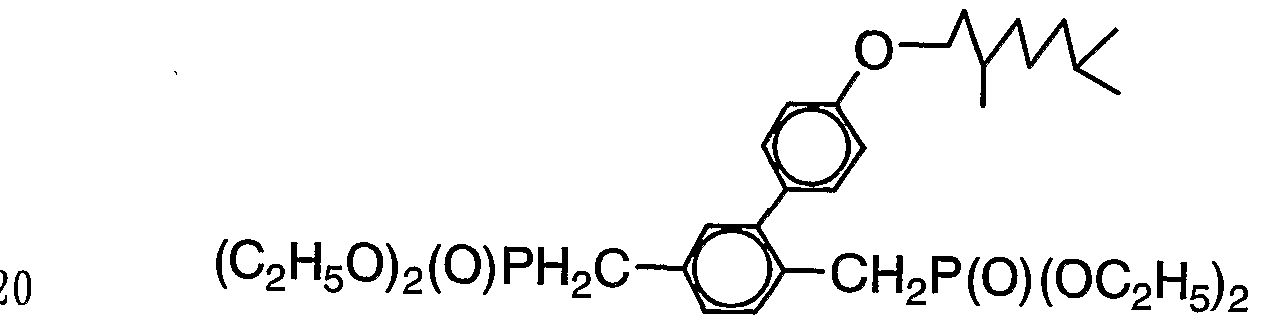


Claims


Priority Applications (3)
| Application Number | Priority Date | Filing Date | Title |
|---|---|---|---|
| CN2007800357055A CN101516962B (zh) | 2006-07-31 | 2007-07-26 | 高分子化合物及使用其的高分子发光元件 |
| EP07791795A EP2048177B1 (en) | 2006-07-31 | 2007-07-26 | Polymer compound and polymer light-emitting device using the same |
| US12/375,026 US8217387B2 (en) | 2006-07-31 | 2007-07-26 | Polymer compound and light emitting device using the same |
Applications Claiming Priority (2)
| Application Number | Priority Date | Filing Date | Title |
|---|---|---|---|
| JP2006207727 | 2006-07-31 | ||
| JP2006-207727 | 2006-07-31 |
Publications (1)
| Publication Number | Publication Date |
|---|---|
| WO2008016091A1 true WO2008016091A1 (en) | 2008-02-07 |
Family
ID=38997266
Family Applications (1)
| Application Number | Title | Priority Date | Filing Date |
|---|---|---|---|
| PCT/JP2007/065115 Ceased WO2008016091A1 (en) | 2006-07-31 | 2007-07-26 | Polymer compound and polymer light-emitting device using the same |
Country Status (5)
| Country | Link |
|---|---|
| US (1) | US8217387B2 (ja) |
| EP (1) | EP2048177B1 (ja) |
| KR (1) | KR20090034392A (ja) |
| CN (1) | CN101516962B (ja) |
| WO (1) | WO2008016091A1 (ja) |
Cited By (4)
| Publication number | Priority date | Publication date | Assignee | Title |
|---|---|---|---|---|
| WO2009104781A1 (ja) * | 2008-02-18 | 2009-08-27 | 住友化学株式会社 | 組成物およびそれを用いた有機光電変換素子 |
| WO2009110642A1 (ja) * | 2008-03-07 | 2009-09-11 | 住友化学株式会社 | 積層構造体 |
| WO2010026972A1 (ja) * | 2008-09-03 | 2010-03-11 | 住友化学株式会社 | 高分子化合物及びそれを用いた高分子発光素子 |
| JP2014518593A (ja) * | 2011-04-25 | 2014-07-31 | ゼネラル・エレクトリック・カンパニイ | オプトエレクトロニックデバイスの材料 |
Families Citing this family (9)
| Publication number | Priority date | Publication date | Assignee | Title |
|---|---|---|---|---|
| CN101838387B (zh) * | 2004-12-03 | 2012-02-29 | 住友化学株式会社 | 水杨酸酯取代的共轭聚合物及器件 |
| JP2009001777A (ja) * | 2007-05-11 | 2009-01-08 | Sumitomo Chemical Co Ltd | 高分子化合物及びその製造方法、並びに、その高分子化合物を用いた発光材料、液状組成物、薄膜、高分子発光素子、面状光源、表示装置、有機トランジスタ及び太陽電池 |
| KR20120001760A (ko) * | 2009-03-17 | 2012-01-04 | 스미또모 가가꾸 가부시키가이샤 | 조성물 및 그것을 이용한 소자 |
| GB2472413B (en) * | 2009-08-05 | 2014-04-23 | Cambridge Display Tech Ltd | Organic semiconductors |
| EP2562197B1 (en) * | 2010-04-23 | 2018-08-01 | Ocean's King Lighting Science & Technology Co., Ltd. | Copolymer comprising anthracene and benzoselenadiazole, preparing method and uses thereof |
| CN103606632A (zh) * | 2013-10-26 | 2014-02-26 | 溧阳市东大技术转移中心有限公司 | 一种聚合物发光二极管 |
| CN103606629A (zh) * | 2013-10-26 | 2014-02-26 | 溧阳市东大技术转移中心有限公司 | 一种包括电子传输层的聚合物发光二极管 |
| CN103606631A (zh) * | 2013-10-26 | 2014-02-26 | 溧阳市东大技术转移中心有限公司 | 一种具有空穴传输层的聚合物发光二极管 |
| CN218891307U (zh) | 2020-01-13 | 2023-04-21 | 米沃奇电动工具公司 | 电池组供电的便携式焊接机 |
Citations (20)
| Publication number | Priority date | Publication date | Assignee | Title |
|---|---|---|---|---|
| JPS5751781A (en) | 1980-07-17 | 1982-03-26 | Eastman Kodak Co | Organic electroluminiscent cell and method |
| JPS59194393A (ja) | 1983-03-25 | 1984-11-05 | イ−ストマン コダツク カンパニ− | 改良された電力転換効率をもつ有機エレクトロルミネツセント装置 |
| JPS6370257A (ja) | 1986-09-12 | 1988-03-30 | Fuji Xerox Co Ltd | 電子写真用電荷輸送材料 |
| JPS63175860A (ja) | 1987-01-16 | 1988-07-20 | Fuji Xerox Co Ltd | 電子写真感光体 |
| JPH02135361A (ja) | 1988-11-16 | 1990-05-24 | Fuji Xerox Co Ltd | 電子写真感光体 |
| JPH02135359A (ja) | 1988-11-16 | 1990-05-24 | Fuji Xerox Co Ltd | 電子写真感光体 |
| JPH02209988A (ja) | 1989-02-10 | 1990-08-21 | Idemitsu Kosan Co Ltd | 薄膜エレクトロルミネッセンス素子 |
| JPH0337992A (ja) | 1989-07-04 | 1991-02-19 | Idemitsu Kosan Co Ltd | 有機エレクトロルミネッセンス素子の製造方法 |
| JPH03152184A (ja) | 1989-11-08 | 1991-06-28 | Nec Corp | 有機薄膜el素子 |
| JPH05110069A (ja) | 1991-10-14 | 1993-04-30 | Mitsubishi Electric Corp | 電界効果トランジスタの製造方法 |
| JPH05202355A (ja) | 1992-01-29 | 1993-08-10 | Sumitomo Chem Co Ltd | 有機エレクトロルミネッセンス素子 |
| JPH08185980A (ja) * | 1994-12-27 | 1996-07-16 | Sumitomo Chem Co Ltd | 有機エレクトロルミネッセンス素子 |
| GB2300196A (en) | 1995-04-10 | 1996-10-30 | Sumitomo Chemical Co | Polysilanes |
| JPH0945478A (ja) | 1995-02-01 | 1997-02-14 | Sumitomo Chem Co Ltd | 高分子蛍光体とその製造方法および有機エレクトロルミネッセンス素子 |
| WO2000046321A1 (en) | 1999-02-04 | 2000-08-10 | The Dow Chemical Company | Fluorene copolymers and devices made therefrom |
| JP2001247861A (ja) * | 1999-12-20 | 2001-09-14 | Sumitomo Chem Co Ltd | 高分子蛍光体、その製造方法および高分子発光素子 |
| WO2002059121A1 (en) | 2001-01-24 | 2002-08-01 | Cambridge Display Technology Limited | Monomer for use in preparation of a polymer to be used in optical devices |
| WO2003020790A2 (de) | 2001-09-04 | 2003-03-13 | Covion Organic Semiconductors Gmbh | Konjugierte polymere enthaltend spirobifluoren-einheiten und deren verwendung |
| JP2004002703A (ja) * | 2002-03-15 | 2004-01-08 | Sumitomo Chem Co Ltd | 高分子化合物およびそれを用いた高分子発光素子 |
| JP2004168999A (ja) * | 2002-10-30 | 2004-06-17 | Sumitomo Chem Co Ltd | 高分子化合物およびそれを用いた高分子発光素子 |
Family Cites Families (8)
| Publication number | Priority date | Publication date | Assignee | Title |
|---|---|---|---|---|
| JPS61103923A (ja) | 1984-10-26 | 1986-05-22 | Asahi Glass Co Ltd | 有機高分子導電体 |
| DE19748814A1 (de) | 1997-11-05 | 1999-05-06 | Hoechst Ag | Substituierte Poly(arylenvinylene), Verfahren zur Herstellung und deren Verwendung in Elektrolumineszenz |
| TW572991B (en) | 1999-12-20 | 2004-01-21 | Sumitomo Chemical Co | High molecular weight fluorescent element, its process, and high molecular weight fluorescent light emission element |
| TWI293964B (en) | 2001-02-05 | 2008-03-01 | Sumitomo Chemical Co | Polymeric fluorescent substance, production thereof and polymer light-emitting device |
| SG128438A1 (en) * | 2002-03-15 | 2007-01-30 | Sumitomo Chemical Co | Polymer compound and polymer light emitting deviceusing the same |
| AU2003268752A1 (en) | 2002-10-30 | 2004-05-25 | Sumitomo Chemical Company, Limited | High-molecular compounds and polymerer light emitting devices made by using the same |
| DE10343606A1 (de) | 2003-09-20 | 2005-04-14 | Covion Organic Semiconductors Gmbh | Weiß emittierende Copolymere, deren Darstellung und Verwendung |
| US7446207B2 (en) * | 2005-09-27 | 2008-11-04 | Ctci Foundation | Organic dye used in dye-sensitized solar cell |
-
2007
- 2007-07-26 CN CN2007800357055A patent/CN101516962B/zh not_active Expired - Fee Related
- 2007-07-26 WO PCT/JP2007/065115 patent/WO2008016091A1/ja not_active Ceased
- 2007-07-26 EP EP07791795A patent/EP2048177B1/en not_active Not-in-force
- 2007-07-26 US US12/375,026 patent/US8217387B2/en not_active Expired - Fee Related
- 2007-07-26 KR KR1020097003867A patent/KR20090034392A/ko not_active Ceased
Patent Citations (21)
| Publication number | Priority date | Publication date | Assignee | Title |
|---|---|---|---|---|
| JPS5751781A (en) | 1980-07-17 | 1982-03-26 | Eastman Kodak Co | Organic electroluminiscent cell and method |
| JPS59194393A (ja) | 1983-03-25 | 1984-11-05 | イ−ストマン コダツク カンパニ− | 改良された電力転換効率をもつ有機エレクトロルミネツセント装置 |
| JPS6370257A (ja) | 1986-09-12 | 1988-03-30 | Fuji Xerox Co Ltd | 電子写真用電荷輸送材料 |
| JPS63175860A (ja) | 1987-01-16 | 1988-07-20 | Fuji Xerox Co Ltd | 電子写真感光体 |
| JPH02135361A (ja) | 1988-11-16 | 1990-05-24 | Fuji Xerox Co Ltd | 電子写真感光体 |
| JPH02135359A (ja) | 1988-11-16 | 1990-05-24 | Fuji Xerox Co Ltd | 電子写真感光体 |
| JPH02209988A (ja) | 1989-02-10 | 1990-08-21 | Idemitsu Kosan Co Ltd | 薄膜エレクトロルミネッセンス素子 |
| JPH0337992A (ja) | 1989-07-04 | 1991-02-19 | Idemitsu Kosan Co Ltd | 有機エレクトロルミネッセンス素子の製造方法 |
| JPH03152184A (ja) | 1989-11-08 | 1991-06-28 | Nec Corp | 有機薄膜el素子 |
| JPH05110069A (ja) | 1991-10-14 | 1993-04-30 | Mitsubishi Electric Corp | 電界効果トランジスタの製造方法 |
| JPH05202355A (ja) | 1992-01-29 | 1993-08-10 | Sumitomo Chem Co Ltd | 有機エレクトロルミネッセンス素子 |
| JPH08185980A (ja) * | 1994-12-27 | 1996-07-16 | Sumitomo Chem Co Ltd | 有機エレクトロルミネッセンス素子 |
| JPH0945478A (ja) | 1995-02-01 | 1997-02-14 | Sumitomo Chem Co Ltd | 高分子蛍光体とその製造方法および有機エレクトロルミネッセンス素子 |
| GB2300196A (en) | 1995-04-10 | 1996-10-30 | Sumitomo Chemical Co | Polysilanes |
| WO2000046321A1 (en) | 1999-02-04 | 2000-08-10 | The Dow Chemical Company | Fluorene copolymers and devices made therefrom |
| JP2001247861A (ja) * | 1999-12-20 | 2001-09-14 | Sumitomo Chem Co Ltd | 高分子蛍光体、その製造方法および高分子発光素子 |
| WO2002059121A1 (en) | 2001-01-24 | 2002-08-01 | Cambridge Display Technology Limited | Monomer for use in preparation of a polymer to be used in optical devices |
| JP2004534863A (ja) * | 2001-01-24 | 2004-11-18 | ケンブリッジ ディスプレイ テクノロジー リミテッド | 光学デバイスに使用すべきポリマーの調製に使用するモノマー |
| WO2003020790A2 (de) | 2001-09-04 | 2003-03-13 | Covion Organic Semiconductors Gmbh | Konjugierte polymere enthaltend spirobifluoren-einheiten und deren verwendung |
| JP2004002703A (ja) * | 2002-03-15 | 2004-01-08 | Sumitomo Chem Co Ltd | 高分子化合物およびそれを用いた高分子発光素子 |
| JP2004168999A (ja) * | 2002-10-30 | 2004-06-17 | Sumitomo Chem Co Ltd | 高分子化合物およびそれを用いた高分子発光素子 |
Non-Patent Citations (4)
| Title |
|---|
| CHEM. REV., vol. 89, 1989, pages 1359 |
| LI X. ET AL: "Synthesis and properties of novel poly(p-phenylenevinylene) copolymers for near-infrared emitting diodes", EUROPEAN POLYMER JOURNAL, vol. 41, no. 12, 2005, pages 2923 - 2933, XP005105728 * |
| SCIENCE, vol. 270, 1995, pages 1789 |
| See also references of EP2048177A4 |
Cited By (11)
| Publication number | Priority date | Publication date | Assignee | Title |
|---|---|---|---|---|
| WO2009104781A1 (ja) * | 2008-02-18 | 2009-08-27 | 住友化学株式会社 | 組成物およびそれを用いた有機光電変換素子 |
| CN101945922A (zh) * | 2008-02-18 | 2011-01-12 | 住友化学株式会社 | 组合物及使用其的有机光电转换元件 |
| US8298686B2 (en) | 2008-02-18 | 2012-10-30 | Sumitomo Chemical Company, Limited | Composition and organic photoelectric converter using the same |
| WO2009110642A1 (ja) * | 2008-03-07 | 2009-09-11 | 住友化学株式会社 | 積層構造体 |
| JP2009239279A (ja) * | 2008-03-07 | 2009-10-15 | Sumitomo Chemical Co Ltd | 積層構造体 |
| CN102017219B (zh) * | 2008-03-07 | 2013-03-27 | 住友化学株式会社 | 层压结构体 |
| US8951646B2 (en) | 2008-03-07 | 2015-02-10 | Sumitomo Chemical Company, Limited | Layered structure comprising a layer containing a conjugated polymer compound |
| TWI496689B (zh) * | 2008-03-07 | 2015-08-21 | Sumitomo Chemical Co | 積層構造體 |
| WO2010026972A1 (ja) * | 2008-09-03 | 2010-03-11 | 住友化学株式会社 | 高分子化合物及びそれを用いた高分子発光素子 |
| JP2010084131A (ja) * | 2008-09-03 | 2010-04-15 | Sumitomo Chemical Co Ltd | 高分子化合物及びそれを用いた高分子発光素子 |
| JP2014518593A (ja) * | 2011-04-25 | 2014-07-31 | ゼネラル・エレクトリック・カンパニイ | オプトエレクトロニックデバイスの材料 |
Also Published As
| Publication number | Publication date |
|---|---|
| US20100001263A1 (en) | 2010-01-07 |
| CN101516962B (zh) | 2012-04-18 |
| EP2048177B1 (en) | 2012-11-21 |
| EP2048177A1 (en) | 2009-04-15 |
| KR20090034392A (ko) | 2009-04-07 |
| CN101516962A (zh) | 2009-08-26 |
| US8217387B2 (en) | 2012-07-10 |
| EP2048177A4 (en) | 2010-08-18 |
Similar Documents
| Publication | Publication Date | Title |
|---|---|---|
| JP4830186B2 (ja) | 高分子蛍光体およびそれを用いた高分子発光素子 | |
| JP5640730B2 (ja) | 組成物及び該組成物を用いてなる発光素子 | |
| CN101516962B (zh) | 高分子化合物及使用其的高分子发光元件 | |
| JP5281800B2 (ja) | ブロック共重合体並びにそれを用いた組成物、液状組成物、発光性薄膜及び高分子発光素子 | |
| WO2007043495A9 (ja) | 共重合体およびそれを用いた高分子発光素子 | |
| WO2008016067A1 (en) | Polymer compound and polymer light-emitting device | |
| WO2011078387A1 (ja) | 組成物及び該組成物を用いてなる発光素子 | |
| CN101128507B (zh) | 高分子化合物及使用该高分子化合物的元件 | |
| JP4940495B2 (ja) | 高分子蛍光体および高分子発光素子 | |
| WO2007081058A1 (ja) | 高分子化合物およびそれを用いた高分子発光素子 | |
| JP2008056910A (ja) | 高分子化合物及びそれを用いた高分子発光素子 | |
| JP2002338665A (ja) | 高分子化合物、その製造方法および高分子発光素子 | |
| JP4940493B2 (ja) | 高分子蛍光体、その製造方法および高分子発光素子 | |
| JP5162888B2 (ja) | 高分子化合物およびそれを用いた高分子発光素子 | |
| JP4045883B2 (ja) | 高分子蛍光体およびそれを用いた高分子発光素子 | |
| JP2009132882A (ja) | 高分子化合物及びそれを用いた高分子発光素子 | |
| JP4045848B2 (ja) | 高分子蛍光体およびそれを用いた高分子発光素子 | |
| JP5317313B2 (ja) | フルオレン重合体及びそれを用いた高分子発光素子 | |
| JP5317314B2 (ja) | 高分子化合物及びそれを用いた高分子発光素子 | |
| JP4904805B2 (ja) | 高分子化合物およびそれを用いた高分子発光素子 | |
| JP5245325B2 (ja) | 高分子化合物及びそれを用いた高分子発光素子 | |
| JP3922005B2 (ja) | 高分子蛍光体およびそれを用いた高分子発光素子 | |
| JP2002155274A (ja) | 高分子蛍光体および高分子発光素子 | |
| JP2007224282A (ja) | 高分子化合物およびそれを用いた高分子発光素子 | |
| JP2009132883A (ja) | 高分子化合物及びそれを用いた高分子発光素子 |
Legal Events
| Date | Code | Title | Description |
|---|---|---|---|
| WWE | Wipo information: entry into national phase |
Ref document number: 200780035705.5 Country of ref document: CN |
|
| 121 | Ep: the epo has been informed by wipo that ep was designated in this application |
Ref document number: 07791795 Country of ref document: EP Kind code of ref document: A1 |
|
| WWE | Wipo information: entry into national phase |
Ref document number: 12375026 Country of ref document: US |
|
| NENP | Non-entry into the national phase |
Ref country code: DE |
|
| WWE | Wipo information: entry into national phase |
Ref document number: 2007791795 Country of ref document: EP |
|
| WWE | Wipo information: entry into national phase |
Ref document number: 1020097003867 Country of ref document: KR |
|
| NENP | Non-entry into the national phase |
Ref country code: RU |