WO2010098080A1 - Dérivé de 1-oxyde de 1,4-benzothiazépine et composition pharmaceutique l'utilisant - Google Patents
Dérivé de 1-oxyde de 1,4-benzothiazépine et composition pharmaceutique l'utilisant Download PDFInfo
- Publication number
- WO2010098080A1 WO2010098080A1 PCT/JP2010/001219 JP2010001219W WO2010098080A1 WO 2010098080 A1 WO2010098080 A1 WO 2010098080A1 JP 2010001219 W JP2010001219 W JP 2010001219W WO 2010098080 A1 WO2010098080 A1 WO 2010098080A1
- Authority
- WO
- WIPO (PCT)
- Prior art keywords
- pharmaceutical composition
- benzothiazepine
- compound
- present
- formula
- Prior art date
- Legal status (The legal status is an assumption and is not a legal conclusion. Google has not performed a legal analysis and makes no representation as to the accuracy of the status listed.)
- Ceased
Links
- 0 COc(cc1C2)ccc1SCCN2C(CCN1CCC(Cc2ccc(*)cc2)CC1)=O Chemical compound COc(cc1C2)ccc1SCCN2C(CCN1CCC(Cc2ccc(*)cc2)CC1)=O 0.000 description 1
Images


Classifications
-
- C—CHEMISTRY; METALLURGY
- C07—ORGANIC CHEMISTRY
- C07D—HETEROCYCLIC COMPOUNDS
- C07D417/00—Heterocyclic compounds containing two or more hetero rings, at least one ring having nitrogen and sulfur atoms as the only ring hetero atoms, not provided for by group C07D415/00
- C07D417/02—Heterocyclic compounds containing two or more hetero rings, at least one ring having nitrogen and sulfur atoms as the only ring hetero atoms, not provided for by group C07D415/00 containing two hetero rings
- C07D417/06—Heterocyclic compounds containing two or more hetero rings, at least one ring having nitrogen and sulfur atoms as the only ring hetero atoms, not provided for by group C07D415/00 containing two hetero rings linked by a carbon chain containing only aliphatic carbon atoms
-
- A—HUMAN NECESSITIES
- A61—MEDICAL OR VETERINARY SCIENCE; HYGIENE
- A61K—PREPARATIONS FOR MEDICAL, DENTAL OR TOILETRY PURPOSES
- A61K31/00—Medicinal preparations containing organic active ingredients
- A61K31/33—Heterocyclic compounds
- A61K31/395—Heterocyclic compounds having nitrogen as a ring hetero atom, e.g. guanethidine or rifamycins
- A61K31/55—Heterocyclic compounds having nitrogen as a ring hetero atom, e.g. guanethidine or rifamycins having seven-membered rings, e.g. azelastine, pentylenetetrazole
- A61K31/554—Heterocyclic compounds having nitrogen as a ring hetero atom, e.g. guanethidine or rifamycins having seven-membered rings, e.g. azelastine, pentylenetetrazole having at least one nitrogen and one sulfur as ring hetero atoms, e.g. clothiapine, diltiazem
-
- A—HUMAN NECESSITIES
- A61—MEDICAL OR VETERINARY SCIENCE; HYGIENE
- A61P—SPECIFIC THERAPEUTIC ACTIVITY OF CHEMICAL COMPOUNDS OR MEDICINAL PREPARATIONS
- A61P9/00—Drugs for disorders of the cardiovascular system
-
- A—HUMAN NECESSITIES
- A61—MEDICAL OR VETERINARY SCIENCE; HYGIENE
- A61P—SPECIFIC THERAPEUTIC ACTIVITY OF CHEMICAL COMPOUNDS OR MEDICINAL PREPARATIONS
- A61P9/00—Drugs for disorders of the cardiovascular system
- A61P9/06—Antiarrhythmics
-
- A—HUMAN NECESSITIES
- A61—MEDICAL OR VETERINARY SCIENCE; HYGIENE
- A61P—SPECIFIC THERAPEUTIC ACTIVITY OF CHEMICAL COMPOUNDS OR MEDICINAL PREPARATIONS
- A61P9/00—Drugs for disorders of the cardiovascular system
- A61P9/10—Drugs for disorders of the cardiovascular system for treating ischaemic or atherosclerotic diseases, e.g. antianginal drugs, coronary vasodilators, drugs for myocardial infarction, retinopathy, cerebrovascula insufficiency, renal arteriosclerosis
-
- A—HUMAN NECESSITIES
- A61—MEDICAL OR VETERINARY SCIENCE; HYGIENE
- A61P—SPECIFIC THERAPEUTIC ACTIVITY OF CHEMICAL COMPOUNDS OR MEDICINAL PREPARATIONS
- A61P9/00—Drugs for disorders of the cardiovascular system
- A61P9/12—Antihypertensives
Definitions
- the present invention relates to a 1,4-benzothiazepine-1-oxide derivative represented by the general formula [I] of the present invention or a pharmaceutically acceptable salt thereof, and a pharmaceutical composition using the same.
- the heart repeats contraction and relaxation of the myocardium periodically to send blood to tissues and organs throughout the body, and also serves as a pump that returns blood from tissues and organs throughout the body to the heart.
- the heart contracts and relaxes at regular intervals, and the myocardium receives the supply of oxygen and nutrients necessary for coronary circulation by the left and right coronary arteries and consumes the oxygen and nutrients to contract and relax. Yes.
- oxygen supply and oxygen consumption are in equilibrium. If the heart does not contract or relax normally, and the pumping action is impaired as a result, the whole body organs and tissues become congested and heart failure occurs.
- the sympathetic nervous system such as norepinephrine is activated, the blood concentration increases, and the heart rate increases.
- beta blockers drugs that reduce heart rate and reduce myocardial contractility, i.e., beta blockers, are used as therapeutic agents for heart failure as a result of lowering myocardial oxygen consumption.
- beta-blockers overdose of beta-blockers can increase heart failure and should be used carefully and carefully.
- This cardiac cycle can be broadly divided into a systole and a diastole.
- the systole is from mitral valve closure to aortic valve closure
- the diastole is from aortic valve closure to mitral valve closure.
- the diastole consists of four phases: an isovolumetric relaxation phase, a rapid inflow phase, a slow inflow phase, and an atrial systole.
- the latter three of the four diastolic periods that is, the rapid inflow period, the slow inflow period, and the atrial systole are phases in which the ventricular muscle further expands, and blood flows from the atria into the ventricles.
- This dilator function in the ventricle is extremely important in terms of cardiac function.
- myocardial dilatation is impaired, blood is impeded from entering the ventricle, leading to heart failure, particularly heart failure due to diastolic failure.
- coronary arteries allow blood to flow into myocardial tissue during diastole. Coronary perfusion into diastole myocardial tissue is more pronounced in the left coronary artery than in the right coronary artery.
- left ventricular diastolic dysfunction impairs coronary perfusion into the left ventricular myocardial tissue, resulting in myocardial ischemia, which further exacerbates heart failure due to diastolic dysfunction.
- left ventricular diastolic dysfunction is seen in elderly people, patients with hypertension, patients with left ventricular myocardial hypertrophy, etc. even if they have not yet had heart failure.
- Left ventricular diastolic disorders can be easily diagnosed by cardiac ultrasound Doppler. Left ventricular diastolic disorders often complain of symptoms such as fatigue, shortness of breath, chest discomfort, and chest pain. If left ventricular diastolic dysfunction lasts for a long time, cardiomyocyte damage and fibrosis occur, and heart failure is likely to occur in the future.
- myocardial oxygen supply is required, which is supplied by coronary perfusion with the left and right coronary arteries.
- the myocardium contracts and relaxes by consuming these oxygen and nutrients.
- Agents that dilate the coronary arteries increase myocardial oxygen supply and reduce myocardial ischemia.
- myocardial oxygen consumption is defined by heart rate and cardiac contraction force, a decrease in heart rate or a decrease in myocardial contraction force reduces the myocardial oxygen amount and reduces myocardial ischemia.
- a drug having the action of dilating the coronary artery, lowering the heart rate, and reducing the cardiac contractile force is a therapeutic or preventive drug for ischemic heart disease, that is, angina pectoris or myocardial infarction.
- Heart failure includes systolic failure and diastolic failure, but even in heart failure due to systolic failure, since the left ventricular diastolic minimum pressure and left ventricular end diastolic pressure are increased, drugs that have an effect of enhancing left ventricular diastolic function are It becomes a drug that improves systolic dysfunction.
- a drug that dilates the coronary arteries enhances oxygen supply to the myocardium, and thus becomes a therapeutic agent for angina pectoris and myocardial infarction.
- Myocardial oxygen consumption is related to heart rate and myocardial contractility.
- ischemic heart disease that is, angina pectoris and myocardial infarction.
- ⁇ -blockers are used to treat angina pectoris, myocardial infarction, and heart failure, but do not enhance coronary artery dilation or left ventricular dilation.
- Drugs that enhance the left ventricular myocardial function, lower the heart rate, slow the myocardial contractility, and dilate the coronary arteries are heart failure, heart failure due to diastolic failure, left ventricular diastolic disorder, angina Therapeutic or preventive drug for myocardial infarction.
- the relaxation function in the heart is as important as the contraction function and the dilation function.
- Relaxation mainly indicates the function of the first phase of the four diastolic phases, the isovolumetric relaxation phase, and can be measured by measuring the first derivative of the left ventricular pressure and the maximum negative dP / dt.
- Abnormal relaxation functions in the heart can be measured by measuring the left ventricular myocardial wall motion with the cardiac ultrasound Doppler method.
- myocardial contraction disorder myocardial relaxation disorder, and myocardial dilatation disorder are often caused in combination.
- myocardial relaxation disorders and myocardial diastolic disorders combine to form diastolic dysfunction.
- Relaxation disorder is also observed in ischemic heart disease, atrial fibrillation, and ventricular arrhythmia.
- myocardial contractile force As the relaxation disorder becomes advanced, myocardial contractile force also decreases. Improvement of myocardial relaxation disorder is a therapeutically important requirement in ischemic heart disease, heart failure, atrial fibrillation and ventricular arrhythmia.
- the myocardial relaxation disorder becomes advanced, the myocardium cannot relax and causes toughness (Rigor).
- heart failure is exacerbated by myocardial relaxation disorders.
- Myocardial relaxation disorders are found in ischemic heart disease, hypertensive heart disease, heart failure, atrial fibrillation, ventricular arrhythmia.
- Catecholamines such as epinephrine and norepinephrine promote calcium uptake in myocardial endoplasmic reticulum and promote myocardial relaxation.
- these substances have the effect of increasing heart rate and blood pressure, and increase myocardial oxygen consumption. As a result, they are difficult to use as therapeutic agents for the above-mentioned diseases.
- a drug that promotes myocardial relaxation without changing the heart rate can be an ideal drug as a myocardial relaxant.
- Blood pressure is defined by cardiac output, peripheral vascular resistance, circulating blood volume, blood viscosity, and the like. Norepinephrine increases peripheral vascular resistance and increases blood pressure. In contrast to hypertension due to norepinephrine load, a drug that lowers blood pressure is a therapeutic or preventive agent for hypertension.
- a therapeutic agent for atrial fibrillation has an effect of enhancing an effect on an anticancer drug (see Patent Document 4), ryanodine receptor It has an action of suppressing Ca 2+ leak from the sarcoplasmic reticulum by improving and / or stabilizing the body function (see Patent Document 5), muscle relaxation promoting agent, therapeutic agent for left ventricular diastolic disorder, angina pectoris It is reported that it is useful as a therapeutic agent, a therapeutic agent for acute emphysema, a blood flow improving agent for microcirculation, a therapeutic agent for hypertension, a therapeutic agent for ventricular tachycardia, a therapeutic agent for torsadopoane, etc. (see Patent Document 6) Has been.
- the present invention is provided as a drug that enhances myocardial relaxation ability and improves myocardial relaxation disorder, but also relaxes vascular smooth muscle, lowers blood pressure, and becomes a therapeutic agent for hypertension. Furthermore, the present invention provides a therapeutic or prophylactic agent for myotonia and miscarriage by promoting muscle relaxation of skeletal muscle and uterine smooth muscle. The present invention also provides a novel compound having a useful pharmacological action such as promoting the myocardial relaxation function without changing the heart rate, and a pharmaceutical composition using the same.
- the present inventor has made various information on 4- [3- (4-benzylpiperidin-1-yl) propionyl] -7-methoxy-2,3,4,5-tetrahydro-1,4-benzothiazepine and its derivatives.
- Pharmacological action has been studied. It has been reported in the above-mentioned literature that these compounds have extremely useful pharmacological actions.
- the present inventor has found that the S-oxide derivative has a very specific pharmacological action that is not found in the free form of the mother body, as well as a similar pharmacological action.
- R represents a hydrogen atom or a hydroxyl group.
- the present invention also includes a 1,4-benzothiazepine-1-oxide derivative represented by the above formula [I] or a pharmaceutically acceptable salt thereof, and a pharmaceutically acceptable carrier.
- a pharmaceutical composition is provided.
- R represents a hydrogen atom or a hydroxyl group.
- (3) comprising the 1,4-benzothiazepine-1-oxide derivative or the pharmaceutically acceptable salt thereof according to (1) or (2) above, and a pharmaceutically acceptable carrier.
- Pharmaceutical composition (4) The pharmaceutical composition according to (3) above, wherein the pharmaceutical composition is a therapeutic or preventive agent for heart disease or hypertension.
- the pharmaceutical composition according to the above (4), wherein the heart disease is heart failure, angina pectoris, or myocardial infarction.
- the pharmaceutical composition according to the above (5), wherein the heart failure is caused by left ventricular diastolic disorder or myocardial relaxation disorder.
- the pharmaceutical composition according to the above (4), wherein the hypertension is due to a blood pressure lowering action during hypertension.
- the pharmaceutical composition promotes the myocardial relaxation function without changing the heart rate, and improves the myocardial relaxation disorder combined with ischemic heart disease, hypertensive heart disease, heart failure, atrial fibrillation, ventricular arrhythmia
- the pharmaceutical composition according to (3) above which is a therapeutic agent or a preventive agent.
- the following general formula [II] wherein the pharmaceutically acceptable salt of the 1,4-benzothiazepine-1-oxide derivative is the parent compound:
- R represents a hydrogen atom or a hydroxyl group.
- R represents a hydrogen atom or a hydroxyl group.
- the 1,4-benzothiazepine-1-oxide derivative represented by the general formula [I] or a pharmaceutically acceptable salt thereof is a parent compound of the general formula [II]
- a patient with heart disease or hypertension contains an effective amount of the 1,4-benzothiazepine-1-oxide derivative represented by the above general formula [I] or a pharmaceutically acceptable salt thereof
- a method of treating heart disease or hypertension comprising administering a pharmaceutical composition.
- An effective amount of a 1,4-benzothiazepine-1-oxide derivative represented by the above general formula [I] or a pharmaceutically acceptable salt thereof is contained in a patient with heart failure due to myocardial relaxation disorder
- a method of treating heart failure due to myocardial relaxation disorder, comprising administering a pharmaceutical composition comprising administering a pharmaceutical composition.
- the compound of the present invention represented by the above general formula [I] or a salt thereof is considered to be a metabolite in vivo of the compound represented by the general formula [II] which is the parent compound or a salt thereof.
- the present inventors prepared a compound represented by the general formula [I] or a salt thereof and examined its properties in detail, the compound represented by the general formula [I] or a salt thereof was It was found for the first time that it is not a mere metabolite but itself has a useful pharmacological action.
- the compound represented by the general formula [I] of the present invention or a salt thereof is different from the compound represented by the general formula [II] or a salt thereof as a base compound without increasing the heart rate. Since it has an action of adjusting the myocardial relaxation function, it is considered to be a substance having a pharmacological action different from that of the compound represented by the general formula [II], which is the parent compound, or a salt thereof.
- ⁇ -blockers drugs that reduce myocardial contractility and reduce heart rate
- Ca 2+ antagonists that dilate coronary arteries have a blood vessel dilating action, and thus blood pressure decreases rapidly. In general, it is recommended that low doses be used, and high doses are considered dangerous.
- a drug that dilates coronary blood vessels and has a cardiac contraction inhibitory action and a heartbeat lowering action a drug with a gentle action is required from the viewpoint of safety.
- the present inventors have found that the compound represented by the general formula [I] of the present invention or a salt thereof has an action of enhancing the left ventricular diastolic function, dilates blood vessels, reduces myocardial contractility, and heart rate.
- the present invention has been found to be extremely useful as a drug for heart failure, heart failure due to diastolic dysfunction, left ventricular diastolic dysfunction, angina pectoris or myocardial infarction.
- the compound of the present invention promotes myocardial relaxation function without changing the heart rate, and improves myocardial relaxation disorder associated with ischemic heart disease, hypertensive heart disease, heart failure, atrial fibrillation, ventricular arrhythmia. It was found useful as a drug.
- the compound represented by the general formula [I] of the present invention or a salt thereof has an action of enhancing the myocardial dilation function, an action of dilating the coronary arteries, an action of reducing the heart rate, and reducing the myocardial contractility. Both were found to be calm.
- the inventors of the present invention have found that the compound of the present invention has an effective action for enhancing the diastolic function of the left ventricle and an inhibitory action against norepinephrine-induced left ventricular diastolic disorder.
- the present invention provides a compound of the present invention that improves left ventricular diastolic function, suppresses the increase in left ventricular diastolic minimum pressure and left ventricular end diastolic pressure observed during heart failure and diastolic dysfunction, It is provided as a useful drug for improving failure.
- the present invention also provides a compound of the present invention as a useful drug for treating or preventing left ventricular diastolic dysfunction by administering the compound of the present invention to elderly people or patients with left ventricular diastolic dysfunction observed in hypertension and cardiac hypertrophy.
- the present invention provides the compound of the present invention as a desirable therapeutic or preventive agent that is safe for patients with angina pectoris or myocardial infarction, which has significant stenosis in the coronary arteries. Furthermore, the present invention promotes myocardial relaxation function without changing the heart rate, and is useful for improving myocardial relaxation disorder combined with ischemic heart disease, hypertensive heart disease, heart failure, atrial fibrillation, ventricular arrhythmia. It is provided as a therapeutic or prophylactic agent.
- the present invention provides novel compounds having such useful actions, and pharmaceutical compositions containing these compounds of the present invention.
- the compound represented by the general formula [I] or a salt thereof according to the present invention is considered to be a metabolite in vivo of the compound represented by the general formula [II] which is the parent compound or a salt thereof.
- the pharmaceutical composition of the present invention comprises, instead of the compound represented by the general formula [I] of the present invention or a salt thereof, the compound represented by the general formula [II] or a salt thereof, which is a parent compound thereof, It can be used as a prodrug.
- the compound of the present invention itself has an action of enhancing myocardial dilatation function, an action of slowly dilating the coronary artery, and a property of slowly lowering the heart rate, and also increases the oxygen supply to the myocardium. It also has the property of reducing myocardial oxygen consumption. Therefore, the present invention is related to the elderly, patients with hypertension, left ventricular hypertrophy, left ventricular diastolic disorder, patients with heart failure and heart failure due to diastolic dysfunction, and angina
- the present invention provides a new pharmaceutical composition that is a safe and desirable therapeutic or preventive agent for patients with symptom or myocardial infarction.
- the compound of the present invention has an action of enhancing myocardial relaxation without changing the heart rate, and is effective for myocardial relaxation disorders.
- the compound of the present invention has an effective action against hypertension and is useful as a therapeutic or prophylactic agent for hypertension.
- the compound of the present invention is used as a therapeutic or prophylactic agent for improving myocardial relaxation disorder associated with ischemic heart disease, hypertensive heart disease, heart failure, atrial fibrillation, and ventricular arrhythmia without changing the heart rate. Useful.
- the pharmaceutical composition of the present invention can be administered orally, sublingually, affixed, or intravenously, but is injected into the coronary artery to release coronary spasm after inducing coronary artery spasm diagnostically, preventing coronary spasm during examination, and Used for treatment. Furthermore, to treat or prevent angina pectoris, particularly myocardial ischemia in angina pectoris, or to provide safe and desirable treatment or prevention for heart failure, particularly heart failure due to diastolic failure. a compound be used in combination with ⁇ -blockers and Ca 2+ antagonists can reduce the amount of ⁇ -blockers or Ca 2+ antagonists.
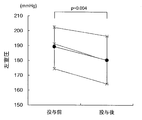
- FIG. 4 shows changes in blood pressure in the compound [III] of the present invention against hypertension caused by norepinephrine.
- the present invention is a compound of the present invention, that is, the following general formula [I]
- the present invention relates to a 1,4-benzothiazepine-1-oxide derivative of a compound of the present invention or a pharmaceutically acceptable salt thereof.
- Examples of preferred compounds of the present invention include the following formula [III]
- an acid addition salt can be formed at this position.
- the acid for forming this acid addition salt is not particularly limited as long as it is pharmaceutically acceptable.
- Preferred acid addition salts of the present invention include, for example, inorganic acid addition salts such as hydrochloride, hydrobromide, sulfate, phosphate or nitrate; oxalate, acetate, propionate, succinate , Glycolate, lactate, malate, tartrate, citrate, maleate, fumarate, methanesulfonate, benzenesulfonate, p-toluenesulfonate, ascorbate, etc.
- Acid addition salts; amino acid addition salts such as aspartate or glutamate.
- the compound of the present invention or the acid addition salt thereof may be a solvate such as a hydrate.
- the bond (SO) of sulfur (S) and oxygen (O) in the heterocyclic ring forms a polar atomic group showing strong electronegativity and is a coordination bond.
- the coordination bonding, heterocyclic S + -O - can be represented by.
- the compound represented by the general formula [I] of the present invention can be produced by oxidizing the compound represented by the general formula [II] with an appropriate oxidizing agent.
- the oxidizing agent peracids such as peracetic acid, perbenzoic acid, metachloroperbenzoic acid (mCPBA) and the like can be used.
- halogenated hydrocarbons such as methylene chloride and chloroform can be appropriately used.
- the reaction temperature is preferably a low temperature, for example, about 0 ° C. to 5 ° C. in order to prevent oxidation to the sulfone.
- the target product can be separated and purified from the reaction mixture by a known separation and purification means such as extraction operation, chromatography or distillation.
- a known separation and purification means such as extraction operation, chromatography or distillation.
- 4- [3- (4-benzylpiperidin-1-yl) propionyl] -7-methoxy-2,3,4,5-tetrahydro-1 which is a compound represented by the formula [III] of the present invention
- 4-Benzothiazepine-1-oxide has the following reaction pathway:
- Heterocyclic sulfur of 4- [3- (4-benzylpiperidin-1-yl) propionyl] -7-methoxy-2,3,4,5-tetrahydro-1,4-benzothiazepine of compound [V] It can be prepared by oxidation with the oxidizing agent metachloroperbenzoic acid (mCPBA) in a chloroform (CHCl 3 ) solvent.
- mCPBA metachloroperbenzoic acid
- CHCl 3 chloroform
- 4- [4] of the compound [III] of the present invention produced by oxidizing the hydrochloride represented by the formula [V] with an oxidizing agent, metachloroperbenzoic acid (mCPBA), in a chloroform solvent.
- 3- (4-Benzylpiperidin-1-yl) propionyl] -7-methoxy-2,3,4,5-tetrahydro-1,4-benzothiazepine-1-oxide is a chloroform-methanol mixture as the mobile phase Is then separated by silica gel chromatography, then the solvent is distilled off from the separated chloroform-methanol azeotropic solvent and the residual solvent is driven off in argon to the final product.
- the compound represented by the formula [III] of the present invention thus obtained has a purity of 90% or more, has a molecular weight of 440.61, is amorphous, has oxygen and humidity at room temperature.
- the oxalate salt of the compound [III] of the present invention is a crystal having a molecular weight of 530.65, a purity of 90% or more and a melting point of 167 to 168 ° C., which can be used in water, ethanol and dimethyl sulfoxide. It is melted. 1 H-NMR measurement at room temperature has confirmed that stereoisomers in the amide moiety are present in a ratio of about 2: 3.
- 4- ⁇ 3- [4- (4-hydroxybenzyl) piperidin-1-yl] propionyl ⁇ -7-methoxy-2,3,4,5 which is a compound represented by the formula [IV] of the present invention.
- -Tetrahydro-1,4-benzothiazepine-1-oxide or a pharmaceutically acceptable salt thereof can be produced by the same oxidation reaction as described above, and optionally protecting the hydroxyl group.
- the parent compound 1,4-benzothiazepine derivative is administered to rats or dogs, and the resulting urine and feces are homogenized by adding water, and the supernatant is chemically bonded to the octadecyl group.
- the mobile phase was water containing 0.1% trifluoroacetic acid (TFA) as liquid A, and liquid containing 0.1% TFA as liquid B.
- TFA trifluoroacetic acid
- the components were separated using high performance liquid chromatography with gradient elution using acetonitrile with a retention time of 19-22 minutes.
- the separated component had a mass to charge ratio (m / Z) of 457 by mass spectrometry.
- the compound [III] of the present invention can also be obtained by separating the components with a retention time of 27 to 30 minutes by high performance liquid chromatography using gradient elution in the same manner as the compound [IV] of the present invention.
- the compound represented by the general formula [I] or a salt thereof of the present invention is useful as a therapeutic or prophylactic agent for heart diseases such as heart failure, angina pectoris, or myocardial infarction, and a therapeutic or prophylactic agent for hypertension.
- heart diseases such as heart failure, angina pectoris, or myocardial infarction
- a therapeutic or prophylactic agent for hypertension such as hypertension.
- a therapeutic or preventive agent for heart failure due to left ventricular diastolic disorder or myocardial relaxation disorder, and further by promoting myocardial relaxation function without changing heart rate, ischemic heart disease, hypertensive heart disease, heart failure It is useful as a therapeutic or prophylactic agent for improving myocardial relaxation disorder associated with atrial fibrillation and ventricular arrhythmia.
- the compound represented by the general formula [I] of the present invention or a salt thereof can be used as an active ingredient of a pharmaceutical composition.
- the pharmaceutical composition of the present invention can be orally, sublingually, affixed, or administered intravenously, but is injected into the coronary artery to release coronary spasm after inducing coronary artery spasm diagnostically and to prevent coronary spasm during the examination. Used for treatment. Furthermore, such a treatment or prevention, by combination with ⁇ -blockers and Ca 2+ antagonists can reduce the amount of ⁇ -blockers or Ca 2+ antagonists.
- the compound represented by the general formula [I] of the present invention or a salt thereof can be used as a prodrug.
- a compound represented by the general formula [II], which is a parent compound, or a salt thereof can also be used. Since the compound represented by the general formula [I] of the present invention is obtained in vivo as a metabolite of the compound represented by the general formula [II] which is the parent compound, it is represented by the general formula [II]. Or a salt thereof can be used as a prodrug of the compound of the present invention or a salt thereof.
- one or more active substances are at least one inert diluent, dispersant or adsorbent, such as lactose, mannitol, glucose, hydroxypropylcellulose, microcrystalline cellulose. , Starch, polyvinyl pyrrolidone, magnesium aluminate metasilicate or anhydrous silicic acid powder, etc., and can be produced according to a conventional method.
- a film of a gastric or enteric substance such as sucrose, gelatin, hydroxypropylcellulose or hydroxymethylcellulose phthalate, or may be coated with two or more layers.
- a gastric or enteric substance such as sucrose, gelatin, hydroxypropylcellulose or hydroxymethylcellulose phthalate
- capsules of materials such as gelatin or ethyl cellulose may be used.
- liquid compositions for oral administration pharmaceutically acceptable emulsions, solubilizers, suspensions, syrups or elixirs can be used.
- diluent examples include purified water, ethanol, vegetable oil, and emulsifier.
- this composition may be mixed with an auxiliary agent such as a wetting agent, a suspending agent, a sweetening agent, a flavoring agent, a fragrance or a preservative.
- a sterile aqueous or non-aqueous solution, solubilizer, suspension or emulsifier is used.
- aqueous solutions, solubilizers, and suspensions include water for injection, distilled water for injection, physiological saline, cyclodextrin and derivatives thereof, and organic amines such as triethanolamine, diethanolamine, monoethanolamine, and triethylamine. Or there is an inorganic alkaline solution.
- propylene glycol, polyethylene glycol, vegetable oil such as olive oil, alcohols such as ethanol, or the like may be used.
- solubilizers for example, surfactants (mixed micelle formation) such as polyoxyethylene hydrogenated castor oil and sucrose fatty acid ester, lecithin or hydrogenated lecithin (liposome formation), and the like are also used.
- an emulsion preparation comprising a water-insoluble solubilizer such as vegetable oil and lecithin, polyoxyethylene hydrogenated castor oil, polyoxyethylene polyoxypropylene glycol, or the like can be used.
- the compound represented by the general formula [I] of the present invention or a salt thereof, or the compound represented by the general formula [II] or a salt thereof, which is a prodrug thereof, is a free compound. It varies depending on the effect, administration method, treatment time, etc., but usually in the range of 0.1 mg to 1 g, preferably 1 mg to 1 g or 0.1 mg to 0.5 g per adult, divided into once to several times a day. Alternatively, it can be administered parenterally.
- reaction vessel was immersed in an ice water bath and cooled until the temperature in the vessel reached 0 to 1 ° C.
- a solution of 14.0 g of metachloroperbenzoic acid (mCPBA) in 600 ml of chloroform (CHCl 3 ) was gradually added dropwise with a dropping time of 110 minutes, taking care not to raise the reaction temperature.
- the mixture was stirred at 0 to 1 ° C. for about 20 minutes.
- 4.14 g of Na 2 SO 3 in 200 ml H 2 O was added dropwise at 0-5 ° C. over 1 minute. After completion of the addition, the solution was stirred at 0-5 ° C. for 10 minutes.
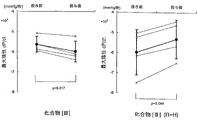
- Test Example 1 Effects of this compound [III] on the left ventricular diastolic function of normal rats (1) Wistar male rats were bred for 1 week and then inhaled with 3% isoflurane, after endotracheal intubation, artificial A respirator was worn. Respiratory management was performed under inhalation anesthesia with 1.7% isoflurane. A catheter with a pressure measurement tip (2F Miller) was inserted into the left ventricle from the right common carotid artery, and a polyethylene tube (SP10) for injecting the compound of the present invention or physiological saline was inserted from the right femoral vein.
- a pressure measurement tip (2F Miller) was inserted into the left ventricle from the right common carotid artery
- SP10 polyethylene tube
- the left ventricular diastolic minimum pressure and the left ventricular end diastolic pressure were continuously measured every minute, and the compound [III] was 0.1 mg / kg / min. For 10 minutes.
- physiological saline was administered, and the injection rate of each solution was 16.6 ⁇ l per minute.
- the left ventricular diastolic minimum pressure and left ventricular end diastolic pressure before and after administration were measured for 20 heartbeats.
- the measured left ventricular minimum diastolic pressure and left ventricular end diastolic pressure were expressed as a value (% display) with respect to the value before administration, with the value before administration being 100%.
- the measured value was obtained as an average value and a standard deviation value. The results are shown in the following Tables 1 and 2.
- Table 1 Measurement results of left ventricular diastolic minimum pressure and left ventricular end diastolic pressure before and after physiological saline administration Before physiological saline administration After physiological saline administration Left ventricular diastole minimum pressure 100% 101.6 ⁇ 4.5% Left ventricular end-diastolic pressure 100% 102.0 ⁇ 5.2% With the administration of physiological saline, there is no decrease in left ventricular minimum diastolic pressure or left ventricular end diastolic pressure.
- Table 2 shows the results of the left ventricular diastolic minimum pressure and the left ventricular end diastolic pressure measured before and after administration of the compound [III] of the present invention.
- Test Example 2 Effect of Compound [III] of the Present Invention on Left Ventricular Diastolic Disturbance in Old Infarct Rats
- Wistar male rats were inhaled by anesthesia with 3% isoflurane, and a ventilator was attached after endotracheal intubation. Respiratory management was performed under inhalation anesthesia with 1.7% isoflurane. After thoracotomy was performed between the left third intercostal space and the pericardium was incised, the infarct group completely ligated the left anterior descending coronary artery with silk (6.0; Ethicon) and immediately closed the chest. The endotracheal tube was removed, and after awakening, it was returned to the breeding room.
- the left ventricular minimum diastolic pressure and the left ventricular end diastolic pressure were measured for 20 heartbeats.
- physiological saline was administered, and the injection rate of each solution was 16.6 ⁇ l per minute.
- the size of myocardial infarction was determined according to the method (reference) of Sandmann et al. In rats administered with the compound of the present invention and the control physiological saline. That is, the myocardial infarction size (%) was obtained by the following formula.
- Myocardial infarction size (%) ⁇ (Infarct outer diameter + infarct inner diameter) ⁇ 2 ⁇ ⁇ ⁇ (Left ventricular perimeter + left ventricular perimeter) ⁇ 2 ⁇ ⁇ 100
- the infarct sizes of the administration group of the compound of the present invention and the administration group of physiological saline were 24% and 26%, respectively, and there was no significant difference.
- the value before administration was defined as 100%, and the value after administration was expressed as a value (% display) with respect to the value before administration.
- the measured value was obtained as an average value and a standard deviation value.
- Table 4 control
- Table 5 compound of the present invention
- Test Example 1 of Example 3 and Test Example 2 of Example 4 show that the compound [III] of the present invention improves diastolic disorder, improves heart failure, particularly heart failure due to diastolic failure, and the compound expands. It was shown to be a drug that enhances function.
- Test example 3 Test pig heart for coronary vasodilatory action of compounds of formula [III] or [IV] of the present invention was purchased and used without discrimination between males and females.
- the heart extracted in Krebs-Henseleit solution saturated with 95% oxygen (O 2 ) and 2, 5% carbon dioxide (CO 2 ) and ice-cold in advance is soaked and transported.
- the anterior descending coronary artery with a diameter of 2.5-3 mm was removed.
- KCl (30 mM) dissolved in physiological saline (saline) is added to obtain continuous contraction, and then dissolved in dimethyl sulfoxide (DSMO).
- the compound represented by [III] or [IV] was cumulatively administered from 0.01 to 100 ⁇ M.
- a Krebs-Henseleit solution containing no test substance was used as a control.
- the compound represented by the above formula [III] or [IV] of the present invention exhibited an action of relaxing the porcine isolated coronary artery in a concentration-dependent manner.
- the concentration of the compound represented by the formula [III] or [IV] of the present invention (EC 50 %) for relaxing the maximum contraction of the coronary artery by 50% with the previous value as 100% was 42 ⁇ M and 100 ⁇ M, respectively. .
- Test example 4 Test SLCHartley system, male guinea pig (900-1200 g) for reducing contractile ability of compounds of formula [III] or [IV] of the present invention was used. After bruising the head, the carotid artery was severed and exsanguinated, and the chest was opened and the heart was removed. The right atrium was dissected from the ventricle and a right atrial specimen was prepared. This is an organ bath (Organ filled with Krebs-Henseleit solution at 31 ° C. under aeration of gas containing 95% oxygen (O 2 ) and 2.5% carbon dioxide (CO 2 ).
- O 2 95% oxygen
- CO 2 carbon dioxide
- the concentration (IC 50 value) at which the maximum contraction was suppressed by 50% was determined with the pre-administration value being 100%.
- the compound represented by the formula [III] or [IV] of the present invention exhibited an action of suppressing the magnitude of spontaneous contraction of the guinea pig right atrium in a concentration-dependent manner.
- the maximum value of the contraction amplitude of the previous value was set to 100%, and the concentration of [II] or [III] (IC 50 ) to suppress this by 50% was 36 ⁇ M and 110 ⁇ M, respectively.
- Test Example 5 Test male guinea pigs (900-1200 g) for the heart rate lowering action of the compounds of formula [III] or [IV] of the present invention were used. After bruising the head, the carotid artery was severed and exsanguinated, and the chest was opened and the heart was removed. The right atrium was dissected from the ventricle and a right atrial specimen was prepared. This is an organ bath (Organ filled with Krebs-Henseleit liquid under aeration of gas containing 31 ° C., 95% oxygen (O 2 ) and 2,5% carbon dioxide (CO 2 ).
- organ bath Organ filled with Krebs-Henseleit liquid under aeration of gas containing 31 ° C., 95% oxygen (O 2 ) and 2,5% carbon dioxide (CO 2 ).
- the compound represented by the formula [III] or [IV] of the present invention showed an action of suppressing the heart rate per minute of the guinea pig right atrium in a concentration-dependent manner.
- the concentration of [III] or [IV] that suppresses the maximum contraction by 50% with the previous value as 100% was 35 ⁇ M and 110 ⁇ M.
- the compound represented by the formula [III] or [IV] of the present invention has an action of expanding coronary blood vessels, an action of reducing cardiac contraction, and an action of suppressing heart rate. .
- a pressure measuring tip (2F Miller
- the S-oxide compound represented by the general formula [I] of the present invention does not change the heart rate and improves the myocardial relaxation function. Since the compound represented by II] reduces heart rate and attenuates myocardial function, the compound of the present invention and the compound represented by the general formula [II], which is the parent compound, have different pharmacological actions and different properties. It became clear that the substance had
- Test Example 7 Effect of the compound [III] of the present invention on hypertension Experimental method Wistar male rats weighing 260 g were anesthetized with 3% isoflurane and intubated, and then ventilated. did. Respiratory management was performed under inhalation anesthesia with 1.7% isoflurane. A catheter with a pressure measurement tip (2F Miller) was inserted into the left ventricle from the right common carotid artery, and a polyethylene tube (SP10) for injecting the present compound was inserted from the right femoral vein.
- a pressure measurement tip (2F Miller) was inserted into the left ventricle from the right common carotid artery, and a polyethylene tube (SP10) for injecting the present compound was inserted from the right femoral vein.
Landscapes
- Health & Medical Sciences (AREA)
- Chemical & Material Sciences (AREA)
- Organic Chemistry (AREA)
- Public Health (AREA)
- Animal Behavior & Ethology (AREA)
- Bioinformatics & Cheminformatics (AREA)
- Life Sciences & Earth Sciences (AREA)
- Veterinary Medicine (AREA)
- Medicinal Chemistry (AREA)
- General Health & Medical Sciences (AREA)
- Engineering & Computer Science (AREA)
- Pharmacology & Pharmacy (AREA)
- Heart & Thoracic Surgery (AREA)
- Chemical Kinetics & Catalysis (AREA)
- Nuclear Medicine, Radiotherapy & Molecular Imaging (AREA)
- Cardiology (AREA)
- General Chemical & Material Sciences (AREA)
- Urology & Nephrology (AREA)
- Vascular Medicine (AREA)
- Epidemiology (AREA)
- Pharmaceuticals Containing Other Organic And Inorganic Compounds (AREA)
- Plural Heterocyclic Compounds (AREA)
Abstract
Priority Applications (9)
| Application Number | Priority Date | Filing Date | Title |
|---|---|---|---|
| CA2753345A CA2753345C (fr) | 2009-02-25 | 2010-02-24 | Derive de 1-oxyde de 1,4-benzothiazepine et composition pharmaceutique l'utilisant |
| EP10745967.9A EP2402333B1 (fr) | 2009-02-25 | 2010-02-24 | Dérivé de 1-oxyde de 1,4-benzothiazépine et composition pharmaceutique l'utilisant |
| CN201080009233.8A CN102333774B (zh) | 2009-02-25 | 2010-02-24 | 1,4-苯并硫氮杂*-1-氧化物衍生物及使用该衍生物的医药组合物 |
| KR1020117018440A KR101337244B1 (ko) | 2009-02-25 | 2010-02-24 | 1,4-벤조티아제핀-1-옥사이드 유도체 및 이를 이용한 의약 조성물 |
| US13/203,188 US8642586B2 (en) | 2009-02-25 | 2010-02-24 | 1,4-benzothiazepine-1-oxide derivative and pharmaceutical composition utilizing the same |
| JP2011501499A JP4808825B2 (ja) | 2009-02-25 | 2010-02-24 | 1,4−ベンゾチアゼピン−1−オキシド誘導体、及びそれを用いた医薬組成物 |
| RU2011138955/04A RU2011138955A (ru) | 2009-02-25 | 2010-02-24 | Производные 1, 4-бензотиазепин-1-оксида и фармацевтическая композиция с использованием таких соединений |
| AU2010219044A AU2010219044B2 (en) | 2009-02-25 | 2010-02-24 | 1,4-benzothiazepine-1-oxide derivative and pharmaceutical composition utilizing the same |
| US14/140,185 US9340533B2 (en) | 2009-02-25 | 2013-12-24 | 1,4-benzothiazepine-1-oxide derivative and pharmaceutical composition utilizing the same |
Applications Claiming Priority (4)
| Application Number | Priority Date | Filing Date | Title |
|---|---|---|---|
| JP2009-066949 | 2009-02-25 | ||
| JP2009066949 | 2009-02-25 | ||
| JP2009-222610 | 2009-09-28 | ||
| JP2009222610 | 2009-09-28 |
Related Child Applications (2)
| Application Number | Title | Priority Date | Filing Date |
|---|---|---|---|
| US13/203,188 A-371-Of-International US8642586B2 (en) | 2009-02-25 | 2010-02-24 | 1,4-benzothiazepine-1-oxide derivative and pharmaceutical composition utilizing the same |
| US14/140,185 Continuation US9340533B2 (en) | 2009-02-25 | 2013-12-24 | 1,4-benzothiazepine-1-oxide derivative and pharmaceutical composition utilizing the same |
Publications (1)
| Publication Number | Publication Date |
|---|---|
| WO2010098080A1 true WO2010098080A1 (fr) | 2010-09-02 |
Family
ID=42665298
Family Applications (1)
| Application Number | Title | Priority Date | Filing Date |
|---|---|---|---|
| PCT/JP2010/001219 Ceased WO2010098080A1 (fr) | 2009-02-25 | 2010-02-24 | Dérivé de 1-oxyde de 1,4-benzothiazépine et composition pharmaceutique l'utilisant |
Country Status (10)
| Country | Link |
|---|---|
| US (2) | US8642586B2 (fr) |
| EP (1) | EP2402333B1 (fr) |
| JP (1) | JP4808825B2 (fr) |
| KR (1) | KR101337244B1 (fr) |
| CN (1) | CN102333774B (fr) |
| AU (1) | AU2010219044B2 (fr) |
| CA (1) | CA2753345C (fr) |
| RU (1) | RU2011138955A (fr) |
| TW (1) | TWI389907B (fr) |
| WO (1) | WO2010098080A1 (fr) |
Cited By (4)
| Publication number | Priority date | Publication date | Assignee | Title |
|---|---|---|---|---|
| US20110172190A1 (en) * | 2004-01-22 | 2011-07-14 | Andrew Robert Marks | Agents for preventing and treating disorders involving modulation of the ryanodine receptors |
| WO2016017448A1 (fr) * | 2014-07-30 | 2016-02-04 | 株式会社アエタスファルマ | Isomère optique de dérivé de 1,4-benzothiazépine-1-oxyde, et composition pharmaceutique préparée à l'aide de celui-ci |
| WO2019117116A1 (fr) * | 2017-12-11 | 2019-06-20 | 株式会社アエタスファルマ | Médicament améliorant un dysfonctionnement rénal comprenant un isomère optique de dérivé de 1-oxyde de 1,4-benzothiazépine |
| WO2021015221A1 (fr) | 2019-07-22 | 2021-01-28 | 株式会社アエタスファルマ | Procédé de production d'un dérivé de 1,4-benzothiazépine-1-oxyde optiquement actif |
Families Citing this family (1)
| Publication number | Priority date | Publication date | Assignee | Title |
|---|---|---|---|---|
| US11426415B2 (en) | 2017-03-06 | 2022-08-30 | Washington University | Treatment for Wolfram syndrome and other endoplasmic reticulum stress disorders |
Citations (6)
| Publication number | Priority date | Publication date | Assignee | Title |
|---|---|---|---|---|
| WO1992012148A1 (fr) | 1990-12-28 | 1992-07-23 | Noboru Kaneko | Derive de 1,4-benzothiazepine |
| JP2000247889A (ja) | 1998-12-28 | 2000-09-12 | Japan Tobacco Inc | 心房細動治療薬 |
| JP2001031571A (ja) | 1999-05-19 | 2001-02-06 | Japan Tobacco Inc | 制癌剤耐性克服剤および制癌剤効果増強剤 |
| JP2003095977A (ja) | 2001-09-21 | 2003-04-03 | Masafumi Yano | 筋肉収縮・弛緩機能障害関連疾患の治療又は予防剤 |
| WO2005105793A1 (fr) | 2004-04-28 | 2005-11-10 | Aetas Pharma Co., Ltd. | Accélérateur du relachement des muscles et agent thérapeutique pour des maladies des tissus musculaires telles qu'une insuffisance du relâchement des muscles |
| JP2009506034A (ja) * | 2005-08-25 | 2009-02-12 | ザ トラスティーズ オブ コロンビア ユニヴァーシティ イン ザ シティ オブ ニューヨーク | Ryr受容体の調節に関与する障害を予防及び治療するための薬剤 |
Family Cites Families (1)
| Publication number | Priority date | Publication date | Assignee | Title |
|---|---|---|---|---|
| US7718644B2 (en) * | 2004-01-22 | 2010-05-18 | The Trustees Of Columbia University In The City Of New York | Anti-arrhythmic and heart failure drugs that target the leak in the ryanodine receptor (RyR2) and uses thereof |
-
2010
- 2010-02-24 US US13/203,188 patent/US8642586B2/en not_active Expired - Fee Related
- 2010-02-24 CN CN201080009233.8A patent/CN102333774B/zh active Active
- 2010-02-24 TW TW099105264A patent/TWI389907B/zh active
- 2010-02-24 KR KR1020117018440A patent/KR101337244B1/ko not_active Expired - Fee Related
- 2010-02-24 EP EP10745967.9A patent/EP2402333B1/fr active Active
- 2010-02-24 JP JP2011501499A patent/JP4808825B2/ja active Active
- 2010-02-24 WO PCT/JP2010/001219 patent/WO2010098080A1/fr not_active Ceased
- 2010-02-24 CA CA2753345A patent/CA2753345C/fr active Active
- 2010-02-24 RU RU2011138955/04A patent/RU2011138955A/ru unknown
- 2010-02-24 AU AU2010219044A patent/AU2010219044B2/en active Active
-
2013
- 2013-12-24 US US14/140,185 patent/US9340533B2/en active Active
Patent Citations (7)
| Publication number | Priority date | Publication date | Assignee | Title |
|---|---|---|---|---|
| WO1992012148A1 (fr) | 1990-12-28 | 1992-07-23 | Noboru Kaneko | Derive de 1,4-benzothiazepine |
| JPH04230681A (ja) | 1990-12-28 | 1992-08-19 | Kirin Brewery Co Ltd | 1,4‐ベンゾチアゼピン誘導体 |
| JP2000247889A (ja) | 1998-12-28 | 2000-09-12 | Japan Tobacco Inc | 心房細動治療薬 |
| JP2001031571A (ja) | 1999-05-19 | 2001-02-06 | Japan Tobacco Inc | 制癌剤耐性克服剤および制癌剤効果増強剤 |
| JP2003095977A (ja) | 2001-09-21 | 2003-04-03 | Masafumi Yano | 筋肉収縮・弛緩機能障害関連疾患の治療又は予防剤 |
| WO2005105793A1 (fr) | 2004-04-28 | 2005-11-10 | Aetas Pharma Co., Ltd. | Accélérateur du relachement des muscles et agent thérapeutique pour des maladies des tissus musculaires telles qu'une insuffisance du relâchement des muscles |
| JP2009506034A (ja) * | 2005-08-25 | 2009-02-12 | ザ トラスティーズ オブ コロンビア ユニヴァーシティ イン ザ シティ オブ ニューヨーク | Ryr受容体の調節に関与する障害を予防及び治療するための薬剤 |
Non-Patent Citations (2)
| Title |
|---|
| SANDMANN ET AL., J CARDIOVASC PHARMACOL, vol. 37, 2000, pages 64 - 77 |
| See also references of EP2402333A4 * |
Cited By (13)
| Publication number | Priority date | Publication date | Assignee | Title |
|---|---|---|---|---|
| US20110172190A1 (en) * | 2004-01-22 | 2011-07-14 | Andrew Robert Marks | Agents for preventing and treating disorders involving modulation of the ryanodine receptors |
| US8710045B2 (en) * | 2004-01-22 | 2014-04-29 | The Trustees Of Columbia University In The City Of New York | Agents for preventing and treating disorders involving modulation of the ryanodine receptors |
| WO2016017448A1 (fr) * | 2014-07-30 | 2016-02-04 | 株式会社アエタスファルマ | Isomère optique de dérivé de 1,4-benzothiazépine-1-oxyde, et composition pharmaceutique préparée à l'aide de celui-ci |
| JPWO2016017448A1 (ja) * | 2014-07-30 | 2017-05-18 | 株式会社アエタスファルマ | 1,4−ベンゾチアゼピン−1−オキシド誘導体の光学異性体、及びそれを用いた医薬組成物 |
| US10071996B2 (en) | 2014-07-30 | 2018-09-11 | Aetas Pharma Co., Ltd. | Optical isomer of 1,4-benzothiazepine-1-oxide derivative, and pharmaceutical composition prepared using same |
| JPWO2019117116A1 (ja) * | 2017-12-11 | 2020-12-03 | 株式会社アエタスファルマ | 1,4−ベンゾチアゼピン−1−オキシド誘導体の光学異性体を含む腎機能障害の改善薬 |
| WO2019117116A1 (fr) * | 2017-12-11 | 2019-06-20 | 株式会社アエタスファルマ | Médicament améliorant un dysfonctionnement rénal comprenant un isomère optique de dérivé de 1-oxyde de 1,4-benzothiazépine |
| JP7228529B2 (ja) | 2017-12-11 | 2023-02-24 | 株式会社アエタスファルマ | 1,4-ベンゾチアゼピン-1-オキシド誘導体の光学異性体を含む腎機能障害の改善薬 |
| US11844803B2 (en) | 2017-12-11 | 2023-12-19 | Aetas Pharma Co., Ltd. | Renal dysfunction improving drug comprising optical isomer of 1,4-benzothiazepine-1-oxide derivative |
| WO2021015221A1 (fr) | 2019-07-22 | 2021-01-28 | 株式会社アエタスファルマ | Procédé de production d'un dérivé de 1,4-benzothiazépine-1-oxyde optiquement actif |
| JPWO2021015221A1 (fr) * | 2019-07-22 | 2021-01-28 | ||
| JP7595011B2 (ja) | 2019-07-22 | 2024-12-05 | 株式会社アエタスファルマ | 光学活性な1,4-ベンゾチアゼピン-1-オキシド誘導体の製造方法 |
| US12252483B2 (en) | 2019-07-22 | 2025-03-18 | Aetas Pharma Co., Ltd. | Method for producing optically active 1, 4-benzothiazepine-1-oxide derivative |
Also Published As
| Publication number | Publication date |
|---|---|
| RU2011138955A (ru) | 2013-04-10 |
| US8642586B2 (en) | 2014-02-04 |
| TWI389907B (zh) | 2013-03-21 |
| EP2402333A1 (fr) | 2012-01-04 |
| US9340533B2 (en) | 2016-05-17 |
| CA2753345C (fr) | 2013-01-15 |
| KR101337244B1 (ko) | 2013-12-06 |
| EP2402333B1 (fr) | 2013-06-26 |
| US20110306594A1 (en) | 2011-12-15 |
| US20140135313A1 (en) | 2014-05-15 |
| KR20110118660A (ko) | 2011-10-31 |
| EP2402333A4 (fr) | 2012-08-01 |
| JP4808825B2 (ja) | 2011-11-02 |
| AU2010219044A1 (en) | 2011-09-08 |
| TW201035091A (en) | 2010-10-01 |
| CN102333774A (zh) | 2012-01-25 |
| CN102333774B (zh) | 2014-04-23 |
| CA2753345A1 (fr) | 2010-09-02 |
| AU2010219044B2 (en) | 2012-10-04 |
| JPWO2010098080A1 (ja) | 2012-08-30 |
Similar Documents
| Publication | Publication Date | Title |
|---|---|---|
| JP4808825B2 (ja) | 1,4−ベンゾチアゼピン−1−オキシド誘導体、及びそれを用いた医薬組成物 | |
| JPH0469377A (ja) | ジフェニルメチルピペラジン誘導体 | |
| CN106795148B (zh) | 1,4-苯并硫氮杂*-1-氧化物衍生物的光学异构体及使用它的医药组合物 | |
| TWI532723B (zh) | 二苯基甲基哌衍生物及使用該衍生物之醫藥組成物 | |
| JP2010195759A (ja) | 1,4−ベンゾチアゼピン誘導体並びにその製造方法及びその用途 | |
| JP2012046430A (ja) | 1,4−ベンゾチアゼピン−s−オキシド誘導体、およびそれを用いた医薬組成物ならびにその用途 | |
| JP4189850B2 (ja) | 線維化病変組織修復剤 | |
| JP4189849B2 (ja) | ピラゾロン誘導体の医薬組成物としての使用 | |
| WO1998013357A1 (fr) | Derives de benzo[1,4]thiazine et medicaments les contenant | |
| JPWO1996022086A1 (ja) | β−オキソ−β−ベンゼンプロパンチオアミド誘導体を含む医薬 |
Legal Events
| Date | Code | Title | Description |
|---|---|---|---|
| WWE | Wipo information: entry into national phase |
Ref document number: 201080009233.8 Country of ref document: CN |
|
| 121 | Ep: the epo has been informed by wipo that ep was designated in this application |
Ref document number: 10745967 Country of ref document: EP Kind code of ref document: A1 |
|
| DPE1 | Request for preliminary examination filed after expiration of 19th month from priority date (pct application filed from 20040101) | ||
| ENP | Entry into the national phase |
Ref document number: 2011501499 Country of ref document: JP Kind code of ref document: A |
|
| ENP | Entry into the national phase |
Ref document number: 20117018440 Country of ref document: KR Kind code of ref document: A |
|
| WWE | Wipo information: entry into national phase |
Ref document number: 2010219044 Country of ref document: AU |
|
| WWE | Wipo information: entry into national phase |
Ref document number: 2010745967 Country of ref document: EP |
|
| WWE | Wipo information: entry into national phase |
Ref document number: 2753345 Country of ref document: CA |
|
| WWE | Wipo information: entry into national phase |
Ref document number: 13203188 Country of ref document: US Ref document number: 1756/MUMNP/2011 Country of ref document: IN |
|
| NENP | Non-entry into the national phase |
Ref country code: DE |
|
| ENP | Entry into the national phase |
Ref document number: 2010219044 Country of ref document: AU Date of ref document: 20100224 Kind code of ref document: A |
|
| WWE | Wipo information: entry into national phase |
Ref document number: 2011138955 Country of ref document: RU |