WO2013141019A1 - Film de transfert, procédé de transfert et dispositif d'enregistrement par jet d'encre - Google Patents
Film de transfert, procédé de transfert et dispositif d'enregistrement par jet d'encre Download PDFInfo
- Publication number
- WO2013141019A1 WO2013141019A1 PCT/JP2013/056033 JP2013056033W WO2013141019A1 WO 2013141019 A1 WO2013141019 A1 WO 2013141019A1 JP 2013056033 W JP2013056033 W JP 2013056033W WO 2013141019 A1 WO2013141019 A1 WO 2013141019A1
- Authority
- WO
- WIPO (PCT)
- Prior art keywords
- layer
- transfer
- ink
- sublimation ink
- mask layer
- Prior art date
- Legal status (The legal status is an assumption and is not a legal conclusion. Google has not performed a legal analysis and makes no representation as to the accuracy of the status listed.)
- Ceased
Links
Images
Classifications
-
- B—PERFORMING OPERATIONS; TRANSPORTING
- B41—PRINTING; LINING MACHINES; TYPEWRITERS; STAMPS
- B41J—TYPEWRITERS; SELECTIVE PRINTING MECHANISMS, i.e. MECHANISMS PRINTING OTHERWISE THAN FROM A FORME; CORRECTION OF TYPOGRAPHICAL ERRORS
- B41J2/00—Typewriters or selective printing mechanisms characterised by the printing or marking process for which they are designed
- B41J2/005—Typewriters or selective printing mechanisms characterised by the printing or marking process for which they are designed characterised by bringing liquid or particles selectively into contact with a printing material
- B41J2/0057—Typewriters or selective printing mechanisms characterised by the printing or marking process for which they are designed characterised by bringing liquid or particles selectively into contact with a printing material where an intermediate transfer member receives the ink before transferring it on the printing material
-
- B—PERFORMING OPERATIONS; TRANSPORTING
- B44—DECORATIVE ARTS
- B44C—PRODUCING DECORATIVE EFFECTS; MOSAICS; TARSIA WORK; PAPERHANGING
- B44C1/00—Processes, not specifically provided for elsewhere, for producing decorative surface effects
- B44C1/16—Processes, not specifically provided for elsewhere, for producing decorative surface effects for applying transfer pictures or the like
- B44C1/165—Processes, not specifically provided for elsewhere, for producing decorative surface effects for applying transfer pictures or the like for decalcomanias; sheet material therefor
- B44C1/17—Dry transfer
-
- B—PERFORMING OPERATIONS; TRANSPORTING
- B41—PRINTING; LINING MACHINES; TYPEWRITERS; STAMPS
- B41J—TYPEWRITERS; SELECTIVE PRINTING MECHANISMS, i.e. MECHANISMS PRINTING OTHERWISE THAN FROM A FORME; CORRECTION OF TYPOGRAPHICAL ERRORS
- B41J2/00—Typewriters or selective printing mechanisms characterised by the printing or marking process for which they are designed
- B41J2/005—Typewriters or selective printing mechanisms characterised by the printing or marking process for which they are designed characterised by bringing liquid or particles selectively into contact with a printing material
- B41J2/01—Ink jet
-
- B—PERFORMING OPERATIONS; TRANSPORTING
- B41—PRINTING; LINING MACHINES; TYPEWRITERS; STAMPS
- B41J—TYPEWRITERS; SELECTIVE PRINTING MECHANISMS, i.e. MECHANISMS PRINTING OTHERWISE THAN FROM A FORME; CORRECTION OF TYPOGRAPHICAL ERRORS
- B41J31/00—Ink ribbons; Renovating or testing ink ribbons
-
- B—PERFORMING OPERATIONS; TRANSPORTING
- B41—PRINTING; LINING MACHINES; TYPEWRITERS; STAMPS
- B41M—PRINTING, DUPLICATING, MARKING, OR COPYING PROCESSES; COLOUR PRINTING
- B41M5/00—Duplicating or marking methods; Sheet materials for use therein
- B41M5/025—Duplicating or marking methods; Sheet materials for use therein by transferring ink from the master sheet
- B41M5/035—Duplicating or marking methods; Sheet materials for use therein by transferring ink from the master sheet by sublimation or volatilisation of pre-printed design, e.g. sublistatic
-
- D—TEXTILES; PAPER
- D06—TREATMENT OF TEXTILES OR THE LIKE; LAUNDERING; FLEXIBLE MATERIALS NOT OTHERWISE PROVIDED FOR
- D06P—DYEING OR PRINTING TEXTILES; DYEING LEATHER, FURS OR SOLID MACROMOLECULAR SUBSTANCES IN ANY FORM
- D06P5/00—Other features in dyeing or printing textiles, or dyeing leather, furs, or solid macromolecular substances in any form
- D06P5/003—Transfer printing
- D06P5/004—Transfer printing using subliming dyes
-
- B—PERFORMING OPERATIONS; TRANSPORTING
- B41—PRINTING; LINING MACHINES; TYPEWRITERS; STAMPS
- B41J—TYPEWRITERS; SELECTIVE PRINTING MECHANISMS, i.e. MECHANISMS PRINTING OTHERWISE THAN FROM A FORME; CORRECTION OF TYPOGRAPHICAL ERRORS
- B41J2/00—Typewriters or selective printing mechanisms characterised by the printing or marking process for which they are designed
- B41J2/005—Typewriters or selective printing mechanisms characterised by the printing or marking process for which they are designed characterised by bringing liquid or particles selectively into contact with a printing material
- B41J2/01—Ink jet
- B41J2002/012—Ink jet with intermediate transfer member
-
- B—PERFORMING OPERATIONS; TRANSPORTING
- B41—PRINTING; LINING MACHINES; TYPEWRITERS; STAMPS
- B41M—PRINTING, DUPLICATING, MARKING, OR COPYING PROCESSES; COLOUR PRINTING
- B41M2205/00—Printing methods or features related to printing methods; Location or type of the layers
- B41M2205/14—Production or use of a mask
Definitions
- the present invention relates to a transfer film, a transfer method, and an ink jet recording apparatus for transferring an image from a substrate to a transfer medium.
- Patent Document 1 describes a method of forming an image by heating a printing medium and diffusing and coloring sublimation dye ink on the surface of the medium body.
- the sublimation dye impregnated in the ink image-receiving sheet diffuses in the plane direction when the ink fixing layer is thick, and the image outline is blurred. It is also conceivable to prevent diffusion of the sublimable dye in the planar direction by making the ink fixing layer thin. However, if the ink fixing layer is thinned, the ink fixing layer cannot be formed so as to straddle between the fibers when the medium on which the image is to be formed is a rough material such as a cloth. Therefore, there is a problem that the image quality is deteriorated.
- the present invention has been made in view of such problems, and an object of the present invention is to form an image on which a contour is not blurred on a transfer medium even when a sublimation ink is used and an ink fixing layer is thickened.
- the transfer film according to the present invention includes a base material, a transfer binder layer provided on the base material, and a layer provided on the transfer binder layer and formed with an image for transferring to a transfer medium using sublimation ink.
- the transfer binder layer penetrates when the sublimation ink sublimates. It is made up of materials.
- an ink fixing layer is formed. Even when the sublimation ink diffuses in the plane direction of the ink fixing layer when this is transferred to the transfer medium, the transfer of the sublimation ink that has spread to the region is prevented by the mask layer. That is, since only the sublimation ink of the ink fixing layer only in a desired region is transferred onto the transfer medium by the mask layer, it is possible to prevent the outline of the image from blurring. Therefore, even when sublimation ink is used and the ink fixing layer is thickened, an image with no blurred outline can be formed on the transfer medium.
- the mask layer is provided on the transfer binder layer and in an area where the sublimation ink layer is not provided.
- the transfer film can be easily produced. Further, the amount of sublimation ink can be reduced as compared with the case where the sublimation ink layer is solidly formed on the transfer binder layer. Further, compared to the case where the mask layer is formed on the sublimation ink layer, the concentration of the ink in the region where the image of the sublimation ink layer is formed can be increased. This is because if the mask layer is formed adjacent to the sublimation ink layer, the mask layer can prevent the ink from diffusing and spreading in the planar direction from the sublimation ink layer.
- the adhesive strength between the transfer binder layer and the mask layer is stronger than the adhesive strength between the transfer medium and the mask layer.
- the mask layer can be peeled off together with the transfer film while leaving the image on the transfer medium.
- the mask layer is more preferably formed of an ink containing an ultraviolet curable resin.
- the mask layer By irradiating ultraviolet rays to cure the mask layer, the mask layer can be easily peeled off from the transfer medium when the transfer film is peeled off after the transfer film is pressure-bonded to the transfer medium.
- the transfer method according to the present invention is a transfer method for transferring an image to a transfer medium, a transfer binder layer forming step of providing a transfer binder layer on a substrate, and a sublimation ink on the transfer binder layer.
- a transfer step of transferring the image by pressure-bonding to a transfer medium, and the transfer binder layer is made of a material into which the sublimation ink permeates when heat is applied.
- an ink fixing layer is formed. Even when the sublimation ink diffuses in the plane direction of the ink fixing layer when this is transferred to the transfer medium, the sublimation ink that has spread to the region is not transferred onto the transfer medium by the mask layer. That is, since only the sublimation ink of the ink fixing layer only in a desired region is transferred onto the transfer medium by the mask layer, it is possible to prevent the outline of the image from blurring. Therefore, even when sublimation ink is used and the ink fixing layer is thickened, an image with no blurred outline can be formed on the transfer medium. *
- the mask layer is cured so that the adhesive strength between the transfer binder layer and the mask layer is stronger than the adhesive strength between the transfer medium and the mask layer. More preferably, the method includes a step.
- the mask layer can be satisfactorily peeled from the transfer medium while leaving the image on the transfer medium.
- the mask layer is formed of an ink containing an ultraviolet curable resin.
- the sublimation ink layer is formed by an ink jet recording apparatus. It is more preferable to form the mask layer while forming the film.
- a sublimation ink layer and a mask layer can be simultaneously formed with one ink jet recording apparatus. Therefore, the transfer film according to the present invention can be manufactured in a shorter time and easily.
- the sublimation ink layer and the transfer binder layer are heated to transfer the sublimation ink to the transfer medium. More preferably, it penetrates into the binder layer.
- the sublimation ink permeates and diffuses into the transfer binder layer located immediately above, thereby forming an ink fixing layer, which is a transfer binder layer containing the sublimation ink, and forms a transfer image.
- An ink jet recording apparatus discharges sublimation ink for forming an image to provide a first head on which a sublimation ink layer is provided, and a region where the sublimation ink is not transferred to a preset transfer target medium.
- a second head for ejecting a mask material for providing a mask layer; and a first head control means for controlling the first head to eject the sublimation ink based on image information indicating the image; And second head control means for controlling the second head so as to discharge the mask material to the region.
- the transfer film according to the present invention can be easily manufactured.
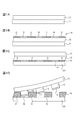
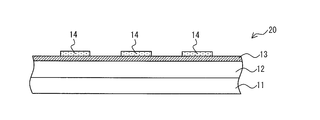
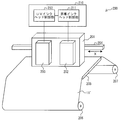
- FIGS. 1A to 1D are diagrams showing a procedure of an embodiment of a transfer method according to the present invention. It is a figure which shows the structure of the modification of the transfer film which concerns on this invention. It is a figure which shows typically the structure of one Embodiment of the inkjet recording device which concerns on this invention.
- FIGS. 1A to 1D are diagrams showing a procedure of an embodiment of a transfer method according to the present invention.
- the transfer film 10 is manufactured, and the image is printed on the medium 100 by transferring the sublimation ink forming the image with the transfer film 10 to the medium (transfer medium) 100.
- the transfer film according to the present invention is more suitable for transfer to a fabric.
- the ink fixing layer is preferably thick. This is because it is possible to prevent the image quality from being deteriorated by forming the ink fixing layer so as to straddle between the fibers.
- the ink fixing layer is thickened, the prior art has a problem that the sublimation ink diffuses in the plane direction and the outline is blurred. In fact, the present invention can solve this problem.
- the ink fixing layer is formed by allowing the sublimation ink to permeate and diffuse into the transfer binder layer 12 described later. Even when the sublimation ink diffuses in the plane direction of the ink fixing layer when this is transferred to the medium 100, the transfer of the sublimation ink that has blotted onto the medium 100 is prevented by the mask layer 14. That is, since only the sublimation ink of the ink fixing layer only in a desired region is transferred onto the medium 100 by the mask layer 14, it is possible to prevent the outline of the image from being blurred. Therefore, even when sublimation ink is used and the ink fixing layer is thickened, an image with no blurred outline can be formed on the transfer medium.
- the mask layer 14 can prevent the sublimation ink layer 13 described later from being transferred onto the medium 100 in a solid manner. If the solid image is printed up to the background of the image without providing the mask layer 14 and then transferred to the fabric, the area transferred to the fabric increases, and the texture of the fabric is impaired. For example, even if the fabric is to be stretched or contracted, it is difficult to stretch or contract because the area where the image is printed is wide and the stretched state of the region is different from that of the fabric. However, since the present invention can prevent this, the texture of the fabric is not impaired. In addition, since a background that is not originally required is not transferred, a good color as if an image was directly printed on the fabric can be obtained.
- a transfer binder layer 12 is provided on a base film (base material) 11 (transfer binder layer manufacturing step). More preferably, a coating agent that prevents ink from seeping out from an ink fixing layer 15 described later is applied in advance to the surface of the base film 11. The coating agent covers the surface of the ink fixing layer 15 after the transfer, and the ink can be prevented from oozing out on the surface of the printed matter.
- the transfer binder layer 12 is a layer for bonding the base film 11 to the sublimation ink layer 13 and the mask layer 14.
- the sublimation ink of the sublimation ink layer 13 to be described later sublimates, and the sublimation ink that has been sublimated penetrates into the transfer binder layer 12 and is diffused.
- the transfer binder layer included in the transfer film according to the present invention may be made of a material such as urethane; rubber such as NBR, SBR, and IP (isoprene).
- the method for sublimating the sublimation ink may be appropriately selected depending on the type of sublimation ink.
- the sublimation ink layer 13 may be heated or pressurized.
- the transfer binder layer 12 can be said to be a layer for giving a thickness to the image after transfer.
- the method for providing the transfer binder layer 12 is not particularly limited.
- the material of the transfer binder layer 12 may be applied on the base film 11 by a conventionally known method.
- a sublimation ink layer 13 and a mask layer 14 are provided (sublimation ink layer preparation step, mask layer preparation step).
- the sublimation ink layer 13 is a layer containing sublimation ink, and forms an image to be transferred to the medium 100.
- the sublimation ink is a sublimation ink and sublimates when heated. In the present embodiment, when sublimated, it penetrates into the transfer binder layer 12 and diffuses. As a result, the transfer binder layer 12 changes to the ink fixing layer 15.
- the ink fixing layer 15 is a layer for fixing ink on the medium 100.
- the mask layer 14 is a layer provided in a predetermined region that is a region where the sublimation ink is not transferred onto the medium 100. In a certain area of the mask layer 14, the sublimation ink (more precisely, the sublimation ink diffusion layer 15 described later) is not transferred onto the medium 100.
- the mask material constituting the mask layer 14 may be any material that prevents the transfer of sublimation ink, and examples thereof include ink containing an ultraviolet curable resin.
- the mask layer 14 is provided on the transfer binder layer 12 in an area where the sublimation ink layer 13 is not provided. That is, only the necessary image is printed with the sublimation ink, the background or the like is not printed, and the mask layer 14 is provided around the image or in the gap between the regions formed by the sublimation ink in the image.
- the transfer film 10 can be easily manufactured by providing the sublimation ink layer 13 and the mask layer 14 on the transfer binder layer 12. That is, the mask layer 14 can be provided while the sublimation ink layer 13 is provided by ejecting the sublimation ink and the mask material together by inkjet.
- the method for providing the sublimation ink layer 13 and the mask layer 14 is not particularly limited, but it is more preferable to provide the ink by an inkjet recording apparatus. If a head for ejecting sublimation ink and mask material is provided in the ink jet recording apparatus, the mask layer 14 can be formed while forming the sublimation ink layer 13 in the same pass. Thereby, the transfer film 10 can be easily manufactured in a shorter time.
- the mask layer 14 is cured by irradiating with ultraviolet rays (mask layer curing step).
- the adhesive strength between the transfer binder layer 12 and the mask layer 14 is stronger than the adhesive strength between the media 100 and the mask layer 14. This is because the mask layer 14 is easily peeled off from the medium 100 when the transfer film 10 is later peeled off after being pressure-bonded. That is, since the mask layer 14 is adhered to the transfer binder layer 12 with a stronger strength than the media 100, the mask layer 14 is easily peeled off from the media 100.
- the transfer film 10 which is one embodiment of the transfer film according to the present invention is manufactured.
- the transfer film 10 is pressure-bonded to the medium 100 to transfer the image (transfer process).
- the sublimation ink layer 13 and the mask layer 14 are pressure-bonded to the medium 100
- the sublimation ink layer 13 and the transfer binder layer 12 are heated so that the sublimation ink penetrates into the transfer binder layer 12.
- the sublimation ink diffuses into the transfer binder layer 12 immediately above the sublimation ink layer 13 to form the ink fixing layer 15 shown in FIG. 1D.
- the sublimation ink may bleed in the planar direction of the ink fixing layer 15, the sublimation ink in the area oozed by the mask layer 14 is not transferred onto the medium 100. Therefore, the outline of the image formed on the medium 100 is not blurred.
- the heating temperature can be appropriately set according to the materials constituting the sublimation ink and the transfer binder layer 12.
- the heating temperature of the transfer binder layer 12 and the sublimation ink layer 13 is not limited as long as it is a temperature at which the sublimation ink sublimates.
- the mask layer 14 is cured in advance in the mask layer curing step, and the adhesive strength with respect to the medium 100 is weaker than the adhesive strength with respect to the transfer binder layer 12. Accordingly, although the sublimation ink layer 13 and thus the heated ink fixing layer 15 are adhered to the medium 100, the mask layer 14 is easily peeled off by peeling described later.
- the transfer film 10 is peeled from the medium 100.
- the ink fixing layer 15 remains on the medium 100 to form an image.
- the adhesive strength between the mask layer 14 and the transfer binder layer 12 is stronger than the adhesive strength between the mask layer 14 and the media 100, the mask layer 14 does not remain on the media 100 and the base film 11 and It is peeled off together with the transfer binder layer 12.
- the transfer film 20 includes a base film 11, a transfer binder layer 12, a sublimation ink layer 13, and a mask layer 14.
- the regions where the sublimation ink layer 13 and the mask layer 14 are formed are different between the transfer film 10 and the transfer film 20. That is, in the transfer film 10, the mask layer 14 is formed in the gap or outside of the sublimation ink layer 13 constituting the image. On the other hand, in the transfer film 20, a solid sublimation ink layer 13 is formed on the transfer binder layer 12, and a mask is formed on the sublimation ink layer 13 in a region where the sublimation ink is not transferred to the medium 100 to prevent the transfer. Layer 14 is formed.
- the mask layer 14 prevents the transfer of the sublimation ink in a region other than the region where transfer is desired. can do.
- FIG. 3 is a diagram schematically showing a configuration of an ink jet recording apparatus 200 which is an embodiment of the ink jet recording apparatus according to the present invention.
- the inkjet recording apparatus 200 is for making a transfer film according to the present invention by applying sublimation ink and a mask material to the transfer film sheet 11 ′ by inkjet.
- the transfer film sheet 11 ′ includes the base film 11 and the transfer binder layer 12 described above, and is mounted on the transfer binder layer 12 so that the sublimation ink and the mask material land.
- the inkjet recording apparatus 200 includes a carriage 201, a guide mechanism 204, a platen 205, a control unit 210, a driving roller 206, and a driven roller 207.
- the carriage 201 includes a sublimation ink head (first head) 202 and a UV ink head (second head) 203.
- the direction of movement of the carriage 201 is defined by the guide mechanism 204, and reciprocates in the direction of arrow X. As a result, the carriage 201 scans on the transfer film sheet 11 ′.
- the sublimation ink head 202 is a head for discharging a sublimation ink for forming an image and providing a sublimation ink layer on the transfer film sheet 11 ′.
- the carriage 201 scans the transfer film sheet 11 ′, sublimation ink is ejected from the sublimation ink head 202 based on predetermined image information.
- Ink ejection from the sublimation ink head 202 is controlled by a sublimation ink head control unit (first head control means) 211 described later.
- the UV ink head 203 is a head that discharges UV ink, which is a mask material, in order to provide a mask layer in a region where sublimation ink is not transferred to a preset medium.
- UV ink is ejected from the UV ink head 203 based on predetermined image information.
- Ink ejection from the UV ink head 203 is controlled by a UV ink head control unit (second head control means) 212 described later.
- the “UV ink” is an ink containing an ultraviolet curable resin.
- the ink jet recording apparatus 200 may include an ultraviolet irradiation unit for curing the UV ink.
- the sublimation ink head 202 that is a sublimation ink head and the UV ink head 203 that is a mask material head the mask layer of the transfer film according to the present invention is transferred.
- region in which the sublimation ink layer is not provided can be manufactured suitably.
- the mask layer can be formed while forming the sublimation ink layer on the transfer binder layer.
- the film according to the present invention can be manufactured in a very short time compared to the case of forming the mask layer.
- the guide mechanism 204 is a mechanism that regulates the moving direction of the carriage 201.
- the carriage 201 is attached to the guide mechanism 204 so that it can move in the direction of the arrow X, which is the length direction of the guide mechanism 204.
- the platen 205 is a table on which the transfer film sheet 11 ′ to be printed is placed. On the platen 205, the transfer film sheet 11 'receives the sublimation ink and the UV ink.
- the driving roller 206 moves the transfer film sheet 11 ′. Further, the transfer film sheet 11 ′ is moved by winding the transfer film sheet 11 ′ wound around a driven roller 207, which will be described later, by the drive roller 206.
- the driven roller 207 is for assisting the conveyance of the transfer film sheet 11 ′ by the driving roller 206.
- a transfer film sheet 11 ′ is wound around the driven roller 207, and the transfer film sheet 11 ′ is supplied to the side where the carriage 201 exists by rotating.
- the control unit 210 controls the operation of the ink jet recording apparatus 200.
- the control unit 210 includes a sublimation ink head control unit 211 and a UV ink head control unit 212.
- the sublimation ink head control unit 211 controls the sublimation ink head 202 so as to discharge sublimation ink based on image information indicating an image formed on the transfer film sheet 11 ′.
- the image information can be obtained, for example, by input from the user.
- the UV ink head control unit 212 controls the UV ink head 203 so as to eject UV ink so as to provide a mask layer in a region where the sublimation ink is not transferred to the medium.
- the specific control method is not particularly limited. For example, from the information indicating the image to be formed on the transfer film sheet 11 ′, an area where the sublimation ink is not printed is calculated to create information indicating the area where the UV ink is ejected, and based on the information, UV The UV ink head 203 may be controlled so as to eject ink. Alternatively, a user or the like may directly receive input of information indicating a region for ejecting UV ink, and the UV ink head 203 may be controlled to eject UV ink based on the information.
- the transfer film 10 is provided on the base film 11, the transfer binder layer 12 provided on the base film 11, and the transfer binder layer 12, for transferring to the medium 100 by sublimation ink.
- a sublimation ink layer 13 that is an image-formed layer; and a mask layer 14 provided in a region where the sublimation ink is not transferred to a preset medium 100.
- the transfer binder layer 12 is made of a material that penetrates when sublimation ink is sublimated.
- the ink fixing layer 15 As the sublimation ink penetrates into the transfer binder layer 12 and diffuses, the ink fixing layer 15 is formed. Even when the sublimation ink diffuses in the plane direction of the ink fixing layer 15 when transferring it to the medium 100, the transfer of the sublimation ink that has spread to the region is prevented by the mask layer 14. That is, since only the sublimation ink of the ink fixing layer only in a desired region is transferred onto the medium 100 by the mask layer 14, it is possible to prevent the outline of the image from being blurred. Therefore, even when sublimation ink is used and the ink fixing layer 15 is thickened, an image with no blurred outline can be formed on the transfer medium.
- the mask layer 14 is not provided and the solid image is printed up to the background of the image and then transferred to the fabric, the area transferred to the fabric increases, and the texture of the fabric is impaired. For example, even if the fabric is to be stretched or contracted, it is difficult to stretch or contract because the area where the image is printed is wide and the stretched state of the region is different from that of the fabric. This problem becomes more prominent when the ink fixing layer 15 is thicker. However, this embodiment can prevent this, so that the texture of the fabric is not impaired. In addition, since a background that is not originally required is not transferred, a good color as if an image was directly printed on the fabric can be obtained. Therefore, the texture of the fabric is not impaired and a transfer medium having a good color can be obtained.
- the mask layer 14 is provided on the transfer binder layer 12 in an area where the sublimation ink layer 13 is not provided.
- the amount of sublimation ink can be reduced as compared with the case where the sublimation ink layer 13 is solidly formed on the transfer binder layer 12.
- the mask layer 14 is formed on the sublimation ink layer 13 it is possible to increase the ink density in the region where the image of the sublimation ink layer 13 is formed. This is because if the mask layer 14 is formed adjacent to the sublimation ink layer 13, the mask layer 14 can prevent the ink from diffusing and spreading in the planar direction from the sublimation ink layer 13.
- the mask layer 14 can be formed while forming the sublimation ink layer 13 on the transfer binder layer 12 by inkjet, a transfer film can be easily produced.
- the adhesive strength between the transfer binder layer 12 and the mask layer 14 is stronger than the adhesive strength between the media 100 and the mask layer 14.
- the mask layer 14 can be peeled off together with the transfer film 10 after leaving an image on the medium 100.
- the mask layer 14 is formed of an ink containing an ultraviolet curable resin.
- the mask layer 14 can be easily peeled from the medium 100 when the transfer film 10 is peeled off after the transfer film 10 is pressure-bonded to the medium 100. .
- a transfer binder layer forming step in which a transfer binder layer 12 is provided on a base film 11, and a sublimation ink layer 13 that is an image layer is formed on the transfer binder layer 12 by sublimation ink.
- the transfer binder layer 12 is made of a material into which sublimation ink permeates when heat is applied.
- the ink fixing layer 15 As the sublimation ink penetrates into the transfer binder layer 12 and diffuses, the ink fixing layer 15 is formed. Even when the sublimation ink diffuses in the plane direction of the ink fixing layer 15 when this is transferred to the medium 100, the sublimation ink that has spread to the area is not transferred onto the medium 100 by the mask layer 14. That is, since only the sublimation ink of the ink fixing layer only in a desired region is transferred onto the medium 100 by the mask layer 14, it is possible to prevent the outline of the image from being blurred. Therefore, even when sublimation ink is used and the ink fixing layer 15 is thickened, an image with no blurred outline can be formed on the transfer medium.
- the mask layer 14 is cured so that the adhesive strength between the transfer binder layer 12 and the mask layer 14 is stronger than the adhesive strength between the media 100 and the mask layer 14. Includes a layer curing step.
- the mask layer 14 can be satisfactorily peeled from the medium 100 while leaving an image on the medium 100.
- the mask layer 14 is formed of an ink containing an ultraviolet curable resin.
- the sublimation ink is formed by an ink jet recording apparatus. While forming the layer 13, the mask layer 14 is formed.
- the sublimation ink layer 13 and the mask layer 14 can be simultaneously formed with one ink jet recording apparatus. Therefore, the transfer film according to the present invention can be manufactured in a shorter time and easily.
- the sublimation ink layer 13 and the mask layer 14 are pressure-bonded to the medium 100 in the transfer step
- the sublimation ink layer 13 and the transfer binder layer 12 are heated to transfer the sublimation ink to the transfer binder. More preferably, it penetrates the layer.
- the sublimation ink permeates and diffuses into the transfer binder layer positioned immediately above, thereby forming an ink fixing layer 15 that is a transfer binder layer containing the sublimation ink, and this forms a transfer image.
- the ink jet recording apparatus 200 is provided with a sublimation ink head 202 that discharges sublimation ink for forming an image to provide the sublimation ink layer 13 and a mask layer 14 in a region where the sublimation ink is not transferred to a preset medium 100.
- a UV ink head 203 for discharging the mask material
- a sublimation ink head control unit 211 for controlling the sublimation ink head 202 so as to discharge the sublimation ink based on image information indicating an image, and discharging the mask material to the region.
- a UV ink head controller 212 for controlling the UV ink head 203 as described above. According to this configuration, the transfer film 10 can be easily manufactured.
- the present invention can be used for printing an image on a cloth such as clothing and bag.
Landscapes
- Engineering & Computer Science (AREA)
- Textile Engineering (AREA)
- Decoration By Transfer Pictures (AREA)
- Ink Jet Recording Methods And Recording Media Thereof (AREA)
- Impression-Transfer Materials And Handling Thereof (AREA)
- Coloring (AREA)
Priority Applications (3)
| Application Number | Priority Date | Filing Date | Title |
|---|---|---|---|
| US14/382,320 US9688065B2 (en) | 2012-03-19 | 2013-03-05 | Transfer film, transfer method and inkjet recording apparatus |
| CN201380014277.3A CN104203592A (zh) | 2012-03-19 | 2013-03-05 | 转印膜、转印方法及喷墨记录装置 |
| EP13764418.3A EP2829414A4 (fr) | 2012-03-19 | 2013-03-05 | Film de transfert, procédé de transfert et dispositif d'enregistrement par jet d'encre |
Applications Claiming Priority (2)
| Application Number | Priority Date | Filing Date | Title |
|---|---|---|---|
| JP2012-062720 | 2012-03-19 | ||
| JP2012062720A JP6305675B2 (ja) | 2012-03-19 | 2012-03-19 | 転写フィルム及び転写方法 |
Publications (1)
| Publication Number | Publication Date |
|---|---|
| WO2013141019A1 true WO2013141019A1 (fr) | 2013-09-26 |
Family
ID=49222481
Family Applications (1)
| Application Number | Title | Priority Date | Filing Date |
|---|---|---|---|
| PCT/JP2013/056033 Ceased WO2013141019A1 (fr) | 2012-03-19 | 2013-03-05 | Film de transfert, procédé de transfert et dispositif d'enregistrement par jet d'encre |
Country Status (5)
| Country | Link |
|---|---|
| US (1) | US9688065B2 (fr) |
| EP (1) | EP2829414A4 (fr) |
| JP (1) | JP6305675B2 (fr) |
| CN (1) | CN104203592A (fr) |
| WO (1) | WO2013141019A1 (fr) |
Families Citing this family (7)
| Publication number | Priority date | Publication date | Assignee | Title |
|---|---|---|---|---|
| US11007795B2 (en) | 2014-04-07 | 2021-05-18 | Avery Dennison Retail Information Services, Llc | Heat transfer ticket |
| JP6558801B2 (ja) * | 2015-10-29 | 2019-08-14 | 株式会社ミマキエンジニアリング | 染色方法 |
| JP6587283B2 (ja) * | 2015-10-29 | 2019-10-09 | 株式会社ミマキエンジニアリング | 染色方法 |
| CN108475032B (zh) * | 2016-03-02 | 2021-07-02 | 惠普印迪戈股份公司 | 选择性印刷 |
| JP6260878B2 (ja) * | 2016-05-27 | 2018-01-17 | 株式会社アイエヌジー | 画像転写シート、画像転写シートの製造方法、画像転写方法 |
| JP6795474B2 (ja) * | 2017-08-30 | 2020-12-02 | 株式会社ミマキエンジニアリング | 印刷物作成方法及び印刷物 |
| JP2025163450A (ja) * | 2024-04-17 | 2025-10-29 | 株式会社ミマキエンジニアリング | 画像転写方法、非転写領域形成装置、印刷システム、及び転写媒体管理方法 |
Citations (5)
| Publication number | Priority date | Publication date | Assignee | Title |
|---|---|---|---|---|
| JPS4957189A (fr) * | 1972-10-07 | 1974-06-03 | ||
| JPS6250971U (fr) * | 1985-09-17 | 1987-03-30 | ||
| JPH02154083A (ja) * | 1988-12-02 | 1990-06-13 | Toppan Printing Co Ltd | 着色エンボス加工法 |
| JP2002210943A (ja) | 2001-01-22 | 2002-07-31 | Seiko Epson Corp | 画像形成方法、これに用いる印刷用メディアおよびシートカートリッジ |
| JP2003063198A (ja) * | 2001-08-24 | 2003-03-05 | Seiko Epson Corp | 画像形成方法および画像形成装置 |
Family Cites Families (24)
| Publication number | Priority date | Publication date | Assignee | Title |
|---|---|---|---|---|
| US4021591A (en) * | 1974-12-04 | 1977-05-03 | Roy F. DeVries | Sublimation transfer and method |
| JPS6024867B2 (ja) * | 1978-06-15 | 1985-06-14 | 株式会社松井色素化学工業所 | 染料昇華転写捺染法 |
| JPH02171276A (ja) * | 1988-12-23 | 1990-07-02 | Nichiwa Insatsu Kk | 多品種少量用昇華転写方法 |
| US5741387A (en) * | 1995-08-15 | 1998-04-21 | Riverside Industries, Inc. | Lithographic printing process and transfer sheet |
| JPH10315639A (ja) * | 1997-05-16 | 1998-12-02 | Dainippon Printing Co Ltd | 受容層転写シートおよびカード状印画物 |
| WO2000046043A1 (fr) * | 1999-02-03 | 2000-08-10 | Contra Vision Ltd. | Imagerie partielle d'un substrat avec des couches superposees |
| US6486903B1 (en) * | 2000-09-27 | 2002-11-26 | Sawgrass Systems, Inc. | Transfer printing process |
| WO2003061970A2 (fr) * | 2002-01-23 | 2003-07-31 | Contra Vision Ltd. | Impression avec adhesion differentielle |
| US6540345B1 (en) * | 2002-03-12 | 2003-04-01 | Sawgrass Systems, Inc. | Transfer printing process |
| TWI273991B (en) * | 2002-05-15 | 2007-02-21 | Kiwa Chemical Ind Co Ltd | Laminate for printing and printing method and printed matter using the same |
| US6832832B2 (en) * | 2002-09-04 | 2004-12-21 | Nu-Kote International, Inc. | Dye sublimation ink-jet ink and dye sublimation transfer process using the same |
| US6909444B2 (en) * | 2002-09-09 | 2005-06-21 | Dai Nippon Printing Co., Ltd. | Transfer ribbon, image expressing medium and method for production of them |
| US7393576B2 (en) * | 2004-01-16 | 2008-07-01 | High Voltage Graphics, Inc. | Process for printing and molding a flocked article |
| WO2005118948A2 (fr) * | 2004-05-26 | 2005-12-15 | High Voltage Graphics, Inc. | Processus pour colorant a haute et moyenne energie imprimant un article floque |
| CA2600281A1 (fr) * | 2004-11-01 | 2006-05-11 | Basf Corporation | Encres pour jet d'encre a sechage rapide pouvant etre activees par radiofrequence et procedes et systemes associes a leur utilisation |
| WO2007016655A2 (fr) * | 2005-08-01 | 2007-02-08 | High Voltage Graphics, Inc. | Procede de thermodurcissement de fibres de polyester pour une impression par sublimation |
| US20070181253A1 (en) * | 2006-02-03 | 2007-08-09 | Ming Xu | Image receiver media and printing process |
| CN101421114A (zh) * | 2006-02-03 | 2009-04-29 | 索格拉斯技术公司 | 图像接收介质和打印方法 |
| DE102006062446A1 (de) * | 2006-12-23 | 2008-06-26 | Öz, Bülent | Verfahren zum Transferdrucken sowie Druckvorlagen für diese Zwecke |
| JP2009248351A (ja) * | 2008-04-02 | 2009-10-29 | Miyakoshi Printing Machinery Co Ltd | インクジェット記録装置における下地剤塗布方法 |
| JP5114454B2 (ja) * | 2009-06-04 | 2013-01-09 | 株式会社ミマキエンジニアリング | インクおよびインクジェットプリンタ並びにプリント方法 |
| JP2011068033A (ja) * | 2009-09-25 | 2011-04-07 | Fujifilm Corp | 液体供給装置のバルブ動作確認方法および液体供給装置、インクジェット記録装置 |
| FR2968241B1 (fr) * | 2010-12-02 | 2012-12-21 | Corso Magenta | Procede de fabrication d'un article permettant l'apposition d'un film |
| US20120162332A1 (en) * | 2010-12-22 | 2012-06-28 | Hong Kong Applied Science and Technology Research Institute Company Limited | Sublimation inks for thermal inkjet printers using thermally stable dye particles |
-
2012
- 2012-03-19 JP JP2012062720A patent/JP6305675B2/ja active Active
-
2013
- 2013-03-05 CN CN201380014277.3A patent/CN104203592A/zh active Pending
- 2013-03-05 EP EP13764418.3A patent/EP2829414A4/fr not_active Withdrawn
- 2013-03-05 US US14/382,320 patent/US9688065B2/en not_active Expired - Fee Related
- 2013-03-05 WO PCT/JP2013/056033 patent/WO2013141019A1/fr not_active Ceased
Patent Citations (5)
| Publication number | Priority date | Publication date | Assignee | Title |
|---|---|---|---|---|
| JPS4957189A (fr) * | 1972-10-07 | 1974-06-03 | ||
| JPS6250971U (fr) * | 1985-09-17 | 1987-03-30 | ||
| JPH02154083A (ja) * | 1988-12-02 | 1990-06-13 | Toppan Printing Co Ltd | 着色エンボス加工法 |
| JP2002210943A (ja) | 2001-01-22 | 2002-07-31 | Seiko Epson Corp | 画像形成方法、これに用いる印刷用メディアおよびシートカートリッジ |
| JP2003063198A (ja) * | 2001-08-24 | 2003-03-05 | Seiko Epson Corp | 画像形成方法および画像形成装置 |
Non-Patent Citations (1)
| Title |
|---|
| See also references of EP2829414A4 |
Also Published As
| Publication number | Publication date |
|---|---|
| CN104203592A (zh) | 2014-12-10 |
| EP2829414A4 (fr) | 2015-12-09 |
| US20150246528A1 (en) | 2015-09-03 |
| US9688065B2 (en) | 2017-06-27 |
| JP2013193321A (ja) | 2013-09-30 |
| EP2829414A1 (fr) | 2015-01-28 |
| JP6305675B2 (ja) | 2018-04-04 |
Similar Documents
| Publication | Publication Date | Title |
|---|---|---|
| JP6305675B2 (ja) | 転写フィルム及び転写方法 | |
| JP6903012B2 (ja) | フォイルを適用するための方法、適用装置及びプリント装置 | |
| JP5324800B2 (ja) | インクジェットプリンタ | |
| JP6985051B2 (ja) | 印刷方法、印刷装置、及び印刷システム | |
| JPH1110930A (ja) | 印刷方法および印刷装置 | |
| KR101517419B1 (ko) | 층 형성 장치, 화상 형성 장치 및 층 형성 방법 | |
| CN106042668B (zh) | 印刷装置以及印刷装置的控制方法 | |
| JP6472261B2 (ja) | 印刷装置及び印刷方法 | |
| JP5586082B2 (ja) | 画像転写装置及び画像転写方法 | |
| CN101992618B (zh) | 转印介质制造方法及转印介质 | |
| JP6190628B2 (ja) | 被転写体製造方法、インクジェットプリンタ、転写フィルム及び被転写体 | |
| CN102582256B (zh) | 记录装置 | |
| JP7172671B2 (ja) | 液体吐出装置及び制御方法 | |
| JP6379528B2 (ja) | 画像記録装置および画像記録方法 | |
| WO2021029003A1 (fr) | Dispositif et procédé de transfert d'impression sur un produit en tissu | |
| JP7708580B2 (ja) | 画像転写シートおよび画像転写方法 | |
| JP2016147241A (ja) | 印刷方法及び印刷装置 | |
| JP2003001814A (ja) | 画像形成装置 | |
| JP7316486B2 (ja) | インクジェット印刷装置及びインクジェット印刷方法 | |
| JP2025163450A (ja) | 画像転写方法、非転写領域形成装置、印刷システム、及び転写媒体管理方法 | |
| JP2019025874A (ja) | 印刷方法、印刷装置、及び印刷システム | |
| JP2026506693A (ja) | 印刷装置を動作させるための方法、印刷装置、およびソフトウェア製品 | |
| JP2011037014A (ja) | 転写媒体製造方法、転写媒体 | |
| JP2016150456A (ja) | 記録装置 | |
| WO2025192487A1 (fr) | Dispositif d'impression, système d'application d'image, corps transféré, procédé de transfert et corps transféré |
Legal Events
| Date | Code | Title | Description |
|---|---|---|---|
| 121 | Ep: the epo has been informed by wipo that ep was designated in this application |
Ref document number: 13764418 Country of ref document: EP Kind code of ref document: A1 |
|
| REEP | Request for entry into the european phase |
Ref document number: 2013764418 Country of ref document: EP |
|
| WWE | Wipo information: entry into national phase |
Ref document number: 2013764418 Country of ref document: EP |
|
| WWE | Wipo information: entry into national phase |
Ref document number: 14382320 Country of ref document: US |
|
| NENP | Non-entry into the national phase |
Ref country code: DE |