WO2019189696A1 - Composition de formation de sous-couche, sous-couche et film de revêtement - Google Patents
Composition de formation de sous-couche, sous-couche et film de revêtement Download PDFInfo
- Publication number
- WO2019189696A1 WO2019189696A1 PCT/JP2019/013878 JP2019013878W WO2019189696A1 WO 2019189696 A1 WO2019189696 A1 WO 2019189696A1 JP 2019013878 W JP2019013878 W JP 2019013878W WO 2019189696 A1 WO2019189696 A1 WO 2019189696A1
- Authority
- WO
- WIPO (PCT)
- Prior art keywords
- undercoat layer
- silicone oil
- mass
- composition
- coating film
- Prior art date
- Legal status (The legal status is an assumption and is not a legal conclusion. Google has not performed a legal analysis and makes no representation as to the accuracy of the status listed.)
- Ceased
Links
Images

Classifications
-
- C—CHEMISTRY; METALLURGY
- C09—DYES; PAINTS; POLISHES; NATURAL RESINS; ADHESIVES; COMPOSITIONS NOT OTHERWISE PROVIDED FOR; APPLICATIONS OF MATERIALS NOT OTHERWISE PROVIDED FOR
- C09D—COATING COMPOSITIONS, e.g. PAINTS, VARNISHES OR LACQUERS; FILLING PASTES; CHEMICAL PAINT OR INK REMOVERS; INKS; CORRECTING FLUIDS; WOODSTAINS; PASTES OR SOLIDS FOR COLOURING OR PRINTING; USE OF MATERIALS THEREFOR
- C09D5/00—Coating compositions, e.g. paints, varnishes or lacquers, characterised by their physical nature or the effects produced; Filling pastes
- C09D5/16—Antifouling paints; Underwater paints
- C09D5/1687—Use of special additives
-
- B—PERFORMING OPERATIONS; TRANSPORTING
- B05—SPRAYING OR ATOMISING IN GENERAL; APPLYING FLUENT MATERIALS TO SURFACES, IN GENERAL
- B05D—PROCESSES FOR APPLYING FLUENT MATERIALS TO SURFACES, IN GENERAL
- B05D5/00—Processes for applying liquids or other fluent materials to surfaces to obtain special surface effects, finishes or structures
- B05D5/08—Processes for applying liquids or other fluent materials to surfaces to obtain special surface effects, finishes or structures to obtain an anti-friction or anti-adhesive surface
-
- B—PERFORMING OPERATIONS; TRANSPORTING
- B05—SPRAYING OR ATOMISING IN GENERAL; APPLYING FLUENT MATERIALS TO SURFACES, IN GENERAL
- B05D—PROCESSES FOR APPLYING FLUENT MATERIALS TO SURFACES, IN GENERAL
- B05D7/00—Processes, other than flocking, specially adapted for applying liquids or other fluent materials to particular surfaces or for applying particular liquids or other fluent materials
- B05D7/50—Multilayers
- B05D7/52—Two layers
- B05D7/54—No clear coat specified
- B05D7/546—No clear coat specified each layer being cured, at least partially, separately
-
- B—PERFORMING OPERATIONS; TRANSPORTING
- B32—LAYERED PRODUCTS
- B32B—LAYERED PRODUCTS, i.e. PRODUCTS BUILT-UP OF STRATA OF FLAT OR NON-FLAT, e.g. CELLULAR OR HONEYCOMB, FORM
- B32B27/00—Layered products comprising a layer of synthetic resin
- B32B27/06—Layered products comprising a layer of synthetic resin as the main or only constituent of a layer, which is next to another layer of the same or of a different material
- B32B27/08—Layered products comprising a layer of synthetic resin as the main or only constituent of a layer, which is next to another layer of the same or of a different material of synthetic resin
-
- B—PERFORMING OPERATIONS; TRANSPORTING
- B32—LAYERED PRODUCTS
- B32B—LAYERED PRODUCTS, i.e. PRODUCTS BUILT-UP OF STRATA OF FLAT OR NON-FLAT, e.g. CELLULAR OR HONEYCOMB, FORM
- B32B27/00—Layered products comprising a layer of synthetic resin
- B32B27/18—Layered products comprising a layer of synthetic resin characterised by the use of special additives
-
- B—PERFORMING OPERATIONS; TRANSPORTING
- B32—LAYERED PRODUCTS
- B32B—LAYERED PRODUCTS, i.e. PRODUCTS BUILT-UP OF STRATA OF FLAT OR NON-FLAT, e.g. CELLULAR OR HONEYCOMB, FORM
- B32B27/00—Layered products comprising a layer of synthetic resin
- B32B27/28—Layered products comprising a layer of synthetic resin comprising synthetic resins not wholly covered by any one of the sub-groups B32B27/30 - B32B27/42
- B32B27/283—Layered products comprising a layer of synthetic resin comprising synthetic resins not wholly covered by any one of the sub-groups B32B27/30 - B32B27/42 comprising polysiloxanes
-
- C—CHEMISTRY; METALLURGY
- C09—DYES; PAINTS; POLISHES; NATURAL RESINS; ADHESIVES; COMPOSITIONS NOT OTHERWISE PROVIDED FOR; APPLICATIONS OF MATERIALS NOT OTHERWISE PROVIDED FOR
- C09D—COATING COMPOSITIONS, e.g. PAINTS, VARNISHES OR LACQUERS; FILLING PASTES; CHEMICAL PAINT OR INK REMOVERS; INKS; CORRECTING FLUIDS; WOODSTAINS; PASTES OR SOLIDS FOR COLOURING OR PRINTING; USE OF MATERIALS THEREFOR
- C09D183/00—Coating compositions based on macromolecular compounds obtained by reactions forming in the main chain of the macromolecule a linkage containing silicon, with or without sulfur, nitrogen, oxygen, or carbon only; Coating compositions based on derivatives of such polymers
- C09D183/04—Polysiloxanes
-
- C—CHEMISTRY; METALLURGY
- C09—DYES; PAINTS; POLISHES; NATURAL RESINS; ADHESIVES; COMPOSITIONS NOT OTHERWISE PROVIDED FOR; APPLICATIONS OF MATERIALS NOT OTHERWISE PROVIDED FOR
- C09D—COATING COMPOSITIONS, e.g. PAINTS, VARNISHES OR LACQUERS; FILLING PASTES; CHEMICAL PAINT OR INK REMOVERS; INKS; CORRECTING FLUIDS; WOODSTAINS; PASTES OR SOLIDS FOR COLOURING OR PRINTING; USE OF MATERIALS THEREFOR
- C09D5/00—Coating compositions, e.g. paints, varnishes or lacquers, characterised by their physical nature or the effects produced; Filling pastes
-
- C—CHEMISTRY; METALLURGY
- C09—DYES; PAINTS; POLISHES; NATURAL RESINS; ADHESIVES; COMPOSITIONS NOT OTHERWISE PROVIDED FOR; APPLICATIONS OF MATERIALS NOT OTHERWISE PROVIDED FOR
- C09D—COATING COMPOSITIONS, e.g. PAINTS, VARNISHES OR LACQUERS; FILLING PASTES; CHEMICAL PAINT OR INK REMOVERS; INKS; CORRECTING FLUIDS; WOODSTAINS; PASTES OR SOLIDS FOR COLOURING OR PRINTING; USE OF MATERIALS THEREFOR
- C09D5/00—Coating compositions, e.g. paints, varnishes or lacquers, characterised by their physical nature or the effects produced; Filling pastes
- C09D5/16—Antifouling paints; Underwater paints
-
- C—CHEMISTRY; METALLURGY
- C09—DYES; PAINTS; POLISHES; NATURAL RESINS; ADHESIVES; COMPOSITIONS NOT OTHERWISE PROVIDED FOR; APPLICATIONS OF MATERIALS NOT OTHERWISE PROVIDED FOR
- C09D—COATING COMPOSITIONS, e.g. PAINTS, VARNISHES OR LACQUERS; FILLING PASTES; CHEMICAL PAINT OR INK REMOVERS; INKS; CORRECTING FLUIDS; WOODSTAINS; PASTES OR SOLIDS FOR COLOURING OR PRINTING; USE OF MATERIALS THEREFOR
- C09D7/00—Features of coating compositions, not provided for in group C09D5/00; Processes for incorporating ingredients in coating compositions
- C09D7/40—Additives
- C09D7/60—Additives non-macromolecular
- C09D7/63—Additives non-macromolecular organic
-
- C—CHEMISTRY; METALLURGY
- C09—DYES; PAINTS; POLISHES; NATURAL RESINS; ADHESIVES; COMPOSITIONS NOT OTHERWISE PROVIDED FOR; APPLICATIONS OF MATERIALS NOT OTHERWISE PROVIDED FOR
- C09D—COATING COMPOSITIONS, e.g. PAINTS, VARNISHES OR LACQUERS; FILLING PASTES; CHEMICAL PAINT OR INK REMOVERS; INKS; CORRECTING FLUIDS; WOODSTAINS; PASTES OR SOLIDS FOR COLOURING OR PRINTING; USE OF MATERIALS THEREFOR
- C09D7/00—Features of coating compositions, not provided for in group C09D5/00; Processes for incorporating ingredients in coating compositions
- C09D7/40—Additives
- C09D7/65—Additives macromolecular
-
- B—PERFORMING OPERATIONS; TRANSPORTING
- B05—SPRAYING OR ATOMISING IN GENERAL; APPLYING FLUENT MATERIALS TO SURFACES, IN GENERAL
- B05D—PROCESSES FOR APPLYING FLUENT MATERIALS TO SURFACES, IN GENERAL
- B05D1/00—Processes for applying liquids or other fluent materials
- B05D1/26—Processes for applying liquids or other fluent materials performed by applying the liquid or other fluent material from an outlet device in contact with, or almost in contact with, the surface
-
- B—PERFORMING OPERATIONS; TRANSPORTING
- B05—SPRAYING OR ATOMISING IN GENERAL; APPLYING FLUENT MATERIALS TO SURFACES, IN GENERAL
- B05D—PROCESSES FOR APPLYING FLUENT MATERIALS TO SURFACES, IN GENERAL
- B05D2201/00—Polymeric substrate or laminate
- B05D2201/02—Polymeric substrate
-
- B—PERFORMING OPERATIONS; TRANSPORTING
- B05—SPRAYING OR ATOMISING IN GENERAL; APPLYING FLUENT MATERIALS TO SURFACES, IN GENERAL
- B05D—PROCESSES FOR APPLYING FLUENT MATERIALS TO SURFACES, IN GENERAL
- B05D2420/00—Indexing scheme corresponding to the position of each layer within a multilayer coating relative to the substrate
- B05D2420/01—Indexing scheme corresponding to the position of each layer within a multilayer coating relative to the substrate first layer from the substrate side
-
- B—PERFORMING OPERATIONS; TRANSPORTING
- B05—SPRAYING OR ATOMISING IN GENERAL; APPLYING FLUENT MATERIALS TO SURFACES, IN GENERAL
- B05D—PROCESSES FOR APPLYING FLUENT MATERIALS TO SURFACES, IN GENERAL
- B05D2420/00—Indexing scheme corresponding to the position of each layer within a multilayer coating relative to the substrate
- B05D2420/02—Indexing scheme corresponding to the position of each layer within a multilayer coating relative to the substrate second layer from the substrate side
-
- B—PERFORMING OPERATIONS; TRANSPORTING
- B32—LAYERED PRODUCTS
- B32B—LAYERED PRODUCTS, i.e. PRODUCTS BUILT-UP OF STRATA OF FLAT OR NON-FLAT, e.g. CELLULAR OR HONEYCOMB, FORM
- B32B2307/00—Properties of the layers or laminate
- B32B2307/70—Other properties
- B32B2307/714—Inert, i.e. inert to chemical degradation, corrosion
- B32B2307/7145—Rot proof, resistant to bacteria, mildew, mould, fungi
-
- B—PERFORMING OPERATIONS; TRANSPORTING
- B32—LAYERED PRODUCTS
- B32B—LAYERED PRODUCTS, i.e. PRODUCTS BUILT-UP OF STRATA OF FLAT OR NON-FLAT, e.g. CELLULAR OR HONEYCOMB, FORM
- B32B2383/00—Polysiloxanes
-
- C—CHEMISTRY; METALLURGY
- C08—ORGANIC MACROMOLECULAR COMPOUNDS; THEIR PREPARATION OR CHEMICAL WORKING-UP; COMPOSITIONS BASED THEREON
- C08G—MACROMOLECULAR COMPOUNDS OBTAINED OTHERWISE THAN BY REACTIONS ONLY INVOLVING UNSATURATED CARBON-TO-CARBON BONDS
- C08G77/00—Macromolecular compounds obtained by reactions forming a linkage containing silicon with or without sulfur, nitrogen, oxygen or carbon in the main chain of the macromolecule
- C08G77/42—Block-or graft-polymers containing polysiloxane sequences
- C08G77/46—Block-or graft-polymers containing polysiloxane sequences containing polyether sequences
-
- C—CHEMISTRY; METALLURGY
- C08—ORGANIC MACROMOLECULAR COMPOUNDS; THEIR PREPARATION OR CHEMICAL WORKING-UP; COMPOSITIONS BASED THEREON
- C08G—MACROMOLECULAR COMPOUNDS OBTAINED OTHERWISE THAN BY REACTIONS ONLY INVOLVING UNSATURATED CARBON-TO-CARBON BONDS
- C08G77/00—Macromolecular compounds obtained by reactions forming a linkage containing silicon with or without sulfur, nitrogen, oxygen or carbon in the main chain of the macromolecule
- C08G77/80—Siloxanes having aromatic substituents, e.g. phenyl side groups
-
- Y—GENERAL TAGGING OF NEW TECHNOLOGICAL DEVELOPMENTS; GENERAL TAGGING OF CROSS-SECTIONAL TECHNOLOGIES SPANNING OVER SEVERAL SECTIONS OF THE IPC; TECHNICAL SUBJECTS COVERED BY FORMER USPC CROSS-REFERENCE ART COLLECTIONS [XRACs] AND DIGESTS
- Y10—TECHNICAL SUBJECTS COVERED BY FORMER USPC
- Y10T—TECHNICAL SUBJECTS COVERED BY FORMER US CLASSIFICATION
- Y10T428/00—Stock material or miscellaneous articles
- Y10T428/31504—Composite [nonstructural laminate]
- Y10T428/31652—Of asbestos
- Y10T428/31663—As siloxane, silicone or silane
Definitions
- the present invention relates to a coating film, an undercoat layer for forming such a coating film, and a composition for forming an undercoat layer, for example, an underwater structure such as a ship, and various exteriors such as a roof and an outer wall. Used on the surface of the material.
- aquatic organisms such as barnacles, oysters, blue mussels, hydra, cell plastics, squirts, bryozoans, Aosa, Aonori, and attached diatoms may adhere to and propagate in areas that come into contact with water.
- aquatic organisms decrease the mechanical performance of facilities such as a decrease in thermal conductivity and the aesthetics of tourist facilities and ships, but especially in ships, the increase in fluid resistance reduces speed and fuel consumption. Causes deterioration.
- aquatic organisms attached to the ship spread to other areas and cause disturbance of the aquatic environment.
- Patent Document 1 discloses an antifouling paint that coats the surface of an underwater structure to prevent marine organisms from adhering.
- Such an antifouling paint uses a composition having low toxicity by using a photocatalyst, unlike a conventional method.
- a surface side layer containing an antifouling agent, a layer containing such an antifouling agent, and the surface of the structure And means having an adhesive for adhering both.
- Patent Document 2 discloses zinc bisdimethyldithiocarbamoylethylenebisdithiocarbamate, (meth) acrylate resin, polyether silicone having a number average molecular weight of 500 to 20,000, monobasic acid having a molecular weight of 250 or more, or An antifouling composition containing the metal salt is provided. Such an antifouling composition improves not only the antifouling property but also the storage stability.
- Patent Document 2 mentions the ease of removal of the antifouling paint, it only discloses an invention for polishing and removing the coating film, which can be said to be heavy labor and high cost. Removal work was still difficult. Furthermore, although the invention disclosed in Patent Document 2 is intended to extend the life of the coating film, the extension of the life is to alleviate a decrease in antifouling performance. However, when the underwater structure is used for a long time, the adhesive strength is reduced and the coating film is easily peeled off. In particular, in the case of an underwater structure that moves underwater, such as a ship, the coating film is subject to water resistance, and thus may peel off from the underwater structure. Patent Document 2 does not disclose that the coating film is peeled into a sheet (sheet peeling).
- an undercoat layer having excellent adhesion to an adherend and capable of being peeled off by being adhered to the adherend is provided.
- An undercoat layer-forming composition and an undercoat layer that can be formed are provided.
- Excellent adhesion to the adherend is manifested by the tackifying resin contained in the undercoat layer preventing the silicone oil contained in the antifouling layer from shifting to the undercoat layer over time.
- the sheet can be peeled off to facilitate the removal work, and for example, an underwater structure that undergoes underwater movement or an underwater structure that is subject to water resistance, such as an underwater structure used in a place subject to rough waves. To provide a coating film that hardly peels off even when used for a long time.
- One aspect of the present invention is an undercoat layer forming composition for forming an undercoat layer of a coating film comprising an undercoat layer and an antifouling layer containing silicone oil that adheres to the undercoat layer.
- the present invention relates to an undercoat layer-forming composition comprising a base polymer and a tackifying resin.
- the tackifying resin is selected from a terpene tackifying resin, a styrene tackifying resin, a rosin tackifying resin, an alicyclic saturated hydrocarbon tackifying resin, and an acrylic tackifying resin. It is preferable that it is at least one kind.
- the blending ratio of the base polymer and the tackifier resin is 0.5 to 150 parts by mass of the tackifier resin with respect to 100 parts by mass of the base polymer.
- the silicone oil preferably includes a hydrophilic silicone oil.
- the silicone oil preferably further contains a hydrophobic silicone oil.
- the ratio of the content of the hydrophilic silicone oil to the content of the hydrophobic silicone oil is 0.5 to 20. Also good.
- the base polymer may be modified with a compound containing a polar group.
- One embodiment of the present invention is an undercoat layer formed from the undercoat layer forming composition.
- One embodiment of the present invention is a coating film including the undercoat layer and the antifouling layer.
- the coating film may have a 180-degree peel adhesive strength of 8 to 15 N / mm at 23 ° C. and a tensile speed of 300 mm / min.
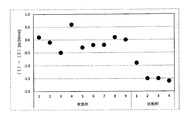
- FIG. 4 is a graph showing the difference between the adhesive force of the undercoat layer to the PMMA plate and the adhesive force of the coating film provided with the antifouling layer on the undercoat layer in Examples 1 to 9 and Comparative Examples 1 to 4. .
- FIG. 1 is a schematic cross-sectional view of a coating film 1 applied to an underwater structure 4 according to an embodiment of the present invention.
- the coating film is formed as a laminate including an undercoat layer 2 and an antifouling layer 3 in order from the underwater structure side.
- an undercoat layer forming composition according to an embodiment of the present invention is applied to an underwater structure and dried, and then the antifouling layer forming composition is applied and dried to form the coating film. be able to.
- the undercoat layer according to the embodiment of the present invention can be formed by a composition for forming an undercoat layer, for example, by applying the composition for forming an undercoat layer to an underwater structure and drying it.
- a composition for forming an undercoat layer according to an embodiment of the present invention is an undercoat that forms an undercoat layer of a coating film comprising an undercoat layer and an antifouling layer containing silicone oil that adheres to the undercoat layer. It is a composition for layer formation, Comprising: A base polymer and tackifying resin are included.
- the composition for forming the undercoat layer according to the embodiment of the present invention includes a tackifying resin, thereby improving the adhesion to the adherend. Further, even when the antifouling layer contains silicone oil, it is possible to prevent a decrease in the adhesive force between the adherend and the undercoat layer. In particular, when the antifouling layer contains hydrophilic silicone oil, it is possible to suppress a decrease in adhesive force. This is because the tackifying resin contained in the undercoat layer prevents the silicone oil in the antifouling layer from shifting to the undercoat layer over time.
- tackifier resin examples include terpene tackifier resins, styrene tackifier resins, rosin tackifier resins, alicyclic saturated hydrocarbon tackifier resins, and acrylic tackifier resins. Tackifying resins are preferred, and aromatic modified terpene resins are more preferred.
- rosin-based tackifying resins include unmodified rosins such as gum rosin, wood rosin, tall oil rosin (raw rosin); modified rosins modified by hydrogenation, disproportionation, polymerization, etc. Hydrogenated rosin, disproportionated rosin, polymerized rosin, other chemically modified rosins, etc.
- rosin derivatives include rosins such as those obtained by esterifying an unmodified rosin with an alcohol (that is, an esterified product of rosin) and those obtained by esterifying a modified rosin with an alcohol (that is, an esterified product of a modified rosin) Esters: Unmodified rosins and modified rosins modified with unsaturated fatty acids Unsaturated fatty acid modified rosins; Unmodified rosins, modified rosins, unsaturated rosin esters modified with unsaturated fatty acids Rosin alcohols obtained by reducing carboxyl groups in fatty acid-modified rosins or unsaturated fatty acid-modified rosin esters; metal salts of rosins (particularly rosin esters) such as unmodified rosin, modified rosin and various rosin derivatives; rosins (Unmodified rosin, modified rosin, various rosin derivatives; rosins (Unmodified rosin,
- a commercially available product can be used as the rosin-based tackifying resin.
- HARIESTER TF “HARIESTER S”, “NEOTALL G2”, “NEOTALL 101N”, “NEOTALL 125HK”, “HARTACK 8LJA”, “HARTACK ER95”, “HARTACK ER95”, “HARITPH”, “HARTACK” manufactured by Harima Kasei Co., Ltd.
- HARITIC F85 “HARITIC F105”, “HARITIC FK100”, “HARITIC FK125”, “HARITIC PCJ”
- Foral 105-E “Foral 85-E”, “Foral AX-E” manufactured by Eastman Chemical Co., Ltd.
- terpene-based tackifier resins include terpene resins such as ⁇ -pinene polymers, ⁇ -pinene polymers, and dipentene polymers; modification of these terpene resins (phenol modification, aromatic modification, hydrogenation modification, hydrocarbons) Modified terpene resin) and the like.
- modified terpene resins include terpene-modified phenol resins, aromatic-modified terpene resins (for example, styrene-modified terpene resins), hydrogenated terpene resins, and the like. From the viewpoint of improving the adhesion of the undercoat layer to the underwater structure, it is preferable to use an aromatic modified terpene resin.
- terpene-based tackifier resins for example, aromatic modified terpene resins
- one type or two or more types having different types and characteristics for example, softening point
- commercially available products can be used as the terpene tackifying resin.
- YS resin TO125 manufactured by Yasuhara Chemical Co., Ltd.
- Alcon M115 manufactured by Arakawa Chemical Industries, Ltd.
- the like can be mentioned.
- hydrocarbon-based tackifying resins examples include aliphatic (C5) petroleum resins, aromatic (C9) petroleum resins, aliphatic / aromatic copolymer (C5 / C9) petroleum resins, Hydrogenated products (for example, alicyclic petroleum resins obtained by hydrogenating aromatic petroleum resins (alicyclic saturated hydrocarbon resins)), various modified products thereof (for example, maleic anhydride modified products), Various hydrocarbon resins such as coumarone-based resins and coumarone-indene-based resins are exemplified, and alicyclic saturated hydrocarbon resins are preferable.
- a hydrocarbon type tackifying resin may be used individually by 1 type, and may use 2 or more types together.
- Styrene-based tackifier resins include styrene homopolymer, ⁇ -methylstyrene homopolymer, ⁇ -methylstyrene / styrene copolymer, styrene / aliphatic copolymer, ⁇ -methylstyrene / styrene / aliphatic copolymer Examples thereof include coalescence, C9 petroleum resin, C5 / C9 petroleum resin, phenol-modified styrene resin, and hydrogenated products thereof.
- Styrenic tackifier resin may be used individually by 1 type, and may use 2 or more types together.
- styrene homopolymer ⁇ -methylstyrene homopolymer, ⁇ -methylstyrene / styrene copolymer, styrene / aliphatic polymer, ⁇ -methylstyrene / styrene / aliphatic copolymer, phenol-modified styrene resin And a partial hydrogenated product thereof, and a styrene homopolymer, an ⁇ -methylstyrene homopolymer, an ⁇ -methylstyrene / styrene copolymer, and a partial hydrogenated product thereof are more preferable. These are excellent in compatibility with the (meth) acrylic block copolymer. In particular, a styrene homopolymer is preferable.
- a commercially available product can be used as the styrene-based tackifier resin.
- SYLVARES SA-85 “SYLVARES SA-100”, “SYLVARES SA-120”, “SYLVARES SA-140” manufactured by Arizona Chemical Co., Ltd.
- Escollets® ECR-213 “Escollets® ECR-807” manufactured by ExxonMobil Corp.
- an acrylic tackifying resin for example, an acrylic tackifying resin based on an acrylic polymer (homopolymer or copolymer) using one or more (meth) acrylic acid alkyl esters as monomer components.
- alkyl (meth) acrylates include methyl (meth) acrylate, ethyl (meth) acrylate, propyl (meth) acrylate, isopropyl (meth) acrylate, butyl (meth) acrylate, (meth ) Isobutyl acrylate, s-butyl (meth) acrylate, t-butyl (meth) acrylate, pentyl (meth) acrylate, hexyl (meth) acrylate, heptyl (meth) acrylate, octyl (meth) acrylate , 2-ethylhexyl (meth) acrylate, isooctyl (meth) acrylate
- the acrylic polymer is a unit corresponding to another monomer component copolymerizable with the (meth) acrylic acid alkyl ester, if necessary, for the purpose of modifying cohesion, heat resistance, crosslinkability and the like. May be included.
- the amount of the tackifying resin used with respect to 100 parts by mass of the base polymer is not particularly limited, but can be set to 0.5 parts by mass or more, preferably 2 parts by mass or more, more preferably from the viewpoint of adhesive strength. Is 3 parts by mass or more, more preferably 4 parts by mass or more, still more preferably 5 parts by mass or more, and particularly preferably 10 parts by mass or more.
- the use amount of the tackifier resin with respect to 100 parts by mass of the base polymer is preferably 150 parts by mass or less, more preferably 120 parts by mass or less, still more preferably 90 parts by mass or less, from the viewpoint of film properties. More preferably, it is 60 mass parts or less, Most preferably, it is 50 mass parts or less.
- the base polymer of the undercoat layer forming composition is a rubbery polymer (refers to a polymer exhibiting rubber elasticity in a temperature range near room temperature) contained in the undercoat layer forming composition.
- the main component refers to the component occupying more than 50% by mass of the polymer component.
- the base polymer is preferably an elastomer.
- rubber thermosetting elastomer
- thermoplastic elastomer can be used.
- some thermoplastic resins such as polyvinyl chloride, which are severely deteriorated by long-term use, are not preferred because they may be cut when the coating film is peeled off.
- the rubber for example, acrylic rubber, diene rubber, butyl rubber, nitrile rubber, hydrogenated nitrile rubber, fluorine rubber, silicone rubber, ethylene propylene rubber, chloroprene rubber, urethane rubber, epichlorohydrin rubber can be used. It is preferable to use rubber or diene rubber.
- diene rubber natural rubber, isoprene rubber, butadiene rubber, styrene butadiene rubber, chloroprene rubber, acrylonitrile butadiene rubber can be used, and styrene butadiene rubber is preferably used.
- thermoplastic elastomer monovinyl substituted aromatic compound thermoplastic elastomers such as acrylic thermoplastic elastomers and styrene thermoplastic elastomers can be used.
- acrylic thermoplastic elastomer examples include a block copolymer of PMMA (polymethyl methacrylate) and an alkyl acrylate ester.
- acrylic acid alkyl ester examples include butyl acrylate, 2-ethylhexyl acrylate, octyl acrylate, and the like.
- Such a block copolymer can be adjusted within the ranges of constant load peeling and tensile breaking strength / adhesive force defined in the present invention by changing the proportion of PMMA which is a hard segment. Specifically, when the content ratio of PMMA is increased, the tensile strength at break is increased and the adhesive force and constant load peeling tend to be reduced.
- styrenic thermoplastic elastomer examples include SBS (styrene / butadiene block copolymer), SIS (styrene / isoprene block copolymer), SEBS (styrene / ethylene / butylene / styrene block copolymer), and SEPS (styrene).
- SBS styrene / butadiene block copolymer
- SIS styrene / isoprene block copolymer
- SEBS styrene / ethylene / butylene / styrene block copolymer
- SEPS styrene
- the tensile strength at break and the adhesive strength can be adjusted by adjusting the styrene content ratio in the elastomer, preferably 20 to 40% by mass. More preferably, it is 22% by mass to 35% by mass, and further preferably 25% by mass to 33% by mass.
- the content of the base polymer in the undercoat layer forming composition is preferably 5% by mass to 95% by mass, more preferably 10% by mass to 90% by mass, and still more preferably 15% by mass to 80% by mass. %, Particularly preferably 20% by mass to 70% by mass, and most preferably 25% by mass to 60% by mass.
- the base polymer may be modified with a compound containing a polar group.
- the polar group include an acid anhydride group such as a hydroxyl group, a carboxyl group, an alkoxysilyl group, and a maleic anhydride group, and an amino group, and a maleic anhydride group or an amino group is preferable.
- the content of the compound containing the polar group in the base polymer is preferably 0.1% by mass to 20% by mass, more preferably 0.3% by mass to 15% by mass, and still more preferably 0.5% by mass. % By mass to 5% by mass.
- the composition for forming the undercoat layer may contain a compound containing a polar group.
- a compound containing a polar group examples include resins containing the polar group, silane coupling agents, and silicone oil.
- the resin containing a polar group examples include ionomers, rosin resins, and silicone resins.
- the content of these compounds with respect to the resin component in the undercoat layer forming composition is preferably 5 to 95% by mass, more preferably 10 to 90% by mass, and still more preferably 15 to 80% by mass. Particularly preferably 20 to 70% by mass, most preferably 25 to 60% by mass.
- the solvent examples include aromatic hydrocarbons such as benzene, toluene, xylene, ethylbenzene and trimethylbenzene; aliphatic hydrocarbons such as hexane and heptane; esters such as ethyl acetate and vinyl acetate; dioxane and diethyl ether Ethers such as: alcohols such as ethanol, isopropanol and n-butanol; ketones such as acetone, diethyl ketone and methyl isobutyl ketone; water and the like can be used.
- aromatic hydrocarbons such as benzene, toluene, xylene, ethylbenzene and trimethylbenzene
- aliphatic hydrocarbons such as hexane and heptane
- esters such as ethyl acetate and vinyl acetate
- dioxane and diethyl ether Ethers such as:
- the content of the solvent is preferably 5% by mass to 95% by mass, more preferably 10% by mass to 90% by mass, still more preferably 20% by mass to 85% by mass, and particularly preferably 30% by mass. -80% by mass, most preferably 40% by mass to 75% by mass.
- the composition for forming the undercoat layer contains a styrene-based thermoplastic elastomer modified by 0.1 to 20% by mass with a compound containing a polar group. It is preferable to increase the adhesion between the antifouling layer and the undercoat layer. At this time, for example, the styrene content can be 20 mass% to 40 mass%.
- the thickness of the undercoat layer may be set according to the application and the later-described tensile breaking strength, and is not particularly limited, but is, for example, 50 ⁇ m to 500 ⁇ m, preferably 70 ⁇ m to 300 ⁇ m, More preferably, it is 100 ⁇ m to 200 ⁇ m. Further, since the tensile rupture strength described later mainly depends on the undercoat layer, the tensile rupture strength can be adjusted by changing the thickness of the undercoat layer.
- the antifouling layer according to the embodiment of the present invention can be formed of a composition for forming an antifouling layer.
- the antifouling layer forming composition is applied on an undercoat layer provided on a structure and dried. Can be formed.
- the composition for forming an antifouling layer silicone-based paints, copper-based paints, zinc-based paints, and the like can be used, but it is preferable to use paints that do not assume repeated coating such as silicone-based paints.
- the silicone-based paint contains organopolysiloxane. Since the organopolysiloxane has a curing reactive group, the antifouling layer formed by the silicone-based paint contains a silicone resin that is a reaction product of the organopolysiloxane.
- a hydroxyl group, an alkoxy group having 1 to 8 carbon atoms, a vinyl group, or a (meth) acryl group may be used.
- hydrolyzable groups other than hydroxyl groups include alkoxy groups such as methoxy group, ethoxy group, and propoxy group; alkoxyalkoxy groups such as methoxyethoxy group, ethoxyethoxy group, and methoxypropoxy group; acetoxy group, octanoyloxy Groups, acyloxy groups such as benzoyloxy groups; alkenyloxy groups such as vinyloxy groups, isopropenyloxy groups, 1-ethyl-2-methylvinyloxy groups; ketoximes such as dimethyl ketoxime groups, methylethyl ketoxime groups, and diethyl ketoxime groups Groups: amino groups such as dimethylamino group, diethylamino group, butylamino group, cyclohexylamino group; aminoxy groups such as dimethylaminoxy group, diethylaminoxy group; N-methylacetamide group, N-ethylacetamide group, N-methyl group It may
- the silicone-based paint preferably further contains silicone oil.
- Silicone oils include dimethyl silicone oils that are all methyl groups, methyl phenyl silicone oils in which some of the methyl groups in these dimethyl silicone oils are substituted with phenyl groups, monoamines, diamines, or amino-polyether groups.
- Amino-modified silicone oil epoxy, cycloaliphatic epoxy, epoxy-polyether or epoxy-modified silicone oil substituted with epoxy-aralkyl group, carbinol-modified silicone oil substituted with carbinol group, mercapto group-substituted Mercapto-modified silicone oil, carboxyl-modified silicone oil substituted with carboxyl group, methacryl-modified silicone oil substituted with methacryl group, polyether-modified silicone oil substituted with polyether Use a long-chain alkyl-modified silicone oil substituted with a long-chain alkyl or a long-chain alkyl-aralkyl group, a higher fatty acid-modified silicone oil substituted with a higher fatty acid ester group, or a fluoroalkyl-modified silicone oil substituted with a fluoroalkyl group.
- methylphenyl silicone oil can be used. Only one type of silicone oil may be used, or a plurality of types of silicone oils may be used in combination, preferably including a hydrophilic silicone oil, and further including a hydrophobic silicone oil.
- polyether-modified silicone oil is preferable.
- the polyether-modified silicone oil is a polysiloxane having a main chain having a siloxane bond, and has one or more polyoxyalkylene groups as a substituent.
- the main chain may form a ring.
- the bonding position of the polyoxyalkylene group in the polyether-modified silicone oil can be any suitable bonding position.
- a polyoxyalkylene group may be bonded to both ends of the main chain, a polyoxyalkylene group may be bonded to one end of the main chain, or a polyoxyalkylene group may be bonded to a side chain. May be.
- the polyether-modified silicone oil has an HLB of preferably 3 to 15, more preferably 3 to 10.
- HLB is a hydrophilic / lipophilic balance that numerically indicates the balance between the hydrophilicity and lipophilicity of oil, and is an abbreviation for Valau of Hydrophile and Liophile Balance.
- the HLB of the polyether-modified silicone oil includes, for example, selection of a chain length between a polyether polyoxyalkylene chain (group) and a dimethylsiloxane chain (group), and a hydrophilic polyethylene among the polyether polyoxyalkylene chains (group). It can be controlled by selection of chain lengths of oxide and hydrophobic hydrophobic oxide.
- polyether-modified silicone oil examples include trade names “KF-6011” (HLB: 14.5), “KF-6011P” (HLB: 14.5), “KF-6012” manufactured by Shin-Etsu Silicone Co., Ltd. (HLB: 7.0), “KF-6013” (HLB: 10.0), “KF-6015” (HLB: 4.5), “KF-6016” (HLB: 4.5), “KF -6017 “(HLB: 4.5),” KF-6017P "(HLB: 4.5),” KF-6043 "(HLB: 14.5),” KF-6004 "(HLB: 9.0), KF351A, KF352A, KF353, KF354L, KF355A, KF615A, KF945, KF-640, KF-642, KF-643, KF-644, KF-6020, KF-6204, X22- Side chain type (linear type) polyether-modified silicone oil such as 515; trade names “
- side chain type (branched chain type) polyether-modified silicone oil; manufactured by Shin-Etsu Silicone Co., Ltd., trade name “KF-6038” (HLB: 3.0), etc.
- Alkyl co-modified type polyether-modified silicone oil; and the like.
- hydrophobic silicone oil examples include non-reactive silicone oils such as polysiloxane whose main chain is composed of a siloxane bond, which may have a substituent, and the main chain may form a ring.
- non-reactive silicone oils such as polysiloxane whose main chain is composed of a siloxane bond, which may have a substituent, and the main chain may form a ring.
- straight silicone oil and modified silicone oil excluding polyether modified silicone oil.
- the substituent in the straight silicone oil is preferably an alkyl group or a phenyl group.
- the terminal hydroxyl group-containing dimethyl silicone oil in which both ends or one end of the polysiloxane are hydroxyl groups the dimethyl silicone oil in which all the substituents bonded to Si of the polysiloxane are methyl groups
- examples thereof include phenylmethyl silicone oil (phenyl-modified silicone oil) in which a part of the methyl group is substituted with a phenyl group, and long-chain alkyl-modified silicone oil.
- hydrophobic silicone oil examples include trade names “KF96L”, “KF96”, “KF69”, “KF99”, “KF50”, “KF54”, “KF410”, “KF412” manufactured by Shin-Etsu Silicone Co., Ltd. "KF414", “KF415", “FL", “KF-6104”, “KF-6100”; trade names “BY16-846”, “SF8416”, “SH200”, manufactured by Toray Dow Corning Co., Ltd., “SH203”, “SH230”, “SF8419”, “FS1265”, “SH510”, “SH550”, “SH710”, “FZ-2110”, “FZ-2203”;
- the blending ratio of the hydrophobic silicone oil and the hydrophilic silicone oil is not particularly limited, but the hydrophilic silicone oil relative to the content of the hydrophobic silicone oil is not limited.
- the ratio of the contained mass (hydrophobic silicone oil-containing mass / hydrophilic oil-containing mass) is preferably 0.5 to 20, more preferably 1.0 to 15.
- the antifouling effect of the antifouling layer can be fully expressed, and the adhesion of aquatic organisms such as algae can be more effectively achieved over a long period While being able to prevent, the adhesive force of a primer layer and a to-be-adhered body can be improved more.
- any appropriate content ratio can be adopted depending on the content ratio of other components such as an antifouling agent.
- it may be 30% by mass to 98% by mass. More preferably, it is 35% by mass to 90% by mass, and further preferably 40% by mass to 80% by mass.
- the content of the silicone oil with respect to 100 parts by mass of the silicone resin is preferably 1 part by mass to 150 parts by mass, and more preferably 40 parts by mass to 140 parts by mass.
- Copper-based paints are paints containing copper-based compounds.
- copper-based compounds include copper oxides such as cuprous oxide and cupric oxide, copper alloys such as copper nickel alloys, copper thiocyanate and copper sulfide. Copper salts, organometallic compounds such as pyrithione copper and copper acetate can be used.
- zinc-based paint a paint containing zinc oxide as an antifouling agent can be used.
- the antifouling layer may contain any appropriate other additive as long as the effects of the present invention are not impaired.
- examples of such other additives include a UV absorber as a weathering agent.
- the thickness of the antifouling layer may be set according to the use and is not particularly limited. For example, it is 50 ⁇ m to 500 ⁇ m, preferably 70 ⁇ m to 300 ⁇ m, and more preferably 100 ⁇ m to 200 ⁇ m. is there.
- the coating film according to the embodiment of the present invention includes an undercoat layer and an antifouling layer.
- the coating film according to the embodiment of the present invention preferably has a 180-degree peel adhesive strength of 8 to 15 N / mm at 23 ° C. and a tensile speed of 300 mm / min.
- the adhesive strength to PMMA is used as an index indicating the difficulty of peeling from the adherend during use.
- the adhesive strength against PMMA is preferably 8 N / mm or more, and more preferably 8.5 N / mm or more because the coating film may be peeled off naturally if the value is too low.
- the adhesive force is too high, an excessive force is required for peeling the coating film, and workability may be reduced. Therefore, 15 N / mm or less is preferable, and 12 N / mm or less is more preferable. .
- Typical materials used for the surface of the underwater structure include, for example, PMMA (polymethyl methacrylate resin), gel coat (acrylic polymer / polystyrene, etc.), paint film with epoxy paint, enamel paint ( Examples thereof include a coating film made of an acrylic polymer and the like and aluminum, but the present invention can also be used for other materials.
- PMMA polymethyl methacrylate resin
- gel coat acrylic polymer / polystyrene, etc.
- paint film with epoxy paint examples thereof include a coating film made of an acrylic polymer and the like and aluminum, but the present invention can also be used for other materials.
- composition for forming an undercoat layer and the coating film according to this embodiment are, for example, a ship, a buoy, a port facility, a marine oil field facility, a water channel for a power plant cooling water, a water floating passage, a sluice, an underwater sensor, and an underwater camera.
- Submersible lights, submersible pumps, submersible pipes, submersible power generation facilities eg tidal power generation facilities, ocean current power generation facilities, wave power generation facilities, offshore wind power generation facilities
- underwater rotating bodies such as propellers
- various underwater mooring devices such as underwater wires It is used as an antifouling coating to prevent underwater organisms from adhering to the underwater structure and breeding.
- the undercoat layer forming composition and the coating film according to the present embodiment described above may be formed on an underwater structure, or may be formed on other than the underwater structure, and have the same effect.
- Example 1 Preparation of composition for forming undercoat layer
- 70 parts by mass of amine-modified hydrogenated styrene thermoplastic elastomer styrene content 30% by mass, trade name “Tuftec MP10”, manufactured by Asahi Kasei Chemicals Co., Ltd.
- aromatic modified terpene resin trade name “YS Resin TO125”, Yasuhara Chemical 30 parts by mass
- toluene were mixed so as to be a 25% by mass toluene solution and stirred at room temperature (23 ° C.) for 12 hours to obtain a composition for forming an undercoat layer.
- an undercoat layer was prepared by the following method, and the adhesive force was measured.
- a PMMA plate (trade name “Delagrass K”, manufactured by Asahi Kasei Technoplus Co., Ltd., methyl methacrylate polymer 96.6% or more) is coated with an applicator composition and dried at room temperature for 12 hours.
- An undercoat layer having a thickness of 150 ⁇ m was prepared.
- the other portions were removed so that the undercoat layer had a size of 20 mm ⁇ 100 mm.
- a tensile tester (AUTOGRAPH AGS-X, manufactured by Shimadzu Corporation)
- the adhesive force (the force when the undercoat layer was peeled from the PMMA substrate at a peeling angle of 180 degrees and a peeling speed of 300 mm / min) Measured as 2).
- Example 1 had an adhesive force (2) of 9.1 (N / mm), and since the undercoat layer of Example 1 contained a tackifying resin, it exhibited a high adhesive force to the PMMA plate.
- a coating film was prepared by the following method, and the adhesive force was measured.
- a PMMA plate (trade name “Delagrass K”, manufactured by Asahi Kasei Technoplus Co., Ltd., methyl methacrylate polymer 96.6% or more) is coated with an applicator composition and dried at room temperature for 12 hours.
- An undercoat layer having a thickness of 150 ⁇ m was prepared.
- the antifouling layer-forming composition is applied with an applicator and dried at room temperature for 12 hours to produce a 100 ⁇ m-thick antifouling layer on the PMMA plate. And the coating film which consists of an antifouling layer was produced.
- the other portions were removed so that the coating film had a size of 20 mm ⁇ 100 mm.
- a tensile tester (AUTOGRAPH AGS-X, manufactured by Shimadzu Corporation)
- the adhesive strength (1) was used to peel the coating film from the PMMA substrate at a peeling angle of 180 degrees and a peeling speed of 300 mm / min. ).
- the results are shown in Table 1.
- the coating film of Example 1 has an adhesive force (1) of 9.2 (N / mm), and shows a high adhesive strength comparable to the adhesive force (2) of the undercoat layer to the PMMA plate in Example 1. It was.
- Example 2 Preparation of antifouling layer forming composition
- the hydrophilic silicone oil polyether-modified silicone oil, trade name “KF6016”, manufactured by Shin-Etsu Silicone Co., Ltd.
- the coating film of Example 2 has an adhesive force (1) of 9.0 (N / mm), and the coating film of Example 2 has an adhesive force (2) to the PMMA plate of the undercoat layer of Example 1. The same high adhesive strength was exhibited. The results are shown in Table 1.
- Examples 3 to 9 The composition for forming the undercoat layer and the antifouling layer were the same as in Example 1 except that the composition of the composition for forming the undercoat layer and the composition for forming the topcoat layer were changed as shown in Table 1. A forming composition was prepared. Moreover, the coating film was produced by operation similar to Example 1 using them, and adhesive strength (1) and adhesive strength (2) were evaluated. The results are shown in Table 1.
- compositions for forming the undercoat layer and the antifouling layer were the same as in Example 1 except that the composition of the composition for forming the undercoat layer and the composition for forming the topcoat layer were changed as shown in Table 1.
- a forming composition was prepared.
- the coating film was produced by operation similar to Example 1 using them, and adhesive strength (1) and adhesive strength (2) were evaluated. The results are shown in Table 1.
- YS resin TO125 Aromatic terpene (manufactured by Yasuhara Chemical Co., Ltd.) ⁇ Alcon M135: Saturated hydrocarbon (Arakawa Chemical Industries, Ltd.) YS resin SX100: Styrene (manufactured by Yasuhara Chemical Co., Ltd.) ⁇ Nanolet TH-130: Terpene phenol emulsion (manufactured by Yasuhara Chemical Co., Ltd.) ⁇ Superester NS-100H: Rosin ester emulsion (Arakawa Chemical Industries, Ltd.)
- KF50-100 Phenyl-modified silicone oil (manufactured by Shin-Etsu Chemical Co., Ltd.)
- KF6016 PEG-modified silicone oil (manufactured by Shin-Etsu Chemical Co., Ltd.)
- Example 1 and Comparative Example 1 were compared, the undercoat layer according to Example 1 using a tackifier resin showed superior adhesive strength as compared with the undercoat layer according to Comparative Example 1. From the comparison of the adhesive force (1) and the adhesive force (2) of Example 1, the coating film according to Example 1 contains a tackifying resin in the undercoat layer, thereby preventing migration of silicone oil contained in the antifouling layer. It can be seen that the adhesive force (1) of the coating film of Example 1 exhibited the same excellent adhesive force as the adhesive force (2) of the undercoat layer.
- Example 2 where the content of silicone oil in the antifouling layer was increased, the migration of silicone oil was prevented by the tackifier resin, which was as excellent as the adhesive force (2) of the undercoat layer of Example 1 It can be seen that adhesive force is developed.
- Example 3 in which the type of elastomer and the type of tackifying resin were changed, it was confirmed that the adhesive strength was excellent and the same excellent effect as in Example 1 was achieved.
- the undercoat layer contained the tackifying resin, so it was included in the antifouling layer.
- the adhesive force (1) of the coating film was as excellent as the adhesive force (2) of the undercoat layer.
- the coating film according to Comparative Example 1 does not contain a tackifying resin in the undercoat layer by comparing the adhesive force (1) and the adhesive force (2) in Comparative Example 1, the silicone oil contained in the antifouling layer It can be seen that the adhesive force (1) was reduced by the transfer. It can be seen that the coating film according to Comparative Example 2 has a higher content of silicone oil in the antifouling layer than Comparative Example 1, and the adhesive force (1) further decreased. Also, in Comparative Examples 2 to 4 in which the type of elastomer and the type of tackifying resin were changed, the tackiness resin was not included in the undercoat layer.
- a coating film that can be peeled off facilitates the removal work, and does not easily peel off even when used for a long time in an underwater structure, and a composition for forming an undercoat layer thereof.
- a composition for forming an undercoat layer thereof will provide a.
Landscapes
- Chemical & Material Sciences (AREA)
- Life Sciences & Earth Sciences (AREA)
- Engineering & Computer Science (AREA)
- Wood Science & Technology (AREA)
- Materials Engineering (AREA)
- Organic Chemistry (AREA)
- Chemical Kinetics & Catalysis (AREA)
- Paints Or Removers (AREA)
- Laminated Bodies (AREA)
Abstract
Priority Applications (5)
| Application Number | Priority Date | Filing Date | Title |
|---|---|---|---|
| CN201980021578.6A CN111902500B (zh) | 2018-03-28 | 2019-03-28 | 底涂层形成用组合物、底涂层、及涂膜 |
| US17/042,414 US20210009857A1 (en) | 2018-03-28 | 2019-03-28 | Undercoat layer-forming composition, undercoat layer, and coating film |
| AU2019242166A AU2019242166A1 (en) | 2018-03-28 | 2019-03-28 | Undercoat layer-forming composition, undercoat layer, and coating film |
| EP19777294.0A EP3778812A4 (fr) | 2018-03-28 | 2019-03-28 | Composition de formation de sous-couche, sous-couche et film de revêtement |
| US19/092,905 US20250223465A1 (en) | 2018-03-28 | 2025-03-27 | Coating film |
Applications Claiming Priority (2)
| Application Number | Priority Date | Filing Date | Title |
|---|---|---|---|
| JP2018-063247 | 2018-03-28 | ||
| JP2018063247 | 2018-03-28 |
Related Child Applications (2)
| Application Number | Title | Priority Date | Filing Date |
|---|---|---|---|
| US17/042,414 A-371-Of-International US20210009857A1 (en) | 2018-03-28 | 2019-03-28 | Undercoat layer-forming composition, undercoat layer, and coating film |
| US19/092,905 Division US20250223465A1 (en) | 2018-03-28 | 2025-03-27 | Coating film |
Publications (1)
| Publication Number | Publication Date |
|---|---|
| WO2019189696A1 true WO2019189696A1 (fr) | 2019-10-03 |
Family
ID=68059233
Family Applications (1)
| Application Number | Title | Priority Date | Filing Date |
|---|---|---|---|
| PCT/JP2019/013878 Ceased WO2019189696A1 (fr) | 2018-03-28 | 2019-03-28 | Composition de formation de sous-couche, sous-couche et film de revêtement |
Country Status (6)
| Country | Link |
|---|---|
| US (2) | US20210009857A1 (fr) |
| EP (1) | EP3778812A4 (fr) |
| JP (1) | JP7323318B2 (fr) |
| CN (1) | CN111902500B (fr) |
| AU (1) | AU2019242166A1 (fr) |
| WO (1) | WO2019189696A1 (fr) |
Cited By (1)
| Publication number | Priority date | Publication date | Assignee | Title |
|---|---|---|---|---|
| CN115335228A (zh) * | 2020-03-23 | 2022-11-11 | 日东电工株式会社 | 片体 |
Families Citing this family (5)
| Publication number | Priority date | Publication date | Assignee | Title |
|---|---|---|---|---|
| CN112105700B (zh) * | 2018-08-03 | 2021-10-01 | 电化株式会社 | 粘合剂及使用该粘合剂的胶带 |
| EP3828240A1 (fr) * | 2019-11-29 | 2021-06-02 | Jotun A/S | Revêtement anti-salissures |
| US20240166894A1 (en) * | 2021-03-26 | 2024-05-23 | Nitto Denko Corporation | Coating material |
| KR20240055824A (ko) * | 2021-09-10 | 2024-04-29 | 헴펠 에이/에스 | 방오 코트 형성용 아크릴레이트 코팅 조성물 |
| WO2023145949A1 (fr) * | 2022-01-31 | 2023-08-03 | 日東電工株式会社 | Procédé de production d'un produit fibreux, produit fibreux et composition de peinture antisalissure |
Citations (10)
| Publication number | Priority date | Publication date | Assignee | Title |
|---|---|---|---|---|
| JPH07315282A (ja) * | 1994-05-26 | 1995-12-05 | Daikyo Manabu | Frp船体の防汚塗装方法および防汚frp船体 |
| JPH10296175A (ja) * | 1997-04-30 | 1998-11-10 | Chugoku Marine Paints Ltd | 基材表面への防汚塗膜の形成方法および防汚塗膜で被覆された防汚構造体 |
| JP2001220524A (ja) | 2000-02-08 | 2001-08-14 | Mizusawa Kikai Shoji:Kk | 水中用コーティング組成物、水中用コーティング塗膜形成方法および水中用コーティング部材 |
| JP2002080778A (ja) | 2000-09-07 | 2002-03-19 | Chugoku Marine Paints Ltd | 防汚塗料組成物、その塗膜、その塗膜で被覆された漁具・漁網および漁具・漁網の防汚方法 |
| WO2006064712A1 (fr) * | 2004-12-14 | 2006-06-22 | Chugoku Marine Paints, Ltd. | Composition de revêtement anticorrosion en époxyde, film de revêtement anticorrosion, film de revêtement antisalissure composite en organopolysiloxane et bateau et structure sous-marine recouverts d'un tel film de revêtement composite |
| JP2007224203A (ja) * | 2006-02-24 | 2007-09-06 | Lintec Corp | 粘着シート |
| JP2014148639A (ja) * | 2013-02-04 | 2014-08-21 | Chugoku Marine Paints Ltd | 2成分型プライマー、プライマー塗膜、積層防汚塗膜および基材の防汚方法 |
| JP2018000746A (ja) * | 2016-07-06 | 2018-01-11 | テルモ株式会社 | 医療用具 |
| WO2018062267A1 (fr) * | 2016-09-29 | 2018-04-05 | 日東電工株式会社 | Film de revêtement pour structure, ensemble de matériau de revêtement pour former un film de revêtement, matériau de revêtement pour sous-couche et procédé de revêtement |
| JP2018063247A (ja) | 2016-10-07 | 2018-04-19 | 日立金属株式会社 | 材料試験装置及び材料試験方法 |
Family Cites Families (16)
| Publication number | Priority date | Publication date | Assignee | Title |
|---|---|---|---|---|
| JPS60209505A (ja) * | 1984-04-03 | 1985-10-22 | Nichiban Co Ltd | 生物付着防止用粘着体 |
| JPS6241280A (ja) * | 1985-08-19 | 1987-02-23 | Nichiban Co Ltd | 水中生物付着防止用粘着シ−ト |
| JPH01259076A (ja) * | 1988-04-07 | 1989-10-16 | Kansai Paint Co Ltd | 防汚塗膜の補修方法 |
| JP2815452B2 (ja) * | 1990-02-27 | 1998-10-27 | 関西ペイント株式会社 | シリコーン系防汚塗料用下塗塗料組成物及び防汚塗膜形成方法 |
| US5192603A (en) * | 1991-09-13 | 1993-03-09 | Courtaulds Coatings Inc. | Protection of substrates against aquatic fouling |
| JPH05170983A (ja) * | 1991-12-24 | 1993-07-09 | Mitsui Eng & Shipbuild Co Ltd | 防汚性樹脂組成物 |
| JPH08231898A (ja) * | 1994-12-26 | 1996-09-10 | Shin Etsu Chem Co Ltd | 水中防汚組成物 |
| JP5189773B2 (ja) * | 2006-02-20 | 2013-04-24 | 中国塗料株式会社 | 硬化オルガノポリシロキサン系防汚複合塗膜、該複合塗膜で被覆された基材・船舶および防汚方法 |
| WO2007132694A1 (fr) * | 2006-05-12 | 2007-11-22 | Seiko Epson Corporation | Feuille adhésive sensible à la pression et procédé de bordage |
| WO2008081789A1 (fr) * | 2006-12-25 | 2008-07-10 | Chugoku Marine Paints, Ltd. | Composition durcissable, composition de revêtement antisalissure, film de revêtement antisalissure, base avec film de revêtement antisalissure, et procédé de prévention des salissures sur une base |
| JP5124496B2 (ja) * | 2008-02-01 | 2013-01-23 | 富士フイルム株式会社 | 親水性部材 |
| JP5989432B2 (ja) * | 2012-07-18 | 2016-09-07 | 日東電工株式会社 | 塗膜保護シート |
| WO2014126599A1 (fr) * | 2013-02-15 | 2014-08-21 | Momentive Performance Materials Inc. | Système antisalissures comprenant un hydrogel de silicone |
| WO2015178474A1 (fr) * | 2014-05-23 | 2015-11-26 | 日本化薬株式会社 | Composition de résine |
| JP6219551B2 (ja) * | 2015-04-08 | 2017-10-25 | 日東電工株式会社 | 水生生物付着防止粘着テープ |
| JP6153635B1 (ja) * | 2016-01-28 | 2017-06-28 | 日東電工株式会社 | 粘着シート |
-
2019
- 2019-03-28 AU AU2019242166A patent/AU2019242166A1/en not_active Abandoned
- 2019-03-28 CN CN201980021578.6A patent/CN111902500B/zh active Active
- 2019-03-28 JP JP2019064728A patent/JP7323318B2/ja active Active
- 2019-03-28 WO PCT/JP2019/013878 patent/WO2019189696A1/fr not_active Ceased
- 2019-03-28 US US17/042,414 patent/US20210009857A1/en not_active Abandoned
- 2019-03-28 EP EP19777294.0A patent/EP3778812A4/fr not_active Withdrawn
-
2025
- 2025-03-27 US US19/092,905 patent/US20250223465A1/en active Pending
Patent Citations (10)
| Publication number | Priority date | Publication date | Assignee | Title |
|---|---|---|---|---|
| JPH07315282A (ja) * | 1994-05-26 | 1995-12-05 | Daikyo Manabu | Frp船体の防汚塗装方法および防汚frp船体 |
| JPH10296175A (ja) * | 1997-04-30 | 1998-11-10 | Chugoku Marine Paints Ltd | 基材表面への防汚塗膜の形成方法および防汚塗膜で被覆された防汚構造体 |
| JP2001220524A (ja) | 2000-02-08 | 2001-08-14 | Mizusawa Kikai Shoji:Kk | 水中用コーティング組成物、水中用コーティング塗膜形成方法および水中用コーティング部材 |
| JP2002080778A (ja) | 2000-09-07 | 2002-03-19 | Chugoku Marine Paints Ltd | 防汚塗料組成物、その塗膜、その塗膜で被覆された漁具・漁網および漁具・漁網の防汚方法 |
| WO2006064712A1 (fr) * | 2004-12-14 | 2006-06-22 | Chugoku Marine Paints, Ltd. | Composition de revêtement anticorrosion en époxyde, film de revêtement anticorrosion, film de revêtement antisalissure composite en organopolysiloxane et bateau et structure sous-marine recouverts d'un tel film de revêtement composite |
| JP2007224203A (ja) * | 2006-02-24 | 2007-09-06 | Lintec Corp | 粘着シート |
| JP2014148639A (ja) * | 2013-02-04 | 2014-08-21 | Chugoku Marine Paints Ltd | 2成分型プライマー、プライマー塗膜、積層防汚塗膜および基材の防汚方法 |
| JP2018000746A (ja) * | 2016-07-06 | 2018-01-11 | テルモ株式会社 | 医療用具 |
| WO2018062267A1 (fr) * | 2016-09-29 | 2018-04-05 | 日東電工株式会社 | Film de revêtement pour structure, ensemble de matériau de revêtement pour former un film de revêtement, matériau de revêtement pour sous-couche et procédé de revêtement |
| JP2018063247A (ja) | 2016-10-07 | 2018-04-19 | 日立金属株式会社 | 材料試験装置及び材料試験方法 |
Non-Patent Citations (1)
| Title |
|---|
| See also references of EP3778812A4 |
Cited By (1)
| Publication number | Priority date | Publication date | Assignee | Title |
|---|---|---|---|---|
| CN115335228A (zh) * | 2020-03-23 | 2022-11-11 | 日东电工株式会社 | 片体 |
Also Published As
| Publication number | Publication date |
|---|---|
| AU2019242166A1 (en) | 2020-10-15 |
| EP3778812A1 (fr) | 2021-02-17 |
| JP2019173013A (ja) | 2019-10-10 |
| CN111902500B (zh) | 2022-08-30 |
| CN111902500A (zh) | 2020-11-06 |
| US20250223465A1 (en) | 2025-07-10 |
| JP7323318B2 (ja) | 2023-08-08 |
| US20210009857A1 (en) | 2021-01-14 |
| EP3778812A4 (fr) | 2022-01-26 |
Similar Documents
| Publication | Publication Date | Title |
|---|---|---|
| JP7323318B2 (ja) | 下塗層形成用組成物、下塗層、及び塗膜 | |
| JP7046542B2 (ja) | 構造物上の塗膜、塗膜を形成するための塗料セット及び下塗層用塗料並びに塗工方法 | |
| JP6087766B2 (ja) | 防汚用粘着シートおよびこれを用いた構造物の防汚処理方法 | |
| WO2015150249A1 (fr) | Composition de revêtement antisalissure érodable | |
| WO2013146718A1 (fr) | Bande adhésive pour prévenir le bioencrassement aquatique | |
| JP2018048331A (ja) | 水生生物付着防止粘着テープ | |
| JP6177820B2 (ja) | 水生生物付着防止粘着テープ | |
| JP7323317B2 (ja) | 下塗層形成用組成物、下塗層、及び塗膜 | |
| JP6499431B2 (ja) | 樹脂組成物、防汚材、および、積層フィルム | |
| WO2010098350A1 (fr) | Composition de revêtement antisalissures et fluide de revêtement antisalissures la contenant | |
| JP2016023306A (ja) | 水生生物付着防止粘着テープまたはシート | |
| EP4691768A1 (fr) | Film de revêtement antisalissure stratifié | |
| WO2021182533A1 (fr) | Composition de formation de film de revêtement pelable et film de revêtement pelable | |
| WO2026048793A1 (fr) | Ruban pour empêcher l'adhésion d'organismes aquatiques | |
| JP2015028151A (ja) | 水生生物付着防止粘着テープ | |
| WO2013103065A1 (fr) | Composition d'adhésif |
Legal Events
| Date | Code | Title | Description |
|---|---|---|---|
| 121 | Ep: the epo has been informed by wipo that ep was designated in this application |
Ref document number: 19777294 Country of ref document: EP Kind code of ref document: A1 |
|
| NENP | Non-entry into the national phase |
Ref country code: DE |
|
| ENP | Entry into the national phase |
Ref document number: 2019242166 Country of ref document: AU Date of ref document: 20190328 Kind code of ref document: A |
|
| ENP | Entry into the national phase |
Ref document number: 2019777294 Country of ref document: EP Effective date: 20201028 |
|
| WWW | Wipo information: withdrawn in national office |
Ref document number: 2019777294 Country of ref document: EP |