WO2019221107A1 - Batterie secondaire au lithium - Google Patents
Batterie secondaire au lithium Download PDFInfo
- Publication number
- WO2019221107A1 WO2019221107A1 PCT/JP2019/019087 JP2019019087W WO2019221107A1 WO 2019221107 A1 WO2019221107 A1 WO 2019221107A1 JP 2019019087 W JP2019019087 W JP 2019019087W WO 2019221107 A1 WO2019221107 A1 WO 2019221107A1
- Authority
- WO
- WIPO (PCT)
- Prior art keywords
- electrolyte
- secondary battery
- lithium secondary
- experimental example
- lithium
- Prior art date
- Legal status (The legal status is an assumption and is not a legal conclusion. Google has not performed a legal analysis and makes no representation as to the accuracy of the status listed.)
- Ceased
Links
Images

Classifications
-
- H—ELECTRICITY
- H01—ELECTRIC ELEMENTS
- H01M—PROCESSES OR MEANS, e.g. BATTERIES, FOR THE DIRECT CONVERSION OF CHEMICAL ENERGY INTO ELECTRICAL ENERGY
- H01M10/00—Secondary cells; Manufacture thereof
- H01M10/05—Accumulators with non-aqueous electrolyte
- H01M10/056—Accumulators with non-aqueous electrolyte characterised by the materials used as electrolytes, e.g. mixed inorganic/organic electrolytes
- H01M10/0564—Accumulators with non-aqueous electrolyte characterised by the materials used as electrolytes, e.g. mixed inorganic/organic electrolytes the electrolyte being constituted of organic materials only
- H01M10/0565—Polymeric materials, e.g. gel-type or solid-type
-
- H—ELECTRICITY
- H01—ELECTRIC ELEMENTS
- H01M—PROCESSES OR MEANS, e.g. BATTERIES, FOR THE DIRECT CONVERSION OF CHEMICAL ENERGY INTO ELECTRICAL ENERGY
- H01M10/00—Secondary cells; Manufacture thereof
- H01M10/05—Accumulators with non-aqueous electrolyte
- H01M10/056—Accumulators with non-aqueous electrolyte characterised by the materials used as electrolytes, e.g. mixed inorganic/organic electrolytes
- H01M10/0564—Accumulators with non-aqueous electrolyte characterised by the materials used as electrolytes, e.g. mixed inorganic/organic electrolytes the electrolyte being constituted of organic materials only
- H01M10/0566—Liquid materials
- H01M10/0569—Liquid materials characterised by the solvents
-
- H—ELECTRICITY
- H01—ELECTRIC ELEMENTS
- H01M—PROCESSES OR MEANS, e.g. BATTERIES, FOR THE DIRECT CONVERSION OF CHEMICAL ENERGY INTO ELECTRICAL ENERGY
- H01M10/00—Secondary cells; Manufacture thereof
- H01M10/05—Accumulators with non-aqueous electrolyte
- H01M10/052—Li-accumulators
-
- H—ELECTRICITY
- H01—ELECTRIC ELEMENTS
- H01M—PROCESSES OR MEANS, e.g. BATTERIES, FOR THE DIRECT CONVERSION OF CHEMICAL ENERGY INTO ELECTRICAL ENERGY
- H01M10/00—Secondary cells; Manufacture thereof
- H01M10/05—Accumulators with non-aqueous electrolyte
- H01M10/052—Li-accumulators
- H01M10/0525—Rocking-chair batteries, i.e. batteries with lithium insertion or intercalation in both electrodes; Lithium-ion batteries
-
- H—ELECTRICITY
- H01—ELECTRIC ELEMENTS
- H01M—PROCESSES OR MEANS, e.g. BATTERIES, FOR THE DIRECT CONVERSION OF CHEMICAL ENERGY INTO ELECTRICAL ENERGY
- H01M10/00—Secondary cells; Manufacture thereof
- H01M10/05—Accumulators with non-aqueous electrolyte
- H01M10/056—Accumulators with non-aqueous electrolyte characterised by the materials used as electrolytes, e.g. mixed inorganic/organic electrolytes
- H01M10/0561—Accumulators with non-aqueous electrolyte characterised by the materials used as electrolytes, e.g. mixed inorganic/organic electrolytes the electrolyte being constituted of inorganic materials only
- H01M10/0562—Solid materials
-
- H—ELECTRICITY
- H01—ELECTRIC ELEMENTS
- H01M—PROCESSES OR MEANS, e.g. BATTERIES, FOR THE DIRECT CONVERSION OF CHEMICAL ENERGY INTO ELECTRICAL ENERGY
- H01M10/00—Secondary cells; Manufacture thereof
- H01M10/05—Accumulators with non-aqueous electrolyte
- H01M10/056—Accumulators with non-aqueous electrolyte characterised by the materials used as electrolytes, e.g. mixed inorganic/organic electrolytes
- H01M10/0564—Accumulators with non-aqueous electrolyte characterised by the materials used as electrolytes, e.g. mixed inorganic/organic electrolytes the electrolyte being constituted of organic materials only
- H01M10/0566—Liquid materials
- H01M10/0567—Liquid materials characterised by the additives
-
- H—ELECTRICITY
- H01—ELECTRIC ELEMENTS
- H01M—PROCESSES OR MEANS, e.g. BATTERIES, FOR THE DIRECT CONVERSION OF CHEMICAL ENERGY INTO ELECTRICAL ENERGY
- H01M10/00—Secondary cells; Manufacture thereof
- H01M10/05—Accumulators with non-aqueous electrolyte
- H01M10/056—Accumulators with non-aqueous electrolyte characterised by the materials used as electrolytes, e.g. mixed inorganic/organic electrolytes
- H01M10/0564—Accumulators with non-aqueous electrolyte characterised by the materials used as electrolytes, e.g. mixed inorganic/organic electrolytes the electrolyte being constituted of organic materials only
- H01M10/0566—Liquid materials
- H01M10/0568—Liquid materials characterised by the solutes
-
- H—ELECTRICITY
- H01—ELECTRIC ELEMENTS
- H01M—PROCESSES OR MEANS, e.g. BATTERIES, FOR THE DIRECT CONVERSION OF CHEMICAL ENERGY INTO ELECTRICAL ENERGY
- H01M4/00—Electrodes
- H01M4/02—Electrodes composed of, or comprising, active material
- H01M2004/026—Electrodes composed of, or comprising, active material characterised by the polarity
- H01M2004/027—Negative electrodes
-
- H—ELECTRICITY
- H01—ELECTRIC ELEMENTS
- H01M—PROCESSES OR MEANS, e.g. BATTERIES, FOR THE DIRECT CONVERSION OF CHEMICAL ENERGY INTO ELECTRICAL ENERGY
- H01M4/00—Electrodes
- H01M4/02—Electrodes composed of, or comprising, active material
- H01M2004/026—Electrodes composed of, or comprising, active material characterised by the polarity
- H01M2004/028—Positive electrodes
-
- H—ELECTRICITY
- H01—ELECTRIC ELEMENTS
- H01M—PROCESSES OR MEANS, e.g. BATTERIES, FOR THE DIRECT CONVERSION OF CHEMICAL ENERGY INTO ELECTRICAL ENERGY
- H01M2300/00—Electrolytes
- H01M2300/0017—Non-aqueous electrolytes
- H01M2300/0025—Organic electrolyte
- H01M2300/0028—Organic electrolyte characterised by the solvent
- H01M2300/0034—Fluorinated solvents
-
- H—ELECTRICITY
- H01—ELECTRIC ELEMENTS
- H01M—PROCESSES OR MEANS, e.g. BATTERIES, FOR THE DIRECT CONVERSION OF CHEMICAL ENERGY INTO ELECTRICAL ENERGY
- H01M2300/00—Electrolytes
- H01M2300/0017—Non-aqueous electrolytes
- H01M2300/0065—Solid electrolytes
- H01M2300/0082—Organic polymers
-
- H—ELECTRICITY
- H01—ELECTRIC ELEMENTS
- H01M—PROCESSES OR MEANS, e.g. BATTERIES, FOR THE DIRECT CONVERSION OF CHEMICAL ENERGY INTO ELECTRICAL ENERGY
- H01M2300/00—Electrolytes
- H01M2300/0085—Immobilising or gelification of electrolyte
-
- Y—GENERAL TAGGING OF NEW TECHNOLOGICAL DEVELOPMENTS; GENERAL TAGGING OF CROSS-SECTIONAL TECHNOLOGIES SPANNING OVER SEVERAL SECTIONS OF THE IPC; TECHNICAL SUBJECTS COVERED BY FORMER USPC CROSS-REFERENCE ART COLLECTIONS [XRACs] AND DIGESTS
- Y02—TECHNOLOGIES OR APPLICATIONS FOR MITIGATION OR ADAPTATION AGAINST CLIMATE CHANGE
- Y02E—REDUCTION OF GREENHOUSE GAS [GHG] EMISSIONS, RELATED TO ENERGY GENERATION, TRANSMISSION OR DISTRIBUTION
- Y02E60/00—Enabling technologies; Technologies with a potential or indirect contribution to GHG emissions mitigation
- Y02E60/10—Energy storage using batteries
Definitions
- the present invention relates to a lithium secondary battery.
- Lithium secondary batteries have higher energy density and superior charge / discharge cycle characteristics compared to other secondary batteries such as nickel cadmium secondary batteries and nickel hydride secondary batteries. Widely used as a power source for electronic devices. There are still high demands for downsizing and thinning.
- Non-Patent Document 1 uses about 1 mmol / 1 LiPF 6 EC / DMC / EMC based on an organic solvent as an electrolyte, LiFePO 4 as a positive electrode, and Li as a counter electrode, so that the current density is about 15 mA / g. It discloses disclosing a capacity of 135 mAh / g.
- Non-Patent Document 2 discloses that a gel polymer electrolyte based on a hydroxyethyl cellulose membrane is used as an electrolyte, LiFePO 4 is used as a positive electrode, and Li is used as a counter electrode, so that a capacity of about 110 mAh / g is obtained under a current density of 50 mA / g. Disclosed.
- Non-Patent Document 3 uses a solid electrolyte that is NASICON-type LiZr 2 (PO 4 ) 3 as an electrolyte, LiFePO 4 as a positive electrode, and Li as a counter electrode, so that about 80 ° C. under a current density of 100 ⁇ A / cm 2. It discloses disclosing a capacity of 120 mAh / g.
- Non-Patent Document 1-3 since the lithium secondary battery disclosed in Non-Patent Document 1-3 has a large resistance at the electrode (positive electrode) -electrolyte interface, it has a smaller capacity than the theoretical capacity of 169 mAh / g of the positive electrode active material. There are challenges.
- the present invention has been made in view of this problem, and an object of the present invention is to provide a lithium secondary battery having improved characteristics by reducing the resistance at the electrode-electrolyte interface.
- a lithium secondary battery includes a positive electrode made of a solid capable of inserting and removing lithium ions, a lithium ion conductive electrolyte containing quinones that are organic compounds, and lithium metal or lithium.
- the gist is to include a negative electrode made of a solid capable of occluding and releasing ions.
- the present invention it is possible to provide a lithium secondary battery having improved characteristics by reducing the resistance at the electrode-electrolyte interface by using quinones capable of occluding lithium ions in the electrolyte.
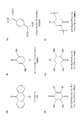
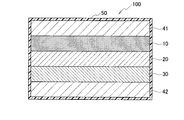
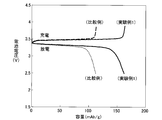
- FIG. 1 is a schematic cross-sectional view schematically showing a basic configuration of a lithium secondary battery according to an embodiment of the present invention. It is a figure which shows the structural formula of quinones. It is sectional drawing which shows typically the structure of the lithium secondary battery which concerns on embodiment of this invention. It is a figure which shows the charging / discharging characteristic of the lithium secondary battery of Experimental example 1 and Comparative example 1.
- FIG. 1 shows the charging / discharging characteristic of the lithium secondary battery of Experimental example 1 and Comparative example 1.
- FIG. 1 is a schematic cross-sectional view showing a basic configuration of a lithium secondary battery according to this embodiment.
- the basic configuration of the lithium secondary battery 100 includes a positive electrode 10, an electrolyte 20, and a negative electrode 30, and is the same as a general lithium secondary battery.
- the lithium secondary battery according to this embodiment is characterized in that the electrolyte 20 contains quinones as additives.
- the positive electrode 10 can include a catalyst and a conductive material as constituent elements.
- the positive electrode 10 preferably contains a binder for integrating the catalyst and the conductive material.
- the negative electrode 30 can have a constituent element such as lithium-containing alloy, carbon, and oxide capable of releasing and absorbing metallic lithium or lithium ions.
- FIG. 2 shows the structural formula of quinones.
- 2 (a) shows anthraquinone (AQ)
- FIG. 2 (b) shows 2,5-hydroxy-1,4-benzoquinone (DHBQ)
- FIG. 2 (c) shows 7,7,8,8-tetracyanodimethane.
- TCNQ 2,3-dichloro-5,6-dicyano-1,4-benzoquinone
- FIG. 2 (e) is tetrahydroxy-1,4-benzoquinone (THBQ)
- FIG. 2 (f) represents 2,5-ditertbutyl-1,4-benzoquinone (DBBQ).
- one type may be selected from the above, or two or more types may be mixed and used.
- the mixing ratio in the case of mixing is not specifically limited. Any mixing ratio may be used.
- the electrolyte 20 contains a Li salt together with the above quinones.
- Li salt is supplied from a metal salt containing lithium.
- the metal salt include, for example, lithium hexafluorophosphate (LiPF 6 ), lithium perchlorate (LiClO 4 ), lithium trifluoromethanesulfonylamide (LiTFSA) [(CF 3 SO 2 ) 2 NLi], etc. Mention may be made of solute metal salts.
- the electrolyte 20 contains a solvent.
- the solvent include dimethyl carbonate (DMC), methyl ethyl carbonate (MEC), diethyl carbonate (DEC), ethyl propyl carbonate (EPC), ethyl isopropyl carbonate (EIPC), ethyl butyl carbonate (EBC), dipropyl carbonate (DPC), Carbonate ester solvents such as diisopropyl carbonate (DIPC), dibutyl carbonate (DBC), ethylene carbonate (EC), propylene carbonate (PC), 1,2-butylene carbonate (1,2-BC), 1,2-dimethoxyethane (DME), ether solvents such as diethylene glycol dimethyl ether, triethylene glycol dimethyl ether, tetraethylene glycol dimethyl ether, and lactone solvents such as ⁇ -butyl tactone (GBL), or a solvent in which two or more kinds are mixed. May be.
- the mixing ratio is not particularly limited.
- the electrolyte 20 may include a gel polymer.
- a gel polymer for example, one of polyvinylidene fluoride (PVdF), polyacrylonitrile (PAN), and polyethylene oxide (PEO) gel polymer, or a gel polymer in which two or more kinds are mixed may be used.
- the mixing ratio of the gel polymer is not particularly limited.
- the electrolyte 20 may include a solid electrolyte.
- the solid electrolyte is, for example, beta-eucryptite structure LiAlSiO 4, ramsdellite structure of Li 2 Ti 3 O 7, triple rutile structure of LiNb 0.75 Ta 0.25 WO 6, Li 14 ZnGe 4 O 16, Li 3 .6 Ge 0.6 V 0.4 O 4 ⁇ -Li 3 PO 4 structure, Li 5.5 Fe 0.5 Zn 0.5 O 4 inverted fluorite structure, Li 1.3 Ti 1.7 NASICON type of Al 0.3 (PO 4 ) 3 , ⁇ 3 -Fe 2 (SO 4 ) 3 structure of Li 3 Sc 0.9 Zr 0.1 (PO 4 ) 3 , La 2 / 3-x Li 3x TiO 3
- An oxide solid electrolyte having a perovskite structure of (x ⁇ 0.1) or a garnet structure of Li 7 a 3 Zr 2 O 12 , Li4GeS4, Li4-xGe1-xPx
- the positive electrode 10 of the lithium secondary battery 100 includes a conductive material, and includes both or one of a catalyst and a binder as necessary.
- the conductive material contained in the positive electrode 10 is preferably carbon.
- Examples thereof include carbon blacks such as ketjen black and acetylene black, activated carbon, graphites, carbon fibers, carbon sheets, and carbon cloth.
- active material of the positive electrode 10 examples include layered rock salt type materials such as LiCoO 2 and LiNiO 2, spinel type materials such as LiMn 2 O 4, and olipine type materials such as LiFePO 4. In addition, if it is a well-known positive electrode active material other than this, it will not specifically limit.
- These active materials can be synthesized using a known process such as a solid phase method or a liquid phase method.
- the positive electrode 10 may include a binder.
- the binder is not particularly limited, and examples thereof include polytetrafluoroethylene (PTFE), polyvinylidene fluoride (PVDF), and polybutadiene rubber. These binders can be used as a powder or as a dispersion.
- the conductive material content in the positive electrode 10 is preferably less than 100% by weight based on the weight of the positive electrode 10, for example.
- the ratio of other components is the same as that of a conventional lithium secondary battery.
- the positive electrode 10 is produced as follows.
- the positive electrode 10 may be formed by dispersing the above mixture in a solvent such as an organic solvent to form a slurry, and applying the slurry mixture on a current collector and drying.
- a hot press may be applied in addition to the cold press for the purpose of increasing the strength of the electrode and preventing leakage of the electrolyte.
- the positive electrode 10 with more excellent stability can be produced.
- the positive electrode 10 may be manufactured by depositing an active material on a current collector using a film forming method such as RF (Radio-Frequency) sputtering.
- RF Radio-Frequency
- Current collectors include, for example, metals such as metal foil and metal mesh, carbon such as carbon cloth and carbon sheet, ITO (Indium Tin Oxide) with tin oxide added to indium oxide, and ATO doped with antimony in tin oxide An oxide film such as (Sb-doped Tin Oxide) can be given.
- the negative electrode 30 of the lithium secondary battery 100 according to the present embodiment includes a negative electrode active material.
- This negative electrode active material will not be specifically limited if it is a material which can be used as a negative electrode material of a lithium secondary battery.
- metallic lithium can be mentioned.
- lithium-containing material examples include lithium, silicon, or an alloy of silicon and tin, and lithium nitride such as Li 2.6 Co 0.4 N, which are materials capable of releasing and occluding lithium ions. it can.
- the negative electrode 30 can be formed by a known method.
- a predetermined shape of negative electrode may be formed by stacking a plurality of metal lithium foils.
- the lithium secondary battery 100 includes, in addition to the above-described constituent elements, structural members such as a separator, a battery case, and a metal mesh, and other elements required for the lithium secondary battery. Including.
- FIG. 3 is a cross-sectional view schematically showing the configuration of the lithium secondary battery 100 according to this embodiment. A method for manufacturing a lithium secondary battery will be described with reference to FIGS.
- the positive electrode 10 is fixed on the current collector 41 as described in the preparation of the positive electrode (II-4). Further, as described in (III), the negative electrode 30 is fixed on the current collector 42.
- the electrolyte 20 described in (I) is disposed between the positive electrode 10 and the negative electrode 30. Then, the structure sandwiched between the current collector 41 and the current collector 42 is sealed with a housing 50 such as a laminate so that the lithium secondary battery 100 is not exposed to the atmosphere.
- a member such as a separator is disposed between the positive electrode 10 and the negative electrode 30.
- the lithium secondary battery 100 suitable for a use is produced by appropriately arranging other insulating members and fixtures.
- Battery cycle test In the battery cycle test, a charge / discharge measurement system (manufactured by Bio Logic) is used to pass 1 mA / cm 2 at a current density per area of the positive electrode 10, and the battery voltage rises to 4.0 V from the open circuit voltage. The charging voltage was measured until. The battery discharge test was conducted at the same current density as that during charging until the battery voltage dropped to 2.5V. The charge / discharge test of the battery was performed in a normal living environment. The charge / discharge capacity was expressed as a value per area (mAh / cm 2 ) of the air electrode.
- the electrolyte 20 of the lithium secondary battery 100 of Experimental Example 1 was prepared by mixing anthraquinone (AQ) in an organic electrolytic solution at a rate of 50 mmol / l.
- AQ anthraquinone
- the organic electrolyte used was LiPF6 dissolved in an organic solvent EC: DMC (volume ratio 1: 1) at a concentration of 1 mol / l.
- the lithium secondary battery cell was produced in the following procedures.
- the lithium secondary battery cell was assembled in dry air with a dew point of ⁇ 60 ° C. or lower.
- FIG. 4 shows the charge / discharge characteristics of the lithium secondary batteries of Experimental Example 1 and Comparative Example.
- the horizontal axis represents capacity (mAh / g), and the vertical axis represents battery voltage (V).
- the initial discharge capacity of Experimental Example 1 was 162 mAh / g.
- the capacity retention rate in the 100th cycle of Experimental Example 1 was 99%.
- Table 1 shows the initial discharge capacity and the discharge capacity retention rate.
- the initial discharge capacity of the comparative example was 112 mAh / g. Further, the capacity retention rate at the 100th cycle was 62%.
- the electrolyte 20 of the lithium secondary battery 100 of Experimental Example 2 was prepared by mixing anthraquinone (AQ) with a gel polymer electrolyte at a ratio of 30 wt% (electrolyte important standard).
- the gel polymer film was prepared by dissolving hydroxyethyl cellulose (manufactured by Aldrich) in water, followed by heating and vacuum drying treatment.
- the electrolyte 20 was produced by impregnating the obtained gel polymer film with the same organic electrolyte as in Experimental Example 1.
- Experimental Example 2 the initial discharge capacity was 161 mAh / g, and the discharge capacity retention rate was 97%.
- the evaluation result of each experimental example is collectively shown in Table 1 described later.
- the electrolyte 20 of the lithium secondary battery 100 of Experimental Example 3 was prepared by mixing anthraquinone (AQ) with a solid electrolyte at a ratio of 30 wt% (electrolyte important standard).
- AQ anthraquinone
- solid electrolyte Li 2 S (manufactured by Wako Pure Chemical Industries, Ltd.), GeS 2 (manufactured by Wako Pure Chemical Industries, Ltd.) and P 2 S 5 (manufactured by Aldrich) are mixed in a glove box and heated at 700 ° C. for 8 hours. It was prepared by processing.
- Experimental Example 3 had an initial discharge capacity of 157 mAh / g and a discharge capacity retention rate of 95%.
- the electrolyte 20 of the lithium secondary battery 100 of Experimental Example 4 was prepared by mixing 2,5-dihydroxy-1,4-benzoquinone (DHBQ) in an organic electrolyte solution at a rate of 50 mmol / l.
- DVBQ 2,5-dihydroxy-1,4-benzoquinone
- Experimental Example 3 had an initial discharge capacity of 165 mAh / g and a discharge capacity retention rate of 98%.
- Example 5 The electrolyte 20 of the lithium secondary battery 100 of Experimental Example 5 was prepared by mixing 2,5-dihydroxy-1,4-benzoquinone (DHBQ) in a ratio of 30 wt% (electrolyte important standard) to the gel polymer electrolyte. Experimental Example 5 differs from Experimental Example 2 (AQ) only in the type of additive (DHBQ).
- DHBQ 2,5-dihydroxy-1,4-benzoquinone
- Experimental Example 5 had an initial discharge capacity of 160 mAh / g and a discharge capacity retention rate of 98%.
- Example 6 The electrolyte 20 of the lithium secondary battery 100 of Experimental Example 6 was prepared by mixing 2,5-dihydroxy-1,4-benzoquinone (DHBQ) at a ratio of 30 wt% (electrolyte important standard) to the solid electrolyte. Experimental Example 6 differs from Experimental Example 3 (AQ) only in the type of additive (DHBQ).
- DHBQ 2,5-dihydroxy-1,4-benzoquinone
- Experimental Example 6 had an initial discharge capacity of 156 mAh / g and a discharge capacity retention rate of 95%.
- Example 7 The electrolyte 20 of the lithium secondary battery 100 of Experimental Example 7 was prepared by mixing 7,7,8,8-tetracyanodimethane (TCNQ) in an organic electrolyte solution at a rate of 50 mmol / l. Experimental Example 7 differs from Experimental Examples 1 and 3 only in the type of additive (TCNQ).
- Experimental Example 7 had an initial discharge capacity of 169 mAh / g and a discharge capacity retention rate of 97%.
- Example 8 The electrolyte 20 of the lithium secondary battery 100 of Experimental Example 8 was prepared by mixing gel polymer electrolyte with 7,7,8,8-tetracyanodimethane (TCNQ) at a ratio of 30 wt% (electrolyte weight basis). .
- Experimental Example 8 differs from Experimental Examples 2 and 5 only in the type of additive (TCNQ).
- Experimental Example 8 had an initial discharge capacity of 164 mAh / g and a discharge capacity retention rate of 98%.
- Example 9 The electrolyte 20 of the lithium secondary battery 100 of Experimental Example 9 was prepared by mixing 7,7,8,8, -tetracyanodimethane (TCNQ) in a solid electrolyte at a ratio of 30 wt% (electrolyte important standard). Experimental Example 9 differs from Experimental Examples 3 and 6 only in the type of additive (TCNQ).
- Experimental Example 9 had an initial discharge capacity of 159 mAh / g and a discharge capacity retention rate of 95%.
- the electrolyte 20 of the lithium secondary battery 100 of Experimental Example 10 was prepared by mixing 2,3-dichloro-5,6-dicyano-1,4-benzoquinone (DDQ) in an organic electrolytic solution at a rate of 50 mmol / l. .
- DDQ 2,3-dichloro-5,6-dicyano-1,4-benzoquinone
- Experimental example 10 differs from experimental examples 1, 4 and 7 only in the type of additive (DDQ).
- the initial discharge capacity was 167 mAh / g, and the discharge capacity retention rate was 98%.
- Experiment Example 11 differs from Experiment Examples 2, 5, and 8 only in the type of additive (DDQ).
- the initial discharge capacity was 165 mAh / g, and the discharge capacity retention rate was 99%.
- Experimental example 12 differs from experimental examples 3, 6 and 9 only in the type of additive (DDQ).
- the initial discharge capacity was 161 mAh / g, and the discharge capacity retention rate was 95%.
- the electrolyte 20 of the lithium secondary battery 100 of Experimental Example 13 was prepared by mixing tetrahydroxy-1,4-benzoquinone (THBQ) in an organic electrolytic solution at a rate of 50 mmol / l.
- TLBQ tetrahydroxy-1,4-benzoquinone
- Experimental Example 13 differs from Experimental Examples 1, 4, 7, and 10 only in the type of additive (DDQ).
- the initial discharge capacity was 168 mAh / g, and the discharge capacity retention rate was 95%.
- the electrolyte 20 of the lithium secondary battery 100 of Experimental Example 14 was prepared by mixing tetrahydroxy-1,4-benzoquinone (THBQ) at a ratio of 30 wt% (electrolyte important standard) with a gel polymer electrolyte.
- TLBQ tetrahydroxy-1,4-benzoquinone
- Experimental Example 14 differs from Experimental Examples 2, 5, 8, and 11 only in the type of additive (THBQ).
- TTBQ type of additive
- Example 15 The electrolyte 20 of the lithium secondary battery 100 of Experimental Example 15 was prepared by mixing tetrahydroxy-1,4-benzoquinone (THBQ) at a ratio of 30 wt% (electrolyte important standard) with a solid electrolyte.
- TLBQ tetrahydroxy-1,4-benzoquinone
- Experimental Example 15 differs from Experimental Examples 3, 6, 9, and 12 only in the type of additive (THBQ).
- TTBQ type of additive
- the electrolyte 20 of the lithium secondary battery 100 of Experimental Example 16 was prepared by mixing 2,5-ditertbutyl-1,4-benzoquinone (DBBQ) in an organic electrolytic solution at a rate of 50 mmol / l.
- DBBQ 2,5-ditertbutyl-1,4-benzoquinone
- Experimental example 16 differs from experimental examples 1, 4, 7, 10, and 13 only in the type of additive (DBBQ).
- DBBQ type of additive
- the electrolyte 20 of the lithium secondary battery 100 of Experimental Example 17 was prepared by mixing 2,5-ditertbutyl-1,4-benzoquinone (DBBQ) at a ratio of 30 wt% (electrolyte important standard) to the gel polymer electrolyte. .
- DBBQ 2,5-ditertbutyl-1,4-benzoquinone
- Experimental example 17 differs from experimental examples 2, 5, 8, 11, and 14 only in the type of additive (DBBQ).
- DBBQ type of additive
- the electrolyte 20 of the lithium secondary battery 100 of Experimental Example 18 was prepared by mixing 2,5-ditertbutyl-1,4-benzoquinone (DBBQ) in a proportion of 30 wt% (electrolyte important standard) in a solid electrolyte.
- DBBQ 2,5-ditertbutyl-1,4-benzoquinone
- Experimental example 18 differs from experimental examples 3, 6, 9, 12, and 15 only in the type of additive (DBBQ).
- DBBQ type of additive
- the reason why the initial discharge capacity and the discharge capacity retention ratio are improved is that the movement of lithium ions in the electrolyte is promoted by using quinones as an electrolyte additive, and the resistance at the electrode-electrolyte interface decreases. As a result, it is considered that the battery characteristics are improved.
- This embodiment can produce a high-capacity, long-life lithium secondary battery, and can be used as a power source for various electronic devices and automobiles.
Landscapes
- Chemical & Material Sciences (AREA)
- Engineering & Computer Science (AREA)
- Electrochemistry (AREA)
- Manufacturing & Machinery (AREA)
- Chemical Kinetics & Catalysis (AREA)
- General Chemical & Material Sciences (AREA)
- General Physics & Mathematics (AREA)
- Inorganic Chemistry (AREA)
- Condensed Matter Physics & Semiconductors (AREA)
- Physics & Mathematics (AREA)
- Dispersion Chemistry (AREA)
- Materials Engineering (AREA)
- Secondary Cells (AREA)
- Battery Electrode And Active Subsutance (AREA)
Abstract
La présente invention concerne une batterie secondaire au lithium qui est réduite dans la résistance au niveau de l'interface électrode-électrolyte, ce qui permet d'améliorer ses caractéristiques. Cette batterie secondaire au lithium est pourvue des éléments suivants : une électrode positive 10 qui est composée d'un solide pouvant intercaler et désintercaler du lithium ionique ; un électrolyte conducteur de lithium ionique 20 qui contient de la quinone qui est un composé organique ; et une électrode négative 30 qui est composée d'un solide pouvant absorber et de désorber du lithium métallique ou du lithium ionique. Le composé organique contient un ou plusieurs composés choisis parmi les composants suivants : anthraquinone (AQ), 2, 5-dihydroxy-1, 4-benzoquinone (DHBQ), 7, 7, 8, 8-tétracyanodiméthane (TCNQ), 2, 3-dichloro-5, 6-dicyano-1, 4-benzoquinone (DDQ), tétrahydroxy-1, 4-benzoquinone (THBQ) et 2, 5-ditertbutyle-1, 4-benzoquinone (DBBQ).
Priority Applications (1)
| Application Number | Priority Date | Filing Date | Title |
|---|---|---|---|
| US17/049,919 US20210242501A1 (en) | 2018-05-15 | 2019-05-14 | Lithium Secondary Battery |
Applications Claiming Priority (2)
| Application Number | Priority Date | Filing Date | Title |
|---|---|---|---|
| JP2018-093608 | 2018-05-15 | ||
| JP2018093608A JP2019200880A (ja) | 2018-05-15 | 2018-05-15 | リチウム二次電池 |
Publications (1)
| Publication Number | Publication Date |
|---|---|
| WO2019221107A1 true WO2019221107A1 (fr) | 2019-11-21 |
Family
ID=68539754
Family Applications (1)
| Application Number | Title | Priority Date | Filing Date |
|---|---|---|---|
| PCT/JP2019/019087 Ceased WO2019221107A1 (fr) | 2018-05-15 | 2019-05-14 | Batterie secondaire au lithium |
Country Status (3)
| Country | Link |
|---|---|
| US (1) | US20210242501A1 (fr) |
| JP (1) | JP2019200880A (fr) |
| WO (1) | WO2019221107A1 (fr) |
Cited By (1)
| Publication number | Priority date | Publication date | Assignee | Title |
|---|---|---|---|---|
| CN116783752A (zh) * | 2021-01-27 | 2023-09-19 | 株式会社村田制作所 | 二次电池用电解液以及二次电池 |
Families Citing this family (4)
| Publication number | Priority date | Publication date | Assignee | Title |
|---|---|---|---|---|
| JP7657925B2 (ja) * | 2021-03-25 | 2025-04-07 | エルジー エナジー ソリューション リミテッド | 全固体電池用の電解質材料及びそれを含む全固体電池 |
| JP2022077961A (ja) * | 2021-09-01 | 2022-05-24 | エア・ウォーター・パフォーマンスケミカル株式会社 | アントラキノン化合物を含有する非水電解液及びこれを含む二次電池 |
| TWI802383B (zh) * | 2022-04-22 | 2023-05-11 | 國立臺灣科技大學 | 含添加劑之硫化物固態電解質 |
| WO2025226660A1 (fr) * | 2024-04-22 | 2025-10-30 | University Of Miami | Électrolytes polymères ultra-conducteurs et leurs procédés de synthèse |
Citations (11)
| Publication number | Priority date | Publication date | Assignee | Title |
|---|---|---|---|---|
| JPH07169505A (ja) * | 1993-12-14 | 1995-07-04 | Shin Kobe Electric Mach Co Ltd | リチウム二次電池 |
| JPH08203561A (ja) * | 1995-01-25 | 1996-08-09 | Murata Mfg Co Ltd | リチウム2次電池 |
| JPH1021958A (ja) * | 1996-07-04 | 1998-01-23 | Shin Kobe Electric Mach Co Ltd | リチウムイオン二次電池 |
| JPH1140194A (ja) * | 1997-07-17 | 1999-02-12 | Denso Corp | 非水電解液二次電池 |
| JP2000021444A (ja) * | 1998-06-30 | 2000-01-21 | Shin Kobe Electric Mach Co Ltd | 非水電解液二次電池 |
| JP2000077095A (ja) * | 1998-08-27 | 2000-03-14 | Sony Corp | 非水電解液電池 |
| JP2004055253A (ja) * | 2002-07-18 | 2004-02-19 | Hitachi Maxell Ltd | 非水二次電池およびこれを用いた電子機器 |
| JP2004134261A (ja) * | 2002-10-11 | 2004-04-30 | Matsushita Electric Ind Co Ltd | 非水電解液二次電池 |
| JP2004311442A (ja) * | 2003-04-03 | 2004-11-04 | Samsung Sdi Co Ltd | リチウム二次電池用電解質及びこれを含むリチウム二次電池 |
| JP2014179247A (ja) * | 2013-03-15 | 2014-09-25 | Shin Kobe Electric Mach Co Ltd | 非水電解質二次電池、及び蓄電装置 |
| JP2015159004A (ja) * | 2014-02-24 | 2015-09-03 | エルナー株式会社 | 非水電解液系蓄電デバイス |
Family Cites Families (5)
| Publication number | Priority date | Publication date | Assignee | Title |
|---|---|---|---|---|
| JPH07134987A (ja) * | 1993-11-11 | 1995-05-23 | Ricoh Co Ltd | 二次電池用正極部材および該部材を使用した二次電池 |
| JPH08222268A (ja) * | 1995-02-10 | 1996-08-30 | Matsushita Electric Ind Co Ltd | リチウム2次電池用電解液 |
| JP2001076710A (ja) * | 1999-09-07 | 2001-03-23 | Matsushita Electric Ind Co Ltd | 二次電池及びそれを用いた電気回路基板 |
| JP5163065B2 (ja) * | 2007-11-14 | 2013-03-13 | ソニー株式会社 | 非水電解液二次電池および非水電解液組成物 |
| CN102082297A (zh) * | 2010-12-30 | 2011-06-01 | 东莞市杉杉电池材料有限公司 | 磷酸铁锂动力锂离子电池电解液 |
-
2018
- 2018-05-15 JP JP2018093608A patent/JP2019200880A/ja active Pending
-
2019
- 2019-05-14 WO PCT/JP2019/019087 patent/WO2019221107A1/fr not_active Ceased
- 2019-05-14 US US17/049,919 patent/US20210242501A1/en not_active Abandoned
Patent Citations (11)
| Publication number | Priority date | Publication date | Assignee | Title |
|---|---|---|---|---|
| JPH07169505A (ja) * | 1993-12-14 | 1995-07-04 | Shin Kobe Electric Mach Co Ltd | リチウム二次電池 |
| JPH08203561A (ja) * | 1995-01-25 | 1996-08-09 | Murata Mfg Co Ltd | リチウム2次電池 |
| JPH1021958A (ja) * | 1996-07-04 | 1998-01-23 | Shin Kobe Electric Mach Co Ltd | リチウムイオン二次電池 |
| JPH1140194A (ja) * | 1997-07-17 | 1999-02-12 | Denso Corp | 非水電解液二次電池 |
| JP2000021444A (ja) * | 1998-06-30 | 2000-01-21 | Shin Kobe Electric Mach Co Ltd | 非水電解液二次電池 |
| JP2000077095A (ja) * | 1998-08-27 | 2000-03-14 | Sony Corp | 非水電解液電池 |
| JP2004055253A (ja) * | 2002-07-18 | 2004-02-19 | Hitachi Maxell Ltd | 非水二次電池およびこれを用いた電子機器 |
| JP2004134261A (ja) * | 2002-10-11 | 2004-04-30 | Matsushita Electric Ind Co Ltd | 非水電解液二次電池 |
| JP2004311442A (ja) * | 2003-04-03 | 2004-11-04 | Samsung Sdi Co Ltd | リチウム二次電池用電解質及びこれを含むリチウム二次電池 |
| JP2014179247A (ja) * | 2013-03-15 | 2014-09-25 | Shin Kobe Electric Mach Co Ltd | 非水電解質二次電池、及び蓄電装置 |
| JP2015159004A (ja) * | 2014-02-24 | 2015-09-03 | エルナー株式会社 | 非水電解液系蓄電デバイス |
Cited By (1)
| Publication number | Priority date | Publication date | Assignee | Title |
|---|---|---|---|---|
| CN116783752A (zh) * | 2021-01-27 | 2023-09-19 | 株式会社村田制作所 | 二次电池用电解液以及二次电池 |
Also Published As
| Publication number | Publication date |
|---|---|
| JP2019200880A (ja) | 2019-11-21 |
| US20210242501A1 (en) | 2021-08-05 |
Similar Documents
| Publication | Publication Date | Title |
|---|---|---|
| CN104835950B (zh) | 正极活性物质、其制备方法以及可再充电锂电池 | |
| KR101546251B1 (ko) | 전기화학 장치용 전해액 및 전기화학 장치 | |
| CN103443993A (zh) | 二次电池 | |
| CN104681797A (zh) | 一种硅碳复合负极电极的制备方法、锂离子电池 | |
| US20210242501A1 (en) | Lithium Secondary Battery | |
| CN109786832B (zh) | 电解液添加剂、电解液及锂离子二次电池 | |
| US11682788B2 (en) | Secondary battery and apparatus containing such secondary battery | |
| JP2011192561A (ja) | 非水電解液二次電池の製造方法 | |
| KR20120081922A (ko) | 음극 활물질 조성물, 이를 이용한 음극 극판의 제조방법 및 리튬 이차 전지 | |
| WO2026066429A1 (fr) | Batterie secondaire et dispositif électronique | |
| CN105489882A (zh) | 正极极片及其制备方法、锂离子电池 | |
| WO2019065288A1 (fr) | Électrolyte non aqueux pour batteries rechargeables au lithium-ion et batterie rechargeable au lithium-ion l'utilisant | |
| US20250372649A1 (en) | Positive electrode active material, method for preparing a positive electrode active material, positive electrode plate, battery, and power consuming apparatus | |
| KR20160034516A (ko) | 리튬 이차 전지용 양극 활물질, 이의 제조 방법, 및 이를 포함하는 리튬 이차 전지 | |
| KR102955009B1 (ko) | 리튬이온 이차전지용 음극 활물질, 음극 및 이를 포함하는 리튬이온 이차전지 | |
| KR100922685B1 (ko) | 리튬 이차전지용 양극 활물질 | |
| CN118198274B (zh) | 一种水系浆料聚阴离子型钠离子软包电池及其制备方法 | |
| JP2013186972A (ja) | 非水電解質二次電池 | |
| CN1971980A (zh) | 电池正极及使用该正极的锂离子电池及它们的制备方法 | |
| KR20130125919A (ko) | 전극 및 이를 포함하는 이차 전지 | |
| WO2024077522A1 (fr) | Procédé de préparation de matériau actif d'électrode négative, matériau actif d'électrode négative, batterie secondaire et appareil électrique | |
| JP6982244B2 (ja) | リチウム二次電池 | |
| JP7011176B2 (ja) | リチウム二次電池 | |
| JP7116310B2 (ja) | リチウム二次電池 | |
| CN105800580A (zh) | 无水磷酸铁及其制备方法、磷酸铁锂、锂离子电池正极和锂离子电池 |
Legal Events
| Date | Code | Title | Description |
|---|---|---|---|
| 121 | Ep: the epo has been informed by wipo that ep was designated in this application |
Ref document number: 19802638 Country of ref document: EP Kind code of ref document: A1 |
|
| NENP | Non-entry into the national phase |
Ref country code: DE |
|
| 122 | Ep: pct application non-entry in european phase |
Ref document number: 19802638 Country of ref document: EP Kind code of ref document: A1 |