WO2024252593A1 - Batterie secondaire au lithium - Google Patents
Batterie secondaire au lithium Download PDFInfo
- Publication number
- WO2024252593A1 WO2024252593A1 PCT/JP2023/021245 JP2023021245W WO2024252593A1 WO 2024252593 A1 WO2024252593 A1 WO 2024252593A1 JP 2023021245 W JP2023021245 W JP 2023021245W WO 2024252593 A1 WO2024252593 A1 WO 2024252593A1
- Authority
- WO
- WIPO (PCT)
- Prior art keywords
- negative electrode
- positive electrode
- lithium
- active material
- mass
- Prior art date
- Legal status (The legal status is an assumption and is not a legal conclusion. Google has not performed a legal analysis and makes no representation as to the accuracy of the status listed.)
- Ceased
Links
Images


Classifications
-
- H—ELECTRICITY
- H01—ELECTRIC ELEMENTS
- H01M—PROCESSES OR MEANS, e.g. BATTERIES, FOR THE DIRECT CONVERSION OF CHEMICAL ENERGY INTO ELECTRICAL ENERGY
- H01M10/00—Secondary cells; Manufacture thereof
- H01M10/05—Accumulators with non-aqueous electrolyte
- H01M10/052—Li-accumulators
- H01M10/0525—Rocking-chair batteries, i.e. batteries with lithium insertion or intercalation in both electrodes; Lithium-ion batteries
-
- H—ELECTRICITY
- H01—ELECTRIC ELEMENTS
- H01M—PROCESSES OR MEANS, e.g. BATTERIES, FOR THE DIRECT CONVERSION OF CHEMICAL ENERGY INTO ELECTRICAL ENERGY
- H01M10/00—Secondary cells; Manufacture thereof
- H01M10/05—Accumulators with non-aqueous electrolyte
- H01M10/052—Li-accumulators
-
- H—ELECTRICITY
- H01—ELECTRIC ELEMENTS
- H01M—PROCESSES OR MEANS, e.g. BATTERIES, FOR THE DIRECT CONVERSION OF CHEMICAL ENERGY INTO ELECTRICAL ENERGY
- H01M10/00—Secondary cells; Manufacture thereof
- H01M10/05—Accumulators with non-aqueous electrolyte
- H01M10/056—Accumulators with non-aqueous electrolyte characterised by the materials used as electrolytes, e.g. mixed inorganic/organic electrolytes
- H01M10/0564—Accumulators with non-aqueous electrolyte characterised by the materials used as electrolytes, e.g. mixed inorganic/organic electrolytes the electrolyte being constituted of organic materials only
- H01M10/0566—Liquid materials
- H01M10/0567—Liquid materials characterised by the additives
-
- H—ELECTRICITY
- H01—ELECTRIC ELEMENTS
- H01M—PROCESSES OR MEANS, e.g. BATTERIES, FOR THE DIRECT CONVERSION OF CHEMICAL ENERGY INTO ELECTRICAL ENERGY
- H01M10/00—Secondary cells; Manufacture thereof
- H01M10/05—Accumulators with non-aqueous electrolyte
- H01M10/056—Accumulators with non-aqueous electrolyte characterised by the materials used as electrolytes, e.g. mixed inorganic/organic electrolytes
- H01M10/0564—Accumulators with non-aqueous electrolyte characterised by the materials used as electrolytes, e.g. mixed inorganic/organic electrolytes the electrolyte being constituted of organic materials only
- H01M10/0566—Liquid materials
- H01M10/0568—Liquid materials characterised by the solutes
-
- H—ELECTRICITY
- H01—ELECTRIC ELEMENTS
- H01M—PROCESSES OR MEANS, e.g. BATTERIES, FOR THE DIRECT CONVERSION OF CHEMICAL ENERGY INTO ELECTRICAL ENERGY
- H01M10/00—Secondary cells; Manufacture thereof
- H01M10/05—Accumulators with non-aqueous electrolyte
- H01M10/056—Accumulators with non-aqueous electrolyte characterised by the materials used as electrolytes, e.g. mixed inorganic/organic electrolytes
- H01M10/0564—Accumulators with non-aqueous electrolyte characterised by the materials used as electrolytes, e.g. mixed inorganic/organic electrolytes the electrolyte being constituted of organic materials only
- H01M10/0566—Liquid materials
- H01M10/0569—Liquid materials characterised by the solvents
-
- H—ELECTRICITY
- H01—ELECTRIC ELEMENTS
- H01M—PROCESSES OR MEANS, e.g. BATTERIES, FOR THE DIRECT CONVERSION OF CHEMICAL ENERGY INTO ELECTRICAL ENERGY
- H01M10/00—Secondary cells; Manufacture thereof
- H01M10/42—Methods or arrangements for servicing or maintenance of secondary cells or secondary half-cells
- H01M10/4235—Safety or regulating additives or arrangements in electrodes, separators or electrolyte
-
- H—ELECTRICITY
- H01—ELECTRIC ELEMENTS
- H01M—PROCESSES OR MEANS, e.g. BATTERIES, FOR THE DIRECT CONVERSION OF CHEMICAL ENERGY INTO ELECTRICAL ENERGY
- H01M4/00—Electrodes
- H01M4/02—Electrodes composed of, or comprising, active material
- H01M4/13—Electrodes for accumulators with non-aqueous electrolyte, e.g. for lithium-accumulators; Processes of manufacture thereof
- H01M4/131—Electrodes based on mixed oxides or hydroxides, or on mixtures of oxides or hydroxides, e.g. LiCoOx
-
- H—ELECTRICITY
- H01—ELECTRIC ELEMENTS
- H01M—PROCESSES OR MEANS, e.g. BATTERIES, FOR THE DIRECT CONVERSION OF CHEMICAL ENERGY INTO ELECTRICAL ENERGY
- H01M4/00—Electrodes
- H01M4/02—Electrodes composed of, or comprising, active material
- H01M4/36—Selection of substances as active materials, active masses, active liquids
- H01M4/48—Selection of substances as active materials, active masses, active liquids of inorganic oxides or hydroxides
- H01M4/50—Selection of substances as active materials, active masses, active liquids of inorganic oxides or hydroxides of manganese
- H01M4/505—Selection of substances as active materials, active masses, active liquids of inorganic oxides or hydroxides of manganese of mixed oxides or hydroxides containing manganese for inserting or intercalating light metals, e.g. LiMn2O4 or LiMn2OxFy
-
- H—ELECTRICITY
- H01—ELECTRIC ELEMENTS
- H01M—PROCESSES OR MEANS, e.g. BATTERIES, FOR THE DIRECT CONVERSION OF CHEMICAL ENERGY INTO ELECTRICAL ENERGY
- H01M4/00—Electrodes
- H01M4/02—Electrodes composed of, or comprising, active material
- H01M4/36—Selection of substances as active materials, active masses, active liquids
- H01M4/48—Selection of substances as active materials, active masses, active liquids of inorganic oxides or hydroxides
- H01M4/52—Selection of substances as active materials, active masses, active liquids of inorganic oxides or hydroxides of nickel, cobalt or iron
- H01M4/525—Selection of substances as active materials, active masses, active liquids of inorganic oxides or hydroxides of nickel, cobalt or iron of mixed oxides or hydroxides containing iron, cobalt or nickel for inserting or intercalating light metals, e.g. LiNiO2, LiCoO2 or LiCoOxFy
-
- H—ELECTRICITY
- H01—ELECTRIC ELEMENTS
- H01M—PROCESSES OR MEANS, e.g. BATTERIES, FOR THE DIRECT CONVERSION OF CHEMICAL ENERGY INTO ELECTRICAL ENERGY
- H01M4/00—Electrodes
- H01M4/02—Electrodes composed of, or comprising, active material
- H01M4/64—Carriers or collectors
- H01M4/66—Selection of materials
- H01M4/661—Metal or alloys, e.g. alloy coatings
-
- H—ELECTRICITY
- H01—ELECTRIC ELEMENTS
- H01M—PROCESSES OR MEANS, e.g. BATTERIES, FOR THE DIRECT CONVERSION OF CHEMICAL ENERGY INTO ELECTRICAL ENERGY
- H01M4/00—Electrodes
- H01M4/02—Electrodes composed of, or comprising, active material
- H01M2004/021—Physical characteristics, e.g. porosity, surface area
-
- H—ELECTRICITY
- H01—ELECTRIC ELEMENTS
- H01M—PROCESSES OR MEANS, e.g. BATTERIES, FOR THE DIRECT CONVERSION OF CHEMICAL ENERGY INTO ELECTRICAL ENERGY
- H01M4/00—Electrodes
- H01M4/02—Electrodes composed of, or comprising, active material
- H01M2004/026—Electrodes composed of, or comprising, active material characterised by the polarity
- H01M2004/028—Positive electrodes
-
- H—ELECTRICITY
- H01—ELECTRIC ELEMENTS
- H01M—PROCESSES OR MEANS, e.g. BATTERIES, FOR THE DIRECT CONVERSION OF CHEMICAL ENERGY INTO ELECTRICAL ENERGY
- H01M2300/00—Electrolytes
- H01M2300/0017—Non-aqueous electrolytes
- H01M2300/0025—Organic electrolyte
- H01M2300/0028—Organic electrolyte characterised by the solvent
- H01M2300/0034—Fluorinated solvents
-
- Y—GENERAL TAGGING OF NEW TECHNOLOGICAL DEVELOPMENTS; GENERAL TAGGING OF CROSS-SECTIONAL TECHNOLOGIES SPANNING OVER SEVERAL SECTIONS OF THE IPC; TECHNICAL SUBJECTS COVERED BY FORMER USPC CROSS-REFERENCE ART COLLECTIONS [XRACs] AND DIGESTS
- Y02—TECHNOLOGIES OR APPLICATIONS FOR MITIGATION OR ADAPTATION AGAINST CLIMATE CHANGE
- Y02E—REDUCTION OF GREENHOUSE GAS [GHG] EMISSIONS, RELATED TO ENERGY GENERATION, TRANSMISSION OR DISTRIBUTION
- Y02E60/00—Enabling technologies; Technologies with a potential or indirect contribution to GHG emissions mitigation
- Y02E60/10—Energy storage using batteries
Definitions
- the present invention relates to a lithium secondary battery.
- lithium secondary batteries which charge and discharge by the movement of lithium ions between the positive and negative electrodes, are known to exhibit high voltage and high energy density.
- a typical lithium secondary battery is the lithium-ion secondary battery (LIB), which has active materials capable of retaining lithium elements in the positive and negative electrodes and charges and discharges by the exchange of lithium ions between the positive and negative active materials.
- LIB lithium-ion secondary battery
- Patent Document 1 discloses an electricity storage device comprising an anode, a cathode, at least one separator provided between the anode and the cathode, an electrolyte, at least one thin-film current collector in contact with at least one of the anode and the cathode, and at least one tab attached to the at least one thin-film current collector, the tab being attached to the current collector via a connection means that electrically connects the exposed surface of the tab and the thin-film current collector, one of the anode and the cathode being interposed between at least a portion of the thin-film current collector and the separator, the current collector comprising a conductive material covering a non-conductive material substrate; and at the operating voltage of the electricity storage device, the current collector stops conducting upon short circuit, and the voltage is at least 2.0 volts.
- Patent Document 2 also discloses a current collector having a multi-layer structure in which an insulating layer is sandwiched between conductive layers, the current collector having a folded region in which the end is folded back two or more times in the same direction, the conductive layers sandwiching the insulating layer in the folded region being electrically connected to each other, and the inner surfaces of the current collector ends forming the folded region being separated from each other or partially in contact with each other.
- Patent Document 3 also discloses a lithium ion secondary battery having positive and negative electrodes in which active material is attached to current collectors via a binder, characterized in that at least one of the current collectors of the positive and negative electrodes has a low melting point layer made of a resin that melts when the battery generates abnormal heat, and a metal layer that is interposed between the low melting point layer and the active material and exchanges electric charges with the active material.
- the collectors described in Patent Documents 1 to 3 use a collector film in which metal layers are formed on both sides of a resin film, and the resin film is preferably made of polyethylene terephthalate (PET), which has excellent mechanical properties and processability.
- PET polyethylene terephthalate
- the present invention was made in consideration of the above problems, and aims to provide a lithium secondary battery that has high safety and excellent performance stability at high temperatures.
- a lithium secondary battery comprises a positive electrode having a positive electrode current collector and a positive electrode active material layer, a negative electrode having a negative electrode current collector, an electrolyte, and a separator, wherein the positive electrode current collector and/or the negative electrode current collector has a current collector film including a resin layer containing polyethylene terephthalate and metal layers provided on both sides of the resin layer, and the positive electrode active material layer is a compound represented by the general formula: Li z Ni x Co y M 1-x-y O 2 + ⁇ (wherein 0.5 ⁇ x ⁇ 1.0, 0 ⁇ y ⁇ 0.35, 0.9 ⁇ z ⁇ 1.3, ⁇ 0.2 ⁇ 0.15, and M is one or more elements selected from the group consisting of Mn, Al, V, Mg, Mo, Nb, Ti, Zr, Fe, Cu, Cr, Zn, F, and B), and the electrolyte solution contains a chain carbonate and/or a chain ether, vinylene carbonate, and lithium difluorophosphate.
- a positive electrode current collector and/or a negative electrode current collector has a current collector film including a resin layer containing polyethylene terephthalate and metal layers provided on both sides of the resin layer, thereby providing a high level of safety.
- the positive electrode active material layer contains one or more compounds represented by the general formula: LizNixCoyM1 -x-yO2 + ⁇ (where 0.5 ⁇ x ⁇ 1.0, 0 ⁇ y ⁇ 0.35, 0.9 ⁇ z ⁇ 1.3, ⁇ 0.2 ⁇ 0.15, and M is one or more elements selected from the group consisting of Mn, Al, V, Mg, Mo, Nb, Ti, Zr, Fe, Cu, Cr, Zn, F, and B), and the electrolyte contains a chain carbonate and/or a chain ether, by the electrolyte containing vinylene carbonate and lithium difluorophosphate, it is possible to suppress a chemical reaction between the chain carbonate and/or the chain ether, which are electrolyte components, and PET, even when the charged lithium secondary battery is stored at high temperature, and the high performance of the lithium secondary battery can be maintained. It is therefore presumed that the above-mentioned components allow the lithium secondary battery to have both high safety and excellent performance stability at high temperatures, although
- the positive electrode active material layer preferably contains one or more compounds represented by the general formula: LizNixCoyM1 -x-yO2 + ⁇ , where 0.7 ⁇ x ⁇ 1.0, 0 ⁇ y ⁇ 0.35, 0.9 ⁇ z ⁇ 1.3, ⁇ 0.2 ⁇ 0.15, and M is one or more elements selected from the group consisting of Mn, Al, V, Mg, Mo, Nb, Ti, Zr, Fe, Cu, Cr, Zn, F, and B. According to such an embodiment, the lithium secondary battery tends to have excellent performance stability at high temperatures.
- the electrolyte preferably contains the chain carbonate, and the chain carbonate preferably contains ethyl methyl carbonate and/or dimethyl carbonate. According to such an embodiment, the lithium secondary battery tends to have better performance stability at high temperatures.
- the content of the vinylene carbonate is preferably 0.1 to 5.0 mass % relative to the total amount of the electrolyte
- the content of the lithium difluorophosphate is preferably 0.1 to 5.0 mass % relative to the total amount of the electrolyte. According to such an embodiment, the lithium secondary battery tends to have better performance stability at high temperatures.
- the electrolyte preferably further contains lithium hexafluorophosphate and/or lithium bis(fluorosulfonyl)imide. According to such an embodiment, the lithium secondary battery tends to have better performance stability at high temperatures.
- the present invention provides a lithium secondary battery that combines high safety with excellent performance stability at high temperatures.
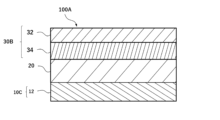
- FIG. 1 is a schematic cross-sectional view of a lithium secondary battery according to an embodiment of the present invention
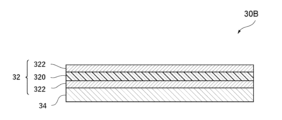
- FIG. 1 is a schematic cross-sectional view of a positive electrode according to an embodiment of the present invention
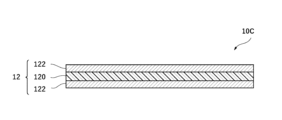
- 1 is a schematic cross-sectional view of a negative electrode according to an embodiment of the present invention
- FIG. 2 is a schematic cross-sectional view of another example of a lithium secondary battery according to an embodiment of the present invention.
- FIG. 2 is a schematic cross-sectional view of another example of a negative electrode according to an embodiment of the present invention.
- the present embodiment an embodiment of the present invention (hereinafter referred to as "the present embodiment") will be described in detail with reference to the drawings as necessary, but the present invention is not limited to this, and various modifications are possible without departing from the gist of the invention.
- the same elements are given the same reference numerals, and duplicated explanations will be omitted.
- positional relationships such as up, down, left, and right will be based on the positional relationships shown in the drawings.
- the dimensional ratios of the drawings are not limited to those shown in the drawings.
- Lithium Secondary Battery The type of the lithium secondary battery of the present embodiment is not particularly limited as long as it is charged and discharged by an oxidation-reduction reaction of lithium, and examples of the battery include an anode-free type lithium secondary battery, a lithium ion battery, a lithium metal battery, a lithium sulfur battery, a lithium oxygen battery, and a lithium air battery.
- the shape of the battery of the lithium secondary battery of this embodiment is not particularly limited, and may be, for example, a sheet type, a laminated sheet type, a thin shape, a cylindrical shape with a bottom, a rectangular shape with a bottom, etc. From the viewpoint of more effectively and reliably achieving the effects of this embodiment, a sheet type, a laminated sheet type, or a thin shape is preferable.
- anode-free lithium secondary battery hereinafter also simply referred to as an “anode-free battery” or “AFB"
- AFB anode-free battery
- FIG. 1 is a diagram showing an example of a cross-sectional structure of an anode-free type lithium secondary battery according to one embodiment of the present invention.
- the anode-free type lithium secondary battery 100A includes a positive electrode 30B having a positive electrode current collector 32 and a positive electrode active material layer 34, a negative electrode 10C having a negative electrode current collector 12, an electrolyte, and a separator 20, in which the positive electrode current collector 32 and/or the negative electrode current collector 12 has a current collector film including a resin layer containing polyethylene terephthalate and metal layers provided on both sides of the resin layer, and the positive electrode active material layer 34 is a current collector film having a metal layer represented by the general formula: Li z Ni x Co y M 1-x-y O 2 + ⁇ (wherein 0.5 ⁇ x ⁇ 1.0, 0 ⁇ y ⁇ 0.35, 0.9 ⁇ z ⁇ 1.3, -0.2 ⁇ 0.15, and M is one or more elements selected from the group consisting of Mn, Al, V, Mg, Mo, Nb, Ti, Zr, Fe, Cu, Cr, Zn, F, and B), and the electrolyte contains a
- the positive electrode active material layer 34 may be formed on at least one surface of the positive electrode collector 32 to form the positive electrode 30B, or, although not shown, the positive electrode active material layer 34 may be formed on both surfaces of the positive electrode collector 32 to form the positive electrode 30.
- the positive electrode of this embodiment, including the positive electrode 30B, is referred to as the positive electrode 30.
- the negative electrode of this embodiment which does not have a negative electrode active material layer 14 and includes a negative electrode 10C consisting of only a negative electrode current collector 12, is referred to as a negative electrode 10.
- the positive electrode collector 32 includes a resin layer 320 and a metal layer 322 provided on both sides of the resin layer 320, but the positive electrode collector 32 may include the metal layer 322 without the resin layer 320.
- the negative electrode collector 12 includes a resin layer 120 and a metal layer 122 provided on both sides of the resin layer 120, but the negative electrode collector 12 may include the metal layer 122 without the resin layer 120.
- at least one of the positive electrode collector 32 and the negative electrode collector 12 includes a collector film (hereinafter simply referred to as a "collector film”) including a resin layer and a metal layer provided on both sides of the resin layer.
- the resin layer may melt in the event of abnormal heat generation due to overcharging or high temperature conditions, and may function to cut off the short circuit current inside the battery. This tends to suppress a sudden increase in temperature inside the battery, suppress battery ignition, and contribute to high safety.
- the positive electrode collector and/or the negative electrode collector have a collector film
- the specific gravity is smaller than when they have only a metal layer, so the energy density per unit weight tends to be improved.
- lithium secondary batteries current collector films are often used, taking into consideration the above-mentioned advantages.
- Polyethylene terephthalate (PET) which has excellent mechanical properties and workability, is often used as the material for the resin layer.
- Chain carbonates and/or chain ethers are often used as the electrolyte to improve the performance (energy density, cycle characteristics, capacity retention rate, etc.) of lithium secondary batteries.
- the inventors After extensive research, the inventors have found that by including vinylene carbonate and lithium difluorophosphate, the electrolyte components chain carbonate and/or chain ether can be prevented from chemically reacting with PET, even when a charged lithium secondary battery is stored at high temperatures, and the high performance of the lithium secondary battery can be maintained.
- the reasons for this are presumed to be as follows, but are not limited to these.
- the positive electrode active material is a compound represented by the general formula: Li z Ni x Co y M 1-x-y O 2 + ⁇ (wherein 0.5 ⁇ x ⁇ 1.0, 0 ⁇ y ⁇ 0.35, 0.9 ⁇ z ⁇ 1.3, ⁇ 0.2 ⁇ 0.15, M is one or more elements selected from the group consisting of Mn, Al, V, Mg, Mo, Nb, Ti, Zr, Fe, Cu, Cr, Zn, F, and B), it is speculated that the above-mentioned redox shuttle reaction becomes more prominent.
- the above-mentioned redox shuttle reaction changes the composition of the electrolyte components and reduces the mass of the electrolyte components, which is presumably degrading the performance of the lithium secondary battery, such as the remaining capacity rate.
- the above-mentioned redox shuttle reaction is presumed to occur not only in dimethyl carbonate, but also in chain carbonates such as ethyl methyl carbonate and ethylene carbonate, and chain ethers such as dimethoxyethane, diethoxyethane, dimethoxypropane, dimethoxybutane, and diethylene glycol dimethyl ether.
- the lithium secondary battery of this embodiment can achieve both high safety and excellent performance stability at high temperatures.
- the factors behind this are not limited to those mentioned above.
- the positive electrode 30 of the present embodiment includes a positive electrode current collector 32 and a positive electrode active material layer 34.
- the average thickness of the positive electrode 30 of the anode-free battery is not particularly limited, but is, for example, 20 ⁇ m to 100 ⁇ m, 30 ⁇ m to 80 ⁇ m, or 40 ⁇ m to 70 ⁇ m. However, the average thickness of the positive electrode 30 can be adjusted appropriately depending on the desired battery capacity.
- the positive electrode current collector 32 of the present embodiment may have a current collector film including a resin layer 320 containing polyethylene terephthalate and a metal layer 322 provided on both sides of the resin layer 320, or may have the metal layer 322 without the resin layer 320.
- the metal layer 322 is formed by attaching the metal layer 322 to the surfaces on both sides of the resin layer 320 by vapor deposition, sputtering, electrolytic plating, or with an adhesive.
- the resin layer 320 of the positive electrode current collector 32 of this embodiment is an insulator and prevents the metal layers 322 provided on both sides of the resin layer 320 from being electrically connected to each other.
- the resin constituting the resin layer 320 is not particularly limited, and may be, for example, a sheet-shaped (film-shaped) or fibrous resin.
- the resin may include polyethylene terephthalate (PET) and may further include other resins.
- PET polyethylene terephthalate
- the other resins include polyolefin resins such as polyethylene and polypropylene, and thermoplastic resins such as polystyrene, polyvinyl chloride, or polyamide.
- the other resins may be used alone or in combination of two or more.
- the resin layer 320 may contain other additives as appropriate depending on the desired physical properties.
- additives include, but are not limited to, colorants, flame retardants, surfactants, etc.
- the resin content is not particularly limited, but may be, for example, 60% by mass or more and 100% by mass or less, 80% by mass or more and 100% by mass or less, 90% by mass or more and 100% by mass or less, 95% by mass or more and 100% by mass or less, or 100% by mass, relative to the total amount of the resin layer 320.
- the amount of PET contained is not particularly limited, but may be, for example, 60% by mass or more and 100% by mass or less, 80% by mass or more and 100% by mass or less, 90% by mass or more and 100% by mass or less, 95% by mass or more and 100% by mass or less, or 100% by mass, relative to the total amount of the resin layer 320.
- the amount of PET is not particularly limited, but may be, for example, 80% by mass or more and 100% by mass or less, 85% by mass or more and 100% by mass or less, 90% by mass or more and 100% by mass or less, 95% by mass or more and 100% by mass or less, 98% by mass or more and 100% by mass or less, or 100% by mass, relative to the total amount of resin.
- the thickness of the resin layer 320 is not particularly limited, but is, for example, 2 ⁇ m or more and 15 ⁇ m or less, 3 ⁇ m or more and 12 ⁇ m or less, or 4 ⁇ m or more and 10 ⁇ m or less.
- the metal layer 322 of the positive electrode current collector 32 of this embodiment is in physical and/or electrical contact with the positive electrode active material layer 34 and functions to give and receive electrons to and from the positive electrode active material layer 34.
- the metal layer 322 is made of a conductor such as a metal that does not react with lithium in a battery.
- the metal constituting the metal layer 322 is not particularly limited, but is at least one selected from the group consisting of aluminum, titanium, stainless steel, nickel, and alloys thereof. Among these, aluminum or an aluminum alloy is preferable, and aluminum is particularly preferable.
- the metal may be used alone or in combination of two or more.
- the term "metal that does not react with lithium” means a metal that does not react with lithium ions or lithium metal to form an alloy under the operating conditions of a lithium secondary battery.
- the thickness of the metal layer 322 is not particularly limited, but is, for example, 0.1 ⁇ m to 4.0 ⁇ m, 0.2 ⁇ m to 3.0 ⁇ m, 0.3 ⁇ m to 2.5 ⁇ m, or 0.4 ⁇ m to 2.0 ⁇ m.
- the thickness of the metal layer 322 is not particularly limited, but is, for example, 4.0 ⁇ m or more and 20.0 ⁇ m or less, 6.0 ⁇ m or more and 17.5 ⁇ m or less, or 8.0 ⁇ m or more and 15.0 ⁇ m or less.
- the positive electrode active material of the present embodiment is not particularly limited, but is, for example, contained in a positive electrode active material composition including a binder, a conductive assistant, a sacrificial positive electrode agent, and other additives.
- the positive electrode active material composition is applied to at least one surface or both surfaces of the positive electrode current collector 32, and press-molded to form a positive electrode active material layer 34 on at least one surface or both surfaces of the positive electrode current collector 32.
- the method of disposing the positive electrode active material layer 34 on the positive electrode current collector 32 is not limited to press molding, and examples of the method include a method in which a thermosetting compound is added to the positive electrode active material composition and then heated to harden it, a method in which a photocurable compound is added to the positive electrode active material composition and then irradiated with light to harden it, and a method in which the positive electrode active material composition is a two-component hardening composition and then hardened by mixing the two components, etc.
- the positive electrode active material layer 34 of this embodiment contains one or more compounds represented by the general formula: LizNixCoyM1 -x- yO2 + ⁇ (wherein 0.5 ⁇ x ⁇ 1.0, 0 ⁇ y ⁇ 0.35, 0.9 ⁇ z ⁇ 1.3, ⁇ 0.2 ⁇ 0.15, and M is one or more elements selected from the group consisting of Mn, Al, V, Mg, Mo, Nb, Ti, Zr, Fe, Cu, Cr, Zn, F, and B).
- the positive electrode active material layer 34 contains one or more compounds represented by the general formula: Li z Ni x Co y M 1-x-y O 2 + ⁇ (wherein 0.7 ⁇ x ⁇ 1.0, 0 ⁇ y ⁇ 0.35, 0.9 ⁇ z ⁇ 1.3, ⁇ 0.2 ⁇ 0.15, M is one or more elements selected from the group consisting of Mn, Al, V, Mg, Mo, Nb, Ti, Zr, Fe, Cu, Cr, Zn, F, and B.).
- M is one or more elements selected from the group consisting of Mn, Al, V, Mg, Mo, Nb, Ti, Zr, Fe, Cu, Cr, Zn, F, and B.
- the above-mentioned redox shuttle reaction is more likely to occur, but by containing an additive to be described in detail below in the electrolyte, the reaction is suppressed, and there is a tendency for the electrolyte to have excellent performance stability at high temperatures.
- the positive electrode active material may include other positive electrode active materials other than the above-mentioned compounds.
- the positive electrode active material is a material that causes an electrode reaction, i.e., an oxidation reaction and a reduction reaction, at the positive electrode.
- the other positive electrode active material of this embodiment may include a host material of a lithium element (typically, a lithium ion).
- Such other positive electrode active materials include, but are not limited to, metal oxides and metal phosphates.
- the metal oxides include, but are not limited to, cobalt oxide-based compounds, manganese oxide-based compounds, and nickel oxide-based compounds.
- the metal phosphates include, but are not limited to, iron phosphate-based compounds, and cobalt phosphate-based compounds.
- the other positive electrode active materials may be used alone or in combination of two or more.
- the amount of the positive electrode active material relative to the total amount of the positive electrode active material composition is not particularly limited, but may be, for example, 60% by mass or more and 100% by mass or less, 70% by mass or more and 99% by mass or less, 80% by mass or more and 98% by mass or less, 85% by mass or more and 97% by mass or less, or 90% by mass or more and 96% by mass or less.
- the positive electrode active material composition of the present embodiment may contain a binder.
- a binder By containing a binder, the positive electrode active material layer 34 is more easily bound to the positive electrode current collector 32, and flexibility is improved after the positive electrode active material layer 34 is disposed on the positive electrode current collector 32.
- the binder of this embodiment is not particularly limited, but examples thereof include polyvinylidene fluoride; modified polyvinylidene fluoride obtained by introducing functional groups such as hydroxyl groups, amino groups, carbonyl groups, carboxyl groups, phenyl groups, and methyl groups into polyvinylidene fluoride; polytetrafluoroethylene; modified polytetrafluoroethylene obtained by introducing functional groups such as hydroxyl groups, amino groups, carbonyl groups, carboxyl groups, phenyl groups, and methyl groups into polytetrafluoroethylene; block copolymers, random copolymers, and graft copolymers having tetrafluoroethylene as a constituent unit; styrene butadiene rubber; carboxymethyl cellulose; acrylic resins; polyimide resins, and the like.
- the binder may be used alone or in combination of two or more types.
- the amount of binder contained is not particularly limited relative to the total amount of the positive electrode active material composition, but is, for example, 0.5% by mass to 10.0% by mass, 1.0% by mass to 8.0% by mass, or 2.0% by mass to 6.0% by mass.
- the positive electrode active material composition of the present embodiment may contain a conductive assistant.
- the conductive assistant is not particularly limited, but may be, for example, carbon black, single-walled carbon nanotube (SWCNT), multi-walled carbon nanotube (MWCNT), carbon nanofiber (CF), and acetylene black.
- the conductive assistant may be used alone or in combination of two or more kinds.
- the amount of the conductive additive contained is not particularly limited, but is, for example, 0.5% by mass or more and less than 30.0% by mass relative to the total amount of the positive electrode active material composition.
- the positive electrode active material composition of this embodiment may contain a sacrificial cathode agent.
- the sacrificial cathode agent of this embodiment is a lithium-containing compound that undergoes an oxidation reaction in the charge/discharge potential range of the positive electrode active material and does not substantially undergo a reduction reaction.
- the positive electrode contains a sacrificial cathode agent
- when a lithium secondary battery including the positive electrode is initially charged the positive electrode active material and the sacrificial cathode agent release lithium ions and undergo an oxidation reaction, and release electrons to the negative electrode through an external circuit.
- lithium ions derived from the positive electrode active material and the sacrificial cathode agent are deposited on the surface of the negative electrode.
- the lithium metal deposited on the surface of the negative electrode is electrolytically dissolved, and electrons move from the negative electrode to the positive electrode through an external circuit.
- the positive electrode active material receives lithium ions and undergoes a reduction reaction, while the sacrificial cathode agent does not substantially undergo a reduction reaction within the range of the discharge potential of the positive electrode active material, and it is substantially impossible to return to the state before the oxidation reaction occurred.
- the lithium secondary battery when the lithium secondary battery is discharged after the initial charge, the lithium metal derived from the positive electrode active material is electrolytically dissolved from the negative electrode, whereas most of the lithium metal derived from the sacrificial positive electrode agent remains on the negative electrode, and even after the discharge of the battery is completed, some of the lithium metal remains on the negative electrode.
- the remaining lithium metal serves as a scaffold for further lithium metal to deposit on the negative electrode in the charging step following the initial discharge, so that the lithium metal is more likely to deposit uniformly on the negative electrode in the charging step following the initial discharge. As a result, the lithium secondary battery tends to have better cycle characteristics.
- the sacrificial positive electrode agent examples include, but are not limited to, lithium oxides such as Li 2 O 2 ; lithium nitrides such as Li 3 N; lithium sulfide solid solutions such as Li 2 S-P 2 S 5 , Li 2 S-LiCl, Li 2 S-LiBr, and Li 2 S-LiI; iron-based lithium oxides such as Li 1+x (Ti 1-y Fe y ) 1-x O 2 (0 ⁇ x ⁇ 0.25, 0.4 ⁇ y ⁇ 0.9), Li 2-x Ti 1-z Fe z O 3-y (0 ⁇ x ⁇ 2, 0 ⁇ y ⁇ 1, 0.05 ⁇ z ⁇ 0.95), and Li 5 FeO 4.
- the sacrificial positive electrode agent may be used alone or in combination of two or more types.
- the amount of the sacrificial positive electrode agent relative to the total amount of the positive electrode active material composition is not particularly limited, but may be, for example, 1.0% by mass or more and 30.0% by mass or less, 2.0% by mass or more and 20.0% by mass or less, or 3.0% by mass or more and 15.0% by mass or less.
- the total amount of the positive electrode active material and the sacrificial positive electrode agent is not particularly limited relative to the total amount of the positive electrode active material composition, but may be, for example, 60% by mass or more and 100% by mass or less, 70% by mass or more and 99% by mass or less, 80% by mass or more and 98% by mass or less, 85% by mass or more and 97% by mass or less, or 90% by mass or more and 96% by mass or less.
- the positive electrode 30 of the present embodiment is produced, for example, as follows, but is not particularly limited.
- a metal layer 322 is formed on both surfaces of the resin layer 320 by deposition, sputtering, electrolytic plating, or bonding with an adhesive to form a current collector film, thereby obtaining the positive electrode current collector 32 of the present embodiment.
- the above-mentioned positive electrode active material, binder, sacrificial positive electrode agent, and other additives are mixed to obtain a positive electrode active material composition.
- the positive electrode active material or the obtained positive electrode active material composition is applied to both sides or one side of the positive electrode current collector 32, and press-molded to form a positive electrode active material layer 34 on both sides or one side of the positive electrode current collector 32, thereby obtaining a molded body.
- the obtained molded body is punched out to a predetermined size by punching processing, thereby obtaining the positive electrode 30 of the present embodiment.
- the negative electrode 10 of this embodiment has a negative electrode current collector 12.
- the negative electrode current collector 12 of the present embodiment may have a current collector film including a resin layer 120 containing polyethylene terephthalate and a metal layer 122 provided on both sides of the resin layer 120, or may have the metal layer 122 without the resin layer 120.
- the metal layer 122 is formed by attaching the metal layer 122 to the surfaces on both sides of the resin layer 120 by vapor deposition, sputtering, electrolytic plating, or with an adhesive.
- the resin layer 120 of the negative electrode current collector 12 of this embodiment is an insulator, and prevents the metal layers 122 provided on both sides of the resin layer 120 from being electrically connected to each other.
- the resin constituting the resin layer 120 is not particularly limited, and may be, for example, a sheet-shaped (film-shaped) or fibrous resin.
- the resin may include polyethylene terephthalate (PET) and may further include other resins. Examples of the other resins include those similar to those in the resin layer 320 of the positive electrode current collector 32.
- the resin layer 120 may also include other additives as appropriate depending on the desired physical properties, and examples of the other additives include those similar to those in the resin layer 320 of the positive electrode current collector 32.
- the resin content and PET content may be the same as the resin content and PET content in the positive electrode current collector 32.
- the thickness of the resin layer 120 may be the same as the thickness of the resin layer 320 in the positive electrode collector 32.
- the metal constituting the metal layer 122 of the negative electrode current collector 12 of this embodiment is not particularly limited as long as it can be used as a current collector, and examples thereof include at least one selected from the group consisting of copper, nickel, titanium, iron, other metals that do not react with lithium, alloys thereof, and stainless steel (SUS), and preferably at least one selected from the group consisting of copper, nickel, alloys thereof, and SUS.
- the thickness of the metal layer 122 may be similar to the thickness of the metal layer 322 in the positive electrode current collector 32 having a current collector film.
- the thickness of the metal layer 122 may be similar to the thickness of the metal layer 322 in the positive electrode current collector 32 which does not have a resin layer 320 but has a metal layer 322.
- the negative electrode active material is a material that causes an electrode reaction, i.e., an oxidation reaction and a reduction reaction, at the negative electrode.
- the negative electrode active material of this embodiment includes a host material of lithium metal and lithium element (lithium ion or lithium metal).
- the host material of lithium element means a material provided to hold lithium ion or lithium metal at the negative electrode. Examples of such a holding mechanism include intercalation, alloying, and metal cluster occlusion, and typically, intercalation.
- the negative electrode active material is not particularly limited, but examples thereof include lithium metal and alloys containing lithium metal, carbon-based materials, metal oxides, metals that alloy with lithium and alloys containing said metals, etc.
- the carbon-based materials are not particularly limited, but examples thereof include graphene, graphite, hard carbon, carbon nanotubes, etc.
- the metal oxides are not particularly limited, but examples thereof include titanium oxide-based compounds and cobalt oxide-based compounds, etc.
- the metals that alloy with lithium are not particularly limited, but examples thereof include silicon, germanium, tin, lead, aluminum, and gallium.
- the anode-free lithium secondary battery of this embodiment has a negative electrode 10 made of a negative electrode current collector 12 that does not have a negative electrode active material, and uses the electrolyte solution described below.
- an anode-free battery before the initial charge of the battery, the negative electrode 10 does not have any negative electrode active material and consists only of the negative electrode current collector 12. Therefore, after the initial charge, lithium metal is deposited on the negative electrode 10, and charging and discharging are performed by electrolytic dissolution of the deposited lithium metal. Therefore, an anode-free battery has the advantage that the volume occupied by the negative electrode active material and the mass of the negative electrode active material are reduced, and the volume and mass of the entire battery are reduced, so that the energy density is, in principle, high.
- the negative electrode “has no negative electrode active material” means that the negative electrode does not have or substantially does not have a negative electrode active material.
- the negative electrode substantially does not have a negative electrode active material means that the content of the negative electrode active material in the negative electrode is 10.0 mass% or less with respect to the entire negative electrode.
- the content of the negative electrode active material in the negative electrode 10 of the anode-free battery is preferably 5.0 mass% or less, 1.0 mass% or less, 0.1 mass% or less, or 0.0 mass% with respect to the entire negative electrode 10.
- the battery when the battery is "before the initial charge” it means the state from when the battery is assembled until the first charge. Also, when the battery is “at the end of discharge” it means the state in which the battery voltage is preferably 1.0 V or more and 3.8 V or less, and more preferably 1.0 V or more and 3.0 V or less.
- the lithium metal content when the battery voltage is 1.0 V or more and 3.5 V or less, the lithium metal content may be 10.0 mass % or less (preferably 5.0 mass % or less, 1.0 mass % or less) relative to the entire negative electrode 10; when the battery voltage is 1.0 V or more and 3.0 V or less, the lithium metal content may be 10.0 mass % or less (preferably 5.0 mass % or less, 1.0 mass % or less) relative to the entire negative electrode 10; or when the battery voltage is 1.0 V or more and 2.5 V or less, the lithium metal content may be 10.0 mass % or less (preferably 5.0 mass % or less, 1.0 mass % or less) relative to the entire negative electrode 10.
- the ratio M3.0/ M4.2 of the mass M3.0 of lithium metal deposited on the negative electrode 10 when the battery voltage is 3.0 V to the mass M4.2 of lithium metal deposited on the negative electrode 10 when the battery voltage is 4.2 V is preferably 40.0 % or less, 38.0% or less, or 35.0% or less.
- the ratio M3.0 / M4.2 may be 1.0% or more, 2.0% or more, 3.0% or more , or 4.0% or more.
- the average thickness of the negative electrode 10 of the anode-free battery is not particularly limited, but is, for example, 3.0 ⁇ m or more and 30.0 ⁇ m or less. From the viewpoint of reducing the volume occupied by the negative electrode 10 in the anode-free battery and improving the energy density, the average thickness of the negative electrode 10 is preferably 4.0 ⁇ m or more and 20.0 ⁇ m or less, 5.0 ⁇ m or more and 18.0 ⁇ m or less, or 6.0 ⁇ m or more and 15 ⁇ m or less.
- the negative electrode 10 of the present embodiment is manufactured, for example, as follows, without any particular limitation.
- a metal layer 122 is formed on both surfaces of the resin layer 120 by vapor deposition, sputtering, electrolytic plating, or bonding with an adhesive to form a current collector film, thereby obtaining the negative electrode current collector 12 of the present embodiment. Since an anode-free type lithium secondary battery does not have a negative electrode active material, the above-mentioned negative electrode current collector 12 can be used as the negative electrode 10 of the present embodiment.
- the separator 20 of the present embodiment is not particularly limited as long as it has the function of physically and/or electrically isolating the positive electrode 30 and the negative electrode 10 and the function of ensuring the ion conductivity of lithium ions.
- Examples of such a separator include insulating porous members, polymer electrolytes, gel electrolytes, and inorganic solid electrolytes, and typically includes at least one selected from the group consisting of insulating porous members, polymer electrolytes, and gel electrolytes.
- one type of member may be used alone, or two or more types of members may be used in combination.
- an insulating porous material preferably, a polymer electrolyte, or a gel electrolyte is used alone or in combination of two or more. If an insulating porous material is used alone as the separator 20, the lithium secondary battery must further include an electrolyte.
- the polymer electrolyte is not particularly limited, but examples thereof include solid polymer electrolytes mainly containing a polymer and an electrolyte, and semi-solid polymer electrolytes mainly containing a polymer, an electrolyte, and a plasticizer.
- the gel electrolyte is not particularly limited, but may be, for example, one that mainly contains a polymer and a liquid electrolyte (i.e., a solvent and an electrolyte).
- Polymers that may be included in the polymer electrolyte and gel electrolyte include, but are not limited to, polymers containing functional groups containing oxygen atoms such as ethers and esters, halogen groups, and polar groups such as cyano groups.
- resins having ethylene oxide units in the main chain and/or side chains such as polyethylene oxide (PEO), resins having propylene oxide units in the main chain and/or side chains such as polypropylene oxide (PPO), acrylic resins, vinyl resins, ester resins, nylon resins, polyvinylidene fluoride (PVdF), polyacrylonitrile (PAN), polysiloxane, polyphosphazene, polymethylmethacrylate, polyamide, polyimide, aramid, polylactic acid, polyurethane, polyacetal, polysulfone, polyethylene carbonate, polypropylene carbonate, and polytetrafluoroethylene.
- the above resins may be used alone or in combination of two or more.
- the electrolyte contained in the polymer electrolyte and the gel electrolyte includes salts of Li, Na, K, Ca, and Mg, etc.
- the polymer electrolyte and the gel electrolyte include a lithium salt.
- the lithium salt is not particularly limited, but examples thereof include LiI, LiCl, LiBr , LiF, LiBF4 , LiPF6, LiAsF6 , LiSO3CF3 , LiN ( SO2F ) 2 , LiN ( SO2CF3 ) 2 , LiN( SO2CF3CF3)2, LiB(O2C2H4)2, LiB(C2O4)2 , LiB ( O2C2H4 ) F2 , LiB ( OCOCF3 ) 4 , LiNO3 , and Li2SO4 , and preferably LiPF6 , LiN( SO2F ) 2 , LiN( SO2
- the salt is at least one selected from the group consisting of LiN(SO 2 CF 3 CF 3 ) 2 , and LiN(SO 2 CF 3 CF 3 ) 2.
- the above-mentioned salts or lithium salts may be used alone or in combination of two or more.
- the compounding ratio of the polymer and the lithium salt in the polymer electrolyte and the gel electrolyte may be determined by the ratio of the polar group of the polymer to the lithium atoms of the lithium salt.
- the compounding ratio of the polymer and the lithium salt can be adjusted so that the ratio ([Li]/[O]) is, for example, 0.02 or more and 0.20 or less, 0.03 or more and 0.15 or less, or 0.04 or more and 0.12 or less.
- the solvent contained in the gel electrolyte is not particularly limited, but for example, the solvents that can be contained in the electrolyte solution described later can be used alone or in combination of two or more. Examples of preferred solvents are the same as those in the electrolyte solution described later.
- the plasticizer contained in the semi-solid polymer electrolyte is not particularly limited, but may include, for example, components similar to the solvent that may be contained in the gel electrolyte, and various oligomers.
- the separator 20 includes an insulating porous material
- the pores of the material are filled with a substance having ion conductivity, and the material exhibits ion conductivity. Therefore, in this embodiment, the material is filled with, for example, the electrolyte solution of this embodiment, or a gel electrolyte containing the electrolyte solution of this embodiment.
- the material constituting the insulating porous member is not particularly limited, and examples thereof include insulating polymeric materials, specifically, polyethylene (PE) and polypropylene (PP).
- the separator 20 may be a porous polyethylene (PE) film, a porous polypropylene (PP) film, or a laminated structure thereof.
- the separator 20 may be coated with a separator coating layer.
- the separator coating layer may cover both sides of the separator 20, or only one side. From the viewpoint of improving the cycle characteristics of the lithium secondary battery in this embodiment, it is preferable to coat both sides of the separator 20.
- the separator coating layer in this embodiment is a uniformly continuous film-like coating layer, for example, a film-like coating layer that is uniformly continuous over an area of 50% or more of the separator 20 surface.
- the separator coating layer is not particularly limited, but is preferably one that contains a binder such as polyvinylidene fluoride (PVdF), a mixture of styrene butadiene rubber and carboxymethyl cellulose (SBR-CMC), and polyacrylic acid (PAA).
- the separator coating layer may contain inorganic particles such as silica, alumina, titania, zirconia, and magnesium hydroxide added to the above binder.
- the average thickness of the separator 20 including the separator coating layer is not particularly limited, but is, for example, 3.0 ⁇ m or more and 40.0 ⁇ m or less.
- the average thickness of the separator 20 is preferably 5.0 ⁇ m or more and 30.0 ⁇ m or less, 7.0 ⁇ m or more and 10.0 ⁇ m or less, or 10.0 ⁇ m or more and 20.0 ⁇ m or less.
- Electrolyte The electrolyte of the present embodiment contains a chain carbonate and/or a chain ether, vinylene carbonate, and lithium difluorophosphate.
- the electrolyte may be impregnated into the separator 20, or may be enclosed together with the laminate of the negative electrode 10, the separator 20, and the positive electrode 30.
- the electrolyte of the present embodiment may be one or more of the electrolytes that may be contained in the polymer electrolyte and the gel electrolyte, particularly the lithium salts described above.
- a preferred lithium salt is at least one selected from the group consisting of hexafluorophosphate (LiPF 6 ) and lithium bis(fluorosulfonyl)imide (LiN(SO 2 F) 2 ). Lithium secondary batteries using electrolytic solutions containing these electrolytes tend to have excellent battery performance, such as cycle characteristics.
- the concentration of the electrolyte in the electrolyte solution of this embodiment is not particularly limited, but may be, for example, 0.1 M or more and 6.0 M or less, 0.2 M or more and 5.0 M or less, 0.3 M or more and 4.0 M or less, 0.4 M or more and 3.0 M or less, or 0.5 M or more and 2.0 M or less.
- the solvent of the electrolyte solution of this embodiment includes a chain carbonate and/or a chain ether.
- the chain carbonate is a carbonate that does not have a cyclic structure such as an aromatic ring, an alicyclic ring, a monocyclic ring, or a heterocyclic ring.
- the chain carbonate is not particularly limited, but examples thereof include dimethyl carbonate, diethyl carbonate, ethyl methyl carbonate, ethylene carbonate, propylene carbonate, chloroethylene carbonate, and compounds in which some or all of the hydrogen atoms of these carbonates are replaced with fluorine. Among these, dimethyl carbonate and ethyl methyl carbonate are preferred.
- the chain ether is an ether that does not have a cyclic structure such as an aromatic ring, an alicyclic ring, a monocyclic ring, or a heterocyclic ring.
- the chain ether is not particularly limited, but examples thereof include 1,1,2,2-tetrafluoroethyl-2,2,3,3-tetrafluoropropyl ether, 1,1,2,2-tetrafluoroethyl-2,2,2-trifluoroethyl ether, 1H,1H,5H-octafluoropentyl-1,1,2,2-tetrafluoroethyl ether, triethylene glycol dimethyl ether, tetraethylene glycol dimethyl ether, dimethoxyethane, diethoxyethane, dimethoxypropane, dimethoxybutane, and diethylene glycol dimethyl ether.
- the solvent of the electrolyte solution of this embodiment may contain other solvents in addition to the chain carbonates and chain ethers described above.
- the other solvents are not particularly limited, but examples include non-aqueous solvents having fluorine atoms (hereinafter referred to as "fluorinated solvents") and non-aqueous solvents not having fluorine atoms (hereinafter referred to as “non-fluorinated solvents").
- fluorinated solvents include, but are not limited to, derivatives of 1,1,2,2-tetrafluoroethyl-2,2,3,3-tetrafluoropropyl ether, derivatives of 1,1,2,2-tetrafluoroethyl-2,2,2-trifluoroethyl ether, and derivatives of 1H,1H,5H-octafluoropentyl-1,1,2,2-tetrafluoroethyl ether.
- non-fluorine-containing solvents include, but are not limited to, acetonitrile, methyl acetate, ethyl acetate, propyl acetate, methyl propionate, ethyl propionate, trimethyl phosphate, triethyl phosphate, and 12-crown-4.
- the content of the chain carbonate is preferably 40% by volume or more and 100% by volume or less, 50% by volume or more and 100% by volume or less, 60% by volume or more and 100% by volume or less, or 70% by volume or more and 100% by volume or less, relative to the total amount of the electrolyte. It is also preferably 100% by volume.
- the content of the chain ether is preferably 40% by volume or more and 100% by volume or less, 50% by volume or more and 100% by volume or less, 60% by volume or more and 100% by volume or less, or 70% by volume or more and 100% by volume or less, relative to the total volume of the electrolyte. It is also preferably 100% by volume.
- the total amount of the chain carbonate and the chain ether is preferably 40% by volume or more and 100% by volume or less, 50% by volume or more and 100% by volume or less, 60% by volume or more and 100% by volume or less, or 70% by volume or more and 100% by volume or less, relative to the total amount of the electrolyte. It is also preferably 100% by volume.
- the fluorinated solvent and/or non-fluorinated solvent as the other solvents may be used alone or in any combination of two or more in any ratio.
- the content of the fluorinated solvent and non-fluorinated solvent is not particularly limited, and the ratio of the fluorinated solvent to the total solvent may be 0% by volume or more and 60% by volume or less, and the ratio of the non-fluorinated solvent to the total solvent may be 0% by volume or more and 60% by volume or less.
- the electrolyte solution of the present embodiment contains vinylene carbonate and lithium difluorophosphate.
- the content of vinylene carbonate is preferably 0.1% by mass or more and 5.0% by mass or less, 0.2% by mass or more and 4.5% by mass or less, 0.3% by mass or more and 4.0% by mass or less, 0.4% by mass or more and 3.5% by mass or less, 0.5% by mass or more and 3.0% by mass or less, and 0.6% by mass or more and 2.5% by mass or less, relative to the total amount of the solvent.
- the content of lithium difluorophosphate is preferably 0.1% by mass or more and 5.0% by mass or less, 0.2% by mass or more and 4.5% by mass or less, 0.3% by mass or more and 4.0% by mass or less, 0.4% by mass or more and 3.5% by mass or less, 0.5% by mass or more and 3.0% by mass or less, or 0.6% by mass or more and 2.5% by mass or less, relative to the total amount of the solvent.
- lithium bis(fluorosulfonyl)imide also suppresses the occurrence of the redox shuttle reaction described above, and tends to maintain the high performance of the lithium secondary battery, such as the remaining capacity rate, when the charged lithium secondary battery is stored at high temperatures.
- the content of lithium bis(fluorosulfonyl)imide is preferably 0.1% by mass or more and 12.0% by mass or less, 0.5% by mass or more and 10.0% by mass or less, or 1.0% by mass or more and 6.0% by mass or less, based on the total amount of the solvent.
- a usage mode of a lithium secondary battery including an anode-free battery, will be described.
- a positive terminal and a negative terminal for connecting the battery to an external circuit are respectively joined to the positive electrode collector 32 and the negative electrode collector 12.
- the lithium secondary battery is charged and discharged by connecting the negative terminal to one end of an external circuit and the positive terminal to the other end of the external circuit.
- the lithium secondary battery is charged by applying a voltage to the positive and negative terminals such that a current flows from the negative terminal (negative electrode) through the external circuit to the positive terminal (positive electrode).
- the lithium secondary battery is discharged by connecting the positive and negative terminals via a desired external circuit.
- anode-free battery it is presumed that a solid electrolyte interface layer (SEI layer) is formed on the surface of the negative electrode 10 (the interface between the negative electrode 10 and the separator 20) by initial charging, but the battery does not have to have an SEI layer.
- Charging an anode-free battery causes lithium metal precipitation at the interface between the negative electrode 10 and the SEI layer, the interface between the negative electrode 10 and the separator 20, and/or the interface between the SEI layer and the separator 20.
- the lithium metal precipitation formed on the negative electrode 10 is electrolytically dissolved by discharging. If an SEI layer is formed in the battery, the lithium metal precipitation formed at at least one of the interface between the negative electrode 10 and the SEI layer and/or the interface between the SEI layer and the separator 20 is electrolytically dissolved.
- the manufacturing method of the anode-free type battery is not particularly limited as long as it is a method capable of manufacturing a lithium secondary battery having the above-mentioned configuration, and examples thereof include the following methods.
- the positive electrode 30 of this embodiment is obtained by the positive electrode manufacturing method described above.
- the negative electrode 10 of this embodiment is obtained by the negative electrode manufacturing method described above. Note that the negative electrode 10 of the anode-free battery does not have a negative electrode active material.
- the positive electrode collector 32 and the negative electrode collector 12 may each have a collector film including a resin layer containing polyethylene terephthalate and a metal layer provided on both sides of the resin layer, or only the positive electrode collector 32 may have the collector film and the negative electrode collector 12 may have the metal layer 122 without the resin layer 120, or only the negative electrode collector 12 may have the collector film and the positive electrode collector 32 may have the metal layer 322 without the resin layer 320.
- the separator 20 having the above-mentioned configuration is prepared.
- the separator 20 may be manufactured by a conventional method, or a commercially available product may be used.
- a functional buffer layer that is fibrous or porous and that reduces the volume expansion and contraction caused by the dissolution and precipitation of lithium metal may be provided between the separator 20 and the negative electrode 10.
- the functional buffer layer preferably has ionic conductivity or electrical conductivity, but does not have to have this property.
- the positive electrode 30, separator 20, and negative electrode 10 obtained as described above are stacked in this order so that the positive electrode 30 and the separator 20 face each other to obtain a laminate.
- the resulting laminate is enclosed in a sealed container together with an electrolyte to obtain an anode-free battery.
- the sealed container is not particularly limited, but examples thereof include a laminate film.
- the positive electrode 30 and the negative electrode 10 may be stacked alternately in multiple layers with a separator 20 sandwiched between them, which tends to improve battery performance such as energy density.
- a lithium ion battery 100B which is an example of the lithium secondary battery of this embodiment, includes, for example, a positive electrode 30 having a positive electrode current collector 32 and a positive electrode active material layer 34, a negative electrode 10 having a negative electrode current collector 12 and a negative electrode active material layer 14, an electrolyte, and a separator 20, as shown in FIG.
- the positive electrode current collector 32 and/or the negative electrode current collector 12 has a collector film including a resin layer containing polyethylene terephthalate and metal layers provided on both sides of the resin layer
- the positive electrode active material layer 34 is a compound represented by the general formula: Li z Ni x Co y M 1-x-y O 2 + ⁇ (wherein 0.5 ⁇ x ⁇ 1.0, 0 ⁇ y ⁇ 0.35, 0.9 ⁇ z ⁇ 1.3, ⁇ 0.2 ⁇ 0.15, and M is one or more elements selected from the group consisting of Mn, Al, V, Mg, Mo, Nb, Ti, Zr, Fe, Cu, Cr, Zn, F, and B), and the electrolyte solution contains a chain carbonate and/or a chain ether, vinylene carbonate, and lithium difluorophosphate.
- a lithium ion battery (hereinafter also referred to as "LIB") has a host material of lithium element (lithium ion or lithium metal) in its negative electrode, and when the battery is charged, this material is filled with lithium element, and the battery is discharged when the host material releases the lithium element.
- LIBs differ from anode-free batteries in that the negative electrode has a host material of lithium element.
- the materials, configurations and preferred aspects of the positive electrode 30, electrolyte, separator 20 and negative electrode 10 are the same as those described above, except for the points described below.
- the negative electrode 10 of the LIB is not particularly limited as long as it has a host material of lithium element (lithium ion or lithium metal) as the negative electrode active material, and the above-mentioned materials, configurations, etc. can be used.
- the negative electrode active material layer 14 may be formed on at least one surface of the negative electrode current collector 12 to form the negative electrode 10B, or, although not shown, the negative electrode active material layer 14 may be formed on both surfaces of the negative electrode current collector 12 to form the negative electrode 10.
- the average thickness of the negative electrode 10 of the LIB is not particularly limited, but is, for example, 5.0 ⁇ m or more and 100.0 ⁇ m or less. From the viewpoint of improving the capacity and/or energy density of the battery, it is preferably 8.0 ⁇ m or more and 50.0 ⁇ m or less, 10.0 ⁇ m or more and 40.0 ⁇ m or less, or 10.0 ⁇ m or more and 20.0 ⁇ m or less.
- the LIB may be produced using known materials and known production methods, and may be produced in the same manner as the above-mentioned anode-free battery production method, except that a lithium host material is used for the negative electrode 10.
- the method for producing the negative electrode 10 having the negative electrode active material is not particularly limited, but is, for example, as follows. If necessary, the above-mentioned negative electrode active material is mixed with a binder, a conductive assistant, and other additives, which will be described in detail below, to obtain a negative electrode active material composition. The negative electrode active material or the obtained negative electrode active material composition is applied to both sides or one side of the above-mentioned negative electrode current collector 12, and press molded to form a negative electrode active material layer 14 on both sides or one side of the negative electrode current collector 12, thereby obtaining a molded body. The obtained molded body is punched out to a predetermined size by a punching process, to obtain the negative electrode 10 of this embodiment.
- the amount of the negative electrode active material relative to the total amount of the negative electrode active material composition is not particularly limited, but may be, for example, 60% by mass or more and 100% by mass or less, 70% by mass or more and 99% by mass or less, or 80% by mass or more and 98% by mass or less.
- the binder of the negative electrode active material composition of this embodiment is not particularly limited, but may be, for example, the same as the binder of the positive electrode active material composition.
- the content of the binder in the negative electrode active material composition is not particularly limited, but may be, for example, approximately the same as the content of the binder in the positive electrode active material composition.
- the conductive assistant in the negative electrode active material composition of this embodiment is not particularly limited, but may be, for example, the same as the conductive assistant in the positive electrode active material composition.
- the content of the conductive assistant in the negative electrode active material composition is not particularly limited, but may be, for example, approximately the same as the content of the conductive assistant in the positive electrode active material composition.
- the method of disposing the negative electrode active material layer 14 on the negative electrode current collector 12 is not limited to press molding, and examples of the method include a method in which the negative electrode active material composition contains a thermosetting compound and is heated to harden it, a method in which the negative electrode active material composition contains a photocurable compound and is hardened by irradiating it with light, and a method in which the negative electrode active material composition is a two-component hardening composition and is hardened by mixing the two components, etc.
- Lithium metal battery A lithium metal battery (hereinafter, also referred to as "LMB"), which is an example of a lithium secondary battery of this embodiment, is manufactured using an electrode having lithium metal or a lithium metal alloy on its surface, or lithium metal alone, as the negative electrode.
- LMB lithium metal battery
- the LMB like an anode-free battery, lithium metal is deposited on the surface of the negative electrode, and the deposited lithium is electrolytically dissolved, thereby charging and discharging the LMB.
- LMBs differ from anode-free batteries in that the negative electrode has lithium metal as the negative electrode active material before the battery is initially charged.
- the lithium metal battery of this embodiment includes a positive electrode 30, a negative electrode 10 having lithium metal facing the positive electrode 30, a separator 20 disposed between the positive electrode 30 and the negative electrode 10, and an electrolyte.
- the materials, configurations, and preferred aspects of the positive electrode 30, electrolyte, separator 20, and negative electrode 10 are the same as those described above, except for the points described below.
- the negative electrode 10 of the LMB is not particularly limited as long as it contains lithium metal or a lithium metal alloy as the negative electrode active material, and the above-mentioned materials and configurations can be used. Since the LMB uses a negative electrode 10 having lithium metal or a lithium metal alloy with a large specific capacity and a low redox potential, it generally becomes a battery with a higher energy density than a lithium ion battery. Examples of such a negative electrode 10 include a lithium metal electrode, an electrode in which rolled lithium metal foil is laminated to the surface of a conductive metal foil such as copper to form a clad material, an electrode in which lithium metal is electrochemically deposited on the surface of a metal foil such as copper, and an electrode in which metallic lithium is vacuum-deposited.
- an electrode in which lithium metal foil is laminated to the surface of a conductive metal such as copper, or an electrode in which lithium metal is electrochemically deposited is preferable, and an electrode in which lithium metal foil is laminated to the surface of a conductive metal such as copper is more preferable.
- the negative electrode active material layer 14 may be formed on at least one surface of the negative electrode current collector 12 to form the negative electrode 10B, or, although not shown, the negative electrode active material layer 14 may be formed on both surfaces of the negative electrode current collector 12 to form the negative electrode 10.
- the average thickness of the negative electrode 10 of the LMB is not particularly limited, but is, for example, 5.0 ⁇ m or more and 100.0 ⁇ m or less. From the viewpoint of improving the capacity and/or energy density of the battery, it is preferably 8.0 ⁇ m or more and 50.0 ⁇ m or less, 10.0 ⁇ m or more and 40.0 ⁇ m or less, or 10.0 ⁇ m or more and 20.0 ⁇ m or less.
- the LMB may be produced using known materials and known production methods, and may be produced in the same manner as the anode-free battery described above, except that lithium metal or a lithium metal alloy is used as the negative electrode active material for the negative electrode 10.
- the method for producing the negative electrode 10 having the negative electrode active material is not particularly limited, but is, for example, as follows. If necessary, the above-mentioned negative electrode active material is mixed with a binder, a conductive assistant, and other additives, which will be described in detail below, to obtain a negative electrode active material composition. The negative electrode active material or the obtained negative electrode active material composition is applied to both sides or one side of the above-mentioned negative electrode current collector 12, and press molded to form a negative electrode active material layer 14 on both sides or one side of the negative electrode current collector 12, thereby obtaining a molded body. The obtained molded body is punched out to a predetermined size by a punching process, to obtain the negative electrode 10 of this embodiment.
- the amount of the negative electrode active material relative to the total amount of the negative electrode active material composition is not particularly limited, but may be, for example, 60% by mass or more and 100% by mass or less, 70% by mass or more and 99% by mass or less, or 80% by mass or more and 98% by mass or less.
- the binder of the negative electrode active material composition of this embodiment is not particularly limited, but may be, for example, the same as the binder of the positive electrode active material composition.
- the content of the binder in the negative electrode active material composition is not particularly limited, but may be, for example, approximately the same as the content of the binder in the positive electrode active material composition.
- the conductive assistant in the negative electrode active material composition of this embodiment is not particularly limited, but may be, for example, the same as the conductive assistant in the positive electrode active material composition.
- the content of the conductive assistant in the negative electrode active material composition is not particularly limited, but may be, for example, approximately the same as the content of the conductive assistant in the positive electrode active material composition.
- the method of disposing the negative electrode active material layer 14 on the negative electrode current collector 12 is not limited to press molding, and examples of the method include a method in which the negative electrode active material composition contains a thermosetting compound and is heated to harden it, a method in which the negative electrode active material composition contains a photocurable compound and is hardened by irradiating it with light, and a method in which the negative electrode active material composition is a two-component hardening composition and is hardened by mixing the two components, etc.
- Lithium ion secondary batteries of the examples and comparative examples were fabricated as follows.
- a current collector film was prepared by depositing 1.0 ⁇ m of Cu as the metal layer 122 on both sides of a 6 ⁇ m-thick film-like polyethylene terephthalate (PET) resin layer 120. Then, a negative electrode active material composition was prepared by mixing 97.0 parts by mass of graphite as the negative electrode active material, 0.5 parts by mass of carbon black as a conductive assistant, and 1.5 parts by mass of carboxymethyl cellulose (CMC) and 1.0 parts by mass of styrene-butadiene rubber (SBR) as binders in water as a solvent.
- CMC carboxymethyl cellulose
- SBR styrene-butadiene rubber
- This negative electrode active material composition was applied to one side of the negative electrode current collector 12 so that the basis weight was 15 mg/cm 2 , and pressed to form a negative electrode active material layer 14 on one side of the negative electrode current collector 12, and a molded body was obtained. This molded body was cut out to a predetermined size (4 ⁇ 4 cm). As a result, a negative electrode 10 was obtained. In Table 1, this negative electrode 10 is referred to as a "current collector film type.”
- a copper foil with a thickness of 8 ⁇ m was prepared as the negative electrode current collector 12, and the above-mentioned negative electrode active material composition was applied to one side of the copper foil in the same manner as above, and pressed to form a negative electrode active material layer 14 on one side of the negative electrode current collector 12, thereby obtaining a molded body.
- This molded body was cut to a specified size (4 x 4 cm). In this way, a negative electrode 10 was obtained.
- this negative electrode 10 is referred to as the "metal type".
- a collector film was used in which 1.0 ⁇ m of Al was vapor-deposited on both sides of a 6.0 ⁇ m-thick film-like PET resin layer 320.
- a positive electrode active material composition was prepared by mixing 96 parts by mass of LiNi 0.8 Co 0.15 Al 0.05 O 2 as a positive electrode active material, 2 parts by mass of carbon black as a conductive assistant, and 2 parts by mass of polyvinylidene fluoride (PVDF) as a binder in N-methyl-pyrrolidone (NMP) as a solvent.
- PVDF polyvinylidene fluoride
- This positive electrode active material composition was applied to one side of the positive electrode collector 32 with a basis weight of 23 mg/cm 2 and pressed to form a positive electrode active material layer 34 on one side of the positive electrode collector 32, and a molded body was obtained. This molded body was cut out to a predetermined size (4 ⁇ 4 cm). As a result, a positive electrode 30 was obtained. In Table 1, this positive electrode 30 is referred to as a "current collector film type.”
- Electrolyte One or more selected from the group consisting of lithium hexafluorophosphate (LiPF 6 ) and lithium bis(fluorosulfonyl)imide (LiFSI) were dissolved in a solvent prepared by mixing one or more selected from the group consisting of ethylene carbonate ( EC ), dimethyl carbonate (DMC), and ethyl methyl carbonate (EMC) in the volume ratios shown in Table 1.
- EC ethylene carbonate
- DMC dimethyl carbonate
- EMC ethyl methyl carbonate
- LiPO 2 F 2 lithium difluorophosphate
- VC vinylene carbonate
- the positive electrode 30, separator 20, and negative electrode 10 obtained as above were stacked in this order so that the positive electrode 30 faced the separator 20 to obtain a laminate. Furthermore, a 100 ⁇ m Al terminal and a 100 ⁇ m Ni terminal were joined to the positive electrode collector 32 and the negative electrode collector 12, respectively, by ultrasonic welding, and then inserted into a laminate exterior body. Next, the electrolyte solution obtained as described above was injected into the exterior body. The exterior body was sealed to obtain lithium ion secondary batteries of the examples and comparative examples.
- the lithium ion secondary batteries of the examples and comparative examples were then CC-charged in a thermostatic chamber at 25°C with a current of 6 mA until the voltage reached 4.2 V, and then CV-charged while maintaining the voltage at 4.2 V until the charging current reached 3 mA. After that, tape was attached to the terminals to prevent short circuits, and the batteries were removed from the thermostatic chamber at 25°C and placed in a thermostatic chamber at 60°C. After being left in the thermostatic chamber at 60°C for two weeks, the lithium ion secondary batteries of the examples and comparative examples were removed from the thermostatic chamber at 60°C and CC-discharged with a current of 6 mA until the voltage reached 2.7 V.
- the discharge capacity thus obtained was taken as the remaining capacity (mAh), and [remaining capacity]/[rated capacity] ⁇ 100 was taken as the capacity remaining rate (%) after high-temperature storage, and is shown in the capacity remaining rate column in Table 1.
- a positive electrode 30 having a positive electrode collector 32 and a positive electrode active material layer 34, a negative electrode 10 having a negative electrode collector 12, an electrolyte, and a separator 20 are included, and the positive electrode collector 32 and/or the negative electrode collector 12 have a collector film including a resin layer containing polyethylene terephthalate and metal layers provided on both sides of the resin layer, and the positive electrode active material layer 34 has a structure represented by the general formula: Li z Ni x Co y M 1-x-y O 2 + ⁇ (wherein 0.5 ⁇ x ⁇ 1.0, 0 ⁇ y ⁇ 0.35, 0.9 ⁇ z ⁇ 1.3, ⁇ 0.2 ⁇ 0.15, and M is one or more elements selected from the group consisting of Mn, Al, V, Mg, Mo, Nb, Ti, Zr, Fe, Cu, Cr, Zn, F, and B), and the electrolyte solution contains a chain carbonate and/or a chain ether, vinylene carbonate, and lithium difluorophosphate, and it is
- the lithium secondary battery of the present invention has excellent capacity retention even when stored at high temperatures, and therefore has industrial applicability as an electricity storage device for a variety of applications.
Landscapes
- Chemical & Material Sciences (AREA)
- Chemical Kinetics & Catalysis (AREA)
- Electrochemistry (AREA)
- General Chemical & Material Sciences (AREA)
- Engineering & Computer Science (AREA)
- Inorganic Chemistry (AREA)
- Manufacturing & Machinery (AREA)
- Condensed Matter Physics & Semiconductors (AREA)
- Physics & Mathematics (AREA)
- General Physics & Mathematics (AREA)
- Materials Engineering (AREA)
- Battery Electrode And Active Subsutance (AREA)
- Secondary Cells (AREA)
- Cell Electrode Carriers And Collectors (AREA)
Abstract
Priority Applications (6)
| Application Number | Priority Date | Filing Date | Title |
|---|---|---|---|
| CN202380098287.3A CN121127992A (zh) | 2023-06-07 | 2023-06-07 | 锂二次电池 |
| PCT/JP2023/021245 WO2024252593A1 (fr) | 2023-06-07 | 2023-06-07 | Batterie secondaire au lithium |
| EP23940694.5A EP4726836A1 (fr) | 2023-06-07 | 2023-06-07 | Batterie secondaire au lithium |
| KR1020257041682A KR20260010441A (ko) | 2023-06-07 | 2023-06-07 | 리튬 이차 전지 |
| JP2025525555A JPWO2024252593A1 (fr) | 2023-06-07 | 2023-06-07 | |
| US19/396,978 US20260081208A1 (en) | 2023-06-07 | 2025-11-21 | Lithium secondary battery |
Applications Claiming Priority (1)
| Application Number | Priority Date | Filing Date | Title |
|---|---|---|---|
| PCT/JP2023/021245 WO2024252593A1 (fr) | 2023-06-07 | 2023-06-07 | Batterie secondaire au lithium |
Related Child Applications (1)
| Application Number | Title | Priority Date | Filing Date |
|---|---|---|---|
| US19/396,978 Continuation US20260081208A1 (en) | 2023-06-07 | 2025-11-21 | Lithium secondary battery |
Publications (1)
| Publication Number | Publication Date |
|---|---|
| WO2024252593A1 true WO2024252593A1 (fr) | 2024-12-12 |
Family
ID=93795646
Family Applications (1)
| Application Number | Title | Priority Date | Filing Date |
|---|---|---|---|
| PCT/JP2023/021245 Ceased WO2024252593A1 (fr) | 2023-06-07 | 2023-06-07 | Batterie secondaire au lithium |
Country Status (6)
| Country | Link |
|---|---|
| US (1) | US20260081208A1 (fr) |
| EP (1) | EP4726836A1 (fr) |
| JP (1) | JPWO2024252593A1 (fr) |
| KR (1) | KR20260010441A (fr) |
| CN (1) | CN121127992A (fr) |
| WO (1) | WO2024252593A1 (fr) |
Citations (9)
| Publication number | Priority date | Publication date | Assignee | Title |
|---|---|---|---|---|
| JPH01102711A (ja) | 1987-10-15 | 1989-04-20 | Canon Electron Inc | 薄膜磁気ヘッド |
| JPH09283149A (ja) * | 1996-04-10 | 1997-10-31 | Japan Storage Battery Co Ltd | 電池用極板の集電体及びその集電体を用いた電池 |
| JPH1167270A (ja) * | 1997-08-21 | 1999-03-09 | Sanyo Electric Co Ltd | 非水系電解液二次電池 |
| JP2013016321A (ja) | 2011-07-01 | 2013-01-24 | Sharp Corp | 集電体および非水系二次電池 |
| CN111211353A (zh) * | 2020-01-07 | 2020-05-29 | 天津市捷威动力工业有限公司 | 一种用于高电压体系的锂离子电池电解液 |
| WO2021131258A1 (fr) * | 2019-12-26 | 2021-07-01 | パナソニック株式会社 | Batterie aux ions de lithium |
| CN114122493A (zh) * | 2020-08-31 | 2022-03-01 | 深圳新宙邦科技股份有限公司 | 锂离子电池非水电解液以及锂离子电池 |
| US20220255120A1 (en) * | 2019-07-31 | 2022-08-11 | Shenzhen Capchem Technology Co., Ltd. | Non-aqueous electrolyte for a lithium ion battery and lithium ion battery comprising the electrolyte |
| CN116207351A (zh) * | 2023-05-05 | 2023-06-02 | 宁德时代新能源科技股份有限公司 | 电解液、锂二次电池及用电装置 |
Family Cites Families (2)
| Publication number | Priority date | Publication date | Assignee | Title |
|---|---|---|---|---|
| JPH11102711A (ja) | 1997-09-25 | 1999-04-13 | Denso Corp | リチウムイオン二次電池 |
| JP7706164B2 (ja) | 2019-03-22 | 2025-07-11 | ソテリア バッテリー イノベーション グループ インク. | 内部ヒューズを有する蓄電装置のバッテリ接続および金属化膜部品 |
-
2023
- 2023-06-07 KR KR1020257041682A patent/KR20260010441A/ko active Pending
- 2023-06-07 CN CN202380098287.3A patent/CN121127992A/zh active Pending
- 2023-06-07 WO PCT/JP2023/021245 patent/WO2024252593A1/fr not_active Ceased
- 2023-06-07 EP EP23940694.5A patent/EP4726836A1/fr active Pending
- 2023-06-07 JP JP2025525555A patent/JPWO2024252593A1/ja active Pending
-
2025
- 2025-11-21 US US19/396,978 patent/US20260081208A1/en active Pending
Patent Citations (9)
| Publication number | Priority date | Publication date | Assignee | Title |
|---|---|---|---|---|
| JPH01102711A (ja) | 1987-10-15 | 1989-04-20 | Canon Electron Inc | 薄膜磁気ヘッド |
| JPH09283149A (ja) * | 1996-04-10 | 1997-10-31 | Japan Storage Battery Co Ltd | 電池用極板の集電体及びその集電体を用いた電池 |
| JPH1167270A (ja) * | 1997-08-21 | 1999-03-09 | Sanyo Electric Co Ltd | 非水系電解液二次電池 |
| JP2013016321A (ja) | 2011-07-01 | 2013-01-24 | Sharp Corp | 集電体および非水系二次電池 |
| US20220255120A1 (en) * | 2019-07-31 | 2022-08-11 | Shenzhen Capchem Technology Co., Ltd. | Non-aqueous electrolyte for a lithium ion battery and lithium ion battery comprising the electrolyte |
| WO2021131258A1 (fr) * | 2019-12-26 | 2021-07-01 | パナソニック株式会社 | Batterie aux ions de lithium |
| CN111211353A (zh) * | 2020-01-07 | 2020-05-29 | 天津市捷威动力工业有限公司 | 一种用于高电压体系的锂离子电池电解液 |
| CN114122493A (zh) * | 2020-08-31 | 2022-03-01 | 深圳新宙邦科技股份有限公司 | 锂离子电池非水电解液以及锂离子电池 |
| CN116207351A (zh) * | 2023-05-05 | 2023-06-02 | 宁德时代新能源科技股份有限公司 | 电解液、锂二次电池及用电装置 |
Also Published As
| Publication number | Publication date |
|---|---|
| US20260081208A1 (en) | 2026-03-19 |
| KR20260010441A (ko) | 2026-01-20 |
| EP4726836A1 (fr) | 2026-04-15 |
| JPWO2024252593A1 (fr) | 2024-12-12 |
| CN121127992A (zh) | 2025-12-12 |
Similar Documents
| Publication | Publication Date | Title |
|---|---|---|
| US7326493B2 (en) | Lithium electrochemical generator comprising at least a bipolar electrode with conductive aluminium or aluminium alloy substrates | |
| JP7551169B2 (ja) | リチウム2次電池 | |
| KR20190033448A (ko) | 리튬 이차전지용 비수전해액 및 이를 포함하는 리튬 이차전지 | |
| CN112447941B (zh) | 非水电解质二次电池 | |
| WO2024079848A1 (fr) | Batterie secondaire au lithium et son procédé de production | |
| CN114616709A (zh) | 二次电池用电解液添加剂、锂二次电池用非水电解液及包含其的锂二次电池 | |
| KR20190012364A (ko) | 비수전해액용 첨가제, 이를 포함하는 리튬 이차전지용 비수전해액 및 리튬 이차전지 | |
| KR102846661B1 (ko) | 이차전지용 전해액 첨가제, 이를 포함하는 리튬 이차전지용 비수 전해액 및 리튬 이차전지 | |
| CN110582883A (zh) | 锂二次电池用非水性电解质溶液和包含其的锂二次电池 | |
| JP4582684B2 (ja) | 非水二次電池 | |
| US20230028203A1 (en) | Production method for solid-state battery, and solid-state battery | |
| WO2025126407A1 (fr) | Batterie secondaire au lithium et procédé de fabrication de batterie secondaire au lithium | |
| US20260081208A1 (en) | Lithium secondary battery | |
| US20260074192A1 (en) | Positive electrode for lithium secondary battery, and lithium secondary battery | |
| JP7546999B1 (ja) | リチウム2次電池及びリチウム2次電池の製造方法 | |
| KR102963894B1 (ko) | 리튬 이차 전지 및 그 제조 방법 | |
| KR102881373B1 (ko) | 리튬 이차 전지 | |
| JP2006228602A (ja) | 電池 | |
| JP7804089B2 (ja) | 二次電池用電解液添加剤、並びにそれを含むリチウム二次電池用非水電解液およびリチウム二次電池 | |
| KR102580309B1 (ko) | 이차전지용 전해액 첨가제, 이를 포함하는 리튬 이차전지용 비수성 전해액 및 리튬 이차전지 | |
| JP7587888B2 (ja) | リチウム2次電池及びその使用方法、並びにリチウム2次電池の製造方法 | |
| WO2025126484A1 (fr) | Batterie secondaire au lithium | |
| WO2025141819A1 (fr) | Batterie secondaire au lithium | |
| WO2025057309A1 (fr) | Électrolyte pour batterie secondaire au lithium et batterie secondaire au lithium | |
| WO2025141848A1 (fr) | Batterie secondaire au lithium |
Legal Events
| Date | Code | Title | Description |
|---|---|---|---|
| 121 | Ep: the epo has been informed by wipo that ep was designated in this application |
Ref document number: 23940694 Country of ref document: EP Kind code of ref document: A1 |
|
| ENP | Entry into the national phase |
Ref document number: 2025525555 Country of ref document: JP Kind code of ref document: A |
|
| WWE | Wipo information: entry into national phase |
Ref document number: 2025525555 Country of ref document: JP |
|
| WWE | Wipo information: entry into national phase |
Ref document number: 202517119127 Country of ref document: IN |
|
| WWE | Wipo information: entry into national phase |
Ref document number: 1020257041682 Country of ref document: KR |
|
| WWP | Wipo information: published in national office |
Ref document number: 202517119127 Country of ref document: IN |
|
| WWE | Wipo information: entry into national phase |
Ref document number: 2023940694 Country of ref document: EP |
|
| NENP | Non-entry into the national phase |
Ref country code: DE |
|
| ENP | Entry into the national phase |
Ref document number: 2023940694 Country of ref document: EP Effective date: 20260107 |
|
| ENP | Entry into the national phase |
Ref document number: 2023940694 Country of ref document: EP Effective date: 20260107 |
|
| WWP | Wipo information: published in national office |
Ref document number: 1020257041682 Country of ref document: KR |
|
| ENP | Entry into the national phase |
Ref document number: 2023940694 Country of ref document: EP Effective date: 20260107 |
|
| ENP | Entry into the national phase |
Ref document number: 2023940694 Country of ref document: EP Effective date: 20260107 |
|
| ENP | Entry into the national phase |
Ref document number: 2023940694 Country of ref document: EP Effective date: 20260107 |
|
| WWP | Wipo information: published in national office |
Ref document number: 2023940694 Country of ref document: EP |