EP0032748B1 - Thiophen-Derivate - Google Patents
Thiophen-Derivate Download PDFInfo
- Publication number
- EP0032748B1 EP0032748B1 EP81100382A EP81100382A EP0032748B1 EP 0032748 B1 EP0032748 B1 EP 0032748B1 EP 81100382 A EP81100382 A EP 81100382A EP 81100382 A EP81100382 A EP 81100382A EP 0032748 B1 EP0032748 B1 EP 0032748B1
- Authority
- EP
- European Patent Office
- Prior art keywords
- alkyl
- general formula
- compound
- thiophene derivative
- coor
- Prior art date
- Legal status (The legal status is an assumption and is not a legal conclusion. Google has not performed a legal analysis and makes no representation as to the accuracy of the status listed.)
- Expired
Links
- 0 C[C@](*)c1c(*=C)[s]c(*=C)c1* Chemical compound C[C@](*)c1c(*=C)[s]c(*=C)c1* 0.000 description 7
- UAEPNZWRGJTJPN-UHFFFAOYSA-N CC1CCCCC1 Chemical compound CC1CCCCC1 UAEPNZWRGJTJPN-UHFFFAOYSA-N 0.000 description 1
Classifications
-
- C—CHEMISTRY; METALLURGY
- C07—ORGANIC CHEMISTRY
- C07D—HETEROCYCLIC COMPOUNDS
- C07D333/00—Heterocyclic compounds containing five-membered rings having one sulfur atom as the only ring hetero atom
- C07D333/02—Heterocyclic compounds containing five-membered rings having one sulfur atom as the only ring hetero atom not condensed with other rings
- C07D333/04—Heterocyclic compounds containing five-membered rings having one sulfur atom as the only ring hetero atom not condensed with other rings not substituted on the ring sulphur atom
- C07D333/26—Heterocyclic compounds containing five-membered rings having one sulfur atom as the only ring hetero atom not condensed with other rings not substituted on the ring sulphur atom with hetero atoms or with carbon atoms having three bonds to hetero atoms with at the most one bond to halogen, e.g. ester or nitrile radicals, directly attached to ring carbon atoms
- C07D333/38—Carbon atoms having three bonds to hetero atoms with at the most one bond to halogen, e.g. ester or nitrile radicals
-
- A—HUMAN NECESSITIES
- A01—AGRICULTURE; FORESTRY; ANIMAL HUSBANDRY; HUNTING; TRAPPING; FISHING
- A01N—PRESERVATION OF BODIES OF HUMANS OR ANIMALS OR PLANTS OR PARTS THEREOF; BIOCIDES, e.g. AS DISINFECTANTS, AS PESTICIDES OR AS HERBICIDES; PEST REPELLANTS OR ATTRACTANTS; PLANT GROWTH REGULATORS
- A01N43/00—Biocides, pest repellants or attractants, or plant growth regulators containing heterocyclic compounds
- A01N43/02—Biocides, pest repellants or attractants, or plant growth regulators containing heterocyclic compounds having rings with one or more oxygen or sulfur atoms as the only ring hetero atoms
- A01N43/04—Biocides, pest repellants or attractants, or plant growth regulators containing heterocyclic compounds having rings with one or more oxygen or sulfur atoms as the only ring hetero atoms with one hetero atom
- A01N43/06—Biocides, pest repellants or attractants, or plant growth regulators containing heterocyclic compounds having rings with one or more oxygen or sulfur atoms as the only ring hetero atoms with one hetero atom five-membered rings
- A01N43/10—Biocides, pest repellants or attractants, or plant growth regulators containing heterocyclic compounds having rings with one or more oxygen or sulfur atoms as the only ring hetero atoms with one hetero atom five-membered rings with sulfur as the ring hetero atom
-
- A—HUMAN NECESSITIES
- A01—AGRICULTURE; FORESTRY; ANIMAL HUSBANDRY; HUNTING; TRAPPING; FISHING
- A01N—PRESERVATION OF BODIES OF HUMANS OR ANIMALS OR PLANTS OR PARTS THEREOF; BIOCIDES, e.g. AS DISINFECTANTS, AS PESTICIDES OR AS HERBICIDES; PEST REPELLANTS OR ATTRACTANTS; PLANT GROWTH REGULATORS
- A01N47/00—Biocides, pest repellants or attractants, or plant growth regulators containing organic compounds containing a carbon atom not being member of a ring and having no bond to a carbon or hydrogen atom, e.g. derivatives of carbonic acid
- A01N47/02—Biocides, pest repellants or attractants, or plant growth regulators containing organic compounds containing a carbon atom not being member of a ring and having no bond to a carbon or hydrogen atom, e.g. derivatives of carbonic acid the carbon atom having no bond to a nitrogen atom
- A01N47/06—Biocides, pest repellants or attractants, or plant growth regulators containing organic compounds containing a carbon atom not being member of a ring and having no bond to a carbon or hydrogen atom, e.g. derivatives of carbonic acid the carbon atom having no bond to a nitrogen atom containing —O—CO—O— groups; Thio analogues thereof
-
- A—HUMAN NECESSITIES
- A01—AGRICULTURE; FORESTRY; ANIMAL HUSBANDRY; HUNTING; TRAPPING; FISHING
- A01N—PRESERVATION OF BODIES OF HUMANS OR ANIMALS OR PLANTS OR PARTS THEREOF; BIOCIDES, e.g. AS DISINFECTANTS, AS PESTICIDES OR AS HERBICIDES; PEST REPELLANTS OR ATTRACTANTS; PLANT GROWTH REGULATORS
- A01N47/00—Biocides, pest repellants or attractants, or plant growth regulators containing organic compounds containing a carbon atom not being member of a ring and having no bond to a carbon or hydrogen atom, e.g. derivatives of carbonic acid
- A01N47/08—Biocides, pest repellants or attractants, or plant growth regulators containing organic compounds containing a carbon atom not being member of a ring and having no bond to a carbon or hydrogen atom, e.g. derivatives of carbonic acid the carbon atom having one or more single bonds to nitrogen atoms
- A01N47/10—Carbamic acid derivatives, i.e. containing the group —O—CO—N<; Thio analogues thereof
- A01N47/18—Carbamic acid derivatives, i.e. containing the group —O—CO—N<; Thio analogues thereof containing a —O—CO—N< group, or a thio analogue thereof, directly attached to a heterocyclic or cycloaliphatic ring
-
- A—HUMAN NECESSITIES
- A01—AGRICULTURE; FORESTRY; ANIMAL HUSBANDRY; HUNTING; TRAPPING; FISHING
- A01N—PRESERVATION OF BODIES OF HUMANS OR ANIMALS OR PLANTS OR PARTS THEREOF; BIOCIDES, e.g. AS DISINFECTANTS, AS PESTICIDES OR AS HERBICIDES; PEST REPELLANTS OR ATTRACTANTS; PLANT GROWTH REGULATORS
- A01N53/00—Biocides, pest repellants or attractants, or plant growth regulators containing cyclopropane carboxylic acids or derivatives thereof
-
- A—HUMAN NECESSITIES
- A01—AGRICULTURE; FORESTRY; ANIMAL HUSBANDRY; HUNTING; TRAPPING; FISHING
- A01N—PRESERVATION OF BODIES OF HUMANS OR ANIMALS OR PLANTS OR PARTS THEREOF; BIOCIDES, e.g. AS DISINFECTANTS, AS PESTICIDES OR AS HERBICIDES; PEST REPELLANTS OR ATTRACTANTS; PLANT GROWTH REGULATORS
- A01N57/00—Biocides, pest repellants or attractants, or plant growth regulators containing organic phosphorus compounds
- A01N57/10—Biocides, pest repellants or attractants, or plant growth regulators containing organic phosphorus compounds having phosphorus-to-oxygen bonds or phosphorus-to-sulfur bonds
- A01N57/16—Biocides, pest repellants or attractants, or plant growth regulators containing organic phosphorus compounds having phosphorus-to-oxygen bonds or phosphorus-to-sulfur bonds containing heterocyclic radicals
-
- C—CHEMISTRY; METALLURGY
- C07—ORGANIC CHEMISTRY
- C07D—HETEROCYCLIC COMPOUNDS
- C07D333/00—Heterocyclic compounds containing five-membered rings having one sulfur atom as the only ring hetero atom
- C07D333/02—Heterocyclic compounds containing five-membered rings having one sulfur atom as the only ring hetero atom not condensed with other rings
- C07D333/04—Heterocyclic compounds containing five-membered rings having one sulfur atom as the only ring hetero atom not condensed with other rings not substituted on the ring sulphur atom
- C07D333/26—Heterocyclic compounds containing five-membered rings having one sulfur atom as the only ring hetero atom not condensed with other rings not substituted on the ring sulphur atom with hetero atoms or with carbon atoms having three bonds to hetero atoms with at the most one bond to halogen, e.g. ester or nitrile radicals, directly attached to ring carbon atoms
- C07D333/30—Hetero atoms other than halogen
- C07D333/32—Oxygen atoms
-
- C—CHEMISTRY; METALLURGY
- C07—ORGANIC CHEMISTRY
- C07F—ACYCLIC, CARBOCYCLIC OR HETEROCYCLIC COMPOUNDS CONTAINING ELEMENTS OTHER THAN CARBON, HYDROGEN, HALOGEN, OXYGEN, NITROGEN, SULFUR, SELENIUM OR TELLURIUM
- C07F9/00—Compounds containing elements of Groups 5 or 15 of the Periodic Table
- C07F9/02—Phosphorus compounds
- C07F9/547—Heterocyclic compounds, e.g. containing phosphorus as a ring hetero atom
- C07F9/6553—Heterocyclic compounds, e.g. containing phosphorus as a ring hetero atom having sulfur atoms, with or without selenium or tellurium atoms, as the only ring hetero atoms
- C07F9/655345—Heterocyclic compounds, e.g. containing phosphorus as a ring hetero atom having sulfur atoms, with or without selenium or tellurium atoms, as the only ring hetero atoms the sulfur atom being part of a five-membered ring
Definitions
- This invention relates to novel thiophene derivatives and to fungicides for agricultural and horticultural purposes which are characterized by containing as their active ingredients said derivatives.
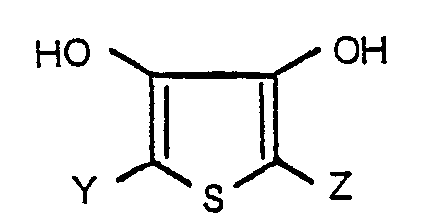
- the novel thiophene derivatives prepared according to the present invention are represented by the general formula (I) wherein X represents hydrogen atom, alkali metal, NH 4 , COR, (in which R, represents phenyl, halophenyl, lower alkyl, lower alkenyl, lower alkoxy lower alkyl, lower alkylthio lower alkyl, lower haloalkvl.
- cycloalkyl or lower alkylthio -CO-lower alkyl-R 2 (in which R 2 represents lower alkylcarbonyloxy or lower alkoxycarbonyl) (in which n represents an integer of 4 to 6 inclusive), di-lower alkylcarbamoyl, mono-lower alkylcarbamoyl, cycloalkylcarbamoyl, -COOR 3 (in which R 3 represents lower alkyl, lower alkenyl, lower alkynyl, lower haloalkyl, lower alkoxy lower alkyl, lower alkoxycarbonyl lower alkyl, phenyl, or benzyl), ⁇ SO 2 R 4 (in which R 4 represents lower alkyl, lower alkyl-substituted phenyl or di-lower alkylamino) or (in which R 5 represents lower alkyl); Y represents ⁇ COOR 6 (in which R 6 represents (C, to C 6 ) alkyl, lower al
- lower as used herein in connection with any alkyl, alkenyl or alkynyl portion is to mean that said portion as referred to contains one to four carbon atoms.
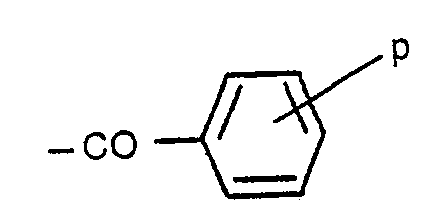
- a sub-generic group of the particularly useful compounds of the invention can cover the compounds of the general formula (I), wherein X is a group -COR, (in which R, is lower alkyl, lower alkoxy lower alkyl, lower alkylthio lower alkyl), a group -COOR 3 (in which R 3 is lower alkyl) or mono-lower alkylcarbamoyl; Y is a group -COOR e (in which R 6 is lower alkyl, lower alkenyl orlower alkynyl) or a group (in which p is hydrogen or halogen); and Z is a group ⁇ COOR 6 as defined above.
- X is a group -COR, (in which R, is lower alkyl, lower alkoxy lower alkyl, lower alkylthio lower alkyl), a group -COOR 3 (in which R 3 is lower alkyl) or mono-lower alkylcarbamoyl
- Y is
- FR-A-22 55 063 Derivatives of 3,4-dihydroxythiophene-2,5-dicarboxylic acid and their use as pharmaceuticals are disclosed in FR-A-22 55 063. These compounds were shown to have antifungal, in particular antimycotic and trichomonacide properties and to be useful as fungicides in medicine. However, their usefulness as fungicides in agriculture was not examined nor even suggested. Upon examination, their fungicidal activity in agriculture proved to be much inferior as compared to the present compounds.
- the proviso in claim 1 is based on a few derivatives of 3,4-dihydrocythiophene known from J. Amer. Chem. Soc. 67, 2217 (1945). However, this reference does not report any biological activity of the disclosed compounds.
- novel compounds represented by the aforesaid general formula (I) are broadly and divergently usable as fungicides for agricultural and horticultural purposes, exhibiting their controlling activity against various plant diseases such as rice blast, rice brown spot, rice sheath blight, tomato late blight, haricot sclerotinia rot, rice 'Bakanae' disease, cucumber Fusarium well, tomato leaf mold, grape ripe rot, pear black spot, Japanese apple canker, vegetable soft rot, rice bacterial blight, cucumber bacterial spot, cucumber downy mildew, cucumber powdery mildew, cucumber anthracnose, etc.
- plant diseases such as rice blast, rice brown spot, rice sheath blight, tomato late blight, haricot sclerotinia rot, rice 'Bakanae' disease, cucumber Fusarium well, tomato leaf mold, grape ripe rot, pear black spot, Japanese apple canker, vegetable soft rot, rice bacterial blight, cucumber
- the compounds of the general formula (I) of the present invention can be prepared according to processes represented by the following reaction formulas, respectively. wherein A is alkyl, lower alkenyl, lower alkynyl, lower alkoxy lower alkyl or benzyl; and Y and Z are individually defined as previously.
- the instant reaction can be carried out in an organic solvent such as alcohol, ether, hydrocarbon, DMF (dimethylformamide), etc., in the presence of a deprotonating reagent such as metallic sodium, sodium hydride, butyl lithium, alkali metal alcoholate, etc., at a temperature of 0- 100°C. for 2-24 hours.
- a deprotonating reagent such as metallic sodium, sodium hydride, butyl lithium, alkali metal alcoholate, etc.
- the reaction mixture can be worked up by pouring it into ice water and then acidifying the resulting mixture with hydrochloric acid, sulfuric acid or the like mineral acid, thereby to have the desired 3,4-dihydroxythiophene derivative separated out.
- X, Y and Z are individually as defined previously provided that X is not hydrogen, and Hal represents halogen atom.
- the above reaction can be carried out in an inert solvent such as dioxane, acetone, benzene, DMF, etc., in the presence of a dehydrohalogenating agent such as triethylamine, pyridine, potassium carbonate, sodium carbonate, etc., at a temperature of 0 to 150°C. for 1-24 hours.
- a dehydrohalogenating agent such as triethylamine, pyridine, potassium carbonate, sodium carbonate, etc.
- a mixture comprising 57.6 g (0.2 mol) of 3,4-dihydroxy-2,5-di-n-propoxycarbonyl-thiophene, 60 ml of acetic anhydride and 1 g of sodium acetate is stirred at about 40°C to undergo reaction, whereupon the reaction liquid shows pale brown. The reaction is continued at 60-80°C. for additional 2 hours.
- Into the reaction liquid having been allowed to cool is poured 500 ml of ice-cooled water, whereby crystals are deposited. The crystal collected by filtration and washed with water are then recrystallized from 60 ml of methanol to give 59 g of the title compound as colorless prisms, m.p. 46 ⁇ 48°C.
- reaction liquid is poured into 200 ml of cold water and then acidified with hydrochloric acid, whereupon crystals are deposited which are then separated by filtration. Recrystallization from ethanol-Nater to give 2.3 g of the title compound as colorless needles, m.p. 53-54°C.
- the precipitate thus formed is separated by filtration, washed with a small amount of ether and then dissolved in a small amount of acetone.
- the solution is diluted with water to 5 to 6 times, acidified with dilute hydrochloric acid, salted out with sodium chloride and extracted with a mixed solvent of benzene and ethyl acetate.
- the organic layer formed is dried over anhydrous sodium sulfate and then distilled under reduced pressure to remove the solvent therefrom.
- the residue obtained is crystallized from a mixed solvent of benzene and n-hexane to obtain 6.2 g (26% yield) of the title compound as yellow fine powder, m.p. 136-138°C.
- the deposited precipitate is separated by filtration, washed with a small amount of ether and then dissolved in a small amount of acetone.
- the solution is diluted with water to 5 to 6 times, acidified with dilute hydrochloric acid, salted out with sodium chloride and extracted with a mixed solvent of benzene and ethyl acetate.
- the organic layer formed is dried over anhydrous sodium sulfate and then distilled under reduced pressure to remove the solvent therefrom.
- the residue obtained is crystallized from a mixed solvent of benzene and n-hexane to obtain 3.2 g (23% yield) of the title compound as yellow microcrystals, m.p. 147-148°C.
- the organic layer separated is extracted twice with a dilute aqueous sodium hydroxide solution.
- the alkaline layer thus formed is acidified with dilute hydrochloric acid and extracted with a mixed solvent of benzene and ethyl acetate.
- the organic layer obtained is dried over anhydrous sodium sulfate and then distilled under reduced pressure to remove the solvent therefrom, and the residue obtained is crystallized from a small amount of a mixed solvent of benzene and n-hexane to obtain 1.0 g (9% yield) of the title compound as brown powder, m.p. 152-154°C (decomp.).
- the reaction liquid is charged with 200 ml of n-hexane and thoroughly stirred, and the precipitate deposited is separated by filtration, washed with a small amount of ether and dissolved in a small amount of acetone.
- the solution is diluted to 5 to 6 times with water, acidified with dilute hydrochloric acid, salted out with sodium chloride and extracted with a mixed solvent of benzene and ethyl acetate.
- the organic layer obtained is then extracted with a dilute aqueous sodium hydroxide solution.
- the alkaline layer thus obtained is acidified with dilute hydrochloric acid and extracted with a mixed solvent of benzene and ethyl acetate.
- the organic layer obtained is dried over anhydrous sodium sulfate and then distilled under reduced pressure to remove the solvent therefrom.
- the residue obtained is crystallized with a small amount of a mixed solvent of benzene and n-hexane to obtain 1.6 g (10% yield) of the title compound as yellow microgranules, m.p. 17 9-181 ° C.
- Tables 1 a through 1 e are the compounds of the present invention as prepared according to the procedures described in the foregoing examples.
- the compound number assigned to each compound in the tables will be referred to in examples and test examples that follow.
- the compounds of the present invention can be formulated, when they are intended to be used as agricultural and horticultural fungicides, into any forms conventionally adopted in the art for these purposes, for example, such compositions as dust, wettable powder, emulsion, granule, microgranule and the like.
- the carrier material used for the uniform distribution of the present compounds in effective amounts, may be either a liquid or particulate solid material, and is not limited to specific materials.
- Suitably usable solid carrier materials include, for example, various kinds of kaolin, clay, diatomaceous earth, talc, silica and the like.
- Suitably usable liquid carrier materials may be those which are inert solvents for the present active ingredient compounds and those which are non-solvents therefor but capable of dispersing or dissolving said active ingredient compounds by the aid of appropriate adjuvants used in combination therewith.
- Such liquid carrier materials include, for example, benzene, xylene, toluene, kerosene, alcohols, ketones, dimethyl sulfoxide, dimethylformamide and the like.
- the compounds of the present invention can be used in admixture with other fungicides, insecticides, herbicides, plant growth regulators, etc. for the purpose of lessening the labor and of ensuring the controlling effect of the present compounds.
- liquid and particulate solid compositions to plants can be carried out by conventional methods, e.g., power dusters, boom and hand sprayers and spray dusters.
- the compositions can also be applied from airplanes as a dust or a spray because of their effectiveness at low dosages.
- an effective amount of the compounds or compositions of this invention to the plant is essential for the practice of the present invention.
- the exact amount of active ingredient to be employed may vary depending on several factors including the response desired as well as the plant species to be treated and stage of development thereof, and the amount of rainfall as well as the specific type of compound used. Generally, however, the active ingredients are applied in amounts of from 100 grams to 1,000 grams per hectare.
- the fungicide formulations to be applied may contain 0.1 to 80% by weight of the thiophene derivative, based on the total formulation. They may be applied in the form of a dust with a content of the thiophene derivative of 0.1 to 5% by weight, in the form of granules with a content of the thiophene derivative of 5 to 20% by weight, in the form of a wettable powder with a content of the thiophene derivative of 0.1 to 5% by weight, or in the form of an emulsifiable concentrate with a content of the thiophene derivative of 10 to 40% by weight.
- a homogeneous mixture of 2 parts of compound No. 7 and 98 parts of clay is pulverized to obtain a dust preparation containing 2% of the active ingredient.
- a homogeneous mixture of 30 parts of compound No. 11, 3 parts of calcium alkylbenzenesulfonate, 5 parts of polyoxyethylenenonylphenyl ether and 62 parts of clay is pulverized to obtain a wettable powder having uniformly and finely dispersed therein all the constituents including 30% of the finely divided active ingredient.
- This wettable powder when it is actually applied to plants, is diluted to 600 to 1000 times with water and then sprayed over the plants.
- a mixture of 5 parts of compound No. 1 5, 1.5 parts of lauryl sulfate, 1.5 parts of calcium lignin sulfate, 25 parts of bentonite, 67 parts of acid clay and 15 parts of water is kneaded with a kneading machine, followed granulation.
- the granules thus obtained are then dried with a fluidized drier to obtain a granule preparation containing 5% of the active ingredient.
- a homogeneous mixture of 2 parts of compound No. 162 and 98 parts of clay is unformly pulverized to obtain a dust preparation containing 2% of the active ingredient.
- a homogeneous mixture of 30 parts of compound No. 163, 3 parts of calcium alkylbenzenesulfonate, 5 parts of polyoxyethylenenonylphenyl ether and 62 parts of clay is pulverized to obtain a wettable powder having uniformly and finely dispersed therein all the constituents including 30% of the active ingredient.
- the wettable powder thus obtained, when it is actually used, is diluted 600 to 1000 times with water and then sprayed over plants.
- a mixture of 5 parts of compound No. 173, 1.5 parts of lauryl sulfate, 1.5 parts of calcium lignin sulfonate, 25 parts of bentonite, 67 parts of acid clay and 15 parts of water is kneaded with a kneading machine, followed by granulation.
- the granules thus obtained are then dried with a fluidized drier to obtain a granule preparation containing 5% of the active ingredient.
- a homogeneous mixture of 2 parts of compound No. 220 and 98 parts of clay is uniformly pulverized to obtain a dust preparation containing 2% of the active ingredient.
- a homogeneous mixture of 30 parts of compound No. 223, 3 parts of calcium alkylbenzenesulfonate, 5 parts of polyoxyethylenenonylphenyl ether and 62 parts of clay is uniformly pulverized to obtain a wettable powder having uniformly and finely dispersed therein all the constituents including 30% of the active ingredient.
- the thus obtained wettable powder when it is actually applied to plants, is diluted to 600 to 1000 times with water and then sprayed over the plants.
- a mixture of 5 parts of compound No. 232, 1.5 parts of lauryl sulfate, 1.5 parts of calcium lignin sulfonate, 25 parts of bentonite, 67 parts of acid clay and 15 parts of water is kneaded with a kneading machine, followed by granulation.
- the granules thus obtained are dried with a fluidized drier sto obtain a granule preparation containing 5% of the active ingredient.
- a homogeneous mixture of 2 parts of compound No. 252 and 98 parts of clay is uniformly pulverized to obtain a dust preparation containing 2% of the active ingredient.
- a homogeneous mixture of 30 parts of compound No. 253, 3 parts of calcium alkylbenzenesulfonate, 5 parts of polyoxyethylenenonylphenyl ether and 62 parts of clay is uniformly pulverized to obtain a wettable powder having uniformly dispersed therein all the constituents including 30% of the finely divided active ingedient.
- the wettable powder thus obtained when it is actually applied to plants, is diluted to 600 to 1000 times with water and then sprayed over the plants.
- a mixture of 5 parts of compound No. 258, 1.5 parts of lauryl sulfate, 1.5 parts of calcium lignin sulfonate, 25 parts of bentonite, 67 parts of acid clay and 15 parts of water is kneaded with a kneading machine, followed by granulation.
- the granules thus obtained are dried with a fluidized drier to obtain a granule preparation containing 5% of the active ingredient.
- a homogeneous mixture of 2 parts of compound No. 297 and 98 parts of clay is uniformly pulverized to obtain a dust preparation containing 2% of the active ingredient.
- a homogeneous mixture of 30 parts of compound No. 301, 3 parts of calcium alkylbenzenesulfonate, 5 parts of polyoxyethylenenonylphenyl ether and 62 parts of clay is uniformly pulverized to obtain a wettable powder having uniformly and finely dispersed therein all the constituents including 30% of the active ingredient.
- the wettable powder thus obtained when it is actually applied to plants, is diluted to 600 to 1000 times with water and then sprayed over the plants.
- a mixture of 5 parts of compound No. 305, 1.5 parts of lauryl sulfate, 1.5 parts of calcium lignin sulfonate, 67 parts of acid clay, 25 parts of bentonit and 15 parts of water is kneaded with a kneading machine, followed by granulation.
- the granules thus obtained are dried with a fluidized drier to obtain a granule preparation containing 5% of the active ingredient.
- test liquid prepared by diluting a wettable powder prepared according to the general procedure of Example 25 to a predetermined concentration
- the first trifoliate leaf was cut off and the each leaflet of trifoliate leaf were placed in a 15 cm petri dish kept under moist conditions by placing a wet filter paper thereon and were inoculated on the center portion of each leaflet with a fungus-containing agar segment obtained by perforating by means of a cork borer of 8 mm in diameter an edge of a colony of a haricot sclerotinia rot (Sclerotinia sclerotiorum) cultured previously at 20°C. for 2 days in PSA medium.
- the lesion diameter formed was measured by means of slide calipers and the control value (%) was obtained according to the following equation.
- the phytotoxicity against the haricot plant of the test compound was investigated according to the same procedure as in Test Example 1.
- the young seedlings of cucumber (variety: Sagami Hanjiro, the first true leaf stage seedlings) cultivated in a greenhouse were placed on a turn table, and thereover was sprayed by means of a spray gun a test liquid of a wettable powder prepared according to the general procedure of Example 25 and diluted with water to a predetermined concentration.
- the seedlings were inoculated by atomizing technique with a suspension of spores of a cucumber downy mildew fungus (Pseudoperonospora cubensis) which had been sporulated on the affected leaves of cucumber were brushed away into deionzed water containing 50 ppm of Tween 20 (polyoxyethylene sorbitan monolaurate), so that the spore concentration in the suspension became 20-30 spores per unit visible field under a microscope of 150 magnifications.
- Tween 20 polyoxyethylene sorbitan monolaurate
- the new shoots of pear (variety: Niju-seiki) was cut, leaving the developed leaves at the upper portion and then inserted into a 100 ml flask filled with 50 ml of water. Over the new shoots thus treated was sprayed 20 ml per two shoots a test liquid of the compound diluted to a predetermined concentration. On the following day, the shoots were inoculated by atomizing technique with a spore suspension of a pear alternaria leaf spot fungus (Alternaria kikuchiana), the spore concentration of which had been adjusted to become 50-60 spores per unit visible field under a microscope (Olympus) of 150 magnifications.
- a pear alternaria leaf spot fungus Alternaria kikuchiana
- the rice seeds were subjected to preimmersion at 15°C. for 4 days, followed by germination acceleration treatment at 30°C. for 24 hours.
- the rice seeds thus treated were densely seeded in granular cultivation soil according to a standard seedling box method and then placed in a room kept at 30°C. for 2 days, followed by cultivation in a plastic greenhouse, exercising necessary supervision.
- Thirty two (32) days after the seeding the 5-leaf stage
- the number of seedlings infected with rice "Bakanae” disease was visually investigated to obtain the infected seedling ratio, and the seed disinfection ratio was calculated according to the following equation.
- the test was conducted in the same manner as in Test Example 9 and using the test compounds prepared according to Example 6, except that rice seeds (variety: Asominori) naturally infected with a rice brown spot fungus were used as the test seed rice. Twenty five (25) days after the seeding (the 3rd-leaf stage), the number of infected seedlings was visually investigated to obtain the infected seedling ratio and thereby to calculate the seed disinfectation ratio (%) according to the following equation. The results obtained are as shown in Table 11. (Note) TMTD:
- test compound is dissolved in acetone, and 1 ml of the solution and 20 ml of a medium (PSA medium pH 5.8) kept at about 60°C. are mixed together in a 9 cm diameter petri dish to prepare a compound-containing agar plate having a predetermined concentration.
- a medium PSA medium pH 5.8 kept at about 60°C.
- the compound-containing agar plate medium is inoculated by means of platinum loop with a spore suspension of the test fungus previously cultured in a slant medium. After culturing at 24°C. for 48 hours, the growth of the test fungus was investigated according to the following standard for determining the growth of fungus. The results obtained are as shown in Tables 12a and 12b.
Landscapes
- Life Sciences & Earth Sciences (AREA)
- Chemical & Material Sciences (AREA)
- Organic Chemistry (AREA)
- Health & Medical Sciences (AREA)
- General Health & Medical Sciences (AREA)
- Environmental Sciences (AREA)
- Dentistry (AREA)
- Engineering & Computer Science (AREA)
- Wood Science & Technology (AREA)
- Zoology (AREA)
- Plant Pathology (AREA)
- Pest Control & Pesticides (AREA)
- Agronomy & Crop Science (AREA)
- Biochemistry (AREA)
- Molecular Biology (AREA)
- Agricultural Chemicals And Associated Chemicals (AREA)
- Heterocyclic Compounds Containing Sulfur Atoms (AREA)
- Plural Heterocyclic Compounds (AREA)
Claims (23)















Applications Claiming Priority (2)
| Application Number | Priority Date | Filing Date | Title |
|---|---|---|---|
| JP5250/80 | 1980-01-22 | ||
| JP55005250A JPS6058918B2 (ja) | 1980-01-22 | 1980-01-22 | チオフエン誘導体および農園芸用殺菌剤 |
Publications (2)
| Publication Number | Publication Date |
|---|---|
| EP0032748A1 EP0032748A1 (de) | 1981-07-29 |
| EP0032748B1 true EP0032748B1 (de) | 1984-08-01 |
Family
ID=11605957
Family Applications (1)
| Application Number | Title | Priority Date | Filing Date |
|---|---|---|---|
| EP81100382A Expired EP0032748B1 (de) | 1980-01-22 | 1981-01-20 | Thiophen-Derivate |
Country Status (7)
| Country | Link |
|---|---|
| EP (1) | EP0032748B1 (de) |
| JP (1) | JPS6058918B2 (de) |
| AU (1) | AU537942B2 (de) |
| BR (1) | BR8100449A (de) |
| DE (1) | DE3165137D1 (de) |
| ES (1) | ES498740A0 (de) |
| ZA (1) | ZA81432B (de) |
Cited By (1)
| Publication number | Priority date | Publication date | Assignee | Title |
|---|---|---|---|---|
| US6822384B2 (en) | 2000-08-17 | 2004-11-23 | Lumera Corporation | Design and synthesis of advanced NLO materials for electro-optic applicators |
Families Citing this family (5)
| Publication number | Priority date | Publication date | Assignee | Title |
|---|---|---|---|---|
| US4454131A (en) * | 1982-04-30 | 1984-06-12 | Ube Industries, Ltd. | Thiophene derivatives |
| DE3402625A1 (de) * | 1984-01-26 | 1985-08-01 | Bayer Ag, 5090 Leverkusen | Acyloxythiophen-derivate |
| US4677113A (en) * | 1986-04-22 | 1987-06-30 | Riker Laboratories, Inc. | Di-t-butylphenols substituted by a thenoyl group |
| DE3613792A1 (de) * | 1986-04-24 | 1987-10-29 | Bayer Ag | Carbamoyloxythiophen-derivate |
| GB8812718D0 (en) * | 1988-05-27 | 1988-06-29 | Wyeth John & Brother Ltd | Novel process |
Family Cites Families (4)
| Publication number | Priority date | Publication date | Assignee | Title |
|---|---|---|---|---|
| US2453102A (en) * | 1944-02-25 | 1948-11-02 | Du Pont | 3,4-dihydroxythiophene-2, 5-dicarboxylic acid production |
| IT1070993B (it) * | 1973-12-24 | 1985-04-02 | Bioindustria Spa | Derivati del tiofene ad attivita antimicotica e tricomonicida |
| FR2300768A1 (fr) * | 1975-02-14 | 1976-09-10 | Roussel Uclaf | Nouveaux composes thiopeniques phosphoryles, procede de preparation et application comme pesticides |
| CH632755A5 (de) * | 1976-04-10 | 1982-10-29 | Basf Ag | Verfahren zur herstellung von thiophenverbindungen. |
-
1980
- 1980-01-22 JP JP55005250A patent/JPS6058918B2/ja not_active Expired
-
1981
- 1981-01-20 EP EP81100382A patent/EP0032748B1/de not_active Expired
- 1981-01-20 DE DE8181100382T patent/DE3165137D1/de not_active Expired
- 1981-01-22 ZA ZA00810432A patent/ZA81432B/xx unknown
- 1981-01-22 AU AU66538/81A patent/AU537942B2/en not_active Ceased
- 1981-01-22 ES ES498740A patent/ES498740A0/es active Granted
- 1981-01-22 BR BR8100449A patent/BR8100449A/pt unknown
Cited By (2)
| Publication number | Priority date | Publication date | Assignee | Title |
|---|---|---|---|---|
| US6822384B2 (en) | 2000-08-17 | 2004-11-23 | Lumera Corporation | Design and synthesis of advanced NLO materials for electro-optic applicators |
| US6864375B2 (en) | 2000-08-17 | 2005-03-08 | Lumera Corporation | Highly stable and efficient nonlinear optical chromophores for electro-optic polymers |
Also Published As
| Publication number | Publication date |
|---|---|
| JPS56103175A (en) | 1981-08-18 |
| BR8100449A (pt) | 1981-08-11 |
| AU537942B2 (en) | 1984-07-19 |
| ES8304562A1 (es) | 1983-03-01 |
| ES498740A0 (es) | 1983-03-01 |
| JPS6058918B2 (ja) | 1985-12-23 |
| AU6653881A (en) | 1981-07-30 |
| ZA81432B (en) | 1982-09-29 |
| DE3165137D1 (en) | 1984-09-06 |
| EP0032748A1 (de) | 1981-07-29 |
Similar Documents
| Publication | Publication Date | Title |
|---|---|---|
| EP0323757A2 (de) | Alkylaminopyrimidin-Derivate, Verfahren zu ihrer Herstellung und diese als aktive Bestandteile enthaltende Insektizide, Akarizide und Fungizide | |
| JPH0435462B2 (de) | ||
| EP0032748B1 (de) | Thiophen-Derivate | |
| US4421761A (en) | Thiophene derivatives | |
| US3993771A (en) | α-Benzylidene lactone derivatives | |
| EP0093384B1 (de) | Thiophen-Derivate und sie enthaltende Zusammensetzung mit pilztötender Wirkung | |
| JPS61130275A (ja) | ピリダジノン誘導体,その製造法および殺虫・殺ダニ・殺菌剤 | |
| NZ204441A (en) | Triazole derivatives and fungicidal compositions | |
| JPS6117570A (ja) | ピリダジノン誘導体、その製造法および殺虫・殺ダニ・殺菌剤 | |
| EP0123931B1 (de) | Furan-Derivate mit fungiziden Eigenschaften | |
| US4039635A (en) | Soil fungicidal phosphorothioate | |
| US4704398A (en) | Triazolyl-keto-derivatives endowed with a fungicidal activity | |
| US5049575A (en) | Substituted carboxylic acid, fungicidal compositions and use | |
| JPS60233075A (ja) | 置換フエニルヒダントイン類およびこれを有効成分とする除草剤 | |
| JPS601315B2 (ja) | イミダゾール誘導体、その製造方法及び農園芸用殺菌剤 | |
| JPS6011031B2 (ja) | イミダゾ−ル誘導体の製造方法 | |
| JPH023649A (ja) | 置換イミノベンジル誘導体 | |
| JPH0495077A (ja) | 2―ヨードプロパルギルオキシピリミジン誘導体及び農園芸用殺菌剤 | |
| US4497807A (en) | Thiadiazinone plant disease control agents | |
| JPS63201174A (ja) | ピリダジノン誘導体、その製造法および殺虫・殺ダニ・殺線虫・殺菌剤 | |
| JPS6035348B2 (ja) | チオフエン誘導体および農園芸用殺菌剤 | |
| JPS6058917B2 (ja) | チオフエン誘導体および農園芸用殺菌剤 | |
| JPH07118265A (ja) | ジヒドロイソキノリン誘導体および農園芸用殺菌剤 | |
| JPH027563B2 (de) | ||
| JPS63215673A (ja) | ピリダジノン化合物および病害虫防除剤 |
Legal Events
| Date | Code | Title | Description |
|---|---|---|---|
| PUAI | Public reference made under article 153(3) epc to a published international application that has entered the european phase |
Free format text: ORIGINAL CODE: 0009012 |
|
| AK | Designated contracting states |
Designated state(s): CH DE FR GB IT NL |
|
| 17P | Request for examination filed |
Effective date: 19820116 |
|
| ITF | It: translation for a ep patent filed | ||
| GRAA | (expected) grant |
Free format text: ORIGINAL CODE: 0009210 |
|
| AK | Designated contracting states |
Designated state(s): CH DE FR GB IT LI NL |
|
| REF | Corresponds to: |
Ref document number: 3165137 Country of ref document: DE Date of ref document: 19840906 |
|
| ET | Fr: translation filed | ||
| RAP2 | Party data changed (patent owner data changed or rights of a patent transferred) |
Owner name: HOKKO CHEMICAL INDUSTRY CO., LTD Owner name: UBE INDUSTRIES, LTD. |
|
| PGFP | Annual fee paid to national office [announced via postgrant information from national office to epo] |
Ref country code: DE Payment date: 19850213 Year of fee payment: 5 |
|
| PLBE | No opposition filed within time limit |
Free format text: ORIGINAL CODE: 0009261 |
|
| STAA | Information on the status of an ep patent application or granted ep patent |
Free format text: STATUS: NO OPPOSITION FILED WITHIN TIME LIMIT |
|
| 26N | No opposition filed | ||
| PGFP | Annual fee paid to national office [announced via postgrant information from national office to epo] |
Ref country code: NL Payment date: 19860131 Year of fee payment: 6 |
|
| PG25 | Lapsed in a contracting state [announced via postgrant information from national office to epo] |
Ref country code: LI Effective date: 19870131 Ref country code: CH Effective date: 19870131 |
|
| PG25 | Lapsed in a contracting state [announced via postgrant information from national office to epo] |
Ref country code: NL Effective date: 19870801 |
|
| GBPC | Gb: european patent ceased through non-payment of renewal fee | ||
| NLV4 | Nl: lapsed or anulled due to non-payment of the annual fee | ||
| PG25 | Lapsed in a contracting state [announced via postgrant information from national office to epo] |
Ref country code: FR Free format text: LAPSE BECAUSE OF NON-PAYMENT OF DUE FEES Effective date: 19870930 |
|
| REG | Reference to a national code |
Ref country code: CH Ref legal event code: PL |
|
| PG25 | Lapsed in a contracting state [announced via postgrant information from national office to epo] |
Ref country code: DE Effective date: 19871001 |
|
| REG | Reference to a national code |
Ref country code: FR Ref legal event code: ST |
|
| PG25 | Lapsed in a contracting state [announced via postgrant information from national office to epo] |
Ref country code: GB Effective date: 19881118 |