EP0107053A2 - Virus de leucémie humain, peptides apparentés, anticorps des peptides et procédé de préparation d'anticorps - Google Patents
Virus de leucémie humain, peptides apparentés, anticorps des peptides et procédé de préparation d'anticorps Download PDFInfo
- Publication number
- EP0107053A2 EP0107053A2 EP83109481A EP83109481A EP0107053A2 EP 0107053 A2 EP0107053 A2 EP 0107053A2 EP 83109481 A EP83109481 A EP 83109481A EP 83109481 A EP83109481 A EP 83109481A EP 0107053 A2 EP0107053 A2 EP 0107053A2
- Authority
- EP
- European Patent Office
- Prior art keywords
- peptide
- represented
- tyr
- general formula
- formula
- Prior art date
- Legal status (The legal status is an assumption and is not a legal conclusion. Google has not performed a legal analysis and makes no representation as to the accuracy of the status listed.)
- Granted
Links
Images


Classifications
-
- C—CHEMISTRY; METALLURGY
- C07—ORGANIC CHEMISTRY
- C07K—PEPTIDES
- C07K14/00—Peptides having more than 20 amino acids; Gastrins; Somatostatins; Melanotropins; Derivatives thereof
- C07K14/005—Peptides having more than 20 amino acids; Gastrins; Somatostatins; Melanotropins; Derivatives thereof from viruses
-
- C—CHEMISTRY; METALLURGY
- C07—ORGANIC CHEMISTRY
- C07K—PEPTIDES
- C07K16/00—Immunoglobulins [IG], e.g. monoclonal or polyclonal antibodies
- C07K16/08—Immunoglobulins [IG], e.g. monoclonal or polyclonal antibodies against material from viruses
- C07K16/10—RNA viruses
- C07K16/112—Retroviridae (F), e.g. leukemia viruses
-
- C—CHEMISTRY; METALLURGY
- C12—BIOCHEMISTRY; BEER; SPIRITS; WINE; VINEGAR; MICROBIOLOGY; ENZYMOLOGY; MUTATION OR GENETIC ENGINEERING
- C12N—MICROORGANISMS OR ENZYMES; COMPOSITIONS THEREOF; PROPAGATING, PRESERVING, OR MAINTAINING MICROORGANISMS; MUTATION OR GENETIC ENGINEERING; CULTURE MEDIA
- C12N2740/00—Reverse transcribing RNA viruses
- C12N2740/00011—Details
- C12N2740/10011—Retroviridae
- C12N2740/14011—Deltaretrovirus, e.g. bovine leukeamia virus
- C12N2740/14022—New viral proteins or individual genes, new structural or functional aspects of known viral proteins or genes
Definitions
- the present invention relates to novel peptide associated with human leukemia virus (hereafter also referred to as ATLV short for adult T-cell leukemia virus or as HTLV short for human T-cell leukemia virus) and more particularly, to peptides associated with such viral infections as well as mature T-cell leukemia or lymphoma such as adult T -cell leukemia, cutaneous T-cell lymphoma, etc.
- human leukemia virus hereafter also referred to as ATLV short for adult T-cell leukemia virus or as HTLV short for human T-cell leukemia virus
- peptides associated with such viral infections as well as mature T-cell leukemia or lymphoma such as adult T -cell leukemia, cutaneous T-cell lymphoma, etc.
- amino acids, peptides, protective groups, active groups, nucleotides and others are expressed pursuant to the IUPAC Rules, the IUB Rules or common symbols established in the art when they are abbreviated; examples of which are given below.
- optical isomers can be present with respect to amino acids or the like, an L-form is meant unless otherwise indicated.
- Human leukemia virus has been isolated from a patient with adult T-cell leukemia (ATL) and has been shown to be closely associated with the disease.
- the provirus gene integrated in host cell DNA was molecularly cloned and the complete nucleotide sequence was determined by M. Yoshida and H. Sugano, the present inventors.
- the present invention has been accomplished based on the aforesaid basic information and is directed to such virus-related peptides aiming at diagnosis of such virus infections as well as a process for preparation of and a method of measurement for a specific antibody to these peptides.
- the nucleotide sequence coding for a precursor of core (gag) proteins of the thus determined virus gene described above is shown in Table 1 below.
- the present inventors have found specific peptides which can be haptens of .proteins (core proteins) associated with human leukemia virus described above and have accomplished the present invention.
- the present invention relates to an antibody of a human leukemia virus-related peptide obtainable by collecting an antibody produced in a mammal body by administering to the mammal an antigen prepared by reacting a human leukemia virus-related peptide selected from the group consisting of:
- the present invention further relates to a process for production of the foregoing antibody.
- the present invention also relates to human leukemia virus-related peptide and a process for production thereof.
- the peptides of the present invention shown by formulae (1) to (7) described above can all be easily prepared by simple operations utilizing easily accessible, commercially available amino acids.
- antigens can be prepared using them as haptens.
- antibodies having a specific reactivity with virus-associated proteins can be obtained.
- antibodies having a reactivity particularly with p-24 can be obtained.
- These specific antibodies are usable for purification of virus-associated proteins, by binding these antibodies to carriers for use of, e.g., affinity chromatography, and utilizing the bound antibodies in the chromatography, etc.
- the specific antibodies can also be utilized as specific antibodies in various immunological measurements of such virus-associated proteins.
- these antibodies are useful for diagnosis of human leukemia virus infections and further for diagnosis, studies, etc. of mature T-cell leukemia or lymphoma such as adult T-cell leukemia, cutaneous T-cell lymphoma, etc. as well as diseases related thereto.
- the peptides of the present invention represented by the general formulae (1) through (7) can be prepared by conventional processes for synthesizing peptides; more specifically, using processes as described in Schroder and Luhke, The Peptides, vol. 1 (1966), published by Academic Press, New York, U.S.A., or Izumiya et al., Synthesis of Peptides, (1975), published by Maruzen Publishing Co., Ltd., for example, an azide process, a chloride process, an acid anhydride process, a mixed anhydride process, a DCC process, an active ester process (a p-nitrophenyl ester process, an N-hydroxysuccinimide ester process, a cyanomethyl ester process, etc.), a process using a Woodward reagent K, a carbodiimidazole process, an oxidative reduction process, a 'DCC/additive (HONB, HOBt, HOSu) process, etc.
- the peptides of the present invention are prepared in accordance witn the aforesaid processes for synthesizing ordinary polypeptides, generally either by a so called stepwise process which comprises condensing an amino acid to the terminal amino acid one by one in sequence, or by coupling fragments divided into several groups to the terminal amino acid.
- a so called stepwise process which comprises condensing an amino acid to the terminal amino acid one by one in sequence, or by coupling fragments divided into several groups to the terminal amino acid.
- the C terminal amino acid is bound to an insoluble carrier through its carboxyl group.
- the insoluble carrier is not particularly limited as long as it has a binding capability to a reactive carboxyl group.
- insoluble carriers examples include halogenomethyl resins such as chloromethyl resin, bromomethyl resin, etc.; hydroxymethyl resins, phenol resins, tert-alkyloxycarbonyl- hydrazided resins, etc.
- an amino group-protected amino acid is bound in sequence in accordance with the amino acid sequence shown by general formulae (1) through (7) through condensation of its reactive amino group and the reactive carboxyl group, in sequence, to synthesize step by step. After synthesizing the complete sequence, the peptide is split off from the .insoluble carrier to produce the protein.
- protective groups for amino groups include a benzyloxycarbonyl, Boc, tert-amyloxycarbonyl, isobornyloxycarbonyl, p-methoxybenzyloxycarbonyl, Cl-Z, adamantyloxycarbonyl, trifluoroacetyl, phthalyl, formyl, o-nitrophenylsulfenyl, diphenylphosphinothioyl group, etc.
- protective groups for the imino group of histidine include a Tos, Bzl, benzyloxycarbonyl, trityl group, etc.
- protective groups for arginine include a Tos, nitro, benzyloxycarbonyl group, etc.
- protective groups for the hydroxy groups of serine and threonine include a Bzl, tert-butyl, acetyl, tetrahydropyranyl group, etc.
- protective groups for the hydroxy group .of tyrosine include a Bzl, C1 2 -Bzl, benzyloxycarbonyl, acetyl, Tos group, etc.
- protective groups for the amino group of lysine include a benzyloxycarbonyl, Cl-Z, C1 2 -Bzl, Boc, Tos group, etc.
- Protection for the carboxyl groups of glutamic acid and aspartic acid includes esterification of the carboxylic acids with benzyl alcohol, methanol, ethanol, tert-butanol, etc.
- activated carboxyl groups include the corresponding acid chlorides, acid anhydrides or mixed acid anhydrides, azides, active esters (esters with pentachlorophenol, p-nitrophenol, N -hydroxysuccinimide, N-hydroxybenzotriazole, N -hydroxy-5-norbornene-2,3-dicarboxydiimide, etc.)
- the peptide bond forming reaction may also be carried out in the presence of carbodiimide reagents such as dicyclohexylcarbodiimide, carbodiimidazole, etc. or tetraethylpyrophosphine, etc.
- carbodiimide reagents such as dicyclohexylcarbodiimide, carbodiimidazole, etc. or tetraethylpyrophosphine, etc.
- A represents a protective for an amino group and R represents an insoluble carrier.
- preferred A includes Boc, a benzyloxycarbonyl group, a p-methoxybenzyloxycarbonyl group or the like and preferred R 1 includes chloromethylated polystyrene or the like, respectively.
- amino acids used possess functional groups at the side chain thereof which do not participate in each of the reactions the amino acids are protected by the protective groups described above in a conventional manner and the protective groups are split off at the same time as splitting-off of the insoluble carrier R 1 .
- the reaction of .the amino acid (a) with the insoluble carrier R (b) is carried out by utilizing the reactive carboxyl group of the amino acid (a) and binding it to R in a conventional manner.
- the reaction is effected in an appropriate solvent in the presence of basic compounds, e.g., triethylamine, potassium tert-butoxide, cesium carbonate, cesium hydroxide, etc., in the case of using, e.g., chloromethylated polystyrene.
- solvents examples include dimethylformamide (DMF), dimethylsulfoxide (DMSO), pyridine, chloroform, dioxan, dichloromethane, tetrahydrofuran, N-methylpyrrolidone, hexamethylphosphoric acid triamide, etc. or a mixture solvent thereof.
- the above reaction is generally completed at temperatures of about 0 to about 85°C, preferably at 25 to 80°C for several minutes to about 24 hours. It is preferred that an amount of the amino acid to the insoluble carrier be set forth such that the former is employed in an excess amount, generally 1 to 3 time equivalents per 1 equivalent of the latter.
- Splitting of the protective group A for the thus obtained amino acid shown by general formula (b) is carried out in a conventional manner.
- catalysts such as palladium, palladium black, etc.; a reductive method involving reduction, etc. with metallic sodium in liquid ammonia; acidolysis using strong acids such as trifluoroacetic acid, hydrogen chloride, .hydrogen fluoride, methanesulfonic acid, hydrogen bromide, etc.
- the hydrogenation using the foregoing catalysts can be carried out, e.g., under hydrogen pressure of 1 atm at temperatures of 0 to 40°C. It is preferred that the catalyst be used generally in an amount of about 100 mg to about 1 g.
- the reaction is generally completed within about 1 to about 48 hours.
- the acidolysis described above is carried out generally at temperatures of about 0 to about 30°C, preferably 0 to 20°C for about 15 minutes to about 1 hour, in the absence of any solvent. It is preferred that the acid be used in an amount of generally 5 to 10 times that of the raw compound. In case that the protective group A alone is wished to be split off in the acidolysis, it is preferred to use trifluoroacetic acid or hydrogen chloride as the acid.
- the aforesaid reduction with metallic sodium in liquid ammonia can be carried out generally at temperatures of about -40 to about -70°C, using metallic sodium in such an amount that is colored to permanent blue for about 30 seconds to about 10 minutes.
- the reaction of th subsequently obtained amino acid in a solid phase shown by general formula (c) and the amino acid (d) (or a derivative thereof in which the carboxyl group is activated) is carried out in the presence of a solvent.
- solvents there can be used various known solvents conventionally used in peptide condensation, for example, .anhydrous dimethylformamide, dimethylsulfoxide, pyridine, chloroform, dioxan, dichloromethane, tetrahydrofuran, ethyl acetate, N-methylpyrrolidone, hexamethylphosphoric acid triamide or a solvent mixture thereof.
- the reaction can also be conducted, if necessary and desired, in the presence of reagents conventionally employed in ordinary peptide bond forming reactions, for example, dehydrating and condensing agents such as carbodiimides, e.g., N,N-dicyclohexylcarbodiimide ( D CC), N-ethyl-N'-dimethylaminocarbodiimide, 1-ethyl-3-diisopropylaminocarbodiimide, 1-cyclohexyl-3-(2-morpholinyl-4-ethyl)carbodiimide, etc.
- dehydrating and condensing agents such as carbodiimides, e.g., N,N-dicyclohexylcarbodiimide ( D CC), N-ethyl-N'-dimethylaminocarbodiimide, 1-ethyl-3-diisopropylaminocarbodiimide, 1-cyclohexyl-3-
- the proportion of the amino acid (c) to the amino acid (d) to be used it is preferred that the latter be employed in an amount of an equimolar amount to 10 time moles that of the former, preferably from an equimolar amount to 5 time moles.
- the amount of the dehydrating and condensing agent to be used either; the agent is generally employed preferably in an equimolar amount to that of the amino acid (d).
- the reaction temperature is suitably chosen from a normal range conventionally used for peptide bond forming reactions, generally from the range of about -40 to about 60°C, preferably from the range of about -20 to about 40°C.
- the reaction time is generally set forth for about several minutes to about 30 hours.
- the thus obtained peptide shown by general formula (e) is, after splitting-off the protective group A as described above, condensed in sequence with each of the amino acids, A-Pro-OH, A-Pro-OH, A-Lys-OH, A-Lys-OH, A-Pro-OH, A-Gln-OH, A-Val-OH and A-Val-OH, in accordance with the amino acid sequence shown by general formula (5) or, derivatives thereof wherein the functional groups at the side chain are protected or the carboxyl groups are activated.
- the peptide shown by general formula (e) can be introduced into the peptide represented by general formula (f).
- the thus obtained peptide (f) can be introduced into the peptide shown by general formula (5) by splitting of the protective group A, splitting-off of the protective groups of the amino acid at the side chain thereof and removing the insoluble carrier R 1 .
- the removal of the protective groups at the side chain functional groups and the insoluble carrier R 1 can be carried out in a manner similar to the splitting off of the protective group A; in this case, it is preferred to use hydrogen fluoride or hydrogen bromide as the acid. All of the amino acids used in the aforesaid processes may be those commercially available.
- the thus produced peptide of the present invention shown by formula (5) can be isolated and purified from the .reaction mixture by means of peptide separation, e.g., extraction, distribution, column chromatography, etc.
- peptides represented by general formulae (1) to (4), (6) and (7) can also be prepared in a manner similar to the process described above.
- peptides of the present invention are utilizable as labelled antigens employed in radioimmunoassay (RIA) or enzymeimmunoassay (EIA), by introducing thereto radioactive substances such as 125I, 131 I , etc.; various enzyme reagents such as peroxidase (POX), chymotrip- sinogen, procarboxypeptidase, glyceroaldehyde-3-phosphode- hydrogenase, amylase, phospholyrase, D-Nase, P-Nase, S-galactosidase, glucose-6-phosphate dehydrogenase, ornithine decarboxylase, etc.
- POX peroxidase
- chymotrip- sinogen chymotrip- sinogen
- procarboxypeptidase glyceroaldehyde-3-phosphode- hydrogenase
- amylase phospholyrase
- D-Nase D-Nase
- P-Nase S-galacto
- the introduction of the above radioactive substance can be effected in a conventional manner.
- the introduction of radioactive iodine can be carried out by the oxidative iodination method (W.M. Hunter and F.C. Greenwood, Nature, 194, 495 (1962), Biochem. J., 89, 144 (1963)) using chloramine T, etc.
- the introduction of enzyme reagents can be conducted by known methods such as conventional couplings, e.g., the B.F. Erlanger, et al method (Acta Endocrinol. Suppl., 168, 206 (1972)), the M.H. Karol et al method (Proc. Natl. Acd. Sci. U.S.A., 57, 713 (1967)), etc.
- the aforesaid antigens are prepared by using the peptides of the present invention as haptens and reacting the peptides with a suitable carrier in the presence of a hapten-carrier binding agent.
- a suitable carrier in the presence of a hapten-carrier binding agent.
- natural and synthetic proteins having a high molecular weight which are conventionally employed in the preparation of antigens can be widely employed as carriers to be bound to haptens.
- Such carriers include albumins of animal sera such as horse serum albumin, bovine serum albumin, rabbit serum albumin, human serum albumin, sheep serum albumin, etc.; globulins of animal sera such as horse serum globulin, bovine serum globulin, rabbit serum globulin, human serum globulin, sheep serum globulin, etc.; thyroglobulins of animals such as horse thyroglobulin, bovine thyroglobulin, rabbit thyroglobulin, human thyroglobulin, sheep thyroglobulin, etc.; hemoglobulins of animals such as horse hemoglobulin, bovine hemoglobulin, rabbit hemoglobulin, human hemoglobulin, sheep hemoglobulin, etc.; hemocyanins of animals such as Keyhole limpet hemocyanin (KLH), etc.; proteins extracted from ascaris (ascaris extracts, those described in Japanese Patent Application (OPI) No.
- KLH Keyhole limpet hemocyan
- hapten-carrier binding agents those conventionally employed in the preparation of antigens can be widely employed.
- these agents include diazonium compounds for cross linking tyrosine, histidine, tryptophane, etc., e.g., bisdiazotized benzidine (BDB), bisdiazotized-3,3'-dianisidine (BDD), etc.; aliphatic dialdehydes for cross linking an amino group with an amino group, e.g., glyoxal, malonedialdehyde, glutaraldehyde, succin- aldehyde, adipoaldehyde, etc.; dimaleimide compounds for cross linking a thiol group with a thiol group, e.g., N,N'- o-phenylenedimaleimide, N,N'-m-phenylenedimaleimide, etc.; maleimidocarboxyl-N-hydroxysuccinimide esters for
- hapten-carrier binding agent 'it is also possible to use diazonium aryl carboxylic acids such as p-diazonium phenylacetic acid, etc. with conventional peptide bond forming agents such as the dehydrating and condensing agents described above in combination.
- the reaction for preparing the antigens described above is carried out in an aqueous solution or a conventional buffer solution having pH of 7 to 10, preferably in a buffer solution having pH of 8 to 9, at temperatures of about 0 to 40°C, preferably around room temperature.
- the reaction is generally completed within about 1 to about 24 hours, preferably 3 to 5 hours.
- Representative examples of buffer solutions which can be used in the above process include:
- proportions of the hapten, hapten-carrier binding agent and carrier can be appropriately 'determined but it is preferred that the carrier be employed in an amount of about 1 to about 6 times, preferably about 1 to about 5 times and the hapten-carrier binding agent be employed in an amount of about 5 to about 10 times, the weight of the hapten.
- the carrier is bound to the hapten via the hapten-carrier binding agent to obtain a desired antigen composed of a peptide-carrier complex.
- the thus obtained antigen can easily be isolated and purified by means of a dialysis method, a gel filtration method, a fractionation precipitation method, etc.
- the thus obtained antigen binds 5 to 60 mols in average of the peptide thereto per 1 mole of a protein and enables to subsequent preparation of an antibody having a high specificity to the antigen.
- an antigen to which the peptide is bound in an amount of 5 to 20 mols, preferably 8 to 15 mols, in average, per 1 mole of a protein.
- the preparation of an antibody using the antigen is carried out by administering the aforesaid antigen to mammals to thereby produce a desired antibody in vivo and collecting the antibody.
- a definite amount of the antigen obtained as described above is diluted with a physiological saline solution to a suitable concentration and the resulting dilution is mixed with a complete Freund's adjuvant to prepare a suspension.
- the suspension is administered to mammals.
- the aforesaid suspension is intracutaneously administered (1 to 5 mg/time as the amount of the antigen) to rabbit.
- the suspension is administered every two weeks over a period of 2 to 10 months, preferably 4 to 6 months to effect immunization.
- the collection of the antibody is carried out by collecting blood from the immunized animal after the passage of 1 to 2 weeks subsequent to the final administration, centrifuging the blood and isolating serum from the blood. According to this procedure, an antibody having an excellent specificity to the antigen used can be collected and used for assaying human leukemia virus-related proteins utilizing RIA, EIA, etc.
- Rf values in the respective preparation examples were measured using solvent mixtures described below by ' means of thin layer chromatography on silica gel.
- the Boc group was split off with TFA to obtain 0.82 g of H-Tyr(Cl 2 -Bzl)-Ile-Pro-His(Tos)-Pro-Lys(Cl-Z)-Asn-Ser(Bzl)-Ile-Gly-Gly-Glu(OBzl)-Val-resin.
- the thus obtained resin was mixed with 15 ml of hydrogen fluoride and 1.5 ml of anisole. The mixture was reacted at -20°C for 30 minutes and then at 0°C for 30 minutes. After removing an excess of hydrogen fluoride by distillation, the residue was extracted with 10% acetic acid. After washing the extract with ether, the system was freeze dried.
- Boc-Tyr(Cl 2 -Bzl)-OH 0.13 g, was reacted with 0.55 g of H-Thr(Bzl)-Trp-Thr(Bzl)-Pro-Lys(Cl-Z)-Asp(OBzl)-Lys(Cl-Z)-Thr(Bzl)-Lys(Cl-Z)-Val-Leu-resin by double coupling.
- Boc group was split off with TFA in the presence of ethanedithiol to obtain 0.59 g of H-Thr(C12-Bzl)-Trp-Thr (Bzl)-Pro-Lys(Cl-Z)-Asp(OBzl)-Lys(Cl-Z)-Thr(Bzl)-Lys(Cl-Z)-Val-Leu-resin.
- the thus obtained resin was dissolved in 15 ml of hydrogen fluoride, 1.5 ml of anisole and 0.8 ml of ethanedithiol. The solution was reacted at -20°C for 30 minutes and then at 0°C for 30 minutes. After removing an excess of hydrogen fluoride by distillation, the residue was extracted with 10% acetic acid. After washing the extract with ether, the system was freeze dried.
- Boc group was split off with trifluoroacetic acid to obtain H-Tyr(Cl 2 -Bzl)-Met-Gly-Gln-Ile-Phe-Ser(Bzl)-Arg(Tos)-Ser (Bzl)-Ala-Ser(Bzl)-Pro-resin.
- the thus obtained resin was mixed with 10 ml of hydrogen fluoride, 1 ml of anisole and '0.5 ml of 1,2-ethanedithiol. The mixture was incubated at -20°C for 30 minutes and then at 0°C for 30 minutes. After removing an excess of hydrogen fluoride by distillation under reduced pressure, the residue was extracted with 10% acetic acid.
- Example 8-(1) 0.27 mmol/g resin of Boc-Leu-resin was prepared.
- Each of amino acids or derivatives thereof described below were reacted, in sequence, with 2 g of the Boc-Leu-resin by double coupling in a manner similar to Synthesis Example 6-(2) and (3). Then des-Boc reaction followed.
- This binding rate of Peptide A to the ascaris was determined as follows: A fraction of Peptide A bound to the ascaris was separated from another fraction of other product (dimer of Peptide A) by gel filtration of Antigen A obtained with Sephadex G-50 (eluting liquid, physiological saline solution;, detection, OD 280 nm; eluting rate, 3 ml/hour; fractionated amount, 1 ml each); a calibration curve of a peptide dimer having standard concentrations was prepared to determine the amount of the aforesaid dimer; and the thus determined amount of the dimer was subtracted from the amount of Peptide A used as a raw material, assuming that the thus subtracted amount would be all bound to the ascaris since neither the unreacted ascaris nor Peptide A was recognized.
- Antigen C an immune antigen was obtained in a manner similar to Preparation Example 1 described above except that KLH (Sigma Co., Ltd.) was used instead of the protein extracted from the ascaris.
- the antigen is referred to as "Antigen C”.
- Antigen C bound thereto 10 mols of Peptide A per 1 mol of KLH in average (when an average molecular weight was made 100,000; the same is true hereinafter).
- Antigen D bound thereto 9 mols of Peptide A per 1 mol of KLH in average.
- Antigen E bound thereto 15 mols of Peptide B per 1 mol of BSA in average.
- Antigen H In a manner similar to Preparation Example 7 described above, 12.74 mg of the desired antigen was obtained except for using 5.17 mg of Peptide E and 8.03 mg of KLH.
- Antigen H the antigen is referred to as "Antigen H”.
- Anti- 'gen H bound thereto 42 mols of Peptide E per 1 mol of KLH in average.
- Antigen P bound thereto 18 mols of Peptide K per 1 mol of KLH in average.
- Antigen Q bound thereto 25 mols of Peptide H per 1 mol of KLH in average.
- Antibodies are referred to as follows: “Antibody M” which was obtained from Antigen F, “Antibody N”, “Antibody O”, “Antibody P”, “Antibody Q” and “Antibody R” from Antigen G; “Antibody S”, “Antibody T”, “Antibody U”, “Antibody V” and “Antibody W” from Antigen H.
- Antibodies are referred to as follows: “Antibody AL” which was obtained from Antigen O; “Antibody AM”, “Antibody AN”, “Antibody AO”, “Antibody AP” and “Antibody AQ” from Antigen P; and “Antibody AR” from antigen Q.
- Anibody BI Anibody BI
- each of peptides labelled with 1251 were obtained, respectively, except that Peptide C, Peptide E, Peptide G, Peptide H, Peptide J and Peptide K were employed in lieu of Peptide B, respectively.
- the radioactivity of each of the peptides was not lower than '1000 ⁇ Ci/ ⁇ g.
- each of the antibodies was diluted with a physiological saline solution to 10, 10 2 , 10 3 , 10 4 , 1 0 5 , «. times, respectively.
- a physiological saline solution to 10, 10 2 , 10 3 , 10 4 , 1 0 5 , «. times, respectively.
- To 100 ⁇ l each of the thus obtained dilutions were added 0.1 ml of a labelled peptide diluted to about 9500 cpm (in the case of Antibodies A to L, Labelled Peptide B was employed; Labelled Peptide C in the case of Antibodies M, X to Z, AD to AF; Labelled Peptide E in the case of Antibodies S to W and AG to AJ; Labelled Peptide G in the case of Antibodies N to R, AA to AC and AK; Labelled Peptide H in the case of Antibodies AR and BC to BG; Labelled Peptide J in the case of Antibodies AL, AS to AV and
- the mixture was incubated at 4°C for 24 hours.
- the resulting antibody-125I-labelled peptide complex was separated from the unreacted (unbound) 125 I-labelled peptide by the dextran-activated charcoal method and the centrifugal method (4°C, 30 minutes, 3000 rpm) and the radioactive ray was counted to measure a binding rate (%) of the antibody to the 125 I-labelled peptide at each of the dilution concentrations.
- the binding rate (%) of the antibody to the 125 I-labelled peptide is taken on the vertical axis and the dilution magnification of the antibody is taken on the abscissa. At-each of the concentrations, the binding rate is plotted. Then, the dilution magnification of the antibody where the binding rate shows 50%, i.e., a titer of the antibody, is determined.
- Peptide A having various concentrations and ATLA samples described below were employed as samples.
- a 0.05M phosphate buffer pH 7.4 containing 0.25% BSA, 5mM EDTA and 0.02% NaN 3 was employed as a standard diluting solution.
- the vertical axis represents a binding % (B/Bo x 100 wherein Bo is a percentage of (B) when the concentration of a sample is made 0) and the abscissa represents concentrations of samples (concentration of Peptide A and, protein contents of YAM Supernatant, CEM Supernatant and BALL Supernatant).
- Bo is a percentage of (B) when the concentration of a sample is made 0
- the abscissa represents concentrations of samples (concentration of Peptide A and, protein contents of YAM Supernatant, CEM Supernatant and BALL Supernatant).
- Curve (a) represents Peptide A.
- Curves (b), (c) and (d) 'represent YAM Supernatant, CEM Supernatant and BALL Supernatant, respectively.
- Fig. 1 shows a high degree of the affinity of Antibody A to Peptide A and Fig. 2 shows a high selectivity of the antibody to ATLA. It is further evident from Fig. 2 that no cross to ATLA negative cell-induced proteins was observed with the antibodies of the present invention.
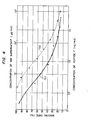
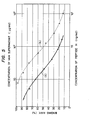
- the vertical axis represents a binding % (B/Bo x 100 wherein Bo is a percentage of (B) when the concentration of a sample is made 0) and the abscissa represents concentrations of th sample (concentration of Peptide C, F or H and, protein contents of YAM Supernatant).
- Fig. 3 shows results of ATLA specificity test using Antibody X; curves (a) and (b) represent Peptide C and TAM Supernatant, respectively.
- Fig. 4 shows results of ATLA specificity test using Antibody AA; curves (a) and (b) represent Peptide F and YAM Supernatant, respectively.
- Fig. 5 shows results of ATLA specificity test using Antibody BF; curves (a) and (b) represent Peptide H and YAM Supernatant, respectively.
Landscapes
- Chemical & Material Sciences (AREA)
- Life Sciences & Earth Sciences (AREA)
- Organic Chemistry (AREA)
- Health & Medical Sciences (AREA)
- Virology (AREA)
- Biophysics (AREA)
- General Health & Medical Sciences (AREA)
- Genetics & Genomics (AREA)
- Medicinal Chemistry (AREA)
- Molecular Biology (AREA)
- Proteomics, Peptides & Aminoacids (AREA)
- Biochemistry (AREA)
- Immunology (AREA)
- Gastroenterology & Hepatology (AREA)
- Peptides Or Proteins (AREA)
- Medicines That Contain Protein Lipid Enzymes And Other Medicines (AREA)
- Medicines Containing Antibodies Or Antigens For Use As Internal Diagnostic Agents (AREA)
Applications Claiming Priority (8)
| Application Number | Priority Date | Filing Date | Title |
|---|---|---|---|
| JP57171313A JPS5962558A (ja) | 1982-09-30 | 1982-09-30 | p24関連ペプチド |
| JP171313/82 | 1982-09-30 | ||
| JP58001495A JPS59128366A (ja) | 1983-01-07 | 1983-01-07 | ヒト白血病ウイルス関連ペプチド |
| JP1495/83 | 1983-01-07 | ||
| JP25233/83 | 1983-02-16 | ||
| JP58025233A JPS59150340A (ja) | 1983-02-16 | 1983-02-16 | Atla抗体の製造法 |
| JP30096/83 | 1983-02-23 | ||
| JP58030096A JPS59155347A (ja) | 1983-02-23 | 1983-02-23 | ヒト白血病ウイルス関連ペプチド |
Publications (3)
| Publication Number | Publication Date |
|---|---|
| EP0107053A2 true EP0107053A2 (fr) | 1984-05-02 |
| EP0107053A3 EP0107053A3 (en) | 1985-07-03 |
| EP0107053B1 EP0107053B1 (fr) | 1989-09-13 |
Family
ID=27453417
Family Applications (1)
| Application Number | Title | Priority Date | Filing Date |
|---|---|---|---|
| EP83109481A Expired EP0107053B1 (fr) | 1982-09-30 | 1983-09-23 | Virus de leucémie humain, peptides apparentés, anticorps des peptides et procédé de préparation d'anticorps |
Country Status (2)
| Country | Link |
|---|---|
| EP (1) | EP0107053B1 (fr) |
| DE (1) | DE3380564D1 (fr) |
Cited By (6)
| Publication number | Priority date | Publication date | Assignee | Title |
|---|---|---|---|---|
| EP0398707A1 (fr) * | 1989-05-17 | 1990-11-22 | Sangstat Medical Corporation | Traitement et diagnostic des virus lymphotropiques humains |
| WO1992001713A1 (fr) * | 1990-07-18 | 1992-02-06 | Biochem Pharma Inc. | Peptides et analogues et leurs melanges servant a detecter des anticorps agissant contre les virus htlv-i et htlv-ii |
| US5194586A (en) * | 1989-10-13 | 1993-03-16 | Kuraray Co., Ltd. | Anti-atla antibody binding peptides |
| US6919076B1 (en) | 1998-01-20 | 2005-07-19 | Pericor Science, Inc. | Conjugates of agents and transglutaminase substrate linking molecules |
| US6958148B1 (en) | 1998-01-20 | 2005-10-25 | Pericor Science, Inc. | Linkage of agents to body tissue using microparticles and transglutaminase |
| KR100856445B1 (ko) * | 2002-02-01 | 2008-09-04 | 바스프 에스이 | 신규한 프레임워크 물질에 의한 가스의 저장, 흡수 및방출 방법 |
Family Cites Families (1)
| Publication number | Priority date | Publication date | Assignee | Title |
|---|---|---|---|---|
| DE2323322A1 (de) * | 1973-05-09 | 1974-11-28 | Hoechst Ag | Neue peptide mit blutdrucksenkender wirkung und verfahren zu ihrer herstellung |
-
1983
- 1983-09-23 DE DE8383109481T patent/DE3380564D1/de not_active Expired
- 1983-09-23 EP EP83109481A patent/EP0107053B1/fr not_active Expired
Cited By (7)
| Publication number | Priority date | Publication date | Assignee | Title |
|---|---|---|---|---|
| EP0398707A1 (fr) * | 1989-05-17 | 1990-11-22 | Sangstat Medical Corporation | Traitement et diagnostic des virus lymphotropiques humains |
| US5194586A (en) * | 1989-10-13 | 1993-03-16 | Kuraray Co., Ltd. | Anti-atla antibody binding peptides |
| WO1992001713A1 (fr) * | 1990-07-18 | 1992-02-06 | Biochem Pharma Inc. | Peptides et analogues et leurs melanges servant a detecter des anticorps agissant contre les virus htlv-i et htlv-ii |
| AU658144B2 (en) * | 1990-07-18 | 1995-04-06 | Adaltis Inc. | Peptides and analogues and mixtures thereof for detecting antibodies to HTLV-I and HTLV-II viruses |
| US6919076B1 (en) | 1998-01-20 | 2005-07-19 | Pericor Science, Inc. | Conjugates of agents and transglutaminase substrate linking molecules |
| US6958148B1 (en) | 1998-01-20 | 2005-10-25 | Pericor Science, Inc. | Linkage of agents to body tissue using microparticles and transglutaminase |
| KR100856445B1 (ko) * | 2002-02-01 | 2008-09-04 | 바스프 에스이 | 신규한 프레임워크 물질에 의한 가스의 저장, 흡수 및방출 방법 |
Also Published As
| Publication number | Publication date |
|---|---|
| EP0107053B1 (fr) | 1989-09-13 |
| EP0107053A3 (en) | 1985-07-03 |
| DE3380564D1 (en) | 1989-10-19 |
Similar Documents
| Publication | Publication Date | Title |
|---|---|---|
| US4525300A (en) | Human leukemia virus-related peptides, antibodies of the peptides and a process for production of the antibodies | |
| US4983387A (en) | HIV related peptides, immunogenic antigens, and use therefor as subunit vaccine for AIDS virus | |
| CA1340735C (fr) | Peptides htlv-iii formant des enveloppes | |
| US5229490A (en) | Multiple antigen peptide system | |
| US4474754A (en) | Human interferon-related peptides, antigens, antibodies and process for preparing the same | |
| US4407965A (en) | Process for preparing antibody | |
| US4572800A (en) | Human leukemia virus-related peptides, a process for production thereof, antibodies of the peptides and a process for production of the antibodies | |
| JP2598245B2 (ja) | Htlv−iii/lavウイルス関連ペプチドに対する抗体 | |
| US4855406A (en) | Oncogene-related peptides | |
| EP0107053B1 (fr) | Virus de leucémie humain, peptides apparentés, anticorps des peptides et procédé de préparation d'anticorps | |
| HUT55035A (en) | Process for testing analogous peptides of hiv | |
| JPH0350760B2 (fr) | ||
| JPH0350759B2 (fr) | ||
| JPH0361680B2 (fr) | ||
| JPH0479356B2 (fr) | ||
| JPS60142925A (ja) | ヒト白血病ウイルス抗体の製造法 | |
| JPH0160480B2 (fr) | ||
| JPH04352797A (ja) | ヒトプレプローtrh関連ペプチド | |
| JPH0160036B2 (fr) | ||
| JPS6157598A (ja) | ヒト白血病ウイルス関連ペプチド | |
| JPH0326347B2 (fr) | ||
| CA2021779A1 (fr) | Anticorps monoclonal contre l'endotheline-3 ou son precurseur et utilisation |
Legal Events
| Date | Code | Title | Description |
|---|---|---|---|
| PUAI | Public reference made under article 153(3) epc to a published international application that has entered the european phase |
Free format text: ORIGINAL CODE: 0009012 |
|
| AK | Designated contracting states |
Designated state(s): CH DE FR GB IT LI NL SE |
|
| PUAL | Search report despatched |
Free format text: ORIGINAL CODE: 0009013 |
|
| AK | Designated contracting states |
Designated state(s): CH DE FR GB IT LI NL SE |
|
| 17P | Request for examination filed |
Effective date: 19850910 |
|
| 17Q | First examination report despatched |
Effective date: 19880315 |
|
| GRAA | (expected) grant |
Free format text: ORIGINAL CODE: 0009210 |
|
| AK | Designated contracting states |
Kind code of ref document: B1 Designated state(s): CH DE FR GB IT LI NL SE |
|
| PGFP | Annual fee paid to national office [announced via postgrant information from national office to epo] |
Ref country code: FR Payment date: 19890914 Year of fee payment: 7 |
|
| ET | Fr: translation filed | ||
| PGFP | Annual fee paid to national office [announced via postgrant information from national office to epo] |
Ref country code: NL Payment date: 19890930 Year of fee payment: 7 |
|
| PGFP | Annual fee paid to national office [announced via postgrant information from national office to epo] |
Ref country code: DE Payment date: 19891006 Year of fee payment: 7 |
|
| REF | Corresponds to: |
Ref document number: 3380564 Country of ref document: DE Date of ref document: 19891019 |
|
| ITF | It: translation for a ep patent filed | ||
| PLBE | No opposition filed within time limit |
Free format text: ORIGINAL CODE: 0009261 |
|
| STAA | Information on the status of an ep patent application or granted ep patent |
Free format text: STATUS: NO OPPOSITION FILED WITHIN TIME LIMIT |
|
| PGFP | Annual fee paid to national office [announced via postgrant information from national office to epo] |
Ref country code: CH Payment date: 19900730 Year of fee payment: 8 |
|
| PGFP | Annual fee paid to national office [announced via postgrant information from national office to epo] |
Ref country code: GB Payment date: 19900803 Year of fee payment: 8 |
|
| 26N | No opposition filed | ||
| ITTA | It: last paid annual fee | ||
| PG25 | Lapsed in a contracting state [announced via postgrant information from national office to epo] |
Ref country code: NL Effective date: 19910401 |
|
| NLV4 | Nl: lapsed or anulled due to non-payment of the annual fee | ||
| PG25 | Lapsed in a contracting state [announced via postgrant information from national office to epo] |
Ref country code: FR Effective date: 19910530 |
|
| PG25 | Lapsed in a contracting state [announced via postgrant information from national office to epo] |
Ref country code: DE Effective date: 19910601 |
|
| REG | Reference to a national code |
Ref country code: FR Ref legal event code: ST |
|
| PGFP | Annual fee paid to national office [announced via postgrant information from national office to epo] |
Ref country code: SE Payment date: 19910920 Year of fee payment: 9 |
|
| PG25 | Lapsed in a contracting state [announced via postgrant information from national office to epo] |
Ref country code: GB Effective date: 19910923 |
|
| PG25 | Lapsed in a contracting state [announced via postgrant information from national office to epo] |
Ref country code: LI Effective date: 19910930 Ref country code: CH Effective date: 19910930 |
|
| GBPC | Gb: european patent ceased through non-payment of renewal fee | ||
| REG | Reference to a national code |
Ref country code: CH Ref legal event code: PL |
|
| PG25 | Lapsed in a contracting state [announced via postgrant information from national office to epo] |
Ref country code: SE Effective date: 19920924 |
|
| EUG | Se: european patent has lapsed |
Ref document number: 83109481.8 Effective date: 19930406 |