EP0110202A2 - Verfahren zur Herstellung von Phenylethanolaminen - Google Patents
Verfahren zur Herstellung von Phenylethanolaminen Download PDFInfo
- Publication number
- EP0110202A2 EP0110202A2 EP83111112A EP83111112A EP0110202A2 EP 0110202 A2 EP0110202 A2 EP 0110202A2 EP 83111112 A EP83111112 A EP 83111112A EP 83111112 A EP83111112 A EP 83111112A EP 0110202 A2 EP0110202 A2 EP 0110202A2
- Authority
- EP
- European Patent Office
- Prior art keywords
- formula
- groups
- group
- hydrogen
- converted
- Prior art date
- Legal status (The legal status is an assumption and is not a legal conclusion. Google has not performed a legal analysis and makes no representation as to the accuracy of the status listed.)
- Granted
Links
- 238000000034 method Methods 0.000 title claims abstract description 25
- 238000002360 preparation method Methods 0.000 title claims abstract description 11
- -1 phenylethanol amines Chemical class 0.000 title description 12
- WRMNZCZEMHIOCP-UHFFFAOYSA-N 2-Phenylethanol Natural products OCCC1=CC=CC=C1 WRMNZCZEMHIOCP-UHFFFAOYSA-N 0.000 title 1
- ULSIYEODSMZIPX-UHFFFAOYSA-N phenylethanolamine Chemical class NCC(O)C1=CC=CC=C1 ULSIYEODSMZIPX-UHFFFAOYSA-N 0.000 claims abstract description 15
- KWOLFJPFCHCOCG-UHFFFAOYSA-N Acetophenone Chemical compound CC(=O)C1=CC=CC=C1 KWOLFJPFCHCOCG-UHFFFAOYSA-N 0.000 claims abstract description 13
- 238000011946 reduction process Methods 0.000 claims abstract description 6
- MYMOFIZGZYHOMD-UHFFFAOYSA-N Dioxygen Chemical compound O=O MYMOFIZGZYHOMD-UHFFFAOYSA-N 0.000 claims abstract description 3
- 125000001841 imino group Chemical group [H]N=* 0.000 claims abstract description 3
- 125000001424 substituent group Chemical group 0.000 claims description 13
- 239000001257 hydrogen Substances 0.000 claims description 12
- 229910052739 hydrogen Inorganic materials 0.000 claims description 12
- 125000006239 protecting group Chemical group 0.000 claims description 11
- UFHFLCQGNIYNRP-UHFFFAOYSA-N Hydrogen Chemical compound [H][H] UFHFLCQGNIYNRP-UHFFFAOYSA-N 0.000 claims description 10
- OKKJLVBELUTLKV-UHFFFAOYSA-N Methanol Chemical group OC OKKJLVBELUTLKV-UHFFFAOYSA-N 0.000 claims description 9
- WKBOTKDWSSQWDR-UHFFFAOYSA-N Bromine atom Chemical compound [Br] WKBOTKDWSSQWDR-UHFFFAOYSA-N 0.000 claims description 6
- 150000001412 amines Chemical class 0.000 claims description 6
- GDTBXPJZTBHREO-UHFFFAOYSA-N bromine Substances BrBr GDTBXPJZTBHREO-UHFFFAOYSA-N 0.000 claims description 6
- 229910052794 bromium Inorganic materials 0.000 claims description 6
- 239000002253 acid Substances 0.000 claims description 5
- 229910052736 halogen Inorganic materials 0.000 claims description 5
- 150000002367 halogens Chemical class 0.000 claims description 5
- 125000002887 hydroxy group Chemical group [H]O* 0.000 claims description 5
- 229910000033 sodium borohydride Inorganic materials 0.000 claims description 5
- 239000012279 sodium borohydride Substances 0.000 claims description 5
- 239000004215 Carbon black (E152) Substances 0.000 claims description 4
- 229930195733 hydrocarbon Natural products 0.000 claims description 4
- 125000000468 ketone group Chemical group 0.000 claims description 4
- 150000003839 salts Chemical class 0.000 claims description 4
- 125000001931 aliphatic group Chemical group 0.000 claims description 3
- 125000003277 amino group Chemical group 0.000 claims description 3
- 125000004435 hydrogen atom Chemical group [H]* 0.000 claims description 3
- KKFDJZZADQONDE-UHFFFAOYSA-N (hydridonitrato)hydroxidocarbon(.) Chemical compound O[C]=N KKFDJZZADQONDE-UHFFFAOYSA-N 0.000 claims description 2
- 125000005157 alkyl carboxy group Chemical group 0.000 claims description 2
- 125000004390 alkyl sulfonyl group Chemical group 0.000 claims description 2
- 125000004391 aryl sulfonyl group Chemical group 0.000 claims description 2
- 125000005843 halogen group Chemical group 0.000 claims description 2
- 150000002431 hydrogen Chemical class 0.000 claims description 2
- 125000002924 primary amino group Chemical group [H]N([H])* 0.000 claims description 2
- 125000000467 secondary amino group Chemical group [H]N([*:1])[*:2] 0.000 claims description 2
- 125000001302 tertiary amino group Chemical group 0.000 claims description 2
- 230000026030 halogenation Effects 0.000 claims 1
- 238000005658 halogenation reaction Methods 0.000 claims 1
- 125000001183 hydrocarbyl group Chemical group 0.000 claims 1
- 238000006243 chemical reaction Methods 0.000 abstract description 3
- 150000003141 primary amines Chemical class 0.000 abstract description 2
- 239000000203 mixture Substances 0.000 description 15
- QTBSBXVTEAMEQO-UHFFFAOYSA-N Acetic acid Chemical compound CC(O)=O QTBSBXVTEAMEQO-UHFFFAOYSA-N 0.000 description 8
- 239000012074 organic phase Substances 0.000 description 7
- HEDRZPFGACZZDS-UHFFFAOYSA-N Chloroform Chemical compound ClC(Cl)Cl HEDRZPFGACZZDS-UHFFFAOYSA-N 0.000 description 6
- YMWUJEATGCHHMB-UHFFFAOYSA-N Dichloromethane Chemical compound ClCCl YMWUJEATGCHHMB-UHFFFAOYSA-N 0.000 description 6
- VEXZGXHMUGYJMC-UHFFFAOYSA-N Hydrochloric acid Chemical compound Cl VEXZGXHMUGYJMC-UHFFFAOYSA-N 0.000 description 6
- 238000006277 sulfonation reaction Methods 0.000 description 6
- 239000000047 product Substances 0.000 description 5
- RTZKZFJDLAIYFH-UHFFFAOYSA-N Diethyl ether Chemical compound CCOCC RTZKZFJDLAIYFH-UHFFFAOYSA-N 0.000 description 4
- XLYOFNOQVPJJNP-UHFFFAOYSA-N water Substances O XLYOFNOQVPJJNP-UHFFFAOYSA-N 0.000 description 4
- UHOVQNZJYSORNB-UHFFFAOYSA-N Benzene Chemical compound C1=CC=CC=C1 UHOVQNZJYSORNB-UHFFFAOYSA-N 0.000 description 3
- LFQSCWFLJHTTHZ-UHFFFAOYSA-N Ethanol Chemical compound CCO LFQSCWFLJHTTHZ-UHFFFAOYSA-N 0.000 description 3
- XEKOWRVHYACXOJ-UHFFFAOYSA-N Ethyl acetate Chemical compound CCOC(C)=O XEKOWRVHYACXOJ-UHFFFAOYSA-N 0.000 description 3
- NTIZESTWPVYFNL-UHFFFAOYSA-N Methyl isobutyl ketone Chemical compound CC(C)CC(C)=O NTIZESTWPVYFNL-UHFFFAOYSA-N 0.000 description 3
- UIHCLUNTQKBZGK-UHFFFAOYSA-N Methyl isobutyl ketone Natural products CCC(C)C(C)=O UIHCLUNTQKBZGK-UHFFFAOYSA-N 0.000 description 3
- HEMHJVSKTPXQMS-UHFFFAOYSA-M Sodium hydroxide Chemical compound [OH-].[Na+] HEMHJVSKTPXQMS-UHFFFAOYSA-M 0.000 description 3
- YXFVVABEGXRONW-UHFFFAOYSA-N Toluene Chemical compound CC1=CC=CC=C1 YXFVVABEGXRONW-UHFFFAOYSA-N 0.000 description 3
- 229960000583 acetic acid Drugs 0.000 description 3
- 239000008346 aqueous phase Substances 0.000 description 3
- 239000000460 chlorine Substances 0.000 description 3
- 229910052801 chlorine Inorganic materials 0.000 description 3
- 238000004519 manufacturing process Methods 0.000 description 3
- 229910052757 nitrogen Inorganic materials 0.000 description 3
- 239000011541 reaction mixture Substances 0.000 description 3
- XWTYSIMOBUGWOL-UHFFFAOYSA-N (+-)-Terbutaline Chemical compound CC(C)(C)NCC(O)C1=CC(O)=CC(O)=C1 XWTYSIMOBUGWOL-UHFFFAOYSA-N 0.000 description 2
- YREYLAVBNPACJM-UHFFFAOYSA-N 2-(tert-butylamino)-1-(2-chlorophenyl)ethanol Chemical compound CC(C)(C)NCC(O)C1=CC=CC=C1Cl YREYLAVBNPACJM-UHFFFAOYSA-N 0.000 description 2
- SLRMQYXOBQWXCR-UHFFFAOYSA-N 2154-56-5 Chemical compound [CH2]C1=CC=CC=C1 SLRMQYXOBQWXCR-UHFFFAOYSA-N 0.000 description 2
- FIEHGOMKUQWWMR-UHFFFAOYSA-N 3-[2-(tert-butylamino)-1-hydroxyethyl]phenol Chemical compound CC(C)(C)NCC(O)C1=CC=CC(O)=C1 FIEHGOMKUQWWMR-UHFFFAOYSA-N 0.000 description 2
- QGZKDVFQNNGYKY-UHFFFAOYSA-N Ammonia Chemical compound N QGZKDVFQNNGYKY-UHFFFAOYSA-N 0.000 description 2
- IJGRMHOSHXDMSA-UHFFFAOYSA-N Atomic nitrogen Chemical compound N#N IJGRMHOSHXDMSA-UHFFFAOYSA-N 0.000 description 2
- KDLHZDBZIXYQEI-UHFFFAOYSA-N Palladium Chemical compound [Pd] KDLHZDBZIXYQEI-UHFFFAOYSA-N 0.000 description 2
- CDBYLPFSWZWCQE-UHFFFAOYSA-L Sodium Carbonate Chemical compound [Na+].[Na+].[O-]C([O-])=O CDBYLPFSWZWCQE-UHFFFAOYSA-L 0.000 description 2
- CIUQDSCDWFSTQR-UHFFFAOYSA-N [C]1=CC=CC=C1 Chemical compound [C]1=CC=CC=C1 CIUQDSCDWFSTQR-UHFFFAOYSA-N 0.000 description 2
- 150000008062 acetophenones Chemical class 0.000 description 2
- NDAUXUAQIAJITI-UHFFFAOYSA-N albuterol Chemical compound CC(C)(C)NCC(O)C1=CC=C(O)C(CO)=C1 NDAUXUAQIAJITI-UHFFFAOYSA-N 0.000 description 2
- WGQKYBSKWIADBV-UHFFFAOYSA-N benzylamine Chemical compound NCC1=CC=CC=C1 WGQKYBSKWIADBV-UHFFFAOYSA-N 0.000 description 2
- HQABUPZFAYXKJW-UHFFFAOYSA-N butan-1-amine Chemical compound CCCCN HQABUPZFAYXKJW-UHFFFAOYSA-N 0.000 description 2
- 125000004432 carbon atom Chemical group C* 0.000 description 2
- 239000003054 catalyst Substances 0.000 description 2
- 238000009903 catalytic hydrogenation reaction Methods 0.000 description 2
- 150000001875 compounds Chemical class 0.000 description 2
- 239000007789 gas Substances 0.000 description 2
- 238000007327 hydrogenolysis reaction Methods 0.000 description 2
- 238000002844 melting Methods 0.000 description 2
- 230000008018 melting Effects 0.000 description 2
- 125000002496 methyl group Chemical group [H]C([H])([H])* 0.000 description 2
- 125000004433 nitrogen atom Chemical group N* 0.000 description 2
- LIGACIXOYTUXAW-UHFFFAOYSA-N phenacyl bromide Chemical compound BrCC(=O)C1=CC=CC=C1 LIGACIXOYTUXAW-UHFFFAOYSA-N 0.000 description 2
- IMACFCSSMIZSPP-UHFFFAOYSA-N phenacyl chloride Chemical compound ClCC(=O)C1=CC=CC=C1 IMACFCSSMIZSPP-UHFFFAOYSA-N 0.000 description 2
- 150000003254 radicals Chemical class 0.000 description 2
- 239000007858 starting material Substances 0.000 description 2
- 229960000195 terbutaline Drugs 0.000 description 2
- YBRBMKDOPFTVDT-UHFFFAOYSA-N tert-butylamine Chemical compound CC(C)(C)N YBRBMKDOPFTVDT-UHFFFAOYSA-N 0.000 description 2
- 229960000859 tulobuterol Drugs 0.000 description 2
- JWZZKOKVBUJMES-UHFFFAOYSA-N (+-)-Isoprenaline Chemical compound CC(C)NCC(O)C1=CC=C(O)C(O)=C1 JWZZKOKVBUJMES-UHFFFAOYSA-N 0.000 description 1
- QODJHYBESCIPOG-UHFFFAOYSA-N (3-acetyl-5-acetyloxyphenyl) acetate Chemical compound CC(=O)OC1=CC(OC(C)=O)=CC(C(C)=O)=C1 QODJHYBESCIPOG-UHFFFAOYSA-N 0.000 description 1
- CCDOBBGYSDWGKY-UHFFFAOYSA-N (3-acetylphenyl) benzoate Chemical compound CC(=O)C1=CC=CC(OC(=O)C=2C=CC=CC=2)=C1 CCDOBBGYSDWGKY-UHFFFAOYSA-N 0.000 description 1
- YZXKGCIDSYWQIV-UHFFFAOYSA-N 1-(2,5-dimethoxyphenyl)-2-(propan-2-ylamino)propan-1-ol Chemical compound COC1=CC=C(OC)C(C(O)C(C)NC(C)C)=C1 YZXKGCIDSYWQIV-UHFFFAOYSA-N 0.000 description 1
- CSCPPACGZOOCGX-UHFFFAOYSA-N Acetone Chemical compound CC(C)=O CSCPPACGZOOCGX-UHFFFAOYSA-N 0.000 description 1
- ZAMOUSCENKQFHK-UHFFFAOYSA-N Chlorine atom Chemical compound [Cl] ZAMOUSCENKQFHK-UHFFFAOYSA-N 0.000 description 1
- YNQLUTRBYVCPMQ-UHFFFAOYSA-N Ethylbenzene Chemical compound CCC1=CC=CC=C1 YNQLUTRBYVCPMQ-UHFFFAOYSA-N 0.000 description 1
- 229930194542 Keto Natural products 0.000 description 1
- NIPNSKYNPDTRPC-UHFFFAOYSA-N N-[2-oxo-2-(2,4,6,7-tetrahydrotriazolo[4,5-c]pyridin-5-yl)ethyl]-2-[[3-(trifluoromethoxy)phenyl]methylamino]pyrimidine-5-carboxamide Chemical compound O=C(CNC(=O)C=1C=NC(=NC=1)NCC1=CC(=CC=C1)OC(F)(F)F)N1CC2=C(CC1)NN=N2 NIPNSKYNPDTRPC-UHFFFAOYSA-N 0.000 description 1
- AFCARXCZXQIEQB-UHFFFAOYSA-N N-[3-oxo-3-(2,4,6,7-tetrahydrotriazolo[4,5-c]pyridin-5-yl)propyl]-2-[[3-(trifluoromethoxy)phenyl]methylamino]pyrimidine-5-carboxamide Chemical compound O=C(CCNC(=O)C=1C=NC(=NC=1)NCC1=CC(=CC=C1)OC(F)(F)F)N1CC2=C(CC1)NN=N2 AFCARXCZXQIEQB-UHFFFAOYSA-N 0.000 description 1
- PMZURENOXWZQFD-UHFFFAOYSA-L Sodium Sulfate Chemical compound [Na+].[Na+].[O-]S([O-])(=O)=O PMZURENOXWZQFD-UHFFFAOYSA-L 0.000 description 1
- AWMVMTVKBNGEAK-UHFFFAOYSA-N Styrene oxide Chemical compound C1OC1C1=CC=CC=C1 AWMVMTVKBNGEAK-UHFFFAOYSA-N 0.000 description 1
- RSLNRVYIRDVHLY-UHFFFAOYSA-N Tulobuterol hydrochloride Chemical compound [Cl-].CC(C)(C)[NH2+]CC(O)C1=CC=CC=C1Cl RSLNRVYIRDVHLY-UHFFFAOYSA-N 0.000 description 1
- CSCPPACGZOOCGX-WFGJKAKNSA-N acetone d6 Chemical compound [2H]C([2H])([2H])C(=O)C([2H])([2H])[2H] CSCPPACGZOOCGX-WFGJKAKNSA-N 0.000 description 1
- 125000002777 acetyl group Chemical group [H]C([H])([H])C(*)=O 0.000 description 1
- 125000003668 acetyloxy group Chemical group [H]C([H])([H])C(=O)O[*] 0.000 description 1
- 125000002252 acyl group Chemical group 0.000 description 1
- 230000001800 adrenalinergic effect Effects 0.000 description 1
- 125000000217 alkyl group Chemical group 0.000 description 1
- 229910021529 ammonia Inorganic materials 0.000 description 1
- 125000003435 aroyl group Chemical group 0.000 description 1
- 125000003118 aryl group Chemical group 0.000 description 1
- 125000003236 benzoyl group Chemical group [H]C1=C([H])C([H])=C(C([H])=C1[H])C(*)=O 0.000 description 1
- 125000001797 benzyl group Chemical group [H]C1=C([H])C([H])=C(C([H])=C1[H])C([H])([H])* 0.000 description 1
- 230000031709 bromination Effects 0.000 description 1
- 238000005893 bromination reaction Methods 0.000 description 1
- 229940124630 bronchodilator Drugs 0.000 description 1
- 239000000168 bronchodilator agent Substances 0.000 description 1
- 230000001813 broncholytic effect Effects 0.000 description 1
- 230000000572 bronchospasmolytic effect Effects 0.000 description 1
- 239000007795 chemical reaction product Substances 0.000 description 1
- 239000007859 condensation product Substances 0.000 description 1
- 239000012043 crude product Substances 0.000 description 1
- 239000013078 crystal Substances 0.000 description 1
- 238000002425 crystallisation Methods 0.000 description 1
- 230000008025 crystallization Effects 0.000 description 1
- 230000001419 dependent effect Effects 0.000 description 1
- 235000014113 dietary fatty acids Nutrition 0.000 description 1
- 238000001035 drying Methods 0.000 description 1
- 239000000194 fatty acid Substances 0.000 description 1
- 229930195729 fatty acid Natural products 0.000 description 1
- 150000004665 fatty acids Chemical class 0.000 description 1
- 238000001914 filtration Methods 0.000 description 1
- 239000012362 glacial acetic acid Substances 0.000 description 1
- 150000002430 hydrocarbons Chemical group 0.000 description 1
- IXCSERBJSXMMFS-UHFFFAOYSA-N hydrogen chloride Substances Cl.Cl IXCSERBJSXMMFS-UHFFFAOYSA-N 0.000 description 1
- 229910000041 hydrogen chloride Inorganic materials 0.000 description 1
- 230000007062 hydrolysis Effects 0.000 description 1
- 238000006460 hydrolysis reaction Methods 0.000 description 1
- TUJKJAMUKRIRHC-UHFFFAOYSA-N hydroxyl Chemical compound [OH] TUJKJAMUKRIRHC-UHFFFAOYSA-N 0.000 description 1
- 239000005457 ice water Substances 0.000 description 1
- 125000000959 isobutyl group Chemical group [H]C([H])([H])C([H])(C([H])([H])[H])C([H])([H])* 0.000 description 1
- 229960001317 isoprenaline Drugs 0.000 description 1
- 239000007791 liquid phase Substances 0.000 description 1
- 239000000155 melt Substances 0.000 description 1
- LMOINURANNBYCM-UHFFFAOYSA-N metaproterenol Chemical compound CC(C)NCC(O)C1=CC(O)=CC(O)=C1 LMOINURANNBYCM-UHFFFAOYSA-N 0.000 description 1
- 238000010327 methods by industry Methods 0.000 description 1
- 125000000956 methoxy group Chemical group [H]C([H])([H])O* 0.000 description 1
- WCYWZMWISLQXQU-UHFFFAOYSA-N methyl Chemical compound [CH3] WCYWZMWISLQXQU-UHFFFAOYSA-N 0.000 description 1
- 239000012452 mother liquor Substances 0.000 description 1
- 229960002657 orciprenaline Drugs 0.000 description 1
- 125000005440 p-toluyl group Chemical group [H]C1=C([H])C(=C([H])C([H])=C1C(*)=O)C([H])([H])[H] 0.000 description 1
- 239000012071 phase Substances 0.000 description 1
- 238000005191 phase separation Methods 0.000 description 1
- 125000001997 phenyl group Chemical group [H]C1=C([H])C([H])=C(*)C([H])=C1[H] 0.000 description 1
- 229950006768 phenylethanolamine Drugs 0.000 description 1
- OJUGVDODNPJEEC-UHFFFAOYSA-N phenylglyoxal Chemical compound O=CC(=O)C1=CC=CC=C1 OJUGVDODNPJEEC-UHFFFAOYSA-N 0.000 description 1
- 239000002243 precursor Substances 0.000 description 1
- 238000001953 recrystallisation Methods 0.000 description 1
- 229960002052 salbutamol Drugs 0.000 description 1
- 150000003335 secondary amines Chemical class 0.000 description 1
- 229910000029 sodium carbonate Inorganic materials 0.000 description 1
- 229910052938 sodium sulfate Inorganic materials 0.000 description 1
- 235000011152 sodium sulphate Nutrition 0.000 description 1
- 239000002904 solvent Substances 0.000 description 1
- 238000003756 stirring Methods 0.000 description 1
- 239000000126 substance Substances 0.000 description 1
- 125000000472 sulfonyl group Chemical group *S(*)(=O)=O 0.000 description 1
- 230000001975 sympathomimetic effect Effects 0.000 description 1
- 238000003786 synthesis reaction Methods 0.000 description 1
- 230000001225 therapeutic effect Effects 0.000 description 1
- 229960004846 tulobuterol hydrochloride Drugs 0.000 description 1
- XJBCFFLVLOPYBV-UHFFFAOYSA-N zinterol Chemical compound C=1C=C(O)C(NS(C)(=O)=O)=CC=1C(O)CNC(C)(C)CC1=CC=CC=C1 XJBCFFLVLOPYBV-UHFFFAOYSA-N 0.000 description 1
- 229950004209 zinterol Drugs 0.000 description 1
Classifications
-
- C—CHEMISTRY; METALLURGY
- C07—ORGANIC CHEMISTRY
- C07C—ACYCLIC OR CARBOCYCLIC COMPOUNDS
- C07C45/00—Preparation of compounds having >C = O groups bound only to carbon or hydrogen atoms; Preparation of chelates of such compounds
- C07C45/61—Preparation of compounds having >C = O groups bound only to carbon or hydrogen atoms; Preparation of chelates of such compounds by reactions not involving the formation of >C = O groups
- C07C45/63—Preparation of compounds having >C = O groups bound only to carbon or hydrogen atoms; Preparation of chelates of such compounds by reactions not involving the formation of >C = O groups by introduction of halogen; by substitution of halogen atoms by other halogen atoms
Definitions
- the present invention consists in a process for the preparation of phenylethanolamines of the formula in which R 1 , R 2 and R 3 are identical or different and are hydrogen, halogen, free hydroxyl groups etherified or acylated with a hydrocarbon radical, optionally substituted with hydroxyl or with primary, secondary or tertiary amino groups or in an aliphatic part by an S0 2- member interrupted hydrocarbon groups, free or esterified or amidated with lower alkyl carboxyl groups, or free, alkylated, acylated or substituted with an alkylsulfonyl or arylsulfonyl group or a carbamoyl radical, and R 4 and R 5 are hydrogen or a hydrocarbon radical.
- the acyl groups are either acid residues of simple fatty acids with 1 to 4 carbon atoms, such as, for example, the acetyl or isobutyryl residue, or else aroyl residues such as in particular the benzoyl, the p-toluoyl or the anisoyl radical.
- phenylethanolamines of the formula (5) have lower aliphatic or alkyl groups as substituents or as a sub-grouping of substituents, these are in particular those with 1 to 4 carbon atoms and apparently preferably the methyl radical and, in the case of interruption, by a sulfonyl group accordingly around the methanesulfonylmethyl radical.
- the focus is also on simple aryl or aralkyl radicals such as, in particular, the benzyl radical.
- the phenylethanolamines of the class mentioned are accessible in various ways.
- One of these leads via a glyoxyloylbenzene which is appropriately substituted on the ring and, if necessary, provided with suitable protective groups on the substituents, from which the product can be obtained by reaction with an amine of the formula and subsequent reduction.
- a second method is based on the phenylepoxyethane which is appropriately substituted on the ring and which, when reacted with the amine of the formula (3), leads directly to a phenylethane clamine which then only requires the removal of any protective groups from the ring substituents.
- the condensation product obtained leads to the desired product via one or more reduction or hydrogenolysis operations.
- the desired product via one or more reduction or hydrogenolysis operations.
- INN international short name
- the methoxy in the 3-position of the ring to convert the carbonyl radical into the desired oximethyl radical, then to reduce the keto group to the carbinol group and finally to remove the benzyl protective group on the nitrogen atom by hydrogenolysis by catalytic hydrogenation.
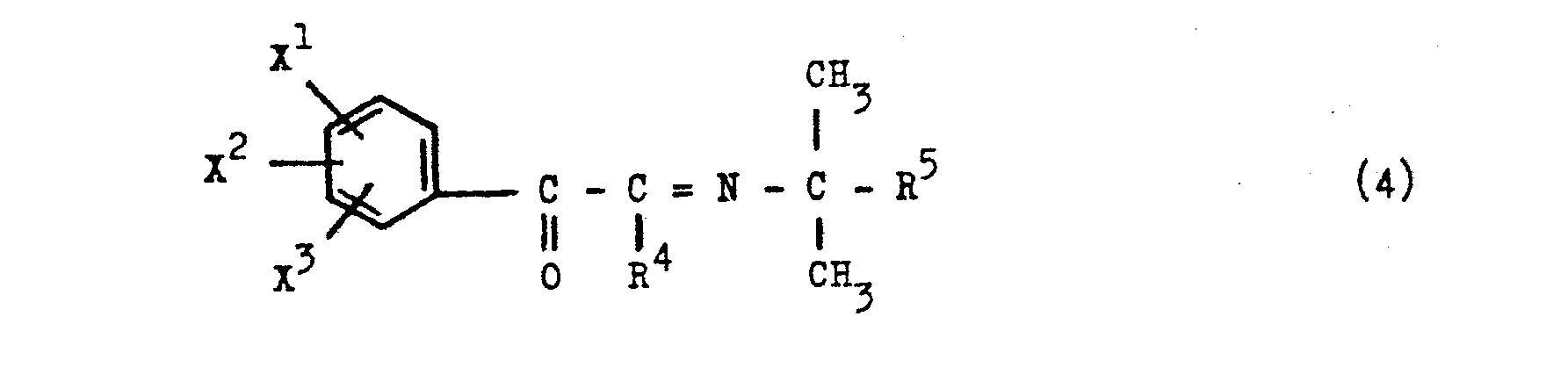
- the method of the invention is characterized in that an azomethine of the formula in which X 1 , X 2 and X 3 are either the groups R 1 , R 2 and R 3 or also substituents which, for example by splitting off protective groups, by reduction, hydrolysis or the like, into the groups R I , R 2 or R 3 can be transferred, subjected to a reduction process in which the keto group is reduced to the carbinol group and at the same time the azomething group to the amino group.
- the base obtained is then converted into an acid addition salt or the base is released therefrom.
- the individual isomers can be isolated from the products obtained in the form of a mixture of optically active isomers by any known method for separating optically active amines.
- the reduction process can be carried out using various methods.
- the reduction has proven to be particularly advantageous proven with sodium borohydride.
- catalytic hydrogenation can also be used, for example by the action of hydrogen in the presence of a palladium / carbon catalyst.
- the method of the invention exhibits its particular advantages when the protective groups and reduction method to be used to protect delicate ring substituents are selected and coordinated with one another such that, when keto and azomethane groups are reduced, the protective groups are split off or "precursor substituents" X 1 , X 2 , X 3 are converted into the desired substituents R 1 or R 2 and R 3 .
- the choice of the most suitable protective groups from case to case can be left to the person skilled in the art with organic syntheses within the scope of the process according to the invention.
- the azomethines of the formula (4) which are used as starting materials in the process according to the invention and which are mostly new substances can be prepared by various methods known per se. However, their accessibility via the reaction of ⁇ . ⁇ -dihalo-acetophenones of the formula proved to be surprising in which "Hal” represents a halogen atom, in particular chlorine or bromine and preferably bromine, with amines of the formula (3) which runs smoothly and in good yields.
- the dihalides of the formula (2) can in turn be obtained in excellent yields by treating an acetophenone of the formula (1) with the at least double molar amount of halogen.
- the invention also encompasses the process for the preparation position of phenylethanolamines of the formula (5), in which one converts an acetophenone of the formula (1) into the ⁇ , ⁇ -dihaloacetophenone of the formula (2) by treatment with the at least double-molar amount of halogen and then with an amine of the formula (3) can react, whereupon the azomethine of the formula (4) formed as a reaction product is subjected to a reduction process which reduces the keto oxygen and the imino group and, if desired, the base obtained after cleaving off any remaining protective groups is converted into an acid addition salt or from one is released.
- a phenylethanolamine of the formula (5) obtainable according to the invention in which R 4 is hydrogen and R 5 is the benzyl radical
- zinterol the phenyl group of which in the 3-position with Methanesulfonylamino group and substituted in the 4-position with a hydroxyl radical.
- examples of products of the formula (5) which can be obtained according to the invention and in which R 4 and R 5 each have a hydrogen atom are isoprenaline (with the 3,4-dihydroxyphenyl group) and orciprenaline (with the 3,5-dihydroxyphenyl group) .
- the organic phase which contains the resulting azomethine of the formula (4), is then stirred vigorously at 10-20 ° C. with 37.0 g (1 mol) of sodium borohydride in 450 ml of water until the azomethine has disappeared in the gas chromatogram. After phase separation, the organic phase is extracted several times with 1N hydrochloric acid. The combined aqueous phases are brought back to pH 11-12 with about 150 ml of 30% sodium hydroxide solution and twice with 300 ml of isobutyl extracted methyl ketone. After drying and filtering, the tulobuterol in the form of the hydrochloride is precipitated from the organic phase by introducing gaseous hydrogen chloride. Sucking off gives 135 g of crude product which is recrystallized from isobutyl methyl ketone.
- the mixture is stirred for 1 hour and then adjusted to pH 1-2 with dilute hydrochloric acid.
- the mixture is largely concentrated on a rotary evaporator and the residue is extracted with 50 ml of isobutyl methyl ketone.
- the aqueous phase is made up with ammonia. Adjusted to pH 10 and extracted twice with 100 ml of isobutyl methyl ketone.
- the mixture is concentrated and 42.5 g of crude base are obtained, which is recrystallized from 150 ml of benzene, giving 38 g of 2-tert-butylamino-l- (3-hydroxyphenyl) ethanol of mp. 120-122.5 ° C. Yield 65% based on the dibromide of the formula (2).
Landscapes
- Chemical & Material Sciences (AREA)
- Organic Chemistry (AREA)
- Chemical Kinetics & Catalysis (AREA)
- Organic Low-Molecular-Weight Compounds And Preparation Thereof (AREA)
- Acyclic And Carbocyclic Compounds In Medicinal Compositions (AREA)
- Hydrogenated Pyridines (AREA)
Abstract
Description
- Die vorliegende Erfindung besteht in einem Verfahren zur Herstellung von Phenylethanolaminen der Formel

- Es sind seit dem Erscheinen von GB-PS 1'199'630, 1'200'866, 1'214'012 und analogen Veröffentlichungen zahlreiche Phenylethanolamine der Formel (5) bekanntgeworden, die wegen wertvoller pharmakoaynamischer, namentlich sympathomimet ischer Eigenschaften Interesse erweckt und teilweise als Bronchospasmolytica therapeutische Verwendung gefunden haben.
- Bei den bis dahin als Broncholytica bekanntgewordenen Phenylethanolaminen der Formel (5), bei welcher der Phenylrest mit acylierten Hydroxygruppen substituiert ist, sind die Acylgruppen entweder Säurereste einfacher Fettsäuren mit 1 bis 4 C-Atomen wie beispielsweise der Acetyl- oder der Isobutyrylrest oder aber Aroylreste wie insbesondere der Benzoyl-, der p-Toluoyl- oder der Anisoylrest. Soweit die bereits bekannten Phenylethanolamine der Formel (5) als Substituenten oder als Teilgruppierung von Substituenten niedere aliphatische bzw. Alkylgruppen aufweisen, handelt es sich dabei insbesondere um solche mit 1 bis 4 C-Atomen und offenbar vorzugsweise um den Methylrest und im Falle der Unterbrechung durch eine Sulfonylgruppe demgemäss um den Methansulfonylmethylrest. Als Kohlenwasserstoffrest stehen neben den eben erwähnten niederen Alkylresten auch einfache Aryl- bzw. Aralkylreste wie insbesondere der Benzylrest im Vordergrund des Interesses.
- Nach dem durch die erwähnten britischen Patentschriften repräsentierten Stand der Technik sind die Phenylethanolamine der genannten Klasse auf verschiedenen Wegen zugänglich. Einer derselben führt über ein am Ring entsprechend substituiertes und an den Substituenten nötigenfalls mit geeigneten Schutzgruppen versehenes Glyoxyloylbenzol, aus dem sich das Produkt erhalten lässt durch Umsetzung mit einem Amin der Formel


- überführt. Dieses darf jedoch zur Einführung der Aminogruppe nicht mit einem primären Amin der Formel (3) umgesetzt werden, weil letzteres zumindest teilweise mit zwei Bromacetophenon-Molekülen reagieren würde. Man ist daher auf die Verwendung eines am Stickstoffatom eine Schutzgruppe aufweisenden sekundären Amins angewiesen und benützt hiefür vorzugsweise das Benzylamin der Formel

- Ausgehend vom erhaltenen Kondensationsprodukt gelangt man je nach der Natur der Ringsubstituenten und Schutzgruppen über eine oder mehrere Reduktions- bzw. Hydrogenolyse-Operationen zum gewünschten Produkt. So hat es sich beispielsweise bei der Herstellung von 2-tert-Butyl-amino-1-(4-hydroxy-3-hydroxymethyl-phenyl)-ethanol, welches unter der Internationalen Kurzbezeichnung (INN) "Salbutamol" bekanntgeworden ist, als angezeigt erwiesen, zunächst den in 3-Stellung des Ringes befindlichen Methoxycarbonylrest in den gewünschten Oximethylrest überzuführen, anschliessend die Ketogruppe zur Carbinolgruppe zu reduzieren und schliesslich durch katalytische Hydrierung die Benzylschutzgruppe am Stickstoffatom hydrogenolytisch abzuspalten.
- Es konnte nun ein neuer Weg gefunden werden, der zu den Verbindungen der Formel (5) führt und gegenüber den bis dahin bekanntgewordenen Verfahren zahlreiche überraschenden verfahrenstechnischen und wirtschaftlichen Vorteile gewährt.
- Das Verfahren der Erfindung ist dadurch gekennzeichnet, dass man ein Azomethin der Formel

- Gewünschtenfalls wird die erhaltene Base anschliessend in ein Säureadditionssalz umgewandelt bzw. die Base aus einem solchen freigesetzt. Aus den in Form eines Gemisches von optisch aktiven Isomeren anfallenden Produkten können die einzelnen Isomeren nach jeder bekannten Methode zur Trennung optisch aktiver Amine isoliert werden.
- Die Durchführung des Reduktionsprozesses kann nach verschiedenen Methoden erfolgen. Als besonders vorteilhaft hat sich die Reduktion mit Natriumborhydrid erwiesen. Es kann jedoch auch mit katalytischer Hydrierung, beispielsweise mittels Einwirkung von Wasserstoff in Gegenwart eines Palladium/Kohle-Katalysators gearbeitet werden. Das Verfahren der Erfindung entfaltet seine besonderen Vorteile dann, wenn zum Schutz delikater Ringsubstituenten einzusetzende Schutzgruppen und Reduktionsmethode so gewählt und aufeinander abgestimmt werden, dass bei der Reduktion von Keto- und Azomethingruppen gleichzeitig die Schutzgruppen abgespalten bzw. "Vorläufer-Substituenten" Xl, X2, X3 in die gewünschten Substituenten Rl bzw. R2 und R3 übergeführt werden. Die Wahl der von Fall zu Fall am besten geeigenten Schutzgruppen kann im Rahmen des erfindungsgemässen Verfahrens dem mit organischen Synthesen vertrauten Fachmann überlassen werden.
- Die beim erfindungsgemässen Verfahren als Ausgangsstoffe dienenden Azomethine der Formel (4), bei denen es sich meistenteils um neue Substanzen handelt, lassen sich nach verschiedenen an sich bekannten Methoden herstellen. Als überraschend erwies sich jedoch ihre leichte Zugänglichkeit über die Reaktion von α.α-Dihalogen-acetophenonen der Formel

- Die Erfindung umfasst dementsprechend auch das Verfahren zur Herstellung von Phenylethanolaminen der Formel (5), bei welchem man ein Acetophenon der Formel (1) durch Behandlung mit der mindestens doppelt-molaren Menge Halogen in das α,α-Dihalogen-acetophenon der Formel (2) überführt und dieses anschliessend mit einem Amin der Formel (3) reagieren lässt, worauf das als Reaktionsprodukt entstandene Azomethin der Formel (4) einem die Reduzierung des Keto-Sauerstoffes und der Iminogruppe bewirkenden Reduktionsprozess unterworfen und die erhaltene Base nach Abspaltung allfälliger verbliebener Schutzgruppen gewünschtenfalls in ein Säureadditionssalz umgewandelt bzw. aus einem solchen freigesetzt wird.
- Sowohl das von den Azomethinen (4) zu den Phenylethanolaminen (5) führende Verfahren der Erfindung als auch das von den Acetophenonen (1) zu denselben Phenylethanolaminen (5) führende erfindungsgemässe Verfahren eignet sich für vielfältigste Anwendungen und kommt u.a. für die Herstellung der folgenden als Bronchodilatatoren und Adrenergica bekanntgewordenen Verbindungen der Formel (5) in Betracht, bei denen R4 Wasserstoff und R5 die Methylgruppe ist und deren Phenylrest wie folgt substituiert ist:

- Als Beispiel eines erfindungsgemäss erhältlichen Phenyläthanolamins der Formel (5), bei welchem R4 Wasserstoff und R5 der Benzylrest ist, sei das Zinterol genannt, dessen Phenylgruppe in 3-Stellung mit der Methansulfonylaminogruppe und in 4-Stellung mit einem Hydroxylrest substituiert ist. Beispiele von erfindungsgemäss erhältlichen Produkten der Formel (5), bei denen sich an der Stelle von R4 und R5 je ein Wasserstoffatom befindet, sind Isoprenalin (mit der 3,4-Dihydroxyphenylgruppe) und Orciprenalin (mit der 3,5-Dihydroxyphenylgruppe). Ein Beispiel eines Produktes der Formel (5) mit R4=Methyl und R5=Wasserstoff ist das N-Isopropyl-methoxamin (mit der 2,5-Dimethoxy-phenylgruppe).
- Die Erfindung soll im folgenden anhand von Beispielen noch eingehender erläutert werden.
- In einem 750 ml Sulfierkolben werden 140 g (0,9 mol) 2-Chloracetophenon in 200 ml Eisessig gelöst. Im Verlauf von 90 min werden unter Einhalten einer Temperatur im Bereich von 0 bis 10°C 292 g (1,82 mol) Brom zugetropft. Anschliessend wird das Reaktionsgemisch während 30 min bei 0°C gerührt und dann auf 200 g Eis gegossen. In der Folge extrahiert man zweimal mit je 100 ml Chloroform und engt im Rotationsverdampfer total ein. Der Rückstand ergibt 290 g 2-Chlor-ω,ω-dibrom- acetophenon, das beim Stehenlassen erstarrt. Ausbeute ca. 100%. Nach Umkristallisieren aus Toluol/Benzin liegt der Schmelzpunkt bei 39-41°C.
- NMR (CDCl3): 6,8 (s, 1 H), 7,3 - 7,7 (m, 4 H)
- _Formel (5): R1 = 2-Chlor, R2, R3 und R4 = H, R5 = CH3
- In einem 4,5 Liter-Sulfierkolben werden die gemäss Stufe a) erhaltenen 290 g (ca. 0,9 mol) 2-Chlor-ω,ω-dibromacetophenon in 1500 ml Dichlormethan gelöst, worauf man bei 5-10°C 360 g (4,9 mol) tert-Butylamin tropfenweise zugibt. Es wird so lange bei 10-15°C nachgerührt, bis im Gaschromatogramm kein Edukt mehr sichtbar ist. Dann wird das Reaktionsgemisch mit 1 Liter Wasser ausgewaschen und die organische Phase abgetrennt.
- Die organische Phase, welche das entstandene Azomethin der Formel (4) enthält, wird anschliessend bei 10-20°C mit 37,0 g (1 mol) Natriumborhydrid in 450 ml Wasser so lange intensiv durchgerührt, bis im Gaschromatogramm das Azomethin verschwunden ist. Nach Phasentrennung wird die organische Phase mehrmals mit 1 n Salzsäure extrahiert. Die vereinigten wässrigen Phasen werden mit ca. 150 ml 30% Natronlauge wieder auf pH 11-12 gestellt und zweimal mit je 300 ml Isobutylmethylketon extrahiert. Aus der organischen Phase wird nach Trocknen und Filtrieren durch Einleiten von gasförmigem Chlorwasserstoff das Tulobuterol in Form des Hydrochlorids ausgefällt. Durch Abnutschen erhält man 135 g rohes Produkt, welches aus Isobutylmethylketon umkristallisiert wird.
- Ausbeute: 105 g (0,4 mol) vom Smp. 159-161°C. Die daraus nach den üblichen Methoden mittels Natriumcarbonat befreite Base schmilzt bei 89-91°C. Aus der Kristallisationsmutterlauge können noch 21 g Hydrochlorid vom Smp. 156-158°C erhalten werden. Gesamtausbeute: 47,7 % berechnet auf 2-Chloracetophenon.
- NMR: Azomethin (CDC13): 7,9 (s, 1H), 7,0-7,6 (m, 4H), 1,2 (s, 9H) Tulobuterol Base (CDC13) : 7,5-7,8 (m, 1H), 7,0-7,4 (m, 3H) 4,8-5,2 (dd, 1H) 2,2-3,1 (m, 2H), 1,0 (s, 9H)
- In einem 750 ml Sulfierkolben werden 135,5 g (0,56 mol) m-Benzoyloxyacetophenon in 500 ml Essigsäure 98 % vorgelgt und mit 180 g Brom versetzt. Dabei hält man die Temperatur unterhalb 15°C. Die Zugabe dauert ca. 2 Stunden. Anschliessend rührt man noch 1 Stunde aus und giesst das Gemisch auf 300 g Eis und 200 ml Chloroform. Die organische Phase wird abgetrennt und die wässrige Phase nochmals mit 100 ml Chloroform ausgezogen. Die vereinigten organischen Phasen werden mit Wasser gewaschen und dann total eingeengt. Der Rückstand, 236 g braunes Oel, wird mit 100 ml Essigsäure verrührt und über Nacht kaltgestellt. Die ausgeschiedenen Kristalle werden abgenutscht und getrocknet, wobei man 175 g (0,44 mol) m-Benzoyloxy-ω,ω-dibromacetophenon vom Smp. 60-62°C erhält.
- NMR (CDC13): 7.2-8,4 (m, 9H), 6,8 (s, 1H)
- Im 750 ml Sulfierkolben werden bei 15-25°C 115,5 g (0,28 mol) des gemäss Stufe a) erhaltenen m-Benzoyloxy-ω,ω-dibromacetophenons im Verlauf von ca. 45 min portionenweise zu 400 ml tert.Butylamin gegeben. Man lässt 4 Stunden bei 15-25°C nachrühren, nutscht ab und engt die flüssige Phase am Rotationsverdampfer total ein. Man erhält 91 g Azomethin der Formel (4), welches in 400 ml Methanol gelöst wird. Man kühlt im Eisbad und gibt innerhalb ca. 1 Stunde 13 g Natriumborhydrid in Portionen zu. Man rührt 1 Stunde aus und stellt dann mit verdünnter Salzsäure auf pH 1-2. Am Rotationsverdampfer wird weitgehend eingeengt und der Rückstand mit 50 ml Isobutylmethylketon extrahiert. Die wässrige Phase wird mit Ammoniak auf. pH 10 gestellt und zweimal mit 100 ml Isobutylmethylketon extrahiert. Man engt ein und erhält 42,5 g Rohbase, die aus 150 ml Benzol umkristallisiert wird und dabei 38 g 2-tert.-Butylamino-l-(3-hydroxyphenyl)ethanol vom Smp. 120-122,5°C ergibt. Ausbeute 65 % bezogen auf das Dibromid der Formel (2).
- NMR (CDCl3 6,5-7,3 (m, 4H), 4,5-4,7 (m, 1H) 2,5-2,8 (m, 2H), 1,1 (s, 9H) 5,6-5,9 (breit, NH, OH, 3H)
- In einem 2,5 Liter-Sulfierkolben werden 236,2 g (1 mol) 3,5-Diacetoxyacetophenon in 800 ml Dichlormethan im Eisbad auf 8-10°C gekühlt, worauf man im Verlauf von 2 Stunden tropfenweise 320 g (2 mol) Brom zugibt und dann noch 1 Stunde bei 10-12°C unter Einleitung eines kräftigen Stickstoffstroms in das Reaktionsgemisch nachrührt. Am Rotationsverdampfer wird total eingeengt, und der Rückstand wird mit 500 ml wasserfreiem Ethanol versetzt. Man lässt über Nacht bei 5°C kristallisieren, nutscht ab und wäscht mit wenig Ethanol nach. Man erhält so 275 g (0,7 mol) 3,5-Diacetoxy-ω,ω-dibromacetophenon vom Smp. 90-92°C.
- NMR (CDC13): 7,5-7,7 (m, 2H), 7,1-7,2, (m, 1H), 6,6 (s, 1H), 2,3 (s, 6H).
- Formel (5): R1= 3-OH, R2 = 5-OH, R3und R4 = H, R5 = CH3
- Im 750 ml Sulfierkolben werden 500 ml Ether, 70 g (0,18 mol) des gemäss Stufe a) erhaltenen 3,5-Diacetoxy- ω,ω-dibromacetophenons und 50 g tert. Butylamin 5 Stunden bei 20°C gerührt. Dann wird das Gemisch mit 200 ml Eiswasser ausgeschüttelt und die Wasserphase abgetrennt. Die organische Phase wird mit Natriumsulfat getrocknet und total eingeengt, wobei man 62 g Azomethin der Formel (4) mit X1= 5-Acetoxy, X3 und X4 = H und R5 = CH3 erhält.
- NMR (CDC13): 7,8-8,0 (m, 3H), 7,0-7,2 (m, 1H), 2,2 (s, 6H), 1,2 (s, 9H)
- Das Azomethin wird in 200 ml Essigsäureethylester aufgenommen und mit 5 g Pd/C 5 % versetzt. Das Gemisch wird während 24 Stunden (bis zur Beendigung der Wasserstoffaufnahme) bei 50°C und 15 bar Wasserstoffdruck hydriert. Dann wird der Katalysator abfiltriert und das Lösungsmittel am Rotationsverdampfer abdestilliert. Der Rückstand wird in wässrigem Methanol aufgenommen und über Nacht stehen gelassen. Man engt zur Trockene ein und verrührt das zähe Oel mit 200 ml Ether, wobei Terbutalin auskristallisiert. Ausbeute: 24,3 g = 60 % bezogen auf das Dibromid
- NMR (Aceton-d6): 6,1-6,5 (m, 3H), 4,3-4.6 (m, 1H), 2,5-2,8 (m, 2H), 1,1 (s, 9H), ca. 4,1 (s, breit, NH, OH).
Claims (7)



Priority Applications (1)
| Application Number | Priority Date | Filing Date | Title |
|---|---|---|---|
| AT83111112T ATE22880T1 (de) | 1982-12-01 | 1983-11-07 | Verfahren zur herstellung von phenylethanolaminen. |
Applications Claiming Priority (2)
| Application Number | Priority Date | Filing Date | Title |
|---|---|---|---|
| CH6977/82 | 1982-12-01 | ||
| CH6977/82A CH653322A5 (de) | 1982-12-01 | 1982-12-01 | Verfahren zur herstellung von phenylethanolaminen. |
Publications (3)
| Publication Number | Publication Date |
|---|---|
| EP0110202A2 true EP0110202A2 (de) | 1984-06-13 |
| EP0110202A3 EP0110202A3 (en) | 1984-07-25 |
| EP0110202B1 EP0110202B1 (de) | 1986-10-15 |
Family
ID=4318003
Family Applications (1)
| Application Number | Title | Priority Date | Filing Date |
|---|---|---|---|
| EP83111112A Expired EP0110202B1 (de) | 1982-12-01 | 1983-11-07 | Verfahren zur Herstellung von Phenylethanolaminen |
Country Status (8)
| Country | Link |
|---|---|
| EP (1) | EP0110202B1 (de) |
| JP (1) | JPS59110658A (de) |
| AT (1) | ATE22880T1 (de) |
| CH (1) | CH653322A5 (de) |
| DE (1) | DE3366913D1 (de) |
| DK (1) | DK539383A (de) |
| ES (1) | ES527482A0 (de) |
| FI (1) | FI77017C (de) |
Cited By (3)
| Publication number | Priority date | Publication date | Assignee | Title |
|---|---|---|---|---|
| CN105439875A (zh) * | 2016-01-29 | 2016-03-30 | 山东达因海洋生物制药股份有限公司 | 一种化合物妥洛特罗的合成方法 |
| CN110590569A (zh) * | 2019-10-08 | 2019-12-20 | 杭州百诚医药科技股份有限公司 | 一种合成妥洛特罗的方法 |
| CN111440078A (zh) * | 2020-04-26 | 2020-07-24 | 梯尔希(南京)药物研发有限公司 | 特布他林衍生物的制备方法 |
Family Cites Families (5)
| Publication number | Priority date | Publication date | Assignee | Title |
|---|---|---|---|---|
| JPS5310582B2 (de) * | 1973-04-28 | 1978-04-14 | ||
| DE2413102C3 (de) * | 1974-03-19 | 1980-09-11 | C.H. Boehringer Sohn, 6507 Ingelheim | Verfahren zur Herstellung von l-(3,5-Dihydroxyphenyl)-t-hydroxy-2- eckige Klammer auf 1-methyl-2-(4-hydroxyphenyl)- äthyl] -aminoäthan |
| DE2710997C3 (de) * | 1977-03-14 | 1980-08-14 | Dr. Karl Thomae Gmbh, 7950 Biberach | 4-Alkoxy carbonylamino-phenyläthanolamine, deren Herstellung und deren Verwendung als Arzneimittel |
| ZA791403B (en) * | 1978-04-10 | 1980-05-28 | Draco Ab | Composition of matter |
| JPS6010021B2 (ja) * | 1979-01-31 | 1985-03-14 | 田辺製薬株式会社 | 新規ベンジルアルコ−ル誘導体及びその製法 |
-
1982
- 1982-12-01 CH CH6977/82A patent/CH653322A5/de not_active IP Right Cessation
-
1983
- 1983-11-07 AT AT83111112T patent/ATE22880T1/de active
- 1983-11-07 DE DE8383111112T patent/DE3366913D1/de not_active Expired
- 1983-11-07 EP EP83111112A patent/EP0110202B1/de not_active Expired
- 1983-11-23 ES ES527482A patent/ES527482A0/es active Granted
- 1983-11-25 DK DK539383A patent/DK539383A/da not_active Application Discontinuation
- 1983-11-28 FI FI834346A patent/FI77017C/fi not_active IP Right Cessation
- 1983-12-01 JP JP58225551A patent/JPS59110658A/ja active Pending
Cited By (5)
| Publication number | Priority date | Publication date | Assignee | Title |
|---|---|---|---|---|
| CN105439875A (zh) * | 2016-01-29 | 2016-03-30 | 山东达因海洋生物制药股份有限公司 | 一种化合物妥洛特罗的合成方法 |
| CN105439875B (zh) * | 2016-01-29 | 2017-12-29 | 山东达因海洋生物制药股份有限公司 | 一种化合物妥洛特罗的合成方法 |
| CN110590569A (zh) * | 2019-10-08 | 2019-12-20 | 杭州百诚医药科技股份有限公司 | 一种合成妥洛特罗的方法 |
| CN110590569B (zh) * | 2019-10-08 | 2022-09-02 | 杭州百诚医药科技股份有限公司 | 一种合成妥洛特罗的方法 |
| CN111440078A (zh) * | 2020-04-26 | 2020-07-24 | 梯尔希(南京)药物研发有限公司 | 特布他林衍生物的制备方法 |
Also Published As
| Publication number | Publication date |
|---|---|
| DK539383D0 (da) | 1983-11-25 |
| FI834346L (fi) | 1984-06-02 |
| ES8507463A1 (es) | 1985-10-01 |
| FI77017B (fi) | 1988-09-30 |
| EP0110202A3 (en) | 1984-07-25 |
| EP0110202B1 (de) | 1986-10-15 |
| FI834346A0 (fi) | 1983-11-28 |
| DK539383A (da) | 1984-06-02 |
| CH653322A5 (de) | 1985-12-31 |
| ATE22880T1 (de) | 1986-11-15 |
| FI77017C (fi) | 1989-01-10 |
| JPS59110658A (ja) | 1984-06-26 |
| ES527482A0 (es) | 1985-10-01 |
| DE3366913D1 (en) | 1986-11-20 |
Similar Documents
| Publication | Publication Date | Title |
|---|---|---|
| DE69731835T3 (de) | Verfahren zur herstellung von zwischenprodukten des florfenicols | |
| DE69210141T2 (de) | Herstellung von Fluoxetin und Zwischenverbindungen | |
| AT397960B (de) | Verfahren zur herstellung des neuen r-(-)-5-(2-((2-(o-äthoxyphenoxy)-äthyl)-amino)- propyl)-2-methoxybenzolsulfonamids | |
| DD213218A5 (de) | Verfahren zur herstellung von 9-(1,3-dihydroxy-2-propoxymethyl)-guaninderivaten | |
| DE60103179T2 (de) | Synthese von r-(+)-alpha-liponsäure | |
| EP0183042B1 (de) | Verfahren zur Herstellung von Hydrochinonderivaten | |
| CH674205A5 (de) | ||
| EP0110202B1 (de) | Verfahren zur Herstellung von Phenylethanolaminen | |
| DD206371A5 (de) | Verfahren zur herstellung eines 2s chiralen alkohols | |
| EP0088282B1 (de) | Neue Indanyl-Derivate, ihre Herstellung und Verwendung | |
| CH653996A5 (de) | Tryptaminderivate und verfahren zu deren herstellung. | |
| DE2558508C3 (de) | Verfahren zur Racematspaltung von DL-Pantolacton | |
| EP0073054B1 (de) | Verfahren zur Trennung des Racemats (1RS,2SR)-2-Amino-1-phenyl-propan-1-ol | |
| EP0537589A2 (de) | Verfahren zur Herstellung von Dinitro- und Diaminophenoxyverbindungen | |
| CH639058A5 (de) | Verfahren zur herstellung von substituierten dihydrozimtaldehyden. | |
| DE2737299C2 (de) | Verfahren zur Gewinnung von reinem 3-Phenoxybenzaldehyd | |
| DE2759994C2 (de) | Ketale von 4-(1-Hydroxy-1-methylethyl)-3-cyclohexen-1-on und Verfahren zu ihrer Herstellung | |
| EP1833814B1 (de) | Verfahren zur herstellung von substituierten 2-alkoxycarbonyl-3-aminothiophenen | |
| WO1998003465A1 (de) | Verfahren zur herstellung von racemischen phenethylaminen | |
| EP0423595B1 (de) | Verfahren zur Herstellung von 3-Trichlormethyl-pyridin | |
| DE19942897B4 (de) | Cycloheptenonderivate, ein Herstellungsverfahren für diese Verbindungen und ihre Verwendung zur Herstellung von Cycloheptimidazolderivaten | |
| DE3877648T2 (de) | Verfahren zur herstellung von naproxen. | |
| DE2413189C2 (de) | Verfahren zur Herstellung von Benzohydrochinonen | |
| DE3035394A1 (de) | Verfahren zur herstellung von pyrazol | |
| WO1996034854A1 (de) | β-AZIDOETHANSULFONYLAZID, VERFAHREN ZU SEINER HERSTELLUNG UND SEINE VERWENDUNG |
Legal Events
| Date | Code | Title | Description |
|---|---|---|---|
| PUAI | Public reference made under article 153(3) epc to a published international application that has entered the european phase |
Free format text: ORIGINAL CODE: 0009012 |
|
| PUAL | Search report despatched |
Free format text: ORIGINAL CODE: 0009013 |
|
| AK | Designated contracting states |
Designated state(s): AT BE DE FR GB IT NL SE |
|
| AK | Designated contracting states |
Designated state(s): AT BE DE FR GB IT NL SE |
|
| 17P | Request for examination filed |
Effective date: 19850125 |
|
| GRAA | (expected) grant |
Free format text: ORIGINAL CODE: 0009210 |
|
| AK | Designated contracting states |
Kind code of ref document: B1 Designated state(s): AT BE DE FR GB IT NL SE |
|
| REF | Corresponds to: |
Ref document number: 22880 Country of ref document: AT Date of ref document: 19861115 Kind code of ref document: T |
|
| REF | Corresponds to: |
Ref document number: 3366913 Country of ref document: DE Date of ref document: 19861120 |
|
| ET | Fr: translation filed | ||
| PGFP | Annual fee paid to national office [announced via postgrant information from national office to epo] |
Ref country code: AT Payment date: 19861128 Year of fee payment: 4 |
|
| ITF | It: translation for a ep patent filed | ||
| PLBE | No opposition filed within time limit |
Free format text: ORIGINAL CODE: 0009261 |
|
| STAA | Information on the status of an ep patent application or granted ep patent |
Free format text: STATUS: NO OPPOSITION FILED WITHIN TIME LIMIT |
|
| 26N | No opposition filed | ||
| PGFP | Annual fee paid to national office [announced via postgrant information from national office to epo] |
Ref country code: NL Payment date: 19871130 Year of fee payment: 5 |
|
| PGFP | Annual fee paid to national office [announced via postgrant information from national office to epo] |
Ref country code: DE Payment date: 19890131 Year of fee payment: 6 |
|
| PG25 | Lapsed in a contracting state [announced via postgrant information from national office to epo] |
Ref country code: GB Effective date: 19891107 Ref country code: AT Effective date: 19891107 |
|
| PG25 | Lapsed in a contracting state [announced via postgrant information from national office to epo] |
Ref country code: SE Effective date: 19891108 |
|
| PG25 | Lapsed in a contracting state [announced via postgrant information from national office to epo] |
Ref country code: BE Effective date: 19891130 |
|
| BERE | Be: lapsed |
Owner name: SIEGFRIED A.G. Effective date: 19891130 |
|
| PG25 | Lapsed in a contracting state [announced via postgrant information from national office to epo] |
Ref country code: NL Effective date: 19900601 |
|
| GBPC | Gb: european patent ceased through non-payment of renewal fee | ||
| NLV4 | Nl: lapsed or anulled due to non-payment of the annual fee | ||
| PG25 | Lapsed in a contracting state [announced via postgrant information from national office to epo] |
Ref country code: FR Effective date: 19900731 |
|
| PG25 | Lapsed in a contracting state [announced via postgrant information from national office to epo] |
Ref country code: DE Effective date: 19900801 |
|
| REG | Reference to a national code |
Ref country code: FR Ref legal event code: ST |
|
| EUG | Se: european patent has lapsed |
Ref document number: 83111112.5 Effective date: 19900705 |