EP0169755A2 - Nouveaux dérivés de l'acide 4-hydroxy 3-quinoléine carboxylique subsititués en 2 par une fonction aminée, leur préparation, leur application comme médicaments, les compositions les renfermant et les intermédiaires nouveaux obtenus - Google Patents
Nouveaux dérivés de l'acide 4-hydroxy 3-quinoléine carboxylique subsititués en 2 par une fonction aminée, leur préparation, leur application comme médicaments, les compositions les renfermant et les intermédiaires nouveaux obtenus Download PDFInfo
- Publication number
- EP0169755A2 EP0169755A2 EP85401233A EP85401233A EP0169755A2 EP 0169755 A2 EP0169755 A2 EP 0169755A2 EP 85401233 A EP85401233 A EP 85401233A EP 85401233 A EP85401233 A EP 85401233A EP 0169755 A2 EP0169755 A2 EP 0169755A2
- Authority
- EP
- European Patent Office
- Prior art keywords
- radical
- formula
- group
- optically active
- racemic
- Prior art date
- Legal status (The legal status is an assumption and is not a legal conclusion. Google has not performed a legal analysis and makes no representation as to the accuracy of the status listed.)
- Granted
Links
- 239000003814 drug Substances 0.000 title claims description 12
- 238000002360 preparation method Methods 0.000 title claims description 5
- 239000000543 intermediate Substances 0.000 title abstract description 3
- 239000000203 mixture Substances 0.000 title description 12
- ILNJBIQQAIIMEY-UHFFFAOYSA-N 4-oxo-1h-quinoline-3-carboxylic acid Chemical group C1=CC=CC2=C(O)C(C(=O)O)=CN=C21 ILNJBIQQAIIMEY-UHFFFAOYSA-N 0.000 title description 2
- QJGQUHMNIGDVPM-UHFFFAOYSA-N nitrogen group Chemical group [N] QJGQUHMNIGDVPM-UHFFFAOYSA-N 0.000 title 1
- -1 4,5-dihydrothiazolyl Chemical group 0.000 claims abstract description 161
- 239000002253 acid Substances 0.000 claims abstract description 33
- 150000003839 salts Chemical class 0.000 claims abstract description 27
- 125000004432 carbon atom Chemical group C* 0.000 claims abstract description 25
- 125000004435 hydrogen atom Chemical class [H]* 0.000 claims abstract description 21
- 125000002924 primary amino group Chemical group [H]N([H])* 0.000 claims abstract description 19
- 125000003118 aryl group Chemical group 0.000 claims abstract description 12
- 125000006239 protecting group Chemical group 0.000 claims abstract description 9
- 125000001997 phenyl group Chemical group [H]C1=C([H])C([H])=C(*)C([H])=C1[H] 0.000 claims abstract description 4
- XLYOFNOQVPJJNP-UHFFFAOYSA-N water Chemical compound O XLYOFNOQVPJJNP-UHFFFAOYSA-N 0.000 claims description 44
- 150000003254 radicals Chemical class 0.000 claims description 31
- 150000001875 compounds Chemical class 0.000 claims description 30
- 150000007513 acids Chemical class 0.000 claims description 24
- 238000000034 method Methods 0.000 claims description 23
- 230000009471 action Effects 0.000 claims description 17
- 150000003573 thiols Chemical group 0.000 claims description 13
- 239000003795 chemical substances by application Substances 0.000 claims description 12
- MDFFNEOEWAXZRQ-UHFFFAOYSA-N aminyl Chemical compound [NH2] MDFFNEOEWAXZRQ-UHFFFAOYSA-N 0.000 claims description 9
- OKTJSMMVPCPJKN-UHFFFAOYSA-N Carbon Chemical compound [C] OKTJSMMVPCPJKN-UHFFFAOYSA-N 0.000 claims description 7
- WZKSXHQDXQKIQJ-UHFFFAOYSA-N F[C](F)F Chemical compound F[C](F)F WZKSXHQDXQKIQJ-UHFFFAOYSA-N 0.000 claims description 6
- SLRMQYXOBQWXCR-UHFFFAOYSA-N 2154-56-5 Chemical compound [CH2]C1=CC=CC=C1 SLRMQYXOBQWXCR-UHFFFAOYSA-N 0.000 claims description 5
- LFQSCWFLJHTTHZ-UHFFFAOYSA-N Ethanol Chemical compound CCO LFQSCWFLJHTTHZ-UHFFFAOYSA-N 0.000 claims description 5
- 150000001413 amino acids Chemical class 0.000 claims description 5
- 125000005843 halogen group Chemical group 0.000 claims description 5
- 239000008194 pharmaceutical composition Substances 0.000 claims description 5
- 230000001681 protective effect Effects 0.000 claims description 5
- GDTBXPJZTBHREO-UHFFFAOYSA-N bromine Chemical compound BrBr GDTBXPJZTBHREO-UHFFFAOYSA-N 0.000 claims description 4
- 229910052801 chlorine Inorganic materials 0.000 claims description 4
- 230000008569 process Effects 0.000 claims description 4
- AVXURJPOCDRRFD-UHFFFAOYSA-N Hydroxylamine Chemical compound ON AVXURJPOCDRRFD-UHFFFAOYSA-N 0.000 claims description 3
- 229910052799 carbon Inorganic materials 0.000 claims description 3
- BLNWTAHYTCHDJH-UHFFFAOYSA-O hydroxy(oxo)azanium Chemical compound O[NH+]=O BLNWTAHYTCHDJH-UHFFFAOYSA-O 0.000 claims description 3
- ZCYVEMRRCGMTRW-UHFFFAOYSA-N 7553-56-2 Chemical group [I] ZCYVEMRRCGMTRW-UHFFFAOYSA-N 0.000 claims description 2
- KZBUYRJDOAKODT-UHFFFAOYSA-N Chlorine Chemical compound ClCl KZBUYRJDOAKODT-UHFFFAOYSA-N 0.000 claims description 2
- 125000004429 atom Chemical group 0.000 claims description 2
- 229910052794 bromium Inorganic materials 0.000 claims description 2
- 239000000460 chlorine Substances 0.000 claims description 2
- 229910052740 iodine Inorganic materials 0.000 claims description 2
- 238000004519 manufacturing process Methods 0.000 claims description 2
- 125000003277 amino group Chemical group 0.000 claims 2
- 125000000217 alkyl group Chemical group 0.000 abstract description 8
- 229910052739 hydrogen Inorganic materials 0.000 abstract description 5
- 125000003710 aryl alkyl group Chemical group 0.000 abstract description 4
- 230000000202 analgesic effect Effects 0.000 abstract description 3
- 230000003110 anti-inflammatory effect Effects 0.000 abstract description 3
- 125000004485 2-pyrrolidinyl group Chemical group [H]N1C([H])([H])C([H])([H])C([H])([H])C1([H])* 0.000 abstract description 2
- 239000001257 hydrogen Substances 0.000 abstract 4
- 125000003545 alkoxy group Chemical group 0.000 abstract 2
- 229910052736 halogen Inorganic materials 0.000 abstract 2
- 150000002367 halogens Chemical class 0.000 abstract 2
- AMQGNUPODKGSPM-UHFFFAOYSA-N 2-amino-4-oxo-1h-quinoline-3-carboxylic acid Chemical class C1=CC=C2C(O)=C(C(O)=O)C(N)=NC2=C1 AMQGNUPODKGSPM-UHFFFAOYSA-N 0.000 abstract 1
- 125000003143 4-hydroxybenzyl group Chemical group [H]C([*])([H])C1=C([H])C([H])=C(O[H])C([H])=C1[H] 0.000 abstract 1
- 230000000903 blocking effect Effects 0.000 abstract 1
- 125000002887 hydroxy group Chemical group [H]O* 0.000 abstract 1
- 125000002883 imidazolyl group Chemical group 0.000 abstract 1
- 125000000842 isoxazolyl group Chemical group 0.000 abstract 1
- 231100000252 nontoxic Toxicity 0.000 abstract 1
- 230000003000 nontoxic effect Effects 0.000 abstract 1
- 125000002971 oxazolyl group Chemical group 0.000 abstract 1
- 125000004076 pyridyl group Chemical group 0.000 abstract 1
- 125000000714 pyrimidinyl group Chemical group 0.000 abstract 1
- 125000003831 tetrazolyl group Chemical group 0.000 abstract 1
- 125000000335 thiazolyl group Chemical group 0.000 abstract 1
- 125000000876 trifluoromethoxy group Chemical group FC(F)(F)O* 0.000 abstract 1
- YMWUJEATGCHHMB-UHFFFAOYSA-N Dichloromethane Chemical compound ClCCl YMWUJEATGCHHMB-UHFFFAOYSA-N 0.000 description 132
- 239000000047 product Substances 0.000 description 100
- WYURNTSHIVDZCO-UHFFFAOYSA-N Tetrahydrofuran Chemical compound C1CCOC1 WYURNTSHIVDZCO-UHFFFAOYSA-N 0.000 description 68
- SJRJJKPEHAURKC-UHFFFAOYSA-N N-Methylmorpholine Chemical compound CN1CCOCC1 SJRJJKPEHAURKC-UHFFFAOYSA-N 0.000 description 55
- RTZKZFJDLAIYFH-UHFFFAOYSA-N Diethyl ether Chemical compound CCOCC RTZKZFJDLAIYFH-UHFFFAOYSA-N 0.000 description 39
- YLQBMQCUIZJEEH-UHFFFAOYSA-N tetrahydrofuran Natural products C=1C=COC=1 YLQBMQCUIZJEEH-UHFFFAOYSA-N 0.000 description 34
- 238000004458 analytical method Methods 0.000 description 29
- VEXZGXHMUGYJMC-UHFFFAOYSA-N Hydrochloric acid Chemical compound Cl VEXZGXHMUGYJMC-UHFFFAOYSA-N 0.000 description 28
- 238000002844 melting Methods 0.000 description 27
- 230000008018 melting Effects 0.000 description 27
- QTBSBXVTEAMEQO-UHFFFAOYSA-N Acetic acid Chemical compound CC(O)=O QTBSBXVTEAMEQO-UHFFFAOYSA-N 0.000 description 26
- XEKOWRVHYACXOJ-UHFFFAOYSA-N Ethyl acetate Chemical compound CCOC(C)=O XEKOWRVHYACXOJ-UHFFFAOYSA-N 0.000 description 24
- 239000000243 solution Substances 0.000 description 24
- LFKDJXLFVYVEFG-UHFFFAOYSA-N tert-butyl carbamate Chemical compound CC(C)(C)OC(N)=O LFKDJXLFVYVEFG-UHFFFAOYSA-N 0.000 description 23
- 125000000896 monocarboxylic acid group Chemical group 0.000 description 19
- OKKJLVBELUTLKV-UHFFFAOYSA-N Methanol Chemical compound OC OKKJLVBELUTLKV-UHFFFAOYSA-N 0.000 description 18
- MZRVEZGGRBJDDB-UHFFFAOYSA-N N-Butyllithium Chemical compound [Li]CCCC MZRVEZGGRBJDDB-UHFFFAOYSA-N 0.000 description 18
- DTQVDTLACAAQTR-UHFFFAOYSA-N Trifluoroacetic acid Chemical compound OC(=O)C(F)(F)F DTQVDTLACAAQTR-UHFFFAOYSA-N 0.000 description 18
- VLKZOEOYAKHREP-UHFFFAOYSA-N n-Hexane Chemical compound CCCCCC VLKZOEOYAKHREP-UHFFFAOYSA-N 0.000 description 16
- BLTDCIWCFCUQCB-UHFFFAOYSA-N quionoline-3-carboxamide Natural products C1=CC=CC2=CC(C(=O)N)=CN=C21 BLTDCIWCFCUQCB-UHFFFAOYSA-N 0.000 description 13
- VHYFNPMBLIVWCW-UHFFFAOYSA-N 4-Dimethylaminopyridine Chemical compound CN(C)C1=CC=NC=C1 VHYFNPMBLIVWCW-UHFFFAOYSA-N 0.000 description 12
- WEVYAHXRMPXWCK-UHFFFAOYSA-N Acetonitrile Chemical compound CC#N WEVYAHXRMPXWCK-UHFFFAOYSA-N 0.000 description 12
- ZMXDDKWLCZADIW-UHFFFAOYSA-N N,N-Dimethylformamide Chemical compound CN(C)C=O ZMXDDKWLCZADIW-UHFFFAOYSA-N 0.000 description 12
- UIIMBOGNXHQVGW-UHFFFAOYSA-M Sodium bicarbonate Chemical compound [Na+].OC([O-])=O UIIMBOGNXHQVGW-UHFFFAOYSA-M 0.000 description 11
- 125000001495 ethyl group Chemical group [H]C([H])([H])C([H])([H])* 0.000 description 11
- VYPSYNLAJGMNEJ-UHFFFAOYSA-N Silicium dioxide Chemical compound O=[Si]=O VYPSYNLAJGMNEJ-UHFFFAOYSA-N 0.000 description 10
- 238000003756 stirring Methods 0.000 description 10
- 239000002585 base Substances 0.000 description 9
- 239000013078 crystal Substances 0.000 description 9
- KFZMGEQAYNKOFK-UHFFFAOYSA-N Isopropanol Chemical compound CC(C)O KFZMGEQAYNKOFK-UHFFFAOYSA-N 0.000 description 8
- JUJWROOIHBZHMG-UHFFFAOYSA-N Pyridine Chemical compound C1=CC=NC=C1 JUJWROOIHBZHMG-UHFFFAOYSA-N 0.000 description 8
- 239000012043 crude product Substances 0.000 description 8
- 125000002496 methyl group Chemical group [H]C([H])([H])* 0.000 description 8
- UNLVJVQEDSDPIN-UHFFFAOYSA-N 2-amino-3-(trifluoromethyl)benzoic acid Chemical compound NC1=C(C(O)=O)C=CC=C1C(F)(F)F UNLVJVQEDSDPIN-UHFFFAOYSA-N 0.000 description 7
- YOETUEMZNOLGDB-UHFFFAOYSA-N 2-methylpropyl carbonochloridate Chemical compound CC(C)COC(Cl)=O YOETUEMZNOLGDB-UHFFFAOYSA-N 0.000 description 7
- 241001465754 Metazoa Species 0.000 description 7
- WXPLRSVMGRAIGW-UHFFFAOYSA-N n-(1,3-thiazol-2-yl)acetamide Chemical compound CC(=O)NC1=NC=CS1 WXPLRSVMGRAIGW-UHFFFAOYSA-N 0.000 description 7
- 125000000999 tert-butyl group Chemical group [H]C([H])([H])C(*)(C([H])([H])[H])C([H])([H])[H] 0.000 description 7
- 125000002023 trifluoromethyl group Chemical group FC(F)(F)* 0.000 description 7
- ZMANZCXQSJIPKH-UHFFFAOYSA-N Triethylamine Chemical compound CCN(CC)CC ZMANZCXQSJIPKH-UHFFFAOYSA-N 0.000 description 6
- DTQVDTLACAAQTR-UHFFFAOYSA-M Trifluoroacetate Chemical compound [O-]C(=O)C(F)(F)F DTQVDTLACAAQTR-UHFFFAOYSA-M 0.000 description 6
- 239000007924 injection Substances 0.000 description 6
- 238000002347 injection Methods 0.000 description 6
- 125000000959 isobutyl group Chemical group [H]C([H])([H])C([H])(C([H])([H])[H])C([H])([H])* 0.000 description 6
- 125000001436 propyl group Chemical group [H]C([*])([H])C([H])([H])C([H])([H])[H] 0.000 description 6
- 238000010992 reflux Methods 0.000 description 6
- 239000002904 solvent Substances 0.000 description 6
- KXDHJXZQYSOELW-UHFFFAOYSA-M Carbamate Chemical compound NC([O-])=O KXDHJXZQYSOELW-UHFFFAOYSA-M 0.000 description 5
- 150000001412 amines Chemical class 0.000 description 5
- 229940024606 amino acid Drugs 0.000 description 5
- 238000006243 chemical reaction Methods 0.000 description 5
- 239000000706 filtrate Substances 0.000 description 5
- 239000012074 organic phase Substances 0.000 description 5
- 239000000377 silicon dioxide Substances 0.000 description 5
- 229910000030 sodium bicarbonate Inorganic materials 0.000 description 5
- 235000017557 sodium bicarbonate Nutrition 0.000 description 5
- 150000008064 anhydrides Chemical class 0.000 description 4
- 239000007864 aqueous solution Substances 0.000 description 4
- 125000001797 benzyl group Chemical group [H]C1=C([H])C([H])=C(C([H])=C1[H])C([H])([H])* 0.000 description 4
- ILAHWRKJUDSMFH-UHFFFAOYSA-N boron tribromide Chemical compound BrB(Br)Br ILAHWRKJUDSMFH-UHFFFAOYSA-N 0.000 description 4
- 125000003917 carbamoyl group Chemical group [H]N([H])C(*)=O 0.000 description 4
- UMJSCPRVCHMLSP-UHFFFAOYSA-N pyridine Natural products COC1=CC=CN=C1 UMJSCPRVCHMLSP-UHFFFAOYSA-N 0.000 description 4
- 229920006395 saturated elastomer Polymers 0.000 description 4
- CDBYLPFSWZWCQE-UHFFFAOYSA-L sodium carbonate Substances [Na+].[Na+].[O-]C([O-])=O CDBYLPFSWZWCQE-UHFFFAOYSA-L 0.000 description 4
- WFDIJRYMOXRFFG-UHFFFAOYSA-N Acetic anhydride Chemical compound CC(=O)OC(C)=O WFDIJRYMOXRFFG-UHFFFAOYSA-N 0.000 description 3
- 235000019502 Orange oil Nutrition 0.000 description 3
- 239000002671 adjuvant Substances 0.000 description 3
- 125000001584 benzyloxycarbonyl group Chemical group C(=O)(OCC1=CC=CC=C1)* 0.000 description 3
- 238000000605 extraction Methods 0.000 description 3
- PSHKMPUSSFXUIA-UHFFFAOYSA-N n,n-dimethylpyridin-2-amine Chemical compound CN(C)C1=CC=CC=N1 PSHKMPUSSFXUIA-UHFFFAOYSA-N 0.000 description 3
- 239000010502 orange oil Substances 0.000 description 3
- 239000000126 substance Substances 0.000 description 3
- LLAPDLPYIYKTGQ-UHFFFAOYSA-N 1-aminoethyl Chemical group C[CH]N LLAPDLPYIYKTGQ-UHFFFAOYSA-N 0.000 description 2
- VRPJIFMKZZEXLR-UHFFFAOYSA-N 2-[(2-methylpropan-2-yl)oxycarbonylamino]acetic acid Chemical compound CC(C)(C)OC(=O)NCC(O)=O VRPJIFMKZZEXLR-UHFFFAOYSA-N 0.000 description 2
- UWDMKTDPDJCJOP-UHFFFAOYSA-N 4-hydroxy-2,2,6,6-tetramethylpiperidin-1-ium-4-carboxylate Chemical compound CC1(C)CC(O)(C(O)=O)CC(C)(C)N1 UWDMKTDPDJCJOP-UHFFFAOYSA-N 0.000 description 2
- IJGRMHOSHXDMSA-UHFFFAOYSA-N Atomic nitrogen Chemical compound N#N IJGRMHOSHXDMSA-UHFFFAOYSA-N 0.000 description 2
- 206010061218 Inflammation Diseases 0.000 description 2
- YNAVUWVOSKDBBP-UHFFFAOYSA-N Morpholine Chemical compound C1COCCN1 YNAVUWVOSKDBBP-UHFFFAOYSA-N 0.000 description 2
- 241000699670 Mus sp. Species 0.000 description 2
- NQRYJNQNLNOLGT-UHFFFAOYSA-N Piperidine Chemical compound C1CCNCC1 NQRYJNQNLNOLGT-UHFFFAOYSA-N 0.000 description 2
- 241000700159 Rattus Species 0.000 description 2
- CIUQDSCDWFSTQR-UHFFFAOYSA-N [C]1=CC=CC=C1 Chemical class [C]1=CC=CC=C1 CIUQDSCDWFSTQR-UHFFFAOYSA-N 0.000 description 2
- 238000001994 activation Methods 0.000 description 2
- 125000003158 alcohol group Chemical group 0.000 description 2
- 206010003246 arthritis Diseases 0.000 description 2
- WPYMKLBDIGXBTP-UHFFFAOYSA-N benzoic acid Chemical compound OC(=O)C1=CC=CC=C1 WPYMKLBDIGXBTP-UHFFFAOYSA-N 0.000 description 2
- 125000001309 chloro group Chemical group Cl* 0.000 description 2
- 238000004587 chromatography analysis Methods 0.000 description 2
- 230000007423 decrease Effects 0.000 description 2
- 238000004090 dissolution Methods 0.000 description 2
- 229940079593 drug Drugs 0.000 description 2
- 239000003480 eluent Substances 0.000 description 2
- QUPDWYMUPZLYJZ-UHFFFAOYSA-N ethyl Chemical compound C[CH2] QUPDWYMUPZLYJZ-UHFFFAOYSA-N 0.000 description 2
- FATAVLOOLIRUNA-UHFFFAOYSA-N formylmethyl Chemical group [CH2]C=O FATAVLOOLIRUNA-UHFFFAOYSA-N 0.000 description 2
- 230000004054 inflammatory process Effects 0.000 description 2
- 125000001449 isopropyl group Chemical group [H]C([H])([H])C([H])(*)C([H])([H])[H] 0.000 description 2
- ZCSHNCUQKCANBX-UHFFFAOYSA-N lithium diisopropylamide Chemical compound [Li+].CC(C)[N-]C(C)C ZCSHNCUQKCANBX-UHFFFAOYSA-N 0.000 description 2
- HQKMJHAJHXVSDF-UHFFFAOYSA-L magnesium stearate Chemical compound [Mg+2].CCCCCCCCCCCCCCCCCC([O-])=O.CCCCCCCCCCCCCCCCCC([O-])=O HQKMJHAJHXVSDF-UHFFFAOYSA-L 0.000 description 2
- 125000004108 n-butyl group Chemical group [H]C([H])([H])C([H])([H])C([H])([H])C([H])([H])* 0.000 description 2
- 125000000740 n-pentyl group Chemical group [H]C([H])([H])C([H])([H])C([H])([H])C([H])([H])C([H])([H])* 0.000 description 2
- 125000004123 n-propyl group Chemical group [H]C([H])([H])C([H])([H])C([H])([H])* 0.000 description 2
- 239000003921 oil Substances 0.000 description 2
- 235000019198 oils Nutrition 0.000 description 2
- 230000000144 pharmacologic effect Effects 0.000 description 2
- UYWQUFXKFGHYNT-UHFFFAOYSA-N phenylmethyl ester of formic acid Natural products O=COCC1=CC=CC=C1 UYWQUFXKFGHYNT-UHFFFAOYSA-N 0.000 description 2
- 239000002244 precipitate Substances 0.000 description 2
- NYCVCXMSZNOGDH-UHFFFAOYSA-N pyrrolidine-1-carboxylic acid Chemical compound OC(=O)N1CCCC1 NYCVCXMSZNOGDH-UHFFFAOYSA-N 0.000 description 2
- 239000011541 reaction mixture Substances 0.000 description 2
- 238000001953 recrystallisation Methods 0.000 description 2
- 230000009467 reduction Effects 0.000 description 2
- 229910000029 sodium carbonate Inorganic materials 0.000 description 2
- 239000000725 suspension Substances 0.000 description 2
- 208000011580 syndromic disease Diseases 0.000 description 2
- 125000005931 tert-butyloxycarbonyl group Chemical group [H]C([H])([H])C(OC(*)=O)(C([H])([H])[H])C([H])([H])[H] 0.000 description 2
- QVHJQCGUWFKTSE-RXMQYKEDSA-N (2r)-2-[(2-methylpropan-2-yl)oxycarbonylamino]propanoic acid Chemical compound OC(=O)[C@@H](C)NC(=O)OC(C)(C)C QVHJQCGUWFKTSE-RXMQYKEDSA-N 0.000 description 1
- ZQEBQGAAWMOMAI-ZETCQYMHSA-N (2s)-1-[(2-methylpropan-2-yl)oxycarbonyl]pyrrolidine-2-carboxylic acid Chemical compound CC(C)(C)OC(=O)N1CCC[C@H]1C(O)=O ZQEBQGAAWMOMAI-ZETCQYMHSA-N 0.000 description 1
- DMBKPDOAQVGTST-LBPRGKRZSA-N (2s)-2-[(2-methylpropan-2-yl)oxycarbonylamino]-3-phenylmethoxypropanoic acid Chemical compound CC(C)(C)OC(=O)N[C@H](C(O)=O)COCC1=CC=CC=C1 DMBKPDOAQVGTST-LBPRGKRZSA-N 0.000 description 1
- ZYJPUMXJBDHSIF-NSHDSACASA-N (2s)-2-[(2-methylpropan-2-yl)oxycarbonylamino]-3-phenylpropanoic acid Chemical compound CC(C)(C)OC(=O)N[C@H](C(O)=O)CC1=CC=CC=C1 ZYJPUMXJBDHSIF-NSHDSACASA-N 0.000 description 1
- QVHJQCGUWFKTSE-YFKPBYRVSA-N (2s)-2-[(2-methylpropan-2-yl)oxycarbonylamino]propanoic acid Chemical compound OC(=O)[C@H](C)NC(=O)OC(C)(C)C QVHJQCGUWFKTSE-YFKPBYRVSA-N 0.000 description 1
- JAVBBFXUGDCHLZ-UHFFFAOYSA-N 1-$l^{1}-oxidanylpropane Chemical compound CCC[O] JAVBBFXUGDCHLZ-UHFFFAOYSA-N 0.000 description 1
- VWVRASTUFJRTHW-UHFFFAOYSA-N 2-[3-(azetidin-3-yloxy)-4-[2-(2,3-dihydro-1H-inden-2-ylamino)pyrimidin-5-yl]pyrazol-1-yl]-1-(2,4,6,7-tetrahydrotriazolo[4,5-c]pyridin-5-yl)ethanone Chemical compound O=C(CN1C=C(C(OC2CNC2)=N1)C1=CN=C(NC2CC3=C(C2)C=CC=C3)N=C1)N1CCC2=C(C1)N=NN2 VWVRASTUFJRTHW-UHFFFAOYSA-N 0.000 description 1
- GOJUJUVQIVIZAV-UHFFFAOYSA-N 2-amino-4,6-dichloropyrimidine-5-carbaldehyde Chemical group NC1=NC(Cl)=C(C=O)C(Cl)=N1 GOJUJUVQIVIZAV-UHFFFAOYSA-N 0.000 description 1
- KTOQRRDVVIDEAA-UHFFFAOYSA-N 2-methylpropane Chemical compound [CH2]C(C)C KTOQRRDVVIDEAA-UHFFFAOYSA-N 0.000 description 1
- 125000004892 2-methylpropylamino group Chemical group CC(CN*)C 0.000 description 1
- JMTMSDXUXJISAY-UHFFFAOYSA-N 2H-benzotriazol-4-ol Chemical compound OC1=CC=CC2=C1N=NN2 JMTMSDXUXJISAY-UHFFFAOYSA-N 0.000 description 1
- FQXQBFUUVCDIRK-UHFFFAOYSA-N 3-trifluoromethylbenzoic acid Chemical compound OC(=O)C1=CC=CC(C(F)(F)F)=C1 FQXQBFUUVCDIRK-UHFFFAOYSA-N 0.000 description 1
- NUKYPUAOHBNCPY-UHFFFAOYSA-N 4-aminopyridine Chemical compound NC1=CC=NC=C1 NUKYPUAOHBNCPY-UHFFFAOYSA-N 0.000 description 1
- HVCNXQOWACZAFN-UHFFFAOYSA-N 4-ethylmorpholine Chemical compound CCN1CCOCC1 HVCNXQOWACZAFN-UHFFFAOYSA-N 0.000 description 1
- JNYLMODTPLSLIF-UHFFFAOYSA-N 6-(trifluoromethyl)pyridine-3-carboxylic acid Chemical group OC(=O)C1=CC=C(C(F)(F)F)N=C1 JNYLMODTPLSLIF-UHFFFAOYSA-N 0.000 description 1
- 208000004998 Abdominal Pain Diseases 0.000 description 1
- 244000215068 Acacia senegal Species 0.000 description 1
- 208000006820 Arthralgia Diseases 0.000 description 1
- 239000005711 Benzoic acid Substances 0.000 description 1
- LSNNMFCWUKXFEE-UHFFFAOYSA-M Bisulfite Chemical compound OS([O-])=O LSNNMFCWUKXFEE-UHFFFAOYSA-M 0.000 description 1
- COVZYZSDYWQREU-UHFFFAOYSA-N Busulfan Chemical compound CS(=O)(=O)OCCCCOS(C)(=O)=O COVZYZSDYWQREU-UHFFFAOYSA-N 0.000 description 1
- BVKZGUZCCUSVTD-UHFFFAOYSA-L Carbonate Chemical compound [O-]C([O-])=O BVKZGUZCCUSVTD-UHFFFAOYSA-L 0.000 description 1
- VEXZGXHMUGYJMC-UHFFFAOYSA-M Chloride anion Chemical compound [Cl-] VEXZGXHMUGYJMC-UHFFFAOYSA-M 0.000 description 1
- QOSSAOTZNIDXMA-UHFFFAOYSA-N Dicylcohexylcarbodiimide Chemical compound C1CCCCC1N=C=NC1CCCCC1 QOSSAOTZNIDXMA-UHFFFAOYSA-N 0.000 description 1
- 208000009386 Experimental Arthritis Diseases 0.000 description 1
- 206010018364 Glomerulonephritis Diseases 0.000 description 1
- 229920000084 Gum arabic Polymers 0.000 description 1
- 208000007514 Herpes zoster Diseases 0.000 description 1
- GUBGYTABKSRVRQ-QKKXKWKRSA-N Lactose Natural products OC[C@H]1O[C@@H](O[C@H]2[C@H](O)[C@@H](O)C(O)O[C@@H]2CO)[C@H](O)[C@@H](O)[C@H]1O GUBGYTABKSRVRQ-QKKXKWKRSA-N 0.000 description 1
- WHXSMMKQMYFTQS-UHFFFAOYSA-N Lithium Chemical compound [Li] WHXSMMKQMYFTQS-UHFFFAOYSA-N 0.000 description 1
- 208000019695 Migraine disease Diseases 0.000 description 1
- 241000699666 Mus <mouse, genus> Species 0.000 description 1
- 208000000112 Myalgia Diseases 0.000 description 1
- 241000186359 Mycobacterium Species 0.000 description 1
- NFVNYBJCJGKVQK-ZDUSSCGKSA-N N-[(Tert-butoxy)carbonyl]-L-tryptophan Chemical compound C1=CC=C2C(C[C@H](NC(=O)OC(C)(C)C)C(O)=O)=CNC2=C1 NFVNYBJCJGKVQK-ZDUSSCGKSA-N 0.000 description 1
- 208000002193 Pain Diseases 0.000 description 1
- ZLMJMSJWJFRBEC-UHFFFAOYSA-N Potassium Chemical compound [K] ZLMJMSJWJFRBEC-UHFFFAOYSA-N 0.000 description 1
- 208000025747 Rheumatic disease Diseases 0.000 description 1
- KEAYESYHFKHZAL-UHFFFAOYSA-N Sodium Chemical compound [Na] KEAYESYHFKHZAL-UHFFFAOYSA-N 0.000 description 1
- UIIMBOGNXHQVGW-DEQYMQKBSA-M Sodium bicarbonate-14C Chemical compound [Na+].O[14C]([O-])=O UIIMBOGNXHQVGW-DEQYMQKBSA-M 0.000 description 1
- 201000002661 Spondylitis Diseases 0.000 description 1
- 229920002472 Starch Polymers 0.000 description 1
- 241001080024 Telles Species 0.000 description 1
- 208000000491 Tendinopathy Diseases 0.000 description 1
- 206010043255 Tendonitis Diseases 0.000 description 1
- 240000008042 Zea mays Species 0.000 description 1
- 239000000205 acacia gum Substances 0.000 description 1
- 235000010489 acacia gum Nutrition 0.000 description 1
- 238000005903 acid hydrolysis reaction Methods 0.000 description 1
- 230000004913 activation Effects 0.000 description 1
- 239000004480 active ingredient Substances 0.000 description 1
- 239000000443 aerosol Substances 0.000 description 1
- 238000013019 agitation Methods 0.000 description 1
- 125000001931 aliphatic group Chemical group 0.000 description 1
- 239000003513 alkali Substances 0.000 description 1
- 125000004202 aminomethyl group Chemical group [H]N([H])C([H])([H])* 0.000 description 1
- 125000002490 anilino group Chemical group [H]N(*)C1=C([H])C([H])=C([H])C([H])=C1[H] 0.000 description 1
- 239000008135 aqueous vehicle Substances 0.000 description 1
- 150000005840 aryl radicals Chemical class 0.000 description 1
- 230000001363 autoimmune Effects 0.000 description 1
- 235000010233 benzoic acid Nutrition 0.000 description 1
- 239000002775 capsule Substances 0.000 description 1
- BVKZGUZCCUSVTD-UHFFFAOYSA-N carbonic acid Chemical compound OC(O)=O BVKZGUZCCUSVTD-UHFFFAOYSA-N 0.000 description 1
- 125000002915 carbonyl group Chemical group [*:2]C([*:1])=O 0.000 description 1
- 238000009903 catalytic hydrogenation reaction Methods 0.000 description 1
- FZFAMSAMCHXGEF-UHFFFAOYSA-N chloro formate Chemical compound ClOC=O FZFAMSAMCHXGEF-UHFFFAOYSA-N 0.000 description 1
- 230000001684 chronic effect Effects 0.000 description 1
- 229940110456 cocoa butter Drugs 0.000 description 1
- 235000019868 cocoa butter Nutrition 0.000 description 1
- 230000000295 complement effect Effects 0.000 description 1
- 239000012141 concentrate Substances 0.000 description 1
- 238000001816 cooling Methods 0.000 description 1
- 239000006071 cream Substances 0.000 description 1
- 239000010779 crude oil Substances 0.000 description 1
- 238000002425 crystallisation Methods 0.000 description 1
- 230000008025 crystallization Effects 0.000 description 1
- 230000003412 degenerative effect Effects 0.000 description 1
- 201000010099 disease Diseases 0.000 description 1
- 208000037265 diseases, disorders, signs and symptoms Diseases 0.000 description 1
- 239000002270 dispersing agent Substances 0.000 description 1
- 238000001035 drying Methods 0.000 description 1
- 230000000694 effects Effects 0.000 description 1
- 239000003995 emulsifying agent Substances 0.000 description 1
- 125000003754 ethoxycarbonyl group Chemical group C(=O)(OCC)* 0.000 description 1
- 238000002474 experimental method Methods 0.000 description 1
- 229960004979 fampridine Drugs 0.000 description 1
- 210000002683 foot Anatomy 0.000 description 1
- 239000000499 gel Substances 0.000 description 1
- 150000002334 glycols Chemical class 0.000 description 1
- 239000008187 granular material Substances 0.000 description 1
- 150000004820 halides Chemical class 0.000 description 1
- 210000000548 hind-foot Anatomy 0.000 description 1
- 150000004678 hydrides Chemical class 0.000 description 1
- 230000007062 hydrolysis Effects 0.000 description 1
- 238000006460 hydrolysis reaction Methods 0.000 description 1
- NPZTUJOABDZTLV-UHFFFAOYSA-N hydroxybenzotriazole Substances O=C1C=CC=C2NNN=C12 NPZTUJOABDZTLV-UHFFFAOYSA-N 0.000 description 1
- 239000005457 ice water Substances 0.000 description 1
- 125000000814 indol-3-yl group Chemical group [H]C1=C([H])C([H])=C2N([H])C([H])=C([*])C2=C1[H] 0.000 description 1
- 208000015181 infectious disease Diseases 0.000 description 1
- 230000002458 infectious effect Effects 0.000 description 1
- 208000027866 inflammatory disease Diseases 0.000 description 1
- 230000002757 inflammatory effect Effects 0.000 description 1
- 229910052500 inorganic mineral Inorganic materials 0.000 description 1
- 239000007928 intraperitoneal injection Substances 0.000 description 1
- 239000008101 lactose Substances 0.000 description 1
- 230000003902 lesion Effects 0.000 description 1
- 239000007788 liquid Substances 0.000 description 1
- 229910052744 lithium Inorganic materials 0.000 description 1
- 210000003141 lower extremity Anatomy 0.000 description 1
- 235000019359 magnesium stearate Nutrition 0.000 description 1
- 125000000956 methoxy group Chemical group [H]C([H])([H])O* 0.000 description 1
- 125000000325 methylidene group Chemical group [H]C([H])=* 0.000 description 1
- 239000011707 mineral Substances 0.000 description 1
- 235000010755 mineral Nutrition 0.000 description 1
- 150000004682 monohydrates Chemical class 0.000 description 1
- 210000004400 mucous membrane Anatomy 0.000 description 1
- 201000006417 multiple sclerosis Diseases 0.000 description 1
- 210000003205 muscle Anatomy 0.000 description 1
- 208000013465 muscle pain Diseases 0.000 description 1
- LSCYTCMNCWMCQE-UHFFFAOYSA-N n-methylpyridin-4-amine Chemical compound CNC1=CC=NC=C1 LSCYTCMNCWMCQE-UHFFFAOYSA-N 0.000 description 1
- PEYHZNNTTOIDDW-UHFFFAOYSA-N n-methylquinoline-3-carboxamide Chemical compound C1=CC=CC2=CC(C(=O)NC)=CN=C21 PEYHZNNTTOIDDW-UHFFFAOYSA-N 0.000 description 1
- 208000004296 neuralgia Diseases 0.000 description 1
- 229910052757 nitrogen Inorganic materials 0.000 description 1
- KPADFPAILITQBG-UHFFFAOYSA-N non-4-ene Chemical compound CCCCC=CCCC KPADFPAILITQBG-UHFFFAOYSA-N 0.000 description 1
- TVMXDCGIABBOFY-UHFFFAOYSA-N octane Chemical compound CCCCCCCC TVMXDCGIABBOFY-UHFFFAOYSA-N 0.000 description 1
- 239000002674 ointment Substances 0.000 description 1
- 201000008482 osteoarthritis Diseases 0.000 description 1
- 229940124641 pain reliever Drugs 0.000 description 1
- 238000010647 peptide synthesis reaction Methods 0.000 description 1
- 239000003208 petroleum Substances 0.000 description 1
- 239000000546 pharmaceutical excipient Substances 0.000 description 1
- 239000012071 phase Substances 0.000 description 1
- 125000003170 phenylsulfonyl group Chemical group C1(=CC=CC=C1)S(=O)(=O)* 0.000 description 1
- 235000011007 phosphoric acid Nutrition 0.000 description 1
- 150000003016 phosphoric acids Chemical class 0.000 description 1
- SIOXPEMLGUPBBT-UHFFFAOYSA-N picolinic acid Chemical compound OC(=O)C1=CC=CC=N1 SIOXPEMLGUPBBT-UHFFFAOYSA-N 0.000 description 1
- 239000011591 potassium Substances 0.000 description 1
- 229910052700 potassium Inorganic materials 0.000 description 1
- 239000003755 preservative agent Substances 0.000 description 1
- 230000003449 preventive effect Effects 0.000 description 1
- WYVAMUWZEOHJOQ-UHFFFAOYSA-N propionic anhydride Chemical compound CCC(=O)OC(=O)CC WYVAMUWZEOHJOQ-UHFFFAOYSA-N 0.000 description 1
- 206010039073 rheumatoid arthritis Diseases 0.000 description 1
- 238000007363 ring formation reaction Methods 0.000 description 1
- 239000012312 sodium hydride Substances 0.000 description 1
- 229910000104 sodium hydride Inorganic materials 0.000 description 1
- 239000007787 solid Substances 0.000 description 1
- 239000008107 starch Substances 0.000 description 1
- 235000019698 starch Nutrition 0.000 description 1
- 239000007858 starting material Substances 0.000 description 1
- 150000003460 sulfonic acids Chemical class 0.000 description 1
- 229910052717 sulfur Inorganic materials 0.000 description 1
- 239000000829 suppository Substances 0.000 description 1
- 201000000596 systemic lupus erythematosus Diseases 0.000 description 1
- 239000003826 tablet Substances 0.000 description 1
- 239000000454 talc Substances 0.000 description 1
- 229910052623 talc Inorganic materials 0.000 description 1
- 201000004415 tendinitis Diseases 0.000 description 1
- 238000002560 therapeutic procedure Methods 0.000 description 1
- 125000004055 thiomethyl group Chemical group [H]SC([H])([H])* 0.000 description 1
- JOXIMZWYDAKGHI-UHFFFAOYSA-N toluene-4-sulfonic acid Chemical compound CC1=CC=C(S(O)(=O)=O)C=C1 JOXIMZWYDAKGHI-UHFFFAOYSA-N 0.000 description 1
- 230000000699 topical effect Effects 0.000 description 1
- NGCRXXLKJAAUQQ-UHFFFAOYSA-N undec-5-ene Chemical compound CCCCCC=CCCCC NGCRXXLKJAAUQQ-UHFFFAOYSA-N 0.000 description 1
- 229960004295 valine Drugs 0.000 description 1
- 229940099259 vaseline Drugs 0.000 description 1
- 235000013311 vegetables Nutrition 0.000 description 1
- 239000003981 vehicle Substances 0.000 description 1
- 239000000080 wetting agent Substances 0.000 description 1
Classifications
-
- C—CHEMISTRY; METALLURGY
- C07—ORGANIC CHEMISTRY
- C07D—HETEROCYCLIC COMPOUNDS
- C07D265/00—Heterocyclic compounds containing six-membered rings having one nitrogen atom and one oxygen atom as the only ring hetero atoms
- C07D265/04—1,3-Oxazines; Hydrogenated 1,3-oxazines
- C07D265/12—1,3-Oxazines; Hydrogenated 1,3-oxazines condensed with carbocyclic rings or ring systems
- C07D265/14—1,3-Oxazines; Hydrogenated 1,3-oxazines condensed with carbocyclic rings or ring systems condensed with one six-membered ring
- C07D265/20—1,3-Oxazines; Hydrogenated 1,3-oxazines condensed with carbocyclic rings or ring systems condensed with one six-membered ring with hetero atoms directly attached in position 4
- C07D265/22—Oxygen atoms
-
- A—HUMAN NECESSITIES
- A61—MEDICAL OR VETERINARY SCIENCE; HYGIENE
- A61P—SPECIFIC THERAPEUTIC ACTIVITY OF CHEMICAL COMPOUNDS OR MEDICINAL PREPARATIONS
- A61P25/00—Drugs for disorders of the nervous system
- A61P25/04—Centrally acting analgesics, e.g. opioids
-
- A—HUMAN NECESSITIES
- A61—MEDICAL OR VETERINARY SCIENCE; HYGIENE
- A61P—SPECIFIC THERAPEUTIC ACTIVITY OF CHEMICAL COMPOUNDS OR MEDICINAL PREPARATIONS
- A61P29/00—Non-central analgesic, antipyretic or antiinflammatory agents, e.g. antirheumatic agents; Non-steroidal antiinflammatory drugs [NSAID]
-
- A—HUMAN NECESSITIES
- A61—MEDICAL OR VETERINARY SCIENCE; HYGIENE
- A61P—SPECIFIC THERAPEUTIC ACTIVITY OF CHEMICAL COMPOUNDS OR MEDICINAL PREPARATIONS
- A61P37/00—Drugs for immunological or allergic disorders
-
- C—CHEMISTRY; METALLURGY
- C07—ORGANIC CHEMISTRY
- C07D—HETEROCYCLIC COMPOUNDS
- C07D277/00—Heterocyclic compounds containing 1,3-thiazole or hydrogenated 1,3-thiazole rings
- C07D277/02—Heterocyclic compounds containing 1,3-thiazole or hydrogenated 1,3-thiazole rings not condensed with other rings
- C07D277/20—Heterocyclic compounds containing 1,3-thiazole or hydrogenated 1,3-thiazole rings not condensed with other rings having two or three double bonds between ring members or between ring members and non-ring members
- C07D277/32—Heterocyclic compounds containing 1,3-thiazole or hydrogenated 1,3-thiazole rings not condensed with other rings having two or three double bonds between ring members or between ring members and non-ring members with hetero atoms or with carbon atoms having three bonds to hetero atoms with at the most one bond to halogen, e.g. ester or nitrile radicals, directly attached to ring carbon atoms
- C07D277/38—Nitrogen atoms
- C07D277/44—Acylated amino or imino radicals
- C07D277/46—Acylated amino or imino radicals by carboxylic acids, or sulfur or nitrogen analogues thereof
-
- C—CHEMISTRY; METALLURGY
- C07—ORGANIC CHEMISTRY
- C07D—HETEROCYCLIC COMPOUNDS
- C07D413/00—Heterocyclic compounds containing two or more hetero rings, at least one ring having nitrogen and oxygen atoms as the only ring hetero atoms
- C07D413/02—Heterocyclic compounds containing two or more hetero rings, at least one ring having nitrogen and oxygen atoms as the only ring hetero atoms containing two hetero rings
- C07D413/06—Heterocyclic compounds containing two or more hetero rings, at least one ring having nitrogen and oxygen atoms as the only ring hetero atoms containing two hetero rings linked by a carbon chain containing only aliphatic carbon atoms
-
- C—CHEMISTRY; METALLURGY
- C07—ORGANIC CHEMISTRY
- C07D—HETEROCYCLIC COMPOUNDS
- C07D417/00—Heterocyclic compounds containing two or more hetero rings, at least one ring having nitrogen and sulfur atoms as the only ring hetero atoms, not provided for by group C07D415/00
- C07D417/02—Heterocyclic compounds containing two or more hetero rings, at least one ring having nitrogen and sulfur atoms as the only ring hetero atoms, not provided for by group C07D415/00 containing two hetero rings
- C07D417/12—Heterocyclic compounds containing two or more hetero rings, at least one ring having nitrogen and sulfur atoms as the only ring hetero atoms, not provided for by group C07D415/00 containing two hetero rings linked by a chain containing hetero atoms as chain links
-
- C—CHEMISTRY; METALLURGY
- C07—ORGANIC CHEMISTRY
- C07D—HETEROCYCLIC COMPOUNDS
- C07D417/00—Heterocyclic compounds containing two or more hetero rings, at least one ring having nitrogen and sulfur atoms as the only ring hetero atoms, not provided for by group C07D415/00
- C07D417/14—Heterocyclic compounds containing two or more hetero rings, at least one ring having nitrogen and sulfur atoms as the only ring hetero atoms, not provided for by group C07D415/00 containing three or more hetero rings
-
- Y—GENERAL TAGGING OF NEW TECHNOLOGICAL DEVELOPMENTS; GENERAL TAGGING OF CROSS-SECTIONAL TECHNOLOGIES SPANNING OVER SEVERAL SECTIONS OF THE IPC; TECHNICAL SUBJECTS COVERED BY FORMER USPC CROSS-REFERENCE ART COLLECTIONS [XRACs] AND DIGESTS
- Y02—TECHNOLOGIES OR APPLICATIONS FOR MITIGATION OR ADAPTATION AGAINST CLIMATE CHANGE
- Y02P—CLIMATE CHANGE MITIGATION TECHNOLOGIES IN THE PRODUCTION OR PROCESSING OF GOODS
- Y02P20/00—Technologies relating to chemical industry
- Y02P20/50—Improvements relating to the production of bulk chemicals
- Y02P20/55—Design of synthesis routes, e.g. reducing the use of auxiliary or protecting groups
Definitions
- the present invention relates to new derivatives of 4-hydroxy-3-quinoline carboxylic acid substituted in 2 with an amino function, their preparation, their application as medicaments, the compositions containing them and the new intermediates obtained.
- the subject of the invention is the compounds of formula (I),: in which X in position 5, 6, 7 or 8 represents a hydrogen atom, a halogen atom, a linear or branched alkyl radical containing from 1 to 5 carbon atoms, a linear or branched alkoxy radical containing from 1 to 4 carbon atoms, a trifluoromethyl radical, a trifluoromethylthio radical or a trifluoromethoxy radical, R 1 represents a hydrogen atom or an alkyl radical containing 1 to 4 carbon atoms, R 2 represents a radical chosen from thiazolyl radicals, 4 , 5-dihydrothiazolyle, pyridinyle, oxazolyle, isoxazolyle, imidazolyle, pyrimidyle et tétrazolyle, optionally substituted by an alkyl radical containing from 1 to 4 carbon atoms and phenyl, optionally substituted by one or more radicals chosen from the group formed by the
- racemic or optically active relate only to the compounds of formula (I) which contain at least one asymmetric carbon.
- X represents a halogen atom, it is preferably a chlorine atom.
- X represents an alkyl radical, it is preferably a methyl, ethyl, n-propyl, n-butyl, n-pentyl, isopropyl or isobutyl radical.
- X represents an alkoxy radical, it is preferably a methoxy, ethoxy or n-propoxy radical.
- R 1 represents an alkyl radical, it is preferably a methyl or ethyl radical.
- R 2 represents a heterocyclic radical substituted by an alkyl radical, it is preferably a heterocyclic radical substituted by a methyl or ethyl radical.
- R 2 represents a substituted phenyl radical, it is preferably a phenyl radical substituted by one or more radicals chosen from the group formed by the hydroxy radical, the methyl and ethyl radicals, the methoxy and ethoxy radicals, the radical trifluoromethyl, the nitro radical and the chlorine atom.
- R'4 is preferably an alkyl radical, for example the methyl, ethyl, n-propyl, isopropyl, n-butyl, isobutyl or n-pentyl radical.
- R'4 is an aryl or arylalkyl radical, it is preferably respectively the phenyl or benzyl radical.
- protected group for the amino function is understood to mean a group which can be easily eliminated, for example by hydrolysis or reduction.
- R S represents an alkyl, aryl or aralkyl radical, it is preferably one of the radicals mentioned above for R ' 4 .
- Protective groups for the thiol function are, for example, benzyl, benzyloxycarbonyl, tert-butyloxycarbonyl groups.
- Protective groups for the alcohol function are, for example, benzyl, tert-butyl, benzyloxycarbonyl groups.
- addition salts with acids there may be mentioned those formed with mineral acids such as hydrochloric, hydrobromic, sulfuric and phosphoric acids as well as those formed with sulfonic acids such as alkyl or arylsulfonic acids, for example the methanesulfonic or paratoluenesulfonic acid.
- a subject of the invention is in particular the compounds of formula (I) for which X is in position 8 and those for which X represents a trifluoromethyl radical, in their racemic or optically active forms, as well as their addition salts with acids and those for which R 1 represents a hydrogen atom and for which R 2 represents the thiazolyl radical, in their racemic or optically active forms, as well as their addition salts with acids.
- a more particular subject of the invention is the compounds of formula (I) for which the protective radicals of the amino function are groups of formula -C0 2 A, A being an alkyl radical containing from 1 to 5 carbon atoms, a radical aryl or arylalkyl, in their racemic or optically active forms, as well as their addition salts with acids and in particular those for which A is a terbutyl or benzyl radical, in their racemic or optically active forms, as well as their addition salts with acids.
- the invention relates very particularly to the compounds of formula (I) for which R 4 represents a hydrogen atom, in their racemic or optically active forms, as well as their addition salts with acids and those present in their optically form active (S), as well as their addition salts with acids.
- the amino acid can be activated by other known amidification methods in peptide synthesis, such as, for example, the method using dicyclohexylcarbodiimide active by hydroxybenzotriazole.
- the release is carried out by acid hydrolysis, in particular in the presence of trifluoroacetic acid or hydrochloric acid or also by the action of boron tribromide.
- the release is carried out by catalytic hydrogenation.
- the subject of the invention is also a variant of the process as described above, for the preparation of the products of formula (I) in which X, R 1 and R 2 have the meanings given above and R 3 represents a radical in which R 4 represents a group , R ′ 4 being an alkyl radical containing from 1 to 5 carbon atoms, optionally substituted by a free or protected amino radical, an aryl or aralkyl radical, characterized in that a product of formula (I) is reacted, in which R 3 represents a 2-pyrrolidinyl radical or a radical in racemic or optically active form, with a reactive derivative of the group to obtain a corresponding product of formula (I), in racemic or optically active form, which is subjected, where appropriate, to the action of an agent for unlocking the amino function, product of formula (I), which is subjected, if desired, to the action of an acid to form its salt.
- the compounds of formula (I) as defined above as well as their addition salts with acids have interesting pharmacological properties. They exhibit in particular a very good analgesic activity as well as a non-negligible anti-inflammatory activity.
- the subject of the invention is more particularly, as medicaments, the compounds of formula (I) for which R 4 represents a hydrogen atom, in their racemic or optically active forms, as well as their addition salts with pharmaceutically acids acceptable, as well as the compounds of formula (I) in their optically active form (S), as well as their addition salts with pharmaceutically acceptable acids.
- the drugs which are the subject of the invention can be recommended in the treatment of degenerative inflammatory diseases such as Osteoarthrosis, various collagenoses (tendinitis, etc.), rheumatic diseases (rheumatoid arthritis, enkylosing spondylitis), as well as in the treatment of other diseases of an autoimmune nature such as systemic lupus erythematosus, glomerulonephritis, multiple sclerosis, etc.
- degenerative inflammatory diseases such as Osteoarthrosis, various collagenoses (tendinitis, etc.), rheumatic diseases (rheumatoid arthritis, enkylosing spondylitis), as well as in the treatment of other diseases of an autoimmune nature such as systemic lupus erythematosus, glomerulonephritis, multiple sclerosis, etc.
- the drugs, objects of the invention can also be used in the treatment of muscle, joint or nerve pain, dental pain, migraines, shingles and also, as a complementary treatment in Infectious and febrile states.
- the invention extends to pharmaceutical compositions containing, as active principle, the medicaments defined above.
- compositions can be administered by buccal, rectal route, by parenteral route or by local route as a topical application on the skin and the mucous membranes.
- compositions may be solid or liquid and be in the pharmaceutical forms commonly used in human medicine such as, for example, simple or coated tablets, capsules, granules, suppositories, injections, ointments, creams, gels and aerosol preparations; they are prepared according to the usual methods.
- the active principle can be incorporated therein into excipients usually used in these pharmaceutical compositions, such as talc, gum arabic, lactose, starch, magnesium stearate, cocoa butter, aqueous vehicles or not, fatty substances of animal or vegetable origin, paraffinic derivatives, glycols, various wetting agents, dispersants or emulsifiers, preservatives.
- the dosage varies in particular according to the route of administration, the condition treated and the subject in question.
- the compounds of formula (II), used as starting materials for one of the methods of the invention are generally known products, which can be prepared according to the methods indicated in French patent application No. 2 157 874.
- the compounds of formula (IV) and (VI) are new chemicals; the subject of the invention is therefore these products, as new industrial products, with the exception of the following products of formula (IV):
- X being either a hydrogen atom or a chlorine, bromine or iodine atom.
- EXAMPLE 1 N - // 4-hydroxy-8- (trifluoramethyl) -3 - / (2-thiazolylamino) carbonyl / 2-quinolinyl / methyl / 1,1-dimethyl ethyl carbamate.
- Stage A / (4-oxo 8- (trifluoromethyl) 4H-3,1-benzoxazin-2-yl) methyl / 1,1-dimethyl ethyl carbamate.
- the mixture is stirred for 20 hours at room temperature, poured into 500 cm 3 of water and 150 cm 3 of 2N hydrochloric acid, extracted with methylene chloride, washed with water, dried, concentrated under reduced pressure. The residue is pasted in 50 cm 3 of methanol, ice-cold, drained, washed with methanol, dried under reduced pressure at 50 ° C. 11 g of expected product, melting at 176 ° C., are obtained.
- Stage B N- / 2 - // 2- / 1,3-dioxo-3- (2-thiazolylamino) propyl / 6-trifluoromethylphenyl / amino / 2-oxo-ethyl / 1,1-dimethyl ethyl carbamate .
- Stage C N - // 4-hydroxy 8- (trifluoromethyl) 3 - / (2-thiazolylamino) carbonyl / 2-quinolinyl / methyl / 1,1-dimethyl ethyl carbamate.
- Stage A N - / (R) 1- / 4-oxo 8- (trifluoromethyl) 4H, 3,1-benzoxazin-2-yl / ethyl / 1,1-dimethyl ethyl carbamate.
- Stage B N - / (R) 2 - // 2 / 1,3-dioxo 3- (2-thiazolylamino) propyl / 6- (trifluoromethyl) phenyl / amino / 1-methyl 2-oxo ethyl / carbamate of 1, 1-dimethyl ethyl.
- Stage C N - / (R) 1- / 4-hydroxy 3 - / (2-thiazolylamino) carbonyl / 8-trifluoromethyl 2-quinolinyl / ethyl / 1,1-dimethyl ethyl carbamate.
- Example 3 7 g of product obtained in Example 3 are suspended in 140 cm3 of methylene chloride. 70 cm3 of trifluoroacetic acid is gradually added, the temperature lowering to 15 ° C. The contact is maintained for 4 hours, concentrated under reduced pressure, the residue is taken up in 100 cm3 of ether and the crystals are wrung out. The product obtained is added little by little to 50 cm3 of an aqueous solution of sodium hydrogen carbonate at 10%. Stir, spin, wash with water. The gross product as well obtained is treated at reflux with 300 cm3 of methanol, without complete dissolution. Cooled, concentrated to 50 cm3 and thus obtained 2.3 g of the expected product, melting at 265 ° C.
- Stage A N - :( S) 1- / 4-oxo 8- (trifluoromethyl) 4H-3,1-benzoxazin-2-yl / ethyl / 1,1-dimethyl ethyl carbamate.
- Stage B N - / (S) 2 - // 2- / 1,3-dioxo 3- (2-thiazolyl amino) propyl / 6- (trifl uoramethyl) phenyl / amino / 1-methyl 2-oxo ethyl / carbamate 1,1-dimethyl ethyl.
- Stage C N - / (S) 1- / 4-hydroxy 3- / 2-thiazolyl amino) carbonyl / 8-trifluoromethyl 2-quinolinyl / ethyl / 1,1-dimethyl ethyl carbamate.
- Example 4 The same process is used as that used to prepare the product of Example 4, starting from 4.95 g of product of Example 5 and 4.1 g of crude product is obtained.
- the crude product is purified by treatment at reflux in 360 cm 3 of methanol.
- the crystals obtained are drained hot and 1.5 g of the expected product, melting at 270 ° C., are obtained.
- EXAMPLE 7 N - / (S) 1- / 4-hydroxy 3 - / (2-thiazolylamino) carbonyl / 8-tri-fluoramethyl 2-quinolinyl / propyl / 1,1-dimethyl ethyl carbamate.
- Stage A N - / (S) 1- / 4-oxo 8- (trifluoromethyl) 4H-3,1-benzoxazin-2-yl / propyl / 1,1-dimethyl ethyl carbamate.
- Stage B N - / (S) 2 - // 2- / 1,3-dioxo 3- (2-thiazolylamino) propyl / 6- (trifluoromethyl) phenyl / amino / 1-ethyl 2-oxo ethyl / carbamate of 1 , 1-dimethyl ethyl.
- Stage C N - / (S) 1- / 4-hydroxy 3 - / (2-thiazolylamino) carbonyl / 8- 1,1-dimethyl ethyl trifluoromethyl 2-quinolinyl / propyl / carbamate.
- EXAMPLE 8 2 - / (S) 1-aminopropyl / 4-hydroxy N- (2-thiazolyl) 8-trifluoro-methyl 3-quinoline carboxamide.
- Stage A N- / (S) (2-methyl 1- (4-oxo 8-trifluoromethyl) 4H-3,1-benzoxazin-2-yl) propyl / 1,1-dimethyl ethyl carbamate.
- Stage B N - / (S) 1 - // 2- / 1,3-dioxo 3- (2-thiazolyl amino) propyl / 6- (trifluoromethyl) phenyl / aminocarbonyl / 2-methyl propyl / carbamate
- stage B of Example 7 The operation is carried out as indicated in stage B of Example 7 starting from 13.25 g of 2-acetylaminothiazole in 400 cm3 of tetrahydrofuran, of 133 cm3 of n-butyllithium, of 12 g of product obtained in the preceding stage A in 85 cm3 tetrahydrofuran. 15.2 g of expected product are obtained, melting at 120 ° C.
- Stage C N - / (S) -1- / 4-hydroxy 3 - / (2-thiazolylamino) carbonyl / 8-trifluoromethyl 2-quinolinyl / 2-methylpropyl / 1,1-dimethyl ethyl carbamate.
- Example 8 The operation is carried out as indicated in Example 8 starting from 10.18 g of product of Example 9 in 100 cm3 of methylene chloride and 50 cm3 of trifluoroacetic acid. 10.2 g of expected product are obtained in the form of trifluoroacetate, melting at 164 ° C.
- Stage A N - / (S) 2- / 1H-indol-3-yl) 1- / 4-oxo 8-trifluoromethyl) 4H-3.1-benzoxazin-2-yl / ethyl / carbamate 1,1- dimethyl ethyl.
- Stage B N - / (S) 1 - // 2- / 1,3-dioxo 3- (2-thiazolylamino) propyl / 6-trifluoro-methyl / phenyl / aminocarbonyl / 2- (1H-indol-3-yl ) ethyl / 1,1-dimethyl ethyl carbamate.
- Stage C N - / (S) 1- / 4-hydroxy 3 - / (2-thiazolylamino) carbonyl / 8-trifluoro-methyl) 2-quinolinyl / 2- (1H-indol-3-yl) ethyl / carbamate 1,1-Dimethyl ethyl.
- stage C of Example 7 The operation is carried out as indicated in stage C of Example 7 starting from 28 g of product obtained in the preceding stage B in. 280 cm 3 of tetrahydrofuran and 5.25 g of dimethylaminopyridine. 16.9 g of expected product are obtained, melting at 270 ° C.
- EXAMPLE 12 2 - / (S) 1-amino 2- (1H-indol-3-yl) ethyl / 4-hydroxy N- (2-thiazolyl) 8- (trifluoromethyl) 3-quinoline carboxamide.
- Stage A N - / (S) 2-phenyl 1- / 4-oxo 8- (trifluoromethyl) 4H-3,1-benzoxazin-2-yl / ethyl / 1,1-dimethyl ethyl carbamate.
- Stage C N - / (S) 1- / 4-hydroxy 3 - / (2-thiazolylaminocarbonyl) 8-trifluoromethyl) 2-quinolinyl / 2- (phenyl) ethyl / 1,1-dimethyl ethyl carbamate e.
- EXAMPLE 14 2 - / (S) 1-amino 2-phenylethyl / 4-hydroxy N- (2-thiazolyl) 8- (trifluoromethyl) 3-quinoline carboxamide.
- the product obtained above is introduced into 100 cm3 of water, stirred, add a saturated aqueous solution of sodium bicarbonate until the pH is obtained, stirred for 30 minutes at room temperature. It is filtered, washed with water several times until a pH of 2-3 is obtained, dried under reduced pressure and 9.3 g of crude product are obtained.
- the product obtained above is dissolved in 80 cm3 of dimethyl formamide and filtered; 160 cm3 of ether are added to the filtrate. Ice is filtered, the crystals obtained are filtered, washed with ether, dried under reduced pressure at room temperature and 2.5 g of the expected product melting at 248-250 ° C. are obtained. (1st crystalline form).
- a second jet is obtained by taking up the previous dimethylformamide-ether filtrate. The solvents are removed under reduced pressure and an orange oil is obtained which crystallizes from ether. It is filtered, washed, dried under reduced pressure, the residue is dissolved in tetrahydrofuran, filtered, the filtrate is concentrated and ether is added. Ice, drain, wash, dry under reduced pressure at 90 ° C the crystals obtained and 4.52 g of expected product melting at 234 ° C (2nd crystalline form).
- Stage A (2S) 2- / 4-oxo 8- (trifluoromethyl) 4H-3,1-benzoxazin-2-yl / 1-pyrrolidine carboxylate 1,1-dimethylethyl.
- Stage B (2S) 2 - // 2- / 1,3-dioxo 3- (2-thiazolylamino) propyl / 6-trifluoromethyl phenyl / aminocarbonyl / 1-pyrrolidine carboxylate of 1,1-dimethylethyl.
- Stage C (2S) 2- / 4-hydroxy 3 - / (2-thiazolylamino) carbonyl / 8-trifluoromethyl-2-quinolinyl / 1-pyrrolidine carboxylate of 1,1-dimethyl ethyl.
- Example 14 The procedure is as in Example 14, starting with 7.8 g of product obtained in Example 11, 80 cm3 of methylene chloride, 40 cm3 of trifluoroacetic acid and obtaining 8.0 g of the expected product in the form of trifluoroacetate . M 210 ° C.
- EXAMPLE 17 N- / 1- / 4-hydroxy 3 - / (2-thiazolylamino) carbonyl / 8-trifluoromethyl 2-quinolinyl / 2- (phenylmethoxy) ethul / 1,1-dimethylethyl carbamate.
- Stage A N- / 1-4-oxo 8-trifluoromethyl 4H-3,1-benzoxazin-2-yl / 2- (phenyl methoxy) ethyl / 1,1-dimethylethyl carbamate.
- Stage B N- / 2 - // 2- / 1,3-dioxo 3 - / (2-thiazolyl) amino / propyl / 6-tri-fluoromethylphenyl / amino / 2-oxo 1 - / (phenylmethoxy) methyl / ethyl / 1,1-dimethylethyl carbamate.
- Stage C N- / 1- / 4-hydroxy 3 - / (2-thiazolylamino) carbonyl / 8-trifluoromethyl 2-quinolinyl / 2- (phenylmethoxy) ethyl / 1,1-dimethylethyl carbamate.
- Example 17 10.3 g of product obtained in Example 17 is cooled to -20 ° C. in 300 cm3 of methylene chloride and 131.25 cm3 of a molar solution of boron tribromide in methylene chloride are added. Stirring is continued for 1 hour at -20 ° C. and then 2 hours at room temperature. The mixture is poured into 800 cm3 of water, extracted with methylene chloride, ethyl acetate and tetrahydrofuran, the organic phase is washed with water, dried and concentrated to dryness under reduced pressure.
- EXAMPLE 20 4-hydroxy 2 - / (S) 1 - / (1-oxopropyl) amino / propyl / N- (2-thiazolyl) 8-trifluormethyl 3-quinoline carboxamide.
- Example 19 The procedure is as in Example 19, starting with 3.2 g of 2 - / (S) 1-amino propyl / 4-hydroxy N- (2-thiazolyl) 8-trifluoromethyl / 3-quinoline carboxamide prepared as in Example 8, 32 cm3 of pyridine and 6.6 cm3 of propionic anhydride. 3.0 g of expected product are obtained. M> 275 ° C.
- EXAMPLE 21 N- (S) - / 2 - // 4-hydroxy 3 - / (2-thiazolylamino) carbonl / 8-trifluoromethyl 2-quinolinyl / 2-methylpropyl / amino / 2-oxoethyl / carbamate 1,1- dimethylethyl.
- EXAMPLE 22 2 - / (1S) 1 - / (aminoacetyl) amino / 2-methylpropyl / 4-hydroxy N- (2-thiazolyl) 8-trifluoromethyl 3-quinoline carboxamide (monohydrate).
- the test used is based on the fact reported by R. KOSTER and Cool., (Fed. Proc. 1959, 1B 412) according to which the intraperitoneal injection of acetic acid causes, in mice, repeated movements of torsional stretching. may persist for more than 6 hours. Pain relievers prevent or decrease this syndrome, which can be thought of as the exteriorization of diffuse abdominal pain. A 1% acetic acid solution in water is used. The dose triggering the syndrome is under these conditions 0.01 cm3 / g, or 100 mg / kg of acetic acid.
- the product studied is administered intravenously half an hour before the injection of acetic acid, the mice having been fasting since the day before the experiment.
- the stretches are observed and counted for each mouse during an observation period of 15 minutes starting immediately after the acetic injection.
- the results are expressed by means of the DA 50 , that is to say the dose which makes it possible to obtain a reduction of 50% in the number of stretches compared to the control animals.
- the AD 50 found was 2 mg / kg and 7 mg / kg respectively for the products of Examples 6 and 8.
- the injection of adjuvant of the "Freund” type into a hind paw causes, in the rat, the rapid appearance of a primary inflammatory lesion in this paw, then, after a lag time of 13 to 15 days, the trigger secondary arthritis affecting in particular the other hind leg.
- the test is carried out on male rats aged 42 to 50 days, which receive, by intraplantary injection, 0.1 ml of adjuvant of the "Freund” type (suspension in vaseline oil of 6 mg per ml of mycobacterium butyricum killed ).
- the animals receive the product studied, by oral flight, from day 0 (day of injection of the adjuvant) until the day before the sacrifice, practiced on day 17.
- Arthritis control animals normal control animals receive only the vehicle.
- the criteria for assessing the activity of the substances studied are the increases in volume of the hind legs injected (primary and secondary inflammation) and not injected (secondary inflammation) relative to the average volume of the corresponding legs of normal controls.
- the DA 50 is determined, that is to say the dose which decreases the volume increases of the hind legs of the treated animals by 50% compared to the control animals.
- the AD 50 found was 5 mg / kg and 3 mg / kg respectively for the products of Examples 6 and 8.
Landscapes
- Chemical & Material Sciences (AREA)
- Organic Chemistry (AREA)
- Health & Medical Sciences (AREA)
- Veterinary Medicine (AREA)
- Life Sciences & Earth Sciences (AREA)
- Public Health (AREA)
- General Health & Medical Sciences (AREA)
- Animal Behavior & Ethology (AREA)
- Pharmacology & Pharmacy (AREA)
- Chemical Kinetics & Catalysis (AREA)
- General Chemical & Material Sciences (AREA)
- Medicinal Chemistry (AREA)
- Nuclear Medicine, Radiotherapy & Molecular Imaging (AREA)
- Bioinformatics & Cheminformatics (AREA)
- Engineering & Computer Science (AREA)
- Pain & Pain Management (AREA)
- Rheumatology (AREA)
- Biomedical Technology (AREA)
- Neurology (AREA)
- Neurosurgery (AREA)
- Immunology (AREA)
- Pharmaceuticals Containing Other Organic And Inorganic Compounds (AREA)
- Plural Heterocyclic Compounds (AREA)
- Heterocyclic Carbon Compounds Containing A Hetero Ring Having Nitrogen And Oxygen As The Only Ring Hetero Atoms (AREA)
- Organic Low-Molecular-Weight Compounds And Preparation Thereof (AREA)
- Quinoline Compounds (AREA)
Abstract

où X en 5, 6, 7 ou 8 est H, halogène, alcoyle (C1-5), alcoxy (C1-4), CF3, SCF3, OCF3, R1 est H ou alcoyle (C1-4), R2 est un radical hétérocyclic éventuellement substitué par un alcoyle (C1-4) ou un phényle éventuellement substitué, R3 est un radical

étant alcoyle (C1-4), éventuellement substitué par amino aryle ou arylalcoyle, soit un groupement protecteur, R5 étant H, alcoyle (C1-5, aryle, aryl-alcoyle 4-OH benzyle, 1H-indol-3-yl méthyl, CH2OH,

Description
- La présente invention concerne de nouveaux dérivés de l'acide 4-hydroxy-3-quinoléine carboxylique substitués en 2 par une fonction aminée, leur préparation, leur application comme médicaments, les compositions les renfermant et les intermédiaires nouveaux obtenus.
- L'invention a pour objet les composés de formule (I),:

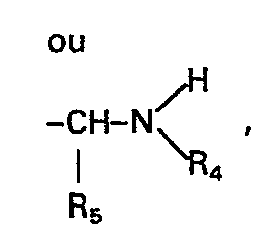
dans laquelle X en position 5,6,7 ou 8 représente un atome d'hydrogène, un atome d'halogène, un radical alcoyle linéaire ou ramifié renfermant de 1 à 5 atomes de carbone, un radical alcoxy linéaire ou ramifié renfermant de 1 à 4 atomes de carbone, un radical trifluorométhyle, un radical trifluorométhylthio ou un radical trifluorométhoxy, R1 représente un atome d'hydrogène ou un radical alcoyle renfermant de 1 à 4 atomes de carbone, R2 représente un radical choisi parmi les radicaux thiazolyle, 4,5-dihydrothiazolyle, pyridinyle, oxazolyle, isoxazolyle, imidazolyle, pyrimidyle et tétrazolyle, éventuellement substitués par un radical alcoyle renfermant de 1 à 4 atomes de carbone et phényle, éventuellement substitué par un ou plusieurs radicaux choisis dans le groupe formé par le radical hydroxy, les radicaux alcoyles renfermant de 1 à 4 atomes de carbone, les radicaux alcoxy renfermant de 1 à 4 atomes de carbone, le radical trifluorométhyle, le radical nitro et les atomes d'halogène, R3 représente un radical 2-pyrrolidinyle de formule ou un radical

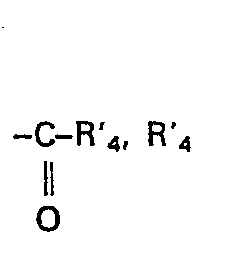
dans lesquels R4 représente soit un atome d'hydrogène, soit un groupe
4, R'4 étant un radical alcoyle renfermant de 1 à 5 atomes de
carbone éventuellement substitué par un radical amino libre ou protégé, un radical aryle ou arylalcoyle, soit un radical protecteur de la fonction amino, R5 représente un atome d'hydrogène, un radical alcoyle renfermant de 1 à 5 atomes de carbone, un radical aryle ou arylalcoyle, un radical 4-OH benzyle, un radical 1H-indol 3-yl méthyl de formule:
un radical -CH2OH ou
thiol de ces trois derniers radicaux étant éventuellement bloquées par des groupes protecteurs,sous leurs formes racémiques ou optiquement actives, ainsi que leurs sels d'addition avec les acides. - Il va de soi que les termes "racémiques ou optiquement actifs" ne concernent que les composés de formule (I) qui comportent au moins un carbone asymétrique.
- Lorsque X représente un atome d'halogène, il s'agit de préférence d'un atome de chlore.
- Lorsque X représente un radical alcoyle, il s'agit de préférence du radical méthyle, éthyle, n-propyle, n-butyle, n-pentyle, isopropyle ou isobutyle.
- Lorsque X représente un radical alcoxy, il s'agit de préférence du radicalméthoxy, éthoxy ou n-propoxy.
- Lorsque R1 représente un radical alcoyle, il s'agit de préférence du radical méthyle ou éthyle.
- Lorsque R2 représente un radical hétérocyclique substitué par un radical alcoyle, il s'agit de préférence d' un radical hétérocyclique substitué par un radical méthyle ou éthyle.
- Lorsque R2 représente un radical phényle substitué, il s'agit de préférence d'un radical phényle substitué par un ou plusieurs radicaux choisis dans le groupe formé par le radical hydroxy, les radicaux méthyle et éthyle, les radicaux méthoxy et éthoxy, le radical trifluorométhyle, le radical nitro et l'atome de chlore.
- Lorsque R4 représente

- Lorsque R'4 est un radical aryle ou arylalcoyle, il s'agit de préférence respectivement du radical phényle ou benzyle.
- Par groupement protecteur de la fonction amino, on entend groupement que l'on peut éliminer facilement, par exemple par hydrolyse ou réduction.
- Des radicaux qui sont capables de protéger de façon efficace un radical amino sont généralement des radicaux acides par exemple un radical acide dérivant d'un acide carboxylique aliphatique, aromatique, araliphatique ou hétérocyclique tel que l'acide acétique, l'acide benzoïque ou l'acide pyridine-carboxylique ou un radical acide dérivant d'un acide carbonique tel que le radical éthoxy-carbonyle, benzyloxycarbonyle (= Z), tert-butyloxy-carbonyle (=Boc) ou p-méthyloxy-benzyloxycarbonyle, ou un radical acyle dérivant d'un acide sulfonique tel que le radical benzènesulfonyle ou p-toluènesulfonyle, mais on peut également utiliser d'autres radicaux tels que des radicaux aryle ou aralkyle substitués ou non, par exemple les radicaux benzyle et triphénylméthyle ou des radicaux tels que les radicaux o-nitrophényl sulfényle et 2-benzoyl-1-méthylvinyle.
- Lorsque RS représente un radical alcoyle, aryle ou aralcoyle, il s'agit de préférence d'un des radicaux mentionnés précédemment pour R'4.
- Les groupements protecteurs de la fonction thiol sont par exemple les groupements benzyle, benzyloxycarbonyle, tert-butyloxycarbonyle.
- Les groupements protecteurs de la fonction alcool sont par exemple les groupements benzyle, tert-butyle, benzyloxycarbonyle.
- Parmi les sels d'addition avec les acides, on peut citer ceux formés avec les acides minéraux tels que les acides chlorhydrique, bromhydrique, sulfurique et phosphorique ainsi que ceux formés avec les acides sulfoniques tels que les acides alcoyl ou arylsulfoniques, par exemple l'acide méthanesulfonique ou paratoluènesulfonique.
- L'invention a notamment pour objet les composés de formule (I) pour lesquels X est en position 8 et ceux pour lesquels X représente un radical trifluorométhyle, sous leurs formes racémiques ou optiquement actives, ainsi que leurs sels d'addition avec les acides et ceux pour lesquels R1 représente un atome d'hydrogène et pour lesquels R2 représente le radical thiazolyle, sous leurs formes racémiques ou optiquement actives, ainsi que leurs sels d'addition avec les acides.
- L'invention a plus particulièrement pour objet les composés de formule (I) pour lesquels les radicaux protecteurs de la fonction amino sont des groupements de formule -C02A, A étant un radical alcoyle renfermant de 1 à 5 atomes de carbone, un radical aryle ou arylalcoyle, sous leurs formes racémiques ou optiquement actives, ainsi que leurs sels d'addition avec les acides et notamment ceux pour lesquels A est un radical terbutyle ou benzyle, sous leurs formes racémiques ou optiquement actives, ainsi que leurs sels d'addition avec les acides.
- L'invention concerne tout particulièrement les composés de formule (I) pour lesquels R4 représente un atome d'hydrogène, sous leurs formes racémiques ou optiquement actives, ainsi que leurs sels d'addition avec les acides et ceux se présentant sous leur forme optiquement active (S), ainsi que leurs sels d'addition avec les acides.
- L'invention a aussi pour objet un procédé de préparation des produits de formule (I), dans laquelle X, R1, R2 et R3 ont les significations données précédemment, caractérisé en ce que l'on soumet un composé de formule (II) :

- dans laquelle X conserve la signification donnée ci-dessus, à l'action d'un acide aminé de formule (III) :

- sous forme activée et sous forme racémique ou optiquement active, dans lequel R3 est un groupe : ou un groupe 5


- R4 étant soit un groupe


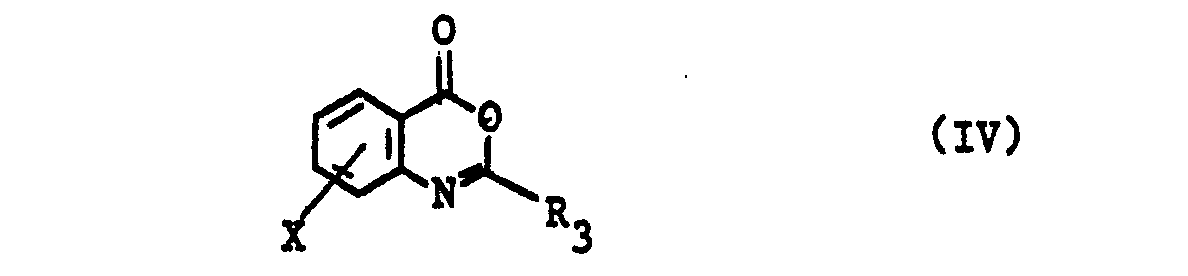
dans laquelle X et R3 conservent leurs significations précédentes, que l'on soumet, en présence d'une base, à l'action d'un composé de formule - (V):

dans laquelle R1 et R2 conservent leurs significations précédentes, pour obtenir un composé de formule (VI) sous forme racémique ou optiquement active :
dans laquelle X, R1, R2 et R3 conservent leurs significations précédentes, que l'on cyclise en présence d'un agent alcalin, pour obtenir un composé de formule (I) dans laquelle X, R1, R2 et R3 ont les significations qui viennent d'être données, sous forme racémique ou optiquement active, que l'on soumet, le cas échéant, à l'action d'un ou plusieurs agents de déblocage des fonctions amino, alcool et thiol, pour obtenir un produit de formule (I) dans laquelle X, R1, et R2 ont les significations précédentes et dans laquelle R3 représente soit un groupe : - soit un groupe


- dans lesquels R4 est un groupe

a la signification précédente, étant entendu que lorsque RS représente un groupement CH20H,
radical alcoyle substitué par un radical amino, les fonctions alcool, thiol et amine sont libres, produits de formule (I), sous forme racémique ou optiquement active, que l'on soumet, si désiré, à l'action d'un acide pour en former le sel. - Dans un mode de réalisation préférée du procédé de l'invention :
- - Le procédé d'activation de l'acide aminé de formule (III) est un procédé non racémisant. On utilise avantageusement l'acide aminé de formule (III) activé sous forme d'anhydride mixte à l'aide du chloroformiate d'isobutyle mais d'autres chloformiates d'alcoyle peuvent être utilisés.
- L'activation de l'acide aminé peut se faire par d'autres méthodes d'amidification connues eh synthèse peptidique, comme par exemple la métho-de utilisant le dicyclohexylcarbodiimide active par l'hydroxybenzotriazole.
-
- - La réaction entre le produit de formule (II)et le produit de formule (III) s'effectue en présence d'une base comme par exemple la N-méthyl morpholine, la N-éthyl morpholine, la triéthylamine, à une température se situant de préférence entre -20°C et 0°C.
- - La réaction entre le composé de formule (IY) et le composé de formule (V) a lieu en présence d'une basequi est notanment un organolithien comme le n-butyllithium ou un ami dure de lithium tel que le diisopropylamidure de lithium. Cette réaction s'effectue de préférence à une basse température de l'ordre de -70°C.
- - La cyclisation du composé de formule (VI) s'effectue en présence d'un agent alcalin, tel qu'un hydrure ou un carbonate alcalin, ou d'une amine, par exemple d'hydrure de sodium, de carbonate de sodium ou de potassium, de pipéridine, de 4-aminopyridine, de diméthyl aminopyridine, de triéthylamine, de 1,5-diazabicyclo /4,3,0/ non-5-ène, de 1,4-diazabicyclo /2,2,2/ octane ou de 1,5-diazabicyclo /5,4,0/ undec-5-ène.
- - Les agents de déblocage des fonctions amino, alcool et thiol sont variables suivant les groupes protecteurs utilisés.
- Lorsque le groupe protecteur est le groupe Boc,le déblocage s'effectue par hydrolyse acide, notamment en présence d'acide trifluoroacétique ou d'acide chlorhydrique ou encore par action du tribromure de bore.
- Si le groupe protecteur utilisé est le groupe Z ou benzyle, le déblocage s'effectue par hydrogénation catalytique.
- L'invention a également pour objet une variante du procédé tel que décrit précédemment, pour la préparation des produits de formule (I) dans laquelle X, R1 et R2 ont les significations données précédement et R3 représente un radical
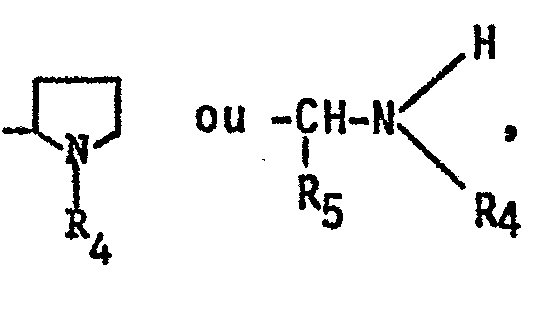


- Dans un mode de réalisation préférée du procédé de l'invention :
- - Le dérivé réactif du groupement

- - L'agent de déblocage de la fonction amino est l'un de ceux mentionnés plus haut.
- Les composés de formule (I) tels que définis ci-dessus ainsi que leurs sels d'addition avec les acides présentent d'intéressantes propriétés pharmacologiques. Ils présentent en particulier, une très bonne activité analgésique ainsi qu'une activité anti-inflammatoire non négligeable.
- Ces propriétés justifient leur application en thérapeutique et l'invention a également pour objet à titre de médicaments, les produits tels que définis par la formule (I) ci-dessus, ainsi que les sels d'addition avec les acides pharmaceutiquement acceptables desdits produits de formule (I).
- L'invention a plus particulièrement pour objet, à titre de médicaments les composés de formule (I) pour lesquels R4 représente un atome d'hydrogène, sous leurs formes racémiques ou optiquement actives, ainsi que leurs sels d'addition avec les acides pharmaceutiquement acceptables, ainsi que les composés de formule (I) sous leur forme optiquement active (S), ainsi que leurs sels d'addition avec les acides pharmaceutiquement acceptables.
- Les médicaments, objets de l'invention, peuvent être préconisés dans le traitement des maladies inflammatoires dégénératives telles que 1'ostéoarthrose, les collagénoses diverses (tendinites, etc...), des maladies rhumatismales (la polyarthrite rhumatoïde, spondylarthrite enkylosante), ainsi que dans le traitement d'autres maladies de nature auto-inmune telles que le lupus érythémateux dissémine, les glomérulonéphrites, la sclérose en plaques, etc ...
- Les médicaments, objets de l'invention, peuvent également être utilisés dans le traitement des algies musculaires, articulaires ou nerveuses, les douleurs dentaires, les migraines, le zona et également, a titre de traitement complémentaire dans les états Infectieux et fébriles.
- L'invention s'étend aux compositions pharmaceutiques renfermant comme principe actif, les médicaments définis ci-dessus.
- Ces compositions pharmaceutiques peuvent être administrées par voie buccale, rectale, par vole parentérale ou par voie locale en application topique sur la peau et les muqueuses.
- Ces compositions peuvent être solides ou liquides et se présenter sous les formespharmaceuti.ques couramment urilisées en médecine humaine comme, par exemple, les comprimés simples ou dragéifiés, les gélules, les granulés les suppositoires, les préparations injectables, les pommades, les crèmes, les gels et les préparations en aérosols; elles sont préparées selon les méthodes usuelles. Le principe actif peut y être incorporé à des excipients habituellement employés dans ces compositions pharmaceutiques, tels que le talc, la gomme arabique, le lactose, l'amidon, le stéarate de magnésium, le beurre de cacao, les véhicules aqueux ou non, les corps gras d'origine animale ou végétale, les dérivés paraffiniques, les glycols, les divers agents mouillants, dispersants ou émulsifiants, les conservateurs.
- La posologie varie notamment en fonction de la voie d'administration, de l'affection traitée et du sujeten cause.
- Par exemple, chez l'adulte, elle peut varier entre 20 mg et 2 g de principe actif par jour, par voie orale.
- Les composés de formule (II), utilisés comme produits de départ d'un des procédés de l'invention sont des produits connus d'une façon générale, qui peuvent être préparés selon les procédés indiqués dans la demande de brevet français n° 2 157 874.
- Les composés de formule (IV) et (VI) sont des produits chimiques nouveaux ; l'invention a donc pour objet ces produits, à titre de produits Industriels nouveaux, à l'exception des produits de formule (IV) suivants :

- EXEMPLE 1 : N-//4-hydroxy-8-(trifluoraméthyl)-3-/(2-thiazolylamino) carbonyl/ 2-quinoléinyl/ méthyl/ carbamate de 1,1-diméthyl éthyle.
- Stade A : /(4-oxo 8-(trifluorométhyl) 4H-3,1-benzoxazin-2-yl) méthyl/ carbamate de 1,1-diméthyl éthyle.
- On mélange 17,5 g de N-BOC glycine, 100 cm3 de chlorure de méthylène et 13,7 cm3 de N-méthyl morpholine, refroidit à -20°C et ajoute 13 cm3 de chloroformiate d'isobutyle en solution dans 50 cm3 de chlorure de méthylène. On agite 30 minutes à -20°C et ajoute une solution renfermant 10,25 g d'acide 2-amino 3-trifluorométhyl benzoïque préparé selon le procédé indiqué dans J. Med. Chem. 16 (2) 101,6 (1973) dans 5,49 cm3 de N-méthyl morpholine et 120 cm3 de chlorure de méthylène. On agite 20 heures à température ambiante, verse sur 500 cm3 d'eau et 150 cm3 d'acide chlorhydrique 2N, extrait au chlorure de méthylène, lave à l'eau, sèche, concentre sous pression réduite. Le résidu est empâté dans 50 cm3 de méthanol , glacé, essoré, lavé au méthanol, séché sous pression réduite à 50°C. On obtient 11 g de produit attendu fondant à 176°C.
-

- On introduit à 0°C, 85,6 cm3 de n-butyllithium en solution dans l'hexane, dans 8,5 g de N-2-thiazolyl acétamide en suspension dans 260 cm3 de tétrahydrofuranne. On refroidit à -75°C et ajoute à cette température, la solution de 10,33 g de produit obtenu au stade A précédent dans 75 cm3 de tétrahydrofuranne. On verse le mélange réactionnel sur 400 cm3 d'eau et 100 cm3 d'acide chlorhydrique 2N, extrait à l'éther, lave la phase organique à l'acide chlorhydrique N, puis à l'eau, sèche, concentre sous pression réduite. On obtient une huile orange qui cristallise. On empâte le résidu dans l'éther, essore, lave à l'éther, sèche sous pression réduite et obtient 7,7 g de produit attendu fondant à 166°C.
-

- On agite 1 heure à température ambiante 7,3 g de produit obtenu au stade B précédent, 140 cm3 de tétrahydrofuranne et 2,4 g de 4-diméthyl amino-pyridine. On élimine le solvant sous pression réduite, reprend le résidu par 100 cm3 d'eau et 20 cm3 d'acide chlorhydrique N, extrait avec un mélange d'acétate d'éthyle et de tétrahydrofuranne. On lave à l'eau, sèche, concentre le filtrat sous pression réduite. On obtient 7 g de produit brut que l'on empâte dans l'éther. On essore, lave à l'éther, sèche sous pressionréduite à 60°C et obtient 6,6 g de produit attendu fondant à 238°C.
-

- On agite 1 heure à température ambiante6,3 g de produit obtenu à l'exemple 1, 125 cm3 de chlorure de méthylène et 63 cm3 d'acide trifluoroacétique. On élimine les solvants sous pression réduite. On reprend le résidu par 100 cm3d'eau, amène le pH à 7 avec une solution aqueuse saturée de carbonate acide de sodium. On essore, lave à l'eau, sèche sous pression réduite à 100°C et obtient 4,8 g de produit attendu fondant vers 280°C.
-

- Stade A : N-/(R) 1-/4-oxo 8-(trifluorométhyl) 4H,3,1-benzoxazin-2-yl/ éthyl/ carbamate de 1,1-diméthyl éthyle.
- On mélange 18,9 g de BOC-D-alanine, 25 cm3 de N-méthyl morpholine et 200 cm3 de chlorure de méthylène, refroidit à -20°C et ajoute 26 cm3 de chloroformiate d'isobutyle en solution dans 100 cm3 de chlorure de méthylène. On maintient à -20°C la suspension ainsi obtenue et ajoute 20,5 g d'acide 2-amino 3-trifluorométhyl benzoïque dans 10 cm3 de morpholine et 200 cm3 de chlorure de méthylène. On laisse revenir à température ambiante et agite 2 heures, verse sur 400 cm3 d'acide chlorhydrique, lave la phase chlorométhylénique dans 250 cm3 d'une solution aqueuse de carbonate de sodium à 10%, puis à l'eau, sèche et concentre sous pression réduite. On obtient 17,6 g de produit attendu fondant à 175°C. /α/D = +68° ± 2° (c = 0,8 % CH3COOH)
- Stade B : N-/(R) 2-//2/1,3-dioxo 3-(2-thiazolylamino) propyl/ 6-(trifluorométhyl) phényl/ amino/ 1-méthyl 2-oxo éthyl/ carbamate de 1,1-diméthyl éthyle.
- On ajoute entre -3° et -1°C, sous agitation et sous azote, 128,6 cm3 d'une solution de n-butyllithium dans une solution renfermant 12,78 gde N-(2-thiazolyl) acétamide dans 370cm3 de tétrahydrofuranne. Après 15 minutes, cette solution est refroidie à -70°C et on ajoute à cette température 10,75 g de produit obtenu au stade précédent dans 75 cm3 de tétrahydrofuranne. Après 30 minutes à -70°C, on verse sur 140 cm3 d'acide chlorhydrique N, extrait à l'acétate d'éthyle, sèche, concentre sous pression réduite. On reprend le résidu par 350 cm3 d'éther et 250 cm3 d'acide chlorhydrique N, concentre sous pression réduite. On obtient 14,1 g de produit attendu.
- Stade C : N-/(R)1-/4-hydroxy 3-/(2-thiazolylamino) carbonyl/ 8-trifluorométhyl 2-quinoléinyl/ éthyl/ carbamate de 1,1-diméthyl éthyle.
- On laisse en contact 2 jours à température ambiante 13,8 g de produit obtenu au stade B précédent, 3,8 g de diméthylaminopyridine, 120 cm3 de tétrahydrofuranne, chasse le tétrahydrofuranne, reprend le résidu par 40 cm3 d'acide chlorhydrique N, agite 10 minutes, essore et lave à l'eau. Le produit brut est purifié par traitement au reflux, sans dissolution totale, dans 500 cm3 de méthanol. On obtient après refroidissement 9,4 g de produit attendu fondant à 265°C. /α/D = -66,5° ± 1,5° (c = 1% dans l'acide acétique).
-

- EXEMPLE 4 : 2-/(R) 1-aminoéthyl/ 4-hydroxy N-(2-thiazolyl) 8-trifluorométhyl 3-quinoléine carboxamide.
- On met en suspension dans 140 cm3 de chlorure de méthylène, 7 g de produit obtenu à l'exemple 3. On ajoute peu à peu 70 cm3 d'acide trifluoroacétique, la température s'abaissant à 15°C. On maintient le contact pendant 4 heures, concentre sous pression réduite, reprend le résidu par 100 cm3 d'éther et essore les cristaux. Le produit obtenu est ajouté peu à peu à 50 cm3 d'une solution aqueuse de carbonate acide de sodium à 10%. On agite, essore, lave à l'eau. Le produit brut ainsi obtenu est traité au reflux par 300 cm3 de méthanol, sans dissolution complète. On refroidit, concentre jusqu'à 50 cm3 et obtient ainsi 2,3 g de produit attendu fondant à 265°C.
- /α/D = -72° + 2,5° (c = 0,5% CH3COOH).
-

- EXEMPLE 5 : N-/(S) 1-/4-hydroxy 3-/(2-thiazolylamino) carbonyl/ 8-trifluorométhyl 2-quinoléinyl/ éthyl/ carbamate de 1,1-diméthyl éthyl e.
- Stade A :N-:(S) 1-/4-oxo 8-(trifluorométhyl) 4H-3,1-benzoxazin-2-yl/ éthyl/ carbamate de 1,1-diméthyl éthyle.
- On opère dansdes conditions identiques et sur la même unité opératoire que pour l'antipode (R) préparé au stade A de l'exemple 3, à partir de Boc-L-alanine, on obtient 21,4g de produit attendu fondant à 174°C./α/8 = -66,5° + 1,5° (c = 1% CN3COOH).
-

- Stade B : N-/(S) 2-//2-/1,3-dioxo 3-(2-thiazolyl amino) propyl/ 6-(trifl uoraméthyl) phényl/ amino/ 1-méthyl 2-oxo éthyl/ carbamate de 1,1-diméthyl éthyle.
- On opère dans des conditions identiques et sur la même unité opératoire que pour l'antipode (R) préparé au stade B de l'exemple 3..0n obtient 14,1 g de produit attendu.
- Stade C : N-/(S) 1-/4-hydroxy 3-/2-thiazolyl amino) carbonyl/ 8-trifluorométhyl 2-quinoléinyl/ éthyl/ carbamate de 1,1-diméthyl éthyle.
- On opère dans les mêmes conditions que pour l'antipode (R) préparé au stade C de l'exemple 3 à partir de 13,4 g de produit obtenu au stade B précédent, de 3,7 g de 4-diméthyl aminopyridine et de 120 cm3 de tétrahydrofuranne. Le produit est purifié par traitement au reflux dans 700 cm3 de méthanol. On obtient 6,6 g de produit attendu fondant à 265°C.
- /α/D = +61° + 2,5° (c = 0,5% dans l'acide acétique).
-

- EXEMPLE 6 : 2-/(S) 1-aminoéthyl/ 4-hydroxy N-(2-thiazolyl) 8-trifluoro-0 méthyl 3-quinoléine carboxamide.
- On utilise le même procédé que celui utilisé pour préparer le produit de l'exemple 4, à partir de 4,95 g de produit de l'exemple 5 et obtient 4,1 g de produit brut. Le produit brut est purifié par traitement au reflux dans 360 cm3 de méthanol. On essore à chaud les cristaux obtenus et obtient 1,5 g de produit attendu fondant à 270°C.
- /α/D = +62° ± 3° (c = 0,3% dans l'acide acétique).
-

- On refroidit à -20°C, une solution contenant 10,16 g d'acide BOC-L--amino butyrique dans 100cm3 de chlorure de méthylène et 13,7 cm3 de N-méthyl morpholine. On introduit à cette température 13 cm3 de chloroformiate d'isobutyle et 50 cm3 de chlorure de méthylène, agite 30 minutes entre -20°C et -15°C, ajoute à -20°C 10,25 g d'acide 2-amino 3-trifluorométhyl benzoïque en solution dans 100 cm3 de chlorure de méthylène et 5,49 cm3 de N-méthyl morpholine. On agite 20 heures à température ambiante, verse le mélange sur 200 cm3 d'acide chlorhydrique N,extrait au chlorure de méthylène, lave à l'eau puis au carbonate acide de sodium, à l'eau de nouveau, sèche et concentre le filtrat sous pression réduite. On empâte le résidu obtenu dans l'isopropanol, essore, lave à l'isopropanol, sèche sous pression réduite à 70°C et obtient 9,9 g de produit attendu fondant à 136-138°C.
- /α/D = -68° ± 1,5° (c = 1% CH3COOH).
-

- On opère comme indiqué au stade B de l'exemple 3 à partir de 7,78 g de N-(2-thiazolyl) acétamide, de 240 cm3 de têtrahydrofuranne, de 78,3 cm3 d'une solution de n-butyllithium dans l'hexane et de 10,2 g de produit obtenu au stade A précédent dans 75 cm3 de tétrahydrofuranne. On obtient 8,3 g de produit attendu fondant à 190°C.
- /α/D = -36,5 ± 2° (c =0,5% CH3COOH).
- Stade C : N-/(S) 1-/4-hydroxy 3-/(2-thiazolylamino) carbonyl/ 8-trifluorométhyl 2-quinoléinyl/ propyl/ carbamate de 1,1-diméthyl éthyle.
- On opère comme indiqué au stade C de l'exemple 3 à partir de 8 g de produit obtenu au stade B précédent, de 80 cm3 de tétrahydrofuranne et de 1,9 g de 4-diméthylaminopyridine. On obtient 6,8 g de produit attendu fondant à 260-262°C. /α/p = +66,5° ± 2,5° (c = 0,7% CH3COOH).
-

- EXEMPLE 8 : 2-/(S) 1-aminopropyl/4-hydroxy N-(2-thiazolyl) 8-trifluoro-méthyl 3-quinoléine carboxamide.
- On mélange, sous agitation, 6,5 gde produitde l'exemple 7, 130 cm3 de chlorure de méthylène et 65 cm3 d'acide trifluoroacétique, agite 2 heures à température ambiante, élimine le chlorure de méthylène et l'acide trifluoroacétique sous pression réduite. On reprend le résidu par de l'eau glacée et ajuste le pH à 7 avec une solution de carbonate acide de sodium, essore, lave, sèche sous pression réduite à 100°C. Le produit obtenu est dissous au reflux dans 120 cm3 d'acétonitrile, on filtre,concentre à 100 cm3, glace les cristaux obtenus, essore, lave, sèche sous pression réduite à 100°C. On obtient 3,25 g de produit attendu fondant à 206°C.
- /α/D = +177° ± 2,5° (c = 0,8% CH3COOH).
-

- Stade A : N- /(S) (2-méthyl 1-(4-oxo 8-trifluorométhyl) 4H-3,1-benzoxazin-2-yl) propyl/ carbamate de 1,1-diméthyl éthyle.
- On opère conme indiqué au stade A de l'exemple 7 à partir de 17,4 g de BOC-L-Valine en solution dans 200 cm3 de chlorure de méthylène, 20,2 cm3 de N-méthyl morpholine et de 20,8 cm3 de chloroformiate d'isobutyle dans 100 cm3 de chlorure de méthylène et de 16,4 g d'acide 2-amino 3-trifluorométhyl benzoïque en solution dans 200 cm3 de chlorure de méthylène et 8,8 cm3 de N-méthyl morpholine. On obtient 12 g de produit attendu fondant à 165°C.
- /α/D = -61° + 2,5° (c = 0,6% CH3COOH).
- Stade B : N-/(S) 1-//2-/1,3-dioxo 3-(2-thiazolyl amino) propyl/ 6-(trifluorométhyl) phényl/ aminocarbonyl/ 2-méthyl propyl/ carbamate de
- 1,1-diméthyl éthyl e.
- On opère comme indiqué au stade B de l'exemple 7 à partir de 13,25 g de 2-acétylaminothiazole dans 400 cm3 de tétrahydrofuranne, de 133 cm3 de n-butyllithium, de 12 g de produit obtenu au stade A précédent dans 85 cm3 de tétrahydrofuranne. On obtient 15,2 g de produit attendu fondant à 120°C.
- /α/D = -49,5° + 2° (c = 0,9% CH3COOH).
- Stade C : N-/(S)-1-/4-hydroxy 3-/(2-thiazolylamino) carbonyl/ 8-trifluorométhyl 2-quinoléinyl/ 2-méthylpropyl/ carbamate de 1,1-diméthyl éthyle.
- On opère comme indiqué au stade C de l'exemple 7 à partir de 15,2 g de produit obtenu au stade B précédent dans 150 cm3 de tétrahydrofuranne et de 4 g de 4-diméthylaminopyridine. On obtient 9,35 g de produit attendu fondant à 222°C. /α/D = +50,5° ± 1° (c =1% CH3COOH).
-

- EXEMPLE 10 : Trifluoroacétate de 2-/(S) 1-amino 2-méthylpropyl/ 4-hydroxy N-(2-thiazolyl) 8-(trifluorométhyl) 3-quinoléine carboxamide.
- On opère comme indiqué à l'exemple 8 à partir de 10,18 g de produit de l'exemple 9 dans 100 cm3 de chlorure de méthylène et de 50 cm3 d'acide trifluoroacétique. Onobtient 10,2 g de produit attendusous forme de trifluoroacétate fondant à 164°C.
- /α/D = -26,5° + 1° (c = 1,2% CH3COOH).
-

- EXEMPLE 11 : N-/(S)1-/4-hydroxy 3-/(2-thiazolylamino) carbonyl/ 8-trifluoro-méthyl) 2-quinoléinyl/ 2-(1H-indol-3-yl) éthyl/ carbamate de 1,1-diméthyl éthyle.
- Stade A : N-/(S) 2-/1H-indol-3-yl) 1-/4-oxo 8-trifluorométhyl) 4H-3,1-benzoxazin-2-yl/ éthyl/ carbamate de 1,1-diméthyl éthyle.
- On opère comme indiqué au stade A de l'exemple 7 à partir de 22,8 g de BOC-L-Tryptophane dans 150 cm3 de chlorure de méthylène et 20,6 g de N-méthyl morpholine, 19,5 cm3 de chloroformiate d'isobutyle dans 75 cm3 de chlorure de méthylène, 15,4 g d'acide 2-amino 3-trifluorométhyl benzoïque dans 150 cm3 de chlorure de méthylène et 8,3 cm3 de N-méthyl morpholine. On obtient 20,7 g de produit attendu fondant à 166°C. /α/D = -52° ± 2,5° (c = 0,4% CH3COOH).
-

- On opère comme indiqué au stade B de l'exemple 7 à partir de 18,34 g de 2-acétyl aminothiazole dans 565 cm3 de tétrahydrofuranne, de 184 cm3 d'une solution de n-butyllithium dans l'hexane et de 20,3 g de produit obtenu au stade A précédent dans 150 cm3 de tétrahydrofuranne. On obtient 28 g d'une huile orange qui est utilisée telle quelle dans le stade suivant.
- Stade C :N-/(S) 1-/4-hydroxy 3-/(2-thiazolylamino) carbonyl/ 8-trifluoro-méthyl) 2-quinoléinyl/ 2-(1H-indol-3-yl) éthyl/ carbamate de 1,1-diméthyl éthyle.
- On opère comme indiqué au stade C de l'exemple 7 à partir de 28 g de produit obtenu au stade B précédent dans.280 cm3 de.tétrahydrofuranne et de 5,25 g de diméthylaminopyridine. On obtient 16,9 g de produit attendu fondant à 270°C.
- /λ/D = +33° + 2° ( c = 0,5% CH3COON).
-

- EXEMPLE 12 : 2-/(S) 1-amino 2-(1H-indol-3-yl) éthyl/ 4-hydroxy N-(2-thiazolyl) 8-(trifluorométhyl) 3-quinoléine carboxamide.
- On mélange pendant 3 heures à température ambiante 16,9 g de produit obtenu à l'exemple 11, 170 cm3 de chlorure de méthylène et 85 cm3 d'acide trifluoroacétique. On élimine les solvants sous pression redite, obtient une huile brute qui cristallise dans l'éther; on essore, rince et sèche sous pression réduite à 50°C. On obtient 16,4 g de produit attendu sous forme de trifluoroacétate fondant vers 190°C.
- Retour à la base
- On introduit les 16,4 g précédents dans 200 cm3 d'eau, extrait avec 200 cm3 d'acétate d'éthyle, lave à l'eau, sèche, concentre sous pression réduite et cristallise dans l'éther. On essore, sèche sous pression réduite, dissout le résidu obtenu dans 100 cm3 d'acétonitrile à température ambiante. On glace, essore les cristaux, sèche sous pression réduite à 90°C. 0n obtient 7,830 g de produit brut que l'on recristallise dans l'isopropanol. Après avoir chassé sous pression réduite l'isopropa- nol, on empâte le résidu obtenu dans l'acétonitrile. On essore, sèche sous pression réduite, reprend le résidu dans 20 cm3 d'acétate d'éthyle, essore, lave, sèche sous pression réduite à 100"C. On obtient 4,8 g de produit attendu fondant à 190°C.
- /α/D = +47° ± 1° (c = 1% DMF).
-

- EXEMPLE 13 : N-/(S) 1-/4-hydroxy 3-/(2-thiazolyl aminocarbonyl) 8-trifluoro- méthyl) 2-quinoléinyl/ 2-(phényl) éthyl/ carbamate de 1,1-diméthyl éthyle.
- Stade A : N-/(S) 2-phényl 1-/4-oxo 8-(trifluorométhyl) 4H-3,1-benzoxazin-2-yl/ éthyl/ carbamate de 1,1-diméthyl éthyle.
- On opère comne indiqué au stade A de l'exemple 7 à partir de 19,9 g de BOC-L-phénylalanine dans 150 cm3 de chlorure de méthylène et 20,6 cm3 de N-méthyl morpholine, de 19,5 cm3 de chloroformiate d'isobutyle dans 75 cm3 de chlorure de méthylène et de 15,4 g d'acide 2-amino 3-trifluorométhyl benzoïque dans 150 cm3 de chlorure de méthylène et 8,3 cm3 de N-méthyl morpholine. On obtient 14,5 g de produit attendu fondant à 145°C. /α/D = -33,5° + 2° (c = 0,5% CH3COOH).
-

- On opère comme indiqué au stade B de l'exemple 7 à partir de 9,09 g de 2-acétylamiothiazole dans 280 cm3 de tétrahydrofuranne, de 91 cm3 de n-butyllithium en solution dans l'hexane, de 13,9 g de produit obtenu au stade A précédent dans 100 cm3 de tétrahydrofuranne. On obtient 19 g de produit attendu.
- Stade C :N-/(S) 1-/4-hydroxy 3-/(2-thiazolylaminocarbonyl) 8-trifluorométhyl) 2-quinoléinyl/ 2-(phényl) éthyl/ carbamate de 1,1-diméthyl éthyl e.
- On opère comme indiqué au stade C de l'exemple 7 à partir de 18,7 g de produit obtenu au stade B précédent, de 190 cm3 de tétrahydrofuranne et de 3,9 g de 4-diméthyl aminopyridine. On obtient 17,4 g de produit attendu fondant à 268°C.
- /α/D = +44° ± 3° (c = 0,25% DMF).
-

- EXEMPLE 14 : 2-/(S) 1-amino 2-phényléthyl/ 4-hydroxy N-(2-thiazolyl) 8-(trifluorométhyl) 3-quinoléine carboxamide.
- On mélange 16,9 g de produit obtenu à l'exemple 13, 300 cm3 de chlorure de méthylène et 85 cm3 d'acide trifluoroacétique, agite 2 heures à température ambiante, élimine les solvants sous pression réduite. On obtient une huile qui cristallise spontanément dans l'éther. On essore, lave, sèche sous pression réduite et obtient 11,9 g de produit attendu sous forme de trifluoroacétate fondant à 190°C.
- On introduit le produit obtenu ci-desus dans 100 cm3 d'eau, agite, ajoute une solution aqueuse saturée de carbonate acide de sodium jusqu'à l'obtention de pH 8, agite 30 minutes à température ambiante. On essore, lave à l'eau plusieurs fois jusqu'à obtention d'un pH de 2-3, sèche sous pression réduite et obtient 9,3 g de produit brut.
- On dissout le produit obtenu ci-dessus dans 80 cm3 de diméthyl formamide et filtre; on additionne 160 cm3 d'éther au filtrat. On glace, essore les cristauxobtenus, lave à l'éther, sèche sous pression réduite à température ambiante et obtient 2,5 g de produit attendu fondant à 248-250°C. (lère forme cristalline). On obtient un 2ème jet en reprenant le filtrat diméthylformamide-éther précédent. On élimine sous pression réduite les solvants et obtient une huile orange qui cristallise dans l'éther. On essore, lave, sèche sous pression réduite, dissout le résidu dans du tétrahydrofuranne, filtre, concentre le filtrat et ajoute de l'éther. On glace, essore, lave, sèche sous pression réduite à 90°C les cristaux obtenus et obtient 4,52 g de produit attendu fondant à 234°C (2ème forme cristalline).
- EXEMPLE 15 : (2S)-2-/4-hydroxy 3-/(2-thiazolylamino) carbonyl/ 8-trifluoromèthyl 2-quinolèinyl/ 1-pyrrolidine carboxylate de 1,1-diméthyl éthyle.
- Stade A : (2S) 2-/4-oxo 8-(trifluorométhyl) 4H-3,1-benzoxazin-2-yl/ 1-pyrrolidine carboxylate de 1,1-diméthyléthyle.
- On opère comme au stade A de l'exemple 7 à partir de 16,14 de BOC-L-proline en solution dans 150 cm3 de chlorure de méthylène, 20,6 cm3 de N-méthyl morpholine, de 19,5 cm3 de chloroformiate d'isobutyle dans 75 cm3 de chlorure de méthylène et de 15,4 g d'acide 2-amino 3-trifluorométhyl benzoïque dans 150 cm3 de chlorure de méthylène et 8,3 cm3 de N-méthyl morpholine. Après 20 heures de réaction, on extrait au chlorure de méthylène, chromatographie sur silice (éluant : chlorure de méthylène) et obtient 16,4 g de produit attendu.
- /α/D = -75° ± 2,5° (c = 0,6% dans CH3COOH).
- Stade B : (2S) 2-//2-/1,3-dioxo 3-(2-thiazolylamino) propyl/ 6-trifluorométhyl phényl /aminocarbonyl/1-pyrrolidine carboxylate de 1,1-diméthyléthyle.
- On opère comme au stade B de l'exemple 1 à partir de 11,8 g de N-2-thiazolyl acétamide dans 360 cm3 de tétrahydrofuranne, de 119 cm3 d'une solution de N-butyllithium dans l'hexane et de 16 g de produit obtenu au stade A précédent dans 100 cm3 de tétrahydrofuranne. On obtient 9,0 g de produit attendu. F = 136-138°C.
- /α/D = -49° ± 1° (c = 1% CH3COOH).
-

- Stade C : (2S) 2-/4-hydroxy 3-/(2-thiazolylamino) carbonyl/ 8-trifluorométhyl-2-quinoléinyl/ 1-pyrrolidine carboxalyte de 1,1-diméthyl éthyle.
- On agite 24 heures à température ambiante 11,1 g de produit obtenu au stade B précédent, 110 cm3 de tétrahydrofuranne et 2,6 g de 4-diméthyl aminopyridine. On porte au reflux, élimine le tétrahydrofuranne sous pression réduite, reprend le résidu par 100 cm3 d'eau et 10,5 cm3 d'acide chlorhydrique 2N, et dissout le précipité dans l'acétate d'éthyle. On lave la solution organique à l'eau, la sèche, la concentre à sec sous pression réduite et obtient après recristallisation dans l'éther, 9,1 g de produit attendu. F = 215°C.
- /α/D = -55° ± 1,5° (c = 1% CH3COOH).
-

- EXEMPLE 16 : 4-hydroxy 2-/(2S) 2-pyrrolidinyl/ N-(2-thiazolyl) 8-trifluorométhyl 3-quinoléine carboxamide.
- On opère comme à l'exemple 14 à partir de 7,8 g de produit obtenu à l'exemple 11, 80 cm3 de chlorure de méthylène, 40 cm3 d'acide trifluoroacétique et obtient 8,0 g de produit attendu sous forme de trifluoroacétate. F 210°C.
- On introduit les 8 g de trifluoroacétate dans 100 cm3 d'eau, extrait à l'acétate d'éthyle, lave à l'eau jusqu'à pH = 4, sèche et concentre sous pression réduite. On reprend le résidu par 80 cm3 d'acétonitrile, essore les cristaux obtenus et le sèche à 80°C sous pression réduite. On obtient 4,7 g de produit attendu. F = 196°C.
- /α/D = -7° ± 1° (c = 1% CH3COOH).
-

- EXEMPLE 17 : N-/1-/4-hydroxy 3-/(2-thiazolylamino) carbonyl/ 8-trifluorométhyl 2-quinoléinyl/ 2-(phénylméthoxy) éthul/ carbamate de 1,1-diméthyléthyle.
- Stade A : N-/1-4-oxo 8-trifluorométhyl 4H-3,1-benzoxazin-2-yl/2-(phényl méthoxy) éthyl/ carbamate de 1,1-diméthyléthyle.
- On opère comme au stade A de l'exemple 7 à partir de 29,5 g de BOC-O-benzyl L-serine dans 200 cm3 de chlorure de méthylène, 27,5 cm3 de N-méthyl morpholine, de 26,2 g de chloroformiate d'isobutyle dans du chlorure de méthylène, et de 20,5 g d'acide 2-amino 3-trifluorométhyl benzoïque dans 200 cm3 de chlorure de méthylène et 11 cm3 de N-méthyl morpholine. Après 16 heures de réaction, on extrait au chlorure de méthylène, chromatographie sur silice (éluant : chlorure de méthylène) et obtient 18,5 g de produit attendu. F = 98°C.
-

- On opère comme au stade B de l'exemple 1 à partir de 11,14 g de N-2-thiazolyl acétamide dans 350 cm3 de tétrahydrofuranne, de 112 cm3 de N-butyllithium dans l'hexane et de 18,2 g de produit obtenu au stade A précédent dans 100 cm3 de tétrahydrofuranne. On obtient 15,8 g de produit attendu. F = 134°-136°C.
-

- On agite 6 heures à température ambiante 15,5 g de produit obtenu au stade B précédent dans 150 cm3 de tétrahydrofuranne et 3,1 g de 4- dïméthylaminopyridine. On verse la solution dans 400 cm3 d'eau additionnée de 20 cm3 d'acide chlorhydrique 2N, extrait avec un mélange d'acétate d'éthyle et de tétrahydrofuranne. On lave la phase organique à l'eau, sèche, concentre à sec sous pression réduite, cristallise le résidu dans l'éther et obtient après séchage à 70°C sous pression réduite 13,6 g de produit attendu. F = 208°C.
-

- EXEMPLE 18 : 2-(1-amino 2-hydroxyéthyl) 4-hydro N-(2-thiazolyl) 8-trifluorométhyl) 3-quinoléine carboxamide.
- On refroidit à -20°C, 10,3 g de produit obtenu à l'exemple 17 dans 300 cm3 de chlorure de méthylène et ajoute 131,25 cm3 d'une solution molaire de tribromure de bore dans le chlorure de méthylène. On maintient l'agitation 1 heure à -20°C puis 2 heures à température ambiante. On verse le mélange dans 800 cm3 d'eau, extrait avec du chlorure de méthylène, de l'acétate d'éthyle et du tétrahydrofuranne, lave la phase organique à l'eau, la sèche et la concentre à sec sous pression réduite. Après cristallisation dans l'éther, on obtient en 2 jets, 4,9 g de produit brut que l'on dissout dans 180 cm3 de tétrahydrofuranne et 50 cm3 d'eau, ajoute du charbon actif, filtre sur silice, concentre sous pression réduite jusqu'à l'apparition de cristaux. On glace, essore le produit cristallisé, le lave au tétrahydrofuranne, le sèche à 80°C sous pression réduite et obtient 2,7 g de produit attendu. F = 248°C. Analyse : C16H13O3N4F3S : 398,371
-

- EXEMPLE 19 : 2-/(1S) 1-(acétylamino) propyl/ 4-hydroxy N-(2-thiazolyl) 8-trifluorométhyl 3-quinoléine carboxamide.
- On ajoute goutte à goutte sous agitation 10 cm3 d'anhydride acétique, 6 g de 2-/(S) 1-aminopropyl/ 4-hydroxy N-(2-thiazolyl) 8-trifluorométhyl 3-quinoléine carboxamide obtenu comme à l'exemple 8 dans 60 cm3 de pyridine et maintient l'agitation 1 heure 30 à température ambiante. On verse la solution sur 150 cm3 d'eau glacée, ajoute de l'acide chlorhydrique concentré jusqu'à pH = 1. On essore le précipité, le lave à l'eau, le dissout dans le tétrahydrofuranne. On sèche la phase organique, la concentre sous pression réduite, reprend le résidu à l'éther, l'essore et le sèche sous pression réduite à 80°C. On recueille 5,3 g de produit attendu. F = 275°C.
- /α/D = +43,5° + 4° (c = 0,3% DMF).
-

- EXEMPLE 20 : 4-hydroxy 2-/(S) 1-/(1-oxopropyl) amino/ propyl/ N-(2-thiazolyl) 8-trifluorméthyl 3-quinoléine carboxamide.
- On opère comme à l'exemple 19 au départ de 3,2 g de 2-/(S) 1-amino propyl/ 4-hydroxy N-(2-thiazolyl) 8-trifluorométhyl/ 3-quinoléine carboxamide préparé comme à l'exemple 8, de 32 cm3 de pyridine et de 6,6 cm3 d'anhydride propionique. On obtient 3,0 g de produit attendu. F > 275°C.
- /α/D = +57,5° + 2,5° (c = 0,5% CH3COOH).
-

- EXEMPLE 21 : N-(S)-/2-//4-hydroxy 3-/(2-thiazolylamino) carbonl/ 8-trifluorométhyl 2-quinoléinyl/ 2-méthylpropyl/ amino/ 2-oxoéthyl/ carbamate de 1,1-diméthyléthyle.
- On refroidit à -25°C la solution comprenant 4,38 g de N-BOC Glycine, 40 cm3 de chlorure de méthylène et 2,75 cm3 de N-méthyl morpholine et ajoute 3,41 cm3 de chloroformiate d'isobutyle en solution dans 30 cm3 de chlorure de méthylène. On agite 25 minutes à -25°C, ajoute 8,56 g de 2- /(S) 1-amino 2-méthylpropyl/ 4-hydroxy N-(2-thiazolyl) 8-trifluorométhyl 3-quinoléine carboxamide préparé selon un mode opératoire identique à celui de l'exemple 12 à partir de trifluoroacétate obtenu comme à l'exemple 8, en solution dans 80 cm3 de tétrahydrofuranne et maintient l'agitation 1 heure à -25°C. On verse le mélange réactionnel sur 300 cm3 d'eau additionnée d'acide chlorhydrique 2N jusqu'à l'obtention d'un pH = 1. On extrait au chlorure de méthylène, lave la phase organique à l'eau, puis avec une solution aqueuse saturée de carbonate acide de sodium, puis à l'eau, sèche et concentre à sec sous pression réduite. On reprend le résidu huileux dans l'éther de pétrole (Eb = 60°-80°C), essore les cristaux obtenus, les sèche a 60°C sous pression réduite et obtient 11,15 g de produit attendu. F 170°C.
- α/D = +37° + 2° (c = 0,5% CH3COOH).
- EXEMPLE 22 : 2-/(1S) 1-/(aminoacétyl) amino/ 2-méthylpropyl/ 4-hydroxy N-(2-thiazolyl) 8-trifluorométhyl 3- quinoléine carboxamide (mono- hydrate).
- Dans une solution comprenant 9,6 g de produit obtenu à l'exemple 21 dans 50 cm3 de chlorure de méthylène, on ajoute goutte à goutte sous agitation 20 cm3 de solution éthanolique d'acide chlorhydrique (5,7N), agite 16 heures à température ambiante, ajoute de nouveau 10 cm3 de solution éthanolique et agite 1 heure. On élimine les solvants sous pression réduite à une température inférieure à 40°C, dissout le résidu dans l'eau, ajoute du charbon actif et filtre sur silice. On ajuste le pH à 8 avec une solution aqueuse saturée de carbonate acide de sodium, essore, lave à l'eau et sèche sous pression réduite à 70°C. On obtient 6,7 g de produit brut. On dissout 4,48 g de ce produit dans 20 cm3 de diméthylformamide à température ambiante, filtre sur silice, ajoute 25 cm3 d'eau, glace, essore et sèche sous pression réduite à 50°C pendant 16 heures le produit cristallisé. On obtient 3,6 g de produit attendu. F = 230°C. /α/D = +72 ± 1,50 (c = 1% CH3COOH).
-

- Exemples de compositions pharmaceutiques.
-

-

- Le test employé est basé sur le fait signalépar R. KOSTER et Cool., (Fed. Proc. 1959, 1B 412) selon lequel l'injection intrapéritonéale d'acide acétique provoque, chez la souris, des mouvements répétés d'étirement de torsion pouvant persister pendant plus de 6 heures. Les analgésiques préviennent ou diminuent ce syndrome qui peut être considéré comme l'extériorisation d'une douleur abdominale diffuse. On utiliseune solution d'acide acétique à 1% dans l'eau. La dose déclenchant le syndrome est dans ces conditions de 0,01 cm3/g, soit 100 mg/kg d'acide acétique.
- Le produit étudié est administré par voie intra-veineuse une demi- heure avant l'injection d'acide acétique, les souris étant à jeun depuis la veille de l'expérience.
- Les étirements sont observés et comptés pour chaque souris pendant une période d'observation de 15 minutes commençant aussitôt après l'injection acétique.
- Les résultats sont exprimés au moyen de la DA50, c'est-à-dire la dose qui permet d'obtenir une diminution de 50% du nombre des étirements par rapport aux animaux témoins. La DA50 trouvée a été de 2 mg/kg et 7 mg /kg respectivement pour les produits des exemples 6 et 8.
- L'injection d'adjuvant de type "Freund" dans une patte postérieure provoque, chez le rat, l'apparition rapide d'une lésion Inflammatoire primaire dans cette patte, puis, après un temps de latence de 13 à 15 jours, le déclenchement d'une arthrite secondaire affectant notamment l'autre patte postérieure. Le test est pratiqué sur des rats mâles âgés de 42 à 50 jours, qui reçoivent en injection intraplantaire, 0,1 ml d'adjuvant de type "Freund" (suspension dans l'huile de vaseline de 6 mg par ml de mycobacterium butyricum tués).
- Les animaux reçoivent le produit étudié, par vole orale, du jour 0 (jour de l'injection de l'adjuvant) jusqu'à la veille du sacrifice, pratiqué le jour 17. Des animaux témoins arthritiques, des animaux témoins normaux ne reçoivent que le véhicule. Les critères d'appréciation de l'activité des substancesétudiées sont les augmentations de volume des pattes postérieures injectées (inflammation primaire et secondaire) et non injectées (inflammation secondaire) par rapport au volume moyen des pattes correspondantes de témoins normaux.
- On détermine la DA50, c'est-à-dire la dose qui diminue de 50% les augmentations de volume des pattes postérieures des animaux traités par rapport aux animaux témoins.
- La DA50 trouvée a été de 5 mg/kg et de 3 mg/kg respectivement pour les produits des exemples 6 et 8.
Claims (15)

dans laquelle X en position 5, 6, 7 ou 8 représente un atome d'hydrogène, un atome d'halogène, un radical alcoyle linéaire ou ramifié renfermant de 1 à 5 atomes de carbone, un radical alcoxy linéaire ou ramifié renfermant de 1 à 4 atomes de carbone, un radical trifluorométhyle, un radical trifluorométhylthio ou un radical trifluorométhoxy, R1 représente un atome d'hydrogène ou un radical alcoyle renfermant de 1 à 4 atomes de carbone, R2 représente un radical choisi parmi les radicaux thiazolyle, 4,5-dihydrothiazolyle, pyridinyle, oxazolyle, isoxazolyle, imidazolyle, pyrimidyle et tétrazolyle, éventuellement substitués par un radical alcoyle renfermant de 1 à 4 atomes de carbone et phényle, éventuellement substitué par un ou plusieurs radicaux choisis dans le groupe formé par le radical hydroxy, les radicaux alcoyles renfermant de 1 à 4 atomes de carbone, les radicaux alcoxy renfermant de 1 à 4 atomes de carbone, le radical trifluorométhyle, le radical nitro et les atomes d'halogène, R3 représente un radical 2-pyrrolidinyle de formule
ou un radical -


dans lesquels R4-représente soit un atome d'hydrogène, soit un groupe


dans laquelle X conserve la signification donnée ci-dessus, à l'action d'un acide aminé de formule (III) :

lequel R3 est un groupe : ou un groupe -


R4 étant soit un group


dans laquelle X et R3 conservent leurs significations précédentes, que l'on soumet, en présence d'une base,à l'action d'un composé de formule (V):

dans laquelle R1 et R2 conservent leurs significations précédentes, pour obtenir un composé de formule (VI) sous forme racémique ou optiquement active :

dans laquelle X, Ri, R2 et R3 conservent leurs significations précédentes, que l'on cyclise en présence d'un agent alcalin,pour obtenir un composé de formule (I) dans laquelle X, Ri, R2 et R3 ont les significations qui viennent d'être données sous forme racémique ou optiquement active, que l'on soumet, le cas échéant, à l'action d'un ou plusieurs agents de déblocage des fonctions amino, alcool et thiol, pour obtenir un produit de formule (I) dans laquelle X, R1 et R2 ont les significations précédentes et dans laquelle R3 représente soit un groupe : soit un groupe


dans lesquel s R4, est un groupe
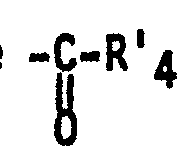
un groupement CH20H,


X étant soit un atome d'hydrogène, soit un atome de chlore, de brome ou d'iode.
Priority Applications (1)
| Application Number | Priority Date | Filing Date | Title |
|---|---|---|---|
| AT85401233T ATE52508T1 (de) | 1984-06-25 | 1985-06-20 | 4-hydroxy-3-chinolincarbonsaeurederivate, 2substituiert durch eine stickstoff enthaltende gruppe, ihre herstellung, ihre verwendung als arzneimittel, diese enthaltende zubereitungen und zwischenprodukte. |
Applications Claiming Priority (2)
| Application Number | Priority Date | Filing Date | Title |
|---|---|---|---|
| FR8409960A FR2566405B1 (fr) | 1984-06-25 | 1984-06-25 | Nouveaux derives de l'acide 4-hydroxy 3-quinoleine carboxylique substitues en 2 par une fonction aminee, leur preparation, leur application comme medicaments, les compositions les renfermant et les intermediaires nouveaux obtenus |
| FR8409960 | 1984-06-25 |
Publications (3)
| Publication Number | Publication Date |
|---|---|
| EP0169755A2 true EP0169755A2 (fr) | 1986-01-29 |
| EP0169755A3 EP0169755A3 (en) | 1986-04-09 |
| EP0169755B1 EP0169755B1 (fr) | 1990-05-09 |
Family
ID=9305386
Family Applications (1)
| Application Number | Title | Priority Date | Filing Date |
|---|---|---|---|
| EP85401233A Expired - Lifetime EP0169755B1 (fr) | 1984-06-25 | 1985-06-20 | Nouveaux dérivés de l'acide 4-hydroxy 3-quinoléine carboxylique subsititués en 2 par une fonction aminée, leur préparation, leur application comme médicaments, les compositions les renfermant et les intermédiaires nouveaux obtenus |
Country Status (10)
| Country | Link |
|---|---|
| US (1) | US4636512A (fr) |
| EP (1) | EP0169755B1 (fr) |
| JP (1) | JPH064628B2 (fr) |
| AT (1) | ATE52508T1 (fr) |
| AU (1) | AU578479B2 (fr) |
| CA (1) | CA1251446A (fr) |
| DE (1) | DE3577558D1 (fr) |
| ES (1) | ES8608517A1 (fr) |
| FR (1) | FR2566405B1 (fr) |
| ZA (1) | ZA854376B (fr) |
Cited By (2)
| Publication number | Priority date | Publication date | Assignee | Title |
|---|---|---|---|---|
| EP0432040A1 (fr) * | 1989-12-06 | 1991-06-12 | Sanofi | Dérivés hétérocycliques d'acylaminothiazoles, leur préparation et compositions pharmaceutiques en contenant |
| EP0611766A1 (fr) * | 1993-02-19 | 1994-08-24 | Sanofi | Dérivés de 2-amido-thiazoles polysubstitués, procédé de préparation, composition pharmaceutique et utilisation de ces dérivés pour la préparation d'un médicament |
Families Citing this family (5)
| Publication number | Priority date | Publication date | Assignee | Title |
|---|---|---|---|---|
| US4845105A (en) * | 1984-10-30 | 1989-07-04 | Roussel Uclaf | 4-OH-quinoline carboxylic acid amides having analgesic and anti-inflammatory activity |
| FR2585356B1 (fr) * | 1985-07-25 | 1987-10-23 | Roussel Uclaf | Nouveaux derives de l'acide 4-oh quinoleine carboxylique substitues en 2 par deux fonctions hydroxyle eventuellement etherifiees ou esterifiees, leurs procedes de preparation, les nouveaux intermediaires obtenus, leur application comme medicaments et les compositions les renfermant |
| FR2572404B2 (fr) * | 1984-10-30 | 1987-12-11 | Roussel Uclaf | Nouveaux derives de l'acide 4-oh-3-quinoleine carboxylique substitues en 2, leur procede de preparation, leur application comme medicaments et les compositions les renfermant |
| GB8726950D0 (en) * | 1987-11-18 | 1987-12-23 | Boots Co Plc | Chemical process |
| CN102267984B (zh) * | 2010-06-04 | 2014-07-30 | 中国人民解放军军事医学科学院毒物药物研究所 | 4-羟基喹啉-3-酰胺衍生物及其制备方法和用途 |
Family Cites Families (10)
| Publication number | Priority date | Publication date | Assignee | Title |
|---|---|---|---|---|
| US3534031A (en) | 1965-05-17 | 1970-10-13 | American Home Prod | Acetoxymethyl acetamides and acetamidoacetamides and their preparation |
| FR2281761A1 (fr) * | 1974-08-13 | 1976-03-12 | Roussel Uclaf | Nouveaux derives de l'acide 3-quinoleine carboxylique, leur procede de preparation et leur application comme medicament |
| FR2340735A1 (fr) * | 1976-02-11 | 1977-09-09 | Roussel Uclaf | Nouveaux derives de l'acide 3-quinoleine carboxylique, leur procede de preparation et leur application comme medicament |
| FR2443467A1 (fr) * | 1978-12-08 | 1980-07-04 | Roussel Uclaf | Nouveaux derives de l'acide 3-quinoleine carboxylique, leur procede de preparation et leur application comme medicament |
| DE3000309A1 (de) * | 1980-01-05 | 1981-07-09 | Basf Ag, 6700 Ludwigshafen | 4h-3,1-benzoxazinderivate, verfahren zu ihrer herstellung und ihre verwendung zur bekaempfung unerwuenschten pflanzenwuchses |
| HU190796B (en) * | 1981-06-12 | 1986-11-28 | Roussel Uclaf,Fr | Process for producing n-dihydrothiazolyl-3-quinoline-carboxamide derivatives |
| FR2509728A1 (fr) * | 1981-07-17 | 1983-01-21 | Roussel Uclaf | Nouveaux derives de la quinoleine, leurs sels, procede de preparation, application a titre de medicaments et compositions les renfermant |
| FR2530633A1 (fr) * | 1982-06-03 | 1984-01-27 | Roussel Uclaf | Nouveaux derives de l'acide 4-hydroxy 3-quinoleine carboxylique substitues en 2, leur preparation, leur application comme medicament, et les compositions les renfermant |
| FR2532939A1 (fr) * | 1982-09-13 | 1984-03-16 | Roussel Uclaf | Nouveaux derives de l'acide 4-hydroxy 3-quinoleine carboxylique substitues en 2, leur preparation, leur application comme medicament, les compositions les renfermant et les nouveaux intermediaires obtenus |
| CA1263651A (fr) * | 1984-07-09 | 1989-12-05 | Ciba-Geigy Ag | Certains derives de pyrazolo¬3,4-d|-pyridin-3- one a noyaux condenses |
-
1984
- 1984-06-25 FR FR8409960A patent/FR2566405B1/fr not_active Expired
-
1985
- 1985-06-10 ZA ZA854376A patent/ZA854376B/xx unknown
- 1985-06-20 DE DE8585401233T patent/DE3577558D1/de not_active Expired - Fee Related
- 1985-06-20 EP EP85401233A patent/EP0169755B1/fr not_active Expired - Lifetime
- 1985-06-20 AT AT85401233T patent/ATE52508T1/de not_active IP Right Cessation
- 1985-06-21 CA CA000484818A patent/CA1251446A/fr not_active Expired
- 1985-06-21 ES ES544420A patent/ES8608517A1/es not_active Expired
- 1985-06-24 AU AU44117/85A patent/AU578479B2/en not_active Ceased
- 1985-06-24 JP JP60136224A patent/JPH064628B2/ja not_active Expired - Lifetime
- 1985-06-25 US US06/748,743 patent/US4636512A/en not_active Expired - Fee Related
Cited By (3)
| Publication number | Priority date | Publication date | Assignee | Title |
|---|---|---|---|---|
| EP0432040A1 (fr) * | 1989-12-06 | 1991-06-12 | Sanofi | Dérivés hétérocycliques d'acylaminothiazoles, leur préparation et compositions pharmaceutiques en contenant |
| EP0611766A1 (fr) * | 1993-02-19 | 1994-08-24 | Sanofi | Dérivés de 2-amido-thiazoles polysubstitués, procédé de préparation, composition pharmaceutique et utilisation de ces dérivés pour la préparation d'un médicament |
| FR2701708A1 (fr) * | 1993-02-19 | 1994-08-26 | Sanofi Elf | Dérivés de 2-amido-4-phénylthiazoles polysubstitués, procédé de préparation, composition pharmaceutique et utilisation de ces dérivés pour la préparation d'un médicament. |
Also Published As
| Publication number | Publication date |
|---|---|
| JPH064628B2 (ja) | 1994-01-19 |
| FR2566405B1 (fr) | 1986-09-26 |
| ZA854376B (en) | 1986-08-27 |
| FR2566405A1 (fr) | 1985-12-27 |
| ES544420A0 (es) | 1986-06-16 |
| AU4411785A (en) | 1986-01-02 |
| JPS6115876A (ja) | 1986-01-23 |
| ES8608517A1 (es) | 1986-06-16 |
| CA1251446A (fr) | 1989-03-21 |
| DE3577558D1 (de) | 1990-06-13 |
| EP0169755B1 (fr) | 1990-05-09 |
| AU578479B2 (en) | 1988-10-27 |
| ATE52508T1 (de) | 1990-05-15 |
| EP0169755A3 (en) | 1986-04-09 |
| US4636512A (en) | 1987-01-13 |
Similar Documents
| Publication | Publication Date | Title |
|---|---|---|
| CH620437A5 (fr) | ||
| EP0012639B1 (fr) | Nouveaux dérivés de l'acide 3-quinoléine carboxylique, leur procédé de préparation, leur application comme médicament et les compositions pharmaceutiques les renfermant | |
| EP0040573B1 (fr) | Dérivés de l'acide 4-hydroxy 3-quinoléine carboxylique substitués en 2, leur préparation, leur application comme médicament, les compositions les renfermant et les intermédiaires nouveaux obtenus | |
| CA1097647A (fr) | Procede de preparation de nouvelles imidazoquinoleines et de leurs sels | |
| CH649994A5 (fr) | Derives du 4h-1,2,4-triazole, procedes de preparation et compositions les renfermant. | |
| EP0076199B1 (fr) | Nouvelles triazoloquinazolones et leurs sels, procédé et intermédiaires de préparation, leur application comme médicaments et les compositions les renfermant | |
| EP0461039A1 (fr) | Dérivés du benzimidazole, leur procédé de préparation, les intermédiaires obtenus, leur application à titre de médicaments et les compositions pharmaceutiques les renfermant | |
| EP0169755B1 (fr) | Nouveaux dérivés de l'acide 4-hydroxy 3-quinoléine carboxylique subsititués en 2 par une fonction aminée, leur préparation, leur application comme médicaments, les compositions les renfermant et les intermédiaires nouveaux obtenus | |
| EP0383690A1 (fr) | Nouveaux dérivés de l'acide 2-amino pentanedioique, leur procédé et les intermédiaires de préparation, leur application comme médicaments et les compositons les renfermant | |
| EP0004494A1 (fr) | Nouveaux dérivés de 1,3-dihydro 3-(1-(2-(2,3-dihydro 1,4-benzo-dioxin-2-yl)2-hydroxy éthyl)pipéridin-4-yl)2H-indol 2-one, leur procédé de préparation, leur application comme médicaments et les compositions pharmaceutiques les renfermant | |
| CH675245A5 (fr) | ||
| EP0214004B1 (fr) | Dérivés de l'acide 4-OH quinoléine carboxylique substitué en 2 par un groupement dihydroxylé éventuellement éthérifié ou estérifié, procédé et inter-médiaires de préparation, leur application comme médicaments et les compositions les renfermant | |
| LU84841A1 (fr) | Nouveaux derives de l'acide 4-hydrox 3-quinoleine carboxyclique substitues en 2,leur preparation,leur application comme medicaments,les compositions les renfermant et les intermediaires obtenus | |
| CH624118A5 (en) | Processes for the preparation of new imidazobenzoxazines | |
| EP0176444B1 (fr) | Nouveau procédé de préparation de dérivés du 4 H-1,2-4-triazole, nouveaux triazoles ainsi obtenus, leur applicication comme médicaments et les compositions pharmaceutiques les renfermant | |
| CA1251445A (fr) | PROCEDE DE PREPARATION DE DERIVES DE L'.omega.- MERCAPTOPROPANAMIDE ET DE LEURS SELS | |
| EP0230179B1 (fr) | Nouveaux dérivés du 4-morpholinyl 1H-indole, leurs sels, procédé et intermédiaires de préparation, application à titre de médicaments, compositions les renfermant | |
| MC1135A1 (fr) | Derives de thiazine | |
| CA1259072A (fr) | PROCEDE DE PREPARATION D'ESTERS DERIVES DE L'ACIDE 4-HYDROXY 3-QUINOLEINE CARBOXYLIQUE SUBSTITUE EN 2 PAR UNE CHAINE .alpha.-HYDROXYLEE | |
| EP0280627B1 (fr) | Nouveaux dérivés N-substitués de l'alpha-mercaptométhyl benzène propanamide, leur procédé de préparation, leur application à titre de médicaments et les compositions les renfermant | |
| CA1064489A (fr) | Procede d'obtention de nouveaux benzene sulfonamides | |
| FR2600065A1 (fr) | Nouveaux derives de l'acide 5-((2-benzofuranyl) carbonyl) thiophene acetique, leurs sels, leurs procedes de preparation, leur application comme medicaments et les compositions pharmaceutiques les renfermant | |
| FR2551437A2 (fr) | Nouveaux derives de l'acide 4-oh 3-quinoleine carboxylique substitues en 2, nouveau procede de preparation, leur application comme medicament et les compositions les renfermant et produits necessaires a leur preparation | |
| FR2532314A1 (fr) | Nouveau procede de preparation de derives de l'acide 3-quinoleine carboxylique, nouveaux derives halogenes de l'acide 3-quinoleine carboxylique, leur application comme medicaments, les compositions pharmaceutiques les renfermant et les intermediaires nouveaux obtenus | |
| CH624090A5 (fr) |
Legal Events
| Date | Code | Title | Description |
|---|---|---|---|
| PUAI | Public reference made under article 153(3) epc to a published international application that has entered the european phase |
Free format text: ORIGINAL CODE: 0009012 |
|
| AK | Designated contracting states |
Designated state(s): AT BE CH DE FR GB IT LI LU NL SE |
|
| PUAL | Search report despatched |
Free format text: ORIGINAL CODE: 0009013 |
|
| AK | Designated contracting states |
Kind code of ref document: A3 Designated state(s): AT BE CH DE FR GB IT LI LU NL SE |
|
| 17P | Request for examination filed |
Effective date: 19860613 |
|
| 17Q | First examination report despatched |
Effective date: 19880104 |
|
| 17Q | First examination report despatched |
Effective date: 19890517 |
|
| GRAA | (expected) grant |
Free format text: ORIGINAL CODE: 0009210 |
|
| AK | Designated contracting states |
Kind code of ref document: B1 Designated state(s): AT BE CH DE FR GB IT LI LU NL SE |
|
| REF | Corresponds to: |
Ref document number: 52508 Country of ref document: AT Date of ref document: 19900515 Kind code of ref document: T |
|
| REF | Corresponds to: |
Ref document number: 3577558 Country of ref document: DE Date of ref document: 19900613 |
|
| ITF | It: translation for a ep patent filed | ||
| GBT | Gb: translation of ep patent filed (gb section 77(6)(a)/1977) | ||
| PLBE | No opposition filed within time limit |
Free format text: ORIGINAL CODE: 0009261 |
|
| STAA | Information on the status of an ep patent application or granted ep patent |
Free format text: STATUS: NO OPPOSITION FILED WITHIN TIME LIMIT |
|
| 26N | No opposition filed | ||
| ITTA | It: last paid annual fee | ||
| EPTA | Lu: last paid annual fee | ||
| EAL | Se: european patent in force in sweden |
Ref document number: 85401233.3 |
|
| PGFP | Annual fee paid to national office [announced via postgrant information from national office to epo] |
Ref country code: SE Payment date: 19950518 Year of fee payment: 11 |
|
| PGFP | Annual fee paid to national office [announced via postgrant information from national office to epo] |
Ref country code: BE Payment date: 19950531 Year of fee payment: 11 |
|
| PGFP | Annual fee paid to national office [announced via postgrant information from national office to epo] |
Ref country code: LU Payment date: 19950601 Year of fee payment: 11 |
|
| PGFP | Annual fee paid to national office [announced via postgrant information from national office to epo] |
Ref country code: GB Payment date: 19950615 Year of fee payment: 11 |
|
| PGFP | Annual fee paid to national office [announced via postgrant information from national office to epo] |
Ref country code: NL Payment date: 19950629 Year of fee payment: 11 Ref country code: AT Payment date: 19950629 Year of fee payment: 11 |
|
| PGFP | Annual fee paid to national office [announced via postgrant information from national office to epo] |
Ref country code: DE Payment date: 19950727 Year of fee payment: 11 |
|
| PGFP | Annual fee paid to national office [announced via postgrant information from national office to epo] |
Ref country code: CH Payment date: 19950811 Year of fee payment: 11 |
|
| PG25 | Lapsed in a contracting state [announced via postgrant information from national office to epo] |
Ref country code: LU Free format text: LAPSE BECAUSE OF NON-PAYMENT OF DUE FEES Effective date: 19960620 Ref country code: GB Effective date: 19960620 Ref country code: AT Effective date: 19960620 |
|
| PG25 | Lapsed in a contracting state [announced via postgrant information from national office to epo] |
Ref country code: SE Effective date: 19960621 |
|
| PGFP | Annual fee paid to national office [announced via postgrant information from national office to epo] |
Ref country code: FR Payment date: 19960625 Year of fee payment: 12 |
|
| PG25 | Lapsed in a contracting state [announced via postgrant information from national office to epo] |
Ref country code: LI Effective date: 19960630 Ref country code: CH Effective date: 19960630 Ref country code: BE Effective date: 19960630 |
|
| BERE | Be: lapsed |
Owner name: ROUSSEL UCLAF Effective date: 19960630 |
|
| PG25 | Lapsed in a contracting state [announced via postgrant information from national office to epo] |
Ref country code: NL Effective date: 19970101 |
|
| GBPC | Gb: european patent ceased through non-payment of renewal fee |
Effective date: 19960620 |
|
| REG | Reference to a national code |
Ref country code: CH Ref legal event code: PL |
|
| PG25 | Lapsed in a contracting state [announced via postgrant information from national office to epo] |
Ref country code: DE Effective date: 19970301 |
|
| EUG | Se: european patent has lapsed |
Ref document number: 85401233.3 |
|
| NLV4 | Nl: lapsed or anulled due to non-payment of the annual fee |
Effective date: 19970101 |
|
| PG25 | Lapsed in a contracting state [announced via postgrant information from national office to epo] |
Ref country code: FR Free format text: LAPSE BECAUSE OF NON-PAYMENT OF DUE FEES Effective date: 19980227 |
|
| REG | Reference to a national code |
Ref country code: FR Ref legal event code: ST |
|
| REG | Reference to a national code |
Ref country code: FR Ref legal event code: ST |