EP0189665A1 - System zur maschinellen Übersetzung - Google Patents
System zur maschinellen Übersetzung Download PDFInfo
- Publication number
- EP0189665A1 EP0189665A1 EP85309268A EP85309268A EP0189665A1 EP 0189665 A1 EP0189665 A1 EP 0189665A1 EP 85309268 A EP85309268 A EP 85309268A EP 85309268 A EP85309268 A EP 85309268A EP 0189665 A1 EP0189665 A1 EP 0189665A1
- Authority
- EP
- European Patent Office
- Prior art keywords
- translation
- phrase
- possibilities
- word
- possibility
- Prior art date
- Legal status (The legal status is an assumption and is not a legal conclusion. Google has not performed a legal analysis and makes no representation as to the accuracy of the status listed.)
- Granted
Links
Images


Classifications
-
- G—PHYSICS
- G06—COMPUTING OR CALCULATING; COUNTING
- G06F—ELECTRIC DIGITAL DATA PROCESSING
- G06F40/00—Handling natural language data
- G06F40/20—Natural language analysis
- G06F40/237—Lexical tools
- G06F40/242—Dictionaries
-
- G—PHYSICS
- G06—COMPUTING OR CALCULATING; COUNTING
- G06F—ELECTRIC DIGITAL DATA PROCESSING
- G06F40/00—Handling natural language data
- G06F40/40—Processing or translation of natural language
- G06F40/42—Data-driven translation
- G06F40/44—Statistical methods, e.g. probability models
-
- G—PHYSICS
- G06—COMPUTING OR CALCULATING; COUNTING
- G06F—ELECTRIC DIGITAL DATA PROCESSING
- G06F40/00—Handling natural language data
- G06F40/40—Processing or translation of natural language
- G06F40/42—Data-driven translation
- G06F40/47—Machine-assisted translation, e.g. using translation memory
-
- G—PHYSICS
- G06—COMPUTING OR CALCULATING; COUNTING
- G06F—ELECTRIC DIGITAL DATA PROCESSING
- G06F40/00—Handling natural language data
- G06F40/40—Processing or translation of natural language
- G06F40/55—Rule-based translation
-
- G—PHYSICS
- G06—COMPUTING OR CALCULATING; COUNTING
- G06F—ELECTRIC DIGITAL DATA PROCESSING
- G06F40/00—Handling natural language data
- G06F40/40—Processing or translation of natural language
- G06F40/58—Use of machine translation, e.g. for multi-lingual retrieval, for server-side translation for client devices or for real-time translation
Definitions
- the present invention relates to a machine translation system for translating a sentence in one language to a sentence in another language.
- Machine translation systems have been developed in recent years to translate an English sentence to a Japanese sentence, or vise versa. They, however, cannot perform a completely automatic translation. They can do nothing but assist the human translators.
- Machine translation uses a dictionary as a data base. More specifically, the words and phrases of the object language, which are equivalent to those of the original language are retrieved from this dictionary. The retrieved words and phrases are reordered in accordance with the grammatical rules of the object language.
- a sentences of the original language may be ambiguous for the following reasons.
- some words each belong to two or more parts of speech.
- a word or a phrase can modify two or more other sentence elements.
- a word or a phrase has two or more equivalents of the object language. Hence, it is beyond the ability of the system to translate a sentence of the original language to a sentence of the object language which is generally considered to be appropriate.
- the operator i.e., the human translator
- the interactive automatic translation has a drawback. When the same word or the same phrase, which has various equivalents of the object language, is used in the original many times, the operator must repeat the same selection many times. Therefore, the efficiency of the interactive automatic translation is low.
- an input original sentence is processed to derive a translated sentence by retrieving data from a translation dictionary.
- a translation dictionary When a plurality of translation possibilities are extracted from data stored in the dictionary, these possibilities are displayed on a screen. An operator selects an appropriate possibility, and automatic translation is made by using the selected possibility.
- Selected translation possibilities and/or combinations of possibilities are stored as data corresponding to original words and/or phrases and/or combinations of the original words and/or phrases. When the same words and/or phrases or combinations thereof appear in original sentences, the selected and stored translation possibilities are displayed first.
- the translation possibilities and/or their combinations selected by the operator are stored as data corresponding to the words and/or phrases and/or combinations thereof of the original sentences.
- the stored data is utilized to display the selected possibilities and/or their combinations first.
- the input operation is thus simplified to effectively perform translation and editing operations. Since the empirical data can be stored and effectively utilized, the work load of the operator can be greatly decreased.
- the Processor 1 translates English sentences into Japanese sentences, by retrieving necessary data from the dictionary 2.
- the dictionary 2 is a data base consisting of English words and phrases, index words, and Japanese words and phrases; it contains all Japanese equivalents to each English word or phrases.
- the processor 1 extracts the Japanese equivalents to the words and phrases used in an original English sentence, then analyzes the structure of the English sentence in accordance with the grammatical rules, and combines the Japanese equivalents in accordance with the grammatical analysis, thus translating the English sentence to a Japanese sentence.
- the display 3 has two display areas 3a and 3b.
- the first area 3a is used to display a given English sentence
- the second area is used to display the equivalent Japanese sentence provided by the processor 1.
- two or more Japanese equivalents to an English word or phrase are retrieved from the dictionary 2, they are displayed in the second display area 3b.
- the operator selects the most appropriate equivalent, in such a manner as will be described later.
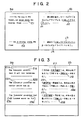
- the second Japanese sentence contains two Japanese equivalents J3 and J4 to the English phrase E2, "is driving along.”, i.e., "ni sotte doraibu shiteiru (be driving along %)" and “wo don-don doraibu shiteiru (be continuously driving)".
- a display attribute such as an underline, highlighting or brinking, is given to the English word or phrase.
- the display attribute is an underline.
- the input unit 4 is operated to give an editing command for editing any Japanese sentence translated by the processor 1 from the English original and displayed by the display 3.
- the unit 4 has a key 4a for designating the next translation possibility, a key 4b for selecting the designated translation possibility, a key 4c for cancelling the designation of any translation possibility, and a key 4d for designating one of the words or phrase in the English sentences.
- the key 4a is used to designate one of the translation possibilities of an original word and/or phrase which are stored in the dictionary 2 and displayed on the display 3. More specifically, when a plurality of translation possibilities are present and are simultaneously displayed on the screen as described above, the key 4a is operated by the operator to display a special display attribute (e.g., the underline) for distinguishing any one of the translation possibilities from other possibilities (See the translated phrase J2 in Fig. 2).
- the key 4a is operated to designate a new translation possibility (i.e, the next possibility) next to the translation possibility originally distinguished by the special display attribute. In this case, when the designated translation possibility is located on the last line of the translation possibilities, the next translation possibility is the one located on the first line. In the case of Fig. 2, the translation possibility J2 is underlined and designated as the possibility for the original phrase El.
- the translation possibility J l is designated (the underline disappears from the possibility J2, and then the possibility Jl is underlined).
- the translation possibilities can be selectively displayed.
- a special display attribute indicating the presence of other possibilities is used.
- the key 4b is used to select one of the plurality of translation possibilities displayed on the display 3 as the optimal translation possibility in response to the command from the key 4a. More specifically, the key 4b is operated by the operator while one of the plurality of translation possibilities displayed on the display 3 is being designated. The currently designated translation possibility is thus selected.
- the key 4c is used to cancel selection of the designated translation possibility. When the key 4c is operated by the operator after the translation possibility has been selected, the state prior to the selection of the translation possibility is restored.
- the key 4d is used to identify the original word (phrase) corresponding to the displayed translation possibility. When the key 4d is operated by the operator, the original word (phrase) corresponding to the translation possibility is distinguished by the special display attribute.
- the underline display of the phrase El in Fig. 2 is an example of identification in response to operation of the key 4d. In this case, operation of the key 4d may be co-ordinated with designation of a translation possibility, thereby designating the original phrase corresponding to the specific translation possibility group.
- the translation possibility next to the currently designated translation possibility is designated.
- the currently designated translation possibility is selected.
- Selection of the translation possibility changes the display 3 to show that the translation possibility has been selected.
- a special display attribute can be used. In order to show that the possibility has been selected, the same display mode used in the case where only one translation possibility is present can be set. In other words, only the selected translation possibility is displayed on the display 3.
- the processor 1 sequentially selects appropriate translated words (phrases) corresponding to the words (phrases) constituting the original sentence in resposne to the translation editing commands entered in the unit 4, thereby creating the translated sentence corresponding to the original sentence.
- the processor 1 causes the display 3 to display the translated sentence and an output device (not shown) to print it out.
- the memory 5 stores the selected translation possibilities associated with the corresponding original words (phrases).
- the memory 6 stores combinations of translation possibilities sequentially selected and associated with each other in relation to the corresponding combinations of original words (phrases).
- the data is stored in the memories 5 and 6 under the control of the processor 1.
- the storage data is used as empirical knowledge in translation process (to be described later).
- the machine translation system having the configuration described above performs translation processing in the following manner.
- the processor 1 for processing input original sentences analyzes the structure and form of the original sentences and sequentially processes words or phrases which constitute the original sentences by accessing the dictionary 2.
- a plurality of translation possibilities corresponding to a given original word (phrase) are present, these possibilities are displayed on the display 3 to allow the operator to select an appropriate possibility.
- the translation possibilities are simultaneously displayed.
- One of these translation possibilities is selectively designated with the special display attribute.
- Another preferable display mode is given such that only one translation possibility is displayed with a predetermined display attribute which indicates the presence of other translation attributes.
- the currently designated translation possibility is fetched as an appropriate word or phrase in the processor 1. However, the selection can be cancelled by operation of the key 4c.
- the operator depresses the key 4a to supply a next possibility designation command to the processor 1 and the next translation possibility is designated. Upon repeated operation of the key 4a, a plurality of translation possibilities are sequentially designated. The operator operates the key 4b to select the appropriate translation possibility among the plurality of possibilities.
- the operator wishes to check the original words or phrases corresponding to the translation possibilities, he depresses the key 4d.
- the word (phrase) in the original sentence displayed on the display 3 is designated by a predetermined display attribute, e.g., underlined.
- the designated original words or phrases can then be distinguished from other original words or phrases (phrase El in Fig. 2).
- the relationship between the original sentence and the translated sentence can be distinguished as a reference for translation possibility selection.
- the above operation is repeatedly performed for each original word (phrase).
- the selected, translated words are connected in accordance with the predetermined grammatical rules to produce a translated sentence. Easy selection of translation possibilities allows effective translation into natural sentences.
- An identical word (phrase), generally an important word (phrase) is often repeated in the input original sentences.
- the selected translation possibilities in association with the corresponding original words (phrases) are stored in the memory 5 and are used as empirical knowledge in translation process.
- the processor 1 determines that the previously selected translation possibilities are appropriate. These possibilities are displayed first. This is because identical words (phrases) are generally translated to identical translation possibilities, and the selected possibilities have a high probability for reselection. Therefore, the selected possibilities are displayed first upon reoccurrence of identical original words (phrases).
- the Japanese equivalent J2 "...ni sotte doraibu shita (drove along%)" is selected for the original phrase El "drove along", the selected phrase J2 is stored in the memory 5.
- the selected phrase J2 is stored in the memory 5.
- translation is automatically performed by using the stored data.
- the processor 1 can select the translation possibility with priority and automatically process the translation using it. Therefore, the selection from a plurality of translation possibilities can be greatly simplified.
- data as combinations of selected translation possibilities is stored in the memory 6.
- the data stored in the memory 6 is, for example, data representing the relationship between a subject and a corresponding translation possibility in the form of a verb having different meanings and requiring different translated words for different subjects.
- FIG. 3 An example of a display mode of the display 3 which is different from that of Fig. 2 is illustated in Fig. 3.
- a word Ell “forecaster” and a word E12 "predicts" in a main clause "The forecaster predicts" of the original sentence displayed in the area 3a have a plurality of translation possibilities.
- a Japanese equivalent Jll, "tenki yohou kan (weatherman)” is selected as a translation possibility for the word Ell “forecaster”.
- a Japanese equivalent J12, "yohousuru (forecast)” is selected as a translation possibility for the word E12 "predicts”.
- a plurality of translation possibilities are present in a word E21 “economist” and a word E22 “predicted” in a main clause of "The economist predicted”.
- a Japanese equivalent J21, “keizaigakusha (a specialist in economics)” is selected as a translation possibility for the word E21 “economist”.
- a Japanese equivalent J22, “yosou shita (foretell)” is selected as a translation possibility for the word E22 "predicted”.
- the different translation possibilities J12 and J22 are selected for an identical word “predict” in accordance with different subjects.
- the translation possibilities J12 and J22 are stored as combined data with the subjects "forecaster” represented by the word Ell and "economist” represented by the word E21.
- FIG. 4 A flow chart for controlling priority display of the translation possibility in the main system is shown in Fig. 4.
- Processing shown in Fig. 4 is performed by the processor 1 to sequentially process the input original words (phrases) in units of phrases.
- the processor 1 checks in step Sl whether or not a plurality of translation possibilities are present for a word (phrase) of interest. If NO in step Sl, i.e., when only one translation possibility is present, the flow jumps to step S7. However, if YES in step Sl, the processor 1 checks in step S2 whether or not combination data corresponding to the word (phrase) is stored in the memory 6. If NO in step S2, the flow advances to step S4. However, if YES in step S2, the flow advances to step S3. The processor 1 checks in step S3 whether or not a word (phrase) satisfying the combination conditions is present in the original sentence. If NO in step S3, i.e., when the processor 1 determines that the combination conditions are not established, the flow advances to step S4.
- the processor 1 checks in step S4 whether or not the previous selected data corresponding to the word (phrase) is stored in the memory 5. If NO in step S4, the flow advances to step S7. However, if YES in step S4, the flow advances to step S5. The translation possibilities are aligned in accordance with the priority order of the selected data, and the flow advances to step S7. However, if YES in step S3, the flow advances to step S6. The translation possibilities are aligned in accordance with the priority order of the stored combination data, and the flow advances to step S7. The processor 1 checks in step S7 whether or not a word can be conjugated, inflected or declined.
- step S7 If YES in step S7, the word is conjugated, inflected or declined in step S8, and the resultant word is displayed in step S9. However, if NO in step S7, the flow jumps to step S9, and the word is displayed in step S9. The highest priority word is underlined in the display in step S9.
- the original word when an original word having a plurality of corresponding translation possibilities is a verb, the translation possibility in association with the subject has the highest priority. Therefore, the original word can be assigned different translation possibilities when in conjunction with different subjects.
- an appropriate translated word can be easily selected from the plurality of translation possibilities corresponding to the original word or phrase.
- appropriate translation possibilities can be sequentially determined between original and translated sentences which have different sentence structures while the original and translated words or phrases are displayed in one-to-one correspondence on the display 3.
- the selected translation possibilities are accumulated as empirical knowledge for translation processing.
- the stored data is used when the identical original word (phrase) reoccurs in original sentences.
- the selected translation possibility is displayed as the one with the highest priority, thereby simplifying the translation possibility designation operation and improving translation efficiency.
- translated word (phrase) combination data are also accumulated, and the translation possibilities are displayed in prioritized order in accordance with the combination data. Therefore, selection of a translation possibility associated with the type of subject can be simplified.
- the present invention is not limited to the particular embodiment described above.
- the display format of the original and translated sentences, and the display formats for displaying the translation possibilities during translation processing and the original word (phrase) corresponding to the translation possibility can be determined in accordance with the given system specifications.
- the special display attribute for distinguishing a predetermined portion of the original or translated sentence from other portions can be an underline display, inverted image display, highlight display, blinking display or color display. These special display attributes can be used in combination, or used in accordance with the identification items. Various changes and modifications may therefore be made within the spirit and scope of the invention.
Landscapes
- Engineering & Computer Science (AREA)
- Theoretical Computer Science (AREA)
- Physics & Mathematics (AREA)
- Health & Medical Sciences (AREA)
- Artificial Intelligence (AREA)
- Audiology, Speech & Language Pathology (AREA)
- Computational Linguistics (AREA)
- General Health & Medical Sciences (AREA)
- General Engineering & Computer Science (AREA)
- General Physics & Mathematics (AREA)
- Probability & Statistics with Applications (AREA)
- Machine Translation (AREA)
Applications Claiming Priority (2)
| Application Number | Priority Date | Filing Date | Title |
|---|---|---|---|
| JP59271808A JPH0664585B2 (ja) | 1984-12-25 | 1984-12-25 | 翻訳編集装置 |
| JP271808/84 | 1984-12-25 |
Publications (2)
| Publication Number | Publication Date |
|---|---|
| EP0189665A1 true EP0189665A1 (de) | 1986-08-06 |
| EP0189665B1 EP0189665B1 (de) | 1993-03-03 |
Family
ID=17505132
Family Applications (1)
| Application Number | Title | Priority Date | Filing Date |
|---|---|---|---|
| EP85309268A Expired - Lifetime EP0189665B1 (de) | 1984-12-25 | 1985-12-19 | System zur maschinellen Übersetzung |
Country Status (4)
| Country | Link |
|---|---|
| US (1) | US4791587A (de) |
| EP (1) | EP0189665B1 (de) |
| JP (1) | JPH0664585B2 (de) |
| DE (1) | DE3587152T2 (de) |
Cited By (12)
| Publication number | Priority date | Publication date | Assignee | Title |
|---|---|---|---|---|
| GB2193018A (en) * | 1986-06-30 | 1988-01-27 | Sharp Kk | Translation machine system |
| US4814987A (en) * | 1985-05-20 | 1989-03-21 | Sharp Kabushiki Kaisha | Translation system |
| GB2177525B (en) * | 1985-05-14 | 1989-08-16 | Sharp Kk | Translation system |
| GB2175718B (en) * | 1985-05-14 | 1989-10-25 | Sharp Kk | A translating apparatus |
| GB2220285A (en) * | 1988-06-15 | 1990-01-04 | Hitachi Ltd | Selecting a target language equivalent of a predicate word in a source language word string, in a machine translation system |
| US5084817A (en) * | 1985-05-07 | 1992-01-28 | Kabushiki Kaisha Toshiba | System for translating a language having polite expressions |
| EP0370774A3 (de) * | 1988-11-22 | 1992-08-26 | Kabushiki Kaisha Toshiba | Maschinenübersetzungssystem |
| EP0335710A3 (de) * | 1988-03-31 | 1992-08-26 | Kabushiki Kaisha Toshiba | Übertragungssysten mit Übersetzung |
| EP0449230A3 (de) * | 1990-03-27 | 1994-01-12 | Hitachi Ltd | |
| GB2329047A (en) * | 1997-09-05 | 1999-03-10 | Sharp Kk | A method of identifying collocates |
| GB2356074A (en) * | 1999-11-02 | 2001-05-09 | Seiko Instr Inc | Electronic dictionary |
| GB2433403B (en) * | 2005-12-16 | 2009-06-24 | Emil Ltd | A text editing apparatus and method |
Families Citing this family (93)
| Publication number | Priority date | Publication date | Assignee | Title |
|---|---|---|---|---|
| US5351189A (en) * | 1985-03-29 | 1994-09-27 | Kabushiki Kaisha Toshiba | Machine translation system including separated side-by-side display of original and corresponding translated sentences |
| JPS61260367A (ja) * | 1985-05-14 | 1986-11-18 | Sharp Corp | 機械翻訳システム |
| JPS61260366A (ja) * | 1985-05-14 | 1986-11-18 | Sharp Corp | 学習機能付機械翻訳システム |
| JPS6244877A (ja) * | 1985-08-22 | 1987-02-26 | Toshiba Corp | 機械翻訳装置 |
| US4969097A (en) * | 1985-09-18 | 1990-11-06 | Levin Leonid D | Method of rapid entering of text into computer equipment |
| US5083268A (en) * | 1986-10-15 | 1992-01-21 | Texas Instruments Incorporated | System and method for parsing natural language by unifying lexical features of words |
| JP2778025B2 (ja) * | 1987-08-07 | 1998-07-23 | 株式会社日立製作所 | 共起関係辞書の学習方法 |
| GB2199170A (en) * | 1986-11-28 | 1988-06-29 | Sharp Kk | Translation apparatus |
| EP0294202A3 (de) * | 1987-06-03 | 1989-10-18 | Kabushiki Kaisha Toshiba | Vorrichtung zum digitalen Speichern von Schall |
| US5005127A (en) * | 1987-10-26 | 1991-04-02 | Sharp Kabushiki Kaisha | System including means to translate only selected portions of an input sentence and means to translate selected portions according to distinct rules |
| JPH0682380B2 (ja) * | 1987-10-28 | 1994-10-19 | シャープ株式会社 | 機械翻訳装置 |
| JPH0242572A (ja) * | 1988-08-03 | 1990-02-13 | Hitachi Ltd | 共起関係辞書生成保守方法 |
| JP2849111B2 (ja) * | 1989-03-28 | 1999-01-20 | 日本電信電話株式会社 | 学習機能付き自然文意味解析処理装置 |
| JPH02301869A (ja) * | 1989-05-17 | 1990-12-13 | Hitachi Ltd | 自然言語処理システム保守支援方式 |
| JPH02308370A (ja) * | 1989-05-24 | 1990-12-21 | Toshiba Corp | 機械翻訳システム |
| US5006849A (en) * | 1989-07-26 | 1991-04-09 | Astro, Inc. | Apparatus and method for effecting data compression |
| JPH03135666A (ja) * | 1989-10-20 | 1991-06-10 | Nec Corp | 機械翻訳方式 |
| JP2814634B2 (ja) * | 1989-12-29 | 1998-10-27 | 松下電器産業株式会社 | 機械翻訳装置 |
| US5329446A (en) * | 1990-01-19 | 1994-07-12 | Sharp Kabushiki Kaisha | Translation machine |
| US5289375A (en) * | 1990-01-22 | 1994-02-22 | Sharp Kabushiki Kaisha | Translation machine |
| US5418717A (en) * | 1990-08-27 | 1995-05-23 | Su; Keh-Yih | Multiple score language processing system |
| GB9103080D0 (en) * | 1991-02-14 | 1991-04-03 | British And Foreign Bible The | Analysing textual documents |
| US5317742A (en) * | 1991-06-21 | 1994-05-31 | Racal-Datacom, Inc. | Dynamic translation of network management primitives to queries to a database |
| JPH0567144A (ja) * | 1991-09-07 | 1993-03-19 | Hitachi Ltd | 前編集支援方法およびその装置 |
| JPH0580815A (ja) * | 1991-09-19 | 1993-04-02 | Fanuc Ltd | Pcのメツセージ表示方式 |
| US5275569A (en) * | 1992-01-30 | 1994-01-04 | Watkins C Kay | Foreign language teaching aid and method |
| US5486111A (en) * | 1992-01-30 | 1996-01-23 | Watkins; C. Kay | Foreign language teaching aid and method |
| US5523946A (en) * | 1992-02-11 | 1996-06-04 | Xerox Corporation | Compact encoding of multi-lingual translation dictionaries |
| JPH05298360A (ja) * | 1992-04-17 | 1993-11-12 | Hitachi Ltd | 翻訳文評価方法、翻訳文評価装置、翻訳文評価機能付き機械翻訳システムおよび機械翻訳システム評価装置 |
| US6760695B1 (en) | 1992-08-31 | 2004-07-06 | Logovista Corporation | Automated natural language processing |
| US6278967B1 (en) | 1992-08-31 | 2001-08-21 | Logovista Corporation | Automated system for generating natural language translations that are domain-specific, grammar rule-based, and/or based on part-of-speech analysis |
| US5528491A (en) * | 1992-08-31 | 1996-06-18 | Language Engineering Corporation | Apparatus and method for automated natural language translation |
| US5384700A (en) * | 1992-10-29 | 1995-01-24 | International Business Machines Corporation | Method and system for storing multiple, modifiable Yomi and Kanji strings in a structured document |
| GB2272091B (en) * | 1992-10-30 | 1996-10-23 | Canon Europa Nv | Apparatus for use in aligning bilingual corpora |
| WO1995017729A1 (en) * | 1993-12-22 | 1995-06-29 | Taligent, Inc. | Input methods framework |
| JP2965455B2 (ja) * | 1994-02-15 | 1999-10-18 | 富士ゼロックス株式会社 | 言語情報提供装置 |
| US5697789A (en) * | 1994-11-22 | 1997-12-16 | Softrade International, Inc. | Method and system for aiding foreign language instruction |
| US20050131267A1 (en) * | 1995-06-07 | 2005-06-16 | Talmadge Karen D. | System and method for delivering a therapeutic agent for bone disease |
| JP3566441B2 (ja) * | 1996-01-30 | 2004-09-15 | シャープ株式会社 | テキスト圧縮用辞書作成装置 |
| US6470306B1 (en) | 1996-04-23 | 2002-10-22 | Logovista Corporation | Automated translation of annotated text based on the determination of locations for inserting annotation tokens and linked ending, end-of-sentence or language tokens |
| JPH1074204A (ja) * | 1996-06-28 | 1998-03-17 | Toshiba Corp | 機械翻訳方法及び原文・訳文表示方法 |
| US6298158B1 (en) * | 1997-09-25 | 2001-10-02 | Babylon, Ltd. | Recognition and translation system and method |
| US5896321A (en) * | 1997-11-14 | 1999-04-20 | Microsoft Corporation | Text completion system for a miniature computer |
| US6240326B1 (en) * | 1998-04-03 | 2001-05-29 | Johnson Controls Technology Co. | Language independent building automation architecture for worldwide system deployment |
| US6438515B1 (en) * | 1999-06-28 | 2002-08-20 | Richard Henry Dana Crawford | Bitextual, bifocal language learning system |
| JP2001075957A (ja) * | 1999-08-24 | 2001-03-23 | Internatl Business Mach Corp <Ibm> | 自然言語構造の表示方法及び装置 |
| JP2001101187A (ja) * | 1999-09-30 | 2001-04-13 | Sony Corp | 翻訳装置および翻訳方法、並びに記録媒体 |
| US7403888B1 (en) * | 1999-11-05 | 2008-07-22 | Microsoft Corporation | Language input user interface |
| US6848080B1 (en) * | 1999-11-05 | 2005-01-25 | Microsoft Corporation | Language input architecture for converting one text form to another text form with tolerance to spelling, typographical, and conversion errors |
| US7047493B1 (en) | 2000-03-31 | 2006-05-16 | Brill Eric D | Spell checker with arbitrary length string-to-string transformations to improve noisy channel spelling correction |
| AU2002316581A1 (en) | 2001-07-03 | 2003-01-21 | University Of Southern California | A syntax-based statistical translation model |
| US7536294B1 (en) * | 2002-01-08 | 2009-05-19 | Oracle International Corporation | Method and apparatus for translating computer programs |
| US7620538B2 (en) | 2002-03-26 | 2009-11-17 | University Of Southern California | Constructing a translation lexicon from comparable, non-parallel corpora |
| US7209915B1 (en) | 2002-06-28 | 2007-04-24 | Microsoft Corporation | Method, system and apparatus for routing a query to one or more providers |
| CA2500332A1 (en) * | 2002-09-30 | 2004-05-27 | Ning-Ping Chan | Pointer initiated instant bilingual annotation on textual information in an electronic document |
| US20040195401A1 (en) * | 2003-02-28 | 2004-10-07 | Strong Christopher L. | Repeatable mounting unit for automatic spray device |
| US7558841B2 (en) * | 2003-05-14 | 2009-07-07 | Microsoft Corporation | Method, system, and computer-readable medium for communicating results to a data query in a computer network |
| US8548794B2 (en) | 2003-07-02 | 2013-10-01 | University Of Southern California | Statistical noun phrase translation |
| US20050091039A1 (en) * | 2003-10-25 | 2005-04-28 | Simab Bilal S. | Enhanced foreign language dictionaries |
| US8296127B2 (en) | 2004-03-23 | 2012-10-23 | University Of Southern California | Discovery of parallel text portions in comparable collections of corpora and training using comparable texts |
| US8666725B2 (en) | 2004-04-16 | 2014-03-04 | University Of Southern California | Selection and use of nonstatistical translation components in a statistical machine translation framework |
| DE202005022113U1 (de) | 2004-10-12 | 2014-02-05 | University Of Southern California | Training für eine Text-Text-Anwendung, die eine Zeichenketten-Baum-Umwandlung zum Training und Decodieren verwendet |
| JP2006276915A (ja) * | 2005-03-25 | 2006-10-12 | Fuji Xerox Co Ltd | 翻訳処理方法、文書翻訳装置およびプログラム |
| JP2006277103A (ja) * | 2005-03-28 | 2006-10-12 | Fuji Xerox Co Ltd | 文書翻訳方法および文書翻訳装置 |
| US8886517B2 (en) | 2005-06-17 | 2014-11-11 | Language Weaver, Inc. | Trust scoring for language translation systems |
| US8676563B2 (en) * | 2009-10-01 | 2014-03-18 | Language Weaver, Inc. | Providing human-generated and machine-generated trusted translations |
| JP4087400B2 (ja) * | 2005-09-15 | 2008-05-21 | 株式会社東芝 | 音声対話翻訳装置、音声対話翻訳方法および音声対話翻訳プログラム |
| US7992085B2 (en) | 2005-09-26 | 2011-08-02 | Microsoft Corporation | Lightweight reference user interface |
| US7788590B2 (en) | 2005-09-26 | 2010-08-31 | Microsoft Corporation | Lightweight reference user interface |
| US10319252B2 (en) * | 2005-11-09 | 2019-06-11 | Sdl Inc. | Language capability assessment and training apparatus and techniques |
| US8943080B2 (en) | 2006-04-07 | 2015-01-27 | University Of Southern California | Systems and methods for identifying parallel documents and sentence fragments in multilingual document collections |
| US8886518B1 (en) | 2006-08-07 | 2014-11-11 | Language Weaver, Inc. | System and method for capitalizing machine translated text |
| US8433556B2 (en) | 2006-11-02 | 2013-04-30 | University Of Southern California | Semi-supervised training for statistical word alignment |
| US9122674B1 (en) | 2006-12-15 | 2015-09-01 | Language Weaver, Inc. | Use of annotations in statistical machine translation |
| US8468149B1 (en) | 2007-01-26 | 2013-06-18 | Language Weaver, Inc. | Multi-lingual online community |
| US7895030B2 (en) * | 2007-03-16 | 2011-02-22 | International Business Machines Corporation | Visualization method for machine translation |
| US8831928B2 (en) | 2007-04-04 | 2014-09-09 | Language Weaver, Inc. | Customizable machine translation service |
| US8825466B1 (en) | 2007-06-08 | 2014-09-02 | Language Weaver, Inc. | Modification of annotated bilingual segment pairs in syntax-based machine translation |
| US9323854B2 (en) * | 2008-12-19 | 2016-04-26 | Intel Corporation | Method, apparatus and system for location assisted translation |
| US8990064B2 (en) | 2009-07-28 | 2015-03-24 | Language Weaver, Inc. | Translating documents based on content |
| US8380486B2 (en) | 2009-10-01 | 2013-02-19 | Language Weaver, Inc. | Providing machine-generated translations and corresponding trust levels |
| US20110097693A1 (en) * | 2009-10-28 | 2011-04-28 | Richard Henry Dana Crawford | Aligning chunk translations for language learners |
| US10417646B2 (en) | 2010-03-09 | 2019-09-17 | Sdl Inc. | Predicting the cost associated with translating textual content |
| WO2011146934A2 (en) | 2010-05-21 | 2011-11-24 | Western Standard Publishing Company, Inc. | Apparatus, system, and method for computer aided translation |
| US11003838B2 (en) | 2011-04-18 | 2021-05-11 | Sdl Inc. | Systems and methods for monitoring post translation editing |
| US8694303B2 (en) | 2011-06-15 | 2014-04-08 | Language Weaver, Inc. | Systems and methods for tuning parameters in statistical machine translation |
| US8886515B2 (en) | 2011-10-19 | 2014-11-11 | Language Weaver, Inc. | Systems and methods for enhancing machine translation post edit review processes |
| US8942973B2 (en) | 2012-03-09 | 2015-01-27 | Language Weaver, Inc. | Content page URL translation |
| US10261994B2 (en) | 2012-05-25 | 2019-04-16 | Sdl Inc. | Method and system for automatic management of reputation of translators |
| US8996354B1 (en) * | 2012-09-10 | 2015-03-31 | Kabam, Inc. | Facilitating localization of linguistic assets of a virtual space |
| US9152622B2 (en) | 2012-11-26 | 2015-10-06 | Language Weaver, Inc. | Personalized machine translation via online adaptation |
| US9213694B2 (en) | 2013-10-10 | 2015-12-15 | Language Weaver, Inc. | Efficient online domain adaptation |
| US10922496B2 (en) | 2018-11-07 | 2021-02-16 | International Business Machines Corporation | Modified graphical user interface-based language learning |
Citations (4)
| Publication number | Priority date | Publication date | Assignee | Title |
|---|---|---|---|---|
| FR2101495A5 (de) * | 1971-06-18 | 1972-03-31 | Baillie Andre | |
| US4193119A (en) * | 1977-03-25 | 1980-03-11 | Xerox Corporation | Apparatus for assisting in the transposition of foreign language text |
| EP0081784A2 (de) * | 1981-12-14 | 1983-06-22 | Hitachi, Ltd. | Verfahren zum Anzeigen und Korrigieren für ein maschinelles Übersetzungssystem |
| US4460973A (en) * | 1980-09-03 | 1984-07-17 | Sharp Kabushiki Kaisha | Electronic translator for marking words or sentences |
Family Cites Families (24)
| Publication number | Priority date | Publication date | Assignee | Title |
|---|---|---|---|---|
| US4706212A (en) * | 1971-08-31 | 1987-11-10 | Toma Peter P | Method using a programmed digital computer system for translation between natural languages |
| US4218760A (en) * | 1976-09-13 | 1980-08-19 | Lexicon | Electronic dictionary with plug-in module intelligence |
| JPS5936795B2 (ja) * | 1979-08-17 | 1984-09-05 | シャープ株式会社 | 電子辞書 |
| JPS5853787B2 (ja) * | 1979-08-30 | 1983-12-01 | シャープ株式会社 | 電子辞典 |
| JPS5652470A (en) * | 1979-10-05 | 1981-05-11 | Canon Inc | Interpreter with printer |
| US4393462A (en) * | 1979-10-24 | 1983-07-12 | Sharp Kabushiki Kaisha | Electronic translator with means for pronouncing input words and translated words |
| JPS59869B2 (ja) * | 1979-10-25 | 1984-01-09 | シャープ株式会社 | 電子翻訳機 |
| JPS5858714B2 (ja) * | 1979-11-12 | 1983-12-27 | シャープ株式会社 | 翻訳装置 |
| US4608665A (en) * | 1980-01-30 | 1986-08-26 | Kunio Yoshida | Sentence modifiable electronic dictionary and language interpreter |
| US4623985A (en) * | 1980-04-15 | 1986-11-18 | Sharp Kabushiki Kaisha | Language translator with circuitry for detecting and holding words not stored in dictionary ROM |
| JPS6042517B2 (ja) * | 1980-04-15 | 1985-09-24 | シャープ株式会社 | 電子式翻訳機 |
| JPS5731083A (en) * | 1980-07-31 | 1982-02-19 | Sharp Corp | Electronic interpreter |
| JPS5924452B2 (ja) * | 1980-09-22 | 1984-06-09 | 株式会社日立製作所 | 日本文入力装置 |
| JPS5775375A (en) * | 1980-10-28 | 1982-05-11 | Sharp Corp | Electronic interpreter |
| JPS57201958A (en) * | 1981-06-05 | 1982-12-10 | Hitachi Ltd | Device and method for interpretation between natural languages |
| JPS5840684A (ja) * | 1981-09-04 | 1983-03-09 | Hitachi Ltd | 自然言語間の自動翻訳方式 |
| JPS58192173A (ja) * | 1982-05-07 | 1983-11-09 | Hitachi Ltd | 機械翻訳装置 |
| US4507750A (en) * | 1982-05-13 | 1985-03-26 | Texas Instruments Incorporated | Electronic apparatus from a host language |
| JPH0713822B2 (ja) * | 1982-06-11 | 1995-02-15 | 株式会社東芝 | 翻訳方法 |
| JPS59140583A (ja) * | 1983-01-31 | 1984-08-11 | Sharp Corp | 電子式翻訳機 |
| US4635199A (en) * | 1983-04-28 | 1987-01-06 | Nec Corporation | Pivot-type machine translating system comprising a pragmatic table for checking semantic structures, a pivot representation, and a result of translation |
| DE3337546A1 (de) * | 1983-10-15 | 1985-04-25 | Battenfeld Maschinenfabriken Gmbh, 5882 Meinerzhagen | Vorrichtung zum spritzgiessen von formteilen aus thermoplastischen und anderen kunststoffen |
| JPS6170660A (ja) * | 1984-09-14 | 1986-04-11 | Hitachi Ltd | 機械翻訳システムにおける多義表示・選択方法 |
| DE3585937D1 (de) * | 1984-09-18 | 1992-06-04 | Sharp Kk | Uebersetzungssystem. |
-
1984
- 1984-12-25 JP JP59271808A patent/JPH0664585B2/ja not_active Expired - Lifetime
-
1985
- 1985-12-18 US US06/810,261 patent/US4791587A/en not_active Expired - Lifetime
- 1985-12-19 DE DE8585309268T patent/DE3587152T2/de not_active Expired - Lifetime
- 1985-12-19 EP EP85309268A patent/EP0189665B1/de not_active Expired - Lifetime
Patent Citations (4)
| Publication number | Priority date | Publication date | Assignee | Title |
|---|---|---|---|---|
| FR2101495A5 (de) * | 1971-06-18 | 1972-03-31 | Baillie Andre | |
| US4193119A (en) * | 1977-03-25 | 1980-03-11 | Xerox Corporation | Apparatus for assisting in the transposition of foreign language text |
| US4460973A (en) * | 1980-09-03 | 1984-07-17 | Sharp Kabushiki Kaisha | Electronic translator for marking words or sentences |
| EP0081784A2 (de) * | 1981-12-14 | 1983-06-22 | Hitachi, Ltd. | Verfahren zum Anzeigen und Korrigieren für ein maschinelles Übersetzungssystem |
Cited By (13)
| Publication number | Priority date | Publication date | Assignee | Title |
|---|---|---|---|---|
| US5084817A (en) * | 1985-05-07 | 1992-01-28 | Kabushiki Kaisha Toshiba | System for translating a language having polite expressions |
| GB2177525B (en) * | 1985-05-14 | 1989-08-16 | Sharp Kk | Translation system |
| GB2175718B (en) * | 1985-05-14 | 1989-10-25 | Sharp Kk | A translating apparatus |
| US4814987A (en) * | 1985-05-20 | 1989-03-21 | Sharp Kabushiki Kaisha | Translation system |
| GB2193018A (en) * | 1986-06-30 | 1988-01-27 | Sharp Kk | Translation machine system |
| EP0335710A3 (de) * | 1988-03-31 | 1992-08-26 | Kabushiki Kaisha Toshiba | Übertragungssysten mit Übersetzung |
| GB2220285A (en) * | 1988-06-15 | 1990-01-04 | Hitachi Ltd | Selecting a target language equivalent of a predicate word in a source language word string, in a machine translation system |
| EP0370774A3 (de) * | 1988-11-22 | 1992-08-26 | Kabushiki Kaisha Toshiba | Maschinenübersetzungssystem |
| US5214583A (en) * | 1988-11-22 | 1993-05-25 | Kabushiki Kaisha Toshiba | Machine language translation system which produces consistent translated words |
| EP0449230A3 (de) * | 1990-03-27 | 1994-01-12 | Hitachi Ltd | |
| GB2329047A (en) * | 1997-09-05 | 1999-03-10 | Sharp Kk | A method of identifying collocates |
| GB2356074A (en) * | 1999-11-02 | 2001-05-09 | Seiko Instr Inc | Electronic dictionary |
| GB2433403B (en) * | 2005-12-16 | 2009-06-24 | Emil Ltd | A text editing apparatus and method |
Also Published As
| Publication number | Publication date |
|---|---|
| DE3587152T2 (de) | 1993-07-15 |
| JPS61150068A (ja) | 1986-07-08 |
| US4791587A (en) | 1988-12-13 |
| EP0189665B1 (de) | 1993-03-03 |
| JPH0664585B2 (ja) | 1994-08-22 |
| DE3587152D1 (de) | 1993-04-08 |
Similar Documents
| Publication | Publication Date | Title |
|---|---|---|
| US4791587A (en) | System for translation of sentences from one language to another | |
| EP0180888B1 (de) | Verfahren und Gerät zur Natursprachenverarbeitung | |
| EP0370774B1 (de) | Maschinenübersetzungssystem | |
| JP3176059B2 (ja) | 翻訳装置 | |
| US5349368A (en) | Machine translation method and apparatus | |
| DE69614771T2 (de) | Gerät zur Übersetzung von Sätzen einer Konversation, das dem Benutzer die freie Eingabe des zu übersetzenden Satzes erlaubt | |
| US4831529A (en) | Machine translation system | |
| EP0213906B1 (de) | Maschineübersetzungssystem | |
| EP0201096B1 (de) | Verarbeitungsverfahren und -einrichtung für Maschinenübersetzung | |
| US5321607A (en) | Automatic translating machine | |
| US5136504A (en) | Machine translation system for output of kana/kanji characters corresponding to input character keys | |
| US5885081A (en) | System and method for conversion between linguistically significant symbol sequences with display of support information | |
| JPH0567144A (ja) | 前編集支援方法およびその装置 | |
| JP2633824B2 (ja) | 仮名漢字変換装置 | |
| EP0265280B1 (de) | Maschinelles Übersetzungssystem und -Verfahren | |
| JPH06348750A (ja) | 文書作成支援装置 | |
| JPH0351022B2 (de) | ||
| KR900008402B1 (ko) | 기계번역장치 | |
| JPS5843062A (ja) | かな漢字辞書システム | |
| JPS60108959A (ja) | 文章変換装置 | |
| JPH04227570A (ja) | 翻訳表示装置 | |
| JPS61150069A (ja) | 翻訳編集装置 | |
| JPH0336660A (ja) | 文書作成装置 | |
| JPH0328960A (ja) | かな漢字変換方式および日本語ワードプロセッサ | |
| JP2001282787A (ja) | 機械翻訳装置 |
Legal Events
| Date | Code | Title | Description |
|---|---|---|---|
| PUAI | Public reference made under article 153(3) epc to a published international application that has entered the european phase |
Free format text: ORIGINAL CODE: 0009012 |
|
| AK | Designated contracting states |
Kind code of ref document: A1 Designated state(s): DE FR GB NL |
|
| 17P | Request for examination filed |
Effective date: 19861002 |
|
| 17Q | First examination report despatched |
Effective date: 19890317 |
|
| RBV | Designated contracting states (corrected) |
Designated state(s): DE FR GB |
|
| GRAA | (expected) grant |
Free format text: ORIGINAL CODE: 0009210 |
|
| AK | Designated contracting states |
Kind code of ref document: B1 Designated state(s): DE FR GB |
|
| REF | Corresponds to: |
Ref document number: 3587152 Country of ref document: DE Date of ref document: 19930408 |
|
| ET | Fr: translation filed | ||
| PLBE | No opposition filed within time limit |
Free format text: ORIGINAL CODE: 0009261 |
|
| STAA | Information on the status of an ep patent application or granted ep patent |
Free format text: STATUS: NO OPPOSITION FILED WITHIN TIME LIMIT |
|
| 26N | No opposition filed | ||
| REG | Reference to a national code |
Ref country code: GB Ref legal event code: IF02 |
|
| PGFP | Annual fee paid to national office [announced via postgrant information from national office to epo] |
Ref country code: FR Payment date: 20041208 Year of fee payment: 20 |
|
| PGFP | Annual fee paid to national office [announced via postgrant information from national office to epo] |
Ref country code: GB Payment date: 20041215 Year of fee payment: 20 |
|
| PGFP | Annual fee paid to national office [announced via postgrant information from national office to epo] |
Ref country code: DE Payment date: 20041216 Year of fee payment: 20 |
|
| PG25 | Lapsed in a contracting state [announced via postgrant information from national office to epo] |
Ref country code: GB Free format text: LAPSE BECAUSE OF EXPIRATION OF PROTECTION Effective date: 20051218 |
|
| REG | Reference to a national code |
Ref country code: GB Ref legal event code: PE20 |