EP0263956A2 - Cis-Platin-Komplexe, Verfahren zu ihrer Herstellung und diese Verbindungen enthaltende pharmazeutische Mittel - Google Patents
Cis-Platin-Komplexe, Verfahren zu ihrer Herstellung und diese Verbindungen enthaltende pharmazeutische Mittel Download PDFInfo
- Publication number
- EP0263956A2 EP0263956A2 EP87112768A EP87112768A EP0263956A2 EP 0263956 A2 EP0263956 A2 EP 0263956A2 EP 87112768 A EP87112768 A EP 87112768A EP 87112768 A EP87112768 A EP 87112768A EP 0263956 A2 EP0263956 A2 EP 0263956A2
- Authority
- EP
- European Patent Office
- Prior art keywords
- group
- formula
- compound
- hydrogen atom
- platinum
- Prior art date
- Legal status (The legal status is an assumption and is not a legal conclusion. Google has not performed a legal analysis and makes no representation as to the accuracy of the status listed.)
- Granted
Links
- 0 CC1(**)CNN(*)NC1 Chemical compound CC1(**)CNN(*)NC1 0.000 description 1
Classifications
-
- C—CHEMISTRY; METALLURGY
- C07—ORGANIC CHEMISTRY
- C07H—SUGARS; DERIVATIVES THEREOF; NUCLEOSIDES; NUCLEOTIDES; NUCLEIC ACIDS
- C07H23/00—Compounds containing boron, silicon or a metal, e.g. chelates or vitamin B12
-
- A—HUMAN NECESSITIES
- A61—MEDICAL OR VETERINARY SCIENCE; HYGIENE
- A61P—SPECIFIC THERAPEUTIC ACTIVITY OF CHEMICAL COMPOUNDS OR MEDICINAL PREPARATIONS
- A61P35/00—Antineoplastic agents
-
- C—CHEMISTRY; METALLURGY
- C07—ORGANIC CHEMISTRY
- C07C—ACYCLIC OR CARBOCYCLIC COMPOUNDS
- C07C247/00—Compounds containing azido groups
-
- C—CHEMISTRY; METALLURGY
- C07—ORGANIC CHEMISTRY
- C07F—ACYCLIC, CARBOCYCLIC OR HETEROCYCLIC COMPOUNDS CONTAINING ELEMENTS OTHER THAN CARBON, HYDROGEN, HALOGEN, OXYGEN, NITROGEN, SULFUR, SELENIUM OR TELLURIUM
- C07F15/00—Compounds containing elements of Groups 8, 9, 10 or 18 of the Periodic Table
- C07F15/0006—Compounds containing elements of Groups 8, 9, 10 or 18 of the Periodic Table compounds of the platinum group
- C07F15/0086—Platinum compounds
- C07F15/0093—Platinum compounds without a metal-carbon linkage
Definitions
- the invention relates to new cis-platinum complex compounds with a propane-1,3-diamine derivative as ligands, a process for their preparation and a pharmaceutical composition in which these new compounds are contained.
- Cis-platinum (II)) diamine dichloride has been introduced as a drug.
- EPA 0 098 135 (A2) describes cis-platinum complexes which have alkyl or hydroxyalkyl-substituted propane-1,3-diamino derivatives as ligands.
- DE 33 37 333 (A1) and GB 20 24 823 (A) also describe alkyl, aryl or arylalkylpropane-1,3-diamine-platinum complexes.
- kidney and bone market toxicity of the alkyldiaminoplatinum complexes and their low solubility are disadvantageous.
- the present invention had the task of producing new propane-1,3-diamino-platinum complexes which are asymmetrically substituted on the C-2 atom and to test their pharmacological usefulness as a cytostatic agent.
- the invention relates to cis-platinum (II) diamine complexes of the formula I.
- R1-X is a methyl or ethyl group
- R2 is a methyl or ethyl group
- the invention also relates to medicaments, preferably for tumor therapy, which contain an effective amount of one or more of the compounds of the formula I as active ingredient.
- the dosage and application manner corresponds essentially to that known for cis (NH3) 2PtCl2, but due to the favorable therapeutic index of the compounds according to the invention, higher doses and / or more frequent administration are also possible.
- these medicaments may also contain, in addition to the compounds of the formula I to support the therapy, if appropriate also further active ingredients, provided that these do not show any undesirable side effects together with the compounds of the formula I according to the invention.
- the resulting product (245 g) was dissolved in 1 l of DMF and 76.5 g (1.17 mol) of sodium azide were added. The reaction mixture was stirred at 110 ° C. for 1 h. The reaction mixture was i. Vac. concentrated and the residue was dissolved in ethyl acetate and the water-soluble constituents were removed by shaking three times with water. The organic phase was i. Vac. concentrated and the resulting residue was purified by column chromatography over 1500 g of silica gel (eluent: petroleum ether / toluene / ethyl acetate 20: 10: 1).
- the resulting glycidyl ether derivative was emulsified in dioxane / water 1: 1 and hydrolyzed to compound 6 with KOH at 70 ° C. After neutralization with hydrochloric acid, the mixture was concentrated, dissolved in ethyl acetate and with 20 g of sodium sulfate stirred. After filtration and evaporation of the organic phase, the residue was purified by chromatography (200 g silica gel, eluent: dichloromethane / acetone 6: 1). Yield: 16.3 g (76%).
- the solution with the dinitrate intermediate was mixed with 10 g of ion exchange resin (DOWEX, type 1 ⁇ 8; activation with 10N NaOH) with stirring. After 30 minutes, the thin layer chromatogram (n-butanol / glacial acetic acid / water 5: 3: 2; cellulose film (13255 from Eastmann)) showed that the nitrate had been completely replaced by hydroxyl groups. After filtering off the resin, the filtrate was dried i. Vac. constricted.
- DOWEX type 1 ⁇ 8
- activation with 10N NaOH ion exchange resin
- connection 18 was established.
- connection 19 was established.
- connection 20 was established.
- connection 21 was established.
- connection 22 was established.
- connection 23 was established.
- connection 24 was established. Elemental analysis: Ber: C 19.93 H 5.01 N 7.75 Pt 54.02 Found: C 19.57 H 5.06 N 7.37 Pt 53.72.
- connection 25 was established.
- HPLC RP-8, 7 ⁇ , water, UV 220 nm
- Rt time 2.34 min. Elemental analysis: Ber: C 22.37 H 5.36 N 7.46 Pt 51.96 Found: C 22.18 H 5.38 N 7.22 Pt 51.36.
- connection 26 was established. Elemental analysis: Ber: C 22.79 H 5.26 N 6.64 Pt 46.31 Found: C 22.61 H 5.17 N 6.51 Pt 45.95.
- connection 27 was established. Elemental analysis: Ber: C 24.82 H 5.55 N 6.43 Pt 44.82 Found: C 24.79 H 5.58 N 6.32 Pt 44.37.
- connection 28 was established. Elemental analysis: Ber: C 27.66 H 5.48 N 5.86 Pt 40.87 Found: C 27.73 H 5.47 N 5.83 Pt 40.61
- connection 30 was established.
- HPLC RP-8, 7 ⁇ , eluent: water / methanol 85:15, UV 220 nm
- 13 C-NMR (90 MHz, D2O, delta): 181.34 (COO), 81.39 (CH2), 61.34 (CH3O, 53.02 (2 ⁇ CH2N), 50.16 (CH2), 40, 45 (C), 20.76 (CH3).
- connection 31 was established.
- HPLC RP-8, 7 ⁇ , water, UV 220 nm
- 13 C-NMR (90 MHz, D2O, delta): 184.78 (COO), 81.38 (CH2), 61.72 (CH3), 58.80 (C), 53.35 (2 ⁇ CH2N), 40 , 64 (C), 33.78 (CH2), 33.33 (CH2), 20.95 (CH3), 17.78 (CH2).
- Elemental analysis Ber: C 30.69 H 4.72 N 5.96 Pt 41.57 Found: C 30.87 H 4.83 N 5.71 Pt 41.08
- connection 32 was established.
- HPLC RP-8, 7 ⁇ , water / methanol 95: 5, UV 220: Rt-time 17.61 min.
- 13 C-NMR (90 MHz, D2O, delta): 184.77 (COO), 79.37 (CH2), 61.91 (CH2), 59.37 (C), 51.81 (CH2N), 51.69 (CH2N), 43.30 (C), 34.16 (CH2), 33.97 (CH2), 27.81 (CH3), 18.41 (CH2), 9.46 (CH3).
- connection 33 was established. Elemental analysis: Ber: C 29.21 H 4.90 N 9.73 Pt 33.20 Found: C 29.23 H 4.91 N 9.63 Pt 32.97.
- connection 35 was established. Elemental analysis: Ber: C 29.11 H 4.53 N 4.85 Pt 33.80 Found: C 29.05 H 4.50 N 4.73 Pt 33.22.
- the cytostatic activity of the compounds according to the invention was determined on L1210 leukemia cells of the mouse.
- the following test systems were used:
- This method serves to demonstrate the influence of the test substances on the growth behavior of the cells over several generations (with a cell cycle time of 10-12 hours, about 14 consecutive generations are observed in the test time of 7 days).
- cytostatic substances reduce the number of colonies to be observed compared to an untreated control. The test is carried out as follows.
- mice are injected intraperitoneally on day 0 with different doses of the test substance, dissolved in 0.5 ml of 5% glucose solution. Control groups receive only 0.5 ml of 5% glucose solution. 5 mice are used per concentration of the test substance. On day 14 the number of surviving mice is determined and the LD5, LD50 and LD95 are determined using the Lichtfield Wilcoxon method.
- the toxicity (LD50 (mg / kg)) of the compounds described here in comparison to cisplatin is summarized in Table 1.
- Ascites fluid is removed under sterile conditions from DBA2 mice (female, 18-20 g) 7 days after implantation.
- the ascites is washed three times with PBS, counted and adjusted to a cell number of 106 in 0.2 ml PBS.
- 106 cells, suspended in 0.2 ml PBS, are then injected intraperitoneally with DBF1 mice (female, 18-20 g). 6 animals per group are used for each substance concentration or as a control.
Landscapes
- Chemical & Material Sciences (AREA)
- Organic Chemistry (AREA)
- Health & Medical Sciences (AREA)
- General Health & Medical Sciences (AREA)
- Life Sciences & Earth Sciences (AREA)
- Biotechnology (AREA)
- Engineering & Computer Science (AREA)
- Molecular Biology (AREA)
- Genetics & Genomics (AREA)
- Biochemistry (AREA)
- Veterinary Medicine (AREA)
- Public Health (AREA)
- Nuclear Medicine, Radiotherapy & Molecular Imaging (AREA)
- General Chemical & Material Sciences (AREA)
- Animal Behavior & Ethology (AREA)
- Chemical Kinetics & Catalysis (AREA)
- Medicinal Chemistry (AREA)
- Pharmacology & Pharmacy (AREA)
- Acyclic And Carbocyclic Compounds In Medicinal Compositions (AREA)
- Pharmaceuticals Containing Other Organic And Inorganic Compounds (AREA)
- Organic Low-Molecular-Weight Compounds And Preparation Thereof (AREA)
Abstract

R¹ ein Wasserstoffatom oder eine Alkylgruppe der Formel CH₃(CH₂)n- mit n = 0 bis 5,
R² ein Wasserstoffatom, wenn X eine Carbamoylgruppe ist, eine Alkylgruppe mit 1 bis 6 Kohlenstoffatomen, eine etherartig gebundene Gruppe der Formel R³-O-CH₂-(CHR⁴)m-CH₂-, in der
R³ ein Wasserstoffatom oder eine Alkylgruppe mit 1 bis 6 Kohlenstoffatomen,
R₄ eine Hydroxygruppe oder eine Alkyloxygruppe mit 1 bis 3 Kohlenstoffatomen und m = O bis 2 sind, eine etherartig gebundene Gruppe der Formel H-(CH₂)a-(O-(CH₂)b)c- mit a = 0 bis 4, b = 1 bis 4 und c = 1 bis 7 oder einen O-glycosidisch gebundenen Rest der Formel
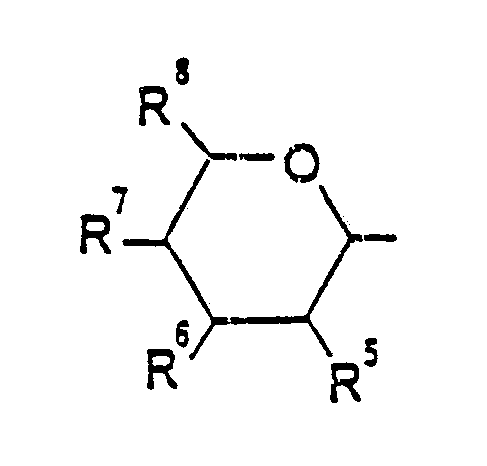
R⁵, R⁶ und R⁷
unabhängig voneinander ein Wasserstoffatom oder eine Hydroxygruppe und
R⁸ ein Wasserstoffatom, eine Methyl- oder Hydroxymethylgruppe sind
X eine Methylen- oder eine Carbamoylgruppe oder ein kovalente Bindung zwischen R¹ und dem C-2-Atom,
A¹ und A² gleich sind und die Hydroxygruppe, Chlorid, Bromid, Jodid, Nitrat, Acetat oder Trifluoracetat oder
A¹ Sulfat oder Carbonat und A² H₂O oder
A¹ und A² zusammen das Dianion einer organischen Säure wie Oxal-, Malon-, Hydroxymalon-, Ethylmalon-, 1,1- oder 1,2-Cyclobutan-dicarbon-, Phthal-, 3- oder 4-Carboxyphthal-, 3,4-Dicarboxyphthal oder N-(Carbamoylmethyl)-iminodiessigsäure darstellen sowie ein Verfahren zu ihrer Herstellung und ein diese Verbindungen enthaltendes Arzneimittel.
Description
- Die Erfindung betrifft neue Cis-Platin-Komplex-Verbindungen mit einem Propan-1,3-diamin-Derivat als Liganden, ein Verfahren zu ihrer Herstellung und ein pharmazeutisches Mittel, in dem diese neuen Verbindungen enthalten sind.
- Cis-Platin-Komplexe der allgemeinen Formel Cis-L₂-PtX₂, wobei L ein neutraler Ligand wie NH₃ oder ein organisches Amin und X ein anionischer Ligand wie Chlorid oder ein Anion einer organischen Säure ist, besitzen antitumorale Wirksamkeit (Cisplatin; Current Status and New Developments Eds. A. W. Prestayko, S. T. Crooke, S. K. Carter, Academic Press, 1980, 149-191).
- Cis-Platin-(II))-diamin-dichlorid ist als Arzneimittel eingeführt.
- In EPA 0 098 135 (A2) sind Cis-Platin-Komplexe beschrieben, die als Liganden Alkyl- oder Hydroxyalkylsubstituierte Propan-1,3-diamino-Derivate besitzen. In DE 33 37 333 (A1) und GB 20 24 823 (A) sind ebenfalls Alkyl-, Aryl- oder Arylalkylpropan-1,3-diamin-Platin-Komplexe beschrieben.
- In der DE 34 32 320 (A1) sind symmetrische Propan-1,3-diamin-Platin-Komplexe beschrieben, die am C-2 zwei Alkyloxymethylsubstituenten tragen.
- Die Nieren- und Knochenmarktoxizität der Alkyldiaminoplatin-Komplexe sowie ihre geringe Löslichkeit sind von Nachteil.
- Überraschenderweise zeigte sich, daß die synthetischen, bisher unzugänglichen Verbindungen 2-Ethyl-2-methoxymethyl-propan-1,3-diamin-N,N-platin-(II)-dichlorid und das entsprechende Malonat-Derivat hohe zytostatische Wirksamkeit im "in vivo"-Test mit der L1210 Tumorzellinie aufweisen, und daß diese Verbindungen in vitro nur partiell kreuzresistent zu dem in der Klinik aufgeführten Arzneimittel Cis-Platin-(II)-diamin-dichlorid sind.
- Ausgehend von dieser Erkenntnis hatte es sich die vorliegende Erfindung zur Aufgabe gestellt, neue am C-2-Atom asymmetrisch substituierte Propan-1,3-diamino-platin-Komplexe herzustellen, und deren pharmakologische Nützlichkeit als Zytostatikum zu überprüfen.
- Gelöst wurde diese Aufgabe durch die Verbindungen der Formel I, die in der Prüfung auf zytostatische Wirksamkeit auffielen.
- Gegenstand der Erfindung sind Cis-Platin-(II)-diamin-Komplexe der Formel I

R¹ ein Wasserstoffatom oder eine Alkylgruppe der Formel CH₃(CH₂)n- mit n = 0 bis 5,
R² ein Wasserstoffatom, wenn X eine Carbamoylgruppe ist, eine Alkylgruppe mit 1 bis 6 Kohlenstoffatomen, eine etherartig gebundene Gruppe der Formel R³-O-CH₂-(CHR⁴)m-CH₂-, in der
R³ ein Wasserstoffatom oder eine Alkylgruppe mit 1 bis 6 Kohlenstoffatomen,
R⁴ eine Hydroxygruppe oder eine Alkyloxygruppe mit 1 bis 3 Kohlenstoffatomen und m = 0 bis 2 sind, eine etherartig gebundene Gruppe der Formel H-(CH₂)a-(O-(CH₂)b)c- mit a = O bis 4, b = 1 bis 4 und c = 1 bis 7 oder einen O-glycosidisch gebundenen Rest der Formel
R⁵, R⁶ und R⁷
unabhängig voneinander ein Wasserstoffatom oder eine Hydroxygruppe und
R⁸ ein Wasserstoffatom, eine Methyl- oder Hydroxymethylgruppe sind,
X eine Methylen- oder eine Carbamoylgruppe oder eine kovalente Bindung zwischen R¹ und dem C-2-Atom,
A¹ und A² gleich sind und die Hydroxygruppe, Chlorid, Bromid, Jodid, Nitrat, Acetat oder Trifluoracetat
oder
A¹ Sulfat oder Carbonat und A² H₂O oder
A¹ und A² zusammen das Dianion einer organischen Säure wie Oxal-, Malon-, Hydroxymalon-, Ethylmalon-, 1,1- oder 1,2-Cyclobutan-dicarbon-, Phthal-, 3- oder 4-Carboxyphthal-, 3,4-Dicarboxyphthal oder N-(Carbamoylmethyl)-iminodiessigsäure darstellen. - Bevorzugt werden im Rahmen der Erfindung Verbindungen der allgemeinen Formel I, worin die Reste
R¹-X eine Methyl- oder Ethylgruppe,
R² eine Methyl- oder Ethylgruppe, eine etherartig gebundene Gruppe der Formel
R³-O-CH₂--CH₂- oder R³-(OCH₂CH₂)c-
mit
R³ ein Wasserstoffatom oder ein Methylrest und c = 1,2,3 oder 6 oder ein O-glycosidisch gebundener Rest der Formel
R⁵ und R⁶
unabhängig voneinander ein Wasserstoffatom oder eine Hydroxygruppe,
R⁸ ein Wasserstoffatom, eine Methyl- oder Hydroxymethylgruppe,
A¹ und A²
gleich sind und die Hydroxygruppe, Chlorid oder Nitrat oder
A¹ und A²
zusammen das Dianion der Malon-, 1,1-Cyclobutandicarbon- oder N-(Carbamoylmethyl)-iminodiessigsäure sind
sowie Verbindungen der allgemeinen Formel I, worin die Reste
R¹-X eine Acetamidogruppe und
R² ein Wasserstoffatom sind und
A¹ und A² die zuletzt genannte Bedeutung besitzen.
- Die erfindungsgemäßen Verbindungen der Formel I sind dadurch herstellbar, daß man ausgehend von einer Verbindung der Formel II

R¹ ein Wasserstoffatom oder eine Alkylgruppe der Formel CH₃(CH₂)n mit n = 0 bis 5,
R² ein Wasserstoffatom,
R⁹ eine Azidogruppe und
X eine Methylen- oder eine Carbamoylgruppe oder eine kovalente Bindung zwischen R¹ und dem C-2-Atom sind,
in an sich bekannter Weise ein Ether- oder Glycosid-Derivat der Formel II, worin die Reste R¹, R⁹ und X ihre vorher genannte Bedeutung beibehalten und R² eine Alkylgruppe mit 1 bis 6 Kohlenstoffatomen, eine etherartig gebundene Gruppe der Formel R³-O-CH₂-(CHR⁴)m-CH₂-, in der R³ ein Wasserstoffatom oder eine Alkylgruppe mit 1 bis 6 Kohlenstoffatomen, R⁴ eine Hydroxygruppe oder eine Alkyloxygruppe und m = O bis 2 sind, oder eine etherartig gebundene Gruppe der Formel H-(CH₂)a-(O-(CH₂)b)c- mit a = 0 bis 4, b = 1 bis 4 und c = 1 bis 7, oder ein 0-glycosidisch gebundener Rest der Formel
R⁵, R⁶ und R⁷
unabhängig voneinander ein Wasserstoffatom oder eine Hydroxygruppe sind oder R⁵ und R⁶ für ein Elektronenpaar stehen und
R⁸ ein Wasserstoffatom, eine Methyl- oder Hydroxymethylgruppe ist,
darstellt und das erhaltene Derivat in Gegenwart von Palladium/Kohle und eines organischen Lösungsmittels wie Methanol, Essigsäureethylester oder Dioxan hydriert, wobei eine Diaminoverbindung gebildet wird, die in an sich bekannter Weise mit K₂PtCL₄ zu einem Platinkomplex der Formel I umgesetzt wird, aus dem anschließend weitere Derivate der Formel I hergestellt werden. - Die Herstellung einer Verbindung der allgemeinen Formel I basiert auf der Anwendung von Verfahren, die zum Beispiel in der Offenlegungschrift DE 34 32 320 beschrieben wurden oder die in der Kohlenhydratchemie üblich sind.
- Die Bestimmung ihrer zytostatischen Wirksamkeit erfolgte in vitro an L1210-Leukämiezellen der Maus oder in vivo an L1210-Leukämie, B16-Melanoma und Lewis Lung Adenocarcinoma. Die akute Toxizität der Verbindungen wurde an NMRI-Mäusen ermittelt. Unter Berücksichtigung der gerin gen akuten Toxizität (H.P. Kraemer, H.H. Sedlacek, Behring Institute Mitt. 74, 301-328, 1984) erweisen sich die erfindungsgemäßen Verbindungen dem Cisplatin überlegen hinsichtlich Zytotoxizität, Löslichkeit und Wirksamkeit an der L1210-Leukämie. Des weiteren sind die erfindungsgemäßen Verbindungen auch bei Tumorzellen mit Resistenz gegen Cisplatin wirksam.
- Gegenstand der Erfindung sind auch Arzneimittel vorzugsweise zur Tumortherapie, die eine wirksame Menge einer oder mehrerer der Verbindungen der Formel I als Wirkstoff enthalten.
- Die Dosierungs- und Anwendungs-Weise entspricht im wesentlichen der für Cis-(NH₃)₂PtCl₂ bekannten, wobei aber aufgrund des günstigen therapeutischen Indexes der erfindungsgemäßen Verbindungen auch höhere Dosierungen und/oder eine häufigere Verabreichung in Frage kommen.
- Neben den üblichen pharmazeutischen Konfektionierungs- und/oder Verdünnungsmitteln können diese Arzneimittel neben den Verbindungen der Formel I zur Unterstützung der Therapie ggf. auch noch weitere Wirkstoffe enthalten, sofern diese mit den erfindungsgemäßen Verbindungen der Formel I zusammen keine unerwünschten Nebenwirkungen zeigen.
- In den folgenden Beispielen wird die vorliegende Erfindung näher beschrieben, ohne sie hierbei einzuschränken.
- 150 g (1,25 mol) 2-Hydroxymethyl-2-methylpropan-1,3-diol wurden in 1,5 l Pyridin gelöst und mit 487 g (2,5 mol) p-Toluolsulfonsäurechlorid versetzt. Nach 18 h Rühren bei Raumtemperatur wurde der Reaktionsansatz im Wasserstrahlpumpenvakuum (i. Vak.) eingeengt und zweimal mit Toluol abdestilliert. Der Rückstand wurde in Chloroform aufgenommen und die Lösung wurde dreimal mit Eiswasser gewaschen. Die organische Phase wurde i. Vak. eingeengt und der Rückstand wurde chromatographisch über 2000 g Kieselgel (Elutionsmittel: Dichlormethan/Essigsäureethylester) gereinigt. Das resultierende Produkt (245 g) wurde in 1 l DMF gelöst und mit 76,5 g (1,17 mol) Natriumazid versetzt. Der Reaktionsansatz wurde 1 h bei 110°C gerührt. Die Reaktionsmischung wurde i. Vak. eingeengt und der Rückstand wurde in Essigsäureethylester gelöst und durch dreimaliges Ausschütteln mit Wasser wurden die wasserlöslichen Bestandteile entfernt. Die organische Phase wurde i. Vak. eingeengt und der resultierende Rückstand wurde säulenchromatographisch über 1500 g Kieselgel (Elutionsmittel: Petrolether/Toluol/Essigsäureethylester 20:10:1) gereinigt.
Ausbeute: 79,8 g (83 %)
IR (cm⁻¹, N₃) : 2100
¹³C-NMR (90 MHz, CDC1₃, delta) : 65,58 (CH₂OH), 55,37 (2× CH₂N), 40,64 (C), 14,47 (CH₃). - Ausgehend von 2-Ethyl-2-hydroxymethyl-propan-1,3-diol wurde die Verbindung 2 nach der Vorschrift zur Synthese der Verbindung 1 hergestellt.
IR (cm⁻¹, N₃) : 2100. - 100 g (0,82 mol) Tris-hydroxymethyl-aminomethan wurden in 600 ml Pyridin gelöst und bei -20° mit 790 ml Acetanhydrid versetzt. Nach 10 h Rühren bei Raumtemperatur wurde der Reaktionsansatz wie üblich aufgearbeitet. Das resultierende Tetraacetylderivat (181 g) wurde in Methanol gelöst und mit einer katalytischen Menge Natriummethylat bei 0°C versetzt. Nach 3 h wurde mit DOWEX WX8 neutralisiert und zur Trockne eingeengt. Das Produkt: Trishydroxymethyl-acetamidomethan wurde nach der Vorschrift zur Herstellung der Verbindung 1 zur Verbindung 3 umgesetzt.
IR (cm⁻¹) : 2100, 1660.
¹³C-NMR (90 MHz, CDC1₃, delta) : 168,18 (CONH), 75,04 (C), 72,65 (CH₂OH), 56,24 (2×CH₂N₃), 14,35 (CH₃). - 7,3 g (43 mmol) Verbindung 1 wurden in 50 ml Dioxan gelöst und mit 7,2 g Kalium-tert.-butylat versetzt. In die Mischung wurden 6,71 g (47 mmol) Methyljodid, gelöst in 20 ml Dioxan, getropft. Nach 3 h Rühren bei Raumtemperatur wurde der Reaktionsansatz i. Vak. eingedampft. Der resultierende Sirup wurde chromatographisch über 70 g Kieselgel (Elutionsmittel: Hexan/Diisopropylether 5:1) gereinigt.
Ausbeute: 6,3 g (80 %).
Elementaranalyse:
Ber. C 39,12 H 6,56 N 45,62
Gef. C 39,06 H 6,52 N 45,32
¹³C-NMR (90 MHz, CDC1₃,delta): 75,74 (CH₂O), 59,65 (CH₃O), 56,29 (2× CH₂N₃), 41,61 (C), 18,96 (CH₃). - Ausgehend von Verbindung 2 wurde die Verbindung 5 nach der Vorschrift zur Synthese von Verbindung 4 hergestellt.
IR (cm⁻¹, N₃) : 2100.
¹³C-NMR (90 MHz, CDCl₃,delta): 72,76 (CH₂O), 58,89 (CH₃O), 53,20 (2× CH₂N₃), 43,12 (C), 23,40 (CH₂), 7,1 (CH₃). - 15 g (88 mmol) Verbindung 1 wurden in 200 ml DMF gelöst und mit 9,9 g (176 mmol) KOH versetzt. 24 g (176 mmol) Epibromhydrin, gelöst in 50 ml DMF, wurden innerhalb von 1 h zugetropft. Nach 24 h Rühren bei Raumtemperatur wurde der Reaktionsansatz abfiltriert und zum Sirup i. Vak. eingeengt. Das Produkt wurde noch chromatographisch über 500 g Kieselgel (Elutionsmittel: Dichlormethan/Petrolether/Essigsäureethylester 1:1:0,1) gereinigt. Das resultierende Glycidylether-Derivat wurde in Dioxan/Wasser 1:1 emulgiert und mit KOH bei 70°C zur Verbindung 6 hydrolysiert. Nach Neutralisation mit Salzsäure wurde der Ansatz eingeengt, in Essigsäureethylester gelöst und mit 20 g Natriumsulfat gerührt. Nach der Filtration und Abdampfen der organischen Phase wurde der Rückstand chromatographisch (200 g Kieselgel, Elutionsmittel: Dichlormethan/Aceton 6:1) gereinigt.
Ausbeute: 16,3 g (76 %).
¹³C-NMR (90 MHz, CDCl₃,delta) : 74,55 (CH₂), 73,25 (CH₂), 71,24 (CHOH), 64,42 (CH₂OH), 56,29 (2×CH₂N₃), 41,55 (C), 19,07 (CH₃).
IR (cm⁻¹, N₃) : 2100. - Das Glycidylether Derivat (4 g), wie bei der Herstellung der Verbindung 6 beschrieben, wurde in trockenem Methanol gelöst und mit festem KOH (2 g) bei Raumtemperatur gespalten. Die resultierende Methoxy-Verbindung 7 wurde anschließend über Kieselgel filtriert.
Ausbeute: 4,3 g (99 %)
IR (cm⁻¹, N₃) : 2100.
¹³C-NMR (90 MHz), CDCl₃,delta) : 74,44 (2× CH₂), 73,14 (CH), 69,83 (CH₂), 59,76 (OCH₃), 56,29 (2× CH₂N₃), 41,66 (C), 19,07 (CH₃). - 7,5 g (44 mmol) Verbindung 1 wurden in 250 ml Dioxan aufgenommen. Nach der Zugabe von 12 g (44 mmol) 3,4,6-Tri-O-acetyl-D-glucal und 0,960 g (4,4 mmol) p-Toluolsulfonsäure wurde der Reaktionsansatz 20 h bei 70°C gerührt. Dann wurde eingeengt und wie üblich aufgear beitet. Durch eine säulenchromatographische Trennung wurden zwei Verbindungen erhalten: 2,2-Bis-(azidomethyl)-propyl-4,6-di-O-acetyl-2,3-didesoxy-alpha-D-erythrohex-2-enopyranosid (7 g = 40 %) und 2,2-Bis-(azidomethyl)-propyl-3,4,6-tri-O-acetyl-alpha-D-arabinohexopyranosid (3,5 g = 21 %). Beide Verbindungen wurden mit Natriummethylat, wie üblich, entacetyliert.
- Ausbeute: 3,2 g
IR (cm⁻¹, N₃) : 2100.
¹³C-NMR (90 MHz, CDCL₃,delta) : 134,09 (CH; C-2), 126,18 (CH; C-3), 95,08 (CH C-1), 72,22 (CH₂), 71,19 (CH), 64,20 (CH₂), 62,79 (CH), 56,18 (2× CH₂N₃), 41,28 (C), 19,02 (CH₃).
- Ausbeute 2,7 g
IR (cm⁻¹, N₃) : 2100
¹³C-NMR (90 MHz, CDCl₃,delta) : 98,72 (CH, C-1), 72,54 (CH), 72,38 (CH), 70,54 (CH), 69,68 (CH₂), 62,25 (CH₂), 56,19 (2× CH₂N₃), 41,28 (CH₂), 37,92 (C), 19,23 (CH₃)
¹H-NMR (90 MHz, CDCl₃,delta) : 4,78 (1-H;J(1,2) = 1,2 Hz, J (1,2ʹ) = 2 Hz). - 3,75 g (22 mmol) Verbindung 1 wurden in 60 ml Toluol/Nitromethan 1:1 gelöst. Nach der Zugabe von 5,5 g (72 mmol) Quecksilbercyanid und 9,1 g (22 mmol) Acetobromglucose wurde die Reaktionsmischung auf 40°C erwärmt, wobei unter reduziertem Druck 10 Volumen % der Reaktionslösung abdestilliert wurde.
- Nach 14 h wurde der Ansatz mit Chloroform versetzt, zweimal mit einer 10 %igen KJ-Lösung, einmal 1 %iger Natriumhydrogencarbonat-Lösung und einmal mit Eiswasser gewaschen. Nach Trocknen mit Natriumsulfat wurde i. Vak. eingeengt und der Rückstand wurde säulenchromatographisch gereinigt. Die resultierende Verbindung wurde in Gegenwart von Natriummethylat entacetyliert.
Ausbeute: 5,9 g (82 %)
Elementaranalyse:
Ber: C 39,75 H 6,06 N 25,29
Gef: C 39,82 H 6,05 N 25,13
IR (CM⁻¹, N₃) : 2100 - 4,8 g (26,05 mmol) Verbindung 4 wurden in 30 ml einer Mischung aus Methanol und Essigsäureethylester 3:1 gelöst. Nach der Zugabe von 3 g Pd/C (10 %ig) wurde der Reaktionsansatz unter Rühren 2 h bei Raumtemperatur hydriert. Der Verlauf der Hydrierung wurde dünnschichtchromatographisch verfolgt. Nach Abfiltrieren des Katalysators wurde die Lösung zur Trockne eingedampft. Das resultierende Produkt, das im IR-Spektrum keine Azidobande zeigt, wurde ohne weitere Reinigungsschritte in die folgende Umsetzung mit Platin-Salzen eingesetzt.
Ausbeute: 3 g (88 %). - 3 g (22,7 mmol) Diaminozwischenverbindung wurden in Methanol gelöst und zu 50 ml einer wäßrigen Lösung aus 9,4 g (22,7 mmol) K₂PtCl₄ gegeben. Nach 18 h Rühren bei Raumtemperatur wurde das ausgefallene Reaktionsprodukt abfiltriert und mehrere Male mit Eiswasser gewaschen. Die vereinigten Filtrate wurden auf ein Volumen von 15 ml i. Vak. eingedampft, wobei erneut das Reaktionsprodukt ausgefallen war.
Ausbeute: 6 g (68 %)
Elementaranalyse:
Ber: C 18,10 H 4,05 Cl 17,8 N 7,03 Pt 49,0
Gef. C 18,50 H 4,00 Cl 17,3 N 6,91 Pt 48,5
IR (cm⁻¹) : 3500, 3250, 3150, 2950, 2930, 2880, 2770, 1575, 1450. - Die Verbindung 12 wurde nach der Vorschrift zur Synthese der Verbindung 11 hergestellt.
9,3 g (46,5 mmol) Verbindung 5 wurden hydriert und das Diaminozwischenprodukt wurde mit 19,3 g (46,5 mmol) K₂PtCl₄ zur Verbindung 12 umgesetzt.
Elementaranalyse:
Ber: C 20,40 H 4,40 Cl 17,19 N 6,79 Pt 47,32
Gef: C 20,24 H 4,61 Cl 17,50 N 6,50 Pt 46,80 - Die Verbindung 13 wurde nach der Vorschrift zur Synthese der Verbindung 11 hergestellt.
- 7,5 g (30,7 mmol) Verbindung 6 wurde hydriert und das resultierende Diaminozwischenprodukt wurde mit 12,7 g (30,7 mmol) K₂PtCl₄ zur Verbindung 13 umgesetzt.
Ausbeute: 7,2 g (52 %)
Elementaranalyse:
Ber: C 20,69 H 4,39 Cl 15,47 N 6,14 Pt 42,57
Gef: C 20,32 H 4,21 Cl 15,17 N 6,01 Pt 41,73
¹³C-NMR (90 MHz, D₂O,delta, Standard Dioxan) : 80,63, 74,48, 72,39, 65,08, 52,79 (CH₂NH₂), 39,37, 20,95. - Die Verbindung 14 wurde ausgehend von Verbindung 7 nach dem Verfahren zur Synthese der Verbindung 11 hergestellt.
Elementaranalyse:
Ber: C 22,88 H 4,69 Cl 15,01 N 5,93 Pt 41,30
Gef: C 23,40 H 4,61 Cl 15,20 N 5,81 Pt 41,10
¹³C-NMR (90 MHz, D₂O,delta, Standard Dioxan) : 80,96, 75,56, 74,48, 70,48, 60,64, 52,70 (2× CH₂NH₂), 39,05, 21,27. - 9 g (30,30 mmol) Verbindung 8 wurden in Gegenwart von 4 g Pd/C (10 %) und 200 ml Methanol hydriert. Die resultierende Verbindung wurde mit 12,0 g (30,30 mmol) K₂PtCl₄, wie bereits oben beschrieben, zur Verbindung 15 umgesetzt.
Ausbeute: 7 g (45 %)
¹³C-NMR (90 MHz, DMF,delta) : 97,46, 76,55, 73,08, 67,18, 63,50, 50,98, 50,60, 39,44, 30,99, 28,39, 19,93. - 3,32 g (10 mmol) Verbindung 10 wurden in Gegenwart von Pd/C hydriert und das resultierende Diamin wurde mit K₂PtCl₄ zur Verbindung 16 umgesetzt.
Ausbeute: 4,9 g (89 %)
Elementaranalyse:
Ber: C 24,17 H 4,42 Cl 12,97 N 5,12 Pt 35,72
Gef: C 24,03 H 4,41 Cl 12,38 N 5,01 Pt 35,20 - 2,8 g (14,07 mmol) Verbindung 3 wurden in Gegenwart von Pd/C hydriert und das Diaminoprodukt wurde mit K₂PtCl₄ zur Verbindung 17 umgesetzt.
Ausbeute 3,19 g (55 %)
Elementaranalyse:
Ber: C 16,86 H 3,54 Cl 16,59 N 9,83 Pt 45,66
Gef: C 17,00 H 3,50 Cl 16,60 N 9,90 Pt 46,10
¹³C-NMR (90 MHz, DMF,delta) : 169,79 (CO), 83,84 (CH₂OH), 64,20 (C), 51,11 (CH₂N), 48,78 (CH₂N), 14,82 (CH₃). - Die Verbindungen 11 bis 17, die als Platin (II)-dichlorid-Derivate vorliegen, wurden nach dem folgenden Schema in ihrer Nitrat-, Hydroxy- und Carbonsäure-Derivate umgesetzt.

- 10 mmol Platin(II)-dichlorid-Derivat wurden in 100 ml destilliertem entgastem Wasser suspendiert. Nach der Zugabe von 20 mmol Silbernitrat, gelöst in 50 ml Wasser, wurde der Reaktionsansatz 25 h bei Raumtemperatur unter Lichtausschluß gerührt. Der Reaktionsablauf wurde dünnschichtchromatographisch auf Cellulose (13255 Fa. Eastman, Laufmittel: Butanol/Eisessig/Wasser 5:3:2) sowie mittels HPLC-Technik (RP18 Lichrosorb 7 µ 250×4, Elutionsmittel: Methanol/Wasser-Gradient, Detektion: UV 220 nm) verfolgt. Nach Abfiltrieren des ausgefallenen Silberchlorids wurde das in Wasser gelöste Nitrat-Derivat ohne weitere Reinigungsschritte in die folgende Umsetzung eingeleitet.
- Die Lösung mit dem Dinitratzwischenprodukt wurde unter Rühren mit 10 g Ionenaustauschharz (DOWEX, Type 1×8; Akitivierung mit 10n NaOH) versetzt. Nach 30 min zeigte das Dünnschichtchromatogramm (n-Butanol/Eisessig/Wasser 5:3:2; Cellulose-Folie (13255 Fa. Eastmann)), daß der Austausch des Nitrates durch Hydroxygruppen vollständig abgelaufen war. Nach Abfiltrieren des Harzes wurde das Filtrat zur Trockne unter Lichtausschluß i. Vak. eingeengt.
- 10 mmol Platin(II)-dihydroxy-Verbindung wurden in 50 ml destilliertem, entgastem Wasser gelöst. Zu dieser Lösung wurden 10 mmol Di- oder Oligocarbonsäure, gelöst in 20 ml Wasser, unter Rühren und Lichtausschluß gegeben. Nach 6 h wurde die Reaktionslösung i. Vak. zur Trockne eingedampft. Das Produkt wurde aus Wasser/Methanol umkristallisiert.
- Wie in Beispiel 4a beschrieben, wurden die folgenden Verbindungen hergestellt:
- Ausgehend von Verbindung 11 wurde die Verbindung 18 hergestellt.
- Ausgehend von Verbindung 12 wurde die Verbindung 19 hergestellt.
- Ausgehend von Verbindung 13 wurde die Verbindung 20 hergestellt.
- Ausgehend von Verbindung 14 wurde die Verbindung 21 hergestellt.
- Ausgehend von Verbindung 15 wurde die Verbindung 22 hergestellt.
- Ausgehend von Verbindung 16 wurde die Verbindung 23 hergestellt.
- Wie in Beispiel 4b beschrieben, wurden folgende Verbindungen hergestellt:
- Ausgehend von Verbindung 18 wurde die Verbindung 24 hergestellt.
Elementaranalyse:
Ber: C 19,93 H 5,01 N 7,75 Pt 54,02
Gef: C 19,57 H 5,06 N 7,37 Pt 53,72. - Ausgehend von Verbindung 19 wurde die Verbindung 25 hergestellt. HPLC (RP-8, 7µ, Wasser, UV 220 nm), Rt-time: 2,34 min.
Elementaranalyse:
Ber: C 22,37 H 5,36 N 7,46 Pt 51,96
Gef: C 22,18 H 5,38 N 7,22 Pt 51,36. - Ausgehend von Verbindung 20 wurde die Verbindung 26 hergestellt.
Elementaranalyse:
Ber: C 22,79 H 5,26 N 6,64 Pt 46,31
Gef: C 22,61 H 5,17 N 6,51 Pt 45,95. - Ausgehend von Verbindung 21 wurde die Verbindung 27 hergestellt.
Elementaranalyse:
Ber: C 24,82 H 5,55 N 6,43 Pt 44,82
Gef: C 24,79 H 5,58 N 6,32 Pt 44,37. - Ausgehend von Verbindung 22 wurde die Verbindung 28 hergestellt.
Elementaranalyse:
Ber: C 27,66 H 5,48 N 5,86 Pt 40,87
Gef: C 27,73 H 5,47 N 5,83 Pt 40,61 - Ausgehend von Verbindung 23 wurde die Verbindung 29 hergestellt.
Elementaranalyse:
Ber: C 25,92 H 5,14 N 5,50 Pt 38,31
Gef: C 25,81 H 5,03 N 5,31 Pt 38,09. - Wie im Beispiel 4c beschrieben wurden folgende Verbindungen hergestellt:
- Ausgehend von Verbindung 24 wurde die Verbindung 30 hergestellt. HPLC (RP-8, 7µ, Elutionsmittel: Wasser/Methanol 85:15, UV 220 nm) : Rt-time 5,12 min.
¹³C-NMR (90 MHz, D₂O,delta) : 181,34 (COO), 81,39 (CH₂), 61,34 (CH₃O, 53,02 (2× CH₂N), 50,16 (CH₂), 40,45 (C), 20,76 (CH₃). - Ausgehend von Verbindung 24 wurde die Verbindung 31 hergestellt. HPLC (RP-8, 7µ, Wasser, UV 220 nm) : Rt-time 7,7 min.
¹³C-NMR (90 MHz, D₂O,delta) : 184,78 (COO), 81,38 (CH₂), 61,72 (CH₃), 58,80 (C), 53,35 (2× CH₂N), 40,64 (C), 33,78 (CH₂), 33,33 (CH₂), 20,95 (CH₃), 17,78 (CH₂).
Elementaranalyse:
Ber: C 30,69 H 4,72 N 5,96 Pt 41,57
Gef: C 30,87 H 4,83 N 5,71 Pt 41,08 - Ausgehend von Verbindung 25 wurde die Verbindung 32 hergestellt. HPLC (RP-8, 7µ, Wasser/Methanol 95:5, UV 220) : Rt-time 17,61 min.
¹³C-NMR (90 MHz, D₂O,delta) : 184,77 (COO), 79,37 (CH₂), 61,91 (CH₂), 59,37 (C), 51,81 (CH₂N), 51,69 (CH₂N), 43,30 (C), 34,16 (CH₂), 33,97 (CH₂), 27,81 (CH₃), 18,41 (CH₂), 9,46 (CH₃).
Elementaranalyse:
Ber: C 35,85 H 5,50 N 6,43 Pt 44,80
Gef: C 36,03 H 5,52 N 6,32 Pt 44,37. - Ausgehend von Verbindung 26 wurde die Verbindung 33 hergestellt.
Elementaranalyse:
Ber: C 29,21 H 4,90 N 9,73 Pt 33,20
Gef: C 29,23 H 4,91 N 9,63 Pt 32,97. - Ausgehend von Verbindung 28 wurde die Verbindung 34 hergestellt.
Elementaranalyse:
Ber: C 33,14 H 5,19 N 5,15 Pt 35,90
Gef: C 32,06 H 5,07 N 5,12 Pt 35,63 - Ausgehend von Verbindung 29 wurde die Verbindung 35 hergestellt.
Elementaranalyse:
Ber: C 29,11 H 4,53 N 4,85 Pt 33,80
Gef: C 29,05 H 4,50 N 4,73 Pt 33,22. - Die Bestimmung der zytostatischen Wirksamkeit der erfindungsgemäßen Verbindungen erfolgte an L1210-Leukämiezellen der Maus. Im einzelnen wurden folgende Testsysteme verwendet:
- Diese Methode dient zum Nachweis eines Einflusses der Testsubstanzen auf das Wachstumsverhalten der Zellen über mehrere Generationen (bei einer Zellzykluszeit von 10-12 Stunden werden in der Testzeit von 7 Tagen etwa 14 aufeinanderfolgende Generationen beobachtet). Zytostatisch wirksame Substanzen bewirken in diesem Test eine Reduktion der zu beobachtenden Koloniezahl gegenüber einer unbehandelten Kontrolle. Im einzelnen wird der Test wie folgt durchgeführt.
- 500 Leukämiezellen pro Platte werden mit unterschiedlichen Konzentrationen von Testsubstanz 1 Stunde bei 37°C inkubiert. Anschließend werden die Zellen zweimal mit McCoy5A-Medium gewaschen und schließlich in Petrischalen nach Zusatz von 0,3 % Agar ausgegossen. Kontrollen werden lediglich mit frischem Medium inkubiert. Anstelle der einstündigen Inkubation werden in manchen Fällen unterschiedliche Konzentrationen und Testsubstanzen der oberen Agarschicht zugemischt, um so eine kontinuierliche Exposition der Zellen über die gesamte Inkubationszeit zu erreichen. Nach Erstarren des Agars werden die Platten im Brutschrank 7 Tage bei 37°C inkubiert (5 Vol-% CO₂, 95 % relative Luftfeuchtigkeit). Anschließend wird die Anzahl der entstandenen Kolonien mit einem Durchmesser von mehr als 60 µ gezählt. Die Ergebnisse werden angegeben als Koloniezahl in behandelten Agarplatten, in Prozent der unbehandelten Kontrolle. Aus der so erhaltenen Dosiswirkungskurve wird die IC₅₀ als Maß für die Wirksamkeit der Substanz ermittelt.
Die Ergebnisse der Prüfungen im Vergleich zu Cisplatin sind in der Tabelle 1 zusammengefaßt. - Zur Ermittlung der akuten Toxizität werden NMRI-Mäusen am Tag 0 unterschiedliche Dosen der Testsubstanz, gelöst in 0,5 ml 5 %iger Glucose-Lösung, intraperitoneal injiziert. Kontrollgruppen erhalten lediglich 0,5 ml 5 %ige Glucose-Lösung. Pro Konzentration der Testsubstanz werden 5 Mäuse verwendet. Am Tag 14 wird die Zahl der überlebenden Mäuse ermittelt und daraus nach der Lichtfield Wilcoxon Methode die LD5, LD50 und LD95 ermittelt. Die Toxizität (LD₅₀ (mg/kg)) der hier beschriebenen Verbindungen im Vergleich zu Cisplatin ist in Tabelle 1 zusammengefaßt.
-
- Ascitesflüssigkeit wird unter sterilen Bedingungen DBA2-Mäusen (weiblich, 18-20 g) 7 Tage nach Implantation entnommen. Der Ascites wird dreimal mit PBS gewaschen, gezählt und auf eine Zellzahl von 10⁶ in 0,2 ml PBS eingestellt.
10⁶ Zellen, suspendiert in 0,2 ml PBS, werden anschließend DBF1-Mäusen (weiblich, 18-20 g) intraperitoneal injiziert. 6 Tiere pro Gruppe werden für jede Substanzkonzentration bzw. als Kontrolle eingesetzt. -
- a) Die Tiere werden am Tag 1 und 5 nach Injektion der Testsubstanz gewogen. Gewichtsverlust von mehr als 20 % am Tag 5 wird als Indikator einer toxischen Substanzwirkung angesehen.
- b) Am Ende des Experimentes (Tod aller Tiere oder überlebende Tiere am Tag 60) wird die mittlere Überlebenszeit der Tiere in den jeweiligen Gruppen bestimmt, sofern am Tag 5 des Experimentes mindestens 65 % der Tiere noch gelebt hatten. Die mittlere Überlebenszeit wird ausschließlich für im Verlaufe des Experimentes sterbenden Tiere bestimmt. Langzeitüberlebende (LTS) werden bei dieser Berechnung nicht berücksichtigt und gesondert aufgeführt.
Aus der mittleren Überlebenszeit (MST) der behandelten Gruppen sowie der Kontrollgruppen (MSTc) wird die antitumorale Wirksamkeit (T/C) für die jeweilige Substanzkonzentration in Prozent der unbehandelten Kontrolle entsprechend der folgenden Formel bestimmt:
- Das in unterschiedlichen Experimenten jeweils eingesetzte Behandlungsschema ist in Tabelle 1 angegeben.

- Die Löslichkeit der erfindungsgemäßen Platinkomplexe ist im Vergleich zu cis-Platin-(II)-diamin-dichlorid in der Tabelle 2 angegeben.

Claims (5)
- Verfahren zur Herstellung einer Verbindung der allgemeinen Formel I

R¹ ein Wasserstoffatom oder eine Alkylgruppe der Formel CH₃(CH₂)n- mit n = 0 bis 5,
R² ein Wasserstoffatom, wenn X eine Carbamoylgruppe ist, eine Alkylgruppe mit 1 bis 6 Kohlenstoffatomen, eine etherartig gebundene Gruppe der Formel R³-O-CH₂-(CHR⁴)m-CH₂-, in der
R³ ein Wasserstoffatom oder eine Alkylgruppe mit 1 bis 6 Kohlenstoffatomen,
R₄ eine Hydroxygruppe oder eine Alkyloxygruppe mit 1 bis 3 Kohlenstoffatomen und m = O bis 2 sind, eine etherartig gebundene Gruppe der Formel H-(CH₂)a-(O-(CH₂)b)c- mit a = 0 bis 4, b =1 bis 4 und c = 1 bis 7 oder einen O-glycosidisch gebundenen Rest der Formel
R⁵, R⁶ und R⁷
unabhängig voneinander ein Wasserstoffatom oder eine Hydroxygruppe und
R⁸ ein Wasserstoffatom, eine Methyl- oder Hydroxymethylgruppe sind,
X eine Methylen- oder eine Carbamoylgruppe oder eine kovalente Bindung zwischen R¹ und dem C-2-Atom,
A¹ und A² gleich sind und die Hydroxygruppe, Chlorid, Bromid, Jodid, Nitrat, Acetat oder Trifluoracetat oder
A¹ Sulfat oder Carbonat und A² H₂O oder
A¹ und A² zusammen das Dianion einer organischen Säure wie Oxal-, Malon-, Hydroxymalon-, Ethylmalon-, 1,1- oder 1,2-Cyclobutan-dicarbon-, Phthal-, 3- oder 4-Carboxyphthal-, 3,4-Dicarboxyphthal oder N-(Carbamoylmethyl)-iminodiessigsäure darstellen,
dadurch gekennzeichnet, daß man eine Diamino-Verbindung der Formel II
R¹, R² und X
die Bedeutung nach Anspruch 1 haben und
R⁹ eine Azido oder eine Aminogruppe, die ggf. als Ammoniumsalz vorliegt, bedeuten,
in an sich bekannter Weise mit K₂PtCl₄ zu einem Platinkomplex der Formel I umsetzt, aus dem anschließend weitere Derivate der Formel I hergestellt werden.
Priority Applications (1)
| Application Number | Priority Date | Filing Date | Title |
|---|---|---|---|
| AT87112768T ATE68500T1 (de) | 1986-09-08 | 1987-09-02 | Cis-platin-komplexe, verfahren zu ihrer herstellung und diese verbindungen enthaltende pharmazeutische mittel. |
Applications Claiming Priority (2)
| Application Number | Priority Date | Filing Date | Title |
|---|---|---|---|
| DE19863630497 DE3630497A1 (de) | 1986-09-08 | 1986-09-08 | Cis-platin-komplexe, verfahren zu ihrer herstellung und diese verbindungen enthaltende pharmazeutische mittel |
| DE3630497 | 1986-09-08 |
Publications (3)
| Publication Number | Publication Date |
|---|---|
| EP0263956A2 true EP0263956A2 (de) | 1988-04-20 |
| EP0263956A3 EP0263956A3 (en) | 1988-10-05 |
| EP0263956B1 EP0263956B1 (de) | 1991-10-16 |
Family
ID=6309120
Family Applications (1)
| Application Number | Title | Priority Date | Filing Date |
|---|---|---|---|
| EP87112768A Expired - Lifetime EP0263956B1 (de) | 1986-09-08 | 1987-09-02 | Cis-Platin-Komplexe, Verfahren zu ihrer Herstellung und diese Verbindungen enthaltende pharmazeutische Mittel |
Country Status (15)
| Country | Link |
|---|---|
| US (1) | US5091521A (de) |
| EP (1) | EP0263956B1 (de) |
| JP (1) | JPS6368546A (de) |
| AT (1) | ATE68500T1 (de) |
| AU (1) | AU611394B2 (de) |
| CA (1) | CA1313655C (de) |
| DE (2) | DE3630497A1 (de) |
| DK (1) | DK168387B1 (de) |
| ES (1) | ES2039220T3 (de) |
| FI (1) | FI86304C (de) |
| GR (1) | GR3003522T3 (de) |
| MX (1) | MX8132A (de) |
| NO (1) | NO174055C (de) |
| PT (1) | PT85655B (de) |
| ZA (1) | ZA876619B (de) |
Cited By (1)
| Publication number | Priority date | Publication date | Assignee | Title |
|---|---|---|---|---|
| EP0367974A1 (de) * | 1988-10-07 | 1990-05-16 | BEHRINGWERKE Aktiengesellschaft | Cis-Platin-Komplexe mit einem 1,3-Diaminopropan-Derivat als Liganden, Verfahren zu ihrer Herstellung und diese Verbindung enthaltende pharmazeutische Mittel |
Families Citing this family (23)
| Publication number | Priority date | Publication date | Assignee | Title |
|---|---|---|---|---|
| AU593608B2 (en) * | 1986-10-07 | 1990-02-15 | Board Of Regents, The University Of Texas System | Hydrophobic CIS-platinum complexes efficiently incorporated into liposomes |
| DK252688A (da) * | 1987-05-08 | 1988-11-09 | Sankyo Co | Antitumorplatinkomplekser, fremgangsmaade til fremstilling deraf, samt deres terapeutiske anvendelse |
| US4956459A (en) * | 1987-07-17 | 1990-09-11 | Georgetown University | Platinum compounds suitable for use as pharmaceuticals |
| IT1216687B (it) * | 1988-04-01 | 1990-03-08 | Boehringer Biochemia Srl | Complessi di platino (ii), loro preparazione e impiego come antitumorali. |
| US5871710A (en) * | 1992-09-04 | 1999-02-16 | The General Hospital Corporation | Graft co-polymer adducts of platinum (II) compounds |
| IT1273391B (it) * | 1994-03-31 | 1997-07-08 | Boehringer Mannheim Italia | Platino complessi cationici trinucleari ad attivita' antitumorale e composizioni farmaceutiche che li contengono |
| WO1996000079A1 (en) * | 1994-06-27 | 1996-01-04 | The General Hospital Corporation | Graft co-polymer adducts of platinum (ii) compounds |
| US5760480A (en) * | 1995-09-20 | 1998-06-02 | Advanced Micro Devics, Inc. | Low RC interconnection |
| US6235776B1 (en) | 1998-11-12 | 2001-05-22 | Cell Pathways, Inc. | Method for treating a patient with neoplasia by treatment with a paclitaxel derivative |
| US6235782B1 (en) | 1998-11-12 | 2001-05-22 | Rifat Pamukcu | Method for treating a patient with neoplasia by treatment with a platinum coordination complex |
| RU2178702C1 (ru) * | 2001-02-21 | 2002-01-27 | Общество с ограниченной ответственностью "Нобель" | Антираковое средство |
| WO2006091790A1 (en) * | 2005-02-23 | 2006-08-31 | Xenoport, Inc. | Platinum-containing compounds exhibiting cytostatic activity, synthesis and methods of use |
| NZ585999A (en) * | 2007-12-07 | 2011-05-27 | Prana Biotechnology Ltd | Transition metal complexes for therapy and diagnosis |
| US9393227B2 (en) | 2009-02-04 | 2016-07-19 | The Brigham And Women's Hospital, Inc. | Nanoscale platinum compounds and methods of use thereof |
| WO2012027224A1 (en) | 2010-08-24 | 2012-03-01 | Dana-Farber Cancer Institute, Inc. | Methods for predicting anti-cancer response |
| JP6117194B2 (ja) | 2011-06-17 | 2017-04-19 | ミリアド・ジェネティックス・インコーポレイテッド | アレル不均衡を評価するための方法および材料 |
| BR112014015152A2 (pt) | 2011-12-21 | 2017-07-04 | Myriad Genetics Inc | métodos e materiais para a avaliação da perda de heterozigosidade |
| CA2864481C (en) | 2012-02-23 | 2020-07-14 | Dana-Farber Cancer Institute, Inc. | Methods for predicting anti-cancer response |
| WO2013182645A1 (en) | 2012-06-07 | 2013-12-12 | Institut Curie | Methods for detecting inactivation of the homologous recombination pathway (brca1/2) in human tumors |
| US10308986B2 (en) | 2013-03-14 | 2019-06-04 | Children's Medical Center Corporation | Cancer diagnosis, treatment selection and treatment |
| WO2015086473A1 (en) | 2013-12-09 | 2015-06-18 | Institut Curie | Methods for detecting inactivation of the homologous recombination pathway (brca1/2) in human tumors |
| CA2958801A1 (en) | 2014-08-15 | 2016-02-18 | Myriad Genetics, Inc. | Methods and materials for assessing homologous recombination deficiency |
| EP3408255B1 (de) * | 2016-01-29 | 2020-01-08 | Nouryon Chemicals International B.V. | Verfahren zur herstellung einer zusammensetzung aus einem alkanolamin-alkylamid und einem polyol |
Family Cites Families (7)
| Publication number | Priority date | Publication date | Assignee | Title |
|---|---|---|---|---|
| NL7807334A (nl) * | 1978-07-06 | 1980-01-08 | Tno | Platina-diaminecomplexen, werkwijze voor het bereiden daarvan, werkwijze voor het bereiden van een genees- middel met toepassing van een dergelijk platina-dia- minecomplex voor de behandeling van kanker, alsmede al- dus verkregen gevormd geneesmiddel. |
| NL8204067A (nl) * | 1982-10-21 | 1984-05-16 | Tno | Platina-diaminecomplexen, werkwijze voor het bereiden daarvan, werkwijze voor het bereiden van een geneesmiddel met toepassing van een dergelijk platinadiaminecomplex voor de behandeling van kanker, alsmede aldus verkregen gevormd geneesmiddel. |
| US4500465A (en) * | 1982-06-28 | 1985-02-19 | Engelhard Corporation | Solubilized platinum (II) complexes |
| DE3503620A1 (de) * | 1984-06-30 | 1986-01-23 | Hoechst Ag, 6230 Frankfurt | Verfahren zur herstellung von 1-azidoaldosen |
| DE3432320A1 (de) * | 1984-09-03 | 1986-03-13 | Behringwerke Ag, 3550 Marburg | Cis-platin-komplexe mit einem pentaerythritderivat als liganden, verfahren zu ihrer herstellung und diese verbindungen enthaltendes pharmazeutisches mittel |
| JPS6259294A (ja) * | 1985-09-09 | 1987-03-14 | Ajinomoto Co Inc | 白金錯体および抗腫瘍剤 |
| US4760157A (en) * | 1986-01-31 | 1988-07-26 | American Cyanamid Company | (2,2,-bis(aminomethyl)-1,3-propanediol-N,N')platinum complexes |
-
1986
- 1986-09-08 DE DE19863630497 patent/DE3630497A1/de not_active Withdrawn
-
1987
- 1987-09-02 ES ES198787112768T patent/ES2039220T3/es not_active Expired - Lifetime
- 1987-09-02 AT AT87112768T patent/ATE68500T1/de not_active IP Right Cessation
- 1987-09-02 EP EP87112768A patent/EP0263956B1/de not_active Expired - Lifetime
- 1987-09-02 DE DE8787112768T patent/DE3773829D1/de not_active Expired - Lifetime
- 1987-09-04 CA CA000546144A patent/CA1313655C/en not_active Expired - Fee Related
- 1987-09-04 ZA ZA876619A patent/ZA876619B/xx unknown
- 1987-09-04 FI FI873841A patent/FI86304C/fi not_active IP Right Cessation
- 1987-09-07 DK DK464787A patent/DK168387B1/da active
- 1987-09-07 PT PT85655A patent/PT85655B/pt not_active IP Right Cessation
- 1987-09-07 JP JP62222163A patent/JPS6368546A/ja active Pending
- 1987-09-07 AU AU78103/87A patent/AU611394B2/en not_active Ceased
- 1987-09-07 NO NO873721A patent/NO174055C/no unknown
- 1987-09-07 MX MX813287A patent/MX8132A/es unknown
-
1990
- 1990-08-28 US US07/576,185 patent/US5091521A/en not_active Expired - Fee Related
-
1992
- 1992-01-08 GR GR910401654T patent/GR3003522T3/el unknown
Cited By (1)
| Publication number | Priority date | Publication date | Assignee | Title |
|---|---|---|---|---|
| EP0367974A1 (de) * | 1988-10-07 | 1990-05-16 | BEHRINGWERKE Aktiengesellschaft | Cis-Platin-Komplexe mit einem 1,3-Diaminopropan-Derivat als Liganden, Verfahren zu ihrer Herstellung und diese Verbindung enthaltende pharmazeutische Mittel |
Also Published As
| Publication number | Publication date |
|---|---|
| AU7810387A (en) | 1988-03-10 |
| NO174055B (no) | 1993-11-29 |
| DK464787A (da) | 1988-03-09 |
| US5091521A (en) | 1992-02-25 |
| DE3630497A1 (de) | 1988-03-10 |
| JPS6368546A (ja) | 1988-03-28 |
| PT85655B (pt) | 1990-05-31 |
| EP0263956B1 (de) | 1991-10-16 |
| ATE68500T1 (de) | 1991-11-15 |
| ZA876619B (en) | 1988-04-27 |
| AU611394B2 (en) | 1991-06-13 |
| FI86304C (fi) | 1992-08-10 |
| FI873841A0 (fi) | 1987-09-04 |
| FI86304B (fi) | 1992-04-30 |
| ES2039220T3 (es) | 1993-09-16 |
| EP0263956A3 (en) | 1988-10-05 |
| PT85655A (de) | 1987-10-01 |
| DE3773829D1 (de) | 1991-11-21 |
| FI873841A7 (fi) | 1988-03-09 |
| NO174055C (no) | 1994-03-09 |
| NO873721D0 (no) | 1987-09-07 |
| NO873721L (no) | 1988-03-09 |
| DK168387B1 (da) | 1994-03-21 |
| DK464787D0 (da) | 1987-09-07 |
| GR3003522T3 (de) | 1993-03-16 |
| MX8132A (es) | 1994-02-28 |
| CA1313655C (en) | 1993-02-16 |
Similar Documents
| Publication | Publication Date | Title |
|---|---|---|
| EP0263956B1 (de) | Cis-Platin-Komplexe, Verfahren zu ihrer Herstellung und diese Verbindungen enthaltende pharmazeutische Mittel | |
| EP0174542B1 (de) | Cis-Platin-Komplexe mit einem Pentaerythritderivat als Liganden, Verfahren zu ihrer Herstellung und diese Verbindungen enthaltendes pharmazeutisches Mittel | |
| DE3586759T2 (de) | Antitumor-platin-komplexe. | |
| DE3609052C2 (de) | Anthracyclinglykoside, Verfahren zu ihrer Herstellung und sie enthaltende Zubereitungen | |
| DE2845371A1 (de) | Platinkomplexverbindung, pharmazeutische stoffzusammensetzung mit einer solchen verbindung und deren anwendung | |
| DE3887194T2 (de) | Antitumor-Platinkomplexe, deren Herstellung und deren therapeutische Verwendung. | |
| CH625252A5 (de) | ||
| DE69813903T2 (de) | Antikrebs-platin-(vi)-komplexe zur oralen verabreichung | |
| DE2804099A1 (de) | Carminomycinderivate, verfahren zu ihrer herstellung und ihre verwendung | |
| AT392793B (de) | Verfahren zur herstellung von neuen anthracyclinglykosiden | |
| DE2735455C3 (de) | Daunomycinanaloga, Verfahren zu deren Herstellung und diese Verbindungen enthaltende Arzneimittel | |
| DE3886950T2 (de) | Platin-verbindungen, geeignet zur verwendung als arzneimittel. | |
| AT390065B (de) | Cis-platin-komplexe, verfahren zu ihrer herstellung und diese verbindungen enthaltende pharmazeutische mittel | |
| DE3424217A1 (de) | Cis-platin(ii)-komplexe mit diaminozucker-derivaten als liganden, verfahren zu ihrer herstellung und diese enthaltendes arzneimittel | |
| WO2004099224A1 (de) | Carboplatin-artige platin (ii)- komplexe | |
| EP0277310A1 (de) | Zytostatisch wirksame Anthracyclinderivate | |
| EP0186085A2 (de) | Platin-Komplexe | |
| DE2517293C2 (de) | Neue Cardenolid-β-Glykoside, ihre Herstellung und Verwendung | |
| DE69216693T2 (de) | Platin(II)-Komplex und Antitumormittel | |
| KR890004351B1 (ko) | 항 종양성 백금 착체의 제조방법 | |
| EP0059911A1 (de) | Cis-Platin(II)-Komplexe mit Saccharid-Derivaten als Liganden | |
| JPH0689010B2 (ja) | ジ−μ−ヒドロキソ白金(II)二核錯体硝酸塩の製造方法 | |
| DE3306505C2 (de) | 4-Desmethoxy-13-dihydro-daunorubicin, Verfahren zu dessen Herstellung und diese Verbindung enthaltende Arzneimittel | |
| DE3340806C2 (de) | Platinkomplexverbindungen substituierter 5,8-Dihydroxy-1,4-naphtochinone, Verfahren zu ihrer Herstellung und ihre Verwendung | |
| EP0410366A2 (de) | Anthracyclin-Derivate |
Legal Events
| Date | Code | Title | Description |
|---|---|---|---|
| PUAI | Public reference made under article 153(3) epc to a published international application that has entered the european phase |
Free format text: ORIGINAL CODE: 0009012 |
|
| AK | Designated contracting states |
Kind code of ref document: A2 Designated state(s): AT BE CH DE ES FR GB GR IT LI LU NL SE |
|
| PUAL | Search report despatched |
Free format text: ORIGINAL CODE: 0009013 |
|
| AK | Designated contracting states |
Kind code of ref document: A3 Designated state(s): AT BE CH DE ES FR GB GR IT LI LU NL SE |
|
| 17P | Request for examination filed |
Effective date: 19890401 |
|
| 17Q | First examination report despatched |
Effective date: 19900418 |
|
| GRAA | (expected) grant |
Free format text: ORIGINAL CODE: 0009210 |
|
| AK | Designated contracting states |
Kind code of ref document: B1 Designated state(s): AT BE CH DE ES FR GB GR IT LI LU NL SE |
|
| REF | Corresponds to: |
Ref document number: 68500 Country of ref document: AT Date of ref document: 19911115 Kind code of ref document: T |
|
| ITF | It: translation for a ep patent filed | ||
| REF | Corresponds to: |
Ref document number: 3773829 Country of ref document: DE Date of ref document: 19911121 |
|
| ET | Fr: translation filed | ||
| GBT | Gb: translation of ep patent filed (gb section 77(6)(a)/1977) | ||
| PLBE | No opposition filed within time limit |
Free format text: ORIGINAL CODE: 0009261 |
|
| STAA | Information on the status of an ep patent application or granted ep patent |
Free format text: STATUS: NO OPPOSITION FILED WITHIN TIME LIMIT |
|
| 26N | No opposition filed | ||
| REG | Reference to a national code |
Ref country code: GR Ref legal event code: FG4A Free format text: 3003522 |
|
| PGFP | Annual fee paid to national office [announced via postgrant information from national office to epo] |
Ref country code: AT Payment date: 19930824 Year of fee payment: 7 |
|
| REG | Reference to a national code |
Ref country code: ES Ref legal event code: FG2A Ref document number: 2039220 Country of ref document: ES Kind code of ref document: T3 |
|
| PGFP | Annual fee paid to national office [announced via postgrant information from national office to epo] |
Ref country code: DE Payment date: 19931118 Year of fee payment: 7 |
|
| EPTA | Lu: last paid annual fee | ||
| PG25 | Lapsed in a contracting state [announced via postgrant information from national office to epo] |
Ref country code: DE Effective date: 19940329 |
|
| PGFP | Annual fee paid to national office [announced via postgrant information from national office to epo] |
Ref country code: LU Payment date: 19940801 Year of fee payment: 8 |
|
| PGFP | Annual fee paid to national office [announced via postgrant information from national office to epo] |
Ref country code: FR Payment date: 19940819 Year of fee payment: 8 |
|
| PGFP | Annual fee paid to national office [announced via postgrant information from national office to epo] |
Ref country code: SE Payment date: 19940822 Year of fee payment: 8 Ref country code: GB Payment date: 19940822 Year of fee payment: 8 Ref country code: CH Payment date: 19940822 Year of fee payment: 8 |
|
| PGFP | Annual fee paid to national office [announced via postgrant information from national office to epo] |
Ref country code: BE Payment date: 19940831 Year of fee payment: 8 |
|
| PG25 | Lapsed in a contracting state [announced via postgrant information from national office to epo] |
Ref country code: AT Effective date: 19940902 |
|
| PGFP | Annual fee paid to national office [announced via postgrant information from national office to epo] |
Ref country code: ES Payment date: 19940912 Year of fee payment: 8 |
|
| PGFP | Annual fee paid to national office [announced via postgrant information from national office to epo] |
Ref country code: NL Payment date: 19940930 Year of fee payment: 8 Ref country code: GR Payment date: 19940930 Year of fee payment: 8 |
|
| EAL | Se: european patent in force in sweden |
Ref document number: 87112768.4 |
|
| PG25 | Lapsed in a contracting state [announced via postgrant information from national office to epo] |
Ref country code: LU Free format text: LAPSE BECAUSE OF NON-PAYMENT OF DUE FEES Effective date: 19950902 Ref country code: GB Effective date: 19950902 |
|
| PG25 | Lapsed in a contracting state [announced via postgrant information from national office to epo] |
Ref country code: SE Effective date: 19950903 |
|
| PG25 | Lapsed in a contracting state [announced via postgrant information from national office to epo] |
Ref country code: ES Free format text: LAPSE BECAUSE OF EXPIRATION OF PROTECTION Effective date: 19950904 |
|
| PG25 | Lapsed in a contracting state [announced via postgrant information from national office to epo] |
Ref country code: LI Effective date: 19950930 Ref country code: CH Effective date: 19950930 Ref country code: BE Effective date: 19950930 |
|
| BERE | Be: lapsed |
Owner name: BEHRINGWERKE A.G. Effective date: 19950930 |
|
| PG25 | Lapsed in a contracting state [announced via postgrant information from national office to epo] |
Ref country code: GR Free format text: THE PATENT HAS BEEN ANNULLED BY A DECISION OF A NATIONAL AUTHORITY Effective date: 19960331 |
|
| PG25 | Lapsed in a contracting state [announced via postgrant information from national office to epo] |
Ref country code: NL Effective date: 19960401 |
|
| GBPC | Gb: european patent ceased through non-payment of renewal fee |
Effective date: 19950902 |
|
| REG | Reference to a national code |
Ref country code: CH Ref legal event code: PL |
|
| PG25 | Lapsed in a contracting state [announced via postgrant information from national office to epo] |
Ref country code: FR Effective date: 19960531 |
|
| REG | Reference to a national code |
Ref country code: GR Ref legal event code: MM2A Free format text: 3003522 |
|
| NLV4 | Nl: lapsed or anulled due to non-payment of the annual fee |
Effective date: 19960401 |
|
| EUG | Se: european patent has lapsed |
Ref document number: 87112768.4 |
|
| REG | Reference to a national code |
Ref country code: FR Ref legal event code: ST |
|
| REG | Reference to a national code |
Ref country code: ES Ref legal event code: FD2A Effective date: 19990601 |
|
| PG25 | Lapsed in a contracting state [announced via postgrant information from national office to epo] |
Ref country code: IT Free format text: LAPSE BECAUSE OF NON-PAYMENT OF DUE FEES;WARNING: LAPSES OF ITALIAN PATENTS WITH EFFECTIVE DATE BEFORE 2007 MAY HAVE OCCURRED AT ANY TIME BEFORE 2007. THE CORRECT EFFECTIVE DATE MAY BE DIFFERENT FROM THE ONE RECORDED. Effective date: 20050902 |