EP0267675A2 - Polymère diénique modifié et son procédé de préparation - Google Patents
Polymère diénique modifié et son procédé de préparation Download PDFInfo
- Publication number
- EP0267675A2 EP0267675A2 EP87307899A EP87307899A EP0267675A2 EP 0267675 A2 EP0267675 A2 EP 0267675A2 EP 87307899 A EP87307899 A EP 87307899A EP 87307899 A EP87307899 A EP 87307899A EP 0267675 A2 EP0267675 A2 EP 0267675A2
- Authority
- EP
- European Patent Office
- Prior art keywords
- process according
- component
- compound
- group
- general formula
- Prior art date
- Legal status (The legal status is an assumption and is not a legal conclusion. Google has not performed a legal analysis and makes no representation as to the accuracy of the status listed.)
- Granted
Links
Images





Classifications
-
- C—CHEMISTRY; METALLURGY
- C08—ORGANIC MACROMOLECULAR COMPOUNDS; THEIR PREPARATION OR CHEMICAL WORKING-UP; COMPOSITIONS BASED THEREON
- C08F—MACROMOLECULAR COMPOUNDS OBTAINED BY REACTIONS ONLY INVOLVING CARBON-TO-CARBON UNSATURATED BONDS
- C08F36/00—Homopolymers and copolymers of compounds having one or more unsaturated aliphatic radicals, at least one having two or more carbon-to-carbon double bonds
- C08F36/02—Homopolymers and copolymers of compounds having one or more unsaturated aliphatic radicals, at least one having two or more carbon-to-carbon double bonds the radical having only two carbon-to-carbon double bonds
- C08F36/04—Homopolymers and copolymers of compounds having one or more unsaturated aliphatic radicals, at least one having two or more carbon-to-carbon double bonds the radical having only two carbon-to-carbon double bonds conjugated
-
- C—CHEMISTRY; METALLURGY
- C08—ORGANIC MACROMOLECULAR COMPOUNDS; THEIR PREPARATION OR CHEMICAL WORKING-UP; COMPOSITIONS BASED THEREON
- C08C—TREATMENT OR CHEMICAL MODIFICATION OF RUBBERS
- C08C19/00—Chemical modification of rubber
Definitions
- This invention relates to a novel process for producing a modified conjugated diene polymer having excellent wear resistance and excellent mechanical characteristics, by polymerizing a conjugated diene with a lanthanum series rare earth metal catalyst and reacting the resulting reactive polymer with a specific compound.
- This invention further relates to a novel modified conjugated diene polymer produced according to said process.
- known rubbery polymers having excellent wear resistance are polybutadienes produced using a lanthanum series rare earth metal catalyst.
- polybutadienes produced using a lanthanum series rare earth metal catalyst proposed by the present inventors in Japanese Patent Application Kokai (Laid-Open) No. 57410/1983 has particularly excellent wear resistance.
- Japanese Patent Application Kokai (Laid-Open) No. 40109/1985 describes that the reaction between (a) a polybutadiene produced using a lanthanum series rare earth metal catalyst and (b) a tetrahalomethane alone or in admixture with a specific organoaluminum compound enables production of a polybutadiene with an improved processability.
- This invention has been accomplished in order to solve the above-mentioned problems of the conventional techniques.
- This invention aims at providing aprocess for producing a modified conjugated diene polymer satisfying all of wear resistance, mechanical characteristics and low heat generation, as well as the modified conjugated diene polymer produced by said process.
- Fig. 1 illustrates an example of the method for preparing the catalyst used in this invention
- Fig. 2 is a GPC chart of a polymer obtained in Example 8
- Fig. 3 is an IR absorption spectrum of the polymer
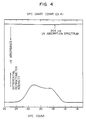
- Fig. 4 is a GPC chart of a polymer obtained in Comparative Example 4
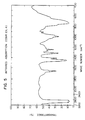
- Fig. 5 is an IR absorption spectrum of the polymer
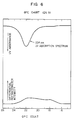
- Fig. 6 is a GPC chart of a polymer obtained in Example 9
- Fig. 7 is a GPC chart of a polymer obtained in Example 11
- Fig. 8 is a GPC chart of a polymer obtained in Example 13
- Fig. 9 is a GPC chart of a polymer obtained in Example 15
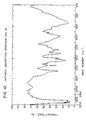
- Fig. 10 is an IR absorption spectrum of the polymer
- Fig. 11 is a GPC chart of a polymer obtained in Example 16.
- a process for producing a modified conjugated diene polymer which comprises the steps of (I) polymerizing a conjugated diene in an inert organic solvent in the presence of a catalyst comprising (a) a lanthanum series rare earth element compound, (b) an organoaluminum compound represented by the general formula, AIR'R 2 R 3 (wherein R 1 , R 2 and R 3 , which may be the same or different, are hydrogen atoms or hydrocarbon groups of 1 to 8 carbon atoms and at least one of R 1 , R 2 and R 3 is said hydrocarbon group) and, if necessary, (c) a Lewis acid and/or (d) a Lewis base and (11) reacting the resulting reactive polymer with a modifying compound selected from the group consisting of the following components (e), (f) and (g): (e) an organometal halide compound represented by the general formula, R 4 n MX 4-n (wherein R 4 is an alkyl group of 1 to
- various characteristics such as wear resistance, low heat generation. mechanical characteristics, etc. of a conjugated diene polymer, for example. polybutadiene can be improved by reacting a reactive polymer just produced by polymerizing a conjugated diene using a lanthanum series rare earth metal catalyst, with a specific compound.
- the lanthanum series rare earth metal catalyst used in this invention is a catalyst system comprising (a) a lanthanum series rare earth metal compound [hereinafter referred to as the component (a)] and (b) an organoaluminum compound represented by the general formula, AIR 1 R 2 R 3 [hereinafter referred to as the component (b)].
- This catalyst system can further comprise, if necessary, (c) a Lewis acid [hereinafter referred to as the component (c)] and/or (d) a Lewis base [hereinafter referred to as the component (d)].
- LnY23 is a lanthanum series rare earth element having an atomic number of 57 to 71 in the Periodic Table, and cerium, lanthanum, praseodyminum, neodyminum and gadolinium are preferred. Of these, neodymium is particularly preferred because of its easy commercial availability. These rare earth elements may be used alone or in admixture of at least two.
- Y 2 is a hydrocarbon residue, an alkoxide residue, a thioalkoxide residue, an amide residue, a phosphoric acid salt residue, a phosphorous acid salt residue, a halide residue or a carboxylic acid salt residue. Of these, an alkoxide residue, a halide residue and a carboxylic acid salt residue are particularly preferred-.
- the hydrocarbon type compound of lanthanum series rare earth element includes compounds represented by the general formula, LnR 3 (wherein R is a hydrocarbon group of 1 to 20 carbon atoms, such as a benzyl group, a phenyl group, a butyl group, a cyclopentadienyl group or the like).
- the alcohol type compound includes compounds represented by the general formula, Ln-(OR) 3 (wherein Ln and. R have the same definitions as given previously).
- Preferred as the alcohol are 2-ethylhexyl alcohol, oleyl alcohol, stearyl alcohol, phenol, benzyl alcohol, etc.
- the thioalcohol type compound includes compounds represented by the general formula, Ln(SR) 3 (wherein Ln and R have the same definitions as given previously). Preferred as the thioalcohol is thiophenol.
- the amide type compound (amide) includes compounds represented by the general formula, Ln(NR 2 ) s -(wherein Ln and R have the same definitions as given previously).
- Preferred as the amine are dihexylamine and dioctylamine.
- the phosphoric acid salt of rare earth element includes compounds represented by the general formula, (wherein Ln has the same definition as given previously, and R and R' may be the same or different, R' has the same definition as that of R mentioned above).
- Preferred as the salt are neodymium tris(dihexyl phosphate) and neodymium tris(diphenyl phosphate).
- the phosphorous acid salt of rare earth element includes compounds represented by the general formula, (wherein Ln, R and R' have the same definitions as given previously).
- Preferred as the salt are neodymium tris(dihexyl phosphite) and neodymium tris[di(ethylhexyl) phosphite].
- the halide type compound includes compounds represented by the general formula, LnX 3 (wherein Ln has the same definition as given previously and X is a halogen atom).
- X is a halogen atom.
- Preferred as the halogen atom are chlorine, bromine and iodine atoms.
- the carboxylic acid salt of rare earth element includes compounds represented by the general formula, (RCOO) 3 Ln (wherein R is a hydrocarbon group of 1 to 20 carbon atoms, preferably a saturated or unsaturated alkyl group of straight, branched or cyclic chain. and the carboxyl group bonds to a primary. secondary or tertiary carbon atom).
- Preferred as the carboxylic acid are octanoic acid, 2-ethylhexanoic acid. oleic acid, stearic acid, benzoic acid and naphthenic acid.
- the component (a) include neodymium trichloride, didymium trichloride (didymium is a rare earth metal mixture consisting of 72% by weight of neodymium, 20% by weight of lanthanum and 8% by weight of praseodymium), neodymium 2-ethylhexanoate, didymium 2-ethylhexanoate, neodymium naphthenate, neodymium 2,2-diethylhexanoate, neodymium trimethacrylate and polymers of neodymium trimethacrylate.
- didymium trichloride didymium trichloride (didymium is a rare earth metal mixture consisting of 72% by weight of neodymium, 20% by weight of lanthanum and 8% by weight of praseodymium)
- neodymium 2-ethylhexanoate didymium
- the organoaluminum compound which is the component (b) is a compound represented by the general formula, A]R l R 2 R3 (wherein R 1 , R 2 and R 3 , which may be the same or different, are hydrogen atoms or hydrocarbon groups of 1 ' to 8 carbon atoms, and at least one of them is said hydrocarbon group).
- component (b) examples include trimethylalminum, triethylaluminum, triisopropylalminum, tributylaluminum, triisobutylaluminum, trihexylaluminum, tricyclohexylaluminum, diisobutylaluminum hydride, diethylaliminum hydride, dipropylaluminum hydride, ethylalunimum dihydride, propylalumimum dihydride and isobutylaluminum dihydride.
- the Lewis acid which is the component (c) includes, for example, aluminum halide compounds represented by the general formula, AIR 5 m S 3-m (wherein R 5 is a hydrocarbon group of 1 to 8 carbon atoms, m is 0 or a positive number of 1 to 3, and X is a halogen atom), halogen atoms, and halides of tin, titanium and the like.
- dimethylaluminum chloride diethylalunimum chloride, dibutylaluminum chloride, ethylaluminum sesquichloride, ethylaluminum dichloride, and bromides and iodides corresponding to them.
- the Lewis base which is the component (d) includes acetylacetone, tetrahydrofuran, pyridine, N,N-dimethylformamide, thiophene, diphenyl ether, triethylamine, organic phosphorous compounds and mono-or dihydric alcohols.
- the lanthanum series rare earth metal catalyst used in this invention has the following conditions:
- the mole ratio of the component (b)/the component (a) is preferably from 10 to 150, more preferably from 15 to 100. When the ratio is smaller than 10, the catalyst has a low polymerization activity. When the ratio is more than 150, the polymerization activity is not any more increased and such a high mole ratio is disadvantageous economically.
- the mole ratio of the component (c)/the component (a) is preferably from 0 to 6, more preferably from 0.5 to 5.0. When the ratio exceeds 6, the polymerization activity tends to decrease.
- the mole ratio of the component (d)/the component (a) is preferably from 0 to 20, more preferably from 1 to 15. When the ratio exceeds 20, the polymerization activity tends to decrease.
- the catalyst of this sinvention may further comprise, in addition to the components (a), (b), (c) and (d), a conjugated diene in an amount of 0 to 50 moles per mole of the lanthanum series rare earth metal compound which is the component (a).
- the conjugated diene used in preparation of the catalyst is the same as the monomer used in polymerization and may be isoprene, 1,3-butadiene, 1,3-pentadiene or the like.
- the conjugated diene as a catalyst component is not essential, but its use in the catalyst can noticeably enhance the activity of the catalyst.
- the preparation of the catalyst if conducted, for example, by subjecting the components (a) to (d) dissolved in a solvent and, if necessary, the conjugated diene to reaction.
- the addition order of each component is not critical. It is preferable to previously mix these components and subject the mixture to reaction and aging from the standpoints of enhancement of polymerization activity and shortening the induction period for polymerization initiation. It is also possible to successively add the catalyst components directly to a mixture of a polymerization solvent and a monomer to be polymerized, during the polymerization.
- the lanthanum series rare earth metal catalyst used in this invention consists of (A) a lanthanum series rare earth metal compound (a) which is a transition metal component, (B) an organoaluminum compound (b) which is an organometal component, and, if necessary, (C) a Lewis acid (c) andior a Lewis base (d), both of which are a third component, and the addition order of these components (a) to (d) in the preparation of the catalyst is not critical.
- the polymerization solvent is an inert organic solvent. It includes aromatic hydrocarbons, such as benzene, toluene, xylene and the like; aliphatic hydrocarbons such as n-pentane. n-hexane, n-butane, cyclohexane and the like; alicyclic hydrocarbons such as methylcyclopentane, cyclohexane and the like; and halogenated hydrocarbons such as ethylene dichloride, chlorobenzene and the like. These solvents can be used alone or in admixture of two or more.
- aromatic hydrocarbons such as benzene, toluene, xylene and the like
- aliphatic hydrocarbons such as n-pentane. n-hexane, n-butane, cyclohexane and the like
- alicyclic hydrocarbons such as methylcyclopentane, cyclohexane and the like
- the polymerization temperature is preferably -20°C to 150°C, more preferably 30° to 120°C.
- the polymerization reaction can be conducted batchwise or continuously.
- the monomer concentration in the polymerization solvent is preferably 5 to 50% by weight, more preferably 10 to 35% weight.
- the organometal halide compound (e) to be allowed to react with the reactive polymer is represented by the general formula: R 4 n MX 4-n .
- the component (e) is, for example, triphenyltin chloride, tributyltin chloride, triisopropyltin chloride, diphenyltin dichloride, dioctyltin dichloride, dibutyltin dichloride, phenyltin trichloride, butyltin trichloride or the like.
- the component (e) is, for example, triphenylgermanium chloride, dibutylgermanium dichloride, diphenylgermanium dichloride, butylgermanium trichloride or the like.
- the mole ratio of the component (e) to the component (a) is preferably from 0.1 to 100, more preferably from 0.5 to 50.
- the mole ratio is less than 0.1, the modification reaction does not proceed sufficiently and, in addition, the improvement effect on wear resistance is insufficient.
- the mole ratio exceeds 100, the improvement effect does not increase any further and, in some cases, toluene insolubles (gel) are formed.
- the modification reaction is effected at a temperature of preferably 160°C or less, more preferably 0° to 130°C, for a period of preferably 0.1 to 10 hours, more preferably 0.2 to 5 hours, with stirring.
- the heterocumulene compound to be allowed to react with the reactive polymer is a compound having a bond represented by the general formula:
- the component (f-1) is a ketene compound when X' is a carbon atom, Y is a carbon atom and Z is an oxygen atom; a thioketene compound when X 1 is a carbon atom, Y is a carbon atom and Z is a sulfur atom; an isocyanate compound when X' is a nitrogen atom, Y is a carbon atom and Z is an oxygen atom; a thioisocyanate compound when X 1 is a nitrogen atom, Y is a carbon atom and Z is a sulfur atom; a carbodiimide compound when X' is a nitrogen atom, Y is a carbon abom and Z is a nitrogen atom; carbon dioxide when X' is an oxygen atom, Y is a carbon atom and Z is an oxygen atom; carbonyl sulfide when X' is an oxygen atom, Y is a carbon atom and Z is a sulfur atom; sulfur dioxide when X
- component (f-t) is not restricted to these combinations.
- ketene compound examples include ethylketene, butylketene, phenylketene and toluyl- ketene.
- thioketene compound examples include ethylthioketene, butylthioketene, phenylthioketene and toluylthioketene.
- isocyanate compound examples include phenyl isocyanate, 2,4-tolylene diisocyanate, 2,6-tolylene diisocyanate, diphenylmethane diisocyanate, the polymeric type of diphenyl methane diisocyanate, isophorone diisocyanate and hexamethylene diisocyanate.
- thioisocyanate compound examples include phenyl thioisocyanate, 2,4-tolylene dithioisocyanate and hexamethylene dithioisocyanate.
- carbodiimide compound examples include N,N'-diphenylcarbodiimide and N,N'-diethylcar- bodiimide.
- the three-membered heterocyclic compound to be allowed to react with the reactive polymer is a compound having a bond represented by the general formula:
- the component (f-2) is an ethyleneimine derivative when X 2 is a nitrogen atom; an epoxy compound when X 2 is an oxygen atom; and a thiirane compound when X 2 is a sulfur atom.
- ethyleneimine derivative examples are ethyleneimine, propyleneimine, N-phenylethyleneimine and N-( ⁇ -cyanoethyl)ethyleneimine.
- epoxy compound examples include ethylene oxide, propylene oxide, cyclohexene oxide, styrene oxide, epoxidized soybean oil and epoxidized natural rubber.
- thiirane compound examples include thiirane, methylthiirane and phenylthiirane.
- the mole ratio of the comoponent (f) to the component (a) is preferably 0.1 to 200, more preferably 0.5 to 100.
- the mole ratio is less than 0.1, the modification reaction does not proceed sufficiently and the improvement effect on wear resistance is insufficient.
- the mole ratio exceeds 200 no further improvement effect is seen, and such a ratio is disadvantageous economically.
- the modification reaction using the component (f-1) or (f-2) is effected at a temperature of preferably 160°C or less, more preferably -30°C to 130°C. for a period of preferably 0.1 to 10 hours, more preferably 0.2 to 5 hours, with stirring.
- the halogen compound (g) to be allowed to react with the reactive polymer has a bond represented by the general formula: wherein Y' is a nitrogen or oxygen atom and X is a halogen atom such as a chlorine atom, a bromine atom, an iodine atom or the like.
- the component (g) has a bond when Y' is a nitrogen atom.
- a compound 2-amino-6-chloropyridine, 2,5-dibromopyridine, 4-chloro-2-phenylquinazoline, 2,4,5-tribromoimidazole, 3,6-dichloro-4-methylpyridazine, 3,4,5-trichloropyridazine, 4-amino-6-chloro-2-mercaptopyrimidine, 2-amino-4-chloro-6-methylpyrimidine, 2-amino-4,6-dichloropyrimidine, 6-chloro-2,4-dimethoxypyrimidine.
- 2-chloropyrimidine 2,4-dichloro-6-methylpyrimidine, 4,6-dichloro-2-(methylthio)pyrimidine, 2,4,5,6-tetrachloropyrimidine, 2,4,6-trichloropyrimidine, 2-amino-6-chloropyrazine, 2,6-dichloropyrazine, 2,4-bis(methylthio)-6-chloro-1,3,5-triazine, 2,4,6-trichloro-1,3,5-triazine, 2-bromo-5-nitrothiazole, 2-chlorobenzothiazole and 2-chlorobenzox- azole.
- the component (g) has a bond when Y' is an oxygen atom.
- Y' is an oxygen atom.
- Specific examples of such a compound are propionyl chloride, octanoyl chloride, stearyl chloride, beazoyl chloride, phthalyl chloride and maleyl chloride.
- Preferred as the component (g) are 2,4,6-trichloro-1 ,3,5-triazine and benzoyl chloride.
- the mole ratio of the component (g) to the component (a) is preferably 0.1 to 200, more preferably 0.5 to 100.
- the mole ratio is less than 0.1, the modification reaction does not proceed sufficiently and the improvement effect on wear resistance is insufficient.
- the mole ratio exceeds 200 no further improvement effect is seen and such a ratio is disadvantageous economically.
- the modification reaction with the component (g) is effected at a temperature of preferably 160°C or less, more preferably -30°C to 130°C, for a period of preferably 0.1 to 10 hours, more preferably 0.2 to 5 hours, with stirring.
- the modified conjugated diene polymer obtained in this invention is of a high cis-1,4 diene polymer.
- the cis-1,4 content is 70% or more, preferably 80% or more.
- the cis-1,4 content is 88% or more.
- the cis-1,4 content in the butadiene unit is 80% or more and the cis-1.4 content in the isoprene unit is 88% or more.
- the proportions of butadiene and isoprene in this copolymer can be varied freely.
- the modified conjugated diene polymer obtained in this invention may have a molecular weight varying over a wide range. Its Mooney viscosity (ML 1-4 , 100°C) is preferably 10 to 120, more preferably 15 to 100 though not critical.
- the modified conjugated diene polymer when it is a copolymer, can be obtained as a block copolymer or a random copolymer depending upon the structure of the reactive polymer.
- the structure of the modified conjugated diene polymer of this invention can be confirmed, for example, by infrared absorption spectrum based on absorption due to Sn- ⁇ bond in the vicinity of 700 cm-', absorption due to Sn-CH 3 in the vicinity of 770 cm-' and the like.
- FT-NMR Fourier transform NMR spectrometer
- the structure that a functional group is added to the conjugated diene polymer chain can be confirmed by infrared absorption spectrum from absorption due to hydroxyl-group in the vicinity of 3,600 cm -1 when the modification is effected with a ketene compound, from absorption due to mercapto group in the vicinity of 2,600 cm-' when the modification is effected with a thioketene compound, from absorption band of amide II in the vicinity of 1,530 cm -1 and absorption band of amide I in the vicinity of 1,680 cm -1 when the modification is effected with an isocyanate compound and from absorption due to carboxylic acid or carboxylic acid salt in the vicinity of 1,700 cm-' when the modification is effected with carbon dioxide depending upon the aftertreatment method.
- the modification of polymer can easily be confirmed by use of GPC using a ultraviolet ray of 2.54 nm as a detector and a differential refractiometer together.
- the molecular weight distribution of the resulting polybutadiene can not be determined by GPC using an ultraviolet ray of 254 nm as a detector.
- the molecular weight distribution of the resulting modified polymer determined by ultraviolet rays and the molecular weight distribution of the polymer determined by a differential refractometer can be correlated because of the presence of ultraviolet-ray absorption due to the phenyl group. From this correlation, the presence of the functional group in the modified polymer can be confirmed.
- the modified conjugated diene polymer (I) of this invention can be used alone or in blend with 80% by weight or less of natural rubber (II) and/or other rubber (III) such as cis-1,4-polyisoprene, emulsion- polymerized styrene-butadiene copolymer, solution-polymerized styrene-butadiene copolymer, low cis-1.4- polybutadiene, high cis-1,4-polybutadiene, ethylene-propylene-diene copolymer, chloroprene, halogenated butyl rubber, NBR or the like.
- natural rubber II
- III other rubber
- the blending ratio is preferably 20 : 80 to 90 : 10 in terms of weight ratio of (I) : [(II) + (III)].
- the total content of (II) and (III) in the blend exceeds 80% by weight, the effect of this invention cannot be expected.
- the modified conjugated diene polymer of this invention or its blend can, if necessary, be extended with an aromatic, naphthenic or paraffinic oil and then mixed with conventional compounding agents for vulcanized rubber such as a filler (e.g. carbon black, silica, magnesium carbonate, calcium carbonate, glass fiber or the like), stearic acid, zinc white, an antioxidant, a vulcanizing accelerator and a vulcanizing agent, to form a rubber composition.
- a filler e.g. carbon black, silica, magnesium carbonate, calcium carbonate, glass fiber or the like
- stearic acid stearic acid
- zinc white an antioxidant
- an antioxidant e.g. carbon black, silica,
- This rubber composition can be molded, vulcanized and then used in various applications such as tire (tread, undertread, carcass, side wall, bead), hose, belt, shoe sole, window frame, sealing material, rubber vibration insulator and other industrial applications.
- reaction between a reactive polymer obtained by polymerization with a lanthanum series rare earth metal catalyst and a specific halogen compound was confirmed by examining the change of Mooney viscosity before and after the reaction, or by conducting a model reaction using a polymer having a number-average molecular weight of several thousands and subjecting the product to GPC and IR analysis.
- the modified polymer obtained according to this invention was subjected to kneading with the following compounding recipe using a 230-cc Brabender and a 6-inch roll, and then the resulting compound was vulcanized at 145°C for a predetermined period of time to obtain a vulcanizate.
- the vulcanizate was subjected to various measurements.
- Impact resilience (5) according to the Dunlop impact resilience test was used as a yardstick of heat generation. The measurement was made according to BS 903. A larger impact resilience (%) implies lower heat generation, which is desirable.
- a large Pico abrasion index implies superior abrasion resistance.
- a catalyst was previously prepared by mixing (a) 0.93 mmol of neodymium 2-ethylhexanoate, (b) 27.7 mmol of triethylaluminum, (b) 10.2 mmol of diisobutylaluminum hydride, (c) 2.3 mmol of diethylaluminum chloride and (d) 1.85 mmol of acetylacetone-in the presence of 4.6 mmol of 1,3-butadiene and aging the mixture at 40°C for 30 minutes.
- This catalyst was added to the contents in the above reactor.
- the whole mixture was subjected to adiabatic reaction at 70°C for 1.5 hours.
- the reaction conversion of 1,3-butadiene was almost 100%.
- a part of the polymerization mixture was taken out, coagulated and dried.
- the drying product (polymer) had a Mooney viscosity of 49.
- the polymerization mixture was cooled to 60°C. Thereto was added (e) 2.33 mmol of diphenyltin dichloride. The mixture was stirred for 30 minutes. Then, 3.0 g of 2,6-di-t-butyl-p-cresol was added. Steam was blown into the mixture for coagulation. The coagulation product was dried using a hot roll of 100°C.
- the modified poly(1,3-butadiene) thus obtained had such a microstructure that the cis-1,4 content was 97.3%, the trans-1,4. content was 1.3% and the vinyl content was 1.4%. Its Mooney viscosity was 64.
- Comparative Example 1 is a case where no diphenyltin dichloride was used in Example 1.
- Comparative Example 2 is a case where a commercially available polybutadiene (BR-01 manufactured by Japan Synthetic Rubber Co., Ltd.) was vulcanized to obtain a vulcanizate. The evaluation results on the properties of the two vulcanizates are shown in Table 1.
- the modified conjugated diene polymer of this invention obtained by reacting the reactive polymer just after polymerization using the lanthanum series rare earth metal catalyst, with diphenyltin dichloride has remarkably improved abrasion resistance.
- Example 2 is a case where the amount of diphenyltin dichloride used was increased as compared with Example 1.
- Examples 3 and 7 are cases where triphenyltin chloride was used in place of the diphenyltin dichloride in Example 1.
- Examples 4 and 5 are cases where phenyltin trichloride was used in place of the diphenyltin dichloride in Example 1.
- Example 6 is a case where dibutyltin dichloride was used in place of the diphenylfin dichloride in Example 1.
- a poly(1,3-butadiene) was produced in the same manner as in Example 1. except that carbon tetrachloride was used in place of the diphenyltin dichloride.
- the results of polymerization and the evaluation results on the properties of the vulcanizate are shown in Table 1.
- a catalyst was previously prepared by mixing (a) 0.111 mmol of neodymium 2-ethylhexanoate, (b) 3.11 mmol of triethylaluminum, (b) 1.55 mmol of diisobutylaluminum hydride, (c) 0.222 mmol of diethylaluminum chloride and (d) 0.222 mmol of acetylacetone in the presence of 0.555 mmol of 1,3-butadiene, and aging the mixture at 40°C for 30 minutes.
- This catalyst was added to the contents in the above pressure bottle. The whole mixture was subjected to adiabatic reaction at 60°C for 1 hour. The polymerization conversion of 1.3-butadiene was almost 100%.
- the mixture was stirred for 1 hour and then coagulated with methanol.
- the resulting modified polymer was dissolved in toluene and the solution was coagulated with methanol. This procedure was repeated three times to completely remove the unreacted C-MDI.
- the resulting polymer was dried at room temperature under reduced pressure.
- modified poly(1,3-butadiene) had such a microstructure that the cis-1,4 content was 97.0%, the trans-1,4 content was 1.5% and the vinyl content was 1.5%.
- Fig. 3 The IR absorption spectrum of the modified polymer is shown in Fig. 3. As is clear from Fig. 3, an amide II absorption band appears in the vicinity of 1,520 cm -1 and an amide I absorption band appears in the vicinity of 1,690 cm -1 ; thus, C-MDI has been added to the polymer as a result of reaction.
- the proportion of functional group added per chain of polymer was determined by a titration method and a polystyrene-reduced number-average molecular weight to be 45%.
- a poly(1.3-butadiene) was obtained in the same manner as in Example 8, except that C-MDI as the component (f) was not used.
- the GPC chart and the IR absorption spectrum of the polymer are shown in Fig. 4 and Fig. 5, respectively.
- the modified polymer of this invention has a high cis-1,4 content and contains a functional group as a result of addition reaction; this, it is a novel polymer different from conventional polymers.
- Example 8 The procedure of Example 8 was repeated, except that phenyl isocyanate as a component (f-1) was used in place of the C-MDI of Example 8 to effect polymer modification.
- the GPC chart of the modified polymer obtained is shown in Fig. 6.
- the presence of functional group in modified polymer is recognized from Fig. 6.
- the proportion of functional group added per polymer chain was 53%.
- a modified poly(1,3-butadiene) was obtained in the same manner as in Example 8, except that the amount of C-MDI was increased to 2.96 mmol.
- a modified poly(1,3-butadiene) was obtained in the same manner as in Example 8, except that no triisobutylaluminum was used and 16.7 mmol of carbon disulfide was used in place of the C-MDI as the component (f-1).
- Fig. 7 indicates the presence of UV absorption and accordingly the addition of carbon dioxide.
- a catalyst was previously prepared by mixing (a) 0.93 mmol of neodymium 2-ethylhexanoate, (b) 27.7 mmol of triethylaluminum, (b) 10.2 mmol of diisobutylaluminum hydride, (c) 2.3 mmol of diethylaluminum chloride and (d) 1.85 mmol of acetylacetone in the presence of 4.6 mmol of 1,3-butadiene and aging the mixture at 40°C for 30 minutes.
- This catalyst was added to the contents in the above reactor.
- the whole mixture was subjected to adiabatic reaction at 70°C for 1.5 hours.
- the reaction conversion of 1.3-butadiene was almost 100%.
- For measurement of Mooney viscosity a part of the polymerization mixture was taken out, coagulated and dried.
- the drying product [poly(1,3-butadiene)j had a Mooney viscosity of 30.
- the polymerization mixture was cooled to 60°C. Thereto was added 5.1 mmol of C-MDI as the component (f-1). The mixture was stirred for 1 hour.
- modified poly (1.3-butadiene) had such a microstructure that the cis-1,4 content was 97.8%, the trans-1,4 content was 1.0% bond and the vinyl content was 1.2%. It had a Mooney visocsity of 38.
- a poly(1,3-butadiene) was obtained in the same manner as in Example 12, except that no C-MDI as the component (f-1 ) was used.
- the modified polymer of this invention obtained by reacting C-MDI with the reactive polymer just after the polymerization using the lanthanum series rare earth metal catalyst are greatly improved in wear resistance, heat generation and tensile strength.
- Modification of poly(1,3-butadiene) was effected in the same manner as in Example 11, except that 16.7 mmol of styrene oxide as the component (f-2) was used in place of the carbon disulfide as the component (f-1).
- the GPC chart of the modified polymer obtained is shown in Fig. 8. It is seen from Fig. 8 that there is UV absorption and accordingly the addition of styrene oxide as a result of its reaction with poly(1,3-butadiene).
- a modified poly(1,3-butadiene) was obtained in the same manner as in Example 12, except that 15.3 mmol of carbon disulfide was used in place of the C-MDI of Example 12.
- a polymer was produced in the same manner as in Example 12, except that 5.1 mmol of carbon tetrachloride was used in place of the C-MDI as the component (f-1).
- Example 8 The procedure of Example 8 was repeated, except that 3.33 mmol of 2,4,6-trichloro-1,3,5-triazine (hereinafter referred to as TCT) as the component (f) was used in place of the C-MDI to effect polymer modification.
- TCT 2,4,6-trichloro-1,3,5-triazine
- the modified poly(1,3-butadiene) thus obtained had such a microstructure that the cis-1,4 content was 97.4%, the trans-1,4 content was 1.2% and the vinyl content was 1.4%.
- the GPC chart of the modified polymer is shown in Fig. 9.
- the molecular weight distribution determined by a differential refractometer and the molecular weight distribution determined by an ultraviolet ray of 254 nm appear in correlation to GPC count, and the UV absorption spectrum shows higher absorption intensities on the lower molecular weight side and correlates to the number of polymer terminals.
- Fig. 10 The IR absorption spectrum of the modified polymer is shown in Fig. 10. As is clear from Fig. 10. an absorption spectrum based on 1,3,5-triazine ring appears in the vicinity of 1,540 cm -1 , which indicates that TCT was added to the polymer chain as a result of reaction.
- a modified poly(1,3-butadiene) was produced in the same manner as in Example 15, except that benzoyl chloride as the component (g) was used in place of the TCT.
- the GPC chart of the modified polymer obtained is shown in Fig. 11, which indicates that functional groups have been added to polymer chain.
- a catalyst was previously prepared by mixing (a) 0.43 mmol of neodymium 2-ethylhexanoate, (b) 12.1 mmol of triethylaluminum, (b) 9.5 mmol of diisobutylaluminum hydride, (c) 0.56 mmol of diethylaluminum chloride and (d) 0.86 mmol of acetylacetone in the presence of 4.6 mmol of 1,3-butadiene and aging the mixture at 40°C for 30 minutes.
- This catalyst was added to the contents in the above reactor.
- the whole mixture was subjected to adiabatic reaction at 70°C for 1.5 hours.
- the polymerization conversion of 1,3-butadiene was almost 100%.
- For Mooney viscosity measurement a part of the polymerization mixture was taken out, coagulated and dried.
- the polymer obtained had a Mooney viscosity of 31.
- the polymerization mixture was cooled to 60°C. Thereto was added 2.88 mmol of TCT as the component (g). The resulting mixture was stirred for 1 hour.
- the modified poly(1,3-butadiene) thus obtained had such a microstructure that the cis-1,4 content was 97.8%, the trans-1,4 content was 1.8% and the vinyl content was 1.2%.
- the polymer had a Mooney viscosity of 37.
- a modified poly(1,3-butadiene) was produced in the same manner as in Example 17, except that 8.6 mmol of benzoyl chloride was used in place of the TCT as the component (g).
- the microstructure of the modified polymer obtained and the evaluation results on the properties of the vulcanizate of the modified polymer are shown in Table 3.
- the modified polymer (polymer A) obtained in accordance with Example 1, having a Mooney viscosity of 57 and having a cis-1,4 content of 97.1%, a trans-1,4 content of 1.5% and a vinyl content of 1.4% was blended with a natural rubber in the blending ratio shown in Table 4.
- the blend was vulcanized with the compounding recipe shown previously.
- Vulcanization was conducted irr the same manner as in Example 19, except that the polymer A (see Table 5 ⁇ was replaced by the following polymers B to F (see Table 5).
- the properties of each vulcanizate are shown in Table 4.
- Polymer B A modified polymer obtained in the same manner as mentioned above for the polymer A. except that triphenyltin chloride was used in place of the diphenyltin dichloride.
- Polymer C A modified polymer obtained in the same manner as mentioned above for the polymer A, except that phenyltin trichloride was used in place of the diphenyltin dichloride.
- Polymer D A modified polymer obtained in the same manner as mentioned above for the polymer A, except that dibutyltin dichloride was used in place of the diphenyltin dichloride.
- Polymer E An unmodified polymer obtained in the same manner as mentioned above for the polymer A, except that no modification with diphenyltin dichloride was conducted.
- Polymer F A polymer obtained in the same manner as mentioned above for the polymer A, except that the diphenyltin dichloride was replaced by carbon tetrachloride.
- Vulcanization was conducted in the same manner as in Example 19, except that a commercially available polybutadiene rubber (JSR BR 01 manufactured by Japan Synthetic Rubber Co., Ltd.) was used in place of the polymer A.
- JSR BR 01 manufactured by Japan Synthetic Rubber Co., Ltd.
- the properties of each vulcanizate are shown in Table 4.
- Vulcanization was conducted in the same manner as in Example 19, except that the blending ratio of the polymer A to the natural rubber was changed to 10 : 90.
- the properties of the vulcanizate obtained are shown in Table 4, which indicates that the effect of this invention cannot be expected when the rubber composition contains a too small amount of the polymer A.
Landscapes
- Chemical & Material Sciences (AREA)
- Health & Medical Sciences (AREA)
- Chemical Kinetics & Catalysis (AREA)
- Medicinal Chemistry (AREA)
- Polymers & Plastics (AREA)
- Organic Chemistry (AREA)
- General Chemical & Material Sciences (AREA)
- Addition Polymer Or Copolymer, Post-Treatments, Or Chemical Modifications (AREA)
- Transition And Organic Metals Composition Catalysts For Addition Polymerization (AREA)
Priority Applications (1)
| Application Number | Priority Date | Filing Date | Title |
|---|---|---|---|
| EP90117137A EP0406920B1 (fr) | 1986-09-05 | 1987-09-07 | Polymère diénique modifié et son procédé de préparation |
Applications Claiming Priority (6)
| Application Number | Priority Date | Filing Date | Title |
|---|---|---|---|
| JP20774886 | 1986-09-05 | ||
| JP207748/86 | 1986-09-05 | ||
| JP13389887A JP2595539B2 (ja) | 1987-05-29 | 1987-05-29 | 新規な共役ジエン系重合体の製造方法 |
| JP133898/87 | 1987-05-29 | ||
| JP14194487A JP2595541B2 (ja) | 1987-06-06 | 1987-06-06 | 新規な共役ジエン系重合体の製造方法 |
| JP141944/87 | 1987-06-06 |
Related Child Applications (3)
| Application Number | Title | Priority Date | Filing Date |
|---|---|---|---|
| EP90117135.5 Division-Into | 1990-09-06 | ||
| EP90117136.3 Division-Into | 1990-09-06 | ||
| EP90117137.1 Division-Into | 1990-09-06 |
Publications (3)
| Publication Number | Publication Date |
|---|---|
| EP0267675A2 true EP0267675A2 (fr) | 1988-05-18 |
| EP0267675A3 EP0267675A3 (en) | 1988-09-07 |
| EP0267675B1 EP0267675B1 (fr) | 1994-11-17 |
Family
ID=27316771
Family Applications (2)
| Application Number | Title | Priority Date | Filing Date |
|---|---|---|---|
| EP87307899A Expired - Lifetime EP0267675B1 (fr) | 1986-09-05 | 1987-09-07 | Polymère diénique modifié et son procédé de préparation |
| EP90117137A Expired - Lifetime EP0406920B1 (fr) | 1986-09-05 | 1987-09-07 | Polymère diénique modifié et son procédé de préparation |
Family Applications After (1)
| Application Number | Title | Priority Date | Filing Date |
|---|---|---|---|
| EP90117137A Expired - Lifetime EP0406920B1 (fr) | 1986-09-05 | 1987-09-07 | Polymère diénique modifié et son procédé de préparation |
Country Status (3)
| Country | Link |
|---|---|
| US (1) | US4906706A (fr) |
| EP (2) | EP0267675B1 (fr) |
| DE (2) | DE3750760T2 (fr) |
Cited By (7)
| Publication number | Priority date | Publication date | Assignee | Title |
|---|---|---|---|---|
| EP0863165A1 (fr) * | 1997-03-05 | 1998-09-09 | JSR Corporation | Procédé de préparation de polymères de diènes conjugués |
| EP0957115A1 (fr) * | 1998-05-13 | 1999-11-17 | JSR Corporation | Procédé de préparation de polymères de diènes conjugués |
| EP0920886A3 (fr) * | 1997-12-03 | 2000-06-28 | JSR Corporation | Composition de caoutchouc pour balle de golf solide et balle de golf solide |
| US6646029B1 (en) | 2000-03-21 | 2003-11-11 | Flexsys America L.P. | Pyrimidine derivatives as hardness stabilizers |
| EP1520862A3 (fr) * | 1998-02-04 | 2005-06-01 | JAPAN as Represented by DIRECTOR GENERAL OF AGENCY OF INDUSTRIAL SCIENCE AND TECHNOLOGY | Polymères de butadiène et procédé de production de polymère diénique |
| US7247695B2 (en) | 2003-05-15 | 2007-07-24 | Korea Kumho Petrochemical Co., Ltd. | High 1,4-cis polybutadiene-polyurethane copolymer and preparation method thereof |
| EP1958971A4 (fr) * | 2005-12-05 | 2009-01-28 | Jsr Corp | Procede de fabrication de polymere dienique conjugue, polymere dienique conjugue et composition de caoutchouc |
Families Citing this family (108)
| Publication number | Priority date | Publication date | Assignee | Title |
|---|---|---|---|---|
| FR2661915B1 (fr) * | 1990-05-11 | 1993-12-24 | Rhone Poulenc Chimie | Composition elastometrique a matrice halogenobutyl renforcee par une charge minerale siliceuse et son utilisation dans l'industrie pneumatique. |
| GB9214449D0 (en) * | 1992-07-08 | 1992-08-19 | Ici Plc | Purification of 1,1,1,2-tetrafluoroethane |
| US5405815A (en) * | 1993-06-17 | 1995-04-11 | The Goodyear Tire & Rubber Company | Process for preparing a catalyst system useful in the synthesis of isoprene-butadiene rubber |
| EP0713885B1 (fr) * | 1993-07-30 | 1998-05-20 | Nippon Zeon Co., Ltd. | Copolymere de diene conjugue modifie, son procede de production et composition le contenant |
| US5396940A (en) * | 1993-09-17 | 1995-03-14 | The Goodyear Tire & Rubber Company | Sulfur cured rubber composition containing epoxidized natural rubber and silica filler |
| KR100365581B1 (ko) * | 1999-02-25 | 2003-01-15 | 금호석유화학 주식회사 | 높은 1,4-시스 함량을 갖는 폴리부타디엔의 제조방법 |
| KR100298571B1 (ko) | 1999-06-17 | 2001-09-13 | 박찬구 | 높은 1,4-시스 함량을 갖는 폴리부타디엔의 제조방법 |
| KR100344230B1 (ko) | 1999-10-13 | 2002-07-24 | 금호석유화학 주식회사 | 산소분자를 이용한 하이드록시 고 1,4-시스 폴리부타디엔의 제조방법 |
| US6977281B1 (en) * | 1999-11-12 | 2005-12-20 | Bridgestone Corporation | Modified polymers prepared with lanthanide-based catalysts |
| WO2001034658A1 (fr) * | 1999-11-12 | 2001-05-17 | Bridgestone Corporation | Polymeres modifies produits a l'aide de catalyseurs a base de lanthanides |
| WO2002038615A1 (fr) | 2000-11-10 | 2002-05-16 | Bridgestone Corporation | Cis-1,4-polybutadiene eleve fonctionalise prepare au moyen de nouveaux agents de fonctionnalisation |
| KR100416409B1 (ko) * | 2001-01-22 | 2004-01-31 | 금호석유화학 주식회사 | 실록산 화합물로 말단 변성된 고 1,4-시스 폴리부타디엔의제조방법 |
| DE10115106A1 (de) * | 2001-03-27 | 2002-10-10 | Bayer Ag | Blockcopolymerisat auf Basis von konjugierten Diolefinen und polaren Monomeren |
| FR2824834B1 (fr) * | 2001-05-18 | 2005-05-13 | Rhodia Elect & Catalysis | Procede de preparation de copolymeres blocs, copolymeres blocs ainsi obtenus et utilisation comme agents compatibilisants |
| KR100472649B1 (ko) * | 2002-11-22 | 2005-03-11 | 금호석유화학 주식회사 | 조절된 저온흐름성을 갖는 고 1,4-시스 폴리부타디엔의제조방법 |
| JP5111101B2 (ja) * | 2004-03-02 | 2012-12-26 | 株式会社ブリヂストン | バルク重合プロセス |
| US7879952B2 (en) * | 2005-12-28 | 2011-02-01 | Bridgestone Corporation | Functionalized polymers |
| US7671138B2 (en) * | 2006-05-26 | 2010-03-02 | Bridgestone Corporation | Polymers functionized with hydrobenzamides |
| US20080006833A1 (en) * | 2006-06-02 | 2008-01-10 | Semiconductor Energy Laboratory Co., Ltd. | Lighting device and liquid crystal display device |
| JP2007323544A (ja) * | 2006-06-05 | 2007-12-13 | Sony Corp | 情報処理システム、情報処理装置、および方法、並びにコンピュータ・プログラム |
| US7732534B2 (en) * | 2006-08-28 | 2010-06-08 | Bridgestone Corporation | Polymers functionalized with nitro compounds |
| US8088868B2 (en) | 2006-12-19 | 2012-01-03 | Bridgestone Corporation | Polymers functionalized with protected oxime compounds |
| KR101445413B1 (ko) * | 2006-12-27 | 2014-09-26 | 제이에스알 가부시끼가이샤 | 변성 공액 디엔계 중합체의 제조 방법, 변성 공액 디엔계 중합체, 및 고무 조성물 |
| ZA200711158B (en) * | 2006-12-28 | 2009-03-25 | Bridgestone Corp | A method for producing functionalized cis-1,4-polydienes having high cis-1,4-linkage content and high functionality |
| US8324329B2 (en) | 2007-08-07 | 2012-12-04 | Bridgestone Corporation | Process for producing functionalized polymers |
| US7879958B2 (en) | 2007-08-07 | 2011-02-01 | Bridgestone Corporation | Polyhydroxy compounds as polymerization quenching agents |
| DE102007038441A1 (de) | 2007-08-16 | 2009-02-19 | Lanxess Deutschland Gmbh | Gekoppelte und Heteroatome enthaltende modifizierte Polymere auf Basis von konjugierten Dienen |
| DE102007038442A1 (de) * | 2007-08-16 | 2009-02-19 | Lanxess Deutschland Gmbh | Modifizierte Polymere auf Basis von konjugierten Dienen oder von konjugierten Dienen und vinylaromatischen Verbindungen, ein Verfahren zu deren Herstellung sowie deren Verwendung |
| DE102007038439A1 (de) | 2007-08-16 | 2009-02-19 | Lanxess Deutschland Gmbh | Nanostrukturierte Polymere auf Basis von konjugierten Dienen |
| US8314189B2 (en) | 2007-10-12 | 2012-11-20 | Bridgestone Corporation | Polymers functionalized with heterocyclic nitrile compounds |
| KR100970767B1 (ko) | 2007-12-12 | 2010-07-16 | 금호석유화학 주식회사 | 방향족 유기황화합물로 기능화된 1,4-시스 폴리부타디엔 |
| JP5473940B2 (ja) * | 2007-12-28 | 2014-04-16 | 株式会社ブリヂストン | 官能化重合体並びに製造及び使用方法 |
| US8268933B2 (en) * | 2007-12-31 | 2012-09-18 | Bridgestone Corporation | Polymers functionalized with polyimine compounds |
| JP2009173926A (ja) | 2007-12-31 | 2009-08-06 | Bridgestone Corp | ポリマーの耐コールドフロー性を向上させる方法 |
| US7825201B2 (en) * | 2007-12-31 | 2010-11-02 | Bridgestone Corporation | Process for producing polydienes |
| US7741418B2 (en) | 2007-12-31 | 2010-06-22 | Bridgestone Corporation | Process for producing polydienes |
| RU2515980C2 (ru) * | 2007-12-31 | 2014-05-20 | Бриджстоун Корпорейшн | Способ получения полидиенов полимеризацией в объеме |
| US7807763B2 (en) * | 2008-04-07 | 2010-10-05 | Bridgestone Corporation | Method for bulk polymerization |
| US7906592B2 (en) | 2008-07-03 | 2011-03-15 | Bridgestone Corporation | Polymers functionalized with imide compounds containing a protected amino group |
| BRPI0903440A2 (pt) | 2008-08-05 | 2010-06-01 | Bridgestone Corp | método para aperfeiçoar a resistência ao escoamento a frio de polìmeros |
| US8188195B2 (en) | 2008-12-31 | 2012-05-29 | Bridgestone Corporation | Polymers functionalized with nitroso compounds |
| KR101692089B1 (ko) | 2009-01-23 | 2017-01-02 | 가부시키가이샤 브리지스톤 | 폴리시아노 화합물로 관능화된 중합체 |
| KR101682733B1 (ko) | 2009-01-23 | 2016-12-05 | 가부시키가이샤 브리지스톤 | 보호된 아미노기를 함유하는 니트릴 화합물로 관능화된 중합체 |
| US7902309B2 (en) | 2009-02-23 | 2011-03-08 | Bridgestone Corporation | Process and catalyst system for polydiene production |
| US8623975B2 (en) | 2009-06-24 | 2014-01-07 | Bridgestone Corporation | Process for producing polydienes |
| US20110077325A1 (en) | 2009-09-30 | 2011-03-31 | Bridgestone Corporation | Functionalized polymers and methods for their manufacture |
| US8338544B2 (en) * | 2009-12-21 | 2012-12-25 | Bridgestone Corporation | Polymers functionalized with polyoxime compounds and methods for their manufacture |
| EP2526149B1 (fr) | 2010-01-22 | 2017-03-01 | Bridgestone Corporation | Polymères fonctionnalisés par des composés nitrile contenant un groupe amino protégé |
| CN105646754B (zh) | 2010-09-23 | 2018-08-07 | 株式会社普利司通 | 用于生产聚二烯的方法 |
| US8748531B2 (en) | 2010-12-10 | 2014-06-10 | Bridgestone Corporation | Polymers functionalized with oxime compounds containing an acyl group |
| KR101946659B1 (ko) | 2011-02-05 | 2019-02-11 | 가부시키가이샤 브리지스톤 | 란타나이드 복합체 촉매 및 이를 이용한 중합 방법 |
| SG194665A1 (en) | 2011-03-29 | 2013-12-30 | Bridgestone Corp | Polymers functionalized with a carboxylic or thiocarboxylic ester containing a silylated amino group |
| KR101890975B1 (ko) | 2011-08-31 | 2018-08-22 | 가부시키가이샤 브리지스톤 | 보호된 아미노 그룹을 함유하는 락톤 또는 티오락톤으로 기능화된 폴리머 |
| US8962766B2 (en) | 2011-09-15 | 2015-02-24 | Bridgestone Corporation | Polymers functionalized with polyhydrazone compounds |
| JP6196982B2 (ja) | 2011-11-17 | 2017-09-13 | 株式会社ブリヂストン | ポリジエンを製造するためのプロセス |
| US9458270B2 (en) | 2011-11-18 | 2016-10-04 | Bridgestone Corporation | Method for producing polydienes and polydiene copolymers with reduced cold flow |
| EP2788394B1 (fr) | 2011-12-09 | 2016-04-06 | Bridgestone Corporation | Procédé de production de polydiènes et de copolymères de polydiène présentant un fluage à froid réduit |
| RU2523799C1 (ru) | 2011-12-20 | 2014-07-27 | Чайна Петролеум Энд Кемикал Корпорейшн | Добавка и способ для обрыва полимеризации и/или снижения вязкости раствора полимера |
| EP2797960B1 (fr) | 2011-12-31 | 2018-02-28 | Bridgestone Corporation | Polymère fonctionnalisé |
| BR112014021261B1 (pt) | 2012-02-27 | 2021-08-31 | Bridgestone Corporation | Processo para a preparação de polidienos alto-cis |
| BR112014022711B1 (pt) | 2012-03-14 | 2021-02-17 | Bridgestone Corporation | processo para produção de polidienos |
| US9365666B2 (en) * | 2012-05-30 | 2016-06-14 | Bridgestone Corporation | Polymerization catalyst composition, method for producing synthetic polyisoprene, and synthetic polyisoprene |
| US8952090B2 (en) | 2012-06-08 | 2015-02-10 | Bridgestone Corporation | Method for producing polydienes and polydiene copolymers with reduced cold flow |
| US9469706B2 (en) | 2012-06-08 | 2016-10-18 | Bridgestone Corporation | Polymers functionalized with unsaturated heterocycles containing a protected amino group |
| JP6055827B2 (ja) * | 2012-07-04 | 2016-12-27 | 株式会社ブリヂストン | ポリブタジエンの製造方法、ポリブタジエン、ゴム組成物及びタイヤ |
| WO2014010249A1 (fr) * | 2012-07-12 | 2014-01-16 | 株式会社ブリヂストン | Procédé de préparation d'une composition polymère, et composition polymère ainsi obtenue |
| US9115231B2 (en) | 2012-07-26 | 2015-08-25 | Bridgestone Corporation | Polymers functionalized with protected hydrazone compounds containing an acyl group |
| WO2014052957A1 (fr) | 2012-09-30 | 2014-04-03 | Bridgestone Corporation | Complexe de catalyseur organométallique et procédé de polymérisation l'employant |
| US9186933B2 (en) | 2012-10-12 | 2015-11-17 | The Goodyear Tire & Rubber Company | Functionalized polymer, rubber composition and pneumatic tire |
| US9127092B2 (en) | 2012-12-31 | 2015-09-08 | Bridgestone Corporation | Method for producing polydienes and polydiene copolymers with reduced cold flow |
| US9663637B2 (en) | 2012-12-31 | 2017-05-30 | Bridgestone Corporation | Polymers functionalized with unsaturated heterocycles containing an azolinyl group |
| WO2014107447A1 (fr) | 2013-01-02 | 2014-07-10 | Bridgestone Corporation | Polymères fonctionnalisés |
| SG11201507489VA (en) | 2013-03-15 | 2015-10-29 | Bridgestone Corp | Polymers functionalized with heterocyclic imines |
| CN105814087B (zh) | 2013-10-02 | 2017-07-11 | 株式会社普利司通 | 用含有氰基基团的亚胺化合物官能化的聚合物 |
| US9982115B2 (en) | 2013-12-03 | 2018-05-29 | Bridgestone Corporation | Process for preparing blends of cis-1,4-polybutadiene and syndiotactic 1,2-polybutadiene |
| US10030083B2 (en) | 2014-05-15 | 2018-07-24 | Bridgestone Corporation | Polymers functionalized with protected oxime compounds containing a cyano group |
| EP3738927A1 (fr) | 2014-05-31 | 2020-11-18 | Bridgestone Corporation | Complexe métallique servant de catalyseur, procédés de polymérisation l'utilisant et produits polymères associés |
| EP3184554B1 (fr) * | 2014-08-20 | 2019-09-04 | Bridgestone Corporation | Procédé de fabrication de polymère de diène conjugué à extrémité modifiée, polymère de diène conjugué à extrémité modifiée, composition de caoutchouc, et pneu |
| EP3204429B1 (fr) | 2014-10-07 | 2018-09-05 | Bridgestone Corporation | Procédé de production de polydiènes et de copolymères de polydiène à fluage à froid réduit |
| JP6725134B2 (ja) | 2014-10-10 | 2020-07-15 | 株式会社ブリヂストン | 重合触媒組成物及びそれを用いる方法 |
| US20170335032A1 (en) | 2014-11-17 | 2017-11-23 | Bridgestone Corporation | Bulk polymerization of polyisoprene with preformed catalyst |
| CN107428871B (zh) * | 2015-01-28 | 2021-03-30 | 株式会社普利司通 | 具有改善的耐冷流性的顺式-1,4-聚二烯 |
| JP6717840B2 (ja) | 2015-01-28 | 2020-07-08 | 株式会社ブリヂストン | 熟成ランタニド系触媒系及びシス−1,4−ポリジエンの調製における同触媒系の使用 |
| EP3053934A1 (fr) | 2015-02-06 | 2016-08-10 | LANXESS Deutschland GmbH | Polymères diéniques modifiés contenant des hétéroatomes |
| US9738738B2 (en) | 2015-04-01 | 2017-08-22 | Bridgestone Corporation | Polymers functionalized with activated nitrogen heterocycles containing a pendant functional group |
| US9884928B2 (en) | 2015-04-01 | 2018-02-06 | Bridgestone Corporation | Polymers functionalized with activated nitrogen heterocycles containing a pendant functional group |
| US10370460B1 (en) | 2015-05-20 | 2019-08-06 | Bridgestone Corporation | Process for producing functionalized polymers |
| US10077323B2 (en) | 2015-07-24 | 2018-09-18 | Bridgestone Corporation | Polymers functionalized with imine compounds containing a protected thiol group |
| WO2017036721A1 (fr) | 2015-08-28 | 2017-03-09 | Arlanxeo Deutschland Gmbh | Réactifs de désulfuration à efficacité accrue |
| EP3135712A1 (fr) | 2015-08-28 | 2017-03-01 | ARLANXEO Deutschland GmbH | Efficacité accrue de réactifs de désulfuration |
| US10202474B2 (en) | 2015-09-11 | 2019-02-12 | Bridgestone Corporation | Process for producing polydienes |
| FR3044317B1 (fr) * | 2015-11-27 | 2017-12-08 | Michelin & Cie | Composition de caoutchouc renforcee comprenant un elastomere dienique fonctionnel |
| WO2017201397A1 (fr) | 2016-05-19 | 2017-11-23 | Bridgestone Corporation | Procédé de production de polymères fonctionnalisés |
| WO2018022994A1 (fr) | 2016-07-29 | 2018-02-01 | Bridgestone Corporation | Procédé de production de polydiène à teneur élevée en cis-1,4 à l'aide de compositions catalytiques à base de lanthanide |
| US10899718B2 (en) | 2016-09-02 | 2021-01-26 | Bridgestone Corporation | Polymers functionalized with N-protected hydantoin compounds |
| JP6869333B2 (ja) | 2016-09-02 | 2021-05-12 | 株式会社ブリヂストン | ポリマーセメントのその場ヒドロシリル化により調製される複数のシラン官能基を有するシス−1,4−ポリジエンの製造 |
| CN110139882A (zh) | 2016-11-09 | 2019-08-16 | 株式会社普利司通 | 聚丁二烯和聚异戊二烯的高顺式-1,4嵌段共聚物 |
| US10730985B2 (en) | 2016-12-19 | 2020-08-04 | Bridgestone Corporation | Functionalized polymer, process for preparing and rubber compositions containing the functionalized polymer |
| EP3366709A1 (fr) | 2017-02-24 | 2018-08-29 | ARLANXEO Deutschland GmbH | Polymères de diène contenant du phosphonium et de la phosphine en chaîne |
| EP3724244B1 (fr) | 2017-12-15 | 2024-02-21 | Bridgestone Corporation | Polymère fonctionnalisé, procédé de préparation et compositions de caoutchouc contenant le polymère fonctionnalisé |
| US11512148B2 (en) | 2017-12-30 | 2022-11-29 | Bridgestone Corporation | Composition including multiple terminally functionalized polymers |
| JP7187675B2 (ja) * | 2018-08-27 | 2022-12-12 | フラウンホーファー-ゲゼルシャフト ツア フォルデルング デア アンゲヴァンテン フォルシュング エー ファウ | バイオミメティック合成ゴム |
| CN113677719B (zh) | 2019-03-10 | 2024-12-27 | 株式会社普利司通 | 改性的高顺式聚二烯聚合物、相关方法和橡胶组合物 |
| WO2020227531A1 (fr) | 2019-05-07 | 2020-11-12 | Bridgestone Americas Tire Operations, Llc | Polymère de polybutadiène à haute teneur en cis modifié, procédés et compositions de caoutchouc associés |
| US12264232B2 (en) | 2019-05-14 | 2025-04-01 | Bridgestone Corporation | Modified high-cis polybutadiene polymer, related methods and tire components |
| US11584808B2 (en) | 2019-12-30 | 2023-02-21 | Bridgestone Corporation | Polymerization catalyst composition and method of employing same |
| US12054573B2 (en) | 2020-02-05 | 2024-08-06 | Bridgestone Corporation | Functionalized polymers having thermoresponsive behavior |
| CN115461382B (zh) * | 2020-03-31 | 2026-02-03 | 普利司通美国轮胎运营有限责任公司 | 用于产生聚二烯的金属基催化剂 |
Family Cites Families (16)
| Publication number | Priority date | Publication date | Assignee | Title |
|---|---|---|---|---|
| NL297973A (fr) * | 1962-09-17 | |||
| FR1390504A (fr) * | 1963-03-08 | 1965-02-26 | Polymer Corp | Procédé de traitement de polymères caoutchouteux |
| GB1053694A (fr) * | 1964-05-12 | 1900-01-01 | ||
| DE1495387A1 (de) * | 1964-10-14 | 1969-04-03 | Huels Chemische Werke Ag | Verfahren zur definierten Erhoehung des Molekulargewichtes ungesaettigter polymerer Kohlenwasserstoffe |
| US3393182A (en) * | 1965-02-23 | 1968-07-16 | Phillips Petroleum Co | Prevention of cold flow in polymers of conjugated dienes |
| US3920773A (en) * | 1970-03-03 | 1975-11-18 | Bayer Ag | Modification of polymers |
| US4012566A (en) * | 1970-09-16 | 1977-03-15 | Phillips Petroleum Company | Method for modifying the properties of rubbery polymers of conjugated dienes |
| JPS581709A (ja) * | 1981-06-29 | 1983-01-07 | Japan Synthetic Rubber Co Ltd | 共役ジエン重合体の製造方法 |
| JPS5853908A (ja) * | 1981-09-28 | 1983-03-30 | Japan Synthetic Rubber Co Ltd | 共役ジエン重合体の製造方法 |
| JPS5857410A (ja) * | 1981-10-02 | 1983-04-05 | Japan Synthetic Rubber Co Ltd | 共役ジエン重合体の製造方法 |
| CA1223396A (fr) * | 1981-06-29 | 1987-06-23 | Tooru Shibata | Preparation de polymere dienique conjugue |
| JPS58189203A (ja) * | 1982-04-30 | 1983-11-04 | Nippon Zeon Co Ltd | ゴム組成物 |
| JPS6040109A (ja) * | 1983-08-15 | 1985-03-02 | Asahi Chem Ind Co Ltd | ポリブタジエンおよびその製造方法 |
| EP0150479B1 (fr) * | 1983-12-26 | 1990-06-13 | Nippon Zeon Co., Ltd. | Procédé de modification de polymères de diènes conjugués |
| JPH0651726B2 (ja) * | 1985-03-29 | 1994-07-06 | 日本ゼオン株式会社 | ゴムの改質方法 |
| JPS61225202A (ja) * | 1985-03-29 | 1986-10-07 | Nippon Zeon Co Ltd | ゴムの変性方法 |
-
1987
- 1987-08-28 US US07/090,347 patent/US4906706A/en not_active Expired - Lifetime
- 1987-09-07 EP EP87307899A patent/EP0267675B1/fr not_active Expired - Lifetime
- 1987-09-07 DE DE3750760T patent/DE3750760T2/de not_active Expired - Lifetime
- 1987-09-07 DE DE3750749T patent/DE3750749T2/de not_active Expired - Lifetime
- 1987-09-07 EP EP90117137A patent/EP0406920B1/fr not_active Expired - Lifetime
Cited By (11)
| Publication number | Priority date | Publication date | Assignee | Title |
|---|---|---|---|---|
| EP0863165A1 (fr) * | 1997-03-05 | 1998-09-09 | JSR Corporation | Procédé de préparation de polymères de diènes conjugués |
| US7294680B2 (en) | 1997-03-05 | 2007-11-13 | Jsr Corporation | Method of producing conjugated diene polymers with narrow molecular weight distribution and polymer produced |
| EP0920886A3 (fr) * | 1997-12-03 | 2000-06-28 | JSR Corporation | Composition de caoutchouc pour balle de golf solide et balle de golf solide |
| US6194505B1 (en) | 1997-12-03 | 2001-02-27 | Jsr Corporation | Rubber composition for solid golf ball and solid golf ball |
| EP1520862A3 (fr) * | 1998-02-04 | 2005-06-01 | JAPAN as Represented by DIRECTOR GENERAL OF AGENCY OF INDUSTRIAL SCIENCE AND TECHNOLOGY | Polymères de butadiène et procédé de production de polymère diénique |
| EP0957115A1 (fr) * | 1998-05-13 | 1999-11-17 | JSR Corporation | Procédé de préparation de polymères de diènes conjugués |
| US6255416B1 (en) | 1998-05-13 | 2001-07-03 | Jsr Corporation | Method of producing conjugated diene polymers |
| US6646029B1 (en) | 2000-03-21 | 2003-11-11 | Flexsys America L.P. | Pyrimidine derivatives as hardness stabilizers |
| US7247695B2 (en) | 2003-05-15 | 2007-07-24 | Korea Kumho Petrochemical Co., Ltd. | High 1,4-cis polybutadiene-polyurethane copolymer and preparation method thereof |
| EP1958971A4 (fr) * | 2005-12-05 | 2009-01-28 | Jsr Corp | Procede de fabrication de polymere dienique conjugue, polymere dienique conjugue et composition de caoutchouc |
| US8153723B2 (en) | 2005-12-05 | 2012-04-10 | Jsr Corporation | Process for producing conjugated diene polymer, conjugated diene polymer, and rubber composition |
Also Published As
| Publication number | Publication date |
|---|---|
| DE3750760T2 (de) | 1995-06-29 |
| EP0406920A2 (fr) | 1991-01-09 |
| EP0406920B1 (fr) | 1994-11-09 |
| EP0267675B1 (fr) | 1994-11-17 |
| EP0406920A3 (en) | 1991-02-06 |
| DE3750760D1 (de) | 1994-12-22 |
| DE3750749T2 (de) | 1995-03-16 |
| US4906706A (en) | 1990-03-06 |
| EP0267675A3 (en) | 1988-09-07 |
| DE3750749D1 (de) | 1994-12-15 |
Similar Documents
| Publication | Publication Date | Title |
|---|---|---|
| US4906706A (en) | Modified conjugated diene polymer and process for production thereof | |
| US5064910A (en) | Preparation of conjugated diene polymers modified with an organo-tin or germanium halide | |
| US5017636A (en) | Rubber compositions from modified trans-polybutadiene and rubber for tires | |
| RU2671351C2 (ru) | Способ получения терминально модифицированного полимера сопряженного диена, терминально модифицированный полимер сопряженного диена, резиновая композиция и шина | |
| JP4965055B2 (ja) | 新規な官能化剤を用いて製造した官能化高シス−1,4−ポリブタジエン | |
| JP4489194B2 (ja) | 共役ジエン系重合体の製造方法 | |
| US20100317794A1 (en) | Method for producing modified conjugated diene polymer, modified conjugated diene polymer, and rubber composition | |
| JP2005015590A (ja) | ブタジエン系重合体及びその製造方法、並びにそれを用いたゴム組成物及びタイヤ | |
| JPS631324B2 (fr) | ||
| US8962752B2 (en) | Rubber composition and tire using the same as well as modified conjugated diene-based polymer and method for producing the same | |
| JP4367589B2 (ja) | 共役ジエン系重合体の製造方法およびゴム組成物 | |
| KR20160060564A (ko) | 공액 디엔의 중합용 촉매 조성물 | |
| JP2012097271A (ja) | 新規な官能化剤を用いて製造した官能化高シス−1,4−ポリブタジエン | |
| JP2595539B2 (ja) | 新規な共役ジエン系重合体の製造方法 | |
| JPH01135847A (ja) | タイヤ用ブタジエン系重合体組成物 | |
| JP2609623B2 (ja) | 空気入りタイヤ | |
| JPH0784540B2 (ja) | タイヤ用ゴム組成物 | |
| JP2536293B2 (ja) | 共役ジエン系重合体の製造方法 | |
| JP2595541B2 (ja) | 新規な共役ジエン系重合体の製造方法 | |
| JP6268119B2 (ja) | ポリブタジエン及びその製造方法、並びにゴム組成物及びタイヤ | |
| JP2711347B2 (ja) | ブロック共重合体およびゴム組成物 | |
| JP3928246B2 (ja) | 共役ジエン系重合体の製造方法 | |
| JPH0774291B2 (ja) | 防振ゴム組成物 | |
| JPH0643520B2 (ja) | タイヤ用ゴム組成物 | |
| JP2005247951A (ja) | 共役ジエン系重合体の製造方法および共役ジエン系重合体 |
Legal Events
| Date | Code | Title | Description |
|---|---|---|---|
| PUAI | Public reference made under article 153(3) epc to a published international application that has entered the european phase |
Free format text: ORIGINAL CODE: 0009012 |
|
| AK | Designated contracting states |
Kind code of ref document: A2 Designated state(s): DE GB IT |
|
| PUAL | Search report despatched |
Free format text: ORIGINAL CODE: 0009013 |
|
| AK | Designated contracting states |
Kind code of ref document: A3 Designated state(s): DE GB IT |
|
| 17P | Request for examination filed |
Effective date: 19890120 |
|
| 17Q | First examination report despatched |
Effective date: 19900214 |
|
| GRAA | (expected) grant |
Free format text: ORIGINAL CODE: 0009210 |
|
| AK | Designated contracting states |
Kind code of ref document: B1 Designated state(s): DE GB IT |
|
| REF | Corresponds to: |
Ref document number: 3750760 Country of ref document: DE Date of ref document: 19941222 |
|
| ITF | It: translation for a ep patent filed | ||
| PLBE | No opposition filed within time limit |
Free format text: ORIGINAL CODE: 0009261 |
|
| STAA | Information on the status of an ep patent application or granted ep patent |
Free format text: STATUS: NO OPPOSITION FILED WITHIN TIME LIMIT |
|
| 26N | No opposition filed | ||
| REG | Reference to a national code |
Ref country code: GB Ref legal event code: IF02 |
|
| PGFP | Annual fee paid to national office [announced via postgrant information from national office to epo] |
Ref country code: DE Payment date: 20060831 Year of fee payment: 20 |
|
| PGFP | Annual fee paid to national office [announced via postgrant information from national office to epo] |
Ref country code: GB Payment date: 20060906 Year of fee payment: 20 |
|
| PGFP | Annual fee paid to national office [announced via postgrant information from national office to epo] |
Ref country code: IT Payment date: 20060930 Year of fee payment: 20 |
|
| REG | Reference to a national code |
Ref country code: GB Ref legal event code: PE20 |
|
| PG25 | Lapsed in a contracting state [announced via postgrant information from national office to epo] |
Ref country code: GB Free format text: LAPSE BECAUSE OF EXPIRATION OF PROTECTION Effective date: 20070906 |