EP0311387B1 - Amino-résines aromatiques, leur procédé de préparation et compositions de résine thermodurcissable les utilisant - Google Patents
Amino-résines aromatiques, leur procédé de préparation et compositions de résine thermodurcissable les utilisant Download PDFInfo
- Publication number
- EP0311387B1 EP0311387B1 EP88309298A EP88309298A EP0311387B1 EP 0311387 B1 EP0311387 B1 EP 0311387B1 EP 88309298 A EP88309298 A EP 88309298A EP 88309298 A EP88309298 A EP 88309298A EP 0311387 B1 EP0311387 B1 EP 0311387B1
- Authority
- EP
- European Patent Office
- Prior art keywords
- aromatic amine
- general formula
- resins
- resin
- reaction
- Prior art date
- Legal status (The legal status is an assumption and is not a legal conclusion. Google has not performed a legal analysis and makes no representation as to the accuracy of the status listed.)
- Expired - Lifetime
Links
- 0 C*(C)C1(CC(C)CCC(C)CC(C)CC1)N Chemical compound C*(C)C1(CC(C)CCC(C)CC(C)CC1)N 0.000 description 2
Images

Classifications
-
- C—CHEMISTRY; METALLURGY
- C08—ORGANIC MACROMOLECULAR COMPOUNDS; THEIR PREPARATION OR CHEMICAL WORKING-UP; COMPOSITIONS BASED THEREON
- C08G—MACROMOLECULAR COMPOUNDS OBTAINED OTHERWISE THAN BY REACTIONS ONLY INVOLVING UNSATURATED CARBON-TO-CARBON BONDS
- C08G61/00—Macromolecular compounds obtained by reactions forming a carbon-to-carbon link in the main chain of the macromolecule
- C08G61/02—Macromolecular compounds containing only carbon atoms in the main chain of the macromolecule, e.g. polyxylylenes
-
- C—CHEMISTRY; METALLURGY
- C08—ORGANIC MACROMOLECULAR COMPOUNDS; THEIR PREPARATION OR CHEMICAL WORKING-UP; COMPOSITIONS BASED THEREON
- C08G—MACROMOLECULAR COMPOUNDS OBTAINED OTHERWISE THAN BY REACTIONS ONLY INVOLVING UNSATURATED CARBON-TO-CARBON BONDS
- C08G73/00—Macromolecular compounds obtained by reactions forming a linkage containing nitrogen with or without oxygen or carbon in the main chain of the macromolecule, not provided for in groups C08G12/00 - C08G71/00
- C08G73/06—Polycondensates having nitrogen-containing heterocyclic rings in the main chain of the macromolecule
- C08G73/10—Polyimides; Polyester-imides; Polyamide-imides; Polyamide acids or similar polyimide precursors
- C08G73/12—Unsaturated polyimide precursors
- C08G73/121—Preparatory processes from unsaturated precursors and polyamines
-
- C—CHEMISTRY; METALLURGY
- C07—ORGANIC CHEMISTRY
- C07C—ACYCLIC OR CARBOCYCLIC COMPOUNDS
- C07C211/00—Compounds containing amino groups bound to a carbon skeleton
- C07C211/43—Compounds containing amino groups bound to a carbon skeleton having amino groups bound to carbon atoms of six-membered aromatic rings of the carbon skeleton
- C07C211/44—Compounds containing amino groups bound to a carbon skeleton having amino groups bound to carbon atoms of six-membered aromatic rings of the carbon skeleton having amino groups bound to only one six-membered aromatic ring
- C07C211/49—Compounds containing amino groups bound to a carbon skeleton having amino groups bound to carbon atoms of six-membered aromatic rings of the carbon skeleton having amino groups bound to only one six-membered aromatic ring having at least two amino groups bound to the carbon skeleton
- C07C211/50—Compounds containing amino groups bound to a carbon skeleton having amino groups bound to carbon atoms of six-membered aromatic rings of the carbon skeleton having amino groups bound to only one six-membered aromatic ring having at least two amino groups bound to the carbon skeleton with at least two amino groups bound to carbon atoms of six-membered aromatic rings of the carbon skeleton
-
- C—CHEMISTRY; METALLURGY
- C08—ORGANIC MACROMOLECULAR COMPOUNDS; THEIR PREPARATION OR CHEMICAL WORKING-UP; COMPOSITIONS BASED THEREON
- C08G—MACROMOLECULAR COMPOUNDS OBTAINED OTHERWISE THAN BY REACTIONS ONLY INVOLVING UNSATURATED CARBON-TO-CARBON BONDS
- C08G73/00—Macromolecular compounds obtained by reactions forming a linkage containing nitrogen with or without oxygen or carbon in the main chain of the macromolecule, not provided for in groups C08G12/00 - C08G71/00
- C08G73/02—Polyamines
Definitions
- This invention relates to novel aromatic amine resins, their production, and thermosetting resin compositions making use of them and having excellent mechanical strength without impairment of heat resistance.
- Aromatic amine resins have been known for many years as condensation products of aromatic amines and formaldehyde.
- aniline-formaldehyde resin represented by the following general formula (f) has been produced [K. Frey, Herbetica Chemie Acta, 18, 481 (1935)].
- Heat-resistant composite materials, high-temperature-resistant bonding agents, etc. are required to withstand instantaneous impact such as stress concentration as an external stress. Ideally, the ability of undergoing elastic deformation like rubber is therefore an important property. As a criterion for the judgement of such elastic deformation, the elongation at break of each matrix resin is particularly important. The greater the elongation of the matrix resin, the greater the compensation for drawbacks associated with the use of reinforcing materials such as glass fibers or carbon fibers required for composite materials. In other words, use of a matrix resin of a greater elongation leads to an improvement in the overall strength of a composite material.
- aniline-formaldehyde resin is converted into a crosslinked structure if the molar ratio of formaldehyde is increased upon condensation with a view toward increasing the degree of condensation and improving its mechanical properties and the like.
- thermosetting resins having an imide structure have already found wide-spread industrial utility owing to their excellent properties such as electrical insulating properties, heat resistance and dimensional stability of moldings.
- thermosetting resins which are obtained by separately subjecting aromatic bismaleimides to heat polymerization are however accompanied by such drawbacks as extremely brittleness and poor flexibility, although they do have superb heat resistance.
- a thermosetting resin composition of an aromatic bismaleimide and an aromatic diamine For example, a polyaminobismaleimide resin ("Kerimid", trade mark; product of Rhone-Poulenc S.A.) composed of N,N'-4,4'-diphenylmethanebismaleimide and 4,4'-diaminodiphenylmethane has been utilised. It is used widely in impregnating varnishes, laminated boards, moldings, etc. (Japanese Patent Publication No. 23250/1971).
- thermosetting resin compositions are not sufficient in heat resistance and are not satisfactory either in impact resistance or flexibility.
- the present invention seeks to provide not only an aromatic amine resin which when used as a curing agent, provides a cured resin having excellent heat resistance, mechanical strength, dimensional stability, and light and oxygen stability and which is also useful as a starting material for isocyanate resins, maleimide resins and the like which are superb in such properties but also a thermosetting resin composition having excellent mechanical strength and heat resistance.
- the invention seeks to provide also a process for producing the aromatic amine resin, which is an improvement over the known process and features greater economy.
- an aromatic amine resin formed of a mixture of aromatic amines of the general formula (a): in which A is phenylene, alkyl-substituted phenylene, diphenylene, diphenyl ether or naphthylene, R 1 is halogen or hydroxyl, C 1 - 4 alkoxy or C 1 - 5 alkyl, I is 1 or 2, m is O or an integer from 1 to 3 and when m is 2 or 3, then the R 1 s may be the same or different and two R's may together form a 5- or 6-membered alicyclic moiety which may optionally contain one or more side chains, and n has a value from 0 to 300, preferably from 0 to 4.
- a first process for the production of such an aromatic amine resin which comprises reacting together in the presence of an acid catalyst an aromatic amine of the general formula (b): in which R 1 , I and m have the meanings specified above, and an aralkyl alcohol derivative of the general formula (c): in which A has the meaning specified above and R 2 is hydrogen, acyl or C 1 - 4 alkyl, and wherein:
- FIG. 1 diagrammatically shows results of an IR analysis of an aromatic amine resin obtained in Example 1.
- the aromatic amine resins according to this invention can be used in a wide variety of fields, for example as raw materials for epoxy resins or curing agents for other epoxy compounds, raw materials for maleimide resins or curing agents for other maleimide compounds, raw materials for isocyanate resins or curing agents for other isocyanate compounds, chelate resins, ion-exchange resins, molding materials, insulating paints, bonding agents, rubber modifiers, additives for various resins, deacidification agent, raw materials for polyimides, polyamides and polyamideimides.
- aromatic amine resins according to this invention are composed of a primary amine, it is easy to achieve their isocyanation, maleimidation or epoxidation.
- resins having high performance can be obtained from the use of the aromatic amine resins of this invention as curing agents for other resins (for example, isocyanate compounds, epoxy compounds, and bismaleimide compounds).
- the resultant cured resins are excellent in mechanical strength and dimensional stability and also superb in heat resistance and light and air oxygen stability. Their curing speeds are also high.
- use of any one of the resins according to this invention as a curing agent for bismaleimide derived from methylenedianiline can provide a cured resin whose flexural strength, flexural modulus, pyrolysis starting temperature in air, coefficient of expansion and water absorption rate are superior to those of "Kerimid 1050" (trade name; molding grade; product of Rhone-Poulanc S.A.) obtained by using methylene-dianiline as a curing agent. Their glass transition temperatures and heat distortion temperatures are substantially comparable.
- the resins according to this invention are soluble in low boiling point solvents (dioxane, methylene chloride, etc.).
- a prepreg has heretofore been prepared by dissolving a prepolymer such as "Kerimid" in a high boiling point aprotic polar solvent (N-methylpyrrolidone or the like) and then impregnating glass cloth or carbon cloth with the solution.
- a prepolymer such as "Kerimid”
- aprotic polar solvent N-methylpyrrolidone or the like
- use of any one of the resins according to this invention as a prepolymer facilitates the evaporation and removal of the solvent to provide an excellent prepreg because the resin can be dissolved in a low boiling point solvent.
- the resins according to this invention are faster in curing speed than the resins disclosed previously by the present inventors in Japanese Patent Application No. 230987/1987, so that they are preferred particularly for use as sealing resins for semiconductors.
- the resins according to this invention can each be produced by subjecting the aromatic amine compound represented by the general formula (b) and the aralkyl alcohol derivative represented by the general formula (c) to a co-condensation reaction. If aniline and the aralkyl alcohol derivative for example are caused to undergo co-condensation, a resin containing a secondary amine such as that having a structure of the following formula (g): is formed. It is however only necessary to convert the secondary amine resin into a primary amine resin of this invention by a rearrangement reaction.
- This rearrangement reaction can be conducted, for example, (a) by increasing the amount of the catalyst, (b) by increasing the reaction temperature or (c) by increasing the reaction time compared to the reaction conditions under which the secondary amine is formed. In particular, it is effective to increase the amount of the catalyst.
- the aromatic amine resins according to this invention may each be chosen as desired from a low molecular resin composed principally of the aromatic amine compound of the general formula (a) in which n is 0 to a high molecular resin composed of the aromatic amine compound principally of the general formula (a) in which n is about 300.
- aromatic amine resins in various forms ranging from a resin in a liquid form at room temperature to a high softening point resin in a resinous form, can be produced depending on the end use.
- Resins according to this invention ranging from liquid resins to those having a low softening point, can each be obtained provided that the molar ratio of the aromatic amine to the aralkyl alcohol derivative is increased.
- the liquid-low softening point resins thus obtained are excellent in workability upon melt blending, impregnation, coating and the like and are hence usable primarily in fields such as bonding agents, paints, and additives for urethane and other resins.
- High softening point resins according to this invention can each be obtained provided that the molar ratio of the aralkyl alcohol derivative to the aromatic amine is set in the vicinity of the stoichiometric ratio upon their condensation.
- the high softening point resins thus obtained are useful in fields such as molding materials, ion-exchange resins and laminating resins.
- the molecular weight range of the aromatic amine resins obtained as described above in accordance with the first process of this invention ranges from about 300 to about 60,000.
- the softening point range of the resins are from a liquid state at room temperature to about 250 °C (as ring and ball softening points measured in accordance with JIS-K-2548).
- the aromatic amine compound represented by the general formula (b) is added in an amount of 1-15 moles, preferably, 1.1-10 moles per mole to the aralkyl alcohol derivative represented by the general formula (c). They are heated as such in the presence of an acid catalyst and are reacted at a temperature to be described subsequently. Water, alcohol, organic acid and/or the like, which are formed as the reaction proceeds, are trapped outside the system. Volatiles which remain at trace levels within the system may be purged with nitrogen if necessary. When it is desired to obtain a relatively low molecular resin composed principally of the aromatic amine compound of the general formula (a) in which n is 0, it appears to be desirable to make the above-mentioned molar ratio greater.
- the molar ratio of 10 was compared to the molar ratio of 15 while maintaining the other reaction conditions constant. Since the proportion of the aromatic amine compound, in which n was 0, in the resin as a reaction product did not increase very markedly even when the molar ratio was increased to 15, the preferable upper limit of the molar ratio is 10.
- a in the aralkyl alcohol derivative which is useful in the practice of this invention and is represented by the general formula (c), include phenylene groups alkyl-substituted phenylene groups and diphenylene group diphenyl ether group and naphthylene group
- R 2 is a hydrogen atom or an acyl or alkyl group.
- the reaction rate is high with a carbon number of 4 or smaller. When the carbon number is 4, namely, R 2 is a butyl group, tert-butyl group tends to give a low reaction velocity.
- aralkyl alcohol derivatives useful in the practice of this invention, may be mentioned a,a'-dihydroxy-o-xylene, a,a'- dihydroxy-m-xylene, a,a'-dihydroxy-p-xylene, a,a'-diacetoxy-o-xylene, a,a'-diacetoxy-m-xylene, a,a'- diacetoxy-p-xylene, a,a'-dipropionoxy-p-xylene, a,a'-di-n-butyloxy-p-xylene, a,a'-dimethoxy-o-xylene, a,a'- dimethoxy-m-xylene, a,a'-dimethoxy-p-xylene, a,a'-diethoxy-o-xylene, a,a'-diethoxy-m-xylene, a,a'''-diethoxy-
- R 1 is a halogen atom or a hydroxyl, C 1 - 4 alkoxy or C 1 - 5 alkyl group.
- the aromatic amine compound may contain 0-3 R's. When 2-3 R 1 s are contained, they may be either the same or different. Two of the R 1 s may join together to form a 5-membered or 6-membered alicyclic group which may contain one or more side chains.
- the aromatic amine compound contains one or two amino groups
- aniline o-toluidine, m-toluidine, p-toluidine, o-ethylaniline, m-ethylaniline, p-ethylaniline, o-isopropylaniline, m-isopropylaniline, p-isopropylaniline, o-n-propylaniline, o-tert-butylaniline, p-tert-butylaniline, o-n-butylaniline, p-sec-butylaniline, 2,3-xylidine, 2,4-xylidine, 2,6-xylidine, 3,4-xylidine, 3,5-xylidine, 2-methyl-3-ethylaniline, 2-methyl-4-isopropylaniline, 2,6-diethylaniline, 2-ethyl-5-tert-butylaniline, 2,3-xylidine
- an inorganic or organic acid especially a mineral acid, e.g., hydrochloric acid, phosphoric acid, sulfuric acid or nitric acid, a Friedel-Crafts catalyst such as zinc chloride, stannic chloride, aluminum chloride or ferric chloride, an organic sulfonic acid such as methanesulfonic acid or p-toluenesulfonic acid, or a super strong acid such as trifluoromethanesulfonic acid or "Nafion H" (trade name; product of E.I. du Pont de Nemours & Co., Inc.).
- a mineral acid e.g., hydrochloric acid, phosphoric acid, sulfuric acid or nitric acid
- a Friedel-Crafts catalyst such as zinc chloride, stannic chloride, aluminum chloride or ferric chloride
- an organic sulfonic acid such as methanesulfonic acid or p-toluenesulfonic
- a solid acid catalyst such as an activated clay or zeolite, or a heteropolyacid may also be used.
- Preferred industrially is hydrochloric acid for its economical price.
- the catalyst may be used in an amount of 10 mole % or more, preferably, 20-100 mole % based on the aromatic amine compound. Any amounts less than the lower limit result in a slow reaction rate and difficulty in achieving complete conversion into primary amine compounds. Amounts greater than the upper limit do not give adverse effects to the reaction but are not economical.
- the reaction temperature may preferably be 130° C or higher.
- the reaction becomes extremely slow if the temperature is lower than 130 ° C.
- a temperature range of about 170-240 °C is desirable in order to shorten the reaction temperature as much as possible.
- the reaction time may range from 10 hours to 40 hours. As a resin having greater values of n in the general formula (a) is produced, the reaction time becomes shorter.
- an inert solvent may be used in the reaction of the first production process according to this invention.
- the reaction is usually carried out without solvent.
- the acid employed as a catalyst is neutralized, for example, with a dilute aqueous alkaline solution such as an aqueous solution of caustic soda, an aqueous solution of potassium hydroxide or aqueous ammonia and is then separated.
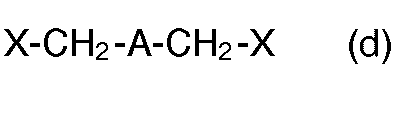
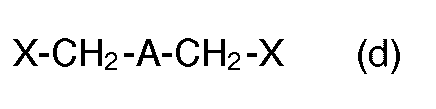
- the aromatic amine compound represented by the general formula (b) and the bishalomethyl derivative represented by the general formula (d) can still be reacted in two stages in the absence of a catalyst.
- a resin containing a secondary amine is formed in the first-stage reaction. It is however only necessary to convert the secondary amine into a primary amine resin by a rearrangement (second-stage reaction). This rearrangement is conducted using a hydrogen halide, which occurs upon formation of the primary amine resin, as a catalyst.
- the reaction is conducted in the same manner as in the first process of this invention, for example (a) by increasing the amount of catalyst, (b) by increasing the reaction temperature or (c) by prolonging the reaction time, compared to the reaction conditions under which a secondary amine resin is formed. It is particularly effective to increase the amount of the catalyst.
- the second process of this invention has also made it possible to freely produce aromatic amine resins, which range from a low molecular resin composed principally of the aromatic amine compound of the general formula (a) in which n is 0 to a high molecular resin composed principally of the aromatic amine compound of the general formula (a) in which n is about 300, by changing the molar ratio of the aromatic amine compound to the bishalomethyl derivative in the condensation.
- aromatic amine resins in various forms ranging from those in a liquid form at room temperature to those having a high softening point and resinous appearance can be produced in accordance with intended end use.
- aromatic amine resins ranging from liquid resins to low softening point resins can each be obtained when the molar ratio of the aromatic amine compound to the bishalogenomethyl derivative is increased in the condensation.
- aromatic amine resins having a high softening point can each be obtained when the molar ratio of the bishalogenomethyl derivative to the aromatic amine is set near the stoichiometric ratio in the condensation.
- the molecular weight range and softening point range of the aromatic amine resins obtained in accordance with the second process of this invention are similar to those of the resins obtained in accordance with the first process.
- the aromatic amine compound represented by the general formula (b) is added in an amount of 1-15 moles, preferably, 1.1-10 moles per mole to the bishalomethyl derivative represented by the general formula (d). They are heated as such, so that they are reacted at a temperature to be described subsequently.
- a suitable acid catalyst may be added in advance or during the course of the reaction in order to accelerate the reaction.
- A is a phenylene group, an alkyl-substituted phenylene group, a diphenylene group, a diphenyl ether group, a naphthylenyl group or the like, while X is a chlorine, bromine, fluorine or iodine atom.
- bishalogenomethyl derivatives useful in the practice of this invention, may be mentioned a,a'-dichloro-o-xylene, a,a'-dichloro-m-xylene, a,a'-dichloro-p-xylene, a,a'- dibromo-o-xylene, a,a'-dibromo-m-xylene, a,a'-dibromo-p-xylene, a,a'-difluoro-o-xylene, a,a'-difluoro-m-xylene, a,a'-difluoro-p-xylene, a,a'-diiodo-o-xylene, a,a'-diiodo-m-xylene, a,a'-diiodo-p-xylene, 4,4'-bis-(chloromethyl)-dip
- R 1 in the aromatic amine compound of the general formula (b) employed in this invention an atom or group similar to that used in the first process may be chosen as desired depending on the final aromatic amine resin desired.
- One or two amino groups may also be present. Specific examples and the most preferred compound among such specific examples are hence as described above.
- an acid catalyst may also be used with a view to accelerating the reaction as mentioned above.
- the acid catalyst any one of acid catalysts usable in the first process can be used.
- Industrially preferred is hydrochloric acid for its economical price.
- the catalyst may be added in an amount of 100 mole % or less based on the aromatic amine compound. Although no problems would arise even if the catalyst is added beyond that level, use of the catalyst in such an excess amount is not economical.
- the reaction temperature may range from 0 ° C to 240 ° C in the entire course of the reaction. However, it may be 0-130 ° C, preferably, 20-100 °C in the first-stage reaction and 130-240 °C in the second-stage reaction. In order to shorten the reaction time of the second stage as much as possible, a temperature range of 170-240 °C is desirable.
- the reaction time may be 1-10 hours in the first stage and 5-40 hours in the second stage. The reaction time also becomes shorter as a resin having greater n in the general formula (a) is produced.
- an inert solvent may also be used in the reaction of the second process according to this invention.
- the reaction is usually carried out without solvent.
- the acid formed in the reaction or the acid employed as a catalyst is neutralized, for example with a dilute aqueous alkaline solution such as an aqueous solution of caustic soda, an aqueous solution of potassium hydroxide or aqueous ammonia and is then separated.
- the second process of this invention has the advantages that since the bishalomethyl derivative represented by the general formula (d) is used as a starting material, a catalyst is not absolutely essential for the reaction, the aromatic amine resin can be produced at a more economical price, and the process allows less side reactions to occur.
- N,N'-4,4'-diphenylmethanebismaleimide represented by the formula (e) can be prepared with ease by subjecting 4,4'-diaminodiphenylmethane and maleic anhydride to a condensation/dehydration by a method known per se in the art.
- thermosetting resin composition is then obtained from N,N'-4,4'-diphenylmethanebismaleimide represented by the formula (e) and the aromatic amine resin composed of a mixture of aromatic amine compounds represented by the formula (a).
- e N,N'-4,4'-diphenylmethanebismaleimide represented by the formula (e)
- aromatic amine resin composed of a mixture of aromatic amine compounds represented by the formula (a).
- the organic solvents used should not react with both reactants to any substantial extent. In addition, it is desirable that they are good solvents for both reactants.
- solvents include halogenated hydrocarbons such as methylene chloride, dichloroethane and trichloroethylene, ketones such as acetone, methyl ethyl ketone, cyclohexanone and diisopropyl ketone, ethers such as tetrahydrofuran, dioxane and methyl- cellosolve, aromatic compounds such as benzene, toluene and chlorobenzene, and aprotic polar solvents such as acetonitrile, N,N-dimethylformamide, N,N-dimethylacetamide, dimethylsulfoxide, N-methyl-2-pyrrolidone and 1,3-dimethyl-2-imidazolidinone.
- the aromatic amine resin composed of the mixture of the aromatic amine compounds represented by the formula (a) may be used in an amount of 5-100 parts by weight, preferably 10-80 parts by weight per 100 parts by weight of N,N'-4,4'-diphenylmethanebismaleimide represented by the formula (e).
- the amount of the aromatic amine resin is smaller than 5 parts by weight, cured products obtained from the resultant composition will be extremely brittle and will not provide any satisfactory flexural strength. Any amounts greater than 100 parts by weight will result in cured products having poor heat resistance.
- thermosetting resin compositions of this invention may be added to the thermosetting resin compositions of this invention as needed to such an extent that the objects of this invention are not impaired.
- thermosetting resin compositions of this invention can be molded or otherwise formed for practical applications by known molding or forming methods such as compression molding, transfer molding, extrusion and injection molding.
- a reaction vessel fitted with a stirrer, a thermometer and a Dean-Stark's azeotropic distillation trap was charged with 111.6 g (1.2 moles) of aniline as an aromatic amine compound represented by the general formula (b), 66.5 g (0.4 mole) of a,a'-dimethoxy-p-xylene as an aralkyl alcohol derivative represented by the general formula (c) and 62.6 g (0.6 mole) of a 35% aqueous solution of hydrochloric acid as a catalyst.
- the contents were heated while feeding nitrogen gas. Water which began to be distilled out into the trap from an internal temperature of about 110°C was taken out of the system.
- composition of the aromatic amine resin was analyzed by high-performance liquid chromatography. It was found to have the following composition:
- the amine equivalent of the resin as measured by the perchloric acid-glacial acetic acid method was 0.578 equivalent/100 g.
- Its softening point as measured by a ring and ball softening point measuring instrument according to JIS (Japanese Industrial Standard) K-2548 was 68 ° C.
- its average molecular weight was 960.
- a reaction was conducted in the manner described in Example 1 except for the use of 244.4 g (2.0 moles) of 2,4-diaminotoluene as an aromatic amine compound represented by the general formula (b) and 209 g (2.0 moles) of 35% hydrochloric acid as a catalyst, whereby 132 g of an aromatic amine resin was obtained as a reddish brown oil.
- composition of the aromatic amine resin was analyzed by high-performance liquid chromatography. It was found to have the following composition:
- the amine equivalent of the resin was 1.204. Its softening point and average molecular weight were 46 ° C and 550 respectively.
- a reaction was conducted in the manner described in Example 1 except for the use of 121.1 g (1.3 moles) of aniline as an aromatic amine compound represented by the general formula (b), 138.28 g (1.0 mole) of a,a'-dihydroxy-m-xylene as an aralkyl alcohol derivative represented by the general formula (c) and 33 g (0.325 mole) of concentrated sulfuric acid as a catalyst, whereby 151 g of an aromatic amine resin of a pale yellowish brown color was obtained.
- the amine equivalent of the thus-obtained aromatic amine resin was 0.496. Its softening point as measured by the ring and ball softening point measuring instrument according to JIS (Japanese Industrial Standard) K-2548 was 118°C. Its average molecular weight was 6500.
- a reaction vessel was charged with 109 g (1.0 mole) of p-aminophenol as an aromatic amine compound represented by the general formula (b), 110.2 g (0.5 mole) of a,a'-diacetoxy-p-xylene as an aralkyl alcohol derivative represented by the general formula (c), and 6.8 g (0.05 mole) of zinc chloride and 19 g (0.1 mole) of p-toluenesulfonic acid as catalysts. They were reacted under reduced pressure by means of a water jet pump. The reaction started from about 130°C and the internal temperature arose to 170°C in 3 hours. Acetic acid generated in the course of the reaction was recovered in a deep-cooling trap.
- reaction temperature was raised further to 200 ° C, followed by aging at 200-210 ° C for 1 hour before completion of the reaction.
- the reaction mixture was cooled down to 95 ° C, at which 300 m of toluene were added to dissolve the reaction mixture while stirring.
- 200 m of water were added.
- the mixture was stirred and then allowed to stand. A water layer occurred as a lower layer and was separated out.
- An upper layer was washed once again with 200 mî of water and water was thereafter separated out.
- the resulting solution was concentrated in a vacuum to remove toluene and unreacted p-aminophenol.
- As a brown resin 138 g of an aromatic amine resin was obtained.
- the amine equivalent of the aromatic amine resin was 0.525. Its softening point as measured by the ring and ball softening point measuring instrument according to JIS (Japanese Industrial Standard) K-2548 was 94 ° C. Its average molecular weight was 2200.
- a reaction was conducted in the manner described in Example 1 except for the use of 745 (8.0 moles) of aniline, 664 g (4.0 moles) of a,a'-dimethoxy-p-xylene and 420 g (4.0 moles) of a 35% aqueous solution of hydrochloric acid as a catalyst, whereby 747 g of an aromatic amine resin of a pale yellowish brown color was obtained.
- composition of the aromatic amine resin was analyzed by high-performance liquid chromatography. It was found to have the following composition:
- the amine equivalent of the resin was 0.520 equivalent/100 g. Its softening point and average molecular weight were 61 ° C and 2100 respectively.
- Example 2 Forty (40) parts by weight of the aromatic amine obtained in Example 1 were mixed with 100 parts by weight of "Bismaleimide-s" (trade name; product of Daiwa Kasei Co., Ltd.). The resultant mixture was heated and kept molten at 180 ° C for 10 minutes to prepare a prepolymer.
- "Bismaleimide-s" trade name; product of Daiwa Kasei Co., Ltd.
- a reaction vessel fitted with a stirrer and a thermometer was charged with 111.6 g (1.2 moles) of aniline as an aromatic amine compound represented by the general formula (b) and 70.0 g (0.4 mole) of a,a'- dichloro-p-xylene as a bishalogenomethyl derivative represented by the general formula (d).
- the contents were heated while feeding nitrogen gas. Although evolution of heat was observed from an internal temperature of about 30 ° C, the contents were continuously heated and maintained at 85-100 ° C for 3 hours (first-stage reaction). They were thereafter heated and reacted at 190-200 ° C for 20 hours (second-stage reaction). The reaction system was then cooled to lower the internal temperature to 95 ° C.
- composition of the aromatic amine resin was analyzed by high-performance liquid chromatography. It was found to have the following composition:
- the amine equivalent of the resin as measured by the perchloric acid-glacial acetic acid method was 0.65 equivalent/100 g.
- Its softening point as measured by a ring and ball softening point measuring instrument according to JIS (Japanese Industrial Standard) K-2548 was 64 ° C.
- its average molecular weight was 880.
- Example 15 The procedure of Example 15 was repeated except that 61.1 g (0.5 mole) of 2,4-diaminotoluene and 29.2 g (0.1 mole) of a,a'-dibromo-2,5-dimethyl-p-xylene were used as an aromatic amine compound represented by the general formula (b) and a bishalogenomethyl derivative represented by the general formula (d) respectively and the reaction time of the second stage was changed to 30 hours, whereby 32.5 g of an aromatic amine resin was obtained.
- 61.1 g (0.5 mole) of 2,4-diaminotoluene and 29.2 g (0.1 mole) of a,a'-dibromo-2,5-dimethyl-p-xylene were used as an aromatic amine compound represented by the general formula (b) and a bishalogenomethyl derivative represented by the general formula (d) respectively and the reaction time of the second stage was changed to 30 hours, whereby 32.5 g of an aromatic amine resin was obtained
- composition of the aromatic amine resin thus obtained was analyzed by high-performance liquid chromatography. It was found to have the following composition:
- the amine equivalent of the resin was 1.212. Its softening point and average molecular weight were 46 ° C and 520 respectively.
- Example 15 The procedure of Example 15 was repeated except for the use of 53.6 g (0.5 mole) of mixed toluidine, which consisted of 19% of the o-isomer, 53% of the m-isomer and 28% of the p-isomer, and 106.9 g (0.4 mole) of 4,4'-bis(chloromethyl)diphenyl ether as an aromatic amine compound represented by the general formula (b) and a bishalogenomethyl derivative represented by the general formula (d) respectively, whereby 116 g of an aromatic amine resin was obtained.
- the amine equivalent of the aromatic amine resin obtained as described above was 0.35. Its softening point as measured by the ring and ball softening point measuring instrument according to JIS (Japanese Industrial Standard) K-2548 was 136°C. Its average molecular weight was 13200.
- a reaction vessel similar to that employed in Example 15 was charged with 93.1 g (1 mole) of aniline as an aromatic amine compound represented by the general formula (b) and 17.5 g (0.1 mole) of a,a'-dichloro- m-xylene as a bishalogenomethyl derivative represented by the general formula (d).
- the contents were heated while feeding nitrogen gas. Although evolution of heat was observed from an internal temperature of about 30 °C, the contents were continuously heated and maintained at 70-80 °C for 5 hours (first-stage reaction).
- 31.3 g (0.3 mole) of a 35% aqueous solution of hydrochloric acid was charged into the reaction mixture, and the resultant mixture was heated. Water formed in the course of the heating was distilled out of the system.
- the reactants were thereafter reacted at 180-190 ° C for 16 hours (second-stage reaction). Cooling, stirring and neutralization, separation and removal, washing and separation, heating and drying, pressure filtration and vacuum concentration were then carried out as described in Example 15, thereby obtaining 25 g of an aromatic amine resin as a pale brown oil.
- composition of the aromatic amine resin obtained as described above was analyzed by high-performance liquid chromatography. It was found to have the following composition:
- the amine equivalent of the resin was 0.674, and its average molecular weight was 330.
- Example 18 The procedure of Example 18 was repeated except for the use of 17.5 g (0.1 mole) of a,a'-dichloro-p-xylene as a bishalogenomethyl derivative represented by the general formula (d) and the use of 19.0 g (0.1 mole) of p-toluenesulfonic acid as a reaction accelerator before the second-stage reaction, thereby obtaining 25.8 g of an aromatic amine resin as a pale brown oil.
- the amine equivalent of the aromatic amine resin obtained was 0.671. Its composition was substantially the same as the resin obtained in Example 18.
- Moldings were produced in the same manner as in Examples 20-23 by using "Kerimid-1050" (trade name for a polyaminobismaleimide resin; product of Japan Polyimide Co., Ltd.) instead of the resin compositions of this invention. Various physical properties were measured. Results are also given in Table 4.
- thermosetting resin compositions of this invention are high in both flexural strength and flexural modulus and also have excellent heat resistance as demonstrated by their heat distortion temperatures as high as 290 ° C and up and their pyrolysis starting temperatures as high as 340 ° C and up.
- the aromatic amine resins of this invention are composed of primary amines and hence facilitate isocyanation, maleimidation and epoxidation. Accordingly, they are also useful as starting materials for polyamides and the like.
- the aromatic amine resins of this invention When the aromatic amine resins of this invention are used as curing agents or starting materials for other resins, the resulting resins have excellent mechanical strength, dimensional stability, heat resistance, and stability to light and oxygen in air, and their curing speeds are also high.
- aromatic amine resins of this invention can readily provide prepolymers because they are soluble in solvents of low melting point.
- aromatic amine resins of this invention can be used in a wide variety of fields, for example, as curing agents, raw materials for cured resins, chelate resins, ion-exchange resins, molding materials, insulating paints, bonding agents, rubber modifiers, additives to various resins, deacidification agents, and raw materials for polyimides, polyamides and polyamideimides.
- the aromatic amine resins of this invention can be produced from economical starting materials by a simple operation, and can be obtained by a process which is practically free of pollution and byproducts. It is also possible to produce aromatic amine resins in various forms, ranging from those in a liquid form at room temperature to those in a resinous form having a high softening point, in accordance with the end use. In the second process of this invention in particular, there are such advantages that catalyst is not absolutely required for the reaction, the aromatic amine resins can be produced economically, and less side reactions take place.
- thermosetting resins according to this invention have superb mechanical strength and heat resistance. They are hence expected to find wide-spread utility in fields in which high heat resistance is required in recent years, for example, the electrical and electronic field, the mechanical field such as aircrafts and vehicles, and the like field. They can therefore be used advantageously in industry.
Landscapes
- Chemical & Material Sciences (AREA)
- Organic Chemistry (AREA)
- Health & Medical Sciences (AREA)
- Chemical Kinetics & Catalysis (AREA)
- Medicinal Chemistry (AREA)
- Polymers & Plastics (AREA)
- Macromolecular Compounds Obtained By Forming Nitrogen-Containing Linkages In General (AREA)
- Polymers With Sulfur, Phosphorus Or Metals In The Main Chain (AREA)
Claims (9)




Applications Claiming Priority (6)
| Application Number | Priority Date | Filing Date | Title |
|---|---|---|---|
| JP252517/87 | 1987-10-08 | ||
| JP62252517A JPH0816151B2 (ja) | 1987-10-08 | 1987-10-08 | 芳香族アミン樹脂およびその製造方法 |
| JP282048/87 | 1987-11-10 | ||
| JP62282048A JP2546860B2 (ja) | 1987-11-10 | 1987-11-10 | 芳香族アミン樹脂の製造方法 |
| JP30942687A JPH075736B2 (ja) | 1987-12-09 | 1987-12-09 | 熱硬化性樹脂組成物 |
| JP309426/87 | 1987-12-09 |
Publications (3)
| Publication Number | Publication Date |
|---|---|
| EP0311387A2 EP0311387A2 (fr) | 1989-04-12 |
| EP0311387A3 EP0311387A3 (en) | 1990-10-31 |
| EP0311387B1 true EP0311387B1 (fr) | 1993-08-11 |
Family
ID=27334123
Family Applications (1)
| Application Number | Title | Priority Date | Filing Date |
|---|---|---|---|
| EP88309298A Expired - Lifetime EP0311387B1 (fr) | 1987-10-08 | 1988-10-06 | Amino-résines aromatiques, leur procédé de préparation et compositions de résine thermodurcissable les utilisant |
Country Status (7)
| Country | Link |
|---|---|
| US (4) | US4937318A (fr) |
| EP (1) | EP0311387B1 (fr) |
| KR (1) | KR910008334B1 (fr) |
| CN (1) | CN1062544A (fr) |
| AU (1) | AU589071B2 (fr) |
| CA (1) | CA1312875C (fr) |
| DE (1) | DE3883134T2 (fr) |
Families Citing this family (13)
| Publication number | Priority date | Publication date | Assignee | Title |
|---|---|---|---|---|
| EP0311387B1 (fr) * | 1987-10-08 | 1993-08-11 | MITSUI TOATSU CHEMICALS, Inc. | Amino-résines aromatiques, leur procédé de préparation et compositions de résine thermodurcissable les utilisant |
| US5171468A (en) * | 1988-03-10 | 1992-12-15 | Mitsui Toatsu Chemicals, Incorporated | Aromatic polyisocyanate |
| JPH075737B2 (ja) * | 1988-05-17 | 1995-01-25 | 三井東圧化学株式会社 | 熱硬化性樹脂組成物 |
| JP2633908B2 (ja) * | 1988-05-19 | 1997-07-23 | 三井東圧化学株式会社 | ポリマレイミド化合物およびその製造方法 |
| EP0375318A3 (fr) * | 1988-12-21 | 1991-01-23 | MITSUI TOATSU CHEMICALS, Inc. | Dérivés de polyaldimines |
| CA2028312C (fr) * | 1990-04-11 | 1996-03-12 | Norimasa Yamaya | Composition formant une resine thermodurcissable et procede pour sa preparation |
| TW473493B (en) * | 1996-11-13 | 2002-01-21 | Mitsui Chemicals Inc | Polymaleimide resin composition and laminate plate for semiconductor substrate using it |
| US5856425A (en) * | 1997-10-10 | 1999-01-05 | Occidental Chemical Corporation | Dispensable resin paste |
| CN1088719C (zh) * | 1998-02-18 | 2002-08-07 | 中国科学院化学研究所 | 一种芳香胺环氧固化剂及其制备方法 |
| TWI274771B (en) * | 2003-11-05 | 2007-03-01 | Mitsui Chemicals Inc | Resin composition, prepreg and laminate using the same |
| US20080242784A1 (en) * | 2007-03-29 | 2008-10-02 | Balakrishnan Ganesan | Polyester compositions having improved heat resistance |
| WO2020054601A1 (fr) * | 2018-09-12 | 2020-03-19 | 日本化薬株式会社 | Résine de maléimide, composition de résine durcissable, et produit durci de celle-ci |
| TW202302522A (zh) * | 2021-03-02 | 2023-01-16 | 日商三菱瓦斯化學股份有限公司 | 微影術用膜形成材料、組成物、微影術用下層膜,及圖型形成方法 |
Family Cites Families (2)
| Publication number | Priority date | Publication date | Assignee | Title |
|---|---|---|---|---|
| EP0311387B1 (fr) * | 1987-10-08 | 1993-08-11 | MITSUI TOATSU CHEMICALS, Inc. | Amino-résines aromatiques, leur procédé de préparation et compositions de résine thermodurcissable les utilisant |
| JP2633908B2 (ja) * | 1988-05-19 | 1997-07-23 | 三井東圧化学株式会社 | ポリマレイミド化合物およびその製造方法 |
-
1988
- 1988-10-06 EP EP88309298A patent/EP0311387B1/fr not_active Expired - Lifetime
- 1988-10-06 DE DE88309298T patent/DE3883134T2/de not_active Expired - Fee Related
- 1988-10-07 AU AU23486/88A patent/AU589071B2/en not_active Ceased
- 1988-10-07 CA CA000579570A patent/CA1312875C/fr not_active Expired - Fee Related
- 1988-10-07 US US07/254,701 patent/US4937318A/en not_active Expired - Lifetime
- 1988-10-08 KR KR1019880013160A patent/KR910008334B1/ko not_active Expired
-
1990
- 1990-04-19 US US07/511,093 patent/US5106953A/en not_active Expired - Lifetime
- 1990-04-19 US US07/511,235 patent/US5051494A/en not_active Expired - Lifetime
-
1992
- 1992-01-22 US US07/823,478 patent/US5145949A/en not_active Expired - Lifetime
- 1992-02-01 CN CN92100728A patent/CN1062544A/zh active Pending
Also Published As
| Publication number | Publication date |
|---|---|
| US5051494A (en) | 1991-09-24 |
| CA1312875C (fr) | 1993-01-19 |
| US5145949A (en) | 1992-09-08 |
| KR910008334B1 (ko) | 1991-10-12 |
| EP0311387A2 (fr) | 1989-04-12 |
| CN1062544A (zh) | 1992-07-08 |
| AU2348688A (en) | 1989-04-13 |
| US5106953A (en) | 1992-04-21 |
| DE3883134T2 (de) | 1994-04-14 |
| DE3883134D1 (de) | 1993-09-16 |
| AU589071B2 (en) | 1989-09-28 |
| EP0311387A3 (en) | 1990-10-31 |
| KR890006688A (ko) | 1989-06-15 |
| US4937318A (en) | 1990-06-26 |
Similar Documents
| Publication | Publication Date | Title |
|---|---|---|
| EP0311387B1 (fr) | Amino-résines aromatiques, leur procédé de préparation et compositions de résine thermodurcissable les utilisant | |
| US5364967A (en) | Aromatic diamine compounds, bismalemide compounds, thermosetting resin forming compositions therefrom, resin therefrom, and methods for their preparation | |
| US4959443A (en) | Thermosetting resin composition from bis maleimide and aromatic amine resin | |
| EP0451405B1 (fr) | Composition thermodurcissable de résine | |
| JPH01294662A (ja) | ポリマレイミド化合物およびその製造方法 | |
| EP0451404B1 (fr) | Composition formée de résine thermodurcissable et procédé de préparation | |
| JP2545622B2 (ja) | 熱硬化性樹脂組成物 | |
| JPH0195125A (ja) | 芳香族アミン樹脂およびその製造方法 | |
| JP2543970B2 (ja) | 熱硬化性樹脂組成物 | |
| CA2192396C (fr) | Composes de type bismaleimide et methodes de preparation | |
| JPH01123828A (ja) | 芳香族アミン樹脂の製造方法 | |
| JPH02292243A (ja) | 芳香族化合物およびその製造方法 | |
| JPH03172324A (ja) | 熱硬化性樹脂組成物 | |
| JPH075736B2 (ja) | 熱硬化性樹脂組成物 | |
| JPH0822950B2 (ja) | 熱硬化性樹脂組成物 | |
| JPH0822949B2 (ja) | 熱硬化性樹脂組成物 | |
| JPH02173066A (ja) | 熱硬化性樹脂組成物 | |
| GB2230270A (en) | Thermoplastic aromatic polymers |
Legal Events
| Date | Code | Title | Description |
|---|---|---|---|
| PUAI | Public reference made under article 153(3) epc to a published international application that has entered the european phase |
Free format text: ORIGINAL CODE: 0009012 |
|
| AK | Designated contracting states |
Kind code of ref document: A2 Designated state(s): CH DE FR GB IT LI NL |
|
| PUAL | Search report despatched |
Free format text: ORIGINAL CODE: 0009013 |
|
| AK | Designated contracting states |
Kind code of ref document: A3 Designated state(s): CH DE FR GB IT LI NL |
|
| 17P | Request for examination filed |
Effective date: 19901127 |
|
| 17Q | First examination report despatched |
Effective date: 19920508 |
|
| GRAA | (expected) grant |
Free format text: ORIGINAL CODE: 0009210 |
|
| AK | Designated contracting states |
Kind code of ref document: B1 Designated state(s): CH DE FR GB IT LI NL |
|
| PG25 | Lapsed in a contracting state [announced via postgrant information from national office to epo] |
Ref country code: NL Effective date: 19930811 Ref country code: LI Effective date: 19930811 Ref country code: CH Effective date: 19930811 |
|
| REF | Corresponds to: |
Ref document number: 3883134 Country of ref document: DE Date of ref document: 19930916 |
|
| ITF | It: translation for a ep patent filed | ||
| REG | Reference to a national code |
Ref country code: CH Ref legal event code: PL |
|
| ET | Fr: translation filed | ||
| NLV1 | Nl: lapsed or annulled due to failure to fulfill the requirements of art. 29p and 29m of the patents act | ||
| PLBE | No opposition filed within time limit |
Free format text: ORIGINAL CODE: 0009261 |
|
| STAA | Information on the status of an ep patent application or granted ep patent |
Free format text: STATUS: NO OPPOSITION FILED WITHIN TIME LIMIT |
|
| 26N | No opposition filed | ||
| PGFP | Annual fee paid to national office [announced via postgrant information from national office to epo] |
Ref country code: GB Payment date: 19940927 Year of fee payment: 7 |
|
| PG25 | Lapsed in a contracting state [announced via postgrant information from national office to epo] |
Ref country code: GB Effective date: 19951006 |
|
| GBPC | Gb: european patent ceased through non-payment of renewal fee |
Effective date: 19951006 |
|
| REG | Reference to a national code |
Ref country code: FR Ref legal event code: TP |
|
| PGFP | Annual fee paid to national office [announced via postgrant information from national office to epo] |
Ref country code: DE Payment date: 20040930 Year of fee payment: 17 |
|
| PGFP | Annual fee paid to national office [announced via postgrant information from national office to epo] |
Ref country code: FR Payment date: 20041008 Year of fee payment: 17 |
|
| PG25 | Lapsed in a contracting state [announced via postgrant information from national office to epo] |
Ref country code: IT Free format text: LAPSE BECAUSE OF NON-PAYMENT OF DUE FEES;WARNING: LAPSES OF ITALIAN PATENTS WITH EFFECTIVE DATE BEFORE 2007 MAY HAVE OCCURRED AT ANY TIME BEFORE 2007. THE CORRECT EFFECTIVE DATE MAY BE DIFFERENT FROM THE ONE RECORDED. Effective date: 20051006 |
|
| PG25 | Lapsed in a contracting state [announced via postgrant information from national office to epo] |
Ref country code: DE Free format text: LAPSE BECAUSE OF NON-PAYMENT OF DUE FEES Effective date: 20060503 |
|
| PG25 | Lapsed in a contracting state [announced via postgrant information from national office to epo] |
Ref country code: FR Free format text: LAPSE BECAUSE OF NON-PAYMENT OF DUE FEES Effective date: 20060630 |
|
| REG | Reference to a national code |
Ref country code: FR Ref legal event code: ST Effective date: 20060630 |