EP0319037B1 - Optisches Informationsaufzeichnungsmedium - Google Patents
Optisches Informationsaufzeichnungsmedium Download PDFInfo
- Publication number
- EP0319037B1 EP0319037B1 EP88120172A EP88120172A EP0319037B1 EP 0319037 B1 EP0319037 B1 EP 0319037B1 EP 88120172 A EP88120172 A EP 88120172A EP 88120172 A EP88120172 A EP 88120172A EP 0319037 B1 EP0319037 B1 EP 0319037B1
- Authority
- EP
- European Patent Office
- Prior art keywords
- recording medium
- optical information
- information recording
- layer
- medium according
- Prior art date
- Legal status (The legal status is an assumption and is not a legal conclusion. Google has not performed a legal analysis and makes no representation as to the accuracy of the status listed.)
- Expired - Lifetime
Links
Images
Classifications
-
- G—PHYSICS
- G11—INFORMATION STORAGE
- G11B—INFORMATION STORAGE BASED ON RELATIVE MOVEMENT BETWEEN RECORD CARRIER AND TRANSDUCER
- G11B7/00—Recording or reproducing by optical means, e.g. recording using a thermal beam of optical radiation by modifying optical properties or the physical structure, reproducing using an optical beam at lower power by sensing optical properties; Record carriers therefor
- G11B7/004—Recording, reproducing or erasing methods; Read, write or erase circuits therefor
- G11B7/0055—Erasing
- G11B7/00557—Erasing involving phase-change media
-
- G—PHYSICS
- G11—INFORMATION STORAGE
- G11B—INFORMATION STORAGE BASED ON RELATIVE MOVEMENT BETWEEN RECORD CARRIER AND TRANSDUCER
- G11B7/00—Recording or reproducing by optical means, e.g. recording using a thermal beam of optical radiation by modifying optical properties or the physical structure, reproducing using an optical beam at lower power by sensing optical properties; Record carriers therefor
- G11B7/24—Record carriers characterised by shape, structure or physical properties, or by the selection of the material
-
- G—PHYSICS
- G11—INFORMATION STORAGE
- G11B—INFORMATION STORAGE BASED ON RELATIVE MOVEMENT BETWEEN RECORD CARRIER AND TRANSDUCER
- G11B7/00—Recording or reproducing by optical means, e.g. recording using a thermal beam of optical radiation by modifying optical properties or the physical structure, reproducing using an optical beam at lower power by sensing optical properties; Record carriers therefor
- G11B7/24—Record carriers characterised by shape, structure or physical properties, or by the selection of the material
- G11B7/241—Record carriers characterised by shape, structure or physical properties, or by the selection of the material characterised by the selection of the material
-
- G—PHYSICS
- G11—INFORMATION STORAGE
- G11B—INFORMATION STORAGE BASED ON RELATIVE MOVEMENT BETWEEN RECORD CARRIER AND TRANSDUCER
- G11B7/00—Recording or reproducing by optical means, e.g. recording using a thermal beam of optical radiation by modifying optical properties or the physical structure, reproducing using an optical beam at lower power by sensing optical properties; Record carriers therefor
- G11B7/24—Record carriers characterised by shape, structure or physical properties, or by the selection of the material
- G11B7/241—Record carriers characterised by shape, structure or physical properties, or by the selection of the material characterised by the selection of the material
- G11B7/242—Record carriers characterised by shape, structure or physical properties, or by the selection of the material characterised by the selection of the material of recording layers
- G11B7/243—Record carriers characterised by shape, structure or physical properties, or by the selection of the material characterised by the selection of the material of recording layers comprising inorganic materials only, e.g. ablative layers
- G11B7/2433—Metals or elements of Groups 13, 14, 15 or 16 of the Periodic Table, e.g. B, Si, Ge, As, Sb, Bi, Se or Te
-
- G—PHYSICS
- G11—INFORMATION STORAGE
- G11B—INFORMATION STORAGE BASED ON RELATIVE MOVEMENT BETWEEN RECORD CARRIER AND TRANSDUCER
- G11B7/00—Recording or reproducing by optical means, e.g. recording using a thermal beam of optical radiation by modifying optical properties or the physical structure, reproducing using an optical beam at lower power by sensing optical properties; Record carriers therefor
- G11B7/24—Record carriers characterised by shape, structure or physical properties, or by the selection of the material
- G11B7/241—Record carriers characterised by shape, structure or physical properties, or by the selection of the material characterised by the selection of the material
- G11B7/242—Record carriers characterised by shape, structure or physical properties, or by the selection of the material characterised by the selection of the material of recording layers
- G11B7/243—Record carriers characterised by shape, structure or physical properties, or by the selection of the material characterised by the selection of the material of recording layers comprising inorganic materials only, e.g. ablative layers
- G11B2007/24302—Metals or metalloids
- G11B2007/24312—Metals or metalloids group 14 elements (e.g. Si, Ge, Sn)
-
- G—PHYSICS
- G11—INFORMATION STORAGE
- G11B—INFORMATION STORAGE BASED ON RELATIVE MOVEMENT BETWEEN RECORD CARRIER AND TRANSDUCER
- G11B7/00—Recording or reproducing by optical means, e.g. recording using a thermal beam of optical radiation by modifying optical properties or the physical structure, reproducing using an optical beam at lower power by sensing optical properties; Record carriers therefor
- G11B7/24—Record carriers characterised by shape, structure or physical properties, or by the selection of the material
- G11B7/241—Record carriers characterised by shape, structure or physical properties, or by the selection of the material characterised by the selection of the material
- G11B7/242—Record carriers characterised by shape, structure or physical properties, or by the selection of the material characterised by the selection of the material of recording layers
- G11B7/243—Record carriers characterised by shape, structure or physical properties, or by the selection of the material characterised by the selection of the material of recording layers comprising inorganic materials only, e.g. ablative layers
- G11B2007/24302—Metals or metalloids
- G11B2007/24314—Metals or metalloids group 15 elements (e.g. Sb, Bi)
-
- G—PHYSICS
- G11—INFORMATION STORAGE
- G11B—INFORMATION STORAGE BASED ON RELATIVE MOVEMENT BETWEEN RECORD CARRIER AND TRANSDUCER
- G11B7/00—Recording or reproducing by optical means, e.g. recording using a thermal beam of optical radiation by modifying optical properties or the physical structure, reproducing using an optical beam at lower power by sensing optical properties; Record carriers therefor
- G11B7/24—Record carriers characterised by shape, structure or physical properties, or by the selection of the material
- G11B7/241—Record carriers characterised by shape, structure or physical properties, or by the selection of the material characterised by the selection of the material
- G11B7/242—Record carriers characterised by shape, structure or physical properties, or by the selection of the material characterised by the selection of the material of recording layers
- G11B7/243—Record carriers characterised by shape, structure or physical properties, or by the selection of the material characterised by the selection of the material of recording layers comprising inorganic materials only, e.g. ablative layers
- G11B2007/24302—Metals or metalloids
- G11B2007/24316—Metals or metalloids group 16 elements (i.e. chalcogenides, Se, Te)
-
- G—PHYSICS
- G11—INFORMATION STORAGE
- G11B—INFORMATION STORAGE BASED ON RELATIVE MOVEMENT BETWEEN RECORD CARRIER AND TRANSDUCER
- G11B7/00—Recording or reproducing by optical means, e.g. recording using a thermal beam of optical radiation by modifying optical properties or the physical structure, reproducing using an optical beam at lower power by sensing optical properties; Record carriers therefor
- G11B7/24—Record carriers characterised by shape, structure or physical properties, or by the selection of the material
- G11B7/241—Record carriers characterised by shape, structure or physical properties, or by the selection of the material characterised by the selection of the material
- G11B7/252—Record carriers characterised by shape, structure or physical properties, or by the selection of the material characterised by the selection of the material of layers other than recording layers
- G11B7/257—Record carriers characterised by shape, structure or physical properties, or by the selection of the material characterised by the selection of the material of layers other than recording layers of layers having properties involved in recording or reproduction, e.g. optical interference layers or sensitising layers or dielectric layers, which are protecting the recording layers
- G11B2007/25705—Record carriers characterised by shape, structure or physical properties, or by the selection of the material characterised by the selection of the material of layers other than recording layers of layers having properties involved in recording or reproduction, e.g. optical interference layers or sensitising layers or dielectric layers, which are protecting the recording layers consisting essentially of inorganic materials
- G11B2007/25706—Record carriers characterised by shape, structure or physical properties, or by the selection of the material characterised by the selection of the material of layers other than recording layers of layers having properties involved in recording or reproduction, e.g. optical interference layers or sensitising layers or dielectric layers, which are protecting the recording layers consisting essentially of inorganic materials containing transition metal elements (Zn, Fe, Co, Ni, Pt)
-
- G—PHYSICS
- G11—INFORMATION STORAGE
- G11B—INFORMATION STORAGE BASED ON RELATIVE MOVEMENT BETWEEN RECORD CARRIER AND TRANSDUCER
- G11B7/00—Recording or reproducing by optical means, e.g. recording using a thermal beam of optical radiation by modifying optical properties or the physical structure, reproducing using an optical beam at lower power by sensing optical properties; Record carriers therefor
- G11B7/24—Record carriers characterised by shape, structure or physical properties, or by the selection of the material
- G11B7/241—Record carriers characterised by shape, structure or physical properties, or by the selection of the material characterised by the selection of the material
- G11B7/252—Record carriers characterised by shape, structure or physical properties, or by the selection of the material characterised by the selection of the material of layers other than recording layers
- G11B7/257—Record carriers characterised by shape, structure or physical properties, or by the selection of the material characterised by the selection of the material of layers other than recording layers of layers having properties involved in recording or reproduction, e.g. optical interference layers or sensitising layers or dielectric layers, which are protecting the recording layers
- G11B2007/25705—Record carriers characterised by shape, structure or physical properties, or by the selection of the material characterised by the selection of the material of layers other than recording layers of layers having properties involved in recording or reproduction, e.g. optical interference layers or sensitising layers or dielectric layers, which are protecting the recording layers consisting essentially of inorganic materials
- G11B2007/25716—Record carriers characterised by shape, structure or physical properties, or by the selection of the material characterised by the selection of the material of layers other than recording layers of layers having properties involved in recording or reproduction, e.g. optical interference layers or sensitising layers or dielectric layers, which are protecting the recording layers consisting essentially of inorganic materials containing sulfur
-
- G—PHYSICS
- G11—INFORMATION STORAGE
- G11B—INFORMATION STORAGE BASED ON RELATIVE MOVEMENT BETWEEN RECORD CARRIER AND TRANSDUCER
- G11B7/00—Recording or reproducing by optical means, e.g. recording using a thermal beam of optical radiation by modifying optical properties or the physical structure, reproducing using an optical beam at lower power by sensing optical properties; Record carriers therefor
- G11B7/24—Record carriers characterised by shape, structure or physical properties, or by the selection of the material
- G11B7/241—Record carriers characterised by shape, structure or physical properties, or by the selection of the material characterised by the selection of the material
- G11B7/252—Record carriers characterised by shape, structure or physical properties, or by the selection of the material characterised by the selection of the material of layers other than recording layers
- G11B7/253—Record carriers characterised by shape, structure or physical properties, or by the selection of the material characterised by the selection of the material of layers other than recording layers of substrates
- G11B7/2533—Record carriers characterised by shape, structure or physical properties, or by the selection of the material characterised by the selection of the material of layers other than recording layers of substrates comprising resins
- G11B7/2534—Record carriers characterised by shape, structure or physical properties, or by the selection of the material characterised by the selection of the material of layers other than recording layers of substrates comprising resins polycarbonates [PC]
-
- G—PHYSICS
- G11—INFORMATION STORAGE
- G11B—INFORMATION STORAGE BASED ON RELATIVE MOVEMENT BETWEEN RECORD CARRIER AND TRANSDUCER
- G11B7/00—Recording or reproducing by optical means, e.g. recording using a thermal beam of optical radiation by modifying optical properties or the physical structure, reproducing using an optical beam at lower power by sensing optical properties; Record carriers therefor
- G11B7/24—Record carriers characterised by shape, structure or physical properties, or by the selection of the material
- G11B7/241—Record carriers characterised by shape, structure or physical properties, or by the selection of the material characterised by the selection of the material
- G11B7/252—Record carriers characterised by shape, structure or physical properties, or by the selection of the material characterised by the selection of the material of layers other than recording layers
- G11B7/258—Record carriers characterised by shape, structure or physical properties, or by the selection of the material characterised by the selection of the material of layers other than recording layers of reflective layers
- G11B7/2595—Record carriers characterised by shape, structure or physical properties, or by the selection of the material characterised by the selection of the material of layers other than recording layers of reflective layers based on gold
Definitions
- the present invention relates to a rewritable optical information recording medium of phase-change type wherein the recording, erasing, reproduction, and rewriting of information are effected by irradiation of a high-density energy flux such as laser beams.
- the technique comprises forming thin, light-absorbing film on a substrate of glass, resin or similar materials having a smooth surface, and then irradiating thereonto a laser beam converged into a micro spot to cause a local change of optical properties at the irradiated part, and thereby recording intended information.
- An example thereof is given in EP-A-0 217 293
- the recording film for example, a thin film of certain kinds of chalcogenide glass based on Te, Se and the like or thin film of metals such as AgZn and AuSb, it is possible to make the above-mentioned change of optical properties reversible and thereby to perform the recording, erasing and rewriting of information repeatedly.
- the recording and erasing are effected based on the difference in optical properties due to the reversible change of structure on atomic level between the crystal phase and the amorphous phase, or between the high temperature phase and the low temperature phase of the crystal phase, of respective recording films; the difference in the quantity of reflected light, or the quantity of transmitted light, of a specific wavelength is detected as a signal.
- the light absorbed to the recording medium is converted into heat to increase the temperature of the irradiated part.
- the irradiated part is brought to elevated temperature until it fuses and then quenched from the fused state, whereby an amorphous state or a high temperature phase is obtained.
- these metastable phases are heated and maintained in the vicinity of glass transition temperature, whereby a crystal state or low temperature phase is obtained.
- optical constants e.g. refractive index and extinction coefficient
- the recording film layer is used in a sandwiched structure with layers of dielectrics such as SiO2 and ZnS to avoid vaporization and so forth of the film layer in repeated use.
- each layer was selected so as to give an enhanced recording sensitivity, for example, to increase the absolute efficiency of light absorption in respective states and to give, at the same time, as wide a difference as possible in the quantity of reflected light or transmitted light before and after the change.
- a light-reflecting layer of Au, Al and the like was additionally applied onto the dielectrics layer of the side opposite to incident light.
- the recording and erasing by means of irradiation of laser beam to the recording medium may be conducted in practice according to either of the following two methods.
- one method separate laser beams are used respectively for recording and for erasing, and previously recorded signals are erased by the preceding beam and new signals are recorded by the succeeding beam (namely, so-called overwriting is conducted).
- a single laser beam is used, whose irradiation power can be changed in two steps of recording level and erasing level and is modulated therebetween in response to information signals, and new signals are directly written on the information track having signals recorded thereon (namely, so-called direct overwriting is conducted).
- the laser power and irradiation time can be selected independently for recording and for erasing and hence no particular problem due to overwriting occurs.
- the latter method which has come to be predominantly used, has the advantage of facilitating the design of optical heads but, on the other hand, brings about the following disadvantage. That is, since no previous erasing operation is conducted before recording, recording marks different in size and atomic ordering are produced between in the case of recording onto amorphous parts (that is, making the parts amorphous again) and in the case of recording onto crystal parts. In other words, a problem occurs wherein the dimensions of recording marks change in accordance with the state before recording delicately and resultantly the signal component which should have been erased before leaves some effect on new signals.
- the above problem is conceivably caused by the following two factors.
- One is the difference in optical absorbance existing between the amorphous state part and the crystal state part.
- the other is the difference in the energy required for melting (latent heat of melting) existing between the amorphous state part and the crystal state part.
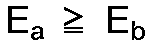
- An object of the present invention is to provide, as a means for solving the above problem, an optical information recording medium provided with a recording layer capable of changing reversibly between two optically detectable states in response to light irradiation conditions and with a plurality of additional layers, wherein the quantity L of irradiation light or the quantity E of heat which is necessary for increasing the temperature of the recording medium in said two states, with the recording layer in respective states a and b, to a given temperature are correlated by the equation L a ⁇ L b or E a ⁇ E b , characterized in that the properties of each layer of said plurality of additional layers as well as the properties of said recording layer is selected to result in optical absorbances A at the wavelength of irradiation light for the recording medium, with the recording layer in respective states a and b, satisfying the equation A a ⁇ A b and that in this way similar temperature-rise profiles are obtained for both states.
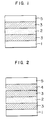
- Figs. 1 and 2 each show a sectional view of an embodiment of the optical information recording medium according to the present invention.
- the optical information recording medium of the present invention is, as shown in Figs. 1 and 2, constructed by forming a recording layer 2, sandwiched between dielectrics 3 such as SiO2 and ZnS, on a substrate 1 having a smooth surface made of resins such as polymethyl methacrylate (PMMA) and polycarbonate, metals such as Al and Cu, or glass.
- dielectrics 3 such as SiO2 and ZnS
- substrate 1 having a smooth surface made of resins such as polymethyl methacrylate (PMMA) and polycarbonate, metals such as Al and Cu, or glass.
- the material used for constituting the recording layer may be those in which the reversible phase change between amorphous state and crystal state is made use of, typically chalcogenides based on Te and Se, for example, GeTe, InSe, InSeTl, InSeTlCo, GeTeSb, GeTeSn, GeTeSnAu, InTe, InSeTe, InSbTe, SbSeTe and the like, and those in which the reversible phase change between crystal-crystal, for example, InSb, AgZn, AuSb and the like is utilized.
- a construction is also possible wherein a light reflecting layer 4 is additionally provided on the dielectrics layer of the side opposite to the incident laser beam.
- the reflecting layer there may be used Au, Cu, Al, Ni, Cr, Pt, Pd, and alloys thereof. It is also possible to laminate a protecting sheet or plate 5 onto the upper-most part by vacuum deposition method or through adhesive resin layer.
- the essential point of the present invention is to make the temperature-rise profiles of two states (recorded state and erased state) before and after recording substantially equal to each other, which can be achieved by appropriately selecting the film thickness of respective layers in the construction stated above.
- the film thickness of respective layers can be determined, based on the optical constant (refractive index or extinction coefficient), by calculation using, for example, the matrix method described on page 69 of "OPTICAL PROPERTIES OF THIN FILMS OF THE SOLID FILMS" (written by Heavens, published from Dover Co., Ltd. in 1965). Also a method for numerical optimization of film thickness of respective layers with respect to optical constants of an optical information recording medium is given in GB-A-2 148 148.
- the selection of items to be calculated is a step forward from that in prior method; namely, not only the absolute values of optical absorbance of the recorded part and the unrecorded part but also the relative relationship between the two values is taken into consideration. In other words, conditions are preferentially adopted wherein the difference between the two values is small even if their absolute values are somewhat low or wherein, as will be described later, the absorbance of the more difficultly fusible state is higher.
- the optical absorbances of the two states should be made equal to each other and, when a difference in the easiness of fusion exists owing to the difference of internal energy, the optical absorbance of the more difficultly fusible state should be made to be relatively higher, thereby to obtain in either state a similar temperature-rise profile in respect of both time and space.
- the crystal state is low in internal energy and hence requires correspondingly higher energy in melting.
- the high temperature phase in the crystal phase is compared with the low temperature phase, the latter phase requires a higher energy for melting.
- the optical absorbance of the crystal phase or the low temperature phase is respectively made relatively higher than that of the amorphous or high temperature phase, so that the respective former phases may absorb a greater amount of energy.
- Table 1 shows an embodiment of the present invention wherein the recording medium is shaped, so called, an optical disk whose recording layer is formed of GeSb2Te4, the dielectrics layer ZnS and the reflecting layer Au.
- the substrate is polycarbonate on which spiral tracks are formed for light guide.
- the latent heat of melting is about 6 cal/g higher for the crystalline phase than that of the amorphous phase and hence it is expected that said difference must be cancelled out by controlling the balance of optical absorbance for both states.
- the respective optical absorbance of the recorded part and the erased part becomes higher or lower relatively to each other depending on the selection of the film thickness of respective layers. Evaluations were performed on a dynamic tester having a single laser diode of 830 nm in wave length for several combinations of these film thicknesses to examine comparatively the CN ratio and erasing ratio.
- Table 1 shows some examples of film thickness constitution and (b) shows the optical absorbance and reflectance before and after recording for 830 nm in wave length, as well as the CN ratio and erasing ratio for these examples.
- samples No. 1, No. 2 and No. 3 each have a recording layer of 40 nm thickness and samples No. 4, No. 5 and No. 6 a recording layer of 20 nm thickness.
- recording signals were overwritten at a linear velocity of 15 m/sec and alternately at a frequency of 7 MHz or 5 MHz.
- the laser power level was 12-20 mW for recording (amorphizing) and 5-10 mW for erasing (crystallizing).
- the Table shows the best values of CN ratio (CNR) and erasing ratio in the above-mentioned range of power levels at 7 MHz.
- CNR CN ratio
- the Table reveals that when the optical absorbance in the amorphous state is higher than that in the crystal state no satisfactory erasing ratio is obtained though the CNR is high, and when the optical absorbance in the crystal state is equal to or higher than that in the amorphous state a high CNR and a high erasing ratio can be obtained simultaneously.
- optical information recording medium of the present invention it has become possible to conduct overwriting using a single laser beam while maintaining a high CNR and a high erasing ratio.
Landscapes
- Chemical & Material Sciences (AREA)
- Inorganic Chemistry (AREA)
- Optical Record Carriers And Manufacture Thereof (AREA)
- Thermal Transfer Or Thermal Recording In General (AREA)
- Optical Recording Or Reproduction (AREA)
Claims (12)
- Optisches Informationsaufzeichnungsmedium mit einer Aufzeichnungsschicht, der ansprechend auf Lichtbestrahlungszustände ein umkehrbarer Wechsel zwischen zwei optisch nachweisbaren Zuständen möglich ist, und mit einer Mehrzahl von zusätzlichen Schichten, bei dem die Mengen L von Bestrahlungslicht oder die Wärmemengen E, die zum Erhöhen der Temperatur des Aufzeichnungsmediums in den zwei Zuständen, in denen sich die Aufzeichnungsschicht jeweils in den Zuständen a und b befindet, auf eine vorgegebene Temperatur über die Gleichung


- Optisches Informationsaufzeichnungsmedium nach Anspruch 1, bei dem die Dicke jeweiliger Schichten des optischen Informationsaufzeichnungsmediums so ausgewählt ist, daß bei der Wellenlänge des Bestrahlungslichtes optische Absorbanzen A des Aufzeichnungsmediums mit der Aufzeichnungsschicht in jeweiligen Zuständen a und b erhalten werden, die die Gleichung

- Optisches Informationsaufzeichnungsmedium nach Anspruch 1 oder 2, bei dem die Aufzeichnungsschicht (2) auf einem Substrat (1) zwischen Dielektrika (3) angeordnet ist.
- Optisches Informationsaufzeichnungsmedium nach Anspruch 3, bei dem die Dielektrika (3) ausgewählt sind aus SiO₂ und ZnS.
- Optisches Informationsaufzeichnungsmedium nach Anspruch 3, bei dem das Substrat (1) gebildet ist aus einem Material ausgewählt aus Polymethylmethacrylat, Polycarbonat, Al, Cu und Glas.
- Optisches Informationsaufzeichnungsmedium nach einem der Ansprüche 1 bis 5, bei dem auf der dem Laserstrahl entgegengesetzten Seite zusätzlich eine lichtreflektierende Schicht auf der dielektrischen Schicht vorgesehen ist.
- Optisches Informationsaufzeichnungsmedium nach Anspruch 6, bei dem die lichtreflektierende Schicht gebildet ist aus einem der Materialien ausgewählt aus Au, Cu, Al, Ni, Cr, Pt, Pd und Legierungen davon.
- Optisches Informationsaufzeichnungsmedium nach einem der Ansprüche 1 bis 7, bei dem eine Schutzlage oder eine Platte auf dem obersten Teil laminiert ist durch Vakuumbedampfen oder mittels einer haftenden Harzschicht.
- Optisches Informationsaufzeichnungsmedium nach einem der Ansprüche 1 bis 8, bei dem der Zustand a ein Kristallphasenzustand der Aufzeichnungsschicht ist und der Zustand b ein amorpher Zustand ist.
- Optisches Informationsaufzeichnungsmedium nach Anspruch 9, bei dem zur Bildung der Aufzeichnungsschicht Chalcogenide auf der Grundlage von Te und Se benutzt werden.
- Optisches Informationsaufzeichnungsmedium nach einem der Ansprüche 1 bis 8, bei dem beide Zustände a und b der Aufzeichnungsschicht Kristallphasenzustände sind.
- Optisches Informationsaufzeichnungsmedium nach Anspruch 11, bei dem zur Bildung der Aufzeichnungsschicht benutzt wird eines der Materialien ausgewählt aus InSb, AgZn und AuSb.
Applications Claiming Priority (2)
| Application Number | Priority Date | Filing Date | Title |
|---|---|---|---|
| JP307867/87 | 1987-12-04 | ||
| JP62307867A JPH081707B2 (ja) | 1987-12-04 | 1987-12-04 | 光学的情報記録媒体 |
Publications (3)
| Publication Number | Publication Date |
|---|---|
| EP0319037A2 EP0319037A2 (de) | 1989-06-07 |
| EP0319037A3 EP0319037A3 (en) | 1990-10-10 |
| EP0319037B1 true EP0319037B1 (de) | 1993-08-11 |
Family
ID=17974119
Family Applications (1)
| Application Number | Title | Priority Date | Filing Date |
|---|---|---|---|
| EP88120172A Expired - Lifetime EP0319037B1 (de) | 1987-12-04 | 1988-12-02 | Optisches Informationsaufzeichnungsmedium |
Country Status (3)
| Country | Link |
|---|---|
| EP (1) | EP0319037B1 (de) |
| JP (1) | JPH081707B2 (de) |
| DE (1) | DE3883174T2 (de) |
Families Citing this family (23)
| Publication number | Priority date | Publication date | Assignee | Title |
|---|---|---|---|---|
| JP2512087B2 (ja) * | 1988-06-24 | 1996-07-03 | 株式会社日立製作所 | 光記録媒体および光記録方法 |
| JPH02128330A (ja) * | 1988-11-08 | 1990-05-16 | Fuji Electric Co Ltd | 光記録媒体 |
| US5191565A (en) * | 1989-06-19 | 1993-03-02 | Matsushita Electric Industrial Co., Ltd. | Optical information recording medium |
| DE69030026T2 (de) * | 1989-06-19 | 1997-09-18 | Matsushita Electric Ind Co Ltd | Optischer Informationsaufzeichnungsträger |
| EP0405225A3 (en) * | 1989-06-30 | 1992-02-26 | Kabushiki Kaisha Toshiba | Information storage medium |
| JPH03169683A (ja) * | 1989-11-30 | 1991-07-23 | Toshiba Corp | 情報の記録及び消去方法 |
| JPH03224791A (ja) * | 1990-01-31 | 1991-10-03 | Toshiba Corp | 情報記録媒体 |
| JP2827545B2 (ja) * | 1990-03-14 | 1998-11-25 | 松下電器産業株式会社 | 光学情報の記録方法 |
| JP3080739B2 (ja) * | 1991-12-20 | 2000-08-28 | 日本電気株式会社 | 光学的情報記録媒体および光学的情報記録消去再生方法 |
| EP0564260B1 (de) * | 1992-03-30 | 2000-09-06 | Kabushiki Kaisha Toshiba | Optisches Aufzeichnungsmedium und optisches Aufzeichnungs/Wiedergabegerät |
| US5424106A (en) * | 1992-04-17 | 1995-06-13 | Matsushita Electric Industrial Co., Ltd. | Optical information recording medium and method of designing its structure |
| US5527661A (en) * | 1992-11-25 | 1996-06-18 | Matsushita Electric Industrial Co., Ltd. | Optical information recording medium |
| JP2812181B2 (ja) * | 1993-06-17 | 1998-10-22 | 日本電気株式会社 | 光学的情報記録媒体 |
| JP2850754B2 (ja) * | 1994-05-20 | 1999-01-27 | 日本電気株式会社 | 相変化型光ディスク |
| JP3080844B2 (ja) * | 1994-08-29 | 2000-08-28 | 日本電気株式会社 | 相変化型光ディスク |
| JPH0877596A (ja) * | 1994-08-31 | 1996-03-22 | Nec Corp | 光学情報記録媒体 |
| JP2806274B2 (ja) * | 1994-10-19 | 1998-09-30 | 日本電気株式会社 | 光学情報記録媒体 |
| CN1149558C (zh) * | 1995-03-28 | 2004-05-12 | 东丽株式会社 | 光记录媒体及对光记录媒体的记录方法 |
| EP0957477A3 (de) | 1998-05-15 | 2003-11-05 | Matsushita Electric Industrial Co., Ltd. | Optisches Aufzeichnungsmedium, Verfahren und Vorrichtung zur Informationsaufzeichnung und -wiedergabe dafür |
| US6660356B1 (en) | 1999-05-12 | 2003-12-09 | Matsushita Electric Industrial Co., Ltd. | Optical information recording medium, method for producing the same, and method and apparatus for recording/reproducing information thereon |
| US7065035B1 (en) | 1999-10-25 | 2006-06-20 | Matsushita Electric Industrial Co., Ltd. | Optical multilayer disk, multiwavelength light source, and optical system using them |
| US6469977B2 (en) | 1999-12-20 | 2002-10-22 | Matsushita Electric Industrial Co., Ltd. | Optical information recording medium, method for producing the same, and method and apparatus for recording/reproducing information thereon |
| JP4915558B2 (ja) * | 2006-07-06 | 2012-04-11 | 清水建設株式会社 | 立て起こし装置 |
Family Cites Families (3)
| Publication number | Priority date | Publication date | Assignee | Title |
|---|---|---|---|---|
| GB2148148B (en) * | 1983-09-19 | 1988-01-13 | Storage Technology Corp | Optical storage medium and method for making same |
| CN1010519B (zh) * | 1985-09-25 | 1990-11-21 | 松下电器产业株式会社 | 可逆的光学情报记录介质 |
| JPH01100745A (ja) * | 1987-10-13 | 1989-04-19 | Toshiba Corp | 情報記録媒体 |
-
1987
- 1987-12-04 JP JP62307867A patent/JPH081707B2/ja not_active Expired - Lifetime
-
1988
- 1988-12-02 DE DE88120172T patent/DE3883174T2/de not_active Expired - Lifetime
- 1988-12-02 EP EP88120172A patent/EP0319037B1/de not_active Expired - Lifetime
Also Published As
| Publication number | Publication date |
|---|---|
| DE3883174D1 (de) | 1993-09-16 |
| EP0319037A3 (en) | 1990-10-10 |
| DE3883174T2 (de) | 1994-03-10 |
| JPH01149238A (ja) | 1989-06-12 |
| JPH081707B2 (ja) | 1996-01-10 |
| EP0319037A2 (de) | 1989-06-07 |
Similar Documents
| Publication | Publication Date | Title |
|---|---|---|
| EP0319037B1 (de) | Optisches Informationsaufzeichnungsmedium | |
| US5545454A (en) | Optical information recording medium and method of designing its structure | |
| US5681632A (en) | Optical information recording medium | |
| EP0784316B1 (de) | Optische Aufzeichnungsträger und Informationseinheiten zur Aufzeichnung und Wiedergabe | |
| EP0957477A2 (de) | Optisches Aufzeichnungsmedium, Verfahren und Vorrichtung zur Informationsaufzeichnung und -wiedergabe dafür | |
| US5410534A (en) | Optical information recording medium | |
| US6333913B1 (en) | Optical recording medium and optical recording method | |
| EP0630007B1 (de) | Optisches Informationsaufzeichnungsmedium | |
| JP4339999B2 (ja) | 光学的情報記録媒体とその製造方法、記録再生方法及び記録再生装置 | |
| JPH09198709A (ja) | 多層光ディスク及び記録再生装置 | |
| US5273861A (en) | Optical information recording medium, method of making an optical information recording medium and method of recording/reproducing optical information | |
| US6660451B1 (en) | Optical information recording medium | |
| US5811217A (en) | Optical information recording medium and optical information recording/reproducing method | |
| JP3087433B2 (ja) | 光学的情報記録媒体及びその構造設計方法 | |
| JP3080739B2 (ja) | 光学的情報記録媒体および光学的情報記録消去再生方法 | |
| JPH06282876A (ja) | 光記録媒体 | |
| JPH07105574A (ja) | 光情報記録媒体 | |
| JP2003051137A (ja) | 情報記録媒体 | |
| JP3012734B2 (ja) | 光学的情報記録媒体及びその構造設計方法 | |
| KR100578008B1 (ko) | 광학적 정보 기록 매체와 그 제조 방법, 이 매체를 이용한정보의 기록 방법 및 기록 장치 | |
| JP2962052B2 (ja) | 光学情報記録媒体 | |
| JP3087454B2 (ja) | 光学的情報記録媒体およびその構造設計方法 | |
| US6117511A (en) | Optical recording media | |
| JP3156418B2 (ja) | 光学情報記録媒体及び光学情報記録再生方法 | |
| EP0838807A2 (de) | Optische Platte mit Phasenwechsel und Verfahren zur Aufzeichnung und Wiedergabe optischer Informationen einer optischen Platte |
Legal Events
| Date | Code | Title | Description |
|---|---|---|---|
| PUAI | Public reference made under article 153(3) epc to a published international application that has entered the european phase |
Free format text: ORIGINAL CODE: 0009012 |
|
| AK | Designated contracting states |
Kind code of ref document: A2 Designated state(s): DE FR GB |
|
| PUAL | Search report despatched |
Free format text: ORIGINAL CODE: 0009013 |
|
| AK | Designated contracting states |
Kind code of ref document: A3 Designated state(s): DE FR GB |
|
| 17P | Request for examination filed |
Effective date: 19901128 |
|
| 17Q | First examination report despatched |
Effective date: 19920616 |
|
| GRAA | (expected) grant |
Free format text: ORIGINAL CODE: 0009210 |
|
| AK | Designated contracting states |
Kind code of ref document: B1 Designated state(s): DE FR GB |
|
| REF | Corresponds to: |
Ref document number: 3883174 Country of ref document: DE Date of ref document: 19930916 |
|
| ET | Fr: translation filed | ||
| PLBE | No opposition filed within time limit |
Free format text: ORIGINAL CODE: 0009261 |
|
| STAA | Information on the status of an ep patent application or granted ep patent |
Free format text: STATUS: NO OPPOSITION FILED WITHIN TIME LIMIT |
|
| 26N | No opposition filed | ||
| REG | Reference to a national code |
Ref country code: GB Ref legal event code: IF02 |
|
| REG | Reference to a national code |
Ref country code: GB Ref legal event code: 746 Effective date: 20031002 |
|
| REG | Reference to a national code |
Ref country code: FR Ref legal event code: D6 |
|
| PGFP | Annual fee paid to national office [announced via postgrant information from national office to epo] |
Ref country code: GB Payment date: 20071128 Year of fee payment: 20 Ref country code: FR Payment date: 20071210 Year of fee payment: 20 |
|
| PGFP | Annual fee paid to national office [announced via postgrant information from national office to epo] |
Ref country code: DE Payment date: 20071129 Year of fee payment: 20 |
|
| REG | Reference to a national code |
Ref country code: GB Ref legal event code: PE20 Expiry date: 20081201 |
|
| PG25 | Lapsed in a contracting state [announced via postgrant information from national office to epo] |
Ref country code: GB Free format text: LAPSE BECAUSE OF EXPIRATION OF PROTECTION Effective date: 20081201 |