EP0325060B1 - Aromatisches Sulfidamid-Polymer und Verfahren zu dessen Herstellung - Google Patents
Aromatisches Sulfidamid-Polymer und Verfahren zu dessen Herstellung Download PDFInfo
- Publication number
- EP0325060B1 EP0325060B1 EP88312334A EP88312334A EP0325060B1 EP 0325060 B1 EP0325060 B1 EP 0325060B1 EP 88312334 A EP88312334 A EP 88312334A EP 88312334 A EP88312334 A EP 88312334A EP 0325060 B1 EP0325060 B1 EP 0325060B1
- Authority
- EP
- European Patent Office
- Prior art keywords
- polymer
- carbon atoms
- group
- represent
- same
- Prior art date
- Legal status (The legal status is an assumption and is not a legal conclusion. Google has not performed a legal analysis and makes no representation as to the accuracy of the status listed.)
- Expired - Lifetime
Links
Images
Classifications
-
- C—CHEMISTRY; METALLURGY
- C08—ORGANIC MACROMOLECULAR COMPOUNDS; THEIR PREPARATION OR CHEMICAL WORKING-UP; COMPOSITIONS BASED THEREON
- C08G—MACROMOLECULAR COMPOUNDS OBTAINED OTHERWISE THAN BY REACTIONS ONLY INVOLVING UNSATURATED CARBON-TO-CARBON BONDS
- C08G75/00—Macromolecular compounds obtained by reactions forming a linkage containing sulfur with or without nitrogen, oxygen, or carbon in the main chain of the macromolecule
- C08G75/30—Polysulfonamides; Polysulfonimides
-
- C—CHEMISTRY; METALLURGY
- C08—ORGANIC MACROMOLECULAR COMPOUNDS; THEIR PREPARATION OR CHEMICAL WORKING-UP; COMPOSITIONS BASED THEREON
- C08G—MACROMOLECULAR COMPOUNDS OBTAINED OTHERWISE THAN BY REACTIONS ONLY INVOLVING UNSATURATED CARBON-TO-CARBON BONDS
- C08G75/00—Macromolecular compounds obtained by reactions forming a linkage containing sulfur with or without nitrogen, oxygen, or carbon in the main chain of the macromolecule
- C08G75/02—Polythioethers
- C08G75/0204—Polyarylenethioethers
- C08G75/0236—Polyarylenethioethers containing atoms other than carbon or sulfur in a linkage between arylene groups
-
- C—CHEMISTRY; METALLURGY
- C08—ORGANIC MACROMOLECULAR COMPOUNDS; THEIR PREPARATION OR CHEMICAL WORKING-UP; COMPOSITIONS BASED THEREON
- C08G—MACROMOLECULAR COMPOUNDS OBTAINED OTHERWISE THAN BY REACTIONS ONLY INVOLVING UNSATURATED CARBON-TO-CARBON BONDS
- C08G75/00—Macromolecular compounds obtained by reactions forming a linkage containing sulfur with or without nitrogen, oxygen, or carbon in the main chain of the macromolecule
- C08G75/02—Polythioethers
- C08G75/0204—Polyarylenethioethers
- C08G75/025—Preparatory processes
- C08G75/0254—Preparatory processes using metal sulfides
Definitions
- This invention relates to a novel crystalline aromatic sulfideamide polymer and a process for production of the novel polymer.
- the polymers according to the invention have a chemical structure in which phenylene and alkylene groups are alternately bonded via an amide group and a thioether group.
- the polymers are useful as materials for producing articles exhibiting improved properties such as excellent resistance to high temperatures, flame-retardant properties, resistance to solvents, good mechanical properties, good fabricability, etc.
- Polyphenylene sulfide which is a polymeric compound comprising phenylene groups linked to each other via a thioether group is well known in the art.
- This polymer has such properties as good flame-retardancy, low moisture absorption, high dimensional stability, etc.
- HDT heat distortion temperature
- GF 40% i.e. containing 40% glass fibers
- T m crystalline melting point
- a polymer substance containing thioether, phenylene and amide groups in the macromolecular backbone i.e. a polymer of aromatic polythioether amide, and a process for production thereof are described in JP-A-60-226528.
- This polymer substance presents some problems in practice because it has a rather low softening point, is soluble in organic solvents such as dimethyl sulfoxide of N-methyl-2-pyrrolidone and exhibits poor resistance to chemicals. Additionally the synthesis of thiol group-containing monomers to be used in the preparation of the polymer is so expensive that production of the polymer is not feasible from an economic point of view.
- the polymers of the present invention use cyclic nitrogen compounds in place of the aliphatic dicarboxylic acids of Daccord. These polymers have particularly advantageous thermal properties.
- An object of the present invention is to provide a novel aromatic sulfideamide polymer substance comprising a commercially available, inexpensive aliphatic moiety in the repeating units and which is improved in terms of resistance to high temperatures, resistance to solvents and mechanical properties, and good fabricability.
- a further object of the present invention is to provide a process for production of such a novel polymer substance.
- a novel aromatic sulfideamide polymer which consists of from 1 to 99 mol% of repeating units represented by the following formula (I) : and from 99 to 1 mol% of repeating units represented by the formula (II): -[Ar3(R3) c -S]- (II) in these formulae Ar1, Ar2 and Ar3 which may be the same or different, each represent an aromatic ring; R1, R2 and R3, which may be the same or different, each represent an alkyl group having 1 to 20 carbon atoms, a cycloalkyl group having 3 to 20 carbon atoms, an aryl group having 6 to 20 carbon atoms, an alkoxy group having 1 to 20 carbon atoms, an acyl group having 2 to 20 carbon atoms or an arylalkyl group having 7 to 20 carbon atoms; a, b and c, which may be the same or different, each represent an integer of from 0 to 4; and R4
- an aromatic sulfideamide polymer compound or compounds which comprises sulfidizing an amide group-containing dihalide compound or compounds having the following general formula (III) and an aromatic dihalide compound of the following formula (IV) with a sulfidizing agent in an organic polar solvent;
- a, b and c which may be sulfidizing an amide group-containing di
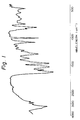
- FIG. 1 shows an IR spectrum (wave length: about 400 - 4000 cm ⁇ 1) of the polymer obtained in Example 1.
- Examples of groups Ar1, Ar2 and Ar3, in the aromatic dihalide compounds which may be used in the invention include: where Z represents -O-, -S-, -SO2-, -CO-, -CH2- or -C(CH3)2-.
- the groups may be the same or different in one compound.
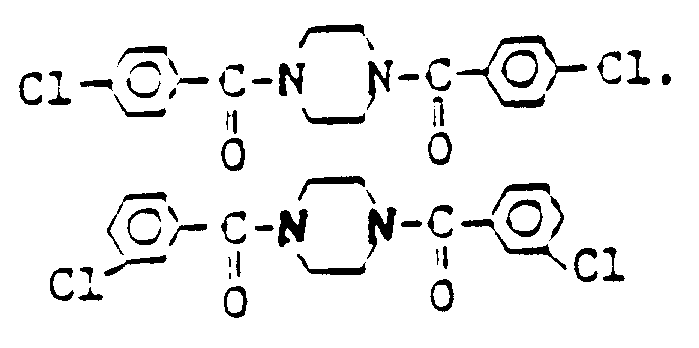
- Example of particularly preferred dihalide compounds (III) for use in the present invention include:
- the amide group-containing dihalide compounds contain bonds at the para positions, if it is mainly desired to improve the thermal resistance properties of the product polymers.
- the dihalide compounds may contain bonds at the meta positions and/or at the ortho positions, or may be branched.
- the amide group-containing dihalide compounds may be synthesized by the conventional amide linkage formation technique.
- a typical example of synthesis is a process in which a corresponding halogen-containing aromatic carbonyl chloride is reacted with a corresponding diamine.
- Examples of particularly preferred dihalide compounds (IV) which may be used in the invention include and mixtures thereof.
- the present process for production of aromatic sulfideamide polymers comprises sulfidizing the amide group-containing dihalide compound (III) and the aromatic dihalide compound (IV) with a sulfidizing agent in an organic polar solvent.
- the amide group-containing compound (III) and the other dihalide compound (IV) may be simultaneously sulfidized, or the amide group-containing compound (III) and the other dihalide compound (IV) may be separately sulfidized and then brought together into a reaction system where they are allowed to further react with each other, or the amide group-containing compound (III) may be first sulfidized in a reaction system and then the other dihalide compound (IV) being added together with an appropriate amount of additional sulfidizing agent to the system (or vice versa ) for further reaction.
- the organic polar solvents used in the process of the present invention are preferably aprotic and those which are stable in the presence of alkalis at elevated temperatures.
- the preferred solvents include N,N-dimethyl acetamide (DMA), N-ethyl-2-pyrrolidone, hexamethyl phosphoric triamide (HMPA), dimethyl sulfoxide (DMSO), N-methyl-2-pyrrolidone (NMP), and 1,3-dimethyl imidazolidinone.
- the sulfidizing agents which may be used in the process include alkali metal sulfides, combinations of hydrogen sulfide with alkali metal bases, and combinations of alkali metal hydrosulfides with alkali metal bases.
- the alkali metal sulfides and hydrosulfides may be used as hydrates (from 0.5 to 10 molar equivalents).
- the sulfidizing agents may be prepared in situ prior to introduction of the dihalide compounds of the general formulae (III) and (IV) into the reaction system. Of course, the sulfidizing agent may be prepared outside the reaction system and then introduced to the system.
- the content of water in the system should be reduced to a level of less than 2.5 molar equivalents per equivalent of the sulfidizing agent to be introduced.
- phase transfer catalyst such as a crown-ether compound, phosphor salt or an ammonium salt compound and/or an assistant such as an alkali metal carboxylate may be used to effectively increase the molecular weight of the resulting polymer.
- the polymerization is effected at a temperature of about 150 - 300°C, preferably 180 - 280°C, for a period of about 0.5 - 24 hours, preferably 1 - 12 hours.
- the preferred molar ratio of the dihalide compounds (III) and the compound (IV) to the sulfidizing agent used in the present process ranges from 0.9:1.0 to 1.1:1.0.
- the quantity of solvent used in the process may be such that the reaction system will contain 7 - 50%, preferably 10 - 40%, by weight of the product polymer upon completion of the polymerization.
- the process preferably comprises the step of recovering the product polymer e.g. by conventional methods, such as vacuum distillation, flash-off, and re-precipitation with organic solvents or water.
- the isolated product polymer may be washed with any suitable organic solvent or water and then dried.
- the aromatic sulfideamide copolymers according to the present invention have a logarithmic viscosity in the range of 0.02 to 2.00, as measured at a concentration of 0.5 g/100 ml in concentrated sulfuric acid at a temperature of 30°C or at a concentration of 0.1 g/100 ml in ⁇ -chloronaphthalene at 210°C. Polymers having viscosities of 0.05 to 2.00 are preferred.
- the process preferably comprises a step of thermally treating the polymers in an oxidative atmosphere such as air or oxygen-enriched air so as to structurally modify the polymer and hence to improve its physical and chemical properties e.g. so that the polymer is advantageously chain-extended and/or cross-inked and/or branched.
- the polymers may contain various filler materials.
- suitable filler materials include (a) fiber fillers, such as glass fibers, carbon fibers, boron fibers, aramid fibers, alumina fibers, etc. and (b) inorganic fillers, such as mica, talc, clay, graphite, carbon black, silica, asbestos, molybdenum disulfide, magnesium oxide, calcium oxide, etc.
- the polymers described herein exhibit, on IR analysis, absorptions around 1090 cm ⁇ 1 (caused by thioether linkages), around 1640 cm ⁇ 1 (caused by carbonyl groups in amide linkages) and around 1540 cm ⁇ 1 (caused by amino groups in amide linkages). These IR data confirm that the polymers described herein have the structural repeating units (I) and (II).
- Example 2 This is a comparison example.
- the polymer was soluble in concentrated sulfuric acid but sparingly soluble in NMP/LiCl (95/5 by weight). It had a logarithmic viscosity of 0.15 (0.5 g/100 ml in H2SO4 at 30°C).
- the logarithmic viscosity was 0.13 (0.1 g/100 ml in ⁇ -chloronaphthalene at 210°C).
- the decomposition temperature was observed at 452°C and the melting point at 347°C.
- the logarithmic viscosity was 0.15 (0.1 g/100 ml in ⁇ -chloronaphthalene at 210°C).
- Example 2 The procedure of Example 1 was repeated except that the dihalide compounds were substituted by: Yield: 21.9 g (97.8%) IR: 1088 cm-1 (thioether linkage), 3360; 1630; 1540 cm-1 (amide linkage) The decomposition temperature was 465°C with no definite melting point observed.
- the polymer was soluble in concentrated sulfuric acid, but sparingly soluble in an NMP/LiCl (95/5 by weight) mixture.
- the polymer had a logarithmic viscosity of 0.16 (0.5 g/100 ml in H2SO4 at 30°C).
- the present invention provides a novel class of aromatic sulfideamide copolymers which may be synthesized from readily commercially available materials by a simple procedure. It is expected that the novel copolymers will find use in a wide range of applications as engineering plastics because of their excellent heat resistance and processability properties and other useful properties.
Landscapes
- Chemical & Material Sciences (AREA)
- Health & Medical Sciences (AREA)
- Chemical Kinetics & Catalysis (AREA)
- Medicinal Chemistry (AREA)
- Polymers & Plastics (AREA)
- Organic Chemistry (AREA)
- Polymers With Sulfur, Phosphorus Or Metals In The Main Chain (AREA)
- Polyamides (AREA)
Claims (15)
- Aromatisches Sulfidamid-Polymer, welches aus 1 bis 99 Mol% Repetiereinheiten, die durch die folgende Formel (I) dargestellt sind:

-[Ar³(R³)c-S]- (II)
besteht, worin Ar¹, Ar² und Ar³, die gleich oder verschieden sein können, jeweils einen aromatischen Ring bedeuten; R¹, R² und R³, die gleich oder verschieden sein können, jeweils eine Alkylgruppe mit 1 bis 20 Kohlenstoffatomen, eine Cycloalkylgruppe mit 3 bis 20 Kohlenstoffatomen, eine Arylgruppe mit 6 bis 20 Kohlenstoffatomen, eine Alkoxygruppe mit 1 bis 20 Kohlenstoffatomen, eine Acylgruppe mit 2 bis 20 Kohlenstoffatomen oder eine Arylalkylgruppe mit 7 bis 20 Kohlenstoffatomen bedeuten; a, b und c, die gleich oder verschieden sein können, jeweils eine ganze Zahl von 0 bis 4 bedeuten; und R⁴ und R⁵, die gleich oder verschieden sein können, jeweils eine Alkylengruppe mit 1 bis 20 Kohlenstoffatomen bedeuten. - Polymer nach Anspruch 1, in welchem die Gruppen Ar¹, Ar² und Ar³ jeweils gewählt werden aus

- Polymer nach Anspruch 1 oder Anspruch 2, welches eine logarithmische Viskosität [η] von 0,02 bis 2,00, vorzugsweise 0,05 bis 2,00 hat, bestimmt durch Messen der relativen Viskosität des in konzentrierter Schwefelsäure gelösten Polymers bei 30°C und bei einer Polymerkonzentration von 0,5 g/100 ml oder der relativen Viskosität des in α-Chlornaphthalin gelösten Polymers bei 210°C und bei einer Polymerkonzentration von 0,1 g/100 ml und Berechnen des Ergebnisses gemäß der Gleichung:

- Polymer nach Anspruch 1, 2 oder 3, welches durch Erwärmen unter einer oxidierenden Atmosphäre vernetzt oder kettenverlängert oder verzweigt oder irgendeine Kombination davon ist.
- Verfahren zur Herstellung eines aromatischen Sulfidamid-Polymers, welches das Sulfidieren einer amidgruppenhaltigen Dihalogenidverbindung oder von Verbindungen mit der folgenden allgemeinen Formel (III) und einer aromatischen Dihalogenidverbindung der folgenden Formel (IV) mit einem sulfidierenden Mittel in einem organischen polaren Lösungsmittel umfaßt

X-Ar³(R³)c-Y (IV)
worin Ar¹, Ar² und Ar³, welche gleich oder verschieden sein können, jeweils einen aromatischen Ring bedeuten, R¹, R² und R³, die gleich oder verschieden sein können, jeweils eine Alkylgruppe mit 1 bis 20 Kohlenstoffatomen, eine Cycloalkylgruppe mit 3 bis 20 Kohlenstoffatomen, eine Arylgruppe mit 6 bis 20 Kohlenstoffatomen, eine Alkoxygruppe mit 1 bis 20 Kohlenstoffatomen, eine Acylgruppe mit 2 bis 20 Kohlenstoffatomen oder eine Arylalkylgruppe mit 7 bis 20 Kohlenstoffatomen bedeuten; a, b und c, die gleich oder verschieden sein können, jeweils eine ganze Zahl von 0 bis 4 bedeuten; R⁴ und R⁵, die gleich oder verschieden sein können, jeweils eine Alkylengruppe mit 1 bis 20 Kohlenstoffatomen bedeuten; und X und Y, die gleich oder verschieden sein können, jeweils ein Halogen bedeuten; so daß ein Polymer gebildet wird, das aus der folgenden Repetiereinheit (V) besteht:
- Verfahren nach Anspruch 5, in welchem die Gruppen Ar¹, Ar² und Ar³ jeweils gewählt werden aus

- Verfahren nach Anspruch 5 oder Anspruch 6, in welchem die amidgruppenhaltige Dihalogenidverbindung (III) gewählt wird aus:
- Verfahren nach Anspruch 5, 6 oder 7, in welchem die aromatische Dihalogenidverbindung (IV) gewählt wird aus

- Verfahren nach Anspruch 5, 6, 7 oder 8, in welchem die amidgruppenhaltige Verbindung (III) und die Verbindung (IV) gleichzeitig sulfidiert werden.
- Verfahren nach einem der Ansprüche 5 bis 8, in welchem die amidgruppenhaltige Verbindung (III) und die Verbindung (IV) getrennt sulfidiert werden und dann in einem Reaktionssystem zusammengebracht werden, wo sie weiter miteinander reagieren gelassen werden.
- Verfahren nach einem der Ansprüche 5 bis 8, in welchem die amidgruppenhaltige Verbindung (III) zuerst in einem Reaktionssystem sulfidiert wird und dann die Verbindung (IV) zusammen mit einer geeigneten Menge von zusätzlichem sulfidierenden Mittel zu dem System zugegeben wird, oder umgekehrt, zur weiteren Reaktion.
- Verfahren nach einem der Ansprüche 5 bis 11, in welchem das organische Lösungsmittel aprotisch ist.
- Verfahren nach Anspruch 12, in welchem das Lösungsmittel gewählt wird aus N,N-Dimethylacetamid, N-Ethyl-2-pyrrolidon, Hexamethylphosphorsäuretriamid, Dimethylsulfoxid, N-Methyl-2-pyrrolidon und 1,3-Dimethylimidazolin.
- Verfahren nach einem der Ansprüche 5 bis 13, in welchem das sulfidierende Mittel gewählt wird aus Natriumsulfid, einer Kombination aus Natriumhydrogensulfid und Natriumhydroxid und einer Kombination aus Schwefelwasserstoff und Natriumhydroxid.
- Zusammensetzung umfassend ein aromatisches Sulfidamid-Polymer nach einem der Ansprüche 1 bis 4, oder hergestellt durch ein Verfahren nach einem der Ansprüche 5 bis 14, und ein oder mehrere herkömmliche Additive.
Applications Claiming Priority (2)
| Application Number | Priority Date | Filing Date | Title |
|---|---|---|---|
| JP327385/87 | 1987-12-25 | ||
| JP62327385A JPH0739491B2 (ja) | 1987-12-25 | 1987-12-25 | 芳香族スルフィドアミド重合体及びその製造方法 |
Publications (3)
| Publication Number | Publication Date |
|---|---|
| EP0325060A2 EP0325060A2 (de) | 1989-07-26 |
| EP0325060A3 EP0325060A3 (en) | 1990-06-13 |
| EP0325060B1 true EP0325060B1 (de) | 1994-08-31 |
Family
ID=18198557
Family Applications (1)
| Application Number | Title | Priority Date | Filing Date |
|---|---|---|---|
| EP88312334A Expired - Lifetime EP0325060B1 (de) | 1987-12-25 | 1988-12-28 | Aromatisches Sulfidamid-Polymer und Verfahren zu dessen Herstellung |
Country Status (6)
| Country | Link |
|---|---|
| US (1) | US4958003A (de) |
| EP (1) | EP0325060B1 (de) |
| JP (1) | JPH0739491B2 (de) |
| KR (1) | KR890010039A (de) |
| CA (1) | CA1312169C (de) |
| DE (1) | DE3851321T2 (de) |
Families Citing this family (3)
| Publication number | Priority date | Publication date | Assignee | Title |
|---|---|---|---|---|
| US5120804A (en) * | 1989-10-12 | 1992-06-09 | Tosoh Corporation | Easily crystallizable polyphenylene sulfide copolymer and preparation thereof |
| CA2061003C (en) * | 1991-02-12 | 1999-02-09 | Mitsui Chemicals, Inc. | Process for isomerizing endo-form of aromatic group-containing norbornenes to exo-form thereof, isomer mixture of aromatic group-containing norbornenes and process for preparing same, and ethylene/aromatic group-contain ng norbornene copolymer and process for preparing same |
| CN103739839B (zh) * | 2013-12-31 | 2015-10-21 | 四川大学 | 半芳族聚芳醚酰胺及其制备方法 |
Family Cites Families (6)
| Publication number | Priority date | Publication date | Assignee | Title |
|---|---|---|---|---|
| US2706726A (en) * | 1952-09-11 | 1955-04-19 | Goodyear Tire & Rubber | Reaction of a mercapto polymer with an nu-acyl polyimide of a polycarboxylic acid |
| US3640965A (en) * | 1968-10-02 | 1972-02-08 | Union Carbide Corp | Thermoplastic sulfur-containing polymers |
| JPS5790018A (en) * | 1980-11-27 | 1982-06-04 | Toray Ind Inc | Stabilized polyphenylene sulfide and its production |
| US4621134A (en) * | 1984-04-25 | 1986-11-04 | Mitsubishi Petrochemical Co., Ltd. | Aromatic polythioetheramide |
| JPS6383135A (ja) * | 1986-09-26 | 1988-04-13 | Tosoh Corp | 芳香族スルフイドアミド重合体及びその製造法 |
| US4994594A (en) * | 1988-02-29 | 1991-02-19 | General Electric Company | Oligomeric carbonate chainstoppers |
-
1987
- 1987-12-25 JP JP62327385A patent/JPH0739491B2/ja not_active Expired - Fee Related
-
1988
- 1988-12-22 KR KR1019880017251A patent/KR890010039A/ko not_active Withdrawn
- 1988-12-23 US US07/288,881 patent/US4958003A/en not_active Expired - Fee Related
- 1988-12-23 CA CA000586970A patent/CA1312169C/en not_active Expired - Lifetime
- 1988-12-28 EP EP88312334A patent/EP0325060B1/de not_active Expired - Lifetime
- 1988-12-28 DE DE3851321T patent/DE3851321T2/de not_active Expired - Fee Related
Non-Patent Citations (1)
| Title |
|---|
| Die Makromolekulare Chemie vol. 184, no. 184, no. 9, September1983, pages 1861-1867, Huethig & Wepf Verlag, Basel, CH; G.DACCORD et al.:"Oligo(thiophénylènes-1,4)alpha, omega-difonctionnalisés" * page 1862, formula7 * * |
Also Published As
| Publication number | Publication date |
|---|---|
| US4958003A (en) | 1990-09-18 |
| KR890010039A (ko) | 1989-08-05 |
| DE3851321D1 (de) | 1994-10-06 |
| JPH01168735A (ja) | 1989-07-04 |
| EP0325060A2 (de) | 1989-07-26 |
| JPH0739491B2 (ja) | 1995-05-01 |
| DE3851321T2 (de) | 1995-04-27 |
| EP0325060A3 (en) | 1990-06-13 |
| CA1312169C (en) | 1992-12-29 |
Similar Documents
| Publication | Publication Date | Title |
|---|---|---|
| EP0323176B1 (de) | Aromatisches Sulfid-Amid-Polymer und Verfahren zu seiner Herstellung | |
| EP0053344B1 (de) | Stabilisiertes Polyphenylensulfid und Verfahren zu dessen Herstellung | |
| US4812552A (en) | Process for preparing poly(arylene sulfide ketone) with water addition | |
| EP0354133A1 (de) | Verfahren zur Herstellung von Copoly(arylensulfiden) mit endständigen Gruppen | |
| JP3141459B2 (ja) | アミノ基含有ポリアリ−レンスルフィドの製造方法 | |
| US5328980A (en) | Method of preparing poly(arylene sulfide) polymers, polymers and polymer blends | |
| JPH01161022A (ja) | ポリ(p−フェニレンスルフィド)の製造方法 | |
| EP0325060A2 (de) | Aromatisches Sulfidamid-Polymer und Verfahren zu dessen Herstellung | |
| EP0429508A1 (de) | Mischungen aus copoly(arylensulfiden) und polyarylensulfiden | |
| KR960006414B1 (ko) | 방향족 술피드 아미드중합체 및 그 제조방법 | |
| JPH02182727A (ja) | ポリアリーレンスルフイド射出成形品 | |
| US4980454A (en) | Poly(arylene cyano-thioether) copolymer and preparation thereof | |
| JP3190071B2 (ja) | ポリアリーレンチオエーテル組成物 | |
| US4973663A (en) | Poly(cyano arylene sulfide/sulfone)copolymer and preparation thereof | |
| EP0400225B1 (de) | Verfahren zur Herstellung von Polyphenylensulfidcopolymeren | |
| JP2570721B2 (ja) | 熱可塑性樹脂組成物の製造方法 | |
| JP2545205B2 (ja) | 芳香族スルフィドアミド重合体 | |
| JPH0598009A (ja) | 線形の、または任意に枝分かれしていることもあるポリ硫化アリーレンの分子量の安定化方法 | |
| JPH0768349B2 (ja) | 芳香族スルフィドアミド重合体の製造方法 | |
| JPH08337653A (ja) | ポリアリーレンスルフィド共重合体の製造方法並びにその製造方法によって得られる共重合体およびその樹脂組成物 | |
| US5120804A (en) | Easily crystallizable polyphenylene sulfide copolymer and preparation thereof | |
| US5177174A (en) | Branched aromatic sulfide/sulfone polymer production | |
| JPH0725884B2 (ja) | 芳香族スルフイドアミド重合体及びそれを製造する方法 | |
| JPS642625B2 (de) | ||
| JPH03250029A (ja) | 易結晶性ポリフェニレンスルフィド共重合体およびその製造方法 |
Legal Events
| Date | Code | Title | Description |
|---|---|---|---|
| PUAI | Public reference made under article 153(3) epc to a published international application that has entered the european phase |
Free format text: ORIGINAL CODE: 0009012 |
|
| AK | Designated contracting states |
Kind code of ref document: A2 Designated state(s): BE CH DE FR GB LI NL |
|
| PUAL | Search report despatched |
Free format text: ORIGINAL CODE: 0009013 |
|
| AK | Designated contracting states |
Kind code of ref document: A3 Designated state(s): BE CH DE FR GB LI NL |
|
| 17P | Request for examination filed |
Effective date: 19900926 |
|
| RAP1 | Party data changed (applicant data changed or rights of an application transferred) |
Owner name: TOSOH CORPORATION |
|
| 17Q | First examination report despatched |
Effective date: 19921127 |
|
| GRAA | (expected) grant |
Free format text: ORIGINAL CODE: 0009210 |
|
| AK | Designated contracting states |
Kind code of ref document: B1 Designated state(s): BE CH DE FR GB LI NL |
|
| PG25 | Lapsed in a contracting state [announced via postgrant information from national office to epo] |
Ref country code: NL Effective date: 19940831 Ref country code: LI Effective date: 19940831 Ref country code: CH Effective date: 19940831 Ref country code: BE Effective date: 19940831 |
|
| REF | Corresponds to: |
Ref document number: 3851321 Country of ref document: DE Date of ref document: 19941006 |
|
| ET | Fr: translation filed | ||
| REG | Reference to a national code |
Ref country code: CH Ref legal event code: PL |
|
| NLV1 | Nl: lapsed or annulled due to failure to fulfill the requirements of art. 29p and 29m of the patents act | ||
| PLBE | No opposition filed within time limit |
Free format text: ORIGINAL CODE: 0009261 |
|
| STAA | Information on the status of an ep patent application or granted ep patent |
Free format text: STATUS: NO OPPOSITION FILED WITHIN TIME LIMIT |
|
| 26N | No opposition filed | ||
| PGFP | Annual fee paid to national office [announced via postgrant information from national office to epo] |
Ref country code: FR Payment date: 19971209 Year of fee payment: 10 |
|
| PGFP | Annual fee paid to national office [announced via postgrant information from national office to epo] |
Ref country code: GB Payment date: 19971219 Year of fee payment: 10 |
|
| PGFP | Annual fee paid to national office [announced via postgrant information from national office to epo] |
Ref country code: DE Payment date: 19980105 Year of fee payment: 10 |
|
| PG25 | Lapsed in a contracting state [announced via postgrant information from national office to epo] |
Ref country code: GB Free format text: LAPSE BECAUSE OF NON-PAYMENT OF DUE FEES Effective date: 19981228 |
|
| GBPC | Gb: european patent ceased through non-payment of renewal fee |
Effective date: 19981228 |
|
| PG25 | Lapsed in a contracting state [announced via postgrant information from national office to epo] |
Ref country code: FR Free format text: LAPSE BECAUSE OF NON-PAYMENT OF DUE FEES Effective date: 19990831 |
|
| REG | Reference to a national code |
Ref country code: FR Ref legal event code: ST |
|
| PG25 | Lapsed in a contracting state [announced via postgrant information from national office to epo] |
Ref country code: DE Free format text: LAPSE BECAUSE OF NON-PAYMENT OF DUE FEES Effective date: 19991001 |