EP0362792A2 - Copolymère de polycarbonate aromatique et disque optique ayant un tel substrat - Google Patents
Copolymère de polycarbonate aromatique et disque optique ayant un tel substrat Download PDFInfo
- Publication number
- EP0362792A2 EP0362792A2 EP89118326A EP89118326A EP0362792A2 EP 0362792 A2 EP0362792 A2 EP 0362792A2 EP 89118326 A EP89118326 A EP 89118326A EP 89118326 A EP89118326 A EP 89118326A EP 0362792 A2 EP0362792 A2 EP 0362792A2
- Authority
- EP
- European Patent Office
- Prior art keywords
- optical disk
- aromatic polycarbonate
- polycarbonate copolymer
- disk substrate
- substrate according
- Prior art date
- Legal status (The legal status is an assumption and is not a legal conclusion. Google has not performed a legal analysis and makes no representation as to the accuracy of the status listed.)
- Withdrawn
Links
Images
Classifications
-
- G—PHYSICS
- G11—INFORMATION STORAGE
- G11B—INFORMATION STORAGE BASED ON RELATIVE MOVEMENT BETWEEN RECORD CARRIER AND TRANSDUCER
- G11B7/00—Recording or reproducing by optical means, e.g. recording using a thermal beam of optical radiation by modifying optical properties or the physical structure, reproducing using an optical beam at lower power by sensing optical properties; Record carriers therefor
- G11B7/24—Record carriers characterised by shape, structure or physical properties, or by the selection of the material
- G11B7/241—Record carriers characterised by shape, structure or physical properties, or by the selection of the material characterised by the selection of the material
- G11B7/252—Record carriers characterised by shape, structure or physical properties, or by the selection of the material characterised by the selection of the material of layers other than recording layers
- G11B7/253—Record carriers characterised by shape, structure or physical properties, or by the selection of the material characterised by the selection of the material of layers other than recording layers of substrates
-
- C—CHEMISTRY; METALLURGY
- C08—ORGANIC MACROMOLECULAR COMPOUNDS; THEIR PREPARATION OR CHEMICAL WORKING-UP; COMPOSITIONS BASED THEREON
- C08G—MACROMOLECULAR COMPOUNDS OBTAINED OTHERWISE THAN BY REACTIONS ONLY INVOLVING UNSATURATED CARBON-TO-CARBON BONDS
- C08G64/00—Macromolecular compounds obtained by reactions forming a carbonic ester link in the main chain of the macromolecule
- C08G64/04—Aromatic polycarbonates
- C08G64/06—Aromatic polycarbonates not containing aliphatic unsaturation
Definitions
- the present invention relates to an aromatic polycarbonate copolymer for use in an optical information recording system in which signals are recorded by means of a laser beam and the recorded signals are read by taking advantage of reflection or transmission of a laser beam.
- the disk for use in such an optical information recording/recording system should be not only transparent because of necessity of transmission of a laser beam through the disk but also optically homogeneous in order to reduce errors in readout.
- birefringence occurs mainly due to thermal stress, molecular orientation, and residual stress attributable to changes in volume around the glass transition point which are caused during the steps of cooling and flowing a resin in the production of a disk body and to the steric structure of the molecular chains.
- a large signal unbalance due to the occurrence of the birefringence is a fatal drawback of an optical disk.
- a high residual oligomer content, a high residual chloride ion content, and a high water absorption of a resin used in the production of a disk are causative of a lowering in the dimensional stability and durability of a recording film layer of a produced disk. Further, it is conceivable that the deterioration of a reflective film layer provided on a recording film layer due to an external environment causes a lowering in the sensitivity of readout, i.e., C/N, and the loss of the reliability of the disk.
- the birefringence of a disk caused mainly by thermal stress, molecular orientation, and residual stress which are brought about during the steps of cooling and flowing a resin in the production of a disk body can be considerably reduced by suitably selecting the condition of disk production.
- the birefringence of a disk greatly depends on the inherent birefringence of the resin per se, that is, photoelastic constant and orientation birefringence, i.e., steric structure of molecules.
- the large signal unbalance of an optical disk due to the above-described birefringence and lowering in the reflectance are unfavorable from the viewpoint of the reliability of the recording/reproducing function and durability of an optical disk.
- the present invention provides the following aromatic polycarbonate copolymers.
- Examples of the bisphenol represented by the general formula (I) include 2,2-bis(4-hydroxyphenyl)propane, 2,2-bis(4-hydroxyphenyl)butane, 2,2-bis(4-hydroxyphenyl)-4-methylpentane, 2,2-bis(4-hydroxyphenyl)octane, 1,1-bis(4-hydroxyphenyl)cyclohexane, and 4,4′-dihydroxy-2,2,2-triphenylethane.
- Examples of the bisphenol represented by the general formula (II) include 2,2-bis(4-hydroxy-3-methylphenyl)propane, 2,2-bis(4-hydroxy-3-isopropylphenyl)propane, 2,2-bis(4-hydroxy-3-sec-butylphenyl)propane, 2,2-bis(3,5-dimethyl-4-hydroxyphenyl)propane, and 2,2-bis(4-hydroxy-3-tert-butylphenyl)propane.
- Examples of the bisphenol represented by the general formula (III) include 1,1′-bis(4-hydroxyphenyl)-p-diisopropylbenzene and 1,1′-bis(4-hydroxyphenyl)-m-diisopropylbenzene. It is also possible to select an additional bisphenol as a third component from those represented by the general formulae (I), (II), and (III) to give a terpolymer.
- the aromatic polycarbonate copolymer of the present invention is prepared by the following methods. In the following methods, 1,1′-bis(4-hydroxyphenyl)-p-diisopropylbenzene represented by the general formula (I) is used as a representative example of a comonomer.
- a mixture of 1,1′-bis(4-hydroxyphenyl)-p- diisopropylbenzene with 4,4′-dihydroxy-2,2,2-triphenylethane is reacted with diphenyl carbonate in an amount slightly larger than the stoichiometrical amount in the presence of a common carbonation catalyst at a temperature of about 160 to 180°C under atmospheric pressure for about 30 min while introducing an inert gas.
- the reaction system is gradually evacuated over a period of about 2 to 3 hr at about 180 to 220°C to conduct precondensation.
- the precondensation is completed at 220°C under a pressure of 10 Torr.
- a condensation reaction is allowed to proceed under a pressure of 10 Torr at 270°C for 30 min and then under a pressure of 5 Torr at 270°C for 20 min, followed by post-condensation under a reduced pressure of 0.5 Torr or less, preferably 0.3 Torr to 0.1 Torr at 270°C for 1.5 to 2.0 hr.
- the carbonation catalyst suitable for the formation of a carbonate linkage include alkali metal catalysts and alkaline earth metal catalysts such as lithium-base, potassium-base, sodium-base, calcium-base, and tin-base catalysts.
- carbonation catalysts include lithium hydroxide, lithium carbonate, potassium borohydride, potassium hydrogenphosphate, sodium hydroxide, sodium borohydride, calcium hydride, dibutyltin oxide, and stannous oxide.
- potassium-base catalysts are preferable.
- a three-necked flask is provided with a stirrer, a thermometer, a gas inlet tube, and an exhaust tube.
- a mixture of 1,1′-bis(4-hydroxyphenyl)-p-diisopropylbenzene with 4,4′-dihydroxy-2,2,2-triphenylethane is dissolved in pyridine.
- a phosgene gas is fed into the resultant solution with vigorous stirring. Since phosgene is highly poisonous, this step should be conducted within a powerful draft.
- the end of the exhaust tube is provided with a unit which makes excess phosgene nonpoisonous through decomposition thereof with a 10% aqueous solution of sodium hydroxide.
- Phosgene is fed into the flask from a cylinder through a scrubbing bottle, a scrubbing bottle containing paraffin (serving to count the number of bubbles), and an empty scrubbing bottle in that order.
- a glass inlet tube is inserted into a portion above the level of the stirrer. The tip of the inlet tube is widened in a funnel form in order to prevent the inlet tube from being clogged with a precipitated pyridine salt. Pyridine hydrochloride precipitates accompanying the supply of the gas, which makes the contents of the flask turbid.
- the reaction temperature is kept at 30°C or below while cooling the flask with water. As the condensation proceeds, the viscosity of the contents is increased.
- Phosgene is supplied until a yellow color derived from a phosgene-bydrogen chloride complex disappears. After the completion of the reaction, methanol is added to allow the resultant polymer to precipitate. The precipitate is separated by filtration and dried. Since the polycarbonate thus obtained is soluble in methylene chloride, pyridine, chloroform, tetrahydrofuran or the like, the polycarbonate is reprecipitated from these solvents with methanol for purification.
- the polycarbonate copolymer thus obtained is suited for use in a disk for an optical information recording system of the DRAW type or the erasable-DRAW type in which signals are recorded by means of a laser beam and the recorded signals are read by taking advantage of the reflection or transmission of a laser beam.
- the aromatic polycarbonate copolymer capable of reducing the photoelastic constant contributes to an improvement in the recording and reproducing characteristics and durability of an optical disk by virtue of small birefringence of not only vertically incident light but also obliquely incident light.
- a 3-l three-necked flask was charged with 208 parts by weight (50 mol%) of 1,1′-bis(4-hydroxyphenyl)-p-diisopropylbenzene, 174 parts by weight (50 mol%) of 4,4′-dihydroxy-2,2,2-triphenylethane, and 264 parts by weight of diphenyl carbonate. Deaeration and purging with a nitrogen gas were each repeated five times. Thereafter, the mixture was melted on a silicone bath at 180°C while introducing a nitrogen gas thereinto.
- a solution prepared by dissolving potassium borohydride as a carbonation catalyst in phenol (in an amount of 10 ⁇ 3 mol% based on the total amount of the bisphenols fed) was added to the molten mixture, followed by stirring in a nitrogen atmosphere at 180°C for 30 min.
- the mixture was then stirred at the same temperature under a pressure of 100 Torr for 30 min and then allowed to react at the same temperature under a pressure of 50 Torr for 30 min.
- the reaction mixture was gradually heated to 220°C and then allowed to react at that temperature for 60 min. 80% of the theoretical amount of phenol to be distilled was distilled away in the reactions up to this stage.
- the viscosity-average molecular weight (Mv) of the polymer was calculated based on the value thus obtained and found to be 19,600.
- the glass transition point (Tg) was measured with a DSC (differential scanning calorimeter; model Perkin-Elmer 2C) and found to be 164°C. Further, the photoelastic constant (C) was measured and found to be 59 Brewsters (10 ⁇ 12 m2/N). Then, the water absorption was measured and found to be 0.30%.
- the glass transition temperature was measured with a DSC (differential scanning calorimeter; model Perkin-Elmer 2C).
- the photoelastic constant was measured by making use of an instrument prepared by the present inventors for this purpose, and calculated by applying tensile stresses having different magnitudes to a test piece (5 mm x 10 mm x 1 mm), measuring the resultant birefringence, substituting each value for the above-described equation (1), and determining the photoelastic constant from the slope.
- the photoelastic constant (C), the birefringence as determined with light incident at an oblique angle of 30°, the glass transition temperature (T g ), and the water absorption of a polycarbonate of 2,2-bis(4-hydroxyphenyl)propane were 82 Brewsters (10 ⁇ 12 m2/N), 3.6 x 10 ⁇ 4, 145°C, and 0.31%, respectively.
- the content of residual oligomer having a molecular weight of 5,000 or less and the residual chloride ion content were 1.5% and 0.8 ppm, respectively.
- the water absorption was evaluated according to ASTM D570-63.
- the residual oligomer content was determined by measuring the molecular weight in terms of standard polystyrene by GPC (gel permeation chromatography; Shimadzu LC-5A) (tetrahydrofuran as solvent; a column temperature of 50°C).
- the residual chloride ion content was measured as follows. 5 g of the formed polycarbonate copolymer was accurately measured and dissolved in 200 ml of dichloromethane. 100 ml of ion-exchanged water was added to the resultant solution, and the mixed solution was refluxed for 1 hr. The resulting solution was subjected to phase separation, and the chloride ion concentration of the water phase was measured with an ion chromatograph analyzer (manufactured by Yokogawa Electric Works Co., Ltd.) to determine the residual ion content.
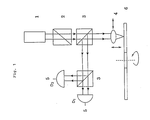
- the signal unbalance, D was 0.05.
- the signal unbalance, D is a value obtained by substituting signal values D1 and D2 shown in Fig. 1 for
- the polycarbonate copolymer as prepared above were each provided with a recording film, and subjected to evaluation of optical recording characteristics. Specifically, the polycarbonate copolymers as described in Examples 1 to 17 were molded into disk-shaped substrates each having a diameter of 130 mm and a thickness of 1.2 mm with an injection press (Dynamelter; a product of Meiki, Co. Ltd.). A 1,000 ⁇ -thick optical magnetic film was formed on the substrates thus obtained with an alloy target composed of Tb 23.5 Fe 64.2 Co 12.3 (atomic %) in a sputtering device (RF sputtering device; manuf. by Ulvac Corporation).
- RF sputtering device RF sputtering device
Landscapes
- Chemical & Material Sciences (AREA)
- Health & Medical Sciences (AREA)
- Chemical Kinetics & Catalysis (AREA)
- Medicinal Chemistry (AREA)
- Polymers & Plastics (AREA)
- Organic Chemistry (AREA)
- Optical Record Carriers And Manufacture Thereof (AREA)
- Polyesters Or Polycarbonates (AREA)
Applications Claiming Priority (4)
| Application Number | Priority Date | Filing Date | Title |
|---|---|---|---|
| JP251431/88 | 1988-10-05 | ||
| JP63251431A JPH0299521A (ja) | 1988-10-05 | 1988-10-05 | 芳香族ポリカーボネート共重合体 |
| JP29134/89 | 1989-02-08 | ||
| JP1029134A JPH02208840A (ja) | 1989-02-08 | 1989-02-08 | 光学式ディスク基板用芳香族ポリカーボネート共重合体 |
Publications (2)
| Publication Number | Publication Date |
|---|---|
| EP0362792A2 true EP0362792A2 (fr) | 1990-04-11 |
| EP0362792A3 EP0362792A3 (fr) | 1991-04-03 |
Family
ID=26367286
Family Applications (1)
| Application Number | Title | Priority Date | Filing Date |
|---|---|---|---|
| EP19890118326 Withdrawn EP0362792A3 (fr) | 1988-10-05 | 1989-10-03 | Copolymère de polycarbonate aromatique et disque optique ayant un tel substrat |
Country Status (1)
| Country | Link |
|---|---|
| EP (1) | EP0362792A3 (fr) |
Cited By (5)
| Publication number | Priority date | Publication date | Assignee | Title |
|---|---|---|---|---|
| EP0691361A3 (fr) * | 1994-07-08 | 1997-12-03 | Teijin Chemicals, Ltd. | Substrat de disque optique, disque optique et résine de polycarbonate aromatique |
| WO1999006465A1 (fr) * | 1997-08-02 | 1999-02-11 | Bayer Aktiengesellschaft | Copolycarbonates a base d'indanbisphenols |
| WO1999006464A1 (fr) * | 1997-08-02 | 1999-02-11 | Bayer Aktiengesellschaft | Copolycarbonates a base d'indanbisphenols |
| WO2001005869A1 (fr) * | 1999-07-19 | 2001-01-25 | Bayer Aktiengesellschaft | Esters oligomeres d'acide bischlorocarbonique obtenus a partir de bisphenols cycloaliphatiques selectionnes et d'autres bisphenols |
| EP1028420A3 (fr) * | 1999-02-04 | 2003-06-11 | Sony Corporation | Milieu d'enregistrement magnéto-optique |
Family Cites Families (3)
| Publication number | Priority date | Publication date | Assignee | Title |
|---|---|---|---|---|
| EP0262557B1 (fr) * | 1986-09-29 | 1992-05-27 | Daicel Chemical Industries, Ltd. | Polycarbonate et disque optique fabriqué à partir de celui-ci |
| US4831110A (en) * | 1986-12-19 | 1989-05-16 | Daicel Chemical Industries, Ltd. | Co-polycarbonate copolymer from 2,2-bis(4-hydroxy-3-tertiary butyl phenyl)propane and optical disk |
| US4880896A (en) * | 1987-05-30 | 1989-11-14 | Idemitsu Petrochemical Co., Ltd. | Polycarbonate for disc substrate having low bisphenol content |
-
1989
- 1989-10-03 EP EP19890118326 patent/EP0362792A3/fr not_active Withdrawn
Cited By (7)
| Publication number | Priority date | Publication date | Assignee | Title |
|---|---|---|---|---|
| EP0691361A3 (fr) * | 1994-07-08 | 1997-12-03 | Teijin Chemicals, Ltd. | Substrat de disque optique, disque optique et résine de polycarbonate aromatique |
| EP0931804A3 (fr) * | 1994-07-08 | 1999-10-13 | Teijin Chemicals, Ltd. | Substrat de disque optique, disque optique et résine de polycarbonate |
| WO1999006465A1 (fr) * | 1997-08-02 | 1999-02-11 | Bayer Aktiengesellschaft | Copolycarbonates a base d'indanbisphenols |
| WO1999006464A1 (fr) * | 1997-08-02 | 1999-02-11 | Bayer Aktiengesellschaft | Copolycarbonates a base d'indanbisphenols |
| EP1028420A3 (fr) * | 1999-02-04 | 2003-06-11 | Sony Corporation | Milieu d'enregistrement magnéto-optique |
| WO2001005869A1 (fr) * | 1999-07-19 | 2001-01-25 | Bayer Aktiengesellschaft | Esters oligomeres d'acide bischlorocarbonique obtenus a partir de bisphenols cycloaliphatiques selectionnes et d'autres bisphenols |
| US6590058B1 (en) | 1999-07-19 | 2003-07-08 | Bayer Aktiengesellschaft | Oligomeric bischlorocarbonic acid esters obtained from selected cycloaliphatic bisphenols and other bisphenols |
Also Published As
| Publication number | Publication date |
|---|---|
| EP0362792A3 (fr) | 1991-04-03 |
Similar Documents
| Publication | Publication Date | Title |
|---|---|---|
| US4831110A (en) | Co-polycarbonate copolymer from 2,2-bis(4-hydroxy-3-tertiary butyl phenyl)propane and optical disk | |
| JP2552121B2 (ja) | 光学式デイスク | |
| US4978578A (en) | Optical disk of polycarbonate | |
| EP0262557B1 (fr) | Polycarbonate et disque optique fabriqué à partir de celui-ci | |
| JPH0299521A (ja) | 芳香族ポリカーボネート共重合体 | |
| US5173347A (en) | Polycarbonate and optical disk therefrom | |
| JPS6389529A (ja) | 光学式デイスク | |
| JPH02128336A (ja) | 光学式ディクス基板用芳香族ポリカーボネート共重合体 | |
| JPS6389540A (ja) | 光学式デイスク | |
| JP2552120B2 (ja) | 光学式デイスク | |
| JPS63207820A (ja) | 芳香族ポリカ−ボネ−ト三元共重合体 | |
| JPH02208840A (ja) | 光学式ディスク基板用芳香族ポリカーボネート共重合体 | |
| JPS63207822A (ja) | 芳香族ポリカ−ボネ−ト三元共重合体 | |
| JPS63199729A (ja) | 芳香族ポリカ−ボネ−ト三元共重合体 | |
| JPH01178519A (ja) | 光学材料用樹脂 | |
| JPS6389534A (ja) | 光学式デイスク | |
| JPS6389532A (ja) | 光学式デイスク | |
| JPS6389538A (ja) | 光学式デイスク | |
| JPS6383128A (ja) | ポリカ−ボネ−ト重合体 | |
| JPH01178518A (ja) | 光学材料用樹脂 | |
| JPS6389541A (ja) | 光学式デイスク | |
| JPS63178130A (ja) | ポリカ−ボネ−ト共重合体 | |
| JPS63193921A (ja) | 芳香族ポリカ−ボネ−ト三元共重合体 | |
| JPS63199733A (ja) | 芳香族ポリカ−ボネ−ト三元共重合体 | |
| JPS63277232A (ja) | 芳香族ポリカ−ボネ−ト三元共重合体 |
Legal Events
| Date | Code | Title | Description |
|---|---|---|---|
| PUAI | Public reference made under article 153(3) epc to a published international application that has entered the european phase |
Free format text: ORIGINAL CODE: 0009012 |
|
| AK | Designated contracting states |
Kind code of ref document: A2 Designated state(s): DE GB NL |
|
| PUAL | Search report despatched |
Free format text: ORIGINAL CODE: 0009013 |
|
| AK | Designated contracting states |
Kind code of ref document: A3 Designated state(s): DE GB NL |
|
| 17P | Request for examination filed |
Effective date: 19910423 |
|
| 17Q | First examination report despatched |
Effective date: 19930415 |
|
| STAA | Information on the status of an ep patent application or granted ep patent |
Free format text: STATUS: THE APPLICATION IS DEEMED TO BE WITHDRAWN |
|
| 18D | Application deemed to be withdrawn |
Effective date: 19960823 |