EP0368063B1 - Verfahren zur Kernchlorierung von aromatischen Kohlenwasserstoffen - Google Patents
Verfahren zur Kernchlorierung von aromatischen Kohlenwasserstoffen Download PDFInfo
- Publication number
- EP0368063B1 EP0368063B1 EP89119556A EP89119556A EP0368063B1 EP 0368063 B1 EP0368063 B1 EP 0368063B1 EP 89119556 A EP89119556 A EP 89119556A EP 89119556 A EP89119556 A EP 89119556A EP 0368063 B1 EP0368063 B1 EP 0368063B1
- Authority
- EP
- European Patent Office
- Prior art keywords
- dihydro
- alkyl
- weight
- substituted
- benzothiazepine
- Prior art date
- Legal status (The legal status is an assumption and is not a legal conclusion. Google has not performed a legal analysis and makes no representation as to the accuracy of the status listed.)
- Expired - Lifetime
Links
- 238000000034 method Methods 0.000 title claims description 82
- 238000005660 chlorination reaction Methods 0.000 title claims description 28
- 150000004945 aromatic hydrocarbons Chemical class 0.000 title claims description 12
- 239000003426 co-catalyst Substances 0.000 claims description 78
- -1 nitro, carboxyl Chemical group 0.000 claims description 65
- 229910052739 hydrogen Inorganic materials 0.000 claims description 42
- 239000001257 hydrogen Substances 0.000 claims description 42
- ZAMOUSCENKQFHK-UHFFFAOYSA-N Chlorine atom Chemical group [Cl] ZAMOUSCENKQFHK-UHFFFAOYSA-N 0.000 claims description 38
- 229910052801 chlorine Chemical group 0.000 claims description 38
- 239000000460 chlorine Chemical group 0.000 claims description 38
- 125000004435 hydrogen atom Chemical class [H]* 0.000 claims description 34
- 125000001997 phenyl group Chemical group [H]C1=C([H])C([H])=C(*)C([H])=C1[H] 0.000 claims description 33
- 125000004432 carbon atom Chemical group C* 0.000 claims description 32
- 239000003054 catalyst Substances 0.000 claims description 26
- 238000005727 Friedel-Crafts reaction Methods 0.000 claims description 22
- 229910052736 halogen Inorganic materials 0.000 claims description 19
- 150000002367 halogens Chemical class 0.000 claims description 19
- 125000003118 aryl group Chemical group 0.000 claims description 18
- 125000001424 substituent group Chemical group 0.000 claims description 15
- 125000000217 alkyl group Chemical group 0.000 claims description 14
- NINIDFKCEFEMDL-UHFFFAOYSA-N Sulfur Chemical compound [S] NINIDFKCEFEMDL-UHFFFAOYSA-N 0.000 claims description 13
- 125000004178 (C1-C4) alkyl group Chemical group 0.000 claims description 12
- 125000000229 (C1-C4)alkoxy group Chemical group 0.000 claims description 12
- IJGRMHOSHXDMSA-UHFFFAOYSA-N Atomic nitrogen Chemical compound N#N IJGRMHOSHXDMSA-UHFFFAOYSA-N 0.000 claims description 12
- RGSFGYAAUTVSQA-UHFFFAOYSA-N Cyclopentane Chemical compound C1CCCC1 RGSFGYAAUTVSQA-UHFFFAOYSA-N 0.000 claims description 12
- 125000002252 acyl group Chemical group 0.000 claims description 12
- 125000003545 alkoxy group Chemical group 0.000 claims description 12
- QVGXLLKOCUKJST-UHFFFAOYSA-N atomic oxygen Chemical compound [O] QVGXLLKOCUKJST-UHFFFAOYSA-N 0.000 claims description 12
- 229910052757 nitrogen Inorganic materials 0.000 claims description 12
- 229910052760 oxygen Inorganic materials 0.000 claims description 12
- 239000001301 oxygen Substances 0.000 claims description 12
- 229920006395 saturated elastomer Polymers 0.000 claims description 12
- 125000004122 cyclic group Chemical group 0.000 claims description 11
- 229910052731 fluorine Inorganic materials 0.000 claims description 11
- 239000011737 fluorine Substances 0.000 claims description 11
- 125000000623 heterocyclic group Chemical group 0.000 claims description 11
- 125000004209 (C1-C8) alkyl group Chemical group 0.000 claims description 10
- PXGOKWXKJXAPGV-UHFFFAOYSA-N Fluorine Chemical compound FF PXGOKWXKJXAPGV-UHFFFAOYSA-N 0.000 claims description 10
- 125000004414 alkyl thio group Chemical group 0.000 claims description 10
- 150000002466 imines Chemical class 0.000 claims description 10
- 150000002829 nitrogen Chemical class 0.000 claims description 10
- 125000004423 acyloxy group Chemical group 0.000 claims description 9
- 125000004104 aryloxy group Chemical group 0.000 claims description 9
- UFHFLCQGNIYNRP-UHFFFAOYSA-N Hydrogen Chemical compound [H][H] UFHFLCQGNIYNRP-UHFFFAOYSA-N 0.000 claims description 8
- 125000005110 aryl thio group Chemical group 0.000 claims description 8
- 125000004093 cyano group Chemical group *C#N 0.000 claims description 8
- 238000006467 substitution reaction Methods 0.000 claims description 8
- 125000000449 nitro group Chemical group [O-][N+](*)=O 0.000 claims description 7
- KYVHGCKMVJDCNV-UHFFFAOYSA-N 1,4-benzothiazepine Chemical class S1C=CN=CC2=CC=CC=C12 KYVHGCKMVJDCNV-UHFFFAOYSA-N 0.000 claims description 6
- 125000004453 alkoxycarbonyl group Chemical group 0.000 claims description 6
- 125000001797 benzyl group Chemical group [H]C1=C([H])C([H])=C(C([H])=C1[H])C([H])([H])* 0.000 claims description 6
- XDTMQSROBMDMFD-UHFFFAOYSA-N Cyclohexane Chemical compound C1CCCCC1 XDTMQSROBMDMFD-UHFFFAOYSA-N 0.000 claims description 5
- 125000002947 alkylene group Chemical group 0.000 claims description 5
- DMEGYFMYUHOHGS-UHFFFAOYSA-N heptamethylene Natural products C1CCCCCC1 DMEGYFMYUHOHGS-UHFFFAOYSA-N 0.000 claims description 5
- 239000007791 liquid phase Substances 0.000 claims description 5
- 125000003441 thioacyl group Chemical group 0.000 claims description 5
- 125000003178 carboxy group Chemical group [H]OC(*)=O 0.000 claims description 4
- 125000000717 hydrazino group Chemical group [H]N([*])N([H])[H] 0.000 claims description 4
- 125000000951 phenoxy group Chemical group [H]C1=C([H])C([H])=C(O*)C([H])=C1[H] 0.000 claims description 4
- 125000005276 alkyl hydrazino group Chemical group 0.000 claims description 3
- 125000002887 hydroxy group Chemical group [H]O* 0.000 claims description 3
- 125000002924 primary amino group Chemical group [H]N([H])* 0.000 claims description 3
- 125000004400 (C1-C12) alkyl group Chemical group 0.000 claims description 2
- 125000006552 (C3-C8) cycloalkyl group Chemical group 0.000 claims description 2
- KXDHJXZQYSOELW-UHFFFAOYSA-M Carbamate Chemical compound NC([O-])=O KXDHJXZQYSOELW-UHFFFAOYSA-M 0.000 claims description 2
- SOWBFZRMHSNYGE-UHFFFAOYSA-N Monoamide-Oxalic acid Natural products NC(=O)C(O)=O SOWBFZRMHSNYGE-UHFFFAOYSA-N 0.000 claims description 2
- 125000004442 acylamino group Chemical group 0.000 claims description 2
- 125000005035 acylthio group Chemical group 0.000 claims description 2
- 125000003282 alkyl amino group Chemical group 0.000 claims description 2
- 125000001769 aryl amino group Chemical group 0.000 claims description 2
- 125000004817 pentamethylene group Chemical group [H]C([H])([*:2])C([H])([H])C([H])([H])C([H])([H])C([H])([H])[*:1] 0.000 claims description 2
- 239000005864 Sulphur Substances 0.000 claims 4
- 125000002029 aromatic hydrocarbon group Chemical group 0.000 claims 1
- YXFVVABEGXRONW-UHFFFAOYSA-N Toluene Chemical compound CC1=CC=CC=C1 YXFVVABEGXRONW-UHFFFAOYSA-N 0.000 description 204
- RBTARNINKXHZNM-UHFFFAOYSA-K iron trichloride Chemical compound Cl[Fe](Cl)Cl RBTARNINKXHZNM-UHFFFAOYSA-K 0.000 description 18
- 229910021578 Iron(III) chloride Inorganic materials 0.000 description 15
- 238000006243 chemical reaction Methods 0.000 description 14
- 150000003254 radicals Chemical class 0.000 description 14
- 239000000203 mixture Substances 0.000 description 13
- NPDACUSDTOMAMK-UHFFFAOYSA-N 4-Chlorotoluene Chemical compound CC1=CC=C(Cl)C=C1 NPDACUSDTOMAMK-UHFFFAOYSA-N 0.000 description 12
- YNQLUTRBYVCPMQ-UHFFFAOYSA-N Ethylbenzene Chemical compound CCC1=CC=CC=C1 YNQLUTRBYVCPMQ-UHFFFAOYSA-N 0.000 description 10
- RWGFKTVRMDUZSP-UHFFFAOYSA-N cumene Chemical compound CC(C)C1=CC=CC=C1 RWGFKTVRMDUZSP-UHFFFAOYSA-N 0.000 description 10
- 239000011541 reaction mixture Substances 0.000 description 10
- YTZKOQUCBOVLHL-UHFFFAOYSA-N tert-butylbenzene Chemical compound CC(C)(C)C1=CC=CC=C1 YTZKOQUCBOVLHL-UHFFFAOYSA-N 0.000 description 10
- 229910052717 sulfur Inorganic materials 0.000 description 9
- 239000011593 sulfur Substances 0.000 description 9
- XEEYBQQBJWHFJM-UHFFFAOYSA-N Iron Chemical compound [Fe] XEEYBQQBJWHFJM-UHFFFAOYSA-N 0.000 description 8
- 0 *C1C=CCCC1 Chemical compound *C1C=CCCC1 0.000 description 7
- 150000001875 compounds Chemical class 0.000 description 7
- 238000003756 stirring Methods 0.000 description 6
- VSCWAEJMTAWNJL-UHFFFAOYSA-K aluminium trichloride Chemical compound Cl[Al](Cl)Cl VSCWAEJMTAWNJL-UHFFFAOYSA-K 0.000 description 5
- FAPDDOBMIUGHIN-UHFFFAOYSA-K antimony trichloride Chemical class Cl[Sb](Cl)Cl FAPDDOBMIUGHIN-UHFFFAOYSA-K 0.000 description 5
- 239000012320 chlorinating reagent Substances 0.000 description 5
- 230000000694 effects Effects 0.000 description 5
- 229910052742 iron Inorganic materials 0.000 description 5
- XLYOFNOQVPJJNP-UHFFFAOYSA-N water Substances O XLYOFNOQVPJJNP-UHFFFAOYSA-N 0.000 description 5
- IBSQPLPBRSHTTG-UHFFFAOYSA-N 1-chloro-2-methylbenzene Chemical compound CC1=CC=CC=C1Cl IBSQPLPBRSHTTG-UHFFFAOYSA-N 0.000 description 4
- WKBOTKDWSSQWDR-UHFFFAOYSA-N Bromine atom Chemical compound [Br] WKBOTKDWSSQWDR-UHFFFAOYSA-N 0.000 description 4
- KZBUYRJDOAKODT-UHFFFAOYSA-N Chlorine Chemical compound ClCl KZBUYRJDOAKODT-UHFFFAOYSA-N 0.000 description 4
- 125000005605 benzo group Chemical group 0.000 description 4
- GDTBXPJZTBHREO-UHFFFAOYSA-N bromine Substances BrBr GDTBXPJZTBHREO-UHFFFAOYSA-N 0.000 description 4
- 229910052794 bromium Inorganic materials 0.000 description 4
- 230000000052 comparative effect Effects 0.000 description 4
- HHNHBFLGXIUXCM-GFCCVEGCSA-N cyclohexylbenzene Chemical compound [CH]1CCCC[C@@H]1C1=CC=CC=C1 HHNHBFLGXIUXCM-GFCCVEGCSA-N 0.000 description 4
- ZUOUZKKEUPVFJK-UHFFFAOYSA-N diphenyl Chemical group C1=CC=CC=C1C1=CC=CC=C1 ZUOUZKKEUPVFJK-UHFFFAOYSA-N 0.000 description 4
- 238000004821 distillation Methods 0.000 description 4
- 239000000126 substance Substances 0.000 description 4
- 238000010626 work up procedure Methods 0.000 description 4
- BISSWBODQCNNLA-UHFFFAOYSA-N 1-(2,3-dihydro-1,5-benzothiazepin-4-yl)-2-phenylhydrazine Chemical compound N=1C2=CC=CC=C2SCCC=1NNC1=CC=CC=C1 BISSWBODQCNNLA-UHFFFAOYSA-N 0.000 description 3
- WLDZKOSNHXPBNR-UHFFFAOYSA-N 2,3-dimethyl-4-methylsulfanyl-2,3-dihydro-1,5-benzothiazepine Chemical compound S1C(C)C(C)C(SC)=NC2=CC=CC=C21 WLDZKOSNHXPBNR-UHFFFAOYSA-N 0.000 description 3
- WHWHKTFLKAGDFE-UHFFFAOYSA-N 2-methyl-4-methylsulfanyl-2,3-dihydro-1,5-benzothiazepine Chemical compound S1C(C)CC(SC)=NC2=CC=CC=C21 WHWHKTFLKAGDFE-UHFFFAOYSA-N 0.000 description 3
- BJORMSVRRSEUER-UHFFFAOYSA-N 4-methylsulfanyl-2,3-dihydro-1,5-benzothiazepine Chemical compound S1CCC(SC)=NC2=CC=CC=C21 BJORMSVRRSEUER-UHFFFAOYSA-N 0.000 description 3
- ZEGXBYLLEVNBOI-UHFFFAOYSA-N 4-methylsulfanyl-2-propyl-2,3-dihydro-1,5-benzothiazepine Chemical compound S1C(CCC)CC(SC)=NC2=CC=CC=C21 ZEGXBYLLEVNBOI-UHFFFAOYSA-N 0.000 description 3
- CPGYJHMUCSITKG-UHFFFAOYSA-N 4-methylsulfanyl-7-(trifluoromethyl)-2,3-dihydro-1,5-benzothiazepine Chemical compound S1CCC(SC)=NC2=CC(C(F)(F)F)=CC=C21 CPGYJHMUCSITKG-UHFFFAOYSA-N 0.000 description 3
- WNLLOASQBDEOCO-UHFFFAOYSA-N 6,8-dichloro-4-methylsulfanyl-2,3-dihydro-1,5-benzothiazepine Chemical compound S1CCC(SC)=NC2=C(Cl)C=C(Cl)C=C21 WNLLOASQBDEOCO-UHFFFAOYSA-N 0.000 description 3
- DOIMMKMDLJYBNK-UHFFFAOYSA-N 7,8-dimethyl-4-methylsulfanyl-2,3-dihydro-1,5-benzothiazepine Chemical compound S1CCC(SC)=NC2=CC(C)=C(C)C=C21 DOIMMKMDLJYBNK-UHFFFAOYSA-N 0.000 description 3
- LEFJPJIDMNWDDL-UHFFFAOYSA-N 8-methoxy-4-methylsulfanyl-2,3-dihydro-1,5-benzothiazepine Chemical compound N1=C(SC)CCSC2=CC(OC)=CC=C21 LEFJPJIDMNWDDL-UHFFFAOYSA-N 0.000 description 3
- QTBSBXVTEAMEQO-UHFFFAOYSA-N Acetic acid Chemical compound CC(O)=O QTBSBXVTEAMEQO-UHFFFAOYSA-N 0.000 description 3
- YMWUJEATGCHHMB-UHFFFAOYSA-N Dichloromethane Chemical compound ClCCl YMWUJEATGCHHMB-UHFFFAOYSA-N 0.000 description 3
- 150000004996 alkyl benzenes Chemical class 0.000 description 3
- 150000001462 antimony Chemical class 0.000 description 3
- 230000015572 biosynthetic process Effects 0.000 description 3
- 238000009835 boiling Methods 0.000 description 3
- 125000001495 ethyl group Chemical group [H]C([H])([H])C([H])([H])* 0.000 description 3
- 230000002349 favourable effect Effects 0.000 description 3
- 125000002496 methyl group Chemical group [H]C([H])([H])* 0.000 description 3
- 125000001624 naphthyl group Chemical group 0.000 description 3
- GJSGGHOYGKMUPT-UHFFFAOYSA-N phenoxathiine Chemical class C1=CC=C2OC3=CC=CC=C3SC2=C1 GJSGGHOYGKMUPT-UHFFFAOYSA-N 0.000 description 3
- 239000000243 solution Substances 0.000 description 3
- 239000002904 solvent Substances 0.000 description 3
- 125000004434 sulfur atom Chemical group 0.000 description 3
- 150000005029 thianthrenes Chemical class 0.000 description 3
- NYERMPLPURRVGM-UHFFFAOYSA-N thiazepine Chemical compound S1C=CC=CC=N1 NYERMPLPURRVGM-UHFFFAOYSA-N 0.000 description 3
- OTNQSMUJXLNDSM-UHFFFAOYSA-N 1-chloro-3-cyclohexylbenzene Chemical compound ClC1=CC=CC(C2CCCCC2)=C1 OTNQSMUJXLNDSM-UHFFFAOYSA-N 0.000 description 2
- BPSJFZSPCRRJMA-UHFFFAOYSA-N 3-methylsulfanyl-2h-1,4-benzothiazine Chemical compound C1=CC=C2SCC(SC)=NC2=C1 BPSJFZSPCRRJMA-UHFFFAOYSA-N 0.000 description 2
- RHYABACHTBAAPD-UHFFFAOYSA-N 4-benzylsulfanyl-2,3-dihydro-1,5-benzothiazepine Chemical compound N=1C2=CC=CC=C2SCCC=1SCC1=CC=CC=C1 RHYABACHTBAAPD-UHFFFAOYSA-N 0.000 description 2
- QZCQPLGBEPOABI-UHFFFAOYSA-N 4-methoxy-2,3-dihydro-1,5-benzothiazepine Chemical compound S1CCC(OC)=NC2=CC=CC=C21 QZCQPLGBEPOABI-UHFFFAOYSA-N 0.000 description 2
- NVBURNDYWBNKFZ-UHFFFAOYSA-N 4-methyl-2,3-dihydro-1,5-benzothiazepine Chemical compound S1CCC(C)=NC2=CC=CC=C21 NVBURNDYWBNKFZ-UHFFFAOYSA-N 0.000 description 2
- BHSMOJDTAXVHKO-UHFFFAOYSA-N 4-methylsulfanyl-2-phenyl-2,3-dihydro-1,5-benzothiazepine Chemical compound C1C(SC)=NC2=CC=CC=C2SC1C1=CC=CC=C1 BHSMOJDTAXVHKO-UHFFFAOYSA-N 0.000 description 2
- VGHZLEJZICVBJU-UHFFFAOYSA-N 5-methoxy-2,7,9-trimethyl-2,3-dihydro-1,4-benzothiazepine Chemical compound COC1=NCC(C)SC2=C(C)C=C(C)C=C12 VGHZLEJZICVBJU-UHFFFAOYSA-N 0.000 description 2
- NWIGGRPTQYILDY-UHFFFAOYSA-N 5-methylsulfanyl-3,4-dihydro-2h-1,6-benzothiazocine Chemical compound S1CCCC(SC)=NC2=CC=CC=C21 NWIGGRPTQYILDY-UHFFFAOYSA-N 0.000 description 2
- ATOOSSJAYMXKAG-UHFFFAOYSA-N 7,9-dimethyl-4-methylsulfanyl-2,3-dihydro-1,5-benzothiazepine Chemical compound S1CCC(SC)=NC2=CC(C)=CC(C)=C21 ATOOSSJAYMXKAG-UHFFFAOYSA-N 0.000 description 2
- MAHREFNIVXTNIX-UHFFFAOYSA-N 7-methoxy-4-methylsulfanyl-2,3-dihydro-1,5-benzothiazepine Chemical compound S1CCC(SC)=NC2=CC(OC)=CC=C21 MAHREFNIVXTNIX-UHFFFAOYSA-N 0.000 description 2
- HEDRZPFGACZZDS-UHFFFAOYSA-N Chloroform Chemical compound ClC(Cl)Cl HEDRZPFGACZZDS-UHFFFAOYSA-N 0.000 description 2
- MBMLMWLHJBBADN-UHFFFAOYSA-N Ferrous sulfide Chemical class [Fe]=S MBMLMWLHJBBADN-UHFFFAOYSA-N 0.000 description 2
- 239000002841 Lewis acid Substances 0.000 description 2
- 150000001555 benzenes Chemical class 0.000 description 2
- 150000005524 benzylchlorides Chemical class 0.000 description 2
- 239000004305 biphenyl Chemical group 0.000 description 2
- 235000010290 biphenyl Nutrition 0.000 description 2
- WTEOIRVLGSZEPR-UHFFFAOYSA-N boron trifluoride Chemical compound FB(F)F WTEOIRVLGSZEPR-UHFFFAOYSA-N 0.000 description 2
- 125000000068 chlorophenyl group Chemical group 0.000 description 2
- 238000002474 experimental method Methods 0.000 description 2
- 125000004997 halocarbonyl group Chemical group 0.000 description 2
- UQSXHKLRYXJYBZ-UHFFFAOYSA-N iron oxide Inorganic materials [Fe]=O UQSXHKLRYXJYBZ-UHFFFAOYSA-N 0.000 description 2
- 235000013980 iron oxide Nutrition 0.000 description 2
- VBMVTYDPPZVILR-UHFFFAOYSA-N iron(2+);oxygen(2-) Chemical class [O-2].[Fe+2] VBMVTYDPPZVILR-UHFFFAOYSA-N 0.000 description 2
- 150000002561 ketenes Chemical class 0.000 description 2
- 150000007517 lewis acids Chemical class 0.000 description 2
- 239000007788 liquid Substances 0.000 description 2
- 229910052750 molybdenum Inorganic materials 0.000 description 2
- 239000011733 molybdenum Substances 0.000 description 2
- 150000005030 phenoxathiins Chemical class 0.000 description 2
- ODLMAHJVESYWTB-UHFFFAOYSA-N propylbenzene Chemical compound CCCC1=CC=CC=C1 ODLMAHJVESYWTB-UHFFFAOYSA-N 0.000 description 2
- 238000006798 ring closing metathesis reaction Methods 0.000 description 2
- DTIOYDZKNQRMQC-UHFFFAOYSA-N s-(2,3-dihydro-1,5-benzothiazepin-4-yl) ethanethioate Chemical compound S1CCC(SC(=O)C)=NC2=CC=CC=C21 DTIOYDZKNQRMQC-UHFFFAOYSA-N 0.000 description 2
- 150000003839 salts Chemical class 0.000 description 2
- 239000007858 starting material Substances 0.000 description 2
- 229910052714 tellurium Inorganic materials 0.000 description 2
- VZGDMQKNWNREIO-UHFFFAOYSA-N tetrachloromethane Chemical compound ClC(Cl)(Cl)Cl VZGDMQKNWNREIO-UHFFFAOYSA-N 0.000 description 2
- 150000003568 thioethers Chemical class 0.000 description 2
- NBOMNTLFRHMDEZ-UHFFFAOYSA-N thiosalicylic acid Chemical class OC(=O)C1=CC=CC=C1S NBOMNTLFRHMDEZ-UHFFFAOYSA-N 0.000 description 2
- 125000002023 trifluoromethyl group Chemical group FC(F)(F)* 0.000 description 2
- 239000010457 zeolite Substances 0.000 description 2
- JIAARYAFYJHUJI-UHFFFAOYSA-L zinc dichloride Chemical compound [Cl-].[Cl-].[Zn+2] JIAARYAFYJHUJI-UHFFFAOYSA-L 0.000 description 2
- RVDSIOVHAREFSE-UHFFFAOYSA-N (4-methylsulfanyl-2,3-dihydro-1,5-benzothiazepin-3-yl) acetate Chemical compound S1CC(OC(C)=O)C(SC)=NC2=CC=CC=C21 RVDSIOVHAREFSE-UHFFFAOYSA-N 0.000 description 1
- QAEHKZIYBJMPQB-UHFFFAOYSA-N (7,9-dimethyl-2,3-dihydro-1,5-benzothiazepin-4-yl) acetate Chemical compound S1CCC(OC(=O)C)=NC2=CC(C)=CC(C)=C21 QAEHKZIYBJMPQB-UHFFFAOYSA-N 0.000 description 1
- QPPOMEOQNLTFRU-UHFFFAOYSA-N 1,4-thiazepine Chemical compound S1C=CC=NC=C1 QPPOMEOQNLTFRU-UHFFFAOYSA-N 0.000 description 1
- JRIRANHDLVCXMF-UHFFFAOYSA-N 1-(2,3-dimethyl-2,3-dihydro-1,5-benzothiazepin-4-yl)ethanone Chemical compound N1=C(C(C)=O)C(C)C(C)SC2=CC=CC=C21 JRIRANHDLVCXMF-UHFFFAOYSA-N 0.000 description 1
- UREQFTSPNGUYSJ-UHFFFAOYSA-N 1-(3,5-dihydro-2h-1,4-benzothiazepin-4-yl)ethanone Chemical compound C1N(C(=O)C)CCSC2=CC=CC=C21 UREQFTSPNGUYSJ-UHFFFAOYSA-N 0.000 description 1
- OSOUNOBYRMOXQQ-UHFFFAOYSA-N 1-chloro-3-methylbenzene Chemical compound CC1=CC=CC(Cl)=C1 OSOUNOBYRMOXQQ-UHFFFAOYSA-N 0.000 description 1
- QYUFVDBIIXSGIM-UHFFFAOYSA-N 1-oxo-3,4-dihydro-2h-1$l^{4},4-benzothiazepin-5-one Chemical compound O=C1NCCS(=O)C2=CC=CC=C12 QYUFVDBIIXSGIM-UHFFFAOYSA-N 0.000 description 1
- UTQNKKSJPHTPBS-UHFFFAOYSA-N 2,2,2-trichloroethanone Chemical group ClC(Cl)(Cl)[C]=O UTQNKKSJPHTPBS-UHFFFAOYSA-N 0.000 description 1
- JMTVJFGDWULNMH-UHFFFAOYSA-N 2,2,4-trimethyl-3h-1,5-benzothiazepine Chemical compound S1C(C)(C)CC(C)=NC2=CC=CC=C21 JMTVJFGDWULNMH-UHFFFAOYSA-N 0.000 description 1
- SUBDEKBXSIKCSA-UHFFFAOYSA-N 2,3,4,5-tetrahydro-1,4-benzothiazepine Chemical compound C1NCCSC2=CC=CC=C21 SUBDEKBXSIKCSA-UHFFFAOYSA-N 0.000 description 1
- LNTZNPLXFOSYIK-UHFFFAOYSA-N 2,3-dichloro-4-methylsulfanyl-1,5-benzothiazepine Chemical compound S1C(Cl)=C(Cl)C(SC)=NC2=CC=CC=C21 LNTZNPLXFOSYIK-UHFFFAOYSA-N 0.000 description 1
- CRMDZWQSNGFFDT-UHFFFAOYSA-N 2,3-dihydro-1,5-benzothiazepin-4-yl propanoate Chemical compound S1CCC(OC(=O)CC)=NC2=CC=CC=C21 CRMDZWQSNGFFDT-UHFFFAOYSA-N 0.000 description 1
- LFWSKTFESQXHEU-UHFFFAOYSA-N 2,7-dichlorothianthrene Chemical compound ClC1=CC=C2SC3=CC(Cl)=CC=C3SC2=C1 LFWSKTFESQXHEU-UHFFFAOYSA-N 0.000 description 1
- VRVRGVPWCUEOGV-UHFFFAOYSA-N 2-aminothiophenol Chemical class NC1=CC=CC=C1S VRVRGVPWCUEOGV-UHFFFAOYSA-N 0.000 description 1
- KUDJXPVPFIVBLZ-UHFFFAOYSA-N 2-chloro-5-methylsulfanyl-4h-1,6-benzothiazocine Chemical compound S1C(Cl)=CCC(SC)=NC2=CC=CC=C21 KUDJXPVPFIVBLZ-UHFFFAOYSA-N 0.000 description 1
- BZVOZIAILAVLBD-UHFFFAOYSA-N 2-methyl-3-methylsulfanyl-2h-1,4-benzothiazine Chemical compound C1=CC=C2SC(C)C(SC)=NC2=C1 BZVOZIAILAVLBD-UHFFFAOYSA-N 0.000 description 1
- IEVICFLOALSRTI-UHFFFAOYSA-N 2-methyl-4-methylsulfanyl-1,5-benzothiazepine Chemical compound S1C(C)=CC(SC)=NC2=CC=CC=C21 IEVICFLOALSRTI-UHFFFAOYSA-N 0.000 description 1
- HUAKMWIXANMLSQ-UHFFFAOYSA-N 2-methyl-5-methylsulfanyl-3,4-dihydro-2h-1,6-benzothiazocine Chemical compound S1C(C)CCC(SC)=NC2=CC=CC=C21 HUAKMWIXANMLSQ-UHFFFAOYSA-N 0.000 description 1
- CLZHWRHFCUQXCE-UHFFFAOYSA-N 2-phenylsulfanyl-3,4-dihydro-2h-1,4-benzothiazepin-5-one Chemical compound S1C2=CC=CC=C2C(=O)NCC1SC1=CC=CC=C1 CLZHWRHFCUQXCE-UHFFFAOYSA-N 0.000 description 1
- UEJSAMGYHYZIMB-UHFFFAOYSA-N 2-propyl-4-propylsulfanyl-2,3-dihydro-1,5-benzothiazepine Chemical compound S1C(CCC)CC(SCCC)=NC2=CC=CC=C21 UEJSAMGYHYZIMB-UHFFFAOYSA-N 0.000 description 1
- AGIJRRREJXSQJR-UHFFFAOYSA-N 2h-thiazine Chemical compound N1SC=CC=C1 AGIJRRREJXSQJR-UHFFFAOYSA-N 0.000 description 1
- FSBGEQZKWJSKIW-UHFFFAOYSA-N 3,4-dihydro-2h-1,4-benzothiazepin-5-one Chemical compound O=C1NCCSC2=CC=CC=C12 FSBGEQZKWJSKIW-UHFFFAOYSA-N 0.000 description 1
- JLZLBGYZJILXCA-UHFFFAOYSA-N 3,4-dihydro-2h-1,4-benzothiazepine-5-thione Chemical compound S=C1NCCSC2=CC=CC=C12 JLZLBGYZJILXCA-UHFFFAOYSA-N 0.000 description 1
- GVQQNXQDQFKRSF-UHFFFAOYSA-N 3,5-dihydro-2h-1,4-benzothiazepine-4-carbonyl chloride Chemical compound C1N(C(=O)Cl)CCSC2=CC=CC=C21 GVQQNXQDQFKRSF-UHFFFAOYSA-N 0.000 description 1
- YKFOWUAMDXJVLG-UHFFFAOYSA-N 3,6-dimethoxy-2h-1,4-benzothiazine Chemical compound COC1=CC=C2SCC(OC)=NC2=C1 YKFOWUAMDXJVLG-UHFFFAOYSA-N 0.000 description 1
- HSEGOCRRMFVSQQ-UHFFFAOYSA-N 3-benzylsulfanyl-2h-1,4-benzothiazine Chemical compound N=1C2=CC=CC=C2SCC=1SCC1=CC=CC=C1 HSEGOCRRMFVSQQ-UHFFFAOYSA-N 0.000 description 1
- LEWIDUUDJBZEDV-UHFFFAOYSA-N 3-ethylsulfanyl-1,4-benzothiazin-2-one Chemical compound C1=CC=C2SC(=O)C(SCC)=NC2=C1 LEWIDUUDJBZEDV-UHFFFAOYSA-N 0.000 description 1
- KMFPPWJZUJCDMC-UHFFFAOYSA-N 3-methoxy-2h-1,4-benzothiazine Chemical compound C1=CC=C2SCC(OC)=NC2=C1 KMFPPWJZUJCDMC-UHFFFAOYSA-N 0.000 description 1
- ZISXPADVTPDSQJ-UHFFFAOYSA-N 3-methoxy-7-(trifluoromethyl)-2h-1,4-benzothiazine Chemical compound C1=C(C(F)(F)F)C=C2SCC(OC)=NC2=C1 ZISXPADVTPDSQJ-UHFFFAOYSA-N 0.000 description 1
- GIYOTOCHUFVNSR-UHFFFAOYSA-N 3-methylsulfanyl-2-phenyl-2h-1,4-benzothiazine Chemical compound CSC1=NC2=CC=CC=C2SC1C1=CC=CC=C1 GIYOTOCHUFVNSR-UHFFFAOYSA-N 0.000 description 1
- WFKPXULWCDKQEY-UHFFFAOYSA-N 3-methylsulfanyl-2h-1$l^{4},4-benzothiazine 1-oxide Chemical compound C1=CC=C2S(=O)CC(SC)=NC2=C1 WFKPXULWCDKQEY-UHFFFAOYSA-N 0.000 description 1
- YJRTWWZJGCCEAT-UHFFFAOYSA-N 3-methylsulfanyl-7-(trifluoromethyl)-2h-1,4-benzothiazine Chemical compound C1=C(C(F)(F)F)C=C2SCC(SC)=NC2=C1 YJRTWWZJGCCEAT-UHFFFAOYSA-N 0.000 description 1
- RFFITZYEEFPFOX-UHFFFAOYSA-N 4,7,8-trimethoxy-2-phenyl-2,3-dihydro-1,5-benzothiazepine Chemical compound C1C(OC)=NC=2C=C(OC)C(OC)=CC=2SC1C1=CC=CC=C1 RFFITZYEEFPFOX-UHFFFAOYSA-N 0.000 description 1
- JRQWRVZZZUEQQE-UHFFFAOYSA-N 4-acetyl-2,3-dihydro-1,4-benzothiazepin-5-one Chemical compound O=C1N(C(=O)C)CCSC2=CC=CC=C21 JRQWRVZZZUEQQE-UHFFFAOYSA-N 0.000 description 1
- VCOWGXFQDYCGJU-UHFFFAOYSA-N 4-ethyl-3,5-dihydro-2h-1,4-benzothiazepine Chemical compound C1N(CC)CCSC2=CC=CC=C21 VCOWGXFQDYCGJU-UHFFFAOYSA-N 0.000 description 1
- POQWZARDLKEMFA-UHFFFAOYSA-N 4-ethylsulfanyl-2,3-dihydro-1,5-benzothiazepine Chemical compound S1CCC(SCC)=NC2=CC=CC=C21 POQWZARDLKEMFA-UHFFFAOYSA-N 0.000 description 1
- QBUBRVITLZCCRC-UHFFFAOYSA-N 4-methoxy-1,5-benzothiazepine Chemical compound S1C=CC(OC)=NC2=CC=CC=C21 QBUBRVITLZCCRC-UHFFFAOYSA-N 0.000 description 1
- IYKPHRVNSNDVBU-UHFFFAOYSA-N 4-methoxy-7,8-dimethyl-2-phenyl-2,3-dihydro-1,5-benzothiazepine Chemical compound C1C(OC)=NC2=CC(C)=C(C)C=C2SC1C1=CC=CC=C1 IYKPHRVNSNDVBU-UHFFFAOYSA-N 0.000 description 1
- ZPNLBONQNWJABQ-UHFFFAOYSA-N 4-methoxy-7-methyl-3,5-dihydro-2h-1,4-benzothiazepine Chemical compound C1N(OC)CCSC2=CC=C(C)C=C21 ZPNLBONQNWJABQ-UHFFFAOYSA-N 0.000 description 1
- QYCKXJAJIFYRAD-UHFFFAOYSA-N 4-methyl-2,3-dihydro-1,5-benzothiazepine 2,2,4-trimethyl-3H-1,5-benzothiazepine Chemical compound CC1(SC2=C(N=C(C1)C)C=CC=C2)C.CC=2CCSC1=C(N2)C=CC=C1 QYCKXJAJIFYRAD-UHFFFAOYSA-N 0.000 description 1
- CJKTYBNRNCFTAE-UHFFFAOYSA-N 4-methylsulfanyl-1,5-benzothiazepine Chemical compound S1C=CC(SC)=NC2=CC=CC=C21 CJKTYBNRNCFTAE-UHFFFAOYSA-N 0.000 description 1
- NKEXSPIHNXGQOF-UHFFFAOYSA-N 4-methylsulfanyl-2,3-dihydro-1$l^{4},5-benzothiazepine 1-oxide Chemical compound O=S1CCC(SC)=NC2=CC=CC=C21 NKEXSPIHNXGQOF-UHFFFAOYSA-N 0.000 description 1
- YUTOVENAIYOVNB-UHFFFAOYSA-N 4-methylsulfanyl-3h-1,5-benzothiazepin-2-one Chemical compound S1C(=O)CC(SC)=NC2=CC=CC=C21 YUTOVENAIYOVNB-UHFFFAOYSA-N 0.000 description 1
- PXGNRVDQPHIIAZ-UHFFFAOYSA-N 5,7-dichloro-2,6-dimethyl-3-methylsulfanyl-2h-1,4-benzothiazine Chemical compound C1=C(Cl)C(C)=C(Cl)C2=C1SC(C)C(SC)=N2 PXGNRVDQPHIIAZ-UHFFFAOYSA-N 0.000 description 1
- HMWHGARGQBKEQQ-UHFFFAOYSA-N 5,7-dichloro-3-ethylsulfanyl-2h-1,4-benzothiazine Chemical compound C1=C(Cl)C=C2SCC(SCC)=NC2=C1Cl HMWHGARGQBKEQQ-UHFFFAOYSA-N 0.000 description 1
- AUJPWVGSKLIZPQ-UHFFFAOYSA-N 5-benzylsulfanyl-2,3-dihydro-1,4-benzothiazepine Chemical compound N=1CCSC2=CC=CC=C2C=1SCC1=CC=CC=C1 AUJPWVGSKLIZPQ-UHFFFAOYSA-N 0.000 description 1
- MNXOGYVKDROTMR-UHFFFAOYSA-N 5-ethylsulfanyl-2,3-dihydro-1,4-benzothiazepine Chemical compound CCSC1=NCCSC2=CC=CC=C12 MNXOGYVKDROTMR-UHFFFAOYSA-N 0.000 description 1
- REJAHSUHMWZHBF-UHFFFAOYSA-N 5-methoxy-2,3-dihydro-1,4-benzothiazepine Chemical compound COC1=NCCSC2=CC=CC=C12 REJAHSUHMWZHBF-UHFFFAOYSA-N 0.000 description 1
- ZSXKLMAQPKOOOP-UHFFFAOYSA-N 5-methylsulfanyl-1,6-benzothiazocin-2-one Chemical compound S1C(=O)C=CC(SC)=NC2=CC=CC=C21 ZSXKLMAQPKOOOP-UHFFFAOYSA-N 0.000 description 1
- QWMLZAXFHSCCLK-UHFFFAOYSA-N 5-methylsulfanyl-2,3-dihydro-1,4-benzothiazepine Chemical compound CSC1=NCCSC2=CC=CC=C12 QWMLZAXFHSCCLK-UHFFFAOYSA-N 0.000 description 1
- OOGXXUIDNJIZDH-UHFFFAOYSA-N 5-methylsulfanyl-2-phenyl-3,4-dihydro-2h-1,6-benzothiazocine Chemical compound C1CC(SC)=NC2=CC=CC=C2SC1C1=CC=CC=C1 OOGXXUIDNJIZDH-UHFFFAOYSA-N 0.000 description 1
- TYFAGLUWUMTADM-UHFFFAOYSA-N 6,8-dichloro-7-methyl-4-methylsulfanyl-2,3-dihydro-1,5-benzothiazepine Chemical compound S1CCC(SC)=NC2=C(Cl)C(C)=C(Cl)C=C21 TYFAGLUWUMTADM-UHFFFAOYSA-N 0.000 description 1
- QZXNOMYRTQUHIG-UHFFFAOYSA-N 6,8-dimethyl-3-methylsulfanyl-2h-1,4-benzothiazine Chemical compound CC1=CC(C)=C2SCC(SC)=NC2=C1 QZXNOMYRTQUHIG-UHFFFAOYSA-N 0.000 description 1
- BLFXFXLDWOQJRN-UHFFFAOYSA-N 6-chloro-3-methylsulfanyl-2h-1,4-benzothiazine Chemical compound ClC1=CC=C2SCC(SC)=NC2=C1 BLFXFXLDWOQJRN-UHFFFAOYSA-N 0.000 description 1
- YLDPMLITYWEBII-UHFFFAOYSA-N 6-methoxy-3-methylsulfanyl-2h-1,4-benzothiazine Chemical compound S1CC(SC)=NC2=CC(OC)=CC=C21 YLDPMLITYWEBII-UHFFFAOYSA-N 0.000 description 1
- SZZDCSXXUUOZGR-UHFFFAOYSA-N 6-methoxy-3-propylsulfanyl-2h-1,4-benzothiazine Chemical compound COC1=CC=C2SCC(SCCC)=NC2=C1 SZZDCSXXUUOZGR-UHFFFAOYSA-N 0.000 description 1
- LJDBQOGNJDIBLU-UHFFFAOYSA-N 6-methyl-3-methylsulfanyl-2h-1,4-benzothiazine Chemical compound CC1=CC=C2SCC(SC)=NC2=C1 LJDBQOGNJDIBLU-UHFFFAOYSA-N 0.000 description 1
- PYBJLEJDGZLQLA-UHFFFAOYSA-N 7-chloro-3-methylsulfanyl-2h-1,4-benzothiazine Chemical compound C1=C(Cl)C=C2SCC(SC)=NC2=C1 PYBJLEJDGZLQLA-UHFFFAOYSA-N 0.000 description 1
- ZEOVLGDTPNQKFO-UHFFFAOYSA-N 7-chloro-4-methoxy-2,3-dihydro-1,5-benzothiazepine Chemical compound S1CCC(OC)=NC2=CC(Cl)=CC=C21 ZEOVLGDTPNQKFO-UHFFFAOYSA-N 0.000 description 1
- NOWKCMXCCJGMRR-UHFFFAOYSA-N Aziridine Chemical class C1CN1 NOWKCMXCCJGMRR-UHFFFAOYSA-N 0.000 description 1
- 229910015900 BF3 Inorganic materials 0.000 description 1
- CAHQGWAXKLQREW-UHFFFAOYSA-N Benzal chloride Chemical class ClC(Cl)C1=CC=CC=C1 CAHQGWAXKLQREW-UHFFFAOYSA-N 0.000 description 1
- JJBPXLIZKTXDTL-UHFFFAOYSA-N CC1SC2=C(CN(C1)C)C=CC=C2.C(C)N2CCSC1=C(C2)C=CC=C1 Chemical compound CC1SC2=C(CN(C1)C)C=CC=C2.C(C)N2CCSC1=C(C2)C=CC=C1 JJBPXLIZKTXDTL-UHFFFAOYSA-N 0.000 description 1
- SNRUBQQJIBEYMU-UHFFFAOYSA-N Dodecane Natural products CCCCCCCCCCCC SNRUBQQJIBEYMU-UHFFFAOYSA-N 0.000 description 1
- VEXZGXHMUGYJMC-UHFFFAOYSA-N Hydrochloric acid Chemical compound Cl VEXZGXHMUGYJMC-UHFFFAOYSA-N 0.000 description 1
- 229910021577 Iron(II) chloride Inorganic materials 0.000 description 1
- ZOKXTWBITQBERF-UHFFFAOYSA-N Molybdenum Chemical compound [Mo] ZOKXTWBITQBERF-UHFFFAOYSA-N 0.000 description 1
- ATJFFYVFTNAWJD-UHFFFAOYSA-N Tin Chemical compound [Sn] ATJFFYVFTNAWJD-UHFFFAOYSA-N 0.000 description 1
- 238000006887 Ullmann reaction Methods 0.000 description 1
- 229910021536 Zeolite Inorganic materials 0.000 description 1
- HCHKCACWOHOZIP-UHFFFAOYSA-N Zinc Chemical compound [Zn] HCHKCACWOHOZIP-UHFFFAOYSA-N 0.000 description 1
- 125000002777 acetyl group Chemical group [H]C([H])([H])C(*)=O 0.000 description 1
- 239000000654 additive Substances 0.000 description 1
- 229910052782 aluminium Inorganic materials 0.000 description 1
- XAGFODPZIPBFFR-UHFFFAOYSA-N aluminium Chemical compound [Al] XAGFODPZIPBFFR-UHFFFAOYSA-N 0.000 description 1
- 229910052787 antimony Inorganic materials 0.000 description 1
- WATWJIUSRGPENY-UHFFFAOYSA-N antimony atom Chemical compound [Sb] WATWJIUSRGPENY-UHFFFAOYSA-N 0.000 description 1
- 229910000410 antimony oxide Inorganic materials 0.000 description 1
- 125000006615 aromatic heterocyclic group Chemical group 0.000 description 1
- 150000005840 aryl radicals Chemical class 0.000 description 1
- 125000004429 atom Chemical group 0.000 description 1
- 125000003236 benzoyl group Chemical group [H]C1=C([H])C([H])=C(C([H])=C1[H])C(*)=O 0.000 description 1
- YZYDPPZYDIRSJT-UHFFFAOYSA-K boron phosphate Chemical compound [B+3].[O-]P([O-])([O-])=O YZYDPPZYDIRSJT-UHFFFAOYSA-K 0.000 description 1
- 229910000149 boron phosphate Inorganic materials 0.000 description 1
- 239000012267 brine Substances 0.000 description 1
- 150000001649 bromium compounds Chemical class 0.000 description 1
- 125000000484 butyl group Chemical group [H]C([*])([H])C([H])([H])C([H])([H])C([H])([H])[H] 0.000 description 1
- 229910052799 carbon Inorganic materials 0.000 description 1
- 150000004649 carbonic acid derivatives Chemical class 0.000 description 1
- 125000002915 carbonyl group Chemical group [*:2]C([*:1])=O 0.000 description 1
- 230000003197 catalytic effect Effects 0.000 description 1
- DKOQGJHPHLTOJR-WHRDSVKCSA-N cefpirome Chemical compound N([C@@H]1C(N2C(=C(C[N+]=3C=4CCCC=4C=CC=3)CS[C@@H]21)C([O-])=O)=O)C(=O)\C(=N/OC)C1=CSC(N)=N1 DKOQGJHPHLTOJR-WHRDSVKCSA-N 0.000 description 1
- 239000003153 chemical reaction reagent Substances 0.000 description 1
- 150000001804 chlorine Chemical class 0.000 description 1
- 150000001805 chlorine compounds Chemical class 0.000 description 1
- 125000002668 chloroacetyl group Chemical group ClCC(=O)* 0.000 description 1
- 125000004218 chloromethyl group Chemical group [H]C([H])(Cl)* 0.000 description 1
- 238000001816 cooling Methods 0.000 description 1
- 125000000582 cycloheptyl group Chemical group [H]C1([H])C([H])([H])C([H])([H])C([H])([H])C([H])(*)C([H])([H])C1([H])[H] 0.000 description 1
- 125000000113 cyclohexyl group Chemical group [H]C1([H])C([H])([H])C([H])([H])C([H])(*)C([H])([H])C1([H])[H] 0.000 description 1
- IGARGHRYKHJQSM-UHFFFAOYSA-N cyclohexylbenzene Chemical compound C1CCCCC1C1=CC=CC=C1 IGARGHRYKHJQSM-UHFFFAOYSA-N 0.000 description 1
- 125000000640 cyclooctyl group Chemical group [H]C1([H])C([H])([H])C([H])([H])C([H])([H])C([H])(*)C([H])([H])C([H])([H])C1([H])[H] 0.000 description 1
- 125000001511 cyclopentyl group Chemical group [H]C1([H])C([H])([H])C([H])([H])C([H])(*)C1([H])[H] 0.000 description 1
- 125000002704 decyl group Chemical group [H]C([H])([H])C([H])([H])C([H])([H])C([H])([H])C([H])([H])C([H])([H])C([H])([H])C([H])([H])C([H])([H])C([H])([H])* 0.000 description 1
- 125000004772 dichloromethyl group Chemical group [H]C(Cl)(Cl)* 0.000 description 1
- 238000010790 dilution Methods 0.000 description 1
- 239000012895 dilution Substances 0.000 description 1
- HNPSIPDUKPIQMN-UHFFFAOYSA-N dioxosilane;oxo(oxoalumanyloxy)alumane Chemical compound O=[Si]=O.O=[Al]O[Al]=O HNPSIPDUKPIQMN-UHFFFAOYSA-N 0.000 description 1
- PXJJSXABGXMUSU-UHFFFAOYSA-N disulfur dichloride Chemical compound ClSSCl PXJJSXABGXMUSU-UHFFFAOYSA-N 0.000 description 1
- 125000003438 dodecyl group Chemical group [H]C([H])([H])C([H])([H])C([H])([H])C([H])([H])C([H])([H])C([H])([H])C([H])([H])C([H])([H])C([H])([H])C([H])([H])C([H])([H])C([H])([H])* 0.000 description 1
- 150000002170 ethers Chemical class 0.000 description 1
- 125000001301 ethoxy group Chemical group [H]C([H])([H])C([H])([H])O* 0.000 description 1
- 150000002222 fluorine compounds Chemical class 0.000 description 1
- 125000001153 fluoro group Chemical group F* 0.000 description 1
- CJXGPJZUDUOZDX-UHFFFAOYSA-N fluoromethanone Chemical group F[C]=O CJXGPJZUDUOZDX-UHFFFAOYSA-N 0.000 description 1
- 125000004051 hexyl group Chemical group [H]C([H])([H])C([H])([H])C([H])([H])C([H])([H])C([H])([H])C([H])([H])* 0.000 description 1
- 150000003840 hydrochlorides Chemical class 0.000 description 1
- IXCSERBJSXMMFS-UHFFFAOYSA-N hydrogen chloride Substances Cl.Cl IXCSERBJSXMMFS-UHFFFAOYSA-N 0.000 description 1
- 229910000041 hydrogen chloride Inorganic materials 0.000 description 1
- 239000012442 inert solvent Substances 0.000 description 1
- 239000000543 intermediate Substances 0.000 description 1
- 150000004694 iodide salts Chemical class 0.000 description 1
- PNDPGZBMCMUPRI-UHFFFAOYSA-N iodine Chemical compound II PNDPGZBMCMUPRI-UHFFFAOYSA-N 0.000 description 1
- NMCUIPGRVMDVDB-UHFFFAOYSA-L iron dichloride Chemical compound Cl[Fe]Cl NMCUIPGRVMDVDB-UHFFFAOYSA-L 0.000 description 1
- 159000000014 iron salts Chemical class 0.000 description 1
- 125000000959 isobutyl group Chemical group [H]C([H])([H])C([H])(C([H])([H])[H])C([H])([H])* 0.000 description 1
- 125000001449 isopropyl group Chemical group [H]C([H])([H])C([H])(*)C([H])([H])[H] 0.000 description 1
- 239000011133 lead Substances 0.000 description 1
- 239000000463 material Substances 0.000 description 1
- 229910052751 metal Inorganic materials 0.000 description 1
- 239000002184 metal Substances 0.000 description 1
- 150000002739 metals Chemical class 0.000 description 1
- 125000000956 methoxy group Chemical group [H]C([H])([H])O* 0.000 description 1
- 125000004184 methoxymethyl group Chemical group [H]C([H])([H])OC([H])([H])* 0.000 description 1
- OYMJNIHGVDEDFX-UHFFFAOYSA-J molybdenum tetrachloride Chemical class Cl[Mo](Cl)(Cl)Cl OYMJNIHGVDEDFX-UHFFFAOYSA-J 0.000 description 1
- JKZBZSMNUDIBPJ-UHFFFAOYSA-N n-(4-methylsulfanyl-2,3-dihydro-1,5-benzothiazepin-3-yl)acetamide Chemical compound S1CC(NC(C)=O)C(SC)=NC2=CC=CC=C21 JKZBZSMNUDIBPJ-UHFFFAOYSA-N 0.000 description 1
- 125000000740 n-pentyl group Chemical group [H]C([H])([H])C([H])([H])C([H])([H])C([H])([H])C([H])([H])* 0.000 description 1
- 125000004123 n-propyl group Chemical group [H]C([H])([H])C([H])([H])C([H])([H])* 0.000 description 1
- 125000004433 nitrogen atom Chemical group N* 0.000 description 1
- 125000006501 nitrophenyl group Chemical group 0.000 description 1
- 125000002347 octyl group Chemical group [H]C([*])([H])C([H])([H])C([H])([H])C([H])([H])C([H])([H])C([H])([H])C([H])([H])C([H])([H])[H] 0.000 description 1
- VTRUBDSFZJNXHI-UHFFFAOYSA-N oxoantimony Chemical class [Sb]=O VTRUBDSFZJNXHI-UHFFFAOYSA-N 0.000 description 1
- LIYKJALVRPGQTR-UHFFFAOYSA-M oxostibanylium;chloride Chemical compound [Cl-].[Sb+]=O LIYKJALVRPGQTR-UHFFFAOYSA-M 0.000 description 1
- 125000000913 palmityl group Chemical group [H]C([*])([H])C([H])([H])C([H])([H])C([H])([H])C([H])([H])C([H])([H])C([H])([H])C([H])([H])C([H])([H])C([H])([H])C([H])([H])C([H])([H])C([H])([H])C([H])([H])C([H])([H])C([H])([H])[H] 0.000 description 1
- MJRIZSDRKPPHTK-UHFFFAOYSA-N phenothiazine-10-carbonyl chloride Chemical compound C1=CC=C2N(C(=O)Cl)C3=CC=CC=C3SC2=C1 MJRIZSDRKPPHTK-UHFFFAOYSA-N 0.000 description 1
- 125000000286 phenylethyl group Chemical group [H]C1=C([H])C([H])=C(C([H])=C1[H])C([H])([H])C([H])([H])* 0.000 description 1
- XAEFZNCEHLXOMS-UHFFFAOYSA-M potassium benzoate Chemical compound [K+].[O-]C(=O)C1=CC=CC=C1 XAEFZNCEHLXOMS-UHFFFAOYSA-M 0.000 description 1
- 239000002243 precursor Substances 0.000 description 1
- 125000001501 propionyl group Chemical group O=C([*])C([H])([H])C([H])([H])[H] 0.000 description 1
- 125000001436 propyl group Chemical group [H]C([*])([H])C([H])([H])C([H])([H])[H] 0.000 description 1
- WWRCWWOPVUQGRV-UHFFFAOYSA-N s-(2,3-dihydro-1,5-benzothiazepin-4-yl) benzenecarbothioate Chemical compound N=1C2=CC=CC=C2SCCC=1SC(=O)C1=CC=CC=C1 WWRCWWOPVUQGRV-UHFFFAOYSA-N 0.000 description 1
- CFRMVVCDZKXJRM-UHFFFAOYSA-N s-(2,3-dihydro-1,5-benzothiazepin-4-yl) chloromethanethioate Chemical compound S1CCC(SC(=O)Cl)=NC2=CC=CC=C21 CFRMVVCDZKXJRM-UHFFFAOYSA-N 0.000 description 1
- YAXOJXSNAPONSP-UHFFFAOYSA-N s-(2,3-dihydro-1,5-benzothiazepin-4-yl) propanethioate Chemical compound S1CCC(SC(=O)CC)=NC2=CC=CC=C21 YAXOJXSNAPONSP-UHFFFAOYSA-N 0.000 description 1
- YKUAPSMIAXIPHS-UHFFFAOYSA-N s-(2h-1,4-benzothiazin-3-yl) ethanethioate Chemical compound C1=CC=C2SCC(SC(=O)C)=NC2=C1 YKUAPSMIAXIPHS-UHFFFAOYSA-N 0.000 description 1
- HPALAKNZSZLMCH-UHFFFAOYSA-M sodium;chloride;hydrate Chemical compound O.[Na+].[Cl-] HPALAKNZSZLMCH-UHFFFAOYSA-M 0.000 description 1
- 238000007711 solidification Methods 0.000 description 1
- 230000008023 solidification Effects 0.000 description 1
- XIUROWKZWPIAIB-UHFFFAOYSA-N sulfotep Chemical compound CCOP(=S)(OCC)OP(=S)(OCC)OCC XIUROWKZWPIAIB-UHFFFAOYSA-N 0.000 description 1
- 150000003464 sulfur compounds Chemical class 0.000 description 1
- YBBRCQOCSYXUOC-UHFFFAOYSA-N sulfuryl dichloride Chemical compound ClS(Cl)(=O)=O YBBRCQOCSYXUOC-UHFFFAOYSA-N 0.000 description 1
- PORWMNRCUJJQNO-UHFFFAOYSA-N tellurium atom Chemical compound [Te] PORWMNRCUJJQNO-UHFFFAOYSA-N 0.000 description 1
- 125000000999 tert-butyl group Chemical group [H]C([H])([H])C(*)(C([H])([H])[H])C([H])([H])[H] 0.000 description 1
- YOUIDGQAIILFBW-UHFFFAOYSA-J tetrachlorotungsten Chemical class Cl[W](Cl)(Cl)Cl YOUIDGQAIILFBW-UHFFFAOYSA-J 0.000 description 1
- GVIJJXMXTUZIOD-UHFFFAOYSA-N thianthrene Chemical compound C1=CC=C2SC3=CC=CC=C3SC2=C1 GVIJJXMXTUZIOD-UHFFFAOYSA-N 0.000 description 1
- 229910052718 tin Inorganic materials 0.000 description 1
- 239000011135 tin Substances 0.000 description 1
- AFNRRBXCCXDRPS-UHFFFAOYSA-N tin(ii) sulfide Chemical class [Sn]=S AFNRRBXCCXDRPS-UHFFFAOYSA-N 0.000 description 1
- HPGGPRDJHPYFRM-UHFFFAOYSA-J tin(iv) chloride Chemical class Cl[Sn](Cl)(Cl)Cl HPGGPRDJHPYFRM-UHFFFAOYSA-J 0.000 description 1
- XJDNKRIXUMDJCW-UHFFFAOYSA-J titanium tetrachloride Chemical class Cl[Ti](Cl)(Cl)Cl XJDNKRIXUMDJCW-UHFFFAOYSA-J 0.000 description 1
- 125000003944 tolyl group Chemical group 0.000 description 1
- FAQYAMRNWDIXMY-UHFFFAOYSA-N trichloroborane Chemical compound ClB(Cl)Cl FAQYAMRNWDIXMY-UHFFFAOYSA-N 0.000 description 1
- 125000003866 trichloromethyl group Chemical group ClC(Cl)(Cl)* 0.000 description 1
- 125000004044 trifluoroacetyl group Chemical group FC(C(=O)*)(F)F 0.000 description 1
- 229910052725 zinc Inorganic materials 0.000 description 1
- 239000011701 zinc Substances 0.000 description 1
- 235000005074 zinc chloride Nutrition 0.000 description 1
- 239000011592 zinc chloride Substances 0.000 description 1
- DRDVZXDWVBGGMH-UHFFFAOYSA-N zinc;sulfide Chemical class [S-2].[Zn+2] DRDVZXDWVBGGMH-UHFFFAOYSA-N 0.000 description 1
Classifications
-
- C—CHEMISTRY; METALLURGY
- C07—ORGANIC CHEMISTRY
- C07C—ACYCLIC OR CARBOCYCLIC COMPOUNDS
- C07C17/00—Preparation of halogenated hydrocarbons
- C07C17/093—Preparation of halogenated hydrocarbons by replacement by halogens
- C07C17/10—Preparation of halogenated hydrocarbons by replacement by halogens of hydrogen atoms
- C07C17/12—Preparation of halogenated hydrocarbons by replacement by halogens of hydrogen atoms in the ring of aromatic compounds
Definitions
- the invention relates to a process for the nuclear chlorination of aromatic hydrocarbons in the presence of Friedel-Crafts catalysts and in the presence of cocatalysts in the liquid phase.
- Toluene chlorination in the presence of Friedel-Crafts catalysts and N-substituted phenothiazines is known from EP 126 669.
- the o / p ratio is also unfavorably high at 0.84.
- R denotes straight-chain or branched C1-C12-alkyl or C3-C8-cycloalkyl, found in the presence of Friedel-Crafts catalysts and in the presence of co-catalysts in the liquid phase, which is characterized in that cyclic benzo-condensed imines of the formula are used as co-catalysts in the R1 and R2 independently of one another hydrogen, hydroxy, amino, cyano, halogen, nitro, carboxyl, halocarbonyl, carboxyamide, alkoxycarbonyl, alkyl, aryl, Mean alkoxy, aryloxy, acyloxy, alkylthio, arylthio, acylthio, acyl, thioacyl or acylamino, R3 represents hydrogen or chlorine and can also form an annulated saturated, unsaturated or aromatic isocyclic or heterocyclic
- co-catalysts of the formulas (II) and (III) which can be used according to the invention have the common feature that they are benzo-condensed nitrogen-sulfur heterocycles.
- Halogen is fluorine, chlorine, bromine or iodine, preferably fluorine, chlorine or bromine, particularly preferably fluorine or chlorine.
- alkyl radicals in the substituents mentioned are open-chain with 1-16 C atoms, preferably with 1-8 C atoms, particularly preferably with 1-4 C atoms, and cyclic with 5-8 C atoms, preferably with 5 or 6 Carbon atoms, called. These alkyl radicals can in turn be substituted with C1-C4-alkyl, preferably with methyl or ethyl, so that one also gets into the series of branched alkyl radicals. These alkyl radicals can also be substituted one or more times by fluorine, chlorine or bromine.
- alkyl radicals can also be substituted by C1-C4 alkoxy, preferably with methoxy or ethoxy, so that one comes in the range of ethers.
- alkyl radicals can also be substituted by phenyl, naphthyl or biphenyl, so that one arrives in the series of aralkyl radicals.
- alkyl radicals examples include: methyl, ethyl, propyl, isopropyl, butyl, isobutyl, tert-butyl, amyl, hexyl, octyl, decyl, dodecyl, hexadecyl, cyclopentyl, methylcyclopentyl, cyclohexyl, methylcyclohexyl, cycloheptyl, cyclooctyl, methoxymethyl, ethoxym , Benzyl, phenyl-ethyl, chloromethyl, dichloromethyl, trichloromethyl, trifluoromethyl; Particularly important residues are, for example, methyl, ethyl, n-propyl, benzyl, trifluoromethyl.
- alkyl radicals also applies in principle to alkoxy and alkylthio and, in a corresponding manner, to acyl and acyloxy; radicals with 1-6 C atoms are preferred, particularly preferably those with 1-4 C atoms, such as methoxy, ethoxy, tert-butoxy, cyclohexyloxy, trifluoromethoxy, methylthio, ethylthio, cyclohexylthio, trifluromethylthio, trichloromethylthio, formyl, acetyl, Propionyl, acetyloxy, propionyloxy, trichloroacetyl, trifluoroacetyl, benzoyl, chlorobenzoyl, chloroacetyl.
- radicals with 1-6 C atoms are preferred, particularly preferably those with 1-4 C atoms, such as methoxy, ethoxy, tert-butoxy, cyclohexyloxy
- aryl radicals in the above substituents are phenyl, naphthyl or biphenyl, which in turn can be substituted by fluorine, chlorine, bromine, nitro, C1-C4-alkyl or C1-C4-alkoxy, for example phenyl, naphthyl, tolyl, anisyl, chlorophenyl, nitrophenyl; Phenyl and chlorophenyl, for example, are particularly important.
- R3 forms a ring with one of the radicals R1 or R2 and together with the substituted C atoms
- this ring can be isocyclic and saturated, unsaturated or aromatic or else through a content of N-, O- and / or S Atoms are heterocyclic.
- Such rings have 5-8, preferably 5 or 6, ring members and are fused to the benzene nucleus shown in formula (III).
- examples include: benzo, naphthalino, thieno, furano, pyrrolo, pyridino, cyclohexano, cyclopentano, oxolano, dioxolano, preferably benzo and cyclohexano.
- R33 forms a ring with one of the radicals R31 or R32 and together with the substituted C atoms
- this can be isocyclic and saturated, unsaturated or aromatic or also by a content of N-, O- and / or S Atoms are heterocyclic.
- Such rings have 5-8, preferably 5 or 6, ring members and are on the benzene nucleus shown in formula (III) annellated. Examples include: benzo, naphthalino, thieno, furano, pyrrolo, pyridino, cyclohexano, cyclopentano, oxolano, dioxolano, preferably benzo and cyclohexano.
- C1-C8-thioacyl is derived from C1-C8-acyl by replacing the oxygen with sulfur.
- Halogenocarbonyl can be fluorocarbonyl, chlorocarbonyl or bromocarbonyl, preferably chlorocarbonyl.
- the specified pairs of substituents can independently of one another be double-bonded oxygen, sulfur or R38-substituted nitrogen, which form the specified double bonds or 3- to 5-membered alkylene, in the latter case fused cycloaliphatic rings which can occur in the case of fusing the 2- and 3-position of the skeleton according to formula (III) can also contain an olefinic bond. Furthermore, such fused rings can be non-aromatic heterocyclic rings if 1 or 2 carbon atoms in the alkylene chain are replaced by oxygen, sulfur or R38-substituted nitrogen.
- the cyclic benzo-condensed imines of the formula (II) to be used according to the invention as cocatalysts are characterized by the carbon atom which is double-bonded to the nitrogen atom and substituted by R4. Between the C atom just discussed and the one next to the S atom C atom can occur a simple bond or 1 or 2 further C atoms in the sense of the definition of the index o and n.
- the formula (II) thus includes cyclic benzo-fused imines, the ring system of which can be 6, 7 or 8 members and can be represented by the following formulas:
- Preferred cyclic benzo-condensed imines which can be used according to the invention are those of the formulas and or
- R1 to R9 have the abovementioned scope.
- Particularly preferred cocatalysts are those of the formulas (IV), (V) and (VI) in which R12, R13 and R14 occur instead of R1, R2 and R3, in which R12 and R13 are independently hydrogen, halogen, nitro, alkyl, aryl, alkoxy, aryloxy, acyloxy, alkylthio, arylthio or acyl and R14 represents hydrogen or chlorine and can furthermore form, with one of the radicals R12 or R13 and together with the C atoms substituted by them, a fused, saturated isocyclic 5-7 ring or a fused benzene ring.
- cocatalysts of the formulas (IV), (V) and (VI) are used, in which the radicals R21, R22 instead of R12, R13 and R14 and R23 occur, of which R21 and R22 independently of one another are hydrogen, C1-C4-alkyl, C1-C4-alkoxy, fluorine or chlorine and R23 represents hydrogen or chlorine and can furthermore form a fused benzene ring with one of the radicals R21 or R22 and together with the C atoms substituted by them.
- cocatalysts which can be used according to the invention are those of the formulas (IV), (V) and (VI) in which the radical R15 takes the place of R4, the hydrogen, C1-C4-alkyl, C1-C4-alkoxy, phenyl , C1-C4 acyl, C1-C4 alkylthio, benzyl, benzyloxy, benzylthio, hydrazino, C1-C4 alkylhydrazino, phenylhydrazino or chlorine.
- Co-catalysts of the formulas (IV), (V) and (VI) are particularly preferred, in which R25 instead of R15 occurs, the hydrogen, C1-C4-alkyl, benzyl, phenyl, C1-C4-alkoxy, C1 -C4-alkylthio, benzyloxy, benzylthio, hydrazino or phenylhydrazino means.
- cocatalysts which can be used according to the invention are those of the formulas (IV), (V) and (VI), in which instead of R5, R6, R7 and R9 the radicals R16, R17, R18 and R19 occur which independently of one another are hydrogen, C1-C4-alkyl, fluorine or chlorine, where R16, R18 and R19 can additionally mean C1-C4-alkoxy, C1-C4-acyl or phenyl and further, in the case of adjacent substitution, together with the substituted C atoms, a cyclopentane, cyclohexane -or can form a benzene ring.
- Cyclic benzo-condensed imines of the formula (V) are used in a particularly preferred manner.
- cyclic benzo-condensed imines to be used according to the invention can be prepared by processes known per se.
- cyclic thioamides can be metalated and reacted with electrophilic reagents to give the imines (Chem. Ber. 102 , 1869 (1969), J. Heterocyclic Chem. 20 , 1593 (1985).
- o-aminothiophenols with ⁇ , ⁇ -unsaturated ketenes or dimeric ketenes can be converted directly to cyclic imines (US 3 125 563, Chem. Ber. 90 , 2683 (1957), Khim. Geterotsikl. Soedin 1968 , 468).
- Preferred benzo [f] -1,4-thiazepines are those in which the substituent pair R39 and R40 is double-bonded oxygen, sulfur or R38-substituted nitrogen and the other substituents and symbols have the scope described above.
- Such co-catalysts can be represented by the formula represent what X denotes double-bonded oxygen, sulfur or R38-substituted nitrogen and R31 to R38 and the index p have the scope given above.
- cocatalysts are used in which the substituent pair R38 and R39 represents a double bond, the substituent R40 simultaneously assuming the scope of R41 in a particularly preferred manner.
- Such co-catalysts can be represented by the formula are shown in the R41 is C1-C8-alkyl, C1-C8-alkoxy, C1-C8-alkylthio, hydrazino, ⁇ -phenyl-hydrazino or ⁇ -C1-C8-alkyl-hydrazino and R31 to R37 and the index p have the above meaning.
- co-catalysts are those in which the substituent pair R34 and R37 is 3- to 5-membered alkylene and thus forms a fused-on 5- to 7-membered ring.
- Such co-catalysts can be represented by the formula represent in the A means trimethylene, tetramethylene or pentamethylene and R31, R32, R33, R35, R36, R38, R39, R40 and p have the abovementioned scope.
- cocatalysts are used in which the index p assumes the value zero. You are through the formula representable, in which the radicals R31 to R angio assume the above meaning.
- cocatalysts of the formula (III) are used in which the radicals R42, R43 and R44 occur instead of R31, R32 and R33, of which R42 and R43 independently of one another represent hydrogen, halogen, nitro, alkyl, aryl, alkoxy, aryloxy, acyloxy, alkylthio, arylthio, acyl or thioacyl and R44 is hydrogen or chlorine and can also form one of the residues R42 and R43 and together with the substituted C atoms an annellated saturated isocyclic 5-7 ring or an annellated benzene ring.
- cocatalysts of the formula (III) are used in which the radicals R51, R52 and R53 occur instead of R42, R43 and R44, of which R51 and R52 independently of one another are hydrogen, C1-C4-alkyl, C1-C4-alkoxy, fluorine or chlorine and R53 represents hydrogen or chlorine and can also form a fused cyclopentane, cyclohexane or benzene ring with one of the radicals R51 or R52 and together with the substituted C atoms.
- the benzo [f] -1,4-thiazepines to be used according to the invention as co-catalysts can be prepared by known processes are prepared, for example by reacting o-mercaptobenzoic acid esters with optionally substituted ethyleneimine or by reacting o-mercaptobenzoic acids with ⁇ -amino alcohol sulfates and then ring closure.
- Examples of the aromatic hydrocarbons of the formula (I) to be chlorinated according to the invention are: toluene, ethylbenzene, propylbenzene, cumene, tert-butylbenzene and phenylcyclohexane; The process is particularly important for the core chlorination of toluene.
- the process according to the invention is carried out in the liquid phase, it being possible to use the aromatic hydrocarbon in liquid (molten) form or, if appropriate, in dilution with an inert solvent.
- Suitable solvents are those which are not attacked by chlorine under the conditions of a core chlorination and are known to the person skilled in the art, such as methylene chloride, chloroform, carbon tetrachloride, acetic acid.
- the solvent is preferably used.
- Chlorine is preferably used as the chlorinating agent for the process according to the invention.
- the chlorine can be introduced into the reaction mixture in liquid or gaseous form. Gaseous chlorine is preferably used.
- chlorinating agents such as sulfuryl chloride, give off chlorine under the reaction conditions.
- the core chlorination to be carried out according to the invention can in principle be carried out at a temperature from the solidification point to the boiling point of the reaction mixture.
- the reaction temperature is 0-100 ° C, preferably 20-80 ° C, particularly preferably 40-60 ° C.
- the reaction pressure can be normal, reduced or increased and is basically not critical. Normal pressure is preferred because of the inexpensive implementation. Increased pressure can be indicated, for example, if work is to be carried out above the boiling point of a low-boiling solvent; In this case, it is possible, for example, to work under the automatically occurring self-pressure of the reaction mixture.
- the degree of chlorination of the reaction mixture is preferably not higher than 1, based on the aromatic hydrocarbon to be chlorinated. Higher degrees of chlorination are possible, but usually not advantageous, since they lead to the formation of undesired multi-chlorinated products. Chlorine or a chlorine-releasing substance are therefore used, for example, in an amount of 0.8-1.1, preferably 0.8-1.0 mol per mol of the aromatic hydrocarbon.
- Friedel-Crafts catalysts for the process according to the invention are all known, for example antimony chlorides, antimony oxychloride, aluminum chloride, iron (II) chloride, iron (III) chloride, tellurium chlorides, molybdenum chlorides, tungsten chlorides, titanium chlorides, zinc chloride, tin chlorides, boron chloride and / or Boron trifluoride.
- elements and element compounds which form a Friedel-Crafts catalyst (Lewis acid) during the chlorination can also be used.
- the elemental metals or semimetals antimony, iron, lead, tin, zinc, molybdenum, tellurium and aluminum or their oxides, sulfides, carbonyls or salts (for example carbonates or the like);
- examples include antimony oxides, iron oxides, iron sulfides, lead sulfides, tin sulfides, zinc sulfides, iron carbonyls, molybdenum carbonyls and / or boron phosphate.
- the bromides optionally also the fluorides or iodides of the elements mentioned can also be used.
- Preferred Friedel-Crafts catalysts are antimony chlorides, aluminum chlorides, iron, iron oxides, iron sulfides, iron carbonyls and / or iron (III) chloride. Iron (III) chloride is particularly preferred.
- the amounts of the Friedel-Crafts catalyst or a mixture of several of them can be varied within wide limits. A catalyst effect can already be seen with the addition of 0.0005% by weight; on the other hand, 5% by weight or more of the Friedel-Crafts catalyst can also be added, but such large amounts generally offer no advantage, but may be difficult to work up keiten.
- the Friedel-Crafts catalyst is usually used in an amount of 0.001-0.5% by weight, preferably 0.01-0.1% by weight. All amounts are based on the amount of aromatic hydrocarbon used.
- the cocatalysts which can be used according to the invention include all substances which, under the reaction conditions, can form compounds or mixtures of compounds which come under the formulas (II) to (X) mentioned above. These are, for example, those compounds which are mono- or polyunsaturated in the heterocyclic ring. Furthermore, there are open-chain precursors which enter into the ring closure under the conditions according to the invention and thus pass into cocatalysts according to the invention. It is also possible to use all substances which can be formed by reacting the above-mentioned cocatalysts according to the invention with chlorine or hydrogen chloride under the reaction conditions of chlorination. The hydrochlorides of the above-mentioned cocatalysts may be mentioned here, for example.
- co-catalysts in combination with other elements or compounds not claimed as co-catalysts in the process according to the invention.
- the co-catalysts can be used both individually and in a mixture of several of them.
- the amounts in which the cocatalysts according to the invention are used can be in wide limits vary. Amounts below 0.0001% by weight are, however, less advantageous since the co-catalytic effect then diminishes. Amounts of 5% by weight or more of co-catalyst can even be added, but these large amounts generally offer no advantage, but may cause workup problems.
- the cocatalysts according to the invention are therefore generally used in an amount of 0.0001-0.5% by weight, preferably 0.0005-0.1% by weight, particularly preferably 0.0005-0.0075% by weight. %, based on the aromatic hydrocarbon used.
- the molar ratio of the mixture of Friedel-Crafts catalyst (s) and co-catalyst (s) can be varied within wide limits in the process according to the invention. In general, it is advantageous not to use the cocatalyst in excess in excess of the Friedel-Crafts catalyst. It is also generally more advantageous not to set the excess of the Friedel-Crafts catalyst too large either. According to the invention, a molar ratio of Friedel-Crafts catalyst to cocatalyst is 100: 1-1: 10, preferably 75: 1-1: 4, particularly preferably 50: 1-1: 2.
- the water content of the reaction mixture is not critical as long as the Friedel-Crafts catalyst used is not completely deactivated. It is therefore preferred not to dry the starting materials in particular, but to use them in the state in which they usually occur in the practice of industrial chemistry. However, it is also possible according to the invention to dry some or all of the starting materials. in the in general, the water content should not be above the saturation limit of the input materials.
- the water content of the reaction mixture is preferably up to 250 ppm, particularly preferably up to 150 ppm, very particularly preferably up to 100 ppm.
- the desired aromatic hydrocarbon for example toluene
- the desired temperature for example 50 ° C.
- the desired amounts of Friedel-Crafts catalyst (s) and co-catalyst (s) are added in any order and chlorine gas is introduced to the desired degree of chlorination while keeping the temperature largely constant.
- the mixture is then worked up in a conventional manner by distillation.
- a mixture of alkylbenzene with the desired proportions of catalyst and cocatalyst is prepared and the mixture is brought to the desired reaction temperature. Then chlorinating agent is introduced until the desired degree of chlorination.
- the work-up can also be carried out here in the usual way by distillation.
- a solution of catalyst and cocatalyst is prepared in the alkylbenzene and fed to a continuously operating chlorination apparatus.
- a chlorinating agent is also continuously passed in so rapidly that the desired degree of chlorination is achieved.
- the continuously occurring reaction mixture can be worked up in the usual way by distillation.
- the previously known heterocycles for controlling the o / p selectivity always had a different structure, namely the shape of three linearly fused 6-rings.
- the co-catalysts according to the invention have such a pronounced selection effect on the o / p ratio that the p-compound is predominantly formed. Also very surprising and extremely advantageous is the fact that the co-catalysts according to the invention deliver such good results precisely with the technically extraordinarily favorable and desirable Friedel-Crafts catalyst FeCl3.
- the o / p ratio of o / p 0.55 that can be achieved for toluene, for example, is the lowest that has been achieved so far when using combinations of Friedel-Crafts catalysts and co-catalysts.
- cocatalysts according to the invention show their p-selective effect even at extremely low concentrations, so that the necessary amounts of cocatalysts are particularly small. They are in the particularly preferred range of 0.0005-0.0075% by weight of ten, which is lower than in the previously known co-catalysts.
- toluene 100 parts by weight of toluene were placed in a reactor with stirring, 0.017 parts by weight of FeCl 3 and 0.0047 parts by weight of the co-catalyst of the formula were given (4-methylthio-2,3-dihydro-1,5-benzothiazepine) and heated to 50 ° C. While maintaining the temperature largely constant ( ⁇ 1 ° C), about 94 mol% of chlorine (based on the toluene) was passed in gaseously over a period of 5 h. The residual toluene content in the reaction mixture was 3.8% by weight, the ratio of ortho-chlorotoluene to para-chlorotoluene (o / p) was 0.71.
- Example 1 The procedure of Example 1 was repeated. However, 0.0050 part by weight of the co-catalyst of the formula was given (2-methyl-4-methylthio-2,3-dihydro-1,5-benzothiazepine) to. The residual toluene was 2.7% by weight and the o / p ratio was 0.71.
- Example 1 The procedure of Example 1 was repeated. However, 0.0064 part by weight of the co-catalyst of the formula was given (4-benzylthio-2,3-dihydro-1,5-benzothiazepine) to. The residual toluene was 4.6%, the o / p ratio was 0.86.
- Example 1 The procedure of Example 1 was repeated. However, 0.0045 part by weight of the co-catalyst of the formula was given (3-methylthio-2H-1,4-benzothiazine) to. The residual toluene was 4.1% by weight and the o / p ratio was 0.97.
- Example 1 The procedure of Example 1 was repeated. However, 0.0050 part by weight of the co-catalyst of the formula was given (5-methylthio-3,4-dihydro-2H-1,6-benzothiazocin) to. The residual toluene was 3.5% by weight and the o / p ratio was 0.93.
- Example 1 The procedure of Example 1 was repeated. However, 0.0055 part by weight of the co-catalyst of the formula was given (2,3-dimethyl-4-methylthio-2,3-dihydro-1,5-benzothiazepine) to. The residual tolol content was 4.1% by weight and the o / p ratio was 0.66.
- Example 1 The procedure of Example 1 was repeated. However, 0.0059 parts by weight of the co-catalyst of the formula were given (2,3-tetramethylene-4-methylthio-2,3-dihydro-1,5-benzothiazepine) to. The residual toluene was 4.0% by weight and the o / p ratio was 0.63.
- Example 1 The procedure of Example 1 was repeated. However, 100 parts by weight of ethylbenzene were introduced and 0.0060 part by weight of the co-catalyst from Example 7 was added. The residual ethylbenzene content was 10.7% by weight; the ratio of ortho-chloroethylbenzene to para-chloroethylbenzene was 0.47.
- Example 1 The procedure of Example 1 was repeated. However, 100 parts by weight of isopropylbenzene were initially taken and 0.0060 parts by weight of the co-catalyst from Example 7 were added. The residual content of isopropylbenzene was 10.9% by weight, the ratio of ortho-chloroisopropylbenzene to para-chloroisopropylbenzene was 0.24.
- Example 1 The procedure of Example 1 was repeated. However, 100 parts by weight of t-butylbenzene were introduced and 0.0059 parts by weight of the co-catalyst from Example 7 were added. The residual t-butylbenzene content was 9.4% by weight, the ratio of ortho-chloro-t-butylbenzene to para-chloro-t-butylbenzene was 0.11.
- Example 1 The procedure of Example 1 was repeated. However, 100 parts by weight of cyclohexylbenzene were introduced and 0.0055 parts by weight of the co-catalyst from Example 6 were added. The residual cyclohexylbenzene content was 10.57% by weight, the ratio of ortho-chloro-cyclohexylbenzene to p-chloro-cyclohexylbenzene was 0.23.
- Example 1 The procedure of Example 1 was repeated. However, 0.0059 parts by weight of the co-catalyst of the formula were given (4-methylthio-1,5-dibenzo [b, f] thiazepine) to. The residual toluene was 4.1% by weight and the o / p ratio was 1.26.
- Example 1 The procedure of Example 1 was repeated. However, 0.0060 part by weight of the co-catalyst of the formula was added (5-methylthio-2H-1,6-dibenzo- [c, g] -thiazocin) to. The residual toluene was 5.1% by weight and the o / p ratio was 1.16.
- Example 1 The procedure of Example 1 was repeated. However, 0.0055 part by weight of the co-catalyst of the formula was given (4-methylthio-7,8-dimethyl-2,3-dihydro-1,5-benzothiazepine) to. The residual toluene was 2.9% by weight and the o / p ratio was 0.68.
- Example 1 The procedure of Example 1 was repeated. However, 0.0065 part by weight of the co-catalyst of the formula was given (7,9-dimethyl-4-methylthio-2,3-tetramethylene-2,3-dihydro-1,5-benzothiazepine) to. The residual toluene was 3.7% by weight and the o / p ratio was 0.55.
- Example 1 The procedure of Example 1 was repeated. However, 0.0055 part by weight of the co-catalyst of the formula was given (2-propyl-4-methylthio-2,3-dihydro-1,5-benzothiazepine) to. The residual toluene was 2.8% by weight and the o / p ratio was 0.69.
- Example 2 The procedure of Example 1 was repeated. However, 0.0064 part by weight of the co-catalyst of the formula was given (2-phenyl-4-methylthio-2,3-dihydro-1,5-benzothiazepine) to. The residual toluene was 4.7 wt .-%, the o / p ratio was 1.06.
- Example 1 The procedure of Example 1 was repeated. However, 0.0062 parts by weight of the co-catalyst of the formula were given (6,8-dichloro-4-methylthio-2,3-dihydro-1,5-benzothiazepine) to. The residual toluene was 3.75 wt .-%, the o / p ratio was 0.91.
- Example 1 The procedure of Example 1 was repeated. However, 0.0061 part by weight of the co-catalyst of the formula was given (7-trifluoromethyl-4-methylthio-2,3-dihydro-1,5-benzothiazepine) to. The residual toluene was 4.8 wt .-%, the o / p ratio was 0.84.
- Example 1 The procedure of Example 1 was repeated. However, 0.0052 parts by weight of the co-catalyst of the formula were given (8-methoxy-4-methylthio-2,3-dihydro-1,5-benzothiazepine) to. The residual toluene was 2.1% by weight and the o / p ratio was 0.78.
- Example 1 The procedure of Example 1 was repeated. However, 0.0045 part by weight of the co-catalyst of the formula was given (4-methoxy-2,3-dihydro-1,5-benzothiazepine) to. The residual toluene was 3.9% by weight, the o / p ratio was 0.71.
- Example 1 The procedure of Example 1 was repeated. However, 0.0065 part by weight of the co-catalyst of the formula was given (4-phenylhydrazino-2,3-dihydro-1,5-benzothiazepine) to. The residual toluene was 4.2% by weight, the o / p ratio was 0.79.
- Example 1 The procedure of Example 1 was repeated. However, 0.0040 part by weight of the co-catalyst of the formula was given (4-methyl-2,3-dihydro-1,5-benzothiazepine) to. The residual toluene was 3.7 wt .-%, the o / p ratio was 0.75.
- Example 1 The procedure of Example 1 was repeated. However, 0.0045 part by weight of the co-catalyst of the formula was given (2,2,4-trimethyl-2,3-dihydro-1,5-benzothiazepine) to. The residual toluene was 4.5% by weight and the o / p ratio was 1.00.
- Example 1 The procedure of Example 1 was repeated. However, 0.0050 part by weight of the co-catalyst of the formula was given (4-methyl-2,3-tetramethylene-2,3-dihydro-1,5-benzothiazepine) to. The residual toluene was 3.4% by weight and the o / p ratio was 0.68.
- a solution was prepared from 100 parts by weight of toluene, 0.017 parts by weight of FeCl3 and 0.0055 parts by weight of the co-catalyst from Example 7 at room temperature. This solution was fed to a chlorination reactor operating continuously at 40 to 45 ° C., the equivalent amount of chlorination product being removed at the same time. Gaseous chlorine was supplied as a chlorinating agent so quickly that the conversion was largely constant at about 94 mol%. The chlorination mixture removed contained approximately 7.5% by weight of toluene. The ratio of ortho-chlorotoluene to para-chlorotoluene was 0.63.
- Example 28 (comparative example )
- Example 27 The procedure of Example 27 was repeated. 0.017 part by weight of FeCl3 and 0.008 part by weight of the phenoxathiine derivative prepared according to EP 0 173 222 were dissolved in 100 parts by weight of toluene. 94 mol% Cl2 was passed in gaseously with stirring at 50 ° C. The residual toluene content was 6.4% by weight and the o / p ratio was 1.26.
- Example 27 The procedure of Example 27 was repeated. In 100 parts by weight of toluene, 0.017 part by weight of FeCl3 and 0.0065 part by weight of the cocatalyst of the formula mentioned in Example 4 of US Pat. No. 4,031,147 (2,7-dichlorothianthrene) solved. The mixture was heated to 50 ° C. and about 94 mol% of Cl2 was passed in gaseously with stirring. The residual toluene content was 6.7% by weight, the o / p ratio 1.55.
- Example 30 (comparative example )
- Example 27 The procedure of Example 27 was repeated. In 100 parts by weight of toluene 0.017 part by weight of FeCl3 and 0.006 part by weight of the co-catalyst of the formula mentioned in Example 1 of EP 0 126 669 (N-chlorocarbonylphenothiazine) solved. The mixture was heated to 50 ° C. and about 94 mol% chlorine was introduced in gaseous form with stirring. The residual toluene was 5.6 wt .-%, the o / p ratio 1.04.
- toluene 100 parts by weight of toluene were placed in a reactor with stirring, and 0.017 parts by weight of FeCl 3 and 0.0050 parts by weight of the co-catalyst of the formula were added (4-acetyl-2,3-dihydro-1,4-benzothiazepin-5 (4H) -one) and heated to 50 ° C. While maintaining the temperature largely constant ( ⁇ 1 ° C), about 94 mol% of chlorine (based on the alkylbenzene) was passed in gaseously over a period of 5 hours. The residual toluene content in the reaction mixture was 3.0% by weight, the ratio of ortho-chlorotoluene to para-chlorotoluene (o / p) was 0.71.
- Example 1 The procedure of Example 1 was repeated. However, 0.0043 parts by weight of the co-catalyst of the formula were given (5-methoxy-2,3-dihydro-1,4-benzothiazepine) to.
- the residual toluene was 4.0% by weight and the o / p ratio was 0.83.
- Example 1 The procedure of Example 1 was repeated. However, 0.0049% by weight of the co-catalyst of the formula was given (2,3-dihydro-1,4-benzothiazepine-5 (4H) -one-1-oxide) to. The residual toluene was 3.1 wt .-%, the o / p ratio was 0.70.
- Example 1 The procedure of Example 1 was repeated. However, 0.0045% by weight of the co-catalyst of the formula was given (2,3-dihydro-1,4-benzothiazepine-5 (4H) -thione) to. The residual toluene was 3.2% by weight and the o / p ratio was 0.74.
- Example 1 The procedure of Example 1 was repeated. However, 0.0045% by weight of the co-catalyst of the formula was given (4-methyl-2,3-dihydro-1,4-benzothiazepin-5- (4H) -one) to. The residual toluene was 3.5% by weight and the o / p ratio was 0.73.
- Example 1 The procedure of Example 1 was repeated. However, 0.0045% by weight of the co-catalyst of the formula was given (2,3-dihydro-1,4-benzothiazepin-5 (4H) -one) to. The residual toluene was 3.3% by weight, the o / p ratio was 0.71.
- Example 1 The procedure of Example 1 was repeated. However, 0.0042% by weight of the co-catalyst of the formula was given (4-ethyl-2,3,4,5-tetrahydro-1,4-benzothiazepine) to. The residual toluene was 4.0% by weight and the o / p ratio was 0.81.
- Example 1 The procedure of Example 1 was repeated. However, 0.0065% by weight of the co-catalyst of the formula was given 2-phenylthio-2,3-dihydro-1,4-benzothiazepin-5 (4H) -one) to. The residual toluene was 4.0% by weight and the o / p ratio was 1.00.
- Example 1 The procedure of Example 1 was repeated. However, 0.0048% by weight of the co-catalyst of the formula was given (5-ethylthio-2,3-dihydro-1,4-benzothiazepine) to. The residual toluene was 3.6% by weight and the o / p ratio was 0.80.
- Example 1 The procedure of Example 1 was repeated. However, 0.0049% by weight of the co-catalyst of the formula was given (5-methylthio-2,3-dihydro-1,4-benzothiazepine) to. The residual toluene was 4.1% by weight and the o / p ratio was 0.76.
- Example 1 The procedure of Example 1 was repeated. However, 0.0064% by weight of the co-catalyst of the formula was given (5-benzylthio-2,3-dihydro-1,4-benzothiazepine) to. The residual toluene was 3.4% by weight, the o / p ratio was 0.71.
- Example 1 The procedure of Example 1 was repeated. However, 0.0060% by weight of the co-catalyst of the formula was given (5- ⁇ -phenylhydrazino-2,3-dihydro-1,4-benzothiazepine) to. The residual toluene was 4.3% by weight and the o / p ratio was 0.64.
- Example 1 The procedure of Example 1 was repeated. However, 0.0048% by weight of the co-catalyst of the formula was given (2-chloro-2,3-dihydro-1,4-benzothiazepin-5- (4H) -one) and heated to 52-53 ° C. The residual toluene was 4.1% by weight, the o / p ratio was 0.73.
- Example 1 The procedure of Example 1 was repeated. However, 0.0045% by weight of the co-catalyst of the formula was given (3-methyl-2,3-dihydro-1,4-benzothiazepin-5- (4H) -one) closed and heated to 50 - 52 ° C. The residual toluene was 3.0% by weight and the o / p ratio was 0.69.
- Example 1 The procedure of Example 1 was repeated. However, 0.0044% by weight of the co-catalyst of the formula was given (7-methyl-2,3-dihydro-1,4-benzothiazepin-5- (4H) -one) to. The residual toluene was 2.9% by weight and the o / p ratio was 0.68.
- Example 1 The procedure of Example 1 was repeated. However, 0.0045% by weight of the co-catalyst of the formula was given (4-acetyl-2,3,4,5-tetrahydro-1,4-benzothiazepine) to. The residual toluene was 2.9% by weight, the o / p ratio was 0.93.
- Example 1 The procedure of Example 1 was repeated. However, 0.0047% by weight of the co-catalyst of the formula was given (2,3,4,5-tetrahydro-1,4-benzothiazepine) The residual toluene content was 4.3% by weight, the o / p ratio was 0.88.
- Example 1 The procedure of Example 1 was repeated. However, 100 parts by weight of ethylbenzene were introduced and 0.0043 parts by weight of the co-catalyst from Example 15 were added. The residual ethylbenzene content was 4.6% by weight and the ratio of ortho-chloroethylbenzene to para-chloroethylbenzene was 0.50.
- Example 1 The procedure of Example 1 was repeated. However, 100 parts by weight of isopropylbenzene were initially taken and 0.0040 parts by weight of the co-catalyst from Example 6 were added. The residual isopropylbenzene content was 5.0% by weight, the ratio of ortho-chloroisopropylbenzene to para-chloroisopropylbenzene was 0.25.
- Example 1 The procedure of Example 1 was repeated. However, 100 parts by weight of t-butylbenzene were introduced and 0.0042 parts by weight of the co-catalyst from Example 14 were added. The residual t-butylbenzene content was 5.2% by weight, the ratio of ortho-chloro-tert-butylbenzene to para-chloro-tert-butylbenzene was 0.16.
- Example 1 The procedure of Example 1 was repeated. However, 100 parts by weight of cyclohexylbenzene were initially introduced, and 0.0042 parts by weight of the co-catalyst from Example 5 were added. The residual cyclohexylbenzene content was 5.5% by weight, the ratio of ortho-chloro-cyclohexylbenzene to p-chloro-cyclohexylbenzene was 0.22.
- Example 1 The procedure of Example 1 was repeated. However, 0.0050 part by weight of a potassium salt of the following formula was added (2,3-dihydro-1,4-benzothiazepine-5- (4H) -thione K salt), which passes into the cocatalyst of Example 4 during the chlorination. The residual toluene was 3.8% by weight and the o / p ratio was 0.73.
- Example 1 The procedure of Example 1 was repeated. However, 0.0055 part by weight of the co-catalyst of the formula was given (7,9-dichloro-2,3-dihydro-1,4-benzothiazepin-5- (4H) -one) to. The residual toluene was 4.5% by weight and the o / p ratio was 0.74.
- Example 1 The procedure of Example 1 was repeated. However, 0.0050 part by weight of the co-catalyst of the formula was given (8-chloro-2,3-dihydro-1,4-benzothiazepin-5- (4H) -one) to. The residual toluene was 3.8% by weight and the o / p ratio was 0.74.
- Example 1 The procedure of Example 1 was repeated. However, 0.0048 parts by weight of the co-catalyst of the formula were given (2,7,9-trimethyl-2,3-dihydro-1,4-benzothiazepin-5- (4H) -one) to. The residual toluene was 4.9% by weight, the o / p ratio was 0.66.
- Example 1 The procedure of Example 1 was repeated. However, 0.0055 part by weight of the co-catalyst of the formula was given (2,7,9-trimethyl-5-methoxy-2,3-dihydro-1,4-benzothiazepine) to. The residual toluene content was 3.0% by weight and the o / p ratio was 0.66.
- Example 1 The procedure of Example 1 was repeated. However, 0.00073 parts by weight of the co-catalyst of the formula were given (2,7,9-trimethyl-5- ⁇ -phenylhydrazino-2,3-dihydro-1,4-benzothiazepine) to. The residual toluene content was 3.3% by weight and the o / p ratio was 0.65.
Landscapes
- Chemical & Material Sciences (AREA)
- Organic Chemistry (AREA)
- Catalysts (AREA)
- Organic Low-Molecular-Weight Compounds And Preparation Thereof (AREA)
- Low-Molecular Organic Synthesis Reactions Using Catalysts (AREA)
- Nitrogen- Or Sulfur-Containing Heterocyclic Ring Compounds With Rings Of Six Or More Members (AREA)
Description
- Die Erfindung betrifft ein Verfahren zur Kernchlorierung von aromatischen Kohlenwasserstoffen in Gegenwart von Friedel-Crafts-Katalysatoren und in Gegenwart von Co-Katalysatoren in flüssiger Phase.
- Die Umsetzung von aromatischen Kohlenwasserstoffen, wie Toluol, in flüssiger Phase mit gasförmigem Chlor zu kernsubstituierten Chlorderivaten, wie Monochlortoluol, ist bekannt (Ullmanns Enzyklopädie der technischen Chemie, 4. Auflage, Band 9, Seite 499f.). Man führt diese Chlorierung im allgemeinen in Gegenwart von Friedel-Crafts-Katalysatoren, wie Eisen(III)-chlorid, Antimonchloriden oder Aluminiumchlorid, durch. Das erhaltene Chlorierungsprodukt ist gewöhnlich eine Mischung aus isomeren monochlorierten und polychlorierten Verbindungen. Bei Verwendung von FeCl₃ erhält man beispielsweise aus Toluol ein Gemisch aus Monochlortoluolen und Dichlortoluolen; in der Monochlortoluolfraktion ist das Hauptprodukt o-Chlortoluol neben p-Chlortoluol und einem geringen Anteil an m-Chlortoluol.
- Da besonders p-Chloralkylbenzole, wie p-Chlortoluol, wertvolle Zwischenprodukte darstellen, hat es in der Vergangenheit nicht an Versuchen gefehlt, die Chlorierung so zu lenken, daß das Verhältnis von o- zu p-Chloralkylbenzolen erniedrigt wird, d.h., man versuchte, Bedingungen zu finden, die die Bildung von p-Chloralkylbenzolen begünstigten.
- Aus US 3.226.447 ist bekannt, daß durch Zusatz von Schwefelverbindungen mit zweiwertigem Schwefel zum Friedel-Crafts-Katalysator bei der Chlorierung von Toluol ein o/p-Verhältnis von 1,2 erhalten werden kann. Nachteilig bei diesem Verfahren ist die Tatsache, daß man dieses wenig günstige Verhältnis nur bei Anwendung von Antimonsalzen als Friedel-Crafts-Katalysatoren erreicht. Nachteilig ist weiterhin, daß die erforderlichen Mengen der Katalysatorkomponenten gemäß dem dortigen Beispiel 16 sehr hoch liegen, nämlich bei 1 Gew.-% für jeden der beiden katalytischen Zusätze. Wie das o/p-Verhältnis mit einem Wert von >1 zeigt, entsteht hierbei immer noch mehr o- als p-Chlortoluol.
- In DE-OS 15 43 020 und US 4.031.144 wird ebenfalls die Chlorierung von Toluol beispielsweise mit FeCl₃ und S₂Cl₂ beschrieben. Das erhaltene Verhältnis von o/p = 1,03-1,10 ist immer noch unbefriedigend hoch.
- In US 4.031.147, US 4.069.263, US 4.069.264 und US 4.250.122 ist die Chlorierung von Toluol mit Friedel-Crafts-Katalysatoren unter Zusatz von Thianthrenen oder substituierten Thianthrenen beschrieben. Die günstigsten erreichbaren o/p-Verhältnisse liegen bei etwa 0,7, werden jedoch entweder nur durch die Verwendung von Antimonsalzen oder im Falle der Verwendung von Eisensalzen nur bei sehr niedrigen Reaktionstemperaturen von etwa 0° C erhalten. Beides ist technisch ausgesprochen ungünstig. So wird die co-katalytische Wirkung der Thianthrene beim Einsatz von Antimonsalzen durch Eisenspuren stark behindert, was in der Technik nur schwer zu realisieren ist. Zudem ist die Reaktion so stark exotherm, daß eine Abführung der Wärme bei etwa 0° C durch Solekühlung sehr aufwendig wird. Ferner werden die Thianthrene unter üblichen Reaktionsbedingungen bereits von allgegenwärtigen Wasserspuren zerstört und verlieren somit ihre Wirksamkeit.
- Weiterhin ist aus US 4.289.916, EP 63 384 und EP 173 222 die Chlorierung von Toluol in Gegenwart von Lewis-Säuren und Phenoxathiinen bekannt. Das nach Beispiel 1 von EP 173 222 erreichbare o/p-Verhältnis von 0,6 wird wiederum nur durch die technisch äußerst ungünstige Verwendung von Antimonchlorid und die hohe Menge von 0,29 Gew.-% an Co-Katalysator erreicht. Bei Verwendung von FeCl₃ anstelle von Antimonchlorid erhält man ein o/p-Verhältnis von 0,68, allerdings wiederum nur bei der technisch äußerst ungünstigen niedrigen Reaktionstemperatur von 5°C. Bei einer technisch vorteilhaften Reaktionstempe ratur von 50° C steigt das o/p-Verhältnis in Gegenwart von FeCl₃ und dem in EP 173 222 beanspruchten Phenoxathiin-Derivat auf 0,88, wie von uns durchgeführte Versuche zeigen (vgl. Beispiel 27). In den genannten US 4.289.916 und EP 63 384 wird ein günstigstes o/p-Verhältnis von etwa 0,8 beschrieben. Auch hier kann das o/p-Verhältnis auf 0,65 gesenkt werden, wenn man anstelle von FeCl₃ Antimonchloride und eine Reaktionstemperatur von 20° C, also technisch ungünstige Bedingungen, anwendet. Auch Phenoxathiine werden in Gegenwart von Wasserspuren zerstört.
- Aus EP 126 669 ist die Toluol-Chlorierung in Gegenwart von Friedel-Crafts-Katalysatoren und N-substituierten Phenothiazinen bekannt. Das o/p-Verhältnis ist mit 0,84 auch hierbei ungünstig hoch.
- Aus EP 112 722, EP 154 236 und EP 248 931 ist die Chlorierung von Toluol in Gegenwart von bestimmten Zeolithen bekannt, wobei unter Zusatz von beispielsweise Halogencarbonsäurehalogeniden als Moderatoren ein o/p-Verhältnis von etwa 0,3 erreicht wird. Nachteilig an diesem Verfahren sind die erheblichen Mengen von 5 Gew.-% Zeolith und 1 Gew.-% an Moderatoren. Wie eigene Versuche zeigten, muß dieses Ergebnis mit dem erheblichen Nachteil erkauft werden, daß in den erhaltenen Gemischen sehr große Mengen (bis zu 8 Gew.-%) an Benzylchloriden auftreten. Die Bildung von Benzylchloriden stört die nachfolgende übliche destillative Aufarbeitung in ganz außerordentlichem Maße.
- Es wurde nun ein Verfahren zur Kernchlorierung von aromatischen Kohlenwasserstoffen der Formel

worin
R geradkettiges oder verzweigtes C₁-C₁₂-Alkyl oder C₃-C₈-Cycloalkyl bedeutet,
in Gegenwart von Friedel-Crafts-Katalysatoren und in Gegenwart von Co-Katalysatoren in flüssiger Phase gefunden, das dadurch gekennzeichnet ist, daß man als Co-Katalysatoren cyclische benzokondensierte Imine der Formel
in der
R¹ und R² unabhängig voneinander Wasserstoff, Hydroxy, Amino, Cyano, Halogen, Nitro, Carboxyl, Halogenocarbonyl, Carboxyamid, Alkoxycarbonyl, Alkyl, Aryl, Alkoxy, Aryloxy, Acyloxy, Alkylthio, Arylthio, Acylthio, Acyl, Thioacyl oder Acylamino bedeuten,
R³ für Wasserstoff oder Chlor steht und weiterhin mit einem der Reste R¹ oder R² bei benachbarter Substitution und gemeinsam mit den substituierten C-Atomen einen anellierten gesättigten, ungesättigten oder aromatischen isocyclischen oder heterocyclischen 5-8-Ring bilden kann,
R⁴ Wasserstoff, Alkyl, Aryl, Halogen, Alkylthio, Arylthio, Alkoxy, Aryloxy, Amino, Hydrazino, Alkylhydrazino oder Phenylhydrazino bedeutet,
m, n und o unabhängig voneinander den Wert 0 oder 1 annehmen können,
R⁵, R⁷ und R⁹ unabhängig voneinander Wasserstoff, Alkyl, Alkoxy, Phenyl, Acyloxy, Cyano, Halogen, Carboxyl, Alkoxycarbonyl, Phenoxy oder Acyl bedeuten und
R⁶, R⁸ und R¹⁰ unabhängig voneinander Wasserstoff, Alkyl oder Halogen bedeuten, wobei R⁵ und R⁷ oder R⁷ und R⁹ gemeinsam mit den substituierten C-Atomen einen gesättigten, ungesättigten oder aromatischen isocyclischen oder heterocyclischen 5-8-Ring darstellen können und wobei weiterhin R⁶ und R⁸ oder R⁸ und R¹⁰ gemeinsam eine Doppelbindung bilden können und wobei weiterhin R⁵ und R⁶ gemeinsam doppelt gebundenen Sauerstoff, Schwefel oder R¹¹-substituierten Stickstoff darstellen können, wobei R¹¹ Alkyl, Aryl, Acyl, Alkylamino oder Arylamino bedeutet,
oder Benzo[f]-1,4-thiazepine der Formel
in der
R³¹ und R³² unabhängig voneinander Wasserstoff, Hydroxy, Amino, Cyano, Halogen, Nitro, C₁-C₈-Alkyl, nicht substituiertes oder durch R³¹ und R³² substituiertes Phenyl (mit Ausnahme der erneuten Substitution durch R³¹- und R³²- substituiertes Phenyl), C₁-C₈-Alkoxy, Phenoxy, C₁-C₈-Acyloxy, C₁-C₈-Acyl oder C₁-C₈-Alkoxycarbonyl bedeuten,
R³³ für Wasserstoff oder Chlor steht und weiterhin mit einem der Reste R³¹ oder R³² und gemeinsam mit den substituierten C-Atomen einen anellierten gesättigten, ungesättigten oder aromatischen isocyclischen oder heterocyclischen 5-8-Ring bilden kann,
R³⁴, R³⁶ und R⁴⁰ unabhängig voneinander Wasserstoff, C₁-C₈-Alkyl, nicht substituiertes oder durch R³¹ und R³² substituiertes Phenyl (mit Ausnahme der erneutes Substitution durch R³¹- und R³²-substituiertes Phenyl), C₁-C₈-Acyl, C₁-C₈-Alkoxycarbonyl, Cyano, Halogen, Carboxyl, C₁-C₈-Alkoxy, C₁-C₈-Alkylthio, Phenylthio, Benzylthio, Phenoxy oder C₁-C₈-Acyloxy bedeuten,
R³⁵, R³⁷ und R³⁹ unabhängig voneinander Wasserstoff, C₁-C₈-Alkyl, Halogen, C₁-C₈-Alkoxy oder C₁-C₈-Alkylthio bedeuten,
R³⁸ Wasserstoff, C₁-C₈-Alkyl, nicht substituiertes oder durch R³¹- und R³²-substituiertes Phenyl (mit Ausnahme der erneuten Substitution durch R³¹- und R³²-substituiertes Phenyl), C₁-C₈-Acyl, C₁-C₈-Thioacyl, Halogencarbonyl oder C₁-C₈-Alkoxycarbonyl bedeutet und
p für die Zahl Null oder Eins steht,
wobei weiterhin
die Substituentenpaare R³⁴ und R³⁵, R³⁶ und R³⁷ sowie R³⁹ und R⁴⁰ unabhängig voneinander doppelt gebundenen Sauerstoff, Schwefel oder R³⁸-substituierten Stickstoff bedeuten können und wobei weiterhin
die Substituentenpaare R³⁵ und R³⁶ sowie R³⁸ und R³⁹ unabhängig voneinander eine Doppelbindung bilden können und wobei weiterhin
die Substituentenpaare R³⁴ und R³⁷ sowie R³⁸ und R³⁹ unabhängig voneinander 3- bis 5-gliedriges Alkylen bilden können, bei dem 1 oder 2 C-Atome durch Sauerstoff, Schwefel oder R³⁸-substituierten Stickstoff ersetzt sein können, und wobei weiterhin
R⁴⁰ auch die Bedeutung Hydrazino, C₁-C₈-Alkyl-hydrazino oder Phenyl-hydrazino annehmen kann,
einsetzt. - Die erfindungsgemäß einsetzbaren Co-Katalysatoren der Formeln (II) bzw. (III) besitzen das gemeinsame Merkmal, daß sie benzokondensierte Stickstoff-Schwefel-Heterocyclen sind.
- Als Halogen sei Fluor, Chlor, Brom oder Iod, bevorzugt Fluor, Chlor oder Brom, besonders bevorzugt Fluor oder Chlor, genannt.
- Als Alkylreste in den genannten Substituenten seien offenkettige mit 1-16 C-Atomen, bevorzugt mit 1-8 C-Atomen, besonders bevorzugt mit 1-4 C-Atomen, und cyclische mit 5-8 C-Atomen, bevorzugt mit 5 oder 6 C-Atomen, genannt. Diese Alkylreste können ihrerseits mit C₁-C₄-Alkyl, bevorzugt mit Methyl oder Ethyl, substituiert sein, so daß man auch in die Reihe der verzweigten Alkylreste gelangt. Diese Alkylreste können weiterhin durch Fluor, Chlor oder Brom ein- oder mehrfach substituiert sein. Diese Alkylreste können weiterhin durch C₁-C₄-Alkoxy, bevorzugt mit Methoxy oder Ethoxy, substituiert sein, so daß man in die Reihe der Ether gelangt. Diese Alkylreste können weiterhin durch Phenyl, Naphthyl oder Biphenyl substituiert sein, so daß man in die Reihe der Aralkylreste gelangt. Beispiele für solche Alkylreste sind: Methyl, Ethyl, Propyl, Isopropyl, Butyl, Isobutyl, tert.-Butyl, Amyl, Hexyl, Octyl, Decyl, Dodecyl, Hexadecyl, Cyclopentyl, Methylcyclopentyl, Cyclohexyl, Methylcyclohexyl, Cycloheptyl, Cyclooctyl, Methoxymethyl, Ethoxymethyl, Benzyl, Phenyl-ethyl, Chlormethyl, Dichlormethyl, Trichlormethyl, Trifluormethyl; besonders wichtige Reste sind beispielsweise Methyl, Ethyl, n-Propyl, Benzyl, Trifluormethyl.
- Der genannte Bedeutungsumfang für Alkylreste gilt grundsätzlich auch für Alkoxy und Alkylthio sowie in entsprechender Weise für Acyl und Acyloxy; bevorzugt sind Reste mit 1-6 C-Atomen, besonders bevorzugt solche mit 1-4 C-Atomen, wie Methoxy, Ethoxy, tert.-Butoxy, Cyclohexyloxy, Trifluormethoxy, Methylthio, Ethylthio, Cyclohexylthio, Trifluromethylthio, Trichlormethylthio, Formyl, Acetyl, Propionyl, Acetyloxy, Propionyloxy, Trichloracetyl, Trifluoracetyl, Benzoyl, Chlorbenzoyl, Chloracetyl.
- Als Arylreste in den obigen Substituenten seien beispielsweise Phenyl, Naphthyl oder Biphenyl genannt, die ihrerseits durch Fluor, Chlor, Brom, Nitro, C₁-C₄-Alkyl oder C₁-C₄-Alkoxy substituiert sein können, beispielsweise Phenyl, Naphthyl, Tolyl, Anisyl, Chlorphenyl, Nitrophenyl; besonders wichtig sind beispielsweise Phenyl und Chlorphenyl.
- Bezüglich der Aryloxy- und Arylthioreste gilt analog das oben zu den Alkoxy-und Alkylthioresten Gesagte.
- Für den Fall, daß R³ mit einem der Reste R¹ oder R² und gemeinsam mit den substituierten C-Atomen einen Ring bildet, kann dieser isocyclisch und gesättigt, ungesättigt oder aromatisch sein oder auch durch einen Gehalt an N-, O- und/oder S-Atomen heterocyclisch sein.
- Solche Ringe habe 5-8, bevorzugt 5 oder 6 Ringglieder und sind an den in Formel (III) gezeigten Benzolkern anelliert. Als Beispiele seien genannt: Benzo, Naphthalino, Thieno, Furano, Pyrrolo, Pyridino, Cyclohexano, Cyclopentano, Oxolano, Dioxolano, bevorzugt Benzo und Cyclohexano.
- Für den Fall, daß R³³ mit einem der Reste R³¹ oder R³² und gemeinsam mit den substituierten C-Atomen einen Ring bildet, kann dieser isocyclisch und gesättigt, ungesättigt oder aromatisch sein oder auch durch einen Gehalt an N-, O- und/oder S-Atomen heterocyclisch sein. Solche Ringe haben 5-8, bevorzugt 5 oder 6 Ringglieder und sind an den in Formel (III) gezeigten Benzolkern annelliert. Als Beispiele seien genannt: Benzo, Naphthalino, Thieno, Furano, Pyrrolo, Pyridino, Cyclohexano, Cyclopentano, Oxolano, Dioxolano, bevorzugt Benzo und Cyclohexano.
- C₁-C₈-Thioacyl leitet sich von C₁-C₈-Acyl durch Ersatz des Sauerstoffs durch Schwefel ab.
- Halogencarbonyl kann Fluorcarbonyl, Chlorcarbonyl oder Bromcarbonyl, bevorzugt Chlorcarbonyl, sein.
- Die im einzelnen angegebenen Substituentenpaare können unabhängig voneinander doppelt gebundenen Sauerstoff, Schwefel oder R³⁸-substituierten Stickstoff bedeuten, die näher bezeichneten Doppelbindungen oder 3- bis 5-gliedriges Alkylen bilden, wobei im letzteren Falle anellierte cycloaliphatische Ringe entstehen können, die im Falle der Anellierung an der 2- und 3-Position des Skeletts nach Formel (III) auch eine olefinische Bindung enthalten können. Ferner können solche anellierten Ringe nicht-aromatische heterocyclische Ringe sein, wenn in der Alkylenkette 1 oder 2 C-Atome durch Sauerstoff, Schwefel oder R³⁸-substituierten Stickstoff ersetzt sind.
- Die als Co-Katalysatoren erfindungsgemäß einzusetzenden cyclischen benzokondensierten Imine der Formel (II) sind gekennzeichnet durch das mit dem N-Atom doppelt verbundene und durch R⁴ substituierte C-Atom. Zwischen dieses soeben besprochene C-Atom und das dem S-Atom benachbarte C-Atom kann eine einfache Bindung oder 1 oder 2 weitere C-Atome im Sinne der Definition des Index o und n treten. Damit fallen unter die Formel (II) cyclische benzokondensierte Imine, deren Ringsystem 6-, 7- oder 8-gliedrig sein kann und mit folgenden Formeln darstellbar ist:

- In den Formeln (IIa), (IIb) und (IIc) ist die Bezifferung der das Gerüst bildenden Atome angegeben, während zur besseren Übersichtlichkeit die möglichen Substituenten fortgelassen wurden.
- Eine keineswegs erschöpfende Aufzählung für solche erfindungsgemäß einsetzbaren Co-Katalysatoren ist die folgende:
3-Methylthio-2H-1,4-benzothiazin,
3-Benzylthio-2H-1,4-benzothiazin,
3-Methoxy-2H-1,4-benzothiazin,
2-Methyl-3-methylthio-2H-1,4-benzothiazin,
3-Ethylthio-2H-1,4-benzothiazin-2-on,
3-Acetylthio-2H-1,4-benzothiazin,
2-Phenyl-3-methylthio-2H-1,4-benzothiazin,
3-Methylthio-6-methyl-2H-1,4-benzothiazin,
3-Methylthio-6-chlor-2H-1,4-benzothiazin,
3-Methylthio-7-chlor-2H-1,4-benzothiazin,
5,7-Dichlor-3-ethylthio-2H-1,4-benzothiazin,
6,8-Dimethyl-3-methylthio-2H-1,4-benzothiazin,
7-Trifluormethyl-3-methoxy-2H-1,4-benzothiazin,
7-Trifluormethyl-3-methylthio-2H-1,4-benzothiazin,
5,7-Dichlor-2,6-dimethyl-3-methylthio-2H-1,4-benzothiazin
3-Ethoxy-2H-1,4-(2,3-naphthaleno)thiazin,
3,6-Dimethoxy-2H-1,4-benzothiazin,
6-Methoxy-3-propylthio-2H-1,4-benzothiazin,
3-Methylthio-6-methoxy-2H-1,4-benzothiazin,
3-Methylthio-1-oxo-2H-1,4-benzothiazin,
4-Methylthio-2,3-dihydro-1,5-benzothiazepin,
6,8-Dichlor-4-methylthio-2,3-dihydro-1,5-benzothiazepin,
7-Trifluormethyl-4-methylthio-2,3-dihydro-1,5-benzothiazepin,
8-Methoxy-4-methylthio-2,3-dihydro-1,5-benzothiazepin,
7-Methoxy-4-methylthio-2,3-dihydro-1,5-benzothiazepin,
4-Methoxy-2,3-dihydro-1,5-benzothiazepin,
4-Methylthio-1,5-benzothiazepin-2(3H)-on,
4-Ethylthio-2,3-dihydro-1,5-benzothiazepin,
4-Methyl-2,3-dihydro-1,5-benzothiazepin
2,2,4-Trimethyl-2,3-dihydro-1,5-benzothiazepin,
4-Methyl-2,3-tetramethylen-1,5-benzothiazepin,
4-Phenylhydrazino-2,3-dihydro-1,5-benzothiazepin,
4-Methylthio-7,9-dimethyl-2,3-dihydro-1,5-benzothiazepin,
4-Benzylthio-2,3-dihydro-1,5-benzothiazepin,
4-Methylthio-7,8-dimethyl-2,3-dihydro-1,5-benzothiazepin,
2-Methyl-4-methylthio-2,3-dihydro-1,5-benzothiazepin,
2,3-Dimethyl-4-methylthio-2,3-dihydro-1,5-benzothiazepin,
2,3-Tetramethylen-4-methylthio-2,3-dihydro-1,5-benzothiazepin,
2,3-Trimethylen-4-methylthio-2,3-dihydro-1,5-benzothiazepin,
7-Methoxy-4-methylthio-2,3-tetramethylen-2,3-dihydro-1,5-benzothiazepin,
7,8-Dimethyl-4-methylthio-2,3-tetramethylen-2,3-dihydro-1,5-benzothiazepin,
7,9-Dimethyl-4-methylthio-2,3-tetramethylen-2,3-dihydro-1,5-benzothiazepin,
2,3-Tetramethylen-4-methoxy-2,3-dihydro-1,5-benzothiazepin,
7,9-Dimethyl-4-methoxy-2,3-tetramethylen-2,3-dihydro-1,5-benzothiazepin,
6,8-Dichlor-7-methyl-4-methylthio-2,3-dihydro-1,5-benzothiazepin,
7-Chlor-4-methoxy-2,3-dihydro-1,5-benzothiazepin,
4-Methylthio-1-oxo-2,3-dihydro-1,5-benzothiazepin,
2-Phenyl-4-methylthio-2,3-dihydro-1,5-benzothiazepin,
4,7,8-Trimethoxy-2-phenyl-2,3-dihydro-1,5-benzothiazepin,
8,9-Dichlor-7-methyl-4-methoxy-2,3-trimethylen-2,3-dihydro-1,5-benzothiazepin,
2-Methyl-4-methylthio-1,5-benzothiazepin,
4-Methylthio-1,5-benzothiazepin,
4-Methylthio-1,5-dibenzo-[b,f]thiazepin,
2,3-Dichlor-4-methylthio-1,5-benzothiazepin,
7,8-Dimethyl-2-phenyl-4-methoxy-2,3-dihydro-1,5-benzothiazepin,
3-Acetoxy-4-methylthio-2,3-dihydro-1,5-benzothiazepin,
3-Acetamido-4-methylthio-2,3-dihydro-1,5-benzothiazepin,
2-Propyl-4-methylthio-2,3-dihydro-1,5-benzothiazepin,
2-Propyl-4-propylthio-2,3-dihydro-1,5-benzothiazepin,
4-Methylthio-1,5-(1,2-naphthaleno)thiazepin,
4-Methoxy-1,5-benzothiazepin,
4-Acetylthio-2,3-dihydro-1,5-benzothiazepin,
2,3-Dimethyl-4-acetyl-2,3-dihydro-1,5-benzothiazepin,
4-Propionylthio-2,3-dihydro-1,5-benzothiazepin,
4-Propionyloxy-2,3-dihydro-1,5-benzothiazepin,
4-Chlorcarbonylthio-2,3-dihydro-1,5-benzothiazepin,
4-Benzoylthio-2,3-dihydro-1,5-benzothiazepin,
7,9-Dimethyl-4-acetyloxy-2,3-dihydro-1,5-benzothiazepin,
5-Methylthio-3,4-dihydro-2H-1,6-benzothiazocin,
2-Methyl-5-methylthio-3,4-dihydro-2H-1,6-benzothiazocin,
2-Phenyl-5-methylthio-3,4-dihydro-2H-1,6-benzothiazocin,
5-Methoxy-2H-3,4-dihydro-1,6-benzothiazocin,
8,10-Dimethyl-5-methylthio-2H-3,4-dihydro-1,6-benzothiazocin,
5-Methylthio-2,3-tetramethylen-2H-3,4-dihydro-1,6-benzothiazocin,
2,3-Dimethyl-5-methylthio-2H-3,4-dihydro-1,6-benzothiazocin,
5-Ethylthio-2H-3,4-dihydro-1,6-benzothiazocin,
5-Methylthio-2H-3,4-dihydro-1,6-benzothiazocin-2-on,
8-Methoxy-5-methylthio-2H-3,4-dihydro-1,6-benzothiazocin,
5-Methylthio-2H-1,6-dibenzo[c,g]thiazocin,
5-Methylthio-3,4-tetramethylen-2H-3,4-dihydro-1,6-benzothiazocin,
5-Methylthio-1-oxo-2H-3,4-dihydro-1,6-benzothiazocin,
7,9-Dichlor-5-ethoxy-2H-3,4-dihydro-1,6-benzothiazocin,
2-Chlor-5-methylthio-4H-1,6-benzothiazocin,
5-Methylthio-2H-3,4-dihydro-1,6-benzothiazocin-2-thion,
5-Methylthio-4H-1,6-dibenzo[b,g]thiazocin,
5-Methoxy-8-trifluormethyl-2H-3,4-dihydro-1,6-benzothiazocin,
4-Methyl-5-ethylthio-2H-3,4-dihydro-1,6-benzothiazocin,
5-Methylthio-2H-1,6-benzothiazocin-2-on,
5-Methylthio-2H-3,4-dihydro-1,6(1,2-naphthaleno)thiazocin, - 4-Methylthio-2,3-dihydro-1,5-benzothiazepin,
6,8-Dichlor-4-methylthio-2,3-dihydro-1,5-benzothiazepin,
7-Trifluormethyl-4-methylthio-2,3-dihydro-1,5-benzothiazepin,
8-Methoxy-4-methylthio-2,3-dihydro-1,5-benzothiazepin,
7-Methoxy-4-methylthio-2,3-dihydro-1,5-benzothiazepin,
4-Methylthio-7,9-dimethyl-2,3-dihydro-1,5-benzothiazepin,
4-Methylthio-7,8-dimethyl-2,3-dihydro-1,5-benzothiazepin,
2-Methyl-4-methylthio-2,3-dihydro-1,5-benzothiazepin,
2,3-Dimethyl-4-methylthio-2,3-dihydro-1,5-benzothiazepin,
2,3-Tetramethylen-4-methylthio-2,3-dihydro-1,5-benzothiazepin,
2,3-Trimethylen-4-methylthio-2,3-dihydro-1,5-benzothiazepin,
7-Methoxy-4-methylthio-2,3-tetramethylen-2,3-dihydro-1,5-benzothiazepin,
7,8-Dimethyl-4-methylthio-2,3-tetramethylen-2,3-dihydro-1,5-benzothiazepin,
4-Methyl-2,3-dihydro-1,5-benzothiazepin,
4-Methyl-2,3-tetramethylen-2,3-dihydro-1,5-benzothiazepin,
4-Phenylhydrazino-2,3-dihydro-1,5-benzothiazepin
7,9-Dimethyl-4-methylthio-2,3-tetramethylen-2,3-dihydro-1,5-benzothiazepin,
7,9-Dimethyl-4-methoxy-2,3-tetramethylen-2,3-dihydro-1,5-benzothiazepin,
8,9-Dichlor-7-methyl-4-methoxy-2,3-trimethylen-2,3-dihydro-1,5-benzothiazepin,
2-Propyl-4-methylthio-2,3-dihydro-1,5-benzothiazepin,
4-Acetylthio-2,3-dihydro-1,5-benzothiazepin. - Bevorzugte erfindungsgemäß einsetzbare cyclischen benzokondensierte Imine sind solche der Formeln


- In den Formeln (IV), (V) und (VI) dieser bevorzugten Co-Katalysatoren haben R¹ bis R⁹ den obengenannten Bedeutungsumfang.
- Besonders bevorzugte Co-Katalysatoren sind solche der Formeln (IV), (V) und (VI), in denen anstelle von R¹, R² und R³ die Reste R¹², R¹³ und R¹⁴ treten, in denen
R¹² und R¹³ unabhängig voneinander Wasserstoff, Halogen, Nitro, Alkyl, Aryl, Alkoxy, Aryloxy, Acyloxy, Alkylthio, Arylthio oder Acyl bedeuten und
R¹⁴ für Wasserstoff oder Chlor steht und weiterhin mit einem der Reste R¹² oder R¹³ und gemeinsam mit den durch sie substituierten C-Atomen einen anellierten, gesättigten isocyclischen 5-7-Ring oder einen anellierten Benzolring bilden kann. - In ganz besonders bevorzugter Weise werden Co-Katalysatoren der Formeln (IV), (V) und (VI) eingesetzt, in denen anstelle von R¹², R¹³ und R¹⁴ die Reste R²¹, R²² und R²³ treten, von denen R²¹ und R²² unabhängig voneinander Wasserstoff, C₁-C₄-Alkyl, C₁-C₄-Alkoxy, Fluor oder Chlor bedeuten und
R²³ für Wasserstoff oder Chlor steht und weiterhin mit einem der Reste R²¹ oder R²² und gemeinsam mit dem durch sie substituierten C-Atomen einen anellierten Benzolring bilden kann. - Weitere erfindungsgemäß einsetzbare Co-Katalysatoren sind solche der Formel (IV), (V) und (VI), in denen an die Stelle von R⁴ der Rest R¹⁵ tritt, der Wasserstoff, C₁-C₄-Alkyl, C₁-C₄-Alkoxy, Phenyl, C₁-C₄-Acyl, C₁-C₄-Alkylthio, Benzyl, Benzyloxy, Benzylthio, Hydrazino, C₁-C₄-Alkylhydrazino, Phenylhydrazino oder Chlor bedeutet.
- Besonders bevorzugt sind Co-Katalysatoren der Formeln (IV), (V) und (VI), in denen anstelle von R¹⁵ der Reste R²⁴ tritt, der Wasserstoff, C₁-C₄-Alkyl, Benzyl, Phenyl, C₁-C₄-Alkoxy, C₁-C₄-Alkylthio, Benzyloxy, Benzylthio, Hydrazino oder Phenylhydrazino bedeutet.
- Weitere bevorzugte erfindungsgemäß einsetzbare Co-Katalysatoren sind solche der Formeln (IV), (V) und (VI), in denen anstelle von R⁵, R⁶, R⁷ und R⁹ die Reste R¹⁶, R¹⁷, R¹⁸ und R¹⁹ treten, die unabhängig voneinander Wasserstoff, C₁-C₄-Alkyl, Fluor oder Chlor bedeuten, wobei R¹⁶, R¹⁸ und R¹⁹ zusätzlich C₁-C₄-Alkoxy, C₁-C₄-Acyl oder Phenyl bedeuten können und weiterhin bei benachbarter Substitution gemeinsam mit den substituierten C-Atomen einen Cyclopentan-, Cyclohexan-oder Benzolring bilden können.
- In besonders bevorzugter Weise werden cyclische benzokondensierte Imine der Formel (V) eingesetzt.
- Die erfindungsgemäß einzusetzenden cyclischen benzokondensierten Imine können nach an sich bekannten Verfahren hergestellt werden. Beispielsweise können cyclische Thioamide metalliert und mit elektrophilen Reagenzien zu den Iminen umgesetzt werden (Chem. Ber. 102, 1869 (1969), J. Heterocyclic Chem. 20, 1593 (1985). Weiterhin können o-Aminothiophenole mit α, β-ungesättigten Ketenen oder dimeren Ketenen direkt zu cyclischen Iminen umgesetzt werden. (US 3 125 563, Chem. Ber. 90, 2683 (1957), Khim. Geterotsikl. Soedin 1968, 468).
- Die anderen einsetzbaren Co-Katalysatoren der Formel (III) sind an der [f]-Bindung des 1,4-Thiazepinsystems benzokondensierte Verbindungen, deren Grundgerüst mit Bezeichnung der Atompositionen und Bindungen das folgende ist:

- Als Illustration für solche Benzo[f]-1,4-thiazepine dient die folgende, keineswegs erschöpfende Aufzählung:
4-Acetyl-2,3-dihydro-1,4-benzothiazepin-5(4H)-on
4-Chlorcarbonyl-2,3-dihydro-1,4-benzothiazepin-5(4H)-on
5-Methoxy-2,3-dihydro-1,4-benzothiazepin
2,3-Dimethyl-2,3-dihydro-5-methoxy-1,4-benzothiazepin
2,3,5-Trimethyl-2,3-dihydro-1,4-benzothiazepin
2,3-Dihydro-1,4-benzothiazepin-5(4H)-on-1-oxid
2,3-Dihydro-1,4-benzothiazepin-5(4H)-thion
2,3-Dihydro-1,4-benzothiazepin-5(4H)-on
4-Methyl-2,3-dihydro-1,4-benzothiazepin-5(4H)-on
2,3-Tetramethylen-2,3-dihydro-1,4-benzothiazepin-5(4H)-on
2,3-Tetramethylen-2,3,4,5-tetrahydro-1,4-benzothiazepin
4-Ethyl-2,3,4,5-tetrahydro-1,4-benzothiazepin
2,4-Dimethyl-2,3,4,5-tetrahydro-1,4-benzothiazepin
7-Methoxy-2,3-tetramethylen-2,3-dihydro-1,4-benzothiazepin-5(4H)-on
7,9-Dimethyl-2,3-tetramethylen-2,3-dihydro-1,4-benzothiazepin-5(4H)-on
2,3-Tetramethylen-4-methylthio-2,3-dihydro-1,4-benzothiazepin
7,9-Dimethyl-2,3-tetramethylen-4-methyl-thio-2,3-dihydro-1,4-benzothiazepin
2-Phenylthio-2,3-dihydro-1,4-benzothiazepin-5(4H)-on
5-Ethylthio-2,3-dihydro-1,4-benzothiazepin
5-Methylthio-2,3-dihydro-1,4-benzothiazepin
5-Benzylthio-2,3-dihydro-1,4-benzothiazepin
5-Methyl-2,3-dihydro-1,4-benzothiazepin
3-Acetyloxy-2,3-dihydro-1,4-benzothiazepin-5(4H)-on
2,3-Dimethyl-7-nitro-2,3-dihydro-1,4-benzothiazepin-5(4H)-on
4-Chlorocarbonyl-2,3,4,5-tetrahydro-1,4-benzothiazepin
1,4-Benzothiazepin-2(3H)-5(4H)-dion
1,4-Benzothiazepin-2(3H)-5(4H)-dithion
4-Acetyl-2,3-tetramethylen-2,3,4,5-tetrahydro-1,4-benzothiazepin
5,7-Dimethoxy-2,3-dihydro-1,4-benzothiazepin-5(4H)-on
7-Methylthio-2,3-dihydro-1,4-benzothiazepin-5(4H)-on
7,8-Dimethylthio-2,3-dihydro-1,4-benzothiazepin-5(4H)-on
7,8-Tetramethylen-2,3-dihydro-1,4-benzothiazepin-5(4H)-on
5-Methyl-2,3-dihydro-1,4-benzothiazepin-1-oxid
2-Methyl-2,3-dihydro-1,4-benzothiazepin-5(4H)-on
2,7,9-Trimethyl-2,3-dihydro-1,4-benzothiazepin-5(4H)-on
2,7,9-Trimethyl-5-methoxy-2,3-dihydro-1,4-benzothiazepin
2,7,9-Trimethyl-5-β-phenylhydrazino-2,3-dihydro-1,4-benzothiazepin
3-Methyl-2,3-dihydro-1,4-benzothiazepin-5(4H)-on
7,9-Dimethyl-8-chlor-2,3-dihydro-1,4-benzothiazepin-5(4H)-on
8-Trifluormethyl-2,3-dihydro-1,4-benzothiazepin-5(4H)-on
7,8-Dimethyl-4-trifluoracetyl-2,3-dihydro-1,4-benzothiazepin-5(4H)-on
2-Acetyl-2,3-dihydro-1,4-benzothiazepin-5(4H)-on
5-β-Phenylhydrazino-2,3-dihydro-1,4-benzothiazepin
2-Chlor-2,3-dihydro-1,4-benzothiazepin-5(4H)-on
2-Chlor-1,4-benzothiazepin-5(4H)-on
3-Methyl-1,4-benzothiazepin-5(4H)-on
3,7,9-Trimethyl-1,4-benzothiazepin-5(4H)-on
7-Methyl-2,3-dihydro-1,4-benzothiazepin-5(4H)-on
7-Methyl-8-chlor-2,3-dihydro-1,4-benzothiazepin-5(4H)-on
4-Acetyl-2,3,4,5-tetrahydro-1,4-benzothiazepin
2,3,4,5-Tetrahydro-1,4-benzothiazepin
2,3-Dimethyl-2,3,4,5-tetrahydro-1,4-benzothiazepin
7,9-Dichlor-2,3-dihydro-1,4-benzothiazepin-5(4H)-on
7-Nitro-2,3-dihydro-1,4-benzothiazepin-5(4H)-on
8-Cyano-2,3-dihydro-1,4-benzothiazepin-5(4H)-on
8-Chlor-2,3-dihydro-1,4-benzothiazepin-5(4H)-on
7,9-Dibrom-2,3-dihydro-1,4-benzothiazepin-5(4H)-on
3-Acetyl-2,3-dihydro-1,4-benzothiazepin-5(4H)-on
2-Phenyl-3-methyl-2,3-dihydro-1,4-benzothiazepin-5(4H)-on
4-Methoxy-7-methyl-2,3-dihydro-1,4-benzothiazepin
4-β-Phenylhydrazino-7-methyl-2,3-dihydro-1,4-benzothiazepin - Bevorzugte Benzo[f]-1,4-thiazepine sind solche, in denen das Substituentenpaar R³⁹ und R⁴⁰ doppelt gebundenen Sauerstoff, Schwefel oder R³⁸-substituierten Stickstoff bedeutet und die übrigen Substituenten und Zeichen den oben bezeichneten Umfang haben. Solche Co-Katalysatoren lassen sich durch die Formel

darstellen, worin
X doppelt gebundenen Sauerstoff, Schwefel oder R³⁸-substituierten Stickstoff bedeutet und R³¹ bis R³⁸ und der Index p den oben angegebenen Umfang haben. - In weiterhin bevorzugter Weise werden Co-Katalysatoren eingesetzt, in denen das Substituentenpaar R³⁸ und R³⁹ eine Doppelbindung darstellt, wobei gleichzeitig der Substituent R⁴⁰ in besonders bevorzugter Weise den Umfang von R⁴¹ annimmt. Solche Co-Katalysatoren können durch die Formel

dargestellt werden, in der
R⁴¹ C₁-C₈-Alkyl, C₁-C₈-Alkoxy, C₁-C₈-Alkylthio, Hydrazino, β-Phenyl-hydrazino oder β-C₁-C₈-Alkyl-hydrazino bedeutet und
R³¹ bis R³⁷ und der Index p den obengenannten Bedeutungsumfang haben. - Weitere bevorzugte Co-Katalysatoren sind solche, in denen das Substituentenpaar R³⁴ und R³⁷ 3- bis 5-gliedriges Alkylen bedeutet und somit einen anellierten 5- bis 7- gliedrigen Ring bildet. Solche Co-Katalysatoren lassen sich durch die Formel

darstellen, in der
A Trimethylen, Tetramethylen oder Pentamethylen bedeutet und R³¹, R³², R³³, R³⁵, R³⁶, R³⁸, R³⁹, R⁴⁰ und p den obengenannten Bedeutungsumfang haben. - In weiterhin bevorzugter Form werden Co-Katalysatoren eingesetzt, in denen der Index p den Wert Null annimmt. Sie sind durch die Formel
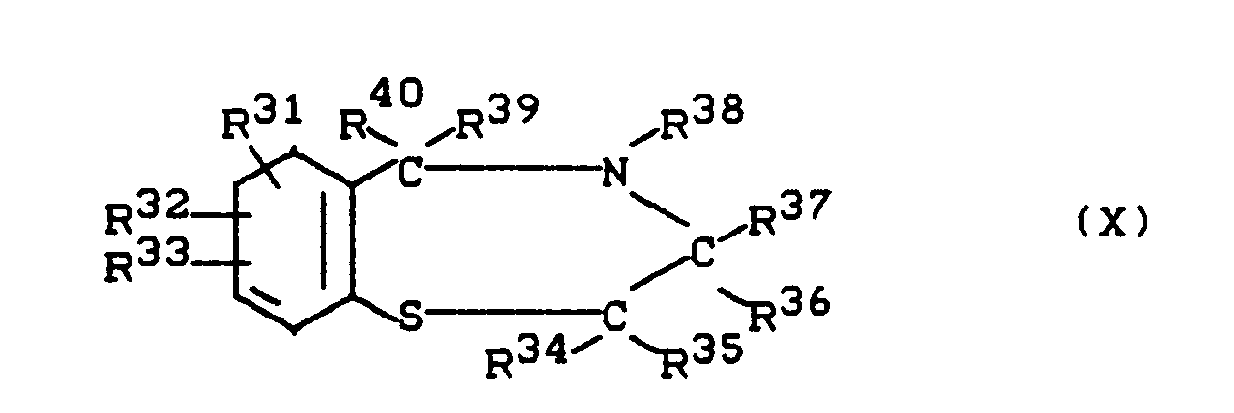
darstellbar, worin die Reste R³¹ bis R⁴⁰ den obengenannten Bedeutungsumfang annehmen. - In weiterhin bevorzugter Form werden Co-Katalysatoren der Formel (III) eingesetzt, in denen anstelle von R³¹, R³² und R³³ die Reste R⁴², R⁴³ bzw. R⁴⁴ treten, von denen
R⁴² und R⁴³ unabhängig voneinander Wasserstoff, Halogen, Nitro, Alkyl, Aryl, Alkoxy, Aryloxy, Acyloxy, Alkylthio, Arylthio, Acyl oder Thioacyl bedeuten und
R⁴⁴ für Wasserstoff oder Chlor steht und weiterhin mit einem der Reste R⁴² und R⁴³ und gemeinsam mit den substituierten C-Atomen einen anellierten gesättigten isocyclischen 5-7-Ring oder einen anellierten Benzolring bilden kann. - In ganz besonders bevorzugter Weise werden Co-Katalysatoren der Formel (III) eingesetzt, in denen anstelle von R⁴², R⁴³ und R⁴⁴ die Reste R⁵¹, R⁵² bzw. R⁵³ treten, von denen
R⁵¹ und R⁵² unabhängig voneinander Wasserstoff, C₁-C₄-Alkyl, C₁-C₄-Alkoxy, Fluor oder Chlor bedeuten und
R⁵³ für Wasserstoff oder Chlor steht und weiterhin mit einem der Reste R⁵¹ oder R⁵² und gemeinsam mit den substituierten C-Atomen einen annellierten Cyclopentan-, Cyclohexan- oder Benzolring bilden kann. - Die erfindungsgemäß als Co-Katalysatoren einzusetzenden Benzo[f]-1,4-thiazepine können nach bekannten Verfahren hergestellt werden, beispielsweise durch Umsetzung von o-Mercaptobenzoesäureestern mit gegebenenfalls substituiertem Ethylenimin oder durch Umsetzung von o-Mercaptobenzoesäuren mit β-Aminoalkoholsulfaten und anschließendem Ringschluß.
- Als Beispiele für die erfindungsgemäß im Kern zu chlorierenden aromatischen Kohlenwasserstoffe der Formel (I) seien genannt: Toluol, Ethylbenzol, Propylbenzol, Cumol, tert.-Butylbenzol und Phenylcyclohexan; besonders wichtig ist das Verfahren für die Kernchlorierung von Toluol.
- Das erfindungsgemäße Verfahren wird in flüssiger Phase durchgeführt, wobei der aromatische Kohlenwasserstoff in flüssiger (geschmolzener) Form oder gegebenenfalls in Verdünnung mit einem inerten Lösungsmittel eingesetzt werden kann. Geeignete Lösungsmittel sind solche, die durch Chlor unter den Bedingungen einer Kernchlorierung nicht angegriffen werden und dem Fachmann hierfür bekannt sind, wie Methylenchlorid, Chloroform, Tetrachlorkohlenstoff, Essigsäure. In bevorzugter Weise wird ohne Lösungsmittel gearbeitet.
- Als Chlorierungsmittel für das erfindungsgemäße Verfahren wird vorzugsweise Chlor verwendet. Das Chlor kann flüssig oder gasförmig in das Reaktionsgemisch eingeleitet werden. Bevorzugt wird gasförmiges Chlor eingesetzt.
- Es können jedoch auch andere Chlorierungsmittel verwendet werden, die, wie beispielsweise Sulfurylchlorid, unter den Reaktionsbedingungen Chlor abgeben.
- Die erfindungsgemäß durchzuführende Kernchlorierung kann grundsätzlich bei einer Temperatur vom Erstarrungspunkt bis zum Siedepunkt des Reaktionsgemisches durchgeführt werden. Im allgemeinen liegt die Reaktionstemperatur bei 0-100° C, bevorzugt 20-80° C, besonders bevorzugt 40-60° C.
- Der Reaktionsdruck kann normal, vermindert oder erhöht sein und ist grundsätzlich unkritisch. Wegen der kostengünstigen Durchführung ist Normaldruck bevorzugt. Erhöhter Druck kann beispielsweise dann angezeigt sein, wenn oberhalb des Siedepunktes eines tiefsiedenden Lösungsmittels gearbeitet werden soll; in diesem Fall kann beispielsweise unter dem sich automatisch einstellenden Eigendruck des Reaktionsgemisches gearbeitet werden. Der Chlorierungsgrad des Reaktionsgemisches liegt bevorzugt nicht höher als 1, bezogen auf den zu chlorierenden aromatischen Kohlenwasserstoff. Höhere Chlorierungsgrade sind möglich, aber gewöhnlich nicht vorteilhaft, da sie zur Bildung unerwünschter mehrfach chlorierter Produkte führen. Chlor bzw. eine chlorabgebende Substanz werden daher beispielsweise in einer Menge von 0,8-1,1, bevorzugt 0,8-1,0 Mol pro Mol des aromatischen Kohlenwasserstoffs eingesetzt.
- Friedel-Crafts-Katalysatoren für das erfindungsgemäße Verfahren sind alle bekannten, beispielsweise Antimonchloride, Antimonoxichlorid, Aluminiumchlorid, Eisen(II)-chlorid, Eisen(III)-chlorid, Tellurchloride, Molybdänchloride, Wolframchloride, Titanchloride, Zinkchlorid, Zinnchloride, Borchlorid und/oder Bortrifluorid. Es können jedoch auch Elemente und Elementverbindungen, die während der Chlorierung einen Friedel-Crafts-Katalysator (Lewis-Säure) bilden, eingesetzt werden. Beispielsweise die elementaren Metalle oder Halbmetalle Antimon, Eisen, Blei, Zinn, Zink, Molybdän, Tellur und Aluminium oder deren Oxide, Sulfide, Carbonyle oder Salze (beispielsweise Carbonate oder ähnliche); genannt seien beispielsweise Antimonoxide, Eisenoxide, Eisensulfide, Bleisulfide, Zinnsulfide, Zinksulfide, Eisencarbonyle, Molybdäncarbonyle und/oder Borphosphat. Anstelle der erwähnten Chloride können auch die Bromide, gegebenenfalls auch die Fluoride oder Iodide der genannten Elemente eingesetzt werden. Bevorzugte Friedel-Crafts-Katalysatoren sind Antimonchloride, Aluminiumchloride, Eisen, Eisenoxide, Eisensulfide, Eisencarbonyle und/oder Eisen(III)-chlorid. Besonders bevorzugt ist Eisen(III)-chlorid.
- Die Mengen des Friedel-Crafts-Katalysators oder eines Gemisches mehrerer von ihnen können in weiten Grenzen variiert werden. So ist bereits bei einem Zusatz von 0,0005 Gew.-% eine Katalysatorwirkung erkennbar; andererseits können auch 5 Gew.-% oder mehr des Friedel-Crafts-Katalysators zugesetzt werden, jedoch bieten solche hohen Mengen im allgemeinen keinen Vorteil, bringen aber gegebenenfalls bei der Aufarbeitung Schwierig keiten. Üblicherweise wird der Friedel-Crafts-Katalysator in einer Menge von 0,001-0,5 Gew.-%, bevorzugt 0,01-0,1 Gew.-% eingesetzt. Alle Mengenangaben sind auf die Menge des eingesetzten aromatischen Kohlenwasserstoffs bezogen.
- Die erfindungsgemäß einsetzbaren Co-Katalysatoren umfassen neben den obengenannten Substanzen alle Substanzen, die unter den Reaktionsbedingungen Verbindungen oder Gemische von Verbindungen bilden können, die unter die obengenannten Formeln (II) bis (X) fallen. Das sind beispielsweise solche Verbindungen, die in dem heterocyclischen Ring ein- oder mehrfach ungesättigt sind. Weiterhin sind es offenkettige Vorstufen, die unter den erfindungsgemäßen Bedingungen den Ringschluß eingehen und damit in erfindungsgemäße Co-Katalysatoren übergehen. Weiterhin einsetzbar sind alle Substanzen, die durch Reaktion der zuvor genannten erfindungsgemäßen Co-Katalysatoren mit Chlor oder Chlorwasserstoff unter den Reaktionsbedingungen der Chlorierung gebildet werden können. Hier seien beispielsweise die Hydrochloride der obengenannten Co-Katalysatoren genannt.
- Es ist weiterhin möglich, die Co-Katalysatoren in Kombination mit anderen, nicht als Co-Katalysatoren beanspruchten Elementen oder Verbindungen im erfindungsgemäßen Verfahren einzusetzen. Die Co-Katalysatoren können sowohl einzeln als auch im Gemisch mehrerer von ihnen eingesetzt werden. Die Mengen, in denen die erfindungsgemäßen Co-Katalysatoren eingesetzt werden, können in weiten Grenzen variieren. Mengen unter 0,0001 Gew.-% sind jedoch weniger vorteilhaft, da dann die co-katalytische Wirkung nachläßt. Es können sogar Mengen von 5 Gew.-% oder mehr an Co-Katalysator zugesetzt werden, jedoch bieten diese hohen Mengen im allgemeinen keinen Vorteil, verursachen aber gegebenenfalls Aufarbeitungsprobleme. Die erfindungsgemäßen Co-Katalysatoren werden daher im allgemeinen in einer Menge von 0,0001-0,5 Gew.-%, bevorzugt 0,0005-0,1 Gew.-%, besonders bevorzugt 0,0005-0,0075 Gew.-%, bezogen auf den eingesetzten aromatischen Kohlenwasserstoff, eingesetzt.
- Das Molverhältnis des Gemisches aus Friedel-Crafts-Katalysator(en) und Co-Katalysator(en) kann im erfindungsgemäßen Verfahren in weiten Grenzen variiert werden. Im allgemeinen ist es vorteilhaft, den Co-Katalysator nicht in zu großem Überschuß gegenüber dem Friedel-Crafts-Katalysator einzusetzen. Ebenso ist es im allgemeinen vorteilhafter, auch den Überschuß des Friedel-Crafts-Katalysators nicht zu groß anzusetzen. Erfindungsgemäß ist ein molares Verhältnis von Friedel-Crafts-Katalysator zu Co-Katalysator von 100:1-1:10, bevorzugt 75:1-1:4, besonders bevorzugt 50:1-1:2.
- Der Wassergehalt der Reaktionsmischung ist im Prinzip nicht kritisch, solange der verwendete Friedel-Crafts-Katalysator nicht völlig desaktiviert wird. Daher ist es bevorzugt, die Einsatzstoffe nicht besonders zu trocknen, sondern sie in dem Zustand zu verwenden, in dem sie üblicherweise in der Praxis der technischen Chemie vorkommen. Jedoch ist es erfindungsgemäß ebenso möglich, einige oder alle Einsatzstoffe zu trocknen. Im allgemeinen sollte der Wassergehalt nicht über der Sättigungsgrenze der Einsatzstoffe liegen. Bevorzugt beträgt der Wassergehalt der Reaktionsmischung bis zu 250 ppm, besonders bevorzugt bis zu 150 ppm, ganz besonders bevorzugt bis zu 100 ppm.
- Für die praktische Durchführung des erfindungsgemäßen Verfahrens ist die Reihenfolge der Zugabe der einzelnen Komponenten des Reaktionsgemisches beliebig. Hierbei läßt sich das Verfahren sowohl kontinuierlich als auch diskontinuierlich durchführen. Eine beispielhafte Ausführungsform ist die folgende:
- Der gewünschte aromatische Kohlenwasserstoff, beispielsweise Toluol, wird vorgelegt und auf die gewünschte Temperatur (beispielsweise 50° C) gebracht. Dann gibt man in beliebiger Reihenfolge die gewünschten Mengen an Friedel-Crafts-Katalysator(en) und Co-Katalysator(en) zu und leitet unter weitgehender Konstanthaltung der Temperatur Chlor gasförmig bis zum gewünschten Chlorierungsgrad ein. Anschließend wird das Gemisch in üblicher Weise durch Destillation aufgearbeitet.
- Eine weitere beispielhafte Ausführungsform ist die folgende:
- Man stellt eine Mischung aus Alkylbenzol mit den gewünschten Anteilen an Katalysator und Co-Katalysator her und bringt diese auf die gewünschte Reaktionstemperatur. Dann wird Chlorierungsmittel bis zum gewünschten Chlorierungsgrad eingeleitet. Die Aufarbeitung kann auch hier in üblicher Weise durch Destillation erfolgen.
- Eine weitere Ausführungsform ist die folgende:
- Man stellt eine Lösung von Katalysator und Co-Katalysator in dem Alkylbenzol her und führt diese einer kontinuierlich arbeitenden Chlorierapparatur zu. Man leitet ebenfalls kontinuierlich ein Chlorierungsmittel so schnell ein, daß der gewünschte Chlorierungsgrad erreicht wird. Auch hier kann die kontinuierlich anfallende Reaktionsmischung in üblicher Weise durch Destillation aufgearbeitet werden.
- Im Gegensatz zum erfindungsgemäßen Verfahren hatten die bisher bekannten Heterocyclen zur Steuerung der o/p-Selektivität immer eine andere Struktur, nämlich die Form von drei linear anellierten 6-Ringen.
- Beim erfindungsgemäßen Verfahren ist es überraschend, daß die erfindungsgemäßen Co-Katalysatoren eine so ausgeprägte Selektionswirkung auf das o/p-Verhältnis haben, daß überwiegend die p-Verbindung gebildet wird. Ausgesprochen überraschend und überaus vorteilhaft ist ferner die Tatsache, daß die erfindungsgemäßen Co-Katalysatoren gerade mit dem technisch außerordentlich günstigen und wünschenswerten Friedel-Crafts-Katalysator FeCl₃ so gute Ergebnisse liefern. Das so beispielsweise für Toluol erreichbare o/p-Verhältnis von o/p = 0,55 ist das niedrigste, das bisher beim Einsatz von Kombinationen aus Friedel-Crafts-Katalysatoren und Co-Katalysatoren erreicht wurde.
- Weiterhin überraschend ist, daß diese guten Ergebnisse bei technisch sehr vorteilhaften Temperaturen, bei spielsweise im Bereich von 40-60° C, erreicht werden. Noch weiterhin überraschend ist es, daß die erfindungsgemäßen Co-Katalysatoren ihre p-selektive Wirkung bereits bei äußerst geringen Konzentrationen zeigen, so daß die notwendigen Mengen an Co-Katalysatoren besonders gering sind. So liegen sie im besonders bevorzugten Bereich von 0,0005-0,0075 Gew.-% um Zehnerpotenzen niedriger als bei den bisher bekannten Co-Katalysatoren.
- Diese Tatsache ist technisch wie ökonomisch und ökologisch außerordentlich vorteilhaft.
- Die folgenden Beispiele erläutern die Erfindung.
- Man legte unter Rühren 100 Gew.-Teile Toluol in einem Reaktor vor, gab 0,017 Gew.-Teile FeCl₃ und 0,0047 Gew.-Teile des Co-Katalysators der Formel

(4-Methylthio-2,3-dihydro-1,5-benzothiazepin)
zu und erhitzte auf 50° C. Unter weitgehender Konstanthaltung der Temperatur (±1° C) leitete man ca. 94 Mol-% Chlor (bezogen auf das Toluol) gasförmig im Verlauf von 5 h gleichmäßig ein. Der Restgehalt an Toluol im Reaktionsgemisch betrug 3,8 Gew.-%, das Verhältnis von ortho-Chlortoluol zu para-Chlortoluol (o/p) betrug 0,71. - Das Verfahren von Beispiel 1 wurde wiederholt. Man gab jedoch 0,0050 Gew.-Teile des Co-Katalysators der Formel

(2-Methyl-4-methylthio-2,3-dihydro-1,5-benzothiazepin)
zu. Der Resttoluolgehalt betrug 2,7 Gew.-%, das o/p-Verhältnis war 0,71. - Das Verfahren von Beispiel 1 wurde wiederholt. Man gab jedoch 0,0064 Gew.-Teile des Co-Katalysators der Formel

(4-Benzylthio-2,3-dihydro-1,5-benzothiazepin)
zu. Das Resttoluolgehalt betrug 4,6 %, das o/p-Verhältnis war 0,86. - Das Verfahren von Beispiel 1 wurde wiederholt. Man gab jedoch 0,0045 Gew.-Teile des Co-Katalysators der Formel

(3-Methylthio-2H-1,4-benzothiazin)
zu. Der Resttoluolgehalt betrug 4,1 Gew.-%, das o/p-Verhältnis war 0,97. - Das Verfahren von Beispiel 1 wurde wiederholt. Man gab jedoch 0,0050 Gew.-Teile des Co-Katalysators der Formel

(5-Methylthio-3,4-dihydro-2H-1,6-benzothiazocin)
zu. Der Resttoluolgehalt betrug 3,5 Gew.-%, das o/p-Verhältnis war 0,93. - Das Verfahren von Beispiel 1 wurde wiederholt. Man gab jedoch 0,0055 Gew.-Teile des Co-Katalysators der Formel

(2,3-Dimethyl-4-methylthio-2,3-dihydro-1,5-benzothiazepin)
zu. Der Resttolulgehalt betrug 4,1 Gew.-%, das o/p-Verhältnis war 0,66. - Das Verfahren von Beispiel 1 wurde wiederholt. Man gab jedoch 0,0059 Gew.-Teile des Co-Katalysators der Formel

(2,3-Tetramethylen-4-methylthio-2,3-dihydro-1,5-benzothiazepin)
zu. Der Resttoluolgehalt betrug 4,0 Gew.-%, das o/p-Verhältnis war 0,63. - Das Verfahren von Beispiel 1 wurde wiederholt. Man legte jedoch 100 Gew.-Teile Ethylbenzol vor und gab 0,0060 Gew.-Teile des Co-Katalysators von Beispiel 7 zu. Der Restgehalt an Ethylbenzol betrug 10,7 Gew.-%; das Verhältnis von ortho-Chlorethylbenzol zu para-Chlorethylbenzol betrug 0,47.
- Das Verfahren von Beispiel 1 wurde wiederholt. Man legte jedoch 100 Gew.-Teile Isopropylbenzol vor und gab 0,0060 Gew.-Teile des Co-Katalysators von Beispiel 7 zu. Der Restgehalt an Isopropylbenzol betrug 10,9 Gew.-%, das Verhältnis von ortho-Chlorisopropylbenzol zu para-Chlorisopropylbenzol betrug 0,24.
- Das Verfahren von Beispiel 1 wurde wiederholt. Man legte jedoch 100 Gew.-Teile t-Butylbenzol vor und gab 0,0059 Gew.-Teile des Co-Katalysatos von Beispiel 7 zu. Der Restgehalt an t-Butylbenzol betrug 9,4 Gew.-%, das Verhältnis von ortho-Chlor-t-butylbenzol zu para-Chlor-t-butylbenzol betrug 0,11.
- Das Verfahren von Beispiel 1 wurde wiederholt. Man legte jedoch 100 Gew.-Teile Cyclohexylbenzol vor und gab 0,0055 Gew.-Teile des Co-Katalysators von Beispiel 6 zu. Der Restgehalt an Cyclohexylbenzol betrug 10,57 Gew.-%, das Verhältnis von ortho-Chlor-cyclohexylbenzol zu p-Chlor-cyclohexylbenzol betrug 0,23.
- Das Verfahren von Beispiel 1 wurde wiederholt. Man gab jedoch 0,0059 Gew.-Teile des Co-Katalysators der Formel

(4-Methylthio-1,5-dibenzo-[b,f]-thiazepin)
zu. Der Resttoluolgehalt betrug 4,1 Gew.-%, das o/p-Verhältnis war 1,26. - Das Verfahren von Beispiel 1 wurde wiederholt. Man gab jedoch 0,0060 Gew.-Teile des Co-Katalysators der Formel

(5-Methylthio-2H-1,6-dibenzo-[c,g]-thiazocin)
zu. Der Resttoluolgehalt betrug 5,1 Gew.-%, das o/p-Verhältnis war 1,16. - Das Verfahren von Beispiel 1 wurde wiederholt. Man gab jedoch 0,0055 Gew.-Teile des Co-Katalysators der Formel

(4-Methylthio-7,8-dimethyl-2,3-dihydro-1,5-benzothiazepin)
zu. Der Resttoluolgehalt betrug 2,9 Gew.-%, das o/p-Verhältnis war 0,68. - Das Verfahren von Beispiel 1 wurde wiederholt. Man gab jedoch 0,0065 Gew.-Teile des Co-Katalysators der Formel

(7,9-Dimethyl-4-methylthio-2,3-tetramethylen-2,3-dihydro-1,5-benzothiazepin)
zu. Der Resttoluolgehalt betrug 3,7 Gew.-%, das o/p-Verhältnis war 0,55. - Das Verfahren von Beispiel 1 wurde wiederholt. Man gab jedoch 0,0055 Gew.-Teile des Co-Katalysators der Formel

(2-Propyl-4-methylthio-2,3-dihydro-1,5-benzothiazepin)
zu. Der Resttoluolgehalt betrug 2,8 Gew.-%, das o/p-Verhältnis war 0,69. - Das Verfahren von Beispiel 1 wurde wiederholt. Man gab jedoch 0,0064 Gew.-Teile des Co-Katalysators der Formel

(2-Phenyl-4-methylthio-2,3-dihydro-1,5-benzothiazepin)
zu. Der Resttoluolgehalt betrug 4,7 Gew.-%, das o/p-Verhältnis war 1,06. - Das Verfahren von Beispiel 1 wurde wiederholt. Man gab jedoch 0,0062 Gew.-Teile des Co-Katalysators der Formel

(6,8-Dichlor-4-methylthio-2,3-dihydro-1,5-benzothiazepin)
zu. Der Resttoluolgehalt betrug 3,75 Gew.-%, das o/p-Verhältnis war 0,91. - Das Verfahren von Beispiel 1 wurde wiederholt. Man gab jedoch 0,0061 Gew.-Teile des Co-Katalysators der Formel

(7-Trifluormethyl-4-methylthio-2,3-dihydro-1,5-benzothiazepin)
zu. Der Resttoluolgehalt betrug 4,8 Gew.-%, das o/p-Verhältnis war 0,84. - Das Verfahren von Beispiel 1 wurde wiederholt. Man gab jedoch 0,0052 Gew.-Teile des Co-Katalysators der Formel

(8-Methoxy-4-methylthio-2,3-dihydro-1,5-benzothiazepin)
zu. Der Resttoluolgehalt betrug 2,1 Gew.-%, das o/p-Verhältnis war 0,78. - Das Verfahren von Beispiel 1 wurde wiederholt. Man gab jedoch 0,0045 Gew.-Teile des Co-Katalysators der Formel
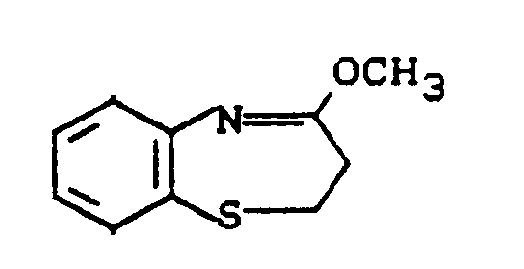
(4-Methoxy-2,3-dihydro-1,5-benzothiazepin)
zu. Der Resttoluolgehalt betrug 3,9 Gew.-%, das o/p-Verhältnis war 0,71. - Das Verfahren von Beispiel 1 wurde wiederholt. Man gab jedoch 0,0065 Gew.-Teile des Co-Katalysators der Formel

(4-Phenylhydrazino-2,3-dihydro-1,5-benzothiazepin)
zu. Der Resttoluolgehalt betrug 4,2 Gew.-%, das o/p-Verhältnis war 0,79. - Das Verfahren von Beispiel 1 wurde wiederholt. Man gab jedoch 0,0040 Gew.-Teile des Co-Katalysators der Formel

(4-Methyl-2,3-dihydro-1,5-benzothiazepin)
zu. Der Resttoluolgehalt betrug 3,7 Gew.-%, das o/p-Verhältnis war 0,75. - Das Verfahren von Beispiel 1 wurde wiederholt. Man gab jedoch 0,0045 Gew.-Teile des Co-Katalysators der Formel

(2,2,4-Trimethyl-2,3-dihydro-1,5-benzothiazepin)
zu. Der Resttoluolgehalt betrug 4,5 Gew.-%, das o/p-Verhältnis war 1,00. - Das Verfahren von Beispiel 1 wurde wiederholt. Man gab jedoch 0,0050 Gew.-Teile des Co-Katalysators der Formel

(4-Methyl-2,3-tetramethylen-2,3-dihydro-1,5-benzothiazepin)
zu. Der Resttoluolgehalt betrug 3,4 Gew.-%, das o/p-Verhältnis war 0,68. - Es wurde eine Lösung aus 100 Gew.-Teilen Toluol, 0,017 Gew.-Teilen FeCl₃ und 0,0055 Gew.-Teilen des Co-Katalysators aus Beispiel 7 bei Raumtemperatur hergestellt. Diese Lösung führte man einem bei 40 bis 45° C kontinuierlich arbeitenden Chlorierreaktor zu, wobei gleichzeitig die äquivalente Menge an Chlorierungsprodukt entnommen wurde. Als Chlorierungsmittel wurde gasförmiges Chlor so schnell zugeführt, daß der Umsatz weitgehend konstant bei ca. 94 Mol-% lag. Das abgeführte Chloriergemisch enthielt ca. 7,5 Gew.-% Toluol. Das Verhältnis von ortho-Chlortoluol zu para-Chlortoluol war 0,63.
- In 100 Gew.-Teilen Toluol wurden 0,07 Gew.-Teile FeCl₃ und 0,29 Gew.-Teile des nach EP 0 173 222 hergestellten Phenoxathiinderivats gelöst. Man leitete bei 50° C ca. 94 Mol-% Chlor gasförmig unter Rühren ein. Der Restgehalt an Toluol betrug 7,9 %, das o/p-Verhältnis 0,88.
- Das Verfahren des Beispiels 27 wurde wiederholt. In 100 Gew.-Teilen Toluol wurden 0,017 Gew.-Teile FeCl₃ und 0,008 Gew.-Teile des nach EP 0 173 222 hergestellten Phenoxathiinderivats gelöst. Man leitete bei 50° C ca. 94 Mol-% Cl₂ gasförmig unter Rühren ein. Der Restgehalt an Toluol betrug 6,4 Gew.-%, das o/p-Verhältnis 1,26.
- Das Verfahren des Beispiels 27 wurde wiederholt. In 100 Gew.-Teilen Toluol wurden 0,017 Gew.-Teile FeCl₃ und 0,0065 Gew.-Teile des in Beispiel 4 von US 4 031 147 genannten Co-Katalysators der Formel

(2,7-Dichlorthianthren)
gelöst. Man erhitzte auf 50° C und leitete unter Rühren ca. 94 Mol-% Cl₂ gasförmig ein, Der Resttoluolgehalt betrug 6,7 Gew.-%, das o/p-Verhältnis 1,55. - Das Verfahren des Beispiels 27 wurde wiederholt. In 100 Gew.-Teilen Toluol wurden 0,017 Gew.-Teile FeCl₃ und 0,006 Gew.-Teile des in Beispiel 1 von EP 0 126 669 genannten Co-Katalysators der Formel

(N-Chlorcarbonylphenothiazin)
gelöst. Man erhitzte auf 50° C und leitete unter Rühren ca. 94 Mol-% Chlor gasförmig ein. Der Resttoluolgehalt betrug 5,6 Gew.-%, das o/p-Verhältnis 1,04. - Man legte unter Rühren 100 Gew.-Teile Toluol in einem Reaktor vor und gab 0,017 Gew.-Teile FeCl₃ und 0,0050 Gew.-Teile des Co-Katalysators der Formel

(4-Acetyl-2,3-dihydro-1,4-benzothiazepin-5(4H)-on)
zu und erhitzte auf 50° C. Unter weitgehender Konstanthaltung der Temperatur (± 1° C) leitete man ca. 94 Mol.-% Chlor (bezogen auf das Alkylbenzol) gasförmig im Verlaufe von 5 Stunden gleichmäßig ein. Der Resttoluolgehalt im Reaktionsgemisch betrug 3,0 Gew.-%, das Verhältnis von ortho-Chlortoluol zu para-Chlortoluol (o/p) betrug 0,71. - Das Verfahren von Beispiel 1 wurde wiederholt. Man gab jedoch 0,0043 Gew.-Teile des Co-Katalysators der Formel

(5-Methoxy-2,3-dihydro-1,4-benzothiazepin)
zu. - Der Resttoluolgehalt betrug 4,0 Gew.-%, das o/p-Verhältnis betrug 0,83.
- Das Verfahren von Beispiel 1 wurde wiederholt. Man gab jedoch 0,0049 Gew.-% des Co-Katalysators der Formel

(2,3-Dihydro-1,4-benzothiazepin-5(4H)-on-1-oxid)
zu. Der Resttoluolgehalt betrug 3,1 Gew.-%, das o/p-Verhältnis war 0,70. - Das Verfahren von Beispiel 1 wurde wiederholt. Man gab jedoch 0,0045 Gew.-% des Co-Katalysators der Formel

(2,3-Dihydro-1,4-benzothiazepin-5(4H)-thion)
zu. Der Resttoluolgehalt betrug 3,2 Gew.-%, das o/p-Verhältnis war 0,74. - Das Verfahren von Beispiel 1 wurde wiederholt. Man gab jedoch 0,0045 Gew.-% des Co-Katalysators der Formel

(4-Methyl-2,3-dihydro-1,4-benzothiazepin-5-(4H)-on)
zu. Der Resttoluolgehalt betrug 3,5 Gew.-%, das o/p-Verhältnis war 0,73. - Das Verfahren von Beispiel 1 wurde wiederholt. Man gab jedoch 0,0045 Gew.-% des Co-Katalysators der Formel

(2,3-Dihydro-1,4-benzothiazepin-5(4H)-on)
zu. Der Resttoluolgehalt betrug 3,3 Gew.-%, das o/p-Verhältnis war 0,71. - Das Verfahren von Beispiel 1 wurde wiederholt. Man gab jedoch 0,0042 Gew.-% des Co-Katalysators der Formel
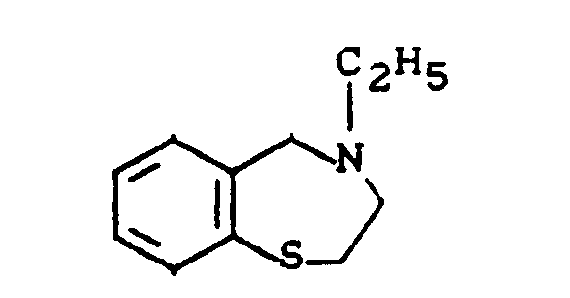
(4-Ethyl-2,3,4,5-tetrahydro-1,4-benzothiazepin)
zu. Der Resttoluolgehalt betrug 4,0 Gew.-%, das o/p-Verhältnis war 0,81. - Das Verfahren von Beispiel 1 wurde wiederholt. Man gab jedoch 0,0065 Gew.-% des Co-Katalysators der Formel

2-Phenylthio-2,3-dihydro-1,4-benzothiazepin-5(4H)-on)
zu. Der Resttoluolgehalt betrug 4,0 Gew.-%, das o/p-Verhältnis war 1,00. - Das Verfahren von Beispiel 1 wurde wiederholt. Man gab jedoch 0,0048 Gew.-% des Co-Katalysators der Formel
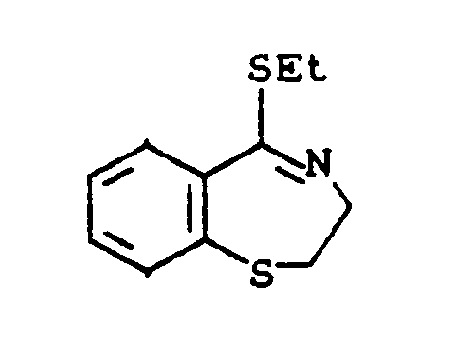
(5-Ethylthio-2,3-dihydro-1,4-benzothiazepin)
zu. Der Resttoluolgehalt betrug 3,6 Gew.-%, das o/p-Verhältnis war 0,80. - Das Verfahren von Beispiel 1 wurde wiederholt. Man gab jedoch 0,0049 Gew.-% des Co-Katalysators der Formel

(5-Methylthio-2,3-dihydro-1,4-benzothiazepin)
zu. Der Resttoluolgehalt betrug 4,1 Gew.-%, das o/p-Verhältnis war 0,76. - Das Verfahren von Beispiel 1 wurde wiederholt. Man gab jedoch 0,0064 Gew.-% des Co-Katalysators der Formel

(5-Benzylthio-2,3-dihydro-1,4-benzothiazepin)
zu. Der Resttoluolgehalt betrug 3,4 Gew.-%, das o/p-Verhältnis war 0,71. - Das Verfahren von Beispiel 1 wurde wiederholt. Man gab jedoch 0,0060 Gew.-% des Co-Katalysators der Formel

(5-β-Phenylhydrazino-2,3-dihydro-1,4-benzothiazepin)
zu. Der Resttoluolgehalt betrug 4,3 Gew.-%, das o/p-Verhältnis war 0,64. - Das Verfahren von Beispiel 1 wurde wiederholt. Man gab jedoch 0,0048 Gew.-% des Co-Katalysators der Formel

(2-Chlor-2,3-dihydro-1,4-benzothiazepin-5-(4H)-on)
zu und erhitzte auf 52 - 53° C. Der Resttoluolgehalt betrug 4,1 Gew.-%, das o/p-Verhältnis war 0,73. - Das Verfahren von Beispiel 1 wurde wiederholt. Man gab jedoch 0,0045 Gew.-% des Co-Katalysators der Formel

(3-Methyl-2,3-dihydro-1,4-benzothiazepin-5-(4H)-on)
zu und erhitzte auf 50 - 52°C. Der Resttoluolgehalt betrug 3,0 Gew.-%, das o/p-Verhältnis war 0,69. - Das Verfahren von Beispiel 1 wurde wiederholt. Man gab jedoch 0,0044 Gew.-% des Co-Katalysators der Formel
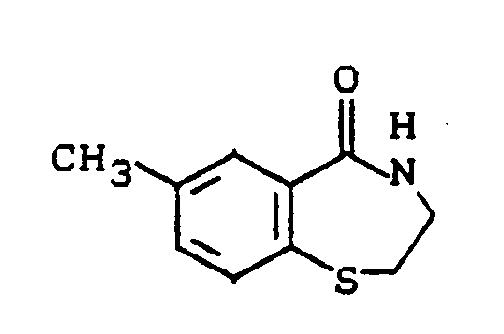
(7-Methyl-2,3-dihydro-1,4-benzothiazepin-5-(4H)-on)
zu. Der Resttoluolgehalt betrug 2,9 Gew.-%, das o/p-Verhältnis war 0,68. - Das Verfahren von Beispiel 1 wurde wiederholt. Man gab jedoch 0,0045 Gew.-% des Co-Katalysators der Formel

(4-Acetyl-2,3,4,5-tetrahydro-1,4-benzothiazepin)
zu. Der Resttoluolgehalt betrug 2,9 Gew.-%, das o/p-Verhältnis war 0,93. - Das Verfahren von Beispiel 1 wurde wiederholt. Man gab jedoch 0,0047 Gew.-% des Co-Katalysators der Formel

(2,3,4,5-Tetrahydro-1,4-benzothiazepin)
zu.Der Resttoluolgehalt betrug 4,3 Gew.-%, das o/p-Verhältnis war 0,88. - Das Verfahren von Beispiel 1 wurde wiederholt. Man legte jedoch 100 Gew.-Teile Ethylbenzol vor und gab 0,0043 Gew.-Teile des Co-Katalysators von Beispiel 15 zu. Der Restgehalt an Ethylbenzol betrug 4,6 Gew.-%, das Verhältnis von ortho-Chlorethylbenzol zu para-Chlorethylbenzol betrug 0,50.
- Das Verfahren von Beispiel 1 wurde wiederholt. Man legte jedoch 100 Gew.-Teile an Isopropylbenzol vor und gab 0,0040 Gew.-Teile des Co-Katalysators von Beispiel 6 zu. Der Restgehalt an Isopropylbenzol betrug 5,0 Gew.-%, das Verhältnis von ortho-Chlorisopropylbenzol zu para-Chlorisopropylbenzol betrug 0,25.
- Das Verfahren von Beispiel 1 wurde wiederholt. Man legte jedoch 100 Gew.-Teile an t-Butylbenzol vor und gab 0,0042 Gew.-Teile des Co-Katalysators von Beispiel 14 zu. Der Restgehalt an t-Butylbenzol betrug 5,2 Gew.-%, das Verhältnis von ortho-Chlor-tert-butylbenzol zu para-Chlor-tert-butylbenzol betrug 0,16.
- Das Verfahren von Beispiel 1 wurde wiederholt. Man legte jedoch 100 Gew.-Teile an Cyclohexylbenzol vor und gab 0,0042 Gew.-Teile des Co-Katalysators von Beispiel 5 zu. Der Restgehalt an Cyclohexylbenzol betrug 5,5 Gew.-%, das Verhältnis von ortho-Chlor-cyclohexylbenzol zu p-Chlor-cyclohexylbenzol betrug 0,22.
- Das Verfahren von Beispiel 1 wurde wiederholt. Man legte jedoch 0,0050 Gew.-Teile eines Kaliumsalzes folgender Formel zu

(2,3-Dihydro-1,4-benzothiazepin-5-(4H)-thion-K-salz) ,
das während der Chlorierung in den Co-Katalysator von Beispiel 4 übergeht. Der Resttoluolgehalt betrug 3,8 Gew.-%, das o/p-Verhältnis war 0,73. - Das Verfahren von Beispiel 1 wurde wiederholt. Man gab jedoch 0,0055 Gew.-Teile des Co-Katalysators der Formel

(7,9-Dichlor-2,3-dihydro-1,4-benzothiazepin-5-(4H)-on)
zu. Der Resttoluolgehalt betrug 4,5 Gew.-%, das o/p-Verhältnis war 0,74. - Das Verfahren von Beispiel 1 wurde wiederholt. Man gab jedoch 0,0050 Gew.-Teile des Co-Katalysators der Formel

(8-Chlor-2,3-dihydro-1,4-benzothiazepin-5-(4H)-on)
zu. Der Resttoluolgehalt betrug 3,8 Gew.-%, das o/p-Verhältnis war 0,74. - Das Verfahren von Beispiel 1 wurde wiederholt. Man gab jedoch 0,0048 Gew.-Teile des Co-Katalysators der Formel

(2,7,9-Trimethyl-2,3-dihydro-1,4-benzothiazepin-5-(4H)-on)
zu. Der Resttoluolgehalt betrug 4,9 Gew.-%, das o/p-Verhältnis war 0,66. - Das Verfahren von Beispiel 1 wurde wiederholt. Man gab jedoch 0,0055 Gew.-Teile des Co-Katalysators der Formel

(2,7,9-Trimethyl-5-methoxy-2,3-dihydro-1,4-benzothiazepin)
zu. Der Restgehalt an Toluol betrug 3,0 Gew.-%, das o/p-Verhältnis war 0,66. - Das Verfahren von Beispiel 1 wurde wiederholt. Man gab jedoch 0,00073 Gew.-Teile des Co-Katalysators der Formel

(2,7,9-Trimethyl-5-β-phenylhydrazino-2,3-dihydro-1,4-benzothiazepin)
zu. Der Restgehalt an Toluol war 3,3 Gew.-%, das o/p-Verhältnis betrug 0,65.
Claims (12)

R geradkettiges oder verzweigtes C₁-C₁₂-Alkyl oder C₃-C₈-Cycloalkyl bedeutet,
in Gegenwart von Friedel-Crafts-Katalysatoren und in Gegenwart von Co-Katalysatoren in flüssiger Phase, dadurch gekennzeichnet, daß man als Co-Katalysatoren cyclische benzokondensierte Imine der Formel
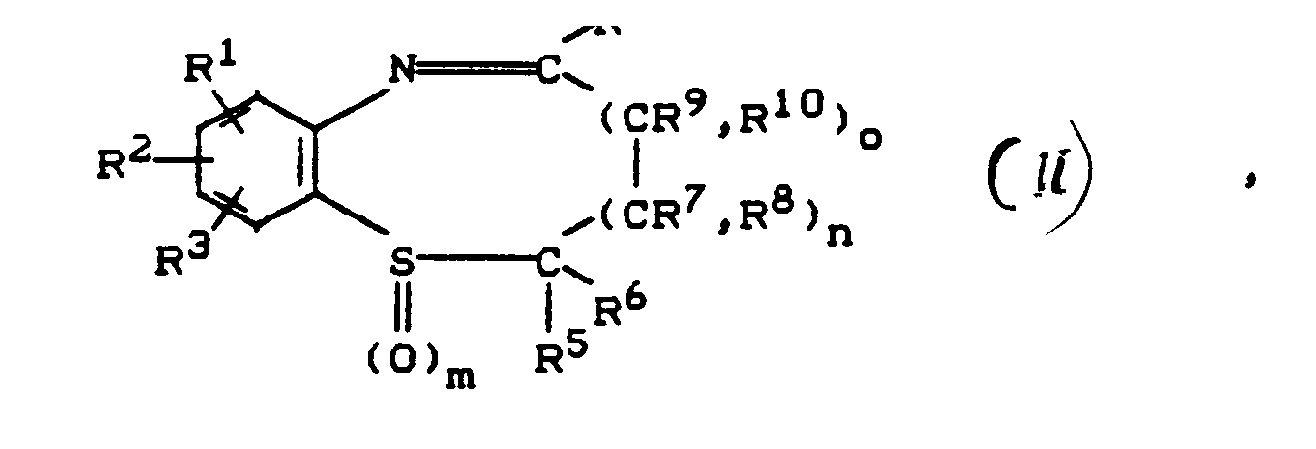
R¹ und R² unabhängig voneinander Wasserstoff, Hydroxy, Amino, Cyano, Halogen, Nitro, Carboxyl, Halogenocarbonyl, Carboxyamid, Alkoxycarbonyl, Alkyl, Aryl, Alkoxy, Aryloxy, Acyloxy, Alkylthio, Arylthio, Acylthio, Acyl, Thioacyl oder Acylamino bedeuten,
R³ für Wasserstoff oder Chlor steht und weiterhin mit einem der Reste R¹ oder R² bei benachbarter Substitution und gemeinsam mit den substituierten C-Atomen einen anellierten gesättigten, ungesättigten oder aromatischen isocyclischen oder heterocyclischen 5-8-Ring bilden kann,
R⁴ Wasserstoff, Alkyl, Aryl, Halogen, Alkylthio, Arylthio, Alkoxy, Aryloxy, Amino, Hydrazino, Alkylhydrazino oder Phenylhydrazino bedeutet,
m, n und o unabhängig voneinander den Wert 0 oder 1 annehmen können,
R⁵, R⁷ und R⁹ unabhängig voneinander Wasserstoff, Alkyl, Alkoxy, Phenyl, Acyloxy, Cyano, Halogen, Carboxyl, Alkoxycarbonyl, Phenoxy oder Acyl bedeuten und
R⁶, R⁸ und R¹⁰ unabhängig voneinander Wasserstoff, Alkyl oder Halogen bedeuten, wobei R⁵ und R⁷ oder R⁷ und R⁹ gemeinsam mit den substituierten C-Atomen einen gesättigten, ungesättigten oder aromatischen isocyclischen oder heterocyclischen 5-8-Ring darstellen können und wobei
weiterhin R⁶ und R⁸ oder R⁸ und R¹⁰ gemeinsam eine Doppelbindung bilden können und wobei
weiterhin R⁵ und R⁶ gemeinsam doppelt gebundene Sauerstoff, Schwefel oder R¹¹-substituierten Stickstoff darstellen können, wobei R¹¹ Alkyl, Aryl, Acyl, Alkylamino oder Arylamino bedeutet,
oder Benzo[f]-1,4-thiazepine der Formel

R³¹ und R³² unabhängig voneinander Wasserstoff, Hydroxy, Amino, Cyano, Halogen, Nitro, C₁-C₈-Alkyl, nicht substituiertes oder durch R³¹ und R³² substituiertes Phenyl (mit Ausnahme der erneuten Substitution durch R³¹- und R³²-substituiertes Phenyl), C₁-C₈-Alkoxy, Phenoxy, C₁-C₈-Acyloxy, C₁ C₈-Acyl oder C₁-C₈-Alkoxycarbonyl bedeuten,
R³³ für Wasserstoff oder Chlor steht und weiterhin mit einem der Reste R³¹ oder R³² und gemeinsam mit den substituierten C-Atomen einen anellierten gesättigten, ungesättigten oder aromatischen isocyclischen oder heterocyclischen 5-8-Ring bilden kann,
R³⁴, R³⁶ und R⁴⁰ unabhängig voneinander Wasserstoff, C₁-C₈-Alkyl, nicht substituiertes oder durch R³¹ und R³² substituiertes Phenyl (mit Ausnahme der erneuten Substitution durch R³¹- und R³²-substituiertes Phenyl), C₁-C₈-Acyl, C₁-C₈-Alkoxycarbonyl, Cyano, Halogen, Carboxyl, C₁-C₈-Alkoxy, C₁-C₈-Alkylthio, Phenylthio, Benzylthio, Phenoxy oder C₁-C₈-Acyloxy bedeuten,
R³⁵, R³⁷ und R³⁹ unabhängig voneinander Wasserstoff, C₁-C₈-Alkyl, Halogen, C₁-C₈-Alkoxy oder C₁-C₈-Alkylthio bedeuten,
R³⁸ Wasserstoff, C₁-C₈-Alkyl, nicht substituierte oder durch R³¹- und R³²-substituiertes Phenyl (mit Ausnahme der erneuten Substitution durch R³¹- und R³²-substituiertes Phenyl), C₁-C₈-Acyl, C₁-C₈-Thioacyl, Halogencarbonyl oder C₁-C₈-Alkoxycarbonyl bedeutet und
p für die Zahl Null oder Eins steht,
wobei weiterhin
die Substituentenpaare R³⁴ und R³⁵, R³⁶ und R³⁷ sowie R³⁹ und R⁴⁰ unabhängig voneinander doppelt gebundenen Sauerstoff, Schwefel oder R³⁸-substituierten Stickstoff bedeuten können und wobei weiterhin
die Substituentenpaare R³⁵ und R³⁶ sowie R³⁸ und R³⁹ unabhängig voneinander eine Doppelbindung bilden können und wobei weiterhin
die Substituentenpaare R³⁴ und R³⁷ sowie R³⁸ und R³⁹ unabhängig voneinander 3- bis 5-gliedriges Alkylen bilden können, bei dem 1 oder 2 C-Atome durch Sauerstoff, Schwefel oder R³⁸-substituierten Stickstoff ersetzt sein können, und wobei weiterhin
R⁴⁰ auch die Bedeutung Hydrazino, C₁-C₈-Alkylhydrazino oder Phenyl-hydrazino annehmen kann, einsetzt.

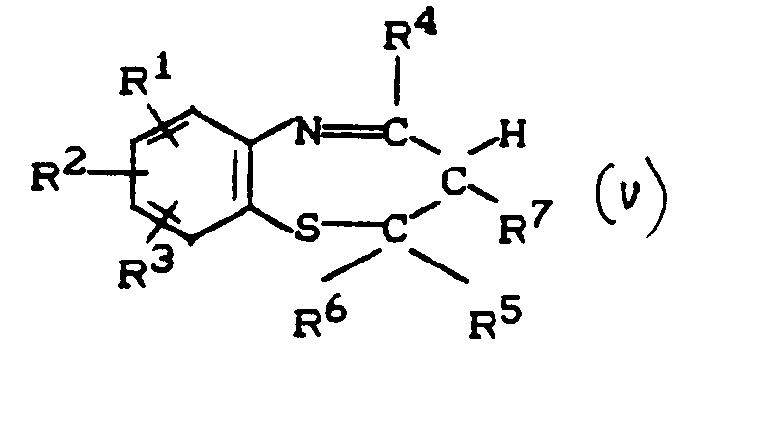

R¹² und R¹³ unabhängig voneinander Wasserstoff, Halogen, Nitro, Alkyl, Aryl, Alkoxy, Aryloxy, Acyloxy, Alkylthio, Arylthio, Acyl oder Thioacyl bedeuten und
R¹⁴ für Wasserstoff oder Chlor steht und weiterhin mit einem der Reste R¹² und R¹³ und gemeinsam mit den durch sie substituierten C-Atomen einen anellierten, gesättigten isocyclischen 5-7-Ring oder einen anellierten Benzolring bilden kann,
und bevorzugt an die Stelle von R¹², R¹³ und R¹⁴ die Reste R²¹, R²² und R²³ treten, von denen
R²¹ und R²² unabhängig voneinander Wasserstoff, C₁-C₄-Alkyl, C₁-C₄-Alkoxy, Fluor oder Chlor bedeuten und
R²³ für Wasserstoff oder Chlor steht und weiterhin mit einem der Reste R²¹ oder R²² und gemeinsam mit den durch sie substituierten C-Atomen einen anellierten Cyclopentan-, Cyclohexan- oder Benzolring bilden kann.
und bevorzugt an die Stelle von R¹⁵ der Rest R²⁴ tritt, der Wasserstoff, C₁-C₄-Alkyl, Benzyl, Phenyl, C₁-C₄-Alkoxy, C₁-C₄-Alkylthio, Benzyloxy, Benzylthio, Hydrazino oder Phenyl-hydrazino bedeutet.
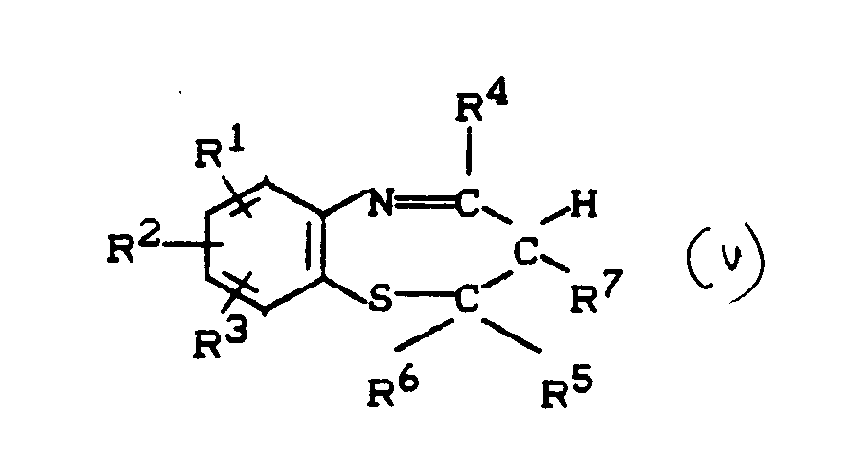

X doppelt gebundenen Sauerstoff, Schwefel oder R³⁸-substituierten Stickstoff bedeutet und
R³¹, R³², R³³, R³⁴, R³⁵, R³⁶, R³⁷, R³⁸ und p den in Anspruch 1 genannten Bedeutungsumfang haben.

R⁴¹ für C₁-C₈-Alkyl, C₁-C₈-Alkoxy, C₁-C₈-Alkylthio, Hydrazino, β-Phenyl-hydrazino oder β-C₁-C₈-Alkyl-hydrazino steht und
R³¹, R³², R³³, R³⁴, R³⁵, R³⁶, R³⁷ und p den in Anspruch 1 genannten Bedeutungsumfang haben.

A Trimethylen, Tetramethylen oder Pentamethylen bedeutet und
R³¹, R³², R³³, R³⁵, R³⁶, R³⁸, R³⁹, R⁴⁰ und p den in Anspruch 1 genannten Bedeutungsumfang haben.
R⁴² und R⁴³ unabhängig voneinander Wasserstoff, Halogen Nitro, Alkyl, Aryl, Alkoxy, Aryloxy, Acyloxy, Alkylthio, Arylthio, Acyl oder Thioacyl bedeuten und
R⁴⁴ für Wasserstoff oder Chlor steht und weiterhin mit einem der Reste R⁴² und R⁴³ und gemeinsam mit den substituierten C-Atomen einen anellierten gesättigten isocyclischen 5-7-Ring oder einen anellierten Benzolring bilden kann,
und bevorzugt dadurch gekennzeichnet, daß an die Stelle von R⁴², R⁴³ und R⁴⁴ die Reste R⁵¹, R⁵² bzw. R⁵³ treten, von denen
R⁵¹ und R⁵² unabhängig voneinander Wasserstoff, C₁-C₄-Alkyl, C₁-C₄-Alkoxy, Fluor oder Chlor bedeuten und
R⁵³ für Wasserstoff oder Chlor steht und weiterhin mit einem der Reste R⁵¹ oder R⁵² und gemeinsam mit den substituierten C-Atomen einen anellierten Cyclopentan-, Cyclohexan- oder Benzolring bilden kann.
Applications Claiming Priority (4)
| Application Number | Priority Date | Filing Date | Title |
|---|---|---|---|
| DE3837574 | 1988-11-05 | ||
| DE19883837574 DE3837574A1 (de) | 1988-11-05 | 1988-11-05 | Verfahren zur kernchlorierung von aromatischen kohlenwasserstoffen |
| DE3837575 | 1988-11-05 | ||
| DE19883837575 DE3837575A1 (de) | 1988-11-05 | 1988-11-05 | Verfahren zur kernchlorierung von aromatischen kohlenwasserstoffen |
Publications (2)
| Publication Number | Publication Date |
|---|---|
| EP0368063A1 EP0368063A1 (de) | 1990-05-16 |
| EP0368063B1 true EP0368063B1 (de) | 1992-06-10 |
Family
ID=25873936
Family Applications (1)
| Application Number | Title | Priority Date | Filing Date |
|---|---|---|---|
| EP89119556A Expired - Lifetime EP0368063B1 (de) | 1988-11-05 | 1989-10-21 | Verfahren zur Kernchlorierung von aromatischen Kohlenwasserstoffen |
Country Status (4)
| Country | Link |
|---|---|
| US (1) | US4990707A (de) |
| EP (1) | EP0368063B1 (de) |
| JP (1) | JP2604864B2 (de) |
| DE (1) | DE58901634D1 (de) |
Cited By (2)
| Publication number | Priority date | Publication date | Assignee | Title |
|---|---|---|---|---|
| RU2115650C1 (ru) * | 1992-11-09 | 1998-07-20 | Дзе Бутс Компани ПЛС | 2,3,4,5-тетрагидро-1,4-бензотиазепины, их стереоизомеры или их фармацевтически приемлемые соли, способ их получения, фармацевтическая композиция, обладающая противосудорожным действием |
| MD4489C1 (ro) * | 2012-04-18 | 2018-01-31 | Les Laboratoires Servier | Derivaţi de 1,4-benzotiazepină, procedeu de sinteză a lor, compoziţii farmaceutice care le conţin şi utilizarea acestora pentru tratarea sau prevenirea afecţiunilor care implică modularea receptorilor de rianodină |
Families Citing this family (23)
| Publication number | Priority date | Publication date | Assignee | Title |
|---|---|---|---|---|
| DE4004821A1 (de) * | 1990-02-16 | 1991-08-22 | Bayer Ag | Verfahren zur kernchlorierung von aromatischen kohlenwasserstoffen |
| US5055235A (en) * | 1990-12-12 | 1991-10-08 | Ethyl Corporation | Bromination process |
| DE4110051A1 (de) * | 1991-03-27 | 1992-10-01 | Bayer Ag | Verfahren zur herstellung von p-dichlorbenzol |
| US6518468B1 (en) | 1994-09-16 | 2003-02-11 | Albemarle Corporation | Bromination process |
| DE4445548A1 (de) * | 1994-12-20 | 1996-06-27 | Bayer Ag | Verfahren zur Herstellung von 3-Fluor-4,6-dichlortoluol |
| US5621153A (en) * | 1995-04-21 | 1997-04-15 | Occidental Chemical Corporation | Process for the preparation of chloro-alkylbenzenes and novel cocatalysts therefor |
| US20040048780A1 (en) * | 2000-05-10 | 2004-03-11 | The Trustees Of Columbia University In The City Of New York | Method for treating and preventing cardiac arrhythmia |
| US6489125B1 (en) * | 2000-05-10 | 2002-12-03 | The Trustees Of Columbia University In The City Of New York | Methods for identifying chemical compounds that inhibit dissociation of FKBP12.6 binding protein from type 2 ryanodine receptor |
| US20040229781A1 (en) * | 2000-05-10 | 2004-11-18 | Marks Andrew Robert | Compounds and methods for treating and preventing exercise-induced cardiac arrhythmias |
| US7718644B2 (en) * | 2004-01-22 | 2010-05-18 | The Trustees Of Columbia University In The City Of New York | Anti-arrhythmic and heart failure drugs that target the leak in the ryanodine receptor (RyR2) and uses thereof |
| US8022058B2 (en) | 2000-05-10 | 2011-09-20 | The Trustees Of Columbia University In The City Of New York | Agents for preventing and treating disorders involving modulation of the RyR receptors |
| US20060293266A1 (en) * | 2000-05-10 | 2006-12-28 | The Trustees Of Columbia | Phosphodiesterase 4D in the ryanodine receptor complex protects against heart failure |
| US7879840B2 (en) * | 2005-08-25 | 2011-02-01 | The Trustees Of Columbia University In The City Of New York | Agents for preventing and treating disorders involving modulation of the RyR receptors |
| US7312044B2 (en) | 2003-03-07 | 2007-12-25 | The Trustees Of Columbia University In The City Of New York | Type 1 ryanodine receptor-based methods |
| US7393652B2 (en) * | 2000-05-10 | 2008-07-01 | The Trustees Of Columbia University In The City Of New York | Methods for identifying a chemical compound that directly enhances binding of FKBP12.6 to PKA-phosphorylated type 2 ryanodine receptor (RyR2) |
| DE10039722A1 (de) * | 2000-08-14 | 2002-02-28 | Bayer Ag | Verfahren zur Kernchlorierung von ortho-Xylol |
| DE10039717A1 (de) * | 2000-08-14 | 2002-02-28 | Bayer Ag | Verfahren zur Kernchlorierung von meta-Xylol |
| US6743825B1 (en) * | 2001-08-03 | 2004-06-01 | Albemarle Corporation | Poly(bromoaryl)alkane additives and methods for their preparation and use |
| CN100448821C (zh) * | 2001-12-21 | 2009-01-07 | 帕布服务公司 | 生产十溴二苯基烷烃的方法与装置 |
| US7544678B2 (en) * | 2002-11-05 | 2009-06-09 | The Trustees Of Columbia University In The City Of New York | Anti-arrythmic and heart failure drugs that target the leak in the ryanodine receptor (RyR2) |
| US8710045B2 (en) * | 2004-01-22 | 2014-04-29 | The Trustees Of Columbia University In The City Of New York | Agents for preventing and treating disorders involving modulation of the ryanodine receptors |
| US7704990B2 (en) * | 2005-08-25 | 2010-04-27 | The Trustees Of Columbia University In The City Of New York | Agents for preventing and treating disorders involving modulation of the RyR receptors |
| CN102746107B (zh) * | 2012-07-18 | 2015-06-17 | 常州新东化工发展有限公司 | 一种甲苯环氯化方法制备一氯甲苯的方法 |
Family Cites Families (4)
| Publication number | Priority date | Publication date | Assignee | Title |
|---|---|---|---|---|
| US4031147A (en) * | 1975-08-01 | 1977-06-21 | Hooker Chemicals & Plastics Corporation | Process for directed chlorination of alkylbenzenes |
| FR2545004B1 (fr) * | 1983-04-29 | 1987-04-17 | Ugine Kuhlmann | Derive n substitue de la phenothiazine comme catalyseur de chloration sur le noyau des hydrocarbures aromatiques |
| DE3718060A1 (de) * | 1987-05-28 | 1988-12-08 | Bayer Ag | Verfahren zur kernchlorierung von aromatischen kohlenwasserstoffen |
| DE58900973D1 (de) * | 1988-05-06 | 1992-04-23 | Bayer Ag | Verfahren zur kernchlorierung von aromatischen kohlenwasserstoffen. |
-
1989
- 1989-10-21 DE DE8989119556T patent/DE58901634D1/de not_active Expired - Lifetime
- 1989-10-21 EP EP89119556A patent/EP0368063B1/de not_active Expired - Lifetime
- 1989-10-26 US US07/427,264 patent/US4990707A/en not_active Expired - Lifetime
- 1989-11-04 JP JP1287775A patent/JP2604864B2/ja not_active Expired - Lifetime
Cited By (2)
| Publication number | Priority date | Publication date | Assignee | Title |
|---|---|---|---|---|
| RU2115650C1 (ru) * | 1992-11-09 | 1998-07-20 | Дзе Бутс Компани ПЛС | 2,3,4,5-тетрагидро-1,4-бензотиазепины, их стереоизомеры или их фармацевтически приемлемые соли, способ их получения, фармацевтическая композиция, обладающая противосудорожным действием |
| MD4489C1 (ro) * | 2012-04-18 | 2018-01-31 | Les Laboratoires Servier | Derivaţi de 1,4-benzotiazepină, procedeu de sinteză a lor, compoziţii farmaceutice care le conţin şi utilizarea acestora pentru tratarea sau prevenirea afecţiunilor care implică modularea receptorilor de rianodină |
Also Published As
| Publication number | Publication date |
|---|---|
| DE58901634D1 (de) | 1992-07-16 |
| JP2604864B2 (ja) | 1997-04-30 |
| JPH02178241A (ja) | 1990-07-11 |
| EP0368063A1 (de) | 1990-05-16 |
| US4990707A (en) | 1991-02-05 |
Similar Documents
| Publication | Publication Date | Title |
|---|---|---|
| EP0368063B1 (de) | Verfahren zur Kernchlorierung von aromatischen Kohlenwasserstoffen | |
| EP0340581B1 (de) | Verfahren zur Kernchlorierung von aromatischen Kohlenwasserstoffen | |
| EP0292824B1 (de) | Verfahren zur Kernchlorierung von aromatischen Kohlenwasserstoffen | |
| EP0442115B1 (de) | Verfahren zur Kernchlorierung von aromatischen Kohlenwasserstoffen | |
| DE2739433C2 (de) | ||
| DE3837575A1 (de) | Verfahren zur kernchlorierung von aromatischen kohlenwasserstoffen | |
| EP0173222A1 (de) | Verfahren zur Kernchlorierung von Toluol | |
| WO2002014245A1 (de) | Verfahren zur kernchlorierung von ortho-xylol | |
| DD297953A5 (de) | Verfahren zur kernchlorierung von aromatischen kohlenwasserstoffen | |
| DE3837574A1 (de) | Verfahren zur kernchlorierung von aromatischen kohlenwasserstoffen | |
| DE3824068A1 (de) | Verfahren zur kernchlorierung von aromatischen kohlenwasserstoffen | |
| DE2644641C2 (de) | Verfahren zur Herstellung von bestimmten kernchlorierten Benzotrichloriden | |
| EP0718261A1 (de) | Verfahren zur Herstellung von 3-Fluor-4,6-dichlortoluol | |
| WO2002014246A1 (de) | Verfahren zur kernchlorierung von meta-xylol | |
| EP0399293B1 (de) | Verfahren zur Herstellung von 2-Chlor-4-nitro-alkylbenzol | |
| EP0657407B1 (de) | Verfahren zur Herstellung von 3-Fluor-4,6-dichlortoluol | |
| DE3815537A1 (de) | Verfahren zur kernchlorierung von aromatischen kohlenwasserstoffen | |
| EP0019789B1 (de) | Verfahren zur Herstellung von 1,3,5-Trichlorbenzol | |
| DE2645114A1 (de) | Verfahren zur halogenierung und halogenierenden oxydation aromatischer verbindungen | |
| EP0945416B1 (de) | Verfahren zur Herstellung von 2,4-Dichlor-3,5-dimethylfluorbenzol | |
| US4681957A (en) | Method of preparing hydrocarbon substituted dithiocarbamates of molybdenum | |
| DE2332081C2 (de) | Verfahren zur Herstellung von 5-Cycloalkyl-6-halogen-indan-1-carbonsäuren | |
| DE2256702C2 (de) | Verfahren zur Herstellung von 1- Methyl-3-(monohalogen-phenyl)-indanen | |
| Voronkov et al. | A study of the reactions of sulfur with organic compounds: XV. The action of sulfur on exo-halogen derivatives of ethylbenzene and styrene | |
| EP0586918A1 (de) | Verbessertes Verfahren zur Kernchlorierung von aromatischen Kohlenwasserstoffen |
Legal Events
| Date | Code | Title | Description |
|---|---|---|---|
| PUAI | Public reference made under article 153(3) epc to a published international application that has entered the european phase |
Free format text: ORIGINAL CODE: 0009012 |
|
| 17P | Request for examination filed |
Effective date: 19891021 |
|
| AK | Designated contracting states |
Kind code of ref document: A1 Designated state(s): BE DE FR GB IT |
|
| 17Q | First examination report despatched |
Effective date: 19911112 |
|
| GRAA | (expected) grant |
Free format text: ORIGINAL CODE: 0009210 |
|
| AK | Designated contracting states |
Kind code of ref document: B1 Designated state(s): BE DE FR GB IT |
|
| REF | Corresponds to: |
Ref document number: 58901634 Country of ref document: DE Date of ref document: 19920716 |
|
| GBT | Gb: translation of ep patent filed (gb section 77(6)(a)/1977) | ||
| ET | Fr: translation filed | ||
| ITF | It: translation for a ep patent filed | ||
| PLBE | No opposition filed within time limit |
Free format text: ORIGINAL CODE: 0009261 |
|
| STAA | Information on the status of an ep patent application or granted ep patent |
Free format text: STATUS: NO OPPOSITION FILED WITHIN TIME LIMIT |
|
| 26N | No opposition filed | ||
| REG | Reference to a national code |
Ref country code: GB Ref legal event code: IF02 |
|
| PGFP | Annual fee paid to national office [announced via postgrant information from national office to epo] |
Ref country code: DE Payment date: 20020913 Year of fee payment: 14 |
|
| PGFP | Annual fee paid to national office [announced via postgrant information from national office to epo] |
Ref country code: FR Payment date: 20021016 Year of fee payment: 14 |
|
| PG25 | Lapsed in a contracting state [announced via postgrant information from national office to epo] |
Ref country code: DE Free format text: LAPSE BECAUSE OF NON-PAYMENT OF DUE FEES Effective date: 20040501 |
|
| PG25 | Lapsed in a contracting state [announced via postgrant information from national office to epo] |
Ref country code: FR Free format text: LAPSE BECAUSE OF NON-PAYMENT OF DUE FEES Effective date: 20040630 |
|
| REG | Reference to a national code |
Ref country code: FR Ref legal event code: ST |
|
| PGFP | Annual fee paid to national office [announced via postgrant information from national office to epo] |
Ref country code: GB Payment date: 20041020 Year of fee payment: 16 |
|
| PG25 | Lapsed in a contracting state [announced via postgrant information from national office to epo] |
Ref country code: GB Free format text: LAPSE BECAUSE OF NON-PAYMENT OF DUE FEES Effective date: 20051021 |
|
| GBPC | Gb: european patent ceased through non-payment of renewal fee |
Effective date: 20051021 |
|
| PGFP | Annual fee paid to national office [announced via postgrant information from national office to epo] |
Ref country code: IT Payment date: 20081028 Year of fee payment: 20 Ref country code: BE Payment date: 20081009 Year of fee payment: 20 |
|
| BE20 | Be: patent expired |
Owner name: *LANXESS DEUTSCHLAND G.M.B.H. Effective date: 20091021 |