EP0374643A2 - Verfahren zur Herstellung von dünnen Schichten - Google Patents
Verfahren zur Herstellung von dünnen Schichten Download PDFInfo
- Publication number
- EP0374643A2 EP0374643A2 EP89122737A EP89122737A EP0374643A2 EP 0374643 A2 EP0374643 A2 EP 0374643A2 EP 89122737 A EP89122737 A EP 89122737A EP 89122737 A EP89122737 A EP 89122737A EP 0374643 A2 EP0374643 A2 EP 0374643A2
- Authority
- EP
- European Patent Office
- Prior art keywords
- thin films
- cathode
- hydrophobic substance
- surfactant
- electrode
- Prior art date
- Legal status (The legal status is an assumption and is not a legal conclusion. Google has not performed a legal analysis and makes no representation as to the accuracy of the status listed.)
- Withdrawn
Links
Images



Classifications
-
- G—PHYSICS
- G03—PHOTOGRAPHY; CINEMATOGRAPHY; ANALOGOUS TECHNIQUES USING WAVES OTHER THAN OPTICAL WAVES; ELECTROGRAPHY; HOLOGRAPHY
- G03G—ELECTROGRAPHY; ELECTROPHOTOGRAPHY; MAGNETOGRAPHY
- G03G5/00—Recording-members for original recording by exposure, e.g. to light, to heat or to electrons; Manufacture thereof; Selection of materials therefor
- G03G5/02—Charge-receiving layers
- G03G5/04—Photoconductive layers; Charge-generation layers or charge-transporting layers; Additives therefor; Binders therefor
- G03G5/05—Organic bonding materials; Methods for coating a substrate with a photoconductive layer; Inert supplements for use in photoconductive layers
- G03G5/0525—Coating methods
Definitions
- the present invention relates to a process for producing thin films, and more particularly to a process for efficiently producing thin films which are tightly sticking to cathodes consisting of base metals such as aluminum and the like.
- the vacuum deposition method For producing thin films including coloring matter, there have heretofore been known the vacuum deposition method, the heat CVD method, the plasma CVD method, the ultrahigh vacuum (ion beam, molecular beam epitaxy) method, the LB membrane method and the casting method.
- the object of the present invention is to provide a process for forming thin films which are uniform and tightly sticking to base metals.
- Another object of the present invention is to provide a process for efficiently producing an excellent photoconductor for electrophotography.
- the present invention is to provide a process for producing a thin film, characterized by electrotreating a dispersion or solution obtained by dispersing or dissolving hydrophobic substance powder in an aqueous medium with a surfactant having a HLB value of 10.0 to 20.0 under the conditions for forming thin films of abovementioned hydrophobic substances on a cathode.
- hydrophobic substance powder is applied as the material of thin films.
- the average particle diameter of said hydrophobic substance powder is preferably not more than 10 ⁇ m, particularly 1 to 0.01 ⁇ m. If the average particle diameter is in excess of 10 ⁇ m, there may be caused various disadvantages that it takes much time to disperse or dissolve in aqueous medium or it is difficult to disperse or dissolve homogeneously.
- the kind of said hydrophobic substance powder may be selected properly according to the uses of thin films to be formed, and various ones can be used irrespective of organic substance or inorganic substance.
- coloring matters for optical memory are coloring matters for optical memory and organic coloring matters such as perylene, indigo, thioindigo, squalilium, dichlorobenzene, thiapyrylium, azo-type coloring matter, quinacridone, viologen, Sudan, lake pigment, phthalocyanine blue, photalocyanine green, anthracene, anthraquinone, phthalocyanine, metal complexes of phthalocyanine, derivatives thereof, porphyrin, metal complexes of porphyrin, and derivatives thereof; electrochromic materials such as 1,1′-diheptyl-4,4′-bipyridinium dibromide, 1,1′-didodecyl-4,4′-bipyridinium dibromide and the like, lightsensitive materials (photochro
- hydrophobic compounds among the coloring matters each for electronics, recording, photo-chromism, photos, energy use, biomedicals, and coloring matters for food and cosmetics, dyes, coloring matters for specific coloring which are listed in "Color Chemical Cyclopedia", CMC Co., Ltd., pp542 - 717, March 28, 1988.
- Particularly preferred among the above are metal complexes and derivatives of phthalocyanine (Pc), specifically X-type and ⁇ -type H2-Pc, ⁇ -type, Cu-Pc, VO-Pc, InCl-Pc, AlCl-Pc, ⁇ -type TiO-Pc, Mg-Pc and the like.
- electrically conductive organic materials and gas sensor materials such as the 1:1 complex of 7,7,8,8-tetra-cyanoquinonedimethane (TCNQ) and tetrathiafulvalene (TTF), light curing paints such as pentaerythritol diacrylate and the like, diazo-type lightsensitive materials and paints such as 1-phenylazo-2-naphthol and the like can be used.
- TCNQ 7,7,8,8-tetra-cyanoquinonedimethane
- TTF tetrathiafulvalene
- light curing paints such as pentaerythritol diacrylate and the like
- diazo-type lightsensitive materials and paints such as 1-phenylazo-2-naphthol and the like
- water-insoluble polymers including general purpose polymers such as polycarbonate, polystyrene, polyethylene, polypropylene polyamide, polyphenylene sulfide (PPS), polyphenylene oxide (PPO), polyacrylonitrile (PAN) and the like; polyphenylene, polypyrrole, polyaniline, polythiophene, acetyl cellulose, poly(vinyl acetate), poly(vinyl butyral), and various polymers (poly(vinyl pyridine) and the like) and copolymers (copolymer of methyl methacrylate and methacrylic acid and the like) can be used.
- general purpose polymers such as polycarbonate, polystyrene, polyethylene, polypropylene polyamide, polyphenylene sulfide (PPS), polyphenylene oxide (PPO), polyacrylonitrile (PAN) and the like
- PPS polyphenylene sulfide
- PPO polyphenylene oxide
- the inorganic hydrophobic substances therein may extend to those of various kinds in various manners, including TiO2, C, CdS, WO3, Fe2O3, Y2O3 ZrO2 Al2O3, CuS, ZnS, TeO2, LiNb3O, Si3N4 and the like, and various kinds of superconductive oxides.
- CGM charge carrier generation materials
- preferable thin films as said photoconductor for electrophotography can be obtained.
- aqueous medium to be used in the present invention various media such as water, mixture of water and alcohol, mixture of water and acetone, and the like can be used.
- surfactants used in the present invention are the surfactants having HLB value of 10.0 to 20.0, preferably 12 to 18.
- Preferred example of such surfactants are non-ionic surfactants such as polyoxyethylene alkylether, polyoxyethylene fatty acid ester, polyoxyethylene alkylphenylether, polyoxyethylene polyoxypropylene alkylether and the like.
- alkyl sulfates, polyoxyethylene alkylether sulfates, alkyltrimethylammonium chloride, fatty acid diethylaminoethyl amide and the like can also be used.
- ferrocene derivatives can be also used.
- Said ferrocene derivatives include various kinds. Representative examples of them are ferrocene derivatives represented by the general formula: wherein, R1 and R2 are each an alkyl group having not more than 6 carbon atoms, an alkoxyl group having not more than 6 carbon atoms, an amino group, a dimethylamino group, a hydroxyl group, an acetyl amino group, a carboxyl group, a methoxycarbonyl group, an acetoxyl group, an aldehyde group and a halogen, R3 indicates a hydrogen or a straight chain or branched alkyl group or alkenyl group having 4 to 18 carbon atoms, and R4 and R5 indicate each a hydrogen or a methyl group.
- Y indicates an oxygen or an oxycarbonyl group
- a is an integer of 0 to 4
- b is an integer of 0 to 4
- m is an integer of 1 to 18, and
- n is a real number of 2.0 to 70.0.
- R1 and R2 are each an alkyl group (a methyl group (CH3), an ethyl group (C2H5), etc.), an alkoxyl group (a methoxyl group (OCH3), an ethoxyl group (OC2H5), etc.), an amino group (NH2), a dimethylamino group (N(CH3)2), a hydroxyl group (OH), an acetylamino group (NHCOCH3), a carboxyl group (COOH), an acetoxyl group (OCOCH3), a methoxycarbonyl group (COOCH3), an aldehyde group (CHO) or a halogen (a chlorine, a bromine, a fluorine, an iodine, etc.)
- R1 and R2 may be identical or different, and in case plural R1s and R2s exist in five-membered ring of ferrocene, plural substituents may be identical or different.
- R3 indicates
- Y indicates an oxygen (-O-) or an oxycarbonyl group (-C-O-), and R4 and R5 are each a hydrogen or a methyl group (CH3). Accordingly, or the like.
- n indicates an integer of 1 to 18. Accordingly, between the ring member carbon atoms and the abovedescribed oxygen or an oxycarbonyl group, an alkylene group having 1 to 18 carbon atoms such as an ethylene group, a propylene group and the like is interposed. Further, in indicates the repeating number of abovedescribed oxyalkylene group including oxyethylene group and the like, and means not only integers but also real number including them in the rang eof 2.0 to 70.0, showing the mean value of the repeating number of oxyalkylene group and the like.
- ferrocene derivatives represented by the above general formula (I) various ones including ammonium type and pyrridine type (International Patent Publication WO88/07538, etc.) can be used in the present invention.
- various ones including ammonium type and pyrridine type can be used in the present invention.
- further examples are the ferrocene derivatives described in the specifications of Japanese Patent Application Nos. 233797/1988, 233798/1988, 248600/1988, 248601/1988, 45370/1989, 54956/1989, 70680/1989, 70681/1989, 76498/1989 and 74699/1989.
- ferrocene derivatives can very efficiently dissolve or disperse hydrophobic substances into aqueous medium.
- one of the above surfactants and hydrophobic substance powder are added in an aqueous medium, and the mixture is stirred fully by the use of ultrasonic waves, homogenizer or stirrer for 1 hour to 7 days.
- the hydrophobic substance powder is homogeneously dispersed or dissolved in the aqueous medium by the function of surfactant having a HLB value of 10.0 to 20.0, to be dispersion or aqueous solution.
- hydrophobic substance powder may be supplementarily added to the electrolyte, or there may be provided a recycle circuit in which a part of electrolyte is withdrawn out of the system, the inorganic substance is added to the withdrawn electrolyte and thoroughly stirred, and then the resulting solution is returned to the system.
- the concentration of the surfactant in that process is not critical, but is usually selected in the range of 10 ⁇ M to 1 M, preferably 0.5 mM to 5 mM.
- concentration of it should be the threshold micelle concentration or higher.
- the supporting salt is added, if necessary, in order to control the electrical conductance of the aqueous medium.
- the amount of the supporting salt added is not critical as long as it does not inhibit the deposition of the hydrophobic substance dissolved or dispersed in the solution, but usually about 0 to 300 times and preferably about 10 to 200 times that of the above surfactant. Said supporting salt is not necessarily inevitable to electrotreatment. without it, a film of high purity containing no supporting salt can be obtained.
- the type of supporting salt is not critical as long as it is able to control the electric conductance for the aqueous medium without inhibiting the dissolving or deposition of the above hydrophobic substance onto the electrode.
- anodes are ITO (mixed oxide of indium oxide and tin oxide), platinum, gold, silver, glassy carbon, an electrically conductive metal oxide, an electrically conductive organic polymer and the like.
- cathodes are base metals including aluminum, zinc, tin, iron, nickel, magnesium and the like, and alloys including stainless steel and the like.
- copper, platinum, gold, silver, glassy carbon, electrically conductive metal oxide, an electrically conductive organic polymer and the like, semiconductors such as crystalline silicone, amorphous silicone and the like can be applied.
- a metal more noble than the oxidation-reduction potential (against +0.15 to +0.30 V saturated calomel electrode) of ferrocene derivatives, or an electrically conductive substance is used as the cathode.
- the potential on the cathode should be controlled to -0.03 to -10.0 V and in the electrotreatment with a galvanostat, the current density should be controlled in the range of 1 ⁇ A/cm2 to 100 mA/cm2.
- the liquid temperature is 0 to 50°C, preferably 5 to 40°C
- the potential of the cathode is -0.03 to -5.00 V, preferably -0.05 to -2.00 V.
- the current density should be 1 to 300 ⁇ A/cm2, preferably 1 to 100 ⁇ A/cm2.
- the thin films obtained according to the process of the present invention are effectively subjected to, if necessary, post treatments such as electrowashing, solvent washing, and baking treatment at 100 to 300°C.
- the thin film formed according to the process of the present invention are extensively and effectively used as the materials for optical disk, optical memory, photosensitive material, color filters, solar battery, toner, pigments and the like.
- charge carrier generation layer is formed on the cathode, as described before.
- it is effective to add an appropriate amount of binder polymer in the aqueous medium, if desired, to be included in the charge carrier generation layer to be formed, and heighten the mechanical strength of said layer.
- binder polymer to be used there poly(vinyl butyral), poly(methyl methacrylate), polyester, poly(vinylidene chloride), polyamide, styrene-maleic anhydride polymer and the like can be used.
- charge carrier transport material used for forming said charge carrier transport layer compounds such as indoline, quinoline, triphenylamine, bisazo, pyrazole, pyrazoline, oxidiazole, thiazole, imidazole, hydrazone, triphenylmethane, carbazole, benzaldehyde and the like or derivatives thereof, and polymers or copolymers containing these compounds or derivatives as substituents, or blends of the above compounds or derivatives and various polymer or copolymers.
- compounds such as indoline, quinoline, triphenylamine, bisazo, pyrazole, pyrazoline, oxidiazole, thiazole, imidazole, hydrazone, triphenylmethane, carbazole, benzaldehyde and the like or derivatives thereof, and polymers or copolymers containing these compounds or derivatives as substituents, or blends of the above compounds or derivatives and various polymer or copolymers.
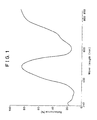
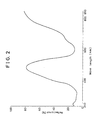
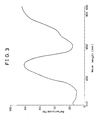
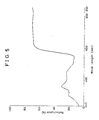
- the reflection peak confirmed that the thin film on the aluminum (or platinum) substrate was made of phthalocyanine.
- micelle forming agent of ferrocene derivative represented by the structural formula 3 to make 2 mM.
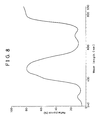
- To 20 cc of micelle solution was added 0.1 g of copper phthalocyanine (produced by Dainichi Seika Co., Ltd.) and the resulting mixture was stirred by ultrasonic wave for 10 minutes to disperse and dissolve. After stirring with a stirrer 2 days and nights, obtained dispersed and soluble micelle solution was subjected to centrifugal separation for 30 minutes at 2000 rpm. A visible absorption spectrum of the supernatant confirmed that copper phthalocyanine was dispersed.
Landscapes
- Physics & Mathematics (AREA)
- General Physics & Mathematics (AREA)
- Photoreceptors In Electrophotography (AREA)
- Electrolytic Production Of Metals (AREA)
Applications Claiming Priority (6)
| Application Number | Priority Date | Filing Date | Title |
|---|---|---|---|
| JP317627/88 | 1988-12-17 | ||
| JP317626/88 | 1988-12-17 | ||
| JP31762788A JPH02163745A (ja) | 1988-12-17 | 1988-12-17 | 電子写真感光体の製造方法 |
| JP63317626A JPH0759757B2 (ja) | 1988-12-17 | 1988-12-17 | 薄膜の製造方法 |
| JP11748189A JPH02298294A (ja) | 1989-05-12 | 1989-05-12 | 薄膜の製造方法 |
| JP117481/88 | 1989-05-12 |
Publications (2)
| Publication Number | Publication Date |
|---|---|
| EP0374643A2 true EP0374643A2 (de) | 1990-06-27 |
| EP0374643A3 EP0374643A3 (de) | 1991-07-17 |
Family
ID=27313385
Family Applications (1)
| Application Number | Title | Priority Date | Filing Date |
|---|---|---|---|
| EP19890122737 Withdrawn EP0374643A3 (de) | 1988-12-17 | 1989-12-09 | Verfahren zur Herstellung von dünnen Schichten |
Country Status (3)
| Country | Link |
|---|---|
| US (1) | US5122247A (de) |
| EP (1) | EP0374643A3 (de) |
| CA (1) | CA2004789A1 (de) |
Cited By (2)
| Publication number | Priority date | Publication date | Assignee | Title |
|---|---|---|---|---|
| EP0440095A3 (en) * | 1990-01-30 | 1992-06-10 | Idemitsu Kosan Company Limited | Process for producing thin films and color filters |
| CN110358515A (zh) * | 2019-06-13 | 2019-10-22 | 中国石油化工股份有限公司 | 油井缓蚀用组合物及其制备方法、油井缓蚀剂 |
Families Citing this family (11)
| Publication number | Priority date | Publication date | Assignee | Title |
|---|---|---|---|---|
| US5240797A (en) * | 1988-04-30 | 1993-08-31 | Seiko Epson Corporation | Thin film device and method of manufacture |
| JP2774351B2 (ja) * | 1990-03-26 | 1998-07-09 | 出光興産株式会社 | 有機薄膜エレクトロルミネッセンス素子及びその製造方法 |
| JP2949392B2 (ja) * | 1992-09-07 | 1999-09-13 | 日石三菱株式会社 | カラーフィルターの製造法 |
| JP4303794B2 (ja) * | 1997-06-27 | 2009-07-29 | ユニヴァーシティ オブ サウサンプトン | 多孔質フィルムとその調製方法 |
| US6127192A (en) * | 1998-08-27 | 2000-10-03 | Micron Technology, Inc. | Complexes having tris (pyrazolyl) borate ligands for forming films |
| US6683175B2 (en) * | 2001-04-12 | 2004-01-27 | Canon Kabushiki Kaisha | Porphyrin compound, and electrophotographic photosensitive member, process-cartridge and apparatus using the compound |
| WO2004102629A2 (en) * | 2003-05-08 | 2004-11-25 | Northeastern University | Method for synthesizing conducting polymers from neat monomer solutions |
| US9068271B2 (en) * | 2010-03-03 | 2015-06-30 | Alliance For Sustainable Energy, Llc | Electrochemical nitridation of metal surfaces |
| DE102016215709A1 (de) * | 2015-08-28 | 2017-03-02 | Tsubakimoto Chain Co. | Kettenkomponente und Kette |
| CN113308111A (zh) * | 2021-06-03 | 2021-08-27 | 宁夏清研高分子新材料有限公司 | 一种用于柔性印刷线路板的液晶高分子薄膜及其制备方法 |
| CN117510758B (zh) * | 2024-01-05 | 2024-04-02 | 淄博鲁华泓锦新材料集团股份有限公司 | 基于管式反应的苯乙烯-异戊二烯-苯乙烯连续加氢工艺 |
Family Cites Families (13)
| Publication number | Priority date | Publication date | Assignee | Title |
|---|---|---|---|---|
| US3971708A (en) * | 1971-07-08 | 1976-07-27 | Scm Corporation | Electrocoating process |
| CA1083756A (en) * | 1975-08-07 | 1980-08-19 | Emery Industries, Inc. | Prevention of water staining of aluminum |
| US4343885A (en) * | 1978-05-09 | 1982-08-10 | Dynachem Corporation | Phototropic photosensitive compositions containing fluoran colorformer |
| JPS56152765A (en) * | 1980-04-30 | 1981-11-26 | Kansai Paint Co Ltd | Formation of olefin resin coating film |
| DE3376658D1 (en) * | 1982-11-18 | 1988-06-23 | Ici Plc | Coating process by electrodeposition and coating compositions useful in the process |
| JPS60179702A (ja) * | 1984-02-28 | 1985-09-13 | Seiko Instr & Electronics Ltd | 多色表面着色体の製造方法 |
| GB8411890D0 (en) * | 1984-05-10 | 1984-06-13 | Albright & Wilson | Dyeing processes |
| US4839322A (en) * | 1986-05-05 | 1989-06-13 | The Lubrizol Corporation | High surface area polymers of pyrrole or copolymers of pyrrole |
| DE3855770T2 (de) * | 1987-03-31 | 1997-05-07 | Idemitsu Kosan Co | Ferrocenderivate, diese enthaltende oberflächenaktive stoffe und verfahren zur herstellung dünner organischer filme |
| JPS63243298A (ja) * | 1987-03-31 | 1988-10-11 | Idemitsu Kosan Co Ltd | 有機薄膜の製造方法 |
| DE3852818T2 (de) * | 1987-08-28 | 1995-05-24 | Idemitsu Kosan Co | Ferrocenderivate, oberflächenaktive mittel, die diese enthalten und verfahren zur herstellung dünner organischer filme. |
| US5015748A (en) * | 1988-10-01 | 1991-05-14 | Idemitsu Kosan Co., Ltd. | Novel ferrocene derivatives, surfactants containing same and a process for producing organic thin films |
| JPH02250892A (ja) * | 1989-03-24 | 1990-10-08 | Idemitsu Kosan Co Ltd | 新規フェロセン誘導体,それを含有する界面活性剤及び有機薄膜の製造方法 |
-
1989
- 1989-12-01 US US07/444,817 patent/US5122247A/en not_active Expired - Fee Related
- 1989-12-06 CA CA002004789A patent/CA2004789A1/en not_active Abandoned
- 1989-12-09 EP EP19890122737 patent/EP0374643A3/de not_active Withdrawn
Cited By (2)
| Publication number | Priority date | Publication date | Assignee | Title |
|---|---|---|---|---|
| EP0440095A3 (en) * | 1990-01-30 | 1992-06-10 | Idemitsu Kosan Company Limited | Process for producing thin films and color filters |
| CN110358515A (zh) * | 2019-06-13 | 2019-10-22 | 中国石油化工股份有限公司 | 油井缓蚀用组合物及其制备方法、油井缓蚀剂 |
Also Published As
| Publication number | Publication date |
|---|---|
| CA2004789A1 (en) | 1990-06-17 |
| EP0374643A3 (de) | 1991-07-17 |
| US5122247A (en) | 1992-06-16 |
Similar Documents
| Publication | Publication Date | Title |
|---|---|---|
| US5203974A (en) | Process for producing thin films | |
| EP0374643A2 (de) | Verfahren zur Herstellung von dünnen Schichten | |
| US5128226A (en) | Electrophotographic element containing barrier layer | |
| JPH0555860B2 (de) | ||
| Umeda et al. | Energy gap dependence of the photocarrier generation efficiency in layered organic photoreceptors | |
| JP2825424B2 (ja) | 薄膜及びその製造方法並びにその薄膜を用いる機能素子 | |
| EP0331745B1 (de) | Ferrocenderivate, oberflächenaktive mittel, die diese enthalten und verfahren zur herstellung dünner organischer filme | |
| US5135637A (en) | Eerrocene derivatives, surfactants containing same and process for producing organic thin films | |
| JPH05333575A (ja) | 電子写真感光体 | |
| EP0402980A1 (de) | Elektrophotographisches Aufzeichnungsmaterial | |
| JP2885467B2 (ja) | 薄膜および電子写真感光体の製造方法 | |
| US5028504A (en) | Infrared-sensitive photoconductor elements incorporating a cyanine dye and a perylene pigment | |
| JP2738457B2 (ja) | 薄膜の製造方法 | |
| US3560208A (en) | Cyanine dye containing a pyrrole nucleus used as a sensitizer for organic photoconductors | |
| JP2557834B2 (ja) | 電子写真感光体 | |
| JPH0430172A (ja) | 薄膜および電子写真感光体の製造方法 | |
| JPH068516B2 (ja) | 薄膜の製造方法 | |
| US5248579A (en) | Electrophotographic recording material | |
| JPH02173295A (ja) | 薄膜の製造法 | |
| JPH0323458A (ja) | 電子写真感光体の製造方法 | |
| JPH02164435A (ja) | 薄膜の製造方法 | |
| JP2785353B2 (ja) | 電子写真感光体 | |
| JPH0826476B2 (ja) | 有機薄膜の製造方法 | |
| Biswas et al. | Recent advances in photoconductive and photosensitive polymers | |
| JPH02258843A (ja) | 薄膜の洗浄方法 |
Legal Events
| Date | Code | Title | Description |
|---|---|---|---|
| PUAI | Public reference made under article 153(3) epc to a published international application that has entered the european phase |
Free format text: ORIGINAL CODE: 0009012 |
|
| AK | Designated contracting states |
Kind code of ref document: A2 Designated state(s): BE CH DE FR GB IT LI NL SE |
|
| 17P | Request for examination filed |
Effective date: 19901220 |
|
| PUAL | Search report despatched |
Free format text: ORIGINAL CODE: 0009013 |
|
| AK | Designated contracting states |
Kind code of ref document: A3 Designated state(s): BE CH DE FR GB IT LI NL SE |
|
| 17Q | First examination report despatched |
Effective date: 19921102 |
|
| STAA | Information on the status of an ep patent application or granted ep patent |
Free format text: STATUS: THE APPLICATION IS DEEMED TO BE WITHDRAWN |
|
| 18D | Application deemed to be withdrawn |
Effective date: 19931208 |