EP0401093A1 - Nouveaux dérivés de la pyrrolidone, leur procédé de preparation et les compositions pharmaceutiques les renfermant - Google Patents
Nouveaux dérivés de la pyrrolidone, leur procédé de preparation et les compositions pharmaceutiques les renfermant Download PDFInfo
- Publication number
- EP0401093A1 EP0401093A1 EP90401387A EP90401387A EP0401093A1 EP 0401093 A1 EP0401093 A1 EP 0401093A1 EP 90401387 A EP90401387 A EP 90401387A EP 90401387 A EP90401387 A EP 90401387A EP 0401093 A1 EP0401093 A1 EP 0401093A1
- Authority
- EP
- European Patent Office
- Prior art keywords
- radical
- carbon atoms
- oxo
- pyrrolidine
- atoms
- Prior art date
- Legal status (The legal status is an assumption and is not a legal conclusion. Google has not performed a legal analysis and makes no representation as to the accuracy of the status listed.)
- Granted
Links
- 150000004040 pyrrolidinones Chemical class 0.000 title claims abstract description 10
- 238000000034 method Methods 0.000 title claims description 20
- 238000002360 preparation method Methods 0.000 title claims description 7
- 239000008194 pharmaceutical composition Substances 0.000 title claims description 6
- 150000003839 salts Chemical class 0.000 claims abstract description 10
- HNJBEVLQSNELDL-UHFFFAOYSA-N pyrrolidin-2-one Chemical group O=C1CCCN1 HNJBEVLQSNELDL-UHFFFAOYSA-N 0.000 claims abstract description 8
- 229910052799 carbon Inorganic materials 0.000 claims abstract description 7
- OKTJSMMVPCPJKN-UHFFFAOYSA-N Carbon Chemical compound [C] OKTJSMMVPCPJKN-UHFFFAOYSA-N 0.000 claims abstract description 6
- 230000032683 aging Effects 0.000 claims abstract description 5
- 101100448208 Human herpesvirus 6B (strain Z29) U69 gene Proteins 0.000 claims abstract description 4
- 206010003549 asthenia Diseases 0.000 claims abstract description 4
- 125000003118 aryl group Chemical group 0.000 claims abstract description 3
- 208000037265 diseases, disorders, signs and symptoms Diseases 0.000 claims abstract description 3
- 230000000302 ischemic effect Effects 0.000 claims abstract description 3
- 230000001575 pathological effect Effects 0.000 claims abstract description 3
- 208000011580 syndromic disease Diseases 0.000 claims abstract description 3
- RWRDLPDLKQPQOW-UHFFFAOYSA-N Pyrrolidine Chemical compound C1CCNC1 RWRDLPDLKQPQOW-UHFFFAOYSA-N 0.000 claims description 57
- -1 alkyl radical Chemical class 0.000 claims description 56
- 125000004432 carbon atom Chemical group C* 0.000 claims description 23
- 125000004429 atom Chemical group 0.000 claims description 22
- 150000003254 radicals Chemical class 0.000 claims description 22
- 230000001154 acute effect Effects 0.000 claims description 10
- 229910052757 nitrogen Inorganic materials 0.000 claims description 10
- XLYOFNOQVPJJNP-UHFFFAOYSA-N water Chemical compound O XLYOFNOQVPJJNP-UHFFFAOYSA-N 0.000 claims description 10
- 125000000217 alkyl group Chemical group 0.000 claims description 9
- 125000005843 halogen group Chemical group 0.000 claims description 8
- 125000002496 methyl group Chemical group [H]C([H])([H])* 0.000 claims description 8
- 229910052760 oxygen Inorganic materials 0.000 claims description 7
- 239000001301 oxygen Substances 0.000 claims description 7
- 125000002924 primary amino group Chemical group [H]N([H])* 0.000 claims description 7
- 125000000449 nitro group Chemical group [O-][N+](*)=O 0.000 claims description 6
- 125000004430 oxygen atom Chemical group O* 0.000 claims description 6
- 239000000460 chlorine Substances 0.000 claims description 5
- 125000001064 morpholinomethyl group Chemical group [H]C([H])(*)N1C([H])([H])C([H])([H])OC([H])([H])C1([H])[H] 0.000 claims description 5
- 229910052717 sulfur Inorganic materials 0.000 claims description 5
- MYMOFIZGZYHOMD-UHFFFAOYSA-N Dioxygen Chemical compound O=O MYMOFIZGZYHOMD-UHFFFAOYSA-N 0.000 claims description 4
- 150000005840 aryl radicals Chemical class 0.000 claims description 4
- 125000005842 heteroatom Chemical group 0.000 claims description 4
- 125000004435 hydrogen atom Chemical group [H]* 0.000 claims description 4
- 125000004433 nitrogen atom Chemical group N* 0.000 claims description 4
- 125000004193 piperazinyl group Chemical group 0.000 claims description 4
- 125000004434 sulfur atom Chemical group 0.000 claims description 4
- 125000002023 trifluoromethyl group Chemical group FC(F)(F)* 0.000 claims description 4
- WKBOTKDWSSQWDR-UHFFFAOYSA-N Bromine atom Chemical group [Br] WKBOTKDWSSQWDR-UHFFFAOYSA-N 0.000 claims description 3
- KZBUYRJDOAKODT-UHFFFAOYSA-N Chlorine Chemical compound ClCl KZBUYRJDOAKODT-UHFFFAOYSA-N 0.000 claims description 3
- 239000002253 acid Substances 0.000 claims description 3
- 229910052801 chlorine Inorganic materials 0.000 claims description 3
- 125000004573 morpholin-4-yl group Chemical group N1(CCOCC1)* 0.000 claims description 3
- 150000003335 secondary amines Chemical class 0.000 claims description 3
- XTHPWXDJESJLNJ-UHFFFAOYSA-N sulfurochloridic acid Chemical compound OS(Cl)(=O)=O XTHPWXDJESJLNJ-UHFFFAOYSA-N 0.000 claims description 3
- 239000004480 active ingredient Substances 0.000 claims description 2
- 201000010099 disease Diseases 0.000 claims description 2
- 125000002768 hydroxyalkyl group Chemical group 0.000 claims description 2
- HZVOZRGWRWCICA-UHFFFAOYSA-N methanediyl Chemical compound [CH2] HZVOZRGWRWCICA-UHFFFAOYSA-N 0.000 claims description 2
- 210000005036 nerve Anatomy 0.000 claims description 2
- 239000000546 pharmaceutical excipient Substances 0.000 claims description 2
- 229940124531 pharmaceutical excipient Drugs 0.000 claims description 2
- 125000001997 phenyl group Chemical group [H]C1=C([H])C([H])=C(*)C([H])=C1[H] 0.000 claims description 2
- 125000000587 piperidin-1-yl group Chemical group [H]C1([H])N(*)C([H])([H])C([H])([H])C([H])([H])C1([H])[H] 0.000 claims description 2
- 230000000750 progressive effect Effects 0.000 claims description 2
- 125000000714 pyrimidinyl group Chemical group 0.000 claims description 2
- 125000000335 thiazolyl group Chemical group 0.000 claims description 2
- 230000001052 transient effect Effects 0.000 claims description 2
- VEXZGXHMUGYJMC-UHFFFAOYSA-N Hydrochloric acid Chemical compound Cl VEXZGXHMUGYJMC-UHFFFAOYSA-N 0.000 claims 2
- 125000002887 hydroxy group Chemical group [H]O* 0.000 claims 1
- 150000001875 compounds Chemical class 0.000 abstract description 21
- 208000035475 disorder Diseases 0.000 abstract 1
- 125000000547 substituted alkyl group Chemical group 0.000 abstract 1
- 206010021143 Hypoxia Diseases 0.000 description 16
- IJGRMHOSHXDMSA-UHFFFAOYSA-N Atomic nitrogen Chemical compound N#N IJGRMHOSHXDMSA-UHFFFAOYSA-N 0.000 description 14
- ZMXDDKWLCZADIW-UHFFFAOYSA-N N,N-Dimethylformamide Chemical compound CN(C)C=O ZMXDDKWLCZADIW-UHFFFAOYSA-N 0.000 description 11
- OKKJLVBELUTLKV-UHFFFAOYSA-N methanol Natural products OC OKKJLVBELUTLKV-UHFFFAOYSA-N 0.000 description 11
- 239000000243 solution Substances 0.000 description 11
- 230000000141 anti-hypoxic effect Effects 0.000 description 8
- 230000000694 effects Effects 0.000 description 8
- 230000007954 hypoxia Effects 0.000 description 8
- 206010002660 Anoxia Diseases 0.000 description 7
- 241000976983 Anoxia Species 0.000 description 7
- 230000007953 anoxia Effects 0.000 description 7
- LFQSCWFLJHTTHZ-UHFFFAOYSA-N Ethanol Chemical compound CCO LFQSCWFLJHTTHZ-UHFFFAOYSA-N 0.000 description 6
- YNAVUWVOSKDBBP-UHFFFAOYSA-N Morpholine Chemical compound C1COCCN1 YNAVUWVOSKDBBP-UHFFFAOYSA-N 0.000 description 6
- VYPSYNLAJGMNEJ-UHFFFAOYSA-N Silicium dioxide Chemical compound O=[Si]=O VYPSYNLAJGMNEJ-UHFFFAOYSA-N 0.000 description 6
- WYURNTSHIVDZCO-UHFFFAOYSA-N Tetrahydrofuran Chemical compound C1CCOC1 WYURNTSHIVDZCO-UHFFFAOYSA-N 0.000 description 6
- 125000003545 alkoxy group Chemical group 0.000 description 6
- 235000019441 ethanol Nutrition 0.000 description 6
- VLKZOEOYAKHREP-UHFFFAOYSA-N n-Hexane Chemical compound CCCCCC VLKZOEOYAKHREP-UHFFFAOYSA-N 0.000 description 6
- 239000002904 solvent Substances 0.000 description 6
- 230000004083 survival effect Effects 0.000 description 6
- YMWUJEATGCHHMB-UHFFFAOYSA-N Dichloromethane Chemical compound ClCCl YMWUJEATGCHHMB-UHFFFAOYSA-N 0.000 description 5
- IAZDPXIOMUYVGZ-UHFFFAOYSA-N Dimethylsulphoxide Chemical compound CS(C)=O IAZDPXIOMUYVGZ-UHFFFAOYSA-N 0.000 description 5
- 241000699670 Mus sp. Species 0.000 description 5
- 239000013078 crystal Substances 0.000 description 5
- 230000008018 melting Effects 0.000 description 5
- 238000002844 melting Methods 0.000 description 5
- VNWKTOKETHGBQD-UHFFFAOYSA-N methane Chemical compound C VNWKTOKETHGBQD-UHFFFAOYSA-N 0.000 description 5
- 239000000203 mixture Substances 0.000 description 5
- HEDRZPFGACZZDS-UHFFFAOYSA-N Chloroform Chemical compound ClC(Cl)Cl HEDRZPFGACZZDS-UHFFFAOYSA-N 0.000 description 4
- XEKOWRVHYACXOJ-UHFFFAOYSA-N Ethyl acetate Chemical compound CCOC(C)=O XEKOWRVHYACXOJ-UHFFFAOYSA-N 0.000 description 4
- TWRXJAOTZQYOKJ-UHFFFAOYSA-L Magnesium chloride Chemical compound [Mg+2].[Cl-].[Cl-] TWRXJAOTZQYOKJ-UHFFFAOYSA-L 0.000 description 4
- GMZVRMREEHBGGF-UHFFFAOYSA-N Piracetam Chemical compound NC(=O)CN1CCCC1=O GMZVRMREEHBGGF-UHFFFAOYSA-N 0.000 description 4
- 206010039897 Sedation Diseases 0.000 description 4
- MVZYGLQQNPFARE-UHFFFAOYSA-N doliracetam Chemical compound C12=CC=CC=C2N(CC(=O)N)C(=O)C1C1=CC=CC=C1 MVZYGLQQNPFARE-UHFFFAOYSA-N 0.000 description 4
- 229950006222 doliracetam Drugs 0.000 description 4
- FJKIXWOMBXYWOQ-UHFFFAOYSA-N ethenoxyethane Chemical compound CCOC=C FJKIXWOMBXYWOQ-UHFFFAOYSA-N 0.000 description 4
- 230000002503 metabolic effect Effects 0.000 description 4
- 230000000144 pharmacologic effect Effects 0.000 description 4
- 229960004526 piracetam Drugs 0.000 description 4
- 239000002994 raw material Substances 0.000 description 4
- 230000036280 sedation Effects 0.000 description 4
- QHZUABXEBRGBLP-LKWYKXIFSA-N (6aR,9R,10aR)-N-[(2R,4R,9aS,9bR)-4-benzyl-9b-hydroxy-3,5-dioxo-2-propan-2-yl-3a,4,7,8,9,9a-hexahydrofuro[3,2-g]indolizin-2-yl]-7-methyl-6,6a,8,9,10,10a-hexahydro-4H-indolo[4,3-fg]quinoline-9-carboxamide (6aR,9R,10aR)-N-[(2R,4R,9aS,9bR)-9b-hydroxy-3,5-dioxo-2,4-di(propan-2-yl)-3a,4,7,8,9,9a-hexahydrofuro[3,2-g]indolizin-2-yl]-7-methyl-6,6a,8,9,10,10a-hexahydro-4H-indolo[4,3-fg]quinoline-9-carboxamide (6aR,10aR)-N-[(2S,4S,9bS)-9b-hydroxy-4-(2-methylpropyl)-3,5-dioxo-2-propan-2-yl-3a,4,7,8,9,9a-hexahydrofuro[3,2-g]indolizin-2-yl]-7-methyl-6,6a,8,9,10,10a-hexahydro-4H-indolo[4,3-fg]quinoline-9-carboxamide methanesulfonic acid Chemical compound CS(O)(=O)=O.CS(O)(=O)=O.CS(O)(=O)=O.C1=CC([C@H]2C[C@H](CN(C)[C@@H]2C2)C(=O)N[C@]3(C(=O)C4[C@H](C(N5CCC[C@H]5[C@]4(O)O3)=O)C(C)C)C(C)C)=C3C2=CNC3=C1.C1=CC([C@H]2CC(CN(C)[C@@H]2C2)C(=O)N[C@@]3(C(=O)C4[C@@H](C(N5CCCC5[C@@]4(O)O3)=O)CC(C)C)C(C)C)=C3C2=CNC3=C1.C([C@H]1C(=O)N2CCC[C@H]2[C@]2(O)O[C@](C(C21)=O)(NC(=O)[C@H]1CN(C)[C@H]2[C@@H](C=3C=CC=C4NC=C(C=34)C2)C1)C(C)C)C1=CC=CC=C1 QHZUABXEBRGBLP-LKWYKXIFSA-N 0.000 description 3
- 0 *CCCC(CC1)*(*)C1=O Chemical compound *CCCC(CC1)*(*)C1=O 0.000 description 3
- QGZKDVFQNNGYKY-UHFFFAOYSA-N Ammonia Chemical compound N QGZKDVFQNNGYKY-UHFFFAOYSA-N 0.000 description 3
- 208000007204 Brain death Diseases 0.000 description 3
- 208000010496 Heart Arrest Diseases 0.000 description 3
- 241001465754 Metazoa Species 0.000 description 3
- ZMANZCXQSJIPKH-UHFFFAOYSA-N Triethylamine Chemical compound CCN(CC)CC ZMANZCXQSJIPKH-UHFFFAOYSA-N 0.000 description 3
- QVGXLLKOCUKJST-UHFFFAOYSA-N atomic oxygen Chemical compound [O] QVGXLLKOCUKJST-UHFFFAOYSA-N 0.000 description 3
- 210000004556 brain Anatomy 0.000 description 3
- GDTBXPJZTBHREO-UHFFFAOYSA-N bromine Chemical compound BrBr GDTBXPJZTBHREO-UHFFFAOYSA-N 0.000 description 3
- VZGDMQKNWNREIO-UHFFFAOYSA-N carbon tetrachloride Substances ClC(Cl)(Cl)Cl VZGDMQKNWNREIO-UHFFFAOYSA-N 0.000 description 3
- 230000002490 cerebral effect Effects 0.000 description 3
- 230000001966 cerebroprotective effect Effects 0.000 description 3
- 238000003818 flash chromatography Methods 0.000 description 3
- 238000010438 heat treatment Methods 0.000 description 3
- 230000007062 hydrolysis Effects 0.000 description 3
- 238000006460 hydrolysis reaction Methods 0.000 description 3
- WCYWZMWISLQXQU-UHFFFAOYSA-N methyl Chemical class [CH3] WCYWZMWISLQXQU-UHFFFAOYSA-N 0.000 description 3
- 230000001537 neural effect Effects 0.000 description 3
- 125000003170 phenylsulfonyl group Chemical group C1(=CC=CC=C1)S(=O)(=O)* 0.000 description 3
- 229960003389 pramiracetam Drugs 0.000 description 3
- ZULJGOSFKWFVRX-UHFFFAOYSA-N pramiracetam Chemical compound CC(C)N(C(C)C)CCNC(=O)CN1CCCC1=O ZULJGOSFKWFVRX-UHFFFAOYSA-N 0.000 description 3
- 229960004986 pyritinol Drugs 0.000 description 3
- SIXLXDIJGIWWFU-UHFFFAOYSA-N pyritinol Chemical compound OCC1=C(O)C(C)=NC=C1CSSCC1=CN=C(C)C(O)=C1CO SIXLXDIJGIWWFU-UHFFFAOYSA-N 0.000 description 3
- 239000000377 silicon dioxide Substances 0.000 description 3
- YLQBMQCUIZJEEH-UHFFFAOYSA-N tetrahydrofuran Natural products C=1C=COC=1 YLQBMQCUIZJEEH-UHFFFAOYSA-N 0.000 description 3
- 230000001225 therapeutic effect Effects 0.000 description 3
- HOBJEFOCIRXQKH-BYPYZUCNSA-N (5s)-5-(hydroxymethyl)pyrrolidin-2-one Chemical class OC[C@@H]1CCC(=O)N1 HOBJEFOCIRXQKH-BYPYZUCNSA-N 0.000 description 2
- 208000002381 Brain Hypoxia Diseases 0.000 description 2
- 208000018152 Cerebral disease Diseases 0.000 description 2
- DGAQECJNVWCQMB-PUAWFVPOSA-M Ilexoside XXIX Chemical compound C[C@@H]1CC[C@@]2(CC[C@@]3(C(=CC[C@H]4[C@]3(CC[C@@H]5[C@@]4(CC[C@@H](C5(C)C)OS(=O)(=O)[O-])C)C)[C@@H]2[C@]1(C)O)C)C(=O)O[C@H]6[C@@H]([C@H]([C@@H]([C@H](O6)CO)O)O)O.[Na+] DGAQECJNVWCQMB-PUAWFVPOSA-M 0.000 description 2
- CSNNHWWHGAXBCP-UHFFFAOYSA-L Magnesium sulfate Chemical compound [Mg+2].[O-][S+2]([O-])([O-])[O-] CSNNHWWHGAXBCP-UHFFFAOYSA-L 0.000 description 2
- MZRVEZGGRBJDDB-UHFFFAOYSA-N N-Butyllithium Chemical compound [Li]CCCC MZRVEZGGRBJDDB-UHFFFAOYSA-N 0.000 description 2
- NINIDFKCEFEMDL-UHFFFAOYSA-N Sulfur Chemical compound [S] NINIDFKCEFEMDL-UHFFFAOYSA-N 0.000 description 2
- ODHCTXKNWHHXJC-UHFFFAOYSA-N acide pyroglutamique Natural products OC(=O)C1CCC(=O)N1 ODHCTXKNWHHXJC-UHFFFAOYSA-N 0.000 description 2
- 150000007513 acids Chemical class 0.000 description 2
- CSKNSYBAZOQPLR-UHFFFAOYSA-N benzenesulfonyl chloride Chemical compound ClS(=O)(=O)C1=CC=CC=C1 CSKNSYBAZOQPLR-UHFFFAOYSA-N 0.000 description 2
- 230000015572 biosynthetic process Effects 0.000 description 2
- OQROAIRCEOBYJA-UHFFFAOYSA-N bromodiphenylmethane Chemical compound C=1C=CC=CC=1C(Br)C1=CC=CC=C1 OQROAIRCEOBYJA-UHFFFAOYSA-N 0.000 description 2
- 238000006243 chemical reaction Methods 0.000 description 2
- 230000000295 complement effect Effects 0.000 description 2
- 230000007423 decrease Effects 0.000 description 2
- 239000003480 eluent Substances 0.000 description 2
- 125000001033 ether group Chemical group 0.000 description 2
- 125000004356 hydroxy functional group Chemical group O* 0.000 description 2
- 229910001629 magnesium chloride Inorganic materials 0.000 description 2
- HQKMJHAJHXVSDF-UHFFFAOYSA-L magnesium stearate Chemical compound [Mg+2].CCCCCCCCCCCCCCCCCC([O-])=O.CCCCCCCCCCCCCCCCCC([O-])=O HQKMJHAJHXVSDF-UHFFFAOYSA-L 0.000 description 2
- 208000031225 myocardial ischemia Diseases 0.000 description 2
- 230000001777 nootropic effect Effects 0.000 description 2
- IENZQIKPVFGBNW-UHFFFAOYSA-N prazosin Chemical compound N=1C(N)=C2C=C(OC)C(OC)=CC2=NC=1N(CC1)CCN1C(=O)C1=CC=CO1 IENZQIKPVFGBNW-UHFFFAOYSA-N 0.000 description 2
- 229960001289 prazosin Drugs 0.000 description 2
- 230000001681 protective effect Effects 0.000 description 2
- 150000003235 pyrrolidines Chemical class 0.000 description 2
- 238000010992 reflux Methods 0.000 description 2
- 230000001624 sedative effect Effects 0.000 description 2
- 239000011734 sodium Substances 0.000 description 2
- 229910052708 sodium Inorganic materials 0.000 description 2
- YNJBWRMUSHSURL-UHFFFAOYSA-N trichloroacetic acid Chemical compound OC(=O)C(Cl)(Cl)Cl YNJBWRMUSHSURL-UHFFFAOYSA-N 0.000 description 2
- 230000010415 tropism Effects 0.000 description 2
- 230000024883 vasodilation Effects 0.000 description 2
- RYHBNJHYFVUHQT-UHFFFAOYSA-N 1,4-Dioxane Chemical compound C1COCCO1 RYHBNJHYFVUHQT-UHFFFAOYSA-N 0.000 description 1
- WZZBNLYBHUDSHF-DHLKQENFSA-N 1-[(3s,4s)-4-[8-(2-chloro-4-pyrimidin-2-yloxyphenyl)-7-fluoro-2-methylimidazo[4,5-c]quinolin-1-yl]-3-fluoropiperidin-1-yl]-2-hydroxyethanone Chemical compound CC1=NC2=CN=C3C=C(F)C(C=4C(=CC(OC=5N=CC=CN=5)=CC=4)Cl)=CC3=C2N1[C@H]1CCN(C(=O)CO)C[C@@H]1F WZZBNLYBHUDSHF-DHLKQENFSA-N 0.000 description 1
- SLRMQYXOBQWXCR-UHFFFAOYSA-N 2154-56-5 Chemical class [CH2]C1=CC=CC=C1 SLRMQYXOBQWXCR-UHFFFAOYSA-N 0.000 description 1
- ODHCTXKNWHHXJC-VKHMYHEASA-N 5-oxo-L-proline Chemical compound OC(=O)[C@@H]1CCC(=O)N1 ODHCTXKNWHHXJC-VKHMYHEASA-N 0.000 description 1
- ZCYVEMRRCGMTRW-UHFFFAOYSA-N 7553-56-2 Chemical group [I] ZCYVEMRRCGMTRW-UHFFFAOYSA-N 0.000 description 1
- GUBGYTABKSRVRQ-XLOQQCSPSA-N Alpha-Lactose Chemical compound O[C@@H]1[C@@H](O)[C@@H](O)[C@@H](CO)O[C@H]1O[C@@H]1[C@@H](CO)O[C@H](O)[C@H](O)[C@H]1O GUBGYTABKSRVRQ-XLOQQCSPSA-N 0.000 description 1
- 208000024827 Alzheimer disease Diseases 0.000 description 1
- 206010003497 Asphyxia Diseases 0.000 description 1
- 208000014644 Brain disease Diseases 0.000 description 1
- 206010065929 Cardiovascular insufficiency Diseases 0.000 description 1
- ZZSNKZQZMQGXPY-UHFFFAOYSA-N Ethyl cellulose Chemical compound CCOCC1OC(OC)C(OCC)C(OCC)C1OC1C(O)C(O)C(OC)C(CO)O1 ZZSNKZQZMQGXPY-UHFFFAOYSA-N 0.000 description 1
- 239000001856 Ethyl cellulose Substances 0.000 description 1
- VZCYOOQTPOCHFL-OWOJBTEDSA-N Fumaric acid Chemical compound OC(=O)\C=C\C(O)=O VZCYOOQTPOCHFL-OWOJBTEDSA-N 0.000 description 1
- WQZGKKKJIJFFOK-GASJEMHNSA-N Glucose Natural products OC[C@H]1OC(O)[C@H](O)[C@@H](O)[C@@H]1O WQZGKKKJIJFFOK-GASJEMHNSA-N 0.000 description 1
- GUBGYTABKSRVRQ-QKKXKWKRSA-N Lactose Natural products OC[C@H]1O[C@@H](O[C@H]2[C@H](O)[C@@H](O)C(O)O[C@@H]2CO)[C@H](O)[C@@H](O)[C@H]1O GUBGYTABKSRVRQ-QKKXKWKRSA-N 0.000 description 1
- XZTYGFHCIAKPGJ-UHFFFAOYSA-N Meclofenoxate Chemical compound CN(C)CCOC(=O)COC1=CC=C(Cl)C=C1 XZTYGFHCIAKPGJ-UHFFFAOYSA-N 0.000 description 1
- FXHOOIRPVKKKFG-UHFFFAOYSA-N N,N-Dimethylacetamide Chemical compound CN(C)C(C)=O FXHOOIRPVKKKFG-UHFFFAOYSA-N 0.000 description 1
- ODHCTXKNWHHXJC-GSVOUGTGSA-N Pyroglutamic acid Natural products OC(=O)[C@H]1CCC(=O)N1 ODHCTXKNWHHXJC-GSVOUGTGSA-N 0.000 description 1
- KEAYESYHFKHZAL-UHFFFAOYSA-N Sodium Chemical compound [Na] KEAYESYHFKHZAL-UHFFFAOYSA-N 0.000 description 1
- CDBYLPFSWZWCQE-UHFFFAOYSA-L Sodium Carbonate Chemical compound [Na+].[Na+].[O-]C([O-])=O CDBYLPFSWZWCQE-UHFFFAOYSA-L 0.000 description 1
- 229920002472 Starch Polymers 0.000 description 1
- 206010049418 Sudden Cardiac Death Diseases 0.000 description 1
- 241001080024 Telles Species 0.000 description 1
- 150000001412 amines Chemical class 0.000 description 1
- 235000010233 benzoic acid Nutrition 0.000 description 1
- 150000001559 benzoic acids Chemical class 0.000 description 1
- 125000001797 benzyl group Chemical group [H]C1=C([H])C([H])=C(C([H])=C1[H])C([H])([H])* 0.000 description 1
- WQZGKKKJIJFFOK-VFUOTHLCSA-N beta-D-glucose Chemical compound OC[C@H]1O[C@@H](O)[C@H](O)[C@@H](O)[C@@H]1O WQZGKKKJIJFFOK-VFUOTHLCSA-N 0.000 description 1
- 238000009835 boiling Methods 0.000 description 1
- 210000005013 brain tissue Anatomy 0.000 description 1
- 229910052794 bromium Inorganic materials 0.000 description 1
- 244000309464 bull Species 0.000 description 1
- 239000002775 capsule Substances 0.000 description 1
- 239000007810 chemical reaction solvent Substances 0.000 description 1
- 239000003795 chemical substances by application Substances 0.000 description 1
- 229940110456 cocoa butter Drugs 0.000 description 1
- 235000019868 cocoa butter Nutrition 0.000 description 1
- 229910052681 coesite Inorganic materials 0.000 description 1
- 238000009833 condensation Methods 0.000 description 1
- 230000005494 condensation Effects 0.000 description 1
- 238000007796 conventional method Methods 0.000 description 1
- 229910052906 cristobalite Inorganic materials 0.000 description 1
- 238000002425 crystallisation Methods 0.000 description 1
- 230000008025 crystallization Effects 0.000 description 1
- 238000006264 debenzylation reaction Methods 0.000 description 1
- 230000006735 deficit Effects 0.000 description 1
- 230000001419 dependent effect Effects 0.000 description 1
- WGLUMOCWFMKWIL-UHFFFAOYSA-N dichloromethane;methanol Chemical compound OC.ClCCl WGLUMOCWFMKWIL-UHFFFAOYSA-N 0.000 description 1
- ADYPXRFPBQGGAH-WVVAGBSPSA-N dihydroergotoxine Chemical compound CS(O)(=O)=O.C([C@H]1C(=O)N2CCC[C@H]2[C@]2(O)O[C@@](C(N21)=O)(C)NC(=O)[C@H]1CN([C@H]2C(C=3C=CC=C4NC=C(C=34)C2)C1)C)C1=CC=CC=C1 ADYPXRFPBQGGAH-WVVAGBSPSA-N 0.000 description 1
- 229940120500 dihydroergotoxine Drugs 0.000 description 1
- 238000004821 distillation Methods 0.000 description 1
- 239000012153 distilled water Substances 0.000 description 1
- 239000002552 dosage form Substances 0.000 description 1
- 239000008298 dragée Substances 0.000 description 1
- 229940079593 drug Drugs 0.000 description 1
- 239000003814 drug Substances 0.000 description 1
- 238000010828 elution Methods 0.000 description 1
- 235000019325 ethyl cellulose Nutrition 0.000 description 1
- 229920001249 ethyl cellulose Polymers 0.000 description 1
- 238000001704 evaporation Methods 0.000 description 1
- 230000008020 evaporation Effects 0.000 description 1
- 239000008103 glucose Substances 0.000 description 1
- 230000026030 halogenation Effects 0.000 description 1
- 238000005658 halogenation reaction Methods 0.000 description 1
- CBOIHMRHGLHBPB-UHFFFAOYSA-N hydroxymethyl Chemical class O[CH2] CBOIHMRHGLHBPB-UHFFFAOYSA-N 0.000 description 1
- 125000004029 hydroxymethyl group Chemical group [H]OC([H])([H])* 0.000 description 1
- 230000001146 hypoxic effect Effects 0.000 description 1
- 238000002347 injection Methods 0.000 description 1
- 239000007924 injection Substances 0.000 description 1
- 229910052500 inorganic mineral Inorganic materials 0.000 description 1
- 238000010253 intravenous injection Methods 0.000 description 1
- 229910052740 iodine Inorganic materials 0.000 description 1
- 239000008101 lactose Substances 0.000 description 1
- 239000007788 liquid Substances 0.000 description 1
- 239000011777 magnesium Substances 0.000 description 1
- 235000019359 magnesium stearate Nutrition 0.000 description 1
- 229910052943 magnesium sulfate Inorganic materials 0.000 description 1
- 235000019341 magnesium sulphate Nutrition 0.000 description 1
- 239000000463 material Substances 0.000 description 1
- 229960003442 meclofenoxate Drugs 0.000 description 1
- 230000004060 metabolic process Effects 0.000 description 1
- 125000004184 methoxymethyl group Chemical group [H]C([H])([H])OC([H])([H])* 0.000 description 1
- VUQUOGPMUUJORT-UHFFFAOYSA-N methyl 4-methylbenzenesulfonate Chemical compound COS(=O)(=O)C1=CC=C(C)C=C1 VUQUOGPMUUJORT-UHFFFAOYSA-N 0.000 description 1
- 235000010755 mineral Nutrition 0.000 description 1
- 239000011707 mineral Substances 0.000 description 1
- XWCCTMBMQUCLSI-UHFFFAOYSA-N n-ethyl-n-propylpropan-1-amine Chemical compound CCCN(CC)CCC XWCCTMBMQUCLSI-UHFFFAOYSA-N 0.000 description 1
- 230000003188 neurobehavioral effect Effects 0.000 description 1
- 230000000324 neuroprotective effect Effects 0.000 description 1
- 239000002858 neurotransmitter agent Substances 0.000 description 1
- 229910000069 nitrogen hydride Inorganic materials 0.000 description 1
- 239000002664 nootropic agent Substances 0.000 description 1
- 229960001227 oxiracetam Drugs 0.000 description 1
- IHLAQQPQKRMGSS-UHFFFAOYSA-N oxiracetam Chemical compound NC(=O)CN1CC(O)CC1=O IHLAQQPQKRMGSS-UHFFFAOYSA-N 0.000 description 1
- 230000007170 pathology Effects 0.000 description 1
- 230000002093 peripheral effect Effects 0.000 description 1
- 235000011007 phosphoric acid Nutrition 0.000 description 1
- 150000003016 phosphoric acids Chemical class 0.000 description 1
- 239000002504 physiological saline solution Substances 0.000 description 1
- 239000003880 polar aprotic solvent Substances 0.000 description 1
- 239000002798 polar solvent Substances 0.000 description 1
- 230000001012 protector Effects 0.000 description 1
- 125000003373 pyrazinyl group Chemical group 0.000 description 1
- 125000004076 pyridyl group Chemical group 0.000 description 1
- 239000013558 reference substance Substances 0.000 description 1
- 229920006395 saturated elastomer Polymers 0.000 description 1
- 239000000932 sedative agent Substances 0.000 description 1
- 230000004725 selective neuronal vulnerability Effects 0.000 description 1
- 230000009758 senescence Effects 0.000 description 1
- 235000012239 silicon dioxide Nutrition 0.000 description 1
- 229910000104 sodium hydride Inorganic materials 0.000 description 1
- 239000012312 sodium hydride Substances 0.000 description 1
- 239000008107 starch Substances 0.000 description 1
- 235000019698 starch Nutrition 0.000 description 1
- 238000003756 stirring Methods 0.000 description 1
- 229910052682 stishovite Inorganic materials 0.000 description 1
- 230000035882 stress Effects 0.000 description 1
- 239000000126 substance Substances 0.000 description 1
- 208000014221 sudden cardiac arrest Diseases 0.000 description 1
- 150000003461 sulfonyl halides Chemical class 0.000 description 1
- 239000000829 suppository Substances 0.000 description 1
- 238000003786 synthesis reaction Methods 0.000 description 1
- 230000009897 systematic effect Effects 0.000 description 1
- 239000003826 tablet Substances 0.000 description 1
- 239000000454 talc Substances 0.000 description 1
- 235000012222 talc Nutrition 0.000 description 1
- 229910052623 talc Inorganic materials 0.000 description 1
- VZCYOOQTPOCHFL-UHFFFAOYSA-N trans-butenedioic acid Natural products OC(=O)C=CC(O)=O VZCYOOQTPOCHFL-UHFFFAOYSA-N 0.000 description 1
- 229910052905 tridymite Inorganic materials 0.000 description 1
- 230000002792 vascular Effects 0.000 description 1
- 230000009441 vascular protection Effects 0.000 description 1
- 229940124549 vasodilator Drugs 0.000 description 1
- 239000003071 vasodilator agent Substances 0.000 description 1
Classifications
-
- C—CHEMISTRY; METALLURGY
- C07—ORGANIC CHEMISTRY
- C07D—HETEROCYCLIC COMPOUNDS
- C07D401/00—Heterocyclic compounds containing two or more hetero rings, having nitrogen atoms as the only ring hetero atoms, at least one ring being a six-membered ring with only one nitrogen atom
- C07D401/02—Heterocyclic compounds containing two or more hetero rings, having nitrogen atoms as the only ring hetero atoms, at least one ring being a six-membered ring with only one nitrogen atom containing two hetero rings
- C07D401/12—Heterocyclic compounds containing two or more hetero rings, having nitrogen atoms as the only ring hetero atoms, at least one ring being a six-membered ring with only one nitrogen atom containing two hetero rings linked by a chain containing hetero atoms as chain links
-
- A—HUMAN NECESSITIES
- A61—MEDICAL OR VETERINARY SCIENCE; HYGIENE
- A61P—SPECIFIC THERAPEUTIC ACTIVITY OF CHEMICAL COMPOUNDS OR MEDICINAL PREPARATIONS
- A61P25/00—Drugs for disorders of the nervous system
- A61P25/28—Drugs for disorders of the nervous system for treating neurodegenerative disorders of the central nervous system, e.g. nootropic agents, cognition enhancers, drugs for treating Alzheimer's disease or other forms of dementia
-
- A—HUMAN NECESSITIES
- A61—MEDICAL OR VETERINARY SCIENCE; HYGIENE
- A61P—SPECIFIC THERAPEUTIC ACTIVITY OF CHEMICAL COMPOUNDS OR MEDICINAL PREPARATIONS
- A61P9/00—Drugs for disorders of the cardiovascular system
-
- C—CHEMISTRY; METALLURGY
- C07—ORGANIC CHEMISTRY
- C07D—HETEROCYCLIC COMPOUNDS
- C07D207/00—Heterocyclic compounds containing five-membered rings not condensed with other rings, with one nitrogen atom as the only ring hetero atom
- C07D207/46—Heterocyclic compounds containing five-membered rings not condensed with other rings, with one nitrogen atom as the only ring hetero atom with hetero atoms directly attached to the ring nitrogen atom
- C07D207/48—Sulfur atoms
-
- C—CHEMISTRY; METALLURGY
- C07—ORGANIC CHEMISTRY
- C07D—HETEROCYCLIC COMPOUNDS
- C07D401/00—Heterocyclic compounds containing two or more hetero rings, having nitrogen atoms as the only ring hetero atoms, at least one ring being a six-membered ring with only one nitrogen atom
- C07D401/14—Heterocyclic compounds containing two or more hetero rings, having nitrogen atoms as the only ring hetero atoms, at least one ring being a six-membered ring with only one nitrogen atom containing three or more hetero rings
-
- C—CHEMISTRY; METALLURGY
- C07—ORGANIC CHEMISTRY
- C07D—HETEROCYCLIC COMPOUNDS
- C07D403/00—Heterocyclic compounds containing two or more hetero rings, having nitrogen atoms as the only ring hetero atoms, not provided for by group C07D401/00
- C07D403/02—Heterocyclic compounds containing two or more hetero rings, having nitrogen atoms as the only ring hetero atoms, not provided for by group C07D401/00 containing two hetero rings
- C07D403/06—Heterocyclic compounds containing two or more hetero rings, having nitrogen atoms as the only ring hetero atoms, not provided for by group C07D401/00 containing two hetero rings linked by a carbon chain containing only aliphatic carbon atoms
-
- C—CHEMISTRY; METALLURGY
- C07—ORGANIC CHEMISTRY
- C07D—HETEROCYCLIC COMPOUNDS
- C07D403/00—Heterocyclic compounds containing two or more hetero rings, having nitrogen atoms as the only ring hetero atoms, not provided for by group C07D401/00
- C07D403/02—Heterocyclic compounds containing two or more hetero rings, having nitrogen atoms as the only ring hetero atoms, not provided for by group C07D401/00 containing two hetero rings
- C07D403/12—Heterocyclic compounds containing two or more hetero rings, having nitrogen atoms as the only ring hetero atoms, not provided for by group C07D401/00 containing two hetero rings linked by a chain containing hetero atoms as chain links
-
- C—CHEMISTRY; METALLURGY
- C07—ORGANIC CHEMISTRY
- C07D—HETEROCYCLIC COMPOUNDS
- C07D405/00—Heterocyclic compounds containing both one or more hetero rings having oxygen atoms as the only ring hetero atoms, and one or more rings having nitrogen as the only ring hetero atom
- C07D405/02—Heterocyclic compounds containing both one or more hetero rings having oxygen atoms as the only ring hetero atoms, and one or more rings having nitrogen as the only ring hetero atom containing two hetero rings
- C07D405/12—Heterocyclic compounds containing both one or more hetero rings having oxygen atoms as the only ring hetero atoms, and one or more rings having nitrogen as the only ring hetero atom containing two hetero rings linked by a chain containing hetero atoms as chain links
-
- C—CHEMISTRY; METALLURGY
- C07—ORGANIC CHEMISTRY
- C07D—HETEROCYCLIC COMPOUNDS
- C07D417/00—Heterocyclic compounds containing two or more hetero rings, at least one ring having nitrogen and sulfur atoms as the only ring hetero atoms, not provided for by group C07D415/00
- C07D417/02—Heterocyclic compounds containing two or more hetero rings, at least one ring having nitrogen and sulfur atoms as the only ring hetero atoms, not provided for by group C07D415/00 containing two hetero rings
- C07D417/06—Heterocyclic compounds containing two or more hetero rings, at least one ring having nitrogen and sulfur atoms as the only ring hetero atoms, not provided for by group C07D415/00 containing two hetero rings linked by a carbon chain containing only aliphatic carbon atoms
Definitions
- the present invention relates to new pyrrolidone derivatives, their preparation process and the pharmaceutical compositions containing them.
- the derivatives of the present invention differ from the derivatives of European application No. 0.229.566 in that they never have an ether function directly linked to the pyrrolidine nucleus. However, they have a particularly interesting pharmacological and therapeutic activity, as proven by the pharmacological study described in Example 63.
- the present invention also relates to the process for the preparation of derivatives of general formula I, characterized in that a pyrrolidone derivative of general formula II is reacted: in which R has the meaning previously defined with a sulfochloride of general formula III: Cl SO2 - R ′ (III) in which R ′ has the meaning previously defined.
- the present invention also relates to a variant of the above process more particularly for the preparation of the derivatives of formula I in which R represents that is to say a process for the preparation of derivatives I corresponding to the general formula I ′: in which R ′, R3 and R4 have the meanings as defined above, characterized in that a pyrrolidone derivative of general formula IV is reacted: in which R ′ has the previously defined meaning and Hal represents a chlorine or bromine atom, with a secondary amine of general formula V: in which R3 and R4 have the meanings previously defined.
- the reaction is carried out in a particularly suitable manner by heating the derivatives (IV) and (V) in a polar solvent such as, for example, a high boiling alcohol, dimethylformamide or dimethylacetamide, at a temperature between 110 and 150 ° C, in the presence of an acceptor of the hydracid formed during the reaction.
- a polar solvent such as, for example, a high boiling alcohol, dimethylformamide or dimethylacetamide
- This acceptor can be a tertiary base such as, for example, triethylamine or ethyl dipropylamine, or an excess of the secondary amine (V), which can also optionally serve as a reaction solvent.
- the derivative VII is prepared by gentle hydrolysis, with HCl or (COOH) 2 in hydroalcoholic medium, of the derivative of formula VIII: itself prepared by condensation of benzhydryl bromide on the derivative of formula IX: itself prepared [according to S. SAIJO and Coll.-Bull. Pharm. SOC. 28 (5) 1449-58 (1980)] by the action of ethylvinyl ether, in CHCl3 at room temperature in the presence of CCl3COOH, on pyroglutaminol R or S.
- the raw materials of formula II in which R represents can be prepared by heating a halogenated derivative of formula X: in which Hal represents a chlorine or bromine atom, [itself prepared according to G. WILEY et al. J. Am. Chem. Soc. 86 , 964 (1964), using P (C6H5) 3-CCl4 or P (C6H5) 3 Br2 in dimethylformamide], with an amine of formula: in which R3 and R4 have the meanings previously defined.
- the raw materials of formula IV can easily be prepared by halogenation, according to the method mentioned above, of derivatives of formula XI: in which R ′ has the meaning defined above, themselves prepared by gentle hydrolysis of the derivatives of formula XII: in which R ′ has the meaning defined above, which, derivatives XII being themselves prepared from a sulfonyl halide III and the derivative IX.
- All these compounds can be purified by conventional chemical methods such as distillation, crystallization in the form of salts when the molecule (I) contains a basic group of the type likely to form crystallized salts, or else by flash chromatography on silica support (35 - 70 ⁇ ) with elution systems such as CH2Cl2 - methanol, CH3COOC2H5 - methanol, CH3COOC2H5, etc ..., under pressures of nitrogen between 0.5 and 1 bar.
- conventional chemical methods such as distillation, crystallization in the form of salts when the molecule (I) contains a basic group of the type likely to form crystallized salts, or else by flash chromatography on silica support (35 - 70 ⁇ ) with elution systems such as CH2Cl2 - methanol, CH3COOC2H5 - methanol, CH3COOC2H5, etc ..., under pressures of nitrogen between 0.5 and 1 bar.
- the derivatives of the invention whose formula I contains a basic group of the type can be converted into an addition salt with the acids, salts, which are, as such, part of the present invention.
- acids which can be used for the formation of these salts there may be mentioned for example in the mineral series: hydrochloric, hydrobromic, sulfuric, phosphoric acids and in the organic series: acetic, propionic, maleic, fumaric, tartaric, citric, benzoic acids and sulfonic methane.
- the unit dosage can be from 1 to 1000 mg for a treatment in 1 to 3 doses per day.
- the present invention also relates to pharmaceutical compositions containing as active ingredient a compound of general formula I or one of its physiologically tolerable salts, mixed or associated with a suitable pharmaceutical excipient such as for example distilled water, glucose, lactose, starch, talc, ethylcellulose, magnesium stearate or cocoa butter.
- a suitable pharmaceutical excipient such as for example distilled water, glucose, lactose, starch, talc, ethylcellulose, magnesium stearate or cocoa butter.
- the pharmaceutical compositions thus obtained are generally in dosage form and can contain from 1 to 1000 mg of active principle. They can take the form of tablets, dragees, capsules, oral solutions, injectable solutions or suppositories and can be administered, depending on the case, at a dose of 1 to 1000 mg 1 to 3 times a day.
- the melting points are determined at the capillary tube.
- the extract is washed with water, dried over MgSO4; then the solvent is evaporated off under reduced pressure and 5 g of oil are isolated and dissolved in 300 ml of methanol. 100 ml of 0.1 N HCl are added and the solution is stirred for 15 hours at room temperature. The solvent is evaporated off and the residue is purified by flash chromatography on 1.2 Kg of silica with CH3COOC2H5 - CH2Cl2 (3 - 7) as eluent.
- the compounds of the present invention were therefore tested on their capacities to prolong the survival of the brain tissue during acute hypoxia in mice.
- CD1 (Charles River) male mice having received the compound studied 30 minutes by IP, are subjected to acute hypobaric hypoxia. For this, they are placed in an enclosure where the barometric pressure can be lowered quickly (30 seconds) to a value of 160 mbar. The renewal of air guaranteed during the test makes it possible to cause hypoxia and not asphyxia or anoxia that may require vascular protection. Under these conditions, the brain death of the animals is obtained in about 15 seconds after obtaining the hypoxic pressure.
- the average survival time of a treated batch is compared to that of a control batch receiving only the solvent.
- CD1 (Charles River) male mice having received 30 minutes previously by the IP route, the compound studied, are subjected to sudden cardiac arrest by intravenous injection of a massive dose of MgCl2 (0.1 ml of a solution of physiological saline saturated with MgCl2). Under these conditions, the brain death of the animals is obtained in approximately 20 seconds after the IV injection.
- the average survival time of a treated batch is compared to that of a control batch receiving only the solvent.
- CD1 (Charles River) male mice which had received the test compound 30 minutes previously by the IP route are subjected to acute anoxia by inhalation of pure nitrogen. For this, they are placed in an enclosure of reduced volume (250 ml) where circulates without overpressure, at high flow (2 l / minutes) a stream of pure nitrogen. Under these conditions, the brain death of the animals is obtained in approximately 24 seconds after triggering the anoxic current.
- the average survival time of a treated batch is compared to that of a control batch receiving only the solvent.
- the reference compounds exert only a moderate antihypoxic effect or accompanied by effects of equivalent intensity on one or on the two complementary tests. In the latter case, apparent vasodilation and / or sedation accompany these non-specific effects.
- the reference nootropic compounds piracetam and the like, only weakly protect the brain from hypoxia. Large doses are sometimes necessary to observe a significant increase in brain survival time.
- Piracetam 300 mg / kg: +5.3 sec. (34%) : 1000 mg / kg: +6.3 sec. (+ 40%)
- Pramiracetam 100 mg / kg: +3.3 sec. (+ 21%) : 300mg / kg: + 5.6 sec. (+ 36%)
- Oxiracetam 100 mg / kg: +1.1 sec. (+ 6%)
- Doliracetam 30 mg / kg: +0.1 sec. (+ 1%) 100mg / kg: +15.3 sec. (+ 107%)
- this protective effect exerted at a dose of 100 mg / kg is accompanied by undesirable sedation, which differentiates it from other nootropic compounds. This sedation is also responsible for the antihypoxic effect.
- nizophenone and dihydroergotoxine exert side effects, namely sedation and peripheral vasodilation respectively.
- Example 17 100mg / kg: +25.9 sec (+ 159%)
- Example 42 100mg / kg: +14.5 sec. (+ 88%)
- Example 53 100mg / kg: +18.8 sec. (+ 156%)
- Example 56 100mg / Kg: +10.5 sec. (+ 74%)
- Example 57 100mg / kg: +48.9 sec. (+ 345%)
- the compounds of the present invention therefore exert a powerful and selective antihypoxic effect. They differ from the reference compounds, either by the intensity of their effects (versus piracetam, pramiracetam, pyritinol), or by their specificity thanks to the absence of a sedative (versus doliracetam, nizophenone) or vascular (versus dihydroergotoxin) effect. , prazosin). Indeed, in these latter cases, the reference compounds exert identical or even superior effects with regard to cardiac arrest or general anoxia, which indicates an absence of predominant tropism for the brain or an indirect effect .
- the compounds of the invention can therefore be opposed to cerebral disorders linked to an energy failure in particular by lack of oxygen supply, and to any neuronal metabolic insufficiency.
Landscapes
- Chemical & Material Sciences (AREA)
- Organic Chemistry (AREA)
- Health & Medical Sciences (AREA)
- Engineering & Computer Science (AREA)
- Bioinformatics & Cheminformatics (AREA)
- Life Sciences & Earth Sciences (AREA)
- Veterinary Medicine (AREA)
- General Chemical & Material Sciences (AREA)
- Medicinal Chemistry (AREA)
- Nuclear Medicine, Radiotherapy & Molecular Imaging (AREA)
- Neurosurgery (AREA)
- Pharmacology & Pharmacy (AREA)
- Neurology (AREA)
- Animal Behavior & Ethology (AREA)
- General Health & Medical Sciences (AREA)
- Public Health (AREA)
- Chemical Kinetics & Catalysis (AREA)
- Biomedical Technology (AREA)
- Hospice & Palliative Care (AREA)
- Cardiology (AREA)
- Heart & Thoracic Surgery (AREA)
- Psychiatry (AREA)
- Pharmaceuticals Containing Other Organic And Inorganic Compounds (AREA)
- Pyrrole Compounds (AREA)
- Nitrogen Condensed Heterocyclic Rings (AREA)
- Plural Heterocyclic Compounds (AREA)
Abstract
Description
- La présente invention a pour objet des nouveaux dérivés de la pyrrolidone, leur procédé de préparation et les compositions pharmaceutiques les renfermant.
- Elle concerne particulièrement les dérivés de la pyrrolidone de formule générale I :

- R représente : - a) un groupe OR˝ ou SR˝ dans lequel R˝ représente :
- un atome d'hydrogène,
- un groupe COR‴ dans lequel R‴ représente :
. un radical alkyle ayant de 1 à 4 atomes de carbone en chaîne droite ou ramifiée,
. un reste
R₁ et R₂ représentent ensemble une chaîne polyméthylénique ayant de 4 à 6 atomes de carbone, comportant éventuellement un atome d'oxygène, de façon à former avec l'atome d'azote auquel ils sont liés un radical hétérocyclique tel que par exemple, un radical pyrrolidinyle, pipéridino ou morpholino ;
- un groupe alkyle ayant de 1 à 6 atomes de carbone, en chaîne droite ou ramifiée renfermant éventuellement un ou plusieurs atomes d'oxygène, un radical hydroxy, ou un groupe
- b) un groupe

. R₃ et R₄, identiques ou différents, représentent chacun :
un atome d'hydrogène,
un radical alkyle ayant jusqu'à 6 atomes de carbone, en chaîne droite ou ramifiée, renfermant éventuellement un ou plusieurs atomes d'oxygène, un radical hydroxy ou un groupe - OCOR‴ ou
. R₃ et R₄ forment ensemble avec l'atome d'azote auquel ils sont liés un radical hétérocyclique de formule
- m représente zéro, un ou deux ;
- n est un nombre entier de 1 à 3, et
- X représente :
- un radical méthylène - CH₂ - ;
- un atome d'oxygène ou de soufre, ou le radical SO₂ ;
- un radical
N - R₅
dans lequel R₅ représente :
. un radical alkyle ayant de 1 à 4 atomes de carbone,
. un radical hydroxyalkyle ou aralkyle dans lequel la partie aryle est éventuellement substituée par un ou plusieurs radicaux alkoxy (ayant, de 1 à 4 atomes de carbone) ou méthylènedioxy, et où, dans chacun d'entre eux, la partie alkyle renferme de 1 à 4 atomes de carbone,
. un radical aryle éventuellement substitué par un ou plusieurs atomes d'halogène ou radicaux alkoxy ayant de 1 à 4 atomes de carbone, ou
. un radical hétérocyclique, ayant un ou deux hétéroatomes, tel que, par exemple, un radical thiazolyle, pyrimidinyle, pyrazinyle, pyridyle ou quinolyle chacun éventuellement substitué par un ou plusieurs atomes d'halogène ou radicaux trifluorométhyle ou alkoxy ayant de 1 à 4 atomes de carbone ; ou,
- un radical
CH - YZ
dans lequel Y représente un atome d'oxygène ou de soufre et Z représente un radical hétérocyclique, ayant 1 ou 2 hétéroatomes, tel que défini ci-dessus ; - a) un radical alkyle ayant de 1 à 4 atomes de carbone en chaîne droite ou ramifiée, comportant éventuellement une double liaison et / ou éventuellement substitué par un ou plusieurs radicaux hydroxy, trifluorométhyle, amino,

- b) un radical aryle éventuellement substitué par un ou plusieurs atomes d'halogène ou radicaux alkyle ou alkoxy (ayant chacun de 1 à 5 atomes de carbone), nitro ou amino, et,
- L'état antérieur de la technique est illustré notamment par la demande de brevet européen publiée sous le n° 0.229.566 qui a pour objet les benzènesulfonyl - 1 oxo - 2 pyrrolidines toujours substituées en position - 5 par une fonction éther, lesquelles sont utilisables comme médicaments dans le traitement des asthénies intellectuelles ou nerveuses, des défaillances de la mémoire, de la sénescence et du surmenage intellectuel.
- Les dérivés de la présente invention diffèrent des dérivés de la demande européenne n° 0.229.566 en ce qu'ils ne possèdent jamais de fonction éther directement liée au noyau pyrrolidine. Toutefois, ils possèdent une activité pharmacologique et thérapeutique particulièrement intéressante comme le prouve l'étude pharmacologique décrite dans l'exemple 63.
- La présente invention a également pour objet le procédé de préparation des dérivés de formule générale I, caractérisé en ce que l'on fait réagir un dérivé de la pyrrolidone de formule générale II :
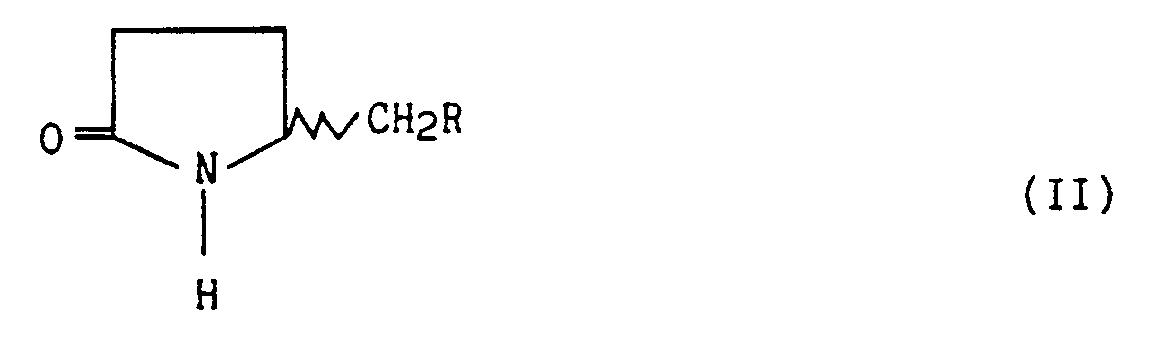
Cl SO₂ - R′ (III)
dans laquelle R′ a la signification précédemment définie. - Il est particulièrement avantageux de faire réagir le dérivé II, préalablement transformé au moyen d'hydrure de sodium ou de butyl lithium respectivement en dérivé sodé ou lithié, avec le sulfochlorure III, à température ambiante, dans un solvant aprotique polaire tel que, par exemple, le tétrahydrofuranne, le dioxane, le diméthylsulfoxide, le diméthylformamide ou leur mélange.
- La présente invention a également pour objet une variante du procédé ci-dessus plus particulièrement pour la préparation des dérivés de formule I dans laquelle R représente


avec une amine secondaire de formule générale V :
- Les matières premières de formule II dans laquelle R représente OR˝ ou SR˝ peuvent être préparées commodémment par débenzylation au moyen de sodium dans l'ammoniac liquide, (selon une méthode classique) du dérivé de formule générale VI :

lui-même préparé en faisant réagir un dérivé de formule R˝Hal dans laquelle R˝ a la signification précédemment définie et Hal représente un atome de brome ou d'iode ou un radical tosyloxy, sur un dérivé du pyroglutaminol S ou R [lui-même préparé selon S. SAIJO, M. WADA, J. HIMIZU et A. ISHIDA - Chem. Pharm. Bull. 28 (5) 1449-58 (1980)] de formule VII :
- Le dérivé VII est préparé par hydrolyse ménagée, avec HCl ou (COOH)₂ en milieu hydroalcoolique, du dérivé de formule VIII :


- Les matières premières de formule II dans laquelle R représente


- Les matières premières de formule IV peuvent être aisémment préparées par halogénation, selon la méthode précédemment citée, des dérivés de formule XI :


- Tous ces composés peuvent être purifiés par des méthodes chimiques classiques telles que distillation, cristallisation à l'état de sels lorsque la molécule (I) contient un groupe basique du type

- Les dérivés de l'invention dont la formule I renferme un groupe basique du type

- Les dérivés de formule générale I et leurs sels physiologiquement tolérables possèdent des propriétés pharmacologiques et thérapeutiques intéressantes.
- Notamment, ils s'opposent aux désordres cérébraux liés à une défaillance énergétique par défaut d'apport d'oxygène, ou liés à une insuffisance métabolique neuronale. Ils peuvent de ce fait être utilisés dans le traitement des asthénies, des syndromes ischémiques aigus, transitoires ou progressifs et des maladies nerveuses liées au vieillissement normal ou pathologique tel que la maladie d'Alzheimer. Le dosage unitaire peut être de 1 à 1000 mg pour un traitement en 1 à 3 prises par jour.
- La présente invention a également pour objet les compositions pharmaceutiques contenant comme principe actif un composé de formule générale I ou un de ses sels physiologiquement tolérables, mélangé ou associé a un excipient pharmaceutique approprié comme par exemple l'eau distillée, le glucose, le lactose, l'amidon, le talc, l'éthylcellulose, le stéarate de magnésium ou le beurre de cacao. Les compositions pharmaceutiques ainsi obtenues se présentent généralement sous forme dosée et peuvent contenir de 1 à 1000 mg de principe actif. Elles peuvent revêtir la forme de comprimés, dragées, gélules, solutions buvables, solutions injectables ou suppositoires et être, selon les cas, administrées à la dose de 1 à 1000 mg 1 à 3 fois par jour.
- Les exemples suivants illustrent l'invention. Les points de fusion sont déterminés au tube capillaire.
-

- A une solution de 1,85 g de S -morpholinométhyl - 5 pyrrolidone - 2 (fondant à 74 - 77 °C) dans 20 ml de tétrahydrofuranne anhydre, on ajoute à 10 °C, sous azote, 7 ml de Bu Li (1,6 M) en solution dans l'hexane. On agite 30 minutes à température ambiante, puis on ajoute 1,8g de chlorure de benzènesulfonyle en maintenant la température à 15 °C. On maintient l'agitation du mélange pendant 15 heures à température du laboratoire puis on évapore le solvant sous pression réduite. On reprend le résidu par 20 ml d'eau et 20 ml de CH₂Cl₂. On décante et sèche sur Mg SO₄ et purifie le résidu d'évaporation par chromatographie flash sur SiO₂ avec CH₃COOC₂H₅ 100 % comme éluant.
- On isole ainsi 1,6 g de cristaux de S - benzènesulfonyl - 1 oxo - 2 morpholinométhyl - 5 pyrrolidine. Le S - morpholinométhyl - 5 pyrrolidone - 2 de départ [α

- De la même façon, en utilisant du R - morpholinométhyl - 5 pyrrolidone -2 ( à la place du S - morpholinométhyl - 5 pyrrolidone - 2), on obtient la R - benzènesulfonyl - 1 oxo - 2 morpholinométhyl - 5 pyrrolidine.
- On chauffe pendant 3 heures à reflux une solution de 2,7 g de benzènesulfonyl - 1 S - chlorométhyl - 5 pyrrolidone - 2 dans la morpholine. On chasse ensuite l'excès de morpholine sous pression réduite et reprend le résidu avec H₂O. On essore les cristaux et les sèche sous vide. On obtient 3,1 g de cristaux de S - benzènesulfonyl - 1 oxo - 2 morpholinométhyl - 5 pyrrolidine fondant à 113 - 114 °C. Le dérivé chlorométhylé de départ (huile) a été préparé par la méthode P(C₆H₅)₃ - CCl₄ - diméthylformamide, avec un rendement de 85 %, à partir du benzènesulfonyl - 1 S - pyrroglutaminol, P.F. : 104 - 105 °C, α

-

- A une solution de 63,1 g de S - éthoxy - 1 éthoxyméthyl - 5 pyrrolidone - 2 dans 150 ml de tétrahydrofuranne anhydre, on ajoute, à 10°C, 232 ml d'une solution 1,6 M de Bu Li dans l'hexane. On agite pendant 30 minutes puis rajoute 100 ml de DMSO. A cette solution, on ajoute en 30 minutes à 10 - 15 °C, 59,5 g de chlorure de benzènesulfonyle, puis on abandonne le mélange une nuit à température ambiante. On dilue ensuite la solution avec 1 litre d'eau et extrait plusieurs fois avec CH₂Cl₂. L'extrait est lavé à l'eau, séché sur MgSO₄ ; puis on évapore le solvant sous pression réduite et isole 5 g d'huile qu'on dissout dans 300 ml de méthanol. On ajoute 100 ml d'HCl 0,1 N et agite la solution pendant 15 heures à température ambiante. On évapore le solvant et purifie le résidu par chromatographie flash sur 1,2 Kg de silice avec CH₃COOC₂H₅ - CH₂Cl₂ (3 - 7)comme éluant. On isole 20 g de cristaux de S - benzènesulfonyl - 1 oxo - 2 hydroxyméthyl - 5 pyrrolidine fondant à 104 - 105 °C, α

- La S - éthoxy - 1 éthoxyméthyl - 5 pyrrolidone - 2 de départ [α

-

- En opérant comme dans l'exemple 1 première méthode, à partir de 5,7 g de S - méthoxyméthyl - 5 pyrrolidone - 2 (huile), on obtient 4,6 g de cristaux de S - benzènesulfonyl - 1 oxo - 2 méthoxyméthyl - 5 pyrrolidine, fondant à 88 °C, α

- Le dérivé méthoxyméthylé de départ [α


- dont les constantes physiques du dichlorhydrate sont : P.F. 230°C; α

- dont les constantes du dichlorhydrate sont : P.F. : 235 - 238 °C, α

- dont les constantes physiques du fumarate sont : P.F. : 151 °C ; α

- En opérant comme dans l'exemple 1 première méthode ont été préparés les dérivés regroupés dans le tableau ci-après :
- Dérivés de la pyrrolidone de formule :


- Lors du vieillissement, la baisse des réserves intrinsèques cérébrales se traduit par l'incapacité à répondre à toute nouvelle demande métabolique. Lors d'un accident vasculaire cérébral, la vulnérabilité sélective neuronale apparaît dans les cellules qui ont la plus forte demande métabolique. Le point commun entre ces pathologies est le déficit d'utilisation qui mène le plus souvent à la déviation du métabolisme vers l'anaérobie.
- De telles agressions peuvent être reproduites expérimentalement et de façon aigüe, par l'hypoxie pour la recherche de nouveaux composés cérébroprotecteurs.
- En effet, l'analogie entre l'hypoxie et les désordres cérébraux liés aux vieillissement ou à l'insuffisance circulatoire, s'expriment notamment par :
- La baisse des réserves énergétiques
- la moindre résistance au stress
- la baisse de la synthèse oxygéno-dépendante des neurotransmetteurs
- la chute des capacités mnésiques. - Les composés de la présente invention ont donc été testés sur leurs capacités à prolonger la survie du tissu cérébral lors d'hypoxie aigüe chez la Souris.
- Leur efficacité a été comparée à celle des substances de référence reconnues comme agents antihypoxiques ou comme agents nootropes.
- D'autre part, leurs effets antihypoxiques cérébroprotecteurs ont été comparés aux éventuels effets cérébrovasculaires grâce à l'utilisation de deux tests complémentaires : l'arrêt cardiaque aigü et l'anoxie aigüe à l'azote chez la Souris.
- Cette comparaison permet en effet de discriminer les composés antihypoxiques "purs", protecteurs neuronaux, qui exercent un tropisme cérébral prépondérant lors d'hypoxie, des composés non spécifiques qui manifestent également leurs effets protecteurs lors d'ischémie cardiaque et/ou lors d'anoxie généralisée. Dans ce dernier cas, l'effet systématique d'un composé est dû le plus souvent à des effets vasodilatateurs et/ou sédatifs.
- Des souris CD1 (Charles River) de sexe mâle ayant reçu 30 minutes auparavant par voie IP, le composé étudié, sont soumises à une hypoxie aigüe de type hypobare. Pour cela, elles sont placées dans une enceinte où la pression barométrique peut être abaissée rapidement (30 secondes) à une valeur de 160 mbar.Le renouvellement d'air assuré durant l'épreuve permet de provoquer une hypoxie et non une asphyxie ou une anoxie qui pourraient faire appel à une protection d'origine vasculaire. Dans ces conditions, la mort cérébrale des animaux est obtenue en 15 secondes environ après l'obtention de la pression hypoxique.
- Le temps moyen de survie d'un lot traité est comparé à celui d'un lot témoin ne recevant que le solvant.
- Des souris CD1 (Charles River) de sexe mâle ayant reçu 30 minutes auparavant par voie IP, le composé étudié, sont soumises à un arrêt cardiaque brutal par injection intraveineuse d'une dose massive de MgCl2 (0,1 ml d'une solution de sérum physiologique saturé en MgCl2). Dans ces conditions, la mort cérébrale des animaux est obtenue en 20 secondes environ après l'injection IV.
- Le temps moyen de survie d'un lot traité est comparé à celui d'un lot témoin ne recevant que le solvant.
- Des souris CD1 (Charles River) de sexe mâle ayant reçu 30 minutes auparavant par voie IP, le composé étudié, sont soumises à une anoxie aigüe par inhalation d'azote pur. Pour cela, elles sont placées dans une enceinte de volume réduit (250 ml) où circule sans surpression, à grand débit (2 l/minutes) un courant d'azote pur. Dans ces conditions, la mort cérébrale des animaux est obtenue en 24 secondes environ après déclenchement du courant anoxique.
- Le temps moyen de survie d'un lot traité est comparé à celui d'un lot témoin ne recevant que le solvant.
- Dans ces conditions expérimentales drastiques, les composés de référence n'exercent qu'un effet antihypoxique modéré ou s'accompagnant d'effets d'intensité équivalente sur l'un ou sur les deux tests complémentaires. Dans ce dernier cas, une vasodilatation apparente et/ou une sédation accompagnent ces effets non spécifiques.
- Les composés nootropes de référence : piracetam et analogues, ne protègent que faiblement le cerveau de l'hypoxie. De fortes doses sont parfois nécesaires pour observer une augmentation significative du temps de survie cérébrale.
Piracetam : 300 mg/kg : +5,3 sec. (34 %)
: 1000 mg/kg : +6,3 sec. (+40%)
Pramiracetam : 100 mg/kg : +3,3 sec. (+21%)
: 300mg/kg : +5,6 sec. (+36%)
Oxiracetam : 100 mg/kg : +1,1 sec. (+6%)
Doliracetam : 30 mg/kg : +0,1 sec. (+1%)
100mg/kg : +15,3 sec. (+107%) - Dans le cas du doliracetam, cet effet protecteur exercé à la dose de 100mg/kg s'accompagne de sédation indésirable, ce qui le différencie des autres composés nootropes. Cette sédation est d'ailleurs responsable de l'effet antihypoxique.
- D'autres composés de référence ont été étudiés. Ils ont été sélectionnés pour leurs indications thérapeutiques de type cérébroprotecteur. Les résultats suivants ont été obtenus :
Nizophenone : 3mg/kg : +12,1 sec. (+86%)
Pyritinol : 100mg/kg : +3,9 sec. (+27%)
Dihydroergotoxine : 10mg/kg : +9,6 sec. (+68%)
Meclofenoxate : 100mg/kg : +3,1 sec. (+22%) - Aux doses étudiées pour obtenir un effet antihypoxique marqué, la nizophenone et la dihydroergotoxine exercent des effets secondaires, à savoir respectivement sédation et vasodilatation périphérique.
- Les composés de l'invention qui n'entraînent pas d'effets neurocomportementaux indésirables, s'opposent très significativement à l'hypoxie cérébrale, comme l'indiquent les exemples suivants :
Exemple 17 : 100mg/kg : +25,9 sec (+159%)
Exemple 42 : 100mg/kg : +14,5 sec.(+88%)
Exemple 53 : 100mg/kg : +18,8 sec. (+156%)
Exemple 56 : 100mg/Kg : +10,5 sec. (+74%)
Exemple 57 : 100mg/kg : +48,9 sec. (+345%) - Ces effets antihypoxiques cérébraux, neuroprotecteurs s'exercent avec une grande spécificité comme le montrent les résultats comparés entre les trois tests utilisés, précédemment décrits, qui sont regroupés dans le tableau suivant.
- Ces résultats sont exprimés en valeurs absolues d'augmentation du temps de survie (secondes).
Composé Dose (mg/kg) Hypoxie cérébrale Arrêt cardiaque Anoxie Générale Piracetam 1000 + 6,3 0 + 1,6 Pramiracetam 100 + 3,3 + 0,4 0 Doliracetam 100 + 15,3 + 6,4 + 14,6 Nizophenone 3 + 12,1 +10,5 + 10,7 Pyritinol 100 + 3,9 + 1,9 + 5,0 Dihydroergotoxine 10 + 9,6 + 5,3 + 10,1 Prazosine 3 + 3,9 + 4,4 + 6,9 Exemple 17 100 + 25,9 + 4,3 + 10,6 Exemple 42 100 + 14,5 + 4,3 + 7,0 Exemple 53 100 + 18,8 + 3,4 + 9,1 Exemple 56 100 + 10,5 + 0 + 2,8 Exemple 57 100 + 48,9 +15,5 +13,8 - Les composés de la présente invention exercent donc un effet antihypoxique puissant et sélectif. Ils se différencient des composés pris en référence, soit par l'intensité de leurs efffets (versus piracetam, pramiracetam, pyritinol), soit par leur spécificité grâce à l'absence d'effet sédatif (versus doliracetam, nizophenone) ou vasculaire (versus dihydroergotoxine, prazosine). En effet, dans ces derniers cas, les composés de référence exercent des effets identiques voire supérieurs vis-à-vis de l'arrêt cardiaque ou de l'anoxie généralisée, ce qui indique une absence de tropisme prépondérant pour le cerveau ou un effet indirect.
- Les composés de l'invention peuvent donc s'opposer aux désordres cérébraux liés à une défaillance énergétique notamment par défaut d'apport en oxygène, et à toute insuffisance métabolique neuronale.
Claims (16)

- R représente :
a) un groupe OR˝ ou SR˝ dans lequel R˝ représente :
- un atome d'hydrogène,
- un groupe COR‴ dans lequel R‴ représente :
. un radical alkyle ayant de 1 à 4 atomes de carbone en chaîne droite ou ramifiée,
. un reste

R₁ et R₂ représentent ensemble une chaîne polyméthylénique ayant de 4 à 6 atomes de carbone, comportant éventuellement un atome d'oxygène, de façon à former avec l'atome d'azote auquel ils sont liés un radical hétérocyclique tel que par exemple, un radical pyrrolidinyle, pipéridino ou morpholino,
- un groupe alkyle ayant de 1 à 6 atomes de carbone, en chaîne droite ou ramifiée renfermant éventuellement un ou plusieurs atomes d'oxygène, un radical hydroxy, ou un groupe

b) un groupe

. R₃ et R₄, identiques ou différents, représentent chacun :
un atome d'hydrogène,
un radical alkyle ayant jusqu'à 6 atomes de carbone, en chaîne droite ou ramifiée, renfermant éventuellement un ou plusieurs atomes d'oxygène, un radical hydroxy ou un groupe - OCOR‴ ou

. R₃ et R₄ forment ensemble avec l'atome d'azote auquel ils sont liés un radical hétérocyclique de formule

- m représente zéro, un ou deux ;
- n est un nombre entier de 1 à 3, et
- X représente :
- un radical méthylène - CH₂ - ;
- un atome d'oxygène ou de soufre, ou le radical SO₂ ;
- un radical

. un radical alkyle ayant de 1 à 4 atomes de carbone,
. un radical hydroxyalkyle ou aralkyle dans lequel la partie aryle est éventuellement substituée par un ou plusieurs radicaux alkoxy (ayant de 1 à 4 atomes de carbone) ou méthylènedioxy, et où, dans chacun d'entre eux, la partie alkyle renferme de 1 à 4 atomes de carbone,
. un radical aryle éventuellement substitué par un ou plusieurs atomes d'halogène ou radicaux alkoxy ayant de 1 à 4 atomes de carbone, ou
. un radical hétérocyclique, ayant un ou deux hétéroatomes, tel que, par exemple, un radical thiazolyle, pyrimidinyle, pyrazinyle pyridyle, ou quinolyl, chacun éventuellement substitué par un ou plusieurs atomes d'halogène ou radicaux trifluorométhyle ou alkoxy ayant de 1 à 4 atomes de carbone ; ou,
- un radical
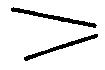
dans lequel Y représente un atome d'oxygène ou de soufre et Z représente un radical hétérocyclique, ayant 1 ou 2 hétéroatomes, tel que défini ci-dessus ;
- R′ représente :
a) un radical alkyle ayant de 1 à 4 atomes de carbone en chaîne droite ou ramifiée, comportant éventuellement une double liaison et / ou éventuellement substitué par un ou plusieurs radicaux hydroxy, trifluorométhyle, amino,

b) un radical aryle éventuellement substitué par un ou plusieurs atomes d'halogène ou radicaux alkyle ou alkoxy (ayant chacun de 1 à 5 atomes de carbone), nitro ou amino,
et,
- le carbone situé en position 5 du cycle pyrrolidone, substitué par CH₂R, possède la configuration R ou S.

Cl SO₂ - R′ (III)
dans laquelle R′ a la signification définie dans la revendication 1.


Applications Claiming Priority (2)
| Application Number | Priority Date | Filing Date | Title |
|---|---|---|---|
| FR8907153 | 1989-05-31 | ||
| FR8907153A FR2647785B1 (fr) | 1989-05-31 | 1989-05-31 | Nouveaux derives de la pyrrolidone, leur procede de preparation et les compositions pharmaceutiques les renfermant |
Publications (2)
| Publication Number | Publication Date |
|---|---|
| EP0401093A1 true EP0401093A1 (fr) | 1990-12-05 |
| EP0401093B1 EP0401093B1 (fr) | 1995-03-01 |
Family
ID=9382204
Family Applications (1)
| Application Number | Title | Priority Date | Filing Date |
|---|---|---|---|
| EP90401387A Expired - Lifetime EP0401093B1 (fr) | 1989-05-31 | 1990-05-23 | Nouveaux dérivés de la pyrrolidone, leur procédé de preparation et les compositions pharmaceutiques les renfermant |
Country Status (15)
| Country | Link |
|---|---|
| US (1) | US5066651A (fr) |
| EP (1) | EP0401093B1 (fr) |
| JP (1) | JPH0688972B2 (fr) |
| AT (1) | ATE119149T1 (fr) |
| AU (1) | AU617945B2 (fr) |
| CA (1) | CA2017044A1 (fr) |
| DE (1) | DE69017265T2 (fr) |
| DK (1) | DK0401093T3 (fr) |
| ES (1) | ES2071793T3 (fr) |
| FR (1) | FR2647785B1 (fr) |
| IE (1) | IE67060B1 (fr) |
| NZ (1) | NZ233618A (fr) |
| OA (1) | OA09451A (fr) |
| PT (1) | PT94196B (fr) |
| ZA (1) | ZA903944B (fr) |
Families Citing this family (6)
| Publication number | Priority date | Publication date | Assignee | Title |
|---|---|---|---|---|
| US6777763B1 (en) | 1993-10-01 | 2004-08-17 | Semiconductor Energy Laboratory Co., Ltd. | Semiconductor device and method for fabricating the same |
| EP1998373A3 (fr) | 2005-09-29 | 2012-10-31 | Semiconductor Energy Laboratory Co, Ltd. | Dispositif de semi-conducteur disposant d'une couche de semi-conducteur d'oxyde et son procédé de fabrication |
| TWI633371B (zh) | 2008-12-03 | 2018-08-21 | 半導體能源研究所股份有限公司 | 液晶顯示裝置 |
| CN102349158B (zh) | 2009-03-12 | 2015-05-06 | 株式会社半导体能源研究所 | 制造半导体器件的方法 |
| TWI556323B (zh) | 2009-03-13 | 2016-11-01 | 半導體能源研究所股份有限公司 | 半導體裝置及該半導體裝置的製造方法 |
| EA202092328A1 (ru) * | 2018-05-11 | 2021-04-08 | Темпл Юниверсити-Оф Зэ Коммонвелс Систем Оф Хаер Эдьюкейшн | Новые функционализированные лактамы в качестве модуляторов 5-гидрокситриптаминового рецептора 7 и способ их применения |
Citations (1)
| Publication number | Priority date | Publication date | Assignee | Title |
|---|---|---|---|---|
| EP0138721A2 (fr) * | 1983-10-18 | 1985-04-24 | DROPIC Société Civile de Gestion de Droit de Propriété Industrielle CHOAY | Nouveaux benzenesulfonyl-lactames, leur procédé de préparation et leur application comme substance active de compositions pharmaceutiques |
Family Cites Families (2)
| Publication number | Priority date | Publication date | Assignee | Title |
|---|---|---|---|---|
| DK167393B1 (da) * | 1985-12-30 | 1993-10-25 | Roussel Uclaf | 1-sulfonyl-2-oxo-pyrrolidinderivater, deres fremstilling og farmaceutiske praeparater med indhold deraf |
| WO1989009767A1 (fr) * | 1988-04-15 | 1989-10-19 | Taiho Pharmaceutical Company, Limited | Composes de carbamoyle-2-pyrrolidinone |
-
1989
- 1989-05-31 FR FR8907153A patent/FR2647785B1/fr not_active Expired - Lifetime
-
1990
- 1990-05-09 NZ NZ233618A patent/NZ233618A/xx unknown
- 1990-05-17 CA CA002017044A patent/CA2017044A1/fr not_active Abandoned
- 1990-05-17 US US07/525,137 patent/US5066651A/en not_active Expired - Fee Related
- 1990-05-22 ZA ZA903944A patent/ZA903944B/xx unknown
- 1990-05-23 DK DK90401387.7T patent/DK0401093T3/da active
- 1990-05-23 AT AT90401387T patent/ATE119149T1/de not_active IP Right Cessation
- 1990-05-23 DE DE69017265T patent/DE69017265T2/de not_active Expired - Fee Related
- 1990-05-23 EP EP90401387A patent/EP0401093B1/fr not_active Expired - Lifetime
- 1990-05-23 ES ES90401387T patent/ES2071793T3/es not_active Expired - Lifetime
- 1990-05-28 OA OA59796A patent/OA09451A/fr unknown
- 1990-05-29 AU AU56087/90A patent/AU617945B2/en not_active Ceased
- 1990-05-30 JP JP2141224A patent/JPH0688972B2/ja not_active Expired - Lifetime
- 1990-05-30 PT PT94196A patent/PT94196B/pt not_active IP Right Cessation
- 1990-05-30 IE IE193490A patent/IE67060B1/en not_active IP Right Cessation
Patent Citations (1)
| Publication number | Priority date | Publication date | Assignee | Title |
|---|---|---|---|---|
| EP0138721A2 (fr) * | 1983-10-18 | 1985-04-24 | DROPIC Société Civile de Gestion de Droit de Propriété Industrielle CHOAY | Nouveaux benzenesulfonyl-lactames, leur procédé de préparation et leur application comme substance active de compositions pharmaceutiques |
Also Published As
| Publication number | Publication date |
|---|---|
| JPH0320259A (ja) | 1991-01-29 |
| US5066651A (en) | 1991-11-19 |
| ZA903944B (en) | 1991-03-27 |
| DK0401093T3 (da) | 1995-07-10 |
| OA09451A (fr) | 1992-10-15 |
| NZ233618A (en) | 1991-11-26 |
| IE901934L (en) | 1990-11-30 |
| AU5608790A (en) | 1990-12-06 |
| DE69017265T2 (de) | 1995-10-19 |
| JPH0688972B2 (ja) | 1994-11-09 |
| FR2647785B1 (fr) | 1991-09-06 |
| ES2071793T3 (es) | 1995-07-01 |
| PT94196B (pt) | 1996-12-31 |
| PT94196A (pt) | 1991-02-08 |
| CA2017044A1 (fr) | 1990-11-30 |
| AU617945B2 (en) | 1991-12-05 |
| ATE119149T1 (de) | 1995-03-15 |
| IE67060B1 (en) | 1996-02-21 |
| DE69017265D1 (de) | 1995-04-06 |
| EP0401093B1 (fr) | 1995-03-01 |
| FR2647785A1 (fr) | 1990-12-07 |
Similar Documents
| Publication | Publication Date | Title |
|---|---|---|
| EP1499589B1 (fr) | Derives de n-¬phenyl(piperidin-2-yl)methyl|benzamide, leur preparation et leur application en therapeutique | |
| EP0527117B1 (fr) | Cyclopropylamino-1,3,5-triazines substituées | |
| EP1527048B1 (fr) | Derives de n-[phenyl(piperidin-2-yl)methyl]benzamide, leur preparation et leur application en therapeutique | |
| JP2011063619A (ja) | 光学活性ピペリジン誘導体の酸付加塩及びその製法 | |
| EP0090733A1 (fr) | Polyméthylènes-imines disubstituées, leurs procédés de préparation et les compositions pharmaceutiques les renfermant | |
| EP0517221B1 (fr) | Dérivés de arylalkylpiperidine-4-yl)méthyl]-alpha,3,4,5-tetrahydro-1-(2H)-acenaphthylene-1-one, procédé pour leurs préparations et leurs utilisations comme médicaments | |
| EP0377528A1 (fr) | Pipéridines, procédés de préparation et médicaments les contenant | |
| KR100201509B1 (ko) | 1-(피리도(3,4-b-1,4-옥사지닐-4일-)-1h-인돌, 이를 위한 중간체, 이의 제조방법 및 이를 포함하는 약제학적 조성물 | |
| KR100201515B1 (ko) | 1-(치환된 피리디닐아미노)-1에이치-인돌-5-일 치환된 카바메이트, 이의 제조방법 및 이를 포함하는 약제학적 조성물 | |
| EP0401093B1 (fr) | Nouveaux dérivés de la pyrrolidone, leur procédé de preparation et les compositions pharmaceutiques les renfermant | |
| EP0114850B1 (fr) | Nouveaux derives substitues du 2,5-diamino 1,4-diazole, leurs procedes de preparation et les compositions pharmaceutiques en renfermant | |
| CA1095047A (fr) | Procede de preparation de nouveaux derives du 1,4- benzodioxane | |
| WO1995001334A1 (fr) | Composes indoliques derives d'arylamines comme ligands selectifs des recepteurs 5ht1d et 5ht¿1b? | |
| CS214796B2 (en) | Method of making the new derivatives of 4-amino-2-piperidinochinazoline | |
| US5264442A (en) | Carbamoyl-1-(pyridinylalkyl)-1H-indoles, indolines and related analogs | |
| RU2178790C2 (ru) | Производные дибензо[d, g][1,3]диоксоцина и дибензо-[d,g][1,3,6]диоксазоцина, способ их получения, фармацевтическая композиция на их основе и способ лечения нейрогенного воспаления, нейропатии и ревматоидного артрита | |
| FR2581064A1 (fr) | Derive antipsychotique a base de 8-(4-(4-(1-exo-1,2-benzisothiazol-3-yl)-1-piperazinyl)-butyl)-8-azaspiro(4,5)decane-7,9-dione et son procede de preparation | |
| EP1192152B1 (fr) | Nouveaux derives benzodioxanne imidazolines fluores, leur preparation et leurs applications en therapeutique | |
| EP0471296B1 (fr) | (Pyridinylalkyl)-1 1H-indoles, -indolines et analogues apparentés | |
| US4530843A (en) | Isoindole amidoxime derivatives | |
| DE60118970T2 (de) | Indol- und dihydroindolderivate | |
| CH674008A5 (fr) | ||
| MC586A1 (fr) | Nouveaux dérivés du dioxanne 1.3 et leur préparation | |
| US5214058A (en) | 1-(pyridinylalkyl)-1H-indoles, indolines and related analogs | |
| FR2543952A1 (fr) | Composes hydrocarbones heterocycliques appartenant aux series indoliques et leur application pharmacologique |
Legal Events
| Date | Code | Title | Description |
|---|---|---|---|
| PUAI | Public reference made under article 153(3) epc to a published international application that has entered the european phase |
Free format text: ORIGINAL CODE: 0009012 |
|
| 17P | Request for examination filed |
Effective date: 19900529 |
|
| AK | Designated contracting states |
Kind code of ref document: A1 Designated state(s): AT BE CH DE DK ES FR GB GR IT LI LU NL SE |
|
| 17Q | First examination report despatched |
Effective date: 19921111 |
|
| GRAA | (expected) grant |
Free format text: ORIGINAL CODE: 0009210 |
|
| AK | Designated contracting states |
Kind code of ref document: B1 Designated state(s): AT BE CH DE DK ES FR GB GR IT LI LU NL SE |
|
| REF | Corresponds to: |
Ref document number: 119149 Country of ref document: AT Date of ref document: 19950315 Kind code of ref document: T |
|
| ITF | It: translation for a ep patent filed | ||
| REF | Corresponds to: |
Ref document number: 69017265 Country of ref document: DE Date of ref document: 19950406 |
|
| REG | Reference to a national code |
Ref country code: ES Ref legal event code: FG2A Ref document number: 2071793 Country of ref document: ES Kind code of ref document: T3 |
|
| GBT | Gb: translation of ep patent filed (gb section 77(6)(a)/1977) |
Effective date: 19950605 |
|
| REG | Reference to a national code |
Ref country code: DK Ref legal event code: T3 |
|
| REG | Reference to a national code |
Ref country code: GR Ref legal event code: FG4A Free format text: 3016213 |
|
| PLBE | No opposition filed within time limit |
Free format text: ORIGINAL CODE: 0009261 |
|
| STAA | Information on the status of an ep patent application or granted ep patent |
Free format text: STATUS: NO OPPOSITION FILED WITHIN TIME LIMIT |
|
| 26N | No opposition filed | ||
| PGFP | Annual fee paid to national office [announced via postgrant information from national office to epo] |
Ref country code: SE Payment date: 19970312 Year of fee payment: 8 |
|
| PGFP | Annual fee paid to national office [announced via postgrant information from national office to epo] |
Ref country code: GR Payment date: 19970328 Year of fee payment: 8 |
|
| PGFP | Annual fee paid to national office [announced via postgrant information from national office to epo] |
Ref country code: AT Payment date: 19970418 Year of fee payment: 8 |
|
| PGFP | Annual fee paid to national office [announced via postgrant information from national office to epo] |
Ref country code: CH Payment date: 19970424 Year of fee payment: 8 |
|
| PGFP | Annual fee paid to national office [announced via postgrant information from national office to epo] |
Ref country code: GB Payment date: 19970514 Year of fee payment: 8 |
|
| PGFP | Annual fee paid to national office [announced via postgrant information from national office to epo] |
Ref country code: ES Payment date: 19970516 Year of fee payment: 8 |
|
| PGFP | Annual fee paid to national office [announced via postgrant information from national office to epo] |
Ref country code: FR Payment date: 19970523 Year of fee payment: 8 |
|
| PGFP | Annual fee paid to national office [announced via postgrant information from national office to epo] |
Ref country code: DE Payment date: 19970528 Year of fee payment: 8 |
|
| PGFP | Annual fee paid to national office [announced via postgrant information from national office to epo] |
Ref country code: DK Payment date: 19970529 Year of fee payment: 8 Ref country code: BE Payment date: 19970529 Year of fee payment: 8 |
|
| PGFP | Annual fee paid to national office [announced via postgrant information from national office to epo] |
Ref country code: NL Payment date: 19970530 Year of fee payment: 8 |
|
| PGFP | Annual fee paid to national office [announced via postgrant information from national office to epo] |
Ref country code: LU Payment date: 19970908 Year of fee payment: 8 |
|
| PG25 | Lapsed in a contracting state [announced via postgrant information from national office to epo] |
Ref country code: LU Free format text: LAPSE BECAUSE OF NON-PAYMENT OF DUE FEES Effective date: 19980523 Ref country code: GB Free format text: LAPSE BECAUSE OF NON-PAYMENT OF DUE FEES Effective date: 19980523 Ref country code: AT Free format text: LAPSE BECAUSE OF NON-PAYMENT OF DUE FEES Effective date: 19980523 |
|
| PG25 | Lapsed in a contracting state [announced via postgrant information from national office to epo] |
Ref country code: SE Free format text: LAPSE BECAUSE OF NON-PAYMENT OF DUE FEES Effective date: 19980524 |
|
| PG25 | Lapsed in a contracting state [announced via postgrant information from national office to epo] |
Ref country code: ES Free format text: LAPSE BECAUSE OF EXPIRATION OF PROTECTION Effective date: 19980525 |
|
| PG25 | Lapsed in a contracting state [announced via postgrant information from national office to epo] |
Ref country code: LI Free format text: LAPSE BECAUSE OF NON-PAYMENT OF DUE FEES Effective date: 19980531 Ref country code: GR Free format text: LAPSE BECAUSE OF NON-PAYMENT OF DUE FEES Effective date: 19980531 Ref country code: FR Free format text: LAPSE BECAUSE OF NON-PAYMENT OF DUE FEES Effective date: 19980531 Ref country code: DK Free format text: LAPSE BECAUSE OF NON-PAYMENT OF DUE FEES Effective date: 19980531 Ref country code: CH Free format text: LAPSE BECAUSE OF NON-PAYMENT OF DUE FEES Effective date: 19980531 Ref country code: BE Free format text: LAPSE BECAUSE OF NON-PAYMENT OF DUE FEES Effective date: 19980531 |
|
| BERE | Be: lapsed |
Owner name: ADIR ET CIE Effective date: 19980531 |
|
| PG25 | Lapsed in a contracting state [announced via postgrant information from national office to epo] |
Ref country code: NL Free format text: LAPSE BECAUSE OF NON-PAYMENT OF DUE FEES Effective date: 19981201 |
|
| GBPC | Gb: european patent ceased through non-payment of renewal fee |
Effective date: 19980523 |
|
| REG | Reference to a national code |
Ref country code: CH Ref legal event code: PL |
|
| EUG | Se: european patent has lapsed |
Ref document number: 90401387.7 |
|
| NLV4 | Nl: lapsed or anulled due to non-payment of the annual fee |
Effective date: 19981201 |
|
| PG25 | Lapsed in a contracting state [announced via postgrant information from national office to epo] |
Ref country code: DE Free format text: LAPSE BECAUSE OF NON-PAYMENT OF DUE FEES Effective date: 19990302 |
|
| REG | Reference to a national code |
Ref country code: FR Ref legal event code: ST |
|
| REG | Reference to a national code |
Ref country code: DK Ref legal event code: EBP |
|
| REG | Reference to a national code |
Ref country code: ES Ref legal event code: FD2A Effective date: 20000301 |
|
| PG25 | Lapsed in a contracting state [announced via postgrant information from national office to epo] |
Ref country code: IT Free format text: LAPSE BECAUSE OF NON-PAYMENT OF DUE FEES Effective date: 20050523 |