EP0401499A1 - Photoréserve avec un liant copolymère - Google Patents
Photoréserve avec un liant copolymère Download PDFInfo
- Publication number
- EP0401499A1 EP0401499A1 EP90107478A EP90107478A EP0401499A1 EP 0401499 A1 EP0401499 A1 EP 0401499A1 EP 90107478 A EP90107478 A EP 90107478A EP 90107478 A EP90107478 A EP 90107478A EP 0401499 A1 EP0401499 A1 EP 0401499A1
- Authority
- EP
- European Patent Office
- Prior art keywords
- photoresist
- resin
- acid
- hydrogenated
- phenolic
- Prior art date
- Legal status (The legal status is an assumption and is not a legal conclusion. Google has not performed a legal analysis and makes no representation as to the accuracy of the status listed.)
- Granted
Links
Images

Classifications
-
- G—PHYSICS
- G03—PHOTOGRAPHY; CINEMATOGRAPHY; ANALOGOUS TECHNIQUES USING WAVES OTHER THAN OPTICAL WAVES; ELECTROGRAPHY; HOLOGRAPHY
- G03F—PHOTOMECHANICAL PRODUCTION OF TEXTURED OR PATTERNED SURFACES, e.g. FOR PRINTING, FOR PROCESSING OF SEMICONDUCTOR DEVICES; MATERIALS THEREFOR; ORIGINALS THEREFOR; APPARATUS SPECIALLY ADAPTED THEREFOR
- G03F7/00—Photomechanical, e.g. photolithographic, production of textured or patterned surfaces, e.g. printing surfaces; Materials therefor, e.g. comprising photoresists; Apparatus specially adapted therefor
- G03F7/004—Photosensitive materials
- G03F7/022—Quinonediazides
- G03F7/023—Macromolecular quinonediazides; Macromolecular additives, e.g. binders
-
- G—PHYSICS
- G03—PHOTOGRAPHY; CINEMATOGRAPHY; ANALOGOUS TECHNIQUES USING WAVES OTHER THAN OPTICAL WAVES; ELECTROGRAPHY; HOLOGRAPHY
- G03F—PHOTOMECHANICAL PRODUCTION OF TEXTURED OR PATTERNED SURFACES, e.g. FOR PRINTING, FOR PROCESSING OF SEMICONDUCTOR DEVICES; MATERIALS THEREFOR; ORIGINALS THEREFOR; APPARATUS SPECIALLY ADAPTED THEREFOR
- G03F7/00—Photomechanical, e.g. photolithographic, production of textured or patterned surfaces, e.g. printing surfaces; Materials therefor, e.g. comprising photoresists; Apparatus specially adapted therefor
- G03F7/004—Photosensitive materials
- G03F7/027—Non-macromolecular photopolymerisable compounds having carbon-to-carbon double bonds, e.g. ethylenic compounds
- G03F7/028—Non-macromolecular photopolymerisable compounds having carbon-to-carbon double bonds, e.g. ethylenic compounds with photosensitivity-increasing substances, e.g. photoinitiators
- G03F7/029—Inorganic compounds; Onium compounds; Organic compounds having hetero atoms other than oxygen, nitrogen or sulfur
- G03F7/0295—Photolytic halogen compounds
-
- G—PHYSICS
- G03—PHOTOGRAPHY; CINEMATOGRAPHY; ANALOGOUS TECHNIQUES USING WAVES OTHER THAN OPTICAL WAVES; ELECTROGRAPHY; HOLOGRAPHY
- G03F—PHOTOMECHANICAL PRODUCTION OF TEXTURED OR PATTERNED SURFACES, e.g. FOR PRINTING, FOR PROCESSING OF SEMICONDUCTOR DEVICES; MATERIALS THEREFOR; ORIGINALS THEREFOR; APPARATUS SPECIALLY ADAPTED THEREFOR
- G03F7/00—Photomechanical, e.g. photolithographic, production of textured or patterned surfaces, e.g. printing surfaces; Materials therefor, e.g. comprising photoresists; Apparatus specially adapted therefor
- G03F7/004—Photosensitive materials
- G03F7/022—Quinonediazides
- G03F7/023—Macromolecular quinonediazides; Macromolecular additives, e.g. binders
- G03F7/0233—Macromolecular quinonediazides; Macromolecular additives, e.g. binders characterised by the polymeric binders or the macromolecular additives other than the macromolecular quinonediazides
-
- G—PHYSICS
- G03—PHOTOGRAPHY; CINEMATOGRAPHY; ANALOGOUS TECHNIQUES USING WAVES OTHER THAN OPTICAL WAVES; ELECTROGRAPHY; HOLOGRAPHY
- G03F—PHOTOMECHANICAL PRODUCTION OF TEXTURED OR PATTERNED SURFACES, e.g. FOR PRINTING, FOR PROCESSING OF SEMICONDUCTOR DEVICES; MATERIALS THEREFOR; ORIGINALS THEREFOR; APPARATUS SPECIALLY ADAPTED THEREFOR
- G03F7/00—Photomechanical, e.g. photolithographic, production of textured or patterned surfaces, e.g. printing surfaces; Materials therefor, e.g. comprising photoresists; Apparatus specially adapted therefor
- G03F7/004—Photosensitive materials
- G03F7/038—Macromolecular compounds which are rendered insoluble or differentially wettable
-
- Y—GENERAL TAGGING OF NEW TECHNOLOGICAL DEVELOPMENTS; GENERAL TAGGING OF CROSS-SECTIONAL TECHNOLOGIES SPANNING OVER SEVERAL SECTIONS OF THE IPC; TECHNICAL SUBJECTS COVERED BY FORMER USPC CROSS-REFERENCE ART COLLECTIONS [XRACs] AND DIGESTS
- Y10—TECHNICAL SUBJECTS COVERED BY FORMER USPC
- Y10S—TECHNICAL SUBJECTS COVERED BY FORMER USPC CROSS-REFERENCE ART COLLECTIONS [XRACs] AND DIGESTS
- Y10S430/00—Radiation imagery chemistry: process, composition, or product thereof
- Y10S430/1053—Imaging affecting physical property or radiation sensitive material, or producing nonplanar or printing surface - process, composition, or product: radiation sensitive composition or product or process of making binder containing
- Y10S430/1055—Radiation sensitive composition or product or process of making
- Y10S430/106—Binder containing
-
- Y—GENERAL TAGGING OF NEW TECHNOLOGICAL DEVELOPMENTS; GENERAL TAGGING OF CROSS-SECTIONAL TECHNOLOGIES SPANNING OVER SEVERAL SECTIONS OF THE IPC; TECHNICAL SUBJECTS COVERED BY FORMER USPC CROSS-REFERENCE ART COLLECTIONS [XRACs] AND DIGESTS
- Y10—TECHNICAL SUBJECTS COVERED BY FORMER USPC
- Y10S—TECHNICAL SUBJECTS COVERED BY FORMER USPC CROSS-REFERENCE ART COLLECTIONS [XRACs] AND DIGESTS
- Y10S430/00—Radiation imagery chemistry: process, composition, or product thereof
- Y10S430/1053—Imaging affecting physical property or radiation sensitive material, or producing nonplanar or printing surface - process, composition, or product: radiation sensitive composition or product or process of making binder containing
- Y10S430/1055—Radiation sensitive composition or product or process of making
- Y10S430/106—Binder containing
- Y10S430/11—Vinyl alcohol polymer or derivative
Definitions
- This invention relates to photoresists exhibiting decreased absorbency of light at activating wavelengths. More particularly, this invention relates to photoresists that utilize phenolic resin binders having lowered intrinsic optical absorbency.
- Photoresists are photosensitive films used for transfer of an image to a substrate. They may be negative or positive acting. After a coating of a photoresist is formed on a substrate, the coating is selectively exposed through a photomask to a source of activating energy such as ultraviolet light.
- the photomask has areas that are opaque to activating radiation and other areas that are transparent to activating radiation. The pattern in the photomask of opaque and transparent areas define a desired image to be transferred to a substrate.
- portions of the substrate bared by development may be altered such as by etching.
- the historical background, types and processing of conventional photoresists are described by Deforest, Photoresist Materials and Processes , McGraw Hill Book Company, New York, Chapter 2, 1975 and by Moreau, Semiconductor Lithography, Principles, Practices and Materials , Plenum Press, New York, Chapters 2 and 4, 1988, both incorporated herein for their teaching of photoresist compositions and methods of making and using the same.
- photoresist formulations both positive and negative, comprise a film forming binder and a light sensitive component.
- Many of these film forming binders are phenolic resins.
- most positive acting photoresists currently in commercial use comprise a novolak resin and a naphthoquinone diazide sulfonic acid ester photoactive compound where the novolak resin is the reaction product of formaldehyde and a phenol. Examples of such photoresists are disclosed in U.S. Patents Nos. 4,377,631 and 4,404,272, incorporated herein by reference.
- photoresists comprise a polyvinyl phenol and a naphthoquinone diazide sulfonic acid ester. Examples of these photoresists are disclosed in U.S. Patents Nos. 3,869,292 and 4,439,516, both incorporated herein by reference.
- photoresists also utilize phenolic resins as the film-forming component of the photoresist.
- One such photoresist forms a negative image by image reversal.
- Photoresists capable of image reversal are positive acting photoresists, such as those described above, to which an image reversal agent, such as hexamethylolmelamine hexamethyl ether is added.
- an image reversal agent such as hexamethylolmelamine hexamethyl ether is added.
- U.S. Patent No. 4,581,321 incorporated herein by reference.
- Another negative acting photoresist employing a phenolic binder is disclosed in European patent application serial No. 0232972, incorporated herein by reference.
- the photoresist disclosed in this patent uses a photoacid generator sensitive to selective wavelengths of activating energy including deep U.V., a crosslinking agent, and a phenolic, acid hardening, polymeric binder.
- a photoacid generator sensitive to selective wavelengths of activating energy including deep U.V., a crosslinking agent, and a phenolic, acid hardening, polymeric binder.
- the photoacid generator is cleaved generating a strongly acidic environment.
- the generated acid activates the crosslinking agent to form a base insoluble negative image in an image pattern.
- An important property of a photoresist is image resolution. Whether the photoresist is positive or negative acting, a developed image of fine line definition having vertical side-walls is highly desired to permit transfer of the fine line image to an underlying substrate.
- Another important property of a photoresist is photospeed. Enhanced photospeed is especially important in applications where a number of exposures are needed, for example, in generating multiple patterns by a step and repeat process, or where activating energy of reduced intensity is employed. Increased photospeed also permits reduction in the light sensitive component of the photoresist and/or a decrease in the required energy of exposure for image formation.
- the subject invention achieves decreased absorbency of light at activating wavelengths by providing a photoresist binder that is a copolymer of a phenol and a cyclic alcohol.
- the copolymer has the properties required of a photoresist binder but contains fewer conjugated bonds compared to a fully aromatic polymer.
- One method comprises copolymerizing the cyclic alcohol with the phenol.
- a preferred method involves hydrogenation of a preformed phenolic resin.
- the result is a copolymer having phenolic and cyclic alcohol repeating units where the ratio of the phenolic units to the cyclic alcohol units is dependent upon the number of cyclic alcohol groups copolymerized with the phenol or the number of conjugated bonds destroyed by hydrogenation.
- the copolymer of the invention may be used in substitution for a phenolic resin in substantially any prior art photoresist where a phenolic resin is used as a binder.
- a phenolic resin is used as a binder.
- the maximum ratio is dependent upon the particular composition of the photoresist. The limit on this ratio is due to reduced solubility of a photoresist due to the introduction of cyclic alcohol units into the resin binder. Recognizing that following exposure, photoresists require differential solubility for development, routine experimentation may be required to determine the maximum permissible ratio of cyclic alcohol to phenolic units in a resin copolymer binder for any specific photoresist composition.
- the copolymer of the phenol and the cyclic alcohol is preformed prior to admixture of the resin with the remaining photoresist components.
- the photoresist is prepared and used in conventional manner with process modification to account for increased photospeed arising from decreased absorption of activating radiation and for modified solubility properties.
- the invention comprises photoresists that use copolymers of a phenol and a cyclic alcohol as a binder.
- the preferred copolymers for purposes of this invention are those formed by the hydrogenation of a phenol formaldehyde (novolak) or a polyvinyl phenol resin.
- Novolak resins are the thermoplastic condensation products of a phenol and an aldehyde.
- suitable phenols for condensation with an aldehyde, especially formaldehyde, for the formation of novolak resins include phenol; m-cresol; o-cresol; p-cresol; 2,4-xylenol; 2,5-xylenol; 3,4-xylenol; 3,5-xylenol and thymol.
- An acid catalyzed condensation reaction results in the formation of a suitable novolak resin which may vary in molecular weight from about 500 to 100,000 daltons.
- the preferred novolak resins conventionally used for the formation of photoresists are the cresol formaldehyde condensation products.
- Polyvinyl phenol resins are thermoplastic polymers that may be formed by block polymerization, emulsion polymerization or solution polymerization of the corresponding monomers in the presence of a cationic catalyst.
- Vinylphenols useful for the production of polyvinyl phenol resins may be prepared, for example, by hydrolysis of commercially available coumarin or substituted coumarins, followed by decarboxylation of the resulting hydroxy cinnamic acids.
- Useful vinylphenols may also be prepared by dehydration of the corresponding hydroxy alkyl phenols or by decarboxylation of hydroxy cinnamic acids resulting from the reaction of substituted or nonsubstituted hydroxybenzaldehydes with malonic acid.
- Preferred polyvinyl phenol resins prepared from such vinylphenols have a molecular weight range of from about 2,000 to about 60,000 daltons.
- Preferred resins for purposes of this invention are copolymers of phenols and cyclic alcohols analogous in structure to the novolak resins and polyvinyl phenol resins. These copolymers may be formed in several ways. For example, in the conventional preparation of a polyvinyl phenol resin, a cyclic alcohol may be added to the reaction mixture as a comonomer during the polymerization reaction which is thereafter carried out in normal manner.
- the cyclic alcohol is preferably aliphatic, but may contain one or two double bonds.
- the cyclic alcohol is preferably one closest in structure to the phenol. For example, if the resin is a polyvinyl phenol, the comonomer would be vinyl cyclohexanol.
- the preferred method for formation of the copolymer comprises hydrogenation of a preformed novolak resin or a preformed polyvinyl phenol resin. Hydrogenation may be carried out using art recognized hydrogenation procedures, for example, by passing a solution of the phenolic resin over a reducing catalyst such as a platinum or palladium coated carbon substrate or preferably over Raney nickel at elevated temperature and pressure. The specific conditions are dependent upon the polymer to be hydrogenated. More particularly, the polymer is dissolved in a suitable solvent such as ethyl alcohol or acetic acid, and then the solution is contacted with a finely divided Raney nickel catalyst and allowed to react at a temperature of from about 100 to 300°C at a pressure of from about 50 to 300 atmospheres or more.
- a suitable solvent such as ethyl alcohol or acetic acid
- the finely divided nickel catalyst may be a nickel-on-silica, nickel-on-alumina, or nickel-on-carbon catalyst depending upon the resin to be hydrogenated. Hydrogenation is believed to reduce the double bonds in some of the phenolic units resulting in a random copolymer of phenolic and cyclic alcohol units interspersed in the polymer in percentages dependent upon the reaction conditions used.
- unit (1) represents a phenolic unit and unit (2) represents a cyclic alcohol unit;
- (Z) is an alkylene bridge having from 1 to 3 carbon atoms;
- A is a substituent on the aromatic ring replacing hydrogen such as lower alkyl having from 1 to 3 carbon atoms, halo such as chloro or bromo, alkoxy having from 1 to 3 carbon atoms, hydroxyl, nitro, amino, etc.;
- a is a number varying from 0 to 3;
- B is a substituent such as hydrogen, lower alkyl having from 1 to 3 carbon atoms, halo such as chloro or bromo, alkoxy having from 1 to 3 carbon atoms, hydroxyl, nitro, amino, etc.
- the percentage of cyclic alcohol units does not exceed 50 mole percent of the total polymer. More preferably, the cyclic alcohol units varies from about 1 to 30 mole percent and most preferably, from about 5 to 15 mole percent of the polymer. In no event should the percentage of cyclic alcohol units be so high as to prevent development of the photoresist following exposure of the same to activating radiation.
- One preferred class of photoresists of this invention are those positive working photoresists that use the copolymer of the phenol and cyclic alcohol as a binder and an o-quinone diazide sulfonic acid ester as a photosensitizer.
- the sensitizers most often used in such photoresists are naphthoquinone diazide sulfonic acids such as those disclosed by Kosar, Light Sensitive Systems , John Wiley & Sons, 1965, pp. 343 to 352, incorporated herein as reference. These sensitizers form an acid in response to radiation of different wavelengths ranging from visible to X-ray. Thus, the sensitizer chosen will depend, in part, upon the wavelength used for exposure.
- the photoresists can be imaged by deep U.V., E-beam, laser or any other activating radiation conventionally used for imaging photoresists.
- Preferred sensitizers include the 2,1,4-diazonaphthoquinone sulfonic acid esters and the 2,1,5-diazonapthoquinone sulfonic acid esters.
- the aforesaid photoresists are a preferred class of photoresists in accordance with the invention, the results obtained using these photoresists are less dramatic than the results obtained with the more preferred photoresists described below because absorption at the activating radiations required for these photoresists is less pronounced than with photoresists activated by deep U.V. exposure.
- More preferred photoresists in accordance with this invention are those positive and negative acting photoresists described in EPO Application Serial No. 0 232 972, supra, where the photoresist has a partially hydrogenated phenolic binder substituted for the fully aromatic phenolic binders disclosed in the said application (hereafter the "Acid Hardening Resists").
- the Acid Hardening Resists comprise:
- the aforesaid EPO Application discloses the acid-hardening resin and the aminoplast or phenolplast as an acid-hardening system.
- Novolak resins and polyvinyl phenol resins are disclosed as suitable acid hardening components of the acid-hardening resin system.
- a complete disclosure of the acid-hardening resin systems is disclosed in detail in EPO application No. 0 164 248, incorporated herein by reference.
- Suitable acid-hardening resin systems that can be combined with the photoacid generators described in EPO Application Serial No. 0 232 972 contain a polymer that cross-links in the presence of an acid catalyst and heat.
- the acid-hardening resin system may be prepared from a variety of aminoplasts or phenolplasts in combination with compounds of low molecular weight polymers containing a plurality of hydroxyl, carboxyl, amide or imide groups.
- Suitable aminoplasts include urea formaldehyde; melamine formaldehyde; benzoguanamine formaldehyde; glycouril formaldehyde resins; and combinations thereof.
- the aminoplasts are used in combination with a reactive hydrogen containing compound such as a novolak resin; polyvinyl phenol; polyglutarimide; poly(meth)acrylic acid copolymer; alkali soluble polyacrylamide and polymethacrylamide copolymers; copolymers containing 2-hydroxyethyl acrylate or methacrylate; polyvinyl alcohols such as those prepared from partially hydrolyzed polyvinyl acetate; alkali soluble styrene allyl alcohol copolymers; and mixtures thereof.
- Preferred reactive hydrogen containing resins for the subject invention are hydrogenated novolak resins and polyvinyl phenol resins containing hydroxyl groups which are sites for the electrophillic substitution of aromatic rings at positions ortho or para relative to the hydroxyl group.
- Suitable halogenated, organic, photoacid generating compounds disclosed in the EPO Application as suitable for use with the acid hardening resin systems and suitable for purposes of this invention include: 1,1-bis [p-chlorophenyl]-2,2,2-trichloroethane (DDT); 1,1-bis [p-methoxyphenyl]-2,2,2-trichloroethane; 1,2,5,6,9,10-hexabromocyclododecane; 1,10-dibromodecane; 1,1-bis[p-chloropehnyl]-2,2-dichloroethane; 4,4′-dichloro-2-(trichloromethyl) benzhydrol (Kelthane); hexachlorodimethyl sulfone; 2-chloro-6-(trichloromethyl) pyridine; 0,0-diethyl-0-(3,5,6-trichloro-2-pyridyl)phosphorothionate; 1,2,3,4,5,6
- the most preferred photoresists of this invention are those Acid Hardening Resists that are liquid coating compositions that are the positive and negative acting photoresists described in the EPO Application where the photoresist has a hydrogenated polyvinyl phenol binder in a concentration of from about 50.0 to 98.0 parts by weight, an aminoplast that is a melamine formaldehyde resin in a concentration of from about 1.0 to 25.0 parts by weight and an organic photoacid generating compound which is in a concentration of from about 0.5 to 25 parts by weight with a solids content of from about 10 to 40 weight percent.
- additives typically include dyes, adhesion promoting agents, solubility modifiers, other resins for specific purposes, materials to improve chemical resistance, flexibility, etch resistance, electrical properties, coating characteristics, exposure speed, development and resolution characteristics, etc.
- the copolymer of the phenol and the cyclic resin also provides another advantage.
- the relief image generated is of improved resolution and possesses an improved profile.
- the relief image possesses substantially vertical side walls and is capable of reproducing submicron features. This is illustrated in Figure 4 of the drawings which is discussed in detail in Example 4 below.
- the photoresists of the invention are prepared following prior art procedures with the exception that the copolymer binder described above is substituted for the conventional resins used in the formulation of such photoresists. Otherwise, the photoresists of the invention use prior art ingredients and concentrations of components.
- the photoresist is prepared as a coating composition by dissolving the components of the photoresist in a suitable solvent such as, for example, a glycol ether such as 2-methoxyethyl ether (diglyme), ethylene glycol monomethyl ether, ethylene glycol monomethyl ether, propylene glycol monomethyl ether; a Cellosolve ester such as methyl Cellosolve Acetate; an aromatic hydrocarbon such as toluene or xylene; or a ketone such as methylethyl ketone.
- a suitable solvent such as, for example, a glycol ether such as 2-methoxyethyl ether (diglyme), ethylene glycol monomethyl ether, ethylene glycol monomethyl ether, propylene glycol monomethyl ether; a Cellosolve ester such as methyl Cellosolve Acetate; an aromatic hydrocarbon such as toluene or xylene; or a ketone such as methylethyl
- the photoresists of the invention are used in accordance with prior art procedures though exposure and development conditions may vary as a consequence of improved photospeed and altered solubility in developer. Though the photoresists of the invention may be applied as a dry film, they are preferably applied as a liquid coating, dried, exposed and developed with an aqueous alkali developer.
- a specific negative process for use of the preferred Acid Hardening Resists of the invention includes the steps of coating the photoresist over a surface and then:
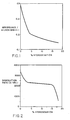
- This Example shows the decreased absorbancy of deep ultraviolet radiation as a result of hydrogenation of a polyvinyl phenol resin. Measurements were carried out under conditions corresponding to use of the resin in a photoresist.
- the poly(p-vinyl phenol) resins were obtained from Maruzen Oil Company of Tokyo, Japan.
- the three hydrogenated poly(p-vinyl phenols) were 4%, 11%, and 18%.
- the resins were dissolved at a concentration of 25% by weight in diethylene glycol dimethyl ether (referred to by its tradename diglyme). Each solution was filtered through a 0.2 micron filter, then spin-coated onto a 3 inch diameter quartz wafer, using a 30 second spin at 1,500 rpm. The coated wafers were baked at 90°C for 30 minutes in a convection oven (this step being referred to as softbaking). Each film was found to be approximately 1 micron in thickness based on replicate measurements with a Dektak IIA Film Thickness Profilometer. The absorbance of each coated wafer at 248 nm was measured with an HP8452A spectrophotometer.
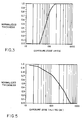
- Example 2 shows that the rate of dissolution of hydrogenated poly(p-vinyl phenols) in an aqueous alkaline developer decreases with an increasing degree of hydrogenation.
- the four solutions of Example 1 were spin coated and softbaked exactly as in Example 1 but using 2 inch square chrome plates, rather than quartz, as the substrate, in order to permit measurement of film thickness by interferometry. After softbaking and cooling to ambient temperature, the coatings were dissolved in an aqueous alkaline developer (Shipley R Microposit MF-321 developer) at 25°C. The thickness of the coating was measured initially with a Nanospec/AFT instrument.
- the thickness of the coating was monitored with a helium/neon laser interferometer by means of a fiber optic probe immersed in the developer, permitting measurement of the time required for complete removal of the photoresist.
- the average rate of dissolution was calculated from the initial thickness of the coating and the time required for complete removal. Average values of four replicate measurements with each polymer solution are plotted in Figure 2 of the drawings.
- the photoresist was spin-coated onto bare silicon wafers (vapor-primed with HMDS for 5 minutes) at 4000 rpm for 30 seconds, then softbaked at 110°C for 60 seconds on a vacuum hotplate, yielding a film of approximately 1 micron thickness.
- An array of 7 by 7 mm square regions ("pads") was exposed over a range of exposure energies from 4 to 124 mJ/cm2 in steps of 4 mJ/cm2, using a GCA AWIS excimer laser stepper at a wavelength of 248 nm.
- the coated wafers were then baked ("post-exposure bake") at 100°C for 60 seconds on a vacuum hotplate to bring about an acid catalyzed crosslinking reaction, and the photoresist was then developed by immersion in Microposit R MF-312 developer at a concentration of 0.135N for 150 seconds at 25°C with hand stirring. After rinsing and drying, the thickness of each pad was measured with a Nanospec/AFT as in Example 2, basing the calculations on a photoresist refractive index of 1.64. The results are set forth in Figure 3 of the drawings in which the abscissa is given in dosage units of 0.4 mJ/cm2.
- the photospeed and contrast of the photoresist may be calculated.
- photospeed is defined as the energy necessary to retain 90% of the original thickness. Based on Figure 3, the photospeed is approximately 60 mJ/cm2.
- Contrast relates to the slope of the curve.
- the linear portion of the curve is extrapolated to 0 and 1.0 normalized thickness, at exposures of E0 and E1, respectively.
- the contrast is defined as 1/log(E1/E0).
- the contrast is 2.1. In comparison with other commonly used negative photoresists this is considered a high contrast value. It is known that, in general, the higher the contrast the steeper are the sidewalls of the developed image.
- Example 3 The photoresist of Example 3 was treated in a manner generally similar to Example 3 but with some differences in the details of the procedure, as follows: substrate: as in Example 3; coating: as in Example 3; softbake: 60 seconds at 90°C on vacuum hotplate; exposure: 24 mJ/cm2 under same conditions as Example 3, but with a mask to form evenly spaced lines; post-exposure bake: 60 seconds at 130°C on vacuum hotplate; and development: 90 second immersion in 0.135N MF-312 developer at 25°C with hand stirring.
- Example 3 The higher temperature of post exposure baking in this Example, compared to Example 3, was chosen in order to bring about a higher degree of crosslinking and a lower solubility of the exposed portions in the developer. Tests similar to those of Example 3 showed that under these conditions the contrast was increased to a value of 4.1.
- Photomicrographs were taken by means of scanning electron microscopy (SEM) at 50,000X magnification. As shown in Figure 4 of the drawings, the mask pattern of lines (shown as ridges of photoresist) of 0.4 micron width at a spacing of 0.4 micron is fairly well reproduced, with some thinning of the lines at the bottom.
- This Example illustrates a positive photoresist based on hydrogenated poly(p-vinyl phenol), activated by deep U.V. radiation.
- the formulation comprises a hydrogenated poly(p-vinyl phenol) with a relatively high degree of hydrogenation to minimize its solubility.
- the photoactive compound is used at a sufficiently high concentration so that its decomposition under the influence of actinic radiation renders the photoresist composition much more soluble in the developer than the unexposed photoresist.
- the absorbence of deep U.V. radiation at 248 nm was measured in the same way as in Example 1.
- the unexposed photoresist had an absorbence of 1.96 per micron.
- the photoresist was partially bleached with the exposed photoresist having an absorbence of 1.65 per micron.
- Figure 5 of the drawings shows that the loss of unexposed photoresist due to the development procedure is 3%.
- the photospeed defined as the energy required to render the exposed photoresist completely soluble under the conditions of development is 550 mJ/cm2.
- the contrast defined as in Example 3, is 1.06. This photoresist has a lower contrast, and requires a much higher exposure dose, than the acid-hardening negative photoresist of Examples 3 and 4, but can be used if a positive photoresist is desired.
Landscapes
- Physics & Mathematics (AREA)
- Spectroscopy & Molecular Physics (AREA)
- General Physics & Mathematics (AREA)
- Chemical & Material Sciences (AREA)
- Inorganic Chemistry (AREA)
- Materials For Photolithography (AREA)
- Addition Polymer Or Copolymer, Post-Treatments, Or Chemical Modifications (AREA)
- Phenolic Resins Or Amino Resins (AREA)
Applications Claiming Priority (2)
| Application Number | Priority Date | Filing Date | Title |
|---|---|---|---|
| US354800 | 1989-05-22 | ||
| US07/354,800 US5128232A (en) | 1989-05-22 | 1989-05-22 | Photoresist composition with copolymer binder having a major proportion of phenolic units and a minor proportion of non-aromatic cyclic alcoholic units |
Publications (2)
| Publication Number | Publication Date |
|---|---|
| EP0401499A1 true EP0401499A1 (fr) | 1990-12-12 |
| EP0401499B1 EP0401499B1 (fr) | 1995-12-13 |
Family
ID=23394956
Family Applications (1)
| Application Number | Title | Priority Date | Filing Date |
|---|---|---|---|
| EP90107478A Expired - Lifetime EP0401499B1 (fr) | 1989-05-22 | 1990-04-19 | Photoréserve avec un liant copolymère |
Country Status (5)
| Country | Link |
|---|---|
| US (1) | US5128232A (fr) |
| EP (1) | EP0401499B1 (fr) |
| JP (1) | JP2960751B2 (fr) |
| KR (1) | KR0155997B1 (fr) |
| DE (1) | DE69024101T2 (fr) |
Cited By (13)
| Publication number | Priority date | Publication date | Assignee | Title |
|---|---|---|---|---|
| EP0419147A3 (en) * | 1989-09-20 | 1991-07-24 | Nippon Zeon Co., Ltd. | Resist composition |
| EP0458325A1 (fr) * | 1990-05-25 | 1991-11-27 | Mitsubishi Chemical Corporation | Composition photosensible négative et procédé pour réaliser une structure de réserve |
| EP0450869A3 (en) * | 1990-04-03 | 1992-01-29 | Hewlett-Packard Company | Image reversal in a negative deep ultraviolet photoresist |
| US5183722A (en) * | 1989-12-01 | 1993-02-02 | Tosoh Corporation | Positive photosensitive composition for forming lenses containing 1,2-naphthoquinone diazide sulfonate photosensitizer, alkali-soluble resin and thermosetting agent and process for producing the composition |
| GB2259152A (en) * | 1991-06-14 | 1993-03-03 | Nippon Zeon Co | Photo resist composition |
| EP0534324A1 (fr) * | 1991-09-23 | 1993-03-31 | Shipley Company Inc. | Compositions sensibles aux rayonnements contenant des polymères ayant des groupes labiles en nucleic acide |
| EP0551105A3 (en) * | 1992-01-07 | 1993-09-15 | Fujitsu Limited | Negative type composition for chemically amplified resist and process and apparatus of chemically amplified resist pattern |
| EP0763781A2 (fr) | 1991-11-15 | 1997-03-19 | Shipley Company Inc. | Compositions anti-halos |
| EP0732626A3 (fr) * | 1995-03-16 | 1997-03-26 | Shipley Co Llc | Composition sensible aux radiations, contenant un polymère à groupements protecteurs |
| US5783354A (en) * | 1995-09-11 | 1998-07-21 | Basf Aktiengesellschaft | Positive-working radiation-sensitive mixture |
| US5846689A (en) * | 1995-09-11 | 1998-12-08 | Basf Aktiengesellschaft | Positive-working radiation-sensitive mixture and production of relief structures |
| US7192687B2 (en) * | 2003-09-05 | 2007-03-20 | Tokyo Ohka Kogyo Co., Ltd. | Positive resist composition and method of forming resist pattern using same |
| EP2383611A3 (fr) * | 2010-04-27 | 2012-01-25 | Rohm and Haas Electronic Materials LLC | Générateurs photo-acides et résines photosensibles les comportant |
Families Citing this family (100)
| Publication number | Priority date | Publication date | Assignee | Title |
|---|---|---|---|---|
| CA2023230A1 (fr) * | 1989-08-17 | 1991-02-18 | Satoshi Urano | Composition de revetement, a base de solvant |
| JPH04110945A (ja) * | 1990-08-31 | 1992-04-13 | Mitsubishi Kasei Corp | ネガ型感光性組成物 |
| JP2722870B2 (ja) * | 1991-06-14 | 1998-03-09 | 日本ゼオン株式会社 | レジスト組成物 |
| JP3016952B2 (ja) * | 1992-04-28 | 2000-03-06 | クラリアント インターナショナル リミテッド | ネガ型フォトレジスト組成物 |
| US5340696A (en) * | 1993-01-29 | 1994-08-23 | Shipley Company Inc. | Photoresist compositions with copolymer binder having phenolic and nonaromatic cyclic alcohol units where the distribution of the cyclic alcohol concentration is less than 8 mole percent |
| TW288112B (fr) * | 1993-06-02 | 1996-10-11 | Sumitomo Chemical Co | |
| JPH07140666A (ja) * | 1993-06-04 | 1995-06-02 | Internatl Business Mach Corp <Ibm> | マイクロリトグラフィックレジスト組成物、酸不安定化合物、マイクロリトグラフィックレリーフ画像形成方法及び酸感知性ポリマー組成物 |
| US5691101A (en) * | 1994-03-15 | 1997-11-25 | Kabushiki Kaisha Toshiba | Photosensitive composition |
| TW323295B (fr) * | 1994-12-20 | 1997-12-21 | Ajinomoto Kk | |
| US5514520A (en) * | 1995-03-16 | 1996-05-07 | Shipley Company, L.L.C. | Radiation sensitive composition comprising polymer having inert blocking groups |
| US5541263A (en) * | 1995-03-16 | 1996-07-30 | Shipley Company, L.L.C. | Polymer having inert blocking groups |
| US5700624A (en) * | 1995-05-09 | 1997-12-23 | Shipley Company, L.L.C. | Positive acid catalyzed resists having an alkali soluble resin with acid labile groups and inert blocking groups |
| US5731386A (en) * | 1995-05-09 | 1998-03-24 | Shipley Company, L.L.C. | Polymer for positive acid catalyzed resists |
| US5876899A (en) * | 1996-09-18 | 1999-03-02 | Shipley Company, L.L.C. | Photoresist compositions |
| US7147983B1 (en) | 1996-10-07 | 2006-12-12 | Shipley Company, L.L.C. | Dyed photoresists and methods and articles of manufacture comprising same |
| US5910394A (en) | 1997-06-18 | 1999-06-08 | Shipley Company, L.L.C. | I-line photoresist compositions |
| US5866299A (en) * | 1997-06-18 | 1999-02-02 | Shipley Company, L.L.C. | Negative photoresist composition |
| WO1999004319A1 (fr) | 1997-07-15 | 1999-01-28 | E.I. Du Pont De Nemours And Company | Resists perfectionnes inhibant la dissolution et utiles en microlithographie |
| AU3964199A (en) * | 1998-04-07 | 1999-10-25 | Euv Limited Liability Corporation | Thin layer imaging process for microlithography using radiation at strongly attenuated wavelengths |
| US6159656A (en) * | 1998-06-26 | 2000-12-12 | Fuji Photo Film Co., Ltd. | Positive photosensitive resin |
| US6824879B2 (en) | 1999-06-10 | 2004-11-30 | Honeywell International Inc. | Spin-on-glass anti-reflective coatings for photolithography |
| JP3929653B2 (ja) | 1999-08-11 | 2007-06-13 | 富士フイルム株式会社 | ネガ型レジスト組成物 |
| US6387596B2 (en) * | 1999-08-30 | 2002-05-14 | International Business Machines Corporation | Method of forming resist images by periodic pattern removal |
| JP3989149B2 (ja) | 1999-12-16 | 2007-10-10 | 富士フイルム株式会社 | 電子線またはx線用化学増幅系ネガ型レジスト組成物 |
| CN1202151C (zh) * | 2000-07-13 | 2005-05-18 | 新日铁化学株式会社 | 氢化芳香族低聚物及其制备方法 |
| US6368400B1 (en) | 2000-07-17 | 2002-04-09 | Honeywell International | Absorbing compounds for spin-on-glass anti-reflective coatings for photolithography |
| US7132214B2 (en) * | 2000-09-08 | 2006-11-07 | Shipley Company, L.L.C. | Polymers and photoresist compositions for short wavelength imaging |
| CN1606713B (zh) | 2001-11-15 | 2011-07-06 | 霍尼韦尔国际公司 | 用于照相平版印刷术的旋涂抗反射涂料 |
| US7521168B2 (en) | 2002-02-13 | 2009-04-21 | Fujifilm Corporation | Resist composition for electron beam, EUV or X-ray |
| US8053159B2 (en) | 2003-11-18 | 2011-11-08 | Honeywell International Inc. | Antireflective coatings for via fill and photolithography applications and methods of preparation thereof |
| EP1612604A3 (fr) | 2004-07-02 | 2006-04-05 | Rohm and Haas Electronic Materials, L.L.C. | Compositions et procédés pour la lithographie par immersion |
| US7175944B2 (en) * | 2004-08-31 | 2007-02-13 | Micron Technology, Inc. | Prevention of photoresist scumming |
| JP4789599B2 (ja) | 2004-12-06 | 2011-10-12 | ローム・アンド・ハース・エレクトロニック・マテリアルズ,エル.エル.シー. | フォトレジスト組成物 |
| JP4439409B2 (ja) | 2005-02-02 | 2010-03-24 | 富士フイルム株式会社 | レジスト組成物及びそれを用いたパターン形成方法 |
| EP1691238A3 (fr) | 2005-02-05 | 2009-01-21 | Rohm and Haas Electronic Materials, L.L.C. | Compositions de revêtement destinées à être utilisées avec une résine photosensible |
| EP1762895B1 (fr) | 2005-08-29 | 2016-02-24 | Rohm and Haas Electronic Materials, L.L.C. | Compositions antireflet pour masques durs |
| US20070178404A1 (en) * | 2006-01-30 | 2007-08-02 | International Business Machines Corporation | Methods of preventing defects in antireflective coatings |
| EP1829942B1 (fr) | 2006-02-28 | 2012-09-26 | Rohm and Haas Electronic Materials, L.L.C. | Compositions de revêtement destinées à être utilisées avec une résine photosensible |
| TWI598223B (zh) | 2006-03-10 | 2017-09-11 | 羅門哈斯電子材料有限公司 | 用於光微影之組成物及製程 |
| CN101256355B (zh) | 2006-10-30 | 2013-03-27 | 罗门哈斯电子材料有限公司 | 浸渍平版印刷用组合物和浸渍平版印刷方法 |
| TWI374478B (en) | 2007-02-13 | 2012-10-11 | Rohm & Haas Elect Mat | Electronic device manufacture |
| US8642246B2 (en) | 2007-02-26 | 2014-02-04 | Honeywell International Inc. | Compositions, coatings and films for tri-layer patterning applications and methods of preparation thereof |
| CN101308329B (zh) | 2007-04-06 | 2013-09-04 | 罗门哈斯电子材料有限公司 | 涂料组合物 |
| EP2056162B1 (fr) | 2007-11-05 | 2016-05-04 | Rohm and Haas Electronic Materials LLC | Procédé pour lithographie en immersion |
| EP2071400A1 (fr) | 2007-11-12 | 2009-06-17 | Rohm and Haas Electronic Materials LLC | Compositions de revêtement destinées à être utilisées avec une résine photosensible |
| EP2189846B1 (fr) | 2008-11-19 | 2015-04-22 | Rohm and Haas Electronic Materials LLC | Procédé de photolithographie ultilisant une composition de photoréserve contenant un copolymère à blocs |
| EP2189845B1 (fr) | 2008-11-19 | 2017-08-02 | Rohm and Haas Electronic Materials LLC | Compositions et procédés de photolithographie |
| EP2189844A3 (fr) | 2008-11-19 | 2010-07-28 | Rohm and Haas Electronic Materials LLC | Compositions comportant un matériau de sulfonamide et procédés de photolithographie |
| EP3051348A1 (fr) | 2008-11-19 | 2016-08-03 | Rohm and Haas Electronic Materials LLC | Compositions comportant un composant d'aryle carbocyclique hetero-substitue et procedes de photolithographie |
| EP2204694A1 (fr) | 2008-12-31 | 2010-07-07 | Rohm and Haas Electronic Materials LLC | Compositions et procédés de photolithographie |
| EP2204392A1 (fr) | 2008-12-31 | 2010-07-07 | Rohm and Haas Electronic Materials LLC | Compositions et procédés de photolithographie |
| JP5746824B2 (ja) | 2009-02-08 | 2015-07-08 | ローム アンド ハース エレクトロニック マテリアルズ エルエルシーRohm and Haas Electronic Materials LLC | 上塗りフォトレジストと共に使用するのに好適なコーティング組成物 |
| JP5719514B2 (ja) | 2009-02-08 | 2015-05-20 | ローム アンド ハース エレクトロニック マテリアルズ エルエルシーRohm and Haas Electronic Materials LLC | 上塗りフォトレジストと共に使用するのに好適なコーティング組成物 |
| US9244352B2 (en) | 2009-05-20 | 2016-01-26 | Rohm And Haas Electronic Materials, Llc | Coating compositions for use with an overcoated photoresist |
| US8501383B2 (en) | 2009-05-20 | 2013-08-06 | Rohm And Haas Electronic Materials Llc | Coating compositions for use with an overcoated photoresist |
| US10180627B2 (en) | 2009-06-08 | 2019-01-15 | Rohm And Haas Electronic Materials Llc | Processes for photolithography |
| US8557877B2 (en) | 2009-06-10 | 2013-10-15 | Honeywell International Inc. | Anti-reflective coatings for optically transparent substrates |
| JP5687442B2 (ja) | 2009-06-22 | 2015-03-18 | ローム・アンド・ハース・エレクトロニック・マテリアルズ,エル.エル.シー. | 光酸発生剤およびこれを含むフォトレジスト |
| TWI474378B (zh) | 2009-06-26 | 2015-02-21 | 羅門哈斯電子材料有限公司 | 形成電子裝置的方法 |
| TWI476816B (zh) | 2009-06-26 | 2015-03-11 | 羅門哈斯電子材料有限公司 | 自我對準間隔之多重圖案化方法 |
| EP2336824A1 (fr) | 2009-11-19 | 2011-06-22 | Rohm and Haas Electronic Materials, L.L.C. | Procédés de fabrication d'appareils electroniques |
| JP6228353B2 (ja) | 2009-12-10 | 2017-11-08 | ローム アンド ハース エレクトロニック マテリアルズ エルエルシーRohm and Haas Electronic Materials LLC | 光酸発生剤およびこれを含むフォトレジスト |
| JP5809798B2 (ja) | 2009-12-10 | 2015-11-11 | ローム アンド ハース エレクトロニック マテリアルズ エルエルシーRohm and Haas Electronic Materials LLC | コラート光酸発生剤およびこれを含むフォトレジスト |
| JP5830240B2 (ja) | 2009-12-14 | 2015-12-09 | ローム アンド ハース エレクトロニック マテリアルズ エルエルシーRohm and Haas Electronic Materials LLC | スルホニル光酸発生剤およびこれを含むフォトレジスト |
| KR101831685B1 (ko) | 2010-01-25 | 2018-02-23 | 롬 앤드 하스 일렉트로닉 머트어리얼즈 엘엘씨 | 질소-함유 화합물을 포함하는 포토레지스트 |
| US8473271B2 (en) * | 2010-03-12 | 2013-06-25 | Synopsys, Inc. | Fast photolithography process simulation to predict remaining resist thickness |
| JP5969171B2 (ja) | 2010-03-31 | 2016-08-17 | ローム アンド ハース エレクトロニック マテリアルズ エルエルシーRohm and Haas Electronic Materials LLC | 光酸発生剤およびこれを含むフォトレジスト |
| EP2428842A1 (fr) | 2010-09-14 | 2012-03-14 | Rohm and Haas Electronic Materials LLC | Photorésines comprenant un composant multi-amide |
| JP6144005B2 (ja) | 2010-11-15 | 2017-06-07 | ローム アンド ハース エレクトロニック マテリアルズ エルエルシーRohm and Haas Electronic Materials LLC | 糖成分を含む組成物およびフォトリソグラフィ方法 |
| CN102603586A (zh) | 2010-11-15 | 2012-07-25 | 罗门哈斯电子材料有限公司 | 碱反应性光酸发生剂以及包含其的光致抗蚀剂 |
| JP5961363B2 (ja) | 2010-11-15 | 2016-08-02 | ローム アンド ハース エレクトロニック マテリアルズ エルエルシーRohm and Haas Electronic Materials LLC | ラクトン光酸発生剤、これを含む樹脂およびフォトレジスト |
| JP2012113302A (ja) | 2010-11-15 | 2012-06-14 | Rohm & Haas Electronic Materials Llc | 塩基反応性成分を含む組成物およびフォトリソグラフィーのための方法 |
| EP2472320A2 (fr) | 2010-12-30 | 2012-07-04 | Rohm and Haas Electronic Materials LLC | Compositions comportant un composant réactif en milieu basique et procédés de photolithographie |
| EP2472328B1 (fr) | 2010-12-31 | 2013-06-19 | Rohm and Haas Electronic Materials LLC | Compositions de revêtement destinées à être utilisées avec une résine photosensible |
| EP2472329B1 (fr) | 2010-12-31 | 2013-06-05 | Rohm and Haas Electronic Materials LLC | Compositions de revêtement destinées à être utilisées avec une résine photosensible |
| US9122159B2 (en) | 2011-04-14 | 2015-09-01 | Rohm And Haas Electronic Materials Llc | Compositions and processes for photolithography |
| US8864898B2 (en) | 2011-05-31 | 2014-10-21 | Honeywell International Inc. | Coating formulations for optical elements |
| US9011591B2 (en) | 2011-09-21 | 2015-04-21 | Dow Global Technologies Llc | Compositions and antireflective coatings for photolithography |
| JP5913241B2 (ja) | 2012-09-15 | 2016-04-27 | ローム アンド ハース エレクトロニック マテリアルズ エルエルシーRohm and Haas Electronic Materials LLC | 複数の酸発生剤化合物を含むフォトレジスト |
| US9547238B2 (en) | 2012-10-16 | 2017-01-17 | Eugen Pavel | Photoresist with rare-earth sensitizers |
| US9029065B2 (en) | 2012-10-26 | 2015-05-12 | Rohm And Haas Electronic Materials Llc | Photoacid generating compound and photoresist composition comprising same, coated article comprising the photoresist and method of making an article |
| US10527934B2 (en) | 2012-10-31 | 2020-01-07 | Rohm And Haas Electronic Materials Llc | Photoresists comprising ionic compound |
| US9541834B2 (en) | 2012-11-30 | 2017-01-10 | Rohm And Haas Electronic Materials Llc | Ionic thermal acid generators for low temperature applications |
| US9067909B2 (en) | 2013-08-28 | 2015-06-30 | Rohm And Haas Electronic Materials Llc | Photoacid generator, photoresist, coated substrate, and method of forming an electronic device |
| US9046767B2 (en) | 2013-10-25 | 2015-06-02 | Rohm And Haas Electronic Materials Llc | Photoacid generator, photoresist, coated substrate, and method of forming an electronic device |
| US9229319B2 (en) | 2013-12-19 | 2016-01-05 | Rohm And Haas Electronic Materials Llc | Photoacid-generating copolymer and associated photoresist composition, coated substrate, and method of forming an electronic device |
| US9581901B2 (en) | 2013-12-19 | 2017-02-28 | Rohm And Haas Electronic Materials Llc | Photoacid-generating copolymer and associated photoresist composition, coated substrate, and method of forming an electronic device |
| EP2998297A1 (fr) | 2014-09-18 | 2016-03-23 | Heraeus Materials Korea Corporation | Composés générateur de photoacide, compositions comprenant lesdits composés, composites et procédé de fabrication dudit composites, ainsi que les utilisations de ces composés |
| US9383644B2 (en) | 2014-09-18 | 2016-07-05 | Heraeus Precious Metals North America Daychem LLC | Sulfonic acid derivative compounds as photoacid generators in resist applications |
| US9477150B2 (en) | 2015-03-13 | 2016-10-25 | Heraeus Precious Metals North America Daychem LLC | Sulfonic acid derivative compounds as photoacid generators in resist applications |
| US10544329B2 (en) | 2015-04-13 | 2020-01-28 | Honeywell International Inc. | Polysiloxane formulations and coatings for optoelectronic applications |
| WO2017029935A1 (fr) * | 2015-08-18 | 2017-02-23 | Dic株式会社 | Résine de type novolaque contenant un groupe hydroxyphénolique, et film de réserve |
| WO2017034814A1 (fr) | 2015-08-21 | 2017-03-02 | Heraeus Precious Metals North America Daychem LLC | Composés dérivé d'acide sulfonique en tant que générateurs de photoacides dans des applications de résine photosensible |
| TWI646397B (zh) | 2015-10-31 | 2019-01-01 | 南韓商羅門哈斯電子材料韓國公司 | 與外塗佈光致抗蝕劑一起使用的塗料組合物 |
| EP3182203A1 (fr) | 2015-12-18 | 2017-06-21 | Heraeus Precious Metals North America Daychem LLC | Combinaison de dérivés de nit avec sensibilisateurs |
| US11448964B2 (en) | 2016-05-23 | 2022-09-20 | Rohm And Haas Electronic Materials Korea Ltd. | Coating compositions for use with an overcoated photoresist |
| US11500291B2 (en) | 2017-10-31 | 2022-11-15 | Rohm And Haas Electronic Materials Korea Ltd. | Underlying coating compositions for use with photoresists |
| US10466597B2 (en) * | 2017-11-01 | 2019-11-05 | Texas Instruments Incorporated | Methods and apparatus to control grayscale photolithography |
| KR102546299B1 (ko) | 2018-03-16 | 2023-06-21 | 헤레우스 에퓨리오 엘엘씨 | 레지스트 응용에서 광산 발생제로서의 시클릭 술포네이트 화합물 |
| CN117440944A (zh) | 2021-06-23 | 2024-01-23 | 贺利氏电子化学品有限公司 | 在抗蚀剂应用中作为光致产酸剂的含氧噻鎓离子的磺酸衍生物化合物 |
Citations (3)
| Publication number | Priority date | Publication date | Assignee | Title |
|---|---|---|---|---|
| FR2183748A1 (fr) * | 1972-05-05 | 1973-12-21 | Oce Van Der Grinten Nv | |
| EP0164248A2 (fr) * | 1984-06-01 | 1985-12-11 | Rohm And Haas Company | Composition de revêtement photosensible, revêtement résistant à la chaleur fabriqué avec cette composition et emploi de ce revêtement pour la réalisation d'images photopolymères résistant à la chaleur |
| EP0232972A2 (fr) * | 1986-01-13 | 1987-08-19 | Rohm And Haas Company | Composition photoréserve négative et procédé de préparation d'images résistantes à la chaleur utilisant cette composition |
Family Cites Families (10)
| Publication number | Priority date | Publication date | Assignee | Title |
|---|---|---|---|---|
| US4148654A (en) * | 1976-07-22 | 1979-04-10 | Oddi Michael J | Positive acting photoresist comprising diazide ester, novolak resin and rosin |
| DE3151078A1 (de) * | 1981-12-23 | 1983-07-28 | Hoechst Ag, 6230 Frankfurt | Verfahren zur herstellung von reliefbildern |
| US4439516A (en) * | 1982-03-15 | 1984-03-27 | Shipley Company Inc. | High temperature positive diazo photoresist processing using polyvinyl phenol |
| DE3325023A1 (de) * | 1983-07-11 | 1985-01-24 | Hoechst Ag, 6230 Frankfurt | Verfahren zur herstellung negativer kopien mittels eines materials auf basis von 1,2-chinondiaziden |
| US4857435A (en) * | 1983-11-01 | 1989-08-15 | Hoechst Celanese Corporation | Positive photoresist thermally stable compositions and elements having deep UV response with maleimide copolymer |
| DE3406927A1 (de) * | 1984-02-25 | 1985-08-29 | Hoechst Ag, 6230 Frankfurt | Strahlungsempfindliches gemisch auf basis von saeurespaltbaren verbindungen |
| NL8502134A (nl) * | 1985-07-26 | 1987-02-16 | Dsm Resins Bv | Gehydrogeneerde koolwaterstofhars en toepassing daarvan in lijmen. |
| US4720445A (en) * | 1986-02-18 | 1988-01-19 | Allied Corporation | Copolymers from maleimide and aliphatic vinyl ethers and esters used in positive photoresist |
| JP2618692B2 (ja) * | 1988-06-23 | 1997-06-11 | 日本ゼオン株式会社 | レジスト組成物 |
| JP2571130B2 (ja) * | 1989-09-20 | 1997-01-16 | 日本ゼオン株式会社 | レジスト組成物 |
-
1989
- 1989-05-22 US US07/354,800 patent/US5128232A/en not_active Expired - Lifetime
-
1990
- 1990-04-19 DE DE69024101T patent/DE69024101T2/de not_active Expired - Fee Related
- 1990-04-19 EP EP90107478A patent/EP0401499B1/fr not_active Expired - Lifetime
- 1990-05-22 JP JP2132443A patent/JP2960751B2/ja not_active Expired - Fee Related
- 1990-05-22 KR KR1019900007323A patent/KR0155997B1/ko not_active Expired - Fee Related
Patent Citations (3)
| Publication number | Priority date | Publication date | Assignee | Title |
|---|---|---|---|---|
| FR2183748A1 (fr) * | 1972-05-05 | 1973-12-21 | Oce Van Der Grinten Nv | |
| EP0164248A2 (fr) * | 1984-06-01 | 1985-12-11 | Rohm And Haas Company | Composition de revêtement photosensible, revêtement résistant à la chaleur fabriqué avec cette composition et emploi de ce revêtement pour la réalisation d'images photopolymères résistant à la chaleur |
| EP0232972A2 (fr) * | 1986-01-13 | 1987-08-19 | Rohm And Haas Company | Composition photoréserve négative et procédé de préparation d'images résistantes à la chaleur utilisant cette composition |
Cited By (19)
| Publication number | Priority date | Publication date | Assignee | Title |
|---|---|---|---|---|
| EP0419147A3 (en) * | 1989-09-20 | 1991-07-24 | Nippon Zeon Co., Ltd. | Resist composition |
| EP0704718A1 (fr) * | 1989-12-01 | 1996-04-03 | Tosoh Corporation | Compositions photosensibles positives pour la fabrication de lentilles |
| US5183722A (en) * | 1989-12-01 | 1993-02-02 | Tosoh Corporation | Positive photosensitive composition for forming lenses containing 1,2-naphthoquinone diazide sulfonate photosensitizer, alkali-soluble resin and thermosetting agent and process for producing the composition |
| EP0450869A3 (en) * | 1990-04-03 | 1992-01-29 | Hewlett-Packard Company | Image reversal in a negative deep ultraviolet photoresist |
| EP0458325A1 (fr) * | 1990-05-25 | 1991-11-27 | Mitsubishi Chemical Corporation | Composition photosensible négative et procédé pour réaliser une structure de réserve |
| GB2259152A (en) * | 1991-06-14 | 1993-03-03 | Nippon Zeon Co | Photo resist composition |
| US5773190A (en) * | 1991-06-14 | 1998-06-30 | Nippon Zeon Co., Ltd. | Resist composition |
| GB2259152B (en) * | 1991-06-14 | 1995-01-11 | Nippon Zeon Co | Resist composition |
| EP0534324A1 (fr) * | 1991-09-23 | 1993-03-31 | Shipley Company Inc. | Compositions sensibles aux rayonnements contenant des polymères ayant des groupes labiles en nucleic acide |
| EP0763781A2 (fr) | 1991-11-15 | 1997-03-19 | Shipley Company Inc. | Compositions anti-halos |
| US5723259A (en) * | 1992-01-07 | 1998-03-03 | Fujitsu Limited | Negative type composition for chemically amplified resist and process and apparatus of formation of chemically amplified resist pattern |
| US5693145A (en) * | 1992-01-07 | 1997-12-02 | Fujitsu Limited | Apparatus of formation of chemically amplified resist pattern |
| EP0551105A3 (en) * | 1992-01-07 | 1993-09-15 | Fujitsu Limited | Negative type composition for chemically amplified resist and process and apparatus of chemically amplified resist pattern |
| EP0732626A3 (fr) * | 1995-03-16 | 1997-03-26 | Shipley Co Llc | Composition sensible aux radiations, contenant un polymère à groupements protecteurs |
| US5783354A (en) * | 1995-09-11 | 1998-07-21 | Basf Aktiengesellschaft | Positive-working radiation-sensitive mixture |
| US5846689A (en) * | 1995-09-11 | 1998-12-08 | Basf Aktiengesellschaft | Positive-working radiation-sensitive mixture and production of relief structures |
| US7192687B2 (en) * | 2003-09-05 | 2007-03-20 | Tokyo Ohka Kogyo Co., Ltd. | Positive resist composition and method of forming resist pattern using same |
| EP2383611A3 (fr) * | 2010-04-27 | 2012-01-25 | Rohm and Haas Electronic Materials LLC | Générateurs photo-acides et résines photosensibles les comportant |
| US8609891B2 (en) | 2010-04-27 | 2013-12-17 | Rohm And Haas Electronic Materials Llc | Photoacid generators and photoresists comprising same |
Also Published As
| Publication number | Publication date |
|---|---|
| KR900018746A (ko) | 1990-12-22 |
| DE69024101D1 (de) | 1996-01-25 |
| US5128232A (en) | 1992-07-07 |
| JP2960751B2 (ja) | 1999-10-12 |
| DE69024101T2 (de) | 1996-07-11 |
| EP0401499B1 (fr) | 1995-12-13 |
| KR0155997B1 (ko) | 1998-11-16 |
| JPH0387746A (ja) | 1991-04-12 |
Similar Documents
| Publication | Publication Date | Title |
|---|---|---|
| US5128232A (en) | Photoresist composition with copolymer binder having a major proportion of phenolic units and a minor proportion of non-aromatic cyclic alcoholic units | |
| US5258257A (en) | Radiation sensitive compositions comprising polymer having acid labile groups | |
| US5908738A (en) | Undercoating composition for photolithography | |
| EP0594452B1 (fr) | Composition résineuse sensible aux radiations pour la fabrication de microlentilles | |
| EP1210651B1 (fr) | Revetement antireflet pour compositions de photoresists | |
| JPH083635B2 (ja) | ネガフオトレジスト組成物およびネガ画像の形成方法 | |
| US4882260A (en) | Positive-working photosensitive quinone diazide composition with alkali insoluble dye and alkali soluble dye | |
| US5210000A (en) | Photoresist and method for forming a relief image utilizing composition with copolymer binder having a major proportion of phenolic units and a minor proportion of non-aromatic cyclic alcoholic units | |
| KR0155990B1 (ko) | 근자외선 방사에 의해 고해상도를 나타내는 산 경화 광저항물에 있어서 선택된 광활성 조성물의 사용법 | |
| US5827634A (en) | Positive acid catalyzed resists | |
| US5541263A (en) | Polymer having inert blocking groups | |
| US5514520A (en) | Radiation sensitive composition comprising polymer having inert blocking groups | |
| EP0462391B1 (fr) | Photoréserves durcies par les acides | |
| US5763536A (en) | Polymer for positive acid catalyzed resists | |
| JPH11149161A (ja) | 新規なポリマーを含有する放射線感光性組成物 | |
| EP0732626B1 (fr) | Composition sensible aux radiations, contenant un polymère à groupements protecteurs | |
| US5368993A (en) | Method of forming relief image having line width less than 0.35 microns utilizing copolymer binder having phenolic and nonaromatic cyclic alcohol units | |
| US5866299A (en) | Negative photoresist composition | |
| JPH0379619A (ja) | ノボラック樹脂を含有するフォトレジスト | |
| EP0742490B1 (fr) | Photoréserves positives catalysées par des acides | |
| WO1993012468A1 (fr) | Resines au liant de polyphosphazene pour agents photoresistants | |
| JPS622249A (ja) | 感光性組成物 | |
| JPH11349760A (ja) | 新規なポリマーを含有する放射線感光性組成物 | |
| KR19980087477A (ko) | 방사선 민감성 중합체 조성물 |
Legal Events
| Date | Code | Title | Description |
|---|---|---|---|
| PUAI | Public reference made under article 153(3) epc to a published international application that has entered the european phase |
Free format text: ORIGINAL CODE: 0009012 |
|
| AK | Designated contracting states |
Kind code of ref document: A1 Designated state(s): BE CH DE FR GB IT LI NL SE |
|
| 17P | Request for examination filed |
Effective date: 19901211 |
|
| 17Q | First examination report despatched |
Effective date: 19930611 |
|
| GRAA | (expected) grant |
Free format text: ORIGINAL CODE: 0009210 |
|
| AK | Designated contracting states |
Kind code of ref document: B1 Designated state(s): BE CH DE FR GB IT LI NL SE |
|
| PG25 | Lapsed in a contracting state [announced via postgrant information from national office to epo] |
Ref country code: LI Effective date: 19951213 Ref country code: CH Effective date: 19951213 Ref country code: BE Effective date: 19951213 |
|
| REF | Corresponds to: |
Ref document number: 69024101 Country of ref document: DE Date of ref document: 19960125 |
|
| ITF | It: translation for a ep patent filed | ||
| ET | Fr: translation filed | ||
| PG25 | Lapsed in a contracting state [announced via postgrant information from national office to epo] |
Ref country code: SE Effective date: 19960313 |
|
| REG | Reference to a national code |
Ref country code: CH Ref legal event code: PL |
|
| PLBQ | Unpublished change to opponent data |
Free format text: ORIGINAL CODE: EPIDOS OPPO |
|
| PLBI | Opposition filed |
Free format text: ORIGINAL CODE: 0009260 |
|
| 26 | Opposition filed |
Opponent name: OLIN CORPORATION Effective date: 19960912 |
|
| PLBF | Reply of patent proprietor to notice(s) of opposition |
Free format text: ORIGINAL CODE: EPIDOS OBSO |
|
| NLR1 | Nl: opposition has been filed with the epo |
Opponent name: OLIN CORPORATION |
|
| PLBF | Reply of patent proprietor to notice(s) of opposition |
Free format text: ORIGINAL CODE: EPIDOS OBSO |
|
| PLBF | Reply of patent proprietor to notice(s) of opposition |
Free format text: ORIGINAL CODE: EPIDOS OBSO |
|
| PLBF | Reply of patent proprietor to notice(s) of opposition |
Free format text: ORIGINAL CODE: EPIDOS OBSO |
|
| PLBF | Reply of patent proprietor to notice(s) of opposition |
Free format text: ORIGINAL CODE: EPIDOS OBSO |
|
| PLBO | Opposition rejected |
Free format text: ORIGINAL CODE: EPIDOS REJO |
|
| PLBN | Opposition rejected |
Free format text: ORIGINAL CODE: 0009273 |
|
| STAA | Information on the status of an ep patent application or granted ep patent |
Free format text: STATUS: OPPOSITION REJECTED |
|
| 27O | Opposition rejected |
Effective date: 19991129 |
|
| NLR2 | Nl: decision of opposition | ||
| PGFP | Annual fee paid to national office [announced via postgrant information from national office to epo] |
Ref country code: GB Payment date: 20010420 Year of fee payment: 12 |
|
| PGFP | Annual fee paid to national office [announced via postgrant information from national office to epo] |
Ref country code: NL Payment date: 20010427 Year of fee payment: 12 |
|
| REG | Reference to a national code |
Ref country code: GB Ref legal event code: IF02 |
|
| PG25 | Lapsed in a contracting state [announced via postgrant information from national office to epo] |
Ref country code: GB Free format text: LAPSE BECAUSE OF NON-PAYMENT OF DUE FEES Effective date: 20020419 |
|
| PG25 | Lapsed in a contracting state [announced via postgrant information from national office to epo] |
Ref country code: NL Free format text: LAPSE BECAUSE OF NON-PAYMENT OF DUE FEES Effective date: 20021101 |
|
| GBPC | Gb: european patent ceased through non-payment of renewal fee |
Effective date: 20020419 |
|
| NLV4 | Nl: lapsed or anulled due to non-payment of the annual fee |
Effective date: 20021101 |
|
| PG25 | Lapsed in a contracting state [announced via postgrant information from national office to epo] |
Ref country code: IT Free format text: LAPSE BECAUSE OF NON-PAYMENT OF DUE FEES;WARNING: LAPSES OF ITALIAN PATENTS WITH EFFECTIVE DATE BEFORE 2007 MAY HAVE OCCURRED AT ANY TIME BEFORE 2007. THE CORRECT EFFECTIVE DATE MAY BE DIFFERENT FROM THE ONE RECORDED. Effective date: 20050419 |
|
| PGFP | Annual fee paid to national office [announced via postgrant information from national office to epo] |
Ref country code: FR Payment date: 20060417 Year of fee payment: 17 |
|
| PGFP | Annual fee paid to national office [announced via postgrant information from national office to epo] |
Ref country code: DE Payment date: 20060531 Year of fee payment: 17 |
|
| PG25 | Lapsed in a contracting state [announced via postgrant information from national office to epo] |
Ref country code: DE Free format text: LAPSE BECAUSE OF NON-PAYMENT OF DUE FEES Effective date: 20071101 |
|
| PG25 | Lapsed in a contracting state [announced via postgrant information from national office to epo] |
Ref country code: FR Free format text: LAPSE BECAUSE OF NON-PAYMENT OF DUE FEES Effective date: 20070430 |