EP0412542B1 - Antagonistes cycliques de la neurokinine - Google Patents
Antagonistes cycliques de la neurokinine Download PDFInfo
- Publication number
- EP0412542B1 EP0412542B1 EP90115309A EP90115309A EP0412542B1 EP 0412542 B1 EP0412542 B1 EP 0412542B1 EP 90115309 A EP90115309 A EP 90115309A EP 90115309 A EP90115309 A EP 90115309A EP 0412542 B1 EP0412542 B1 EP 0412542B1
- Authority
- EP
- European Patent Office
- Prior art keywords
- phe
- trp
- peptide derivative
- group
- cha
- Prior art date
- Legal status (The legal status is an assumption and is not a legal conclusion. Google has not performed a legal analysis and makes no representation as to the accuracy of the status listed.)
- Expired - Lifetime
Links
Images



Classifications
-
- C—CHEMISTRY; METALLURGY
- C07—ORGANIC CHEMISTRY
- C07K—PEPTIDES
- C07K7/00—Peptides having 5 to 20 amino acids in a fully defined sequence; Derivatives thereof
- C07K7/04—Linear peptides containing only normal peptide links
- C07K7/22—Tachykinins, e.g. Eledoisins, Substance P; Related peptides
-
- C—CHEMISTRY; METALLURGY
- C07—ORGANIC CHEMISTRY
- C07K—PEPTIDES
- C07K7/00—Peptides having 5 to 20 amino acids in a fully defined sequence; Derivatives thereof
- C07K7/64—Cyclic peptides containing only normal peptide links
-
- A—HUMAN NECESSITIES
- A61—MEDICAL OR VETERINARY SCIENCE; HYGIENE
- A61P—SPECIFIC THERAPEUTIC ACTIVITY OF CHEMICAL COMPOUNDS OR MEDICINAL PREPARATIONS
- A61P1/00—Drugs for disorders of the alimentary tract or the digestive system
- A61P1/12—Antidiarrhoeals
-
- A—HUMAN NECESSITIES
- A61—MEDICAL OR VETERINARY SCIENCE; HYGIENE
- A61P—SPECIFIC THERAPEUTIC ACTIVITY OF CHEMICAL COMPOUNDS OR MEDICINAL PREPARATIONS
- A61P11/00—Drugs for disorders of the respiratory system
-
- A—HUMAN NECESSITIES
- A61—MEDICAL OR VETERINARY SCIENCE; HYGIENE
- A61P—SPECIFIC THERAPEUTIC ACTIVITY OF CHEMICAL COMPOUNDS OR MEDICINAL PREPARATIONS
- A61P11/00—Drugs for disorders of the respiratory system
- A61P11/08—Bronchodilators
-
- A—HUMAN NECESSITIES
- A61—MEDICAL OR VETERINARY SCIENCE; HYGIENE
- A61P—SPECIFIC THERAPEUTIC ACTIVITY OF CHEMICAL COMPOUNDS OR MEDICINAL PREPARATIONS
- A61P13/00—Drugs for disorders of the urinary system
- A61P13/02—Drugs for disorders of the urinary system of urine or of the urinary tract, e.g. urine acidifiers
-
- A—HUMAN NECESSITIES
- A61—MEDICAL OR VETERINARY SCIENCE; HYGIENE
- A61P—SPECIFIC THERAPEUTIC ACTIVITY OF CHEMICAL COMPOUNDS OR MEDICINAL PREPARATIONS
- A61P15/00—Drugs for genital or sexual disorders; Contraceptives
-
- A—HUMAN NECESSITIES
- A61—MEDICAL OR VETERINARY SCIENCE; HYGIENE
- A61P—SPECIFIC THERAPEUTIC ACTIVITY OF CHEMICAL COMPOUNDS OR MEDICINAL PREPARATIONS
- A61P17/00—Drugs for dermatological disorders
-
- A—HUMAN NECESSITIES
- A61—MEDICAL OR VETERINARY SCIENCE; HYGIENE
- A61P—SPECIFIC THERAPEUTIC ACTIVITY OF CHEMICAL COMPOUNDS OR MEDICINAL PREPARATIONS
- A61P25/00—Drugs for disorders of the nervous system
-
- A—HUMAN NECESSITIES
- A61—MEDICAL OR VETERINARY SCIENCE; HYGIENE
- A61P—SPECIFIC THERAPEUTIC ACTIVITY OF CHEMICAL COMPOUNDS OR MEDICINAL PREPARATIONS
- A61P25/00—Drugs for disorders of the nervous system
- A61P25/04—Centrally acting analgesics, e.g. opioids
-
- A—HUMAN NECESSITIES
- A61—MEDICAL OR VETERINARY SCIENCE; HYGIENE
- A61P—SPECIFIC THERAPEUTIC ACTIVITY OF CHEMICAL COMPOUNDS OR MEDICINAL PREPARATIONS
- A61P29/00—Non-central analgesic, antipyretic or antiinflammatory agents, e.g. antirheumatic agents; Non-steroidal antiinflammatory drugs [NSAID]
-
- A—HUMAN NECESSITIES
- A61—MEDICAL OR VETERINARY SCIENCE; HYGIENE
- A61P—SPECIFIC THERAPEUTIC ACTIVITY OF CHEMICAL COMPOUNDS OR MEDICINAL PREPARATIONS
- A61P31/00—Antiinfectives, i.e. antibiotics, antiseptics, chemotherapeutics
- A61P31/12—Antivirals
-
- A—HUMAN NECESSITIES
- A61—MEDICAL OR VETERINARY SCIENCE; HYGIENE
- A61P—SPECIFIC THERAPEUTIC ACTIVITY OF CHEMICAL COMPOUNDS OR MEDICINAL PREPARATIONS
- A61P35/00—Antineoplastic agents
-
- A—HUMAN NECESSITIES
- A61—MEDICAL OR VETERINARY SCIENCE; HYGIENE
- A61P—SPECIFIC THERAPEUTIC ACTIVITY OF CHEMICAL COMPOUNDS OR MEDICINAL PREPARATIONS
- A61P37/00—Drugs for immunological or allergic disorders
- A61P37/02—Immunomodulators
- A61P37/06—Immunosuppressants, e.g. drugs for graft rejection
-
- A—HUMAN NECESSITIES
- A61—MEDICAL OR VETERINARY SCIENCE; HYGIENE
- A61P—SPECIFIC THERAPEUTIC ACTIVITY OF CHEMICAL COMPOUNDS OR MEDICINAL PREPARATIONS
- A61P37/00—Drugs for immunological or allergic disorders
- A61P37/08—Antiallergic agents
-
- A—HUMAN NECESSITIES
- A61—MEDICAL OR VETERINARY SCIENCE; HYGIENE
- A61P—SPECIFIC THERAPEUTIC ACTIVITY OF CHEMICAL COMPOUNDS OR MEDICINAL PREPARATIONS
- A61P43/00—Drugs for specific purposes, not provided for in groups A61P1/00-A61P41/00
-
- A—HUMAN NECESSITIES
- A61—MEDICAL OR VETERINARY SCIENCE; HYGIENE
- A61P—SPECIFIC THERAPEUTIC ACTIVITY OF CHEMICAL COMPOUNDS OR MEDICINAL PREPARATIONS
- A61P9/00—Drugs for disorders of the cardiovascular system
- A61P9/12—Antihypertensives
-
- A—HUMAN NECESSITIES
- A61—MEDICAL OR VETERINARY SCIENCE; HYGIENE
- A61K—PREPARATIONS FOR MEDICAL, DENTAL OR TOILETRY PURPOSES
- A61K38/00—Medicinal preparations containing peptides
Definitions
- This invention relates to cyclic peptide derivatives which are antagonists of neurokinin A.
- Substance P and related tachykinins are a group of naturally occurring peptides shown to have wide distribution within body tissue and a wide variety of biological effects.
- Agonists and antagonists of substance P and neurokinin A and B are known.
- EP-A 347 802 linear neurokinin A antagonists are described.
- Proc. Eur. Pept. Symp., 18 th , 1984 pp. 369-72 describes cyclic analogues of substance P wherein the side chain of Glu6 to Lys10 or Lys11 or the C-terminal amide function are linked by an ethylene bridge.
- Applicants have now discovered a class of neurokinin A antagonists. Such compounds are not only interesting from a biochemical viewpoint, but such compounds also have valuable pharmacological and medical utilities.
- Cyclic peptide derivatives of the following structure 1 are antagonists of neurokinin A
- An alkyl group and the alkyl portion of an alkoxy group is taken to include straight, branched, or cyclic alkyl groups, for example, methyl, ethyl, propyl, isopropyl, butyl, isobutyl, tert -butyl, pentyl, isopentyl, sec -pentyl, cyclopentyl, hexyl, isohexyl, cyclohexyl and cyclopentylmethyl.
- the alkylene moiety of the phenylalkylene groups of this invention can contain from 1 to 4 carbon atoms and may be straight or branched, for example, methylene, ethylene, propylene, butylene, isopropylidene, and sec-butylidene.
- the phenyl moiety of the phenylalkylene groups of this invention can be unsubstituted or can be mono substituted at the ortho, meta, or preferably the para positions. Unsubstituted phenyl or para hydroxyphenyl are preferred.
- acyl group of from 2 to 10 carbon atoms is taken to include straight, branched, cyclic, saturated and unsaturated acyl groups having 1 or 2 carbonyl moieties per group,for example, acetyl, benzoyl succinyl, maleyl, and glutaryl.
- a halogen group is a fluoro, chloro, bromo, or iodo group.
- cyclic peptide derivatives of this invention involve peptides wherein the normal peptide amide bond of the two carbon terminal amino acids of naturally occurring neurokinin A have been modified and linked via cyclization to the A1 amino acid residue.
- those compounds of formula 1 wherein R1 and R2 are each a sec-butyl group and B is an -NHCH2-group i.e., those compounds wherein the moiety connecting the A4 residue to the A1 residue is comprised of two Leu residues linked by a reduced amide bond
- Leu ⁇ [CH2NH]Leu can be designated as Leu ⁇ [CH2NH]Leu.
- any amino acid as used herein includes the naturally occurring amino acids as well as other "non-protein" ⁇ -amino acids commonly utilized by those in the peptide chemistry arts when preparing synthetic analogs of naturally occurring peptides.
- the naturally occurring amino acids are glycine, alanine, ⁇ -alanine, valine, leucine, isoleucine, serine, methionine, threonine, phenylalanine, tyrosine, tryptophan, cysteine, proline, histidine, aspartic acid, asparagine, glutamic acid, glutamine, arginine, ornithine, and lysine.
- non-protein ⁇ -amino acids are norleucine, norvaline, alloisoleucine, homoarginine, thiaproline, dehydroproline, hydroxyproline (Hyp), homoserine, cyclohexylglycine (Chg), ⁇ -amino-n-butyric acid (Aba), cyclohexylalanine (Cha), aminophenylbutyric acid (Pba), phenylalanines substituted at the ortho, meta, or paraposition of the phenyl moiety with one or two of the following, a (C1-C4) alkyl, (C1-C4) alkoxy, halogen, or nitro groups or substituted with a methylenedioxy group, ⁇ -2- and 3-thienylalanine, ⁇ -2- and 3-furanylalanine, ⁇ -2-, 3-, and 4-pyridylalanine, ⁇ -(benzothienyl-2- and 3-yl)
- the natural amino acids with the exception of glycine and ⁇ -alanine, contain a chiral carbon atom.
- the optically active amino acids referred to herein, are of the L-configuration.
- the structure of peptides written out herein is such that the amino terminal end is on the left side of the chain and the carboxy terminal end is on the right side of the chain.
- the polypeptides of formula 1 can form pharmaceutically acceptable salts with any non-toxic, organic or inorganic acid.
- inorganic acids which form suitable salts include hydrochloric, hydrobromic, sulphuric and phosphoric acid and acid metal salts such as sodium monohydrogen orthophosphate and potassium hydrogen sulfate.
- organic acids which form suitable salts include the mono, di and tricarboxylic acids.
- Such acids are, for example, acetic, glycolic, lactic, pyruvic, malonic, succinic, glutaric, fumaric, malic, tartaric, citric, ascorbic, maleic, hydroxymaleic, benzoic, hydroxybenzoic, phenylacetic, cinnamic, salicylic, 2-phenoxybenzoic and sulfonic acids such as methane sulfonic acid and 2-hydroxyethane sulfonic acid.
- Applicants prefer those peptide derivatives of formula 1 wherein A1 is a Gln, gln, Asn, or asn; those peptide derivatives wherein A2 and A3 are each a Trp, trp, Phe, phe, Tyr, tyr, Cha, cha, Phg, or phg; and those peptide derivatives wherein A4 is a Gly, Ala, or ala. More preferred are those peptide derivatives wherein A1 is Gln, A2 and A3 are each Trp or Phe, and wherein A4 is Gly.
- the peptides of this invention can be prepared by a variety of procedures readily known to those skilled in the art. Such procedures include the solid phase sequential procedure which can be performed using established automated methods such as by use of an automated peptide synthesizer.
- resin bound amino acid corresponding to A4 is used to sequentially add the amino acids corresponding to A3, A2, A1, and finally that amino acid corresponding to NH2CHR2CO2H.
- the modified "B" amide linkage is formed by adding the amino acid corresponding to NH2CHR1CO2H, removal from the resin and cyclization.
- the linear peptide is cyclized using conventional procedures such as by treatment with triethylamine and diphenylphosphorylazide in dimethylformamide.
- any remaining protecting and functional group precursors are removed or transformed into the desired group.
- the compounds of this invention wherein B is a -CH2N(R)- group are prepared by reducing the N-methoxy-N-methylamide of formula 3 to produce the aldehyde of formula 4.
- the reduction can be performed in any way generally known and readily performed by those skilled in the art such as by use of lithium aluminum hydride (LAH).
- LAH lithium aluminum hydride
- This reduction can be conveniently carried out by adding about one molar equivalent of LAH to a cooled, typically about 0°C, solution of a formula 3 compound in a nonreactive solvent such as an ethereal solvent such as tetrahydrofuran (THF) or diethylether.
- a nonreactive solvent such as an ethereal solvent such as tetrahydrofuran (THF) or diethylether.
- reaction mixture is quenched by the addition of, for example, 10% potassium or sodium hydrogen sulfate and then water.
- the product can then be isolated by, for example, extraction of the aqueous mixture with a solvent such as diethylether, washing the ether phase with cold, dilute aqueous hydrochloric acid, drying and solvent removal.
- the formula 4 aldehyde is then reacted with a resinbound peptide of formula 6 wherein R and R2 are as defined for formula 1 and wherein ® represents the peptide resin.
- the initially formed Schiff base adduct is reduced in situ using, for example, sodium cyanoborohydride, to give a resin bound modified dipeptide of formula 7 wherein R, R1 and R2 are as defined for formula 1 and wherein ® represents the peptide resin.
- N-methoxy-N-methyl amides of formula 3 are prepared from the corresponding N-Boc protected amino acid in the usual manner.
- Carbonyldiimidazole is added to a dried solution of the N-Boc protected amino acid in an ethereal solvent such as diethylether.
- the reaction mixture is allowed to stir for from 10 minutes to 1 hour, typically for about 15-20 minutes.
- N,O-dimethyl-hydroxylamine HCl in DMF and a sterically hindered amine such as diisopropylethyl amine are added and the mixture allowed to stir for from about 6 hours up to about 24 hours at room temperature.
- the desired compound is then isolated by solvent evaporation and crude purification can be accomplished by, for example, flash chromatography on silica gel eluting with methylene chloride.
- the resin support employed can be any suitable resin conventionally employed in the art for the solid phase preparation of polypeptides, preferably polystyrene which has been cross-linked with from 0.5 to about 3 percent divinyl benzene, which has been either chloromethylated or hydroxymethylated to provide sites for ester formation with the initially introduced ⁇ -amino protected amino acid.
- a tert-butyloxycarbonyl (Boc) protected Thr bound to a benzylated, hydroxymethylated phenylacetamidomethyl (PAM) resin can be used and is commercially available.
- the protecting group is removed using any suitable procedure such as by using trifluoroacetic acid-in methylene chloride, trifluoroacetic acid alone, or HCl in dioxane.
- the deprotection is carried out at a temperature of between 0°C and room temperature.
- Other standard cleaving reagents and conditions for removal of specific ⁇ -amino protecting groups may be used.
- the other amino protected amino acids are coupled step-wise in the desired order.
- multiple amino acid groups may be coupled by the solution method prior to coupling with the resin supported amino acid sequence.
- the ⁇ -amino protecting group employed with each amino acid introduced into the polypeptide sequence may be any such protecting group known to the art.
- acyl type protecting groups such as: formyl, trifluoroacetyl, phthalyl, toluenesulfonyl (tosyl), benzenesulfonyl, nitro-phenylsulfenyl, tritylsulfenyl, o-nitro-phenoxyacetyl and ⁇ -chlorobutyryl;
- aromatic urethane type protecting groups such as benzyloxycarbonyl and substituted benzyloxycarbonyl, such as p-chlorobenzyl-oxycarbonyl, p-nitrobenzyloxycarbonyl, p-bromobenzyl-oxycarbonyl, p-methoxybenzyloxycarbonyl, 1-(p-biphenylyl)-1-methyl
- a particularly suitable coupling reagent where the amino acid to be added is Gln, Asn or Arg is N,N'-diisopropylcarbodiimide and 1-hydroxybenzotriazole. The use of these reagents prevents nitrile and lactam formation.
- coupling agents are (1) carbodiimides (e.g., N,N'-dicyclohexylcarbodiimide and N-ethyl-N'-( ⁇ -dimethylaminopropylcarbodiimide)); (2) cyanamides (e.g., N,N-dibenzylcyanamide); (3) ketenimines; (4) isoxazolium salts (e.g., N-ethyl-5-phenyl-isoxazolium-3'-sulfonate); (5) monocyclic nitrogen containing heterocyclic amides of aromatic character containing one through four nitrogens in the ring such as imidazolides, pyrazolides, and 1,2,4-triazolides.
- carbodiimides e.g., N,N'-dicyclohexylcarbodiimide and N-ethyl-N'-( ⁇ -dimethylaminopropylcarbodiimide)
- cyanamides
- heterocyclic amides that are useful include N,N'-carbonyldiimidazole and N,N-carbonyl-di-1,2,4-triazole; (6) alkoxylated acetylene (e.g., ethoxyacetylene); (7) reagents which form a mixed anhydride with the carboxyl moiety of the amino acid (e.g., ethylchloroformate and isobutylchloroformate) or the symmetrical anhydride of the amino acid to be coupled (e.g., Boc-Ala-O-Ala-Boc) and (8) nitrogen containing heterocyclic compounds having a hydroxy group on one ring nitrogen (e.g., N-hydroxyphthalimide, N-hydroxysuccinimide and 1-hydroxybenzotriazole).
- N-hydroxyphthalimide e.g., N-hydroxysuccinimide and 1-hydroxybenzotriazole
- Each protected amino acid or amino acid sequence is introduced into the solid phase reactor in about a fourfold excess and the coupling is carried out in a medium of dimethylformamide: methylene chloride (1:1) or in dimethylformamide alone or preferably methylene chloride alone.
- the coupling procedure is repeated before removal of the ⁇ -amino protecting group, prior to the coupling of the next amino acid in the solid phase reactor.
- the success of the coupling reaction at each stage of the synthesis is monitored by the ninhydrin reaction as described by E. Kaiser et al, Analyt. Biochem. 34 , 595 (1970).
- the peptide is removed from the resin. This can be done by hydrolysis such as by treatment of the resin bound polypeptide with a solution of dimethyl sulfide, p-cresol and thiocresol in anhydrous hydrofluoric acid.
- suitable side chain protecting groups for lysine are benzyloxycarbonyl and substituted benzyloxycarbonyl, said substituent being selected from halo (e.g., chloro, bromo, fluoro) and nitro (e.g., 2-chlorobenzyloxycarbonyl, p-nitrobenzyloxycarbonyl, 3,4-dichlorobenzyloxycarbonyl), tosyl, t-amyloxycarbonyl, t-butyloxycarbonyl and diisopropylmethoxycarbonyl.
- halo e.g., chloro, bromo, fluoro
- nitro e.g., 2-chlorobenzyloxycarbonyl, p-nitrobenzyloxycarbonyl, 3,4-dichlorobenzyloxycarbonyl
- tosyl t-amyloxycarbonyl, t-butyloxycarbonyl and diisopropylmethoxycarbonyl
- the alcoholic hydroxyl group of threonine and serine can be protected with an acetyl, benzoyl, tert-butyl, trityl, benzyl, 2,6-dichlorobenzyl or benzyloxycarbonyl group.
- the carboxylic hydroxyl group of Aspartic acid and Glutamic acid can be protected with a benzyl or cyclohexyl group.
- the preferred protecting group is benzyl.
- protecting groups can be removed by procedures well known in the art. Typically protecting group removal is done after the peptide chain synthesis is complete but the protecting groups can be removed at any other appropriate time.
- NK2 mammalian neurokinin A
- the compounds are useful as immunosuppressants and in the treatment of arthritis, asthma, pain, inflammation, tumor growth, gastrointestinal hypermotility, Huntington's disease, psychosis, neuritis, neuralgia, headache including migraine, hypertension, urinary incontinence, urticaria, carcinoid syndrome symptoms, influenza, and common cold.
- Effective doses whether oral or parenteral, can be readily determined by those of ordinary skill in the art and are those doses which causes antagonism of the neurokinin A (NK2) receptor.
- NK2 neurokinin A
- effective doses of the peptides of this invention could be from about 0.5 ⁇ g/kg to about 500 mg/kg of the patient body weight per day.
- the compounds are conveniently administered in unit dosage forms containing from about 1 mg to about 500 mg of the active compound and can be administered in from one to four or more unit dosage forms per day.
- patient used herein is taken to mean mammals such as primates, including humans, sheep, horses, cattle, pigs, dogs, cats, rats, and mice.
- non-oral administration for example, subcutaneous, intravenous, intramuscular or intraperitoneal; administration by depot injection; by implant preparation; or by application to the mucous membranes, such as, that of the nose, throat and bronchial tubes, for example, in an aerosol can containing a peptide derivative of this invention in a spray or dry powder form.
- the compounds may be administered as injectable dosages of a solution or suspension of the compound in a physiologically acceptable diluent with a pharmaceutical carrier which can be a sterile liquid such as water and oils with or without the addition of a surfactant and other pharmaceutically acceptable adjuvants.
- a pharmaceutical carrier which can be a sterile liquid such as water and oils with or without the addition of a surfactant and other pharmaceutically acceptable adjuvants.
- oils which can be employed in these preparations are those of petroleum, animal, vegetable, or synthetic origin, for example, peanut oil, soybean oil, and mineral oil.
- water, saline, aqueous dextrose and related sugar solutions, ethanol and glycols such as propylene glycol or polyethylene glycol are preferred liquid carriers, particularly for injectable solutions.
- the compounds can be administered in the form of a depot injection or implant preparation which may be formulated in such a manner as to permit a sustained release of the active ingredient.
- the active ingredient can be compressed into pellets or small cylinders and implanted subcutaneously or intramuscularly as depot injections or implants.
- Implants may employ inert materials such as biodegradable polymers or synthetic silicones, for example, Silastic, silicone rubber manufactured by the Dow-Corning Corporation.
- Urinary bladders from several hamsters were pooled, minced, and homogenized in 50 mM TRIS-HCl (pH 7.4) containing 120 mM NaCl and 5 mM KCl at 4°C and centrifuged at 48,000 X g for 15 minutes. The pellet was resuspended for 30 minutes in 50 mM TRIS-HCl (pH 7.4) containing 10 mM EDTA and 300 mM KCl at 4°C. The suspension was centrifuged as above and the pellet was washed two times in plain 50 mM TRIS-HCl (pH 7.4) and centrifuged similarly.
- the tissue was then resuspended in incubation buffer and an aliquot (approximately 3-5 mg tissue) was added to each assay tube to commence the assay.
- the assay tubes contained incubation buffer consisting of 50 mM TRIS-HCl (pH 7.4), 0.02% BSA, 40 ⁇ g/ml bacitracin, 4 ⁇ g/ml chymostatin, 4 ⁇ g/ml leupeptin, 2 mM MnCl2, 0.1 nM 15iodohistidyl1-neurokinin A (Amersham Corp.), and concentrations of the title compounds or standards ranging from 0.03 nM to 100 ⁇ M.
- Urinary bladders from several hamsters were pooled and chopped at 350 ⁇ m with a tissue chopper. The chopped tissue was then incubated in 37°C Krebs-Hepes buffer with fresh buffer changes every 15 minutes for 30 minutes. The tissue was then incubated in this buffer containing 100-200 ⁇ Ci of 3H-inositol at 37°C. The tissue was then washed and incubated for another 30 minutes in Krebs-Hepes (containing 10 mM Li+) at 37°C with fresh buffer change every 15 minutes.
- tissue mass portions of the tissue mass (approximately 10-20 mg per assay tube) were then placed in Li+ buffer, test compound was then added in 25 ⁇ l, and then various concentrations of NKA were added in 25 ⁇ l in a final volume of 250 ⁇ l.
- Test compound was evaluated at concentrations ranging from 1 nM to 100 ⁇ M and NKA concentrations ranged from 1 nM to 10 ⁇ M.
- Test compound was also evaluated alone at the indicated concentrations to test for agonist activity. After 30 minutes at room temperature, the phosphatidylinositol turnover was terminated by the addition of 940 ⁇ l chloroform:methanol (1:2), followed by 310 ⁇ l chloroform, followed by 310 ⁇ l water.
- Rats (female Sprague-Dawley, 150-200 g) were anesthetized with ketamine HCl (100 mg/kg i.p.) supplemented with urethane (1.2 g/kg i.p.).
- the bladder was exposed and evacuated according to the method of Dray ( J. Pharmacol. Methods 13 : 157-165, (1985)).
- a needle was inserted into the apex of the bladder dome and saline was perfused through the bladder at a rate of 100 ⁇ l per minute.
- Bladder outflow was collected via a polyethylene cannula inserted into the urethra. Bladder contractions were monitored through a flow pressure transducer connected in series with the perfusion system.
- Test compounds were applied onto the bladder dome in 40-100 ⁇ l of saline or saline containing a minimum of DMSO.
- the application vehicle containing up to 75% DMSO had no direct effect nor did it affect the contractions induced by subsequent NKA.
- the threshhold concentration of NKA for contraction was approximately 10 ⁇ g and this amount was used routinely.
- Antagonist was similarly applied onto the bladder 5 min before a repeated application of NKA. Repeated application of 10 ⁇ g NKA did not result in any tachyphylaxis. Amplitude (force) of contraction in 1-min time intervals were recorded continuously for each animal. Examples of tracings are shown in Figure 6.
- the reaction was diluted into ethyl acetate (75 ml) and washed with cold 1N HCl (3 x 40 ml), saturated NaHCO3 (3 x 40 ml) and saturated NaCl (1 x 40 ml).
- the organic phase was dried with MgSO4, filtered and the ethyl acetate removed in vacuo.
- the Boc-Leu aldehyde (2 mmoles) was dissolved in 1% acetic acid in dimethylformamide (10 ml) and this solution was added to the reaction vessel containing the peptide-resin (0.5 mmoles, see II. above). To this mixture was added a solution of NaCNBH3 (150 mg) in 2 ml dimethylformamide. The mixture was shaken for 4 hours, the reaction vessel was drained and the resin washed with dimethylformamide, then dichloromethane.
- the peptide was cleaved from the resin and globally deprotected using anhydrous HF/anisole (10:1). A portion of the crude peptide (77 mg) was cyclized by dissolving in dimethylformamide (15 ml) and then adding triethylamine (0.2 ml) and diphenylphosphonylazide (0.08 ml). After stirring at room temperature for 12 hours, the solvent was removed in vacuo. The Trp(CHO) residue was then deformylated by dissolving the crude cyclic peptide in 1:1 acetonitrile:water (v/v) (60 ml) and adding triethylamine (2.0 ml).
- N-Methyl-Leu-Gln-Trp(CHO)-Phe-Gly-PAM resin (prepared using Boc-N-methyl Leucine according to II above) was reacted with 2.0 mmoles Boc-Leu aldehyde as described in III above. The peptide synthesis was then completed as described in IV above.
- Analytical Data Amino Acid Analysis: (HCl digest) Glx (0.72); Gly (1.04); Phe (0.96). Peptide Content: 63.7%.
- Boc-Leu [ ⁇ (CH2NH)]-Leu-Gln-Trp(CHO)-Phe-Gly-PAM-resin is prepared according to steps II and III above.
- the resin is then reacted with 2.5 mmoles of R-CHO in 10 ml of 1% HOAc in dimethylformamide in the presence of NaCNBH3 as described in III above.
- the synthesis of the peptide is then completed as described in IV above.
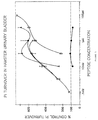
- Figure 1 illustrates the ability of cyclo(Gln-Trp-Phe-Gly-Leu-CH2NH-Leu) and cyclo(Gln-Trp-Phe-Gly-Leu-CH2NCH3-Leu) to antagonize binding of agonist at the NKA receptor as demonstrated by the ability of test compound to compete for binding of I125-labeled NKA from hamster urinary bladder (Example 1).
- the abscissa logarithmically indicates the concentration of agonist or antagonist of the neurokinin A (NKA) receptor.
- the ordinate (y-axis) indicates the observed specific binding for each tested agonist or antagonist measured as a percentage of maximum specific binding.
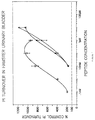
- Figures 2 and 3 illustrate the ability of cyclo(Gln-Trp-Phe-Gly-Leu-CH2NH-Leu) and cyclo(Gln-Trp-Phe-Gly-Leu-CH2NCH3-Leu), respectively, to produce a dose-related antagonism of the receptor-mediated, NKA-induced PI turnover in hamster urinary bladder (Example 2).
- the absicissa logarithmically indicates the concentration of agonist or antagonist of the NKA receptor.
- the ordinate (y-axis) indicates the observed PI turnover as a percentage of control. Values are MEAN ⁇ S.E.M. from one experiment in triplicate.
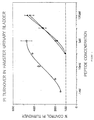
- Figures 4 and 5 illustrate a comparison of the abilities of cyclo(Gln-Trp-Phe-Gly-Leu-CH2NH-Leu) and cyclo(Gln-Trp-Phe-Gly-Leu-CH2NCH3-Leu) to antagonize the receptor-mediated, NKA-induced PI turnover in hamster urinary bladder (Example 2).
- the abscissa (x-axis) logarithmically indicates the concentration of NKA.
- the ordinate (y-axis) indicates the observed PI turnover as a percentage of control. Values are MEAN ⁇ S.E.M. from one experiment in triplicate. Identity of each dose-response line is as listed in the Figures.
Landscapes
- Health & Medical Sciences (AREA)
- Chemical & Material Sciences (AREA)
- Organic Chemistry (AREA)
- Life Sciences & Earth Sciences (AREA)
- Medicinal Chemistry (AREA)
- General Health & Medical Sciences (AREA)
- Nuclear Medicine, Radiotherapy & Molecular Imaging (AREA)
- General Chemical & Material Sciences (AREA)
- Pharmacology & Pharmacy (AREA)
- Chemical Kinetics & Catalysis (AREA)
- Animal Behavior & Ethology (AREA)
- Public Health (AREA)
- Veterinary Medicine (AREA)
- Engineering & Computer Science (AREA)
- Bioinformatics & Cheminformatics (AREA)
- Immunology (AREA)
- Pulmonology (AREA)
- Biochemistry (AREA)
- Proteomics, Peptides & Aminoacids (AREA)
- Molecular Biology (AREA)
- Genetics & Genomics (AREA)
- Biophysics (AREA)
- Biomedical Technology (AREA)
- Pain & Pain Management (AREA)
- Neurology (AREA)
- Neurosurgery (AREA)
- Urology & Nephrology (AREA)
- Rheumatology (AREA)
- Endocrinology (AREA)
- Reproductive Health (AREA)
- Dermatology (AREA)
- Virology (AREA)
- Heart & Thoracic Surgery (AREA)
- Cardiology (AREA)
- Transplantation (AREA)
- Oncology (AREA)
- Communicable Diseases (AREA)
- Peptides Or Proteins (AREA)
- Medicines That Contain Protein Lipid Enzymes And Other Medicines (AREA)
- Pharmaceuticals Containing Other Organic And Inorganic Compounds (AREA)
Claims (32)
- Dérivé peptidique de formule :

 A₂ est Trp, trp, Phe, phe, Tyr, tyr, Phg, phg, Cha, cha, Phe(4'-Cl), phe(4'-Cl), Npa, npa, Phe(4'-NO₂) ou phe(4'-NO₂);A₃ est Trp, trp, Phe, phe, Tyr, tyr, Phg, phg, Cha, cha, Phe(4'-Cl), phe(4'-Cl), Npa, npa, Phe(4'-NO₂), phe(4'-NO₂), Val ou val;A₄ est Gly, Ala, ala ou β-Ala;B est un groupe ayant l'une des formules
-S-CH₂-,
-O-CH₂-,
-CH=CH-,

-CH₂-CH(OH)-
et et où R est un atome d'hydrogène ou un groupe alkyle de 1 à 4 atomes de carbone ou est un groupe phénylalkylène dans lequel la partie alkylène est linéaire ou ramifiée et a de 1 à 6 atomes de carbone et dans lequel la partie phényle est non substituée ou est mono-substituée avec un groupe alkyle en C₁-C₄, alcoxy en C₁-C₄, hydroxyle ou halogène ;R₁ et R₂ sont choisis chacun indépendamment parmi les groupes isopropyle, isobutyle, sec-butyle, n-butyle et 2-(méthylthio)-éthyleou sel pharmaceutiquement acceptable de celui-ci.
 - Dérivé peptidique selon la revendication 1, dans lequel A₁ est Gln, gln, Asn ou asn.
- Dérivé peptidique selon la revendication 1, dans lequel A₂ est Trp, trp, Phe, phe, Tyr, tyr, Cha, cha, Phg ou phg.
- Dérivé peptidique selon la revendication 1, dans lequel A₃ est Trp, trp, Phe, phe, Tyr, tyr, Cha, cha, Phg ou phg.
- Dérivé peptidique selon la revendication 1, dans lequel A₄ est Gly, Ala ou ala.
- Dérivé peptidique selon la revendication 1, dans lequel A₁ est Gln, gln, Asn ou asn; A₂ et A₃ sont chacun Trp, trp, Phe, phe, Tyr, tyr, Cha, cha, Phg ou phg et A₄ est Gly, Ala ou ala.
- Dérivé peptidique selon l'une des revendications 2 à 6, dans lequel B est -CH₂NH₂-.
- Dérivé peptidique selon l'une des revendications 2 à 6, dans lequel R₁ est n-butyle.
- Dérivé peptidique selon l'une des revendications 2 à 6, dans lequel R₂ est 2-méthylthioéthyle, isobutyle ou n-butyle.
- Dérivé peptidique selon la revendication 1, dans lequel A₁ est Gln.
- Dérivé peptidique selon la revendication 1, dans lequel A₂ est Trp ou Phe.
- Dérivé peptidique selon la revendication 1, dans lequel A₃ est Trp ou Phe.
- Dérivé peptidique selon la revendication 1, dans lequel A₄ est Gly.
- Dérivé peptidique selon la revendication 1, dans lequel A₁ est Gln, A₂ et A₃ sont chacun Trp ou Phe, et A₄ est Gly.
- Dérivé peptidique selon l'une des revendications 10 à 14, dans lequel B est -CH₂NH₂-.
- Dérivé peptidique selon l'une des revendications 10 à 14, dans lequel R₁ est isobutyle.
- Dérivé peptidique selon l'une des revendications 10 à 14, dans lequel R₂ est 2-méthylthioéthyle, isobutyle ou n-butyle.
- Dérivé peptidique selon la revendication 1, dans lequel A₂ est Trp.
- Dérivé peptidique selon la revendication 1, dans lequel A₃ est Phe.
- Dérivé peptidique selon l'une des revendications 10, 13, 18 ou 19, dans lequel B est -CH₂NH₂.
- Dérivé peptidique selon l'une des revendications 10, 13, 18 ou 19, dans lequel R₁ est isobutyle.
- Dérivé peptidique selon l'une des revendications 10, 13, 18 ou 19, dans lequel R₂ est 2-méthylthioéthyle, isobutyle ou n-butyle.
- Dérivé peptidique selon l'une des revendications 10, 13, 18 ou 19, dans lequel B est -CH₂NH₂-, R₁ est isobutyle et R₂ est 2-méthylthioéthyle, isobutyle ou n-butyle.
- Dérivé peptidique selon la revendication 1, dans lequel A₁ est Gln, A₂ est Trp, A₃ est Gly, B est -CH₂NH₂-, et R₁ et R₂ sont chacun isobutyle.
- Dérivé peptidique selon la revendication 1 qui est le Gln-Trp-Phe-Gly-Leu[CH₂NCH₃]Leu cyclique ou le Gln-Trp-Phe-Gly-Leu[CH₂NH]Leu cyclique.
- Procédé de préparation d'un dérivé peptidique de formule
 A₁ est Gln, gln, His, his, Asn, asn ou un groupe de formule
 A₂ est Trp, trp, Phe, phe, Tyr, tyr, Phg, phg, Cha, cha, Phe(4'-Cl), phe(4'-Cl), Npa, npa, Phe(4'-NO₂) ou phe(4'-NO₂);A₃ est Trp, trp, Phe, phe, Tyr, tyr, Phg, phg, Cha, cha, Phe(4'-Cl), phe(4'-Cl), Npa, npa, Phe(4'-NO₂), phe(4'-NO₂), Val ou val;A₄ est Gly, Ala, ala ou β-Ala;B est un groupe ayant l'une des formules
-S-CH₂-,
-O-CH₂-,
-CH=CH-,

-CH₂-CH(OH)-
et et où R est un atome d'hydrogène ou un groupe alkyle de 1 à 4 atomes de carbone ou est un groupe phénylalkylène dans lequel la partie alkylène est linéaire ou ramifiée et a de 1 à 6 atomes de carbone et dans lequel la partie phényle est non substituée ou est monosubstituée avec un groupe alkyle en C₁-C₄, alcoxy en C₁-C₄, hydroxyle ou halogène ;R₁ et R₂ sont choisis chacun indépendamment parmi les groupesisopropyle, isobutyle, sec-butyle, n-butyle et 2-(méthylthio)éthyle ou d'un sel pharmaceutiquement acceptable de celui-ci, qui comprend la liaison successive de Boc-A₄, Boc-A₃, Boc-A₂ et Boc-A₁ où Boc est un groupe amino-protecteur butyloxycarbonyle, au dérivé dipeptidique à liaison modifiée, lié à une résine, de formule

- Procédé de préparation d'un dérivé peptidique de formule
 A₁ est Gln, gln, His, his, Asn, asn ou un groupe de formule
 A₂ est Trp, trp, Phe, phe, Tyr, tyr, Phg, phg, Cha, cha, Phe(4'-Cl), phe(4'-Cl), Npa, npa, Phe(4'-NO₂) ou phe(4'-NO₂);A₃ est Trp, trp, Phe, phe, Tyr, tyr, Phg, phg, Cha, cha, Phe(4'-Cl), phe(4'-Cl), Npa, npa, Phe(4'-NO₂), phe(4'-NO₂), Val ou val;A₄ est Gly, Ala, ala ou β-Ala;B est un groupe de formule
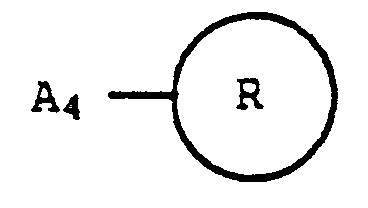
 et où R est un atome d'hydrogène ou un groupe alkyle de 1 à 4 atomes de carbone ou est un groupe phénylalkylène dans lequel la partie alkylène est linéaire ou ramifiée et a de 1 à 6 atomes de carbone et dans lequel la partie phényle est non substituée ou est mono-substituée avec un groupe alkyle en C₁-C₄, alcoxy en C₁-C₄, hydroxyle ou halogène ;R₁ et R₂ sont choisis chacun indépendamment parmi les groupes isopropyle, isobutyle, sec-butyle, n-butyle et 2-(méthylthio)-éthyleou d'un sel pharmaceutiquement acceptable de celui-ci, qui comprend a) la liaison successive de Boc-A₃, Boc-A₂, Boc-A₁ et d'un acide aminé de formule


- Dérivé peptidique selon l'une quelconque des revendications 1 à 25 destiné à être utilisé comme substance pharmaceutiquement active.
- Dérivé peptidique selon l'une quelconque des revendications 1 à 25 destiné à être utilisé comme antagoniste de la neurokinine A.
- Composition pharmaceutique comprenant un composé selon l'une quelconque des revendications 1 à 25 et un support pharmaceutiquement acceptable.
- Utilisation d'un composé tel que défini dans l'une quelconque des revendications 1 à 25 pour la préparation d'une composition pharmaceutique pour le traitement de l'asthme.
- Procédé de préparation d'une composition pharmaceutique comprenant la combinaison d'un composé tel que défini dans l'une quelconque des revendications 1 à 25 avec un support pharmaceutiquement acceptable.
Applications Claiming Priority (2)
| Application Number | Priority Date | Filing Date | Title |
|---|---|---|---|
| US39223689A | 1989-08-10 | 1989-08-10 | |
| US392236 | 1989-08-10 |
Publications (3)
| Publication Number | Publication Date |
|---|---|
| EP0412542A2 EP0412542A2 (fr) | 1991-02-13 |
| EP0412542A3 EP0412542A3 (en) | 1991-07-24 |
| EP0412542B1 true EP0412542B1 (fr) | 1996-01-03 |
Family
ID=23549831
Family Applications (1)
| Application Number | Title | Priority Date | Filing Date |
|---|---|---|---|
| EP90115309A Expired - Lifetime EP0412542B1 (fr) | 1989-08-10 | 1990-08-09 | Antagonistes cycliques de la neurokinine |
Country Status (22)
| Country | Link |
|---|---|
| US (1) | US5731286A (fr) |
| EP (1) | EP0412542B1 (fr) |
| JP (1) | JP2829779B2 (fr) |
| KR (1) | KR0169123B1 (fr) |
| CN (1) | CN1035056C (fr) |
| AR (1) | AR246087A1 (fr) |
| AT (1) | ATE132503T1 (fr) |
| AU (1) | AU638264B2 (fr) |
| CA (1) | CA2022740C (fr) |
| DD (1) | DD297168A5 (fr) |
| DE (1) | DE69024555T2 (fr) |
| DK (1) | DK0412542T3 (fr) |
| ES (1) | ES2084627T3 (fr) |
| FI (1) | FI95913C (fr) |
| GR (1) | GR3018984T3 (fr) |
| HU (1) | HU206729B (fr) |
| IE (1) | IE69382B1 (fr) |
| IL (1) | IL95309A (fr) |
| NO (1) | NO177715C (fr) |
| NZ (1) | NZ234814A (fr) |
| PT (1) | PT94952B (fr) |
| ZA (1) | ZA906188B (fr) |
Families Citing this family (10)
| Publication number | Priority date | Publication date | Assignee | Title |
|---|---|---|---|---|
| ZA894533B (en) * | 1988-06-20 | 1990-03-28 | Merrell Dow Pharma | Neurokinin a antogonists |
| DE4034829A1 (de) * | 1990-11-02 | 1992-05-07 | Merck Patent Gmbh | Cyclopeptide |
| FR2676055B1 (fr) * | 1991-05-03 | 1993-09-03 | Sanofi Elf | Composes polycycliques amines et leurs enantiomeres, procede pour leur preparation et compositions pharmaceutiques les contenant. |
| US5625060A (en) * | 1991-05-03 | 1997-04-29 | Elf Sanofi | Polycyclic amine compounds and their enantiomers, their method of preparation and pharmaceutical compositions on which they are present |
| EP0606222A1 (fr) * | 1991-08-08 | 1994-07-20 | A. Menarini Industrie Farmaceutiche Riunite S.R.L. | Hexapeptides cycliques servant d'antagonistes de tachyquinines, leur preparation, et compositions pharmaceutiques les contenant |
| US5731285A (en) * | 1992-04-15 | 1998-03-24 | A. Menatini Industrie Farmaceutiche | Tachiquinine antagonist tricyclic compounds, preparation of same and pharmaceutical compositions containing such compounds |
| PT2408802T (pt) * | 2009-03-16 | 2017-08-03 | Governing Council Univ Toronto | Moléculas de aminoácido ciclicas e métodos para as preparar |
| US11072616B2 (en) | 2015-11-11 | 2021-07-27 | Universite De Montreal | Cyclic peptides targeting alpha-4-beta-7 integrin |
| ES2884107T3 (es) | 2016-11-11 | 2021-12-10 | Zealand Pharma As | Multímeros de péptidos cíclicos con diana en la integrina alfa-4 beta-7 |
| US11286281B2 (en) | 2017-05-10 | 2022-03-29 | Zealand Pharma A/S | Homodetic cyclic peptides targeting alpha-4-beta-7 integrin |
Family Cites Families (8)
| Publication number | Priority date | Publication date | Assignee | Title |
|---|---|---|---|---|
| US4742156A (en) * | 1985-09-30 | 1988-05-03 | Mcneilab, Inc. | Peptide antagonists of neurokinin B and opthalmic solutions containing them |
| US4665157A (en) * | 1985-09-30 | 1987-05-12 | Mcneilab, Inc. | Peptide antagonists of neurokinin B |
| DE3711335A1 (de) * | 1987-04-03 | 1988-10-20 | Merck Patent Gmbh | Aminosaeurederivate |
| GB8807246D0 (en) * | 1988-03-25 | 1988-04-27 | Merck Sharp & Dohme | Therapeutic agents |
| ZA894533B (en) * | 1988-06-20 | 1990-03-28 | Merrell Dow Pharma | Neurokinin a antogonists |
| FI97540C (fi) * | 1989-11-06 | 1997-01-10 | Sanofi Sa | Menetelmä terapeuttisesti käyttökelpoisten, aromaattisesti substituoitujen piperidiini- ja piperatsiinijohdannaisten valmistamiseksi |
| IL99320A (en) * | 1990-09-05 | 1995-07-31 | Sanofi Sa | Arylalkylamines, their preparation and pharmaceutical compositions containing them |
| FR2677361A1 (fr) * | 1991-06-04 | 1992-12-11 | Adir | Nouveaux peptides et pseudopeptides, derives de tachykinines, leur procede de preparation et les compositions pharmaceutiques qui les contiennent. |
-
1990
- 1990-08-06 ZA ZA906188A patent/ZA906188B/xx unknown
- 1990-08-06 AU AU60222/90A patent/AU638264B2/en not_active Expired
- 1990-08-07 CA CA002022740A patent/CA2022740C/fr not_active Expired - Lifetime
- 1990-08-07 AR AR90317547A patent/AR246087A1/es active
- 1990-08-07 IL IL9530990A patent/IL95309A/en not_active IP Right Cessation
- 1990-08-08 NZ NZ234814A patent/NZ234814A/en unknown
- 1990-08-08 FI FI903922A patent/FI95913C/fi active IP Right Grant
- 1990-08-09 AT AT90115309T patent/ATE132503T1/de not_active IP Right Cessation
- 1990-08-09 CN CN90106972A patent/CN1035056C/zh not_active Expired - Fee Related
- 1990-08-09 PT PT94952A patent/PT94952B/pt not_active IP Right Cessation
- 1990-08-09 KR KR1019900012226A patent/KR0169123B1/ko not_active Expired - Fee Related
- 1990-08-09 DE DE69024555T patent/DE69024555T2/de not_active Expired - Lifetime
- 1990-08-09 ES ES90115309T patent/ES2084627T3/es not_active Expired - Lifetime
- 1990-08-09 EP EP90115309A patent/EP0412542B1/fr not_active Expired - Lifetime
- 1990-08-09 JP JP2209390A patent/JP2829779B2/ja not_active Expired - Lifetime
- 1990-08-09 DK DK90115309.8T patent/DK0412542T3/da active
- 1990-08-09 IE IE288690A patent/IE69382B1/en not_active IP Right Cessation
- 1990-08-09 NO NO903513A patent/NO177715C/no unknown
- 1990-08-09 HU HU904952A patent/HU206729B/hu not_active IP Right Cessation
- 1990-08-10 DD DD90343398A patent/DD297168A5/de unknown
-
1996
- 1996-02-14 GR GR960400385T patent/GR3018984T3/el unknown
-
1997
- 1997-03-05 US US08/811,913 patent/US5731286A/en not_active Expired - Fee Related
Also Published As
Similar Documents
| Publication | Publication Date | Title |
|---|---|---|
| CA1341336C (fr) | Agonistes du neuropeptide y | |
| EP0355794B1 (fr) | Antagonistes du neuropeptide Y | |
| EP0585397B1 (fr) | Analogues de bombesine | |
| EP0412542B1 (fr) | Antagonistes cycliques de la neurokinine | |
| EP0347802B1 (fr) | Antagonistes de la neurokinine A | |
| EP0421367B1 (fr) | Peptides anticoagulants | |
| CA1341354C (fr) | Peptides avec fonction alcool, utiles comme anti-coagulants | |
| JP2927936B2 (ja) | ペプチド類 | |
| JP3304993B2 (ja) | ペプチド類 | |
| US5830863A (en) | Neurokinin A antagonists | |
| US5395823A (en) | Neuropeptide Y agonists and partial agonists | |
| AU640502B2 (en) | Analogs of hirudin having antiplatelet activity | |
| US6218364B1 (en) | Fluorinated neurokinin A antagonists | |
| US5574012A (en) | Analogs of hirudin having anti-platelet activity | |
| NZ260597A (en) | Neuropeptide y agonists and pharmaceutical compositions |
Legal Events
| Date | Code | Title | Description |
|---|---|---|---|
| PUAI | Public reference made under article 153(3) epc to a published international application that has entered the european phase |
Free format text: ORIGINAL CODE: 0009012 |
|
| AK | Designated contracting states |
Kind code of ref document: A2 Designated state(s): AT BE CH DE DK ES FR GB GR IT LI LU NL SE |
|
| 17P | Request for examination filed |
Effective date: 19901228 |
|
| PUAL | Search report despatched |
Free format text: ORIGINAL CODE: 0009013 |
|
| AK | Designated contracting states |
Kind code of ref document: A3 Designated state(s): AT BE CH DE DK ES FR GB GR IT LI LU NL SE |
|
| RHK1 | Main classification (correction) |
Ipc: C07K 5/02 |
|
| 17Q | First examination report despatched |
Effective date: 19940202 |
|
| GRAA | (expected) grant |
Free format text: ORIGINAL CODE: 0009210 |
|
| AK | Designated contracting states |
Kind code of ref document: B1 Designated state(s): AT BE CH DE DK ES FR GB GR IT LI LU NL SE |
|
| REF | Corresponds to: |
Ref document number: 132503 Country of ref document: AT Date of ref document: 19960115 Kind code of ref document: T |
|
| REG | Reference to a national code |
Ref country code: DK Ref legal event code: T3 |
|
| ET | Fr: translation filed | ||
| REF | Corresponds to: |
Ref document number: 69024555 Country of ref document: DE Date of ref document: 19960215 |
|
| REG | Reference to a national code |
Ref country code: CH Ref legal event code: NV Representative=s name: E. BLUM & CO. PATENTANWAELTE |
|
| ITF | It: translation for a ep patent filed | ||
| REG | Reference to a national code |
Ref country code: GR Ref legal event code: FG4A Free format text: 3018984 |
|
| REG | Reference to a national code |
Ref country code: ES Ref legal event code: FG2A Ref document number: 2084627 Country of ref document: ES Kind code of ref document: T3 |
|
| PLBE | No opposition filed within time limit |
Free format text: ORIGINAL CODE: 0009261 |
|
| STAA | Information on the status of an ep patent application or granted ep patent |
Free format text: STATUS: NO OPPOSITION FILED WITHIN TIME LIMIT |
|
| 26N | No opposition filed | ||
| REG | Reference to a national code |
Ref country code: GB Ref legal event code: IF02 |
|
| REG | Reference to a national code |
Ref country code: CH Ref legal event code: PFA Owner name: MERRELL PHARMACEUTICALS INC. Free format text: MERRELL DOW PHARMACEUTICALS INC.#P.O. BOX 156300 2110 EAST GALBRAITH ROAD#CINCINNATI OHIO 45215-6300 (US) -TRANSFER TO- MERRELL PHARMACEUTICALS INC.#2110 EAST GALBRAITH ROAD, P.O. BOX 156300#CINCINNATI, OHIO 45215-6300 (US) Ref country code: CH Ref legal event code: PUE Owner name: AVENTIS, INC. Free format text: MERRELL PHARMACEUTICALS INC.#2110 EAST GALBRAITH ROAD, P.O. BOX 156300#CINCINNATI, OHIO 45215-6300 (US) -TRANSFER TO- AVENTIS, INC.#300 SOMERSET CORPORATE BOULEVARD#BRIDGEWATER, NJ 08807 (US) |
|
| REG | Reference to a national code |
Ref country code: ES Ref legal event code: PC2A |
|
| NLS | Nl: assignments of ep-patents |
Owner name: AVENTIS INC. Effective date: 20060705 |
|
| NLT1 | Nl: modifications of names registered in virtue of documents presented to the patent office pursuant to art. 16 a, paragraph 1 |
Owner name: MERRELL PHARMACEUTICALS INC. |
|
| REG | Reference to a national code |
Ref country code: CH Ref legal event code: PFA Owner name: AVENTIS, INC. Free format text: AVENTIS, INC.#300 SOMERSET CORPORATE BOULEVARD#BRIDGEWATER, NJ 08807 (US) -TRANSFER TO- AVENTIS, INC.#300 SOMERSET CORPORATE BOULEVARD#BRIDGEWATER, NJ 08807 (US) |
|
| PGFP | Annual fee paid to national office [announced via postgrant information from national office to epo] |
Ref country code: ES Payment date: 20090902 Year of fee payment: 20 Ref country code: FR Payment date: 20090814 Year of fee payment: 20 Ref country code: DK Payment date: 20090813 Year of fee payment: 20 |
|
| PGFP | Annual fee paid to national office [announced via postgrant information from national office to epo] |
Ref country code: CH Payment date: 20090814 Year of fee payment: 20 Ref country code: GB Payment date: 20090805 Year of fee payment: 20 Ref country code: LU Payment date: 20090824 Year of fee payment: 20 Ref country code: NL Payment date: 20090803 Year of fee payment: 20 Ref country code: DE Payment date: 20090806 Year of fee payment: 20 Ref country code: SE Payment date: 20090806 Year of fee payment: 20 Ref country code: AT Payment date: 20090812 Year of fee payment: 20 |
|
| PGFP | Annual fee paid to national office [announced via postgrant information from national office to epo] |
Ref country code: BE Payment date: 20090825 Year of fee payment: 20 |
|
| PGFP | Annual fee paid to national office [announced via postgrant information from national office to epo] |
Ref country code: IT Payment date: 20090813 Year of fee payment: 20 |
|
| PGFP | Annual fee paid to national office [announced via postgrant information from national office to epo] |
Ref country code: GR Payment date: 20090717 Year of fee payment: 20 |
|
| REG | Reference to a national code |
Ref country code: CH Ref legal event code: PL |
|
| REG | Reference to a national code |
Ref country code: NL Ref legal event code: V4 Effective date: 20100809 |
|
| REG | Reference to a national code |
Ref country code: DK Ref legal event code: EUP |
|
| BE20 | Be: patent expired |
Owner name: *MERRELL DOW PHARMACEUTICALS INC. Effective date: 20100809 |
|
| REG | Reference to a national code |
Ref country code: GB Ref legal event code: PE20 Expiry date: 20100808 |
|
| EUG | Se: european patent has lapsed | ||
| REG | Reference to a national code |
Ref country code: ES Ref legal event code: FD2A Effective date: 20100810 |
|
| PG25 | Lapsed in a contracting state [announced via postgrant information from national office to epo] |
Ref country code: NL Free format text: LAPSE BECAUSE OF EXPIRATION OF PROTECTION Effective date: 20100809 |
|
| PG25 | Lapsed in a contracting state [announced via postgrant information from national office to epo] |
Ref country code: GB Free format text: LAPSE BECAUSE OF EXPIRATION OF PROTECTION Effective date: 20100808 |
|
| PG25 | Lapsed in a contracting state [announced via postgrant information from national office to epo] |
Ref country code: DE Free format text: LAPSE BECAUSE OF EXPIRATION OF PROTECTION Effective date: 20100809 |