EP0424800A2 - Polycarbonate - Google Patents
Polycarbonate Download PDFInfo
- Publication number
- EP0424800A2 EP0424800A2 EP90119982A EP90119982A EP0424800A2 EP 0424800 A2 EP0424800 A2 EP 0424800A2 EP 90119982 A EP90119982 A EP 90119982A EP 90119982 A EP90119982 A EP 90119982A EP 0424800 A2 EP0424800 A2 EP 0424800A2
- Authority
- EP
- European Patent Office
- Prior art keywords
- polycarbonate
- repeating unit
- mol
- represented
- general formula
- Prior art date
- Legal status (The legal status is an assumption and is not a legal conclusion. Google has not performed a legal analysis and makes no representation as to the accuracy of the status listed.)
- Granted
Links
Images

Classifications
-
- C—CHEMISTRY; METALLURGY
- C08—ORGANIC MACROMOLECULAR COMPOUNDS; THEIR PREPARATION OR CHEMICAL WORKING-UP; COMPOSITIONS BASED THEREON
- C08G—MACROMOLECULAR COMPOUNDS OBTAINED OTHERWISE THAN BY REACTIONS ONLY INVOLVING UNSATURATED CARBON-TO-CARBON BONDS
- C08G64/00—Macromolecular compounds obtained by reactions forming a carbonic ester link in the main chain of the macromolecule
- C08G64/04—Aromatic polycarbonates
- C08G64/06—Aromatic polycarbonates not containing aliphatic unsaturation
- C08G64/08—Aromatic polycarbonates not containing aliphatic unsaturation containing atoms other than carbon, hydrogen or oxygen
- C08G64/10—Aromatic polycarbonates not containing aliphatic unsaturation containing atoms other than carbon, hydrogen or oxygen containing halogens
-
- C—CHEMISTRY; METALLURGY
- C08—ORGANIC MACROMOLECULAR COMPOUNDS; THEIR PREPARATION OR CHEMICAL WORKING-UP; COMPOSITIONS BASED THEREON
- C08G—MACROMOLECULAR COMPOUNDS OBTAINED OTHERWISE THAN BY REACTIONS ONLY INVOLVING UNSATURATED CARBON-TO-CARBON BONDS
- C08G64/00—Macromolecular compounds obtained by reactions forming a carbonic ester link in the main chain of the macromolecule
- C08G64/04—Aromatic polycarbonates
-
- C—CHEMISTRY; METALLURGY
- C08—ORGANIC MACROMOLECULAR COMPOUNDS; THEIR PREPARATION OR CHEMICAL WORKING-UP; COMPOSITIONS BASED THEREON
- C08G—MACROMOLECULAR COMPOUNDS OBTAINED OTHERWISE THAN BY REACTIONS ONLY INVOLVING UNSATURATED CARBON-TO-CARBON BONDS
- C08G64/00—Macromolecular compounds obtained by reactions forming a carbonic ester link in the main chain of the macromolecule
- C08G64/04—Aromatic polycarbonates
- C08G64/06—Aromatic polycarbonates not containing aliphatic unsaturation
- C08G64/14—Aromatic polycarbonates not containing aliphatic unsaturation containing a chain-terminating or -crosslinking agent
Definitions
- the present invention relates to a novel polycarbonate, more particularly, to a novel polycarbonate which is excellent in flame retardance, impact resistance, and thermostability at molding.
- halogen-containing polycarbonate copolymers having flame retardnace various ones have heretofore been known. They include (i) a copolymer of tetrabromobisphenol A (TBA) and bisphenol A (BPA) (Japanese Patent Publication No. 24660/1972), (ii) a copolymer of tetrabromobisphenolsulfone (TBS) and BPA (Japanese Patent Application Laid-Open No. 123294/1976), (iii) a copolymer of tetrabromothiobisphenol (TBTDP) and BPA (Japanese Patent Application Laid-Open No.
- TSA tetrabromobisphenol A
- BPA bisphenol A
- TBS tetrabromobisphenolsulfone
- BPA Japanese Patent Application Laid-Open No. 123294/1976
- TBTDP tetrabromothiobisphenol
- BPA Japanese Patent Application Lai
- copolymers are obtained by copolymerization of halogenated bisphenols resulted from halogen-substitution of benzene nucleus in bisphenols for the purpose of containing halogen in an amount necessary for a sufficient flame retardance. All of these copolymerization, however, require these halogenated bisphenols in a comparatively large amount, and accordingly, the mechanical strength of the resulting polycarbonate (particularly, impact resistance) is lowered.
- halogen-containing polycarbonate is a polycarbonate in which halogenated phenol is used as the end terminator (Japanese Patent Publication No. 40715/1971). Said polycarbonate, however, is not provided with both of an excellent flame-retardance and a high mechanical-strength.
- a polycarbonate was produced by a process of copolymerizing BPA, TBA and TDP (Japanese Patent Application Laid-Open No. 140597/1977). According to said process, the resulting polycarbonate is excellent in both of flame retardance and mechanical strength, but it is not improved so much in moldability.
- the present inventor's group proposed, as a novel polycarbonate being excellent in flame retardance, mechanical strength and other properties, a polycarbonate which is obtained by using pentahalogenophenol as an end terminator, and by copolymerizing BPA and TBA (Japanese Patent Application Nos. 79227/1989 and 79228/1989). Said polycarbonate, however, was found to have a few problems in thermostability at molding, although it is excellent in flame retardance and mechanical strength.
- An object of the present invention is to provide a novel polycarbonate which is excellent in both of flame retardance, and mechanical strength, and also in thermostability at molding.
- the present invention provides a polycarbonate
- the polycarbonate of the present invention has the repeating unit (I) represented by the general formula (A) mentioned above and the repeating unit (II) represented by the formula (B).
- X1 to X4 in the general formula (A) are each a halogen atom such as a bromine atom, a chlorine atome, and a fluorine atom. Said X1 to X4 may be identical or different, but they are identical in most cases.
- the polycarbonate of the present invention has a trihalogenophenoxy group or groups represented by the general formula (C) at the end, particularly both ends, of the molecules.
- X5 to X7 in said general formula (C) also indicate each a halogen atom such as a bromine atom, a chlorine atom, and a fluorine atom, as X1 to X4 described above.
- X1 to X4 in the repeating unit (I) mentioned above may be identical to or different from X5 to X7 in the general formula (C).
- the mole fraction of the repeating unit (I) based on the total of the repeating unit (I) and the repeating unit (II) in the main chain must be 0.01 to 0.1, preferably 0.02 to 0.06. If the mole fraction of the repeating unit (I) in the main chain is less than 0.01, the resulting polycarbonate has a lower flame retardance, while if it is in excess of 0.1, the mechanical strength of the resulting polycarbonate becomes poor.
- the viscosity average molecular weight is preferably in the range of 10,000 to 50,000. If the viscosity average molecular weight is less than 10,000, the mechanical strength such as impact resistance is insufficient.
- the polycarbonate of the present invention has the abovementioned repeating units (I) and (II), and trihalogenophenoxy group or groups represented by the general formula (C) at the end thereof, and comprises a random copolymer, a block copolymer, or an alternating copolymer of them.
- Said polycarbonate may contain a small amount of a repeating unit other than the above repeating units (I) and (II) in the molecular chain thereof.
- a repeating unit other than the above repeating units (I) and (II) in the molecular chain thereof.
- BPS bisphenol sulfone
- TDP TDP
- the content of them should be 0 to 20 mol %, preferably 0 to 10 mol % based on the total amount of BPA and TBA. If the content of it is in excess of 20 mol %, the mechanical strength of the resulting polycarbonate is poor.
- the polycarbonate of the present invention can be produced in various methods. Preferred methods for producing them are following two.
- an aqueous alkali solution e.g., aqueous solution of sodium hydroxide, potassium hydroxide, and sodium carbonate
- tetrahalogenobisphenol A e.g., tetrabromobisphenol A, tetrachlorobisphenol A, and tetrafluorobisphenol A
- X1 of X4 are as defined before
- BPA bisphenol A
- trihalogenophenol e.g., tribromophenol, trichlorophenol, and trifluorophenol
- a solvent such as methylene chloride, chlorobenzene, pyridine, chloroform, and carbon tetrachloride
- a catalyst such as triethylamine and trimethylbenzylammonium chlor
- reaction system is preferred to be cooled with water or ice since the reaction is exothermic. In this reaction, the reaction system becomes acidic as the reaction proceeds, so it is preferred to maintain pH at 10 or more by adding an alkali while measuring with a pH meter.
- a part (50 mol % or smaller) of trihalogenophenol can be replaced with a monohydric phenol such as p-tert-butylphenol and phenol, to be used in combination.
- tetrahalogenobisphenol A of the formula (A′) constitutes the repeating unit (I) of the resulting polycarbonate
- bisphenol A of the formula (B′) constitutes the repeating unit (II)
- the ratio of abovementioned tetrahalogenobisphenol A to bisphenol A to be placed is determined depending on the mole fraciton of each of the repeating units (I) and (II) of the polycarbonate to be produced, or the proportion of halogen atoms to be contained.
- the amounts of trihalogenophenol and phosgene introduced specify the polymerization degree of each of the repeating units (I) and (II), further the polymerization degree of the polycarbonate itself, and consequently the molecular weight thereof. Accordingly, the amounts of trihalogenophenol and phosgene to be introduced are determined depending upon the purpose of use. In blowing phosgene, the rate of phosgene to be blown per hour should be controlled so that a sufficient amount of phosgene might have been introduced at the completion of the reaction.
- various carbonate-forming compound derivatives such as bromophosgene, diphenyl carbonate, di-p-tolylcarbonate, phenyl-p-tolylcarbonate, di-p-chlorophenyl carbonate and dinaphtyl carbonate can be used in place of phosgene.
- a polycarbonate oligomer is prepared in advance from bisphenol A and phosgene; the oligomer thus obtained, an aqueous alkali solution of tetrahalogenobisphenol A and an aqueous alkali solution of trihalogenophenol, a solvent such as methylene chloride which is capable of dissolving said oligomer, and further a catalyst such as triethylamine and trimethylbenzyl ammoniumchloride are mixed in prescribed ratios and stirred to be prepolymerized; and subsequently an aqueous alkali solution of bisphenol A and, if necessary, p-tert-butylphenol are added to proceed with polycondensation reaction.
- the resulting reaction product is poured into a large amount of a precipitant (e.g., methanol), and then the polycarbonate of the present invention is precipitated out.
- a precipitant e.g., methanol
- the polycarbonate of the present invention can be efficiently produced by the abovementioned methods. In addition, also following methods are suitably used.
- the polycarbonate of the present invention can be obtained according to any of these methods.
- the polycarbonate of the present invention has a viscosity average molecular weight of 10,000 to 50,000, preferably 13,000 to 50,000, as described above.
- the amount of trihalogenophenol mainly used as the molecular weight controlling agent is appropriately regulated.
- the amount of trihalogenophenol is in the ratio of 0.01 to 0.1 (mole) based on the amount of diphenols which constitute the main chain.
- the ratio of catalyst to diphenols is usually 0.0005 to 0.03 (mol/mol).
- the amount of caustic alkali is usually 0.1 to 5.0 to the amount of diphenols (mol/mol).
- the polycarbonate of the present invention is excellent in flame-retardance, sufficiently high in impact resistance, and in addition, superior in thermostability at molding. More specifically, in this polycarbonate, flame retardance is V-O as an indication according to UL-94 (underwriter's Laboratories Subject 94) (1/16 inch in thickness), Izod impact resistance as an indication of impact resistance is 40 kg cm/cm or more, and Yellowness Index (YI) after staying for 30 minutes at 300°C, as an indication of impact strength, is 20 or less.
- V-O as an indication according to UL-94 (underwriter's Laboratories Subject 94) (1/16 inch in thickness)
- Izod impact resistance as an indication of impact resistance is 40 kg cm/cm or more
- YI Yellowness Index
- the polycarbonate of the present invention is extensively and effectively used as various industrial materials such as materials for home electric appliances, office automation devices, or as construction materials, sheets, and so forth.
- reaction product was separated into aqueous layer and ethylene chloride layer containing the copolymer formed.
- This methylene chloride layer was washed with water, an acid (0.1 N hydrochloric acid), ehtylene chloride was removed under reduced pressure at 40°C to obtain a white powder of copolymer.
- This white copolymer was dried at 120°C for one day and night, and then melted by the use of an extruder to be pelletized.
- the glass transition temperature (Tg) of the pellet was 152.6°C.
- the viscosity average molecular weight was 23,900, and the distribution of molecular weight was measured by the use of gel permeation chromatography, a distribution having a single peak at the abovementoned value was shown.
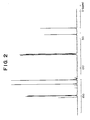
- An NMR analysis showed that the content of TBA (repeating unit (I)) in the main chain said copolymer was 3.1 mol %.
- pellets were injection-molded at 300°C and under the injection pressure of 55 kg/cm2 in an injection molding machine.
- the test piece was measured for Izod impact strength and flame retardance.
- the flow value of the pellet was measured by Koka-type flow tester.
- the bromine content of the resulting pellet was 6.4% by weight.
- the bromine content was determined by alkali-decomposition of the sample, and analyzed by the Volhard method.
- thermostability at molding was conducted as follows. The pellet was injection-molded to stay at 300°C for 30 minutes, and then, test sample was formed. The resulting test piece was determined for yellowness index (YI) by the use of transmission-type photometer.
- YI yellowness index
- Example 2 The procedure of Example 1 was repeated except that aqueous sodium hydroxide solution of TBA and TBP was changed as shown in Table 1. The results are shown in Table 2.
- Example 2 The procedure of Example 1 was repeated except that the aqueous sodium hydroxide solution of TBA and TBP was changed as shown in Table 1. The results are shown in Table 2.
- Example 2 The procedure of Example 1 was repeated except that the aqueous sodium hydroxide solution of TBA and TBP was changed as in Table 1. The results are shown in Table 2.
- Example 2 The procedure of Example 1 was repeated except that the amount of TBA in the aqueous sodium hydroxide solution of TBA and TBP was changed as in Table 1, and that p-tert-butylphenol (PTBP) was used in place of TBP. The results are shown in Table 2.
- Example 2 The procedure of Example 1 was repeated except that the aqueous sodium hydroxide solution of TBA and TBP was changed as shown in Table 1. The results are shown in Table 2.
- Example 2 The procedure of Example 1 was repeated except that the amount of TBA in the aqueous sodium hydroxide solution of TBA and TBP was changed as shown in Table 1, and that pentabromophenol (PBP) was used in place of TBP. The results are shown in Table 2.
- Example 1 Table 1 Content of Each Component in Aqueous Sodium Hydroxide Solution TBA BPS TDP TBP PTBP NaOH
- Example 1 250 - - 150 - 78.6
- Example 2 391 - - 150 - 102.4
- Example 3 247 - - 179 - 85.0
- Example 4 180 74 - 179 - 109.2
- Example 5 180 - 161 179 - 162.3
- Comparative Example 1 444 - - - 81.1 78.6
- Comparative Example 2 371 - - - 81.1 62.7
- Comparative Example 3 895 - - 150 - 187.6
- Comparative Example 4 113 - - 222 (PBP) - 55.4
- Comparative Example 5 145 - - 294 (PBP) - 72.6
Landscapes
- Chemical & Material Sciences (AREA)
- Health & Medical Sciences (AREA)
- Chemical Kinetics & Catalysis (AREA)
- Medicinal Chemistry (AREA)
- Polymers & Plastics (AREA)
- Organic Chemistry (AREA)
- Polyesters Or Polycarbonates (AREA)
Applications Claiming Priority (2)
| Application Number | Priority Date | Filing Date | Title |
|---|---|---|---|
| JP274788/89 | 1989-10-24 | ||
| JP27478889 | 1989-10-24 |
Publications (3)
| Publication Number | Publication Date |
|---|---|
| EP0424800A2 true EP0424800A2 (fr) | 1991-05-02 |
| EP0424800A3 EP0424800A3 (en) | 1992-01-15 |
| EP0424800B1 EP0424800B1 (fr) | 1995-12-27 |
Family
ID=17546573
Family Applications (1)
| Application Number | Title | Priority Date | Filing Date |
|---|---|---|---|
| EP90119982A Expired - Lifetime EP0424800B1 (fr) | 1989-10-24 | 1990-10-18 | Polycarbonate |
Country Status (5)
| Country | Link |
|---|---|
| EP (1) | EP0424800B1 (fr) |
| KR (1) | KR970000401B1 (fr) |
| BR (1) | BR9005348A (fr) |
| CA (1) | CA2028218A1 (fr) |
| DE (1) | DE69024459T2 (fr) |
Cited By (6)
| Publication number | Priority date | Publication date | Assignee | Title |
|---|---|---|---|---|
| EP0526651A4 (en) * | 1991-02-22 | 1993-07-28 | Idemitsu Petrochemical Co. Ltd. | Branched polycarbonate |
| US5242973A (en) * | 1989-10-24 | 1993-09-07 | Idemitsu Petrochemical Co., Ltd. | Trihalophenoxy terminated polycarbonate resin composition containing salt of organic sulfonic acid |
| EP0565895A1 (fr) * | 1992-03-31 | 1993-10-20 | Idemitsu Petrochemical Co., Ltd. | Copolymère de polycarbonate et procédé pour sa fabrication |
| EP0650096A3 (fr) * | 1993-10-12 | 1996-01-17 | Kureha Chemical Ind Co Ltd | Feuille de transfert à base d'une résine au polycarbonate. |
| US5612163A (en) * | 1993-10-12 | 1997-03-18 | Kureha Kagaku Kogyo Kabushiki Kaisha | Transfer sheet of polycarbonate-based resin |
| EP0767414A4 (fr) * | 1995-04-21 | 1998-11-25 | Kureha Chemical Ind Co Ltd | Feuille pour transfert |
Family Cites Families (5)
| Publication number | Priority date | Publication date | Assignee | Title |
|---|---|---|---|---|
| BE699028A (fr) * | 1966-06-02 | 1967-11-03 | ||
| US3751400A (en) * | 1971-07-29 | 1973-08-07 | Gen Electric | High ignition temperature polymers substituted with halogen substituted aromatic groups |
| DE2628631C2 (de) * | 1976-06-25 | 1984-10-11 | Bayer Ag, 5090 Leverkusen | Formmassen aus Mischungen von polyfunktionellen aromatischen Cyansäureestern und halogenhaltigen aromatischen Polykohlensäureestern |
| US4831100A (en) * | 1987-06-25 | 1989-05-16 | Idemitsu Petrochemical Co., Ltd. | Halogenated copoly carbonate end capped with pentahalaphenoxy group |
| JPS6479227A (en) * | 1987-06-25 | 1989-03-24 | Idemitsu Petrochemical Co | Polycarbonate |
-
1990
- 1990-10-18 EP EP90119982A patent/EP0424800B1/fr not_active Expired - Lifetime
- 1990-10-18 DE DE69024459T patent/DE69024459T2/de not_active Expired - Fee Related
- 1990-10-22 CA CA002028218A patent/CA2028218A1/fr not_active Abandoned
- 1990-10-23 BR BR909005348A patent/BR9005348A/pt not_active Application Discontinuation
- 1990-10-24 KR KR1019900017183A patent/KR970000401B1/ko not_active Expired - Lifetime
Cited By (7)
| Publication number | Priority date | Publication date | Assignee | Title |
|---|---|---|---|---|
| US5242973A (en) * | 1989-10-24 | 1993-09-07 | Idemitsu Petrochemical Co., Ltd. | Trihalophenoxy terminated polycarbonate resin composition containing salt of organic sulfonic acid |
| EP0526651A4 (en) * | 1991-02-22 | 1993-07-28 | Idemitsu Petrochemical Co. Ltd. | Branched polycarbonate |
| EP0565895A1 (fr) * | 1992-03-31 | 1993-10-20 | Idemitsu Petrochemical Co., Ltd. | Copolymère de polycarbonate et procédé pour sa fabrication |
| EP0650096A3 (fr) * | 1993-10-12 | 1996-01-17 | Kureha Chemical Ind Co Ltd | Feuille de transfert à base d'une résine au polycarbonate. |
| US5612163A (en) * | 1993-10-12 | 1997-03-18 | Kureha Kagaku Kogyo Kabushiki Kaisha | Transfer sheet of polycarbonate-based resin |
| EP0767414A4 (fr) * | 1995-04-21 | 1998-11-25 | Kureha Chemical Ind Co Ltd | Feuille pour transfert |
| US6136494A (en) * | 1995-04-21 | 2000-10-24 | Kureha Kagaku Kogyo Kabushiki Kaisha | Transfer sheet |
Also Published As
| Publication number | Publication date |
|---|---|
| DE69024459T2 (de) | 1996-05-15 |
| KR910008015A (ko) | 1991-05-30 |
| KR970000401B1 (ko) | 1997-01-09 |
| DE69024459D1 (de) | 1996-02-08 |
| EP0424800A3 (en) | 1992-01-15 |
| BR9005348A (pt) | 1991-09-17 |
| EP0424800B1 (fr) | 1995-12-27 |
| CA2028218A1 (fr) | 1991-04-25 |
Similar Documents
| Publication | Publication Date | Title |
|---|---|---|
| JP3157316B2 (ja) | 芳香族ポリカーボネート共重合体 | |
| EP0296504A2 (fr) | Polycarbonate | |
| EP0424800B1 (fr) | Polycarbonate | |
| US5185425A (en) | Halogenated copolycarbonate end capped with trihalophenol | |
| US5242973A (en) | Trihalophenoxy terminated polycarbonate resin composition containing salt of organic sulfonic acid | |
| US4888410A (en) | Polycarbonate end capped with pentahalophenoxy group | |
| US5243018A (en) | Branched halogenated polycarbonate having trihalo phenoxy end groups | |
| US5306802A (en) | Polycarbonate copolymer and method for production thereof | |
| US5357027A (en) | Polycarbonate resin composition | |
| US5037937A (en) | Novel polycarbonate resins, process for production of said resins, and compositions containing said resins | |
| US4918155A (en) | Process for production of polycarbonate | |
| KR940005872B1 (ko) | 신규의 폴리카보네이트 수지와 그 제조방법 및 그 조성물 | |
| JP3039757B2 (ja) | 低いガラス転移温度のコポリエステルカーボネート | |
| KR920010146B1 (ko) | 할로겐화된 거대고리 화합물로부터의 유도단위체를 함유한 방염 폴리카보네이트 | |
| JPH0692480B2 (ja) | ポリカ−ボネ−ト系共重合体およびその製造方法 | |
| JPH03200833A (ja) | ポリカーボネート | |
| JPH08311325A (ja) | ポリカーボネート樹脂組成物 | |
| JPH0267317A (ja) | 熱可塑性分枝状ポリカーボネート及びその製法 | |
| JPS62104835A (ja) | ピラジン環を有するポリカ−ボネ−トおよびその製造方法 | |
| JPH0541650B2 (fr) | ||
| KR950015129B1 (ko) | 폴리아릴레이트의 제조 방법 | |
| JPH0619008B2 (ja) | ポリカーボネート樹脂組成物 | |
| EP0510549A1 (fr) | Composition de résine polycarbonate | |
| JPS63223037A (ja) | ポリカ−ボネ−トの製造方法 | |
| EP0510548A1 (fr) | Composition de résine polycarbonate |
Legal Events
| Date | Code | Title | Description |
|---|---|---|---|
| PUAI | Public reference made under article 153(3) epc to a published international application that has entered the european phase |
Free format text: ORIGINAL CODE: 0009012 |
|
| 17P | Request for examination filed |
Effective date: 19901220 |
|
| AK | Designated contracting states |
Kind code of ref document: A2 Designated state(s): BE CH DE ES FR GB IT LI NL SE |
|
| PUAL | Search report despatched |
Free format text: ORIGINAL CODE: 0009013 |
|
| AK | Designated contracting states |
Kind code of ref document: A3 Designated state(s): BE CH DE ES FR GB IT LI NL SE |
|
| 17Q | First examination report despatched |
Effective date: 19950216 |
|
| GRAA | (expected) grant |
Free format text: ORIGINAL CODE: 0009210 |
|
| AK | Designated contracting states |
Kind code of ref document: B1 Designated state(s): BE CH DE ES FR GB IT LI NL SE |
|
| PG25 | Lapsed in a contracting state [announced via postgrant information from national office to epo] |
Ref country code: ES Free format text: THE PATENT HAS BEEN ANNULLED BY A DECISION OF A NATIONAL AUTHORITY Effective date: 19951227 Ref country code: IT Free format text: LAPSE BECAUSE OF FAILURE TO SUBMIT A TRANSLATION OF THE DESCRIPTION OR TO PAY THE FEE WITHIN THE PRE;WARNING: LAPSES OF ITALIAN PATENTS WITH EFFECTIVE DATE BEFORE 2007 MAY HAVE OCCURRED AT ANY TIME BEFORE 2007. THE CORRECT EFFECTIVE DATE MAY BE DIFFERENT FROM THE ONE RECORDED.SCRIBED TIME-LIMIT Effective date: 19951227 Ref country code: CH Effective date: 19951227 Ref country code: LI Effective date: 19951227 Ref country code: FR Effective date: 19951227 |
|
| REF | Corresponds to: |
Ref document number: 69024459 Country of ref document: DE Date of ref document: 19960208 |
|
| PG25 | Lapsed in a contracting state [announced via postgrant information from national office to epo] |
Ref country code: SE Effective date: 19960327 |
|
| EN | Fr: translation not filed | ||
| PGFP | Annual fee paid to national office [announced via postgrant information from national office to epo] |
Ref country code: BE Payment date: 19960930 Year of fee payment: 7 |
|
| PG25 | Lapsed in a contracting state [announced via postgrant information from national office to epo] |
Ref country code: GB Effective date: 19961018 |
|
| PLBE | No opposition filed within time limit |
Free format text: ORIGINAL CODE: 0009261 |
|
| STAA | Information on the status of an ep patent application or granted ep patent |
Free format text: STATUS: NO OPPOSITION FILED WITHIN TIME LIMIT |
|
| PGFP | Annual fee paid to national office [announced via postgrant information from national office to epo] |
Ref country code: DE Payment date: 19961210 Year of fee payment: 7 |
|
| 26N | No opposition filed | ||
| GBPC | Gb: european patent ceased through non-payment of renewal fee |
Effective date: 19961018 |
|
| PGFP | Annual fee paid to national office [announced via postgrant information from national office to epo] |
Ref country code: NL Payment date: 19971029 Year of fee payment: 8 |
|
| PG25 | Lapsed in a contracting state [announced via postgrant information from national office to epo] |
Ref country code: BE Free format text: LAPSE BECAUSE OF NON-PAYMENT OF DUE FEES Effective date: 19971031 |
|
| BERE | Be: lapsed |
Owner name: IDEMITSU PETROCHEMICAL CO. LTD Effective date: 19971031 |
|
| PG25 | Lapsed in a contracting state [announced via postgrant information from national office to epo] |
Ref country code: DE Free format text: LAPSE BECAUSE OF NON-PAYMENT OF DUE FEES Effective date: 19980701 |
|
| PG25 | Lapsed in a contracting state [announced via postgrant information from national office to epo] |
Ref country code: NL Free format text: LAPSE BECAUSE OF NON-PAYMENT OF DUE FEES Effective date: 19990501 |
|
| NLV4 | Nl: lapsed or anulled due to non-payment of the annual fee |
Effective date: 19990501 |