EP0447351B1 - Medikament zum Halten ophthalmologischer Mittel im Augengewebe und Verfahren zu seiner Herstellung - Google Patents
Medikament zum Halten ophthalmologischer Mittel im Augengewebe und Verfahren zu seiner Herstellung Download PDFInfo
- Publication number
- EP0447351B1 EP0447351B1 EP91710003A EP91710003A EP0447351B1 EP 0447351 B1 EP0447351 B1 EP 0447351B1 EP 91710003 A EP91710003 A EP 91710003A EP 91710003 A EP91710003 A EP 91710003A EP 0447351 B1 EP0447351 B1 EP 0447351B1
- Authority
- EP
- European Patent Office
- Prior art keywords
- sulfate
- medicament
- glucan
- cyclodextrin
- complex
- Prior art date
- Legal status (The legal status is an assumption and is not a legal conclusion. Google has not performed a legal analysis and makes no representation as to the accuracy of the status listed.)
- Expired - Lifetime
Links
Images

Classifications
-
- A—HUMAN NECESSITIES
- A61—MEDICAL OR VETERINARY SCIENCE; HYGIENE
- A61K—PREPARATIONS FOR MEDICAL, DENTAL OR TOILETRY PURPOSES
- A61K9/00—Medicinal preparations characterised by special physical form
-
- A—HUMAN NECESSITIES
- A61—MEDICAL OR VETERINARY SCIENCE; HYGIENE
- A61K—PREPARATIONS FOR MEDICAL, DENTAL OR TOILETRY PURPOSES
- A61K9/00—Medicinal preparations characterised by special physical form
- A61K9/0012—Galenical forms characterised by the site of application
- A61K9/0048—Eye, e.g. artificial tears
-
- A—HUMAN NECESSITIES
- A61—MEDICAL OR VETERINARY SCIENCE; HYGIENE
- A61K—PREPARATIONS FOR MEDICAL, DENTAL OR TOILETRY PURPOSES
- A61K47/00—Medicinal preparations characterised by the non-active ingredients used, e.g. carriers or inert additives; Targeting or modifying agents chemically bound to the active ingredient
- A61K47/50—Medicinal preparations characterised by the non-active ingredients used, e.g. carriers or inert additives; Targeting or modifying agents chemically bound to the active ingredient the non-active ingredient being chemically bound to the active ingredient, e.g. polymer-drug conjugates
- A61K47/69—Medicinal preparations characterised by the non-active ingredients used, e.g. carriers or inert additives; Targeting or modifying agents chemically bound to the active ingredient the non-active ingredient being chemically bound to the active ingredient, e.g. polymer-drug conjugates the conjugate being characterised by physical or galenical forms, e.g. emulsion, particle, inclusion complex, stent or kit
- A61K47/6949—Medicinal preparations characterised by the non-active ingredients used, e.g. carriers or inert additives; Targeting or modifying agents chemically bound to the active ingredient the non-active ingredient being chemically bound to the active ingredient, e.g. polymer-drug conjugates the conjugate being characterised by physical or galenical forms, e.g. emulsion, particle, inclusion complex, stent or kit inclusion complexes, e.g. clathrates, cavitates or fullerenes
- A61K47/6951—Medicinal preparations characterised by the non-active ingredients used, e.g. carriers or inert additives; Targeting or modifying agents chemically bound to the active ingredient the non-active ingredient being chemically bound to the active ingredient, e.g. polymer-drug conjugates the conjugate being characterised by physical or galenical forms, e.g. emulsion, particle, inclusion complex, stent or kit inclusion complexes, e.g. clathrates, cavitates or fullerenes using cyclodextrin
-
- B—PERFORMING OPERATIONS; TRANSPORTING
- B82—NANOTECHNOLOGY
- B82Y—SPECIFIC USES OR APPLICATIONS OF NANOSTRUCTURES; MEASUREMENT OR ANALYSIS OF NANOSTRUCTURES; MANUFACTURE OR TREATMENT OF NANOSTRUCTURES
- B82Y5/00—Nanobiotechnology or nanomedicine, e.g. protein engineering or drug delivery
Definitions
- a medicament for treating an ocular tissue which retains the ophthalmological agent at the ocular tissue which comprises a complex of an ophthalmological drug or reagent and a sulfated glucan sulfate.
- One of the most frequently discussed problems in ocular therapeutics is the delivery of optimal concentrations of ophthalmological agents at the site of action. This problem is due to a number of factors including the distance between where the drug is administered and where it acts, and the physiological processes which reduce drug concentration as it moves from its administration site to its action site. These processes can be grouped into three categories based on anatomical considerations. See Mishima et al, Survey of Ophthalmology Vol.29, No.5 at 335-348 (1985). The first is tear dynamics, conjunctival and scleral absorption. Second is interaction with the cornea. Third is intraocular distribution including aqueous humor turnover. The extent to which such processes are involved in ocular drug bioavailability is often modified by the physical and chemical properties of the drug as well as by the physical properties of the vehicle used in conjunction with the ocular drug or reagent.
- Precorneal drug loss e.g., precorneal fluid dynamics
- precorneal fluid dynamics plays an exceedingly important role in controlling the amount of drug available for corneal absorption. It is principally influenced by the nature of the vehicle applied. Liquid vehicles, which include liposomes, are subjected to drainage into the nasolacrimal apparatus immediately following instillation, a process whose efficiency is highly dependent on the volume, pH, tonicity, and viscosity of the liquid instilled.
- the drug would be diluted by tears secreted by the lacrimal glands and may be lost to the tear proteins as a result of binding, thus further reducing the amount of drug available for corneal absorption.
- Drug absorption into the conjunctiva is another route of precorneal drug loss.
- a portion of the drug lost to the conjunctiva may, however, eventually gain entry to the internal eye.
- drug loss to precorneal fluid dynamics is primarily a function of the nature of the drug vehicle
- corneal drug absorption is principally controlled by the physical and chemical properties of a drug relative to the properties of the cornea. Of the drug properties, lipophilicity and molecular size play a more important role in corneal drug transport.
- the vehicle in which a drug is housed can influence the rate and extent of topical ocular drug absorption in several ways: (1) by affecting the duration over which the drug remains in the tear chamber; (2) by affecting the rate of drug release; and (3) by the manner in which the vehicle itself interacts with the corneal epithelial surface. These factors, in turn, are affected by the additives such as buffers, polymers, and preservatives in a given vehicle, by the drug concentration in the vehicle, and by the frequency and order of administration of the vehicle.
- the vehicles that are currently commercially available include aqueous solutions, suspensions, ointments, and the Ocusert R .
- Those that are potentially useful include gels, erodible and nonerodible inserts, emulsions, microcapsules, and liposomes.
- a bioadhesive polymeric system which is under investigation for oral controlled drug delivery but which can be adapted to control the delivery for ophthalmic drugs.
- the gels and inserts are the more widely studied.
- Grass et al. found that erodible films made of 20% polyvinyl alcohol and containing pilocarpine amplified the maximum change in miosis and the duration of miosis in the albino rabbit by a factor of 2 and 5 respectively.
- Saettone et al. demonstrated a twofold increase in the ocular bioavailability of pilocarpine over a aqueous solution in albino rabbits.
- these investigators found that complexing pilocarpine with poly(acrylic acid) further enhanced the ocular bioavailability of pilocarpine by another factor of two.
- Urtti et al. observed a threefold increase in the ocular bioavailability Of pilocarpine in both albino and pigmented rabbits. In all three instances, the enhanced drug effectiveness was attributed to improved contact time of the vehicle with the cornea.
- EP-A-0 294 239 discloses that cyclosporin is rendered more soluble by the concomitant administration of ⁇ -cyclodextrin or a functional derivative thereof and GB-A-1 443 662 mentions that dextran sulfate can be used in insulin-dispensing ocular insert compositions for controlling blood sugar levels.
- vehicles such as suspensions, emulsions, microcapsules, and liposomes are liquid-like. As such, they are subjected to removal from the conjunctival sac via drainage, resulting in a residence time of 30 minutes or less in the tear pool. This drainage rate is slightly dependent on the physical nature of the vehicle. For instance, suspensions have been found to be retained in the conjunctival sac longer than solutions. It is expected that other dispersed systems such as liposomes, emulsions, and microcapsules would behave similarly.
- these vehicles remain in the conjunctival sac longer than aqueous solutions, they would be therapeutically useful only if they consistently release the drug at an optimal rate, through a combination of such processes a dissolution, diffusion and partitioning. This is because, unlike solutions, the drug in these vehicles is not immediately available for corneal absorption.
- a medicament for treating an ocular tissue which retains the ophthalmological agent at the ocular tissue, which comprises a complex of an ophthalmological agent and a glucan sulfate, wherein the glucan sulfate is selected from dextran sulfate, beta-cyclodextrin sulfate, gamma-cyclodextrin sulfate and ⁇ -1, 3-glucan sulfate.
- cyclodextrin sulfate not only penetrates the cornea, but has an affinity for FGF in ocular tissue which allows it to be used as a vehicle for delivering ophthalmological agents to the eye. It has also been found that blood vessels including newly formed blood vessels contain large amounts of FGF which permits introduction of glucan sulfate complexed to ophthalmological agents to the eye via the circulatory system.
- the use of glucan sulfates to deliver ophthalmological agents to ocular tissues should significantly increase the bioavailability of the agent at its site of action. This should significantly reduce the amount of agent required to compensate for loss of the ocular agent as discussed above. Moreover, concerns about toxicity of certain agents should also be reduced due to the overall reduction in the amount of agent required.
- ophthalmological agent means any pharmaceutical, drug, salt thereof, alone or together with any pharmaceutical carrier or diluent, and also means any diagnostic agent reagent which can be eliminated to ocular tissues regardless of whether such reagent has any therapeutic effect on the tissue.
- complex is used in the broadest sense to include ionic binding, covalent binding, hydrogen binding, and other intra- or intermolecular forces whereby one compliment is associated with another.
- ocular tissue means the cornea, its surrounding limbus, the anterior chamber fluid, the iris, the lens, the vitreous, the retina and choroid and the blood vesels which supply these tissues or surround them.
- medicaments are provided for retaining an ophthalmological agent such as a drug or diagnostic reagent at an ocular tissue.
- the medicament comprises a complex of an ophthalmological agent and a glucan sulfate as defined herein before, which complex can be formed, either prior to administration or in vivo of an ophthalmological agent and a glucan sulfate.
- fibroblast growth factor and in particular basic fibroblast growth factor (FGF).
- FGF basic fibroblast growth factor
- fibroblast growth factor can be purified on a sulfated cyclodextrin column because of the high affinity of FGF for sulfated cyclodextrins such as ⁇ -cyclodextrin tetradecasulfate.
- the present invention it has been found that not only is there corneal penetration of glucan sulfates such as cyclodextrin sulfate, but that such glucan sulfates temporarily bind to and are retained at ocular tissues which contain FGF.
- glucan sulfates such as cyclodextrin sulfate, can be used as a vehicle for transporting and keeping ophthalmological agents in the eye at higher concentrations and for longer periods of time then conventional ocular therapeutic techniques.
- FGF has been found in the basement membrane of blood vessels (unpublished results), including newly growing blood vessels such as those found in diabetic retinopathy.
- glucan sulfates can be used to deliver ophthalmological agents to ocular tissue via the circulatory system.
- fluroscein can be delivered to the retina and retained there for a period of time longer than in conventional fluorescein angiograms.
- Glucan sulfates which can be used in accordance with the present invention include dextran sulfate, beta-cyclodextrin sulfate, gamma-cyclodextrin sulfate and ⁇ -1,3-glucan sulfate.
- the preferred glucan sulfate for topical administration is a cyclodextrin sulfate as it has been demonstrated that it readily penetrates the cornea.
- the preferred glucan sulfate for introduction via the circulatory system is also cyclodextrin sulfate although other glucan sulfates discussed below may also be used.
- Glucan sulfates of the present invention preferably have a sulfur content of not less than 3%(w/w), more preferably between 12 to 24%(w/w), and most preferably between 15 to 20%(w/w).
- Cyclodextrins are natural cyclic compounds consisting of six (alpha), seven (beta) or eight (gamma) D-glucose units linked by alpha(1->4) linkage. They have a donut-shaped molecular structure which provides a cavity whereby clatherates may form with guest molecules of suitable size. In other words, this internal doughnut-shaped molecule provides a hydrophobic cavity at the center and a hydrophilic outer surface, either of which can be used to carry an ophthalmological agent to the ocular tissues. The diameter of the cavity is determined by the number of glucose units that make up the ring (6, 7, or 8 units for alpha, beta-, or gamma-cyclodextrins respectively.
- Cyclodextrin sulfate is an ester resulting from the sulfonation of these cyclodextrins. Sulfonation is achieved by known methods. One preferred method of sulfonation is descried in U.S. Patent No. 2,923,704 and Japanese Patent Application Laid-open No.36422/1975.
- the sulfur content of cyclodextrin sulfate normally exceeds 3%(w/w), and is preferably between 12 and 24% (w/w). Such cyclodextrin sulfates are also very soluble in water. Cyclodextrin sulfate containing 15 to 21% (w/w) sulfur is particularly advantageous.
- alpha, beta, and gamma cyclodextrins sulfate salts are all usable as vehicles for delivery and retaining ophthalmological agents at ocular tissues in accordance with the present invention.
- ⁇ -cyclodextrin salts such as beta-cyclodextrin tetradecasulfate are preferred.
- ⁇ -1,3-glucan sulfate used in the present invention is produced by sulfonating ⁇ -1,3-glucan.
- ⁇ -1,3-glucan is produced by microorganisms belonging to the genus Alcaligenus or Agrobacterium , has straight chains, is water- insoluble and is thermogelable. Processes for purifying various glucans are described in Ebisu et al., Journal of Bacteriology pp.1489-1501, 1975.
- Curdlan also known as thermogelable polysaccharide PS, commercially available from Wako Pure Chemical Industries, Ltd. Japan
- Curdlan is known to be a water-insoluble, thermogelable, unbranched straight chain glucan which has ⁇ -(1->3) linkage alone and which in produce by microbial strains belonging to the genus Alcaligenes or Agrobacterium (see e.g., Japanese Patent Publication Nos. 7,000/1968, 32,673/1973 and 32,674/1973 and British Patent No. 1,352,938).
- the curdlan producers Alcaligenes faecalis var. myxogenes NTK-u strain, Agrobacterium radiobacter U-19 strain are listed respectively under ATCC-21680, ATCC-6466 and ATCC-21679 in the American Type Culture Collection Catalogue of Strains, I, 15th edition, 1982.
- Hydrolysates which are low molecular weight derivatives of curdlan may also be used.
- the method of its production is described in detail in Japanese Patent Application (laid-open) No.83798/1980, or in U.S. Patent No. 4,454,315.
- ⁇ -1,3-glucan may have an average degree of polymerization (DP) below 1000.
- DP degree of polymerization
- its partial hydrolysate with a DP ranging from 6 to 300 is recommended, and its partial hydrolysate with DP and 15 to 200 is preferred.
- the sulfate of straight chain ⁇ -1,3-glucan for the present invention is an ester resulting from the sulfonation of the hydroxyl group of ⁇ -1,3-glucan or its lower polymers; an ester with an average degree of substitution (DS) of 0.5 to 3 per monosaccharide unit is normally used, and an ester with DS of 1 to 2 is preferably used.
- DS average degree of substitution
- Sulfonation of straight chain ⁇ -1,3-glucan or its low molecular weight polymer can be achieved by the method described in Journal of Biological Chemistry, 239 , 2986 (1964).
- the sulfur content of ⁇ -1,3-glucan sulfate is normally over 5% (W/W), preferably 10 to 21% (W/W), and it is very soluble in water.
- Dextran sulfate is a partial sulfate of dextran whose principal structure is an alpha (1->6) linkage of glucose, and the sulfur content is usually not less than 12%, preferably 16 to 20%.
- the average molecular weight is in the range of from 1,000 to 40,000,000, preferably in the range of from 3,000 to 1,000,000 and the dextran sulfate is very soluble in water.
- the glucan sulfate employable in the present invention may also be in the form of a salt.
- any pharmaceutically acceptable cation may be employed, e.g., sodium potassium, ammonium and trimethyl ammonium.
- glucan sulfate used in the present invention will depend on a number of factors including the ophthalmological agent to be complexed, whether the complexing is by hydrogen binding, covalent binding and interaction with the hydrophobic cavity of cyclodestrin.
- Glucan sulfates may be complexed or otherwise combined with various ophthalmological reagents to provide novel means for delivering and retaining such agents in the ocular tissue.
- Ophthalmological agents which may be used in combination with glucan sulfate as a vehicle readily may be determined by the skilled artisan by a number of techniques and include: therapeutic agents for the treatment of glaucoma such as epinephrine or its salt, dipivefrin hydrochloride, befunolol hydrochloride, 5-fluorouracil (used to prevent glaucoma and after glaucoma surgery to prevent scar formation), pilocarpine and timolol maleate; therapeutic agents for the treatment of cataracts such as pirenoxine; anti-allergic agents such as sodium nomoglicate, cromolyn and amlexanox; anesthetics such as xylocaine and tetracaine; anti-inflammatory agents such as fluorometholone, prano
- diagnostic reagents such as fluorescein may also be used in combination with glucan sulfates in angiograms as discussed in more detail below.
- Fluorescein has also been recently used in clinical trials in conjunction with laser therapy to treat neovascularization in the cornea, i.e., to reverse neovascularization in corneal transplants and grafts. Laser therapy only works, however, when the corneal vessels are enhanced by an intravenous injection of fluorescein before each laser burst, which burst amplifies the laser light inside the blood vessels and closes it off.
- fluorescein alone (without the glucan sulfate of the present invention) is cleared from the blood vessels in less than one minute, and thus, some 50-100 injections of fluorescein may be required, and which in such large amounts be toxic to the liver.
- complexing fluorescein with glucan sulfate increases the retention time off fluorescein in the ocular tissue.
- fluoroscein when complexed to ⁇ -cyclodextrin tetradecasulfate is retained in the vessels for at least 3 hours, which should greatly reduce the number of injections required for such surgical techniques.
- the method of complexing glucan sulfate with an ophthalmological agent will vary in accordance with a number of factors including the glucan sulfate, the ophthalmological agent, the affinity of the agent for the particular glucan sulfate, the ability to form covalent, ionic or hydrogen bonding, or interaction with the hydrophobic cavity off glucan sulfates such as cyclodextrin sulfate.
- the affinity of an ophthalmological agent for the cyclodextrin sulfate and, in particular whether the agent will bind or otherwise be retained in the cavity of the cyclodextrin sulfate can be determined by radioactively labeling the cyclodextrin sulfate, the ophthalmological agent, or both, and precipitating out the complex with e.g., alcohol.
- Binding to the surface of the cyclodextrin sulfate can be ascertained by a number of techniques such as competitive inhibition with various indicator dyes.
- glucan sulfate it may be desirable to covalently bind glucan sulfate and the ophthalmological agent, conventional techniques.
- the amount of glucan sulfate used in combination with any particular ophthalmological agent will depend on a number of factors including the route of administration of the complex, the degree of complexing and strength of the complex formed, as well as the number of doses required per day. In general, the amount will be sufficient to obtain 100% complexing of the guest molecule, i.e., the ophthalmological agent with the glucan sulfate.
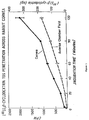
- a polyethylene ring was glued to the cornea in anesthesized rabbits.
- Saline containing 1 mg/ml of [S35]- ⁇ -cyclodextrin tetradecasulfate was added to each well for up to 120 minutes, after which the wells were removed and the corneas vigorously rinsed with saline.
- the anterior chamber fluid (ACF) was then aspirated.
- the corneas were then exised and digested in collagenase and the corneal supernatunt counted.
- This experiment also indicates that the label is detected in the ACF and in the corneas up to three hours after the wells containing [S35]- ⁇ -cyclodextrin tetradecasulfate have been removed, indicating corneal retention and slow release of ⁇ -cyclodextrin tetradecasulfate into the anterior chamber.
- ⁇ -cyclodextrin tetradecasulfate was complexed by dissolving both compounds in water with a molar excess of fluorescein. Specifically, to 6 ml of saline there was added 3 g of fluorescein and 30 mg of ⁇ -cyclodextrin tetradecasulfate (ml saline:g fluorescein:cyclodextrin sulfate of 2:1:10). This yields a molar ratio of fluorescein:cyclodextrin sulfate of about 600:1. This produced a light green solution which was placed shaken at 37°C rotator shaking plate for 4 days.
- Ethanol was then added (100%) at 1:5 v/v followed by centrifugation at about 2000 g for about 20 minutes. A green precipitate formed. The pellet was repeatedly washed with ethanol (100%) until the supernatant was colorless (until the ethanolic solution was clear and contained no fluorescein by UV fluorescence), and then vacuum-dried.
- Example 3 The water soluble complex described in Example 3 was injected into the carotid artery of rabbits who had neovascularization in the cornea induced by a pellet of endotoxin implanted one week earlier. After a single injection, the new vessels in the cornea were still flourescing green 3 hours later.
Landscapes
- Health & Medical Sciences (AREA)
- Chemical & Material Sciences (AREA)
- Engineering & Computer Science (AREA)
- General Health & Medical Sciences (AREA)
- Medicinal Chemistry (AREA)
- Pharmacology & Pharmacy (AREA)
- Life Sciences & Earth Sciences (AREA)
- Veterinary Medicine (AREA)
- Animal Behavior & Ethology (AREA)
- Public Health (AREA)
- Epidemiology (AREA)
- Nanotechnology (AREA)
- Bioinformatics & Cheminformatics (AREA)
- Biotechnology (AREA)
- Biophysics (AREA)
- General Engineering & Computer Science (AREA)
- Medical Informatics (AREA)
- Molecular Biology (AREA)
- Crystallography & Structural Chemistry (AREA)
- Ophthalmology & Optometry (AREA)
- Pharmaceuticals Containing Other Organic And Inorganic Compounds (AREA)
- Medicinal Preparation (AREA)
- Prostheses (AREA)
Claims (27)
- Medikament zur Behandlung eines Augengewebes, das das ophthalmologische Mittel am Augengewebe zurückhält, welches einen Komplex eines ophthalmologischen Mittels und eines Glucansulfats umfaßt, wobei das Glucansulfat aus Dextransulfat, β-Cyclodextrinsulfat, γ-Cyclodextrinsulfat und β-1,3-Glucansulfat ausgewählt ist.
- Medikament gemäß Anspruch 1, wobei das Glucansulfat ein Cyclodextrinsulfat umfaßt.
- Medikament gemäß Anspruch 2, wobei das Cyclodextrinsulfat einen Schwefelgehalt von mehr als 3 Gew.-% hat.
- Medikament gemäß Anspruch 3, wobei das Cyclodextrinsulfat einen Schwefelgehalt zwischen 12 und 24 Gew.-% hat.
- Medikament gemäß Anspruch 4, wobei das Cyclodextrinsulfat einen Schwefelgehalt zwischen 15 und 21 Gew.-% hat.
- Medikament gemäß Anspruch 2, wobei es sich bei dem Cyclodextrinsulfat um β-Cyclodextrintetradecasulfat handelt.
- Medikament gemäß Anspruch 1, wobei es sich bei dem Glucansulfat um β-1,3-Glucansulfat handelt.
- Medikament gemäß Anspruch 7, wobei das β-1,3-Glucansulfat einen Schwefelgehalt von mehr als 5 Gew.-% hat.
- Medikament gemäß Anspruch 8, wobei das β-1,3-Glucansulfat einen Schwefelgehalt zwischen 10 und 21 Gew.-% hat.
- Medikament gemäß Anspruch 7, wobei das β-1,3-Glucansulfat ein partielles Hydrolysat mit einem mittleren Polymerisationsgrad von unter 1000 ist.
- Medikament gemäß Anspruch 10, wobei der mittlere Polymerisationsgrad zwischen 6 und 300 liegt.
- Medikament gemäß Anspruch 11, wobei der Polymerisationsgrad zwischen 45 und 200 liegt.
- Medikament gemäß Anspruch 1, wobei es sich bei dem Glucansulfat um Dextransulfat handelt.
- Medikament gemäß Anspruch 13, wobei das Dextransulfat einen Schwefelgehalt von mehr als 12 Gew.-% hat.
- Medikament gemäß Anspruch 14, wobei der Schwefelgehalt des Dextransulfats zwischen 15 und 21 Gew.-% liegt.
- Medikament gemäß Anspruch 13, wobei das mittlere Molekulargewicht des Dextransulfats zwischen 1000 und 40 000 000 liegt.
- Medikament gemäß Anspruch 15, wobei das mittlere Molekulargewicht zwischen 3000 und 1 000 000 liegt.
- Medikament gemäß einem der Ansprüche 1 bis 17, das in einer topisch zu verabreichenden Form vorliegt.
- Medikament gemäß einem der Ansprüche 1 bis 17, wobei das Medikament in einer solchen Form vorliegt, daß das ophthalmologische Mittel topisch verabreicht wird und das Glucansulfat topisch verabreicht wird und sich der Komplex in vivo bildet.
- Medikament gemäß einem der Ansprüche 1 bis 17, das in einer parenteral zu verabreichenden Form vorliegt.
- Medikament gemäß einem der Ansprüche 1 bis 17, wobei das Medikament in einer solchen Form vorliegt, daß das ophthalmologische Mittel parenteral verabreicht wird und das Glucansulfat parenteral verabreicht wird und sich der Komplex in vivo bildet.
- Medikament gemäß einem der Ansprüche 1 bis 21, wobei der Komplex eines ophthalmologischen Mittels und eines Glucansulfats kein Komplex von Fumagillin oder Cortexolon mit β-Cyclodextrintetradecasulfat ist.
- Medikament gemäß Anspruch 22, wobei der Komplex eines ophthalmologischen Mittels und eines Glucansulfats Fumagillin und ein Glucansulfat außer β-Cyclodextrintetradecasulfat umfaßt.
- Medikament gemäß Anspruch 22, wobei der Komplex eines ophthalmologischen Mittels und eines Glucansulfats Cortexolon und ein Glucansulfat außer β-Cyclodextrintetradecasulfat umfaßt.
- Verwendung eines Komplexes eines ophthalmologischen Mittels und eines Glucansulfats, das aus Dextransulfat, β-Cyclodextrinsulfat, γ-Cyclodextrinsulfat und β-1,3-Glucansulfat ausgewählt ist, zur Herstellung eines Medikaments zur Behandlung eines Augengewebes, das das ophthalmologische Mittel an den Augengeweben zurückhält.
- Pharmazeutische Zusammensetzung, die einen Komplex eines ophthalmologischen Mittels und eines Glucansulfats, das aus Dextransulfat, β-Cyclodextrinsulfat, γ-Cyclodextrinsulfat und β-1,3-Glucansulfat ausgewählt ist, umfaßt.
- Verfahren zur Herstellung eines Komplexes eines ophthalmologischen Mittels und eines Glucansulfats, das aus Dextransulfat, β-Cyclodextrinsulfat, γ-Cyclodextrinsulfat und β-1,3-Glucansulfat ausgewählt ist, zur Behandlung eines Augengewebes zum Zurückhalten des ophthalmologischen Mittels am Augengewebe, umfassend das In-Kontakt-Bringen des ophthalmologischen Mittels mit dem Glucansulfat.
Applications Claiming Priority (2)
| Application Number | Priority Date | Filing Date | Title |
|---|---|---|---|
| US07/489,680 US5227372A (en) | 1990-03-07 | 1990-03-07 | Method for retaining ophthalmological agents in ocular tissues |
| US489680 | 1990-03-07 |
Publications (2)
| Publication Number | Publication Date |
|---|---|
| EP0447351A1 EP0447351A1 (de) | 1991-09-18 |
| EP0447351B1 true EP0447351B1 (de) | 1996-01-10 |
Family
ID=23944834
Family Applications (1)
| Application Number | Title | Priority Date | Filing Date |
|---|---|---|---|
| EP91710003A Expired - Lifetime EP0447351B1 (de) | 1990-03-07 | 1991-03-06 | Medikament zum Halten ophthalmologischer Mittel im Augengewebe und Verfahren zu seiner Herstellung |
Country Status (10)
| Country | Link |
|---|---|
| US (1) | US5227372A (de) |
| EP (1) | EP0447351B1 (de) |
| JP (1) | JPH0729941B2 (de) |
| KR (1) | KR910016315A (de) |
| AT (1) | ATE132741T1 (de) |
| AU (1) | AU636451B2 (de) |
| CA (1) | CA2037624A1 (de) |
| DE (1) | DE69116186D1 (de) |
| IE (1) | IE910658A1 (de) |
| NZ (1) | NZ237165A (de) |
Families Citing this family (38)
| Publication number | Priority date | Publication date | Assignee | Title |
|---|---|---|---|---|
| US5605938A (en) * | 1991-05-31 | 1997-02-25 | Gliatech, Inc. | Methods and compositions for inhibition of cell invasion and fibrosis using dextran sulfate |
| US5705178A (en) * | 1991-05-31 | 1998-01-06 | Gliatech, Inc. | Methods and compositions based on inhibition of cell invasion and fibrosis by anionic polymers |
| WO1993005777A1 (fr) * | 1991-09-18 | 1993-04-01 | Fujisawa Pharmaceutical Co., Ltd. | Preparation transoculaire |
| ATE205092T1 (de) * | 1992-01-30 | 2001-09-15 | Takeda Chemical Industries Ltd | Verfahren zur herstellung hoch-wasserlöslicher zyklodextrinkomplexe |
| TW251236B (de) * | 1992-09-10 | 1995-07-11 | Ciba Vision Ag | |
| US5328930A (en) * | 1993-03-01 | 1994-07-12 | Emory University | Treatment of microsporidial and acanthamoeba keratoconjunctivitis with topical fumagillin |
| US5662919A (en) * | 1994-11-21 | 1997-09-02 | Alcon Laboratories, Inc. | Sulfated polyvinyl alcohol polymers to stabilize pharmaceutical drug compounds |
| US5710148A (en) * | 1995-03-06 | 1998-01-20 | Senju Pharmaceuticals Co., Ltd. | Corneal opacification inhibitory composition |
| US5744154A (en) * | 1995-09-06 | 1998-04-28 | Laboratoire Chauvin S.A. | Ready-to-use indomethacin-based eye lotion |
| US5686095A (en) * | 1995-10-23 | 1997-11-11 | Price, Jr.; Francis W. | Method of treating canker sores |
| DE19539532C2 (de) * | 1995-10-24 | 1999-02-25 | Mann Gerhard Chem Pharm Fab | Ophthalmisches Cromoglicat-Gelpräparat |
| JP2001524097A (ja) * | 1997-04-23 | 2001-11-27 | ユニバーシティ オブ オタゴ | 眼用組成物の制御放出 |
| US20040152664A1 (en) * | 1998-09-02 | 2004-08-05 | Allergan, Inc. | Prednisolone compositions |
| WO2000012137A1 (en) | 1998-09-02 | 2000-03-09 | Allergan Sales, Inc. | Preserved cyclodextrin-containing compositions |
| DE60008234T2 (de) * | 1999-04-29 | 2004-12-30 | Alza Corp., Mountain View | Liposomenzusammensetzungen zur verbesserten wirkstoffzurückhaltung |
| JP2001158750A (ja) * | 1999-12-02 | 2001-06-12 | Lion Corp | 眼科用組成物及び抗アレルギー薬の持続性向上方法 |
| US6265435B1 (en) | 2000-03-07 | 2001-07-24 | Hans Rosenkoetter | Method for enhancing corneal penetration by water soluble ophthalmic drugs |
| RU2177801C1 (ru) * | 2001-01-25 | 2002-01-10 | Санкт-Петербургская Общественная Организация "Санкт-Петербургский Институт Биорегуляции И Геронтологии Сзо Рамн" | Средство, ингибирующее ангиогенез при заболеваниях органа зрения |
| US20040009953A1 (en) * | 2002-01-10 | 2004-01-15 | Comper Wayne D. | Antimicrobial charged polymers that exhibit resistance to lysosomal degradation during kidney filtration and renal passage, compositions and method of use thereof |
| US20030181416A1 (en) * | 2002-01-10 | 2003-09-25 | Comper Wayne D. | Antimicrobial charged polymers that exhibit resistance to lysosomal degradation during kidney filtration and renal passage, compositions and method of use thereof |
| MXPA04008171A (es) * | 2002-02-22 | 2004-11-26 | Pharmacia Corp | Formulacion oftalmica con sistema de goma. |
| CA2481306A1 (en) * | 2002-04-09 | 2003-10-23 | Greenville Hospital System | Metastasis modulating activity of highly sulfated oligosaccharides |
| US20050085446A1 (en) * | 2003-04-14 | 2005-04-21 | Babu M.K. M. | Fluoroquinolone formulations and methods of making and using the same |
| US20050009782A1 (en) * | 2003-07-09 | 2005-01-13 | Comper Wayne D. | Antiviral charged polymers that exhibit resistance to lysosomal degradation during kidney filtration and renal passage, compositions and methods of use thereof |
| US20050234018A1 (en) * | 2004-04-15 | 2005-10-20 | Allergan, Inc. | Drug delivery to the back of the eye |
| US9125807B2 (en) | 2007-07-09 | 2015-09-08 | Incept Llc | Adhesive hydrogels for ophthalmic drug delivery |
| ES2667945T3 (es) | 2007-10-08 | 2018-05-16 | Aurinia Pharmaceuticals Inc. | Composiciones oftálmicas que comprenden inhibidores de calcineurina o Inhibidores de mTOR |
| MY156662A (en) * | 2007-11-01 | 2016-03-15 | Acucela Inc | Amine derivative compounds for treating ophthalmic diseases and disorders |
| JP5890182B2 (ja) * | 2009-02-12 | 2016-03-22 | インセプト エルエルシー | ヒドロゲルプラグによる薬物送達 |
| EP2440185B1 (de) * | 2009-06-09 | 2015-04-08 | Aurinia Pharmaceuticals Inc. | Topische arzneimittelabgabesysteme zur ophthalmischen verwendung |
| AU2011233663B2 (en) | 2010-04-03 | 2016-04-14 | Praful Doshi | Medical devices including medicaments and methods of making and using same |
| US10413506B2 (en) | 2010-04-03 | 2019-09-17 | Praful Doshi | Medical devices including medicaments and methods of making and using same including enhancing comfort, enhancing drug penetration, and treatment of myopia |
| US8961501B2 (en) | 2010-09-17 | 2015-02-24 | Incept, Llc | Method for applying flowable hydrogels to a cornea |
| US10226417B2 (en) | 2011-09-16 | 2019-03-12 | Peter Jarrett | Drug delivery systems and applications |
| JP6199883B2 (ja) | 2011-12-05 | 2017-09-20 | インセプト・リミテッド・ライアビリティ・カンパニーIncept,Llc | 医療用オルガノゲルプロセス及び組成物 |
| US20190224275A1 (en) | 2017-05-12 | 2019-07-25 | Aurinia Pharmaceuticals Inc. | Protocol for treatment of lupus nephritis |
| ES2777836T3 (es) | 2017-05-17 | 2020-08-06 | Tx Medic Ab | Tratamiento del glaucoma |
| EP3810659A1 (de) * | 2018-06-20 | 2021-04-28 | DuPont Industrial Biosciences USA, LLC | Polysaccharidderivate und zusammensetzungen damit |
Family Cites Families (17)
| Publication number | Priority date | Publication date | Assignee | Title |
|---|---|---|---|---|
| US2923704A (en) * | 1957-05-15 | 1960-02-02 | Hoffmann La Roche | Cycloamylose sulfates and derivatives thereof |
| US3754925A (en) * | 1970-03-24 | 1973-08-28 | Takeda Chemical Industries Ltd | New thermo gelable polysaccharide containing foodstuffs |
| DK135268A (de) * | 1973-02-09 | |||
| JPS5036422A (de) * | 1973-08-07 | 1975-04-05 | ||
| JPS5366442A (en) * | 1976-11-18 | 1978-06-13 | Takuma Sasaki | Antitumors |
| JPS5583798A (en) * | 1978-12-19 | 1980-06-24 | Takuma Sasaki | (1,3)-beta-d-glucan derivative |
| EP0244178A3 (de) * | 1986-04-28 | 1989-02-08 | Iolab, Inc | Intraokuläre Mittel und Verfahren zu deren Verwendung |
| EP0261719A3 (de) * | 1986-09-23 | 1990-10-10 | Akzo N.V. | Thermochemischlumineszierende Komplexe von Cyclodextrinen |
| JP2577049B2 (ja) * | 1987-06-04 | 1997-01-29 | 三共株式会社 | シクロスポリン製剤 |
| US4877778A (en) * | 1987-07-01 | 1989-10-31 | The Children's Medical Center Corporation | Method of enhancing lipophile transport using cyclodextrin derivatives |
| US4877774A (en) * | 1987-09-09 | 1989-10-31 | The United States Of America As Represented By The Department Of Health And Human Services | Administration of steroid hormones |
| NZ226171A (en) * | 1987-09-18 | 1990-06-26 | Ethicon Inc | Gel formulation containing polypeptide growth factor |
| DE3740838A1 (de) * | 1987-11-27 | 1989-06-08 | Schering Ag | Cyclodextrinclathrate von 5-cyano-prostacyclinderivaten und ihre verwendung als arzneimittel |
| ES2059571T3 (es) * | 1988-01-19 | 1994-11-16 | Takeda Chemical Industries Ltd | Fumagilina como agente angiostatico. |
| KR900700114A (ko) * | 1988-01-19 | 1990-08-11 | 모세 쥬다 포크만 | 성장억제 작용제 및 그 사용법 |
| US5019562A (en) * | 1988-01-19 | 1991-05-28 | The Trustees Of The University Of Pennsylvania/Childrens Hospital Corporation | Growth inhibiting agent and the use thereof |
| US5007967A (en) * | 1988-08-15 | 1991-04-16 | American Maize-Products Company | Separation and purification of branched beta cyclodextrins |
-
1990
- 1990-03-07 US US07/489,680 patent/US5227372A/en not_active Expired - Fee Related
-
1991
- 1991-02-20 NZ NZ237165A patent/NZ237165A/xx unknown
- 1991-02-26 AU AU71396/91A patent/AU636451B2/en not_active Ceased
- 1991-02-26 IE IE065891A patent/IE910658A1/en unknown
- 1991-03-06 EP EP91710003A patent/EP0447351B1/de not_active Expired - Lifetime
- 1991-03-06 CA CA002037624A patent/CA2037624A1/en not_active Abandoned
- 1991-03-06 JP JP3040134A patent/JPH0729941B2/ja not_active Expired - Lifetime
- 1991-03-06 DE DE69116186T patent/DE69116186D1/de not_active Expired - Lifetime
- 1991-03-06 AT AT91710003T patent/ATE132741T1/de not_active IP Right Cessation
- 1991-03-07 KR KR1019910003691A patent/KR910016315A/ko not_active Withdrawn
Also Published As
| Publication number | Publication date |
|---|---|
| DE69116186D1 (de) | 1996-02-22 |
| IE910658A1 (en) | 1991-09-11 |
| EP0447351A1 (de) | 1991-09-18 |
| KR910016315A (ko) | 1991-11-05 |
| AU7139691A (en) | 1991-09-12 |
| US5227372A (en) | 1993-07-13 |
| AU636451B2 (en) | 1993-04-29 |
| CA2037624A1 (en) | 1991-09-08 |
| JPH04211615A (ja) | 1992-08-03 |
| NZ237165A (en) | 1992-10-28 |
| ATE132741T1 (de) | 1996-01-15 |
| JPH0729941B2 (ja) | 1995-04-05 |
Similar Documents
| Publication | Publication Date | Title |
|---|---|---|
| EP0447351B1 (de) | Medikament zum Halten ophthalmologischer Mittel im Augengewebe und Verfahren zu seiner Herstellung | |
| US5422116A (en) | Liquid ophthalmic sustained release delivery system | |
| CA2461896C (en) | Injections for eye tissues containing drug bonded to polyethylene glycol | |
| EP0660717B1 (de) | Aminosteroide zur Verwendung in der Augenheilkunde | |
| US5494901A (en) | Topical compositions for the eye comprising a β-cyclodextrin derivative and a therapeutic agent | |
| US5252319A (en) | Aminosteroids for ophthalmic use | |
| WO1997028833A1 (en) | Methods and compositions for the modulation of cell proliferation and wound healing | |
| Miyamoto et al. | Biodegradable scleral implant for intravitreal controlled release of fluconazole | |
| WO1996011003A1 (en) | Ophthalmic and aural compositions containing diclofenac potassium | |
| OA10744A (en) | Controlled release of miotic and mydriatic drugs in the anterior chamber | |
| WO1993024121A1 (fr) | Medicament pour le glaucome | |
| US20150065467A1 (en) | Use of lipid conjugates in the treatment of diseases or disorders of the eye | |
| US5209926A (en) | Aminosteroids for ophthalmic use | |
| WO1989010757A1 (en) | New ophthalmic preparation for treating glaucoma | |
| Bernatchez et al. | Use of hyaluronic acid in ocular therapy | |
| AU2011292160B2 (en) | Ophthalmic formulations of squalamine | |
| US20020139378A1 (en) | Method for creating a separation of posterior cortical vitreous from the retina of the eye | |
| SIEFERT et al. | Influence of cyclodextrins on the in vitro corneal permeability and in vivo ocular distribution of thalidomide | |
| Palmer et al. | Tear film, pharmacology of eye drops, and toxicity | |
| US20100305175A1 (en) | Pharmaceutical latrunculin formulations | |
| JP4838968B2 (ja) | 薬物−ポリエチレングリコール結合体を含有する眼組織内注入剤 | |
| KR20040011426A (ko) | 수술용 비흡출 전이성 점탄물 | |
| CA2101126A1 (en) | Preparation for local treatment | |
| KR0159640B1 (ko) | 도파민 수용기 자극제를 포함하는 근시 및 녹내장 치료용 안과 제형 | |
| AU2015258244C1 (en) | Ophthalmic formulations of squalamine |
Legal Events
| Date | Code | Title | Description |
|---|---|---|---|
| PUAI | Public reference made under article 153(3) epc to a published international application that has entered the european phase |
Free format text: ORIGINAL CODE: 0009012 |
|
| AK | Designated contracting states |
Kind code of ref document: A1 Designated state(s): AT BE CH DE DK ES FR GB GR IT LI LU NL SE |
|
| 17P | Request for examination filed |
Effective date: 19920314 |
|
| 17Q | First examination report despatched |
Effective date: 19921223 |
|
| GRAA | (expected) grant |
Free format text: ORIGINAL CODE: 0009210 |
|
| AK | Designated contracting states |
Kind code of ref document: B1 Designated state(s): AT BE CH DE DK ES FR GB GR IT LI LU NL SE |
|
| PG25 | Lapsed in a contracting state [announced via postgrant information from national office to epo] |
Ref country code: IT Free format text: LAPSE BECAUSE OF FAILURE TO SUBMIT A TRANSLATION OF THE DESCRIPTION OR TO PAY THE FEE WITHIN THE PRE;WARNING: LAPSES OF ITALIAN PATENTS WITH EFFECTIVE DATE BEFORE 2007 MAY HAVE OCCURRED AT ANY TIME BEFORE 2007. THE CORRECT EFFECTIVE DATE MAY BE DIFFERENT FROM THE ONE RECORDED.SCRIBED TIME-LIMIT Effective date: 19960110 Ref country code: FR Effective date: 19960110 Ref country code: LI Free format text: LAPSE BECAUSE OF FAILURE TO SUBMIT A TRANSLATION OF THE DESCRIPTION OR TO PAY THE FEE WITHIN THE PRESCRIBED TIME-LIMIT Effective date: 19960110 Ref country code: CH Free format text: LAPSE BECAUSE OF FAILURE TO SUBMIT A TRANSLATION OF THE DESCRIPTION OR TO PAY THE FEE WITHIN THE PRESCRIBED TIME-LIMIT Effective date: 19960110 Ref country code: GR Free format text: LAPSE BECAUSE OF FAILURE TO SUBMIT A TRANSLATION OF THE DESCRIPTION OR TO PAY THE FEE WITHIN THE PRESCRIBED TIME-LIMIT Effective date: 19960110 Ref country code: ES Free format text: THE PATENT HAS BEEN ANNULLED BY A DECISION OF A NATIONAL AUTHORITY Effective date: 19960110 Ref country code: AT Effective date: 19960110 Ref country code: DK Effective date: 19960110 Ref country code: BE Effective date: 19960110 Ref country code: NL Free format text: LAPSE BECAUSE OF FAILURE TO SUBMIT A TRANSLATION OF THE DESCRIPTION OR TO PAY THE FEE WITHIN THE PRESCRIBED TIME-LIMIT Effective date: 19960110 |
|
| REF | Corresponds to: |
Ref document number: 132741 Country of ref document: AT Date of ref document: 19960115 Kind code of ref document: T |
|
| REF | Corresponds to: |
Ref document number: 69116186 Country of ref document: DE Date of ref document: 19960222 |
|
| PG25 | Lapsed in a contracting state [announced via postgrant information from national office to epo] |
Ref country code: LU Free format text: LAPSE BECAUSE OF NON-PAYMENT OF DUE FEES Effective date: 19960331 |
|
| PG25 | Lapsed in a contracting state [announced via postgrant information from national office to epo] |
Ref country code: SE Effective date: 19960410 Ref country code: GB Effective date: 19960410 |
|
| PG25 | Lapsed in a contracting state [announced via postgrant information from national office to epo] |
Ref country code: DE Effective date: 19960411 |
|
| NLV1 | Nl: lapsed or annulled due to failure to fulfill the requirements of art. 29p and 29m of the patents act | ||
| EN | Fr: translation not filed | ||
| REG | Reference to a national code |
Ref country code: CH Ref legal event code: PL |
|
| PLBE | No opposition filed within time limit |
Free format text: ORIGINAL CODE: 0009261 |
|
| GBPC | Gb: european patent ceased through non-payment of renewal fee |
Effective date: 19960410 |
|
| 26N | No opposition filed |