EP0452941A2 - Verwendung von Isomonoolen zur Behandlung und Prophylaxe von Krebserkrankungen - Google Patents
Verwendung von Isomonoolen zur Behandlung und Prophylaxe von Krebserkrankungen Download PDFInfo
- Publication number
- EP0452941A2 EP0452941A2 EP91106255A EP91106255A EP0452941A2 EP 0452941 A2 EP0452941 A2 EP 0452941A2 EP 91106255 A EP91106255 A EP 91106255A EP 91106255 A EP91106255 A EP 91106255A EP 0452941 A2 EP0452941 A2 EP 0452941A2
- Authority
- EP
- European Patent Office
- Prior art keywords
- methyl
- pharmaceutical composition
- isomonool
- isomonools
- carcinostatic
- Prior art date
- Legal status (The legal status is an assumption and is not a legal conclusion. Google has not performed a legal analysis and makes no representation as to the accuracy of the status listed.)
- Granted
Links
Images




Classifications
-
- A—HUMAN NECESSITIES
- A61—MEDICAL OR VETERINARY SCIENCE; HYGIENE
- A61K—PREPARATIONS FOR MEDICAL, DENTAL OR TOILETRY PURPOSES
- A61K31/00—Medicinal preparations containing organic active ingredients
- A61K31/045—Hydroxy compounds, e.g. alcohols; Salts thereof, e.g. alcoholates
Definitions
- This invention relates to novel pharmaceutical compositions and methods for treatment and prophylaxis of cancer, more specifically for carcinostasis, reinforcement of carcinostasis and prevention of carcinogenesis.
- carcinostatic agents which exhibit the carcinostatic activity by alkylating such biopolymers with indispensable roles as nucleic acids and enzymes, metabolic antagonists which inhibit metabolism of nucleic acids, mitotic poisons which affect biosynthesis of nucleic acids in the cell, carcinostatic antibiotics which exhibit cytocidal activity against the cells in rapid proliferation, carcinostatic compounds of plant origin, and hormones.
- amphotericin B and the like have been investigated as carcinostasis-reinforcing agents which may exhibit effects on improvement in absorption of drugs with poor absorbability to cancer cells and thus enhance carcinostatic effects of carcinostatic agents such as bleomycin and adriamycin. However none of them have come to attain any notable effect.
- carcinostatic agents known from the prior art do not get rid of causing side effects, and few of them exhibit a satisfactory effect. Consequently, carcinostatic agents with improved characteristics have been needed. And there also have been needs for excellent carcinostasis-reinforcing agents in order to let carcinostatic agents express their full effects.
- carcinogenesis may be triggered through two steps mediated by an initiator and a promoter.
- the mechanisms of carcinogenesis is not known in relation to their influences exerted upon human body in daily life.
- prevention of carcinogenesis can only be pursued by a trial-and-error method based on experiences. Consequently, the development of carcinogenesis-preventing agents has been far behind that of anti-cancer agents.
- the criteria for carcinogenesis-preventing agents may be as follows.
- carcinogenesis-preventing agents in general, are required to possess greater safety than that required for anti-cancer agents, and they have to be totally free of side effects.
- the compounds of the present invention are chemically stable and can remain unchanged after cooking, they may be used as food additives and for functional foods or health foods.
- the compounds of the present invention are compounds which occur naturally in sebum, and they may, accordingly, be readily accepted by general people.
- isomonools represented by the general formula: wherein R is an alkyl group with 1 to 5 carbon atoms, and n is an integer of 4 to 22, are excellent in such activities.
- the present invention provides carcinostatic, carcinostasis-reinforcing and carcinogenesis-preventing compositions containing as an active ingredient an isomonool represented by the general formula (I): wherein R is an alkyl group with 1 to 5 carbon atoms, and n is an integer of 4 to 22.
- the length of the alkyl chain of the isomonools in the general formula (I) is defined by n which is an integer of 4 to 22 and R which is an alkyl group with 1 to 5 carbon atoms.
- n is an integer of 4 to 22
- R which is an alkyl group with 1 to 5 carbon atoms.
- the isomonools utilized in the present invention may be produced by decomposing naturally occurring compounds such as waxes.
- Naturally occurring compounds include wool wax, spermaceti, beewax, white wax and carnauba wax.
- the isomonools utilized in the present invention may be obtained, for example, as follows (Fig. 1, a flowchart of the production process).
- Saponification A naturally occurring compound such as wool grease is suspended in water in the presence of 1.18 times of an alkali (NaOH) on molar basis, and saponification reaction is conducted for 3 hours while stirring at 135 ⁇ 5 °C under pressure in an autoclave.
- Separation of alcohols from fatty acids To the resulting saponification product (the mixture of sodium salts of higher fatty acids and higher alcohols) are added water and methylethylketone (hereinafter referred to as MEK). The mixture is transferred into a separating funnel and heated to 70 to 75 °C to extract alcohols into MEK.
- MEK methylethylketone
- the resulting solution of wool alcohols in MEK is evaporated in vacuo to give wool alcohols as a solid matter.
- Molecular distillation of wool alcohols The solid wool alcohols thus obtained is subjected to molecular distillation to obtain a fraction with a lower boiling point (temperature; ⁇ 80 °C, pressure; 1 ⁇ 10 ⁇ 2 Torr). The fraction is hereinafter referred to as MD1-Alc.
- MD1-Alc Fractionation of MD1-Alc by reverse phase column chromatography: MD1-Alc is separated into 6 fractions by reverse phase column chromatography (open column). Fractionating conditions;
- ODS#3 The third fraction, which has the third highest polality, is hereinafter referred to as ODS#3.
- ODS#3 Fractionation of ODS#3 by normal phase column chromatography: ODS#3 is fractionated by normal phase column chromatography (open column). Fractionating conditions;
- the first and the second fractions are eluted with the eluant I, and the third with the eluant II.
- the second eluted fraction is hereinafter referred to as ODS#3-2.
- the isomonools may be separated and isolated also by other methods.
- other methods include the methods described by SATOSHI TAKANO, MAKOTO YAMANAKA, KIKUHIKO OKAMOTO and FUMIO SAITO (Allergens of lanolin: parts I and II, Part I: ISOLATION AND IDENTIFICATION OF THE ALLERGENS OF HYDROGENATED LANOLIN, JOURNAL OF THE SOCIETY OF COSMETIC CHEMISTS, 34 , P 99-116 (1983)).
- isomonools examples include iso-C14-OH [12-methyl-1-tridecanol], iso-C15-OH [13-methyl-1-tetradecanol], iso-C16-OH [14-methyl-1-pentadecanol], iso-C17-OH [15-methyl-1-hexadecanol] and iso-C18-OH [16-methyl-1-heptadecanol] when R is methyl, and iso-C15-OH [12-methyl-1-tetradecanol], iso-C16-OH [13-methyl-1-pentadecanol], iso-C17-OH [14-methyl-1-hexadecanol], iso-C18-OH [15-methyl-1-heptadecanol] and iso-C19-OH [16-methyl-1-octadecanol] when R is ethyl.
- isomonools may be used alone or in mixture with one or more other isomonools.
- the isomonools may be admixed with a surfactant such as Pluronic F-68 (commercial name of a poloxamer, ASAHI DENKA K.K.), HCO-60 (commercial name, NIKKO CHEMICALS K.K.) and the like, and then dispersed with the aid of ultrasonic waves, or the isomonools may be processed into a type of composition such as a liposome suspension or an oil-in-water emulsion.
- a surfactant such as Pluronic F-68 (commercial name of a poloxamer, ASAHI DENKA K.K.), HCO-60 (commercial name, NIKKO CHEMICALS K.K.) and the like.
- compositions may contain preservatives such as methyl p-hydroxybenzoate, stabilizers such as lecithine or linoleic acid, non-aqueous vehicles such as coconut oil and agents for suspension aid such as glucose.
- preservatives such as methyl p-hydroxybenzoate, stabilizers such as lecithine or linoleic acid, non-aqueous vehicles such as coconut oil and agents for suspension aid such as glucose.
- the isomonools may be made into the form of capsules suitable for intestinal absorption by incorporating, for example, binders such as gelatin, stabilizers such as magnesium stearate, diluent bases such as lactose and disintegrators such as potato starch and by coating the capsules with acetylphthalylcellulose or methyl acrylate/methacrylate copolymer to form an enteric coating layer.
- binders such as gelatin
- stabilizers such as magnesium stearate
- diluent bases such as lactose
- disintegrators such as potato starch
- the isomonools may also be made into the forms of granules, sustained-release capsules for implant, a suppository, a nebulizer or a buccal preparation.
- the dose (per 1 kg body weight per day for adult human) of the active ingredient may be preferably 5 to 1200 mg, particularly preferably 20 to 300 mg for parenteral preparations such as for intravenous or subcutaneous injection or instillation, and preferably 0.1 to 40 g, particularly preferably 0.5 to 8 g for oral preparations, for example, capsules.
- the dose may be preferably 0.45 to 102 mg, particularly preferably 1 to 28 mg for parenteral preparation, and preferably 0.005 to 5.2 g, particularly preferably 0.07 to 1.2 g for oral preparations.
- the agents of the present invention are effective in treatment not only of ascites tumors and leukemia but also of solid tumors which include adenocarcinoma, squamous cell carcinoma, undifferentiated carcinoma and sarcoma in various tissues.
- the agents are effective not only in tumor-implanted animals but also on cultured malignant cells from human, mouse, rat, hamster and so on. It is thus indicated that the agents may have a direct lethal effect on tumor cells without specificity to animal species, and, therefore, they may be used as chemotherapeutic agents for cancer of human or domestic and other animals.
- LD50 is 5.1 to 17 g/kg for the rat by subcutaneous injection, and no side effects have been observed by repeated administration for 10 days at a dose of 1 to 2 g/kg.
- the third eluted fraction (ODS#3) was obtained in an amount of 1.68 g.
- the second eluted fraction (ODS#3-2) of the three was obtained in an amount of 0.96 g.
- ODS#3-2 was fractionated by HPLC to isolate each of the aimed compounds.
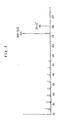
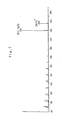
- Fig. 2 shows a 13C-NMR spectrum (100.40 MHz, CDCl3, ⁇ ppm) of 14-methyl-1-pentadecanol
- Fig. 3 and Fig. 4 show GC-MS data thereof
- Fig. 5 shows a 13C-NMR spectrum (100.40 MHz, CDCl3, ⁇ ppm) of 14-methyl-1-hexadecanol
- Fig. 6 and Fig. 7 show GC-MS data thereof.
- Data shown in Fig. 3 and Fig. 6 were obtained in mode EI with an ionizing voltage of 70 eV and with the temperature of the ion source of 250 °C.
- Data shown in Fig. 4 and Fig. 7 were obtained in mode CI using isobutane as reacting gas, with an ionizing voltage of 200 eV and with the temperature of the ion source of 250 °C.
- the isomonools obtained above were tested for carcinostatic, carcinostasis-reinforcing activity.
- mice 5-week old ddY mice were intraperitoneally inoculated with 106 Ehrlich's ascites carcinoma cells. Since 24 hours later, 50 mg/ml suspension of a test compound in 0.25 % (% by weight. The definition is to be followed hereinafter) solution of Pluronic F68 in physiological saline was intraperitoneally injected to 10 animals/group at a dose of 10 mg/kg/day for 5 days.
- the mean survival time after inoculation was 14.0 days for the group administered the carrier solution containing none of the test compounds.
- the mean survival time of the animal group administered the test compounds was 60 days or more for 14-methyl-1-pentadecanol, 57.5 days for 14-methyl-1-hexadecanol, and 60 days or more for their 1 : 1 mixture. The effects on prolonging the survival time were statistically significant.
- 6-week old F1 mongrel mice of C57BL/6 and DBA/2 were inoculated under back skin with 106 adenocarcinoma 755 cells. Since 24 hours later, 50 mg/ml suspension of a test compound in 0.25 % HCO-60 solution in physiological saline was subcutaneously injected to 8 animals/group at a dose of 10 mg/kg/day for 5 days. The animals were sacrificed 10 days after the inoculation with adenocarcinoma 755 cells, and the tumor was excised.
- the mean tumor weight (g) of the control group was 6.5. On the other hand, that was 1.6 and 2.3 for the group administered 16-methyl-1-heptadecanol and 16-methyl-1-octadecanol, respectively. The tumor growth suppressing effects were statistically significant.
- 14-methyl-1-pentadecanol and 18-methyl-1-nonadecanol were tested for tumor growth suppressing effects on three different tumor cell strains (Ehrlich's mouse ascites carcinoma cells, human lung carcinoma A549 cells and mouse neuroblastoma NAs-1 cells). As the results, the two isomonools were demonstrated to be effective on any of these three types of tumor cells.
- mice neuroblastoma NAs-1 cells The growth of mouse neuroblastoma NAs-1 cells was suppressed to 7.8 ⁇ 10 ⁇ 3 and 6.5 ⁇ 10 ⁇ 3, respectivley.
- cytocidal activity (IC90) of bleomycin was evaluated when used alone or used in combination with 14-methyl-1-pentadecanol or 14-methyl-1-hexadecanol, using Ehrlich's mouse ascites carcinoma cells and human lung tumor A549 cells. The results are shown in Table 1.
- the amount of bleomycin taken up into Ehrlich's ascites cells was determined as a function of time in the case where bleomycin (60 ⁇ g/ml) was used in combination with 14-methyl-1-pentadecanol (0.05 ⁇ M). The results are shown in Table 2.
- mice 5-week old male C57BL/6 mice were intraperitoneally inoculated with 106 Ehrlich's mouse ascites carcinoma cells. Since 24 hours later, a 50 ⁇ g/ml solution of bleomycin in 0.25 % HCO-60 solution in physiological saline, and a suspension containing 50 ⁇ g/ml of bleomycin and 5 ⁇ g/ml of 14-methyl-1-pentadecanol were intraperitoneally injected at a dose of 10 mg/kg ⁇ day and 11 mg/kg ⁇ day, respectively, to each 8 animals/group for 5 days. The survival time of the injected mice was then followed. The results are shown in table 3.
- the mean survival time after inoculation was 33.3 days for the group (Comparing test 3) which was administered the bleomycin solution containing none of the carcinostasis-reinforcing agents of the present invention, whereas the mean survival time after inoculation was 54.3 days for the group (Test 7) which was administered the bleomycin solution containing one of the isomonools as a carcinostasis-reinforcing agent of the present invention.
- the isomonools of the present invention are useful as carcinostasis-reinforcing agents.
- DMBA a carcinogenic compound
- the rats were alloted to 5 groups and treated as follows since the 211th day.
- the carcinostatic, carcinostasis-reinforcing and carcinogenesis-preventing compositions of the present invention exhibit excellent effects, whereas the active ingredients thereof are obtained from organisms (higer animals) and, thus, may not cause severe side effects on organisms.
Landscapes
- Health & Medical Sciences (AREA)
- Chemical & Material Sciences (AREA)
- Medicinal Chemistry (AREA)
- Pharmacology & Pharmacy (AREA)
- Epidemiology (AREA)
- Life Sciences & Earth Sciences (AREA)
- Animal Behavior & Ethology (AREA)
- General Health & Medical Sciences (AREA)
- Public Health (AREA)
- Veterinary Medicine (AREA)
- Acyclic And Carbocyclic Compounds In Medicinal Compositions (AREA)
Applications Claiming Priority (4)
| Application Number | Priority Date | Filing Date | Title |
|---|---|---|---|
| JP103914/90 | 1990-04-19 | ||
| JP10391590A JPH045229A (ja) | 1990-04-19 | 1990-04-19 | 発がん防止剤 |
| JP10391490A JP2883396B2 (ja) | 1990-04-19 | 1990-04-19 | 制がん増強剤 |
| JP103915/90 | 1990-04-19 |
Publications (3)
| Publication Number | Publication Date |
|---|---|
| EP0452941A2 true EP0452941A2 (de) | 1991-10-23 |
| EP0452941A3 EP0452941A3 (en) | 1992-09-09 |
| EP0452941B1 EP0452941B1 (de) | 1996-03-06 |
Family
ID=26444493
Family Applications (1)
| Application Number | Title | Priority Date | Filing Date |
|---|---|---|---|
| EP91106255A Expired - Lifetime EP0452941B1 (de) | 1990-04-19 | 1991-04-18 | Verwendung von Isomonoolen zur Behandlung und Prophylaxe von Krebserkrankungen |
Country Status (3)
| Country | Link |
|---|---|
| US (1) | US5162304A (de) |
| EP (1) | EP0452941B1 (de) |
| DE (1) | DE69117566T2 (de) |
Families Citing this family (1)
| Publication number | Priority date | Publication date | Assignee | Title |
|---|---|---|---|---|
| FR2709415B1 (fr) | 1993-08-31 | 1996-03-29 | Kimberly Clark Co | Culotte périodique jetable. |
Family Cites Families (5)
| Publication number | Priority date | Publication date | Assignee | Title |
|---|---|---|---|---|
| JPS4868727A (de) * | 1971-12-25 | 1973-09-19 | ||
| DE3219004C1 (de) * | 1982-05-19 | 1984-03-01 | Philippine Dr. 8000 München Hartmann | Arzneimittel zur Behandlung von Tumoren |
| JPH0723307B2 (ja) * | 1985-12-04 | 1995-03-15 | 第一工業製薬株式会社 | 制がん剤 |
| JPH0759504B2 (ja) * | 1986-01-23 | 1995-06-28 | エーザイ株式会社 | ポリプレニルアルコ−ル含有注射剤 |
| US4985466A (en) * | 1988-06-14 | 1991-01-15 | Dai-Ichi Kogyo Seiyaku Co., Ltd. | Method for treating tumors susceptible to treatment with reduced wool alcohol |
-
1991
- 1991-04-18 EP EP91106255A patent/EP0452941B1/de not_active Expired - Lifetime
- 1991-04-18 US US07/686,975 patent/US5162304A/en not_active Expired - Lifetime
- 1991-04-18 DE DE69117566T patent/DE69117566T2/de not_active Expired - Fee Related
Also Published As
| Publication number | Publication date |
|---|---|
| EP0452941B1 (de) | 1996-03-06 |
| DE69117566D1 (de) | 1996-04-11 |
| US5162304A (en) | 1992-11-10 |
| EP0452941A3 (en) | 1992-09-09 |
| DE69117566T2 (de) | 1996-11-07 |
Similar Documents
| Publication | Publication Date | Title |
|---|---|---|
| JP2022171109A (ja) | Axl阻害剤 | |
| US6214978B1 (en) | Antitumor and anticholesterol preparations containing a lipoteichoic acid from streptococcus | |
| Tarnowski et al. | Effects of combinations of azaserine and of 6-diazo-5-oxo-L-norleucine with purine analogs and other antimetabolites on the growth of two mouse mammary carcinomas | |
| US5795871A (en) | Pharmaceutical composition for treatment of non-small cell lung cancer | |
| CA2053820C (en) | Method of inhibiting metabolism of cholesterol | |
| JP2847783B2 (ja) | 抗癌活性増強剤 | |
| EP0258082B1 (de) | Arzneimittel gegen feste Tumoren | |
| US5190978A (en) | Carcinostatic compositions and methods | |
| HU224839B1 (en) | Substituted 1 betha-d-arabinofuranosylcytosine derivatives and use of the same for producing pharmaceutical compositions having antitumor activity | |
| US5162304A (en) | Pharmaceutical compositions and methods for treatment and prophylaxis of cancer | |
| UMEZAWA | Immune Response | |
| Berger et al. | Modulation of chemical carcinogenesis in rats by alkyl lysophospholipids | |
| JP2002509532A (ja) | アルグラビン(arglabin)およびアルグラビン誘導体の薬学的組成物 | |
| JPH04295423A (ja) | 制がん剤および制がん増強剤 | |
| AU739033B2 (en) | 13-deoxyanthracycline derivatives and processes for preparing them | |
| JPH03118317A (ja) | 発がん防止剤 | |
| JP3522790B2 (ja) | H3−レセプター刺激薬 | |
| JP2883396B2 (ja) | 制がん増強剤 | |
| EA002290B1 (ru) | Противоопухолевое средство | |
| Gross et al. | Hepatic lipidosis associated with L-asparaginase treatment | |
| EP0149847A2 (de) | Dolichol enthaltendes therapeutisches und vorbeugendes Mittel | |
| AU627748B2 (en) | Novel selenious acid-platinum complex and anti-tumor agent comprising said complex as effective ingredient | |
| Shuto et al. | Nucleosides and nucleotides. 150. Enzymatic synthesis of 5′-phosphatidyl derivatives of 1-(2-C-cyano-2-deoxy-β-d-arabino-pentofuranosyl) cytosine (CNDAC) and their notable antitumor effects in mice1 | |
| GB2036554A (en) | Anthraquinones for use in therapy | |
| JP2820459B2 (ja) | 制がん剤 |
Legal Events
| Date | Code | Title | Description |
|---|---|---|---|
| PUAI | Public reference made under article 153(3) epc to a published international application that has entered the european phase |
Free format text: ORIGINAL CODE: 0009012 |
|
| AK | Designated contracting states |
Kind code of ref document: A2 Designated state(s): DE FR GB |
|
| PUAL | Search report despatched |
Free format text: ORIGINAL CODE: 0009013 |
|
| AK | Designated contracting states |
Kind code of ref document: A3 Designated state(s): DE FR GB |
|
| 17P | Request for examination filed |
Effective date: 19920729 |
|
| 17Q | First examination report despatched |
Effective date: 19930910 |
|
| GRAH | Despatch of communication of intention to grant a patent |
Free format text: ORIGINAL CODE: EPIDOS IGRA |
|
| GRAA | (expected) grant |
Free format text: ORIGINAL CODE: 0009210 |
|
| AK | Designated contracting states |
Kind code of ref document: B1 Designated state(s): DE FR GB |
|
| REF | Corresponds to: |
Ref document number: 69117566 Country of ref document: DE Date of ref document: 19960411 |
|
| ET | Fr: translation filed | ||
| PLBE | No opposition filed within time limit |
Free format text: ORIGINAL CODE: 0009261 |
|
| STAA | Information on the status of an ep patent application or granted ep patent |
Free format text: STATUS: NO OPPOSITION FILED WITHIN TIME LIMIT |
|
| 26N | No opposition filed | ||
| REG | Reference to a national code |
Ref country code: GB Ref legal event code: IF02 |
|
| PGFP | Annual fee paid to national office [announced via postgrant information from national office to epo] |
Ref country code: DE Payment date: 20070430 Year of fee payment: 17 |
|
| PGFP | Annual fee paid to national office [announced via postgrant information from national office to epo] |
Ref country code: GB Payment date: 20070411 Year of fee payment: 17 |
|
| PGFP | Annual fee paid to national office [announced via postgrant information from national office to epo] |
Ref country code: FR Payment date: 20070320 Year of fee payment: 17 |
|
| GBPC | Gb: european patent ceased through non-payment of renewal fee |
Effective date: 20080418 |
|
| PG25 | Lapsed in a contracting state [announced via postgrant information from national office to epo] |
Ref country code: DE Free format text: LAPSE BECAUSE OF NON-PAYMENT OF DUE FEES Effective date: 20081101 |
|
| REG | Reference to a national code |
Ref country code: FR Ref legal event code: ST Effective date: 20081231 |
|
| PG25 | Lapsed in a contracting state [announced via postgrant information from national office to epo] |
Ref country code: FR Free format text: LAPSE BECAUSE OF NON-PAYMENT OF DUE FEES Effective date: 20080430 |
|
| PG25 | Lapsed in a contracting state [announced via postgrant information from national office to epo] |
Ref country code: GB Free format text: LAPSE BECAUSE OF NON-PAYMENT OF DUE FEES Effective date: 20080418 |