EP0485460B1 - Perles polymeres en cyclodextrine - Google Patents
Perles polymeres en cyclodextrine Download PDFInfo
- Publication number
- EP0485460B1 EP0485460B1 EP90911881A EP90911881A EP0485460B1 EP 0485460 B1 EP0485460 B1 EP 0485460B1 EP 90911881 A EP90911881 A EP 90911881A EP 90911881 A EP90911881 A EP 90911881A EP 0485460 B1 EP0485460 B1 EP 0485460B1
- Authority
- EP
- European Patent Office
- Prior art keywords
- cyclodextrin
- polar solvent
- polyvinyl butyral
- mixing
- beads
- Prior art date
- Legal status (The legal status is an assumption and is not a legal conclusion. Google has not performed a legal analysis and makes no representation as to the accuracy of the status listed.)
- Expired - Lifetime
Links
- 229920000858 Cyclodextrin Polymers 0.000 title claims abstract description 81
- HFHDHCJBZVLPGP-UHFFFAOYSA-N schardinger α-dextrin Chemical compound O1C(C(C2O)O)C(CO)OC2OC(C(C2O)O)C(CO)OC2OC(C(C2O)O)C(CO)OC2OC(C(O)C2O)C(CO)OC2OC(C(C2O)O)C(CO)OC2OC2C(O)C(O)C1OC2CO HFHDHCJBZVLPGP-UHFFFAOYSA-N 0.000 title claims abstract description 60
- 239000011324 bead Substances 0.000 title claims abstract description 51
- 229920000642 polymer Polymers 0.000 title claims abstract description 16
- 238000000034 method Methods 0.000 claims abstract description 30
- 239000012454 non-polar solvent Substances 0.000 claims abstract description 28
- 229920002037 poly(vinyl butyral) polymer Polymers 0.000 claims abstract description 26
- NTIZESTWPVYFNL-UHFFFAOYSA-N Methyl isobutyl ketone Chemical compound CC(C)CC(C)=O NTIZESTWPVYFNL-UHFFFAOYSA-N 0.000 claims abstract description 23
- UIHCLUNTQKBZGK-UHFFFAOYSA-N Methyl isobutyl ketone Natural products CCC(C)C(C)=O UIHCLUNTQKBZGK-UHFFFAOYSA-N 0.000 claims abstract description 23
- 229940043265 methyl isobutyl ketone Drugs 0.000 claims abstract description 23
- BRLQWZUYTZBJKN-UHFFFAOYSA-N Epichlorohydrin Chemical compound ClCC1CO1 BRLQWZUYTZBJKN-UHFFFAOYSA-N 0.000 claims abstract description 21
- 239000003995 emulsifying agent Substances 0.000 claims abstract description 20
- XLYOFNOQVPJJNP-UHFFFAOYSA-N water Substances O XLYOFNOQVPJJNP-UHFFFAOYSA-N 0.000 claims abstract description 16
- 239000003431 cross linking reagent Substances 0.000 claims abstract description 11
- HEMHJVSKTPXQMS-UHFFFAOYSA-M Sodium hydroxide Chemical compound [OH-].[Na+] HEMHJVSKTPXQMS-UHFFFAOYSA-M 0.000 claims description 51
- 239000002798 polar solvent Substances 0.000 claims description 19
- WHGYBXFWUBPSRW-FOUAGVGXSA-N beta-cyclodextrin Chemical compound OC[C@H]([C@H]([C@@H]([C@H]1O)O)O[C@H]2O[C@@H]([C@@H](O[C@H]3O[C@H](CO)[C@H]([C@@H]([C@H]3O)O)O[C@H]3O[C@H](CO)[C@H]([C@@H]([C@H]3O)O)O[C@H]3O[C@H](CO)[C@H]([C@@H]([C@H]3O)O)O[C@H]3O[C@H](CO)[C@H]([C@@H]([C@H]3O)O)O3)[C@H](O)[C@H]2O)CO)O[C@@H]1O[C@H]1[C@H](O)[C@@H](O)[C@@H]3O[C@@H]1CO WHGYBXFWUBPSRW-FOUAGVGXSA-N 0.000 claims description 12
- 229960004853 betadex Drugs 0.000 claims description 12
- 239000001116 FEMA 4028 Substances 0.000 claims description 11
- 235000011175 beta-cyclodextrine Nutrition 0.000 claims description 11
- 238000003756 stirring Methods 0.000 claims description 11
- 239000000203 mixture Substances 0.000 claims description 9
- WMFOQBRAJBCJND-UHFFFAOYSA-M Lithium hydroxide Chemical compound [Li+].[OH-] WMFOQBRAJBCJND-UHFFFAOYSA-M 0.000 claims description 6
- YXFVVABEGXRONW-UHFFFAOYSA-N Toluene Chemical compound CC1=CC=CC=C1 YXFVVABEGXRONW-UHFFFAOYSA-N 0.000 claims description 6
- 239000002585 base Substances 0.000 claims description 6
- CTQNGGLPUBDAKN-UHFFFAOYSA-N O-Xylene Chemical group CC1=CC=CC=C1C CTQNGGLPUBDAKN-UHFFFAOYSA-N 0.000 claims description 4
- UIIMBOGNXHQVGW-UHFFFAOYSA-M Sodium bicarbonate Chemical compound [Na+].OC([O-])=O UIIMBOGNXHQVGW-UHFFFAOYSA-M 0.000 claims description 4
- 125000002887 hydroxy group Chemical group [H]O* 0.000 claims description 3
- ZFIVKAOQEXOYFY-UHFFFAOYSA-N Diepoxybutane Chemical compound C1OC1C1OC1 ZFIVKAOQEXOYFY-UHFFFAOYSA-N 0.000 claims description 2
- 150000008044 alkali metal hydroxides Chemical class 0.000 claims description 2
- 239000003054 catalyst Substances 0.000 claims description 2
- WSFSSNUMVMOOMR-NJFSPNSNSA-N methanone Chemical compound O=[14CH2] WSFSSNUMVMOOMR-NJFSPNSNSA-N 0.000 claims description 2
- 229940078552 o-xylene Drugs 0.000 claims description 2
- XHXFXVLFKHQFAL-UHFFFAOYSA-N phosphoryl trichloride Chemical compound ClP(Cl)(Cl)=O XHXFXVLFKHQFAL-UHFFFAOYSA-N 0.000 claims description 2
- 229910000030 sodium bicarbonate Inorganic materials 0.000 claims description 2
- 235000017557 sodium bicarbonate Nutrition 0.000 claims description 2
- 239000000839 emulsion Substances 0.000 claims 5
- 238000006243 chemical reaction Methods 0.000 description 26
- 239000002002 slurry Substances 0.000 description 9
- 229940097362 cyclodextrins Drugs 0.000 description 7
- 230000000052 comparative effect Effects 0.000 description 5
- 239000002245 particle Substances 0.000 description 3
- CSCPPACGZOOCGX-UHFFFAOYSA-N Acetone Chemical compound CC(C)=O CSCPPACGZOOCGX-UHFFFAOYSA-N 0.000 description 2
- 229920001450 Alpha-Cyclodextrin Polymers 0.000 description 2
- 229920002472 Starch Polymers 0.000 description 2
- HFHDHCJBZVLPGP-RWMJIURBSA-N alpha-cyclodextrin Chemical compound OC[C@H]([C@H]([C@@H]([C@H]1O)O)O[C@H]2O[C@@H]([C@@H](O[C@H]3O[C@H](CO)[C@H]([C@@H]([C@H]3O)O)O[C@H]3O[C@H](CO)[C@H]([C@@H]([C@H]3O)O)O[C@H]3O[C@H](CO)[C@H]([C@@H]([C@H]3O)O)O3)[C@H](O)[C@H]2O)CO)O[C@@H]1O[C@H]1[C@H](O)[C@@H](O)[C@@H]3O[C@@H]1CO HFHDHCJBZVLPGP-RWMJIURBSA-N 0.000 description 2
- 229940043377 alpha-cyclodextrin Drugs 0.000 description 2
- 239000003599 detergent Substances 0.000 description 2
- GDSRMADSINPKSL-HSEONFRVSA-N gamma-cyclodextrin Chemical compound OC[C@H]([C@H]([C@@H]([C@H]1O)O)O[C@H]2O[C@@H]([C@@H](O[C@H]3O[C@H](CO)[C@H]([C@@H]([C@H]3O)O)O[C@H]3O[C@H](CO)[C@H]([C@@H]([C@H]3O)O)O[C@H]3O[C@H](CO)[C@H]([C@@H]([C@H]3O)O)O[C@H]3O[C@H](CO)[C@H]([C@@H]([C@H]3O)O)O[C@H]3O[C@H](CO)[C@H]([C@@H]([C@H]3O)O)O3)[C@H](O)[C@H]2O)CO)O[C@@H]1O[C@H]1[C@H](O)[C@@H](O)[C@@H]3O[C@@H]1CO GDSRMADSINPKSL-HSEONFRVSA-N 0.000 description 2
- 229940080345 gamma-cyclodextrin Drugs 0.000 description 2
- 230000035484 reaction time Effects 0.000 description 2
- 238000013341 scale-up Methods 0.000 description 2
- 229910000033 sodium borohydride Inorganic materials 0.000 description 2
- 239000012279 sodium borohydride Substances 0.000 description 2
- 239000007787 solid Substances 0.000 description 2
- 235000019698 starch Nutrition 0.000 description 2
- 239000008107 starch Substances 0.000 description 2
- 229920001353 Dextrin Polymers 0.000 description 1
- 239000004375 Dextrin Substances 0.000 description 1
- 239000004372 Polyvinyl alcohol Substances 0.000 description 1
- 150000001875 compounds Chemical class 0.000 description 1
- 238000011109 contamination Methods 0.000 description 1
- 229920001577 copolymer Polymers 0.000 description 1
- 125000004122 cyclic group Chemical group 0.000 description 1
- 235000019425 dextrin Nutrition 0.000 description 1
- 230000000694 effects Effects 0.000 description 1
- 238000001914 filtration Methods 0.000 description 1
- 230000001788 irregular Effects 0.000 description 1
- 238000011031 large-scale manufacturing process Methods 0.000 description 1
- TWNIBLMWSKIRAT-VFUOTHLCSA-N levoglucosan Chemical group O[C@@H]1[C@@H](O)[C@H](O)[C@H]2CO[C@@H]1O2 TWNIBLMWSKIRAT-VFUOTHLCSA-N 0.000 description 1
- 229940057995 liquid paraffin Drugs 0.000 description 1
- 238000004519 manufacturing process Methods 0.000 description 1
- 238000012856 packing Methods 0.000 description 1
- 229920003023 plastic Polymers 0.000 description 1
- 239000004033 plastic Substances 0.000 description 1
- -1 polychlorinated biphenyl compounds Chemical class 0.000 description 1
- 150000003071 polychlorinated biphenyls Chemical class 0.000 description 1
- 229920002689 polyvinyl acetate Polymers 0.000 description 1
- 239000011118 polyvinyl acetate Substances 0.000 description 1
- 229920002451 polyvinyl alcohol Polymers 0.000 description 1
- 238000011084 recovery Methods 0.000 description 1
- 229920005989 resin Polymers 0.000 description 1
- 238000000926 separation method Methods 0.000 description 1
- 239000002904 solvent Substances 0.000 description 1
- 239000000126 substance Substances 0.000 description 1
Images


Classifications
-
- C—CHEMISTRY; METALLURGY
- C08—ORGANIC MACROMOLECULAR COMPOUNDS; THEIR PREPARATION OR CHEMICAL WORKING-UP; COMPOSITIONS BASED THEREON
- C08J—WORKING-UP; GENERAL PROCESSES OF COMPOUNDING; AFTER-TREATMENT NOT COVERED BY SUBCLASSES C08B, C08C, C08F, C08G or C08H
- C08J3/00—Processes of treating or compounding macromolecular substances
- C08J3/12—Powdering or granulating
- C08J3/16—Powdering or granulating by coagulating dispersions
-
- B—PERFORMING OPERATIONS; TRANSPORTING
- B01—PHYSICAL OR CHEMICAL PROCESSES OR APPARATUS IN GENERAL
- B01J—CHEMICAL OR PHYSICAL PROCESSES, e.g. CATALYSIS OR COLLOID CHEMISTRY; THEIR RELEVANT APPARATUS
- B01J20/00—Solid sorbent compositions or filter aid compositions; Sorbents for chromatography; Processes for preparing, regenerating or reactivating thereof
- B01J20/22—Solid sorbent compositions or filter aid compositions; Sorbents for chromatography; Processes for preparing, regenerating or reactivating thereof comprising organic material
- B01J20/26—Synthetic macromolecular compounds
-
- C—CHEMISTRY; METALLURGY
- C08—ORGANIC MACROMOLECULAR COMPOUNDS; THEIR PREPARATION OR CHEMICAL WORKING-UP; COMPOSITIONS BASED THEREON
- C08B—POLYSACCHARIDES; DERIVATIVES THEREOF
- C08B37/00—Preparation of polysaccharides not provided for in groups C08B1/00 - C08B35/00; Derivatives thereof
- C08B37/0006—Homoglycans, i.e. polysaccharides having a main chain consisting of one single sugar, e.g. colominic acid
- C08B37/0009—Homoglycans, i.e. polysaccharides having a main chain consisting of one single sugar, e.g. colominic acid alpha-D-Glucans, e.g. polydextrose, alternan, glycogen; (alpha-1,4)(alpha-1,6)-D-Glucans; (alpha-1,3)(alpha-1,4)-D-Glucans, e.g. isolichenan or nigeran; (alpha-1,4)-D-Glucans; (alpha-1,3)-D-Glucans, e.g. pseudonigeran; Derivatives thereof
- C08B37/0012—Cyclodextrin [CD], e.g. cycle with 6 units (alpha), with 7 units (beta) and with 8 units (gamma), large-ring cyclodextrin or cycloamylose with 9 units or more; Derivatives thereof
-
- C—CHEMISTRY; METALLURGY
- C08—ORGANIC MACROMOLECULAR COMPOUNDS; THEIR PREPARATION OR CHEMICAL WORKING-UP; COMPOSITIONS BASED THEREON
- C08L—COMPOSITIONS OF MACROMOLECULAR COMPOUNDS
- C08L5/00—Compositions of polysaccharides or of their derivatives not provided for in groups C08L1/00 or C08L3/00
- C08L5/16—Cyclodextrin; Derivatives thereof
-
- C—CHEMISTRY; METALLURGY
- C08—ORGANIC MACROMOLECULAR COMPOUNDS; THEIR PREPARATION OR CHEMICAL WORKING-UP; COMPOSITIONS BASED THEREON
- C08J—WORKING-UP; GENERAL PROCESSES OF COMPOUNDING; AFTER-TREATMENT NOT COVERED BY SUBCLASSES C08B, C08C, C08F, C08G or C08H
- C08J2305/00—Characterised by the use of polysaccharides or of their derivatives not provided for in groups C08J2301/00 or C08J2303/00
- C08J2305/16—Cyclodextrin; Derivatives thereof
-
- Y—GENERAL TAGGING OF NEW TECHNOLOGICAL DEVELOPMENTS; GENERAL TAGGING OF CROSS-SECTIONAL TECHNOLOGIES SPANNING OVER SEVERAL SECTIONS OF THE IPC; TECHNICAL SUBJECTS COVERED BY FORMER USPC CROSS-REFERENCE ART COLLECTIONS [XRACs] AND DIGESTS
- Y10—TECHNICAL SUBJECTS COVERED BY FORMER USPC
- Y10S—TECHNICAL SUBJECTS COVERED BY FORMER USPC CROSS-REFERENCE ART COLLECTIONS [XRACs] AND DIGESTS
- Y10S260/00—Chemistry of carbon compounds
- Y10S260/31—Ionic cross-link
Definitions
- This invention relates to polymers of cyclodextrin and more specifically to a method for forming cyclodextrin polymer beads.
- Cyclodextrins are non-reducing cyclic dextrins which typically have between six (6) to eight (8) anhydroglucose units per molecule.
- a six membered ring is referred to conventionally as alpha cyclodextrin, a seven membered ring as beta cyclodextrin, and an eight membered ring as gamma cyclodextrin.
- Cyclodextrins are made by treating a slurry of starch or liquefied starch, DE 1-5, with a cyclodextrin transglycosidase at an appropriate pH and temperature.
- Cyclodextrins, modified cyclodextrins and cyclodextrin polymers are known for their ability to form inclusion complexes with other molecules.
- the cyclodextrin acts as a host to a variety of guest molecules which, at least in part, are able to fit physically inside the ring structure of the cyclodextrin.
- the inclusion phenomenon is both physical and chemical.
- Polycyclodextrin beads are, for example, used in chromatographic columns and as a means of removing polychlorinated biphenyl compounds from the environment. See U.S. Patent No. 4,726,905 dated February 23, 1988.
- Japanese Application No. 51/54553 (1982) teaches a two step process of first reacting cyclodextrin with epichlorohydrin to form a soluble cyclodextrin bead and then dispersing the soluble bead in liquid paraffin with epichlorohydrin at a temperature of 40-50°C to form an insoluble bead of cyclodextrin polymer.
- GB-A-1 167 633 discloses the use of polyvinyl butyral as an emulsifying agent in non-aqueous environments, it being unknown to use it in aqueous environments due to the belief that undesirable chain reactions would be promoted.
- U.S. Patent No. 4,274,985 teaches forming a copolymer of cyclodextrin and polyvinyl alcohol. Polyvinyl acetate is used as an emulsifying agent.
- DE-A-3 714 081 discloses methods of absorbing PCB compounds by contacting them with cyclodextrin polymer beads produced in accordance with the teachings of GB-B-1 244 990. Such beads are irregular in shape and thus are inconvenient to use in industrial processes due to their unpredictable surface areas, and non-uniform packing characteristics when used in separation columns.
- the spherical bead produced by the present invention is a three dimensional bead of cross-linked cyclodextrin having a surface substantially free of chemically bonded emulsifying agent.
- the process of the present invention comprises forming a droplet of polar solvent having a cyclodextrin therein and surrounded at least in part by an emulsifying agent polyvinyl butyral in a non-polar solvent and adding a cross-linking agent to the non-polar solvent such that the cross-linking agent reacts with the cyclodextrin to form a spherical bead of cyclodextrin. Subsequently, a spherical bead of cyclodextrin is recovered from the non-polar solvent.
- Forming a droplet of polar solvent having cyclodextrin therein surrounded at least in part by an emulsifying agent polyvinyl butyral in a non-polar solvent is preferably accomplished by mixing the cyclodextrin with the polar solvent, adding the emulsifying agent to the non-polar solvent and stirring the mixture of polar solvent and cyclodextrin into the non-polar solvent and emulsifying agent.
- the polar solvent and cyclodextrin mixture is added to the non-polar solvent and then the emulsifying agent is added and mixed into the non-polar solvent.
- the cross-linking agent is added to the non-polar solvent by stirring it into the solvent.
- reaction vessel is maintained at ambient pressure and preferably elevated temperature between about 50 to about 90°C.
- Recovery of the cyclodextrin bead is accomplished in a conventional manner such as filtration. Typically the beads settle to the bottom of the reaction vessel.
- the reaction vessel should be equipped with a stirrer to maintain the droplets of polar solvent suspended in the non-polar solvent.
- the speed of the paddle appears to have an effect on the size of the droplets. Fast speeds produce smaller droplets and thus smaller beads while slower speeds produce larger droplets and larger beads.
- reaction vessel is equipped with a condenser.
- Suitable non-polar solvents for the process of the present invention include methylisobutylketone (MIBK), o-xylene and toluene. Good results have been obtained using MIBK.
- MIBK methylisobutylketone
- Suitable polar solvents for use in the present invention include water and aqueous alkali metal hydroxide solutions such as aqueous sodium hydroxide solutions. Good results have been obtained with water and aqueous sodium hydroxide solutions.
- the polar solvent should be immiscible or substantially immiscible in the non-polar solvent and must be able to dissolve the cyclodextrin or mixture of cyclodextrin to a sufficient extent.
- a base must be added to the droplet.
- the base helps to solubilize as well as act as a catalyst for the reaction.
- Suitable bases for the present invention include sodium hydroxide, sodium bicarbonate and lithium hydroxide. Good results have been obtained with sodium hydroxide.
- the emulsifying agent is polyvinyl butyral. Good results have been obtained with polyvinyl butyral having a molecular weight of between about 100,000 to 150,000 and a hydroxy content of about 19%.
- cyclodextrin means cyclodextrin such as alpha, beta or gamma cyclodextrin or mixture of cyclodextrins of two or more of these cyclodextrins.
- the term also includes branch cyclodextrins. It is preferred that the cyclodextrin or mixture of cyclodextrin be as pure as possible to avoid contamination in the bead.
- Suitable cross-linking agents include epichlorohydrin, formaldehyde, diepoxybutane and phosphoroxy chloride. Good results have been obtained with epichlorohydrin.
- the solids level of cyclodextrin in the polar solvent can range between about 1% to about 40% by weight. Good results have been obtained using a solid level of about 25% to about 30% in the slurry.
- the amount of base in the polar phase will vary depending on the amount of cyclodextrin present. Good results have been obtained with sodium hydroxide in an amount of about 12% to 20% by weight in the solution.
- the amount of emulsifying agent that is used depends on the amount of cyclodextrin and the amount of polar solvent in non-polar solvent.
- the ratio of emulsifying agent to non-polar solvent is about 0.5 g of emulsifying agent to 1 liter of non-polar solvent to 20g of emulsifying agent to 1 liter of non-polar solvent i.e. about 0.5 g/l to about 20 g/l. More preferably, the ratio of emulsifying agent to non-polar solvent is about 3.0 g/l to about 0.75 g/l. Good results have been obtained with a ratio of 1 g/l.
- This example illustrates making a bead of cyclodextrin using a process as disclosed by Wiedenhof and his coworkers in 1969 as disclosed in Die Starke supra , at 120.
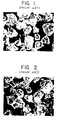
- Figure 1 and 2 are photographs of the two different sizes of the beads recovered from this reaction.
- Figure 1 illustrates beads measuring between 20 to 40 mesh size (0.841 to 0.420 mm) and
- Figure 2 illustrates beads measuring under 20 mesh (0.841 mm).
- the beads are non-spherical.
- This example illustrates making a cyclodextrin polymer bead in accordance with the present invention.
- a slurry is prepared by mixing 49 g of beta cyclodextrin, 54.5 g of water and then adding 87.3 g of a 30% NaOH solution. The stirring is continued until the solution is murky but transparent.
- the cyclodextrin slurry is added to the reaction vessel containing the MIBK and polyvinyl butyral. After 5 minutes of stirring, 136 g of epichlorohydrin is added and stirring continued at 300 rpm. During the reaction the temperature is maintained to 80°C.
- the particles After 4 hours the particles are recovered and washed and observed under a microscope. They had a particle size ranging between 30 » to 170 » in diameter.
- Figure 3 illustrates cyclodextrin polymer beads made by this example having a mesh size between 20 to 40 (0.841 to 0.420 mm).
- Figure 4 illustrates cyclodextrin polymer beads made by this example having a mesh size between 40 to 60 (0.420 to 0.250 mm).
- Example 1 The procedure in Example 1 was repeated except the proportion of the components were as follows: Components Amount (grams) MIBK 1,540 (2L) Polyvinyl butyral 5 Beta cyclodextrin 100 Water 110 30% NaOH 175 Epichlorohydrin 272
- cyclodextrin polymer beads were spherical and ranged in size from 50 » to 250 » in diameter.
- Example 1 The procedure in Example 1 was repeated except the reaction was allowed to run 6 hours instead of 4 and the proportion of the components was as follows: Component Amount (grams) MIBK 1,540 (2L) Polyvinyl butyral 5 Beta cyclodextrin 100 Water 110 30% NaOH 175 Epichlorohydrin 272 The beads produced by this example were harder and more durable than the beads produced by the shorter reaction of 4 hours.
- Example 1 The procedure in Example 1 was employed except the paddle was run at 250 rpm, the reaction time was 5 hours and a lower ratio of polyvinyl butyral to MIBK was employed.
- the components for this reaction were as follows: Components Amount (grams) MIBK 1,540 (2L) Polyvinyl butyral 4 Beta cyclodextrin 100 Water 110 30% NaOH 175 Epichlorohydrin 272
- the beads produced were spherical and measured about 10 » to 250 » in diameter.
- Example 2 used the procedure of Example 1 with a lower ratio of polyvinyl butyral to MIBK, a reaction time of 5 hours instead of 4 hours and a paddle speed of 250 rpm.
- the components were as follows: Components Amount (grams) MIBK 1,540 (2L) Polyvinyl butyral 3 Beta cyclodextrin 100 Water 110 30% NaOH 175 Epichlorohydrin 272
- Figure 5 illustrates the beads made by the example that had a mesh size between 20 and 40.
- Figure 6 illustrates beads made by this example having a mesh size between 40 and 60 (0.420 to 0.250 mm) and
- Figure 7 illustrates beads made by this example with beads having a mesh size between 100 to 200 (0.149 to 0.074 mm).
- the beads of the present invention are very spherical.
- Example 1 The procedure employed in Example 1 was employed except for the change noted above. In using this larger scale reaction vessel and increased amount of components, the epichlorohydrin should be added slowly since the reaction appears to be exothermic.
- This example illustrates the present invention in a large scale production process using a reaction vessel measuring 72 liters. This is an increase (scale up) of about 35 times.
- the procedure employed was that of Example 1 except the epichlorohydrin was added in equal proportions over time.
- the amounts of components used in this example were as follows: Components Amount (grams) MIBK 26,200 (32.75L) Polyvinyl butyral 30 Beta cyclodextrin 3,400 Water 6,100 50% NaOH 3,600 Epichorohydrin 7,000
- the reaction vessel was maintained at 75°C.
- the epichlorohydrin was added in 1,000g increments over a half hour period.
- the reaction was allowed to run over 22 hours.
- the beads were filtered off and washed with acetone and water.
- the beads were spherical and had a particle size of about 100 » to 500 réelle
Landscapes
- Chemical & Material Sciences (AREA)
- Organic Chemistry (AREA)
- Chemical Kinetics & Catalysis (AREA)
- Health & Medical Sciences (AREA)
- Polymers & Plastics (AREA)
- Medicinal Chemistry (AREA)
- Life Sciences & Earth Sciences (AREA)
- Molecular Biology (AREA)
- Dispersion Chemistry (AREA)
- General Health & Medical Sciences (AREA)
- Analytical Chemistry (AREA)
- Engineering & Computer Science (AREA)
- Biochemistry (AREA)
- Materials Engineering (AREA)
- Polysaccharides And Polysaccharide Derivatives (AREA)
- Addition Polymer Or Copolymer, Post-Treatments, Or Chemical Modifications (AREA)
- Compositions Of Macromolecular Compounds (AREA)
- Emulsifying, Dispersing, Foam-Producing Or Wetting Agents (AREA)
- Solid-Sorbent Or Filter-Aiding Compositions (AREA)
- Processes Of Treating Macromolecular Substances (AREA)
- Manufacturing Of Micro-Capsules (AREA)
Claims (11)
- Procédé de fabrication de billes de polymère sphérique à base de cyclodextrine comprenant les étapes consistant à:(a) former une émulsion de gouttelettes de solvant polaire et de cyclodextrine entourées au moins en partie par un agent émulsionnant, le poly(butyral de vinyle), dans un solvant non-polaire;(b) ajouter un agent de réticulation audit solvant non-polaire et faire réagir ledit agent de réticulation avec ladite cyclodextrine pour former un polymère sphérique à base de cyclodextrine; et(c) récupérer ledit polymère sphérique à base de cyclodextrine.
- Procédé selon la revendication 1, dans lequel ledit solvant non-polaire est la méthylisobutylcétone, ledit solvant polaire est une solution aqueuse d'hydroxyde de sodium et ledit agent de réticulation est l'épichlorhydrine.
- Procédé selon la revendication 1, dans lequel ledit solvant polaire est une solution aqueuse d'hydroxyde de métal alcalin.
- Procédé selon la revendication 1, dans lequel la formation de l'émulsion comprend les étapes consistant à:(a₁) mélanger tout d'abord ladite cyclodextrine avec ledit solvant polaire;(a₂) mélanger ensuite ledit solvant non-polaire avec ledit mélange de cyclodextrine et de solvant polaire; et(a₃) mélanger enfin ledit agent émulsionnant, le poly(butyral de vinyle), avec ledit mélange de cyclodextrine, de solvant polaire et de solvant non-polaire pour former ladite émulsion.
- Procédé selon la revendication 1, dans lequel la formation de l'émulsion comprend les étapes consistant à:(a₁) mélanger ladite cyclodextrine avec ledit solvant polaire;(a₂) mélanger ledit agent émulsionnant, le poly(butyral de vinyle), avec ledit solvant non-polaire(a₂) mélanger ladite cyclodextrine et ledit solvant polaire avec ledit agent émulsionnant, le poly(butyral de vinyle), et ledit solvant non-polaire pour former ladite émulsion.
- Procédé selon la revendication 1, dans lequel on effectue l'étape consistant a faire réagir ledit agent de réticulation avec la cyclodextrine à une température d'environ 50 à environ 90°C tout en agitant constamment.
- Procédé selon la revendication 1, dans lequel ledit solvant non-polaire est choisi parmi la méthylisobutylcétone, l'o-xylène et le toluène.
- Procédé selon la revendication 1, dans lequel ledit solvant polaire est de l'eau à laquelle on a ajouté une base comme catalyseur, ladite base étant choisie parmi l'hydroxyde de sodium, le bicarbonate de sodium et l'hydroxyde de lithium.
- Procédé selon la revendication 1, dans lequel ledit agent de réticulation est choisi parmi l'épichlorhydrine, le formaldéhyde, le diépoxybutane et l'oxychlorure de phosphore.
- Procédé selon la revendication 1, dans lequel ledit poly(butyral de vinyle) a une masse moléculaire d'environ 100 000 à environ 150 000, et une teneur en groupes hydroxy d'environ 19%.
- Procédé selon la revendication 1, dans lequel la cyclodextrine est la bêta-cyclodextrine.
Applications Claiming Priority (3)
| Application Number | Priority Date | Filing Date | Title |
|---|---|---|---|
| US392296 | 1989-08-11 | ||
| US07/392,296 US5075432A (en) | 1989-08-11 | 1989-08-11 | Spherical cyclodextrin polymer beads |
| PCT/US1990/004426 WO1991001721A1 (fr) | 1989-08-11 | 1990-08-07 | Perles polymeres en cyclodextrine |
Publications (3)
| Publication Number | Publication Date |
|---|---|
| EP0485460A1 EP0485460A1 (fr) | 1992-05-20 |
| EP0485460A4 EP0485460A4 (en) | 1992-11-25 |
| EP0485460B1 true EP0485460B1 (fr) | 1995-12-27 |
Family
ID=23550044
Family Applications (1)
| Application Number | Title | Priority Date | Filing Date |
|---|---|---|---|
| EP90911881A Expired - Lifetime EP0485460B1 (fr) | 1989-08-11 | 1990-08-07 | Perles polymeres en cyclodextrine |
Country Status (10)
| Country | Link |
|---|---|
| US (1) | US5075432A (fr) |
| EP (1) | EP0485460B1 (fr) |
| JP (1) | JPH0660203B2 (fr) |
| AT (1) | ATE132167T1 (fr) |
| AU (1) | AU627057B2 (fr) |
| CA (1) | CA2057858C (fr) |
| DE (2) | DE69024495D1 (fr) |
| HU (1) | HU217558B (fr) |
| NZ (1) | NZ234750A (fr) |
| WO (1) | WO1991001721A1 (fr) |
Families Citing this family (19)
| Publication number | Priority date | Publication date | Assignee | Title |
|---|---|---|---|---|
| US5183809A (en) * | 1990-02-15 | 1993-02-02 | The Trustees Of The University Of Pennsylvania/Childrens Hospital Corporation | Cyclodextrin polymers and cyclodextrins immobilized on a solid surface |
| US5658894A (en) * | 1989-04-23 | 1997-08-19 | The Trustees Of The University Of Pennsylvania | Compositions for inhibiting restenosis |
| DE4009840A1 (de) * | 1990-03-27 | 1991-10-02 | Consortium Elektrochem Ind | Cyclodextrin-polymerisate und verfahren zu deren herstellung |
| US6214331B1 (en) | 1995-06-06 | 2001-04-10 | C. R. Bard, Inc. | Process for the preparation of aqueous dispersions of particles of water-soluble polymers and the particles obtained |
| EP0830416B1 (fr) * | 1995-06-06 | 2005-08-31 | C.R. Bard, Inc. | Procede de preparation de particules reticulees de polymeres hydrosolubles, les particules obtenues et leur utilisation |
| EP1155043A1 (fr) * | 1999-12-23 | 2001-11-21 | Cerestar Holding B.V. | Complexes de cyclodextrine stabilises |
| US7435426B2 (en) * | 2001-03-22 | 2008-10-14 | Church & Dwight Co., Inc. | Micron sized bicarbonate particles and slurrys containing the same |
| WO2005078016A1 (fr) * | 2004-02-05 | 2005-08-25 | Millipore Corporation | Solutions d'agarose stables a la temperature ambiante |
| SG150501A1 (en) * | 2004-02-05 | 2009-03-30 | Millipore Corp | Porous adsorptive or chromatographic media |
| US7479223B2 (en) * | 2004-02-05 | 2009-01-20 | Millipore Corporation | Porous adsorptive or chromatographic media |
| US7807823B2 (en) * | 2004-02-05 | 2010-10-05 | Millipore Corporation | Method of forming polysaccharide structures |
| US7959979B2 (en) | 2004-02-05 | 2011-06-14 | Millipore Corporation | Method of forming coated structures |
| CN1873408B (zh) * | 2005-05-30 | 2011-02-23 | 天津市燕化新材料有限公司 | 聚乙烯醇缩丁醛中2-乙基己烯醛的提取和含量测定方法 |
| KR100785913B1 (ko) * | 2006-11-29 | 2007-12-17 | 한국과학기술연구원 | 경화된 β-사이클로덱스트린 중합체 분말과 그의 제조방법 |
| US9433922B2 (en) | 2007-08-14 | 2016-09-06 | Emd Millipore Corporation | Media for membrane ion exchange chromatography based on polymeric primary amines, sorption device containing that media, and chromatography scheme and purification method using the same |
| US20090130738A1 (en) * | 2007-11-19 | 2009-05-21 | Mikhail Kozlov | Media for membrane ion exchange chromatography |
| CN102495016B (zh) * | 2011-12-12 | 2013-03-27 | 厦门大学 | 一种检测土壤中多氯联苯污染物的方法 |
| GB201509677D0 (en) | 2015-06-04 | 2015-07-22 | Ge Healthcare Bio Sciences Ab | Manufacturing process for polysaccharide beads |
| CN112516112B (zh) * | 2020-12-24 | 2022-02-18 | 同济大学 | 一种多功能环糊精聚合微球的快速水相合成方法 |
Family Cites Families (13)
| Publication number | Priority date | Publication date | Assignee | Title |
|---|---|---|---|---|
| CH445129A (fr) * | 1964-04-29 | 1967-10-15 | Nestle Sa | Procédé pour la préparation de composés d'inclusion à poids moléculaire élevé |
| US3455838A (en) * | 1966-04-22 | 1969-07-15 | Nat Starch Chem Corp | Method of encapsulating water-insoluble substances and product thereof |
| CH488754A (de) * | 1966-05-13 | 1970-04-15 | Inst Tworzyw Sztucznych | Verfahren zur Copolymerisation von Trioxan mit cyclischen Acetalen oder cyclischen Aethern |
| GB1244990A (en) * | 1968-12-03 | 1971-09-02 | Avebe Coop Verkoop Prod | Cyclodextrin derivatives |
| US4115534A (en) * | 1976-08-19 | 1978-09-19 | Minnesota Mining And Manufacturing Company | In vitro diagnostic test |
| HU177419B (en) * | 1978-07-13 | 1981-10-28 | Chinoin Gyogyszer Es Vegyeszet | Process for preparing threedimensional,retentive polymers consisting of cyclodextrin and polyvinylalcohol units,capable of forming inclusion complexes in the form of bead,fibre or mainly block |
| JPS57130914A (en) * | 1981-02-04 | 1982-08-13 | Agency Of Ind Science & Technol | Prolongation of activity retention |
| JPS6011961B2 (ja) * | 1982-03-31 | 1985-03-29 | 工業技術院長 | ポリシクロデキストリンビ−ズの製法 |
| US4565764A (en) * | 1982-09-10 | 1986-01-21 | Canon Kabushiki Kaisha | Microcapsule toner and process of making same |
| HU192642B (en) * | 1984-12-19 | 1987-06-29 | Forte Fotokemiai Ipar | Process for the extraction of nucleinic acids and purine bases from gelatine |
| US4726905A (en) * | 1986-04-30 | 1988-02-23 | American Maize-Products Company | Method for removing polychlorinated biphenyl compounds from water |
| JPS6327502A (ja) * | 1986-07-22 | 1988-02-05 | Agency Of Ind Science & Technol | シクロデキストリン−シリカ複合体及びその製造方法 |
| US4774329A (en) * | 1987-08-04 | 1988-09-27 | American Maize-Products Company | Controlled release agent for cetylpyridinium chloride |
-
1989
- 1989-08-11 US US07/392,296 patent/US5075432A/en not_active Expired - Fee Related
-
1990
- 1990-08-01 NZ NZ234750A patent/NZ234750A/en unknown
- 1990-08-07 JP JP2511351A patent/JPH0660203B2/ja not_active Expired - Lifetime
- 1990-08-07 CA CA002057858A patent/CA2057858C/fr not_active Expired - Fee Related
- 1990-08-07 WO PCT/US1990/004426 patent/WO1991001721A1/fr not_active Ceased
- 1990-08-07 DE DE69024495A patent/DE69024495D1/de not_active Expired - Fee Related
- 1990-08-07 AU AU61529/90A patent/AU627057B2/en not_active Ceased
- 1990-08-07 EP EP90911881A patent/EP0485460B1/fr not_active Expired - Lifetime
- 1990-08-07 DE DE69024495T patent/DE69024495T4/de not_active Expired - Lifetime
- 1990-08-07 AT AT90911881T patent/ATE132167T1/de not_active IP Right Cessation
- 1990-08-07 HU HU9200337A patent/HU217558B/hu not_active IP Right Cessation
Non-Patent Citations (1)
| Title |
|---|
| Hawley's Condensed Chemical Dictionary, Eleventh Ed. 1987, page 930. * |
Also Published As
| Publication number | Publication date |
|---|---|
| US5075432A (en) | 1991-12-24 |
| EP0485460A4 (en) | 1992-11-25 |
| WO1991001721A1 (fr) | 1991-02-21 |
| HU217558B (hu) | 2000-02-28 |
| CA2057858C (fr) | 1995-10-03 |
| EP0485460A1 (fr) | 1992-05-20 |
| JPH04505030A (ja) | 1992-09-03 |
| DE69024495T4 (de) | 1996-10-31 |
| AU6152990A (en) | 1991-03-11 |
| AU627057B2 (en) | 1992-08-13 |
| HUT61190A (en) | 1992-12-28 |
| DE69024495D1 (de) | 1996-02-08 |
| HU9200337D0 (en) | 1992-05-28 |
| JPH0660203B2 (ja) | 1994-08-10 |
| ATE132167T1 (de) | 1996-01-15 |
| NZ234750A (en) | 1992-03-26 |
| DE69024495T2 (de) | 1996-05-15 |
| CA2057858A1 (fr) | 1991-02-12 |
Similar Documents
| Publication | Publication Date | Title |
|---|---|---|
| EP0485460B1 (fr) | Perles polymeres en cyclodextrine | |
| EP0256293B1 (fr) | Procédé de préparation des particules poreuses d'alcool de polyvinyle réticulé | |
| EP0047064B1 (fr) | Procédé pour la préparation de particules poreuses sphériques à base de cellulose | |
| EP0025639A1 (fr) | Procédé pour la préparation de particules poreuses sphériques à base de cellulose | |
| US4574150A (en) | Dry free-flowing water-soluble complexes of chitosan | |
| JP2001179088A (ja) | 多孔性シリカ微小球および該微小球を用いる方法 | |
| EP0023789B1 (fr) | Procédé pour préparer un dérivé poreux de la chitine acylée et utilisation de ce dérivé | |
| EP0026618B1 (fr) | Procédé de préparation d'un produit d'acylation d'un mélange de dérivés de la chitine | |
| EP0385065B1 (fr) | Méthode de préparation de billes à base de polyphénylène éther-polystyrène et billes ainsi formées | |
| US12466930B2 (en) | Porous cellulose particles and method for producing same | |
| CS199660B2 (en) | Process for preparing partly hydrolyzed polyvinyl acetate | |
| JPS6128373B2 (fr) | ||
| JPH08283457A (ja) | 球状セルロース及びその製造法 | |
| US4174440A (en) | Ionic pullulan gels and production thereof | |
| EP0391589A2 (fr) | Méthode pour rendre hydrophiles les copolymères hydrophobes | |
| US6590096B1 (en) | Process for the production of polysaccharide beads | |
| US3294741A (en) | Method of making polycarbonate particles | |
| JPS6312490B2 (fr) | ||
| JPS62277401A (ja) | セルロ−ス微小球体の製法 | |
| US3731816A (en) | Substituted cellulose in grain form and a method of producing the same | |
| JPS6312099B2 (fr) | ||
| JPH03152108A (ja) | 微粒子状スチレン―ジビニルベンゼン共重合体の合成法および液体クロマトグラフィー用充填剤の製造法 | |
| JP2528502B2 (ja) | クロマトグラフィ―用充填剤の製造方法 | |
| CA1091698A (fr) | Procede d'alcoolyse menant a l'obtention de glycol de poly (ether de tetramethylene) | |
| Yokota | Alkalization mechanism of cellulose in hydroxypropylcellulose preparation process |
Legal Events
| Date | Code | Title | Description |
|---|---|---|---|
| PUAI | Public reference made under article 153(3) epc to a published international application that has entered the european phase |
Free format text: ORIGINAL CODE: 0009012 |
|
| 17P | Request for examination filed |
Effective date: 19920122 |
|
| AK | Designated contracting states |
Kind code of ref document: A1 Designated state(s): AT BE CH DE DK ES FR GB IT LI NL SE |
|
| A4 | Supplementary search report drawn up and despatched |
Effective date: 19921008 |
|
| AK | Designated contracting states |
Kind code of ref document: A4 Designated state(s): AT BE CH DE DK ES FR GB IT LI NL SE |
|
| 17Q | First examination report despatched |
Effective date: 19930914 |
|
| GRAA | (expected) grant |
Free format text: ORIGINAL CODE: 0009210 |
|
| AK | Designated contracting states |
Kind code of ref document: B1 Designated state(s): AT BE CH DE DK ES FR GB IT LI NL SE |
|
| PG25 | Lapsed in a contracting state [announced via postgrant information from national office to epo] |
Ref country code: IT Free format text: LAPSE BECAUSE OF FAILURE TO SUBMIT A TRANSLATION OF THE DESCRIPTION OR TO PAY THE FEE WITHIN THE PRE;WARNING: LAPSES OF ITALIAN PATENTS WITH EFFECTIVE DATE BEFORE 2007 MAY HAVE OCCURRED AT ANY TIME BEFORE 2007. THE CORRECT EFFECTIVE DATE MAY BE DIFFERENT FROM THE ONE RECORDED.SCRIBED TIME-LIMIT Effective date: 19951227 Ref country code: LI Effective date: 19951227 Ref country code: AT Effective date: 19951227 Ref country code: BE Effective date: 19951227 Ref country code: ES Free format text: THE PATENT HAS BEEN ANNULLED BY A DECISION OF A NATIONAL AUTHORITY Effective date: 19951227 Ref country code: CH Effective date: 19951227 Ref country code: DK Effective date: 19951227 |
|
| REF | Corresponds to: |
Ref document number: 132167 Country of ref document: AT Date of ref document: 19960115 Kind code of ref document: T |
|
| REF | Corresponds to: |
Ref document number: 69024495 Country of ref document: DE Date of ref document: 19960208 |
|
| PG25 | Lapsed in a contracting state [announced via postgrant information from national office to epo] |
Ref country code: SE Effective date: 19960327 |
|
| ET | Fr: translation filed | ||
| PG25 | Lapsed in a contracting state [announced via postgrant information from national office to epo] |
Ref country code: GB Effective date: 19960807 |
|
| PLBE | No opposition filed within time limit |
Free format text: ORIGINAL CODE: 0009261 |
|
| STAA | Information on the status of an ep patent application or granted ep patent |
Free format text: STATUS: NO OPPOSITION FILED WITHIN TIME LIMIT |
|
| 26N | No opposition filed | ||
| GBPC | Gb: european patent ceased through non-payment of renewal fee |
Effective date: 19960807 |
|
| PGFP | Annual fee paid to national office [announced via postgrant information from national office to epo] |
Ref country code: FR Payment date: 20010822 Year of fee payment: 12 |
|
| PGFP | Annual fee paid to national office [announced via postgrant information from national office to epo] |
Ref country code: DE Payment date: 20010830 Year of fee payment: 12 |
|
| PGFP | Annual fee paid to national office [announced via postgrant information from national office to epo] |
Ref country code: NL Payment date: 20010831 Year of fee payment: 12 |
|
| PG25 | Lapsed in a contracting state [announced via postgrant information from national office to epo] |
Ref country code: NL Free format text: LAPSE BECAUSE OF NON-PAYMENT OF DUE FEES Effective date: 20030301 Ref country code: DE Free format text: LAPSE BECAUSE OF NON-PAYMENT OF DUE FEES Effective date: 20030301 |
|
| PG25 | Lapsed in a contracting state [announced via postgrant information from national office to epo] |
Ref country code: FR Free format text: LAPSE BECAUSE OF NON-PAYMENT OF DUE FEES Effective date: 20030430 |
|
| NLV4 | Nl: lapsed or anulled due to non-payment of the annual fee |
Effective date: 20030301 |
|
| REG | Reference to a national code |
Ref country code: FR Ref legal event code: ST |