EP0534596A2 - Nouveau composés d'hydrazine, procédé pour leur préparation et matérial organique optiquement non-linéaire - Google Patents
Nouveau composés d'hydrazine, procédé pour leur préparation et matérial organique optiquement non-linéaire Download PDFInfo
- Publication number
- EP0534596A2 EP0534596A2 EP92307026A EP92307026A EP0534596A2 EP 0534596 A2 EP0534596 A2 EP 0534596A2 EP 92307026 A EP92307026 A EP 92307026A EP 92307026 A EP92307026 A EP 92307026A EP 0534596 A2 EP0534596 A2 EP 0534596A2
- Authority
- EP
- European Patent Office
- Prior art keywords
- group
- hydrazine compound
- nonlinear optical
- formula
- organic material
- Prior art date
- Legal status (The legal status is an assumption and is not a legal conclusion. Google has not performed a legal analysis and makes no representation as to the accuracy of the status listed.)
- Granted
Links
- 0 [O-][N+](c(cc1)ccc1NN*c1ccccc1)=O Chemical compound [O-][N+](c(cc1)ccc1NN*c1ccccc1)=O 0.000 description 1
Images




Classifications
-
- C—CHEMISTRY; METALLURGY
- C07—ORGANIC CHEMISTRY
- C07D—HETEROCYCLIC COMPOUNDS
- C07D213/00—Heterocyclic compounds containing six-membered rings, not condensed with other rings, with one nitrogen atom as the only ring hetero atom and three or more double bonds between ring members or between ring members and non-ring members
- C07D213/02—Heterocyclic compounds containing six-membered rings, not condensed with other rings, with one nitrogen atom as the only ring hetero atom and three or more double bonds between ring members or between ring members and non-ring members having three double bonds between ring members or between ring members and non-ring members
- C07D213/04—Heterocyclic compounds containing six-membered rings, not condensed with other rings, with one nitrogen atom as the only ring hetero atom and three or more double bonds between ring members or between ring members and non-ring members having three double bonds between ring members or between ring members and non-ring members having no bond between the ring nitrogen atom and a non-ring member or having only hydrogen or carbon atoms directly attached to the ring nitrogen atom
- C07D213/60—Heterocyclic compounds containing six-membered rings, not condensed with other rings, with one nitrogen atom as the only ring hetero atom and three or more double bonds between ring members or between ring members and non-ring members having three double bonds between ring members or between ring members and non-ring members having no bond between the ring nitrogen atom and a non-ring member or having only hydrogen or carbon atoms directly attached to the ring nitrogen atom with hetero atoms or with carbon atoms having three bonds to hetero atoms with at the most one bond to halogen, e.g. ester or nitrile radicals, directly attached to ring carbon atoms
- C07D213/72—Nitrogen atoms
- C07D213/76—Nitrogen atoms to which a second hetero atom is attached
- C07D213/77—Hydrazine radicals
-
- C—CHEMISTRY; METALLURGY
- C07—ORGANIC CHEMISTRY
- C07C—ACYCLIC OR CARBOCYCLIC COMPOUNDS
- C07C243/00—Compounds containing chains of nitrogen atoms singly-bound to each other, e.g. hydrazines, triazanes
- C07C243/24—Hydrazines having nitrogen atoms of hydrazine groups acylated by carboxylic acids
-
- C—CHEMISTRY; METALLURGY
- C07—ORGANIC CHEMISTRY
- C07C—ACYCLIC OR CARBOCYCLIC COMPOUNDS
- C07C243/00—Compounds containing chains of nitrogen atoms singly-bound to each other, e.g. hydrazines, triazanes
- C07C243/24—Hydrazines having nitrogen atoms of hydrazine groups acylated by carboxylic acids
- C07C243/26—Hydrazines having nitrogen atoms of hydrazine groups acylated by carboxylic acids with acylating carboxyl groups bound to hydrogen atoms or to acyclic carbon atoms
- C07C243/28—Hydrazines having nitrogen atoms of hydrazine groups acylated by carboxylic acids with acylating carboxyl groups bound to hydrogen atoms or to acyclic carbon atoms to hydrogen atoms or to carbon atoms of a saturated carbon skeleton
-
- C—CHEMISTRY; METALLURGY
- C07—ORGANIC CHEMISTRY
- C07C—ACYCLIC OR CARBOCYCLIC COMPOUNDS
- C07C243/00—Compounds containing chains of nitrogen atoms singly-bound to each other, e.g. hydrazines, triazanes
- C07C243/24—Hydrazines having nitrogen atoms of hydrazine groups acylated by carboxylic acids
- C07C243/26—Hydrazines having nitrogen atoms of hydrazine groups acylated by carboxylic acids with acylating carboxyl groups bound to hydrogen atoms or to acyclic carbon atoms
- C07C243/30—Hydrazines having nitrogen atoms of hydrazine groups acylated by carboxylic acids with acylating carboxyl groups bound to hydrogen atoms or to acyclic carbon atoms to carbon atoms of an unsaturated carbon skeleton
-
- C—CHEMISTRY; METALLURGY
- C07—ORGANIC CHEMISTRY
- C07C—ACYCLIC OR CARBOCYCLIC COMPOUNDS
- C07C281/00—Derivatives of carbonic acid containing functional groups covered by groups C07C269/00 - C07C279/00 in which at least one nitrogen atom of these functional groups is further bound to another nitrogen atom not being part of a nitro or nitroso group
- C07C281/02—Compounds containing any of the groups, e.g. carbazates
-
- C—CHEMISTRY; METALLURGY
- C07—ORGANIC CHEMISTRY
- C07C—ACYCLIC OR CARBOCYCLIC COMPOUNDS
- C07C323/00—Thiols, sulfides, hydropolysulfides or polysulfides substituted by halogen, oxygen or nitrogen atoms, or by sulfur atoms not being part of thio groups
- C07C323/50—Thiols, sulfides, hydropolysulfides or polysulfides substituted by halogen, oxygen or nitrogen atoms, or by sulfur atoms not being part of thio groups containing thio groups and carboxyl groups bound to the same carbon skeleton
- C07C323/51—Thiols, sulfides, hydropolysulfides or polysulfides substituted by halogen, oxygen or nitrogen atoms, or by sulfur atoms not being part of thio groups containing thio groups and carboxyl groups bound to the same carbon skeleton having the sulfur atoms of the thio groups bound to acyclic carbon atoms of the carbon skeleton
- C07C323/60—Thiols, sulfides, hydropolysulfides or polysulfides substituted by halogen, oxygen or nitrogen atoms, or by sulfur atoms not being part of thio groups containing thio groups and carboxyl groups bound to the same carbon skeleton having the sulfur atoms of the thio groups bound to acyclic carbon atoms of the carbon skeleton with the carbon atom of at least one of the carboxyl groups bound to nitrogen atoms
-
- C—CHEMISTRY; METALLURGY
- C07—ORGANIC CHEMISTRY
- C07D—HETEROCYCLIC COMPOUNDS
- C07D239/00—Heterocyclic compounds containing 1,3-diazine or hydrogenated 1,3-diazine rings
- C07D239/02—Heterocyclic compounds containing 1,3-diazine or hydrogenated 1,3-diazine rings not condensed with other rings
- C07D239/24—Heterocyclic compounds containing 1,3-diazine or hydrogenated 1,3-diazine rings not condensed with other rings having three or more double bonds between ring members or between ring members and non-ring members
- C07D239/28—Heterocyclic compounds containing 1,3-diazine or hydrogenated 1,3-diazine rings not condensed with other rings having three or more double bonds between ring members or between ring members and non-ring members with hetero atoms or with carbon atoms having three bonds to hetero atoms with at the most one bond to halogen, directly attached to ring carbon atoms
- C07D239/32—One oxygen, sulfur or nitrogen atom
- C07D239/42—One nitrogen atom
-
- G—PHYSICS
- G02—OPTICS
- G02F—OPTICAL DEVICES OR ARRANGEMENTS FOR THE CONTROL OF LIGHT BY MODIFICATION OF THE OPTICAL PROPERTIES OF THE MEDIA OF THE ELEMENTS INVOLVED THEREIN; NON-LINEAR OPTICS; FREQUENCY-CHANGING OF LIGHT; OPTICAL LOGIC ELEMENTS; OPTICAL ANALOGUE/DIGITAL CONVERTERS
- G02F1/00—Devices or arrangements for the control of the intensity, colour, phase, polarisation or direction of light arriving from an independent light source, e.g. switching, gating or modulating; Non-linear optics
- G02F1/35—Non-linear optics
- G02F1/355—Non-linear optics characterised by the materials used
- G02F1/361—Organic materials
- G02F1/3611—Organic materials containing Nitrogen
-
- C—CHEMISTRY; METALLURGY
- C09—DYES; PAINTS; POLISHES; NATURAL RESINS; ADHESIVES; COMPOSITIONS NOT OTHERWISE PROVIDED FOR; APPLICATIONS OF MATERIALS NOT OTHERWISE PROVIDED FOR
- C09K—MATERIALS FOR MISCELLANEOUS APPLICATIONS, NOT PROVIDED FOR ELSEWHERE
- C09K2323/00—Functional layers of liquid crystal optical display excluding electroactive liquid crystal layer characterised by chemical composition
- C09K2323/03—Viewing layer characterised by chemical composition
- C09K2323/031—Polarizer or dye
-
- Y—GENERAL TAGGING OF NEW TECHNOLOGICAL DEVELOPMENTS; GENERAL TAGGING OF CROSS-SECTIONAL TECHNOLOGIES SPANNING OVER SEVERAL SECTIONS OF THE IPC; TECHNICAL SUBJECTS COVERED BY FORMER USPC CROSS-REFERENCE ART COLLECTIONS [XRACs] AND DIGESTS
- Y10—TECHNICAL SUBJECTS COVERED BY FORMER USPC
- Y10S—TECHNICAL SUBJECTS COVERED BY FORMER USPC CROSS-REFERENCE ART COLLECTIONS [XRACs] AND DIGESTS
- Y10S428/00—Stock material or miscellaneous articles
- Y10S428/913—Material designed to be responsive to temperature, light, moisture
-
- Y—GENERAL TAGGING OF NEW TECHNOLOGICAL DEVELOPMENTS; GENERAL TAGGING OF CROSS-SECTIONAL TECHNOLOGIES SPANNING OVER SEVERAL SECTIONS OF THE IPC; TECHNICAL SUBJECTS COVERED BY FORMER USPC CROSS-REFERENCE ART COLLECTIONS [XRACs] AND DIGESTS
- Y10—TECHNICAL SUBJECTS COVERED BY FORMER USPC
- Y10T—TECHNICAL SUBJECTS COVERED BY FORMER US CLASSIFICATION
- Y10T428/00—Stock material or miscellaneous articles
- Y10T428/26—Web or sheet containing structurally defined element or component, the element or component having a specified physical dimension
- Y10T428/261—In terms of molecular thickness or light wave length
-
- Y—GENERAL TAGGING OF NEW TECHNOLOGICAL DEVELOPMENTS; GENERAL TAGGING OF CROSS-SECTIONAL TECHNOLOGIES SPANNING OVER SEVERAL SECTIONS OF THE IPC; TECHNICAL SUBJECTS COVERED BY FORMER USPC CROSS-REFERENCE ART COLLECTIONS [XRACs] AND DIGESTS
- Y10—TECHNICAL SUBJECTS COVERED BY FORMER USPC
- Y10T—TECHNICAL SUBJECTS COVERED BY FORMER US CLASSIFICATION
- Y10T428/00—Stock material or miscellaneous articles
- Y10T428/31504—Composite [nonstructural laminate]
Definitions
- the present invention relates to a novel hydrazine compound, a process for preparing the novel hydrazine compound, a nonlinear optical organic material used in the field of optical information communication or optical information processing, and a nonlinear optical element comprising the nonlinear optical organic material, such as an optical wavelength conversion element or an electrooptical element.
- nonlinear optical organic materials In the fields of optical information communication, optical information processing, etc., nonlinear optical organic materials have been recently paid attention.
- the nonlinear laser materials mean materials showing such nonlinear optical effects that they convert a light of a laser into a light having different wavelength and they are varied in the refractive index under application of electric voltage.
- second-order nonlinear optical organic materials having such effect that they convert a light of a laser into a light having a wavelength of 1/2 of the laser wavelength (second harmonic generation) have been paid much attention as materials far superior to inorganic materials since the nonlinear optical organic materials were reported (ACS Symposium Series 233, 1983).
- KTiOPO4 i.e., KTP
- KTP is known as the typical inorganic material, but development of a nonlinear optical organic material having higher nonlinear optical properties than KTP is expected.
- the second-order nonlinear optical organic materials include those containing an aromatic ring, a donative substituent group and an accepting substituent group and having such a structure that ⁇ electrons of the aromatic ring are polarized by the donative substituent group and the accepting substituent group in the molecule.
- the materials of this type is assumed to be extremely enhanced in the nonlinear optical response because nonlinear optical properties are produced on the ⁇ electron sites.
- para-nitroaniline which is expected to have high nonlinear optical response takes such a structure that the adjacent two molecules are inverted to each other when it is processed to be in the form of single crystal, this single crystal being essential for the nonlinear optical elements such as an optical wavelength conversion element and an electrooptical element in the practical use, resulting in losing of the nonlinear optical properties. That is, the nonlinear optical organic materials tend to lose the nonlinear optical properties when the adjacent molecules become to be centrally symmetric. For this reason, organic compounds have been synthesized in which a substituent group for getting rid of the symmetry of the adjacent molecules or a substituent group for imparting optical activity is introduced. For example, 2-methyl-4-nitroaniline synthesized as above has been confirmed to show high nonlinear optical properties.
- the nonlinear optical organic materials tend to have higher nonlinear optical properties as the intramolecular polarizabilities thereof become higher, but when the intramolecular polarizabilities become too high, transference of electric charge occurs, and thereby the materials lose transparency. Further, the wavelength of the second harmonic generation and the maximum absorption wavelength ⁇ max of the nonlinear optical organic material are coincident with each other, so that the second harmonic generation cannot be efficiently taken out.
- nonlinear optical organic materials For obtaining nonlinear optical organic materials, there have been proposed compounds in which a nitro group having high acceptability and an amino group having high donative properties are incorporated at the both ends of a linear molecule such as stilbene.
- these compounds have such problems that the adjacent molecules are apt to be centrally symmetric and the transparency is not so high.
- any nonlinear optical organic material in a form of single crystal having suitable size for using as the nonlinear optical element cannot been obtained by the conventional processes. That is, almost all of the conventional nonlinear optical organic materials are extremely small sized needle crystals or single crystals having less than 1 mm3, and a nonlinear optical organic material of single crystal having 1 mm3, especially more than 5 mm3, has been hardly obtained conventionally.
- the present invention is made in the light of such circumstances as mentioned above, and the object of the invention is to provide a novel hydrazine compound employable for the above-mentioned nonlinear optical materials, a process for preparing the novel hydrazine compound, and a novel nonlinear optical organic material in which the adjacent molecules are hardly made centrally symmetric and which shows high transparency and excellent nonlinear optical properties, particularly a nonlinear optical organic material of single crystal having more than 1 mm3 when the material is a single crystal. Further, the object of the invention is to provide a nonlinear optical element comprising the novel nonlinear optical organic material, such as a wavelength conversion element or an electrooptical element, and an optical modulation device provided with the nonlinear optical element.
- the novel hydrazine compound of the present invention is a hydrazine compound represented by the following formula (I): wherein A is an accepting substituent group; ⁇ 1 is an aromatic ring or a heterocyclic ring; R1 to R3 are each independently a hydrogen atom or a group selected from the group consisting of an alkyl group, an aryl group, an aralkyl group and an alkyloxy group; R4 is a hydrogen atom or a group selected from the group consisting of an alkyl group, an alkenyl group and a phenyl group; when R4 is an alkyl group or an alkenyl group, the alkyl group or the alkenyl group may have an hydroxyl group and/or a halogen atom, and a divalent hetero atom or a divalent group containing a hetero atom may be present between adjacent two carbon atoms of the alkyl group or the alkenyl group; B is a direct bond or an oxygen atom; and each
- the hydrazine compound represented by the above formula (I) is prepared by a process comprising a step of causing a hydrazine compound represented by the following formula (III) to react with an acid halide represented by the following formula (IV): wherein A, ⁇ 1, R1 to R3, i and j have the same meanings as defined above; X-CO-B-R4 (IV) wherein R4 and B have the same meanings as defined above, and X is a halogen atom.
- the nonlinear optical organic material of the invention comprises the hydrazine compound represented by the above formula (I).
- the nonlinear optical element of the invention is an element comprising the above-mentioned nonlinear optical organic material.
- Fig. 1 is a view illustrating an example of an optical modulation device according to the invention.
- Fig. 2 is a view illustrating another example of an optical modulation device according to the invention.
- Fig. 3 is a view illustrating another example of an optical modulation device according to the invention.
- Fig. 4 is a 1H nucleus magnetic resonance spectrum chart of 4′-nitrophenyl-ethylcarbohydrazide, a novel hydrazine compound of the invention.
- Fig. 5 is an infrared absorption spectrum chart of 4′-nitrophenyl-ethylcarbohydrazide, a novel hydrazine compound of the invention.
- Fig. 6 is a 1H nucleus magnetic resonance spectrum chart of 4′-nitrophenyl-n-propylcarbohydrazide, a novel hydrazine compound of the invention.
- Fig. 7 is an infrared absorption spectrum chart of 4′-nitrophenyl-n-propylcarbohydrazide, a novel hydrazine compound of the invention.
- Fig. 8 is a 1H nucleus magnetic resonance spectrum chart of 4′-nitrophenyl-t-butylcarbohydrazide, a novel hydrazine compound of the invention.
- Fig. 9 is an infrared absorption spectrum chart of 4′-nitrophenyl-t-butylcarbohydrazide, a novel hydrazine compound of the invention.
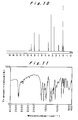
- Fig. 10 is a 1H nucleus magnetic resonance spectrum chart of methyl-3-(p-nitrophenyl)carbazate, a novel hydrazine compound of the invention.
- Fig. 11 is an infrared absorption spectrum chart of methyl-3-(p-nitrophenyl)carbazate, a novel hydrazine compound of the invention.
- Fig. 12 is a 1H nucleus magnetic resonance spectrum chart of ethyl-3-(p-nitrophenyl)carbazate, a novel hydrazine compound of the invention.
- Fig. 13 is an infrared absorption spectrum chart of ethyl-3-(p-nitrophenyl)carbazate, a novel hydrazine compound of the invention.
- Fig. 14 is a 1H nucleus magnetic resonance spectrum chart of n-propyl-3-(p-nitrophenyl)carbazate, a novel hydrazine compound of the invention.
- Fig. 15 is an infrared absorption spectrum chart of n-propyl-3-(p-nitrophenyl)carbazate, a novel hydrazine compound of the invention.
- Fig. 16 is a 1H nucleus magnetic resonance spectrum chart of 4′-nitrophenyl-methoxyacetyl carbohydrazide, a novel hydrazine compound of the invention.
- Fig. 17 is an infrared absorption spectrum chart of4′-nitrophenyl-methoxyacetyl carbohydrazide, a novel hydrazine compound of the invention.
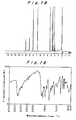
- Fig. 18 is a 1H nucleus magnetic resonance spectrum chart of 4′-nitrophenyl-3-methylthiopropyl carbohydrazide, a novel hydrazine compound of the invention.
- Fig. 19 is an infrared absorption spectrum chart of 4′-nitrophenyl-3-methylthiopropyl carbohydrazide, a novel hydrazine compound of the invention.
- novel hydrazine compound of the invention the process for preparing the novel hydrazine compound and the nonlinear optical organic material of the invention are described in detail hereinafter.
- novel hydrazine compound of the invention is represented by the above-mentioned formula (I).
- hydrazine compound examples are the following compounds (1) to (26).
- the novel hydrazine compound represented by the above formula (I) is prepared by conducting a condensation reaction of a hydrazine compound having the above formula (III) and an acid halide represented by the above formula (IV) (preferably acid chloride), preferably in the presence of a base.
- Examples of the base employable for the reaction include pyridine, trimethylamine and triethylamine. Of these, particularly preferred is pyridine or trimethylamine. These bases may be used in combination.
- the hydrazine compound represented by the formula (I) is synthesized by the reaction of the following formula.
- HCl is produced in the condensation of the hydrazine compound and the acid chloride, and it is necessary to neutralize HCl to advance the reaction.
- a base is generally used in an amount of 1.0 to 5 mol, preferably 2 to 5 mol, per 1 mol of the hydrazine derivative or the acid chloride.
- the reaction is carried out generally in a liquid phase.
- a solvent which is chemically inert to the hydrazine derivative and acid chloride used as the starting materials and also inert to the resulting carbohydrazide derivative and capable of dissolving the hydrazine derivative and the acid chloride is used.
- the solvents include various solvents such as aromatic hydrocarbon solvents, aliphatic saturated hydrocarbon solvents, aliphatic saturated halogenated hydrocarbon solvents, aliphatic unsaturated hydrocarbon solvents and ether solvents. Particularly preferred are dichloromethane and THF. These solvents can be used singly or in a mixture of two or more kinds.
- the above-mentioned reaction is carried out at a temperature generally in the range of -20 to 100 °C, preferably in the range of 0 to 100 °C. Further, the reaction can be carried out at a pressure in the range of a reduced pressure to 60 kg/cm2, but it is preferably carried out at a pressure of 0 to 30 kg/cm2, more preferably 0 to 5 kg/cm2.
- the reaction time is appropriately determined in accordance with the reaction temperature, the reaction pressure, etc, and is not specifically limited, but the reaction time is generally in the range of 5 to 100 hours, preferably 1 to 10 hours.
- the reaction is normally conducted in an inert atmosphere such as an argon atmosphere or a nitrogen atmosphere.
- the hydrazine compound represented by the formula (I) according to the invention can be also obtained by a dehydration reaction of a hydrazine compound and a carboxylic acid.
- a dehydrating agent such as DCC (N,N′-dicyclohexylcarbodiimide) is employed.
- the nonlinear optical organic material according to the invention comprises the hydrazine compound represented by the above formula (I).
- polarization of ⁇ 1 is produced thereby to accelerate polarization of the whole compound represented by the formula (I).
- the accepting substituent group A preferably has Hammet value ⁇ satisfying the condition of 0 ⁇ ⁇ ⁇ 0.8.
- substituent groups include nitro group, cyano group, trifluoromethyl group, trifluoromethoxy group, trifluoromethylthio group, carbamoyl group, nitroso group, cyanato group, thiocyanato group, isocyanato group, formyl group, alkoxycarbonyl group (e.g., methoxylcarbonyl and ethoxycarbonyl), halogenated alkoxycarbonyl group, acetyl group, propinoyl group, halogenated acyl group, sulfo group, sulfino group, sulfeno group and halogen atom. Of these, preferred is nitro group or cyano group.
- One or plural accepting substituent groups A are linked to ⁇ 1, and when plural accepting substituent groups A are linked to ⁇ 1, they may be the same or different from each other.
- the accepting substituent group(s) A is linked to ⁇ 1 in such a manner that the polarization of ⁇ 1 would be accelerated.
- ⁇ 1 is a benzene ring
- the accepting substituent group A is linked to ⁇ 1 preferably at the para-position to the -NR2NR3CO- group.
- a plurality of accepting substituent groups A are present, they are linked to ⁇ 1 preferably at the para-position and the meta-position to the -NR2NR3CO- group.
- ⁇ 1 in the above formula (I) is an aromatic ring or a heterocyclic ring.
- aromatic rings preferred is a benzene ring.
- heterocyclic rings preferred is a 5-membered or 6-membered heterocyclic ring, and particularly preferred is a 5-membered heterocyclic ring.
- Those aromatic rings or the heterocyclic rings serve to form a field of electron resonance, and owing to those rings nonlinear optical effect is effectively shown.
- Concrete examples of the aromatic rings or the heterocyclic rings used as ⁇ 1 are as follows.
- R1 to R3 in the above formula (I) are each independently a hydrogen atom or a group selected from the group consisting of an alkyl group, an aryl group, an aralkyl group and an alkyloxy group.
- a hydrogen atom or an alkyl group, particularly a methyl group or an ethyl group is preferred as R1
- a hydrogen atom is preferred as each of R2 and R3.
- R1 may be linked to not only a carbon atom of the aromatic ring or the heterocyclic ring but also a hetero atom of the heterocyclic ring, such as a N atom.
- the above-mentioned alkyl group may be of a straight-chain form or a branched-chain form, and has 1 - 6 carbon atoms, preferably 1 - 3 carbon atoms.
- alkyl groups include straight-chain alkyl groups such as methyl group, ethyl group, n-propyl group and n-butyl group; second-order alkyl groups such as isopropyl group, sec-butyl group and sec-amyl group; and tertiary alkyl groups such as tert-butyl group and tert-amyl group.
- aryl group may have a substituent group.
- aryl groups include phenyl group, naphthyl group, tolyl group and xylyl group.
- aralykyl groups include benzyl group, phenetyl group, ⁇ -methylbenzyl group and tolylmethyl group.
- the above-mentioned alkyloxy group may be of a straight-chain form or a branched-chain form, and has 1 - 6 carbon atoms, preferably 1 - 3 carbon atoms.
- alkyloxy groups include straight-chain alkyloxy groups such as methoxy group, ethoxy group, n-propoxy group and n-butoxy group; second-order alkyloxy groups such as isopropoxy group, sec-butoxy group and sec-amyloxy group; and tertiary alkyloxy groups such as tert-butoxy group and tert-amyloxy group.
- R1 is preferably configured at the position so that the adjacent molecules are not made centrally symmetric.
- R1 is preferably linked to ⁇ 1 at the ortho-position to the -NR2NR3CO- group.
- two of R1 may be each linked to ⁇ 1 at the ortho-position to the -NR2NR3CO- group.
- R1 when a plurality of R1 are linked to ⁇ 1, they may be the same as or different from each other.
- R2 and/or R3 is preferably an optically active group. If R2 and/or R3 is an optically active group, symmetry of the molecules is broken. Therefore, when a single crystal is formed, the adjacent molecules hardly become centrally symmetric, and the nonlinearity can be effectively retained.
- the optically active group used herein means a group having an asymmetric carbon atom, for example, a substituent group in which three different groups (methyl group, ethyl group and hydrogen atom) are linked to one carbon atom.
- R4 in the above formula (I) is a hydrogen atom or a group selected from the group consisting of an alkyl group, an alkenyl group and a phenyl group.
- Each of the alkyl group and the alkenyl group may be of a straight-chain form or a branched-chain form, and may have a hydroxyl group and/or a halogen atom.
- between the adjacent two carbon atoms in the alkyl group or the alkenyl group may be present a divalent hetero atom (e.g., O, S and Se) or a divalent group containing the divalent hetero atom or a hetero atom (e.g., N, B, Si and Ge).
- divalent groups examples include -CO- group, -NH- group, -N(CH3)- group, -BH- group, -B(CH3)- group, -SiH2- group, -Si(CH3)2- group, -Si(OCH3)2- group, -GeH2- group, -Ge(CH3)2- group, and
- B in the above formula (I) is a direct bond or an oxygen atom.
- this alkyl group is preferably an ethyl group or a n-propyl group.
- -BR4 is an alkoxy group, this alkoxy group is preferably a methoxy group.
- the hydrazine compound represented by the formula (I) preferably has at least one heavy hydrogen.
- the nonlinear optical organic material according to the invention is composed of a compound represented by the above formula (I), and used in the crystallized form for producing a nonlinear optical element.
- the compound represented by the formula (I) is used singly for the nonlinear optical organic material of the invention, but a plurality of the compounds represented by the formula (I) may be used therefor.
- the crystal of the compound represented by the formula (I) may be a co-crystal of the compound and other component having a similar crystalline structure to that of the compound, or it may be a polycrystal, but preferably it is a single crystal.
- nonlinear optical organic material according to the invention is a composite composed of the compound represented by the above formula (I) and a transparent polymer binder.
- the single crystal as mentioned above can be obtained, for example, by dissolving the compound represented by the formula (I) in an appropriate solvent such as dimethylformamide or ethanol and then vaporizing the solvent, or lowering the temperature of the resulting solution to crystallize the compound contained in the solution. Otherwise, the single crystal can be also obtained by heating and melting the compound of the formula (I) and then cooling the molten compound to crystallize the compound, or by vapor phase growing the compound of the formula (I) by means of vacuum deposition, molecular beam epitaxial method or the like.
- a large sized single crystal of rectangular parallelepiped having not less than 1 mm3 can be obtained by the above-mentioned processes, and especially by the use of methyl-3-(p-nitrophenyl)carbazate (aforementioned compound (7)) in the compounds represented by the formula (I), a large sized single crystal of having not less than 5 mm3 can be easily obtained.
- the large sized single crystal made of the nonlinear optical organic material of the invention is subjected to a cutting procedure and a processing procedure to prepare a nonlinear optical element of the invention.
- the thickness of the thin film single crystal is desired to be not less than 1 ⁇ m.
- the composite composed of the compound of one or more kinds represented by the above formula (I) and a transparent polymer can be obtained, for example, by a process comprising the steps of dispersing the compound of at least one kind represented by the formula (I) in a polymer matrix, then applying an electric voltage to the resulting dispersion, with heating of the dispersion at a temperature of not lower than the glass transition point, to orientate the above-mentioned compound contained in the dispersion, and cooling and solidifying the dispersion with keeping the orientation.
- the nonlinear optical element according to the invention can be obtained by processing the above-obtained composite composed of the compound of at least one kind represented by the formula (I) and the transparent polymer into a desired shape.
- the optical modulation device according to the invention is provided with the above-described nonlinear optical element of the invention, and is employed as a second harmonic generation device, an optical switch, etc
- Fig. 1 shows one example of the second harmonic generation device according to the invention.
- the second harmonic generation device 10 includes a laser beam source 11, a condensing lens 12, a nonlinear optical element 13, a condensing lens 14 and an infrared rays cut-off filter 15.
- a laser beam released from the laser beam source 11 is converged on the nonlinear optical element 13 by the condensing lens 12.
- a light having a wavelength of 1/2 of the laser wavelength is generated by the nonlinear optical element, and the light containing a basic wave of the laser beam and the second-order harmonic wave is released from the nonlinear optical element 13.
- This light is converted into an approximately parallel light by the condensing lens 14.
- a second harmonic generation device 20 shown in Fig. 2 includes a laser beam source 21, a condensing lens 22, a core material 23 made of the nonlinear optical organic element according to the invention, and a cladding material 24 made of a transparent substance having a refraction index different from that of the core material 23, such as a glass.
- the core material 23 is covered with the cladding material 24.
- a laser beam released from the laser beam source 21 is incident on one end of the core material 23 by way of the condensing lens 22.
- the laser beam entered from one end of the core material 23 is transmitted within the core material 23.
- a second harmonic generation occurred, and a light having the wavelength of 1/2 of the input laser wavelength is output from the other end of the core material 23.
- An optical modulation device 30 shown in Fig. 3 includes a laser beam source 31, a condensing lens 32 and a substrate 34 provided with a wave-guiding path 33 made of the nonlinear optical organic element according to the invention.
- the wave-guiding path 33 is branched on the substrate 34 to form two branched paths having the same optical path length as each other, and these two paths get together again.
- On the both sides of one of the branched paths are arranged a pair of electrodes 35 connected to an external electric source (not shown).
- a laser beam released from the laser beam source 31 is incident on one end of the wave-guiding path 33 by way of the condensing lens 32 and is branched along the above-mentioned branched paths. Then, the laser beams on the branched paths get together and output from the other end of the wave-guiding path 33.
- an electric voltage is applied to a pair of the electrodes 35, the refraction index of the nonlinear optical organic material which forms the branched path sandwiched between a pair of the electrodes 35 varies, and thereby the phase of the laser beam passing through the branched path is modulated.
- This optical modulation device can be utilized as an optical switch, etc.
- the nonlinear optical organic material according to the invention is composed of the compound represented by the above formula (I).
- the optical material a field of resonance is given by the ⁇ 1 ring, and the molecular polarization and the molecular configuration are controlled with good balance owing to A and R1 to R4.
- the adjacent molecules are not made centrally symmetric, so that the nonlinear organic optical material shows excellent nonlinear optical effect.
- nonlinear optical organic material of the invention can be favorably applied to nonlinear optical elements such as an optical wavelength conversion element and an electrooptical element utilizing the second-order nonlinear optical effect.
- reaction liquid was further stirred at room temperature for 12 hours, and then completion of the reaction was confirmed by means of thin-layer chromatography. Thereafter, the excess propionyl chloride in the reaction liquid was hydrolyzed, and an aqueous solution of NaHCO3 was added to the reaction liquid to separate the reaction liquid into an aqueous phase and an oily phase containing a large amount of the reaction product.
- the purified product obtained as above had a melting point of 209 to 210 °C when measured in accordance with a DSC method.
- the purified product was dissolved in DMSO (dimethyl sulfoxide). Using the resulting solution, a 1H nucleus magnetic resonance spectrum of the purified product was measured. A chart of the obtained 1H nucleus magnetic resonance spectrum is shown in Fig. 4.
- a powder of the aforementioned compound (2) was measured on the SHG intensity by a powder method.
- an YAG laser was employed.
- the SHG intensity of the powder was 24 times of the SHG intensity of an urea powder measured in the same manner as above.
- a powder of the aforementioned compound (2) was dissolved in a solvent of dimethylformamide (DMF), and the resulting solution was allowed to stand for about 10 days at room temperature.
- a single crystal having a size of 8 ⁇ 5 ⁇ 2 mm3 was obtained.
- the size of the single crystal corresponded to about 5 times of the size of a single crystal obtained by growing 2-methylnitroaniline (MNA) in the similar manner.
- reaction liquid was further stirred at room temperature for 12 hours, and then completion of the reaction was confirmed by means of thin-layer chromatography. Thereafter, the excess n-butyl chloride in the reaction liquid was hydrolyzed, and an aqueous solution of NaHCO3 was added to the reaction liquid to separate the reaction liquid into an aqueous phase and an oily phase containing a large amount of the reaction product.
- the purified product obtained as above had a melting point of 177 to 178 °C when measured in accordance with a DSC method.
- the purified product was dissolved in DMSO (dimethyl sulfoxide). Using the resulting solution, a 1H nucleus magnetic resonance spectrum of the purified product was measured. A chart of the obtained 1H nucleus magnetic resonance spectrum is shown in Fig. 6.
- the purified product was identified to be 4′-nitrophenyl-n-propylcarbohydrazide (aforementioned compound (3)).
- a powder of the obtained compound (3) was measured on the SHG intensity in the same manner as described in Example 1.
- the SHG intensity of this powder was 12.1 times of the SHG intensity of an urea powder measured in the same manner as above.
- a single crystal of the aforementioned compound (3) was prepared in the same manner as described in Example 1.
- the obtained single crystal had a size of 10 ⁇ 6 ⁇ 4 mm3.
- the single crystal of the compound (3) obtained as above was subjected to an X-ray structural analysis.
- the spatial group belonged to orthorhombic system (P212121), and the lattice constants were as follows.
- the intensity of the SH light was measured in the same manner as described in Example 1.
- the obtained intensity was a large value which was 3.5 times of an intensity obtained in the case of using a KTP crystal (sample length: 5 mm).
- reaction liquid was further stirred at room temperature for 12 hours, and then completion of the reaction was confirmed by means of thin-layer chromatography. Thereafter, the excess trimethylacetyl chloride in the reaction liquid was hydrolyzed, and an aqueous solution of NaHCO3 was added to the reaction liquid to separate the reaction liquid into an aqueous phase and an oily phase containing a large amount of the reaction product.
- the purified product obtained as above had a melting point of 166 to 167 °C when measured in accordance with a DSC method.
- the purified product was dissolved in DMSO (dimethyl sulfoxide). Using the resulting solution, a 1H nucleus magnetic resonance spectrum of the purified product was measured. A chart of the obtained 1H nucleus magnetic resonance spectrum is shown in Fig. 8.
- the purified product was identified to be 4′-nitrophenyl-t-butylcarbohydrazide (aforementioned compound (5)).
- a powder of the obtained compound (5) was measured on the SHG intensity in the same manner as described in Example 1.
- the SHG intensity of this powder was 1.0 time of the SHG intensity of an urea powder measured in the same manner as above.
- Example 1 a single crystal of the aforementioned compound (5) was prepared in the same manner as described in Example 1.
- the obtained single crystal had a size of 5 ⁇ 3 ⁇ 1 mm3.
- the intensity of the SH light was measured in the same manner as described in Example 1.
- the obtained intensity was a value which was 0.5 time of an intensity obtained in the case of using a KTP crystal (sample length: 5 mm).
- reaction liquid was further stirred at room temperature for 12 hours, and then completion of the reaction was confirmed by means of thin-layer chromatography. Thereafter, the excess methyl chloroformate in the reaction liquid was hydrolyzed, and an aqueous solution of NaHCO3 was added to the reaction liquid to separate the reaction liquid into an aqueous phase and an oily phase containing a large amount of the reaction product.
- the purified product was dissolved in DMSO (dimethyl sulfoxide). Using the resulting solution, a 1H nucleus magnetic resonance spectrum of the purified product was measured. A chart of the obtained 1H nucleus magnetic resonance spectrum is shown in Fig. 10.
- a powder of the obtained compound (7) was measured on the SHG intensity in the same manner as described in Example 1.
- the SHG intensity of this powder was 19.5 times of the SHG intensity of an urea powder measured in the same manner as above.
- Example 2 a single crystal of the aforementioned compound (7) was prepared in the same manner as described in Example 1.
- the obtained single crystal had a size of 30 x 12 x 6 mm3.
- the single crystal of the compound (7) obtained as above was subjected to an X-ray structural analysis.
- the spatial group belonged to orthorhombic system (P212121), and the lattice constants were as follows.
- the intensity of the SH light was measured in the same manner as described in Example 1.
- the obtained intensity was a large value which was 4 times of an intensity obtained in the case of using a KTP crystal (sample length: 5 mm).
- reaction liquid was further stirred at room temperature for 12 hours, and then completion of the reaction was confirmed by means of thin-layer chromatography. Thereafter, the excess ethyl chloroformate in the reaction liquid was hydrolyzed, and an aqueous solution of NaHCO3 was added to the reaction liquid to separate the reaction liquid into an aqueous phase and an oily phase containing a large amount of the reaction product.
- the purified product was dissolved in DMSO (dimethyl sulfoxide). Using the resulting solution, a 1H nucleus magnetic resonance spectrum of the purified product was measured. A chart of the obtained 1H nucleus magnetic resonance spectrum is shown in Fig. 12.
- the purified product was identified to be ethyl-3-(p-nitrophenyl)carbazate (aforementioned compound (8)).
- a powder of the obtained compound (8) was measured on the SHG intensity in the same manner as described in Example 1.
- the SHG intensity of this powder was 1.0 time of the SHG intensity of an urea powder measured in the same manner as above.
- Example 1 a single crystal of the aforementioned compound (8) was prepared in the same manner as described in Example 1.
- the obtained single crystal had a size of 5 ⁇ 3 ⁇ 1 mm3.
- the intensity of the SH light was measured in the same manner as described in Example 1.
- the obtained intensity was a value which was 0.5 time of an intensity obtained in the case of using a KTP crystal (sample length: 5 mm).
- reaction liquid was further stirred at room temperature for 12 hours, and then completion of the reaction was confirmed by means of thin-layer chromatography. Thereafter, the excess n-propyl chloroformate in the reaction liquid was hydrolyzed, and an aqueous solution of NaHCO3 was added to the reaction liquid to separate the reaction liquid into an aqueous phase and an oily phase containing a large amount of the reaction product.
- the purified product obtained as above had a melting point of 125 to 126 °C when measured in accordance with a DSC method.
- the purified product was dissolved in DMSO (dimethyl sulfoxide). Using the resulting solution, a 1H nucleus magnetic resonance spectrum of the purified product was measured. A chart of the obtained 1H nucleus magnetic resonance spectrum is shown in Fig. 14.
- the purified product was identified to be n-propyl-3-(p-nitrophenyl)carbazate (aforementioned compound (9)).
- a powder of the obtained compound (9) was measured on the SHG intensity in the same manner as described in Example 1. As a result, the SHG intensity of this powder was 2.6 times of the SHG intensity of an urea powder measured in the same manner as above.
- Example 9 a single crystal of the aforementioned compound (9) was prepared in the same manner as described in Example 1.
- the obtained single crystal had a size of 6 x 4 x 2.5 mm3.
- the intensity of the SH light was measured in the same manner as described in Example 1.
- the obtained intensity was a value which was 0.8 time of an intensity obtained in the case of using a KTP crystal (sample length 5 mm).
- reaction liquid was further stirred at room temperature for 12 hours, and then completion of the reaction was confirmed by means of thin-layer chromatography. Thereafter, the excess methoxyacetyl chloride in the reaction liquid was hydrolyzed, and an aqueous solution of NaHCO3 was added to the reaction liquid to separate the reaction liquid into an aqueous phase and an oily phase containing a large amount of the reaction product.
- the purified product obtained as above had a melting point of 149 to 150 °C when measured in accordance with a DSC method.
- the purified product was dissolved in DMSO (dimethyl sulfoxide). Using the resulting solution, a 1H nucleus magnetic resonance spectrum of the purified product was measured. A chart of the obtained 1H nucleus magnetic resonance spectrum is shown in Fig. 16.
- reaction liquid was further stirred at room temperature for 12 hours, and then completion of the reaction was confirmed by means of thin-layer chromatography. Thereafter, the excess 3-methylthiopropyl chloride in the reaction liquid was hydrolyzed, and an aqueous solution of NaHCO3 was added to the reaction liquid to separate the reaction liquid into an aqueous phase and an oily phase containing a large amount of the reaction product.
- the purified product obtained as above had a melting point of 126 to 127 °C when measured in accordance with a DSC method.
- the purified product was dissolved in DMSO (dimethyl sulfoxide). Using the resulting solution, a 1H nucleus magnetic resonance spectrum of the purified product was measured. A chart of the obtained 1H nucleus magnetic resonance spectrum is shown in Fig. 18.
Landscapes
- Chemical & Material Sciences (AREA)
- Organic Chemistry (AREA)
- Physics & Mathematics (AREA)
- Nonlinear Science (AREA)
- General Physics & Mathematics (AREA)
- Optics & Photonics (AREA)
- Organic Low-Molecular-Weight Compounds And Preparation Thereof (AREA)
- Optical Modulation, Optical Deflection, Nonlinear Optics, Optical Demodulation, Optical Logic Elements (AREA)
Applications Claiming Priority (2)
| Application Number | Priority Date | Filing Date | Title |
|---|---|---|---|
| JP19687191 | 1991-08-06 | ||
| JP196871/91 | 1991-08-06 |
Publications (3)
| Publication Number | Publication Date |
|---|---|
| EP0534596A2 true EP0534596A2 (fr) | 1993-03-31 |
| EP0534596A3 EP0534596A3 (fr) | 1993-05-26 |
| EP0534596B1 EP0534596B1 (fr) | 1997-09-17 |
Family
ID=16365038
Family Applications (1)
| Application Number | Title | Priority Date | Filing Date |
|---|---|---|---|
| EP92307026A Expired - Lifetime EP0534596B1 (fr) | 1991-08-06 | 1992-07-31 | Nouveau composés d'hydrazine, procédé pour leur préparation et matérial organique optiquement non-linéaire |
Country Status (6)
| Country | Link |
|---|---|
| US (1) | US5445888A (fr) |
| EP (1) | EP0534596B1 (fr) |
| KR (1) | KR960000761B1 (fr) |
| CA (1) | CA2075342C (fr) |
| DE (1) | DE69222252T2 (fr) |
| TW (1) | TW203122B (fr) |
Cited By (1)
| Publication number | Priority date | Publication date | Assignee | Title |
|---|---|---|---|---|
| WO1998015512A3 (fr) * | 1996-10-09 | 1998-07-16 | Rhone Poulenc Agrochimie | Fongicides a groupes hydroximiques et hydrazoniques |
Families Citing this family (1)
| Publication number | Priority date | Publication date | Assignee | Title |
|---|---|---|---|---|
| KR100342813B1 (ko) * | 1996-11-28 | 2002-11-30 | 앰코 테크놀로지 코리아 주식회사 | 접지선및전원선을갖는에어리어어레이범프드반도체패키지 |
Family Cites Families (7)
| Publication number | Priority date | Publication date | Assignee | Title |
|---|---|---|---|---|
| US2706733A (en) * | 1950-03-13 | 1955-04-19 | Minnesota Mining & Mfg | Fluorinated isocyanates and carbamyl chlorides |
| US2706732A (en) * | 1953-10-21 | 1955-04-19 | Hoffmann La Roche | Hydrazine derivatives |
| JPH0218549A (ja) * | 1988-07-06 | 1990-01-22 | Konica Corp | 高コントラストな画像形成方法 |
| JP2835343B2 (ja) * | 1989-04-28 | 1998-12-14 | コニカ株式会社 | 直接ポジ画像の形成方法及び直接ポジハロゲン化銀写真感光材料 |
| JPH0339731A (ja) * | 1989-07-06 | 1991-02-20 | Konica Corp | ハロゲン化銀写真感光材料 |
| JPH0393767A (ja) * | 1989-09-04 | 1991-04-18 | Konica Corp | セミカルバジド基を有するヒドラジン化合物の製造方法 |
| JPH03209225A (ja) * | 1990-01-11 | 1991-09-12 | Dainippon Ink & Chem Inc | 非線形光学素子 |
-
1992
- 1992-07-31 EP EP92307026A patent/EP0534596B1/fr not_active Expired - Lifetime
- 1992-07-31 DE DE69222252T patent/DE69222252T2/de not_active Expired - Fee Related
- 1992-07-31 TW TW081106058A patent/TW203122B/zh active
- 1992-08-05 CA CA002075342A patent/CA2075342C/fr not_active Expired - Fee Related
- 1992-08-06 KR KR1019920014105A patent/KR960000761B1/ko not_active Expired - Fee Related
-
1994
- 1994-01-05 US US08/177,713 patent/US5445888A/en not_active Expired - Fee Related
Cited By (1)
| Publication number | Priority date | Publication date | Assignee | Title |
|---|---|---|---|---|
| WO1998015512A3 (fr) * | 1996-10-09 | 1998-07-16 | Rhone Poulenc Agrochimie | Fongicides a groupes hydroximiques et hydrazoniques |
Also Published As
| Publication number | Publication date |
|---|---|
| DE69222252T2 (de) | 1998-02-26 |
| KR960000761B1 (ko) | 1996-01-12 |
| DE69222252D1 (de) | 1997-10-23 |
| EP0534596A3 (fr) | 1993-05-26 |
| US5445888A (en) | 1995-08-29 |
| CA2075342A1 (fr) | 1993-02-07 |
| EP0534596B1 (fr) | 1997-09-17 |
| TW203122B (fr) | 1993-04-01 |
| CA2075342C (fr) | 1999-11-23 |
| KR930004253A (ko) | 1993-03-22 |
Similar Documents
| Publication | Publication Date | Title |
|---|---|---|
| US6514434B1 (en) | Electro-optic chromophore bridge compounds and donor-bridge compounds for polymeric thin film waveguides | |
| US20030183812A1 (en) | Fluorinated crosslinked electro-optic materials and electro-optic devices therefrom | |
| CA2505881A1 (fr) | Chromophores optiques non lineaires de second ordre, polymeres les contenant et dispositifs electro-optiques associes | |
| EP0534596A2 (fr) | Nouveau composés d'hydrazine, procédé pour leur préparation et matérial organique optiquement non-linéaire | |
| JP2887833B2 (ja) | シクロブテンジオン誘導体及びその製造方法並びにこれを用いた非線形光学素子 | |
| JPH0440429A (ja) | 非線形光学材料 | |
| US4961631A (en) | Nonlinear optical devices from derivatives of stilbene | |
| KR100454586B1 (ko) | 1,3,5-트리시아노-2,4,6-트리스(비닐)벤젠 유도체 및 그제조방법 | |
| JPH05230006A (ja) | 新規なヒドラジン化合物およびその製造方法、有機非線形光学材料、ならびに非線形光学素子 | |
| EP0761643B1 (fr) | Dérivés cyclobutènedione, procédé pour leur fabrication et dispositif optique non-linéaire les contenant | |
| JP2783869B2 (ja) | 非線形光学素子 | |
| EP0355326B1 (fr) | Matériau pour l'optique non linéaire | |
| JPH0618946A (ja) | 有機非線形光学材料 | |
| JP2539855B2 (ja) | 非線形光学材料とそれを用いた非線形光学素子 | |
| JP2539850B2 (ja) | 非線形光学材料とそれを用いた非線形光学素子 | |
| US5345330A (en) | Single crystal of 3-(2-furyl)methacrylic acid anhydride | |
| JP2980298B2 (ja) | 有機非線形光学材料 | |
| JPH0450930A (ja) | 非線形光学材料 | |
| JP2783853B2 (ja) | 非線形光学素子 | |
| JPH06130434A (ja) | 有機非線形光学材料 | |
| JPH04161932A (ja) | 非線形光学材料 | |
| JPH05224257A (ja) | 非線形光学材料 | |
| JPH05224258A (ja) | 非線形光学材料 | |
| JPH06345713A (ja) | 分子結晶 | |
| JPH0572581A (ja) | 有機非線形光学材料、非線形光学素子および光変調装置 |
Legal Events
| Date | Code | Title | Description |
|---|---|---|---|
| PUAI | Public reference made under article 153(3) epc to a published international application that has entered the european phase |
Free format text: ORIGINAL CODE: 0009012 |
|
| AK | Designated contracting states |
Kind code of ref document: A2 Designated state(s): DE FR GB IT NL |
|
| PUAL | Search report despatched |
Free format text: ORIGINAL CODE: 0009013 |
|
| AK | Designated contracting states |
Kind code of ref document: A3 Designated state(s): DE FR GB IT NL |
|
| 17P | Request for examination filed |
Effective date: 19930708 |
|
| 17Q | First examination report despatched |
Effective date: 19931223 |
|
| GRAG | Despatch of communication of intention to grant |
Free format text: ORIGINAL CODE: EPIDOS AGRA |
|
| GRAH | Despatch of communication of intention to grant a patent |
Free format text: ORIGINAL CODE: EPIDOS IGRA |
|
| GRAH | Despatch of communication of intention to grant a patent |
Free format text: ORIGINAL CODE: EPIDOS IGRA |
|
| GRAA | (expected) grant |
Free format text: ORIGINAL CODE: 0009210 |
|
| AK | Designated contracting states |
Kind code of ref document: B1 Designated state(s): DE FR GB IT NL |
|
| ET | Fr: translation filed | ||
| REF | Corresponds to: |
Ref document number: 69222252 Country of ref document: DE Date of ref document: 19971023 |
|
| ITF | It: translation for a ep patent filed | ||
| RAP2 | Party data changed (patent owner data changed or rights of a patent transferred) |
Owner name: MITSUI CHEMICALS, INC. |
|
| PLBE | No opposition filed within time limit |
Free format text: ORIGINAL CODE: 0009261 |
|
| STAA | Information on the status of an ep patent application or granted ep patent |
Free format text: STATUS: NO OPPOSITION FILED WITHIN TIME LIMIT |
|
| NLT2 | Nl: modifications (of names), taken from the european patent patent bulletin |
Owner name: MITSUI CHEMICALS, INC. |
|
| 26N | No opposition filed | ||
| NLT1 | Nl: modifications of names registered in virtue of documents presented to the patent office pursuant to art. 16 a, paragraph 1 |
Owner name: IDEM |
|
| REG | Reference to a national code |
Ref country code: GB Ref legal event code: IF02 |
|
| PGFP | Annual fee paid to national office [announced via postgrant information from national office to epo] |
Ref country code: FR Payment date: 20020709 Year of fee payment: 11 |
|
| PGFP | Annual fee paid to national office [announced via postgrant information from national office to epo] |
Ref country code: NL Payment date: 20020730 Year of fee payment: 11 |
|
| PGFP | Annual fee paid to national office [announced via postgrant information from national office to epo] |
Ref country code: GB Payment date: 20020731 Year of fee payment: 11 |
|
| PGFP | Annual fee paid to national office [announced via postgrant information from national office to epo] |
Ref country code: DE Payment date: 20020807 Year of fee payment: 11 |
|
| PG25 | Lapsed in a contracting state [announced via postgrant information from national office to epo] |
Ref country code: GB Free format text: LAPSE BECAUSE OF NON-PAYMENT OF DUE FEES Effective date: 20030731 |
|
| PG25 | Lapsed in a contracting state [announced via postgrant information from national office to epo] |
Ref country code: NL Free format text: LAPSE BECAUSE OF NON-PAYMENT OF DUE FEES Effective date: 20040201 |
|
| PG25 | Lapsed in a contracting state [announced via postgrant information from national office to epo] |
Ref country code: DE Free format text: LAPSE BECAUSE OF NON-PAYMENT OF DUE FEES Effective date: 20040203 |
|
| GBPC | Gb: european patent ceased through non-payment of renewal fee |
Effective date: 20030731 |
|
| PG25 | Lapsed in a contracting state [announced via postgrant information from national office to epo] |
Ref country code: FR Free format text: LAPSE BECAUSE OF NON-PAYMENT OF DUE FEES Effective date: 20040331 |
|
| NLV4 | Nl: lapsed or anulled due to non-payment of the annual fee |
Effective date: 20040201 |
|
| REG | Reference to a national code |
Ref country code: FR Ref legal event code: ST |
|
| PG25 | Lapsed in a contracting state [announced via postgrant information from national office to epo] |
Ref country code: IT Free format text: LAPSE BECAUSE OF NON-PAYMENT OF DUE FEES;WARNING: LAPSES OF ITALIAN PATENTS WITH EFFECTIVE DATE BEFORE 2007 MAY HAVE OCCURRED AT ANY TIME BEFORE 2007. THE CORRECT EFFECTIVE DATE MAY BE DIFFERENT FROM THE ONE RECORDED. Effective date: 20050731 |