EP0571630A1 - Verfahren zur herstellung einer nickelplatte und einer alkalibatterie - Google Patents
Verfahren zur herstellung einer nickelplatte und einer alkalibatterie Download PDFInfo
- Publication number
- EP0571630A1 EP0571630A1 EP92921263A EP92921263A EP0571630A1 EP 0571630 A1 EP0571630 A1 EP 0571630A1 EP 92921263 A EP92921263 A EP 92921263A EP 92921263 A EP92921263 A EP 92921263A EP 0571630 A1 EP0571630 A1 EP 0571630A1
- Authority
- EP
- European Patent Office
- Prior art keywords
- filled
- active material
- nickel
- manufacturing
- positive active
- Prior art date
- Legal status (The legal status is an assumption and is not a legal conclusion. Google has not performed a legal analysis and makes no representation as to the accuracy of the status listed.)
- Granted
Links
Images


Classifications
-
- H—ELECTRICITY
- H01—ELECTRIC ELEMENTS
- H01M—PROCESSES OR MEANS, e.g. BATTERIES, FOR THE DIRECT CONVERSION OF CHEMICAL ENERGY INTO ELECTRICAL ENERGY
- H01M4/00—Electrodes
- H01M4/02—Electrodes composed of, or comprising, active material
- H01M4/24—Electrodes for alkaline accumulators
- H01M4/26—Processes of manufacture
-
- H—ELECTRICITY
- H01—ELECTRIC ELEMENTS
- H01M—PROCESSES OR MEANS, e.g. BATTERIES, FOR THE DIRECT CONVERSION OF CHEMICAL ENERGY INTO ELECTRICAL ENERGY
- H01M4/00—Electrodes
- H01M4/02—Electrodes composed of, or comprising, active material
- H01M4/24—Electrodes for alkaline accumulators
- H01M4/32—Nickel oxide or hydroxide electrodes
-
- H—ELECTRICITY
- H01—ELECTRIC ELEMENTS
- H01M—PROCESSES OR MEANS, e.g. BATTERIES, FOR THE DIRECT CONVERSION OF CHEMICAL ENERGY INTO ELECTRICAL ENERGY
- H01M4/00—Electrodes
- H01M4/02—Electrodes composed of, or comprising, active material
- H01M4/36—Selection of substances as active materials, active masses, active liquids
- H01M4/48—Selection of substances as active materials, active masses, active liquids of inorganic oxides or hydroxides
- H01M4/52—Selection of substances as active materials, active masses, active liquids of inorganic oxides or hydroxides of nickel, cobalt or iron
-
- H—ELECTRICITY
- H01—ELECTRIC ELEMENTS
- H01M—PROCESSES OR MEANS, e.g. BATTERIES, FOR THE DIRECT CONVERSION OF CHEMICAL ENERGY INTO ELECTRICAL ENERGY
- H01M10/00—Secondary cells; Manufacture thereof
- H01M10/34—Gastight accumulators
- H01M10/345—Gastight metal hydride accumulators
-
- Y—GENERAL TAGGING OF NEW TECHNOLOGICAL DEVELOPMENTS; GENERAL TAGGING OF CROSS-SECTIONAL TECHNOLOGIES SPANNING OVER SEVERAL SECTIONS OF THE IPC; TECHNICAL SUBJECTS COVERED BY FORMER USPC CROSS-REFERENCE ART COLLECTIONS [XRACs] AND DIGESTS
- Y02—TECHNOLOGIES OR APPLICATIONS FOR MITIGATION OR ADAPTATION AGAINST CLIMATE CHANGE
- Y02E—REDUCTION OF GREENHOUSE GAS [GHG] EMISSIONS, RELATED TO ENERGY GENERATION, TRANSMISSION OR DISTRIBUTION
- Y02E60/00—Enabling technologies; Technologies with a potential or indirect contribution to GHG emissions mitigation
- Y02E60/10—Energy storage using batteries
-
- Y—GENERAL TAGGING OF NEW TECHNOLOGICAL DEVELOPMENTS; GENERAL TAGGING OF CROSS-SECTIONAL TECHNOLOGIES SPANNING OVER SEVERAL SECTIONS OF THE IPC; TECHNICAL SUBJECTS COVERED BY FORMER USPC CROSS-REFERENCE ART COLLECTIONS [XRACs] AND DIGESTS
- Y10—TECHNICAL SUBJECTS COVERED BY FORMER USPC
- Y10T—TECHNICAL SUBJECTS COVERED BY FORMER US CLASSIFICATION
- Y10T29/00—Metal working
- Y10T29/49—Method of mechanical manufacture
- Y10T29/49002—Electrical device making
- Y10T29/49108—Electric battery cell making
- Y10T29/49115—Electric battery cell making including coating or impregnating
Definitions
- This invention relates to a manufacturing method of a nickel plate and manufacturing method of an alkaline battery.
- the nickel plate is a plate used for the alkaline battery.
- a nickel-zinc battery, a nickel metal-hydride battery and a nickel-cadmium battery etc. may be mentioned as the alkaline battery.
- These batteries are used mainly for a power supply for portable electronic equipment, a portable power supply, a power supply for electric vehicle such as an electric automobile and a scooter etc.
- the alkaline battery is required to be increased in its energy density.
- the nickel plate for use as a positive electrode of the alkaline battery.
- the sintered type nickel plate is one, in which powder of positive active material having a principal component of nickel hydroxide is filled in a porous sintered substrate formed by sintering nickel powder to a porous substrate such as a punched steel plate or a nickel net etc.
- a porous sintered substrate formed by sintering nickel powder to a porous substrate such as a punched steel plate or a nickel net etc.
- peeling-off of nickel sintered product will occur due to weakening of mutual bonding between sintered nickel powder particles when a porosity of the substrate is increased. Therefore, a limit of practical porosity has been about 80%. For this reason, a filling density of active material has been small and only an energy density as small as about 400 mAh/cc has been obtained. Since pore diameters of the substrate have been as small as 10 microns or smaller, a method for filling the positive active material has been limited to a solution impregnation method requiring repeated troublesome processes.
- the button type nickel plate is one, in which a small quantity of conductive material such as carbon powder is added to the foregoing positive active material powder, and this composite powder is pressed to be formed into a pellet shape.
- the pocket type nickel plate is one, in which a punched steel plate is worked to form a pocket and the foregoing positive active material powder is filled in this pocket.
- the positive active material powder is filled directly and the substrate to which the nickel powder is sintered is not used. Consequently, these plates have lacked in a current collecting property and offered an active material utilization efficiency as small as about 50% to 60%, so as to exert a performance considerably inferior to that of the sintered type nickel plate offering an active material utilization efficiency as large as about 90%.
- the pasted type nickel plate is formed in such a way that 1 to 30 wt% of CoO (cobalt monoxide) powder are mixed to the foregoing positive active material powder, this mixture is formed into a paste by using solvent such as MC (methyl cellulose) and CMC (carboxymethyl cellulose) etc., and this paste is filled in a nickel fiber porous plate.
- This electrode plate is one, in which CoO is dissolved in electrolyte solution and made precipitate around the porous plate and the positive active material as ⁇ -Co(OH)2 which is formed by charging thereafter to form a conductive network comprising ⁇ -CoOOH having a good electric conductivity, and a discharge performance is thereby made favorable.
- An object of this invention is to provide methods for enabling manufacturing of nickel plates and alkaline batteries having high-performances and excellent in their productivities.
- a first manufacturing method of a nickel plate of this invention is characterized in that positive active material powder including a principal component of nickel hydroxide is mixed with cobalt compound powder having a grain size of 20 microns or smaller and a surface area of 10 m2/g or larger, this mixture is filled in a three-dimensional porous substrate comprising an alkali-resistant metal, and this filled substrate is oxidized by an oxidizing agent.
- a second manufacturing method of a nickel plate of this invention is characterized in that positive active material powder including a principal component of nickel hydroxide is mixed with cobalt compound powder having a grain size of 20 microns or smaller and a surface area of 10 m2/g or larger, this mixture is oxidized by an oxidizing agent, and this oxide is filled in a three-dimensional porous substrate comprising an alkali-resistant metal.
- a third manufacturing method of a nickel plate of this invention is characterized in that positive active material powder including a principal component of nickel hydroxide is filled in a three-dimensional porous substrate comprising an alkali-resistant metal, and this filled substrate is oxidized by an oxidizing agent in a solution including cobalt ions.
- a fourth manufacturing method of a nickel plate of this invention is characterized in that positive active material powder including a principal component of nickel hydroxide is oxidized by an oxidizing agent in a solution including cobalt ions, and this oxide is filled in a three-dimensional porous substrate comprising an alkali-resistant metal.
- a fifth manufacturing method of a nickel plate of this invention is characterized in that positive active material powder including a principal component of nickel hydroxide is mixed with cobalt oxyhydroxide powder, and this mixture is filled in a three-dimensional porous substrate comprising an alkali-resistant metal.
- a sixth manufacturing method of a nickel plate of this invention is characterized in that positive active material powder including a principal component of nickel hydroxide is oxidized by an oxidizing agent in a solution including cobalt ions, this oxide is mixed with cobalt oxyhydroxide powder, and this mixture is filled in a three-dimensional porous substrate comprising an alkali-resistant metal.
- a first manufacturing method of a alkaline battery of this invention is characterized in that a nickel plate is manufactured by any one of the first to sixth manufacturing methods of nickel plates and assembled together with a zinc electrode.
- a second manufacturing method of a alkaline battery of this invention is characterized in that a nickel plate is manufactured by any one of the first to sixth manufacturing methods of nickel plates and assembled together with a metal-hydride electrode.
- a third manufacturing method of a alkaline battery of this invention is characterized in that a nickel plate is manufactured by any one of the first to sixth manufacturing methods of nickel plates and assembled together with a cadmium electrode.
- the cobalt compounds and cobalt ions are oxidized by the oxidizing agent to become ⁇ -CoOOH having a good electric conductivity so as to be formed on the surface of nickel hydroxide powder forming the positive active material, so that the conductive network is formed, which improves conductive efficiencies between positive active materials and between the positive active material and the substrate.
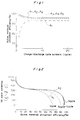
- Fig. 1 is a diagram showing relations between charge/discharge cycle numbers and active material utilization efficiencies of nickel-cadmium batteries using nickel plates of embodiments 1 to 6, respectively.
- Fig. 2 is a diagram showing discharge characteristics of first cycle and third cycle of nickel-cadmium batteries using nickel plates of the embodiment 2 and a comparison example 1.
- Fig. 3 is a diagram showing relations between grain sizes and active material utilization efficiencies of nickel-cadmium batteries using nickel plates made of different grain sizes of CoO in the embodiment 2.
- Fig. 4 is a diagram showing relations between grain sizes and active material utilization efficiencies of nickel-cadmium batteries using nickel plates made of different grain sizes of CoOOH in the embodiment 6.
- Fig. 1 is a diagram showing relations between charge/discharge cycle numbers and active material utilization efficiencies of nickel-cadmium batteries using nickel plates of embodiments 1 to 6, respectively.
- Fig. 2 is a diagram showing discharge characteristics of first cycle and third cycle of nickel-cadmium batteries using nickel plates of the embodiment 2 and a comparison example 1.
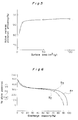
- Fig. 5 is a diagram showing relations between surface areas and active material utilization efficiencies of nickel-cadmium batteries using nickel plates made of different surface areas of CoO in the embodiment 2.
- Fig. 6 is a diagram showing discharge voltage characteristics of nickel-zinc batteries using nickel plates of an embodiment 7 and comparison examples 2 and 3, respectively.
- Fig. 7 is a diagram showing relations between charge/discharge cycle numbers and active material utilization efficiencies of nickel metal-hydride batteries using nickel plates of an embodiment 8 and a comparison example 4, respectively.
- Fig. 8 is a diagram showing relations between charge/discharge cycle numbers and active material utilization efficiencies of nickel-cadmium batteries of types different from the pasted type using nickel plates of embodiments 9 to 11 and comparison examples 5 to 7, respectively.
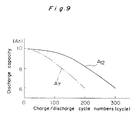
- Fig. 9 is a diagram showing relations between charge/discharge cycle numbers and discharge capacities of nickel-zinc batteries using nickel plates of embodiments 7 and 12, respectively.
- Spherical nickel hydroxide powder including 5 wt% of cadmium hydroxide was mixed with CoO (cobalt monoxide) powder having a grain size of 1 micron and a surface area of 70 m2/g with a weight ratio of 95 to 5. This mixing procedure was done in an aqueous solution having a principal component of potassium hydroxide and having a specific gravity of 1.25, and the mixture was stirred sufficiently.
- CoO cobalt monoxide
- the prepared mixture was filtrated, rinsed and dried. After that, it was formed into a paste by 2 wt% of CMC (carboxymethyl cellulose) solution, filled in a substrate comprising a nickel fiber porous body, dried for 1 hour at 80 °C, and then pressed.
- CMC carboxymethyl cellulose
- the prepared filled substrate was put in an aqueous solution having a principal component of potassium hydroxide and having a specific gravity of 1.25, and added with K2S2O8 (potassium peroxodisulfate) up to a molar number or more of CoO until oxygen gas was produced. After completion of the reaction, the filled substrate was rinsed, dried, pressed again, and coated with teflon on its surface. Thus, a nickel plate was prepared.
- cobalt compounds such as cobalt hydroxide and cobalt carbonate etc. may be used in place of the CoO.
- Spherical nickel hydroxide powder including 5 wt% of cadmium hydroxide was mixed with CoO powder having a grain size of 1 micron and a surface area of 70 m2/g with a weight ratio of 95 to 5. This mixing procedure was done in an aqueous solution having a principal component of potassium hydroxide and having a specific gravity of 1.25, and the mixture was stirred sufficiently.
- the prepared mixture was filtrated, rinsed and dried. After that, it was formed into a paste by 2 wt% of CMC solution, filled in a substrate comprising a nickel fiber porous body, dried for 1 hour at 80 °C, pressed, and then coated with teflon on its surface. Thus, a nickel plate was prepared.
- cobalt compounds such as cobalt hydroxide and cobalt carbonate etc. may be used in place of the CoO.
- Spherical nickel hydroxide powder including 5 wt% of cadmium hydroxide was formed into a paste by 2 wt% of CMC solution, filled in a substrate comprising a nickel fiber porous body, dried for 1 hour at 80 °C, and then pressed.
- the prepared filled substrate was put in an aqueous solution dissolving cobalt ions to a saturated condition and having a principal component of potassium hydroxide and having a specific gravity of 1.25, and added with K2S2O8 up to a molar number or more of cobalt ion until oxygen gas was produced. After completion of the reaction, the filled substrate was rinsed, dried, pressed, and then coated with teflon on its surface. Thus, a nickel plate was prepared.
- Spherical nickel hydroxide powder including 5 wt% of cadmium hydroxide was put in an aqueous solution dissolving cobalt ions to a saturated condition and having a principal component of potassium hydroxide and having a specific gravity of 1.25, and added with K2S2O8 up to a molar number or more of cobalt ion until oxygen gas was produced.
- the powder was filtrated, rinsed and dried. After that, it was formed into a paste by 2 wt% of CMC solution, filled in a substrate comprising a nickel fiber porous body, dried for 1 hour at 80 °C, pressed, and then coated with teflon on its surface. Thus, a nickel plate was prepared.
- Spherical nickel hydroxide powder including 5 wt% of cadmium hydroxide was mixed with CoOOH powder having a grain size of 1 micron with a weight ratio of 95 to 5.
- the prepared mixture was filtrated, rinsed and dried. After that, it was formed into a paste by 2 wt% of CMC solution, filled in a substrate comprising a nickel fiber porous body, dried for 1 hour at 80 °C, pressed, and then coated with teflon on its surface. Thus, a nickel plate was prepared.
- Spherical nickel hydroxide powder including 5 wt% of cadmium hydroxide was put in an aqueous solution dissolving cobalt ions to a saturated condition and having a principal component of potassium hydroxide and having a specific gravity of 1.25, and added with K2S2O8 up to a molar number or more of cobalt ion until oxygen gas was produced.
- the powder was filtrated, rinsed and dried.
- the prepared powder was mixed with CoOOH powder having a grain size of 1 micron with a weight ratio of 95 to 5.
- the prepared mixture was filtrated, rinsed and dried. After that, it was formed into a paste by 2 wt% of CMC solution, filled in a substrate comprising a nickel fiber porous body, dried for 1 hour at 80 °C, pressed, and then coated with teflon on its surface. Thus, a nickel plate was prepared.
- Spherical nickel hydroxide powder including 5 wt% of cadmium hydroxide was mixed with CoO powder having a grain size of 1 micron and a surface area of 70 m2/g with a weight ratio of 95 to 5. This mixing procedure was done in an aqueous solution having a principal component of potassium hydroxide and having a specific gravity of 1.25, and the mixture was stirred sufficiently.
- the prepared mixture was filtrated, rinsed and dried. After that, it was formed into a paste by 2 wt% of CMC solution, filled in a substrate comprising a nickel fiber porous body, dried for 1 hour at 80 °C, pressed, and then coated with teflon on its surface. Thus, a nickel plate was prepared.
- the nickel plates prepared by the embodiments 1 to 6 and the comparison example 1 were used as positive electrodes respectively to be combined with negative electrodes comprising pasted type cadmium plates and separators comprising polyamide nonwoven fabrics, so that nickel-cadmium batteries A1 to A6 and B1 having nominal capacity of 2.0Ah were assembled.
- the batteries A1 to A6 represent those using the nickel plates of embodiments 1 to 6 and the battery B1 represents that using the nickel plate of comparison example 1.
- An aqueous solution having a principal component of potassium hydroxide and having a specific gravity of 1.25 was used as the electrolyte solution.
- the electrolyte solution was filled to a level for dipping 90% of volumes of the positive electrode, negative electrode and separator.
- the battery B1 was subjected to the aging process after filling the electrolyte solution and subjected to the formation by charging.
- the batteries A1 to A6 and B1 were investigated in regard to the relations between charge/discharge cycle numbers and active material utilization efficiency.
- a charging was done with a charging current of 0.1 CA for 11 hours, and a discharging was done with a discharging current of 0.2 CA. Results are shown in Fig. 1.
- the batteries A2 and B1 were investigated in regard to the discharge characteristics at first cycle and third cycle.
- the charging and discharge condition were same with the above. Results are shown in Fig. 2.
- Nickel plates were formed in the same way as the embodiment 2 by only changing the grain size of CoO used, as 10 microns, 20 microns and 30 microns respectively. Further, nickel plates were formed in the same way as the embodiment 6 by only changing the grain size of CoOOH used, as 10 microns, 50 microns and 100 microns respectively. Batteries same with the aboves were formed by using these nickel plates respectively, so as to investigate stabilized active material utilization efficiencies after these batteries had been subjected to several cycles of charging and discharging. Results are shown in Fig. 3 and Fig. 4. The active material utilization efficiency of CoO is decreased when the grain size exceeds 20 microns as seen from Fig.
- the grain size of CoO used is preferably 20 microns or smaller, and the grain size of CoOOH used is preferably 50 microns or smaller.
- Nickel plates were formed in the same way as the embodiment 2 by only changing the surface area of CoO used, as 10 m2/g, 20 m2/g, 50 m2/g and 100 m2/g respectively. Batteries same with the aboves were formed by using these nickel plates respectively, so as to investigate stabilized active material utilization efficiencies after these batteries had been subjected to several cycles of charging and discharging. Results are shown in Fig. 5. As seen from Fig. 5, the active material utilization efficiency is decreased when the surface area of CoO is smaller than 10 m2/g. Accordingly, the surface area of CoO used is preferably 10 m2/g or larger.
- the nickel plate same with that of the embodiment 2 was prepared in the same way as the embodiment 2.
- An aqueous solution having a specific gravity of 1.35 was used as the aqueous solution having a principal component of potassium hydroxide.
- This nickel plate was used as the positive electrode to be combined with a negative electrode comprising a sheet type zinc plate, a liquid-proof electrolyte retaining layer comprising cellulose nonwoven fabric and a separator comprising microporous polypropylene, so that a nickel-zinc battery A7 having a nominal capacity of 2.0 Ah was assembled.
- An aqueous solution having a principal component of potassium hydroxide and having a specific gravity of 1.35 was used as the electrolyte solution.
- the electrolyte solution was filled up to a level for dipping 90% of volumes of the positive electrode, negative electrode, liquid-proof electrolyte retaining layer and separator.
- the nickel plate prepared by the comparison example 1 was dipped in the electrolyte solution same with that of the embodiment 7, and subjected to the aging process, and charged and formed. Then, the plate was assembled in the battery in the same way as the embodiment 7 so as to make up a nickel-zinc battery B2.
- the nickel plate prepared by the comparison example 1 was assembled in the battery in the same way as the embodiment 7, and subjected to the aging process, and charged and formed so that a nickel-zinc battery B3 was made up.
- the batteries A7, B2 and B3 were subjected to the charge/discharge test so as to investigate their discharge voltage characteristics.
- the charging was done with a charging current of 3 A for 11 hours, and the discharging was done with a discharging current of 6 A. Results are shown in Fig. 6.
- Self-discharge amounts after being permitted to stand for 20 days at 40 °C are listed in Table 1.
- Table 1 Battery Self-discharge amount (%) A7 35 B2 37 B3 60
- the battery A7 is excellent in the discharge voltage characteristic and the self-discharge amount as compared with the batteries B2 and B3. This is because of the same reason with those of the batteries A1 to A6 and because a self-discharge performance of the zinc electrode is excellent from the following reasons.
- the ⁇ -CoOOH is scarcely reversible.
- a residual quantity of CoO is extremely small.
- the zinc electrode is scarcely affected by an elution of intermediary product in the midway to get to ⁇ -CoOOH.
- the nickel plate same with that of the embodiment 7 was prepared.
- This nickel plate was used as a positive electrode to be combined with a negative electrode comprising a pasted type hydrogen absorbing electrode plate and a separator comprising a polyamide nonwoven fabric, so that a nickel metal-hydride battery A8 having a nominal capacity of 2.0 Ah was assembled.
- a hydrogen absorbing alloy for use in the hydrogen absorbing electrode plate is made of MmNi 4.2 Al 0.3 Co 0.5 .
- Mm is a misch metal forming a mixture of rare earth elements.
- An aqueous solution having a principal component of potassium hydroxide and having a specific gravity of 1.26 was used as the electrolyte solution.
- the electrolyte solution was filled up to a level for dipping 90% of volumes of the positive electrode, negative electrode and separator.
- the nickel plate prepared by the comparison example 1 was assembled in the battery in the same way as the embodiment 8, and subjected to the aging process, and charged and formed so that a nickel metal-hydride battery B4 was made up.
- the batteries A8 and B4 were investigated in regard to the relations between charge/discharge cycle number and active material utilization efficiency.
- the charging was done with a charging current of 300 mA for 10.5 hours, and the discharge was done with a discharging current of 600 mA with an end voltage of 1.00 V. Results are shown in Fig. 7.
- Nickel plates same with that of the embodiment 2 except for the type were made up, such as a cylinder type, a pocket type and a button type.
- Nickel-cadmium batteries A9, A10 and A11 were made up by using these nickel plates.
- a cylinder type nickel plate same with that of the comparison example 1 except for its type was formed, and a nickel-cadmium battery B5 was made up by using this nickel plate.
- Spherical nickel hydroxide powder including 5 wt% of cadmium hydroxide was mixed with nickel carbonyl powder, and a pocket type nickel plate and a button type nickel plate were made up by using this mixture. Then, nickel-cadmium batteries B6 and B7 were made up by using these nickel plates.
- the batteries A9 to A11 and B5 to B7 were investigated in regard to the relations between charge/discharge cycle number and active material utilization efficiencies.
- the charging was done with a charging current of 0.1 CA for 11 hours, and the discharging was done with a discharging current of 0.2 CA. Results are shown in Fig. 8.
- the batteries A9 to A11 offered high active material utilization efficiency from the first cycle. This is because of the same reason with those of the batteries A1 to A6.
- a substrate comprising a nickel fiber porous body having a thickness of 1.5mm and a porosity of 95% was immersed in a plating bath including cobalt diammonium sulfate, ammonium chloride and sodium chloride to be subjected to a plating treatment, so that a cobalt coating with thickness of 0.1 to 0.3 microns was applied on the substrate.
- the paste mixture same with that of the embodiment 7 was prepared in the same way as the embodiment 7.
- This mixture was filled in the substrate plated with cobalt, and dried for 1 hour at 80 °C. Then, the filled substrate was pressed and coated with teflon on its surface so as to prepare a nickel plate.
- the batteries A7 and A12 were investigated in regard to the relations between charge/discharge cycle numbers and discharge capacities.
- the charging was done with a charging current of 0.1 CA for 11 hours, and the discharging was done with a discharging current of 0.2 CA. Results are shown in Fig. 9.
- the battery A7 exhausted its service life after 200 cycles, but the battery A12 exhausted its service life after 300 cycles. This is because the cobalt plating on the substrate changed to irreversible CoOOH at the first charging and discharging, so that a conductive efficiency between the substrate and the positive active material was made better as compared with that of the battery A7.
- the present invention can provide the nickel plate i.e. the alkaline battery which offers the high active material utilization efficiency from the first cycle and is excellent in the discharge characteristic.
- the aging process and the charging and discharging for formation are not required so that the productivity is made better.
- the intermediary product in the midway to get to ⁇ -CoOOH does not cause the short-circuiting and give bad influences on the zinc electrode.
- this method can provide an alkaline battery such as the nickel-zinc battery having a stable performance.
- This invention can provide with a good productivity a nickel plate i.e. an alkaline battery which offers a high active material utilization efficiency from a first cycle and is excellent in a discharge characteristic. Therefore, its industrial value is large.
Landscapes
- Chemical & Material Sciences (AREA)
- Chemical Kinetics & Catalysis (AREA)
- Electrochemistry (AREA)
- General Chemical & Material Sciences (AREA)
- Inorganic Chemistry (AREA)
- Engineering & Computer Science (AREA)
- Manufacturing & Machinery (AREA)
- Battery Electrode And Active Subsutance (AREA)
Applications Claiming Priority (4)
| Application Number | Priority Date | Filing Date | Title |
|---|---|---|---|
| JP30232491 | 1991-10-21 | ||
| JP302324/91 | 1991-10-21 | ||
| JP30232491 | 1991-10-21 | ||
| PCT/JP1992/001359 WO1993008611A1 (fr) | 1991-10-21 | 1992-10-20 | Procede de fabrication d'une plaque de nickel et d'un accumulateur alcalin |
Publications (3)
| Publication Number | Publication Date |
|---|---|
| EP0571630A1 true EP0571630A1 (de) | 1993-12-01 |
| EP0571630A4 EP0571630A4 (de) | 1995-04-19 |
| EP0571630B1 EP0571630B1 (de) | 2002-01-30 |
Family
ID=17907572
Family Applications (1)
| Application Number | Title | Priority Date | Filing Date |
|---|---|---|---|
| EP92921263A Expired - Lifetime EP0571630B1 (de) | 1991-10-21 | 1992-10-20 | Verfahren zur herstellung einer nickelplatte und einer alkalibatterie |
Country Status (4)
| Country | Link |
|---|---|
| US (1) | US5489314A (de) |
| EP (1) | EP0571630B1 (de) |
| DE (1) | DE69232392T2 (de) |
| WO (1) | WO1993008611A1 (de) |
Cited By (2)
| Publication number | Priority date | Publication date | Assignee | Title |
|---|---|---|---|---|
| EP0744781A1 (de) * | 1995-05-25 | 1996-11-27 | Matsushita Electric Industrial Co., Ltd. | Nickel positivelektrode für alkalische Speicherbatterie und gasdichte Nickel-Metallhydrid Speicherbatterie |
| EP0800221A1 (de) * | 1996-04-03 | 1997-10-08 | Matsushita Electric Industrial Co., Ltd. | Alkalische Speicherbatterie und Verfahren zur Herstellung von positiver Elektrodenplatte dafür |
Families Citing this family (27)
| Publication number | Priority date | Publication date | Assignee | Title |
|---|---|---|---|---|
| US5523182A (en) * | 1992-11-12 | 1996-06-04 | Ovonic Battery Company, Inc. | Enhanced nickel hydroxide positive electrode materials for alkaline rechargeable electrochemical cells |
| KR100224464B1 (ko) * | 1995-02-23 | 1999-10-15 | 오타 야스오 | 알칼리 2차 전지 제조방법, 알칼리 2차전지의 양전극, 알칼리2차전지,및 초기충전 알칼리 2차전지 제조방법 |
| US5984982A (en) * | 1997-09-05 | 1999-11-16 | Duracell Inc. | Electrochemical synthesis of cobalt oxyhydroxide |
| JP2947284B2 (ja) * | 1997-12-26 | 1999-09-13 | 松下電器産業株式会社 | アルカリ蓄電池用非焼結式正極およびこれを用いたアルカリ蓄電池 |
| US6177213B1 (en) | 1998-08-17 | 2001-01-23 | Energy Conversion Devices, Inc. | Composite positive electrode material and method for making same |
| US6270535B1 (en) * | 1998-09-04 | 2001-08-07 | Moltech Power Systems, Inc. | Method of forming CoOOH and NiOOH in a NiMH electrochemical cell and an electrochemical cell formed thereby |
| CA2377062A1 (en) * | 2001-03-15 | 2002-09-15 | Powergenix Systems Inc. | Alkaline cells having positive nickel hydroxide electrodes with fluoride salt additives |
| EP1402593A4 (de) * | 2001-06-29 | 2009-04-29 | Ovonic Battery Co | Wasserstoffspeicherbatterie, positiv-nickelelektrode, positiv-elektrodenaktivmaterial und verfahren zur herstellung |
| EP1424741A4 (de) * | 2001-09-03 | 2006-10-04 | Yuasa Battery Co Ltd | Nickelelektrodenmaterial und herstellungsverfahren dafür und nickelelektrode und alkalinbatterie |
| US6991875B2 (en) * | 2002-08-28 | 2006-01-31 | The Gillette Company | Alkaline battery including nickel oxyhydroxide cathode and zinc anode |
| US20040076881A1 (en) * | 2002-10-17 | 2004-04-22 | Bowden William L. | Method of making a battery |
| JP4412936B2 (ja) * | 2003-07-31 | 2010-02-10 | パナソニック株式会社 | オキシ水酸化コバルトおよびその製造方法ならびにそれを用いたアルカリ蓄電池 |
| US9406934B2 (en) | 2012-02-07 | 2016-08-02 | Basf Corporation | Rechargeable battery cell with improved high temperature performance |
| US9425456B2 (en) | 2012-02-07 | 2016-08-23 | Ovonic Battery Company, Inc. | Rechargeable battery cell with improved high temperature performance |
| US20150372285A1 (en) * | 2014-06-24 | 2015-12-24 | Basf Corporation | Metal Hydride Battery Electrodes |
| US10587012B2 (en) | 2015-03-26 | 2020-03-10 | Basf Corporation | Electrolyte compositions comprising ionic liquids and metal hydride batteries comprising same |
| JP7021102B2 (ja) | 2016-03-28 | 2022-02-16 | ビーエーエスエフ コーポレーション | 充電式電池用のシリコンに基づく固体電解質 |
| WO2022145026A1 (en) | 2020-12-29 | 2022-07-07 | Kawasaki Motors, Ltd. | Si-containing alloy for the anode of proton-conducting rechargeable batteries |
| WO2022145031A1 (en) | 2020-12-29 | 2022-07-07 | Kawasaki Motors, Ltd. | Processes of hydrogen annealing of si-surfaces |
| WO2022145030A1 (en) | 2020-12-29 | 2022-07-07 | Kawasaki Motors, Ltd. | Salt containing electrolytes that promote the formation of proton-conducting rechargeable batteries |
| WO2022145027A1 (en) | 2020-12-29 | 2022-07-07 | Kawasaki Motors, Ltd. | Ionic liquid electrolytes including salt additives for use in proton-conducting rechargeable batteries |
| CN116724412A (zh) | 2020-12-29 | 2023-09-08 | 川崎摩托株式会社 | 用于质子导电的充电电池的块体硅负极 |
| WO2022145028A1 (en) | 2020-12-29 | 2022-07-07 | Kawasaki Motors, Ltd. | Group 14 element-containing metal hydrides with a superlattice structure for use in proton-conducting rechargeable batteries |
| WO2022145029A1 (en) | 2020-12-29 | 2022-07-07 | Kawasaki Motors, Ltd. | Group 14 element-containing metal hydride with a superlattice structure for use in hydrogen storage. |
| US20240429367A1 (en) | 2021-05-13 | 2024-12-26 | Kawasaki Motors, Ltd. | Bipolar battery with proton and hydroxide ion conducting polymer based separator |
| CN117546335A (zh) | 2021-06-21 | 2024-02-09 | 川崎摩托株式会社 | 质子传导性充电电池及方法 |
| WO2023007751A1 (en) | 2021-07-30 | 2023-02-02 | Kawasaki Motors, Ltd. | Si-containing metal hydrides with expanded superlattice structure for use in proton-conducting rechargeable electrochemical cells |
Family Cites Families (16)
| Publication number | Priority date | Publication date | Assignee | Title |
|---|---|---|---|---|
| US4049027A (en) * | 1976-08-26 | 1977-09-20 | Yardney Electric Corporation | Active material for pressed nickel electrodes |
| JPS544335A (en) * | 1977-06-10 | 1979-01-13 | Tokyo Shibaura Electric Co | Method of making nickel active material for alkali cell |
| EP0028072B1 (de) * | 1979-10-03 | 1984-08-01 | LUCAS INDUSTRIES public limited company | Nickelelektrode, Verfahren zur Herstellung der Nickelelektrode und die Nickelelektrode verwendende elektrochemische Zelle |
| CA1113802A (en) * | 1980-09-02 | 1981-12-08 | William A. Armstrong | Mixed oxide oxygen electrode |
| JPS58152371A (ja) * | 1982-03-05 | 1983-09-09 | Japan Storage Battery Co Ltd | アルカリ電池用正極板の製造法 |
| JPS5923464A (ja) * | 1982-07-29 | 1984-02-06 | Matsushita Electric Ind Co Ltd | 電池用ニツケル電極の製造法 |
| JPS5983348A (ja) * | 1982-11-04 | 1984-05-14 | Matsushita Electric Ind Co Ltd | ニツケル正極の製造法 |
| JPS59111264A (ja) * | 1982-12-14 | 1984-06-27 | Japan Storage Battery Co Ltd | アルカリ電池用正極板 |
| JPS59128765A (ja) * | 1983-01-13 | 1984-07-24 | Japan Storage Battery Co Ltd | 非水電解液電池 |
| DE3854727T2 (de) * | 1987-03-25 | 1996-05-30 | Matsushita Electric Ind Co Ltd | Gasdichte Nickel-Hydridbatterie und Verfahren zur Herstellung. |
| JP2589123B2 (ja) * | 1987-10-15 | 1997-03-12 | 三洋電機株式会社 | アルカリ蓄電池用正極板の製造方法 |
| JPH0724218B2 (ja) * | 1988-04-11 | 1995-03-15 | 株式会社ユアサコーポレーション | アルカリ電池用ニッケル電極及びこれを用いた電池 |
| EP0403052B1 (de) * | 1989-06-15 | 1995-06-21 | Yuasa Corporation | Nickelelektrode und diese verwendende alkalische Batterie |
| JPH0824041B2 (ja) * | 1990-05-21 | 1996-03-06 | 株式会社ユアサコーポレーション | ニッケル極板の製造法 |
| JPH07114123B2 (ja) * | 1990-06-04 | 1995-12-06 | 湯浅電池株式会社 | ニッケル亜鉛蓄電池の製造法 |
| JPH0824042B2 (ja) * | 1990-09-19 | 1996-03-06 | 株式会社ユアサコーポレーション | ニッケル水素蓄電池の製造法 |
-
1992
- 1992-10-20 US US08/078,247 patent/US5489314A/en not_active Expired - Fee Related
- 1992-10-20 WO PCT/JP1992/001359 patent/WO1993008611A1/ja not_active Ceased
- 1992-10-20 DE DE69232392T patent/DE69232392T2/de not_active Expired - Fee Related
- 1992-10-20 EP EP92921263A patent/EP0571630B1/de not_active Expired - Lifetime
Cited By (4)
| Publication number | Priority date | Publication date | Assignee | Title |
|---|---|---|---|---|
| EP0744781A1 (de) * | 1995-05-25 | 1996-11-27 | Matsushita Electric Industrial Co., Ltd. | Nickel positivelektrode für alkalische Speicherbatterie und gasdichte Nickel-Metallhydrid Speicherbatterie |
| US5744259A (en) * | 1995-05-25 | 1998-04-28 | Matsushita Electric Industrial Co., Ltd. | Nickel positive electrode for alkaline storage battery and sealed nickel-metal hydride storage battery |
| EP0800221A1 (de) * | 1996-04-03 | 1997-10-08 | Matsushita Electric Industrial Co., Ltd. | Alkalische Speicherbatterie und Verfahren zur Herstellung von positiver Elektrodenplatte dafür |
| US5788720A (en) * | 1996-04-03 | 1998-08-04 | Matsushita Electric Industrial Co., Ltd. | Method for manufacturing positive electrode plates for an alkaline storage battery |
Also Published As
| Publication number | Publication date |
|---|---|
| WO1993008611A1 (fr) | 1993-04-29 |
| EP0571630B1 (de) | 2002-01-30 |
| DE69232392T2 (de) | 2002-08-29 |
| US5489314A (en) | 1996-02-06 |
| DE69232392D1 (de) | 2002-03-14 |
| EP0571630A4 (de) | 1995-04-19 |
Similar Documents
| Publication | Publication Date | Title |
|---|---|---|
| EP0571630A1 (de) | Verfahren zur herstellung einer nickelplatte und einer alkalibatterie | |
| US6632568B1 (en) | Non-sintered nickel electrode with excellent over-discharge characteristics, an alkaline storage cell having the non-sintered nickel electrode, and a manufacturing method of the non-sintered nickel electrode | |
| JP4710225B2 (ja) | ニッケル電極材料の製造方法 | |
| US20010008729A1 (en) | Positive electrode active material for alkaline storage batteries, positive electrode for alkaline storage batteries, and alkaline storage battery | |
| US20050238960A1 (en) | Non-sintered type positive electrode and alkaline storage battery using the same | |
| JPH1074512A (ja) | ニッケル水素二次電池とその正極 | |
| JP5119577B2 (ja) | ニッケル水素電池 | |
| EP1176649A1 (de) | Alkalische Sekundärbatterie mit einer verbesserten positiven Nickelelektrode und Verfahren für ihre Aktivierung | |
| US5492543A (en) | Preparation of electrodes and Ni/MHx electrochemical storage cell | |
| US6489059B2 (en) | Alkaline storage battery and positive electrode used for the alkaline storage battery | |
| EP1116288B1 (de) | Positive nickelelektrode für alkalische speicherbatterie und verfahren zu ihrer herstellung | |
| JP3253476B2 (ja) | アルカリ蓄電池用非焼結式ニッケル極 | |
| JP4061048B2 (ja) | アルカリ蓄電池用正極およびそれを用いたアルカリ蓄電池 | |
| JP3506365B2 (ja) | ニッケル正極活物質 | |
| JP3003218B2 (ja) | ニッケル極板の製造法及びアルカリ蓄電池の製造法 | |
| JP4531874B2 (ja) | ニッケル・金属水素化物電池 | |
| JP2000182611A (ja) | アルカリ蓄電池およびその製造方法 | |
| JP3397216B2 (ja) | ニッケル極板とその製造方法およびこれを用いたアルカリ蓄電池 | |
| JPH097591A (ja) | 水素吸蔵合金及びその製造方法並びにそれを用いた水素吸蔵合金電極 | |
| JP3384109B2 (ja) | ニッケル極板 | |
| JP4357133B2 (ja) | 電極用水素吸蔵合金、水素吸蔵合金電極及びアルカリ蓄電池 | |
| JP3555473B2 (ja) | アルカリ二次電池用正極の製造方法 | |
| JPH11238507A (ja) | アルカリ蓄電池 | |
| JP2589750B2 (ja) | ニッケルカドミウム蓄電池 | |
| JPH10172550A (ja) | ニッケル正極をもつアルカリ電池及びその活性化方法 |
Legal Events
| Date | Code | Title | Description |
|---|---|---|---|
| PUAI | Public reference made under article 153(3) epc to a published international application that has entered the european phase |
Free format text: ORIGINAL CODE: 0009012 |
|
| 17P | Request for examination filed |
Effective date: 19930712 |
|
| AK | Designated contracting states |
Kind code of ref document: A1 Designated state(s): DE FR GB |
|
| A4 | Supplementary search report drawn up and despatched |
Effective date: 19950302 |
|
| AK | Designated contracting states |
Kind code of ref document: A4 Designated state(s): DE FR GB |
|
| 17Q | First examination report despatched |
Effective date: 19950627 |
|
| GRAG | Despatch of communication of intention to grant |
Free format text: ORIGINAL CODE: EPIDOS AGRA |
|
| GRAG | Despatch of communication of intention to grant |
Free format text: ORIGINAL CODE: EPIDOS AGRA |
|
| GRAG | Despatch of communication of intention to grant |
Free format text: ORIGINAL CODE: EPIDOS AGRA |
|
| GRAG | Despatch of communication of intention to grant |
Free format text: ORIGINAL CODE: EPIDOS AGRA |
|
| GRAG | Despatch of communication of intention to grant |
Free format text: ORIGINAL CODE: EPIDOS AGRA |
|
| GRAH | Despatch of communication of intention to grant a patent |
Free format text: ORIGINAL CODE: EPIDOS IGRA |
|
| GRAH | Despatch of communication of intention to grant a patent |
Free format text: ORIGINAL CODE: EPIDOS IGRA |
|
| GRAA | (expected) grant |
Free format text: ORIGINAL CODE: 0009210 |
|
| REG | Reference to a national code |
Ref country code: GB Ref legal event code: IF02 |
|
| AK | Designated contracting states |
Kind code of ref document: B1 Designated state(s): DE FR GB |
|
| REF | Corresponds to: |
Ref document number: 69232392 Country of ref document: DE Date of ref document: 20020314 |
|
| ET | Fr: translation filed | ||
| PLBE | No opposition filed within time limit |
Free format text: ORIGINAL CODE: 0009261 |
|
| STAA | Information on the status of an ep patent application or granted ep patent |
Free format text: STATUS: NO OPPOSITION FILED WITHIN TIME LIMIT |
|
| 26N | No opposition filed | ||
| PGFP | Annual fee paid to national office [announced via postgrant information from national office to epo] |
Ref country code: DE Payment date: 20061012 Year of fee payment: 15 |
|
| PGFP | Annual fee paid to national office [announced via postgrant information from national office to epo] |
Ref country code: GB Payment date: 20061018 Year of fee payment: 15 |
|
| GBPC | Gb: european patent ceased through non-payment of renewal fee |
Effective date: 20071020 |
|
| PG25 | Lapsed in a contracting state [announced via postgrant information from national office to epo] |
Ref country code: DE Free format text: LAPSE BECAUSE OF NON-PAYMENT OF DUE FEES Effective date: 20080501 |
|
| REG | Reference to a national code |
Ref country code: FR Ref legal event code: ST Effective date: 20080630 |
|
| PGFP | Annual fee paid to national office [announced via postgrant information from national office to epo] |
Ref country code: FR Payment date: 20061010 Year of fee payment: 15 |
|
| PG25 | Lapsed in a contracting state [announced via postgrant information from national office to epo] |
Ref country code: GB Free format text: LAPSE BECAUSE OF NON-PAYMENT OF DUE FEES Effective date: 20071020 |
|
| PG25 | Lapsed in a contracting state [announced via postgrant information from national office to epo] |
Ref country code: FR Free format text: LAPSE BECAUSE OF NON-PAYMENT OF DUE FEES Effective date: 20071031 |