EP0576558B1 - Nukleinsäuretypisierung durch polymeraseverlängerung von oligonukleotiden unter verwendung von terminator-mischungen - Google Patents
Nukleinsäuretypisierung durch polymeraseverlängerung von oligonukleotiden unter verwendung von terminator-mischungen Download PDFInfo
- Publication number
- EP0576558B1 EP0576558B1 EP92908554A EP92908554A EP0576558B1 EP 0576558 B1 EP0576558 B1 EP 0576558B1 EP 92908554 A EP92908554 A EP 92908554A EP 92908554 A EP92908554 A EP 92908554A EP 0576558 B1 EP0576558 B1 EP 0576558B1
- Authority
- EP
- European Patent Office
- Prior art keywords
- primer
- template
- nucleic acid
- base
- nucleotide
- Prior art date
- Legal status (The legal status is an assumption and is not a legal conclusion. Google has not performed a legal analysis and makes no representation as to the accuracy of the status listed.)
- Expired - Lifetime
Links
Images





Classifications
-
- C—CHEMISTRY; METALLURGY
- C12—BIOCHEMISTRY; BEER; SPIRITS; WINE; VINEGAR; MICROBIOLOGY; ENZYMOLOGY; MUTATION OR GENETIC ENGINEERING
- C12Q—MEASURING OR TESTING PROCESSES INVOLVING ENZYMES, NUCLEIC ACIDS OR MICROORGANISMS; COMPOSITIONS OR TEST PAPERS THEREFOR; PROCESSES OF PREPARING SUCH COMPOSITIONS; CONDITION-RESPONSIVE CONTROL IN MICROBIOLOGICAL OR ENZYMOLOGICAL PROCESSES
- C12Q1/00—Measuring or testing processes involving enzymes, nucleic acids or microorganisms; Compositions therefor; Processes of preparing such compositions
- C12Q1/68—Measuring or testing processes involving enzymes, nucleic acids or microorganisms; Compositions therefor; Processes of preparing such compositions involving nucleic acids
- C12Q1/6813—Hybridisation assays
- C12Q1/6827—Hybridisation assays for detection of mutation or polymorphism
-
- C—CHEMISTRY; METALLURGY
- C12—BIOCHEMISTRY; BEER; SPIRITS; WINE; VINEGAR; MICROBIOLOGY; ENZYMOLOGY; MUTATION OR GENETIC ENGINEERING
- C12Q—MEASURING OR TESTING PROCESSES INVOLVING ENZYMES, NUCLEIC ACIDS OR MICROORGANISMS; COMPOSITIONS OR TEST PAPERS THEREFOR; PROCESSES OF PREPARING SUCH COMPOSITIONS; CONDITION-RESPONSIVE CONTROL IN MICROBIOLOGICAL OR ENZYMOLOGICAL PROCESSES
- C12Q1/00—Measuring or testing processes involving enzymes, nucleic acids or microorganisms; Compositions therefor; Processes of preparing such compositions
- C12Q1/68—Measuring or testing processes involving enzymes, nucleic acids or microorganisms; Compositions therefor; Processes of preparing such compositions involving nucleic acids
- C12Q1/6844—Nucleic acid amplification reactions
- C12Q1/6858—Allele-specific amplification
-
- C—CHEMISTRY; METALLURGY
- C12—BIOCHEMISTRY; BEER; SPIRITS; WINE; VINEGAR; MICROBIOLOGY; ENZYMOLOGY; MUTATION OR GENETIC ENGINEERING
- C12Q—MEASURING OR TESTING PROCESSES INVOLVING ENZYMES, NUCLEIC ACIDS OR MICROORGANISMS; COMPOSITIONS OR TEST PAPERS THEREFOR; PROCESSES OF PREPARING SUCH COMPOSITIONS; CONDITION-RESPONSIVE CONTROL IN MICROBIOLOGICAL OR ENZYMOLOGICAL PROCESSES
- C12Q1/00—Measuring or testing processes involving enzymes, nucleic acids or microorganisms; Compositions therefor; Processes of preparing such compositions
- C12Q1/68—Measuring or testing processes involving enzymes, nucleic acids or microorganisms; Compositions therefor; Processes of preparing such compositions involving nucleic acids
- C12Q1/6869—Methods for sequencing
-
- C—CHEMISTRY; METALLURGY
- C12—BIOCHEMISTRY; BEER; SPIRITS; WINE; VINEGAR; MICROBIOLOGY; ENZYMOLOGY; MUTATION OR GENETIC ENGINEERING
- C12Q—MEASURING OR TESTING PROCESSES INVOLVING ENZYMES, NUCLEIC ACIDS OR MICROORGANISMS; COMPOSITIONS OR TEST PAPERS THEREFOR; PROCESSES OF PREPARING SUCH COMPOSITIONS; CONDITION-RESPONSIVE CONTROL IN MICROBIOLOGICAL OR ENZYMOLOGICAL PROCESSES
- C12Q1/00—Measuring or testing processes involving enzymes, nucleic acids or microorganisms; Compositions therefor; Processes of preparing such compositions
- C12Q1/68—Measuring or testing processes involving enzymes, nucleic acids or microorganisms; Compositions therefor; Processes of preparing such compositions involving nucleic acids
- C12Q1/6876—Nucleic acid products used in the analysis of nucleic acids, e.g. primers or probes
- C12Q1/6881—Nucleic acid products used in the analysis of nucleic acids, e.g. primers or probes for tissue or cell typing, e.g. human leukocyte antigen [HLA] probes
-
- C—CHEMISTRY; METALLURGY
- C12—BIOCHEMISTRY; BEER; SPIRITS; WINE; VINEGAR; MICROBIOLOGY; ENZYMOLOGY; MUTATION OR GENETIC ENGINEERING
- C12Q—MEASURING OR TESTING PROCESSES INVOLVING ENZYMES, NUCLEIC ACIDS OR MICROORGANISMS; COMPOSITIONS OR TEST PAPERS THEREFOR; PROCESSES OF PREPARING SUCH COMPOSITIONS; CONDITION-RESPONSIVE CONTROL IN MICROBIOLOGICAL OR ENZYMOLOGICAL PROCESSES
- C12Q2600/00—Oligonucleotides characterized by their use
- C12Q2600/156—Polymorphic or mutational markers
Definitions
- This invention relates to the field of nucleic acid sequence detection.
- the detection of nucleic acid sequences can be used in two general contexts. First, the detection of nucleic acid sequences can be used to determine the presence or absence of a particular genetic element. Second, the detection of nucleic acid sequences can be used to determine the specific type of a particular genetic element that is present. Variant genetic elements usually exist. Many techniques have been developed (1) to determine the presence of specific nucleic acid sequences, and (2) to compare homologous segments of nucleic acid sequence to determine if the segments are identical or if they differ at one or more nucleotides. Practical applications of these techniques include genetic disease diagnoses, infectious disease diagnoses, forensic techniques, paternity determinations, and genome mapping.
- nucleic acids in a sample and the subtypes thereof depends on the technique of specific nucleic acid hybridization in which the oligonucleotide probe is annealed under conditions of high stringency to nucleic acids in the sample, and the successfully annealed probes are subsequently detected (see Spiegelman, S., Scientific American, Vol. 210, p. 48 (1964)).
- a commonly used screen for DNA polymorphisms arising from DNA sequence variation consists of digesting DNA with restriction endonucleases and analyzing the resulting fragments by means of Southern blots, as described by Botstein, et al., Am. J. Hum. Genet. , 32:314-331 (1980) and White, et al., Sci. Am. , 258:40-48 (1988). Mutations that affect the recognition sequence of the endonuclease will preclude enzymatic cleavage at that site, thereby altering the cleavage pattern of that DNA. DNAs are compared by looking for differences in restriction fragment lengths.
- restriction fragment length polymorphism mapping A major problem with this method (known as restriction fragment length polymorphism mapping or RFLP mapping) is its inability to detect mutations that do not affect cleavage with a restriction endonuclease. Thus, many mutations are missed with this method.
- Another problem is that the methods used to detect restriction fragment length polymorphisms are very labor intensive, in particular, the techniques involved with Southern blot analysis.
- nucleic acid hybridization is, therefore, generally combined with some other selection or enrichment procedure for analytical and diagnostic purposes.
- Size selection can be carried out prior to hybridization.
- the best known prior size selection technique is Southern Blotting (see Southern, E., Methods in Enzymology , 69:152 (1980).
- Southern Blotting a DNA sample is subjected to digestion with restriction enzymes which introduce double stranded breaks in the phosphodiester backbone at or near the site of a short sequence of nucleotides which is characteristic for each enzyme.
- restriction enzymes which introduce double stranded breaks in the phosphodiester backbone at or near the site of a short sequence of nucleotides which is characteristic for each enzyme.
- the resulting heterogeneous mixture of DNA fragments is then separated by gel electrophoresis, denatured, and transferred to a solid phase where it is subjected to hybridization analysis in situ using a labeled nucleic acid probe.
- Fragments which contain sequences complementary to the labeled probe are revealed visually or densitometrically as bands of hybridized label.
- a variation of this method is Northern Blotting for RNA molecules. Size selection has also been used after hybridization in a number of techniques, in particular by hybrid protection techniques, by subjecting probe/nucleic acid hybrids to enzymatic digestion before size analysis.
- Hybrids between primers and DNA targets can be analyzed by polymerase extension of the hybrids.
- a modification of this methodology is the polymerase chain reaction in which the purification is produced by sequential hybridization reactions of anti-parallel primers, followed by enzymatic amplification with DNA polymerase (see Saiki, et al., Science 239:487-491 (1988)). By selecting for two hybridization reactions, this methodology provides the specificity lacking in techniques that depend only upon a single hybridization reaction.
- primer-dependent DNA polymerases have, in general, a low error rate for the addition of nucleotides complementary to a template. This feature is essential in biology for the prevention of genetic mistakes which would have detrimental effects on progeny.
- the specificity inherent in this enzymological reaction has been widely exploited as the basis of the "Sanger” or dideoxy chain termination sequencing methodology which is the ultimate-nucleic acid typing experiment.
- one type of Sanger DNA sequencing method makes use of mixtures of the four deoxynucleoside triphosphates, which are normal DNA precursors, and one of the four possible dideoxynucleoside triphosphates, which have a hydrogen atom instead of a hydroxyl group attached to the 3' carbon atom of the ribose sugar component of the nucleotide.
- DNA chain elongation in the 5' to 3' direction (“downstream") requires this hydroxyl group. As such, when a dideoxynucleotide is incorporated into the growing DNA chain, no further elongation can occur.
- DNA polymerases can, from a primer:template combination, produce a population of molecules of varying length, all of which terminate after the addition of one out of the four possible nucleotides.
- the series of four independent reactions, each with a different dideoxynucleotide, generates a nested set of fragments, all starting at the same 5' terminus of the priming DNA molecule and terminating at all possible 3' nucleotide positions.
- dideoxynucleoside triphosphates and a polymerase in the analysis of DNA involves labeling the 3' end of a molecule.
- One prominent manifestation of this technique provides the means for sequencing a DNA molecule from its 3' end using the Maxam-Gilbert method.
- a molecule with a protruding 3' end is treated with terminal transferase in the presence of radioactive dideoxy-ATP.
- One radioactive nucleotide is added, rendering the molecule suitable for sequencing.
- Both methods of DNA sequencing using labeled dideoxynucleotides require electrophoretic separation of reaction products in order to derive the typing information. Most methods require four separate gel tracks for each typing determination.
- the resulting extended primer molecule will be of a characteristic size and resistant to the exonuclease; hybrids without thio-derivatized DNA will be digested. After an appropriate enzyme digest to remove underivatized molecules, the thio-derivatized molecule can be detected by gel electrophoresis or other separation technology.
- Vary and Diamond (U.S. Patent No. 4,851,331) describes a method similar to that of Mundy wherein the last nucleotide of the primer corresponds to the variant nucleotide of interest. Since mismatching of the primer and the template at the 3' terminal nucleotide of the primer is counterproductive to elongation, significant differences in the amount of incorporation of a tracer nucleotide will result under normal primer extension conditions. This method depends on the use of a DNA polymerase, e.g., AMV reverse transcriptase, that does not have an associated 3' to 5' exonuclease activity.
- AMV reverse transcriptase e.g., AMV reverse transcriptase
- the methods of Mundy and of Vary and Diamond have drawbacks.
- the method of Mundy is useful but cumbersome due to the requirements of the second, different enzymological system where the non-derivatized hybrids are digested.
- the method of Vary is complicated by the fact that it does not generate discrete reaction products. Any "false" priming will generate significant noise in such a system which would be difficult to distinguish from a genuine signal.
- the present invention circumvents the problems associated with the methods of Mundy and of Vary and Diamond for typing nucleic acid with respect to particular nucleotides.
- the current invention will generate a discrete molecular species one base longer than the primer itself.
- the type of reaction used to purify the nucleic acid of interest in the first step can also be used in the subsequent detection step.
- terminators which are labeled with different detector moieties (for example different fluorophors having different spectral properties)
- terminators which are labeled with different detector moieties (for example different fluorophors having different spectral properties)
- sequence detection experiments at more than one locus can be carried out in the same tube.
- Mullis suggests an experiment, which apparently was not performed, to determine the identity of a targeted base pair in a piece of double-stranded DNA. Mullis suggests using four types of dideoxynucleosides triphosphate, with one type of dideoxynucleoside triphosphate being radioactively labeled.
- the present invention permits analyses of nucleic acid sequences that can be useful in the diagnosis of infectious diseases, the diagnosis of genetic disorders, and in the identification of individuals and their parentage.
- the current invention provides a method that can be used to diagnose or characterize nucleic acids in biological samples without recourse to gel electrophoretic size separation of the nucleic acid species. This feature renders this process easily adaptable to automation and thus will permit the analysis of large numbers of samples at relatively low cost. Because nucleic acids are the essential blueprint of life, each organism or individual can be uniquely characterized by identifiable sequences of nucleic acids. It is, therefore, possible to identify the presence of particular organisms or demonstrate the biological origin of certain samples by detecting these specific nucleic acid sequences.
- the invention provides a method of determining the identity of a nucleotide base at a specific position in a nucleic acid of interest which comprises:
- the invention also provides a method for determining the genotype of an organism at one or more particular genetic loci which comprises:
- the invention also provides a method of determining the presence or absence of a particular nucleotide sequence in a nucleic acid of interest which comprises:
- the invention also provides a method of typing a sample containing nucleic acids which comprises:
- the invention provides a method of determining the identity of a nucleotide base at a specific position in a nucleic acid of interest which comprises:
- each of the four terminators is labeled with a detectably different detectable marker.
- the oligonucleotide primer is immobilised at one of a plurality of separate test locations on the solid support.
- steps (c) to (g) are repeated four times with the same oligonucleotide primer from step (b) and the same unpaired-base-template sample from step (a) at four separate test locations on the solid support, with a corresponding one of four different reagent compositions being used in step (e) at each of the four test locations, in each of the four reagent compositions only one of the terminators being labeled with a detectable marker, a different one of the four terminators being labeled in each of the four different reagent compositions, so that identifying a detectable marker present at the 3' end of the immobilised extended primer from step (e) at one of the four test locations in step (g) determines the identity of the nucleotide base to be identified.
- the terminators comprise a nucleotide or nucleotide analog.
- the terminators comprise nucleotides, nucleotide analogs, dideoxynucleotides or arabinoside triphosphates. More preferably, the terminators comprise one or more of dideoxyadenosine triphosphate (ddATP), dideoxycytosine triphosphate (ddCTP), dideoxyguanosine triphosphate (ddGTP), dideoxythymidine triphosphate (ddTTP), or dideoxyuridine triphosphate (ddUTP).
- ddATP dideoxyadenosine triphosphate
- ddCTP dideoxycytosine triphosphate
- ddGTP dideoxyguanosine triphosphate
- ddTTP dideoxythymidine triphosphate
- ddUTP dideoxyuridine triphosphate
- the terminators is an isotopically labeled moiety, a chromophore, a fluorophore, a protein moiety, or a moiety to which an isotopically labeled moiety, a chromophore, a fluorophore, or a protein moiety can be attached.
- the . subject invention also provides a reagent wherein each of the different detectable markers is a different fluorophore.
- the admixture of terminators of step (e) above further comprises pyrophosphatase.
- Methods of the invention can be used in a DNA polymerase primer extension reaction to type nucleic acid sequences of interest that are complementary to one or more oligonucleotide primers by chemically or physically separating the polymerase extended primers from the chain terminator reagent and analysing the terminal additions.
- Any kind of terminator that inhibits further elongation can be used, for example, a dideoxynucleoside triphosphate.
- Several approaches can be used for the labeling and detection of terminators: (1) radioactivity and its detection by either autoradiography or scintillation counting, (2) fluorescence or absorption spectroscopy, (3) mass spectrometry, or (4) enzyme activity, using a protein moiety.
- the identity of each terminator can be determined individually, i.e., one at a time, or simultaneously.
- step (e) employs a reagent containing four labeled terminators, each terminator being labeled with a different detectable marker.
- the duplex of primer and the nucleic acid of interest is contacted with the terminator admixture under conditions permitting base pairing of a complementary terminator with the nucleotide base to be identified and the occurrence of a template-dependent, primer extension reaction so as to incorporate the terminator at the 3' end of the primer.
- the oligonucleotide primer has been extended by one terminator.
- the identity of the detectable marker present at the 3' end of the extended primer is determined.
- the identity of the detectable marker indicates which terminator has base paired to the next base in the nucleic acid of interest. Since the terminator is complementary to the next base in the nucleic acid of interest, the identity of the next base in the nuclei acid of interest is thereby determined.
- only one of the terminators of the terminator admixture of step (e) has a detectable marker.
- the duplex of primer and the nucleic acid of interest is contacted with the terminator admixture under conditions permitting base pairing of a complementary terminator with the nucleotide base to be identified and the occurrence of a template-dependent, primer extension reaction so as to incorporate the terminator at the 3' end of the primer.
- the net result is that the oligonucleotide primer has been extended by one terminator.
- the original duplex of primer and the nucleic acid of interest is then contacted with three different reagents, with a different one of each of the four terminators being labeled in each of the four parallel reaction steps.
- the products of the four parallel template-dependent, primer extension reactions are examined to determine which of the products has a detectable marker.
- the product with a detectable marker indicates which terminator has base paired to the next base in the nucleic acid of interest. Since the terminator is complementary to the next base in the nucleic acid of interest, the identity of the next base in the nucleic acid of interest is thereby determined.
- Both of the methods for determining the identity of a nucleotide base at a specific position in a nucleic acid of interest label the primer after hybridization between the primer and the template. If the template-dependent enzyme has no exonuclease function, the 3' end of the primer must be base paired for the labeling by a terminator to occur.
- the subject invention also provides a method of determining the presence or absence of a particular nucleotide sequence in a nucleic acid of interest which comprises:
- step (e) employs four labeled terminators, each terminator being labeled with a different detectable marker.
- the duplex of primer and the particular nucleotide sequence, if any, is contacted with the reagent under conditions permitting base pairing of a complementary terminator present in the reagent with the unpaired template nucleotide base downstream of the 3' end of the primer, the primer being hybridized with the particular nucleotide sequence in the template, and the occurrence of a template-dependent, primer extension reaction so as to incorporate the terminator at the 3' end of the primer.
- the absence or presence and identity of a detectable marker at the 3' end of the primer are determined. The presence or absence of the detectable marker indicates whether the primer has hybridized to the template.
- the primer did not hybridize to the template, and, therefore, the particular nucleotide sequence is not present in the sample of nucleic acids. If a detectable marker is present, the primer did hybridize to the template, and, therefore, the particular nucleotide sequence is present in the sample of nucleic acids.
- only one of the terminators has a detectable marker.
- the duplex of primer and the particular nucleotide sequence if any, is contacted with the reagent under conditions permitting base pairing of a complementary terminator present in the reagent with the unpaired template nucleotide base downstream of the 3' end of the primer, the primer being hybridized with the particular nucleotide sequence in the template, and the occurrence of a template-dependent, primer extension reaction.
- the net result is the incorporation of the terminator at the 3' end of the primer.
- the original duplex of primer and the particular nucleotide sequence, if any, is then contacted with three different reagents, with a different one of each of the four terminators being labeled in each of the four parallel reaction steps.
- the products of the four parallel, template-dependent, primer extension reactions are examined to determine which, if any, of the products have detectable markers.
- the absence or presence and identity of the detectable marker indicates whether the primer has hybridized to the template. If no detectable marker is present in any of the products, the primer did not hybridize to the template, and, therefore, the particular nucleotide sequence was not present in the sample of nucleic acids. If a detectable marker is present in any of the products, the primer did hybridize to the template, and, therefore, the particular nucleotide sequence was present in the sample of nucleic acids.
- the template is a deoxyribonucleic acid
- the primer is an oligodeoxyribonucleotide, oligoribonucleotide, or a copolymer of deoxyribonucleotides and ribonucleotides
- the template-dependent enzyme is a DNA polymerase.
- the template is a ribonucleic acid
- the primer is an oligodeoxyribonucleotide, oligoribonucleotide, or a copolymer of deoxyribonucleotides and ribonucleotides
- the template-dependent enzyme is a reverse transcriptase.
- the template is a deoxyribonucleic acid
- the primer is an oligoribonucleotide
- the enzyme is an RNA polymerase.
- the template is a ribonucleic acid
- the primer is an oligoribonucleotide
- the template-dependent enzyme is an RNA replicase. This version gives an RNA product.
- the template is capped by the addition of a terminator to the 3' end of the template.
- the terminator is capable of terminating a template-dependent, primer extension reaction.
- the template is capped so that no additional labeled terminator will attach at the 3' end of the template.
- the extension reaction should occur on the primer, not on the template.
- a dideoxynucleotide can be used as a terminator for capping the template.
- Another modification of the method for determining the identity of a nucleotide base at a specific position in a nucleic acid of interest is to separate the primer from the nucleic acid of interest after the extension reaction by using appropriate denaturing conditions.
- the denaturing conditions can comprise heat, alkali, formamide, urea, glyoxal, enzymes, and combinations thereof.
- the denaturing conditions can also comprise treatment with 2.0 N NaOH.
- the nucleic acid of interest can comprise non-natural nucleotide analogs such as deoxyinosine or 7-deaza-2'-deoxyguanosine. These analogues destabilize DNA duplexes and could allow a primer annealing and extension reaction to occur in a double-stranded sample without completely separating the strands.
- the sample of nucleic acids can be from any source.
- the sample of nucleic acids can be natural or synthetic (i.e., synthesized enzymatically in vitro).
- the sample of nucleic acids can comprise deoxyribonucleic acids, ribonucleic acids, or copolymers of deoxyribonucleic acid and ribonucleic acid.
- the nucleic acid of interest can be a deoxyribonucleic acid, a ribonucleic acid, or a copolymer of deoxyribonucleic acid and ribonucleic acid.
- the nucleic acid of interest can be synthesized enzymatically in vivo, synthesized enzymatically in vitro, or synthesized non-enzymatically.
- the sample containing the nucleic acid or acids of interest can comprise genomic DNA from an organism, RNA transcripts thereof, or cDNA prepared from RNA transcripts thereof.
- the sample containing the nucleic acid or acids of interest can also comprise extragenomic DNA from an organism, RNA transcripts thereof, or cDNA prepared from RNA transcripts thereof.
- the nucleic acid or acids of interest can be synthesized by the polymerase chain reaction.
- the sample can be taken from any organism.
- organisms to which the method of the subject invention is applicable include plants, microorganisms, viruses, birds, vertebrates, invertebrates, mammals, human beings, horses, dogs, cows, cats, pigs, or sheep.
- the nucleic acid of interest can comprise one or more moieties that permit affinity separation of the nucleic acid of interest from the unincorporated reagent and/or the primer.
- the nucleic acid of interest can comprise biotin which permits affinity separation of the nucleic acid of interest from the unincorporated reagent and/or the primer via binding of the biotin to streptavidin which is attached to a solid support.
- the sequence of the nucleic acid of interest can comprise a DNA sequence that permits affinity separation of the nucleic acid of interest from the unincorporated reagent and/or the primer via base pairing to a complementary sequence present in a nucleic acid attached to a solid support.
- the nucleic acid of interest can be labeled with a detectable marker; this detectable marker can be different from any detectable marker present in the reagent or attached to the primer.
- the oligonucleotide primer can be an oligodeoxyribonucleotide, an oligoribonucleotide, or a copolymer of deoxyribonucleotides and ribonucleotides.
- the oligonucleotide primer can be either natural or synthetic.
- the oligonucleotide primer can be synthesized either enzymatically in vivo, enzymatically in vitro, or non-enzymatically in vitro.
- the oligonucleotide primer can be labeled with a detectable marker; this detectable marker can be different from any detectable marker present in the reagent or attached to the nucleic acid of interest.
- the oligonucleotide primer must be capable of hybridizing or annealing with nucleotides present in the nucleic acid of interest, immediately adjacent to, and upstream of, the nucleotide base to be identified.
- One way to accomplish the desired hybridization is to have the template-dependent primer be substantially complementary or fully complementary to the known base sequence immediately adjacent to the base to be identified.
- the oligonucleotide primer can comprise one or more moieties that permit affinity separation of the primer from the unincorporated reagent and/or the nucleic acid of interest.
- the oligonucleotide primer can comprise biotin which permits affinity separation of the primer from the unincorporated reagent and/or nucleic acid of interest via binding of the biotin to streptavidin which is attached to a solid support.
- the sequence of the oligonucleotide primer can comprise a DNA sequence that permits affinity separation of the primer from the unincorporated reagent and/or the nucleic acid of interest via base pairing to a complementary sequence present in a nucleic acid attached to a solid support.
- the subject invention also provides a method of typing a sample of nucleic acids which comprises identifying the base or bases present at each of one or more specific positions, each such nucleotide base being identified using one of the methods for determining the identity of a nucleotide base at a specific position in a nucleic acid of interest as outlined above.
- Each specific position in the nucleic acid of interest is determined using a different primer.
- the identity of each nucleotide base or bases at each position can be determined individually or the identities of the nucleotide bases at different positions can be determined simultaneously.
- the subject invention also provides another method of typing a sample of nucleic acids which comprises determining the presence or absence of one or more particular nucleotide sequences, the presence or absence of each such nucleotide sequence being determined using one of the methods for determining the presence or absence of a particular nucleotide sequence in a sample of nucleic acids as outlined above.
- the subject invention also provides an additional method of typing a sample containing nucleic acids.
- the subject invention further provides a method for identifying different alleles in a sample containing nucleic acids which comprises identifying the base or bases present at each of one or more specific positions.
- the identity of each nucleotide base is determined by the method for determining the identity of a nucleotide base at a specific position in a nucleic acid of interest as outlined above.
- the subject invention also provides a method for determining the genotype of an organism at one or more particular genetic loci which comprises obtaining from the organism a sample containing genomic DNA and identifying the nucleotide base or bases present at each of one or more specific positions in nucleic acids of interest.
- the identity of each such base is determined by using one of the methods for determining the identity of a nucleotide base at a specific position in a nucleic acid of interest as outlined above.
- the identity of the nucleotide bases determine the different alleles and, thereby, determine the genotype of the organism at one or more particular genetic loci.
- the chain termination reagent in combination with an appropriate oligonucleotide primer, and a DNA polymerase with or without an associated 3' to 5' exonuclease function, and an appropriate salt and cofactor mixture can be used under appropriate hybridization conditions as a kit for diagnosing or typing nucleic acids, if appropriate primer separation techniques are used.
- this invention makes use of oligonucleotides that are modified in such ways that permit affinity separation as well as polymerase extension.
- the 5' termini and internal nucleotides of synthetic oligonucleotides can be modified in a number of different ways to permit different affinity separation approaches, e.g., biotinylation.
- affinity reagents can be used with the terminator mixture to facilitate the analysis of extended oligonucleotide(s) in two ways:
- the affinity group(s) need not be on the priming oligonucleotide but could, alternatively, be present on the template. As long as the primer remains hydrogen bonded to the template during the affinity separation step, this will allow efficient separation of the primer from unincorporated terminator reagent. This also has the additional benefit of leaving sites free on the primer for the convenient attachment of additional moieties.
- the 5'-terminus of the primer could be modified by coupling it to a suitable fluorescent group such as rhodamine, allowing the amount of primer in the primer:template complex to be easily quantified after the affinity separation step. The amounts of 3'-terminating terminators could then be normalized to the total amount of annealed primer.
- the oligonucleotide primers and template can be any length or sequence, can be DNA or RNA, or any modification thereof. It is necessary, however, that conditions are chosen to optimize stringent hybridization of the primers to the target sequences of interest.
- the conditions for the occurence of the template-dependent, primer extension reaction can be created, in part, by the presence of a suitable template-dependent enzyme.
- suitable template-dependent enzymes are DNA polymerases.
- the DNA polymerase can be of several types. The DNA polymerase must, however, be primer and template dependent. For example, E. coli DNA polymerase I or the "Klenow fragment" thereof, T4 DNA polymerase, T7 DNA polymerase ("Sequenase”), T. aquaticus DNA polymerase, or a retroviral reverse transcriptase can be used.
- RNA polymerases such as T3 or T7 RNA polymerase could also be used in some protocols. Depending upon the polymerase, different conditions must be used, and different temperatures ranges may be required for the hybridization and extension reactions.
- the reagents of the subject invention permit the typing of nucleic acids of interest by facilitating the analysis of the 3' terminal addition of terminators to a specific primer or primers under specific hybridization and polymerase chain extension conditions.
- Using only the terminator mixture as the nucleoside triphosphate substrate ensures addition of only one nucleotide residue to the 3' terminus of the primer in the polymerase reaction.
- Using all four terminators simultaneously ensures fidelity, i.e., suppression of misreading.
- the sequence of the extended primer can be deduced.
- more than one reaction product can be analyzed per reaction if more than one terminator is specifically labeled.
- the extension product(s) can be separated post-reaction from the unincorporated terminators, other components of the reagents, and/or the template strand.
- affinity separation Several oligonucleotides can be analyzed per extension reaction if more than one affinity agent is used.
- Specificity in this diagnostic reaction is determined by (1) the stringency of oligonucleotide hybridization and (2) the sequence information gained by the single residue extension.
- Oligodeoxynucleotides terminated at their 5'-ends with a primary amino group, were ordered from Midland Certified Reagents, Midland, Texas. These were biotinylated using biotin-XX-NHS ester (Clontech Laboratories, Inc., Palo Alto, California), a derivative of biotin-N-hydroxysuccinimide. Reagents used were from the Clontech biotinylation kit.
- the oligonucleotide (9 nanomoles) was dissolved in 100 ⁇ l of 0.1M NaHCO 3 /Na 2 CO 3 (pH 9), and 25 ⁇ l of N,N-dimethylformamide containing 2.5 mg biotin-XX-NHS-ester was added. The mixture was incubated overnight at room. temperature. It was then passed over a 6. ml Sephadex (RTM) G-25 column ("DNA grade" - Pharmacia) equilibrated with H 2 O. Eluate fractions containing DNA were identified by mixing 4 ⁇ l aliquots with an equal volume of ethidium bromide (2 ⁇ g/ml) and the DNA-induced fluorescence was monitored with a UV transilluminator. Unreacted ester was detected by UV absorption at 220nm. The tubes containing DNA were pooled, concentrated in a Centricon-3 (RTM) microconcentrator (Amicon), and passed over Sephadex again.
- RTM Centricon-3
- Reactions A for normalizing template concentrations
- Reactions B for template-specific labeling of primer 3'-ends
- Reactions B for template-specific labeling of primer 3'-ends
- the biotinylated template or template-primer was bound to an excess of M-280 streptavidin Dynabeads (Dynal) before or after the Sequenase reaction (see above, "1. Biotinylation of oligodeoxynucleotides", for binding conditions). Beads were washed three times with 0.1 M NaCl to remove unincorporated label, then scintillation fluid was added and the radioactivity measured by liquid scintillation counting.
- Dynal streptavidin Dynabeads
- PCR Polymerase chain reaction
- primers (2 ⁇ mol final concentration) and the target DNA (up to 1 ⁇ g) were incubated with 2.5 units of Taq polymerase (Perkin Elmer/Cetus), 200 ⁇ M each of dATP, dCTP, dGTP, and dTTP, 10 mM Tris-HCl (pH 8.3), 50 mM KCl, 1.5 mM MgCl 2 , and 0.01% gelatin (Sigma). Reaction mixtures were-overlayed with paraffin oil and incubated for 30 cycles in Perkin Elmer/Cetus thermocycler.
- Each cycle consisted of 1 min at 94°C, 2 min at 60°C, and 3 min at 72°C.
- Reaction products were purified by phenol/chloroform extraction and ethanol precipitation, then analyzed by ethidium bromide staining after electrophoresis on a polyacrylamide gel.
- the yield of duplex PCR product was typically about 10 ⁇ g.
- Oligonucleotides 180 and 181 were synthesized with primary amino groups attached to their 5' termini. These were coupled with biotin as described above. Oligonucleotide 182 was annealed as a primer and extension reactions "A” and "B” (see above) were carried out. The expected template-dependent 3'-terminal extensions to oligonucleotide 182 were as follows ("*" preceding a nucleotide signifies a radioactive label): Template Reaction A Reaction B 180 -dG-*dT-dA-*dT-ddC -ddG 181 -dA-*dT-dA-*dT-ddC -*ddA
- both template oligonucleotides will direct a radioactively-labelled five nucleotide extension of the primer; the amount of labeling should be proportional to the amount of productively primed template present in the reactions.
- both templates will direct a one nucleotide extension of the primer, but only for template 181 should this result in labeling of the primer.
- the "B” reaction therefore, is an example of template-directed, sequence-specific labeling of an oligonucleotide via DNA polymerase-catalyzed extension of a productive primer-template complex.
- Example 1 shows template-directed labeling of oligonucleotide primer 182 in which the labeling is specific with respect to oligonucleotides or other species that migrate similarly on a polyacrylamide gel.
- a direct measurement of incorporated radioactivity was performed.
- both reactions "A” and "B” were performed, reaction products were purified using Dynabeads, and total radioactivity in the aliquots was measured by liquid scintillation counting.
- reaction Template 180 Template 181 A, complete 325,782 441,823 A, no polymerase 5,187 5,416 A, no primer 4,351 12,386 B, complete 5,674 176,291 B, no polymerase 2,988 1,419 B, no primer 1,889 1,266
- TGL 105 and TGL 106 Two amplification primers, TGL 105 and TGL 106 ( Figure 2), were used to amplify a cloned stretch of bovine DNA containing two DNA sequence polymorphisms: a C or T at position 114 and an A or G at position 190 ( Figure 2).
- DNAs containing these polymorphisms were molecularly cloned and available on plasmids, as follows: plasmid p183, C114 and A190; plasmid p624, T114 and A190; plasmid p814, C114 and G190.
- duplex PCR products were bound to magnetic microspheres, denatured with NaOH, and the biotinylated strand purified as described above.
- Templates prepared with biotinylated TGL 105 were subjected to analysis by DNA sequencing with unbiotinylated primer TGL 106 in order to measure the amount of template present.
- template prepared using biotinylated TGL 106 was analyzed by sequencing with unbiotinylated TGL 105.
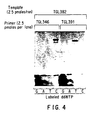
- Oligonucleotide TGL382 was purchased from the Midland Certified Reagent Company, Midland, Texas. It was biotinylated using Midland Certified Reagent Company's "Biotin dX” reagent (a biotin derivative phosphoramidite) which is suitable for use in automated DNA synthesis in the 5' terminal nucleotide position. The biotinylated oligonucleotide was then purified by anion exchange HPLC.
- Streptavidin-conjugated M-280 Dynabeads were washed in TNET buffer (10mM Tris-HCl, pH 7.5, 100mM NaCl, 1mM EDTA, 0.1% Triton X-100) and resuspended in the same buffer at a concentration of 7 X 10 8 beads/ml. 10-100 pmoles of biotinylated oligonucleotide TGL382 was incubated with 100 ⁇ l of the Dynabead suspension in TNET for 30 minutes at 20°C in order to allow the biotin moiety to bind to the streptavidin.
- TNET buffer 10mM Tris-HCl, pH 7.5, 100mM NaCl, 1mM EDTA, 0.1% Triton X-100
- the beads were then washed (using a magnet to immobilize them) three times with 200 ⁇ l of TNET and resuspended in 100 ⁇ l of TNET.
- 25 ⁇ l of this suspension of the Dynabeads with the attached template oligonucleotide was immobilized with the magnet, the TNET withdrawn, and 25 ⁇ l of 40 mM Tris-HCL, pH 7.5, 20 mM MgCl 2 , 50 mM NaCl, containing 2 ⁇ M of oligonucleotide primers 346 or 391, was added.
- the template and each primer were annealled by incubating them for 5 minutes at 65°C, followed by slow cooling over a period of 20 minutes to room temperature.
- Beads containing the bound template-primer complexes were washed twice with 200 ⁇ l TNET, followed by resuspension in 25 ⁇ l of 40 mM Tris-HCl, pH 7.5, 20 mM MgCl 2 , 50 mM NaCl.
- 35 S-labelled dideoxynucleoside triphosphate mixes (labelled nucleotide indicated in the form ddN*TP): ddG Mix 5 ⁇ M ddG*TP 10 ⁇ M ddATP 10 ⁇ M ddTTP 10 ⁇ M ddCTP ddA Mix 10 ⁇ M ddGTP 5 ⁇ M ddA*TP 10 ⁇ M ddTTP 10 ⁇ M ddCTP ddT Mix 10 ⁇ M ddGTP 10 ⁇ M ddATP 5 ⁇ M ddT*TP 10 ⁇ M ddCTP ddC Mix 10 ⁇ M ddGTP 10 ⁇ M ddATP 10 ⁇ M ddTTP 5 ⁇ M ddC*TP
- the ddN*TPs were the four respective [ ⁇ - thio - 35 S]dideoxynucleoside triphosphates (purchased from New England Nuclear).
- Extension reactions contained the following components: 5.0 ⁇ l bead suspension containing the annealled template-primer complex, 0.5 ⁇ l of 100 mM dithiothreitol, 0.5 ⁇ l of "Mn ++ solution" (100 mM MnCl 2 , 150 mM DL-isocitrate, pH 7.0; purchased from U.S.
- Reactions were allowed to proceed for 15 minutes at 20°C, then stopped by washing the magnetically immobilized beads three times with 500 ⁇ l TNET. Beads were resuspended in final volume of 25 ⁇ l TNET prior to the detection assays.
- Oligonucleotide TGL240 was synthesized with a primary amino group attached to its 5' terminus and coupled with biotin as described above.
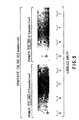
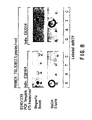
- TGL240 (biotinylated) and TGL239 (unbiotinylated) were used to amplify, via the polymerase chain reaction procedure (see "A. General Methods"), a region of DMA comprising a particular genetic locus in samples of mammalian genomic DNA. DNAs from two different individuals, each homozygous for a particular set of linked sequence polymorphisms (the "A" allele and the "B" allele -- see Figure 6), were examined.
- duplex PCR DNA was incubated with 100 ⁇ l of streptavidin-conjugated M-280 Dynabeads (7 X 10 8 beads/ml) in TNET buffer in order to bind the biotinylated strand to the beads. After binding, the beads were magnetically immobilized and washed three times with 200 ⁇ l of TNET, then resuspended in 100 ⁇ l of TNET. To remove the non-biotinylated strand, 500 ⁇ l of 0.15 N NaOH was added and the suspension incubated for 30 minutes at 20°C. The beads were then magnetically immobilized and washed once with 250 ⁇ l of 0.15 N NaOH, three times with 500 ⁇ l TNET, and resuspended in 100 ⁇ l of TNET.
- the detection primer, oligonucleotide TGL308 ( Figure 6), was annealled to the bead-bound PCR-generated template as described above in Example 4. Further washes, extension reactions, and detection assays were also carried out as described in Example 4.
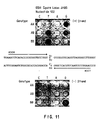
- Autoradiographic analyses of total bead-bound radioactivity, or primer-associated radioactivity after NaOH elution, are shown for these same individuals using the filter spotting assay ( Figure 8). For the analysis of primer only, 10 ⁇ l of 0.4 N NaoH was added to 10 ⁇ l of the bead suspension. After incubation for 10 minutes at room temperature, the beads were immobilized magnetically and the supernatant withdrawn and spotted onto nylon blotting membrane.
- Genomic DNA was isolated using the SDS/Proteinase K procedure (Maniatis, T. Molecular Cloning, A Laboratory Manual, Cold Spring Harbor Laboratory Press, Cold Spring Harbor, 1989) from peripheral blood nucleated cells of humans or horses enriched from red blood cells by selective lysis accomplished by diluting blood with a three fold volume excess of ACK lysing buffer (0.15 M ammonium chloride, 1 mM potassium bicarbonate, 0.1 mM EDTA). Oligonucleotides were prepared by solid-phase phosphoramidite chemistry using an Applied Biosystems, Inc. (Foster City, CA) Model 391 automated DNA synthesizer.
- oligonucleotide purification cartridge OPC
- Oligonucleotides derivatized with 5'-amino groups were prepared using Aminolink 2 purchased from Applied Biosystems and used according the manufacturer's recommendations.
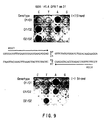
- Oligonucleotide Sequences Primers for first round amplification of equine locus JH85 were #91: and #92: Second round amplification of equine locus was achieved using nested primers #239: and #240: Amplification of human HLA DPA1 sequences (Marsh, S.G.E., Bodmer, J.G. HLA Class II Nucleotide Sequences, 1991. Human Immunol. 31:207-227) was accomplished with primers #467: and #445:
- PCR polymerase chain reaction
- a first step one hundred nanograms of genomic DNA was used in a reaction mixture containing each first round primer at a concentration of 2 ⁇ M/10 mM Tris pH 8.3/50 mM KCl/1.5 mM MgCl 2 /0.1% gelatin/0.05 units per ⁇ l Taq DNA Polymerase (AmpliTaq, Perkin Elmer Cetus, Norwalk, CT). Reactions were assembled and incubated at 94°C for 1.5 minutes, followed by 30 cycles of 94°C/1 minute, 60°C/2 minutes, 72°C/3 minutes. Single stranded DNA was prepared in a second "asymmetric" PCR in which the products of the first reaction were diluted 1/1000. One of the primers was used at the standard concentration of 2 ⁇ M while the other was used at 0.08 ⁇ M. Under these conditions, both single stranded and double stranded molecules were synthesized during the reaction.
- Biotinylated ddNTPs Biotinylated ddNTPs. Biotinylated ddNTPs were synthesized according to U.S. Patent No. 5,047,519.
- Hybridization, extension and detection in Microwell Plates Hybridization of single-stranded DNA to primers covalently coupled to 96-well plates was accomplished by adding an equal volume of 3M NaCl/50 mM EDTA to the second round asymmetric PCR and incubating each well with 20 ⁇ l of this mixture at 55°C for 30 minutes. The plate was subsequently washed three times with TNTw.
- An example of one method to practice the present invention involves obtaining from a convenient source, such as blood, epithelium, hair, or other tissue, samples of DNA or RNA, then amplifying in vitro specific regions of the nucleic acid using the polymerase chain reaction, transcription-based amplification (see Kwoh, et al., Proc. Natl. Acad. Sci. 80:1173 (1989)), etc. Amplification is accomplished using specific primers flanking the region of interest, with one or more of the primers being modified by having an attached affinity group (although in any given reaction only one such primer is modified at a time). A preferred modification is attachment of biotin moieties to the 5'-termini of the primers.
- a sample (typically, 0.5 - 5 pmoles) of the amplified DNA is then bound to streptavidin-conjugated magnetic microspheres (e.g., Dynal M-280 "Dynabeads") via the attached biotin moiety on the amplification primer.
- streptavidin-conjugated magnetic microspheres e.g., Dynal M-280 "Dynabeads"
- the DNA is denatured by adjusting the aqueous suspension containing the microspheres to a sufficiently alkaline pH, and the strand bound to the microspheres via the biotin-streptavidin link is separated from the complementary strand by washing under similar alkaline conditions.
- the microspheres are centrifuged or immobilized by the application of a magnetic field.
- the microsphere-bound strand is then used as a template in the remaining manipulations.
- a specific primer oligonucleotide is bound under high stringency annealing conditions, the sequence of the primer being consistent with unique binding to a site on the template strand immediately adjacent to a known DNA sequence polymorphism.
- a preferred sequence and mode of binding for the primer ensures that the primer forms a duplex with the template such that the 3'-terminal nucleotide of the primer forms a Watson-Crick basepair with the template nucleotide immediately adjacent to the site of the first nucleotide in the sequence polymorphism, without the duplex overlapping any of the polymorphic sequence to be analyzed.
- This arrangement causes the nucleotides added via template-directed, DNA polymerase-catalyzed, extension of the primer to be determined unambiguously by the polymorphic nucleotide sequence in the template.
- primer template complex is contacted, under conditions of salt, pH, and temperature compatible with template-directed DNA synthesis, with a suitable DNA polymerase and four different chain-terminating nucleotide analogues known to form specific base pairs with the bases in the template.
- the bases in the template as well as the chain-terminating analogues are based on the common nucleosides: adenosine, cytosine, guanine or inosine, thymidine or uridine.
- a preferred set of chain-terminating analogues are the four dideoxynucleoside triphosphates, ddATP, ddCTP, ddGTP, and ddTTP, where each of the four ddNTPs has been modified by attachment of a different fluorescent reporter group.
- These fluorescent tags would have the property of having spectroscopically distinguishable emission spectra, and in no case would the dideoxynucleoside triphosphate modification render the chain-terminating analogue unsuitable for DNA polymerase-catalyzed incorporation onto primer 3'-termini.
- the result of DNA polymerase-catalyzed chain extension in such a mixture with such a primer:template complex is the quantitative, specific and unambiguous incorporation of a fluorescent chain-terminating analogue onto the 3'-terminus of the primer, the particular fluorescent nucleotide added being solely dictated by the sequence of the polymorphic nucleotides in the template.
- the fluorescently-tagged primer:template complex is then separated from the reaction mix containing the unincorporated nucleotides by, for example, washing the magnetically immobilized beads in a suitable buffer. Additionally, it is desirable in some circumstances to then elute the primer from the immobilized template strand with NaOH, transfer the eluted primer to a separate medium or container, and subsequently determine the identity of the incorporated terminator. The identity of the attached fluorescent group is then assessed by illuminating the modified DNA strand with light, preferably provided by a laser, of a suitable wavelength and intensity and spectrophotometrically analyzing the emission spectrum produced.
- Magnetic microspheres must be manipulated with care in order to effectively wash and resuspend them. It is therefore difficult to envisage high volume, automated assays using these beads. Furthermore, they are deeply colored and are not adapted to calorimetric or fluorescent assays.
- the methodology of the invention has been adapted to allow the utilization of standard, polystyrene, 96-well microplates. These have the advantage of being widely used in clinical and research laboratories. There are a large number of liquid handling systems, including automated systems, adapted to this format. They are suited to optical signal detection methods and automated plate readers for different types of light detection are available.
- the template will always come from the nucleic acid sample of interest. These nucleic acids may be from a sample suspected of containing an infectious agent, one from an individual whose genotype is being determined, a sample from a patient suspected of having cancer, etc. If the immobilized partner of the hybrid complex to be extended is the template, each nucleic acid sample would have to be treated in such a way as to make immobilization possible. On the other hand, the primer for a given nucleic acid position to be interrogated will always be the same. Therefore, methods have been devised which allow the binding of the primer to the microplates and hybridization of single stranded template molecules to the plate-bound primer. This provides the additional feature of being able to make use of single-stranded templates produced in many different ways, including direct analysis of RNA.
- Radioactive methods are inconvenient and produce waste which is difficult to dispose of. For this reason, most commercial biochemistry detection systems have been converted to non-radioactive methods.
- ddNTPs which are labeled with biotin
- the method of the invention can be performed non-radioactively using a variety of detection systems including enzyme linked colorimetric assays.
- the template was prepared by PCR using derivatized primers to permit immobilization of the template on the solid phase. Derivitization of the template is no longer necessary when the primer is immobilized. Rather, using unequal concentrations of PCR primers in an otherwise standard PCR, it is possible to generate an excess of one single-stranded molecule or the other, depending on which primer is in excess. These serve as convenient templates for hybridization to plate-bound primer molecules.
Landscapes
- Chemical & Material Sciences (AREA)
- Life Sciences & Earth Sciences (AREA)
- Organic Chemistry (AREA)
- Proteomics, Peptides & Aminoacids (AREA)
- Health & Medical Sciences (AREA)
- Zoology (AREA)
- Wood Science & Technology (AREA)
- Engineering & Computer Science (AREA)
- Immunology (AREA)
- Analytical Chemistry (AREA)
- Molecular Biology (AREA)
- Bioinformatics & Cheminformatics (AREA)
- Biotechnology (AREA)
- Biophysics (AREA)
- Physics & Mathematics (AREA)
- Genetics & Genomics (AREA)
- Biochemistry (AREA)
- Microbiology (AREA)
- General Engineering & Computer Science (AREA)
- General Health & Medical Sciences (AREA)
- Chemical Kinetics & Catalysis (AREA)
- Cell Biology (AREA)
- Measuring Or Testing Involving Enzymes Or Micro-Organisms (AREA)
- Preparation Of Compounds By Using Micro-Organisms (AREA)
- Saccharide Compounds (AREA)
Claims (20)
- Verfahren zur Bestimmung der Identität einer Nucleotidbase an einer spezifischen Position in einer interessierenden Nucleinsäure, aufweisend:(a) alternativ:(i) wenn die interessierende Nucleinsäure doppelsträngig ist, Behandeln einer die Nucleinsäure enthaltenden Probe, um eine Matrizen-Nucleinsäure-Probe mit ungepaarten Basen zu erhalten, die eine Matrize aus ungepaarten, sich über die spezifische Position erstreckenden Nucleotidbasen aufweist, oder(ii) wenn die interessierende Nucleinsäure einzelsträngig ist, Erhalten einer Probe der Nucleinsäure, um als eine Matritzen-Nucleinsäure-Probe mit ungepaarten Basen zu dienen, die eine Matrize aus ungepaarten, sich über die spezifische Position erstreckenden Nucleotidbasen aufweist;(b) Erhalten eines Oligonucleotid- Primers mit einer Nucleotidsequenz, die zur Hybridisierung mit der Matrizen-Nucleinsäure fähig ist, um eine Duplex zu bilden, in der die zu identifizierende Nucleotidbase dem 3'-Ende des Primers unmittelbar benachbart und stromab von ihm ist;(c) Immobilisieren des Oligonucleotid-Primers auf einem festen Träger, um es dem immobiliserten Primer zu ermöglichen, mit der Matrizen-Nucleinsäure unter Bildung einer Duplex, in der die zu identifizierende Nucleotidbase dem 3'-Ende des Primers unmittelbar benachbart und stromab von ihm ist, zu hybridisieren;(d) in Berührung Bringen des immobiliserten Oligonucleotid-Primers unter Hybridisierungsbedingungen mit der Matrizen-Probe mit ungepaarten Basen aus Schritt (a), um auf dem festen Träger eine Duplex zwischen dem immobilisierten Primer und der Matrizen-Nucleinsäure zu bilden, worin die zu identifizierende Nucleotidbase dem 3-Ende des Primers in der Duplex unmittelbar benachbart und stromab von ihm ist;(e) in Berührung Bringen der Duplex aus Schritt (d) mit einer Reagens-Zusammensetzung, die einen wässerigen Träger und ein Gemisch von vier verschiedenen Terminatoren einer Nucleinsäure-Matrizen-abhängigen Primer-Extensionsreaktion aufweist, wobei jeder der Terminatoren zur spezifischen Beendigung der Extensionsreaktion in einer streng von der Identität der ungepaarten Nucleotidbase in der Matrize, die dem 3'-Ende des Primers unmittelbar benachbart und stromab von ihm ist, abhängigen Weise fähig ist, wobei einer der Terminatoren zu der zu identifizierenden Nucleotidbase komplementär ist und mindestens einer der Teminatoren mit einer nachweisbaren Markersubstanz markiert ist, unter Bedingungen, die eine Basenpaarung des in dem Reagens vorhandenen komplementären Terminators mit der zu identifizierenden Nucleotidbase und das Auftreten einer Matrizen-abhängigen Primer-Extensionsreaktion, um den komplementären Terminator am 3'-Ende des Primers unter Bildung eines verlängerten Primers dergestalt einzubauen, dass der Primer durch den komplementären Terminator verlängert wurde, erlauben;(f) Entfernen von nicht in den Primer eingebautem markierten Terminator von dem festen Träger; und(g) Identifizieren irgendeiner an dem 3'-Ende des immobilisierten verlängerten Primers aus Schritt (e) vorhandenen nachweisbaren Markersubstanz auf dem festen Träger, um die Identität der zu identifizierenden Nucleotidbase zu bestimmen.
- Verfahren nach Anspruch 1, bei dem jeder der vier Terminatoren mit einer nachweismäßig verschiedenen nachweisbaren Markersubstanz markiert wird.
- Verfahren nach Anspruch 1, bei dem der Oligonucleotid-Primer an einem von einer Mehrzahl getrennter Testplätze auf dem festen Träger immobilisiert wird.
- Verfahren nach Anspruch 3, bei dem die Schritte (c) bis (g) viermal mit demselben Oligonucleotid-Primer aus Schritt (b) und mit derselben Matrizen-Probe mit ungepaarten Basen aus Schritt (a) an vier getrennten Testplätzen auf dem festen Träger wiederholt werden, wobei in Schritt (e) an jedem der vier Testplätze eine entsprechende der vier verschiedenen Reagens-Zusammensetzungen verwendet wird, wobei in jeder der vier Reagens-Zusammensetzungen nur einer der Terminatoren mit einer nachweisbaren Markersubstanz markiert ist, wobei ein unterschiedlicher der vier Terminatoren in jeder der vier verschiedenen Reagens-Zusammensetzungen markiert ist, so dass das Identifizieren einer am 3'-Ende des immobilisierten verlängerten Primers von Schritt (e) vorhandenen nachweisbaren Markersubstanz an einem der vier Testplätze in Schritt (g) die Identität der zu identifizierenden Nucleotidbase bestimmt.
- Verfahren nach einem der vorangehenden Ansprüche, bei dem in dem Reagens von Schritt (e) die Terminatoren ein Nucleotid oder ein Nucleotid-Analog aufweisen.
- Verfahren nach Anspruch 5, bei dem die Terminatoren ein Dideoxynucleotid oder ein Arabinosid-triphosphat aufweisen.
- Verfahren nach Anspruch 6, bei dem die Terminatoren eines oder mehrere der Triphosphate ddATP, ddCTP, ddGTP oder ddTTP aufweisen.
- Verfahren zur Typisierung einer Nucleinsäuren enthaltenden Probe, aufweisend das Identifizieren der Nucleotidbase oder der Nucleotidbasen, die an jeder von einer oder von mehreren spezifischen Positionen vorhanden ist (sind), wobei jede derartige Nucleotidbase unter Verwendung eines Verfahrens, wie es in einem der Ansprüche 1 bis 7 beansprucht ist, identifiziert wird, und wobei jede derartige spezifische Position unter Verwendung eines unterschiedlichen Primers bestimmt wird, und bei dem die Identität jeder Nucleotidbase oder der Nucleotidbasen an jeder Position individuell bestimmt wird oder bei dem die Identitäten der Nucleotidbasen an verschiedenen Positionen gleichzeitig bestimmt werden.
- Verfahren zur Identifizierung verschiedener Allele in einer Nucleinsäuren enthaltenden Probe, aufweisend das Identifizieren der Nucleotidbase oder der Nucleotidbasen, die an jeder von einer oder mehreren spezifischen Positionen vorhanden ist (sind), wobei jede derartige Nucleotidbase nach einem Verfahren, wie es in einem der Ansprüche 1 bis 7 beansprucht ist, identifiziert wird.
- Verfahren zur Bestimmung des Genotyps eines Organismus an einem oder mehreren bestimmten Genorten, aufweisend:(a) Erhalten einer genomische DNA enthaltenden Probe von dem Organismus; und(b) Identifizieren der Nucleotidbase oder der Nucleotidbasen, die an jeder von einer oder mehreren spezifischen Positionen in interessierenden Nucleinsäuren vorhanden ist (sind), wobei die Base oder jede derartige Base unter Verwendung eines Verfahrens, wie es in einem der Ansprüche 1 bis 7 beansprucht ist, identifiziert wird, und dadurch Identifizieren von verschiedenen Alleleh, und dadurch wiederum Bestimmen des Genotyps des Organismus an einem bestimmten Genort oder mehreren bestimmten Genorten.
- Verfahren nach einem der Ansprüche 1 bis 7, bei dem vor der Primer-Extensionsreaktion in Schritt (e) die Matrize an ihrem 3'-Ende durch die Hinzufügung eines Terminators zu dem 3'-Ende der Matrize mit einer Kappe versehen wurde, wobei der Terminator zur Beendigung einer Matrizen-abhängigen Primer-Extensionsreaktion fähig ist.
- Verfahren nach einem der Ansprüche 1 bis 7, bei dem die Probe genomische DNA von einem Organismus, wozu eine Pflanze, ein Mikroorganismus, ein Virus, ein Vogel, ein Wirbeltier oder ein wirbelloses Tier, ein Säugetier, ein Mensch, ein Pferd, ein Hund, ein Rind, eine Katze, ein Schwein oder ein Schaf gehören, aufweist.
- Verfahren nach einem der Ansprüche 1 bis 7, bei dem der Primer zu der bekannten Basensequenz, die der zu identifizierenden Base unmittelbar benachbart ist, komplementär ist.
- Verfahren nach einem der Ansprüche 1 bis 7, bei dem der Primer unter Verwendung passender Denaturierungsbedingungen, wozu Wärme, Alkali, Formamid, Harnstoff, Glyoxal, Enzyme oder Kombinationen davon gehören, nach der Primer-Extensionsreaktion in Schritt (c) von der interessierenden Nucleinsäure abgetrennt wird.
- Verfahren nach Anspruch 1, bei dem die mit nachweisbaren Markersubstanzen markierten Terminatoren mit nachweisbaren Markersubstanzen, die nicht radioaktiv sind, markiert werden.
- Verfahren nach Anspruch 15, bei dem der Schritt (g) des Identifizierens irgendeiner nachweisbaren Markersubstanz an dem 3'-Ende des immobilisierten verlängerten Primers durch visuelle oder optische Mittel ausgeführt wird.
- Verfahren nach Anspruch 16, bei dem der feste Träger für ein Nachweisverfahren eines optischen Signals geeignet ist.
- Verfahren nach Anspruch 17, bei dem der feste Träger für einen optischen Signalnachweis unter Verwendung eines automatischen Plattenlesegeräts geeignet ist.
- Verfahren zu Bestimmung der Anwesenheit oder Abwesenheit einer bestimmten Nucleotidsequenz in einer interessierenden Nucleinsäure, aufweisend:(a) alternativ:(i) wenn die interessierende Nucleinsäure doppelsträngig ist, Behandeln einer die Nucleinsäure enthaltenden Probe, um eine Matrizen-Nucleinsäure-Probe mit ungepaarten Basen zu erhalten, die eine Matrize aus ungepaarten Nucleotidbasen aufweist, oder(ii) wenn die interessierende Nucleinsäure einzelsträngig ist, Erhalten einer Probe der Nucleinsäure, um als eine Matrizen-Nucleinsäure-Probe mit ungepaarten Basen, die eine Matrize aus ungepaarten Nucleotidbasen aufweist, zu dienen;(b) Erhalten eines Oligonucleotid-Primers mit einer Nucleotidsequenz, die zur Hybridisierung mit der bestimmten Nucleotidsequenz fähig ist, wenn die bestimmte Nucleotidsequenz in der Matrizen-Nucleinsäure vorhanden ist, um eine Primer-verlängerbare Duplex zwischen dem Primer und der bestimmten Nucleotidsequenz zu bilden, so dass der hybridisierte Primer an einem 3'-Ende durch eine Nucleinsäure-Matrizen-abhängige Primer-Extensionsreaktion verlängerbar ist;(c) Immobilisieren des Oligonucleotid-Primers an einem festen Träger, um es zu ermöglichen, dass der immobilisierte Primer mit der Matrizen-Nucleinsäure unter Bildung einer Primer-verlängerbaren Duplex hybridisiert, wenn die bestimmte Nucleotidsequenz in der Matrizen-Nucleinsäure vorhanden ist, so dass der hybridisierte Primer an dem 3'-Ende durch eine Nucleinsäure-Matrizen-abhängige Primer-Extensionsreaktion verlängerbar ist;(d) in Berührung Bringen des immobiliserten Oligonucleotid-Primers unter Hybridisierungsbedingungen mit einer Matrizen-Probe mit ungepaarten Basen aus Schritt (a), um auf dem festen Träger eine Primer-verlängerbare Duplex zwischen dem immobilisierten Primer und der Matrizen-Nucleinsäure zu bilden, wenn die bestimmte Nucleotidsequenz in der Matrizen-Nucleinsäure vorhanden ist, so dass der hybridisierte Primer an dem 3'-Ende durch eine Nucleinsäure-Matrizen-abhängige Primer-Extensionsreaktion verlängerbar ist;(e) in Berührung Bringen der Primer-verlängerbaren Duplex aus Schritt (d), falls vorhanden, mit einer Reagens-Zusammensetzung, die einen wässerigen Träger und ein Gemisch von vier verschiedenen Terminatoren einer Nucleinsäure-Matrizen-abhängigen Primer-Extensionsreaktion aufweist, wobei mindestens einer der Terminatoren mit einer nachweisbaren Markersubstanz markiert wird, wobei jeder der Teminatoren zur spezifischen Beendigung der Primer-Extensionsreaktion in einer von der Identität einer ungepaarten Nucleotidbase in einer Matrize, die dem 3'-Ende eines Primers, der an die Matrize so hybridisiert ist, dass der hybridisierte Primer an einem 3'-Ende durch die Primer-Extensionsreaktion verlängerbar ist, unmittelbar benachbart und stromab von ihm ist, abhängigen Weise fähig ist, wobei die Primer-verlängerbare Duplex, falls vorhanden, mit der Reagens-Zusammensetzung unter Bedingungen in Berührung gebracht wird, die eine Basenpaarung des in dem Reagens vorhandenen komplementären Terminators mit einer Nucleotidbase in der Matrizen-Nucleinsäure der Duplex, die dem 3'-Ende des hybridisierten Primers der Duplex unmittelbar benachbart und stromab von ihm ist, und das Auftreten der Matrizen-abhängigen Primer-Extensionsreaktion, um den komplementären Terminätor an dem 3'-Ende des Primers einzubauen, um einen verlängerten Primer zu bilden, so dass der Primer durch den komplementären Terminator verlängert wird, wenn die bestimmte Nucleotidsequenz in der Matrizen-Nucleinsäure vorhanden ist, wobei kein derartiger verlängerter Primer gebildet wird, wenn die bestimmte Nucleotidsequenz in der Matrizen- Nucleinsäure nicht vorhanden ist, erlauben;(f) Entfernen von nicht in den Primer eingebautem markiertem Terminator von dem festen Träger; und(g) Nachweisen der Anwesenheit oder Abwesenheit einer nachweisbaren Markierungssubstanz an dem 3'-Ende des immobiliserten Primers aus Schritt (e) auf dem festen Träger, um die Anwesenheit oder Abwesenheit der bestimmten Nucleotidsequenz in der interessierenden Nucleinsäure zu bestimmen.
- Verfahren zur Typisierung einer Nucleinsäuren enthaltenden Probe, aufweisend:(a) Bestimmen der Anwesenheit oder Abwesenheit einer oder mehrerer bestimmter Nucleotidsequenzen, wobei die Anwesenheit oder Abwesenheit jeder derartigen Nucleotidsequenz durch ein Verfahren, wie es in Anspruch 19 beansprucht wird, bestimmt wird; und gewünschtenfalls(b) Identifizieren der Nucleotidbase oder der Nucleotidbasen, die an jeder von einer oder mehreren spezifischen Positionen vorhanden ist (sind), wobei jede derartige Nucleotidbase unter Verwendung eines Verfahrens, wie es in einem der Ansprüche 1 bis 18 beansprucht wird, identifiziert wird, und wobei jede derartige spezifische Position unter Verwendung eines unterschiedlichen Primers bestimmt wird.
Priority Applications (1)
| Application Number | Priority Date | Filing Date | Title |
|---|---|---|---|
| EP04029613A EP1591533A1 (de) | 1991-03-05 | 1992-03-04 | Nukleinsäuretypisierung durch Polymeraseverlängerung von Oligonukleotiden unter Verwendung von Terminator-Mischungen |
Applications Claiming Priority (5)
| Application Number | Priority Date | Filing Date | Title |
|---|---|---|---|
| US07/664,837 US5888819A (en) | 1991-03-05 | 1991-03-05 | Method for determining nucleotide identity through primer extension |
| US664837 | 1991-03-05 | ||
| US07/775,786 US6004744A (en) | 1991-03-05 | 1991-10-11 | Method for determining nucleotide identity through extension of immobilized primer |
| US775786 | 1991-10-11 | ||
| PCT/US1992/001905 WO1992015712A1 (en) | 1991-03-05 | 1992-03-04 | Nucleic acid typing by polymerase extension of oligonucleotides using terminator mixtures |
Related Child Applications (1)
| Application Number | Title | Priority Date | Filing Date |
|---|---|---|---|
| EP04029613A Division EP1591533A1 (de) | 1991-03-05 | 1992-03-04 | Nukleinsäuretypisierung durch Polymeraseverlängerung von Oligonukleotiden unter Verwendung von Terminator-Mischungen |
Publications (3)
| Publication Number | Publication Date |
|---|---|
| EP0576558A1 EP0576558A1 (de) | 1994-01-05 |
| EP0576558A4 EP0576558A4 (en) | 1997-06-04 |
| EP0576558B1 true EP0576558B1 (de) | 2004-12-15 |
Family
ID=27099072
Family Applications (2)
| Application Number | Title | Priority Date | Filing Date |
|---|---|---|---|
| EP04029613A Withdrawn EP1591533A1 (de) | 1991-03-05 | 1992-03-04 | Nukleinsäuretypisierung durch Polymeraseverlängerung von Oligonukleotiden unter Verwendung von Terminator-Mischungen |
| EP92908554A Expired - Lifetime EP0576558B1 (de) | 1991-03-05 | 1992-03-04 | Nukleinsäuretypisierung durch polymeraseverlängerung von oligonukleotiden unter verwendung von terminator-mischungen |
Family Applications Before (1)
| Application Number | Title | Priority Date | Filing Date |
|---|---|---|---|
| EP04029613A Withdrawn EP1591533A1 (de) | 1991-03-05 | 1992-03-04 | Nukleinsäuretypisierung durch Polymeraseverlängerung von Oligonukleotiden unter Verwendung von Terminator-Mischungen |
Country Status (10)
| Country | Link |
|---|---|
| US (2) | US6004744A (de) |
| EP (2) | EP1591533A1 (de) |
| JP (1) | JPH06505394A (de) |
| AT (1) | ATE284973T1 (de) |
| AU (1) | AU660173B2 (de) |
| CA (1) | CA2105060C (de) |
| DE (1) | DE69233458T2 (de) |
| FI (2) | FI106871B (de) |
| NO (1) | NO933136D0 (de) |
| WO (1) | WO1992015712A1 (de) |
Cited By (2)
| Publication number | Priority date | Publication date | Assignee | Title |
|---|---|---|---|---|
| US7803579B2 (en) | 2002-10-29 | 2010-09-28 | Riken | Process for amplifying nucleic acid |
| US8206902B2 (en) | 2003-12-25 | 2012-06-26 | Riken | Method of amplifying nucleic acid and method of detecting mutated nucleic acid using the same |
Families Citing this family (411)
| Publication number | Priority date | Publication date | Assignee | Title |
|---|---|---|---|---|
| IE61148B1 (en) * | 1988-03-10 | 1994-10-05 | Ici Plc | Method of detecting nucleotide sequences |
| US6013431A (en) * | 1990-02-16 | 2000-01-11 | Molecular Tool, Inc. | Method for determining specific nucleotide variations by primer extension in the presence of mixture of labeled nucleotides and terminators |
| US6004744A (en) * | 1991-03-05 | 1999-12-21 | Molecular Tool, Inc. | Method for determining nucleotide identity through extension of immobilized primer |
| US5762876A (en) * | 1991-03-05 | 1998-06-09 | Molecular Tool, Inc. | Automatic genotype determination |
| GB9210176D0 (en) * | 1992-05-12 | 1992-06-24 | Cemu Bioteknik Ab | Chemical method |
| US5710028A (en) * | 1992-07-02 | 1998-01-20 | Eyal; Nurit | Method of quick screening and identification of specific DNA sequences by single nucleotide primer extension and kits therefor |
| EP0648222B1 (de) * | 1992-07-02 | 2003-01-29 | Savyon Diagnostics Ltd. | Verfahren zur einfachen nukleotid-primer-verlängerung zum nachweis spezifischer allele und dafür geeigneter kit |
| US5605798A (en) | 1993-01-07 | 1997-02-25 | Sequenom, Inc. | DNA diagnostic based on mass spectrometry |
| US7001722B1 (en) | 1993-06-22 | 2006-02-21 | Baylor College Of Medicine | Parallel primer extension approach to nucleic acid sequence analysis |
| SE501439C2 (sv) * | 1993-06-22 | 1995-02-13 | Pharmacia Lkb Biotech | Sätt och anordning för analys av polynukleotidsekvenser |
| US6153379A (en) * | 1993-06-22 | 2000-11-28 | Baylor College Of Medicine | Parallel primer extension approach to nucleic acid sequence analysis |
| ES2240970T3 (es) * | 1993-11-03 | 2005-10-16 | Orchid Biosciences, Inc. | Polimorfismos de nucleotido simple y su uso en analisis geneticos. |
| US5610287A (en) * | 1993-12-06 | 1997-03-11 | Molecular Tool, Inc. | Method for immobilizing nucleic acid molecules |
| CA2177720A1 (en) | 1993-12-23 | 1995-06-29 | Stephen E. Lincoln | Automatic genotype determination |
| WO1995019447A1 (en) * | 1994-01-14 | 1995-07-20 | The Jockey Club | Non-invasive sampling method for nucleic acid analysis |
| DE69531542T2 (de) * | 1994-02-07 | 2004-06-24 | Beckman Coulter, Inc., Fullerton | Ligase/polymerase-vermittelte analyse genetischer elemente von einzelnukleotid-polymorphismen und ihre verwendung in der genetischen analyse |
| US5714330A (en) * | 1994-04-04 | 1998-02-03 | Lynx Therapeutics, Inc. | DNA sequencing by stepwise ligation and cleavage |
| US5552278A (en) * | 1994-04-04 | 1996-09-03 | Spectragen, Inc. | DNA sequencing by stepwise ligation and cleavage |
| GB9417211D0 (en) * | 1994-08-25 | 1994-10-12 | Solicitor For The Affairs Of H | Nucleotide sequencing method |
| US6013445A (en) * | 1996-06-06 | 2000-01-11 | Lynx Therapeutics, Inc. | Massively parallel signature sequencing by ligation of encoded adaptors |
| USRE43097E1 (en) | 1994-10-13 | 2012-01-10 | Illumina, Inc. | Massively parallel signature sequencing by ligation of encoded adaptors |
| GB9507238D0 (en) | 1995-04-07 | 1995-05-31 | Isis Innovation | Detecting dna sequence variations |
| US7803529B1 (en) | 1995-04-11 | 2010-09-28 | Sequenom, Inc. | Solid phase sequencing of biopolymers |
| DE19515552A1 (de) * | 1995-04-27 | 1996-10-31 | Europ Lab Molekularbiolog | Simultane Sequenzierung von Nukleinsäuren |
| US5830655A (en) | 1995-05-22 | 1998-11-03 | Sri International | Oligonucleotide sizing using cleavable primers |
| US5763175A (en) * | 1995-11-17 | 1998-06-09 | Lynx Therapeutics, Inc. | Simultaneous sequencing of tagged polynucleotides |
| AU2069597A (en) | 1996-03-04 | 1997-09-22 | Genetrace Systems, Inc. | Methods of screening nucleic acids using mass spectrometry |
| AU2320597A (en) * | 1996-03-19 | 1997-10-10 | Molecular Tool, Inc. | Method for determining the nucleotide sequence of a polynucleotide |
| ES2288760T3 (es) | 1996-04-25 | 2008-01-16 | Bioarray Solutions Ltd. | Ensamblaje electrocinetico controlado por luz de particulas proximas a superficies. |
| US5965363A (en) | 1996-09-19 | 1999-10-12 | Genetrace Systems Inc. | Methods of preparing nucleic acids for mass spectrometric analysis |
| US6096273A (en) | 1996-11-05 | 2000-08-01 | Clinical Micro Sensors | Electrodes linked via conductive oligomers to nucleic acids |
| US7381525B1 (en) | 1997-03-07 | 2008-06-03 | Clinical Micro Sensors, Inc. | AC/DC voltage apparatus for detection of nucleic acids |
| EP0954612A2 (de) | 1996-11-06 | 1999-11-10 | Sequenom, Inc. | Dna-diagnostik mittels massenspektrometrie |
| US6133436A (en) * | 1996-11-06 | 2000-10-17 | Sequenom, Inc. | Beads bound to a solid support and to nucleic acids |
| CA2274587A1 (en) | 1996-12-10 | 1998-06-18 | Genetrace Systems Inc. | Releasable nonvolatile mass-label molecules |
| EP1009802B1 (de) | 1997-02-12 | 2004-08-11 | Eugene Y. Chan | Verfahren zur analyse von polymeren |
| WO1998038338A1 (en) * | 1997-02-28 | 1998-09-03 | Exact Laboratories, Inc. | Nucleic acid analysis methods |
| US5837860A (en) * | 1997-03-05 | 1998-11-17 | Molecular Tool, Inc. | Covalent attachment of nucleic acid molecules onto solid-phases via disulfide bonds |
| US6524795B1 (en) | 1997-03-10 | 2003-02-25 | Interleukin Genetics, Inc. | Diagnostics for cardiovascular disorders |
| ATE335845T1 (de) | 1997-05-16 | 2006-09-15 | Exact Sciences Corp | Elektrophoretische analyse von molekülen mit immobilisierten sonden |
| US6309829B1 (en) | 1997-05-27 | 2001-10-30 | Pe Corporation (Ny) | Length determination of nucleic acid repeat sequences by discontinuous primer extension |
| US5919626A (en) * | 1997-06-06 | 1999-07-06 | Orchid Bio Computer, Inc. | Attachment of unmodified nucleic acids to silanized solid phase surfaces |
| US6566101B1 (en) | 1997-06-16 | 2003-05-20 | Anthony P. Shuber | Primer extension methods for detecting nucleic acids |
| US5888778A (en) * | 1997-06-16 | 1999-03-30 | Exact Laboratories, Inc. | High-throughput screening method for identification of genetic mutations or disease-causing microorganisms using segmented primers |
| WO1998059066A1 (en) * | 1997-06-25 | 1998-12-30 | Orchid Biocomputer, Inc. | Methods for the detection of multiple single nucleotide polymorphisms in a single reaction |
| DK1017848T3 (da) † | 1997-07-28 | 2003-02-10 | Medical Biosystems Ltd | Nucleinsyresekvensanalyse |
| US7745142B2 (en) | 1997-09-15 | 2010-06-29 | Molecular Devices Corporation | Molecular modification assays |
| US7632651B2 (en) | 1997-09-15 | 2009-12-15 | Mds Analytical Technologies (Us) Inc. | Molecular modification assays |
| US7070921B2 (en) | 2000-04-28 | 2006-07-04 | Molecular Devices Corporation | Molecular modification assays |
| US6297018B1 (en) | 1998-04-17 | 2001-10-02 | Ljl Biosystems, Inc. | Methods and apparatus for detecting nucleic acid polymorphisms |
| US6982431B2 (en) | 1998-08-31 | 2006-01-03 | Molecular Devices Corporation | Sample analysis systems |
| US6255051B1 (en) | 1997-11-06 | 2001-07-03 | Mosaic Technologies Inc. | Multiple sequential polynucleotide displacement reactions for signal amplification and processing |
| US6322968B1 (en) | 1997-11-21 | 2001-11-27 | Orchid Biosciences, Inc. | De novo or “universal” sequencing array |
| US6893877B2 (en) | 1998-01-12 | 2005-05-17 | Massachusetts Institute Of Technology | Methods for screening substances in a microwell array |
| EP2286918B1 (de) * | 1998-01-12 | 2014-10-01 | Massachusetts Institute of Technology | Verfahren zur Mikrotestdurchführung |
| EP1051523A2 (de) * | 1998-02-02 | 2000-11-15 | Amersham Pharmacia Biotech AB | Nuklein-säure analyse verfahren |
| WO1999047535A1 (en) | 1998-03-16 | 1999-09-23 | Millennium Pharmaceuticals, Inc. | METHODS AND COMPOSITIONS FOR DIAGNOSING AND TREATING CHROMOSOME-18p RELATED DISORDERS |
| US6780591B2 (en) * | 1998-05-01 | 2004-08-24 | Arizona Board Of Regents | Method of determining the nucleotide sequence of oligonucleotides and DNA molecules |
| US7875440B2 (en) * | 1998-05-01 | 2011-01-25 | Arizona Board Of Regents | Method of determining the nucleotide sequence of oligonucleotides and DNA molecules |
| US6872521B1 (en) | 1998-06-16 | 2005-03-29 | Beckman Coulter, Inc. | Polymerase signaling assay |
| JP2002518060A (ja) * | 1998-06-24 | 2002-06-25 | グラクソ グループ リミテッド | ヌクレオチド検出法 |
| US6218118B1 (en) | 1998-07-09 | 2001-04-17 | Agilent Technologies, Inc. | Method and mixture reagents for analyzing the nucleotide sequence of nucleic acids by mass spectrometry |
| US6238927B1 (en) | 1998-10-05 | 2001-05-29 | Mosaic Technologies, Incorporated | Reverse displacement assay for detection of nucleic acid sequences |
| US6451525B1 (en) | 1998-12-03 | 2002-09-17 | Pe Corporation (Ny) | Parallel sequencing method |
| US6743578B1 (en) | 1998-12-18 | 2004-06-01 | The Regents Of The University Of California | Method for the detection of specific nucleic acid sequences by polymerase nucleotide incorporation |
| EP1141402A4 (de) * | 1998-12-18 | 2004-10-06 | Univ California | Methode zur detektion spezifischer nukleinsäuresequenzen durch einbau von nukleotiden mittels polymerase |
| US6280947B1 (en) | 1999-08-11 | 2001-08-28 | Exact Sciences Corporation | Methods for detecting nucleotide insertion or deletion using primer extension |
| US6503718B2 (en) | 1999-01-10 | 2003-01-07 | Exact Sciences Corporation | Methods for detecting mutations using primer extension for detecting disease |
| AU2505000A (en) * | 1999-01-15 | 2000-08-01 | Myriad Genetics, Inc. | Method for controlling the distribution of dna sequencing termination products |
| EP1218536A2 (de) | 1999-02-12 | 2002-07-03 | Genset | Biallele marker abgeleitet von genomischen regionen, die gene enthalten, die am arachidonsäure stoffwechsel beteiligt sind |
| NZ513390A (en) | 1999-03-19 | 2003-01-31 | Genencor Int | Multi-through hole testing plate for high throughput screening |
| US6573047B1 (en) | 1999-04-13 | 2003-06-03 | Dna Sciences, Inc. | Detection of nucleotide sequence variation through fluorescence resonance energy transfer label generation |
| US20060275782A1 (en) | 1999-04-20 | 2006-12-07 | Illumina, Inc. | Detection of nucleic acid reactions on bead arrays |
| CA2370976C (en) | 1999-04-20 | 2009-10-20 | Illumina, Inc. | Detection of nucleic acid reactions on bead arrays |
| US7056661B2 (en) * | 1999-05-19 | 2006-06-06 | Cornell Research Foundation, Inc. | Method for sequencing nucleic acid molecules |
| US20020119448A1 (en) | 1999-06-23 | 2002-08-29 | Joseph A. Sorge | Methods of enriching for and identifying polymorphisms |
| US7501245B2 (en) * | 1999-06-28 | 2009-03-10 | Helicos Biosciences Corp. | Methods and apparatuses for analyzing polynucleotide sequences |
| US6818395B1 (en) * | 1999-06-28 | 2004-11-16 | California Institute Of Technology | Methods and apparatus for analyzing polynucleotide sequences |
| WO2001004357A2 (en) | 1999-07-13 | 2001-01-18 | Whitehead Institute For Biomedical Research | Generic sbe-fret protocol |
| US20020045182A1 (en) * | 1999-07-16 | 2002-04-18 | Lynx Therapeutics, Inc. | Multiplexed differential displacement for nucleic acid determinations |
| ATE417127T1 (de) | 1999-07-26 | 2008-12-15 | Clinical Micro Sensors Inc | Nukelinsäuresequenzbestimmung mittels elektronischem nachweis |
| AU782726B2 (en) * | 1999-07-28 | 2005-08-25 | Commissariat A L'energie Atomique | Integration of biochemical protocols in a continuous flow microfluidic device |
| CA2384838C (en) | 1999-09-13 | 2006-07-18 | Nugen Technologies, Inc. | Methods and compositions for linear isothermal amplification of polynucleotide sequences |
| US6692918B2 (en) | 1999-09-13 | 2004-02-17 | Nugen Technologies, Inc. | Methods and compositions for linear isothermal amplification of polynucleotide sequences |
| WO2001023411A2 (en) * | 1999-09-30 | 2001-04-05 | New England Biolabs, Inc. | Incorporation of modified nucleotides by archaeon dna polymerases and related methods |
| WO2001027327A2 (en) | 1999-10-08 | 2001-04-19 | Protogene Laboratories, Inc. | Method and apparatus for performing large numbers of reactions using array assembly |
| US20030190644A1 (en) | 1999-10-13 | 2003-10-09 | Andreas Braun | Methods for generating databases and databases for identifying polymorphic genetic markers |
| US6287778B1 (en) * | 1999-10-19 | 2001-09-11 | Affymetrix, Inc. | Allele detection using primer extension with sequence-coded identity tags |
| US6642000B1 (en) | 1999-11-12 | 2003-11-04 | University Of Chicago | PCR amplification on microarrays of gel immobilized oligonucleotides |
| JP2003517309A (ja) | 1999-12-02 | 2003-05-27 | ディーエヌエー サイエンシーズ インコーポレーテッド | 単一ヌクレオチドの変異及びジェノタイピングの決定方法 |
| US6518024B2 (en) | 1999-12-13 | 2003-02-11 | Motorola, Inc. | Electrochemical detection of single base extension |
| US20010031467A1 (en) * | 1999-12-10 | 2001-10-18 | Johannes Dapprich | Method for selectively isolating a nucleic acid |
| US6762018B1 (en) | 1999-12-23 | 2004-07-13 | Tetragen Sa | Analysis of nucleotide polymorphisms at a site |
| ATE412774T1 (de) | 2000-02-16 | 2008-11-15 | Illumina Inc | Parallele genotypisierung mehrerer patientenproben |
| US20020151040A1 (en) | 2000-02-18 | 2002-10-17 | Matthew O' Keefe | Apparatus and methods for parallel processing of microvolume liquid reactions |
| WO2001061054A2 (en) | 2000-02-18 | 2001-08-23 | Board Of Trustees Of The Leland Stanford Junior University | Apparatus and methods for parallel processing of micro-volume liquid reactions |
| CA2401775A1 (en) | 2000-02-29 | 2001-09-07 | Abbot F. Clark | Diagnostics and therapeutics for glaucoma |
| FR2805826B1 (fr) * | 2000-03-01 | 2002-09-20 | Nucleica | Nouvelles puces a adn |
| WO2001075139A1 (en) * | 2000-04-03 | 2001-10-11 | Biolink Partners, Inc. | Reversible chemical modification of nucleic acids and improved method for nucleic acid hybridization |
| US7229756B1 (en) | 2000-10-19 | 2007-06-12 | University Of Cincinnati | Alpha-2B-adrenergic receptor polymorphisms |
| AU2001255448A1 (en) * | 2000-04-17 | 2001-10-30 | Stephen B. Liggett | Alpha-2 adrenergic receptor polymorphisms |
| US6656700B2 (en) | 2000-05-26 | 2003-12-02 | Amersham Plc | Isoforms of human pregnancy-associated protein-E |
| US6686188B2 (en) | 2000-05-26 | 2004-02-03 | Amersham Plc | Polynucleotide encoding a human myosin-like polypeptide expressed predominantly in heart and muscle |
| US6355433B1 (en) | 2000-06-02 | 2002-03-12 | Dna Sciences, Inc. | Determination of nucleotide sequence variations through limited primer extension |
| AU2001268468A1 (en) | 2000-06-13 | 2001-12-24 | The Trustees Of Boston University | Use of nucleotide analogs in the analysis of oligonucleotide mixtures and in highly multiplexed nucleic acid sequencing |
| US7892854B2 (en) | 2000-06-21 | 2011-02-22 | Bioarray Solutions, Ltd. | Multianalyte molecular analysis using application-specific random particle arrays |
| US9709559B2 (en) | 2000-06-21 | 2017-07-18 | Bioarray Solutions, Ltd. | Multianalyte molecular analysis using application-specific random particle arrays |
| ATE455186T1 (de) * | 2000-06-26 | 2010-01-15 | Nugen Technologies Inc | Methoden und zusammensetzungen zur auf transkription basierenden vervielfältigung von nukleinsäuren |
| US7846733B2 (en) | 2000-06-26 | 2010-12-07 | Nugen Technologies, Inc. | Methods and compositions for transcription-based nucleic acid amplification |
| US6958214B2 (en) | 2000-07-10 | 2005-10-25 | Sequenom, Inc. | Polymorphic kinase anchor proteins and nucleic acids encoding the same |
| WO2002012497A2 (en) * | 2000-08-03 | 2002-02-14 | Genaissance Pharmaceuticals, Inc. | Haplotypes of the nfkbib gene |
| AU2001284736A1 (en) * | 2000-08-04 | 2002-02-18 | Genaissance Pharmaceuticals, Inc. | Haplotypes of the pla2g1b gene |
| US7211386B2 (en) * | 2000-08-10 | 2007-05-01 | University Of Cincinnati | Alpha-2A-adrenergic receptor polymorphisms |
| US6900013B1 (en) | 2000-08-25 | 2005-05-31 | Aviva Biosciences Corporation | Methods and compositions for identifying nucleic acid molecules using nucleolytic activities and hybridization |
| WO2002016647A1 (en) * | 2000-08-24 | 2002-02-28 | Aviva Biosciences Corporation | Methods and compositions for identifying nucleic acid molecules using nucleolytic activities and hybridization |
| JP2003000268A (ja) | 2000-08-25 | 2003-01-07 | Pfizer Prod Inc | 血管新生にかかわる疾患を診断および治療するための方法および組成物 |
| GB0021286D0 (en) * | 2000-08-30 | 2000-10-18 | Gemini Genomics Ab | Identification of drug metabolic capacity |
| CH699253B1 (de) * | 2000-09-18 | 2010-02-15 | Eidgenoessische Forschungsanst | Verfahren zur Charakterisierung und/oder Identifikation von Genomen. |
| WO2002038806A2 (de) * | 2000-11-13 | 2002-05-16 | Gnothis Holding Sa | Nachweis von nukleinsäure-polymorphismen |
| WO2002040874A1 (en) | 2000-11-16 | 2002-05-23 | California Institute Of Technology | Apparatus and methods for conducting assays and high throughput screening |
| US7211414B2 (en) | 2000-12-01 | 2007-05-01 | Visigen Biotechnologies, Inc. | Enzymatic nucleic acid synthesis: compositions and methods for altering monomer incorporation fidelity |
| WO2002048402A2 (en) | 2000-12-13 | 2002-06-20 | Nugen Technologies, Inc. | Methods and compositions for generation of multiple copies of nucleic acid sequences and methods of detection thereof |
| US7054758B2 (en) * | 2001-01-30 | 2006-05-30 | Sciona Limited | Computer-assisted means for assessing lifestyle risk factors |
| KR20030082535A (ko) | 2001-03-09 | 2003-10-22 | 뉴젠 테크놀로지스 인코포레이티드 | Rna 서열의 증폭을 위한 방법 및 조성물 |
| CA2439074A1 (en) | 2001-03-09 | 2002-09-19 | Nugen Technologies, Inc. | Methods and compositions for amplification of rna sequences |
| WO2002072892A1 (en) | 2001-03-12 | 2002-09-19 | California Institute Of Technology | Methods and apparatus for analyzing polynucleotide sequences by asynchronous base extension |
| US20040038206A1 (en) * | 2001-03-14 | 2004-02-26 | Jia Zhang | Method for high throughput assay of genetic analysis |
| US6428964B1 (en) | 2001-03-15 | 2002-08-06 | Exact Sciences Corporation | Method for alteration detection |
| JP2004532026A (ja) * | 2001-03-30 | 2004-10-21 | アメルシャム・バイオサイエンシーズ・アクチボラグ | P450単一ヌクレオチド多型バイオチップ分析 |
| US20020146698A1 (en) | 2001-04-05 | 2002-10-10 | Genelink, Inc. | Kits and methods for assessing oxidative stress |
| US7211383B2 (en) * | 2001-04-05 | 2007-05-01 | Genelink, Inc. | Kits and methods for assessing skin health |
| EP1950305A1 (de) | 2001-05-09 | 2008-07-30 | Monsanto Technology, LLC | Tyr-A-Gene und ihre Verwendung |
| US6653082B2 (en) | 2001-05-17 | 2003-11-25 | Baylor College Of Medicine | Substrate-bound cleavage assay for nucleic acid analysis |
| WO2002097109A2 (en) * | 2001-05-25 | 2002-12-05 | Invitrogen Corporation | Compositions and methods for extension of nucleic acids |
| US7262063B2 (en) | 2001-06-21 | 2007-08-28 | Bio Array Solutions, Ltd. | Directed assembly of functional heterostructures |
| EP1572878A4 (de) | 2001-06-29 | 2007-03-21 | Dnaprint Genomics Inc | Zusammensetzungen und verfahren zum schliessen auf eine reaktion gegenüber einem statin |
| US7668697B2 (en) | 2006-02-06 | 2010-02-23 | Andrei Volkov | Method for analyzing dynamic detectable events at the single molecule level |
| EP1632778A3 (de) | 2001-07-09 | 2006-03-29 | Euroscreen S.A. | Natürlicher Ligand von gpcr chemr23 und dessen Verwendungen |
| US20040078837A1 (en) * | 2001-08-02 | 2004-04-22 | Shannon Mark E. | Four human zinc-finger-containing proteins: MDZ3, MDZ4, MDZ7 and MDZ12 |
| GB0119719D0 (en) * | 2001-08-13 | 2001-10-03 | Solexa Ltd | DNA sequence analysis |
| WO2003016477A2 (en) | 2001-08-14 | 2003-02-27 | Sentigen Corp. | Insect or83b odorant receptor |
| US6995841B2 (en) * | 2001-08-28 | 2006-02-07 | Rice University | Pulsed-multiline excitation for color-blind fluorescence detection |
| DE20116898U1 (de) * | 2001-10-15 | 2002-01-17 | FESTO AG & Co., 73734 Esslingen | Mikroventil |
| US20070264641A1 (en) * | 2001-10-15 | 2007-11-15 | Li Alice X | Multiplexed analysis of polymorphic loci by concurrent interrogation and enzyme-mediated detection |
| CA2497740C (en) * | 2001-10-15 | 2011-06-21 | Bioarray Solutions, Ltd. | Multiplexed analysis of polymorphic loci by probe elongation-mediated detection |
| US20040067512A1 (en) * | 2001-11-09 | 2004-04-08 | Neurogenetics, Inc. | Single nucleotide polymorphisms and mutations on Alpha-2-Macroglobulin |
| WO2003051174A2 (en) * | 2001-11-09 | 2003-06-26 | Neurogenetics, Inc. | Single nucleotide polymorphisms and mutations on alpha-2-macroglobulin |
| WO2003048295A1 (en) | 2001-11-30 | 2003-06-12 | Fluidigm Corporation | Microfluidic device and methods of using same |
| ATE503845T1 (de) | 2001-12-10 | 2011-04-15 | Novartis Pharma Gmbh | Verfahren zur behandlung von psychosen und schizophrenie auf der basis eines polymorphismus im cntf gen |
| WO2003054167A2 (en) * | 2001-12-20 | 2003-07-03 | Merck & Co., Inc. | Identification of novel polymorphic sites in the human mglur8 gene and uses thereof |
| AU2003202542A1 (en) | 2002-01-07 | 2003-07-24 | Euroscreen S.A. | Ligand for g-protein coupled receptor gpr43 and uses thereof |
| EP1465998A2 (de) | 2002-01-08 | 2004-10-13 | Bayer HealthCare AG | Herz-kreislauf-erkrankung und medikamentenwirkung voraussagende einzelnukleotid-polymorphismen |
| US6977162B2 (en) | 2002-03-01 | 2005-12-20 | Ravgen, Inc. | Rapid analysis of variations in a genome |
| NZ535044A (en) * | 2002-03-01 | 2008-12-24 | Ravgen Inc | Non-invasive method to determine the genetic sequence of foetal DNA from a sample from a pregnant female thereby detecting any alternation in gene sequence as compared with the wild type sequence |
| US20030170637A1 (en) * | 2002-03-06 | 2003-09-11 | Pirrung Michael C. | Method of analyzing mRNA splice variants |
| GB0205455D0 (en) | 2002-03-07 | 2002-04-24 | Molecular Sensing Plc | Nucleic acid probes, their synthesis and use |
| US7211382B2 (en) * | 2002-04-09 | 2007-05-01 | Orchid Cellmark Inc. | Primer extension using modified nucleotides |
| US7432342B2 (en) | 2002-05-03 | 2008-10-07 | Sequenom, Inc. | Kinase anchor protein muteins, peptides thereof and related documents |
| US7442506B2 (en) | 2002-05-08 | 2008-10-28 | Ravgen, Inc. | Methods for detection of genetic disorders |
| US7727720B2 (en) | 2002-05-08 | 2010-06-01 | Ravgen, Inc. | Methods for detection of genetic disorders |
| US20030220844A1 (en) * | 2002-05-24 | 2003-11-27 | Marnellos Georgios E. | Method and system for purchasing genetic data |
| US20030235827A1 (en) * | 2002-06-25 | 2003-12-25 | Orchid Biosciences, Inc. | Methods and compositions for monitoring primer extension and polymorphism detection reactions |
| DE60335116D1 (de) * | 2002-06-28 | 2011-01-05 | Primeradx Inc | Verfahren zum nachweis von sequenzunterschieden |
| CN100354298C (zh) * | 2002-06-28 | 2007-12-12 | 兰华生物科技公司 | 使用单核苷酸多态性组分析受损样品的方法和组合物 |
| US20040023220A1 (en) * | 2002-07-23 | 2004-02-05 | Lawrence Greenfield | Integrated method for PCR cleanup and oligonucleotide removal |
| EP2385137A1 (de) | 2002-07-31 | 2011-11-09 | University of Southern California | Polymorphismen zur Vorhersage des Krankheits- und Behandlungsausgangs |
| US7192700B2 (en) * | 2002-12-20 | 2007-03-20 | Orchid Cellmark Inc. | Methods and compositions for conducting primer extension and polymorphism detection reactions |
| CA2497570A1 (en) * | 2002-08-02 | 2004-02-12 | Orchid Biosciences, Inc. | Methods and compositions for genotyping |
| US8277753B2 (en) | 2002-08-23 | 2012-10-02 | Life Technologies Corporation | Microfluidic transfer pin |
| US20040067492A1 (en) * | 2002-10-04 | 2004-04-08 | Allan Peng | Reverse transcription on microarrays |
| WO2004047007A1 (en) | 2002-11-15 | 2004-06-03 | Bioarray Solutions, Ltd. | Analysis, secure access to, and transmission of array images |
| EP2112229A3 (de) | 2002-11-25 | 2009-12-02 | Sequenom, Inc. | Verfahren zum Identifizieren des Brustkrebsrisikos und zugehörige Behandlungen |
| WO2004074818A2 (en) | 2002-12-20 | 2004-09-02 | Biotrove, Inc. | Assay apparatus and method using microfluidic arrays |
| US20040126765A1 (en) * | 2002-12-27 | 2004-07-01 | Adams Craig W. | Method and compositions for sequencing nucleic acid molecules |
| US20040175704A1 (en) | 2003-03-06 | 2004-09-09 | Stratagene | Compositions and methods for polynucleotide sequence detection |
| WO2006102264A1 (en) | 2005-03-18 | 2006-09-28 | Fluidigm Corporation | Thermal reaction device and method for using the same |
| WO2004089810A2 (en) | 2003-04-03 | 2004-10-21 | Fluidigm Corp. | Microfluidic devices and methods of using same |
| JP2006523465A (ja) | 2003-04-14 | 2006-10-19 | ニューゲン テクノロジーズ, インコーポレイテッド | ランダムにプライミングされる複合プライマーを用いる大規模増幅 |
| US7897744B2 (en) * | 2003-04-28 | 2011-03-01 | The Public Health Agency Of Canada | SARS virus nucleotide and amino acid sequences and uses thereof |
| US20050170367A1 (en) * | 2003-06-10 | 2005-08-04 | Quake Stephen R. | Fluorescently labeled nucleoside triphosphates and analogs thereof for sequencing nucleic acids |
| EP1636337A4 (de) | 2003-06-20 | 2007-07-04 | Illumina Inc | Verfahren und zusammensetzungen zur ganzgenomischen amplifikation und genotypisierung |
| US20040259100A1 (en) * | 2003-06-20 | 2004-12-23 | Illumina, Inc. | Methods and compositions for whole genome amplification and genotyping |
| US20050181394A1 (en) * | 2003-06-20 | 2005-08-18 | Illumina, Inc. | Methods and compositions for whole genome amplification and genotyping |
| EP2107129B1 (de) | 2003-07-31 | 2012-08-22 | Sequenom, Inc. | Verfahren für Multiplex-Polymerasekettenreaktionen auf hohem Niveau und homogene Massenausdehnungsreaktionen zur Genotypisierung von Polymorphismen |
| JP2007501627A (ja) | 2003-08-08 | 2007-02-01 | インタールーキン ジェネティックス インク | 骨粗鬆症のための診断法および治療法 |
| AU2004272102A1 (en) | 2003-09-12 | 2005-03-24 | University Of Cincinnati | Methods for risk assessment, survival prediction and treatment of heart failure and other conditions based on adrenergic receptor polymorphisms |
| US7927796B2 (en) | 2003-09-18 | 2011-04-19 | Bioarray Solutions, Ltd. | Number coding for identification of subtypes of coded types of solid phase carriers |
| JP4564959B2 (ja) | 2003-09-22 | 2010-10-20 | バイオアレイ ソリューションズ リミテッド | 生体分子に共有結合できる、複数の官能基を持つ表面固定化高分子電解質 |
| EP1670950A2 (de) | 2003-10-10 | 2006-06-21 | Yissum Research Development Company, of The Hebrew University of Jerusalem | Vefahren und kit zur beurteilung von angstgefühl oder der veranlagung dazu in einer untersuchungsperson |
| US7563569B2 (en) | 2003-10-28 | 2009-07-21 | Michael Seul | Optimization of gene expression analysis using immobilized capture probes |
| AU2004287069B2 (en) | 2003-10-29 | 2009-07-16 | Bioarray Solutions, Ltd. | Multiplexed nucleic acid analysis by fragmentation of double-stranded DNA |
| US7169560B2 (en) | 2003-11-12 | 2007-01-30 | Helicos Biosciences Corporation | Short cycle methods for sequencing polynucleotides |
| US7972783B2 (en) * | 2003-11-24 | 2011-07-05 | Branhaven LLC | Method and markers for determining the genotype of horned/polled cattle |
| WO2005054441A2 (en) * | 2003-12-01 | 2005-06-16 | California Institute Of Technology | Device for immobilizing chemical and biomedical species and methods of using same |
| TWI398261B (zh) | 2003-12-17 | 2013-06-11 | Alcon Inc | 血清類澱粉a基因於診斷及治療青光眼及鑑定抗青光眼劑上之用途 |
| US20100113481A1 (en) | 2003-12-17 | 2010-05-06 | Alcon Research, Ltd. | Use of serum amyloid a gene in diagnosis and treatment of glaucoma and identification of anti-glaucoma agents |
| US7662389B2 (en) | 2003-12-17 | 2010-02-16 | Alcon, Inc. | Use of serum amyloid A gene in diagnosis and treatment of glaucoma and identification of anti-glaucoma agents |
| WO2005073408A2 (en) * | 2004-01-23 | 2005-08-11 | Pyxis Genomics, Inc. | Small segments of dna determine animal identity and source |
| EP2248911A1 (de) | 2004-02-19 | 2010-11-10 | Helicos Biosciences Corporation | Verfahren und Zusammensetzungen zur Analyse von Polynukleotidsequenzen |
| US20060046258A1 (en) * | 2004-02-27 | 2006-03-02 | Lapidus Stanley N | Applications of single molecule sequencing |
| CA2559171A1 (en) | 2004-03-12 | 2005-09-29 | Biotrove, Inc. | Nanoliter array loading |
| US20050239085A1 (en) * | 2004-04-23 | 2005-10-27 | Buzby Philip R | Methods for nucleic acid sequence determination |
| US20050260609A1 (en) * | 2004-05-24 | 2005-11-24 | Lapidus Stanley N | Methods and devices for sequencing nucleic acids |
| US7407753B2 (en) | 2004-05-24 | 2008-08-05 | Yissum Research Development Company Of The Hebrewuniversityofjerusalem | Methods, kits and pharmaceutical compositions for diagnosing, delaying onset of, preventing and/or treating osteoporosis |
| US7476734B2 (en) * | 2005-12-06 | 2009-01-13 | Helicos Biosciences Corporation | Nucleotide analogs |
| US20070117104A1 (en) * | 2005-11-22 | 2007-05-24 | Buzby Philip R | Nucleotide analogs |
| US20070117103A1 (en) * | 2005-11-22 | 2007-05-24 | Buzby Philip R | Nucleotide analogs |
| CA2566806A1 (en) * | 2004-05-25 | 2006-01-19 | Helicos Biosciences Corporation | Methods and devices for nucleic acid sequence determination |
| WO2005121864A2 (en) | 2004-06-07 | 2005-12-22 | Fluidigm Corporation | Optical lens system and method for microfluidic devices |
| WO2006022628A1 (en) * | 2004-07-22 | 2006-03-02 | Sequenom, Inc. | Methods for identifying risk of type ii diabetes and treatments thereof |
| US20060024678A1 (en) * | 2004-07-28 | 2006-02-02 | Helicos Biosciences Corporation | Use of single-stranded nucleic acid binding proteins in sequencing |
| US7848889B2 (en) | 2004-08-02 | 2010-12-07 | Bioarray Solutions, Ltd. | Automated analysis of multiplexed probe-target interaction patterns: pattern matching and allele identification |
| US12070731B2 (en) | 2004-08-04 | 2024-08-27 | Life Technologies Corporation | Methods and systems for aligning dispensing arrays with microfluidic sample arrays |
| US20060105453A1 (en) | 2004-09-09 | 2006-05-18 | Brenan Colin J | Coating process for microfluidic sample arrays |
| EP1784508B1 (de) * | 2004-08-09 | 2012-10-03 | Generation Biotech, LLC | Verfahren zur isolierung und amplifikation von nukleinsäuren |
| ES2345993T3 (es) | 2004-09-14 | 2010-10-07 | The Regents Of The University Of Colorado, A Body Corporate | Metodo para el tratamiento con bucindolol basado en direccionamiento genetico. |
| US7170050B2 (en) * | 2004-09-17 | 2007-01-30 | Pacific Biosciences Of California, Inc. | Apparatus and methods for optical analysis of molecules |
| US20060062531A1 (en) * | 2004-09-17 | 2006-03-23 | Stephen Turner | Fabrication of optical confinements |
| US9109256B2 (en) | 2004-10-27 | 2015-08-18 | Esoterix Genetic Laboratories, Llc | Method for monitoring disease progression or recurrence |
| US20060118754A1 (en) * | 2004-12-08 | 2006-06-08 | Lapen Daniel C | Stabilizing a polyelectrolyte multilayer |
| US7220549B2 (en) | 2004-12-30 | 2007-05-22 | Helicos Biosciences Corporation | Stabilizing a nucleic acid for nucleic acid sequencing |
| US20060172328A1 (en) * | 2005-01-05 | 2006-08-03 | Buzby Philip R | Methods and compositions for correcting misincorporation in a nucleic acid synthesis reaction |
| US7482120B2 (en) * | 2005-01-28 | 2009-01-27 | Helicos Biosciences Corporation | Methods and compositions for improving fidelity in a nucleic acid synthesis reaction |
| JP2008534013A (ja) * | 2005-03-28 | 2008-08-28 | ジーンリンク・インコーポレーテッド | ヒトの抗酸化剤の必要性を評価するためのキットおよび方法 |
| WO2007044071A2 (en) | 2005-04-21 | 2007-04-19 | Exact Sciences Corporation | Analysis of heterogeneous nucleic acid samples |
| US20060263790A1 (en) * | 2005-05-20 | 2006-11-23 | Timothy Harris | Methods for improving fidelity in a nucleic acid synthesis reaction |
| US8486629B2 (en) | 2005-06-01 | 2013-07-16 | Bioarray Solutions, Ltd. | Creation of functionalized microparticle libraries by oligonucleotide ligation or elongation |
| US20110045991A1 (en) * | 2005-06-23 | 2011-02-24 | Sadanand Gite | Methods for the Detection of Colorectal Cancer |
| EP1910837B1 (de) | 2005-07-01 | 2012-03-14 | Arbor Vita Corporation | Verfahren und zusammensetzungen zur diagnose und behandlung von grippe |
| US7642086B2 (en) * | 2005-08-09 | 2010-01-05 | Canon Kabushiki Kaisha | Labeled probe bound object, method for producing the same and method for using the same |
| WO2007022335A1 (en) | 2005-08-16 | 2007-02-22 | Merlogen, Llc | Methods for identification of merle gene |
| US7666593B2 (en) | 2005-08-26 | 2010-02-23 | Helicos Biosciences Corporation | Single molecule sequencing of captured nucleic acids |
| US7939258B2 (en) | 2005-09-07 | 2011-05-10 | Nugen Technologies, Inc. | Nucleic acid amplification procedure using RNA and DNA composite primers |
| US20070117102A1 (en) * | 2005-11-22 | 2007-05-24 | Buzby Philip R | Nucleotide analogs |
| US20070128610A1 (en) * | 2005-12-02 | 2007-06-07 | Buzby Philip R | Sample preparation method and apparatus for nucleic acid sequencing |
| US20080309926A1 (en) * | 2006-03-08 | 2008-12-18 | Aaron Weber | Systems and methods for reducing detected intensity non uniformity in a laser beam |
| US8673567B2 (en) * | 2006-03-08 | 2014-03-18 | Atila Biosystems, Inc. | Method and kit for nucleic acid sequence detection |
| US7397546B2 (en) * | 2006-03-08 | 2008-07-08 | Helicos Biosciences Corporation | Systems and methods for reducing detected intensity non-uniformity in a laser beam |
| US20090226909A1 (en) | 2006-03-28 | 2009-09-10 | Tel Hashomer Medical Research Infrastructure And Services Ltd. | Methods and kits for Determining Predisposition to Warfarin Resistance |
| US7285388B1 (en) | 2006-04-07 | 2007-10-23 | Merlogen, Llc | Methods for identification of alport syndrome |
| US20070256148A1 (en) * | 2006-04-26 | 2007-11-01 | Katz David A | DEP2 and its uses in major depressive disorder and other related disorders |
| US8933209B2 (en) | 2006-04-26 | 2015-01-13 | Abbvie Inc. | Dep2 and its uses in major depressive disorder and other related disorders |
| EP3260556B1 (de) | 2006-05-31 | 2019-07-31 | Sequenom, Inc. | Verfahren zur nukleinsäureextraktion aus einer probe |
| WO2007140599A1 (en) | 2006-06-05 | 2007-12-13 | Cancer Care Ontario | Assessment of risk for colorectal cancer |
| US7501254B2 (en) * | 2006-07-20 | 2009-03-10 | Ghc Technologies, Inc. | Methods and compositions for amplification and capture of nucleic acid sequences |
| US8055034B2 (en) * | 2006-09-13 | 2011-11-08 | Fluidigm Corporation | Methods and systems for image processing of microfluidic devices |
| US8050516B2 (en) * | 2006-09-13 | 2011-11-01 | Fluidigm Corporation | Methods and systems for determining a baseline during image processing |
| JP2010504332A (ja) * | 2006-09-19 | 2010-02-12 | ヒューマン バイオモレキュラル リサーチ インスティテュート | アルツハイマー病の診断方法及び遺伝子マーカー |
| WO2008067552A2 (en) * | 2006-11-30 | 2008-06-05 | Fluidigm Corporation | Method and apparatus for biological sample analysis |
| US7902345B2 (en) | 2006-12-05 | 2011-03-08 | Sequenom, Inc. | Detection and quantification of biomolecules using mass spectrometry |
| EP2120543B1 (de) | 2006-12-21 | 2018-09-26 | Agriculture Victoria Services PTY Limited | Verfahren zur künstlichen auswahl und reagenzien |
| CA2677517C (en) | 2007-02-08 | 2015-11-03 | Sequenom, Inc. | Nucleic acid-based tests for rhd typing, gender determination and nucleic acid quantification |
| US20110189663A1 (en) | 2007-03-05 | 2011-08-04 | Cancer Care Ontario | Assessment of risk for colorectal cancer |
| AU2008230813B2 (en) | 2007-03-26 | 2014-01-30 | Sequenom, Inc. | Restriction endonuclease enhanced polymorphic sequence detection |
| US8338113B2 (en) | 2007-05-01 | 2012-12-25 | Tel Hashomer Medical Research Infrastructure And Services Ltd. | Methods for detecting fetal cells in the maternal blood |
| EP2527472B1 (de) | 2007-05-31 | 2016-09-28 | Yale University | Mit Krebs assoziierte genetische Läsion |
| BRPI0811271A2 (pt) * | 2007-05-31 | 2015-01-20 | Monsanto Technology Llc | Polimorfismos da soja e processos de genotipagem |
| EP2162554A4 (de) | 2007-05-31 | 2010-07-28 | Univ Queensland | Diagnostische marker für spondylitis ankylosans und verwendungen dafür |
| WO2009029771A2 (en) | 2007-08-29 | 2009-03-05 | Monsanto Technology Llc | Methods and compositions for breeding for preferred traits |
| US9404150B2 (en) | 2007-08-29 | 2016-08-02 | Sequenom, Inc. | Methods and compositions for universal size-specific PCR |
| KR101651796B1 (ko) | 2007-11-30 | 2016-08-26 | 제넨테크, 인크. | Vegf 다형성 및 항―혈관신생 요법 |
| US8034568B2 (en) | 2008-02-12 | 2011-10-11 | Nugen Technologies, Inc. | Isothermal nucleic acid amplification methods and compositions |
| WO2009114543A2 (en) | 2008-03-11 | 2009-09-17 | Sequenom, Inc. | Nucleic acid-based tests for prenatal gender determination |
| GB2470672B (en) | 2008-03-21 | 2012-09-12 | Nugen Technologies Inc | Methods of RNA amplification in the presence of DNA |
| US8206926B2 (en) | 2008-03-26 | 2012-06-26 | Sequenom, Inc. | Restriction endonuclease enhanced polymorphic sequence detection |
| EP3269824A1 (de) | 2008-03-28 | 2018-01-17 | Pacific Biosciences Of California, Inc. | Zusammensetzungen und verfahren zur nukleinsäuresequenzierung |
| CN104388568B (zh) | 2008-04-24 | 2017-04-12 | 孟山都技术有限公司 | 鉴定大豆中亚洲大豆锈病抗性数量性状基因座的方法和其组合物 |
| EP2283156B1 (de) | 2008-05-02 | 2015-11-11 | Interleukin Genetics, Inc. | Nachweis von genetischer veranlagung für osteoarthritische erkrankungen |
| NZ589863A (en) | 2008-05-16 | 2012-11-30 | Interleukin Genetics Inc | Genetic markers for weight management and methods of use thereof |
| WO2009150156A1 (en) * | 2008-06-13 | 2009-12-17 | Riboxx Gmbh | Method for enzymatic synthesis of chemically modified rna |
| EP2149612A1 (de) | 2008-07-29 | 2010-02-03 | Merck Serono SA | Genetische Marker der Reaktion auf Efalizumab |
| DK2324127T3 (en) | 2008-08-10 | 2015-04-27 | Kuakini Medical Ct | A method of using FOXO3A polymorphisms and haplotypes for predicting and healthy aging and longevity |
| US8962247B2 (en) | 2008-09-16 | 2015-02-24 | Sequenom, Inc. | Processes and compositions for methylation-based enrichment of fetal nucleic acid from a maternal sample useful for non invasive prenatal diagnoses |
| US8476013B2 (en) | 2008-09-16 | 2013-07-02 | Sequenom, Inc. | Processes and compositions for methylation-based acid enrichment of fetal nucleic acid from a maternal sample useful for non-invasive prenatal diagnoses |
| CA2740242A1 (en) | 2008-11-05 | 2010-05-14 | Genentech, Inc. | Genetic polymorphisms in age-related macular degeneration |
| US20110229892A1 (en) | 2008-11-17 | 2011-09-22 | Yehuda G Assaraf | Method for predicting a patient's responsiveness to anti-folate therapy |
| US20120014927A1 (en) | 2008-12-03 | 2012-01-19 | Tel Hashomer Medical Research Infrastructure And Services Ltd. | Methods and kits for determining predisposition to cancer |
| EP2370568B1 (de) | 2008-12-10 | 2017-07-19 | Dana-Farber Cancer Institute, Inc. | Mek mutanten mit resistenz gegen mek inhibitoren |
| WO2010077832A1 (en) | 2008-12-15 | 2010-07-08 | Wisconsin Alumni Research Foundation | Methods and compositions for testing and breeding cattle for improved fertility and embryonic survival |
| AU2010221721A1 (en) | 2009-02-06 | 2011-08-18 | Yale University | A SNP marker of breast and ovarian cancer risk |
| CA2751888C (en) | 2009-02-11 | 2022-06-14 | Caris Mpi, Inc. | Molecular profiling of tumors |
| EP2414545B1 (de) | 2009-04-03 | 2017-01-11 | Sequenom, Inc. | Zusammensetzungen und verfahren für die herstellung von nukleinsäuren |
| WO2010123626A1 (en) | 2009-04-24 | 2010-10-28 | University Of Southern California | Cd133 polymorphisms and expression predict clinical outcome in patients with cancer |
| HRP20140887T1 (hr) | 2009-05-14 | 2014-11-21 | Arizona Board Of Regents On Behalf Of University Of Arizona | Dijagnoza karcinoma i lijeäśenje, koje se temelji na odc1 genotipu |
| US20100299773A1 (en) * | 2009-05-20 | 2010-11-25 | Monsanto Technology Llc | Methods and compositions for selecting an improved plant |
| JP2012531210A (ja) | 2009-06-25 | 2012-12-10 | イェール ユニバ−シティ− | Brca1における一塩基多型および癌のリスク |
| WO2011004345A1 (en) | 2009-07-09 | 2011-01-13 | Ecole Polytechnique Federale De Lausanne (Epfl) | Upstream binding protein 1 polymorphisms and their use for prognosing or diagnosing arterial blood pressure |
| WO2011032088A1 (en) | 2009-09-11 | 2011-03-17 | Arca Biopharma, Inc. | Polymorphisms in the pde3a gene |
| EP2482677A1 (de) | 2009-09-30 | 2012-08-08 | The Regents of The University of California | Cofaktoren und verfahren dafür zur anwendung bei patienten |
| WO2011039731A1 (en) | 2009-10-02 | 2011-04-07 | Actelion Pharmaceuticals Ltd | Natural peptide and derivatives as modulators of gpcr gpr1 and uses thereof |
| JP5676623B2 (ja) | 2009-10-21 | 2015-02-25 | ジェネンテック, インコーポレイテッド | 加齢黄斑変性における遺伝的多型性 |
| CA2779223A1 (en) | 2009-10-27 | 2011-05-12 | Caris Mpi, Inc. | Molecular profiling for personalized medicine |
| WO2011084757A1 (en) | 2009-12-21 | 2011-07-14 | University Of Southern California | Germline polymorphisms in the sparc gene associated with clinical outcome in gastric cancer |
| DK2516680T3 (en) | 2009-12-22 | 2016-05-02 | Sequenom Inc | Method and kits to identify aneuploidy |
| WO2011079273A2 (en) | 2009-12-23 | 2011-06-30 | Arca Biopharma, Inc. | Methods and compositions for cardiovascular diseases and conditions |
| WO2011085334A1 (en) | 2010-01-11 | 2011-07-14 | University Of Southern California | Cd44 polymorphisms predict clinical outcome in patients with gastric cancer |
| TWI518325B (zh) | 2010-02-04 | 2016-01-21 | 自治醫科大學 | 對alk抑制劑具有先抗性或後抗性癌症的識別、判斷和治療 |
| EP3028699B1 (de) | 2010-02-25 | 2018-03-21 | Dana-Farber Cancer Institute, Inc. | Braf-mutationen für resistenz gegen braf-inhibitoren |
| EP2545187B1 (de) | 2010-03-09 | 2018-09-05 | Dana-Farber Cancer Institute, Inc. | Verfahren zur diagnose und behandlung von krebs bei patienten mit resistenz bzw. entwicklung einer resistenz gegenüber einer ersten krebstherapie |
| US8536323B2 (en) | 2010-04-21 | 2013-09-17 | Pierce Biotechnology, Inc. | Modified nucleotides |
| US9206216B2 (en) | 2010-04-21 | 2015-12-08 | Pierce Biotechnology, Inc. | Modified nucleotides methods and kits |
| KR102095670B1 (ko) | 2010-05-14 | 2020-03-31 | 더 제너럴 하스피톨 코포레이션 | 종양 특이적 신생항원을 확인하는 조성물 및 방법 |
| WO2011151405A1 (en) | 2010-06-04 | 2011-12-08 | Institut National De La Sante Et De La Recherche Medicale (Inserm) | Constitutively active prolactin receptor variants as prognostic markers and therapeutic targets to prevent progression of hormone-dependent cancers towards hormone-independence |
| PT2580322T (pt) | 2010-06-09 | 2018-03-01 | Dana Farber Cancer Inst Inc | Uma mutação em mek1 que confere resistência aos inibidores de raf e mek |
| ES2817780T3 (es) | 2010-07-12 | 2021-04-08 | The State Of Israel Ministry Of Agriculture And Rural Development Agricultural Res Organization A R | Polinucleótidos aislados y métodos y plantas que usan los mismos para regular la acidez de las plantas |
| US9057726B2 (en) | 2010-09-28 | 2015-06-16 | Actelion Pharmaceuticals Ltd. | Neuropeptide Q as modulator of GPCR GALR2 and uses thereof |
| WO2012051301A1 (en) | 2010-10-12 | 2012-04-19 | President And Fellows Of Harvard College | Methods for identifying modulators of triglyceride metabolism, for modulating triglyceride metabolism and for identifying subjects at risk for abnormal triglyceride metabolism |
| GB201020982D0 (en) | 2010-12-10 | 2011-01-26 | Stiftung Offentlichen Rechts | Polymorphism |
| WO2012112883A1 (en) | 2011-02-18 | 2012-08-23 | Yale University | The kras-variant and endometriosis |
| WO2012129352A1 (en) | 2011-03-21 | 2012-09-27 | Yale University | The kras variant and tumor biology |
| EP2505661A1 (de) | 2011-03-28 | 2012-10-03 | Universitätsklinikum Hamburg-Eppendorf | Verfahren zur Bestimmung des Mortalitätsrisikos |
| WO2012149193A2 (en) | 2011-04-29 | 2012-11-01 | Monsanto Technology Llc | Diagnostic molecular markers for seed lot purity traits in soybeans |
| EP2702168B1 (de) | 2011-04-29 | 2018-01-17 | Sequenom, Inc. | Quantifizierung einer minderheitsvariante einer nukleinsäure |
| EP2704554B1 (de) | 2011-05-02 | 2019-04-10 | The Board of Regents of the University of Nebraska | Pflanzen mit nutzeigenschaften und zugehörige verfahren |
| CN110564819A (zh) | 2011-05-19 | 2019-12-13 | 基纳生物技术有限公司 | 用于多重核酸鉴定的产品和方法 |
| EP2535717A1 (de) | 2011-06-13 | 2012-12-19 | Universitätsklinikum Hamburg-Eppendorf | Verfahren zur Bestimmung des Mortalitätsrisikos |
| HUE059863T2 (hu) | 2011-08-31 | 2023-01-28 | Seminis Vegetable Seeds Inc | Eljárás és készítmények görögdinnye keménységhez |
| WO2013043554A1 (en) | 2011-09-23 | 2013-03-28 | Access Business Group International Llc | Methods for creating recommended dietary regime |
| WO2013045505A1 (en) | 2011-09-28 | 2013-04-04 | Novartis Ag | Biomarkers for raas combination therapy |
| SG10201510189WA (en) | 2011-10-19 | 2016-01-28 | Nugen Technologies Inc | Compositions And Methods For Directional Nucleic Acid Amplification And Sequencing |
| SG11201404243WA (en) | 2012-01-26 | 2014-08-28 | Nugen Technologies Inc | Compositions and methods for targeted nucleic acid sequence enrichment and high efficiency library generation |
| US9605313B2 (en) | 2012-03-02 | 2017-03-28 | Sequenom, Inc. | Methods and processes for non-invasive assessment of genetic variations |
| US9920361B2 (en) | 2012-05-21 | 2018-03-20 | Sequenom, Inc. | Methods and compositions for analyzing nucleic acid |
| US10504613B2 (en) | 2012-12-20 | 2019-12-10 | Sequenom, Inc. | Methods and processes for non-invasive assessment of genetic variations |
| JP6181751B2 (ja) | 2012-06-18 | 2017-08-16 | ニューゲン テクノロジーズ, インコーポレイテッド | 望まれない核酸配列のネガティブ選択のための組成物および方法 |
| EP2684964A1 (de) | 2012-07-09 | 2014-01-15 | OakLabs GmbH | Mikroarraybasierte Verfahren zur Identifizierung einzelner Nukleotide an spezifischen Positionen in Nukleinsäuren |
| US20150011396A1 (en) | 2012-07-09 | 2015-01-08 | Benjamin G. Schroeder | Methods for creating directional bisulfite-converted nucleic acid libraries for next generation sequencing |
| EP2872648B1 (de) | 2012-07-13 | 2019-09-04 | Sequenom, Inc. | Verfahren und zusammensetzungen zur methylierungsbasierten anreicherung fetaler nukleinsäure aus einer mütterlichen probe für nicht-invasive pränatale diagnosen |
| CA2881024C (en) | 2012-08-06 | 2021-06-15 | Christoph Hubertus LADEL | Genetic markers for predicting responsiveness to fgf-18 compound |
| EP2912194B1 (de) | 2012-10-26 | 2019-05-08 | Memorial Sloan-Kettering Cancer Center | Androgenrezeptorvarianten und verfahren zur herstellung und verwendung |
| US10314253B2 (en) | 2012-12-04 | 2019-06-11 | Seminis Vegetable Seeds, Inc. | Methods and compositions for watermelon sex expression |
| EP2740805B1 (de) | 2012-12-07 | 2019-02-20 | SuppreMol GmbH | Stratifizierung und Behandlung von Patienten, die an idiopathischer thrombozytopenischer Purpura leiden |
| US9896728B2 (en) | 2013-01-29 | 2018-02-20 | Arcticrx Ltd. | Method for determining a therapeutic approach for the treatment of age-related macular degeneration (AMD) |
| WO2014168711A1 (en) | 2013-03-13 | 2014-10-16 | Sequenom, Inc. | Primers for dna methylation analysis |
| US10294489B2 (en) | 2013-03-15 | 2019-05-21 | Board Of Trustees Of Southern Illinois University | Soybean resistant to cyst nematodes |
| WO2014144092A1 (en) | 2013-03-15 | 2014-09-18 | Nugen Technologies, Inc. | Sequential sequencing |
| BR112015025460B1 (pt) | 2013-04-07 | 2024-01-02 | The Broad Institute, Inc. | Método para a produção de uma vacina personalizada contra a neoplasia para um indivíduo diagnosticado como tendo uma neoplasia, vacina personalizada e uso da mesma |
| US10059999B2 (en) | 2013-06-10 | 2018-08-28 | Monsanto Technology Llc | Molecular markers associated with soybean tolerance to low iron growth conditions |
| EP3008211A4 (de) | 2013-06-11 | 2016-12-21 | Courtagen Life Sciences Inc | Verfahren und kits zur behandlung und klassifizierung von personen mit risiko einer oder bestehender trap1-funktionsänderung |
| US10767188B2 (en) | 2013-09-25 | 2020-09-08 | Nutech Ventures | Methods and compositions for obtaining useful plant traits |
| NZ630628A (en) | 2013-10-08 | 2015-04-24 | Seminis Vegetable Seeds Inc | Methods and compositions for peronospora resistance in spinach |
| AU2014335747A1 (en) | 2013-10-18 | 2016-04-21 | Institut De Cardiologie De Montreal | Genotyping tests and methods for evaluating plasma creatine kinase levels |
| CA2929596C (en) | 2013-11-13 | 2022-07-05 | Nugen Technologies, Inc. | Compositions and methods for identification of a duplicate sequencing read |
| US10801070B2 (en) | 2013-11-25 | 2020-10-13 | The Broad Institute, Inc. | Compositions and methods for diagnosing, evaluating and treating cancer |
| NZ767892A (en) | 2013-11-27 | 2022-07-01 | Seminis Vegetable Seeds Inc | Disease resistance loci in onion |
| US11725237B2 (en) | 2013-12-05 | 2023-08-15 | The Broad Institute Inc. | Polymorphic gene typing and somatic change detection using sequencing data |
| NZ721908A (en) | 2013-12-20 | 2022-12-23 | Massachusetts Gen Hospital | Combination therapy with neoantigen vaccine |
| PT3632202T (pt) | 2014-02-21 | 2022-10-03 | Syngenta Participations Ag | Locais genéticos associados a fertilidade acrescida em milho |
| NZ630710A (en) | 2014-02-27 | 2016-03-31 | Seminis Vegetable Seeds Inc | Compositions and methods for peronospora resistance in spinach |
| US9745614B2 (en) | 2014-02-28 | 2017-08-29 | Nugen Technologies, Inc. | Reduced representation bisulfite sequencing with diversity adaptors |
| US11365447B2 (en) | 2014-03-13 | 2022-06-21 | Sequenom, Inc. | Methods and processes for non-invasive assessment of genetic variations |
| EP2930246B1 (de) | 2014-04-07 | 2018-11-14 | QIAGEN GmbH | Neue mit Prostatakrebs assoziierte Einzelnukleotidpolymorphismen |
| US10316369B2 (en) | 2014-06-27 | 2019-06-11 | Seminis Vegetable Seeds, Inc. | Methods and assays for male sterile watermelon |
| RU2703192C2 (ru) | 2014-07-30 | 2019-10-15 | Ф. Хоффманн-Ля Рош Аг | Генетические маркеры для прогнозирования ответа на терапию поднимающими уровень hdl или имитирующими hdl агентами |
| CN113016623A (zh) | 2014-09-26 | 2021-06-25 | 谱赛科美国股份有限公司 | 用于甜菊的单核苷酸多态性(snp)标志物 |
| EP3005862A1 (de) | 2014-10-10 | 2016-04-13 | Seminis Vegetable Seeds, Inc. | Melonenpflanzen mit verbesserter krankheitstoleranz |
| CN107109494B (zh) | 2014-11-10 | 2023-10-27 | 豪夫迈·罗氏有限公司 | Il-33介导型疾病的治疗方法和诊断方法 |
| EP4636401A2 (de) | 2014-12-19 | 2025-10-22 | The Broad Institute, Inc. | Verfahren zur profilierung des t-zell-rezeptor-repertoirs |
| US10975442B2 (en) | 2014-12-19 | 2021-04-13 | Massachusetts Institute Of Technology | Molecular biomarkers for cancer immunotherapy |
| WO2016116935A1 (en) | 2015-01-21 | 2016-07-28 | Yeda Research And Development Co. Ltd. | Use of rasa2 as a prognostic and therapeutic marker for melanoma |
| CA2979712C (en) | 2015-03-25 | 2024-01-23 | The Regents Of The University Of Michigan | Nanoparticle compositions for delivery of biomacromolecules |
| JP2018512880A (ja) | 2015-04-24 | 2018-05-24 | アジーナ バイオサイエンス, インコーポレイテッド | 少量の対立遺伝子および多型の同定ならびに定量のためのマルチプレックス法 |
| CN107787371B (zh) | 2015-04-24 | 2022-02-01 | 基纳生物技术有限公司 | 检测和定量次要变体的并行式方法 |
| CA3285074A1 (en) | 2015-04-28 | 2026-03-02 | Monsanto Technology Llc | Methods and compositions for producing brachytic corn plants |
| UA126326C2 (uk) | 2015-04-30 | 2022-09-21 | Монсанто Текнолоджі Елелсі | Спосіб відбору рослини каноли, стійкої до кили капустяних |
| CA2986235A1 (en) | 2015-05-20 | 2016-11-24 | The Broad Institute, Inc. | Shared neoantigens |
| EP3337803B1 (de) | 2015-07-23 | 2022-08-17 | Merck Sharp & Dohme LLC | Mit der antwort auf crth2-rezeptor-antagonisten assoziierte genetische marker |
| BR112018000541B1 (pt) | 2015-08-18 | 2023-11-28 | Monsanto Technology Llc | Métodos para selecionar uma população de plantas ou sementes de algodão staygreen (stg), para selecionar uma planta ou semente de algodão e para avaliar uma coleção de germoplasma de algodão |
| US10448595B2 (en) | 2015-09-03 | 2019-10-22 | Seminis Vegetable Seeds, Inc. | Downy mildew resistant lettuce plants |
| US10858709B2 (en) | 2015-09-10 | 2020-12-08 | Monsanto Technology Llc | Methods for producing corn plants with downy mildew resistance and compositions thereof |
| KR102883915B1 (ko) | 2015-12-16 | 2025-11-18 | 시애틀 프로젝트 코포레이션 | 신생항원 동정, 제조, 및 용도 |
| WO2017106731A1 (en) | 2015-12-18 | 2017-06-22 | Monsanto Technology Llc | Methods for producing corn plants with northern leaf blight resistance and compositions thereof |
| EP3449015A1 (de) | 2016-04-27 | 2019-03-06 | Mira DX, Inc. | Immunbasierte behandlung von patienten mit krebs der kras-variante |
| EP3472342A1 (de) | 2016-06-19 | 2019-04-24 | Yissum Research Development Company of the Hebrew University of Jerusalem Ltd. | Screening auf chemotherapieresistenz in menschlichen haploidzellen |
| WO2018005445A1 (en) | 2016-06-27 | 2018-01-04 | The Broad Institute, Inc. | Compositions and methods for detecting and treating diabetes |
| AU2017232187B2 (en) | 2016-09-30 | 2023-11-09 | Seminis Vegetable Seeds, Inc. | Xanthomonas resistant brassica oleracea plants |
| US12071666B2 (en) | 2016-12-14 | 2024-08-27 | Merck Sharp & Dohme Llc | Human genetic markers associated with response to treatments that target clostridium difficile toxin B |
| US9932631B1 (en) | 2017-09-11 | 2018-04-03 | Omniome, Inc. | Genotyping by polymerase binding |
| CA3050241C (en) | 2017-01-20 | 2022-11-29 | Omniome, Inc. | Allele-specific capture of nucleic acids |
| US11549149B2 (en) | 2017-01-24 | 2023-01-10 | The Broad Institute, Inc. | Compositions and methods for detecting a mutant variant of a polynucleotide |
| US20180265887A1 (en) | 2017-03-16 | 2018-09-20 | Jacobs Farm Del Cabo | Basil Plants With High Tolerance to Downy Mildew |
| US12492430B2 (en) | 2017-04-11 | 2025-12-09 | Tecan Genomics, Inc. | Library quantitation and qualification |
| TW201907937A (zh) | 2017-05-08 | 2019-03-01 | 美商葛利史東腫瘤科技公司 | 阿爾法病毒新抗原載體 |
| EP3625358A4 (de) | 2017-05-17 | 2021-02-24 | Microbio Pty Ltd | Biomarker und verwendungen davon |
| WO2018232597A1 (zh) * | 2017-06-20 | 2018-12-27 | 深圳华大智造科技有限公司 | 用于定量pcr扩增的组合物及其应用 |
| AU2018329925B2 (en) | 2017-09-08 | 2025-05-29 | F. Hoffmann-La Roche Ag | Diagnostic and therapeutic methods for cancer |
| WO2019075112A1 (en) | 2017-10-10 | 2019-04-18 | Gritstone Oncology, Inc. | IDENTIFICATION OF NEO-ANTIGENS USING HOT POINTS |
| US11099202B2 (en) | 2017-10-20 | 2021-08-24 | Tecan Genomics, Inc. | Reagent delivery system |
| KR20260008173A (ko) | 2017-11-22 | 2026-01-15 | 시애틀 프로젝트 코포레이션 | 신생항원에 대한 접합 에피토프 제시 감소 |
| JP7653013B2 (ja) | 2018-01-04 | 2025-03-28 | アイコニック セラピューティクス リミテッド ライアビリティ カンパニー | 抗組織因子抗体、抗体薬物コンジュゲート、及び関連する方法 |
| KR20230142806A (ko) | 2018-02-09 | 2023-10-11 | 제넨테크, 인크. | 비만 세포 매개 염증성 질환에 대한 치료 및 진단 방법 |
| US11268102B2 (en) | 2018-05-16 | 2022-03-08 | University Of Florida Research Foundation, Incorporated | Compositions and methods for identifying and selecting brachytic locus in solanaceae |
| TW202000907A (zh) | 2018-05-23 | 2020-01-01 | 美商葛利史東腫瘤科技公司 | 共有抗原 |
| JP2021531266A (ja) | 2018-07-12 | 2021-11-18 | ザ リージェンツ オブ ザ ユニバーシティ オブ ミシガン | 免疫応答を調節可能な金属含有製剤のための組成物および方法 |
| IL263184A (en) | 2018-11-21 | 2020-05-31 | Yarden Yosef | Method of treating cancer and compositions for same |
| WO2020113237A1 (en) | 2018-11-30 | 2020-06-04 | Caris Mpi, Inc. | Next-generation molecular profiling |
| AU2020208190B2 (en) | 2019-01-15 | 2022-07-28 | Seminis Vegetable Seeds, Inc. | Green bean plants with improved disease resistance |
| MX2021014525A (es) | 2019-05-30 | 2022-03-17 | Gritstone Bio Inc | Adenovirus modificados. |
| US11542513B2 (en) | 2019-09-26 | 2023-01-03 | Seminis Vegetable Seeds, Inc. | Lettuce plants having resistance to Nasonovia ribisnigri biotype Nr:1 |
| KR20260043144A (ko) | 2019-12-02 | 2026-03-31 | 캐리스 엠피아이, 아이엔씨. | 범-암 백금 반응 예측기 |
| EP3851542A1 (de) | 2020-01-20 | 2021-07-21 | Tecan Genomics, Inc. | Verarmung von reichlich uninformativen sequenzen |
| CN113275053A (zh) | 2020-02-03 | 2021-08-20 | 帝肯基因组学公司 | 试剂存储系统 |
| AU2021204717A1 (en) | 2020-07-15 | 2022-02-03 | Seminis Vegetable Seeds, Inc. | Green Bean Plants with Improved Disease Resistance |
| EP4192496A4 (de) | 2020-08-06 | 2025-01-01 | Gritstone bio, Inc. | Multiepitop-impfstoffkassetten |
| EP4228637A1 (de) | 2020-10-15 | 2023-08-23 | Yeda Research and Development Co. Ltd | Verfahren zur behandlung von myeloidmalignitäten |
| US20230193310A1 (en) | 2021-12-10 | 2023-06-22 | Seminis Vegetabe Seeds, Inc. | Lettuce plants having resistance to downy mildew |
| WO2023158732A1 (en) | 2022-02-16 | 2023-08-24 | Dana-Farber Cancer Institute, Inc. | Methods for decreasing pathologic alpha-synuclein using agents that modulate fndc5 or biologically active fragments thereof |
| AU2023227427A1 (en) | 2022-03-02 | 2024-09-19 | Novartis Ag | Precision therapy for the treatment of cancer |
| US20230404003A1 (en) | 2022-06-21 | 2023-12-21 | Seminis Vegetable Seeds, Inc. | Novel qtls conferring resistance to cucumber mosaic virus |
| MX2024004405A (es) | 2023-04-14 | 2024-11-08 | Seminis Vegetable Seeds Inc | Métodos y composiciones de resistencia a peronospora en la espinaca |
| US20260071285A1 (en) | 2024-09-11 | 2026-03-12 | Seminis Vegetable Seeds, Inc. | Novel qtls conferring resistance to cucurbit aphid-borne yellow virus |
Family Cites Families (37)
| Publication number | Priority date | Publication date | Assignee | Title |
|---|---|---|---|---|
| US4307189A (en) | 1980-03-21 | 1981-12-22 | Malon Kit | Method for the quantitative determination of terminal deoxynucleotidyl transferase in biological samples |
| FI63596C (fi) | 1981-10-16 | 1983-07-11 | Orion Yhtymae Oy | Mikrobdiagnostiskt foerfarande som grundar sig pao skiktshybridisering av nukleinsyror och vid foerfarandet anvaenda kombinationer av reagenser |
| GB8311018D0 (en) * | 1983-04-22 | 1983-05-25 | Amersham Int Plc | Detecting mutations in dna |
| US4734363A (en) | 1984-11-27 | 1988-03-29 | Molecular Diagnostics, Inc. | Large scale production of DNA probes |
| US4883750A (en) | 1984-12-13 | 1989-11-28 | Applied Biosystems, Inc. | Detection of specific sequences in nucleic acids |
| GB8432118D0 (en) | 1984-12-19 | 1985-01-30 | Malcolm A D B | Sandwich hybridisation technique |
| US4683195A (en) | 1986-01-30 | 1987-07-28 | Cetus Corporation | Process for amplifying, detecting, and/or-cloning nucleic acid sequences |
| US4760017A (en) * | 1985-12-23 | 1988-07-26 | E. I. Du Pont De Nemours And Company | Arabinonucleic acid probes for DNA/RNA assays |
| US4968602A (en) | 1986-03-05 | 1990-11-06 | Molecular Diagnostics, Inc. | Solution-phase single hybridization assay for detecting polynucleotide sequences |
| AU7015287A (en) | 1986-03-19 | 1987-09-24 | Cetus Corporation | Detection of nucleic acid sequence using liquid hybridization method |
| US4851331A (en) * | 1986-05-16 | 1989-07-25 | Allied Corporation | Method and kit for polynucleotide assay including primer-dependant DNA polymerase |
| GB8612087D0 (en) | 1986-05-19 | 1986-06-25 | Ici Plc | Hybridisation probes |
| AU622104B2 (en) | 1987-03-11 | 1992-04-02 | Sangtec Molecular Diagnostics Ab | Method of assaying of nucleic acids, a reagent combination and kit therefore |
| IL85551A0 (en) | 1987-04-01 | 1988-08-31 | Miles Inc | Rapid hybridization assay and reagent system used therein |
| CA1317535C (en) * | 1987-06-30 | 1993-05-11 | Nanibhushan Dattagupta | Assay of sequences using amplified genes |
| FI80476C (fi) | 1987-10-09 | 1990-06-11 | Orion Yhtymae Oy | Foerbaettrat hybridisationsfoerfarande, vid foerfarandet anvaent redskap och reagensfoerpackning. |
| IE61148B1 (en) | 1988-03-10 | 1994-10-05 | Ici Plc | Method of detecting nucleotide sequences |
| DE68916671T2 (de) | 1988-03-18 | 1995-03-02 | Baylor College Medicine | Mutationsnachweis durch kompetitiven Oligonukleotid-Priming. |
| SE8801070D0 (sv) | 1988-03-23 | 1988-03-23 | Pharmacia Ab | Method for immobilizing a dna sequence on a solid support |
| AU3694689A (en) | 1988-04-28 | 1989-11-24 | Mark H. Skolnick | Amplified sequence polymorphisms (asps) |
| US4962020A (en) * | 1988-07-12 | 1990-10-09 | President And Fellows Of Harvard College | DNA sequencing |
| WO1990001069A1 (en) | 1988-07-20 | 1990-02-08 | Segev Diagnostics, Inc. | Process for amplifying and detecting nucleic acid sequences |
| AU629845B2 (en) | 1988-08-30 | 1992-10-15 | Abbott Laboratories | Detection and amplification of target nucleic acid sequences |
| GB8827160D0 (en) | 1988-11-21 | 1988-12-29 | Apothekernes Lab | Detection & quantitative determination of rna & dna |
| CA2002076A1 (en) | 1988-11-21 | 1990-05-21 | Brent A. Burdick | Diagnostic kit and method using a solid phase capture means for detecting nucleic acids |
| IL92474A (en) | 1988-11-29 | 1994-04-12 | Orion Yhtymae Oy | Reaction method and combination for determining nucleotide sequences |
| CA2004326A1 (en) | 1988-12-23 | 1990-06-23 | Nanibushan Dattagupta | Assay of sequences using amplified genes |
| US5856092A (en) | 1989-02-13 | 1999-01-05 | Geneco Pty Ltd | Detection of a nucleic acid sequence or a change therein |
| AU656514B2 (en) * | 1989-02-13 | 1995-02-09 | Geneco Pty Ltd | Detection of a nucleic acid sequence or a change therein |
| WO1990012115A1 (en) | 1989-03-21 | 1990-10-18 | Collaborative Research, Inc. | A dna diagnostic test using an exonuclease activity |
| FR2650840B1 (fr) * | 1989-08-11 | 1991-11-29 | Bertin & Cie | Procede rapide de detection et/ou d'identification d'une seule base sur une sequence d'acide nucleique, et ses applications |
| IL97222A (en) * | 1990-02-16 | 1995-08-31 | Orion Yhtymae Oy | Method and reagent for determining specific nucleotide variations |
| US6013431A (en) | 1990-02-16 | 2000-01-11 | Molecular Tool, Inc. | Method for determining specific nucleotide variations by primer extension in the presence of mixture of labeled nucleotides and terminators |
| US5200314A (en) | 1990-03-23 | 1993-04-06 | Chiron Corporation | Polynucleotide capture assay employing in vitro amplification |
| US6004744A (en) * | 1991-03-05 | 1999-12-21 | Molecular Tool, Inc. | Method for determining nucleotide identity through extension of immobilized primer |
| US5888819A (en) * | 1991-03-05 | 1999-03-30 | Molecular Tool, Inc. | Method for determining nucleotide identity through primer extension |
| WO1992016657A1 (en) * | 1991-03-13 | 1992-10-01 | E.I. Du Pont De Nemours And Company | Method of identifying a nucleotide present at a defined position in a nucleic acid |
-
1991
- 1991-10-11 US US07/775,786 patent/US6004744A/en not_active Expired - Lifetime
-
1992
- 1992-03-04 EP EP04029613A patent/EP1591533A1/de not_active Withdrawn
- 1992-03-04 AT AT92908554T patent/ATE284973T1/de not_active IP Right Cessation
- 1992-03-04 AU AU15848/92A patent/AU660173B2/en not_active Expired
- 1992-03-04 WO PCT/US1992/001905 patent/WO1992015712A1/en not_active Ceased
- 1992-03-04 CA CA002105060A patent/CA2105060C/en not_active Expired - Lifetime
- 1992-03-04 DE DE69233458T patent/DE69233458T2/de not_active Expired - Lifetime
- 1992-03-04 EP EP92908554A patent/EP0576558B1/de not_active Expired - Lifetime
- 1992-03-04 JP JP4508312A patent/JPH06505394A/ja active Pending
-
1993
- 1993-09-02 NO NO933136A patent/NO933136D0/no not_active Application Discontinuation
- 1993-09-03 FI FI933870A patent/FI106871B/fi not_active IP Right Cessation
-
1999
- 1999-02-26 US US09/258,133 patent/US6537748B1/en not_active Expired - Lifetime
-
2001
- 2001-02-07 FI FI20010223A patent/FI111554B/fi not_active IP Right Cessation
Cited By (2)
| Publication number | Priority date | Publication date | Assignee | Title |
|---|---|---|---|---|
| US7803579B2 (en) | 2002-10-29 | 2010-09-28 | Riken | Process for amplifying nucleic acid |
| US8206902B2 (en) | 2003-12-25 | 2012-06-26 | Riken | Method of amplifying nucleic acid and method of detecting mutated nucleic acid using the same |
Also Published As
| Publication number | Publication date |
|---|---|
| AU660173B2 (en) | 1995-06-15 |
| EP1591533A1 (de) | 2005-11-02 |
| US6004744A (en) | 1999-12-21 |
| FI933870L (fi) | 1993-09-03 |
| FI933870A0 (fi) | 1993-09-03 |
| CA2105060C (en) | 2007-05-01 |
| CA2105060A1 (en) | 1992-09-06 |
| FI20010223L (fi) | 2001-02-07 |
| US6537748B1 (en) | 2003-03-25 |
| NO933136L (no) | 1993-09-02 |
| NO933136D0 (no) | 1993-09-02 |
| JPH06505394A (ja) | 1994-06-23 |
| FI106871B (fi) | 2001-04-30 |
| EP0576558A4 (en) | 1997-06-04 |
| DE69233458T2 (de) | 2005-12-29 |
| ATE284973T1 (de) | 2005-01-15 |
| US20030044779A1 (en) | 2003-03-06 |
| EP0576558A1 (de) | 1994-01-05 |
| FI111554B (fi) | 2003-08-15 |
| DE69233458D1 (de) | 2005-01-20 |
| WO1992015712A1 (en) | 1992-09-17 |
| AU1584892A (en) | 1992-10-06 |
Similar Documents
| Publication | Publication Date | Title |
|---|---|---|
| US6537748B1 (en) | Reagent for nucleic acid typing by primer extension | |
| US5888819A (en) | Method for determining nucleotide identity through primer extension | |
| US5679524A (en) | Ligase/polymerase mediated genetic bit analysis of single nucleotide polymorphisms and its use in genetic analysis | |
| US5834181A (en) | High throughput screening method for sequences or genetic alterations in nucleic acids | |
| US7132235B2 (en) | Reagent kit for determining specific nucleotide variations | |
| AU744746B2 (en) | High-throughput screening method for identification of genetic mutations or disease-causing microorganisms using segmented primers | |
| EP0371437B1 (de) | Verfahren und Reagenzkombination zur Bestimmung von Nukleotidsequenzen | |
| EP0648280B1 (de) | Verfahren und reagens zum nachweis von spezifischen nukleotid-variationen | |
| CN1863927B (zh) | 核酸检测分析 | |
| US20020182609A1 (en) | Microsphere based oligonucleotide ligation assays, kits, and methods of use, including high-throughput genotyping | |
| US20020094525A1 (en) | Methods for the detection of multiple single nucleotide polymorphisms in a single reaction | |
| US20020025519A1 (en) | Methods and oligonucleotides for detecting nucleic acid sequence variations | |
| AU8162498A (en) | Methods for the detection of multiple single nucleotide polymorphisms in a single reaction | |
| JP2001501092A (ja) | Dnaの配列決定法 | |
| WO1992016657A1 (en) | Method of identifying a nucleotide present at a defined position in a nucleic acid | |
| WO1996030545A1 (en) | Mutation detection by differential primer extension of mutant and wildtype target sequences | |
| WO1996030545A9 (en) | Mutation detection by differential primer extension of mutant and wildtype target sequences | |
| JP3789317B2 (ja) | 特定の核酸を検出定量するための等長プライマー伸長法およびキット | |
| EP0789781A1 (de) | Untersuchungsverfahren mit hohem umsatz für sequenzen und genetischen abweichungen in nukleinsäuren | |
| Syvanen | Detection of sequence variation using primer extension | |
| CA2205234A1 (en) | High throughput screening method for sequences or genetic alterations in nucleic acids | |
| AU7073696A (en) | High throughput screening method for sequences or genetic alterations in nucleic acids |
Legal Events
| Date | Code | Title | Description |
|---|---|---|---|
| PUAI | Public reference made under article 153(3) epc to a published international application that has entered the european phase |
Free format text: ORIGINAL CODE: 0009012 |
|
| 17P | Request for examination filed |
Effective date: 19930916 |
|
| AK | Designated contracting states |
Kind code of ref document: A1 Designated state(s): AT BE CH DE DK ES FR GB GR IT LI LU MC NL SE |
|
| RIN1 | Information on inventor provided before grant (corrected) |
Inventor name: ANDERSON, STEPHEN Inventor name: KNAPP, MICHAEL R. Inventor name: GOELET, PHILIP |
|
| A4 | Supplementary search report drawn up and despatched |
Effective date: 19970418 |
|
| AK | Designated contracting states |
Kind code of ref document: A4 Designated state(s): AT BE CH DE DK ES FR GB GR IT LI LU MC NL SE |
|
| 17Q | First examination report despatched |
Effective date: 19971002 |
|
| RAP1 | Party data changed (applicant data changed or rights of an application transferred) |
Owner name: ORCHID BIOCOMPUTER, INC. |
|
| RAP1 | Party data changed (applicant data changed or rights of an application transferred) |
Owner name: ORCHID BIOCOMPUTER, INC. |
|
| RAP1 | Party data changed (applicant data changed or rights of an application transferred) |
Owner name: ORCHID BIOSCIENCES, INC. |
|
| RAP1 | Party data changed (applicant data changed or rights of an application transferred) |
Owner name: ORCHID BIOSCIENCES, INC. |
|
| GRAP | Despatch of communication of intention to grant a patent |
Free format text: ORIGINAL CODE: EPIDOSNIGR1 |
|
| GRAS | Grant fee paid |
Free format text: ORIGINAL CODE: EPIDOSNIGR3 |
|
| GRAA | (expected) grant |
Free format text: ORIGINAL CODE: 0009210 |
|
| AK | Designated contracting states |
Kind code of ref document: B1 Designated state(s): AT BE CH DE DK ES FR GB GR IT LI LU MC NL SE |
|
| PG25 | Lapsed in a contracting state [announced via postgrant information from national office to epo] |
Ref country code: NL Free format text: LAPSE BECAUSE OF FAILURE TO SUBMIT A TRANSLATION OF THE DESCRIPTION OR TO PAY THE FEE WITHIN THE PRESCRIBED TIME-LIMIT Effective date: 20041215 Ref country code: LI Free format text: LAPSE BECAUSE OF FAILURE TO SUBMIT A TRANSLATION OF THE DESCRIPTION OR TO PAY THE FEE WITHIN THE PRESCRIBED TIME-LIMIT Effective date: 20041215 Ref country code: CH Free format text: LAPSE BECAUSE OF FAILURE TO SUBMIT A TRANSLATION OF THE DESCRIPTION OR TO PAY THE FEE WITHIN THE PRESCRIBED TIME-LIMIT Effective date: 20041215 Ref country code: BE Free format text: LAPSE BECAUSE OF FAILURE TO SUBMIT A TRANSLATION OF THE DESCRIPTION OR TO PAY THE FEE WITHIN THE PRESCRIBED TIME-LIMIT Effective date: 20041215 Ref country code: AT Free format text: LAPSE BECAUSE OF FAILURE TO SUBMIT A TRANSLATION OF THE DESCRIPTION OR TO PAY THE FEE WITHIN THE PRESCRIBED TIME-LIMIT Effective date: 20041215 |
|
| REG | Reference to a national code |
Ref country code: GB Ref legal event code: FG4D Ref country code: CH Ref legal event code: EP |
|
| RAP2 | Party data changed (patent owner data changed or rights of a patent transferred) |
Owner name: ORCHID BIOSCIENCES, INC. |
|
| REF | Corresponds to: |
Ref document number: 69233458 Country of ref document: DE Date of ref document: 20050120 Kind code of ref document: P |
|
| NLT2 | Nl: modifications (of names), taken from the european patent patent bulletin |
Owner name: ORCHID BIOSCIENCES, INC. |
|
| PG25 | Lapsed in a contracting state [announced via postgrant information from national office to epo] |
Ref country code: LU Free format text: LAPSE BECAUSE OF NON-PAYMENT OF DUE FEES Effective date: 20050304 |
|
| PG25 | Lapsed in a contracting state [announced via postgrant information from national office to epo] |
Ref country code: SE Free format text: LAPSE BECAUSE OF FAILURE TO SUBMIT A TRANSLATION OF THE DESCRIPTION OR TO PAY THE FEE WITHIN THE PRESCRIBED TIME-LIMIT Effective date: 20050315 Ref country code: DK Free format text: LAPSE BECAUSE OF FAILURE TO SUBMIT A TRANSLATION OF THE DESCRIPTION OR TO PAY THE FEE WITHIN THE PRESCRIBED TIME-LIMIT Effective date: 20050315 |
|
| PG25 | Lapsed in a contracting state [announced via postgrant information from national office to epo] |
Ref country code: ES Free format text: LAPSE BECAUSE OF FAILURE TO SUBMIT A TRANSLATION OF THE DESCRIPTION OR TO PAY THE FEE WITHIN THE PRESCRIBED TIME-LIMIT Effective date: 20050326 |
|
| PG25 | Lapsed in a contracting state [announced via postgrant information from national office to epo] |
Ref country code: MC Free format text: LAPSE BECAUSE OF NON-PAYMENT OF DUE FEES Effective date: 20050331 |
|
| REG | Reference to a national code |
Ref country code: GR Ref legal event code: EP Ref document number: 20050400891 Country of ref document: GR |
|
| NLV1 | Nl: lapsed or annulled due to failure to fulfill the requirements of art. 29p and 29m of the patents act | ||
| REG | Reference to a national code |
Ref country code: CH Ref legal event code: PL |
|
| RAP2 | Party data changed (patent owner data changed or rights of a patent transferred) |
Owner name: ORCHID CELLMARK INC. |
|
| PLBE | No opposition filed within time limit |
Free format text: ORIGINAL CODE: 0009261 |
|
| 26N | No opposition filed |
Effective date: 20050916 |
|
| ET | Fr: translation filed | ||
| REG | Reference to a national code |
Ref country code: FR Ref legal event code: CD Ref country code: FR Ref legal event code: CA |
|
| PGFP | Annual fee paid to national office [announced via postgrant information from national office to epo] |
Ref country code: IT Payment date: 20110316 Year of fee payment: 20 Ref country code: FR Payment date: 20110317 Year of fee payment: 20 |
|
| PGFP | Annual fee paid to national office [announced via postgrant information from national office to epo] |
Ref country code: GR Payment date: 20110217 Year of fee payment: 20 |
|
| PGFP | Annual fee paid to national office [announced via postgrant information from national office to epo] |
Ref country code: DE Payment date: 20110302 Year of fee payment: 20 Ref country code: GB Payment date: 20110302 Year of fee payment: 20 |
|
| REG | Reference to a national code |
Ref country code: DE Ref legal event code: R071 Ref document number: 69233458 Country of ref document: DE |
|
| REG | Reference to a national code |
Ref country code: DE Ref legal event code: R071 Ref document number: 69233458 Country of ref document: DE |
|
| REG | Reference to a national code |
Ref country code: GB Ref legal event code: PE20 Expiry date: 20120303 |
|
| PG25 | Lapsed in a contracting state [announced via postgrant information from national office to epo] |
Ref country code: DE Free format text: LAPSE BECAUSE OF EXPIRATION OF PROTECTION Effective date: 20120305 |
|
| REG | Reference to a national code |
Ref country code: GR Ref legal event code: MA Ref document number: 20050400891 Country of ref document: GR Effective date: 20120305 |
|
| PG25 | Lapsed in a contracting state [announced via postgrant information from national office to epo] |
Ref country code: GB Free format text: LAPSE BECAUSE OF EXPIRATION OF PROTECTION Effective date: 20120303 |