EP0576558B1 - Determination d'acides nucleiques par extension de la polymerase d'oligonucleotides a l'aide de melanges terminateurs - Google Patents
Determination d'acides nucleiques par extension de la polymerase d'oligonucleotides a l'aide de melanges terminateurs Download PDFInfo
- Publication number
- EP0576558B1 EP0576558B1 EP92908554A EP92908554A EP0576558B1 EP 0576558 B1 EP0576558 B1 EP 0576558B1 EP 92908554 A EP92908554 A EP 92908554A EP 92908554 A EP92908554 A EP 92908554A EP 0576558 B1 EP0576558 B1 EP 0576558B1
- Authority
- EP
- European Patent Office
- Prior art keywords
- primer
- template
- nucleic acid
- base
- nucleotide
- Prior art date
- Legal status (The legal status is an assumption and is not a legal conclusion. Google has not performed a legal analysis and makes no representation as to the accuracy of the status listed.)
- Expired - Lifetime
Links
Images





Classifications
-
- C—CHEMISTRY; METALLURGY
- C12—BIOCHEMISTRY; BEER; SPIRITS; WINE; VINEGAR; MICROBIOLOGY; ENZYMOLOGY; MUTATION OR GENETIC ENGINEERING
- C12Q—MEASURING OR TESTING PROCESSES INVOLVING ENZYMES, NUCLEIC ACIDS OR MICROORGANISMS; COMPOSITIONS OR TEST PAPERS THEREFOR; PROCESSES OF PREPARING SUCH COMPOSITIONS; CONDITION-RESPONSIVE CONTROL IN MICROBIOLOGICAL OR ENZYMOLOGICAL PROCESSES
- C12Q1/00—Measuring or testing processes involving enzymes, nucleic acids or microorganisms; Compositions therefor; Processes of preparing such compositions
- C12Q1/68—Measuring or testing processes involving enzymes, nucleic acids or microorganisms; Compositions therefor; Processes of preparing such compositions involving nucleic acids
- C12Q1/6813—Hybridisation assays
- C12Q1/6827—Hybridisation assays for detection of mutation or polymorphism
-
- C—CHEMISTRY; METALLURGY
- C12—BIOCHEMISTRY; BEER; SPIRITS; WINE; VINEGAR; MICROBIOLOGY; ENZYMOLOGY; MUTATION OR GENETIC ENGINEERING
- C12Q—MEASURING OR TESTING PROCESSES INVOLVING ENZYMES, NUCLEIC ACIDS OR MICROORGANISMS; COMPOSITIONS OR TEST PAPERS THEREFOR; PROCESSES OF PREPARING SUCH COMPOSITIONS; CONDITION-RESPONSIVE CONTROL IN MICROBIOLOGICAL OR ENZYMOLOGICAL PROCESSES
- C12Q1/00—Measuring or testing processes involving enzymes, nucleic acids or microorganisms; Compositions therefor; Processes of preparing such compositions
- C12Q1/68—Measuring or testing processes involving enzymes, nucleic acids or microorganisms; Compositions therefor; Processes of preparing such compositions involving nucleic acids
- C12Q1/6844—Nucleic acid amplification reactions
- C12Q1/6858—Allele-specific amplification
-
- C—CHEMISTRY; METALLURGY
- C12—BIOCHEMISTRY; BEER; SPIRITS; WINE; VINEGAR; MICROBIOLOGY; ENZYMOLOGY; MUTATION OR GENETIC ENGINEERING
- C12Q—MEASURING OR TESTING PROCESSES INVOLVING ENZYMES, NUCLEIC ACIDS OR MICROORGANISMS; COMPOSITIONS OR TEST PAPERS THEREFOR; PROCESSES OF PREPARING SUCH COMPOSITIONS; CONDITION-RESPONSIVE CONTROL IN MICROBIOLOGICAL OR ENZYMOLOGICAL PROCESSES
- C12Q1/00—Measuring or testing processes involving enzymes, nucleic acids or microorganisms; Compositions therefor; Processes of preparing such compositions
- C12Q1/68—Measuring or testing processes involving enzymes, nucleic acids or microorganisms; Compositions therefor; Processes of preparing such compositions involving nucleic acids
- C12Q1/6869—Methods for sequencing
-
- C—CHEMISTRY; METALLURGY
- C12—BIOCHEMISTRY; BEER; SPIRITS; WINE; VINEGAR; MICROBIOLOGY; ENZYMOLOGY; MUTATION OR GENETIC ENGINEERING
- C12Q—MEASURING OR TESTING PROCESSES INVOLVING ENZYMES, NUCLEIC ACIDS OR MICROORGANISMS; COMPOSITIONS OR TEST PAPERS THEREFOR; PROCESSES OF PREPARING SUCH COMPOSITIONS; CONDITION-RESPONSIVE CONTROL IN MICROBIOLOGICAL OR ENZYMOLOGICAL PROCESSES
- C12Q1/00—Measuring or testing processes involving enzymes, nucleic acids or microorganisms; Compositions therefor; Processes of preparing such compositions
- C12Q1/68—Measuring or testing processes involving enzymes, nucleic acids or microorganisms; Compositions therefor; Processes of preparing such compositions involving nucleic acids
- C12Q1/6876—Nucleic acid products used in the analysis of nucleic acids, e.g. primers or probes
- C12Q1/6881—Nucleic acid products used in the analysis of nucleic acids, e.g. primers or probes for tissue or cell typing, e.g. human leukocyte antigen [HLA] probes
-
- C—CHEMISTRY; METALLURGY
- C12—BIOCHEMISTRY; BEER; SPIRITS; WINE; VINEGAR; MICROBIOLOGY; ENZYMOLOGY; MUTATION OR GENETIC ENGINEERING
- C12Q—MEASURING OR TESTING PROCESSES INVOLVING ENZYMES, NUCLEIC ACIDS OR MICROORGANISMS; COMPOSITIONS OR TEST PAPERS THEREFOR; PROCESSES OF PREPARING SUCH COMPOSITIONS; CONDITION-RESPONSIVE CONTROL IN MICROBIOLOGICAL OR ENZYMOLOGICAL PROCESSES
- C12Q2600/00—Oligonucleotides characterized by their use
- C12Q2600/156—Polymorphic or mutational markers
Definitions
- This invention relates to the field of nucleic acid sequence detection.
- the detection of nucleic acid sequences can be used in two general contexts. First, the detection of nucleic acid sequences can be used to determine the presence or absence of a particular genetic element. Second, the detection of nucleic acid sequences can be used to determine the specific type of a particular genetic element that is present. Variant genetic elements usually exist. Many techniques have been developed (1) to determine the presence of specific nucleic acid sequences, and (2) to compare homologous segments of nucleic acid sequence to determine if the segments are identical or if they differ at one or more nucleotides. Practical applications of these techniques include genetic disease diagnoses, infectious disease diagnoses, forensic techniques, paternity determinations, and genome mapping.
- nucleic acids in a sample and the subtypes thereof depends on the technique of specific nucleic acid hybridization in which the oligonucleotide probe is annealed under conditions of high stringency to nucleic acids in the sample, and the successfully annealed probes are subsequently detected (see Spiegelman, S., Scientific American, Vol. 210, p. 48 (1964)).
- a commonly used screen for DNA polymorphisms arising from DNA sequence variation consists of digesting DNA with restriction endonucleases and analyzing the resulting fragments by means of Southern blots, as described by Botstein, et al., Am. J. Hum. Genet. , 32:314-331 (1980) and White, et al., Sci. Am. , 258:40-48 (1988). Mutations that affect the recognition sequence of the endonuclease will preclude enzymatic cleavage at that site, thereby altering the cleavage pattern of that DNA. DNAs are compared by looking for differences in restriction fragment lengths.
- restriction fragment length polymorphism mapping A major problem with this method (known as restriction fragment length polymorphism mapping or RFLP mapping) is its inability to detect mutations that do not affect cleavage with a restriction endonuclease. Thus, many mutations are missed with this method.
- Another problem is that the methods used to detect restriction fragment length polymorphisms are very labor intensive, in particular, the techniques involved with Southern blot analysis.
- nucleic acid hybridization is, therefore, generally combined with some other selection or enrichment procedure for analytical and diagnostic purposes.
- Size selection can be carried out prior to hybridization.
- the best known prior size selection technique is Southern Blotting (see Southern, E., Methods in Enzymology , 69:152 (1980).
- Southern Blotting a DNA sample is subjected to digestion with restriction enzymes which introduce double stranded breaks in the phosphodiester backbone at or near the site of a short sequence of nucleotides which is characteristic for each enzyme.
- restriction enzymes which introduce double stranded breaks in the phosphodiester backbone at or near the site of a short sequence of nucleotides which is characteristic for each enzyme.
- the resulting heterogeneous mixture of DNA fragments is then separated by gel electrophoresis, denatured, and transferred to a solid phase where it is subjected to hybridization analysis in situ using a labeled nucleic acid probe.
- Fragments which contain sequences complementary to the labeled probe are revealed visually or densitometrically as bands of hybridized label.
- a variation of this method is Northern Blotting for RNA molecules. Size selection has also been used after hybridization in a number of techniques, in particular by hybrid protection techniques, by subjecting probe/nucleic acid hybrids to enzymatic digestion before size analysis.
- Hybrids between primers and DNA targets can be analyzed by polymerase extension of the hybrids.
- a modification of this methodology is the polymerase chain reaction in which the purification is produced by sequential hybridization reactions of anti-parallel primers, followed by enzymatic amplification with DNA polymerase (see Saiki, et al., Science 239:487-491 (1988)). By selecting for two hybridization reactions, this methodology provides the specificity lacking in techniques that depend only upon a single hybridization reaction.
- primer-dependent DNA polymerases have, in general, a low error rate for the addition of nucleotides complementary to a template. This feature is essential in biology for the prevention of genetic mistakes which would have detrimental effects on progeny.
- the specificity inherent in this enzymological reaction has been widely exploited as the basis of the "Sanger” or dideoxy chain termination sequencing methodology which is the ultimate-nucleic acid typing experiment.
- one type of Sanger DNA sequencing method makes use of mixtures of the four deoxynucleoside triphosphates, which are normal DNA precursors, and one of the four possible dideoxynucleoside triphosphates, which have a hydrogen atom instead of a hydroxyl group attached to the 3' carbon atom of the ribose sugar component of the nucleotide.
- DNA chain elongation in the 5' to 3' direction (“downstream") requires this hydroxyl group. As such, when a dideoxynucleotide is incorporated into the growing DNA chain, no further elongation can occur.
- DNA polymerases can, from a primer:template combination, produce a population of molecules of varying length, all of which terminate after the addition of one out of the four possible nucleotides.
- the series of four independent reactions, each with a different dideoxynucleotide, generates a nested set of fragments, all starting at the same 5' terminus of the priming DNA molecule and terminating at all possible 3' nucleotide positions.
- dideoxynucleoside triphosphates and a polymerase in the analysis of DNA involves labeling the 3' end of a molecule.
- One prominent manifestation of this technique provides the means for sequencing a DNA molecule from its 3' end using the Maxam-Gilbert method.
- a molecule with a protruding 3' end is treated with terminal transferase in the presence of radioactive dideoxy-ATP.
- One radioactive nucleotide is added, rendering the molecule suitable for sequencing.
- Both methods of DNA sequencing using labeled dideoxynucleotides require electrophoretic separation of reaction products in order to derive the typing information. Most methods require four separate gel tracks for each typing determination.
- the resulting extended primer molecule will be of a characteristic size and resistant to the exonuclease; hybrids without thio-derivatized DNA will be digested. After an appropriate enzyme digest to remove underivatized molecules, the thio-derivatized molecule can be detected by gel electrophoresis or other separation technology.
- Vary and Diamond (U.S. Patent No. 4,851,331) describes a method similar to that of Mundy wherein the last nucleotide of the primer corresponds to the variant nucleotide of interest. Since mismatching of the primer and the template at the 3' terminal nucleotide of the primer is counterproductive to elongation, significant differences in the amount of incorporation of a tracer nucleotide will result under normal primer extension conditions. This method depends on the use of a DNA polymerase, e.g., AMV reverse transcriptase, that does not have an associated 3' to 5' exonuclease activity.
- AMV reverse transcriptase e.g., AMV reverse transcriptase
- the methods of Mundy and of Vary and Diamond have drawbacks.
- the method of Mundy is useful but cumbersome due to the requirements of the second, different enzymological system where the non-derivatized hybrids are digested.
- the method of Vary is complicated by the fact that it does not generate discrete reaction products. Any "false" priming will generate significant noise in such a system which would be difficult to distinguish from a genuine signal.
- the present invention circumvents the problems associated with the methods of Mundy and of Vary and Diamond for typing nucleic acid with respect to particular nucleotides.
- the current invention will generate a discrete molecular species one base longer than the primer itself.
- the type of reaction used to purify the nucleic acid of interest in the first step can also be used in the subsequent detection step.
- terminators which are labeled with different detector moieties (for example different fluorophors having different spectral properties)
- terminators which are labeled with different detector moieties (for example different fluorophors having different spectral properties)
- sequence detection experiments at more than one locus can be carried out in the same tube.
- Mullis suggests an experiment, which apparently was not performed, to determine the identity of a targeted base pair in a piece of double-stranded DNA. Mullis suggests using four types of dideoxynucleosides triphosphate, with one type of dideoxynucleoside triphosphate being radioactively labeled.
- the present invention permits analyses of nucleic acid sequences that can be useful in the diagnosis of infectious diseases, the diagnosis of genetic disorders, and in the identification of individuals and their parentage.
- the current invention provides a method that can be used to diagnose or characterize nucleic acids in biological samples without recourse to gel electrophoretic size separation of the nucleic acid species. This feature renders this process easily adaptable to automation and thus will permit the analysis of large numbers of samples at relatively low cost. Because nucleic acids are the essential blueprint of life, each organism or individual can be uniquely characterized by identifiable sequences of nucleic acids. It is, therefore, possible to identify the presence of particular organisms or demonstrate the biological origin of certain samples by detecting these specific nucleic acid sequences.
- the invention provides a method of determining the identity of a nucleotide base at a specific position in a nucleic acid of interest which comprises:
- the invention also provides a method for determining the genotype of an organism at one or more particular genetic loci which comprises:
- the invention also provides a method of determining the presence or absence of a particular nucleotide sequence in a nucleic acid of interest which comprises:
- the invention also provides a method of typing a sample containing nucleic acids which comprises:
- the invention provides a method of determining the identity of a nucleotide base at a specific position in a nucleic acid of interest which comprises:
- each of the four terminators is labeled with a detectably different detectable marker.
- the oligonucleotide primer is immobilised at one of a plurality of separate test locations on the solid support.
- steps (c) to (g) are repeated four times with the same oligonucleotide primer from step (b) and the same unpaired-base-template sample from step (a) at four separate test locations on the solid support, with a corresponding one of four different reagent compositions being used in step (e) at each of the four test locations, in each of the four reagent compositions only one of the terminators being labeled with a detectable marker, a different one of the four terminators being labeled in each of the four different reagent compositions, so that identifying a detectable marker present at the 3' end of the immobilised extended primer from step (e) at one of the four test locations in step (g) determines the identity of the nucleotide base to be identified.
- the terminators comprise a nucleotide or nucleotide analog.
- the terminators comprise nucleotides, nucleotide analogs, dideoxynucleotides or arabinoside triphosphates. More preferably, the terminators comprise one or more of dideoxyadenosine triphosphate (ddATP), dideoxycytosine triphosphate (ddCTP), dideoxyguanosine triphosphate (ddGTP), dideoxythymidine triphosphate (ddTTP), or dideoxyuridine triphosphate (ddUTP).
- ddATP dideoxyadenosine triphosphate
- ddCTP dideoxycytosine triphosphate
- ddGTP dideoxyguanosine triphosphate
- ddTTP dideoxythymidine triphosphate
- ddUTP dideoxyuridine triphosphate
- the terminators is an isotopically labeled moiety, a chromophore, a fluorophore, a protein moiety, or a moiety to which an isotopically labeled moiety, a chromophore, a fluorophore, or a protein moiety can be attached.
- the . subject invention also provides a reagent wherein each of the different detectable markers is a different fluorophore.
- the admixture of terminators of step (e) above further comprises pyrophosphatase.
- Methods of the invention can be used in a DNA polymerase primer extension reaction to type nucleic acid sequences of interest that are complementary to one or more oligonucleotide primers by chemically or physically separating the polymerase extended primers from the chain terminator reagent and analysing the terminal additions.
- Any kind of terminator that inhibits further elongation can be used, for example, a dideoxynucleoside triphosphate.
- Several approaches can be used for the labeling and detection of terminators: (1) radioactivity and its detection by either autoradiography or scintillation counting, (2) fluorescence or absorption spectroscopy, (3) mass spectrometry, or (4) enzyme activity, using a protein moiety.
- the identity of each terminator can be determined individually, i.e., one at a time, or simultaneously.
- step (e) employs a reagent containing four labeled terminators, each terminator being labeled with a different detectable marker.
- the duplex of primer and the nucleic acid of interest is contacted with the terminator admixture under conditions permitting base pairing of a complementary terminator with the nucleotide base to be identified and the occurrence of a template-dependent, primer extension reaction so as to incorporate the terminator at the 3' end of the primer.
- the oligonucleotide primer has been extended by one terminator.
- the identity of the detectable marker present at the 3' end of the extended primer is determined.
- the identity of the detectable marker indicates which terminator has base paired to the next base in the nucleic acid of interest. Since the terminator is complementary to the next base in the nucleic acid of interest, the identity of the next base in the nuclei acid of interest is thereby determined.
- only one of the terminators of the terminator admixture of step (e) has a detectable marker.
- the duplex of primer and the nucleic acid of interest is contacted with the terminator admixture under conditions permitting base pairing of a complementary terminator with the nucleotide base to be identified and the occurrence of a template-dependent, primer extension reaction so as to incorporate the terminator at the 3' end of the primer.
- the net result is that the oligonucleotide primer has been extended by one terminator.
- the original duplex of primer and the nucleic acid of interest is then contacted with three different reagents, with a different one of each of the four terminators being labeled in each of the four parallel reaction steps.
- the products of the four parallel template-dependent, primer extension reactions are examined to determine which of the products has a detectable marker.
- the product with a detectable marker indicates which terminator has base paired to the next base in the nucleic acid of interest. Since the terminator is complementary to the next base in the nucleic acid of interest, the identity of the next base in the nucleic acid of interest is thereby determined.
- Both of the methods for determining the identity of a nucleotide base at a specific position in a nucleic acid of interest label the primer after hybridization between the primer and the template. If the template-dependent enzyme has no exonuclease function, the 3' end of the primer must be base paired for the labeling by a terminator to occur.
- the subject invention also provides a method of determining the presence or absence of a particular nucleotide sequence in a nucleic acid of interest which comprises:
- step (e) employs four labeled terminators, each terminator being labeled with a different detectable marker.
- the duplex of primer and the particular nucleotide sequence, if any, is contacted with the reagent under conditions permitting base pairing of a complementary terminator present in the reagent with the unpaired template nucleotide base downstream of the 3' end of the primer, the primer being hybridized with the particular nucleotide sequence in the template, and the occurrence of a template-dependent, primer extension reaction so as to incorporate the terminator at the 3' end of the primer.
- the absence or presence and identity of a detectable marker at the 3' end of the primer are determined. The presence or absence of the detectable marker indicates whether the primer has hybridized to the template.
- the primer did not hybridize to the template, and, therefore, the particular nucleotide sequence is not present in the sample of nucleic acids. If a detectable marker is present, the primer did hybridize to the template, and, therefore, the particular nucleotide sequence is present in the sample of nucleic acids.
- only one of the terminators has a detectable marker.
- the duplex of primer and the particular nucleotide sequence if any, is contacted with the reagent under conditions permitting base pairing of a complementary terminator present in the reagent with the unpaired template nucleotide base downstream of the 3' end of the primer, the primer being hybridized with the particular nucleotide sequence in the template, and the occurrence of a template-dependent, primer extension reaction.
- the net result is the incorporation of the terminator at the 3' end of the primer.
- the original duplex of primer and the particular nucleotide sequence, if any, is then contacted with three different reagents, with a different one of each of the four terminators being labeled in each of the four parallel reaction steps.
- the products of the four parallel, template-dependent, primer extension reactions are examined to determine which, if any, of the products have detectable markers.
- the absence or presence and identity of the detectable marker indicates whether the primer has hybridized to the template. If no detectable marker is present in any of the products, the primer did not hybridize to the template, and, therefore, the particular nucleotide sequence was not present in the sample of nucleic acids. If a detectable marker is present in any of the products, the primer did hybridize to the template, and, therefore, the particular nucleotide sequence was present in the sample of nucleic acids.
- the template is a deoxyribonucleic acid
- the primer is an oligodeoxyribonucleotide, oligoribonucleotide, or a copolymer of deoxyribonucleotides and ribonucleotides
- the template-dependent enzyme is a DNA polymerase.
- the template is a ribonucleic acid
- the primer is an oligodeoxyribonucleotide, oligoribonucleotide, or a copolymer of deoxyribonucleotides and ribonucleotides
- the template-dependent enzyme is a reverse transcriptase.
- the template is a deoxyribonucleic acid
- the primer is an oligoribonucleotide
- the enzyme is an RNA polymerase.
- the template is a ribonucleic acid
- the primer is an oligoribonucleotide
- the template-dependent enzyme is an RNA replicase. This version gives an RNA product.
- the template is capped by the addition of a terminator to the 3' end of the template.
- the terminator is capable of terminating a template-dependent, primer extension reaction.
- the template is capped so that no additional labeled terminator will attach at the 3' end of the template.
- the extension reaction should occur on the primer, not on the template.
- a dideoxynucleotide can be used as a terminator for capping the template.
- Another modification of the method for determining the identity of a nucleotide base at a specific position in a nucleic acid of interest is to separate the primer from the nucleic acid of interest after the extension reaction by using appropriate denaturing conditions.
- the denaturing conditions can comprise heat, alkali, formamide, urea, glyoxal, enzymes, and combinations thereof.
- the denaturing conditions can also comprise treatment with 2.0 N NaOH.
- the nucleic acid of interest can comprise non-natural nucleotide analogs such as deoxyinosine or 7-deaza-2'-deoxyguanosine. These analogues destabilize DNA duplexes and could allow a primer annealing and extension reaction to occur in a double-stranded sample without completely separating the strands.
- the sample of nucleic acids can be from any source.
- the sample of nucleic acids can be natural or synthetic (i.e., synthesized enzymatically in vitro).
- the sample of nucleic acids can comprise deoxyribonucleic acids, ribonucleic acids, or copolymers of deoxyribonucleic acid and ribonucleic acid.
- the nucleic acid of interest can be a deoxyribonucleic acid, a ribonucleic acid, or a copolymer of deoxyribonucleic acid and ribonucleic acid.
- the nucleic acid of interest can be synthesized enzymatically in vivo, synthesized enzymatically in vitro, or synthesized non-enzymatically.
- the sample containing the nucleic acid or acids of interest can comprise genomic DNA from an organism, RNA transcripts thereof, or cDNA prepared from RNA transcripts thereof.
- the sample containing the nucleic acid or acids of interest can also comprise extragenomic DNA from an organism, RNA transcripts thereof, or cDNA prepared from RNA transcripts thereof.
- the nucleic acid or acids of interest can be synthesized by the polymerase chain reaction.
- the sample can be taken from any organism.
- organisms to which the method of the subject invention is applicable include plants, microorganisms, viruses, birds, vertebrates, invertebrates, mammals, human beings, horses, dogs, cows, cats, pigs, or sheep.
- the nucleic acid of interest can comprise one or more moieties that permit affinity separation of the nucleic acid of interest from the unincorporated reagent and/or the primer.
- the nucleic acid of interest can comprise biotin which permits affinity separation of the nucleic acid of interest from the unincorporated reagent and/or the primer via binding of the biotin to streptavidin which is attached to a solid support.
- the sequence of the nucleic acid of interest can comprise a DNA sequence that permits affinity separation of the nucleic acid of interest from the unincorporated reagent and/or the primer via base pairing to a complementary sequence present in a nucleic acid attached to a solid support.
- the nucleic acid of interest can be labeled with a detectable marker; this detectable marker can be different from any detectable marker present in the reagent or attached to the primer.
- the oligonucleotide primer can be an oligodeoxyribonucleotide, an oligoribonucleotide, or a copolymer of deoxyribonucleotides and ribonucleotides.
- the oligonucleotide primer can be either natural or synthetic.
- the oligonucleotide primer can be synthesized either enzymatically in vivo, enzymatically in vitro, or non-enzymatically in vitro.
- the oligonucleotide primer can be labeled with a detectable marker; this detectable marker can be different from any detectable marker present in the reagent or attached to the nucleic acid of interest.
- the oligonucleotide primer must be capable of hybridizing or annealing with nucleotides present in the nucleic acid of interest, immediately adjacent to, and upstream of, the nucleotide base to be identified.
- One way to accomplish the desired hybridization is to have the template-dependent primer be substantially complementary or fully complementary to the known base sequence immediately adjacent to the base to be identified.
- the oligonucleotide primer can comprise one or more moieties that permit affinity separation of the primer from the unincorporated reagent and/or the nucleic acid of interest.
- the oligonucleotide primer can comprise biotin which permits affinity separation of the primer from the unincorporated reagent and/or nucleic acid of interest via binding of the biotin to streptavidin which is attached to a solid support.
- the sequence of the oligonucleotide primer can comprise a DNA sequence that permits affinity separation of the primer from the unincorporated reagent and/or the nucleic acid of interest via base pairing to a complementary sequence present in a nucleic acid attached to a solid support.
- the subject invention also provides a method of typing a sample of nucleic acids which comprises identifying the base or bases present at each of one or more specific positions, each such nucleotide base being identified using one of the methods for determining the identity of a nucleotide base at a specific position in a nucleic acid of interest as outlined above.
- Each specific position in the nucleic acid of interest is determined using a different primer.
- the identity of each nucleotide base or bases at each position can be determined individually or the identities of the nucleotide bases at different positions can be determined simultaneously.
- the subject invention also provides another method of typing a sample of nucleic acids which comprises determining the presence or absence of one or more particular nucleotide sequences, the presence or absence of each such nucleotide sequence being determined using one of the methods for determining the presence or absence of a particular nucleotide sequence in a sample of nucleic acids as outlined above.
- the subject invention also provides an additional method of typing a sample containing nucleic acids.
- the subject invention further provides a method for identifying different alleles in a sample containing nucleic acids which comprises identifying the base or bases present at each of one or more specific positions.
- the identity of each nucleotide base is determined by the method for determining the identity of a nucleotide base at a specific position in a nucleic acid of interest as outlined above.
- the subject invention also provides a method for determining the genotype of an organism at one or more particular genetic loci which comprises obtaining from the organism a sample containing genomic DNA and identifying the nucleotide base or bases present at each of one or more specific positions in nucleic acids of interest.
- the identity of each such base is determined by using one of the methods for determining the identity of a nucleotide base at a specific position in a nucleic acid of interest as outlined above.
- the identity of the nucleotide bases determine the different alleles and, thereby, determine the genotype of the organism at one or more particular genetic loci.
- the chain termination reagent in combination with an appropriate oligonucleotide primer, and a DNA polymerase with or without an associated 3' to 5' exonuclease function, and an appropriate salt and cofactor mixture can be used under appropriate hybridization conditions as a kit for diagnosing or typing nucleic acids, if appropriate primer separation techniques are used.
- this invention makes use of oligonucleotides that are modified in such ways that permit affinity separation as well as polymerase extension.
- the 5' termini and internal nucleotides of synthetic oligonucleotides can be modified in a number of different ways to permit different affinity separation approaches, e.g., biotinylation.
- affinity reagents can be used with the terminator mixture to facilitate the analysis of extended oligonucleotide(s) in two ways:
- the affinity group(s) need not be on the priming oligonucleotide but could, alternatively, be present on the template. As long as the primer remains hydrogen bonded to the template during the affinity separation step, this will allow efficient separation of the primer from unincorporated terminator reagent. This also has the additional benefit of leaving sites free on the primer for the convenient attachment of additional moieties.
- the 5'-terminus of the primer could be modified by coupling it to a suitable fluorescent group such as rhodamine, allowing the amount of primer in the primer:template complex to be easily quantified after the affinity separation step. The amounts of 3'-terminating terminators could then be normalized to the total amount of annealed primer.
- the oligonucleotide primers and template can be any length or sequence, can be DNA or RNA, or any modification thereof. It is necessary, however, that conditions are chosen to optimize stringent hybridization of the primers to the target sequences of interest.
- the conditions for the occurence of the template-dependent, primer extension reaction can be created, in part, by the presence of a suitable template-dependent enzyme.
- suitable template-dependent enzymes are DNA polymerases.
- the DNA polymerase can be of several types. The DNA polymerase must, however, be primer and template dependent. For example, E. coli DNA polymerase I or the "Klenow fragment" thereof, T4 DNA polymerase, T7 DNA polymerase ("Sequenase”), T. aquaticus DNA polymerase, or a retroviral reverse transcriptase can be used.
- RNA polymerases such as T3 or T7 RNA polymerase could also be used in some protocols. Depending upon the polymerase, different conditions must be used, and different temperatures ranges may be required for the hybridization and extension reactions.
- the reagents of the subject invention permit the typing of nucleic acids of interest by facilitating the analysis of the 3' terminal addition of terminators to a specific primer or primers under specific hybridization and polymerase chain extension conditions.
- Using only the terminator mixture as the nucleoside triphosphate substrate ensures addition of only one nucleotide residue to the 3' terminus of the primer in the polymerase reaction.
- Using all four terminators simultaneously ensures fidelity, i.e., suppression of misreading.
- the sequence of the extended primer can be deduced.
- more than one reaction product can be analyzed per reaction if more than one terminator is specifically labeled.
- the extension product(s) can be separated post-reaction from the unincorporated terminators, other components of the reagents, and/or the template strand.
- affinity separation Several oligonucleotides can be analyzed per extension reaction if more than one affinity agent is used.
- Specificity in this diagnostic reaction is determined by (1) the stringency of oligonucleotide hybridization and (2) the sequence information gained by the single residue extension.
- Oligodeoxynucleotides terminated at their 5'-ends with a primary amino group, were ordered from Midland Certified Reagents, Midland, Texas. These were biotinylated using biotin-XX-NHS ester (Clontech Laboratories, Inc., Palo Alto, California), a derivative of biotin-N-hydroxysuccinimide. Reagents used were from the Clontech biotinylation kit.
- the oligonucleotide (9 nanomoles) was dissolved in 100 ⁇ l of 0.1M NaHCO 3 /Na 2 CO 3 (pH 9), and 25 ⁇ l of N,N-dimethylformamide containing 2.5 mg biotin-XX-NHS-ester was added. The mixture was incubated overnight at room. temperature. It was then passed over a 6. ml Sephadex (RTM) G-25 column ("DNA grade" - Pharmacia) equilibrated with H 2 O. Eluate fractions containing DNA were identified by mixing 4 ⁇ l aliquots with an equal volume of ethidium bromide (2 ⁇ g/ml) and the DNA-induced fluorescence was monitored with a UV transilluminator. Unreacted ester was detected by UV absorption at 220nm. The tubes containing DNA were pooled, concentrated in a Centricon-3 (RTM) microconcentrator (Amicon), and passed over Sephadex again.
- RTM Centricon-3
- Reactions A for normalizing template concentrations
- Reactions B for template-specific labeling of primer 3'-ends
- Reactions B for template-specific labeling of primer 3'-ends
- the biotinylated template or template-primer was bound to an excess of M-280 streptavidin Dynabeads (Dynal) before or after the Sequenase reaction (see above, "1. Biotinylation of oligodeoxynucleotides", for binding conditions). Beads were washed three times with 0.1 M NaCl to remove unincorporated label, then scintillation fluid was added and the radioactivity measured by liquid scintillation counting.
- Dynal streptavidin Dynabeads
- PCR Polymerase chain reaction
- primers (2 ⁇ mol final concentration) and the target DNA (up to 1 ⁇ g) were incubated with 2.5 units of Taq polymerase (Perkin Elmer/Cetus), 200 ⁇ M each of dATP, dCTP, dGTP, and dTTP, 10 mM Tris-HCl (pH 8.3), 50 mM KCl, 1.5 mM MgCl 2 , and 0.01% gelatin (Sigma). Reaction mixtures were-overlayed with paraffin oil and incubated for 30 cycles in Perkin Elmer/Cetus thermocycler.
- Each cycle consisted of 1 min at 94°C, 2 min at 60°C, and 3 min at 72°C.
- Reaction products were purified by phenol/chloroform extraction and ethanol precipitation, then analyzed by ethidium bromide staining after electrophoresis on a polyacrylamide gel.
- the yield of duplex PCR product was typically about 10 ⁇ g.
- Oligonucleotides 180 and 181 were synthesized with primary amino groups attached to their 5' termini. These were coupled with biotin as described above. Oligonucleotide 182 was annealed as a primer and extension reactions "A” and "B” (see above) were carried out. The expected template-dependent 3'-terminal extensions to oligonucleotide 182 were as follows ("*" preceding a nucleotide signifies a radioactive label): Template Reaction A Reaction B 180 -dG-*dT-dA-*dT-ddC -ddG 181 -dA-*dT-dA-*dT-ddC -*ddA
- both template oligonucleotides will direct a radioactively-labelled five nucleotide extension of the primer; the amount of labeling should be proportional to the amount of productively primed template present in the reactions.
- both templates will direct a one nucleotide extension of the primer, but only for template 181 should this result in labeling of the primer.
- the "B” reaction therefore, is an example of template-directed, sequence-specific labeling of an oligonucleotide via DNA polymerase-catalyzed extension of a productive primer-template complex.
- Example 1 shows template-directed labeling of oligonucleotide primer 182 in which the labeling is specific with respect to oligonucleotides or other species that migrate similarly on a polyacrylamide gel.
- a direct measurement of incorporated radioactivity was performed.
- both reactions "A” and "B” were performed, reaction products were purified using Dynabeads, and total radioactivity in the aliquots was measured by liquid scintillation counting.
- reaction Template 180 Template 181 A, complete 325,782 441,823 A, no polymerase 5,187 5,416 A, no primer 4,351 12,386 B, complete 5,674 176,291 B, no polymerase 2,988 1,419 B, no primer 1,889 1,266
- TGL 105 and TGL 106 Two amplification primers, TGL 105 and TGL 106 ( Figure 2), were used to amplify a cloned stretch of bovine DNA containing two DNA sequence polymorphisms: a C or T at position 114 and an A or G at position 190 ( Figure 2).
- DNAs containing these polymorphisms were molecularly cloned and available on plasmids, as follows: plasmid p183, C114 and A190; plasmid p624, T114 and A190; plasmid p814, C114 and G190.
- duplex PCR products were bound to magnetic microspheres, denatured with NaOH, and the biotinylated strand purified as described above.
- Templates prepared with biotinylated TGL 105 were subjected to analysis by DNA sequencing with unbiotinylated primer TGL 106 in order to measure the amount of template present.
- template prepared using biotinylated TGL 106 was analyzed by sequencing with unbiotinylated TGL 105.
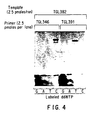
- Oligonucleotide TGL382 was purchased from the Midland Certified Reagent Company, Midland, Texas. It was biotinylated using Midland Certified Reagent Company's "Biotin dX” reagent (a biotin derivative phosphoramidite) which is suitable for use in automated DNA synthesis in the 5' terminal nucleotide position. The biotinylated oligonucleotide was then purified by anion exchange HPLC.
- Streptavidin-conjugated M-280 Dynabeads were washed in TNET buffer (10mM Tris-HCl, pH 7.5, 100mM NaCl, 1mM EDTA, 0.1% Triton X-100) and resuspended in the same buffer at a concentration of 7 X 10 8 beads/ml. 10-100 pmoles of biotinylated oligonucleotide TGL382 was incubated with 100 ⁇ l of the Dynabead suspension in TNET for 30 minutes at 20°C in order to allow the biotin moiety to bind to the streptavidin.
- TNET buffer 10mM Tris-HCl, pH 7.5, 100mM NaCl, 1mM EDTA, 0.1% Triton X-100
- the beads were then washed (using a magnet to immobilize them) three times with 200 ⁇ l of TNET and resuspended in 100 ⁇ l of TNET.
- 25 ⁇ l of this suspension of the Dynabeads with the attached template oligonucleotide was immobilized with the magnet, the TNET withdrawn, and 25 ⁇ l of 40 mM Tris-HCL, pH 7.5, 20 mM MgCl 2 , 50 mM NaCl, containing 2 ⁇ M of oligonucleotide primers 346 or 391, was added.
- the template and each primer were annealled by incubating them for 5 minutes at 65°C, followed by slow cooling over a period of 20 minutes to room temperature.
- Beads containing the bound template-primer complexes were washed twice with 200 ⁇ l TNET, followed by resuspension in 25 ⁇ l of 40 mM Tris-HCl, pH 7.5, 20 mM MgCl 2 , 50 mM NaCl.
- 35 S-labelled dideoxynucleoside triphosphate mixes (labelled nucleotide indicated in the form ddN*TP): ddG Mix 5 ⁇ M ddG*TP 10 ⁇ M ddATP 10 ⁇ M ddTTP 10 ⁇ M ddCTP ddA Mix 10 ⁇ M ddGTP 5 ⁇ M ddA*TP 10 ⁇ M ddTTP 10 ⁇ M ddCTP ddT Mix 10 ⁇ M ddGTP 10 ⁇ M ddATP 5 ⁇ M ddT*TP 10 ⁇ M ddCTP ddC Mix 10 ⁇ M ddGTP 10 ⁇ M ddATP 10 ⁇ M ddTTP 5 ⁇ M ddC*TP
- the ddN*TPs were the four respective [ ⁇ - thio - 35 S]dideoxynucleoside triphosphates (purchased from New England Nuclear).
- Extension reactions contained the following components: 5.0 ⁇ l bead suspension containing the annealled template-primer complex, 0.5 ⁇ l of 100 mM dithiothreitol, 0.5 ⁇ l of "Mn ++ solution" (100 mM MnCl 2 , 150 mM DL-isocitrate, pH 7.0; purchased from U.S.
- Reactions were allowed to proceed for 15 minutes at 20°C, then stopped by washing the magnetically immobilized beads three times with 500 ⁇ l TNET. Beads were resuspended in final volume of 25 ⁇ l TNET prior to the detection assays.
- Oligonucleotide TGL240 was synthesized with a primary amino group attached to its 5' terminus and coupled with biotin as described above.
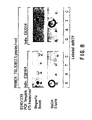
- TGL240 (biotinylated) and TGL239 (unbiotinylated) were used to amplify, via the polymerase chain reaction procedure (see "A. General Methods"), a region of DMA comprising a particular genetic locus in samples of mammalian genomic DNA. DNAs from two different individuals, each homozygous for a particular set of linked sequence polymorphisms (the "A" allele and the "B" allele -- see Figure 6), were examined.
- duplex PCR DNA was incubated with 100 ⁇ l of streptavidin-conjugated M-280 Dynabeads (7 X 10 8 beads/ml) in TNET buffer in order to bind the biotinylated strand to the beads. After binding, the beads were magnetically immobilized and washed three times with 200 ⁇ l of TNET, then resuspended in 100 ⁇ l of TNET. To remove the non-biotinylated strand, 500 ⁇ l of 0.15 N NaOH was added and the suspension incubated for 30 minutes at 20°C. The beads were then magnetically immobilized and washed once with 250 ⁇ l of 0.15 N NaOH, three times with 500 ⁇ l TNET, and resuspended in 100 ⁇ l of TNET.
- the detection primer, oligonucleotide TGL308 ( Figure 6), was annealled to the bead-bound PCR-generated template as described above in Example 4. Further washes, extension reactions, and detection assays were also carried out as described in Example 4.
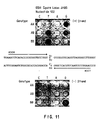
- Autoradiographic analyses of total bead-bound radioactivity, or primer-associated radioactivity after NaOH elution, are shown for these same individuals using the filter spotting assay ( Figure 8). For the analysis of primer only, 10 ⁇ l of 0.4 N NaoH was added to 10 ⁇ l of the bead suspension. After incubation for 10 minutes at room temperature, the beads were immobilized magnetically and the supernatant withdrawn and spotted onto nylon blotting membrane.
- Genomic DNA was isolated using the SDS/Proteinase K procedure (Maniatis, T. Molecular Cloning, A Laboratory Manual, Cold Spring Harbor Laboratory Press, Cold Spring Harbor, 1989) from peripheral blood nucleated cells of humans or horses enriched from red blood cells by selective lysis accomplished by diluting blood with a three fold volume excess of ACK lysing buffer (0.15 M ammonium chloride, 1 mM potassium bicarbonate, 0.1 mM EDTA). Oligonucleotides were prepared by solid-phase phosphoramidite chemistry using an Applied Biosystems, Inc. (Foster City, CA) Model 391 automated DNA synthesizer.
- oligonucleotide purification cartridge OPC
- Oligonucleotides derivatized with 5'-amino groups were prepared using Aminolink 2 purchased from Applied Biosystems and used according the manufacturer's recommendations.
- Oligonucleotide Sequences Primers for first round amplification of equine locus JH85 were #91: and #92: Second round amplification of equine locus was achieved using nested primers #239: and #240: Amplification of human HLA DPA1 sequences (Marsh, S.G.E., Bodmer, J.G. HLA Class II Nucleotide Sequences, 1991. Human Immunol. 31:207-227) was accomplished with primers #467: and #445:
- PCR polymerase chain reaction
- a first step one hundred nanograms of genomic DNA was used in a reaction mixture containing each first round primer at a concentration of 2 ⁇ M/10 mM Tris pH 8.3/50 mM KCl/1.5 mM MgCl 2 /0.1% gelatin/0.05 units per ⁇ l Taq DNA Polymerase (AmpliTaq, Perkin Elmer Cetus, Norwalk, CT). Reactions were assembled and incubated at 94°C for 1.5 minutes, followed by 30 cycles of 94°C/1 minute, 60°C/2 minutes, 72°C/3 minutes. Single stranded DNA was prepared in a second "asymmetric" PCR in which the products of the first reaction were diluted 1/1000. One of the primers was used at the standard concentration of 2 ⁇ M while the other was used at 0.08 ⁇ M. Under these conditions, both single stranded and double stranded molecules were synthesized during the reaction.
- Biotinylated ddNTPs Biotinylated ddNTPs. Biotinylated ddNTPs were synthesized according to U.S. Patent No. 5,047,519.
- Hybridization, extension and detection in Microwell Plates Hybridization of single-stranded DNA to primers covalently coupled to 96-well plates was accomplished by adding an equal volume of 3M NaCl/50 mM EDTA to the second round asymmetric PCR and incubating each well with 20 ⁇ l of this mixture at 55°C for 30 minutes. The plate was subsequently washed three times with TNTw.
- An example of one method to practice the present invention involves obtaining from a convenient source, such as blood, epithelium, hair, or other tissue, samples of DNA or RNA, then amplifying in vitro specific regions of the nucleic acid using the polymerase chain reaction, transcription-based amplification (see Kwoh, et al., Proc. Natl. Acad. Sci. 80:1173 (1989)), etc. Amplification is accomplished using specific primers flanking the region of interest, with one or more of the primers being modified by having an attached affinity group (although in any given reaction only one such primer is modified at a time). A preferred modification is attachment of biotin moieties to the 5'-termini of the primers.
- a sample (typically, 0.5 - 5 pmoles) of the amplified DNA is then bound to streptavidin-conjugated magnetic microspheres (e.g., Dynal M-280 "Dynabeads") via the attached biotin moiety on the amplification primer.
- streptavidin-conjugated magnetic microspheres e.g., Dynal M-280 "Dynabeads"
- the DNA is denatured by adjusting the aqueous suspension containing the microspheres to a sufficiently alkaline pH, and the strand bound to the microspheres via the biotin-streptavidin link is separated from the complementary strand by washing under similar alkaline conditions.
- the microspheres are centrifuged or immobilized by the application of a magnetic field.
- the microsphere-bound strand is then used as a template in the remaining manipulations.
- a specific primer oligonucleotide is bound under high stringency annealing conditions, the sequence of the primer being consistent with unique binding to a site on the template strand immediately adjacent to a known DNA sequence polymorphism.
- a preferred sequence and mode of binding for the primer ensures that the primer forms a duplex with the template such that the 3'-terminal nucleotide of the primer forms a Watson-Crick basepair with the template nucleotide immediately adjacent to the site of the first nucleotide in the sequence polymorphism, without the duplex overlapping any of the polymorphic sequence to be analyzed.
- This arrangement causes the nucleotides added via template-directed, DNA polymerase-catalyzed, extension of the primer to be determined unambiguously by the polymorphic nucleotide sequence in the template.
- primer template complex is contacted, under conditions of salt, pH, and temperature compatible with template-directed DNA synthesis, with a suitable DNA polymerase and four different chain-terminating nucleotide analogues known to form specific base pairs with the bases in the template.
- the bases in the template as well as the chain-terminating analogues are based on the common nucleosides: adenosine, cytosine, guanine or inosine, thymidine or uridine.
- a preferred set of chain-terminating analogues are the four dideoxynucleoside triphosphates, ddATP, ddCTP, ddGTP, and ddTTP, where each of the four ddNTPs has been modified by attachment of a different fluorescent reporter group.
- These fluorescent tags would have the property of having spectroscopically distinguishable emission spectra, and in no case would the dideoxynucleoside triphosphate modification render the chain-terminating analogue unsuitable for DNA polymerase-catalyzed incorporation onto primer 3'-termini.
- the result of DNA polymerase-catalyzed chain extension in such a mixture with such a primer:template complex is the quantitative, specific and unambiguous incorporation of a fluorescent chain-terminating analogue onto the 3'-terminus of the primer, the particular fluorescent nucleotide added being solely dictated by the sequence of the polymorphic nucleotides in the template.
- the fluorescently-tagged primer:template complex is then separated from the reaction mix containing the unincorporated nucleotides by, for example, washing the magnetically immobilized beads in a suitable buffer. Additionally, it is desirable in some circumstances to then elute the primer from the immobilized template strand with NaOH, transfer the eluted primer to a separate medium or container, and subsequently determine the identity of the incorporated terminator. The identity of the attached fluorescent group is then assessed by illuminating the modified DNA strand with light, preferably provided by a laser, of a suitable wavelength and intensity and spectrophotometrically analyzing the emission spectrum produced.
- Magnetic microspheres must be manipulated with care in order to effectively wash and resuspend them. It is therefore difficult to envisage high volume, automated assays using these beads. Furthermore, they are deeply colored and are not adapted to calorimetric or fluorescent assays.
- the methodology of the invention has been adapted to allow the utilization of standard, polystyrene, 96-well microplates. These have the advantage of being widely used in clinical and research laboratories. There are a large number of liquid handling systems, including automated systems, adapted to this format. They are suited to optical signal detection methods and automated plate readers for different types of light detection are available.
- the template will always come from the nucleic acid sample of interest. These nucleic acids may be from a sample suspected of containing an infectious agent, one from an individual whose genotype is being determined, a sample from a patient suspected of having cancer, etc. If the immobilized partner of the hybrid complex to be extended is the template, each nucleic acid sample would have to be treated in such a way as to make immobilization possible. On the other hand, the primer for a given nucleic acid position to be interrogated will always be the same. Therefore, methods have been devised which allow the binding of the primer to the microplates and hybridization of single stranded template molecules to the plate-bound primer. This provides the additional feature of being able to make use of single-stranded templates produced in many different ways, including direct analysis of RNA.
- Radioactive methods are inconvenient and produce waste which is difficult to dispose of. For this reason, most commercial biochemistry detection systems have been converted to non-radioactive methods.
- ddNTPs which are labeled with biotin
- the method of the invention can be performed non-radioactively using a variety of detection systems including enzyme linked colorimetric assays.
- the template was prepared by PCR using derivatized primers to permit immobilization of the template on the solid phase. Derivitization of the template is no longer necessary when the primer is immobilized. Rather, using unequal concentrations of PCR primers in an otherwise standard PCR, it is possible to generate an excess of one single-stranded molecule or the other, depending on which primer is in excess. These serve as convenient templates for hybridization to plate-bound primer molecules.
Landscapes
- Chemical & Material Sciences (AREA)
- Life Sciences & Earth Sciences (AREA)
- Organic Chemistry (AREA)
- Proteomics, Peptides & Aminoacids (AREA)
- Health & Medical Sciences (AREA)
- Zoology (AREA)
- Wood Science & Technology (AREA)
- Engineering & Computer Science (AREA)
- Immunology (AREA)
- Analytical Chemistry (AREA)
- Molecular Biology (AREA)
- Bioinformatics & Cheminformatics (AREA)
- Biotechnology (AREA)
- Biophysics (AREA)
- Physics & Mathematics (AREA)
- Genetics & Genomics (AREA)
- Biochemistry (AREA)
- Microbiology (AREA)
- General Engineering & Computer Science (AREA)
- General Health & Medical Sciences (AREA)
- Cell Biology (AREA)
- Chemical Kinetics & Catalysis (AREA)
- Measuring Or Testing Involving Enzymes Or Micro-Organisms (AREA)
- Preparation Of Compounds By Using Micro-Organisms (AREA)
- Saccharide Compounds (AREA)
Claims (20)
- Procédé de détermination de l'identité d'une base nucléotidique à une position spécifique dans un acide nucléique d'intérêt qui comprend :(a) à titre d'alternative :(i) si l'acide nucléique d'intérêt est double brin, le traitement d'un échantillon contenant l'acide nucléique de manière à obtenir un échantillon d'acide nucléique de matrice à bases non appariées comprenant une matrice de bases nucléotidiques non appariées s'étendant sur la position spécifique, ou(ii) si l'acide nucléique d'intérêt est simple brin, l'obtention d'un échantillon de l'acide nucléique pour servir d'échantillon d'acide nucléique de matrice à bases non appariées comprenant une matrice de bases nucléotidiques non appariées s'étendant sur la position spécifique ;(b) l'obtention d'un amorce oligonucléotidique ayant une séquence nucléotidique capable de s'hybrider avec l'acide nucléique de matrice pour former un duplex où la base nucléotidique à identifier est immédiatement adjacente et en aval de l'extrémité 3' de l'amorce ;(c) l'immobilisation de l'amorce oligonucléotidique sur un support solide de manière à permettre à l'amorce immobilisée de s'hybrider avec l'acide nucléotidique de matrice pour former un duplex où la base nucléotidique à identifier est immédiatement adjacente et en aval de l'extrémité 3' de l'amorce(d) la mise en contact de l'amorce nucléotidique immobilisée dans des conditions d'hybridation avec l'échantillon de matrice à bases non appariées de l'étape (a) pour former sur le support solide un duplex entre l'amorce immobilisée et l'acide nucléique de matrice quand la base nucléotidique à identifier est immédiatement adjacente et en aval de l'extrémité 3' de l'amorce dans le duplex ;(e) la mise en contact du duplex de l'étape (d) avec une composition de réactifs qui comprend un support aqueux et un mélange de quatre terminateurs différents d'une réaction d'extension d'amorce dépendant de matrice d'acide nucléique, chacun des terminateurs étant capable de terminer spécifiquement la réaction d'extension d'une manière strictement dépendante de l'identité de la base nucléotidique non appariée dans la matrice immédiatement adjacente et en aval de l'extrémité 3' d'une amorce, où l'un des terminateurs est complémentaire de la base nucléotidique à identifier et au moins l'un des terminateurs est marqué avec un marqueur détectable, dans des conditions permettant l'appariement de bases du terminateur complémentaire présent dans le réactif avec la base nucléotidique, à identifier et la survenue d'une réaction d'extension d'amorce dépendante de matrice de manière à incorporer le terminateur complémentaire à l'extrémité 3' de l'amorce pour former une amorce étendue de telle sorte que l'amorce a été étendue par le terminateur complémentaire.(f) le retrait du terminateur marqué non incorporé dans l'amorce du support solide ; et(g) l'identification de tout marqueur détectable présent à l'extrémité 3' de l'amorce étendue immobilisée de l'étape (e) sur le support solide, pour déterminer l'identité de la base nucléotidique à identifier.
- Procédé selon la revendication 1, où chacun des quatre terminateurs est marqué avec un marqueur détectable différent d'une manière détectable.
- Procédé selon la revendication 1, où l'amorce oligonucléotidique est immobilisée à un emplacement d'une pluralité d'emplacements de test séparés sur le support solide.
- Procédé selon la revendication 3, où les étapes (c) à (g) sont répétées quatre fois avec la même amorce oligonucléotidique provenant de l'étape (b) et le même échantillon de matrice à bases non appariées provenant de l'étape (a) à quatre emplacements de test séparés sur le support solide, une composition du réactif parmi quatre compositions de réactifs différentes étant utilisée dans l'étape (e) à chacun des quatre emplacements de test, dans chacune des quatre compositions de réactifs seulement l'un des terminateurs étant marqué avec un marqueur détectable, un terminateur différent parmi les quatre terminateurs étant marqué dans chacune des quatre compositions de réactifs différentes, de sorte que l'identification d'un marqueur détectable présent à l'extrémité 3' de l'amorce étendue immobilisée provenant de l'étape (e) à l'un des quatre emplacements de test de l'étape (g) détermine l'identité de la base nucléotidique à identifier.
- Procédé selon l'une quelconque des revendications précédentes, où, dans le réactif de l'étape (e), les terminateurs comprennent un nucléotide ou un analogue de nucléotide.
- Procédé selon, la revendication 5, où les terminateurs comprennent un didésoxynucléotide ou un arabinoside triphosphate.
- Procédé selon la revendication 6, où les terminateurs comprennent un ou plusieurs parmi ddATP, ddCTP, ddGTP ou ddT7-P.
- Procédé de typage d'un échantillon contenant des acides nucléiques qui comprend l'identification de la base nucléotidique ou des bases nucléotidiques présentes à chaque position parmi une ou plusieurs positions spécifiques, chacune de ces bases nucléotidiques étant identifiée au moyen d'un procédé selon l'une quelconque des revendications 1 à 7 et chacune des positions spécifiques étant déterminée au moyen d'une amorce différente et où l'identité de chaque base nucléotidique ou des bases nucléotidiques à chaque position est déterminée individuellement ou bien où l'identité des bases nucléotidiques à différentes positions sont déterminées simultanément.
- Procédé pour identifier des allèles différents dans un échantillon contenant des acides nucléiques qui comprend l'identification de la base nucléotidique ou des bases nucléotidiques présentes à chaque position parmi une ou plusieurs positions spécifiques, chacune des bases nucléotidiques étant identifiée par un procédé selon l'une quelconque des revendications 1 à 7.
- Procédé pour déterminer le génotype d'un organisme à un ou plusieurs locus génétiques particuliers qui comprend :(a) l'obtention à partir de l'organisme d'un échantillon contenant de l'ADN génomique ; et(b) l'identification de la base nucléotidique ou des bases nucléotidiques présentes à chacune d'une ou plusieurs positions spécifiques dans les acides nucléiques d'intérêt, chaque base ou les bases étant identifiées au moyen d'un procédé selon l'une quelconque des revendications 1 à 7 pour identifier différents allèles et ainsi pour déterminer ensuite le génotype de l'organisme à un ou plusieurs locus génétiques particuliers.
- Procédé selon l'une quelconque des revendications 1 à 7, où, avant la réaction d'extension d'amorce dans l'étape (e), la matrice a été coiffée à son extrémité 3' par addition d'un terminateur à l'extrémité 3' de la matrice, ledit terminateur étant capable de terminer une réaction d'extension d'amorce dépendante de matrice.
- Procédé selon l'une quelconque des revendications 1 à 7, où l'échantillon comprend de l'ADN génomique provenant d'un organisme, incluant une plante, un microorganisme, un virus, un oiseau, un vertébré ou un invertébré, un mammifère, un être humain, un cheval, un chien, une vache, un chat, un porc ou un mouton.
- Procédé selon l'une quelconque des revendications 1 à 7, où l'amorce est complémentaire de la séquence de bases connue immédiatement adjacente à la base à identifier.
- Procédé selon l'une quelconque des revendications 1 à 7, où l'amorce est séparée de l'acide nucléique d'intérêt après la réaction d'extension d'amorce dans l'étape (c) au moyen de conditions dénaturantes appropriées, incluant la chaleur, un alcali, le formamide, l'urée, le glyoxal, des enzymes ou des combinaisons de celles-ci.
- Procédé selon la revendication 1, où les terminateurs marqués avec des marqueurs détectables sont marqués avec des marqueurs détectables qui sont non radioactifs.
- Procédé selon la revendication 15, où l'étape (g) d'identification d'un marqueur détectable quelconque à l'extrémité 3' de l'amorce étendue immobilisée est réalisée par des moyens visuels ou optiques
- Procédé selon la revendication 16, où le support solide est adapté pour un procédé de détection de signal optique.
- Procédé selon la revendication 17, où le support solide est adapté pour la détection de signal optique au moyen d'un lecteur de plaques automatique.
- Procédé de détermination de la présence ou de l'absence d'une séquence nucléotidique particulière dans un acide nucléique d'intérêt qui comprend :(a) à titre d'alternative :(i) si J'acide nucléique d'intérêt est double brin, le traitement d'un échantillon contenant l'acide nucléique de manière à obtenir un échantillon d'acide nucléique de matrice à bases non appariées comprenant une matrice de bases nucléotidiques non appariées, ou(ii) si l'acide nucléique d'intérêt est simple brin, l'obtention d'un échantillon de l'acide nucléique pour servir d'échantillon d'acide nucléique de matrice à bases non appariées comprenant une matrice de bases nucléotidiques non appariées;(b) l'obtention d'un amorce oligonucléotidique ayant une séquence nucléotidique capable de s'hybrider avec la séquence nucléotidique particulière si la séquence nucléotidique particulière est présente dans l'acide nucléique de matrice pour former un duplex extensible par amorce entre l'amorce et la séquence nucléotidique particulière de telle sorte que l'amorce hybridée est extensible à une extrémité 3' par une réaction d'extension d'amorce dépendante de matrice d'acide nucléique ;(c) l'immobilisation de l'amorce oligonucléotidique sur un support solide de manière à permettre à l'amorce immobilisée de s'hybrider avec l'acide nucléique de matrice pour former un duplex extensible par amorce si la séquence nucléotidique particulière est présente dans l'acide nucléique de matrice de telle sorte que l'amorce hybridé est extensible à l'extrémité 3' par une réaction d'extension d'amorce dépendante de matrice d'acide nucléique ;(d) la mise en contact de l'amorce nucléotidique immobilisée dans des conditions d'hybridation avec un échantillon de matrice à bases non appariées provenant de l'étape (a) pour former sur le support solide un duplex extensible par amorce entre l'amorce immobilisée et l'acide nucléique de matrice si la séquence nucléotidlque particulière est présente dans l'acide nucléique de matrice de telle sorte que l'amorce hybridée est extensible à l'extrémité 3' par une réaction d'extension d'amorce dépendante de matrice d'acide nucléique(e) la mise en contact du duplex extensible par amorce provenant de l'étape (d), s'il y en a, avec une composition de réactifs qui comprend un support aqueux et un mélange de quatre terminateurs différents d'une réaction d'extension d'amorce dépendante de matrice d'acide nucléique, au moins l'un des terminateurs étant marqué avec un marqueur détectable, chacun des terminateurs étant capable de terminer spécifiquement la réaction d'extension d'amorce d'une manière dépendante de l'identité d'une basé nucléotidique non appariée dans une matrice immédiatement adjacente et en aval de l'extrémité 3' d'une amorce hybridée à la matrice de telle sorte que la matrice hybridée est extensible à une extrémité 3' par la réaction d'extension d'amorce, le duplex extensible par amorce, s'il y en a, étant mis en contact avec la composition de réactifs dans des conditions permettant un appariement de bases d'un terminateur complémentaire présent dans le réactif avec une base nucléotidique dans l'acide nucléique de matrice du duplex immédiatement adjacent et en aval de l'extrémité 3' de l'amorce hybridée du duplex et la survenue de la réaction d'extension d'amorce dépendante de matrice de manière à incorporer le terminateur complémentaire à l'extrémité 3' de l'amorce pour former une amorce étendue de telle sorte que l'amorce est étendue par le terminateur complémentaire si la séquence nucléotidique particulière est présente dans l'acide nucléique de matrice, aucune amorce étendue de ce type n'étant formée si la séquence nucléotidique particulière n'est pas présente dans l'acide nucléique de matrice ;(f) le retrait du terminateur marqué non incorporé dans l'amorce du support solide ; et(g) la détection de la présence ou de l'absence d'un marqueur détectable à l'extrémité 3' de l'amorce immobilisée provenant de l'étape (e) sur le support solide, pour déterminer la présence ou l'absence de la séquence nucléotidique particulière dans l'acide nucléique d'intérêt.
- Procédé de typage d'un échantillon contenant des acides nucléiques qui comprend :(a) la détermination de la présence ou de l'absence d'une ou plusieurs séquences nucléotidiques particulières, la présence ou l'absence de chaque séquence nucléotidique de ce type étant déterminée par un procédé selon la revendication 19 ; et éventuellement(b) l'identification de la base nucléotidique ou des bases nucléotidiques présentes à chacune d'une ou plusieurs positions spécifiques, chaque base nucléotidique de ce type étant identifiée au moyen d'un procédé selon l'une quelconque des revendications 1 à 18 et chaque position spécifique de ce type étant déterminée au moyen d'une amorce différente.
Priority Applications (1)
| Application Number | Priority Date | Filing Date | Title |
|---|---|---|---|
| EP04029613A EP1591533A1 (fr) | 1991-03-05 | 1992-03-04 | Détermination d'acides nucléiques par extension de la polymérase d'oligonucléotides à l'aide de mélanges terminateurs |
Applications Claiming Priority (5)
| Application Number | Priority Date | Filing Date | Title |
|---|---|---|---|
| US664837 | 1991-03-05 | ||
| US07/664,837 US5888819A (en) | 1991-03-05 | 1991-03-05 | Method for determining nucleotide identity through primer extension |
| US07/775,786 US6004744A (en) | 1991-03-05 | 1991-10-11 | Method for determining nucleotide identity through extension of immobilized primer |
| US775786 | 1991-10-11 | ||
| PCT/US1992/001905 WO1992015712A1 (fr) | 1991-03-05 | 1992-03-04 | Determination d'acides nucleiques par extension de la polymerase d'oligonucleotides a l'aide de melanges terminateurs |
Related Child Applications (1)
| Application Number | Title | Priority Date | Filing Date |
|---|---|---|---|
| EP04029613A Division EP1591533A1 (fr) | 1991-03-05 | 1992-03-04 | Détermination d'acides nucléiques par extension de la polymérase d'oligonucléotides à l'aide de mélanges terminateurs |
Publications (3)
| Publication Number | Publication Date |
|---|---|
| EP0576558A1 EP0576558A1 (fr) | 1994-01-05 |
| EP0576558A4 EP0576558A4 (en) | 1997-06-04 |
| EP0576558B1 true EP0576558B1 (fr) | 2004-12-15 |
Family
ID=27099072
Family Applications (2)
| Application Number | Title | Priority Date | Filing Date |
|---|---|---|---|
| EP04029613A Withdrawn EP1591533A1 (fr) | 1991-03-05 | 1992-03-04 | Détermination d'acides nucléiques par extension de la polymérase d'oligonucléotides à l'aide de mélanges terminateurs |
| EP92908554A Expired - Lifetime EP0576558B1 (fr) | 1991-03-05 | 1992-03-04 | Determination d'acides nucleiques par extension de la polymerase d'oligonucleotides a l'aide de melanges terminateurs |
Family Applications Before (1)
| Application Number | Title | Priority Date | Filing Date |
|---|---|---|---|
| EP04029613A Withdrawn EP1591533A1 (fr) | 1991-03-05 | 1992-03-04 | Détermination d'acides nucléiques par extension de la polymérase d'oligonucléotides à l'aide de mélanges terminateurs |
Country Status (10)
| Country | Link |
|---|---|
| US (2) | US6004744A (fr) |
| EP (2) | EP1591533A1 (fr) |
| JP (1) | JPH06505394A (fr) |
| AT (1) | ATE284973T1 (fr) |
| AU (1) | AU660173B2 (fr) |
| CA (1) | CA2105060C (fr) |
| DE (1) | DE69233458T2 (fr) |
| FI (2) | FI106871B (fr) |
| NO (1) | NO933136L (fr) |
| WO (1) | WO1992015712A1 (fr) |
Cited By (2)
| Publication number | Priority date | Publication date | Assignee | Title |
|---|---|---|---|---|
| US7803579B2 (en) | 2002-10-29 | 2010-09-28 | Riken | Process for amplifying nucleic acid |
| US8206902B2 (en) | 2003-12-25 | 2012-06-26 | Riken | Method of amplifying nucleic acid and method of detecting mutated nucleic acid using the same |
Families Citing this family (412)
| Publication number | Priority date | Publication date | Assignee | Title |
|---|---|---|---|---|
| IE61148B1 (en) * | 1988-03-10 | 1994-10-05 | Ici Plc | Method of detecting nucleotide sequences |
| US6013431A (en) * | 1990-02-16 | 2000-01-11 | Molecular Tool, Inc. | Method for determining specific nucleotide variations by primer extension in the presence of mixture of labeled nucleotides and terminators |
| US6004744A (en) * | 1991-03-05 | 1999-12-21 | Molecular Tool, Inc. | Method for determining nucleotide identity through extension of immobilized primer |
| US5762876A (en) * | 1991-03-05 | 1998-06-09 | Molecular Tool, Inc. | Automatic genotype determination |
| GB9210176D0 (en) * | 1992-05-12 | 1992-06-24 | Cemu Bioteknik Ab | Chemical method |
| FI946127A7 (fi) * | 1992-07-02 | 1995-02-20 | Diagenetics Gamidor Ltd | Menetelmä alukkeen pidentämiseksi yhdellä nukleotidilla spesifisten al leelien detektoimiseksi, ja testipakkaus näiden menetelmien suorittami seksi |
| US5710028A (en) * | 1992-07-02 | 1998-01-20 | Eyal; Nurit | Method of quick screening and identification of specific DNA sequences by single nucleotide primer extension and kits therefor |
| US5605798A (en) | 1993-01-07 | 1997-02-25 | Sequenom, Inc. | DNA diagnostic based on mass spectrometry |
| SE501439C2 (sv) * | 1993-06-22 | 1995-02-13 | Pharmacia Lkb Biotech | Sätt och anordning för analys av polynukleotidsekvenser |
| US7001722B1 (en) * | 1993-06-22 | 2006-02-21 | Baylor College Of Medicine | Parallel primer extension approach to nucleic acid sequence analysis |
| US6153379A (en) * | 1993-06-22 | 2000-11-28 | Baylor College Of Medicine | Parallel primer extension approach to nucleic acid sequence analysis |
| CA2175695A1 (fr) * | 1993-11-03 | 1995-05-11 | Philip Goelet | Polymorphismes de mononucleotide et leur utilisation en analyse genetique |
| US5610287A (en) * | 1993-12-06 | 1997-03-11 | Molecular Tool, Inc. | Method for immobilizing nucleic acid molecules |
| AU700008B2 (en) | 1993-12-23 | 1998-12-17 | Orchid Biosciences, Inc. | Automatic genotype determination |
| WO1995019447A1 (fr) * | 1994-01-14 | 1995-07-20 | The Jockey Club | Procede d'echantillonnage non invasif pour analyse d'acides nucleiques |
| WO1995021271A1 (fr) * | 1994-02-07 | 1995-08-10 | Molecular Tool, Inc. | Analysetm d'elements genetiques induite par la ligase/polymerase de polymorphismes de mononucleotides et son utilisation dans des analyses genetiques |
| US5714330A (en) * | 1994-04-04 | 1998-02-03 | Lynx Therapeutics, Inc. | DNA sequencing by stepwise ligation and cleavage |
| US5552278A (en) * | 1994-04-04 | 1996-09-03 | Spectragen, Inc. | DNA sequencing by stepwise ligation and cleavage |
| GB9417211D0 (en) * | 1994-08-25 | 1994-10-12 | Solicitor For The Affairs Of H | Nucleotide sequencing method |
| USRE43097E1 (en) | 1994-10-13 | 2012-01-10 | Illumina, Inc. | Massively parallel signature sequencing by ligation of encoded adaptors |
| US6013445A (en) * | 1996-06-06 | 2000-01-11 | Lynx Therapeutics, Inc. | Massively parallel signature sequencing by ligation of encoded adaptors |
| GB9507238D0 (en) | 1995-04-07 | 1995-05-31 | Isis Innovation | Detecting dna sequence variations |
| US7803529B1 (en) | 1995-04-11 | 2010-09-28 | Sequenom, Inc. | Solid phase sequencing of biopolymers |
| DE19515552A1 (de) * | 1995-04-27 | 1996-10-31 | Europ Lab Molekularbiolog | Simultane Sequenzierung von Nukleinsäuren |
| US5830655A (en) | 1995-05-22 | 1998-11-03 | Sri International | Oligonucleotide sizing using cleavable primers |
| US5763175A (en) * | 1995-11-17 | 1998-06-09 | Lynx Therapeutics, Inc. | Simultaneous sequencing of tagged polynucleotides |
| US6051378A (en) | 1996-03-04 | 2000-04-18 | Genetrace Systems Inc. | Methods of screening nucleic acids using mass spectrometry |
| AU2320597A (en) | 1996-03-19 | 1997-10-10 | Molecular Tool, Inc. | Method for determining the nucleotide sequence of a polynucleotide |
| US6251691B1 (en) | 1996-04-25 | 2001-06-26 | Bioarray Solutions, Llc | Light-controlled electrokinetic assembly of particles near surfaces |
| US5965363A (en) | 1996-09-19 | 1999-10-12 | Genetrace Systems Inc. | Methods of preparing nucleic acids for mass spectrometric analysis |
| US7381525B1 (en) | 1997-03-07 | 2008-06-03 | Clinical Micro Sensors, Inc. | AC/DC voltage apparatus for detection of nucleic acids |
| US6096273A (en) | 1996-11-05 | 2000-08-01 | Clinical Micro Sensors | Electrodes linked via conductive oligomers to nucleic acids |
| CA2270132A1 (fr) | 1996-11-06 | 1998-05-14 | Sequenom, Inc. | Diagnostics de l'adn fondes sur la spectrometrie de masse |
| US6133436A (en) * | 1996-11-06 | 2000-10-17 | Sequenom, Inc. | Beads bound to a solid support and to nucleic acids |
| CA2274587A1 (fr) | 1996-12-10 | 1998-06-18 | Genetrace Systems Inc. | Molecules d'etiquetage massique, non volatiles et liberables |
| IL156002A0 (en) | 1997-02-12 | 2003-12-23 | Eugene Y Chan | Methods and products for analyzing polymers |
| WO1998038338A1 (fr) * | 1997-02-28 | 1998-09-03 | Exact Laboratories, Inc. | Procedes d'analyse d'un acide nucleique |
| US5837860A (en) * | 1997-03-05 | 1998-11-17 | Molecular Tool, Inc. | Covalent attachment of nucleic acid molecules onto solid-phases via disulfide bonds |
| US6524795B1 (en) | 1997-03-10 | 2003-02-25 | Interleukin Genetics, Inc. | Diagnostics for cardiovascular disorders |
| DE69835516D1 (de) | 1997-05-16 | 2006-09-21 | Exact Sciences Corp | Elektrophoretische analyse von molekülen mit immobilisierten sonden |
| US6309829B1 (en) | 1997-05-27 | 2001-10-30 | Pe Corporation (Ny) | Length determination of nucleic acid repeat sequences by discontinuous primer extension |
| US5919626A (en) * | 1997-06-06 | 1999-07-06 | Orchid Bio Computer, Inc. | Attachment of unmodified nucleic acids to silanized solid phase surfaces |
| US6566101B1 (en) | 1997-06-16 | 2003-05-20 | Anthony P. Shuber | Primer extension methods for detecting nucleic acids |
| US5888778A (en) * | 1997-06-16 | 1999-03-30 | Exact Laboratories, Inc. | High-throughput screening method for identification of genetic mutations or disease-causing microorganisms using segmented primers |
| AU8162498A (en) * | 1997-06-25 | 1999-01-04 | Orchid Biosciences, Inc. | Methods for the detection of multiple single nucleotide polymorphisms in a single reaction |
| WO1999005315A2 (fr) † | 1997-07-28 | 1999-02-04 | Medical Biosystems Ltd. | Analyse de sequences nucleotidiques |
| US7070921B2 (en) | 2000-04-28 | 2006-07-04 | Molecular Devices Corporation | Molecular modification assays |
| US7745142B2 (en) | 1997-09-15 | 2010-06-29 | Molecular Devices Corporation | Molecular modification assays |
| US7632651B2 (en) | 1997-09-15 | 2009-12-15 | Mds Analytical Technologies (Us) Inc. | Molecular modification assays |
| US6297018B1 (en) | 1998-04-17 | 2001-10-02 | Ljl Biosystems, Inc. | Methods and apparatus for detecting nucleic acid polymorphisms |
| US6982431B2 (en) | 1998-08-31 | 2006-01-03 | Molecular Devices Corporation | Sample analysis systems |
| JP2002505846A (ja) | 1997-11-06 | 2002-02-26 | モザイク テクノロジーズ | シグナル増幅およびプロセッシングのための多重逐次的ポリヌクレオチド置換反応 |
| US6322968B1 (en) | 1997-11-21 | 2001-11-27 | Orchid Biosciences, Inc. | De novo or “universal” sequencing array |
| US6893877B2 (en) | 1998-01-12 | 2005-05-17 | Massachusetts Institute Of Technology | Methods for screening substances in a microwell array |
| WO1999034920A1 (fr) * | 1998-01-12 | 1999-07-15 | Massachusetts Institute Of Technology | Procede pour effectuer des dosages microscopiques |
| US6280954B1 (en) * | 1998-02-02 | 2001-08-28 | Amersham Pharmacia Biotech Ab | Arrayed primer extension technique for nucleic acid analysis |
| WO1999047535A1 (fr) | 1998-03-16 | 1999-09-23 | Millennium Pharmaceuticals, Inc. | PROCEDES ET COMPOSITIONS POUR DIAGNOSTIQUER ET TRAITER LES TROUBLES LIES AU CHROMOSOME-18p |
| US6780591B2 (en) * | 1998-05-01 | 2004-08-24 | Arizona Board Of Regents | Method of determining the nucleotide sequence of oligonucleotides and DNA molecules |
| US7875440B2 (en) | 1998-05-01 | 2011-01-25 | Arizona Board Of Regents | Method of determining the nucleotide sequence of oligonucleotides and DNA molecules |
| US6872521B1 (en) | 1998-06-16 | 2005-03-29 | Beckman Coulter, Inc. | Polymerase signaling assay |
| WO1999067414A1 (fr) * | 1998-06-24 | 1999-12-29 | Glaxo Group Limited | Procede de detection de nucleotide |
| US6218118B1 (en) | 1998-07-09 | 2001-04-17 | Agilent Technologies, Inc. | Method and mixture reagents for analyzing the nucleotide sequence of nucleic acids by mass spectrometry |
| US6238927B1 (en) | 1998-10-05 | 2001-05-29 | Mosaic Technologies, Incorporated | Reverse displacement assay for detection of nucleic acid sequences |
| US6451525B1 (en) | 1998-12-03 | 2002-09-17 | Pe Corporation (Ny) | Parallel sequencing method |
| EP1141402A4 (fr) * | 1998-12-18 | 2004-10-06 | Univ California | Technique de detection de sequences nucleotidiques specifiques par incorporation de polymerase et de nucleotides |
| US6743578B1 (en) | 1998-12-18 | 2004-06-01 | The Regents Of The University Of California | Method for the detection of specific nucleic acid sequences by polymerase nucleotide incorporation |
| US6280947B1 (en) | 1999-08-11 | 2001-08-28 | Exact Sciences Corporation | Methods for detecting nucleotide insertion or deletion using primer extension |
| US6503718B2 (en) | 1999-01-10 | 2003-01-07 | Exact Sciences Corporation | Methods for detecting mutations using primer extension for detecting disease |
| WO2000042223A1 (fr) * | 1999-01-15 | 2000-07-20 | Myriad Genetics, Inc. | Procede pour commander la distribution des produits de terminaison du sequençage d'adn |
| CA2362586A1 (fr) | 1999-02-12 | 2000-08-17 | Genset S.A. | Marqueurs bialleles derives de regions genomiques porteuses de genes intervenant dans le metabolisme de l'acide arachidonique |
| US6306578B1 (en) * | 1999-03-19 | 2001-10-23 | Genencor International, Inc. | Multi-through hole testing plate for high throughput screening |
| US6573047B1 (en) | 1999-04-13 | 2003-06-03 | Dna Sciences, Inc. | Detection of nucleotide sequence variation through fluorescence resonance energy transfer label generation |
| DE60040741D1 (de) | 1999-04-20 | 2008-12-18 | Illumina Inc | Detektion von nukleinsäurereaktionen auf kügelchen-arrays |
| US20060275782A1 (en) | 1999-04-20 | 2006-12-07 | Illumina, Inc. | Detection of nucleic acid reactions on bead arrays |
| US7056661B2 (en) * | 1999-05-19 | 2006-06-06 | Cornell Research Foundation, Inc. | Method for sequencing nucleic acid molecules |
| US20020119448A1 (en) | 1999-06-23 | 2002-08-29 | Joseph A. Sorge | Methods of enriching for and identifying polymorphisms |
| US6818395B1 (en) * | 1999-06-28 | 2004-11-16 | California Institute Of Technology | Methods and apparatus for analyzing polynucleotide sequences |
| US7501245B2 (en) * | 1999-06-28 | 2009-03-10 | Helicos Biosciences Corp. | Methods and apparatuses for analyzing polynucleotide sequences |
| US6642001B1 (en) | 1999-07-13 | 2003-11-04 | Whitehead Institute For Biomedical Research | Generic SBE-FRET protocol |
| US20020045182A1 (en) * | 1999-07-16 | 2002-04-18 | Lynx Therapeutics, Inc. | Multiplexed differential displacement for nucleic acid determinations |
| CA2380258C (fr) | 1999-07-26 | 2008-07-15 | Clinical Micro Sensors, Inc. | Determination de sequences d'acides nucleiques par detection electronique |
| WO2001007159A2 (fr) * | 1999-07-28 | 2001-02-01 | Genset | Integration de protocoles biochimiques dans un dispositif microfluidique a ecoulement continu |
| ATE262595T1 (de) | 1999-09-13 | 2004-04-15 | Nugen Technologies Inc | Methoden und zusammensetzungen zur linearen isothermalen amplifikation von polynukleotidsequenzen |
| US6692918B2 (en) | 1999-09-13 | 2004-02-17 | Nugen Technologies, Inc. | Methods and compositions for linear isothermal amplification of polynucleotide sequences |
| EP1218546A4 (fr) * | 1999-09-30 | 2005-01-05 | New England Biolabs Inc | Incorporation de nucleotides modifies par des adn polymerases d'archaeon et methodes associees |
| AU1075701A (en) | 1999-10-08 | 2001-04-23 | Protogene Laboratories, Inc. | Method and apparatus for performing large numbers of reactions using array assembly |
| US7332275B2 (en) | 1999-10-13 | 2008-02-19 | Sequenom, Inc. | Methods for detecting methylated nucleotides |
| US6287778B1 (en) * | 1999-10-19 | 2001-09-11 | Affymetrix, Inc. | Allele detection using primer extension with sequence-coded identity tags |
| US6642000B1 (en) | 1999-11-12 | 2003-11-04 | University Of Chicago | PCR amplification on microarrays of gel immobilized oligonucleotides |
| AU1939001A (en) | 1999-12-02 | 2001-06-12 | Dna Sciences, Inc. | Methods for determining single nucleotide variations and genotyping |
| US6518024B2 (en) | 1999-12-13 | 2003-02-11 | Motorola, Inc. | Electrochemical detection of single base extension |
| US20010031467A1 (en) * | 1999-12-10 | 2001-10-18 | Johannes Dapprich | Method for selectively isolating a nucleic acid |
| US6762018B1 (en) | 1999-12-23 | 2004-07-13 | Tetragen Sa | Analysis of nucleotide polymorphisms at a site |
| EP1967595A3 (fr) | 2000-02-16 | 2008-12-03 | Illumina, Inc. | Génotypage parallèle de plusieurs échantillons prélevés sur des patients |
| US20020151040A1 (en) | 2000-02-18 | 2002-10-17 | Matthew O' Keefe | Apparatus and methods for parallel processing of microvolume liquid reactions |
| US7332271B2 (en) * | 2000-02-18 | 2008-02-19 | Board Of Trustees Of The Leland Stanford Junior University | Apparatus and methods for parallel processing of micro-volume liquid reactions |
| CN100460874C (zh) | 2000-02-29 | 2009-02-11 | 阿尔康公司 | 筛检卷曲相关蛋白激动剂或拮抗剂的方法 |
| FR2805826B1 (fr) * | 2000-03-01 | 2002-09-20 | Nucleica | Nouvelles puces a adn |
| AU2001253129A1 (en) * | 2000-04-03 | 2001-10-15 | Biolink Partners, Inc. | Reversible chemical modification of nucleic acids and improved method for nucleic acid hybridization |
| AU2001255448A1 (en) * | 2000-04-17 | 2001-10-30 | Stephen B. Liggett | Alpha-2 adrenergic receptor polymorphisms |
| US7229756B1 (en) | 2000-10-19 | 2007-06-12 | University Of Cincinnati | Alpha-2B-adrenergic receptor polymorphisms |
| US6656700B2 (en) | 2000-05-26 | 2003-12-02 | Amersham Plc | Isoforms of human pregnancy-associated protein-E |
| US6686188B2 (en) | 2000-05-26 | 2004-02-03 | Amersham Plc | Polynucleotide encoding a human myosin-like polypeptide expressed predominantly in heart and muscle |
| US6355433B1 (en) | 2000-06-02 | 2002-03-12 | Dna Sciences, Inc. | Determination of nucleotide sequence variations through limited primer extension |
| AU2001268468A1 (en) | 2000-06-13 | 2001-12-24 | The Trustees Of Boston University | Use of nucleotide analogs in the analysis of oligonucleotide mixtures and in highly multiplexed nucleic acid sequencing |
| US9709559B2 (en) | 2000-06-21 | 2017-07-18 | Bioarray Solutions, Ltd. | Multianalyte molecular analysis using application-specific random particle arrays |
| AU7299301A (en) | 2000-06-21 | 2002-01-02 | Bioarray Solutions Ltd | Multianalyte molecular analysis using application-specific random particle arrays |
| EP1356094B1 (fr) * | 2000-06-26 | 2010-01-13 | Nugen Technologies, Inc. | Procedes et compositions permettant l'amplification d'acide nucleique fondee sur la transcription |
| US7846733B2 (en) | 2000-06-26 | 2010-12-07 | Nugen Technologies, Inc. | Methods and compositions for transcription-based nucleic acid amplification |
| US6958214B2 (en) | 2000-07-10 | 2005-10-25 | Sequenom, Inc. | Polymorphic kinase anchor proteins and nucleic acids encoding the same |
| WO2002012497A2 (fr) * | 2000-08-03 | 2002-02-14 | Genaissance Pharmaceuticals, Inc. | Haplotypes du gene nfkbib |
| WO2002012562A2 (fr) * | 2000-08-04 | 2002-02-14 | Genaissance Pharmaceuticals, Inc. | Haplotypes du gene pla2g1b |
| US7211386B2 (en) * | 2000-08-10 | 2007-05-01 | University Of Cincinnati | Alpha-2A-adrenergic receptor polymorphisms |
| US6900013B1 (en) | 2000-08-25 | 2005-05-31 | Aviva Biosciences Corporation | Methods and compositions for identifying nucleic acid molecules using nucleolytic activities and hybridization |
| AU2001285219A1 (en) * | 2000-08-24 | 2002-03-04 | Aviva Biosciences Corporation | Methods and compositions for identifying nucleic acid molecules using nucleolytic activities and hybridization |
| JP2003000268A (ja) | 2000-08-25 | 2003-01-07 | Pfizer Prod Inc | 血管新生にかかわる疾患を診断および治療するための方法および組成物 |
| GB0021286D0 (en) * | 2000-08-30 | 2000-10-18 | Gemini Genomics Ab | Identification of drug metabolic capacity |
| CH699253B1 (de) * | 2000-09-18 | 2010-02-15 | Eidgenoessische Forschungsanst | Verfahren zur Charakterisierung und/oder Identifikation von Genomen. |
| EP1409721A2 (fr) * | 2000-11-13 | 2004-04-21 | Gnothis Holding SA | Identification de polymorphismes d'acide nucleique |
| AU2002230524A1 (en) | 2000-11-16 | 2002-05-27 | California Institute Of Technology | Apparatus and methods for conducting assays and high throughput screening |
| US7211414B2 (en) | 2000-12-01 | 2007-05-01 | Visigen Biotechnologies, Inc. | Enzymatic nucleic acid synthesis: compositions and methods for altering monomer incorporation fidelity |
| EP1427847B1 (fr) | 2000-12-13 | 2010-07-28 | Nugen Technologies, Inc. | Methodes et compositions de generation de copies multiples de sequences d'acides nucleiques et methodes de detection correspondantes |
| US7054758B2 (en) * | 2001-01-30 | 2006-05-30 | Sciona Limited | Computer-assisted means for assessing lifestyle risk factors |
| EP1390537B1 (fr) | 2001-03-09 | 2013-11-13 | Nugen Technologies, Inc. | Methodes et compositions pour amplification de sequences d'arn |
| MXPA02012739A (es) | 2001-03-09 | 2004-04-20 | Nugen Technologies Inc | Metodos y composiciones para amplificacion de secuencias de arn. |
| JP2004523243A (ja) | 2001-03-12 | 2004-08-05 | カリフォルニア インスティチュート オブ テクノロジー | 非同期性塩基伸長によってポリヌクレオチド配列を分析するための方法および装置 |
| US20040038206A1 (en) * | 2001-03-14 | 2004-02-26 | Jia Zhang | Method for high throughput assay of genetic analysis |
| US6428964B1 (en) | 2001-03-15 | 2002-08-06 | Exact Sciences Corporation | Method for alteration detection |
| WO2002083839A2 (fr) * | 2001-03-30 | 2002-10-24 | Amersham Biosciences Ab | Analyse par biopuces de polymorphismes à simple nucléotide |
| US20020146698A1 (en) * | 2001-04-05 | 2002-10-10 | Genelink, Inc. | Kits and methods for assessing oxidative stress |
| US7211383B2 (en) * | 2001-04-05 | 2007-05-01 | Genelink, Inc. | Kits and methods for assessing skin health |
| EP1950305A1 (fr) | 2001-05-09 | 2008-07-30 | Monsanto Technology, LLC | Gènes tyr et utilisations associées |
| US6653082B2 (en) | 2001-05-17 | 2003-11-25 | Baylor College Of Medicine | Substrate-bound cleavage assay for nucleic acid analysis |
| AU2002303827A1 (en) * | 2001-05-25 | 2002-12-09 | Invitrogen Corporation | Compositions and methods for extension of nucleic acids |
| US7262063B2 (en) | 2001-06-21 | 2007-08-28 | Bio Array Solutions, Ltd. | Directed assembly of functional heterostructures |
| US20030215819A1 (en) | 2001-06-29 | 2003-11-20 | Frudakis Tony N. | Compositions and methods for inferring a response to statin |
| EP1632778A3 (fr) | 2001-07-09 | 2006-03-29 | Euroscreen S.A. | Ligand naturel du recepteur couple aux proteines g (gpcr) chemr23 et utilisations de ce ligand |
| US7668697B2 (en) | 2006-02-06 | 2010-02-23 | Andrei Volkov | Method for analyzing dynamic detectable events at the single molecule level |
| US20040078837A1 (en) * | 2001-08-02 | 2004-04-22 | Shannon Mark E. | Four human zinc-finger-containing proteins: MDZ3, MDZ4, MDZ7 and MDZ12 |
| GB0119719D0 (en) * | 2001-08-13 | 2001-10-03 | Solexa Ltd | DNA sequence analysis |
| EP2354793B1 (fr) | 2001-08-14 | 2016-06-22 | Sentigen Biosciences, Inc. | Acides nucléiques et protéines de gènes de récepteur odorant OR83B d'insectes et utilisations associées |
| US6995841B2 (en) | 2001-08-28 | 2006-02-07 | Rice University | Pulsed-multiline excitation for color-blind fluorescence detection |
| DE20116898U1 (de) * | 2001-10-15 | 2002-01-17 | FESTO AG & Co., 73734 Esslingen | Mikroventil |
| US20080138800A1 (en) * | 2001-10-15 | 2008-06-12 | Alice Xiang Li | Multiplexed analysis of polymorphic loci by concurrent interrogation and enzyme-mediated detection |
| ES2712173T3 (es) * | 2001-10-15 | 2019-05-09 | Bioarray Solutions Ltd | Análisis multiplexado de loci polimórficos mediante consulta simultánea y detección mediada por enzimas |
| US20040067512A1 (en) * | 2001-11-09 | 2004-04-08 | Neurogenetics, Inc. | Single nucleotide polymorphisms and mutations on Alpha-2-Macroglobulin |
| US20030162202A1 (en) * | 2001-11-09 | 2003-08-28 | Becker Kenneth David | Single nucleotide polymorphisms and mutations on Alpha-2-Macroglobulin |
| EP1463796B1 (fr) | 2001-11-30 | 2013-01-09 | Fluidigm Corporation | Dispositif microfluidique et procedes d'utilisation de ce dernier |
| ATE503845T1 (de) | 2001-12-10 | 2011-04-15 | Novartis Pharma Gmbh | Verfahren zur behandlung von psychosen und schizophrenie auf der basis eines polymorphismus im cntf gen |
| WO2003054167A2 (fr) * | 2001-12-20 | 2003-07-03 | Merck & Co., Inc. | Identification de sites polymorphes dans le gene humain mglur8 et utilisations associees |
| JP4360915B2 (ja) | 2002-01-07 | 2009-11-11 | ユーロスクリーン・ソシエテ・アノニム | Gタンパク質共役受容体gpr43のリガンドおよびその使用 |
| WO2003057911A2 (fr) | 2002-01-08 | 2003-07-17 | Bayer Healthcare Ag | Polymorphismes mononucleotidiques servant a predire une maladie cardiovasculaire et l'efficacite de medicaments |
| US6977162B2 (en) | 2002-03-01 | 2005-12-20 | Ravgen, Inc. | Rapid analysis of variations in a genome |
| BR0308161A (pt) * | 2002-03-01 | 2006-06-06 | Ravgen Inc | métodos para a detecção de distúrbios genéticos |
| US20030170637A1 (en) * | 2002-03-06 | 2003-09-11 | Pirrung Michael C. | Method of analyzing mRNA splice variants |
| GB0205455D0 (en) | 2002-03-07 | 2002-04-24 | Molecular Sensing Plc | Nucleic acid probes, their synthesis and use |
| US7211382B2 (en) * | 2002-04-09 | 2007-05-01 | Orchid Cellmark Inc. | Primer extension using modified nucleotides |
| CA2484676A1 (fr) | 2002-05-03 | 2003-11-13 | Sequenom, Inc. | Muteines de proteines d'ancrage de kinase, leurs peptides, et procedes associes |
| US7442506B2 (en) | 2002-05-08 | 2008-10-28 | Ravgen, Inc. | Methods for detection of genetic disorders |
| US7727720B2 (en) | 2002-05-08 | 2010-06-01 | Ravgen, Inc. | Methods for detection of genetic disorders |
| US20030220844A1 (en) * | 2002-05-24 | 2003-11-27 | Marnellos Georgios E. | Method and system for purchasing genetic data |
| US20030235827A1 (en) * | 2002-06-25 | 2003-12-25 | Orchid Biosciences, Inc. | Methods and compositions for monitoring primer extension and polymorphism detection reactions |
| EP1573037A4 (fr) * | 2002-06-28 | 2007-05-09 | Orchid Cellmark Inc | Methodes et compositions permettant d'analyser des echantillons affaiblis, au moyen de panels de polymorphismes nucleotidiques uniques |
| DE60335116D1 (de) * | 2002-06-28 | 2011-01-05 | Primeradx Inc | Verfahren zum nachweis von sequenzunterschieden |
| US20040023220A1 (en) * | 2002-07-23 | 2004-02-05 | Lawrence Greenfield | Integrated method for PCR cleanup and oligonucleotide removal |
| WO2004011625A2 (fr) | 2002-07-31 | 2004-02-05 | University Of Southern California | Polymorphismes de prediction de maladies et resultat therapeutique |
| CA2497570A1 (fr) * | 2002-08-02 | 2004-02-12 | Orchid Biosciences, Inc. | Techniques et compositions pour genotypage |
| US7192700B2 (en) * | 2002-12-20 | 2007-03-20 | Orchid Cellmark Inc. | Methods and compositions for conducting primer extension and polymorphism detection reactions |
| US8277753B2 (en) | 2002-08-23 | 2012-10-02 | Life Technologies Corporation | Microfluidic transfer pin |
| US20040067492A1 (en) * | 2002-10-04 | 2004-04-08 | Allan Peng | Reverse transcription on microarrays |
| WO2004047007A1 (fr) | 2002-11-15 | 2004-06-03 | Bioarray Solutions, Ltd. | Analyse d'images de reseaux, acces securise a ces images et transmission de ces images |
| EP2112229A3 (fr) | 2002-11-25 | 2009-12-02 | Sequenom, Inc. | Procédés d'identification du risque du cancer du sein et traitements associés |
| EP1608952B1 (fr) | 2002-12-20 | 2016-08-10 | Life Technologies Corporation | Appareil et procede de dosage utilisant des reseaux microfluidiques |
| US20040126765A1 (en) * | 2002-12-27 | 2004-07-01 | Adams Craig W. | Method and compositions for sequencing nucleic acid molecules |
| US20040175704A1 (en) | 2003-03-06 | 2004-09-09 | Stratagene | Compositions and methods for polynucleotide sequence detection |
| EP1615721B1 (fr) | 2003-04-03 | 2014-06-18 | Fluidigm Corporation | Dispositifs microfluidiques et leurs procedes d'utilisation |
| JP2006523465A (ja) | 2003-04-14 | 2006-10-19 | ニューゲン テクノロジーズ, インコーポレイテッド | ランダムにプライミングされる複合プライマーを用いる大規模増幅 |
| CA2523875A1 (fr) * | 2003-04-28 | 2004-11-11 | Public Health Agency Of Canada | Sequences de nucleotides et d'acides amines du virus du sras, et utilisations associees |
| US20050170367A1 (en) * | 2003-06-10 | 2005-08-04 | Quake Stephen R. | Fluorescently labeled nucleoside triphosphates and analogs thereof for sequencing nucleic acids |
| AU2004253882B2 (en) | 2003-06-20 | 2010-06-10 | Illumina, Inc. | Methods and compositions for whole genome amplification and genotyping |
| US20050181394A1 (en) * | 2003-06-20 | 2005-08-18 | Illumina, Inc. | Methods and compositions for whole genome amplification and genotyping |
| US20040259100A1 (en) * | 2003-06-20 | 2004-12-23 | Illumina, Inc. | Methods and compositions for whole genome amplification and genotyping |
| WO2005012578A1 (fr) | 2003-07-31 | 2005-02-10 | Sequenom, Inc. | Methodes d'amplifications en chaine par polymerase mutliplexees a haut niveau et de reactions d'extension de masse homogene pour le genotypage de polymorphismes |
| CN1863928A (zh) | 2003-08-08 | 2006-11-15 | 英特利金遗传学有限公司 | 骨质疏松的诊断和治疗 |
| CA2538222A1 (fr) | 2003-09-12 | 2005-03-24 | Stephen Bryant Liggett | Methodes d'evaluation de risques, de prevision de survie et de traitement de l'insuffisance cardiaque et d'autres etats pathologiques a partir de polymorphismes des recepteurs adrenergiques |
| WO2005029705A2 (fr) | 2003-09-18 | 2005-03-31 | Bioarray Solutions, Ltd. | Codage numerique pour identification de sous-types des types de supports solides codes |
| PT1664722E (pt) | 2003-09-22 | 2011-12-28 | Bioarray Solutions Ltd | Polielectrólito imobilizado à superfície com grupos funcionais múltiplos capazes de se ligarem covalentemente às biomoléculas |
| CA2541473A1 (fr) | 2003-10-10 | 2005-04-21 | Yissum Research Development Company Of The Hebrew University Of Jerusale M | Procede et kit d'evaluation de l'anxiete ou de disposition a l'anxiete chez un sujet |
| EP1692298A4 (fr) | 2003-10-28 | 2008-08-13 | Bioarray Solutions Ltd | Optimisation de l'analyse de l'expression genique a l'aide de sondes de capture immobilisees |
| WO2005045060A2 (fr) | 2003-10-29 | 2005-05-19 | Bioarray Solutions, Ltd. | Analyse multiplexee d'acide nucleique par fragmentation d'adn bicatenaire |
| US7169560B2 (en) | 2003-11-12 | 2007-01-30 | Helicos Biosciences Corporation | Short cycle methods for sequencing polynucleotides |
| US7972783B2 (en) * | 2003-11-24 | 2011-07-05 | Branhaven LLC | Method and markers for determining the genotype of horned/polled cattle |
| US20060172408A1 (en) * | 2003-12-01 | 2006-08-03 | Quake Steven R | Device for immobilizing chemical and biochemical species and methods of using same |
| US7662389B2 (en) | 2003-12-17 | 2010-02-16 | Alcon, Inc. | Use of serum amyloid A gene in diagnosis and treatment of glaucoma and identification of anti-glaucoma agents |
| US20100113481A1 (en) | 2003-12-17 | 2010-05-06 | Alcon Research, Ltd. | Use of serum amyloid a gene in diagnosis and treatment of glaucoma and identification of anti-glaucoma agents |
| TWI398261B (zh) | 2003-12-17 | 2013-06-11 | Alcon Inc | 血清類澱粉a基因於診斷及治療青光眼及鑑定抗青光眼劑上之用途 |
| US20050272057A1 (en) * | 2004-01-23 | 2005-12-08 | Abrahamsen Mitchell S | Small segments of DNA determine animal identity and source |
| ATE463584T1 (de) | 2004-02-19 | 2010-04-15 | Helicos Biosciences Corp | Verfahren zur analyse von polynukleotidsequenzen |
| US20060046258A1 (en) * | 2004-02-27 | 2006-03-02 | Lapidus Stanley N | Applications of single molecule sequencing |
| WO2005089945A1 (fr) | 2004-03-12 | 2005-09-29 | Biotrove, Inc. | Chargement d'ensembles d'echantillons de l'ordre du nanolitre |
| US20050239085A1 (en) * | 2004-04-23 | 2005-10-27 | Buzby Philip R | Methods for nucleic acid sequence determination |
| US20050260609A1 (en) * | 2004-05-24 | 2005-11-24 | Lapidus Stanley N | Methods and devices for sequencing nucleic acids |
| US7407753B2 (en) | 2004-05-24 | 2008-08-05 | Yissum Research Development Company Of The Hebrewuniversityofjerusalem | Methods, kits and pharmaceutical compositions for diagnosing, delaying onset of, preventing and/or treating osteoporosis |
| US7476734B2 (en) * | 2005-12-06 | 2009-01-13 | Helicos Biosciences Corporation | Nucleotide analogs |
| US20070117103A1 (en) * | 2005-11-22 | 2007-05-24 | Buzby Philip R | Nucleotide analogs |
| US20070117104A1 (en) * | 2005-11-22 | 2007-05-24 | Buzby Philip R | Nucleotide analogs |
| EP1766090B1 (fr) * | 2004-05-25 | 2011-04-27 | Helicos Biosciences Corporation | Procedes pour l'immobilisation d'acides nucleiques |
| WO2005121864A2 (fr) | 2004-06-07 | 2005-12-22 | Fluidigm Corporation | Systeme de lentilles optiques et procedes pour dispositifs microfluidiques |
| US20080199480A1 (en) * | 2004-07-22 | 2008-08-21 | Sequenom, Inc. | Methods for Identifying Risk of Type II Diabetes and Treatments Thereof |
| US20060024678A1 (en) * | 2004-07-28 | 2006-02-02 | Helicos Biosciences Corporation | Use of single-stranded nucleic acid binding proteins in sequencing |
| US7848889B2 (en) | 2004-08-02 | 2010-12-07 | Bioarray Solutions, Ltd. | Automated analysis of multiplexed probe-target interaction patterns: pattern matching and allele identification |
| US20060105453A1 (en) | 2004-09-09 | 2006-05-18 | Brenan Colin J | Coating process for microfluidic sample arrays |
| US12070731B2 (en) | 2004-08-04 | 2024-08-27 | Life Technologies Corporation | Methods and systems for aligning dispensing arrays with microfluidic sample arrays |
| EP1784508B1 (fr) * | 2004-08-09 | 2012-10-03 | Generation Biotech, LLC | Procede d'isolation et d'amplification d'acide nucleique |
| CN104644627A (zh) | 2004-09-14 | 2015-05-27 | 科罗拉多大学董事会 | 基于基因靶向使用布新洛尔的治疗方法 |
| US7315019B2 (en) * | 2004-09-17 | 2008-01-01 | Pacific Biosciences Of California, Inc. | Arrays of optical confinements and uses thereof |
| US7170050B2 (en) | 2004-09-17 | 2007-01-30 | Pacific Biosciences Of California, Inc. | Apparatus and methods for optical analysis of molecules |
| WO2006047787A2 (fr) | 2004-10-27 | 2006-05-04 | Exact Sciences Corporation | Methode de surveillance de la progression ou la recurrence d'une maladie |
| US20060118754A1 (en) * | 2004-12-08 | 2006-06-08 | Lapen Daniel C | Stabilizing a polyelectrolyte multilayer |
| US7220549B2 (en) * | 2004-12-30 | 2007-05-22 | Helicos Biosciences Corporation | Stabilizing a nucleic acid for nucleic acid sequencing |
| US20060172328A1 (en) * | 2005-01-05 | 2006-08-03 | Buzby Philip R | Methods and compositions for correcting misincorporation in a nucleic acid synthesis reaction |
| US7482120B2 (en) * | 2005-01-28 | 2009-01-27 | Helicos Biosciences Corporation | Methods and compositions for improving fidelity in a nucleic acid synthesis reaction |
| EP1861512A4 (fr) | 2005-03-18 | 2009-12-09 | Fluidigm Corp | Dispositif de réaction thermique et son procédé d'utilisation |
| US20110027776A1 (en) * | 2005-03-28 | 2011-02-03 | Dephillipo John R | Kits and methods for assessing antioxidant requirement of a human |
| US9777314B2 (en) | 2005-04-21 | 2017-10-03 | Esoterix Genetic Laboratories, Llc | Analysis of heterogeneous nucleic acid samples |
| US20060263790A1 (en) * | 2005-05-20 | 2006-11-23 | Timothy Harris | Methods for improving fidelity in a nucleic acid synthesis reaction |
| US8486629B2 (en) | 2005-06-01 | 2013-07-16 | Bioarray Solutions, Ltd. | Creation of functionalized microparticle libraries by oligonucleotide ligation or elongation |
| US20110045991A1 (en) * | 2005-06-23 | 2011-02-24 | Sadanand Gite | Methods for the Detection of Colorectal Cancer |
| CA2613482A1 (fr) | 2005-07-01 | 2007-02-15 | Arbor Vita Corporation | Methodes et compositions de diagnostic et de traitement de la grippe |
| US7642086B2 (en) * | 2005-08-09 | 2010-01-05 | Canon Kabushiki Kaisha | Labeled probe bound object, method for producing the same and method for using the same |
| JP5203202B2 (ja) | 2005-08-16 | 2013-06-05 | メルロジェン, エルエルシー | メルル遺伝子の識別のための方法 |
| US7666593B2 (en) | 2005-08-26 | 2010-02-23 | Helicos Biosciences Corporation | Single molecule sequencing of captured nucleic acids |
| EP1929046B1 (fr) | 2005-09-07 | 2012-07-11 | Nugen Technologies, Inc. | Procedure d'amplication d'acide nucleique amelioree |
| US20070117102A1 (en) * | 2005-11-22 | 2007-05-24 | Buzby Philip R | Nucleotide analogs |
| US20070128610A1 (en) * | 2005-12-02 | 2007-06-07 | Buzby Philip R | Sample preparation method and apparatus for nucleic acid sequencing |
| US8673567B2 (en) * | 2006-03-08 | 2014-03-18 | Atila Biosystems, Inc. | Method and kit for nucleic acid sequence detection |
| US20080309926A1 (en) * | 2006-03-08 | 2008-12-18 | Aaron Weber | Systems and methods for reducing detected intensity non uniformity in a laser beam |
| US7397546B2 (en) * | 2006-03-08 | 2008-07-08 | Helicos Biosciences Corporation | Systems and methods for reducing detected intensity non-uniformity in a laser beam |
| US20090226909A1 (en) | 2006-03-28 | 2009-09-10 | Tel Hashomer Medical Research Infrastructure And Services Ltd. | Methods and kits for Determining Predisposition to Warfarin Resistance |
| US7285388B1 (en) | 2006-04-07 | 2007-10-23 | Merlogen, Llc | Methods for identification of alport syndrome |
| US8933209B2 (en) | 2006-04-26 | 2015-01-13 | Abbvie Inc. | Dep2 and its uses in major depressive disorder and other related disorders |
| US20070256148A1 (en) * | 2006-04-26 | 2007-11-01 | Katz David A | DEP2 and its uses in major depressive disorder and other related disorders |
| EP3260556B1 (fr) | 2006-05-31 | 2019-07-31 | Sequenom, Inc. | Procédés pour l'extraction d'acide nucléique à partir d'un échantillon |
| US8153369B2 (en) | 2006-06-05 | 2012-04-10 | Cancer Care Ontario | Assessment of risk for colorectal cancer |
| US7501254B2 (en) * | 2006-07-20 | 2009-03-10 | Ghc Technologies, Inc. | Methods and compositions for amplification and capture of nucleic acid sequences |
| US8055034B2 (en) | 2006-09-13 | 2011-11-08 | Fluidigm Corporation | Methods and systems for image processing of microfluidic devices |
| US8050516B2 (en) * | 2006-09-13 | 2011-11-01 | Fluidigm Corporation | Methods and systems for determining a baseline during image processing |
| JP2010504332A (ja) * | 2006-09-19 | 2010-02-12 | ヒューマン バイオモレキュラル リサーチ インスティテュート | アルツハイマー病の診断方法及び遺伝子マーカー |
| US8473216B2 (en) * | 2006-11-30 | 2013-06-25 | Fluidigm Corporation | Method and program for performing baseline correction of amplification curves in a PCR experiment |
| US7902345B2 (en) | 2006-12-05 | 2011-03-08 | Sequenom, Inc. | Detection and quantification of biomolecules using mass spectrometry |
| WO2008074101A2 (fr) | 2006-12-21 | 2008-06-26 | Agriculture Victoria Services Pty Limited | Procédés et réactifs de sélection artificielle |
| EP2118298B1 (fr) | 2007-02-08 | 2013-01-09 | Sequenom, Inc. | Tests a base d'acide nucléique destinés au typage rhd |
| AU2008222563A1 (en) | 2007-03-05 | 2008-09-12 | Cancer Care Ontario | Assessment of risk for colorectal cancer |
| EP2140031A4 (fr) | 2007-03-26 | 2011-04-20 | Sequenom Inc | Detection de sequence polymorphe amplifiee par endonuclease de restriction |
| US8338113B2 (en) | 2007-05-01 | 2012-12-25 | Tel Hashomer Medical Research Infrastructure And Services Ltd. | Methods for detecting fetal cells in the maternal blood |
| EP2162554A4 (fr) | 2007-05-31 | 2010-07-28 | Univ Queensland | Marqueurs de diagnostic pour une spondylarthrite ankylosante et leurs utilisations |
| WO2008153804A2 (fr) * | 2007-05-31 | 2008-12-18 | Monsanto Technology Llc | Polymorphismes de soja et procédés de génotypage |
| US20120115131A1 (en) | 2007-05-31 | 2012-05-10 | Yale University | Genetic lesion associated with cancer |
| WO2009032781A2 (fr) | 2007-08-29 | 2009-03-12 | Sequenom, Inc. | Méthodes et compositions s'appliquant à une amplification en chaîne par polymèrase universelle spécifique de la taille |
| EP2735619A3 (fr) | 2007-08-29 | 2014-08-13 | Monsanto Technology LLC | Méthodes et compositions pour l'élevage de traits privilégiées associées à Goss' Wilt résistance dans les plantes |
| ES2372236T3 (es) | 2007-11-30 | 2012-01-17 | Genentech, Inc. | Polimorfismos de vegf y terapia anti-angiogénesis. |
| US8034568B2 (en) | 2008-02-12 | 2011-10-11 | Nugen Technologies, Inc. | Isothermal nucleic acid amplification methods and compositions |
| WO2009114543A2 (fr) | 2008-03-11 | 2009-09-17 | Sequenom, Inc. | Tests adn pour déterminer le sexe d'un bébé avant sa naissance |
| US7846666B2 (en) | 2008-03-21 | 2010-12-07 | Nugen Technologies, Inc. | Methods of RNA amplification in the presence of DNA |
| WO2009120808A2 (fr) | 2008-03-26 | 2009-10-01 | Sequenom, Inc. | Détection de séquence polymorphique amplifiée par endonucléase de restriction |
| JP2011515102A (ja) | 2008-03-28 | 2011-05-19 | パシフィック バイオサイエンシーズ オブ カリフォルニア, インコーポレイテッド | 核酸シーケンシング用組成物及び方法 |
| BRPI0911551B8 (pt) | 2008-04-24 | 2023-10-03 | Monsanto Technology Llc | Método para produzir planta de soja resistente a ferrugem asiática da soja (asr) |
| US20100098775A1 (en) | 2008-05-02 | 2010-04-22 | Interleukin Genetics, Inc. | Detecting genetic predisposition to osteoarthritis associated conditions |
| CA2724497C (fr) | 2008-05-16 | 2018-10-09 | Colleen Draper | Marqueurs genetiques comme outil de gestion du poids et procedes d'utilisation de ceux-ci |
| WO2009150156A1 (fr) * | 2008-06-13 | 2009-12-17 | Riboxx Gmbh | Procédé permettant la synthèse enzymatique de l'arn modifié chimiquement |
| EP2149612A1 (fr) | 2008-07-29 | 2010-02-03 | Merck Serono SA | Marqueurs génétiques de réponse à l'efalizumab |
| KR20160102081A (ko) | 2008-08-10 | 2016-08-26 | 쿠아키니 메디컬 센터 | 건강한 노화 및 장수를 예측하고 증진하기 위하여 foxo3a 다형성 및 일배체형을 사용하는 방법 |
| US8962247B2 (en) | 2008-09-16 | 2015-02-24 | Sequenom, Inc. | Processes and compositions for methylation-based enrichment of fetal nucleic acid from a maternal sample useful for non invasive prenatal diagnoses |
| US8476013B2 (en) | 2008-09-16 | 2013-07-02 | Sequenom, Inc. | Processes and compositions for methylation-based acid enrichment of fetal nucleic acid from a maternal sample useful for non-invasive prenatal diagnoses |
| KR101719376B1 (ko) | 2008-11-05 | 2017-03-23 | 제넨테크, 인크. | 연령-관련 황반 변성에서 유전자 다형성 |
| US20110229892A1 (en) | 2008-11-17 | 2011-09-22 | Yehuda G Assaraf | Method for predicting a patient's responsiveness to anti-folate therapy |
| US20120014927A1 (en) | 2008-12-03 | 2012-01-19 | Tel Hashomer Medical Research Infrastructure And Services Ltd. | Methods and kits for determining predisposition to cancer |
| EP2370568B1 (fr) | 2008-12-10 | 2017-07-19 | Dana-Farber Cancer Institute, Inc. | Mutations de mek conférant une résistance aux inhibiteurs de mek |
| CA2743704A1 (fr) | 2008-12-15 | 2010-07-08 | Wisconsin Alumni Research Foundation | Procedes et compositions pour tester et elever du betail pour une fertilite et une survie embryonnaire ameliorees |
| AU2010221721A1 (en) | 2009-02-06 | 2011-08-18 | Yale University | A SNP marker of breast and ovarian cancer risk |
| IL313131A (en) | 2009-02-11 | 2024-07-01 | Caris Mpi Inc | Molecular characterization of tumors |
| US8771948B2 (en) | 2009-04-03 | 2014-07-08 | Sequenom, Inc. | Nucleic acid preparation compositions and methods |
| WO2010123625A1 (fr) | 2009-04-24 | 2010-10-28 | University Of Southern California | Utilisation des polymorphismes de cd133 pour prédire l'issue clinique concernant des patients cancéreux |
| DK2430452T3 (da) | 2009-05-14 | 2014-10-06 | Univ Arizona State | Carcinom-diagnose og behandlinger, baseret på odc1-genotype |
| US20100299773A1 (en) * | 2009-05-20 | 2010-11-25 | Monsanto Technology Llc | Methods and compositions for selecting an improved plant |
| JP2012531210A (ja) | 2009-06-25 | 2012-12-10 | イェール ユニバ−シティ− | Brca1における一塩基多型および癌のリスク |
| WO2011004345A1 (fr) | 2009-07-09 | 2011-01-13 | Ecole Polytechnique Federale De Lausanne (Epfl) | Polymorphismes de la protéine 1 de liaison amont et leur utilisation pour pronostiquer ou diagnostiquer une tension artérielle |
| WO2011032088A1 (fr) | 2009-09-11 | 2011-03-17 | Arca Biopharma, Inc. | Polymorphismes dans le gène pde3a |
| KR20120100964A (ko) | 2009-09-30 | 2012-09-12 | 바이타패스 제네틱스 인코포레이티드 | 개인용 보조인자 및 사용 방법 |
| JP5792731B2 (ja) | 2009-10-02 | 2015-10-14 | アクテリオン ファーマシューティカルズ リミテッドActelion Pharmaceuticals Ltd | Gpcrgpr1の調節剤としての天然ペプチド及び誘導体並びにそれらの使用 |
| RU2546008C2 (ru) | 2009-10-21 | 2015-04-10 | Дженентек, Инк. | Генетические полиморфизмы при возрастной дегенерации желтого пятна |
| CA2779223A1 (fr) | 2009-10-27 | 2011-05-12 | Caris Mpi, Inc. | Profilage moleculaire pour medecine personnalisee |
| WO2011084757A1 (fr) | 2009-12-21 | 2011-07-14 | University Of Southern California | Polymorphismes germinaux du gène sparc associés à une issue clinique du cancer de l'estomac |
| DK2516680T3 (en) | 2009-12-22 | 2016-05-02 | Sequenom Inc | Method and kits to identify aneuploidy |
| ES2587191T3 (es) | 2009-12-23 | 2016-10-21 | Arca Biopharma, Inc. | Métodos y composiciones para enfermedades y afecciones cardiovasculares |
| WO2011085334A1 (fr) | 2010-01-11 | 2011-07-14 | University Of Southern California | Polymorphismes du cd44 prédisant le résultat clinique chez des patients atteints d'un cancer gastrique |
| TWI518325B (zh) | 2010-02-04 | 2016-01-21 | 自治醫科大學 | 對alk抑制劑具有先抗性或後抗性癌症的識別、判斷和治療 |
| CA2789696C (fr) | 2010-02-25 | 2017-11-07 | Dana-Farber Cancer Institute, Inc. | Mutations de braf conferant une resistance aux inhibiteurs de braf |
| EP2545187B1 (fr) | 2010-03-09 | 2018-09-05 | Dana-Farber Cancer Institute, Inc. | Procédés de diagnostic et de traitement du cancer chez des patients ayant ou développant une résistance à une première thérapie anticancéreuse |
| US9206216B2 (en) | 2010-04-21 | 2015-12-08 | Pierce Biotechnology, Inc. | Modified nucleotides methods and kits |
| US8536323B2 (en) | 2010-04-21 | 2013-09-17 | Pierce Biotechnology, Inc. | Modified nucleotides |
| US9115402B2 (en) | 2010-05-14 | 2015-08-25 | Dana-Farber Cancer Institute, Inc. | Compositions and methods of identifying tumor specific neoantigens |
| US20130244936A1 (en) | 2010-06-04 | 2013-09-19 | Vincent Goffin | Constitutively active prolactin receptor variants as prognostic markers and therapeutic targets to prevent progression of hormone-dependent cancers towards hormone-independence |
| EP2580322B1 (fr) | 2010-06-09 | 2018-01-10 | Dana-Farber Cancer Institute, Inc. | Mutation de mek 1 conférant une résistance aux inhibiteurs de raf et de mek |
| US9512188B2 (en) | 2010-07-12 | 2016-12-06 | The State Of Israel, Ministry Of Agriculture & Rural Development, Agricultural Research Organization (Aro) (Volcani Center) | Isolated polynucleotides and methods and plants using same for regulating plant acidity |
| JP5940541B2 (ja) | 2010-09-28 | 2016-06-29 | アクテリオン ファーマシューティカルズ リミテッドActelion Pharmaceuticals Ltd | Gpcr galr2の調節剤としてのニューロペプチドq及びその使用 |
| WO2012051301A1 (fr) | 2010-10-12 | 2012-04-19 | President And Fellows Of Harvard College | Procédés pour identifier des modulateurs du métabolisme des triglycérides, pour moduler le métabolisme des triglycérides et pour identifier des sujets à risque pour le métabolisme anormal des triglycérides |
| GB201020982D0 (en) | 2010-12-10 | 2011-01-26 | Stiftung Offentlichen Rechts | Polymorphism |
| WO2012112883A1 (fr) | 2011-02-18 | 2012-08-23 | Yale University | Variant de kras et endométriose |
| AU2012203968A1 (en) | 2011-03-21 | 2012-10-11 | Yale University | The KRAS variant and tumor biology |
| EP2505661A1 (fr) | 2011-03-28 | 2012-10-03 | Universitätsklinikum Hamburg-Eppendorf | Procédé pour la détection d'un risque de mortalité |
| US10172305B2 (en) | 2011-04-29 | 2019-01-08 | Monsanto Technology Llc | Diagnostic molecular markers for seed lot purity traits in soybeans |
| WO2012149339A2 (fr) | 2011-04-29 | 2012-11-01 | Sequenom, Inc. | Quantification d'une minorité d'espèces d'acide nucléique |
| CA2834679C (fr) | 2011-05-02 | 2021-12-28 | Board Of Regents Of The University Of Nebraska | Methode de production d'une plante ayant des caracteristiques utiles en supprimant le gene msh1 |
| WO2012159089A1 (fr) | 2011-05-19 | 2012-11-22 | Sequenom, Inc. | Produits et procédés d'identification d'acides nucléiques multiplexés |
| EP2535717A1 (fr) | 2011-06-13 | 2012-12-19 | Universitätsklinikum Hamburg-Eppendorf | Procédé pour déterminer le risque de mortalité |
| HUE059863T2 (hu) | 2011-08-31 | 2023-01-28 | Seminis Vegetable Seeds Inc | Eljárás és készítmények görögdinnye keménységhez |
| WO2013043554A1 (fr) | 2011-09-23 | 2013-03-28 | Access Business Group International Llc | Procédés d'élaboration d'un régime alimentaire recommandé |
| WO2013045505A1 (fr) | 2011-09-28 | 2013-04-04 | Novartis Ag | Biomarqueurs pour traitement combiné par des agents sraa |
| EP2769007B1 (fr) | 2011-10-19 | 2016-12-07 | Nugen Technologies, Inc. | Compositions et procédés pour l'amplification et le séquençage directionnels d'acide nucléique |
| CN105861487B (zh) | 2012-01-26 | 2020-05-05 | 纽亘技术公司 | 用于靶向核酸序列富集和高效文库产生的组合物和方法 |
| EP4155401A1 (fr) | 2012-03-02 | 2023-03-29 | Sequenom, Inc. | Méthodes et procédés d'évaluation non invasive de variations génétiques |
| US10504613B2 (en) | 2012-12-20 | 2019-12-10 | Sequenom, Inc. | Methods and processes for non-invasive assessment of genetic variations |
| US9920361B2 (en) | 2012-05-21 | 2018-03-20 | Sequenom, Inc. | Methods and compositions for analyzing nucleic acid |
| CA2877094A1 (fr) | 2012-06-18 | 2013-12-27 | Nugen Technologies, Inc. | Compositions et procedes pour la selection negative de sequences d'acide nucleique indesirable |
| US20150011396A1 (en) | 2012-07-09 | 2015-01-08 | Benjamin G. Schroeder | Methods for creating directional bisulfite-converted nucleic acid libraries for next generation sequencing |
| EP2684964A1 (fr) | 2012-07-09 | 2014-01-15 | OakLabs GmbH | Procédés à base de micro-réseau d'identification de nucléotides uniques avec des positions spécifiques dans des acides nucléiques |
| US20140093873A1 (en) | 2012-07-13 | 2014-04-03 | Sequenom, Inc. | Processes and compositions for methylation-based enrichment of fetal nucleic acid from a maternal sample useful for non-invasive prenatal diagnoses |
| EP2880179B1 (fr) | 2012-08-06 | 2017-12-13 | Merck Patent GmbH | Marqueurs génétiques permettant de prédire la réactivité à un composé de fgf-18 |
| AU2013334075B2 (en) | 2012-10-26 | 2018-11-29 | Memorial Sloan-Kettering Cancer Center | Androgen receptor variants and methods for making and using |
| US10314253B2 (en) | 2012-12-04 | 2019-06-11 | Seminis Vegetable Seeds, Inc. | Methods and compositions for watermelon sex expression |
| EP3524691A1 (fr) | 2012-12-07 | 2019-08-14 | SuppreMol GmbH | Stratification et traitement de patients du purpura thrombocytopénique idiopathique |
| US9896728B2 (en) | 2013-01-29 | 2018-02-20 | Arcticrx Ltd. | Method for determining a therapeutic approach for the treatment of age-related macular degeneration (AMD) |
| EP3597774A1 (fr) | 2013-03-13 | 2020-01-22 | Sequenom, Inc. | Amorces pour analyse de la méthylation de l'adn |
| EP2971130A4 (fr) | 2013-03-15 | 2016-10-05 | Nugen Technologies Inc | Séquençage séquentiel |
| US10294489B2 (en) | 2013-03-15 | 2019-05-21 | Board Of Trustees Of Southern Illinois University | Soybean resistant to cyst nematodes |
| AU2014251207B2 (en) | 2013-04-07 | 2019-06-13 | Dana-Farber Cancer Institute, Inc. | Compositions and methods for personalized neoplasia vaccines |
| US10059999B2 (en) | 2013-06-10 | 2018-08-28 | Monsanto Technology Llc | Molecular markers associated with soybean tolerance to low iron growth conditions |
| WO2014201155A1 (fr) | 2013-06-11 | 2014-12-18 | Courtagen Life Sciences, Inc. | Méthodes et nécessaires permettant de traiter et de classer des individus risquant de souffrir ou souffrant d'un changement de fonction de trap1 |
| US10767188B2 (en) | 2013-09-25 | 2020-09-08 | Nutech Ventures | Methods and compositions for obtaining useful plant traits |
| NZ630628A (en) | 2013-10-08 | 2015-04-24 | Seminis Vegetable Seeds Inc | Methods and compositions for peronospora resistance in spinach |
| US20160230231A1 (en) | 2013-10-18 | 2016-08-11 | Institut De Cardiologie De Montreal | Genotyping tests and methods for evaluating plasma creatine kinase levels |
| JP6525473B2 (ja) | 2013-11-13 | 2019-06-05 | ニューゲン テクノロジーズ, インコーポレイテッド | 複製物配列決定リードを同定するための組成物および方法 |
| WO2015077717A1 (fr) | 2013-11-25 | 2015-05-28 | The Broad Institute Inc. | Compositions et méthodes pour diagnostiquer, évaluer et traiter un cancer au moyen d'un état de méthylation d'adn |
| NZ718164A (en) | 2013-11-27 | 2017-04-28 | Seminis Vegetable Seeds Inc | Disease resistance loci in onion |
| WO2015085147A1 (fr) | 2013-12-05 | 2015-06-11 | The Broad Institute Inc. | Typage de gènes polymorphes et détection de changements somatiques à l'aide de données de séquençage |
| JP7060324B2 (ja) | 2013-12-20 | 2022-04-26 | ザ・ブロード・インスティテュート・インコーポレイテッド | ネオ抗原ワクチンによる併用療法 |
| EP3107373A4 (fr) | 2014-02-21 | 2017-11-08 | Syngenta Participations AG | Loci génétiques associés à la fertilité accrue dans le maïs |
| NZ630710A (en) | 2014-02-27 | 2016-03-31 | Seminis Vegetable Seeds Inc | Compositions and methods for peronospora resistance in spinach |
| WO2015131107A1 (fr) | 2014-02-28 | 2015-09-03 | Nugen Technologies, Inc. | Séquençage au bisulfite de représentation réduite avec adaptateurs de diversité |
| WO2015138774A1 (fr) | 2014-03-13 | 2015-09-17 | Sequenom, Inc. | Méthodes et procédés d'évaluation non invasive de variations génétiques |
| EP2930246B1 (fr) | 2014-04-07 | 2018-11-14 | QIAGEN GmbH | Nouveaux polymorphismes nucléotidiques simples associés au cancer de la prostate |
| US10316369B2 (en) | 2014-06-27 | 2019-06-11 | Seminis Vegetable Seeds, Inc. | Methods and assays for male sterile watermelon |
| WO2016016157A1 (fr) | 2014-07-30 | 2016-02-04 | F. Hoffmann-La Roche Ag | Marqueurs génétiques pour la prédiction de la réactivité à une thérapie avec un agent d'augmentation de hdl ou d'imitation de hdl |
| US10370673B2 (en) | 2014-09-26 | 2019-08-06 | Purecircle Sdn Bhd | Single nucleotide polymorphism (SNP) markers for stevia |
| EP3005862A1 (fr) | 2014-10-10 | 2016-04-13 | Seminis Vegetable Seeds, Inc. | Plants de melon présentant une meilleure tolérance aux maladies |
| US11708608B2 (en) | 2014-11-10 | 2023-07-25 | Genentech, Inc. | Therapeutic and diagnostic methods for IL-33-mediated disorders |
| EP3234130B1 (fr) | 2014-12-19 | 2020-11-25 | The Broad Institute, Inc. | Procédé pour profiler le répertoire de récepteurs de cellulles t. |
| US10975442B2 (en) | 2014-12-19 | 2021-04-13 | Massachusetts Institute Of Technology | Molecular biomarkers for cancer immunotherapy |
| WO2016116935A1 (fr) | 2015-01-21 | 2016-07-28 | Yeda Research And Development Co. Ltd. | Utilisation de la rasa2 en tant que marqueur pronostique et thérapeutique pour un mélanome |
| AU2016238290B9 (en) | 2015-03-25 | 2019-06-13 | The Regents Of The University Of Michigan | Compositions and methods for delivery of biomacromolecule agents |
| WO2016172579A1 (fr) | 2015-04-24 | 2016-10-27 | Agena Bioscience, Inc, | Procédés multiplexes permettant la détection et la quantification de variants mineurs |
| CA2983224A1 (fr) | 2015-04-24 | 2016-10-27 | Agena Bioscience, Inc. | Procede multiplexe d'identification et de quantification d'alleles mineurs et de polymorphismes |
| WO2016176286A1 (fr) | 2015-04-28 | 2016-11-03 | Monsanto Technology Llc | Procédés et compositions pour produire des plants de maïs bachytiques |
| US10415101B2 (en) | 2015-04-30 | 2019-09-17 | Monsanto Technology Llc | Methods for producing canola plants with clubroot resistance and compositions thereof |
| JP6913032B2 (ja) | 2015-05-20 | 2021-08-04 | ザ・ブロード・インスティテュート・インコーポレイテッド | 共通ネオ抗原 |
| CN107849041B (zh) | 2015-07-23 | 2021-07-23 | 默沙东公司 | 与对crth2受体拮抗剂的反应有关的遗传标记 |
| CR20180164A (es) | 2015-08-18 | 2018-09-04 | Monsanto Technology Llc | Métodos para producir plantas de algodón con tolerancia mejorada a la sequía y composiciones de estas |
| US10448595B2 (en) | 2015-09-03 | 2019-10-22 | Seminis Vegetable Seeds, Inc. | Downy mildew resistant lettuce plants |
| WO2017044744A2 (fr) | 2015-09-10 | 2017-03-16 | Monsanto Technology Llc | Procédés de production de plantes de maïs présentant une résistance au mildiou et compositions associées |
| JP7114477B2 (ja) | 2015-12-16 | 2022-08-08 | グリットストーン バイオ インコーポレイテッド | 新生抗原の特定、製造、および使用 |
| CA3006080A1 (fr) | 2015-12-18 | 2017-06-22 | Monsanto Technology Llc | Procedes de production de plants de mais presentant une resistance a la brulure des feuilles du mais et compositions associees |
| CN109790581A (zh) | 2016-04-27 | 2019-05-21 | 米拉迪克斯有限公司 | Kras-变体癌症患者的基于免疫的治疗 |
| EP3472342A1 (fr) | 2016-06-19 | 2019-04-24 | Yissum Research Development Company of the Hebrew University of Jerusalem Ltd. | Criblage de la résistance à la chimiothérapie dans des cellules haploïdes humaines |
| US11471462B2 (en) | 2016-06-27 | 2022-10-18 | The Broad Institute, Inc. | Compositions and methods for detecting and treating diabetes |
| AU2017232187B2 (en) | 2016-09-30 | 2023-11-09 | Seminis Vegetable Seeds, Inc. | Xanthomonas resistant brassica oleracea plants |
| BR112019012203A2 (pt) | 2016-12-14 | 2019-11-12 | Beijing Genomics Inst At Shenzhen | marcadores genéticos humanos associados à resposta para tratamentos que têm como alvo a toxina b de clostridium difficile |
| CA3050241C (fr) | 2017-01-20 | 2022-11-29 | Omniome, Inc. | Capture specifique d'un allele d'acides nucleiques |
| US9932631B1 (en) | 2017-09-11 | 2018-04-03 | Omniome, Inc. | Genotyping by polymerase binding |
| EP3574116A1 (fr) | 2017-01-24 | 2019-12-04 | The Broad Institute, Inc. | Compositions et procédés de détection d'un variant mutant d'un polynucléotide |
| US20180265887A1 (en) | 2017-03-16 | 2018-09-20 | Jacobs Farm Del Cabo | Basil Plants With High Tolerance to Downy Mildew |
| US12492430B2 (en) | 2017-04-11 | 2025-12-09 | Tecan Genomics, Inc. | Library quantitation and qualification |
| KR102945203B1 (ko) | 2017-05-08 | 2026-03-31 | 시애틀 프로젝트 코포레이션 | 알파바이러스 신생항원 벡터 |
| AU2018267693B2 (en) | 2017-05-17 | 2024-07-18 | Microbio Pty Ltd | Biomarkers and uses thereof |
| WO2018232597A1 (fr) * | 2017-06-20 | 2018-12-27 | 深圳华大智造科技有限公司 | Composition utilisée pour amplification pcr quantitative et son application |
| KR102811888B1 (ko) | 2017-09-08 | 2025-05-27 | 에프. 호프만-라 로슈 아게 | 암의 진단 및 치료 방법 |
| CN111465989B (zh) | 2017-10-10 | 2024-06-25 | 磨石生物公司 | 使用热点进行的新抗原鉴别 |
| US11099202B2 (en) | 2017-10-20 | 2021-08-24 | Tecan Genomics, Inc. | Reagent delivery system |
| AU2018373154B2 (en) | 2017-11-22 | 2025-08-07 | Seattle Project Corp. | Reducing junction epitope presentation for neoantigens |
| KR20240134250A (ko) | 2018-01-04 | 2024-09-06 | 아이코닉 테라퓨틱스, 인코포레이티드 | 항-조직 인자 항체, 항체-약물 결합체, 및 관련 방법 |
| KR20220098056A (ko) | 2018-02-09 | 2022-07-08 | 제넨테크, 인크. | 비만 세포 매개 염증성 질환에 대한 치료 및 진단 방법 |
| US11268102B2 (en) | 2018-05-16 | 2022-03-08 | University Of Florida Research Foundation, Incorporated | Compositions and methods for identifying and selecting brachytic locus in solanaceae |
| TW202000907A (zh) | 2018-05-23 | 2020-01-01 | 美商葛利史東腫瘤科技公司 | 共有抗原 |
| KR20260012291A (ko) | 2018-07-12 | 2026-01-26 | 더 리젠츠 오브 더 유니버시티 오브 미시간 | 면역 반응을 조절할 수 있는 금속 함유 제형의 조성물 및 방법 |
| KR20210090650A (ko) | 2018-11-07 | 2021-07-20 | 그릿스톤 바이오, 인코포레이티드 | 알파바이러스 신생항원 벡터 및 인터페론 억제제 |
| IL263184A (en) | 2018-11-21 | 2020-05-31 | Yarden Yosef | Method of treating cancer and compositions for same |
| KR20210111254A (ko) | 2018-11-30 | 2021-09-10 | 캐리스 엠피아이, 아이엔씨. | 차세대 분자 프로파일링 |
| CA3126761C (fr) | 2019-01-15 | 2023-01-10 | Seminis Vegetable Seeds, Inc. | Plantes de haricot vert presentant une resistance amelioree aux maladies |
| SG11202113187WA (en) | 2019-05-30 | 2021-12-30 | Gritstone Bio Inc | Modified adenoviruses |
| US11542513B2 (en) | 2019-09-26 | 2023-01-03 | Seminis Vegetable Seeds, Inc. | Lettuce plants having resistance to Nasonovia ribisnigri biotype Nr:1 |
| IL293489A (en) | 2019-12-02 | 2022-08-01 | Caris Mpi Inc | predictor of pan-cancer platinum response |
| EP3851542A1 (fr) | 2020-01-20 | 2021-07-21 | Tecan Genomics, Inc. | Épuisement de séquences non informatives abondantes |
| CN113275053A (zh) | 2020-02-03 | 2021-08-20 | 帝肯基因组学公司 | 试剂存储系统 |
| AU2021204717B2 (en) | 2020-07-15 | 2026-05-28 | Seminis Vegetable Seeds, Inc. | Green Bean Plants with Improved Disease Resistance |
| IL300026A (en) | 2020-08-06 | 2023-03-01 | Gritstone Bio Inc | Multiepitope vaccine cassettes |
| WO2022079719A1 (fr) | 2020-10-15 | 2022-04-21 | Yeda Research And Development Co. Ltd. | Méthode de traitement des cancers myéloïdes |
| US20230193310A1 (en) | 2021-12-10 | 2023-06-22 | Seminis Vegetabe Seeds, Inc. | Lettuce plants having resistance to downy mildew |
| CA3249166A1 (fr) | 2022-02-16 | 2023-08-24 | The Johns Hopkins University | Procédés de diminution de l'alpha-synucléine pathologique à l'aide d'agents qui modulent fndc5 ou des fragments biologiquement actifs de celui-ci |
| JP2025507955A (ja) | 2022-03-02 | 2025-03-21 | ノバルティス アーゲー | 癌の治療のための精密療法 |
| US20230404003A1 (en) | 2022-06-21 | 2023-12-21 | Seminis Vegetable Seeds, Inc. | Novel qtls conferring resistance to cucumber mosaic virus |
| MX2024004405A (es) | 2023-04-14 | 2024-11-08 | Seminis Vegetable Seeds Inc | Métodos y composiciones de resistencia a peronospora en la espinaca |
| WO2026059956A1 (fr) | 2024-09-11 | 2026-03-19 | Seminis Vegetable Seeds, Inc. | Qtls conférant une résistance au virus de la jaunisse des cucurbitacées transmis par les pucerons |
Family Cites Families (37)
| Publication number | Priority date | Publication date | Assignee | Title |
|---|---|---|---|---|
| US4307189A (en) | 1980-03-21 | 1981-12-22 | Malon Kit | Method for the quantitative determination of terminal deoxynucleotidyl transferase in biological samples |
| FI63596C (fi) | 1981-10-16 | 1983-07-11 | Orion Yhtymae Oy | Mikrobdiagnostiskt foerfarande som grundar sig pao skiktshybridisering av nukleinsyror och vid foerfarandet anvaenda kombinationer av reagenser |
| GB8311018D0 (en) * | 1983-04-22 | 1983-05-25 | Amersham Int Plc | Detecting mutations in dna |
| US4734363A (en) | 1984-11-27 | 1988-03-29 | Molecular Diagnostics, Inc. | Large scale production of DNA probes |
| US4883750A (en) | 1984-12-13 | 1989-11-28 | Applied Biosystems, Inc. | Detection of specific sequences in nucleic acids |
| GB8432118D0 (en) | 1984-12-19 | 1985-01-30 | Malcolm A D B | Sandwich hybridisation technique |
| US4683195A (en) | 1986-01-30 | 1987-07-28 | Cetus Corporation | Process for amplifying, detecting, and/or-cloning nucleic acid sequences |
| US4760017A (en) * | 1985-12-23 | 1988-07-26 | E. I. Du Pont De Nemours And Company | Arabinonucleic acid probes for DNA/RNA assays |
| US4968602A (en) | 1986-03-05 | 1990-11-06 | Molecular Diagnostics, Inc. | Solution-phase single hybridization assay for detecting polynucleotide sequences |
| AU7015287A (en) | 1986-03-19 | 1987-09-24 | Cetus Corporation | Detection of nucleic acid sequence using liquid hybridization method |
| US4851331A (en) * | 1986-05-16 | 1989-07-25 | Allied Corporation | Method and kit for polynucleotide assay including primer-dependant DNA polymerase |
| GB8612087D0 (en) | 1986-05-19 | 1986-06-25 | Ici Plc | Hybridisation probes |
| AU622104B2 (en) | 1987-03-11 | 1992-04-02 | Sangtec Molecular Diagnostics Ab | Method of assaying of nucleic acids, a reagent combination and kit therefore |
| IL85551A0 (en) | 1987-04-01 | 1988-08-31 | Miles Inc | Rapid hybridization assay and reagent system used therein |
| CA1317535C (fr) * | 1987-06-30 | 1993-05-11 | Nanibhushan Dattagupta | Essai de sequences a l'aide de genes amplifies |
| FI80476C (fi) | 1987-10-09 | 1990-06-11 | Orion Yhtymae Oy | Foerbaettrat hybridisationsfoerfarande, vid foerfarandet anvaent redskap och reagensfoerpackning. |
| IE61148B1 (en) | 1988-03-10 | 1994-10-05 | Ici Plc | Method of detecting nucleotide sequences |
| ES2056204T3 (es) | 1988-03-18 | 1994-10-01 | Baylor College Medicine | Deteccion de las mutaciones mediante oligonucleotidos cebadores competitivos. |
| SE8801070D0 (sv) | 1988-03-23 | 1988-03-23 | Pharmacia Ab | Method for immobilizing a dna sequence on a solid support |
| AU3694689A (en) | 1988-04-28 | 1989-11-24 | Mark H. Skolnick | Amplified sequence polymorphisms (asps) |
| US4962020A (en) * | 1988-07-12 | 1990-10-09 | President And Fellows Of Harvard College | DNA sequencing |
| ATE138106T1 (de) | 1988-07-20 | 1996-06-15 | David Segev | Verfahren zur amplifizierung und zum nachweis von nukleinsäuresequenzen |
| AU629845B2 (en) | 1988-08-30 | 1992-10-15 | Abbott Laboratories | Detection and amplification of target nucleic acid sequences |
| GB8827160D0 (en) | 1988-11-21 | 1988-12-29 | Apothekernes Lab | Detection & quantitative determination of rna & dna |
| CA2002076A1 (fr) | 1988-11-21 | 1990-05-21 | Brent A. Burdick | Trousse de diagnostic et methode utilisant un moyen de capture en phase solide pour la detection des acides nucleiques |
| IL92474A (en) | 1988-11-29 | 1994-04-12 | Orion Yhtymae Oy | Reaction method and combination for determining nucleotide sequences |
| CA2004326A1 (fr) | 1988-12-23 | 1990-06-23 | Nanibushan Dattagupta | Essai de sequences utilisant des genes amplifies |
| IE66572B1 (en) * | 1989-02-13 | 1996-01-24 | Geneco Pty Ltd | Detection of a nucleic acid sequence or a change therein |
| US5856092A (en) | 1989-02-13 | 1999-01-05 | Geneco Pty Ltd | Detection of a nucleic acid sequence or a change therein |
| WO1990012115A1 (fr) | 1989-03-21 | 1990-10-18 | Collaborative Research, Inc. | Test de diagnostic de l'adn utilisant une activite d'exonuclease |
| FR2650840B1 (fr) * | 1989-08-11 | 1991-11-29 | Bertin & Cie | Procede rapide de detection et/ou d'identification d'une seule base sur une sequence d'acide nucleique, et ses applications |
| IL97222A (en) * | 1990-02-16 | 1995-08-31 | Orion Yhtymae Oy | Method and reagent for determining specific nucleotide variations |
| US6013431A (en) | 1990-02-16 | 2000-01-11 | Molecular Tool, Inc. | Method for determining specific nucleotide variations by primer extension in the presence of mixture of labeled nucleotides and terminators |
| US5200314A (en) | 1990-03-23 | 1993-04-06 | Chiron Corporation | Polynucleotide capture assay employing in vitro amplification |
| US5888819A (en) * | 1991-03-05 | 1999-03-30 | Molecular Tool, Inc. | Method for determining nucleotide identity through primer extension |
| US6004744A (en) * | 1991-03-05 | 1999-12-21 | Molecular Tool, Inc. | Method for determining nucleotide identity through extension of immobilized primer |
| WO1992016657A1 (fr) * | 1991-03-13 | 1992-10-01 | E.I. Du Pont De Nemours And Company | Procede d'identification d'un nucleotide present dans un acide nucleique en une position definie |
-
1991
- 1991-10-11 US US07/775,786 patent/US6004744A/en not_active Expired - Lifetime
-
1992
- 1992-03-04 WO PCT/US1992/001905 patent/WO1992015712A1/fr not_active Ceased
- 1992-03-04 EP EP04029613A patent/EP1591533A1/fr not_active Withdrawn
- 1992-03-04 EP EP92908554A patent/EP0576558B1/fr not_active Expired - Lifetime
- 1992-03-04 AT AT92908554T patent/ATE284973T1/de not_active IP Right Cessation
- 1992-03-04 AU AU15848/92A patent/AU660173B2/en not_active Expired
- 1992-03-04 DE DE69233458T patent/DE69233458T2/de not_active Expired - Lifetime
- 1992-03-04 CA CA002105060A patent/CA2105060C/fr not_active Expired - Lifetime
- 1992-03-04 JP JP4508312A patent/JPH06505394A/ja active Pending
-
1993
- 1993-09-02 NO NO93933136A patent/NO933136L/no not_active Application Discontinuation
- 1993-09-03 FI FI933870A patent/FI106871B/fi not_active IP Right Cessation
-
1999
- 1999-02-26 US US09/258,133 patent/US6537748B1/en not_active Expired - Lifetime
-
2001
- 2001-02-07 FI FI20010223A patent/FI111554B/fi not_active IP Right Cessation
Cited By (2)
| Publication number | Priority date | Publication date | Assignee | Title |
|---|---|---|---|---|
| US7803579B2 (en) | 2002-10-29 | 2010-09-28 | Riken | Process for amplifying nucleic acid |
| US8206902B2 (en) | 2003-12-25 | 2012-06-26 | Riken | Method of amplifying nucleic acid and method of detecting mutated nucleic acid using the same |
Also Published As
| Publication number | Publication date |
|---|---|
| ATE284973T1 (de) | 2005-01-15 |
| FI933870L (fi) | 1993-09-03 |
| EP0576558A1 (fr) | 1994-01-05 |
| WO1992015712A1 (fr) | 1992-09-17 |
| FI111554B (fi) | 2003-08-15 |
| US6004744A (en) | 1999-12-21 |
| CA2105060C (fr) | 2007-05-01 |
| NO933136D0 (no) | 1993-09-02 |
| FI20010223L (fi) | 2001-02-07 |
| CA2105060A1 (fr) | 1992-09-06 |
| JPH06505394A (ja) | 1994-06-23 |
| EP0576558A4 (en) | 1997-06-04 |
| NO933136L (no) | 1993-09-02 |
| AU660173B2 (en) | 1995-06-15 |
| EP1591533A1 (fr) | 2005-11-02 |
| US6537748B1 (en) | 2003-03-25 |
| DE69233458D1 (de) | 2005-01-20 |
| US20030044779A1 (en) | 2003-03-06 |
| DE69233458T2 (de) | 2005-12-29 |
| AU1584892A (en) | 1992-10-06 |
| FI933870A0 (fi) | 1993-09-03 |
| FI106871B (fi) | 2001-04-30 |
Similar Documents
| Publication | Publication Date | Title |
|---|---|---|
| US6537748B1 (en) | Reagent for nucleic acid typing by primer extension | |
| US5888819A (en) | Method for determining nucleotide identity through primer extension | |
| US5679524A (en) | Ligase/polymerase mediated genetic bit analysis of single nucleotide polymorphisms and its use in genetic analysis | |
| US5834181A (en) | High throughput screening method for sequences or genetic alterations in nucleic acids | |
| US7132235B2 (en) | Reagent kit for determining specific nucleotide variations | |
| AU744746B2 (en) | High-throughput screening method for identification of genetic mutations or disease-causing microorganisms using segmented primers | |
| EP0371437B1 (fr) | Procédé et combinaison de réactif pour déterminer des séquences nucléotides | |
| EP0648280B1 (fr) | Procede et reactif permettant de determiner des variations specifique de nucleotides | |
| CN1863927B (zh) | 核酸检测分析 | |
| US20020182609A1 (en) | Microsphere based oligonucleotide ligation assays, kits, and methods of use, including high-throughput genotyping | |
| US20020094525A1 (en) | Methods for the detection of multiple single nucleotide polymorphisms in a single reaction | |
| US20020025519A1 (en) | Methods and oligonucleotides for detecting nucleic acid sequence variations | |
| AU8162498A (en) | Methods for the detection of multiple single nucleotide polymorphisms in a single reaction | |
| JP2001501092A (ja) | Dnaの配列決定法 | |
| WO1992016657A1 (fr) | Procede d'identification d'un nucleotide present dans un acide nucleique en une position definie | |
| WO1996030545A1 (fr) | Detection d'une mutation par une extension differentielle d'amorce de sequences cibles mutantes et sauvages | |
| WO1996030545A9 (fr) | Detection d'une mutation par une extension differentielle d'amorce de sequences cibles mutantes et sauvages | |
| JP3789317B2 (ja) | 特定の核酸を検出定量するための等長プライマー伸長法およびキット | |
| EP0789781A1 (fr) | Procede d'examen a haut rendement pour le depistage de sequences ou d'alterations genetiques dans des acides nucleiques | |
| Syvanen | Detection of sequence variation using primer extension | |
| CA2205234A1 (fr) | Procede d'examen a haut rendement pour le depistage de sequences ou d'alterations genetiques dans des acides nucleiques | |
| AU7073696A (en) | High throughput screening method for sequences or genetic alterations in nucleic acids |
Legal Events
| Date | Code | Title | Description |
|---|---|---|---|
| PUAI | Public reference made under article 153(3) epc to a published international application that has entered the european phase |
Free format text: ORIGINAL CODE: 0009012 |
|
| 17P | Request for examination filed |
Effective date: 19930916 |
|
| AK | Designated contracting states |
Kind code of ref document: A1 Designated state(s): AT BE CH DE DK ES FR GB GR IT LI LU MC NL SE |
|
| RIN1 | Information on inventor provided before grant (corrected) |
Inventor name: ANDERSON, STEPHEN Inventor name: KNAPP, MICHAEL R. Inventor name: GOELET, PHILIP |
|
| A4 | Supplementary search report drawn up and despatched |
Effective date: 19970418 |
|
| AK | Designated contracting states |
Kind code of ref document: A4 Designated state(s): AT BE CH DE DK ES FR GB GR IT LI LU MC NL SE |
|
| 17Q | First examination report despatched |
Effective date: 19971002 |
|
| RAP1 | Party data changed (applicant data changed or rights of an application transferred) |
Owner name: ORCHID BIOCOMPUTER, INC. |
|
| RAP1 | Party data changed (applicant data changed or rights of an application transferred) |
Owner name: ORCHID BIOCOMPUTER, INC. |
|
| RAP1 | Party data changed (applicant data changed or rights of an application transferred) |
Owner name: ORCHID BIOSCIENCES, INC. |
|
| RAP1 | Party data changed (applicant data changed or rights of an application transferred) |
Owner name: ORCHID BIOSCIENCES, INC. |
|
| GRAP | Despatch of communication of intention to grant a patent |
Free format text: ORIGINAL CODE: EPIDOSNIGR1 |
|
| GRAS | Grant fee paid |
Free format text: ORIGINAL CODE: EPIDOSNIGR3 |
|
| GRAA | (expected) grant |
Free format text: ORIGINAL CODE: 0009210 |
|
| AK | Designated contracting states |
Kind code of ref document: B1 Designated state(s): AT BE CH DE DK ES FR GB GR IT LI LU MC NL SE |
|
| PG25 | Lapsed in a contracting state [announced via postgrant information from national office to epo] |
Ref country code: NL Free format text: LAPSE BECAUSE OF FAILURE TO SUBMIT A TRANSLATION OF THE DESCRIPTION OR TO PAY THE FEE WITHIN THE PRESCRIBED TIME-LIMIT Effective date: 20041215 Ref country code: LI Free format text: LAPSE BECAUSE OF FAILURE TO SUBMIT A TRANSLATION OF THE DESCRIPTION OR TO PAY THE FEE WITHIN THE PRESCRIBED TIME-LIMIT Effective date: 20041215 Ref country code: CH Free format text: LAPSE BECAUSE OF FAILURE TO SUBMIT A TRANSLATION OF THE DESCRIPTION OR TO PAY THE FEE WITHIN THE PRESCRIBED TIME-LIMIT Effective date: 20041215 Ref country code: BE Free format text: LAPSE BECAUSE OF FAILURE TO SUBMIT A TRANSLATION OF THE DESCRIPTION OR TO PAY THE FEE WITHIN THE PRESCRIBED TIME-LIMIT Effective date: 20041215 Ref country code: AT Free format text: LAPSE BECAUSE OF FAILURE TO SUBMIT A TRANSLATION OF THE DESCRIPTION OR TO PAY THE FEE WITHIN THE PRESCRIBED TIME-LIMIT Effective date: 20041215 |
|
| REG | Reference to a national code |
Ref country code: GB Ref legal event code: FG4D Ref country code: CH Ref legal event code: EP |
|
| RAP2 | Party data changed (patent owner data changed or rights of a patent transferred) |
Owner name: ORCHID BIOSCIENCES, INC. |
|
| REF | Corresponds to: |
Ref document number: 69233458 Country of ref document: DE Date of ref document: 20050120 Kind code of ref document: P |
|
| NLT2 | Nl: modifications (of names), taken from the european patent patent bulletin |
Owner name: ORCHID BIOSCIENCES, INC. |
|
| PG25 | Lapsed in a contracting state [announced via postgrant information from national office to epo] |
Ref country code: LU Free format text: LAPSE BECAUSE OF NON-PAYMENT OF DUE FEES Effective date: 20050304 |
|
| PG25 | Lapsed in a contracting state [announced via postgrant information from national office to epo] |
Ref country code: SE Free format text: LAPSE BECAUSE OF FAILURE TO SUBMIT A TRANSLATION OF THE DESCRIPTION OR TO PAY THE FEE WITHIN THE PRESCRIBED TIME-LIMIT Effective date: 20050315 Ref country code: DK Free format text: LAPSE BECAUSE OF FAILURE TO SUBMIT A TRANSLATION OF THE DESCRIPTION OR TO PAY THE FEE WITHIN THE PRESCRIBED TIME-LIMIT Effective date: 20050315 |
|
| PG25 | Lapsed in a contracting state [announced via postgrant information from national office to epo] |
Ref country code: ES Free format text: LAPSE BECAUSE OF FAILURE TO SUBMIT A TRANSLATION OF THE DESCRIPTION OR TO PAY THE FEE WITHIN THE PRESCRIBED TIME-LIMIT Effective date: 20050326 |
|
| PG25 | Lapsed in a contracting state [announced via postgrant information from national office to epo] |
Ref country code: MC Free format text: LAPSE BECAUSE OF NON-PAYMENT OF DUE FEES Effective date: 20050331 |
|
| REG | Reference to a national code |
Ref country code: GR Ref legal event code: EP Ref document number: 20050400891 Country of ref document: GR |
|
| NLV1 | Nl: lapsed or annulled due to failure to fulfill the requirements of art. 29p and 29m of the patents act | ||
| REG | Reference to a national code |
Ref country code: CH Ref legal event code: PL |
|
| RAP2 | Party data changed (patent owner data changed or rights of a patent transferred) |
Owner name: ORCHID CELLMARK INC. |
|
| PLBE | No opposition filed within time limit |
Free format text: ORIGINAL CODE: 0009261 |
|
| 26N | No opposition filed |
Effective date: 20050916 |
|
| ET | Fr: translation filed | ||
| REG | Reference to a national code |
Ref country code: FR Ref legal event code: CD Ref country code: FR Ref legal event code: CA |
|
| PGFP | Annual fee paid to national office [announced via postgrant information from national office to epo] |
Ref country code: IT Payment date: 20110316 Year of fee payment: 20 Ref country code: FR Payment date: 20110317 Year of fee payment: 20 |
|
| PGFP | Annual fee paid to national office [announced via postgrant information from national office to epo] |
Ref country code: GR Payment date: 20110217 Year of fee payment: 20 |
|
| PGFP | Annual fee paid to national office [announced via postgrant information from national office to epo] |
Ref country code: DE Payment date: 20110302 Year of fee payment: 20 Ref country code: GB Payment date: 20110302 Year of fee payment: 20 |
|
| REG | Reference to a national code |
Ref country code: DE Ref legal event code: R071 Ref document number: 69233458 Country of ref document: DE |
|
| REG | Reference to a national code |
Ref country code: DE Ref legal event code: R071 Ref document number: 69233458 Country of ref document: DE |
|
| REG | Reference to a national code |
Ref country code: GB Ref legal event code: PE20 Expiry date: 20120303 |
|
| PG25 | Lapsed in a contracting state [announced via postgrant information from national office to epo] |
Ref country code: DE Free format text: LAPSE BECAUSE OF EXPIRATION OF PROTECTION Effective date: 20120305 |
|
| REG | Reference to a national code |
Ref country code: GR Ref legal event code: MA Ref document number: 20050400891 Country of ref document: GR Effective date: 20120305 |
|
| PG25 | Lapsed in a contracting state [announced via postgrant information from national office to epo] |
Ref country code: GB Free format text: LAPSE BECAUSE OF EXPIRATION OF PROTECTION Effective date: 20120303 |