EP0600718B1 - Batterie secondaire - Google Patents
Batterie secondaire Download PDFInfo
- Publication number
- EP0600718B1 EP0600718B1 EP93309571A EP93309571A EP0600718B1 EP 0600718 B1 EP0600718 B1 EP 0600718B1 EP 93309571 A EP93309571 A EP 93309571A EP 93309571 A EP93309571 A EP 93309571A EP 0600718 B1 EP0600718 B1 EP 0600718B1
- Authority
- EP
- European Patent Office
- Prior art keywords
- film
- lithium
- compound
- negative pole
- battery
- Prior art date
- Legal status (The legal status is an assumption and is not a legal conclusion. Google has not performed a legal analysis and makes no representation as to the accuracy of the status listed.)
- Expired - Lifetime
Links
- 239000000463 material Substances 0.000 claims description 222
- 238000000034 method Methods 0.000 claims description 174
- 229910052744 lithium Inorganic materials 0.000 claims description 129
- WHXSMMKQMYFTQS-UHFFFAOYSA-N Lithium Chemical group [Li] WHXSMMKQMYFTQS-UHFFFAOYSA-N 0.000 claims description 122
- 150000001875 compounds Chemical class 0.000 claims description 108
- 229920000642 polymer Polymers 0.000 claims description 97
- 239000010936 titanium Substances 0.000 claims description 56
- 229910052725 zinc Inorganic materials 0.000 claims description 56
- 239000011701 zinc Substances 0.000 claims description 56
- 229910052719 titanium Inorganic materials 0.000 claims description 51
- RTAQQCXQSZGOHL-UHFFFAOYSA-N Titanium Chemical compound [Ti] RTAQQCXQSZGOHL-UHFFFAOYSA-N 0.000 claims description 49
- HCHKCACWOHOZIP-UHFFFAOYSA-N Zinc Chemical group [Zn] HCHKCACWOHOZIP-UHFFFAOYSA-N 0.000 claims description 46
- 150000002500 ions Chemical class 0.000 claims description 42
- 229910044991 metal oxide Inorganic materials 0.000 claims description 34
- 150000004706 metal oxides Chemical class 0.000 claims description 34
- 239000003792 electrolyte Substances 0.000 claims description 33
- XUIMIQQOPSSXEZ-UHFFFAOYSA-N Silicon Chemical compound [Si] XUIMIQQOPSSXEZ-UHFFFAOYSA-N 0.000 claims description 29
- 229910052710 silicon Inorganic materials 0.000 claims description 28
- 239000010703 silicon Substances 0.000 claims description 27
- 229920000620 organic polymer Polymers 0.000 claims description 25
- 229920000573 polyethylene Polymers 0.000 claims description 19
- 239000004698 Polyethylene Substances 0.000 claims description 18
- 229910052782 aluminium Inorganic materials 0.000 claims description 14
- 239000011149 active material Substances 0.000 claims description 13
- XAGFODPZIPBFFR-UHFFFAOYSA-N aluminium Chemical compound [Al] XAGFODPZIPBFFR-UHFFFAOYSA-N 0.000 claims description 12
- ATJFFYVFTNAWJD-UHFFFAOYSA-N Tin Chemical compound [Sn] ATJFFYVFTNAWJD-UHFFFAOYSA-N 0.000 claims description 11
- 239000011135 tin Substances 0.000 claims description 11
- 229910052718 tin Inorganic materials 0.000 claims description 11
- 229910000733 Li alloy Inorganic materials 0.000 claims description 10
- 239000001989 lithium alloy Substances 0.000 claims description 10
- 239000010419 fine particle Substances 0.000 claims description 9
- DGAQECJNVWCQMB-PUAWFVPOSA-M Ilexoside XXIX Chemical compound C[C@@H]1CC[C@@]2(CC[C@@]3(C(=CC[C@H]4[C@]3(CC[C@@H]5[C@@]4(CC[C@@H](C5(C)C)OS(=O)(=O)[O-])C)C)[C@@H]2[C@]1(C)O)C)C(=O)O[C@H]6[C@@H]([C@H]([C@@H]([C@H](O6)CO)O)O)O.[Na+] DGAQECJNVWCQMB-PUAWFVPOSA-M 0.000 claims description 8
- 229960002989 glutamic acid Drugs 0.000 claims description 8
- 229910052738 indium Inorganic materials 0.000 claims description 8
- APFVFJFRJDLVQX-UHFFFAOYSA-N indium atom Chemical compound [In] APFVFJFRJDLVQX-UHFFFAOYSA-N 0.000 claims description 8
- 229910052708 sodium Inorganic materials 0.000 claims description 8
- 239000011734 sodium Substances 0.000 claims description 8
- CPELXLSAUQHCOX-UHFFFAOYSA-M Bromide Chemical compound [Br-] CPELXLSAUQHCOX-UHFFFAOYSA-M 0.000 claims description 7
- 229910001297 Zn alloy Inorganic materials 0.000 claims description 7
- 239000011777 magnesium Substances 0.000 claims description 7
- 229910052749 magnesium Inorganic materials 0.000 claims description 7
- 239000002245 particle Substances 0.000 claims description 7
- DRUBNMYMVUOWGG-ZDUSSCGKSA-N (2s)-2-(11-bromoundecanoylamino)pentanedioic acid Chemical compound OC(=O)CC[C@@H](C(O)=O)NC(=O)CCCCCCCCCCBr DRUBNMYMVUOWGG-ZDUSSCGKSA-N 0.000 claims description 6
- VYZAMTAEIAYCRO-UHFFFAOYSA-N Chromium Chemical compound [Cr] VYZAMTAEIAYCRO-UHFFFAOYSA-N 0.000 claims description 6
- FYYHWMGAXLPEAU-UHFFFAOYSA-N Magnesium Chemical compound [Mg] FYYHWMGAXLPEAU-UHFFFAOYSA-N 0.000 claims description 6
- 239000011651 chromium Substances 0.000 claims description 6
- 125000000297 undecanoyl group Chemical group O=C([*])C([H])([H])C([H])([H])C([H])([H])C([H])([H])C([H])([H])C([H])([H])C([H])([H])C([H])([H])C([H])([H])C([H])([H])[H] 0.000 claims description 6
- 229910052804 chromium Inorganic materials 0.000 claims description 5
- YKLVAJZBWVTOGT-YCBFMBTMSA-N didodecyl (2s)-2-aminopentanedioate;hydrochloride Chemical compound Cl.CCCCCCCCCCCCOC(=O)CC[C@H](N)C(=O)OCCCCCCCCCCCC YKLVAJZBWVTOGT-YCBFMBTMSA-N 0.000 claims description 5
- OYPRJOBELJOOCE-UHFFFAOYSA-N Calcium Chemical compound [Ca] OYPRJOBELJOOCE-UHFFFAOYSA-N 0.000 claims description 4
- 229910052791 calcium Inorganic materials 0.000 claims description 4
- 239000011575 calcium Substances 0.000 claims description 4
- 229910052726 zirconium Inorganic materials 0.000 claims description 4
- VHORWXUDZFBLPU-MHZLTWQESA-N (2S)-2-(didodecylamino)pentanedioic acid Chemical compound C(CCCCCCCCCCC)N([C@@H](CCC(=O)O)C(=O)O)CCCCCCCCCCCC VHORWXUDZFBLPU-MHZLTWQESA-N 0.000 claims description 3
- LQTZHJWCIIFJRG-UHFFFAOYSA-N 4-octoxyaniline;hydrochloride Chemical compound Cl.CCCCCCCCOC1=CC=C(N)C=C1 LQTZHJWCIIFJRG-UHFFFAOYSA-N 0.000 claims description 3
- QCWXUUIWCKQGHC-UHFFFAOYSA-N Zirconium Chemical compound [Zr] QCWXUUIWCKQGHC-UHFFFAOYSA-N 0.000 claims description 3
- VCANKBLUHKRQLL-UHFFFAOYSA-N [2-(trimethylamino)ethyl]phosphonate zwitterion Chemical compound C[N+](C)(C)CCP(O)([O-])=O VCANKBLUHKRQLL-UHFFFAOYSA-N 0.000 claims description 3
- VIXPKJNAOIWFMW-UHFFFAOYSA-M dihexadecyl(dimethyl)azanium;bromide Chemical compound [Br-].CCCCCCCCCCCCCCCC[N+](C)(C)CCCCCCCCCCCCCCCC VIXPKJNAOIWFMW-UHFFFAOYSA-M 0.000 claims description 3
- 229910052732 germanium Inorganic materials 0.000 claims description 3
- GNPVGFCGXDBREM-UHFFFAOYSA-N germanium atom Chemical compound [Ge] GNPVGFCGXDBREM-UHFFFAOYSA-N 0.000 claims description 3
- QXHUUMDLOVFKLI-UHFFFAOYSA-N 1-octoxy-4-phenyldiazenylcyclohexa-2,4-dien-1-ol Chemical compound C1=CC(OCCCCCCCC)(O)CC=C1N=NC1=CC=CC=C1 QXHUUMDLOVFKLI-UHFFFAOYSA-N 0.000 claims 2
- 239000004411 aluminium Substances 0.000 claims 2
- 238000001246 colloidal dispersion Methods 0.000 claims 2
- LRKAZHJBBQAQOA-YTTGMZPUSA-N dodecyl (2s)-2-[[4-[[4-(10-bromodecoxy)phenyl]diazenyl]benzoyl]amino]propanoate Chemical compound C1=CC(C(=O)N[C@@H](C)C(=O)OCCCCCCCCCCCC)=CC=C1N=NC1=CC=C(OCCCCCCCCCCBr)C=C1 LRKAZHJBBQAQOA-YTTGMZPUSA-N 0.000 claims 2
- 150000002148 esters Chemical class 0.000 claims 2
- 239000007795 chemical reaction product Substances 0.000 claims 1
- 239000010408 film Substances 0.000 description 252
- -1 hydroxyl ions Chemical class 0.000 description 99
- 239000008151 electrolyte solution Substances 0.000 description 94
- 239000000243 solution Substances 0.000 description 93
- 230000003213 activating effect Effects 0.000 description 86
- 239000010410 layer Substances 0.000 description 75
- 238000000576 coating method Methods 0.000 description 70
- 229910052723 transition metal Inorganic materials 0.000 description 65
- 239000002904 solvent Substances 0.000 description 62
- 238000006243 chemical reaction Methods 0.000 description 59
- PXHVJJICTQNCMI-UHFFFAOYSA-N Nickel Chemical compound [Ni] PXHVJJICTQNCMI-UHFFFAOYSA-N 0.000 description 58
- OKTJSMMVPCPJKN-UHFFFAOYSA-N Carbon Chemical compound [C] OKTJSMMVPCPJKN-UHFFFAOYSA-N 0.000 description 57
- 229910052751 metal Inorganic materials 0.000 description 57
- 239000002184 metal Substances 0.000 description 57
- 150000003624 transition metals Chemical class 0.000 description 56
- 229910052799 carbon Inorganic materials 0.000 description 51
- 239000011248 coating agent Substances 0.000 description 51
- 239000007789 gas Substances 0.000 description 46
- XLYOFNOQVPJJNP-UHFFFAOYSA-N water Substances O XLYOFNOQVPJJNP-UHFFFAOYSA-N 0.000 description 46
- 229910001868 water Inorganic materials 0.000 description 44
- RTZKZFJDLAIYFH-UHFFFAOYSA-N ether Substances CCOCC RTZKZFJDLAIYFH-UHFFFAOYSA-N 0.000 description 39
- 239000000843 powder Substances 0.000 description 39
- LFQSCWFLJHTTHZ-UHFFFAOYSA-N Ethanol Chemical compound CCO LFQSCWFLJHTTHZ-UHFFFAOYSA-N 0.000 description 38
- 229920005989 resin Polymers 0.000 description 37
- 239000011347 resin Substances 0.000 description 37
- 150000003839 salts Chemical class 0.000 description 37
- 150000002736 metal compounds Chemical class 0.000 description 36
- 238000004544 sputter deposition Methods 0.000 description 36
- 210000001787 dendrite Anatomy 0.000 description 35
- 239000000178 monomer Substances 0.000 description 35
- 238000006116 polymerization reaction Methods 0.000 description 30
- 229910052759 nickel Inorganic materials 0.000 description 29
- 239000004020 conductor Substances 0.000 description 27
- 239000002994 raw material Substances 0.000 description 26
- IJGRMHOSHXDMSA-UHFFFAOYSA-N Atomic nitrogen Chemical compound N#N IJGRMHOSHXDMSA-UHFFFAOYSA-N 0.000 description 24
- 235000019441 ethanol Nutrition 0.000 description 24
- 229910001416 lithium ion Inorganic materials 0.000 description 24
- 239000004065 semiconductor Substances 0.000 description 24
- 239000003960 organic solvent Substances 0.000 description 23
- HBBGRARXTFLTSG-UHFFFAOYSA-N Lithium ion Chemical compound [Li+] HBBGRARXTFLTSG-UHFFFAOYSA-N 0.000 description 22
- 239000002253 acid Substances 0.000 description 22
- 238000005229 chemical vapour deposition Methods 0.000 description 22
- 238000004132 cross linking Methods 0.000 description 22
- XEEYBQQBJWHFJM-UHFFFAOYSA-N Iron Chemical compound [Fe] XEEYBQQBJWHFJM-UHFFFAOYSA-N 0.000 description 21
- 229920001577 copolymer Polymers 0.000 description 21
- XLYOFNOQVPJJNP-UHFFFAOYSA-M hydroxide Chemical compound [OH-] XLYOFNOQVPJJNP-UHFFFAOYSA-M 0.000 description 20
- 239000007788 liquid Substances 0.000 description 20
- 239000000203 mixture Substances 0.000 description 20
- 239000004743 Polypropylene Substances 0.000 description 19
- 239000010949 copper Substances 0.000 description 19
- 229910052760 oxygen Inorganic materials 0.000 description 19
- 229920001155 polypropylene Polymers 0.000 description 19
- ZMXDDKWLCZADIW-UHFFFAOYSA-N N,N-Dimethylformamide Chemical compound CN(C)C=O ZMXDDKWLCZADIW-UHFFFAOYSA-N 0.000 description 18
- VYPSYNLAJGMNEJ-UHFFFAOYSA-N Silicium dioxide Chemical compound O=[Si]=O VYPSYNLAJGMNEJ-UHFFFAOYSA-N 0.000 description 18
- WYURNTSHIVDZCO-UHFFFAOYSA-N Tetrahydrofuran Chemical compound C1CCOC1 WYURNTSHIVDZCO-UHFFFAOYSA-N 0.000 description 18
- PNEYBMLMFCGWSK-UHFFFAOYSA-N aluminium oxide Inorganic materials [O-2].[O-2].[O-2].[Al+3].[Al+3] PNEYBMLMFCGWSK-UHFFFAOYSA-N 0.000 description 18
- 150000004820 halides Chemical class 0.000 description 18
- YCKRFDGAMUMZLT-UHFFFAOYSA-N Fluorine atom Chemical compound [F] YCKRFDGAMUMZLT-UHFFFAOYSA-N 0.000 description 17
- GWEVSGVZZGPLCZ-UHFFFAOYSA-N Titan oxide Chemical compound O=[Ti]=O GWEVSGVZZGPLCZ-UHFFFAOYSA-N 0.000 description 17
- XLOMVQKBTHCTTD-UHFFFAOYSA-N Zinc monoxide Chemical compound [Zn]=O XLOMVQKBTHCTTD-UHFFFAOYSA-N 0.000 description 17
- QVGXLLKOCUKJST-UHFFFAOYSA-N atomic oxygen Chemical compound [O] QVGXLLKOCUKJST-UHFFFAOYSA-N 0.000 description 17
- 239000002131 composite material Substances 0.000 description 17
- 239000011737 fluorine Substances 0.000 description 17
- 229910052731 fluorine Inorganic materials 0.000 description 17
- 239000001301 oxygen Substances 0.000 description 17
- OGIDPMRJRNCKJF-UHFFFAOYSA-N titanium oxide Inorganic materials [Ti]=O OGIDPMRJRNCKJF-UHFFFAOYSA-N 0.000 description 17
- XKRFYHLGVUSROY-UHFFFAOYSA-N Argon Chemical compound [Ar] XKRFYHLGVUSROY-UHFFFAOYSA-N 0.000 description 16
- LYCAIKOWRPUZTN-UHFFFAOYSA-N Ethylene glycol Chemical compound OCCO LYCAIKOWRPUZTN-UHFFFAOYSA-N 0.000 description 16
- UFHFLCQGNIYNRP-UHFFFAOYSA-N Hydrogen Chemical compound [H][H] UFHFLCQGNIYNRP-UHFFFAOYSA-N 0.000 description 16
- 239000011521 glass Substances 0.000 description 16
- BASFCYQUMIYNBI-UHFFFAOYSA-N platinum Chemical compound [Pt] BASFCYQUMIYNBI-UHFFFAOYSA-N 0.000 description 16
- YRKCREAYFQTBPV-UHFFFAOYSA-N acetylacetone Chemical class CC(=O)CC(C)=O YRKCREAYFQTBPV-UHFFFAOYSA-N 0.000 description 15
- QGZKDVFQNNGYKY-UHFFFAOYSA-N ammonia Natural products N QGZKDVFQNNGYKY-UHFFFAOYSA-N 0.000 description 15
- 229910052802 copper Inorganic materials 0.000 description 15
- 239000011159 matrix material Substances 0.000 description 15
- 238000005268 plasma chemical vapour deposition Methods 0.000 description 15
- 229920002554 vinyl polymer Polymers 0.000 description 15
- WMFOQBRAJBCJND-UHFFFAOYSA-M Lithium hydroxide Chemical compound [Li+].[OH-] WMFOQBRAJBCJND-UHFFFAOYSA-M 0.000 description 14
- 239000003513 alkali Substances 0.000 description 14
- 239000012298 atmosphere Substances 0.000 description 14
- 239000001257 hydrogen Substances 0.000 description 14
- 229910052739 hydrogen Inorganic materials 0.000 description 14
- 150000004767 nitrides Chemical class 0.000 description 14
- 229910052757 nitrogen Inorganic materials 0.000 description 14
- 239000007858 starting material Substances 0.000 description 14
- ZMANZCXQSJIPKH-UHFFFAOYSA-N Triethylamine Chemical compound CCN(CC)CC ZMANZCXQSJIPKH-UHFFFAOYSA-N 0.000 description 13
- 150000003983 crown ethers Chemical class 0.000 description 13
- 239000011810 insulating material Substances 0.000 description 13
- 229920006254 polymer film Polymers 0.000 description 13
- 238000005507 spraying Methods 0.000 description 13
- 229910052717 sulfur Inorganic materials 0.000 description 13
- 150000003623 transition metal compounds Chemical class 0.000 description 13
- 125000000391 vinyl group Chemical group [H]C([*])=C([H])[H] 0.000 description 13
- 239000011800 void material Substances 0.000 description 13
- CSCPPACGZOOCGX-UHFFFAOYSA-N Acetone Chemical compound CC(C)=O CSCPPACGZOOCGX-UHFFFAOYSA-N 0.000 description 12
- RYGMFSIKBFXOCR-UHFFFAOYSA-N Copper Chemical compound [Cu] RYGMFSIKBFXOCR-UHFFFAOYSA-N 0.000 description 12
- KWYUFKZDYYNOTN-UHFFFAOYSA-M Potassium hydroxide Chemical compound [OH-].[K+] KWYUFKZDYYNOTN-UHFFFAOYSA-M 0.000 description 12
- BLRPTPMANUNPDV-UHFFFAOYSA-N Silane Chemical compound [SiH4] BLRPTPMANUNPDV-UHFFFAOYSA-N 0.000 description 12
- 150000004703 alkoxides Chemical class 0.000 description 12
- 238000007598 dipping method Methods 0.000 description 12
- QELJHCBNGDEXLD-UHFFFAOYSA-N nickel zinc Chemical compound [Ni].[Zn] QELJHCBNGDEXLD-UHFFFAOYSA-N 0.000 description 12
- WSFSSNUMVMOOMR-UHFFFAOYSA-N Formaldehyde Chemical compound O=C WSFSSNUMVMOOMR-UHFFFAOYSA-N 0.000 description 11
- NINIDFKCEFEMDL-UHFFFAOYSA-N Sulfur Chemical compound [S] NINIDFKCEFEMDL-UHFFFAOYSA-N 0.000 description 11
- 230000015572 biosynthetic process Effects 0.000 description 11
- 238000005566 electron beam evaporation Methods 0.000 description 11
- XUCNUKMRBVNAPB-UHFFFAOYSA-N fluoroethene Chemical group FC=C XUCNUKMRBVNAPB-UHFFFAOYSA-N 0.000 description 11
- 239000012535 impurity Substances 0.000 description 11
- 238000001182 laser chemical vapour deposition Methods 0.000 description 11
- 239000011593 sulfur Substances 0.000 description 11
- 229910052720 vanadium Inorganic materials 0.000 description 11
- UXVMQQNJUSDDNG-UHFFFAOYSA-L Calcium chloride Chemical compound [Cl-].[Cl-].[Ca+2] UXVMQQNJUSDDNG-UHFFFAOYSA-L 0.000 description 10
- 125000003118 aryl group Chemical group 0.000 description 10
- 239000001110 calcium chloride Substances 0.000 description 10
- 229910001628 calcium chloride Inorganic materials 0.000 description 10
- 239000013078 crystal Substances 0.000 description 10
- 238000001035 drying Methods 0.000 description 10
- 239000000835 fiber Substances 0.000 description 10
- 229910052742 iron Inorganic materials 0.000 description 10
- 238000007650 screen-printing Methods 0.000 description 10
- 229910000077 silane Inorganic materials 0.000 description 10
- DLYUQMMRRRQYAE-UHFFFAOYSA-N tetraphosphorus decaoxide Chemical compound O1P(O2)(=O)OP3(=O)OP1(=O)OP2(=O)O3 DLYUQMMRRRQYAE-UHFFFAOYSA-N 0.000 description 10
- 229910052721 tungsten Inorganic materials 0.000 description 10
- VEXZGXHMUGYJMC-UHFFFAOYSA-N Hydrochloric acid Chemical compound Cl VEXZGXHMUGYJMC-UHFFFAOYSA-N 0.000 description 9
- OKKJLVBELUTLKV-UHFFFAOYSA-N Methanol Chemical compound OC OKKJLVBELUTLKV-UHFFFAOYSA-N 0.000 description 9
- HEMHJVSKTPXQMS-UHFFFAOYSA-M Sodium hydroxide Chemical compound [OH-].[Na+] HEMHJVSKTPXQMS-UHFFFAOYSA-M 0.000 description 9
- 239000006185 dispersion Substances 0.000 description 9
- 230000000694 effects Effects 0.000 description 9
- 238000010438 heat treatment Methods 0.000 description 9
- 238000004519 manufacturing process Methods 0.000 description 9
- VNWKTOKETHGBQD-UHFFFAOYSA-N methane Chemical compound C VNWKTOKETHGBQD-UHFFFAOYSA-N 0.000 description 9
- 229910052697 platinum Inorganic materials 0.000 description 9
- YLQBMQCUIZJEEH-UHFFFAOYSA-N tetrahydrofuran Natural products C=1C=COC=1 YLQBMQCUIZJEEH-UHFFFAOYSA-N 0.000 description 9
- 239000004215 Carbon black (E152) Substances 0.000 description 8
- 238000005727 Friedel-Crafts reaction Methods 0.000 description 8
- UQSXHKLRYXJYBZ-UHFFFAOYSA-N Iron oxide Chemical compound [Fe]=O UQSXHKLRYXJYBZ-UHFFFAOYSA-N 0.000 description 8
- NBIIXXVUZAFLBC-UHFFFAOYSA-N Phosphoric acid Chemical compound OP(O)(O)=O NBIIXXVUZAFLBC-UHFFFAOYSA-N 0.000 description 8
- 229920003171 Poly (ethylene oxide) Polymers 0.000 description 8
- MCMNRKCIXSYSNV-UHFFFAOYSA-N Zirconium dioxide Chemical compound O=[Zr]=O MCMNRKCIXSYSNV-UHFFFAOYSA-N 0.000 description 8
- VSCWAEJMTAWNJL-UHFFFAOYSA-K aluminium trichloride Chemical compound Cl[Al](Cl)Cl VSCWAEJMTAWNJL-UHFFFAOYSA-K 0.000 description 8
- 125000003277 amino group Chemical group 0.000 description 8
- 229910021529 ammonia Inorganic materials 0.000 description 8
- 229910052786 argon Inorganic materials 0.000 description 8
- 150000004945 aromatic hydrocarbons Chemical class 0.000 description 8
- 239000011230 binding agent Substances 0.000 description 8
- 239000003795 chemical substances by application Substances 0.000 description 8
- 230000000052 comparative effect Effects 0.000 description 8
- YSSSPARMOAYJTE-UHFFFAOYSA-N dibenzo-18-crown-6 Chemical compound O1CCOCCOC2=CC=CC=C2OCCOCCOC2=CC=CC=C21 YSSSPARMOAYJTE-UHFFFAOYSA-N 0.000 description 8
- 238000010894 electron beam technology Methods 0.000 description 8
- 229930195733 hydrocarbon Natural products 0.000 description 8
- 150000002430 hydrocarbons Chemical class 0.000 description 8
- 125000002887 hydroxy group Chemical group [H]O* 0.000 description 8
- AMWRITDGCCNYAT-UHFFFAOYSA-L hydroxy(oxo)manganese;manganese Chemical compound [Mn].O[Mn]=O.O[Mn]=O AMWRITDGCCNYAT-UHFFFAOYSA-L 0.000 description 8
- 238000002844 melting Methods 0.000 description 8
- 150000002894 organic compounds Chemical class 0.000 description 8
- 230000008569 process Effects 0.000 description 8
- RUOJZAUFBMNUDX-UHFFFAOYSA-N propylene carbonate Chemical compound CC1COC(=O)O1 RUOJZAUFBMNUDX-UHFFFAOYSA-N 0.000 description 8
- 239000000377 silicon dioxide Substances 0.000 description 8
- 239000010935 stainless steel Substances 0.000 description 8
- 229910001220 stainless steel Inorganic materials 0.000 description 8
- WFKWXMTUELFFGS-UHFFFAOYSA-N tungsten Chemical compound [W] WFKWXMTUELFFGS-UHFFFAOYSA-N 0.000 description 8
- 239000010937 tungsten Substances 0.000 description 8
- 239000011787 zinc oxide Substances 0.000 description 8
- 239000004342 Benzoyl peroxide Substances 0.000 description 7
- OMPJBNCRMGITSC-UHFFFAOYSA-N Benzoylperoxide Chemical compound C=1C=CC=CC=1C(=O)OOC(=O)C1=CC=CC=C1 OMPJBNCRMGITSC-UHFFFAOYSA-N 0.000 description 7
- OFOBLEOULBTSOW-UHFFFAOYSA-N Malonic acid Chemical compound OC(=O)CC(O)=O OFOBLEOULBTSOW-UHFFFAOYSA-N 0.000 description 7
- 239000004372 Polyvinyl alcohol Substances 0.000 description 7
- QAOWNCQODCNURD-UHFFFAOYSA-N Sulfuric acid Chemical compound OS(O)(=O)=O QAOWNCQODCNURD-UHFFFAOYSA-N 0.000 description 7
- 229960003328 benzoyl peroxide Drugs 0.000 description 7
- 235000019400 benzoyl peroxide Nutrition 0.000 description 7
- 229910052796 boron Inorganic materials 0.000 description 7
- 230000008878 coupling Effects 0.000 description 7
- 238000010168 coupling process Methods 0.000 description 7
- 238000005859 coupling reaction Methods 0.000 description 7
- 238000007599 discharging Methods 0.000 description 7
- 238000001704 evaporation Methods 0.000 description 7
- 238000010574 gas phase reaction Methods 0.000 description 7
- 239000000395 magnesium oxide Substances 0.000 description 7
- CPLXHLVBOLITMK-UHFFFAOYSA-N magnesium oxide Inorganic materials [Mg]=O CPLXHLVBOLITMK-UHFFFAOYSA-N 0.000 description 7
- AXZKOIWUVFPNLO-UHFFFAOYSA-N magnesium;oxygen(2-) Chemical compound [O-2].[Mg+2] AXZKOIWUVFPNLO-UHFFFAOYSA-N 0.000 description 7
- 229910000480 nickel oxide Inorganic materials 0.000 description 7
- GNRSAWUEBMWBQH-UHFFFAOYSA-N oxonickel Chemical compound [Ni]=O GNRSAWUEBMWBQH-UHFFFAOYSA-N 0.000 description 7
- 229920002627 poly(phosphazenes) Polymers 0.000 description 7
- 229920002451 polyvinyl alcohol Polymers 0.000 description 7
- 150000003254 radicals Chemical class 0.000 description 7
- 238000004381 surface treatment Methods 0.000 description 7
- BFKJFAAPBSQJPD-UHFFFAOYSA-N tetrafluoroethene Chemical group FC(F)=C(F)F BFKJFAAPBSQJPD-UHFFFAOYSA-N 0.000 description 7
- 229910000314 transition metal oxide Inorganic materials 0.000 description 7
- LEONUFNNVUYDNQ-UHFFFAOYSA-N vanadium atom Chemical compound [V] LEONUFNNVUYDNQ-UHFFFAOYSA-N 0.000 description 7
- DHKHKXVYLBGOIT-UHFFFAOYSA-N 1,1-Diethoxyethane Chemical compound CCOC(C)OCC DHKHKXVYLBGOIT-UHFFFAOYSA-N 0.000 description 6
- UFWIBTONFRDIAS-UHFFFAOYSA-N Naphthalene Chemical compound C1=CC=CC2=CC=CC=C21 UFWIBTONFRDIAS-UHFFFAOYSA-N 0.000 description 6
- 239000004677 Nylon Substances 0.000 description 6
- OAICVXFJPJFONN-UHFFFAOYSA-N Phosphorus Chemical group [P] OAICVXFJPJFONN-UHFFFAOYSA-N 0.000 description 6
- YXFVVABEGXRONW-UHFFFAOYSA-N Toluene Chemical compound CC1=CC=CC=C1 YXFVVABEGXRONW-UHFFFAOYSA-N 0.000 description 6
- QYKIQEUNHZKYBP-UHFFFAOYSA-N Vinyl ether Chemical compound C=COC=C QYKIQEUNHZKYBP-UHFFFAOYSA-N 0.000 description 6
- XHCLAFWTIXFWPH-UHFFFAOYSA-N [O-2].[O-2].[O-2].[O-2].[O-2].[V+5].[V+5] Chemical compound [O-2].[O-2].[O-2].[O-2].[O-2].[V+5].[V+5] XHCLAFWTIXFWPH-UHFFFAOYSA-N 0.000 description 6
- 238000010539 anionic addition polymerization reaction Methods 0.000 description 6
- 238000010538 cationic polymerization reaction Methods 0.000 description 6
- MVPPADPHJFYWMZ-UHFFFAOYSA-N chlorobenzene Chemical compound ClC1=CC=CC=C1 MVPPADPHJFYWMZ-UHFFFAOYSA-N 0.000 description 6
- 229910017052 cobalt Inorganic materials 0.000 description 6
- 239000010941 cobalt Substances 0.000 description 6
- GUTLYIVDDKVIGB-UHFFFAOYSA-N cobalt atom Chemical compound [Co] GUTLYIVDDKVIGB-UHFFFAOYSA-N 0.000 description 6
- 239000000084 colloidal system Substances 0.000 description 6
- 238000001816 cooling Methods 0.000 description 6
- 230000018044 dehydration Effects 0.000 description 6
- 238000006297 dehydration reaction Methods 0.000 description 6
- 229910052809 inorganic oxide Inorganic materials 0.000 description 6
- 239000011133 lead Substances 0.000 description 6
- PQXKHYXIUOZZFA-UHFFFAOYSA-M lithium fluoride Chemical compound [Li+].[F-] PQXKHYXIUOZZFA-UHFFFAOYSA-M 0.000 description 6
- 230000008018 melting Effects 0.000 description 6
- 238000002156 mixing Methods 0.000 description 6
- 229910000476 molybdenum oxide Inorganic materials 0.000 description 6
- VLKZOEOYAKHREP-UHFFFAOYSA-N n-Hexane Chemical compound CCCCCC VLKZOEOYAKHREP-UHFFFAOYSA-N 0.000 description 6
- LQNUZADURLCDLV-UHFFFAOYSA-N nitrobenzene Chemical compound [O-][N+](=O)C1=CC=CC=C1 LQNUZADURLCDLV-UHFFFAOYSA-N 0.000 description 6
- 229920001778 nylon Polymers 0.000 description 6
- 150000001451 organic peroxides Chemical class 0.000 description 6
- PQQKPALAQIIWST-UHFFFAOYSA-N oxomolybdenum Chemical compound [Mo]=O PQQKPALAQIIWST-UHFFFAOYSA-N 0.000 description 6
- 238000012856 packing Methods 0.000 description 6
- 239000012071 phase Substances 0.000 description 6
- 238000002360 preparation method Methods 0.000 description 6
- 238000003825 pressing Methods 0.000 description 6
- 238000010526 radical polymerization reaction Methods 0.000 description 6
- 238000003980 solgel method Methods 0.000 description 6
- 238000006467 substitution reaction Methods 0.000 description 6
- UMGDCJDMYOKAJW-UHFFFAOYSA-N thiourea Chemical compound NC(N)=S UMGDCJDMYOKAJW-UHFFFAOYSA-N 0.000 description 6
- 229910001935 vanadium oxide Inorganic materials 0.000 description 6
- BQCIDUSAKPWEOX-UHFFFAOYSA-N 1,1-Difluoroethene Chemical compound FC(F)=C BQCIDUSAKPWEOX-UHFFFAOYSA-N 0.000 description 5
- RNFJDJUURJAICM-UHFFFAOYSA-N 2,2,4,4,6,6-hexaphenoxy-1,3,5-triaza-2$l^{5},4$l^{5},6$l^{5}-triphosphacyclohexa-1,3,5-triene Chemical group N=1P(OC=2C=CC=CC=2)(OC=2C=CC=CC=2)=NP(OC=2C=CC=CC=2)(OC=2C=CC=CC=2)=NP=1(OC=1C=CC=CC=1)OC1=CC=CC=C1 RNFJDJUURJAICM-UHFFFAOYSA-N 0.000 description 5
- VEXZGXHMUGYJMC-UHFFFAOYSA-M Chloride anion Chemical compound [Cl-] VEXZGXHMUGYJMC-UHFFFAOYSA-M 0.000 description 5
- RWSOTUBLDIXVET-UHFFFAOYSA-N Dihydrogen sulfide Chemical compound S RWSOTUBLDIXVET-UHFFFAOYSA-N 0.000 description 5
- MYMOFIZGZYHOMD-UHFFFAOYSA-N Dioxygen Chemical compound O=O MYMOFIZGZYHOMD-UHFFFAOYSA-N 0.000 description 5
- VGGSQFUCUMXWEO-UHFFFAOYSA-N Ethene Chemical compound C=C VGGSQFUCUMXWEO-UHFFFAOYSA-N 0.000 description 5
- 239000005977 Ethylene Substances 0.000 description 5
- MUBZPKHOEPUJKR-UHFFFAOYSA-N Oxalic acid Chemical compound OC(=O)C(O)=O MUBZPKHOEPUJKR-UHFFFAOYSA-N 0.000 description 5
- 229910003074 TiCl4 Inorganic materials 0.000 description 5
- XSQUKJJJFZCRTK-UHFFFAOYSA-N Urea Natural products NC(N)=O XSQUKJJJFZCRTK-UHFFFAOYSA-N 0.000 description 5
- 239000000654 additive Substances 0.000 description 5
- 230000000996 additive effect Effects 0.000 description 5
- ILRRQNADMUWWFW-UHFFFAOYSA-K aluminium phosphate Chemical compound O1[Al]2OP1(=O)O2 ILRRQNADMUWWFW-UHFFFAOYSA-K 0.000 description 5
- 239000002585 base Substances 0.000 description 5
- 239000003575 carbonaceous material Substances 0.000 description 5
- QDOXWKRWXJOMAK-UHFFFAOYSA-N dichromium trioxide Chemical compound O=[Cr]O[Cr]=O QDOXWKRWXJOMAK-UHFFFAOYSA-N 0.000 description 5
- 229910001882 dioxygen Inorganic materials 0.000 description 5
- 239000003063 flame retardant Substances 0.000 description 5
- 229910052737 gold Inorganic materials 0.000 description 5
- 239000010931 gold Substances 0.000 description 5
- 239000001307 helium Substances 0.000 description 5
- 229910052734 helium Inorganic materials 0.000 description 5
- SWQJXJOGLNCZEY-UHFFFAOYSA-N helium atom Chemical compound [He] SWQJXJOGLNCZEY-UHFFFAOYSA-N 0.000 description 5
- IXCSERBJSXMMFS-UHFFFAOYSA-N hydrogen chloride Substances Cl.Cl IXCSERBJSXMMFS-UHFFFAOYSA-N 0.000 description 5
- 229910000041 hydrogen chloride Inorganic materials 0.000 description 5
- 229910000037 hydrogen sulfide Inorganic materials 0.000 description 5
- WGCNASOHLSPBMP-UHFFFAOYSA-N hydroxyacetaldehyde Natural products OCC=O WGCNASOHLSPBMP-UHFFFAOYSA-N 0.000 description 5
- 239000012948 isocyanate Substances 0.000 description 5
- 150000002513 isocyanates Chemical class 0.000 description 5
- 239000011572 manganese Substances 0.000 description 5
- 229910052750 molybdenum Inorganic materials 0.000 description 5
- 239000007773 negative electrode material Substances 0.000 description 5
- BFDHFSHZJLFAMC-UHFFFAOYSA-L nickel(ii) hydroxide Chemical compound [OH-].[OH-].[Ni+2] BFDHFSHZJLFAMC-UHFFFAOYSA-L 0.000 description 5
- 238000007747 plating Methods 0.000 description 5
- 229920000768 polyamine Polymers 0.000 description 5
- 229920001296 polysiloxane Polymers 0.000 description 5
- 239000007787 solid Substances 0.000 description 5
- 239000000126 substance Substances 0.000 description 5
- XJDNKRIXUMDJCW-UHFFFAOYSA-J titanium tetrachloride Chemical compound Cl[Ti](Cl)(Cl)Cl XJDNKRIXUMDJCW-UHFFFAOYSA-J 0.000 description 5
- XEZNGIUYQVAUSS-UHFFFAOYSA-N 18-crown-6 Chemical compound C1COCCOCCOCCOCCOCCO1 XEZNGIUYQVAUSS-UHFFFAOYSA-N 0.000 description 4
- QGZKDVFQNNGYKY-UHFFFAOYSA-O Ammonium Chemical compound [NH4+] QGZKDVFQNNGYKY-UHFFFAOYSA-O 0.000 description 4
- ZOXJGFHDIHLPTG-UHFFFAOYSA-N Boron Chemical compound [B] ZOXJGFHDIHLPTG-UHFFFAOYSA-N 0.000 description 4
- QPLDLSVMHZLSFG-UHFFFAOYSA-N Copper oxide Chemical compound [Cu]=O QPLDLSVMHZLSFG-UHFFFAOYSA-N 0.000 description 4
- 239000005751 Copper oxide Substances 0.000 description 4
- PYVHTIWHNXTVPF-UHFFFAOYSA-N F.F.F.F.C=C Chemical compound F.F.F.F.C=C PYVHTIWHNXTVPF-UHFFFAOYSA-N 0.000 description 4
- ZRALSGWEFCBTJO-UHFFFAOYSA-N Guanidine Chemical compound NC(N)=N ZRALSGWEFCBTJO-UHFFFAOYSA-N 0.000 description 4
- HMSWAIKSFDFLKN-UHFFFAOYSA-N Hexacosane Natural products CCCCCCCCCCCCCCCCCCCCCCCCCC HMSWAIKSFDFLKN-UHFFFAOYSA-N 0.000 description 4
- 239000002841 Lewis acid Substances 0.000 description 4
- 229910021627 Tin(IV) chloride Inorganic materials 0.000 description 4
- ZRXYMHTYEQQBLN-UHFFFAOYSA-N [Br].[Zn] Chemical compound [Br].[Zn] ZRXYMHTYEQQBLN-UHFFFAOYSA-N 0.000 description 4
- 150000000475 acetylene derivatives Chemical class 0.000 description 4
- MWPLVEDNUUSJAV-UHFFFAOYSA-N anthracene Chemical compound C1=CC=CC2=CC3=CC=CC=C3C=C21 MWPLVEDNUUSJAV-UHFFFAOYSA-N 0.000 description 4
- 150000001491 aromatic compounds Chemical class 0.000 description 4
- 125000004429 atom Chemical group 0.000 description 4
- FNEPSTUXZLEUCK-UHFFFAOYSA-N benzo-15-crown-5 Chemical compound O1CCOCCOCCOCCOC2=CC=CC=C21 FNEPSTUXZLEUCK-UHFFFAOYSA-N 0.000 description 4
- WPYMKLBDIGXBTP-UHFFFAOYSA-N benzoic acid Chemical compound OC(=O)C1=CC=CC=C1 WPYMKLBDIGXBTP-UHFFFAOYSA-N 0.000 description 4
- WTEOIRVLGSZEPR-UHFFFAOYSA-N boron trifluoride Chemical compound FB(F)F WTEOIRVLGSZEPR-UHFFFAOYSA-N 0.000 description 4
- 239000007853 buffer solution Substances 0.000 description 4
- 239000012159 carrier gas Substances 0.000 description 4
- 239000003153 chemical reaction reagent Substances 0.000 description 4
- 229910000431 copper oxide Inorganic materials 0.000 description 4
- VPUGDVKSAQVFFS-UHFFFAOYSA-N coronene Chemical compound C1=C(C2=C34)C=CC3=CC=C(C=C3)C4=C4C3=CC=C(C=C3)C4=C2C3=C1 VPUGDVKSAQVFFS-UHFFFAOYSA-N 0.000 description 4
- 238000006356 dehydrogenation reaction Methods 0.000 description 4
- 229910001873 dinitrogen Inorganic materials 0.000 description 4
- 238000010828 elution Methods 0.000 description 4
- 230000008020 evaporation Effects 0.000 description 4
- PCHJSUWPFVWCPO-UHFFFAOYSA-N gold Chemical compound [Au] PCHJSUWPFVWCPO-UHFFFAOYSA-N 0.000 description 4
- 150000002431 hydrogen Chemical class 0.000 description 4
- 238000004898 kneading Methods 0.000 description 4
- 229910000464 lead oxide Inorganic materials 0.000 description 4
- NUJOXMJBOLGQSY-UHFFFAOYSA-N manganese dioxide Chemical compound O=[Mn]=O NUJOXMJBOLGQSY-UHFFFAOYSA-N 0.000 description 4
- WPBNNNQJVZRUHP-UHFFFAOYSA-L manganese(2+);methyl n-[[2-(methoxycarbonylcarbamothioylamino)phenyl]carbamothioyl]carbamate;n-[2-(sulfidocarbothioylamino)ethyl]carbamodithioate Chemical compound [Mn+2].[S-]C(=S)NCCNC([S-])=S.COC(=O)NC(=S)NC1=CC=CC=C1NC(=S)NC(=O)OC WPBNNNQJVZRUHP-UHFFFAOYSA-L 0.000 description 4
- BDAGIHXWWSANSR-UHFFFAOYSA-N methanoic acid Natural products OC=O BDAGIHXWWSANSR-UHFFFAOYSA-N 0.000 description 4
- 125000004433 nitrogen atom Chemical group N* 0.000 description 4
- 150000002832 nitroso derivatives Chemical class 0.000 description 4
- QGLKJKCYBOYXKC-UHFFFAOYSA-N nonaoxidotritungsten Chemical compound O=[W]1(=O)O[W](=O)(=O)O[W](=O)(=O)O1 QGLKJKCYBOYXKC-UHFFFAOYSA-N 0.000 description 4
- 239000007800 oxidant agent Substances 0.000 description 4
- YEXPOXQUZXUXJW-UHFFFAOYSA-N oxolead Chemical compound [Pb]=O YEXPOXQUZXUXJW-UHFFFAOYSA-N 0.000 description 4
- VLTRZXGMWDSKGL-UHFFFAOYSA-N perchloric acid Chemical compound OCl(=O)(=O)=O VLTRZXGMWDSKGL-UHFFFAOYSA-N 0.000 description 4
- XNGKCOFXDHYSGR-UHFFFAOYSA-N perillene Chemical compound CC(C)=CCCC=1C=COC=1 XNGKCOFXDHYSGR-UHFFFAOYSA-N 0.000 description 4
- GBROPGWFBFCKAG-UHFFFAOYSA-N picene Chemical compound C1=CC2=C3C=CC=CC3=CC=C2C2=C1C1=CC=CC=C1C=C2 GBROPGWFBFCKAG-UHFFFAOYSA-N 0.000 description 4
- 229920000728 polyester Polymers 0.000 description 4
- 229920001228 polyisocyanate Polymers 0.000 description 4
- 239000005056 polyisocyanate Substances 0.000 description 4
- BBEAQIROQSPTKN-UHFFFAOYSA-N pyrene Chemical compound C1=CC=C2C=CC3=CC=CC4=CC=C1C2=C43 BBEAQIROQSPTKN-UHFFFAOYSA-N 0.000 description 4
- 229910052709 silver Inorganic materials 0.000 description 4
- 150000003464 sulfur compounds Chemical class 0.000 description 4
- CIHOLLKRGTVIJN-UHFFFAOYSA-N tert‐butyl hydroperoxide Chemical compound CC(C)(C)OO CIHOLLKRGTVIJN-UHFFFAOYSA-N 0.000 description 4
- XOLBLPGZBRYERU-UHFFFAOYSA-N tin dioxide Chemical compound O=[Sn]=O XOLBLPGZBRYERU-UHFFFAOYSA-N 0.000 description 4
- 229910001887 tin oxide Inorganic materials 0.000 description 4
- HPGGPRDJHPYFRM-UHFFFAOYSA-J tin(iv) chloride Chemical compound Cl[Sn](Cl)(Cl)Cl HPGGPRDJHPYFRM-UHFFFAOYSA-J 0.000 description 4
- 239000013638 trimer Substances 0.000 description 4
- 229910001930 tungsten oxide Inorganic materials 0.000 description 4
- 239000003021 water soluble solvent Substances 0.000 description 4
- SCYULBFZEHDVBN-UHFFFAOYSA-N 1,1-Dichloroethane Chemical compound CC(Cl)Cl SCYULBFZEHDVBN-UHFFFAOYSA-N 0.000 description 3
- WNXJIVFYUVYPPR-UHFFFAOYSA-N 1,3-dioxolane Chemical compound C1COCO1 WNXJIVFYUVYPPR-UHFFFAOYSA-N 0.000 description 3
- KXYAVSFOJVUIHT-UHFFFAOYSA-N 2-vinylnaphthalene Chemical compound C1=CC=CC2=CC(C=C)=CC=C21 KXYAVSFOJVUIHT-UHFFFAOYSA-N 0.000 description 3
- YEJRWHAVMIAJKC-UHFFFAOYSA-N 4-Butyrolactone Chemical compound O=C1CCCO1 YEJRWHAVMIAJKC-UHFFFAOYSA-N 0.000 description 3
- OGOYZCQQQFAGRI-UHFFFAOYSA-N 9-ethenylanthracene Chemical compound C1=CC=C2C(C=C)=C(C=CC=C3)C3=CC2=C1 OGOYZCQQQFAGRI-UHFFFAOYSA-N 0.000 description 3
- QTBSBXVTEAMEQO-UHFFFAOYSA-N Acetic acid Chemical compound CC(O)=O QTBSBXVTEAMEQO-UHFFFAOYSA-N 0.000 description 3
- WEVYAHXRMPXWCK-UHFFFAOYSA-N Acetonitrile Chemical compound CC#N WEVYAHXRMPXWCK-UHFFFAOYSA-N 0.000 description 3
- VHUUQVKOLVNVRT-UHFFFAOYSA-N Ammonium hydroxide Chemical compound [NH4+].[OH-] VHUUQVKOLVNVRT-UHFFFAOYSA-N 0.000 description 3
- 229910017048 AsF6 Inorganic materials 0.000 description 3
- UHOVQNZJYSORNB-UHFFFAOYSA-N Benzene Chemical compound C1=CC=CC=C1 UHOVQNZJYSORNB-UHFFFAOYSA-N 0.000 description 3
- 229920000049 Carbon (fiber) Polymers 0.000 description 3
- 229920002101 Chitin Polymers 0.000 description 3
- ZAMOUSCENKQFHK-UHFFFAOYSA-N Chlorine atom Chemical compound [Cl] ZAMOUSCENKQFHK-UHFFFAOYSA-N 0.000 description 3
- XTHFKEDIFFGKHM-UHFFFAOYSA-N Dimethoxyethane Chemical compound COCCOC XTHFKEDIFFGKHM-UHFFFAOYSA-N 0.000 description 3
- QMMFVYPAHWMCMS-UHFFFAOYSA-N Dimethyl sulfide Chemical compound CSC QMMFVYPAHWMCMS-UHFFFAOYSA-N 0.000 description 3
- KRHYYFGTRYWZRS-UHFFFAOYSA-N Fluorane Chemical compound F KRHYYFGTRYWZRS-UHFFFAOYSA-N 0.000 description 3
- KFZMGEQAYNKOFK-UHFFFAOYSA-N Isopropanol Chemical compound CC(C)O KFZMGEQAYNKOFK-UHFFFAOYSA-N 0.000 description 3
- WHUUTDBJXJRKMK-VKHMYHEASA-N L-Glutamic acid Natural products OC(=O)[C@@H](N)CCC(O)=O WHUUTDBJXJRKMK-VKHMYHEASA-N 0.000 description 3
- NPPQSCRMBWNHMW-UHFFFAOYSA-N Meprobamate Chemical compound NC(=O)OCC(C)(CCC)COC(N)=O NPPQSCRMBWNHMW-UHFFFAOYSA-N 0.000 description 3
- ZOKXTWBITQBERF-UHFFFAOYSA-N Molybdenum Chemical compound [Mo] ZOKXTWBITQBERF-UHFFFAOYSA-N 0.000 description 3
- GRYLNZFGIOXLOG-UHFFFAOYSA-N Nitric acid Chemical compound O[N+]([O-])=O GRYLNZFGIOXLOG-UHFFFAOYSA-N 0.000 description 3
- 239000004952 Polyamide Substances 0.000 description 3
- 239000002202 Polyethylene glycol Substances 0.000 description 3
- 239000004642 Polyimide Substances 0.000 description 3
- 239000004721 Polyphenylene oxide Substances 0.000 description 3
- DNIAPMSPPWPWGF-UHFFFAOYSA-N Propylene glycol Chemical compound CC(O)CO DNIAPMSPPWPWGF-UHFFFAOYSA-N 0.000 description 3
- 241000791876 Selene Species 0.000 description 3
- 229910052581 Si3N4 Inorganic materials 0.000 description 3
- BQCADISMDOOEFD-UHFFFAOYSA-N Silver Chemical compound [Ag] BQCADISMDOOEFD-UHFFFAOYSA-N 0.000 description 3
- 238000002441 X-ray diffraction Methods 0.000 description 3
- HSFWRNGVRCDJHI-UHFFFAOYSA-N alpha-acetylene Natural products C#C HSFWRNGVRCDJHI-UHFFFAOYSA-N 0.000 description 3
- 238000004458 analytical method Methods 0.000 description 3
- 239000004917 carbon fiber Substances 0.000 description 3
- 125000003178 carboxy group Chemical group [H]OC(*)=O 0.000 description 3
- 239000000460 chlorine Substances 0.000 description 3
- 229910052801 chlorine Inorganic materials 0.000 description 3
- 229910001914 chlorine tetroxide Inorganic materials 0.000 description 3
- 229910000428 cobalt oxide Inorganic materials 0.000 description 3
- IVMYJDGYRUAWML-UHFFFAOYSA-N cobalt(ii) oxide Chemical compound [Co]=O IVMYJDGYRUAWML-UHFFFAOYSA-N 0.000 description 3
- 238000000354 decomposition reaction Methods 0.000 description 3
- 150000004985 diamines Chemical class 0.000 description 3
- 229910003460 diamond Inorganic materials 0.000 description 3
- 239000010432 diamond Substances 0.000 description 3
- 150000001993 dienes Chemical class 0.000 description 3
- 238000005315 distribution function Methods 0.000 description 3
- 229920001971 elastomer Polymers 0.000 description 3
- 229910000040 hydrogen fluoride Inorganic materials 0.000 description 3
- 238000006460 hydrolysis reaction Methods 0.000 description 3
- 229910003437 indium oxide Inorganic materials 0.000 description 3
- PJXISJQVUVHSOJ-UHFFFAOYSA-N indium(iii) oxide Chemical compound [O-2].[O-2].[O-2].[In+3].[In+3] PJXISJQVUVHSOJ-UHFFFAOYSA-N 0.000 description 3
- 239000011229 interlayer Substances 0.000 description 3
- 229910021645 metal ion Inorganic materials 0.000 description 3
- 150000007522 mineralic acids Chemical class 0.000 description 3
- 239000011733 molybdenum Substances 0.000 description 3
- 229910017604 nitric acid Inorganic materials 0.000 description 3
- LYGJENNIWJXYER-UHFFFAOYSA-N nitromethane Chemical compound C[N+]([O-])=O LYGJENNIWJXYER-UHFFFAOYSA-N 0.000 description 3
- WWZKQHOCKIZLMA-UHFFFAOYSA-M octanoate Chemical compound CCCCCCCC([O-])=O WWZKQHOCKIZLMA-UHFFFAOYSA-M 0.000 description 3
- VLTRZXGMWDSKGL-UHFFFAOYSA-M perchlorate Chemical compound [O-]Cl(=O)(=O)=O VLTRZXGMWDSKGL-UHFFFAOYSA-M 0.000 description 3
- 229910052698 phosphorus Inorganic materials 0.000 description 3
- 229920002647 polyamide Polymers 0.000 description 3
- 229920001223 polyethylene glycol Polymers 0.000 description 3
- 229920001721 polyimide Polymers 0.000 description 3
- 230000000379 polymerizing effect Effects 0.000 description 3
- 229920000098 polyolefin Polymers 0.000 description 3
- 229920001343 polytetrafluoroethylene Polymers 0.000 description 3
- 239000004810 polytetrafluoroethylene Substances 0.000 description 3
- 239000004814 polyurethane Substances 0.000 description 3
- 229920002635 polyurethane Polymers 0.000 description 3
- 238000005546 reactive sputtering Methods 0.000 description 3
- 230000009257 reactivity Effects 0.000 description 3
- 239000005871 repellent Substances 0.000 description 3
- 239000013049 sediment Substances 0.000 description 3
- 229910052711 selenium Inorganic materials 0.000 description 3
- 239000011669 selenium Substances 0.000 description 3
- 238000000926 separation method Methods 0.000 description 3
- HQVNEWCFYHHQES-UHFFFAOYSA-N silicon nitride Chemical compound N12[Si]34N5[Si]62N3[Si]51N64 HQVNEWCFYHHQES-UHFFFAOYSA-N 0.000 description 3
- 239000004332 silver Substances 0.000 description 3
- 239000002356 single layer Substances 0.000 description 3
- 229910001415 sodium ion Inorganic materials 0.000 description 3
- 229910052715 tantalum Inorganic materials 0.000 description 3
- 238000012360 testing method Methods 0.000 description 3
- 239000010409 thin film Substances 0.000 description 3
- 150000003609 titanium compounds Chemical class 0.000 description 3
- 230000007704 transition Effects 0.000 description 3
- ZBZJXHCVGLJWFG-UHFFFAOYSA-N trichloromethyl(.) Chemical compound Cl[C](Cl)Cl ZBZJXHCVGLJWFG-UHFFFAOYSA-N 0.000 description 3
- 229940086542 triethylamine Drugs 0.000 description 3
- 238000001771 vacuum deposition Methods 0.000 description 3
- 238000004804 winding Methods 0.000 description 3
- POILWHVDKZOXJZ-ARJAWSKDSA-M (z)-4-oxopent-2-en-2-olate Chemical compound C\C([O-])=C\C(C)=O POILWHVDKZOXJZ-ARJAWSKDSA-M 0.000 description 2
- NALFRYPTRXKZPN-UHFFFAOYSA-N 1,1-bis(tert-butylperoxy)-3,3,5-trimethylcyclohexane Chemical compound CC1CC(C)(C)CC(OOC(C)(C)C)(OOC(C)(C)C)C1 NALFRYPTRXKZPN-UHFFFAOYSA-N 0.000 description 2
- NPNPZTNLOVBDOC-UHFFFAOYSA-N 1,1-difluoroethane Chemical compound CC(F)F NPNPZTNLOVBDOC-UHFFFAOYSA-N 0.000 description 2
- RFFLAFLAYFXFSW-UHFFFAOYSA-N 1,2-dichlorobenzene Chemical compound ClC1=CC=CC=C1Cl RFFLAFLAYFXFSW-UHFFFAOYSA-N 0.000 description 2
- UBRWPVTUQDJKCC-UHFFFAOYSA-N 1,3-bis(2-tert-butylperoxypropan-2-yl)benzene Chemical compound CC(C)(C)OOC(C)(C)C1=CC=CC(C(C)(C)OOC(C)(C)C)=C1 UBRWPVTUQDJKCC-UHFFFAOYSA-N 0.000 description 2
- NLMDJJTUQPXZFG-UHFFFAOYSA-N 1,4,10,13-tetraoxa-7,16-diazacyclooctadecane Chemical compound C1COCCOCCNCCOCCOCCN1 NLMDJJTUQPXZFG-UHFFFAOYSA-N 0.000 description 2
- STHIZMRUXPMSCW-UHFFFAOYSA-N 1,4,10-trioxa-7,13-diazacyclopentadecane Chemical compound C1COCCNCCOCCOCCN1 STHIZMRUXPMSCW-UHFFFAOYSA-N 0.000 description 2
- NBXKUSNBCPPKRA-UHFFFAOYSA-N 1,4,7,10,13-pentaoxa-16-azacyclooctadecane Chemical compound C1COCCOCCOCCOCCOCCN1 NBXKUSNBCPPKRA-UHFFFAOYSA-N 0.000 description 2
- BJUOQSZSDIHZNP-UHFFFAOYSA-N 1,4,7,10-tetraoxa-13-azacyclopentadecane Chemical compound C1COCCOCCOCCOCCN1 BJUOQSZSDIHZNP-UHFFFAOYSA-N 0.000 description 2
- UKLHHIPXESCOQU-UHFFFAOYSA-N 1,5,9,13-tetrathiacyclohexadecane-3,11-diol Chemical compound OC1CSCCCSCC(O)CSCCCSC1 UKLHHIPXESCOQU-UHFFFAOYSA-N 0.000 description 2
- SGDQOAKAHLFKBV-UHFFFAOYSA-N 13-phenyl-1,4,7,10-tetraoxa-13-azacyclopentadecane Chemical compound C1COCCOCCOCCOCCN1C1=CC=CC=C1 SGDQOAKAHLFKBV-UHFFFAOYSA-N 0.000 description 2
- XIWRBQVYCZCEPG-UHFFFAOYSA-N 17-nitro-2,5,8,11,14-pentaoxabicyclo[13.4.0]nonadeca-1(15),16,18-triene Chemical compound O1CCOCCOCCOCCOC2=CC([N+](=O)[O-])=CC=C21 XIWRBQVYCZCEPG-UHFFFAOYSA-N 0.000 description 2
- DSFHXKRFDFROER-UHFFFAOYSA-N 2,5,8,11,14,17-hexaoxabicyclo[16.4.0]docosa-1(22),18,20-triene Chemical compound O1CCOCCOCCOCCOCCOC2=CC=CC=C21 DSFHXKRFDFROER-UHFFFAOYSA-N 0.000 description 2
- DMWVYCCGCQPJEA-UHFFFAOYSA-N 2,5-bis(tert-butylperoxy)-2,5-dimethylhexane Chemical compound CC(C)(C)OOC(C)(C)CCC(C)(C)OOC(C)(C)C DMWVYCCGCQPJEA-UHFFFAOYSA-N 0.000 description 2
- XMNIXWIUMCBBBL-UHFFFAOYSA-N 2-(2-phenylpropan-2-ylperoxy)propan-2-ylbenzene Chemical compound C=1C=CC=CC=1C(C)(C)OOC(C)(C)C1=CC=CC=C1 XMNIXWIUMCBBBL-UHFFFAOYSA-N 0.000 description 2
- HZAXFHJVJLSVMW-UHFFFAOYSA-N 2-Aminoethan-1-ol Chemical compound NCCO HZAXFHJVJLSVMW-UHFFFAOYSA-N 0.000 description 2
- KGIGUEBEKRSTEW-UHFFFAOYSA-N 2-vinylpyridine Chemical compound C=CC1=CC=CC=N1 KGIGUEBEKRSTEW-UHFFFAOYSA-N 0.000 description 2
- PHRHANASDXMZLU-UHFFFAOYSA-N 3-[10-(2-carboxyethyl)anthracen-9-yl]propanoic acid Chemical compound C1=CC=C2C(CCC(=O)O)=C(C=CC=C3)C3=C(CCC(O)=O)C2=C1 PHRHANASDXMZLU-UHFFFAOYSA-N 0.000 description 2
- OSWFIVFLDKOXQC-UHFFFAOYSA-N 4-(3-methoxyphenyl)aniline Chemical compound COC1=CC=CC(C=2C=CC(N)=CC=2)=C1 OSWFIVFLDKOXQC-UHFFFAOYSA-N 0.000 description 2
- GHYUCQLUMXYVRT-UHFFFAOYSA-N 8-[2-[2-[2-(2-quinolin-8-yloxyethoxy)ethoxy]ethoxy]ethoxy]quinoline Chemical compound C1=CN=C2C(OCCOCCOCCOCCOC=3C4=NC=CC=C4C=CC=3)=CC=CC2=C1 GHYUCQLUMXYVRT-UHFFFAOYSA-N 0.000 description 2
- GVJQKFZKVWKOBN-UHFFFAOYSA-N 9,10-bis(2-phenylethyl)anthracene Chemical compound C=1C=CC=CC=1CCC(C1=CC=CC=C11)=C2C=CC=CC2=C1CCC1=CC=CC=C1 GVJQKFZKVWKOBN-UHFFFAOYSA-N 0.000 description 2
- QTBSBXVTEAMEQO-UHFFFAOYSA-M Acetate Chemical compound CC([O-])=O QTBSBXVTEAMEQO-UHFFFAOYSA-M 0.000 description 2
- WFDIJRYMOXRFFG-UHFFFAOYSA-N Acetic anhydride Chemical compound CC(=O)OC(C)=O WFDIJRYMOXRFFG-UHFFFAOYSA-N 0.000 description 2
- NLXLAEXVIDQMFP-UHFFFAOYSA-N Ammonia chloride Chemical compound [NH4+].[Cl-] NLXLAEXVIDQMFP-UHFFFAOYSA-N 0.000 description 2
- FMMWHPNWAFZXNH-UHFFFAOYSA-N Benz[a]pyrene Chemical compound C1=C2C3=CC=CC=C3C=C(C=C3)C2=C2C3=CC=CC2=C1 FMMWHPNWAFZXNH-UHFFFAOYSA-N 0.000 description 2
- 239000005711 Benzoic acid Substances 0.000 description 2
- WKBOTKDWSSQWDR-UHFFFAOYSA-N Bromine atom Chemical compound [Br] WKBOTKDWSSQWDR-UHFFFAOYSA-N 0.000 description 2
- BVKZGUZCCUSVTD-UHFFFAOYSA-L Carbonate Chemical compound [O-]C([O-])=O BVKZGUZCCUSVTD-UHFFFAOYSA-L 0.000 description 2
- 229920001661 Chitosan Polymers 0.000 description 2
- HEDRZPFGACZZDS-UHFFFAOYSA-N Chloroform Chemical compound ClC(Cl)Cl HEDRZPFGACZZDS-UHFFFAOYSA-N 0.000 description 2
- 229920000858 Cyclodextrin Polymers 0.000 description 2
- 239000004593 Epoxy Substances 0.000 description 2
- JOYRKODLDBILNP-UHFFFAOYSA-N Ethyl urethane Chemical compound CCOC(N)=O JOYRKODLDBILNP-UHFFFAOYSA-N 0.000 description 2
- KMTRUDSVKNLOMY-UHFFFAOYSA-N Ethylene carbonate Chemical compound O=C1OCCO1 KMTRUDSVKNLOMY-UHFFFAOYSA-N 0.000 description 2
- MBMLMWLHJBBADN-UHFFFAOYSA-N Ferrous sulfide Chemical compound [Fe]=S MBMLMWLHJBBADN-UHFFFAOYSA-N 0.000 description 2
- BDAGIHXWWSANSR-UHFFFAOYSA-M Formate Chemical compound [O-]C=O BDAGIHXWWSANSR-UHFFFAOYSA-M 0.000 description 2
- CPELXLSAUQHCOX-UHFFFAOYSA-N Hydrogen bromide Chemical compound Br CPELXLSAUQHCOX-UHFFFAOYSA-N 0.000 description 2
- CHJJGSNFBQVOTG-UHFFFAOYSA-N N-methyl-guanidine Natural products CNC(N)=N CHJJGSNFBQVOTG-UHFFFAOYSA-N 0.000 description 2
- 229910002651 NO3 Inorganic materials 0.000 description 2
- 229910021586 Nickel(II) chloride Inorganic materials 0.000 description 2
- NHNBFGGVMKEFGY-UHFFFAOYSA-N Nitrate Chemical compound [O-][N+]([O-])=O NHNBFGGVMKEFGY-UHFFFAOYSA-N 0.000 description 2
- MXRIRQGCELJRSN-UHFFFAOYSA-N O.O.O.[Al] Chemical compound O.O.O.[Al] MXRIRQGCELJRSN-UHFFFAOYSA-N 0.000 description 2
- 239000004793 Polystyrene Substances 0.000 description 2
- ZLMJMSJWJFRBEC-UHFFFAOYSA-N Potassium Chemical compound [K] ZLMJMSJWJFRBEC-UHFFFAOYSA-N 0.000 description 2
- ATUOYWHBWRKTHZ-UHFFFAOYSA-N Propane Chemical compound CCC ATUOYWHBWRKTHZ-UHFFFAOYSA-N 0.000 description 2
- BUGBHKTXTAQXES-UHFFFAOYSA-N Selenium Chemical compound [Se] BUGBHKTXTAQXES-UHFFFAOYSA-N 0.000 description 2
- 229910007264 Si2H6 Inorganic materials 0.000 description 2
- 229910003822 SiHCl3 Inorganic materials 0.000 description 2
- 229910000831 Steel Inorganic materials 0.000 description 2
- QAOWNCQODCNURD-UHFFFAOYSA-L Sulfate Chemical compound [O-]S([O-])(=O)=O QAOWNCQODCNURD-UHFFFAOYSA-L 0.000 description 2
- UCKMPCXJQFINFW-UHFFFAOYSA-N Sulphide Chemical compound [S-2] UCKMPCXJQFINFW-UHFFFAOYSA-N 0.000 description 2
- RAHZWNYVWXNFOC-UHFFFAOYSA-N Sulphur dioxide Chemical compound O=S=O RAHZWNYVWXNFOC-UHFFFAOYSA-N 0.000 description 2
- FZWLAAWBMGSTSO-UHFFFAOYSA-N Thiazole Chemical compound C1=CSC=N1 FZWLAAWBMGSTSO-UHFFFAOYSA-N 0.000 description 2
- SLGBZMMZGDRARJ-UHFFFAOYSA-N Triphenylene Natural products C1=CC=C2C3=CC=CC=C3C3=CC=CC=C3C2=C1 SLGBZMMZGDRARJ-UHFFFAOYSA-N 0.000 description 2
- PTFCDOFLOPIGGS-UHFFFAOYSA-N Zinc dication Chemical compound [Zn+2] PTFCDOFLOPIGGS-UHFFFAOYSA-N 0.000 description 2
- SMEGJBVQLJJKKX-HOTMZDKISA-N [(2R,3S,4S,5R,6R)-5-acetyloxy-3,4,6-trihydroxyoxan-2-yl]methyl acetate Chemical compound CC(=O)OC[C@@H]1[C@H]([C@@H]([C@H]([C@@H](O1)O)OC(=O)C)O)O SMEGJBVQLJJKKX-HOTMZDKISA-N 0.000 description 2
- 238000010521 absorption reaction Methods 0.000 description 2
- 229940081735 acetylcellulose Drugs 0.000 description 2
- 239000006230 acetylene black Substances 0.000 description 2
- 150000001299 aldehydes Chemical class 0.000 description 2
- 150000001343 alkyl silanes Chemical class 0.000 description 2
- 125000002947 alkylene group Chemical group 0.000 description 2
- 229910000147 aluminium phosphate Inorganic materials 0.000 description 2
- 150000001412 amines Chemical class 0.000 description 2
- 235000010233 benzoic acid Nutrition 0.000 description 2
- GDTBXPJZTBHREO-UHFFFAOYSA-N bromine Substances BrBr GDTBXPJZTBHREO-UHFFFAOYSA-N 0.000 description 2
- 229910052794 bromium Inorganic materials 0.000 description 2
- 230000005587 bubbling Effects 0.000 description 2
- 239000001273 butane Substances 0.000 description 2
- DKVNPHBNOWQYFE-UHFFFAOYSA-N carbamodithioic acid Chemical compound NC(S)=S DKVNPHBNOWQYFE-UHFFFAOYSA-N 0.000 description 2
- 239000006229 carbon black Substances 0.000 description 2
- 239000001913 cellulose Substances 0.000 description 2
- 229920002678 cellulose Polymers 0.000 description 2
- 229920002301 cellulose acetate Polymers 0.000 description 2
- 230000008859 change Effects 0.000 description 2
- 125000001309 chloro group Chemical group Cl* 0.000 description 2
- UUAGAQFQZIEFAH-UHFFFAOYSA-N chlorotrifluoroethylene Chemical group FC(F)=C(F)Cl UUAGAQFQZIEFAH-UHFFFAOYSA-N 0.000 description 2
- 229920001940 conductive polymer Polymers 0.000 description 2
- 238000007334 copolymerization reaction Methods 0.000 description 2
- 239000002739 cryptand Substances 0.000 description 2
- 238000002425 crystallisation Methods 0.000 description 2
- 230000008025 crystallization Effects 0.000 description 2
- 238000000151 deposition Methods 0.000 description 2
- 230000008021 deposition Effects 0.000 description 2
- LSXWFXONGKSEMY-UHFFFAOYSA-N di-tert-butyl peroxide Chemical compound CC(C)(C)OOC(C)(C)C LSXWFXONGKSEMY-UHFFFAOYSA-N 0.000 description 2
- RLHPCAZNBDUUDH-UHFFFAOYSA-N diazocyclooctadecane Chemical compound [N-]=[N+]=C1CCCCCCCCCCCCCCCCC1 RLHPCAZNBDUUDH-UHFFFAOYSA-N 0.000 description 2
- UNTITLLXXOKDTB-UHFFFAOYSA-N dibenzo-24-crown-8 Chemical compound O1CCOCCOCCOC2=CC=CC=C2OCCOCCOCCOC2=CC=CC=C21 UNTITLLXXOKDTB-UHFFFAOYSA-N 0.000 description 2
- MXCSCGGRLMRZMF-UHFFFAOYSA-N dibenzo-30-crown-10 Chemical compound O1CCOCCOCCOCCOC2=CC=CC=C2OCCOCCOCCOCCOC2=CC=CC=C21 MXCSCGGRLMRZMF-UHFFFAOYSA-N 0.000 description 2
- 125000005442 diisocyanate group Chemical group 0.000 description 2
- 238000010790 dilution Methods 0.000 description 2
- 239000012895 dilution Substances 0.000 description 2
- SWSQBOPZIKWTGO-UHFFFAOYSA-N dimethylaminoamidine Natural products CN(C)C(N)=N SWSQBOPZIKWTGO-UHFFFAOYSA-N 0.000 description 2
- PZPGRFITIJYNEJ-UHFFFAOYSA-N disilane Chemical compound [SiH3][SiH3] PZPGRFITIJYNEJ-UHFFFAOYSA-N 0.000 description 2
- KPUWHANPEXNPJT-UHFFFAOYSA-N disiloxane Chemical class [SiH3]O[SiH3] KPUWHANPEXNPJT-UHFFFAOYSA-N 0.000 description 2
- 239000012990 dithiocarbamate Substances 0.000 description 2
- LQZZUXJYWNFBMV-UHFFFAOYSA-N dodecan-1-ol Chemical compound CCCCCCCCCCCCO LQZZUXJYWNFBMV-UHFFFAOYSA-N 0.000 description 2
- 230000005684 electric field Effects 0.000 description 2
- 238000007720 emulsion polymerization reaction Methods 0.000 description 2
- 125000003700 epoxy group Chemical group 0.000 description 2
- 239000003822 epoxy resin Substances 0.000 description 2
- ZOOODBUHSVUZEM-UHFFFAOYSA-N ethoxymethanedithioic acid Chemical compound CCOC(S)=S ZOOODBUHSVUZEM-UHFFFAOYSA-N 0.000 description 2
- XYIBRDXRRQCHLP-UHFFFAOYSA-N ethyl acetoacetate Chemical compound CCOC(=O)CC(C)=O XYIBRDXRRQCHLP-UHFFFAOYSA-N 0.000 description 2
- 229940093858 ethyl acetoacetate Drugs 0.000 description 2
- 238000011156 evaluation Methods 0.000 description 2
- GVEPBJHOBDJJJI-UHFFFAOYSA-N fluoranthrene Natural products C1=CC(C2=CC=CC=C22)=C3C2=CC=CC3=C1 GVEPBJHOBDJJJI-UHFFFAOYSA-N 0.000 description 2
- 239000006260 foam Substances 0.000 description 2
- 239000011888 foil Substances 0.000 description 2
- 235000019253 formic acid Nutrition 0.000 description 2
- 150000002366 halogen compounds Chemical class 0.000 description 2
- 125000005843 halogen group Chemical group 0.000 description 2
- 125000005842 heteroatom Chemical group 0.000 description 2
- 239000011964 heteropoly acid Substances 0.000 description 2
- 230000007062 hydrolysis Effects 0.000 description 2
- 230000003301 hydrolyzing effect Effects 0.000 description 2
- 125000001165 hydrophobic group Chemical group 0.000 description 2
- 229920000831 ionic polymer Polymers 0.000 description 2
- 229910000398 iron phosphate Inorganic materials 0.000 description 2
- WBJZTOZJJYAKHQ-UHFFFAOYSA-K iron(3+) phosphate Chemical compound [Fe+3].[O-]P([O-])([O-])=O WBJZTOZJJYAKHQ-UHFFFAOYSA-K 0.000 description 2
- 239000007791 liquid phase Substances 0.000 description 2
- KWGKDLIKAYFUFQ-UHFFFAOYSA-M lithium chloride Chemical compound [Li+].[Cl-] KWGKDLIKAYFUFQ-UHFFFAOYSA-M 0.000 description 2
- 229910002102 lithium manganese oxide Inorganic materials 0.000 description 2
- IDBFBDSKYCUNPW-UHFFFAOYSA-N lithium nitride Chemical compound [Li]N([Li])[Li] IDBFBDSKYCUNPW-UHFFFAOYSA-N 0.000 description 2
- VLXXBCXTUVRROQ-UHFFFAOYSA-N lithium;oxido-oxo-(oxomanganiooxy)manganese Chemical compound [Li+].[O-][Mn](=O)O[Mn]=O VLXXBCXTUVRROQ-UHFFFAOYSA-N 0.000 description 2
- ORUIBWPALBXDOA-UHFFFAOYSA-L magnesium fluoride Chemical compound [F-].[F-].[Mg+2] ORUIBWPALBXDOA-UHFFFAOYSA-L 0.000 description 2
- 229910001635 magnesium fluoride Inorganic materials 0.000 description 2
- 229910052748 manganese Inorganic materials 0.000 description 2
- 229910052976 metal sulfide Inorganic materials 0.000 description 2
- 125000005395 methacrylic acid group Chemical group 0.000 description 2
- TZIHFWKZFHZASV-UHFFFAOYSA-N methyl formate Chemical compound COC=O TZIHFWKZFHZASV-UHFFFAOYSA-N 0.000 description 2
- 239000013081 microcrystal Substances 0.000 description 2
- 239000011259 mixed solution Substances 0.000 description 2
- CWQXQMHSOZUFJS-UHFFFAOYSA-N molybdenum disulfide Chemical compound S=[Mo]=S CWQXQMHSOZUFJS-UHFFFAOYSA-N 0.000 description 2
- MGRWKWACZDFZJT-UHFFFAOYSA-N molybdenum tungsten Chemical compound [Mo].[W] MGRWKWACZDFZJT-UHFFFAOYSA-N 0.000 description 2
- 238000000465 moulding Methods 0.000 description 2
- QKCGXXHCELUCKW-UHFFFAOYSA-N n-[4-[4-(dinaphthalen-2-ylamino)phenyl]phenyl]-n-naphthalen-2-ylnaphthalen-2-amine Chemical compound C1=CC=CC2=CC(N(C=3C=CC(=CC=3)C=3C=CC(=CC=3)N(C=3C=C4C=CC=CC4=CC=3)C=3C=C4C=CC=CC4=CC=3)C3=CC4=CC=CC=C4C=C3)=CC=C21 QKCGXXHCELUCKW-UHFFFAOYSA-N 0.000 description 2
- IJDNQMDRQITEOD-UHFFFAOYSA-N n-butane Chemical compound CCCC IJDNQMDRQITEOD-UHFFFAOYSA-N 0.000 description 2
- OFBQJSOFQDEBGM-UHFFFAOYSA-N n-pentane Natural products CCCCC OFBQJSOFQDEBGM-UHFFFAOYSA-N 0.000 description 2
- 125000005609 naphthenate group Chemical group 0.000 description 2
- 150000002815 nickel Chemical class 0.000 description 2
- QMMRZOWCJAIUJA-UHFFFAOYSA-L nickel dichloride Chemical compound Cl[Ni]Cl QMMRZOWCJAIUJA-UHFFFAOYSA-L 0.000 description 2
- 229910052758 niobium Inorganic materials 0.000 description 2
- 239000010955 niobium Substances 0.000 description 2
- 229910017464 nitrogen compound Inorganic materials 0.000 description 2
- 150000002830 nitrogen compounds Chemical class 0.000 description 2
- 125000002347 octyl group Chemical group [H]C([*])([H])C([H])([H])C([H])([H])C([H])([H])C([H])([H])C([H])([H])C([H])([H])C([H])([H])[H] 0.000 description 2
- 150000007524 organic acids Chemical class 0.000 description 2
- LSQODMMMSXHVCN-UHFFFAOYSA-N ovalene Chemical compound C1=C(C2=C34)C=CC3=CC=C(C=C3C5=C6C(C=C3)=CC=C3C6=C6C(C=C3)=C3)C4=C5C6=C2C3=C1 LSQODMMMSXHVCN-UHFFFAOYSA-N 0.000 description 2
- BPUBBGLMJRNUCC-UHFFFAOYSA-N oxygen(2-);tantalum(5+) Chemical compound [O-2].[O-2].[O-2].[O-2].[O-2].[Ta+5].[Ta+5] BPUBBGLMJRNUCC-UHFFFAOYSA-N 0.000 description 2
- RVTZCBVAJQQJTK-UHFFFAOYSA-N oxygen(2-);zirconium(4+) Chemical compound [O-2].[O-2].[Zr+4] RVTZCBVAJQQJTK-UHFFFAOYSA-N 0.000 description 2
- 230000000149 penetrating effect Effects 0.000 description 2
- 230000035515 penetration Effects 0.000 description 2
- 150000002978 peroxides Chemical class 0.000 description 2
- 125000001997 phenyl group Chemical group [H]C1=C([H])C([H])=C(*)C([H])=C1[H] 0.000 description 2
- 239000011574 phosphorus Substances 0.000 description 2
- UHZYTMXLRWXGPK-UHFFFAOYSA-N phosphorus pentachloride Chemical compound ClP(Cl)(Cl)(Cl)Cl UHZYTMXLRWXGPK-UHFFFAOYSA-N 0.000 description 2
- XHXFXVLFKHQFAL-UHFFFAOYSA-N phosphoryl trichloride Chemical compound ClP(Cl)(Cl)=O XHXFXVLFKHQFAL-UHFFFAOYSA-N 0.000 description 2
- IEQIEDJGQAUEQZ-UHFFFAOYSA-N phthalocyanine Chemical compound N1C(N=C2C3=CC=CC=C3C(N=C3C4=CC=CC=C4C(=N4)N3)=N2)=C(C=CC=C2)C2=C1N=C1C2=CC=CC=C2C4=N1 IEQIEDJGQAUEQZ-UHFFFAOYSA-N 0.000 description 2
- WLJVNTCWHIRURA-UHFFFAOYSA-L pimelate(2-) Chemical compound [O-]C(=O)CCCCCC([O-])=O WLJVNTCWHIRURA-UHFFFAOYSA-L 0.000 description 2
- 229920003023 plastic Polymers 0.000 description 2
- 239000004033 plastic Substances 0.000 description 2
- 229910052699 polonium Inorganic materials 0.000 description 2
- 229920002492 poly(sulfone) Polymers 0.000 description 2
- 229920001197 polyacetylene Polymers 0.000 description 2
- 229920002401 polyacrylamide Polymers 0.000 description 2
- 229920006122 polyamide resin Polymers 0.000 description 2
- 229920000767 polyaniline Polymers 0.000 description 2
- 229920003257 polycarbosilane Polymers 0.000 description 2
- 229920000647 polyepoxide Polymers 0.000 description 2
- 229920000570 polyether Polymers 0.000 description 2
- 229920002223 polystyrene Polymers 0.000 description 2
- 229920006295 polythiol Polymers 0.000 description 2
- 229920000123 polythiophene Polymers 0.000 description 2
- 239000007774 positive electrode material Substances 0.000 description 2
- 229910052700 potassium Inorganic materials 0.000 description 2
- 239000011591 potassium Substances 0.000 description 2
- NROKBHXJSPEDAR-UHFFFAOYSA-M potassium fluoride Chemical compound [F-].[K+] NROKBHXJSPEDAR-UHFFFAOYSA-M 0.000 description 2
- 125000002924 primary amino group Chemical group [H]N([H])* 0.000 description 2
- QQONPFPTGQHPMA-UHFFFAOYSA-N propylene Natural products CC=C QQONPFPTGQHPMA-UHFFFAOYSA-N 0.000 description 2
- 125000004805 propylene group Chemical group [H]C([H])([H])C([H])([*:1])C([H])([H])[*:2] 0.000 description 2
- 229910052705 radium Inorganic materials 0.000 description 2
- HCWPIIXVSYCSAN-UHFFFAOYSA-N radium atom Chemical compound [Ra] HCWPIIXVSYCSAN-UHFFFAOYSA-N 0.000 description 2
- 239000012495 reaction gas Substances 0.000 description 2
- 238000001953 recrystallisation Methods 0.000 description 2
- 230000009467 reduction Effects 0.000 description 2
- 238000007151 ring opening polymerisation reaction Methods 0.000 description 2
- HFHDHCJBZVLPGP-UHFFFAOYSA-N schardinger α-dextrin Chemical compound O1C(C(C2O)O)C(CO)OC2OC(C(C2O)O)C(CO)OC2OC(C(C2O)O)C(CO)OC2OC(C(O)C2O)C(CO)OC2OC(C(C2O)O)C(CO)OC2OC2C(O)C(O)C1OC2CO HFHDHCJBZVLPGP-UHFFFAOYSA-N 0.000 description 2
- 238000001004 secondary ion mass spectrometry Methods 0.000 description 2
- 150000004756 silanes Chemical class 0.000 description 2
- HBMJWWWQQXIZIP-UHFFFAOYSA-N silicon carbide Chemical compound [Si+]#[C-] HBMJWWWQQXIZIP-UHFFFAOYSA-N 0.000 description 2
- 229910010271 silicon carbide Inorganic materials 0.000 description 2
- 150000003377 silicon compounds Chemical class 0.000 description 2
- XLUBVTJUEUUZMR-UHFFFAOYSA-B silicon(4+);tetraphosphate Chemical compound [Si+4].[Si+4].[Si+4].[O-]P([O-])([O-])=O.[O-]P([O-])([O-])=O.[O-]P([O-])([O-])=O.[O-]P([O-])([O-])=O XLUBVTJUEUUZMR-UHFFFAOYSA-B 0.000 description 2
- 238000005245 sintering Methods 0.000 description 2
- PUZPDOWCWNUUKD-UHFFFAOYSA-M sodium fluoride Chemical compound [F-].[Na+] PUZPDOWCWNUUKD-UHFFFAOYSA-M 0.000 description 2
- 239000010959 steel Substances 0.000 description 2
- PXQLVRUNWNTZOS-UHFFFAOYSA-N sulfanyl Chemical class [SH] PXQLVRUNWNTZOS-UHFFFAOYSA-N 0.000 description 2
- RCYJPSGNXVLIBO-UHFFFAOYSA-N sulfanylidenetitanium Chemical compound [S].[Ti] RCYJPSGNXVLIBO-UHFFFAOYSA-N 0.000 description 2
- 229940124530 sulfonamide Drugs 0.000 description 2
- 150000003456 sulfonamides Chemical class 0.000 description 2
- 239000000725 suspension Substances 0.000 description 2
- GUVRBAGPIYLISA-UHFFFAOYSA-N tantalum atom Chemical compound [Ta] GUVRBAGPIYLISA-UHFFFAOYSA-N 0.000 description 2
- 229910001936 tantalum oxide Inorganic materials 0.000 description 2
- 229910052714 tellurium Inorganic materials 0.000 description 2
- PNWOTXLVRDKNJA-UHFFFAOYSA-N tert-butylperoxybenzene Chemical compound CC(C)(C)OOC1=CC=CC=C1 PNWOTXLVRDKNJA-UHFFFAOYSA-N 0.000 description 2
- IFLREYGFSNHWGE-UHFFFAOYSA-N tetracene Chemical compound C1=CC=CC2=CC3=CC4=CC=CC=C4C=C3C=C21 IFLREYGFSNHWGE-UHFFFAOYSA-N 0.000 description 2
- LRIUTQPZISVIHK-UHFFFAOYSA-N tetradeca-1,3-diene Chemical compound CCCCCCCCCCC=CC=C LRIUTQPZISVIHK-UHFFFAOYSA-N 0.000 description 2
- 150000003568 thioethers Chemical class 0.000 description 2
- FYSNRJHAOHDILO-UHFFFAOYSA-N thionyl chloride Chemical compound ClS(Cl)=O FYSNRJHAOHDILO-UHFFFAOYSA-N 0.000 description 2
- KUAZQDVKQLNFPE-UHFFFAOYSA-N thiram Chemical compound CN(C)C(=S)SSC(=S)N(C)C KUAZQDVKQLNFPE-UHFFFAOYSA-N 0.000 description 2
- 229960002447 thiram Drugs 0.000 description 2
- VXUYXOFXAQZZMF-UHFFFAOYSA-N titanium(IV) isopropoxide Chemical compound CC(C)O[Ti](OC(C)C)(OC(C)C)OC(C)C VXUYXOFXAQZZMF-UHFFFAOYSA-N 0.000 description 2
- 125000005580 triphenylene group Chemical group 0.000 description 2
- WCAGGTLUGWSHOV-UHFFFAOYSA-N tris(tert-butylperoxy)-ethenylsilane Chemical compound CC(C)(C)OO[Si](OOC(C)(C)C)(OOC(C)(C)C)C=C WCAGGTLUGWSHOV-UHFFFAOYSA-N 0.000 description 2
- BIKXLKXABVUSMH-UHFFFAOYSA-N trizinc;diborate Chemical compound [Zn+2].[Zn+2].[Zn+2].[O-]B([O-])[O-].[O-]B([O-])[O-] BIKXLKXABVUSMH-UHFFFAOYSA-N 0.000 description 2
- 229930195735 unsaturated hydrocarbon Natural products 0.000 description 2
- 239000012991 xanthate Substances 0.000 description 2
- 229910001928 zirconium oxide Inorganic materials 0.000 description 2
- WYTZZXDRDKSJID-UHFFFAOYSA-N (3-aminopropyl)triethoxysilane Chemical compound CCO[Si](OCC)(OCC)CCCN WYTZZXDRDKSJID-UHFFFAOYSA-N 0.000 description 1
- ODIGIKRIUKFKHP-UHFFFAOYSA-N (n-propan-2-yloxycarbonylanilino) acetate Chemical compound CC(C)OC(=O)N(OC(C)=O)C1=CC=CC=C1 ODIGIKRIUKFKHP-UHFFFAOYSA-N 0.000 description 1
- MIZLGWKEZAPEFJ-UHFFFAOYSA-N 1,1,2-trifluoroethene Chemical group FC=C(F)F MIZLGWKEZAPEFJ-UHFFFAOYSA-N 0.000 description 1
- MSHXSYMNYJAOSS-UHFFFAOYSA-N 1,1-dichloro-2-fluoroethene Chemical group FC=C(Cl)Cl MSHXSYMNYJAOSS-UHFFFAOYSA-N 0.000 description 1
- MDAXKAUIABOHTD-UHFFFAOYSA-N 1,4,8,11-tetraazacyclotetradecane Chemical compound C1CNCCNCCCNCCNC1 MDAXKAUIABOHTD-UHFFFAOYSA-N 0.000 description 1
- MHQQUNBFUUWAAJ-UHFFFAOYSA-N 1,4-dihexadecoxy-1,4-dioxobutane-2-sulfonic acid;sodium Chemical compound [Na].CCCCCCCCCCCCCCCCOC(=O)CC(S(O)(=O)=O)C(=O)OCCCCCCCCCCCCCCCC MHQQUNBFUUWAAJ-UHFFFAOYSA-N 0.000 description 1
- INZDTEICWPZYJM-UHFFFAOYSA-N 1-(chloromethyl)-4-[4-(chloromethyl)phenyl]benzene Chemical compound C1=CC(CCl)=CC=C1C1=CC=C(CCl)C=C1 INZDTEICWPZYJM-UHFFFAOYSA-N 0.000 description 1
- IKPSIIAXIDAQLG-UHFFFAOYSA-N 1-bromoundecane Chemical compound CCCCCCCCCCCBr IKPSIIAXIDAQLG-UHFFFAOYSA-N 0.000 description 1
- ASHWCZGUFCJMLW-UHFFFAOYSA-N 1-propoxyoctane-1,8-diol;titanium Chemical compound [Ti].CCCOC(O)CCCCCCCO ASHWCZGUFCJMLW-UHFFFAOYSA-N 0.000 description 1
- KTXWGMUMDPYXNN-UHFFFAOYSA-N 2-ethylhexan-1-olate;titanium(4+) Chemical compound [Ti+4].CCCCC(CC)C[O-].CCCCC(CC)C[O-].CCCCC(CC)C[O-].CCCCC(CC)C[O-] KTXWGMUMDPYXNN-UHFFFAOYSA-N 0.000 description 1
- JWUJQDFVADABEY-UHFFFAOYSA-N 2-methyltetrahydrofuran Chemical compound CC1CCCO1 JWUJQDFVADABEY-UHFFFAOYSA-N 0.000 description 1
- OXYZDRAJMHGSMW-UHFFFAOYSA-N 3-chloropropyl(trimethoxy)silane Chemical compound CO[Si](OC)(OC)CCCCl OXYZDRAJMHGSMW-UHFFFAOYSA-N 0.000 description 1
- KNTKCYKJRSMRMZ-UHFFFAOYSA-N 3-chloropropyl-dimethoxy-methylsilane Chemical compound CO[Si](C)(OC)CCCCl KNTKCYKJRSMRMZ-UHFFFAOYSA-N 0.000 description 1
- 206010000369 Accident Diseases 0.000 description 1
- 229910052582 BN Inorganic materials 0.000 description 1
- 229920002799 BoPET Polymers 0.000 description 1
- PZNSFCLAULLKQX-UHFFFAOYSA-N Boron nitride Chemical compound N#B PZNSFCLAULLKQX-UHFFFAOYSA-N 0.000 description 1
- UXENBKGPQTXUGM-UHFFFAOYSA-N C.F.Cl.Cl.Cl Chemical compound C.F.Cl.Cl.Cl UXENBKGPQTXUGM-UHFFFAOYSA-N 0.000 description 1
- POASCNXUZWQNGW-UHFFFAOYSA-N C=C.F.F.F.F.Cl Chemical compound C=C.F.F.F.F.Cl POASCNXUZWQNGW-UHFFFAOYSA-N 0.000 description 1
- UGFAIRIUMAVXCW-UHFFFAOYSA-N Carbon monoxide Chemical compound [O+]#[C-] UGFAIRIUMAVXCW-UHFFFAOYSA-N 0.000 description 1
- 229920002134 Carboxymethyl cellulose Polymers 0.000 description 1
- 229920000298 Cellophane Polymers 0.000 description 1
- KZBUYRJDOAKODT-UHFFFAOYSA-N Chlorine Chemical compound ClCl KZBUYRJDOAKODT-UHFFFAOYSA-N 0.000 description 1
- KRKNYBCHXYNGOX-UHFFFAOYSA-K Citrate Chemical compound [O-]C(=O)CC(O)(CC([O-])=O)C([O-])=O KRKNYBCHXYNGOX-UHFFFAOYSA-K 0.000 description 1
- 229910021580 Cobalt(II) chloride Inorganic materials 0.000 description 1
- 102000008186 Collagen Human genes 0.000 description 1
- 108010035532 Collagen Proteins 0.000 description 1
- 229910017608 Cu(OC4H9)2 Inorganic materials 0.000 description 1
- SNRUBQQJIBEYMU-UHFFFAOYSA-N Dodecane Natural products CCCCCCCCCCCC SNRUBQQJIBEYMU-UHFFFAOYSA-N 0.000 description 1
- GJEPCLZVXSSTRW-UHFFFAOYSA-N F.F.F.Cl Chemical compound F.F.F.Cl GJEPCLZVXSSTRW-UHFFFAOYSA-N 0.000 description 1
- GYHNNYVSQQEPJS-UHFFFAOYSA-N Gallium Chemical compound [Ga] GYHNNYVSQQEPJS-UHFFFAOYSA-N 0.000 description 1
- 229910021578 Iron(III) chloride Inorganic materials 0.000 description 1
- 229910020863 La(C5H7O2)3 Inorganic materials 0.000 description 1
- 229910020866 La(C7H15COO)2 Inorganic materials 0.000 description 1
- 229910011386 LiCoxNi1-xO2 Inorganic materials 0.000 description 1
- 229910011384 LiCoxNi1−xO2 Inorganic materials 0.000 description 1
- 229910014169 LiMn2-xMxO4 Inorganic materials 0.000 description 1
- 229910014435 LiMn2−xMxO4 Inorganic materials 0.000 description 1
- 229910021380 Manganese Chloride Inorganic materials 0.000 description 1
- GLFNIEUTAYBVOC-UHFFFAOYSA-L Manganese chloride Chemical compound Cl[Mn]Cl GLFNIEUTAYBVOC-UHFFFAOYSA-L 0.000 description 1
- 229910018331 Mn(C7H15COO)2 Inorganic materials 0.000 description 1
- 229910015221 MoCl5 Inorganic materials 0.000 description 1
- 239000005041 Mylar™ Substances 0.000 description 1
- 229910017843 NF3 Inorganic materials 0.000 description 1
- 239000000020 Nitrocellulose Substances 0.000 description 1
- 241000047703 Nonion Species 0.000 description 1
- CTQNGGLPUBDAKN-UHFFFAOYSA-N O-Xylene Chemical compound CC1=CC=CC=C1C CTQNGGLPUBDAKN-UHFFFAOYSA-N 0.000 description 1
- 239000004696 Poly ether ether ketone Substances 0.000 description 1
- 239000004697 Polyetherimide Substances 0.000 description 1
- 239000004734 Polyphenylene sulfide Substances 0.000 description 1
- 229910018503 SF6 Inorganic materials 0.000 description 1
- 229910003818 SiH2Cl2 Inorganic materials 0.000 description 1
- 229910003816 SiH2F2 Inorganic materials 0.000 description 1
- 229910003824 SiH3F Inorganic materials 0.000 description 1
- 229910004473 SiHF3 Inorganic materials 0.000 description 1
- KEAYESYHFKHZAL-UHFFFAOYSA-N Sodium Chemical compound [Na] KEAYESYHFKHZAL-UHFFFAOYSA-N 0.000 description 1
- BOTDANWDWHJENH-UHFFFAOYSA-N Tetraethyl orthosilicate Chemical compound CCO[Si](OCC)(OCC)OCC BOTDANWDWHJENH-UHFFFAOYSA-N 0.000 description 1
- NRTOMJZYCJJWKI-UHFFFAOYSA-N Titanium nitride Chemical compound [Ti]#N NRTOMJZYCJJWKI-UHFFFAOYSA-N 0.000 description 1
- 229910003091 WCl6 Inorganic materials 0.000 description 1
- 208000027418 Wounds and injury Diseases 0.000 description 1
- 229910009259 Y(C5H7O2)3 Inorganic materials 0.000 description 1
- 229910009261 Y(C7H15COO)2 Inorganic materials 0.000 description 1
- 229910009452 Y(OC4H9)3 Inorganic materials 0.000 description 1
- 229910009523 YCl3 Inorganic materials 0.000 description 1
- 229910007932 ZrCl4 Inorganic materials 0.000 description 1
- QXZUUHYBWMWJHK-UHFFFAOYSA-N [Co].[Ni] Chemical compound [Co].[Ni] QXZUUHYBWMWJHK-UHFFFAOYSA-N 0.000 description 1
- YUWBVKYVJWNVLE-UHFFFAOYSA-N [N].[P] Chemical compound [N].[P] YUWBVKYVJWNVLE-UHFFFAOYSA-N 0.000 description 1
- UGACIEPFGXRWCH-UHFFFAOYSA-N [Si].[Ti] Chemical compound [Si].[Ti] UGACIEPFGXRWCH-UHFFFAOYSA-N 0.000 description 1
- 230000004308 accommodation Effects 0.000 description 1
- 125000000218 acetic acid group Chemical group C(C)(=O)* 0.000 description 1
- 239000013543 active substance Substances 0.000 description 1
- 229910052783 alkali metal Inorganic materials 0.000 description 1
- 150000001340 alkali metals Chemical class 0.000 description 1
- 125000005234 alkyl aluminium group Chemical group 0.000 description 1
- 229920013820 alkyl cellulose Polymers 0.000 description 1
- AZDRQVAHHNSJOQ-UHFFFAOYSA-N alumane Chemical class [AlH3] AZDRQVAHHNSJOQ-UHFFFAOYSA-N 0.000 description 1
- SMZOGRDCAXLAAR-UHFFFAOYSA-N aluminium isopropoxide Chemical compound [Al+3].CC(C)[O-].CC(C)[O-].CC(C)[O-] SMZOGRDCAXLAAR-UHFFFAOYSA-N 0.000 description 1
- 239000000908 ammonium hydroxide Substances 0.000 description 1
- 229910003481 amorphous carbon Inorganic materials 0.000 description 1
- 229910052787 antimony Inorganic materials 0.000 description 1
- WATWJIUSRGPENY-UHFFFAOYSA-N antimony atom Chemical compound [Sb] WATWJIUSRGPENY-UHFFFAOYSA-N 0.000 description 1
- 229910052785 arsenic Inorganic materials 0.000 description 1
- RQNWIZPPADIBDY-UHFFFAOYSA-N arsenic atom Chemical compound [As] RQNWIZPPADIBDY-UHFFFAOYSA-N 0.000 description 1
- 238000000889 atomisation Methods 0.000 description 1
- AGLSQWBSHDEAHB-UHFFFAOYSA-N azane;boric acid Chemical compound N.OB(O)O AGLSQWBSHDEAHB-UHFFFAOYSA-N 0.000 description 1
- 229910052788 barium Inorganic materials 0.000 description 1
- DSAJWYNOEDNPEQ-UHFFFAOYSA-N barium atom Chemical compound [Ba] DSAJWYNOEDNPEQ-UHFFFAOYSA-N 0.000 description 1
- OYLGJCQECKOTOL-UHFFFAOYSA-L barium fluoride Chemical compound [F-].[F-].[Ba+2] OYLGJCQECKOTOL-UHFFFAOYSA-L 0.000 description 1
- 229910001632 barium fluoride Inorganic materials 0.000 description 1
- 230000008901 benefit Effects 0.000 description 1
- CXRFFSKFQFGBOT-UHFFFAOYSA-N bis(selanylidene)niobium Chemical compound [Se]=[Nb]=[Se] CXRFFSKFQFGBOT-UHFFFAOYSA-N 0.000 description 1
- 229910052797 bismuth Inorganic materials 0.000 description 1
- JCXGWMGPZLAOME-UHFFFAOYSA-N bismuth atom Chemical compound [Bi] JCXGWMGPZLAOME-UHFFFAOYSA-N 0.000 description 1
- FPCJKVGGYOAWIZ-UHFFFAOYSA-N butan-1-ol;titanium Chemical compound [Ti].CCCCO.CCCCO.CCCCO.CCCCO FPCJKVGGYOAWIZ-UHFFFAOYSA-N 0.000 description 1
- 229930188620 butyrolactone Natural products 0.000 description 1
- BRPQOXSCLDDYGP-UHFFFAOYSA-N calcium oxide Chemical compound [O-2].[Ca+2] BRPQOXSCLDDYGP-UHFFFAOYSA-N 0.000 description 1
- 239000000292 calcium oxide Substances 0.000 description 1
- ODINCKMPIJJUCX-UHFFFAOYSA-N calcium oxide Inorganic materials [Ca]=O ODINCKMPIJJUCX-UHFFFAOYSA-N 0.000 description 1
- 239000004202 carbamide Substances 0.000 description 1
- 229910002091 carbon monoxide Inorganic materials 0.000 description 1
- 239000001768 carboxy methyl cellulose Substances 0.000 description 1
- 235000010948 carboxy methyl cellulose Nutrition 0.000 description 1
- 239000008112 carboxymethyl-cellulose Substances 0.000 description 1
- 239000000919 ceramic Substances 0.000 description 1
- 239000013522 chelant Substances 0.000 description 1
- XTEGARKTQYYJKE-UHFFFAOYSA-N chloric acid Chemical compound OCl(=O)=O XTEGARKTQYYJKE-UHFFFAOYSA-N 0.000 description 1
- 229940005991 chloric acid Drugs 0.000 description 1
- 229920001688 coating polymer Polymers 0.000 description 1
- 150000001868 cobalt Chemical class 0.000 description 1
- 229920001436 collagen Polymers 0.000 description 1
- 238000004891 communication Methods 0.000 description 1
- 230000006835 compression Effects 0.000 description 1
- 238000007906 compression Methods 0.000 description 1
- 229940120693 copper naphthenate Drugs 0.000 description 1
- PMHQVHHXPFUNSP-UHFFFAOYSA-M copper(1+);methylsulfanylmethane;bromide Chemical compound Br[Cu].CSC PMHQVHHXPFUNSP-UHFFFAOYSA-M 0.000 description 1
- SEVNKWFHTNVOLD-UHFFFAOYSA-L copper;3-(4-ethylcyclohexyl)propanoate;3-(3-ethylcyclopentyl)propanoate Chemical compound [Cu+2].CCC1CCC(CCC([O-])=O)C1.CCC1CCC(CCC([O-])=O)CC1 SEVNKWFHTNVOLD-UHFFFAOYSA-L 0.000 description 1
- 239000007822 coupling agent Substances 0.000 description 1
- 239000013039 cover film Substances 0.000 description 1
- 125000004122 cyclic group Chemical group 0.000 description 1
- 230000003247 decreasing effect Effects 0.000 description 1
- RNPXCFINMKSQPQ-UHFFFAOYSA-N dicetyl hydrogen phosphate Chemical compound CCCCCCCCCCCCCCCCOP(O)(=O)OCCCCCCCCCCCCCCCC RNPXCFINMKSQPQ-UHFFFAOYSA-N 0.000 description 1
- QDGONURINHVBEW-UHFFFAOYSA-N dichlorodifluoroethylene Chemical group FC(F)=C(Cl)Cl QDGONURINHVBEW-UHFFFAOYSA-N 0.000 description 1
- 229960004132 diethyl ether Drugs 0.000 description 1
- 125000004177 diethyl group Chemical group [H]C([H])([H])C([H])([H])* 0.000 description 1
- 238000004455 differential thermal analysis Methods 0.000 description 1
- MGNHOGAVECORPT-UHFFFAOYSA-N difluorosilicon Chemical compound F[Si]F MGNHOGAVECORPT-UHFFFAOYSA-N 0.000 description 1
- 125000000118 dimethyl group Chemical group [H]C([H])([H])* 0.000 description 1
- 239000002612 dispersion medium Substances 0.000 description 1
- 238000004090 dissolution Methods 0.000 description 1
- 238000009826 distribution Methods 0.000 description 1
- 125000003438 dodecyl group Chemical group [H]C([H])([H])C([H])([H])C([H])([H])C([H])([H])C([H])([H])C([H])([H])C([H])([H])C([H])([H])C([H])([H])C([H])([H])C([H])([H])C([H])([H])* 0.000 description 1
- 238000002848 electrochemical method Methods 0.000 description 1
- 238000009713 electroplating Methods 0.000 description 1
- 238000005516 engineering process Methods 0.000 description 1
- 229940031098 ethanolamine Drugs 0.000 description 1
- MASNVFNHVJIXLL-UHFFFAOYSA-N ethenyl(ethoxy)silicon Chemical compound CCO[Si]C=C MASNVFNHVJIXLL-UHFFFAOYSA-N 0.000 description 1
- NKSJNEHGWDZZQF-UHFFFAOYSA-N ethenyl(trimethoxy)silane Chemical compound CO[Si](OC)(OC)C=C NKSJNEHGWDZZQF-UHFFFAOYSA-N 0.000 description 1
- 125000005677 ethinylene group Chemical group [*:2]C#C[*:1] 0.000 description 1
- 125000001495 ethyl group Chemical group [H]C([H])([H])C([H])([H])* 0.000 description 1
- SBRXLTRZCJVAPH-UHFFFAOYSA-N ethyl(trimethoxy)silane Chemical compound CC[Si](OC)(OC)OC SBRXLTRZCJVAPH-UHFFFAOYSA-N 0.000 description 1
- 230000001747 exhibiting effect Effects 0.000 description 1
- 238000004880 explosion Methods 0.000 description 1
- 239000004744 fabric Substances 0.000 description 1
- 150000002221 fluorine Chemical class 0.000 description 1
- 150000002222 fluorine compounds Chemical class 0.000 description 1
- ZHPNWZCWUUJAJC-UHFFFAOYSA-N fluorosilicon Chemical compound [Si]F ZHPNWZCWUUJAJC-UHFFFAOYSA-N 0.000 description 1
- 238000005187 foaming Methods 0.000 description 1
- 230000008014 freezing Effects 0.000 description 1
- 238000007710 freezing Methods 0.000 description 1
- 229910052733 gallium Inorganic materials 0.000 description 1
- YBMRDBCBODYGJE-UHFFFAOYSA-N germanium oxide Inorganic materials O=[Ge]=O YBMRDBCBODYGJE-UHFFFAOYSA-N 0.000 description 1
- 239000003365 glass fiber Substances 0.000 description 1
- 229910002804 graphite Inorganic materials 0.000 description 1
- 239000010439 graphite Substances 0.000 description 1
- 229910052735 hafnium Inorganic materials 0.000 description 1
- 229910052736 halogen Inorganic materials 0.000 description 1
- 150000002367 halogens Chemical class 0.000 description 1
- 230000020169 heat generation Effects 0.000 description 1
- 229910000042 hydrogen bromide Inorganic materials 0.000 description 1
- 229920001477 hydrophilic polymer Polymers 0.000 description 1
- 229920001600 hydrophobic polymer Polymers 0.000 description 1
- 230000006698 induction Effects 0.000 description 1
- 150000002484 inorganic compounds Chemical class 0.000 description 1
- 229910010272 inorganic material Inorganic materials 0.000 description 1
- PNDPGZBMCMUPRI-UHFFFAOYSA-N iodine Chemical compound II PNDPGZBMCMUPRI-UHFFFAOYSA-N 0.000 description 1
- 230000010220 ion permeability Effects 0.000 description 1
- 238000010884 ion-beam technique Methods 0.000 description 1
- 229910052741 iridium Inorganic materials 0.000 description 1
- 235000014413 iron hydroxide Nutrition 0.000 description 1
- RBTARNINKXHZNM-UHFFFAOYSA-K iron trichloride Chemical compound Cl[Fe](Cl)Cl RBTARNINKXHZNM-UHFFFAOYSA-K 0.000 description 1
- 229910052746 lanthanum Inorganic materials 0.000 description 1
- 229910052745 lead Inorganic materials 0.000 description 1
- XGZVUEUWXADBQD-UHFFFAOYSA-L lithium carbonate Chemical compound [Li+].[Li+].[O-]C([O-])=O XGZVUEUWXADBQD-UHFFFAOYSA-L 0.000 description 1
- 229910052808 lithium carbonate Inorganic materials 0.000 description 1
- 238000003754 machining Methods 0.000 description 1
- 239000011565 manganese chloride Substances 0.000 description 1
- SGGOJYZMTYGPCH-UHFFFAOYSA-L manganese(2+);naphthalene-2-carboxylate Chemical compound [Mn+2].C1=CC=CC2=CC(C(=O)[O-])=CC=C21.C1=CC=CC2=CC(C(=O)[O-])=CC=C21 SGGOJYZMTYGPCH-UHFFFAOYSA-L 0.000 description 1
- 238000005259 measurement Methods 0.000 description 1
- 230000007246 mechanism Effects 0.000 description 1
- 239000002609 medium Substances 0.000 description 1
- QSHDDOUJBYECFT-UHFFFAOYSA-N mercury Chemical compound [Hg] QSHDDOUJBYECFT-UHFFFAOYSA-N 0.000 description 1
- 229910052753 mercury Inorganic materials 0.000 description 1
- 229910000000 metal hydroxide Inorganic materials 0.000 description 1
- 150000004692 metal hydroxides Chemical class 0.000 description 1
- VMTCKFAPVIWNOF-UHFFFAOYSA-N methane tetrahydrofluoride Chemical compound C.F.F.F.F VMTCKFAPVIWNOF-UHFFFAOYSA-N 0.000 description 1
- UNRFQJSWBQGLDR-UHFFFAOYSA-N methane trihydrofluoride Chemical compound C.F.F.F UNRFQJSWBQGLDR-UHFFFAOYSA-N 0.000 description 1
- ARYZCSRUUPFYMY-UHFFFAOYSA-N methoxysilane Chemical group CO[SiH3] ARYZCSRUUPFYMY-UHFFFAOYSA-N 0.000 description 1
- 229920000609 methyl cellulose Polymers 0.000 description 1
- 239000001923 methylcellulose Substances 0.000 description 1
- 235000010981 methylcellulose Nutrition 0.000 description 1
- 239000002808 molecular sieve Substances 0.000 description 1
- GICWIDZXWJGTCI-UHFFFAOYSA-I molybdenum pentachloride Chemical compound Cl[Mo](Cl)(Cl)(Cl)Cl GICWIDZXWJGTCI-UHFFFAOYSA-I 0.000 description 1
- 239000004570 mortar (masonry) Substances 0.000 description 1
- PHQOGHDTIVQXHL-UHFFFAOYSA-N n'-(3-trimethoxysilylpropyl)ethane-1,2-diamine Chemical compound CO[Si](OC)(OC)CCCNCCN PHQOGHDTIVQXHL-UHFFFAOYSA-N 0.000 description 1
- MQWFLKHKWJMCEN-UHFFFAOYSA-N n'-[3-[dimethoxy(methyl)silyl]propyl]ethane-1,2-diamine Chemical compound CO[Si](C)(OC)CCCNCCN MQWFLKHKWJMCEN-UHFFFAOYSA-N 0.000 description 1
- GEMHFKXPOCTAIP-UHFFFAOYSA-N n,n-dimethyl-n'-phenylcarbamimidoyl chloride Chemical compound CN(C)C(Cl)=NC1=CC=CC=C1 GEMHFKXPOCTAIP-UHFFFAOYSA-N 0.000 description 1
- 125000004108 n-butyl group Chemical group [H]C([H])([H])C([H])([H])C([H])([H])C([H])([H])* 0.000 description 1
- 125000005487 naphthalate group Chemical group 0.000 description 1
- UIEKYBOPAVTZKW-UHFFFAOYSA-L naphthalene-2-carboxylate;nickel(2+) Chemical compound [Ni+2].C1=CC=CC2=CC(C(=O)[O-])=CC=C21.C1=CC=CC2=CC(C(=O)[O-])=CC=C21 UIEKYBOPAVTZKW-UHFFFAOYSA-L 0.000 description 1
- GUCVJGMIXFAOAE-UHFFFAOYSA-N niobium atom Chemical compound [Nb] GUCVJGMIXFAOAE-UHFFFAOYSA-N 0.000 description 1
- 229920001220 nitrocellulos Polymers 0.000 description 1
- GVGCUCJTUSOZKP-UHFFFAOYSA-N nitrogen trifluoride Chemical compound FN(F)F GVGCUCJTUSOZKP-UHFFFAOYSA-N 0.000 description 1
- 239000004745 nonwoven fabric Substances 0.000 description 1
- MCCIMQKMMBVWHO-UHFFFAOYSA-N octadecanoic acid;titanium Chemical compound [Ti].CCCCCCCCCCCCCCCCCC(O)=O.CCCCCCCCCCCCCCCCCC(O)=O.CCCCCCCCCCCCCCCCCC(O)=O.CCCCCCCCCCCCCCCCCC(O)=O MCCIMQKMMBVWHO-UHFFFAOYSA-N 0.000 description 1
- 125000005447 octyloxy group Chemical group [H]C([H])([H])C([H])([H])C([H])([H])C([H])([H])C([H])([H])C([H])([H])C([H])([H])C([H])([H])O* 0.000 description 1
- 150000002902 organometallic compounds Chemical class 0.000 description 1
- 229910052762 osmium Inorganic materials 0.000 description 1
- 235000006408 oxalic acid Nutrition 0.000 description 1
- 230000003647 oxidation Effects 0.000 description 1
- 238000007254 oxidation reaction Methods 0.000 description 1
- 230000001590 oxidative effect Effects 0.000 description 1
- PVADDRMAFCOOPC-UHFFFAOYSA-N oxogermanium Chemical compound [Ge]=O PVADDRMAFCOOPC-UHFFFAOYSA-N 0.000 description 1
- 125000004430 oxygen atom Chemical group O* 0.000 description 1
- 229910052763 palladium Inorganic materials 0.000 description 1
- KDLHZDBZIXYQEI-UHFFFAOYSA-N palladium Substances [Pd] KDLHZDBZIXYQEI-UHFFFAOYSA-N 0.000 description 1
- 125000000864 peroxy group Chemical group O(O*)* 0.000 description 1
- 238000009832 plasma treatment Methods 0.000 description 1
- 239000000088 plastic resin Substances 0.000 description 1
- HZEBHPIOVYHPMT-UHFFFAOYSA-N polonium atom Chemical compound [Po] HZEBHPIOVYHPMT-UHFFFAOYSA-N 0.000 description 1
- 229920000747 poly(lactic acid) Polymers 0.000 description 1
- 229920000327 poly(triphenylamine) polymer Polymers 0.000 description 1
- 238000012643 polycondensation polymerization Methods 0.000 description 1
- 229920006393 polyether sulfone Polymers 0.000 description 1
- 229920002530 polyetherether ketone Polymers 0.000 description 1
- 229920001601 polyetherimide Polymers 0.000 description 1
- 239000005020 polyethylene terephthalate Substances 0.000 description 1
- 229920000139 polyethylene terephthalate Polymers 0.000 description 1
- 229920000151 polyglycol Polymers 0.000 description 1
- 239000010695 polyglycol Substances 0.000 description 1
- 239000005518 polymer electrolyte Substances 0.000 description 1
- 239000002861 polymer material Substances 0.000 description 1
- 229920005597 polymer membrane Polymers 0.000 description 1
- 229920006380 polyphenylene oxide Polymers 0.000 description 1
- 229920000069 polyphenylene sulfide Polymers 0.000 description 1
- 229920001451 polypropylene glycol Polymers 0.000 description 1
- 229920002689 polyvinyl acetate Polymers 0.000 description 1
- 239000011118 polyvinyl acetate Substances 0.000 description 1
- 239000011148 porous material Substances 0.000 description 1
- 150000004032 porphyrins Chemical class 0.000 description 1
- 239000011698 potassium fluoride Substances 0.000 description 1
- 235000003270 potassium fluoride Nutrition 0.000 description 1
- 229910001414 potassium ion Inorganic materials 0.000 description 1
- 239000002244 precipitate Substances 0.000 description 1
- 239000000047 product Substances 0.000 description 1
- 239000001294 propane Substances 0.000 description 1
- 238000004080 punching Methods 0.000 description 1
- 230000035484 reaction time Effects 0.000 description 1
- 229910052702 rhenium Inorganic materials 0.000 description 1
- 229910052703 rhodium Inorganic materials 0.000 description 1
- 229910052707 ruthenium Inorganic materials 0.000 description 1
- 229920006395 saturated elastomer Polymers 0.000 description 1
- 229930195734 saturated hydrocarbon Natural products 0.000 description 1
- 238000007789 sealing Methods 0.000 description 1
- 238000004062 sedimentation Methods 0.000 description 1
- SPVXKVOXSXTJOY-UHFFFAOYSA-N selane Chemical compound [SeH2] SPVXKVOXSXTJOY-UHFFFAOYSA-N 0.000 description 1
- 229910000058 selane Inorganic materials 0.000 description 1
- 150000003346 selenoethers Chemical class 0.000 description 1
- 238000010008 shearing Methods 0.000 description 1
- 230000035939 shock Effects 0.000 description 1
- RMAQACBXLXPBSY-UHFFFAOYSA-N silicic acid Chemical compound O[Si](O)(O)O RMAQACBXLXPBSY-UHFFFAOYSA-N 0.000 description 1
- 229910052814 silicon oxide Inorganic materials 0.000 description 1
- 239000010944 silver (metal) Substances 0.000 description 1
- URGAHOPLAPQHLN-UHFFFAOYSA-N sodium aluminosilicate Chemical compound [Na+].[Al+3].[O-][Si]([O-])=O.[O-][Si]([O-])=O URGAHOPLAPQHLN-UHFFFAOYSA-N 0.000 description 1
- 239000011775 sodium fluoride Substances 0.000 description 1
- 235000013024 sodium fluoride Nutrition 0.000 description 1
- 239000012312 sodium hydride Substances 0.000 description 1
- 229910000104 sodium hydride Inorganic materials 0.000 description 1
- 239000001488 sodium phosphate Substances 0.000 description 1
- 229910000162 sodium phosphate Inorganic materials 0.000 description 1
- 238000005476 soldering Methods 0.000 description 1
- 239000007784 solid electrolyte Substances 0.000 description 1
- 238000003756 stirring Methods 0.000 description 1
- 239000000758 substrate Substances 0.000 description 1
- IIACRCGMVDHOTQ-UHFFFAOYSA-M sulfamate Chemical compound NS([O-])(=O)=O IIACRCGMVDHOTQ-UHFFFAOYSA-M 0.000 description 1
- SFZCNBIFKDRMGX-UHFFFAOYSA-N sulfur hexafluoride Chemical compound FS(F)(F)(F)(F)F SFZCNBIFKDRMGX-UHFFFAOYSA-N 0.000 description 1
- 229960000909 sulfur hexafluoride Drugs 0.000 description 1
- 239000003115 supporting electrolyte Substances 0.000 description 1
- 239000002335 surface treatment layer Substances 0.000 description 1
- 239000004094 surface-active agent Substances 0.000 description 1
- 229910052713 technetium Inorganic materials 0.000 description 1
- PORWMNRCUJJQNO-UHFFFAOYSA-N tellurium atom Chemical compound [Te] PORWMNRCUJJQNO-UHFFFAOYSA-N 0.000 description 1
- VZGDMQKNWNREIO-UHFFFAOYSA-N tetrachloromethane Chemical compound ClC(Cl)(Cl)Cl VZGDMQKNWNREIO-UHFFFAOYSA-N 0.000 description 1
- FMZAYHNSJGQHCZ-UHFFFAOYSA-J tetralithium tetrafluoride Chemical compound [F-].[F-].[F-].[F-].[Li+].[Li+].[Li+].[Li+] FMZAYHNSJGQHCZ-UHFFFAOYSA-J 0.000 description 1
- LFQCEHFDDXELDD-UHFFFAOYSA-N tetramethyl orthosilicate Chemical compound CO[Si](OC)(OC)OC LFQCEHFDDXELDD-UHFFFAOYSA-N 0.000 description 1
- 150000003608 titanium Chemical class 0.000 description 1
- 230000001131 transforming effect Effects 0.000 description 1
- YNJBWRMUSHSURL-UHFFFAOYSA-N trichloroacetic acid Chemical compound OC(=O)C(Cl)(Cl)Cl YNJBWRMUSHSURL-UHFFFAOYSA-N 0.000 description 1
- FAQYAMRNWDIXMY-UHFFFAOYSA-N trichloroborane Chemical compound ClB(Cl)Cl FAQYAMRNWDIXMY-UHFFFAOYSA-N 0.000 description 1
- JOHWNGGYGAVMGU-UHFFFAOYSA-N trifluorochlorine Chemical compound FCl(F)F JOHWNGGYGAVMGU-UHFFFAOYSA-N 0.000 description 1
- ATVLVRVBCRICNU-UHFFFAOYSA-N trifluorosilicon Chemical compound F[Si](F)F ATVLVRVBCRICNU-UHFFFAOYSA-N 0.000 description 1
- TUQLLQQWSNWKCF-UHFFFAOYSA-N trimethoxymethylsilane Chemical compound COC([SiH3])(OC)OC TUQLLQQWSNWKCF-UHFFFAOYSA-N 0.000 description 1
- MTPVUVINMAGMJL-UHFFFAOYSA-N trimethyl(1,1,2,2,2-pentafluoroethyl)silane Chemical compound C[Si](C)(C)C(F)(F)C(F)(F)F MTPVUVINMAGMJL-UHFFFAOYSA-N 0.000 description 1
- RYFMWSXOAZQYPI-UHFFFAOYSA-K trisodium phosphate Chemical compound [Na+].[Na+].[Na+].[O-]P([O-])([O-])=O RYFMWSXOAZQYPI-UHFFFAOYSA-K 0.000 description 1
- UONOETXJSWQNOL-UHFFFAOYSA-N tungsten carbide Chemical compound [W+]#[C-] UONOETXJSWQNOL-UHFFFAOYSA-N 0.000 description 1
- KPGXUAIFQMJJFB-UHFFFAOYSA-H tungsten hexachloride Chemical compound Cl[W](Cl)(Cl)(Cl)(Cl)Cl KPGXUAIFQMJJFB-UHFFFAOYSA-H 0.000 description 1
- 238000003466 welding Methods 0.000 description 1
- 229910052724 xenon Inorganic materials 0.000 description 1
- FHNFHKCVQCLJFQ-UHFFFAOYSA-N xenon atom Chemical compound [Xe] FHNFHKCVQCLJFQ-UHFFFAOYSA-N 0.000 description 1
- 239000008096 xylene Substances 0.000 description 1
- PCMOZDDGXKIOLL-UHFFFAOYSA-K yttrium chloride Chemical compound [Cl-].[Cl-].[Cl-].[Y+3] PCMOZDDGXKIOLL-UHFFFAOYSA-K 0.000 description 1
- UGZADUVQMDAIAO-UHFFFAOYSA-L zinc hydroxide Chemical compound [OH-].[OH-].[Zn+2] UGZADUVQMDAIAO-UHFFFAOYSA-L 0.000 description 1
- 229910021511 zinc hydroxide Inorganic materials 0.000 description 1
- 229940007718 zinc hydroxide Drugs 0.000 description 1
- DUNKXUFBGCUVQW-UHFFFAOYSA-J zirconium tetrachloride Chemical compound Cl[Zr](Cl)(Cl)Cl DUNKXUFBGCUVQW-UHFFFAOYSA-J 0.000 description 1
Images

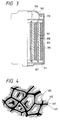


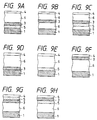

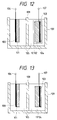
Classifications
-
- H—ELECTRICITY
- H01—ELECTRIC ELEMENTS
- H01M—PROCESSES OR MEANS, e.g. BATTERIES, FOR THE DIRECT CONVERSION OF CHEMICAL ENERGY INTO ELECTRICAL ENERGY
- H01M10/00—Secondary cells; Manufacture thereof
- H01M10/05—Accumulators with non-aqueous electrolyte
-
- H—ELECTRICITY
- H01—ELECTRIC ELEMENTS
- H01M—PROCESSES OR MEANS, e.g. BATTERIES, FOR THE DIRECT CONVERSION OF CHEMICAL ENERGY INTO ELECTRICAL ENERGY
- H01M10/00—Secondary cells; Manufacture thereof
- H01M10/05—Accumulators with non-aqueous electrolyte
- H01M10/052—Li-accumulators
-
- H—ELECTRICITY
- H01—ELECTRIC ELEMENTS
- H01M—PROCESSES OR MEANS, e.g. BATTERIES, FOR THE DIRECT CONVERSION OF CHEMICAL ENERGY INTO ELECTRICAL ENERGY
- H01M10/00—Secondary cells; Manufacture thereof
- H01M10/24—Alkaline accumulators
-
- H—ELECTRICITY
- H01—ELECTRIC ELEMENTS
- H01M—PROCESSES OR MEANS, e.g. BATTERIES, FOR THE DIRECT CONVERSION OF CHEMICAL ENERGY INTO ELECTRICAL ENERGY
- H01M4/00—Electrodes
- H01M4/02—Electrodes composed of, or comprising, active material
-
- H—ELECTRICITY
- H01—ELECTRIC ELEMENTS
- H01M—PROCESSES OR MEANS, e.g. BATTERIES, FOR THE DIRECT CONVERSION OF CHEMICAL ENERGY INTO ELECTRICAL ENERGY
- H01M4/00—Electrodes
- H01M4/02—Electrodes composed of, or comprising, active material
- H01M4/04—Processes of manufacture in general
-
- H—ELECTRICITY
- H01—ELECTRIC ELEMENTS
- H01M—PROCESSES OR MEANS, e.g. BATTERIES, FOR THE DIRECT CONVERSION OF CHEMICAL ENERGY INTO ELECTRICAL ENERGY
- H01M4/00—Electrodes
- H01M4/02—Electrodes composed of, or comprising, active material
- H01M4/04—Processes of manufacture in general
- H01M4/0402—Methods of deposition of the material
-
- H—ELECTRICITY
- H01—ELECTRIC ELEMENTS
- H01M—PROCESSES OR MEANS, e.g. BATTERIES, FOR THE DIRECT CONVERSION OF CHEMICAL ENERGY INTO ELECTRICAL ENERGY
- H01M4/00—Electrodes
- H01M4/02—Electrodes composed of, or comprising, active material
- H01M4/04—Processes of manufacture in general
- H01M4/0402—Methods of deposition of the material
- H01M4/0404—Methods of deposition of the material by coating on electrode collectors
-
- H—ELECTRICITY
- H01—ELECTRIC ELEMENTS
- H01M—PROCESSES OR MEANS, e.g. BATTERIES, FOR THE DIRECT CONVERSION OF CHEMICAL ENERGY INTO ELECTRICAL ENERGY
- H01M4/00—Electrodes
- H01M4/02—Electrodes composed of, or comprising, active material
- H01M4/04—Processes of manufacture in general
- H01M4/0402—Methods of deposition of the material
- H01M4/0409—Methods of deposition of the material by a doctor blade method, slip-casting or roller coating
-
- H—ELECTRICITY
- H01—ELECTRIC ELEMENTS
- H01M—PROCESSES OR MEANS, e.g. BATTERIES, FOR THE DIRECT CONVERSION OF CHEMICAL ENERGY INTO ELECTRICAL ENERGY
- H01M4/00—Electrodes
- H01M4/02—Electrodes composed of, or comprising, active material
- H01M4/04—Processes of manufacture in general
- H01M4/0402—Methods of deposition of the material
- H01M4/0414—Methods of deposition of the material by screen printing
-
- H—ELECTRICITY
- H01—ELECTRIC ELEMENTS
- H01M—PROCESSES OR MEANS, e.g. BATTERIES, FOR THE DIRECT CONVERSION OF CHEMICAL ENERGY INTO ELECTRICAL ENERGY
- H01M4/00—Electrodes
- H01M4/02—Electrodes composed of, or comprising, active material
- H01M4/04—Processes of manufacture in general
- H01M4/0402—Methods of deposition of the material
- H01M4/0416—Methods of deposition of the material involving impregnation with a solution, dispersion, paste or dry powder
-
- H—ELECTRICITY
- H01—ELECTRIC ELEMENTS
- H01M—PROCESSES OR MEANS, e.g. BATTERIES, FOR THE DIRECT CONVERSION OF CHEMICAL ENERGY INTO ELECTRICAL ENERGY
- H01M4/00—Electrodes
- H01M4/02—Electrodes composed of, or comprising, active material
- H01M4/04—Processes of manufacture in general
- H01M4/0402—Methods of deposition of the material
- H01M4/0419—Methods of deposition of the material involving spraying
-
- H—ELECTRICITY
- H01—ELECTRIC ELEMENTS
- H01M—PROCESSES OR MEANS, e.g. BATTERIES, FOR THE DIRECT CONVERSION OF CHEMICAL ENERGY INTO ELECTRICAL ENERGY
- H01M4/00—Electrodes
- H01M4/02—Electrodes composed of, or comprising, active material
- H01M4/04—Processes of manufacture in general
- H01M4/0402—Methods of deposition of the material
- H01M4/0421—Methods of deposition of the material involving vapour deposition
-
- H—ELECTRICITY
- H01—ELECTRIC ELEMENTS
- H01M—PROCESSES OR MEANS, e.g. BATTERIES, FOR THE DIRECT CONVERSION OF CHEMICAL ENERGY INTO ELECTRICAL ENERGY
- H01M4/00—Electrodes
- H01M4/02—Electrodes composed of, or comprising, active material
- H01M4/04—Processes of manufacture in general
- H01M4/0402—Methods of deposition of the material
- H01M4/0421—Methods of deposition of the material involving vapour deposition
- H01M4/0423—Physical vapour deposition
- H01M4/0426—Sputtering
-
- H—ELECTRICITY
- H01—ELECTRIC ELEMENTS
- H01M—PROCESSES OR MEANS, e.g. BATTERIES, FOR THE DIRECT CONVERSION OF CHEMICAL ENERGY INTO ELECTRICAL ENERGY
- H01M4/00—Electrodes
- H01M4/02—Electrodes composed of, or comprising, active material
- H01M4/04—Processes of manufacture in general
- H01M4/0402—Methods of deposition of the material
- H01M4/0421—Methods of deposition of the material involving vapour deposition
- H01M4/0428—Chemical vapour deposition
-
- H—ELECTRICITY
- H01—ELECTRIC ELEMENTS
- H01M—PROCESSES OR MEANS, e.g. BATTERIES, FOR THE DIRECT CONVERSION OF CHEMICAL ENERGY INTO ELECTRICAL ENERGY
- H01M4/00—Electrodes
- H01M4/02—Electrodes composed of, or comprising, active material
- H01M4/04—Processes of manufacture in general
- H01M4/043—Processes of manufacture in general involving compressing or compaction
-
- H—ELECTRICITY
- H01—ELECTRIC ELEMENTS
- H01M—PROCESSES OR MEANS, e.g. BATTERIES, FOR THE DIRECT CONVERSION OF CHEMICAL ENERGY INTO ELECTRICAL ENERGY
- H01M4/00—Electrodes
- H01M4/02—Electrodes composed of, or comprising, active material
- H01M4/04—Processes of manufacture in general
- H01M4/043—Processes of manufacture in general involving compressing or compaction
- H01M4/0435—Rolling or calendering
-
- H—ELECTRICITY
- H01—ELECTRIC ELEMENTS
- H01M—PROCESSES OR MEANS, e.g. BATTERIES, FOR THE DIRECT CONVERSION OF CHEMICAL ENERGY INTO ELECTRICAL ENERGY
- H01M4/00—Electrodes
- H01M4/02—Electrodes composed of, or comprising, active material
- H01M4/04—Processes of manufacture in general
- H01M4/0438—Processes of manufacture in general by electrochemical processing
-
- H—ELECTRICITY
- H01—ELECTRIC ELEMENTS
- H01M—PROCESSES OR MEANS, e.g. BATTERIES, FOR THE DIRECT CONVERSION OF CHEMICAL ENERGY INTO ELECTRICAL ENERGY
- H01M4/00—Electrodes
- H01M4/02—Electrodes composed of, or comprising, active material
- H01M4/04—Processes of manufacture in general
- H01M4/0438—Processes of manufacture in general by electrochemical processing
- H01M4/045—Electrochemical coating; Electrochemical impregnation
-
- H—ELECTRICITY
- H01—ELECTRIC ELEMENTS
- H01M—PROCESSES OR MEANS, e.g. BATTERIES, FOR THE DIRECT CONVERSION OF CHEMICAL ENERGY INTO ELECTRICAL ENERGY
- H01M4/00—Electrodes
- H01M4/02—Electrodes composed of, or comprising, active material
- H01M4/04—Processes of manufacture in general
- H01M4/0438—Processes of manufacture in general by electrochemical processing
- H01M4/045—Electrochemical coating; Electrochemical impregnation
- H01M4/0452—Electrochemical coating; Electrochemical impregnation from solutions
-
- H—ELECTRICITY
- H01—ELECTRIC ELEMENTS
- H01M—PROCESSES OR MEANS, e.g. BATTERIES, FOR THE DIRECT CONVERSION OF CHEMICAL ENERGY INTO ELECTRICAL ENERGY
- H01M4/00—Electrodes
- H01M4/02—Electrodes composed of, or comprising, active material
- H01M4/04—Processes of manufacture in general
- H01M4/0438—Processes of manufacture in general by electrochemical processing
- H01M4/0464—Electro organic synthesis
- H01M4/0466—Electrochemical polymerisation
-
- H—ELECTRICITY
- H01—ELECTRIC ELEMENTS
- H01M—PROCESSES OR MEANS, e.g. BATTERIES, FOR THE DIRECT CONVERSION OF CHEMICAL ENERGY INTO ELECTRICAL ENERGY
- H01M4/00—Electrodes
- H01M4/02—Electrodes composed of, or comprising, active material
- H01M4/04—Processes of manufacture in general
- H01M4/0471—Processes of manufacture in general involving thermal treatment, e.g. firing, sintering, backing particulate active material, thermal decomposition, pyrolysis
-
- H—ELECTRICITY
- H01—ELECTRIC ELEMENTS
- H01M—PROCESSES OR MEANS, e.g. BATTERIES, FOR THE DIRECT CONVERSION OF CHEMICAL ENERGY INTO ELECTRICAL ENERGY
- H01M4/00—Electrodes
- H01M4/02—Electrodes composed of, or comprising, active material
- H01M4/13—Electrodes for accumulators with non-aqueous electrolyte, e.g. for lithium-accumulators; Processes of manufacture thereof
-
- H—ELECTRICITY
- H01—ELECTRIC ELEMENTS
- H01M—PROCESSES OR MEANS, e.g. BATTERIES, FOR THE DIRECT CONVERSION OF CHEMICAL ENERGY INTO ELECTRICAL ENERGY
- H01M4/00—Electrodes
- H01M4/02—Electrodes composed of, or comprising, active material
- H01M4/13—Electrodes for accumulators with non-aqueous electrolyte, e.g. for lithium-accumulators; Processes of manufacture thereof
- H01M4/131—Electrodes based on mixed oxides or hydroxides, or on mixtures of oxides or hydroxides, e.g. LiCoOx
-
- H—ELECTRICITY
- H01—ELECTRIC ELEMENTS
- H01M—PROCESSES OR MEANS, e.g. BATTERIES, FOR THE DIRECT CONVERSION OF CHEMICAL ENERGY INTO ELECTRICAL ENERGY
- H01M4/00—Electrodes
- H01M4/02—Electrodes composed of, or comprising, active material
- H01M4/13—Electrodes for accumulators with non-aqueous electrolyte, e.g. for lithium-accumulators; Processes of manufacture thereof
- H01M4/134—Electrodes based on metals, Si or alloys
-
- H—ELECTRICITY
- H01—ELECTRIC ELEMENTS
- H01M—PROCESSES OR MEANS, e.g. BATTERIES, FOR THE DIRECT CONVERSION OF CHEMICAL ENERGY INTO ELECTRICAL ENERGY
- H01M4/00—Electrodes
- H01M4/02—Electrodes composed of, or comprising, active material
- H01M4/13—Electrodes for accumulators with non-aqueous electrolyte, e.g. for lithium-accumulators; Processes of manufacture thereof
- H01M4/139—Processes of manufacture
-
- H—ELECTRICITY
- H01—ELECTRIC ELEMENTS
- H01M—PROCESSES OR MEANS, e.g. BATTERIES, FOR THE DIRECT CONVERSION OF CHEMICAL ENERGY INTO ELECTRICAL ENERGY
- H01M4/00—Electrodes
- H01M4/02—Electrodes composed of, or comprising, active material
- H01M4/24—Electrodes for alkaline accumulators
-
- H—ELECTRICITY
- H01—ELECTRIC ELEMENTS
- H01M—PROCESSES OR MEANS, e.g. BATTERIES, FOR THE DIRECT CONVERSION OF CHEMICAL ENERGY INTO ELECTRICAL ENERGY
- H01M4/00—Electrodes
- H01M4/02—Electrodes composed of, or comprising, active material
- H01M4/24—Electrodes for alkaline accumulators
- H01M4/244—Zinc electrodes
-
- H—ELECTRICITY
- H01—ELECTRIC ELEMENTS
- H01M—PROCESSES OR MEANS, e.g. BATTERIES, FOR THE DIRECT CONVERSION OF CHEMICAL ENERGY INTO ELECTRICAL ENERGY
- H01M4/00—Electrodes
- H01M4/02—Electrodes composed of, or comprising, active material
- H01M4/36—Selection of substances as active materials, active masses, active liquids
-
- H—ELECTRICITY
- H01—ELECTRIC ELEMENTS
- H01M—PROCESSES OR MEANS, e.g. BATTERIES, FOR THE DIRECT CONVERSION OF CHEMICAL ENERGY INTO ELECTRICAL ENERGY
- H01M4/00—Electrodes
- H01M4/02—Electrodes composed of, or comprising, active material
- H01M4/36—Selection of substances as active materials, active masses, active liquids
- H01M4/362—Composites
- H01M4/366—Composites as layered products
-
- H—ELECTRICITY
- H01—ELECTRIC ELEMENTS
- H01M—PROCESSES OR MEANS, e.g. BATTERIES, FOR THE DIRECT CONVERSION OF CHEMICAL ENERGY INTO ELECTRICAL ENERGY
- H01M4/00—Electrodes
- H01M4/02—Electrodes composed of, or comprising, active material
- H01M4/36—Selection of substances as active materials, active masses, active liquids
- H01M4/38—Selection of substances as active materials, active masses, active liquids of elements or alloys
-
- H—ELECTRICITY
- H01—ELECTRIC ELEMENTS
- H01M—PROCESSES OR MEANS, e.g. BATTERIES, FOR THE DIRECT CONVERSION OF CHEMICAL ENERGY INTO ELECTRICAL ENERGY
- H01M4/00—Electrodes
- H01M4/02—Electrodes composed of, or comprising, active material
- H01M4/36—Selection of substances as active materials, active masses, active liquids
- H01M4/38—Selection of substances as active materials, active masses, active liquids of elements or alloys
- H01M4/40—Alloys based on alkali metals
-
- H—ELECTRICITY
- H01—ELECTRIC ELEMENTS
- H01M—PROCESSES OR MEANS, e.g. BATTERIES, FOR THE DIRECT CONVERSION OF CHEMICAL ENERGY INTO ELECTRICAL ENERGY
- H01M4/00—Electrodes
- H01M4/02—Electrodes composed of, or comprising, active material
- H01M4/36—Selection of substances as active materials, active masses, active liquids
- H01M4/48—Selection of substances as active materials, active masses, active liquids of inorganic oxides or hydroxides
-
- H—ELECTRICITY
- H01—ELECTRIC ELEMENTS
- H01M—PROCESSES OR MEANS, e.g. BATTERIES, FOR THE DIRECT CONVERSION OF CHEMICAL ENERGY INTO ELECTRICAL ENERGY
- H01M4/00—Electrodes
- H01M4/02—Electrodes composed of, or comprising, active material
- H01M4/36—Selection of substances as active materials, active masses, active liquids
- H01M4/58—Selection of substances as active materials, active masses, active liquids of inorganic compounds other than oxides or hydroxides, e.g. sulfides, selenides, tellurides, halogenides or LiCoFy; of polyanionic structures, e.g. phosphates, silicates or borates
- H01M4/582—Halogenides
-
- H—ELECTRICITY
- H01—ELECTRIC ELEMENTS
- H01M—PROCESSES OR MEANS, e.g. BATTERIES, FOR THE DIRECT CONVERSION OF CHEMICAL ENERGY INTO ELECTRICAL ENERGY
- H01M4/00—Electrodes
- H01M4/02—Electrodes composed of, or comprising, active material
- H01M4/62—Selection of inactive substances as ingredients for active masses, e.g. binders, fillers
-
- H—ELECTRICITY
- H01—ELECTRIC ELEMENTS
- H01M—PROCESSES OR MEANS, e.g. BATTERIES, FOR THE DIRECT CONVERSION OF CHEMICAL ENERGY INTO ELECTRICAL ENERGY
- H01M4/00—Electrodes
- H01M4/02—Electrodes composed of, or comprising, active material
- H01M4/62—Selection of inactive substances as ingredients for active masses, e.g. binders, fillers
- H01M4/621—Binders
- H01M4/622—Binders being polymers
-
- H—ELECTRICITY
- H01—ELECTRIC ELEMENTS
- H01M—PROCESSES OR MEANS, e.g. BATTERIES, FOR THE DIRECT CONVERSION OF CHEMICAL ENERGY INTO ELECTRICAL ENERGY
- H01M4/00—Electrodes
- H01M4/02—Electrodes composed of, or comprising, active material
- H01M4/62—Selection of inactive substances as ingredients for active masses, e.g. binders, fillers
- H01M4/621—Binders
- H01M4/622—Binders being polymers
- H01M4/623—Binders being polymers fluorinated polymers
-
- H—ELECTRICITY
- H01—ELECTRIC ELEMENTS
- H01M—PROCESSES OR MEANS, e.g. BATTERIES, FOR THE DIRECT CONVERSION OF CHEMICAL ENERGY INTO ELECTRICAL ENERGY
- H01M4/00—Electrodes
- H01M4/02—Electrodes composed of, or comprising, active material
- H01M4/64—Carriers or collectors
- H01M4/70—Carriers or collectors characterised by shape or form
- H01M4/72—Grids
- H01M4/74—Meshes or woven material; Expanded metal
- H01M4/742—Meshes or woven material; Expanded metal perforated material
-
- H—ELECTRICITY
- H01—ELECTRIC ELEMENTS
- H01M—PROCESSES OR MEANS, e.g. BATTERIES, FOR THE DIRECT CONVERSION OF CHEMICAL ENERGY INTO ELECTRICAL ENERGY
- H01M10/00—Secondary cells; Manufacture thereof
- H01M10/05—Accumulators with non-aqueous electrolyte
- H01M10/056—Accumulators with non-aqueous electrolyte characterised by the materials used as electrolytes, e.g. mixed inorganic/organic electrolytes
-
- H—ELECTRICITY
- H01—ELECTRIC ELEMENTS
- H01M—PROCESSES OR MEANS, e.g. BATTERIES, FOR THE DIRECT CONVERSION OF CHEMICAL ENERGY INTO ELECTRICAL ENERGY
- H01M10/00—Secondary cells; Manufacture thereof
- H01M10/05—Accumulators with non-aqueous electrolyte
- H01M10/058—Construction or manufacture
-
- H—ELECTRICITY
- H01—ELECTRIC ELEMENTS
- H01M—PROCESSES OR MEANS, e.g. BATTERIES, FOR THE DIRECT CONVERSION OF CHEMICAL ENERGY INTO ELECTRICAL ENERGY
- H01M10/00—Secondary cells; Manufacture thereof
- H01M10/05—Accumulators with non-aqueous electrolyte
- H01M10/058—Construction or manufacture
- H01M10/0585—Construction or manufacture of accumulators having only flat construction elements, i.e. flat positive electrodes, flat negative electrodes and flat separators
-
- H—ELECTRICITY
- H01—ELECTRIC ELEMENTS
- H01M—PROCESSES OR MEANS, e.g. BATTERIES, FOR THE DIRECT CONVERSION OF CHEMICAL ENERGY INTO ELECTRICAL ENERGY
- H01M10/00—Secondary cells; Manufacture thereof
- H01M10/05—Accumulators with non-aqueous electrolyte
- H01M10/058—Construction or manufacture
- H01M10/0587—Construction or manufacture of accumulators having only wound construction elements, i.e. wound positive electrodes, wound negative electrodes and wound separators
-
- H—ELECTRICITY
- H01—ELECTRIC ELEMENTS
- H01M—PROCESSES OR MEANS, e.g. BATTERIES, FOR THE DIRECT CONVERSION OF CHEMICAL ENERGY INTO ELECTRICAL ENERGY
- H01M10/00—Secondary cells; Manufacture thereof
- H01M10/24—Alkaline accumulators
- H01M10/30—Nickel accumulators
-
- H—ELECTRICITY
- H01—ELECTRIC ELEMENTS
- H01M—PROCESSES OR MEANS, e.g. BATTERIES, FOR THE DIRECT CONVERSION OF CHEMICAL ENERGY INTO ELECTRICAL ENERGY
- H01M12/00—Hybrid cells; Manufacture thereof
- H01M12/08—Hybrid cells; Manufacture thereof composed of a half-cell of a fuel-cell type and a half-cell of the secondary-cell type
-
- H—ELECTRICITY
- H01—ELECTRIC ELEMENTS
- H01M—PROCESSES OR MEANS, e.g. BATTERIES, FOR THE DIRECT CONVERSION OF CHEMICAL ENERGY INTO ELECTRICAL ENERGY
- H01M4/00—Electrodes
- H01M4/02—Electrodes composed of, or comprising, active material
- H01M2004/026—Electrodes composed of, or comprising, active material characterised by the polarity
- H01M2004/027—Negative electrodes
-
- H—ELECTRICITY
- H01—ELECTRIC ELEMENTS
- H01M—PROCESSES OR MEANS, e.g. BATTERIES, FOR THE DIRECT CONVERSION OF CHEMICAL ENERGY INTO ELECTRICAL ENERGY
- H01M4/00—Electrodes
- H01M4/02—Electrodes composed of, or comprising, active material
- H01M4/13—Electrodes for accumulators with non-aqueous electrolyte, e.g. for lithium-accumulators; Processes of manufacture thereof
- H01M4/133—Electrodes based on carbonaceous material, e.g. graphite-intercalation compounds or CFx
-
- H—ELECTRICITY
- H01—ELECTRIC ELEMENTS
- H01M—PROCESSES OR MEANS, e.g. BATTERIES, FOR THE DIRECT CONVERSION OF CHEMICAL ENERGY INTO ELECTRICAL ENERGY
- H01M4/00—Electrodes
- H01M4/02—Electrodes composed of, or comprising, active material
- H01M4/13—Electrodes for accumulators with non-aqueous electrolyte, e.g. for lithium-accumulators; Processes of manufacture thereof
- H01M4/139—Processes of manufacture
- H01M4/1391—Processes of manufacture of electrodes based on mixed oxides or hydroxides, or on mixtures of oxides or hydroxides, e.g. LiCoOx
-
- H—ELECTRICITY
- H01—ELECTRIC ELEMENTS
- H01M—PROCESSES OR MEANS, e.g. BATTERIES, FOR THE DIRECT CONVERSION OF CHEMICAL ENERGY INTO ELECTRICAL ENERGY
- H01M4/00—Electrodes
- H01M4/02—Electrodes composed of, or comprising, active material
- H01M4/36—Selection of substances as active materials, active masses, active liquids
- H01M4/38—Selection of substances as active materials, active masses, active liquids of elements or alloys
- H01M4/42—Alloys based on zinc
-
- H—ELECTRICITY
- H01—ELECTRIC ELEMENTS
- H01M—PROCESSES OR MEANS, e.g. BATTERIES, FOR THE DIRECT CONVERSION OF CHEMICAL ENERGY INTO ELECTRICAL ENERGY
- H01M4/00—Electrodes
- H01M4/02—Electrodes composed of, or comprising, active material
- H01M4/36—Selection of substances as active materials, active masses, active liquids
- H01M4/48—Selection of substances as active materials, active masses, active liquids of inorganic oxides or hydroxides
- H01M4/485—Selection of substances as active materials, active masses, active liquids of inorganic oxides or hydroxides of mixed oxides or hydroxides for inserting or intercalating light metals, e.g. LiTi2O4 or LiTi2OxFy
-
- H—ELECTRICITY
- H01—ELECTRIC ELEMENTS
- H01M—PROCESSES OR MEANS, e.g. BATTERIES, FOR THE DIRECT CONVERSION OF CHEMICAL ENERGY INTO ELECTRICAL ENERGY
- H01M4/00—Electrodes
- H01M4/02—Electrodes composed of, or comprising, active material
- H01M4/36—Selection of substances as active materials, active masses, active liquids
- H01M4/48—Selection of substances as active materials, active masses, active liquids of inorganic oxides or hydroxides
- H01M4/50—Selection of substances as active materials, active masses, active liquids of inorganic oxides or hydroxides of manganese
- H01M4/505—Selection of substances as active materials, active masses, active liquids of inorganic oxides or hydroxides of manganese of mixed oxides or hydroxides containing manganese for inserting or intercalating light metals, e.g. LiMn2O4 or LiMn2OxFy
-
- H—ELECTRICITY
- H01—ELECTRIC ELEMENTS
- H01M—PROCESSES OR MEANS, e.g. BATTERIES, FOR THE DIRECT CONVERSION OF CHEMICAL ENERGY INTO ELECTRICAL ENERGY
- H01M4/00—Electrodes
- H01M4/02—Electrodes composed of, or comprising, active material
- H01M4/36—Selection of substances as active materials, active masses, active liquids
- H01M4/48—Selection of substances as active materials, active masses, active liquids of inorganic oxides or hydroxides
- H01M4/52—Selection of substances as active materials, active masses, active liquids of inorganic oxides or hydroxides of nickel, cobalt or iron
- H01M4/525—Selection of substances as active materials, active masses, active liquids of inorganic oxides or hydroxides of nickel, cobalt or iron of mixed oxides or hydroxides containing iron, cobalt or nickel for inserting or intercalating light metals, e.g. LiNiO2, LiCoO2 or LiCoOxFy
-
- H—ELECTRICITY
- H01—ELECTRIC ELEMENTS
- H01M—PROCESSES OR MEANS, e.g. BATTERIES, FOR THE DIRECT CONVERSION OF CHEMICAL ENERGY INTO ELECTRICAL ENERGY
- H01M4/00—Electrodes
- H01M4/02—Electrodes composed of, or comprising, active material
- H01M4/36—Selection of substances as active materials, active masses, active liquids
- H01M4/58—Selection of substances as active materials, active masses, active liquids of inorganic compounds other than oxides or hydroxides, e.g. sulfides, selenides, tellurides, halogenides or LiCoFy; of polyanionic structures, e.g. phosphates, silicates or borates
-
- H—ELECTRICITY
- H01—ELECTRIC ELEMENTS
- H01M—PROCESSES OR MEANS, e.g. BATTERIES, FOR THE DIRECT CONVERSION OF CHEMICAL ENERGY INTO ELECTRICAL ENERGY
- H01M4/00—Electrodes
- H01M4/02—Electrodes composed of, or comprising, active material
- H01M4/36—Selection of substances as active materials, active masses, active liquids
- H01M4/58—Selection of substances as active materials, active masses, active liquids of inorganic compounds other than oxides or hydroxides, e.g. sulfides, selenides, tellurides, halogenides or LiCoFy; of polyanionic structures, e.g. phosphates, silicates or borates
- H01M4/581—Chalcogenides or intercalation compounds thereof
-
- H—ELECTRICITY
- H01—ELECTRIC ELEMENTS
- H01M—PROCESSES OR MEANS, e.g. BATTERIES, FOR THE DIRECT CONVERSION OF CHEMICAL ENERGY INTO ELECTRICAL ENERGY
- H01M4/00—Electrodes
- H01M4/02—Electrodes composed of, or comprising, active material
- H01M4/62—Selection of inactive substances as ingredients for active masses, e.g. binders, fillers
- H01M4/621—Binders
-
- H—ELECTRICITY
- H01—ELECTRIC ELEMENTS
- H01M—PROCESSES OR MEANS, e.g. BATTERIES, FOR THE DIRECT CONVERSION OF CHEMICAL ENERGY INTO ELECTRICAL ENERGY
- H01M4/00—Electrodes
- H01M4/02—Electrodes composed of, or comprising, active material
- H01M4/62—Selection of inactive substances as ingredients for active masses, e.g. binders, fillers
- H01M4/624—Electric conductive fillers
- H01M4/625—Carbon or graphite
-
- H—ELECTRICITY
- H01—ELECTRIC ELEMENTS
- H01M—PROCESSES OR MEANS, e.g. BATTERIES, FOR THE DIRECT CONVERSION OF CHEMICAL ENERGY INTO ELECTRICAL ENERGY
- H01M4/00—Electrodes
- H01M4/02—Electrodes composed of, or comprising, active material
- H01M4/64—Carriers or collectors
- H01M4/70—Carriers or collectors characterised by shape or form
- H01M4/72—Grids
- H01M4/74—Meshes or woven material; Expanded metal
-
- H—ELECTRICITY
- H01—ELECTRIC ELEMENTS
- H01M—PROCESSES OR MEANS, e.g. BATTERIES, FOR THE DIRECT CONVERSION OF CHEMICAL ENERGY INTO ELECTRICAL ENERGY
- H01M4/00—Electrodes
- H01M4/02—Electrodes composed of, or comprising, active material
- H01M4/64—Carriers or collectors
- H01M4/70—Carriers or collectors characterised by shape or form
- H01M4/80—Porous plates, e.g. sintered carriers
- H01M4/808—Foamed, spongy materials
-
- H—ELECTRICITY
- H01—ELECTRIC ELEMENTS
- H01M—PROCESSES OR MEANS, e.g. BATTERIES, FOR THE DIRECT CONVERSION OF CHEMICAL ENERGY INTO ELECTRICAL ENERGY
- H01M50/00—Constructional details or processes of manufacture of the non-active parts of electrochemical cells other than fuel cells, e.g. hybrid cells
- H01M50/40—Separators; Membranes; Diaphragms; Spacing elements inside cells
- H01M50/46—Separators, membranes or diaphragms characterised by their combination with electrodes
-
- Y—GENERAL TAGGING OF NEW TECHNOLOGICAL DEVELOPMENTS; GENERAL TAGGING OF CROSS-SECTIONAL TECHNOLOGIES SPANNING OVER SEVERAL SECTIONS OF THE IPC; TECHNICAL SUBJECTS COVERED BY FORMER USPC CROSS-REFERENCE ART COLLECTIONS [XRACs] AND DIGESTS
- Y02—TECHNOLOGIES OR APPLICATIONS FOR MITIGATION OR ADAPTATION AGAINST CLIMATE CHANGE
- Y02E—REDUCTION OF GREENHOUSE GAS [GHG] EMISSIONS, RELATED TO ENERGY GENERATION, TRANSMISSION OR DISTRIBUTION
- Y02E60/00—Enabling technologies; Technologies with a potential or indirect contribution to GHG emissions mitigation
- Y02E60/10—Energy storage using batteries
-
- Y—GENERAL TAGGING OF NEW TECHNOLOGICAL DEVELOPMENTS; GENERAL TAGGING OF CROSS-SECTIONAL TECHNOLOGIES SPANNING OVER SEVERAL SECTIONS OF THE IPC; TECHNICAL SUBJECTS COVERED BY FORMER USPC CROSS-REFERENCE ART COLLECTIONS [XRACs] AND DIGESTS
- Y10—TECHNICAL SUBJECTS COVERED BY FORMER USPC
- Y10T—TECHNICAL SUBJECTS COVERED BY FORMER US CLASSIFICATION
- Y10T29/00—Metal working
- Y10T29/49—Method of mechanical manufacture
- Y10T29/49002—Electrical device making
- Y10T29/49108—Electric battery cell making
Definitions
- the present invention relates to a secondary battery which can repeatedly be used, and more particularly to a reliable secondary battery capable of preventing short circuit occurring due to dendrite even if the battery is repeatedly charged and discharged.
- the lithium battery, nickel-zinc battery and the air-zinc battery encounters the problem that lithium or zinc is, as described above, deposited on the surface of the negative pole at the time of charge. At this time, the current density is locally raised on the negative pole surface depending upon the surface condition, causing lithium or zinc to be selectively deposited in the foregoing place.
- the deposited metal grows (dendrite) in the form of tree branch with the progress of the charge and discharge cycles while penetrating a separator until it reaches the positive pole, causing a short circuit to occur.
- the dendrite reaction mechanism is considered as follows. Since lithium or zinc that deposits at the time of charge has a considerable reactivity, it reacts with electrolytic solution or water or the like in the electrolytic solution, causing an insulating film to be formed which has a large resistance. Therefore, the current density in the foregoing portion is raised at the time of the next charge, resulting in that the dendrite can further easily grow. It leads to a fact that a short circuit takes place between the negative pole and the positive pole, resulting in that the charge cannot be performed.
- nickel-zinc batteries and air-zinc batteries generate dendrite of zinc due to repetition of charging and discharging, the dendrite penetrating the separator. As a result the zinc negative pole and the positive pole encounter a short circuit. Therefore, the foregoing conventional technology suffers from an excessively short cycle life.
- the invention provides a method of making a secondary battery having the features set out in claim 1 of the accompanying claims. It also relates to a secondary battery as set out in claim 13 of the accompanying claims.
- a secondary battery according to the present invention comprises a negative pole, a separator, a positive pole, an electrolyte and a collector.
- Fig. 1 is a basic structural view which illustrates the secondary battery.
- reference numeral 100 represents a negative collector
- 101 represents a negative pole substantially made of negative pole activating material
- 102 represents a shell
- 103 represents a positive collector
- 104 represents a positive pole substantially made of positive pole activating material
- 105 represents a electrolytic solution (electrolyte)
- 106 represents a negative terminal
- 107 represents a positive terminal
- 109 represents a case for the secondary battery
- 108 represents a separator.
- the lithium battery comprises the negative pole 101 made of the negative active material which is lithium or lithium alloy
- lithium ions in the electrolytic solution 105 are introduced into the space between the layers of the positive pole activating material of the positive pole 104 through the permeable film due to the discharge reaction in a case of the structure shown in Fig. 12.
- lithium ions are dissolved and discharged from the negative pole activating material 101 into the electrolyte 105 through the film 102 and the multi-layer metal oxide 10102.
- lithium ions in the electrolytic solution 105 are, in the form of lithium metal, precipitated into the negative pole activating material through the film 102 (dendrite can easily grow if the film 102 is not present). Simultaneously, lithium between the layers of the positive pole activating material 104 is dissolved and discharged into the electrolytic solution 105.
- lithium ions precipitated during the charging reaction are in a very active state to react with small-quantity water, oxygen, impurities or solvent in the electrolyte contained, the structure in which the surface of the negative pole 101 is covered with the film 102 prevents direct contact between the precipitated lithium and the electrolytic solution. Therefore, the generation of dendrite, which causes the battery short circuit to occur, can be prevented.
- the discharge reaction takes place in such a manner that hydroxyl ions in the electrolytic solution 105, similarly to the above, react with the negative pole activating material 101 of the negative pole 101 through the film 102. Simultaneously hydroxyl ions are discharged into the electrolytic solution 105 from the positive pole activating material of the positive pole 104.
- the charging reaction is performed in such a manner that hydroxyl ions are discharged from the negative pole 101 into the electrolytic solution 105 through the film 102 (if the film 102 is not present at this time, zinc ions in the electrolytic solution 105 easily cause dendrite to grow on the negative pole). Simultaneously, hydroxyl ions in the electrolytic solution 105 react with the positive pole 104.
- the negative pole activating material is lithium
- the present of the film 102 prevents generation of zinc dendrite at the time of charging.
- the foregoing negative pole activating material is lithium or lithium alloy
- lithium ions are used in the reactions in the battery.
- hydroxyl ions are used in the reactions.
- the batteries comprising zinc as the negative pole activating material is typified by nickel-zinc battery, air-zinc battery and bromine-zinc battery (however, the bromine-zinc battery comprises zinc ion as the negative side ion that are used in the inside reactions).
- the negative pole can be formed by any one of the following methods as well as the method for forming the same by directly covering the surface of the negative pole activating material with a coating material by a dipping method, a spraying method or a CVD method.
- a conductive and porous matrix for example, sponge-like or fiber metal or carbon, having communication holes is covered with a coating material through which ions for use in the reactions in the battery can be passed through, and then lithium or zinc, which is the negative-pole activating material, is caused to electrochemical precipitate and adhere so that the negative pole is formed.
- a porous and conductive matrix has a wide specific area, the current density per unit area at the time of the charge and the discharge can be lowered. Therefore, the growth of the dendrite can be prevented and accordingly the charging/discharging efficienty can be improved.
- the film made of a coating material, through which ions can be passed through, the small apertures serving as the space, in which the lithium can be precipitated, be formed into a 3D net shape.
- Another effective method may be employed which has steps of directly immersing a porous and conductive matrix in the melted negative pole activating material, taking out the matrix, covering the surface of the conductive matrix with the negative active material or electrochemically covering the same with the negative pole activating material, and applying a coating material through which ions for use in the reactions in the battery can be passed to the surface.
- Fig. 4 is a schematic view which illustrates a partial structure of a negative pole formed by covering a conductive matrix 400 with a negative pole activating material 401 and a coating material 402 through which ions for use in the reactions in the battery can be passed.
- the coating material for covering the surface of the negative pole will now be described (1 to 7).
- the reactions between lithium and water or oxygen can be prevented, causing easiness in handling if the negative pole activating material is lithium. Further, the direct contact between the lithium and the electrolytic solution does not take place. Therefore, the growth of the polymer film formed from the solvent of the electrolytic solution on the surface of lithium can be prevented. If the negative active material is zinc, the elution of zinc into the electrolytic solution can be prevented. As a result, formation of dendrite can be prevented and therefore the cycle life against charge and discharge can be lengthened.
- the film having the inorganic glass structure is flame retardant or incombustible, safety in an emergency breakage or the like can be improved.
- the foregoing inorganic glass may be made any one of a metal oxide selected from a group consisting of silica, titanium oxide, alumina, zirconia oxide, magnesium oxide, tantalum oxide, molybdenum oxide, tungsten molybdenum, tin oxide, indium oxide, iron oxide, chrome oxide, aluminum phosphate, iron phosphate, silicon phosphate and their mixtures.
- silica, titanium oxide, alumina, zirconia oxide or aluminum phosphate it is preferable to employ silica, titanium oxide, alumina, zirconia oxide or aluminum phosphate.
- a sol-gel method is one of adequate methods for forming the inorganic glass.
- the fact that lithium has a low melting point of 181°C causes a necessity to arise for the operation of directly applying the foregoing material to the surface of lithium to be performed at low temperature. Since lithium reacts with water and alcohol, the operation must be performed in a circumstance in which no water and alcohol is present (the case in which the inorganic glass is previously applied to the conductive matrix or the case where the negative pole activating material is zinc are excluded).
- the sol-gel method which is the typical inorganic coating method at low temperature, must be performed with any particular means.
- the raw material for the material having the inorganic glass structure is obtained in such a manner that an acid or a base and water are added to a solution of alcohol of an organic metal compound such as a metal alkoxide to hydrolyze the raw material so as to form colloid particles having metal atom-oxygen atom bonds, and then the solvent is substituted by a non-hydric solvent except alcohol.
- the surface coating of the negative pole activating material is formed in a manner comprising steps of directly applying the foregoing colloid solution, or applying a solution, in which a monomer or an organic polymer or both organic polymer and a crosslinking material are dissolved in the colloid solution, and polymerizing it or drying and hardening it.
- a solution in which a monomer or an organic polymer or both organic polymer and a crosslinking material are dissolved in the colloid solution, and polymerizing it or drying and hardening it.
- any one of the following organic metal compound may be employed: acetyl acetone salt, an alkyl metal compound, acetyl acetone metal salt, napththene acid metal salt, and octyl acid metal salt.
- the organic polymer for combining the organic polymers is exemplified by epoxy resin, polyester, polyimide, polyethylene, polypropylene, polyurethane, polystyrene, polyethylene glycol, nylon, fluorine resin and silicon resin.
- the polymer crosslinking material is exemplified by diisocyanate, polyisocyanate prepolymer, block isocyanate, organic peroxide, polyamine, oxims, nitroso compound, sulfur or sulfur compound, selenium, magnesium oxide, lead oxide and zinc oxide.
- a method may be employed in which radial rays or electron rays or ultraviolet rays are applied to polymerize or crosslink the polymer.
- a dipping method, screen printing, spraying or a roll coating method may be employed as an application method.
- the viscosity of the liquid to be applied must adequately be adjusted to be adaptable to the application method.
- powder or fiber or whisker of conductive material such as carbon or titanium may be mixed with the foregoing film forming solution.
- the thickness of the film to be formed on the surface of the negative pole activating material ranges from 50 ⁇ to 100 ⁇ , further preferably ranges from 100 ⁇ to 10 ⁇ .
- the optimum thickness of the film differs depending upon the density or the void ratio of the film and considerably differs depending upon the type of the electrolytic solution.
- the thickness of the film can be adjusted by changing the concentration of the main material in the coating liquid for forming the film.
- the reaction between lithium and water or oxygen can be prevented in the case where the negative pole activating material is lithium. It leads to a fact that handling can be facilitated. Further, the contact between lithium and electrolytic solution can be prevented. Therefore, the growth of a polymer film, which is formed from the solvent of the electrolytic solution, on the surface of lithium can be prevented. If the negative pole activating material is zinc, elution of zinc into the electrolytic solution is prevented by the film.
- the derivative of the aromatic hydrocarbon for forming the charge moving complex with lithium is one or more derivatives selected from a group consisting of naphthalene, anthracene, phenanthlene, naphthacene, pyrene, triphenylene, perillene, picene, benzopyrene, coronene and ovalene.
- the polymer for use to form the coating material can be prepared by polymerization or copolymerization of vinyl monomer, monomer of acetylene derivative or dicarboxylic acid and a monomer such as glycol.
- the polymerization of the vinyl monomer can be performed by radical or ion polymerization.
- the monomer of the acetylene derivative can be polymerized while using a chloride of tungsten as a catalyzer.
- the dicarboxylic acid and diamine can be polycondensed and the dicarboxylic acid and glycol can as well as be polycondensed.
- the monomer of the aromatic derivative for forming the polymer is exemplified by 2 - vinyl naphthalene, 2 - vinyl pyridine, 9 - vinyl anthracene, 9, 10 - anthracene dipropionic acid, 9, 10 - bis (phenyl ethyl) anthracene and 5, 12 - bis (phenyl ethynyl) naphthalene. It is preferable to use 2 - vinyl naphthalene or 9 - vinyl anthracene.
- a starting material for the radical polymerization is exemplified by azobisisobutylonitryl (AIBN), benzoylperoxide (BPO) and t-butylhydroperoxide.
- a starting material for the cation polymerization is exemplified by an acid such as H 2 SO 4 , H 3 PO 4 , HClO 4 , CCl 3 or CO 2 H and Friedel-Craft catalyzer such as BF 3 , AlCl 3 , TiCl 4 or SnCl 4 .
- a large ring compound having an aromatic ring can be polymerized by dehydrogenation in which the Friedel-Craft catalyzer and an oxidizer are combined to each other.
- a starting material for the anion polymerization may be an alkaline metal compound or an organic metal compound.
- a polymer into which an aromatic group can be obtained by subjecting the side chain of each polymer to a substitution reaction with a derivative of an aromatic compound may be employed in which an electrolytic polymerization reaction is caused to take place in an electrolytic solution containing a monomer mixed therein to form directly a polymer of an aromatic compound on the surface of lithium.
- the surface of lithium is applied with a coating by using the foregoing polymer solution
- a polymer solution dehydrated and deoxidized sufficiently in inactive gas dehydrated sufficiently It is preferable to use a solvent in the foregoing solution which has been dehydrated with active alumina, molecular sheave, phosphorus pentaoxide or calcium chloride.
- the solvent it is preferable depending upon the type of the solvent that the solvent be distilled under presence of alkaline metal in inactive gas to remove impurities and to be dehydrated (however, the necessity of strictly controlling water can be eliminated when the polymer is previously applied to the conductive matrix or when the negative pole activating material is zinc).
- An electrolyte may previously be mixed when the foregoing film is formed. It leads to a fact that wettability between the electrolytic solution and the film can be improved, causing ions to easily pass through the film.
- conductive powder such as carbon or titanium, fiber or whisker may be mixed at the time of forming the film.
- the polymer coating film Since the performance of the battery deteriorates if the polymer coating film is dissolved in an organic solvent of the electrolyte, it is preferable to be crosslinked in such a manner, for example, ultraviolet rays, electron rays or radial rays are applied or a crosslinking material, such as a radical generating agent, is used.
- a crosslinking material such as a radical generating agent
- the thickness of the film to be formed on the surface of the negative pole activating material ranges from 50 ⁇ to 100 ⁇ , more preferably ranges from 100 ⁇ to 10 ⁇ .
- the optimum thickness of the film differs depending upon the density or the void ratio of the film and considerably differs depending upon the type of the electrolytic solution.
- the thickness of the film can be adjusted by changing the concentration of the main material in the coating liquid for forming the film.
- the surface of lithium and the organic metal compound react with each other, bonding with lithium atoms takes place so that a film having a surface which is organic-bonded is formed.
- the wettability (the lipophilic property) is improved, causing lithium ions to be easily introduced/discharged at the time of the charge and discharge.
- the surface coating film prevents the direct contact between lithium and the organic solvent, causing the formation, on the surface of lithium, of a polymerized film of the organic solvent, which increases the resistance in the battery, can be prevented.
- formation of dendrite can be prevented, and therefore life against the charge and discharge cycle can be lengthened.
- reactions between lithium and water during the manufacturing process can be prevented and accordingly handling can be made easier. If the content of lithium in the film is high in the lithium battery according to the present invention, rapid reactions of lithium at an emergency breakage can be prevented.
- the foregoing organic metal compound may be a material selected from a group consisting of: metal alkoxide, alkaline metal compound, acetyl acetone metal salt, naphthene acid metal salt, or oxtyl acid metal salt of metal, such as titanium, aluminum, silicon, zirconium, tantalum, magnesium, indium, tin, molybdenum, tungsten or germanium.
- metal alkoxide alkaline metal compound
- acetyl acetone metal salt such as titanium, aluminum, silicon, zirconium, tantalum, magnesium, indium, tin, molybdenum, tungsten or germanium.
- metal compound of silicon or titanium or aluminum because of easy forming of the film and excellent stability of the formed film.
- the organic silicon compound may be alkoxysilane, alkylsilane, halogenated silane, siloxane, silane containing vinyl group, amino group, epoxy group, methacrylic group or mercaptal group introduced thereto, hydrogen - denatured, vinyl - denatured, hydroxyl group denatured, amino - denatured, carboxylic group denatured, chloro - denatured, epoxy denatured, methachryloxy - denatured, mercapto - denatured, fluorine - denatured, long - chain - alkyl denatured or phenyl - denatured polysiloxane, alkylene oxide denatured siloxane copolymer, silicon - denatured copolymer, alkoxysilane - denatured polymer, silicon - denatured urethane or silicon - denatured nylon.
- the organic titanium compound may be alkoxytitanium, titanium chelate, titanium acylate or titanium polymer.
- the organic aluminum compound may be alkoxyaluminum, alkylaluminum or a halogenated aluminum.
- the organic silicon-titanium compound may be a tyranopolymer of a silicon polymer crosslinked to the main chain of a polycarbosilane skeleton with a titanium compound.
- a material prepared by introducing a derivative of an organic metal compound into a polymer by substitution may be used as the coating material.
- the film may be formed by directly applying the organic compound or by applying it after diluted with a solvent if the organic compound is in the form of liquid. If the organic compound is in the form of a solid, a solution dissolved in a solvent can be applied.
- the organic compound may be applied by dipping, screen printing, spraying or roll coating. The viscosity of the foregoing coating liquid must adequately be adjusted to be suitable for the employed coating method.
- the wettability of the electrolytic solution can be improved and accordingly ions can easily be introduced/discharged at the time of the charge and the discharge. Further, the movement of the charge can be made easier at the time of the battery charge by mixing powder or fiber or whisker of conductive material such as carbon or titanium at the time of applying the organic metal compound.
- the thickness of the film to be formed on lithium ranges from 50 ⁇ to 100 ⁇ , more preferably 100 ⁇ to 10 ⁇ .
- the optimum thickness of the film differs depending upon the density or the void ratio of the film and considerably differs depending upon the type of the electrolytic solution.
- the thickness of the film can be adjusted by changing the concentration of the main material in the coating liquid for forming the film.
- fluorine resin of a type having an ether bond By using fluorine resin of a type having an ether bond to cover the surface of lithium, the surface coating process can be completed easily and the contact between lithium and the film can be improved.
- the presence of oxygen atoms of the fluorine resin having the ether bond makes easier the coordination of lithium ions, enabling lithium ions to be moved easily in the fluorine resin.
- the surface coating film prevents the direct contact between the lithium metal and the organic solvent, and therefore the formation of a polymerized film of the organic solvent, which increases the internal resistance of the battery, on the surface of lithium can be prevented.
- the fluorine resin is a flame retardant resin, it exhibits safety at the time of an emergency fire accident.
- the fluorine resin for covering the surface of lithium is exemplified by: a copolymer with a vinyl monomer, such as vinyl ether, dioxysol, dioxyne or dioxycene having an ether bond with fluoroethylene or diene monomer derivative or a copolymer with a vinyl monomer, such as vinyl ether, dioxysol or dioxyne, dixycene having a fluorized ether bond with a diene compound, such as ethylene.
- a copolymer with vinyl ether having an ether bond with fluoroethylene it is preferable to use.
- the fluoroethylene may be a fluoroethylene derivative such as tetrafluoroethylene, chlorotrifluoroethylene, vinylidene fluoride or vinyl fluoride.
- the fluoroethylene copolymer containing the ether bond can be polymerized by a solution, suspension, block or emulsion polymerization.
- a peroxide, alkyl boron, light or radial rays may be employed.
- the fluororesin can be coated on lithium metal by any one of the following methods.
- the lithium surface is coated by using the fluororesin solution, it is preferable to use, in an inactive gas dehydrated sufficiently, a fluororesin solution dehydrated and deoxidized sufficiently. It is preferable to use a solvent in the foregoing solution which has been dehydrated with active alumina, molecular sheave, phosphorus pentaoxide or calcium chloride. As an alternative to this, it is preferable depending upon the type of the solvent that the solvent be distilled under presence of alkaline metal in inactive gas to remove impurities and to be dehydrated. However, the necessity of strictly controlling water can be eliminated when lithium is electrochemically inserted and allowed to adhere between the fluororesin and the conductive matrix.
- An electrolyte may previously be mixed when the foregoing film is formed. It leads to a fact that wettability between the electrolytic solution and the film can be improved, causing ions to easily pass through the film.
- conductive powder such as carbon or titanium, fiber or whisker may be mixed at the time of forming the film.
- the film is crosslinked.
- a fluorocompound such as tetrafluoroethylene
- a fluorocompound such as tetrafluoroethylene
- plasma can effectively be generated by a DC or RF glow discharge method, a microwave discharge method or a laser beam irradiation method.
- the thickness of the film to be formed on the surface of lithium ranges from 50 ⁇ to 100 ⁇ , more preferably ranges from 100 ⁇ to 10 ⁇ .
- the optimum thickness of the film differs depending upon the density or the void ratio of the film and considerably differs depending upon the type of the electrolytic solution.
- the thickness of the film can be adjusted by changing the concentration of the main material in the coating liquid for forming the film.
- the reactions between lithium and water or oxygen can be prevented if the negative active material is lithium.
- handling can easily be performed.
- the direct contact between lithium and the electrolytic solution can be prevented, and therefore the growth of a polymer film on the surface of lithium to be formed from the solvent of the electrolytic solution can be prevented.
- the negative pole activating material is zinc, the dissolution of zinc into the electrolytic solution can be prevented. As a result, the formation of dendrite can be prevented, causing the life against the charge and discharge cycle can be lengthened.
- the large ring compound is a large ring compound having heteroatoms composed of one or more types of atoms selected from a group consisting of oxygen, nitrogen and sulfur.
- a compound having one or more structures selected from a group consisting of ring polyether, ring polyamide, ring polythioether, azacrown ether, ring thioether, thiocrown ether, cryptand, cycrum, nonactyne and bariomicine each having a hole having a radium lager than the radium of ions to be used in the reactions in the battery, thyracrown, cyclodextrin, cyclophane, phtharocyanine and porphyrin each of which is crown ether having silicon atoms. It is preferable to use crown ether polymer, bariomicine, phthalocyanine or porphylin.
- the movement of ions for use in the battery reactions between the electrolytic solution and the negative pole activating material can be made easier. Therefore, local generation of zinc or lithium dendrite on the negative pole can be prevented. Further, reactions between fresh lithium or zinc generated at the time of the charge with the solvent of the electrolytic solution can be prevented.
- the surface coating of the large ring compound to be applied to the surface of the negative active agent can be performed in any of the following methods.
- An electrolyte may be mixed at the time of forming the foregoing film.
- the wettability between the electrolytic solution and the film can be improved, causing ions to be easily passed through the film.
- powder or fiber or whisker of conductive material such as carbon or titanium may be mixed at the time of forming the film.
- poly [(dibenzo - 18 - crown - 6) - coformaldehyde] or the like can be used as the polymer for use in the coating solution.
- a polymer for coating can newly be prepared by the following polymerization reactions. By condensation polymerization of a large ring compound having, at the terminative group thereof, carboxylic group or amino group or a hydroxyl group, polyamide can be obtained if the carboxylic group and the amino group react with each other. Polyester can be obtained if the carboxylic group and the hydroxyl group react with each other.
- the vinyl compound of the large ring compound or diene of the large ring compound enables an additive polymer to be obtained by radical polymerization, cation polymerization or anion polymerization.
- the starting material of the radical polymerization may be azobisisobutylnitryl (AIBN), benzoylperoixde (BPO) or t-butylhydroperoxide.
- a starting material for the cation polymerization is exemplified by an acid such as H 2 SO 4 , H 3 PO 4 , HClO 4 , CCl 3 or CO 2 H and Friedel-Craft catalyzer such as BF 3 , AlCl 3 , TiCl 4 or SnCl 4 .
- a large ring compound having an aromatic ring can be polymerized by dehydrogenation in which the Friedel-Craft catalyzer and an oxidizer are combined to each other.
- a starting material for the anion polymerization may be an alkaline metal compound or an organic metal compound.
- the monomer of the large ring compound for use in the polymerization may be crown ether/(+) - 18 - crown - 6 - tetracarboxylic acid, 1, 5, 9, 13, 17, 21 - hexathiacyclotetrakosan - 3, 11 - 19 - triol, 1, 5, 9, 13 - tetrathiacyclohexadecan - 3, 11 - diol, 1 - aza - 12 - crown - 4, 1 - aza - 15 - crown - 5, 1 - aza - 18 - crown - 6, 1, 4, 10, 13 - tetraxyso - 7, 16 - diazocyclooctadecan, 1, 4, 10 - trioxa - 7, 13 - diazacyclopentadecan, or 6, 8 - dioxabicyclo [3. 2. 1] -oxtane - 7 - on.
- dibenzocrown ether can be used.
- a copolymer of two more types of derivatives of the large ring compounds or a copolymer of the large ring compound and another monomer may be used as well as the polymer of the derivatives of the large ring compounds.
- a polymer obtainable by introducing the derivative of the large ring compound into a polymer by substitution may be employed.
- a polymer When a battery is manufactured, a polymer must be selected so as not to be dissolved in the solvent of the electrolytic solution or the polymer crosslinking reactions are caused to proceed so as not be dissolved in the electrolytic solution.
- the derivative of the large ring compound having, at the terminative group thereof, carboxylic group or amino group or a hydroxyl group or having a vinyl bond or a diene bond and a crosslinking material are mixed in the polymer serving as the binder, and then the mixed material is hardened.
- the crosslinking material is selected from a group consisting of disocyanate, a polyisocyanate prepolymer, block isocyanate, an organic peroxide, polyamine, oxims, a nitroso compound, sulfur, a sulfur compound, selene, a magnesium oxide, a lead oxide and a zinc oxide.
- the organic peroxide is exemplified by dicumyl - peroxide, 2, 5 - dimethyl - 2, 5 - di - (t - butyl - peroxy) hexane, 1, 3 - bis - (t -butyl - peroxy isopropyl) benzene, 1, 1 - bis - (t-butyl - peroxy) - 3, 3, 5 - trimethyl - cyclohexane, n-butyl -4, 4 - bis - (t-butylperoxy) valelate, 2, 2 - bis - (t-butyl - peroxide) butane, t-butyl - peroxy - benzene, and vinyl - tris - (t-butyl - peroxy) silane.
- a guanidine, aldehyde - amine, aldhyde - ammonia, thiazol, sulfonamide, thiourea, thiuram, dithiocarbamate, xanthate accelerating agent is used.
- Another coating method using the binder polymer is exemplified by a method in which a mixture of the large ring compound and the binder polymer is applied, and then radial rays, electron rays or ultraviolet rays are applied to cause the applied material to be crosslinked.
- a monomer such as dibenzocrown ether
- the electrolytic polymerization is performed while using the negative pole activating material or the conductive matrix as an anode.
- the solvent of the electrolytic solution is exemplified by acetonitryl (CH 3 CN), benzonitryl (C 6 H 5 CN), propylene carbonate (PC), dimethylformamide (DMF), tetrahydrofuran (THF), nitrobenzene (C 6 H 5 NO 2 ), dichloroethane, diethoxyethane, chlorobenzene, ⁇ - butyrolactone and dioxolan and their mixture. It is preferable that the solvent be dehydrated with active alumina, molecular sheave, phosphorus pentaoxide or calcium chloride.
- the supporting electrolyte is an acid, such as H 2 SO 4 , HCl or HNO 3 or salt composed of monovalent metal ion (Li + , K + , Na + , Rb + or Ag + ) or tetraammonia ion (tetrabutyl ammonia ion (TBA + ) and tetraethyl ammonia ion (TEA + )) and Lewis acid ion (BF 4 - , PF 6 - , AsF 6 - or ClO 4 - ). It is preferable that the foregoing salt is refined by re-crystallization or it is heated under lowered pressure to sufficiently dehydrate and deoxidize the salt.
- the performance of the battery deteriorates if the polymer film for covering the surface of the negative pole activating material is dissolved in the electrolytic solution, it is preferable to be crosslinked.
- the thickness of the film to be formed on the surface of lithium ranges from 50 ⁇ to 100 ⁇ , further preferably ranges from 100 ⁇ to 10 ⁇ .
- the optimum thickness of the film differs depending upon the density or the void ratio of the film and considerably differs depending upon the type of the electrolytic solution.
- the thickness of the film can be adjusted by changing the concentration of the main material in the coating liquid for forming the film.
- the surface of the negative pole activating material is covered with a polymer (polyphosphazene) film through which ions for use in the reactions in the battery can be passed and in which phosphor atoms and nitrogen atoms are alternately phosphor-nitrogen double bond.
- a polymer polyphosphazene
- the electrolytic solution do not come in contact with each other if the negative pole activating material is lithium. Therefore, formation of the polymer film from the solvent of the electrolytic solution on the surface of lithium can be prevented.
- the negative pole activating material is zinc, elution of zinc into the electrolytic solution can be prevented. As a result, formation of dendrite can be prevented, and therefore the life against charge and discharge cycle can be lengthened.
- the lithium battery according to the present invention comprises the polyphosphazene film covering lithium is a flame retardant film, safety against emergency breakage can be improved.
- the polymer for use as the covering material can be obtained by heating a dichloropolyphosphazene trimer to 200 to 300°C and by ring-opening polymerization.
- the dichloropolyphosphazene trimer can be synthesized from phosphorus pentachloride and ammonia chloride or ammonia. Any one of the following catalyzer is used at the time of the polymerization: benzoic acid, sodium benzonate, 2, 6 - di - p - cresol, water, methanol, ethanol, nitromethane, ether, heteropoly acid, sulfur, zinc, tin and sodium.
- various type of polyorganophosphazene can be obtained by substituting chloride atoms of polydichlorophosphazene by an organic reagent or an organic metal reagent.
- the polymer solution dehydrated and deoxidized sufficiently be used in inactive gas dehydrated sufficiently (however, the necessity of strictly controlling water can be eliminated when the polymer is previously applied to the conductive matrix or when the negative pole activating material is zinc).
- a solvent in the foregoing solution which has been dehydrated with active alumina, molecular sheave, phosphorus pentaoxide calcium chloride.
- the solvent be distilled under presence of alkaline metal in inactive gas to remove impurities and to be dehydrated (however, the necessity of strictly controlling water can be eliminated when the polymer is previously applied to the conductive matrix or when the negative pole activating material is zinc).
- An electrolyte may previously be mixed when the foregoing film is formed. It leads to a fact that wettability between the electrolytic solution and the film can be improved, causing ions to easily pass through the film.
- conductive powder such as carbon or titanium, fiber or whisker may be mixed at the time of forming the film.
- the polymer coating film Since the performance of the battery deteriorates if the polymer coating film is dissolved in an organic solvent of the electrolyte, it is preferable to be crosslinked in such a manner, for example, utraviolet rays, electron rays or radial rays are applied or a crosslinking material, such as a radical generating agent, is used.
- a crosslinking material such as a radical generating agent
- the thickness of the film to be formed on the surface of the negative pole activating material ranges from 50 ⁇ to 100 ⁇ , more preferably ranges from 100 ⁇ to 10 ⁇ .
- the optimum thickness of the film differs depending upon the density or the void ratio of the film and considerably differs depending upon the type of the electrolytic solution.
- the thickness of the film can be adjusted by changing the concentration of the main material in the coating liquid for forming the film.
- the surface of the negative pole is covered with an organic polymer containing one or more types of elements selected from a group consisting of oxygen, nitrogen and sulfur and permitting ions relating the battery reactions to pass through.
- the direct contact of fresh negative active materials precipitated during the charging reactions can be prevented due to the foregoing cover film. Therefore, the negative pole is not covered with a substance prepared due to the reactions with the electrolytic solution and having low conductivity. As a result, the growth of dendrite can be prevented.
- the organic polymer containing oxygen is exemplified by cellulose, alkyl cellulose, nitrocellulose, acetyl cellulose, chitin, chitosan, polyethylene glycol, polyethylene oxide, polypropylene oxide, polyvinyl alcohol, polyvinyl acetate, polylactide, polylactone, poly - 3 - hydroxyalcanoate, polyglycol acid, polyacetic acid, polydioxanon, glycol acid - lactone copolymer, polyethylene terephthalate, polyphenylene oxide, polyether etherketone and the like. It is preferable to use acetyl cellulose, chitin or polyvinyl alcohol.
- the organic polymer containing nitrogen is exemplified by collagen, chitin, chitosan, polyurethane, polyimide, polyether imide and the like.
- the organic polymer containing sulfur is exemplified by polyphenylene sulfide, polysulfon and polyether sulfon.
- the negative pole is covered with the foregoing organic polymer film formed in such a manner that the solution of the organic polymer is applied and dried and then a crosslinking reactions are caused to occur.
- Another method of forming the film may be employed in such a manner that the organic polymer is used as a target in a sputtering method.
- Another method may be employed in which a monomer serving as the organic polymer is plasma-polymerized to form the film.
- the application may be completed by dipping, spraying or screen printing.
- the crosslinking reactions can be performed by any one of the following methods: irradiation of ultraviolet rays, electron rays or radial rays; or decomposition of a radical generating material such as azobisbutylonitryl or peroxy benzoil.
- a radical generating material such as azobisbutylonitryl or peroxy benzoil.
- the thickness of the film must range so far as ions in the electrolytic solution relating to the battery reactions are able to pass through the same. It differs depending upon the material and the void ratio of the film and the type of the ion. It is preferable that the mean thickness ranges from 10 ⁇ to 100 ⁇ , more preferably 100 ⁇ to 10 ⁇ . If the ion permeability through the film is unsatisfactory, an electrolyte may be mixed at the time of forming the film.
- the electrolytic solution of the battery is a water soluble solution and it is not hydrophilic, it is preferable to perform a treatment using a silane coupling material or a titanate coupling material to attain hydrophilic characteristics.
- lithium, lithium alloy, zinc or zinc alloy is used as the negative pole activating material 101.
- the lithium alloy may contain one or more types of elements selected from a group consisting of magnesium, aluminum, titanium, tin, indium, boron, gallium, potassium, sodium, calcium, zinc and lead and the like.
- the zinc alloy may containing one or more types of elements selected from a group consisting of aluminum, indium, magnesium, tin, titanium, copper, lead, tin, lithium and mercury and the like.
- the negative pole activating material for the alkali-zinc battery may be zinc, zinc alloy, zinc oxide or zinc hydroxide, the negative pole activating material being uniformly kneaded with a bonding material or a kneading solution to obtain paste.
- the paste is applied to a collector followed by drying them so that a negative plate is obtained.
- the bonding material is exemplified by polyvinyl alcohol, a cellulose material such as methyl cellulose or carboxymethyl cellulose, a polyolefin material such as polyethylene, a fluororesin such as polytetrafluoroethylene and a polyamide resin such as nylon.
- the kneading solution may be an organic solvent such as ethylene glycol or water containing oxo acid salt such as sodium phosphate or the like.
- the collector may be an iron plate applied with nickel plating and having apertures, a foam metal or nickel mesh or the like.
- the positive pole is formed by mixing a positive pole activating material, conductive powder and a bonding material on the collector.
- a solvent-resisting resin such as polypropylene or polyethylene or fluororesin is used as the bonding material if necessary.
- the conductive powder is mixed at the time of the formation.
- the material of the conductive powder is exemplified by various carbon, copper, nickel and titanium and the like.
- the positive pole activating material 104 of the lithium secondary battery is made of a compound having layers through which lithium ions can be passed, the compound being a transition metal such as a metal oxide exemplified by manganese oxide, vanadium oxide, molybdenum oxide, chrome oxide, cobalt oxide, nickel oxide, titanium oxide, iron oxide, and tungsten oxide or a metal sulfide exemplified by titanium sulfide, molybdenum sulfide, iron sulfide and shebrell phase sulfide (MyMo 6 S 8-z (M: metal such as copper, cobalt or nickel)).
- the transition metal element may be an element having partially shell d or shell f.
- the metal selenide is exemplified by niobium selenide.
- the metal hydroxide is exemplified by oxyhydroxide.
- the conductive polymer is exemplified by polyacetylene, polyparaphenyline, polyaniline, polythiophene, polypyrol and polytriphenylamine.
- the composite oxide is exemplified by LiMn 2-x M x O 4 and LiCo x Ni 1-x O 2 .
- the positive pole is manufactured in such a manner that paste obtained by adding a bonding material, such as polyethylene, polypropylene or a fluororesin, to the positive pole activating material 104 is pressed against the positive pole collector 103.
- a bonding material such as polyethylene, polypropylene or a fluororesin
- the conductive powder may be a carbon material such as acetylene black or metal such as copper, nickel or titanium.
- the collector 103 may be fiber-like, porous or mesh-shape carbon material, stainless steel, titanium, nickel, copper, platinum or gold.
- the positive pole of the nickel-zinc battery is categorized to a paste type pole formed by directly charging nickel hydroxide powder into the collector and a sintering type formed by immersing nickel hydroxide into a small apertures of the nickel sintered plate.
- the paste type positive pole is formed in such a manner that paste obtained by uniformly kneading an additive, such as nickel or cobalt, with a bonding material or a kneading solution is applied to the collector followed by drying them.
- an additive such as nickel or cobalt
- the bonding material and the collector are made of materials of the same type as those of the zinc negative pole.
- the sintered type positive pole is manufactured in such a manner that a sintered plate obtained by sintering nickel powder on the nickel-plated iron plate having apertures is immersed in a mixed solution of nickel salt serving as a main active material and cobalt salt serving as an additive and then caused to react with an alkali solution of, for example, sodium hydride so that nickel hydroxide is impregnated into the sintered plate.
- the positive pole of the air-zinc secondary battery is made of a material composed of an air pole, a water-repellent film and a diffuser paper sheet.
- the catalyzer of the air pole is prepared in such a manner that silver, manganese dioxide, nickel-cobalt composite oxide or platinum is added to a carbon material, such as porous carbon (active carbon) or carbon black, porous nickel, copper oxide or the like having a specific area of 200 to 1000 m 2 /g.
- a carbon material such as porous carbon (active carbon) or carbon black, porous nickel, copper oxide or the like having a specific area of 200 to 1000 m 2 /g.
- the water-repellent film is provided to prevent leakage of the electrolytic solution passed through the air pole to the outside of the battery.
- the water-repellent film is made of a fluororesin such as polytetrafluoroethylene.
- the diffuser paper sheet is provided for the purpose of uniformly supplying oxygen to the overall surface of the air pole, the diffuser paper sheet being made of cellophane or the like.
- a zinc-bromine battery comprising the negative pole activating material which is zinc includes bromine to serve as the positive pole activating material.
- the surface of the positive pole is covered with a film through which ions for use in the reactions in the battery can be passed so that the life of the battery against the cyclic usage can be lengthened.
- the coating material may be a polymer of the derivative of a large ring compound, a polymer of the derivative of an aromatic hydrocarbon, fluororesin, silicon resin, titanium resin, polyolefin, inorganic oxide, nitride, carbide or halide. It is effective to improve the safety of the lithium secondary battery to cover the positive pole with a flame retardant or non-combustible material, such as fluororesin, polyphosphazene, an inorganic oxide, nitride, carbide or halide.
- a flame retardant or non-combustible material such as fluororesin, polyphosphazene, an inorganic oxide, nitride, carbide or halide.
- the film through which ions for use in the reactions in the battery can be passed is a multi-layer metal oxide film formed by using a bimolecular film as a mold, an effect of a separator can be obtained and an effect of preventing the short circuit between the negative pole and the positive pole can further be improved.
- the electrolyte is used as it is or in the form of a solution in which it is dissolved in a solvent or after it has been solidified by adding a gelatinizing material, such as a polymer, to the solution.
- a gelatinizing material such as a polymer
- an electrolytic soltuion in which the electrolyte is dissolved in a solvent, is held in a porous separator.
- the conductance of the electrolyte must be raised as much as possible because it relates to the internal resistance of the battery and considerably affects the current density at the time of the charge and the discharge. It is preferable that the conductance at 25°C be 1 x 10 -3 S/cm or higher, more preferabley 5 x 10 -3 S/cm or higher.
- Negative Pole Activating Material is Lithium or Lithium Alloy
- the electrolyte is made of an acid, such as H 2 SO 4 , HCl or HNO 3 , a salt composed of Lewis acid ion (BF 4 - , PF 6 - , AsF 6 - or ClO 4 - ) or their mixture. Further, positive ions, such as sodium ions, potassium ions, tetraalkylammonium ions, and the Lewis acid ions may be used together. It is preferable that the foregoing salt is heated under lowered pressure to sufficiently dehydrate and deoxidize the salt.
- an acid such as H 2 SO 4 , HCl or HNO 3
- a salt composed of Lewis acid ion BF 4 - , PF 6 - , AsF 6 - or ClO 4 -
- positive ions such as sodium ions, potassium ions, tetraalkylammonium ions, and the Lewis acid ions may be used together. It is preferable that the foregoing salt is heated under lowered pressure to sufficiently dehydrate and deoxid
- the solvent of the electrolyte is exemplified by acetonitryl (CH 3 CN), benzonitryl (C 6 H 5 CN), propylene carbonate (PC), ethylene carbonate (EC), dimethyl formamide (DMF), tetrahydrofuran (THF), nitrobenzene (C 6 H 5 NO 2 ), dichloroethane, diethoxyethane, chlorobenzene, ⁇ - butylolactone, dioxolan, sulforan, nitromethane, dimethylsulfide, dimethylsuloxide, dimethoxyethane, methyl formate, 3 - methyl - 2 - oxydazolidinone, 2 - methyltetrahydrofuran, sulfur dioxide, phosphoryl chloride, thionyl chloride, sulfulyl chloride, dimethyl formardehyde, ⁇ - buthlolactone and tetrahydrofuran and their mixture.
- the foregoing solvent be dehydrated with active alumina, molecular sieves, phosphorus pentaoxide or calcium chloride.
- the solvent be distilled under presence of alkaline metal in inactive gas to remove impurities and to be dehydrated.
- the electrolytic solution it is preferable to gel the electrolytic solution to prevent leakage of the electrolytic solution.
- the gelling material it is preferable to use a polymer of a type which swells when it absorbs the solvent of the electrolytic solution, the gelling material being a polymer exemplified by a polyethylene oxide, polyvinyl alcohol and an polyacryl amide.
- salt of alkali or zinc borate is used which is a sole or a mixed solution of potassium hydroxide, sodium hydroxide, lithium hydroxide or ammonium hydroxide.
- the electrolytic solution it is preferable to gel the electrolytic solution to prevent leakage of the electrolytic solution.
- the gelling material it is preferable to use a polymer of a type which swells when it absorbs the solvent of the electrolytic solution, the gelling material being a polymer exemplified by a polyethylene oxide, polyvinyl alcohol and an polyacryl amide.
- a salt such as zinc borate is used.
- the solid electrolyte is manufactured in such a manner that a polymer compound of a polyethylene oxide (PEO) type and salt of the electrolyte are dissolved in the foregoing non-water-soluble solvent to be gelled and then they are developed on, for example, a flat board to evaporate the non-water-soluble solvent.
- PEO polymer compound is exemplified by polyethylene oxide or a poly (methoxyethoxyphosphazene) crosslinked by polyethylene oxide or isocyanate.
- the electrolytic solution for the alkali-zinc secondary battery may be a solution of sodium hydroxide, potassium hydroxide or lithium hydroxide or their mixture.
- the separators (108, 208 and 308) are provided to prevent short circuits between the positive pole and the negative pole. They also act to hold the electroytic solution.
- the separator must meet the following conditions.
- the material that is able to meet the foregoing conditions is exemplified by a unwoven fabric or a micropore structure of glass, polypropylene, polyethylene, or fluororesin.
- a metal oxide film having small apertures or a resin film formed by combining metal oxides may be used. If a metal oxide film in the form of a multilayer structure is used, dendrite cannot easily pass through it and therefore an effect of preventing the short circuits can be obtained. If a fluororesin film which is a flame retardant or a glass or a metal oxide film which is a noncombustible material is used, the safety can further be improved.
- a hydrophilic separator Since the electrolytic solution of the alkalizinc secondary battery is a water-type solvent, a hydrophilic separator must be used which is exemplified by a non-woven fabric or a micropore structure of nylon, polypropylene or hydrophilic polypropylene.
- Collectors 100, 103, 200 and 300 are made of fiber, porous or mesh-like carbon, stainless steel, titanium, nickel, copper, platinum or gold.
- the battery is formed into a flat, cylindrical, square (rectangular) or a sheet shape battery.
- the spiral and cylindrical structure is enabled to have a large electrode area by winding while interposing the separator between the negative pole and the positive pole so that a large electric current can be caused to flow at the time of the charge and the discharge.
- the rectangular type battery enables an accommodation space for accommodating the secondary battery to be used effectively.
- the structure may be a single-layer structure and a multi-layer structure.
- Figs. 2 and 3 illustrate the schematic cross sectional views which respectively illustrate an example of a single-layer flat battery and a spiral and cylindrical battery.
- reference numeral 201 and 301 represent negative poles covered with films
- 200 and 300 represent collectors for the negative poles 201 and 301.
- Reference numeral 203 and 303 represent positive pole made of the positive pole activating material.
- Reference numeral 304 represents a collector for the positive pole
- 206 and 306 represent negative terminals (caps for the negative poles 201 and 301).
- Reference numeral 207 and 307 represent outer cases (cases serving as positive pole cases and battery cases), 208 and 308 represent separators which hold the electrolytic solution, 210 and 310 represent insulating packings, and 311 represents an insulating plate.
- reference numeral 5201 and 5301 represent lithium members subjected to surface treatment.
- reference numeral 201 and 310 represent lithium members subjected to surface treatment.
- the batteries shown in Figs. 2 and 3 are manufactured in such a manner that the separators 208 and 308 are held between the negative poles 201, 201 subjected to the surface treatment and the positive poles 203 and 303 to be placed in the positive pole cases 207 and 307 followed by injecting the electrolytic solution. Then, the negative pole caps 206, 306, the insulating packing 210 and 310 are assembled so that the batteries are manufactured.
- the preparation of the material and assembling of the battery are performed in dry air from which water has sufficiently be removed or in a dry inactive gas.
- the battery case may be a metal outer case also serving as an output terminal or a plastic resin case.
- the positive pole cases 207, 307, the negative pole caps 206 and 306 are made of stainless stell, and in particular, titanium clad stainless steel or copper clad stainless steel or a steel plate applied with nickel-plating.
- the battery case may be made of metal such as aluminum or zinc, plastic such as polypropylene or a composite material of metal, glass fiber and plastic as well as the stainless steel.
- the insulating packings 210 and 310 may be made of fluororesin, polyamide resin, polysulfon resin or rubber.
- the capping method may be a bonding method, welding method, soldering method or a glass sealing method as well as a caulking method using a gasket such as an insulating packing.
- the insulting plate 311 for insulating the inside of the battery may be made of an organic resin or ceramics.
- a safety valve (not shown in Figs. 2 and 3) using rubber, a spring or a metal ball may be used to serve as a safety means to act if the internal pressure in the battery has been raised.
- the basic structure of another embodiment of the lithium secondary battery comprises a side opposing at least the positive pole, the side being composed of a lithium negative pole subjected to treatment using a reactive gas containing nitrogen or halogen, a separator, a positive pole activating material, electrolyte and a collector.
- Fig. 5 is a basic structural view which illustrates the lithium secondary battery.
- reference numeral 100 represents a collector for a negative pole
- 101 represents a negative pole activating material (lithium or lithium alloy)
- S102 represents a surface treatment layer for the lithium portion
- 103 represents a collector for the positive pole
- S104 represents a positive pole activating material
- 105 represents an electrolytic solution
- 106 represents a negative terminal
- 107 represents a positive terminal
- 108 represents a separator
- 109 represents a battery case.
- lithium ions in the electrolytic solution 105 are introduced into the interlayer of the positive pole activating material S104. Simultaneously, lithium ions are eluted from the lithium negative pole 101 into the electrolytic solution 105 by way of a treatment-applied surface 5102.
- lithium ions in the electrolytic solution 105 are, lithium metal ions are precipitated to the lithium negative pole 101 by way of the treatment-applied surface 5102. Simultaneously, lithium in the interlayer of the positive pole activating material 104 is eluted into the electrolytic solution 105.
- the nitrogen compound for treating the surface of lithium or the lithium alloy is exemplified by nitrogen, ammonia and nitrogen trifluoride. If nitrogen is used as the nitride, it must be activated as to be formed into a plasma form by DC or high frequency discharge or by laser beam application. Also other nitrides are enabled to have improved reactivity when formed into plasma.
- the halogen compound is exemplified by fluorine, chlorine, bromine, iodine, hydrogen fluoride, hydrogen chloride, hydrogen bromide, chlorine trifluoride, methane tetrafluoride, methane tetrachloride, methane trifluoride, methane fluoride trichloride, sulfur hexafluoride and boron trichloride.
- the inactive gas such as carbon halide must be formed into plasma as to have improved reactivity. It is preferable that the very active gas such as fluorine, chlorine, hydrogen fluoride, hydrogen chloride or chloride trifluoride be diluted with inactive gas such as argon gas or helium gas.
- the nitrogen compound and the halogen compound may be mixed with each other or contain oxygen gas, hydrogen gas, argon gas, helium gas, xenon gas or the like added thereto to improve the activity of the reactive gas or to control the activity.
- the negative pole may be treated with plasma of hydrogen gas or argon gas prior to treating the surface of the negative pole so that a fresh negative pole surface is caused to appear.
- a secondary battery may be manufactured in such a manner that active nitrogen plasma or fluorine plasma or hydrogen fluoride is brought into contact with the surface of lithium to cause- reactions to take place, an inactive thin film made of lithium nitride or lithium fluoride and allowing lithium ions to pass through is formed on the surface of lithium, and the lithium portion is used as the negative pole.
- active nitrogen plasma or fluorine plasma or hydrogen fluoride is brought into contact with the surface of lithium to cause- reactions to take place
- an inactive thin film made of lithium nitride or lithium fluoride and allowing lithium ions to pass through is formed on the surface of lithium, and the lithium portion is used as the negative pole.
- the thickness of the treatment layer to be formed on the surface of lithium ranges from 10 ⁇ to 1 ⁇ , more preferably 50 ⁇ to 1000 ⁇ .
- the thickness is adjusted by the reaction time or the concentration of the reaction gas.
- the concentration of nitrogen atoms or halogen atoms in the treatment layer formed on the surface of lithium be gradually lowered from the surface to the inside portion of lithium.
- the positive pole activating material 5104 may be a material into which lithium can be introduced into the interlayer thereof, the material being exemplified by a metal oxide such as a nickel oxide, cobalt oxide, titanium oxide, iron oxide, vanadium oxide, manganese oxide, molybdenum oxide, chrome oxide or tungsten oxide, or a metal sulfide such as molybdenum sulfide, iron sulfide or titanium sulfide, a hydroxide such as oxy iron hydroxide, or a conductive polymer such as polyacetylene, polyaniline, polypyrol or polythiophene.
- a metal oxide such as a nickel oxide, cobalt oxide, titanium oxide, iron oxide, vanadium oxide, manganese oxide, molybdenum oxide, chrome oxide or tungsten oxide
- a metal sulfide such as molybdenum sulfide, iron sulfide or titanium sulfide
- a hydroxide such as
- solvent-resisting resin such as polypropylene, polyethylene or fluororesin is used as a bonding material if necessary.
- solvent-resisting resin such as polypropylene, polyethylene or fluororesin is used as a bonding material if necessary.
- conductive powder may be carbon black, copper, nickel or titanium.
- Fig. 8 illustrates an example a pattern of stacked layers in which a conductive layer, a semiconductor layer and an insulating layer are formed between the negative pole and the separator.
- reference numeral 001 represents a negative pole
- 002 represents a dendrite
- 003 represents the conductive layer or the semiconductor layer
- 004 represents a separator
- 005 represents an insulating layer
- 006 represents an electrolytic solution
- 007 represents a positive pole.
- Fig. 8 is a schematic view which illustrates an example in which the insulating layer through which lithium ions can be passed and a conductive layer are stacked on the surface of the lithium negative pole.
- Figs. 9A to 9H illustrate various examples in which one or more types of layers selected from the ion permeable conductor, semiconductor and insulating material are formed between the negative pole and the separator.
- Reference numerals shown in Figs. 9A to 9H are the same as those shown in Fig. 8. The present invention is not limited to the structure shown in Figs. 9A to 9H.
- the conductive layer to be formed between the negative pole and the separator be made of carbon, Ni, Ti, Pt, Al, Pb, Cr, Cu, V, Mo, W, Fe, Co, Zn or Mg, more preferably made of carbon, Ni or Ti.
- the semiconductor layer is formed in place of the conductive layer, a similar effect obtainable from the conductive layer can be obtained. If the semiconductor layer is employed, the current density at the time of the growth of dendrite is higher than that in the case where the conductive layer is formed. However, the conductivity is lowered as compared with the case where the conductive layer is formed. Therefore, an advantage can be realized that the easy conduction with the positive pole is prevented.
- the semiconductor layer may be made of diamond, Si, nickel oxide, copper oxide, manganese oxide, titanium oxide, zinc oxide, zirconium oxide, tungsten oxide, molybdenum oxide or vanadium oxide.
- the insulating layer may be made of a halide such as lithium fluoride or magnesium fluoride, a nitride such as silicon nitride, a carbon such as silicon carbide, or a polymer such as polyethylene, polypropylene or fluororesin.
- a halide such as lithium fluoride or magnesium fluoride
- a nitride such as silicon nitride
- a carbon such as silicon carbide
- a polymer such as polyethylene, polypropylene or fluororesin.
- water If water is left in the raw material, water and lithium react with each other. Therefore, water must be previously removed by a method by dehydration using active alumina, molecular sheave, phosphorus pentaoxide or calcium chloride. If a solvent is used, it is sometime preferable that the solvent be distilled under presence of alkaline metal in inactive gas to remove impurities and to be dehydrated.
- the temperature at which the foregoing layer is applied to the surface of the negative pole must be lower than a level at which the negative pole activating material is melted.
- the conductive layer As a typical example of the conductive layer, manufacturing method of carbon conductive layer or a metal conductive layer made of, for example, Ni or Ti, will now be described.
- the form of the carbon crystal is categorized to crystal, amorphous, and a mixture of them.
- the carbon to be applied may be carbon powder or carbon fiber or a carbon paper sheet or the like obtainable by paper machining.
- the surface of the negative pole can be covered with carbon by any one of the following methods.
- the carbon powder or the carbon fiber must be pressed against the surface so that the contact is improved.
- the pressing work is performed by using a pressing machine or a roller press.
- the temperature at the time of the pressing work must be lower than a level at which the negative pole activating material is melted. It is preferable that the thickness of the coating range from 10 to 100 ⁇ m, more preferably from 50 mm or thinner in order to prevent reduction of the quantity of the contained negative pole activating material.
- the pressing method to be performed after the carbon paper has been stacked may be a method using a pressing machine or a roller press, a method in which the positive pole plate and the negative pole plate are wound while interposing the separator, and a method in which winding pressure or stacking pressure is applied while interposing the carbon paper at the time of stacking the carbon paper.
- the latter method is able to eliminate a process of previously pressing the carbon paper against the negative pole and the carbon paper can be pressed in the winding or the stacking process. It is preferable that the carbon paper having a thickness ranging from 150 to 300 ⁇ m be pressed to have a thickness ranging from 75 to 150 ⁇ m.
- the sputtering coating method is performed in such a manner that carbon is used as the target in an inactive atmosphere of argon and DC or RF discharge is performed so that the surface of the negative pole is covered with carbon.
- the raw material of the CVD carbon coating method may be saturated hydrocarbon such as methane, unsaturated hydrocarbon such as acetylene, ethylene, propylene or benzene, carbon monoxide, alcohol or acetone.
- the exciting method is exemplified by a method using plasma, laser or heating filament. It is preferable that the thickness of the carbon applied be 1 ⁇ m or thinner, more preferably 1000 ⁇ .
- the power source for the glow discharge may be a high frequency or a DC power source.
- the high frequency source may be a usual band source such as radio frequency (RF), VHF or microwave source.
- RF radio frequency
- VHF microwave source.
- the wavelength of the radio waves is typified by 13.56 MHz, while that of the microwave is typified by 2.45 GHz.
- an ultraviolet ArF eximer laser or infrared ray CO 2 is used as the laser beam source.
- the metal such as Ni or Ti is applied to the surface of the negative pole by a sputtering method as is employed to apply carbon, a CVD method, an electron beam evaporation method or a cluster ion beam evaporation method.
- the target for use in the sputtering method may be Ni or Ti or the like.
- two or more kinds of targets are used to perform either or both of the targets are subjected to the sputtering process.
- the sputtering method must be performed under an inactive atmosphere of argon similarly to carbon.
- the CVD coating method employs the following materials as the raw materials.
- a solution in which organic metal such as acetylacetone complex of nickel (or titanium) is dissolved in non-water-soluble solvent such as hexane, acetone or toluene or a solution in which a halide such as nickel chloride (or titanium) is dissolved in a non-water-soluble solvent such as ethanol is subjected to bubbling in a carrier gas (hydrogen or the like) and then the solution is introduced into the CVD reaction chamber to cause the CVD reactions to take place so that coating is performed.
- a carrier gas hydrogen or the like
- a hydrocarbon such as methane is used together with a metal compound.
- the semiconductor layer is exemplified by diamond, Si, nickel oxide, copper oxide, cobalt oxide, manganese oxide, titanium oxide, zinc oxide, zirconium oxide, tungsten oxide, molybdenum oxide or vanadium oxide.
- the coating method may be a sputtering method, an electron beam evaporation method, a plasma CVD method, a light CVD method, a laser CVD method or a heat CVD method.
- Si As the target for use in the sputtering method, Si or the like is used.
- the raw material for Si may be hydroxide gas such as SiH 4 or Si 2 H 6 , fluorine gas such as SiHF 3 , SiH 2 F 2 or SiH 3 F, or a chlorine gas such as SiHCl 3 , SiH 2 Cl 2 or SiHCl 3 .
- hydroxide gas such as SiH 4 or Si 2 H 6
- fluorine gas such as SiHF 3 , SiH 2 F 2 or SiH 3 F
- a chlorine gas such as SiHCl 3 , SiH 2 Cl 2 or SiHCl 3 .
- Oxide such as Nickel Oxide and Titanium Oxide
- the nickel oxide and titanium oxide can be prepared by a sol-gel method in which alkoxide such as nickel or titanium or organic metal is dissolved in alcohol and then it is hydrolyzed, an anodic oxidation method in which a solution in which nickel salt or titanium salt is dissolved is electrolyzed, or a CVD method or an electron beam evaporation method to introduce oxygen gas into the reaction chamber.
- a halide, a nitride, a carbide or resin such as polyethylene (PE), polypropylene (PP) or fluororesin is used.
- a sputtering method, a plasma CVD method or a coating method is used.
- resins may be used such that a resin obtained by gasifying a monomer of an organic polymer and by plasma polymerizing it or a resin obtained by sputtering an organic polymer or a film of an organic polymer may be used.
- the resin member must have small aperture through which ions can be passed and must not react with the electrolytic solution.
- a target comprising nitride exemplified by silicon nitride or lithium nitride is used.
- Si or Li is used as the target
- nitrogen gas or ammonia is used as the reaction gas and sputtering is performed in the foregoing state.
- SiH 4 or Si 2 H 6 and ammonia, nitrogen gas or NF 3 are used together as the raw materials.
- a PE or PP target is used to perform sputtering to cover the insulating layer.
- ethylene is used as the raw material in the case of PE, while propylene is used in the case of PP.
- the target comprises a polymer or a copolymer such as polytetrafluoroethylene, polytrifluoroethylene, vinyl fluoride, vinylidene fluoride or dichlorodifluoroethylene.
- tetrafluoroethylene trifluoroethylene
- vinyl fluoride vinylidene fluoride or dichlorofluoroethylene
- a fluororesin film having micropores can be used.
- the composite layer is selected from a group consisting of the foregoing conductor, semiconductor and insulating material.
- the composite layer is formed by a sputtering method of a CVD method.
- two or more types of powder selected from a group consisting of conductor powder, semiconductor powder and insulating material powder are melted in a melted or dissolved resin so that the film for use as the composite film is manufactured.
- Another structure may be employed as a preferred structure in which the concentrations (content) of the conductor, semiconductor and the insulating material in the composite layer are change continuously or discontinuously in the direction of the thickness of the layer.
- the apertures in the layer can be formed in such a manner that: an electrolyte is mixed with the raw material at the time of applying the conductor, semiconductor and the insulating material by the sputtering method or the CVD method to add the electrolyte into the conductor, semiconductor and the insulating material.
- the foregoing electrolyte is eluted into the electrolytic solution of the battery so that a micropore structures are formed in the conductor, semiconductor and the insulating material. Since lithium ions and hydroxide ions can easily be introduced and discharged in the micropores, the charging and discharging efficiencies can be improved. Since the pore has a small size, the growth of the dendrite can be prevented, and therefore the life against the charging and discharging cycle can be lengthened.
- the conductor, semiconductor and the insulating material layers may be formed into a single layer or a multi-layer composed of two or more layers.
- the stacking method comprises a step of stacking a film selected from the group consisting of the conductor, semiconductor and the insulating material between the negative pole and the separator.
- the film is stacked on the surface of the negative pole, or stacked between the negative pole and the separator in a non-contact manner or stacked on the surface of the separator.
- the negative pole or the separator or a substance through which ions can be passed may be used as the base on which the conductor, semiconductor and the insulating material are stacked by a sputtering method or a CVD method.
- the optimum thickness of the single, multi-layer or the composite layer composed of the one or more types of layers selected from the group consisting of the conductor, semiconductor and the insulating material differs depending upon the void ratio, the aperture distribution, the material of the layers and the number of layers. If the material includes a large volume gaps as the polymer material, it is preferable the thickness be 10 ⁇ m or thinner, more preferably 1 ⁇ m or thinner. If a precise material such as the inorganic compound is used, it is preferable to make the thickness to be 1 ⁇ m or thinner, more preferably 1000 ⁇ or thinner.
- the multi-layer metal oxide 10102 must contain one or more types of materials selected from a group consisting of alumina, titanium oxide, silica, selium oxide, zirconia oxide, magnesium oxide, chrome oxide, calcium oxide, tin oxide, indium oxide and germanium oxide.
- the multi-layer metal oxide film is formed by molding a bimolecular film in a mold.
- a metal oxide film having small apertures and a large specific area and formed into a multi-layer film structure can be obtained.
- the preparation is usually in such a manner that: a sol in which very fine particles of the metal oxide is, in a collide manner, dispersed in a solvent, such as water, is added to a supersonic dispersion solution of water or buffer solution of a film forming compound for forming a bimolecular film selected depending upon the type of the sol and upon the surface charge so that a uniformly-dispersed solution is prepared; then it is developed on a fluororesin film or a glass plate followed by developing the solution; and a cast film is manufactured. If the uniformly-dispersed film cannot be obtained, the any one of the following methods is employed:
- the mechanical strength can be improved by any one of the following methods:
- any one of the following methods may be employed: a chloric acid (surface active agent) method which is used at the time of preparing ribosome; a freezing-melting method; an inverse-phase evaporation method; and a macro-ribosome preparation method.
- the film forming compound may be a compound having both hydrophobic group and a hydrophilic group (substance having amphipathic property) is used.
- the film forming compound may be an ammonia compound, an anion compound, a nonion compound and a polymerable compound depending upon the molecular structure.
- the hydrophobic group of the film forming compound is categorized to a hydrocarbon, fluorine carbide, unsaturated hydrocarbon, and unsaturated fluorine carbide.
- a material containing a chromophore structure introduced thereto in order to improve the molecular orientation in the film forming compound may be used.
- the film forming compound is exemplified by p - octyloxyaniline hydrochloride, p - (octyloxy) - p' - hydroxyazobenzene, p - (10 - octyloxy) - p' - octyloxyazobenzene, dodecyl - N - [p - ⁇ p - (10 - bromodecyloxy)phenylazo ⁇ benzoil]L -alaninate, L - glutamic acid didodecylester hydrochloride, N - [11 - bromoundecanoyl] - L glutamic acid didodecylester, dimethyldihexadecylammonium bromide, N -[ ⁇ - (trimethylammonio)etyloxybenzoil]didodecyl - L - glutamic acid bromide, dioctadecy
- the surface of the multilayer metal oxide film of a non-water-soluble battery of a type comprising the negative pole activating material which is lithium is subjected to lipophillic treatment using an organic metal compound such as a silane coupling material or titanate coupling agent.
- the surface of the multi-layer metal oxide film on the negative pole side may be applied with a conductive material by evaporation or plating.
- the dispersed sol of very fine particles of the metal oxide is usually obtained by an acid, a base and water are added to an alcohol solution of an organic metal compound such as metal alkoxide as to be hydrolyzed to form colloid of the very fine particles of the metal oxide.
- the dispersion medium of the very fine particle sol is obtained by substituting to an organic solvent if necessary.
- the alkoxide is typified by tetramethoxysilane, tetraethoxysilane, aluminum isopropoxide, and titanium isopropoxide.
- Another metal organic compound such as acetyl acetone complex salt, alkyl metal compound, acetylacetone metal salt, naphthenate metal salt or octylate metal salt may be used.
- the very fine particles of the metal oxide can be obtained by another method for obtaining the same from the gas phase reaction of the vapor of the organic metal compound or the metal.
- the obtained very fine particles of the oxide are dispersed in a solvent so that a dispersed sol is prepared.
- the negative pole activating material is lithium or lithium alloy
- lithium ions relate to the battery reactions.
- hydroxyl ions relate to the same.
- the typical battery of a type comprising the negative pole activating material which is zinc is exemplified by a nickel-zinc battery and an air-zinc battery.
- any one of the following materials may be used which is selected from a group consisting of a polymer of the derivative of a large ring compound, a polymer of the derivative of an aromatic hydrocarbon, fluororesin, silicon resin, titanium resin, polyorefin, inorganic oxide, nitride, carbide and halide. It is effective for the positive pole of the lithium secondary battery to be covered with the polymer of the derivative of the large ring compound, the polymer of the derivative of the aromatic hydrocarbon or the fluororesin.
- the large ring compound is a ring compound of a type comprising hetero-atoms of one or more types selected from a group consisting of oxygen, nitrodgen, sulfur and phosphorus.
- the large ring compound is a ring polyether having hole each having a radius larger than the radius of the lithium ion.
- the large ring compound has one or more structures selected from a group consisting of ring polyamine, ring polythioether, azacrown ether, ring thioether, thiocrown ether, cryptand, cyclam, nonactine, variomicine, thyracrown which is a crown ether containing silicon atoms, cyclodextrin, cyclofan, phthalocyanin and porphyrin compound.
- the surface of the positive pole is covered with the large ring compound by any one of the following methods.
- An electrolyte may be mixed at the time of forming the film. As a result, the wettability between the electrolytic solution and the film can be improved, causing ions to easily pass through the film.
- the polymer for uses as the coating solution may be poly [(dibenzo - 18 - crown - 6) - co - formaldehyde] or the like.
- the coating polymer can be newly formed by the following polymerizing reactions: a large ring compound having a carboxylic group or an amino group or a hydroxyl group at the terminal group thereof is condensed and polymerized so that polyamide is obtained if the carboxylic group and the amino group react with each other. If the carboxylic group and the hydroxyl group react with each other, polyester can be obtained.
- the vinyl compound of the large ring compound or diene of the large ring compound can be obtained in the form of an addition polymer by radical polymerization, cation polymerization or anion polymerization.
- the starting material in the radical polymerization may be azobisisobutylonitryl (AIBN), benzoylperoxide (BPO) or t-butylhydroperoxide.
- a starting material for the cation polymerization is exemplified by an acid such as H 2 SO 4 , H 3 PO 4 , HClO 4 , CCl 3 CO 2 H and Friedel-Craft catalyzer such as BF 3 , AlCl 3 , TiCl 4 or SnCl 4 .
- a large ring compound having an aromatic ring can be polymerized by dehydrogenation in which the Friedel-Craft catalyzer and an oxidizer are combined to each other.
- a starting material for the anion polymerization may be an alkaline metal compound or an organic metal compound.
- the monomer of the large ring compound for use in the polymerization may be crown ether/(+) - 18 - crown - 6 - tetracarboxylic acid, 1, 5, 9, 13, 17, hexathiacyclotetrakosan - 3, 11 - 19 - triol, 1, 5, 9, 13 - tetrathiacyclohexadecan - 3, 11 - diol, 1 - aza - 12 - crown - 4, 1 - aza - 15 - crown - 5, 1 - aza - 18 - crown - 6, 1, 4, 10, 13 - tetraxyso - 7, 16 - diazocyclooctadecan, 1, 4, 10 - trioxa - 7, 13 - diazacyclopentadecan, or 6, 8 - dioxabicyclo [3. 2. 1] - oxtane - 7 - on.
- dibenzocrown ether can be used.
- a copolymer of two more types of derivatives of the large ring compounds or a copolymer of the large ring compound and another monomer may be used as well as the polymer of the derivatives of the large ring compounds.
- a polymer obtainable by introducing the derivative of the large ring compound into a polymer by substitution may be employed.
- a polymer When a battery is manufactured, a polymer must be selected so as not to be dissolved in the solvent of the electrolytic solution or the polymer crosslinking reactions are caused to proceed so as not be dissolved in the electrolytic solution.
- the derivative of the large ring compound having, at the terminative group thereof, carboxylic group or amino group or a hydroxyl group or having a vinyl bond or a diene bond and a crosslinking material are mixed in the polymer serving as the binder, and then the mixed material is hardened.
- An accelerating material may be mixed at this time.
- the crosslinking material is selected from a group consisting of disocyanate, a polyisocyanate prepolymer, block isocyanate, an organic peroxide, polyamine, oxims, a nitroso compound, sulfur, a sulfur compound, selene, a magnesium oxide, a lead oxide and a zinc oxide.
- the organic peroxide is exemplified by di - cumyl - peroxide, 2, 5 - dimethyl - 2, 5 - di - (t - butyl - peroxy) hexane, 1, 3 - bis - (t-butyl - peroxy isopropyl) benzene, 1, 1 - bis - (t-butyl - peroxy) - 3, 3, 5 -trimethyl - cyclohexane, n - buty - 4, 4 - bis - (t -butylperoxy) valelate, 2, 2 - bis - (t - butyl - peroxide) butane, t - butyl - peroxy - benzene, and vinyl - tris - (t - butyl - peroxy) silane.
- a guanidine, aldehyde - amine, aldhyde-ammonia, thiazol, sulfonamide, thiourea, thiuram, dithiocarbamate, xanthate accelerating agent is used.
- Another coating method using the binder polymer is exemplified by a method in which a mixture of the large ring compound and the binder polymer is applied, and then radial rays, electron rays or ultraviolet rays are applied to cause the applied material to be crosslinked.
- a monomer such as dibenzocrown ether
- the electrolytic polymerization is performed while using the negative pole activating material or the conductive matrix as an anode.
- the solvent of the electrolytic solution is exemplified by acetonitryl (CH 3 CN), benzonitryl (C 6 H 5 CN), propylene carbonate (PC), dimethylformamide (DMF), tetrahydrofuran (THF), nitrobenzene (C 6 H 5 NO 2 ), dichloroethane, diethoxyethane, chlorobenzene, y - butyrolactone and dioxolan and their mixture.
- the solvent be dehydrated with active alumina, molecular sheave, phosphorus pentaoxide or calcium chloride.
- the supporting electroyte is an acid, such as H 2 SO 4 , HCl or HNO 3 or salt composed of monovalent metal ion (Li + , K + , Na + , Rb + or Ag + ) or tetraammonia ion (tetrabutyl ammonia ion (TBA + ) and tetraethyl ammonia ion (TEA + )) and Lewis acid ion (BF 4 - , PF 6 - , AsF 6 - or ClO 4 - ). It is preferable that the foregoing salt is refined by re-crystallization or it is heated under lowered pressure to sufficiently dehydrate and deoxidize the salt.
- monovalent metal ion Li + , K + , Na + , Rb + or Ag +
- tetraammonia ion tetrabutyl ammonia ion (TBA + ) and tetraethyl ammonia ion (
- the performance of the battery deteriorates if the polymer film for covering the surface of the negative pole activating material is dissolved in the electrolytic solution, it is preferable to be crosslinked.
- the thickness of the film to be formed on the surface of lithium ranges from 10 ⁇ to 100 ⁇ , further preferably ranges from 50 ⁇ to 10 ⁇ .
- the optimum thickness of the film differs depending upon the density or the void ratio of the film and considerably differs depending upon the type of the electrolytic solution.
- the thickness of the film can be adjusted by changing the concentration of the main material in the coating liquid for forming the film.
- the derivative of the aromatic hydrocarbon for forming the charge moving complex is one or more types of derivatives selected from a group consisting of naphthalene, anthracene, phenanthlene, naphthacene, pyrene, triphenylene, perillene, picene, benzopyrene, coronene and ovalene.
- the polymer for use to form the coating material can be prepared by polymerization or copolymerization of vinyl monomer, monomer of acetylene derivative or dicarboxylic acid and diamine, and dicarboxylic acid and glycol.
- the polymerization of the vinyl monomer can be performed by radical or ion polymerization.
- the monomer of the acetylene derivative can be polymerized while using a chloride of tungsten as a catalyzer.
- the dicarboxylic acid and diamine can be polycondensed and the dicarboxylic acid and glycol can as well as be polycondensed.
- the monomer of the aromatic derivative for forming the polymer is exemplified by 2 - vinyl naphthalene, 2 - vinyl pyridine, 9 - vinyl anthracene, 9, 10 - anthracene dipropionic acid, 9, 10 - bis (phenyl ethyl) anthracene and 5, 12 - bis (phenyl ethynyl) naphthalene.
- a starting material for the radical polymerization is exemplified by azobisisobutylonitryl (AIBN), benzoylperoxide (BPO) and t - butylhydroperoxide.
- AIBN azobisisobutylonitryl
- BPO benzoylperoxide
- t - butylhydroperoxide t - butylhydroperoxide
- a starting material for the cation polymerization is exemplified by an acid such as H 2 SO 4 , H 3 PO 4 , HClO 4 , CCl 3 or CO 2 H and Friedel-Craft catalyzer such as BF 3 , AlCl 3 , TiCl 4 or SnCl 4 .
- a large ring compound having an aromatic ring can be polymerized by dehydrogenation in which the Friedel-Craft catalyzer and an oxidizer are combined to each other.
- a starting material for the anion polymerization may be an alkaline metal compound or an organic metal compound.
- a polymer into which an aromatic group can be obtained by subjecting the side chain of each polymer to a substitution reaction with a derivative of an aromatic compound may be employed in which an electrolytic polymerization reaction is caused to take place in an electroytic solution containing a monomer mixed therein to form directly a polymer of an aromatic compound on the surface of positive pole.
- the surface of the positive pole is applied with a coating by using the foregoing polymer solution
- a polymer solution dehydrated and deoxidized sufficiently in inactive gas dehydrated sufficiently It is preferable to use a solvent in the foregoing solution which has been dehydrated with active alumina, molecular sheave, phosphorus pentaoxide or calcium chloride.
- the solvent it is preferable depending upon the type of the solvent that the solvent be distilled under presence of alkaline metal in inactive gas to remove impurities and to be dehydrated.
- An electrolyte may previously be mixed when the foregoing film is formed. It leads to a fact that wettability between the electrolytic solution and the film can be improved, causing ions to easily pass through the film.
- the polymer coating film Since the performance of the battery deteriorates if the polymer coating film is dissolved in an organic solvent of the electrolyte, it is preferable to be crosslinked in such a manner, for example, ultraviolet rays, electron rays or radial rays are applied or a crosslinking material, such as a radical generating agent, is used.
- a crosslinking material such as a radical generating agent
- the fluororesin for covering the surface of the positive pole is exemplified by ethylene tetrafluorideethylene copolymer, ethylene tetrafluoride chloride, ethylene tetrafluoride - per - fluoroalkylvinyl ether copolymer, ethylene tetrafluoride - propylene hexafluoride copolymer, vinylidene fluoride resin, vinyl fluoride resin, and ethylene tetrafluoride resin. Since the foregoing materials are not dissolved in a solvent, it is preferable to employ sputtering or plasma polymerization to cover the surface of the positive pole with the fluororesin.
- the fluororesin having the ether bond is exemplified by: a copolymer of ethylene fluoride and vinyl monomer such as vinyl ether, dioxysol, dioxyne or dioxycene having an ether bond or dienemonomer derivative or a copolymer with a vinyl monomer, such as vinyl ether, dioxysol or dioxyne, dixycene having a fluorized ether bond with a diene compound, such as ethylene.
- the fluoroethylene may be a fluoroethylene derivative such as tetrafluoroethylene, chlorotrifluoroethylene, vinylidenefluoride or vinyl fluoride.
- the fluoroethylene copolymer containing the ether bond can be polymerized by a solution, suspension, block or emulsion polymerization.
- a peroxide, alkyl boron, light or radial rays may be employed.
- the fluororesin can be coated on lithium metal by any one of the following methods.
- the lithium surface is coated by using the fluororesin solution, it is preferable to use, in an inactive gas dehydrated sufficiently, a fluororesin solution dehydrated and deoxidized sufficiently. It is preferable to use a solvent in the foregoing solution which has been dehydrated with active alumina, molecular sheave, phosphorus pentaoxide or calcium chloride. As an alternative to this, it is preferable depending upon the type of the solvent that the solvent be distilled under presence of alkaline metal in inactive gas to remove impurities and to be dehydrated.
- An electrolyte may previously be mixed when the foregoing film is formed. It leads to a fact that wettability between the electrolytic solution and the film can be improved, causing ions to easily pass through the film.
- the film is crosslinked.
- ethylene fluoride and vinyl monomer are used as the main raw material as to be plasma-polymerized so that the surface is covered.
- the plasma can effectively be generated by a DC or RF glow discharge method, a microwave discharge method or a laser beam irradiation method.
- the fluororesin having the ether bond may be sputtered to cover the surface of the positive pole.
- the thickness of the film to be formed on the surface of lithium ranges from 10 ⁇ to 100 ⁇ , more preferably ranges from 50 ⁇ to 10 ⁇ .
- the optimum thickness of the film differs depending upon the density or the void ratio of the film and considerably differs depending upon the type of the electrolytic solution.
- the thickness of the film can be adjusted by changing the concentration of the main material in the coating liquid for forming the film. If the plasma polymerization or sputtering is performed, the thickness can be adjusted by controlling the deposition time period.
- the organic silicon compound may be any one of a material selected from a group consisting of alkoxysilane, alkylsilane, halogenated silane, siloxane, silane containing vinyl group, amino group, epoxy group, methacrylic group or mercaptal group introduced thereto, hydrogen - denatured, vinyl - denatured, hydroxyl group denatured, amino - denatured, carboxylic group denatured, chloro - denatured, epoxy denatured, methachryloxy - denatured, mercapto - denatured, fluorine - denatured, long-chain-alkyl denatured or phenyl - denatured polysiloxane, alkylene oxide denatured siloxane copolymer, silicon - denatured copolymer, alkoxysilane - denatured polymer, silicon -denatured urethane or silicon - denatured nylon.
- the film can be formed by a direct coating method or the organic compound is diluted in a solvent and then applied. If the organic compound is solid, a solution dissolved in a solvent may be applied.
- the application method may be a dipping method, a screen printing method, a spraying method, a roll coating method or the like. The viscosity of the coating solution must adequately be adjusted to be adaptable to the coating method.
- a titanium polymer obtained by causing an organic titanium compound to act on an organic polymer may be used.
- a thiranopolymer of silicon polymer formed by cross linking the main chain of a polycarbosilane skeleton with the titanium organic compound may be used.
- a material obtained by introducing the derivative of an organic metal compound, such as an organic aluminum compound, into a polymer by substitution reactions may be used as the coating material.
- Polyphosphazene which is a polymer in which phosphor atoms and nitrogen atoms alternately form phosphor-nitrogen double bonds can be obtained by heating a dichloropolyphosphazene trimer to 200 to 300°C and by ring-opening polymerization.
- the dichloropolyphosphazene trimer can be synthesized from phosphorus pentachloride and ammonia chloride or ammonia. Any one of the following catalyzer is used at the time of the polymerization: benzoic acid, sodium benzonate, 2, 6 - di - p - cresol, water, methanol, ethanol, nitromethane, ether, heteropoly acid, sulfur, zinc, tin and sodium.
- polyorganophosphazene can be obtained by substituting chloride atoms of polydichlorophosphazene by an organic reagent or an organic metal reagent.
- the polymer solution dehydrated and deoxidized sufficiently be used in inactive gas dehydrated sufficiently. It is preferable to use a solvent in the foregoing solution which has been dehydrated with active alumina, molecular sheave, phosphorus pentaoxide or calcium chloride. As an alternative to this, it is preferable depending upon the type of the solvent that the solvent be distilled under presence of alkaline metal in inactive gas to remove impurities and to be dehydrated.
- An electrolyte may previously be mixed when the foregoing film is formed. It leads to a fact that wettability between the electrolytic solution and the film can be improved, causing ions to easily pass through the film.
- the polymer coating film Since the performance of the battery deteriorates if the polymer coating film is dissolved in an organic solvent of the electrolyte, it is preferable to be crosslinked in such a manner, for example, ultraviolet rays, electron rays or radial rays are applied or a crosslinking material, such as a radical generating agent, is used.
- a crosslinking material such as a radical generating agent
- the thickness of the film to be formed on the surface of lithium ranges from 10 ⁇ to 100 ⁇ , more preferably ranges from 50 ⁇ to 10 ⁇ .
- the optimum thickness of the film differs depending upon the density or the void ratio of the film and considerably differs depending upon the type of the electrolytic solution.
- the thickness of the film can be adjusted by changing the concentration of the main material in the coating liquid for forming the film.
- polyethylene or polypropylene may be used.
- Polyorefin is used in such a manner that the positive pole is dipped in a solution dissolved in a solvent such as tetrahydrofuran or o-dichlorobenzene, the positive pole is then dried and crosslinked by ultraviolet, electrons, radial rays or the like so that the film is formed on the surface of the positive pole.
- the film can be formed by sputtering or plasma CVD method.
- ethylene gas or propylene gas may be used.
- the inorganic glass is made of a material, such as silica, titanium oxide, alumina, zirconia oxide, magnesium oxide, tantalum oxide, molybdenum oxide, tungsten molybdenum, tin oxide, indium oxide, iron oxide, chrome oxide, aluminum phosphate, iron phosphate, silicon phosphate and their mixtures.
- a sol-gel method is one of adequate methods for forming the inorganic glass.
- the raw material for the material having the inorganic glass structure is obtained in such a manner that an acid or a base and water are added to a solution of alcohol of an organic metal compound such as a metal alkoxide to hydrolyze the raw material so as to form colloid particles having metal atom-oxygen atom bonds, and then the collide solution is directly applied to the surface of the positive pole.
- a solution in which a monomer or an organic polymer or the organic polymer and a crosslinking material are dissolved in the collide solution is applied, and then the solution is polymerized or dried and polymerized so that the film is formed.
- strength against cracks and separation can be improved. If the electrolyte forming the lithium battery is dissolved in the collide solution to form the film, the wettability with the electrolytic solution can be improved and ions are enabled to move easily.
- any one of the following organic metal compound may be employed: acetyl acetone complex salt, an alkyl metal compound, acetyl acetone metal salt, naphthene acid metal salt, and octyl acid metal salt.
- the organic polymer for combining the organic polymers is exemplified by epoxy resin, polyester, polyimide, polyethylene, polypropylene, polyurethane, polystyrene, polyethylene glycol, nylon, fluorine resin and silicon resin.
- the polymer crosslinking material is exemplified by diisocyanate, polyisocyanate prepolymer, block isocyanate, organic peroxide, polyamine, oxims, nitroso compound, sulfur or sulfur compound, selenium, magnesium oxide, lead oxide and zinc oxide.
- a method may be employed in which radial rays or electron rays or ultraviolet rays are applied to polymerize or crosslink the polymer.
- a dipping method, screen printing, spraying or a roll coating method may be employed as an application method.
- the viscosity of the liquid to be applied must adequately be adjusted to be adaptable to the application method.
- Another method of forming the film by the glass inorganic oxide may be employed, for example, any one of the following evaporation method or a CVD method may be employed: a sputtering method, an electron beam evaporation method, a plasma CVD (Chemical Vapor Deposition) method, and a laser CVD method.
- the sputtering process and the electron beam evaporation can be performed by a method in which the oxide material is directly evaporated or by a method in which silicon or metal vapor and oxygen gas are caused to react with each other to form the film.
- the plasma CVD method and the laser CVD method is performed in such a manner that oxygen gas and any one of a hydroxide or halide of silicon or metal and an organic metal compound are used as the raw materials to be decomposed by discharge or laser so that the film is formed.
- the inorganic oxide can be used to form the film by another method, that is, an electrochemical method comprising the steps of forming a metal film made of aluminum, titanium, tantalum, niobium by sputtering or electron beam, anode-oxidizing the film by using an oxalic acid, a phosphoric acid or ammonia borate as an electrolytic solution to form the oxide film.
- an electrochemical method comprising the steps of forming a metal film made of aluminum, titanium, tantalum, niobium by sputtering or electron beam, anode-oxidizing the film by using an oxalic acid, a phosphoric acid or ammonia borate as an electrolytic solution to form the oxide film.
- a film forming method may be employed which utilizes the equilibrium reaction in the water solution to precipitate and cause the oxide film to grow on the surface of the dipped substrate.
- silica a silicon oxide
- titanium oxide or vanadium oxide film can be formed.
- a specific method of forming the silica film comprises the step of dipping the positive pole in a solution in which silica is saturated in a water solution of hydrofluosilisic acid to form the film.
- the nitride can be obtained from silicon nitride, titanium nitride, aluminum nitride or boron nitride or the like.
- the nitride film can be formed on the positive pole by sputtering, an electron beam evaporation method, a plasma CVD method or a laser CVD method.
- the sputtering and the electron beam evaporation methods are categorized to a method in which the nitride material is directly evaporated and a method in which vapor of silicon, titanium or aluminum and nitrogen plasma generated from nitrogen gas or ammonia gas are caused to react with each other to form the film.
- the plasma CVD method and the laser CVD method respectively comprise the step of decomposing the raw material gas, such as nitrogen gas, ammonia gas or nitrogen trifluoride and a hydroxide such as silicon, titanium or aluminum, halide or an organic metal compound by discharge or laser to form the film.
- the raw material gas such as nitrogen gas, ammonia gas or nitrogen trifluoride and a hydroxide such as silicon, titanium or aluminum, halide or an organic metal compound by discharge or laser to form the film.
- the carbide can be obtained from a material exemplified by amorphous carbon, silicon carbide, titanium carbide, vanadium carbide and tungsten carbide.
- the carbide film can be formed by a similar method employed to form the nitride.
- the sputtering and the electron beam evaporation methods are categorized to a method in which the material from which the carbide is obtained is directly evaporated and a method in which silicon, titanium, vanadium or tungsten and carbon are used as the raw materials to form the film.
- the plasma CVD method and the laser CVD method respectively comprise the step of, by laser, decomposing the material, such as hydrocarbon, from which carbon is obtained and a hydroxide such as silicon, titanium, vanadium or tungsten or a halide or an organic metal compound to form the film.
- the halide can be obtained from a material selected from a group consisting of lithium fluoride, magnesium fluoride, sodium fluoride, potassium fluoride, barium fluoride or lithium chloride.
- the halide film can be formed by a sputtering method or an electron beam evaporation method.
- a CVD method such as the plasma CVD method or the laser CVD method may be employed.
- the semiconductor for covering the positive pole is made of a material exemplified by diamond (carbon), silicon, nickel oxide, copper oxide, vanadium oxide, tin oxide and zinc oxide.
- Alkali metal, phosphorus or boron may be added as impurities.
- the semiconductor film may be formed by sputtering, electron beam evaporation, plasma CVD or laser CVD as well as the foregoing method of forming the inorganic acid film.
- the material and the method of covering the positive pole of a nickel-zinc secondary battery or air-zinc secondary battery may be the same as those employed to cover the positive pole of the lithium secondary battery.
- a polymer of a type which is dissolved in an organic solvent but which is not dissolved in water may be used. If the covering material has water repellant characteristics, a hydrophilic group must be introduced or must be subjected to hydrophilic treatment using a silane coupling material.
- the thickness of the film for covering the surface of the positive pole can be controlled by adjusting the concentration of the solution if the surface is covered by utilizing the liquid layer reactions performed by the polymer solution or the sol-gel method. The same can be controlled by adjusting the deposition time if sputtering, the electron beam evaporation, the CVD method or the plasma polymerization is employed.
- the apertures and the void ratio of the coating film for covering the surface of the positive pole can be controlled by adjusting the concentration of the solution or the drying condition if covering is performed by using the polymer solution or by utilizing the sol-gel method. Further, any one of the following methods may be employed: a method for forming the film while causing foam to be generated by adjusting the concentration of the foaming material; a method having the steps of forming a film in which the content of the electrolyte is adjusted, and dissolving the electrolyte; a method for controlling the evaporation rate; and a method for adjusting the mixture ratio of the reactive materials.
- the negative pole is covered with the coating material of a type employed to cover the positive pole, growth of dendrite from the negative pole can be prevented. Therefore, short circuits in the battery can be prevented in effect obtainable from covering the positive pole. As a result, the battery cycle can further be lengthened.
- the transition metal element in the positive pole activating material according to the present invention may be an element having partially shell d or shell f and selected from a group consisting of T, Zr, Hf, V, Nb, Ta, Cr, Mo, W, Wn, Tc, Re, Fe, Ru, Os, Co, Rh, Ir, Ni, Pd, Pt, Cu, Ag and Au.
- Any one of the first transition system metal is mainly used which is exemplified by Ti, V, Cr, Mn, Fe, Co, Ni or Cu.
- a compound of the transition metal and the group 6A element is manufactured by a material exemplified by the transition metal, the salt of the transition metal, an oxide of the transition metal and a hydroxide of the transition metal.
- the positive pole activating material according to the present invention comprises the group 6A element exemplified by O, S, Se, Te and Po.
- O or S is mainly employed.
- a compound of the transition metal and the group 6A element can be manufactured by a material exemplified by a compound of a hydroxide, halide, halide oxide or oxide of sulfur, selene, tellurium, polonium.
- the element can be effectively added by a method comprising the step of adding the salt, the halide or an organic metal compound of one or more types of elements selected from a group consisting of lithium, magnesium, sodium, potassium, aluminum, zinc, calcium, barium, lead, indium, boron, silicon, tin, phosphor, arsenic, antimony, bismuth, chlorine and fluorine. It is preferable that the atom ratio of the additive element with respect to the transition metal element be 1 or less.
- the compound of the transition metal and the group 6A element according to the present invention is manufactured by any one of methods categorized to a method in which the compound is prepared from the solution of the salt of the transition metal or the organic transition metal compound by way of a hydroxide, a method comprising the steps of melting the transition metal or the transition metal compound and rapidly cooling it, and a method in which the transition metal compound is caused to react in a gas phase.
- the method of preparing the transition metal oxide from the hydroxide is exemplified by a method comprising the step of baking or drying hydroxide in air or in an oxygen atmosphere to prepare powder.
- a specific example of preparing the transition sulfide from the hydroxide is exemplified by a method comprising the step of baking a hydroxide in a hydrogen reduction atmosphere in which a hydrogen sulfide is mixed to prepare powder.
- the rapid cooling method for preparing the transition metal oxide comprises the steps of melting the transition metal compound, such as the transition metal or the transition metal oxide, and spraying oxygen gas containing inactive gas mixed thereto to a rotating disc to prepare the powder.
- the method of preparing the transition metal oxide by the gas phase reactions comprises the step of oxidizing or hydrolyzing the salt of the transition metal or causing vapor of the transition metal to react with the group 6A element or a compound of the group 6A element or decomposing the organic transition metal compound to prepare the powder.
- each process be performed at 400°C or lower, more preferable 300°C or lower.
- a method of preparing the hydroxide for use in the main reaction in the method of manufacturing the material from the solution by way of the hydroxide is exemplified by:
- the transition metal hydroxide be prepared by reactions between the salt of the transition metal and alkali or by hydrolysis of the organic transition metal compound or by reactions between the transition metal and alkali. It is preferable that the preparation temperature be 150°C or lower, more preferably 100°C or lower.
- a hydroxide of the transition metal is sedimentated to be prepared.
- a hydroxide of a composite transition metal can be obtained.
- the salt of the transition metal is typified by a carbonate, a nitrate, a halide, a sulfate, a sulfamate, acetate, oxalate, critate, tertrate, formate or ammonate.
- the alkali may be lithium hydroxide, sodium hydroxide, potassium hydroxide or ammonia hydroxide.
- urea or thiourea may be used which raises the pH by generating hydroxide ions when heated.
- an organic acid or inorganic acid or an amine is, in a small quantity, added or an organic solvent such as alcohol is added at the time of causing alkali to react with the water solution of the transition metal salt in order to fine the sediment particles of the hydroxide.
- the sediment particles By vibrating the sediment with ultrasonic waves, the sediment particles can be fined. Therefore, the specific area can be enlarged.
- the hydroxide of the transition metal can be prepared by hydrolyzing an organic metal compound of the transition metal, such as alkoxide, acetyl acetenate, octylate or naphthalate.
- the hydrolysis of alkoxide is specifically performed in such a manner that alkoxide of the transition metal is dissolved by water, alcohol or ethanol amine or the like, and an inorganic acid such as hydrochloric acid or an organic acid such as acetic acid or ammonia hydroxide or amine is added.
- an inorganic acid such as hydrochloric acid or an organic acid such as acetic acid or ammonia hydroxide or amine is added.
- the alkoxide of the transition metal may be a material selected from a group consisting of Mn(OC 2 H 5 ) 2 , Mn(OC 3 H 7 ) 2 , Mn(OC 4 H 9 ) 2 , Ni(OC 2 H 5 ), Ni(OC 3 H 7 ) 2 , Ni(OC 4 H 9 ) 2 , Co(OC 2 H 5 ) 2 , Co(OC 3 H 7 ) 2 , Co(OC 4 H 9 ) 2 , Ti(OC 2 H 5 ) 2 , Ti(OC 3 H 7 ) 2 , Ti(OC 4 H 9 ) 2 , Fe(OC 2 H 5 ) 2 , Fe(OC 3 H 7 ) 2 , Fe(OC 4 H 9 ) 2 , Cu(OC 2 H 5 ) 2 , Cu(OC 3 H 7 ) 2 , Cu(OC 4 H 9 ) 2 , VO(OCH 3 ) 3 , VO(OC 2 H 5 ) 3 , VO(OC 3 H 7 ) 3
- the acetylacetonate of the transition metal is exemplified by Cu(C 5 H 7 O 2 ) 2 , Co(C 5 H 7 O 2 ) 2 , (H 2 O) 2 , Co(C 5 H 7 O 2 ) 3 , Ni(C 5 H 7 O 2 ) 2 (H 2 O) 2 , Mn(C 5 H 7 O 2 ) 2 (H 2 O 2 ) 2 , Cr(C 5 H 7 O 2 ) 3 , VO(C 5 H 7 O 2 ) 2 , Fe(C 5 H 7 O 2 ) 3 , Ti(OC 4 H 9 ) 2 (C 5 H 7 O) 2 , La(C 5 H 7 O 2 ) 3 , Y(C 5 H 7 O 2 ) 3 , and Zr(C 5 H 7 O 2 ) 4 .
- the octylate of the transition metal is exemplified by Cu(C 7 H 15 COO) 2 , Ni(C 7 H 15 COO) 2 , Fe(C 7 H 15 COO) 2 , Mn(C 7 H 15 COO) 2 , Co(C 7 H 15 COO) 2 , Zr(C 7 H 15 COO) 2 , Y(C 7 H 15 COO) 2 , and La(C 7 H 15 COO) 2 .
- the naphtate of the transition metal is exemplified by the salt of naphthate expressed by a general formula C n H 2n-2 O 2 , that is, cobalt naphthenate, copper naphthenate, manganese naphthenate, iron naphthenate, nickel naphthenate, vanadium naphthenate, yttrim naphthenate and lanthanum naphthenate.
- the alcohol is exemplified by methyl alcohol, ethyl alcohol, isopropyl alcohol, ethylene glycol and propylene glycol.
- the transition metal hydroxide is immersed in an organic solvent such as alcohol or acetone which is mixed with eater to sufficiently substitute water, and then it is dried in a vacuum state at 100°C or higher.
- an organic solvent such as alcohol or acetone which is mixed with eater to sufficiently substitute water
- heating and dehydration is performed by using microwaves. If the drying temperature is too high, crystallization is enhanced and therefore the hydroxide groups are decreased. Therefore, it is preferable that the temperature be 400°C or lower.
- the frequency of the microwaves be a frequency which can easily be absorbed by water.
- Hydrogen is mixed into the dried atmosphere at the time of drying the transition metal oxide followed by performing heat treatment.
- a method is employed in which the transition metal hydroxide or the transition metal oxide is subjected to hydrogen plasma treatment.
- the hydrogen plasma can be generated by a hydrogen gas discharge method or by a method of exciting and decomposing the hydrogen gas by laser beams.
- a method is employed in which the transition metal hydroxide or the transition metal oxide is treated with hydrogen sulfide or hydrogen selenide or the group 6A element is mixed at the time of preparing the transition metal hydroxide.
- a gasified transition metal salt or an organic transition metal compound or vapor of the transition metal and the group 6A element or the group 6A element compound are caused to react with each other in the gas phase to prepare powder.
- Another method may be employed in which the gasified transition metal salt or the organic transition metal compound containing the group 6A element is decomposed in the gas phase to prepare the compound of the transition metal and the group 6A element.
- transition metal salt or the organic transition metal compound is in the form of solid, it is heated as to be formed into vapor or it is heated as to be formed into liquid. Then, carrier gas is bubbled as to be introduced into the reaction chamber. If the transition metal salt or the organic transition metal compound is in the form of liquid, it may be heated as to be formed into vapor or carrier gas is bubbled as to be introduced into the reaction chamber.
- the salt of the transition metal may mainly be a halide such as a chloride.
- the chloride is exemplified by VOCl 3 , MnCl 2 , MoCl 5 , TiCl 4 , NiCl 2 , CoCl 2 , FeCl 3 , WCl 6 , YCl 3 and ZrCl 4 .
- the raw material from which the group 6A element can be obtained is exemplified by the group 6A element, the hydroxide of the group 6A element and the halide of the group 6A element.
- any one of the following methods a heat CVD (Chemical Vapor Deposition) method, a plasma CVD method, a laser CVD method, a filament method, a reactive sputtering method and the electron beam method.
- a heat CVD Chemical Vapor Deposition
- a plasma CVD method a plasma CVD method
- a laser CVD method a filament method
- a reactive sputtering method the electron beam method.
- Sputtering is performed by heat in the heat CVD method, by charge in the plasma CVD method, by heat energy or light energy of laser beams in the laser CVD method, by heat of a filament made of tungsten or the like in the filament method, and in the reactive sputtering method in the reactive gas atmosphere, and by electron beam heating in the electron beam method.
- gas phase reactions are respectively performed so that the material is prepared. It is preferable that the raw material be in the form of solid in the reactive sputtering method or the electron beam method.
- any one of the following methods may be employed: a gun method comprising the steps of generating, while breaking a Mylar film, shock waves by helium gas, in which oxygen or hydrogen sulfide is mixed, as to be sprayed to the transition metal or the transition metal compound melted with high frequency waves, and causing blown compound powder to impact against a cooling steel plate in the form of a slide disposed below so that the temperature is rapidly cooled; a method in which a molten bath is dispersed by spraying with inactive gas jet in which oxygen or hydrogen sulfide is mixed; and an atomization method in which molten bath of the transition metal or the transition metal compound is sprayed in an atmosphere containing the group 6A element such as oxygen or group 6A element compound such as hydrogen sulfide as to be formed into powder.
- a gun method comprising the steps of generating, while breaking a Mylar film, shock waves by helium gas, in which oxygen or hydrogen sulfide is mixed, as to be sprayed to
- the rapid cooling rate be 10 1 to 10 8 K, more preferable 10 2 to 10 8 K.
- the melting and heating furnace may be a crucible furnace, an induction furnace, an arc furnace or an electron beam furnace.
- the method of causing the alkali to directly react with the transition metal is exemplified by a method in which metal such as vanadium is caused to react with molten alkali to prepare an oxide.
- the conductor powder may be made of one or more types of materials selected from a group consisting of carbon, titanium, nickel, cobalt, iron, chrome, manganese, vanadium, platinum, paradium, copper, silver, gold, zinc, tin, indium, lead, tungsten and molybdenum. It is preferable to use one or more types of elements selected from a group consisting of carbon, titanium, nickel, cobalt, iron, chrome, manganese, vanadium and platinum.
- the shape of the conductor powder is formed into one or more types of shapes selected from a group consisting of a spherical shape, a flake shape, a needle shape and a fiber shape.
- a spherical shape a flake shape
- a needle shape a needle shape
- a fiber shape a group consisting of a spherical shape, a flake shape, a needle shape and a fiber shape.
- the compound powder of the transition metal and the group 6A element can be formed into the spherical, flake, needle or fiber shape. Therefore, the efficiency of the electron movement between the positive pole activating material can be raised, and therefore the charging and discharging efficiency can be improved.
- the diameter of the conductor powder be 10 ⁇ to 100 ⁇ when measured by an electron microscope, more preferably 10 ⁇ to 10 ⁇ .
- the prepared positive pole activating material must be crushed as to have an adequate grain size if obtained positive pole activating material is in the form of a block.
- the prepared compound of the transition metal and the group 6A element is covered with a conductor thin film by chemical plating (non-electrolytic plating) or by evaporation.
- chemical plating non-electrolytic plating
- evaporation evaporation
- the conductor thin film may be made of one or more types of materials selected from a group consisting of carbon, titanium, nickel, cobalt, iron, chrome, manganese, vanadium, platinum, paradium, copper, silver, gold, zinc, tin, indium, lead, tungsten and molybdenum. It is preferable to use one or more types of elements selected from a group consisting of carbon, titanium, nickel, cobalt, iron, chrome, manganese, vanadium and platinum.
- the chemical plating method is a method in which metal ions are deoxidized by a deoxidizer such as formaldehyde to precipitate the metal film.
- the evaporation is performed by any one of the following methods: a method in which vapor of metal is generated by electron beams or laser beams as to be applied to the subject; a method in which a carbon or metal target is sputtered as to be applied to the subject; a method in which hydrocarbon or organic solvent or an organic metal compound is decomposed by discharge or laser or heat as to be applied to the subject.
- a method in which vapor of metal is generated by electron beams or laser beams as to be applied to the subject
- a carbon or metal target is sputtered as to be applied to the subject
- hydrocarbon or organic solvent or an organic metal compound is decomposed by discharge or laser or heat as to be applied to the subject.
- the thickness of the conductor film ranges from 50 ⁇ to 1 ⁇ .
- the positive pole activating material is subjected to the lipophilic treatment in such a manner that the organic metal compound is immersed in a solution, in which an organic solvent is dissolved, and then it is dried.
- the organic metal compound for use in the lipophilic treatment be an organic metal compound such as silane coupling material or organic titanate. If dilution is performed, the dilution concentration with respect to the solvent ranges from 0.05 to 2 wt%.
- the silane coupling material is exemplified by vinyltrimethoxysilane, vinylethoxysilane, N - (2 - aminoethyl) 3 - aminopropylmethyl dimethoxysilane, N -(2 - aminoethyl) 3 - aminopropyltrimethoxysilane, 3 - aminopropyltriethoxysilane, 3 - glycidexypropyltrimethoxysilane, 3 - glycidexypropylmethyldimethoxysilane, 2 - (3,4 -epoxycychlohexyl) ethyltrimethoxysilane, 3 - chloropropylmethyldimethoxysilane, 3 - chloropropyltrimethoxysilane, 3 - methacryloxytrimethoxysilane, 3 - mercaptotrimethoxysilane, and N - [2 -(vinylpenzilamin
- the organic titanate is exemplified by tetra - i - propoxytitanium, tetra - n - butoxytitanium, tetrakis (2 - ethylhexyloxy)titanium, tetrastearyloxytitanium, di - i - proxy.bis (acetylacetate)titanium, dihydroxy ⁇ bis (lactato)titanium, titanium - i -propoxyoctylene glycol, titanium stearate, propane dioxytitanbis (ethylacetoacetate), propanedioxytitanium (acetylacetonate) (ethylacetoacetate), oxotitanbis (monoammonaium oxalate), tri - n -butoxytitanmonostearate, and titan polymer.
- the average size of the crystal grain of the positive pole activating material which is the compound of the transition metal and the group 6A element for use in the secondary battery according to the present invention be 500 ⁇ or less when calculated by using the foregoing Scherrer's Formula, more preferably 200 ⁇ or less.
- the crystal structure of the positive pole activating material and the group 6A element prepared by the method according to the present invention can be observed in such a manner that the waveform of the radial distribution function can be observed by X-ray diffraction, the diffraction pattern can be observed by reflecting high speed electron beam diffraction (RHEED) and the waveform of the X-ray diffraction curve can be observed.
- RHEED high speed electron beam diffraction
- the radial distribution function can be obtained by Fourier transforming the dispersion intensity of measured X-ray or neutron beam.
- the radial distribution function is expressed by the presence possibility of atoms with respect to an arbitrary atom or a function of the deviation distance from an average numerical density. If the specimen is made of amorphous material, a moderate peak curve can be obtained. If the specimen is crystal material, a discontinuous a sharp peak can be obtained.
- the RHEED enables a halo pattern to be observed if the specimen is made of amorphous material, enables a ring pattern to be observed if the specimen is made of microcrystal material and enables a spot pattern to be observed if the specimen is made of a multi-crystal material.
- the dispersion angle and the dispersion intensity obtainable in the X-ray small angle dispersion method also enables of fluctuation of ununiform density peculiar to the amorphous material.
- the differential thermal analysis enables heat absorption or heat generation due to the structural relaxation or the crystallization structural change occurring to the temperature rise to be observed if the specimen is amorphous material. If a hydroxide group is present, heat absorption due to dehydration can be observed.
- the structure of the compound of the transition metal and the group 6A element prepared by the manufacturing method according to the present invention can be analyzed so that the amorphous structure, the microcrystal structure and the multi-crystal structure are confirmed.
- the compound of the transition metal containing hydrogen and the group 6A element is subjected to qualitatively analyzed by SIMS (Secondary Ion Mass Spectrometry) analysis.
- the positive pole is manufactured in such a manner that the bonding material, and conductive powder if necessary, is mixed with the powder of the compound of the transition metal and the group 6A element manufactured by the foregoing method, and then formed into the positive pole together with the collector. It is preferable that the forgoing forming process be performed in dry air from which water has sufficiently be removed, more particularly under inactive gas atmosphere.
- the conductive powder acts to enhance the electron conduction and facilitate the current collection because the active material, which is the compound of the transition metal and the group 6A element, does not substantially have the electron conductivity.
- the conductive powder may be carbon material, such as acetylene black, ketchen black or graphite powder, or metal, such as nickel, titanium, copper or stainless steel. It is preferable that the mixture ratio of the conductive powder with respect to the positive pole active material be 1 or less.
- the bonding material bonds the positive pole active material powder to one another and prevents generation of cracks in the charge and discharge cycle to prevent the separation from the collector.
- the bonding material may be one or more types of resin which are stable against the organic solvent and which are selected from a graoup consisting of fluororesin, polyethylene, polypropylene and silicon resin. It is preferable that the foregoing resin be in the form of liquid or solution or having a low melting point. Further, it is preferable that the solvent be removed and the resin is crosslinked during the process of manufacturing the positive pole. As a result, the content of the bonding material in the positive pole can be lowered and the capacity of the battery can be improved.
- the liquid resin or the resin which can be dissolved in the solvent is exemplified by fluororesin having an ether bond and silicon resin. If the fluororesin having the ether bond is used, the concentration can be lowered when it is dissolved in a solvent. Therefore, the content in the positive pole can be lowered as much as possible and the void ratio can be raised. Further, the state is very stable after crosslinking has been performed so that a satisfactory effect can be obtained upon the charge and discharge cycle.
- dehydration is performed with heat generated by microwaves and a vacuum drier is used to dehydrate the positive pole after the positive pole has been formed.
- the mixture ratio of the bonding material with respect to the positive active material be 0.1 or less.
- a polysiloxane film formed by the following method is a polysiloxane film formed by the following method.
- an amphipathic compound N-[b-(trimethylammonio) ethyloxybenzoyl]-didodecyl-L-glutamic acid bromide and 0.15 M of trimethoxymethyl silane were processed with supersonic waves for 3 minutes as to be dispersed in water.
- the dispersion solution was developed on a tetrafluoroethylene polymer sheet (Goatex manufactured by Japan Goa Tex) and allowed to stand at 25°C and 60% relative humidity for 3 days so that a multi-layer bimolecular film was obtained.
- the film was treated with ammonia gas in a sealed glass container to hydrolyze and condense the methoxysilane group.
- Ethyl alcohol was used to extract and remove the amphipathic compound so that a polysiloxane film was obtained on the Goa Tex sheet.
- a lithium secondary battery which had a simple structure, which could be assembled simply and which had a cross sectional shape schematically shown in Fig. 2 was manufactured.
- the positive pole activating material 203 was prepared in such a manner that electrolyzed manganese dioxide and lithium carbonate were mixed at a ratio of 1:0.4, and then heated at 800°C so that a lithiummanganese oxide was prepared. Then, graphite and tetrafluoroethylene polymer powder were mixed to the prepared lithium-manganese oxide, and then pressed against a nickel mesh as to be formed into the positive pole.
- silica sol dispersion ethyl alcohol manufactured by Shokubai Kasei
- water in which N-[b-(trimethylammonio)ethyloxybenzoyl]-didodecyl-L-glutamic acid bromide, which was the film forming compound, was dispersed.
- the positive pole was dipped in the foregoing dispersion solution, dried at room temperature, further dried at 80°C, and cleaned with hexane to remove the film forming compound. Then, it was dried at 250°C in a vacuum atmosphere so that the positive pole 203 covered with the multi-layer silica film was manufactured.
- titanium mesh collector 200 was pressed against the reverse side of the lithium metal foil, and then the lithium metal foil was immersed in a solution of Lumiflon, which was a copolymer of ethylene tetrafluoride and vinyl ether and which was manufactured by Asahi Glass, and then dried as to be hardened. As a result, the lithium negative pole 201 covered with fluororesin was manufactured.
- the electrolytic solution was prepared by dissolving, by 1 M (mol/l), boron tetrafluoride lithium salt in an equal quantity mixture solvent of propylene carbonate (PC) and dimethoxyethane (DME).
- the separator 208 comprised a composite member of the polysiloxane film prepared as described above and the Goa Tex sheet.
- a titanium oxide was prepared by the following method.
- a film forming compound that is, dihexadecylphosphate was mixed to a sol dispersed solution of very small particles of titanium oxide (manufactured by Idemitsu), and dispersed with ultrasonic waves similarly to Example 1. Then, it was developed on a tetrafluoroethylene polymer membrane filter. Then, it was dried at room temperature, resulting in a cast film to be obtained which was then cleaned with ethyl alcohol. Then, it was baked at 300°C so that a titanium oxide film was formed.
- the separator 208 was manufactured in such a manner that the thus-formed titanium oxide, unwoven polypropylene sheets and a polypropylene separator having small apertures were sandwiched.
- a battery was manufactured under the same conditions as those according to example 1 except the foregoing arrangements.
- a lithium secondary battery was manufactured under the same conditions as those according to example 35 except that the titanium oxide film was immersed in 0.1 % ethylalcohol solution of silane coupling SH6020 (manufactured by Toray Dowconing).
- a cast film obtained similarly to Example 2 was baked at 800°C so that an alumina film was manufactured, the cast film being obtained from a film forming compound brought into class four from N-(11-bromoundecanoyl)-L-glutamic acid didodecylester with triethyl amine and amorphous alumina super fine particle sol.
- the N-(11-bromoundecanoyl)-L-glutamic acid didodecylester was prepared in such a manner that L-glutamic acid didodecylester hydrochloride salt was synthesized from L-glutamic acid and dodecylalcohol, and then the L-glutamic acid didodecylester hydrochloride salt, triethylamine, cyanophsophoric acid diethyl and 11-bromoundecan acid were used.
- a nickel-zinc secondary battery which had a simple structure, which could be assembled simply and which had a cross sectional shape schematically shown in Fig. 2 was manufactured.
- the positive pole was manufactured by impregnating nickel hydroxide into a sintered nickel pole plate.
- the negative pole was formed in such a manner that tetrafluoride ethylene polymer powder serving as the bonding material was added to a mixture of zinc powder and zinc oxide powder and they were pressed against the two sides of a copper punching metal to be formed into the desired shape. Then, alumina trichloride and phosphoric acid were, in ethyl alcohol, caused to react with each other at 0°C as to dip the negative pole. Then, it was gradually heated up to 100°C so that glass-type aluminum phosphate film was formed on the negative pole.
- the electrolytic solution comprised 30 wt% potassium hydroxide containing lithium hydroxide added thereto.
- the battery was assembled similarly to Example 1.
- a nickel-zinc secondary battery was manufactured under the same conditions as those according to Example 4 except that the surface of the negative surface was not covered with the aluminum phosphate.
- a nickel-zinc secondary battery was manufactured under the same conditions as those according to Example 4 except that a positive pole manufactured as follows was used.
- a lithium secondary battery was manufactured under the same conditions as those according to example 35 except that no titanium oxide was used and the lithium of the negative pole was not covered.
- a nickel-zinc secondary battery was manufactured under the same conditions as those according to example 37 except that no alumina was used and zinc of the negative pole was not covered.
- the conditions for the cycle test were made as follows: the charge and discharge was performed by 0.2C (electric current which was 0.2 times capacity/time), pause for 30 minutes and a cut-off voltage of 1.0V was applied. A charging/discharging apparatus HJ-101M6 manufactured by Hokuto Electric was used. The charge/discharge test was commenced at discharge, the battery capacity was evaluate the quantity of the third discharge and the cycle life was evaluate by the number of cycles when the battery capacity had deteriorated to 60% or less.
Landscapes
- Chemical & Material Sciences (AREA)
- Chemical Kinetics & Catalysis (AREA)
- Electrochemistry (AREA)
- General Chemical & Material Sciences (AREA)
- Engineering & Computer Science (AREA)
- Manufacturing & Machinery (AREA)
- Materials Engineering (AREA)
- Composite Materials (AREA)
- Inorganic Chemistry (AREA)
- Dispersion Chemistry (AREA)
- Secondary Cells (AREA)
- Battery Electrode And Active Subsutance (AREA)
Claims (16)
- Procédé pour la préparation d'un accumulateur ayant un pôle négatif de matière active, un pôle positif de matière active et un séparateur qui sépare les pôles négatif et positif, comprenant les étapes consistant à former a partir d'une dispersion colloïdale de particules d'oxyde métallique un film d'oxyde métallique multicouche, le film multicouche étant un film multicouche d'un oxyde d'aluminium, de titane, de silicium, de zirconium, de magnésium, de chrome, de calcium, d'étain, d'indium ou de germanium, en utilisant un film bimoléculaire formé d'un composé amphipathique comme moule, et à positionner le film entre les pôles positif et négatif.
- Procédé suivant la revendication 1, dans lequel la matière amphipathique est choisie parmi les suivantes :(i) chlorhydrate de p-octyloxyaniline,(ii) p-(octyloxy)-p-hydroxyazobenzène,(iii) p-(10-octyloxy)-p'-octyloxyazobenzène,(iv) dodécyl-N-[p-{p-(10-bromodécyloxy)phényl-azo}-benzoyl]-L-alaninate,(v) chlorhydrate d'ester didodécylique d'acid L-glutamique,(vi) ester didodécylique d'acide N-[11-bromoundécanoyl]-L-glutamique,(vii) bromure de diméthyldihexadécylammonium,(viii) bromure d'acide N-[β-(triméthylammonio)éthyloxybenzoyl]didodécyl-L-glutamique,(ix) bromure de dioctadécylméthyldiméthylammonium,(x) ester ditétradécylique d'acide N-[11-hydroxy-undécanoyl]-L-glutamique,(xi) ester ditétradécylique d'acide N-[11-phosphoro-undécanoyl]-L-glutamique,(xii) sel de sodium d'acide 1,2-bis(hexadécyl-oxycarbonyl)éthane-1-sulfonique,(xiii) ester didodécylique d'acide N-[(2-oxo-1,3,2-oxazaphosphoryl)-11-oxadodécanoyl]-L-glutamique,(xiv) ester didodécylique d'acide N-[(2-triméthylammonio-éthylphosphonate)undécanoyl]-L-glutamique,(xv) ester didodécylique d'acide N-[(2-ammonio-éthylphosphonate)undécanoyl]-L-glutamique, et(xvi) 1,3-hexadécyl-2-polyéthylène-glycolyl-glycéline.
- Procédé suivant la revendication 1 ou la revendication 2, dans lequel on utilise un film bimoléculaire de la matière amphipathique et d'un composé polymérique.
- Procédé suivant la revendication 1, 2 ou 3, dans lequel on utilise un film bimoléculaire qui est un produit de réaction d'une matière amphipathique ionique et d'un électrolyte polymérique.
- Procédé suivant l'une quelconque des revendications précédentes, dans lequel le film d'oxyde métallique multicouche comprend un oxyde métallique et un polymère organique.
- Procédé suivant l'une quelconque des revendications précédentes, dans lequel l'oxyde métallique multi-couche constitue une partie du séparateur.
- Procédé suivant l'une quelconque des revendications précédentes, comprenant en outre le recouvrement de la matière active du pôle négatif avec un film par lequel peuvent passer des ions qui contribuent au fonctionnement de l'accumulateur.
- Procédé suivant l'une quelconque des revendications précédentes, comprenant en outre le recouvrement de la matière active du pôle positif avec un film à travers lequel peuvent passer des ions qui peuvent contribuer au fonctionnement de l'accumulateur.
- Procédé suivant l'une quelconque des revendications précédentes, dans lequel la matière active du pôle négatif est le lithium ou un alliage de lithium.
- Procédé suivant l'une quelconque des revendications 1 à 8, dans lequel la matière active du pôle négatif est le zinc ou un alliage de zinc.
- Procédé suivant l'une quelconque des revendications précédentes, dans lequel l'oxyde métallique multi-couche est soumis à un traitement lipophile.
- Procédé suivant l'une quelconque des revendications précédentes, dans lequel est présent sur le film d'oxyde métallique multicouche un élément conducteur sur une de ses surfaces qui fait face au pôle négatif.
- Accumulateur ayant des pôles négatif et positif de matière active et un séparateur qui sépare les pôles, dans lequel il existe un film d'oxyde métallique multicouche entre les pôles positif et négatif, qui est constitué de très fines particules d'un oxyde d'aluminium, de titane, de silicium, de zirconium, de magnésium, de chrome, de calcium, d'étain, d'indium ou de germanium formés à partir d'une dispersion colloïdale de l'oxyde métallique en utilisant un film bimoléculaire formé d'un composé amphipathique servant de moule ou de matrice.
- Accumulateur suivant la revendication 13, dans lequel le composé amphipathique consiste en l'un quelconque des suivants :(i) chlorhydrate de p-octyloxyaniline,(ii) p-(octyloxy)-p-hydroxyazobenzène,(iii) p-(10-octyloxy)-p'-octyloxyazobenzène,(iv) dodécyl-N-[p-{p-(10-bromodécyloxy)phényl-azo}-benzoyl]-L-alaninate,(v) chlorhydrate d'ester didodécylique d'acide L-glutamique,(vi) ester didodécylique d'acide N-[11-bromo-undécanoyl]-L-glutamique,(vii) bromure de diméthyldihexadécylammonium,(viii) bromure d'acide N-[β-(triméthylammonio)éthyloxybenzoyl]didodécyl-L-glutamique,(ix) bromure de dioctadécylméthyldiméthyl-ammonium,(x) ester ditétradécylique d'acide N-[11-hydroxy-undécanoyl]-L-glutamique,(xi) ester ditétradécylique d'acide N-[11-phosphoro-undécanoyl]-L-glutamique,(xii) sel de sodium d'acide 1,2-bis(hexadécyl-oxycarbonyl)éthane-1-sulfonique,(xiii) ester didodécylique d'acide N-[(2-oxo-1,3,2-oxazaphosphoryl)-11-oxadodécanoyl]-L-glutamique,(xiv) ester didodécylique d'acide N-[(2-triméthylammonio-éthylphosphonate)undécanoyl]-L-glutamique,(xv) ester didodécylique d'acide N-[(2-ammonio-éthylphosphonate)undécanoyl]-L-glutamique, et(xvi) 1,3-hexadécyl-2-polyéthylène-glycolyl-glycéline.
- Accumulateur suivant la revendication 13 ou 14, dans lequel la matière active du pôle négatif est le lithium ou un alliage de lithium.
- Accumulateur suivant la revendication 13 ou la revendication 14, dans lequel la matière active du pôle négatif est le zinc ou un alliage de zinc.
Priority Applications (1)
| Application Number | Priority Date | Filing Date | Title |
|---|---|---|---|
| EP97200434A EP0809314B1 (fr) | 1992-11-30 | 1993-11-30 | Matière active positive, procédé de fabrication et pile secondaire l'utilisant |
Applications Claiming Priority (18)
| Application Number | Priority Date | Filing Date | Title |
|---|---|---|---|
| JP32055992 | 1992-11-30 | ||
| JP32056092 | 1992-11-30 | ||
| JP320560/92 | 1992-11-30 | ||
| JP4320559A JP2771406B2 (ja) | 1992-11-30 | 1992-11-30 | 二次電池 |
| JP32056092A JP3487556B2 (ja) | 1992-11-30 | 1992-11-30 | リチウム二次電池 |
| JP320558/92 | 1992-11-30 | ||
| JP320559/92 | 1992-11-30 | ||
| JP32055792 | 1992-11-30 | ||
| JP320557/92 | 1992-11-30 | ||
| JP32055892 | 1992-11-30 | ||
| JP4320558A JP3067426B2 (ja) | 1992-11-30 | 1992-11-30 | リチウム二次電池と正極活物質の製造方法 |
| JP4320557A JP2943127B2 (ja) | 1992-11-30 | 1992-11-30 | 二次電池 |
| JP34456392 | 1992-12-24 | ||
| JP344563/92 | 1992-12-24 | ||
| JP34456392A JP3423338B2 (ja) | 1992-12-24 | 1992-12-24 | 二次電池 |
| JP07834293A JP3530544B2 (ja) | 1992-09-14 | 1993-04-05 | 二次電池 |
| JP78342/93 | 1993-04-05 | ||
| JP7834293 | 1993-04-05 |
Related Child Applications (1)
| Application Number | Title | Priority Date | Filing Date |
|---|---|---|---|
| EP97200434A Division EP0809314B1 (fr) | 1992-11-30 | 1993-11-30 | Matière active positive, procédé de fabrication et pile secondaire l'utilisant |
Publications (3)
| Publication Number | Publication Date |
|---|---|
| EP0600718A2 EP0600718A2 (fr) | 1994-06-08 |
| EP0600718A3 EP0600718A3 (en) | 1995-11-15 |
| EP0600718B1 true EP0600718B1 (fr) | 2000-04-26 |
Family
ID=27551420
Family Applications (2)
| Application Number | Title | Priority Date | Filing Date |
|---|---|---|---|
| EP93309571A Expired - Lifetime EP0600718B1 (fr) | 1992-11-30 | 1993-11-30 | Batterie secondaire |
| EP97200434A Expired - Lifetime EP0809314B1 (fr) | 1992-11-30 | 1993-11-30 | Matière active positive, procédé de fabrication et pile secondaire l'utilisant |
Family Applications After (1)
| Application Number | Title | Priority Date | Filing Date |
|---|---|---|---|
| EP97200434A Expired - Lifetime EP0809314B1 (fr) | 1992-11-30 | 1993-11-30 | Matière active positive, procédé de fabrication et pile secondaire l'utilisant |
Country Status (5)
| Country | Link |
|---|---|
| US (6) | US5824434A (fr) |
| EP (2) | EP0600718B1 (fr) |
| AU (1) | AU5200393A (fr) |
| CA (1) | CA2110097C (fr) |
| DE (2) | DE69334239D1 (fr) |
Cited By (10)
| Publication number | Priority date | Publication date | Assignee | Title |
|---|---|---|---|---|
| US8883354B2 (en) | 2006-02-15 | 2014-11-11 | Optodot Corporation | Separators for electrochemical cells |
| US8962182B2 (en) | 2009-05-26 | 2015-02-24 | Optodot Corporation | Batteries utilizing anode coatings directly on nanoporous separators |
| US10381623B2 (en) | 2015-07-09 | 2019-08-13 | Optodot Corporation | Nanoporous separators for batteries and related manufacturing methods |
| US10833307B2 (en) | 2010-07-19 | 2020-11-10 | Optodot Corporation | Separators for electrochemical cells |
| US10879513B2 (en) | 2013-04-29 | 2020-12-29 | Optodot Corporation | Nanoporous composite separators with increased thermal conductivity |
| US12040506B2 (en) | 2015-04-15 | 2024-07-16 | Lg Energy Solution, Ltd. | Nanoporous separators for batteries and related manufacturing methods |
| EP4195352A4 (fr) * | 2021-10-15 | 2024-07-24 | Contemporary Amperex Technology Co., Limited | Batterie aux ions lithium |
| US12278344B2 (en) | 2022-12-16 | 2025-04-15 | 24M Technologies, Inc. | Systems and methods for minimizing and preventing dendrite formation in electrochemical cells |
| US12401089B2 (en) | 2021-04-29 | 2025-08-26 | 24M Technologies, Inc. | Electrochemical cells with multiple separators, and methods of producing the same |
| US12431545B1 (en) | 2024-03-26 | 2025-09-30 | 24M Technologies, Inc. | Systems and methods for minimizing and preventing dendrite formation in electrochemical cells |
Families Citing this family (311)
| Publication number | Priority date | Publication date | Assignee | Title |
|---|---|---|---|---|
| EP0693792B1 (fr) * | 1994-07-19 | 2003-01-08 | Canon Kabushiki Kaisha | Batteries rechargeables pourvues d'une anode particulière et procédé pour leur production |
| JP3359164B2 (ja) * | 1994-10-19 | 2002-12-24 | キヤノン株式会社 | 二次電池 |
| FR2727246A1 (fr) * | 1994-11-17 | 1996-05-24 | Sorapec Lab | Accumulateur a electrodes poreuses a base d'un metal alcalin ou alcalino-terreux et comprenant un electrolyte a l'etat liquide et un electrolyte a l'etat solide |
| US6025094A (en) * | 1994-11-23 | 2000-02-15 | Polyplus Battery Company, Inc. | Protective coatings for negative electrodes |
| JP3347555B2 (ja) * | 1994-12-01 | 2002-11-20 | キヤノン株式会社 | リチウム二次電池の負極の作製方法 |
| FR2729009B1 (fr) * | 1994-12-28 | 1997-01-31 | Accumulateurs Fixes | Electrode bifonctionnelle pour generateur electrochimique ou supercondensateur et son procede de fabrication |
| US5512392A (en) * | 1995-02-10 | 1996-04-30 | Arthur D. Little, Inc. | Electrolytic cell using small particle graphite |
| US6365299B1 (en) * | 1995-06-28 | 2002-04-02 | Fuji Photo Film Co., Ltd. | Nonaqueous secondary battery |
| CA2226366C (fr) * | 1995-08-28 | 2002-05-21 | Asahi Kasei Kogyo Kabushiki Kaisha | Nouvelle pile et methode de production |
| JP3489771B2 (ja) * | 1996-08-23 | 2004-01-26 | 松下電器産業株式会社 | リチウム電池およびリチウム電池の製造法 |
| US6432585B1 (en) * | 1997-01-28 | 2002-08-13 | Canon Kabushiki Kaisha | Electrode structural body, rechargeable battery provided with said electrode structural body, and rechargeable battery |
| FR2760292B1 (fr) | 1997-03-03 | 1999-04-02 | Alsthom Cge Alcatel | Procede de fabrication d'un generateur electrochimique a electrolyte organique ayant une structure unitaire |
| JPH10302794A (ja) * | 1997-04-30 | 1998-11-13 | Matsushita Electric Ind Co Ltd | リチウム二次電池 |
| DE69838169T2 (de) * | 1997-05-27 | 2008-04-17 | Tdk Corp. | Verfahren zur herstellung einer elektrode für batterie mit nichtwässrigem elektrolyten |
| US6824920B1 (en) | 1997-06-03 | 2004-11-30 | Matsushita Electric Industrial Co., Ltd. | Non-aqueous electrolyte secondary battery comprising composite particles |
| FR2766295B1 (fr) | 1997-07-17 | 1999-09-24 | Alsthom Cge Alcatel | Separateur polymerique, procede de fabrication et generateur electrochimique le comprenant |
| FR2766296B1 (fr) | 1997-07-17 | 1999-08-20 | Alsthom Cge Alcatel | Procede de fabrication d'un generateur electrochimique de structure unitaire |
| US6749648B1 (en) * | 2000-06-19 | 2004-06-15 | Nanagram Corporation | Lithium metal oxides |
| FR2770339B1 (fr) | 1997-10-27 | 2003-06-13 | Commissariat Energie Atomique | Structure munie de contacts electriques formes a travers le substrat de cette structure et procede d'obtention d'une telle structure |
| US6153337A (en) | 1997-12-19 | 2000-11-28 | Moltech Corporation | Separators for electrochemical cells |
| EP0954033A1 (fr) * | 1998-04-29 | 1999-11-03 | Nunzio Dr. La Vecchia | Dispositif semi-conducteur, en particulier une cellule solaire, ayant une couche de pyrite et méthode de fabrication |
| US6653019B1 (en) | 1998-06-03 | 2003-11-25 | Matsushita Electric Industrial Co., Ltd. | Non-aqueous electrolyte secondary cell |
| US6821675B1 (en) * | 1998-06-03 | 2004-11-23 | Matsushita Electric Industrial Co., Ltd. | Non-Aqueous electrolyte secondary battery comprising composite particles |
| US6492064B1 (en) | 1998-06-04 | 2002-12-10 | California Institute Of Technology | Organic solvents, electrolytes, and lithium ion cells with good low temperature performance |
| JP3403090B2 (ja) | 1998-09-18 | 2003-05-06 | キヤノン株式会社 | 多孔質構造の金属酸化物、電極構造体、二次電池及びこれらの製造方法 |
| PT1033767E (pt) | 1998-09-18 | 2010-07-13 | Canon Kk | MATERIAL DE ELECTRODO PARA PËLO NEGATIVO DE CéLULA SECUNDáRIA DE LTIO, ESTRUTURA DE ELéCTRODO QUE UTILIZA O REFERIDO MATERIAL DE ELéCTRODO, CéLULA SECUNDáRIA DE LTIO QUE UTILIZA A REFERIDA ESTRUTURA DE ELéCTRODO, E PROCESSO PARA FABRICAÃO DA REFER |
| JP3620703B2 (ja) * | 1998-09-18 | 2005-02-16 | キヤノン株式会社 | 二次電池用負極電極材、電極構造体、二次電池、及びこれらの製造方法 |
| US6072694A (en) * | 1998-09-30 | 2000-06-06 | Kemet Electronics Corporation | Electrolytic capacitor with improved leakage and dissipation factor |
| US6277514B1 (en) | 1998-12-17 | 2001-08-21 | Moltech Corporation | Protective coating for separators for electrochemical cells |
| US6194098B1 (en) | 1998-12-17 | 2001-02-27 | Moltech Corporation | Protective coating for separators for electrochemical cells |
| KR100307453B1 (ko) * | 1999-02-19 | 2001-09-26 | 김순택 | 리튬이온 2차 전지의 음극 |
| US6553263B1 (en) | 1999-07-30 | 2003-04-22 | Advanced Bionics Corporation | Implantable pulse generators using rechargeable zero-volt technology lithium-ion batteries |
| US7295878B1 (en) | 1999-07-30 | 2007-11-13 | Advanced Bionics Corporation | Implantable devices using rechargeable zero-volt technology lithium-ion batteries |
| US7163713B2 (en) * | 1999-07-31 | 2007-01-16 | The Regents Of The University Of California | Method for making dense crack free thin films |
| TW508862B (en) | 1999-09-09 | 2002-11-01 | Canon Kk | Alkali rechargeable batteries and process for the production of said rechargeable batteries |
| US20110165471A9 (en) * | 1999-11-23 | 2011-07-07 | Sion Power Corporation | Protection of anodes for electrochemical cells |
| US6797428B1 (en) | 1999-11-23 | 2004-09-28 | Moltech Corporation | Lithium anodes for electrochemical cells |
| US6733924B1 (en) | 1999-11-23 | 2004-05-11 | Moltech Corporation | Lithium anodes for electrochemical cells |
| US20070221265A1 (en) | 2006-03-22 | 2007-09-27 | Sion Power Corporation | Rechargeable lithium/water, lithium/air batteries |
| US7247408B2 (en) * | 1999-11-23 | 2007-07-24 | Sion Power Corporation | Lithium anodes for electrochemical cells |
| JP5106732B2 (ja) | 1999-11-23 | 2012-12-26 | シオン・パワー・コーポレーション | 電気化学電池のためのリチウム負極 |
| US6153328A (en) * | 1999-11-24 | 2000-11-28 | Metallic Power, Inc. | System and method for preventing the formation of dendrites in a metal/air fuel cell, battery or metal recovery apparatus |
| JP4938919B2 (ja) * | 2000-01-14 | 2012-05-23 | ソニー株式会社 | 二次電池 |
| KR100637117B1 (ko) * | 2000-02-25 | 2006-10-20 | 삼성에스디아이 주식회사 | 리튬 2차전지용 집전체의 표면처리 조성물 및 이를 이용한표면처리방법 |
| US6432586B1 (en) | 2000-04-10 | 2002-08-13 | Celgard Inc. | Separator for a high energy rechargeable lithium battery |
| US6596439B1 (en) * | 2000-04-26 | 2003-07-22 | Quallion Llc | Lithium ion battery capable of being discharged to zero volts |
| JP2001332304A (ja) * | 2000-05-24 | 2001-11-30 | Sony Corp | 電解質およびそれを用いた電池 |
| US6522955B1 (en) | 2000-07-28 | 2003-02-18 | Metallic Power, Inc. | System and method for power management |
| US6465128B1 (en) * | 2000-08-03 | 2002-10-15 | The Gillette Company | Method of making a cathode or battery from a metal napthenate |
| JP4002829B2 (ja) | 2000-09-06 | 2007-11-07 | 日立マクセル株式会社 | 電気化学素子用電極材料とその製造方法および電気化学素子 |
| US6767662B2 (en) | 2000-10-10 | 2004-07-27 | The Regents Of The University Of California | Electrochemical device and process of making |
| NZ510554A (en) * | 2001-03-15 | 2003-08-29 | Univ Massey | Rechargeable zinc electrode comprising a zinc salt and a derivative of a fatty acid or alkyl sulfonic acid |
| US6743548B2 (en) | 2001-04-19 | 2004-06-01 | Zinc Matrix Power, Inc. | Silver-zinc alkaline rechargeable battery (stacking order) |
| US6558849B2 (en) | 2001-04-19 | 2003-05-06 | Zinc Matrix Power, Inc. | Battery separator with copper-containing inorganic salt |
| JP4415241B2 (ja) * | 2001-07-31 | 2010-02-17 | 日本電気株式会社 | 二次電池用負極およびそれを用いた二次電池、および負極の製造方法 |
| US20030035984A1 (en) | 2001-08-15 | 2003-02-20 | Colborn Jeffrey A. | Metal fuel cell system for providing backup power to one or more loads |
| US6679280B1 (en) | 2001-10-19 | 2004-01-20 | Metallic Power, Inc. | Manifold for fuel cell system |
| US6911274B1 (en) | 2001-10-19 | 2005-06-28 | Metallic Power, Inc. | Fuel cell system |
| EP1313158A3 (fr) * | 2001-11-20 | 2004-09-08 | Canon Kabushiki Kaisha | Materiau d'électrode pour pile rechargeable au lithium, électrode comprenant ce matériau, pile rechargeable au lithium comprenant une telle électrode et procédé de fabrication |
| US6515449B1 (en) * | 2001-11-21 | 2003-02-04 | Ngk Spark Plug Co., Ltd | Battery with lead/nugget protection insert |
| US6919142B2 (en) * | 2001-12-13 | 2005-07-19 | Rovcal, Inc. | Conducting polymer additives for alkaline electrochemical cell having zinc anode |
| TW512554B (en) * | 2001-12-18 | 2002-12-01 | Ind Tech Res Inst | A method for adhesion of wound electrodes or electrode |
| US6921557B2 (en) | 2001-12-18 | 2005-07-26 | The Regents Of The University Of California | Process for making dense thin films |
| WO2003052858A1 (fr) | 2001-12-18 | 2003-06-26 | The Regents Of The University Of California | Collecte metallique de courant protegee par un film d'oxyde |
| US6911280B1 (en) * | 2001-12-21 | 2005-06-28 | Polyplus Battery Company | Chemical protection of a lithium surface |
| JP3995484B2 (ja) * | 2002-01-24 | 2007-10-24 | 三洋電機株式会社 | リチウム一次電池 |
| KR100629662B1 (ko) * | 2002-02-25 | 2006-09-29 | 가부시키가이샤 브리지스톤 | 비수전해액 전지용 양극 및 그 제조방법, 그리고비수전해액 전지 |
| US20050106458A1 (en) * | 2002-03-19 | 2005-05-19 | Shinichi Eguchi | Positive electrode for lithium primary cell and its production method, and lithium primary cell |
| US6953566B2 (en) * | 2002-03-29 | 2005-10-11 | Council Of Scientific & Industrial Research | Process for preparing cathode material for lithium batteries |
| US6873157B2 (en) * | 2002-04-04 | 2005-03-29 | Metallic Power, Inc. | Method of and system for determining the remaining energy in a metal fuel cell |
| AU2003256251A1 (en) * | 2002-04-24 | 2003-11-10 | The Regents Of The University Of California | Planar electrochemical device assembly |
| KR100885696B1 (ko) * | 2002-05-07 | 2009-02-26 | 더 리전트 오브 더 유니버시티 오브 캘리포니아 | 전기화학 전지 스택 어셈블리 |
| DE60202263T2 (de) * | 2002-05-15 | 2005-05-19 | Mes-Dea S.A. | Elektrochemische Natrium / Metallchlorid Niedertemperaturbatterie |
| US6764588B2 (en) * | 2002-05-17 | 2004-07-20 | Metallic Power, Inc. | Method of and system for flushing one or more cells in a particle-based electrochemical power source in standby mode |
| US6979513B2 (en) * | 2002-06-28 | 2005-12-27 | Firefly Energy Inc. | Battery including carbon foam current collectors |
| US7090752B2 (en) * | 2002-10-04 | 2006-08-15 | The Regents Of The University Of California | Fluorine separation and generation device |
| US7282302B2 (en) * | 2002-10-15 | 2007-10-16 | Polyplus Battery Company | Ionically conductive composites for protection of active metal anodes |
| US7645543B2 (en) * | 2002-10-15 | 2010-01-12 | Polyplus Battery Company | Active metal/aqueous electrochemical cells and systems |
| US20080057386A1 (en) * | 2002-10-15 | 2008-03-06 | Polyplus Battery Company | Ionically conductive membranes for protection of active metal anodes and battery cells |
| EP1552572A2 (fr) * | 2002-10-15 | 2005-07-13 | Polyplus Battery Company | Composites conducteurs d'ions servant a proteger des anodes metalliques actives |
| US7390591B2 (en) | 2002-10-15 | 2008-06-24 | Polyplus Battery Company | Ionically conductive membranes for protection of active metal anodes and battery cells |
| US20040086774A1 (en) * | 2002-11-05 | 2004-05-06 | Munoz Beth C. | Gas diffusion electrodes |
| US7033703B2 (en) * | 2002-12-20 | 2006-04-25 | Firefly Energy, Inc. | Composite material and current collector for battery |
| US7341806B2 (en) * | 2002-12-23 | 2008-03-11 | Caterpillar Inc. | Battery having carbon foam current collector |
| JP2004220819A (ja) * | 2003-01-09 | 2004-08-05 | Sony Corp | 電解質、負極および電池 |
| US7186478B2 (en) * | 2003-01-23 | 2007-03-06 | Lithium Technology Corporation | Electrochemical device |
| US20040157101A1 (en) * | 2003-02-11 | 2004-08-12 | Smedley Stuart I. | Fuel cell electrode assembly |
| JP2004265806A (ja) * | 2003-03-04 | 2004-09-24 | Canon Inc | リチウム金属複合酸化物粒子、前記リチウム金属複合酸化物粒子の製造方法、前記リチウム金属複合酸化物粒子を含有す電極構造体、前記電極構造体の製造方法、及び前記電極構造体を有するリチウム二次電池 |
| US20040180246A1 (en) * | 2003-03-10 | 2004-09-16 | Smedley Stuart I. | Self-contained fuel cell |
| JP4366101B2 (ja) * | 2003-03-31 | 2009-11-18 | キヤノン株式会社 | リチウム二次電池 |
| DE10319464A1 (de) * | 2003-04-29 | 2004-11-18 | Basf Ag | Verfahren zur Herstellung von nanokristallinen Lithiumtitanat-Spinellen |
| US20040229107A1 (en) * | 2003-05-14 | 2004-11-18 | Smedley Stuart I. | Combined fuel cell and battery |
| JP2004356048A (ja) * | 2003-05-30 | 2004-12-16 | Canon Inc | リチウム二次電池用電極材料、前記電極材料を有する電極構造体及び前記電極構造体を有するリチウム二次電池 |
| JP4095499B2 (ja) * | 2003-06-24 | 2008-06-04 | キヤノン株式会社 | リチウム二次電池用の電極材料、電極構造体及びリチウム二次電池 |
| JP2005019064A (ja) * | 2003-06-24 | 2005-01-20 | Canon Inc | イオン伝導構造体、二次電池及びそれらの製造方法 |
| TWI246212B (en) * | 2003-06-25 | 2005-12-21 | Lg Chemical Ltd | Anode material for lithium secondary cell with high capacity |
| US7968235B2 (en) | 2003-07-17 | 2011-06-28 | Uchicago Argonne Llc | Long life lithium batteries with stabilized electrodes |
| US7858267B2 (en) * | 2003-07-24 | 2010-12-28 | Kabushiki Kaisha Toyota Chuo Kenkyusho | Fuel cell electrode, fuel cell, and manufacturing methods thereof |
| US7585579B1 (en) * | 2003-07-29 | 2009-09-08 | The United States Of America As Represented By The Secretary Of The Army | Electrolyte for metal-oxygen battery and method for its preparation |
| US7264904B2 (en) * | 2003-09-02 | 2007-09-04 | Rechargeable Battery Corporation | Cylindrical battery cell having improved power characteristics and methods of manufacturing same |
| US7914920B2 (en) * | 2003-10-09 | 2011-03-29 | The Gillette Company | Battery separator |
| US7608178B2 (en) * | 2003-11-10 | 2009-10-27 | Polyplus Battery Company | Active metal electrolyzer |
| US7491458B2 (en) | 2003-11-10 | 2009-02-17 | Polyplus Battery Company | Active metal fuel cells |
| US10629947B2 (en) | 2008-08-05 | 2020-04-21 | Sion Power Corporation | Electrochemical cell |
| US10297827B2 (en) | 2004-01-06 | 2019-05-21 | Sion Power Corporation | Electrochemical cell, components thereof, and methods of making and using same |
| US7358012B2 (en) | 2004-01-06 | 2008-04-15 | Sion Power Corporation | Electrolytes for lithium sulfur cells |
| US8828610B2 (en) * | 2004-01-06 | 2014-09-09 | Sion Power Corporation | Electrolytes for lithium sulfur cells |
| US9368775B2 (en) | 2004-02-06 | 2016-06-14 | Polyplus Battery Company | Protected lithium electrodes having porous ceramic separators, including an integrated structure of porous and dense Li ion conducting garnet solid electrolyte layers |
| CN100568613C (zh) * | 2004-02-06 | 2009-12-09 | 波利普拉斯电池有限公司 | 具有非水中间层构造的受保护的活性金属电极和电池组电池结构 |
| US7282295B2 (en) | 2004-02-06 | 2007-10-16 | Polyplus Battery Company | Protected active metal electrode and battery cell structures with non-aqueous interlayer architecture |
| KR100588288B1 (ko) * | 2004-02-16 | 2006-06-09 | 주식회사 엘지화학 | 리튬 이차 전지용 전극 |
| DE602005011264D1 (de) * | 2004-02-18 | 2009-01-08 | Panasonic Corp | Sekundärbatterie |
| KR100790280B1 (ko) | 2004-03-30 | 2008-01-02 | 마쯔시다덴기산교 가부시키가이샤 | 비수전해액 2차 전지 |
| CN100394632C (zh) * | 2004-03-30 | 2008-06-11 | 松下电器产业株式会社 | 非水电解液二次电池 |
| EP1771898A4 (fr) * | 2004-05-14 | 2008-05-21 | Rechargeable Battery Corp | Conformations d'electrodes incorporees pour equilibre d'energie, de puissance et de cout dans une pile alcaline |
| US9012096B2 (en) * | 2004-05-28 | 2015-04-21 | Uchicago Argonne, Llc | Long life lithium batteries with stabilized electrodes |
| JP4781263B2 (ja) | 2004-06-22 | 2011-09-28 | パナソニック株式会社 | 二次電池およびその製造方法 |
| US20060024583A1 (en) * | 2004-07-15 | 2006-02-02 | Board Of Control Of Michigan Technological University | Nickel hydroxide impregnated carbon foam electrodes for rechargeable nickel batteries |
| US20060078790A1 (en) * | 2004-10-05 | 2006-04-13 | Polyplus Battery Company | Solid electrolytes based on lithium hafnium phosphate for active metal anode protection |
| CN101068860A (zh) * | 2004-12-03 | 2007-11-07 | 旭硝子株式会社 | 乙烯-四氟乙烯类共聚物的成形物及其制造方法 |
| US7615314B2 (en) * | 2004-12-10 | 2009-11-10 | Canon Kabushiki Kaisha | Electrode structure for lithium secondary battery and secondary battery having such electrode structure |
| US7910022B2 (en) * | 2006-09-15 | 2011-03-22 | Performance Indicator, Llc | Phosphorescent compositions for identification |
| CA2591803A1 (fr) | 2004-12-20 | 2006-06-29 | Performance Indicator L.L.C. | Preparations et objets photoluminescents persistants haute intensite, et procedes de fabrication associes |
| US7851092B2 (en) * | 2005-03-02 | 2010-12-14 | U Chicago Argonne Llc | Redox shuttles for overcharge protection of lithium batteries |
| US20060210877A1 (en) * | 2005-03-15 | 2006-09-21 | Rechargable Battery Corporation | Flexible pasted anode, primary cell with pasted anode, and method for making same |
| JP2006278267A (ja) * | 2005-03-30 | 2006-10-12 | Sanyo Electric Co Ltd | 非水電解質電池 |
| ATE517445T1 (de) * | 2005-03-31 | 2011-08-15 | Firefly Energy Inc | Stromträger für eine energiespeichervorrichtung |
| JP4794893B2 (ja) * | 2005-04-12 | 2011-10-19 | パナソニック株式会社 | 非水電解液二次電池 |
| WO2006116251A2 (fr) * | 2005-04-26 | 2006-11-02 | The University Of Chicago | Procedes servant a preparer des materiaux actifs spheriques denses pour des piles au lithium |
| WO2006130739A2 (fr) * | 2005-05-31 | 2006-12-07 | The Regents Of The University Of California | Revetements en carbone graphitise pour electrodes composites |
| BRPI0614743A2 (pt) * | 2005-08-09 | 2011-04-12 | Polyplus Battery Co Inc | estruturas de vedação flexìveis para ánodos de metal ativos protegidos |
| US8129052B2 (en) | 2005-09-02 | 2012-03-06 | Polyplus Battery Company | Polymer adhesive seals for protected anode architectures |
| US8048570B2 (en) * | 2005-08-09 | 2011-11-01 | Polyplus Battery Company | Compliant seal structures for protected active metal anodes |
| US8404388B2 (en) | 2005-08-09 | 2013-03-26 | Polyplus Battery Company | Compliant seal structures for protected active metal anodes |
| US20090220857A1 (en) * | 2005-09-02 | 2009-09-03 | Toyota Motor Engineering & Manufacturing North America, Inc. | Chemical protection of metal surface |
| US20070082268A1 (en) * | 2005-09-02 | 2007-04-12 | Kurt Star | Chemical protection of metal surface |
| CN100426562C (zh) * | 2005-09-14 | 2008-10-15 | 松下电器产业株式会社 | 非水电解质二次电池 |
| KR100901535B1 (ko) * | 2005-10-26 | 2009-06-08 | 주식회사 엘지화학 | 수명 특성이 향상된 이차전지 |
| KR100814617B1 (ko) * | 2005-10-27 | 2008-03-18 | 주식회사 엘지화학 | 이차 전지용 전극활물질 |
| KR100814618B1 (ko) * | 2005-10-27 | 2008-03-18 | 주식회사 엘지화학 | 이차 전지용 전극활물질 |
| KR100789093B1 (ko) * | 2005-10-27 | 2007-12-26 | 주식회사 엘지화학 | 이차 전지용 고용량 전극활물질 |
| US8652692B2 (en) * | 2005-11-23 | 2014-02-18 | Polyplus Battery Company | Li/Air non-aqueous batteries |
| WO2007075867A2 (fr) | 2005-12-19 | 2007-07-05 | Polyplus Battery Company | Electrolyte solide composite pour la protection d'anodes en metal actif |
| US7968231B2 (en) * | 2005-12-23 | 2011-06-28 | U Chicago Argonne, Llc | Electrode materials and lithium battery systems |
| US7692411B2 (en) * | 2006-01-05 | 2010-04-06 | Tpl, Inc. | System for energy harvesting and/or generation, storage, and delivery |
| US20070161308A1 (en) * | 2006-01-12 | 2007-07-12 | North Carolina State University | Atmospheric pressure plasma-aided antimicrobial finishes of textiles |
| US8367253B2 (en) * | 2006-02-02 | 2013-02-05 | U Chicago Argonne Llc | Lithium-ion batteries with intrinsic pulse overcharge protection |
| US7504010B2 (en) * | 2006-03-09 | 2009-03-17 | Elkem As | Anode for electrolysis of aluminum |
| FR2899018B1 (fr) * | 2006-03-21 | 2008-05-23 | Accumulateurs Fixes | Electrode plastifiee pour accumulateur alcalin |
| JP2007273123A (ja) * | 2006-03-30 | 2007-10-18 | Matsushita Electric Ind Co Ltd | 非水電解質二次電池とその製造方法 |
| WO2007116413A1 (fr) * | 2006-04-12 | 2007-10-18 | Thothathri Sampath Kumar | Dispersion électrochimique nanoscopique pour batteries rechargeables alcalines au zinc |
| US7532455B2 (en) * | 2006-04-14 | 2009-05-12 | Maxwell Technologies, Inc. | Energy storage device having a separator blocking parasitic ions |
| US8080335B2 (en) * | 2006-06-09 | 2011-12-20 | Canon Kabushiki Kaisha | Powder material, electrode structure using the powder material, and energy storage device having the electrode structure |
| US7265891B1 (en) * | 2006-06-20 | 2007-09-04 | Eclipse Energy Systems | Electrochromic device with self-forming ion transfer layer and lithium-fluoro-nitride electrolyte |
| JP4359780B2 (ja) * | 2006-06-29 | 2009-11-04 | ソニー株式会社 | リチウムイオン二次電池 |
| US20080026294A1 (en) * | 2006-07-26 | 2008-01-31 | Zhiping Jiang | Batteries, electrodes for batteries, and methods of their manufacture |
| US20080026293A1 (en) * | 2006-07-26 | 2008-01-31 | Eveready Battery Company, Inc. | Lithium-iron disulfide cylindrical cell with modified positive electrode |
| US20080026288A1 (en) * | 2006-07-26 | 2008-01-31 | Eveready Battery Company, Inc. | Electrochemical cell with positive container |
| US7722991B2 (en) * | 2006-08-09 | 2010-05-25 | Toyota Motor Corporation | High performance anode material for lithium-ion battery |
| US7864507B2 (en) | 2006-09-06 | 2011-01-04 | Tpl, Inc. | Capacitors with low equivalent series resistance |
| US7547894B2 (en) | 2006-09-15 | 2009-06-16 | Performance Indicator, L.L.C. | Phosphorescent compositions and methods for identification using the same |
| US7527894B2 (en) | 2006-09-19 | 2009-05-05 | Caleb Technology Corporation | Identifying defective electrodes in lithium-ion polymer batteries |
| US20080070108A1 (en) * | 2006-09-19 | 2008-03-20 | Caleb Technology Corporation | Directly Coating Solid Polymer Composite Having Edge Extensions on Lithium-Ion Polymer Battery Electrode Surface |
| US20080070103A1 (en) * | 2006-09-19 | 2008-03-20 | Caleb Technology Corporation | Activation of Anode and Cathode in Lithium-Ion Polymer Battery |
| US20080070104A1 (en) * | 2006-09-19 | 2008-03-20 | Caleb Technology Corporation | Forming Polymer Electrolyte Coating on Lithium-Ion Polymer Battery Electrode |
| US20100273036A1 (en) * | 2006-10-17 | 2010-10-28 | Eveready Battery Company, Inc. | Lithium-Iron Disulfide Cell Design with Core Reinforcement |
| US20080127735A1 (en) * | 2006-11-21 | 2008-06-05 | Stephen Bruce Berman | Sonar and Ultrasound Emitter that Generates Shock Wave Vibratory Forces by the Fracturing, Breaking or Cracking of Materials for Testing and Measuring and Imaging Purposes |
| US7799455B2 (en) * | 2006-11-29 | 2010-09-21 | The Gillette Company | Battery separator and method of making same |
| CN101601150B (zh) * | 2006-12-04 | 2015-02-18 | 赛昂能源有限公司 | 电解质的分离 |
| US20080206632A1 (en) * | 2007-02-23 | 2008-08-28 | Wang Ruike R | Battery separator |
| JP5153200B2 (ja) * | 2007-04-27 | 2013-02-27 | 三洋電機株式会社 | 非水電解質二次電池及びその製造方法 |
| JP4501963B2 (ja) * | 2007-05-28 | 2010-07-14 | ソニー株式会社 | リチウムイオン二次電池用負極およびリチウムイオン二次電池 |
| JP5251024B2 (ja) * | 2007-07-26 | 2013-07-31 | ソニー株式会社 | リチウムイオン二次電池用負極およびリチウムイオン二次電池 |
| JP2009164104A (ja) | 2007-09-06 | 2009-07-23 | Canon Inc | 負極用電極材料、その製造方法ならびに該材料を用いた電極構造体及び蓄電デバイス |
| US7842128B2 (en) * | 2007-09-13 | 2010-11-30 | Performance Indicatior LLC | Tissue marking compositions |
| US8039193B2 (en) * | 2007-09-13 | 2011-10-18 | Performance Indicator Llc | Tissue markings and methods for reversibly marking tissue employing the same |
| JP4748136B2 (ja) * | 2007-10-03 | 2011-08-17 | ソニー株式会社 | 耐熱絶縁層付きセパレータ及び非水電解質二次電池 |
| US8399134B2 (en) * | 2007-11-20 | 2013-03-19 | Firefly Energy, Inc. | Lead acid battery including a two-layer carbon foam current collector |
| US20090148769A1 (en) * | 2007-12-06 | 2009-06-11 | Ener1, Inc. | Dendrite-free lithium electrode and method of making the same |
| US20090148773A1 (en) * | 2007-12-06 | 2009-06-11 | Ener1, Inc. | Lithium-ion secondary battery cell, electrode for the battery cell, and method of making the same |
| US9722275B2 (en) * | 2007-12-14 | 2017-08-01 | Nanotek Instruments, Inc. | Anode protective layer compositions for lithium metal batteries |
| CN101471432B (zh) * | 2007-12-27 | 2012-11-21 | 比亚迪股份有限公司 | 一种隔膜及其制备方法及锂离子电池 |
| JP5305678B2 (ja) * | 2008-02-07 | 2013-10-02 | 株式会社東芝 | 非水電解液電池及び組電池 |
| CN102017232B (zh) | 2008-03-27 | 2014-07-02 | Z动力能源有限责任公司 | 电极隔板 |
| US8277683B2 (en) * | 2008-05-30 | 2012-10-02 | Uchicago Argonne, Llc | Nano-sized structured layered positive electrode materials to enable high energy density and high rate capability lithium batteries |
| US9123940B2 (en) | 2008-06-02 | 2015-09-01 | Dainichiseika Color & Chemicals Mfg. Co, Ltd. | Coating liquid, coating liquid for manufacturing electrode plate, undercoating agent, and use thereof |
| EP2301105A4 (fr) | 2008-06-16 | 2013-06-19 | Polyplus Battery Co Inc | Piles lithium/air aqueuses |
| US20100141211A1 (en) * | 2008-11-04 | 2010-06-10 | Rachid Yazami | Hybrid electrochemical generator with a soluble anode |
| WO2010068265A1 (fr) * | 2008-12-10 | 2010-06-17 | Minimally Invasive Devices, Llc | Systèmes et procédés permettant d'optimiser et de maintenir la visualisation du champ chirurgical pendant l'utilisation de microscopes pour chirurgie |
| DE102009004491A1 (de) * | 2009-01-09 | 2010-07-15 | Merck Patent Gmbh | Funktionelles Material für gedruckte elektronische Bauteile |
| JP5621248B2 (ja) * | 2009-02-03 | 2014-11-12 | ソニー株式会社 | セパレータおよび電池 |
| FR2947283B1 (fr) * | 2009-06-24 | 2011-07-01 | Commissariat Energie Atomique | Procede d'elimination de lithium metallique |
| WO2011043267A1 (fr) * | 2009-10-05 | 2011-04-14 | 住友電気工業株式会社 | Accumulateur à électrolyte non aqueux |
| US8443922B2 (en) | 2009-10-07 | 2013-05-21 | The Boeing Company | Containment device and method for containing energy storage devices |
| US8236452B2 (en) * | 2009-11-02 | 2012-08-07 | Nanotek Instruments, Inc. | Nano-structured anode compositions for lithium metal and lithium metal-air secondary batteries |
| US20110117413A1 (en) * | 2009-11-19 | 2011-05-19 | Yichun Wang | Alkaline Battery Separators with Ion-Trapping Molecules |
| US8962188B2 (en) | 2010-01-07 | 2015-02-24 | Nanotek Instruments, Inc. | Anode compositions for lithium secondary batteries |
| CN102714339A (zh) * | 2010-01-18 | 2012-10-03 | 丰田自动车株式会社 | 锂空气电池 |
| US20110287189A1 (en) * | 2010-05-12 | 2011-11-24 | Enerize Corporation | Method of the electrode production |
| JP5859746B2 (ja) * | 2010-05-28 | 2016-02-16 | 株式会社半導体エネルギー研究所 | 蓄電装置およびその作製方法 |
| WO2012002136A1 (fr) | 2010-06-30 | 2012-01-05 | Semiconductor Energy Laboratory Co., Ltd. | Procédé de fabrication d'un dispositif de stockage d'énergie |
| US20120021303A1 (en) * | 2010-07-21 | 2012-01-26 | Steven Amendola | Electrically rechargeable, metal-air battery systems and methods |
| US8802304B2 (en) | 2010-08-10 | 2014-08-12 | Eos Energy Storage, Llc | Bifunctional (rechargeable) air electrodes comprising a corrosion-resistant outer layer and conductive inner layer |
| KR20130105838A (ko) | 2010-08-24 | 2013-09-26 | 바스프 에스이 | 전기화학 셀용 전해질 물질 |
| EP2613386B1 (fr) | 2010-08-31 | 2018-01-24 | Kyoritsu Chemical Co., Ltd. | Composition électroconductrice pour recouvrir le collecteur de courant d'une batterie ou d'un condensateur à double couche électrique, collecteur de courant pour batterie ou condensateur à double couche électrique, et batterie et condensateur à double couche électrique |
| KR101397415B1 (ko) * | 2011-02-11 | 2014-05-20 | 한양대학교 산학협력단 | 리튬화된 금속 탄소 복합체 전극의 제조 방법, 이에 의하여 제조된 리튬화된 금속 탄소 복합체 전극 및 이를 포함하는 전기화학소자 |
| DE102011004094A1 (de) * | 2011-02-15 | 2012-08-16 | Robert Bosch Gmbh | Polymer-Ionophor-Separator |
| JP6010279B2 (ja) * | 2011-04-08 | 2016-10-19 | 信越化学工業株式会社 | 非水電解質二次電池用負極活物質の製造方法 |
| WO2012154835A1 (fr) * | 2011-05-09 | 2012-11-15 | Washington State University Research Foundation | Conducteurs souples à l'état solide |
| JP6122841B2 (ja) * | 2011-05-12 | 2017-04-26 | アプライド マテリアルズ インコーポレイテッドApplied Materials,Incorporated | バッテリー活物質合成用の前駆体調合物 |
| US9853283B2 (en) * | 2011-05-17 | 2017-12-26 | Indiana University Research And Technology Corporation | Rechargeable alkaline metal and alkaline earth electrodes having controlled dendritic growth and methods for making and using the same |
| US20140197801A1 (en) * | 2011-05-20 | 2014-07-17 | The Board Of Trustees Of The University Of Illinois | Silicon-based electrode for a lithium-ion cell |
| US8735002B2 (en) | 2011-09-07 | 2014-05-27 | Sion Power Corporation | Lithium sulfur electrochemical cell including insoluble nitrogen-containing compound |
| EP2721665B1 (fr) | 2011-06-17 | 2021-10-27 | Sion Power Corporation | Technique de placage pour électrode |
| US8951673B2 (en) | 2011-06-22 | 2015-02-10 | The Board Of Trustees Of The Leland Stanford Junior University | High rate, long cycle life battery electrode materials with an open framework structure |
| US9029015B2 (en) | 2011-08-31 | 2015-05-12 | The Board Of Trustees Of The Leland Stanford Junior University | High rate, long cycle life electrochemical energy storage devices |
| US10873090B2 (en) | 2011-07-06 | 2020-12-22 | Research Foundation Of The City University Of New York | Reduced-area current collectors for rechargeable batteries |
| WO2013028574A2 (fr) | 2011-08-19 | 2013-02-28 | Polyplus Battery Company | Batteries au lithium-air aqueuses |
| KR20130024769A (ko) | 2011-08-30 | 2013-03-08 | 가부시키가이샤 한도오따이 에네루기 켄큐쇼 | 축전 장치 |
| CN103947027B (zh) | 2011-10-13 | 2016-12-21 | 赛昂能源有限公司 | 电极结构及其制造方法 |
| US9048505B2 (en) * | 2011-11-03 | 2015-06-02 | Robert Bosch Gmbh | Lithium-ion battery with life extension additive |
| US9660265B2 (en) | 2011-11-15 | 2017-05-23 | Polyplus Battery Company | Lithium sulfur batteries and electrolytes and sulfur cathodes thereof |
| US8828573B2 (en) | 2011-11-15 | 2014-09-09 | Polyplus Battery Company | Electrode structures for aqueous electrolyte lithium sulfur batteries |
| US8828575B2 (en) | 2011-11-15 | 2014-09-09 | PolyPlus Batter Company | Aqueous electrolyte lithium sulfur batteries |
| US8828574B2 (en) | 2011-11-15 | 2014-09-09 | Polyplus Battery Company | Electrolyte compositions for aqueous electrolyte lithium sulfur batteries |
| EP2782185B1 (fr) * | 2011-11-16 | 2016-04-20 | NGK Insulators, Ltd. | Batterie rechargeable zinc-air |
| WO2013090680A2 (fr) * | 2011-12-14 | 2013-06-20 | Eos Energy Storage, Llc | Élément électriquement rechargeable à anode métallique, ainsi que systèmes et procédés d'accumulateurs correspondants |
| US8546288B2 (en) | 2012-02-15 | 2013-10-01 | Ford Global Technologies, Llc | Substrate selection for a catalyst |
| DE112013001480T5 (de) | 2012-03-16 | 2015-04-09 | A 123 Systems, LLC | Mikrowellentrocknung von Lithium-Ionen Batterie Materialien |
| US8932771B2 (en) | 2012-05-03 | 2015-01-13 | Polyplus Battery Company | Cathode architectures for alkali metal / oxygen batteries |
| US9692039B2 (en) | 2012-07-24 | 2017-06-27 | Quantumscape Corporation | Nanostructured materials for electrochemical conversion reactions |
| WO2014021698A1 (fr) * | 2012-08-03 | 2014-02-06 | 주식회사 엘지화학 | Film adhésif et procédé de scellage pour dispositif électronique organique utilisant celui-ci |
| US9005311B2 (en) | 2012-11-02 | 2015-04-14 | Sion Power Corporation | Electrode active surface pretreatment |
| CN102931385B (zh) * | 2012-11-05 | 2015-02-25 | 湖南丰日电源电气股份有限公司 | 一种碱性电池负极材料及其制备方法 |
| US9577289B2 (en) | 2012-12-17 | 2017-02-21 | Sion Power Corporation | Lithium-ion electrochemical cell, components thereof, and methods of making and using same |
| JP5854009B2 (ja) | 2012-12-26 | 2016-02-09 | 株式会社デンソー | マグネシウム二次電池用負極の表面処理方法 |
| KR102256769B1 (ko) * | 2013-02-01 | 2021-05-26 | 가부시키가이샤 닛폰 쇼쿠바이 | 전극 전구체, 전극 및 전지 |
| KR101739298B1 (ko) * | 2013-02-20 | 2017-05-24 | 삼성에스디아이 주식회사 | 전지용 바인더, 이를 채용한 음극과 리튬전지 |
| US12261284B2 (en) | 2013-03-15 | 2025-03-25 | Sion Power Corporation | Protective structures for electrodes |
| WO2014153551A1 (fr) * | 2013-03-21 | 2014-09-25 | Liox Power, Inc. | Piles à métal alcalin/oxygène à température intermédiaire utilisant des électrolytes de type nitrate fondu |
| EP3007264A4 (fr) * | 2013-05-29 | 2016-11-09 | Hitachi Automotive Systems Ltd | Batterie rechargeable au lithium-ion |
| US9905860B2 (en) | 2013-06-28 | 2018-02-27 | Polyplus Battery Company | Water activated battery system having enhanced start-up behavior |
| KR101819813B1 (ko) * | 2013-07-08 | 2018-01-17 | 산요가세이고교 가부시키가이샤 | 리튬 이온 전지 활물질 피복용 수지, 리튬 이온 전지 활물질 피복용 수지 조성물 및 리튬 이온 전지용 피복 활물질 |
| US9466830B1 (en) | 2013-07-25 | 2016-10-11 | Quantumscape Corporation | Method and system for processing lithiated electrode material |
| DE102013218681A1 (de) * | 2013-09-18 | 2015-03-19 | Robert Bosch Gmbh | Verfahren zum Betreiben einer Batteriezelle |
| WO2015130831A1 (fr) | 2014-02-25 | 2015-09-03 | Quantumscape Corporation | Électrodes hybrides comportant à la fois une matière d'intercalation et une matière de conversion |
| JP6466744B2 (ja) | 2014-03-11 | 2019-02-06 | パナソニック株式会社 | 乱層構造物質、蓄電デバイス用活物質材料、電極および蓄電デバイス |
| GB2526312B (en) | 2014-05-20 | 2018-10-17 | Dyson Technology Ltd | Method of manufacturing an electrochemical cell |
| DE102014210803A1 (de) * | 2014-06-05 | 2015-12-17 | Fraunhofer-Gesellschaft zur Förderung der angewandten Forschung e.V. | Elektroenergiespeicherelement, Verfahren und Vorrichtung zu seiner Herstellung |
| WO2016025866A1 (fr) | 2014-08-15 | 2016-02-18 | Quantumscape Corporation | Matériaux de conversion dopés pour cathodes de batterie secondaire |
| CN104319425B (zh) * | 2014-08-25 | 2016-06-22 | 江苏华东锂电技术研究院有限公司 | 对锂离子电池的容量进行管理的方法 |
| US20160204441A1 (en) * | 2014-09-02 | 2016-07-14 | Panisolar, Inc. | Wall Mounted Zinc Batteries |
| EP3192112A4 (fr) | 2014-09-09 | 2018-04-11 | Sion Power Corporation | Couches de protection de cellules électrochimiques au lithium-ion ainsi qu'électrodes et procédés associés |
| EP3226324A4 (fr) | 2014-11-25 | 2018-06-06 | NGK Insulators, Ltd. | Batterie secondaire mettant en uvre un séparateur en céramique conducteur d'ions hydroxyde |
| US20190173128A1 (en) | 2014-12-02 | 2019-06-06 | Polyplus Battery Company | Making and inspecting a web of vitreous lithium sulfide separator sheet and lithium electrode assemblies and battery cells |
| US12454478B2 (en) | 2022-09-09 | 2025-10-28 | Polyplus Battery Company | Ionically conductive glass preform |
| US10164289B2 (en) | 2014-12-02 | 2018-12-25 | Polyplus Battery Company | Vitreous solid electrolyte sheets of Li ion conducting sulfur-based glass and associated structures, cells and methods |
| US12294050B2 (en) | 2014-12-02 | 2025-05-06 | Polyplus Battery Company | Lithium ion conducting sulfide glass fabrication |
| HK1248925A1 (zh) | 2015-02-25 | 2018-10-19 | Ses Holdings Pte. Ltd | 用於高压锂离子电池组的电解液系统 |
| EP3353844B1 (fr) | 2015-03-27 | 2022-05-11 | Mason K. Harrup | Solvants entièrement inorganiques pour électrolytes |
| EP3278383A4 (fr) | 2015-03-30 | 2018-09-05 | Solidenergy Systems | Systèmes et procédés de revêtement composite destinés à des anodes au lithium métallique dans des applications de batterie |
| WO2016187510A1 (fr) | 2015-05-20 | 2016-11-24 | Sion Power Corporation | Couches de protection pour électrodes |
| WO2016205653A1 (fr) | 2015-06-19 | 2016-12-22 | SolidEnergy Systems | Anode de lithium revêtue de polymère multicouche pour batterie au métal lithium à haute densité |
| JP6576462B2 (ja) | 2015-11-06 | 2019-09-18 | 日産自動車株式会社 | 二次電池用亜鉛負極材 |
| US11145851B2 (en) | 2015-11-11 | 2021-10-12 | The Board Of Trustees Of The Leland Stanford Junior University | Composite lithium metal anodes for lithium batteries with reduced volumetric fluctuation during cycling and dendrite suppression |
| JP6728716B2 (ja) * | 2016-01-28 | 2020-07-22 | 住友金属鉱山株式会社 | 被覆ニッケル系リチウム−ニッケル複合酸化物粒子の製造方法 |
| US10707536B2 (en) * | 2016-05-10 | 2020-07-07 | Polyplus Battery Company | Solid-state laminate electrode assemblies and methods of making |
| US12482827B2 (en) | 2021-04-13 | 2025-11-25 | Polyplus Battery Company | Binary phosphorus nitride protective solid electrolyte intermediary structures for electrode assemblies |
| JP7049269B2 (ja) | 2016-05-20 | 2022-04-06 | シオン・パワー・コーポレーション | 電極用保護層および電気化学電池 |
| US10707531B1 (en) | 2016-09-27 | 2020-07-07 | New Dominion Enterprises Inc. | All-inorganic solvents for electrolytes |
| JP6149147B1 (ja) | 2016-11-25 | 2017-06-14 | Attaccato合同会社 | 骨格形成剤及びこれを用いた負極 |
| JPWO2018096981A1 (ja) * | 2016-11-25 | 2019-10-17 | 出光興産株式会社 | 電気化学素子用バインダー |
| DE102017201559A1 (de) * | 2017-01-31 | 2018-08-02 | Fraunhofer-Gesellschaft zur Förderung der angewandten Forschung e.V. | Atmosphärendruckplasmaverfahren zur Herstellung von plasmapolymeren Beschichtungen |
| JP6802911B2 (ja) * | 2017-05-01 | 2020-12-23 | 株式会社村田製作所 | リチウムイオン二次電池用負極およびリチウムイオン二次電池 |
| US10923723B1 (en) | 2017-05-11 | 2021-02-16 | Richard Carl Auchterlonie | Electro-conductive polymers of halogenated para-aminophenol, and electrochemical cells employing same |
| US11923545B2 (en) * | 2020-01-22 | 2024-03-05 | Enevate Corporation | Crown ethers as additives for silicon-based Li-ion batteries |
| WO2019132017A1 (fr) * | 2017-12-29 | 2019-07-04 | 株式会社村田製作所 | Condensateur céramique stratifié, structure de montage pour condensateur céramique stratifié, et réseau de composants électroniques |
| US11186917B2 (en) | 2018-01-30 | 2021-11-30 | The Board Of Trustees Of The University Of Alabama | Composite electrodes and methods for the fabrication and use thereof |
| US20190379010A1 (en) * | 2018-06-08 | 2019-12-12 | Cyberx Engineering Inc. | Flexible batteries |
| EP3591743A1 (fr) | 2018-07-04 | 2020-01-08 | Kemijski Institut | Couche protectrice interfaciale de cellulose silylée sur une surface métallique |
| US20210273268A1 (en) * | 2018-07-13 | 2021-09-02 | Nanyang Technological University | Electrochemically active interlayers for rechargeable batteries |
| US11959166B2 (en) | 2018-08-14 | 2024-04-16 | Massachusetts Institute Of Technology | Methods of fabricating thin films comprising lithium-containing materials |
| CN109860546B (zh) * | 2019-01-10 | 2022-02-15 | 宁德新能源科技有限公司 | 正极材料和包含所述正极材料的电化学装置 |
| CN109786708B (zh) * | 2019-01-18 | 2022-03-01 | 中国科学院宁波材料技术与工程研究所 | 一种锂金属负极、其制备方法及金属锂二次电池 |
| CN112421128B (zh) * | 2019-08-05 | 2021-10-22 | 宁德时代新能源科技股份有限公司 | 一种锂离子电池 |
| JP7167903B2 (ja) * | 2019-11-11 | 2022-11-09 | トヨタ自動車株式会社 | 亜鉛二次電池 |
| CN110854367B (zh) * | 2019-11-21 | 2022-05-03 | 陕西煤业化工技术研究院有限责任公司 | 一种硅碳负极材料浆料及其制备方法 |
| CN112928319B (zh) * | 2019-12-06 | 2022-12-27 | 中国科学院大连化学物理研究所 | 一种高容量锌溴单液流电池结构 |
| CN113036170B (zh) * | 2019-12-09 | 2022-02-11 | 中国科学院大连化学物理研究所 | 一种锌-溴电池 |
| US11742494B2 (en) * | 2020-03-18 | 2023-08-29 | Piersica Inc. | High energy density lithium metal based anode for solid-state lithium-ion batteries |
| CN111900388B (zh) * | 2020-05-26 | 2021-12-07 | 北京理工大学 | 一种锌离子电池负极材料、其制备及应用 |
| US12034116B2 (en) | 2020-08-04 | 2024-07-09 | Polyplus Battery Company | Glass solid electrolyte layer, methods of making glass solid electrolyte layer and electrodes and battery cells thereof |
| US12021238B2 (en) | 2020-08-04 | 2024-06-25 | Polyplus Battery Company | Glassy embedded solid-state electrode assemblies, solid-state batteries and methods of making electrode assemblies and solid-state batteries |
| US12021187B2 (en) | 2020-08-04 | 2024-06-25 | Polyplus Battery Company | Surface treatment of a sulfide glass solid electrolyte layer |
| CN112563446A (zh) * | 2020-11-22 | 2021-03-26 | 扬州大学 | 具有生物聚合物涂层的电极及其制备方法 |
| CN114530589B (zh) * | 2020-11-23 | 2023-10-17 | 宁德时代新能源科技股份有限公司 | 锂金属负极、其制备方法及其相关的锂金属电池和装置 |
| GB2602139B (en) * | 2020-12-18 | 2024-07-24 | Nexeon Ltd | Electroactive materials for metal-ion batteries |
| CN113140809B (zh) * | 2021-04-22 | 2022-05-10 | 大连理工大学 | 一种基于二维材料MoS2下的高性能可充电溴离子电池及其制备方法 |
| CN117795719A (zh) * | 2021-05-25 | 2024-03-29 | 赢创运营有限公司 | 用于固态锂金属二次电池的固体聚合物电解质 |
| JP2022186278A (ja) * | 2021-06-04 | 2022-12-15 | トヨタ自動車株式会社 | 亜鉛二次電池 |
| CN113991086B (zh) * | 2021-10-28 | 2023-06-20 | 东北师范大学 | 一种锌离子电池负极复合材料及其制备方法和应用 |
| CN114558337B (zh) * | 2022-03-15 | 2023-12-01 | 广东长信精密设备有限公司 | 一种金属雾化制粉生产设备 |
| TW202341553A (zh) * | 2022-04-12 | 2023-10-16 | 中原大學 | 鋰電池及其製造方法 |
| US20230343994A1 (en) * | 2022-04-26 | 2023-10-26 | Electronics And Telecommunications Research Institute | All-solid-state secondary battery |
| CN115513536B (zh) * | 2022-09-01 | 2025-10-03 | 海目星激光科技集团股份有限公司 | 一种分体式卷针结构及卷针套件 |
| CN116031359A (zh) * | 2022-12-29 | 2023-04-28 | 北京理工大学 | 一种自支撑锌负极制备 |
| CN120767375A (zh) * | 2023-01-19 | 2025-10-10 | 宁德时代新能源科技股份有限公司 | 二次电池以及用电装置 |
| CN116454418A (zh) * | 2023-04-07 | 2023-07-18 | 重庆理工大学 | 一种水系锌离子电解液、锌离子电池及其制备方法 |
| CN119560652A (zh) * | 2023-09-01 | 2025-03-04 | 中国科学院大连化学物理研究所 | 一种低温水系电解液及其制备方法和应用 |
| CN117525321B (zh) * | 2023-11-08 | 2024-05-07 | 葫芦岛市铭浩新能源材料有限公司 | 一种锂离子电池负极硅碳复合材料的制备方法 |
| CN120072952B (zh) * | 2025-03-04 | 2025-11-18 | 哈尔滨工业大学 | 一种锂金属负极铜基集流体的表面改性方法 |
Family Cites Families (97)
| Publication number | Priority date | Publication date | Assignee | Title |
|---|---|---|---|---|
| FR806723A (fr) * | 1934-08-25 | 1936-12-23 | Maxolite Holdings Ltd | Perfectionnement aux batteries sèches |
| US3625771A (en) * | 1969-03-27 | 1971-12-07 | Mc Donnell Douglas Corp | Battery separator |
| US3953241A (en) * | 1970-03-12 | 1976-04-27 | Westinghouse Electric Corporation | Heat resistant substrates and battery separators made therefrom |
| US4326014A (en) * | 1972-05-19 | 1982-04-20 | Duracell International Inc. | High temperature organic electrolyte cells |
| FR2195846B1 (fr) * | 1972-08-11 | 1975-01-03 | Centre Nat Etd Spatiales | |
| DE2360026A1 (de) * | 1973-12-01 | 1975-06-05 | Forst | Verfahren zur herstellung von zinkelektroden fuer wiederaufladbare galvanische elemente |
| US3957533A (en) * | 1974-11-19 | 1976-05-18 | Wilson Greatbatch Ltd. | Lithium-iodine battery having coated anode |
| JPS5626108B2 (fr) * | 1975-01-20 | 1981-06-16 | ||
| US4323480A (en) * | 1975-12-17 | 1982-04-06 | Exxon Research & Engineering Co. | Method of preparing di and poly chalcogenides of group IVb, Vb, molybdenum and tungsten transition metals by low temperature precipitation from non-aqueous solution and the product obtained by said method |
| DE2925383A1 (de) * | 1978-06-29 | 1980-01-03 | Ebauches Sa | Elektrochemische energiequelle |
| JPS5516342A (en) * | 1978-07-19 | 1980-02-05 | Hitachi Maxell Ltd | Manufacture of solid electrolyte cell |
| US4518397A (en) * | 1979-06-29 | 1985-05-21 | Minnesota Mining And Manufacturing Company | Articles containing non-fused aluminum oxide-based abrasive mineral |
| JPS567352A (en) * | 1979-06-30 | 1981-01-26 | Furukawa Battery Co Ltd:The | Separator for alkaline cell |
| US4298666A (en) * | 1980-02-27 | 1981-11-03 | Celanese Corporation | Coated open-celled microporous membranes |
| JPS56149771A (en) * | 1980-04-19 | 1981-11-19 | Hitachi Maxell Ltd | Silver-oxide secondary battery |
| US4279978A (en) * | 1980-05-23 | 1981-07-21 | Energy Research Corporation | Battery separator employing zinc selective additive materials |
| JPS5769677A (en) * | 1980-10-16 | 1982-04-28 | Toyota Central Res & Dev Lab Inc | Alkaline zinc storage battery |
| JPS57126068A (en) * | 1981-01-28 | 1982-08-05 | Yuasa Battery Co Ltd | Zinc alkaline secondary battery |
| DE3117660C2 (de) * | 1981-05-05 | 1984-08-02 | Dieter H. Dr. 3400 Göttingen Buss | Wiederaufladbare elektrochemische Zelle |
| JPS58137975A (ja) * | 1982-02-09 | 1983-08-16 | Sanyo Electric Co Ltd | 非水電解液二次電池 |
| JPS58142771A (ja) * | 1982-02-19 | 1983-08-24 | Nippon Telegr & Teleph Corp <Ntt> | リチウム電池用負極 |
| JPS58165243A (ja) * | 1982-03-25 | 1983-09-30 | Japan Storage Battery Co Ltd | ニツケル亜鉛電池 |
| JPS58197664A (ja) * | 1982-05-12 | 1983-11-17 | Sanyo Electric Co Ltd | アルカリ亜鉛二次電池 |
| US4450214A (en) * | 1982-06-14 | 1984-05-22 | Union Carbide Corporation | Lithium halide additives for nonaqueous cell systems |
| JPS59873A (ja) * | 1982-06-25 | 1984-01-06 | Sanyo Electric Co Ltd | 有機電解質二次電池 |
| GB2132181B (en) * | 1982-12-06 | 1986-01-22 | Brian Anthony Nevett | Cathode material for alkali-metal rechargeable cell |
| JPS59157973A (ja) * | 1983-02-24 | 1984-09-07 | Kao Corp | 二次電池用電極 |
| US4624902A (en) * | 1983-06-27 | 1986-11-25 | Voltaix, Incorporated | Coatings for electrochemical electrodes and methods of making the same |
| US4861573A (en) * | 1983-06-27 | 1989-08-29 | Voltaix, Inc. | Composite coating for electrochemical electrode and method |
| EP0130049B1 (fr) * | 1983-06-27 | 1989-01-04 | Voltaix, Incorporated | Revêtements pour électrodes électrochimiques et méthodes pour leur préparation |
| GB8329212D0 (en) * | 1983-11-02 | 1983-12-07 | Raychem Ltd | Electrode article |
| US4567031A (en) * | 1983-12-27 | 1986-01-28 | Combustion Engineering, Inc. | Process for preparing mixed metal oxides |
| JPS60189163A (ja) * | 1984-03-06 | 1985-09-26 | Sony Corp | リチウム・二酸化マンガン電池 |
| US4520084A (en) * | 1984-06-07 | 1985-05-28 | Standard Oil Company (Indiana) | Etched metal electrodes and their use in nonaqueous electrochemical cells |
| JPH06101335B2 (ja) * | 1984-11-26 | 1994-12-12 | 株式会社日立製作所 | 全固体リチウム電池 |
| GB8507510D0 (en) * | 1985-03-22 | 1985-05-01 | Raychem Ltd | Protected electrode |
| JPS61263069A (ja) * | 1985-05-17 | 1986-11-21 | Matsushita Electric Ind Co Ltd | 電池 |
| US4567032A (en) * | 1985-06-05 | 1986-01-28 | Koppers Company, Inc. | Zirconium-manganese-iron alloys |
| JPS61290662A (ja) * | 1985-06-18 | 1986-12-20 | Sanyo Electric Co Ltd | 非水電解液電池 |
| JPS61295235A (ja) * | 1985-06-21 | 1986-12-26 | Mitsue Koizumi | 微粒状硫化チタンの製造方法 |
| FR2584867A1 (fr) * | 1985-07-15 | 1987-01-16 | Innolab | Separateurs ceramiques pour batteries d'accumulateurs electriques |
| JPH0719609B2 (ja) * | 1985-07-31 | 1995-03-06 | ソニー株式会社 | 有機電解質電池 |
| JPS62140358A (ja) * | 1985-12-13 | 1987-06-23 | Matsushita Electric Ind Co Ltd | 非水電解液二次電池 |
| US4677041A (en) * | 1986-03-03 | 1987-06-30 | Gould Inc. | Electrode assemblies for electrochemical cells |
| ES2048727T3 (es) * | 1986-03-24 | 1994-04-01 | Grace W R & Co | Electrodo catodico. |
| US4654281A (en) * | 1986-03-24 | 1987-03-31 | W. R. Grace & Co. | Composite cathodic electrode |
| US4822590A (en) * | 1986-04-23 | 1989-04-18 | Simon Fraser University | Forms of transition metal dichalcogenides |
| GB8620071D0 (en) * | 1986-08-18 | 1986-10-01 | British Gas Corp | Structures of polymeric plastics material |
| US4684590A (en) * | 1986-08-29 | 1987-08-04 | Eltron Research, Inc. | Solvated electron lithium electrode for high energy density battery |
| JPS63289759A (ja) * | 1987-05-20 | 1988-11-28 | Hitachi Ltd | 非水二次電池 |
| US4751157A (en) * | 1987-06-08 | 1988-06-14 | The United States Of America As Represented By The Secretary Of The Army | Cathode material for use in lithium electrochemical cell and lithium electrochemical cell including said cathode material |
| JPS63308867A (ja) * | 1987-06-10 | 1988-12-16 | Hitachi Ltd | 非水系二次電池 |
| US5238758A (en) * | 1987-10-30 | 1993-08-24 | Mhb Joint Venture | Badiation cured solid electrolytes and electrochemical devices employing the same |
| DE3838329A1 (de) * | 1987-11-11 | 1989-05-24 | Ricoh Kk | Negative elektrode fuer sekundaerbatterie |
| GB8804860D0 (en) * | 1988-03-01 | 1988-03-30 | Ici Plc | Solid electrolyte devices |
| JPH01239764A (ja) * | 1988-03-19 | 1989-09-25 | Furukawa Battery Co Ltd:The | アルカリ蓄電池用ペースト式正極板並にその製造法 |
| JP2576064B2 (ja) * | 1988-06-16 | 1997-01-29 | 日本合成ゴム株式会社 | 正極活物質構造体 |
| JPH01319253A (ja) * | 1988-06-17 | 1989-12-25 | Fuji Elelctrochem Co Ltd | リチウム電池 |
| US4812375A (en) * | 1988-06-27 | 1989-03-14 | The United States Of America As Represented By The Secretary Of The Army | Separator for lithium batteries and lithium batteries including the separator |
| DE3826281A1 (de) * | 1988-07-29 | 1990-02-01 | Hahn Meitner Kernforsch | Uebergangsmetallchalkogenid der zusammensetzung mx(pfeil abwaerts)2(pfeil abwaerts), verfahren zur herstellung von mx(pfeil abwaerts)2(pfeil abwaerts)-material und dessen verwendung |
| JPH02148653A (ja) * | 1988-11-30 | 1990-06-07 | Otsuka Chem Co Ltd | リチウム二次電池 |
| JPH02234351A (ja) | 1989-03-07 | 1990-09-17 | Ube Ind Ltd | リチウム電池 |
| JPH02284358A (ja) | 1989-04-25 | 1990-11-21 | Matsushita Electric Ind Co Ltd | 有機電解質電池 |
| JPH02288068A (ja) * | 1989-04-26 | 1990-11-28 | Bridgestone Corp | 非水電解液二次電池 |
| JP2709303B2 (ja) * | 1990-02-20 | 1998-02-04 | 三洋電機株式会社 | 非水電解液二次電池 |
| JPH03263758A (ja) * | 1990-03-14 | 1991-11-25 | Asahi Chem Ind Co Ltd | 電池 |
| JP2999793B2 (ja) * | 1990-04-05 | 2000-01-17 | 三洋電機株式会社 | 非水電解質二次電池の製造方法 |
| JPH042065A (ja) * | 1990-04-18 | 1992-01-07 | Matsushita Electric Ind Co Ltd | 非水電解液二次電池とその製造法 |
| US5320723A (en) * | 1990-05-07 | 1994-06-14 | Canon Kabushiki Kaisha | Method of removing short-circuit portion in photoelectric conversion device |
| JP3021543B2 (ja) | 1990-05-17 | 2000-03-15 | 三洋電機株式会社 | 非水電解質電池の製造方法 |
| JPH0428173A (ja) * | 1990-05-24 | 1992-01-30 | Hitachi Ltd | 非水電解液二次電池 |
| EP0459425A1 (fr) * | 1990-05-30 | 1991-12-04 | Idemitsu Petrochemical Company Limited | Procédé pour la préparation de diamant |
| JP2642223B2 (ja) | 1990-06-25 | 1997-08-20 | シャープ株式会社 | 電池用電極とその製造方法 |
| US5180574A (en) * | 1990-07-23 | 1993-01-19 | Moli Energy (1990) Limited | Hydrides of lithiated nickel dioxide and secondary cells prepared therefrom |
| US5264201A (en) * | 1990-07-23 | 1993-11-23 | Her Majesty The Queen In Right Of The Province Of British Columbia | Lithiated nickel dioxide and secondary cells prepared therefrom |
| US5147739A (en) * | 1990-08-01 | 1992-09-15 | Honeywell Inc. | High energy electrochemical cell having composite solid-state anode |
| DE4025208A1 (de) * | 1990-08-09 | 1992-02-13 | Varta Batterie | Elektrochemisches sekundaerelement |
| US5196281A (en) * | 1990-09-20 | 1993-03-23 | Gates Energy Products, Inc. | Electrode having a conductive contact area and method of making the same |
| US5110696A (en) * | 1990-11-09 | 1992-05-05 | Bell Communications Research | Rechargeable lithiated thin film intercalation electrode battery |
| US5176968A (en) * | 1990-12-27 | 1993-01-05 | Duracell Inc. | Electrochemical cell |
| JP3326185B2 (ja) * | 1990-12-27 | 2002-09-17 | 三洋電機株式会社 | 非水電解液二次電池 |
| US5135732A (en) * | 1991-04-23 | 1992-08-04 | Bell Communications Research, Inc. | Method for preparation of LiMn2 O4 intercalation compounds and use thereof in secondary lithium batteries |
| JP3211259B2 (ja) * | 1991-05-02 | 2001-09-25 | ソニー株式会社 | 非水電解液二次電池 |
| FR2677175B1 (fr) * | 1991-05-31 | 1997-01-31 | Alsthom Cge Alcatel | Generateur electrochimique rechargeable a electrolyte liquide et a anode lithium/carbone. |
| US5700596A (en) * | 1991-07-08 | 1997-12-23 | Matsushita Electric Industrial Co., Ltd. | Nickel hydroxide active material powder and nickel positive electrode and alkali storage battery using them |
| US5194341A (en) * | 1991-12-03 | 1993-03-16 | Bell Communications Research, Inc. | Silica electrolyte element for secondary lithium battery |
| DE69303980T2 (de) * | 1992-05-18 | 1997-01-23 | Mitsubishi Cable Ind Ltd | Sekundäre Lithiumbatterie |
| GB9216393D0 (en) * | 1992-08-01 | 1992-09-16 | Atomic Energy Authority Uk | Electrochemical cell |
| US5382482A (en) * | 1992-08-07 | 1995-01-17 | Nippon Oil Company, Limited | Zinc electrode for alkaline storage battery |
| US5464453A (en) * | 1992-09-18 | 1995-11-07 | Pinnacle Research Institute, Inc. | Method to fabricate a reliable electrical storage device and the device thereof |
| US5328782A (en) * | 1992-10-13 | 1994-07-12 | The United States Of America As Represented By The Secretary Of The Army | Treated porous carbon black cathode and lithium based, nonaqueous electrolyte cell including said treated cathode |
| US5378560A (en) * | 1993-01-21 | 1995-01-03 | Fuji Photo Film Co., Ltd. | Nonaqueous secondary battery |
| US5354631A (en) * | 1993-06-08 | 1994-10-11 | Valence Technology, Inc. | Enhanced lithium surface |
| US5314765A (en) * | 1993-10-14 | 1994-05-24 | Martin Marietta Energy Systems, Inc. | Protective lithium ion conducting ceramic coating for lithium metal anodes and associate method |
| JP3717085B2 (ja) * | 1994-10-21 | 2005-11-16 | キヤノン株式会社 | 二次電池用負極、該負極を有する二次電池及び電極の作製方法 |
| US5437692A (en) * | 1994-11-02 | 1995-08-01 | Dasgupta; Sankar | Method for forming an electrode-electrolyte assembly |
| US5814420A (en) * | 1994-11-23 | 1998-09-29 | Polyplus Battery Company, Inc. | Rechargeable positive electrodes |
-
1993
- 1993-11-26 CA CA002110097A patent/CA2110097C/fr not_active Expired - Fee Related
- 1993-11-29 AU AU52003/93A patent/AU5200393A/en not_active Abandoned
- 1993-11-30 DE DE69334239T patent/DE69334239D1/de not_active Expired - Lifetime
- 1993-11-30 EP EP93309571A patent/EP0600718B1/fr not_active Expired - Lifetime
- 1993-11-30 US US08/159,141 patent/US5824434A/en not_active Expired - Fee Related
- 1993-11-30 DE DE69328469T patent/DE69328469T2/de not_active Expired - Fee Related
- 1993-11-30 EP EP97200434A patent/EP0809314B1/fr not_active Expired - Lifetime
-
1995
- 1995-06-07 US US08/482,569 patent/US6391492B1/en not_active Expired - Lifetime
-
1997
- 1997-11-26 US US08/980,055 patent/US6207326B1/en not_active Expired - Lifetime
-
1998
- 1998-09-30 US US09/163,545 patent/US6395423B1/en not_active Expired - Lifetime
-
2001
- 2001-06-13 US US09/879,227 patent/US7081320B2/en not_active Expired - Fee Related
-
2007
- 2007-03-27 US US11/691,912 patent/US20070180688A1/en not_active Abandoned
Cited By (45)
| Publication number | Priority date | Publication date | Assignee | Title |
|---|---|---|---|---|
| US10505168B2 (en) | 2006-02-15 | 2019-12-10 | Optodot Corporation | Separators for electrochemical cells |
| US12046774B2 (en) | 2006-02-15 | 2024-07-23 | Lg Energy Solution, Ltd. | Separators for electrochemical cells |
| US8883354B2 (en) | 2006-02-15 | 2014-11-11 | Optodot Corporation | Separators for electrochemical cells |
| US11522252B2 (en) | 2006-02-15 | 2022-12-06 | Lg Energy Solution, Ltd. | Separators for electrochemical cells |
| US11264676B2 (en) | 2006-02-15 | 2022-03-01 | Optodot Corporation | Separators for electrochemical cells |
| US11121432B2 (en) | 2006-02-15 | 2021-09-14 | Optodot Corporation | Separators for electrochemical cells |
| US9871239B2 (en) | 2006-02-15 | 2018-01-16 | Optodot Corporation | Separators for electrochemical cells |
| US10797288B2 (en) | 2006-02-15 | 2020-10-06 | Optodot Corporation | Separators for electrochemical cells |
| US11605862B2 (en) | 2009-05-26 | 2023-03-14 | Meta Materials Inc. | Batteries utilizing anode coatings directly on nanoporous separators |
| US8962182B2 (en) | 2009-05-26 | 2015-02-24 | Optodot Corporation | Batteries utilizing anode coatings directly on nanoporous separators |
| US10651444B2 (en) | 2009-05-26 | 2020-05-12 | Optodot Corporation | Lithium batteries utilizing nanoporous separator layers |
| US10403874B2 (en) | 2009-05-26 | 2019-09-03 | Optodot Corporation | Methods of producing batteries utilizing anode metal depositions directly on nanoporous separators |
| US11870097B2 (en) | 2009-05-26 | 2024-01-09 | Meta Materials Inc. | Methods of producing batteries utilizing anode coatings directly on nanoporous separators |
| US11621459B2 (en) | 2009-05-26 | 2023-04-04 | Meta Materials Inc. | Batteries utilizing anode coatings directly on nanoporous separators |
| US9660297B2 (en) | 2009-05-26 | 2017-05-23 | Optodot Corporation | Methods of producing batteries utilizing anode coatings directly on nanoporous separators |
| US9065120B2 (en) | 2009-05-26 | 2015-06-23 | Optodot Corporation | Batteries utilizing electrode coatings directly on nanoporous separators |
| US9209446B2 (en) | 2009-05-26 | 2015-12-08 | Optodot Corporation | Lithium batteries utilizing nanoporous separator layers |
| US11283137B2 (en) | 2009-05-26 | 2022-03-22 | Optodot Corporation | Methods of producing batteries utilizing anode coatings directly on nanoporous separators |
| US11335976B2 (en) | 2009-05-26 | 2022-05-17 | Optodot Corporation | Batteries utilizing anode coatings directly on nanoporous separators |
| US9118047B2 (en) | 2009-05-26 | 2015-08-25 | Optodot Corporation | Batteries utilizing cathode coatings directly on nanoporous separators |
| US11387523B2 (en) | 2009-05-26 | 2022-07-12 | Optodot Corporation | Batteries utilizing cathode coatings directly on nanoporous separators |
| US11728544B2 (en) | 2010-07-19 | 2023-08-15 | Lg Energy Solution, Ltd. | Separators for electrochemical cells |
| US10833307B2 (en) | 2010-07-19 | 2020-11-10 | Optodot Corporation | Separators for electrochemical cells |
| US12327881B2 (en) | 2010-07-19 | 2025-06-10 | Lg Energy Solution, Ltd. | Separators for electrochemical cells |
| US11217859B2 (en) | 2013-04-29 | 2022-01-04 | Optodot Corporation | Nanoporous composite separators with increased thermal conductivity |
| US10879513B2 (en) | 2013-04-29 | 2020-12-29 | Optodot Corporation | Nanoporous composite separators with increased thermal conductivity |
| US11387521B2 (en) | 2013-04-29 | 2022-07-12 | Optodot Corporation | Nanoporous composite separators with increased thermal conductivity |
| US12567651B2 (en) | 2013-04-29 | 2026-03-03 | 24M Technologies, Inc. | Nanoporous composite separators with increased thermal conductivity |
| US12322832B2 (en) | 2015-04-15 | 2025-06-03 | Lg Energy Solution, Ltd. | Nanoporous separators for batteries and related manufacturing methods |
| US12040506B2 (en) | 2015-04-15 | 2024-07-16 | Lg Energy Solution, Ltd. | Nanoporous separators for batteries and related manufacturing methods |
| US10381623B2 (en) | 2015-07-09 | 2019-08-13 | Optodot Corporation | Nanoporous separators for batteries and related manufacturing methods |
| US12401088B2 (en) | 2021-04-29 | 2025-08-26 | 24M Technologies, Inc. | Electrochemical cells with multiple separators, and methods of producing the same |
| US12456780B2 (en) | 2021-04-29 | 2025-10-28 | 24M Technologies, Inc. | Electrochemical cells with multiple separators, and methods of producing the same |
| US12407065B2 (en) | 2021-04-29 | 2025-09-02 | 24M Technologies, Inc. | Electrochemical cells with multiple separators, and methods of producing the same |
| US12401089B2 (en) | 2021-04-29 | 2025-08-26 | 24M Technologies, Inc. | Electrochemical cells with multiple separators, and methods of producing the same |
| EP4195352A4 (fr) * | 2021-10-15 | 2024-07-24 | Contemporary Amperex Technology Co., Limited | Batterie aux ions lithium |
| US12334518B1 (en) | 2022-12-16 | 2025-06-17 | 24M Technologies, Inc. | Systems and methods for minimizing and preventing dendrite formation in electrochemical cells |
| US12322762B2 (en) | 2022-12-16 | 2025-06-03 | 24M Technologies, Inc. | Systems and methods for minimizing and preventing dendrite formation in electrochemical cells |
| US12278344B2 (en) | 2022-12-16 | 2025-04-15 | 24M Technologies, Inc. | Systems and methods for minimizing and preventing dendrite formation in electrochemical cells |
| US12476288B2 (en) | 2022-12-16 | 2025-11-18 | 24M Technologies, Inc. | Systems and methods for minimizing and preventing dendrite formation in electrochemical cells |
| US12500278B2 (en) | 2022-12-16 | 2025-12-16 | 24M Technologies, Inc. | Systems and methods for minimizing and preventing dendrite formation in electrochemical cells |
| US12322763B2 (en) | 2022-12-16 | 2025-06-03 | 24M Technologies, Inc. | Systems and methods for minimizing and preventing dendrite formation in electrochemical cells |
| US12580231B2 (en) | 2022-12-16 | 2026-03-17 | 24M Technologies, Inc. | Systems and methods for minimizing and preventing dendrite formation in electrochemical cells |
| US12431545B1 (en) | 2024-03-26 | 2025-09-30 | 24M Technologies, Inc. | Systems and methods for minimizing and preventing dendrite formation in electrochemical cells |
| US12542306B2 (en) | 2024-03-26 | 2026-02-03 | 24M Technologies, Inc. | Systems and methods for minimizing and preventing dendrite formation in electrochemical cells |
Also Published As
| Publication number | Publication date |
|---|---|
| EP0809314B1 (fr) | 2008-08-13 |
| US20020031701A1 (en) | 2002-03-14 |
| US5824434A (en) | 1998-10-20 |
| DE69328469T2 (de) | 2000-09-14 |
| US7081320B2 (en) | 2006-07-25 |
| US6391492B1 (en) | 2002-05-21 |
| AU5200393A (en) | 1994-06-09 |
| US6207326B1 (en) | 2001-03-27 |
| US20070180688A1 (en) | 2007-08-09 |
| EP0600718A3 (en) | 1995-11-15 |
| EP0809314A3 (fr) | 1998-10-14 |
| CA2110097C (fr) | 2002-07-09 |
| EP0809314A2 (fr) | 1997-11-26 |
| US6395423B1 (en) | 2002-05-28 |
| DE69334239D1 (de) | 2008-09-25 |
| CA2110097A1 (fr) | 1994-05-31 |
| DE69328469D1 (de) | 2000-05-31 |
| EP0600718A2 (fr) | 1994-06-08 |
Similar Documents
| Publication | Publication Date | Title |
|---|---|---|
| EP0600718B1 (fr) | Batterie secondaire | |
| JP3530544B2 (ja) | 二次電池 | |
| JP3717085B2 (ja) | 二次電池用負極、該負極を有する二次電池及び電極の作製方法 | |
| JP2771406B2 (ja) | 二次電池 | |
| EP0732761B1 (fr) | Electrodes pour piles secondaires, leur procédé de production, et piles secondaires contenant ces électrodes | |
| JP2943127B2 (ja) | 二次電池 | |
| KR100227764B1 (ko) | 개선된 캐소우드를 갖는 재충전식 리튬 전지 및 그의 제조 방법 | |
| US5162178A (en) | Negative electrode for secondary battery | |
| US6280878B1 (en) | Electrode and lithium secondary battery using this electrode | |
| EP0690517B1 (fr) | Pile au lithium rechargeable | |
| US6495289B1 (en) | Lithium secondary cell with an alloyed metallic powder containing electrode | |
| US6955866B2 (en) | Coated lithium electrodes | |
| CN1126185C (zh) | 非水电解质电池用电极 | |
| CA2331602C (fr) | Procede de fabrication d'un materiau actif pour electrode positive d'une batterie secondaire | |
| JP3729155B2 (ja) | 非水電解質電池及びその製造方法 | |
| CN1492529A (zh) | 用于锂二次电池的负极及包含它的锂二次电池 | |
| JP3423338B2 (ja) | 二次電池 | |
| JPH0636800A (ja) | リチウム二次電池 | |
| AU715180B2 (en) | Secondary battery | |
| JP3379567B2 (ja) | リチウム二次電池 | |
| JP2007018794A (ja) | 炭素材電極及びその製造方法、並びに非水電解液二次電池 | |
| JP3051468B2 (ja) | シ−ト状負極 | |
| JPH08315857A (ja) | ポリマー電解質と電極の一体化物の製造法および電池 |
Legal Events
| Date | Code | Title | Description |
|---|---|---|---|
| PUAI | Public reference made under article 153(3) epc to a published international application that has entered the european phase |
Free format text: ORIGINAL CODE: 0009012 |
|
| AK | Designated contracting states |
Kind code of ref document: A2 Designated state(s): CH DE FR GB IT LI |
|
| PUAL | Search report despatched |
Free format text: ORIGINAL CODE: 0009013 |
|
| AK | Designated contracting states |
Kind code of ref document: A3 Designated state(s): CH DE FR GB IT LI |
|
| 17P | Request for examination filed |
Effective date: 19960328 |
|
| 17Q | First examination report despatched |
Effective date: 19960805 |
|
| GRAG | Despatch of communication of intention to grant |
Free format text: ORIGINAL CODE: EPIDOS AGRA |
|
| GRAG | Despatch of communication of intention to grant |
Free format text: ORIGINAL CODE: EPIDOS AGRA |
|
| GRAH | Despatch of communication of intention to grant a patent |
Free format text: ORIGINAL CODE: EPIDOS IGRA |
|
| GRAH | Despatch of communication of intention to grant a patent |
Free format text: ORIGINAL CODE: EPIDOS IGRA |
|
| GRAA | (expected) grant |
Free format text: ORIGINAL CODE: 0009210 |
|
| AK | Designated contracting states |
Kind code of ref document: B1 Designated state(s): CH DE FR GB IT LI |
|
| PG25 | Lapsed in a contracting state [announced via postgrant information from national office to epo] |
Ref country code: LI Free format text: LAPSE BECAUSE OF FAILURE TO SUBMIT A TRANSLATION OF THE DESCRIPTION OR TO PAY THE FEE WITHIN THE PRESCRIBED TIME-LIMIT Effective date: 20000426 Ref country code: CH Free format text: LAPSE BECAUSE OF FAILURE TO SUBMIT A TRANSLATION OF THE DESCRIPTION OR TO PAY THE FEE WITHIN THE PRESCRIBED TIME-LIMIT Effective date: 20000426 |
|
| XX | Miscellaneous (additional remarks) |
Free format text: TEILANMELDUNG 97200434.5 EINGEREICHT AM 14/02/97. |
|
| REG | Reference to a national code |
Ref country code: CH Ref legal event code: EP |
|
| REF | Corresponds to: |
Ref document number: 69328469 Country of ref document: DE Date of ref document: 20000531 |
|
| ITF | It: translation for a ep patent filed | ||
| ET | Fr: translation filed | ||
| REG | Reference to a national code |
Ref country code: CH Ref legal event code: PL |
|
| PLBE | No opposition filed within time limit |
Free format text: ORIGINAL CODE: 0009261 |
|
| STAA | Information on the status of an ep patent application or granted ep patent |
Free format text: STATUS: NO OPPOSITION FILED WITHIN TIME LIMIT |
|
| 26N | No opposition filed | ||
| REG | Reference to a national code |
Ref country code: GB Ref legal event code: IF02 |
|
| PGFP | Annual fee paid to national office [announced via postgrant information from national office to epo] |
Ref country code: GB Payment date: 20051116 Year of fee payment: 13 Ref country code: FR Payment date: 20051116 Year of fee payment: 13 |
|
| PGFP | Annual fee paid to national office [announced via postgrant information from national office to epo] |
Ref country code: DE Payment date: 20060125 Year of fee payment: 13 |
|
| PGFP | Annual fee paid to national office [announced via postgrant information from national office to epo] |
Ref country code: IT Payment date: 20061130 Year of fee payment: 14 |
|
| PG25 | Lapsed in a contracting state [announced via postgrant information from national office to epo] |
Ref country code: DE Free format text: LAPSE BECAUSE OF NON-PAYMENT OF DUE FEES Effective date: 20070601 |
|
| GBPC | Gb: european patent ceased through non-payment of renewal fee |
Effective date: 20061130 |
|
| REG | Reference to a national code |
Ref country code: FR Ref legal event code: ST Effective date: 20070731 |
|
| PG25 | Lapsed in a contracting state [announced via postgrant information from national office to epo] |
Ref country code: GB Free format text: LAPSE BECAUSE OF NON-PAYMENT OF DUE FEES Effective date: 20061130 |
|
| PG25 | Lapsed in a contracting state [announced via postgrant information from national office to epo] |
Ref country code: FR Free format text: LAPSE BECAUSE OF NON-PAYMENT OF DUE FEES Effective date: 20061130 |
|
| PG25 | Lapsed in a contracting state [announced via postgrant information from national office to epo] |
Ref country code: IT Free format text: LAPSE BECAUSE OF NON-PAYMENT OF DUE FEES Effective date: 20071130 |