EP0603229B1 - Chinuclidinestern, verfahren und zwischenprodukte zu ihrer herstellung und diese enthaltende pharmazeutische zubereitungen - Google Patents
Chinuclidinestern, verfahren und zwischenprodukte zu ihrer herstellung und diese enthaltende pharmazeutische zubereitungen Download PDFInfo
- Publication number
- EP0603229B1 EP0603229B1 EP92918526A EP92918526A EP0603229B1 EP 0603229 B1 EP0603229 B1 EP 0603229B1 EP 92918526 A EP92918526 A EP 92918526A EP 92918526 A EP92918526 A EP 92918526A EP 0603229 B1 EP0603229 B1 EP 0603229B1
- Authority
- EP
- European Patent Office
- Prior art keywords
- formula
- compound
- group
- alkyl
- independently
- Prior art date
- Legal status (The legal status is an assumption and is not a legal conclusion. Google has not performed a legal analysis and makes no representation as to the accuracy of the status listed.)
- Expired - Lifetime
Links
- 0 *C[C@@](*)(CO)c1ccccc1 Chemical compound *C[C@@](*)(CO)c1ccccc1 0.000 description 4
- ZQPHJFKIOZBEBG-LROBGIAVSA-N CC[C@@H](C1CCNCC1)OC(C(C[O]=C)(CS(C)(=O)=O)c1ccccc1)=O Chemical compound CC[C@@H](C1CCNCC1)OC(C(C[O]=C)(CS(C)(=O)=O)c1ccccc1)=O ZQPHJFKIOZBEBG-LROBGIAVSA-N 0.000 description 1
Classifications
-
- C—CHEMISTRY; METALLURGY
- C07—ORGANIC CHEMISTRY
- C07D—HETEROCYCLIC COMPOUNDS
- C07D333/00—Heterocyclic compounds containing five-membered rings having one sulfur atom as the only ring hetero atom
- C07D333/02—Heterocyclic compounds containing five-membered rings having one sulfur atom as the only ring hetero atom not condensed with other rings
- C07D333/04—Heterocyclic compounds containing five-membered rings having one sulfur atom as the only ring hetero atom not condensed with other rings not substituted on the ring sulphur atom
- C07D333/06—Heterocyclic compounds containing five-membered rings having one sulfur atom as the only ring hetero atom not condensed with other rings not substituted on the ring sulphur atom with only hydrogen atoms, hydrocarbon or substituted hydrocarbon radicals, directly attached to the ring carbon atoms
- C07D333/24—Radicals substituted by carbon atoms having three bonds to hetero atoms with at the most one bond to halogen, e.g. ester or nitrile radicals
-
- A—HUMAN NECESSITIES
- A61—MEDICAL OR VETERINARY SCIENCE; HYGIENE
- A61P—SPECIFIC THERAPEUTIC ACTIVITY OF CHEMICAL COMPOUNDS OR MEDICINAL PREPARATIONS
- A61P11/00—Drugs for disorders of the respiratory system
-
- A—HUMAN NECESSITIES
- A61—MEDICAL OR VETERINARY SCIENCE; HYGIENE
- A61P—SPECIFIC THERAPEUTIC ACTIVITY OF CHEMICAL COMPOUNDS OR MEDICINAL PREPARATIONS
- A61P11/00—Drugs for disorders of the respiratory system
- A61P11/06—Antiasthmatics
-
- A—HUMAN NECESSITIES
- A61—MEDICAL OR VETERINARY SCIENCE; HYGIENE
- A61P—SPECIFIC THERAPEUTIC ACTIVITY OF CHEMICAL COMPOUNDS OR MEDICINAL PREPARATIONS
- A61P11/00—Drugs for disorders of the respiratory system
- A61P11/08—Bronchodilators
-
- A—HUMAN NECESSITIES
- A61—MEDICAL OR VETERINARY SCIENCE; HYGIENE
- A61P—SPECIFIC THERAPEUTIC ACTIVITY OF CHEMICAL COMPOUNDS OR MEDICINAL PREPARATIONS
- A61P25/00—Drugs for disorders of the nervous system
- A61P25/30—Drugs for disorders of the nervous system for treating abuse or dependence
-
- C—CHEMISTRY; METALLURGY
- C07—ORGANIC CHEMISTRY
- C07C—ACYCLIC OR CARBOCYCLIC COMPOUNDS
- C07C317/00—Sulfones; Sulfoxides
- C07C317/44—Sulfones; Sulfoxides having sulfone or sulfoxide groups and carboxyl groups bound to the same carbon skeleton
-
- C—CHEMISTRY; METALLURGY
- C07—ORGANIC CHEMISTRY
- C07C—ACYCLIC OR CARBOCYCLIC COMPOUNDS
- C07C323/00—Thiols, sulfides, hydropolysulfides or polysulfides substituted by halogen, oxygen or nitrogen atoms, or by sulfur atoms not being part of thio groups
- C07C323/50—Thiols, sulfides, hydropolysulfides or polysulfides substituted by halogen, oxygen or nitrogen atoms, or by sulfur atoms not being part of thio groups containing thio groups and carboxyl groups bound to the same carbon skeleton
- C07C323/51—Thiols, sulfides, hydropolysulfides or polysulfides substituted by halogen, oxygen or nitrogen atoms, or by sulfur atoms not being part of thio groups containing thio groups and carboxyl groups bound to the same carbon skeleton having the sulfur atoms of the thio groups bound to acyclic carbon atoms of the carbon skeleton
- C07C323/56—Thiols, sulfides, hydropolysulfides or polysulfides substituted by halogen, oxygen or nitrogen atoms, or by sulfur atoms not being part of thio groups containing thio groups and carboxyl groups bound to the same carbon skeleton having the sulfur atoms of the thio groups bound to acyclic carbon atoms of the carbon skeleton the carbon skeleton containing six-membered aromatic rings
-
- C—CHEMISTRY; METALLURGY
- C07—ORGANIC CHEMISTRY
- C07D—HETEROCYCLIC COMPOUNDS
- C07D453/00—Heterocyclic compounds containing quinuclidine or iso-quinuclidine ring systems, e.g. quinine alkaloids
- C07D453/02—Heterocyclic compounds containing quinuclidine or iso-quinuclidine ring systems, e.g. quinine alkaloids containing not further condensed quinuclidine ring systems
Definitions
- This invention relates to 3-quinuclidinyl esters specifically to certain 3-quinuclidinyl 3-hydroxymethyl 2-phenyl or thienyl alkanoates which are lung-selective antimuscarinic bronchodilators.
- COAD chronic obstructive airways disease
- COAD is a term encompassing conditions which exhibit, to differing extents, several major progressively developing clinicopathological features, namely inflammatory swelling of airway walls, hypertrophy of submucosal glands, and hyperplasia of epithelial secretory cells leading to hypersecretion of viscous muscous which cannot be cleared effectively, progressive increase in irreversible bronchospasm and decrease in lung function, with respiratory impairment, increasing morbidity and, finally, death.
- COAD chronic lung disease
- asthma diseases of reduced lung function in which antimuscarinic bronchodilators are known to improve airway patency.
- existing agents are non-selective for smooth muscle muscarinic sites in lung and this reduces their effectiveness as bronchodilators and leads to unwanted side effects.
- Sub-types of muscarinic receptor are now known to exist in the airways (see P.J. Barnes, P. Minette and J. Maclagan, TIPS, 1988, 9 , 412.); M1 receptors are present on sympathetic nerves and parasympathetic ganglia; M2 receptors on pulmonary cholinergic nerves (pre-junctional inhibitory receptors) and M3 receptors are located on smooth muscle (post-junctional receptors).
- EP,A,0 424 021 discloses 3-quinuclidinyl compounds which are antimuscarinic bronchodilators useful in the treatment of COAD and asthma.
- the compounds of the present invention generally have bronchospasmolytic effects at doses which do not significantly affect other tissues such as brain, heart, gastro-intestinal tract, eye and salivary gland. Furthermore they generally show selectivity for the lung post-junctional M 3 receptors as opposed to the pulmonary pre-junctional M 2 receptors and cardiac M 2 receptors. Therapeutic action at some other smooth muscle sites may be envisaged. For example, the compounds are also likely to be useful in treating urinary incontinence.
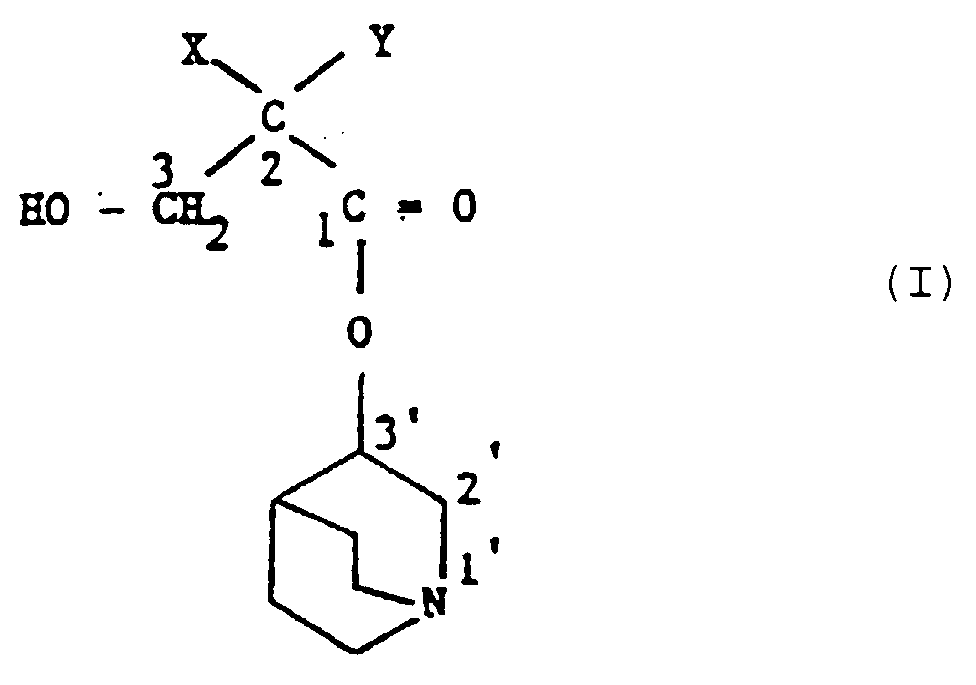
- the present invention provides a compound of formula (I): or a pharmaceutically acceptable salt thereof, wherein X is either (a) a phenyl group optionally substituted by 1 or 2 substituents each independently selected from halo, CF 3 , C 1 -C 4 alkyl, C 1 -C 4 alkoxy and hydroxy or (b) a thienyl group; and Y is either (a) a group of formula (Ya) where A and B are independently 0, 1 or 2, or (b) a group of formula (Yb)
- Halo means F, Cl, Br or I.
- C 3 and C 4 alkyl and alkoxy groups may be straight or branched chain.
- X is preferably an unsubstituted phenyl group.
- R 3 is preferably a methyl group.
- the compounds of formula (I) have two asymmetric centres, at the positions identified as 2 and 3' in formula (I) above.
- All diastereoisomers whether separated or not are within the scope of the invention.
- the preferred compounds are however the 3R-quinuclidinyl esters.
- the preferred stereochemistry at the 2- position is S when the hydrocarbon moiety of Y adjacent the 2-position has at least two carbon atoms.
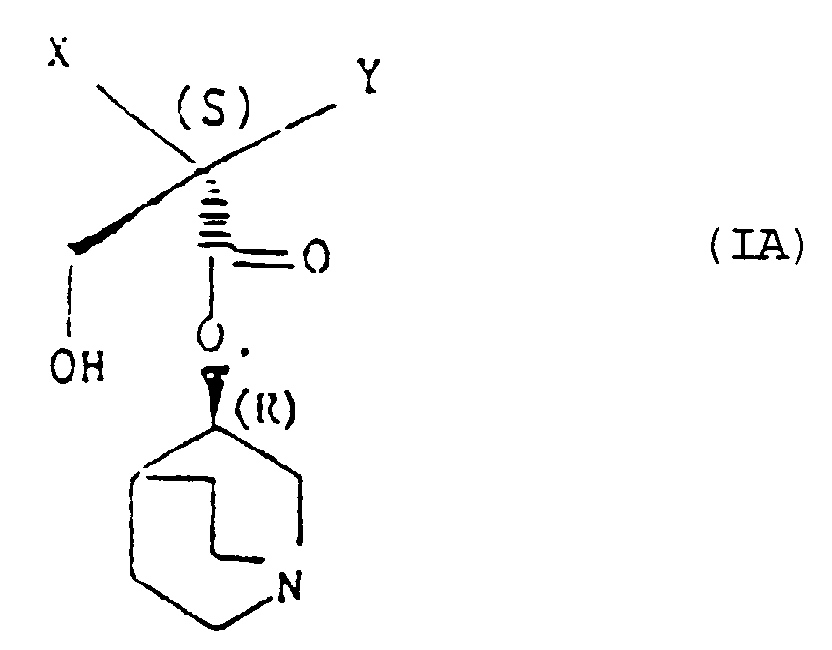
- a particularly preferred individual compound of the invention is (R)-3-quinuclidinyl(2S,Rs-2-hydroxymethyl-4-(methylsulphinyl)-2-phenylbutanoate.
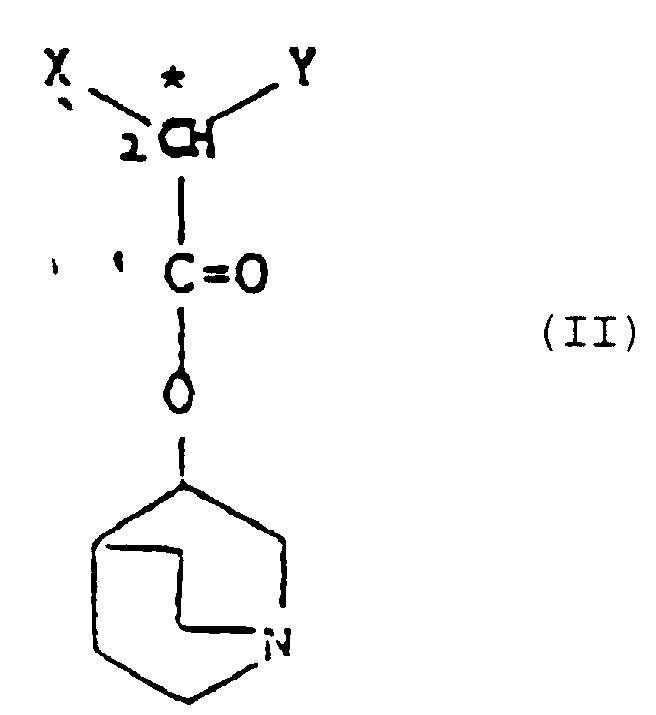
- the compounds of formula (I) in which Z is 0 can be prepared by the reaction of an ester of the formula (II) with a strong base such as lithium or potassium diisopropylamide, potassium t-butoxide or sodium hydride to form a carbanion, followed by reaction of the carbanion with formaldehyde.
- a strong base such as lithium or potassium diisopropylamide, potassium t-butoxide or sodium hydride
- formaldehyde is generally provided either as formaldehyde gas, or as paraformaldehyde (which breaks down to formaldehyde in solution).
- the ester (II) is reacted for a few hours with lithium diisopropylamide in tetrahydrofuran at about -78°C.
- the reaction mixture is then slowly allowed to warm to room temperature during which time formaldehyde gas, generated e.g. by heating paraformaldehyde, is intermittently passed into the solution.
- esters (II) it is usually most convenient to start with the 2 RS forms of the esters (II) even if the 2R or 2S, rather than 2RS, end products are required. This will result in a mixture of diastereomers of the compounds (I), and, if desired, these can be separated into the 2R and 2S forms by conventional techniques such as chromatography.
- the (2S,3'R) forms of the compounds (I) are preferred when the hydrocarbon moiety of Y has at least two carbon atoms.
- a suitable oxidising agent is pertrifluoroacetic acid.
- One method is to add a solution of pertrifluoro acetic acid in trifluoroacetic acid to the compound dissolved in trifluoroacetic acid at a low temperature, such as -10°C, allow the mixture to warm to ambient temperature and evaporate the solution when reaction is complete.
- the desired compound may be obtained by solvent extraction of the residue.
- the starting materials (II) also form part of this invention. They are obtainable by conventional techniques such as the following:-
- the reaction is typically carried out by heating the reactants in an organic solvent such as toluene at reflux.
- organic solvent such as toluene
- the compound (III) is most conveniently used in the RS form, and preferably as the methyl ester.
- an acid of formula (IIIA): may be converted to the corresponding acyl halide, for example by reaction with oxalyl chloride in chloroform, and the halide allowed to react with the 3-quinuclidinol to form the compound of formula (II).
- the materials of formula (III) may be made by reaction of an acid of formula X-CH 2 -CO 2 H with a compound of formula Y-Hal, where Hal is chlorine, bromine or iodine, in the presence of a strong base such as lithium di-isopropylamide in an anhydrous solvent such as tetrahydrofuran, followed by acidification, to produce a compound of formula X-CH(CO 2 H)-Y.
- This compound may then be converted to the corresponding ester of formula (III) by conventional methods, for example by reaction with methanol or ethanol in the presence of sulphuric acid.
- a thiol of formula R 3 -SH reacts with an acid of formula (IV): where Y' is the hydrocarbon moiety of group Y in formula (I) and Hal is Cl, Br or I, generally in the presence of a strong base such as sodium hydride, followed by esterification.
- the compound of formula (II) may also be prepared by reaction of a compound of formula R 3 -S-H with a compound of formula (V) in the presence of a strong base: The compound of formula (II) may then be treated with formaldehyde and a base to yield the compound of formula (I).
- the selectivity of the compounds as muscarinic receptor antagonists can be measured as follows.
- Dose-response curves to carbachol are determined using a 1-5 minute contact time for each dose to agonist until the maximum response is achieved.
- the organ bath is drained and refilled with Krebs solution containing the lowest dose of the test compound.
- the test compound is allowed to equilibrate with the tissue for 20 minutes and the agonist dose-response curve is repeated until the maximum response is obtained.
- the organ bath is drained and refilled with Krebs solution containing the second concentration of test compound and the above procedure is repeated. Typically three concentrations of the test compound are evaluated on each tissue.
- the negative log of the molar concentration (pA 2 ) of the test compound which causes a doubling of the agonist concentration to produce the original response is determined by Schild analysis (Arunlakshana and Schild (1959), Brit. J. Pharmacol., 14 , 48-58). Using the above pharmacological techniques, tissue selectivity for muscarinic receptor antagonists is determined.
- Activity against agonist-induced or nerve-evoked bronchoconstriction or gut or bladder contractility in comparison with changes in heart rate is determined in the anaesthetised dog, cat or guinea pig. Oral activity is assessed in the conscious dog determining compound effects on lung function, heart rate, pupil diameter and gut motility.
- Compound affinity for other cholinergic sites is assessed in the mouse after either intravenous or intraperitoneal administration.
- the dose which causes a doubling of pupil size is determined as well as the dose which inhibits the salivation and tremor responses to intravenous oxotremorine by 50%.
- the selectivity of the compounds for pulmonary post-junctional as against pre-junctional muscarinic receptors in anaesthetised guinea pigs and cats can be assessed by the following techniques. Acetylcholine released by nerve stimulation activates post-junctional M3 muscarinic receptors to cause contraction of airway smooth muscle and, in addition, activates pre-junctional autoreceptors which inhibit further transmitter release. Animal studies indicate that these pulmonary pre-junctional muscarinic autoreceptors are of the M2 subtype (Barnes et al, 1989).
- Non-selective agents like ipratropium bromide will inhibit both sites, resulting, in the case of nerve-mediated responses, in an increase in transmitter release which can overcome the post-junctional receptor blockade.
- ipratropium bromide can actually potentiate vagally-induced bronchoconstriction in anaesthetised guinea pigs (Fryer and Maclagan, Eur. Jou. Pharmacol., 139 , 187-191 (1987)).
- the effects of the test compounds on pre- and post-junctional muscarinic sites can be determined in vivo by comparing the effect on nerve mediated responses with the effect on responses to exogenously adminstered acetylcholine.
- Example 29 the compound of Example 29 has been found to antagonise both acetylcholine-induced, and vagally-induced, bronchoconstriction in anaesthetised guinea pigs over the same dose range. This contrasts with ipratropium bromide which is significantly less potent against vagally-induced than against acetylcholine-induced bronchoconstriction. Additionally, at doses below 1 ⁇ g/kg of ipratropium bromide, vagally-induced bronchoconstriction is actually potentiated, confirming its pre-junctional effects.
- the compounds of the invention should be more effective bronchodilators in respiratory disease compared to ipratropium bromide.
- the acid addition salts of the compounds of formula (I) can be prepared in a conventional manner by treating a solution or suspension of the free base of (I) with about one chemical equivalent of a pharmaceutically acceptable acid. Conventional concentration and recrystallization techniques are employed in isolating the salts.
- suitable acids are acetic, lactic, succinic, maleic, tartaric, citric, ascorbic, benzoic, cinnamic, fumaric, sulphuric, phosphoric, hydrochloric, hydrobromic, hydroiodic, sulfamic, sulfonic such as methanesulfonic, benzenesulfonic, and related acids.
- the compounds of formula (I) may be administered to a subject in need of treatment by a variety of conventional routes of administration, including oral administration, and in an aerosol or dry powder composition for administration by inhalation.
- the compounds have potential for absorption through the gastro-intestinal tract and thus administration by slow release formulations is also possible.
- a therapeutically-effective oral dose of the active compounds of formula (I) is likely to range from 0.01 to 1mg/kg body weight of the subject to be treated, preferably 0.1 to 0.5mg/kg.
- the physician will determine the actual dosage which will be most suitable for an individual patient and it will vary with age, weight and response of the particular patient.
- the above dosages are exemplary of the average case but there can, of course, be individual instances where higher or lower dosages ranges are merited, and such are within the scope of this invention.
- the compounds of formula (I) can be administered alone, they will generally be administered in admixture with a pharmaceutical carrier selected with regard to the intended route of administration and standard pharmaceutical practice.
- oral administration may be in the form of tablets containing such excipients as starch or lactose, in capsules either alone or in admixture with excipients, in aerosol or dry powder inhaler form, or in the form of elixirs or suspensions containing flavouring or colouring agents.
- the invention provides a pharmaceutical composition
- a pharmaceutical composition comprising a compound of the formula (I), or a pharmaceutically acceptable salt thereof, together with a pharmaceutically acceptable diluent or carrier.
- the invention also includes a compound of the formula (I) or a pharmaceutically acceptable salt thereof, for use as a medicament.
- the invention further includes the use of a compound of the formula (I), or of a pharmaceutically acceptable salt thereof, for the manufacture of a medicament for the treatment of chronic obstructive airways disease or asthma.
- Lithium diisopropylamide (5.7ml of a 1.5M solution in cyclohexane) was added to a solution of (R)-3-quinuclidinyl (RS)-4-methyl-4-(methylthio)-2-phenylpentanoate (see Preparation 4) (2.7g) in tetrahydrofuran (50ml) at -78°C. After 2 hours the reaction was allowed to slowly reach room temperature during which time formaldehyde gas [generated by heating paraformaldehyde (1.5g) in a stream of nitrogen] was intermittently added. Saturated ammonium chloride was then added and the product extracted with ethylacetate.
- Diastereoisomer 2 (second eluted isomer) (R s ) stereochemistry (70mg, 28%, based on single isomer) m.p. 84-85°C. Analysis %:- Found C,62.19; H,7.45; N,3.81 C 19 H 27 NO 4 S requires C,62.43; H,7.45; N,3.83.
- the following Preparations relate to intermediates for making compounds of the invention.
- Oxalyl chloride (44.2ml) was added to a solution of 2-phenylacrylic acid (50g) (prepared as described in J. Chem. Soc., 2557, 123 , 1923) and dimethylformamide (0.5ml) in chloroform (500ml). The mixture was stirred for 1/2 hour, dimethylformamide (0.5ml) was added and the mixture was stirred for a further 1/2 hour, then evaporated to give a residue to which chloroform (2 x 100ml) was added and evaporated. The residue was finally dissolved in chloroform (500ml) and to this solution at 10-15°C was added (R)-3-quinuclidinol (prepared as described in Acta. Pharm.
- Oxalyl chloride (0.9ml) in chloroform (2ml) was added to a solution of (RS)-4-(ethylthio)-2-phenylbutanoic acid (see Preparation 16) (2.0g) and dimethylformamide (10 ⁇ l) in chloroform (20ml) at room temperature. After 2 hours the mixture was evaporated, and the residue in chloroform (20ml) treated at 0°C with (R)-3-quinuclidinol (1.27g) in chloroform (10ml). The mixture was allowed to reach room temperature, stirred for 3 hours and then washed with 10% aqueous potassium carbonate.
- Lithium diisopropylamide (450ml of a 1.5M solution in cyclohexane) was added to a stirred solution of phenylacetic acid (40.8g) in tetrahydrofuran (300ml) at between 0 and 5°C.
- the mixture was warmed to room temperature, stirred for 1.5 hours, treated with 2-chloroethylmethylsulphide (30ml) in tetrahydrofuran 30ml, refluxed for 2 hours, cooled and evaporated.
- To the residue in methanol (200ml) was added concentrated sulphuric acid (50ml) in methanol (250ml), the mixture refluxed for 1.5 hours, and evaporated.
Landscapes
- Organic Chemistry (AREA)
- Chemical & Material Sciences (AREA)
- Health & Medical Sciences (AREA)
- Bioinformatics & Cheminformatics (AREA)
- Animal Behavior & Ethology (AREA)
- Public Health (AREA)
- General Health & Medical Sciences (AREA)
- Engineering & Computer Science (AREA)
- Veterinary Medicine (AREA)
- Chemical Kinetics & Catalysis (AREA)
- General Chemical & Material Sciences (AREA)
- Medicinal Chemistry (AREA)
- Nuclear Medicine, Radiotherapy & Molecular Imaging (AREA)
- Pulmonology (AREA)
- Pharmacology & Pharmacy (AREA)
- Life Sciences & Earth Sciences (AREA)
- Neurosurgery (AREA)
- Neurology (AREA)
- Biomedical Technology (AREA)
- Psychiatry (AREA)
- Addiction (AREA)
- Pharmaceuticals Containing Other Organic And Inorganic Compounds (AREA)
- Nitrogen Condensed Heterocyclic Rings (AREA)
- Pyrrole Compounds (AREA)
- Medicines That Contain Protein Lipid Enzymes And Other Medicines (AREA)
- Plural Heterocyclic Compounds (AREA)
- Organic Low-Molecular-Weight Compounds And Preparation Thereof (AREA)
- Acyclic And Carbocyclic Compounds In Medicinal Compositions (AREA)
- Quinoline Compounds (AREA)
Claims (21)
- Verbindung der Formel (I)oder ein pharmazeutisch annehmbares Salz davon, worin X entweder
 Y entweder(a) eine Phenylgruppe, die gegebenenfalls mit einem oder zwei Substituenten substituiert ist, die unabhängig ausgewählt sind aus Halogen, CF3, C1-C4-Alkyl-, C1-C4-Alkoxy- und Hydroxyresten oder(b) eine Thienylgruppe ist; und(a) eine Gruppe der Formel (Ya)worin A und B unabhängig 0, 1 oder 2 sind, oder
 (b) eine Gruppe der Formel (Yb) ist
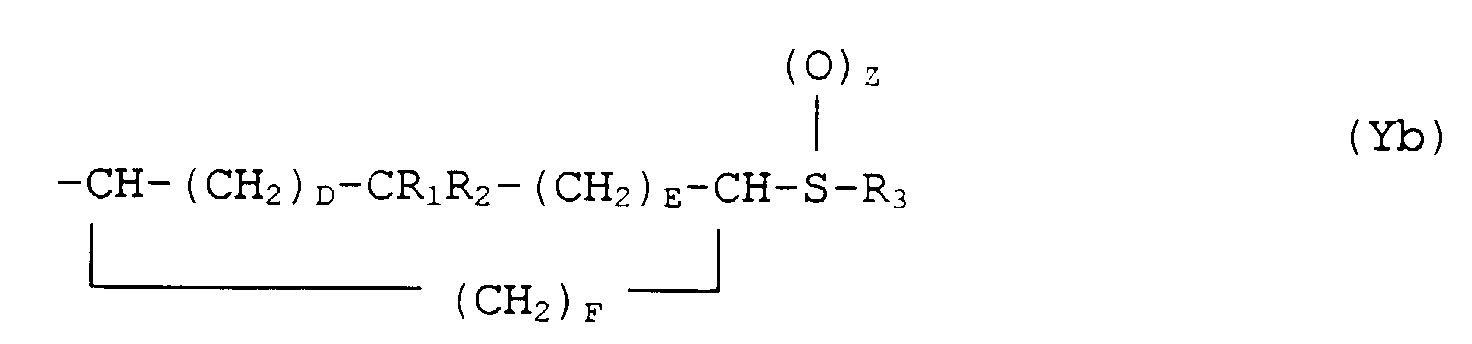 worin D und E unabhängig 0 oder 1 sind, F 0, 1, 2 oder 3 ist und D + E + F = 1, 2 oder 3 ist,Z 0, 1 oder 2 ist;R1 und R2 unabhängig H oder C1-C4-Alkylreste sind oder R1 und R2 zusammen mit dem Kohlenstoffatom, an das sie gebunden sind, einen 3- bis 6-gliedrigen gesättigten oder ungesättigten carbocyclischen Ring bilden undR3 eine C1-C4-Alkylgruppe, eine C3-C6-Cycloalkylgruppe oder eine Phenyl- oder Benzylgruppe ist, die gegebenenfalls mit bis zu 3 Substituenten substituiert ist, die jeweils unabhängig ausgewählt sind aus Halogen, CF3, C1-C4-Alkyl-, C1-C4-Alkoxy- und Hydroxyresten.
 - Verbindung nach Anspruch 1, worin X eine unsubstituierte Phenylgruppe ist.
- Verbindung nach Anspruch 1 oder Anspruch 2, worin Y die Formel (Ya) hat und R1 und R2 beide H sind.
- Verbindung nach Anspruch 1 oder Anspruch 2, worin Y die Formel (Ya) hat, A 1 ist, B 0 ist und R1 und R2 unabhängig H, Methyl- oder Ethylreste sind.
- Verbindung nach einem der vorhergehenden Ansprüche, worin R3 ein Methylrest ist.
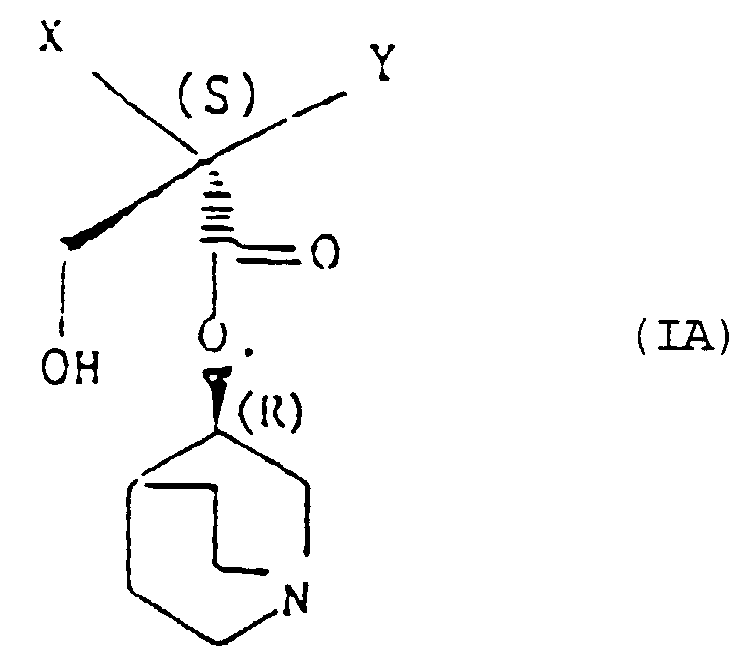
- Verbindung nach einem der vorhergehenden Ansprüche, mit der R-Stereochemie an Position 3' und der S-Stereochemie an Position 2 mit der Formel (IA):
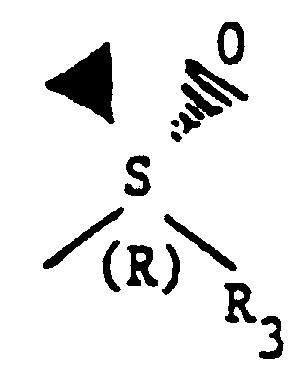
- Verbindung nach einem der vorhergehenden Ansprüche, worin Z 1 ist, mit der R-Stereochemie am Schwefelatom von Y, wobei der Anteil, der das Schwefelatom enthält, die Formel:hat.
- (R)-3-Chinuclidinyl-(2S,Rs)-2-hydroxymethyl-4-(methylsulfinyl)-2-phenylbutanoat.
- Pharmazeutische Zusammensetzung enthaltend eine Verbindung der Formel (I) oder (IA), wie in einem der vorhergehenden Ansprüche beansprucht, oder ein pharmazeutisch annehmbares Salz davon, zusammen mit einem pharmazeutisch annehmbaren Verdünnungsmittel oder Träger.
- Verbindung der Formel (I) oder (IA), wie in einem der Ansprüche 1 bis 8 beansprucht, oder ein pharmazeutisch annehmbares Salz davon zur Verwendung in einem Arzneimittel, insbesondere zur Behandlung von chronisch obstruktiven Atemwegserkrankungen oder Asthma.
- Verwendung einer Verbindung nach einem der Ansprüche 1 bis 8 oder eines pharmazeutisch annehmbaren Salzes davon zur Herstellung eines Arzneimittels zur Behandlung von chronisch obstruktiven Atemwegserkrankungen oder Asthma.
- Verbindung der Formel (II)worin X und Y wie in Anspruch 1 definiert sind.
- Verfahren zur Herstellung einer Verbindung der Formel (I)oder eines pharmazeutisch annehmbaren Salzes davon, worin X entweder
 Y entweder(a) eine Phenylgruppe, die gegebenenfalls mit einem oder zwei Substituenten substituiert ist, die jeweils unabhängig ausgewählt sind aus Halogen, CF3, C1-C4-Alkyl-, C1-C4-Alkoxy- und Hydroxyresten, oder(b) eine Thienylgruppe ist und(a) eine Gruppe der Formel (Ya)worin A und B unabhängig 0, 1 oder 2 sind, oder
 (b) eine Gruppe der Formel (Yb) ist
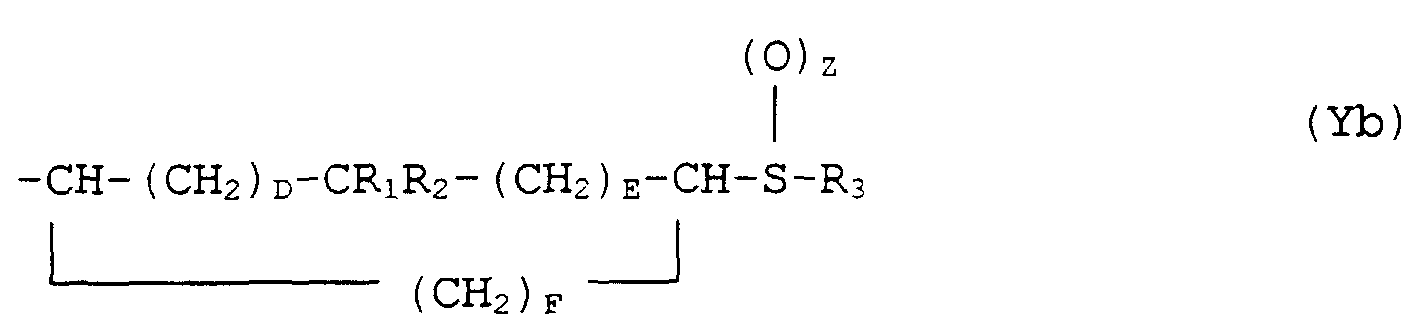 worin D und E unabhängig 0 oder 1 sind, F 0, 1, 2 oder 3 ist und D + E + F = 1, 2 oder 3 ist;Z 0, 1 oder 2 ist,R1 und R2 unabhängig H oder C1-C4-Alkylreste sind oder R1 und R2 zusammen mit dem Kohlenstoffatom, an das sie gebunden sind, einen 3- oder 6-gliedrigen gesättigten oder ungesättigten carbocyclischen Ring bilden undR3 eine C1-C4-Alkylgruppe, eine C3-C6-Cycloalkylgruppe oder eine Phenyl- oder Benzylgruppe ist, die gegebenenfalls mit bis zu 3 Substituenten substituiert ist, die jeweils unabhängig ausgewählt sind aus Halogen, CF3, C1-C4-Alkyl-, C1-C4-Alkoxy- und Hydroxyresten, das umfaßt, daß man(a) eine Verbindung der Formel (II)worin X und Y wie oben definiert sind, mit einer starken Base versetzt und das entstehende Carbanion mit Formaldehyd reagieren läßt, um eine Verbindung der Formel (I) herzustellen, worin Z 0 ist, falls notwendig
 (b) die erhaltene Verbindung oxidiert, um eine Verbindung der Formel (I) herzustellen, worin Z 1 oder 2 ist und(c) falls notwendig ein Salz der erhaltenen Verbindung bildet.
 - Verfahren nach Anspruch 13, worin die Verbindung der Formel (I), worin Z 0 ist, mit Pertrifluoressigsäure oxidiert wird, um eine Verbindung der Formel (I) herzustellen, worin Z 1 oder 2 ist.
- Verfahren nach Anspruch 13 oder Anspruch 14, worin X eine unsubstituierte Phenylgruppe ist.
- Verfahren nach Anspruch 13, 14 oder 15, worin Y die Formel (Ya) hat und R1 und R2 beide H sind.
- Verfahren nach Anspruch 13, 14 oder 15, worin Y die Formel (Ya) hat, A 1 ist, B 0 ist und R1 und R2 unabhängig H, Methyl- oder Ethylreste sind.
- Verfahren nach einem der Ansprüche 13 bis 17, worin R3 ein Methylrest ist.
- Verfahren nach einem der Ansprüche 13 bis 18, worin die Verbindung die R-Stereochemie an Position 3' hat und die S-Stereochemie an Position 2 hat mit der Formel (IA):
- Verfahren nach einem der Ansprüche 13 bis 19, worin Z 1 ist und die Verbindung die R-Stereochemie am Schwefelatom von Y hat, wobei der Anteil, der das Schwefelatom enthält, die Formel:hat.

- Verfahren nach Anspruch 13, worin die Verbindung (R)-3-Chinuclidinyl-(2S,Rs)-2-hydroxymethyl-4-(methylsulfinyl)-2-phenylbutanoat ist.
Applications Claiming Priority (3)
| Application Number | Priority Date | Filing Date | Title |
|---|---|---|---|
| GB9119705 | 1991-09-14 | ||
| GB919119705A GB9119705D0 (en) | 1991-09-14 | 1991-09-14 | Therapeutic compounds |
| PCT/EP1992/002067 WO1993006098A1 (en) | 1991-09-14 | 1992-09-03 | Quinuclidine esters process and intermediate for their preparation and pharmaceutical compositions containing them |
Publications (2)
| Publication Number | Publication Date |
|---|---|
| EP0603229A1 EP0603229A1 (de) | 1994-06-29 |
| EP0603229B1 true EP0603229B1 (de) | 1998-06-10 |
Family
ID=10701448
Family Applications (1)
| Application Number | Title | Priority Date | Filing Date |
|---|---|---|---|
| EP92918526A Expired - Lifetime EP0603229B1 (de) | 1991-09-14 | 1992-09-03 | Chinuclidinestern, verfahren und zwischenprodukte zu ihrer herstellung und diese enthaltende pharmazeutische zubereitungen |
Country Status (31)
| Country | Link |
|---|---|
| US (1) | US5543419A (de) |
| EP (1) | EP0603229B1 (de) |
| JP (2) | JP2672030B2 (de) |
| KR (1) | KR0135784B1 (de) |
| CN (1) | CN1037269C (de) |
| AT (1) | ATE167187T1 (de) |
| AU (1) | AU659487B2 (de) |
| BR (1) | BR9206499A (de) |
| CA (1) | CA2116356C (de) |
| CZ (1) | CZ281752B6 (de) |
| DE (1) | DE69225897T2 (de) |
| DK (1) | DK0603229T3 (de) |
| EG (1) | EG20072A (de) |
| ES (1) | ES2116343T3 (de) |
| FI (1) | FI114707B (de) |
| GB (1) | GB9119705D0 (de) |
| GR (1) | GR3027667T3 (de) |
| HU (1) | HU220594B1 (de) |
| IL (1) | IL103078A (de) |
| MX (1) | MX9205221A (de) |
| MY (1) | MY108602A (de) |
| NO (1) | NO305397B1 (de) |
| NZ (1) | NZ244324A (de) |
| PL (1) | PL170627B1 (de) |
| PT (1) | PT100863B (de) |
| RU (1) | RU2117669C1 (de) |
| SG (1) | SG50414A1 (de) |
| TW (1) | TW251285B (de) |
| UA (1) | UA42686C2 (de) |
| WO (1) | WO1993006098A1 (de) |
| ZA (1) | ZA926939B (de) |
Cited By (4)
| Publication number | Priority date | Publication date | Assignee | Title |
|---|---|---|---|---|
| US9056100B2 (en) | 1999-07-14 | 2015-06-16 | Almirall, S.A. | Quinuclidine derivatives and medicinal compositions containing the same |
| US9254262B2 (en) | 2008-03-13 | 2016-02-09 | Almirall, S.A. | Dosage and formulation |
| US9737520B2 (en) | 2011-04-15 | 2017-08-22 | Almirall, S.A. | Aclidinium for use in improving the quality of sleep in respiratory patients |
| US10085974B2 (en) | 2008-03-13 | 2018-10-02 | Almirall, S.A. | Dosage and formulation |
Families Citing this family (10)
| Publication number | Priority date | Publication date | Assignee | Title |
|---|---|---|---|---|
| DK0785198T3 (da) | 1996-01-19 | 2000-11-13 | Lonza Ag | Fremgangsmåde til fremstilling af optisk aktiv 3-quinuclidinol |
| CZ54498A3 (cs) * | 1997-03-07 | 1998-11-11 | Lonza Ag | Katalyzátorová směs na bázi amorfního částečně dehydratovaného hydroxidu zirkoničitého a způsob její výroby a použití |
| US6711436B1 (en) | 1997-08-08 | 2004-03-23 | Duke University | Compositions, apparatus and methods for facilitating surgical procedures |
| WO1999007354A2 (en) * | 1997-08-08 | 1999-02-18 | Duke University | Compositions, apparatus and methods for facilitating surgical procedures |
| NZ526580A (en) | 2000-12-22 | 2005-04-29 | Almirall Prodesfarma Ag | Quinuclidine carbamate derivatives and their use as M3 antagonists |
| DE60121813T2 (de) | 2000-12-28 | 2007-09-20 | Almirall Ag | Neue chinuclidinderivate und medizinische zusammensetzungen, die diese verbindungen enthalten |
| GB0424284D0 (en) * | 2004-11-02 | 2004-12-01 | Novartis Ag | Organic compounds |
| DE102004057995A1 (de) * | 2004-12-01 | 2006-06-08 | Wacker Chemie Ag | Verfahren zur Herstellung von α,α-Dialkyl-α-Hydroxymethyl-Carbonsäurederivaten |
| ES2298049B1 (es) * | 2006-07-21 | 2009-10-20 | Laboratorios Almirall S.A. | Procedimiento para fabricar bromuro de 3(r)-(2-hidroxi-2,2-ditien-2-ilacetoxi)-1-(3-fenoxipropil)-1-azoniabiciclo (2.2.2) octano. |
| JP2010513277A (ja) * | 2006-12-13 | 2010-04-30 | ギリード・サイエンシズ・インコーポレーテッド | COPDおよび慢性気管支炎の治療のためのムスカリン受容体アンタゴニストおよびβ−アゴニストの共通プロドラッグとしてのモノホスフェート |
Family Cites Families (2)
| Publication number | Priority date | Publication date | Assignee | Title |
|---|---|---|---|---|
| US4843074A (en) * | 1988-05-17 | 1989-06-27 | Marion Laboratories, Inc. | 1-azabicyclo[2.2.2]octan-3-yl 2-aryl-3-azacyclo-2-hydroxypropionates and their quaternary salts |
| GB8923590D0 (en) * | 1989-10-19 | 1989-12-06 | Pfizer Ltd | Antimuscarinic bronchodilators |
-
1991
- 1991-09-14 GB GB919119705A patent/GB9119705D0/en active Pending
-
1992
- 1992-09-03 HU HU9400729A patent/HU220594B1/hu not_active IP Right Cessation
- 1992-09-03 AU AU24823/92A patent/AU659487B2/en not_active Ceased
- 1992-09-03 AT AT92918526T patent/ATE167187T1/de not_active IP Right Cessation
- 1992-09-03 US US08/204,260 patent/US5543419A/en not_active Expired - Fee Related
- 1992-09-03 CA CA002116356A patent/CA2116356C/en not_active Expired - Fee Related
- 1992-09-03 BR BR9206499A patent/BR9206499A/pt not_active Application Discontinuation
- 1992-09-03 DK DK92918526T patent/DK0603229T3/da active
- 1992-09-03 DE DE69225897T patent/DE69225897T2/de not_active Expired - Fee Related
- 1992-09-03 CZ CS923953A patent/CZ281752B6/cs not_active IP Right Cessation
- 1992-09-03 UA UA94005520A patent/UA42686C2/uk unknown
- 1992-09-03 JP JP5505734A patent/JP2672030B2/ja not_active Expired - Fee Related
- 1992-09-03 EP EP92918526A patent/EP0603229B1/de not_active Expired - Lifetime
- 1992-09-03 PL PL92302771A patent/PL170627B1/pl unknown
- 1992-09-03 WO PCT/EP1992/002067 patent/WO1993006098A1/en not_active Ceased
- 1992-09-03 ES ES92918526T patent/ES2116343T3/es not_active Expired - Lifetime
- 1992-09-03 KR KR1019940700816A patent/KR0135784B1/ko not_active Expired - Fee Related
- 1992-09-03 RU RU94019411/04A patent/RU2117669C1/ru not_active IP Right Cessation
- 1992-09-03 SG SG1996000871A patent/SG50414A1/en unknown
- 1992-09-07 IL IL10307892A patent/IL103078A/en not_active IP Right Cessation
- 1992-09-10 TW TW081107184A patent/TW251285B/zh active
- 1992-09-11 PT PT100863A patent/PT100863B/pt active IP Right Grant
- 1992-09-11 ZA ZA926939A patent/ZA926939B/xx unknown
- 1992-09-11 MX MX9205221A patent/MX9205221A/es not_active IP Right Cessation
- 1992-09-14 MY MYPI92001642A patent/MY108602A/en unknown
- 1992-09-14 EG EG54292A patent/EG20072A/xx active
- 1992-09-14 CN CN92110746A patent/CN1037269C/zh not_active Expired - Fee Related
- 1992-09-14 NZ NZ244324A patent/NZ244324A/en unknown
-
1994
- 1994-03-11 FI FI941170A patent/FI114707B/fi not_active IP Right Cessation
- 1994-03-14 NO NO940905A patent/NO305397B1/no unknown
-
1997
- 1997-02-18 JP JP9033807A patent/JP2955533B2/ja not_active Expired - Fee Related
-
1998
- 1998-08-19 GR GR980401846T patent/GR3027667T3/el unknown
Cited By (7)
| Publication number | Priority date | Publication date | Assignee | Title |
|---|---|---|---|---|
| US9056100B2 (en) | 1999-07-14 | 2015-06-16 | Almirall, S.A. | Quinuclidine derivatives and medicinal compositions containing the same |
| US9333195B2 (en) | 1999-07-14 | 2016-05-10 | Almirall, S.A. | Quinuclidine derivatives and medicinal compositions containing the same |
| US10034867B2 (en) | 1999-07-14 | 2018-07-31 | Almirall, S.A. | Quinuclidine derivatives and medicinal compositions containing the same |
| US9254262B2 (en) | 2008-03-13 | 2016-02-09 | Almirall, S.A. | Dosage and formulation |
| US10085974B2 (en) | 2008-03-13 | 2018-10-02 | Almirall, S.A. | Dosage and formulation |
| US11000517B2 (en) | 2008-03-13 | 2021-05-11 | Almirall, S.A. | Dosage and formulation |
| US9737520B2 (en) | 2011-04-15 | 2017-08-22 | Almirall, S.A. | Aclidinium for use in improving the quality of sleep in respiratory patients |
Also Published As
Similar Documents
| Publication | Publication Date | Title |
|---|---|---|
| EP0424021B1 (de) | Antimuskarine Bronchodilatoren | |
| EP0603229B1 (de) | Chinuclidinestern, verfahren und zwischenprodukte zu ihrer herstellung und diese enthaltende pharmazeutische zubereitungen | |
| EP0299914B1 (de) | 9-Halogen-(Z)-prostaglandinderivate, Verfahren zu ihrer Herstellung und ihre Verwendung als Arzneimittel | |
| JP2012162559A (ja) | ムスカリン性アセチルコリン受容体アンタゴニスト | |
| CA2733380A1 (en) | Quinuclidine carbonate derivatives and medicinal composition thereof | |
| SK143394A3 (en) | 7-(2-aminoethyl)benzothiazolones, method of their production and pharmaceutical agents, which contains thereof as effective matters | |
| WO2003104227A1 (de) | 2-heteroarylcarbonsäureamide | |
| FI76069C (fi) | Foerfarande foer framstaellning av nya terapeutiskt anvaendbara z-2-acylamino-3-monosubstituerade propenoater. | |
| EP0500864B1 (de) | Anti-muscarin bronchodilatoren | |
| EP0150461B1 (de) | Schwefelhaltige 6-Ketoprostaglandine | |
| US4292305A (en) | Antiallergic imidodisulfamides | |
| EP0069527B1 (de) | Cystin-Derivate | |
| WO2006063010A2 (en) | Compounds and methods of use thereof | |
| EP0084775A1 (de) | 13-Thia-Prostacycline |
Legal Events
| Date | Code | Title | Description |
|---|---|---|---|
| PUAI | Public reference made under article 153(3) epc to a published international application that has entered the european phase |
Free format text: ORIGINAL CODE: 0009012 |
|
| 17P | Request for examination filed |
Effective date: 19940222 |
|
| AK | Designated contracting states |
Kind code of ref document: A1 Designated state(s): AT BE CH DE DK ES FR GB GR IE IT LI LU MC NL SE |
|
| GRAG | Despatch of communication of intention to grant |
Free format text: ORIGINAL CODE: EPIDOS AGRA |
|
| GRAG | Despatch of communication of intention to grant |
Free format text: ORIGINAL CODE: EPIDOS AGRA |
|
| GRAG | Despatch of communication of intention to grant |
Free format text: ORIGINAL CODE: EPIDOS AGRA |
|
| GRAH | Despatch of communication of intention to grant a patent |
Free format text: ORIGINAL CODE: EPIDOS IGRA |
|
| 17Q | First examination report despatched |
Effective date: 19971111 |
|
| GRAH | Despatch of communication of intention to grant a patent |
Free format text: ORIGINAL CODE: EPIDOS IGRA |
|
| GRAA | (expected) grant |
Free format text: ORIGINAL CODE: 0009210 |
|
| AK | Designated contracting states |
Kind code of ref document: B1 Designated state(s): AT BE CH DE DK ES FR GB GR IE IT LI LU MC NL SE |
|
| REF | Corresponds to: |
Ref document number: 167187 Country of ref document: AT Date of ref document: 19980615 Kind code of ref document: T |
|
| REG | Reference to a national code |
Ref country code: CH Ref legal event code: EP |
|
| REG | Reference to a national code |
Ref country code: CH Ref legal event code: NV Representative=s name: E. BLUM & CO. PATENTANWAELTE |
|
| REF | Corresponds to: |
Ref document number: 69225897 Country of ref document: DE Date of ref document: 19980716 |
|
| REG | Reference to a national code |
Ref country code: ES Ref legal event code: FG2A Ref document number: 2116343 Country of ref document: ES Kind code of ref document: T3 |
|
| ITF | It: translation for a ep patent filed | ||
| ET | Fr: translation filed | ||
| REG | Reference to a national code |
Ref country code: IE Ref legal event code: FG4D |
|
| REG | Reference to a national code |
Ref country code: DK Ref legal event code: T3 |
|
| PG25 | Lapsed in a contracting state [announced via postgrant information from national office to epo] |
Ref country code: MC Free format text: LAPSE BECAUSE OF NON-PAYMENT OF DUE FEES Effective date: 19990331 |
|
| PLBE | No opposition filed within time limit |
Free format text: ORIGINAL CODE: 0009261 |
|
| 26N | No opposition filed | ||
| REG | Reference to a national code |
Ref country code: GB Ref legal event code: IF02 |
|
| PGFP | Annual fee paid to national office [announced via postgrant information from national office to epo] |
Ref country code: LU Payment date: 20040624 Year of fee payment: 13 |
|
| PGFP | Annual fee paid to national office [announced via postgrant information from national office to epo] |
Ref country code: IE Payment date: 20040714 Year of fee payment: 13 |
|
| PGFP | Annual fee paid to national office [announced via postgrant information from national office to epo] |
Ref country code: GR Payment date: 20040727 Year of fee payment: 13 |
|
| PGFP | Annual fee paid to national office [announced via postgrant information from national office to epo] |
Ref country code: AT Payment date: 20040809 Year of fee payment: 13 Ref country code: NL Payment date: 20040809 Year of fee payment: 13 Ref country code: DK Payment date: 20040809 Year of fee payment: 13 |
|
| PGFP | Annual fee paid to national office [announced via postgrant information from national office to epo] |
Ref country code: GB Payment date: 20040812 Year of fee payment: 13 |
|
| PGFP | Annual fee paid to national office [announced via postgrant information from national office to epo] |
Ref country code: FR Payment date: 20040902 Year of fee payment: 13 |
|
| PGFP | Annual fee paid to national office [announced via postgrant information from national office to epo] |
Ref country code: SE Payment date: 20040903 Year of fee payment: 13 |
|
| PGFP | Annual fee paid to national office [announced via postgrant information from national office to epo] |
Ref country code: CH Payment date: 20040914 Year of fee payment: 13 |
|
| PGFP | Annual fee paid to national office [announced via postgrant information from national office to epo] |
Ref country code: ES Payment date: 20040924 Year of fee payment: 13 |
|
| PGFP | Annual fee paid to national office [announced via postgrant information from national office to epo] |
Ref country code: BE Payment date: 20040928 Year of fee payment: 13 |
|
| PGFP | Annual fee paid to national office [announced via postgrant information from national office to epo] |
Ref country code: DE Payment date: 20040930 Year of fee payment: 13 |
|
| PG25 | Lapsed in a contracting state [announced via postgrant information from national office to epo] |
Ref country code: IT Free format text: LAPSE BECAUSE OF NON-PAYMENT OF DUE FEES;WARNING: LAPSES OF ITALIAN PATENTS WITH EFFECTIVE DATE BEFORE 2007 MAY HAVE OCCURRED AT ANY TIME BEFORE 2007. THE CORRECT EFFECTIVE DATE MAY BE DIFFERENT FROM THE ONE RECORDED. Effective date: 20050903 Ref country code: GB Free format text: LAPSE BECAUSE OF NON-PAYMENT OF DUE FEES Effective date: 20050903 Ref country code: AT Free format text: LAPSE BECAUSE OF NON-PAYMENT OF DUE FEES Effective date: 20050903 |
|
| PG25 | Lapsed in a contracting state [announced via postgrant information from national office to epo] |
Ref country code: SE Free format text: LAPSE BECAUSE OF NON-PAYMENT OF DUE FEES Effective date: 20050904 |
|
| PG25 | Lapsed in a contracting state [announced via postgrant information from national office to epo] |
Ref country code: IE Free format text: LAPSE BECAUSE OF NON-PAYMENT OF DUE FEES Effective date: 20050905 Ref country code: ES Free format text: LAPSE BECAUSE OF NON-PAYMENT OF DUE FEES Effective date: 20050905 |
|
| PG25 | Lapsed in a contracting state [announced via postgrant information from national office to epo] |
Ref country code: LU Free format text: LAPSE BECAUSE OF NON-PAYMENT OF DUE FEES Effective date: 20050930 Ref country code: LI Free format text: LAPSE BECAUSE OF NON-PAYMENT OF DUE FEES Effective date: 20050930 Ref country code: DK Free format text: LAPSE BECAUSE OF NON-PAYMENT OF DUE FEES Effective date: 20050930 Ref country code: CH Free format text: LAPSE BECAUSE OF NON-PAYMENT OF DUE FEES Effective date: 20050930 Ref country code: BE Free format text: LAPSE BECAUSE OF NON-PAYMENT OF DUE FEES Effective date: 20050930 |
|
| PG25 | Lapsed in a contracting state [announced via postgrant information from national office to epo] |
Ref country code: NL Free format text: LAPSE BECAUSE OF NON-PAYMENT OF DUE FEES Effective date: 20060401 Ref country code: DE Free format text: LAPSE BECAUSE OF NON-PAYMENT OF DUE FEES Effective date: 20060401 |
|
| REG | Reference to a national code |
Ref country code: DK Ref legal event code: EBP |
|
| REG | Reference to a national code |
Ref country code: CH Ref legal event code: PL |
|
| EUG | Se: european patent has lapsed | ||
| GBPC | Gb: european patent ceased through non-payment of renewal fee |
Effective date: 20050903 |
|
| PG25 | Lapsed in a contracting state [announced via postgrant information from national office to epo] |
Ref country code: FR Free format text: LAPSE BECAUSE OF NON-PAYMENT OF DUE FEES Effective date: 20060531 |
|
| NLV4 | Nl: lapsed or anulled due to non-payment of the annual fee |
Effective date: 20060401 |
|
| REG | Reference to a national code |
Ref country code: IE Ref legal event code: MM4A |
|
| REG | Reference to a national code |
Ref country code: FR Ref legal event code: ST Effective date: 20060531 |
|
| REG | Reference to a national code |
Ref country code: ES Ref legal event code: FD2A Effective date: 20050905 |
|
| BERE | Be: lapsed |
Owner name: *PFIZER INC. Effective date: 20050930 |
|
| PG25 | Lapsed in a contracting state [announced via postgrant information from national office to epo] |
Ref country code: GR Free format text: LAPSE BECAUSE OF NON-PAYMENT OF DUE FEES Effective date: 19980610 |