EP0660269A2 - Procédé pour améliorer la sécurité de machines à affrauchir - Google Patents
Procédé pour améliorer la sécurité de machines à affrauchir Download PDFInfo
- Publication number
- EP0660269A2 EP0660269A2 EP94250223A EP94250223A EP0660269A2 EP 0660269 A2 EP0660269 A2 EP 0660269A2 EP 94250223 A EP94250223 A EP 94250223A EP 94250223 A EP94250223 A EP 94250223A EP 0660269 A2 EP0660269 A2 EP 0660269A2
- Authority
- EP
- European Patent Office
- Prior art keywords
- mode
- franking machine
- franking
- machine
- routine
- Prior art date
- Legal status (The legal status is an assumption and is not a legal conclusion. Google has not performed a legal analysis and makes no representation as to the accuracy of the status listed.)
- Granted
Links
Images


Classifications
-
- G—PHYSICS
- G06—COMPUTING OR CALCULATING; COUNTING
- G06F—ELECTRIC DIGITAL DATA PROCESSING
- G06F21/00—Security arrangements for protecting computers, components thereof, programs or data against unauthorised activity
- G06F21/50—Monitoring users, programs or devices to maintain the integrity of platforms, e.g. of processors, firmware or operating systems
- G06F21/52—Monitoring users, programs or devices to maintain the integrity of platforms, e.g. of processors, firmware or operating systems during program execution, e.g. stack integrity ; Preventing unwanted data erasure; Buffer overflow
-
- G—PHYSICS
- G06—COMPUTING OR CALCULATING; COUNTING
- G06F—ELECTRIC DIGITAL DATA PROCESSING
- G06F21/00—Security arrangements for protecting computers, components thereof, programs or data against unauthorised activity
- G06F21/50—Monitoring users, programs or devices to maintain the integrity of platforms, e.g. of processors, firmware or operating systems
- G06F21/57—Certifying or maintaining trusted computer platforms, e.g. secure boots or power-downs, version controls, system software checks, secure updates or assessing vulnerabilities
- G06F21/575—Secure boot
-
- G—PHYSICS
- G06—COMPUTING OR CALCULATING; COUNTING
- G06F—ELECTRIC DIGITAL DATA PROCESSING
- G06F21/00—Security arrangements for protecting computers, components thereof, programs or data against unauthorised activity
- G06F21/60—Protecting data
- G06F21/64—Protecting data integrity, e.g. using checksums, certificates or signatures
-
- G—PHYSICS
- G07—CHECKING-DEVICES
- G07B—TICKET-ISSUING APPARATUS; FARE-REGISTERING APPARATUS; FRANKING APPARATUS
- G07B17/00—Franking apparatus
-
- G—PHYSICS
- G07—CHECKING-DEVICES
- G07B—TICKET-ISSUING APPARATUS; FARE-REGISTERING APPARATUS; FRANKING APPARATUS
- G07B17/00—Franking apparatus
- G07B17/00016—Relations between apparatus, e.g. franking machine at customer or apparatus at post office, in a franking system
- G07B17/0008—Communication details outside or between apparatus
-
- G—PHYSICS
- G07—CHECKING-DEVICES
- G07B—TICKET-ISSUING APPARATUS; FARE-REGISTERING APPARATUS; FRANKING APPARATUS
- G07B17/00—Franking apparatus
- G07B17/00185—Details internally of apparatus in a franking system, e.g. franking machine at customer or apparatus at post office
- G07B17/00193—Constructional details of apparatus in a franking system
-
- G—PHYSICS
- G07—CHECKING-DEVICES
- G07B—TICKET-ISSUING APPARATUS; FARE-REGISTERING APPARATUS; FRANKING APPARATUS
- G07B17/00—Franking apparatus
- G07B17/00733—Cryptography or similar special procedures in a franking system
-
- G—PHYSICS
- G07—CHECKING-DEVICES
- G07B—TICKET-ISSUING APPARATUS; FARE-REGISTERING APPARATUS; FRANKING APPARATUS
- G07B17/00—Franking apparatus
- G07B17/00016—Relations between apparatus, e.g. franking machine at customer or apparatus at post office, in a franking system
- G07B17/0008—Communication details outside or between apparatus
- G07B2017/00088—Communication details outside or between apparatus via landlines
- G07B2017/00096—Communication details outside or between apparatus via landlines via phone lines
-
- G—PHYSICS
- G07—CHECKING-DEVICES
- G07B—TICKET-ISSUING APPARATUS; FARE-REGISTERING APPARATUS; FRANKING APPARATUS
- G07B17/00—Franking apparatus
- G07B17/00016—Relations between apparatus, e.g. franking machine at customer or apparatus at post office, in a franking system
- G07B17/0008—Communication details outside or between apparatus
- G07B2017/00153—Communication details outside or between apparatus for sending information
- G07B2017/00169—Communication details outside or between apparatus for sending information from a franking apparatus, e.g. for verifying accounting
-
- G—PHYSICS
- G07—CHECKING-DEVICES
- G07B—TICKET-ISSUING APPARATUS; FARE-REGISTERING APPARATUS; FRANKING APPARATUS
- G07B17/00—Franking apparatus
- G07B17/00185—Details internally of apparatus in a franking system, e.g. franking machine at customer or apparatus at post office
- G07B17/00193—Constructional details of apparatus in a franking system
- G07B2017/00233—Housing, e.g. lock or hardened casing
-
- G—PHYSICS
- G07—CHECKING-DEVICES
- G07B—TICKET-ISSUING APPARATUS; FARE-REGISTERING APPARATUS; FRANKING APPARATUS
- G07B17/00—Franking apparatus
- G07B17/00185—Details internally of apparatus in a franking system, e.g. franking machine at customer or apparatus at post office
- G07B17/00193—Constructional details of apparatus in a franking system
- G07B2017/00258—Electronic hardware aspects, e.g. type of circuits used
-
- G—PHYSICS
- G07—CHECKING-DEVICES
- G07B—TICKET-ISSUING APPARATUS; FARE-REGISTERING APPARATUS; FRANKING APPARATUS
- G07B17/00—Franking apparatus
- G07B17/00185—Details internally of apparatus in a franking system, e.g. franking machine at customer or apparatus at post office
- G07B17/00314—Communication within apparatus, personal computer [PC] system, or server, e.g. between printhead and central unit in a franking machine
- G07B2017/0033—Communication with software component, e.g. dll or object
-
- G—PHYSICS
- G07—CHECKING-DEVICES
- G07B—TICKET-ISSUING APPARATUS; FARE-REGISTERING APPARATUS; FRANKING APPARATUS
- G07B17/00—Franking apparatus
- G07B17/00185—Details internally of apparatus in a franking system, e.g. franking machine at customer or apparatus at post office
- G07B17/00314—Communication within apparatus, personal computer [PC] system, or server, e.g. between printhead and central unit in a franking machine
- G07B2017/00338—Error detection or handling
-
- G—PHYSICS
- G07—CHECKING-DEVICES
- G07B—TICKET-ISSUING APPARATUS; FARE-REGISTERING APPARATUS; FRANKING APPARATUS
- G07B17/00—Franking apparatus
- G07B17/00185—Details internally of apparatus in a franking system, e.g. franking machine at customer or apparatus at post office
- G07B17/00314—Communication within apparatus, personal computer [PC] system, or server, e.g. between printhead and central unit in a franking machine
- G07B2017/00346—Power handling, e.g. power-down routine
-
- G—PHYSICS
- G07—CHECKING-DEVICES
- G07B—TICKET-ISSUING APPARATUS; FARE-REGISTERING APPARATUS; FRANKING APPARATUS
- G07B17/00—Franking apparatus
- G07B17/00185—Details internally of apparatus in a franking system, e.g. franking machine at customer or apparatus at post office
- G07B17/00362—Calculation or computing within apparatus, e.g. calculation of postage value
- G07B2017/00395—Memory organization
- G07B2017/00403—Memory zones protected from unauthorized reading or writing
-
- G—PHYSICS
- G07—CHECKING-DEVICES
- G07B—TICKET-ISSUING APPARATUS; FARE-REGISTERING APPARATUS; FRANKING APPARATUS
- G07B17/00—Franking apparatus
- G07B17/00185—Details internally of apparatus in a franking system, e.g. franking machine at customer or apparatus at post office
- G07B17/00362—Calculation or computing within apparatus, e.g. calculation of postage value
- G07B2017/00419—Software organization, e.g. separation into objects
-
- G—PHYSICS
- G07—CHECKING-DEVICES
- G07B—TICKET-ISSUING APPARATUS; FARE-REGISTERING APPARATUS; FRANKING APPARATUS
- G07B17/00—Franking apparatus
- G07B17/00185—Details internally of apparatus in a franking system, e.g. franking machine at customer or apparatus at post office
- G07B17/00362—Calculation or computing within apparatus, e.g. calculation of postage value
- G07B2017/00427—Special accounting procedures, e.g. storing special information
-
- G—PHYSICS
- G07—CHECKING-DEVICES
- G07B—TICKET-ISSUING APPARATUS; FARE-REGISTERING APPARATUS; FRANKING APPARATUS
- G07B17/00—Franking apparatus
- G07B17/00733—Cryptography or similar special procedures in a franking system
- G07B2017/00741—Cryptography or similar special procedures in a franking system using specific cryptographic algorithms or functions
- G07B2017/0075—Symmetric, secret-key algorithms, e.g. DES, RC2, RC4, IDEA, Skipjack, CAST, AES
-
- G—PHYSICS
- G07—CHECKING-DEVICES
- G07B—TICKET-ISSUING APPARATUS; FARE-REGISTERING APPARATUS; FRANKING APPARATUS
- G07B17/00—Franking apparatus
- G07B17/00733—Cryptography or similar special procedures in a franking system
- G07B2017/00741—Cryptography or similar special procedures in a franking system using specific cryptographic algorithms or functions
- G07B2017/00774—MAC (Message Authentication Code), e.g. DES-MAC
-
- G—PHYSICS
- G07—CHECKING-DEVICES
- G07B—TICKET-ISSUING APPARATUS; FARE-REGISTERING APPARATUS; FRANKING APPARATUS
- G07B17/00—Franking apparatus
- G07B17/00733—Cryptography or similar special procedures in a franking system
- G07B2017/00935—Passwords
-
- G—PHYSICS
- G07—CHECKING-DEVICES
- G07B—TICKET-ISSUING APPARATUS; FARE-REGISTERING APPARATUS; FRANKING APPARATUS
- G07B17/00—Franking apparatus
- G07B17/00733—Cryptography or similar special procedures in a franking system
- G07B2017/00951—Error handling, e.g. EDC (Error Detection Codes)
Definitions
- a known franking machine is equipped with at least one input means, an output means, an input / output control module, a program, data and in particular storage device carrying the accounting register, a control device and a printer module.
- measures must also be taken so that the printing mechanism cannot be misused for unpredictable impressions when it is switched off.
- the invention relates in particular to franking machines which provide a fully electronic impression for franking mail, including an advertisement cliché. The result of this is that a valid franking that has not been invoiced must only be prevented when it is switched on.
- EP 578 042 A2 A method for controlling the column-by-column printing of a postage stamp image in a franking machine has also already been proposed EP 578 042 A2, which separately and separately composes fixed and variable data converted into graphic pixel image data during column-by-column printing. It would therefore be difficult to manipulate the print control signal without high and expensive effort when printing at a high speed.
- the memory device comprises at least one non-volatile memory module which contains the currently remaining remaining credit, which results from the fact that the respective postage value to be printed is subtracted from a credit previously loaded into the franking machine.
- the franking machine blocks when the remaining credit is zero.
- Known franking machines contain in at least one memory three relevant post registers for the total value used (increasing register), remaining credit remaining (falling register) and registers for a checksum. The checksum is compared with the sum of the total value used and the available credit. A check for correct billing is already possible with this.
- a franking machine with program sequence monitoring is known from US Pat. No. 4,785,417.
- the correct execution of a larger program section is checked by means of a special code assigned to each program section, which code is stored in a specific memory cell in RAM when the program section is called up. It is now checked whether the code stored in the aforementioned memory cell is still present in the program section currently running. If, during manipulation, one part of the program was interrupted and another part of the program was running, an error can be determined by such a control question. The comparison can only be carried out in the main process. Secondary processes, for example safety-relevant calculations, which are used by several main processes, cannot be checked by monitoring the execution of the program part because the program control takes place independently of the program process.
- the franking machine is blocked by a signal from the data center during remote inspection via modem.
- a corresponding security measure is also known from US 4,549,281.
- a comparison is made between an internal fixed combination stored in a non-volatile register and an input external combination, whereby after a number of failed attempts, i.e. Non-identity of the combinations, the franking machine is locked by means of escapement electronics.
- unauthorized access to use of the franking machine is also to be prevented by blocking the franking machine if a predetermined password is entered incorrectly.
- the franking machine can be set by means of a password and corresponding input on the keyboard so that franking is only possible during a predetermined time interval or times of day.
- the communication of the data center with the franking machine need not be limited to mere transfer of credit into the franking machine. Rather, if the franking machine is deregistered, the communication between the data center and the franking machine is used to transfer the remaining credit of the franking machine to the data center. The value in the falling post register of the franking machine is then zero, which effectively puts the franking machine out of operation.
- EP 388 840 A2 discloses a comparable security technique for setting a franking machine in order to clean it of data without the franking machine having to be transported to the manufacturer.
- security depends solely on the encryption of the transmitted code.
- From US 5 077 660 is also a method for Change of the configuration of the franking machine is known, wherein the franking machine can be switched from the operating mode to a configuration mode by means of a suitable input via a keyboard and a new meter type number can be entered which corresponds to the desired number of features.
- the franking machine generates a code for communication with the computer of the data center and the input of the identification data and the new meter type number in the aforementioned computer, which also generates a corresponding code for transmission and input into the franking machine, in which the two codes are compared. If both codes match, the franking machine is configured and switched to the operating mode.
- the data center always has precise records of the meter type set for the corresponding franking machine.
- security depends solely on the encryption of the transmitted code.
- the data center modifies the desired franking amount up to which franking can be carried out by means of corresponding authorization signals. Encryption is therefore the only security against manipulation of the register status. If a manipulator always loads the same amount at the same time intervals, but in the meantime franked a much higher amount with the manipulated franking machine than he paid, the data center cannot detect any manipulation.
- the franking machine periodically communicates with the data center.
- a blocking means allows the franking machine to block after a predetermined time or after a predetermined number of operation cycles and provides a warning to the user.
- To unlock an encrypted code must be entered from the outside, which is compared with an internally generated encrypted code.
- the billing data are included in the encryption of the aforementioned code. It is disadvantageous that the warning occurs at the same time as the franking machine is blocked, without the user being able to change his behavior accordingly in good time and to call the data center beforehand.
- a franking machine is known from US Pat. No. 5,243,654, where the current time data supplied by the clock / date module are compared with stored decommissioning time data. If the stored shutdown time is reached by the current time, the franking machine is deactivated, that is to say printing is prevented.
- the franking machine When a connection is established with a data center that reads the accounting data from the rising register, the franking machine is transmitted an encrypted combination value and a new period is set, which makes the franking machine operational again.
- the total amount of consumption which contains the total postage used and is read by the data center, is also part of the encrypted combination value.
- the amount of consumption sum is separated and compared with the amount of consumption amount stored in the franking machine. If the comparison is positive, the franking machine is automatically blocked.
- the task was to solve the disadvantages of the prior art and to achieve a significant increase in safety without an extraordinary inspection on site. A distinction should be made between authorized opening (service, inspection) and unauthorized opening (intention to manipulate) and the security against manipulation should be increased. Another task is to improve security when communicating with the data center when data is transmitted in both directions.
- the solution according to the invention is based on the one hand on the knowledge that only data stored centrally in a data center can be adequately protected against manipulation. A significant increase in security is achieved by reporting each time the franking machine is opened. Likewise, reporting at more or less large intervals, in particular for reloading a credit in conjunction with the above-mentioned logging, increases security against Abuse.
- the data to be stored centrally include at least the date, time, franking machine serial number (or ID number) and the type of data (register values, parameters) when the franking machine starts communication with the data center.
- the franking machine has two special modes for solving the task.
- a first mode to block the franking machine for further use if necessary (kill mode). This blocking can be lifted by an authorized person on the next inspection on site. It has a second mode in order to induce the franking machine to communicate with the data center when selected criteria are met (sleeping mode).
- control unit of the franking machine can distinguish between authorized opening (service, inspection) and unauthorized opening (intention to manipulate) in connection with the data transmitted by the data center and a signal detected by a sensor.
- the solution according to the invention also assumes that the funds stored in the franking machine must be protected against unauthorized access.
- the falsification of data stored in the franking machine is made so difficult that the effort for a manipulator is no longer worthwhile.
- These safety-relevant program parts also include program parts for a flow control that monitors the number of program parts that have expired. Malfunctions of the microprocessor or manipulations carried out with the intention of forgery can thus be detected. Specific arithmetic operations allow checking which parts of the program have been used and how often.
- Another security measure that can take place in the first mode in addition to or instead of distinguishing between unauthorized and authorized opening of the franking machine by means of opening authorization is to monitor the program runtime of selected security-relevant programs or program parts in a time supervision mode (kill mode 1). . If the runtime of programs or program parts deviates from a predetermined runtime, as occurs when manipulating or monitoring the program sequence using an emulator, the machine is inhibited. At a The microprocessor or OTP deletes the code word Y stored in a non-volatile memory.
- the transport speed or the printing speed is monitored.
- the transport speed of the mail item is proportional to the ribbon speed of the ribbon, which is measured using an encoder.
- the printing speed is hardly reduced by the system routine or time required to secure the franking machine in the operating mode. This is achieved by opening up a time reserve during printing by the microprocessor of the control device, which carries out the columnar embedding of window data.
- the method according to the invention is not limited to such fast franking machines.
- the decisive factor is the monitoring of the printing speed for any deviations in the course of time that may have been caused by manipulations, in order to also prevent manipulation of the pressure control signal in addition to the other security measures already taken.
- the franking machine can enter the second mode from the system routine using a decision criterion in order to issue a warning and request to the user of the franking machine to communicate with the data center.
- the data center also monitors the behavior of the franking machine user on the basis of data previously transmitted during communication.
- user-specific information about the credit consumption that is present in the data center at the same time forms a first calculation basis in order to store the credit consumption data stored in the data center. and check credit reload date data for plausibility.
- Another inventive calculation basis based on further data, in particular in connection with the number of pieces since the last communication, allows an extraordinary inspection of the postage meter machine that is considered suspect at the data center.
- the franking machine which receives a regular credit recharge and is inspected in the process, can be classified as unsuspicious. However, the franking machine that continues to operate without inspection over a specified inspection date does not necessarily have to be manipulated. Rather, the volume of mail to be processed by the franking machine may have decreased above average. If there is still enough credit remaining in the franking machine, you can of course continue to postage. In this case, only an extraordinary inspection on site can clarify whether there is any manipulation.
- the relevant franking machine serial number is transmitted by the data center of the postal authority or the institute commissioned with the check. With this information, the occurrence of mail pieces (letters) from certain senders can be monitored by counting their number in the time interval, for example of 90 days.
- the seal of the franking machine is checked for integrity and then the machine itself. In the event of a repair or by on-site service, it may be necessary to intervene in the franking machine.
- the registers of the franking machine are queried in order to determine the type of intervention required. The type of intervention and the register data are then communicated to the data center and data is transmitted from a data center to the franking machine in accordance with a requested authorized intervention in the franking machine, which is logged as an allowed intervention.
- the franking machine If the franking machine has been tampered with without authorization, this leads to the loss of predetermined data. If a manipulator therefore carries out an unauthorized intervention, the franking machine is effectively put out of operation by transferring the franking machine to the first mode.
- Another safety measure that can be carried out in the second mode in addition to or instead of a sleeping mode variant is the error overflow mode. This extends the response time of the postage meter machine when a predetermined number of errors is exceeded and reports this status to the operator of the postage meter machine via the display. If the state of exceeding the number of errors is not eliminated, for example in the course of an inspection by a service provider or by resetting during communication with the data center, the reaction time can be increased further to make any manipulation more difficult.
- the method for improving the security of a postage meter machine which is capable of communicating with a remote data center and has a microprocessor in a control device of the postage meter machine also comprises forming a checksum in the OTP processor about the content of the external program memory and comparing the result with one Predetermined value stored in the OTP processor before and / or after expiry of the franking mode or operating mode, in particular during initialization (ie when the franking machine is started) or at times in which printing is not carried out (ie when the franking machine is in standby mode is operated). In the event of an error, the franking machine is then logged and subsequently blocked.
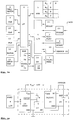
- a character memory 9 supplies the necessary print data for a volatile working memory 7.
- the control device 6 has a microprocessor ⁇ P, which with the input / output control module 4, with the character memory 9, with the volatile working memory 7 and with the non-volatile working memory 5 a cost center memory 10, with a program memory 11, with the motor of a transport or feed device, possibly with a strip release 12, an encoder (coding disk) 13 and with a clock / date module 8.
- the individual memories can be implemented in several physically separate or combined, in a manner not shown, in a few building blocks, which are secured against removal by at least one additional measure, for example gluing on the circuit board, sealing or potting with epoxy resin.
- the senor 21 acts on a detector device 20, which is loaded via the input / output control module 4 after the franking machine has been switched on with a code word Y under predetermined conditions, which is read out during operation of the franking machine and checked for validity .
- a code word Y is explained below with reference to FIG. 1c in conjunction with the explanations for FIG. 2.
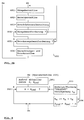
- FIG. 1c shows a circuit diagram of a detector device 20 for determining an opening of the housing.
- This detector device 20 comprises at least one static memory chip 24 (SRAM) for code word Y, a changeover switch 25 and a primary battery 26, in particular a lithium cell.
- SRAM static memory chip 24
- connection can also be interrupted by means of the sensor 21, to which the detector device 20 reacts.
- Such an electrically conductive strip can be manually laid differently for each machine. It is essential here that any opening of the housing moves the strip and thus interrupts the aforementioned contact.
- the strip is, for example, initially laid loosely during assembly and is only pulled taut after assembly or shortly before the housing shells are finally closed, i.e. the aforementioned contact is established.
- An advantageous further sensor variant consists in the design of the housing shells as a safety capsule.
- the safety capsule is formed with meandering conductor tracks through which a low monitoring current or charge maintenance current for a CMOS RAM flows. Each opening leads to a power cut. This means that information is lost that the manipulator cannot replace. After the housing is closed, the system routine prevents the machine from entering franking mode.
- FIG. 1b shows a second variant with device 20 coupled directly to the microprocessor of the control device, which device 20 can also be influenced by a sensor 21.
- the sensor 21 and the Detector devices can be implemented in different ways.
- detector device 20 uses a programmable logic array which can be influenced by the sensor 21.
- the sensor effects another program branch during the execution of the system routine via the device. After the housing has been closed, the system routine again prevents the machine from entering franking mode.
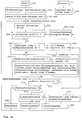
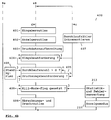
- FIG. 2a shows a flow chart for a franking machine with a security system according to a first variant of the solution according to the invention.
- a step 210 is continuously provided when the postage meter machine is in operation and not in operation if an opening of the postage meter machine is detected by a sensor 21.
- a function test with subsequent initialization is then carried out within a start routine 101.
- step - comprising several sub-steps 102 to 105, shown in more detail in FIG. 7 - a new code word Y '- but only if, according to step 102, one exists in another predetermined memory location E of the non-volatile memory 5 - into the memory location of the old code word Y copied (step 103) if there is no longer a valid code word Y stored there.
- the latter applies equally to the case of an authorized and unauthorized opening because the old code word Y is deleted each time the housing is opened. If not opened, no copying takes place and after step 104 the old code word remains in the memory 20 received.
- the system routine 200 is now reached at point s. This comprises several steps 201 to 215 of the security system. Current data is called in step 201, which is explained in more detail below in connection with the explanation of FIGS. 5 and 6 for the sleeping mode.
- step 207 at least one register check of the data structure of the postal register is carried out in order to log the errors.
- measures are also taken to block the franking machine in the event of register data structure errors.
- the check for valid code Y is carried out, for example, using a selected checksum procedure within an OTP processor (ONE TIME PROGRAMMABLE), which internally contains the corresponding program parts and also the code for forming a MAC (MESSAGE AUTHENTIFICATION CODE), which is why the manipulator has the type cannot understand the checksum procedure.
- OTP processor ONE TIME PROGRAMMABLE
- MESSAGE AUTHENTIFICATION CODE MESSAGE AUTHENTIFICATION CODE
- Other security-relevant key data and processes are also stored exclusively in the interior of the OTP processor in order to provide MAC protection via the postal register.
- a further security variant which does not require an OTP processor consists in making it difficult to find the key by coding it and partially storing it in different memory areas.
- MACs are appended to every piece of information in the security-related registers. Manipulation of the register data can be detected by checking the MAC. This routine takes place in step 406 in the franking mode, which is shown in FIG. This increases the difficulty of manipulating the postal registers as much as possible.
- step 208 the kill mode is reached and the franking machine is locked.
- the postal registers are preferably partially deleted in a predetermined manner.
- the display mode 215 is reached via step 213 and then branched back to the system routine. The blocking can advantageously take place in that the branching to the franking mode 400 is no longer carried out.
- step 207 When the test in step 207 has been carried out without any relevant deficiencies having been found, point e, ie the start of a communication mode 300, is reached and in a - shown in FIGS. 2 and 3a - Step 301 queries whether there is a transaction request. If this is not the case, communication mode 300 is exited and point f, ie operating mode 290, is reached. If relevant data were transmitted in communication mode, branch to step 213 for data evaluation. Or otherwise, if the non-transmission is determined in step 211, branch to step 212. It is now checked whether corresponding entries have been made in order to go to test mode 216 when test request 212 is made, otherwise to go to display mode 215 when register status check 214 is intended. If this is not the case, point d, ie franking mode 400, is reached automatically.
- step 213 a statistical and error evaluation is carried out in step 213 in order to obtain further current data which can also be called up in step 201 after branching to the system routine 200.
- a written or telephonic registration in the data center for authorized opening is required, indicating the opening date and time for the approximate opening.
- communication with the data center must be established via MODEM in order to request authorization to open it and to load a new future code Y 'which can replace the old one.
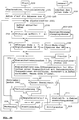
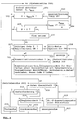
- FIGS. 3a and 3b show the security processes of the franking machine in communication mode on the one hand and the security processes of the data center in communication mode on the other hand.
- step 301 - shown in FIGS. 2 and 3a - whether there is a transaction request. This can be used, for example, to top up your credit, change your phone number, etc. be put.
- the user selects the communication or remote value default mode of the franking machine by entering the identification number (eight-digit postage request number). It is now assumed, for example, that the communication should take place in order to load a new future code Y 'which can replace the old one. If only such a transaction request is made, the default amount must be changed to zero, because in this case the credit in the franking machine does not of course have to be topped up.
- the result is only a reload in the amount of the selected new default amount.
- the change of the input parameter is started via the MODEM connection.
- the input is checked (step 303) and the further process runs automatically, the process being accompanied by a corresponding display.
- the franking machine checks whether a MODEM is connected and ready for operation. If this is not the case, the process branches to step 310 to indicate that the transaction request must be repeated. Otherwise, the franking machine reads the dialing parameters, consisting of the dial-out parameters (main / extension, etc.) and the telephone number from the NVRAM memory area F and sends them to the Modern 23 with a dial request command. The connection required for communication is then established via the MODEM 23 with the data center in a step 304.
- Step 501 continuously checks whether a call has been made to the data center. If this is the case and the MODEM 23 has dialed the opposite side, the connection is established in parallel in the data center in step 502. And in step 503, it is constantly monitored whether the connection to the data center has been released. If this is the case, an error message in step 513 branches back to step 501.
- step 309 it is checked in step 309 whether a header has now been sent or received as a reply message by the data center. If this is not the case, the step is displayed 310 branched back and then a transaction request was queried again in step 301. If a header has been received and the franking machine has received an OK message, the header parameters are checked in step 311 with regard to a telephone number change. If an encrypted parameter has been transmitted, there is no change in the telephone number and a branch is made to step 313 in FIG. 3b.
- FIG. 3b shows the security processes of the franking machine in communication mode and, in parallel, that of the data center.
- step 313 the franking machine sends an encrypted start message to the data center.
- step 314 the message is checked for communication errors. If there is a communication error, the method branches back to step 304 and an attempt is made again to establish the connection to the data center in order to send the start message encrypted.
- step 508 it is checked in the data center whether it has received the start message and whether the data is OK. If this is not the case, step 509 checks whether the error can be remedied. If the error cannot be remedied, a branch is made to step 513. Otherwise, error handling is carried out in step 510 and branching to step 507. If the receipt of correct data is determined in step 508, the data center begins a transaction in step 511. in the the aforementioned example, a new code word Y 'is transmitted in encrypted form to the franking machine, which receives the transaction data in step 315.
- step 211 If no transaction request is now made, it is checked in step 211 whether data has been transmitted. If data has been transmitted, step 213 is reached. In accordance with the input request, the franking machine places the new code word Y ′, for example in the memory area E of the non-volatile memory 5.
- step 304 If, however, a number combination other than zero is entered as input parameter in step 302 and the input was OK (step 303), a connection is established (step 304). And if a connection is established (step 305) without an error (step 306), an identification and header message is sent to the data center. This opening message again includes the postage call number PAN for identifying the franking machine at the data center. If the data is correct (step 505), the data center recognizes from the number combination entered that a credit balance has been added to the franking machine, for example, but no new code word Y 'has been transmitted should.
- step 506 the data center then sends a reply message with the elements change of the telephone number and current telephone number in unencrypted form.
- the franking machine that receives this message recognizes in step 311 that the telephone number should be changed.
- the process now branches to step 312 in order to save the current telephone number.
- the method then branches back to step 304. If the connection is still established and there is no communication error (305), a check is then carried out in step 306 as to whether another transaction should take place. If this is not the case, step 310 branches to step 301.
- the housing of the postage meter machine is closed and that after the housing is closed, the postage meter machine is controlled in communication mode 300.
- the authorized person can also notify the data center of the completed check.
- a communication can include a telephone number storage as well as a credit reload. This means that several transactions can be carried out without interrupting communication. If the amount of the credit to be topped up remains the same as for the last credit reload, only one transaction is necessary. This is done in the same way as when reloading a new code word Y '. If the amount of the credit to be reloaded is to be changed, two transactions are required. Both transactions take place in the same way as when reloading the new code word Y '.
- a message is sent during a transaction. Each transmitted message is encrypted individually.
- a successful transaction proceeds as follows: The franking machine sends its ID number and a default value for the amount of the reload credit requested, together with a MAC, to the data center. The latter checks such a transmitted message against the MAC in order to then send an OK message, likewise MAC-secured, to the franking machine. The OK message no longer contains the default value.
- the transmission of a new code word Y ', a change in the amount of credit reloading and a new credit to be reloaded in encrypted form but the transmission of telephone number in unencrypted form. If it is determined in the data center that the connection to the postage meter machine has been terminated (step 503) or that there are faulty data (505) or unrecoverable errors (509) or that no leader has been sent (507), the communication is ended. After an error message, the communication connection is released, the transmitted data is saved and evaluated in step 513 by the data center.
- a transaction request results in a specially secured credit reload in the franking machine.
- the postal registers present outside the processor in the cost center memory 10 are preferably also secured by means of a time control during the credit reload. If the franking machine is observed with an emulator / debugger, for example, then it is likely that the communication and accounting routines will not run within a predetermined time. If so, i.e. the routines take considerably more time if part of the DES key is changed. The data center can determine this modified key during a communication routine and then report the franking machine as suspect as soon as a start message is encrypted in accordance with step 313.
- the data center determines in step 509 that the error cannot be remedied.
- the data center cannot then carry out a transaction (step 511) because the process branches back to step 513. Since no data was received in the franking machine in step 315, the transaction was not carried out without errors (step 316).
- the system then branches back to step 301 via step 310 in order to check again after a display whether a transaction request is still being made.
- the keys (crypto keys) relevant for the transmission of the data required for a credit reload which have been stored in the memory in cryptified form, are also completely deleted if there is an unauthorized intervention in the franking machine.
- the authorization to open can be obtained after an opening request by reloading a new code word Y '.
- FIG. 7 shows a corresponding flow chart for introducing code words according to the solution according to the invention.
- Another way to implement the kill mode is to partially delete the postal registers, which are stored redundantly.
- the redundancy is specifically reduced in a predetermined manner. This reduction in redundancy should differ from other data errors which can be remedied automatically by the franking machine, as is explained in more detail in the pending European application with the official file number 93 103 951.5.
- a method for correcting the storage of security-relevant data in a postage meter machine is proposed, redundantly stored data being compared with one another in order to reload a memory area with incorrect data with error-free data.
- this is no longer possible with a sixth type of error, because all redundantly stored data now have different errors which can no longer be corrected automatically. Only a service technician could reconstruct the data in a predetermined manner, which must then be done after each authorized opening before the franking machine is started up again.
- the franking machine hardware is also accessible in a known manner through a lockable flap, which has to be opened with a security key.
- a further threshold for manipulation is the seal to be broken or the seal number to be overcome, which is also stored outside the franking machine in the data center.
- the data center issues feedback information to the post office or the inspector, who visually checks the seal on site and compares it with the displayed internally stored seal number.
- the franking machine performs the register check regularly and / or when it is switched on and can thus recognize the missing information if the machine was opened without authorization.
- the franking machine is then blocked. Without the invention in connection with a code word Y, the manipulator would easily overcome the blocking. However, the code word is lost and it would take too much time and effort for the manipulator to try to determine the valid code word. In the meantime, the franking machine would have long been registered as suspect in the data center.
- a potential fraudster who cannot access the stored data for the reasons mentioned above is additionally prevented from manipulating the print control signal to the print head. He might be tempted to inject variable pixel image data manipulated during column printing into the print control signal.
- the franking machine is usually operated at high to maximum printing speeds. A manipulation of the print control signal for the print head results in a changed time sequence that could only be simulated comparably at a lower printing speed.
- the printhead is arranged in the franking machine in such a way that it cannot be used without a transport device in order to generate an unpaid franking stamp.
- Such an arrangement can be seen for example from US 4,705,417.
- other arrangements with printheads based on a different printing principle are also conceivable, which cannot be used without the transport device.
- the transport speed or the printing speed is monitored. If a thermal transfer printer is used, it is sufficient to evaluate the ribbon speed of the ribbon, which is already measured using an encoder.
- the encoder pulses are counted within a time window, which is supplied by the clock / date module 8 or from the system clock the control device 6 is derived.
- the system clock is generated by means of a quartz-controlled clock generator (not shown in FIGS. 1a and 1b). If the number of encoder pulses deviates from a target number, the motor 12 is readjusted accordingly. If the target / actual deviation has risen above a permissible level, there is an error. This error is logged and may result in the franking machine being shut down.
- step 202 of the flow chart - shown in FIG. 2a - it can then be checked whether the printing speed is maintained or whether it deviates from the permissible value. If this criterion is met, a corresponding warning is given in the display, which ultimately leads to the franking machine being blocked if it is not observed.
- the method is not limited to such fast franking machines.
- the decisive factor is the monitoring of the printing speed for any deviations in the course of time that may have been caused by manipulations, in order to also prevent manipulation of the pressure control signal in addition to the other security measures already taken.
- the control device 6 has a microprocessor or an OTP.
- the OTP also houses non-volatile memories and other circuits in a common housing.
- the internal non-volatile memory includes, for example, program memories and other data memories, in particular also the possibility of setting save bits which prevent the internal non-volatile memory from being read from the outside.
- These security bits are set in the OTP during the manufacture of the franking machine. Observing such security-relevant routines, such as billing routines, with an emulator / debugger would also lead to a change in the timing, which can be determined by the OTP.
- This also includes a clock generator / counter circuit for the specification of time intervals or clock cycles, for example for time-out generation or printer control.
- the clock / counter circuit When a certain time has elapsed and the expected event has not occurred, the clock / counter circuit generates an interrupt which reports to the microprocessor that the time has elapsed without success, whereupon the microprocessor takes further measures.
- the clock generator / counter circuit is used for program runtime monitoring. A known number of clock cycles for the program execution of predetermined program parts is assumed. Before the start of the routine, the counter of the clock / counter circuit is preset or reset in a predetermined manner. After starting the program routine the counter reading is continuously changed in accordance with the clock pulses of the clock generator. After the critical predetermined program parts have been processed, the state of the counter is queried by the microprocessor and compared with the expected value.
- a flag is set in a memory, which is queried in step 207. If this query criterion is present, a branch is made to step 208. The franking machine can therefore no longer be operated for franking (kill mode 1).
- the code word Y in the SRAM 24 is deleted via the control line C. This can be done in connection with the address line A and the data line D by overwriting with a predetermined other word, for example 0000.
- a predetermined other word for example 0000.
- the senor 21 is saved because the housing is otherwise adequately secured and the monitoring function is performed in the aforementioned manner by the detector device 20 which is effective in conjunction with appropriate software.
- the detector device 20 can also be part of the processor (OTP).
- OTP processor
- This device 20 is preferably designed as a non-volatile memory that cannot be read externally.
- a suitable processor type is, for example, the TMS 370 C010 from Texas Instruments, which has a 256 byte E2PROM. If a manipulator carries out an unauthorized intervention, the franking machine is effectively put out of operation by switching to the first mode.
- the seal of the franking machine is first checked for integrity and then the register status. If necessary, a test impression with the value 0 can be made. In the event of a repair by the on-site service, the franking machine may have to be accessed.
- the error registers can be read out, for example, with the help of a special service EPROM, which is inserted in the place of the advert EPROM. If the processor does not access this EPROM slot, access to the data lines is usually prevented by special driver circuits (not shown in FIGS. 1a and 1b). The data lines, which can be reached here through a sealed housing door, cannot be contacted without authorization become.
- Another variant is the reading out of error register data by a service computer connected via an interface.
- the registers of the franking machine are queried in order to determine the type of intervention required. Before intervening in the franking machine and opening the housing, a separate call is made to the data center. If the default value is then changed to zero within a predetermined period of time and transmitted to the data center as part of a transaction, i.e. the type of intervention and the register data have been communicated to the data center, data is transmitted from a data center to the franking machine in accordance with an authorized intervention requested in the Franking machine, which is logged as an allowed intervention.
- the franking machine is able to distinguish between requested and unauthorized intervention in the franking machine by means of the control unit of the franking machine in connection with the data transmitted by the data center, this intervention being logged as an error in the case of unauthorized intervention in the franking machine, but after the authorized intervention has taken place the original operating state is restored into the franking machine by means of the aforementioned transmitted data.
- the check sum for the kill mode 2 is formed in the OTP via the content of the external program memory PSP 11 and the result is compared with a predetermined value stored in the OTP. This is preferably done in step 101 when the postage meter machine is started, or in step 213 when the postage meter machine is operated in standby mode.
- the standby mode is reached when there is no input or print request for a predetermined time.
- step 211 is expanded to include the question of whether the standby flag is set, ie whether the standby mode has been reached.
- step 213 is also branched to.
- a preferred variant consists in deleting the code word Y in a manner already described if a manipulation attempt in standby mode is set to the aforementioned Has been determined in step 213. The absence of code word Y is recognized in step 207 and then branched to step 208.
- the advantage of this method in connection with the first mode is that the manipulation attempt is statistically recorded in step 213.
- a flow control is used according to the invention, which is explained below.
- Such a flow control is carried out by changing a count value in a memory at at least one point during the execution of the program routine. After execution of the program routine, the changed count value is compared with a predetermined count value assigned to this program routine. If branches are run through during program execution, different count values can result. In a subsequent evaluation, a plausibility test is carried out or it can be determined which branches have been run through. This is possible because the change in the count value takes place by multiplication by a specific prime number assigned to the respective program part. In a later evaluation, only a prime number decomposition then has to be carried out.
- the invention is based on the fact that after switching on, the postage value in the value print corresponding to the last entry before switching off the franking machine and the date in the day stamp corresponding to the current date are automatically specified that the variable data in the fixed data for the frame for the print and be electronically embedded for all associated data that remain unchanged.
- These variable data of the window contents are referred to below as window data and all fixed data for the value stamp, the day stamp and the advertising slogan stamp as framework data.
- the frame data can be taken from a first memory area of a read-only memory (ROM), which also serves as a program memory 11.
- the window data are taken from a second memory area and correspond to the input in memory areas B j of the non-volatile main memory 5.
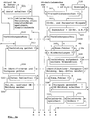
- step 401 is thus reached in franking mode 400, data that has already been stored can be accessed even after input of the franking machine, without input.
- This setting relates in particular to the last setting of the postage meter with regard to the postage value, which is displayed in step 402 before the print data preparation takes place in step 403.
- the current variable pixel image data (date and postage value) are embedded in the fixed frame pixel image data.
- the input means are then queried in step 404 for any further inputs.
- All alphanumeric characters or symbols are stored pixel by pixel as binary data in the character memory 9.
- Data for alphanumeric characters or symbols are stored in compressed form in the non-volatile working memory 5 in the form of a hexadecimal number.
- the compressed data from the program memory 11 are converted with the aid of the character memory 9 into a printed image having binary pixel data, which is stored in such a decompressed form in the volatile working memory 7 (step 403).
- Working memories 7a, 7b and pixel memories 7c are used below to explain the invention. although this is physically preferably a single memory chip.
- control code and run length-coded frame or window data are alternately contained one after the other.
- the respective selected fixed data are transferred from the non-volatile program memory (PSP) 11 into the registers 100, 110, 120, ..., of a volatile working memory 7a in step 403, control code being decoded during the transfer and in a separate memory area of the working memory 7b can be stored.
- the respective selected window data for the postmark and the postage stamp are also loaded into registers 200, 210, 220, ....
- the registers of sub-memory areas are preferably formed in the memory area of the main memory 7a. In another variant, these aforementioned registers are part of the microprocessor control 6. By decompression, the run-length-coded hexadecimal data are converted into corresponding binary pixel data.
- the number strings (sTrings), which are entered for the generation of the input data with a keyboard 2 or via an electronic balance 22 connected to the input / output device 4 and calculating the postage value, are automatically stored in the memory area D of the non-volatile working memory 5.
- data records of the sub memory areas for example B j , C etc., are also retained. This ensures that the last input values are retained even when the franking machine is switched off, so that after switching on the postage value in the value print is automatically specified in accordance with the last entry before the franking machine was switched off and the date in the day stamp is specified in accordance with the current date. If a scale 22 is connected, the postage value is taken from the storage area D.
- step 404 it is waited until there is one currently stored. If a new input request is made in step 404, the process branches back to step 401. Otherwise, the process branches to step 405 to wait for the print output request. The letter to be franked is detected by a letter sensor and thus a print request is triggered. It is thus possible to branch to the accounting and printing routine in step 406. If there is no print output request (step 405), the process branches back to step 401 (point d) or - according to a variant shown in FIG. 4b - to step 301 (point e).
- a communication request can be made at any time or another input can be made in accordance with the steps test request 212, register check 214, input routine 401 . Further steps 401 to 404 are carried out, as in the variant according to FIG. 4a.
- Another one The query criterion can be queried in the subsequent step 405 in order to set a standby flag in step 408 if there is still no print output request after a predetermined time. As already explained above, the standby flag can be queried in step 211 following communication mode 300. This does not branch to franking mode 400 until the checksum check has shown that all or at least selected programs are complete.
- step 405 If a print output request is recognized in step 405, further queries are made in the subsequent optional steps 409 and 410 and in step 406.
- step 409 the presence of a kill mode flag set in step 208 (FIG. 2b)
- step 410 the achievement of a further quantity criterion and / or in step 406 the register data which has been drawn in for billing in a known manner.
- the system automatically branches to point e in order to enter communication mode 300 so that a new predetermined number of pieces S is again credited by the data center.
- the process branches from step 410 to the billing and printing routine in step 406.
- the number of printed letters and the current values in the mail registers are registered in a non-volatile memory 10 of the franking machine in a billing routine 406 in accordance with the entered cost center and are available for later evaluation.
- a special sleeping mode counter is caused to continue counting during the accounting routine which takes place immediately before printing.
- variable pixel image data to be embedded in the remaining pixel image data during printing.
- the compressed data are read from the working memory 5 and converted with the help of the character memory 9 into a printed image having binary pixel data, which is also in such a decompressed form in the volatile memory 7 is stored. Further details can be found in European applications EP 576 113 A2 and EP 578 042 A2.
- the pixel memory area in the pixel memory 7c is therefore provided for the selected decompressed data of the fixed parts of the franking image and for the selected decompressed data of the variable parts of the franking image.
- the actual printing routine takes place (in step 406).
- the main memory 7b and the pixel memory 7c are connected to the printer module 1 via a printer controller 14 which has a print register (DR) 15 and output logic.
- the pixel memory 7c is connected on the output side to a first input of the printer controller 14, at whose further control inputs there are output signals from the microprocessor control device 6.
- the flowchart for a security system shown in FIG. 2a has steps 201 to 206 for monitoring further criteria. If one of the security criteria is violated, the franking machine enters a sleeping mode, for example if a connection to the data center has not yet been established after the consumption of a predetermined number of items.
- a first sleeping mode variant is explained on the basis of FIG.
- the franking machine enters a step 201 in which current data S and S ref are called up.
- the franking machine contains a permanently stored quantity comparison value S ref .
- a sleeping mode quantity S was calculated internally, which is subsequently decremented with each franking.
- step 202 a warning, for example "TELESET", is given in step 203 in order to request the user of the franking machine to communicate with the data center.
- This display results in a delay t n in the operation of the franking machine.
- step 204 the delay for a next display is incremented with the time period t k, but the quantity comparison value is decremented by the value n before branching to step 207. This ensures that the request to establish communication with the data center becomes more and more urgent because the franking machine lingers longer and longer in step 203.
- communication 300 was performed, data were transmitted (step 211) and stored in area G of the non-volatile memory 5 of the franking machine during the statistics and error evaluation mode.
- the franking machine and the data center each agree on a predetermined number of items S, ie the amount that can be franked until the next connection is established. If communication fails (quantity control), the franking machine slows down its mode of operation (sleeping mode variant 1). In step 201, the reset quantities t n or values S and S ref are called up as current data. If the data center determines which number of items is to be franked until the next connection, saved historical data on the credit reloading or franking behavior (number of items of mail with average postage) must be used. The transmission of a new quantity S 'can then take place in the same manner as that which has already been explained in connection with the transmission of the new code word Y'.
- a new predetermined number of items S ' is then transmitted and decremented as number of items S while the franking is running.
- the comparison piece number S ref is calculated internally from the new predetermined piece number S '(step 213).
- FIG. 6 shows the modified schedule for a second sleeping mode variant. Steps 100 to 105 and 210 have not been shown.
- the piece number S to be decremented is compared in step 202 with a comparison piece number.
- the comparative number of pieces is determined by dividing a maximum number of pieces S max by a number k. If the criterion is met, a step 203 is again made, which is the warning, for example "CALL FP" briefly displays. Then, in step 204, the new maximum number of pieces S max is formed by dividing by a further number m, which would be necessary for the next comparison in step 202 if there is no communication with the data center or no credit reloading.
- step 205 shows that the number of pieces S is even greater than zero
- step 207 is reached. Only the warning appears more and more on the display. Otherwise, a branch is made to step 206, for example a FLAG being set, which is queried later in step 301 and evaluated as a communication request.
- step 206 an additional indication can also be given that communication is now taking place automatically and as long as the franking function is at rest until communication is successfully completed.
- the franking machine user can call up the communication mode at any time beforehand.
- step 203 comprises a sub-step for error statistics in accordance with the statistics and error evaluation mode 213.
- the franking machine requires a connection to the data center in the manner known from US Pat. No. 3,255,439. If the connection is established, the data center checks the register status. If the reload cannot be carried out, the data center prevents it from further operation by means of a signal transmitted to the franking machine. If the connection was established shortly after the signaling performed by the franking machine and the register statuses are not criticized, the franking machine can be switched back to the operating mode without any further extraordinary inspection. For this purpose, new current data are transmitted, for example for a credit and for the permitted number of pieces, which can be franked until the next connection.
- the data center can differentiate between automatic and normal communication based on the transmitted signaling code.
- the former will always take place if the user of the franking machine has overlooked or ignored the requests for communication and has omitted appropriate input actions. In the event of repetition, a special inspection can be ordered if manipulation is suspected.
- step 305 If communication has not yet been established after a predetermined time or, for example, the data center is busy, ie no line is free, this is evaluated in step 305 as a communication error. The process then branches back to step 304 and a redial is made up to a predetermined number. If this predetermined number has been reached, the system branches back from step 305 to point e via display step 310. In addition, in step 305, if n redial attempts were unsuccessful, a communication flag that may have been set can be reset, so that in step 301 no further transaction requests are recognized in this regard. In addition, a standby flag can be set at the same time, which is recognized again in step 211.
- step 213 the content of the program memory (PSP) 11 or other tests are checked in step 213 for statistical and error evaluation on the basis of a checksum in step 213 carried out. After these tests, the standby flag is reset and branched back to the system routine 200 points.
- PSP program memory
- An alternative variant consists in that the decision criterion is the new credit transmitted for franking and in evaluation mode 213 the new number of items S 'is determined internally in the franking machine.
- communication with the data center no longer includes the new number S ', but is only required to trigger the calculation in evaluation mode 213.
- the calculation takes place internally in the franking machine and at the same time in parallel in the data center using the same methods based on the transmitted register data.
- the behavior of the franking machine user is monitored by the data center on the basis of data transmitted during the communication in order to identify suspicious franking machines. A corresponding suspicious mode can only be activated by the data center, with no direct effects on the franking machine.
- error overflow mode Another security measure (error overflow mode) may be provided in the franking machine. In the second mode, this can be carried out in addition to or instead of sleeping mode variant 1 or sleeping mode variant 2. If the query criterion is fulfilled in step 202, ie if a predetermined number of errors are exceeded, the response time of the postage meter machine slows down in step 203, this state simultaneously appearing on the display is reported to the operator of the franking machine. In the further steps, the procedure can be similar to that already explained in connection with FIGS. 2 and 5. The postage meter machine stores both internal and operating errors and attempts at manipulation in an error register for logging purposes, for example up to the number 999.
- step 213 is partially or completely called up as a sub-step in connection with other steps.
- the statistics and error mode is part of step 203 and the billing and printing routine according to step 406 in franking mode 400, which is shown in more detail in FIGS. 4a and 4b. If a severe accounting error occurs, the machine is blocked in step 406 or step 208. However, if an error occurs during the initialization phase in step 101, the machine stops and displays a specific error code.
- the kill mode flag is only queried in franking mode - in the manner shown in FIG. 4b - in step 409 before the actual billing and printing routine (step 406). If the kill mode flag is set, the statistics and error evaluation mode (step 213) and the display mode (step 215) are run through and then branched back to the system routine (point s).
- the invention is not limited to the present embodiments. Rather, a number of variants are conceivable which make use of the solution shown, even in the case of fundamentally different types.
Landscapes
- Engineering & Computer Science (AREA)
- General Physics & Mathematics (AREA)
- Computer Security & Cryptography (AREA)
- Physics & Mathematics (AREA)
- Theoretical Computer Science (AREA)
- Software Systems (AREA)
- Computer Hardware Design (AREA)
- General Engineering & Computer Science (AREA)
- Health & Medical Sciences (AREA)
- Bioethics (AREA)
- General Health & Medical Sciences (AREA)
- Devices For Checking Fares Or Tickets At Control Points (AREA)
- Management, Administration, Business Operations System, And Electronic Commerce (AREA)
- Storage Device Security (AREA)
Priority Applications (3)
| Application Number | Priority Date | Filing Date | Title |
|---|---|---|---|
| EP99250341A EP0969423A3 (fr) | 1993-12-21 | 1994-09-09 | Procédé pour l'amélioration de la sécurité des machines à affranchir |
| EP99250340A EP0969422B1 (fr) | 1993-12-21 | 1994-09-09 | Procédé pour l'amélioration de la sécurité des machines à affranchir |
| EP99250339A EP0969421B1 (fr) | 1993-12-21 | 1994-09-09 | Procédé pour l'amélioration de la sécurité des machines à affranchir |
Applications Claiming Priority (2)
| Application Number | Priority Date | Filing Date | Title |
|---|---|---|---|
| DE4344476 | 1993-12-21 | ||
| DE4344476A DE4344476A1 (de) | 1993-12-21 | 1993-12-21 | Verfahren zur Verbesserung der Sicherheit von Frankiermaschinen |
Related Child Applications (3)
| Application Number | Title | Priority Date | Filing Date |
|---|---|---|---|
| EP99250340A Division EP0969422B1 (fr) | 1993-12-21 | 1994-09-09 | Procédé pour l'amélioration de la sécurité des machines à affranchir |
| EP99250341A Division EP0969423A3 (fr) | 1993-12-21 | 1994-09-09 | Procédé pour l'amélioration de la sécurité des machines à affranchir |
| EP99250339A Division EP0969421B1 (fr) | 1993-12-21 | 1994-09-09 | Procédé pour l'amélioration de la sécurité des machines à affranchir |
Publications (3)
| Publication Number | Publication Date |
|---|---|
| EP0660269A2 true EP0660269A2 (fr) | 1995-06-28 |
| EP0660269A3 EP0660269A3 (fr) | 1995-09-06 |
| EP0660269B1 EP0660269B1 (fr) | 2000-10-25 |
Family
ID=6506217
Family Applications (4)
| Application Number | Title | Priority Date | Filing Date |
|---|---|---|---|
| EP99250340A Expired - Lifetime EP0969422B1 (fr) | 1993-12-21 | 1994-09-09 | Procédé pour l'amélioration de la sécurité des machines à affranchir |
| EP94250223A Expired - Lifetime EP0660269B1 (fr) | 1993-12-21 | 1994-09-09 | Procédé pour améliorer la sécurité de machines à affrauchir |
| EP99250341A Withdrawn EP0969423A3 (fr) | 1993-12-21 | 1994-09-09 | Procédé pour l'amélioration de la sécurité des machines à affranchir |
| EP99250339A Expired - Lifetime EP0969421B1 (fr) | 1993-12-21 | 1994-09-09 | Procédé pour l'amélioration de la sécurité des machines à affranchir |
Family Applications Before (1)
| Application Number | Title | Priority Date | Filing Date |
|---|---|---|---|
| EP99250340A Expired - Lifetime EP0969422B1 (fr) | 1993-12-21 | 1994-09-09 | Procédé pour l'amélioration de la sécurité des machines à affranchir |
Family Applications After (2)
| Application Number | Title | Priority Date | Filing Date |
|---|---|---|---|
| EP99250341A Withdrawn EP0969423A3 (fr) | 1993-12-21 | 1994-09-09 | Procédé pour l'amélioration de la sécurité des machines à affranchir |
| EP99250339A Expired - Lifetime EP0969421B1 (fr) | 1993-12-21 | 1994-09-09 | Procédé pour l'amélioration de la sécurité des machines à affranchir |
Country Status (3)
| Country | Link |
|---|---|
| US (1) | US5671146A (fr) |
| EP (4) | EP0969422B1 (fr) |
| DE (4) | DE4344476A1 (fr) |
Cited By (8)
| Publication number | Priority date | Publication date | Assignee | Title |
|---|---|---|---|---|
| EP0773517A2 (fr) | 1995-11-13 | 1997-05-14 | Francotyp-Postalia AG & Co. | Procédé et dispositif pour la reconnaissance automatique du type de modem et l'adaption |
| EP0779601A2 (fr) | 1995-12-14 | 1997-06-18 | Francotyp-Postalia AG & Co. | Procédé de paiement du rechargement d'une machine à affranchir et arrangement pour le fonctionnement d'un centre serveur |
| EP0780803A2 (fr) | 1995-12-22 | 1997-06-25 | Francotyp-Postalia AG & Co. | Procédé et dispositif d'entrée de données dans une machine d'affranchissement |
| US5734571A (en) * | 1995-09-08 | 1998-03-31 | Francotyp-Postalia Ag & Co. | Method for modifying data loaded into memory cells of an electronic postage meter machine |
| EP1035517A2 (fr) | 1999-03-12 | 2000-09-13 | Francotyp-Postalia Aktiengesellschaft & Co. | Procédé de protection d'un module de sécurité et ensemble pour mettre en oeuvre ledit procédé |
| EP1035516A2 (fr) | 1999-03-12 | 2000-09-13 | Francotyp-Postalia AG & Co. | Système pour un module de sécurité |
| EP1035518A2 (fr) | 1999-03-12 | 2000-09-13 | Francotyp-Postalia Aktiengesellschaft & Co. | Procédé de protection d'un module de sécurité et ensemble pour mettre en oeuvre ledit procédé |
| US6148292A (en) * | 1997-07-14 | 2000-11-14 | Francotyp-Postalia Ag & Co. | Method for statistics mode reloading and for statistical acquisition according to statistics classes in the storing of a dataset |
Families Citing this family (41)
| Publication number | Priority date | Publication date | Assignee | Title |
|---|---|---|---|---|
| DE4445053C2 (de) | 1994-12-07 | 2003-04-10 | Francotyp Postalia Ag | Frankiermaschineninterne Schnittstellenschaltung |
| EP0762337A3 (fr) * | 1995-09-08 | 2000-01-19 | Francotyp-Postalia Aktiengesellschaft & Co. | Procédé et dispositif pour augmenter la protection contre la manipulation de données critiques |
| DE19534530A1 (de) * | 1995-09-08 | 1997-03-13 | Francotyp Postalia Gmbh | Verfahren zur Absicherung von Daten und Programmcode einer elektronischen Frankiermaschine |
| US6587843B1 (en) * | 1995-12-15 | 2003-07-01 | Francotyp-Postalia Ag & Co. | Method for improving the security of postage meter machines in the transfer of credit |
| US5954817A (en) * | 1996-12-31 | 1999-09-21 | Motorola, Inc. | Apparatus and method for securing electronic information in a wireless communication device |
| GB9704159D0 (en) * | 1997-02-28 | 1997-04-16 | Neopost Ltd | Security and authentication of postage indicia |
| GB9709051D0 (en) * | 1997-05-02 | 1997-06-25 | Neopost Ltd | Postage meter with removable print head |
| JP3153155B2 (ja) * | 1997-07-01 | 2001-04-03 | ローム株式会社 | 半導体メモリ |
| GB9801743D0 (en) * | 1998-01-28 | 1998-03-25 | Neopost Ltd | Digital print head data registration |
| US6233565B1 (en) | 1998-02-13 | 2001-05-15 | Saranac Software, Inc. | Methods and apparatus for internet based financial transactions with evidence of payment |
| WO2000031692A1 (fr) * | 1998-11-20 | 2000-06-02 | Ptt Post Holdings B.V. | Procede et appareil d'impression d'une marque d'affranchissement sur un document |
| NL1010616C2 (nl) * | 1998-11-20 | 2000-05-23 | Ptt Post Holdings Bv | Werkwijze en inrichtingen voor het afdrukken van een frankeerkenmerk op een document. |
| US6246326B1 (en) * | 1999-05-05 | 2001-06-12 | Intermec Ip Corp. | Performance optimized smart label printer |
| US20020023057A1 (en) * | 1999-06-01 | 2002-02-21 | Goodwin Johnathan David | Web-enabled value bearing item printing |
| US7149726B1 (en) | 1999-06-01 | 2006-12-12 | Stamps.Com | Online value bearing item printing |
| DE19928061C2 (de) * | 1999-06-15 | 2003-08-28 | Francotyp Postalia Ag | Sicherheitsmodul zur Überwachung der Systemsicherheit und Verfahren |
| DE19928058B4 (de) * | 1999-06-15 | 2005-10-20 | Francotyp Postalia Ag | Anordnung und Verfahren zur Generierung eines Sicherheitsabdruckes |
| US7216110B1 (en) | 1999-10-18 | 2007-05-08 | Stamps.Com | Cryptographic module for secure processing of value-bearing items |
| US7490065B1 (en) * | 1999-10-18 | 2009-02-10 | Stamps.Com | Cryptographic module for secure processing of value-bearing items |
| US7567940B1 (en) | 1999-10-18 | 2009-07-28 | Stamps.Com | Method and apparatus for on-line value-bearing item system |
| US6868406B1 (en) | 1999-10-18 | 2005-03-15 | Stamps.Com | Auditing method and system for an on-line value-bearing item printing system |
| US7240037B1 (en) | 1999-10-18 | 2007-07-03 | Stamps.Com | Method and apparatus for digitally signing an advertisement area next to a value-bearing item |
| US7236956B1 (en) | 1999-10-18 | 2007-06-26 | Stamps.Com | Role assignments in a cryptographic module for secure processing of value-bearing items |
| US7257542B2 (en) | 2000-02-16 | 2007-08-14 | Stamps.Com | Secure on-line ticketing |
| US20020103770A1 (en) * | 2001-02-01 | 2002-08-01 | Pitney Bowes Incorporated | Performance counters for mail handling systems |
| DE10136608B4 (de) * | 2001-07-16 | 2005-12-08 | Francotyp-Postalia Ag & Co. Kg | Verfahren und System zur Echtzeitaufzeichnung mit Sicherheitsmodul |
| DE50205263D1 (de) | 2001-10-02 | 2006-01-19 | Francotyp Postalia Ag | Verfahren und Anordnung zum Öffnen eines Sicherheitsgehäuses |
| GB0202269D0 (en) * | 2002-01-31 | 2002-03-20 | Neopost Ltd | Postage meter security |
| JP3753994B2 (ja) * | 2002-03-11 | 2006-03-08 | 松下電器産業株式会社 | 半導体装置の製造方法 |
| US7003713B2 (en) * | 2002-05-16 | 2006-02-21 | Broadcom Corporation | Variable Hamming error correction for a one-time-programmable-ROM |
| US6942144B2 (en) * | 2002-11-26 | 2005-09-13 | Neopost Industrie Sa | Secure remote access to metering product enclosure |
| US7504950B2 (en) * | 2005-11-30 | 2009-03-17 | Zih Corp. | System and method for continuous RFID encoding |
| DE102006007616A1 (de) * | 2006-02-13 | 2007-08-23 | Raimann Holzoptimierung Gmbh & Co.Kg | Sägeblatt sowie Verfahren zum Herstellen eines Sägeblatts |
| US9779556B1 (en) | 2006-12-27 | 2017-10-03 | Stamps.Com Inc. | System and method for identifying and preventing on-line fraud |
| US8510233B1 (en) | 2006-12-27 | 2013-08-13 | Stamps.Com Inc. | Postage printer |
| JP5385156B2 (ja) * | 2007-02-16 | 2014-01-08 | モサイド・テクノロジーズ・インコーポレーテッド | 半導体デバイスおよび複数の相互接続デバイスを有するシステムの電力消費を低減するための方法 |
| US9183590B2 (en) * | 2010-07-20 | 2015-11-10 | Neopost Technologies | System and method for managing postal accounting data using transient data collectors |
| DE102011002706B4 (de) * | 2011-01-14 | 2013-12-19 | Siemens Aktiengesellschaft | Vorrichtung und Verfahren zum Schutz eines Sicherheitsmoduls gegen Manipulationsversuche in einem Feldgerät |
| DE102011002703A1 (de) * | 2011-01-14 | 2012-07-19 | Siemens Aktiengesellschaft | Verfahren und Vorrichtung zum Bereitstellen eines kryptographischen Schlüssels für ein Feldgerät |
| CN106681855B (zh) * | 2015-11-10 | 2019-07-05 | 澜起科技股份有限公司 | 一次性可编程存储装置以及对其进行数据校验的方法 |
| US12495042B2 (en) * | 2021-08-16 | 2025-12-09 | Capital One Services, Llc | Systems and methods for resetting an authentication counter |
Family Cites Families (27)
| Publication number | Priority date | Publication date | Assignee | Title |
|---|---|---|---|---|
| US3255439A (en) | 1961-07-13 | 1966-06-07 | Gen Res Inc | Postage metering system |
| GB1576114A (en) * | 1976-04-13 | 1980-10-01 | Stone G B | Mathematical game of skill |
| US4251874A (en) | 1978-10-16 | 1981-02-17 | Pitney Bowes Inc. | Electronic postal meter system |
| US4302821A (en) * | 1979-10-30 | 1981-11-24 | Pitney-Bowes, Inc. | Interposer control for electronic postage meter |
| US4347506A (en) * | 1981-02-24 | 1982-08-31 | Pitney Bowes, Inc. | Electronic postage meter having check date warning with control for overriding the check date warning |
| GB2144081B (en) * | 1983-07-23 | 1987-10-28 | Pa Consulting Services | Postal franking machines |
| US4835697A (en) | 1984-04-02 | 1989-05-30 | Pitney Bowes Inc. | Combination generator for an electronic postage meter |
| US4549281A (en) * | 1985-02-21 | 1985-10-22 | Pitney Bowes, Inc. | Electronic postage meter having keyboard entered combination for recharging |
| DE3684496D1 (de) * | 1985-03-12 | 1992-04-30 | Pitney Bowes Inc | Frankiermaschine mit einem decodierer des speicherroutinenverzeichnisses, bzw. mit einem warnsignal bei illegalem speicherzugang. |
| CH668134A5 (de) * | 1985-03-15 | 1988-11-30 | Hasler Ag Ascom | Vorrichtung und verfahren zum freigeben und kontrollierten einspeichern beliebiger vorgabebetraege in den vorgabespeicher einer frankiermaschine. |
| US4812994A (en) | 1985-08-06 | 1989-03-14 | Pitney Bowes Inc. | Postage meter locking system |
| US4812965A (en) * | 1985-08-06 | 1989-03-14 | Pitney Bowes Inc. | Remote postage meter insepction system |
| US4864506A (en) | 1986-04-10 | 1989-09-05 | Pitney Bowes Inc. | Postage meter recharging system |
| US4811234A (en) | 1986-04-10 | 1989-03-07 | Pitney Bowes Inc. | Postage meter recharging system |
| US4785417A (en) | 1986-04-28 | 1988-11-15 | Pitney Bowes Inc. | Electronic postage meter having an out of sequence checking arrangement |
| DE69014361T2 (de) * | 1989-03-23 | 1995-04-27 | Neopost Ind | Verfahren zur Erhöhung der Sicherheit einer elektronischen Frankiermaschine mit Fernaufwertung. |
| US5077660A (en) * | 1989-03-23 | 1991-12-31 | F.M.E. Corporation | Remote meter configuration |
| GB2233937B (en) * | 1989-07-13 | 1993-10-06 | Pitney Bowes Plc | A machine incorporating an accounts verification system |
| US5142577A (en) * | 1990-12-17 | 1992-08-25 | Jose Pastor | Method and apparatus for authenticating messages |
| US5243654A (en) * | 1991-03-18 | 1993-09-07 | Pitney Bowes Inc. | Metering system with remotely resettable time lockout |
| GB2256396B (en) | 1991-05-29 | 1995-03-29 | Alcatel Business Systems | Method of remote diagnostics for franking machines |
| DE4129302A1 (de) | 1991-09-03 | 1993-03-04 | Helmut Lembens | Frankiermaschine |
| CA2085261C (fr) * | 1991-12-19 | 1998-07-14 | Pitney Bowes Inc. | Machine a adresser et a affranchir equipee d'un systeme de commande du tambour d'impression |
| DE4221270A1 (de) | 1992-06-26 | 1994-01-05 | Francotyp Postalia Gmbh | Anordnung und Verfahren zur Klischeetextteiländerung für Frankiermaschinen |
| DE4224955C2 (de) * | 1992-07-24 | 1998-11-26 | Francotyp Postalia Gmbh | Anordnung und Verfahren für einen internen Kostenstellendruck |
| EP0615211B1 (fr) * | 1993-03-11 | 1998-02-04 | Francotyp-Postalia Aktiengesellschaft & Co. | Dispositif pour mémoriser des données de sécurité |
| US5585613A (en) * | 1995-11-24 | 1996-12-17 | Pitney Bowes Inc. | Postage metering apparatus including means for guarding against printing a postage value without accouting therefor |
-
1993
- 1993-12-21 DE DE4344476A patent/DE4344476A1/de not_active Ceased
-
1994
- 1994-09-09 DE DE59409565T patent/DE59409565D1/de not_active Expired - Lifetime
- 1994-09-09 EP EP99250340A patent/EP0969422B1/fr not_active Expired - Lifetime
- 1994-09-09 EP EP94250223A patent/EP0660269B1/fr not_active Expired - Lifetime
- 1994-09-09 DE DE59410433T patent/DE59410433D1/de not_active Expired - Fee Related
- 1994-09-09 DE DE59410432T patent/DE59410432D1/de not_active Expired - Fee Related
- 1994-09-09 EP EP99250341A patent/EP0969423A3/fr not_active Withdrawn
- 1994-09-09 EP EP99250339A patent/EP0969421B1/fr not_active Expired - Lifetime
- 1994-11-30 US US08/346,909 patent/US5671146A/en not_active Expired - Lifetime
Cited By (10)
| Publication number | Priority date | Publication date | Assignee | Title |
|---|---|---|---|---|
| US5734571A (en) * | 1995-09-08 | 1998-03-31 | Francotyp-Postalia Ag & Co. | Method for modifying data loaded into memory cells of an electronic postage meter machine |
| EP0773517A2 (fr) | 1995-11-13 | 1997-05-14 | Francotyp-Postalia AG & Co. | Procédé et dispositif pour la reconnaissance automatique du type de modem et l'adaption |
| US5926506A (en) * | 1995-11-13 | 1999-07-20 | Francotyp-Postalia Ag & Co. | Method and apparatus for automatically recognizing a modem type of a modem connected to terminal equipment and for automatically adapting the terminal equipment to the recognized modem type |
| EP0773517A3 (fr) * | 1995-11-13 | 1999-10-27 | Francotyp-Postalia AG & Co. | Procédé et dispositif pour la reconnaissance automatique du type de modem et l'adaption |
| EP0779601A2 (fr) | 1995-12-14 | 1997-06-18 | Francotyp-Postalia AG & Co. | Procédé de paiement du rechargement d'une machine à affranchir et arrangement pour le fonctionnement d'un centre serveur |
| EP0780803A2 (fr) | 1995-12-22 | 1997-06-25 | Francotyp-Postalia AG & Co. | Procédé et dispositif d'entrée de données dans une machine d'affranchissement |
| US6148292A (en) * | 1997-07-14 | 2000-11-14 | Francotyp-Postalia Ag & Co. | Method for statistics mode reloading and for statistical acquisition according to statistics classes in the storing of a dataset |
| EP1035517A2 (fr) | 1999-03-12 | 2000-09-13 | Francotyp-Postalia Aktiengesellschaft & Co. | Procédé de protection d'un module de sécurité et ensemble pour mettre en oeuvre ledit procédé |
| EP1035516A2 (fr) | 1999-03-12 | 2000-09-13 | Francotyp-Postalia AG & Co. | Système pour un module de sécurité |
| EP1035518A2 (fr) | 1999-03-12 | 2000-09-13 | Francotyp-Postalia Aktiengesellschaft & Co. | Procédé de protection d'un module de sécurité et ensemble pour mettre en oeuvre ledit procédé |
Also Published As
| Publication number | Publication date |
|---|---|
| EP0969423A3 (fr) | 2000-09-20 |
| EP0660269B1 (fr) | 2000-10-25 |
| EP0969422B1 (fr) | 2006-04-19 |
| DE59409565D1 (de) | 2000-11-30 |
| EP0969422A2 (fr) | 2000-01-05 |
| EP0969422A3 (fr) | 2000-09-20 |
| EP0969423A2 (fr) | 2000-01-05 |
| US5671146A (en) | 1997-09-23 |
| EP0969421A2 (fr) | 2000-01-05 |
| EP0660269A3 (fr) | 1995-09-06 |
| EP0969421B1 (fr) | 2006-04-19 |
| DE59410433D1 (de) | 2006-05-24 |
| DE59410432D1 (de) | 2006-05-24 |
| DE4344476A1 (de) | 1995-06-22 |
| EP0969421A3 (fr) | 2000-09-20 |
Similar Documents
| Publication | Publication Date | Title |
|---|---|---|
| EP0660269B1 (fr) | Procédé pour améliorer la sécurité de machines à affrauchir | |
| EP0660270B1 (fr) | Procédé et dispositif pour générer et vérifier un motif destiné à la sécurité | |
| DE3613007B4 (de) | System zur Ermittlung von nicht-abgerechneten Drucken | |
| EP0762337A2 (fr) | Procédé et dispositif pour augmenter la protection contre la manipulation de données critiques | |
| DE3712100A1 (de) | Frankiermaschinen-botschaft-drucksystem | |
| CH668875A5 (de) | Sende- und empfangseinheit und kommunikationseinrichtung mit sende- und empfangseinheiten. | |
| CH648425A5 (de) | Elektronische frankiermaschine. | |
| EP1103924B1 (fr) | Procédé de protection d'un dispositif contre son fonctionnement avec des articles de consommation non autorisés et dispositif pour la mise en oeuvre du procédé | |
| CH673717A5 (fr) | ||
| EP1035516B1 (fr) | Système pour un module de sécurité | |
| EP1035518B1 (fr) | Ensemble de protection d'un module de sécurité | |
| DE69221538T2 (de) | Ferndiagnoseverfahren für Frankiermaschine | |
| EP1035517A2 (fr) | Procédé de protection d'un module de sécurité et ensemble pour mettre en oeuvre ledit procédé | |
| DE19534530A1 (de) | Verfahren zur Absicherung von Daten und Programmcode einer elektronischen Frankiermaschine | |
| DE19928057B4 (de) | Sicherheitsmodul und Verfahren zur Sicherung der Postregister vor Manipulation | |
| EP1035513B1 (fr) | Module de sécurité avec signalisation de l'état | |
| DE60015907T2 (de) | Verfahren und Vorrichtung zur Erzeugung von Nachrichten welche eine prüfbare Behauptung enthalten dass eine Veränderliche sich innerhalb bestimmter Grenzwerte befindet | |
| EP0996096B1 (fr) | Procédé pour améliorer la sécurité de machines à affranchir pendant le transfert du crédit et dispositif pour la mise en oeuvre du procédé | |
| EP1061479A2 (fr) | Dispositif et procédé pour générer un motif destiné à la sécurité | |
| DE69738532T2 (de) | Verfahren und Vorrichtung zum automatischen Ausserbetriebsetzen eines entfernbaren, tragbaren Tresors eines Frankiersystems | |
| EP0996097A9 (fr) | Procédé pour améliorer la sécurité de machines à affranchir pendant le transfert du crédit | |
| EP1619630A2 (fr) | Procédé et dispositif pour rembourser des frais d'affranchissement | |
| DE19534529C2 (de) | Verfahren zur Erhöhung der Manipulationssicherheit von kritischen Daten | |
| DE19534527C2 (de) | Verfahren zur Erhöhung der Manipulationssicherheit von kritischen Daten | |
| AT398649B (de) | Frankiermaschinen-steuereinrichtung |
Legal Events
| Date | Code | Title | Description |
|---|---|---|---|
| PUAI | Public reference made under article 153(3) epc to a published international application that has entered the european phase |
Free format text: ORIGINAL CODE: 0009012 |
|
| AK | Designated contracting states |
Kind code of ref document: A2 Designated state(s): CH DE FR GB IT LI |
|
| PUAL | Search report despatched |
Free format text: ORIGINAL CODE: 0009013 |
|
| AK | Designated contracting states |
Kind code of ref document: A3 Designated state(s): CH DE FR GB IT LI |
|
| 17P | Request for examination filed |
Effective date: 19951012 |
|
| RAP1 | Party data changed (applicant data changed or rights of an application transferred) |
Owner name: FRANCOTYP-POSTALIA AKTIENGESELLSCHAFT & CO. |
|
| RAP3 | Party data changed (applicant data changed or rights of an application transferred) |
Owner name: FRANCOTYP-POSTALIA AKTIENGESELLSCHAFT & CO. |
|
| 17Q | First examination report despatched |
Effective date: 19980908 |
|
| GRAG | Despatch of communication of intention to grant |
Free format text: ORIGINAL CODE: EPIDOS AGRA |
|
| GRAG | Despatch of communication of intention to grant |
Free format text: ORIGINAL CODE: EPIDOS AGRA |
|
| GRAH | Despatch of communication of intention to grant a patent |
Free format text: ORIGINAL CODE: EPIDOS IGRA |
|
| GRAH | Despatch of communication of intention to grant a patent |
Free format text: ORIGINAL CODE: EPIDOS IGRA |
|
| GRAA | (expected) grant |
Free format text: ORIGINAL CODE: 0009210 |
|
| AK | Designated contracting states |
Kind code of ref document: B1 Designated state(s): CH DE FR GB IT LI |
|
| REG | Reference to a national code |
Ref country code: CH Ref legal event code: NV Representative=s name: ROTTMANN, ZIMMERMANN + PARTNER AG Ref country code: CH Ref legal event code: EP |
|
| REF | Corresponds to: |
Ref document number: 59409565 Country of ref document: DE Date of ref document: 20001130 |
|
| ET | Fr: translation filed | ||
| ITF | It: translation for a ep patent filed | ||
| GBT | Gb: translation of ep patent filed (gb section 77(6)(a)/1977) |
Effective date: 20010118 |
|
| PLBE | No opposition filed within time limit |
Free format text: ORIGINAL CODE: 0009261 |
|
| STAA | Information on the status of an ep patent application or granted ep patent |
Free format text: STATUS: NO OPPOSITION FILED WITHIN TIME LIMIT |
|
| 26N | No opposition filed | ||
| REG | Reference to a national code |
Ref country code: GB Ref legal event code: IF02 |
|
| REG | Reference to a national code |
Ref country code: CH Ref legal event code: PFA Owner name: FRANCOTYP-POSTALIA AKTIENGESELLSCHAFT & CO. Free format text: FRANCOTYP-POSTALIA AKTIENGESELLSCHAFT & CO.#TRIFTWEG 21-26#16547 BIRKENWERDER (DE) -TRANSFER TO- FRANCOTYP-POSTALIA AKTIENGESELLSCHAFT & CO.#TRIFTWEG 21-26#16547 BIRKENWERDER (DE) |
|
| PGFP | Annual fee paid to national office [announced via postgrant information from national office to epo] |
Ref country code: CH Payment date: 20110923 Year of fee payment: 18 |
|
| PGFP | Annual fee paid to national office [announced via postgrant information from national office to epo] |
Ref country code: GB Payment date: 20120920 Year of fee payment: 19 |
|
| PGFP | Annual fee paid to national office [announced via postgrant information from national office to epo] |
Ref country code: DE Payment date: 20120707 Year of fee payment: 19 |
|
| PGFP | Annual fee paid to national office [announced via postgrant information from national office to epo] |
Ref country code: FR Payment date: 20121010 Year of fee payment: 19 |
|
| PGFP | Annual fee paid to national office [announced via postgrant information from national office to epo] |
Ref country code: IT Payment date: 20120926 Year of fee payment: 19 |
|
| REG | Reference to a national code |
Ref country code: CH Ref legal event code: PL |
|
| GBPC | Gb: european patent ceased through non-payment of renewal fee |
Effective date: 20130909 |
|
| REG | Reference to a national code |
Ref country code: FR Ref legal event code: ST Effective date: 20140530 |
|
| REG | Reference to a national code |
Ref country code: DE Ref legal event code: R119 Ref document number: 59409565 Country of ref document: DE Effective date: 20140401 |
|
| PG25 | Lapsed in a contracting state [announced via postgrant information from national office to epo] |
Ref country code: CH Free format text: LAPSE BECAUSE OF NON-PAYMENT OF DUE FEES Effective date: 20130930 Ref country code: GB Free format text: LAPSE BECAUSE OF NON-PAYMENT OF DUE FEES Effective date: 20130909 Ref country code: LI Free format text: LAPSE BECAUSE OF NON-PAYMENT OF DUE FEES Effective date: 20130930 |
|
| PG25 | Lapsed in a contracting state [announced via postgrant information from national office to epo] |
Ref country code: DE Free format text: LAPSE BECAUSE OF NON-PAYMENT OF DUE FEES Effective date: 20140401 Ref country code: FR Free format text: LAPSE BECAUSE OF NON-PAYMENT OF DUE FEES Effective date: 20130930 Ref country code: IT Free format text: LAPSE BECAUSE OF NON-PAYMENT OF DUE FEES Effective date: 20130909 |