EP0665246B1 - Polymérisation thermique de dicyclopentadiène - Google Patents
Polymérisation thermique de dicyclopentadiène Download PDFInfo
- Publication number
- EP0665246B1 EP0665246B1 EP95850018A EP95850018A EP0665246B1 EP 0665246 B1 EP0665246 B1 EP 0665246B1 EP 95850018 A EP95850018 A EP 95850018A EP 95850018 A EP95850018 A EP 95850018A EP 0665246 B1 EP0665246 B1 EP 0665246B1
- Authority
- EP
- European Patent Office
- Prior art keywords
- resin
- range
- dicyclopentadiene
- acid
- molecular weight
- Prior art date
- Legal status (The legal status is an assumption and is not a legal conclusion. Google has not performed a legal analysis and makes no representation as to the accuracy of the status listed.)
- Expired - Lifetime
Links
- HECLRDQVFMWTQS-RGOKHQFPSA-N 1755-01-7 Chemical compound C1[C@H]2[C@@H]3CC=C[C@@H]3[C@@H]1C=C2 HECLRDQVFMWTQS-RGOKHQFPSA-N 0.000 title claims description 110
- 238000012719 thermal polymerization Methods 0.000 title claims description 11
- 229920005989 resin Polymers 0.000 claims description 210
- 239000011347 resin Substances 0.000 claims description 210
- 238000000034 method Methods 0.000 claims description 37
- 239000002966 varnish Substances 0.000 claims description 36
- 239000000976 ink Substances 0.000 claims description 35
- JOXIMZWYDAKGHI-UHFFFAOYSA-N toluene-4-sulfonic acid Chemical compound CC1=CC=C(S(O)(=O)=O)C=C1 JOXIMZWYDAKGHI-UHFFFAOYSA-N 0.000 claims description 35
- 239000002253 acid Substances 0.000 claims description 33
- 238000006243 chemical reaction Methods 0.000 claims description 32
- 239000007795 chemical reaction product Substances 0.000 claims description 30
- 239000000203 mixture Substances 0.000 claims description 28
- 239000000049 pigment Substances 0.000 claims description 27
- 239000000853 adhesive Substances 0.000 claims description 26
- 230000001070 adhesive effect Effects 0.000 claims description 26
- 239000000178 monomer Substances 0.000 claims description 20
- 239000002904 solvent Substances 0.000 claims description 18
- 239000007858 starting material Substances 0.000 claims description 17
- 238000011010 flushing procedure Methods 0.000 claims description 16
- 229920001971 elastomer Polymers 0.000 claims description 14
- 239000000463 material Substances 0.000 claims description 14
- 239000000806 elastomer Substances 0.000 claims description 13
- 238000006116 polymerization reaction Methods 0.000 claims description 13
- RRHGJUQNOFWUDK-UHFFFAOYSA-N Isoprene Chemical compound CC(=C)C=C RRHGJUQNOFWUDK-UHFFFAOYSA-N 0.000 claims description 12
- 150000002898 organic sulfur compounds Chemical class 0.000 claims description 12
- PMJHHCWVYXUKFD-UHFFFAOYSA-N piperylene Natural products CC=CC=C PMJHHCWVYXUKFD-UHFFFAOYSA-N 0.000 claims description 12
- PMJHHCWVYXUKFD-SNAWJCMRSA-N (E)-1,3-pentadiene Chemical compound C\C=C\C=C PMJHHCWVYXUKFD-SNAWJCMRSA-N 0.000 claims description 11
- KWKAKUADMBZCLK-UHFFFAOYSA-N 1-octene Chemical compound CCCCCCC=C KWKAKUADMBZCLK-UHFFFAOYSA-N 0.000 claims description 10
- 239000004831 Hot glue Substances 0.000 claims description 10
- ACVYVLVWPXVTIT-UHFFFAOYSA-N phosphinic acid Chemical compound O[PH2]=O ACVYVLVWPXVTIT-UHFFFAOYSA-N 0.000 claims description 10
- RSWGJHLUYNHPMX-UHFFFAOYSA-N Abietic-Saeure Natural products C12CCC(C(C)C)=CC2=CCC2C1(C)CCCC2(C)C(O)=O RSWGJHLUYNHPMX-UHFFFAOYSA-N 0.000 claims description 9
- KAKZBPTYRLMSJV-UHFFFAOYSA-N Butadiene Chemical compound C=CC=C KAKZBPTYRLMSJV-UHFFFAOYSA-N 0.000 claims description 9
- NBIIXXVUZAFLBC-UHFFFAOYSA-N Phosphoric acid Chemical compound OP(O)(O)=O NBIIXXVUZAFLBC-UHFFFAOYSA-N 0.000 claims description 9
- 239000004820 Pressure-sensitive adhesive Substances 0.000 claims description 9
- KHPCPRHQVVSZAH-HUOMCSJISA-N Rosin Natural products O(C/C=C/c1ccccc1)[C@H]1[C@H](O)[C@@H](O)[C@@H](O)[C@@H](CO)O1 KHPCPRHQVVSZAH-HUOMCSJISA-N 0.000 claims description 9
- KHPCPRHQVVSZAH-UHFFFAOYSA-N trans-cinnamyl beta-D-glucopyranoside Natural products OC1C(O)C(O)C(CO)OC1OCC=CC1=CC=CC=C1 KHPCPRHQVVSZAH-UHFFFAOYSA-N 0.000 claims description 9
- GRWFGVWFFZKLTI-IUCAKERBSA-N (-)-α-pinene Chemical compound CC1=CC[C@@H]2C(C)(C)[C@H]1C2 GRWFGVWFFZKLTI-IUCAKERBSA-N 0.000 claims description 8
- 239000013032 Hydrocarbon resin Substances 0.000 claims description 8
- 150000001875 compounds Chemical class 0.000 claims description 8
- 239000012141 concentrate Substances 0.000 claims description 8
- -1 ethylene, propylene, styrene Chemical class 0.000 claims description 8
- 229920006270 hydrocarbon resin Polymers 0.000 claims description 8
- 150000007513 acids Chemical class 0.000 claims description 7
- 239000005038 ethylene vinyl acetate Substances 0.000 claims description 7
- 239000003349 gelling agent Substances 0.000 claims description 7
- 238000010438 heat treatment Methods 0.000 claims description 7
- GRWFGVWFFZKLTI-UHFFFAOYSA-N rac-alpha-Pinene Natural products CC1=CCC2C(C)(C)C1C2 GRWFGVWFFZKLTI-UHFFFAOYSA-N 0.000 claims description 7
- LIKMAJRDDDTEIG-UHFFFAOYSA-N 1-hexene Chemical compound CCCCC=C LIKMAJRDDDTEIG-UHFFFAOYSA-N 0.000 claims description 6
- YBYIRNPNPLQARY-UHFFFAOYSA-N 1H-indene Chemical compound C1=CC=C2CC=CC2=C1 YBYIRNPNPLQARY-UHFFFAOYSA-N 0.000 claims description 6
- BKOOMYPCSUNDGP-UHFFFAOYSA-N 2-methylbut-2-ene Chemical compound CC=C(C)C BKOOMYPCSUNDGP-UHFFFAOYSA-N 0.000 claims description 6
- VEXZGXHMUGYJMC-UHFFFAOYSA-N Hydrochloric acid Chemical compound Cl VEXZGXHMUGYJMC-UHFFFAOYSA-N 0.000 claims description 6
- AFVFQIVMOAPDHO-UHFFFAOYSA-N Methanesulfonic acid Chemical compound CS(O)(=O)=O AFVFQIVMOAPDHO-UHFFFAOYSA-N 0.000 claims description 6
- 150000001336 alkenes Chemical class 0.000 claims description 6
- 229920001577 copolymer Polymers 0.000 claims description 6
- XMBWDFGMSWQBCA-UHFFFAOYSA-N hydrogen iodide Chemical compound I XMBWDFGMSWQBCA-UHFFFAOYSA-N 0.000 claims description 6
- 229940071870 hydroiodic acid Drugs 0.000 claims description 6
- XMGQYMWWDOXHJM-UHFFFAOYSA-N limonene Chemical compound CC(=C)C1CCC(C)=CC1 XMGQYMWWDOXHJM-UHFFFAOYSA-N 0.000 claims description 6
- YWAKXRMUMFPDSH-UHFFFAOYSA-N pentene Chemical compound CCCC=C YWAKXRMUMFPDSH-UHFFFAOYSA-N 0.000 claims description 6
- 229920001200 poly(ethylene-vinyl acetate) Polymers 0.000 claims description 6
- 238000002360 preparation method Methods 0.000 claims description 6
- 150000003568 thioethers Chemical class 0.000 claims description 6
- MVNCAPSFBDBCGF-UHFFFAOYSA-N alpha-pinene Natural products CC1=CCC23C1CC2C3(C)C MVNCAPSFBDBCGF-UHFFFAOYSA-N 0.000 claims description 5
- 230000003247 decreasing effect Effects 0.000 claims description 5
- 239000006185 dispersion Substances 0.000 claims description 5
- TVMXDCGIABBOFY-UHFFFAOYSA-N n-Octanol Natural products CCCCCCCC TVMXDCGIABBOFY-UHFFFAOYSA-N 0.000 claims description 5
- 239000007848 Bronsted acid Substances 0.000 claims description 4
- 229910000147 aluminium phosphate Inorganic materials 0.000 claims description 4
- 239000012298 atmosphere Substances 0.000 claims description 4
- 229920001400 block copolymer Polymers 0.000 claims description 4
- ZSWFCLXCOIISFI-UHFFFAOYSA-N cyclopentadiene Chemical compound C1C=CC=C1 ZSWFCLXCOIISFI-UHFFFAOYSA-N 0.000 claims description 4
- 239000002480 mineral oil Substances 0.000 claims description 4
- 235000010446 mineral oil Nutrition 0.000 claims description 4
- ISWSIDIOOBJBQZ-UHFFFAOYSA-N phenol group Chemical group C1(=CC=CC=C1)O ISWSIDIOOBJBQZ-UHFFFAOYSA-N 0.000 claims description 4
- 150000008117 polysulfides Polymers 0.000 claims description 4
- 229920002725 thermoplastic elastomer Polymers 0.000 claims description 4
- WTARULDDTDQWMU-RKDXNWHRSA-N (+)-β-pinene Chemical compound C1[C@H]2C(C)(C)[C@@H]1CCC2=C WTARULDDTDQWMU-RKDXNWHRSA-N 0.000 claims description 3
- WTARULDDTDQWMU-IUCAKERBSA-N (-)-Nopinene Natural products C1[C@@H]2C(C)(C)[C@H]1CCC2=C WTARULDDTDQWMU-IUCAKERBSA-N 0.000 claims description 3
- SMZOUWXMTYCWNB-UHFFFAOYSA-N 2-(2-methoxy-5-methylphenyl)ethanamine Chemical compound COC1=CC=C(C)C=C1CCN SMZOUWXMTYCWNB-UHFFFAOYSA-N 0.000 claims description 3
- NIXOWILDQLNWCW-UHFFFAOYSA-N 2-Propenoic acid Natural products OC(=O)C=C NIXOWILDQLNWCW-UHFFFAOYSA-N 0.000 claims description 3
- VGGSQFUCUMXWEO-UHFFFAOYSA-N Ethene Chemical compound C=C VGGSQFUCUMXWEO-UHFFFAOYSA-N 0.000 claims description 3
- 239000005977 Ethylene Substances 0.000 claims description 3
- VQTUBCCKSQIDNK-UHFFFAOYSA-N Isobutene Chemical group CC(C)=C VQTUBCCKSQIDNK-UHFFFAOYSA-N 0.000 claims description 3
- VVQNEPGJFQJSBK-UHFFFAOYSA-N Methyl methacrylate Chemical compound COC(=O)C(C)=C VVQNEPGJFQJSBK-UHFFFAOYSA-N 0.000 claims description 3
- WTARULDDTDQWMU-UHFFFAOYSA-N Pseudopinene Natural products C1C2C(C)(C)C1CCC2=C WTARULDDTDQWMU-UHFFFAOYSA-N 0.000 claims description 3
- 229920000180 alkyd Polymers 0.000 claims description 3
- XCPQUQHBVVXMRQ-UHFFFAOYSA-N alpha-Fenchene Natural products C1CC2C(=C)CC1C2(C)C XCPQUQHBVVXMRQ-UHFFFAOYSA-N 0.000 claims description 3
- XYLMUPLGERFSHI-UHFFFAOYSA-N alpha-Methylstyrene Chemical compound CC(=C)C1=CC=CC=C1 XYLMUPLGERFSHI-UHFFFAOYSA-N 0.000 claims description 3
- 229930006722 beta-pinene Natural products 0.000 claims description 3
- 230000001747 exhibiting effect Effects 0.000 claims description 3
- LCWMKIHBLJLORW-UHFFFAOYSA-N gamma-carene Natural products C1CC(=C)CC2C(C)(C)C21 LCWMKIHBLJLORW-UHFFFAOYSA-N 0.000 claims description 3
- 229960000443 hydrochloric acid Drugs 0.000 claims description 3
- 239000011261 inert gas Substances 0.000 claims description 3
- 235000001510 limonene Nutrition 0.000 claims description 3
- 229940087305 limonene Drugs 0.000 claims description 3
- 238000004519 manufacturing process Methods 0.000 claims description 3
- 229940098779 methanesulfonic acid Drugs 0.000 claims description 3
- 229960004838 phosphoric acid Drugs 0.000 claims description 3
- 239000005077 polysulfide Substances 0.000 claims description 3
- 229920001021 polysulfide Polymers 0.000 claims description 3
- HJWLCRVIBGQPNF-UHFFFAOYSA-N prop-2-enylbenzene Chemical compound C=CCC1=CC=CC=C1 HJWLCRVIBGQPNF-UHFFFAOYSA-N 0.000 claims description 3
- 239000011541 reaction mixture Substances 0.000 claims description 3
- 229910052782 aluminium Inorganic materials 0.000 claims description 2
- 235000014113 dietary fatty acids Nutrition 0.000 claims description 2
- 239000000194 fatty acid Substances 0.000 claims description 2
- 229930195729 fatty acid Natural products 0.000 claims description 2
- 150000004665 fatty acids Chemical class 0.000 claims description 2
- 229920000346 polystyrene-polyisoprene block-polystyrene Polymers 0.000 claims description 2
- 229920000468 styrene butadiene styrene block copolymer Polymers 0.000 claims description 2
- VXNZUUAINFGPBY-UHFFFAOYSA-N 1-Butene Chemical compound CCC=C VXNZUUAINFGPBY-UHFFFAOYSA-N 0.000 claims 4
- RWSOTUBLDIXVET-UHFFFAOYSA-N Dihydrogen sulfide Chemical class S RWSOTUBLDIXVET-UHFFFAOYSA-N 0.000 claims 2
- 150000002019 disulfides Chemical class 0.000 claims 2
- 238000007789 sealing Methods 0.000 claims 2
- 150000001338 aliphatic hydrocarbons Chemical class 0.000 claims 1
- 239000003759 ester based solvent Substances 0.000 claims 1
- 239000003607 modifier Substances 0.000 description 20
- PPBRXRYQALVLMV-UHFFFAOYSA-N Styrene Chemical compound C=CC1=CC=CC=C1 PPBRXRYQALVLMV-UHFFFAOYSA-N 0.000 description 18
- IJGRMHOSHXDMSA-UHFFFAOYSA-N Atomic nitrogen Chemical compound N#N IJGRMHOSHXDMSA-UHFFFAOYSA-N 0.000 description 14
- 238000009826 distribution Methods 0.000 description 14
- 229920000642 polymer Polymers 0.000 description 13
- 239000004257 Anoxomer Substances 0.000 description 12
- 238000009472 formulation Methods 0.000 description 12
- 239000000047 product Substances 0.000 description 11
- 239000003086 colorant Substances 0.000 description 10
- 238000007639 printing Methods 0.000 description 10
- 229910052757 nitrogen Inorganic materials 0.000 description 7
- 230000008569 process Effects 0.000 description 7
- 239000001993 wax Substances 0.000 description 7
- 125000001931 aliphatic group Chemical group 0.000 description 6
- 230000003381 solubilizing effect Effects 0.000 description 6
- DQXBYHZEEUGOBF-UHFFFAOYSA-N but-3-enoic acid;ethene Chemical compound C=C.OC(=O)CC=C DQXBYHZEEUGOBF-UHFFFAOYSA-N 0.000 description 5
- 230000001276 controlling effect Effects 0.000 description 5
- 238000005227 gel permeation chromatography Methods 0.000 description 5
- 239000012943 hotmelt Substances 0.000 description 5
- 238000002156 mixing Methods 0.000 description 5
- 239000003921 oil Substances 0.000 description 5
- 230000035484 reaction time Effects 0.000 description 5
- 239000004215 Carbon black (E152) Substances 0.000 description 4
- 239000011230 binding agent Substances 0.000 description 4
- 230000015572 biosynthetic process Effects 0.000 description 4
- 238000000576 coating method Methods 0.000 description 4
- 238000011156 evaluation Methods 0.000 description 4
- 229930195733 hydrocarbon Natural products 0.000 description 4
- 150000002430 hydrocarbons Chemical class 0.000 description 4
- 238000000518 rheometry Methods 0.000 description 4
- 239000000243 solution Substances 0.000 description 4
- 229920002554 vinyl polymer Polymers 0.000 description 4
- BWGNESOTFCXPMA-UHFFFAOYSA-N Dihydrogen disulfide Chemical compound SS BWGNESOTFCXPMA-UHFFFAOYSA-N 0.000 description 3
- 230000008901 benefit Effects 0.000 description 3
- 230000000052 comparative effect Effects 0.000 description 3
- 150000002148 esters Chemical class 0.000 description 3
- RIZMRRKBZQXFOY-UHFFFAOYSA-N ethion Chemical compound CCOP(=S)(OCC)SCSP(=S)(OCC)OCC RIZMRRKBZQXFOY-UHFFFAOYSA-N 0.000 description 3
- 125000001495 ethyl group Chemical group [H]C([H])([H])C([H])([H])* 0.000 description 3
- 238000005984 hydrogenation reaction Methods 0.000 description 3
- 229910052500 inorganic mineral Inorganic materials 0.000 description 3
- 239000011707 mineral Substances 0.000 description 3
- 230000009257 reactivity Effects 0.000 description 3
- 239000000523 sample Substances 0.000 description 3
- RMVRSNDYEFQCLF-UHFFFAOYSA-N thiophenol Chemical compound SC1=CC=CC=C1 RMVRSNDYEFQCLF-UHFFFAOYSA-N 0.000 description 3
- XLYOFNOQVPJJNP-UHFFFAOYSA-N water Substances O XLYOFNOQVPJJNP-UHFFFAOYSA-N 0.000 description 3
- 238000010626 work up procedure Methods 0.000 description 3
- ZCYVEMRRCGMTRW-UHFFFAOYSA-N 7553-56-2 Chemical compound [I] ZCYVEMRRCGMTRW-UHFFFAOYSA-N 0.000 description 2
- 229920003345 Elvax® Polymers 0.000 description 2
- QAOWNCQODCNURD-UHFFFAOYSA-N Sulfuric acid Chemical compound OS(O)(=O)=O QAOWNCQODCNURD-UHFFFAOYSA-N 0.000 description 2
- 238000013459 approach Methods 0.000 description 2
- 229910052799 carbon Inorganic materials 0.000 description 2
- 239000011248 coating agent Substances 0.000 description 2
- 230000001419 dependent effect Effects 0.000 description 2
- 238000004821 distillation Methods 0.000 description 2
- 230000000694 effects Effects 0.000 description 2
- 229920006158 high molecular weight polymer Polymers 0.000 description 2
- 239000003701 inert diluent Substances 0.000 description 2
- 239000011630 iodine Substances 0.000 description 2
- 229910052740 iodine Inorganic materials 0.000 description 2
- 238000006386 neutralization reaction Methods 0.000 description 2
- 125000001741 organic sulfur group Chemical group 0.000 description 2
- 230000000704 physical effect Effects 0.000 description 2
- KJRCEJOSASVSRA-UHFFFAOYSA-N propane-2-thiol Chemical compound CC(C)S KJRCEJOSASVSRA-UHFFFAOYSA-N 0.000 description 2
- 239000000126 substance Substances 0.000 description 2
- 239000000758 substrate Substances 0.000 description 2
- 150000003505 terpenes Chemical class 0.000 description 2
- 235000007586 terpenes Nutrition 0.000 description 2
- PMJHHCWVYXUKFD-PLNGDYQASA-N (3z)-penta-1,3-diene Chemical compound C\C=C/C=C PMJHHCWVYXUKFD-PLNGDYQASA-N 0.000 description 1
- KXGFMDJXCMQABM-UHFFFAOYSA-N 2-methoxy-6-methylphenol Chemical class [CH]OC1=CC=CC([CH])=C1O KXGFMDJXCMQABM-UHFFFAOYSA-N 0.000 description 1
- VJWZOCYZDCWKSJ-UHFFFAOYSA-N 2-nonyl-3,8-dithiatricyclo[5.1.0.02,4]oct-5-en-4-ol Chemical compound C1=CC2SC2C2(CCCCCCCCC)SC21O VJWZOCYZDCWKSJ-UHFFFAOYSA-N 0.000 description 1
- HXIQYSLFEXIOAV-UHFFFAOYSA-N 2-tert-butyl-4-(5-tert-butyl-4-hydroxy-2-methylphenyl)sulfanyl-5-methylphenol Chemical compound CC1=CC(O)=C(C(C)(C)C)C=C1SC1=CC(C(C)(C)C)=C(O)C=C1C HXIQYSLFEXIOAV-UHFFFAOYSA-N 0.000 description 1
- 229920002799 BoPET Polymers 0.000 description 1
- OKTJSMMVPCPJKN-UHFFFAOYSA-N Carbon Chemical compound [C] OKTJSMMVPCPJKN-UHFFFAOYSA-N 0.000 description 1
- GUUVPOWQJOLRAS-UHFFFAOYSA-N Diphenyl disulfide Chemical compound C=1C=CC=CC=1SSC1=CC=CC=C1 GUUVPOWQJOLRAS-UHFFFAOYSA-N 0.000 description 1
- 229910003953 H3PO2 Inorganic materials 0.000 description 1
- 239000005041 Mylar™ Substances 0.000 description 1
- UCKMPCXJQFINFW-UHFFFAOYSA-N Sulphide Chemical compound [S-2] UCKMPCXJQFINFW-UHFFFAOYSA-N 0.000 description 1
- SWJBITNFDYHWBU-UHFFFAOYSA-N [I].[I] Chemical compound [I].[I] SWJBITNFDYHWBU-UHFFFAOYSA-N 0.000 description 1
- 230000002378 acidificating effect Effects 0.000 description 1
- 239000000654 additive Substances 0.000 description 1
- 238000013019 agitation Methods 0.000 description 1
- 229920006271 aliphatic hydrocarbon resin Polymers 0.000 description 1
- XAGFODPZIPBFFR-UHFFFAOYSA-N aluminium Chemical compound [Al] XAGFODPZIPBFFR-UHFFFAOYSA-N 0.000 description 1
- 239000007864 aqueous solution Substances 0.000 description 1
- 125000003118 aryl group Chemical group 0.000 description 1
- 238000009835 boiling Methods 0.000 description 1
- 238000006664 bond formation reaction Methods 0.000 description 1
- 238000001816 cooling Methods 0.000 description 1
- 239000013078 crystal Substances 0.000 description 1
- 238000013461 design Methods 0.000 description 1
- 230000000916 dilatatory effect Effects 0.000 description 1
- 238000010790 dilution Methods 0.000 description 1
- 239000012895 dilution Substances 0.000 description 1
- 239000000539 dimer Substances 0.000 description 1
- 230000003292 diminished effect Effects 0.000 description 1
- 238000005516 engineering process Methods 0.000 description 1
- JBTWLSYIZRCDFO-UHFFFAOYSA-N ethyl methyl carbonate Chemical compound CCOC(=O)OC JBTWLSYIZRCDFO-UHFFFAOYSA-N 0.000 description 1
- 229920006228 ethylene acrylate copolymer Polymers 0.000 description 1
- 230000007717 exclusion Effects 0.000 description 1
- 239000012467 final product Substances 0.000 description 1
- 230000006870 function Effects 0.000 description 1
- 230000014509 gene expression Effects 0.000 description 1
- 230000009477 glass transition Effects 0.000 description 1
- 239000008240 homogeneous mixture Substances 0.000 description 1
- 230000006872 improvement Effects 0.000 description 1
- 239000012442 inert solvent Substances 0.000 description 1
- 230000014759 maintenance of location Effects 0.000 description 1
- 230000007246 mechanism Effects 0.000 description 1
- 230000004048 modification Effects 0.000 description 1
- 238000012986 modification Methods 0.000 description 1
- 150000005673 monoalkenes Chemical class 0.000 description 1
- 230000008450 motivation Effects 0.000 description 1
- KZCOBXFFBQJQHH-UHFFFAOYSA-N octane-1-thiol Chemical group CCCCCCCCS KZCOBXFFBQJQHH-UHFFFAOYSA-N 0.000 description 1
- JRZJOMJEPLMPRA-UHFFFAOYSA-N olefin Natural products CCCCCCCC=C JRZJOMJEPLMPRA-UHFFFAOYSA-N 0.000 description 1
- 150000007524 organic acids Chemical class 0.000 description 1
- 235000005985 organic acids Nutrition 0.000 description 1
- 238000005504 petroleum refining Methods 0.000 description 1
- 150000002989 phenols Chemical class 0.000 description 1
- 238000012545 processing Methods 0.000 description 1
- QQONPFPTGQHPMA-UHFFFAOYSA-N propylene Natural products CC=C QQONPFPTGQHPMA-UHFFFAOYSA-N 0.000 description 1
- 125000004805 propylene group Chemical group [H]C([H])([H])C([H])([*:1])C([H])([H])[*:2] 0.000 description 1
- 239000002994 raw material Substances 0.000 description 1
- 230000009467 reduction Effects 0.000 description 1
- 238000009877 rendering Methods 0.000 description 1
- 238000010057 rubber processing Methods 0.000 description 1
- 150000003839 salts Chemical class 0.000 description 1
- 239000007787 solid Substances 0.000 description 1
- 239000011877 solvent mixture Substances 0.000 description 1
- 229940032330 sulfuric acid Drugs 0.000 description 1
- 230000002195 synergetic effect Effects 0.000 description 1
- 238000012360 testing method Methods 0.000 description 1
- NBOMNTLFRHMDEZ-UHFFFAOYSA-N thiosalicylic acid Chemical compound OC(=O)C1=CC=CC=C1S NBOMNTLFRHMDEZ-UHFFFAOYSA-N 0.000 description 1
- 229940103494 thiosalicylic acid Drugs 0.000 description 1
- KUAZQDVKQLNFPE-UHFFFAOYSA-N thiram Chemical compound CN(C)C(=S)SSC(=S)N(C)C KUAZQDVKQLNFPE-UHFFFAOYSA-N 0.000 description 1
- 229960002447 thiram Drugs 0.000 description 1
- 125000000391 vinyl group Chemical group [H]C([*])=C([H])[H] 0.000 description 1
- 238000004073 vulcanization Methods 0.000 description 1
- 238000004260 weight control Methods 0.000 description 1
- 238000009736 wetting Methods 0.000 description 1
Images
Classifications
-
- C—CHEMISTRY; METALLURGY
- C08—ORGANIC MACROMOLECULAR COMPOUNDS; THEIR PREPARATION OR CHEMICAL WORKING-UP; COMPOSITIONS BASED THEREON
- C08F—MACROMOLECULAR COMPOUNDS OBTAINED BY REACTIONS ONLY INVOLVING CARBON-TO-CARBON UNSATURATED BONDS
- C08F2/00—Processes of polymerisation
- C08F2/12—Polymerisation in non-solvents
-
- C—CHEMISTRY; METALLURGY
- C09—DYES; PAINTS; POLISHES; NATURAL RESINS; ADHESIVES; COMPOSITIONS NOT OTHERWISE PROVIDED FOR; APPLICATIONS OF MATERIALS NOT OTHERWISE PROVIDED FOR
- C09D—COATING COMPOSITIONS, e.g. PAINTS, VARNISHES OR LACQUERS; FILLING PASTES; CHEMICAL PAINT OR INK REMOVERS; INKS; CORRECTING FLUIDS; WOODSTAINS; PASTES OR SOLIDS FOR COLOURING OR PRINTING; USE OF MATERIALS THEREFOR
- C09D11/00—Inks
- C09D11/02—Printing inks
- C09D11/03—Printing inks characterised by features other than the chemical nature of the binder
-
- C—CHEMISTRY; METALLURGY
- C08—ORGANIC MACROMOLECULAR COMPOUNDS; THEIR PREPARATION OR CHEMICAL WORKING-UP; COMPOSITIONS BASED THEREON
- C08F—MACROMOLECULAR COMPOUNDS OBTAINED BY REACTIONS ONLY INVOLVING CARBON-TO-CARBON UNSATURATED BONDS
- C08F32/00—Homopolymers and copolymers of cyclic compounds having no unsaturated aliphatic radicals in a side chain, and having one or more carbon-to-carbon double bonds in a carbocyclic ring system
-
- C—CHEMISTRY; METALLURGY
- C08—ORGANIC MACROMOLECULAR COMPOUNDS; THEIR PREPARATION OR CHEMICAL WORKING-UP; COMPOSITIONS BASED THEREON
- C08F—MACROMOLECULAR COMPOUNDS OBTAINED BY REACTIONS ONLY INVOLVING CARBON-TO-CARBON UNSATURATED BONDS
- C08F32/00—Homopolymers and copolymers of cyclic compounds having no unsaturated aliphatic radicals in a side chain, and having one or more carbon-to-carbon double bonds in a carbocyclic ring system
- C08F32/08—Homopolymers and copolymers of cyclic compounds having no unsaturated aliphatic radicals in a side chain, and having one or more carbon-to-carbon double bonds in a carbocyclic ring system having two condensed rings
-
- C—CHEMISTRY; METALLURGY
- C08—ORGANIC MACROMOLECULAR COMPOUNDS; THEIR PREPARATION OR CHEMICAL WORKING-UP; COMPOSITIONS BASED THEREON
- C08F—MACROMOLECULAR COMPOUNDS OBTAINED BY REACTIONS ONLY INVOLVING CARBON-TO-CARBON UNSATURATED BONDS
- C08F8/00—Chemical modification by after-treatment
- C08F8/34—Introducing sulfur atoms or sulfur-containing groups
-
- C—CHEMISTRY; METALLURGY
- C09—DYES; PAINTS; POLISHES; NATURAL RESINS; ADHESIVES; COMPOSITIONS NOT OTHERWISE PROVIDED FOR; APPLICATIONS OF MATERIALS NOT OTHERWISE PROVIDED FOR
- C09D—COATING COMPOSITIONS, e.g. PAINTS, VARNISHES OR LACQUERS; FILLING PASTES; CHEMICAL PAINT OR INK REMOVERS; INKS; CORRECTING FLUIDS; WOODSTAINS; PASTES OR SOLIDS FOR COLOURING OR PRINTING; USE OF MATERIALS THEREFOR
- C09D11/00—Inks
- C09D11/02—Printing inks
- C09D11/10—Printing inks based on artificial resins
- C09D11/106—Printing inks based on artificial resins containing macromolecular compounds obtained by reactions only involving carbon-to-carbon unsaturated bonds
- C09D11/108—Hydrocarbon resins
-
- C—CHEMISTRY; METALLURGY
- C09—DYES; PAINTS; POLISHES; NATURAL RESINS; ADHESIVES; COMPOSITIONS NOT OTHERWISE PROVIDED FOR; APPLICATIONS OF MATERIALS NOT OTHERWISE PROVIDED FOR
- C09J—ADHESIVES; NON-MECHANICAL ASPECTS OF ADHESIVE PROCESSES IN GENERAL; ADHESIVE PROCESSES NOT PROVIDED FOR ELSEWHERE; USE OF MATERIALS AS ADHESIVES
- C09J121/00—Adhesives based on unspecified rubbers
-
- C—CHEMISTRY; METALLURGY
- C08—ORGANIC MACROMOLECULAR COMPOUNDS; THEIR PREPARATION OR CHEMICAL WORKING-UP; COMPOSITIONS BASED THEREON
- C08L—COMPOSITIONS OF MACROMOLECULAR COMPOUNDS
- C08L2666/00—Composition of polymers characterized by a further compound in the blend, being organic macromolecular compounds, natural resins, waxes or and bituminous materials, non-macromolecular organic substances, inorganic substances or characterized by their function in the composition
- C08L2666/02—Organic macromolecular compounds, natural resins, waxes or and bituminous materials
- C08L2666/04—Macromolecular compounds according to groups C08L7/00 - C08L49/00, or C08L55/00 - C08L57/00; Derivatives thereof
- C08L2666/06—Homopolymers or copolymers of unsaturated hydrocarbons; Derivatives thereof
Definitions
- This invention relates to methods for controlling the molecular weight, molecular weight distribution and color of resins prepared from dicyclopentadiene (DCPD) monomer by thermal polymerization processes, to resins produced by such methods and products including the resins.
- DCPD dicyclopentadiene
- Adhesives, inks and coatings are typically blended formulations consisting of high molecular weight polymers, resins, oils, waxes, pigments, solvents and other additives.
- the resins are major and crucial components needed to impart the formulation rheology and end-use performance characteristics.
- resin molecular weight and molecular weight distribution taken in combination with a resin's solubility characteristics, affect resin performance and the properties of products incorporating the resin.
- resins having lower molecular weights have better compatibility and solubility properties relative to those having higher molecular weights for use in the above and other formulations.
- the ratio of M w /M n is a measure of the heterogeneity of a polymer sample with respect to molecular weight.
- a truly monodispersed system has, by definition, a PDI of 1.0. The closer the PDI of a given polymer approaches the theoretical limiting value of 1.0, the narrower is its molecular weight distribution.
- the z average molecular weight emphasizes the highest molecular weight fraction of the polymeric sample. Accordingly, those resins having relatively low z average molecular weights are believed to exhibit better overall formulated performance characteristics.
- Average molecular weight and molecular weight distribution data is typically determined by gel permeation chromatography (GPC). This technique, in combination with calculations made against the retention times determined for a series of primary molecular weight standards, affords a means of determining all of the aforementioned average molecular weights.
- DCPD dicyclopentadiene
- modified DCPD monomer streams The thermal polymerization of dicyclopentadiene (DCPD) and modified DCPD monomer streams is commonly practiced.
- DCPD resins find wide utility in the preparation of inks, adhesives and coatings, but their relatively low overall performance excludes their use in the high performance applications.
- a principal motivation for using DCPD resins is low cost and availability.
- Their limitation, for many applications, is that in spite of the use of modifiers, the resulting resins still contain a significant proportion of high molecular weight polymer. This high molecular weight fraction limits solubility and compatibility and ultimately the utility of the resins.
- These resins also typically have dark colors.
- Resins having Gardner colors of greater than about 7 are generally unacceptable for adhesive and coating applications.
- U. S. Patent 5,171,793 also discloses conditions where short polymerization times, in combination with high concentrations of reactive modifiers, results in resins with desirable molecular weights, but unfortunately the yields are low and the final resins have very dark colors.
- the resins of this patent generally have Gardner 16 colors and require hydrogenation processes to produce the light colors required for adhesives.
- the present invention provides a method for preparing resins having relatively low molecular weights and relatively narrow molecular weight distributions.
- the invention also provides a method for preparing resins having light colors acceptable for use in a wide range of adhesive applications.
- the invention provides resins which exhibit good performance in hot-melt and pressure sensitive adhesives.
- the invention further provides improved resins for pigment flushing applications and lithographic gel varnish printing ink applications.
- organic sulfur compounds are also present in the reaction material for molecular weight control.
- the invention may be practiced in either a continuous or batch reaction mode and with or without inert diluent being present.
- the reaction times may range from 1 to 40 hours, preferably from 4 to 20 hours.
- the work-up consists of standard physical distillation and stripping operations at temperatures designed to be significantly below the reaction temperature.
- the objective of the stripping operation is to remove inert solvent, unreacted monomer, modifiers and reaction product oils.
- DCPD fractions for use in the invention are available from petroleum refining exhibiting a purity from 40% to essentially pure monomer.
- olefinic material present as mono-olefins, di-olefins, vinylaromatics, co-dimers, and others, are believed to act synergistically with a strong acid as a molecular weight modifier producing polymers of dicyclopentadiene of very low polydispersity indexes.
- These olefins can be introduced either by carefully selecting one of the less pure commercially available DCPD products and/or by intentionally blending DCPD with the olefinic modifiers to prepare the polymerization feed stream.
- Strong mineral acids and/or strong organic acids may be added in the range of from 0.05 wt.% to 1.0 wt.%.
- Hypophosphorous acid is the preferred acid for use in the invention as it has been observed to yield very light resins exhibiting improved molecular weight characteristics.
- the organic sulfur compounds are typically added in the range of 0.1 wt.% to 0.5 wt.%, preferably in the range of 0.2 wt.% to 0.4 wt.%.
- the organic sulfur compound may be selected from the group consisting of isopropyl mercaptan, thiophenol, thiosalicylic acid, 2,6- tert -butylphenol-4-thiol, phenyldisulfide, nonylphenol disulfide oligomer, oligomer,di-(3,5- tert -butylphen-3-ol)disulfide, thiobis- ⁇ -naphthol, tetramethylthiuram disulfide, a mixture of 3,5- tert -butylphen-3-olsulfide, di-(3,5- tert -butylphen-3-ol)disulfide, di-(3,5- tert -butylphen
- Final resin colors for the dicyclopentadiene oligomers of the invention advantageously lie in the range of from about 3 to 7, rendering the resins useful in a wide range of applications without the need for further processing to achieve a desired final color.
- the relatively narrow molecular weight distribution and light final color of the resins of the present invention are of significant benefit in adhesive, ink, coating and related applications.
- the invention is useful in the formulation of hot-melt and pressure sensitive adhesives, as well as pigment flushing and gelled ink varnishes.
- the present invention relates to the preparation of light colored, narrow molecular weight range resins by a process which involves the thermal polymerization of dicyclopentadiene monomer.
- dicyclopentadiene monomer containing olefinic modifiers in combination with strong acid and optionally organic sulfur compounds is used.
- the strong acid may be present at relatively low concentrations (typically from 0.1 wt.% to 0.6 wt.%.
- the strong acid is preferably selected from the group consisting of hypophosphorous acid, para-toluenesulfonic acid, methanesulfonic acid, hydrochloric acid, hydroiodic acid, phosphoric acid and sulfuric acid.
- iodine acts as hydroiodic acid (HI). It is believed that any Bronsted Acid may be used in the present invention.
- a Bronsted Acid is an acid capable of giving up protons.
- strong in reference to the acidic component indicates a relatively strong proton donor.
- mixtures of the acids are also suitable for preparing DCPD resins having both good color and good molecular weight characteristics.
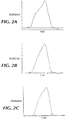
- a mixture of hypophosphorous acid (at a concentration of about 0.1 wt.%) and para-toluenesulfonic acid (at a concentration of about 0.05 wt.%) may be used to prepare a resin of DCPD, piperylene and styrene. (See FIGURE 2A).
- the strong acid may be less effective at controlling the resin's molecular weight distribution, although the effect can only be completely diminished if no strong acid is present.
- concentrations above 1.0% there may be little additional improvement in the product's molecular weight or molecular weight distribution.
- the residual strong acid in the resin may be removed by neutralization with a suitable base.
- the neutralized resin may be filtered or otherwise treated to remove the trace of salt formed by the neutralization.
- an organic sulfur compound may be used in combination with the strong acid to further improve the molecular weight characteristics of the polymerization product.
- Effective organic sulfur compounds which may be used include substituted phenol polysulfides, aliphatic mercaptans, aromatic mercaptans and aliphatic/aromatic or mixed sulfides and other organic sulfur compounds may be found to be useful in the invention.
- Commercially available and preferred species include the phenolic poly-or disulfide products sold under the trade names ETHANOX 323 (Ethyl Corporation), VULTAC 2 (Pennwalt) and SANTOWHITE CRYSTALS (Monsanto).
- the starting material of the present invention contain a minimum of 40 wt.% dicyclopentadiene (DCPD) monomer.
- DCPD dicyclopentadiene
- Inexpensive commercially available DCPD concentrates typically range from 50 wt.% to 90 wt.% DCPD and therefore are most preferred, although the very high purity DCPD blended with olefinic modifiers functions well.
- the DCPD stream be substantially clear, bright and colorless. Dark colored streams do not generally afford light final resin colors, but the molecular weight controlling effect of the present invention is not generally affected by starting material's initial color. Hydrogenation may be used to decolorize dark final resin color, but a distinct advantage of the invention is that the need for hydrogenation is greatly curtailed or eliminated.
- the method of the present invention is effective for controlling the molecular weight distribution of the resin from pure DCPD monomer or for resin made from DCPD containing up to 40 wt.% of olefinic modifiers, preferably from 0 wt.% to 35 wt.%, (based on reactive content).
- the olefinic modifier may be naturally present as it is in certain commercial DCPD fractions and/or by preparing blends.
- the olefin modifier if used, be selected from the group consisting of ethylene, propylene, 1-butene, isobutylene, butadiene, 1-pentene, 1-hexene, 2-methyl-2-butene, isoprene, 1,3-pentadiene (piperylene), 1-octene, limonene, ⁇ -pinene, ⁇ -pinene, styrene, vinyl toluene, ⁇ -methyl styrene, indene, methyl methacrylate, acrylic acid or mixtures of those olefins, but other olefins may be used.
- An olefinic modifier is defined to be any material containing one or more carbon to carbon double bonds. This definition only excludes dicyclopentadiene monomer itself.
- modifiers are frequently those which occur naturally in some commercially available DCPD products.
- modifier performance it must be emphasized that those modifiers added intentionally, such as ethylene, propylene, piperylene, styrene are completely acceptable and in some ways they can afford better modification.
- the reaction temperature may generally range from 240°C to 320°C, but most preferably it should be in the range of from 250°C to 270°C which is raised over a period of time typically ranging from 45 minutes to 75 minutes.
- the residence time at reaction temperature may be up to 40 hours, but most preferably it is from 4 hours to 20 hours.
- Isolating the resins of the present invention from the crude reaction product involves techniques and physical distillation and stripping processes which are well known to those skilled in the art. Normally, by design the work-up temperature is significantly lower than the reaction temperature (normally at least 20°C lower).
- the resin may be recovered by decreasing the temperature of the reaction product in the range of from 10°C to 50°C below the reaction temperature, placing the reaction product under an inert gas atmosphere, transferring the reaction product from the vessel to a steam sparging means, heating the reaction product and sparging the product with steam to a desired resin softening point and recovering the resin from the reaction product.
- the molecular weight distribution of the preferred resins, as defined by polydispersity index (PDI), is typically less than 2.4.
- Preferred resins produced according to the invention exhibit PDI values less than 2.0 and have a ring and ball softening point in the range from 80°C to 180°C.
- the resins of the present invention are characterized generally as oligomers of dicyclopentadiene, having a weight average molecular weight of less than 1000 and a polydispersity index which is preferably less than 2.3.
- the structure of the polymer may contain less than 8 dicyclopentadiene units, and at the preferred weight average molecular weight range of from 250 to 700 may have from 2 to 6 dicyclopentadiene units.
- resins produced according to the present invention advantageously exhibit M w values of less than 700, whereas resins prepared without the use of mineral acids in the thermal polymerization of dicyclopentadiene exhibit M w values greater than 1000.
- the M z value for the resins of the present invention are typically less than 1,500. By comparison, the M z value for control resins prepared without a strong acid and/or organic sulfur species are of the order of 2,500.
- the olefinic compound is believed to enter into the chain of pentadiene units so that the total weight average molecular weight remains below 1000 and a very narrow spread of molecular weights is achieved. It is believed that the strong acid and, if used, the organic sulfur compound, act catalytically in the formation of the oligomer to limit the weight average molecular weight and to control the polydispersity of the resulting material.
- Hot-melt adhesives are generally composed of ethylene and ethylenically unsaturated ester based elastomers, formulated with one or more resins (tackifiers), waxes and/or oils.
- a typical hot-melt adhesive formulation contains 20 wt.% to 50 wt.% elastomer, 10 wt.% to 40wt.% wax and 30 wt.% to 60 wt.% of the dicyclopentadiene oligomer resin.
- the elastomers used in the present examples include ethylene-vinyl acetate (EVA) copolymers and ethylene-acrylate copolymers. Obviously a multitude of different formulated adhesives can be based on the same general components.
- the ethylene-vinyl acetate polymers have extensive utility. With these amorphous elastomers, the wax is present to both control molten adhesive viscosity, for ease of handling, as well as to allow the adhesive to set once it cools. The wax crystallizes and the crystals act to physically reinforce and set the adhesive bond.
- Pressure sensitive adhesives are typically comprised of blends that include polymer, tackifier resin and optionally, mineral oil components.
- a typical pressure sensitive formulation contains 15 wt.% to 50 wt.% polymer, 0 wt.% to 25 wt.% mineral oil and 30 wt.% to 75 wt.% dicyclopentadiene oligomer resin.
- the polymer may include any of a number of different types of elastomers, but frequently involves a block copolymer thermoplastic elastomer. Typically these block copolymers are composed of homopolystyrene "blocks" or segments, A, and a hydrocarbon segment, B, resulting in an A-B-A block structure.
- the styrene content may vary as well as the hydrocarbon segment placement.
- the hydrocarbon segment is derived from isoprene, butadiene, hydrogenated butadiene or combinations of these or other hydrocarbon monomers. They can, in addition to the traditional linear configuration as previously described, have branched or radial configurations. Again there is a myriad of different products commercially available and their specific uses are highly dependent on the application requirements.
- the elastomers are selected from the group consisting of styrene-butadiene-styrene block copolymer and styrene-isoprene-styrene block copolymer.
- Oil may be used to plasticize the adhesive system.
- the plastization process lowers the system's glass transition temperature (T g ) and reduces the strength properties of the polymer.
- the tackifier resin component is typically from the very general group consisting of hydrocarbon resin, terpene resin or rosin ester. The resin affords the tack properties needed for the bond formation process. The resin component must typically have good compatibility in order to generate the desired adhesive and cohesive properties.
- the present invention provides resins which are highly compatible with ethylene-unsaturated ester copolymers used for hot melt adhesives and which exhibit utility in block copolymer derived pressure sensitive adhesive applications.
- Printing inks in a very general sense, are combinations of pigment, binder and solvent.
- the binder serves to provide toughness and adhere the pigment to the substrate surface.
- the solvent serves as a means of applying the pigment, and the ink drys when solvent either evaporates, oxidizes and/or penetrates into the substrate.
- Lithographic printing is one of the three most commonly used printing processes. For lithographic printing a high boiling aliphatic and/or a fatty acid derived ester solvent is often used. Compatibility of the binder resin system with the solvent is an important performance requirement.
- the pigment may be introduced into a lithographic ink by either dispersing dry pigment into the binder/solvent mixture by means of high shear mixing, or by the preferred means of pigment "flushing".
- Ink pigments are synthesized by techniques that ultimately result in a hydrated pigment mass termed "press-cake.” Flushing involves displacing the water by intensive mixing in the presence of a varnish typically consisting of a high solubility resin and ink solvent. This in effect "flushes” the water from the pigment resulting in a pigment dispersion in varnish.
- the litographic ink solvent is present at a concentration of 30 wt.% to 60 wt.% and the dicyclopentadiene oligomer resin is present at a concentration of 70 wt.% to 40 wt.%.
- lithographic printing inks are typically constructed from a gelled varnish and the flushed pigment dispersion.
- the ink system In order to achieve acceptable performance on the printing press, the ink system must have certain rheological characteristics.
- the desired rheological characteristics are imparted by the gelled varnish.
- the gelled varnish rheological characteristics are often achieved by the addition of aluminum-based gelling agents which react with the resins of the varnish systems.
- the gellable lithographic varnishes are typically composed of several resins, often a high molecular weight resin and a low molecular weight resin.
- the high molecular weight resin is the species desired to react with the gelling agent to achieve the proper rheology.
- High molecular weight resins are selected from the group consisting of phenolic modified rosin resin, maleic modified rosin resin and rosin modified hydrocarbon resin.
- the low molecular weight resin is used to "solubilize" the system so that a homogeneous mixture results. Typically the low molecular weight resin interferes with the formation of the proper rheology by dilution, and therefore has a dilatory effect.
- a gelled litographic ink varnish according to the invention contains 20 wt.% to 40 wt.% high molecular weight resin, 1 wt.% to 5 wt.% gelling agent, 10 wt.% to 50 wt.% litographic ink solvent and 10 wt.% to 40 wt. dicyclopentadiene oligomer resin.
- the present invention provides resins having good utility for pigment flushing and more specifically resins which provide improved final printed ink gloss. Resins according to the invention exhibit exceptionally good solubility properties in ink formulations and exceptionally good varnish gel reactivity.
- the commercial uses for resins produced according to the present invention include adhesive, ink and varnish formulations.
- the resins of the invention may also be used as "green tack" promoters in rubber processing for improving the properties and handling characteristics of the material prior to vulcanization.
- the autoclave was sealed and heated to 265°C over a 1 hour period of time. Once the 265°C temperature was reached, the autoclave was cooled as necessary to maintain a temperature of 265°C for a period of 4 hours. The autoclave was then cooled to 120°C and the reaction product discharged, under an inert atmosphere, for work-up. The reaction product was a pale yellow viscous semi-solid.
- a 1375 gram sample of the reaction product was transferred to a three-neck round bottom flask which was equipped with a nitrogen inlet/thermometer adaptor, an agitator assembly, a steam sparge line and a take-off/condenser system.
- the reaction product was slowly heated to 240°C under a nitrogen blanket. Once the 240°C temperature was reached, the reaction product was steam sparged to remove residual monomer and reaction oils. The sparging was continued until the resin softening point of about 100°C was reached. The finished resin was cooled to 180°C and discharged into an appropriate container.
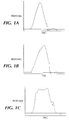
- the final resin had the following properties: Softening Point, R&B 99°C Gardner Color, Neat 5+ Resin Yield, % 83% Molecular Weight M n 339 M w 620 M z 1387 PDI 1.8 Cloud Point 73°C
- the finished comparison resin had the following properties: Softening Point, R&B 99°C Gardner Color, Neat 8+ Resin Yield, % 87% Molecular Weight M n 427 M w 1028 M z 2515 PDI 2.4 Cloud Point 100°C
- the resin produced without the strong acid was much darker, 3 Gardner color numbers, than the resin produced according to the method of the present invention.
- the cloud point, as a relative measure of compatibility, of the resin of EXAMPLE I indicates improved compatibility relative to the resin of comparative EXAMPLE II.
- the resin of EXAMPLE I resulted in a final resin M w and M z of 620 and 1389, respectively, versus 1028 and 2515, respectively, for the resin of comparative EXAMPLE II.
- the present invention affords a means of improving color and molecular weight distribution relative to a resin preparation of the previous art.
- a series of thermally polymerized dicyclopentadiene resins were prepared with varying amount of DCPD, olefinic monomer(s), strong acid(s) and optionally organic sulfur containing species.
- the amounts of the reaction materials are given in TABLES I and II.
- the reaction conditions were similar to the conditions of EXAMPLES I and II.
- the reaction conditions and yields are given in TABLES III and IV.
- the reaction mixture was stripped with a nitrogen sparge at 230°C.
- the characteristics of the final resin are given in TABLES V and VI.
- EXAMPLES III-XV were representative of the preparation of a dicyclopentadiene resin according to the present invention from light colored DCPD streams.
- the resulting resins had final colors of from 3 to 7 with weight average molecular weights ranging from 513 to 640.
- the M w /M n ratio varied from 1.5 to 1.7.
- the resins prepared according to the present invention had relatively narrow molecular weight distributions, relatively low molecular weights, and relatively light colors.
- reaction examples are presented in TABLE VII that were prepared from a crude dicyclopentadiene concentrate polymerized substantially in the manner of EXAMPLE I.
- the reaction results/physical properties are presented in TABLES VIII and IX. These examples further illustrate that the mechanism of the present invention is independent of the source of DCPD.
- the crude dicyclopentadiene feed contains approximately 60% DCPD by weight at approximately 92% total reactives. This material is amber/green, approximating a Gardner 5 color itself.
- Comparison EXAMPLE XVI is presented as a control.
- EXAMPLES XVII, XVIII, XIX and XX involve the addition of the strong acid of the present invention.
- EXAMPLE XVII illustrates that the use of a hydroiodic acid in accordance with the present invention results in substantially improved molecular weight characteristics as indicated by the significant reduction in the weight average molecular weight and the polydispersity index.
- EXAMPLES XVIII, XIX and XX illustrate that the copolymerized system of DCPD concentrate and alpha-pinene results in a very narrow molecular weight as indicated by the 1.4 polydispersity index.
- EXAMPLE XX further illustrates that, in addition to the molecular weight controlling feature of the present invention, the color of the final product can be substantially improved by the presence of hypophosphorous acid.
- a series of pressure sensitive adhesives was prepared by combining 25 wt.% of a styrene-isoprene-styrene copolymer thermoplastic elastomer (SOL T 193B, Enichem Corp.) 20 wt.% and 55 wt.% of a resin.
- SOL T 193B styrene-isoprene-styrene copolymer thermoplastic elastomer
- EXAMPLE XXI the resin was a catalytically polymerized, 95°C softening point, "C5" hydrocarbon resin (WINGTACK 95, Goodyear Tire and Rubber Co.); in EXAMPLE XXII, the resin was a 100°C softening point rosin-pentaerythritol ester (SYLVATAC 2100, Arizona Chemical Co.); in EXAMPLE XXIII, the resin was the resin of EXAMPLE VI, and in EXAMPLE XXIV the resin was the resin of EXAMPLE IV.
- the adhesives prepared from the resins of the present invention (EXAMPLES XXIII and XXIV) performed as well as the adhesives prepared from resins of accepted chemistry.
- the resins of the present invention are substantially suitable for the production of pressure sensitive adhesives.
- resins according to the invention may be produced more economically than conventional resins of this type with improved color and molecular weight characteristics.
- EVA based hot-melts adhesives were prepared and are summarized in TABLE XI.
- the systems were derived from 20 wt.% EVA I (ELVAX 260, E. I. DuPont de Nemours & Co.), 10 wt.% EVA 2 (ELVAX 410, E. I. DuPont de Nemours & Co.), 30 wt.% Wax (SHELLWAX 300, Shell Chemical Co.) and 40 wt.% resin.
- the resin is a commercially available catalytically polymerized aliphatic hydrocarbon resin (STA-TAC B, Arizona Chemical Co.).
- EXAMPLE XXVI the resin is the resin from EXAMPLE VI and in EXAMPLE XXVII the resin is the resin from EXAMPLE XV.
- the systems were melt blended at 175°C for 2.5 hours under a nitrogen blanket.
- Example XXV XXVI XXVII Resin Sta-Tac B Example VI
- Example XV Resin Softening Point (°C) 100 101 103 Neat Resin Color 6 5- 5 Hot-Melt Color 5 3 3 Viscosity (cps) @ 175°C 3850 3980 4500 Cloud Point (°C) 112 63 63 Yield (lbs./inch) kg/cm - (652) 116.5 (675) 120.5
- EXAMPLE XXVIII the resin was commercially available catalytically polymerized "C9" resin with a softening point of 140°C (NEVCHEM 140, Neville Chemical Co.); in EXAMPLE XXIX, the resin was commercially available DCPD based resin with a softening point of about 140°C (Betaprene 255, Arizona Chemical Co.); and in EXAMPLE XXX, the resin was the resin of EXAMPLE V with a softening point of 142°C.
- the physical properties of the resin varnishes are given in TABLE XII.
- the varnishes were evaluated in a pigment flushing operation and in an ink/printing evaluation.
- the printing evaluation was conducted by blending 30 parts of the pigment dispersion with 70 parts of a gel varnish. The results are also shown in TABLE XII.
- the flushing varnish prepared with the resin of the present invention had an advantageously lower viscosity and performed substantially in the manner of the varnishes prepared with the commercially available resins in the flushing operation.
- the lower solution viscosity afforded by the resin of the present invention is an advantage for ease of handling and mixing.
- Two lithographic gel varnishes were prepared by dissolving a high viscosity phenolic modified rosin resin (Beckacite 6000, Arizona Chemical Co.), an alkyd, and a solubilizing resin in an aliphatic ink solvent (MAGIESOL 47, Magie Brothers Chem. Co.) at 175°C. The solution was then held at 175°C and AIEM and OAO gelling agents (Chattem Chemical Co.) added. The system was allowed to react at 175°C for one hour.
- a high viscosity phenolic modified rosin resin (Beckacite 6000, Arizona Chemical Co.)
- MAGIESOL 47 Magie Brothers Chem. Co.
- EXAMPLE XXXI the solubilizing resin is a commercially available DCPD based resin with a 140°C softening point (BETAPRENE 255, Arizona Chemical Co.), and in EXAMPLE XXXII, the solubilizing resin is resin from EXAMPLE V with a softening point of 142°C.
- the rheological properties as determined on a Laray Viscometer are presented in TABLE XIII.
- the resin of EXAMPLE V affords significantly greater gel reactivity as indicated by the shortness ratio of EXAMPLE XXXII.
- Shortness ratio is a measure of the relative elastic character of the varnish independent of viscosity. The additional reactivity was achieved at substantially equal aliphatic solubility. Traditionally the solubilizing resin deleteriously effected the gel reaction and therefore the exceptional gel strength observed with resin EXAMPLE V is a significant positive result.
- the present invention provides a method for preparing thermally polymerized resins of dicyclopentadiene which have improved compatibility and solubility characteristics. In addition, the formation of high molecular weight fractions are minimized as is the formation of additional color during the polymerization. Further, resins prepared according to the present invention are useful in preparing adhesives and ink varnishes.
Landscapes
- Chemical & Material Sciences (AREA)
- Organic Chemistry (AREA)
- Chemical Kinetics & Catalysis (AREA)
- Health & Medical Sciences (AREA)
- Medicinal Chemistry (AREA)
- Polymers & Plastics (AREA)
- Engineering & Computer Science (AREA)
- Life Sciences & Earth Sciences (AREA)
- Materials Engineering (AREA)
- Wood Science & Technology (AREA)
- General Chemical & Material Sciences (AREA)
- Addition Polymer Or Copolymer, Post-Treatments, Or Chemical Modifications (AREA)
- Adhesives Or Adhesive Processes (AREA)
- Polyoxymethylene Polymers And Polymers With Carbon-To-Carbon Bonds (AREA)
- Polymerisation Methods In General (AREA)
- Paints Or Removers (AREA)
- Inks, Pencil-Leads, Or Crayons (AREA)
Claims (39)
- Procédé pour la production d'une résine de dicyclopentadiene par polymérisation thermique, qui comprend le chauffage d'une matière réactionnelle comprenant un monomère cyclopentadiène et/ou un monomère dicyclopentadiène à une température comprise dans l'intervalle de 240°C à 320°C en présence d'un acide fort pendant un temps suffisant pour produire une résine oligomère de dicyclopentadiène présentant une moyenne pondérale du poids moléculaire comprise dans l'intervalle de 260 à 1000 et un indice de polydispersité inférieur à 2,3.
- Procédé suivant la revendication 1, dans lequel la polymérisation est effectuée dans un récipient hermétiquement clos sous la pression autogène.
- Procédé suivant la revendication 1, dans lequel l'acide fort est un acide de Brönsted choisi dans le groupe consistant en l'acide hypophosphoreux, l'acide paratoluénesulfonique, l'acide chlorhydrique, l'acide iohydrique, l'acide phosphorique, l'acide méthanesulfonique et des mélanges de ces acides et est présent à une concentration comprise dans l'intervalle de 0,05 % en poids à 1,0 % en poids sur la base du poids total du mélange réactionnel.
- Procédé suivant la revendication 1, dans lequel la matière réactionnelle comprend en outre un composé soufré organique présent en une quantité comprise dans l'intervalle de 0,2 % en poids à 0,4 % en poids, sur la base du poids total du mélange réactionnel, et le composé soufré organique est choisi dans le groupe consistant en sulfures, disulfures, polysulfures, mercaptans et mélanges de ces sulfures organiques.
- Procédé suivant la revendication 1, dans lequel la matière réactionnelle comprend en outre un composé oléfinique présent en une quantité comprise dans l'intervalle de 0 % en poids à 35 % en poids et le composé oléfinique est choisi dans le groupe consistant en éthylène, propylène, styrène, α-méthylstyréne, indène, 1,3-pentadiéne, isobutylène, isoprène, 1-butène, 2-méthyl-2-butène, 1-pentène, 1-hexène, 1-octène, isoprène, limonène, α-pinène, β-pinène, vinyltoluène, méthacrylate de méthyle, acide acrylique, butadiène et des mélanges de ces oléfines,
- Procédé suivant la revendication 1, dans lequel la résine a une couleur comprise dans l'intervalle de 3 à 7, mesurée sur l'échelle Gardner.
- Résine produite par le procédé suivant la revendication 1.
- Procédé suivant la revendication 1, pour la production d'une résine de dicyclopentadiène par polymérisation thermique, qui comprend les étapes consistant :dans lequel la moyenne pondérale du poids moléculaire de la résine polymérisée est inférieure à 1000, et la résine présente une couleur comprise dans l'intervalle de 3 à 7 sur l'échelle Gardner.(a) à placer une matière de départ dans un récipient de réaction pouvant être clos hermétiquement et mis sous pression, la matière de départ comprenant un concentré de dicyclopentadiène, et un acide fort ;(b) à obturer hermétiquement le récipient de réaction renfermant la matière de départ ;(c) à chauffer et maintenir la température de la matière de départ à une valeur comprise dans l'intervalle de 240° à 320°C pendant un temps suffisant pour provoquer la polymérisation du dicyclopentadiène afin de former un produit de réaction comprenant un oligomère de dicyclopentadiène ; et(d) à séparer la résine du produit de réaction,
- Procédé suivant la revendication 8, dans lequel l'étape de séparation de la résine comprend :(a) l'abaissement de la température du produit de réaction ;(b) la mise en place du produit de réaction sous atmosphère d'un gaz inerte ;(c) le transfert du produit de réaction du récipient à un moyen d'injection de vapeur d'eau(d) le chauffage du produit de réaction et l'injection de vapeur d'eau dans le produit de réaction à un point désiré de ramollissement de la résine ; et(e) la séparation de la résine du produit de réaction.
- Procédé suivant la revendication 8, dans lequel le concentré de dicyclopentadiène comprend 50 % en poids à 90 % en poids de dicyclopentadiène.
- Procédé suivant la revendication 8, dans lequel l'acide de Brönsted est choisi dans le groupe consistant en l'acide hypophosphoreux, l'acide para-toluènesulfonique, l'acide chlorhydrique, l'acide iodhydrique, l'acide phosphorique, l'acide méthanesulfonique et des mélanges de ces acides.
- Procédé suivant la revendication 8, dans lequel la matière de départ comprend en outre un composé soufré organique choisi dans le groupe consistant en sulfures, disulfures, polysulfures, mercaptans et mélanges de ces sulfures organiques, et le composé soufré organique est présent en une quantité comprise dans l'intervalle de 0,2 % en poids 0,4 % en poids.
- Procédé suivant la revendication 13, dans lequel la matière de départ comprend en outre un composé oléfinique choisi dans le groupe consistant en éthylène, propylène, styrène, α-méthylstyréne, indène, 1,3-pentadiène, isobutylène, isoprène, 1-butène, 2-méthyl-2-butène, 1-pentène, 1-hexène, 1-octène, isoprène, limonène, α-pinène, β-pinène, vinyltoluène, méthacrylate de méthyle, acide acrylique, butadiène et des mélanges de ces oléfines, et le composé oléfinique est présent en une quantité comprise dans l'intervalle de 0 % en poids à 40 % en poids.
- Procédé suivant la revendication 8, dans lequel, dans l'étape de chauffage et de maintien de la température de la matière de départ pendant une période de temps à une température comprise dans l'intervalle de 240°C à 320°C, la matière est maintenue à cette température pendant un temps compris dans l'intervalle de 1 heure à 40 heures.
- Procédé suivant la revendication 9, dans lequel, dans l'étape d'abaissement de la température du produit de réaction, la température du produit de réaction est abaissée à une valeur inférieure de 10°C à 50°C à la température à laquelle la matière de départ a été chauffée et maintenue pendant une période de temps.
- Procédé suivant la revendication 9, dans lequel le point de ramollissement désiré est compris dans l'intervalle de 80°C à 180°C.
- Résine produite par le procédé suivant la revendication 8.
- Procédé suivant la revendication 1, pour la production d'une résine de dicyclopentadiène par polymérisation thermique, qui. comprend les étapes consistant :dans lequel la moyenne pondérale du poids moléculaire de la résine est inférieure à 1000, la moyenne z du poids moléculaire est inférieure à 2000, la résine présente une couleur comprise dans l'intervalle de 3 à 7 sur l'échelle Gardner, et la résine présente un point de ramollissement par la méthode bille et anneau compris dans l'intervalle de 80°C à 180°C.(a) à placer une matière de départ dans un récipient de réaction pouvant être clos hermétiquement et mis sous pression, la matière de départ comprenant :(1) un concentré de dicyclopentadiène, comprenant 50 % en poids à 90 % en poids de dicyclopentadiène,(2) 0 % en poids à 40 % en poids d'un composé oléfinique, et(3) 0,1% en poids à 0,6 % en poids d'un acide fort ;(b) à obturer hermétiquement le récipient de réaction renfermant la matière de départ ;(c) à élever la température de la matière de départ à une valeur comprise dans l'intervalle de 240°C à 320°C pendant un temps compris dans l'intervalle de 45 minutes à 75 minutes ;(d) à maintenir la température de la matière de départ dans l'intervalle de 240°C à 320°C pendant un temps compris dans l'intervalle de 1 heure à 40 heures, ce qui permet de former un produit de réaction comprenant un oligomère de dicyclopentadiéne ;(e) à abaisser la température du produit de réaction à une valeur inférieure de 10°C à 50°C à la température à laquelle la matière de départ a été maintenue pendant une période de temps ;(f) à placer le produit de réaction sous atmosphère d'un gaz inerte ;(g) à transférer le produit de réaction du récipient à un moyen d'injection de vapeur d'eau(h) à injecter de la vapeur d'eau dans le produit de réaction jusqu'à un point de ramollissement de la résine compris dans l'intervalle de 80°C à 180°C ; et(i) à séparer la résine de dicyclopentadiène du produit de réaction une fois achevée l'étape (h),
- Résine produite par le procédé suivant la revendication 18.
- Résine oligomère de dicyclopentadiène ayant une moyenne pondérale du poids moléculaire comprise dans l'intervalle de 260 à 3000, un indice de polydispersité inférieur à 2,3 et un point de ramollissement par la méthode bille et anneau compris dans l'intervalle de 80°C à 180°C.
- Résine suivant la revendication 20, qui présente une couleur comprise dans l'intervalle de 3 à 7 sur l'échelle Gardner.
- Adhésif sensible à la pression, comprenant :un élastomère ;une huile minérale ; etune résine oligomère de dicyclopentadiène ayant une moyenne pondérale du poids moléculaire compris dans l'intervalle de 260 à 1000, un indice de polydispersité inférieur à 2,3 et un point de ramollissement par la méthode bille et anneau compris dans l'intervalle de 80°C à 180°C.
- Adhésif sensible à la pression suivant la revendication 22, dans lequel l'élastomère est choisi dans le groupe consistant en élastomères thermoplastiques copolymériques séquencés et élastomères thermoplastiques copolymériques radiaux.
- Adhésif sensible à la pression suivant la revendication 22, dans lequel l'élastomère est choisi dans le groupe consistant en un copolymère séquencé styrène-butadiène-styrène et un copolymère séquencé styrène-isoprène-styrène, et dans lequel l'élastomère représente 15 % en poids à 50 % en poids de l'adhésif, l'huile minérale représente 0 % en poids à 25 % en poids de l'adhésif et la résine représente 30 % en poids à 75 % en poids de l'adhésif.
- Adhésif thermofusible, comprenant :un élastomère ;une cire ; etune résine oligomère de dicyclopentadiène ayant une moyenne pondérale du poids moléculaire comprise dans à l'intervalle de 260 à 1000, un indice de polydispersité inférieur à 2,3 et un point de ramollissement par la méthode bille et anneau compris dans l'intervalle de 80°C à 180°C.
- Adhésif thermofusible suivant la revendication 25, dans lequel l'élastomère est un copolymère éthylène/ester à insaturation éthylénique.
- Adhésif thermofusible suivant la revendication 26, dans lequel le copolymère d'ester est un copolymère éthylène-acétate de vinyle.
- Adhésif thermofusible suivant la revendication 25, comprenant 20 % en poids à 50 % en poids de l'élastomère, 10 % en poids à 40 % en poids de la cire et 30 % en poids à 60 % en poids de la résine oligomère de dicyclopentadiène.
- Adhésif thermofusible suivant la revendication 25, dans lequel la résine oligomère de dicyclopentadiène présente une couleur comprise dans l'intervalle de 3 à 7 sur l'échelle Gardner.
- vernis pour entraínement de pigment, destiné à être utilisé dans la préparation de dispersions de pigments produites par entraínement, vernis qui comprend :un solvant pour encre lithographique ; etune résine oligomère de dicyclopentadiène ayant une moyenne pondérale du poids moléculaire comprise dans l'intervalle de 260 à 1000, un indice de polydispersité intérieur à 2,3 et un point de ramollissement par la méthode bille et anneau compris dans l'intervalle de 80°C à 180°C.
- Vernis pour entraínement de pigment suivant la revendication 30, dans lequel le solvant pour encre lithographique est choisi dans le groupe consistant en solvants à base d'hydrocarbures aliphatiques et solvants à base d'esters d'acides gras.
- Vernis pour entraínement de pigment suivant la revendication 30, dans lequel le solvant pour encre lithographique est présent à une concentration comprise dans l'intervalle de 30 % en poids à 60 % en poids et la résine oligomère de dicyclopentadiène est présente à une concentration comprise dans l'intervalle de 70 % à 40 % en poids.
- Vernis pour entraínement de pigment suivant la revendication 30, dans lequel la résine oligomère de dicyclopentadiène présente une couleur comprise dans l'intervalle de 3 à 7 sur l'échelle Gardner.
- Vernis gélifié pour encre lithographique, destiné à être utilisé dans la préparation d'encres lithographiques, vernis qui comprend :une résine de haut poids moléculaire ;un solvant lithographique ;un agent gélifiant ; etune résine oligomère de dicyclopentadiène ayant une moyenne pondérale du poids moléculaire comprise dans l'intervalle de 260 à 1000, un indice de polydispersité inférieur à 2,3 et un point de ramollissement par la méthode bille et anneau compris dans l'intervalle de 80°C à 180°C.
- Vernis gélifié pour encre lithographique suivant la revendication 34, dans lequel l'agent gélifiant est un composé d'aluminium.
- Vernis gélifié pour encre lithographique suivant la revendication 34, dans lequel la résine de haut poids moléculaire est choisie dans le groupe consistant en une résine de colophane à modification phénolique, une résine de colophane à modification maléique et une résigne hydrocarbonée modifiée avec de la colophane.
- Vernis gélifié pour encre lithographique suivant la revendication 34, dans lequel la résine de haut poids moléculaire est présente à une concentration comprise dans l'intervalle de 20 % en poids à 40 % en poids, l'agent gélifiant est présent à une concentration de 1 % en poids à 5 % en poids, le solvant lithographique est présent à une concentration comprise dans l'intervalle de 10 % en poids à 50 % en poids, et la résine oligomère de dicyclopentadiène est présente à une concentration comprise dans l'intervalle de 10 % en poids à 40 % en poids.
- Vernis gélifié pour encre lithographique suivant la revendication 34, qui comprend en outre une résine alkyd.
- Vernis gélifié pour encre lithographique suivant la revendication 34, dans lequel la résine oligomère de dicyclopentadiène présente une couleur comprise dans l'intervalle de 3 à 7 sur l'échelle Gardner.
Applications Claiming Priority (2)
| Application Number | Priority Date | Filing Date | Title |
|---|---|---|---|
| US08/185,057 US5410004A (en) | 1994-01-24 | 1994-01-24 | Thermal polymerization of dicyclopentadiene |
| US185057 | 1994-01-24 |
Publications (4)
| Publication Number | Publication Date |
|---|---|
| EP0665246A2 EP0665246A2 (fr) | 1995-08-02 |
| EP0665246A3 EP0665246A3 (fr) | 1996-05-29 |
| EP0665246B1 true EP0665246B1 (fr) | 1999-04-07 |
| EP0665246B2 EP0665246B2 (fr) | 2004-04-28 |
Family
ID=22679389
Family Applications (1)
| Application Number | Title | Priority Date | Filing Date |
|---|---|---|---|
| EP95850018A Expired - Lifetime EP0665246B2 (fr) | 1994-01-24 | 1995-01-20 | Polymérisation thermique de dicyclopentadiène |
Country Status (6)
| Country | Link |
|---|---|
| US (2) | US5410004A (fr) |
| EP (1) | EP0665246B2 (fr) |
| JP (1) | JPH0848723A (fr) |
| KR (1) | KR100362002B1 (fr) |
| CA (1) | CA2140565C (fr) |
| DE (1) | DE69508813T3 (fr) |
Families Citing this family (44)
| Publication number | Priority date | Publication date | Assignee | Title |
|---|---|---|---|---|
| US5693731A (en) * | 1994-01-24 | 1997-12-02 | Arizona Chemical Company | Polymerization of dicyclopentadiene |
| US5502140A (en) * | 1994-10-19 | 1996-03-26 | Hercules Incorporated | Thermally polymerized dicyclopentadiene/vinyl aromatic resins |
| DE69513943T2 (de) * | 1995-02-03 | 2000-05-18 | Hercules Inc., Wilmington | Verfahren zur Hydrobehandlung von Harzen zur Farbverbesserung |
| US5820667A (en) * | 1997-03-27 | 1998-10-13 | Arizona Chemical Company | Flushed pigments and method for making flushed pigments |
| US5981643A (en) * | 1997-10-09 | 1999-11-09 | Exxon Chemical Patents, Inc. | Depression of the glass transition temperature of polyolefins containing cyclic monomers |
| US6833404B2 (en) | 1998-06-30 | 2004-12-21 | H.B. Fuller Licensing & Financing Inc. | Hot melts utilizing a high glass transition temperature substantially aliphatic tackifying resin |
| US6357499B1 (en) * | 1998-10-02 | 2002-03-19 | The Goodyear Tire & Rubber Company | Polymeric resinous material derived from limonene, dicyclopentadiene, indene and tertiary-butyl styrene |
| US6245873B1 (en) * | 1999-02-09 | 2001-06-12 | The Goodyear Tire & Rubber Company | Polymeric dicyclopentadiene/limonene resin |
| US6221990B1 (en) * | 1999-02-16 | 2001-04-24 | The Goodyear Tire & Rubber Company | Polymeric resinous material derived from limonene, dicyclopentadiene and tertiary-butyl styrene |
| CA2292925A1 (fr) * | 1999-02-16 | 2000-08-16 | The Goodyear Tire & Rubber Company | Matiere resineuse polymere derivee du limonene, du dicyclopentadiene, de l'indene et du vinyltoluene |
| US6242550B1 (en) | 1999-05-07 | 2001-06-05 | The Goodyear Tire & Rubber Company | Polymeric dimethyl- dicyclopentadiene/limonene resin |
| US6228944B1 (en) * | 1999-06-24 | 2001-05-08 | The Goodyear Tire & Rubber Company | Polymeric resinous material derived from limonene, dimethyl-dicyclopentadiene, indene and vinyl toluene |
| US6265478B1 (en) | 1999-08-18 | 2001-07-24 | The Goodyear Tire & Rubber Company | Polymeric resinous material derived from limonene dicyclopentadiene indene and alpha-methyl styrene |
| US6201059B1 (en) * | 1999-08-19 | 2001-03-13 | The Goodyear Tire & Rubber Company | Pneumatic tire having a tread containing dicyclopentadiene/beta-pinene resin |
| US7384881B2 (en) * | 2002-08-16 | 2008-06-10 | H.B. Fuller Licensing & Financing, Inc. | Aqueous formaldehyde-free composition and fiberglass insulation including the same |
| US7262238B2 (en) * | 2003-01-20 | 2007-08-28 | Hexion Specialty Chemicals, Inc. | Resin composition |
| CN101223247B (zh) * | 2005-07-14 | 2015-04-29 | 爱克发印艺公司 | 含有具有侧基发色团的聚合物分散剂的颜料分散体 |
| PL1904580T3 (pl) * | 2005-07-14 | 2014-03-31 | Agfa Graphics Nv | Dyspersje pigmentów z polimerycznymi dyspergatorami posiadającymi boczne grupy chromoforowe |
| CN101223244B (zh) * | 2005-07-14 | 2012-03-28 | 爱克发印艺公司 | 含有具有侧基发色团的聚合物分散剂的颜料分散体 |
| US8080488B2 (en) * | 2008-03-10 | 2011-12-20 | H. B. Fuller Company | Wound glass filament webs that include formaldehyde-free binder compositions, and methods of making and appliances including the same |
| US8981012B2 (en) * | 2008-07-09 | 2015-03-17 | University Of Iowa Research Foundation | Modified polydicyclopentadienes |
| FR2934865B1 (fr) * | 2008-08-08 | 2010-08-27 | Arkema France | Copolyamide semi-aromatique et son procede de preparation |
| CN102443103B (zh) * | 2011-09-16 | 2013-07-03 | 中国海洋石油总公司 | 一种低色度高软化点双环戊二烯石油树脂的制备方法 |
| US8946365B2 (en) * | 2012-01-18 | 2015-02-03 | Eastman Chemical Company | Low molecular weight polystyrene resin and methods of making and using the same |
| US9416294B2 (en) | 2012-04-30 | 2016-08-16 | H.B. Fuller Company | Curable epoxide containing formaldehyde-free compositions, articles including the same, and methods of using the same |
| US8791198B2 (en) | 2012-04-30 | 2014-07-29 | H.B. Fuller Company | Curable aqueous composition |
| JP6065972B2 (ja) * | 2012-05-25 | 2017-01-25 | エクソンモービル ケミカル パテンツ インコーポレイテッド | ジシクロペンタジエンベース樹脂組成物及びそれらから製造される物品 |
| CN107709387B (zh) | 2015-06-30 | 2020-10-23 | 可隆工业株式会社 | 烃类树脂、烃类树脂的制备方法和粘合剂组合物 |
| CN107709386B (zh) * | 2015-06-30 | 2021-08-10 | 可隆工业株式会社 | 烃类树脂、烃类树脂的制备方法和粘合剂组合物 |
| ES2988342T3 (es) | 2015-12-21 | 2024-11-20 | Ptt Global Chemical Public Co Ltd | Oligómeros de éster modificados con diciclopentadieno útiles en aplicaciones de revestimiento |
| KR101846296B1 (ko) * | 2016-07-18 | 2018-04-06 | 주식회사 유진 | 건식 평판 인쇄용 잉크 바니쉬 조성물 |
| CN107501453B (zh) * | 2017-07-26 | 2019-08-20 | 中科院广州化学有限公司 | 较高分子量的可溶性单质硫/萜烯共聚物及其制法与应用 |
| KR102382770B1 (ko) * | 2018-06-11 | 2022-04-06 | 한화솔루션 주식회사 | 석유수지의 제조방법 |
| KR102294873B1 (ko) * | 2018-06-11 | 2021-08-27 | 한화솔루션 주식회사 | 디사이클로펜타디엔계 수지의 제조방법 |
| JP2022515642A (ja) | 2018-12-28 | 2022-02-21 | サン-ゴバン パフォーマンス プラスティックス コーポレイション | 接着剤組成物およびそれを形成する方法 |
| WO2020139673A1 (fr) | 2018-12-28 | 2020-07-02 | Saint-Gobain Performance Plastics Corporation | Composition adhésive et ses procédés de formation |
| CN114302906B (zh) | 2019-08-27 | 2024-03-08 | 索尔维特殊聚合物美国有限责任公司 | 聚酰胺和相应的聚合物组合物、制品以及用于制备和使用的方法 |
| KR102183987B1 (ko) * | 2019-12-31 | 2020-11-27 | 코오롱인더스트리 주식회사 | 액상 수지 조성물 및 이의 제조방법 |
| JP2023537532A (ja) * | 2020-08-13 | 2023-09-01 | マテリア, インコーポレイテッド | 炭化水素樹脂を含むオレフィン組成物 |
| KR102563213B1 (ko) * | 2020-11-20 | 2023-08-04 | 코오롱인더스트리 주식회사 | 수지 조성물, 이의 제조방법, 상기 수지 조성물을 포함하는 고무 조성물, 이를 포함하는 가스 배리어 필름, 및 상기 가스 배리어 필름을 포함한 타이어 |
| KR102640216B1 (ko) * | 2020-11-20 | 2024-02-27 | 코오롱인더스트리 주식회사 | 수지 조성물, 이의 제조방법, 및 이를 포함하는 고무 조성물 |
| JP7771988B2 (ja) * | 2021-01-28 | 2025-11-18 | 日本ゼオン株式会社 | 炭化水素樹脂およびホットメルト粘接着剤組成物 |
| WO2022163395A1 (fr) * | 2021-01-28 | 2022-08-04 | 日本ゼオン株式会社 | Résine hydrocarbonée et composition adhésive thermofusible |
| CN116444766A (zh) * | 2022-12-29 | 2023-07-18 | 恒河材料科技股份有限公司 | 一种低色度的双环戊二烯苯酚环氧树脂的制备方法 |
Family Cites Families (41)
| Publication number | Priority date | Publication date | Assignee | Title |
|---|---|---|---|---|
| US2384569A (en) * | 1940-03-05 | 1945-09-11 | Goodrich Co B F | Copolymers of dienes and olefinic dicarboxylic acid esters |
| US2559790A (en) * | 1946-07-19 | 1951-07-10 | Velsicol Corp | Cyclopentadiene-vinyl acetate polymers |
| US2598424A (en) * | 1946-10-09 | 1952-05-27 | Velsicol Corp | Production of cyclopentadiene-tall oil compositions |
| US2608550A (en) * | 1947-01-08 | 1952-08-26 | Interchem Corp | Reaction products of unsaturated dicarboxylic acid derivatives with cyclopentadiene polymers |
| US2836586A (en) * | 1953-05-27 | 1958-05-27 | Monsanto Chemicals | Polybutadiene-crotonic adducts |
| US3084147A (en) * | 1958-06-27 | 1963-04-02 | Velsicol Chemical Corp | Thermal polymerization of dicyclopentadiene |
| DE1248948B (de) * | 1963-07-29 | 1967-08-31 | Archer Daniels Midland Company Minneapolis, Mmn (V St A) | j Verfahren zur Herstellung von Copolymerisaten aus Dicyclopentadien und 8 bis 26 C-Atome aufweisenden ungesättigten Fettsauren und/oder deren Ester von mehrwertigen Alkoholen und/ oder Olefinen |
| DE1227243B (de) * | 1964-03-13 | 1966-10-20 | Basf Ag | Verfahren zur Herstellung von 1, 3-Dienpoly-merisaten |
| US3595842A (en) * | 1968-03-05 | 1971-07-27 | Dart Ind Inc | Novel catalysts for polymerization of ethylene-alpha-olefin diene terpolymer rubbers |
| JPS5016837B1 (fr) * | 1969-03-14 | 1975-06-16 | ||
| JPS5113046B2 (fr) * | 1972-10-20 | 1976-04-24 | ||
| US4064337A (en) * | 1972-12-11 | 1977-12-20 | Phillips Petroleum Company | Mixing of organosulfur molecular weight modifier with emulsifier for emulsion polymerization systems |
| FR2212407B1 (fr) * | 1972-12-29 | 1976-11-19 | Nippon Oil Co Ltd | |
| JPS5652924B2 (fr) * | 1973-03-26 | 1981-12-15 | ||
| US4010130A (en) † | 1973-10-24 | 1977-03-01 | Arakawa Rinsan Kagaku Kogyo Kabushiki Kaisha | Hydrogenated resin and compositions containing the same |
| JPS573681B2 (fr) * | 1974-02-05 | 1982-01-22 | ||
| US3940372A (en) * | 1974-08-12 | 1976-02-24 | The Firestone Tire & Rubber Company | Modified molecular weight of polylactams |
| US4080491A (en) * | 1975-08-27 | 1978-03-21 | Showa Denko K.K. | Process of producing ring-opening polymerization products |
| US4102667A (en) * | 1976-07-16 | 1978-07-25 | Lindau Chemicals, Inc. | Additive and method for reducing the drift of aqueous spray compositions |
| DE2655109C2 (de) * | 1976-12-04 | 1985-07-11 | Basf Ag, 6700 Ludwigshafen | Einheitliche Copolymerisate cyclischer Diene und deren Verwendung |
| US4110311A (en) * | 1976-12-13 | 1978-08-29 | General Electric Company | Molecular weight control of polyphenylene ethers |
| US4098982A (en) * | 1977-03-08 | 1978-07-04 | Arizona Chemical Company | Cationic polymerization of piperylene using as the catalyst system an aluminum halide and an inorganic phosphoric acid |
| JPS5427003A (en) * | 1977-08-03 | 1979-03-01 | Nippon Oil Co Ltd | Sizing agent for paper making |
| DE2932190A1 (de) † | 1978-08-09 | 1980-02-28 | Nippon Oil Co Ltd | Schmelzbare harzmasse |
| JPS5630476A (en) * | 1979-08-23 | 1981-03-27 | Nippon Oil Co Ltd | Offset ink composition |
| JPS5842610A (ja) * | 1981-09-07 | 1983-03-12 | Mitsui Petrochem Ind Ltd | 炭化水素樹脂の製造法 |
| US4716207A (en) * | 1983-06-15 | 1987-12-29 | Exxon Research & Engineering Co. | Nodular copolymers comprising narrow MWD alpha-olefin copolymers coupled by non-conjugated dienes |
| GB8333697D0 (en) † | 1983-12-17 | 1984-01-25 | Exxon Research Engineering Co | Hydrocarbon resins |
| US4574057A (en) * | 1984-05-29 | 1986-03-04 | Neville Chemical Company | Compositions for printing ink varnishes |
| DE3531242A1 (de) * | 1985-08-31 | 1987-03-05 | Hoechst Ag | Modifiziertes cyclopentadienharz, verfahren zu dessen herstellung und verwendung |
| JP2517233B2 (ja) * | 1986-06-14 | 1996-07-24 | 丸善石油化学 株式会社 | ゴム組成物 |
| JPH085927B2 (ja) * | 1986-12-26 | 1996-01-24 | 日本合成ゴム株式会社 | 感光性樹脂組成物 |
| CA1296836C (fr) * | 1987-03-13 | 1992-03-03 | Zen-Ichiro Endo | Metathese de copolymere polymerisee |
| US4839422A (en) † | 1987-12-23 | 1989-06-13 | Exxon Chemical Patents Inc. | Ternary adhesive compositions |
| WO1989007786A1 (fr) * | 1988-02-17 | 1989-08-24 | Tosoh Corporation | Composition d'une photoreserve |
| CA1335374C (fr) * | 1988-03-30 | 1995-04-25 | Willem Sjardijn | Polymerisation de derives du nor-bornene et systeme catalytique pouvant etre utilise dans ce cas |
| US4933402A (en) * | 1988-12-30 | 1990-06-12 | Hercules Incorporated | Phosphorus compounds that delay the metathesis polymerization of cycloolefins |
| US5077361A (en) * | 1989-06-26 | 1991-12-31 | Rohm And Haas Company | Low molecular weight water soluble phosphinate and phosphonate containing polymers |
| US5171793A (en) † | 1990-02-22 | 1992-12-15 | Exxon Chemical Patents Inc. | Hydrogenated resins, adhesive formulations and process for production of resins |
| US5109081A (en) * | 1990-12-28 | 1992-04-28 | Exxon Chemical Patents, Inc. | Process for continuous thermal polymerization of cyclic hydrocarbon resins using recycle as a means of controlling molecular weight |
| CH681411A5 (fr) † | 1991-02-20 | 1993-03-15 | Phonak Ag |
-
1994
- 1994-01-24 US US08/185,057 patent/US5410004A/en not_active Expired - Lifetime
-
1995
- 1995-01-19 CA CA002140565A patent/CA2140565C/fr not_active Expired - Fee Related
- 1995-01-20 EP EP95850018A patent/EP0665246B2/fr not_active Expired - Lifetime
- 1995-01-20 DE DE69508813T patent/DE69508813T3/de not_active Expired - Fee Related
- 1995-01-20 KR KR1019950000890A patent/KR100362002B1/ko not_active Expired - Fee Related
- 1995-01-23 JP JP7008121A patent/JPH0848723A/ja active Pending
-
1996
- 1996-04-03 US US08/626,828 patent/US5691432A/en not_active Expired - Lifetime
Also Published As
| Publication number | Publication date |
|---|---|
| DE69508813T3 (de) | 2004-12-16 |
| DE69508813T2 (de) | 1999-08-05 |
| US5691432A (en) | 1997-11-25 |
| EP0665246B2 (fr) | 2004-04-28 |
| KR950032293A (ko) | 1995-12-20 |
| EP0665246A3 (fr) | 1996-05-29 |
| CA2140565A1 (fr) | 1995-07-25 |
| EP0665246A2 (fr) | 1995-08-02 |
| DE69508813D1 (de) | 1999-05-12 |
| KR100362002B1 (ko) | 2003-02-11 |
| JPH0848723A (ja) | 1996-02-20 |
| CA2140565C (fr) | 2006-11-14 |
| US5410004A (en) | 1995-04-25 |
Similar Documents
| Publication | Publication Date | Title |
|---|---|---|
| EP0665246B1 (fr) | Polymérisation thermique de dicyclopentadiène | |
| EP0074273B1 (fr) | Résine hydrocarbonée et produit en résine hydrocarbonée modifiée obtenu | |
| EP0120596B1 (fr) | Résine de pétrole et adhésif sensible à la pression le contenant comme agent poisseux | |
| EP0150218B1 (fr) | Composition adhesive sensible a la pression | |
| US4413067A (en) | Novel hydrogenated resin produced from five-member cyclic compounds having a conjugated double bond and/or diels-alder addition products thereof | |
| US3887641A (en) | Method for producing resin for printing ink | |
| JP2023509775A (ja) | ファルネセンに基づく粘着付与樹脂及びそれを含む接着剤組成物 | |
| EP0318217B1 (fr) | Compositions d'adhésifs | |
| KR100366972B1 (ko) | 점·접착제용 공중합 석유수지 및 그의 제조방법 | |
| US3957736A (en) | Process for the preparation of a resin | |
| GB1587120A (en) | Petroleum resins | |
| US4183833A (en) | Novel modified resins, process for preparing the same, and a composition for printing ink containing said modified resins as vehicle components | |
| US6372851B1 (en) | Maleated liquid C5 hydrocarbon resins | |
| JP2009074095A (ja) | 芳香族化合物で変性した脂肪族炭化水素 | |
| JPH05194629A (ja) | 水添石油樹脂 | |
| US4126739A (en) | Copolymers, having a uniform structure, of cyclic dienes and their use | |
| JPS59164312A (ja) | ジヒドロジシクロペンタジエン共重合体樹脂の製造方法 | |
| JPS5936935B2 (ja) | 印刷インキ用樹脂の製造法 | |
| US4048424A (en) | Novel hydrocarbon resins and process for preparation thereof | |
| US5693731A (en) | Polymerization of dicyclopentadiene | |
| JPS62104876A (ja) | 水素化炭化水素樹脂、その製造方法および該樹脂を含有するホツトメルト接着剤および塗料 | |
| DE3786153T2 (de) | Flüssiges, aliphatisches Kohlenwasserstoffharz. | |
| US3929736A (en) | Process for preparing resin for printing ink use | |
| EP0308137A1 (fr) | Résine hydrogénée et liquide à base d'hydrocarbures aliphatiques | |
| JPS6128508A (ja) | 新規炭化水素樹脂およびそれを用いた接着剤用添加剤 |
Legal Events
| Date | Code | Title | Description |
|---|---|---|---|
| PUAI | Public reference made under article 153(3) epc to a published international application that has entered the european phase |
Free format text: ORIGINAL CODE: 0009012 |
|
| AK | Designated contracting states |
Kind code of ref document: A2 Designated state(s): DE FR GB IT NL |
|
| PUAL | Search report despatched |
Free format text: ORIGINAL CODE: 0009013 |
|
| AK | Designated contracting states |
Kind code of ref document: A3 Designated state(s): DE FR GB IT NL |
|
| 17P | Request for examination filed |
Effective date: 19960710 |
|
| 17Q | First examination report despatched |
Effective date: 19970311 |
|
| GRAG | Despatch of communication of intention to grant |
Free format text: ORIGINAL CODE: EPIDOS AGRA |
|
| GRAG | Despatch of communication of intention to grant |
Free format text: ORIGINAL CODE: EPIDOS AGRA |
|
| GRAH | Despatch of communication of intention to grant a patent |
Free format text: ORIGINAL CODE: EPIDOS IGRA |
|
| GRAH | Despatch of communication of intention to grant a patent |
Free format text: ORIGINAL CODE: EPIDOS IGRA |
|
| ITF | It: translation for a ep patent filed | ||
| GRAA | (expected) grant |
Free format text: ORIGINAL CODE: 0009210 |
|
| AK | Designated contracting states |
Kind code of ref document: B1 Designated state(s): DE FR GB IT NL |
|
| PG25 | Lapsed in a contracting state [announced via postgrant information from national office to epo] |
Ref country code: NL Free format text: LAPSE BECAUSE OF FAILURE TO SUBMIT A TRANSLATION OF THE DESCRIPTION OR TO PAY THE FEE WITHIN THE PRESCRIBED TIME-LIMIT Effective date: 19990407 |
|
| ET | Fr: translation filed | ||
| REF | Corresponds to: |
Ref document number: 69508813 Country of ref document: DE Date of ref document: 19990512 |
|
| NLV1 | Nl: lapsed or annulled due to failure to fulfill the requirements of art. 29p and 29m of the patents act | ||
| PGFP | Annual fee paid to national office [announced via postgrant information from national office to epo] |
Ref country code: GB Payment date: 20000105 Year of fee payment: 6 |
|
| PLBQ | Unpublished change to opponent data |
Free format text: ORIGINAL CODE: EPIDOS OPPO |
|
| PLBI | Opposition filed |
Free format text: ORIGINAL CODE: 0009260 |
|
| PLBF | Reply of patent proprietor to notice(s) of opposition |
Free format text: ORIGINAL CODE: EPIDOS OBSO |
|
| 26 | Opposition filed |
Opponent name: EXXON CHEMICAL PATENTS INC. Effective date: 19991227 |
|
| PLBF | Reply of patent proprietor to notice(s) of opposition |
Free format text: ORIGINAL CODE: EPIDOS OBSO |
|
| PG25 | Lapsed in a contracting state [announced via postgrant information from national office to epo] |
Ref country code: GB Free format text: LAPSE BECAUSE OF NON-PAYMENT OF DUE FEES Effective date: 20010120 |
|
| GBPC | Gb: european patent ceased through non-payment of renewal fee |
Effective date: 20010120 |
|
| PLBC | Reply to examination report in opposition received |
Free format text: ORIGINAL CODE: EPIDOSNORE3 |
|
| PUAH | Patent maintained in amended form |
Free format text: ORIGINAL CODE: 0009272 |
|
| STAA | Information on the status of an ep patent application or granted ep patent |
Free format text: STATUS: PATENT MAINTAINED AS AMENDED |
|
| 27A | Patent maintained in amended form |
Effective date: 20040428 |
|
| AK | Designated contracting states |
Kind code of ref document: B2 Designated state(s): DE FR GB IT NL |
|
| ET3 | Fr: translation filed ** decision concerning opposition | ||
| PGFP | Annual fee paid to national office [announced via postgrant information from national office to epo] |
Ref country code: IT Payment date: 20080129 Year of fee payment: 13 |
|
| PGFP | Annual fee paid to national office [announced via postgrant information from national office to epo] |
Ref country code: DE Payment date: 20090302 Year of fee payment: 15 |
|
| PG25 | Lapsed in a contracting state [announced via postgrant information from national office to epo] |
Ref country code: IT Free format text: LAPSE BECAUSE OF NON-PAYMENT OF DUE FEES Effective date: 20080120 |
|
| PGFP | Annual fee paid to national office [announced via postgrant information from national office to epo] |
Ref country code: FR Payment date: 20090119 Year of fee payment: 15 |
|
| REG | Reference to a national code |
Ref country code: FR Ref legal event code: ST Effective date: 20100930 |
|
| PG25 | Lapsed in a contracting state [announced via postgrant information from national office to epo] |
Ref country code: FR Free format text: LAPSE BECAUSE OF NON-PAYMENT OF DUE FEES Effective date: 20100201 |
|
| PG25 | Lapsed in a contracting state [announced via postgrant information from national office to epo] |
Ref country code: DE Free format text: LAPSE BECAUSE OF NON-PAYMENT OF DUE FEES Effective date: 20100803 |