EP0683601A2 - Bildverarbeitungsverfahren und -gerät - Google Patents
Bildverarbeitungsverfahren und -gerät Download PDFInfo
- Publication number
- EP0683601A2 EP0683601A2 EP95113500A EP95113500A EP0683601A2 EP 0683601 A2 EP0683601 A2 EP 0683601A2 EP 95113500 A EP95113500 A EP 95113500A EP 95113500 A EP95113500 A EP 95113500A EP 0683601 A2 EP0683601 A2 EP 0683601A2
- Authority
- EP
- European Patent Office
- Prior art keywords
- image
- signals
- data
- image data
- storage unit
- Prior art date
- Legal status (The legal status is an assumption and is not a legal conclusion. Google has not performed a legal analysis and makes no representation as to the accuracy of the status listed.)
- Granted
Links
Images












Classifications
-
- G—PHYSICS
- G11—INFORMATION STORAGE
- G11B—INFORMATION STORAGE BASED ON RELATIVE MOVEMENT BETWEEN RECORD CARRIER AND TRANSDUCER
- G11B19/00—Driving, starting, stopping record carriers not specifically of filamentary or web form, or of supports therefor; Control thereof; Control of operating function ; Driving both disc and head
- G11B19/02—Control of operating function, e.g. switching from recording to reproducing
-
- G—PHYSICS
- G06—COMPUTING OR CALCULATING; COUNTING
- G06K—GRAPHICAL DATA READING; PRESENTATION OF DATA; RECORD CARRIERS; HANDLING RECORD CARRIERS
- G06K15/00—Arrangements for producing a permanent visual presentation of the output data, e.g. computer output printers
-
- G—PHYSICS
- G06—COMPUTING OR CALCULATING; COUNTING
- G06K—GRAPHICAL DATA READING; PRESENTATION OF DATA; RECORD CARRIERS; HANDLING RECORD CARRIERS
- G06K15/00—Arrangements for producing a permanent visual presentation of the output data, e.g. computer output printers
- G06K15/02—Arrangements for producing a permanent visual presentation of the output data, e.g. computer output printers using printers
- G06K15/12—Arrangements for producing a permanent visual presentation of the output data, e.g. computer output printers using printers by photographic printing, e.g. by laser printers
-
- H—ELECTRICITY
- H04—ELECTRIC COMMUNICATION TECHNIQUE
- H04N—PICTORIAL COMMUNICATION, e.g. TELEVISION
- H04N1/00—Scanning, transmission or reproduction of documents or the like, e.g. facsimile transmission; Details thereof
- H04N1/46—Colour picture communication systems
- H04N1/64—Systems for the transmission or the storage of the colour picture signal; Details therefor, e.g. coding or decoding means therefor
-
- G—PHYSICS
- G06—COMPUTING OR CALCULATING; COUNTING
- G06K—GRAPHICAL DATA READING; PRESENTATION OF DATA; RECORD CARRIERS; HANDLING RECORD CARRIERS
- G06K2215/00—Arrangements for producing a permanent visual presentation of the output data
- G06K2215/0002—Handling the output data
- G06K2215/0077—Raster outputting to the print element(s)
- G06K2215/008—Raster outputting to the print element(s) from more than one raster memory
-
- G—PHYSICS
- G06—COMPUTING OR CALCULATING; COUNTING
- G06K—GRAPHICAL DATA READING; PRESENTATION OF DATA; RECORD CARRIERS; HANDLING RECORD CARRIERS
- G06K2215/00—Arrangements for producing a permanent visual presentation of the output data
- G06K2215/0082—Architecture adapted for a particular function
- G06K2215/0094—Colour printing
Definitions
- This invention relates to an image processing method and apparatus, and, more particularly, to an image processing apparatus, for example, a laser printer, an LED printer, or the like, for forming images of a plurality of colors based on image signals transmitted from the host computer and so on, and, for example, a printer apparatus for controlling image data by storing it in an auxiliary disc storage device or the like.
- an image processing apparatus for example, a laser printer, an LED printer, or the like, for forming images of a plurality of colors based on image signals transmitted from the host computer and so on, and, for example, a printer apparatus for controlling image data by storing it in an auxiliary disc storage device or the like.
- a multi-color recording apparatus has until now been widely used as an output apparatus of a computer system.
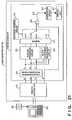
- a typical laser beam printer shown in Fig. 21 comprises a printer engine 57 for recording an image by using a photosensitive drum (not shown) in accordance with dot data and a printer controller 56 arranged in a manner such that it receives code data supplied from an external host computer 52, generates page information consisting of dot data in accordance with the supplied code data, and successively transmits the dot data to printer engine 57.
- Host computer 52 selects and loads an application software from a storage device, such as a floppy disc, which stores a various kinds of application software, so as to start the program in the application software.
- Host computer 52 then performs a color image process by using the above-described application software to generate multi-color information, or to store the information.
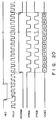
- Fig. 22 is a timing chart which illustrates a transferring sequence of signal processing circuits 58 thru 62 of printer engine 57.
- the dot data supplied from printer controller 56 are transferred to a color conversion processing circuit 58 in the forms of color image signals, signals R (red), G (green) and B (blue).
- the transferred signals R, G and B are converted by color conversion processing circuit 58 into color image signals for printing, that is, signals M (magenta), C (cyan) and Y (yellow).
- a Bk (black) generating circuit 60 extracts a Bk signal from the above-described signals Y, M and C.
- a masking processing circuit 59 subjects the signals Y, M and C to a variety of signal processing including a masking process.
- Signals Y, M, C and Bk which are the outputs from masking processing circuit 59 and Bk processing circuit 60 are stored in memory 61 so as to be sequentially transmitted to OR gate 63 by switching control circuit 62.
- Output 65 from OR gate 63 is subjected to a binarization processing such as dithering by binarization circuit 66 so as to be transmitted to a laser driver disposed in printing unit 67.
- Image signals denoting characters to be formed by combinations of toner principle colors or the signals Y, M, C and Bk transferred from host computer 2 are received in the form of signals Bi.
- the signals Bi are supplied to OR gate 63 so as to be synthesized with the signals Y, M, C and Bk to be deduced after they have been switched over by switching control circuit 62. As a result, the Synthesized signals are transmitted to the laser driver.
- a page printer of this type comprises an image forming controller for creating bit map image data (to be abbreviated to "image data" hereinafter) for one page from printing data for a text or an image transmitted from a host computer or the like, and a printer engine for exposing the image data transmitted from the image forming controller to a photosensitive body so as to print it in accordance with a sequence including the toner development, transfer to paper and fixing of the image.
- image data bit map image data
- the hardware of the image forming controller usually comprises a high speed microprocessor and an image memory (RAM) which stores image data of one page.
- a binary (white and black) printer engine capable of printing an image on a printing paper sheet, size A4 (296 mm ⁇ 210 mm) conforming to JIS (Japan Industrial Standard), at a dot density of 300 dpi (dots per inch) requires an image memory having a capacity of about 1 megabyte.
- a binary printer capable of printing an image at a dot density of 600 dpi requires a memory the capacity of which is about 4 megabytes
- a multiple-value (8-bits, that is, 256 gradations steps) printer requires a memory the capacity of which is about 8 megabytes
- a 300 dpi full color (each of color components Y, M, C and Bk has a 8-bits data) printer requires memory the capacity of which is about 32 megabytes.
- signals R, G and B for the same image must be supplied three times from host computer 52 or printer controller 56 so as to sequentially generate signals Y, M and C.
- host computer 52 cannot perform ensuing processes during the time in which signals R, G and B are being transmitted, causing the total throughput to be lowered.
- host computer 52 since host computer 52 must hold the signals R, G and B until three repetitions of the outputs of the signals R, G and B are completed, the load of host computer 52 becomes too great.
- a large memory of about 24 megabytes is required in order to hold signals R, G and B using a semiconductor memory in a case where the printer paper size is A4, the spatial resolution is 300 dpi and the gradation is 256 steps for each color. As a consequence, the overall cost cannot be reduced.
- an external storage unit such as the hard disc
- the cost of the memory can be reduced by several tens.
- hard discs or the photoelectromagnetic discs store data on each track (usually, one track is able to store data of 8K to 20K bytes),it takes 5 to 15 msec, which is very long, for the head to be moved (seek) to the track from which desired data is read or to which desired data is written. Even worse, the data transferring speed within a track has been the unsatisfactory speed of 5 to 10 megabyte/sec.
- an image processing apparatus comprising: a plurality of storage means having a recording medium for storing image signals, and read means for simultaneously reading the image signals from the plurality of storage means.
- the image signals are stored in the plurality of storage means after the image signals have been divided into predetermined quantities so as to be read and transmitted from the plurality of storage means in parallel. Consequently, the image signal can be transmitted at a speed higher than a reading speed of one storage means.
- an image processing apparatus comprising: input means for inputting image signals supplied from an external; a plurality of storage means for storing the image signals inputted by the input means; control means for performing a control operation in a manner such that the image signals are read from the plurality of storage means in parallel; and output means for outputting the image signals which have been read in parallel by the control means.
- the image processing apparatus has a plurality of storage means for storing the image signals and control means for reading the image signals from the plurality of storage means in parallel, the following effects can be obtained:
- an image processing apparatus for receiving image signals supplied from an external apparatus, processing the image signals and outputting the processed image signals comprising: processing means for processing the received image signals; a plurality of storage means for storing the processed image signals by the processing means; control means for performing a control operation in a manner such that the processed image signals are read from the plurality of storage means in parallel; and output means for outputting the processed image signals which have been read by the control means in parallel.
- the received image signal is first processed before it is stored in the storage means. Therefore, the ensuing image forming operation can be simplified.
- an image processing apparatus for receiving code data supplied from an external, generating dotted image data based on the code data, and outputting the dotted image data, comprising: image data generating means for generating dotted image data based on the code data; and output means for transmitting the dotted image data to image forming means synchronously with a synchronizing signal from the image forming means; storage means for storing the dotted image data; buffering means for buffering the dotted image data read from the storage means; and control means for writing the dotted image data to the buffering means asynchronously with the synchronizing signal, reading the dotted image data from the buffering means in synchronization with the synchronizing signal, and transmitting an output to the output means.
- the transference of data from the storage means to the buffering means and the transference of data from the buffering means to the image output means are asynchronously performed. This results in high speed data transfer, easy control, simplified hardware structure and a reduced cost.
- an image processing apparatus can be constituted while maintaining a high speed transference of the image data and reducing the overall cost.
- the invention is particularly advantageous in view of cost reduction, since the cost of the image memory can be reduced to a small fraction in comparison to the cost of a semiconductor memory such as the DRAM.
- an image processing apparatus for receiving code data supplied from an external, generating image data based on the code data and outputting the image data, comprising: image data generating means for generating dotted image data based on the code data; and output means for transmitting the dotted image to image forming means synchronously with a synchronizing signal from the image forming means
- the image data generating means includes: a plurality of storage means for storing the dotted image data; a plurality of buffering means for buffering the dotted image data read from the plurality of storage means; and control means for performing its control operation in a manner such that the dotted image data is read from the plurality of storage means in parallel so as to transmit the dotted image data to the plurality of buffering means and the dotted image data is read from the plurality of buffering means so as to transmit an output to the output means.
- the image processing apparatus since the image processing apparatus has a plurality of storage means and a plurality of buffering means, the transferring speed of the image data can be increased by a degree corresponding to the number of employed hard discs when hard discs are employed as a storage means. As a consequence, the total throughput of the image output can be improved.
- a laser printer apparatus which is a typical image processing apparatus, comprises a printer controller for interacting with a host computer to which the image processing apparatus is connected, and a printer engine for transmitting data supplied from the host computer.
- the first two of four embodiments which will be described relate to the printer engine, while rest of the embodiments relate to the printer controller.
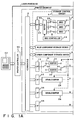
- Fig. 1 is a block diagram illustrating the basic structure of laser printer 50 according to a first embodiment of the present invention.
- the laser printer 50 comprises printer controller 56 and printer engine 57.
- reference numeral 1 represents a red-component storage unit
- 2 represents a blue-component storage unit
- 3 represents a green-component storage unit. Since the above-described three storage units 1 to 3 have the same structures, the inner structure of only the red-component storage unit 1 is illustrated in Fig. 1.
- code data supplied from host computer 52 is converted into dotted image data by printer controller 56.
- printer controller 56 is integrated in laser printer 50, it may be integrated in host computer 52.
- signals R, G and B may be transmitted from printer controller 56 in any of surface, line or dot sequential manner.
- the signals R, G and B supplied from printer controller 56 are stored in the above-described storage units for the corresponding colors via a common bus 6.
- hard discs are used to serve as storage units 1 to 3.
- Reference numeral 4 represents a storage control circuit for controlling the connection of the transmission path in a manner such that the signal R supplied from printer controller 56 is transmitted to storage unit 1 and the signal G is transmitted to storage unit 2 and the signal B is transmitted to storage unit 3.
- each of storage units 1 to 3 has three discs.
- storage unit 1 comprises a buffer 22, a disc controller 14, a switch circuit 22 and discs 11 to 13.
- the signal R which has passed through common bus 6 is buffered by the buffer 22 through interface (I/F) 21 before it is stored in discs 11 to 13.
- Buffer 22 has a predetermined storage capacity, for example, a capacity capable of storing the signals R for one line of image data.
- Disc controller 14 controls a switching operation performed by switch circuit 23 so as to divide the signals R for one line stored in the buffer 22 into three portions. The divided signals R are written to the discs 11 to 13.
- Fig. 2 illustrates the storage areas of the discs 11 to 13 in red-component storage unit 1.
- symbols R1, R2, R3,..., Rn (n is a natural number) denote the signals R for 1/3 line.
- the signals G and B are respectively stored in three discs of each blue-component storage unit 2 and green-component storage unit 3.
- Reference numeral 5 represents a switching control circuit for controlling buffering operations to double buffers 16, 26 and 36 to buffer the signals R, G and B transferred from the I/Fs 15, 25 and 35.
- Switching control circuit 5 further controls another switching operation performed by MPX (multiplexer) 37 to be described later.
- Double buffers 16, 26 and 36 have the same structures such that double buffer 16 includes two buffers 31, 32 and two switches 33 and 34 so that it is able to simultaneously perform input and output operation.
- Switching control circuit 5 controls a switching operation performed by switches 33 and 34.
- Reference numeral 58 represents a color conversion processing circuit for logarithmically converting the signals R, G and B from double buffers 16, 26 and 36 into printing color signals Y, M and C.
- Reference numeral 60 represents a black component generating circuit for generating a Bk signal from the signals Y, M and C transmitted from color conversion processing circuit 58.
- Reference numeral 59 represents a masking processing circuit for subjecting the signals Y, M and C to a UCR (Under Color Removal) process and to a masking process so that signals Y, M and C revealing excellent color reproductionability are generated in accordance with the color image signal.
- UCR Under Color Removal
- MPX 37 sequentially selects one of the signals Y, M, C and Bk from masking processing circuit 59 and black component generating circuit 60 so as to deduce the selected signal to OR gate 63.
- OR gate 63 calculates the logical sum of the signals Y, M, C and Bk which have been subjected to the UCR process and the black component generating process and the signals Y, M, C and Bk transmitted from host computer 52 in the form of signals Bi, then the logical sum is outputted by OR gate 63.
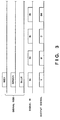
- Fig. 3 illustrates a sequence for transferring the image information, where axis of abscissa stands for the time axis.
- output signals Y, M, C and Bk are sequentially transmitted in response to an input of signals R, G and B from host computer 52 or printer controller 56.
- the output from OR gate 63 is subjected to the binarization process such as dithering by a binarization circuit 66 so as to be transmitted to a printing unit 67, thus resulting in forming an image.
- binarization circuit 66 can be omitted from the structure.
- the printing unit 67 forms an image in accordance with an electro-photographic method by employing, for exampler a laser diode in a manner such that an image is formed in response to the signal Y before an image is formed in response to the signal M on the formed yellow image. Similarly, images are sequentially formed in response to the signals C and Bk so that a color image for one page is formed.
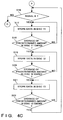
- Fig. 4 is a flow chart showing an operation performed by storage control circuit 4.
- switching control circuit 5 causes data to be sequentially read from storage units 1 to 3 to double buffers 16, 26 and 36 so as to be converted into the signals Y, M, C and Bk by color conversion processing circuit 58 and black component generating circuit 60.
- Fig. 5 illustrates the read/write timing in red component storage unit 1 and double buffer 16 controlled by switching control 5.
- four lines image data are stored in red component storage unit 1 so that one line image data is read by buffer 22 from discs 11 to 13 in one reading operation (data is in parallel read from discs 11 to 13).
- the image data thus read out is transferred to double buffers 31 and 32 so as to be read out from the same.
- any one of the color components of the signals Y, M, C or Bk is generated when the signals R, G and B are read out. That is, the signals R, G and B must be read out four times respectively in order to generate one line image data of the signals Y, M, C or Bk.
- image signals for one page can be sequentially (dot sequential, line sequential or the like) transmitted/received at any desired timing.
- a limit due to an output timing BD (Beam Detect) signal for the image signal is present in case that an image is formed in accordance with an electro-photographic method by using a laser beam.
- the host computer transmits the image signal asynchronously with the BD signal.
- the signals R, G and B are stored in a plurality of storage means (including discs) so as to be simultaneously read from them. Therefore, the access time can significantly be shortened. As a consequence, image forming can be performed precisely at a high speed.
- Printer engine 57 in this embodiment comprises buffer 22, the double buffers 16, 26 and 36.
- a double buffer (capable of simultaneously receiving a plurality of data ) corresponding to buffer 22 can be used to replace double buffers 16, 26 and 36.
- each of the above-described buffers may have a capacity capable of storing data for a plurality of lines or a smaller capacity than that capable of storing data for one line.
- the signals R, G and B Supplied from host computer 52 or printer controller 56 are respectively stored in storage units 1 to 3.
- the signals R, G and B thus stored are read from storage units 1 to 3 and color-converted so that an image is formed.
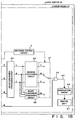
- each of predetermined data amount of signals R, G and B supplied from host computer 52 or printer controller 56 is stored in buffers 41 to 43 by switching over them and color-converted into signals Y, M, C and Bk. Subsequently, signals Y, M, C and Bk are stored in storage unit 51 under the control of storage control unit 4. The above-described data storage process is repeated so that all of data to be printed out are stored in the form of signals Y, M, C and Bk. After they have been stored, the signals Y, M, C and BK are sequentially transmitted from storage unit 51 by switching control circuit 5 so that an image is formed.
- Fig. 7 is a block diagram illustrating the structure of printer engine 57 of laser printer 50 according to a second embodiment of the present invention. Referring to Fig. 7, the same elements as those shown in Fig. 1 are given the same reference numerals and their descriptions are omitted here.
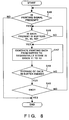
- Fig. 8 is a flow chart showing the operation performed by storage control circuit 4.
- step S45 it is examined whether or not a demand for a print signal exists in interface 40. If it has been identified that the demand exists, the process proceeds to step S46. If it is identified that no print signal exists on the other hand, the process is ended here. In step S46, it is checked whether or not a predetermined amount of data has been stored in buffers 41 to 43. After the predetermined amount of received data has been stored in buffers 41 to 43, the process proceeds to step S47.
- step S47 color conversion processing circuit 58 converts the signals R, G and B in the buffers 41 to 43 into the signals Y, M and C before the converted signals are subjected to the UCR process in masking processing circuit 59. Subsequently, a black generating circuit 60 generates the Bk (black) signal so as to be stored in discs 11 to 13 in storage unit 51 as described later.
- step S48 it is examined whether or not the conversion of the signals R, G and B in buffers 41 to 43 and the storage of the signals Y, M, C and Bk have been completed. The processes of steps S47 to S48 are repeated until the conversion of the signals R, G and B and the storage of the signals Y, M, C and Bk are completed.
- step S49 it is checked whether or not the conversion of the signals R, G and B and the storage of the signals Y, M, C and Bk for one page have been completed. If it is identified that the storage for one page has been completed, the process is ended here. If it is identified that the storage has not been completed, the process returns to stop S45 and the storage process is repeated until the storage for one page is completed.
- Fig. 9 illustrates the storage areas of discs 11 to 13 in storage unit 51.
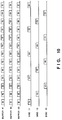
- Fig. 10 is a timing chart for writing operations of data from buffers 41 to 43 to discs 11 to 13.
- each of the color components (Y, M, C and Bk) of image information for one page is divided into four sections so as to be stored in discs 11 to 13.
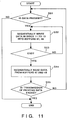
- step S51 it is checked whether or not data in storage unit 51 exists in step S51. If it is identified that no data exists, the process is ended here. If it is identified that data exists in storage unit 51, the process proceeds to step S52. In steps S52 and S53, the signals Y, M, C and Bk in discs 11 to 13 are sequentially written in buffers 47 and 48 until the buffers become full. In step S54, the signals in buffers 47 and 48 are sequentially read out. In step S55, it is examined whether or not the transmission of the image data has been completed. If it is identified that the transmission of the image data has been completed, the process is ended here. If it is identified that the transmission of the image data has not been completed yet, the process returns to step S51 in which reading of data from storage unit 51 is repeated until the transmission of all of image data is completed.
- Fig. 12 is a timing chart for reading/writing timing performed in discs 11 and 13 in storage unit 51 and buffers 47 and 48 under control of switching control circuit 5. Since the reading/writing timing is the same as that according to the first embodiment shown in Fig. 5, its description is omitted here.
- the signals R, G and B which are the input image signals, are color-converted into signals Y, M, C and Bk so as to be sequentially stored while controlling the storage areas of a plurality of discs. After this, the data are simultaneously and in parallel read from the plurality of discs so as to be sequentially transmitted. Therefore, in an image formation based on the signals R, G and B supplied from host computer 52 or printer controller 56 at any desired timing, it is not necessary for host computer 52 to transmit image information depending upon the image formation processing time in printer engine 57 even if a large amount of data to be transmitted in host computer 52 exists. Furthermore, the process throughput can significantly be improved although a hard disc device, whose access speed is slow, is employed.
- Fig. 13 is a block diagram illustrating the structure of printer controller 21 according to a third embodiment of the present invention.
- reference numeral 1 represents a CPU for controlling the overall operation of image forming controller 21.
- the CPU receives printing data or a printing program transmitted from host computer 52 via I/F control circuit 4 so as to generate image data to be transmitted to printer engine 57. Furthermore, the CPU establishes a communication with printer engine 57 after the image data has been generated so that the printing operation is performed.
- image data is subjected to a process of converting into color components Y, M, C and Bk in printer controller 21. Furthermore, each of the color components data Y, M, C and Bk is transferred to printer engine 57.
- Reference numeral 2 represents a bus control circuit for controlling the bus between CPU 1 and system memory 3, host I/F control circuit 4 or an external storage device control circuit 5.
- System memory 3 comprises a code ROM 3a for controlling the operation of CPU 1, a font ROM 3b for storing bit map fonts or outline fonts for the text code and a RAM 3c which is used by CPU 1 as a working area, which temporarily stores printing data transmitted from host computer 52 or which temporarily stores image data to be stored in an external storage unit 6.
- Reference numeral 5 represents an external storage device control circuit for controlling transference of image data between CPU 1 or RAM 3c and external storage unit 6 during the period of a bit map image data generation based on printing data in CPU 1. Furthermore, external storage device 5 controls the transference of the bit map image data from external storage unit 6 to FIFO (Fast In Fast Out buffer) 7 after image data has been generated in external storage unit 6 and printing is thereby started.
- External storage unit 6 comprises a hard disc, a photoelectromagnetic disc or the like having a large storage capacity (several tens to hundreds megabytes) in spite of a low cost, and it is allocated as a page memory which stores full color image data.
- hard discs and photoelectromagnetic discs are arranged to read/write data by moving its head in track units, one round of the disc being arranged to be one track.
- both a hard disc and a photoelectromagnetic disc are able to transfer data within one track thereof at a high speed of about 1.2 megabyte/sec which is faster than the image data transferring speed of 0.9 megabyte/sec (image clock frequency: 0.932 MHz) of a 300 dpi full color printer engine having a throughput of one sheet/minute.
- FIFO 7 serves as an output buffer for temporarily storing image data to be transmitted to the full color printer engine.
- FIFO 7 acts to store image data read from external storage unit 6 in synchronization with /FWR signal which is a writing signal to FIFO 7.
- FIFO 7 sequentially reads image data in accordance with the storage sequence in response to a /FRD signal, which is a signal for causing data to be read from FIFO 7, and is in synchronization with an image clock VCLK transmitted from BD synchronizing circuit 9.
- Reference numeral 8 represents a BD (Beam Detection) synchronizing circuit which generates the image clock VCLK in synchronization with the BD signal which is a horizontal synchronizing signal transmitted from printer engine 7.
- the frequency of clock signal VCLK0 transmitted from an OSC (crystal oscillator) 11 is made to be 8 times as the frequency of the image clock VCLK so that a synchronization with the last transition edge of a BD signal is established.
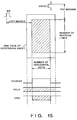
- Reference numeral 9 represents a margin control circuit for setting an effective region (hatching area of Fig. 15) for an image data to be printed in one page as shown in Fig. 15.
- the vertical directional region is set in a manner such that the top margin and the number of the printing lines in the vertical direction are counted in response to the BD signal after vertical synchronizing signal (VSYNC) has been received.
- the horizontal directional region is set in a manner such that the left margin and the number of dots to be horizontally printed are counted in accordance with the image clock VCLK after the BD signal has been received.
- the effective region for the image data expressed by the hatched area of Fig.
- VDOENB Video Enable
- Reference numeral 12 represents a video I/F driver/receiver circuit comprising a circuit for controlling the input and output of the communication established between image forming controller 21 and printer engine 57.
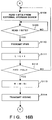
- step S101 and S102 CPU 1 generates the image data for one page to be transmitted to printer engine 57.
- the storage of the color components into external storage unit 6 is controlled by CPU 1 in a manner such that the address space of external storage unit 6 is assumed the virtual memory space as shown in Fig. 17 and the color components Y, M, C and Bk are sequentially assigned from the lower address to the upper address.
- Fig. 18 is a map illustrating each of the color components to be stored in external storage unit 6 (hard disc). Color components are stored in the storing order Y, M, C and Bk from the lower track to the upper track so as to correspond to the map of the virtual memory space of CPU 1 shown in Fig. 17.
- one track Since one track is able to store data of about 8 K to 20 K bytes and one line for each color component of image data having a 8 bits width is about 2.3 K bytes, one track stores image data for 3.3 to 8.3 lines if the size of recording paper is A4 and the dot density is 300 dpi.
- step S104 CPU 1 transmits a print signal /PRINT to printer engine 57.
- step S105 CPU 1 waits until a vertical synchronization request signal /VSREQ to be transmitted from printer engine 57 comes.
- the vertical synchronization request signal /VSREQ is supplied, CPU 1 commands external storage unit control circuit 5 to transfer bit map image data to FIFO 7.
- step S106 external storage unit control circuit 5 loads the data size (recording paper: A4, dot density: 300 dpi and about 8 megabytes in a case where each of dots is 8-bit multi-value data) Mn into a page counter in response to the transference command issued from CPU 1. Furthermore, a data transferring counter L is reset to be zero.
- step S107 the track head of external storage unit 6 seeks (the head is moved) the starting address of the value of the color.
- steps S108 and S109 a one byte of bit map image data in the same track in external storage unit 6 is read so as to be verified.
- step S110 writing signal /FWR is transmitted so as to write the read data to FIFO 7.
- step S111 the data transferring counter L is advanced by one. Thus, image data for one byte is stored in FIFO 7.
- step S112 it is examined whether or not the buffer of FIFO 7 has been filled with the image data. If the buffer is not filled with the image data, the process returns to step S108 in which data is stored until the buffer is filled with the image data. If the buffer memory is filled with N1 bytes of image data, the process proceeds to step S113 after issuing a status signal of FIFO:full.
- step S113 when external storage unit control circuit 5 receives the status signal denoting a fact that FIFO is full, it reduces the count of the page counter by N1.
- step S114 CPU 1 transmits a vertical synchronizing signal /VSYNC.
- the image clock VCLK transmitted from BD synchronizing circuit 8 shown in Fig. 14 and VDOENB transmitted from margin control circuit 9 shown in Fig. 15 are supplied to NAND gate 10 so that FIFO reading signal (/FRD) is generated, and image data written to FIFO 7 is read so as to be transmitted to printer engine 57.
- /FRD FIFO reading signal
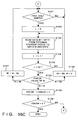
- External storage unit control circuit 5 performs the following operations from step S121.
- step S121 it is checked whether or not the data amount left in FIFO 7 has been reduced to the half of its full amount due to reading of data from FIFO 7 in response to the signal /FRD. The data reading is continued until the data amount in FIFO 7 is reduced to the half of its full amount.
- a signal of FIFO:half empty (a signal transmitted when data amount in FIFO is reduced to the half of its buffer size) is transmitted, then the process proceeds to step S122.
- step S122 the data transferring counter L is reset before data is transferred by one byte from external storage unit 6 to FIFO 7 in step S123.
- step S124 the data transferring counter L is advances by one count.
- step S125 it is checked whether or not the count of the data transferring counter L has become N2 bytes. If it is identified that the count of data transferring counter L has not become N2 , the process returns to step S123. In step S123, the data transferring is continued. If it is identified that the data transferring counter L has reached N2 bytes, the process proceeds to step S126.
- N2 bytes The value of N2 bytes is determined depending upon the data transferring speed on the same track in external storage unit 6, the speed of transferring image data to the printer engine and the seeking time between tracks so that the amount of the bit map image data present in the FIFO can be larger than the half of the size of the buffer in the FIFO.
- data amount in FIFO (present data amount in FIFO) - (data transferring speed to printer engine) ⁇ (data transferring time (T)) + (data transferring speed to FIFO) ⁇ (data transferring time (T))
- step S126 the count (M) of the page counter is checked.
- M the process proceeds to step S127 in which the count (M) is reduced by N2 before the process returns to S121.
- step S128 the count (M) is set to 0 and the count (N2) of the data transferring counter is set to M before the process returns to step S121.
- the process proceeds to step S129.
- the FIFO buffer does not become empty and data can be continuously read out from it.
- the third embodiment is arranged in a manner such that a printer controller has one FIFO buffer with respect of one external storage unit.
- a printer controller according to this embodiment is arranged in a manner such that its external storage unit control circuit has two external storage units and two FIFO buffers.
- Fig. 19 is a block diagram illustrating the structure of the printer controller of the color printer apparatus according to a fourth embodiment of the present invention.
- the printer controller according to this embodiment has two external storage units 6a and 6b serving as image memories and two FIFOs 7a and 7b which correspond to the two external storage units 6a and 6b.
- the image data transferring speed between the external storage unit and the FIFO can be increased twice.
- the same elements as those of the printer controller according to the third embodiment are given the same reference numerals and their descriptions are omitted here.
- external storage control circuit 5 controls image data to be read from FIFOs 7a and 7b at the time of the printing process so as to be transmitted to the printer engine in a manner such that even line image data is transferred from external storage unit 6a to the FIFO 7a and odd line image data is transferred from external storage unit 6b to FIFO 7b. Therefore, when CPU 1 generates image data, the image data arc divided into those for the even lines and odd lines so as to be stored in corresponding external storage units 6a and 6b.
- Reference numeral 13 represents an FIFO output control circuit which issues signals /FRDA and /FRDB for alternately accessing FIFOs 7a and 7b so as to control reading of the data from FIFO 7a storing image data for even lines and FIFO 7b storing image data for odd lines.
- FIFO output control circuit 13 generates the signals /FRDA and /FRDB for alternately reading out from FIFOs 7a and 7b in accordance with the image clock VCLK transmitted from BD synchronizing circuit 8 and VDOENB transmitted from margin control circuit 9.
- the image data is alternately read in a manner such that even lines image data is read from FIFO 7a when the signal /FRDA is in low level and odd lines image data is read from FIFO 7b when the signal /FRDB is in low level.
- the thus constituted printer controller is arranged to act at the printing operation in a manner such that image data is asynchronously transferred from external storage unit 6a to FIFO 7a and also is transferred from external storage unit 6b to FIFO 7b in response to the status signals respectively transmitted from FIFOs 7a and 7b.
- the printer controller according to this embodiment can be used in a full color printer engine capable of printing out two sheets per minute. Since the sequence of transferring the image data from external storage unit 6a or 6b to FIFO 7a or 7b is the same as the sequence shown in the flow chart according to the third embodiment shown in Fig. 16, the description about it is omitted here.
- the printer controller according to this embodiment has two external storage units and the two corresponding FIFOs, it may have three pairs or more. In this case, a satisfactory effect can be obtained if it is employed in a high speed color printer in which image data is transferred at an extremely high speed.
- the FIFO disposed between the external storage unit and the printer engine so as to serve as the buffer means may be replaced by a memory such as an SRAM.
- a peripheral circuit must be added to the structure so as to control the above-described memory, causing a similar sequence to that performed by the FIFO according to the third and fourth embodiments to be performed.
- the present invention may, of course, be applied to a multi-value printer capable of expressing a gray scale or a binary, white and black, printer.
- This disclosure relates to an image forming and processing apparatus having a plurality of storage device and capable of forming an image at a high speed by reading image data in parallel. Since a predetermined quantity of image data is stored in a plurality of hard discs, and the image data is read from the plurality of hard discs to a double buffer in parallel when the image data is read, an image can be formed continuously at a high speed.
- Another structure is arranged in a manner such that images are stored in hard discs of an optional number and the images are transmitted to a printer engine by using FIFO (Fast In Fast Out buffer) which corresponds to the hard discs. Therefore, an image can be transmitted continuously at a high speed asynchronously with the printer output.
- FIFO Fast In Fast Out buffer
Landscapes
- Engineering & Computer Science (AREA)
- Physics & Mathematics (AREA)
- General Engineering & Computer Science (AREA)
- General Physics & Mathematics (AREA)
- Theoretical Computer Science (AREA)
- Multimedia (AREA)
- Signal Processing (AREA)
- Optics & Photonics (AREA)
- Record Information Processing For Printing (AREA)
- Storing Facsimile Image Data (AREA)
- Dot-Matrix Printers And Others (AREA)
- Color, Gradation (AREA)
Applications Claiming Priority (7)
| Application Number | Priority Date | Filing Date | Title |
|---|---|---|---|
| JP8616490 | 1990-03-30 | ||
| JP2086164A JPH03284055A (ja) | 1990-03-30 | 1990-03-30 | 画像処理装置 |
| JP86164/90 | 1990-03-30 | ||
| JP19948090A JPH0483664A (ja) | 1990-07-26 | 1990-07-26 | プリンタ装置 |
| JP199480/90 | 1990-07-26 | ||
| JP19948090 | 1990-07-26 | ||
| EP91105075A EP0449313B1 (de) | 1990-03-30 | 1991-03-28 | Bildverarbeitungsverfahren und -gerät |
Related Parent Applications (2)
| Application Number | Title | Priority Date | Filing Date |
|---|---|---|---|
| EP91105075.5 Division | 1991-03-28 | ||
| EP91105075A Division EP0449313B1 (de) | 1990-03-30 | 1991-03-28 | Bildverarbeitungsverfahren und -gerät |
Publications (3)
| Publication Number | Publication Date |
|---|---|
| EP0683601A2 true EP0683601A2 (de) | 1995-11-22 |
| EP0683601A3 EP0683601A3 (de) | 1996-03-27 |
| EP0683601B1 EP0683601B1 (de) | 2002-02-13 |
Family
ID=26427323
Family Applications (2)
| Application Number | Title | Priority Date | Filing Date |
|---|---|---|---|
| EP91105075A Expired - Lifetime EP0449313B1 (de) | 1990-03-30 | 1991-03-28 | Bildverarbeitungsverfahren und -gerät |
| EP95113500A Expired - Lifetime EP0683601B1 (de) | 1990-03-30 | 1991-03-28 | Bildverarbeitungsgerät |
Family Applications Before (1)
| Application Number | Title | Priority Date | Filing Date |
|---|---|---|---|
| EP91105075A Expired - Lifetime EP0449313B1 (de) | 1990-03-30 | 1991-03-28 | Bildverarbeitungsverfahren und -gerät |
Country Status (3)
| Country | Link |
|---|---|
| US (2) | US5596426A (de) |
| EP (2) | EP0449313B1 (de) |
| DE (2) | DE69132933D1 (de) |
Cited By (1)
| Publication number | Priority date | Publication date | Assignee | Title |
|---|---|---|---|---|
| EP1113664A1 (de) * | 1999-12-29 | 2001-07-04 | Sagem S.A. | Laserdruck-Verfahren zur Herstellung von Farbbildern |
Families Citing this family (17)
| Publication number | Priority date | Publication date | Assignee | Title |
|---|---|---|---|---|
| US5274761A (en) * | 1991-11-14 | 1993-12-28 | Gerber Systems Corporation | Imaging system with image buffer for exposing film on a substrate |
| JPH07298078A (ja) * | 1994-04-25 | 1995-11-10 | Mita Ind Co Ltd | カラー画像形成装置 |
| US5963713A (en) * | 1994-11-07 | 1999-10-05 | Canon Aptex Inc. | Printer using direct memory access and refreshing |
| US5764377A (en) * | 1994-12-15 | 1998-06-09 | Xerox Corporation | Video interlace system for multibeam raster output scanner |
| US6219045B1 (en) | 1995-11-13 | 2001-04-17 | Worlds, Inc. | Scalable virtual world chat client-server system |
| KR100242835B1 (ko) * | 1996-12-18 | 2000-02-01 | 윤종용 | 스캔 레이트 콘트롤러 |
| JP3788677B2 (ja) * | 1997-11-14 | 2006-06-21 | 富士通株式会社 | 連続録画システム及び方法並びに長時間録画プログラムを記録したコンピュータ読み取り可能な記録媒体 |
| AUPP702498A0 (en) * | 1998-11-09 | 1998-12-03 | Silverbrook Research Pty Ltd | Image creation method and apparatus (ART77) |
| US7145696B2 (en) * | 1998-11-09 | 2006-12-05 | Silverbrook Research Pty Ltd | Print data compression method and printer driver |
| US7324220B1 (en) * | 2001-07-09 | 2008-01-29 | Lexmark International, Inc. | Print performance under the windows® operating system |
| JP3898987B2 (ja) * | 2001-07-30 | 2007-03-28 | 株式会社リコー | 画像形成装置、該装置に用いられる画像転送制御方法、およびその方法をコンピュータに実行させるプログラム、並びにそのプログラムを記録したコンピュータ読み取り可能な記録媒体 |
| JP2003101740A (ja) * | 2001-09-20 | 2003-04-04 | Ricoh Co Ltd | 画像データ記憶装置 |
| US7274489B2 (en) * | 2002-11-01 | 2007-09-25 | Kabushiki Kaisha Toshiba | Image forming apparatus and method of controlling the apparatus |
| US8184332B2 (en) * | 2006-03-06 | 2012-05-22 | Seiko Epson Corporation | Image forming apparatus and method for correcting density irregularities |
| JP5743499B2 (ja) | 2010-11-10 | 2015-07-01 | キヤノン株式会社 | 画像生成装置、画像生成方法、およびプログラム |
| WO2017033971A1 (ja) | 2015-08-24 | 2017-03-02 | 凸版印刷株式会社 | 化粧シート及び透明樹脂シート |
| JP6787642B2 (ja) | 2015-08-24 | 2020-11-18 | 凸版印刷株式会社 | 化粧シート |
Family Cites Families (27)
| Publication number | Priority date | Publication date | Assignee | Title |
|---|---|---|---|---|
| US4395740A (en) * | 1980-07-07 | 1983-07-26 | Aubrey Yuen | Apparatus and method for locating and presenting pre-recorded information |
| JPS5897767A (ja) * | 1981-12-07 | 1983-06-10 | Fuji Xerox Co Ltd | 画像処理用磁気デイスク制御方法および装置 |
| US4516139A (en) * | 1982-11-05 | 1985-05-07 | Sharp Kabushiki Kaisha | Print control system in a color image printer |
| EP0122430B1 (de) * | 1983-03-08 | 1991-06-05 | Canon Kabushiki Kaisha | Bildverarbeitungsgerät |
| JPS59163965A (ja) * | 1983-03-08 | 1984-09-17 | Canon Inc | カラ−システム |
| DE3542884A1 (de) * | 1984-12-04 | 1986-06-05 | Canon K.K., Tokio/Tokyo | Farbbildleser |
| JPS6247786A (ja) * | 1985-08-27 | 1987-03-02 | Hamamatsu Photonics Kk | 近傍画像処理専用メモリ |
| JPS6277637A (ja) * | 1985-10-01 | 1987-04-09 | Seiko Instr & Electronics Ltd | カラ−ハ−ドコピ−装置 |
| JPS62297977A (ja) * | 1986-06-17 | 1987-12-25 | Toshiba Corp | 画像情報記憶検索装置 |
| JPS63103570A (ja) * | 1986-10-20 | 1988-05-09 | Sharp Corp | カラ−記録方式 |
| US4954889A (en) * | 1987-04-30 | 1990-09-04 | Nec Home Electronics Ltd. | Color masking circuit and color video printer using the same |
| JPS63274550A (ja) * | 1987-05-02 | 1988-11-11 | Hitachi Ltd | 画像出力方式 |
| JP2653055B2 (ja) * | 1987-05-14 | 1997-09-10 | ミノルタ株式会社 | デジタルカラー複写機 |
| JPS63296952A (ja) * | 1987-05-29 | 1988-12-05 | Ricoh Co Ltd | プリンタ |
| US4956704A (en) * | 1987-10-23 | 1990-09-11 | Canon Kabushiki Kaisha | Image processing apparatus and methods for making a creative image from an original image |
| US4841361A (en) * | 1987-12-03 | 1989-06-20 | Konica Corporation | Color image processing apparatus |
| US4963898A (en) * | 1988-01-19 | 1990-10-16 | Canon Kabushiki Kaisha | Method and apparatus for forming a color image |
| JP3082915B2 (ja) * | 1988-01-19 | 2000-09-04 | キヤノン株式会社 | カラー画像処理装置及びカラー画像処理方法 |
| JP3066898B2 (ja) * | 1988-01-19 | 2000-07-17 | キヤノン株式会社 | カラー画像形成装置 |
| JP2994648B2 (ja) * | 1988-01-19 | 1999-12-27 | キヤノン株式会社 | カラー画像形成装置 |
| JPH01184137A (ja) * | 1988-01-19 | 1989-07-21 | Canon Inc | カラー画像形成装置 |
| JPH01269543A (ja) * | 1988-04-21 | 1989-10-27 | Canon Inc | 画像形成装置 |
| JPH0250852A (ja) * | 1988-08-15 | 1990-02-20 | Canon Inc | 印刷装置 |
| JP3791872B2 (ja) * | 1997-07-14 | 2006-06-28 | 松下電器産業株式会社 | 線状照明装置 |
| JPH1184141A (ja) * | 1997-09-02 | 1999-03-26 | Furukawa Electric Co Ltd:The | 光ファイバ端面の研磨方法とその研磨装置 |
| JPH1184138A (ja) * | 1997-09-04 | 1999-03-26 | Fujikura Ltd | 光ファイバの被覆除去装置 |
| JPH1184140A (ja) * | 1997-09-11 | 1999-03-26 | Nippon Electric Glass Co Ltd | 光ファイバの被覆除去器 |
-
1991
- 1991-03-28 EP EP91105075A patent/EP0449313B1/de not_active Expired - Lifetime
- 1991-03-28 EP EP95113500A patent/EP0683601B1/de not_active Expired - Lifetime
- 1991-03-28 DE DE69132933T patent/DE69132933D1/de not_active Expired - Lifetime
- 1991-03-28 DE DE69126467T patent/DE69126467T2/de not_active Expired - Fee Related
-
1995
- 1995-06-07 US US08/479,466 patent/US5596426A/en not_active Expired - Lifetime
- 1995-06-07 US US08/475,497 patent/US5629781A/en not_active Expired - Fee Related
Non-Patent Citations (1)
| Title |
|---|
| None |
Cited By (2)
| Publication number | Priority date | Publication date | Assignee | Title |
|---|---|---|---|---|
| EP1113664A1 (de) * | 1999-12-29 | 2001-07-04 | Sagem S.A. | Laserdruck-Verfahren zur Herstellung von Farbbildern |
| FR2803414A1 (fr) * | 1999-12-29 | 2001-07-06 | Sagem | Procede d'impression laser d'une image couleur |
Also Published As
| Publication number | Publication date |
|---|---|
| DE69126467T2 (de) | 1998-01-15 |
| US5629781A (en) | 1997-05-13 |
| EP0683601A3 (de) | 1996-03-27 |
| EP0449313A2 (de) | 1991-10-02 |
| EP0449313A3 (en) | 1992-12-16 |
| EP0683601B1 (de) | 2002-02-13 |
| DE69132933D1 (de) | 2002-03-21 |
| DE69126467D1 (de) | 1997-07-17 |
| EP0449313B1 (de) | 1997-06-11 |
| US5596426A (en) | 1997-01-21 |
Similar Documents
| Publication | Publication Date | Title |
|---|---|---|
| US5596426A (en) | Image processing method and apparatus | |
| US5321532A (en) | Image processing apparatus | |
| US6791714B1 (en) | Image forming apparatus capable of saving consumption of toner without deterioration of printing quality and method thereof | |
| JPH0535857A (ja) | 画像記録装置 | |
| EP0506379B1 (de) | Bildverarbeitungs-Einrichtung und -Verfahren | |
| US5835122A (en) | Printing apparatus and method capable of selectively printing with a plurality of resolutions | |
| EP1241868B1 (de) | Bildverarbeitungsvorrichtung | |
| EP0488118B1 (de) | Abbildungsaufzeichnungsvorrichtung für Bilder hoher Qualität | |
| US6121982A (en) | Image forming apparatus | |
| US5778159A (en) | Data outputting with control of number of gradations expressed | |
| JPH08183207A (ja) | カラーイメージデータ制御方法 | |
| JPH0483664A (ja) | プリンタ装置 | |
| JPH04337960A (ja) | レーザプリンタの印刷制御装置 | |
| JP2940932B2 (ja) | 画像処理装置 | |
| JPH03284055A (ja) | 画像処理装置 | |
| JP2509468B2 (ja) | 画像処理装置 | |
| JPH08130645A (ja) | プリンタ装置およびプリンタ装置の印画方法 | |
| JPH08300745A (ja) | 画像処理装置及びその制御方法 | |
| JPH05252385A (ja) | 画像処理装置 | |
| JPH08300744A (ja) | 複写プリント印刷装置 | |
| JPH068533A (ja) | 画像形成装置 | |
| JPH05221031A (ja) | 画像形成装置 | |
| JPH04278780A (ja) | 画像形成装置 | |
| JP2002247360A (ja) | 画像処理方法及び画像処理装置 | |
| JPH03133674A (ja) | 画像データ処理装置 |
Legal Events
| Date | Code | Title | Description |
|---|---|---|---|
| PUAI | Public reference made under article 153(3) epc to a published international application that has entered the european phase |
Free format text: ORIGINAL CODE: 0009012 |
|
| AC | Divisional application: reference to earlier application |
Ref document number: 449313 Country of ref document: EP |
|
| AK | Designated contracting states |
Kind code of ref document: A2 Designated state(s): DE FR GB IT |
|
| RIN1 | Information on inventor provided before grant (corrected) |
Inventor name: SETO, KAORU Inventor name: KASHIHARA, ATSUSHI Inventor name: KATAOKA, HIROMI Inventor name: OHTAKE, MASAKI Inventor name: SAKAKI, EIHIRO Inventor name: ITO, YASUO Inventor name: TORISAWA, AKIRA Inventor name: UENO, FUMIHIRO, C/O CANON KABUSHIKI KAISHA |
|
| RIN1 | Information on inventor provided before grant (corrected) |
Inventor name: SETO, KAORU Inventor name: KASHIHARA, ATSUSHI Inventor name: KATAOKA, HIROMI Inventor name: OHTAKE, MASAKI Inventor name: SAKAKI, EIHIRO Inventor name: ITO, YASUO Inventor name: TORISAWA, AKIRA Inventor name: UENO, FUMIHIRO, C/O CANON KABUSHIKI KAISHA |
|
| PUAL | Search report despatched |
Free format text: ORIGINAL CODE: 0009013 |
|
| AK | Designated contracting states |
Kind code of ref document: A3 Designated state(s): DE FR GB IT |
|
| RHK1 | Main classification (correction) |
Ipc: G06K 15/00 |
|
| 17P | Request for examination filed |
Effective date: 19960813 |
|
| 17Q | First examination report despatched |
Effective date: 19980514 |
|
| RIC1 | Information provided on ipc code assigned before grant |
Free format text: 7G 06K 15/00 A, 7H 04N 1/46 B |
|
| RTI1 | Title (correction) |
Free format text: IMAGE PROCESSING APPARATUS |
|
| GRAG | Despatch of communication of intention to grant |
Free format text: ORIGINAL CODE: EPIDOS AGRA |
|
| GRAG | Despatch of communication of intention to grant |
Free format text: ORIGINAL CODE: EPIDOS AGRA |
|
| GRAH | Despatch of communication of intention to grant a patent |
Free format text: ORIGINAL CODE: EPIDOS IGRA |
|
| GRAH | Despatch of communication of intention to grant a patent |
Free format text: ORIGINAL CODE: EPIDOS IGRA |
|
| GRAA | (expected) grant |
Free format text: ORIGINAL CODE: 0009210 |
|
| REG | Reference to a national code |
Ref country code: GB Ref legal event code: IF02 |
|
| AC | Divisional application: reference to earlier application |
Ref document number: 449313 Country of ref document: EP |
|
| AK | Designated contracting states |
Kind code of ref document: B1 Designated state(s): DE FR GB IT |
|
| PG25 | Lapsed in a contracting state [announced via postgrant information from national office to epo] |
Ref country code: IT Free format text: LAPSE BECAUSE OF FAILURE TO SUBMIT A TRANSLATION OF THE DESCRIPTION OR TO PAY THE FEE WITHIN THE PRESCRIBED TIME-LIMIT;WARNING: LAPSES OF ITALIAN PATENTS WITH EFFECTIVE DATE BEFORE 2007 MAY HAVE OCCURRED AT ANY TIME BEFORE 2007. THE CORRECT EFFECTIVE DATE MAY BE DIFFERENT FROM THE ONE RECORDED. Effective date: 20020213 Ref country code: FR Free format text: LAPSE BECAUSE OF FAILURE TO SUBMIT A TRANSLATION OF THE DESCRIPTION OR TO PAY THE FEE WITHIN THE PRESCRIBED TIME-LIMIT Effective date: 20020213 |
|
| RIN1 | Information on inventor provided before grant (corrected) |
Inventor name: SETO, KAORU Inventor name: KASHIHARA, ATSUSHI Inventor name: KATAOKA, HIROMI Inventor name: OHTAKE, MASAKI Inventor name: SAKAKI, EIHIRO Inventor name: ITO, YASUO Inventor name: TORISAWA, AKIRA Inventor name: UENO, FUMIHIRO, C/O CANON KABUSHIKI KAISHA |
|
| REF | Corresponds to: |
Ref document number: 69132933 Country of ref document: DE Date of ref document: 20020321 |
|
| PG25 | Lapsed in a contracting state [announced via postgrant information from national office to epo] |
Ref country code: DE Free format text: LAPSE BECAUSE OF FAILURE TO SUBMIT A TRANSLATION OF THE DESCRIPTION OR TO PAY THE FEE WITHIN THE PRESCRIBED TIME-LIMIT Effective date: 20020514 |
|
| EN | Fr: translation not filed | ||
| PLBE | No opposition filed within time limit |
Free format text: ORIGINAL CODE: 0009261 |
|
| STAA | Information on the status of an ep patent application or granted ep patent |
Free format text: STATUS: NO OPPOSITION FILED WITHIN TIME LIMIT |
|
| 26N | No opposition filed |
Effective date: 20021114 |
|
| PGFP | Annual fee paid to national office [announced via postgrant information from national office to epo] |
Ref country code: GB Payment date: 20090331 Year of fee payment: 19 |
|
| GBPC | Gb: european patent ceased through non-payment of renewal fee |
Effective date: 20100328 |
|
| PG25 | Lapsed in a contracting state [announced via postgrant information from national office to epo] |
Ref country code: GB Free format text: LAPSE BECAUSE OF NON-PAYMENT OF DUE FEES Effective date: 20100328 |